March 14, 2017, Superior- I was invigorated, despite it being an afternoon during the Fast, once the High Trail came into view. This fairly easy trail first led down into Queen Creek Canyon, and past an old, abandoned Pump House.
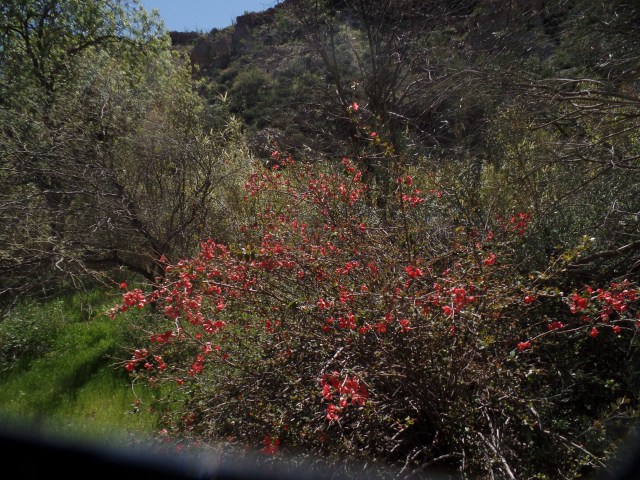
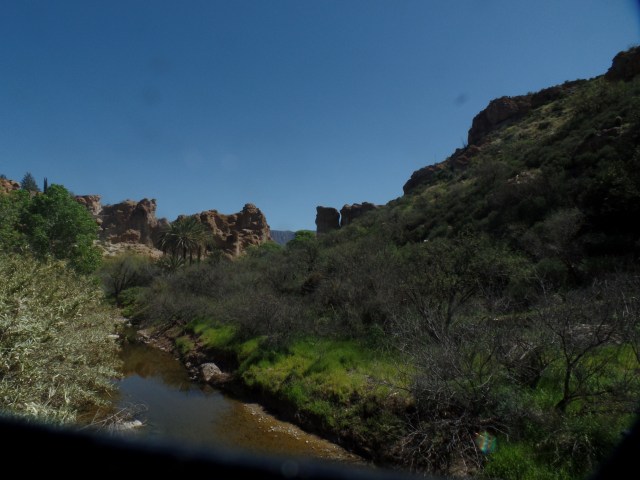
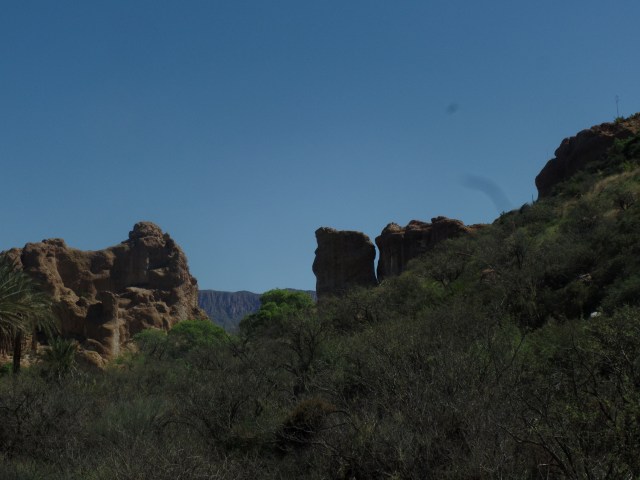
The energetic and happy family ahead of me were already planning to bounce along the bridge that crossed Queen Creek and take on the ridge, which gives High Trail its name. I was more than glad to follow suit. As they bounced up and down, in unison, I lingered behind, to take in the fragrance of some Texas Scarlet, and view upwards, at the rhyolite which Queen Creek seems to have thrust upwards.
Then, it was time to do a bit of jumping of my own.
Queen Creek was still, on this gorgeous afternoon.
The views eastward, however, were an extra delight- the rugged edges of a particular heaven.
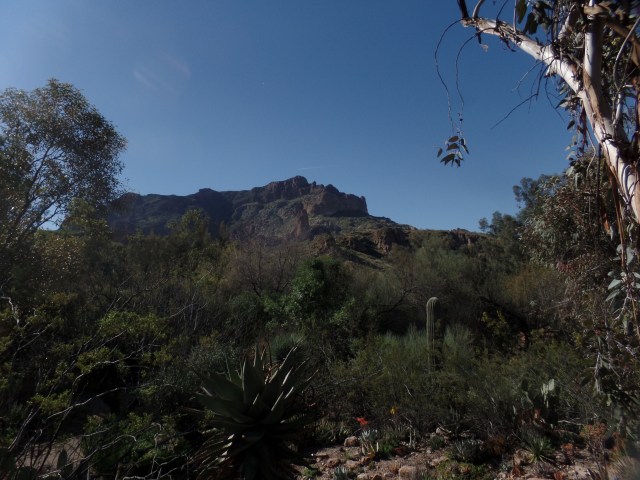
I was able to get one more, long-distance view of Picket Post House, before heading back down into the canyon.
Obsidian accompanies rhyolite, as one heads towards the Australian exhibit.
After one last look at the rhyolite “castles”, for today, I headed back towards the Arboretum.
There are two greenhouses, on the western edge of the park. These house plants that are still delicate, primarily from the “cone” of South America and from southern and eastern Africa.
Mammilaria are the main feature of Green House 1.
Euphorbia, and aloe, dominate Green House 2. The first shows plants from Madagascar, which, like the U.S. has a rugged desert Southwest.
These plants are from the equally rugged southwest of the Arabian Peninsula.
With that, I exited Boyce Thompson Arboretum. My return, in the first days of April, will be in no small part due to a special soul, working in this little bit of heaven.
Nature and friendship are what keep me going, as many in Prescott, and elsewhere, know.
March 14, 2017, Superior- No doubt about it, this area has me hooked. Boyce Thompson Arboretum State Park, a combination of Desert Botanical Garden and the Prescott Circle Trail, is the centerpiece of an intensely spiritual region. Queen Creek, which runs through the park, on the south side, has carved Arizona’s best-kept secret, in its network of canyons. Picket Post Mountain, to the west, watches over the Arboretum, like a strong big brother. The people I met, from a gentle wanderer who is exploring all the National Forests west of the Mississippi, to a vibrant,passionately caring barista, exuded the sort of spirituality that comes from tapping into the extant energy field that is found in places that stay close to their natural origins.
I will present Boyce Thompson Arboretum in three segments: This first post looks at the various desert plants, from all corners of the world, with an emphasis on the Sonoran and Chihuahuan Deserts, which are closest to the central Arizona highlands, in which the park exists.
The next post will feature Lake Ayer and the terrain around Picket Post House (Boyce Thompson’s residence) The last will take in the High Trail and the west end of Queen Creek Canyon.
Here are four scenes of the Sonoran Trail, which offers the flora of Arizona, Sonora (MX) and Baja California.
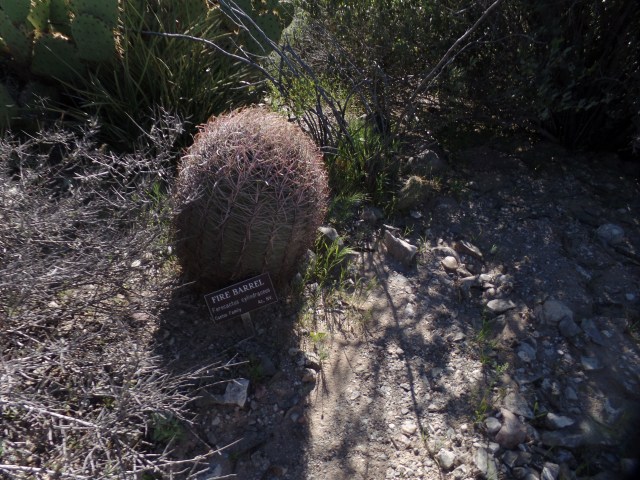
This is a Fire Barrel Cactus, found in both the Sonoran and lower Mojave Deserts.
Maguey de Pulque is the source of a medicinal fermented beverage, popular first with the indigenous people of northwest and central Mexico. It was originally used to relieve intestinal discomfort.
Palm trees, of various types, are found throughout the deserts of Mexico. This San Jose Hester Palm is found only in Baja California.
Here is a testament to the full botanic splendour of the Sonoran Desert, holding its own with the exhibits of Desert Botanical Garden (Phoenix) and Arizona-Sonora Desert Museum(Tucson). The flowering has not reached its peak, but anticipated rains, next week, may change that. I may even catch some of the colours, when I am here next, on April 1-2.
The Curandero Trail, named for the traditional healers of Mexico, focuses on medicinal plants, both of the Sonoran and of the Chihuahuan Deserts.
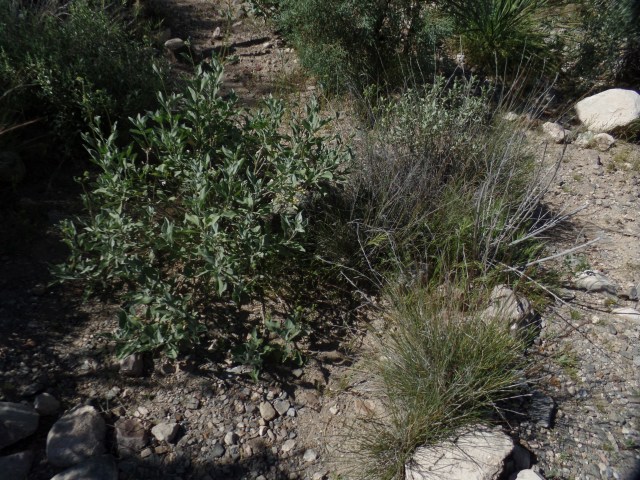
Desert lavender has a calming effect, similar to that of its cousin, in the temperate climates to the north. Here it is, in a dry tributary of Queen Creek.
Snakeweed, seen behind the informational sign, had a wide variety of uses, from treating snakebite to serving as a laxative for horses.
Boyce Thompson Arboretum has an extensive catalog of course offerings, on the uses of desert plants. I am likely to make good use of those courses, in the intermediate future.
Finally, here are a few South American and Australian desert scenes.
This is a Toothpick Cactus, from Argentina’s Gran Chaco.
The Chaco, like the Sonoran Desert, gets quite verdant, with winter rains (July).
The interior of Australia is, as is widely known, a place for only the hardiest of man and beast. This water tower is indicative of what might be found in a swagman’s camp. Swagmen herded livestock, in oases of the Outback.
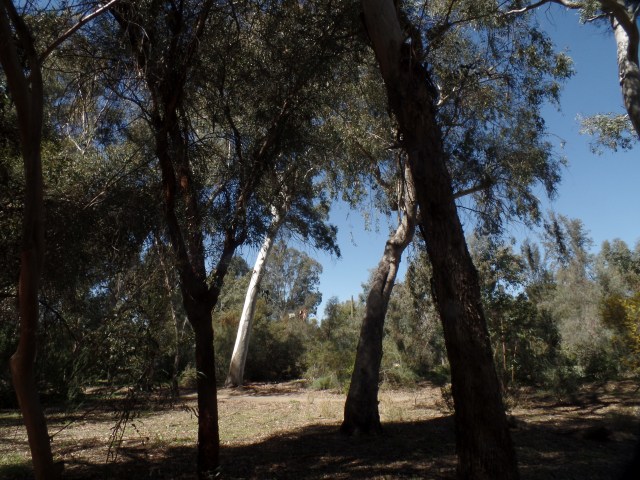
Here are eucalyptus trees, found in the eastern part of the Outback.
This gum tree does not supply chicle, as its Mesoamerican and African cousins do, but did give swagmen a supply of resin, for their workaday adhesive needs.
This is, of course, a minute sampling of what is in store for the visitor to Boyce Thompson. Two greenhouses, just shy of the park exit, offer sensitive African and Arabian desert flora. These will have their own segments of the park, in the near future, as will Central Asian and Mediterranean plant life.
December 31, 2016, Chula Vista- I am taking the readership on a brief journey back, with one photo from each month, that sums up the month, for me. So, let’s begin.
January-
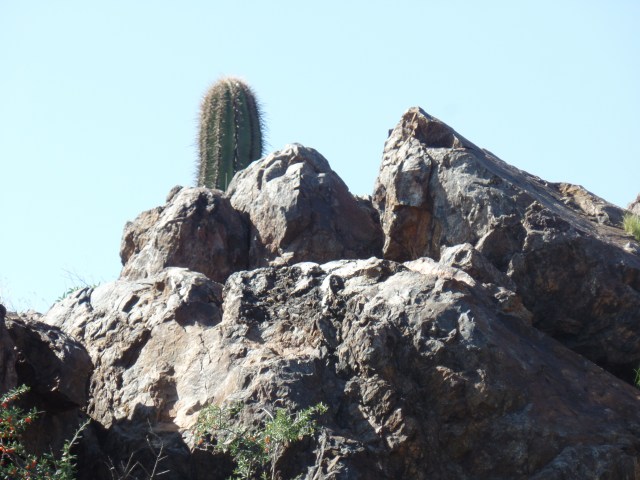
Pharaoh’s Face, with a barrel cactus keeping watch, south of the Agua Fria River, Black Canyon City
February-
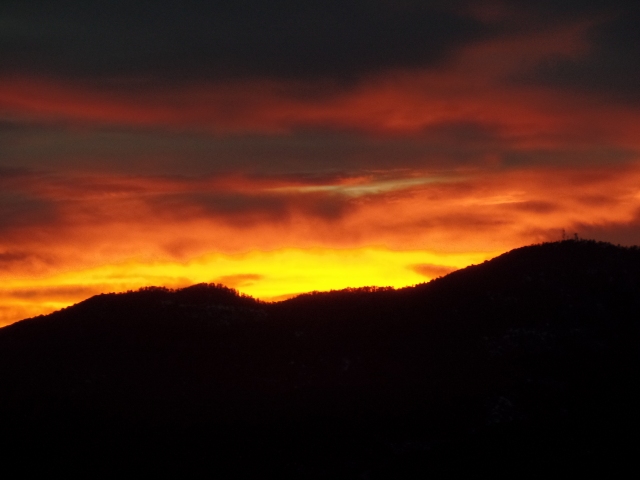
Sunset, over Goldwater Lake
March-
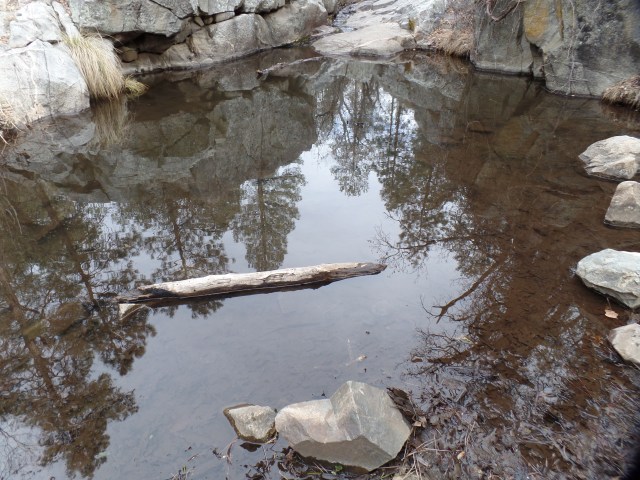
Small pond, Banning Creek, northwest of Goldwater Lake
April-
Quartz Mountain, north of Copper Basin
May-
Granite Mountain, Prescott
June-
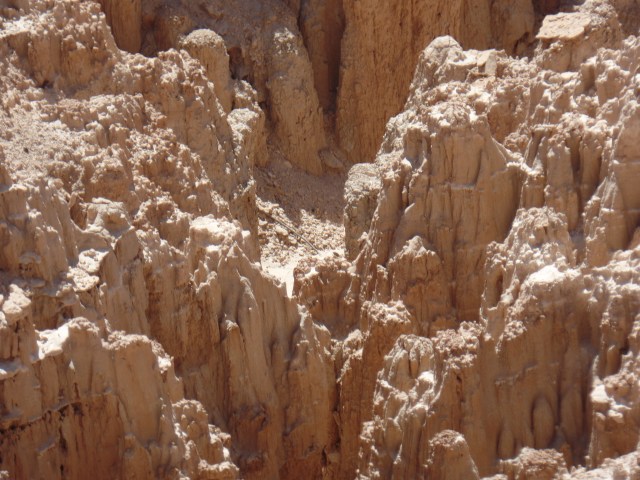
Cathedral Gorge, Pioche, NV
July-
Lake Redwine, Newnan, GA
August-
Kayla Mueller, who was killed in Syria. This is not my photo, but symbolizes the month of August, as I took no photos of my own, and the sacrifices of some Americans, in the fight against terrorism became front and center.
September-
View of Santa Maria Mountains, from Juniper Mesa
October-
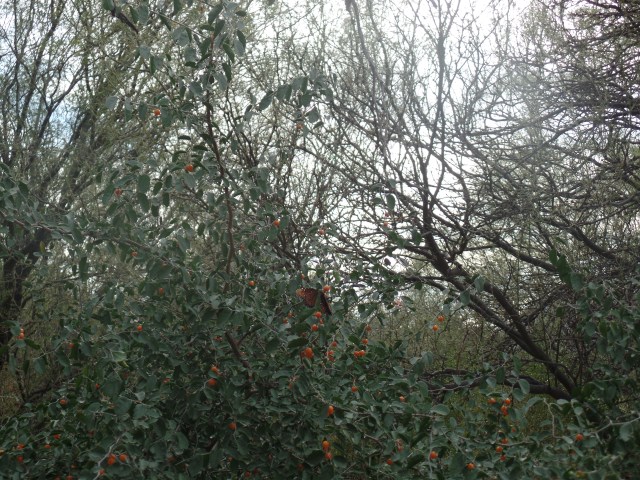
Monarch butterflies, in Agua Fria watershed
November-
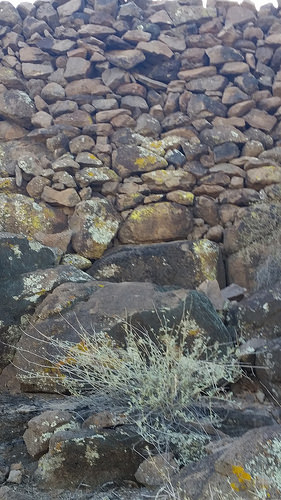
Agua Fria Fort, off Little Pan Trail, Table Mesa region
December-
White Christmas 2016, Prescott
So went the Year That The Common Man roared and I continued to explore.
November 6, 2016, Black Canyon City- As I rounded a bend, in the access trail to Little Pan Loop, this afternoon, I became a surprise visitor, to a local resident.
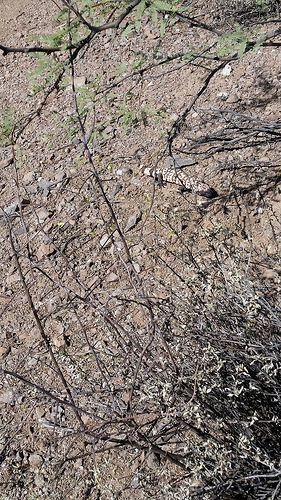
The juvenile Gila monster was a bit bemused, but after a few minutes, it moved off the trail and watched me from some brush. It was a good reminder that reptiles find the early November weather perfectly satisfying, and I watched for rattlesnakes, as well. None appeared, though.
After a quick crossing of the South Fork, Agua Fria, I found the southern turnoff to Little Pan Trail, and moved along, passing the Royal Throne, which overlooks the river,
then across the Agua Fria itself, taking time to wander a bit around the mesquite and saguaro forests that line an island, in the middle of the riverbed.
Little Pan Wash is not on the main trail, but it makes for an interesting side trip.
It is one of the areas that was heavily mined, in the early 20th Century. Little Pan Mine, upstream on the Agua Fria, is still accessible to an intrepid visitor. I did not seek it out, this time.
About twenty minutes after leaving Little Pan Wash, I came upon the overarching attraction of this trail: Agua Fria Fort, near the northern end of Little Pan Trail. A side road takes the visitor to this remarkable fort, built by the Huhugam people, as one of their northernmost places of settlement.
After examining this durable fort, from three angles, I walked quickly to the point where Little Pan meets Williams Mesa Trail, and the main Black Canyon Trail towards Black Canyon City. It was there that I headed back, along Little Pan, towards the trailhead.
Thus ended my first visit to this lush, exquisite and challenging area, past which I have driven, so many times. There remain three sections of the Black Canyon National Recreation Trail for me to explore for the first time. Next up is a foray from Table Mesa trailhead to Boy Scout Loop. After that, Boy Scout Loop to New River Road, and New River Road to Lake Pleasant Road, will take me through lower-lying Sonoran Desert terrain, to the edge of Phoenix. It will represent some 88 miles of hiking, over a two-year period, and will be my longest completed route.
I set out a bit earlier today, than last weekend, and the the traffic between Prescott and Table Mesa Road was decidedly sparser, this time. The above photograph, taken at the South Fork of Agua Fria River, reflects the calmness I found today.
There was plenty of activity, especially in the river beds. As I came down off the second ridge, to the nearly dry South Fork, a man was teaching his daughter how to negotiate boulders and sand, in the course of off-road exploration. She thought better of trying to go over a two-foot ledge, and he certainly didn’t push the matter. It was a successful lesson, and I encountered them again, at the Agua Fria itself, some twenty minutes later. There, the challenge was deep sand, but they again prevailed.
The river and its tributaries are the main features of Williams Mesa Trail, which is the western half of the Little Pan Loop. I stuck with Williams Mesa Trail, going to and from, as it was clearly marked, as opposed to the actual north link to the eastern Little Pan Trail, which I will explore from the south link, on my next trip to Table Mesa Road.
Here are several photos of the afternoon’s offerings.
Below is a view of the Agua Fria, from a southern ridge. Notice how dry it’s been, this past month.
The limestone and granite ledges offer a convenient set of steps, up the ridge towards Williams Mesa.
Before that, though, I thoroughly enjoyed the blissful peace of the pools along the river bed.
Above, is a view of the unnamed mesa that I viewed from Cottonwood Gulch, on a hike from Black Canyon City, last spring. It drew me, with a sense that there is a goodly amount of spiritual energy there. I certainly felt energized, after sitting among some rocks that had broken off from the mesa, and offer themselves as a resting place.
I spent about twenty minutes here, writing in my BCT journal. From there, it was back towards the Agua Fria. The junction with the east Little Pan Trail was not in evidence.
This marker appears to be turn-around point of some kind, though, and it was fairly easy to get back on the Williams Mesa route, and the Agua Fria.
Looking closely at the river pool, one can see the thick algae that results from the water standing too long.
Cacti are certainly resourceful, as is this one, which look like a tongue sticking out of the rock.
Look closely above, and note two Monarch butterflies, feeding.
Here is another take on the late afternoon appearance of South Fork, Agua Fria.
A small family of cattle were enjoying the leavings from a pumpkin smashing party, that had apparently taken place, last night.
No good morsel is left behind, in the Sonoran Desert.
So ended my 7.6 mile hike along Williams Mesa Trail, on a pleasantly overcast afternoon.
July 19-20, 2016, Hays, KS- Early alley-oop, on Wednesday morning, got me over to Country Cupboard, in Carterville, about five miles west of Marion. I wanted a simple breakfast, in a place favoured by locals- so there it was.
The conversation in the establishment was all about autistic children, and how they fare in the schools of southern Illinois. It seems a mixed bag. One mother found her child’s school to be minimally supportive. A grandmother expressed annoyance at how her grandchild was being received, day to day. This is an area which hosts a sizable public university. That, of course, in and of itself, does not guarantee equity in the treatment of special needs children. I read, just a few minutes ago, of a threat made against the parent of a special needs child, by a university professor in another state. Education does not guarantee either wisdom, or human decency. So, these ladies, and thousands like them, soldier on, fighting for their children- as only decent mothers can. We won’t concern ourselves with the indecent ones.
I headed northwest, then due west, passing through metro St. Louis, noting that the Mississippi and Missouri appear to be in good shape. I stopped , momentarily, at a Steak and Shake, in suburban St.Peter, and turned myself into a balloon with a delectable mint Oreo shake. The burger, sadly, was forgettable, but life goes on.
In Columbia, I surprised a couple of old friends, who had moved there from Prescott, a couple of years ago, to be near family.
The Fourcks, of Columbia, MO
We spent about two hours catching up on life events, and mutual friends, in the comfort of their living room and at a nearby Cracker Barrel. I bid farewell to Emil and Pam, as evening approached, and drove on through Missouri, stopping only to savour the preserved prairie, at a rest stop outside Boonville.
Tall grass prairie, Boonville, MO
It seems to me that the more prairie we keep around, the more the soil will remain rich and productive. Monoculture, under whatever guise it is implemented, will only add to our food security problems, in the long term.
I skirted around Kansas City, took the toll road to Topeka, then got back on the freeway, as far as Salina, before stopping for the night. Super 8 offered a decent breakfast, the next morning- and I got a relatively early start, reaching this western Kansas university town, just before noon.
Hays is another quintessential prairie town, in some ways a blast from the past, though people here seem as informed and contemporary in style, as anywhere else. There is a mixed view of Donald Trump, much as I found in the conservative communities in which I found myself, in southern Missouri, Indiana, Pennsylvania, Massachusetts, Virginia and the Southeast.
Construction-wise, people here rely on stone.
Ellis County Courthouse, Hays, KS
I was taken by the smoothed brick streets of downtown Hays. The mood was fairly quiet, but there were plenty of people out and about- just going on with life, despite the heat. It was 104 here, as I spent about twenty minutes poking about the north end of the city center.
This stone gem looks like a church, but is now a law office.
The law office that looks like a church has this as a cross street neighbour.
The Ten Commandments, St. Joseph’s Parish, Hays, KS
It occurred to me that there are a few, at the famous church back in Topeka, who could stand to learn a thing or two from the folks at St. Joseph’s Parish. Then again, there are many, liberal, conservative, and in-between, who could do the same.
Here are a few more scenes of St. Joseph’s Parish.
Social Service Center, St.Joseph’s Parish, Hays, KSChurch of St. Joseph, Hays, KSChapel grotto, St. Joseph’s Parish, Hays, KS
The above is surely a place of restoration, on a busy day.
This store is still active, in the days of WalMart. I find that reassuring.
Downtown Hays has a popular lunch counter, inside the stationery store. Northwestern Office Supply’s soda shoppe is the place to go for a full salad bar, freshly made (from scratch) soups and all the soda fountain treats one can imagine. I behaved, somewhat, opting for a Reuben with cole slaw, and iced tea. Had it not been so hot outside, soup would have been a magnificent thing.
There are other interesting towns in northwestern Kansas, such as Colby and Oakley, but I had this little agenda, of getting to the Denver area in time enough to skirt rush hour, so I say, “Another time.” Yes, those of my friends who travel in rarefied circles, there is value to visiting the Prairie. It has our roots.
June 23, 2016, Eagar, AZ- I have been helping to staff a Red Cross shelter, in this small eastern Arizona town, for the past two days. Those who are here, have come because of respiratory issues. The smoke from the Cedar Fire, a human-caused forest conflagration, has been more of a problem than the actual blaze Few, if any, structures have been affected by the fire. The school where we are housed is well away from the blaze, of course, as is the school in the Painted Desert town of Holbrook, where a second shelter has been opened. The concerns now are smoke and flooding, once the monsoon rains come, in earnest. We got a foretaste of the latter, last night, when the parking lot outside our staff motel got about twenty minutes’ worth of shower activity.
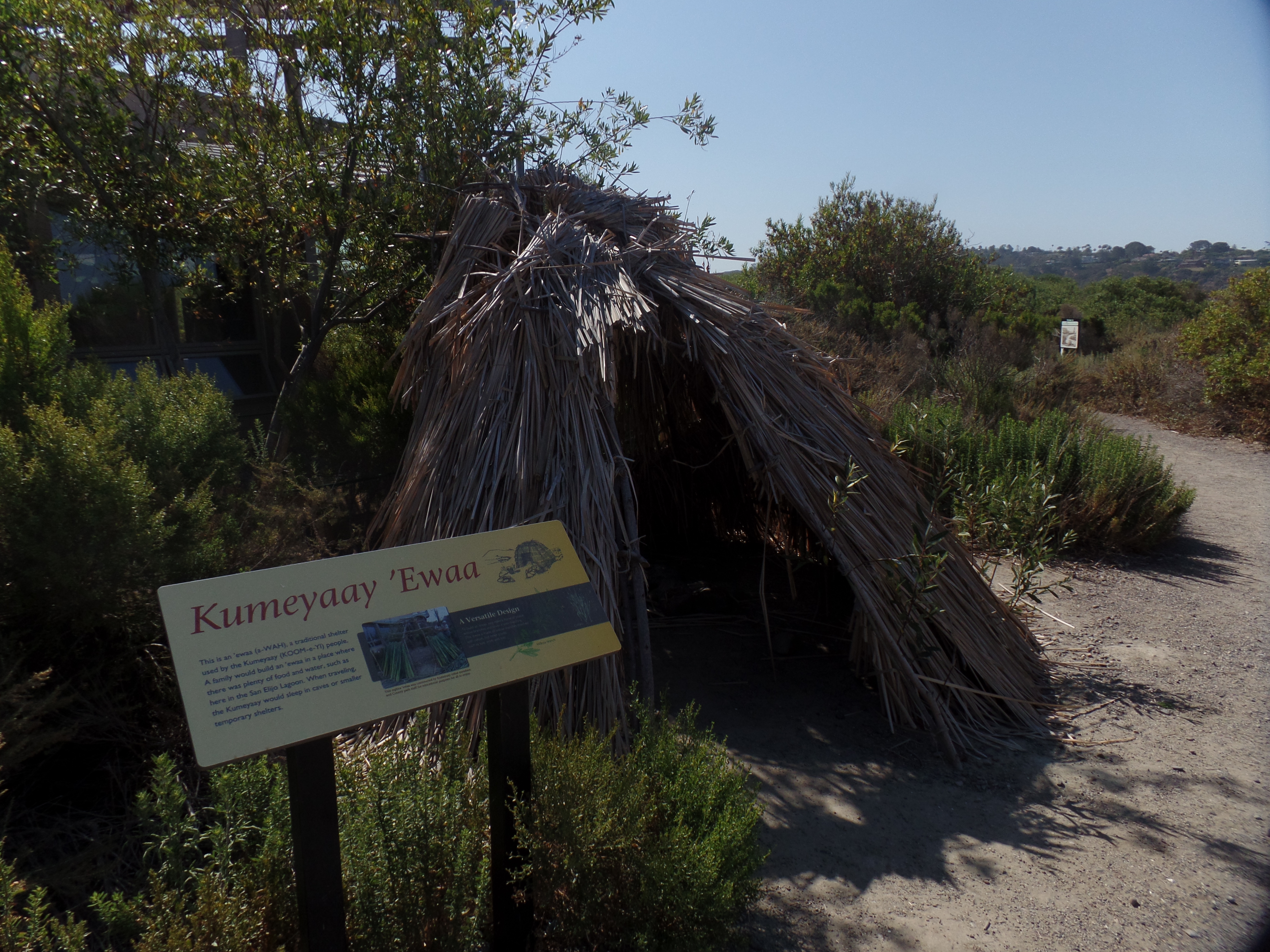
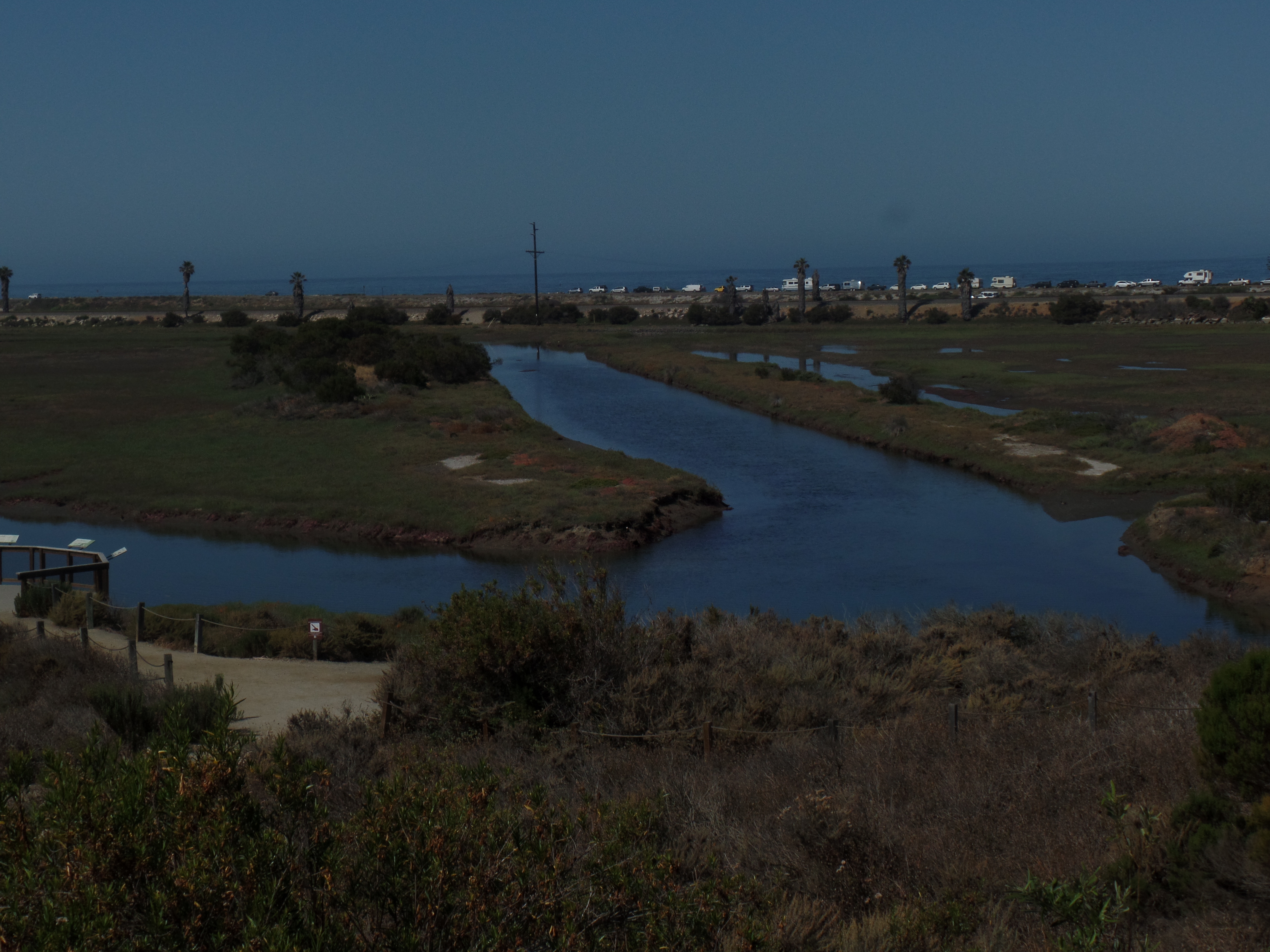
The other day, in between beach visits in southern California, I spent about forty minutes walking in the western lagoon area of San Elijo Lagoon Natural Reserve, in Cardiff-by-the-Sea, north of San Diego. A brackish water lagoon is also a shelter. Both marine animals and desert mountain creatures find a safe haven. The lagoon is, however, a tenuous place of refuge. Given its location near various industrial areas, there is always a balance to be struck between the natural filtering that water plants offer and Man’s perceived need to generate waste, in the name of “prosperity”. Brackishness has a long way to go, in being appreciated for what it offers the balance of nature.
Thus, San Elijo’s lagoon is a vital educational tool. Here are some views of the western portion of this extraordinary refuge.
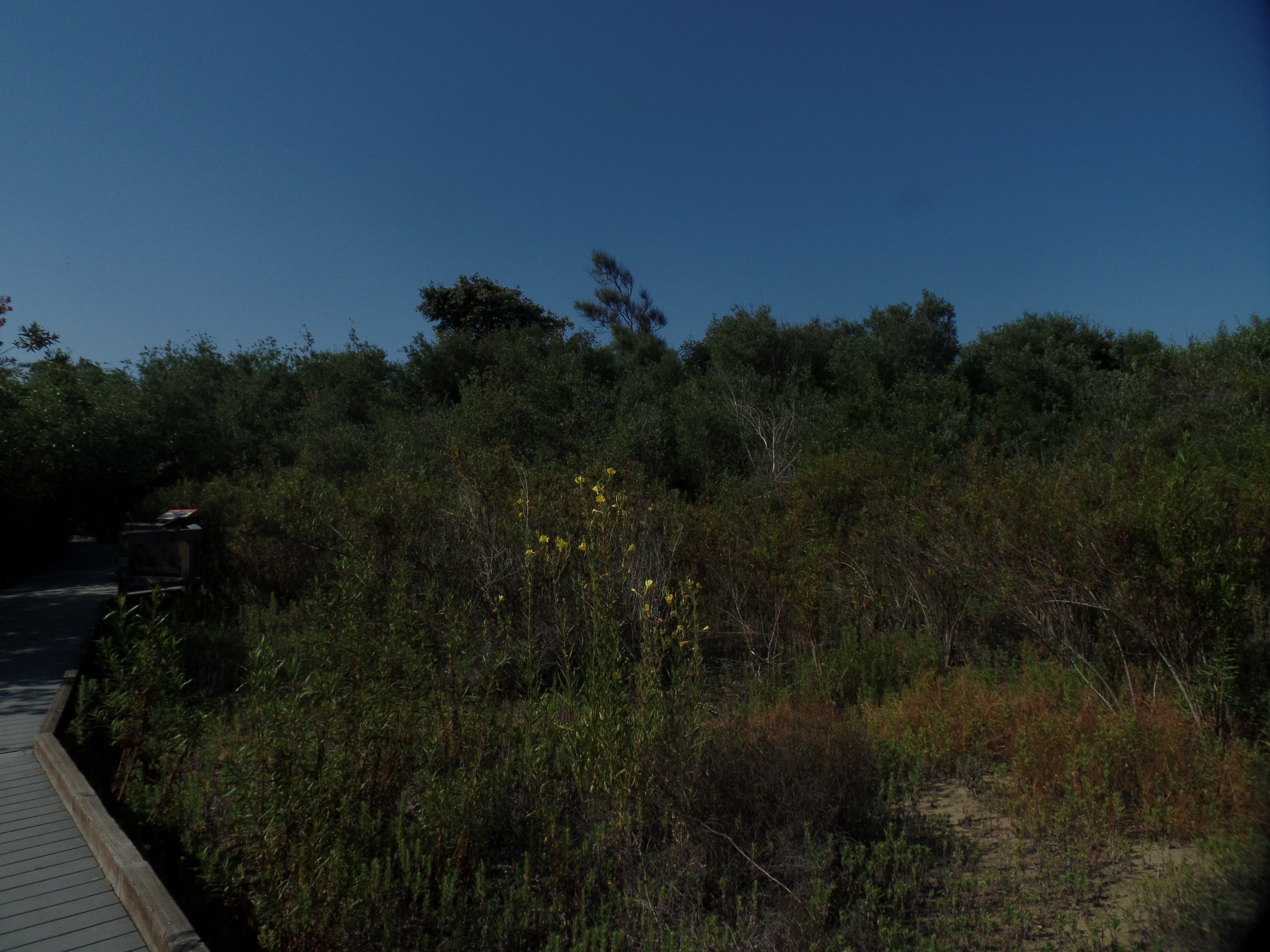
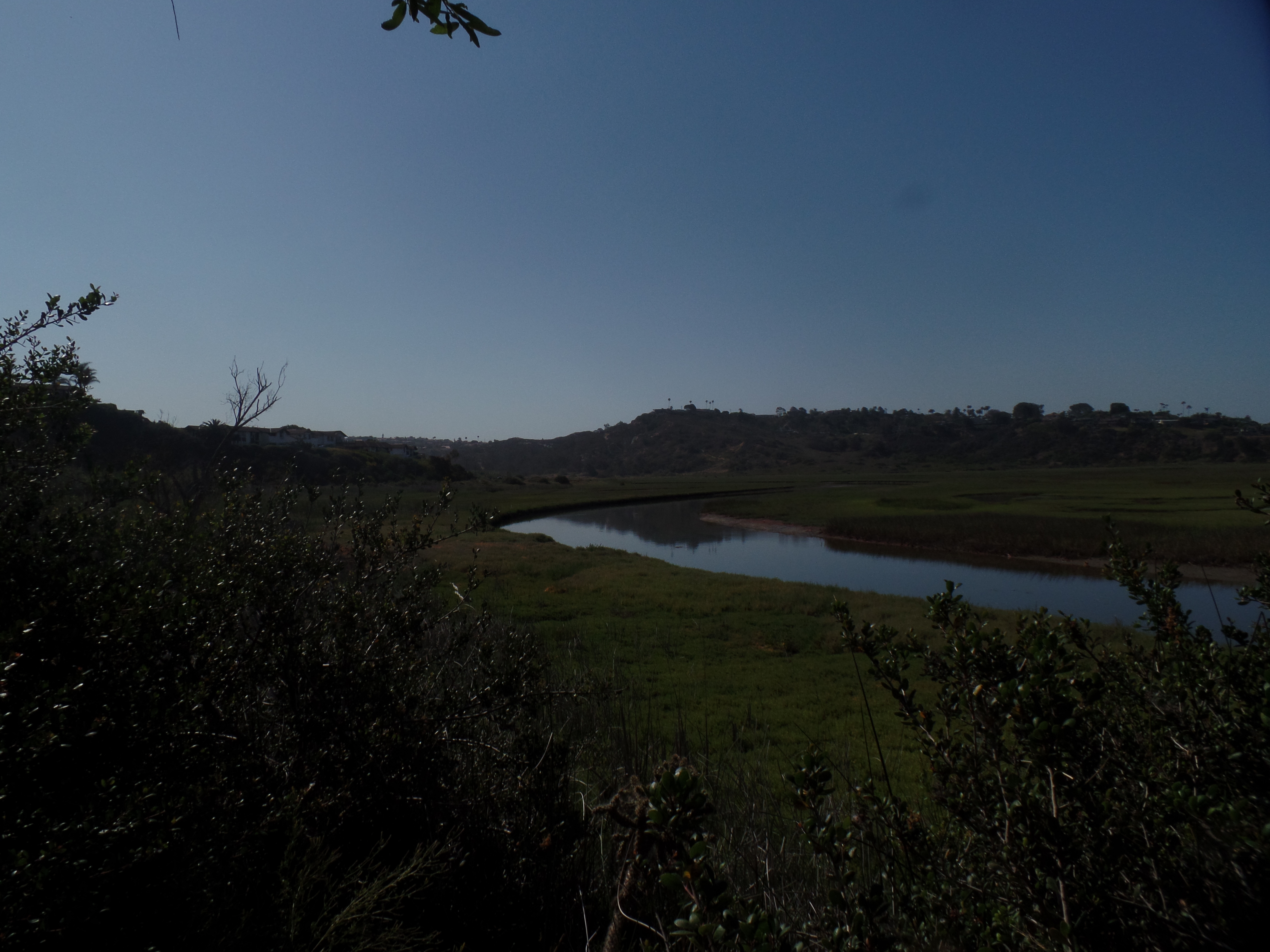
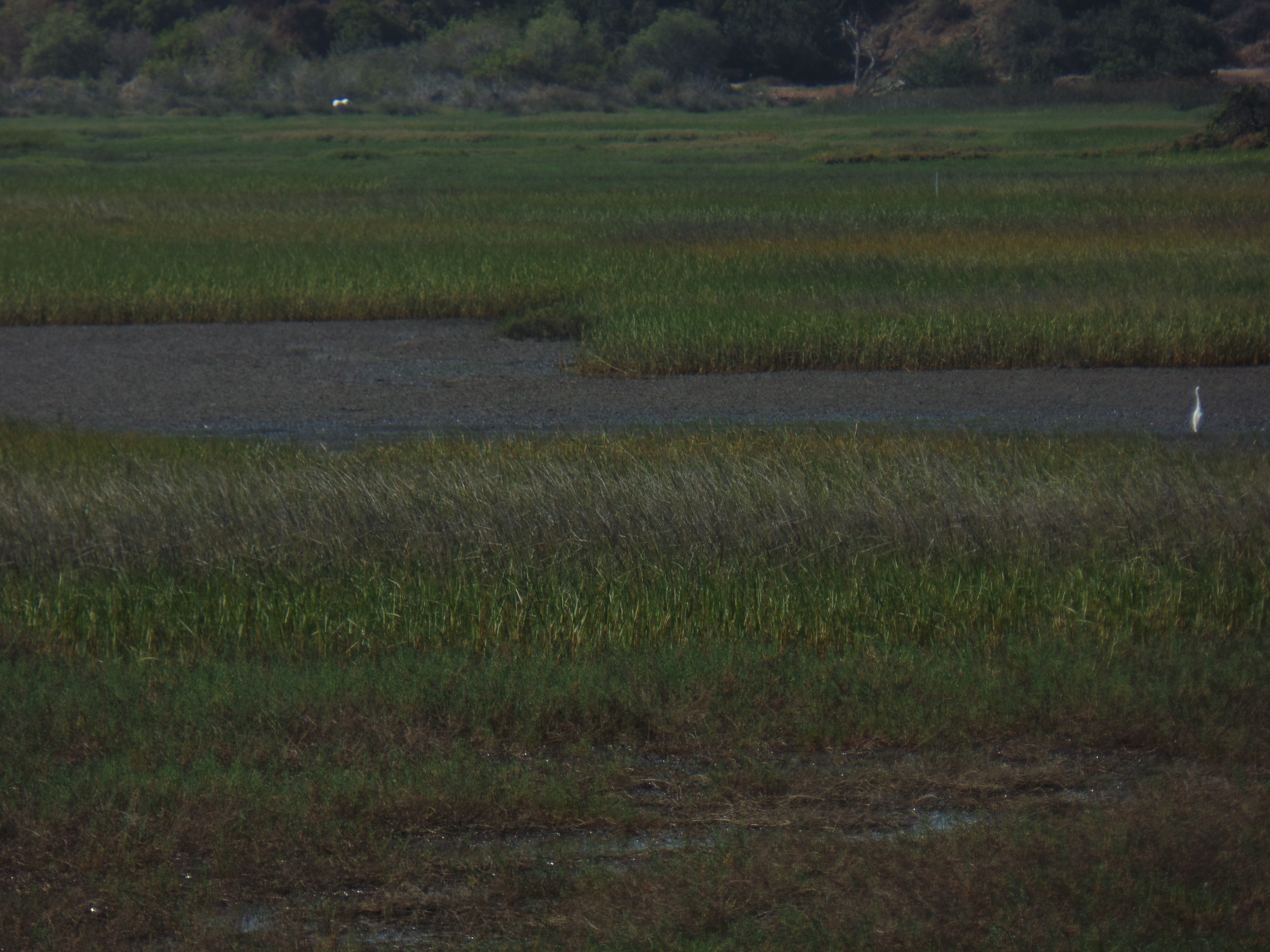
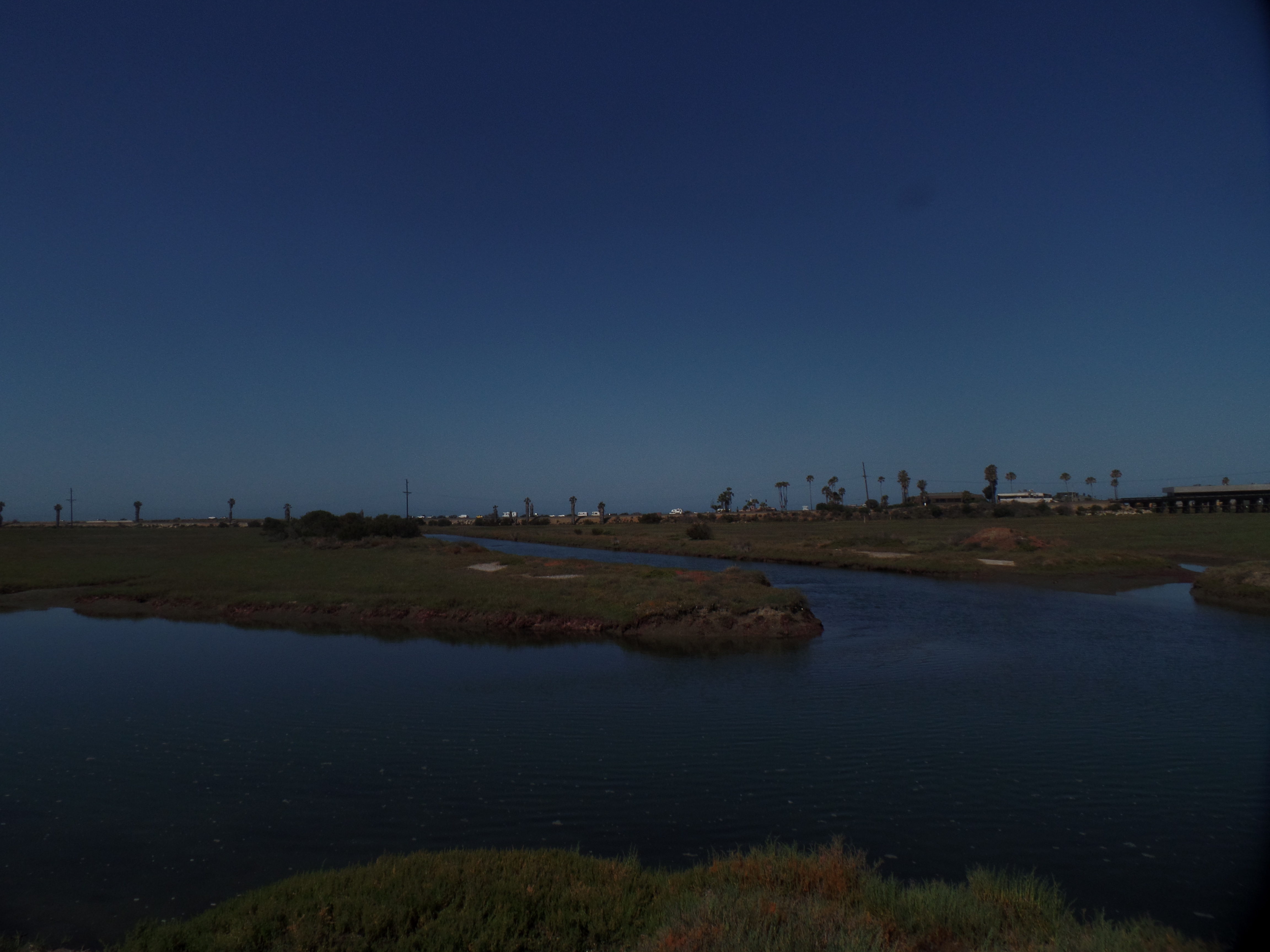
Thick vegetation is needed, to help filter out toxins.Several channels converge in the lagoon, en route to the sea.A lone egret was partaking of the solace, this morning.The channel on the right has cut through to the ocean.The Kumeyaay people, now also called Diegueno or Luiseno, had simple, temporary dwellings, when they came to the lagoon to gather fish, crustaceans and kelp.Here is a view of the ocean-bound channel, from the Visitor Center’s second-floor observation deck.
The eastern section of San Elijo Lagoon Natural preserve lies east of Interstate 5, in the community of Encinitas. It’s an area best enjoyed in the coolness of Fall. I may well stop and investigate the emerging channels and their hillside source, come October.
There are no real external shelters from one’s own struggles. The only way, as was said in “The Empire Strikes Back”, is through. I have been my own worst foe, in so many situations, that the aforementioned option has become my default. There were two instances, in the past day or so, where my efforts at maintaining the shelter clashed with others, who were either not thinking things through, or were just worn out and seeking the path of least resistance. The only thing I could do, in both cases, was quietly continue what I was doing, for the benefit of the shelter clients, while not pushing the confrontation envelope. Our manager has confidence in my judgement. This is a continuation of what I experienced this past Spring, at Prescott High School. It’s refreshing, actually, and indicates I’m doing something right.
Saturday and Sunday were among the best, most bonding days I’ve had with Aram, in a good long while, which is saying something, because we are tight, for two who live such separate lives, in neighbouring states.
It comes down to parenting never being a work of completion. I bounced things off my Dad, every so often, until he was no longer physically here to approach, for that purpose. He still makes his views known, though, and I am finally at the point where I sense he is happy with my choices. I can say the same about my pride in my son. He has established himself as a valued presence, though his current position is not his life’s work.
Saturday was a day for errands, so we went to the recycling station, which is actually not from his place, contrary to what their website says. We also found a Michael’s, for some frames he needed. I was pleased to have found one that fit an off-sized print he had. Filippi’s, one of my A-List restaurants in San Diego, has a branch in Chula Vista, so we hopped on over there for a sandwich lunch.
Sunday was a scorcher, all over the continent it seems. I got reports from friends in Ontario, in Florida and in the Midwest, of horrible temps. We nonetheless enjoyed a forty-five minute revisit to Japanese-American Friendship Garden, in Balboa Park, with a concert featuring the world’s largest carillon pipe organ, in the background.
Given the heat which most people reading this endured yesterday, I present you with various scenes of running water.
The bonsai exhibit is an exception, but it endures with minimal watering.Aram’s birth sign is water. H2O has always been his friend.The water filters along rocks, carefully placed along the downslope.This mallard was more than glad to stand in pose.Close your eyes, and imagine Old Japan.Rocks and flowing water are staples of the Japanese garden.Small cascades invite one to splash about; though that would be bad form.Lilies are more common here, than they were a few years ago.Just how deep are these rocks?
We were suitably inspired by the water scenes, to head straight for the Jamba Juice, in a Chula Vista shopping mall, near the harbour. Copious amounts of refreshing liquid are always welcome to both our palates.
Dinner was, of course, a buffet- at Zorba’s Cafe, with all my favourite Greek dishes. This time, though, we both “made do” with about half the offerings. Less can definitely be more.
I will go philosophical in my next post, which is the 1,000th of this website. Scenes of the Cardiff-by-the-Sea beachfront, and of San Elijo Preserve’s western lagoon, will help in this effort. Stay tuned.






 March 14, 2017, Superior- No doubt about it, this area has me hooked. Boyce Thompson Arboretum State Park, a combination of Desert Botanical Garden and the Prescott Circle Trail, is the centerpiece of an intensely spiritual region. Queen Creek, which runs through the park, on the south side, has carved Arizona’s best-kept secret, in its network of canyons. Picket Post Mountain, to the west, watches over the Arboretum, like a strong big brother. The people I met, from a gentle wanderer who is exploring all the National Forests west of the Mississippi, to a vibrant,passionately caring barista, exuded the sort of spirituality that comes from tapping into the extant energy field that is found in places that stay close to their natural origins.


 Boyce Thompson Arboretum has an extensive catalog of course offerings, on the uses of desert plants. I am likely to make good use of those courses, in the intermediate future.













 The limestone and granite ledges offer a convenient set of steps, up the ridge towards Williams Mesa.


 Looking closely at the river pool, one can see the thick algae that results from the water standing too long.