Back to the Border, and to Bull Pasture, Part I: Lukeville and Ajo

2

March 14, 2024- Traffic was bustling, at the Lukeville/Sonoyta Crossing. The place had been closed, a few months ago, with the Federal government bemoaning lack of resources to handle a surge in migrants trying to cross into the United States. It turned out this was mainly a processing issue, and the Arizona National Guard was dispatched to help with ancillary duties, so that the Border Patrol agents could focus on clearing up the processing of those who were seeking asylum, from any one of two dozen countries, and returning those not qualifying for refuge, to Mexico, or to their countries of origin.

The United States/Mexico border, at Lukeville/Sonoyta.

Lukeville had plenty of traffic, going both ways, but the restaurant was closed and the gas station convenience market’s shelves were half empty. I saw little evidence of the crisis of the past few months, other than an active Border Patrol work station, on South Puerto Blanco Drive, that had a few tents set up-either for detained migrants or for agents to get out of the sun. It is likely that they are used for a little of both. These events come in waves, though, so unless Congress and the President can reach an understanding, soon, it is likely to be a long summer of ebbs and flows of both desperate and opportunistic people trying to enter the U.S.

Before all this, and my return to Quitobaquito and Bull Pasture-both within Organ Pipe National Monument (Lukeville also lies within the Monument), I took some time to look around Ajo. Morning’s light, at Copper Sands Motel, revealed this courtyard.

Relaxing spots, at Copper Sands Motel, Ajo (above and below)

In town, there are two stand-out areas of note: The Plaza, and Curley School. Both were built in the 1920s, when Phelps-Dodge Corporation began to realize the peak operation of its copper mines in the area. Curley School is named for the company’s regional manager: Michael Curley. Ajo Plaza, in the style of a Spanish community gathering place, was the one area where the three otherwise segregated ethnicities, Anglo, Mexican and Tohono O’Odham, could mix freely. Today, of course, there is no segregation. I saw people of all racial groups here, as elsewhere in the country-and in each case, they were working in responsible positions.

Here are two views of Ajo Plaza, where several people were gathered, to relax over coffee and tea, or to discuss business.

East side of Ajo Plaza
North side, Ajo Plaza
Ajo Plaza’s Greenspace

Across from the Plaza is Immaculate Conception Catholic Church, also a marvel in white.

Immaculate Conception, from the east side.

Curley School educated all Ajo area students, from 1919-1997. When it was found to be in disrepair, a group of Ajo residents, working with the University of Arizona, developed a renovation plan, and the facility, consisting of nine buildings was refitted as artisan apartments and up-to-date classrooms, for the practice and study of the Fine Arts. Here are three views of the facility.

Main Building, Curley School, Ajo
Inner Classrooms, Curley School, Ajo
Standing Duck Cairn, Curley School, Ajo

As with all such operations, the New Cornelia Open Copper Mine ran out of its product, and has left tailings in its wake.

Tailings from New Cornelia Mine, east side of Arizona Highway 85, south of Ajo.

Hopefully, the area can be cleaned up and restored as a natural area, useful to both people and wildlife. The same ingenuity that saved Curley School would be beneficial here.

NEXT: A return to Quitobaquito and Bull Pasture

Tucson’s Dome and The Pride of the Catalina Foothills

0

March 12, 2024- The Old Pueblo shimmered in the morning light, and invited me to stay a while. First was a dinner invitation, which I wouldn’t dream of passing up, then there was all that lay in front of me, in El Presidio, and nearby Jacome Plaza, the gateway to the University of Arizona. I would not have enough time to visit U of A, but more on that in a bit.

Pima County Courthouse, Tucson

My first stop was the Pima County Courthouse, the domed gem of downtown Tucson. Five To Oh Coffee is a small stand, inside the building, with plenty of seating in the patio just outside. In the Sonoran Desert, “outside” is comfortable all day long-from mid-October to the end of May. So, I took my large coffee and blueberry empanada to a shady spot near the yet-to-open Southern Arizona Visitors Center.

A few minutes later, it was upstairs to the Dillinger Courtroom, where John Dillinger and his accomplices were tried and convicted-after the Tucson Police duped Public Enemy # 1 and the gang into a baited trap.

Dillinger Courtroom, Pima County Courthouse

Dillinger was still a media sensation, and his craftiness was matched by that of the Pima County Sheriff, who sold tickets to people wanting to see the killer bandit in his jail cell. After his conviction, Dillinger was sent to a prison in Indiana, from which he again escaped, and was later killed in Chicago.

Once I had read the displays outside the courtroom ,including information on Wyatt Earp, it was time to check out the Visitors Center. There, I noted a diorama of southern Arizona, with various buttons that lit up cities, highways, rivers, mountain ranges (Pima County has nine of those) and Native American reservations (Arizona has 23 of those).

On the west patio of the Courthouse is a Memorial Park honoring the victims of the January 8, 2011 shooting, in a northeast Tucson shopping center. They ranged in age from 9 to 76, and included a sitting Federal judge, a Congressional aide and a girl who had been born on September 11, 2001. Left paralyzed by the attack was the shooter’s prime target: United States Representative Gabrielle Giffords, still alive and in recovery.

Christina Taylor-Green, the 9/11 Baby who died in the 2011 attack, was an avid swimmer. Thus, this fountain became a centerpiece of the memorial.

Heroes of an earlier time of difficulty are also honoured here. Among them was my late father-in-law, Norman Fellman, captured by the Nazis near the end of the battle, in January, 1945. He survived six months in the concentration camp at Berga, where he was placed because he was Jewish.

Lunch time brought me to a small food truck, parked at Jacome Plaza, just east of the Courthouse. Carlos Jacome, Sr, and his wife, Dionicia, raised thirteen children-and the downtown Tucson business core-with help from a former rival, Harold Steinfeld. Jacome’s Department Store, along with Steinfeld’s, was a staple of downtown, for decades. In honour of the Jacome family, all of whom had a keen interest in the business, Jacome Plaza stands in front of the central public library. OaxaRio Food Truck serves fresh, delectable Oaxacan and Sonoran style treats. Next to it is Special Eats, which contributes to autism and Down’s Syndrome assistance programs. Here is a view of Jacome Plaza:

“Sonora”, by David Black (1991), restored by Trevor O’Tool.

Once lunch was enjoyed, under “Sonora’s” watchful gaze, I spent a nerve-wracking, but ultimately fruitful hour-long learning experience, in Joel D. Valdez Library, attempting to get online, and finally figuring out, with the aid of two library clerks, that my VPN was blocking access to the WiFi. Good to know, for the future: Get online first, then activate VPN-so long as the network is secure, as this one was. This experience used up the time I would have spent walking over to the University of Arizona, but no matter.

After checking e-mails, creating the previous day’s post and enjoying a refreshing Shamrock Matcha, at Ike’s Coffee, across the street from Jacome Plaza, it was time to go up to Tohono Chul, Tucson’s signature northeast green space. “Tohono Chul” means “desert corner”, in the language of the Tohono O’odham, whose own name means “Desert Dwellers”. It is a prime botanical garden, preserved by Richard and Jean Wilson, in the late 1960s. The Wilsons owned nearby Haunted Book Shop, from 1979-97, and gradually pieced Tohono Chul together, until the present 49 acres resulted in today’s bright oasis. Today, Jamie Maslyn Larson and her team maintain the vision set by the Wilsons, and Tohono Chul is a bright spot in the Catalina Foothills neighbourhood.

Tohono Chul Botanical Garden, north Tucson
Geology Wall, Tohono Chul Botanical Garden

Jumping Cactus, aka cholla, Tohono Chul Botanical Garden.
A “boot” left by a sahuaro, serves as a nesting site for various birds and small mammals.

It was soon dinner time, as well as quitting time for the Park staff, so off we all went, at 5 p.m. I headed down to a Red Lobster, on the southwest end of town, and joined a couple of old friends for a pleasant 90-minutes of catch-up and great food.

Finally, the drive southeastward, to Benson, then Tombstone, and finally to Sierra Vista-where my favoured Knight’s Inn was ready with a comfortable room. Thanks, Old Pueblo, for once again showing more of your many good sides!

The Dreamer’s Edge

6

March 9, 2024- The young lady looked, for all the world, like a 1920s Flapper. The moment she began singing, though, the melodious and heartfelt voice brought the chatty audience to rapt silence. Her connecting two very different semblances and times-the Roaring Twenties and the Hesitant Expectancy of the 2020s gave me much to consider. There really isn’t a whole lot different, between the two decades that lie a century apart.

Two business-oriented politicians, Calvin Coolidge and Donald Trump, set the tone for the conduct of affairs in the country. Both believed in the power of the marketplace and in cultivating a top-down economic structure, in which commercial interests are to be the stimulators of the nation’s prosperity. Coolidge’s programs did not factor in the suffering that was still extant in Europe, after World War I and the Influenza Epidemic of 1918-19. Trump’s programs were stymied by Covid-19, and by the turmoil in underdeveloped countries, much of it fueled by the international drug trade and its accompanying violence.

In the economic crash that followed the failure of Coolidge’s policies, and those of his successor, Herbert Hoover, only a combination of progressive governmental intervention, and the outbreak of another global conflict brought about recovery on a massive scale. It took twelve years to complete. The turmoil that accompanied Trump’s efforts was not as severe, but some governmental intervention from his successor’s team has helped lower inflation and improve at least the long-term prospects for a good many people. Time will tell whether the short-term efforts of the current administration will register with the American public.

In both decades, the difficulties faced by the average person led to impatience, and a certain amount of tolerance for authoritarian rule-even among those of historically marginalized populations. Only the recognition of Franklin D. Roosevelt’s comprehensive platform for recovery, and the patriotic fervor that followed the bombing of Pearl Harbor, and the D-Day landing at Normandy, three years later, stayed the hand of ultra-conservatism. It remains to be seen how the current, palpable climate of impatience will play out, in the Fall.

The capacity of the human spirit to look beyond temporary difficulties, the dreamer’s edge, if you will, may yet temper any rush to embracing a retreat from the constitutional republic, a form of democracy. In order for that to happen, the frequent victims of reverse marginalization need to be heard, and to feel that their concerns are being addressed-by the forces of a democratic mindset. That must happen, without the zero-sum game playing out; without historically-marginalized groups being shoved, once again, back into the corners of the American Mansion.

Will the current Twenties roar, or squeak?

No Backward Pivot

0

March 8, 2024- My mother was a stay-at-home housewife, who also had a marketable skill: Hairdresser/cosmetologist. Our kitchen was her workspace, and I was honoured to make runs on a bus, to downtown Lynn, MA, from our home in Saugus, to purchase items that she needed for her trade. She is well-read, well-spoken and has kept up with current events, even in her 90s. Mother is nobody’s fool, and the four of us, her adult children, are all the better for it.

Today is International Women’s Day. Besides the maudlin truth that I would not be here today, were it not for a woman, it stands that I would not have had any kind of a life worth living, were it not for the life lessons imparted by Mom, by the six women who taught in our Elementary School, by several of the teachers in Junior High and High School (most notably Mrs. Katherine Vande and Miss Gladys Fox) and the devotion of my late wife, Penny. I would not be living as full a life as I have now, without the friendship of at least two dozen women, including someone I adore the most., but ALL of whom I love dearly.

There are those, both male and female, who harbor a thinly-veiled desire to put women “back in their place”, harkening back to the time when Mick Jagger could sing an abysmal tune, like “Under My Thumb”, or John Lennon croon a wretched song like “Little Girl”, and get away with it, even making a fair amount of money in the process. Maybe they want to go even further back, to the time when women were legally their husband’s, or father’s, chattel.

The genie cannot be put back in the bottle. It is ironic that many of the women who spout “traditonalist” views are self-made professionals, who have even told me that they are perfectly fine without a male mate in their lives. In that last pronouncement, they are right, in my humble opinion. Going back to the time when I was first contemplating proposing marriage to Penny, I weighed, very carefully, just how much I would add to the already distinguished and successful life she had made for herself. I am glad to have fully supported her further achievements, of two more Master’s Degrees and the implementation of three innovative programs, in schools where she subsequently worked. The woman was a genius. She was a fine wife and mother, but she would never thrived in a stay-at-home role.

In the Baha’i writings, it is stated that, given a choice of only educating one of two children, a son or a daughter, it is preferable to send the daughter to school, as the first teacher of a child is the mother. Cases in point: It was my mother who taught me to read, and to write in cursive letters. She was professional and exacting, and the lessons stuck. It was Penny who taught our son, Aram, to read, and to be careful in researching various aspects of life, before making a decision. Every one of the mothers among my female friends has had an outsized influence on the achievements of those of their children who have reached adulthood. That includes my sister, who has raised four strong and successful professionals.

The clock cannot be turned back. Thank God.

Salida Gulch’s Legacy

0

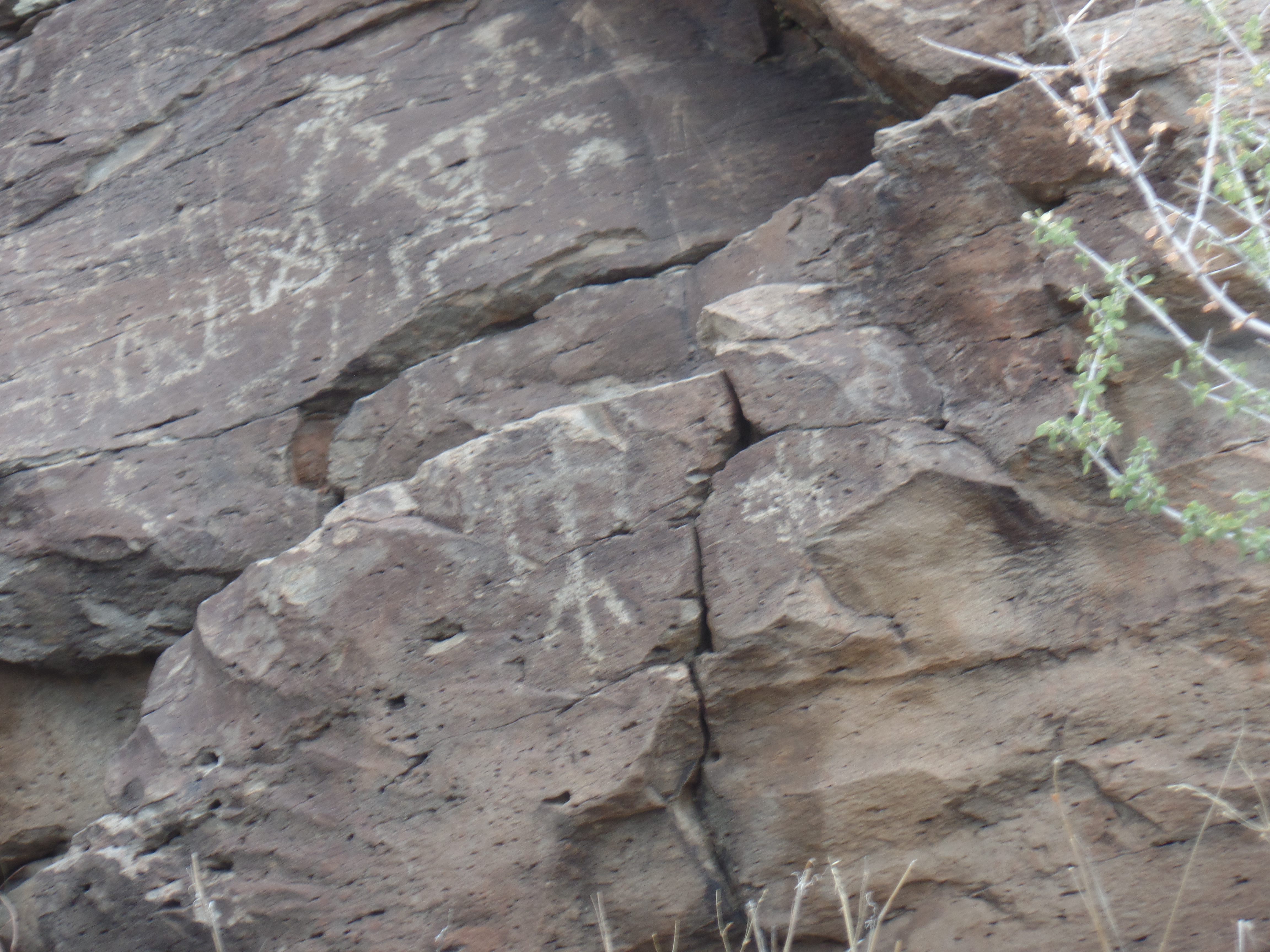
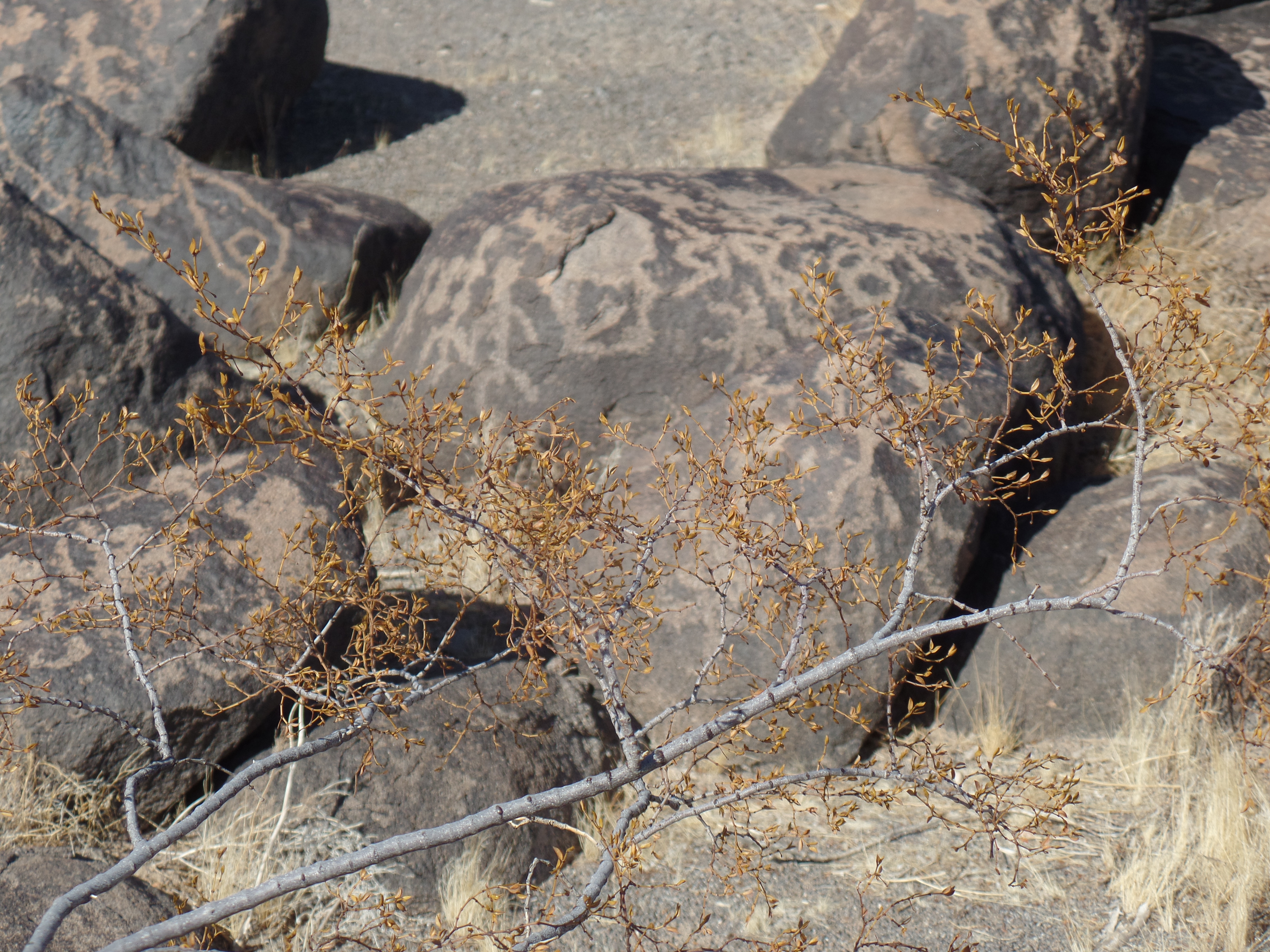
February 23, 2024- The images are still clear, after so many centuries: Big-horned sheep, dogs and dancing figures, presented in a small rock outcropping, possibly selected by the Huhugam people who once lived here, at the northern end of their realm, because of the smooth surface area of the slate.

My hiking buddy and I came here this morning, and found the petroglyphs, for which we had been searching for close to ninety minutes. We had gone up and over Salida Gulch, coming close to its junction with Blue Ridge Trail, then heading back towards the trailhead from which we started. About two miles further, there the images were, calling to us from a bygone millennium.

Infinity, a dancing figure and pronghorns- Salida Gulch Trail
Big-horned sheep and mystical symbols
Dancing figure, big-horned sheep spirals and possible snakes
Multiple big-horned sheep and what appears to be a mountain lion

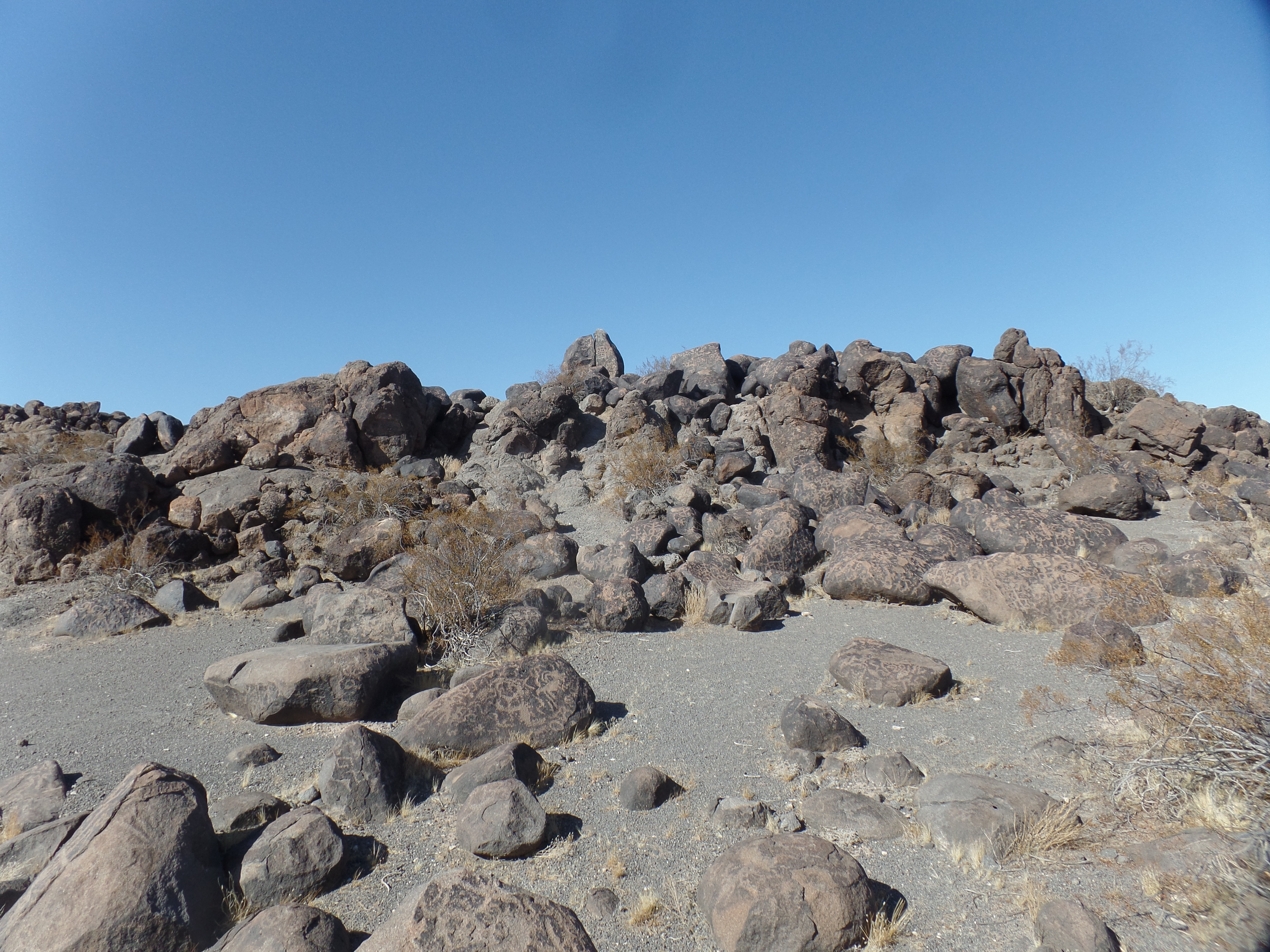
This sort of find is one of the things that make hiking in the Southwest so very rewarding. The glacial residue, by itself, is another. Rocks and boulders are everywhere, along the paths carved by glaciers during the last great Ice Age. Here is a standing stone, reminiscent of Carnac, or Easter Island.

Another “sentinel”, left by glacial retreat.

There will be more such scenes, as March and April play out, here in Home Base I.

A Library Jenga, Nine Lanterns and OB’s Farmers’ Market

4

February 21, 2024, San Diego- The stack of books is about 5 feet, 2 inches tall. It is arranged like Jenga blocks, though it won’t fall down if one pulls a book from the middle. This is Big Rainbow House’s library.

A Jenga Library

With a more sunny day in the offing, I headed up to visit a long-time friend in Orange County. In the past, we have frequented one or another beach front restaurant. Today, the focus was on Laguna Niguel, a community about five miles inland from Dana Point. I got to drive the length of Golden Lantern Road. There are nine “lantern” roads, emanating from Dana Point Harbor, that I recall: Violet, Crystal, Blue, Green, Ruby, Amber, Silver, Copper and Golden. The street names were a marketing tool for the newly subdivided community of Dana Point, in the 1920s. Each starts with a coloured lantern atop the western terminus of the street.

Before that little drive, I spotted a pair of harbour seals, lounging on the stern of a small yacht, in Dana Point’s central marina. The female was barking, clamouring for attention-or so it seemed. The male was seemingly dead to the world.

Two on a platform

After a brief stroll around the marina, and an equally short walk at Dana Point’s hilltop overlook, I headed towards Laguna Niguel. A large family of Baha’is once lived in this pleasant. green canyon-laced community. So I felt drawn to have a look at the area. Being a bit early for our lunch appointment, I walked around the community’s regional park. Its centerpiece is Aliso Creek, a shallow rill that is nonetheless running in robust fashion-a bantam rooster of streams, if you will.

Aliso Creek, Laguna Niguel Regional Park (above and below)

Just after I took these shots, I spotted a pair of Mallards, attempting to cross the road. I also spotted a vehicle coming towards them. Gesturing to the driver and pointing to the male duck, either spooked the quacker or he felt the vibrations of the car. The pair dashed back to the side of the road and the car kept on going. The ducks then made their way to Aliso Creek.

The surviving mallards (in center left, Aliso Creek)

Lunch, at Avila’s La Ranchita, one of about five family-owned chains, in southwest Orange County, is a true delight-with every dish prepared on site, from fresh ingredients-no cans or bottles. There is no skimping on the meats and vegetables in the various tacos, quesadillas, tamales, enchildadas or tostadas. Equally important, the chips are baked daily and the salsa is freshly made. Even the iced tea is brewed on site. I am always alert to the difference between fresh and processed. This place is for real-and worth a drive eastward from the beach.

I came back to Ocean Beach, in time for the Wednesday Farmers’ Market. It is slightly larger than ours back in Prescott-but this is San Diego, after all, and the vegetables, fruits, cheeses, juices and various hot foods are all amazing, in variety and quality. I got a few items, and called it a night. One must be prudent, even when on holiday.

Alarm Bells

4

February 16, 2024- The three of us went in the front door,at the main Fire Station, in the small, sprawling community of Mohave Valley, east of Needles. We were there as part of the “Sound the Alarm” program, by which the Red Cross, acting in concert with local Fire Departments, first leaves flyers for an upcoming smoke detector installation, in a given neighbourhood, then returns, 1-8 days later, to install the detectors, where requested.

The event was scheduled after two recent house fires in the area. The first claimed the lives of a pregnant woman and her baby,as well as her in-laws. The second, in nearby Bullhead City, claimed the lives of five children. I walked by the ashes of the first house, this afternoon. Workers were clearing the debris, with the aid of a bulldozer. The eerie silence resonated, broken only by the barking of ubiquitous guard dogs, who seemed to be in every yard in the five-block area. I can only imagine the heartbreak of the surviving son, husband and father, going on alone.

Looking for the Chief and his Captain, we were informed that it was lunch time. So, we ourselves went off to Bonanza Cafe, where we found good quality diner fare, served with a smile. The smiles broadened, when we told the server why we were in town. A patron named Kevin, sitting nearby,paid for our lunch as he and his wife left the restaurant. . People tend to like those who take interest in their community.

Once back at the Station, we planned out our canvass of the five-block neighbourhood, a mix of new homes and mobile units. We focused on the mobiles, as building codes have mandated hard-wired smoke detectors, over the past ten years, or so. The task was made very light, actually, as we were joined in the canvass by an engine and an ambulance, which were thankfully not called away during the activity.

Thus did my brief “hiatus” from Red Cross volunteer service come to an end. It turned out that this interlude was brought on by an AI glitch, not by the fit of pique that I had noticed, at our last meeting. Microsoft marches to its own drummer, and doesn’t much care about who is getting along with whom. We three got along just fine today, and the software that interferes with our collaboration will be fixed soon.

After, the canvass, we were taken on a tour of the Fire Station, by Captain Tim. He explained that much of the new equipment we saw had been purchased with grant money. The Wildland Firefighting equipment came in handy, earlier this winter, when a blaze broke out in the rough country along the Colorado River. The hills above the nearby tourist town of Oatman are also constantly at risk. A Rehabilitation Vehicle is also on site, courtesy of a grant. This unit serves as a place for firefighters, particularly Wildland staff, to rest in shade, rehydrate and get snacks or solid food, during the exercise.

During his remarks, I thought of the southern Arizona community of Bisbee, which had experienced a major fire, yesterday, in its historic downtown. Bisbee’s water lines are 100 years old, which doesn’t help when an event like that happens. Two buildings were damaged, and the rest of Old Bisbee needs urgent attention, to ensure that the community doesn’t become another Lahaina. Captain Tim spoke of Maui, in stressing the importance of grants for fire fighting, in stressed communities. He also noted that networking, across several communities, has been a hallmark of firefighting, even before the concept became in vogue for society at large.

With all that in mind, we visited two families, one in Bullhead City and one in Kingman, so that our team lead could process their claims from recent house fires. The first was having a yard sale, getting rid of as much excess as possible. The second was at his extended family’s home, three blocks from the fire scene. In each case, Red Cross helps with small cash allowances for short term accommodations, meals and replacement of some personal items, such as clothing, while the victim(s) await insurance settlements.

It was a fourteen-hour day, from the time we left the Red Cross office, here in Prescott, until I was finally dropped off at Home Base I. No matter-it was a fine resumption of the service that gives me affirmation. The day had started with a message from my Beloved, and ended in the knowledge that there is far more love than hate or indifference, in communities large and small.

Moving Parts, in the Land of Lincoln

2

February 12, 2024- Lincoln’s Tomb is closed on Mondays. That gives the spirit of the nation’s 16th President a break from the mostly reverent, but sometimes excited visitors, to the extent that spirits need a break from mortals. Today was a day, for those who do such things, to recite the Gettysburg Address. Time was, when memorizing that speech was required in school. For some reason, that went away, before I got to the grades where it was in the curriculum. My late godmother, and eldest maternal aunt, taught me what she remembered:

Four score and seven years ago our fathers brought forth on this continent, a new nation, conceived in Liberty, and dedicated to the proposition that all men are created equal.

But, in a larger sense, we can not dedicate — we can not consecrate — we can not hallow — this ground. The brave men, living and dead, who struggled here, have consecrated it, far above our poor power to add or detract. The world will little note, nor long remember what we say here, but it can never forget what they did here. It is for us the living, rather, to be dedicated here to the unfinished work which they who fought here have thus far so nobly advanced. It is rather for us to be here dedicated to the great task remaining before us — that from these honored dead we take increased devotion to that cause for which they gave the last full measure of devotion — that we here highly resolve that these dead shall not have died in vain — that this nation, under God, shall have a new birth of freedom — and that government of the people, by the people, for the people, shall not perish from the earth.“ 

The middle of the speech was missing from her remembrance. One reason might be that her father, a native of St. Louis, who had moved to Saugus, MA to raise his family, was quite opinionated against anything Southern. So, it fell to me to later learn that missing part: ”Now we are engaged in a great civil war, testing whether that nation, or any nation so conceived and so dedicated, can long endure. We are met on a great battle-field of that war. We have come to dedicate a portion of that field, as a final resting place for those who here gave their lives that that nation might live. It is altogether fitting and proper that we should do this.“ 

Papa, from what I heard, felt that the two-tiered system that was segregation had made of the Black man a dissolute and shiftless burden. He remonstrated with men of colour whom he encountered, to quit standing around and follow him into work. He blamed everything on the Jim Crow laws, but thought the Blacks should stand up for themselves-and not seek handouts. I wonder what he’d have made of the Civil Rights movement, had he lived to old age. (He died in 1935, at age 53). 

Abraham Lincoln was well-regarded, by both sides of my family. In 1979, I visited his boyhood home, in Knob Creek, KY. In 1997, the three of us, Penny, Aram and I, saw what was free of the National Historic Site dedicated to him, in Springfield, IL. In 2011, I went back to Springfield and visited the National Historic Site, and New Salem State Park,, more extensively. The Tomb, though, was closed that day.

We have, as a nation, gone through several spurts of revisionist thinking, in which Lincoln’s flaws have been advanced by some, as a reason to topple him from the pedestal. He made a grave error, in sanctioning the execution of 30 Dakota men, in Mankato, MN-as the Civil War was at its zenith. He may have been influenced by lingering memories of his time in the Army, during the Black Hawk War of 1832. That would be ironic, though, as the Dakota people supported the United States, in its dispute with the Sauk. It is true that he reduced the number of people to be executed, commuting the sentences of over 60 people, but the thirty who were killed constitute the largest number ever put to death in the United States, by Presidential fiat, outside of a declared war.

It is also true that Lincoln once expressed the view that an enslaved Black person was legally 3/5 of a white man. He wrestled with that, especially after meeting and holding conversation, at length, with Frederick Douglass, a freed slave who had made good of his life. Ultimately, as we see, he determined that freeing enslaved people, first and foremost in the Confederate States, and a bit later, in the border states that were still loyal to the Union, was both the moral and the practical economic right thing. He lived to see the first, but the second occurred not long after his assassination.

I thought of both my maternal grandfather, and Mr. Lincoln, while contemplating the movement of people across national boundaries. There is, no doubt, an order to be followed, in admitting people to a nation. The common people who already live in the country need to feel that their needs are not being sacrificed for the sake of newcomers-and yet, those newcomers should not have their needs sacrificed for the comfort of the wealthy or of large corporations. This is as true of the United States as it is of any European nation, of Japan, of Canada, or of Australia, to say nothing of emerging economies.

It is, in fact, most important to help those economies to continue to emerge, if a real solution is to be found to the mass migration issue. Most people I’ve met, over the years, in countries like Mexico, Guyana, the West Bank and the Philippines, want to stay where they were raised, where their roots are-just as people in developed nations do. Most who move are fleeing lack of opportunity or lack of safety. So, the true solution, as my grandfather would probably have said, is to provide meaningful work and a safe environment, in every part of the world. THAT, rather than investment in guns, bombs and deadly chemicals, would serve to reduce the numbers of people on the move from country to country. There is much to be done, and it will likely far outlast my lifetime, but it is worth starting the process.   

The Gem of Solitude

2

January 30, 2024- I came upon the heart-shaped mineral, admiring its inherent sublime beauty. Picking it up, and feeling its smoothness, just for few minutes, gave me an appreciation of the heat, the pressure and the various cracks and separations that this piece of finery endured, over millennia, to arrive here, along Highland Nature Center’s Trail #4442. I noted that it has, underneath, a perfect heart-shaped indentation in the ground.

A quiet testimony to the love of the Universe

After placing the stone carefully back over its indentation, I thought of the value of solitude. What would I do, if everyone I cared about, including the woman I love most in this world, were to disappear from this life? What would I do, if they all decided they’d had enough, and left me on my own? I would be like the rock, still occupying my space and still reflecting the strength that the Divine has imparted into me. I would be ready for whatever came next.

As long as we draw breath, there is a purpose. As long as we have form, shape, solidity, there is a future. I went there, to Highland Center’s trail to Lynx Creek, having not been on it for several years, after another event was canceled, due to a scheduling conflict. The trail showed me the seemingly endless stretch of the Bradshaw Mountains, to the south and southeast.

Bradshaw Mountains, stretching south from Lynx Lake

After a stretch, I came to Lynx Creek, frozen on its surface, about a mile from the lake that was formed when it was dammed, in 1952. Of course, being Arizona, the ice is scarcely an inch thick.

Lynx Creek, at Highland Nature Center

Coming out of my reverie, I recognized that this morning of solitude was largely due to everyone else being busy with life, as I am myself, most days. My dearest, across the ocean, was asleep-and besides, she is in the midst of a very busy week. My friends here are likewise dealing with life’s happenings. I will be back in that regimen, myself, tomorrow and for the rest of 2024’s fifth week. Today, though, it is as if I have Planet Earth to myself-looking at the stretch of the Bradshaws, this morning and at the shimmering oak tree, in my neighbour’s front yard, as I write this piece.

Here is a gratuitous reminder of that regimen, from yesterday’s trip to Phoenix: The Arizona State Capitol.

The house with the copper dome

Centenary, and Remembrance

2

January 27,2024- The grief-stricken woman told me, and bar staff, what had happened to a beloved family member, and relayed the seemingly nonchalant reaction of someone who had once told her that he was dependable. I shared with her about my own experiences, and the current state of my life. She was heartened by both what I had experienced taking care of my late wife, Penny, and by the present state of a new love in my life. As she broke down, and needed reassurance, I hugged her, and she wished me well with the rest of my life. When she left, we briefly discussed our own reactions to her story; D’s daughter agreeing with me that an undependable friend is no friend at all. I paid for my meal, and coffee, then headed back to Home Base 1.

I thought of Penny, and how no matter the level of difficulty with her condition, I would never have left her alone, or dismissed her pain. I stayed with her, until the end of her life, and would do so again and again. I think of the new love that has appeared in my life, and know that if she needed me to be by her side, post haste, I would be there, across the ocean, as quickly as humanly possible-and stay with her, for the duration.

Today, one of the most influential men I’ve ever had the honour of knowing would have turned 100 years of age. That he was the father of my first true love as an adult, and the treasured grandfather of our son was a bonus. Norman David Fellman was, more than these, much more. He was the living symbol of the Holocaust survivors-a Jewish soldier in the U.S. Army, in the final year of World War II. He was captured by the German Army, in the southern flank of the Battle of the Bulge, kept prisoner in Berga, in a special POW unit of Jewish-, Mexican- and Romani-Americans. He survived, and when found by the U.S. Army, 97 pounds clung to his 6’1″ frame. He thrived, attended college, decided to open his own shoe business, married his life-long sweetheart, sired Penny and adopted twin girls-raising all three to be strong women. He and my mother-in-law, Ruth, were married for 65 years, until his death in 2014. (Ruth survived him by four years.) They owned and ran a farm, which tided them over, when he sold his shoe business. They raised and rode Arabian horses, teaching all three girls-and me, how to ride, and care for, those wondrous beasts. Norm was a fixture in Veterans organizations, and even made a video of his experiences, which at one point aired on national television. It must have come very hard, but he made it his mission, to ensure that the experiences of those who kept freedom alive were not forgotten.

Likewise, International Holocaust Remembrance Day was established, in 1996, on this, the day of Norm’s birth. It was a fact that gave him great satisfaction, though like the gentleman he was, IHRD became more important to the day, than his own birthday. That this remembrance has continued, despite the noise and hasty judgement heaped upon all Jews, for the actions of a relative few among them, would be a point of pride, for Norm, Ruth and Penny, were they here among us still. He would fulminate, as only he could, against all those he saw as perpetrators of injustice.

I was all too glad to have been able to help a stranger in distress, to help finish a good friend’s move, earlier in the day and to give due homage to a great man. Let us never forget the Shoah!