Aunt Grace’s Homeland

2

March 26, 2022, Naples, Florida- The sweet-spirited young woman was glad as heck, that someone entered her family’s small cafe, just as she was opening the door to business. I felt like royalty, being welcomed as if I was the first soul in years to stop by. It didn’t hurt that she had a gorgeous smile and a barely concealed measure of confidence. When I ordered coffee and a piece of fry bread, (a staple among the Miccosukee, as well as among First Nations people around the United States and Canada-a testimony to the creative use of worm-shot flour, back in the Nineteenth Century.), J placed the order for the bread and turned to her uncle and me, admitting that she only knew how to use a Keurig. Uncle D was nonplussed, and calmly showed his teenaged niece how to make coffee using a drip system. Her coffee was superb, as was her mother’s fry bread.

These are the extended family of my late Aunt Grace, who left Big Cypress after World War II, and never returned, even after leaving her husband. Gracie was content to raise her five children and work as a waitress at a discount department store’s lunch counter, until she died a few years back, at age 90. She was pleased when I went to work with other First Nations people, though. She was quiet. but firm in her assessment of things- much like young J.

The Miccosukee are a southern branch of the Seminole, who came to central and southern Florida in the 1700s, and are the branch of Seminole who managed to elude Andrew Jackson’s forces, when he was appointed military governor of Florida, in 1821. Today, they live along the Tamiami Trail and in sections of the Everglades and Big Cypress natural preserves. No sane United States official, today, would recommend moving these careful stewards from the Federal lands. South Florida is rightly viewed as a proving ground for our species’ commitment to conserving water and all other living natural resources.

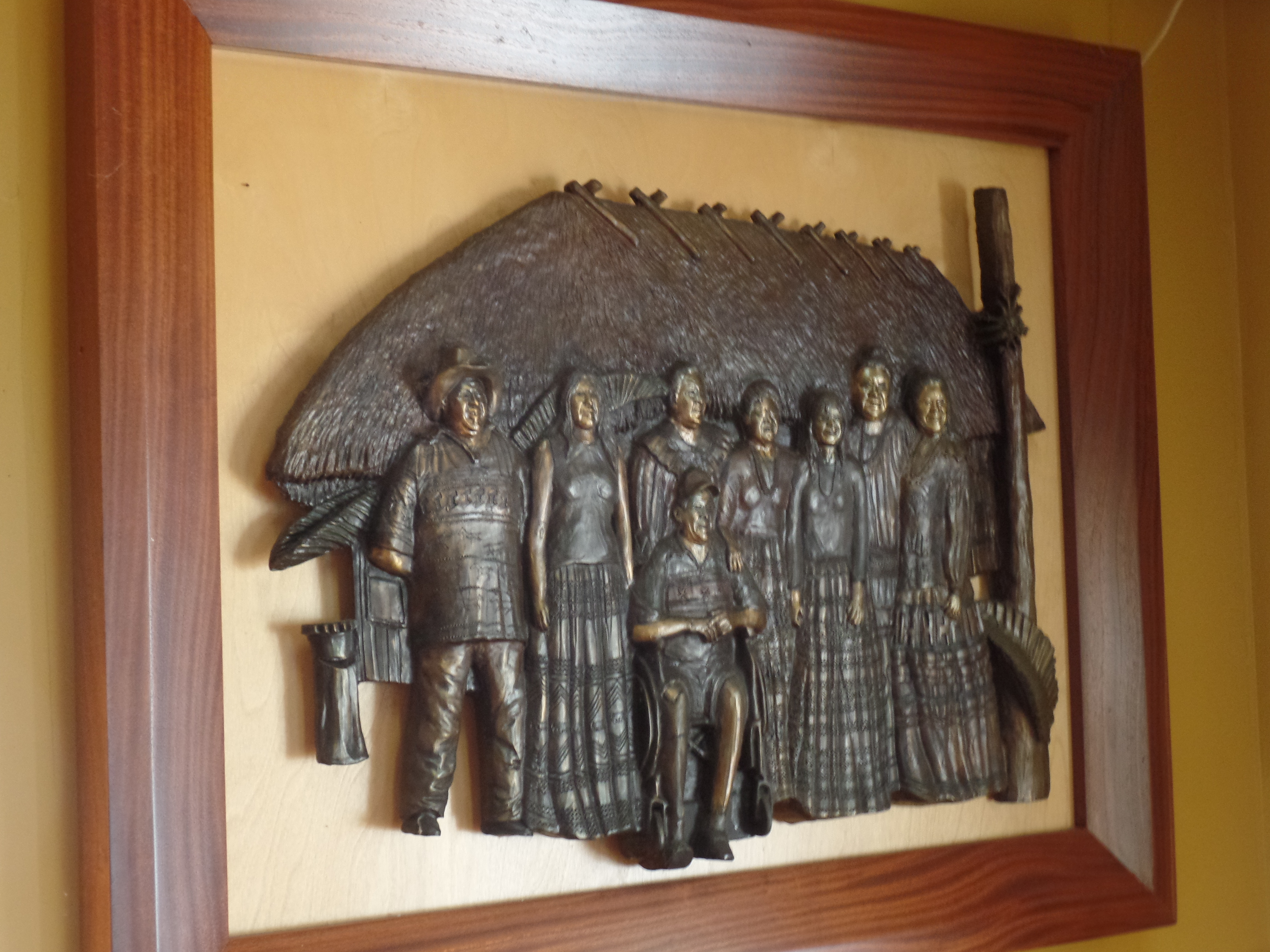
I spent about an hour in Osceola Panther, as Uncle D’s small village and store are called. Here are some of the scenes from the store and along the Tamiami Canal outside.

Another hour was spent, up the road, at Big Cypress National Preserve, which offers extensive programs to educate the public on the intertwining topographic areas of savanna and wetlands, which comprise most of southern and central Florida.

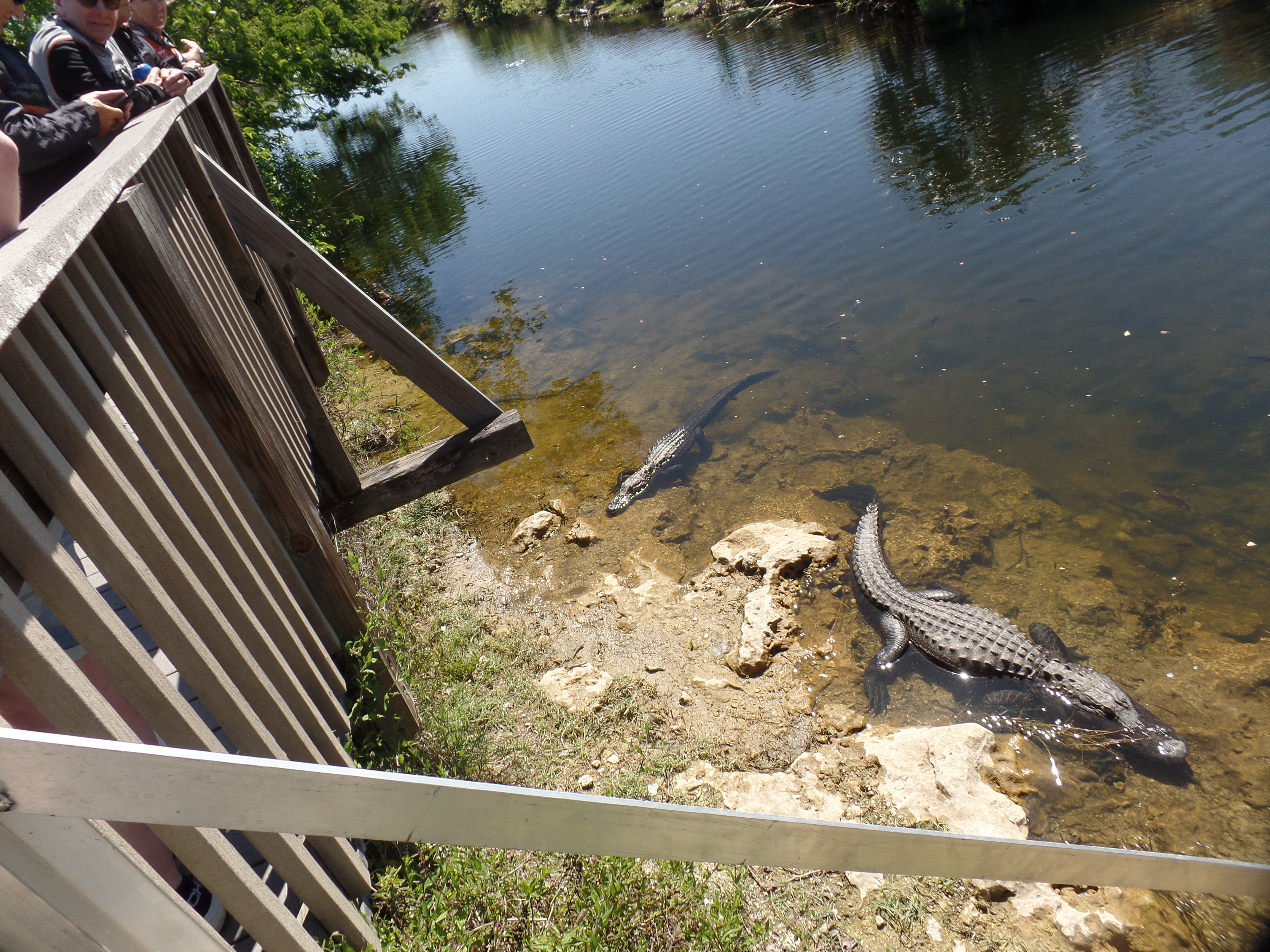
Here are a few scenes of everyone’s favourite swamp creature: The alligator.

The heat became a bit enervating, after noon, when I found myself dealing with the hyper-energy of Naples, southwest Florida’s southern anchor community. Here, I found that I had returned to suburbia, intense high-speed traffic and people who had scant patience for one another. After a brief preliminary visit to Naples’ excellent Botanical Garden, I rested, took in a Baha’i planning session and rested more.

A Thousand Magic Steps

4

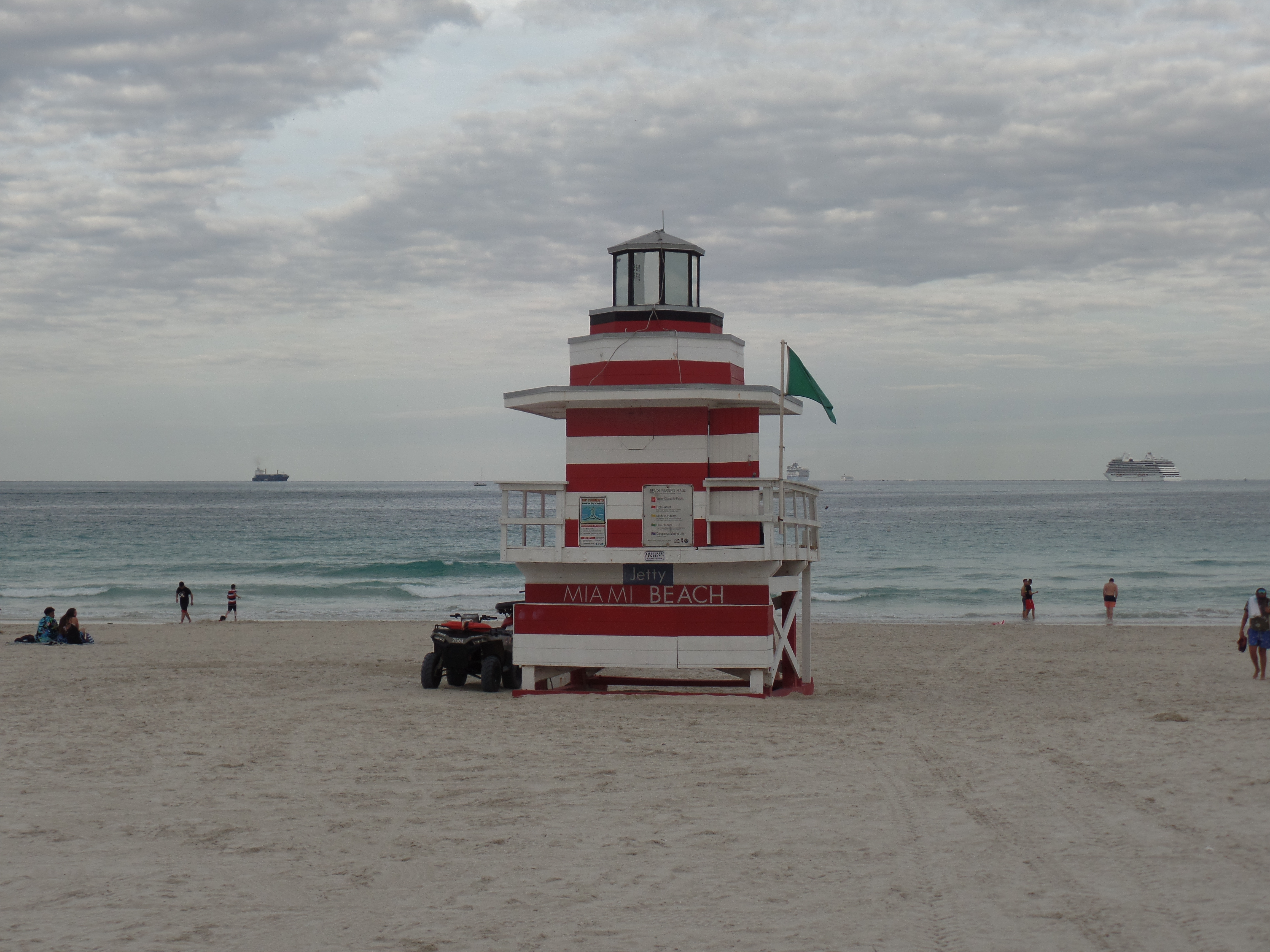
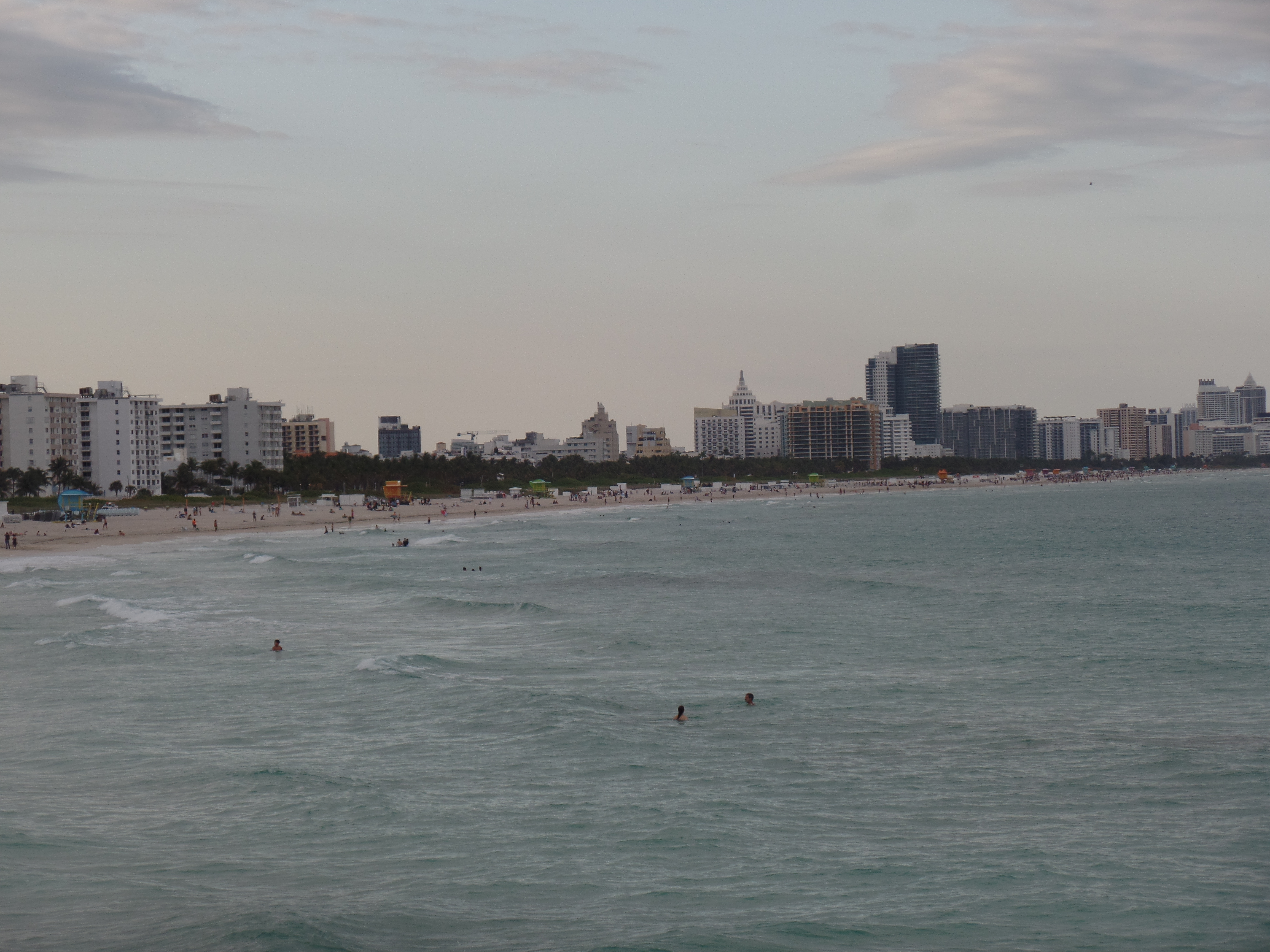
March 25, 2022, Miami Beach- “Key West is exactly right there!”, the little boy announced to his family, whilst looking over at the high rise apartments west of South Pointe, this city’s simultaneously trendy and well-preserved public park space/avant-garde neighbourhood.

I hope he gets the chance to see the real deal, while admiring the ever amazing range of a young imagination. South Pointe, about a thousand wonderful steps, end to end, presented a vibrant range of human activity-an example that would be well emulated by Floridians, and others, whose commitment to the car culture is rapidly reaching its limit. I was glad to have been able to walk there from the hostel in which I have been staying. The group of youths with whom I made an outing to Key West, yesterday, were off at a music festival and attending parties, but they had done this walk and enthusiastically recommended it to me.

There were many people swimming, playing beach football, fishing, catamaran racing, jet skiing and speedboat racing. Then there were the gymnasts- one young lady managed to balance herself, handstanding while supported by her male companion, who helped her shift position and weight, for over eight minutes. She easily outlasted three young men who were inspired to do their own handsprings and somersaults.

I admit to having been rejuvenated by a delightful small meal at Tanuki Japanese Restaurant, where I was served by five different people-four of whom seemed to be in competition to see who could be the most solicitous. (The world-weary manager of Bikini Hostel, where I am staying, thinks this is true, across the board, in Miami Beach.) The meal was lovely, despite the semblance of hustling.

It was sweet to see the full mix of humanity, from laid back surfer dudes to ladies and gentlemen dressed to the Nines, all within a quarter-mile radius of one another. All were just enjoying the wonder that is South Florida’s original “party beach”. (I am one of those who remembers “Surfside 6”, with Troy Donahue, Diane McBain and a young Mary Tyler Moore.)

South Pointe has lost none of the charm it exhibited on that show.

Heroes and Legends

4

March 22, 2022, Vero Beach- The above title is also the first building one enters, at Kennedy Space Center’s Visitor Complex, in Merritt Island, FL. Heroic figures aplenty are presented, visually and audibly, at this intensely captivating and informative science center. To be sure, having grown up in the classic period of the Space Age’s inception, I have my share of those who I hold in very high regard: Alan Shepard, John Glenn, Walter Schirra, Gus Grissom, Deke Slayton, Neil Armstrong, Sally Ride, Krista McAuliffe, Ronald McNair, Eugene Cernan, even Yuri Gagarin and Gherman Titov. My heroes, in general, are both male and female, of all ethnicities and skin tones-and it does not matter that I, a heterosexual cisgender white male, hold this view. Heroism is about character and achievement.
My first hero, my father, would have turned 95 today. He worked in aeronautics his entire adult life, so to visit Kennedy Space Center on this particular day was a sublime blessing. He held the astronauts in high regard, as well, admitting to being a bit overwhelmed by all the science that the increasingly complex business of space was encapsulating. I do think he would have thoroughly enjoyed this place, though.

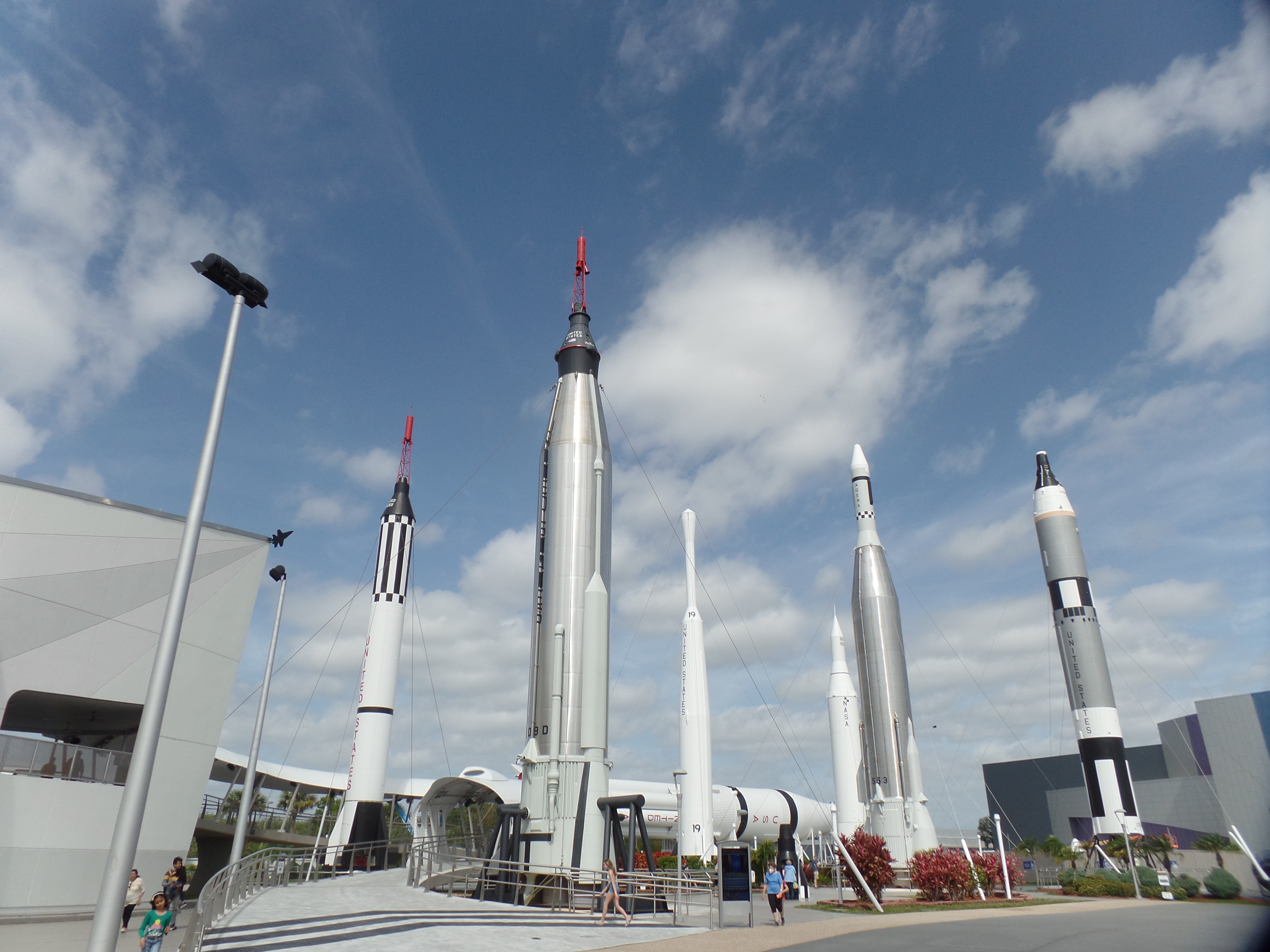
Several whooshes of cold air and descriptions of rocket launches later, I walked out to Rocket Garden, where those vessels that launched so many legends into space are exhibited, at least by type.

Suitable mention was made of the works of fiction that stimulated so many minds with thoughts of space travel, from the 1920s to the actual inception of successful space flight. These stimulated many young people to seek training and careers in the inchoate field of astronautics. Among them were all those we know today as astronauts-both men and women, and so many astronomers who foster and guide the space travelers.

There has been so much heartbreak and tragedy coming out of the Space program, as there is in any novel and complicated operation. Three jarring events stand out: The 1967 explosion which killed Apollo 1 astronauts Gus Grissom, Ed White and Roger Chaffee; the deaths of the seven crew members in the Challenger explosion of 1986; the launch time deaths of seven crew members in the atmospheric re-entry explosion of 2003. They underscore the fact that many failures take place, in all phases of research and implementation of aerospace work.

Project Apollo was the stuff of the greatest sagas, even of conspiracy theories that say the moon landing never happened. It was Gemini, the intermediate step between earth orbit and the moon missions, that deserves equal billing. Eugene Cernan, the first person to walk in space, described his experience: His blood pressure hit as high as 170; He lost 13 pounds in 2 hours; the heat shield on the module reached 3,500 degrees Fahrenheit, making egress and return to the capsule a tortuous affair. The work of the Gemini pioneers has made all the difference going forward, from Apollo through the shuttles and Space Station era.

My last stop at the Space center was the Shuttle Hall, at which a hundred people at a time were treated to seeing the Shuttle Atlantis, retired in July, 2011, after logging in over a million miles.

There are many things that can unite people of all backgrounds and viewpoints. The exploration of space is a field with which anyone can identify. Space, like the Earth itself, belongs to all of us.

“Another Day In Paradise”

2

March 21, 2022, West Melbourne, FL- The day began and ended with the above comment-from two different motel employees: A handyman in Brunswick and a desk clerk here in West Melbourne. Part of my whole reason for being here in the Southeast is to discern how ordinary people are faring, under the blend of libertarianism and laissez-faire economics that is taking deeper root in this part of the country.

I have no issue with any given practice of government when the average person, across ethnicities and genders, is not made to suffer or be left out of a climate of prosperity. So far, I have seen people in places like Brunswick, Amelia Island/Fernandina Beach and Daytona Beach doing fairly well. I have seen a few people in Cape Canaveral and here in the Melbourne area who are not. Much depends on the local economy, but state and Federal policies also impact us.

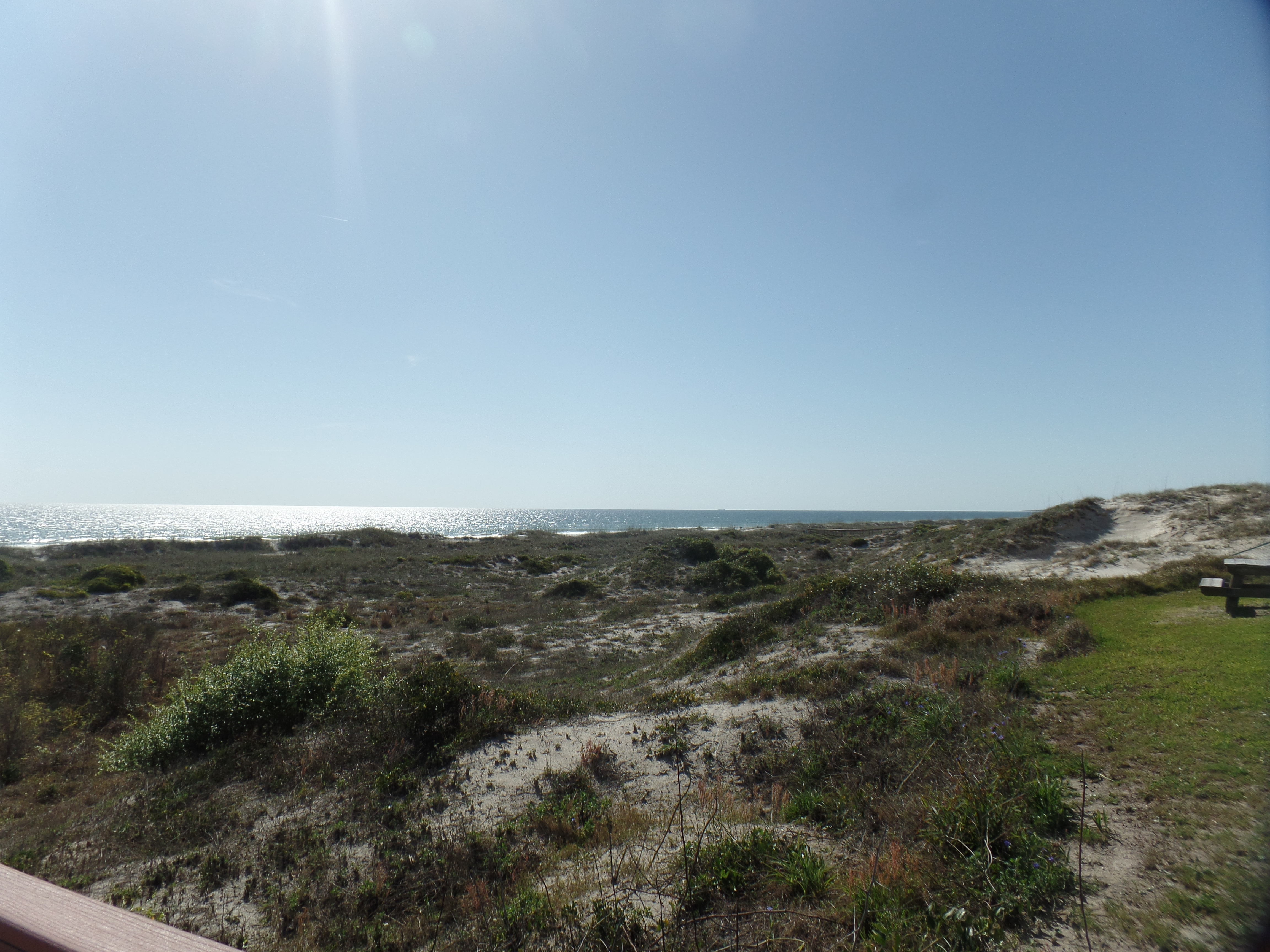
My first stop in Florida, this morning, was American Beach, on Amelia Island, Florida, once a vacation place for African-Americans, during the days before desegregation. The country’s first African-American millionaire, Abraham Lincoln Lewis, established the beach for just this purpose, in 1935. His work was carried on by his granddaughter, MaVynee Betsch, carried on his work of preserving the beach and its Historic District, until her death in 2005. American Beach remains a National Historic Site.

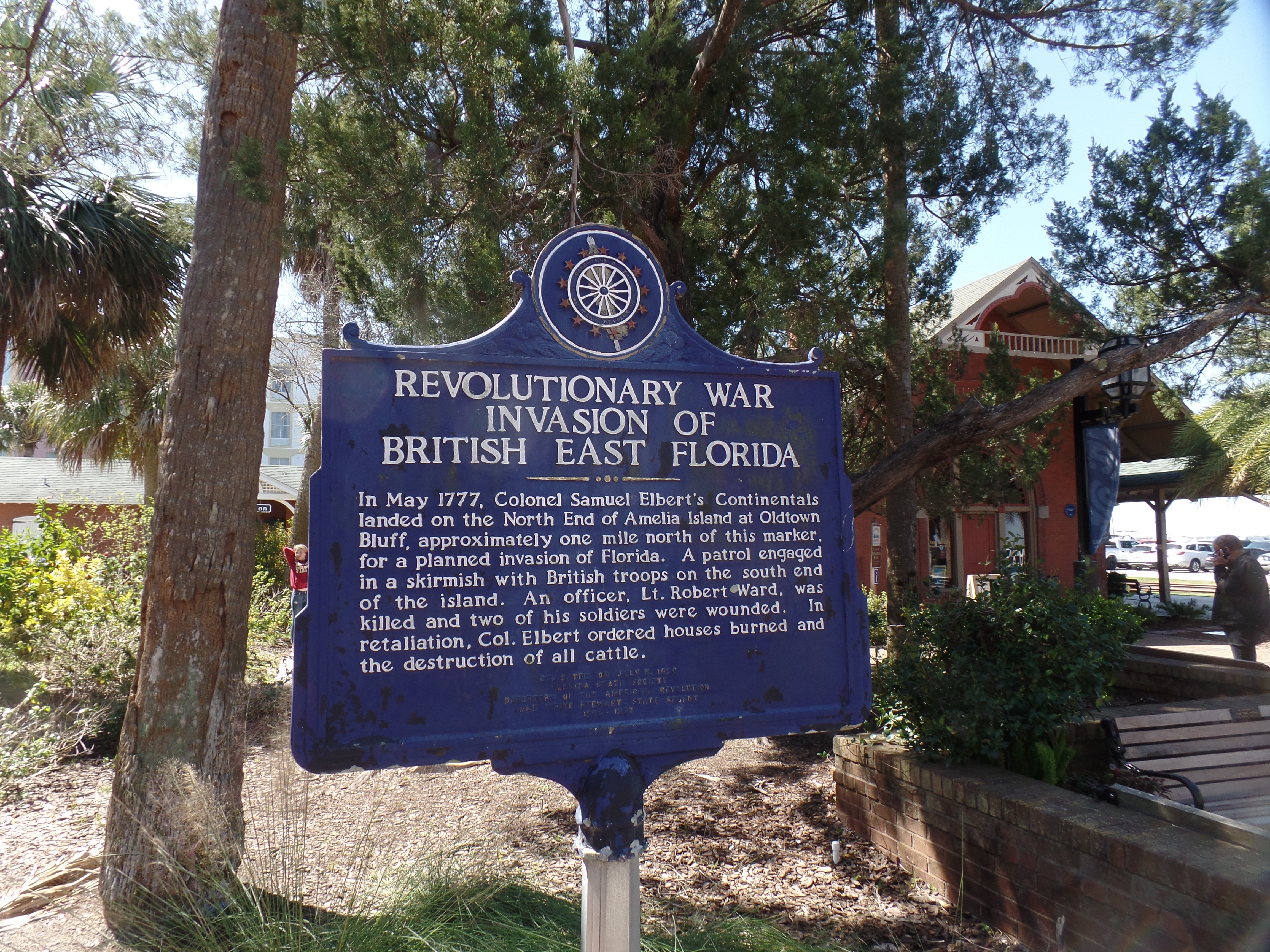
In between visits with family, my focus is on the broader society. Fernandina Beach, the main community on Amelia Island, is Florida’s northeasternmost town. It was the site of a brief battle between American revolutionaries and British troops, in 1777. The area was then controlled by Britain, as the Territory of East Florida. Although the British retained control of the town, there was significant damage done by the Revolutionaries.

Today, Fernandina is a comfortable, bustling holiday place. It was helped, early, by the establishment of Florida’s first Atlantic to Gulf Railroad, from Fernandina to Cedar Key.

After a gyro (pronounced JY-ro, in these parts) on pita, at 4th Street Deli, it was time to see what was up at Daytona Beach International Raceway- as NASCAR is a good barometer of how mainstream America is faring. The Raceway was closed. It’s not racing season, and it is Monday, to boot. Mainstream America was at Buc-ee’s, though, buying scrumptious brisket and pulled pork sandwiches, and a mix of travel essentials/trinkets. I picked up a brisket sandwich-and some rub-on sunscreen, to compensate for the sunblock I left behind in Arizona.

My last stop of the day, before arriving at my lodging, was the city of Cape Canaveral-now primarily a shipping port. The slowness of the recent supply chain difficulties, themselves partly arising from the Coronavirus Pandemic, seems to have affected the town, though I saw commercial traffic somewhat steady this afternoon. The Kennedy Space Center, west of Cape Canaveral, may be an early morning stop, tomorrow, and may offer a better sense of how the community is faring, given that Canaveral has been intertwined with America’s efforts in the Cosmos.

It’ll certainly be another day in paradise.

“The Sound of Heaven Touching Earth”

2

March 20, 2022, Brunswick, GA- The feisty preacher had her congregation singing this refrain in unison, as a prelude to her energetic homily, as services proceeded in Mary Ross Waterfront Park, along East River. This is life in Brunswick, after the verdicts in the Ahmaud Arbery case.

The crew at Sunrise Diner is downhome and multiracial. They work tightly together as a team, with no daylight between them, in terms of pecking order or separation. The owner mans the host stand, his mother is floor manager and his son alternates between serving and bussing, with his daughter moving about, acting as both server and hostess. Men of colour are servers, bussers and cooks, but are treated as full members of the team. Regulars were being greeted warmly, as was this visitor-never treated as a stranger. The portions are not overbearing; they are just filling and delicious.

It was important to see this, on the heels of what could have been a good deal less than the move forward that came from the trial. Certainly, there is a lot that could yet be done, in terms of community growth, yet I got the sense that people here want the world to know that they, and much of the rest of the South, are moving forward in a positive way.

The area was settled by James Oglethorpe and his band of colonists in 1738, as Britain was seeking a buffer to Spanish Florida. Oglethorpe was a forward-looking egalitarian, who opposed slavery, well before the majority of colonists were ready to give up the system. For that, he would be ostracized and would leave Georgia for good, in 1743. From then on, Brunswick and Savannah, both platted out by Oglethorpe in an easily navigable manner with lots of green space, would follow the rest of the plantation-bounded communities, in maintaining a culture of black enslavement. A plain monument to him is found in Queen’s Square.

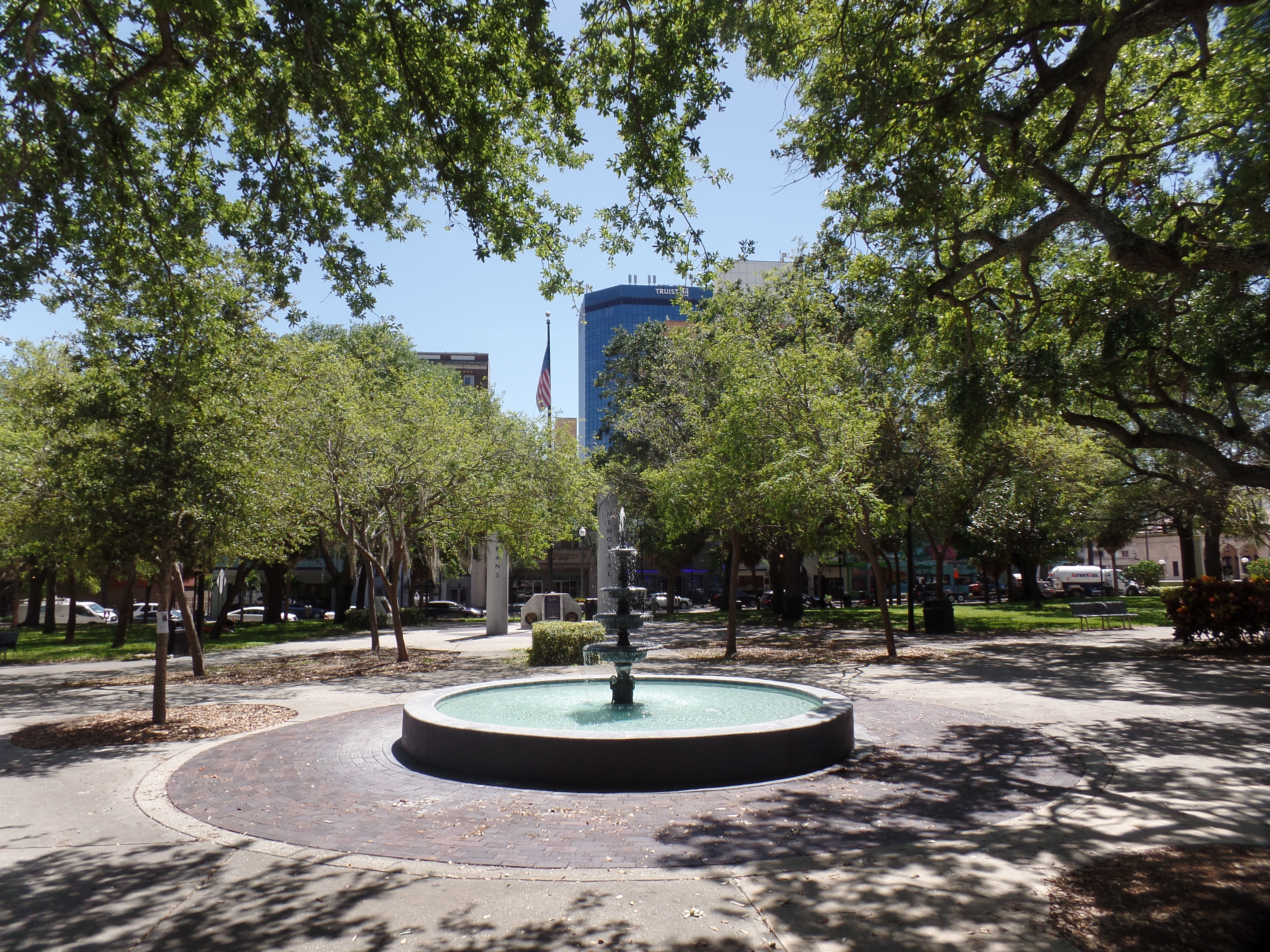
Hanover Square is the largest of three parks designed by James Oglethorpe for Brunswick’s downtown core. It has several live oaks, symbiotic with Spanish moss, a salubrious fountain and a plain monument to Confederate soldiers. This last is the subject of ongoing debate, though it is easily overlooked. So far, there has been no lasting decision made about the small obelisk. Here is a view of the fountain.

Lastly, here are Old City Hall and a view of East River, which is Brunswick’s channel to the sea.

It is important to me to visit and engage those communities at which many may look askance. There is a wellspring of hope rising in Brunswick, as there is in Minneapolis, and many other communities which have found their internal conflicts boiling over. I hope to see this happening in peninsular Florida, as well, in the coming days.

Red Sky at Morning…..

4

March 18, 2022, Newnan, GA- The scene this morning, over Lake Redwine was beautiful, if a bit ominous.

My brother, Dave, and I headed out early towards Andersonville, the site of the largest Confederate prisoner-of-war camp (1864-65) and of the modern National Prisoner-of-War Museum. We drove down, past the central Georgia cities of Columbus and Macon, through the smaller communities of Buena Vista and Ellaville, getting gas at the former. Once we got to the village of Andersonville, a kind lady gave us directions to the park itself.

We found ourselves blessed with cloudy, but not rainy, skies for most of the time we were in the outdoor Prison Site. Andersonville was established when smaller prisoner-of-war camps in Virginia and Alabama became overcrowded. Union soldiers, suspected spies and captured free Blacks were housed here, under increasingly fraught conditions. The facility was originally intended to house a maximum of 10,000 prisoners; at war’s end, 32,000 were incarcerated there. It was minimally-funded, and at various times during the Civil War’s late phase, prisoners were either housed in tents or were told to fashion their own accommodations, from whatever materials they could find.

Monuments exist, in honour of captured soldiers from several states. Here is the memorial to Wisconsin’s captives.

The North Gate of the tightly-built stockade, in which newly-arrived prisoners were oriented to the prison camp, has been restored.

The facility’s main water source was Stockade Branch, a low-flowing, fetid creek. Dysentery and vermin were rife, and 13,000 people died at the camp, in only 14 months. Food supplies were meager. One miraculous event relieved the misery, somewhat. In August, 1864, a sudden downpour, accompanied by a lightning strike, resulted in a spring being opened. Grateful prisoners dubbed this water source Providence Spring.

The camp’s commandant, Captain Henry Wirz, was a Swiss immigrant who had settled in Virginia and was sympathetic to the Confederate cause. He was alternately regarded as a fair-minded man, in over his head and an uncompromising brute. Wirz was singled out, after the war, tried for war crimes and executed by a tribunal.

Andersonville has a sizable National Military Cemetery, still in use for contemporary veterans’ burials. A freed prisoner, Dorence Atwater, worked with Clara Barton after the war, to identify those buried at the cemetery, from prison records, which Atwater himself copied and smuggled out of the facility, upon his release at war’s end.

The Prisoner-of-War Museum honours all American Prisoners-of-War, from the Revoutionary War through the Afghanistan Conflict. Exhibitions also contain information about Confederate soldiers held at Elmira, New York-a facility which was no better than Andersonville; Axis soldiers held at camps in the United States, during World War II and British prisoners of war held both during the War for Independence and the War of 1812. A display on Native Americans from the various “Indian Wars”, is included in the museum, as well.

There are spoken presentations by the late John McCain and Admiral James Stockdale, mirroring the overall message: “War is hell!”.

May the departed prisoners rest in peace, and may we soon learn the meaning of universal brotherhood.

Pi in the Sky

0

March 14, 2022- It is noteworthy that the ancient Greeks recognized pi, the number that is the basis for determining the ratio of the diameter to the circumference of a circle and pie, the normally circular pastry shell that has been used as a container for honey, nuts, chopped meat and fruits, since the Neolithic Period in Egypt. Pi, which is 3.14 when rounded to the nearest hundredth, was first defined by the mathematician Archimedes, though the civilizations of India, Babylon, Egypt and China each made use of the concept. Welshman William Jones clarified its usefulness to circular measurement, in 1706.

Today, 3/14, is recognized unofficially, as Pi Day. That it is enthusiastically embraced by bakers and sweet-toothed people around the globe does not detract from the mathematical awareness brought about through this light-hearted embrace of a key geometric construct. Pizzerias have gotten into the act, with even the makers of rectangular pizzas claiming to have finally “squared the circle”. Along with chess, fun events like this have helped math-phobes get a grip on their aversion to numerical sciences.

I used to be one of those who hated math, mainly because of the overly serious way in which the subject was broached by so many teachers. I was fortunate to have been flashcarded to distraction by my mother and one of my father’s aunts who would come by almost every week. In time, the cosmic jokesters had me serving as a mathematics teacher, to the dubious benefit of three years’ worth of middle and high school students.

Over time, pi has ceased to be a concept lost in the ether and math has found its way into my treasury of skills. Happy Pi Day, sweet-tooth or not!

Ecosynthesis

2

March 10, 2022- I read this evening that a property owner in our downtown area wants to build a six-story hotel, across from the Courthouse. The lines are drawn, in the public sphere, between those who think it’s high time modern architecture takes over and those who value the sense of history. Interestingly, but not surprisingly, the members of the former group are about evenly split between Prescott natives and transplants from other parts of the country. The latter group includes more transplants from urban areas, signaling that many people come here specifically for the Old West ambiance and the surrounding natural beauty. Many Prescott natives seem to take these features for granted, saying that one can’t eat or pay bills with history and nature.

Other communities, across the country, and across the globe, have taken this stance: Salem, MA has opted for high rise apartment buildings near downtown, the likes of which would be not out of place in several areas of Manhattan, or any number of European cities. Flagstaff and Tempe, in the name of “student housing”, have built large residential complexes in what had been rather charming neighbourhoods. Jeju, Korea, where we lived from 1987-1992, was virtually unrecognizable, when I revisited in 2019. It’s said that higher density is more efficient-and better for business.

I get a much more positive sense from striking a balance. History, even that which is only from the last century, is crucial to our sense of continuity, to our identity. Those who have been following this site since its inception know also that I favour well-tended natural settings. Nature teaches us the importance of balance and recognizing the interplay between serenity and dynamism. I am gratified that our City Council is oriented towards sensible growth, and has worked to protect a significant area of the Granite Dells, north of downtown. Likewise, the bulk of Prescott National Forest is being safeguarded from wildcat development.

On balance, history and nature do generate income and can co-exist with industrial and technological pursuits, given responsible use of zoning. I call this state of affair ecosynthesis.

Time of Han’ba

2

February 24, 2022- Once upon a time, in an Austrian town, a little boy was regularly terrorized by his father. The boy wanted his father to respect him, so he internalized his father’s brutish manners and refused to cry after his beatings. When his father died, the boy was 13 and assumed the title Haus Herr. He would beat his younger sister, in the way his father had beaten him.

The boy grew into manhood, served in his country’s army and resented any weakness he encountered in society, including that of government officials. He tried to overthrow that government, was arrested, tried and imprisoned. Once he was released, he joined with like-minded authoritarians, succeeded in overthrowing the government and led his country into oblivion. The world remembers him as Adolf Hitler, the original Fuehrer.

Many, since, have followed in Hitler’s footsteps. Some have had abysmal childhoods, even if they enjoyed material comfort-as Hitler himself did. Others lived meager, miserable lives in childhood, but were spoiled by their parents, to the best of the parents’ ability.

One of the latter is Vladimir Putin, who grew up in a tenement in what is now St. Petersburg, facing off against rats, who taught him the meaning of fighting when cornered. He also faced off against human bullies, and became a judo master, in response. Becoming self-reliant, and having been pampered with expensive gifts on occasion, in a nutshell made Putin value machismo and greed.

Fast forward to our present day. A series of perceived personal affronts has led the Russian autocrat to execute an invasion of Russia’s southwestern neighbour, Ukraine. Authoritarian personages, the world over, have congratulated him for his strength-even gaslighting the Jewish president of Ukraine as “a tyrant” and “a Nazi”. While there are people who believe in Nazi philosophy in a good many countries around the world-including Ukraine, Russia, the United States, United Kingdom, Germany itself, such fawning over the actions of the Russian government do little or nothing to extinguish the other dreadful philosophy. Indeed, the sycophants’ boast, that the Russian people themselves support their government’s actions, is belied by the massive demonstrations, both organized and spontaneous, around the Federation.

Han’ba is the Romanized form of the Ukrainian word for infamy. It is that sort of time in our lives.

Vagaries

2

February 6, 2022- As a switch, this evening, I put on a dark comedy about a woman who is recruited to be a Deputy U.S. Marshal, based on the true story of Francis Miller, an Oklahoma rancher, who DID become a peace officer. The antagonist in this film happened to be an Afrcian-American, who had himself owned slaves in Texas. Just how many such men there were in the South is debatable, but they did exist. This individual was presented as somewhat of a psychopath, who nonetheless served as a dispassionate observer of the hypocrisy exhibited by those who swore to uphold the law.

Antisocial people can frequently excel at pointing out the flaws of others, usually because it serves as a distraction-and helps them get the drop on those who are trying to bring them to justice. As happened, to a degree, in this film, so does it seem is unfolding on a wider scale, in the modern world. Autocrats love to turn the tables and claim what is wrong is actually right; what is dark is actually light; what is hateful is, in truth, loving kindness.

As it was for one Richard Andrews, in the film “Lady Lawman”, so it is for any number of would-be tyrants, who charm those living in uncertainty and self-loathing, building a loyal corps of defenders and toadies. How their particular stories play out, depends on the attention level of those seeking to bring justice to society, as well as to the integrity of those people. We’ve seen, in the past, how much fortitude and fastidiousness was required, in order for justice to prevail. Let us now again steel ourselves and not be either distracted or dissuaded by the difficulty presented by latter day miscreants, either at the local, national or international levels.