A Day for Setting Example

4

June 16, 2019, Grants, NM-

I told myself that this summer, I would not zip through the astonishing red rocks and juniper of northern AZ and New Mexico, so today, I set a limit of the 62.4 miles that lie between Gallup and this old mining town, which is struggling to redefine itself.

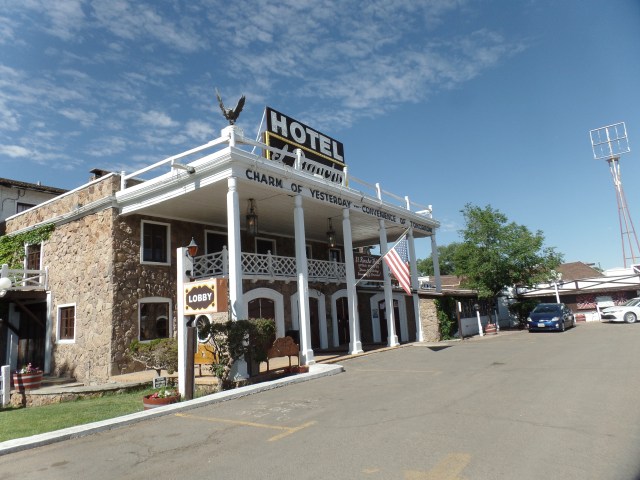
I began Father’s Day, last night actually, with a roughly forty-minute conversation with my son and daughter-in-law, reassuring me that all is well with them, and vice versa.  This morning, a light breakfast of yogurt, from the grocery store across from Lariat Lodge, seemed quite sufficient.  Afterward, the first order of business was a visit to the lobby and garden of El Rancho Hotel, Gallup’s premier historical property and a favourite of many of Old Hollywood’s great figures- from James Stewart to Claude Akins.  Several photos line the wall of the second floor of the lobby.  Here is an introduction to El Rancho:

SAMSUNG CAMERA PICTURES

SAMSUNG CAMERA PICTURES

SAMSUNG CAMERA PICTURESGallup has made itself a haven for Dineh, Zuni, Acoma and Apache artists looking to sell their crafts.  Armando Ortega and his family were among the first to offer marketing services to First Nations artists in the area.  The Ortegas have sponsored this alcove display, in the center of the first floor lobby.
SAMSUNG CAMERA PICTURES

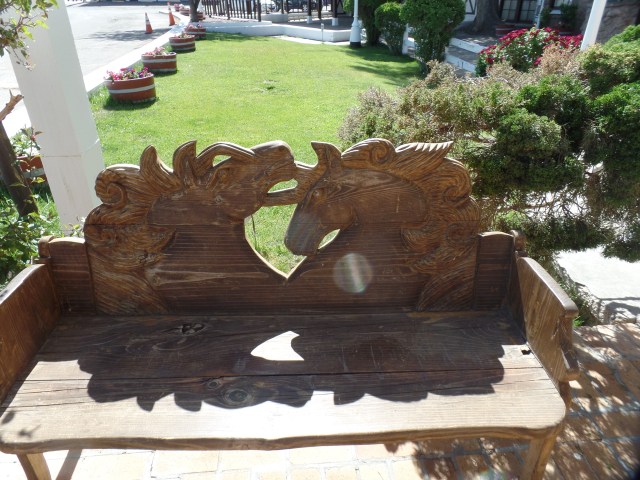
Even the outdoor benches are adorned with intricate design.

SAMSUNG CAMERA PICTURES

From here, it was time to head towards the rocks, specifically El Malpais National Monument, just south of Grants. In 1985, Penny and I took two sons of a then-recently departed friend to this area, camping overnight at the privately-owned Bandera Volcano (extinct), as a respite for his widow.  In the years since, the road has been a shortcut, when I have driven between Phoenix and Albuquerque.

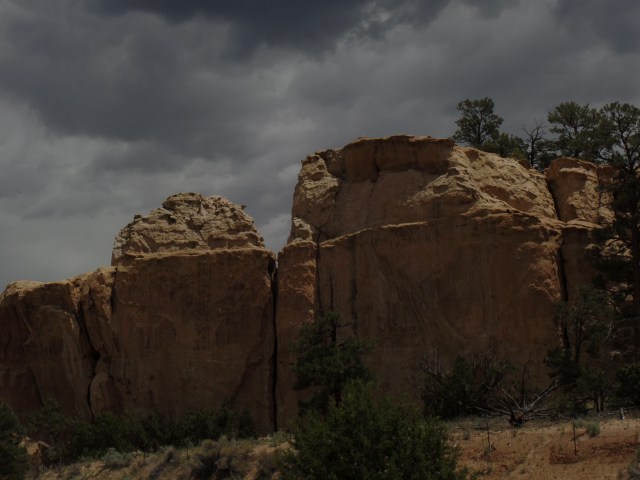
Today, it was my Father’s Day present to myself, to explore the eastern portion of the Monument, some forty miles past the volcano.  The sandstone formations near Zuni-Acoma Trail are as majestic as any in the southwest. Whilst taking in these marvels, I fixed and ate a sandwich. This would prove to be of dire consequence.

SAMSUNG CAMERA PICTURES

SAMSUNG CAMERA PICTURES

SAMSUNG CAMERA PICTURES

SAMSUNG CAMERA PICTURES

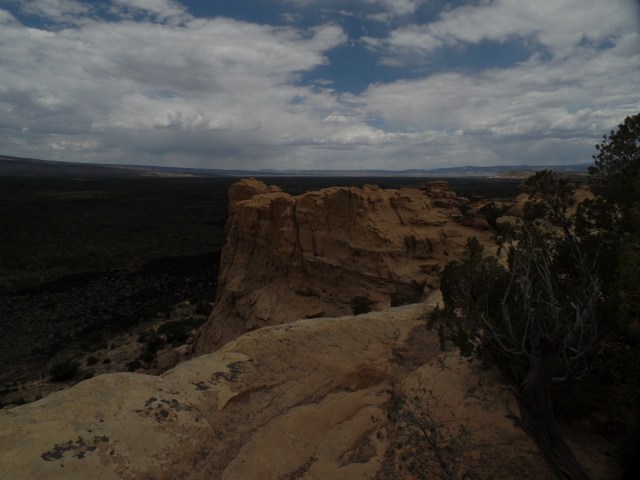
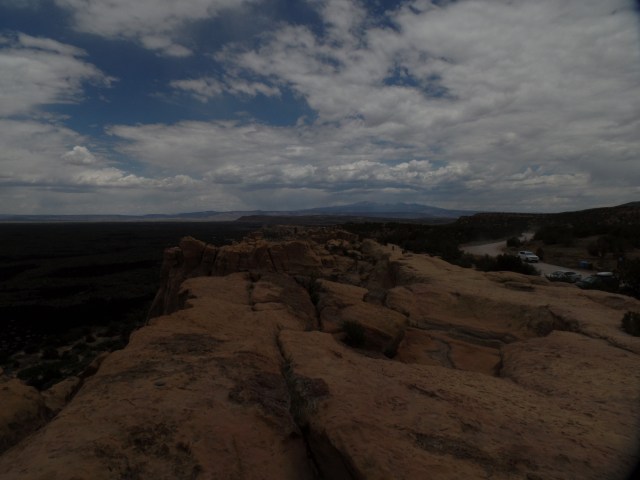
After visiting the Ranger Station, I doubled back to Sandstone Bluffs Overlook.

SAMSUNG CAMERA PICTURES

Although the storm clouds looked threatening, the rain held off until I was back in Grants.

SAMSUNG CAMERA PICTURES

The series of holes, that are visible in the center of this frame, were actually bored by molten lava, during the last eruption of McCartys Crater, some 3000 years ago.  They are known, collectively, as Chain of Craters.

SAMSUNG CAMERA PICTURES

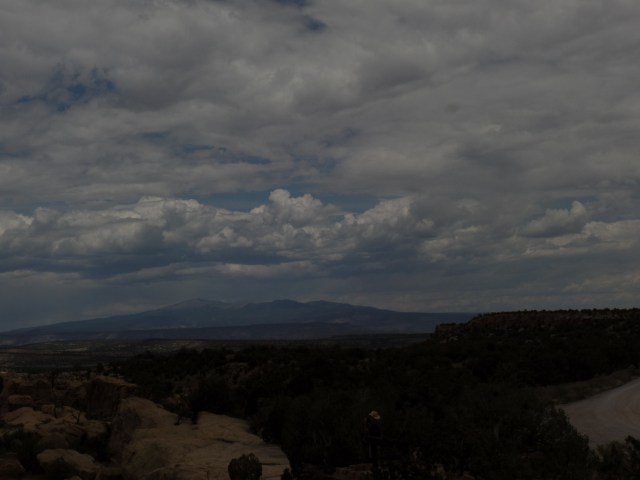
Of more ancient vintage is Mt. Taylor, seen to the north.  It is one of the Four Sacred Peaks which are revered by several First Nations in the area. Mt. Taylor has been inactive for millions of years.

SAMSUNG CAMERA PICTURES

Lichen have absorbed into the sandstone, over the centuries, giving some parts of Sandstone Bluffs the appearance of having been painted.

SAMSUNG CAMERA PICTURES

Whilst sandstone is not slippery, its delicate nature means it can be broken easily, especially close its seams.  All walking on rock surfaces requires close attention to what lies underfoot.

SAMSUNG CAMERA PICTURES

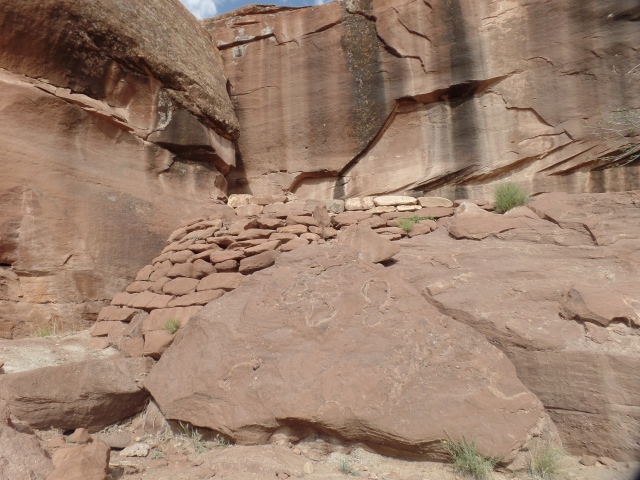
While heading towards La Ventana Natural Arch, I spotted this remnant of an early rancher’s attempt at settlement.

SAMSUNG CAMERA PICTURES

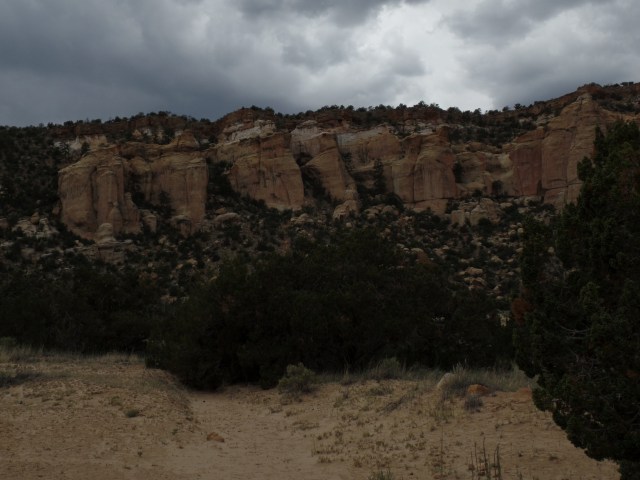
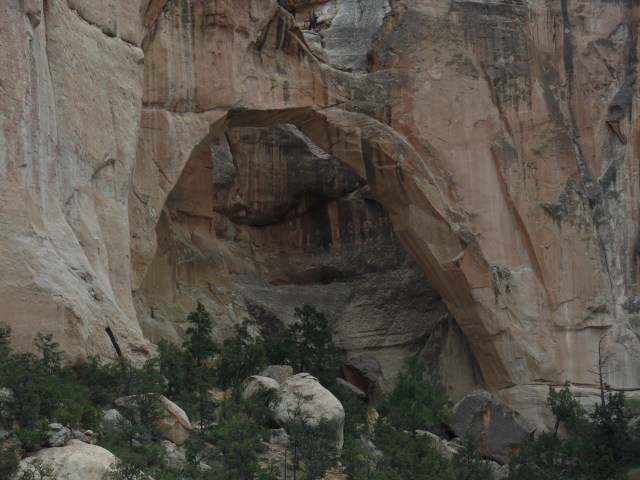
La Ventana is a continuation of Cebolita Mesa’s exquisite base, which we saw earlier, near Zuni-Acoma Trailhead.  This is older sandstone than that at the Bluffs.  There were several other people here, including a grandfather, his son and three grandchildren.  Grandpa was teasing the two younger kids about jumping off the rock on which they had climbed.  Of course, he and Dad each helped the kids get off, but it was amusing to watch the little ones’ initial reaction of “AWWW, GRANDPA!!”

SAMSUNG CAMERA PICTURES

SAMSUNG CAMERA PICTURES

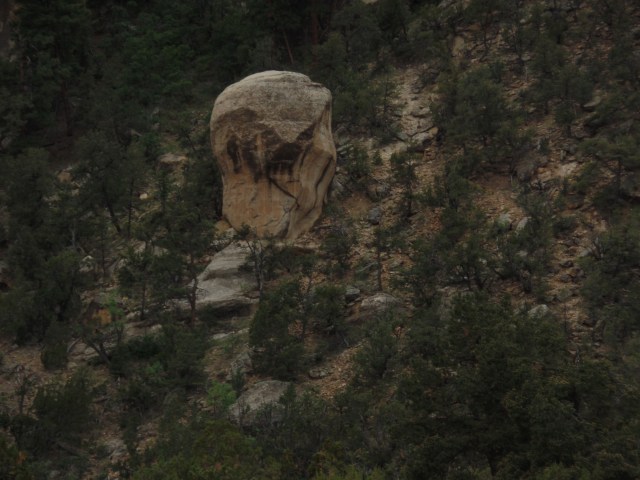
This balancing rock evokes a visitor from another world.

SAMSUNG CAMERA PICTURES

Here are two views of La Ventana, itself.

SAMSUNG CAMERA PICTURES

SAMSUNG CAMERA PICTURES

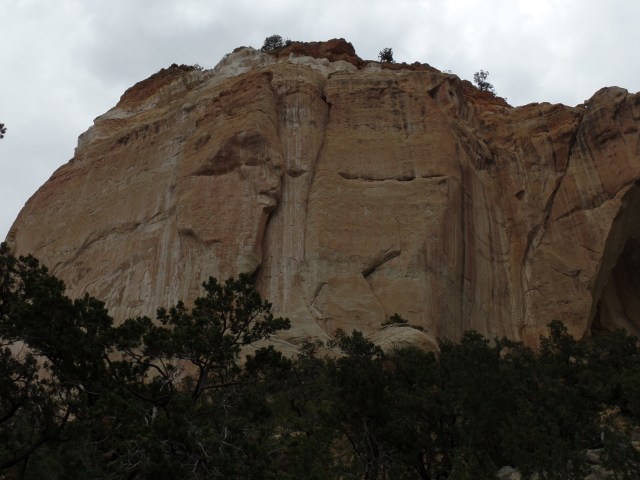
A close look at this wall of Cebollita Mesa seems to show two faces. I am curious as to what you, the reader, sees here.

SAMSUNG CAMERA PICTURES

The area west of Cebollita Mesa is covered with lava beds.  These range from just north of I-40 to the Lava Falls Area, thirty-six miles southward.  They extend, east to west, for about twenty-five miles.

SAMSUNG CAMERA PICTURES

Once back in Grants, I was starting to feel a drag on my system.  Nonetheless, being Father’s Day, I was determined to get one good meal.  There being no locally-owned cafe open,near the Sands Motel (another Route 66 establishment registered as a National Historic Site), I chose the reliability of Denny’s.  The salmon and vegetables were very nicely done, as was the cup of soup.  I hydrated plentifully, as well.

Back in the motel room, I will only say that I dealt with my ailment as I had always taught my son to do- in  mature and responsible manner. I felt much better afterwards and Father’s Day was only mildly interrupted.  I had maintained my example, though, even if no one was around to notice.  That is what the day really signifies.

NEXT:  A Return to the Duke City


The Treasure Road

4

June 15, 2019, Gallup-

The fine thing about a diverse landscape such as that of the Navajo Nation is that one can experience five forms of weather, as well as of scenery, in the span of thirty minutes.

I left Canyon de Chelly around noon, heading for the small college town of Tsaile.  This is the site of the main campus of Dine College, the Dineh’s highest resident institution of learning.  It offers eight Baccalaureate programs and is led by Dr. Charles Roessel, a member of one of the area’s most distinguished educational families.

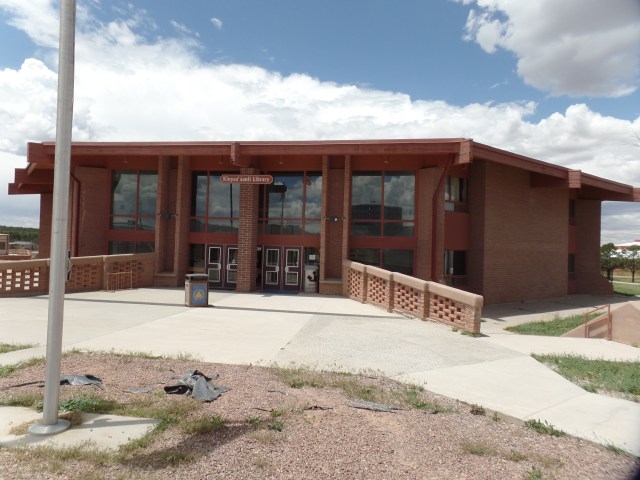
The place today, though, was the realm of crickets.  Being a Saturday, in summer session, everyone except a lone security guard seemed to be elsewhere. Here are a couple of scenes of that splendid silence. First, the Library.
SAMSUNG CAMERA PICTURES

The centerpiece sculpture is of life-sustaining maize.

SAMSUNG CAMERA PICTURES

There are two mountain ranges in this part of the Dineh Nation. Here is a view of the Lukachukai Range.

SAMSUNG CAMERA PICTURES

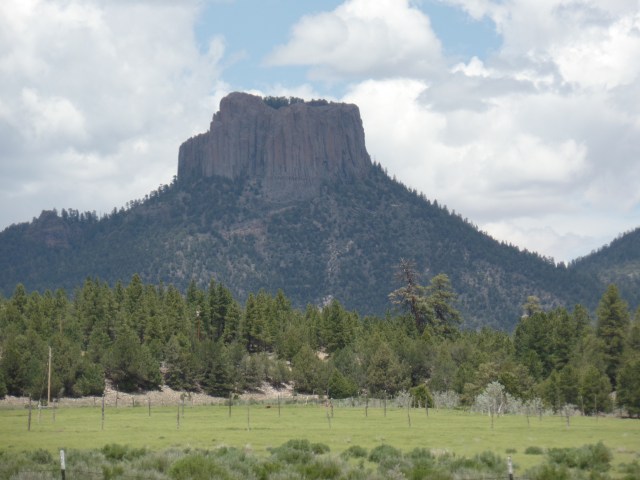
As I left Tsaile, the road led to its sister village:  Wheatfields.  The two share a single Chapter, in terms of jurisdiction.  Wheatfields is home to one of the Navajo Nation’s most popular recreation sites:  Wheatfields Lake.  Along the way, there are the buttes and peaks of the southern flank of the Lukachukai Range and the norther flank of the Chuskas.  Below, is a view of Tsaile Butte.

SAMSUNG CAMERA PICTURES

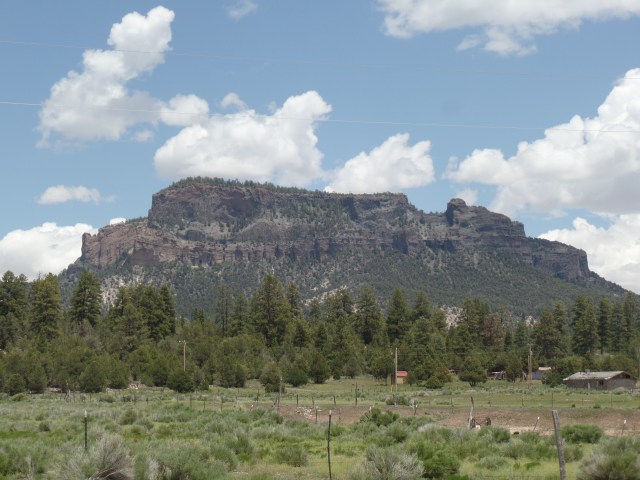
Not far to the south is Red Butte.SAMSUNG CAMERA PICTURES

Here is  a  view of Wheatfields Lake.  It was crowded with fisherfolk and water’s edge vacationers.  Unseen here, a storm front was approaching from the west.

SAMSUNG CAMERA PICTURES

The road next led through a small sliver of New Mexico.  The two Chapters, Crystal and Red Mesa, were significant to Penny and me, as a vibrant and forward-looking family of Baha’is had branches in each community, in the 1980’s and ’90’s.  I fondly remember the Coes, their bread truck office and its early-model Word Processor; then, there were their elders, the Belshaws, with a wealth of natural foods knowledge and holistic health tips.

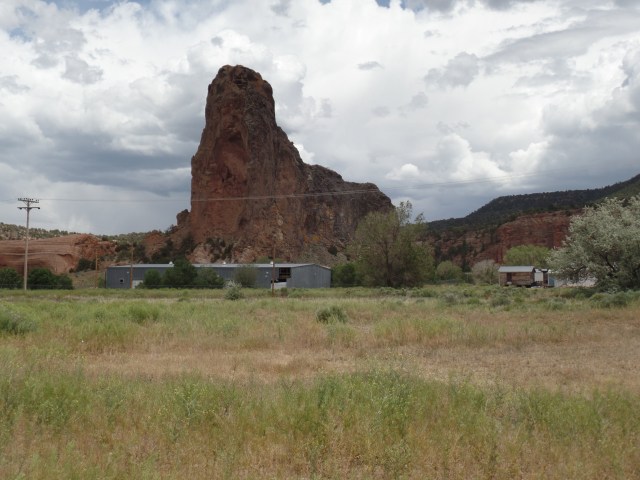
Here is Red Mesa, near the village of Navajo, NM (Red Mesa Chapter).

SAMSUNG CAMERA PICTURES

The Treasure Road (my term) comes to an end in Window Rock, the administrative seat of the Navajo Nation.  A serene park encompasses the town’s namesake.

Here are some views of this unique red sandstone promontory, with its signatory arch.

SAMSUNG CAMERA PICTURES

SAMSUNG CAMERA PICTURES

SAMSUNG CAMERA PICTURESSAMSUNG CAMERA PICTURES

SAMSUNG CAMERA PICTURES

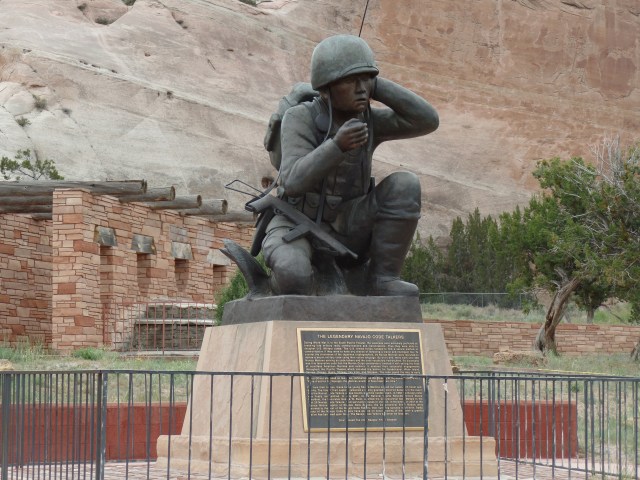
The park also feature a memorial to the Navajo Code Talkers, whose service during World War II was instrumental in the U. S. defeat of the Japanese Imperial Forces.  The Navajo contingent was the largest of several groups of Native American teams, who used their languages to convey information in a way that would not be decipherable by the enemy.  There are five living Navajo Code Talkers, as of this writing.

SAMSUNG CAMERA PICTURES

With this, I headed to Native American Baha’i Institute, briefly saying a round of prayers and careful not to disturb several work projects, then headed here, to this bustling community that lies in the midst of the Navajo Nation.  It was time to sleep, at the Lariat Motel.

NEXT:  A Checkered Father’s Day

Canyon de Chelly:The Land Still Thrives

7

June 15, 2019, Chinle-

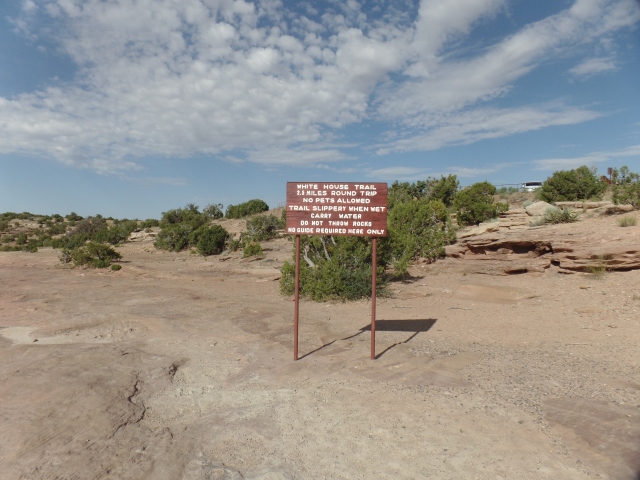
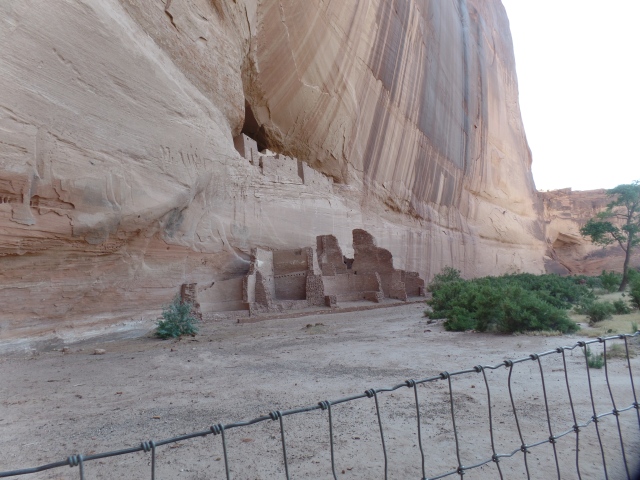
After a comfortable night in my tent, I spent the morning hiking White House Ruins Trail, the only unguided hike into Canyon de Chelly.  The route takes one down to a properly fenced off ruin, with various formations, images and a working farm (no photographs allowed) along the way.

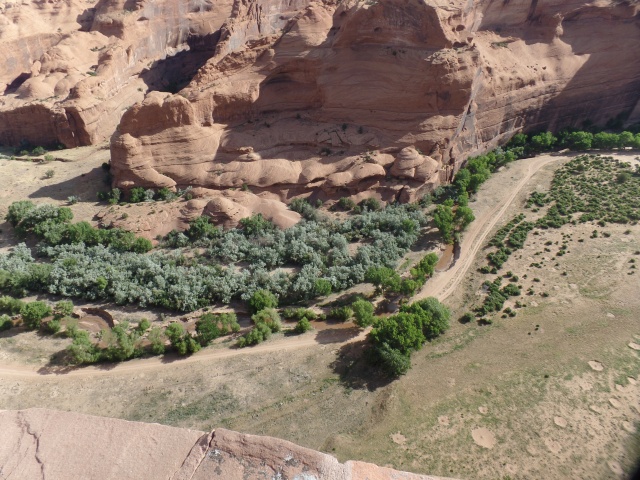
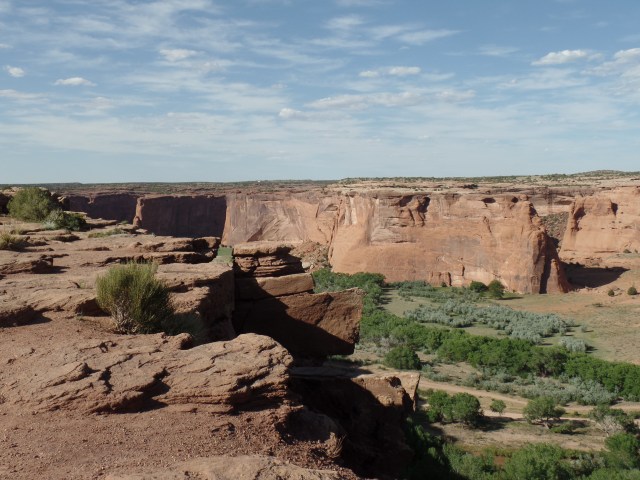
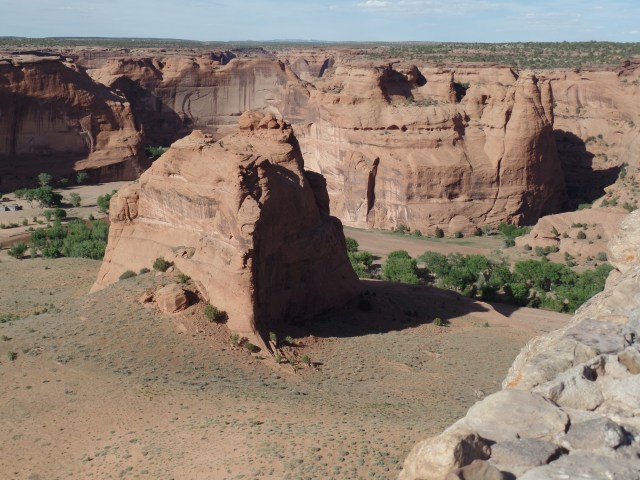
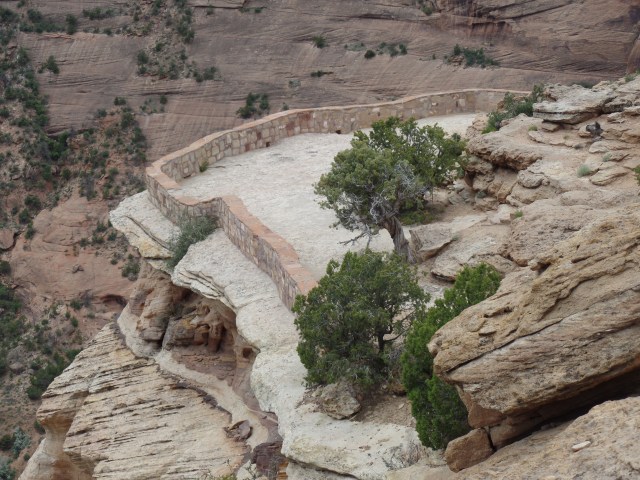
Without further ado, let the pictures speak for themselves.  First, a couple of views from the overlook:

SAMSUNG CAMERA PICTURES

SAMSUNG CAMERA PICTURES

The trail starts flat, then quickly gets steep.

SAMSUNG CAMERA PICTURES

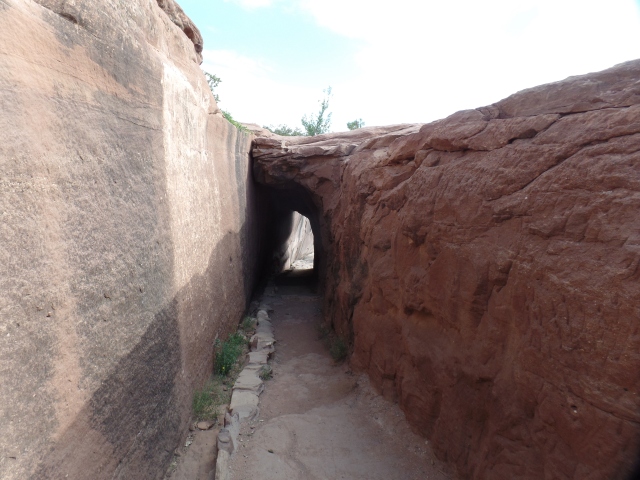
There are two tunnels along the trail.  This is the smaller one.

SAMSUNG CAMERA PICTURES

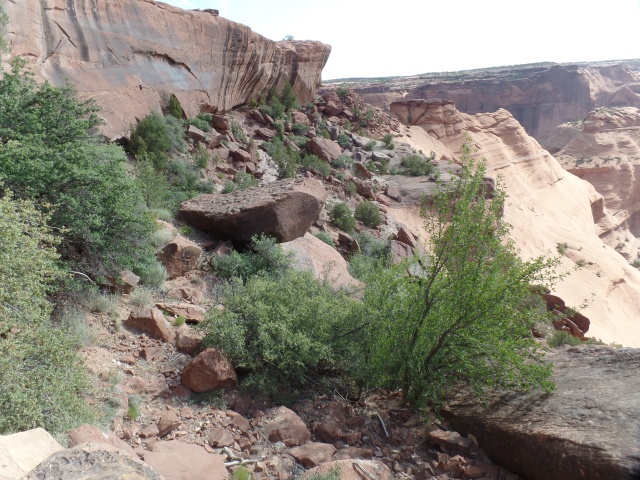
The trail looks messy, but is actually well-maintained.

SAMSUNG CAMERA PICTURES

Some reinforcing has been needed, over the years.

SAMSUNG CAMERA PICTURES

The canyon is watching.

SAMSUNG CAMERA PICTURES

SAMSUNG CAMERA PICTURES

This verdancy allows many Dineh to farm here, at the Canyon’s bottom.

SAMSUNG CAMERA PICTURES

SAMSUNG CAMERA PICTURES

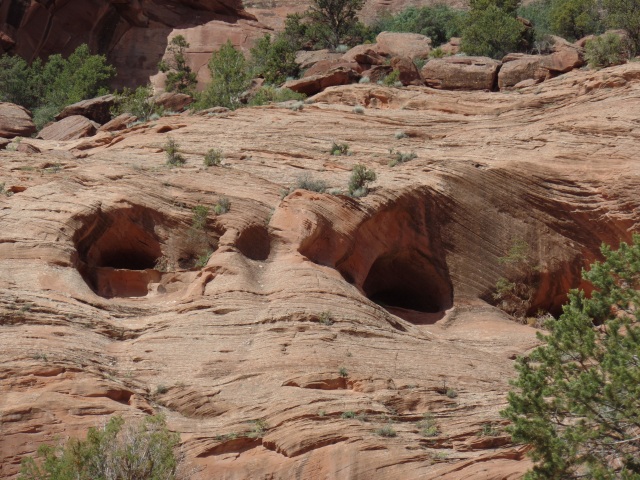
Caves abound-or they are watchmen?

SAMSUNG CAMERA PICTURES

Grey gypsum and turquoise are embedded in the sandstone, at this particular spot.

SAMSUNG CAMERA PICTURES

Here is the second tunnel.

SAMSUNG CAMERA PICTURES

Even ants need picnic benches.

SAMSUNG CAMERA PICTURES

Camellias add a nice touch to the canyon bottom.

SAMSUNG CAMERA PICTURES

This majestic tableau rises above the working farm I passed.

SAMSUNG CAMERA PICTURES

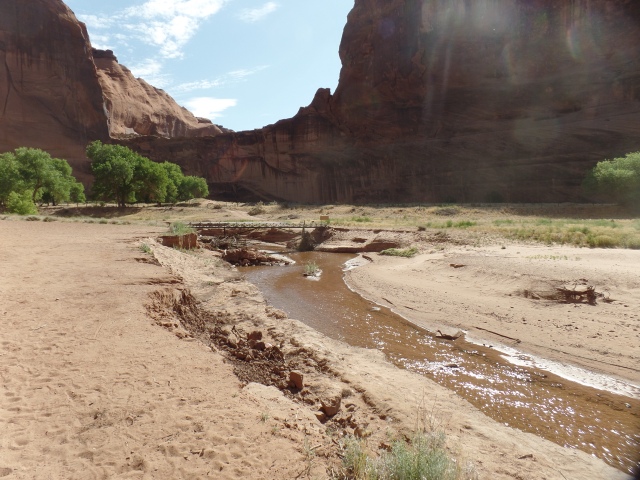
Chinle Wash is flowing mildly, but steadily.

SAMSUNG CAMERA PICTURES

After a leisurely hike, here they were:  White House Ruin, built by Ancestral Puebloans, around 1060 A.D. and occupied continuously for 200 years afterward.

SAMSUNG CAMERA PICTURES

SAMSUNG CAMERA PICTURES

The walk back up was not at all hard, with a couple walking slightly ahead of me, and stopping for occasional conversation, then moving along for their own private reflections.

This was my fourth time hiking White House Trail ,and certainly the most well documented.

NEXT:  The Road to Window Rock

Canyon de Chelly: The View From the Top

17

June 15, 2019, Chinle-

Many people, when comparing Arizona’s myriad of canyons, prefer smaller ones. Canyon de Chelly (pronounced SHAY), high on the eastern edge of the Colorado Plateau, has its thousands of afficionados.  It was one of the alternatives to the Grand Canyon, for Dineh people seeking to hide from Kit Carson’s forces, during the run-up to the Long Walk.

SAMSUNG CAMERA PICTURES

Today, the place is, reasonably, packed with visitors of all ages- taking jeep tours, riding horseback, walking with authorized Dineh guides, or on their own (along White House Trail, which will be the subject of the next post).  Some are happy with viewing the magnificence from rim overlooks.  Still others are okay with just camping, at the NPS-run Cottonwood, or at the privately-owned Spider Rock Campground. Then, there is the chill-out crowd, hanging out at Thunderbird Lodge.

My focus was two-fold: Take in the South Rim overlooks, camp at Cottonwood, then hike White House Trail and end with the North Rim viewpoints.  That worked well, and so-here are views from each of the overlooks, beginning with Tunnel Canyon and ending with Mummy Cave.

Tunnel Canyon Overlook:

SAMSUNG CAMERA PICTURES

Tsegi Overlook:  (Tsegi is Dineh for “canyon”)

SAMSUNG CAMERA PICTURES

Junction Overlook: (Canyon de Chelly {South} and Canyon del Muerto {North} converge here.)

SAMSUNG CAMERA PICTURES

The overlook, and other highlights, of White House Trail, will be featured in the next post.

Sliding House Overlook:

SAMSUNG CAMERA PICTURES

Face Rock Overlook:SAMSUNG CAMERA PICTURES

Spider Rock Overlook:

SAMSUNG CAMERA PICTURES

Now, from the North Rim, here’s a view from Antelope House Overlook: (This ruin may only be viewed up close, if one is accompanied by a registered Navajo guide.)

SAMSUNG CAMERA PICTURES

Massacre Cave Overlook:  (The cave itself was the scene of a wanton slaughter of Dineh women and children, by Spanish soldiers, in 1805.)

SAMSUNG CAMERA PICTURES

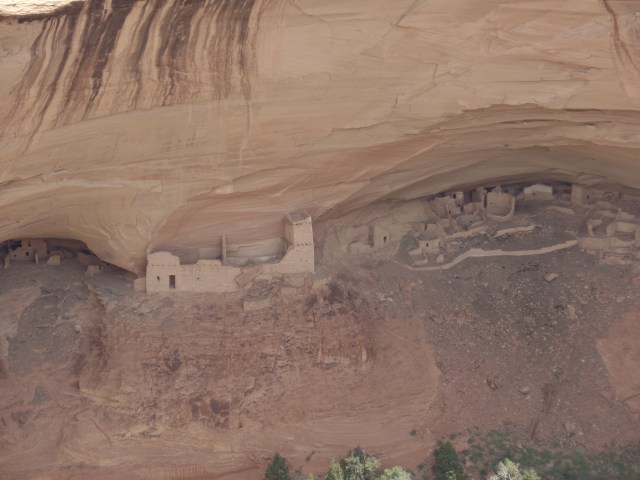
Mummy Cave Overlook: (This also accessible only on a guided tour.  Mummy Cave is the largest Ancient Puebloan ruin in Canyon de Chelly National Monument.)

SAMSUNG CAMERA PICTURES

So, as you can see, there is a wide variety of learning activities at Canyon de Chelly National Monument.  An old favourite hike, White House Ruins Trail, is among them and is the subject of the next post.


The Art of Encouragement

2

SAMSUNG CAMERA PICTURESJune 14, 2019, Ganado, AZ-

During the course of the tortuous process of incarceration, known as The Long Walk, white America showed itself to be of two minds, regarding the Dineh (Navajo) people.  There was the idea that, by removing Dineh, the resources of the area in which they lived would be available to the “Greater Nation”.   President Lincoln also retained the distrust and dislike of First Nations people, which he had carried since his participation in the Indian Wars of 1818-20.  He did not have to be cajoled into signing off on this travesty.

In all of this, an even-handed, but not easily-swayed, Dineh leader named Totsohnii Hastiin (“Man of the Big Water”) resisted incarceration, initially, fleeing to the Grand Canyon and living among his paternal relatives, who were Hopi.  He learned of his people’s suffering at Fort Wingate, and so surrendered, after a time.

When the Dineh were allowed to return to their traditional homes, by President Andrew Johnson, in 1868, some Euro-American traders, especially those of Spanish or Mexican ancestry, were allowed to approach the First Nations people, to establish trading rights.

One of these was a New Mexico native, John Lorenzo Hubble.  He settled with his family in a small Dineh settlement called Pueblo Colorado.  There, Chief Totsohnii established a friendship with “Don” Hubble (Don is a Spanish term of respect for a man of means.) In time, the village of Pueblo Colorado became regularly confused with the large town of Pueblo, Colorado. The people chose to rename their village as Ganado, after Chief Totsohnii’s common title, Ganado Mucho (“many cattle”).  Both names stuck, and today the great leader is remembered as Ganado Mucho.  The village has become a thriving crossroads commercial center.

An essential part of Ganado’s growth has come from the trading post established here, by John Lorenzo Hubble, in 1878.  Hubbell lived here with his family and actively encouraged Dineh artisans to sell their jewelry and wool rugs, two trades they had learned from the Spanish and which they had perfected over nearly a century.  His trading post became a model for others, throughout the Navajo Nation, and nearby First Nations communities.

Today, Hubbell Trading Post remains a working concern, whilst also being preserved in the National Park System, as a National Historical Site.  Here are some scenes of this special establishment.  Below, is the side entrance to the Main Trading Post.


SAM_1640.JPG

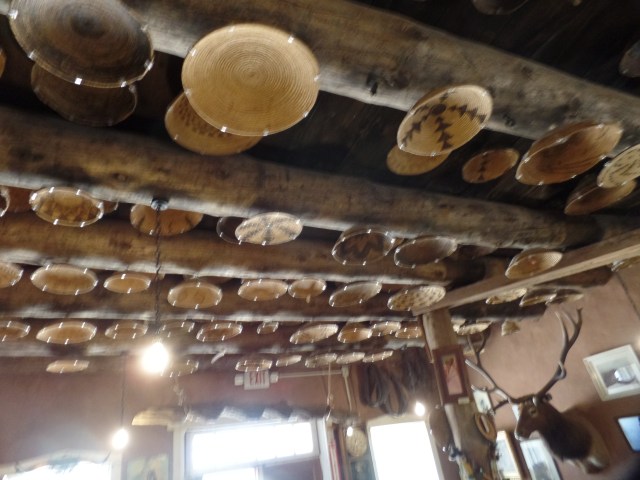
On the ceiling of the “Jewelry Room”, one sees baskets of many First Nations, who traded them with Mr; Hubbell and continue to trade with the present-day proprietors.


SAM_1641.JPG

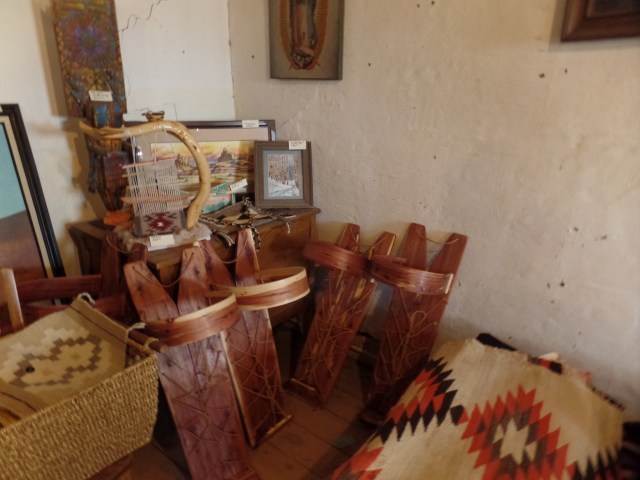
The cradle board, examples of which are shown below, was essential for Dineh mothers to carry their infants, both during their work in the fields and along the Long Walk.  It is still used today, by traditional Dineh women.

SAMSUNG CAMERA PICTURES

In these corrals, the Churro sheep that are so essential to Navajo weaving, as well as for the mutton that is integral to the Dineh diet, are penned.  Churro mutton is one of the Heritage Foods, recognized by Slow Food International, in its work to maintain a diversity of foods for the human race.

SAMSUNG CAMERA PICTURES

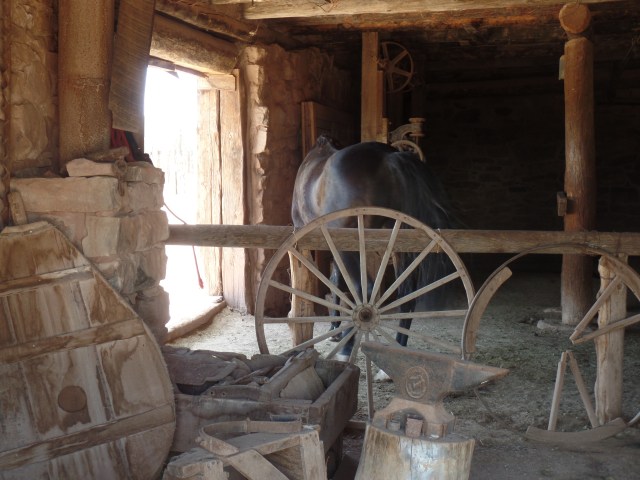
Horses, also beloved of Dineh, as beasts of burden, are also corralled here.

SAMSUNG CAMERA PICTURES

I got a chance to briefly look inside the home of the Hubbell family, now preserved by the National Park Service.

SAMSUNG CAMERA PICTURES

The unique tree stump carving below, was commissioned by the  Hubbell family, as proof of  the range of Dineh artistry.

SAMSUNG CAMERA PICTURES

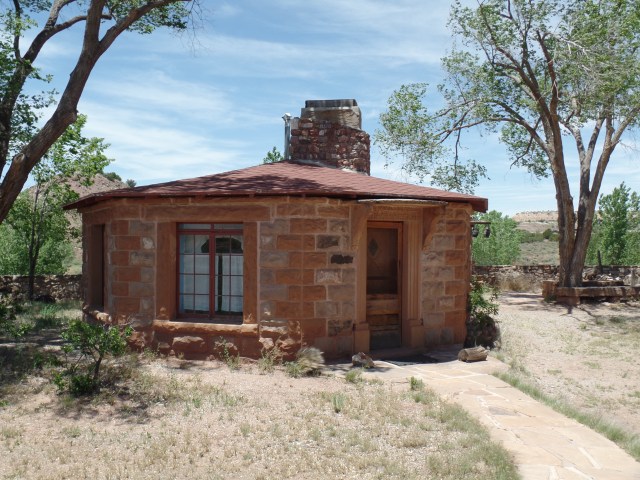
This hogan-like octagonal cottage housed artists who were commissioned by Mr. Hubbell.

SAMSUNG CAMERA PICTURES

The Hubbell family members are buried on this hill, which is off-limits to the public.

SAMSUNG CAMERA PICTURES

The property also shares a Veterans Healing Trail, a serene walk of about 3/4 mile, with the Chapter of Ganado.

SAMSUNG CAMERA PICTURES

It ends at this Peace Tree, on Ganado Chapter property.

SAM_1673.JPG

This first real effort, at bringing heretofore inimical peoples together, has served as an ongoing example of just how our our interests, both common and divergent, can serve as an example of alternatives to conflict.

NEXT:  Canyon de Chelly, As Viewed From the Rims.

Where Affirmation Started

8

June 14, 2019, Keams Canyon, AZ-

Two months ago, after I left my full-time work, I got a text from a long-time friend, from the Navajo Nation.  Her uncle, another long-time friend, had died, and the family needed my help with his funeral.  I was to offer a final prayer, to which I agreed.  I did the service, in a small cemetery on this isolated, but starkly beautiful location.

Another member of the family lives near the cemetery and invited me to visit him, when I was next in the area.  There was no better time for this, than the start of the Summer, 2019 road trip, so I came up here yesterday evening and spent the night in his nicely furnished and solidly-built ranch style home.

It does my heart good to see Indigenous people have access to the same quality of life that people in other ethnic groups have.  I don’t see the point in anyone being left out.  For too long, First Nations have taken the leavings of the majority population.  This is changing, mostly for the better.

Coal Mine Canyon is one of the least-visited parts of Arizona. Infrastructure is non-existent though a graded road made it possible for me to take some photos of the canyon, from its south rim.

SAMSUNG CAMERA PICTURES

SAMSUNG CAMERA PICTURES

SAMSUNG CAMERA PICTURES

SAMSUNG CAMERA PICTURESSAMSUNG CAMERA PICTURESSAMSUNG CAMERA PICTURESSAMSUNG CAMERA PICTURES

This last looks like the Earth is watching!

SAMSUNG CAMERA PICTURES

I continued on, this morning, to the Hopi Nation, visiting a former co-worker, briefly, then upon finding there was no social dance in her village, this weekend, I continued on over to Keams Canyon, where what has turned out to be one of the two really rewarding positions I ever held, started, in August, 1992.  It’s certainly arguable that I should never have left Cedar Unified, but here we are.  I felt affirmed as a school counselor, more than I did in any other position.  Affirmation began in Tuba City, near Coal Mine Mesa, and continued both at Jeju National University and here.  I still feel validated by my First Nations friends.

Here are a couple of views of the inner area of  Keams Canyon, now largely abandoned.

SAMSUNG CAMERA PICTURES

SAMSUNG CAMERA PICTURESSAMSUNG CAMERA PICTURES

SAMSUNG CAMERA PICTURESSAMSUNG CAMERA PICTURES

There used to be a trail that led from Keams to a part of the nearby Dineh settlement of Jeddito, to which we moved in 1993, after living in Keams for a year.  The trail, like much of the settlement has been redirected elsewhere.

NEXT:  Hubbell Trading Post and Its Impact on Navajo Arts and Crafts

Home Base

7

June 12, 2019-

Tomorrow, I will head up for a few days in another of my heart homes – Dineh/Hopi.  Yes, there are many of those, and this Home Base is one.  The road will then curve eastward.

In the meantime, life goes on here in Prescott-with a vengeance.  Many of you may be taking journeys of your own, over the next few months, and I can say time spent in this area is well worth the drive, or flight (Ernest A. Love Regional Airport is expanding its own “wings”, with more destinations offered by its tenant carriers).  So, let me go all Chamber of Commerce on you.

I’d offer my own Home Base on Airbnb, but it’s a tiny place and the landlord would not be happy.  So, I recommend either of two hostels:  Prescott International, on McCormick Street. (https://www.tripadvisor.com/Hotel_Review-g31323-d4309329-Reviews-Prescott_International_Travelers_Hostel-Prescott_Arizona.html) or House in the Pines Hostel, on Virginia Street, two blocks west of my place, actually(https://www.hiphostelaz.com/).  There are a couple of great boutique hotels:  The Grand Highland, right smack downtown, on Whiskey Row (https://www.grandhighlandhotel.com) and Hotel Vendome, one block south of downtown, on Cortez Street (https://www.vendomehotel.com/).  There are two grand hotels:  Hassayampa Inn, on the corner of Gurley and Marina, is a premier spot for jazz in the courtyard (https://www.hassayampainn.com/) and Hotel St. Michael, on the north end of Whiskey Row, at the corner of Montezuma and Gurley, is a prime meeting place for locals and visitors alike. (http://www.stmichaelhotel.com/).  The chains have fine reps here, as well:  Hampton Inn, Marriott and Spring Hill Suites are either downtown, or within a short drive.  An independent hotel, Forest Hills Suites, is near the Marriott, east of town.

Now, the entertainment part:  Nature calls, pretty loudly, here, if you’ve seen my earlier posts.  The man-made lakes- Goldwater, Lynx, Watson, Willow and Granite Basin are all great for fishing, kayaking, canoeing and picnicking.  Lynx Lake has a paddle boat concession, as well.  Each of these has good trail systems, so the hiker is bound to feel happy.  Speaking of which, mountain trails abound, at all levels of difficulty, from Peavine Trail (easy) to Granite Mountain and Mt. Union (strenuous).  In between, are Thumb Butte, Prescott’s signature landmark, west of downtown and Granite Dells, a warren of trails, north of town, and mostly on private land, but generously shared with the public.  I have enjoyed most of the trails available here, over the past eight years.

Indoors?  Lots of good stuff here, too.  We have Elks Theater, in a restored grand opera house and Prescott Center for the Arts, in a restored church.  Both are downtown.  The Courthouse Plaza has many evening concerts, during the warmer months and street festivals abound, particularly on weekends.  Yavapai College, on the east side of town, and Prescott College, slightly northwest of downtown, offer many artistic events, as well.  YC hosts Prescott Farmers Market, on Saturday mornings (7:30-12).  Embry Riddle Aeronautical University, 5 miles north of downtown, has an Observatory open to the public.  Sharlot Hall Museum is a must, for anyone seeking to understand Prescott’s history.

Now for the  brew.  I don’t imbibe alcohol, but there are more places to sit and hoist a few than this post has space.  A  few, for which I can vouch:  Matt’s, The Bird Cage, Rickety Cricket and Lil’s are all on Whiskey Row.  The Raven Cafe, one of my favourite restaurants and music venues, also has a full bar.  Brewery/Restaurants also are in no short supply:  Prescott Brewing Company, Granite Mountain Brewing, Coppertop Alehouse, Barley Hound-you get the picture.  Coffee is also in plethora:  Wild Iris, Ms. Natural’s (my absolute fave restaurant, as well), The Porch, Frannie’s (also has great frozen yogurt and pastries), Cupper’s, Firehouse Coffee, McQueen/Rustic Pie (also a  food fave), Method (on the north side of town) and Third Shot (in Gateway Mall, three miles east of town) are a few who come to mind.

Prescott’s Eats?- I mentioned Ms. Natural’s (The owner and a couple of the servers are personal friends and the name says it all, with regard to the fare).  Rustic Pie, Shannon’s Gourmet Deli, Dinner Bell Cafe, El Gato Azul, Rosati’s, Two Mamas Pizzeria, Chi’s Cuisine and Bill’s Pizza are all relatively small venues, but well worth a try.  So, too, are the larger places- Murphy’s, Gurley Street Grill, The Office, Rosa’s Pizzeria, Lone Spur, Bill’s Grill, Zeke’s Eatin’ Place (in Frontier Village, east of town), Park Plaza Liquor/Deli.  Other spots abound, so have fun exploring.

Finally, a few words about the periphery.  Prescott Valley, our sister town, is worthy of a day or two of exploration all its own.  It’s a lot of strip malls to take in, but they have a warm feel about them.  Rafter Eleven is a superb place for wine, coffee and dipping oils, located a block north of Highway 69, off Glassford Hill Road.  Backburner Cafe is on the north side of town, at the corner of Robert Road and Spouse.  Further east are:  Dewey-Humboldt, with Leff-T’s Steak House and Casa Perez Family Restaurant, plus a cute “Main Street”, at Humboldt; Mayer, with Flourstone Bakery and Arcosanti, a fascinating eco-architectural establishment.  Northwards is Chino Valley, with Danny B’s Seafood Cafe and the fascinating  Garchen Buddhist Institute, about seven miles east on Perkinsville Road (The access road is narrow, windy and steep in places).  Westward lie Kirkland, with its own steakhouse, replete with sawdust on the floor and bowls of unshelled peanuts on the table and Yarnell, with some interesting antique shops, Shrine of St. Joseph and, south of town, Granite Mountain Hotshots Memorial State Park, where one may hike five miles or so, to the site of the tragic 2013 fire, which claimed the lives of 19 Wildland Fire Fighters, paying respects along the way. Nichols West Restaurant, in Congress, at the base of Yarnell Hill, is a fine place to replenish oneself, after such an outing.  Finally, fifteen miles northeast, on Highway 89A, is the mountain town of Jerome, with Haunted Hamburger, Mile Hi Grill, Bobby D’s BBQ, Flatiron Coffee House, Jerome State Park and an inn that was once a brothel. The road, both east and west of town, is not for the faint of heart-yet the streets are routinely packed with visitors from Phoenix, Scottsdale and all over.  Get there early.

This is my longest post ever, I know, but Home Base is worth every word.


Cave Creek’s Story

7

May 26, 2019, Cave Creek-

(This is a bit of recent history-mine, about some earlier history-Cave Creek’s.  I stopped in this fun-loving town, this evening, after having made my graveside visit.  Cave Creek is the sort of town that Penny and I enjoyed together, much like her pre-marital abode:  Julian, CA.)

I had ninety minutes to spend, prior to having dinner at Big Earl’s, so where better to go than Cave Creek Museum- a small, but well-appointed repository of the frontier town’s historical record.

First, I spent about a half hour reconnecting several of the dots.  The area, being near the Verde River, as well as its namesake creek, was a crossroads for trade between the Sinagua and Hohokam peoples.  Thus, artifacts from all over the Southwest found their way here.  The Pima, or Akiel O’odham, were living in the area, in more modern times.

Following European settlement, and further upon the opening of the Southwest to settlement from the Eastern U.S., gold and gem mines popped up around Cave Creek, in the late Nineteenth and early Twentieth centuries.  The Mormon Girl and Golden Reef Mines were the largest in the area.

After World War II, the dry climate and relatively warm temperatures drew people seeking relief from tuberculosis and other pulmonary ailments.  A cabin that had been used to house t.b. patients is preserved, on the museum grounds.

Any frontier town has its characters.  Cave Creek’s included Honky Tonk Jack, who played music in several of Cave Creek’s saloons and “Dirty Al” Rance, a popular but somewhat unsavory cow puncher, who was often afoul of the law.

Here are some scenes of the museum’s outdoor exhibits.

20190526_154611[1]

A prospector like this gentleman could be found outside mines like the Mormon Girl, which still exists on the side of nearby Black Mountain.

20190526_154757[1]

Here’s lookin’ at ya!

20190526_155824[1]

Driftwood art is natural, for a town close to waterways which rage, during monsoon rains.

20190526_155844[1]

This stamp is from Golden Reef Mine.  It is the only ten-stamp ore-grinding mill still in operation in Arizona-at selected times. The tramway tower, of course, is off-limits.

20190526_155914[1]

Here is a replica of what the ore yard looked like at the height  of Golden Reef’s operations.

20190526_155920[1]

This windmill graced a nearby ranch.  The name of the operator, David Bradley, is shared by many, including a personal friend.

20190526_155946[1]

Here’s more ore yard equipment.

20190526_160018[1]

20190526_160047[1]

I don’t think this ore cart would be a very comfortable ride.

20190526_160116[1]

Extracting ore requires lots of water and gas.

20190526_160131[1]

Every western town had a gazebo, or bandshell, similar to those of the Midwest and South.

20190526_160158[1]

This is the Cave Creek Community Chapel, still offering Sunday services.

20190526_160309[1]

20190526_160351[1]

The church bell still works.

20190526_160320[1]

Here is a look at the off-limits Tuberculosis Cabin.

20190526_160609[1]

20190526_160659[1]

Finally, this critter draws many children to ask their parents for a visit to the museum.

20190526_161315[1]

So went the saga of one of my favourite central Arizona towns.

Altogether Fitting and Proper

7

May 27, 2019-

The morning dawned,

and all were present.

The rain was here,

to bless the events of the day ahead.

The clouds lingered overhead,

to offer the promise

of further blessings.

The Sun peeked,

to let us know

that there is

always hope.

The politicians are here,

to show that they

at least appreciate

our right to be freely represented.

Friends are here,

to remind me

that I’m not alone.

Foes and naysayers are here,

to remind me

that no one

can meet everyone

else’s expectations

and wants.

Conservatives are here,

to maintain the best

of what we have.

Liberals are here,

to ensure that society

does not remain

uniformly static.

Children are here,

because mankind has

a bright future.

Seniors are here,

to share the better part

of our immediate past.

The choirs, male and female,

are here,

because everyone has

a voice that is

worth hearing.

My mind is here,

to keep a lid

on the whimsies

that sometimes

threaten

to carry me off.

Memories and appreciation

will remain.

Thank you, for having been, my grandparents,

my father, little brother,

departed aunts, uncles, cousins and friends.

Thank  you for your service,

Uncles Carl, Ernie, Charlesie, Jimmy,Eddie, Tom, Bob , Sonny, Al and John;

Aunt Toddy; Cousins Gordon Spousta and Mike Madigan;  friends Stan Egan, Dicky

Devine,”Little” Charlie Stack, Mike Kmita, Paul Smith, Lori Ann Piestewa.

On this day, all who served with honour are to be honoured themselves,

for having given the supreme sacrifice-either dying in combat,

or later, from its effects.

Mr. Lincoln had it right:  It is altogether fitting and proper, that we give such remembrance.


Another Distant Mirror

2

May 9, 2019-

I have spent much of the past several days, sequestered in my house, waiting for the corporate entity which employs substitute teachers in our county to finish its processing of my papers.  I am sticking close to home, mainly to stretch my dollars as, while I have a sufficient income, it will still be an involved summer and economy is critical.  The activities that occupy me are sorting out unneeded possessions, exercising, reading- and Netflix.

I have taken to a series, called “The Last Kingdom”, an historical fiction loosely based on the life and times of Alfred the Great, who began the process of unifying the regions of what is now England, in the 9th Century.  It is similar to Barbara Tuchman’s  “A Distant Mirror”, in tone and scope.  Many of the themes with which we are familiar today, occurred in both long-ago times, and most likely have appeared in every era of human endeavour.

I focus here on two recurrent themes in human history:  The tendency to gloss over a person’s achievements, whilst calling excess attention to the same person’s failures; the dichotomy in the level of treatment of women and girls, between those interested in maintaining authority and those living a simpler life, closer to the soil.

In “Kingdom”, Alfred is depicted as one more concerned with maintaining the primacy of the rich and powerful, including himself, than with dispensing true justice.  It is noted, as we know about the Dark Ages, and on into the Renaissance/Reformation, that alliances rose and fell on a whim.  It is noted that manipulative figures operated with impunity, and those who challenged them were either killed or banished-as the central character in “Kingdom”, Uhtred Ragnarsson, experiences banishment and redemption, several times.  It is shown that women had to assert themselves, fiercely, if they were to avoid battering and a life of humiliation.

Of course, as in any depiction of events not occurring in real time, there is undoubtedly a fair amount of amplification and embellishment in the series, based in turn on Bernard Cornwell’s  “Saxon Tales”.    The human struggle will long be what it has been, as man deals with the issues of justice, equity and the balance of power in society.

I have my sense as to how the series will pan out.  I also have a sense as to how the human race will continue to evolve-and the ebb/flow inserted into both processes.