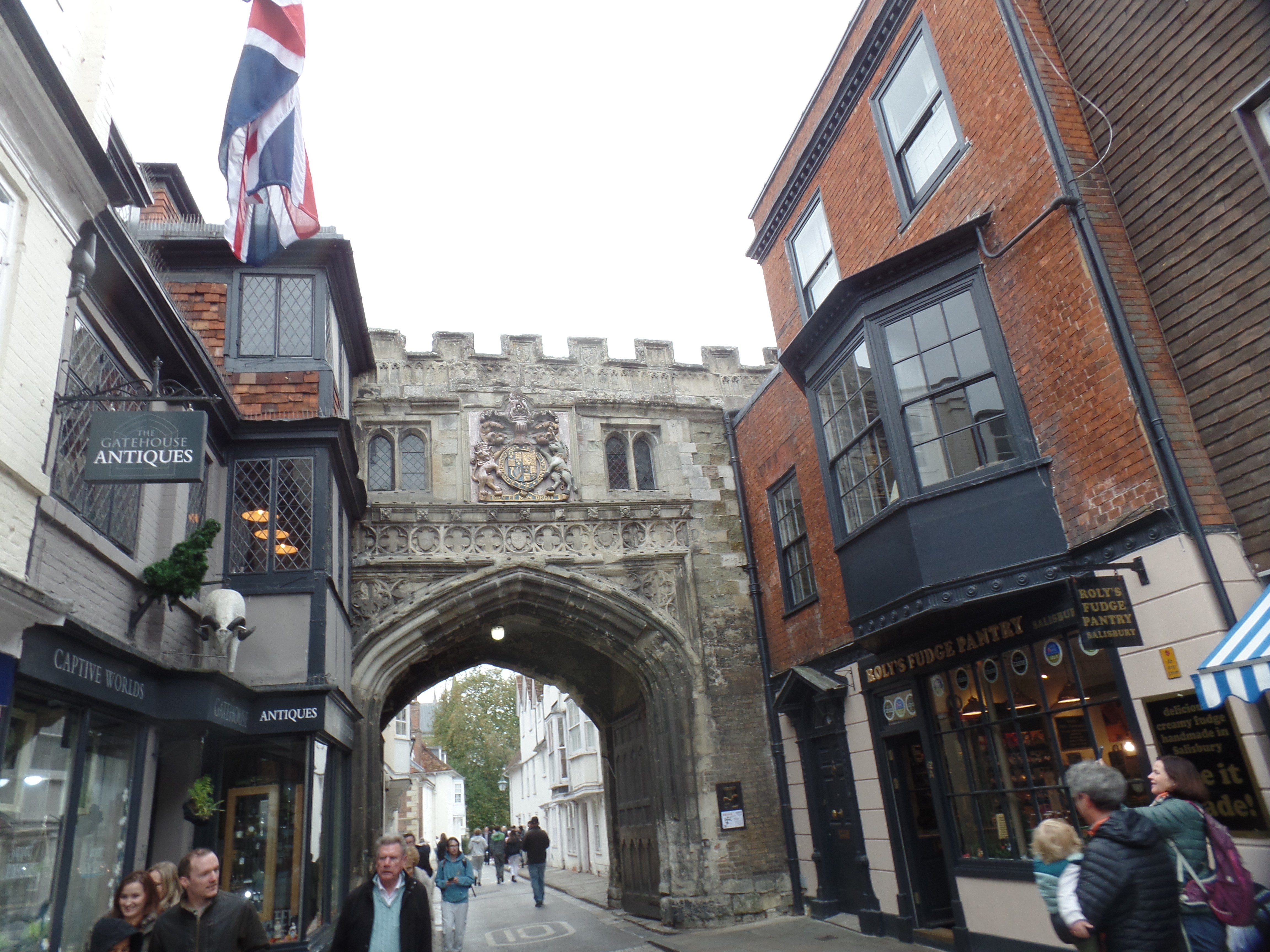
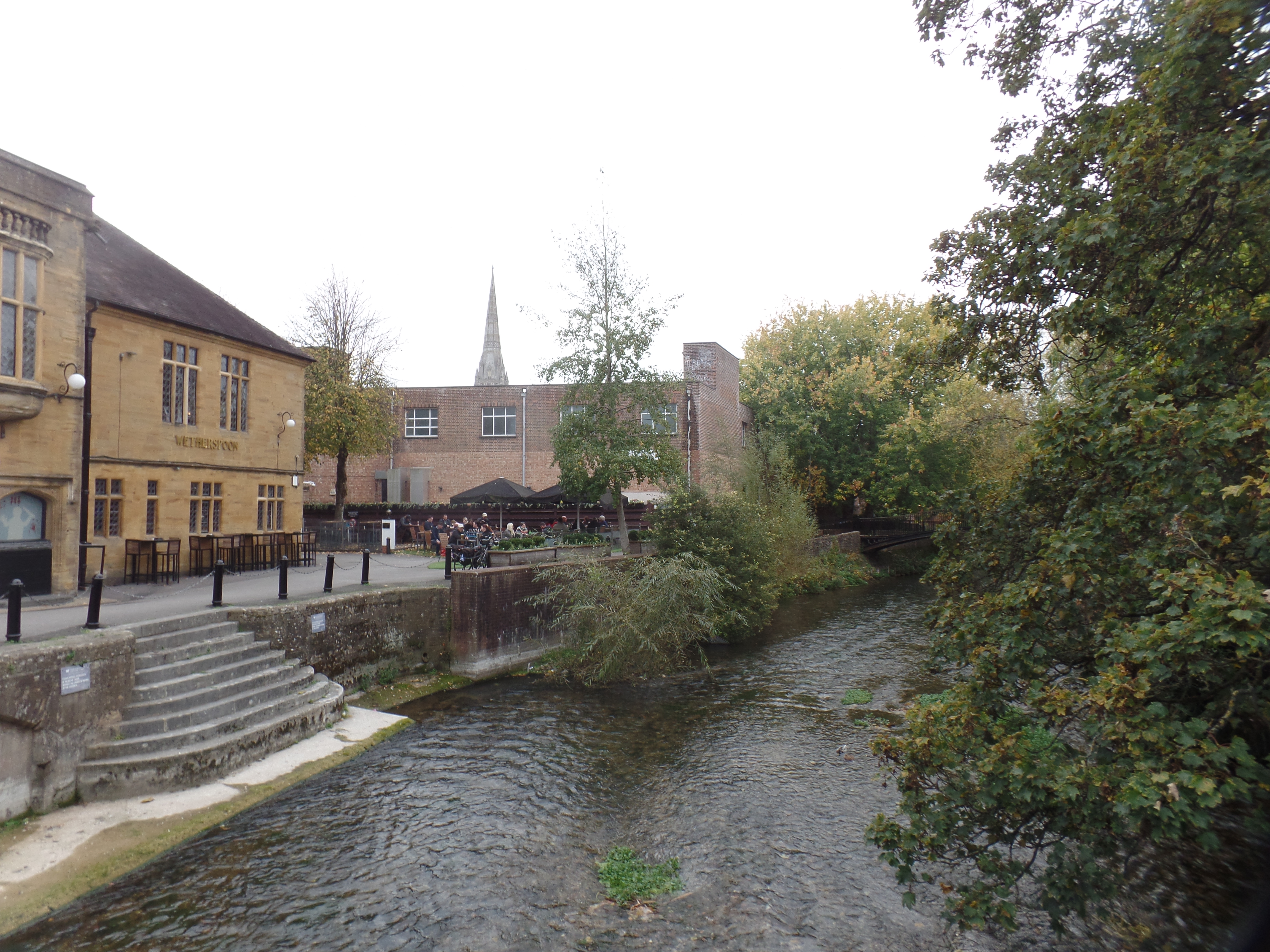
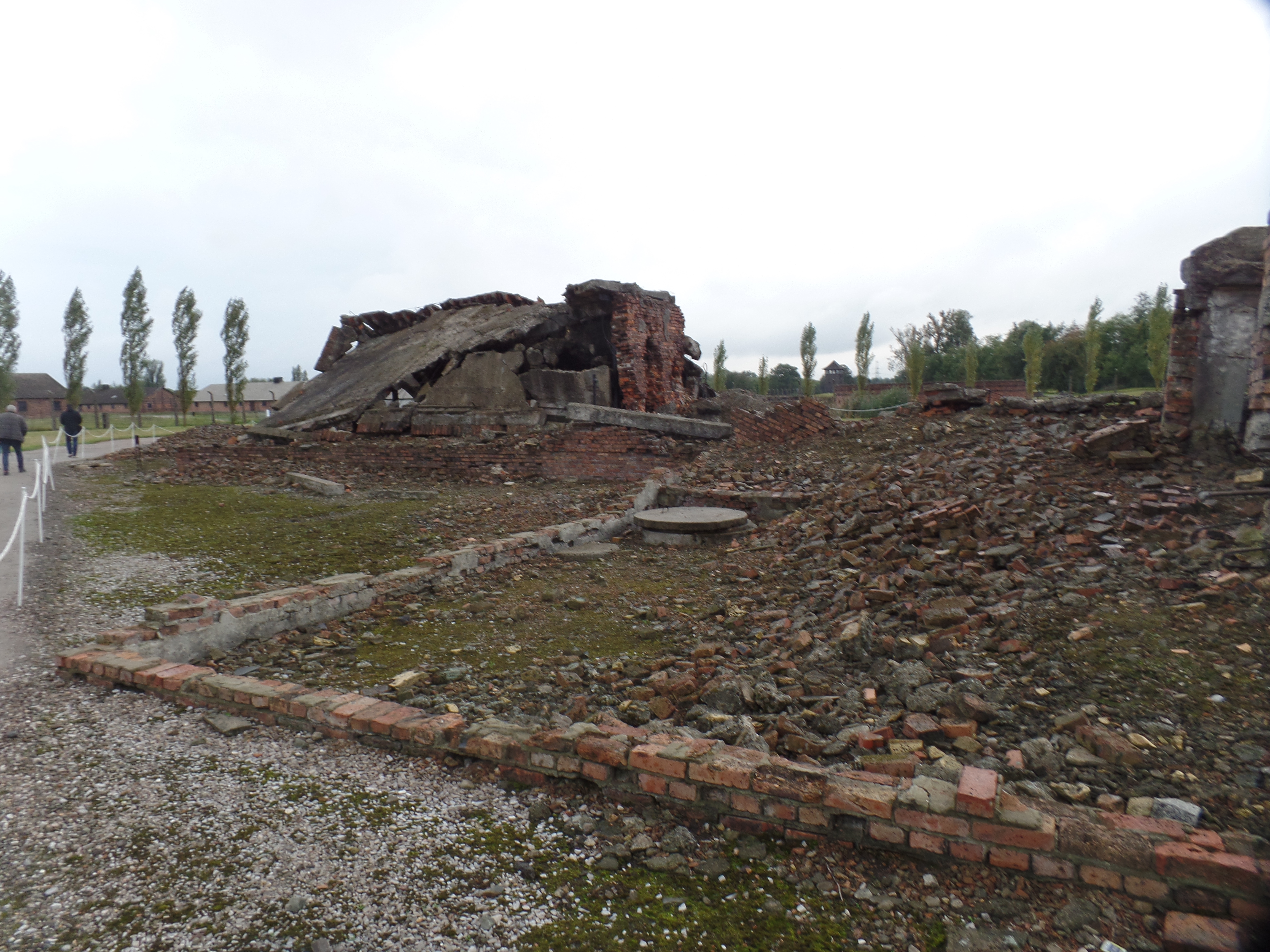
October 17, 2025, Portsmouth, England- The earnest young man, a maintenance worker for the City of Dieppe, told me that the route to the ferry terminal was “not long” and was “visible straightaway from around the corner to the left.” I followed his directions, met a couple who were out walking on a delightful Friday afternoon and got more complete directions. Twenty-five minutes later, I walked into the Ferry Terminal.
Taking on the road involves just this sort of time allowance, and patience with people whose own understanding of routes and systems is not as complete as they fancy it to be. It also involves workarounds for spotty WiFi and being a quicker study for technological innovations than has ever been the case. That alone, to me, is a cure for dementia. (Disclaimer: I am not a medical professional. I just know how it feels to be adapting to a savvier world.)
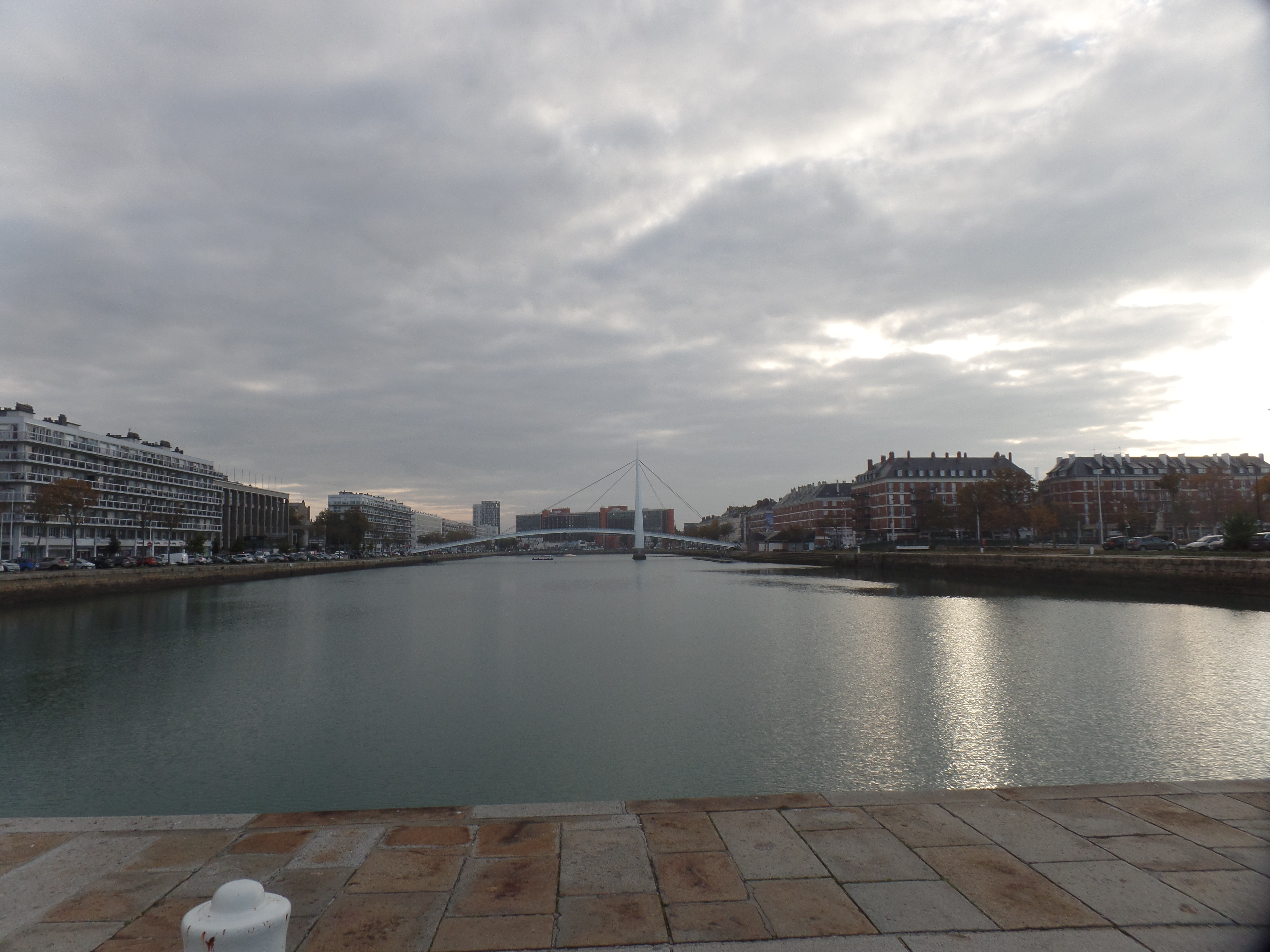
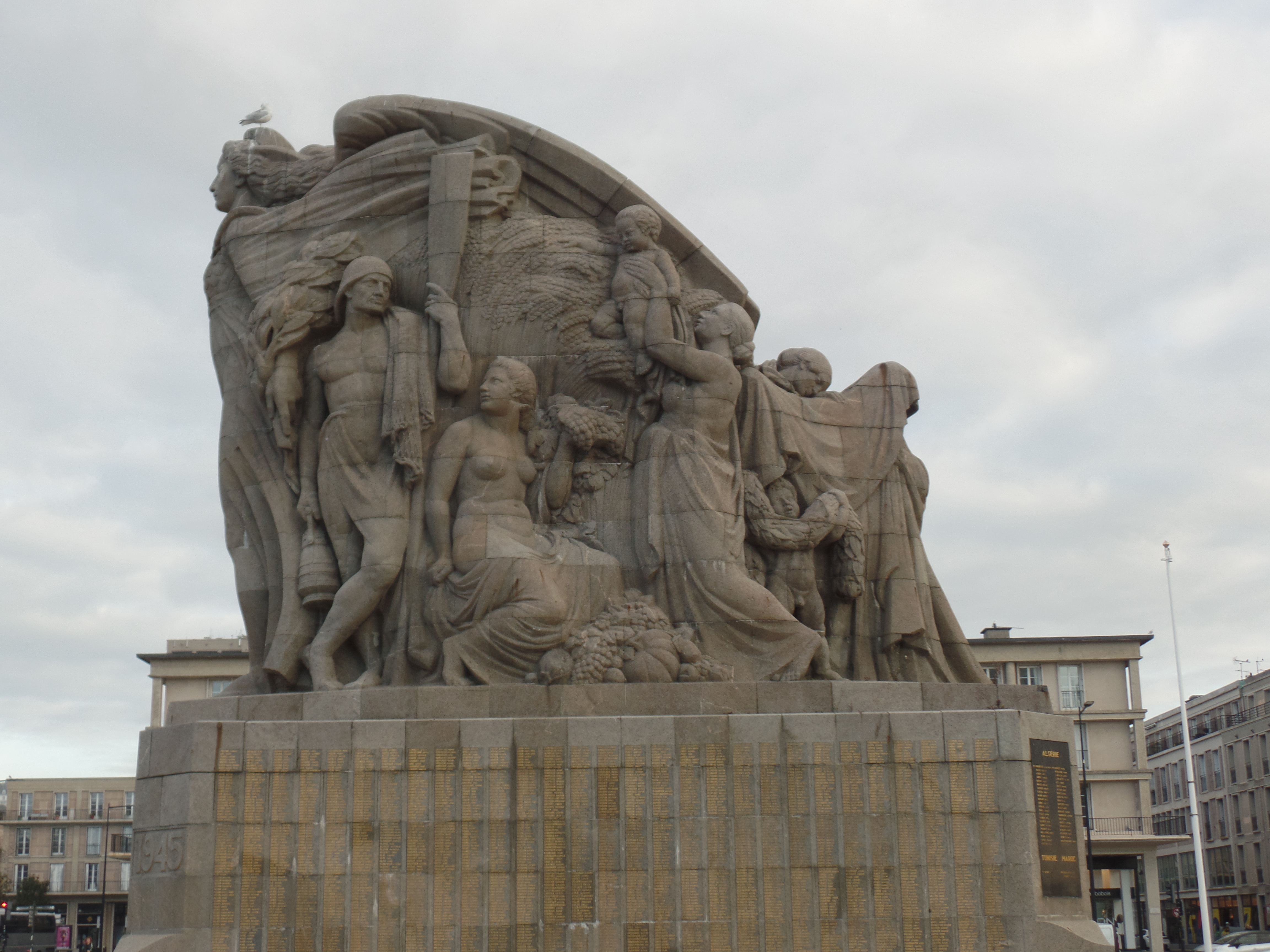
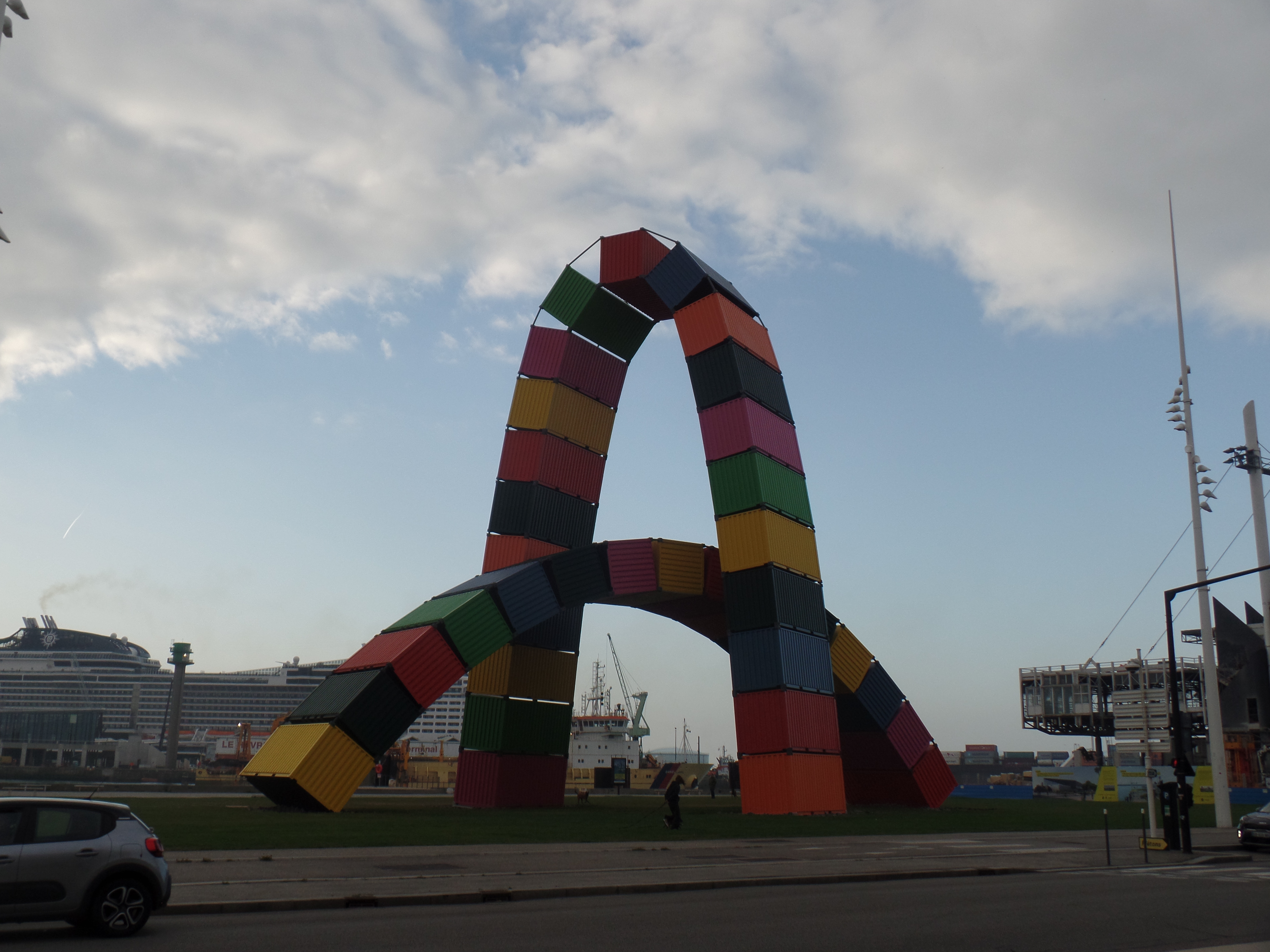
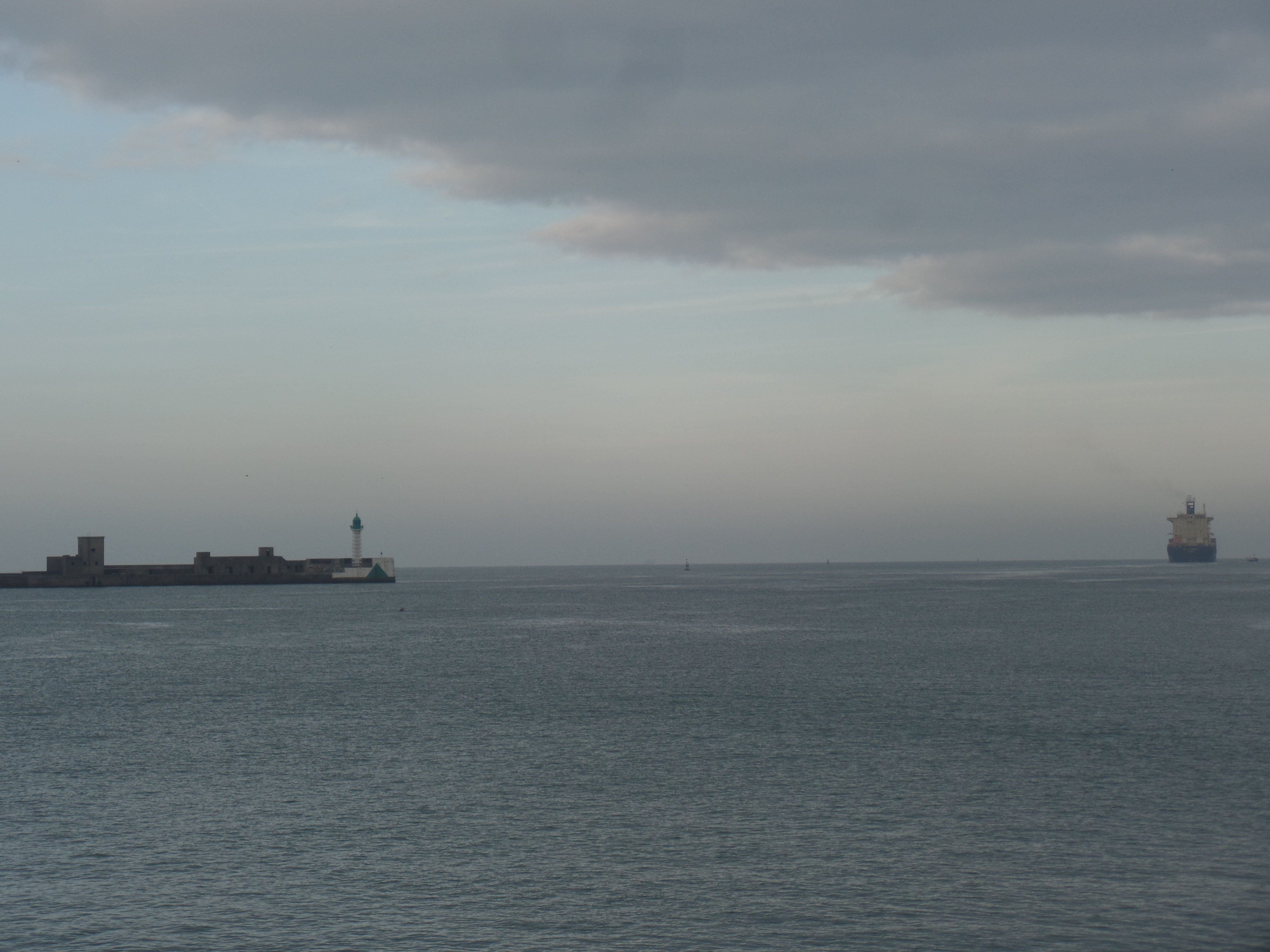
The day started with a fine breakfast at JOST Hostel. Before checking out, I did a walkabout to Le Havre’s waterfront and back. Here are some scenes:
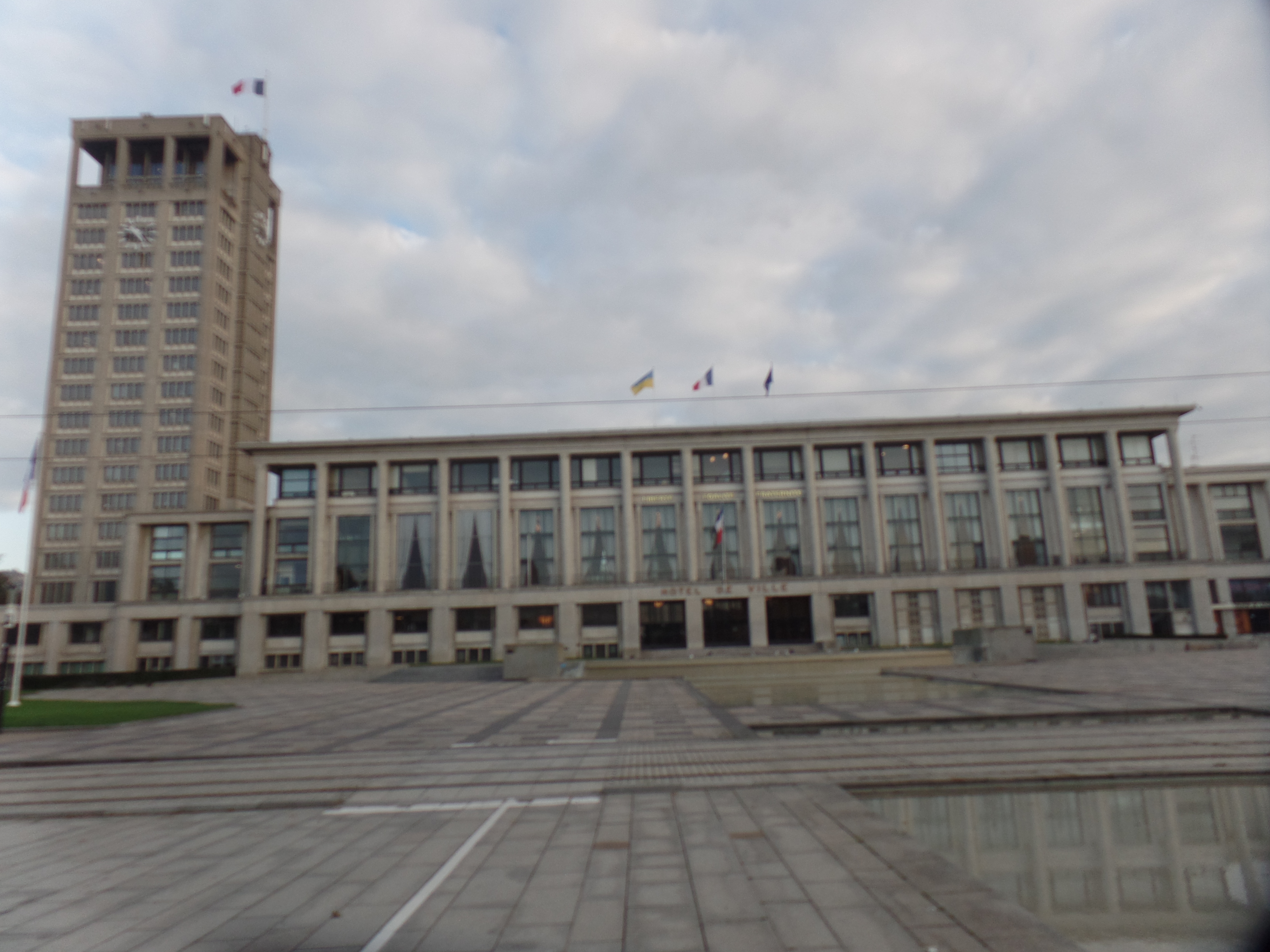
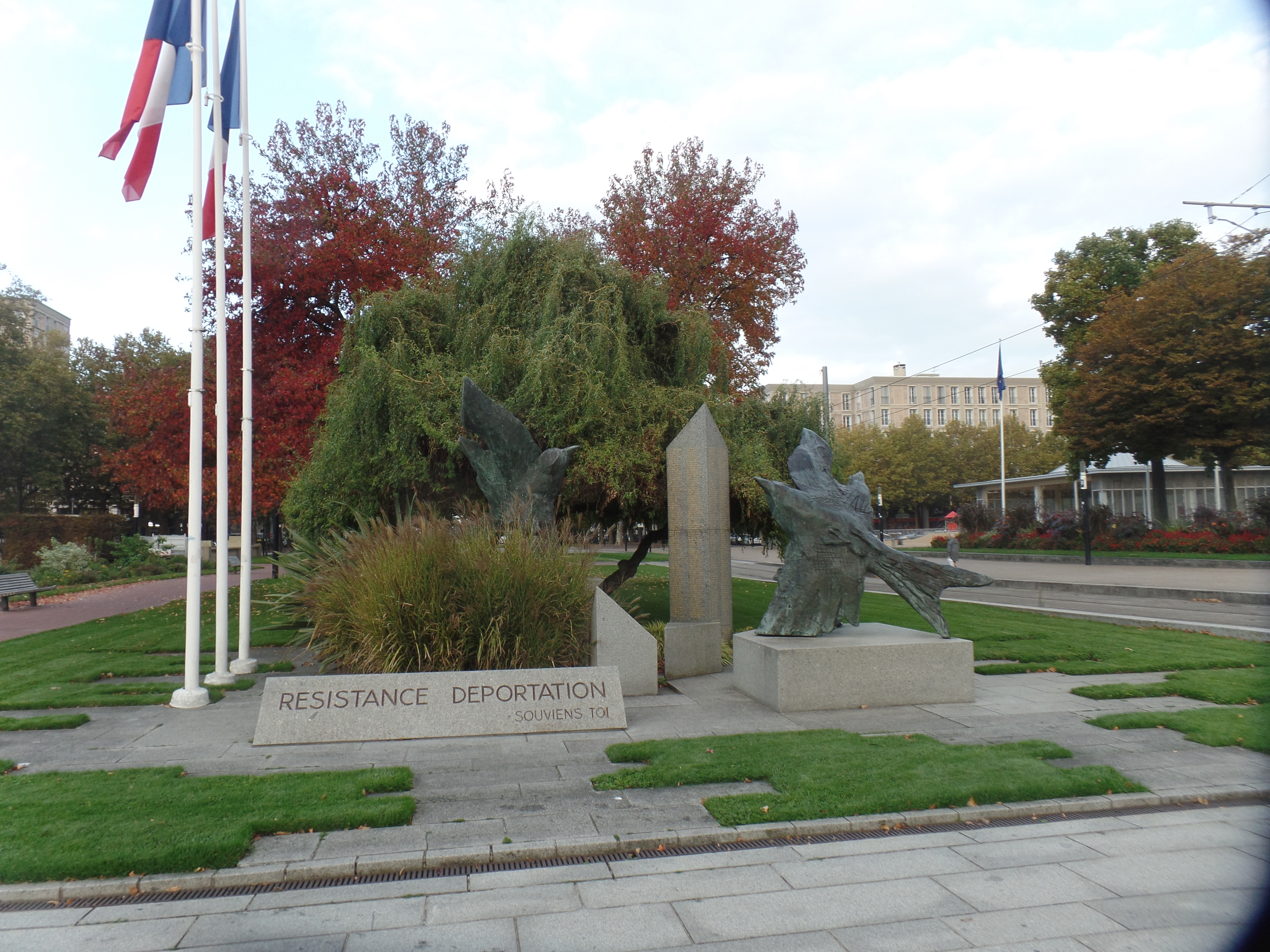
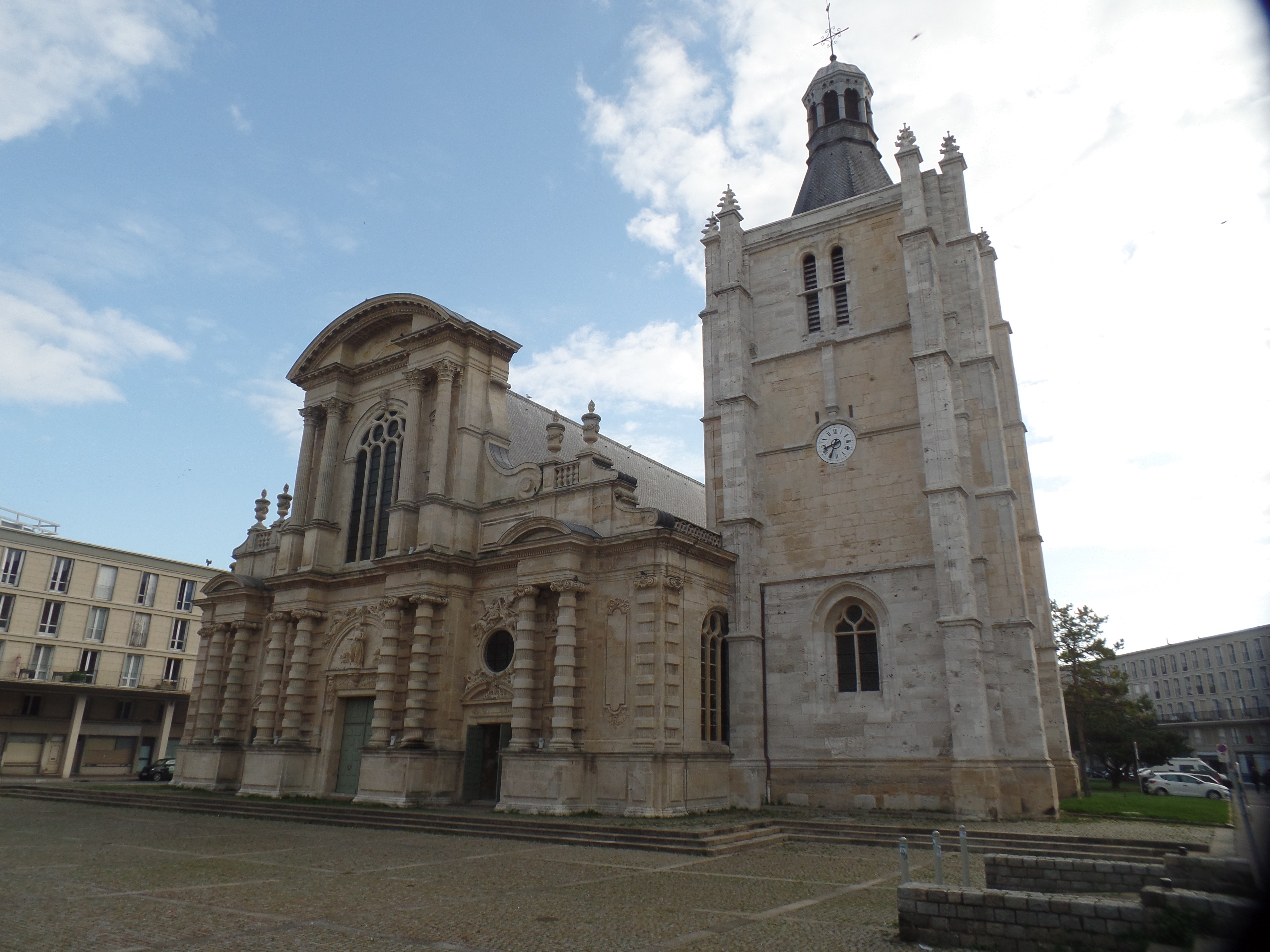
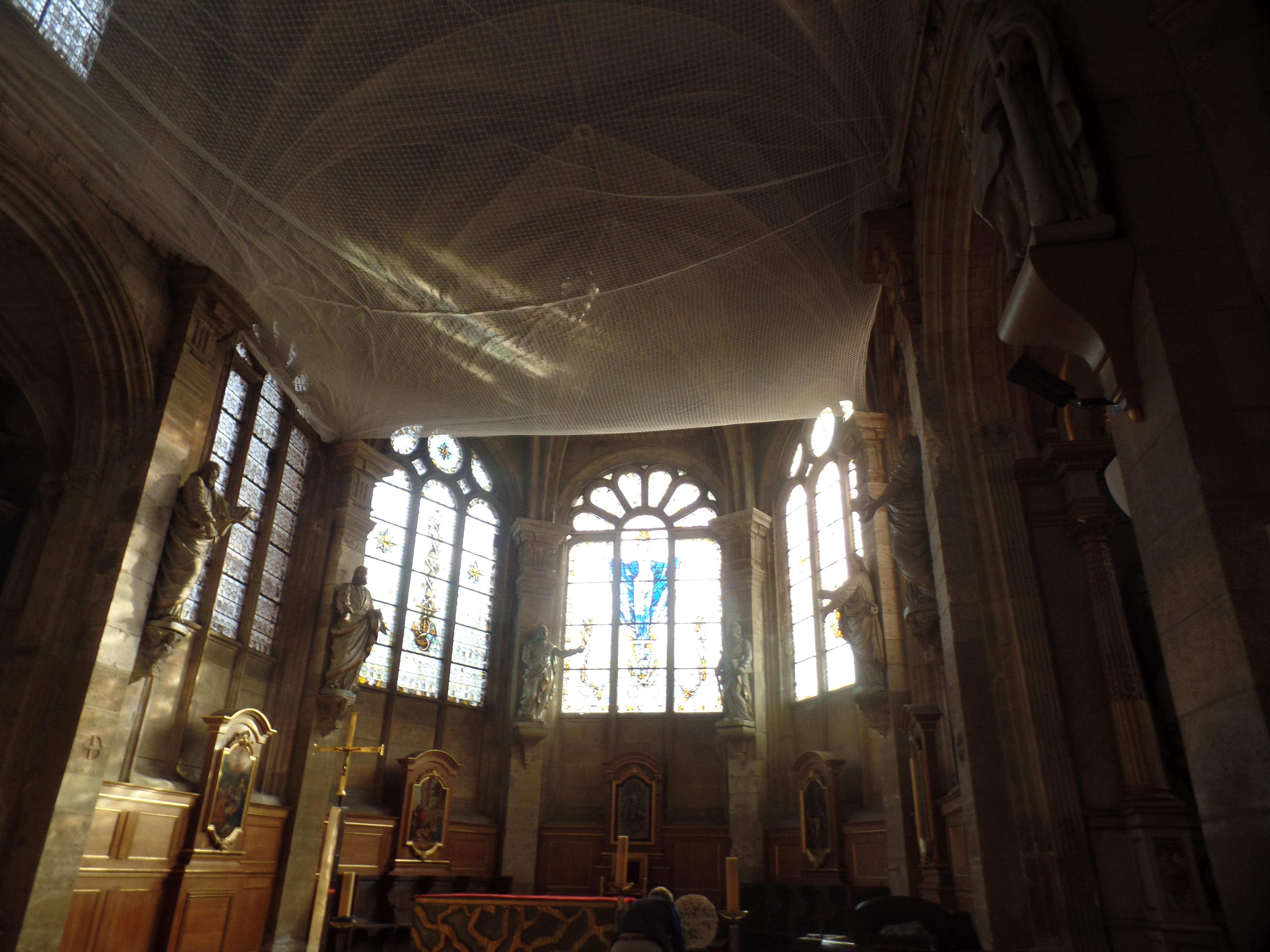
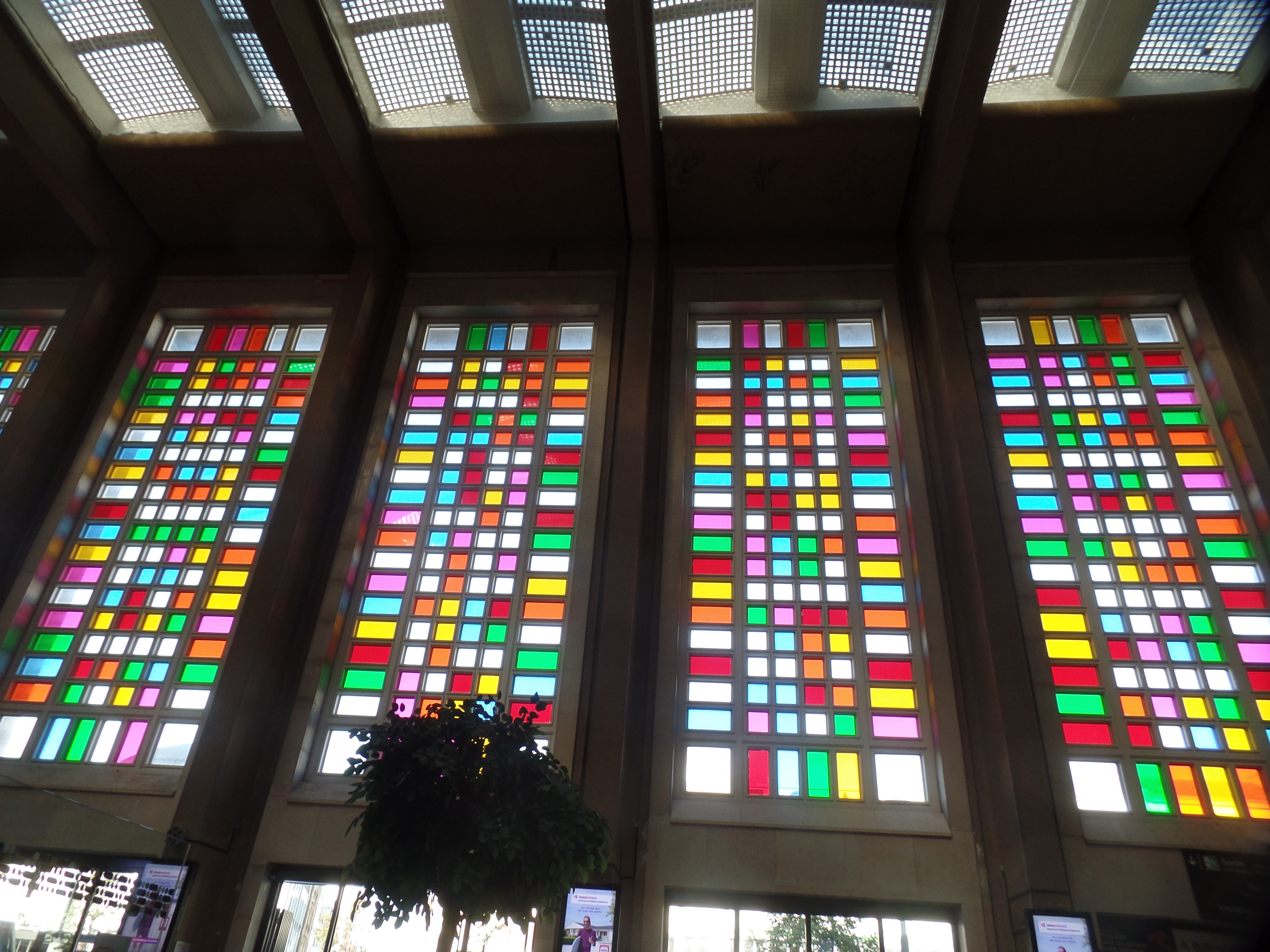
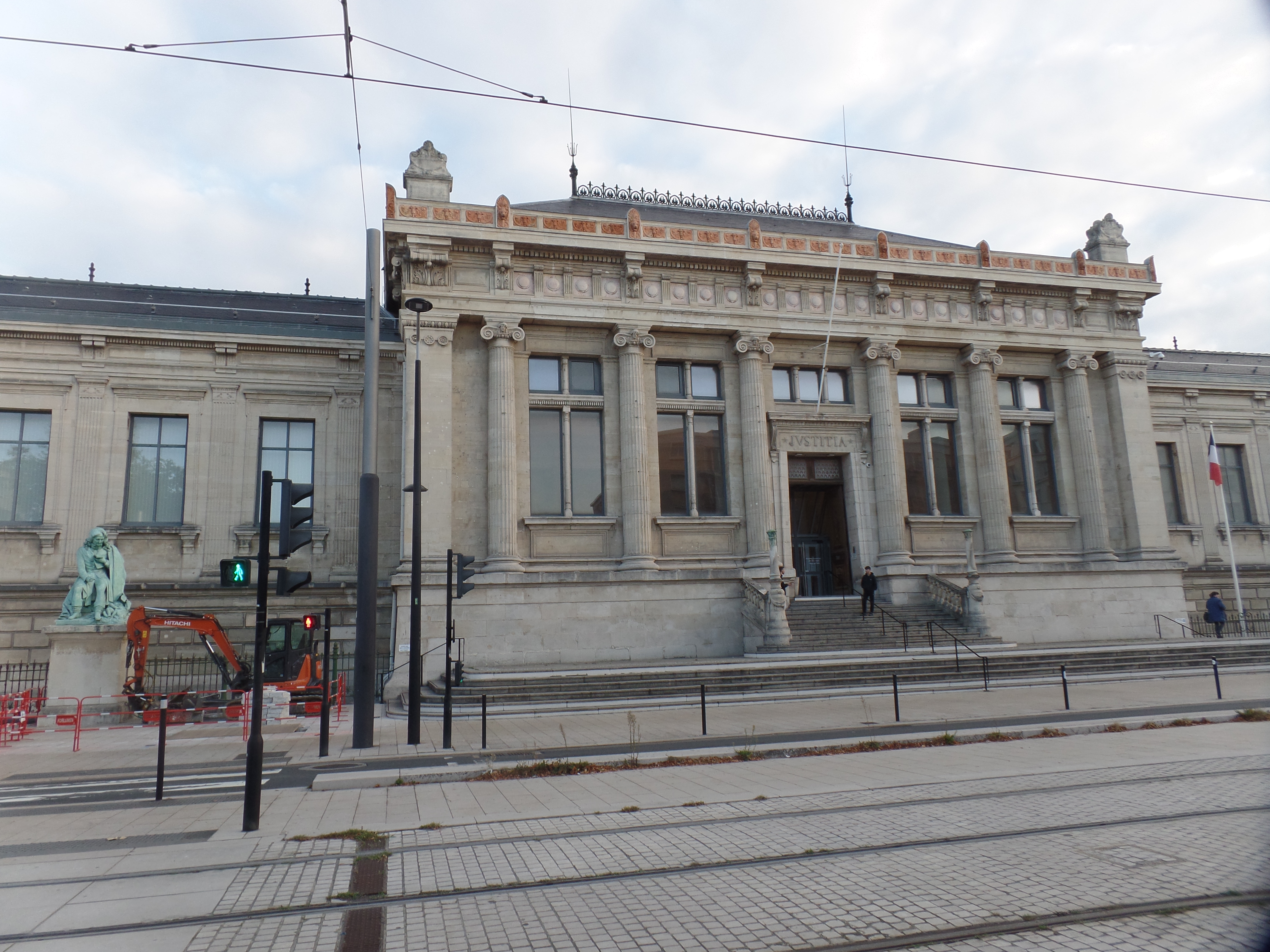
Le Havre Palais de JusticeLe Havre City HallMonument to Resistance Fighters of World War IISeine River, approaching the English Channel (La Manche)Monument aux Morts, Le HavreAlta Tower, with fluid geometry; created by Auguste PerretTwin Rainbow Arches, Le Havre Port. This was in celebration of Le Havre’s 500th anniversary and was also designed by Auguste Perret. It is made of 36 shipping containers, welded together.Sea gate, with approaching ferry ship.“The Signal”, by Henri-Georges Adam, at Malraux Museum of Modern ArtAuguste Perret’s Show ApartmentNotre Dame de Le Havre (Cathedral)Interior of Notre Dame de Le HavrePipe Organ, Notre Dame de Le HavreStained glass, at Le Havre Central Train Station
With my walkabout complete, I headed on the train bound for Rouen, then transferred to another train to Dieppe.
October 13, 2025, Frankfurt-am-Main- I stayed in a nice hotel, though not a “green” one. I had a fine meal in a restaurant run by Palestinians, and there was no bratwurst on the menu. I took high-speed rail, instead of a bus, to a spot fairly close to the Baha’i House of Worship, at Langenhain, though I still got in my steps. Those were the biggest differences between this visit to Frankfurt, as well as the fact that it was not my home base this time. (That honour has been spread across several cities.)
I had no trouble catching the train from Heidelberg and there were no delays. The S-Bahn got me close to Garner Hotel, with the walk being .4 mile. Once there, I found that getting dinner involved a bit of exploration of a nearby business district, so my Sagitarrian instincts took me down the street-almost, but not quite, back to the S-Bahn drop-off.
Old watch tower at Bockenheimer Warte station, Frankfurt-am- MainMarkuskirche, near Palmengarten, Frankfurt-am-Main
My meal at Konig Doner Pizza was superb, Turkish-style served by Palestinians. It set a fine tone for the rest of my visit here. After a restful night, it was time to revisit the Baha’i House of Worship. The S-Bahn took me to the village of Lorsbach, where I found the directions from Google Maps taking me along a country highway, up a hill and into a nature preserve.
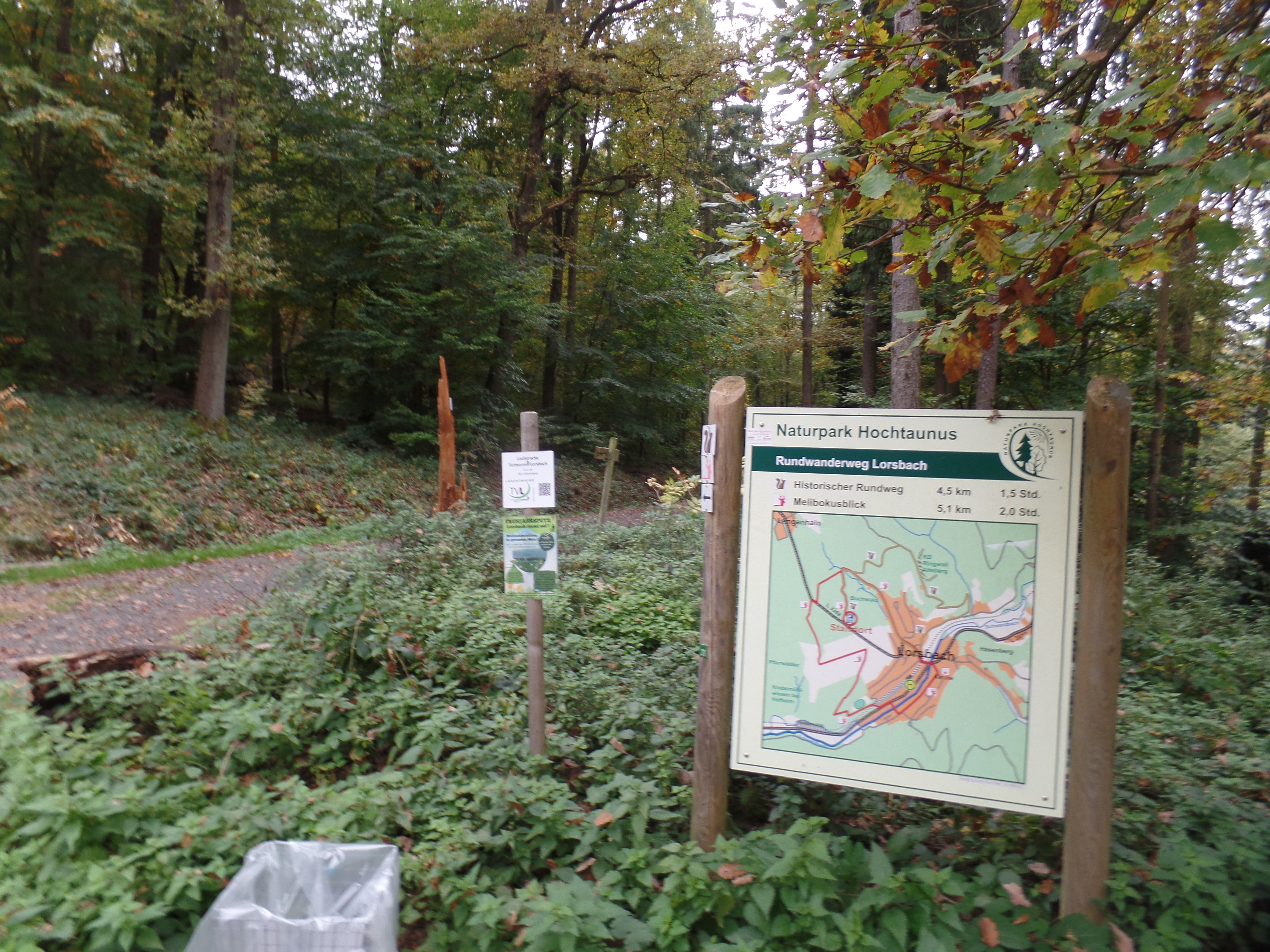
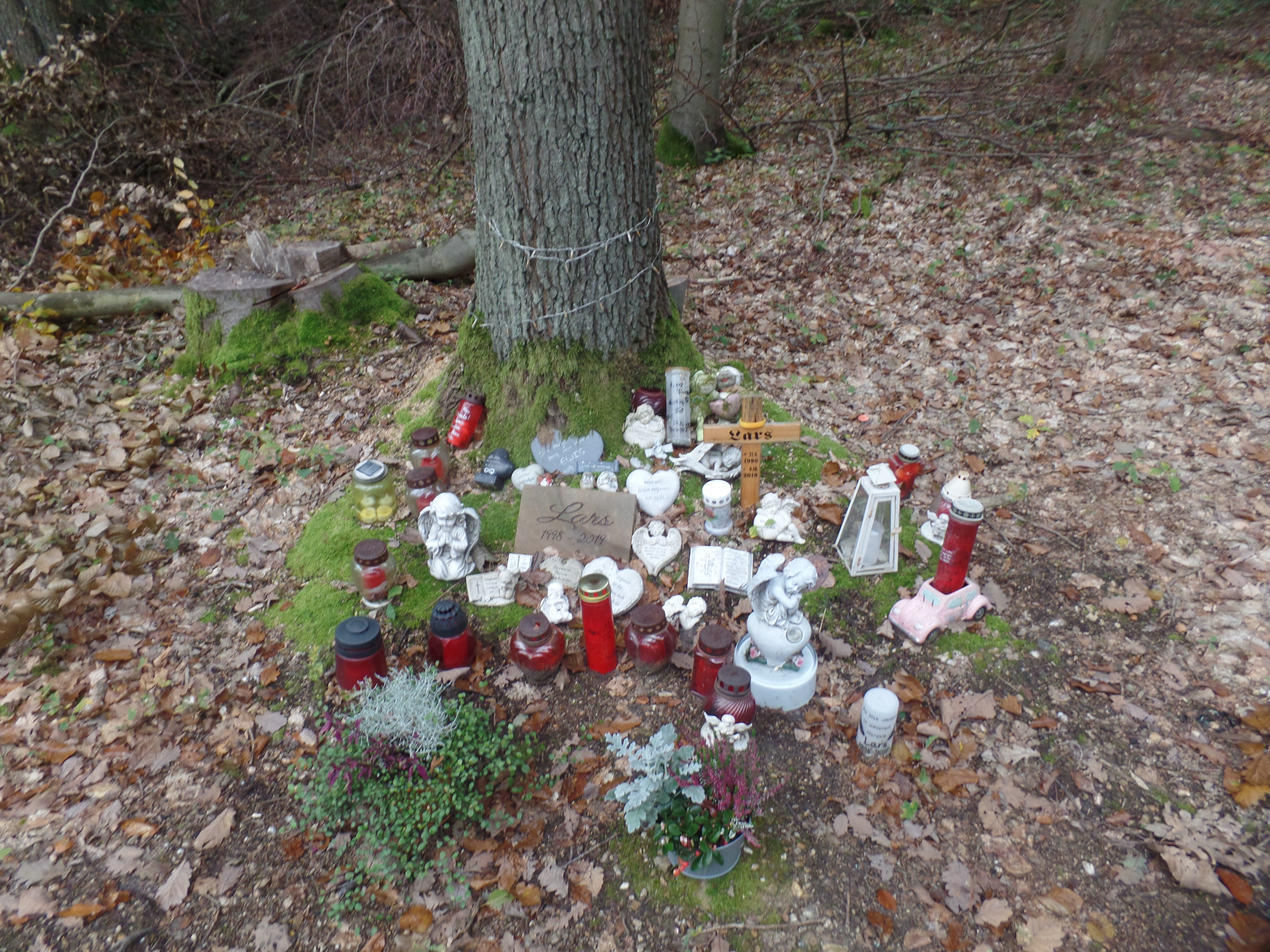
Naturpark Hochtanus, near Hofheim. (Above and below)Roadside Memorial to a man named Lars. This is at an area which features a treacherous bend in the road. I can only imagine the circumstances of his passing.
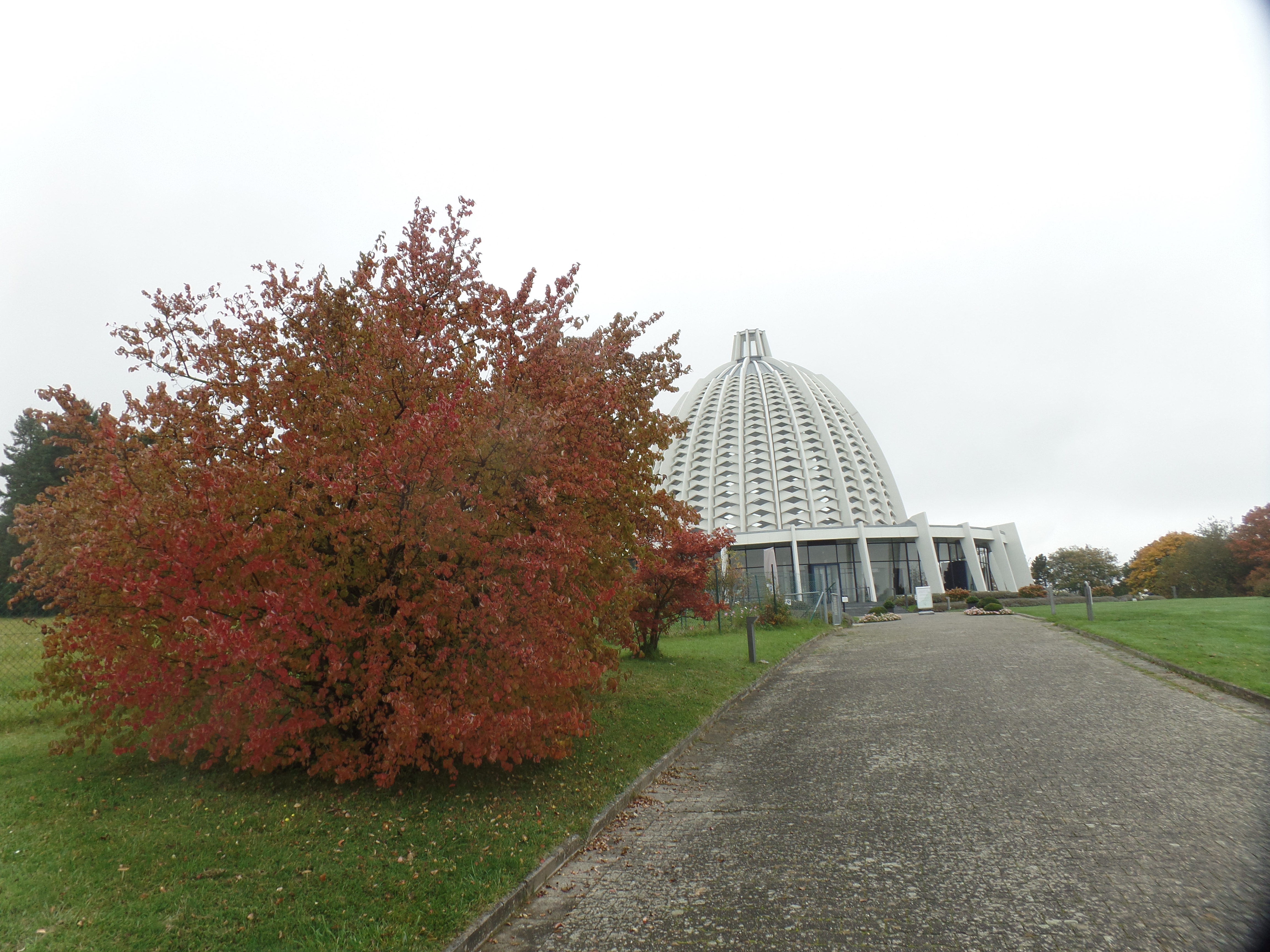
After I had come to the limits of the town of Langenhain, a young woman stopped and gave me a ride the rest of the way to the House of Worship. Here are some scenes of that simple, yet majestic site, which I last visited in 2014.
Visitors Center, Baha’i House of Worship, LangenhainBaha’i House of Worship, Langenhain (above and below)Small planter gardens, Baha’i House of Worship, LangenhainDome of Baha’i House of Worship, Langenhain, bearing the inscription, “God is the All-Glorious”, in Arabic.
After visiting with the volunteer caretakers, Lutz and Hannah, I walked back into Langenhain village. There, I found what was supposed to be the bus stop back to Hofheim. It was near a K-9 school, where the parents of kindergartners were picking up their children, at day’s end. One of the ninth graders walked back towards the main road, and kept looking over her shoulder, more out of curiosity than apprehension-as if trying to send me an unspoken message. Once a certain amount of time went by, I saw a bus on the main road, heading towards Hofheim, so it occurred to me that the girl was probably trying to convey that the stop was elsewhere. I went back to the main road, found the right bus stop and was in Hofheim, twenty minutes later. From there, it was easy to catch the S-Bahn back to Frankfurt, with a stop at Domplatz, near Frankfurt Cathedral and the Main River.
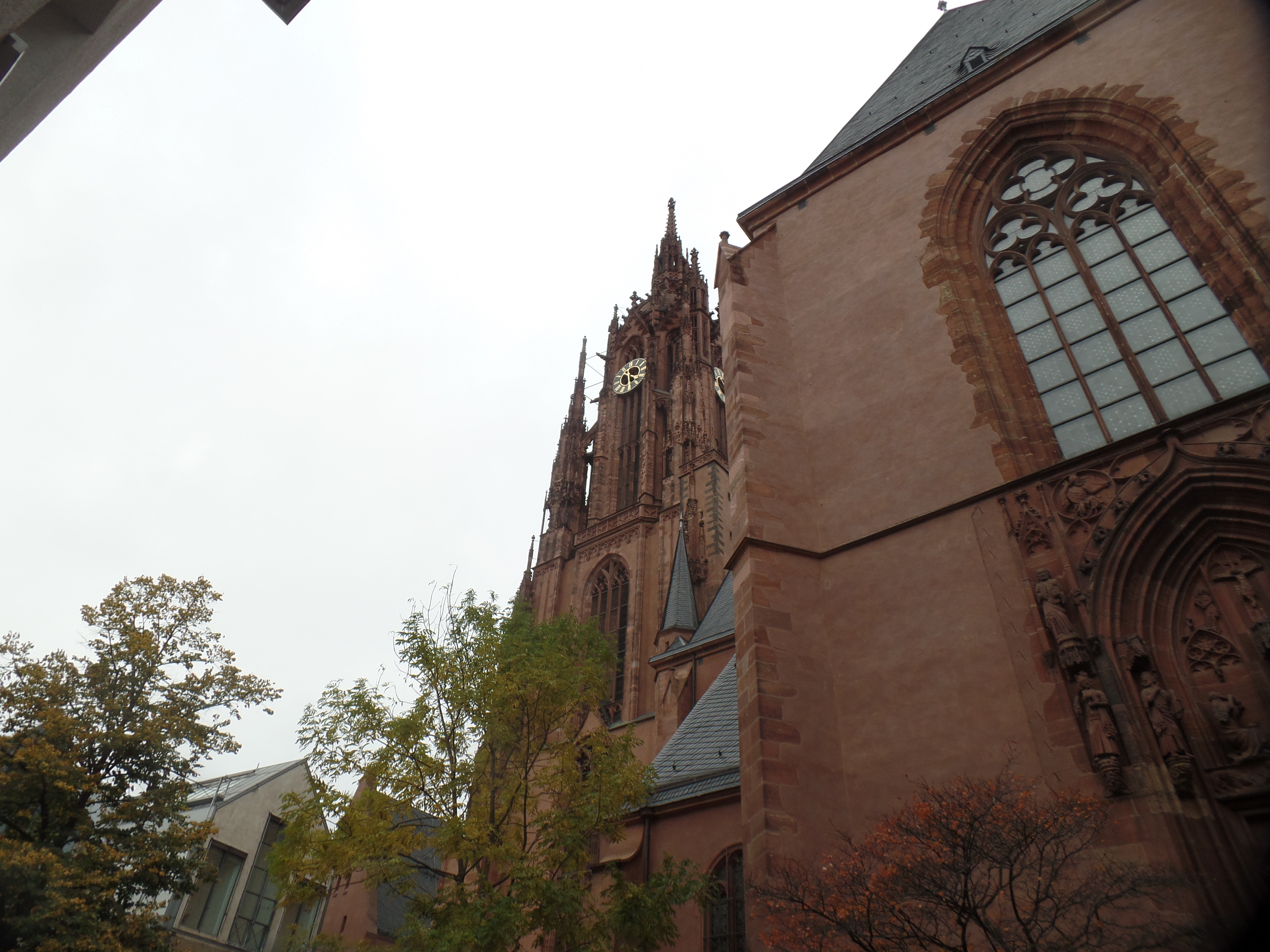
That area was one that I visited in 2014, as well, and the photos were lost, so spending about an hour there was in order. Here are a few photos of the Dom (Cathedral).
Dom (Cathedral) of Frankfurt (above and below)Exterior and spires of Frankfurt Dom (above and below)
After enjoying a fine German meal, at Main Kai, I walked a bit along the Main itself.
Main River, near Dom
It was a soothing visit to the House of Worship, and reminiscing about the area gave me some peace. Tomorrow, I will spend a day going to Strasbourg, though not having much time there, I will most likely be focused on regrouping my energy.
October 9. 2025, Salzburg- The world does not stop spinning for any one person’s agenda. That, and other people’s agendas, or lack thereof, can lead to quick changes in plans. I have had at least three hoped-for meetings with my fellow Baha’is come to naught, because of late trains and lack of WiFi.
Both situations are improving, but taking no chances, I headed back to Vienna for a few hours, this afternoon. There, after a false set of instructions from Google Maps, I was guided by a neighbourhood grandmother to the Baha’i Center of Austria. That she gave me instructions in German, and I got the gist of them, is progress.
At the Center, I was met by one of the staff, Sasha, and given a brief tour of the building. He also had positive news of our Faith in this country-which goes along with every other account I’ve heard on this trip, at least on phone conversations, if not in person.
The building itself was originally a haven for the Austrian Army, in the days before World War I. Theodore Roosevelt visited it, in 1910, after his Presidency had ended. He was given a royal welcome, almost as if his was a State Visit. With that level of honour in its energy field, the edifice is well-suited for a national Headquarters of the Baha’i Faith.
Baha’i National Center, ViennaGreat Room of the Baha’i National Center, ViennaGarden and play area for children, Baha’i National Center, ViennaSasha, a staff member at Baha’i National Center, Vienna. The poster celebrates 200 years since Baha’ullah’s birth.That anniversary took place in 2017.
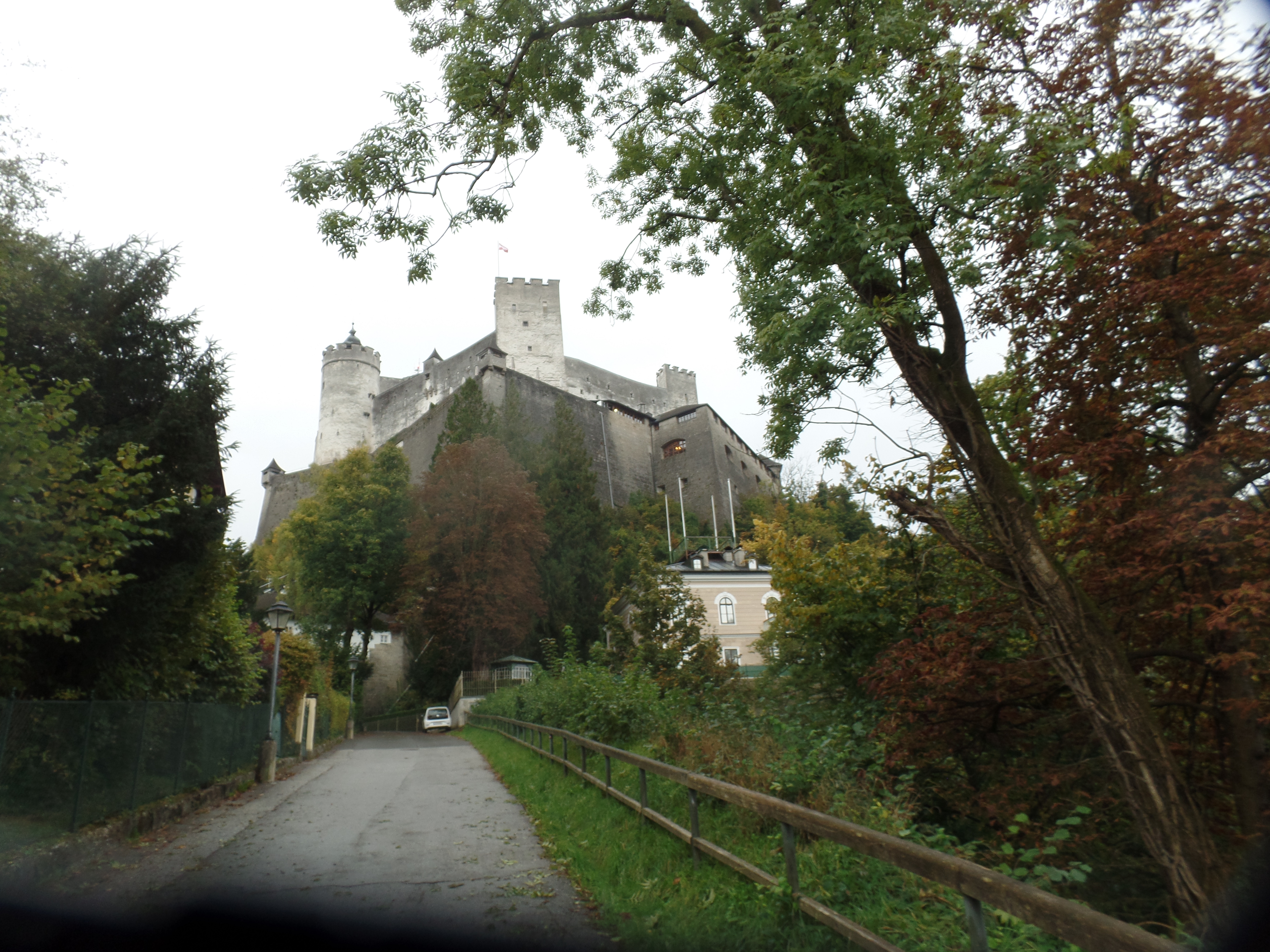
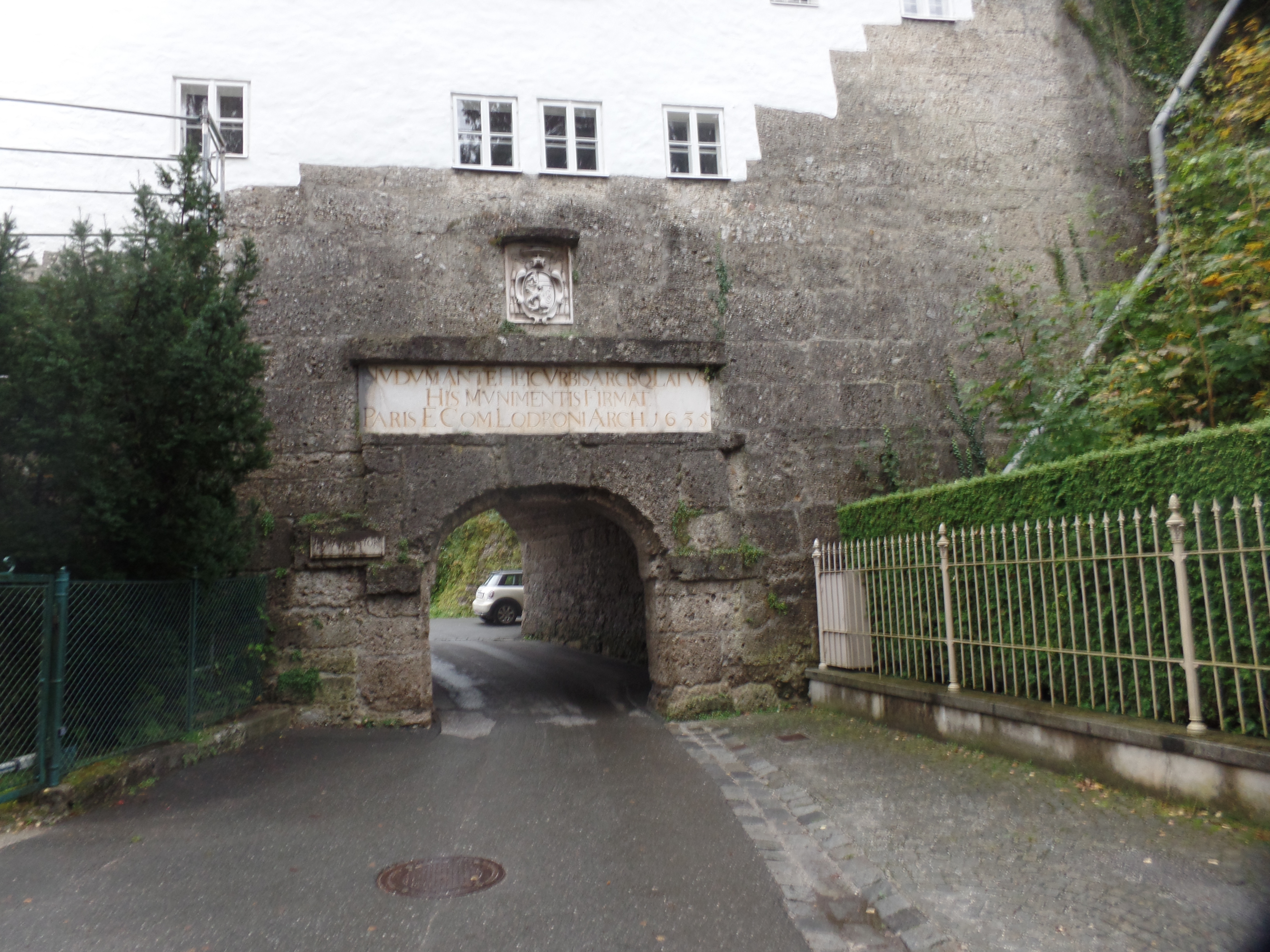
Thus went my whirlwind visit to Vienna. I caught a train back to Salzburg, with little trouble. Before and after my visit, it was delightful to capture some of the essence of my host city. While descending 327 steps, I found these scenes:
A narrow passage on Monsbach, SalzburgGlimpse of Hohen Salzburg (Hapsburg fortress)Entrance gate, to Hohen SalzburgSalzburg CathedralOnce this was a moat, near Salzburg Cathedral
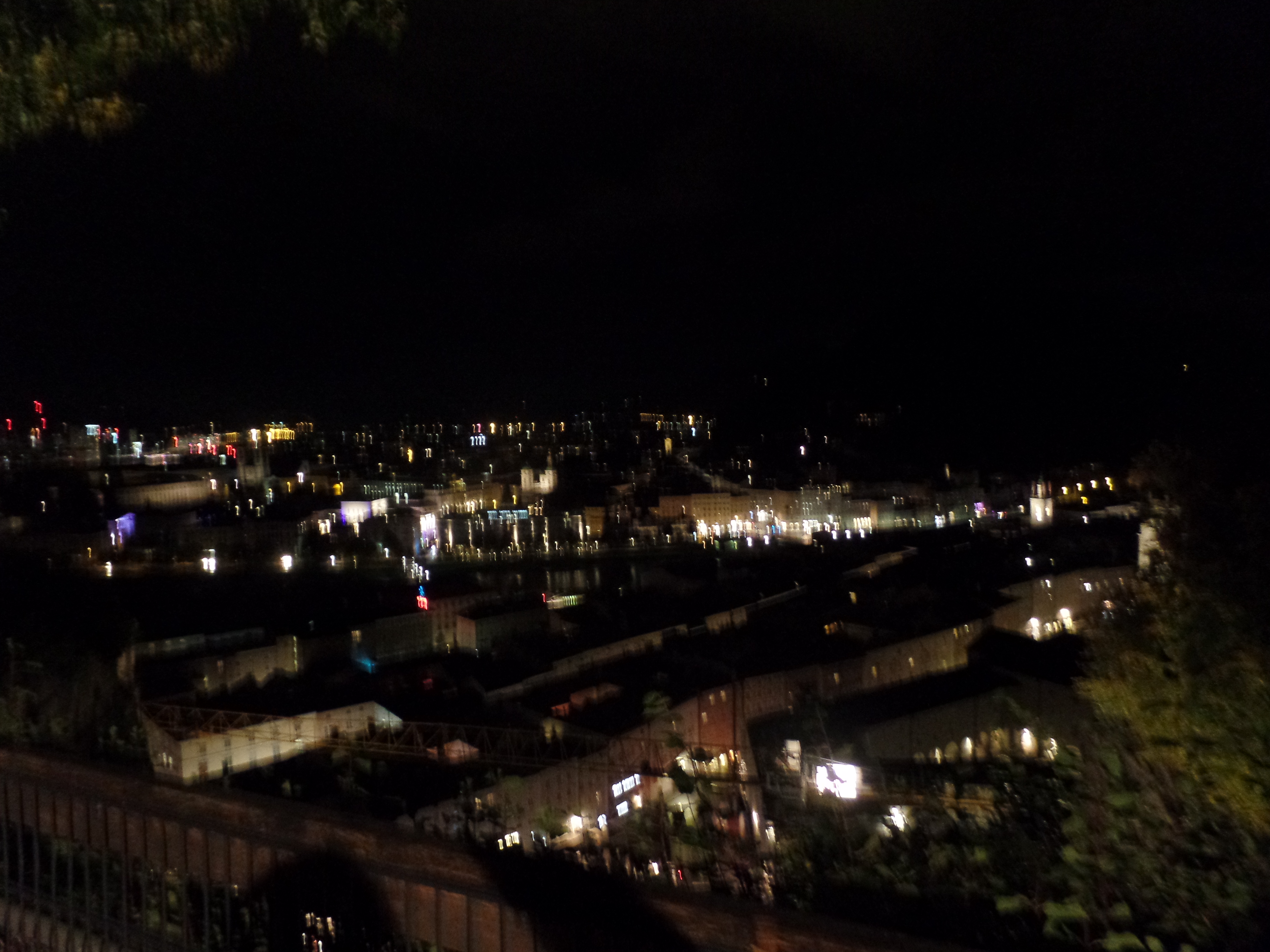
The above photos were taken on my way to the Salzburg Hauptbanhof. By the time I got back, it was dark, so I focused on climbing the 327 steps and found these night views of Salzburg, from Stadtalm Naturfreund’s patio.
View of Salzburg by night, from Stadtalm Naturfreund (above and below)
So, even with my self-imposed dash back and forth, Salzburg presented its essence in a fine way. I will have a bit more time to check out the public squares tomorrow, on my way to the Hauptbanhof, for a train to Munich.
October 6, 2025, Sarajevo- The vivacious young lady engaged all her patrons, in a charming yet suitably guarded way. She made us all feel welcomed and appreciated, but remained a bit of a mysterious presence. Her father, nearby in the kitchen, was watching all. Sebilj is a bit of Turkiye in Old Sarajevo. True, there are lots of bits of Turkiye in this city, but Kemal and Harina (not their real names) pack the house, with local regulars, day and night because of their Turkish welcome and the quality of their food.
I was very blessed to enjoy comforting split pea soup-not something I had associated with Turkiye before tonight, but it was golden, especially after a jarring day at Srebrenica. The shish was also well-seasoned and tender.
There is lots of resilience across Sarajevo. This evening, I focused on a swath of the Old City, the area that embraced Islam, the story goes, because the Ottoman Turks had a policy of not taxing those who converted to Islam. That story came from a man who has not embraced any organized religion, so who knows? I thought better than to ask any of the fervent Muslims I encountered here, as to such matters.
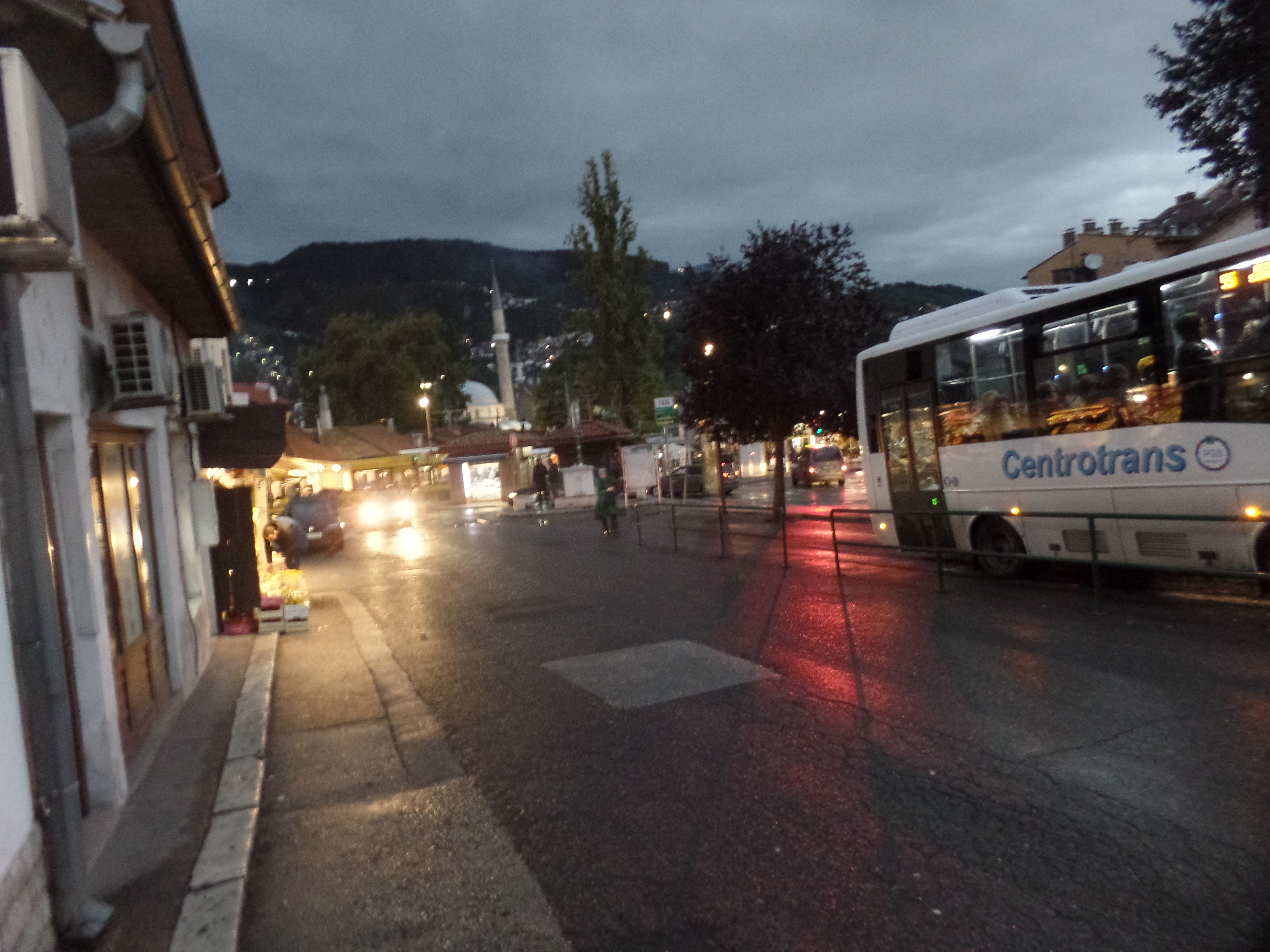
Here are some of this evening’s scenes.
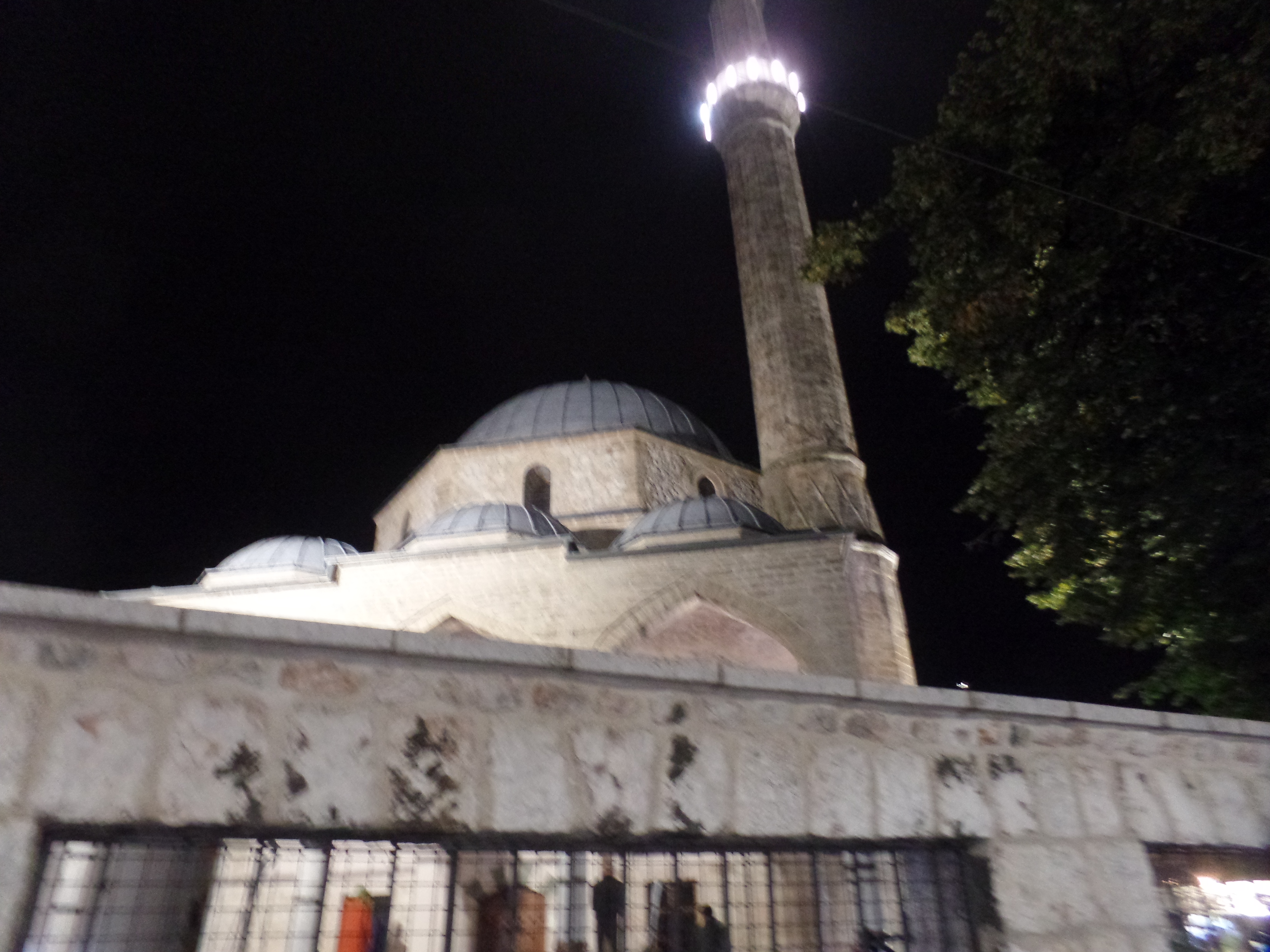
Evening at the Edge of Old TownMinarets light the night. Harina lights our hearts.The Central Circle of Old TownBascarsija Mosque. Here worshipers were still very active, at 9 p.m.
Some streets were bustling; some were quiet. All were safe.
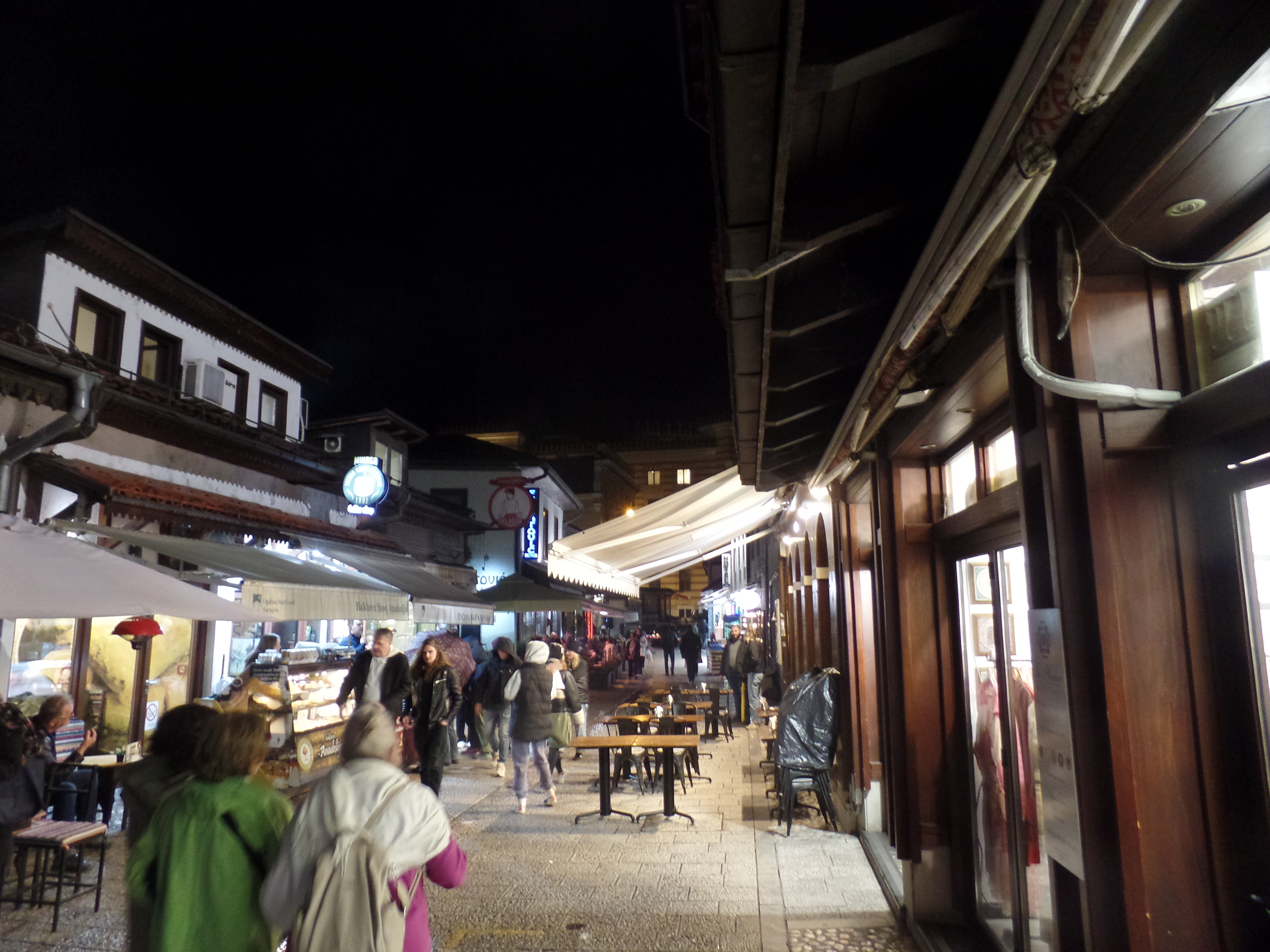
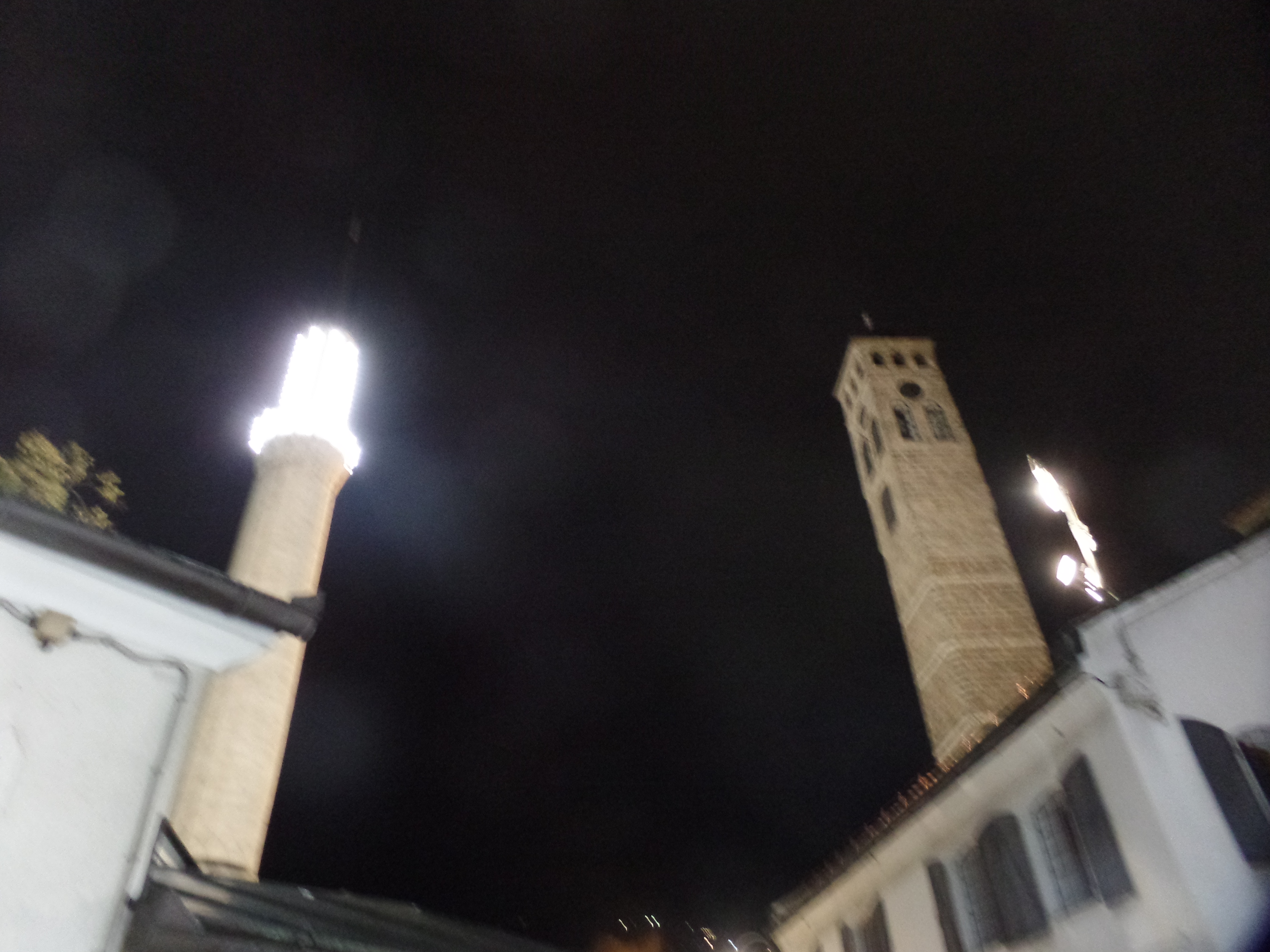
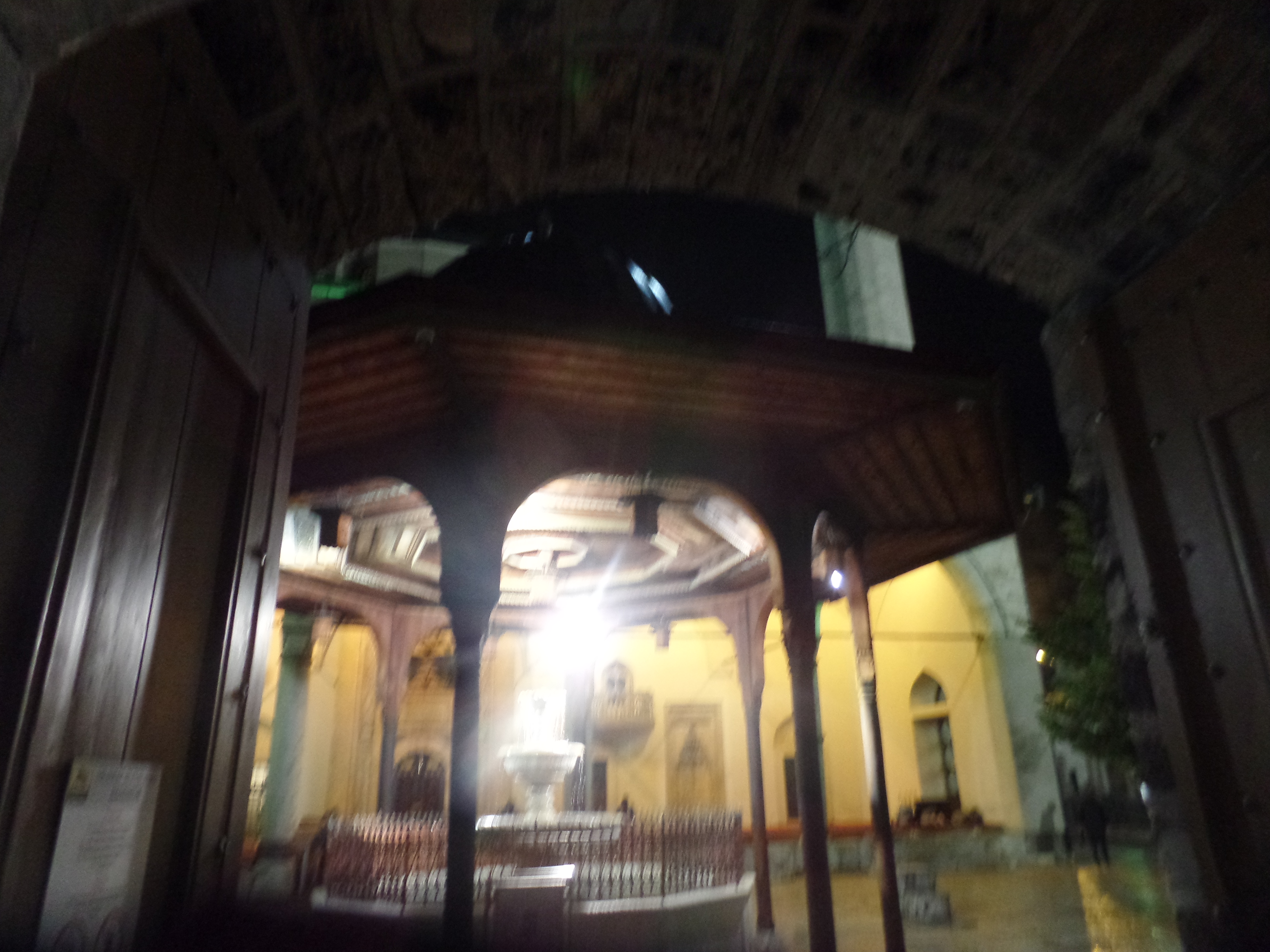
Old Town streets (above and below)A quiet alleyContrasting spiresA Mosque courtyard. The Imam only said “no worshipers!”. The empty courtyard was okay to photograph.
Old Sarajevo is filled with beauty-and that includes the lilting voice of the lady of the house, at Guesthouse Yildiz, as she offers her prayers in morning and afternoon. That includes the rug merchants, the shoppers haggling with the vendors, the children squealing with delight at their taste of ” Authentic Turkish Ice Cream”, and it includes people like Harina, who love what they do. Old Sarajevo was the perfect salve for the heart that was broken by what was shared in Srebrenica.
October 6, 2025, Sarajevo- Once again, I found myself looking at piles of children’s shoes, mounds of abandoned luggage, faces of frightened families being herded onto to trucks-instead of train cars, with the same promise of “a better life”. I looked into hundreds of pairs of eyes, of men of various ages; indeed, some of the “men” were only 14 or 15. Every last one of the more than 8,000 male human beings killed in July, 1995, in and around Srebrenica, Bosnia& Hercegovina was “guilty” of only one thing-being a Muslim in what their captors conceived to be a pure, Christian, Serbian nation of Yugoslavia.
The Srebrenica Memorial Center sits in what is styled the Republic of Srpska (Serp-ska), its existence and its mission protected by the overarching government of Bosnia i Hercegovina, under the Dayton Accords, which ended the war in Bosnia, in 1996. The Bosnian Serbs make no pretense of liking the message the Museum offers, but they abide its presence. In that sense, it is no different from, say, the Civil Rights Museum in Montgomery, AL or the Sand Creek Massacre National Monument, in southern Colorado. Those who view things only one way cannot easily accept even established fact, when it disrupts their world view.
Three of us were taken to this Museum, by a man named Adis. He is a veteran of the Bosnian War for Independence. He is also an accomplished de-mining technician, and has helped remove mines in over two dozen countries, since 1998. Adis is a Bosnian Muslim. He told us of the background of the horrors that nearly tore his country apart, in the years 1992-96. He told us, as did staff members at the Museum, of the unreliability of United Nations Peacekeepers, held back by the envoy of the U.N. to Yugoslavia and by their own commanders. These men told us what was the result of overemphasis on preserving the status quo. The Big Picture fell on top of the people who only wanted to live their lives in peace.
Here are some of the scenes presented us at the Museum, in Srebrenica itself and at the Memorial Cemetery, down the street from this powerful institution.
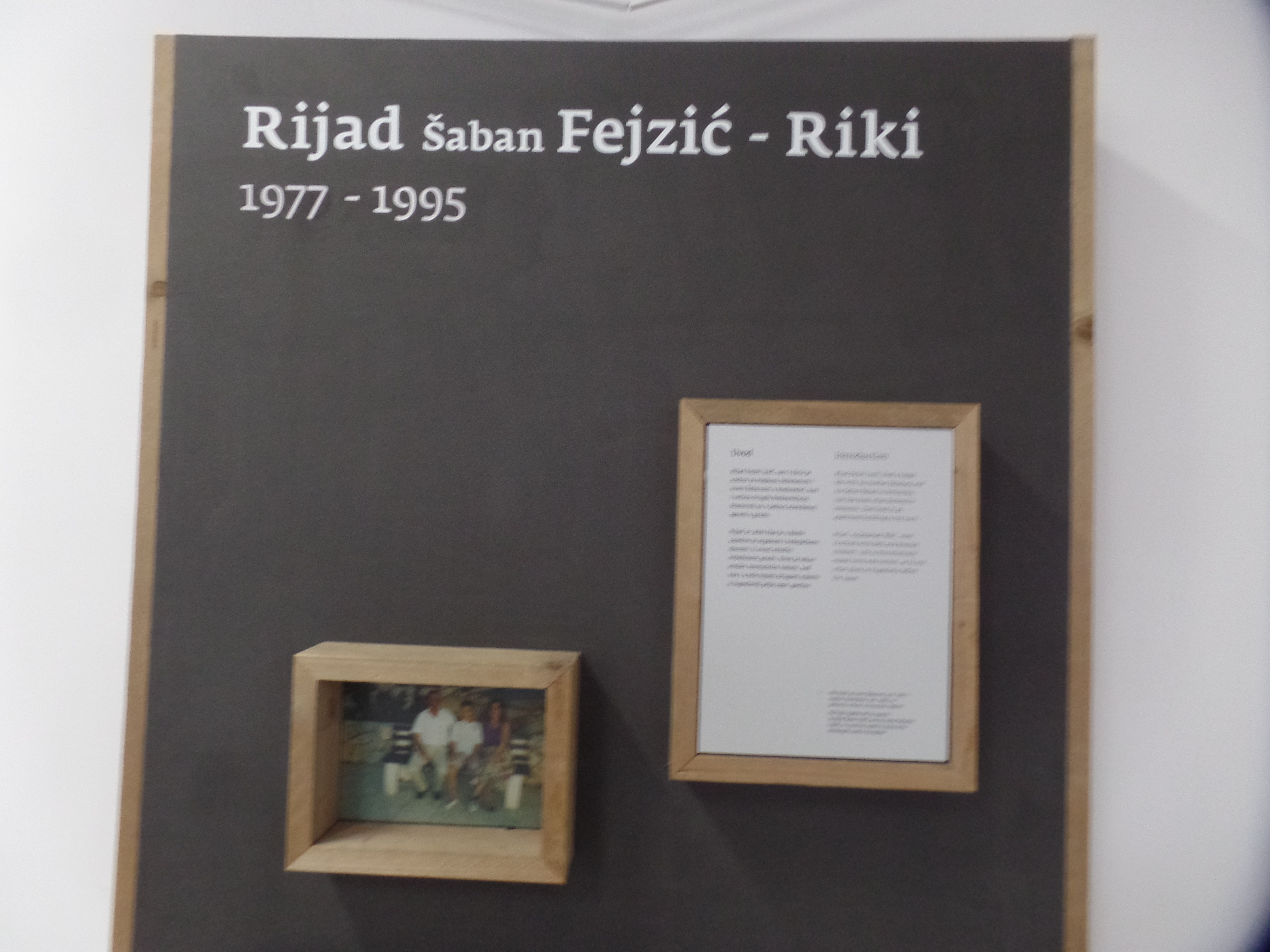
Srebrenica Memorial Center, Polocari, Bosnia i HercegovinaRijad Fejzic’s story
Riki was 18 when he died, probably alongside his father and most likely not when engaged in combat. He had no training, no weapon, only his faith and love for his family. Riki’s story is a recurring presence in the 26 rooms, in which the story of this conflict unfolds in the Memorial Center. His remains were only identified after the war had ended. His father’s have never been found. Riki was beaten to death.
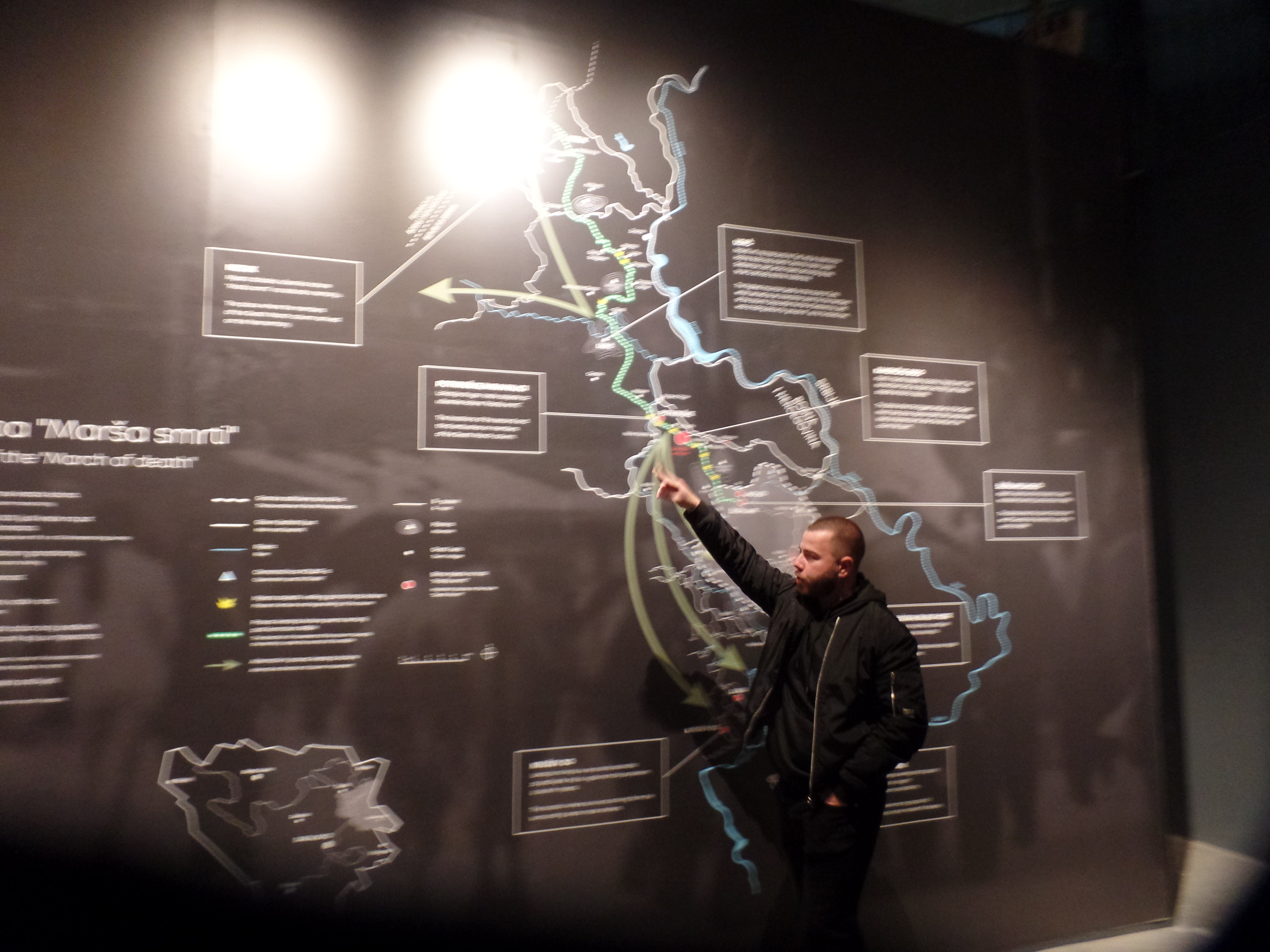
Presentation at Memorial Center, Polocari
This man’s father was a Bosnian Army soldier. He himself has been a presenter at the Memorial Center, for almost fifteen years. He is showing the course of the attacks on Srebrenica, which had been deemed a protected zone of the United Nations. Bosnian Serb forces, aided by the Serbian regulars, decided to ignore the UN’s presence in the area, and marched on the town, on July 11, 1995. The UN’s troops, a Dutch battalion, were under-equipped and outnumbered. It could have been different, but those in control of the situation simply had other priorities.
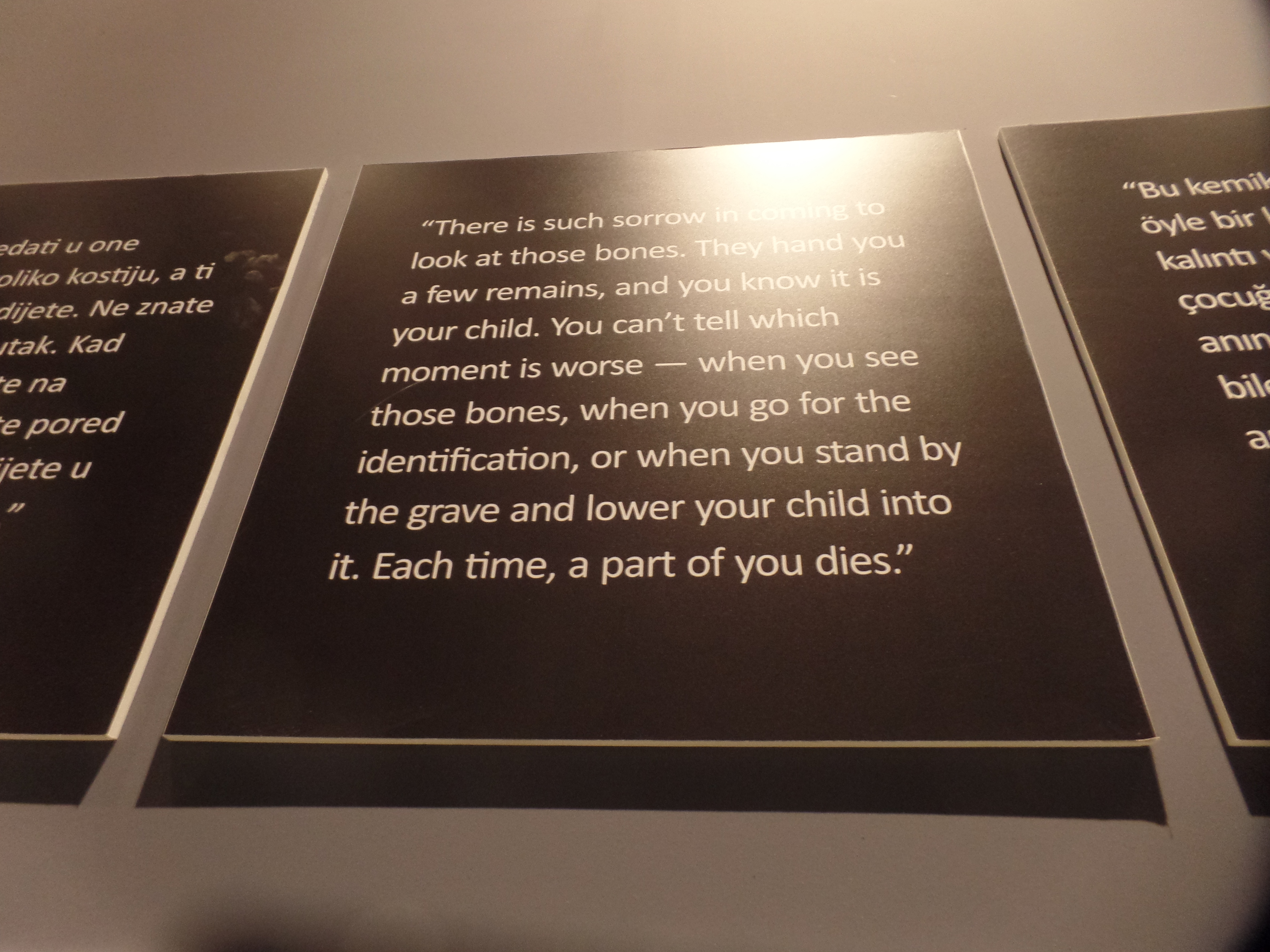
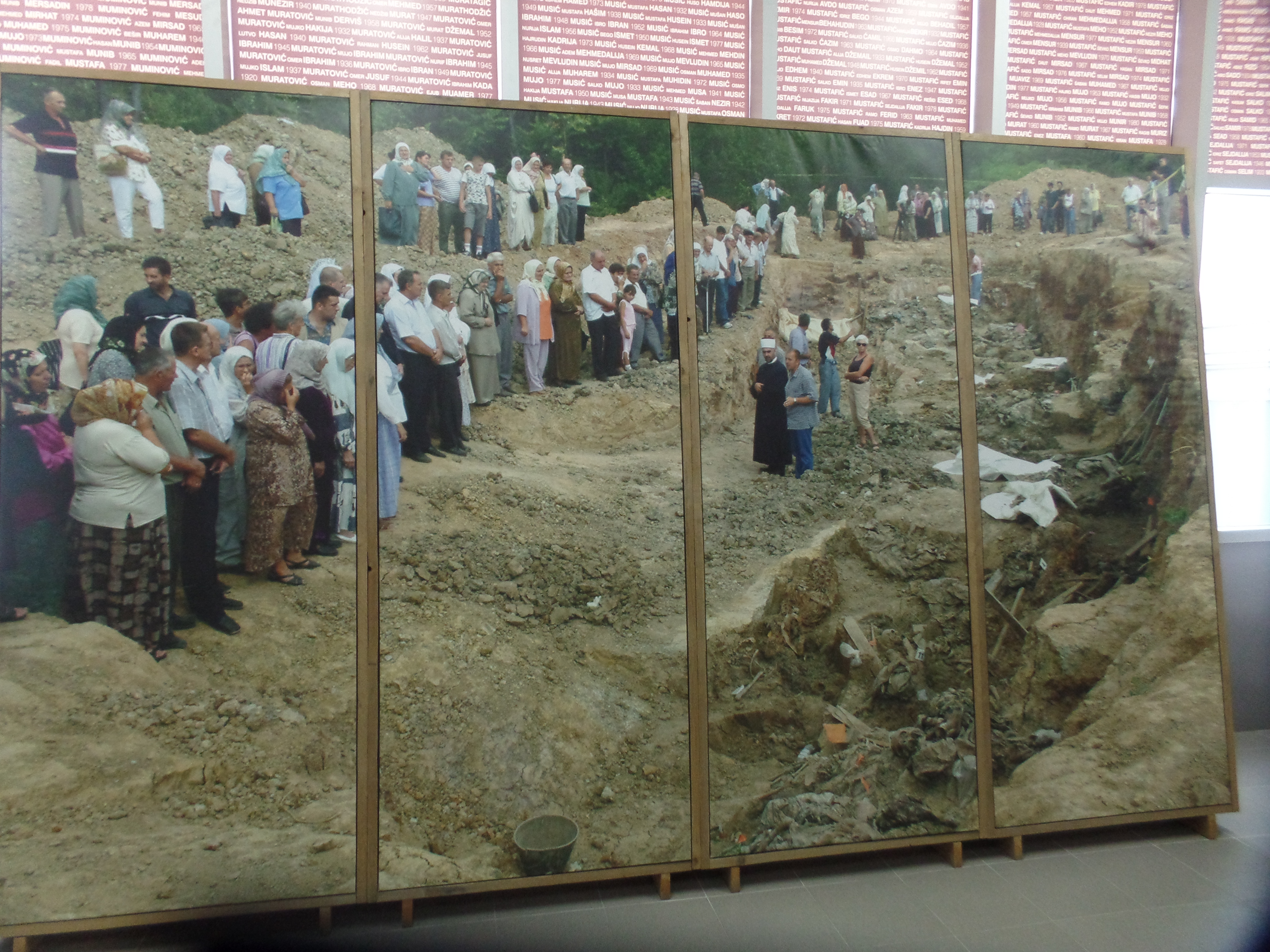
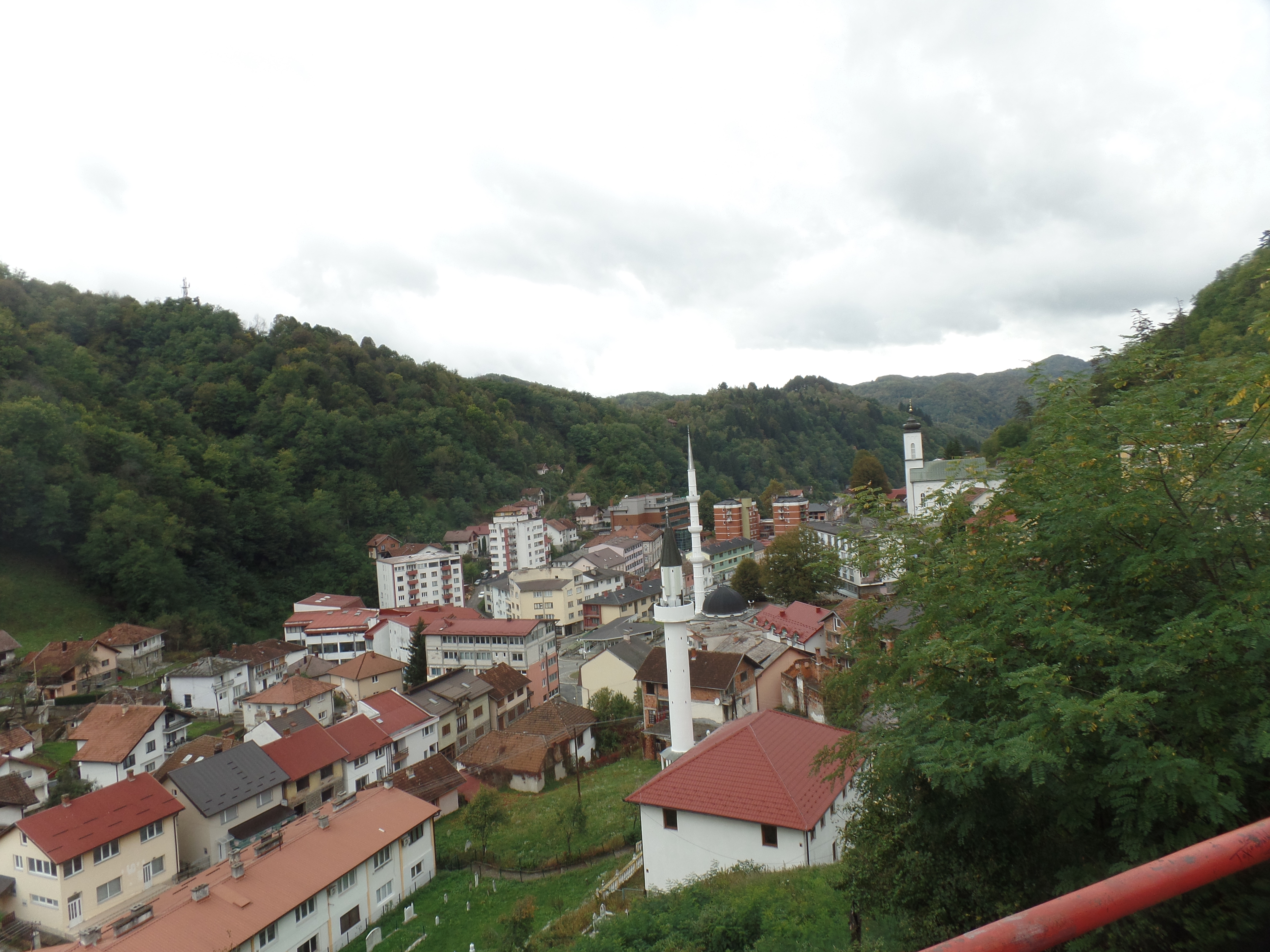
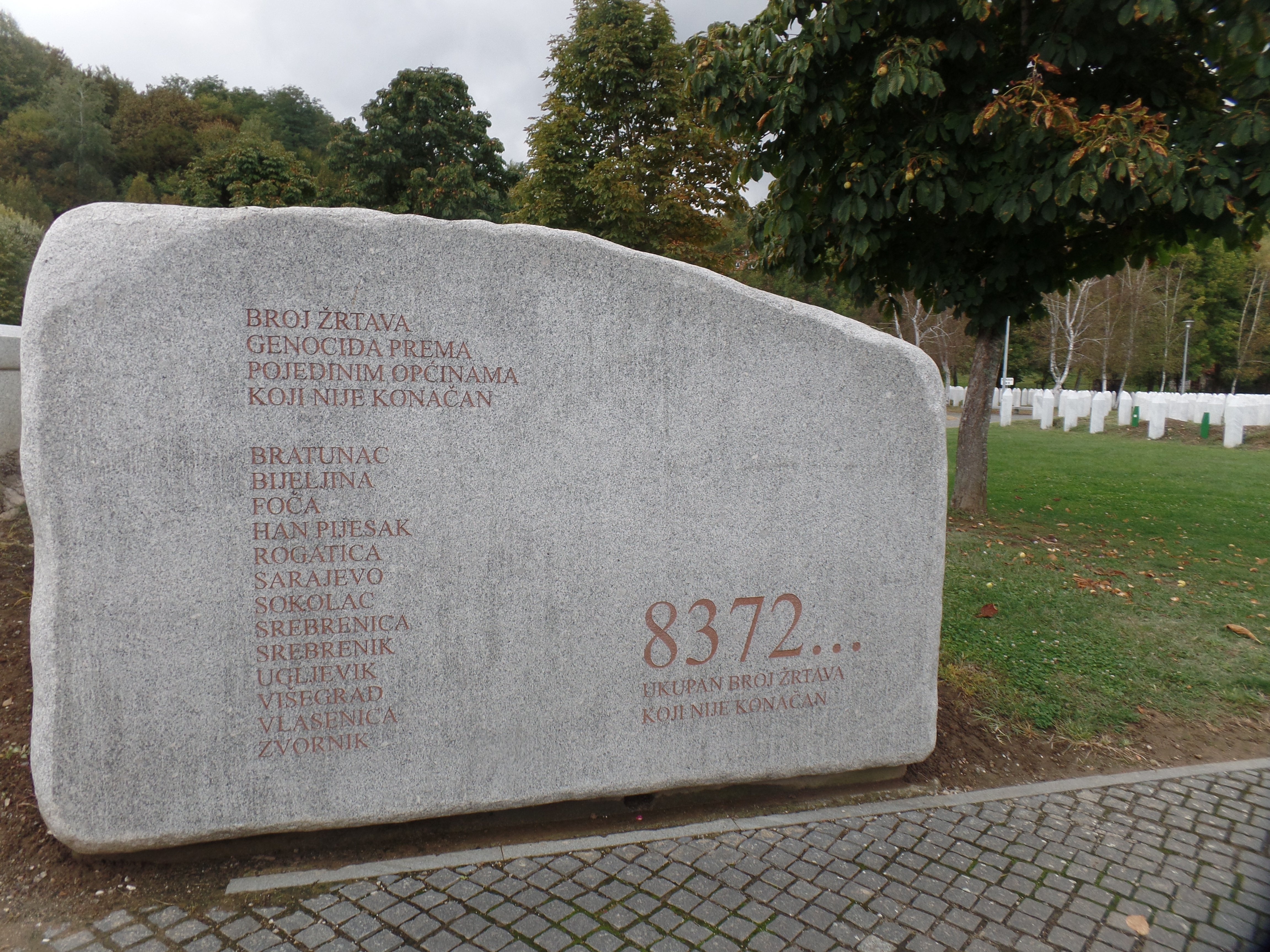
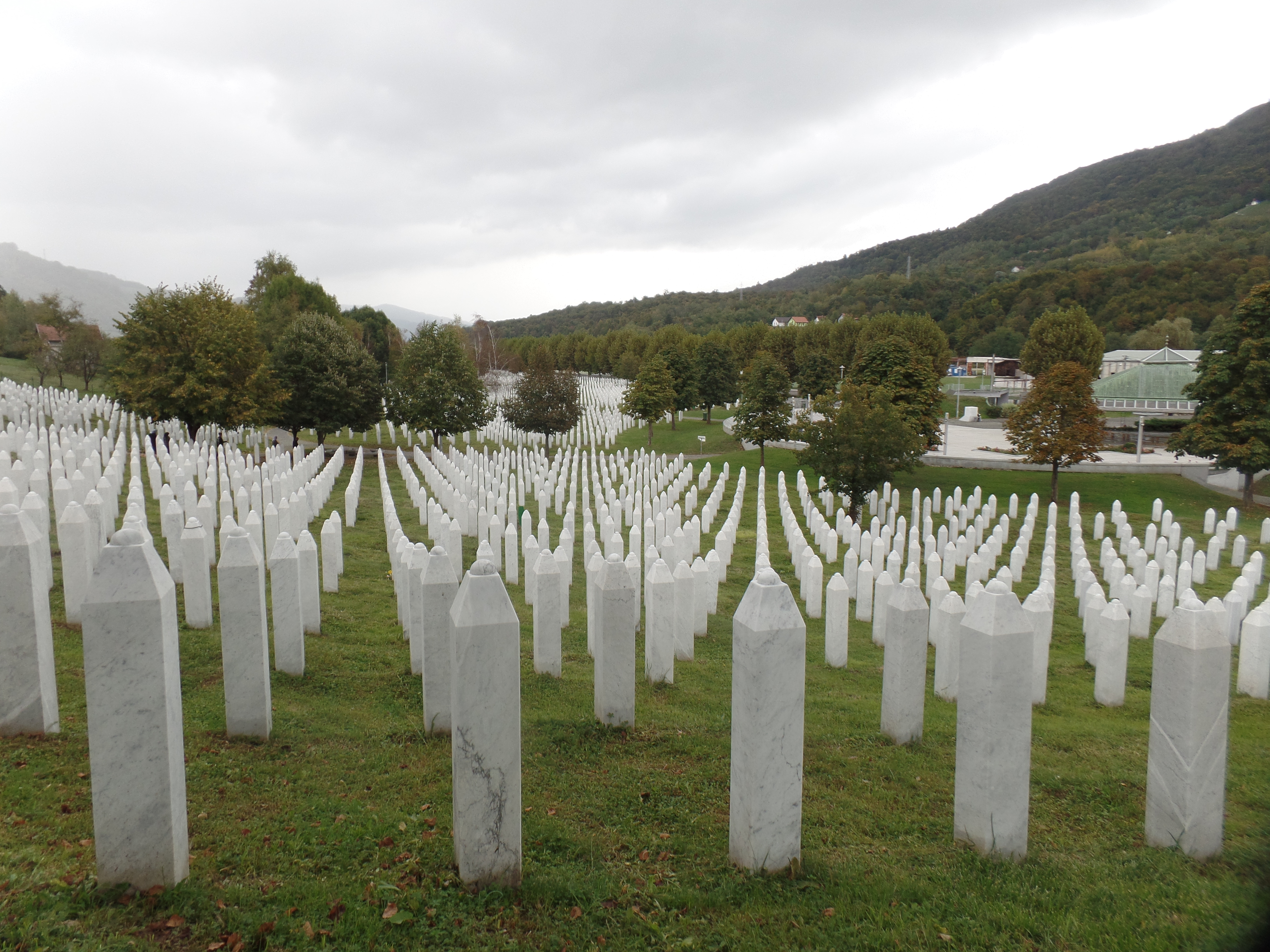
A relative few of the abandoned shoes left by fleeing children, in July, 2011.A mother’s sorrowTaking a page from Nazi Germany, the Bosnian Serb and Serbian commanders overruled even the misgivings of their own rank and file soldiers, many of whom had known the Bosnian Muslims as neighbours- for decades.Some of the 8,000 men and boys killed in July, 2011.Survivors gathered at the site of a mass grave, in 1996.The city of Srebrenica is a shell of its old self, but its young people still hold it close.The city from a former healing spa, high above. The spires are those of two mosques.Peace Monument in the central square of Srebrenica.An estimate of the total number of Bosnian men and boys killed in July, 1995. Posted at Memorial Cemetery.Row upon row of Muslim graves, all from that fateful day in July, 1995.
No one should condemn the Serbian people for what happened, any more than one could condemn the German nation for the Nazi reign of terror or the average Southern white male for the horrors of slavery and Jim Crow, or the majority of Hutu farmers for the slaughter of the Tutsi, in Rwanda. Adis put it clearly: “Most people just want to live their lives in peace and provide for their families. It’s as true of the Serbs around us as it is of we Bosniaks.”
The lesson of Srebrenica, of Auschwitz-Birkenau, of Rwanda, of Cambodia, of the oppression of Indigenous peoples the world over, is that the people of any given community cannot just leave the affairs of a community, state/province or nation to the ambitious and those with an agenda. Each of us has a say in what goes on around us. This is one of the keys to peace-It starts within and radiates outward, lest it die on its own vine.
October 4, 2025, Split, Croatia- Boris met me at the designated spot, which I found only by happenstance. This was another of those “We can’t help you because you have no Internet connection” catch-22s that Spectrum/Safari plays with abandon. (They are the ones denying Internet service, btw). I went to Pazar 1’s gate and waited just a bit-and there he was, telling me that I looked more like a Croatian local than he would have imagined. That felt good.
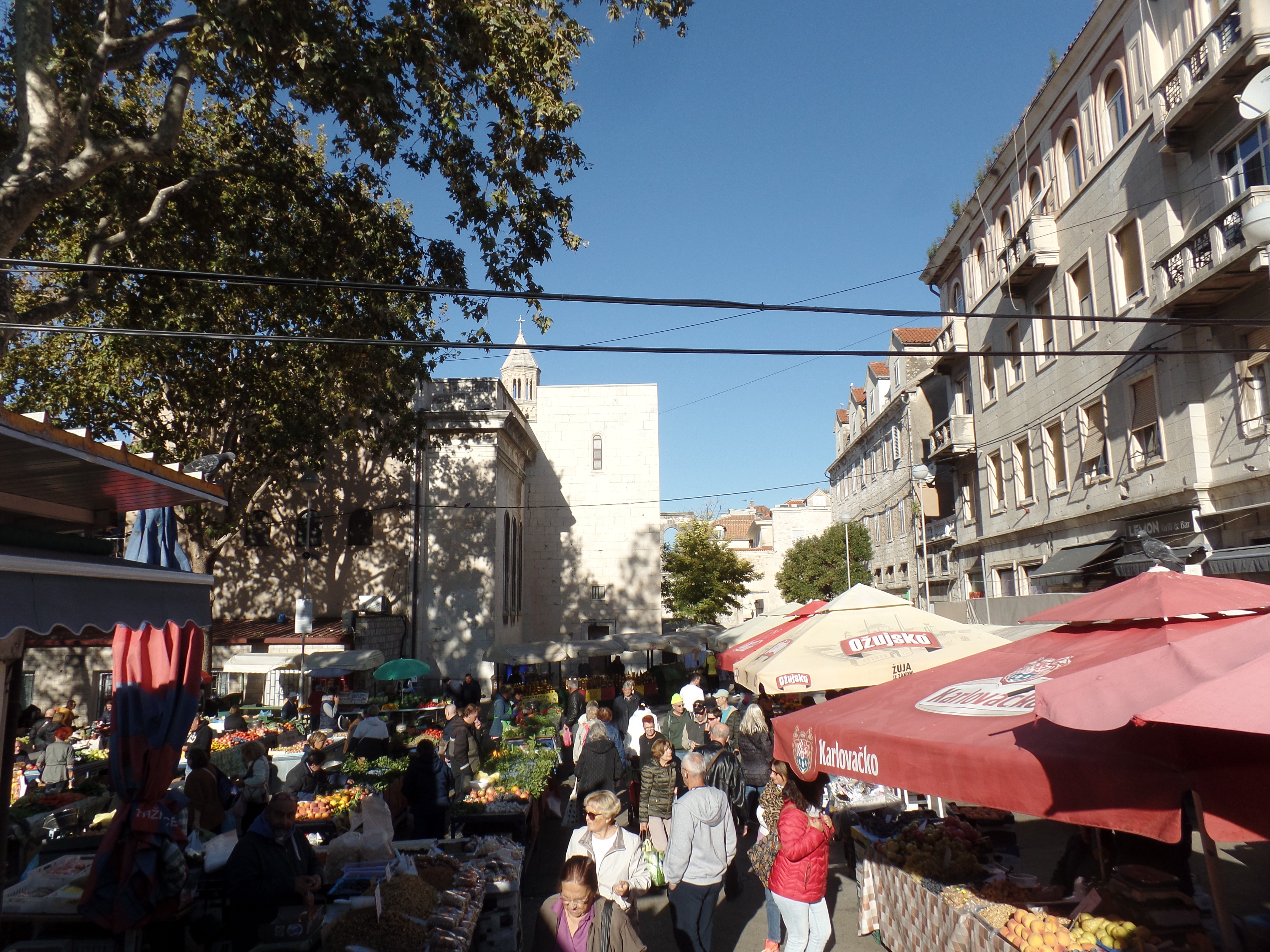
Pazar 1, Split
Our game plan was a full one: We walked through Pazar (the city market since Ottoman times, or longer.) The south and east areas of Diocletian’s Palace were next on the agenda. Diocletian was a native of this area, an Illyrian, born and raised in Salona, over the mountain, from what is now Split. He rose through the ranks of the Roman Army and became co-Emperor, at first along with Maximian in 286 AD/CE. This started the process of the Empire being divided into East and West. Diocletian built his palace at Spalatum, claiming the East for himself. Although he was an autocrat, Diocletian went along with Maximius’ plan to further divide the Empire, this time into four units, with Galerius and Constantius as junior co-Emperors. This arrangement actually helped the Romans defeat Persia, in 200, with the sacking of the Persian capital, Ctesiphon.
Diocletian carried out a bloody, but unsuccessful campaign to eradicate Christianity in the Empire. When the campaign failed, Diocletian retired from imperial duties, in 305. Co-Emperor Constantine, son of Constantius, recognized it as the official religion of the Roman Empire in 324. He lived out his days at this palace of Spalatum, now known as Split.
Pazar 1, east gate of Diocletian’s Palace and the Church of St,, Domnius
Domnius was sent, by the Apostle Paul to Dalmatia, the region that encompasses Croatia’s coast and the immediate interior, to preach the Gospel to the Illyrian people. Despite Diocletian’s imprisonment and execution of Domnius, in 304, Dalmatia became a steadfast Catholic region, under the encouragement of Constantine. Croatia is still a largely Roman Catholic country, as is neighbouring Slovenia.
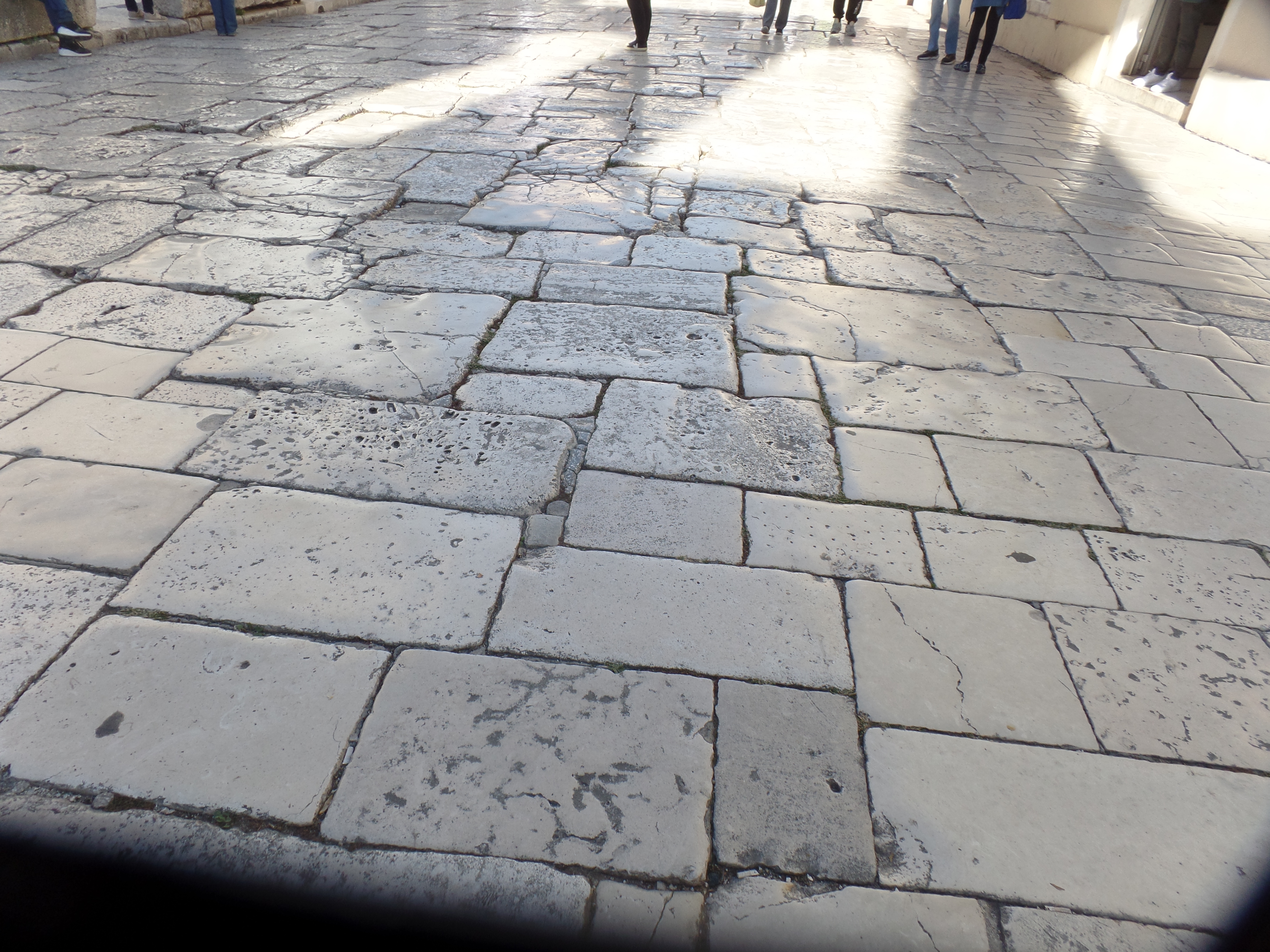
Church of St. Domnius, SplitOriginal paving stones from the time of Diocletian
Here is a more complete view of the east and south areas of Diocletian’s Palace.
South courtyard of Diocletian’s Palace, Split
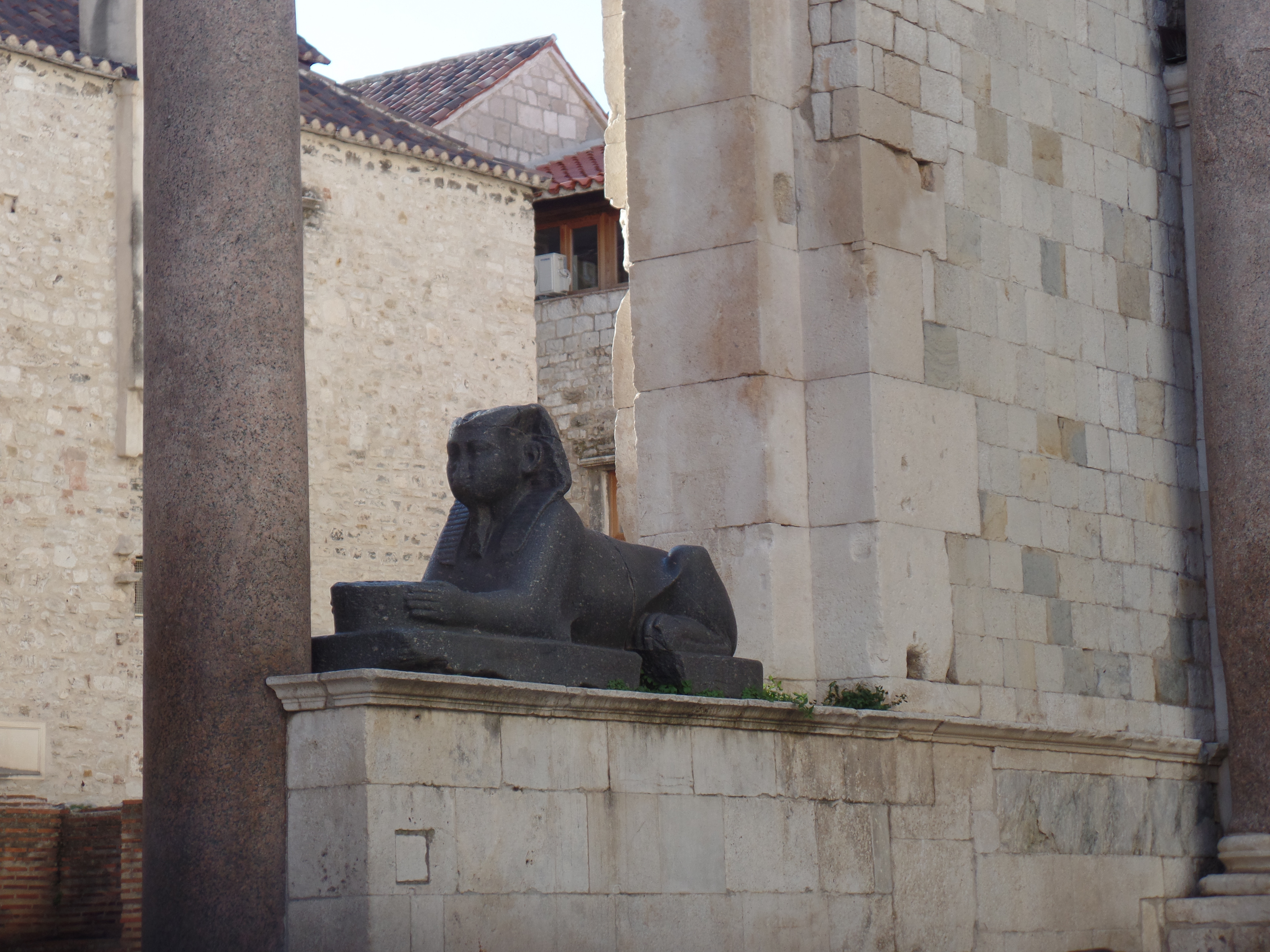
Diocletian’s Palace is the only place, outside ot Rome and Gizeh, that still has sphinxes (There are two here).
One of the two Sphinxes of Diocletian’s Palace, Split
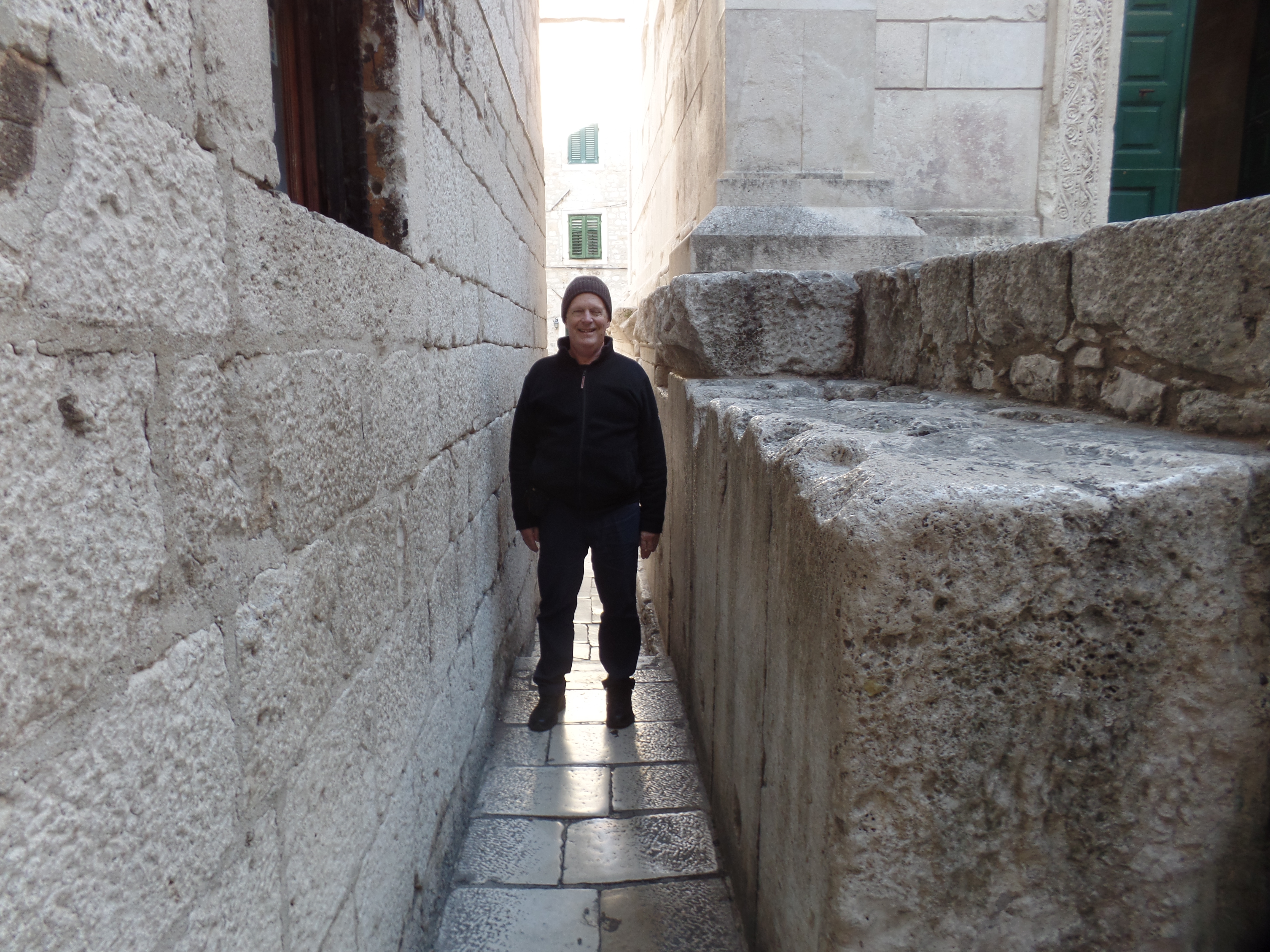
We left this part of the palace, heading toward Marjan (marYAN) Hill. To get there, we had to pass through the “Street that can fit only one at a time”. Here I am, having gotten through it.
“The street that can fit only only at a time”.
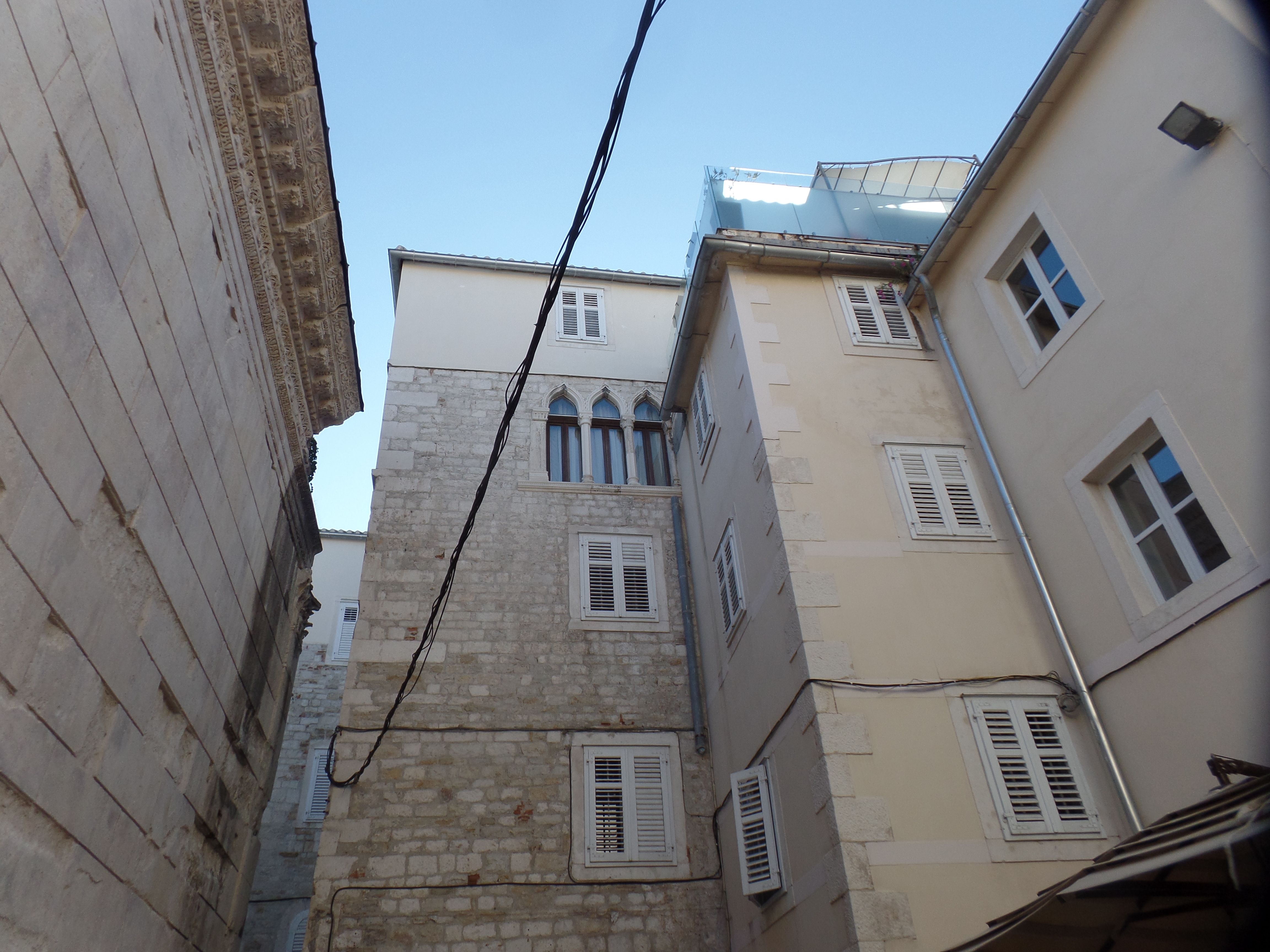
The next photo shows the melange of architectural styles that can be found in Split’s oldest neighbourhood. These are Roman, Venetian,Ottoman, and Austrian.
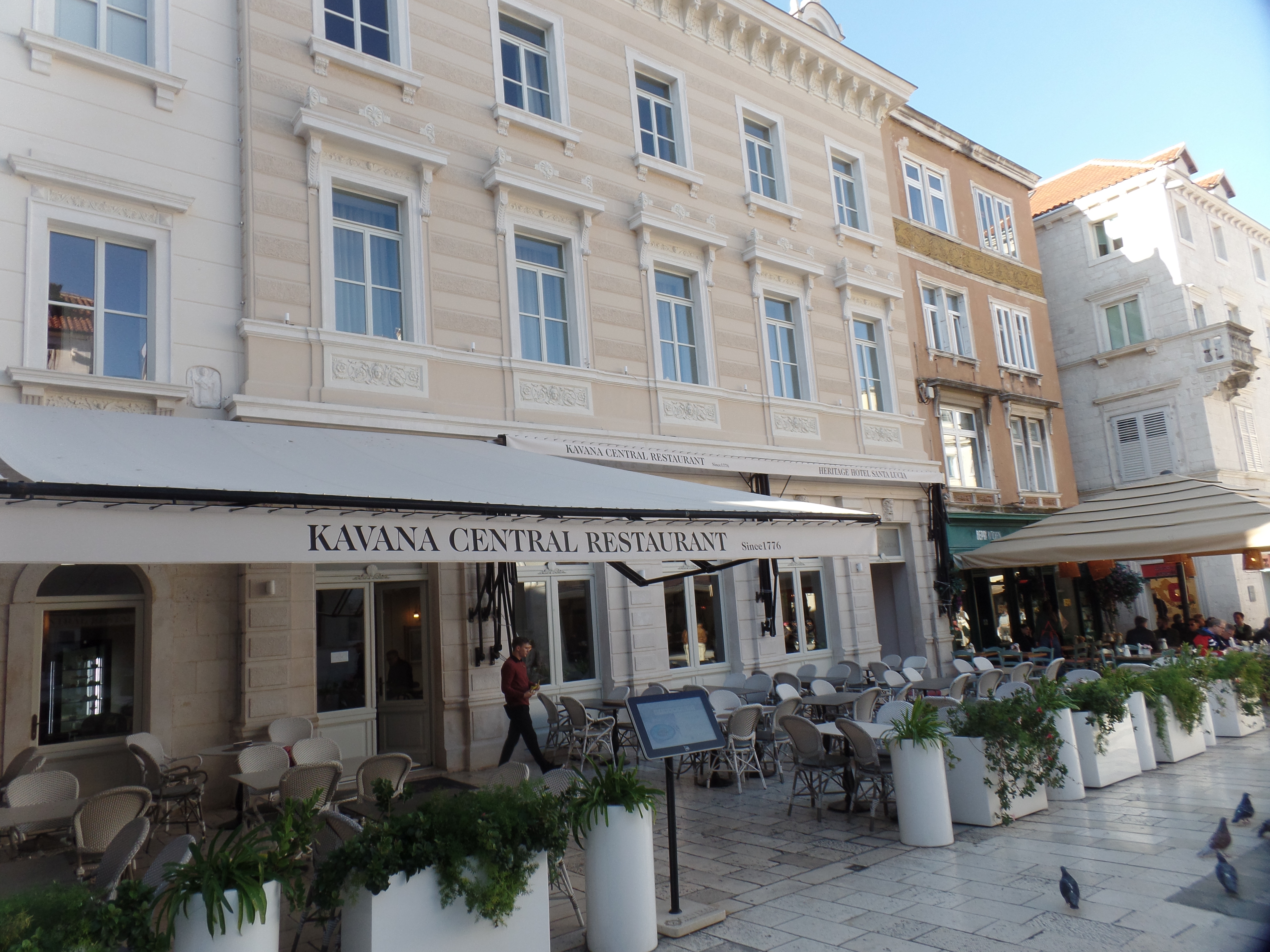
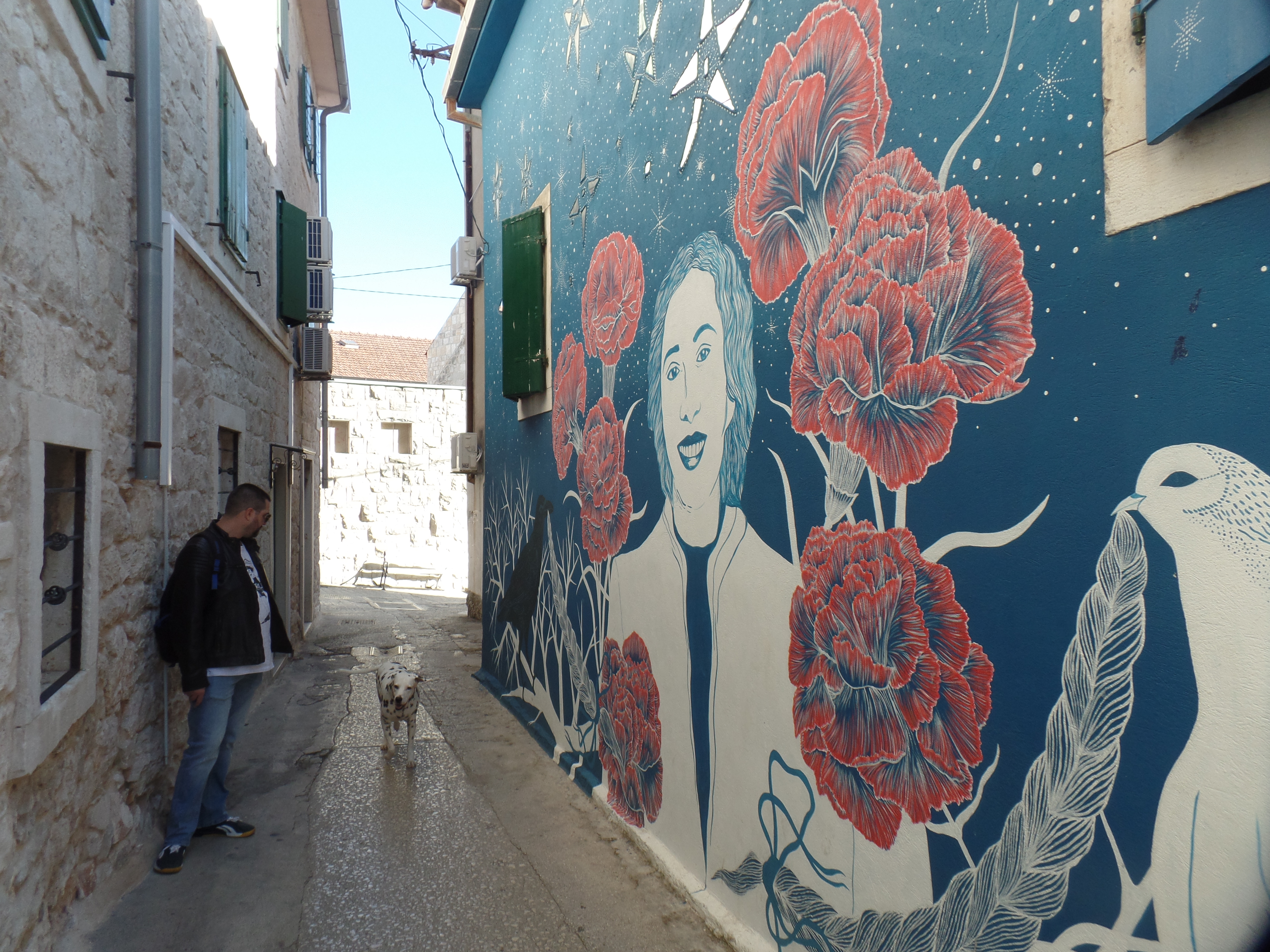
Four styles of architecture, in one neighbourhoodThe place to be seen in the Split of the mid-Twentieth Century.A martyr for freedom from Fascism-and a Dalmatian
Vahida Magajlic was a Croatian Muslim, who fought the puppet regime that was installed by the Nazis in Croatia. She gave her life for the freedom of Croatia-and of all Yugoslavia.
We took many steps up Marjan Hill. (Mar YAN).View from first overlook, Marjan Hill
Boris enjoys coming up here, when he needs peace and quiet.
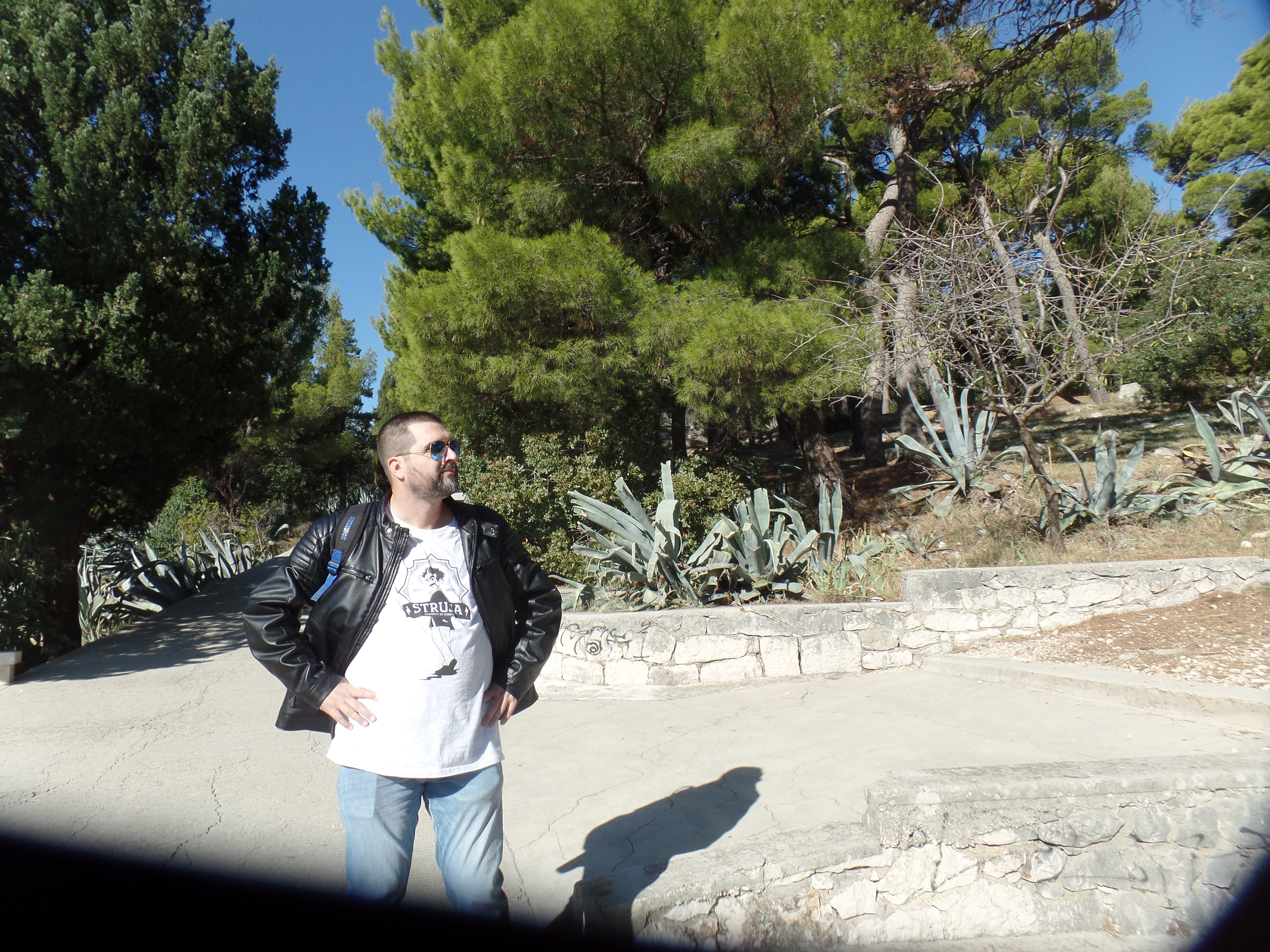
Boris at Marjan Hill’s Botanical GardenThe Adriatic, from atop Marjan Hill
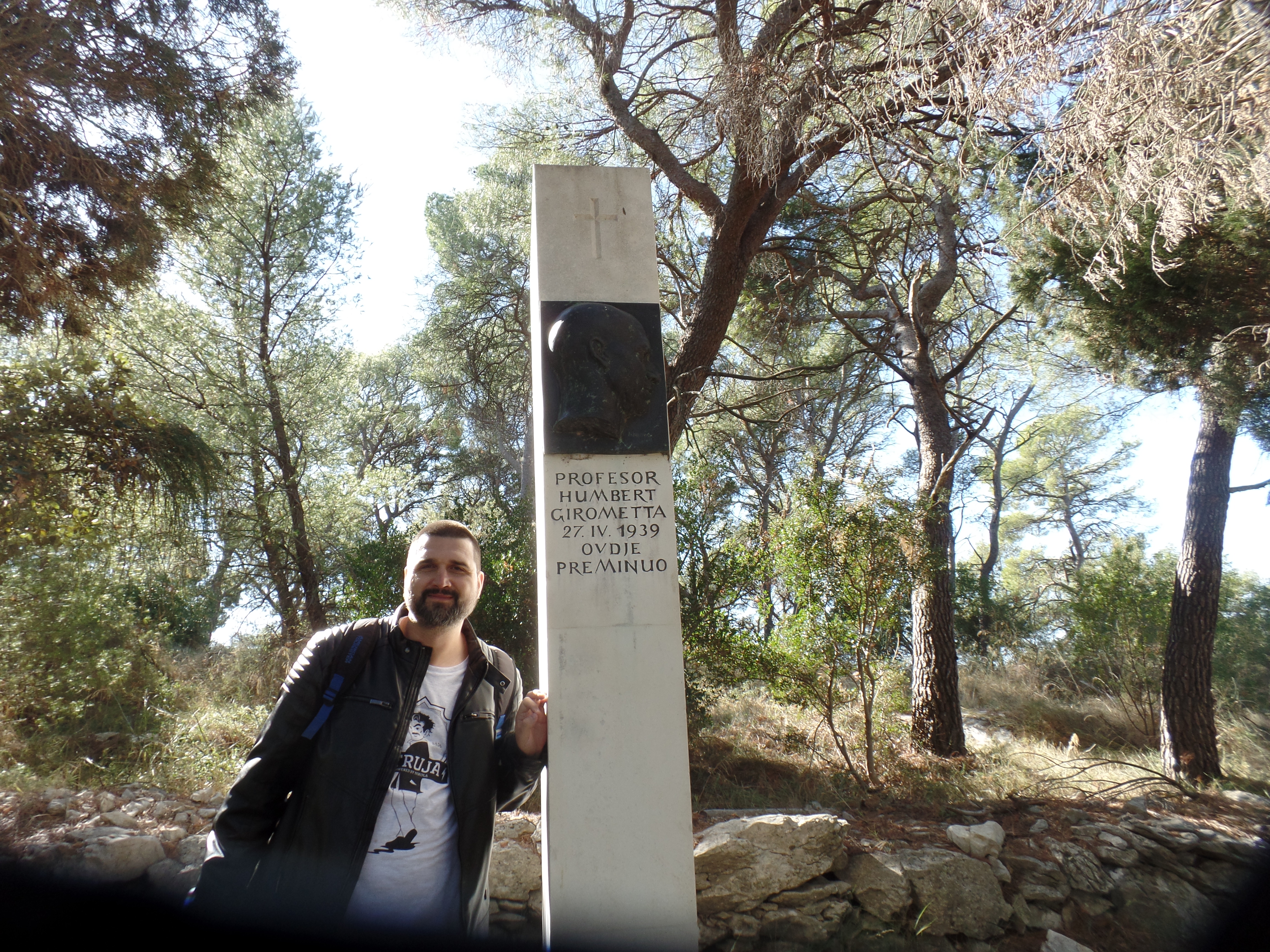
Orofessor Humbert Girometta was the man who spearheaded both this park and the promotion of hiking and wilderness training in the Split area. He was a mentor of Boris’ mentor.
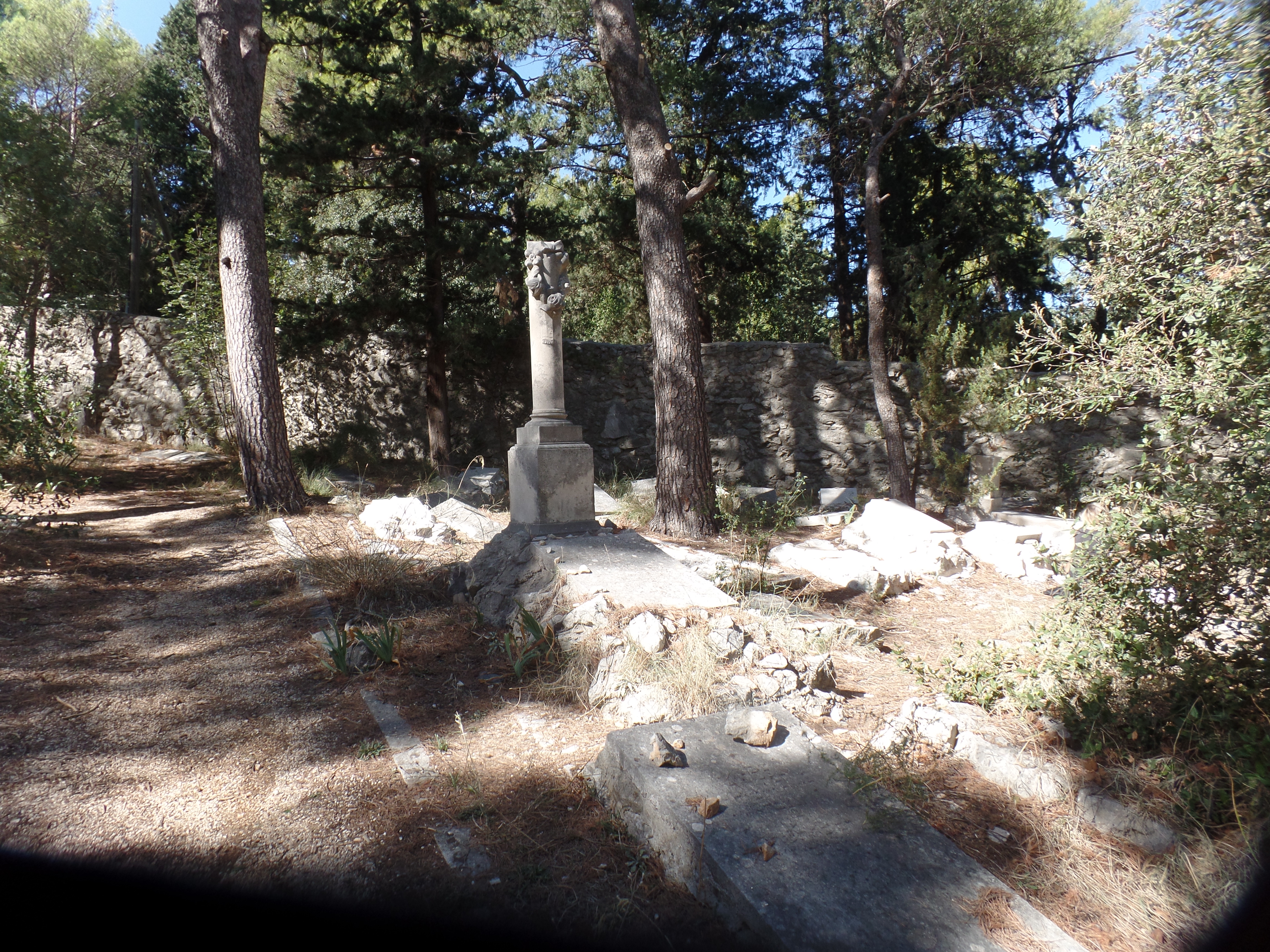
Memorial to Dr. Humbert Girometta, Marjan Hill, SplitThe Adriatic, from the third vantage point on Marjan Hill, SpliJewish Cemetery of Marjan Hill. Jews have been in Dalmatia since shortly after the destruction of the temple in Jerusalem, by the Romans.
We next had a delectable Croatian lunch, of beef in marinade, with a side of gnocchi and beet salad. Ice cream, dipped in chocolate, at Split’s oldest ice cream parlour, followed.
Next were the northern and western sides of Diocletian’s Palace
The exterior of the north side of Diocletian’s PalaceArchway, north side of Diocletian’s PalaceEntrance to North CourtyardAgain, three styles of architecture in one building.The grand north courtyard, Diocletian’s Palace
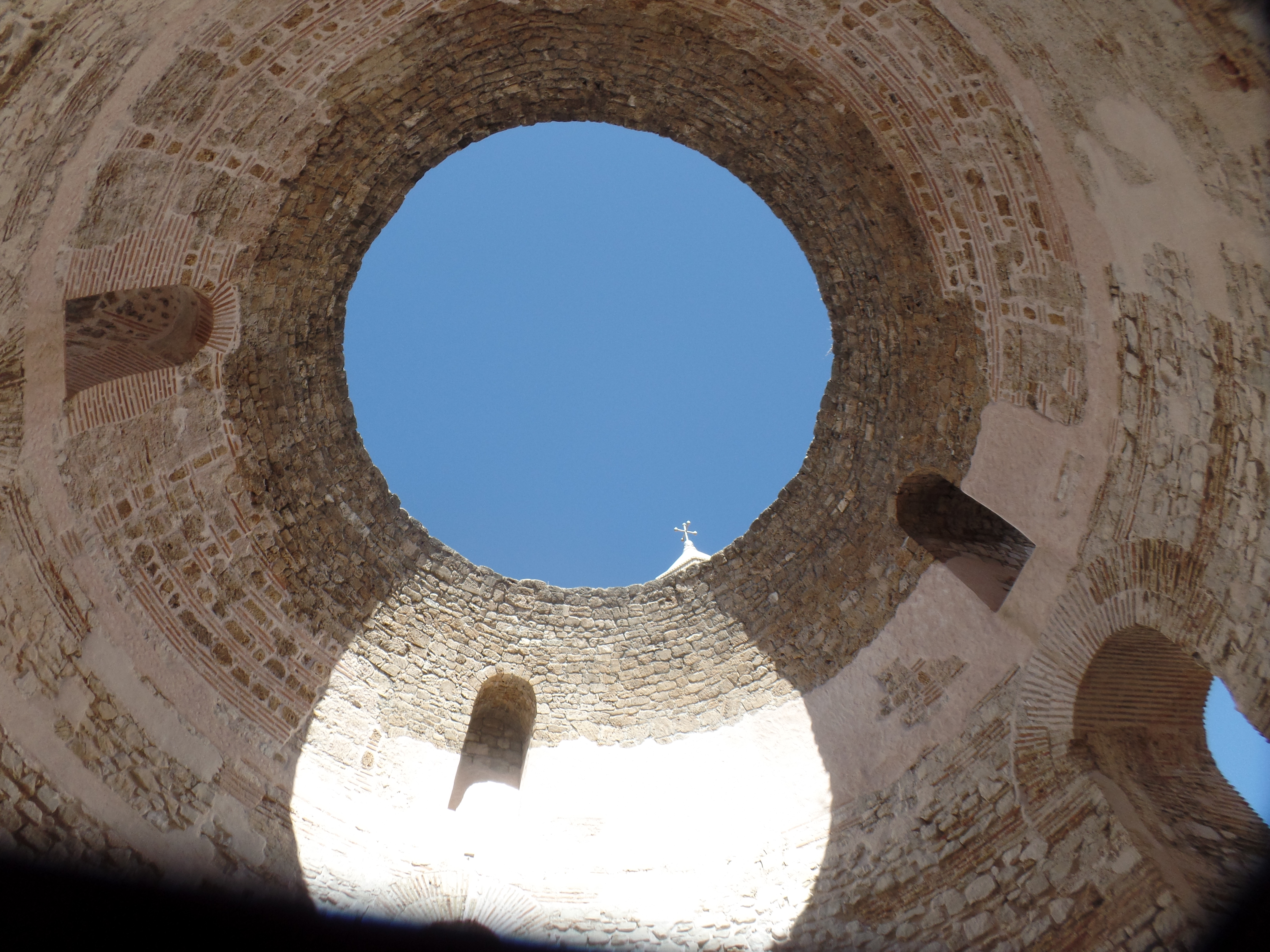
Here is the most astonishing view: The vestibule of Diocletian’s Palace, which once led to his living quarters.
Vestibule, Diocletian’s PalaceUnderneath the palace
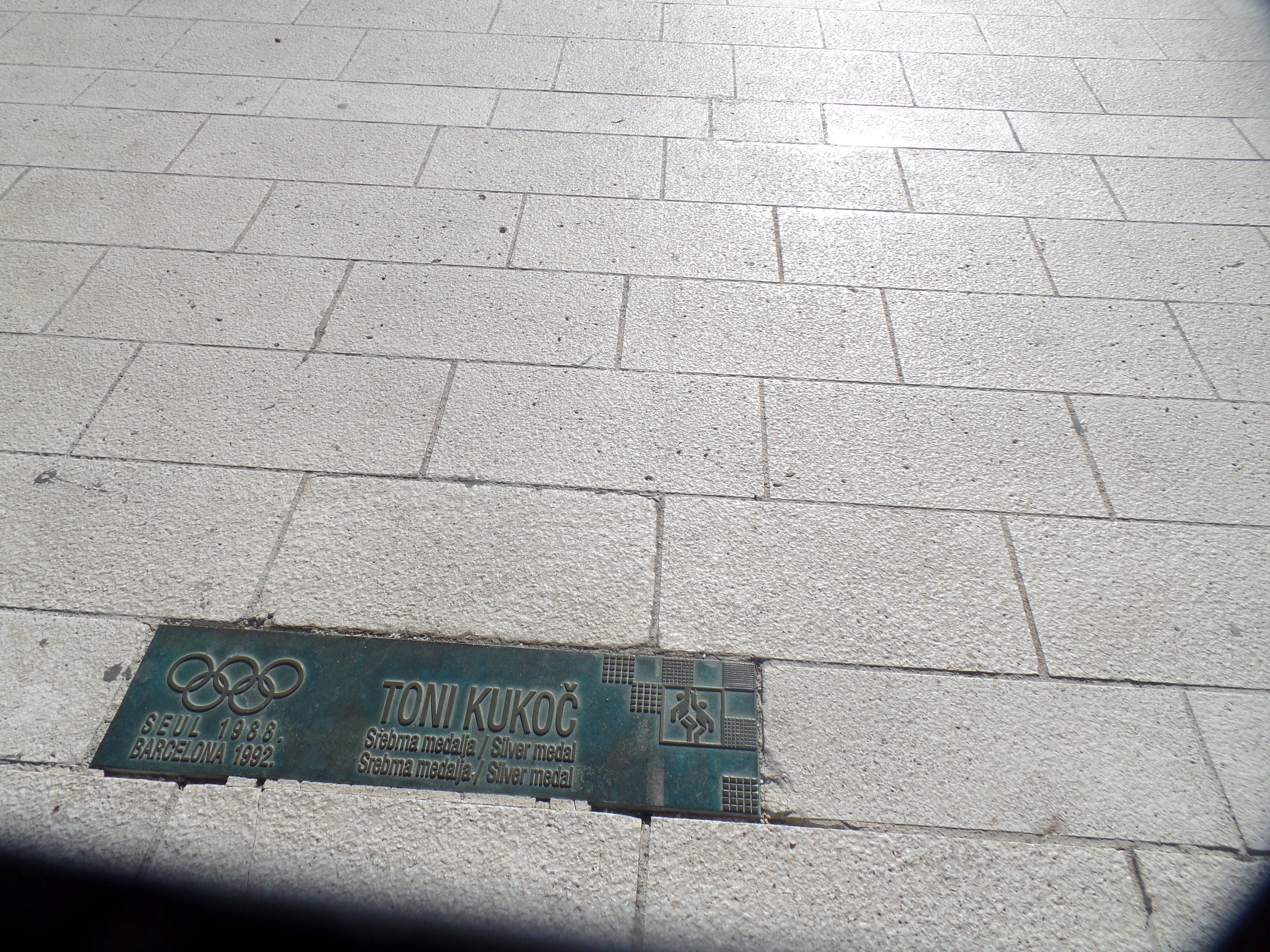
We closed out this extraordinary day with a visit to Split’s Athletes’ Walk of Fame. Many of Croatia’s stellar athletes came from Split.
Toni Kukoc, “The Croatian Sensation” of NBA fameGoran Ivanesevic, a great tennis player
With a few more views of the Walk of Fame, I bid farewell to my friend, Boris and headed back towards Hotel Pax, and a restful night, before the next leg of the journey: Bosnia and Hercegovina. Split will long shine in my heart.
September 30, 2025, Oswiecim, Poland– Today would have been Penny’s 71st birthday. Each year since I first met her, including the fourteen years since her passing, the day always brings a special event, either Baha’i teaching or a visit of significance.
Entrance to Auschwitz-Birkenau Museum
Today, I had the opportunity to visit the sites of one of the darkest chapters in human history. Auschwitz and Birkenau were concentration camps, separated by 3 kilometers, but under the same commander: The infamous Rudolf Hoss (not to be confused with Deputy Fuhrer Rudolf Hess), implemented the use of Zyklon B, a pesticide that became the nerve agent which alone killed a million people. Hoss was tried, convicted and executed in Poland, in 1947. (Rudolf Hess, as is well-known, flew to Scotland, believing he could convince Scottish “opponents” of the War to hasten British withdrawal from World War II. The Scots were not amused, Hess was imprisoned and then transferred to Germany’s Spandau Prison, in 1947. He was the sole remaining prisoner there, when he committed suicide, in 1987, at age 93.)
My late father-in-law was a Jewish-American, served as a soldier in the final months of World War II, during which he was captured during the tail-end of the Battle of the Bulge, and was held in the POW camp at Berga, in eastern Germany. I have been to Berga and seen the V-2 Rocket Factory’s remains. Pop was sent to work the salt mines. When he was rescued by a unit of American soldiers, in June, 1945, he was nearly skeletal.
That was the fate of many, if not most, of the survivors of Auschwitz and Birkenau, as well. They numbered about 6200, out of over 1,100,000 who had been held in at the Auschwitz Complex. Jews, who Hitler and his henchmen wanted above all to exterminate, were the preponderance of victims. Men between the ages of 17-60 were made to work, usually until they were broken, physically and mentally. They were then executed. Women, children, the elderly and the infirm, including the mentally ill, were summarily gassed to death.
Besides the Jews, Romany, Russians, Poles, Czechs, Freemasons and the occasional Afro-Germans, were also sent to concentration camps, and executed by poison gas. Auschwitz and Birkenau were the two largest facilities for such hideous practices. in time, even Christian critics of Hitler found themselves in the gas chambers. Birkenau, being the larger camp, had 30 gas chambers. Auschwitz, with four sectors, had ten. As the Soviet forces closed in on Auschwitz, the fleeing German Army forced most of the remaining prisoners west, on a Death March to Germany and Austria. Thus did many die on their feet, though not as many as were gassed.
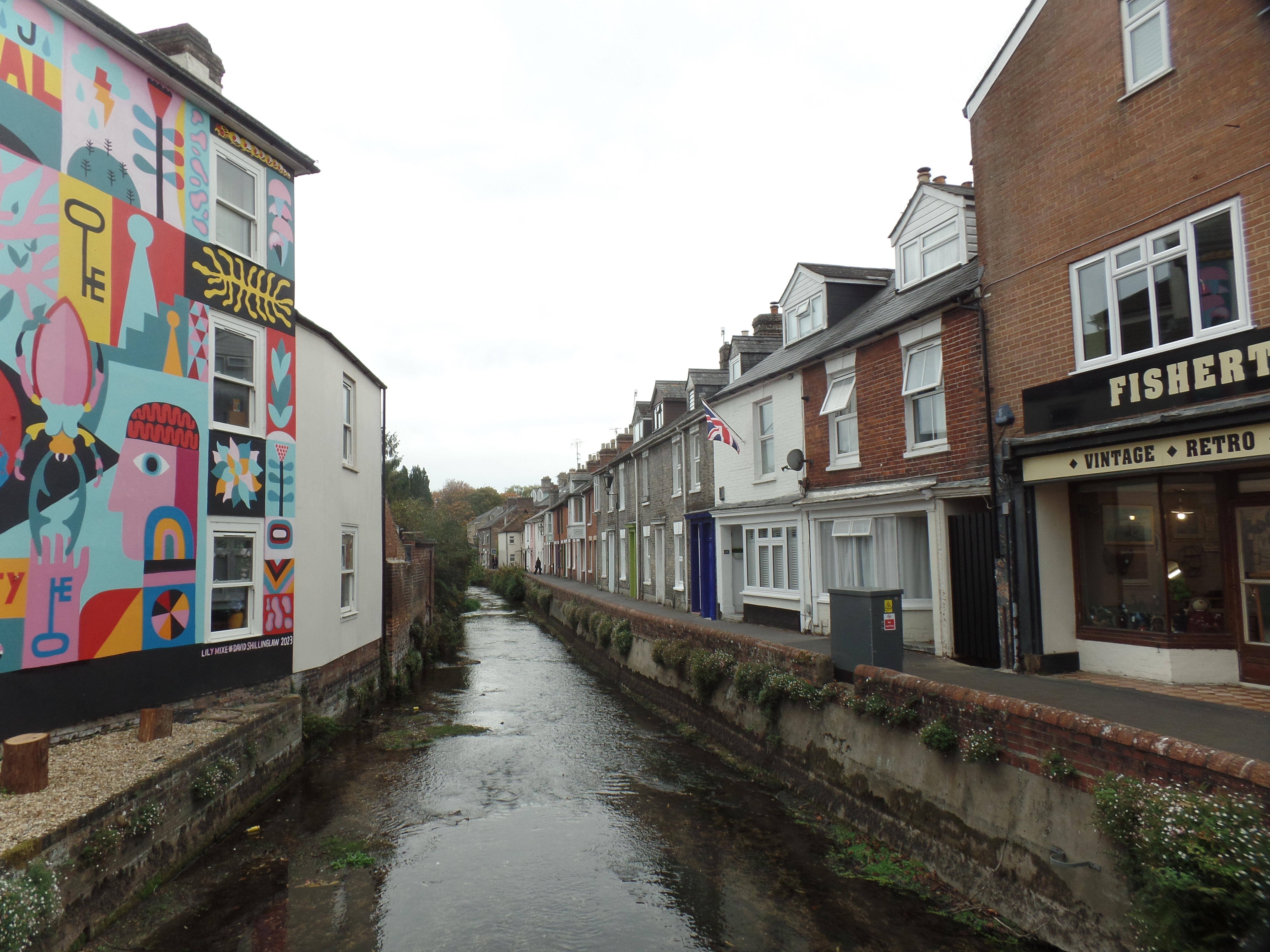
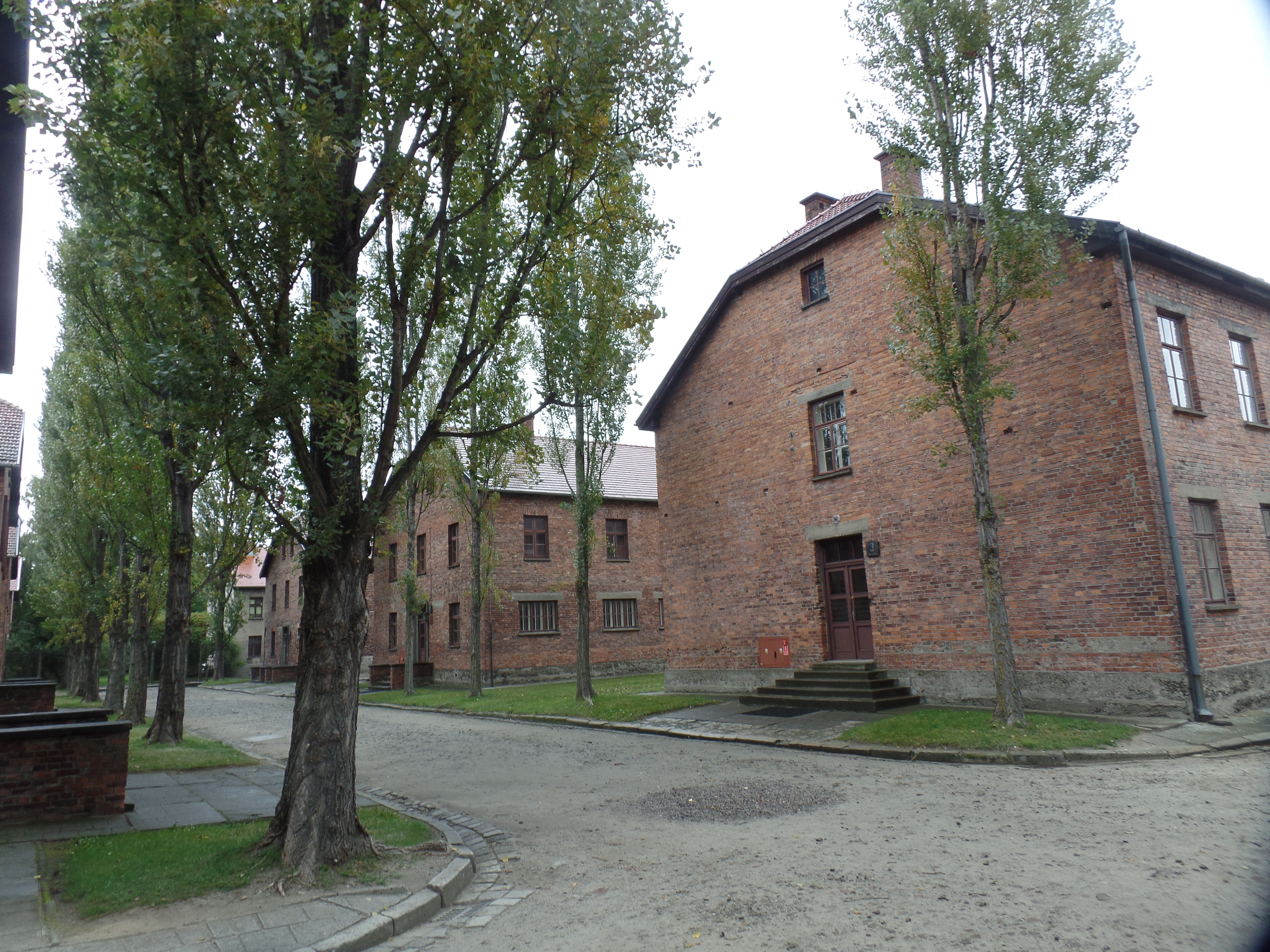
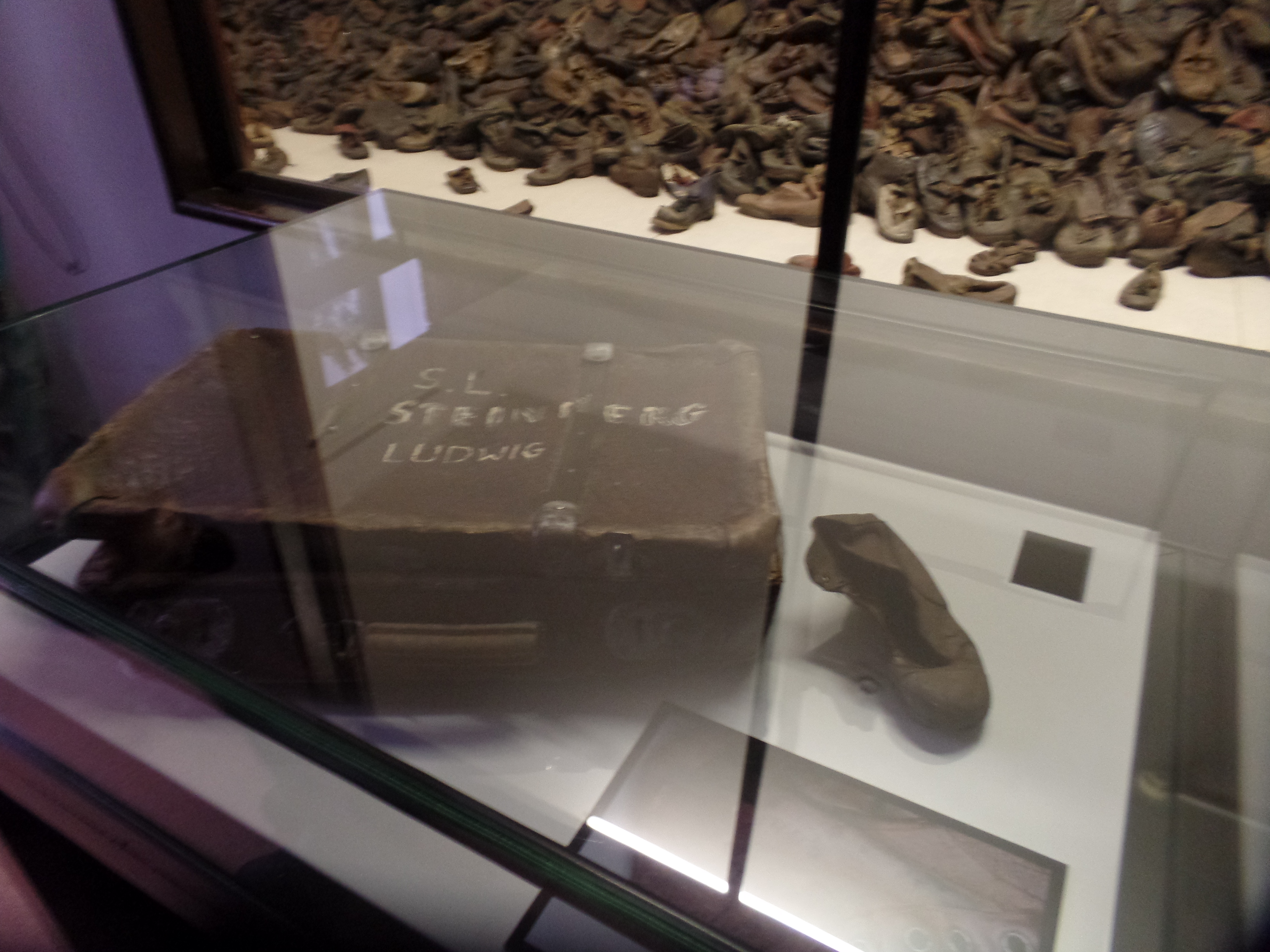
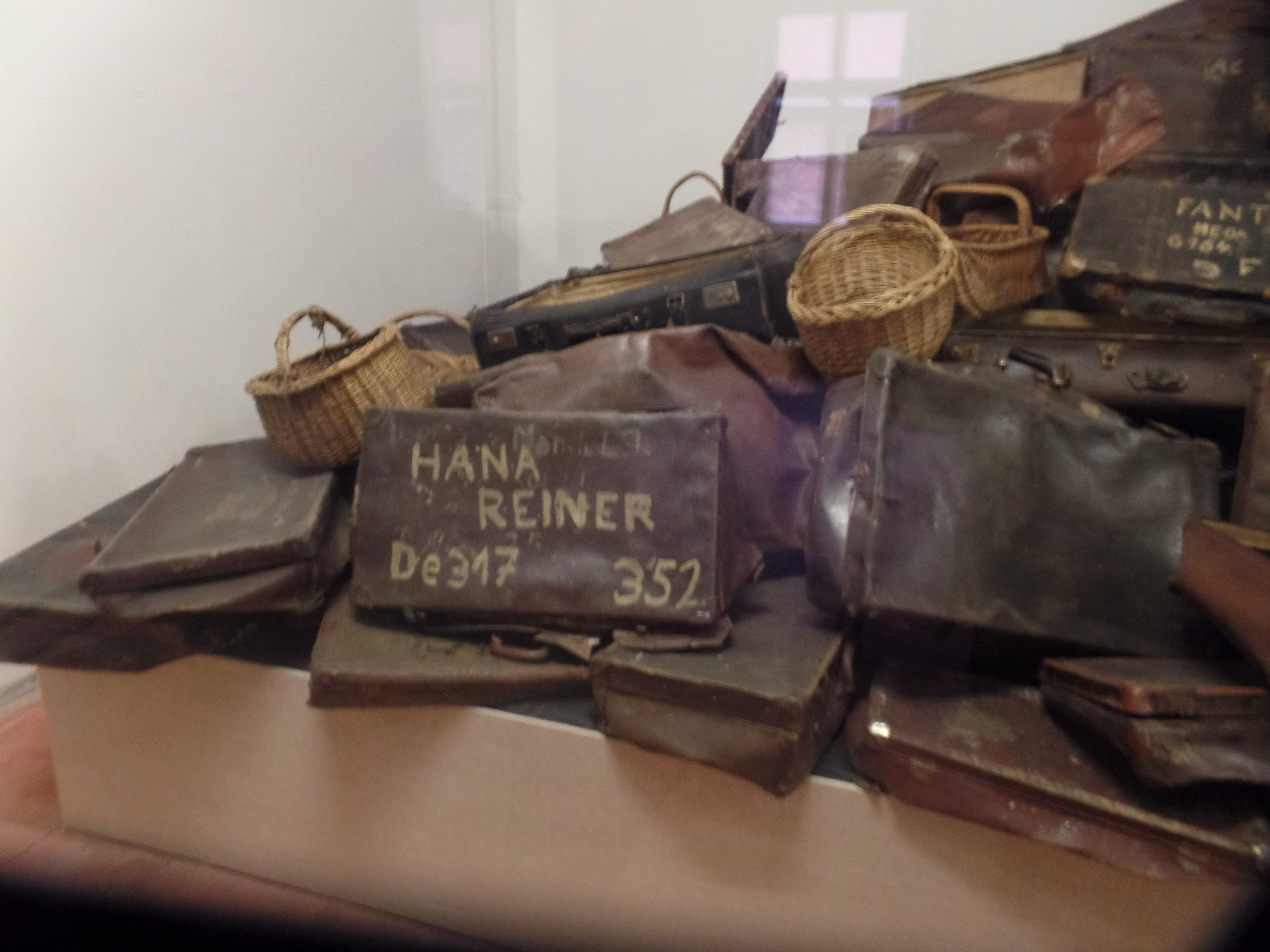
Here are five scenes that are here to remind us that the Holocaust was no Hologram.
“Barracks” # 1, AuschwitzTorture House,, AuschwitzWomen and children victims, on their way to the gas chambers. (They had been told they were on their way to a glorious new life.)Discarded children’s shoes and a father’s suitcase, with his son’s name written on it.Hana Reiner would not let herself be forgotten. https://www.writeoutloud.net/public/blogentry.php?blogentryid=139212The Nazis themselves destroyed this barracks, rather than allow it to be preserved by the Soviets and Poles,for what it had been,
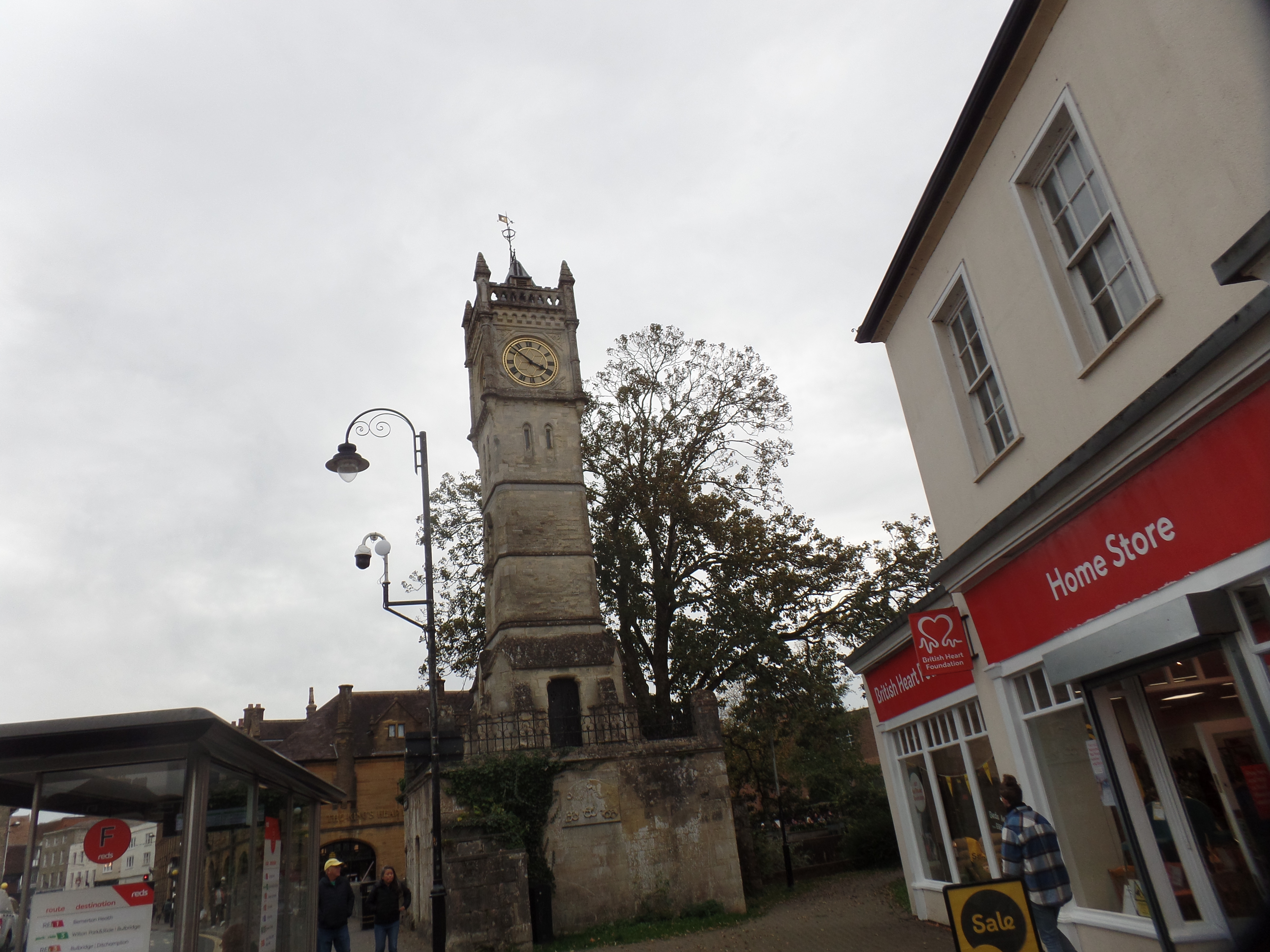
I thought back to the early morning, when I boarded a train in Krakow, bound for the city of Oswiecim, (the Polish name which was translated into German as Auschwitz). A mentally disabled man chose to sit across from me. He was an Italian, who had little vocabulary, in any language. He knew “English” and “Deutsch”, as well as a few words in Italian and Spanish. While he was annoying to the young man sitting by the window and the well-dressed Italian man who sat across the aisle, I let him show me the soccer games on his phone. At the end of the one-hour trip, he cheerfully said “Grazie!” and went on his way.
That gentle man would not have had a chance to ride the rails, in Hitler’s Germany. He’d have ended up in the pile of corpses found by the Russians, or in one of the piles of ashes that were dumped in the Vistula River or behind the Subcommandant’s House at Birkenau. He can ride the rails, as he pleases, in today’s Europe, not being harmed and harming no one,
Auschwitz-Birkenau, and all places like it, are needed reminders of exactly what levels of depravity can come from a deluded pursuit of false perfection.
September 24, 2025, Copenhagen- Today started out as a minor shopping day: I had to replace lost sunglasses and a knot cap, as well as worn-out socks. So, a visit to Magasin du Nord, a major department store of Indre By (downtown) was the first order of business. MDN is a throwback to the great department stores of old. Department stores still mean something on this side of the Atlantic.
In the afternoon, I set out on another random stroll, heading west on Adelgade, towards a church that beckoned towards the midst of that street’s span. St. Petri Kirke’s conical spire calls out to the party animals at Generator. Being one to roam off the beaten path, I walked its way.
St.Petri Kirke, Frederiksstaden, Copenhagen
A block or so later, I came to Sankt Pauls Gade, the Nyboder district, built by King Christian IV for naval personnel and now preserved as a national treasure.
Nyboder, Sankt Pauls Gade (above and below)
It was another three blocks towards Osterport that I came upon a Swedish Church, close to the waterfront, and bordering a small marsh. Here is a view of Svenske Kirkes Julebasar.
Svenske Kirkes Julebasar (above and below)Senske Kirkes Julebasar
The small marsh became a stream, which became a moat. The afternoon was about to show the majesty of Frederiksstaden, as Osterport swung towards the International Ferry Terminal.
Small marsh and pond, near Svenke Kirkes Julebasar
I am taking my time with this, so next up will feature Kastellet, Frederiks Kirke and Amalienborg, with Part III focused on Kongen Have (King’s Garden) and the exterior of Rosenberg Palace.
September 23, 2025, Copenhagen- There is something fairy tale-like about Helsingor. Like a Danish version of Visby, it largely is filled with cobblestone streets. Unlike Visby, its Old Town is mostly a no-car zone. Here are some of the Old Town scenes I promised you last night.
Old Town street, HelsingorHamlet Hotel, Helsingor is across the street from Skandia, where I stayed last night.St.Marie’s Church, HelsingorDom Church (Cathedral) of Helsingor
Now, here is the crown jewel of Old Elsinore: Kronborg Castle, which was William Shakespeare’s setting for Hamlet.
Denmark has been a country since the 11th Century. Around 1424, King Eric VII built the prototype of the fortress, overlooking Oresund, which separates Sjaelland (“SHEL-land) from the Swedish Peninsula, at its narrowest point, In 1585, King Frederick II expanded the fortress into a magnificent castle. The fortress burned down, in 1629, after which King Kristian IV had it rebuilt. In 1658, the fortress proved insufficient to withstand an attack by Sweden, during the war in which the latter seized control of Scandia, the southernmost part of the peninsula, from the Danes. In 1785, Kronborg became a military barracks, as the king had moved to Copenhagen. It was given to the Danish people, in the 1920s, as an historical treasure.
What a treasure it is! Here are seven photos of the grounds and the interior, including the extensive Casemates (the dungeons and underground refuge of the royals, during the war with Sweden.).
The Moat of Kronborg CastleCannons, facing north, from Kronborg CastleKronborg’s Cannon Tower, from the courtyardThe Chapel, which was the only area, not affected by the Fire of 1629.Oresund, and other parts of Kronborg, from the Cannon Tower. This viewpoint is reached after climbing 145 steps. I still have it, even if it means taking 2 twenty-second breathers going up.Holger the Dane, legendary protector of the nation, who awakens when Denmark has met its darkest hour. He otherwise sleeps in the Casemates.In the Casemates-Is down up or is up, down?A Word of Caution. Queen Margrethe I, who ruled Denmark and all of Scandinavia.
No display of a castle is complete without a scene of the ballroom. So here is #8.
The Ballroom
With this lovely visit, I headed back to Skandia, retrieved my bags and headed across the street to the train station. I learned last night, from the ferry monitor, how to work a ticket machine, and so got my own ticket to Copenhagen. Sadly, the Baha’i National Centre turned out to be in a suburban location-so I missed seeing the friends there. I did speak with one on the phone and may be able to join a meeting at my next place of visitation.
Copenhagen, though, is exquisite. I will be here tomorrow and early Thursday. Let us close with this scene of Indre By, the “Old Town” of the Danish capital, of which more tomorrow.
Ornate small cafe, with Hotel D’Angleterre in the background. An enterprising young woman runs a small coffee shop here.
Rumour has it that Tivoli is temporarily closed. I will check that one out further, tomorrow. Even so, there is plenty of opportunity to keep occupied here.
September 22, 2025, Helsingor, Sjaelland, Denmark- When I got to the Long-Distance trains, in Stockholm, accompanied by my friend from Nynashamn, two tings were obvious: The Rail App that I got for my iPhone, specifically to make catching trains easier, was not doing so AND I had oversimplified the booking process in my head. This led to learning curve #2 on this journey: Every leg of the process is different and every leg has to be set in motion, before showing up at the gate. I learned that it is best to go to the ticket office at the station, well before the desired time of departure-not 1/2 hour prior. The well-oiled team is what has got me this far, and given me a road map for the rest of the journey (no pun intended).
It all worked out; I got to say farewell to the kids and their father at the station in Nynasgard; I was able to purchase a ticket at the Central Station Billeting Office and friend was able to tend to an important matter of her own, after I boarded the train with time to spare, after all.
I found myself seated next to a very interesting person, who is writing historical novels, accenting the achievements of the Swedish people, rather than dwelling on the hardships and deprivations the country has faced, over the centuries. She is also a rather skilled photographer, and showed me some of her portfolio. I shared with her my philosophy of education and the basic teachings of Baha’i. After a time, we reverted to our own spaces and enjoyed the quiet ride through the heart of central and southern Sweden. When she met her partner, at Malmo, she told him of her interest in what I had shared. He seemed to be favourable to her comments.
With help from a train conductor in Malmo, I reverted to my initial plan of taking the train to Helsingborg, then the ferry to Helsingor-as opposed to following the Stockholm ticket agent’s idea of going to Copenhagen and then up to my destination. That would have likely added a good hour to the journey. I had just enough time in Helsingborg to take photos of the interesting Centrum.
Helsingborg Centrum from the Ferry terminalHelsingborg Centrum (above and below)South Side of HelsingborgOld Harbour House, Helsingborg
We left Helsingborg, and Sweden, on time. My seatmate on the train from Stockholm to Malmo remarked that today was the first time she had seen that train leave on schedule, in nearly two years of back and forth. I have a different impression of Swedish punctuality, but maybe that is my luck-everything has been on the button, during my time here.
So far, I can only say I have experienced 90 % kindness, in both Iceland and Sweden. Certainly, the expectation is that the visitor will put forth effort to observe how things are done, and follow suit, but there is also a goodly measure of grace and forthright correction, when needed. I am used to taking life lessons in stride and not making the same mistake twice. This fits nicely with how people expect visitors to go about their time in both countries.
I expect it will be much the same in Denmark. Helsingor, for starters is compact. Hotel Skania, where I am tonight, is right across the tracks from the Train Station and Ferry Terminal. A short two blocks to the west and south is a row of restaurants and shops, with no cars allowed. Rib House, where I dined this evening, is a fun place, where each patron gets to check off the items chosen for the meal. There is a one-trip, or unlimited salad bar, in the style of American steak houses. How well meat is to be cooked is a choice item as are the type of potatoes one wants, and the sauces, if any, that are desired. Of course, one checks off what drink is desired.
Rib House, Helsingor Centrum
I will share more of Helsingor tomorrow. Now, it’s time for rest.