The Road to 65, Mile 222: Obfuscation

2

July 8, 2015, Prescott- 

A little verse, because I am tired, vexed, annoyed with certain people.  Thankfully, they are far from here.

You summon me

To follow my baser passions

And when I say,

“No, I’m good”,

you say “Hater!”

Muddy the waters.

Turn the tables.

Doesn’t make you right.

Truth, will come out,

like sunflowers in autumn.

The Road to 65, Mile 209: A Triangle of Towns, Part 3- Lewiston and Its Two Rivers

0

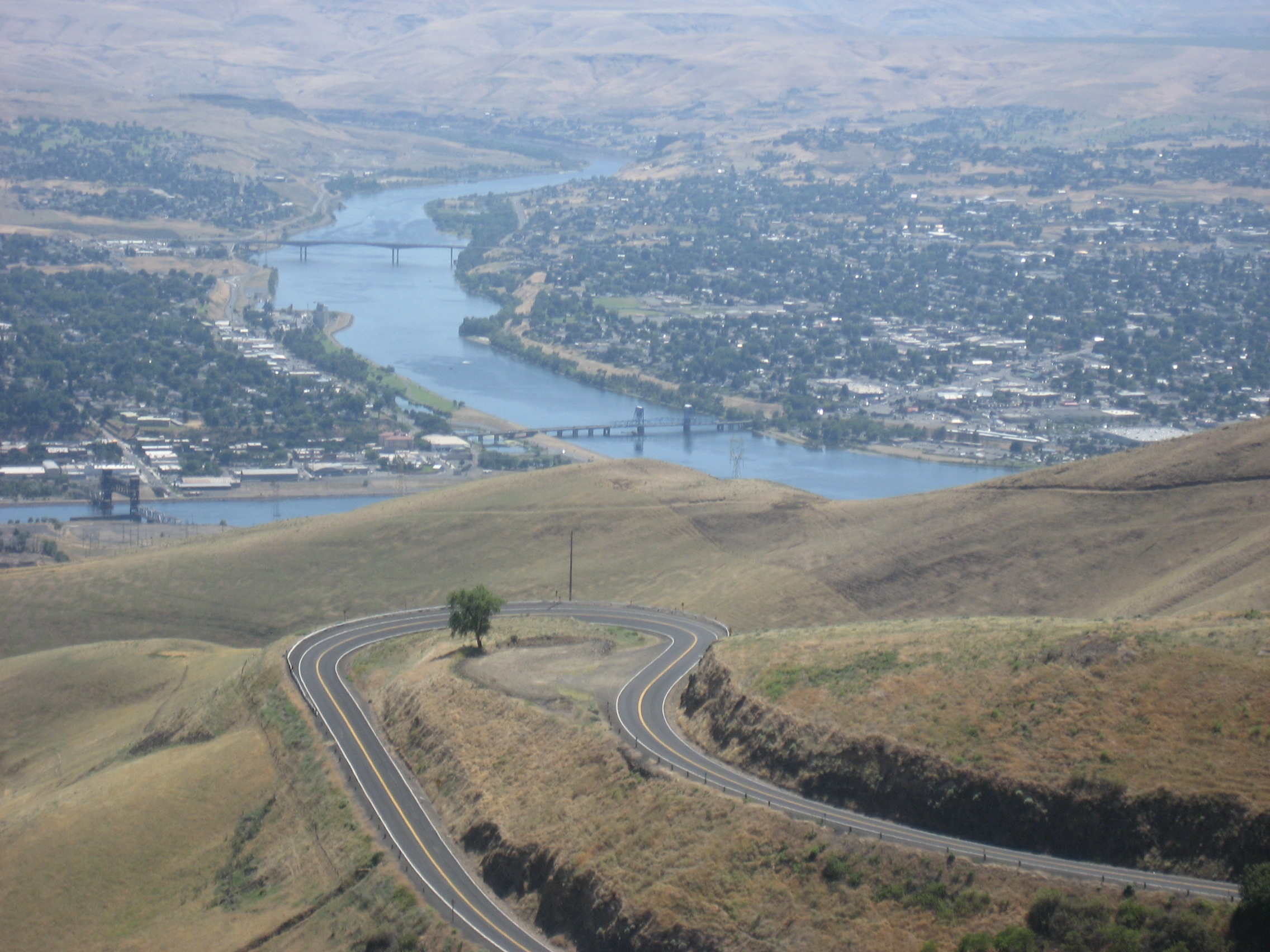
June 25, 2015, Lewiston, ID- This eastern half of the Lewis and Clark twin cities announces itself from a place at the foot of winding path, coming down a steep desert hillside.

357

359

Like so many Inland Northwest towns, Lewiston presents a charming and arts-oriented downtown.  Named for Meriwether Lewis, it has, as a centerpiece, Lewis and Clark State College’s Center for Arts and History361
Revolving art exhibits take center stage, on the first floor.  On the day I visited, the Sandpoint-based artist, Kelly Price, offered an astonishing array of Sacred Circles, making a very strong case for the interconnectedness of all things in the Universe and the security which may be found within an orb. Ms. Price’s exhibit clearly shows the universality of the notion that the circle, symbol of completion, is universally held sacred.  (As is my practice, no photos were taken of her exhibit, nor of the presentation of Scott Kirby.)

Price_WEB_475x226

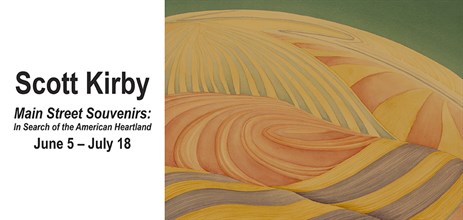
Scott Kirby, a pianist based in Boulder, CO, transitioned into painting scenes of the Great Plains, after an afternoon of drawing and painting with his daughter.  The flow of his art work certainly evoked a vibrant musical background.

KIRBY_WEB_463x220

On the second floor of the Center, lies a tribute to suffering and perseverance:  Beuk Aie (“Buckeye”) Temple.

363

The Temple was built by immigrants from Guangdong, China, who practiced a particular blend of animism and Buddhism, which called for this sort of temple to be used in worship.  It was housed in two consecutive structures, until 1959, when the second structure fell into disuse.  The sacred altar and relics were preserved by Mr. Ted Loy, a Lewiston businessman, until his death in 1981. They were then curated by his family and transferred to Lewis and Clark Community College, for safekeeping.

The Beuk Aie Temple also serves as a memorial to the 34 victims of one of the many shameful incidents of persecution aimed at Chinese residents in the Pacific Northwest:  The Deep Creek Massacre.  In May, 1887, the victims, all miners from Guangdong, were slaughtered by White miners in Wallowa County, OR, who then took the gold that the Chinese men had mined.  While the identities of those involved were determined by investigators from Lewiston, the State of Oregon, which had jurisdiction in the case, found no one guilty.  There is a memorial plaque on the Oregon side of Hells Canyon, but there the matter has rested.

368

In fairness, the people of the Pacific Northwest have made enormous strides in White-Asian relations, and the major source of friction in the Nineteenth and early Twentieth Centuries was mainly economic.  Then again, isn’t it always?  Fighting over crumbs seems to be our wont, as a species.

My thoughts turned to the indigenous residents of this area:  The Nez Perce Nation, symbolized by their leader, Chief Joseph (“I will fight no more, forever”) and the Shoshone, symbolized by Sacagawea, the woman who guided Lewis and Clark through this then rough wilderness.

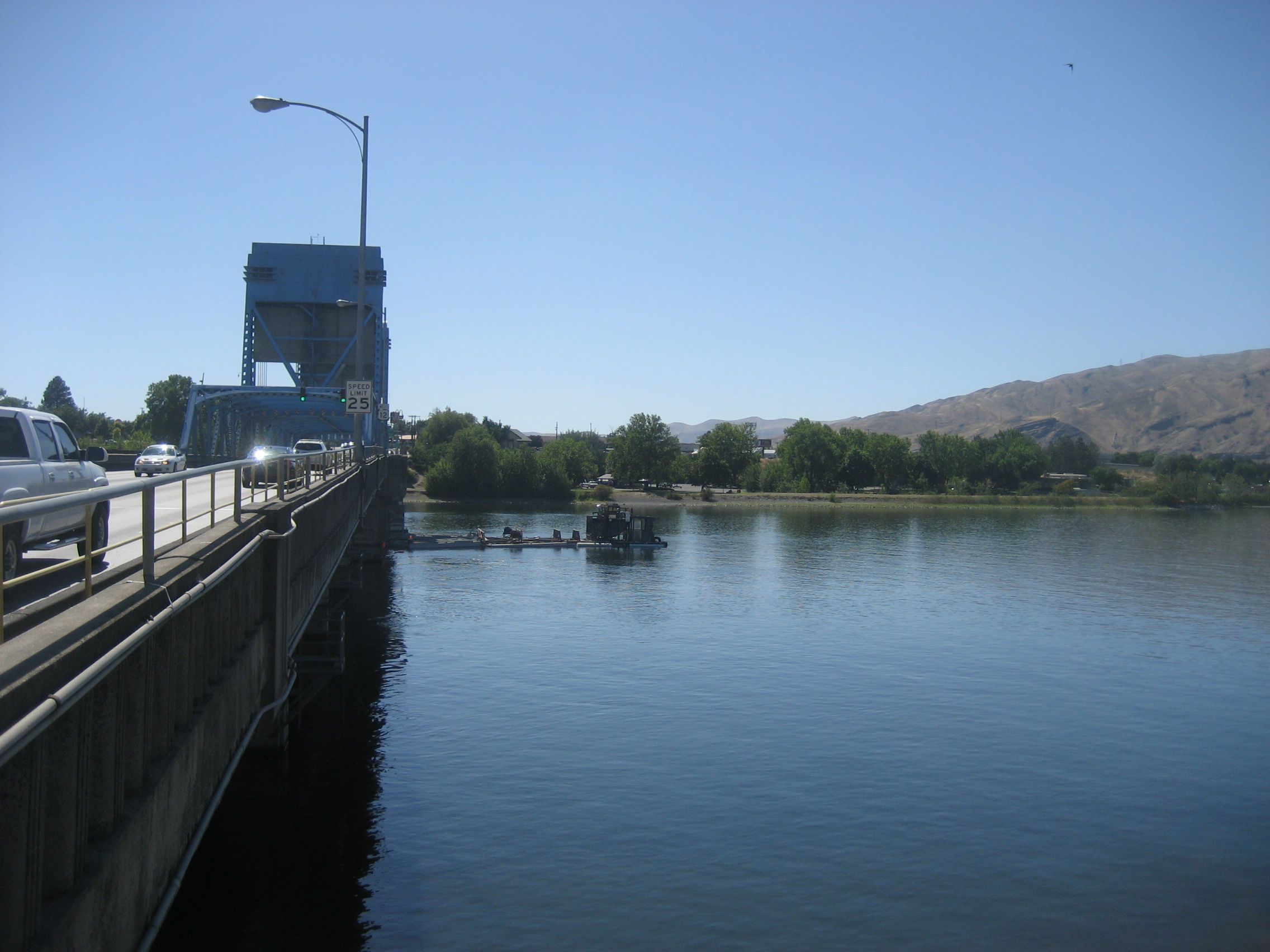
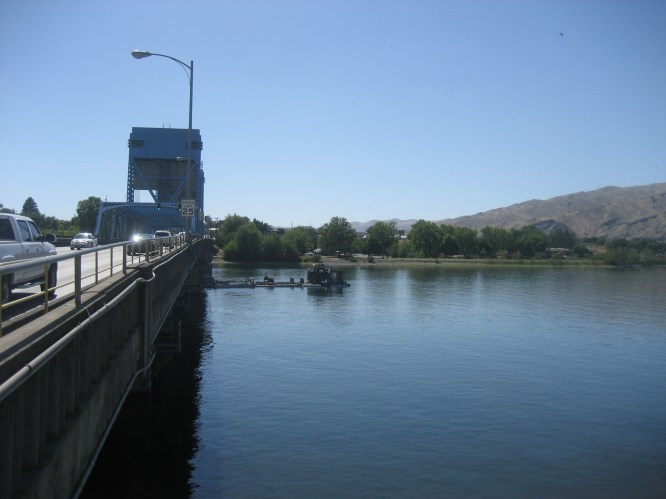
The confluence of the Snake and Clearwater Rivers has been a key resting and gathering place for humanity, for thousands of years.  Now, a bridge connects Lewiston with Clarkston, WA, which I did not visit this time, as a walk along the Idaho side’s Riverwalk captivated me for nearly an hour, before it seemed time to head down to Lapwai, Nez Perce Nation and further south.
373

383

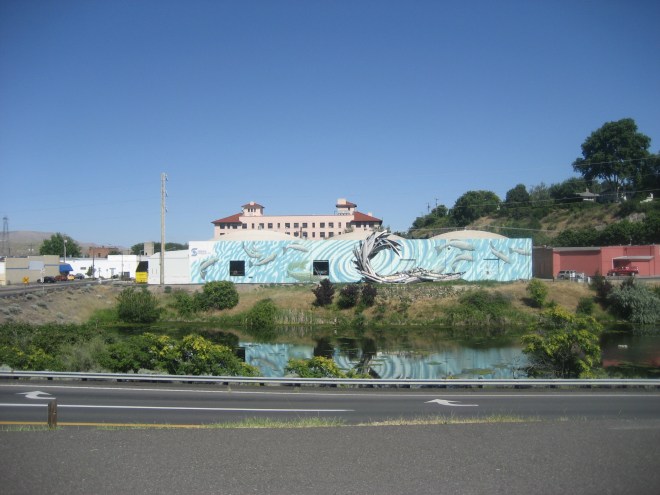
The people of this area feel a great connection to the Pacific, which both feeds, and receives from,these great rivers.
378

The Lewis and Clark Pavilion, at the northwest corner of the Riverwalk, honours the explorers and Sacagawea.  A sculpture with her likeness graces the entrance to the small kiosk.

381

I will come back through here, and spend more time in both Lewiston and Clarkston, as well as connecting with a Baha’i friend who I did not realize lives in Lewiston.

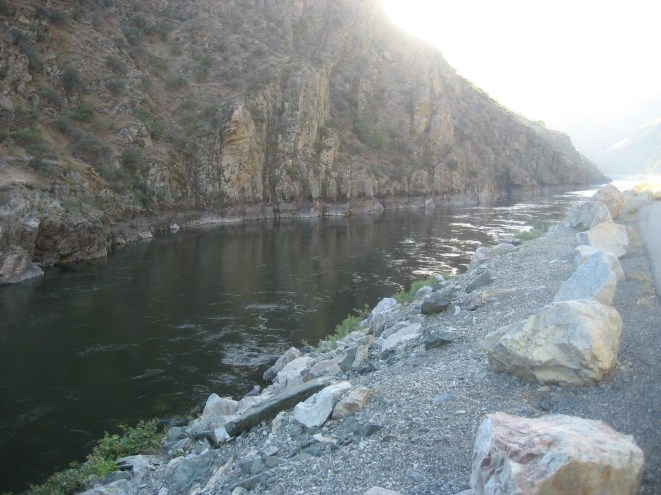
After having dinner at Donald’s Restaurant, in Lapwai, it was time to move through the salubrious mountains and canyons of western Idaho.  Hell’s Canyon would have made for some fine photos, but the traffic was horrible, so I went further, to Salmon River Canyon.
388

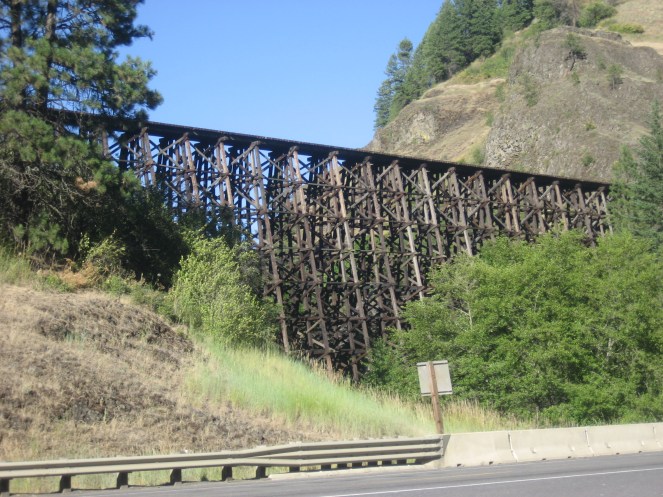
This trestle is one of seven built between Lewiston and Grangeville, to help move gold and other goods.
385

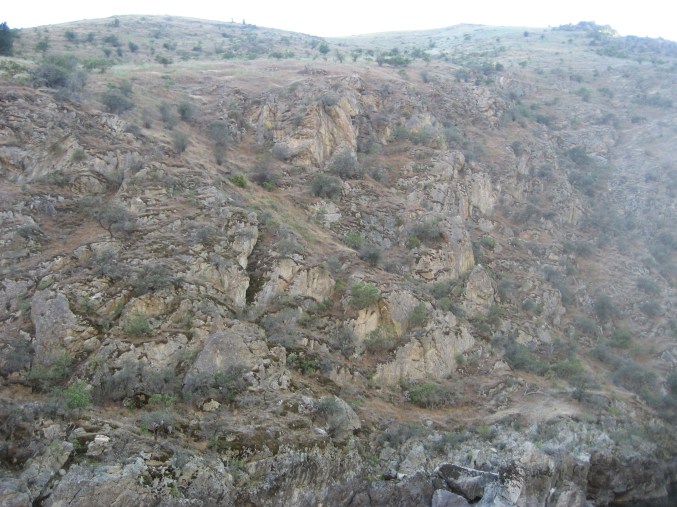
The area is among the most rugged parts of Idaho, which is saying quite alot.
390

The rest of the day’s drive was through more sanguine territory, from Grangeville to Payette, then east to Ontario, OR, and a rest at the Oregon Trail Motel.  The Beaver State’s Big East awaited.

The Road to 65, Mile 209: A Triangle of Towns, Part 2- Pullman, WA and ITS University

0

June 25, 2015, Pullman-  It’s hard to not crisscross between Idaho and Washington, when in this part of the Palouse.  Pullman, a scant eight miles from the University of Idaho, at Moscow, has the equally estimable Washington State University.  I parked in a two-hour spot, downtown, and used these steps to visit the University.

325

The school was begun about the time that Washington became  a state, in 1889.  The Palouse was already drawing farmers from the Great Plains, and the small Midwestern colleges were models for the initial Normal School.

With many of the settlers being of Germanic or Scandinavian ancestry, the turreted structures found in universities in northern Europe found emulation here.

326

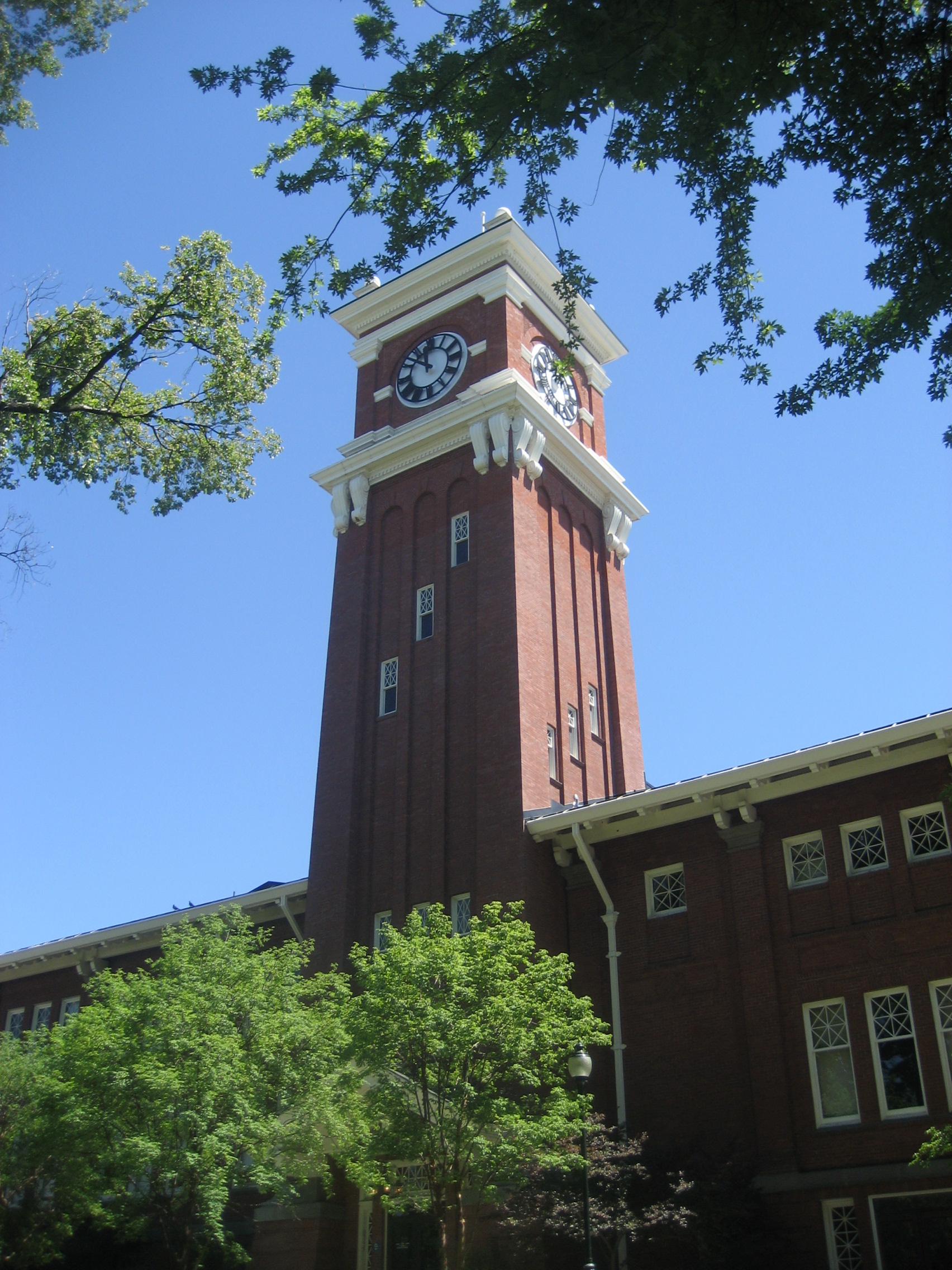
The Clock Tower, a nearly-universal feature of institutions of higher learning, was also one of WSU’s early structures.

329

The university library was quite busy, as summer session was still in full swing.  I noted that was true at UI, and, a year ago, at the University of Heidelberg, Germany.

331

This touching memorial met me, along the South Fork Palouse Riverwalk, as I returned downtown from the hilltop University.

333

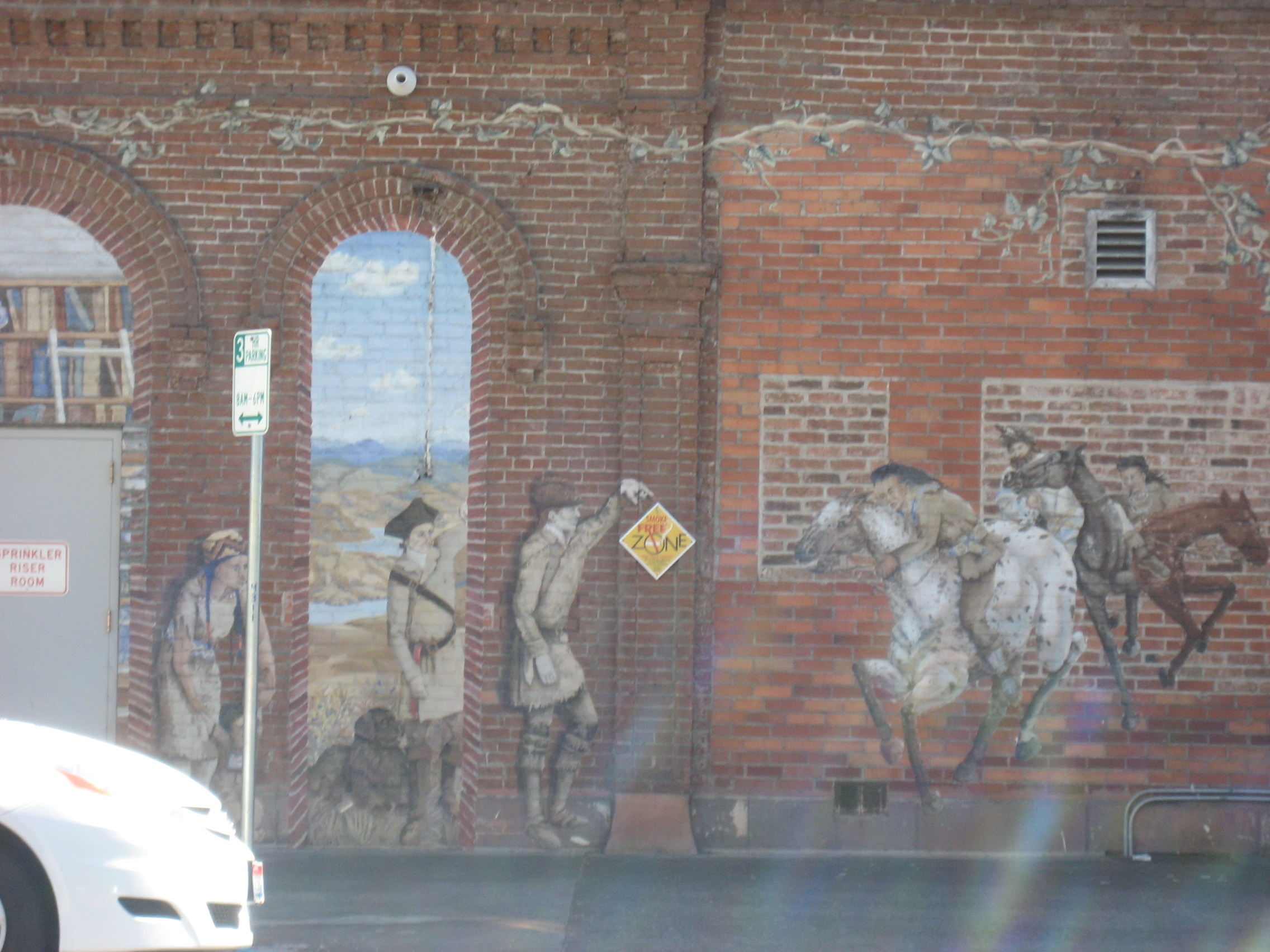
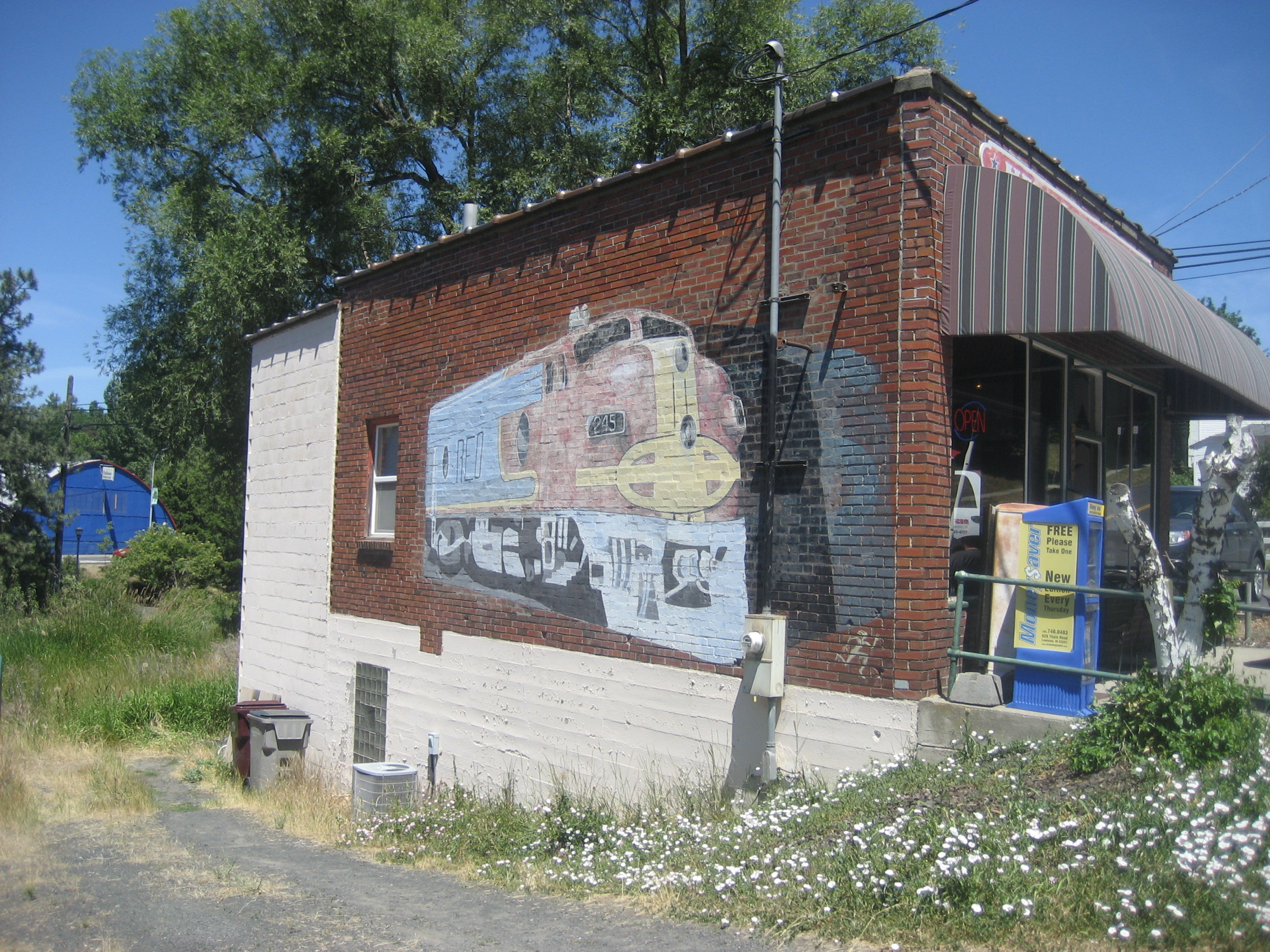
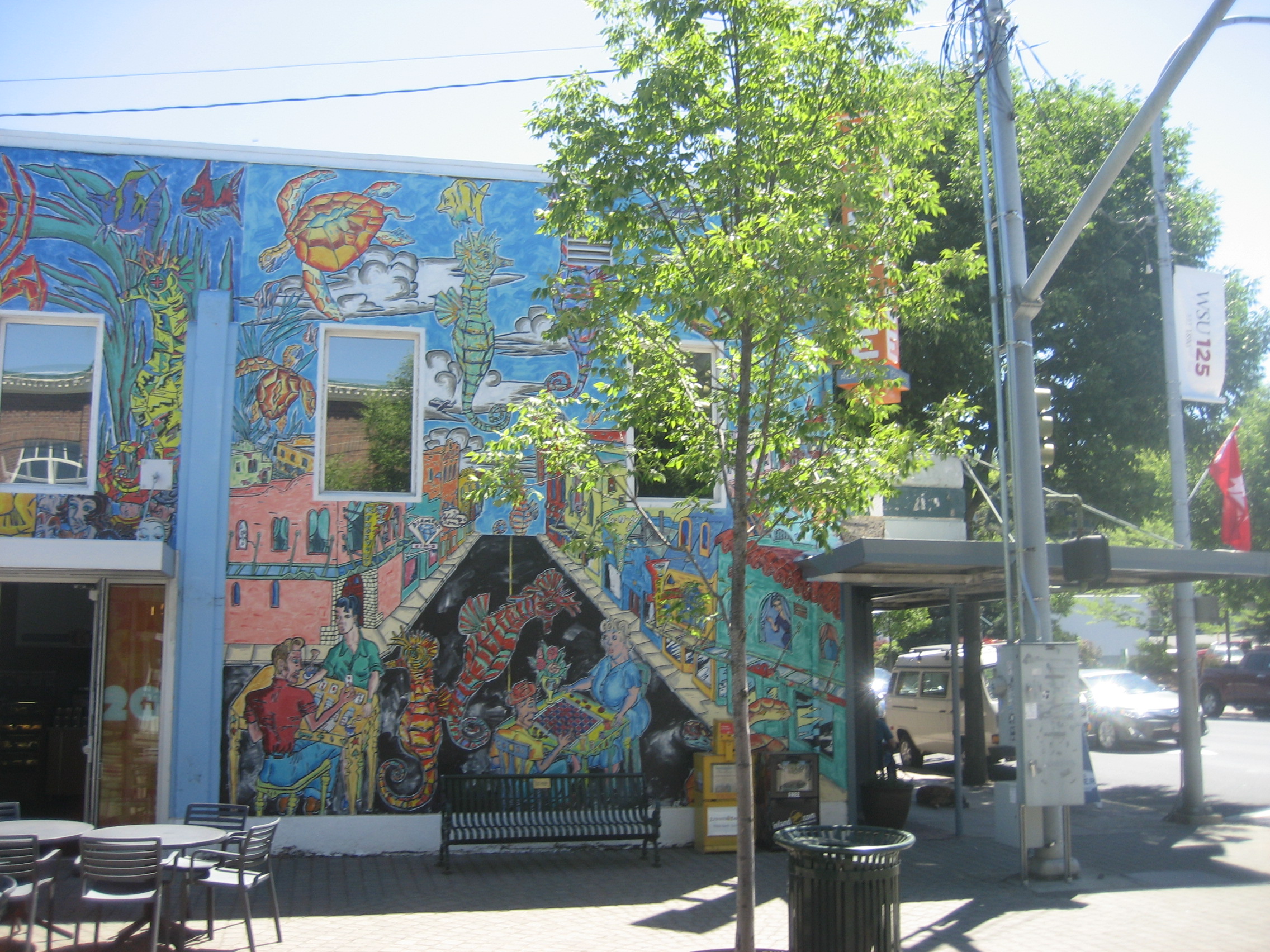
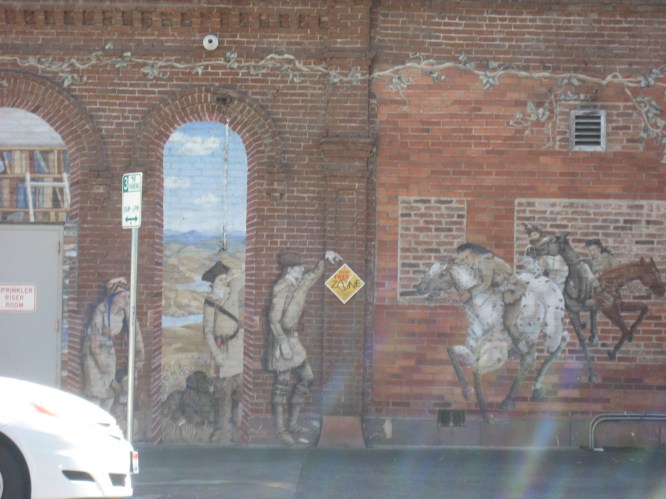
Cities worldwide are embracing outdoor murals, and Pullman’s celebrates its railroad past.

334

The town has a smaller art scene than Moscow, but young people here are every bit as proud of their joyful noises, as their counterparts to the east319

South Fork Palouse Riverwalk is heavily used by locals, though in the lunch hour, I had the path virtually to myself.

320

322

324

The Nez Perce influence is still felt here, at the western edge of that great nation’s rangelands.323

I enjoyed a hearty lunch at Heroes and Sports, in the building on whose exterior the railroad mural is shown, above.  Two WSU ladies cheerfully welcomed about twelve of us in from the increasing heat, and I relished a Philly steak, before heading off, towards Lewiston, and points further south.

The Road to 65, Mile 221: Being A Father

2

July 7, 2015, Prescott- One of the main reasons I am juxtaposing my travel posts with my thoughts whilst here at home is that, without family and community, there is only the mindless wandering of the unruddered soul.

Twenty-seven years ago today, Penny felt it was time to get to hospital.  In the South Korea of 1988, every encounter between Korean workers and foreign nationals was first an economic one, then a human encounter.  The woman who had been midwifing our child decided, on that day, that we were not helping her enough with her advancing in learning the English language.  She declined to help Penny any further, and called a taxi driver to take us to an English-speaking Obstetrician, who would see to the birth.

Her parents were with us, but could not fit into the taxi, so I quickly hailed another for them, jumped into our taxi, and away we went, with the second taxi following us as best he could.  My father-in-law’s frantic words, “Baby Hospital”, were apparently enough, as they arrived three minutes behind us.

The procedure went very well, and I was holding our newborn son up to the light, welcoming him to this world, three hours later.  It was, all in all, a good life in Korea, and when we were compelled to return to the U.S., four years later, Aram was fairly well-grounded in two cultures.  America was a bit tougher for all of us, but he grew up strong, and through the trials that buffeted the three of us in the 2000’s, and eventually took his mother’s life, our son emerged as a strong, healthy and amazingly resourceful individual.

Sometimes, I felt as though he was raising himself, but there was never a time, and never has been, when I haven’t had his best interests front and center.  That I learned of those interests mainly by talking things through with him is the only way that ever made sense to me.  Kids need steady guidance, but they have more on the ball than many of their insecure elders seem to realize.

The most inane aphorism ever is “Children should be seen and not heard.”  I heard my son being told that, by a family member once, and I had to be physically restrained from hitting the individual.  We need, pure and simple, to listen to one another, across generations.

Fatherhood is my greatest blessing, right after having been a husband.  It will always be so.

The Road to 65, Mile 220: Cross-Bullying

1

July 6, 2015, Prescott- I read this morning about the “rising phenomenon” of children bullying their parents.  Then, a short time later, a friend wrote me a message that her parent was referring to her in the most vulgar of terms.

This goes back to how I was raised, and how we tried to raise our son.  No two people always get along, and the permutations of social discourse get more complicated with three, four, or ten, in the mix.  The bottom line, though, is respect, Golden Rule, “how does the shoe feel on your foot?”

It’s a given that children regard having limits set as part of their safety net. Limit-free kids are scared, more often than not, and fearful people strike out.  We raised our son with what common sense we could muster, encouraging his curiosity and exploration, and discouraging any tendency to view, and treat, us as eyeball-to-eyeball peers.

I would not have my wife be subjected to abuse, nor she, me.  Son is a fine human being, and I don’t think he would be comfortable with being able to give too free vent to negative attitudes.  In fact, he has said that, all in all, we set reasonable limits.  Likewise, we did not ridicule or catcall at him, something that I have seen far too many people my age do with their children, in the name of “honesty” or “free speech.”

Millennials speak of “adulting”.  I love that generation dearly, and certainly expect that acting one’s age will be de rigeur for them, as it should be for us, and for “Generation X”.  Perhaps the term is natural, though, as we witness so many, from ages 21- 90, indulging in unseemly public behaviour, again in the name of “self-expression” or “my rights”.  For the adult in the room to have plenty of company is a fine thing, and since it happens more often than the media would have us believe, it should be contagious.

My feeling is that, if children see adults being adults, consistently, and if they feel well- and fairly-attended, which means having limits set for them, then there will be less bullying, in either direction.

The Road to 65, Mile 219: Sizzling

3

July 5, 2015, Prescott- I have it in my mind to return to Europe, at some point, probably some time in the second half of 2020, or later, as part of a 1-2 year sojourn, just because I feel I must earn back the money I spent on the trips taken, over these past three or four years.  It’ll all boil down to what seemingly needs to be done, at the time.

That’s all pie in the sky, right now.  I think of it, mainly because the news tells us that it is hotter in Madrid than it is in Dubai, or New Delhi.  Budapest and Zurich are warmer than Istanbul.  The sizzle factor is making things seem topsy-turvy, but don’t say this too loudly, lest someone think we have gone full-on Liberal.

I have to say this, just once:  Name-calling has not, and will not, bring the temperatures back into what we regard as normal range.  If that is even an option, we need to look at everyone’s habits.  What can each of us do, and what is each of us willing to do, to bring the overall climate into a comfortable range?  The areas of focus would include:  Diet, daily cleansing and grooming, animal husbandry and crop rotation, forestry, fishing and manufacturing practices- especially production of technological products.  Ever stop and think about how your smart phone components’ manufacture might relate to the raising of the atmosphere’s temperature?  Didn’t think so.

Each of us has the role to play.  Me? I drive with the windows down, when alone.  With others in the car, AC is usually a must, but that is most often for short distances.  Showers?  Have to say, I keep them to 5 or 6 minutes, and there is no “eeeww” factor, of which I am aware.  I drink small smoothies, when possible, though I don’t really go in for the idea that smoothies use more water than hamburgers, from start to finish.

These are just things to consider, next time your town hits an uncomfortable heat level.

The Road to 65, Mile 218: Independence

7

July 4, 2015, Prescott- It is a strange twist of fate that, on this 239th anniversary of the issuance of the Declaration of Independence, many Americans’ minds, and those of others around the world, are on Athens, the Birthplace of Democracy and now a seeming hotbed of rebellion against a global system that emphasizes money and profit as indicators of responsible behaviour.

There are several schools of thought about this global system.  Many here in the United States are convinced that it is the work of a tightly-knit group of families, whose specific identities are unknown and are called, collectively, Illuminati.  Dozens of TV series,and a few movies, have featured this entity, in various configurations, as their Archvillain.  Christians immediately identify it as serving the Antichrist, or maybe being It.

I only know that such a controlling presence, if real, would only suffocate and oppress the human spirit.  Working for wages has never been liberating, and only adopting an ethic of work as an act of worship, of service to humanity, has given most of us any kind of fulfillment.  My best years of working were when I was a school counselor, followed, oddly enough, by my years as a substitute teacher.  Most prospective employers who’ve looked at my resume have shaken their heads at this, and the selection process has ended for me, then and there.

Work, though, has to be an act of service, because our humanity is what we take with us, and besides, acts of service, in the long run, are what make us independent.  Money can be taken from a person, by the government, by creditors, and, in the form of lost investments, by a collapsing economy in a place far away. One’s accomplishments and relationships, however, can never be taken away.

I thought about all this tonight, as my good friend was driving us back from viewing the fireworks at Pioneer Park, on the northwest corner of town.  Her concerns are with an imposed world government, and contrived financial collapse.  These things are possible, but study of the teachings of various faiths and some secular philosophies tells us that they are not the End Game.  Each of us has individual DNA and each of us has a distinct soul.  We are, by nature, independent and will only successfully act in a collective manner, if  our acts of service lead to a collective consciousness.

As I saw the other night, on “The Celestine Prophecies”, that consciousness, and not an externally-imposed mindset or false world order, represents the next step in the evolution of the human spirit.  This is chosen by each of us, in healthy independence.

The Road to 65, Mile 217: More Than

4

July 3, 2015-   I encountered two online posts by women, today.  One was a TED Talk, by a fashion model.  The other was a blog post by a young friend, part of her ongoing exploration of who, and what, she is.

We thrive on the superficial, many of us, because it seems easier.  Men ogle attractive females, from girls not even old enough to drive a car, or hold down a job to those women deemed by society to have “preserved well with age.”  Women have their share of “Magic Mike” and Chippendales moments.  There is not much difference, in such as we do in that regard, from a trip to the zoo.  Now, to fend off any troll who may be sharpening his rhetorical knife as he reads this- Yes, I have had my share of such superficiality.

It’s time to move up the evolutionary scale, a few notches, however.  I was married to a physically lovely woman, with a winsome personality, who was also several points higher than I, in terms of intelligence.  Since she passed on, my friendships with women have been varied.  In each case, I have learned to place their sense of self-worth, first and foremost.  I was not a perfect husband, but Penny taught me that much about friendship across the much vaunted Gender Divide.  We were best friends, as well as spouses.  Anticipation of the other’s needs is part of it, and direct communication, another.
Of the utmost importance, though, as the young model and my blogging friend both attest, is that there is always more, far more, to any given human being, than the pretty face, lithe figure and statuesque bearing that seem to mean so much, to so many in society.  I thought of this, constantly, during a recent visit to Spokane.  As I walked from my motel to downtown, I passed a billboard featuring the singer/actress Taylor Swift.  The ad stressed her features, and makeup.  My immediate thought was “There is so much more to you than this, precious soul.”

Those dismissed as “eye candy” may buy into that shallow assessment.  The human spirit, however, is a hard taskmaster.  A pigeonholed person will act in restless fashion, and will either: Seek attention in unhealthy ways; will meekly submit and then fade into obscurity,  as the feckless lose interest; or will, as the late, and estimable, Hedy Lamarr did, combine a healthy respect for her natural beauty with a vigourous pursuit of her intellectual skills.  The same is true for men, though on a lesser scale.

The closest of my friends, both female and male, are those with whom I can carry on meaningful conversation, can engage in interesting activities or just sit in one another’s presence, each doing what is foremost in their personal realm.  The key is mutual regard, a belief in the ability of the friend to reach whatever heights one’s soul seeks and a willingness to let go of limiting personal agendas.  There are those in my life, conversely, who are often calculating what I might do FOR them.  They see little of me.  I have enough to do, to pay back those who have shown me great kindness, but that’s a topic for another post.

To each, falls the task of scaling one’s own mountain, and triumphantly setting foot on one’s own moon.

The Road to 65, Mile 206: Evergreen Crossings, Day 4- Cascades and Coulees

4

June 22, 2015, Wilbur, WA- The day started with getting laundry done, in Monroe, at one of the more expensive laundromats I’ve seen in a while.  It uses an Easy Card, so the fare is purchased in advance, for  laundry supplies, washer and dryer.  I did everything in one load,as is my wont, when on the road.
I passed Travelers Park, before turning right onto Highway 2 East.
163

On the way out of town, I gave a short ride to three people, who my intuition said, correctly, were good risks.  They had no interest in me, other than to know why I was here, from Arizona- a reasonable query of a stranger.  Eight miles further, I let them off, at a place called Gold Bar.

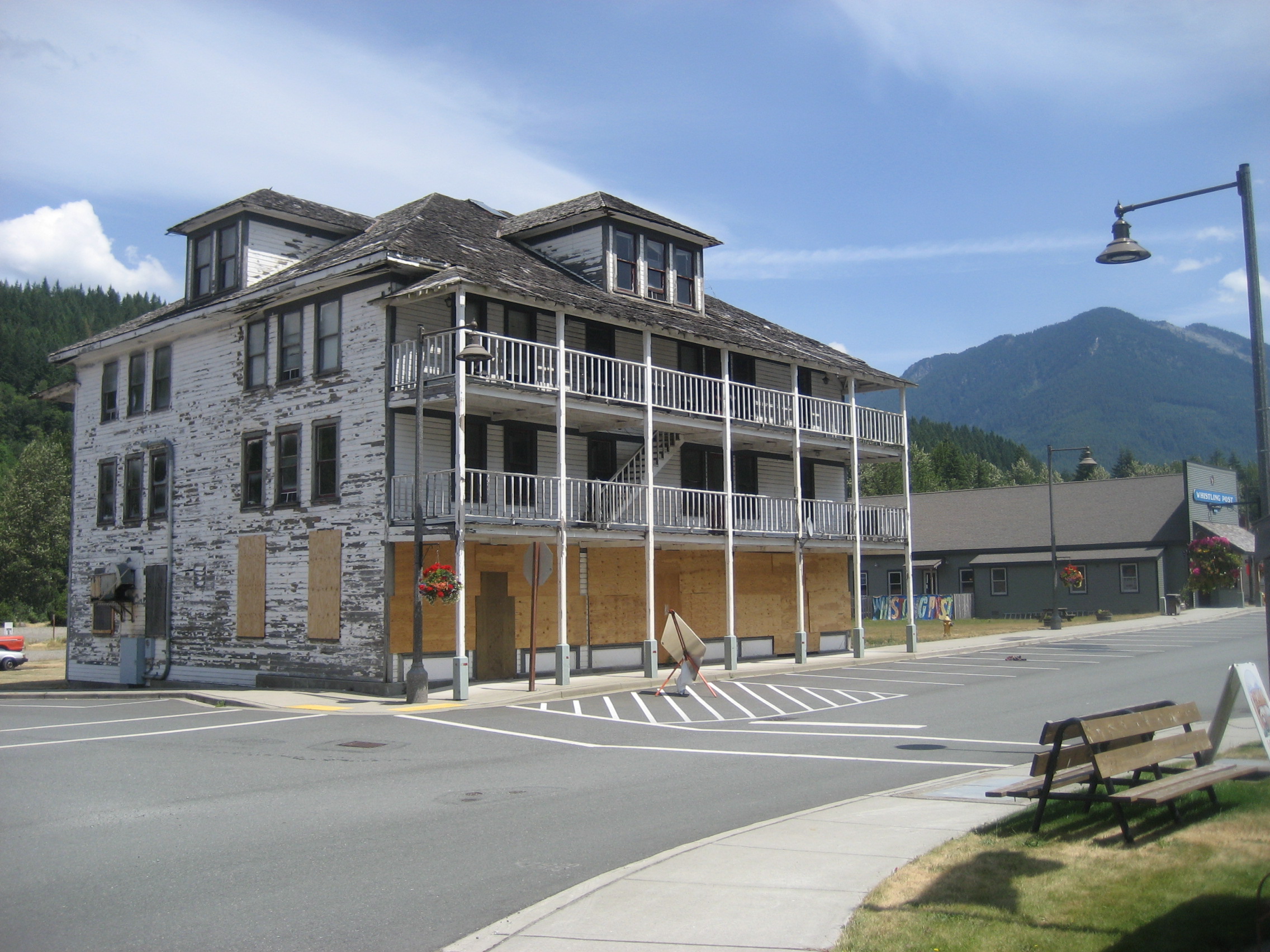
My next stop, however, was a tough little town called Skykomish, which has about 500 people who still support a weekly bus service to Monroe and have their own school district.  It was founded as a rail stop, by routing engineer John Stevens, for whom nearby Stevens Pass is named. This old building used to be Skykomish Hotel.

164

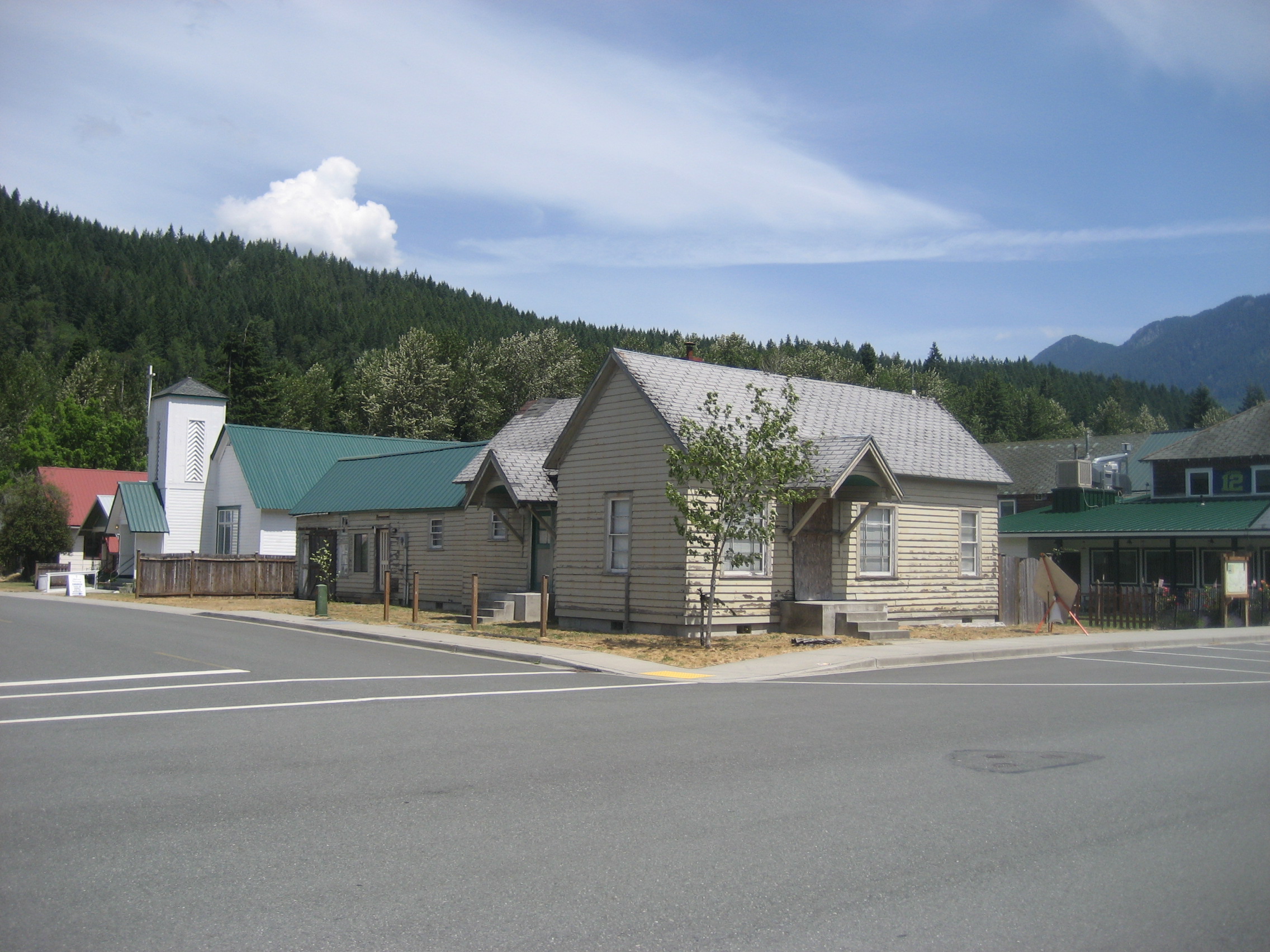
The rest of the town also has a frontier air about it, still.

166

I had lunch (leftover lasagna) at a picnic table facing the main street. Then, it was on to Deception Falls.

169

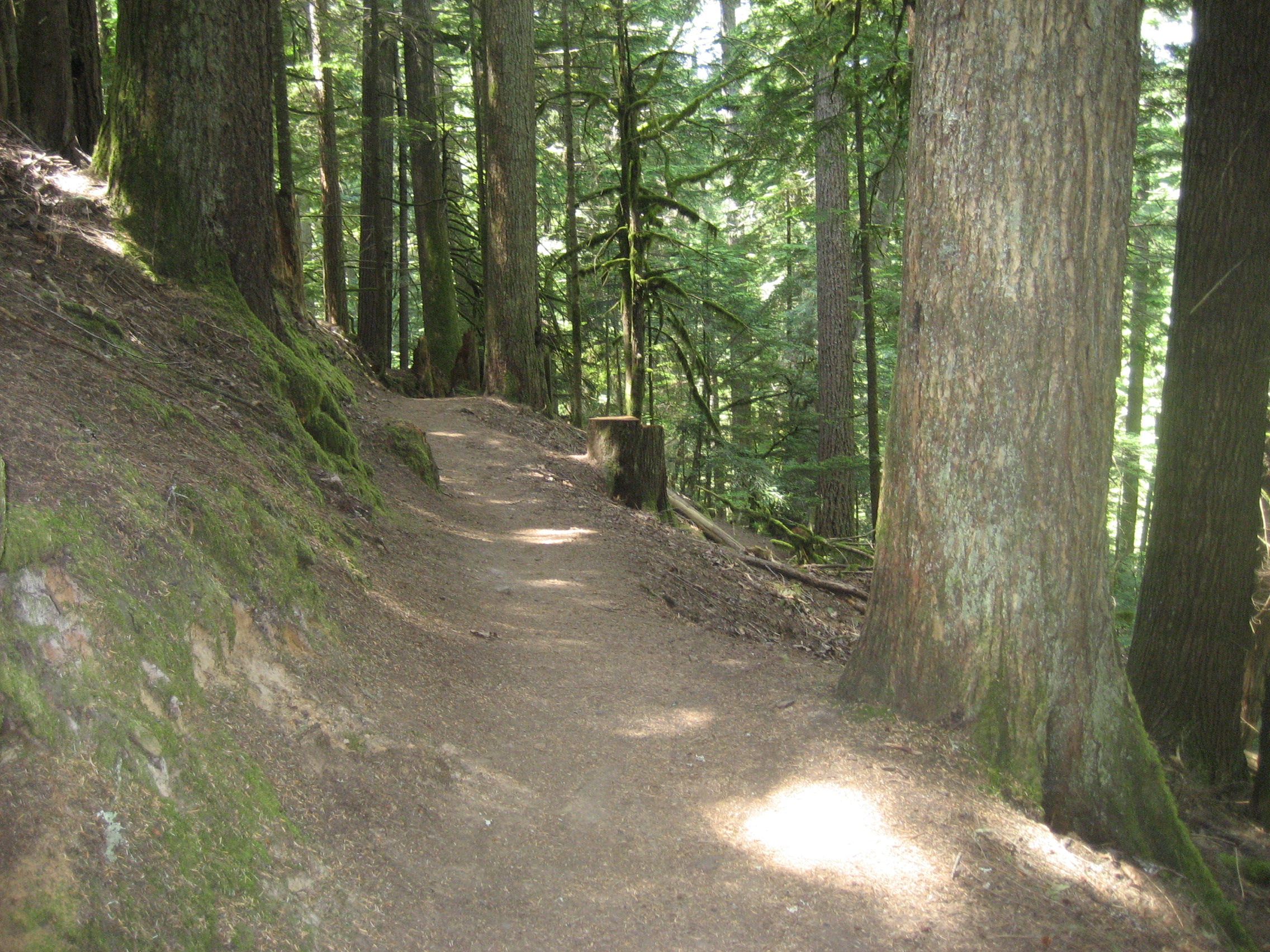
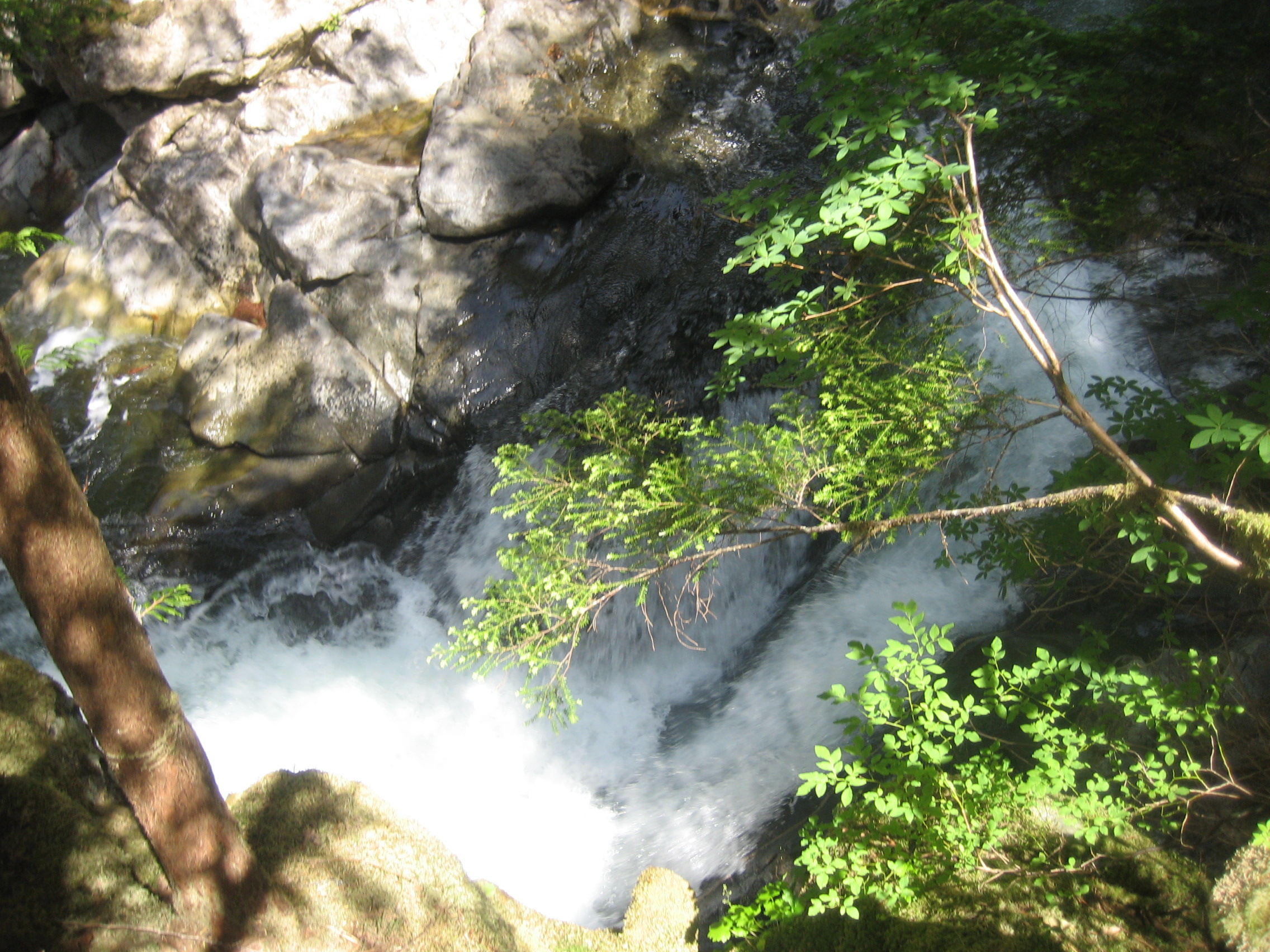
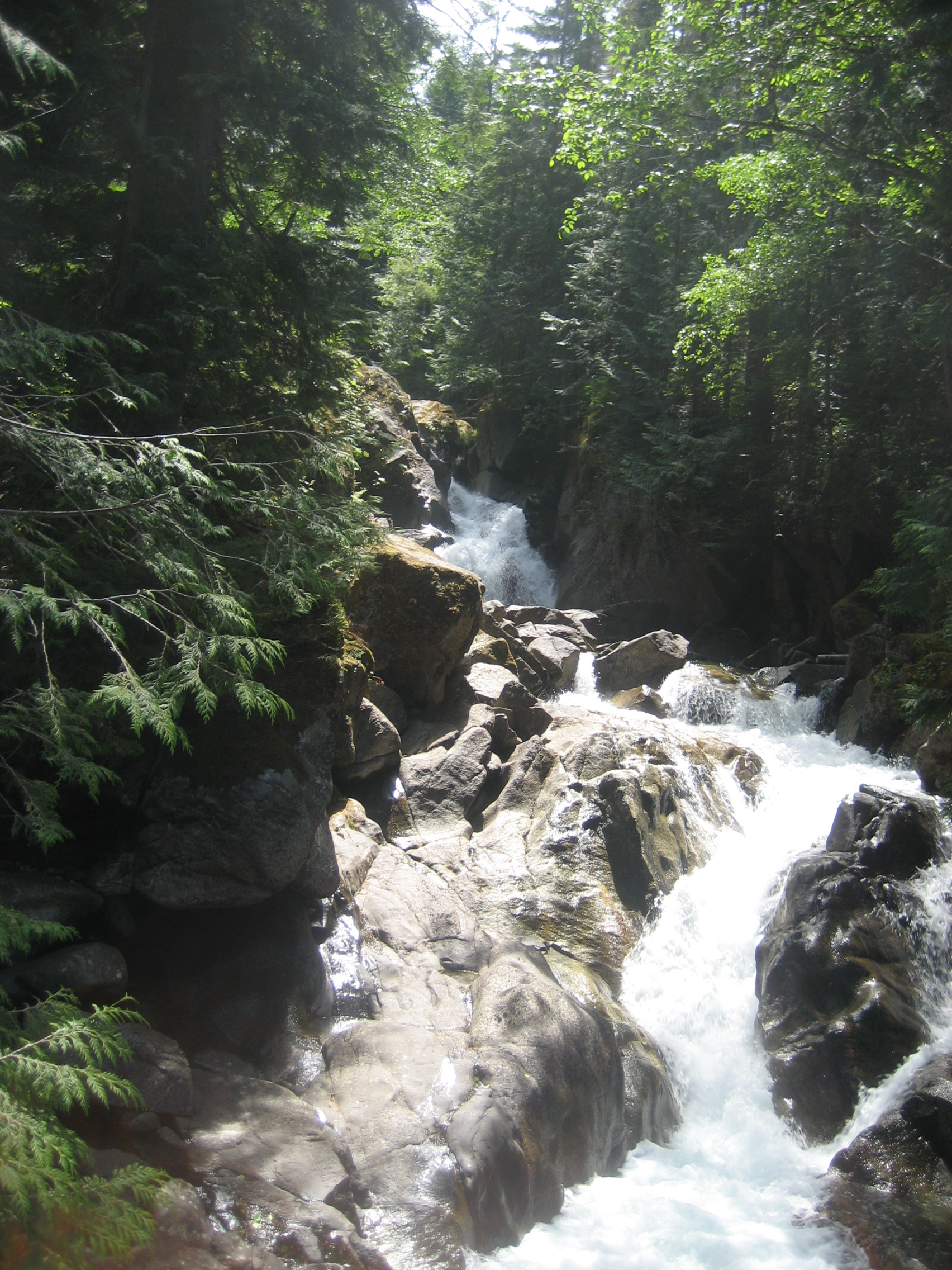
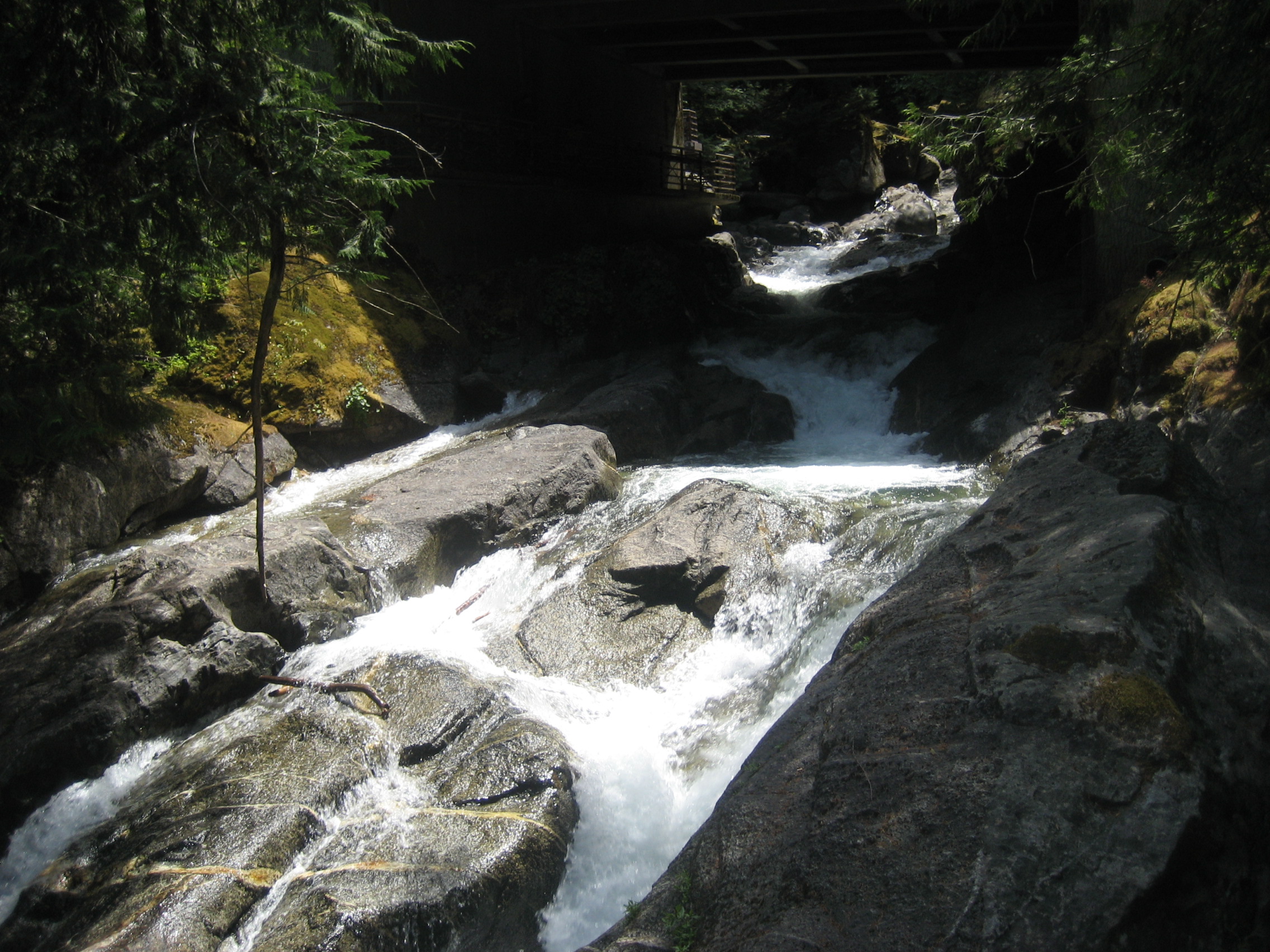
This popular trail, at the foot of Stevens Pass, offers the three cascades of Deception Creek.

187

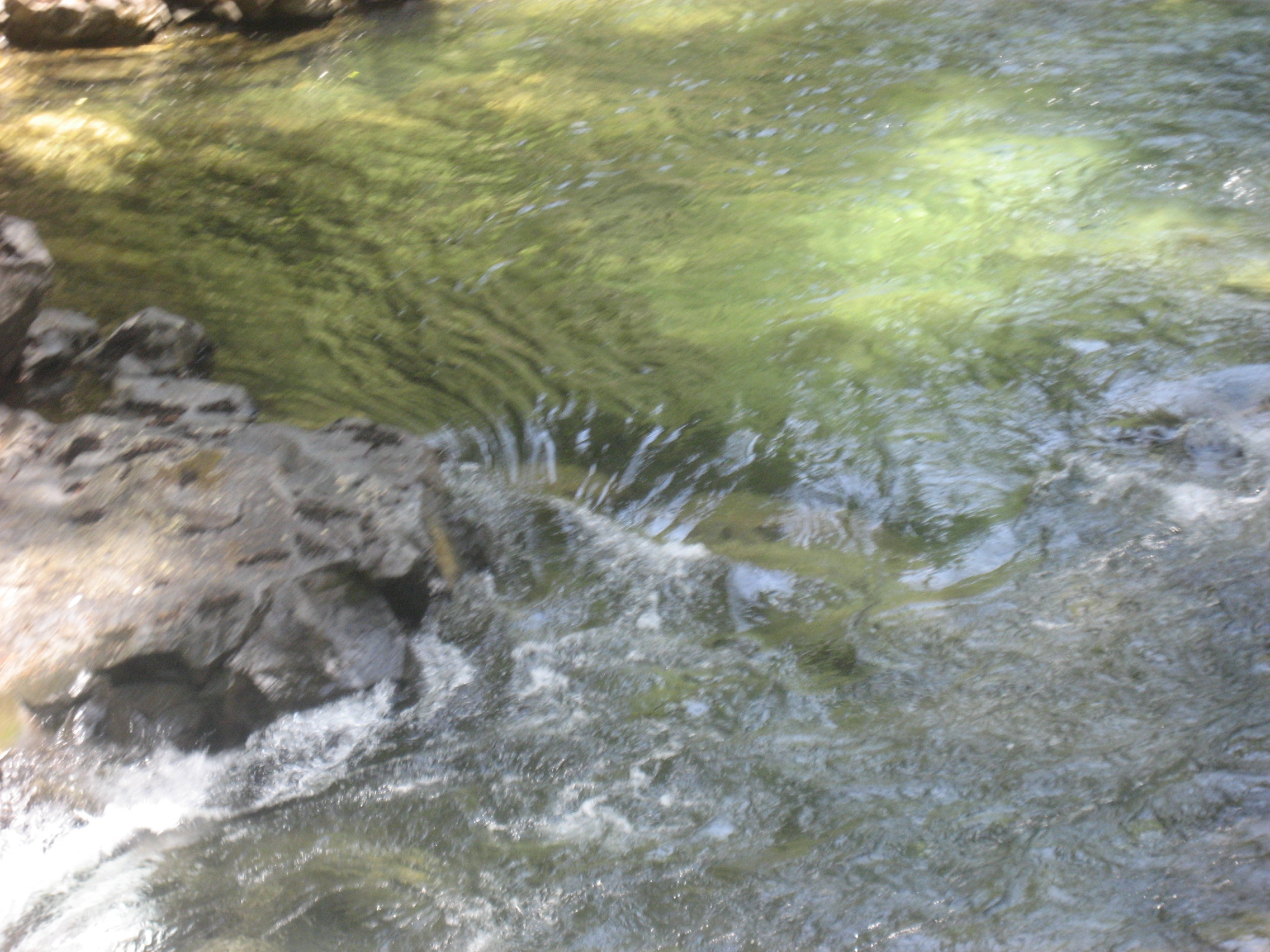
Note the relative purity of the water.

189

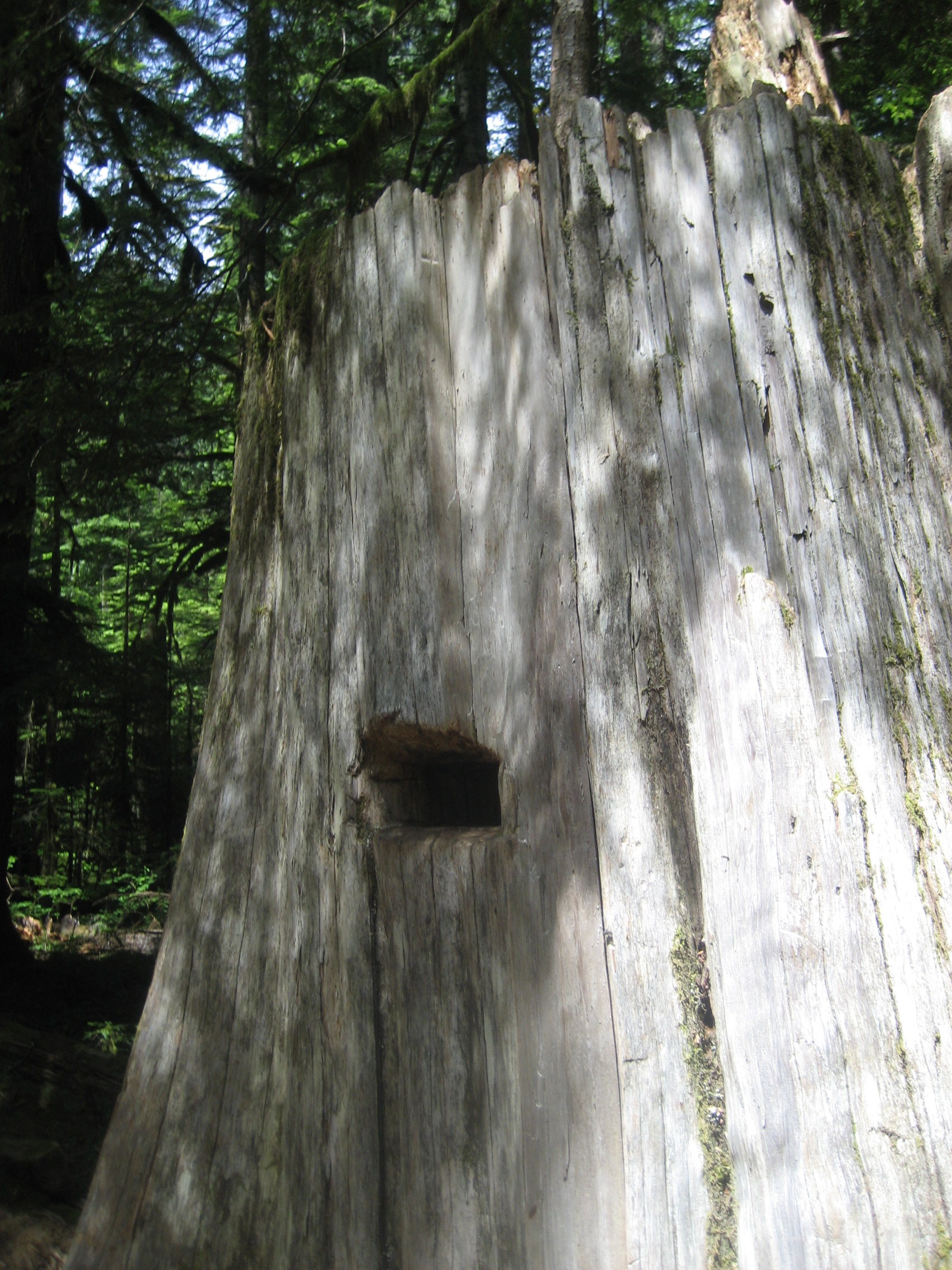
The trees provide variety in the scenery, especially as they lean,

170

serve as springboard stumps,

176

or act as nesting pots for new trees.

177

or, still as a place to drive piles.

183

Meanwhile,back at the falls:

191

192

200

203

205

There was a plenitude of visitors, yet much of the time, I found myself alone, as most people gathered at two overlooks.

The road led next to Leavenworth, not the Federal prison, but the touristy mountain community, about forty minutes from Wenatchee.  The Wenatchee River is a major comfort, for locals and visitors alike.

209

I stopped just long enough to walk along the river a bit, and to buy some coffee from a local grinder, Square 15.  It was to be a gift for my friends in Reno. The faux Bavarian scene can be taken in small doses.

215

I stopped in Wenatchee,for about two hours, long enough to marvel at the clear air (compared to the smoke which brought me here in prayerful service, three years ago) and to enjoy a fine Hispanic-fusion meal, courtesy of two friends.

219

I shall send them some Arizona treats, very soon.

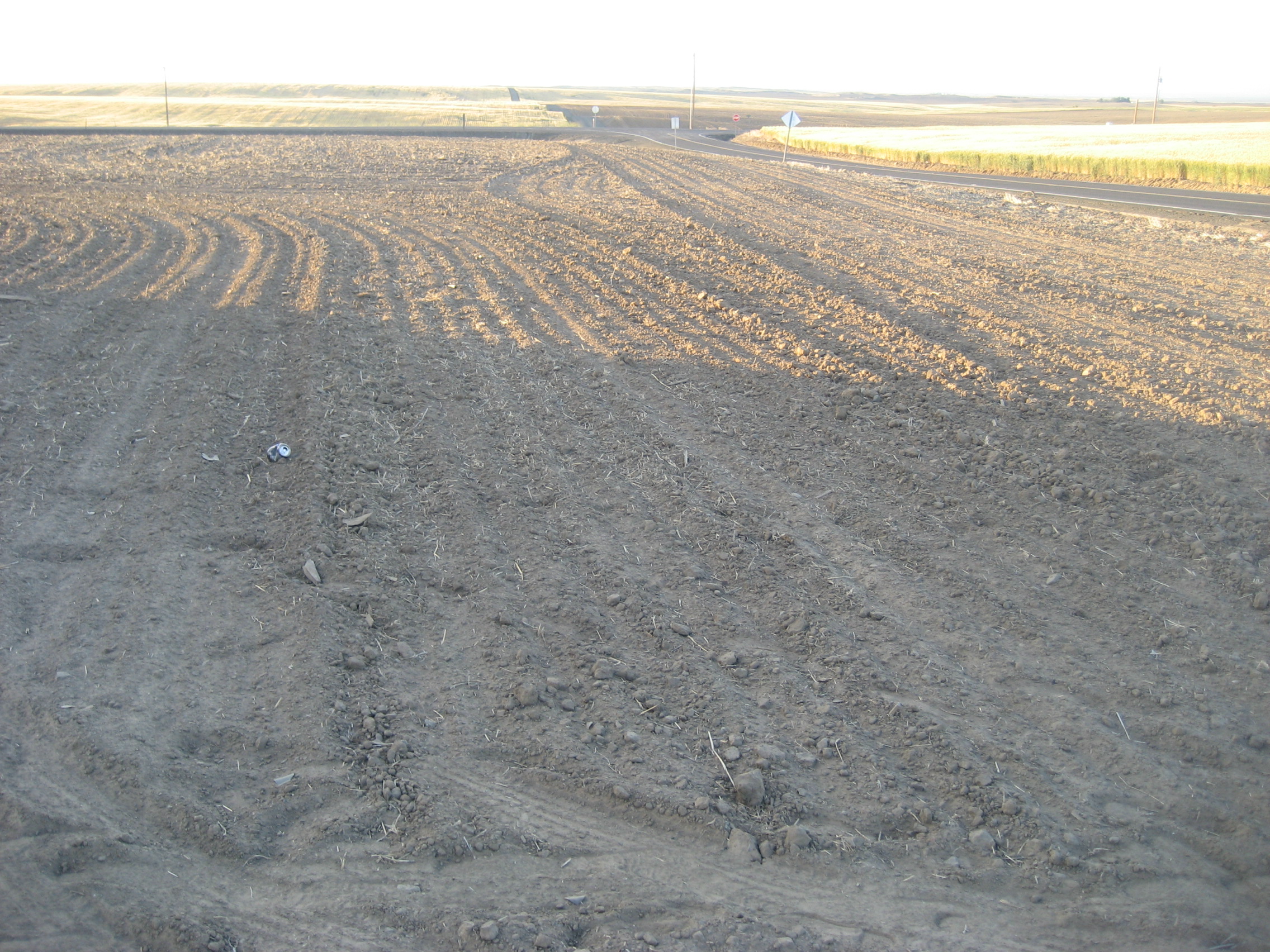
The rest of the evening entailed driving down from the central Cascades, and into the western edge of the Great Basin.  Some outlying areas reminded me of the Great Plains.  There are patches of desolation.

225

There is a worrisome dryness.

226

The coulees of the Columbia River, and its tributaries, provide irrigation water, regulated by a series of dams.

227

One of these is Dry Falls Dam, about a mile south of Grand Coulee.

228

No, that’s not a fresh-water dolphin, in the river above.

I settled in on a grassy patch, at a little RV park called Country Corners, and slept fairly well, except there was this event called Aurora Borealis, and my tired self couldn’t leap out of the sleeping bag and take a shot or two.  Perhaps one or two of you saw it.

The Road to 65, Mile 216: Celestine

5

July 2, 2015, Prescott- I am grounded.  The Nissan’s dash says “Service Engine Soon”, so it will sit in the carport until my mechanic, and everyone else, has gotten the holiday out of their system.  It may stay there longer, if the money that I am expecting shows up in my account, tomorrow morning or Saturday.  Then, I will catch a shuttle to Phoenix, and a plane to San Diego, and honour my son as his birthday approaches-on Sunday of course, and I would stay in SoCal until Wednesday evening.

I have personal and civic obligations here at base on Independence Day, and these, too, are labours of love.  A parade, in which I will be in the Red Cross contingent, a gathering at the American Legion, and the rest of the day with my best friend in Prescott, all of which brought me back here on the 29th of June.

Last night, after I watched “The Celestine Prophecy”, about which more in a moment, I was upbraided on social media, for not being willing to conduct an online dalliance, with someone I’ve never met.  What a change, from two years ago, when I was all over the place, trying to figure out what my emotions were and how to deal with them.  Most of the people who were in on the mental anguish I was enduring at the time, are still my friends, and God bless every one of them.

This brings me back to “The Celestine Prophecy”.  Every American film, it seems, has to have a romantic twist.  In this one, Marjorie is pursued by John, captivated by both her beauty and her aura of mystery (he saw her in a vision, that appeared to have taken place in the year 1622).  John learns, quickly, to give the lady her space, and eventually sees that it is not the time for them to be together, though they certainly endure a lot- especially at the hands of Jensen, a cartoonish villain (whom John also sees in his vision, replete with wispy, handlebar mustache.)

“Celestine”, a film adaptation of the first of a series of novels by James Redfield, explores the growth of human consciousness and postulates nine principles, revealed in a series of scrolls in ancient times.  John, and a group of like-minded souls, seek to find the ninth scroll, which Jensen, representing The Powers That Be (an Illuminati-like entity, who, of course, remain unseen), wants to find first and destroy, lest it tear asunder the power structure.

The upshot of the film is that the quest for power, by  the Illuminati and everyone else, is a chimera.  Human consciousness is moving steadily to a far deeper level than any materially-oriented force an ever appreciate.  It is emerging, regardless of the quibbling, death and destruction that The Powers That Be are visiting upon us, and will continue to visit upon this planet, for a certain time.  Real power, however, is spiritual and collective.  It is as present in the most humble, vulnerable child, as it is in the person of a brutish, swaggering general ( such as Jensen’s chief minion in the film), and perhaps more so.

So, I sit in a safe, comfortable room, and contemplate my blessings:  A strong, hard-working son, a good woman who is a steadfast friend ( and who, much like the film’s Marjorie, is given the space she needs to process all that is going on in her own, considerably complex life), a community that stands firm together, in spite of the callow local government, and a Faith which can carry me through anything at all, and does.