The Road to Diamond, Day 304: The Streets of Berlin

0

September 27, 2025, Berlin- Today was a momentous day, for both me and for Berlin itself. After breakfast at St. Christopher’s, I headed over to Berlin TV Tower. From the observation deck, on the 21st floor, I had a panoramic view of about half of Brandenburg. The great city never should have been divided, but since it was, there are remnants of the Wall barely visible from this vantage point. Brandenburg Gate is also discernible, to say nothing of the prominent buildings, like Berlin Cathedral (I saw the exterior), St. Nikolai Kirke (also could only view outside) and the Bundestag (off-limits, for the reason I will mention in a bit).

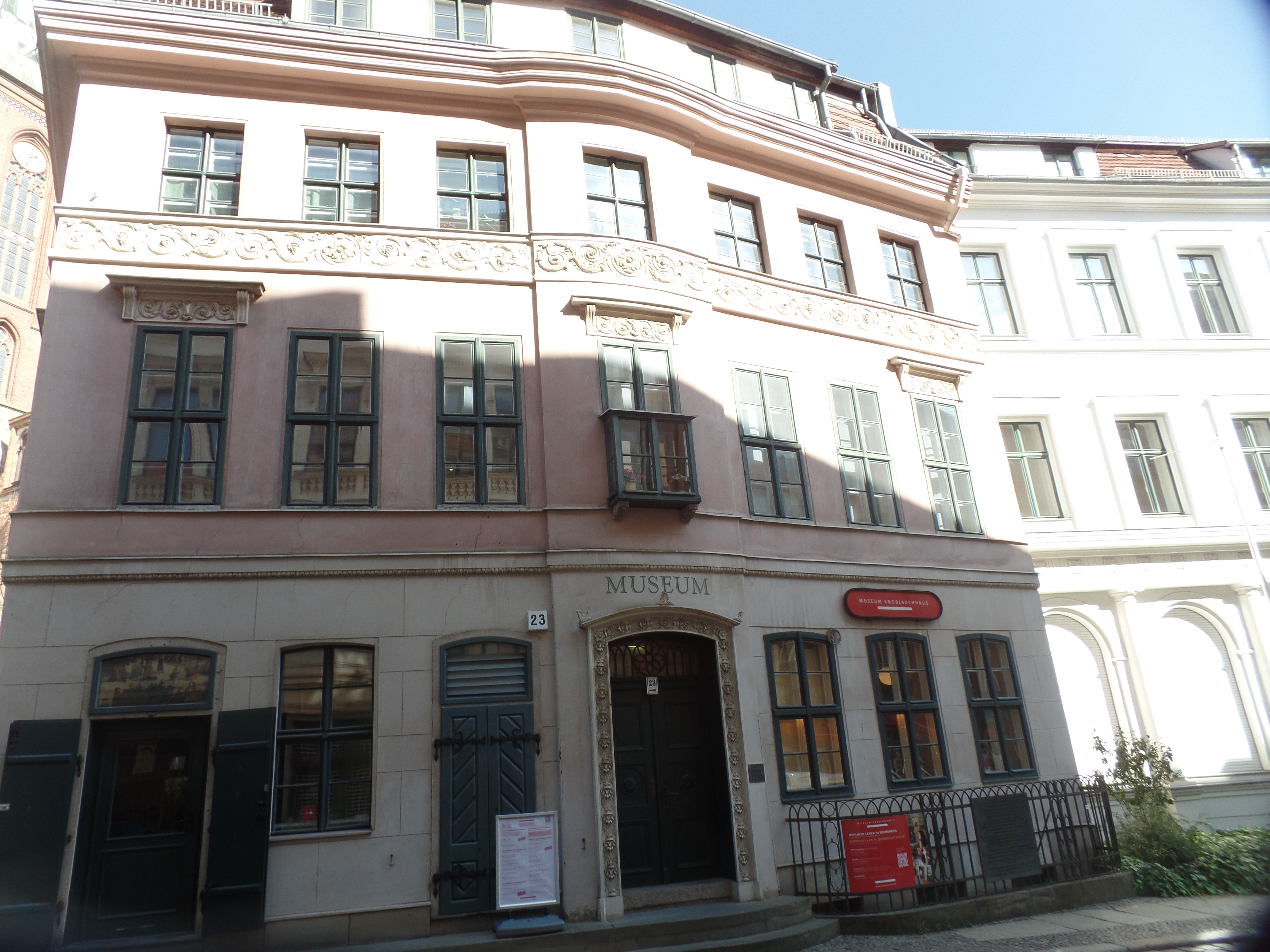
Once down from the tower, I headed to Berlin’s oldest neighbourhood, Nikolai Platz. I spotted the original spelling of the name of some extended family members, attached to the name of a museum, in what is described as Berlin’s oldest standing house, built between 1759-1761. Knoblauchhaus, the creation of Johann Kristian Knoblauch, a merchant of hooks and sockets, and of his builder sons, Carl and Christian. The family business continued, and thrived, under Carl’s watchful eyes. He became friends with several other prominent Berliners, including the brothers Wilhelm and Alexander von Humboldt, whose surname graces the city’s prominent university.

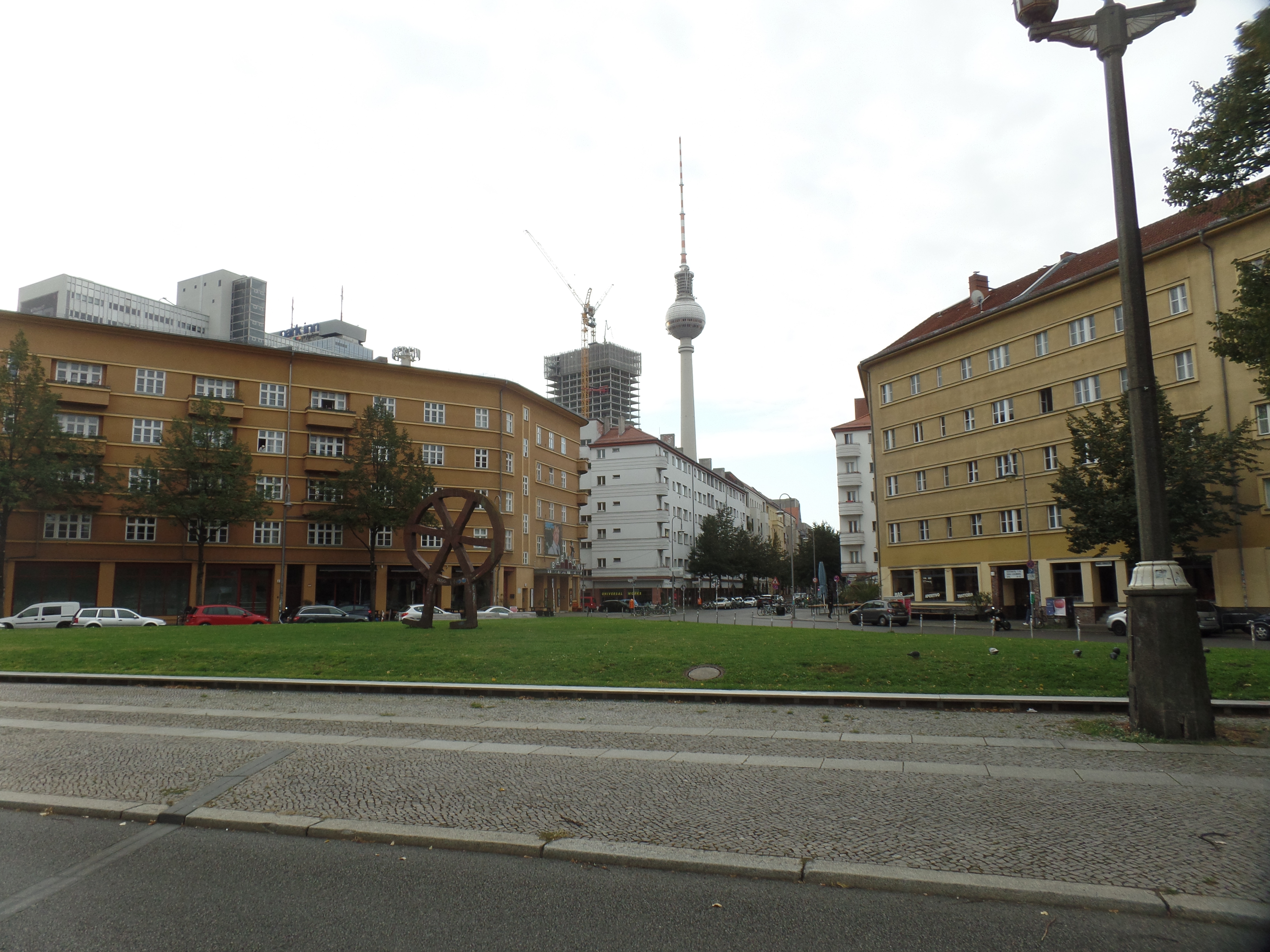
View of Berlin TV Tower, from St. Christopher’s Inn
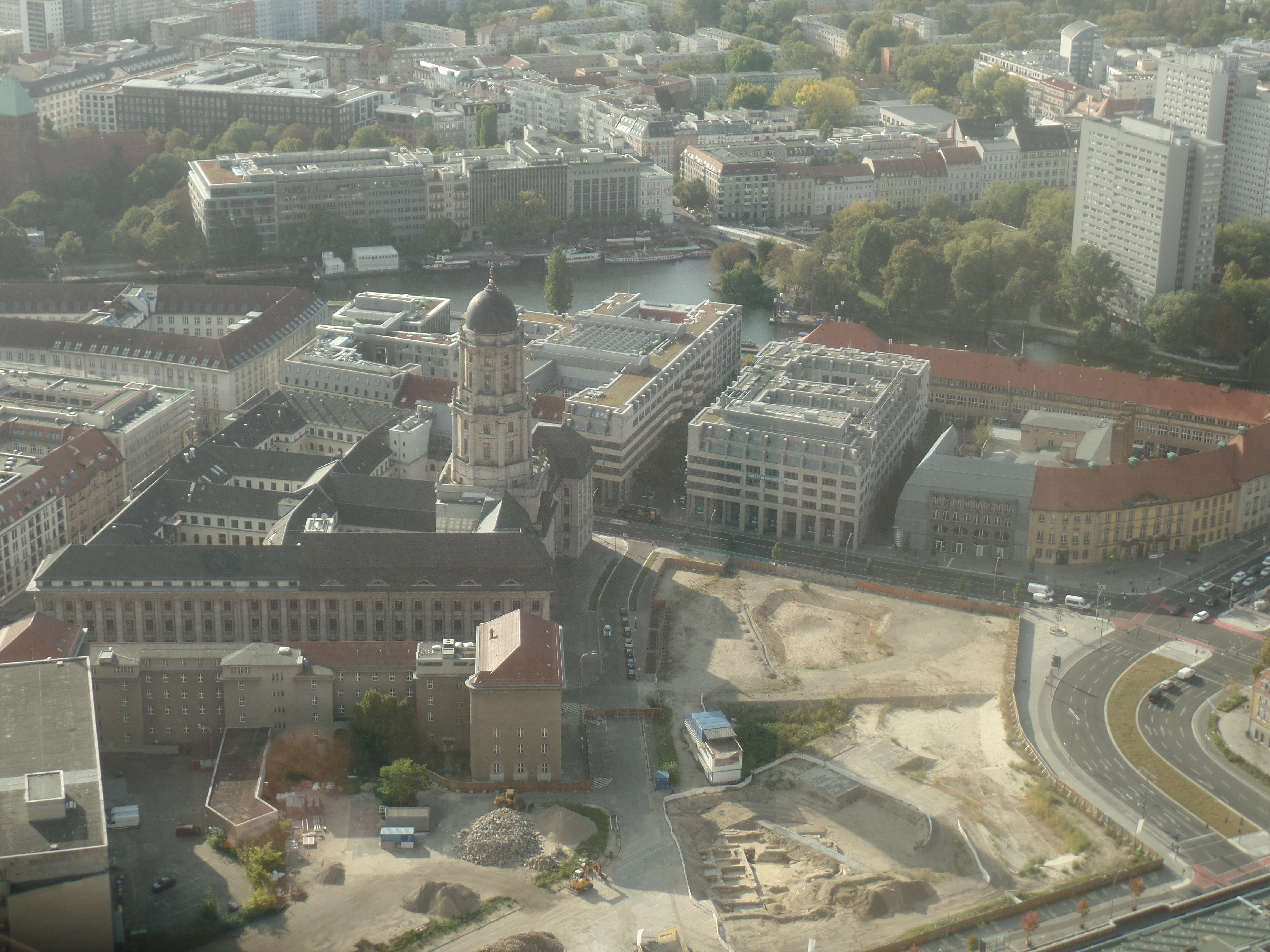
View of Old Berlin, from Observation Deck, Berlin TV Tower
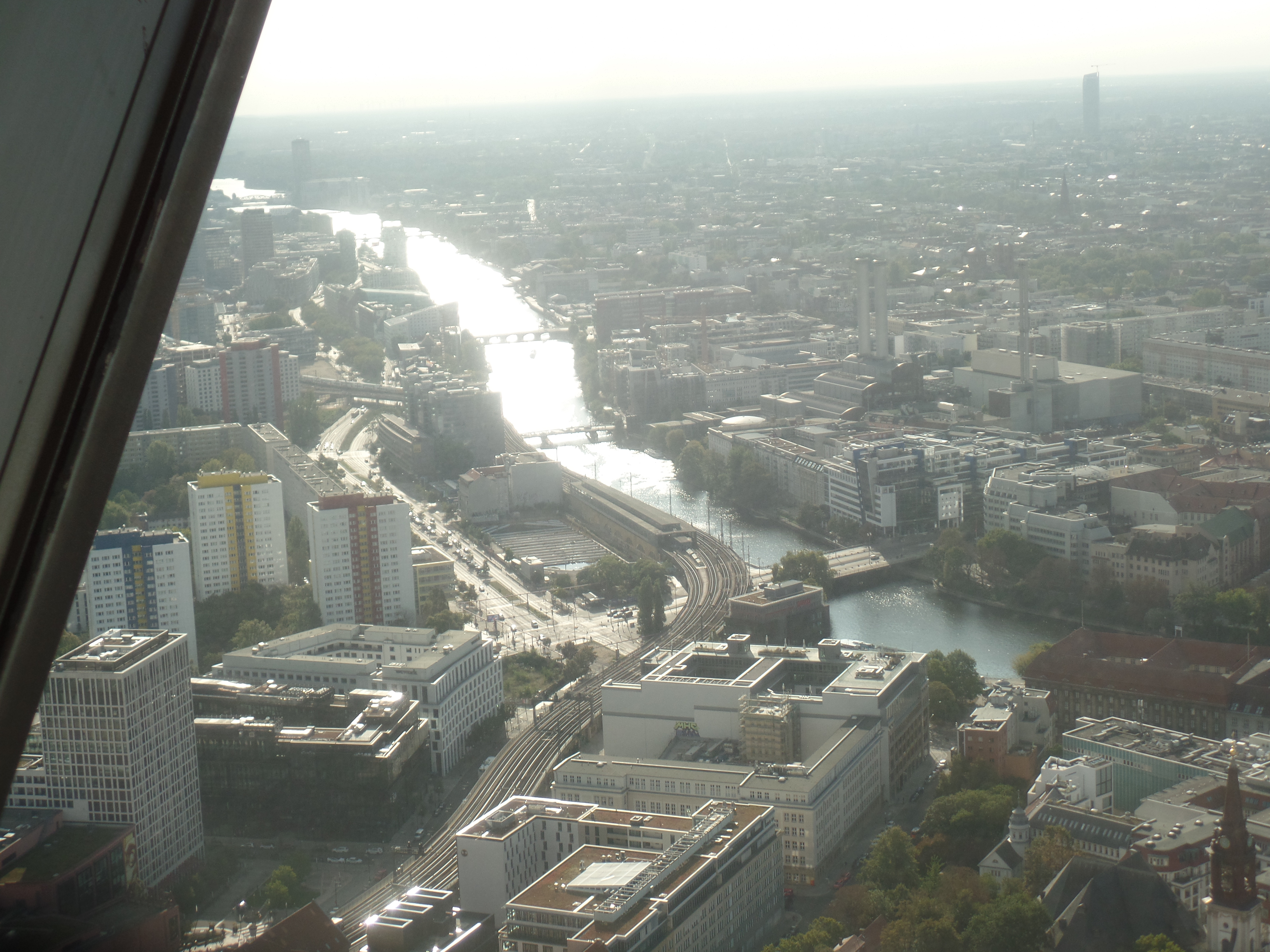
View of River Spree, from Observation Deck, Berlin TV Tower

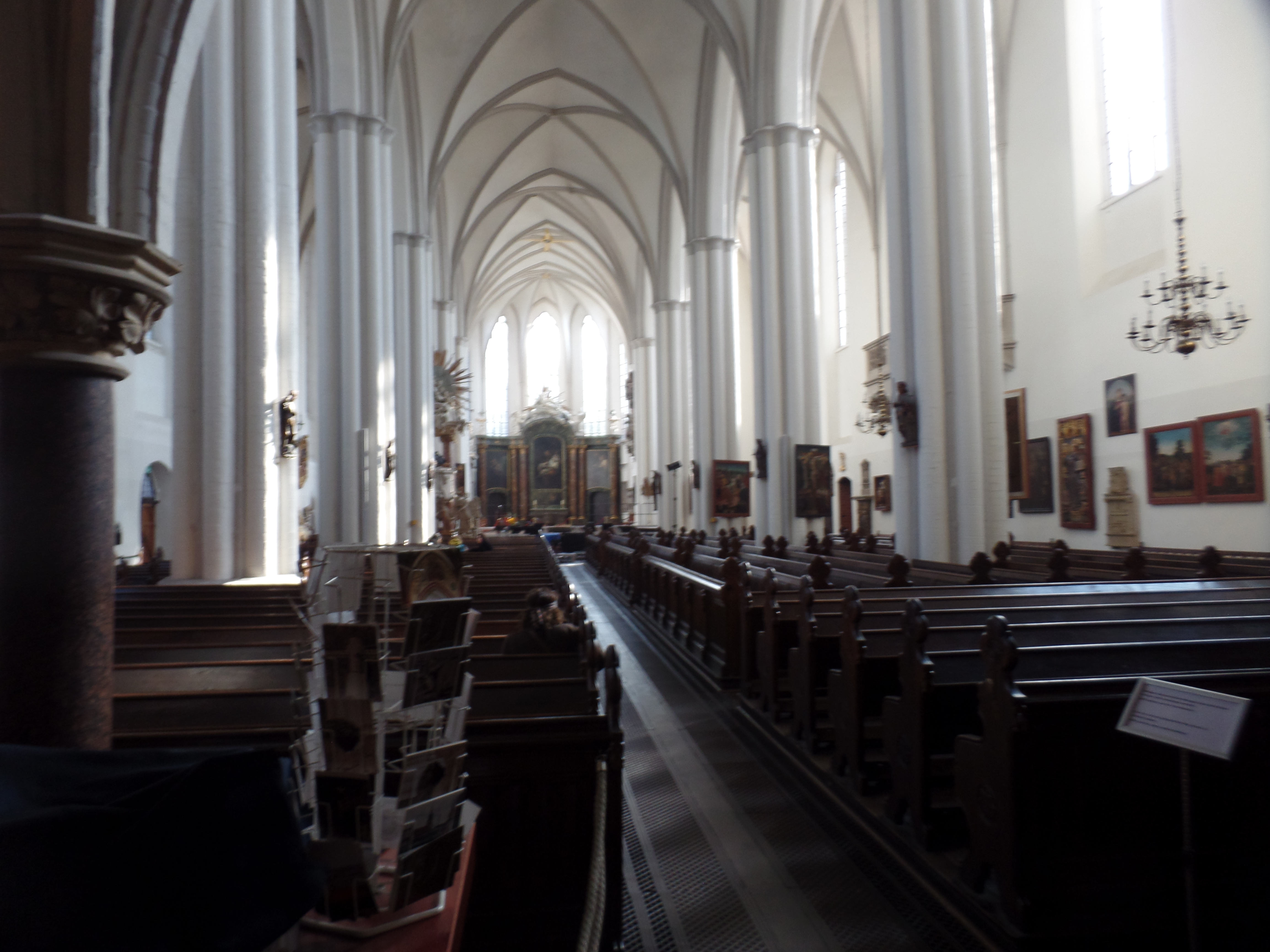
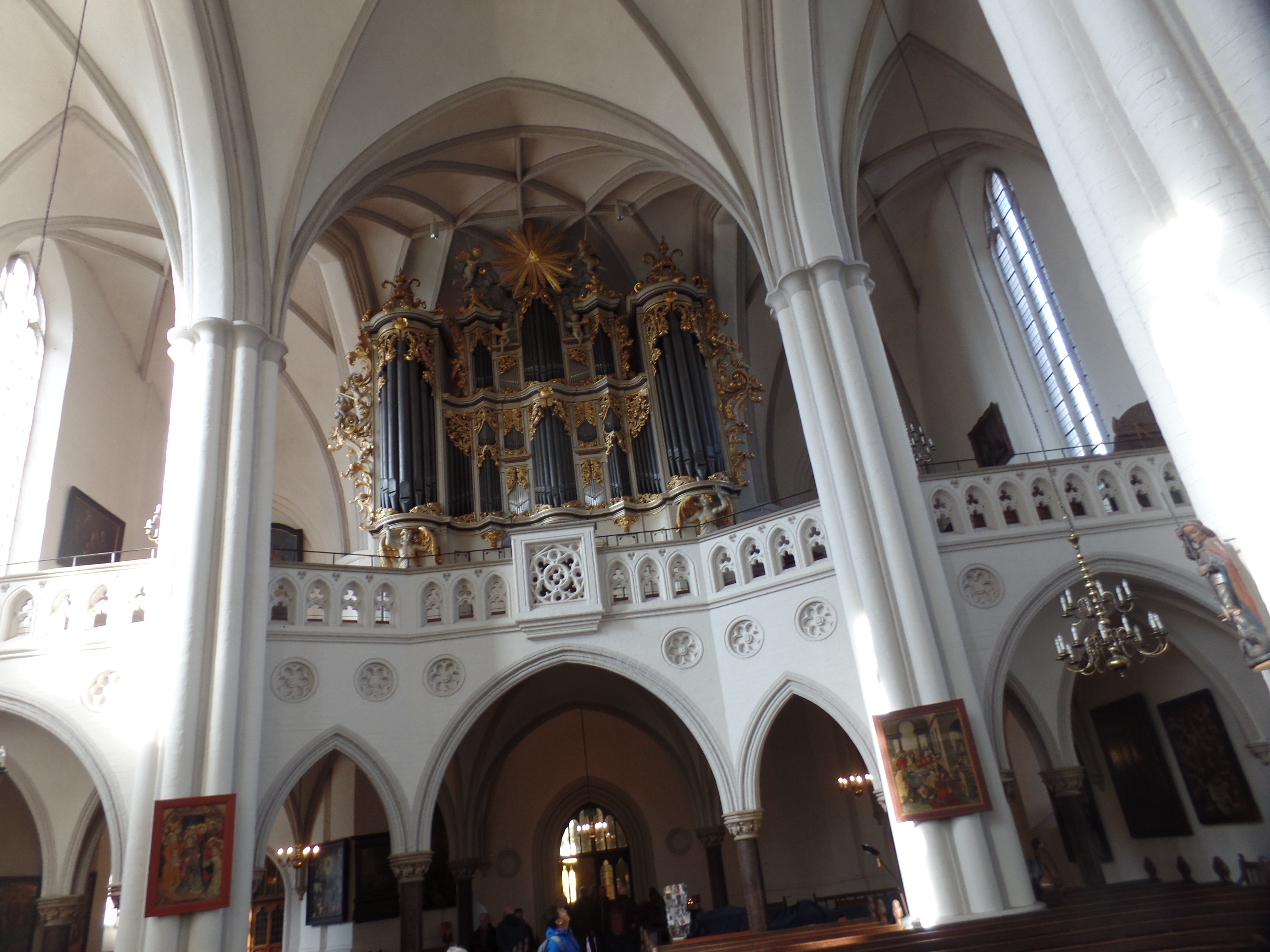
I was able to spend time in Marienkerke(St. Mary’s Church), as the planned demonstrations had not begun to form.

Marienkirche (St, Mary’s Church), Berlin
Interior of Marienkerke, Berlin (above and below)
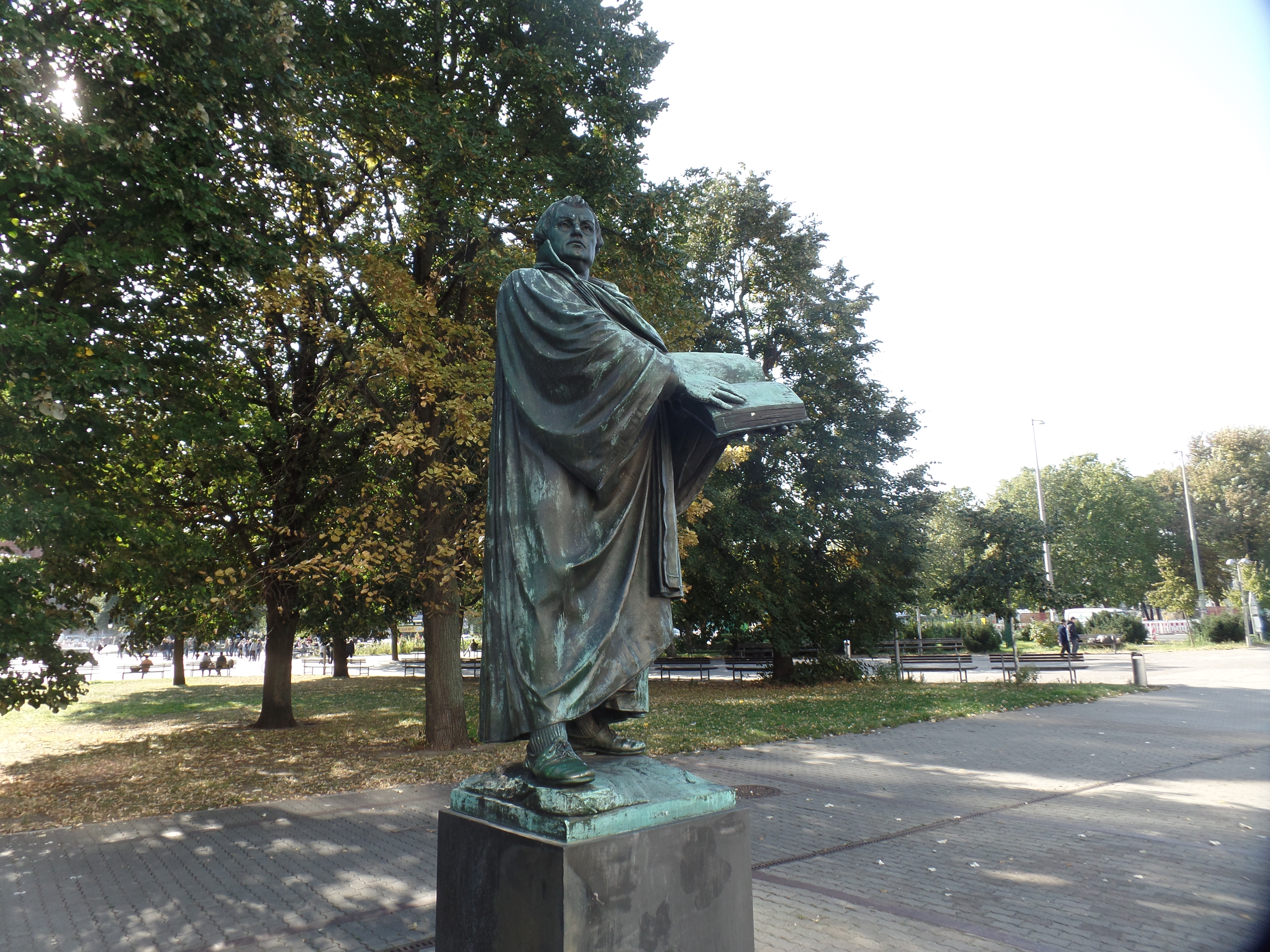
Statue of Martin Luther, near St. Mary’s Church
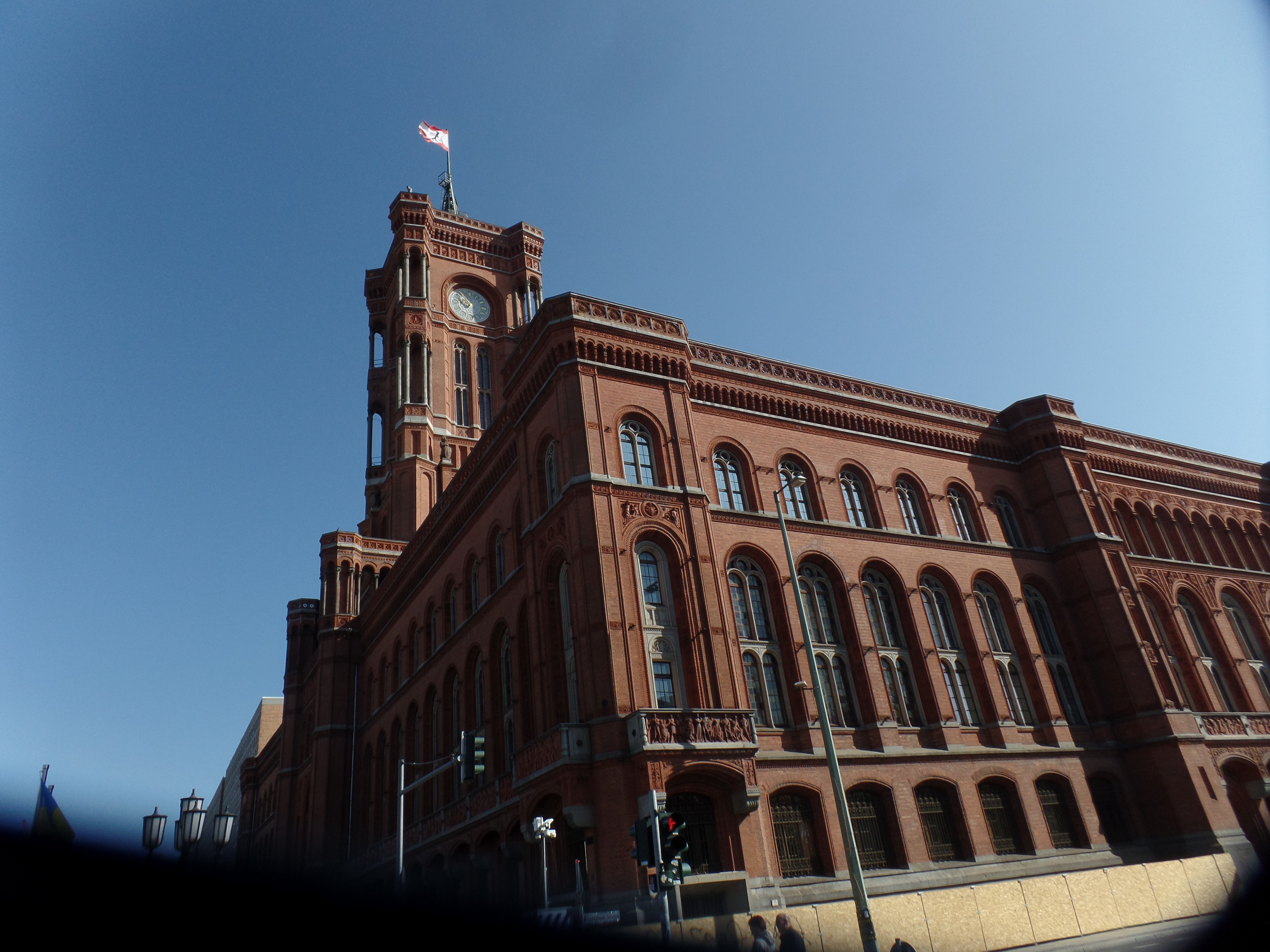
Rotes Rathaus (Berlin City Hall), about a block south of Marienkerke
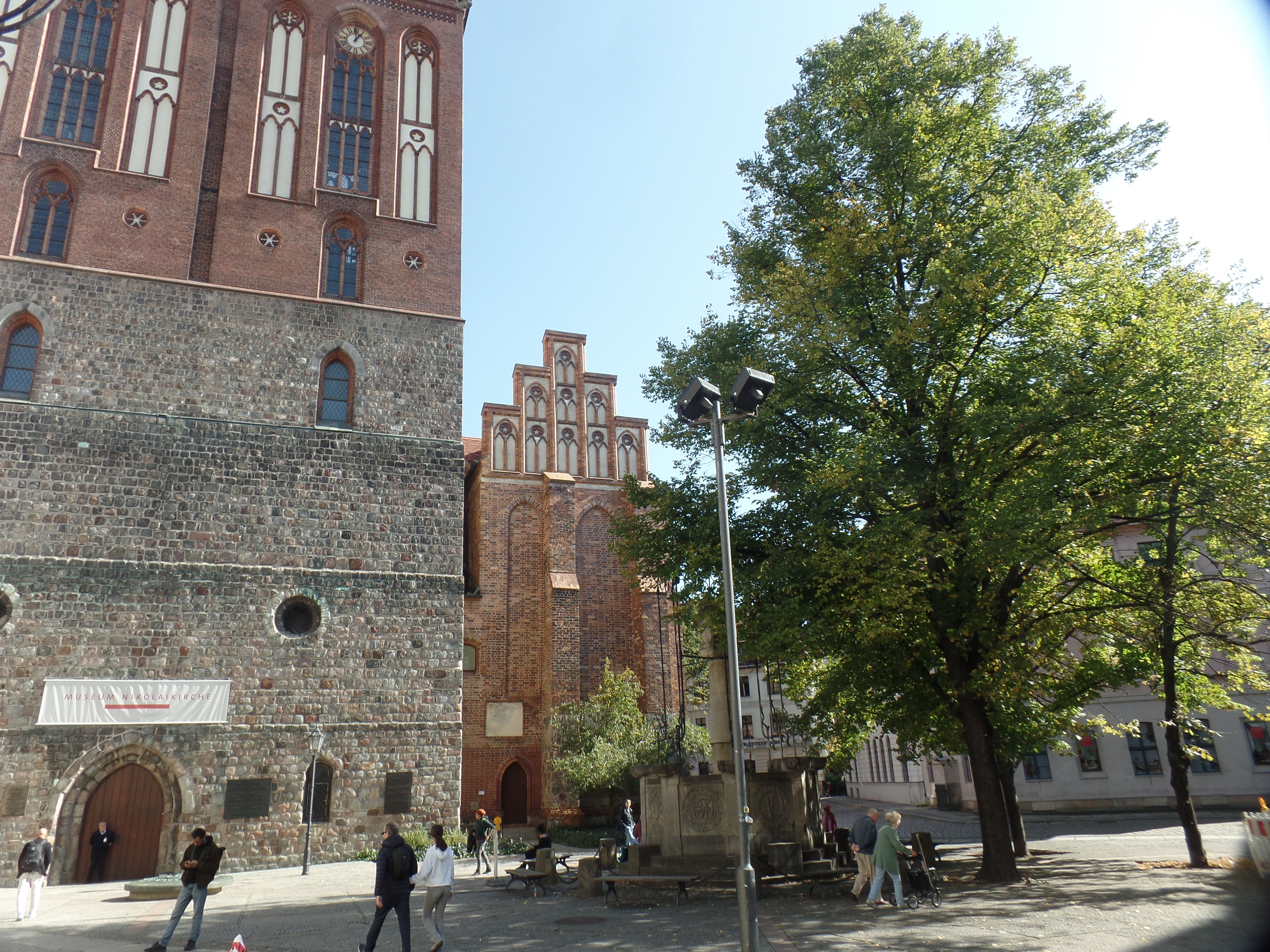
St. Nicholas’ Church, in Nikolaiplatz (Oldest Berlin neighbourhood). You can barely see the guard at the door to St. Nikolai’s. He was there to turn away visitors.

I could not enter St. Nikolaikerke. I was able to visit Museum Knoblauchhaus. I got a lot of insight into one of Berlin’s oldest families, who were merchants, builders and patrons of art and science. They knew the brothers Wilhelm and Alexander von Humboldt, for whom Berlin’s great university is named. (Carl Heinrich) Eduard Knoblauch was an eminent builder in Berlin, in the mid-19th Century, designing and initiating the building of Berlin Synagogue, along with dozens of family homes.

One of the branches of my extended family has a variation of the name, Knoblauch.

Museum Knoblauchaus (Oldest house still standing in Berlin)

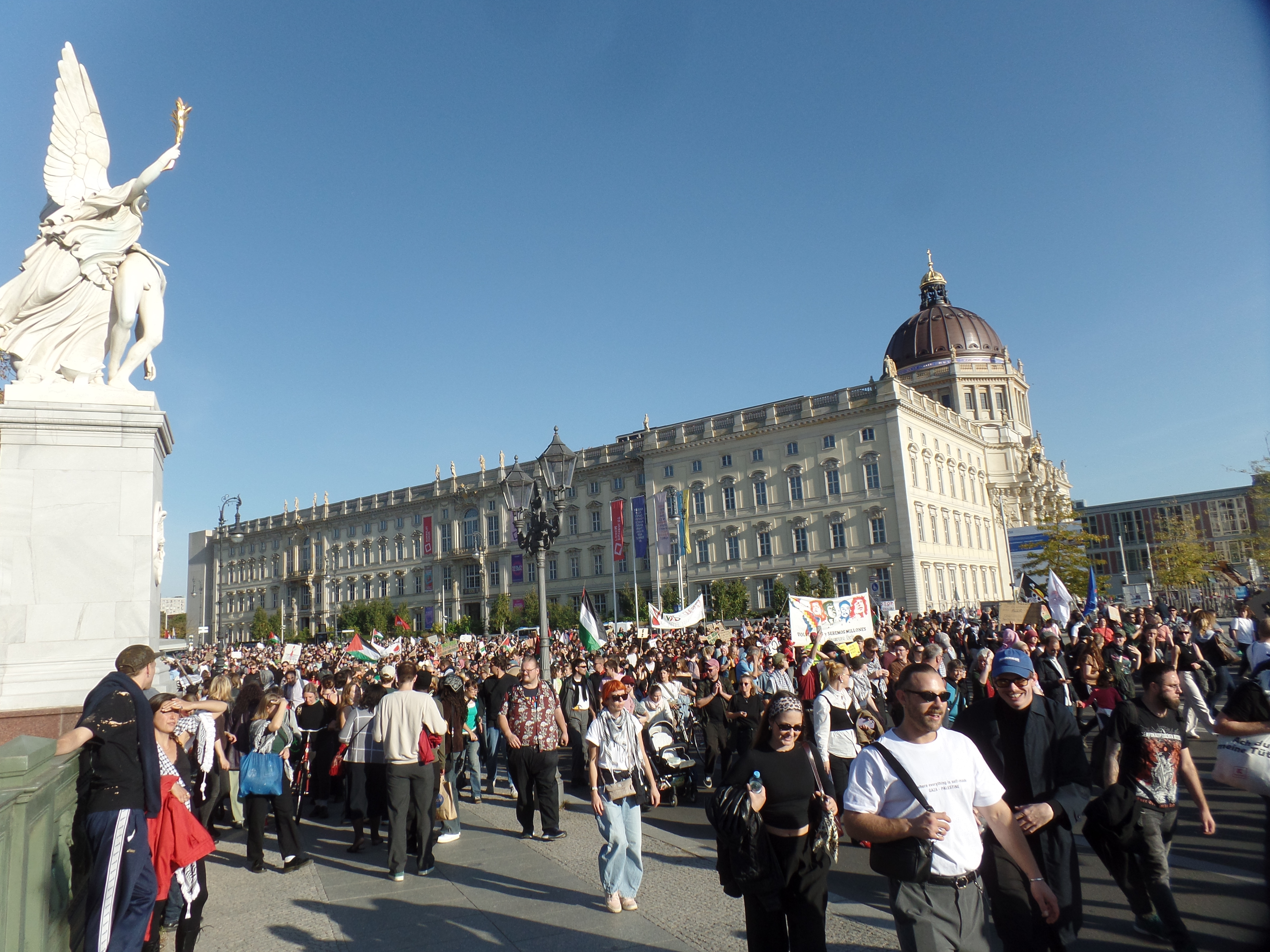
I also could not enter the great cathedral, nor could I visit the greater portion of the Museum of German History, because of this: 50,000 people, give or take, were taking part in the largest protest march I have ever witnessed.

Berlin speaks out

The focus was on Gaza and the ongoing military operation there. Yes, I stayed on the sidelines and minded my business. Besides,the Berlin police were there, peacefully, in force. It remained a peaceful event, from all accounts, but I focused on making my way back to the hostel, after an insightful two hours at two special exhibits of the Museum of German History.

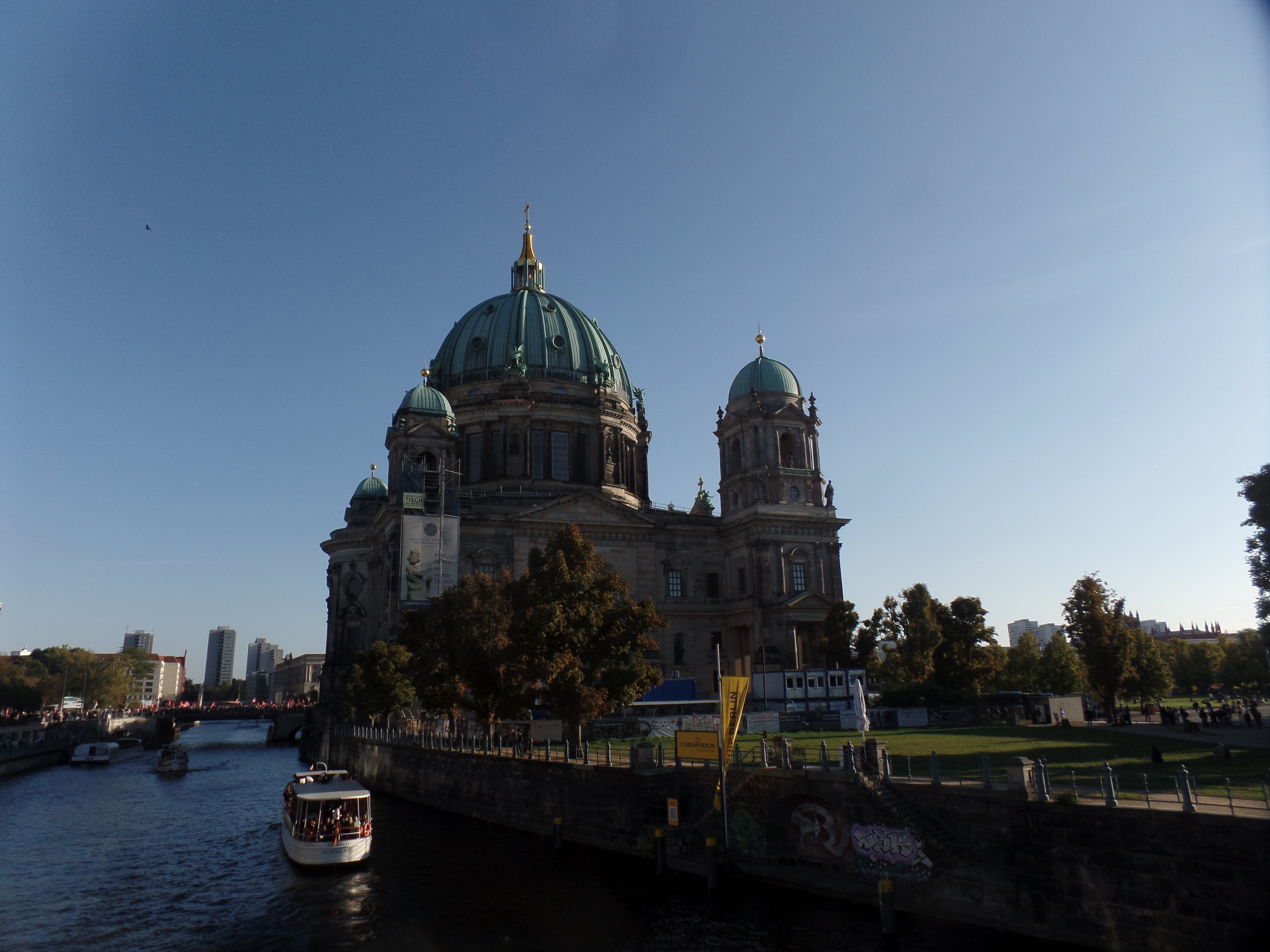
Berlin Cathedral, on River Spree

The first exhibit pondered the question, “What if things had turned out differently, in the decades leading up to and during, World War II? ” It presented the causes of the Fascist takeover, and the various events that occurred under Hitler, as well as the long aftermath, up to German reunification. It asked several questions: “Suppose someone other than von Hindenburg had led Germany after the Versailles Treaty was signed? ” “What if Hitler HAD been assassinated?” “What if Patton HAD gone all the way to Moscow?” “What if there had been no policy of Ostpolitik, in the 1970s and early ’80s?”

The second exhibit showed various aspects of the Nazi occupation in Europe, with a particular focus on Poland, the former Czechoslovakia and France. There was no sugar-coating of what was done, so this exhibit made for a tough, but well-crated, prelude to my coming visit to Auschwitz-Birkenau.

Back at St.Christopher’s, there was little talk of the march downtown. The focus was all on soccer and rugby finals. I enclosed myself in my own world, and focused on this blog-and on my e-mails. Those were enough, after a momentous day.

The Road to Diamond, Day 92: Plotting Course

2

February 28, 2025- Just before waking, this morning, I dreamed that I was climbing up a ladder made of tree branches. At a certain point, a key rung in the ladder snapped off. Unable to safely continue up the ladder, I got off and followed a dirt path, that wound around towards my home. I was walking contentedly along the path and came upon two groups of youths who were tussling and wrestling, in front of a primitive lean-to, thatched roofed house. I felt composed and detached from what was going on, and kept walking-at which point I woke up.

I now feel somewhat composed and detached, regarding the current back and forth between liberals and conservatives in our nation. I know that I am not willing to kowtow to anyone who seeks to impose their will, in an ad hoc or ex-oficio manner. I have noticed people on both sides, “yelling” online-typing responses in capital letters and cursing at people they deem to be not meeting their expectations. That is the mark of a desperate soul, expressing fear of the “other side”. I have also seen people on both sides expressing their opinions in a calm, but firm, tone of voice, not yelling-but not giving way, either.

I covered a few small classes today, with little to do other than take roll and remind one or two people to not use their cell phones during class. While the students were working on their Chrome Book lessons, I read some initial chapters of a book on the German Army, 1933-45. It was instructive to find that Adolf Hitler did not, initially, take the full reins of control over the Armed Forces (Wehrmacht) and that he initially trusted the commanders to build up their own fighting force, even pushing aside his paramilitary force, the SS. He seized control, of course, around 1938, and the result was the horror that the world experienced, until 1945.

Technology,and the pace of events, has quickened in the past 80 years, so it is unlikely that we will see any leader bide time and leave matters to chance. The course of human events, moreover, will proceed at a rapid clip, in some ways, and whipsaw back and forth, in other areas. This is why it is best to keep an open mind on many issues, and not assume that those expressing points of view other than one’s own are somehow to be taken sharply to task and fiercely set straight. We do ourselves an injustice by plotting our own courses using a route of fear and trepidation.

Time of Han’ba

2

February 24, 2022- Once upon a time, in an Austrian town, a little boy was regularly terrorized by his father. The boy wanted his father to respect him, so he internalized his father’s brutish manners and refused to cry after his beatings. When his father died, the boy was 13 and assumed the title Haus Herr. He would beat his younger sister, in the way his father had beaten him.

The boy grew into manhood, served in his country’s army and resented any weakness he encountered in society, including that of government officials. He tried to overthrow that government, was arrested, tried and imprisoned. Once he was released, he joined with like-minded authoritarians, succeeded in overthrowing the government and led his country into oblivion. The world remembers him as Adolf Hitler, the original Fuehrer.

Many, since, have followed in Hitler’s footsteps. Some have had abysmal childhoods, even if they enjoyed material comfort-as Hitler himself did. Others lived meager, miserable lives in childhood, but were spoiled by their parents, to the best of the parents’ ability.

One of the latter is Vladimir Putin, who grew up in a tenement in what is now St. Petersburg, facing off against rats, who taught him the meaning of fighting when cornered. He also faced off against human bullies, and became a judo master, in response. Becoming self-reliant, and having been pampered with expensive gifts on occasion, in a nutshell made Putin value machismo and greed.

Fast forward to our present day. A series of perceived personal affronts has led the Russian autocrat to execute an invasion of Russia’s southwestern neighbour, Ukraine. Authoritarian personages, the world over, have congratulated him for his strength-even gaslighting the Jewish president of Ukraine as “a tyrant” and “a Nazi”. While there are people who believe in Nazi philosophy in a good many countries around the world-including Ukraine, Russia, the United States, United Kingdom, Germany itself, such fawning over the actions of the Russian government do little or nothing to extinguish the other dreadful philosophy. Indeed, the sycophants’ boast, that the Russian people themselves support their government’s actions, is belied by the massive demonstrations, both organized and spontaneous, around the Federation.

Han’ba is the Romanized form of the Ukrainian word for infamy. It is that sort of time in our lives.

The Pyramid

9

January 15, 2021-

I closed my eyes during meditation, a few moments ago, and saw the image of a shining pyramid. The message came to me that I was positioned in the lower left angle of the pyramid, and those whose presence challenges me, were in the lower right angle. The Creative Force was at the pinnacle of the structure. I thought of all those who impose themselves in my life, with requests and comments that are just reasonable enough for me to not be inclined to dismiss them from this life. It occurs that this is part and parcel of wanting to be able to choose with whom I associate and to what extent.

The message further stated that such feelings on my part are merely a sign of mental fatigue, and that, if I don’t indulge those impulses, my mental stamina will get stronger. Those who seem to impose themselves on others are often coming from a place of serious abandonment issues, which have nothing to do with the people to whom they are attaching themselves now. Further, the message said- Look at what happened with Adolf Hitler, bruised and battered from childhood; in a different manner, this also seems to have happened with Donald Trump-and, in turn, Bill Clinton, Barack Obama- indeed many who have risen to prominence have overcome abandonment issues, but the scars have led to the less-laudatory aspects of their lives.

I draw some such people into my life, still-mainly children, but occasionally, severely scarred adults, as well. It has only been recently that I have gained a semblance of how to properly communicate with such adults, in a helpful manner. So, the Pyramid cautioned me, it is best to neither jump when summoned, nor to ignore them at length, but to set aside a few minutes and address their concerns in a succinct manner. If it is merely a message of routine greeting, return the courtesy and go on with my flow of activity.

Simple images, coming in a meditative state, can offer a lot of information.

The Summer of the Rising Tides, Day 4: Fascism, Part 2

2

June 4, 2020-

One common definition of the term, frequently cited by reliable sources as a standard definition, is that of historian Stanley G. Payne. He focuses on three concepts:

  1. the “fascist negations”: anti-liberalismanti-communism, and anti-conservatism;
  2. “fascist goals”: the creation of a nationalist dictatorship to regulate economic structure and to transform social relations within a modern, self-determined culture, and the expansion of the nation into an empire; and
  3. “fascist style”: a political aesthetic of romantic symbolism, mass mobilization, a positive view of violence, and promotion of masculinity, youth, and charismatic authoritarian leadership.[27][28][29][30]

The period 1929-45 is notable for the rise of several regimes that were based on continuity of government, on strong rule by a coterie of “dependable” officials, and a critical mass of public support, for those in power.

This was accomplished in the United States, by elections which were judged free and fair, resulting in the election of Franklin Delano Roosevelt, in 1932, and his re-election in 1936, 1940 and 1944. When Roosevelt died, barely into his fourth term, there was a peaceful transfer of power to his Vice President, Harry S. Truman.

In neighbouring Canada, a similar process resulted in the election of William Lyon Mackenzie King as Prime Minister, in 1921, and his re-election in every contest, save 1930-35, until his retirement from public life, in 1948. King’s tenure was more based on public support for his policies, than on any cult of personality, however.

Across the Atlantic, the harsh terms imposed upon Germany, under the Treaty of Versailles, resulted in severe economic conditions. Coupled with the worldwide economic collapse of 1929, the grief felt by many Germans proved fertile ground for Adolf Hitler, and his National Socialist Party (NAZI). Hitler’s willingness to apply a particularly efficient form of brute force ultimately brought more ruin to Germany, after his Armed Forces staged a sweep across Europe, only to expend their resources and fall to defeat, at the hands of a three-pronged Allied offensive, in World War II. His legacy of infamy is signified by the mass ethnic cleansing campaign, which is known today as The Holocaust.

Was Hitler a Fascist? Certainly, he employed portions of all three of the concepts identified by Stanley G. Payne, as definitive of the Fascist system. His economy, though, did not alienate itself from standard business-oriented conservatism. He conducted a robust, if clandestine, trade with large multinational corporations, based in both North America and neutral European nations. Otherwise, Hitler adhered to both Fascist goals and style of governance.

At this point, I wish to point out the more “orthodox” Fascism, followed by Benito Mussolini. Mussolini began his public life as a socialist, but grew bored with the efforts at seeking an egalitarian society. He turned instead to the concept of Fascism, embracing a total state control of economic structure, a renewal of the “Italian Empire”-his take on ancient Rome. and a social network that promoted the use of violence and an emphasis on masculinity-with himself as the prime example (Il Duce-“The Leader”). He ruled Italy from 1922-1945, managing to establish a fairly efficient transportation system and large homegrown industries. As with Hitler, however, Mussolini’s ambitions outgrew his nation’s resources, and his government fell, before an Allied invasion, from 1943-45.

Mussolini’s protege, Francisco Franco, of Spain, took power, as a Falangist (the Spanish equivalent of Fascist), in 1936, assuming total control of Spain, with both German and Italian military assistance, in 1939. Franco ruled Spain until his death, in 1975. Franco’s Fascism focused promarily on achieving Fascist goals, particularly state regulation of the economy. He did not renounce conservatism, as Mussolini had, as one of Franco’s goals was preservation of the Church and eventual restoration of the Spanish monarchy. He did not pursue as active a cult of personality, as Mussolini, either, though he took the title of El Caudillo (” The Strongman”). Franco’s caution, with regard to World War II, kept Spain out of that conflict, though he supported the Axis Powers in principle. Franco’s brutality relaxed, in the 1950’s, though Spain remained something of an economic backwater, lacking the natural resources and capitalist minds of Italy. With that relaxation, however, a group of younger businessmen and entreprenuers did emerge, leading to the “Spanish Miracle”, for which Franco took personal credit. His long rule was largely due to his more moderate take on Fascism.

Finally, for this section, let it be noted that fascism, like communism, is not limited to the European continent. Field Marshal Idi Amin Dada, a military careerist, with considerable informal education, became rather enchanted with the period of Nazi rule in Germany. Although Amin was not enamoured of Communism, he did abide its presence in his country of Uganda, mainly to procure aid from the Soviet Union and East Germany. Amin pursued what he thought of as Fascism, though his economic model was negligible, being mostly focused on enriching himself and a coterie of advisers. He did encourage a cult of personality, with himself at the center, allowing thugs to operate, with impunity, against real and perceived opponents. His one attempt at trying to carve out an empire, proved his undoing. In 1978, Amin sent troops into the neighbouring Tanzanian province of Kagera, with the idea being its annexation by Uganda. Tanzanian President Julius Nyerere, a no-nonsense man, sent his nation’s Army to take back Kagera, and to finish the job of ridding Africa of Amin.

So Fascism, like Communism, has been several things to several people. Could it happen in our time?