April 22,2019, Grand Canyon National Park-
No visit to this most spectacular of Mother Nature’s North American wonders is complete, without due honour being paid to the incomparable figure of Mary Elizabeth Jane Colter. One of the few female architects of her time, Ms. Colter was a driving force in the building of structures that well served the U.S. National Park Service, the Santa Fe Railroad and the Fred Harvey Company-which was a major concessionaire to both entities. Her buildings have withstood the test of time and uniformly add luster to the communities in which they are, or were, found: Winslow, AZ (La Posada Hotel), Harvey House (now Imperial Western Beer Company), in Los Angeles’ Union Station, La Fonda Hotel, in Santa Fe and the majestic, but now defunct, El Navajo Hotel, in Gallup, NM.
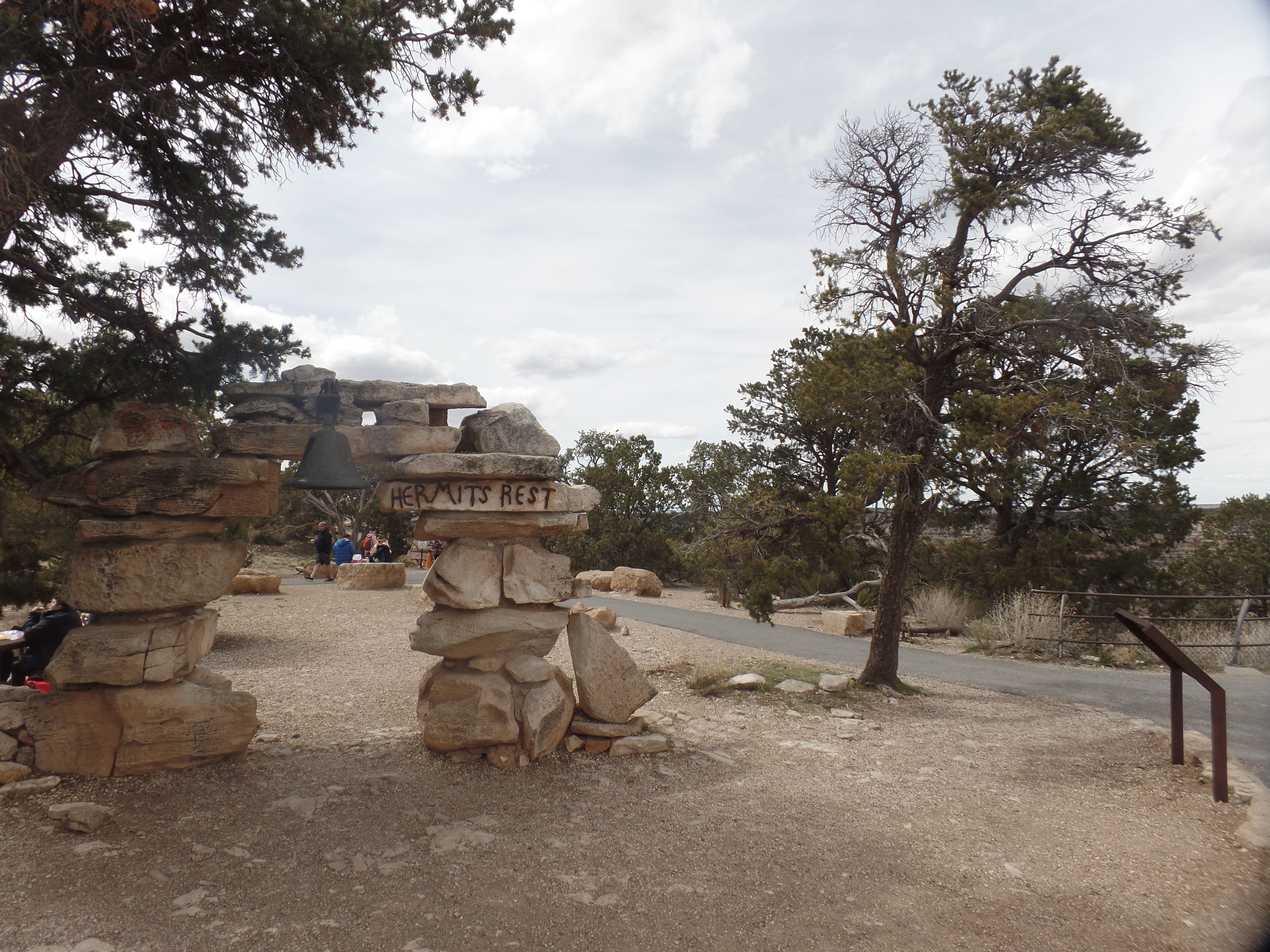
Mary Elizabeth’s most enduring body of work, now listed as a National Historic District, lies in the magnificent buildings which she designed and built, along the Grand Canyon’s South Rim and at the bottom of the Canyon itself. These include Bright Angel Lodge (in which Penny and I stayed, in 1983); Hopi House,Hermit’s Rest and the arresting Desert View Watchtower.

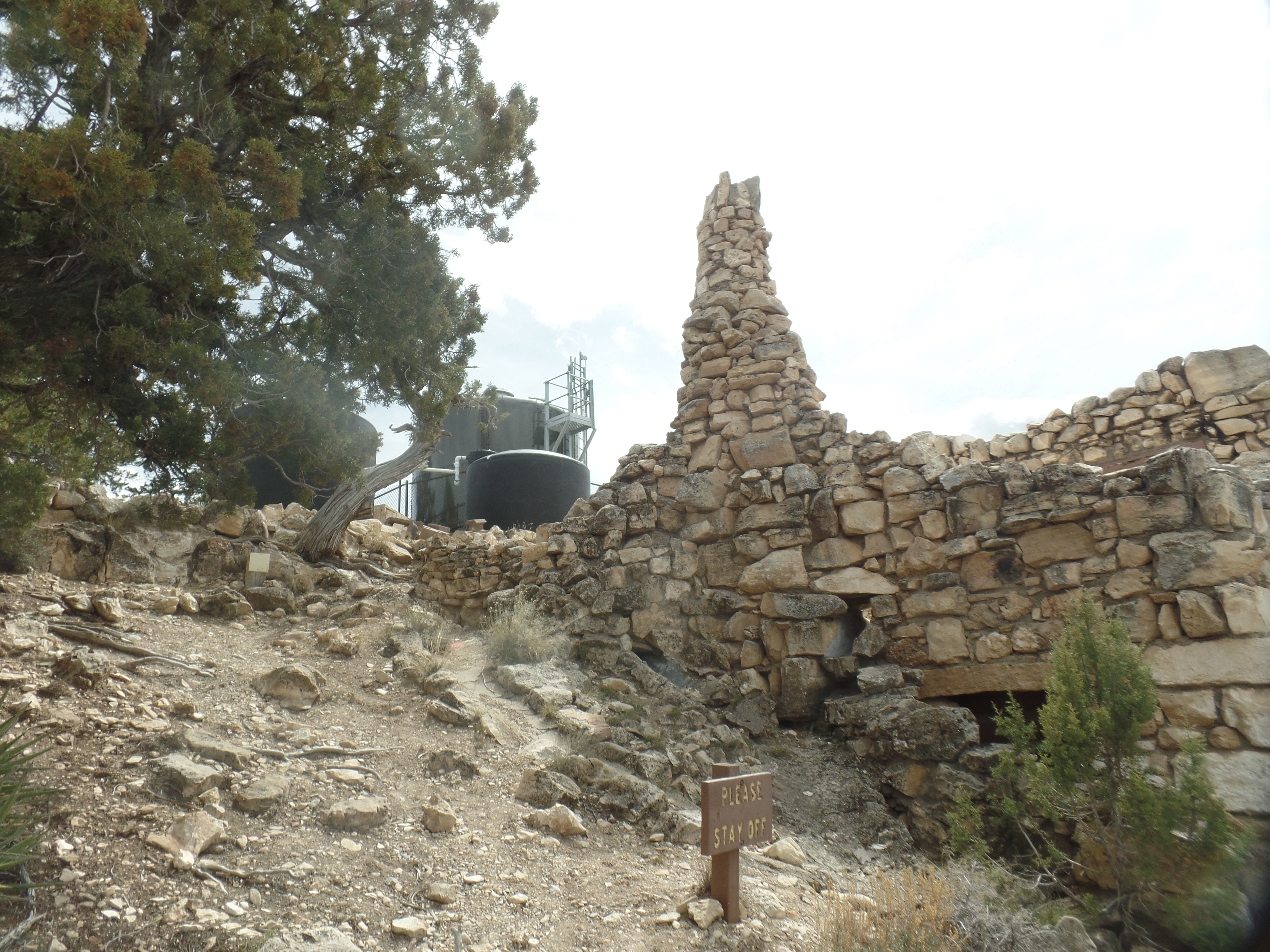
There are cracks and breaks actually included in Ms. Colter’s design. She also placed a seemingly demolished brick wall, on the Tower’s south side- perhaps as a wind break.
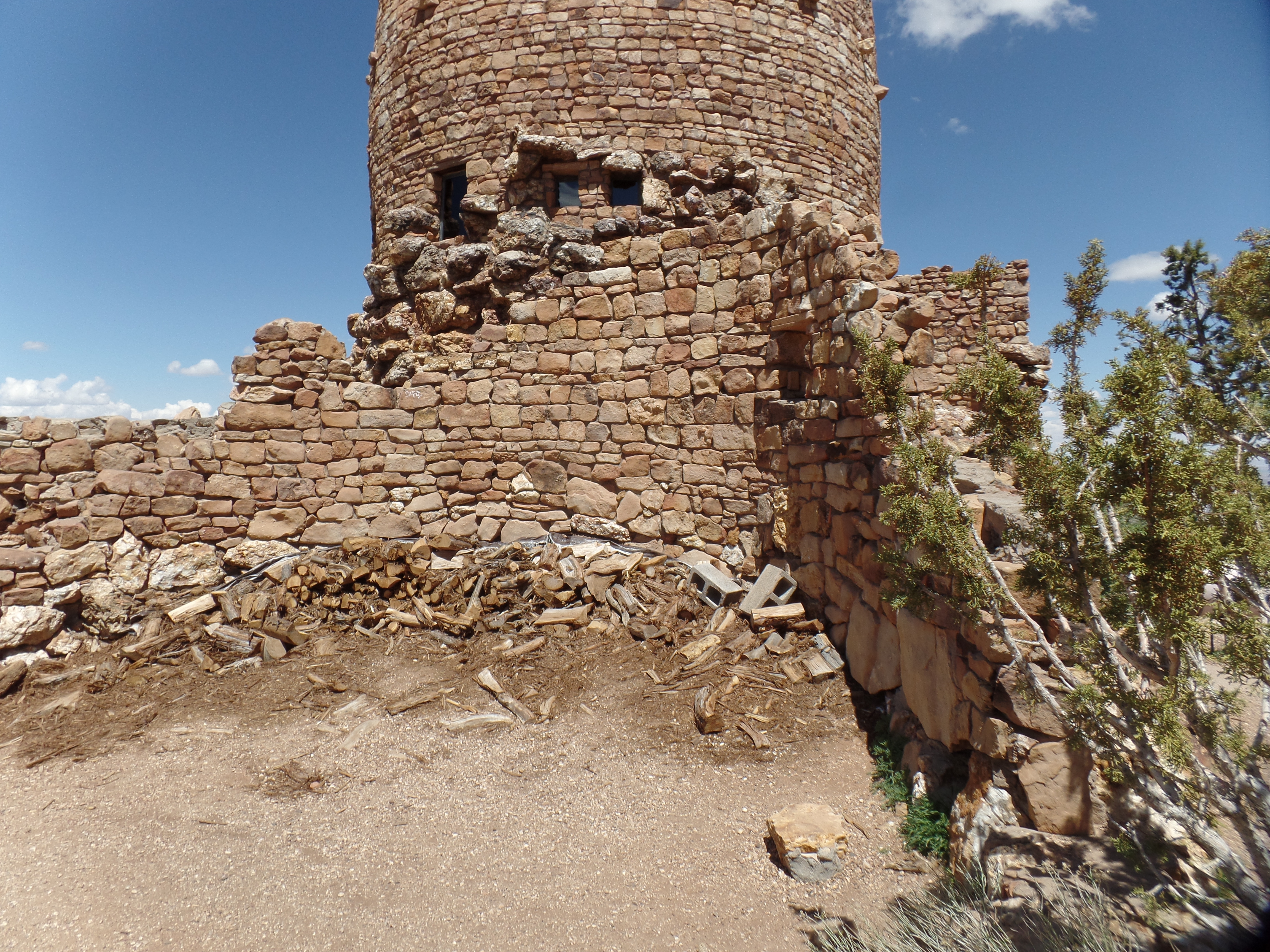
The views from each level of the Tower are second to none. Below is a view of Venus Temple.
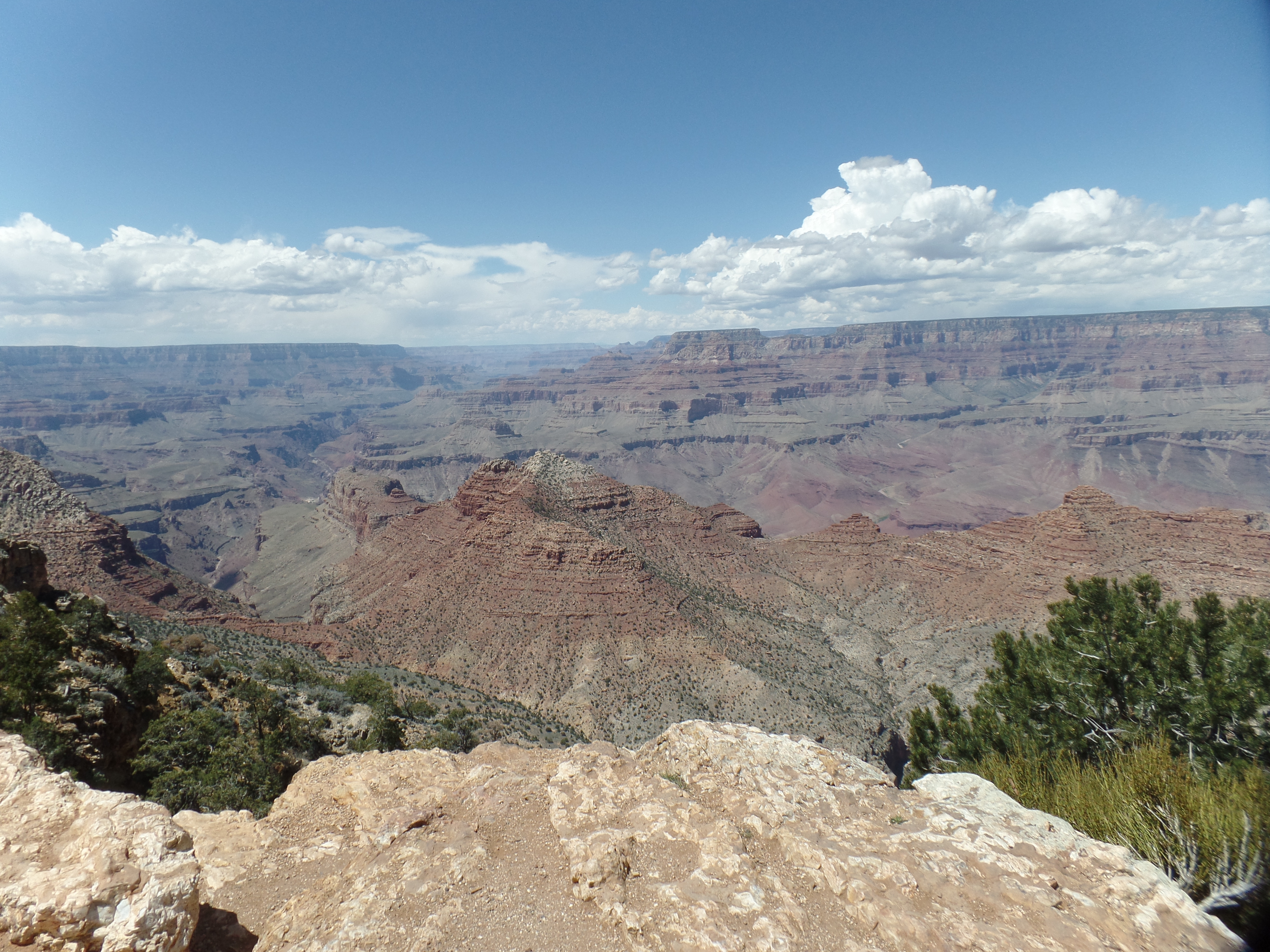
The area west of Desert View constitutes the Inner Gorge of the Grand Canyon, and features many of the “Eastern” and “Egyptian” formations, named for Indian and Egyptian mystical figures. The Colorado River itself, though, is never far from focus.

For that matter, neither is the North Rim, which will be the focus of a second Grand Canyon visit, in late summer, in this year of the Park’s centenary.

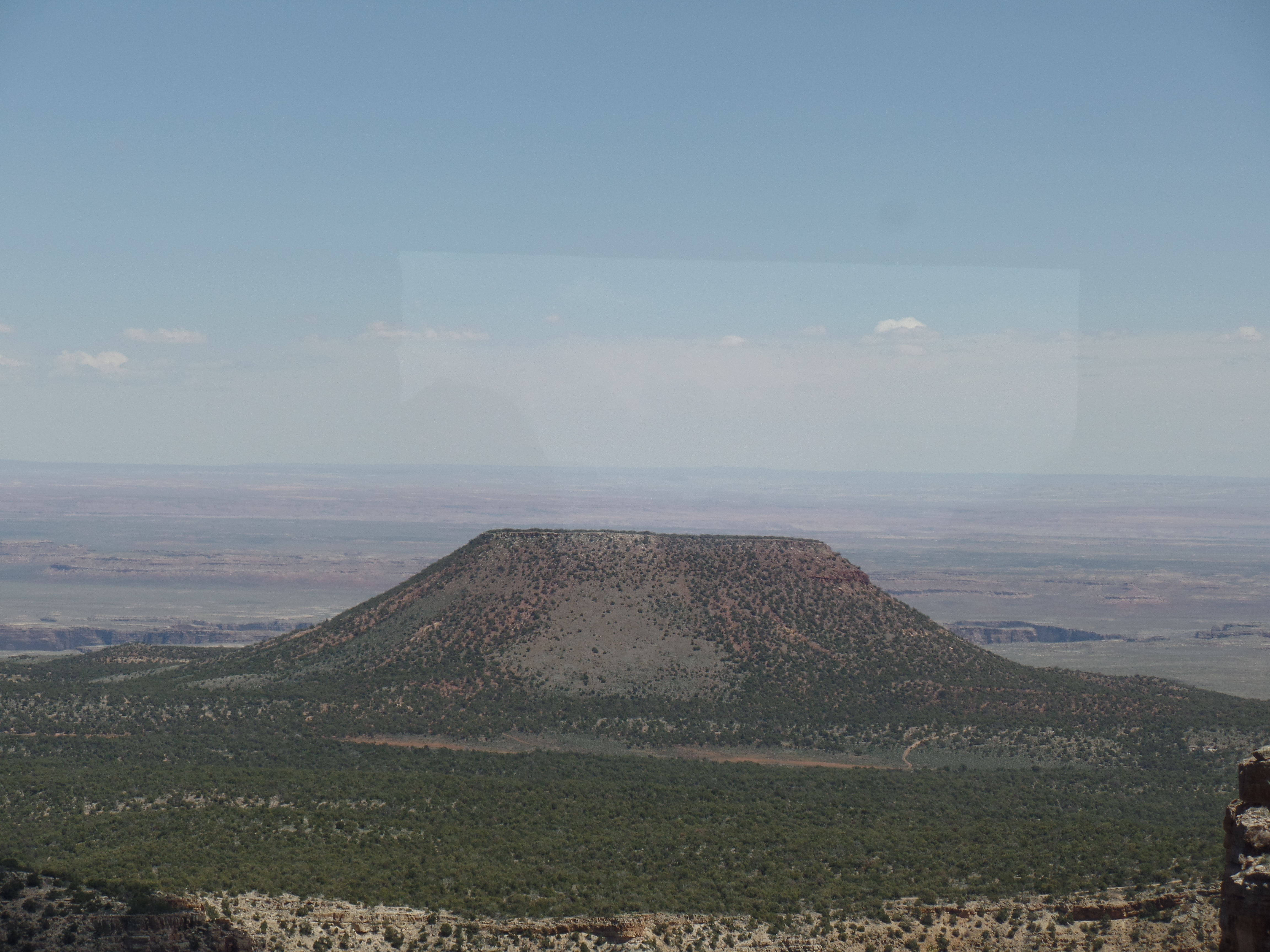
Temple Butte, seen below, marks the eastern end of the Canyon’s rim. From that point, eastward, lie the Navajo Nation and the Painted Desert, itself a defining feature of the Little Colorado/Puerco River Basin.
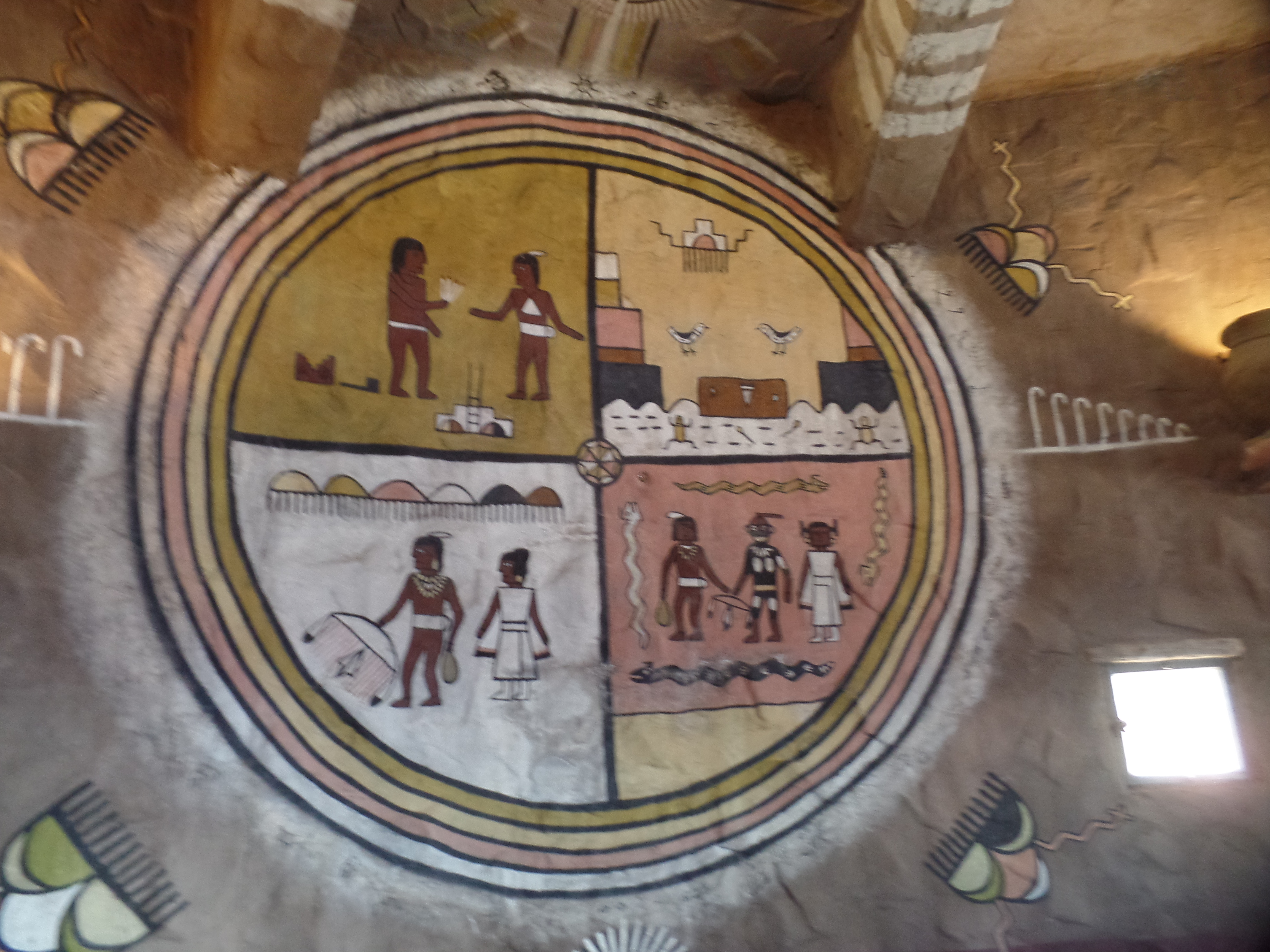
The interior of the Watchtower is no less captivating. Ms. Colter was enthralled from childhood with Native American art and lore, starting with Lakota Sioux drawings which she obtained from a friend, whilst living in St. Paul. After goong to work fro Fred Harvey Company, that interest quickly extended to the art of the Dineh, Zuni and Hopi.
The panels below illustrate some Hopi spiritual concepts, painted by master artist Fred Kabotie, a key collaborator with Ms. Colter, in the course of her building decoration.

These stairs were likely used by Mr. Kabotie, during his time as the Watchtower’s caretaker. Now, they are a simple decoration.

Animals being a major element of Hopi and Dineh culture, figurines have been carved and left in conspicuous places.
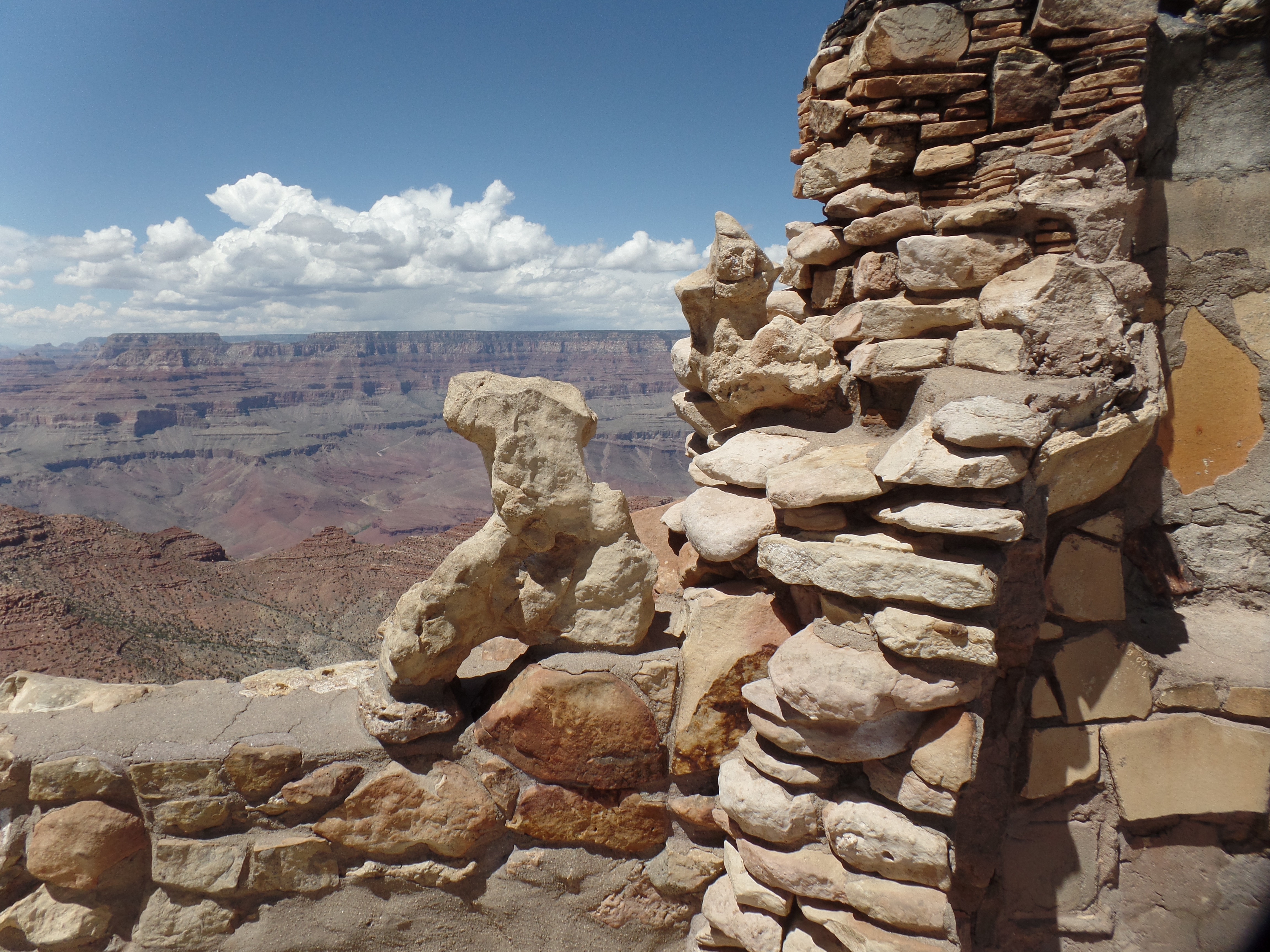

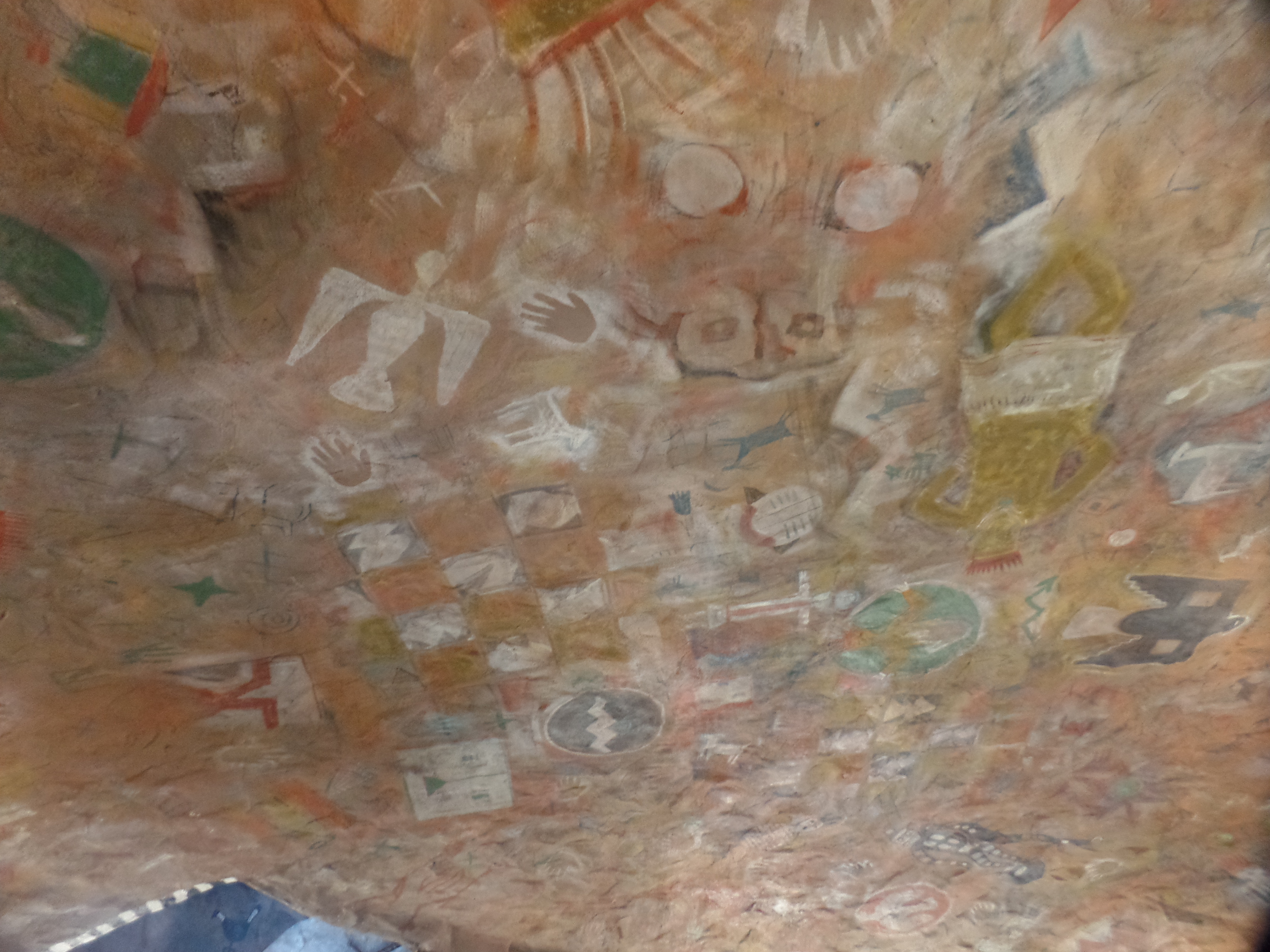
So, too, are pictographs, drawn here by Fred Kabotie and his associates, but found in many places in the Southwest-and around the globe, as remnants of ancient cultures. Pictographs are drawn rock art, as opposed to petroglyphs, which are carved into the stone.

The ceiling of the Watchtower is the one place where Ms. Colter let her associates run riot with colour painting. The idea was to represent the fullness of the Universe.
It is from the third floor of the Watchtower, that images such as this may be gleaned.

From here, I headed a bit further west, to Navajo and Lipan Points, getting further perspective on the Inner Gorge. The formations in the foreground are of Redwall Limestone and Supai Group of sandstone deposits, from the Pennsylvanian Period (332.2-289.9 million years ago). This scene is from Navajo Point.

Redwall Limestone, (340 million years ago), is prominent, as the Canyon rises up to its Inner Gorge temples.

Here is a zoomed view of the Watchtower, from Navajo Point.

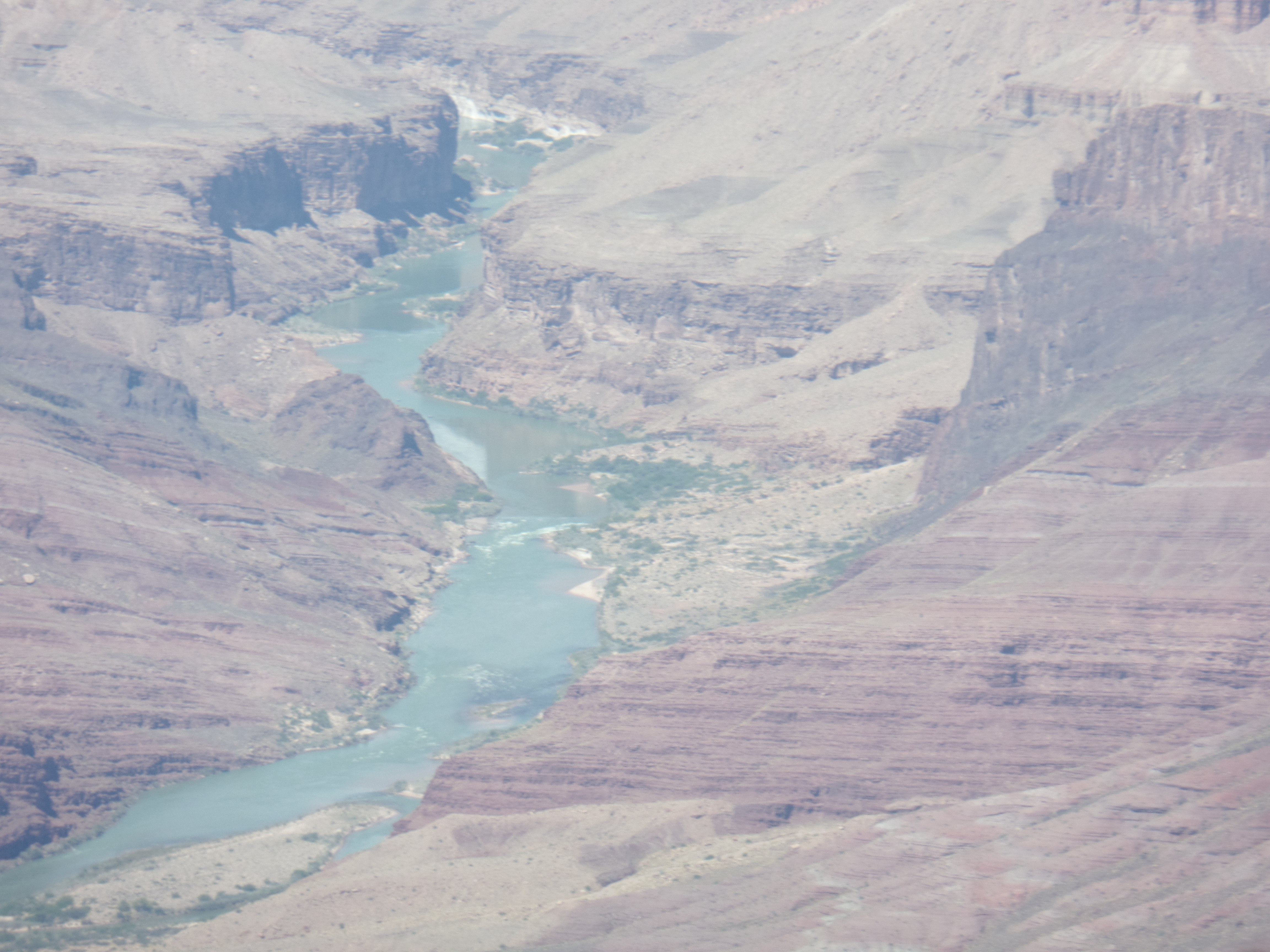
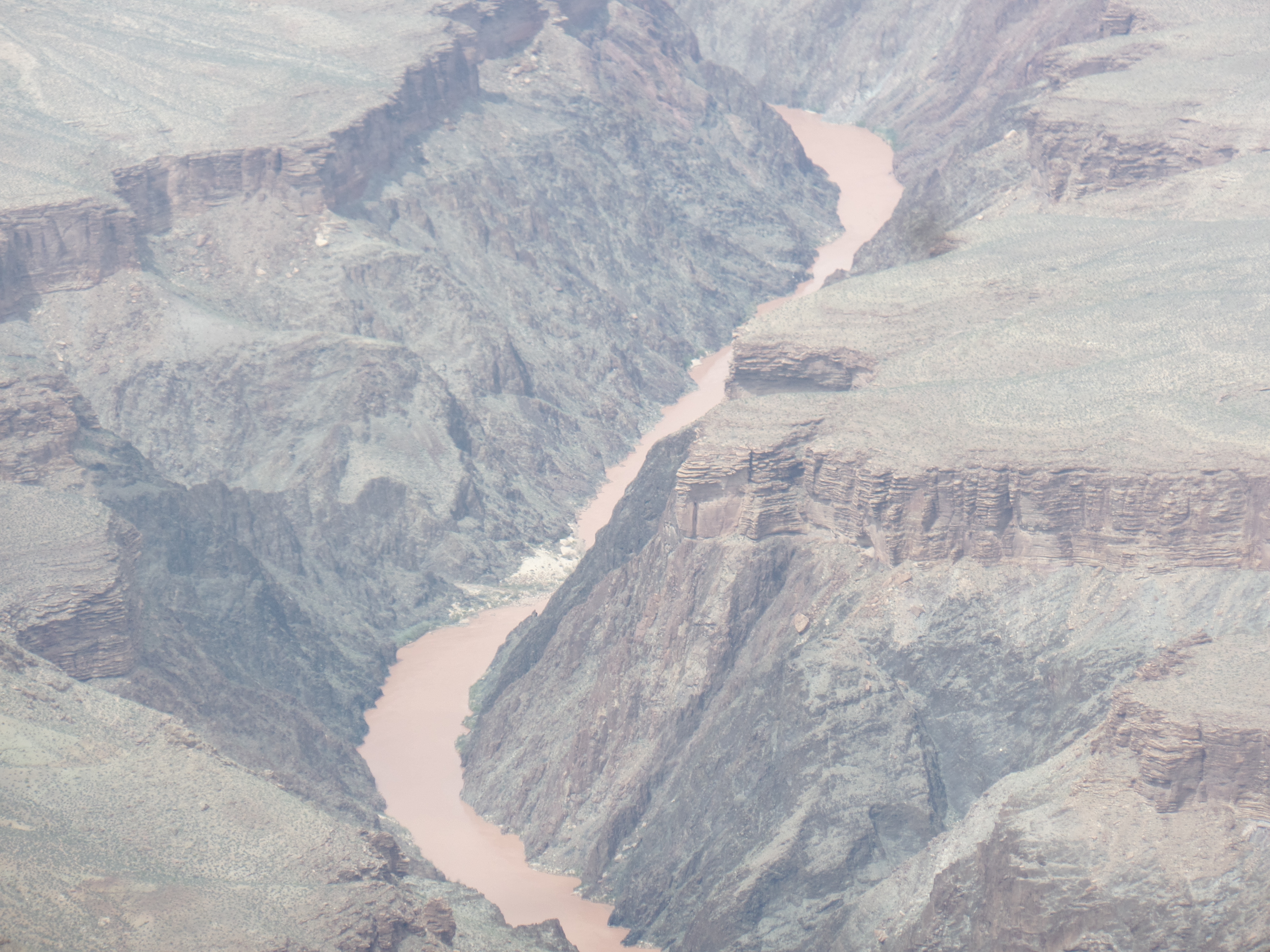
Also from Navajo Point, is a glimpse of what makes rafting the Colorado such an enticing experience for many.
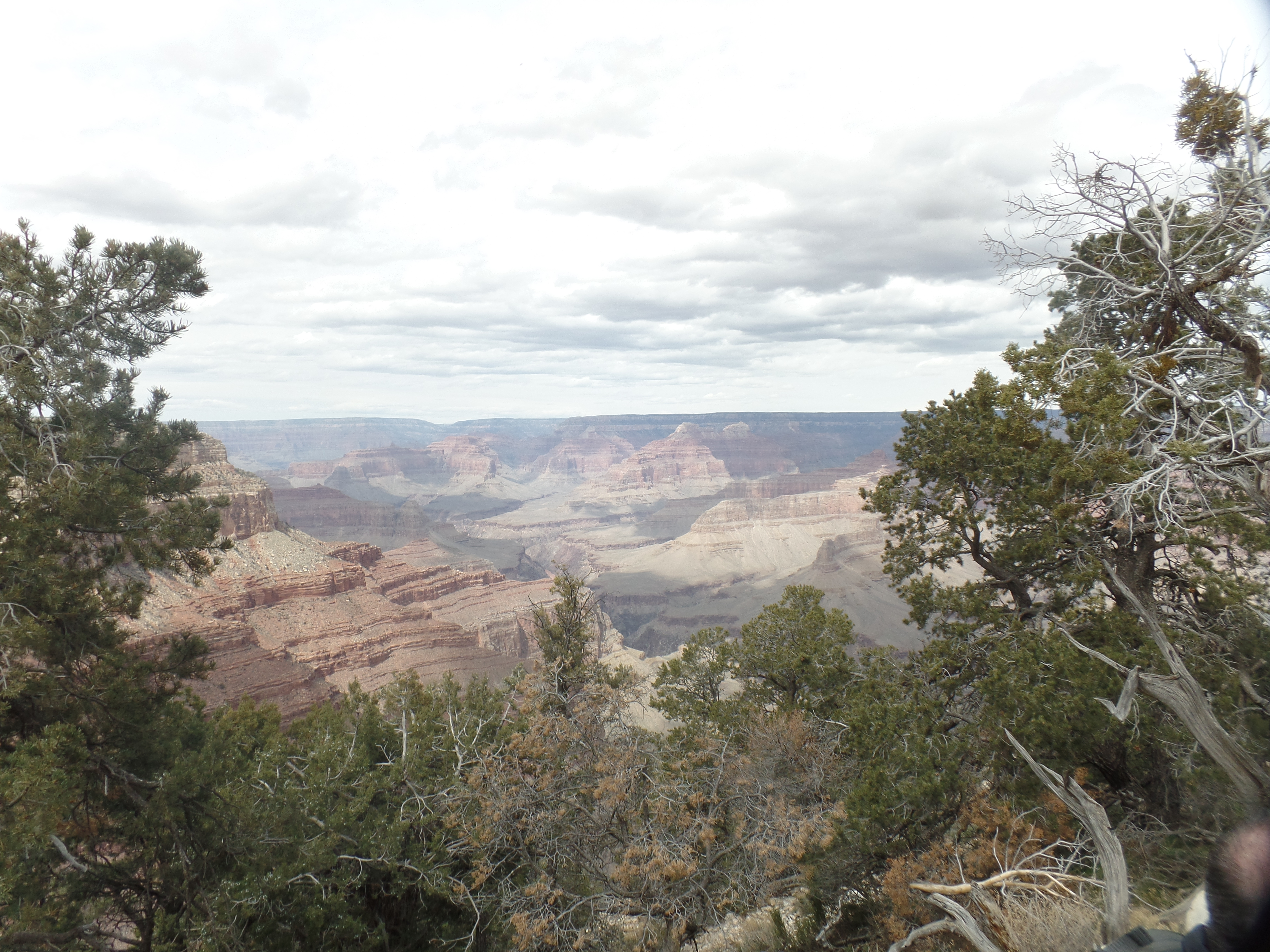
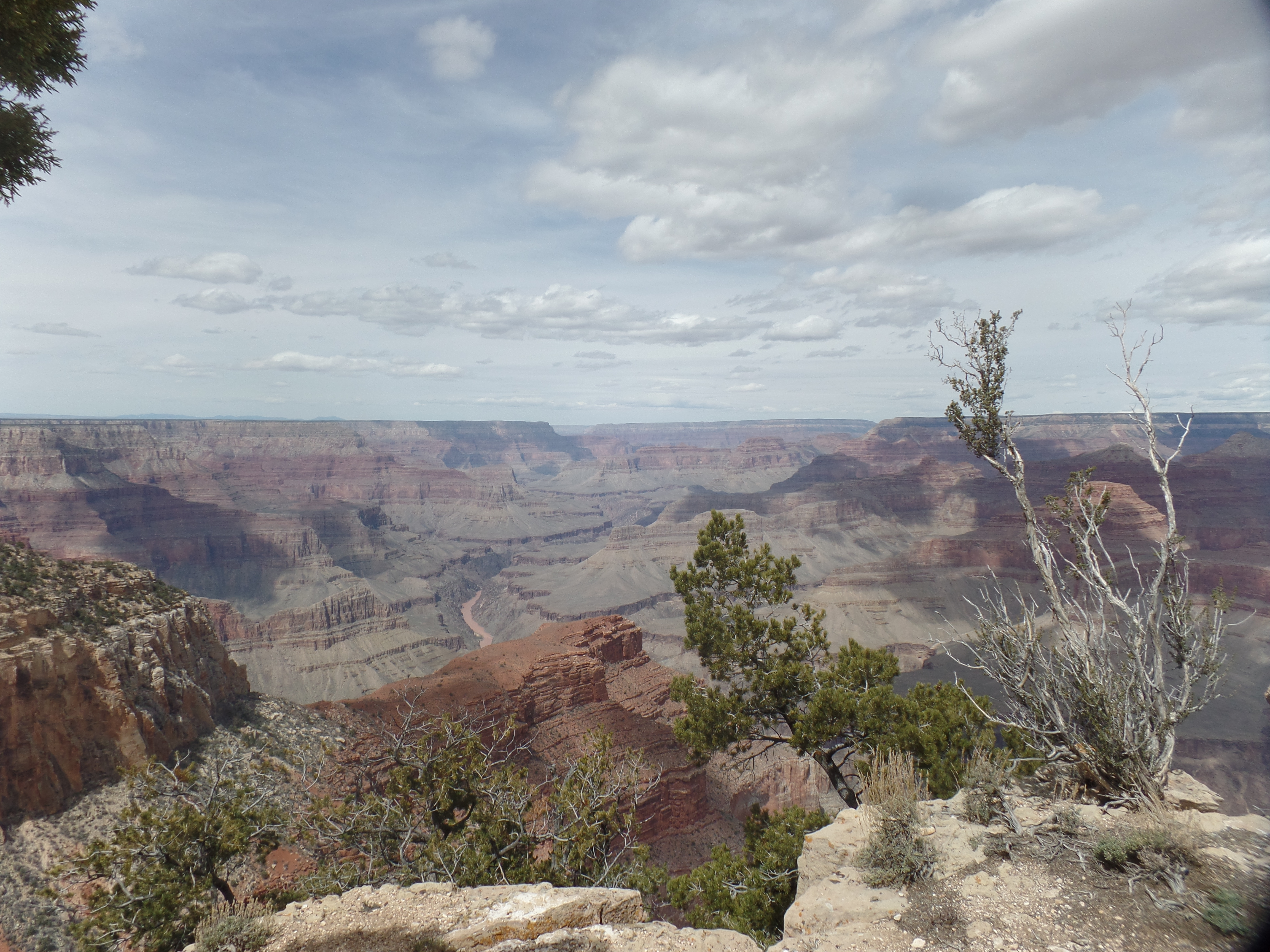
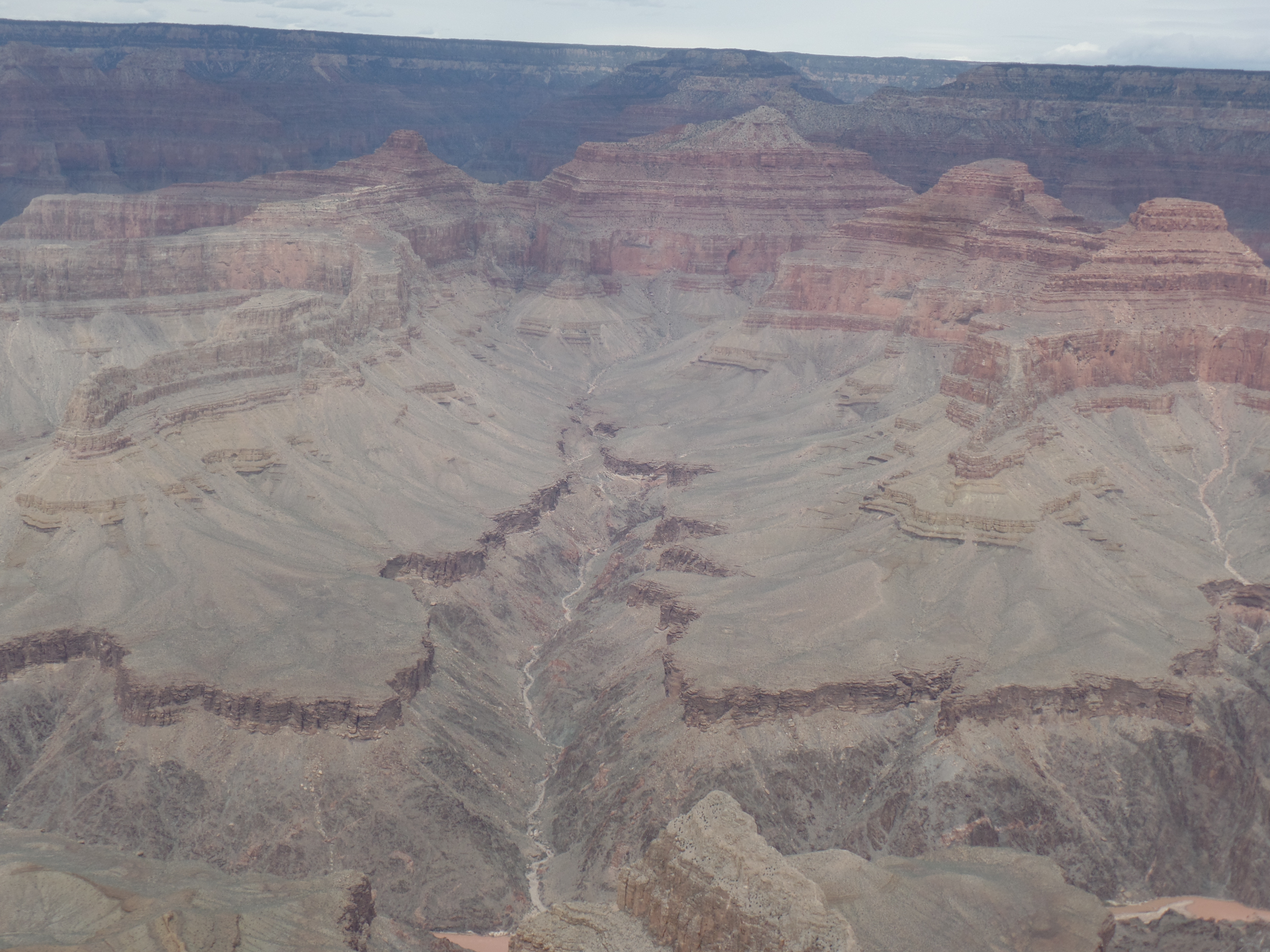
As I reached Lipan Point, I found this to be the last scene from my present SIM card on the Samsung.

So, my trusty cellular was pressed into service. Lipan Point, which juts headlong into the Inner Gorge, gives the area a compressed quality. Don’t let the appearance of compactness deceive you. The Inner Gorge is 18 miles across, at its widest point.
![20190422_140711[1]](https://peacefulwarrior9.com/wp-content/uploads/2019/04/20190422_1407111.jpg)
![20190422_140715[1]](https://peacefulwarrior9.com/wp-content/uploads/2019/04/20190422_1407151.jpg)
![20190422_140718[1]](https://peacefulwarrior9.com/wp-content/uploads/2019/04/20190422_1407181.jpg)
Here one sees the Kaibab Formation, the present “top” of the Grand Canyon, at the North Rim. 22 miles from Lipan Point, as the condor flies.
![20190422_140820[1]](https://peacefulwarrior9.com/wp-content/uploads/2019/04/20190422_1408201.jpg)
From Lipan, I drove into the forest a bit, for a look at Tusayan Ruin, a Pueblo II ( 900-1150) settlement which appears to have lasted well into the 13th Century, in the midst of Pueblo III cultures.
![20190422_142401[1]](https://peacefulwarrior9.com/wp-content/uploads/2019/04/20190422_1424011.jpg)
![20190422_142516[1]](https://peacefulwarrior9.com/wp-content/uploads/2019/04/20190422_1425161.jpg)
Here is a communal gathering place, perhaps for spiritual activities.
![20190422_142523[1]](https://peacefulwarrior9.com/wp-content/uploads/2019/04/20190422_1425231.jpg)
This space appears to have served as an apartment for one of the larger families.
![20190422_142707[1]](https://peacefulwarrior9.com/wp-content/uploads/2019/04/20190422_1427071.jpg)
The people who lived at Tusayan likely intermarried with those of the Pueblo III culture, who had moved into the area, from the northeast, towards the end of the 12th Century.
My daylong venture along the two great gorges of the Colorado River system came to an end, but not my appreciation for one of the finest talents, of the Twentieth Century, in southwestern architecture. Mary Elizabeth Jane Colter surely rates on par with Paolo Soleri and Frank Lloyd Wright, in terms of contribution to the public square.






 A Sagittarian Seeker