
Be forewarned, this post is heavy on photos, and tends towards gaudiness, but that is Chateau de Versailles- and those were the Bourbons. It is an exhausting place to visit, but I am glad to have gone through the chateau first. The gardens, and the town of Versailles, are most refreshing.
I am glad to have gone through all the chambers, and great halls, as they tell the story of several men’s excesses, on the backs of their fellows, as well as any other great monument around the world. If you are put off by all the gold and finery, you are in a good place. We all know to what this excess led.


We start in the front courtyard, where one gets a sense of the enormity of the completed palace. Know that this chateau was intended as a place of refuge for Louis XIV and his successors. Versailles, from the 16th-19th centuries, was very much a country town. Paris, then as now, was lovely, exciting- and exhausting, for the royals as for everyone else.


The first gilded gate, the detail of the front entry point and the ceiling of the antechamber follow. Creation and classical mythology are themes covered over and over by the architects and landscapers of Versailles: Andre Le Notre, Charles Le Brun, Jules Hardouin-Mansart and, under Louis-Philippe I, Frederic Nepven.
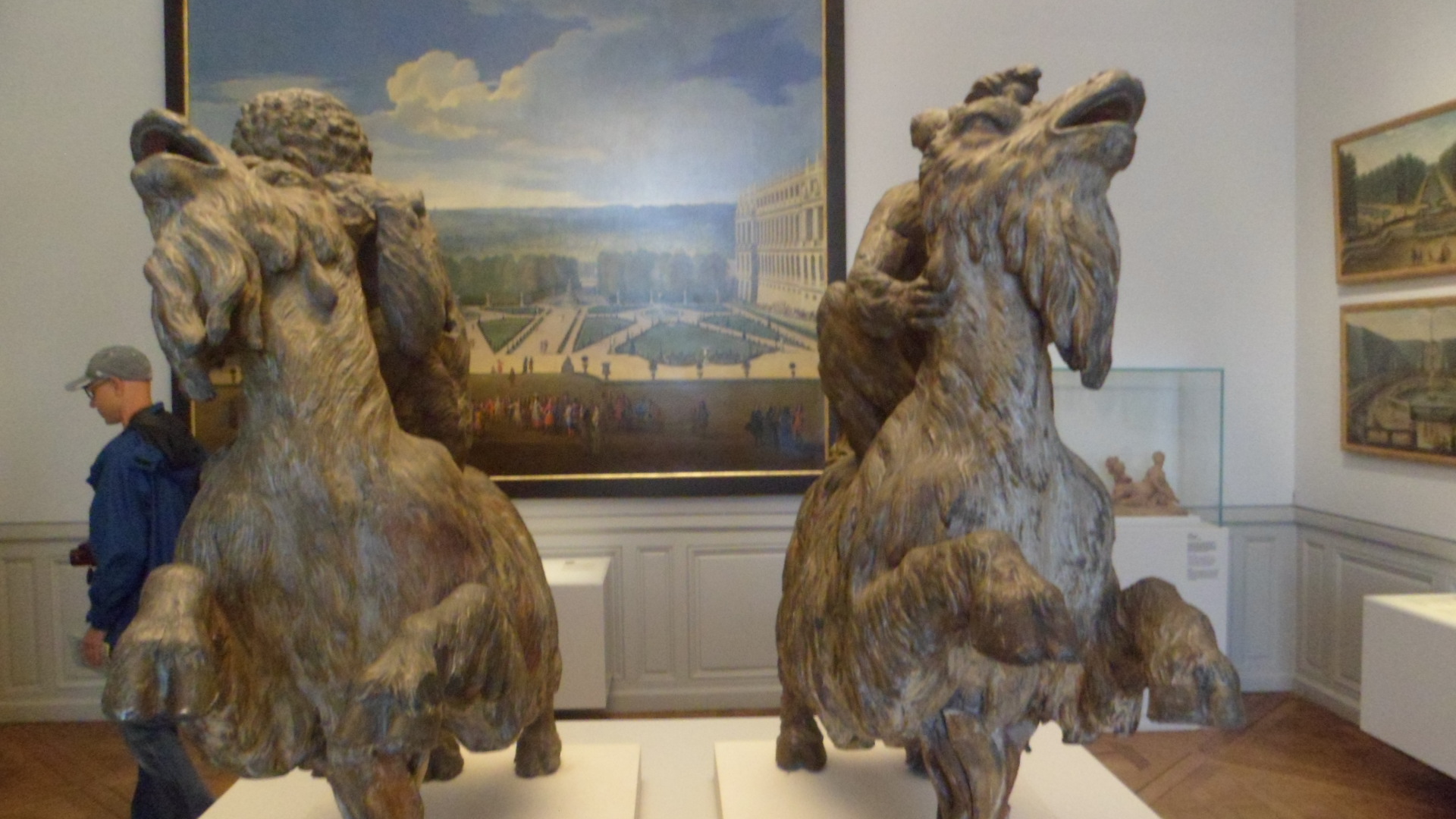
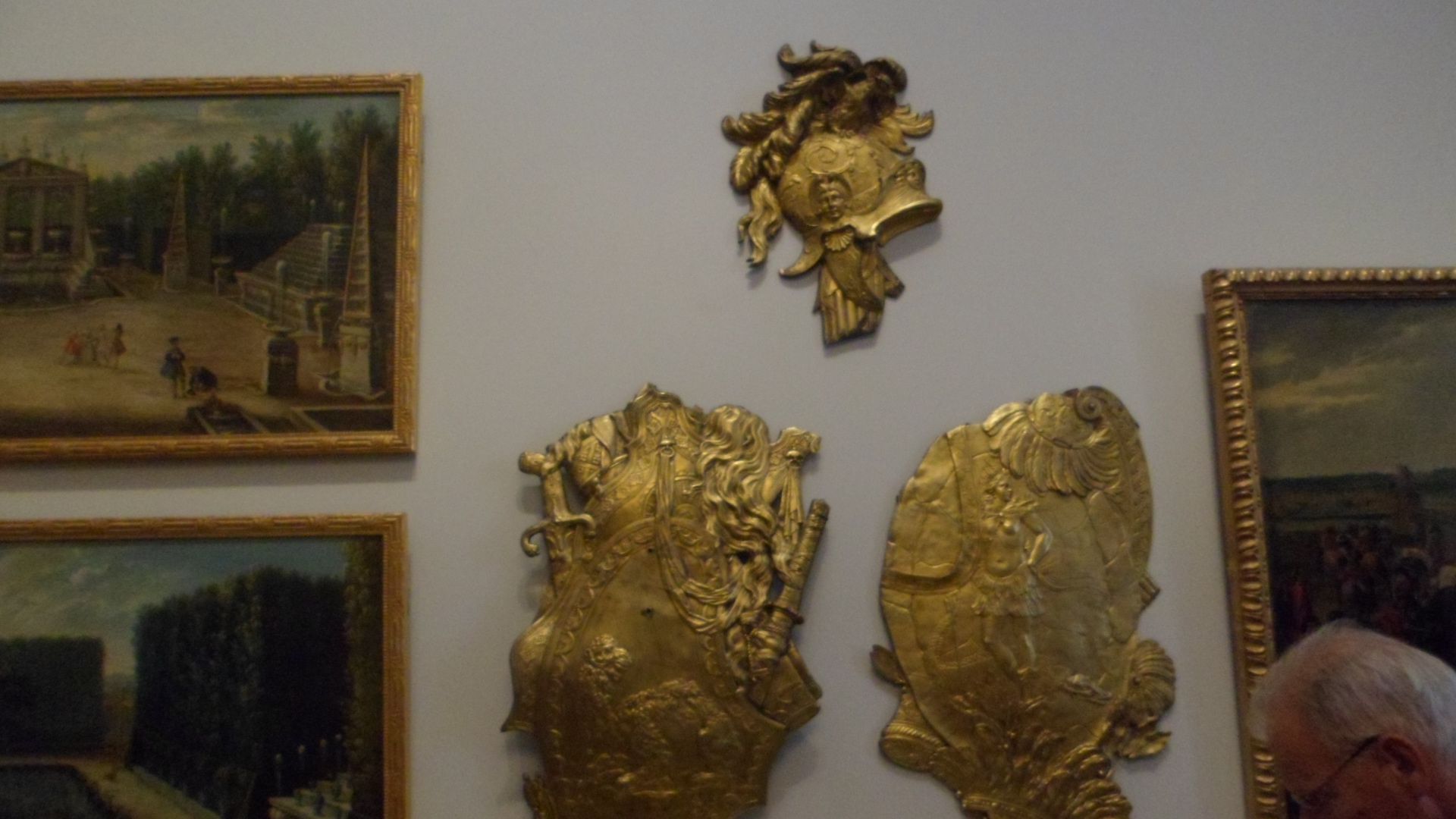
Next, two mythological characters, depicted in statuary, greet visitors as we go through a series of halls that tell the history of the chateau, from Louis XIV to the time of Louis-Philippe I, who bestowed this magnificent place upon the people of France, as THEIR treasure. The gold, the marble and the enormity thus reverted to their truly rightful owners. These are followed by “Tres Casques”, great gold pieces, representing helmets.


Moving along, we see a portrait of Marie Antoinette, her son, the Dauphin, and his attendant, Madame Royale. Next is Louis-Philippe, mounted on horseback, followed by his architect, Frederic Nepven.


Up the staircase, and down another long hall we go, to the salons. A series of halls, each named for a particular Roman god or goddess, were used by Louis XIV for regular audiences. Salon de Diane, for example, was used as a buffet room. Salon d”Apollon was a concert hall. Salon de Mars was the ballroom.
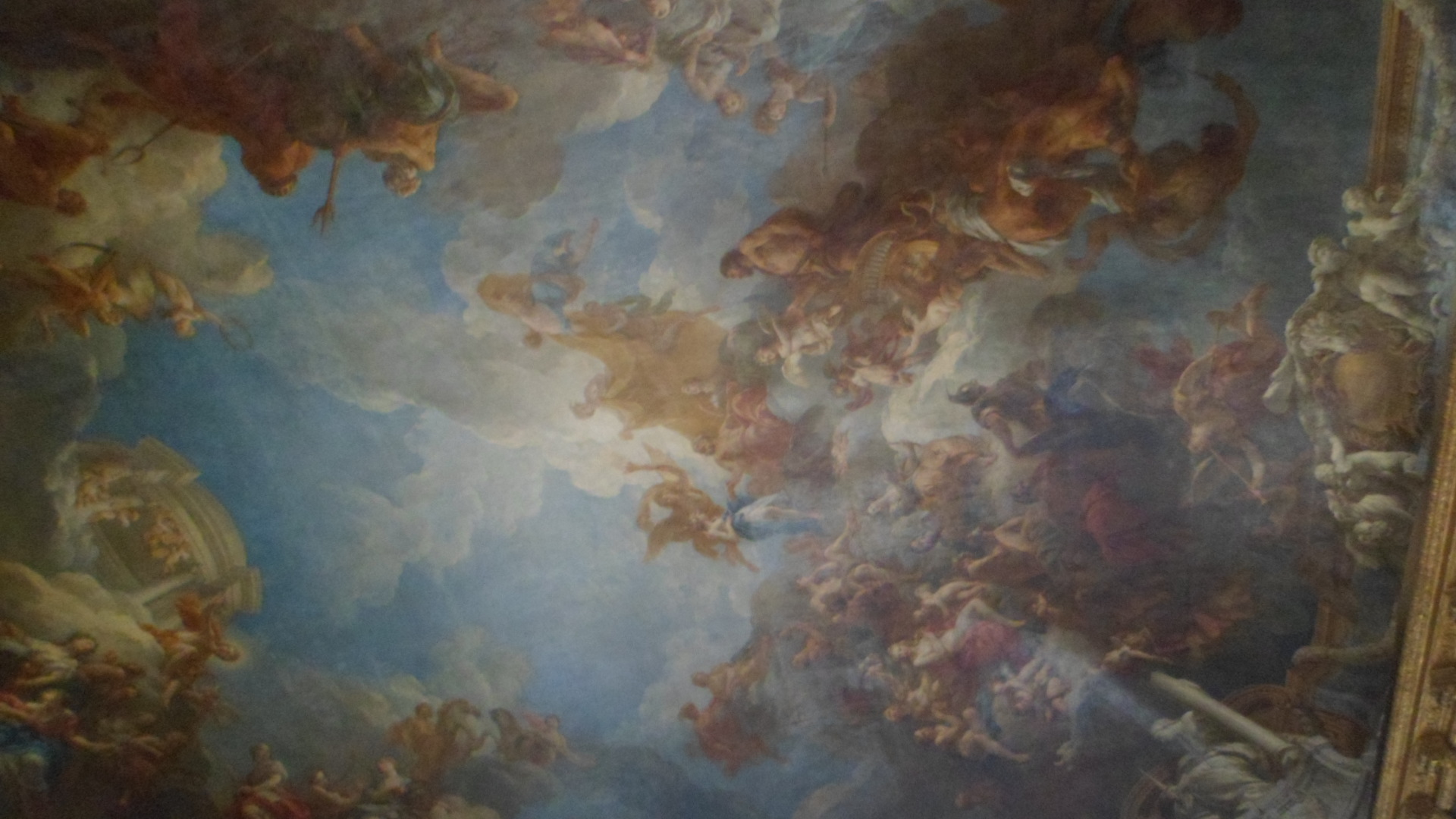


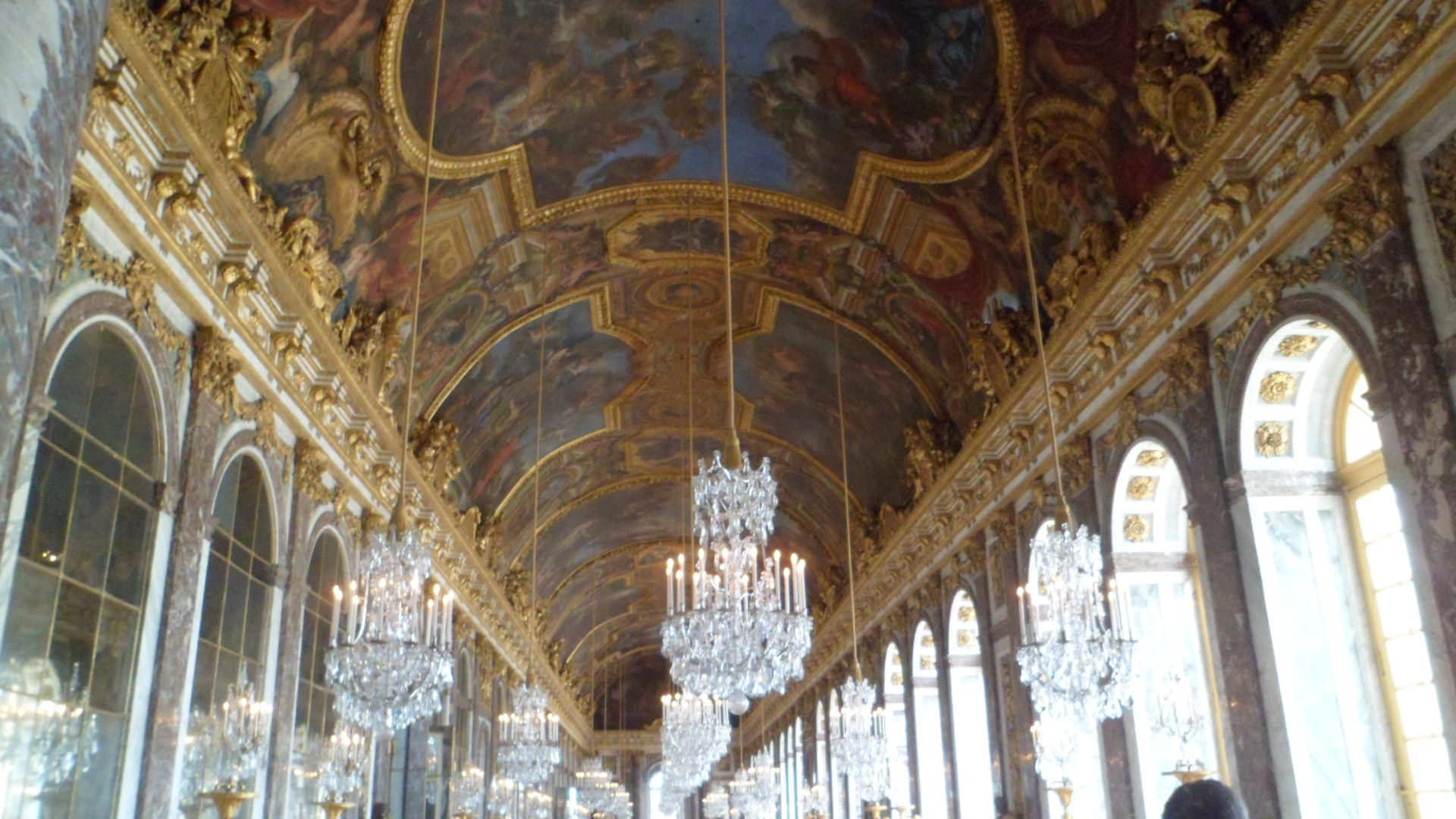
Three scenes from the Hall of Mirrors are next,(photos 22-24). This great hall was constructed under the supervision of Louis XIV’s crafty Treasure, Jean-Baptiste Colbert, who brought in several Venetian mirror craftsmen, at great peril to themselves, to fashion this great hall. It links the King’s bed chamber with that of the Queen. Louis had himself as the focus of the portraits and statuary.
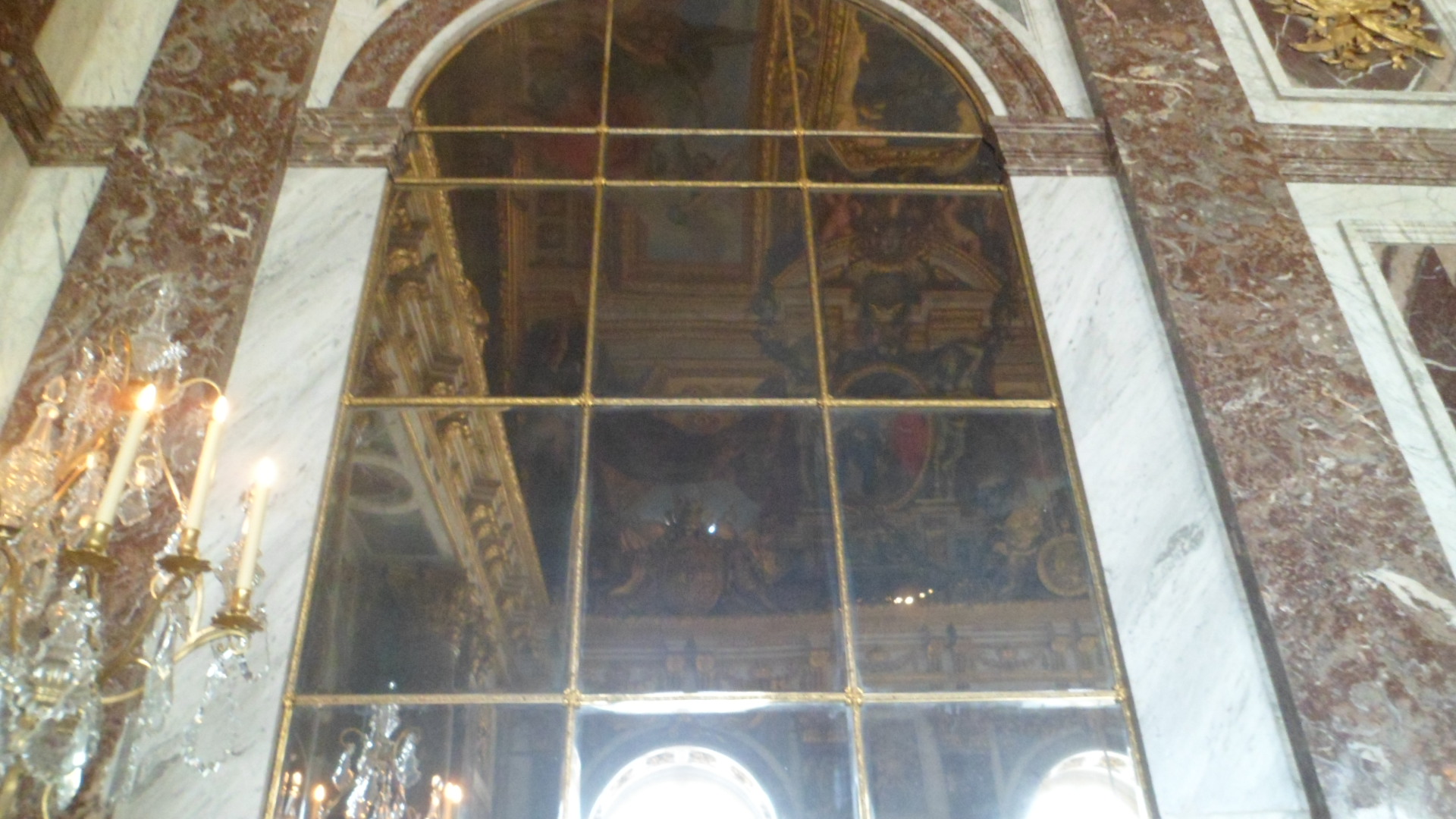
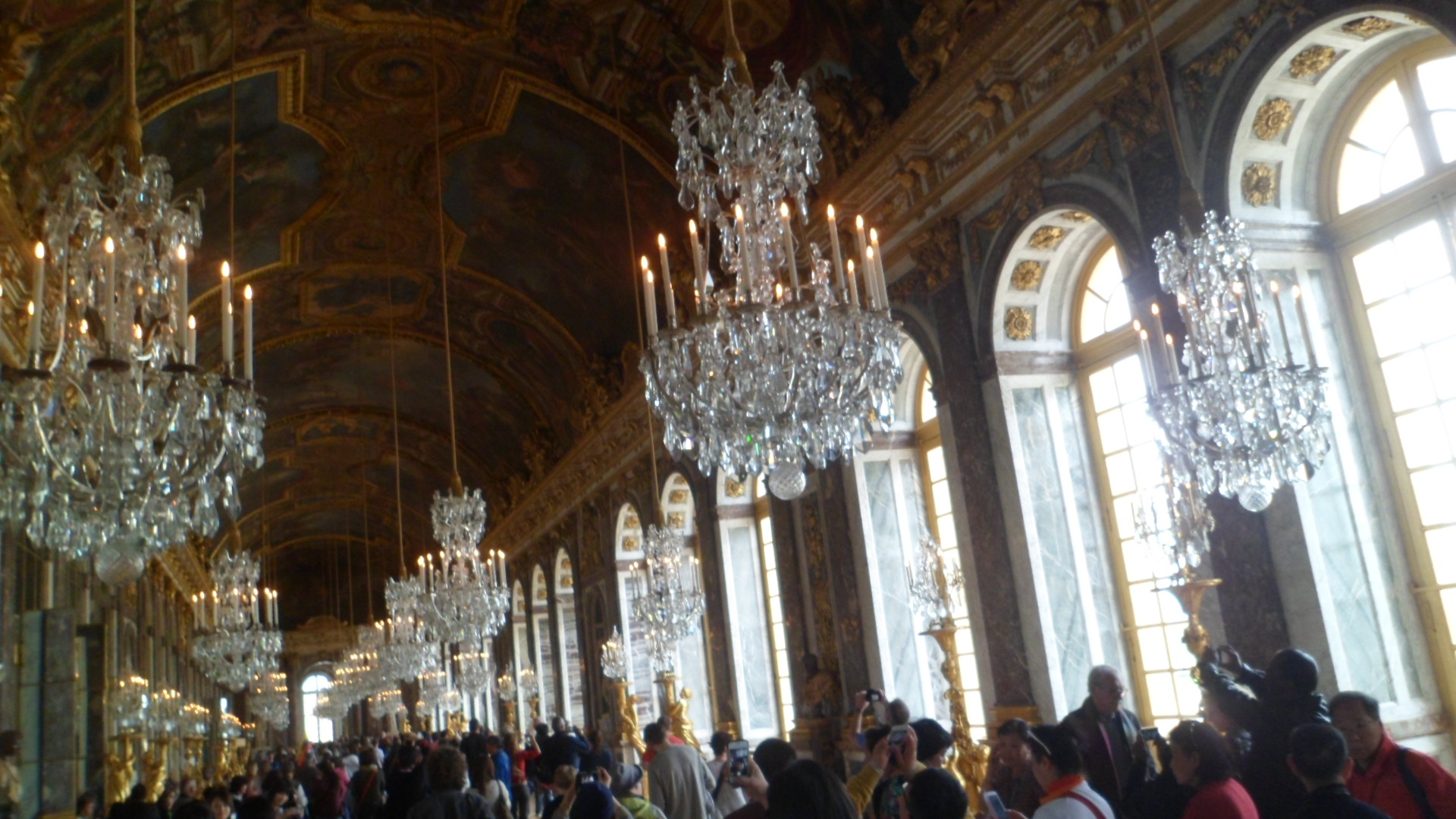
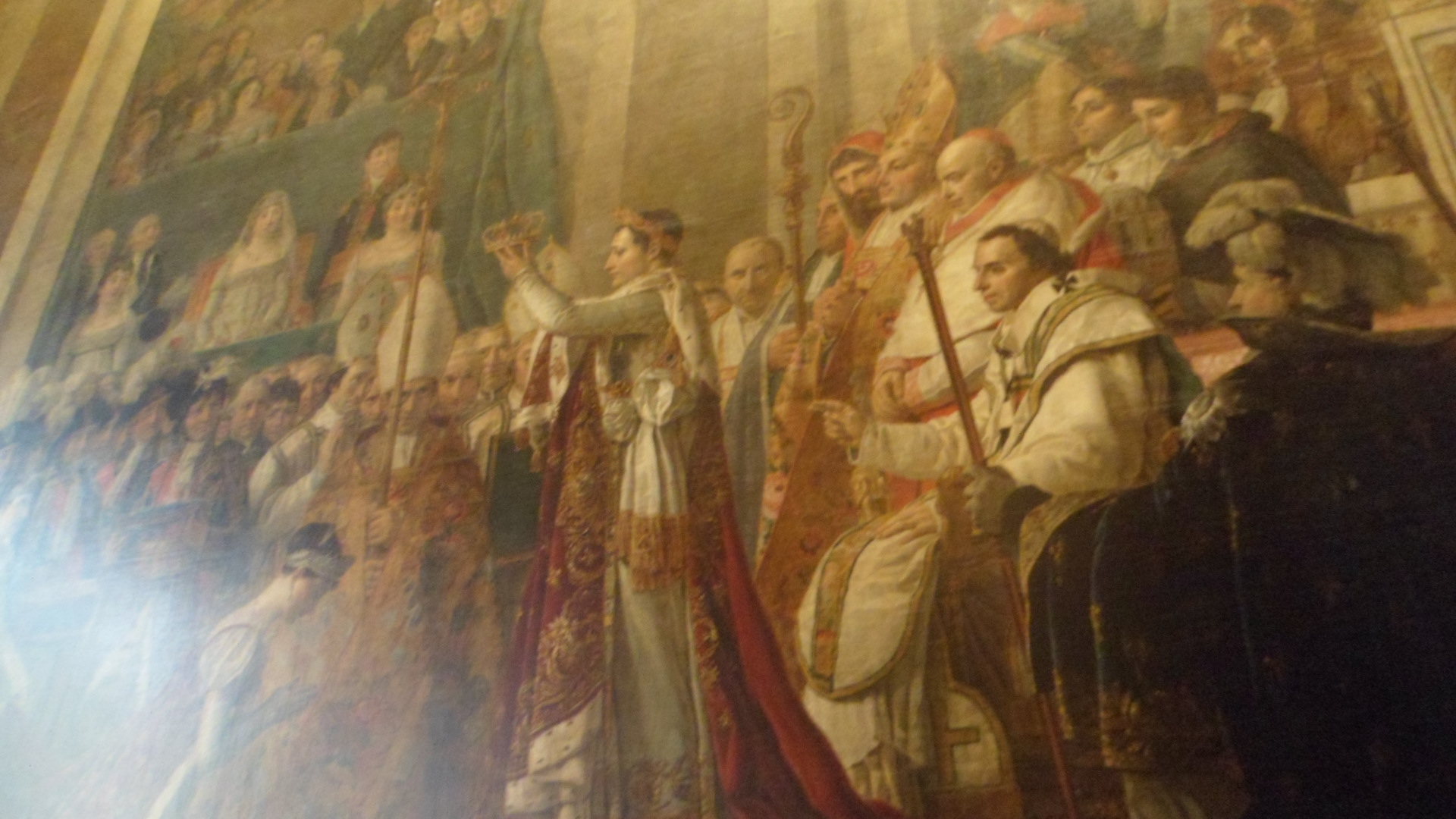
Views of the Queen’s bedchamber follow, with the famed portrait of Napoleon I, crowning first Empress Josephine, then himself, as a later addition to Court de la Reine.
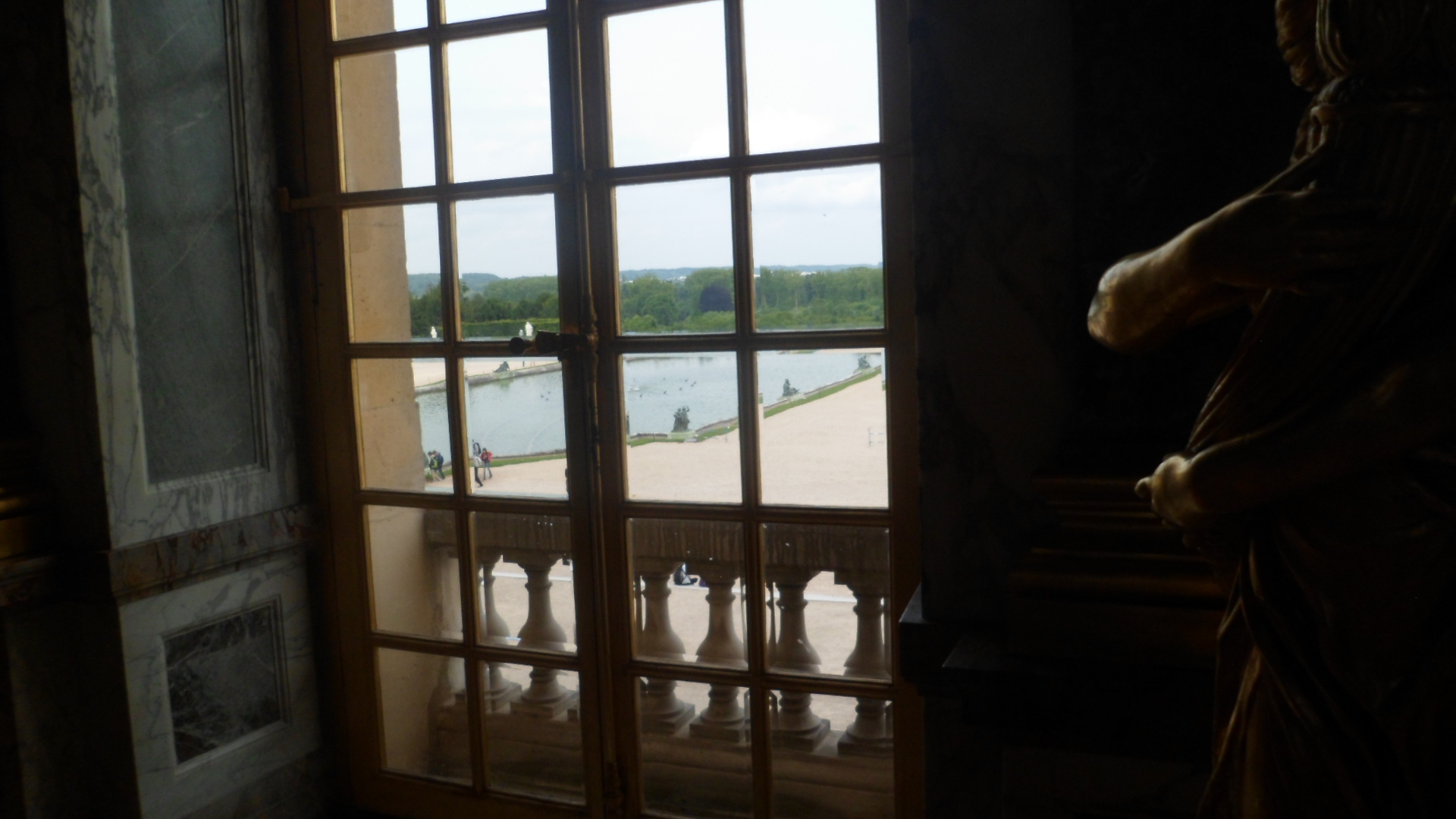

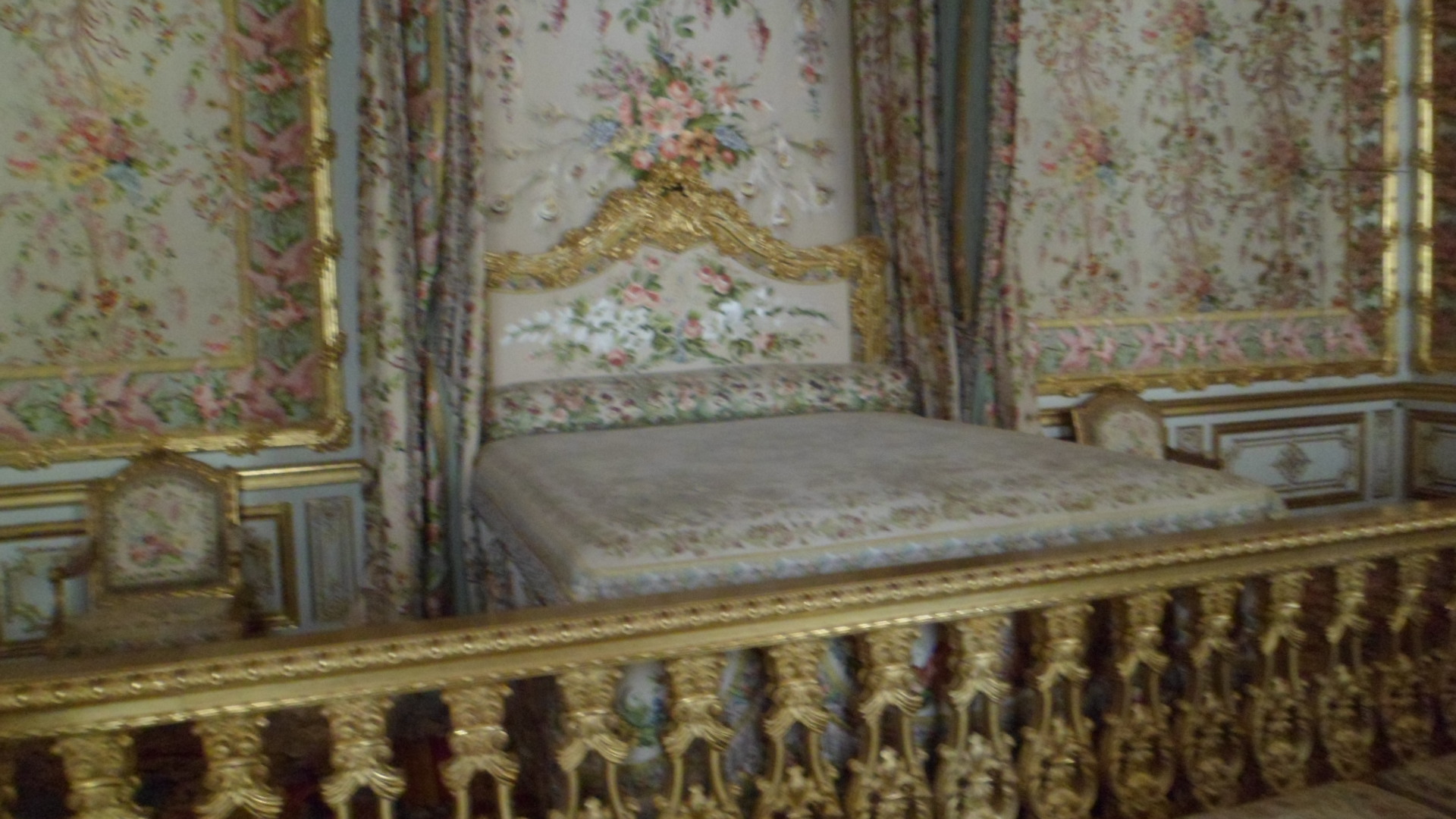
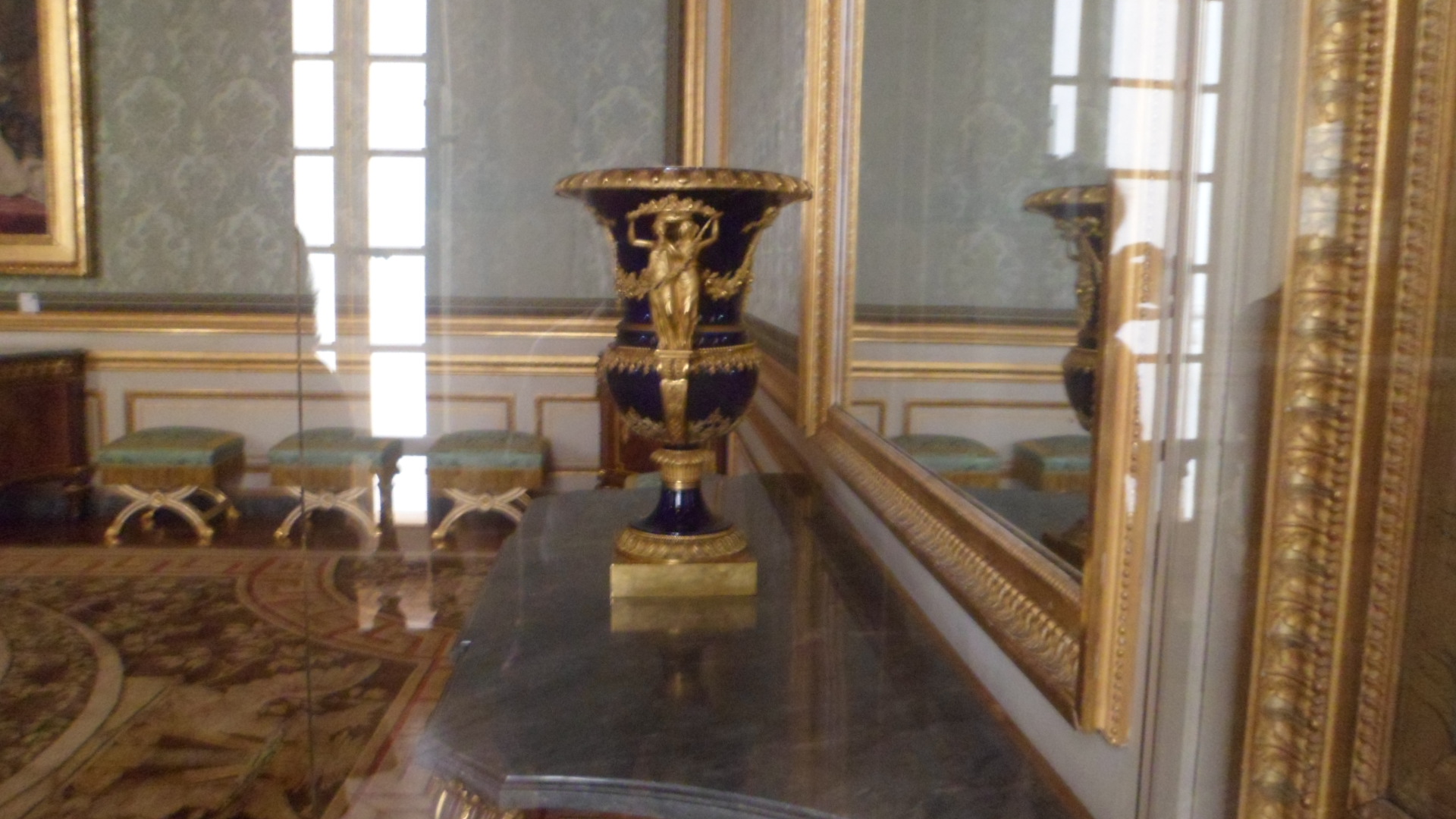
A view of the Inner Courtyard is next, and we finished our tour of the Chateau with visits to the apartments of Louis XV’s spinster daughters, Madame Victoire and Madame Adelaide. These ladies had little use for Marie Antoinette, their niece-in-law, and heeded the warnings by the peasant women who marched on Versailles, in 1789, leaving the Chateau for Italy, then for Greece, where they lived out the rest of their lives together.

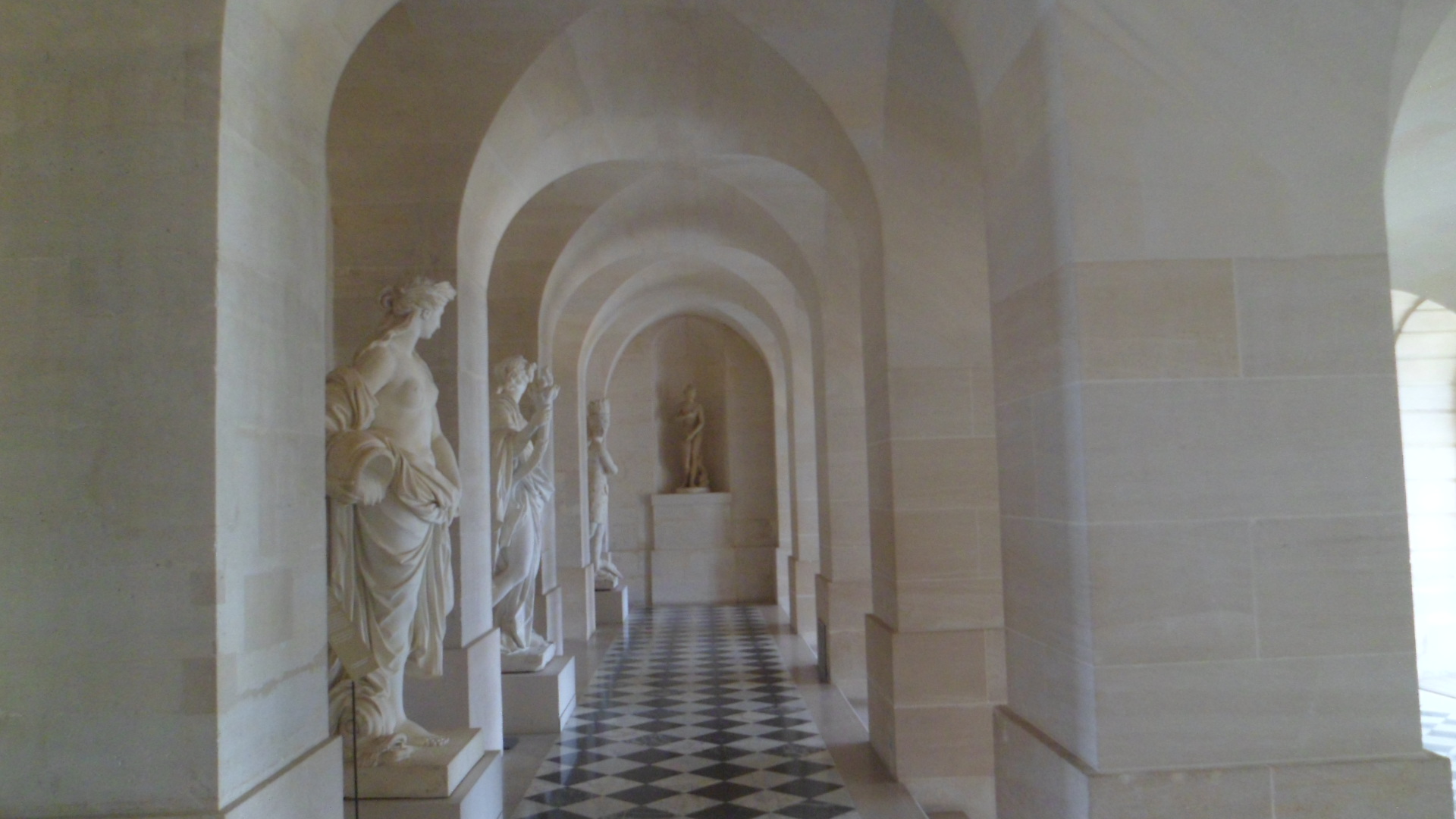


The story of the Bourbons is a hard one, in the end, and fully illustrates how it is that we all have to hang together in this life, not vaunt ourselves over one another.
NEXT: The Palace Gardens
 A Sagittarian Seeker