June 29, 2015, Lone Pine- Today is the last day of my second long road journey of this year. Like all trips, it has been less of a “vacation”, (though to some, any time spent away from one’s home town is a vacation), and more of a time of self-discovery. I learned that I could handle the worst of circumstances, with help from the spirit realm and logistical support from steadfast friends. I learned that there are those who will love me, regardless of what condition I am in and that there are those who will despise and avoid me, no matter how humbly I approach them. I learned, again, that there is no Final Destination, and that, no matter how far one goes, there is that one step beyond.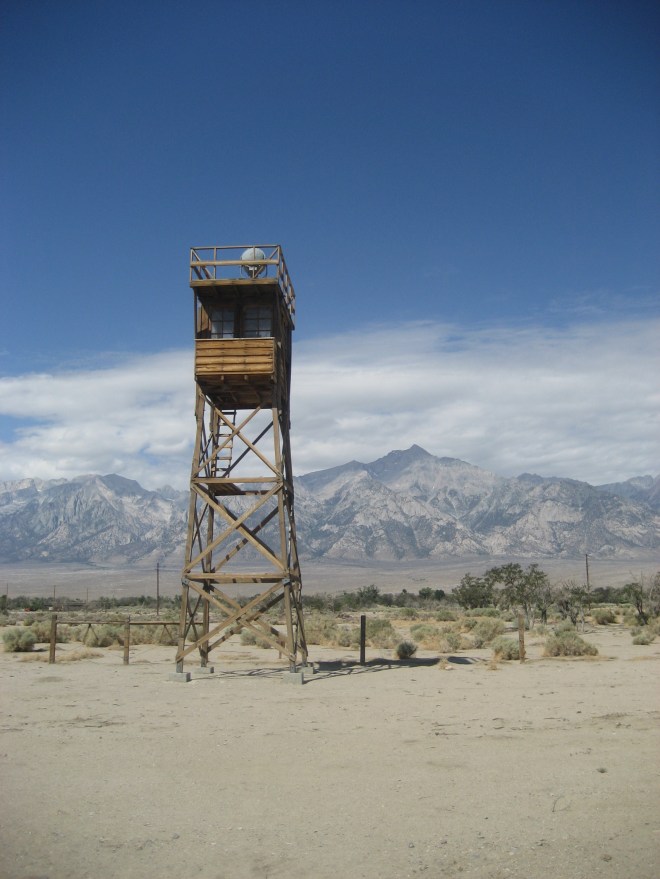
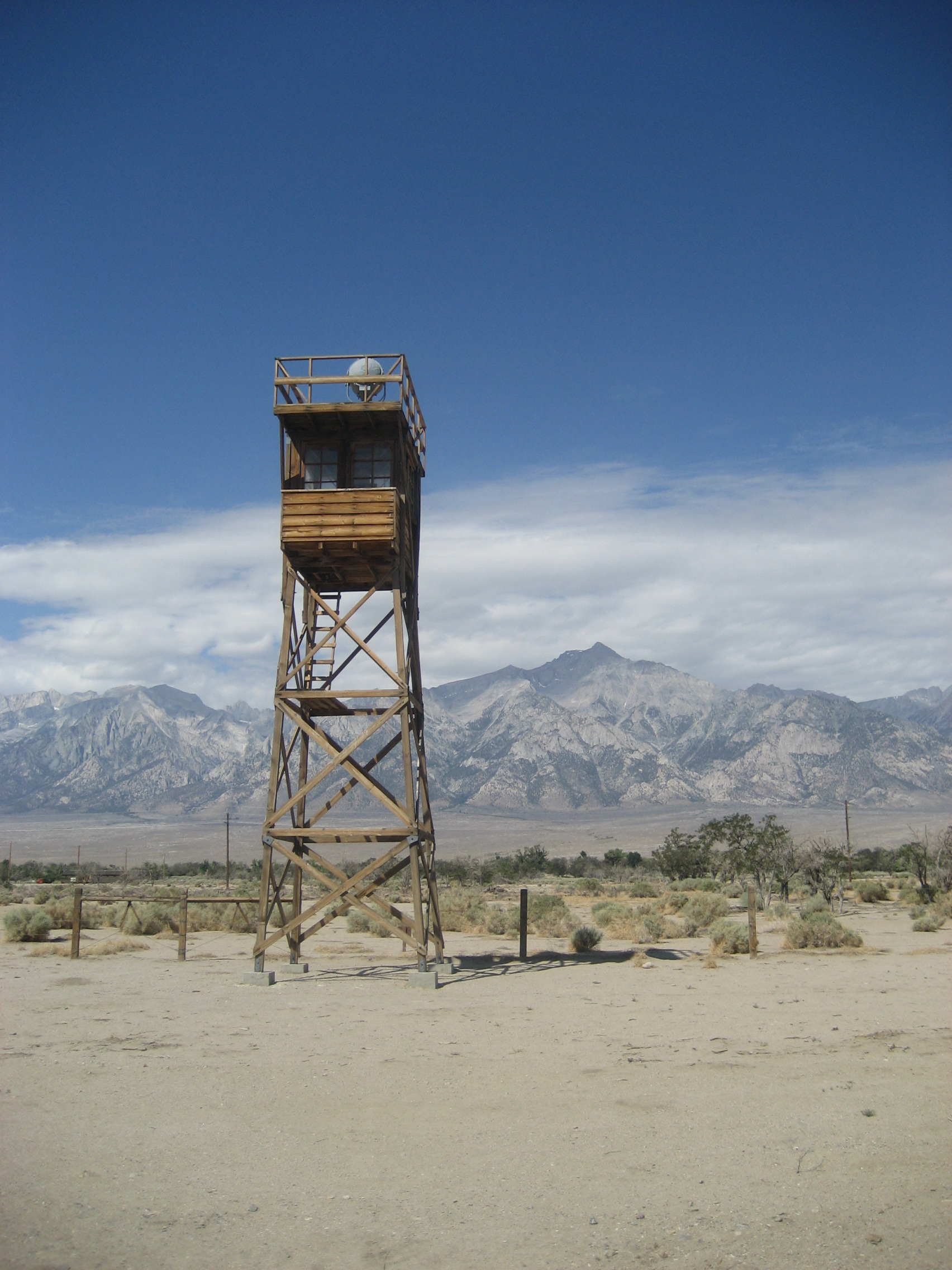
My last key destination on this road trip is a place of national shame, and of continuous soul-searching. Fear itself drove Franklin D. Roosevelt to order the removal of Japanese-Americans from the immediate Pacific Coast and of smaller numbers of German-, Italian- and Romanian-Americans from the Atlantic and Gulf Coasts, from 1942-1945. These American citizens were interned in what the President himself called “Concentration Camps”, though there were no pogroms planned or carried out against any of the interned.
Manzanar was the largest of the camps, with the Sierra Nevada serving as a wall between its Great Basin location and the western 2/3 of California. People were rounded up, without explanation, by the FBI and the military, early in 1942, from places like San Diego, Long Beach, Los Angeles, San Francisco, Sacramento, Portland and Seattle, and transported in buses and trains to this desert camp, and several others, such as Poston, AZ and Tule Lake, CA. There are two ironies here: The camps were often close to, or on, Native American reservations, though Manzanar was not- as the reservations in this part of California are on the outskirts of small Great Basin towns. Manzanar was a small collection of farms and ranches, such as Wilder Farm and Shepherd Ranch. These had been abandoned, before the U.S. government took over the area. The second irony is that, in 1944-45, internes were recruited into the U.S. military, for service in the European theatre. Many Japanese-Americans distinguished themselves in military service, including the late Daniel Inouye, who later served several decades as a U. S. Senator from Hawaii.
The Visitor Center at Manzanar National Historical Site has elaborate displays of both the Internment Period and of the history of the region. The other big conflict between ordinary citizens and the governments, both state and Federal, involved water rights in this region, the Owens Valley. The City of Los Angeles has bought up the lion’s share of water rights and built a pipeline, to meet much of its water needs. There is ongoing discussion with Owens Valley residents, from Bridgeport and Bishop, in the north, to Lone Pine and Lee Vining, in the south, about how to strike a balance with the City of Angels.

Here is a scale model of the Internment Camp, at its peak.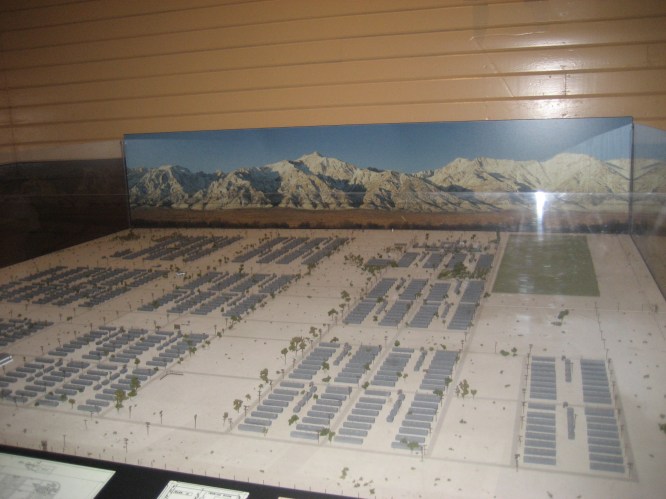
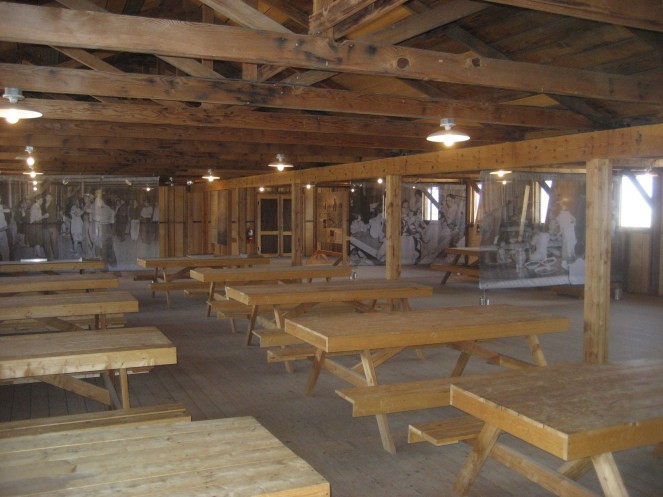
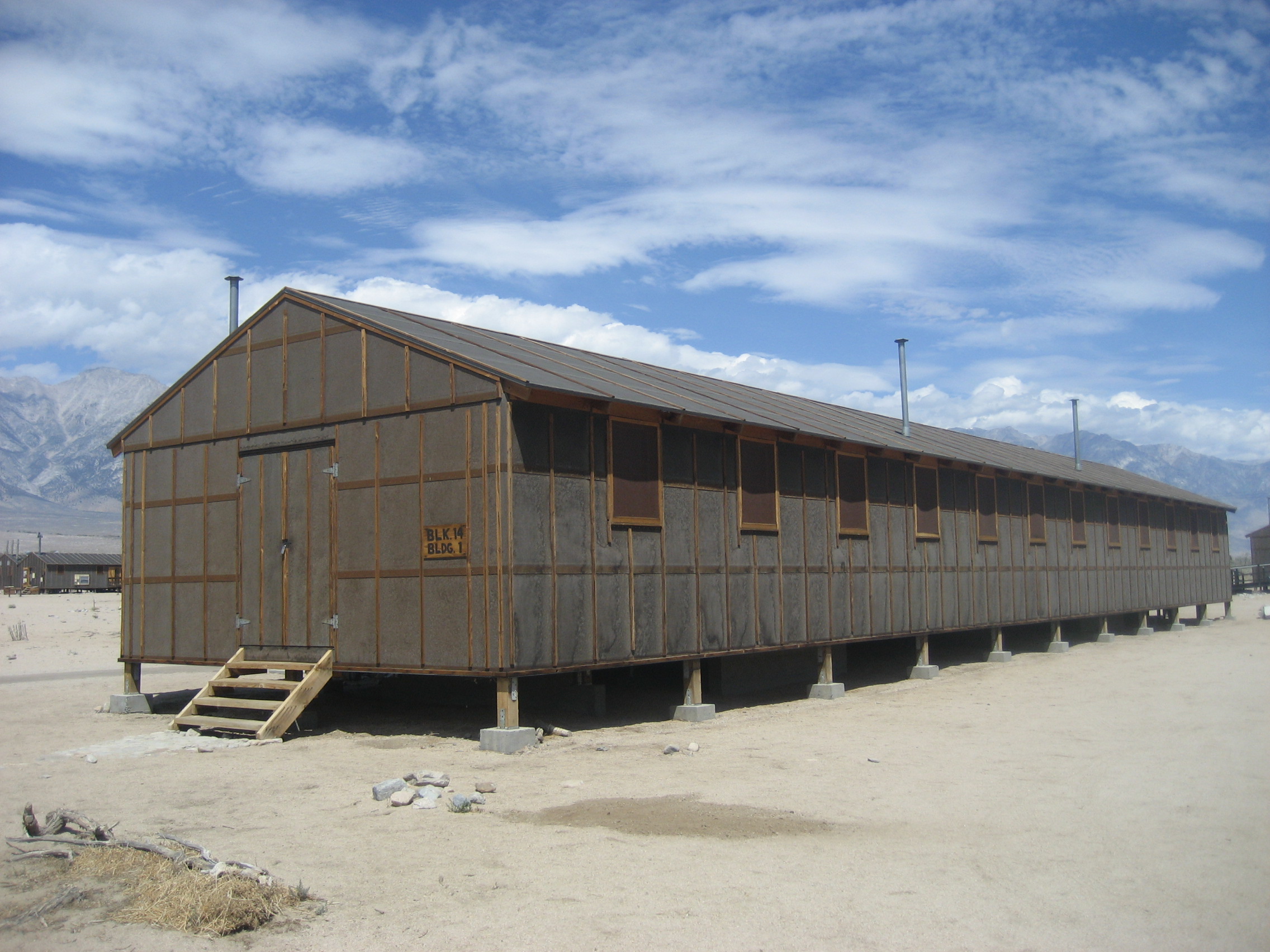
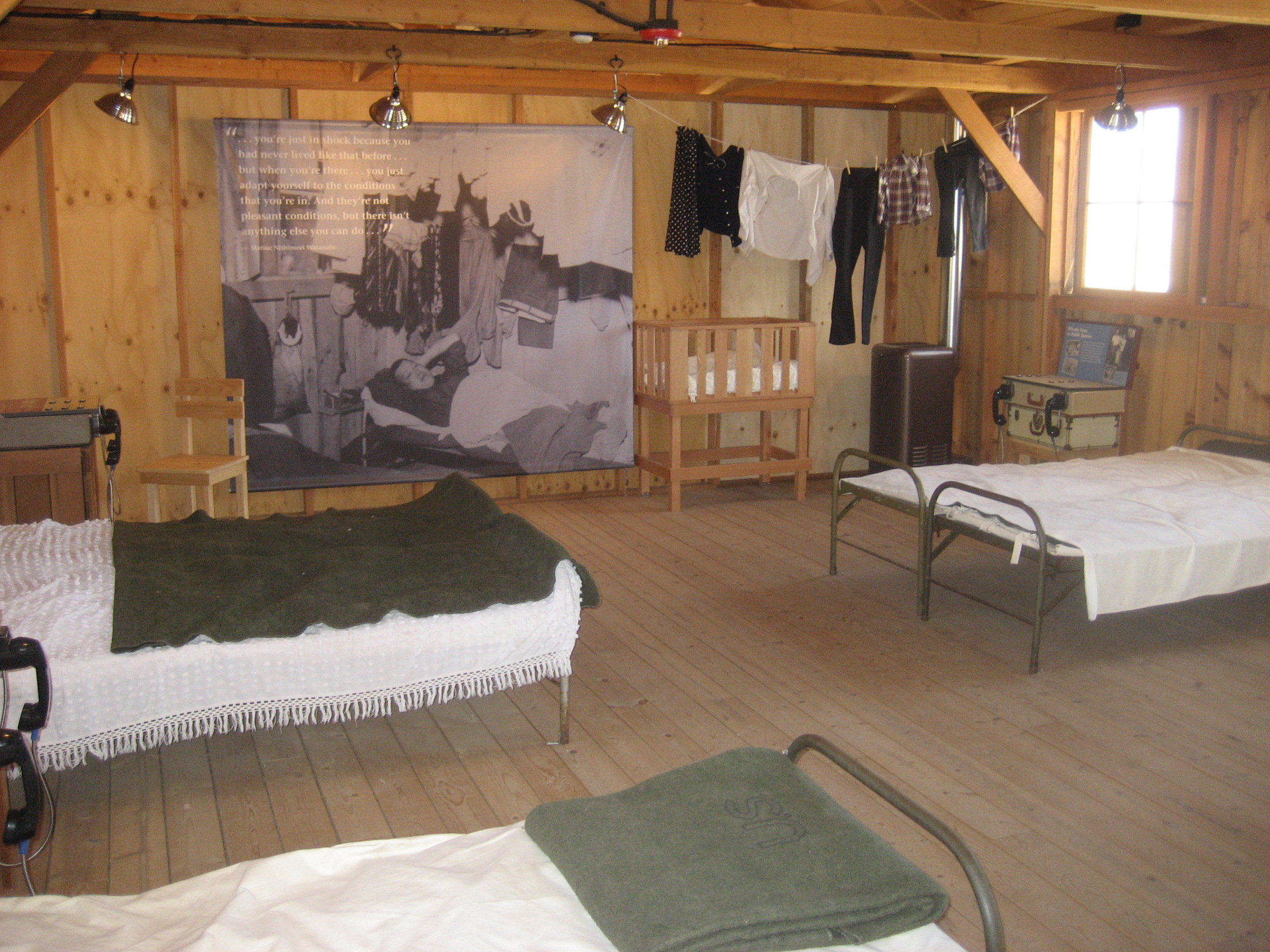
Some dormitories are maintained, by the National Park Service, to show just what living conditions were for the detainees. Remember, in 1942, there was no air conditioning, such as we know today.


The dining halls were crowded, and there were few safeguards against infestations by vermin and scavenging insects.
Ruins of several areas are accessible. Here is what’s left of the house at Shepherd Ranch.

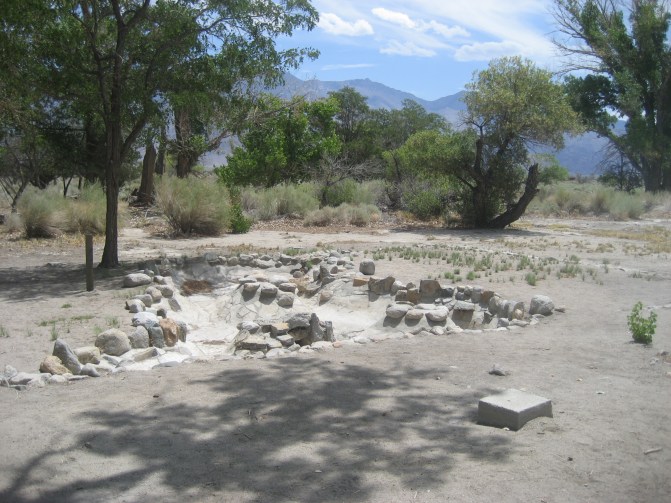
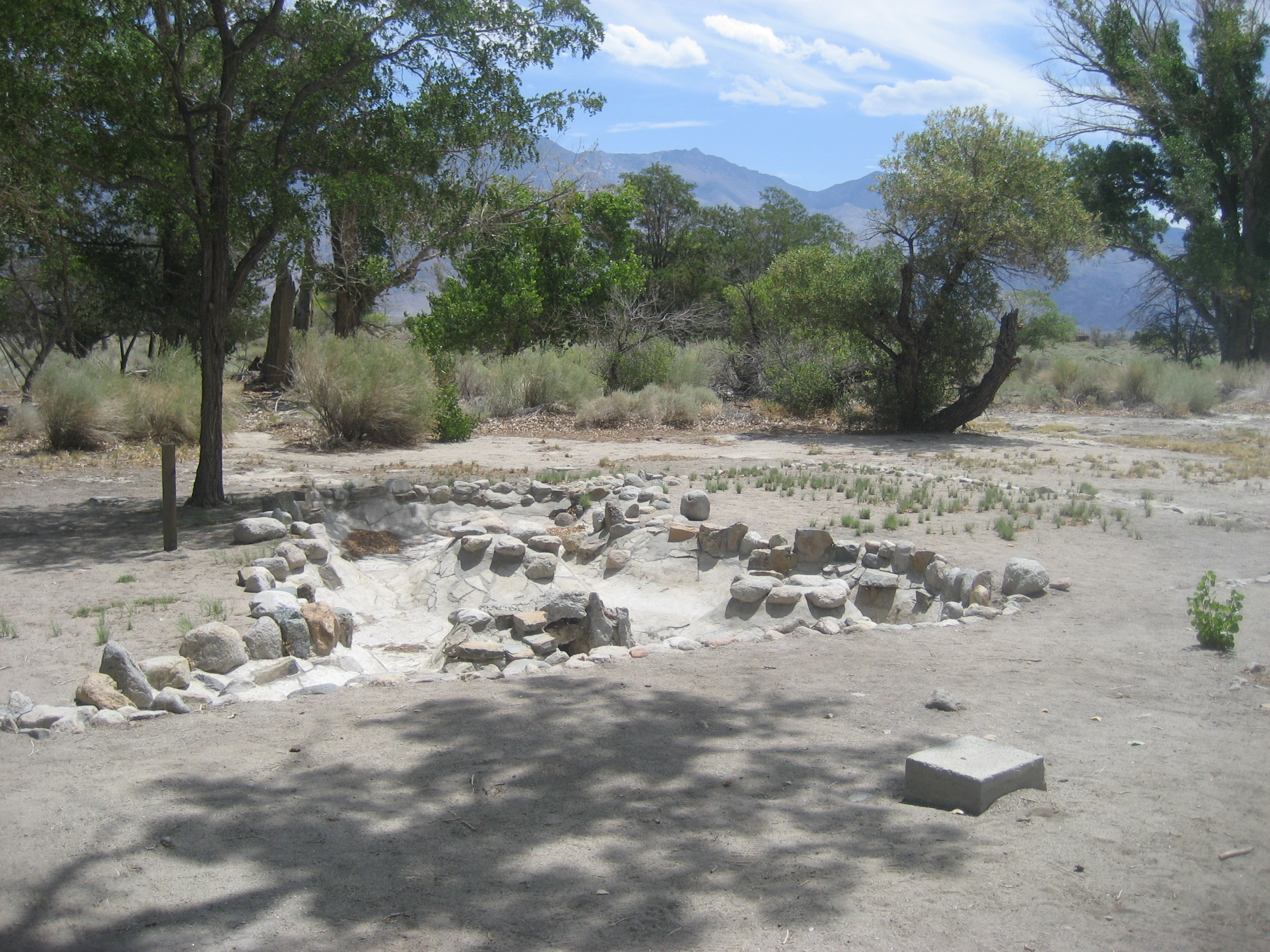
This was once a koi pond, maintained by the internes.
They kept up a splendid “city park”, on the north side of the camp.

Yes, it was called Pleasure Park.

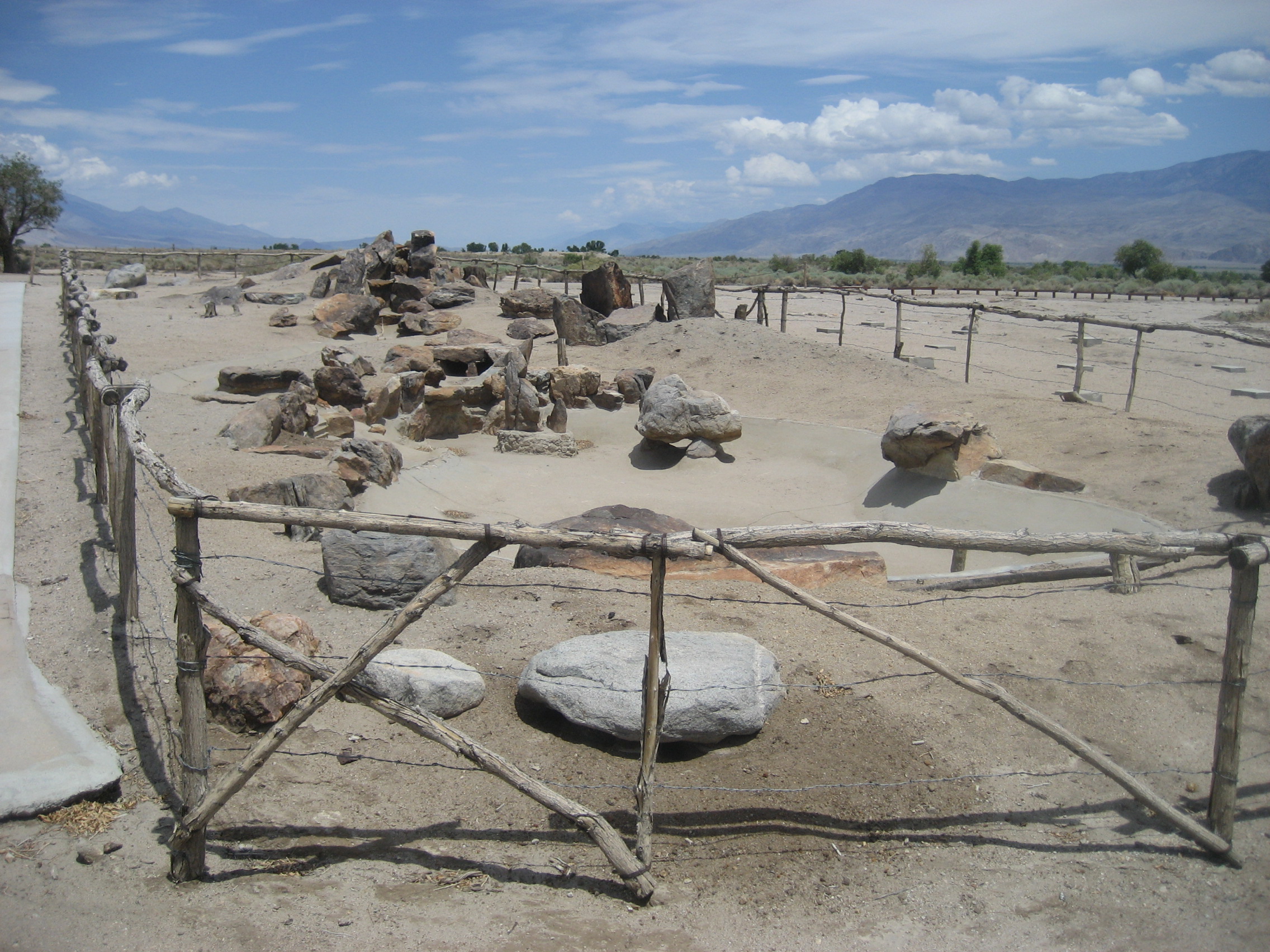
This part of the park is sealed off, to prevent injuries to the public, and defacing of sacred inscriptions.
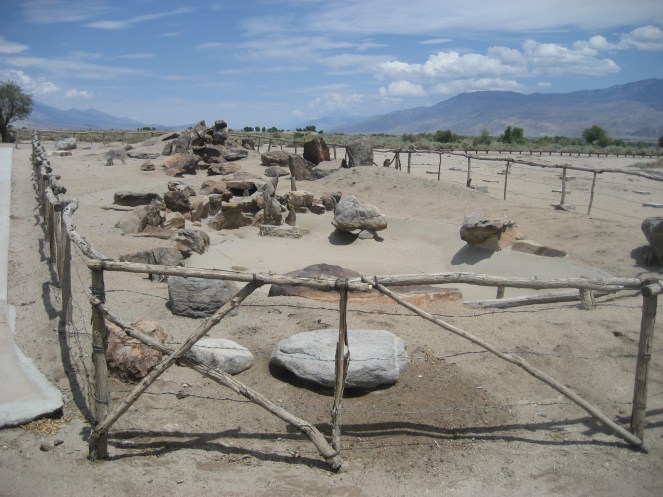
These are scenes of the hospital zone. There was a full medical facility, separate doctors’ and nurses’ facilities, and as was the wont of the internes, a garden.
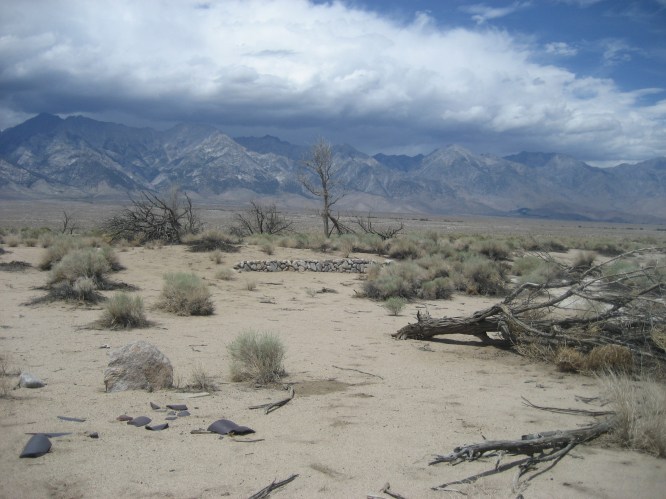
There was also a cemetery, and this cenotaph stands today, in honour of those who died during internment.

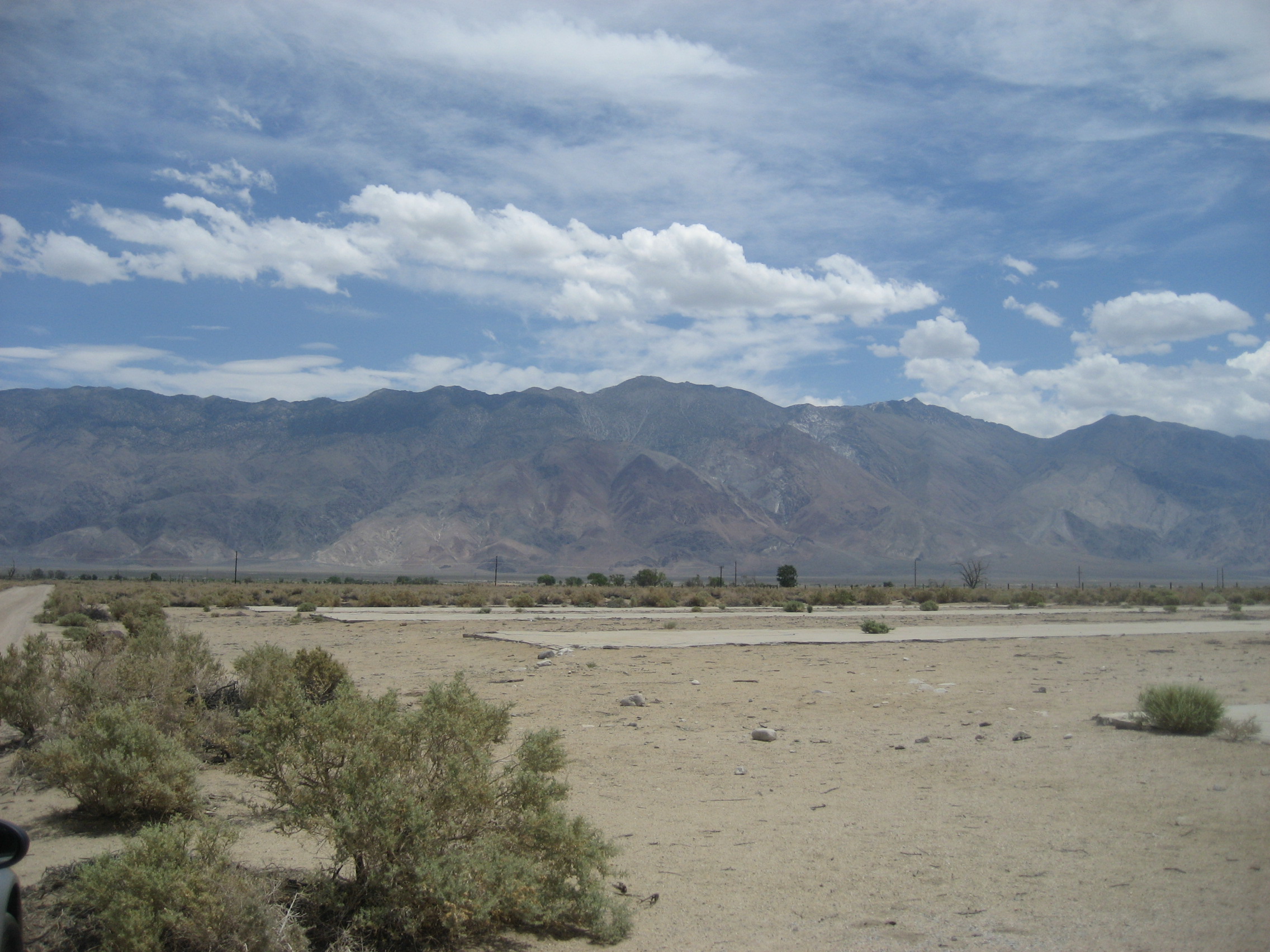
At the southeast corner of Manzanar, there is this slab, the remnant of a camouflage tent factory, where many internes worked, “for the war effort.”

This time in an American government internment camp was nearly as jarring, and as thought-provoking, for me, as my visit, about this time last year, to Berga, Germany, where Jewish-American and Hispanic-American POW’s were kept, in slave labour conditions, during the last months of World War II. The difference was that the U.S. was, and is, a representative democracy, and Germany knelt to the whims of a few. The similarity: Bigotry called the shots.
In 1988, President Ronald Reagan formally apologized to those interned, and to their families, and signed legislation which authorized $20,000 to be paid to each surviving victim. This was the Civil Liberties Act of 1988.
I drove, purposely, with the windows rolled down and no AC, from Manzanar to Prescott. Stopping for lunch and a copious amount of iced tea, at Totem Cafe, Lone Pine, set the stage for this. I came in to the pleasant establishment alone, but was followed by 28 other people, within ten minutes. The couple running the place managed to keep everyone pleased, but I had some concern fro the wife, who had to brace herself on the back cabinet and apply a wet towel to her forehead, for several minutes.
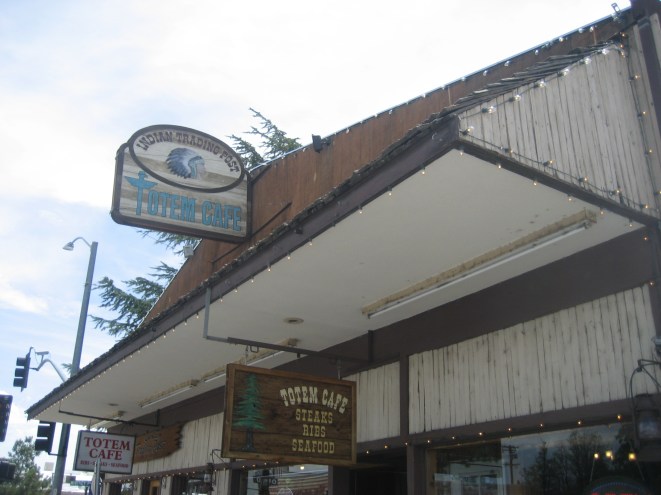
My heart goes out to all those who work in the hospitality industry, during these days of triple digit temperatures, in so many places, around the globe. I also stopped at Juicy’s Famous Riverfront Cafe, Needles, for an early supper, before heading on across the Colorado and back to base. Juicy was a stray dog, who attached herself to the fire company in Needles, and to the hearts of the entire town. That, alone, made it worth the stop. The service is excellent and the food fine and dandy.
I got back to Prescott at 9:40 P.M., exulting in the drizzle and cooling temperatures, no worse off, for the heat, having plied myself with lots of iced tea and cool water, along the way. Oh, yes, and plenty of sunscreen was applied.










 A Sagittarian Seeker