Pushing Back On The Mud, Day Three

2

April 5, 2023, Aptos, CA- It made an impression, seeing the width and height of the Pajaro River, flowing through the remnants of its namesake town. The community of 2,000 people has been inundated, and largely leveled, by the second major flood in 28 years. Most locals remember the destruction from the Deluge of 1995. Now, the artichoke fields, and some of the vineyards which have sprung up, in the interim, will again endure an unplanned fallow period. It will take a long while to recover.

Not surprisingly, feelings are raw, and voices rose in anger, late this evening, as a few rowdy children ran about while some men and women were trying to sleep, ahead of the next day’s work. Matters didn’t come to blows, thanks largely to the calm voice of the night supervisor for the Red Cross crew. Those who felt that their children were unfairly chastised by others left in the middle of the night, but that was a free choice-and no one would have continued to berate them, had they stayed in the shelter. I stand by my associate and his style of management.

The day shift produced a whirlwind of activity and resulted in more materials and services being available to the residents-both in the shelter and around town. Watsonville, the larger town west of Pajaro, was also seriously affected by the flooding, and is also a focus of services, with food being brought to them by our mental health team and outreach from various agencies, both state and local. FEMA is becoming steadily, but carefully, involved in the recovery operation.

The scene is being replicated, across the continent, by wind and ice, as well as by flowing water. Tornadoes have slammed over a dozen states; Ontario and Quebec have suffered widespread power outages, due to ice storms, which are as bad as-and sometimes worse than, torrential rain. It is bound to be a long, hard Spring, yet we’ll get through it, by diligence, encouragement and sticking together.

Farewell, Kitty

4

March 31, 2023- The lion of March roared its best today- across a wide swath of the country. As I was readying myself to deploy for the Red Cross to San Jose, on Monday, dozens of cities in the South and Midwest were being battered by tornadoes, hailstorms and, in the northeast corner of Oklahoma City, grass fires. The worst hit, so far, are Metro Little Rock, Wynne (AR), Coralville (IA) Covington (TN) and Belvidere (IL). In the northern Illinois city, the roof of the Apollo Theater collapsed, in the midst of a Heavy Metal concert, killing 1 and injuring 28 of the 260 people who were inside the venue. This was believed to have been tornado-caused.

The month to come is likely to start out, by Tuesday, with more of the same. So, while I will start out working to help keep flood victims in the San Joaquin Delta safe, and hope to be back to honour commitments here in Prescott, in mid-to- late April, the nation’s bleeding may upend those plans and countless other people’s- victims and disaster workers alike. A great many will face the fury, regardless of the cause of this super-charged tornado season. We can only stick together and make whatever adjustments are needed.

Thus far, the official response to the devastation has been swift, level-headed and non-partisan, as it should always be. This will make our work easier, and the climate in which victims recover far more encouraging. I will be keeping in touch, on this medium and elsewhere, as best I can, over the next two weeks. The main focus, though, will be bringing relief.

Goodbye, lion and a guarded hello to the beasts of April.

Comes The Lion

4

March 1, 2023- The morning began, benignly, with a gentle snowfall throughout the day. The flurries were brief and probably would not have caused problems for students headed home. Then came 4 p.m., and the skies really opened up. It’s still coming down and the expectation is that the snow will continue, until early tomorrow morning. At least the wind is not fierce.

The old adage has not really borne itself out, these past few years. Nevertheless, this year, the lion is bringing in March-and not only here in the Southwest. Norman, OK, is near Moore, where I was headed for tornado shelter work, in May, 2013-before I got a call to hurry back to Prescott, for fire shelter duty. Norman had a horrific twister, two days ago and is in bad shape. A couple of friends live there, and I am waiting to see how things are for them. Then, there is the Northeast, with NYC and western New England getting the first snow of the season. My niece posted a fun set of photos of her family enjoying riding around their farm.

As I look out my picture window, the scene is lovely and serene. Few, if any, people are driving this evening. I have a medical appointment, tomorrow morning, so that should prove interesting. I wonder if my PA will even be able to get to the facility. Prescott does a good job of clearing the main roads, though, so by the time I need to go over there, things will be “slow but steady”. I also may be called to man a relief station, but that is up in the air, as of tonight.

The rest of this tale is that the NWS is not forecasting any more snow here, this season. In my experience, the time between the Ides of March and Equinox usually gives the lie to such prognostications. Stay tuned.

Valley of the Shadow

2

December 11, 2021- The workers were making and packaging candles and their accessories, following protocol for producing one of the season’s most popular gift items. It was the nightshift. 196 miles to the northwest, workers at a night shift in an Amazon distribution center were preparing various parcels for transport on the logistical giant’s fleet of trucks and planes.

It is a given, in most lines of work, that the employee will likely make it home, at the end of a shift. The workers at these two facilities most likely bid their loved ones good night, perhaps tucking their children into bed and kissing their significant others, before heading out.

Perhaps unknown to both crews, two lines of deadly storms, one tracking north east and the other, due east, had the buildings in their sights. In the early morning hours, in the middle of the shifts, tornadoes pummeled the communities of Edwardsville, IL, Bowling Green and Mayfied, KY. At both facilities, it became graveyard shift for one too many.

As is now known, the roof and at least one long wall of the Amazon facility, in Edwardsville, were shorn by one of the deadliest tornadoes ever to strike Illinois. It had already wreaked havoc on communities in southern Missouri. In the more southerly band of storms, another horrific twister slammed into a nursing home, in Monett, AR and leveled the hamlet of Samburg, TN. The tornado was far from spent. Veering north from Samburg, it pummeled Mayfield, the site of the candle factory, dealt glancing blows to Hopkinsville and Cadiz, Ky and bore down on Bowling Green. The death toll from the aggregate of the storms may well exceed 100.

This is not the time of year when people in our nation’s heartland normally live in dread of twisters. Normalcy with respect to climatic events has, however, gone on extended hiatus. There is no time of year when one may let down guard, no time of year when families can bid farewell to their loved ones, expecting a humdrum work shift followed by their safe return.

This will be a strange Christmas, as survivors inch their way forward, through the Valley of the Shadow. Let us fear no evil, and let us stand together. (I may very well make my way to one of the affected areas, as a Red Cross Disaster Relief Team volunteer, after the end of this week of local obligations. It will be a time of muted colours, of quiet thanks to our Creator, whilst appealing to His good graces towards the suffering.)

Staying Golden

2

March 13, 2020-

As it happened, Friday the Thirteenth saw the climate of upheaval hit a pause button,at least as far as society as a whole was concerned.  Of  course, COVID19 has yet to run its course, and many are out of work, however temporarily.  Remedies,though, are in the offing, both medically and economically.  Perhaps, by next Tuesday, toilet tissue will be on the shelves, for more than an hour, again and there will be a sense of recommitment to work and study, as colleges and universities at least adjust to online curricula and some level of financial support comes from a Congress that is intending to work through the worst of the crisis.

This is the first open-ended challenge that humanity, as a whole, has had in a good many years.  The other such calamities had human faces:  The Axis Powers; Mao’s Cultural Revolution; September, 2001’s terrorist attacks.  There were natural catastrophes that were more specific, in terms of dates and locations:  Each of the last three viral epidemics; the hurricanes of 2005-until present;  the great wildfires and ensuing floods; the many tornadoes, most recently those that hit central Tennessee.

It is being,and will be, handled better than at the onset.  Governments are learning that the commitment to public welfare needs to be specific, all hands on deck and long-term.  The people are learning that there are times, when being physically distant is an act of love.  Both institutions and individuals are learning to trust science.

We are learning what the Gold Standard, in institutional and social life, actually means.

Nashville

5

March 3, 2020-

The two little boys missed their Mommy,

as the wind sounded for all the world

like a freight train, headed straight towards them.

Daddy was there, and got his two cowboys

to the safe room of their house.

When they talked with their mother,

later on this first horrific day of their young lives,

they learned that she had been safe, too,

throughout.

She was in another part of the country,

doing her work.

A musician friend, who has been ailing,

had to flee her home,

along with her beloved soulmate.

They will go back there,

to recover what’s left,

and then move on,

in the light,

provided by a Loving God,

through the portal

of an enveloping community.

The dead are being recovered,

and will long be remembered,

by a city, state and nation,

which cast their arms around

those left, in neighbourhoods,

vibrant, once, and again.

Nashville, resilient.

Sixty-Six, for Sixty Six, Part LI: Twisters and Turns

7

July 11, 2017, Van Wert, OH-   My drive from Elkhart and Goshen was uneventful, until I reached the Ohio state line.  I had an idea, that I might stay in Lima, a northwest Ohio town, with a Baha’i connection (one of the early American Baha’i teachers was from there.)  That went out the window, as soon as I reached the first Ohio highway rest area.  Rain began falling, copiously, to say the least.  Thunder and lightning were, of course, a huge part of the mix.

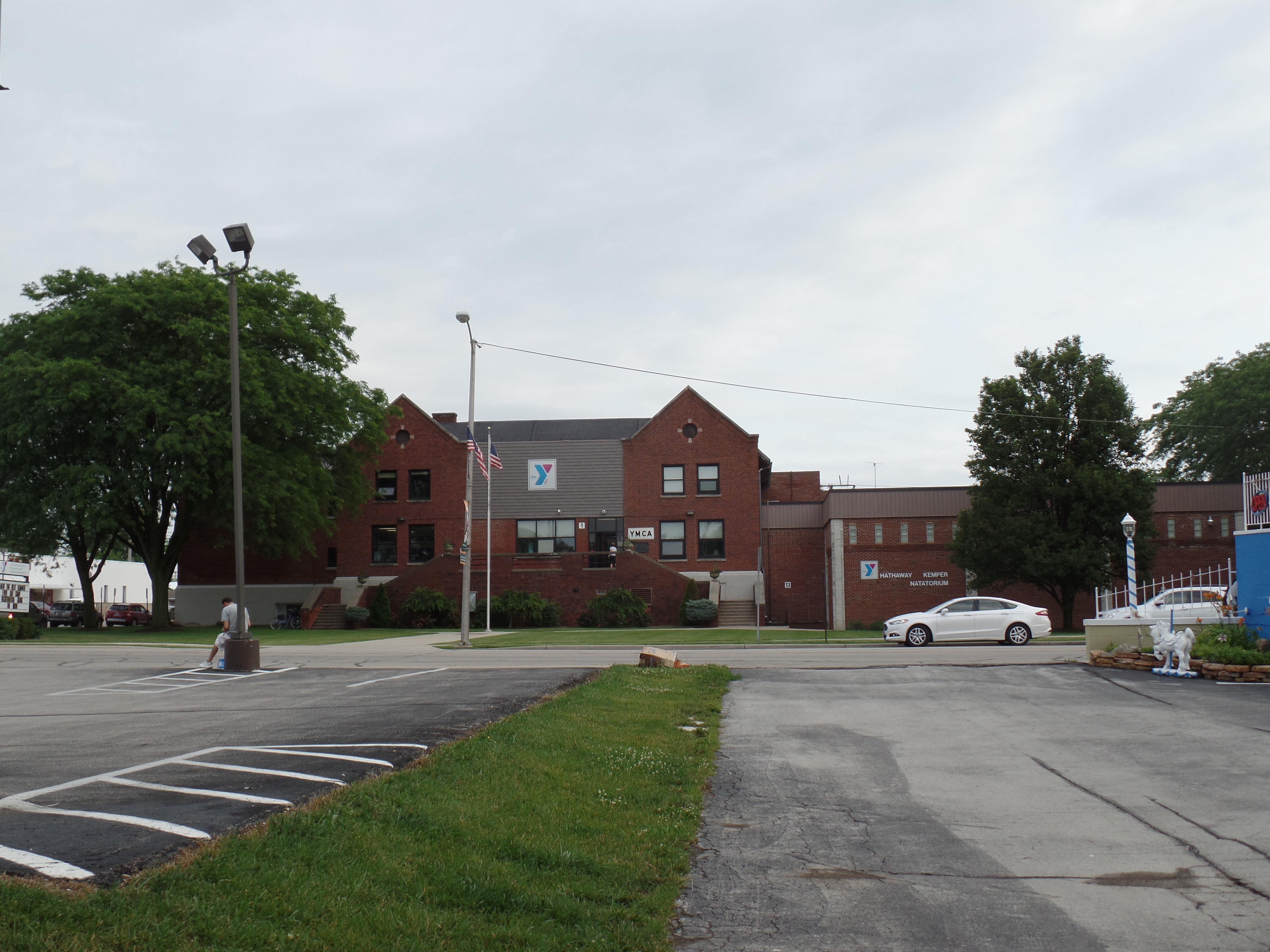
I then and there decided to make my way to the closest town, Van Wert.  It was the right move.  No sooner had I checked into downtown Van Wert’s only motel, than a tornado alert came on the cellphone, and the motel manager began the process of evacuating her family, and all of us tenants, to the YMCA tornado shelter, across the street.

We spent about forty minutes in the Y’s basement, before the all-clear was sounded.  The twister had struck a town just north of Van Wert, but left us alone.  The night, after that, was peaceful.

Here is the undisturbed scene, the next morning, at Fountain Inn and at the Y.

SAMSUNG CAMERA PICTURES

SAMSUNG CAMERA PICTURES

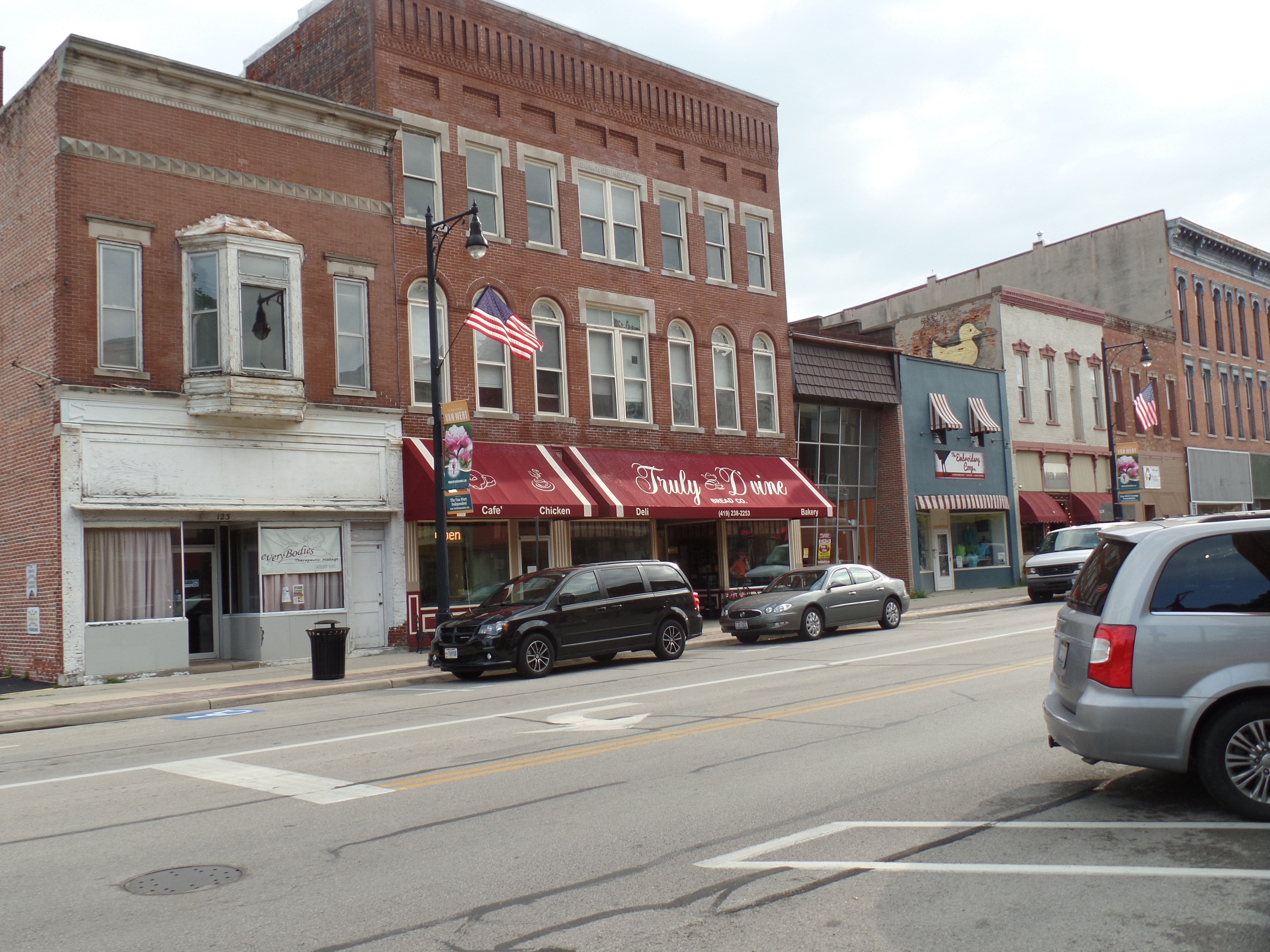
By now, Van Wert had grown on me, so a little exploration was in order.  There are two fine breakfast places in town.  I chose Truly Divine Bakery, figuring a little hubris is merited by people who have to live under the threat of tornadoes.  The other place, Balyeat’s, lists itself as “nationally known”, so I also thought Divine needed a boost.  The place has exemplary pastries, and marvelous breakfast sandwiches, so it was the right choice.  A group of A.M. Lions was having their meeting at Divine, so that was another good sign.

SAMSUNG CAMERA PICTURES

SAM_8512.JPG

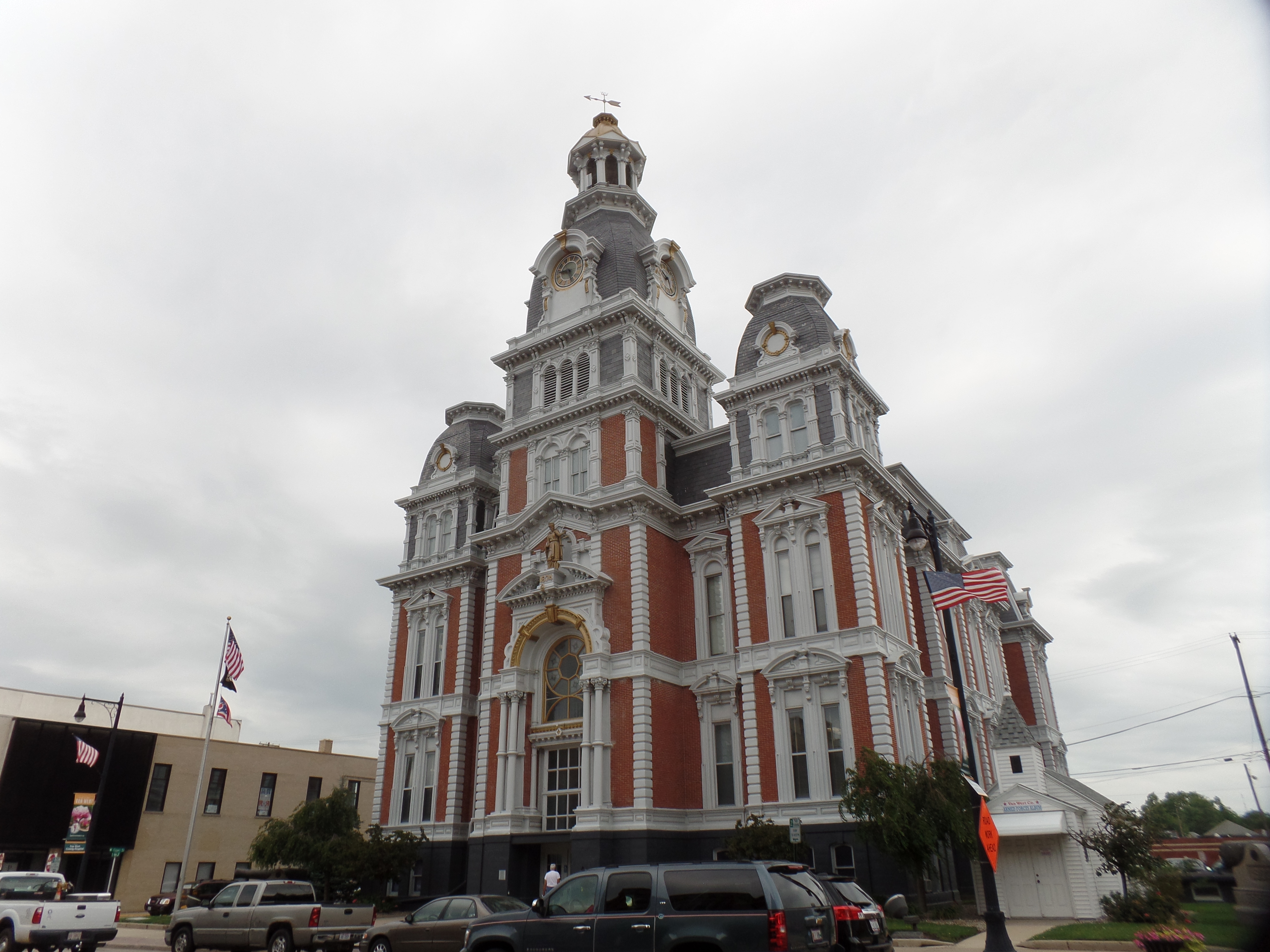
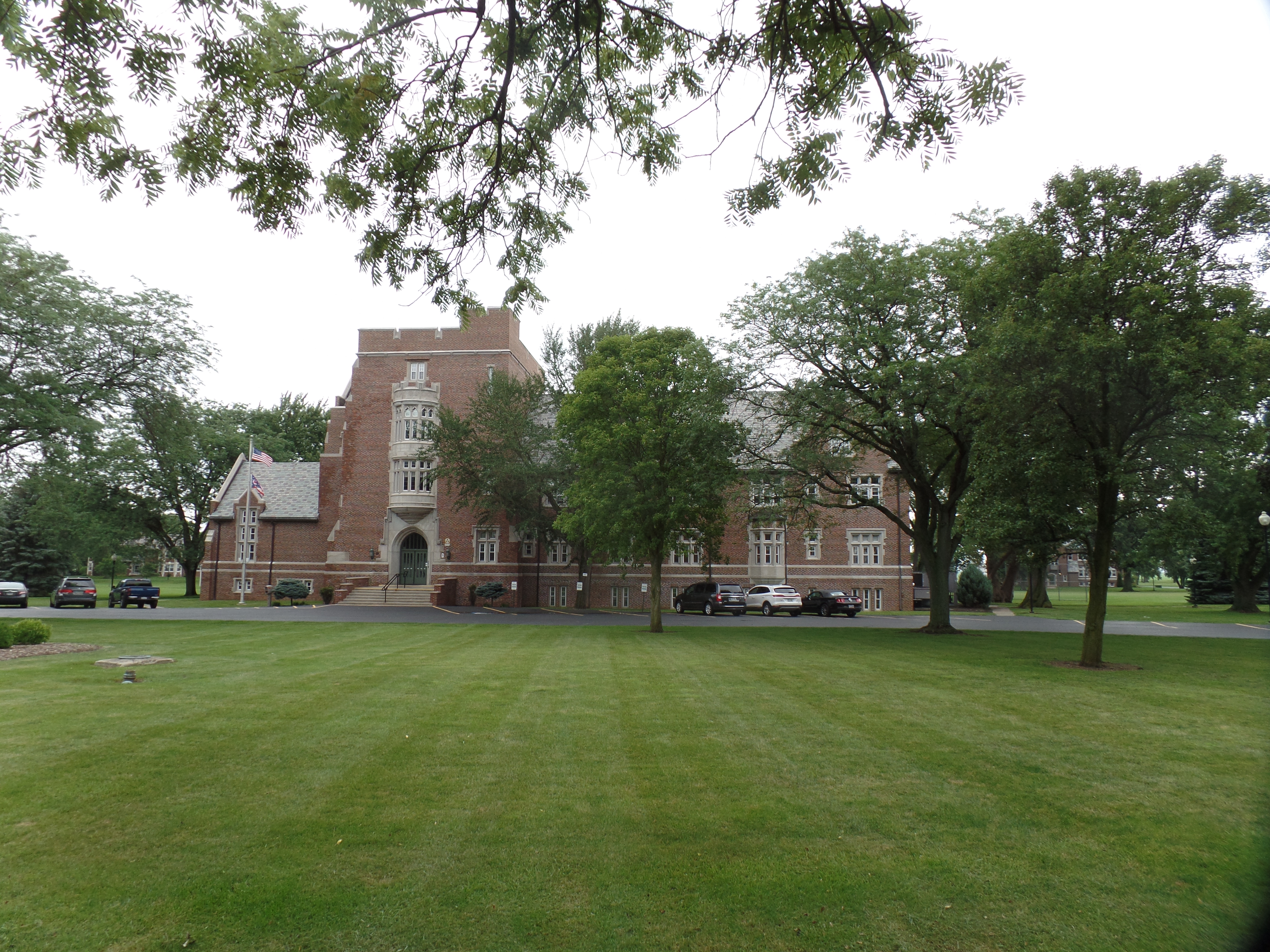
Midwest towns are, on the whole, homey, clean and standard.  There are often one or two surprises, though.  Van Wert has an impressive Courthouse.

SAMSUNG CAMERA PICTURES

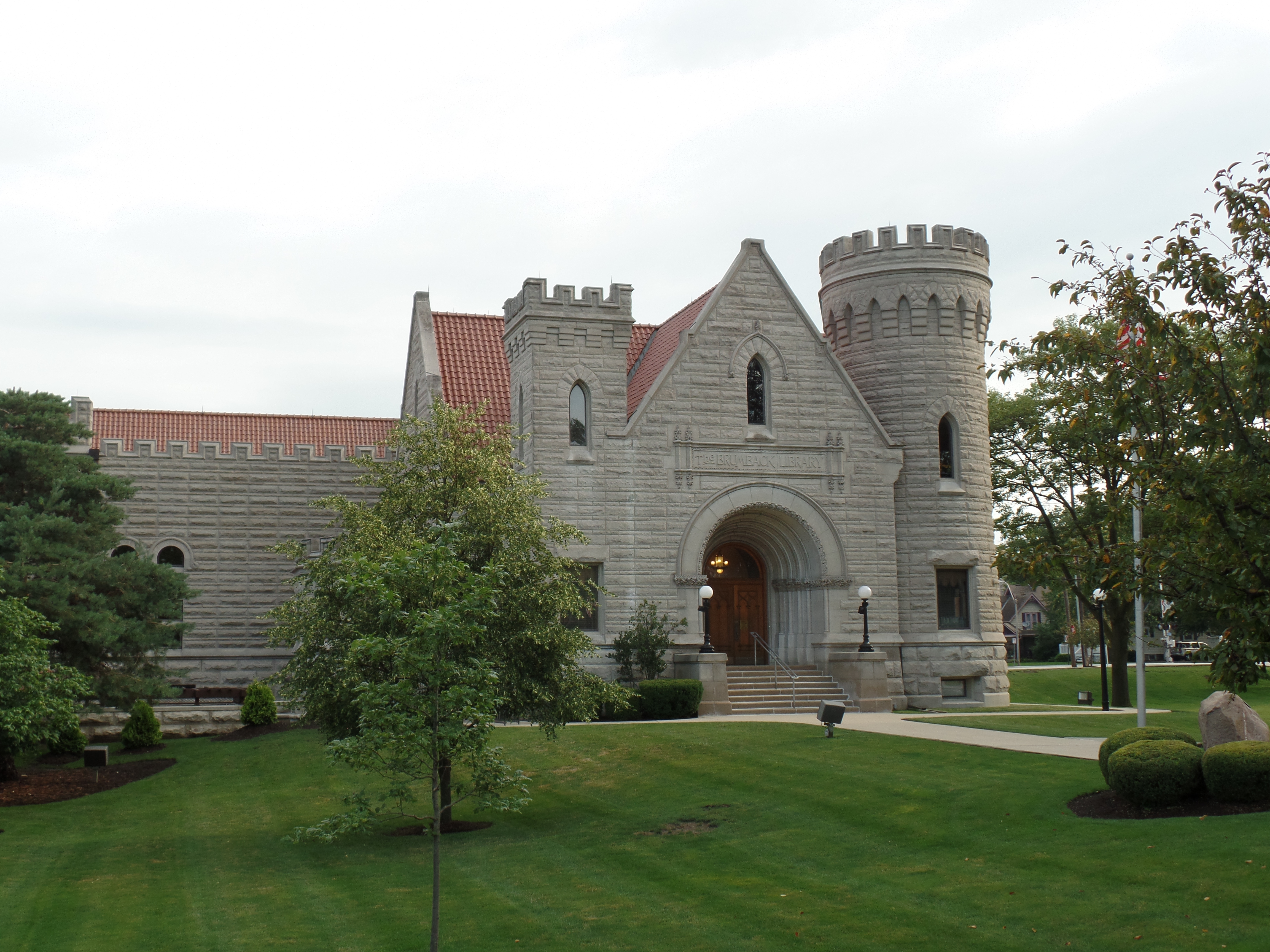
It also boasts Brumback Library, the first county public library in the U.S.

SAMSUNG CAMERA PICTURES

Finally, there is the Marsh Foundation for Children and Families, serving the needs of high-risk children, since 1922, when George and Herlinda Marsh, a prominent Van Wert couple, saw the need for such a center in northwest Ohio.  The spacious campus  now tends to the needs of young people, from all over the country.

SAMSUNG CAMERA PICTURESSAMSUNG CAMERA PICTURES

So, Van Wert is a solid community, and well worth the time taken.  I stayed on U.S. 30, driving through Lima, but continuing on, in the interests of time, and of not knowing when another storm would present itself.  The highway did take me to two other appealing cities:  Mansfield and Canton, subjects of the next two posts.

The Road to 65, Mile 131: Typhoons

2

April 8, 2015, Prescott-  It was cold all over the place today.  Snow was reported on the East Coast, and we shivered a bit, here in northern Arizona. North America is past being ready for warm weather.

It’s time to consider that warm weather has its price:  Storms happen, as anyone in New Orleans or Miami can attest.  Tornadoes have already swiped Oklahoma and Arkansas, this spring.  Even Dubai had a wicked dust storm, last week.

Typhoons, though, are in a league of their own.  Being cyclonic in nature is bad enough, when the storm is an Atlantic or eastern Pacific hurricane.  In the islands of the western Pacific, from Borneo and New Guinea to New Zealand, and on up to Japan, the deadliness of a Category 5 Typhoon, hitting a low-lying island community, seemingly from three directions at once, defies the imagination.  The Philippines have had two such killer storms, this year alone. Vanuatu, which used to be called New Hebrides, is slowly inching forward in recovery from a massive typhoon, a few long weeks ago.  Small countries nearby, named Kiribati and Tuvalu, also got hammered by the monster.  These are not places with an unlimited store of resilience, but they will come back from that one.

Word has reached us, this evening, of yet another Category 5.  This one is hitting Micronesia, a vast federation of atolls, stretching nearly 1,000 miles from east to west.  There was a civilization in western Micronesia, when Europe was shaking from the Dark Ages. The villagers of the  low-lying islands had much to impart to the Spanish and Dutch, who came seeking a quick route from China to the Americas, in the Sixteenth Century.

We used to have an image of Pacific Islanders, as happy, carefree dancers and singers, who were always glad to see boatloads of tourists.  There was a warrior segment, also, of course, but they got reduced to an entertainment contingent as well- savagely tattooed and grimacing, to the delight of the squealing audience.

It was never thus.  South Sea islands, to my mind, are harsh places, in terms of having enough fresh water; in terms of surviving monster waves, tides and gale-force winds; in terms of not being forgotten by the wider world.  We who are concerned with rising seas, point to places like Kiribati, Tuvalu and Nauru, in the Pacific, Anguilla in the Caribbean, and the Maldives and Seychelles, in the Indian Ocean, as victims of climate change, “in the not-to-distant future”.  This year’s experience, though, suggests that the world had better keep an eye on nature’s “dry runs”- the three Category 5 typhoons that have leveled the homes of good-hearted and long-struggling human beings.  Mankind is one, after all.