
August 31, 2014, Flagstaff- Wupatki National Monument, centered on the “Tall House”, for which the Hopi gave this series of ruins its name, sprawls across a wide high desert valley, just north of the San Francisco Peaks. It is administered jointly with Sunset Crater National Monument, which lies 18 miles to the southeast, but is a worthy destination all its own, for those seeking to understand the predecessors of today’s Hopi, and other Pueblo dwellers. The volcano known as Sunset Crater erupted in 1240 AD, and was thus responsible for the emptying out of settlements both here and in Walnut Canyon, the subject of my previous post.
I will start this account at Lomaki Pueblo, the northwesternmost of the ruins, and proceed southeastward.
Lomaki and Box Canyon- This is a small, rough area, and was probably a way station for traders heading towards, or way from, the Little Colorado valley and salt gathering locations in the Grand Canyon. Box Canyon was the gardening area for the fifty or so residents who maintained Lomaki.


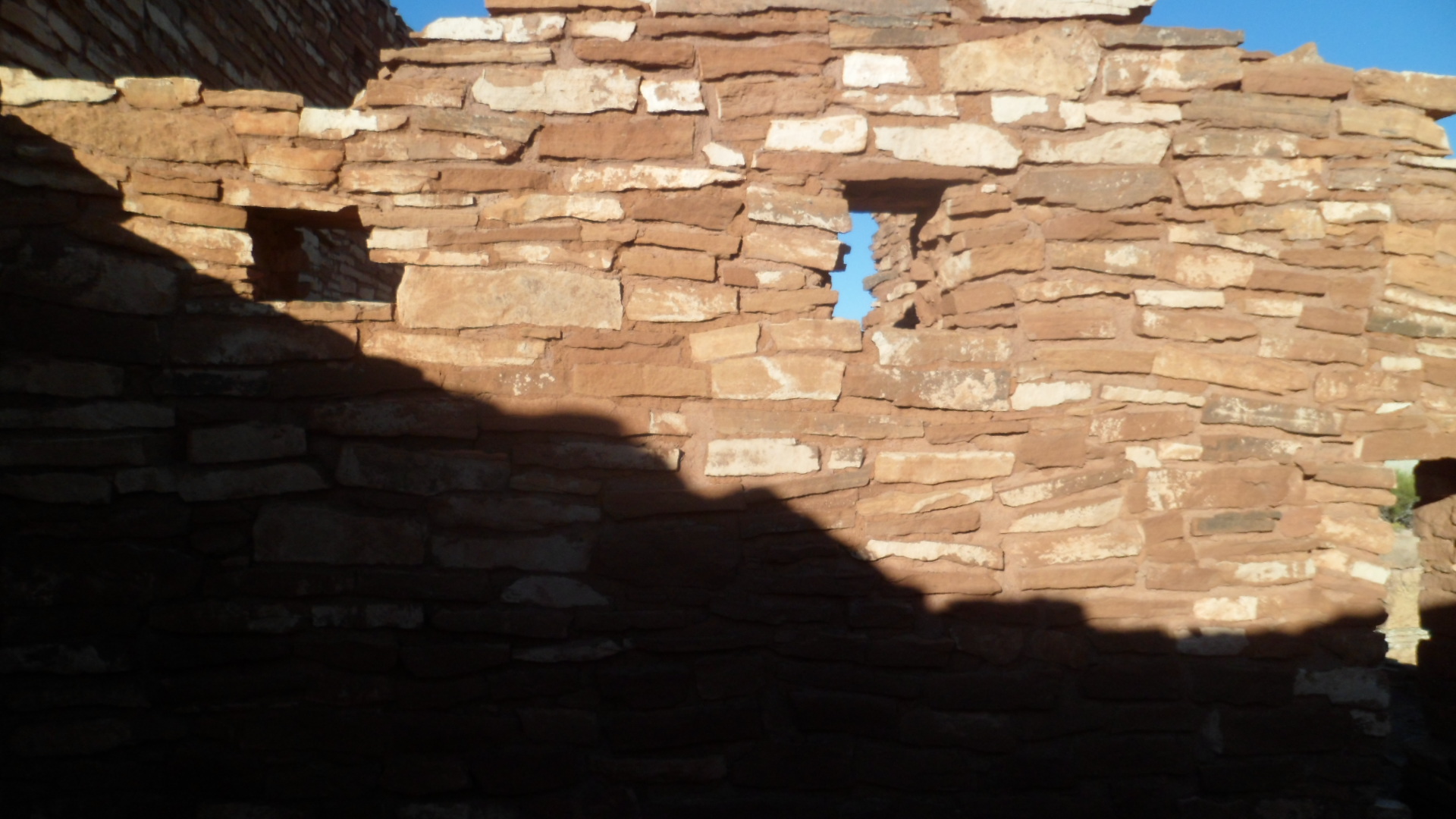
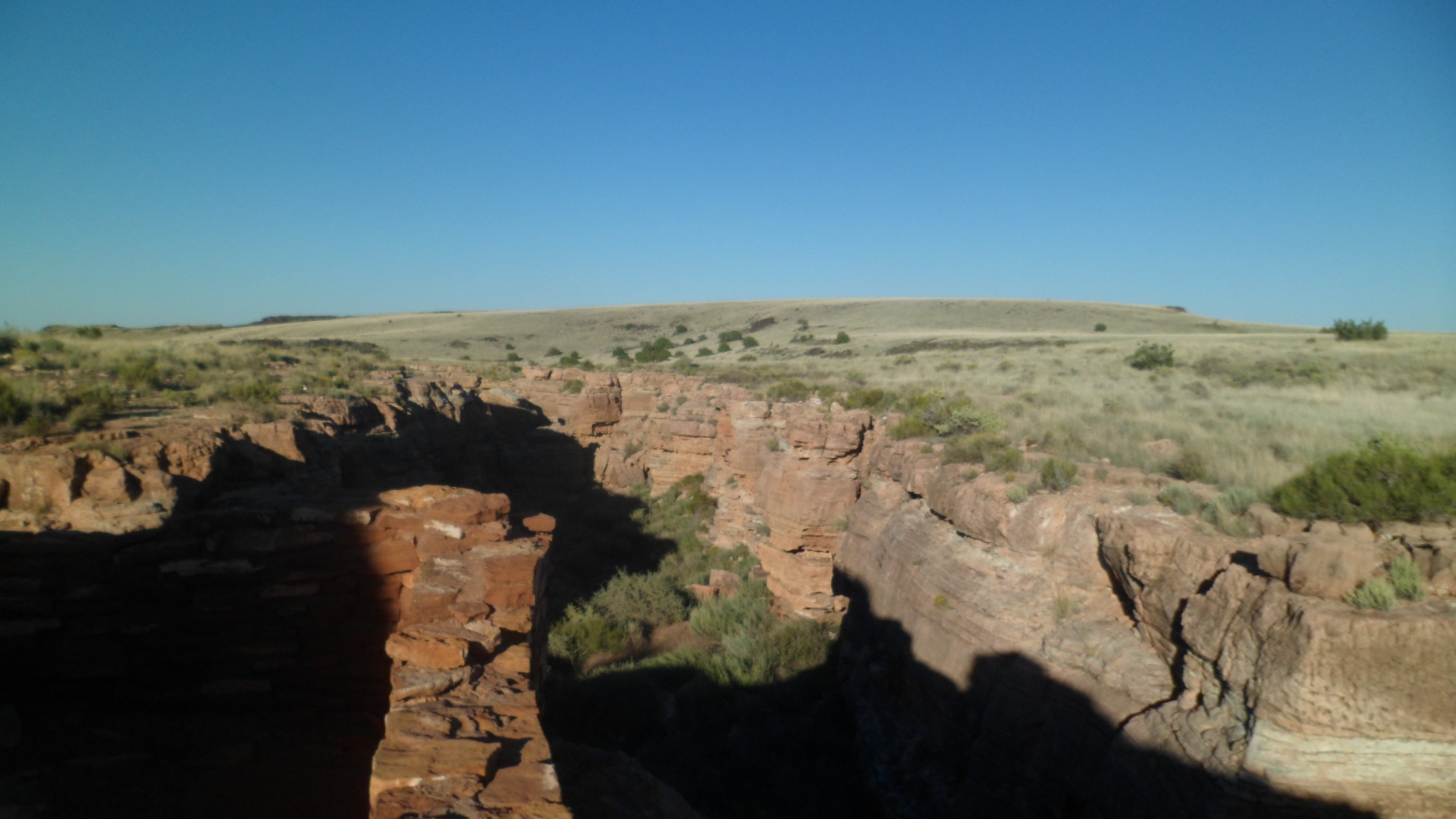
Nalakihu and The Citadel- This hillock, just south of Lomaki, provided the Wupatki settlers with a vantage point to both signal distant villages and to observe those approaching from the north and west. Nalakihu, halfway up the hill, served as a farming enclave and a sort of suburb to the small, crowded Citadel.
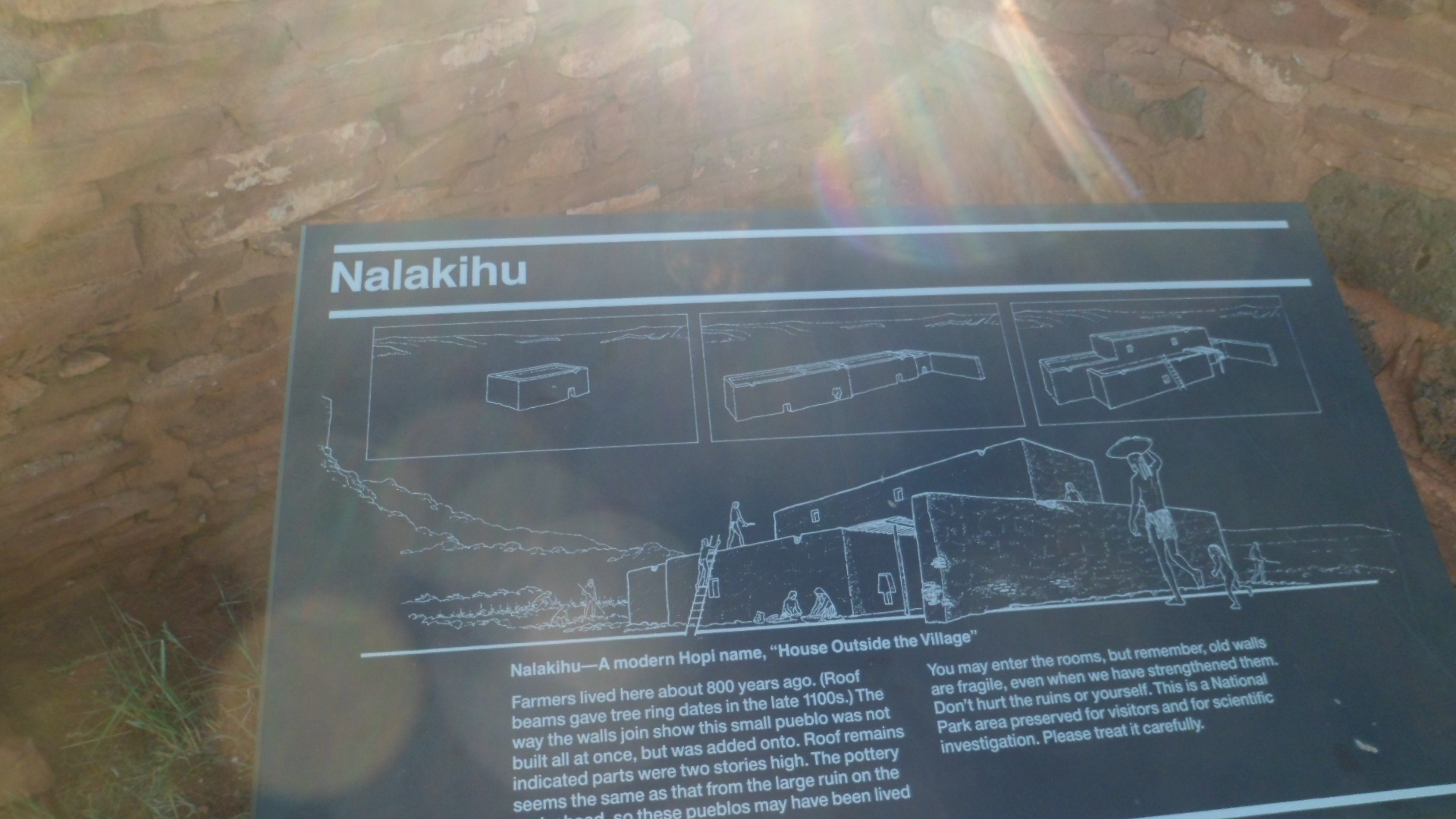
The Citadel lived up to its name. I can envision the guards keeping watch on those headed along the trail which preceded the present-day road that leads to the ruins of the main settlement.


Wupatki Pueblo- This is the grand settlement, closest to the main water source, and the relative safety of Woodhouse Mesa. Runoff from the Doney Cliffs, two miles west, gave the settlers plenty of water. There were large farm fields around the dwellings and common rooms. Then, as now, corn (maize) was a staple, in various colours. The modern Puebloans, including the Hopi, have preserved these varieties, and blue corn is the most famous and popular of the breeds. I was delighted with the company of a family from India, who had settled in Phoenix, recently. I started at one of the outlying houses, going clockwise around the settlement, as is my preference.

The people would patch holes in the square, chimney-like structures, with solid applications of thick, gooey mud, which was almost impermeable, once dry.

The native stone of the area is porous sandstone, but was useful for shoring up the mud brick, and for walkways to the fields and to the trading route.
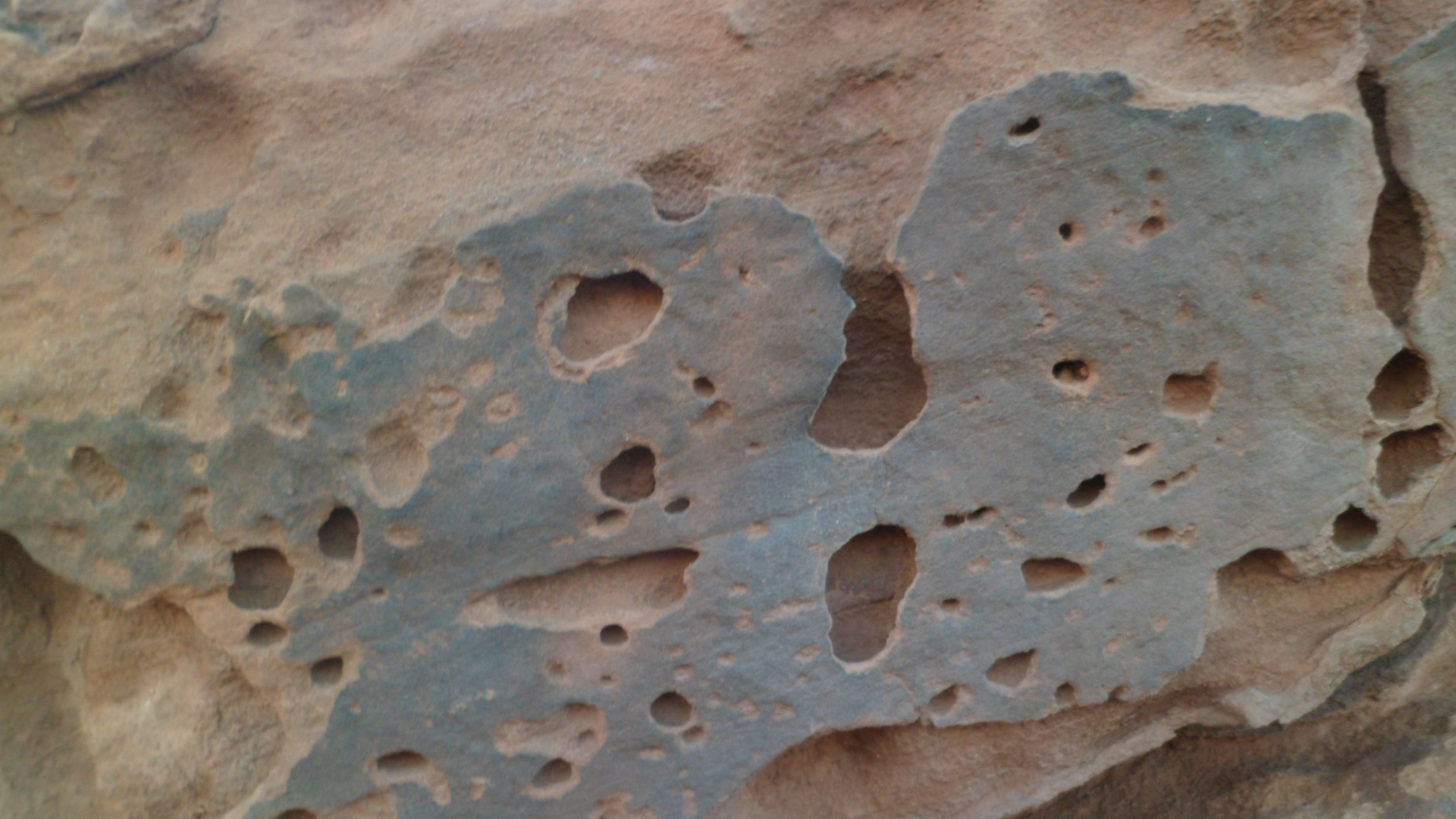
All major buildings had strategic portals, to the east, for praying and to the west, for observation of anyone who might be approaching.
Physical exercise was often communal, and the men would engage in a ball game, not unlike soccer, or lacrosse, though it seemed to have been played with a small, handball-type implement. Ball courts were common in settlements around the Southwest.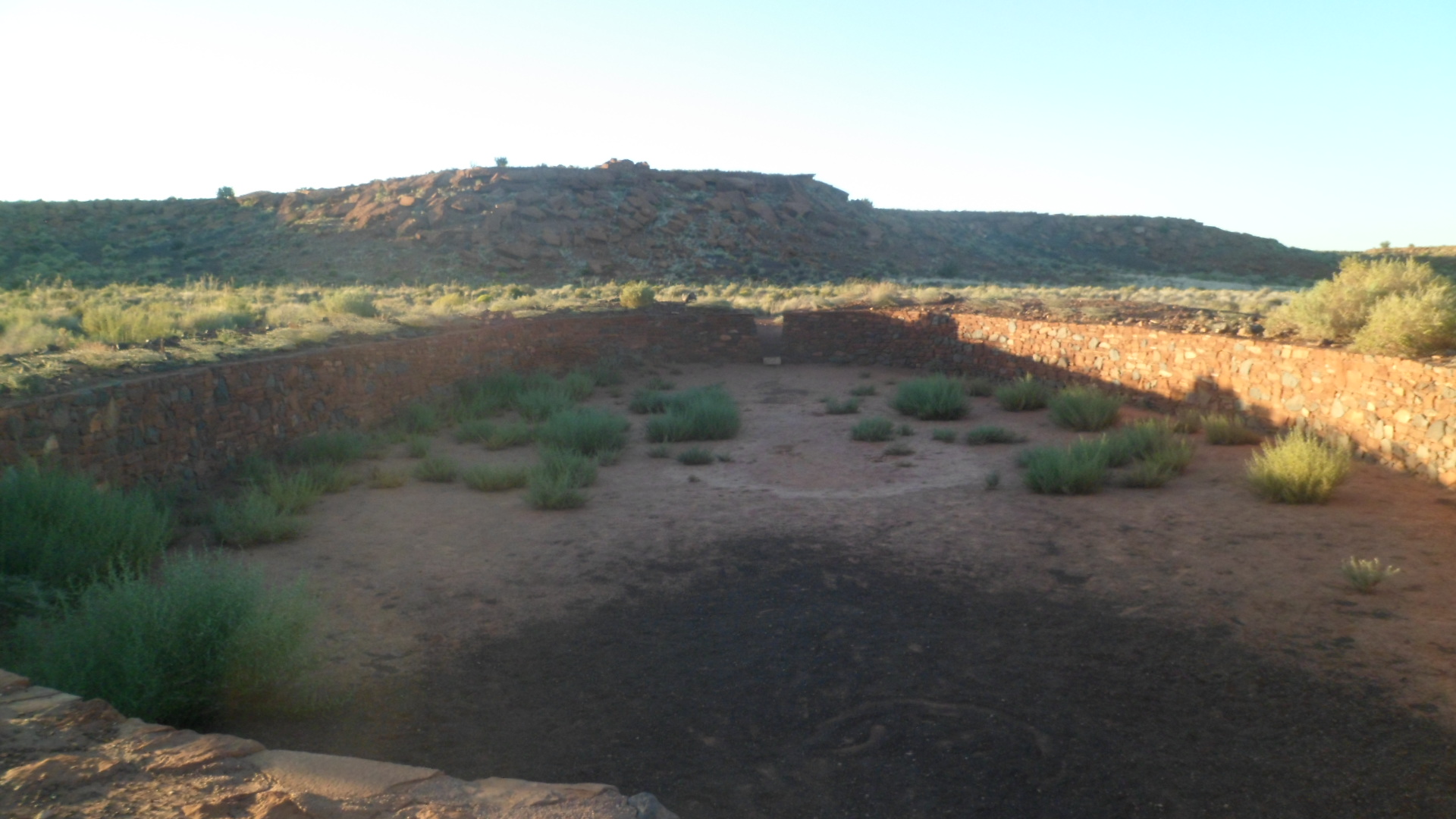
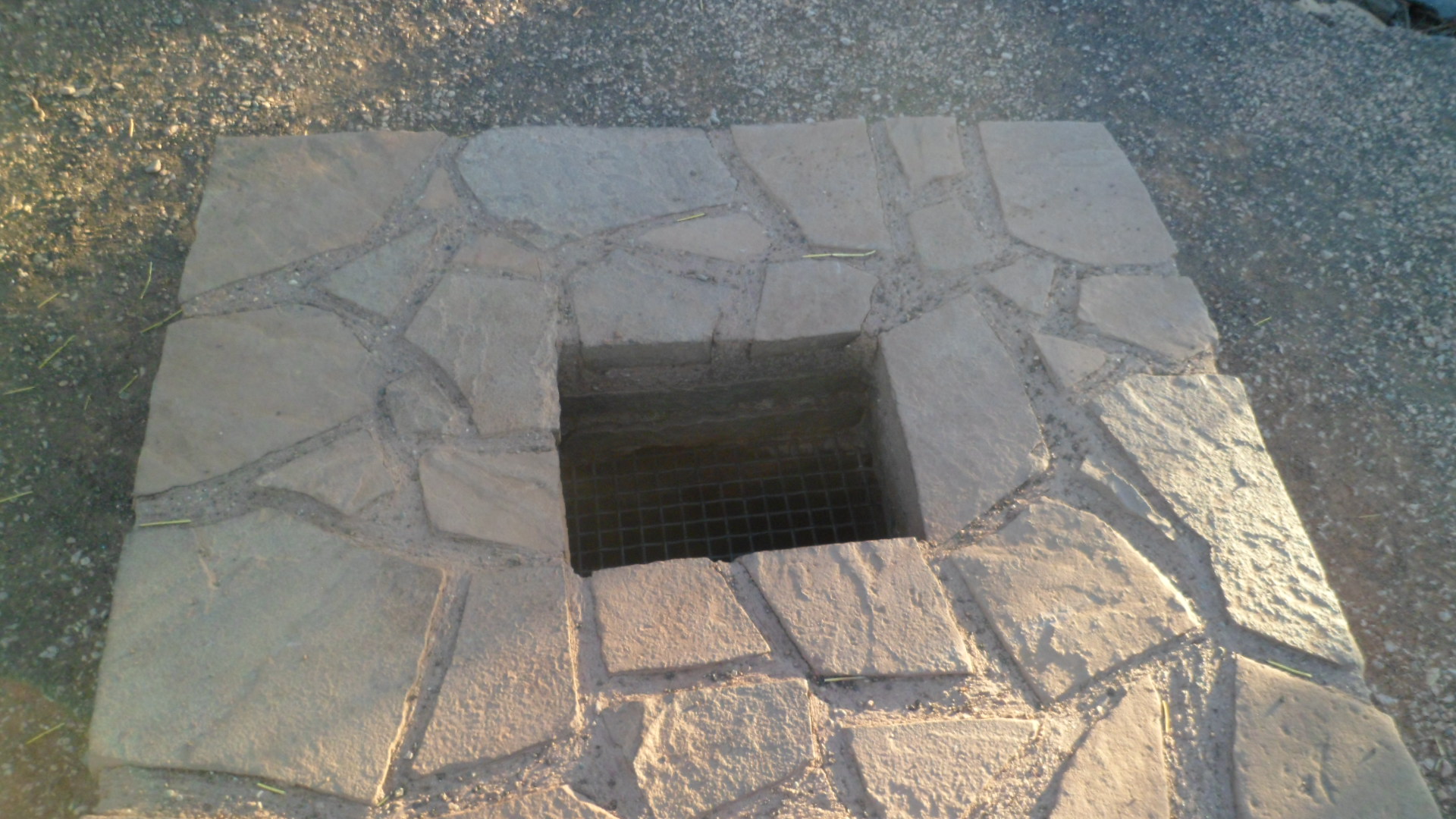
A blowhole, which produces cool air in times of dry heat above, and sucks air down, when the outside air is wet and moist. It was blowing nice and cold, when I went up to take this photo. The father of the Indian family had never experienced such a thing, and wondered if a cave was underneath. The Hopi call this site Naapontsa, or “Wind Spirit”.
Below, is the Community Room of Wupatki Pueblo, where spiritual meetings and important community forums were held.

The father of the family who were with me, graciously took some photos of me, in front of Great House.

No, I was not turned into Jabba the Hutt!
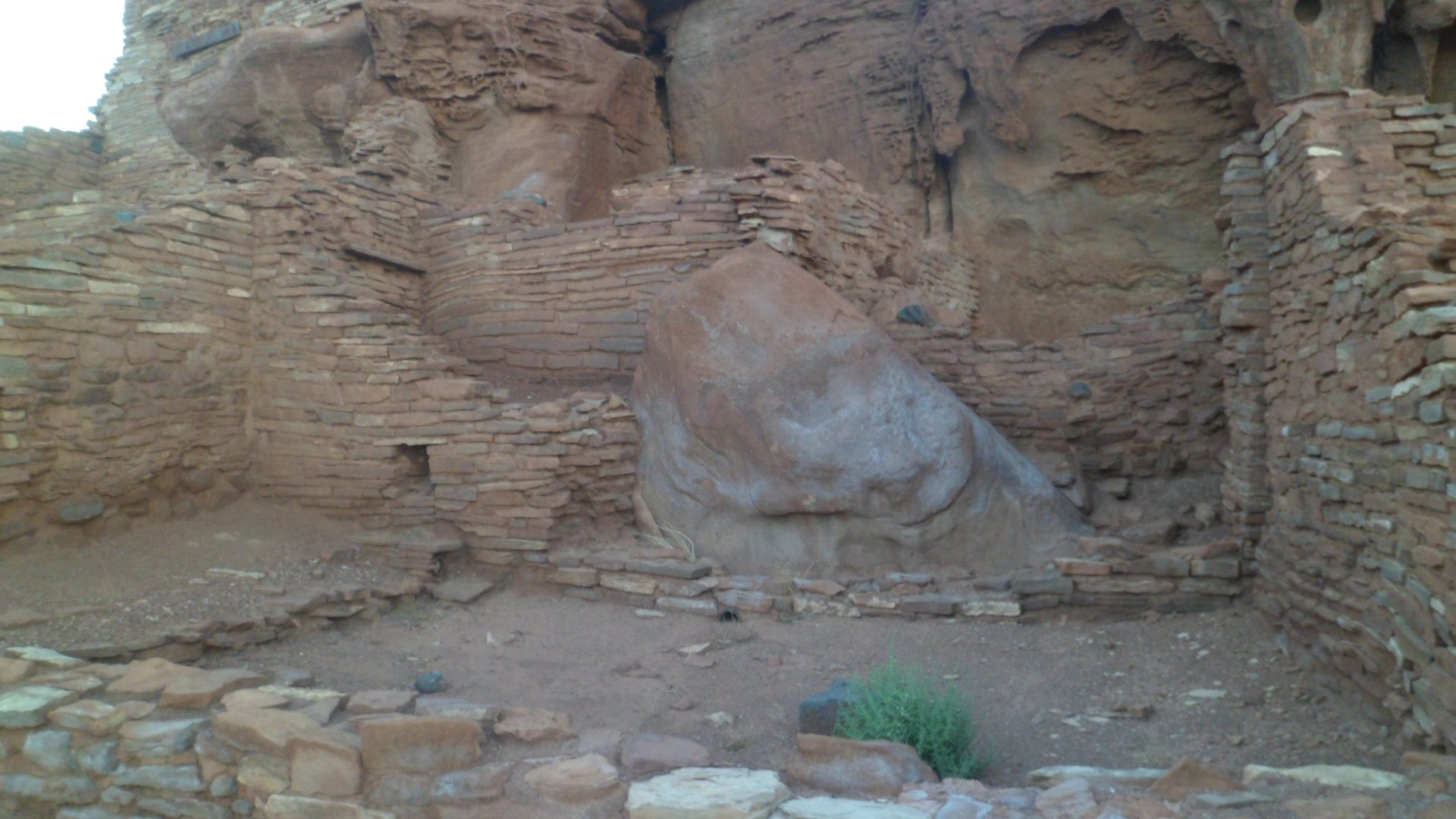
Here is a more extensive view of Great House.

Sunset is always magnificent. Here, it had a particularly auspicious ambiance.
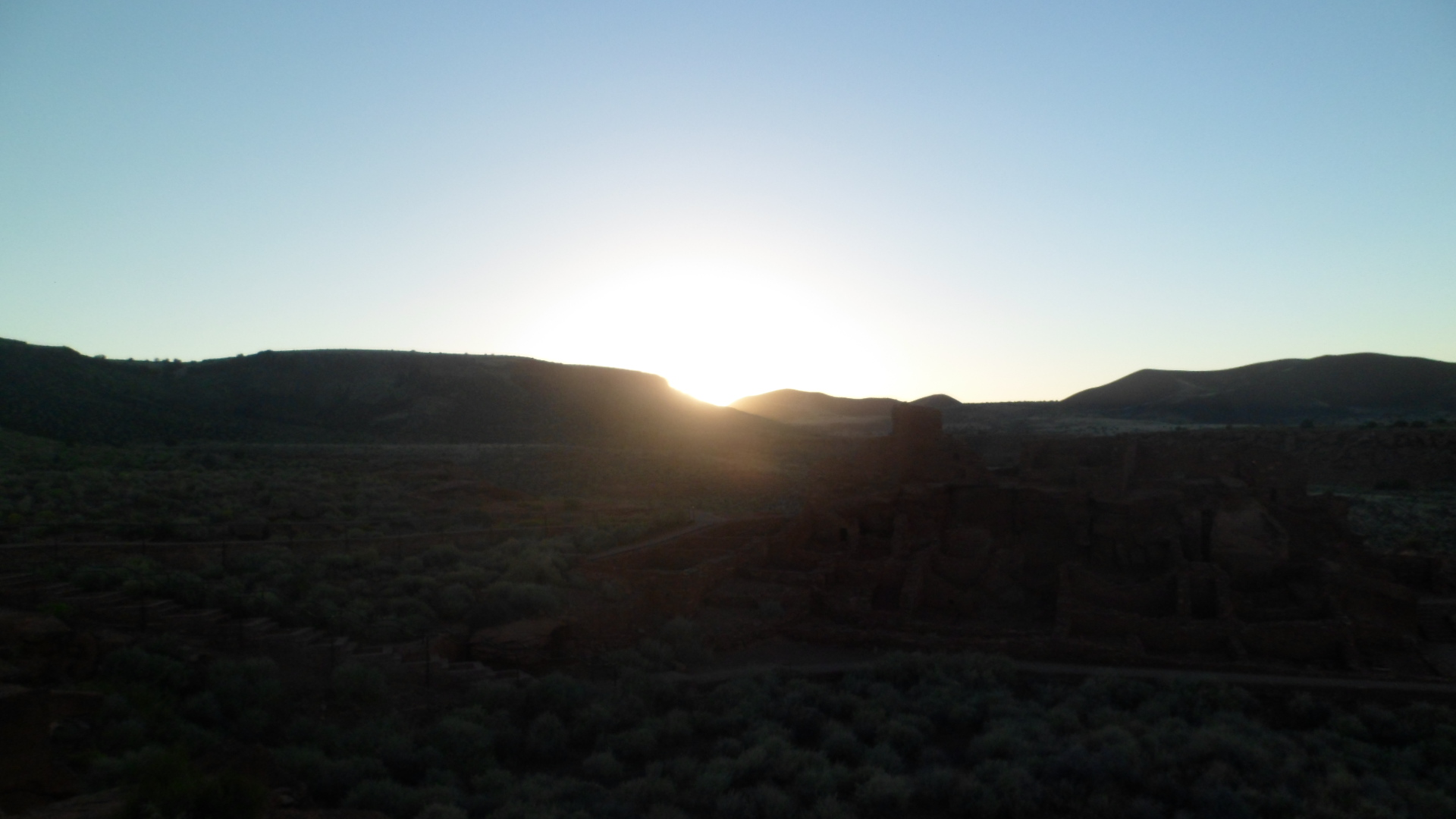
Wukoki- This settlement was the easternmost of the outposts in Wupatki Pueblo. It also looked down on the valley, but was not quite as prominent as The Citadel. It most likely received visitors from the Walnut Canyon and Homolovi settlements, to the south and east, as well as traders from further afield. As the sun continue dto set, Wukoki also offered some eerie views.

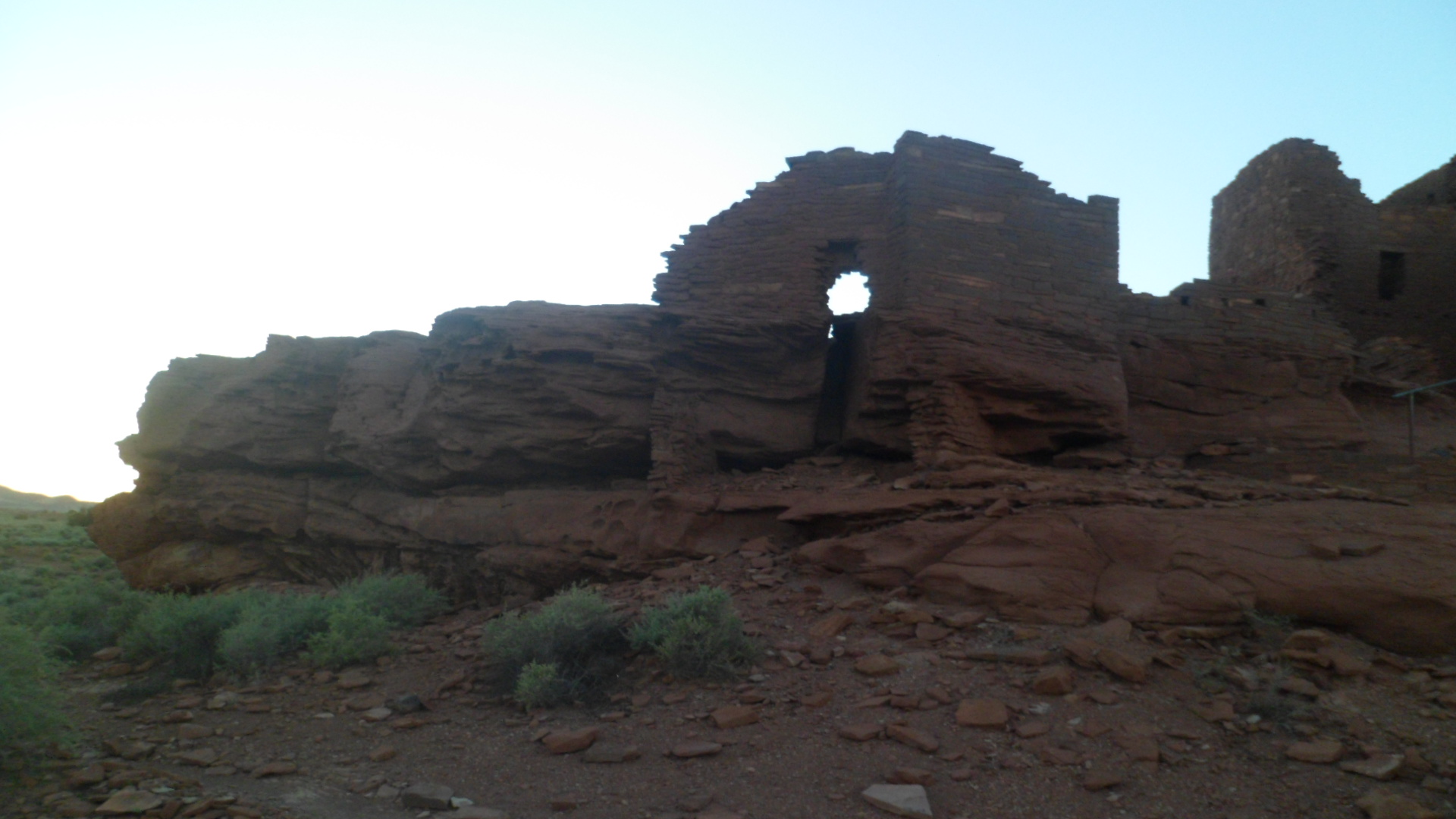
The rocks have character, as they do throughout the Southwest. They also gave Wukoki an added layer of protection.


The watch tower was especially sophisticated for its day. Bear in mind that this square building style pre-dated European contact. Squares and rectangles provided the means to protect against wind and water erosion.
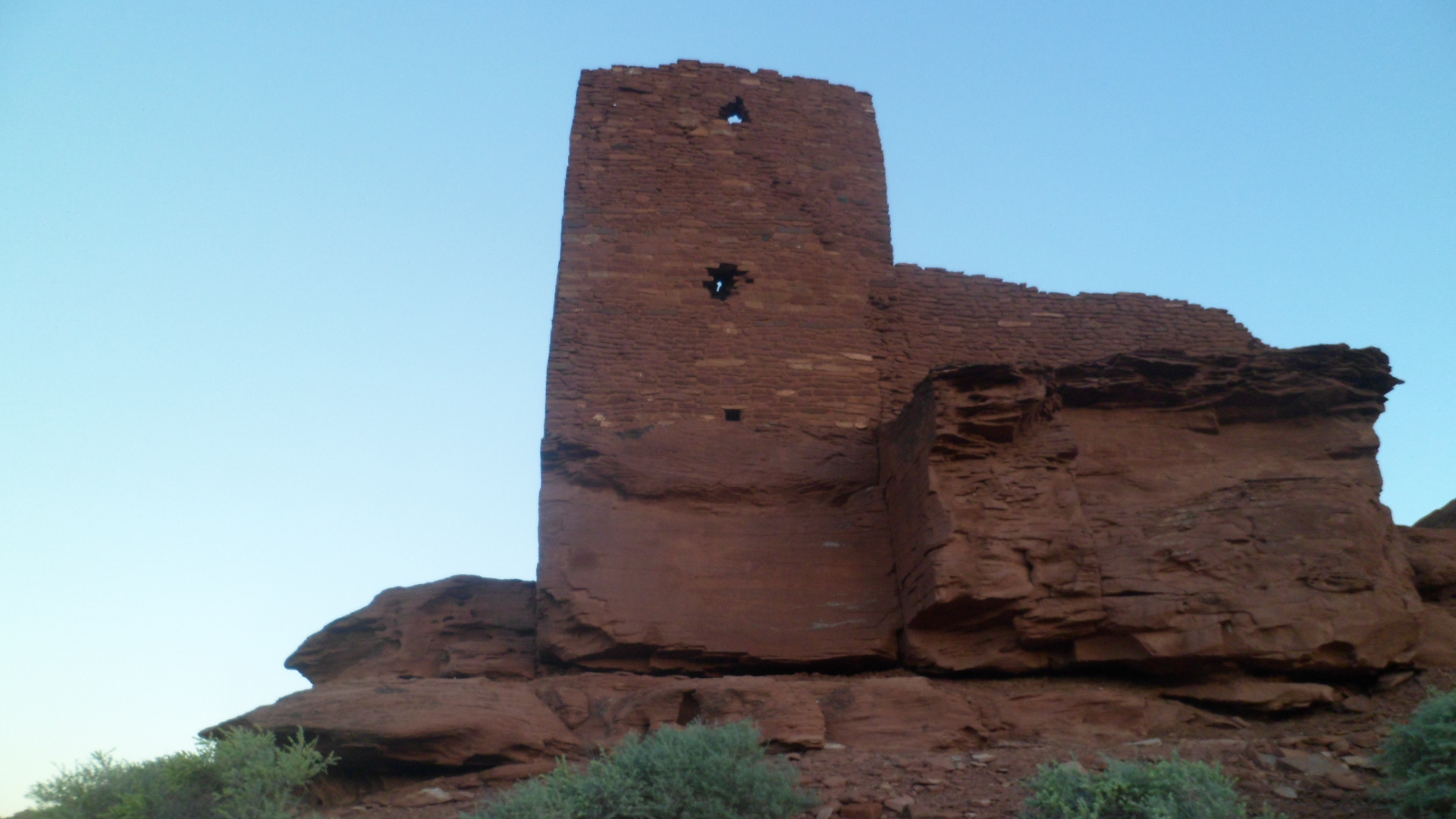

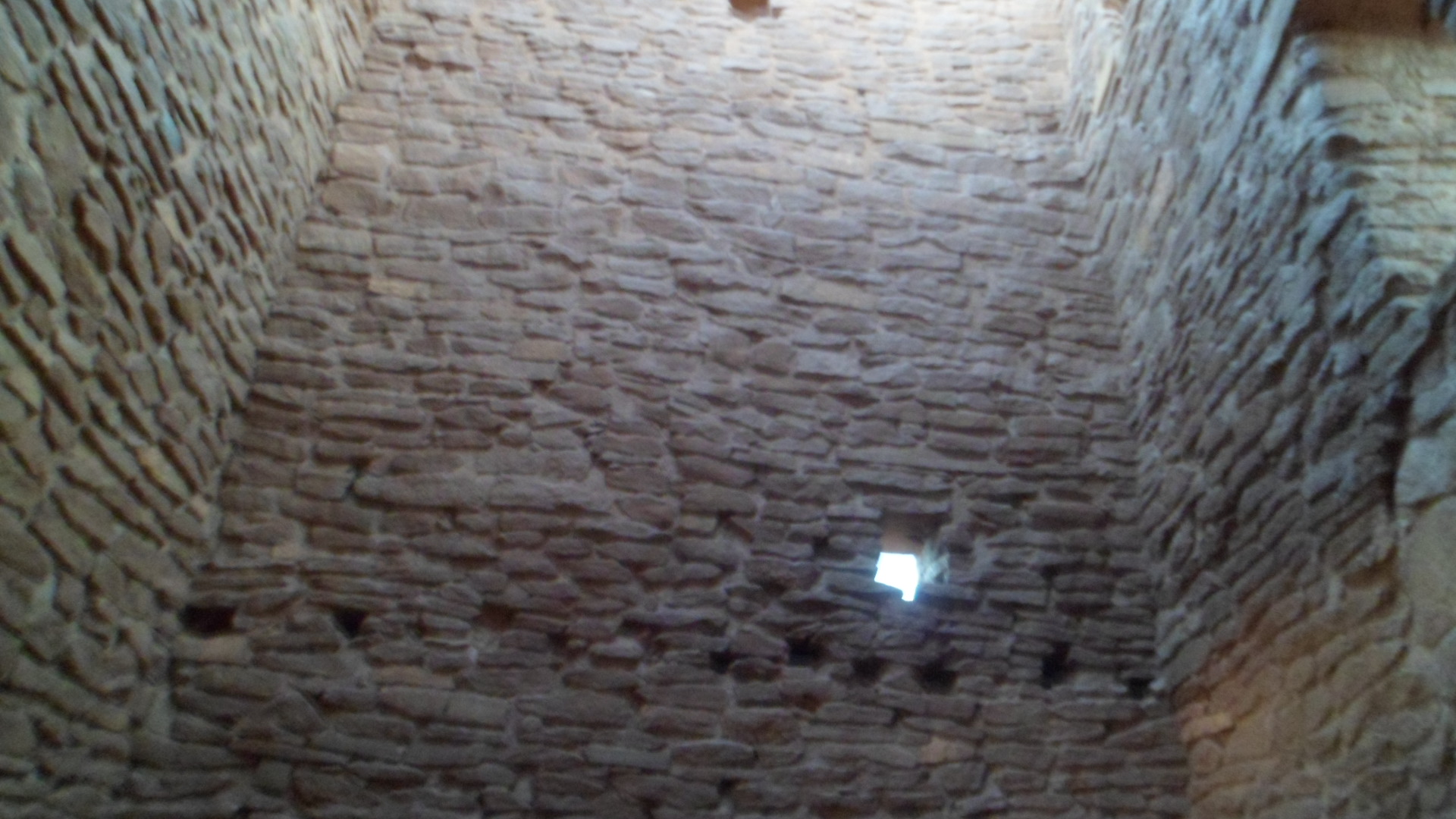
This sort of building style is actually the more common, among even later Pueblo groups. The round structures, also associated with the indigenous peoples of the Southwest, arrived with Athapascan groups, such as the Dineh (Navajo) and Indeh (Apache), later in the pre-Columbian era. I will continue to visit the sites of those who have gone before, over the course of the next several months. Next, though, is a look at the cause of their diaspora: Sunset Crater
 A Sagittarian Seeker
This is an interesting post, Gary — we need to pay attention to our own history as well as that of other parts of the world! I love the natural air conditioning of the Naapontsa — wonder if it has been replicated in modern day?!
LikeLike
I will have much to say about the wonders that surround us in North America, over the next 18 months, at least. It would be quite a fine “technology”, if someone did tap into these vents! 🙂
LikeLike
Awesome pictures, Gary. I am glad that, when you visit these places, you give information about it. 🙂
LikeLike
There would be no use for anyone to just look at pictures, and I was brought up to share, so I’m always glad to expound a bit on the photos.
LikeLike
Spectacular photos. That’s interesting about the volcano. I hope you had a chance to visit there as well.
LikeLike
I will post about Sunset Crater in my next write-up.
LikeLike
You really do give fabulous information in your posts. I always learn so much from them as well as get to stare at gorgeous photos. SO beautiful. Thank you for sharing, Gary!
LikeLike
It’s always my pleasure to share these amazing places and back stories.
LikeLike
We stopped there in July. My main goal was to see the crater, but that was a bit of a disappointment. It was so frickin’ hot that day, that we just looked at the main ruins and left. They were pretty cool figuratively, though. It was a more complete building than I had seen before.
LikeLike
As you might have figured, there has been some restoration done. The one drawback, for many, at Sunset Crater is the fact that no hiking is allowed on the crater’s slopes.
LikeLike
Interesting. I like the ruins. It’s amazing there is anything left. The history was good to read.
I’m glad you didn’t turn into Jabba. lol
LikeLike
There are a reassuring number of protected ruins, across the country-and across the continent. I’d rather be a Jedi, thanks.
LikeLike