Fortnight of Transition, Day 2: Personal Responsibility

2

September 10, 2020-

My mother turned 92 today. In our conversation this afternoon, she sounded well and had enjoyed a birthday lunch. She expressed pride in my having gone to help hurricane victims in Louisiana, a reflection of the stress she always placed on accepting responsibility and assisting the less fortunate.

I woke this morning, feeling a drag on my psyche. Knowing that one of the people, to whom I was alluding in the last post, would likely be the first to want my attention, I was slow to open my phone. Fortunately, I was able to hold the line on his accepting responsibility for his own success, while still offering help in a few areas that he could not have known how to handle . I must always try to be discerning.

Neither patronize, nor disparage. This is a tough row to hoe, as I’ve become quite used to doing things on my own and not wanting to have random people show up, wanting me to solve all their problems. At the same time, I have no problem pitching in to a group effort at dealing with social issues, dealing with an emergency that happens in my presence or doing a helpful activity that is scheduled. I guess it’s randomness that I find irritating.

This is also a heavy cosmic energy period. For the astrologically-inclined, seven planets are in retrograde, relative to Earth. This tends to throw us back, going over old ground. I have done well this year, at clearing out old, counterproductive habits and energies. There is still a bit left to tidy up, though, so maybe this retrograde season will help along those lines.

Fortnight of Transition, Day 1: Overcoming Learned Helplessness

2

September 9, 2020-

A fortnight is a period of two weeks. There are about that many days until the September Equinox (Autumnal/Vernal). In this time, I wish to look at several themes that have impacted or are impacting my life and those around me.

As I edge closer to retirement and to making my own determination, as to which activities to which I devote time and energy, I have had to begin to find positive and helpful ways to address those who come to me with outstretched hands. Deflecting requests for money is easy enough. I have to budget what I have, in the way of financial resources, so as to both support myself and to fulfill some plans which I feel I have earned.

Time and energy are more problematic. No one can, in good conscience, refuse the legitimate requests for assistance with finding resources that come, sometimes randomly, from those who believe themselves to be at the end of their ropes. If one agrees to offer limited assistance, and uses the Internet to connect start-ups with potential benefactors, the result is usually win-win-and does not end up being a time and energy pit.

The key is to use the correct search terms, so as to not waste time on dead ends. For example, in linking an entrepreneur, in one of several African countries, to an entity that can provide seed money grants, the best search term is “Organizations that help marginalized communities in Africa”. I used this yesterday, and was able to forward a link to three appreciative entrepreneurs, who have imagined themselves to be in dire straits.

My message to such entrepreneurs is this: You have the skills and intelligence to make your dreams happen. Europeans and North Americans have done a bad job, in many cases, of giving the impression that our resources can lift all boats. That is seldom true, on an individual basis. It is by pooling resources, while simultaneously reminding the individuals seeking assistance that they can and should establish their own contacts with helpful organizations, that the most meaningful change can happen.

I am always glad to guide people to the proper resources, but I will no encourage and foster the sense of helplessness that only drags down both entrepreneur and advocate.

The Summer of the Rising Tides, Day 100: Water, Water, “Neverywhere”

2

September 8, 2020-

I have been back from a very wet area, for three days. I have back in a very dry area, for the same amount of time. I hear a voice saying- “No rain until at least October, and if La Nina like it here, not until November.

La Nina refers to the weather pattern that keeps moisture stuck off the southern third of the North American west coast, thus guaranteeing that California, Arizona, and everywhere due to their north, will remain dry as the Sahara.

It usually breaks up around the first part of Autumn. This is, however, a year which regards “usually” as an extended four-letter word. La Nina may well like it here enough to wait around until people start following the pronghorn and the deer, to see where they are getting moisture. She may then dry that up, as well.

There is no value in dryness, unless one is trying to kill mold or get a respite from life in the swamp. I was in the Bayou Country for two weeks, so the aridity has not quite gotten to me, yet. It has long since gotten to my friends here-and doubly gotten to people who live between Vancouver, BC and Ensenada, BCN.

It did cool way down today, as we caught the lower end of the storm that is leaving snow in the Rockies. Not to worry, though, it’ll be close to 90 here, by Sunday, as the remnants of summer hang on, into October.

In the meantime, summer ends-for this series of posts, while people all down the West Coast wish it would end for real.

The Summer of the Rising Tides, Day 99: Looking Back at Baton Rouge, Part 2

4

September 7, 2020-

Another summer nearing its end (Summer, for me, ends on the day after Labor Day, the equinox notwithstanding); another languid Labor Day with extreme heat dissipating-at least for a week.

My “free day”, last Friday, allowed time to check out a few areas of Baton Rouge. These included two restaurants, offering two distinct styles of Louisiana cooking. Pastime Restaurant, under the Interstate 10 overpass, south of downtown, offers Po’ Boy sandwiches, usually made with a seafood filling and served on New Orleans-style French bread. In honour of BR’s riparian richness, mine had catfish.

Pastime Restaurant

From there, the road led to Magnolia Mound Plantation, which I described in the last post. Having had time to look at and learn about the artifacts of Creole plantation agriculture and enslavement, I headed to Louisiana’s ornate, well-decorated State Capitol and its beautiful surrounding garden park.

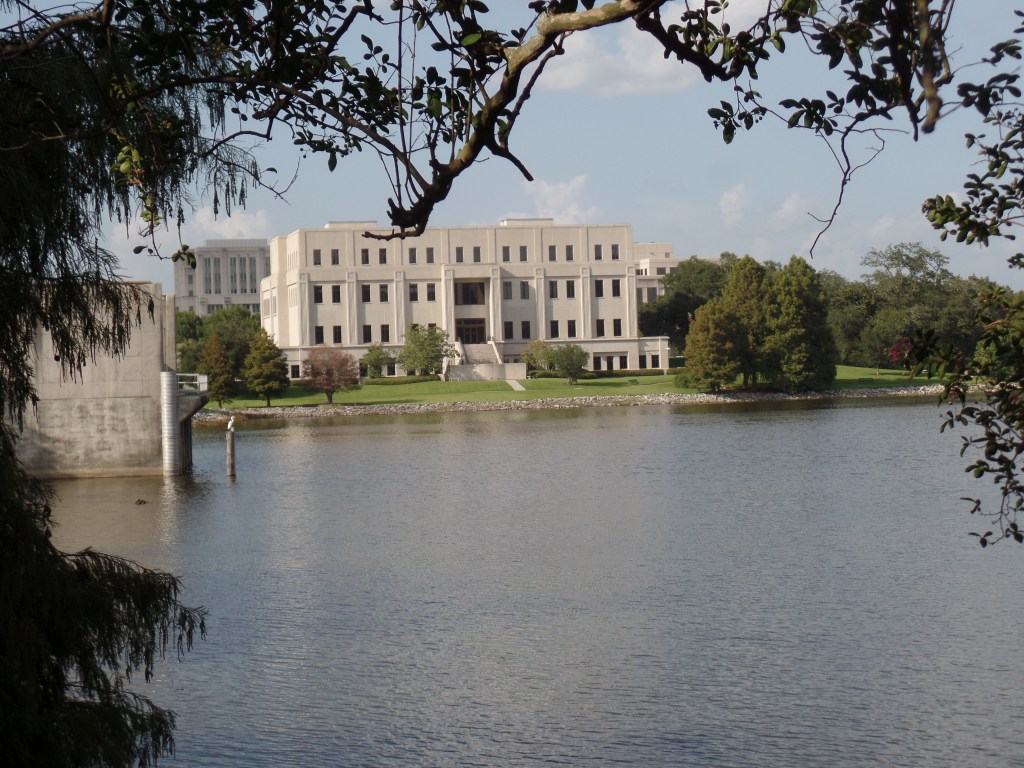
A lake has been formed, north of the building, by diverting some water from the Mississippi River.

Capitol Lake, Baton Rouge
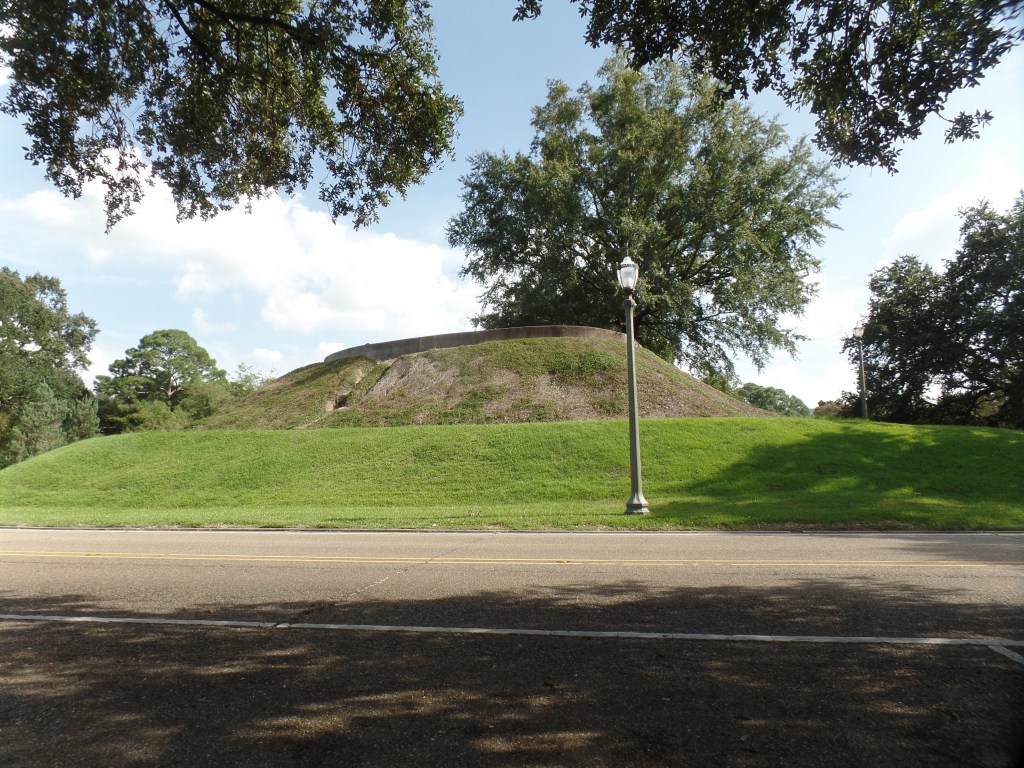
Indian Mound, Capitol Park, Baton Rouge. This mound was built by people of the Coles Creek culture, around 1000 A.D. It was used by the chiefs of that period as a speaking platform and to conduct sacred ceremonies.
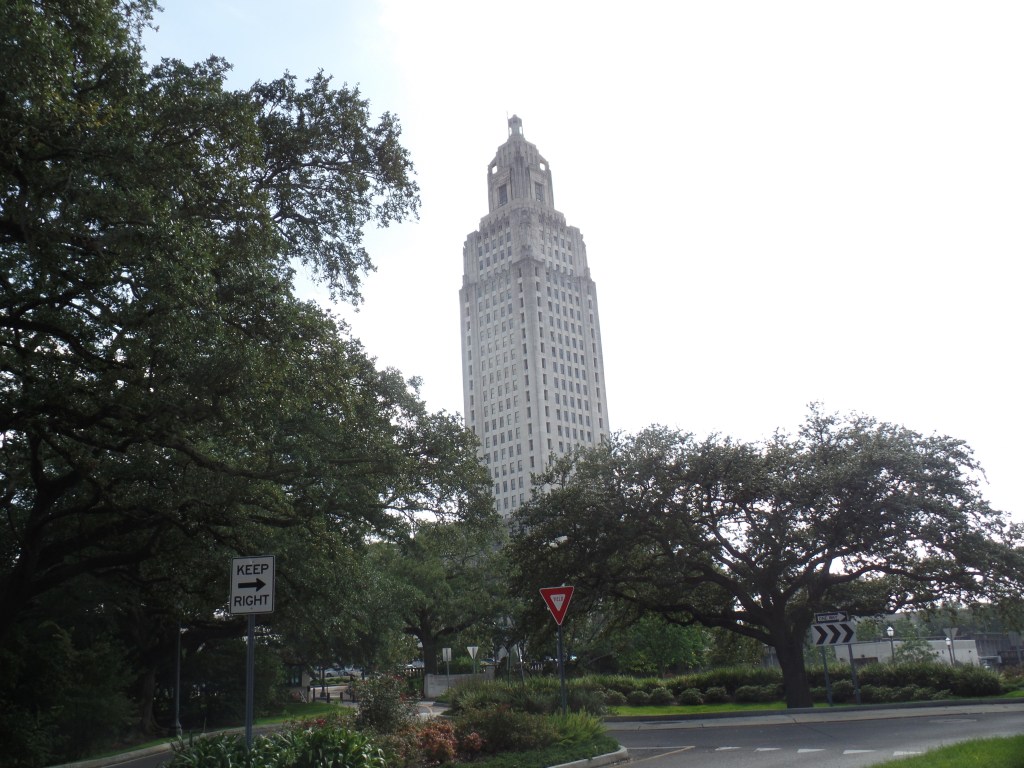
Louisiana State Capitol Building, from the southeast
Tiger Lily, Capitol Park
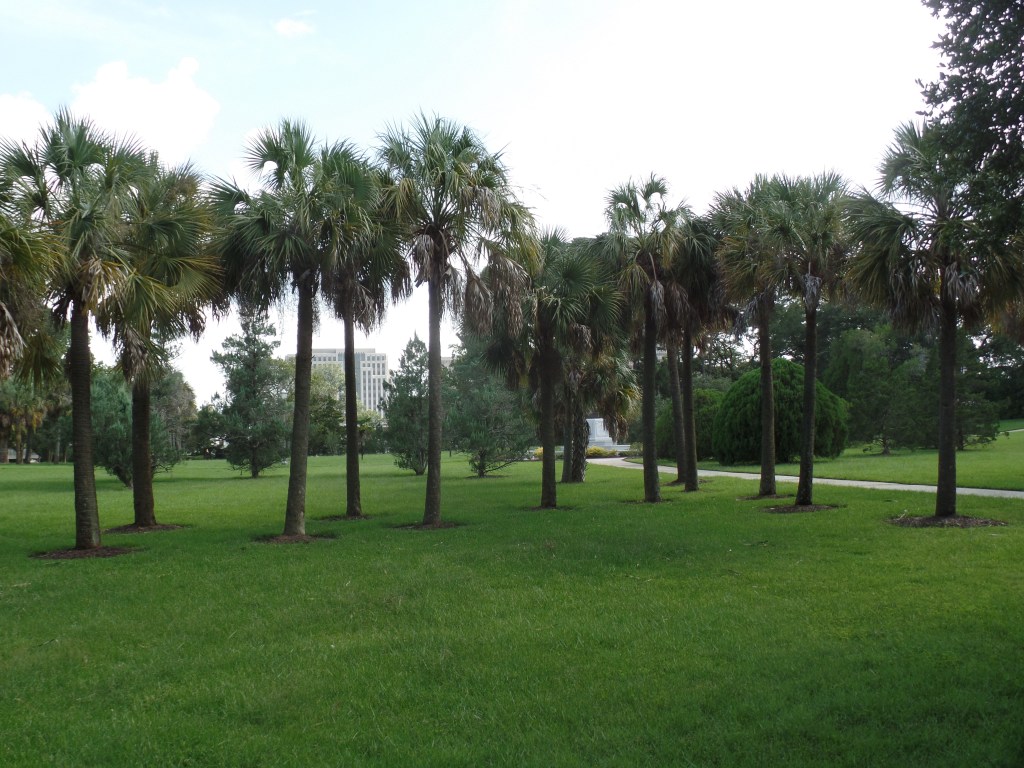
Newly-planted palmetto trees, Capitol Park
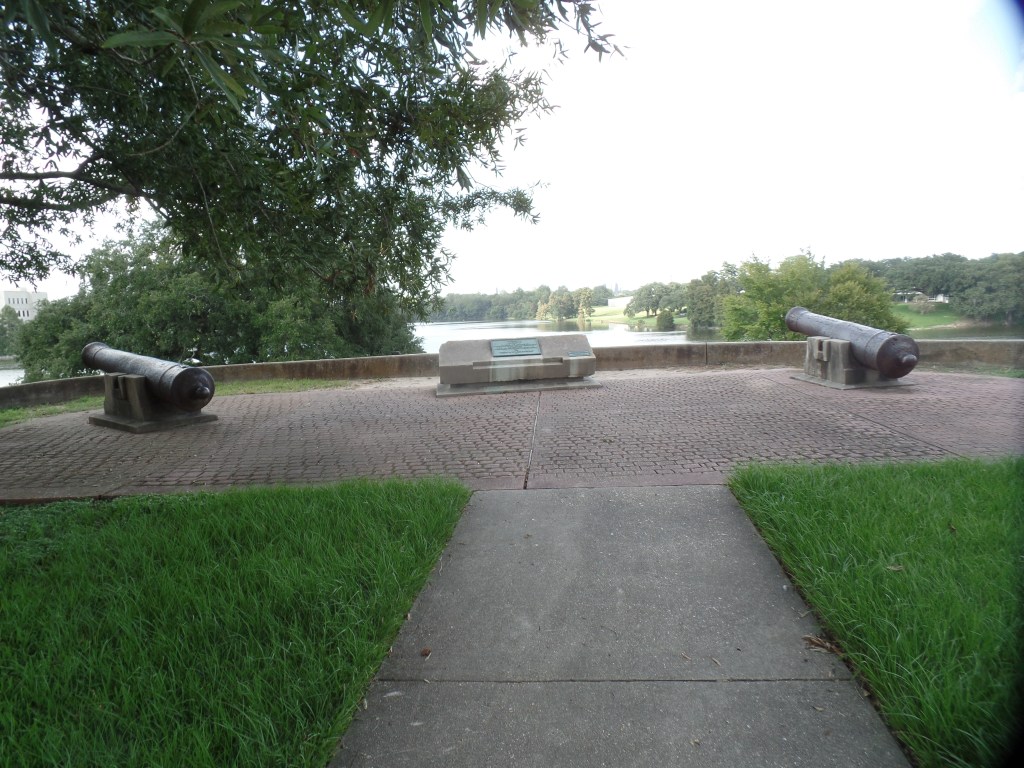
Artillery Mount, Indian Mound. As this was the highest point overlooking the Mississippi River, in the Capitol District, it was used by the U.S. Army, during the War of 1812 and by both sides during the Civil War, as the Union Army ousted the Confederates from Baton Rouge, early in the conflict.
George Rogers Clark would have taken exception to this claim, as the forces he led defeated the British at Vincennes and at Kaskaskia, both outside the original Thirteen Colonies. Nonetheless, it is true that a battle was fought here, in 1779-but by the Spanish against the British. American privateers helped in the effort, resulting in Spanish control of the Mississippi River Delta and of all Florida, of which Baton Rouge was then a part.
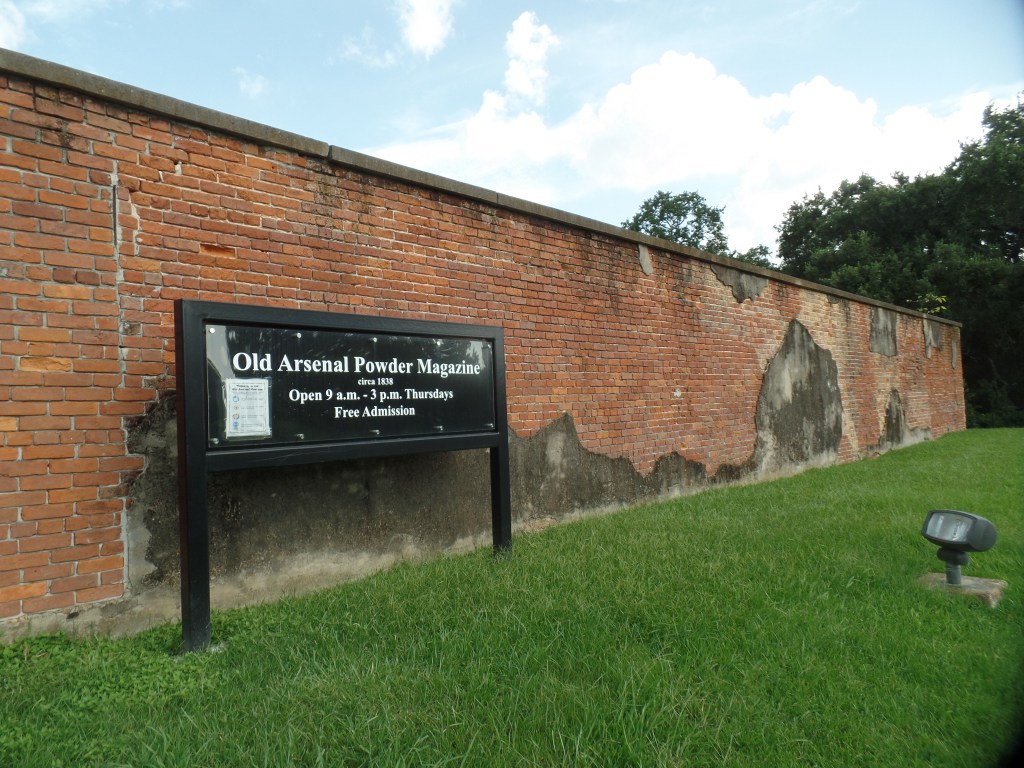
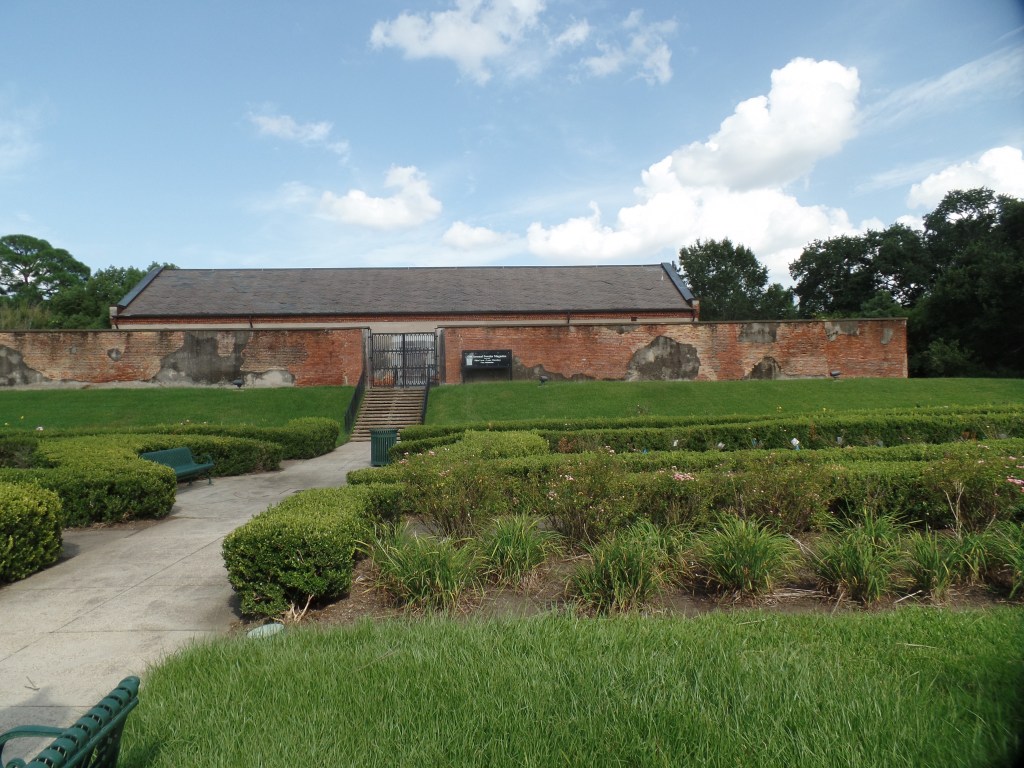
Exterior View of Baton Rouge Arsenal
Horizontal view of Baton Rouge Arsenal. This facility was established in 1826, to help guard the mouth o fthe Mississippi River. It fell briefly into Confederate hands in 1861, but was recaptured by Union forces, the following year.
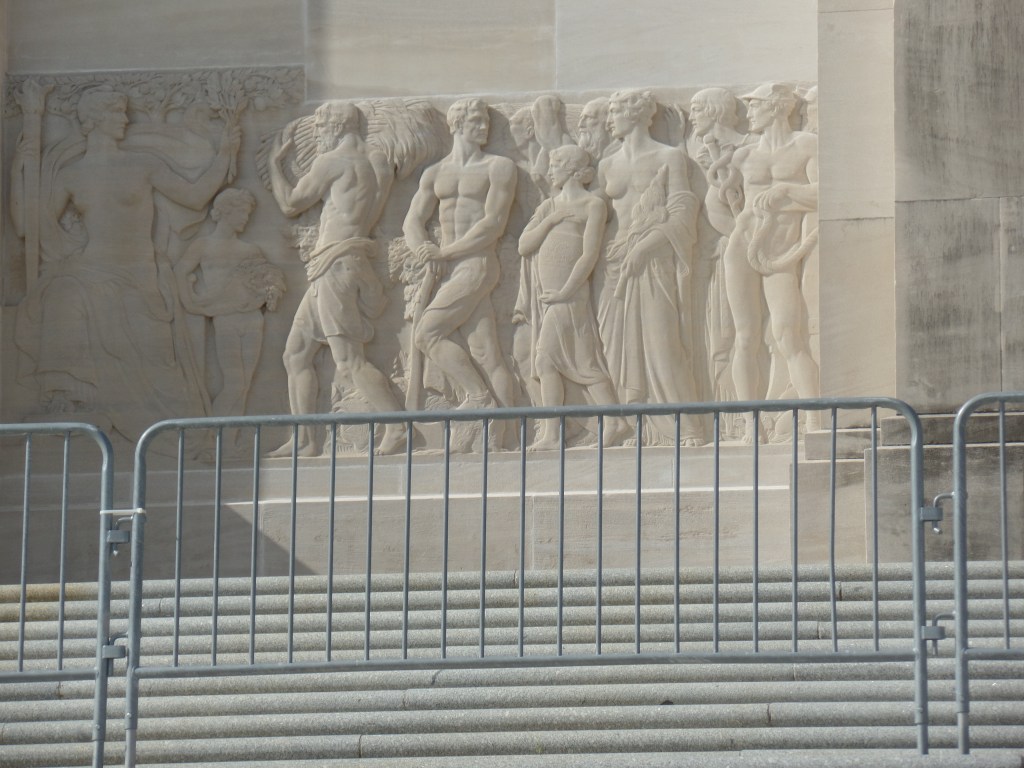
Lawgivers, both ancient and more contemporary, have adorned the present Louisiana State Capitol’s exterior, since it was built in 1931.
Depictoion of ancient Greek lawgivers
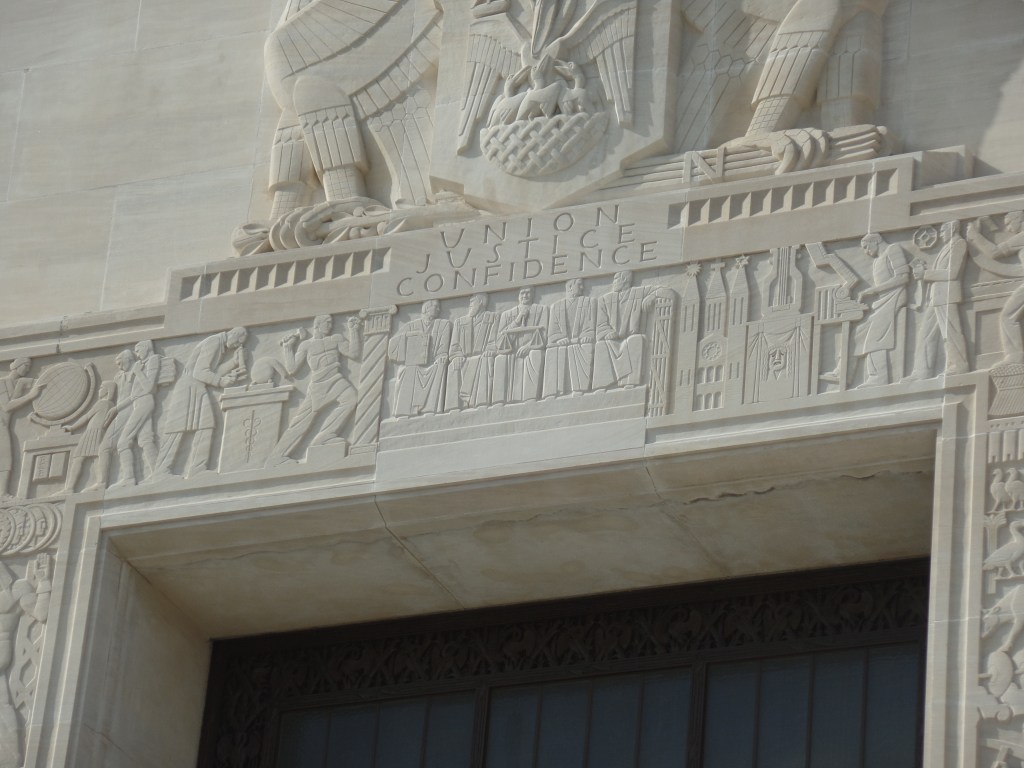
Builders and judges are depicted in the bas relief. The three watchwords: Union, Justice and Confidence are enscribed here as guiding goals for the State.
Louisiana is nicknamed “The Pelican State”. Three fat pelicans are perched atop the three facia columns above.
There has never been a Louisiana politician, before or since, quite like Huey Pierce Long. A fiery and effective populist, “The Kingfish” served as Governor from 1928-32 and as U.S. Senator from 1932-35, when he was assassinated. Senator Long was a driving force behind many of the social welfare programs which became part of the New Deal, in its second stage. He was an authoritarian and clever leader, yet saw the public weal as his bounden duty.

Elegant Clarkia mix with True Lavender, in this flower bed, on the south side of Capitol Park.

Full view of State Capitol, from the south.
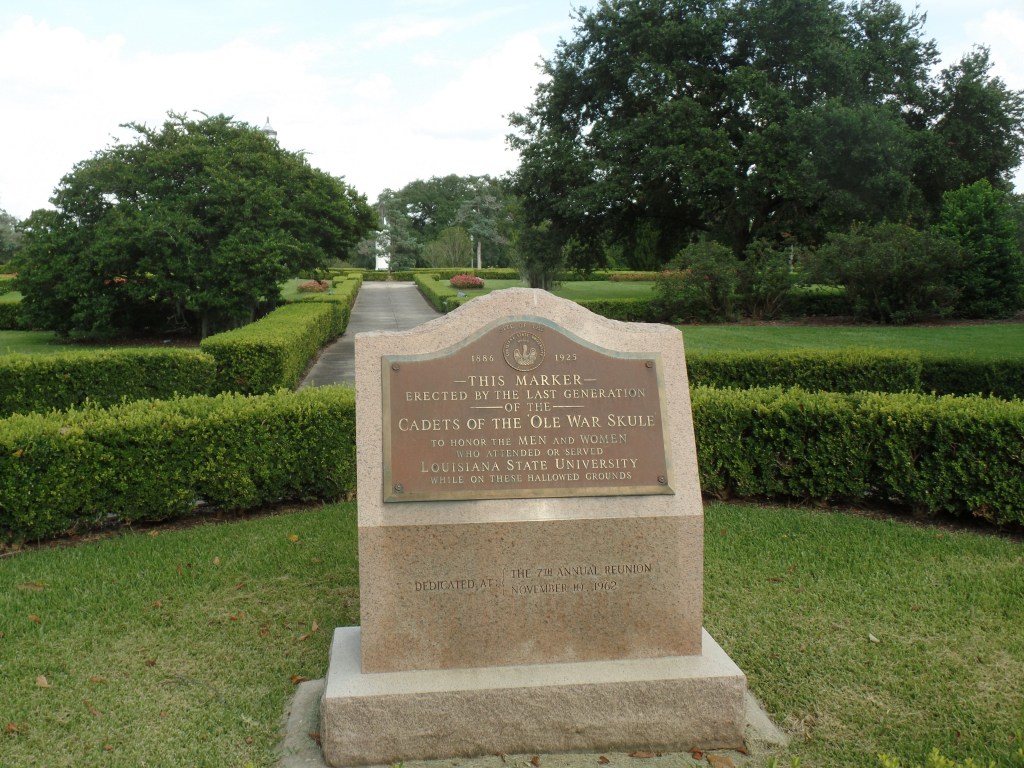
“The Ole War Skule” refers to a corps of cadets at Louisiana State Seminary of Learning and Military Academy, established in 1853, at Pineville, in central Louisiana. In 1869, it was moved to Baton Rouge and in 1877, the school merged with Louisiana State University. in 1955, a group of retired military men, who had studied on a prior campus of LSU, formed this curiously-named organization, to continue the rich military traditions of the University.
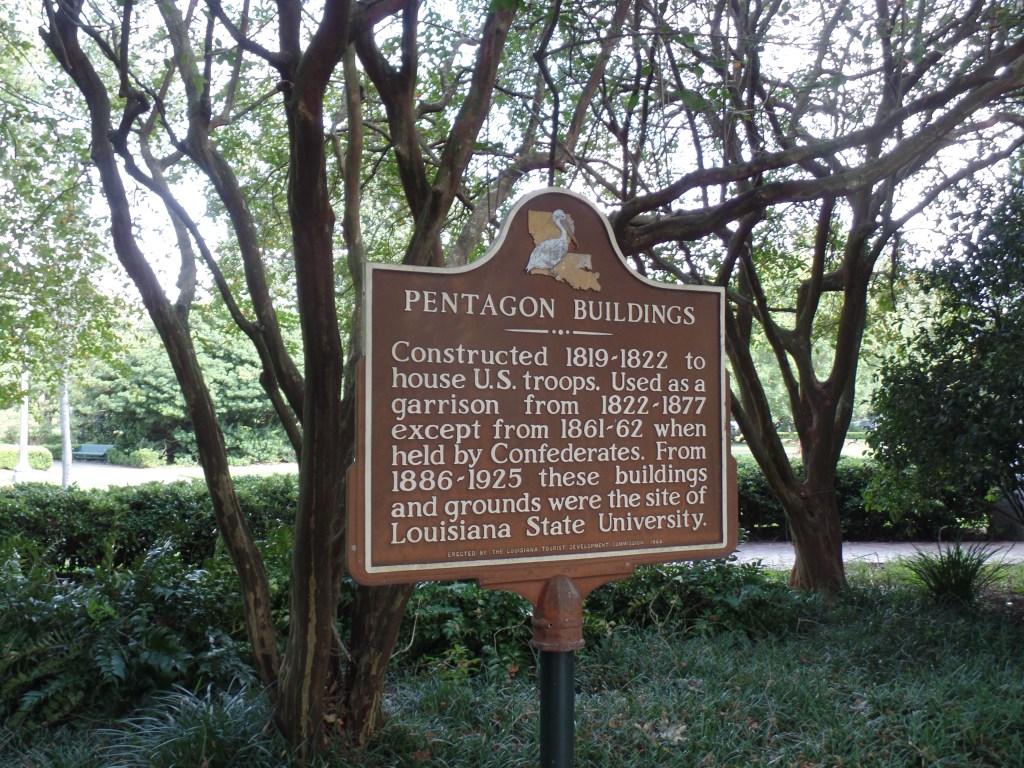
The Pentagon Barracks were used to house American forces in Baton Rouge, with their completion in 1825. The barracks occupy the site of an old British fort, named New Richmond, which had also been used by the Spanish, prior to 1816.
Archway, connecting the east and west sides of Pentagon Barracks.
The pleasant Courtyard of Pentagon Barracks was a mini-parade ground and resting spot for the troops.
This is the story of Pentagon Barracks, in a nutshell.
Here is a view of the columns and beamed outside ceiling of Pentagon Barracks.
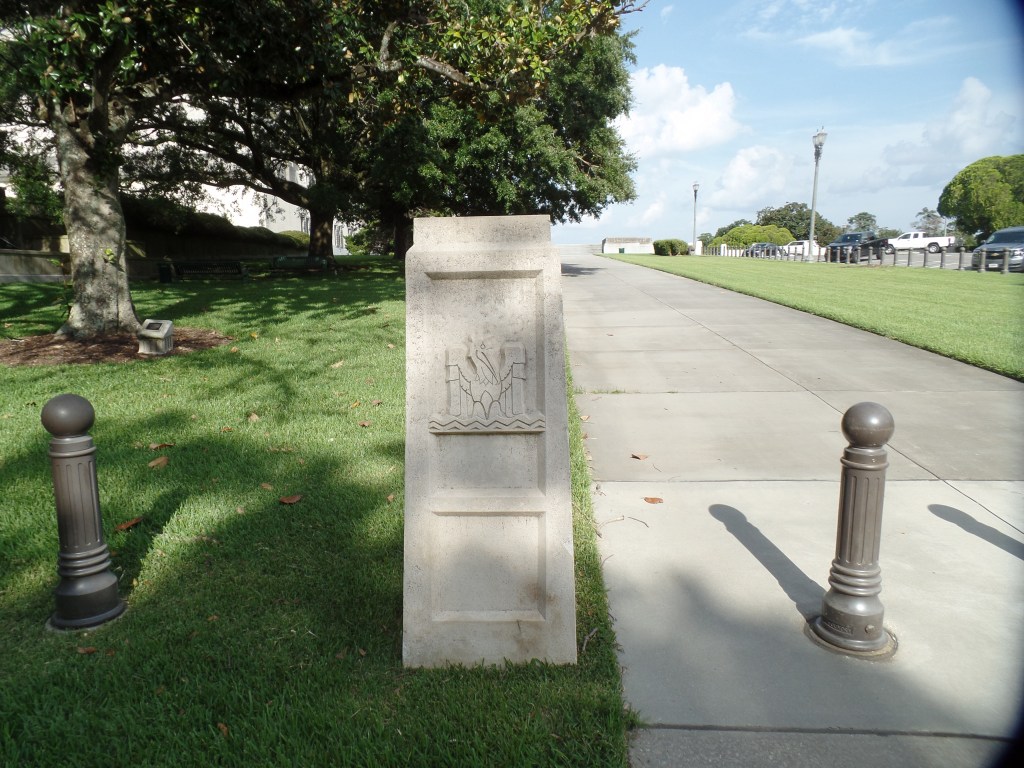
Peilcan inlays are common, throughout the Capitol’s exterior and its grounds.
Walking back to my borrowed vehicle, I enjoyed this view of the Governor’s Mansion.

So, there is a lengthy, but concise introduction to the three segments of the Louisiana Capitol District: The east, with Indian Mound and the Old Arsenal; the center, with the Capitol itself and the statue of Huey P. Long; the west, with Pentagon Barracks and the Capitol Museum (not shown here).

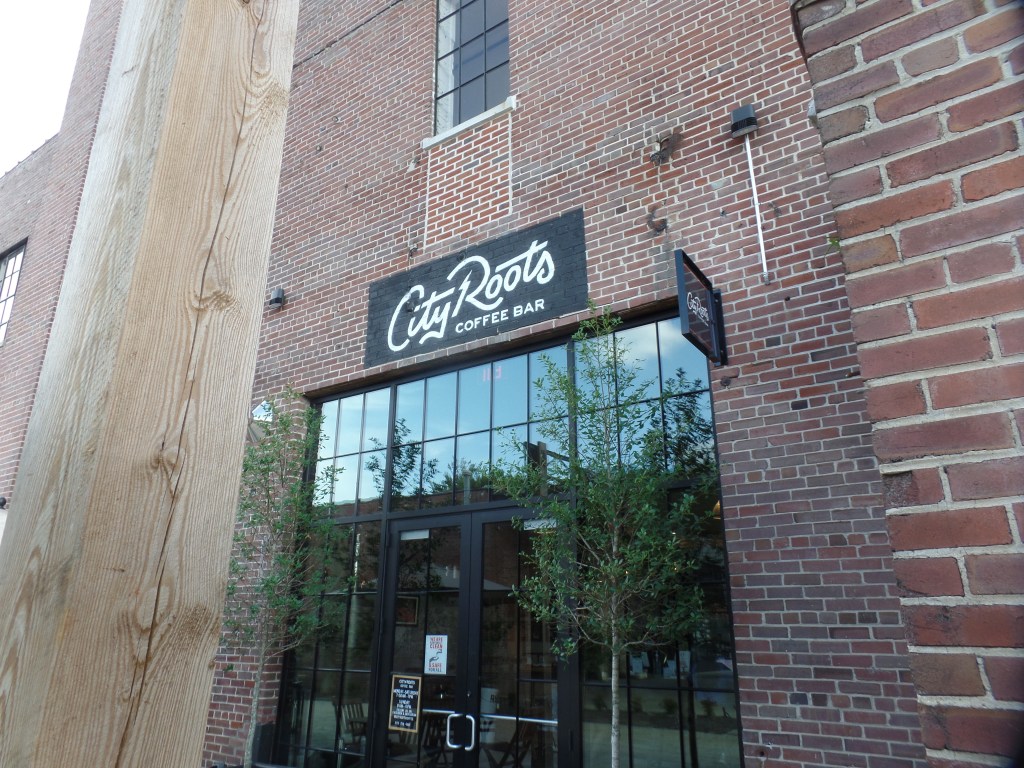
My day ended with a cold brew coffee, at this engaging establishment, on the east side of Baton Rouge:

City Roots is part of a dining and shopping area, called Electric Depot.

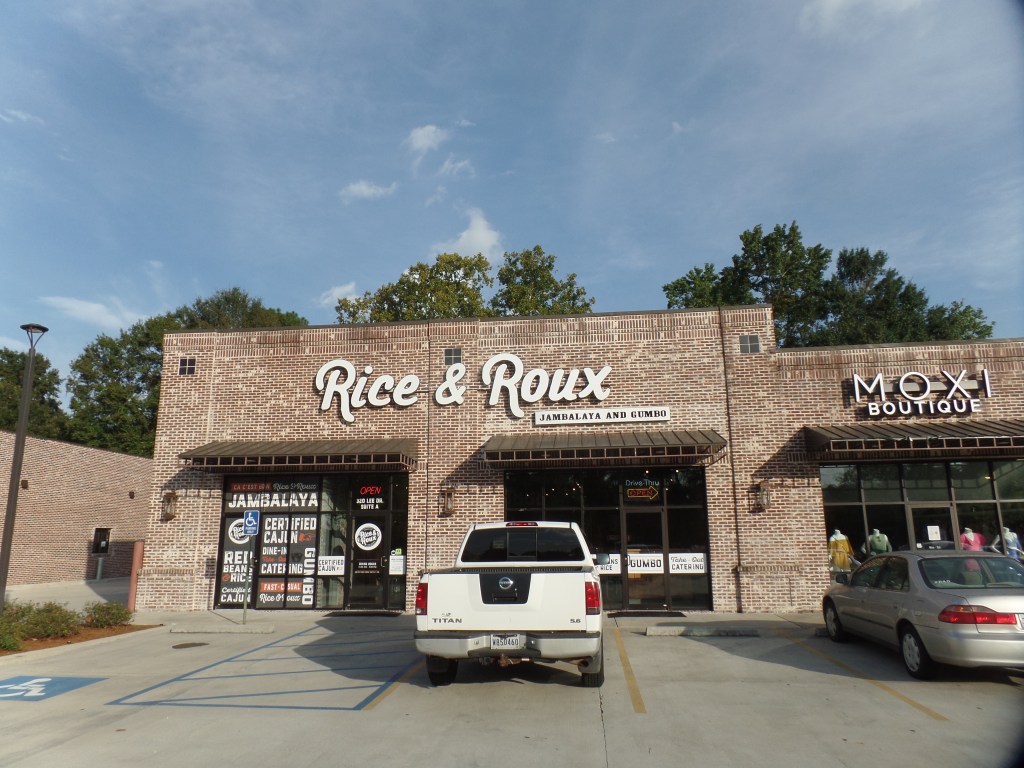
Finally, it was dinner time, and Cajun was on the menu. There is no finer place for jambalaya, gumbo and crawfish pie than this south side spot:

As I enjoyed a goodly part of my meal, the engaging strains of zydeco filled the room. Another bonus-There was enough left for Saturdays’ lunch!

This mural, at Electric Depot, captures the energy of an emergent new Louisiana.

The Summer of the Rising Tides, Day 98: Looking Back At Baton Rouge- Part 1

6

September 6, 2020-

Today presented itself, back at Home Base, with a few responsibilities right off the bat- two Zoom calls and two loads of laundry. Mostly, though, I had plenty of time to ease back into the routine that occupies me here.

It’s apropos to note a couple of subjects that derive from the day or so that I spent in Baton Rouge. Louisiana’s capital ha,s at times, languished in the shadow of its Big Easy sister to the southeast. New Orleans was, in fact, offered me as a place from which to fly homeward, yet, with a guaranteed ride to BR and none to NOLA, I politely declined the offer.

The free day, that resulted from my catching a ride to Baton Rouge, provided a chance to get a look at a preserved plantation property: Magnolia Mound. It was medium-sized, even its heyday-with 80 enslaved people working the property, at maximum, primarily for sugar cane production. There were a series of thirteen owners, between 1797 and 1905, the latter owner running the place as a sharecropping enterprise, after a brief period (1863-7) in which the freedmen remained on the property and ran it as their own business, in a time of confusion as to the whereabouts of the owner. In the mid-1960’s, the property was purchased by the City of Baton Rouge, as a park, in order to preserve the French Creole architecture and artifacts.

I was fortunate to get a personal tour of the Historic House (manor) from a delightful young lady, named Cat, with encyclopedic knowledge of the various aspects of the grounds and buildings. No photography is allowed INSIDE the Historic House, but here are some scenes of other parts of the park.

Magnolia Mound Visitors Center
Hart House, the home of a post-Emancipation owner of Magnolia Mound, who had his mother live in the mansion, though without running water. Nice guy, Mr. Hart.
The magnolia is one of two dominant trees on the property.
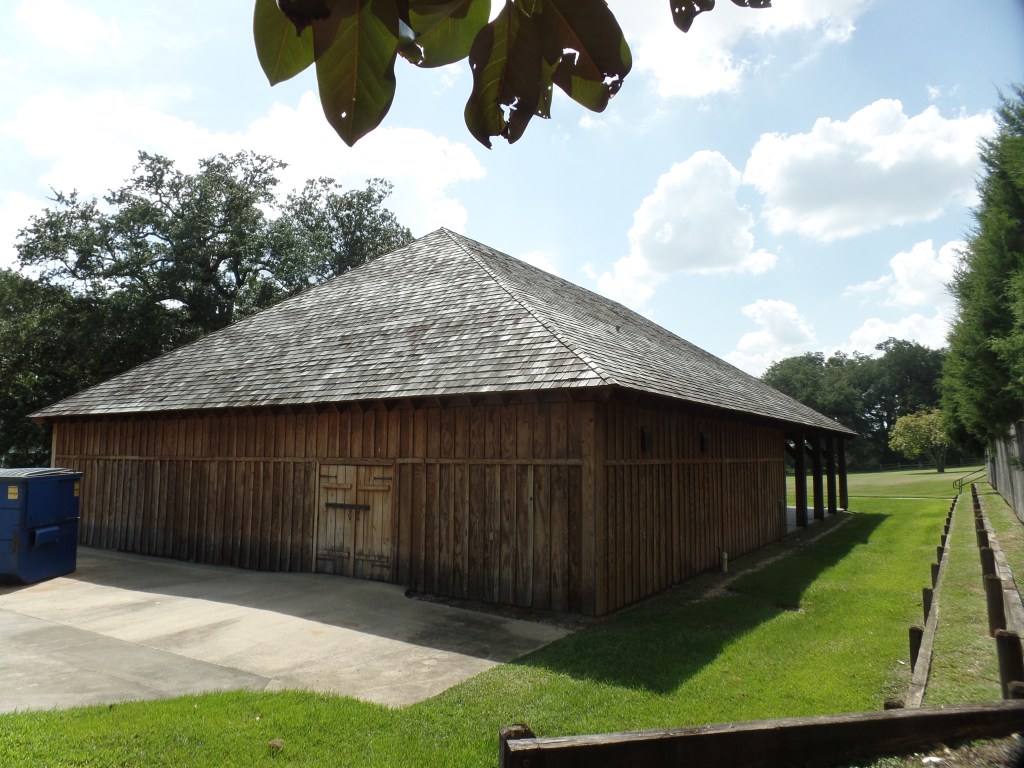
La Grange Pavilion is a former barn, now used as an event center.
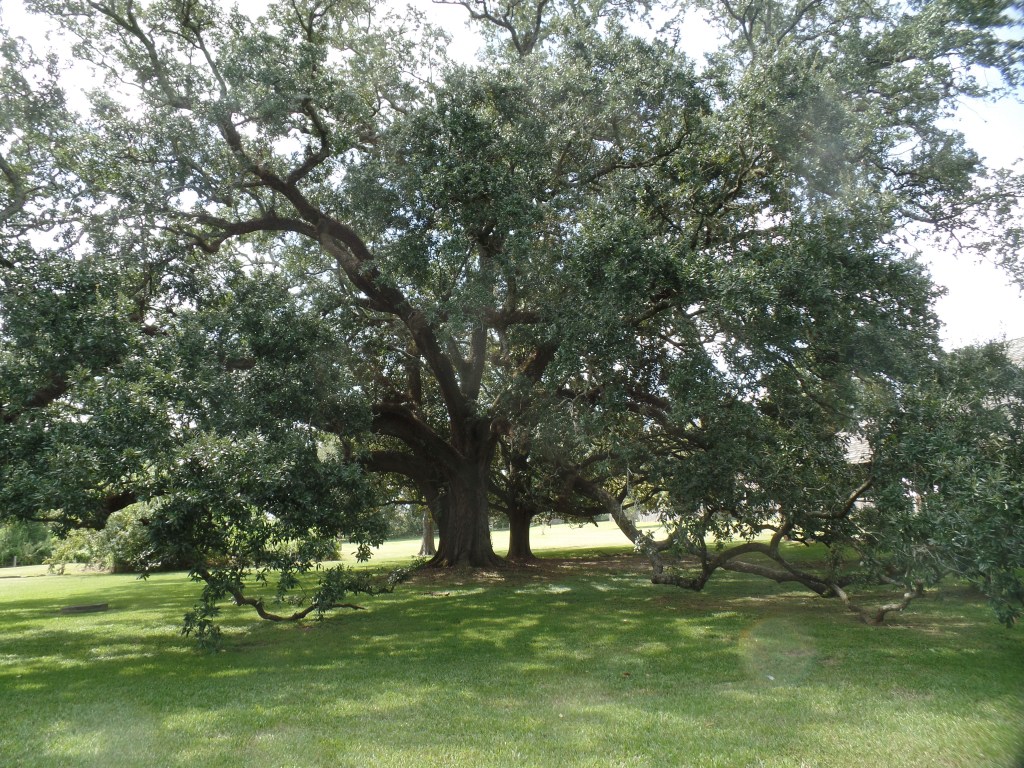
The Live Oak is the other dominant tree on the property.
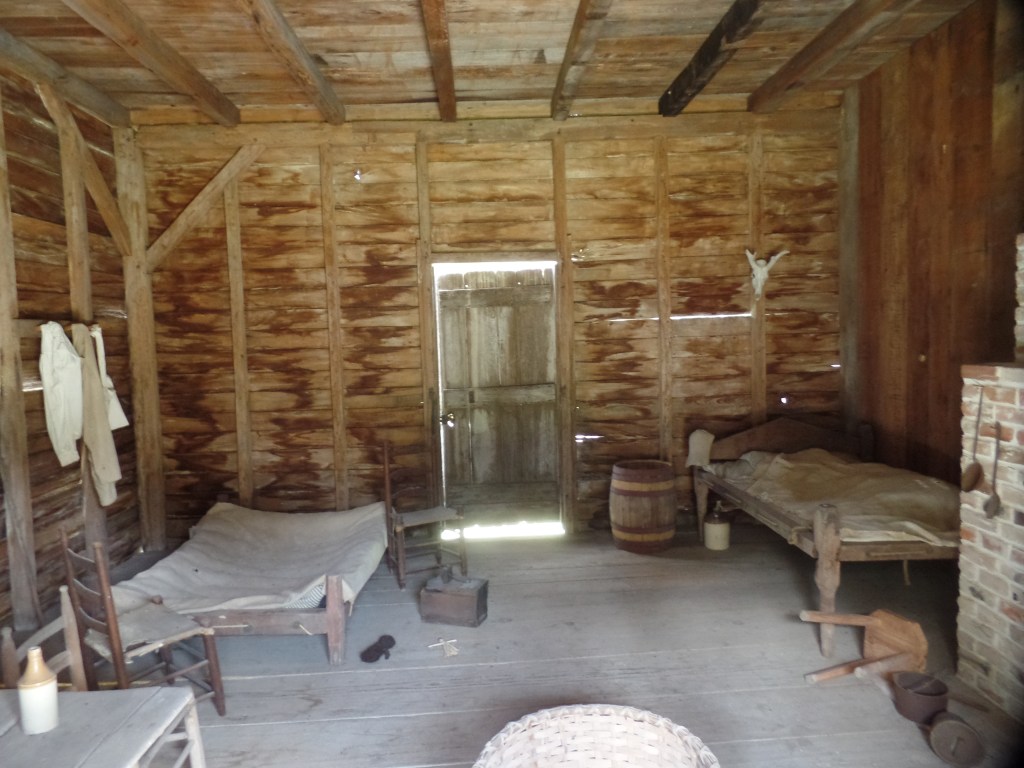
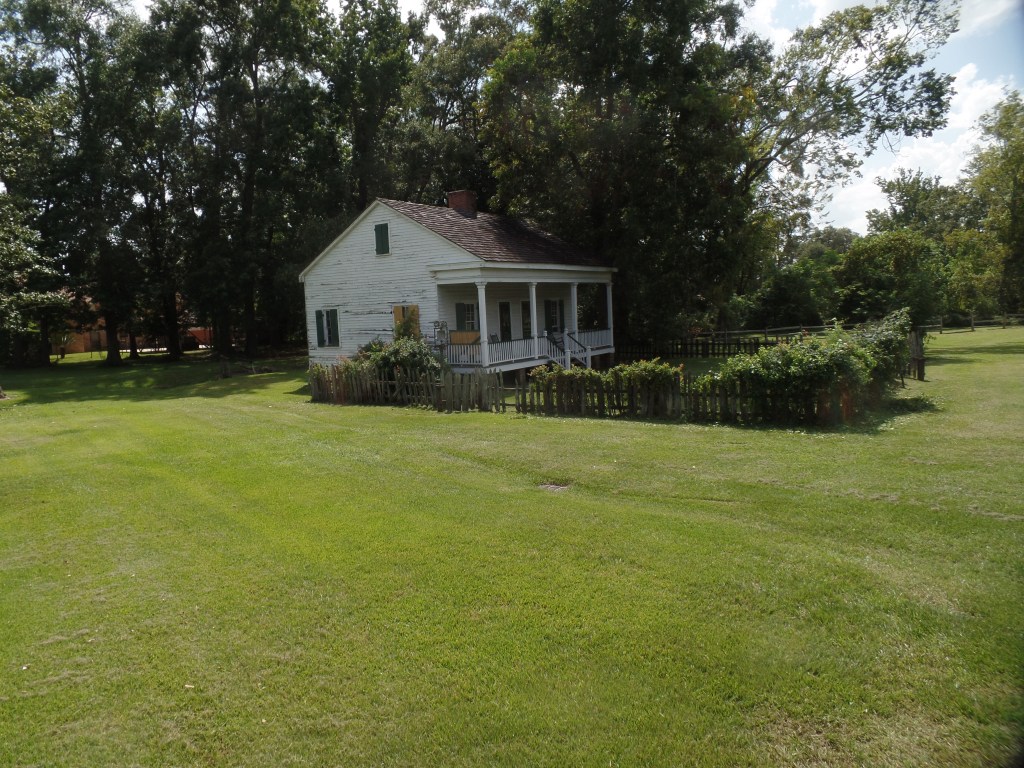
This is an external view of a Slave Cabin. Each cabin housed five people. There were at least sixteen such cabins on the property, at the height of its operation. The cabins were destroyed by a tornado in 1871. This structure is similar to those destroyed, but was itself brought from another plantation.
This shows the sleeping area of an enslaved person’s cabin. There were likely two or three other beds in the room, as well.
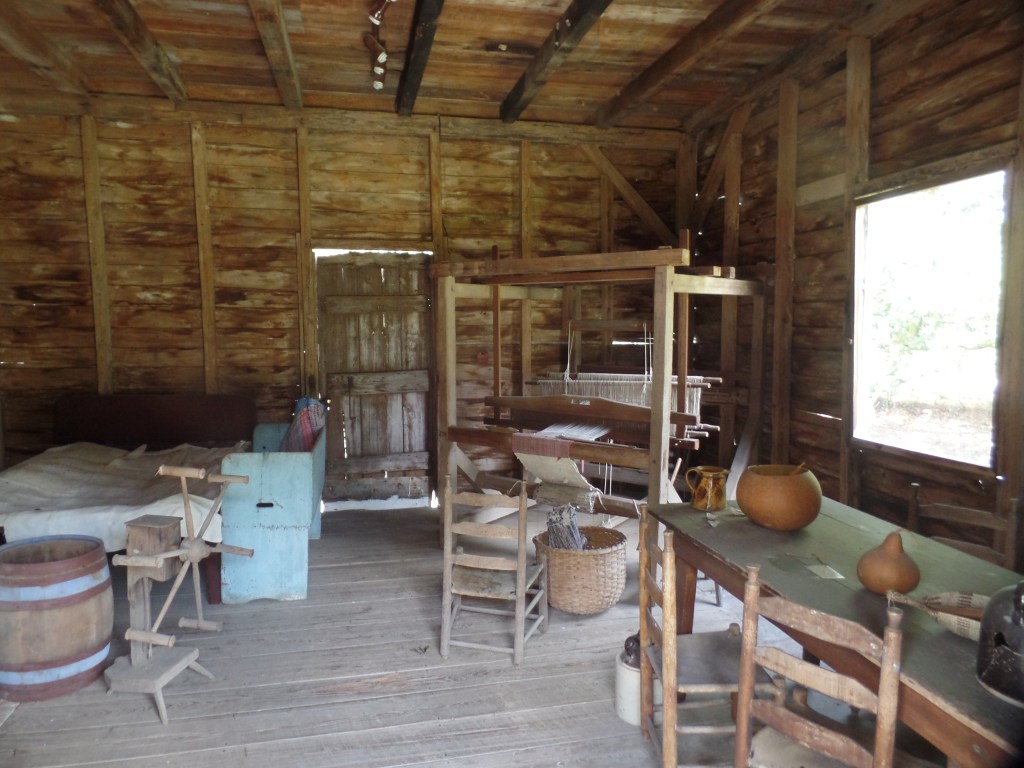
Looms were a critical tool of the enslaved women who worked in the Main House. They tended to all matters involving the property owner’s family, as well as making their own clothes.
This is the Overseer’s House. Overseers were, generally, just a notch above the enslaved- and could have been anyone from a poor Scotch-Irish farmer to a freed African-American. They were, however, not enslaved.
Here is the open hearth of the outdoor kitchen for the Plantation House. Enslaved women prepared all the meals here.
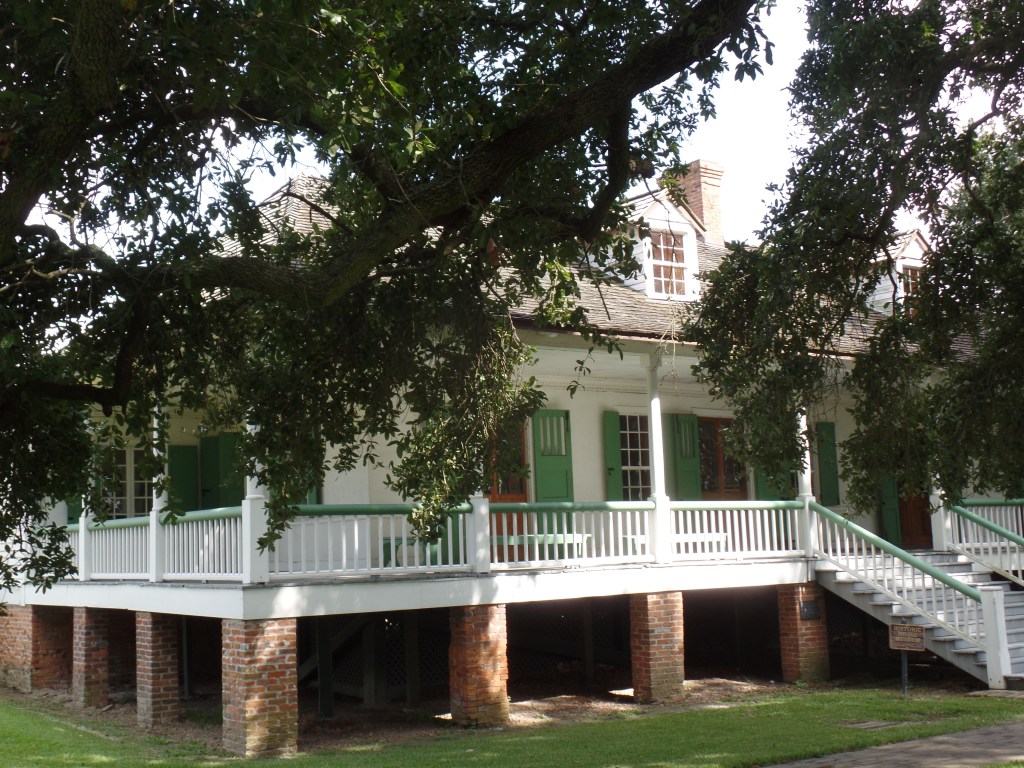
Here is a view of the front to the Plantation (Historic) House. The construction is a blend of Spanish, Creole and Caribbean archtiecture.

Enslavement has always bothered me, especially as an institution. That it was deemed necessary to build our nation’s economy is particularly odious. The story, though, ought not be erased or canceled. It needs to remain as part of the larger cautionary tale, lest it ever happen again.

Next: Louisiana’s State Capitol

The Summer of the Rising Tides, Day 97: Cramped, but Not Squished

6

September 5, 2020, Phoenix-

America’s hottest (temperature-wise) metropolitan area welcomed me back, this evening-with an air temperature of 113F-at 8 p.m. This is just another reminder of why I left this city, nine years ago. It could, of course, be worse- I could always find myself, at some point, on the plains of northern India, in the Arabian Desert or in Baghdad. I will wait, though, and not be in any hurry along those lines. Thankfully, it was a short walk from the air-conditioned terminal to the air-conditioned van that will bring me back to Prescott (Air temperature, a balmy 81F).

The day started in Baton Rouge, with a relaxing morning and a lunch of left-over jambalaya and crawfish pie, from the delightful Rice & Roux. The business manager of Spring Hill Suites drove me over to the airport, as she has NO desk or transport staff, at the moment. Such is life, in the sneering face of COVID-19.

Baton Rouge Regional Airport is a small enterprise, and was rather languid, even somnolent in places. TSA, though, was alert, and I found that I had not been thorough enough, in sorting stuff out of my carry-on. A nearly-full bottle of water and some plastic cutlery bit the dust.
The puddle-jumper to Dallas-Fort Worth left on-time. With the two seats in front of us remaining empty, my young row mate got his own row-giving both of us some sorely-needed space. The other good thing was that the tiny plane was in the air for barely an hour.

A snack and a vitamin water, at DFW, sufficed before I boarded the somewhat larger plane to Phoenix. We were told that the plane would be “quite full”, leading a different young row mate to take her seat in the middle of the row, with me in the window seat. Fortunately, she was able to take the aisle seat. Given that there was a large backlog of planes waiting to take off, and the seat space is much smaller than I even remember from two years ago, I can’t imagine how it would have gone, had a third row mate shown up.

Two hours later, the still restless and anxious young lady, facing God-knows-what, in the hours and days ahead, was off the plane and out the terminal door like a shot. She said nothing, only glancing at my copy of “The New Jim Crow” and taking note of the title and author, then going back to availing herself of what little comfort the seat allowed. I felt nothing but empathy.

Another friend had suggested ditching the plane in Dallas, taking a train to OKC and from there, going to Flagstaff, via Amtrak. Two things- I flew on the Red Cross’s dime and there is no direct transport from Flagstaff to Prescott. The train is always an option for the future, but I do like the freedom offered by driving.

So, off we go, up to Prescott, and at least two weeks of respite from disaster response.

The Summer of the Rising Tides, Day 96: Remembrance of Alexandria

1

September 4, 2020, Baton Rouge-

Tommy sat on a concete ledge, taking in the goings on, around a downtown park. He said he’d been struggling, but was determined to get back up and keep on going. He noted the three frames of tile mosaic, in front of us, saying he found something new in each tile, everytime he looked at them. This, he noted, was the true beauty of art. He expressed appreciation for our Red Cross efforts on behalf of Rapides Parish- a sentiment shared by many around this mid-state community.

There was a brief two hours, on Wednesday, when I was let loose upon downtown Alexandria, to get in some walkabout time and check out a four block radius of the district. Alexandria is a rather utilitarian city, with few landmarks of note-but there is a small park, near City Hall, which also doubles as Parish House.

Here is sundial motif, designating the seat of Rapides Parish.
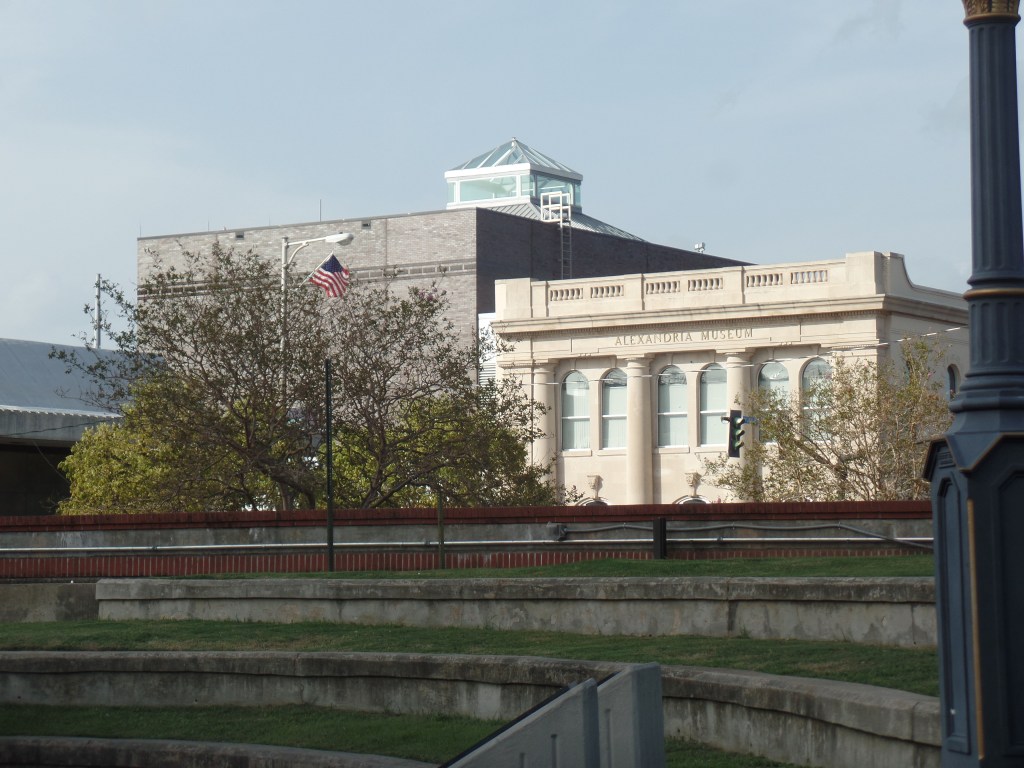
Alexandria Museum was closedm by the time I got downtown.

The following three frames are a triptych of tile mosaics, in City Hall Park.

Tile mosaic of marine life.
Tile Mosaic of land animals.
Tile Mosaic of more animals, and people wprking together.
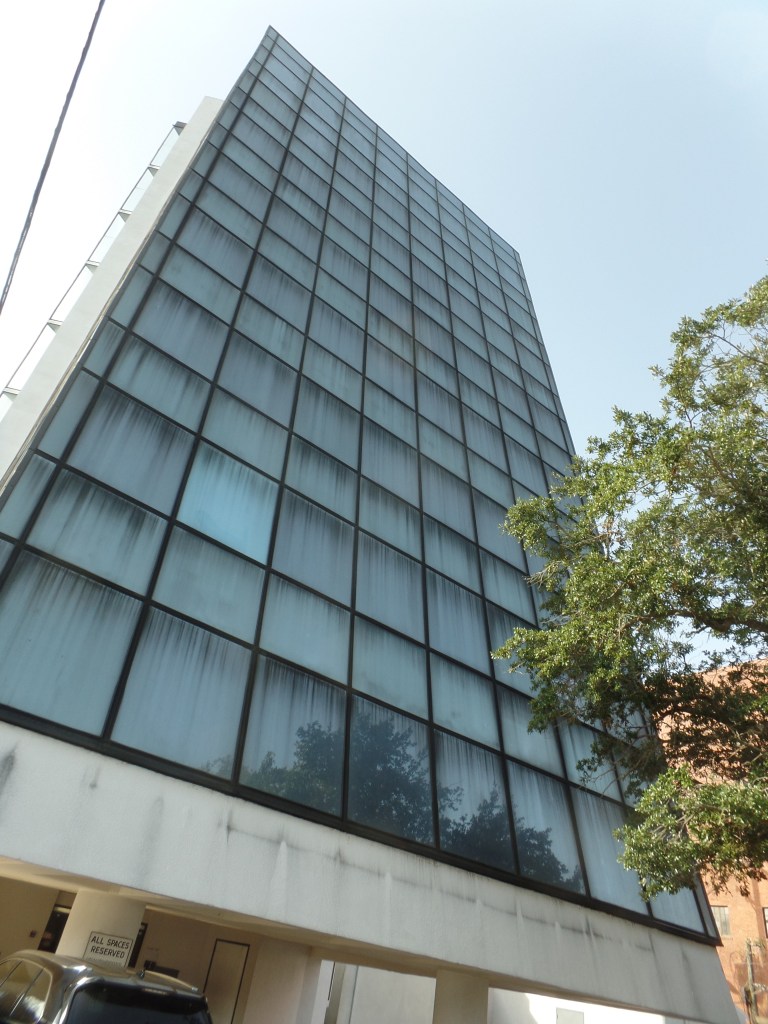
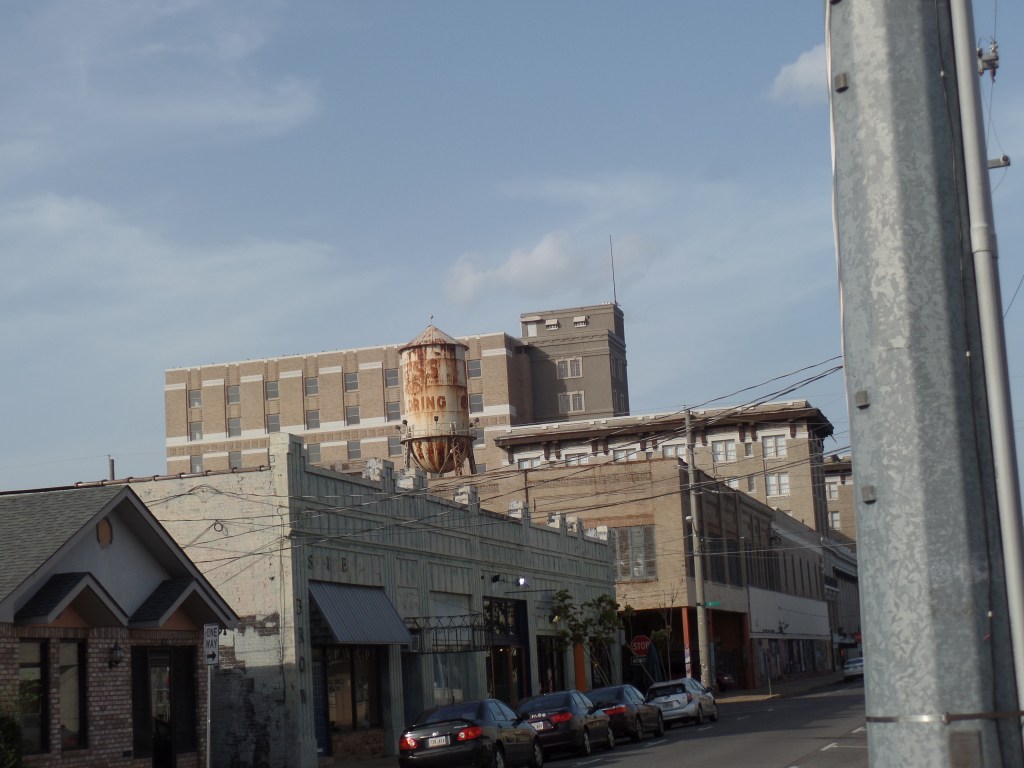
Alexandria Towers
Weiss and Goldring water tower
Capsicum, in ground box.

As it was time to get back and resume my own work, I got back in the truck and drove around, through the south side, passing people out enjoying the evening air-seeming just glad to have their languid, but clear skied, days back, after the storm of August 26.

The Summer of The Rising Tides, Day 95: The Wrap

2

September 3, 2020, Baton Rouge-

All things come to an end, though their successor events take up the slack, right away. So it was with the ten-day sheltering exercise at Rapides Parish Coliseum, Alexandria, LA. (For those not familiar with Louisiana, a parish is the state’s equivalent of a county.)

We started early, maintaining services to the clients, until their 2 p.m. departure, either by chartered bus or personal vehicle to Louisiana State University at Alexandria, where they were either assigned to a mega-shelter or offered a hotel room somewhere else in Louisiana. A few stragglers came in during the day-two requesting lunch and one who thought he could stay the night. The couple got their lunch and the homeless man was given a couple of phone numbers to call for further assistance.

The hard work of breaking down sleeping cots and gathering up blankets lasted nearly four hours. Then, it was time to bid farewell to “Alex”. A dinner stop at Logan’s Road House, itself a happy, but somewhat chaotic establishment, provided fine food and good cheer.

Two hours later, we were here in Louisiana’s capital. I have tomorrow, and bit of Saturday, to rest up before the flight back to Arizona. It’s been a fascinating, sometimes grueling, deployment-getting to know and care deeply about, a cross-section of southwest and central Louisiana’s displaced people, both storm-displaced and homeless. There was no Black vs. White or Cajun/Creole vs. English- just a hundred thirty souls, all in the same boat.

The Summer of the Rising Tides, Day 94: Staying the Course, In Twilight

6

September 2, 2020, Alexandria, LA-

This city, I found out today, was named for the original landowner, Alexander Fulton. The settlement was platted in 1805. It was originally a link between Baton Rouge, to the south and Natchitoches (NAT-chit-uh-chiz) to the north.

So, there’s that. Today, Alexandria is a mostly easy going, sometimes bustling city of about 50,000 people. I got to see a bit of the Red River preserve on Monday, and some of downtown, today. A photo post will come, next week.

Today was mostly spent breaking down parts of the shelter area, whilst still maintaining a sense of security and hope for those staying with us tonight, and part of tomorrow. No professional team drops the ball on those being served, and we most definitely go on. One had to leave, for violating rules of safety and hygiene. That individual received guidance and a way forward. The rest are still with us. I have, for my part, maintained rules of hygiene and courtesy-for which the vast majority are grateful, and in which clients have started to share. This is true, across all socioeconomic and ethnic groups here.

Tomorrow is likely to be a long day, as transition days usually are. Some will be on edge. I will just stay the course and remain mindful of all that I need to do-one thing at a time.

The Summer of the Rising Tides, Day 93: That Hamilton Woman

2

September 1, 2020, Alexandria, LA-

The Disney enterprise once had a masterful cartoonist, in Bruce Hamilton. His signature characters were Donald Duck and his family, His back-up, his leading lady, was Helen.

Bruce passed on, several years ago, after a lengthy illness, leaving Helen as matriarch of a talented family of artistes. She was the focused eye of reality, keeping all her dreamers on track.

The Hamilton home, in Prescott, was well-appointed and always welcoming. Hollywood posters, from the Golden Age, abounded-with the signature “That Hamilton Woman”, promoting a period piece from 1941, starring Vivien Leigh and Laurence Olivier. Disney memorabilia, and Bruce’s life’s work, adorned all common rooms.

Helen passed on, yesterday, after a lengthy illness. Her legacy is one of clear vision, cultured generosity, and a structured approach to life-all coming forth from a gentle demeanour. She made the finest brownies-and I’m told, delectable deviled eggs and egg salad. She and Bruce traveled widely-across Europe and South America, as well as all over the United States.

That Hamilton woman was regal, and will be sorely missed.