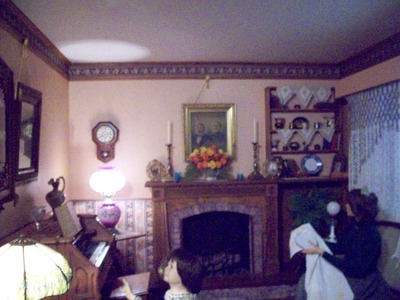
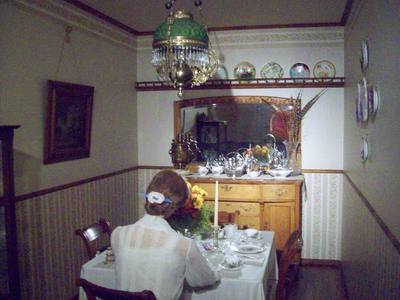
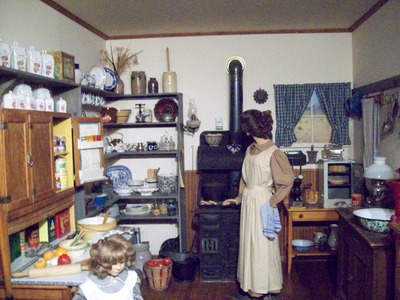
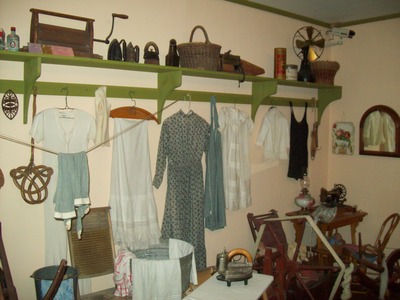
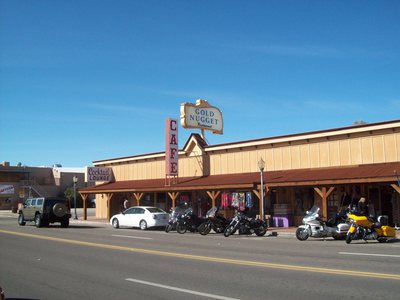
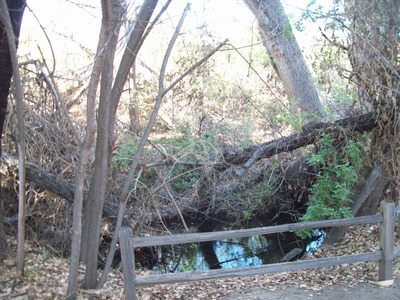
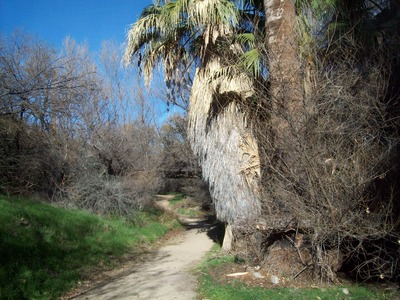
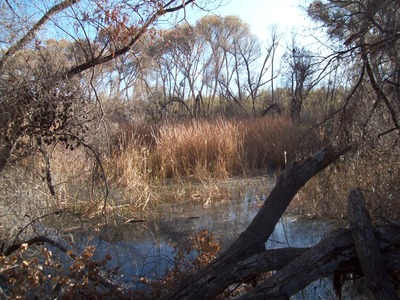
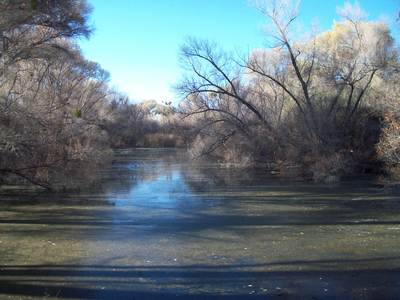
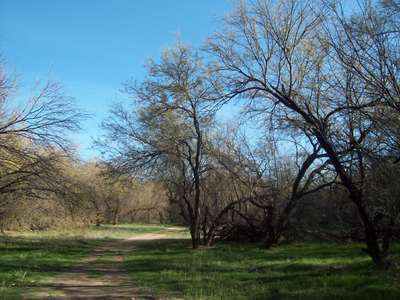
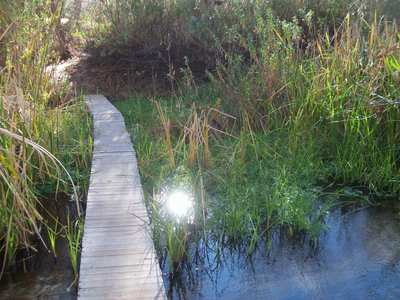
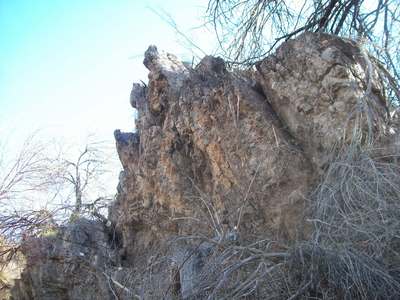
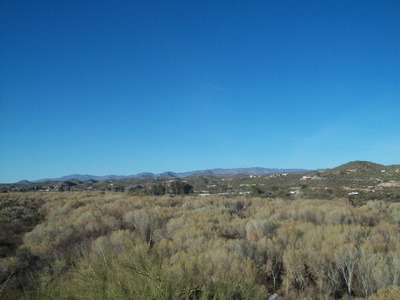
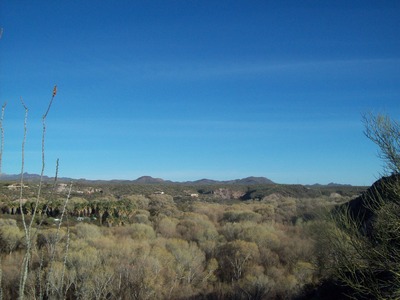
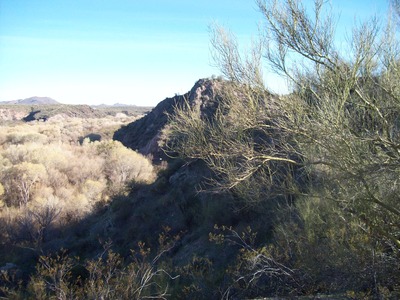
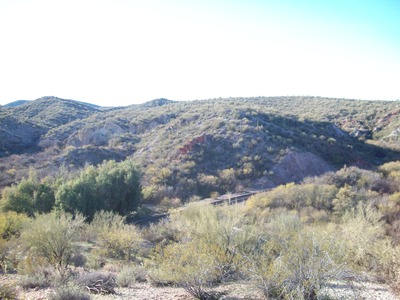
Here are some shots of the Queen Copper Mine, which was established by George Warren and Edwin Reilly in 1879. The Douglas family, and Phelps-Dodge Corporation (now Fairport-Mc Moran) later bought the mine and expanded on it.
Here are four shots of the mine, which may also be toured, if scheduled in advance.
There is probably a fair amount of copper tailings in the Queen, but Fairport- McMoran’s operations have shifted to an area across the street.
The mine was the focal point of a serious labour dispute in 1917. This culminated in the deportations, on July 17 of that year, of 2,000 men, who were members of the International Workers of the World (IWW). This was orchestrated by Sheriff Harry Wheeler, of Cochise County and Walter Douglas, the president of Phelps-Dodge Corporation, which owned the mine. Wheeler was greatly concerned with “getting rid of German spies”, which is how he saw the labour activists.
Cochise County: Sierra Vista is its economic engine, Douglas, its main Port of Entry, Willcox, its breadbasket, Tombstone, its “Toughnut’ and Benson, its Cave City. Bisbee, the county seat, is Cochise’s crown jewel.
Dewitt Bisbee, a mining executive, never lived in the town that bears his name. ‘Tis a pity; he’d have probably loved it here. Canyons can be hard places to live, if one is used to the wide prairies. On the other hand, for those who like snugness and close proximity to one’s neighbours, a place like this is paradise, if in a rough way. There are, to my delight, over a dozen lodging establishments, from the Bisbee Grand and Copper Queen Hotels, to Audrey’s Inn ( a bed and breakfast, which fills fast). I chose the Canyon Rose Suites, in the center of the Bisbee Historic District. It was exactly what I needed, to cast out my demons.
In order to give a sense of what a trip to Bisbee can offer the body, let’s climb some stairs to the water tower:
Parking is actually abundant, all over town.
This is what’s left of the old water tower keeper’s lot.
I was born an extrovert- the kid who would march up and down on the sidelines of a parade, gladly run the woods with my fellow pre-school pals and take my grandparents on a guided tour of our new neighbourhood, when I was four-and-a-half.
When my Dad started working nights, I began to withdraw into my books and .45 records. Then I had a couple of head injuries from rock fights, acorn showers and such, and autism, however mild, set in. I had a fantasy world and it met my perceived needs. I went through school okay, and pulled myself together enough so that, by the time I was in high school, I was ambiverted- an In-Betweener, a mascot for the jocks and the self-appointed elite, and was always invited and included in the best gatherings and parties.
This didn’t work so well when I was in the Army. I did my job by day, and basically had no social life stateside, and a mildly sustaining one in VietNam, once I kicked MaryJane to the curb and hung out with 3-4 guys who were emotionally strong and accepting of differences.
Back in school, after Honourable Discharge, I found more people to hang out with, both at community college and at university. My angst and alcohol dependence didn’t help, but I worked around them, still the ambivert.
Once out of school, I went it alone while working in Maine for two years, and was just happy to travel broadly around Maine and New Brunswick, hardly knowing anyone at my workplace, though getting attached to the people with whom I lived- the Robinson family and Mrs. Knox.
It was likewise at the small boarding school in the desert south of Phoenix, where I was from’78-80, and at NAU in Flagstaff, ’80-’81. I was close to the kids at Villa Oasis, and to the Art Teacher. Others were either just a blur, or were overgrown bullies and had no importance to me. Grad school gave me two good sets of housemates, after I rid myself of the not-so-good. It was, though, another stretch of introversion.
Penny brought me back to In-Betweener status. We were happy just being together, yet being in large groups was fun again, for the first time since high school. Through all that’s transpired over thirty years, I’m still there in Ambivert Land, though, oddly, living in a gated community surrounded by hermits and other introverts.
I mention all this because of TIME’s article on the subject in this week’s issue. I took the quiz, and found myself being outgoing on 13 points and insular on 7. Maybe that’s why I go stir crazy when shortness of cash keeps me close to home, and feel happier when I can go downtown, or to the trails or other public places. I feel energized in schools, parks and markets.
How do you rate yourself on the intro-extro scale, with 1 being hermetically insular and 20 being ecstatically outgoing? I am a 13.
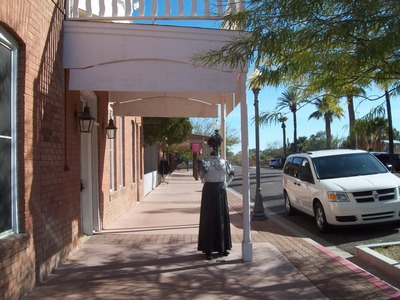
The Desert Caballeros Western Museum, on the back side of downtown Wickenburg, commemorates cowhands and miners alike. Gold and copper got this town started, just around the time Arizona was getting its land legs as a territory. Historical memorabilia of the Hassayampa Valley, combined with the fine Western art of Frederic Remington, Charles Russell, Olaf Wieghorst, George Phippen, George Catlin, Kenneth Freeman, and a dozen other painters and sculptors, make for a fascinating afternoon in this medium-sized town at the northwestern edge of the metro Phoenix area.
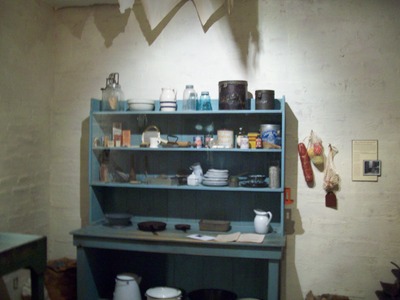
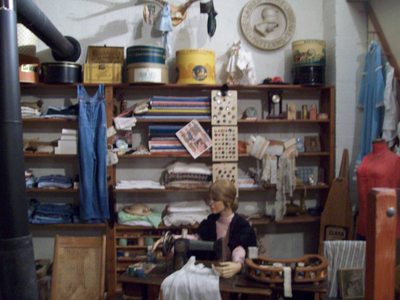
Here are some scenes of the main museum. First, let’s see how the early ranch families lived.
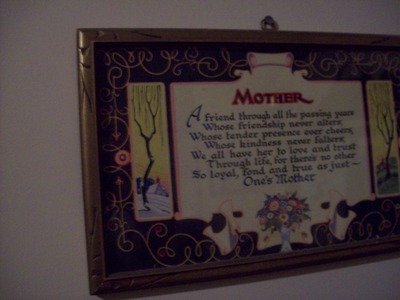
Yep, Mom and apple pie were big then, too.
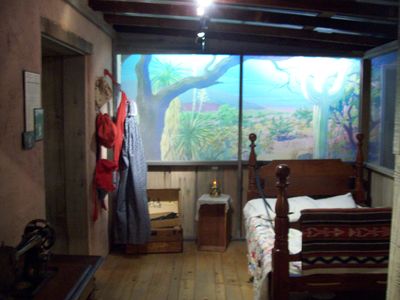
The bunkhouse seems to have had a nice view. Hope no Gila monsters had a habit of being peepin’ Toms!
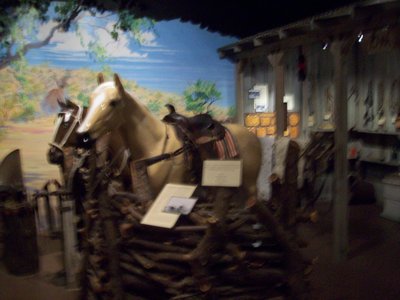
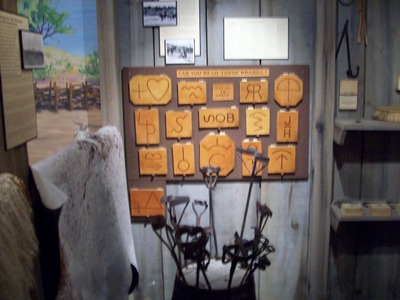
Anyone recognize these brands?
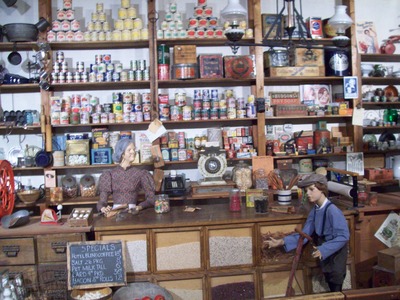
Now, let’s go visit the General Store.
The Wally Worlds of their time kept everything under lock and key.
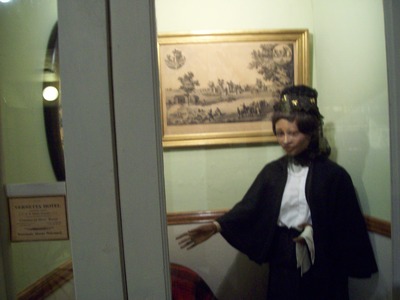
Mrs. Elizabeth Hudson Smith was one of several African-Americans who came to the new Arizona Territory. She prospered nicely as proprietress of the Hotel Vernetta, until statehood, in 1912, brought lots of Easterners, and Jim Crow.
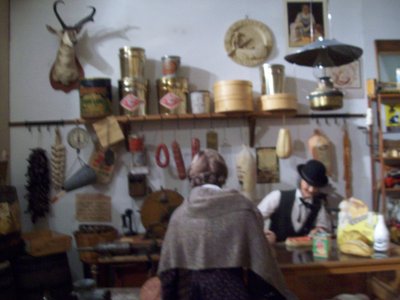
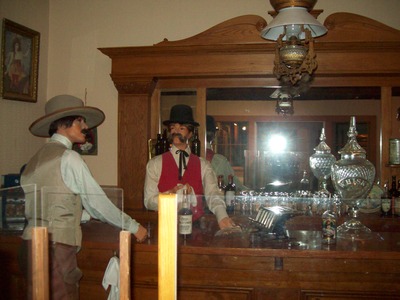
The hotel bar thrived, with the cowpokes and miners not caring whether a person was white, black or green.
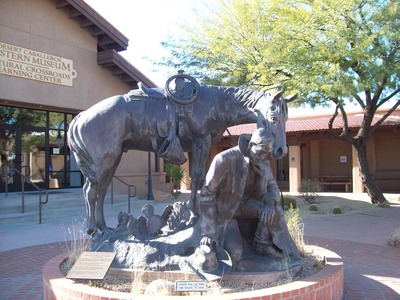
Wickenburg has several bronze sculptures around its downtown.
It also has several homey restaurants.
I will head down here again next month, to have a look at Wickenburg’s third anchor: Vulture Peak and its gold mine.
The Hassayampa River (Assiampa, in Apache, for “waters hidden underground”) mostly lives up to its name. It rises in the Sierra Prieta Range, on the west side of Phoenix, and flows downhill to the area occupied by the small ranching and mining town of Wickenburg, about an hour northwest of Phoenix. The town, in turn, is named for Henry Wickenburg, an entrepreneur in rail and mining, in the Arizona of the late 19th/early 20th Centuries.
I went down there yesterday, to visit two of the area’s three defining places: The Hassayampa Riparian Preserve and Desert Caballeros Museum. This post shows some scenes of the preserve, which is manged by The Nature Conservancy. Most of the land is flat, save a small outcropping, called Lyle’s Lookout.
Here are some scenes of Palm Lake Loop Trail.
Note the “beard” or dead frondage, on the palm.
Palm Lake used to be pumped and cleaned up. Now it is left alone.
The Conservancy prefers to keep its holdings in their natural state.
The midsection of the Preserve is mostly dry.
As one gets towards Lyle’s Lookout, however, the Hassayampa emerges from underground.
The Lookout itself affords a fine view of surrounding mountains.
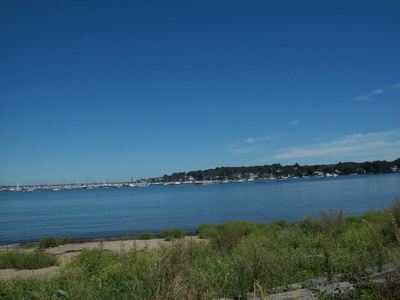
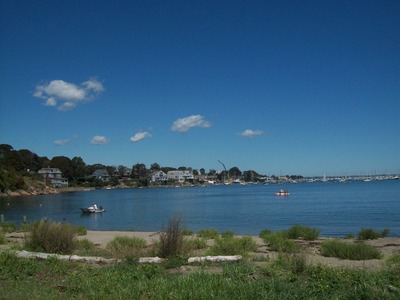
Virtually every town on the coast of New England has its share of heartwarming scenery and historical buildings, conjuring up images of maidens in full dresses and head bonnets, and men in black jackets, pants and wide brimmed hats.
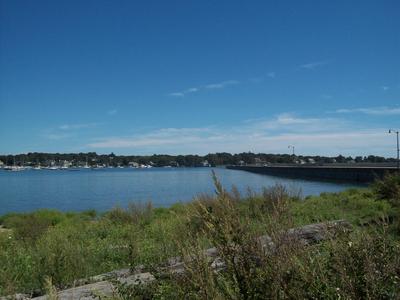
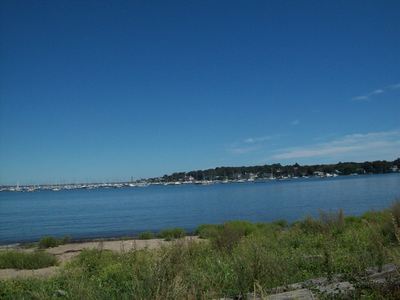
Here is a town I visited on the morning of August 30, 2011.
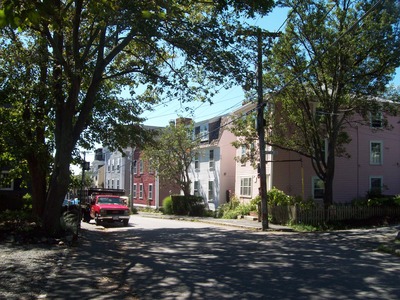
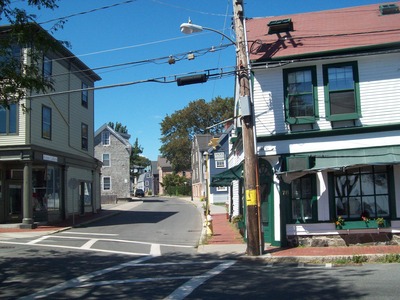
Actually, the cobblestones have pretty much disappeared from Marblehead, which is a shame. The streets, though, will NEVER be wider than what it takes for drivers to be ladies and gentlemen with each other, and with bicyclists. I had to make a choice this time, for financial and time reasons, between going to Marblehead or going to Salem. I chose Marblehead, because it is compact and because understanding this little town does not involve going to museums, and it can be appreciated fully in a span of one hour. Salem requires at least a day.
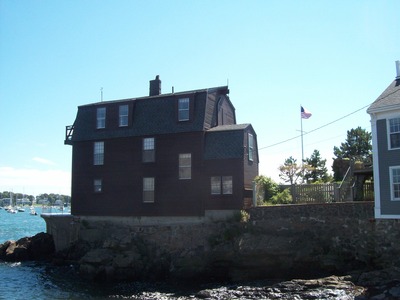
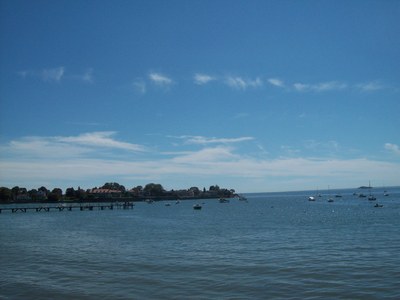
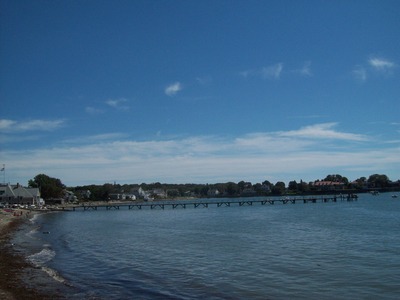
Marblehead is a major sailing venue, and among other claims to fame, it was the home of Elbridge Gerry, who gave us gerrymandering of congressional districts. This may not be something of which modern Marbleheaders would boast, but Bay Staters tend to gravitate towards positions of influence.
The immediately preceding photos are of Marblehead Neck
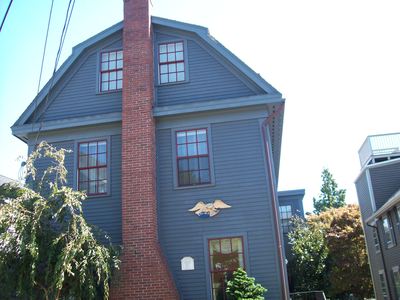
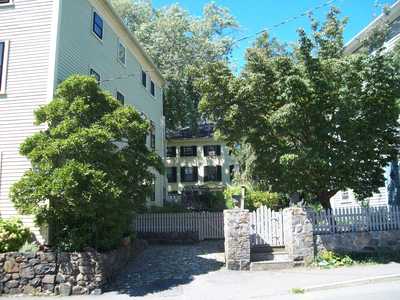
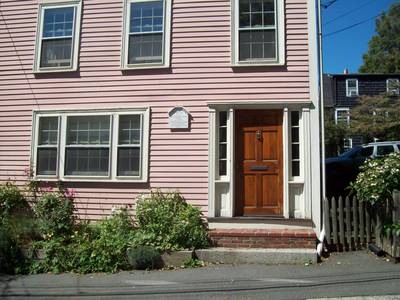
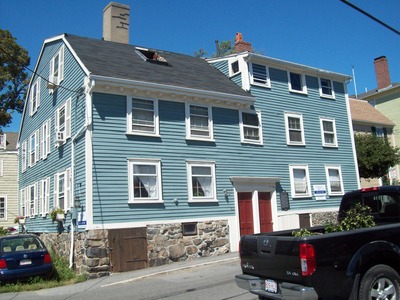
Now for some old style New England clapboard houses, some of which were originally built in the eighteenth century, during Marblehead’s clipper ship heyday.
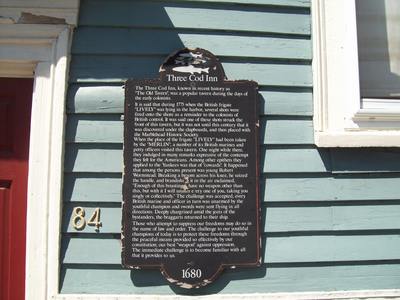
The Three Cod Inn is the site of an act of Revolutionary War bravery. An eighteen-year-old man fought off several British soldiers, using items of furniture at his disposal, whilst less brave onlookers cheered him.
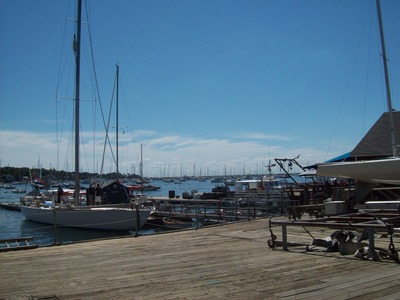
To the left is Marblehead’s central marina. A Great Race was held there yearly when I was in my late teens and early twenties. I didn’t learn to sail until much later, but it was always a great time to gather and carouse. New England’s coast is blessed with towns like this, and I am lucky to be enjoying them.
This is a chronicle of a visit to Boston and Cambridge, MA, on August 31, 2011.
In the late 1960’s, a Boston funk-rock group called The Standells did a medley of their hit. It was called “Dirty Water” and has become a staple of Boston rock history. It centers around the Charles River, which runs through Boston, and separates the Hub of the Universe from neighbouring Cambridge. The song alludes to the stench of the Charles River in those days.
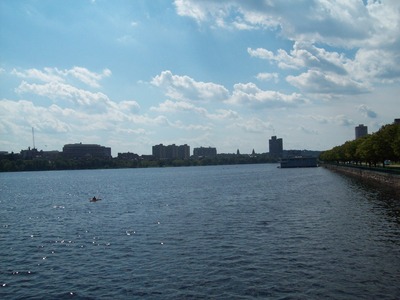
A series of mayors in both cities took steps to remove that onus, and today, the Charles is a perfectly enjoyable venue for sculling, and for walking along its banks.
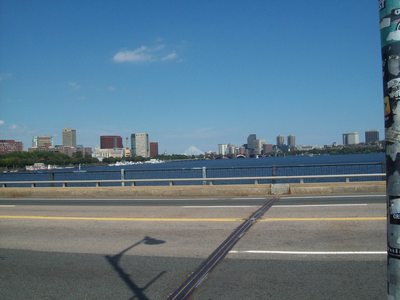
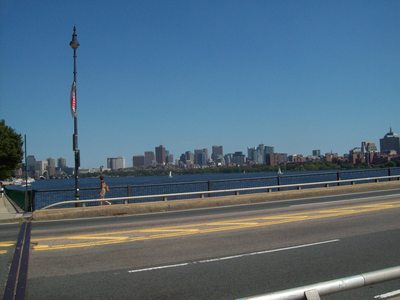
I spent yesterday walking from Harvard Square to the John Hynes Convention Center, just north of Boston’s Chinatown. Much of that walk was along the east and south banks of the Charles.
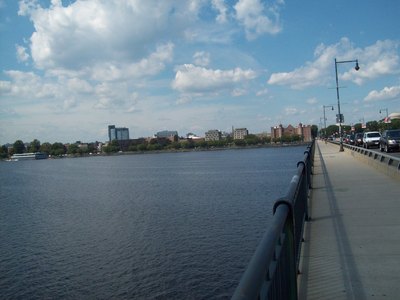
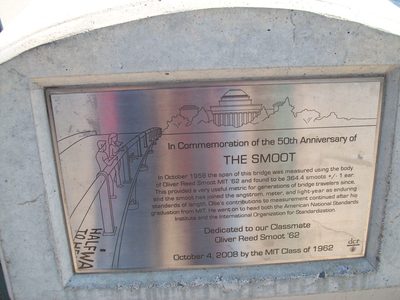
In 1958, an MIT (Massachusetts Institute of Technology) student named Oliver Smoot devised a way to measure the width of the Charles, using his outstretched body as the unit of measure. So, Ollie, the first known planker, lent his surname to the unit of measure. It is agreed that the Charles, at the Harvard Bridge (above, right), measures some 83 smoots in width.
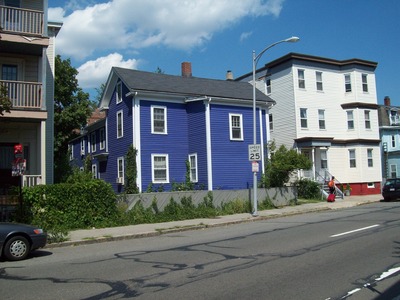
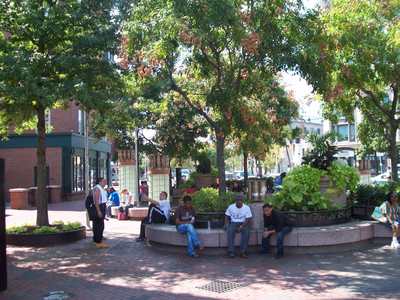
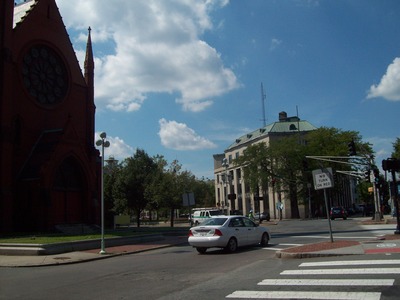
Before crossing the Harvard Bridge, I walked off on a tangent, north to Cambridge’s Central Square. The “town” aspect of Town and Gown Cambridge had not been the subject of my perusal up to now. Every city and town have their story, though, so I walked north, past some intriguing edifices. Question: Would you paint your house in such eye-catching fashion?
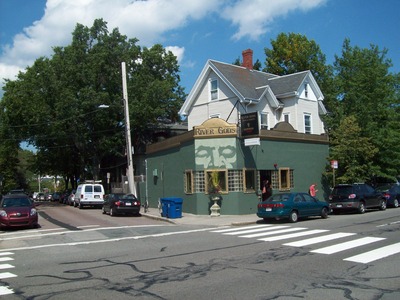
Next up, I spotted a small pub called “River Gods Food and Spirits”.
After a half-mile or so, came Central Square, a hearteningly cosmopolitan area. South Asian and Middle Eastern shops and eateries vie with Irish establishments (Asgard is the best known of these) and Caribbean restaurants.
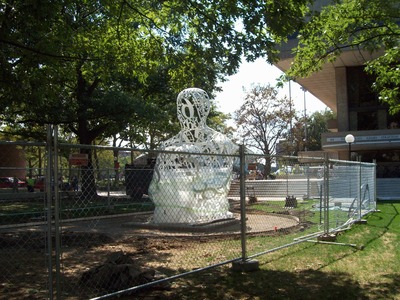
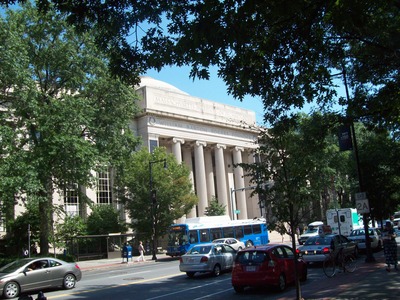
I then walked back along Massachusetts Avenue, and came to Kendall Square, and MIT, a half-mile further.
MIT is a perfect counterpoint to Harvard: The future, and technology, balancing the Arts, Letters and Divinity, and tradition.
Yet, everything intertwines. Harvard has its world-class Medical School, and is fully involved with the Sciences. MIT is concerned with climate change, and all the politics that go with that concern. Both Harvard Square and Kendall Square are lively gathering places, with world-class entertainment venues and eateries. In the middle of it all remains workaday Central Square, alive and aware.