Tales from the 2016 Road: Harrisonburg, of the Shenandoah

8

July 14, 2016, Harrisonburg, VA- The Spine of Virginia is replete with picturesque cities and towns, of various sizes, from sprawling Roanoke and bustling Charlottesville, to compact places like Dublin and Damascus.  I decided to stop for lunch, and a stretch, in Harrisonburg, a city about the size of Prescott, and whose civic life is also centered on the area around its courthouse.  Court Square, west of James Madison University, has a variety of eateries and clothing shops.  I was drawn to Artful Dodger Coffeehouse and Cocktail Lounge.  Being a teetotaler, I was a curiosity to the couple who tend bar and manage the place.  I enjoyed my iced tea and tuna sandwich, regardless.  Jaqie and Rob couldn’t have been nicer.  It was pointed out to me that, if I stuck around until Friday night, I could get free Salsa Dance lessons.  There but for fortune, go I, towards Florida, but maybe on my next pass.

Here are some scenes both inside and outside of Dodger:

SAMSUNG CAMERA PICTURES

The ethic of Artful Dodger, Harrisonburg, VA

SAMSUNG CAMERA PICTURES

Party Time, Harrisonburg, VA


Once I parked my car, I passed by the town’s Welcome Center, on the way to lunch.

SAMSUNG CAMERA PICTURES

Harrisonburg Welcome Center

Inside Artful Dodger, Jaqie and Rob were chatting with the regulars- about something going on Friday night, and I busied myself with the accouterments of the house, whilst waiting for my meal.

SAMSUNG CAMERA PICTURES

The sun shines within; Artful Dodger Coffeehouse, Harrisonburg


After a good forty-five minutes out of the heat, I set out for a brief exploration of Court Square.

SAMSUNG CAMERA PICTURES

Rockingham County Court House, Harrisonburg, VA

SAMSUNG CAMERA PICTURES

Fountains, in Court House Plaza, Harrisonburg

SAMSUNG CAMERA PICTURES

Small garden, Court House Plaza, Harrisonburg

SAMSUNG CAMERA PICTURES

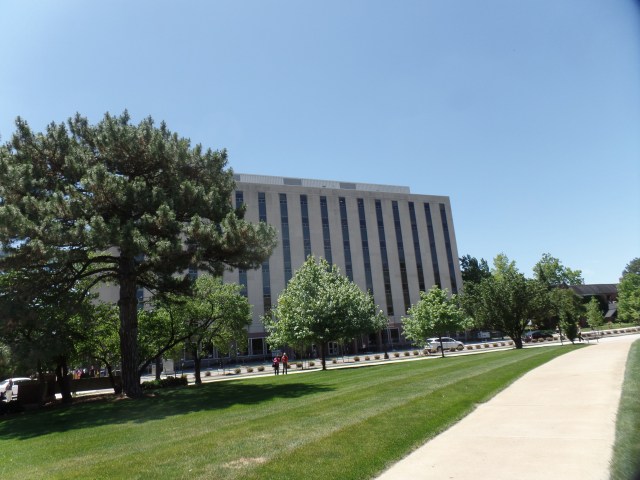
Panels, Court House, Harrisonburg, VA

SAMSUNG CAMERA PICTURES

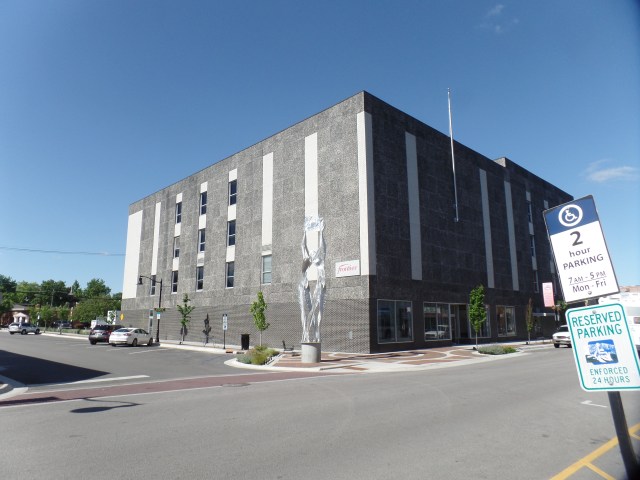
Unnamed building, southeast corner of Court Square, Harrisonburg, VA

I will regard this little town as another link in the chain of homes I seem to be building, whilst continuing to connect with friends and family.  it is always about expanding the network.

NEXT:  The Road Back to Florida

Tales from the 2016 Road: West Virginia’s “Pot Handle”

13

July 13-14, 2016, Martinsburg-  My processing and purchase of a 2013 Hyundai Elantra became final at 12:30 PM.  I gathered my stuff at Days Inn, went over to Sugar Hill Auto and transferred everything from the Altima, paid up, said goodbye to the Old Trouper and went for lunch at Blue Colony Diner.  It was time to head south.

SAMSUNG CAMERA PICTURES

Blue Colony Diner, Newtown, CT

The very Russian waitress was rather brusque, and hurried, something to which I’m not accustomed.  The Reuben was nicely prepared, though, so I made do.

Southward became a bit of a slog, at first.  An enormous pile-up, involving three tractor-trailers and eight cars, had taken place on I-84, between Newburgh and Middletown.  I stayed in queue, until the State Police ushered us all off, at Exit 5-A.  I went south when most everyone else headed north.  The road from Goshen to Middletown was relatively empty,and I was back on I-84, in less than an hour. I was in Pennsylvania, a short time later, stopping at a Rest Area in Mountaintop, where my eldest brother and his family once lived, and enjoying the other half of my Reuben.

There was a second pile-up, near Hershey, but it was on the eastbound I-78.  I took the westbound, to I-81, near Chambersburg.  Then, it was a short hop, through a narrow stretch of Maryland, to Martinsburg,WV.

After a very restful sleep, followed by continental breakfast, it was time to spend a bit of time taking in Martinsburg’s downtown.  There are several Federal Period structures here, as there are across both West Virginia and Virginia.

SAMSUNG CAMERA PICTURES

First Presbyterian Church, Martinsburg,  WV

SAMSUNG CAMERA PICTURES

Berkeley County Courthouse, Martinsburg, WV

SAMSUNG CAMERA PICTURES

Martinsburg Arts Centre

The center of town is marked by a landscaped little square.

SAMSUNG CAMERA PICTURES

Central Square, Martinsburg, WV

The house built by General Adam Stephen, founder of Martinsburg, is preserved on the city’s southeast side.  General Stephen’s residence was built of native limestone.

SAMSUNG CAMERA PICTURES

Adam Stephen House, Martinsburg

SAMSUNG CAMERA PICTURES

Root Cellar and Spring House, Adam Stephen House, Martinsburg

SAMSUNG CAMERA PICTURES

Native Limestone, Adam Stephen House, Martinsburg

The brick house next door was built by Philip Showers, in 1874, and housed railroad workers and their families.  It is called the Triple Brick House, and was divided into three dwellings.  Today, Triple Brick House serves as Martinsburg’s Historical Museum.

SAMSUNG CAMERA PICTURES

Triple Brick House, Martinsburg

This city was a Western outpost of Revolutionary forces during the War for Independence, and has had a key role in subsequent conflicts, from the War of 1812 to the “War on Drugs”, of the Reagan Era.  It is now home to major offices of the Department of Homeland Security.  Yet, on this quiet morning, it was a place of restfulness and reflection.  There is much in the “Pothandle” of eastern West Virginia to explore and enjoy, so I will come through here again.  It was time, however, to get as far south as possible by this evening.

NEXT:  Harrisonburg of the Shenandoah

Tales of the 2016 Road: My Eastern Anchor

2

July 8-9, 2016, Saugus-  I’ve mentioned before about this town of 40,000 people having been the springboard for the American steel industry, as it was the site of the first fully-operating Ironworks in British North America.

For me, it was also a springboard.  Though I was nowhere near as polished or as strong as the iron that came out of Saugus Ironworks, I have thrived, because of what I learned here.

My mother grew up on a small farm, north, northwest of the Ironworks site.  When she was a child, there was no National Historical Park, such as exists today.  The place was unearthed in the early 1950’s, when lower Lynnhurst was being prepared for a housing scheme.  The town leaders were wise enough to see to its unearthing, and preservation- a chance to get some of the Boston-Salem-Gloucester tourism traffic.  This led to Route 1 becoming one of the roads designated “The Great White Way”, for all the neon that reminded visitors of New York’s Broadway, as restaurants sprang up from the Revere line  to Peabody, 8 miles further north.  Yet, I digress.

Mom was the main reason for my visit here.  I would still have spent time with my amazing brother, a legally-blind sailor and bon vivant.  Mom, though, is still a force of nature, in late octogenaresis.  She is actually feeling and doing better than when I saw her in December.  She has always been about independence. She let me know where I need to work on myself, and it’s true that I have slacked off a bit, exercise-wise.  Choosing to spend most of the past several days driving, and not getting out and walking much- except for Bushkill Falls, is a habit I tend to embrace when going cross-country.  Habits can be broken, though.

I, like most people, want to feel my mother’s approval.  She has held the bar relatively high, all these years, but not out of spitefulness or malice.  Had I not been encouraged, at times cajoled, I would not be standing here today as a man of 34 years’ sobriety, or as one who puts the good of the whole above my own comfort.  She is my anchor, on the East.

So, I spent a fair amount of time just being present, watching the same reassuring TV films we saw last December- a fact she found amusing- “Why can’t Lifetime be more ambitious than to recycle the same canned stories, over and over?”  When it came time for me to go back on the road, she was a bit somber-but life for Lila Mae Boivin will go on- and she’s determined it will have quality.  There is no finer example, even for a man in late middle age, than someone who embraces the place in life, at which she finds herself.

Her last words to me were “Drive safely”.  These words proved prescient.

NEXT:  The demise of Nissan Altima.


Tales of the 2016 Road: Hoosiers Are Creative

10

July 5, 2016, Bedford, PA- I started the day, determined to give the Altima a bit more TLC-so I headed to Kokomo, one of the first automotive industry centers in the U.S., for a stop at the Advance Auto Center.  Just beforehand, I spotted the Seiberling Mansion, off to the west side of this still innovative city.

SAMSUNG CAMERA PICTURES

Seiberling Mansion, Kokomo, IN

SAMSUNG CAMERA PICTURES

Seiberling Mansion, Kokomo, IN

It was closed, of course, being very early in the morning.  I had much to do, though, so exterior views sufficed.   In the front, there was a bit of information about Mr.  Monroe Seiberling, one of the energy industry’s first entrepreneurs.

SAMSUNG CAMERA PICTURES

Information about Seiberling Mansion

Closely associated with Mr. Seiberling was Elwood P. Haynes, who promoted the gasoline engine, and invented products from stainless steel to the first mass-produced automobile model.  Elwood was a true Renaissance man, even though much of what he ushered in has run its course, due to so many recent advances in technology.  Nonetheless, here he is, in front of Seiberling Mansion.

SAMSUNG CAMERA PICTURES

One of Kokomo’s Renaissance men

I left the historic district of Kokomo, in search of Advance, got what I wanted for the car, then took care of breakfast, at a Kokomo institution:  The Waffle House (not to be confused with the pleasant chain of restaurants that is found nationwide.)  The Waffle House has a full complement of regulars, and portions large enough to suffice someone like me for an entire day.  After picking up a charging cord for my Android phone, at Target, to replace one I had left behind in Rolla, I headed towards Indianapolis.

A young friend, who had moved here from Kentucky, several months ago, contacted me and we set aside a couple of hours, for a Starbucks conversation. We talked at length of the education system, special needs populations and the level of care offered by government. She’s working hard, and I let it be known that I am proud of her efforts.  The little man to her right, below, is also a wonder.  He is intently into his Minecraft- and I admire that focus.

SAMSUNG CAMERA PICTURES

Friends in Indianapolis

I look forward to visiting with them again, with husband and father present, as well, next time.

With rush hour approaching, I am headed towards I-70, through Ohio and as far into Pennsylvania as my energy level and prudence allow.  Indiana has provided me with a fair measure of re-assurance and homespun wisdom.


Tales from the 2016 Road: The Other Half Gives

7

July 3, 2016, Ponca City-  I spent about forty minutes visiting this spacious northern Oklahoma town’s three major landmarks, all associated with the oil magnate, E.W. Marland, and his family.

Prior to arriving here, I stopped at the roadside memorial to Chief Joseph, logistics chief of the Nez Perce, in the mid-Nineteenth Century.  The captive Nez Perce, native to Idaho, had been brought here, to Tonkawa, in 1877, and made to remain there, until 1884.  They were allowed to return to Idaho, then, and given the choice of becoming Christian and staying in Idaho, or retaining their old ways, and being moved to Colville, Washington.  Chief Joseph and his band chose the latter.  Below, is the photo of the memorial to him.

SAMSUNG CAMERA PICTURES

Memorial to Chief Joseph, Tonkawa, OK

Ponca City, in Osage country, has among the earliest ties to the petroleum industry in Oklahoma.  It is, nonetheless, among the state’s most spacious and well-appointed communities.  Here is a look at downtown.

SAMSUNG CAMERA PICTURES

Grand Avenue, Ponca City

City Hall is also strikingly modern.

SAMSUNG CAMERA PICTURES

Ponca City Hall

There are two homes, built by E.W. Marland, which feature prominently in Ponca City’s civic life.  Marland’s  Grand Home, built by him in 1916, now serves as the city’s cultural center and Indian Museum.

SAM_7078.JPG

Veranda, Marland’s Grand House, Ponca City

SAMSUNG CAMERA PICTURES

Full view of Marland’s Great House, Ponca City

SAMSUNG CAMERA PICTURES

Original Marland Oil Company Flag Staff, Ponca City

Ernest Whitworth Marland had a sincere respect for the sacrifices made by women, on the prairie, and had this statue built, in their honour.

SAMSUNG CAMERA PICTURES

Pioneer Woman Statue, Ponca City

The Marland Mansion, where the family lived after 1916, is the centerpiece of a city park, and is maintained in the spirit of the early 20th Century.  I toured the grounds, as the interior is not open on Sundays.

The Marland children, George and Lydie, are honoured with statues, at the northern and eastern ends of the property, respectively.

The mansion itself was built in grand, European style.  Ernest was a generous man, and did not spare himself or his family of that largesse.

SAM_7085.JPG

SAMSUNG CAMERA PICTURES

Marland Mansion, Ponca City

There is a wealth of flora on the grounds.

SAMSUNG CAMERA PICTURES

Rhododendron bush, Marland Mansion, Ponca City

There is an extensive walking trail around the grounds, which I did not have time to explore, given my invitation to a Fourth of July gathering, east of Joplin.

The pond, though, lends a serenity, and a wildness, to this most epicurean of parks.

SAMSUNG CAMERA PICTURES

Pond, Marland Mansion grounds

The park is a refreshing place for Poncans to gather, so in my view, E.W.’s largesse has had a good long-term effect.  Now, as long as we keep moving towards cleaner energy….

NEXT UP:  Christmas in July

Tales from the 2016 Road: The Long Walk of 1864

4
SAMSUNG CAMERA PICTURES

Entrance to Fort Sumner National Monument,NM

July 1, 2016, Fort Sumner, NM-  There are several places in the United States, that every citizen should see, if for no other reason than to know that unity is a delicate thing.  Fort Sumner, a place of captivity for thousands of people, in the 1860’s, is such a place.

I have known, and  worked with, Navajo (Dineh) and Hopi people, for several years.  The Dineh, along with the Mescalero Apache (Indeh) people, were forcibly removed from their ancestral lands, in 1864, by one of the most unfortunate edicts of President Lincoln, who had a blind spot, where Native Americans were concerned.  He never stopped being an Indian fighter.

The people endured the harsh life of captives, very similar to what the Japanese internees endured in the camps of World War II.  The difference was that the Dineh and Indeh people built the camps, including the quarters of their overseers.  Many died of disease and starvation, in this squalid place.

The people were released in 1868, on orders from President Andrew Johnson, who had no real axe to grind with the Navajos or Apaches.  They walked homeward, and the Navajo wept, when they spotted one of their sacred mountains, Mount Taylor, east of Albuquerque.

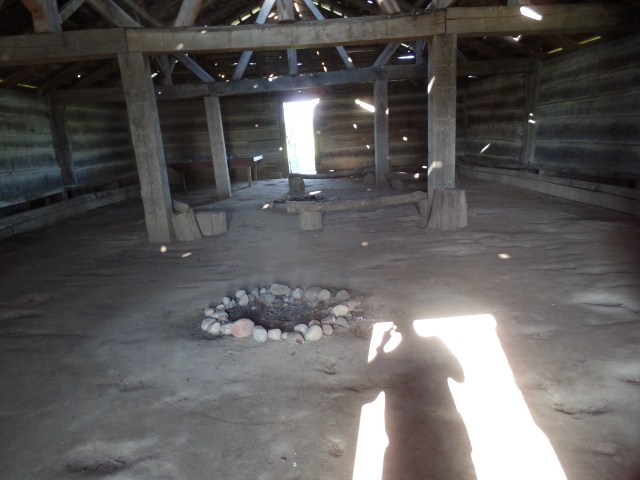
Here are some of the sights that presented themselves to me, during my visit here, this morning.  The first shows the pyramid-like structure that houses the museum displays and theater, that tells the story of the Long Walk.  The ranger initially interpreted my foregoing the film, as a sign of disinterest in the actual events.  A conversation, afterward, corrected that misconstruance.
SAMSUNG CAMERA PICTURES

Monument Headquarters, Fort Sumner, NM

The second photo shows the area, as it might have appeared when the captives first arrived in Bosque Redondo, as the woods were called back then. The Commemoration Stone, first brought here by Navajo Nation President Peterson Zah, in 1994.

SAMSUNG CAMERA PICTURES

Nature Trail, Fort Sumner, NM

SAMSUNG CAMERA PICTURES

Commemoration Stone, Fort Sumner, AZ

The descendants of both Navajo and Mescalero Apache internees, and many others from various tribes, bring items of dedication to this memorial site.

SAMSUNG CAMERA PICTURES

Memorial Site, Fort Sumner, NM

SAMSUNG CAMERA PICTURES

Barracks for US Army troops, Fort Sumner National  Monument, NM

The above is an example of the structures which captives were forced to build, for the housing of their overseers.

Below is a flock of Churro Sheep, raised by Navajos and now viewed as an heirloom breed, for the quality of their wool and meat.

SAMSUNG CAMERA PICTURES

Churro Sheep, Fort Sumner National Monument, NM

This visit, which I had planned for quite some time, was a sobering reminder of just how far we have come, and a caution of how far we can fall backwards, in our inter-human connections. Like Manzanar, and Berga, Germany, it is a place that the smug and self-assured would do well to see, as a wake-up call.

NEXT UP:  Return to Amarillo’s Happy Southwest 6th Street.

Yuma Is for The Warm of Heart

6

June 17, 2016Yuma- This citrus capital of the West has become my go-to pit stop, en route to San Diego and Chula Vista, as I-8 is a less perplexing route to my son’s street, than CA 15 was.

Yuma has been known to hit 120 during this hottest of desert summer months.  That puts it in the same league as Phoenix and Palm Springs.  Nonetheless, a brief stop here is a pleasure.  There are enough diverse attractions in the area to keep my camera and I busy, over the next two drives out to see my pride and joy.  Besides the Algodones Dunes and the Colorado River Wetlands Trail, which I visited the last time I was here, there are the Territorial Prison, Martinez Lake, Santillan House and the area that occupied me this afternoon:  Historic Downtown.  It’s a small area, but Main Street, even in the 102 degree heat, is worth weaving in and out of the air-conditioned buildings.  There is much to be said for a town with two theaters within a two-block radius of one another.  Then, there is Lutes Casino,  a family-friendly restaurant-bric-a-brac palace that offers a full range of old-fashioned fountain treats, as well as diner food and a full bar.

So, here’s a look at Main Street, Yuma:

SAMSUNG CAMERA PICTURES

Downtown’s West Entrance

SAMSUNG CAMERA PICTURES

Hotel San Carlos is downtown Yuma’s largest.

SAMSUNG CAMERA PICTURES

This is the larger of two cinemas on Main Street.

SAMSUNG CAMERA PICTURES

The desert CAN be pretty in summer.  This lot is up for lease.

SAMSUNG CAMERA PICTURES

This courtyard had one drawback.  The ice cream shop is closed until next Monday.

SAMSUNG CAMERA PICTURES

A few fountains grace Main Street.  This is the largest.

SAMSUNG CAMERA PICTURES

Inside Lutes casino:  I enjoyed a praline pecan malted milk.

SAMSUNG CAMERA PICTURES

The establishment is far more interesting than it looks.

For those heading in earnest, between Phoenix and San Diego, Yuma has done a fine job of offering a safe haven-even in the sizzling summer.

Stair-stepping, In Kodachrome Land, Part 1: Pioche

6

June 3, 2016, Pioche, NV- It was not a hard choice, as to where to stop for the night, yesterday.  Little Pioche, just west of the Utah state line, is a budding Virginia City or Bisbee.  It has all the charm of the better known mining towns, so my stay at Motherlode Motel was a no-brainer.  I came this way in 1980, on the way back to Flagstaff, from Oregon.

The drive involves what I call stair-stepping:  U.S. 93 goes on to Panaca, just east of Pioche; then there is a drive on two contiguous state highways, to Cedar City; this is followed by an alley-oop, over the Cedar Mountains on Utah Highway 56, to U.S. 89, which goes to Page, on the southern shore of Lake Powell.  From here, I would continue the process, taking AZ Route 98 to the Navajo Nation town of Tsegi, U.S. 160 to Indian Route 59, just east of Kayenta, then IR 59 to Many Farms, U.S. 191 to AZ 264, at Ganado, then the 191 again to I-40, and a couple of Navajo roads, which I will mention later, to Native American Baha’i Institute of Learning.

So, the rest of this is fairly simple.  The rugged Southwest is meant to be enjoyed, within the boundaries of preparedness and common sense.  This was the fourth day of Big Heat.  Even in mountain-girt Pioche, it would hit 85 today.  The sizzle was already evident, as I walked the short distance from motel to downtown.

SAMSUNG CAMERA PICTURES

Motherlode Motel, Pioche, NV

The Lincoln County Courthouse and Mountain View Lodge attract the visitor, en rout to Main Street.

SAMSUNG CAMERA PICTURES

Lincoln County Courthouse, Pioche, NV

SAMSUNG CAMERA PICTURES

Mountain View Lodge, Pioche, NV

It is recorded that President Herbert Hoover stayed here, in 1930.  A more earthy sort of clientele would have opted for the accommodations shown below.

SAMSUNG CAMERA PICTURES

Overland Hotel and Saloon, Pioche, NV

There was, however, an Opera House in town, which may have appealed to Mr. Hoover.

SAMSUNG CAMERA PICTURES

Thompson Opera House and Gem Theater, Pioche, NV

Before going in for a hearty breakfast at the historic Silver Cafe,  a stroll along Main Street was in order.

SAMSUNG CAMERA PICTURES

Historic Silver Cafe, Pioche, NV

SAMSUNG CAMERA PICTURES

Main Street, Pioche, NV

SAMSUNG CAMERA PICTURES

Mining Concern, west of Main Street, Pioche, NV

The pleasant little park at the end of Main Street was established in the 1980s.  The original developers were killed in an auto accident, in 1986, whereupon the community banded together and finished the job.

SAMSUNG CAMERA PICTURES

Heritage Park, Pioche, NV

SAMSUNG CAMERA PICTURES

The Mary Louise Mine Entrance (sealed), Heritage Park, Pioche, NV

Like many Western towns, Pioche attracted some free spirits.  This Spiritist Hall existed for a time, in the early Twentieth Century.

SAMSUNG CAMERA PICTURES

Channel of Light Building, Pioche, NV

SAMSUNG CAMERA PICTURES

A downhill view of Main Street, Pioche, NV

After breakfast in the bustling cafe, another quick stroll back to Motherlode Motel brought my brief visit to an end.  I did notice one last remnant of the Wild West.

SAMSUNG CAMERA PICTURES

Old “Social Club”, Main Street, Pioche, NV

A quick drive up the hill was in order, before leaving town, for Cathedral  Gorge.

SAMSUNG CAMERA PICTURES

Pioche Hills

The town, and its surrounding hills, were named for Francois Pioche, an immigrant from France, who became a mining entrepreneur.  He built the mining concerns here, in 1868-9.

My day was just starting, but it’s best to split the tale into three parts.  Next post will showcase Cathedral Gorge and Panaca, as the hills fade away into the Great Basin.


Hiroshima

8

May 25, 2016, Prescott-

The blue light flashed and took its toll

both within the plane and without,

hearts and minds rolled.

The force of the minute,

brought down the mighty,

and the sky, for a time,

was, alternately, smoky black

and shimmering white.

This was no punishment for Nanking,

Corregidor.

or Bataan.

It was, in fact.to limit even more blood

on the crowded sands.

In two days’ time,

some 71 years later,

a sublime view of peace

will be offered,

by a target of haters.

No apology,

just resolve.

Be the peace

you want to see.

In Honour Of….

7

April 28, 2016, Prescott- I took today off from work, as we Baha’is are so advised, on Holy Days such as this- the Ninth Day of the Ridvan Festival; the Day when, 163 years ago, Baha’u’llah revealed His Station to family and closest associates, while preparing to follow lawful orders and proceed overland, from Baghdad to Constantinople (Istanbul).  Their departure would begin in earnest, three days later.

We will gather as a community and celebrate the Anniversary, 1 1/2 hours from now, with sacred readings, contemplation and a fine meal.  Baha’u’llah and His entourage, by contrast, frequently had scant food and drink- especially when on the dusty path, northward from Iraq and across Anatolia.  The Messengers of God always take on suffering, if only to show us that it can be overcome, in the end.

Ours is not a Faith of asceticism, nor is it favourable towards  over-indulgence.  We do well, He says, to share good fortune, and not lose heart, in times of scarcity.  The former is largely the result of dispassionate hard work. The latter is a reminder that this is a life meant for character building, which can best be achieved in the face of trials.  So, at least, is my understanding of it all.

He came to bring unity to mankind- and gave us a blueprint, slowly being understood, and accepted, by more people.  It must, however, be done willingly by each individual.  The days of forced conversion are being seen for what they were, and will not be repeated.