An Eastward Homage, Day 15, Part III: A Breton Cultural Sampler

16

One of the hours best spent on my journey, last month, was examining the Hall of Fame in the Breton Cultural Center, part of Vannes Tourism Office, on the waterfront.

I am going to list those of whom I took particular note, along with their specialty, and a link to their website, if they have one.  Breton culture is a fine blend of Celtic and French heritage.  

Trio EDF- Musicians (http://www.youtube.com/watch?v=6GBP8-la1UE

Patrick Jeffroy- Chef du Cuisine (http://www.hoteldecarantec.com/va/restaurant_va.html)

Jean Lebrun- Journalist ( http://www.franceinter.fr/emission-la-marche-de-l-histoire)

Les Dernieres Bigoudenes- Distinctive coiffure (http://videos.tf1.fr/jt-13h/2010/les-dernieres-bigoudenes-en-coiffe-font-de-la-resistance-5866405.html)

Jacques Le Goff- Historian (http://en.wikipedia.org/wiki/Jacques_Le_Goff).
Erwann Creach- Film maker ( http://www.youtube.com/user/MrErwann75)
Ondine Morin- Oceanographer (http://www.youtube.com/channel/UCyikKNkeQsjyka8JwopG8XQ)
Tristan Nihouarn- Musician (http://www.youtube.com/watch?v=jqC0FCkgGvU)
Alain Stivell- Musician (http://www.youtube.com/watch?v=PRpNVMjnDmY)
Edwy Plenel- Journalist ( http://www.independent.co.uk/news/world/europe/edwy-plenel-is-the-journalist-detested-by-politicians-and-colleagues-alike-the-most-hated-man-in-france-8588747.html)
Yann Tiersen- Pianist (http://www.youtube.com/watch?v=bzMWqlMi854)

Yelle- Musician (http://www.youtube.com/watch?v=8QOxKCKC09A)

Kan-Ha Diskan- Musicians (http://www.youtube.com/watch?v=IK4BM-CUZD0)

There are larger cultural forces afoot, as well:

http://www.jazzavannes.fr/- Jazz a Vannes, each August;

http://www.musicienschanterelle.com/spip/index.php- Cellovanees, also in August.

A friend of mine will be attending this festival, in nearby Lorient: ( http://us.rendezvousenfrance.com/en/events/lorient-interceltic-festival-0)

So, there is so much for the soul, in Vannes and in Brittany, generally.

NEXT:  The Distant Signals of Carnac


An Eastward Homage, Day 15, Part 2: The Unstoppable Second Wind

5

June 10, 2014-  My use of an essential oils-based daily supplement has its definite benefits. This was never more in evidence than on this day when, faced with a three-part schedule, my day started at 6 AM.  The energy burst implied by the title of this post came around 1 PM, but I digress.

The morning took me down to the waterfront of old Morbihan.
SAM_0156

Vannes’ port is at the head of a long channel, well-dredged and ever bustling.  There are shops aplenty here, and not the least of these is Daily Gourmand, whose lovely and energetic proprietress and her congenial husband made me feel more at home than just about any other restaurateurs, up to this point.  They make palatable crepes, salads and wraps.  I chose a wrap, as it was 10 AM when I stopped in.
SAM_0159

SAM_0160

I swung back inland, headed for Vieux Marche and some palace gardens.  The market is reached through La Porte Saint-Vincent.

SAM_0162

One never knows whom one might meet, in places like this.SAM_0163

In the midst of the Old Market, I spotted yet another passage.  This is La Porte Calmont, which leads to the gardens.

SAM_0164

As one might guess, this was the palace of an early Duke of Brittany, Jean IV.  It is known as Chateau l’Hermine, and was built by the duke as he favoured the central position of Vannes, in the Duchy.SAM_0169

SAM_0168

SAM_0170

After those breathtaking sights, I found a bit of aesthetic relief, in Vieux Marche.  This edifice is definitely blessed.  In fact, all Vannes was blessed during World Wars I and II.  The German presence here was relatively benign, and the Allies elected not to bomb the area.

SAM_0178

En route to a quixotic mission to a FNAC electronics store, in hopes of getting a battery for my laptop, I passed Place Charles de Gaulle, which recognizes just who it was that kept Vannes from harm.  The building is the Prefectural Hall, for Morbihan.

SAM_0183

I rode a series of buses to and from Place Kerlann, a large, modern shopping mall, where the FNAC is located.  Needless to say, laptop and I came up empty, so I solaced myself with one of two American-style meals on this trip:  A Philly Cheese Steak at the Carrefour Truck Stop, just west of Place Kerlann.  On the bus ride back to Hotel de France, we were joined by about twenty school kids and their teachers.  As I was seated in a two-seat section, I offered my seat so a couple of girls could sit together, but the teacher would not hear of it.  Soon, though, an insolent little boy was placed in the empty seat next to me, and Madame was upbraiding him for his behaviour, as I looked out the window.

Back at the hotel, I rested just a bit, stowed poor Lenovo for another day, and readied myself for the bus to Carnac.  With that in mind, I leave you with a few flashback photos of my previous evening’s walk back from the ramparts.

Here is the chancery of the Archbishop of Vannes.

SAM_0154

L’Etang du Duc is a serene, slightly off the tourist path refuge for local residents, both humans and ducks.

SAM_0185

SAM_0186

SAM_0188

Cemetiere de Boismoreau is Vannes military cemetery.  It is closed and locked after 6  PM.

SAM_0194

As I neared my hotel, it was pleasing to note L’Ecole Nationale des Musiques.

SAM_0197

L’Auditorium des Carmes is, no doubt, a charming place, when performances are in process.

SAM_0198

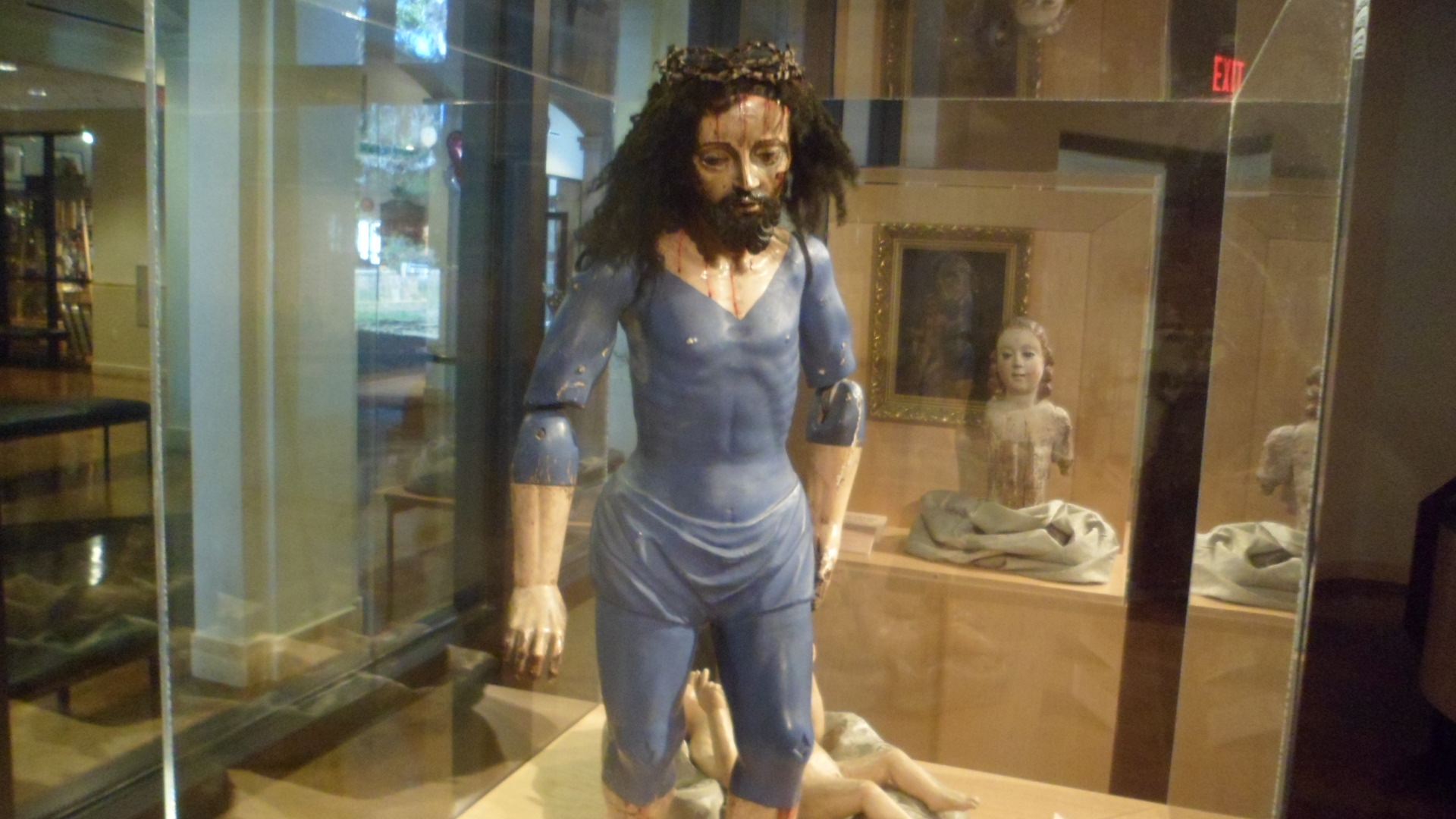
Breton culture is rich, multivariate and evolving.  Before I take you visually to Carnac, the next post will introduce some of the artists whose work is highlighted at the Folkloric Museum, part of Vannes Tourism Center, at the head of the Port.

An Eastward Homage, Days 14 and 15: A Tale of Two Small Breton Cities

5

June 9- 10, 2014-  There is no place on Earth more stimulating, energizing and thought-provoking than the peninsula that juts forcefully out into the Atlantic, from the rest of France.  Brittany has many, among its residents, who would as soon it pointed hard enough so as to separate from the mainland, and move northwestward, joining their kindred in the west and north of the British Isles.

The departments that make up Brittany are the most fully bilingual of all the north French regions. They are every bit as aesthetic as the rest of France, but have that edge- the separate culture, that requires attention and respect, in addition to that which one shows to France-at-large.

I began this day with a lovely walk past Place Motte, to Jardin et Palais St.- Georges.  The public gardens of Rennes are impeccably tended.  Jardin St.Georges  fronts the former Benedictine abbey called Palais St. Georges.  It is one of Rennes’ most popular city parks.  The Palais is now Rennes’ Fire Headquarters, yet is maintained as an historical monument.

SAM_0059

SAM_0041

SAM_0040

SAM_0048

My one regret was not getting back to Cathedrale Saint-Pierre, but it was time to board the train to Vannes.  I packed my dormant computer, and other accompaniments, and headed across Place de la Gare.  Once I found my gate, we waited a bit while an elderly lady, who had fallen and hurt herself rather severely, was treated by EMT’s and taken by wheelchair to an ambulance.  These matters are handled well in France, and in the other countries I visited as well.

Our route took us through Dol-de-Bretagne,

SAM_0063

and Redon, a crossroads which has the same Latin root to its name as Rennes.

SAM_0064

We  arrived in Vannes, on a body of water whose Breton name is straight out of Tolkien:  Morbihan.  The Gulf of Morbihan sweeps the southwest corner of Brittany, and laps at some true gems- Quiberon, Belle Isle, and Carnac, of which I will say much in the next day or so.  Vannes, however, is a gem in itself, and required every bit of the time  which I allotted  it.  The scene below is just west of the train station.

,SAM_0067

My hotel, Hotel de France, is not far from there, on Avenue Victor Hugo.  I will recommend this establishment, without hesitation. The Business Center was at my disposal, day and night, and the manager, who lived on the premises, was supremely helpful, as were his wife and the assistant manager.  Then again, all Vannes seemed to be bending over backwards for the visitor.

SAM_0071

I took enough photos to fill several Flickr books, but will confine myself to  a dozen of the highlights of the inland areas of this amazing city.  In the next post, I will focus on the waterfront.  Here is Avenue Victor Hugo, headed towards Centre de Ville (City Center).

SAM_0072

The Bell Tower features prominently in all major European cities.SAM_0077

Here’s a bit of colour, for a pleasant morning.SAM_0078

One enters Centre de Ville through La Porte de Prison, which was exactly what it implies, in the days of the Duke of Brittany.

SAM_0080

Today, however, it was quite festive, as there were celebrations of D-Day, still being marked.

SAM_0081

I walked around Cathedrale St. Pierre, closed for renovation.

SAM_0094

SAM_0101 SAM_0112

SAM_0107

Here is St. Emilion, the patron saint of vintners, and of Vannes.

SAM_0120

The ramparts of medieval Vannes were more than glad to accommodate, and captivate.  These walls were a major defense for the town, from the Third Century AD, onward.  Pirates, Vikings and various raiders from Spain and elsewhere were ever a concern, along this strategic southern coast of Bretagne.  The ramparts are extensive and still formidable.

SAM_0121

SAM_0123

SAM_0125

Looking down at a garden exhibition, I half-expected the Red Queen to come out shouting, “Off with his head!”

SAM_0124

SAM_0127

There were more ramparts, a long viaduct, and hints of just how formidable this tough old port really was.

SAM_0129

SAM_0132

SAM_0133

SAM_0137

SAM_0140

SAM_0142

SAM_0144

I walked past the moat, and up another hill, to Vannes’ memorial to the heroes of World Wars I and II.

SAM_0148

SAM_0150

On a bright day, in 1944, Vannes, too, was liberated from Nazi rule.

SAM_0152

I was close to the shore, but that was a matter for the morrow, and so is the next post.

An Eastward Homage, Day 14: Part, I, Capital of the Bold

10

June 9, 2014- From 1986- 1992, Penny and I lived and worked in the South Korean island province of Jeju.  We both trained English teachers.  Our son was born there, and so the affinity for Korean people and culture has stayed with us.

As I got back to Pontorson, to catch my train to the Breton capital city of Rennes, (pronounced “Hren”), I encountered a young Korean lady, who was looking for a train/bus schedule.  She was headed for Rennes, and from there, she had to go to the airport in Nantes, a city about an hour or so southeast of Rennes.  My train would have gotten her to Rennes with about 90 minutes to reach Nantes.  That would have put her at the airport one hour before her flight.  I asked where she was from in Korea, and it turned out, she was from Jeju!  Once we made that connection, a bus came that was headed for Rennes, so she hopped on and I had made another interesting, but ephemeral, connection.

I already had a train ticket, so I stayed behind, for another hour and had pizza and rice pudding at Pontorson’s only pizzeria.  The fare was actually agreeably light.  Most pizzas in France are made with thin crust.  The train arrived around 4:15 PM, and I was soon on my way southeastward, to Brittany’s well-preserved and vibrantly cosmopolitan capital.  Rennes, like the rest of Brittany, has a bilingual element to it, but feels more continental than the communities further northwest.  Perhaps that’s because it is the only major city in the region that is inland.

I arrived in Rennes around 5:20 PM, and found that my hotel, De Bretagne, was directly across Place de la Gare from the train station.

SAM_9946

The service was as fine as could be expected.  My computer battery died here, so my reports henceforth would come via Cyber Cafe.  My attempts to charge the device, both in Rennes and elsewhere in Europe, proved futile.  It took 10 hours of a 220 volt current to get this machine back from the dead, but that’s a story for later.  The bottom line is, aside from that, the staff at Bretagne were supremely helpful.  The high school girl who tended my room was extremely efficient, and the desk people had breakfast ready on the double, each morning.

Well, on with the show.  Avenue Jean Janvier and Square Kergus lay just to the west of the hotel.

SAM_9949

SAM_9948

Most of the homeless and other street people are to be found on Rue Jean Janvier.  I was joined at dinner in Royal Kebab, by a trio of free spirits who pranced about the tiny restaurant and eventually ordered some emportee items, much to the relief of the stern Algerian owner.  One of the men resembled a young Kiefer Sutherland and the woman looked a lot like Natalie Portman.  They were a nice bit of comic relief, after I had pounded the cobblestones for a few hours.

Once I reached the canal area, I spotted the very modern Theatre National Bretagne, off to the right.

SAM_9951

Although Emile Zola was a Parisien, and his life’s work was accomplished in the capital, he was, and is, highly regarded in Rennes, and across Brittany, for standing up for the downtrodden.

L’Acadmie Lycee Emile Zola is one of Rennes’ most prestigious high schools.  As it happened, the trial of Captain Alfred Dreyfus, who was defended in the press by Zola, was held here.

SAM_9954

Nearby, the Grand Canal features Quay Emile Zola.

SAM_9957

SAM_9959

On the south side of this quay is La Musee des Beaux Arts.

SAM_9960

It being Sunday night, the museum was closed, a fact that is a bit surreal, given that sundown here was close to 10:30 PM.

Walking further towards the city centre, at 8:00 PM, I spotted a congregation, and their priest, gathered outside L’Eglise Saint-Germain.

SAM_9964

I aimed towards the spire, so as not to catch unaware parishioners in the camera cross hairs.

The central place of Rennes has three imposing structures.  Here is the Post Office building, which also houses Television Bretagnais.

SAM_9965

A block or so to the south, the Opera House and Hotel de Ville (City Hall) share a square.

SAM_9969

SAM_9971

Rennes’ back streets are also arresting, in their own, rather Hanseatic appearance.

SAM_9974

SAM_9978

I came shortly thereafter to Cathedrale St. Pierre.SAM_9983

I did not get inside the cathedral on this visit, but the exterior offers a reason to pencil it in, on a future sojourn. Here we also see La Place de la Cathedrale.

SAM_9987

My attention was thoroughly captured next by La Porte Mordellaise, by the ensuing Roman-era ramparts, Les Murailles, and by the fortress from the days of Amorican Romans, who resisted both the Bretona to the west and the encroaching Germanic Franks, coming from the east and north.

SAM_9986

SAM_9990

SAM_9991

SAM_9992

SAM_9994

I must have been on or among the ramparts for close to an hour, this being my first real exploration of Roman ruins.  Of course, the upper levels were definitely Frankish, but were equally impressive.

My evening ended with a quick view of the Parliament of Brittany.

SAM_9999

I walked back to the hotel, past Place Motte and Palais St. Georges, but more on them, next post.

An Eastward Homage, Day 13: The Saint and The Tides

6

SAM_9847

Around, 708 AD, Aubert of Avranches, a monk of Normandy, established an oratorical chapel on an outcrop of land, some two miles separate from the mainland, at high tide. He dedicated the small church to St. Michael, the Patron Saint of Sailors.

Thus, today, we have Mont St.-Michel, France’s most popular site, outside of Paris, and a UNESCO World Heritage Site.  It  was to this unique and astonishing place that I came, along with nearly 700 others, on the lovely Sunday, June 8, 2014.

I had taken a train to Pontorson, a small town in the southwest corner of Normandy, on Saturday afternoon.

SAM_9828

There are about a half dozen small hotels there, but I had booked a room in a more rustic setting, Roz-sur-Couesnon, six miles over the department line in Brittany.  Pontorson has a bus that takes passengers directly to Couesnon (not to be confused with Roz), which lies at the northern end of the Causeway to Mont St.-Michel.  There are more hotels, shops, and a Visitor’s Center, with lockers, at Couesnon, Normandy.  I ended up taking a taxi to Roz, and L’Hotel des Quatres Salines.

SAM_9830

SAM_9843

After a lovely night’s sleep, and a full breakfast, I took a short walk around Roz-sur-Couesnon, noting sturdy metal craftsmanship and stone masonry, in the grounds and structure of Maison des Polders.

SAM_9836

SAM_9838

My faithful taxi driver, Raymond, arrived just as I had finished photographing the Maison, and we made the short drive to Mont St.Michel.  I arranged to meet Raymond at 1:30 PM, precluding the tour of the Abbey, but knowing it was necessary, if I were to catch the train to Rennes.  Taking the shuttle meant buying a ticket at the Couesnon Visitors Center.

SAM_9941

The tide was out, so in no time, we were at the base of the great edifice.

SAM_9848

There are two entrances to the church-fortress:  La  Porte d’Avancee and La Porte de Roi.  We, of course, entered through the former.

SAM_9853

SAM_9862

As it was still D-Day Weekend, all flags were visible.

SAM_9849

SAM_9879

The first place most people see, and towards which they head, is  Grand Rue de Marche- the shops.  Many observers criticize “the commercialism” of this site, but, truth be known, the bottom level of Mont St.-Michel has been a marketplace since the site was expanded by the Benedictines, in the 12th Century.

SAM_9866

After picking up a postcard to send my non-computer using mother, I looked around a few nooks and crannies- the flood tunnel, the gate to the dungeon, things like that.

SAM_9865

SAM_9863

SAM_9857

L’Eglise St. Pierre is the first major room of note that is not commercial.  It lies at the east end of Grand Rue.  it is guarded by a statue of St. Jeanne d’Arc.

SAM_9869

Equally telling is the view of St. Michael, killing a dragon.

SAM_9875

Of more sanguine comfort are the image of Madonna and Child,

SAM_9873

and the stained glass windows.

SAM_9870

I was able to next focus on the sweeping views, long and wide of this magnificent structure.

SAM_9888

SAM_9891

SAM_9893

SAM_9904

SAM_9911

SAM_9912

SAM_9902

SAM_9920

SAM_9927

The troop of pilgrims, exploring the beach, added perspective.

SAM_9918

Of course, flowering plants are not neglected here.  Mont St.-Michel has a plethora of gardens, at all levels of the structure.

SAM_9898

I ended my two hour visit, with a silent promise to two little friends, and to myself, to return here in three years’ time, hopefully with one of my brothers.

SAM_9934

It’s said that goblins have long memories, and so do I.  Those of Mont St.-Michel will be  very fond, indeed.

SAM_9936

An Eastward Homage, Day 12 : The Eternal Flame of St. Joan, and A Distant Echo In My Heart

5

June 7, 2014- The affairs of those who lived, strove, suffered and died six centuries ago have seldom crossed my mind, since I completed World History, in my second year of baccalaureate study.  This drizzly Saturday morning, though, I would experience stirrings of unease, a sense of injustice and want of understanding.

Joan of Arc’s story is more than one of man’s maltreatment of woman, more than the tale of a feckless cleric selling his services to the highest bidder, or of a young woman loving both God and her people, while wanting so desperately to be loved by those around her.  It is her complete story, her timeless sacrifice, that brought me to my knees, and still stirs my heart.

In the Vieux Marche, the Old Market, people were readying their wares for sale, as they did in the 1400’s.

SAM_9768

At Square Verdrel, a short distance to the north, the trees glistened from the early morning drizzle,

SAM_9760

SAM_9763

and  swans searched for food, from visitors and from the water.

SAM_9764

SAM_9767

SAM_9766

I spent a few minutes among the ruins of L’Eglise Saint Sauveur (Church of the Holy Savior), where my distant forebears on my paternal grandfather’s side had been baptized.

SAM_9773

SAM_9776

SAM_9779

Ordinarily, such a place would be my sole concern on a day like this.  It will certainly rate highly on my list of experiences and memories from this journey, and I would love for my siblings and cousins to see it some day.

Yet right next to this amazing scene, stands L’Eglise Jeanne d’Arc, built to replace the shattered Church of St. Vincent, 200 meters to the east, a casualty of World War II.  L’Eglise Saint-Vincent lent its stained glass windows to the newer church, and we are all the richer for it.

SAM_9780

SAM_9782

SAM_9787

It is when one gets outside, and finds the place where St. Joan was martyred, that the emotions can run their most intense.  This cross stands in her honour.

SAM_9788

This is the garden where all of Henry VI’s plotting, and all the excesses of the Hundred Years’ War, came to naught, in the end.  The French and English crowns absolved Joan, following her being found a martyr by the Inquisition of Rome, in 1455, twenty-five years after her death.

SAM_9789

SAM_9790

This is the exact spot of St. Joan’s immolation, preserved by both the Bourbon kings, and by the Jacobins who tore down L’Eglise St. Sauveur, in 1790.  All those who have ruled France since then, have regarded this for what it is:  Hallowed Ground.

SAM_9791

Across the centuries, across eternity, her soul calls out.

SAM_9793

An Eastward Homage, Day 11: Morning in Rouen, Afternoon at Utah Beach

8

D-Day was the beginning of a hard deliverance for the French people.  We, the Allies, landed on the beaches of northern Normandy, on June 6, 1944.  So, June 6, 2014, some 32 years after Penny and I were married, and 70 years after the combined weight of the U.S., Canadian, Free French, British and Anzac forces were first brought to bear on the German/Vichy French Army, was a very big deal.

I had no  concrete plan to join in the observance, other than to get on a train from Rouen to Caen, thence to Bayeux, then to St. Mere Eglise, or as close as I could to Utah Beach, or Omaha Beach.  I brought money to kick in for a taxi, in any case.

Before hopping the train to Caen, I sauntered around Rouen’s Palais de Justice for a few morning stretches.  By ANY stretch, this thing is huge.

SAM_9669

SAM_9675

SAM_9681

It is still used for legal matters, in the Department de Seine-Maritime.  Having looked at my watch, though, I knew it was train time.

Along the way to Caen, we passed the lovely little town of Lisieux.  The river, of course, is the Seine.

SAM_9682

I met a Seattle-based couple who are researching for a book the wife is writing on the experiences of living World War II veterans.  They were headed to Omaha Beach.  I had decided to go to Utah Beach, as that would give me the best chance to get to St. Mere Eglise, afterward.

We arrived in Caen, and found this scene.

SAM_9683

The French Army was on full alert, as so many dignitaries were out and about, for the commemoration. We were not bothered at all, and got on a train that would get us to Bayeux.  A young lady named Anne, an American, met us on board the train.  Once she heard I was headed for Utah Beach, she became my friend for the day, and we got along most agreeably.  She gave me a few pointers on photography, so my shots ended up clearer than they had been earlier.  She turned out to be  embedded in a military unit, elsewhere in Europe.

This is near the train station at Bayeux, where we got off.  Bayeux is also famous for the tapestry that shows William the Conqueror, but today was not to be a day for examining that great work of art.

SAM_9686

Anne and I split a taxi fare to Utah Beach.  Here are some things we saw, en route.  Below, is Carentan.

SAM_9688

Next, being blocked from going to St. Mere Eglise, we went to St. Marie de Mont.  Here a few shots of that nice little town, before we arrived at Utah Beach.  I will show you other shots that I took here, on our return trip to Carentan, after posting the Utah Beach photos.

First, though, here is the approach to St. Marie de Mont, from the south.

SAM_9689

Next, is the center of town.

SAM_9690

Finally, the 101st Airborne, in loose parade mode.

SAM_9692

We got to Utah Beach, in plenty of time. This is just west of the Utah Beach Visitors Center.

SAM_9696

The tide was, of course, out, so we had a good scene for the memorial activity.

SAM_9707

I used the occasion to honour a Prescott resident who was a commander in the U. S. Army, on that fateful day.  He is still very much alive, and I’m told he was delighted to see this photograph.

SAM_9709

The re-enactors were getting set, as we walked about the beach.SAM_9715

SAM_9745

We also climbed the dunes, to see what the Allies were up against.

SAM_9742

SAM_9728

SAM_9732

I ended up in a few scenes. This is the second time in my life that I’ve been this close to a tank.  The first time was in Basic Training, in 1969.

SAM_9698

All colours were flying, at one place or another.SAM_9699

Here is a reminder that “Freedom isn’t free.”

SAM_9700

SAM_9701

This was a German bunker, which the Allies had to approach, and overcome.

SAM_9725

Here are some reminders of the resilience of sand dunes.

SAM_9738

SAM_9739

Anne was watching the gathered force.

SAM_9744

I got in the middle of it all, just one more time.

SAM_9746

Then, we headed up for lunch, to call a taxi to Carentan, and to thank the motorcyclists of Europe, for all they do to keep the memory alive.

SAM_9750

After twenty minutes or so, a taxi came to take us to Carentan, and our train back to the east of Normandy.  Here a couple of scenes from St. Marie de Mont, on the return trip. Note that the tour bus ahead of us is from Czech Republic.  They were among the first to suffer Hitler’s rage.

SAM_9751

SAM_9752

SAM_9753

SAM_9755

SAM_9756

SAM_9757

Above is one of the ways the French remind us that this was no invented story, but a true, worldwide horror.  No amount of revisonism or faded memory can change what actually happened.

NEXT:  Rouen’s Vieux Marche, and Jeanne d’Arc’s legacy

An Eastward Homage, Day 10, Part 2: Coming to an Ancient Home

4

In about 1650, three brothers left Rouen, France and joined a sailing expedition to the thriving French settlement of Quebec.  They were roofers, and as such, made a thriving business in the emerging French colony.  Their descendants would spread to Montreal, Ottawa, New Brunswick and Prince Edward Island, and from those haunts, the Boivins spread throughout North America, into Mexico and among various Caribbean islands.  Today, the surname is common enough, and when I last checked, there were twelve of me, in various parts of North America.

Rouen is a thriving and picturesque city, on the western course of the Seine River, as it heads towards the sea, hence the name of the department:  La Seine-Maritime.  It is perhaps best known to the wider world as the place where English King Henry VI ordered Jeanne d’Arc to be burned at the stake, for “witchcraft” and “heresy”.  It is that, but is also vibrant, welcoming and forward-looking, with strong links to Le Havre, at the mouth of the Seine, in fostering French commerce.

My ancestors were recorded as having been baptized at L’Eglise St. Sauveur.  It was destroyed during the French Revolution, but its ruins have been maintained by the state, first under orders from Napoleon I and by his successors, both regal and presidential.  A new church, honouring St. Jeanne d’Arc, stands at the site of St. Sauveur.

The evening prior to the 70th anniversary of D-Day gave me time to get acquainted with this ancestral home.  Here are some scenes of the evening of June 5.

I arrived in Rouen at La Gare Rive Droite, a reference to its location on the right bank of the Seine.

SAM_9590

I  walked across the square, wandering a bit before getting clear directions to Hotel Morand.  Here is Place de la Gare.

SAM_9592

There were a few short blocks to be crossed, before the district of my hotel.  On the way, I passed Tour Jeanne d’Arc, where the great young lady was held captive.  I will have much more to say about her, and the Donjon, in a subsequent post.

SAM_9594

Many of the houses in this district are rather Hanseatic in style, reflecting the Norse influence on Rouen.

SAM_9595

I also passed by L’Eglise St. Maclou, one of about 20 which make up an alliance of parishes in Rouen.

SAM_9597

One of Rouen’s great buildings looks like a church, and used to be one (L’Eglise St. Antoine), but it was desanctified by the Jacobins in 1790, and is now the home of Musee Secq des Tournelles.  It displays the quality ironwork of Normandy.

SAM_9601

SAM_9602

SAM_9604

After passing the plaque which honours the liberation of Rouen, by the Allies, in 1944,

SAM_9608

I came to the city’s largest church: Abbatiale St.  Ouen.  Note the severe Gothic exterior.

SAM_9618

The interior is absolutely delightful, with all the stained glass one could want, and a heavenly organ-trumpet.

SAM_9623

SAM_9625

SAM_9626

SAM_9627

Here is “Christ as an Apparition to St. Peter”.

SAM_9630

A passageway leads from the baptismal font to the street.

SAM_9631

Next, are a couple of examples of Norman metalwork.  This is a receptacle for Lenten ashes.

SAM_9636

Here is some wrought iron, at the communion rail.

SAM_9645

Lastly, here is the altar.

SAM_9648

In the garden between the church and Rouen’s City Hall, there were several young people relaxing and playing various games.  Looking on was the first Duke of Normandy:  Rollo.

SAM_9619

Rollo’s Viking compatriots communicated with runes.  Here is a copy of a runestone, sent to Rouen by Denmark.

SAM_9620

Across from Place Hotel de Ville is a smaller church, L’Eglise St. Marc.

SAM_9652

SAM_9655

As i walked back towards the hotel, to meet a taxi taking me to my evening appointment, I spotted Lycee Pierre Corneille.  The author of “Le Cid” was a native of Rouen, and is proudly honoured with this school and a museum devoted to his life and work. I regret not getting to visit that establishment.

SAM_9658

Near the Museum of Natural History, a small park has this imposing work.  It is a monument to the French farmer.

SAM_9662

I crowned the evening by visiting with the Baha’is of Rouen, on the occasion of one of our Spiritual Feasts, which mark the beginning of a new month on our spiritual calendar.  We offer devotions, discuss various internal matters and then enjoy fellowship and refreshments. The gentleman in the photo introduced the Baha’i Faith to the Canary Islands.  Several of his family members, including his widow (rear, underneath picture), are serving the Faith in Rouen.

SAM_9664

SAM_9665

This was the perfect ending to an exciting day.

NEXT:  A Morning Walk in Rouen

An Eastward Homage, Day 10: Paris in the Rear View Mirror

14

June 5, 2014- I left my luggage downstairs at the Hotel Monte Carlo, so the ladies could get about their business.  There are two types of chambermaids in Europe:  Those who blaze through the rooms like the White Tornado of 1960’s American television, having everyone’s room clean by check-out time; and those who pick and choose which rooms on which to focus, maybe getting them all done by quitting time, or not.  With one exception, I had the first kind working on my rooms.  The Monte Carlo was definitely of the first order. There are also two types of desk clerks at these same hotels.  The first kind are semi-formal, but professional, glad but not overjoyed at your arrival and helpful with all reasonable requests.  The other are dour, have to work hard at even letting guests in the door and less than pleased at one’s approach to the counter.  The man who checked me in was of the second type, and never quite forgave me for having removed his door block, in my initial attempts to get in.  It took the Senegalese woman in the real estate office around the corner, calling and asking just what kind of hotel locks the door on their guests at 5 PM on a Sunday evening, to guarantee my entrance. That was about my only encounter with the French arrogance of legend.

The vast majority of people I met, in this land of my paternal ancestors, were more than gracious and very pleasant.  France is a very busy place these days.  There was a strike by SNCF workers, the entire time I was in the northwest of the country.  I was pretty much inured to coming to Paris, each time I traveled from one provincial city to another.  Despite that, though, people were focused and seemed to be working hard at whatever task was in front of them.

I spent the morning of this final day of my first extended visit to Paris, visiting a place that may well be one of the most important offices in the City of Light, in years to come:  The National Centre of the Baha’is of France, several blocks east-northeast of L’Arc de Triomphe.  I say this out of personal conviction, but anyone who is interested is more than welcome to investigate the Teachings of Baha’u’llah for themselves.  The unity of the human race, and independent investigation of all truth, are cornerstones of what we believe, and of what we do. Here are scenes of the immediate neighbourhood, the interior and the garden of the National Centre of the Baha’is of France.  The buildings below are not the Baha’i Centre.  The actual location is just to the right of the Red Cross, on Rue Pergolese.

SAM_9557 SAM_9567

Once inside and properly introduced to staff, a prayer room is available.

The staircase leads to offices on the second floor.

SAM_9566

As with all important buildings in France, there is a garden in back. SAM_9580   SAM_9583

I spent about thirty-five minutes speaking with the three staff members who were present, enjoyed a cafe au lait, bought a prayer book in French, and bid them a fond “A dieu”. After retrieving my luggage, and thanking the gracious daytime desk clerk, for his steadfast help over the four days, I headed to Gare St. Lazare, for the journey to Rouen, from whence some of my paternal ancestors set out for L’Amerique du Nord, one day in 1650. So, this is a good point to look back on Paris.  I first made a brief stop here, with Penny, in 1982.  We were en route to Israel, and our Baha’i pilgrimage, so sightseeing was not on the agenda.  It was a mere transit stop.  This time, though, was planned almost to the hour, and I certainly took in a lot:  Montmartre (though not Le Moulin Rouge), Tuileries, Le Musee de Louvre, Versailles, Champs-Elysees, Le Tour Eiffel, Trocadero and L’Arc de Triomphe.  I enjoyed Petits Dejeuners aux pain, viande et fromage, a four course dinner at a Brasserie, another four course dinner at a Turkish restaurant, and a few kebab sandwiches here and there.  One rainy day, I wore my poncho. On the other rainy day, I pretty much stayed indoors or underground.

I learned the difference between eating au place and taking my meal emportee. (It was usually 5 euros).  I learned that one should never, ever write on a France Pass rail voucher, before it has been cleared by the proper official.  I learned that, if the first three trains on the Metro are overcrowded, the fourth will afford sufficient space for a man and his household.  I learned that Paris is a supremely lovable place. Many thanks then, to the young lady at the Montmartre Tourist office, the clerk at Metro Station Le Peletier, the desk clerk at Hotel Victoria and the aforementioned real estate agent, for getting me to Hotel Monte Carlo, albeit in piecemeal fashion; to the manager of Hotel Monte Carlo,  his day clerk and the chambermaid, for arranging a most pleasant stay; to our tour guide at the Louvre and to the staff at Versailles, for their most informative explanations of these fabulous cultural repositories; to the restaurateurs, of establishments great and small, for unfailingly delicious fare, served pleasantly and to my Baha’i friends, for helping me add a spiritual dimension to my Paris visit and for connecting me with the friends in Rouen and Strasbourg. I leave you with this view of the French countryside near Vernon, west of Paris.

. SAM_9588

NEXT:  An Evening in Rouen

An Eastward Homage, Day 9, Part IV: Trocadero and The Master’s Apartment

8

June 4, 2014-  Upon finding that the rain had stopped, I set out from my hotel room for Trocadero, the near west Parisian neighbourhood with exquisite views of  Le Tour Eiffel, and a smaller, but no less tantalizing garden, replete with fountains.  There is a National Theatre here, and some important museums.  One, the Museum of Man, is under renovation, though, and will not reopen until next year.  Trocadero is so named, in commemoration of the restoration of the Spanish Bourbon King Ferdinand VII to his throne, with French help, in the 1830’s.  The present Palais de Chaillot was built in the 1930’s, to replace the demolished Palais du Trocadero, as a concert hall.

Here are some scenes of Trocadero, taken while I was waiting for my Baha’i friends. This is  La Theatre Nationale, or Palais de Chaillot, a large concert hall.

SAM_9512

Anne de Bretagne, inspired this sculpture, entitled “The Midas Touch”.

SAM_9515

This is an eastward view of Le Tour Eiffel, from the top of Trocadero’s hill.

SAM_9516

As is evident, the sweep of Trocadero’s canals, fountains and gardens makes it the perfect place to while away an evening, and many Parisiens do.

SAM_9520

The rural origins of Chaillot are not forgotten here, and busts of animals grace two of the fountains.  This is “Chevaux et Chien”, or “Two Horses and a Dog.”

SAM_9523

Several of the statues are risque.  This one is called “The Naked Musicians”.  French people today can get quite saucy with one another, but they were demure and modest around visitors like me.

SAM_9526

SAM_9529

At 6 PM sharp, my Baha’i escorts arrived to take me to the apartment where our Exemplar, ‘Abdu’l-Baha, Who was Baha’u’llah’s eldest son and immediate successor, stayed during the first of His three visits to Paris, in 1911.

To get to this apartment, on the north side of Trocadero, we went through a peaceful garden, some of it arranged in Japanese style.  ‘Abdu’l-Baha,  to Whom we refer sometimes as the Master, enjoyed taking walks in this garden, each day.

SAM_9531

SAM_9532

SAM_9536

SAM_9538

SAM_9541

We also relished this garden walk, then came to the likeness of Luis do Camoes, the Bard of Portugal, for whom the street, on which the apartment is located, is named.

SAM_9543

The apartment is viewed as a sacred place for Baha’is, and is open by appointment, a couple of days per week.  I feel very honoured to have visited and prayed there.

SAM_9544

My younger host was not putting up his hand to stop the photo, but was engaged in making a point of information.

SAM_9548

These two thumbnail photos of ‘Abdu’l-Baha came out more dignified than the others I took of His full countenance, which had a glare to them.

SAM_9549

After prayers and delicious tea and cookies, we left the same way we came, through the lovely garden.

SAM_9550

SAM_9553

SAM_9554

My time in Paris was growing short, and this visit was one of the most perfect ways to end it. The following morning, I would visit the National Center of the Baha’is of France, then catch a train to Rouen, home of my paternal ancestors on the grandpaternal side.