December 20, 2014, El Morro, NM- I set out for Zuni, a bit after noon today, preferring to wait for the last little bit of mail to arrive at my house. It was an inconsequential piece, but better safe than sorry. Gassing up at Costco, I headed to what I hoped would be a satisfying lunch at a local organic farm stand. As it happened, the farm stand’s sandwich maker has Saturdays off, so the choice was pastry, or pastry. I waited until Camp Verde, got a tuna sandwich from one of the chains, just off I-17, and continued on, past Flagstaff, to Winslow, where a delectable acai smoothie, from Mojo Coffee House, re-energized my focus.
The terrain is low-lying, through the Little Colorado River Valley, past Joseph City, Holbrook and the Petrified Forest National Park, then rises into chaparral forest near Navajo Travel Center. After taking advantage of good, inexpensive gas, at the Giant in Sanders, I followed HWY 191 to Hwy 61, which leads to the New Mexico state line. At the junction, I looked back and saw this:
It was getting dark, though, as I approached the settlement, where I met Penny, my late wife, on December 6, 1980. There was no visible place of accommodations, on the main road and Chu Chu’s Restaurant shut out its lights, just as I pulled into the parking lot. Getting the message, “Beat it”, I resolved to come back to Zuni in daylight.
My next choice for a dinner stop was Stagecoach Cafe, in Ramah. It was marvelous- a small, cozy room, filled with Southwestern decor, and offering hearty New Mexican-style cuisine. I opted for Red Chili Beef Enchiladas, followed by coffee and blueberry pie. I’d stop again at the Stagecoach, anytime. The owner told me about El Morro Cabins, so that’s where I headed next, and where I am now. This is a lovely reminder of the Cabins at Wolf Creek, where I stayed last year, on a return from Denver. One of these journeys will be spent entirely in one spot, a cabin like this, somewhere. (Photos in the next post).
December 18, 2014, Prescott- I found out, early this morning, that someone had pushed the wrong button, in the course of my last financial transaction. The deposit which should have been posted yesterday, never made it. This will slightly alter my spiritual journey to western New Mexico, which I had planned on starting Friday night. No matter, I will get a good night’s sleep here, and most likely be able to set out on Saturday morning.
Zuni, where Penny and I first met, in December, 1980, is first on my itinerary. El Morro National Monument, near there, is next, and I will head, in succession, to Bosque del Apache National Wildlife Refuge, where we went crane watching, Gila Cliff Dwellings National Monument and Silver City, which we wanted to visit, but never did, Cochise Stronghold (one of my favourite meditation spots), and Tucson, where a few friends await.
Christmas weekend will find me at the Grand Canyon Baha’i Conference, where I have spent each of the past twenty-two years, save 1997. It is a good place for spiritual regeneration, and coming on the heals of my time in the forests of western New Mexico and the serene desert near Vail and Avra Valley, it represents a double dose. Of course, the crowds at GCBC are large, but I draw energy from the youth, and regard many of them as friends. I have watched so many grow up from infancy, in the time I’ve been back in Arizona. Now, they are taking on the world, on their own terms.
I sat down this morning with several of the Red Cross Disaster Response Team members, with whom I would be working, if chosen for the position mentioned earlier. There is a plethora of detail to be worked out, each time a disaster happens. Good thing there is no I in team. It is nice to be an active member of a team handling somewhat chaotic emergencies. There is a reason for everything.
This evening gave me an hour’s worth of study on Essential Oils, vis-a-vis women’s health issues. It is also going to come in handy, and this area was not something with which I had much familiarity, until now. That goes to show, in this day and age, an old dog had best learn new tricks, and skills, without hesitation.
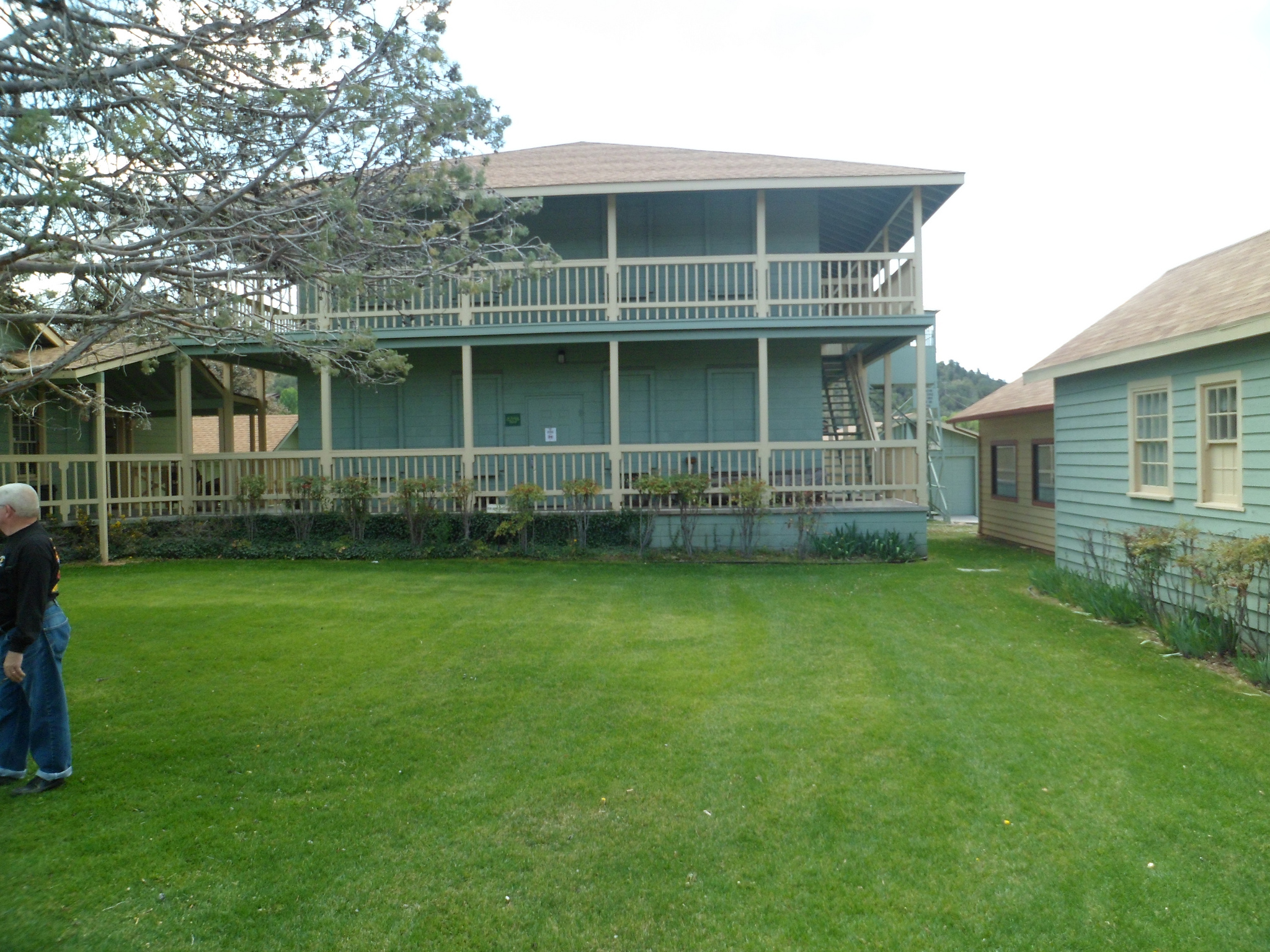
Every town in the Southwest, and from what I’ve seen, just about every town anywhere else, has a story to tell. Our Arizona burgs generally have a wealth of tales revolving around cowboys, copper miners and Cavalry. Payson, and the Mogollon Rim, have their share of cattle ranches, the grass being very sweet thereabouts. There are about a dozen kinds of barbed wire, and twice as many cattle brands, on display at Rim Country Historical Museum, which was my second stop on this gorgeous Saturday afternoon, last weekend. It is housed in a replica of the Herron Hotel, a former mainstay of old Payson. he hotel burned down in 1918.
The mines were less forthcoming here than in other places, as the granite contained only flecks of gold, and silver. An attempt at mining in the vicinity of Tonto Natural Bridge, at Kohl’s Ranch and a few other areas along the west Mogollon sector, produced very little, if any, in terms of precious and profitable ore. I noticed a unique type of mining cart in the museum’s Oxbow Mine display. It was able to pivot, sideways, so as to be able to stop, on the steep slanted terrain, which characterized the few lucrative mines in the area, of which Oxbow was the largest.
General George Crook tried to keep the Tonto Apaches on a reservation near Payson, but the bean counters in Washington determined otherwise. The hapless Apaches were moved, first to San Carlos, in the eastern Sonora Desert, then to Fort Sill, Oklahoma. They were able to, eventually, return to the Payson area, and today the Tonto Apache Community is an integral part of the social and economic life of northern Gila County. A replica of an Apache gowah, or round, thatched dwelling, is displayed in the Museum’s east room.
The Museum staff was still in the spirit of Halloween, so a skeleton or two, and Elvira, the TV horror movie hostess of the 1980’s, were hanging around, perhaps waiting for the Thanksgiving theme characters to show their faces. Photos of the interior were not allowed, but follow this link, and you may see for yourselves: http://paysonrimcountry.com/The-Town/Attractions/Museums/Rim-Country-Museum.
I was able to take some shots of the outside surroundings. First is a view of Green Lake, a man-made gem from the 1980’s.
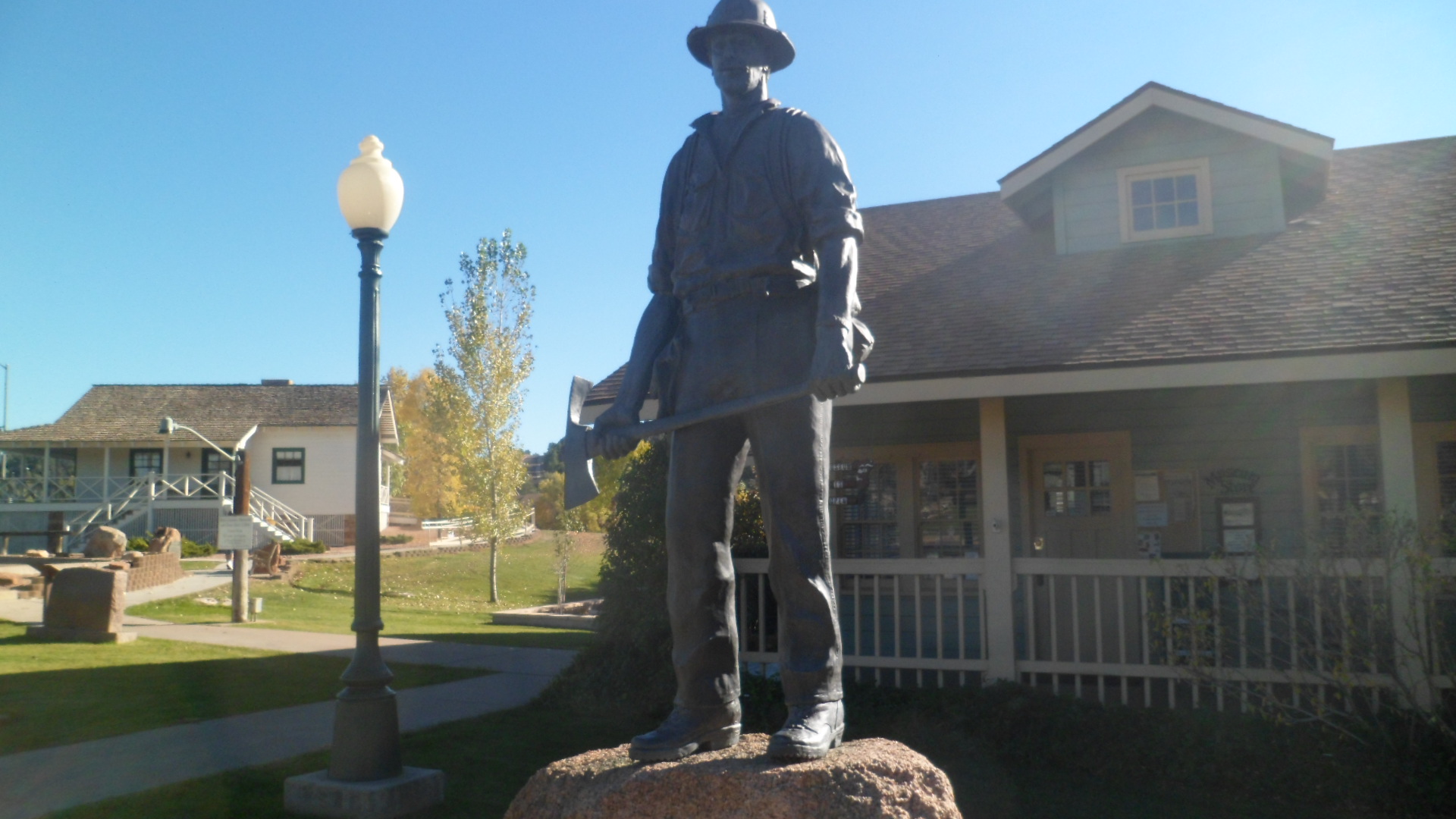
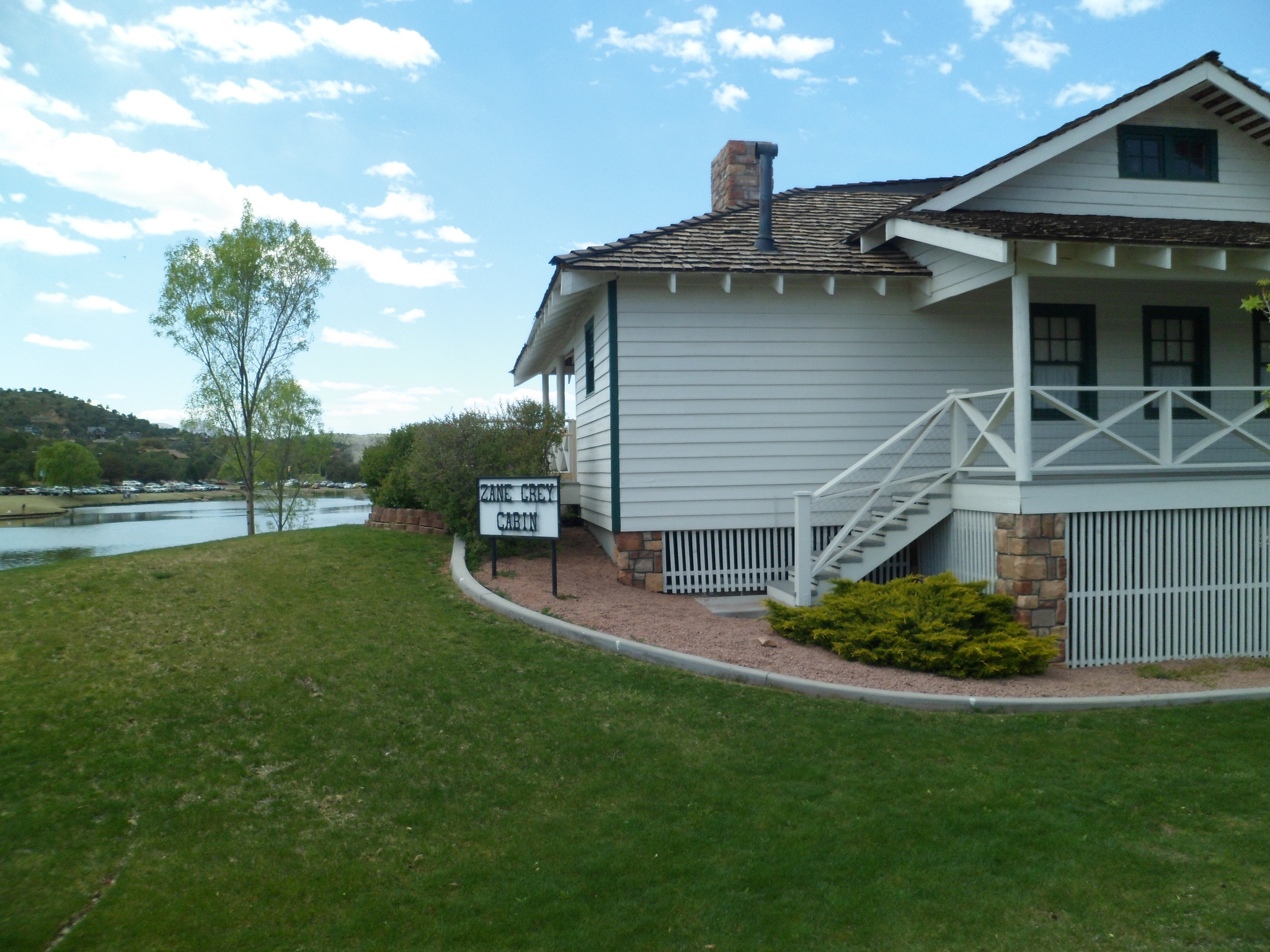
Time was that logging, also, was a key component of the Rim’s economy, as it was across the Ponderosa Pine region, from Chihuahua to Alberta. With logging’s demise came overgrowth, and increased fire danger. This was one of the unintended consequences of clear-cutting, which focused on relatively small areas, for the sake of maximizing profit. Clear-cutting incited environmental activism, which brought logging to a standstill. Trees thus became overgrown, and nature’s way to handle overgrowth is fire. In June, 1990, the Dude Fire laid waste to 24,000 acres of land in the Rim Country northeast of Payson. The original Zane Grey Cabin was a casualty of that fire, as were six Wildland Firefighters. (The Zane Grey Cabin which now exists at Green Lake Park is the result of an intense community effort, including replicated furniture and other wood work by Industrial Arts students at Payson High School.) A special exhibit, in advance of the 25th anniversary of the Dude Fire, in June, 2015, tells the story of that horrific loss. As I was wearing a t-shirt honouring the men killed in June, 2014, at Yarnell Hill, the docent asked whether I would be disturbed at viewing the video of the Payson tragedy. I watched it, solemnly. One community’s tragedy is just as worthy of respect and its grief equally deserving of validation, as any other. The firemen are honoured with a statue outside the Museum.
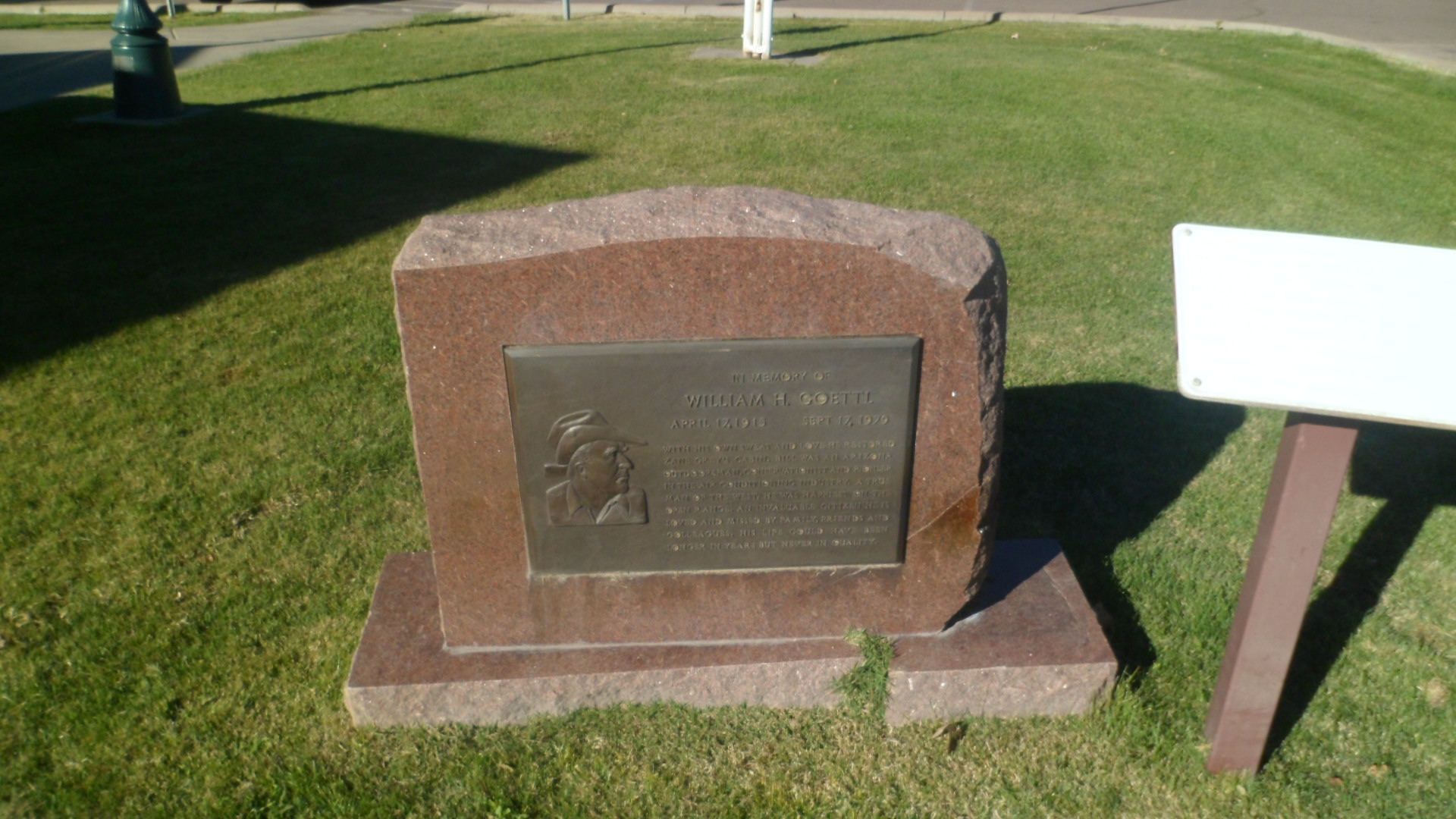
Also honoured is William Goettl (GETT-l), a Phoenix heating and cooling entrepreneur, who bought, and lived in,the old Zane Grey Cabin, when Zane’s family no longer wanted it. His family underwrote a goodly portion of the replicating efforts for the Cabin we are able to visit today.
Finally, just to the east of the Museum’s main building is an original cabin of the Haught family, who were Zane Grey’s key helpers in his ranching efforts. They lived near what today is the settlement of Kohl’s Ranch, east of Payson.
This complex does an excellent job of telling the many stories of the western Mogollon Rim.
November 8, 2014, Payson-Zane Grey was nothing, if not headstrong. The best-selling author of all time had an impetus, however. His mother, a fervent admirer of Queen Victoria, named him Pearl Zane Grey, the first name coming from the Queen’s wearing of pearl grey attire, whilst she mourned Prince Albert. Zane was his mother’s maiden name, and they lived in Zanesville, Ohio, which was named for one of her forebears. Zane’s father, a dentist, commanded him to follow in his footsteps, and he grudgingly did. He also devised the curve ball, whilst playing for his college baseball team, and wrote a novel, Betty Zane, based on the life of a maternal aunt. This last gave him the idea of getting out from under dentistry, which he detested.
I learned these facts about P. Zane Grey, as he called himself, once his parents had died, at Zane Grey Cabin, part of the historical complex of Payson, AZ. He was an avid hunter, in the Payson area, until the new state government got involved and started to change the rules of hunting. He then quit hunting, loudly and publicly, taking up deep sea fishing for a time, and setting records in that sport, many of which still stand.
The cabin is a humongous affair, built in the style of the Adirondack Region of Upstate New York.
No photos are allowed, either in the Cabin, or in the adjacent Rim Country Historical Museum, as many items are on loan from private collectors and families of Zane Grey’s employees and associates. I started my visit with Docent P., in the Cabin’s kitchen. There is a huge, old-style cast iron stove in the room. It is especially notable, in that on the top of the stove are two passive heat receptacles, used for keeping infants warm, in the dead of winter. No, the witch in Hansel and Gretel didn’t work there. The two infants in question grew up to be successful in their trades, and lived to a ripe old age.
I then went into the Great Room, festooned with bear rugs, taxidermed elk and Zane’s Morris Desk- a comfortable chair, with arms that allowed a slab of pine to be stretched across them, serving as a desk. Across from these is a collection of first editions of Zane Grey’s books, many of them signed by him. If you ever happen to be in an antique shop or old book store, look for Zane’s still-missing treasures. 30-45 of them are still out in the wider world. He painted extraordinary word pictures of all the areas in which he lived, from Wheeling, WV to Tahiti and New Zealand. Being something of a contemporary of Samuel L. Clemens, he was, in that respect, a man of his time.
Oct. 22, 2014, Newport Beach- Each time I venture out to San Diego, I make a foray into Orange County, and usually try to get up further along the coast. This time was no different, and I met an online friend and mentor at Crystal Cove State Park, Newport Beach, in mid-day. J is always enthusiastic about the California coast, and is a good source of information about the state of affairs in SoCal, which is more crucial to the welfare of the rest of us than we might care to think.
The weather was dry and mild, when we landed in San Diego, two days earlier. It was a nice Monday and Tuesday in San Diego, as I mentioned previously. Wednesday morning found me headed north, on a smooth-flowing freeway and with comparatively little traffic on the Pacific Highway, from Dana Point up to Crystal Cove. There were about a dozen people on the beach itself, being Wednesday of a school week. As we strolled the beach, the work of a couple of children was in evidence.
Beachcomber Cafe, where we had lunch, is a reliable spot, for good food and entertaining people-watching. J and I have been here twice before, and spent close to an hour talking of her concerns about California and of my experiences in Honolulu and at sea.
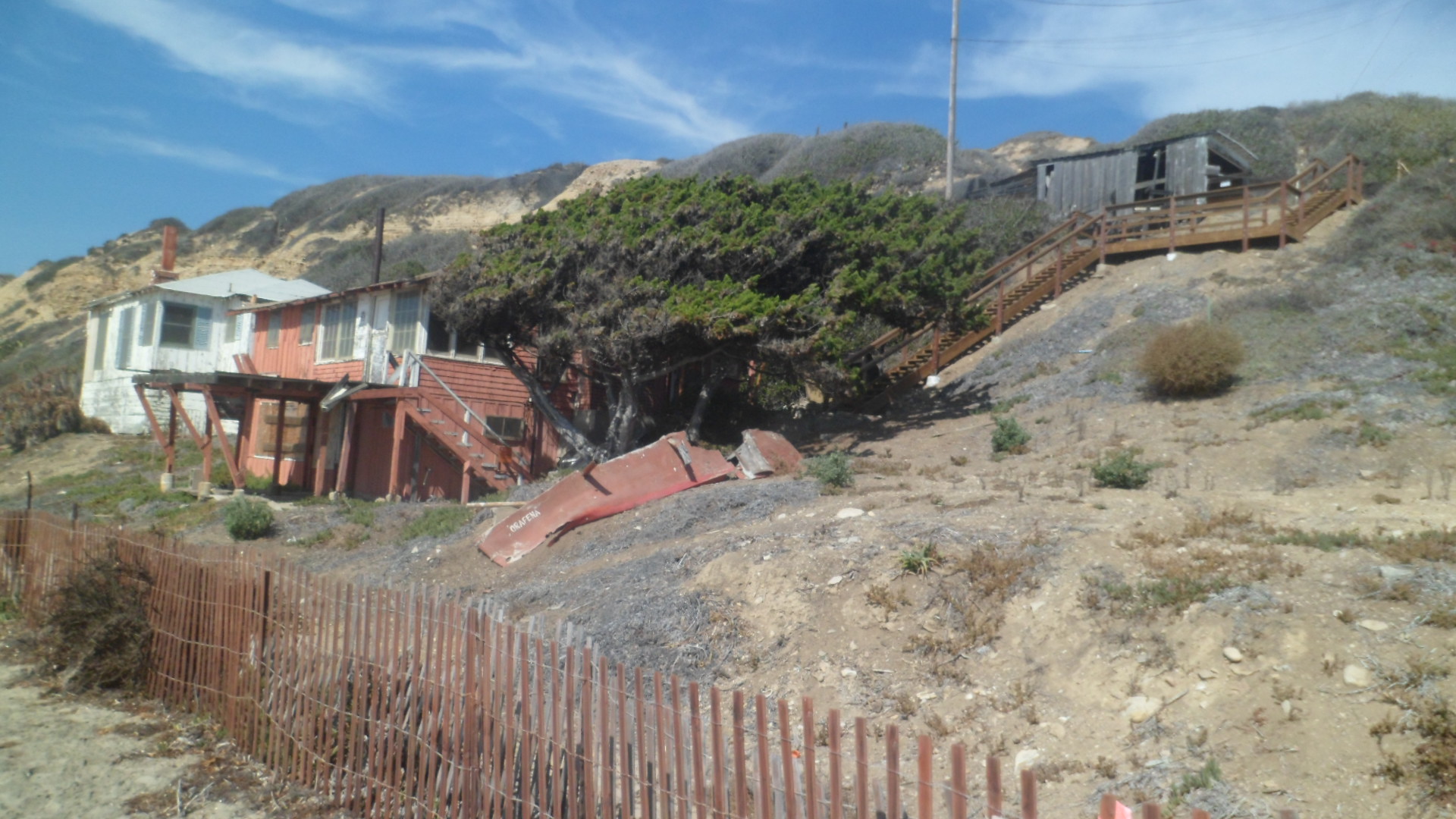
After lunch,we focused on the troubled north side cottages of the beachfront. Crystal Cove Alliance is working on restoration of the deteriorating structures, and has largely completed the work on the south side. The rest of the work on the north will likely begin in December, according to the flyer I read. These cottages are actually unique for Orange County beaches, which are largely structure-free, aside from changing rooms and lifeguard towers. Their restoration would be a fine achievement for Newport Beach.
For more on Crystal Cove, please see my earlier post: “Back to Crystal Cove”, 4/5/2013.
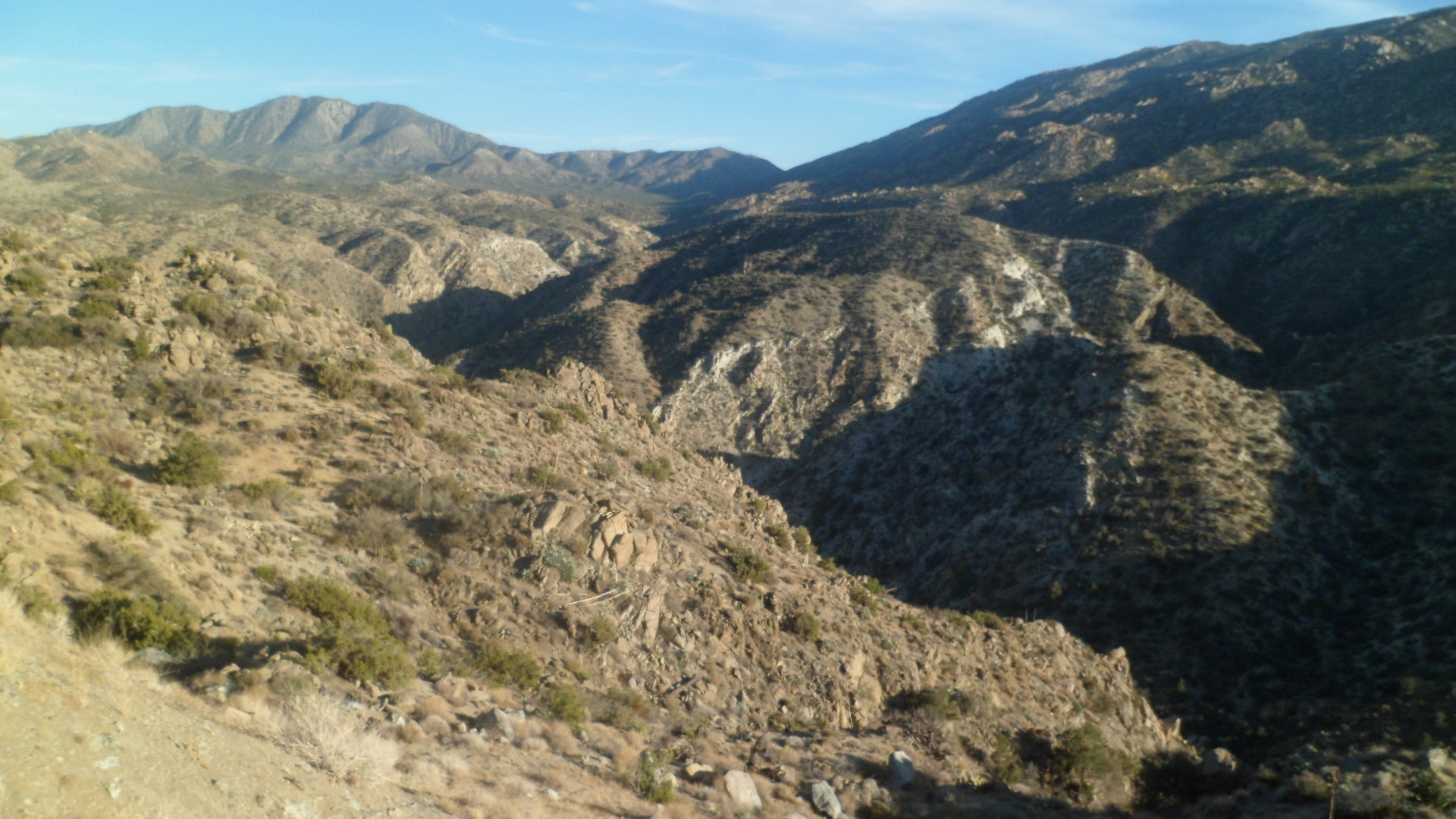
After, J bid me farewell, I decided to end my northward quest, for now, and headed back towards Arizona, opting to take the back roads from Oceanside to Palm Desert. It’s a winding route, but traffic is minimal, especially once past Temecula. I stopped only to wonder at Cahuila Tehanet, just southwest of Palm Desert.
The rugged outback of SoCal’s Colorado Desert seems to be one of the sub-state’s best-kept secrets. Well, my list just keeps getting longer. For the moment, though, I felt the homeward tug, and made it to Blythe, and Relax Inn- recharging, before driving back to Prescott, the following day. Like Arnold, I’ll be BAAHCK.
Our last 2 1/2 days of sail found the Tigers and crew reaching a modicum of comfort with one another’s presence, even as most of the sailors were just looking for landfall, as anyone would be, after seven months. We started the Saturday morning with a lesson in knot-tying. The most hardened tough guys among us were almost as perplexed as I was, when it came to completing anything more complicated than a square knot. It’s been a long time since I was at the edge of becoming a Star Scout. The Boatswains (“Bo’suns) were, thankfully, much more adept at the skill which keeps ships moored, and things tied down. Here, a boatswain demonstrates tossing a guy rope overboard, with requisite gusto.
The deck crew has this view of the Crow’s Nest, which would humble just about anyone.
I also tried, a bit later, to don and use a full firefighting suit. The air mask did not fit properly over my nose and mouth, though, and I quickly had to remove it and get out of the suit, though not before going through a room filled with faux smoke, so as to experience the visual aspect of firefighting.
That embarrassing experience aside, it was a pleasant and productive Saturday. I forewent the Ice Cream Social and Bingo, preferring to hang out on in the chart room with my son.
Sunday found us getting ready for Steel Beach Picnic. This is done on the Flight Deck of a ship, with no blankets, no ants, but plenty of barbecued meats, watermelon, salads- and a Journey’s End cake. You may think there was beer involved, by looking at the zig-zag wake. Not to worry. No alcohol is aboard ship. It’s simply a photo of the ship’s course while on autopilot, with the helmsman simply watching the charts for shoals or other impediments to safety.
By 11 AM, the gathering on Flight Deck was getting into full swing.
You may notice more than one shade of blue. In the course of the cruise, I distinguished five shades, when the light was brightest.
Later Sunday afternoon, the organizer of our Tiger Cruise re-enlisted in the Navy. We were privileged to witness this ceremony.
The closer we got to North America, the grayer the sky seemed to get.
Those who are able to zoom this photo in, for a close look, will spot some bumps on the surface. These bumps are a pod of dolphins, come to welcome us home.
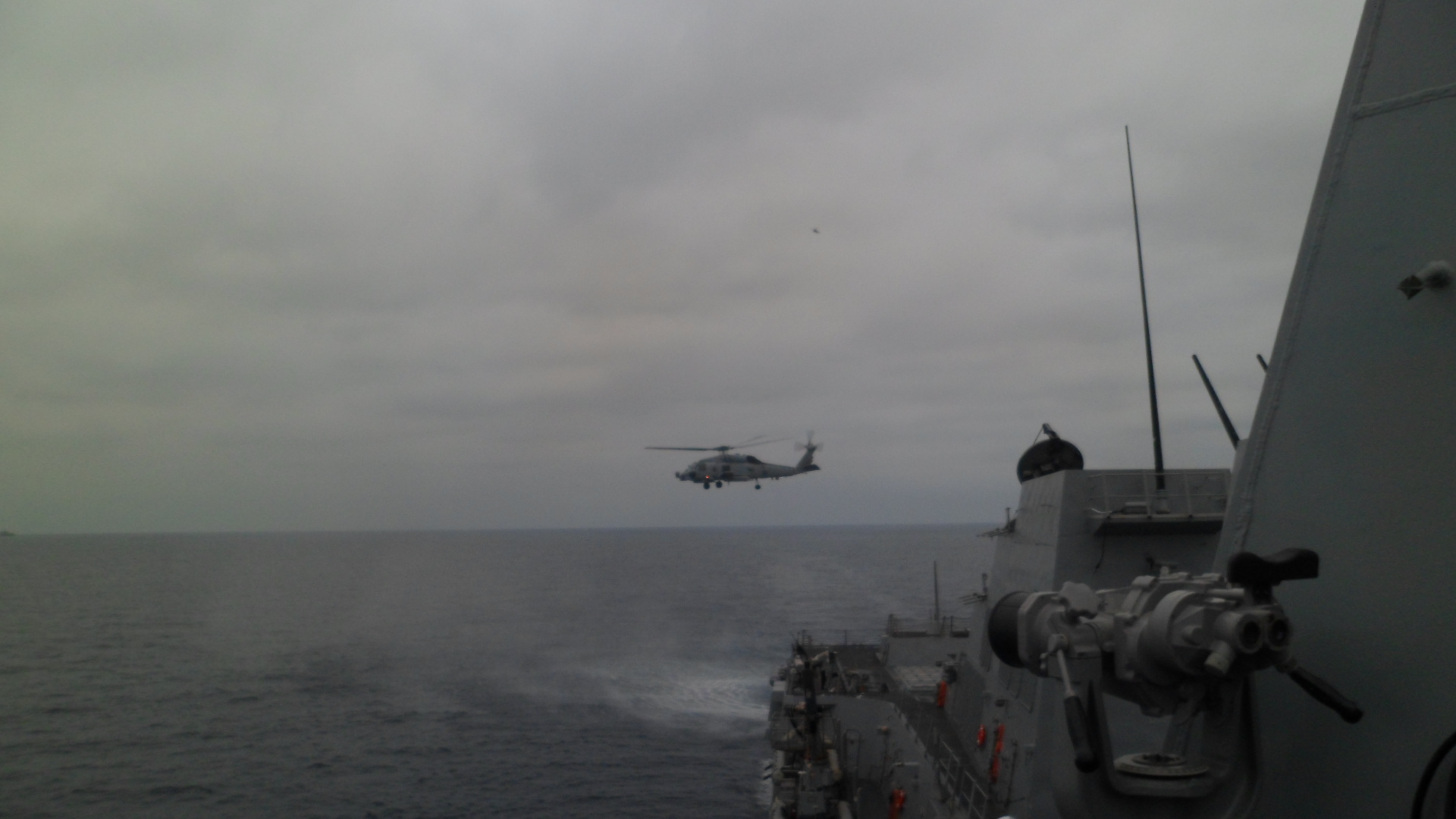
Monday morning found Aram at the helm, and it is a proof of his skill that he was able to talk a bluestreak and not lose track of the course and the various features with which we were sharing it: Yachts, other large ships, buoys, a tugboat (sent to help guide our ship), the crowd on the ship’s bridge, Coronado Bridge and, finally, the dock itself and the crowd waiting on it. Below, the helicopter takes off, headed towards ITS base.
We had our final muster at 8:00, then went above decks.
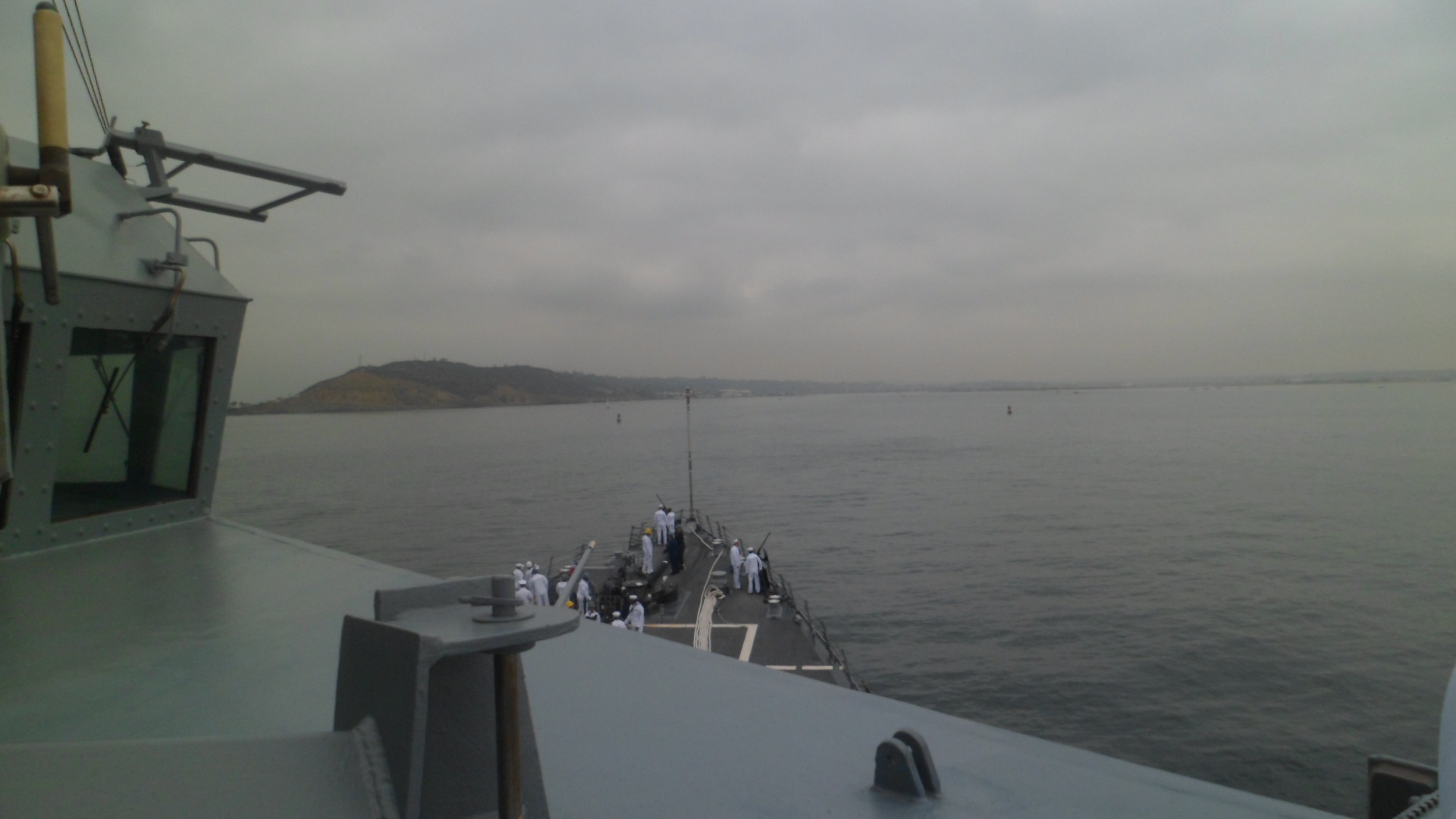
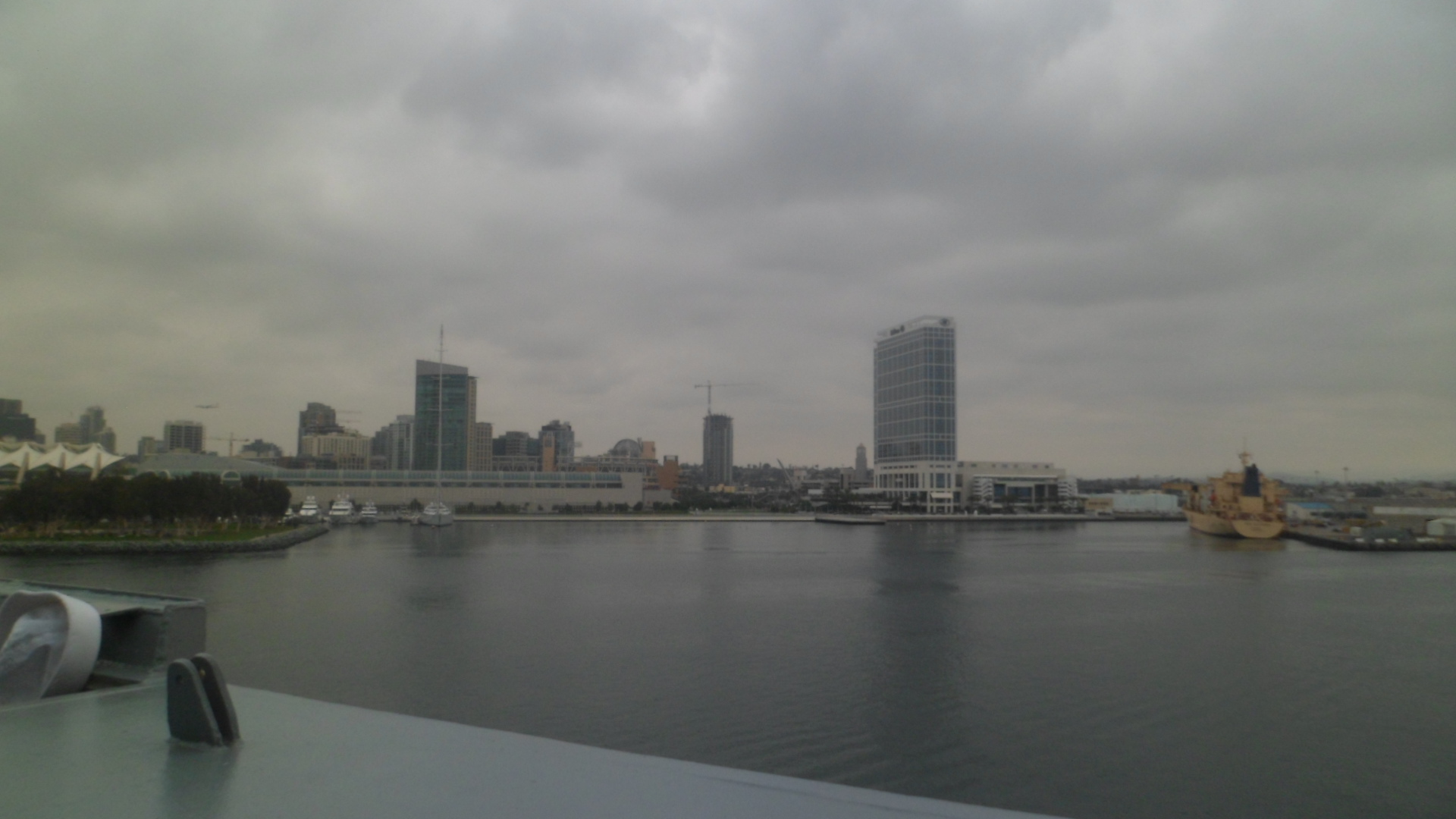
Around 9 AM, we spotted the first signs of California.
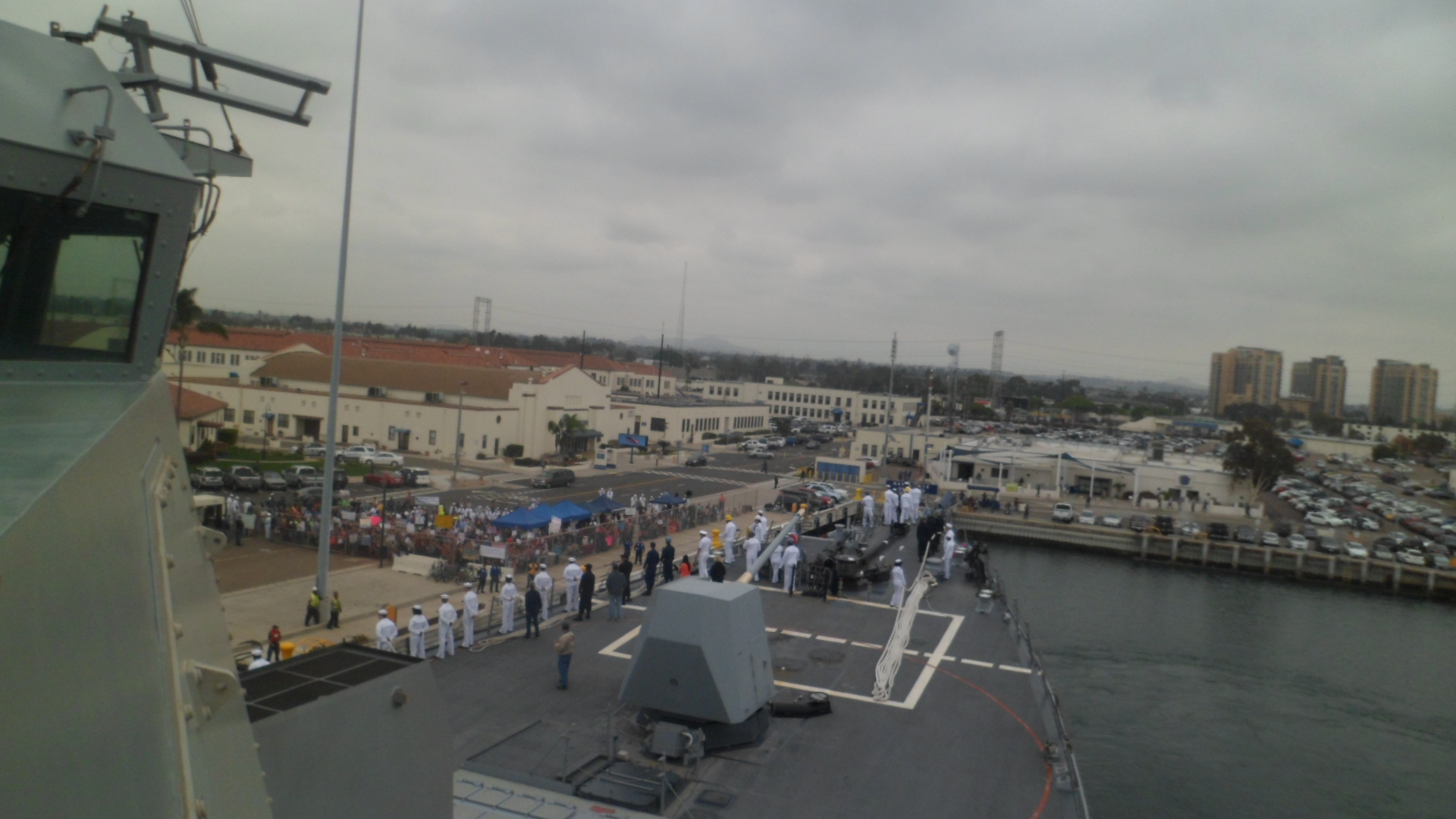
These became steadily more apparent, and before long, San Diego loomed large. Note the boatswains and engineers on the foredeck, in Dress White.
By 11:30, we were at pierside. Success!
Son and I had no need to stick around for everyone else’s hoopla. So, after thanking as many of the helpful crew as possible, I gathered my gear, Aram took some of his, and we headed to his apartment on the base’s “Dry Side”. This refers to the area well away from San Diego Harbor. Still, there are fine views, from the balcony, of the docks, and of each and every sunset.
I spent a day and two nights more here, in one of my favourite cities. Though sticking mainly to the base, and surrounding commercial centers, where “return home” chores could be accomplished by Aram and his housemate, it was a satisfying end to another fulfilling journey. As I’ve said before, I don’t view these sojourns as vacations, but as spiritual quests.The sea is as good a place as any, for confronting oneself and pushing forward with personal growth.
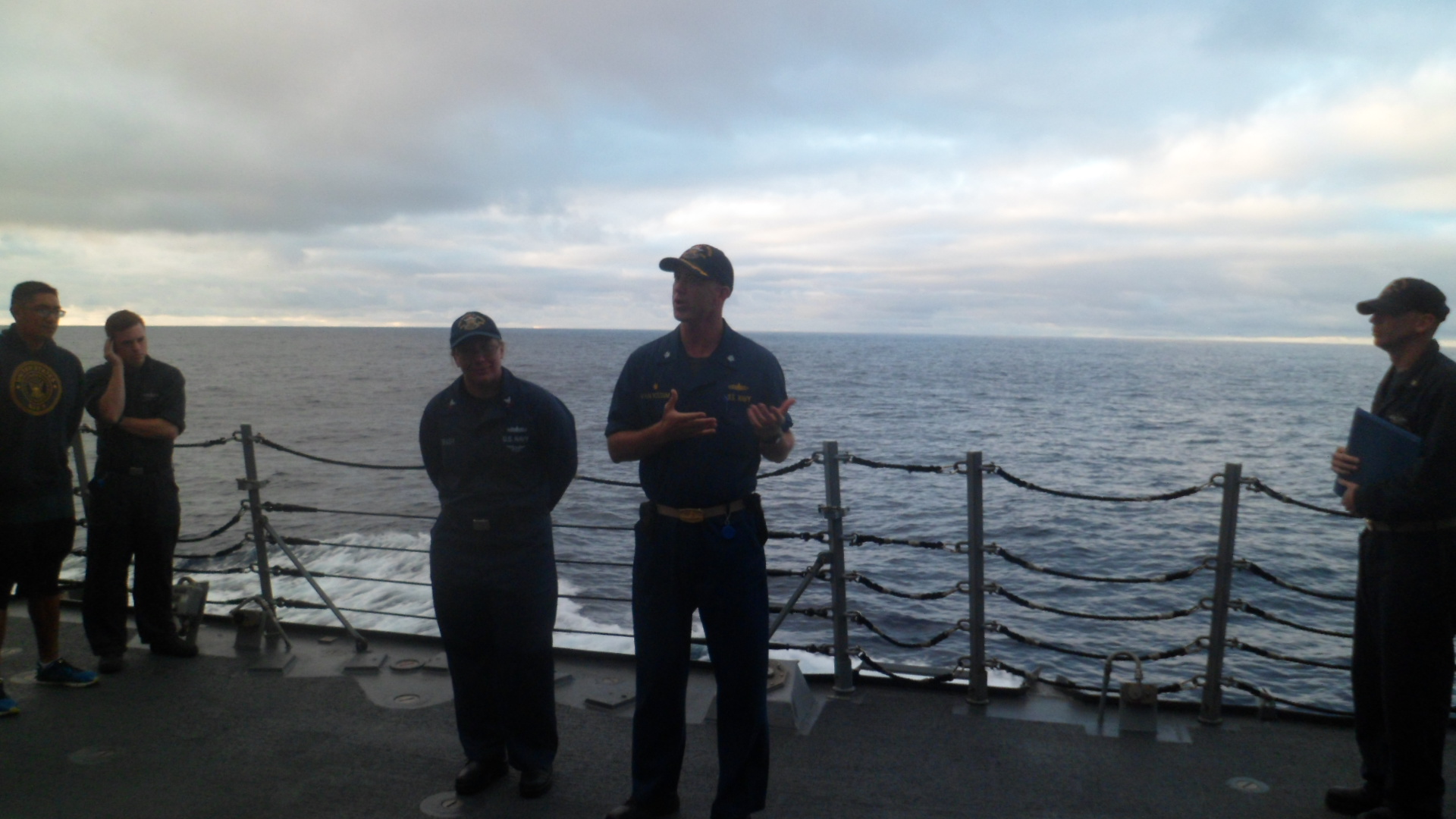
October 15, 16 & 17, 2014, Aboard USS Wayne E. Meyer-The themes of presentations given Tiger Cruise participants, (invited relatives or friends of Officers and Crew of my son’s ship), for the first three full days of the return sail, involved the security and rescue tasks of the crew. So, we got to look at some weapons, view a SAR (Sea & Air Rescue) practice drill, watch a display of the ship’s firepower and tour a helicopter.
Most of the crew were welcoming of our presence. Those who felt otherwise, at least kept their feelings hidden until we were safe in port, and by then, it didn’t matter what they felt. So, days 5 through 7 of the cruise were busy with learning how our sailors are contributing to our nation’s safety and well-being.
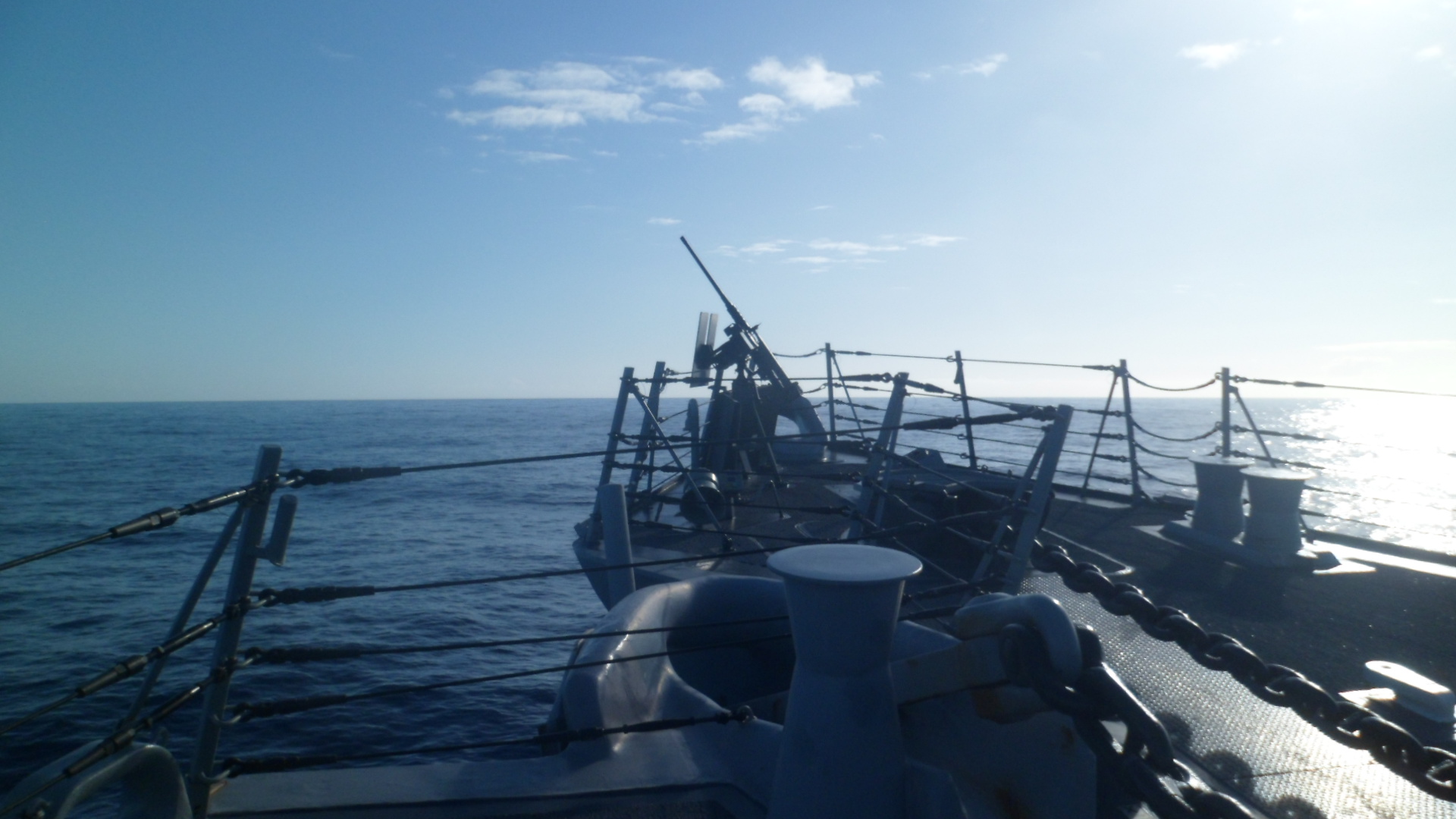
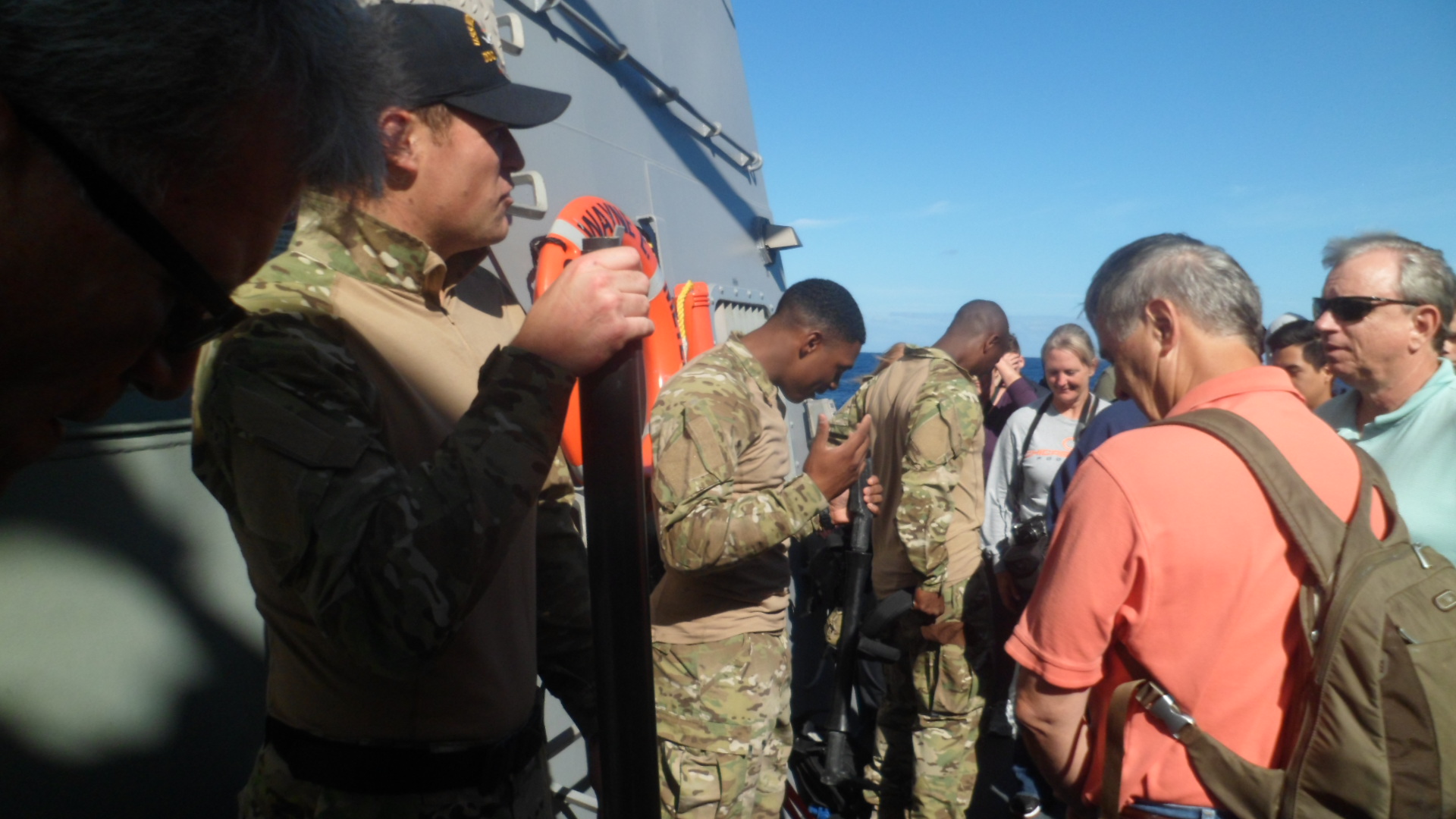
On the morning of Day 5, we were well out at sea. This scenario, in other parts of the world, is exactly the place where a ship might be accosted by hostile maritime forces. The Takeover Crew are trained to board ships, a task requiring peak physical conditioning and an absence of vertigo, among other qualifications. In this, and other segments of the crew’s presentations, care has been taken to not display too closely the specific munitions and large weaponry. I will not identify weapons by specific name. The photo below shows ladders which must be climbed, on a good many ships, and one of the hooks the crew uses in its task.
The men below are explaining various phases of tracking and boarding suspect vessels.
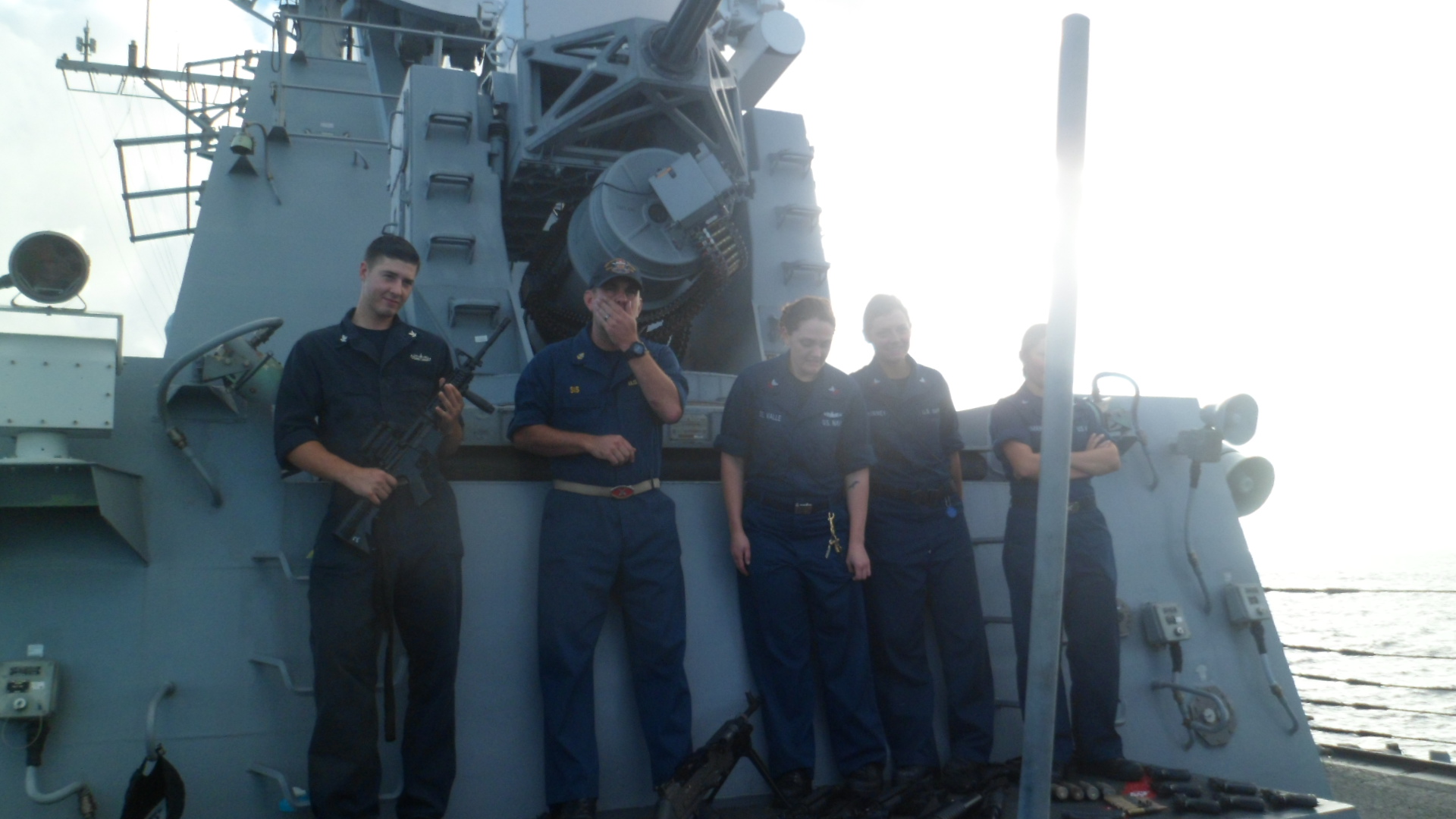
The Crew graciously posed, though unfortunately the Sun was also posing. Women are a full and integral part of the security operations aboard ship. Later on Day 5, we met the Navigation Crew, including my son, and paid a brief visit to the Engineering section, far below decks. Both are secure operations, so I refrained from photographing them.
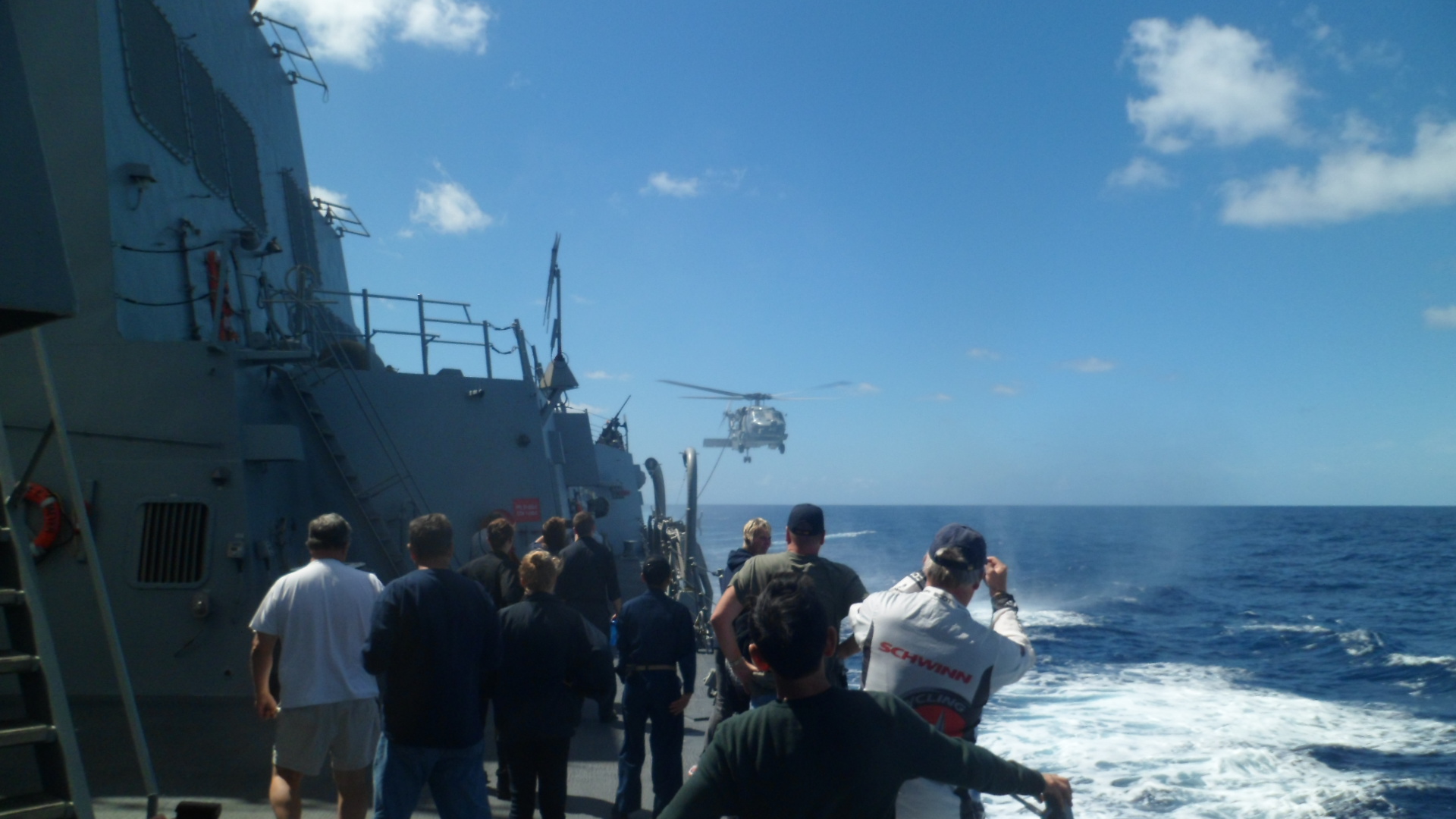
One of the helicopters attached to the ship conducted a flight practice on Day 5. It also was instrumental in the SAR practice on Day 6.
The two SAR drill swimmers, who are experts in the skill, pose with the father of the swimmer to the left.
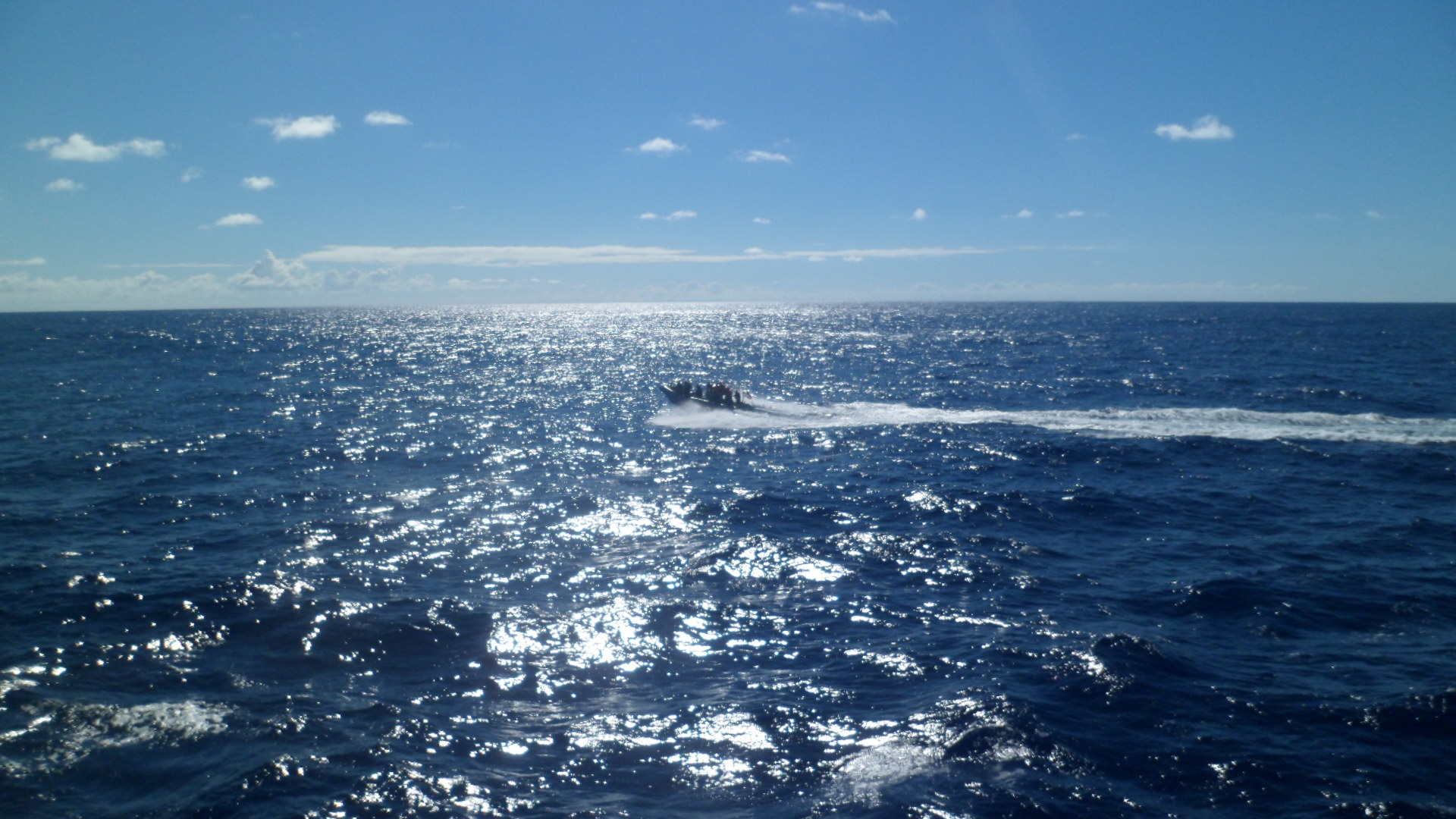
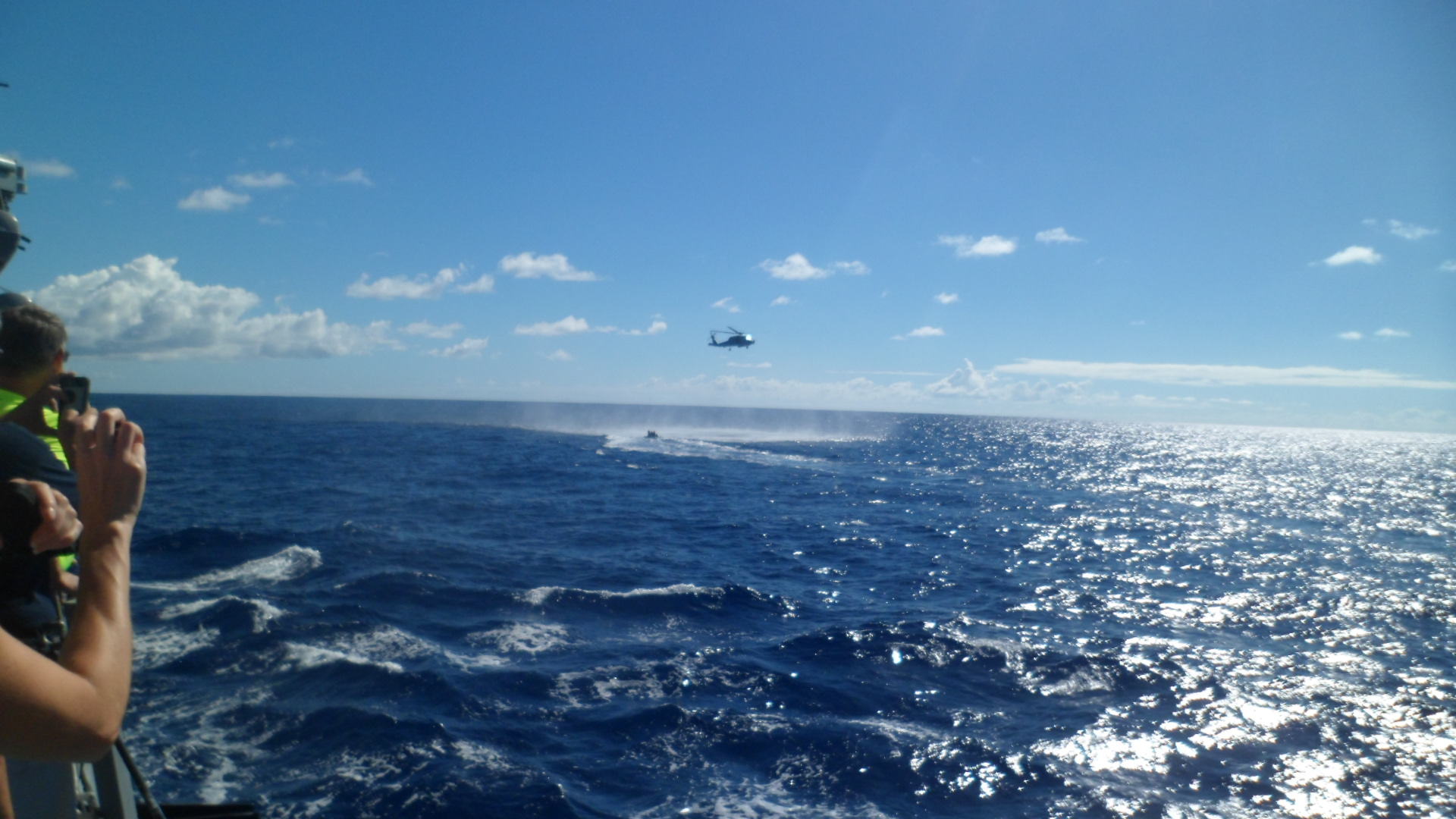
The next several shots are of the actual drill. See whether your sharp eyes can spot the swimmer, as he is being “rescued” by the helicopter.
Later on Day 6, we watched a display of heavy weapons fire.
The orange plastic square below was dubbed “Killer Tomato.” It became the hapless target of several rounds of ammunition, over a twenty- minute period.
As with any such event, we met the Looky Lous, and they were us.
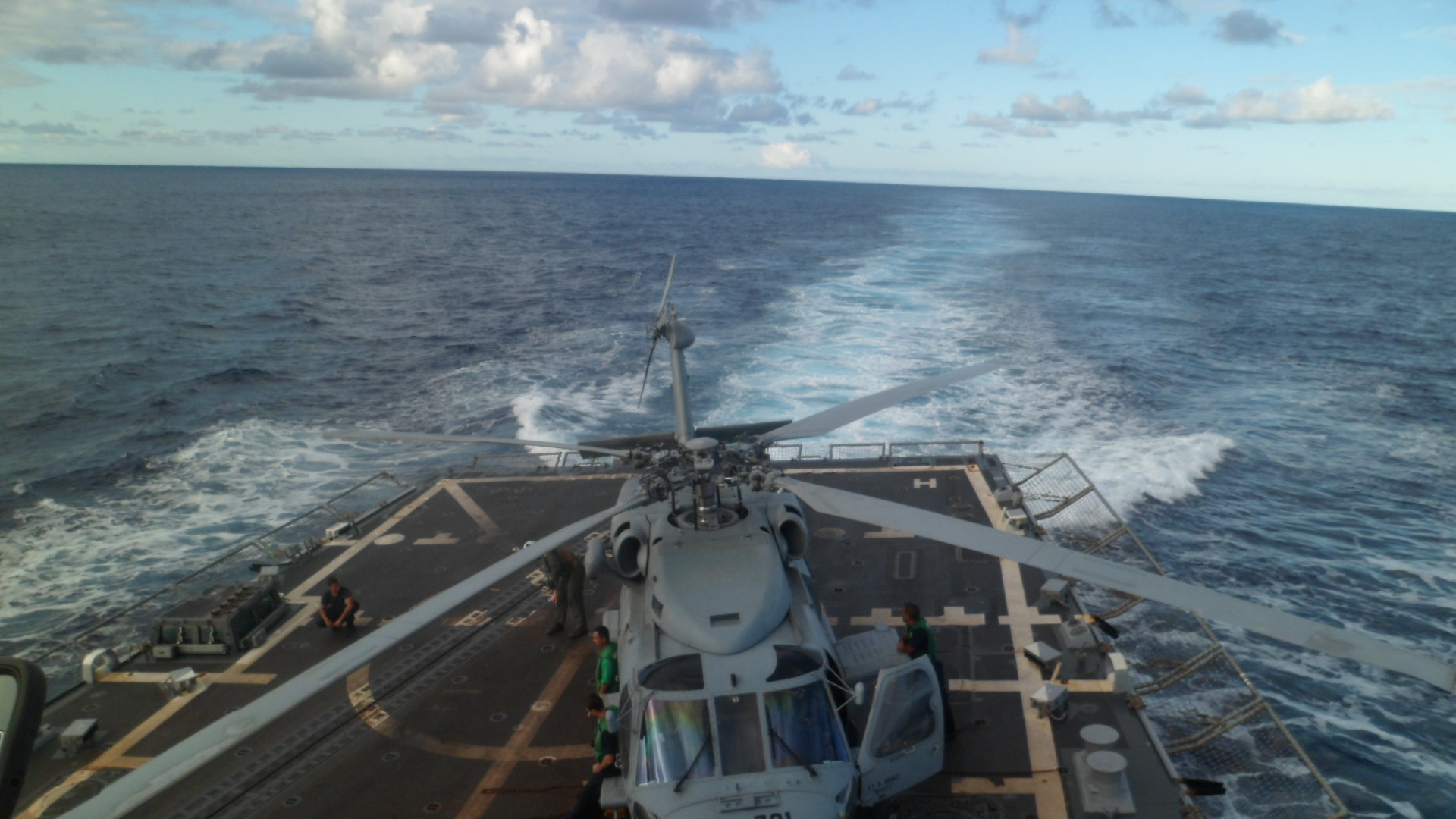
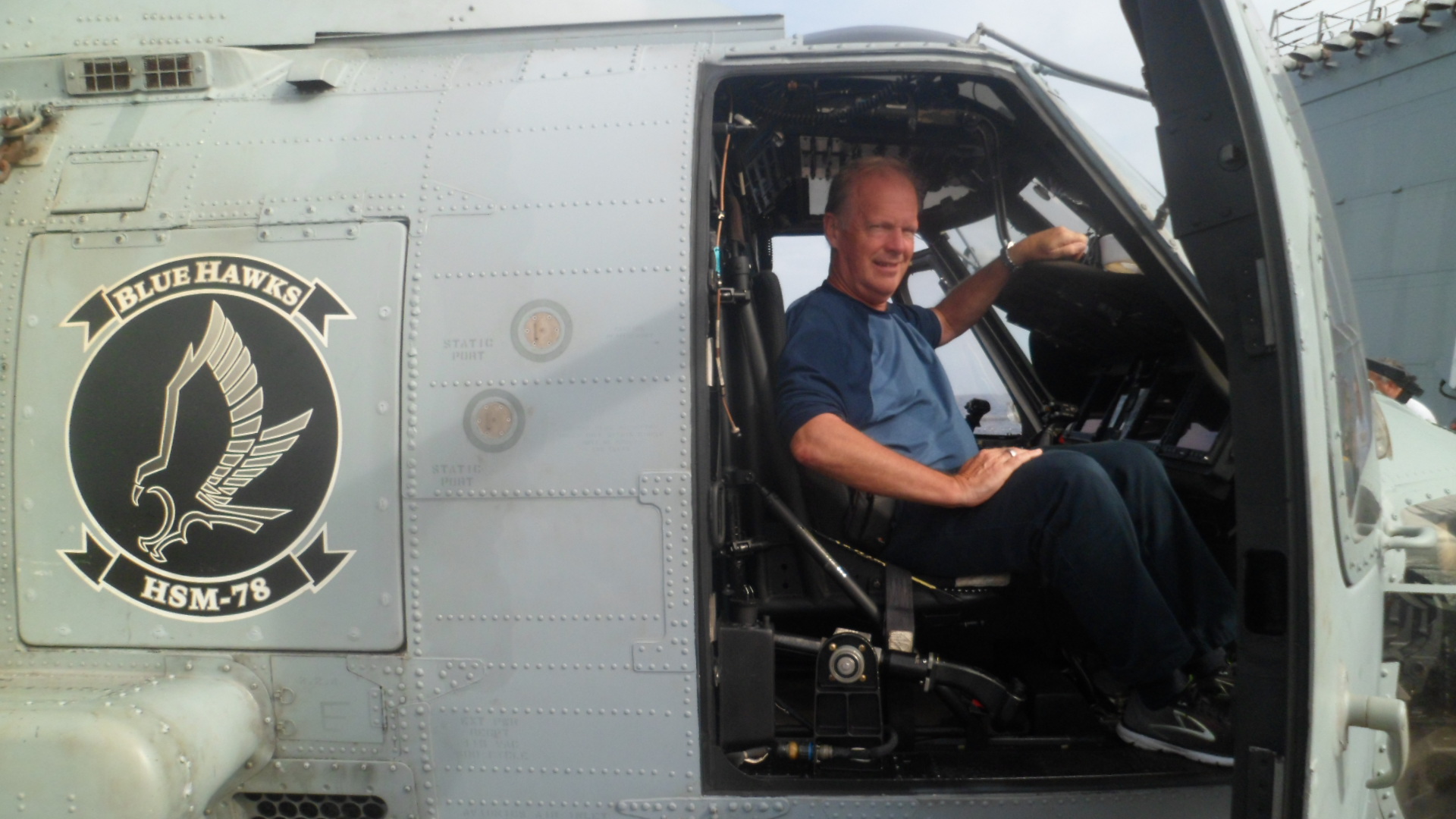
Day 7 was a bit more benign. We toured one of the helicopters that is attached to the ship. As you can see, some of us had selfies taken in the co-pilot’s seat.
The Blue Hawks are an extra safety component during long cruises.
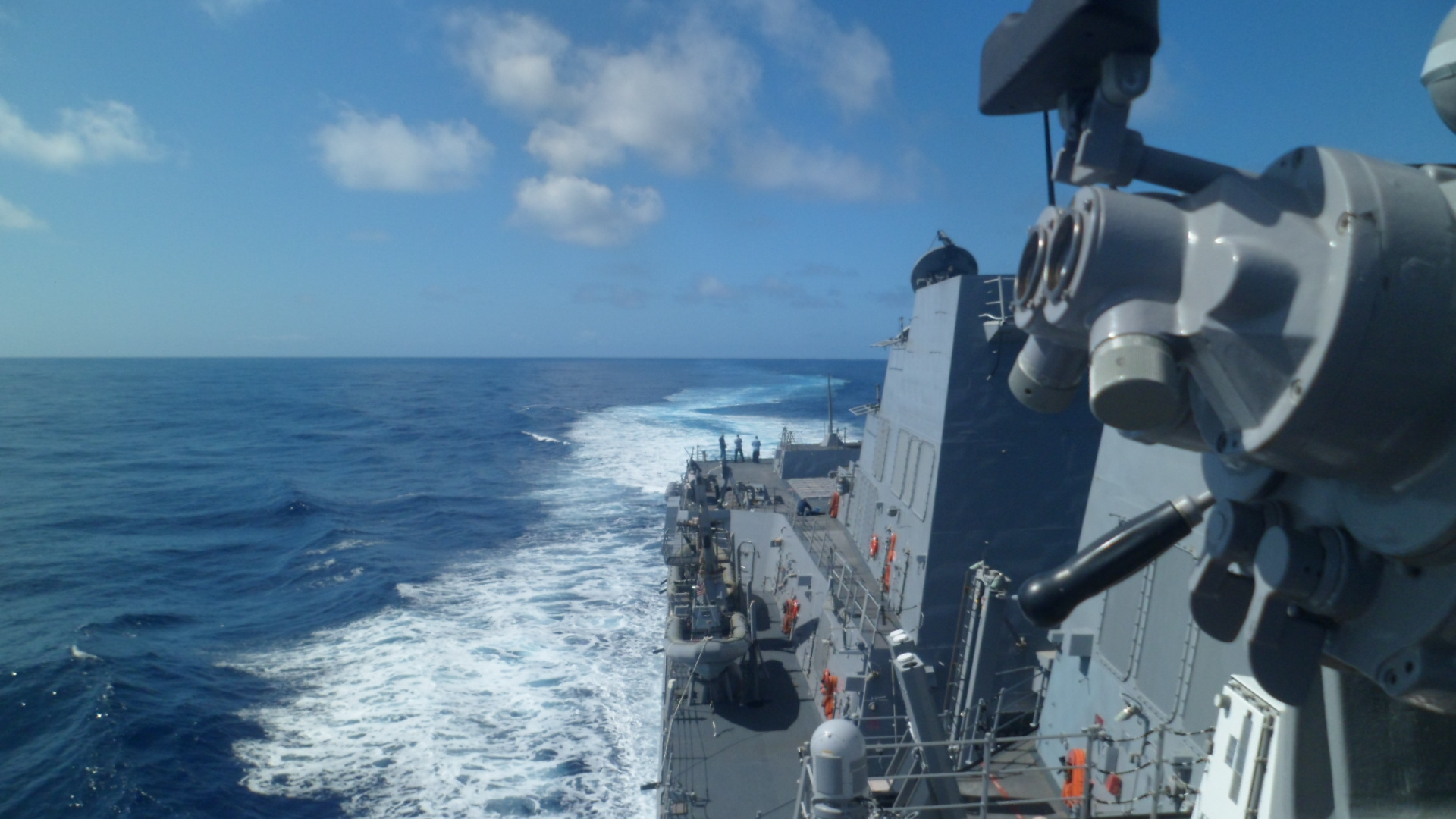
The ship’s wake increased, drastically, during a maximum speed drill, in the afternoon of Day 7.
We ended a busy three days with a briefing on the medical operations aboard ship. Here is some of the equipment available for medical emergencies.
We would be in a slightly more relaxed mode, for the last three days of the journey.
Oct. 14, 2014, Honolulu- Hawai’i’s role in the life of the United States, and the world, became more complex with the entry of the Trojan horse that was the entry of outside commercial interests into its affairs. The people of any given nation are far more polyglot now than they were even fifty years ago. For the land now called the Aloha State, this has meant being a constant target, both domestically and from foreign interests. A stark reminder of the last time this happened is the USS Missouri/ USS Arizona Memorial, in Pearl Harbor. We sailed past this stirring sight, on the calm waters of Pearl Harbor, knowing that during our journey, there were no threatening forces between here and San Diego. Our only challenge was building and maintaining a strong and unified sense of purpose during the six days of return from deployment.
As soon as we headed away from shore, a storm was seen over O’ahu.
As the clouds headed swiftly over the island’s central cordillera, Pai’Olu Olu Point was visible from the starboard side.
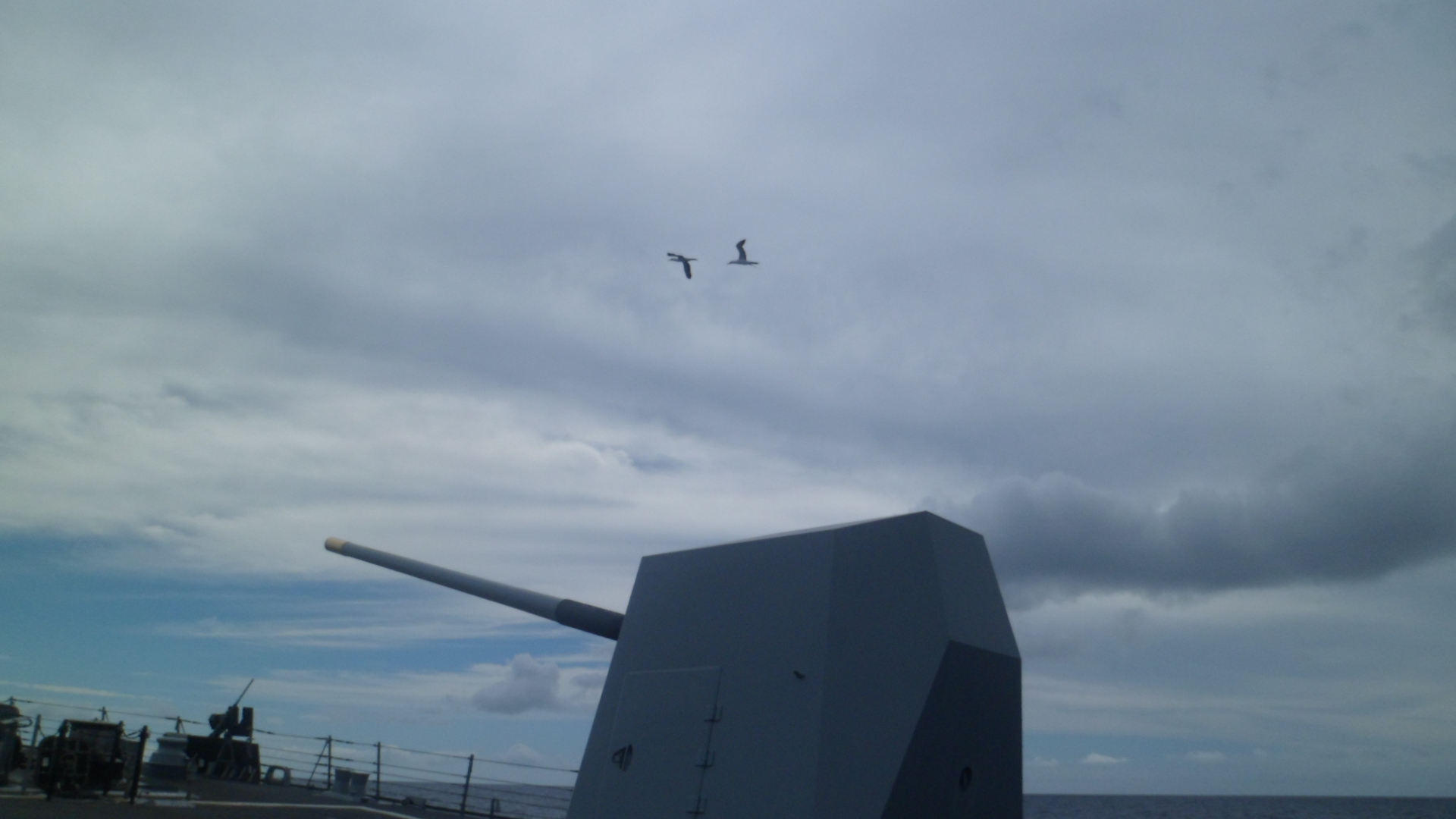
Also visible were two gulls following us, in the off chance that food would be tossed out the galley portal. No such luck, though. The Navy is being more careful with what gets put into the ocean these days.
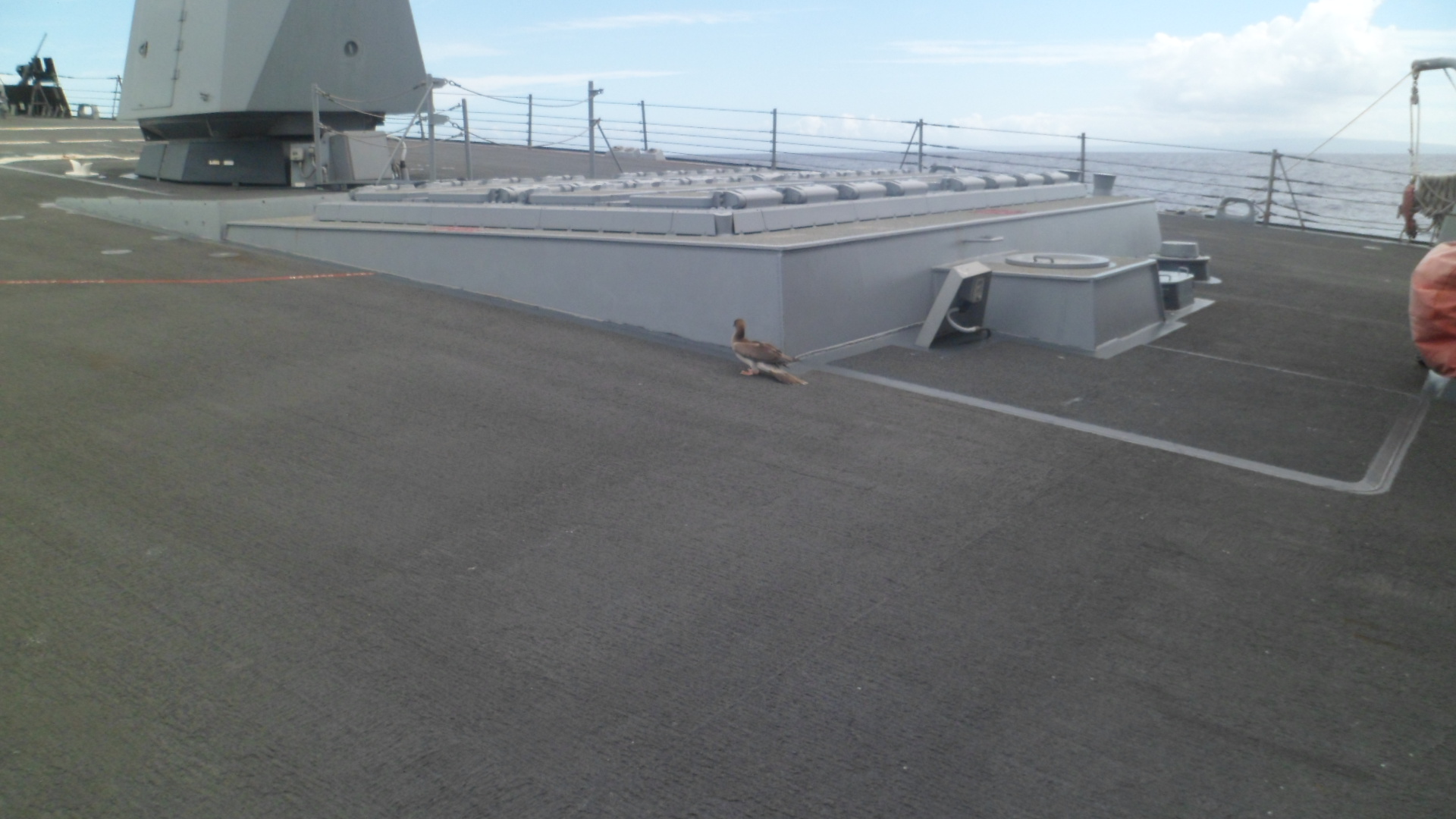
One brown gull hit the deck, and was momentarily stunned. It took about ten minutes for the poor creature to get re-oriented and head off skyward again.
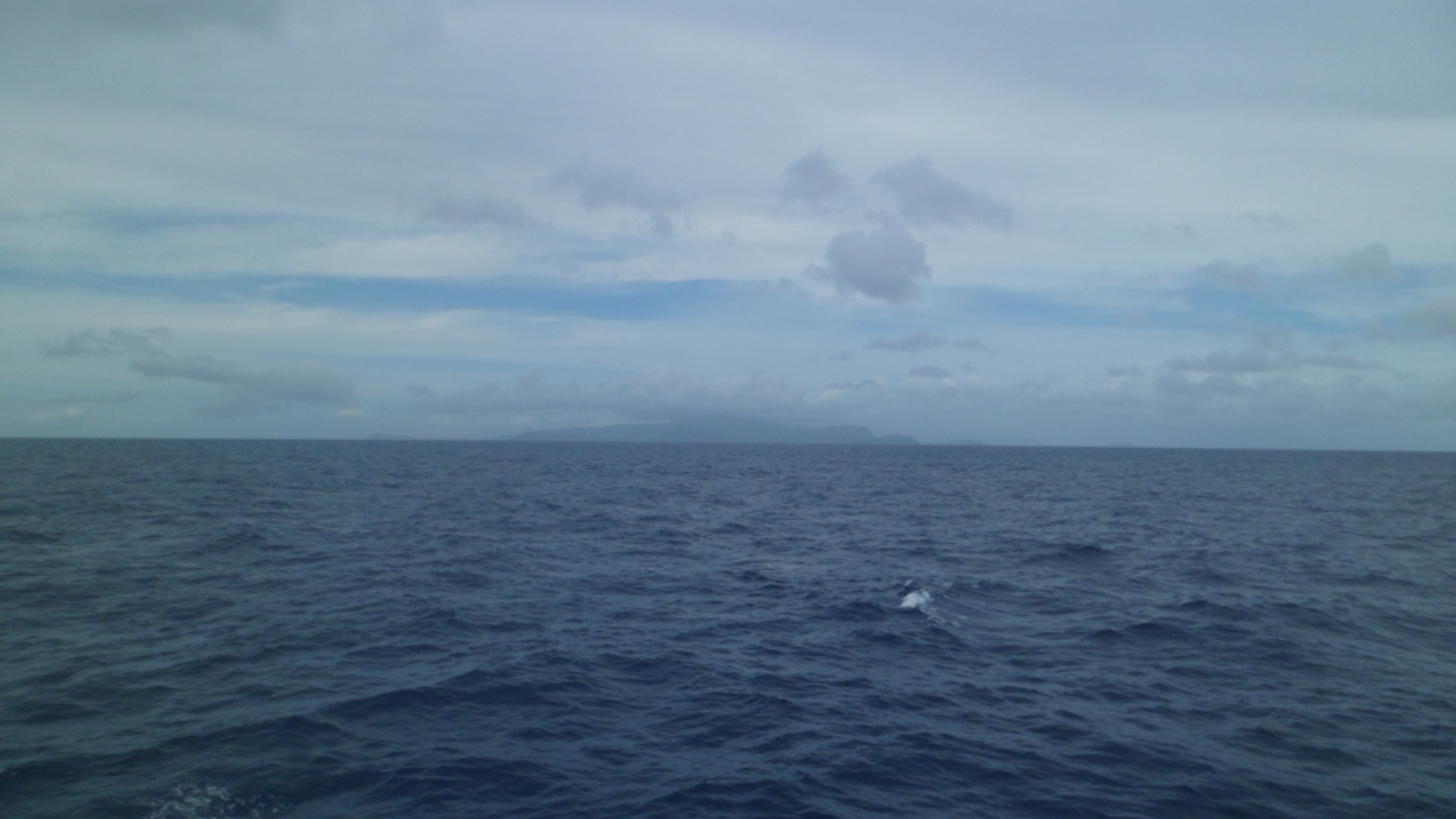
As the morning wore on, we caught a glimpse of Moloka’i, as we headed through the channel separating it from O’ahu.
The successful start to our cruise to San Diego was celebrated, with the first of several cakes.
The sea reminded us, every so often, of who was boss. All in all, she would be a reasonable Madame.
October 12-13, 2014, Honolulu- There is, in the story of any people, an account of their casting the net of interaction with both neighbouring peoples and those in far-off lands.
Such interactions go back further than is commonly thought, and were far more frequent than often supposed. Hawaiian people, having come from islands far to the south, had little contact with outsiders, however, until the voyages of the English, under James Cook. Conflicts between the two groups were not long in coming, however, as the concept of private property was far different in Hawaiian society than in that of the English. Material goods and property under kapu, or special protection, were not to be taken or disturbed. The rest was regarded as community property, much as it is in many Native American societies.
When the Hawaiians took items from English ships, after having fed and watered the English, an enraged Cook took action against them, killing a ceremonial chief and destroying a sacred temple. In response, he was clubbed to death, and while the English fled the islands, they, and ships of several other nations, soon returned. Hawai’i’s strategic value began to draw Americans, Russians and Germans, as well as British and Spanish ships.
This is the background which led to American missionaries and industrialists taking interest in Hawai’i, Hawaiians taking an interest in the wider world, and the eventual de facto colonization of the islands by the United States.
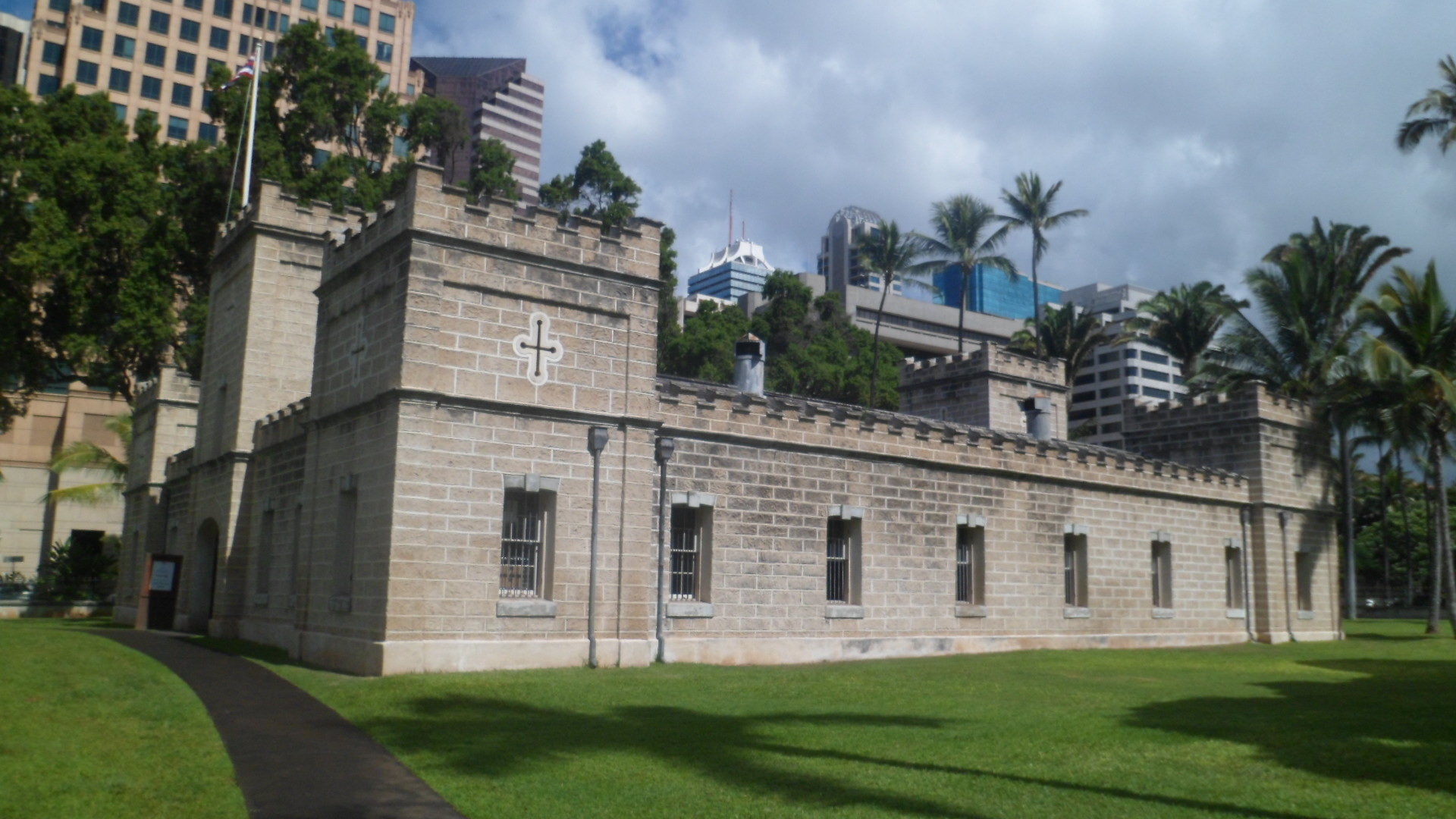
Iolani Palace, built first by Kamehameha III, in 1844, and replaced by David Kalakaua, in 1879, as the first structure, being wooden, had fallen victim to termites. Another palace (Aiolani Hale), across the street, built by Kamehameha V, is used as a Judiciary Building today. Hale (HAH-lay) means “chief’s house”, in Hawaiian. King David’s Iolani is the structure which at which visitors can come to appreciate the level of sophistication to which the Hawaiian nation had attained, by the 1870’s. It was here that Queen Liliukalani was held, while under house arrest, during the American occupation of the early 1890’s.
In the 1960’s, the new State of Hawai’i realized the need for preservation of structures such as Iolani Palace, and a preservation campaign ensued, resulting in the marvelous example of American Florentine architecture seen in the following photos. First is the Iolani Barracks, where private security forces stayed, while taking control of Honolulu in the 1890’s. It is now a Visitors’ Center for Iolani Palace. Photos of the palace exterior follow.
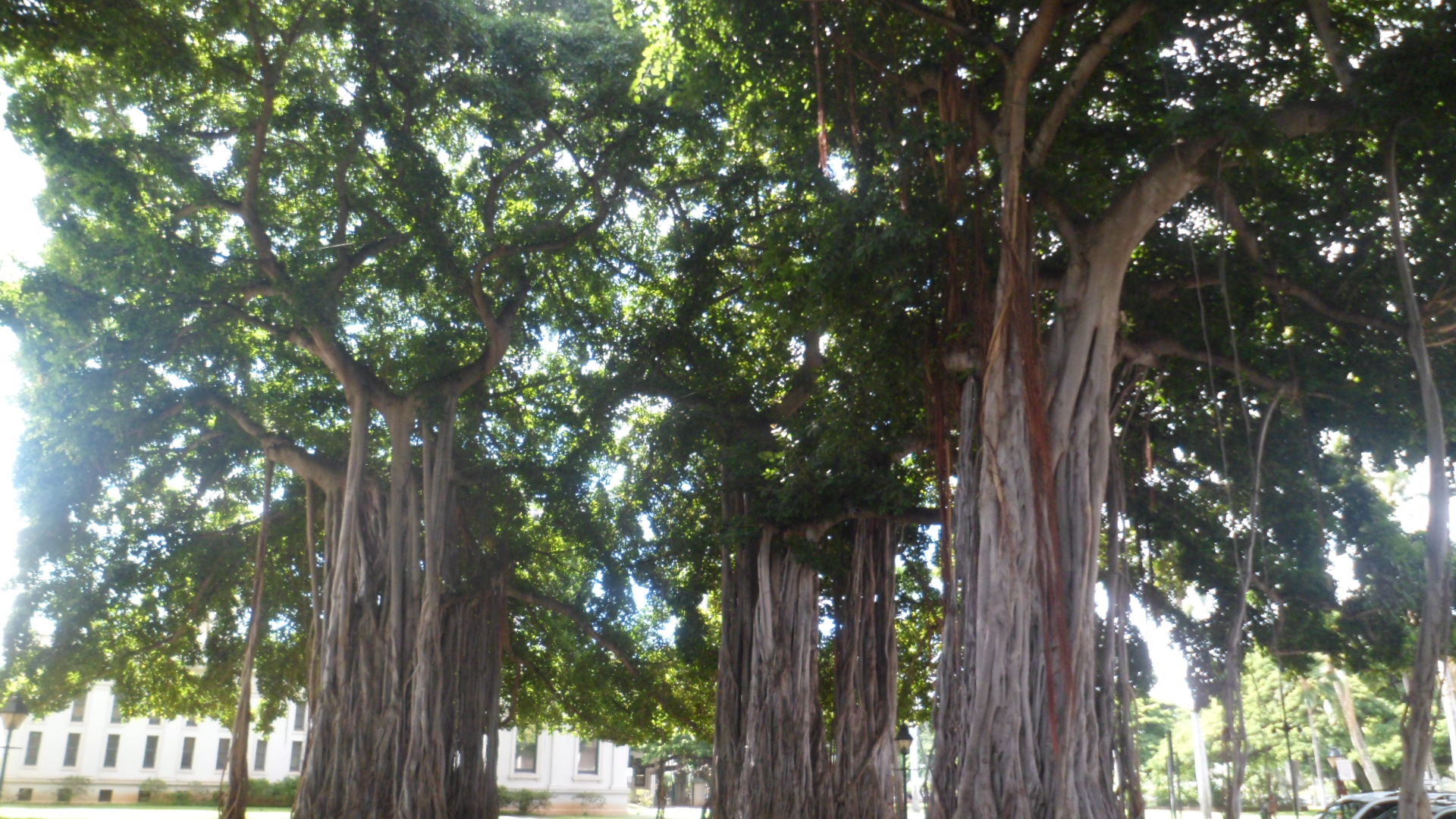
Banyan trees cover the grounds immediately to the north of the palace.
Prior to entering the palace, visitors are briefed as to protocol, and given plastic booties, to place over their shoes. This is a continuation of a practice begun by Kamahameha III. Indeed, visitors to Hawaiian homes are expected to remove their shoes, before entering.
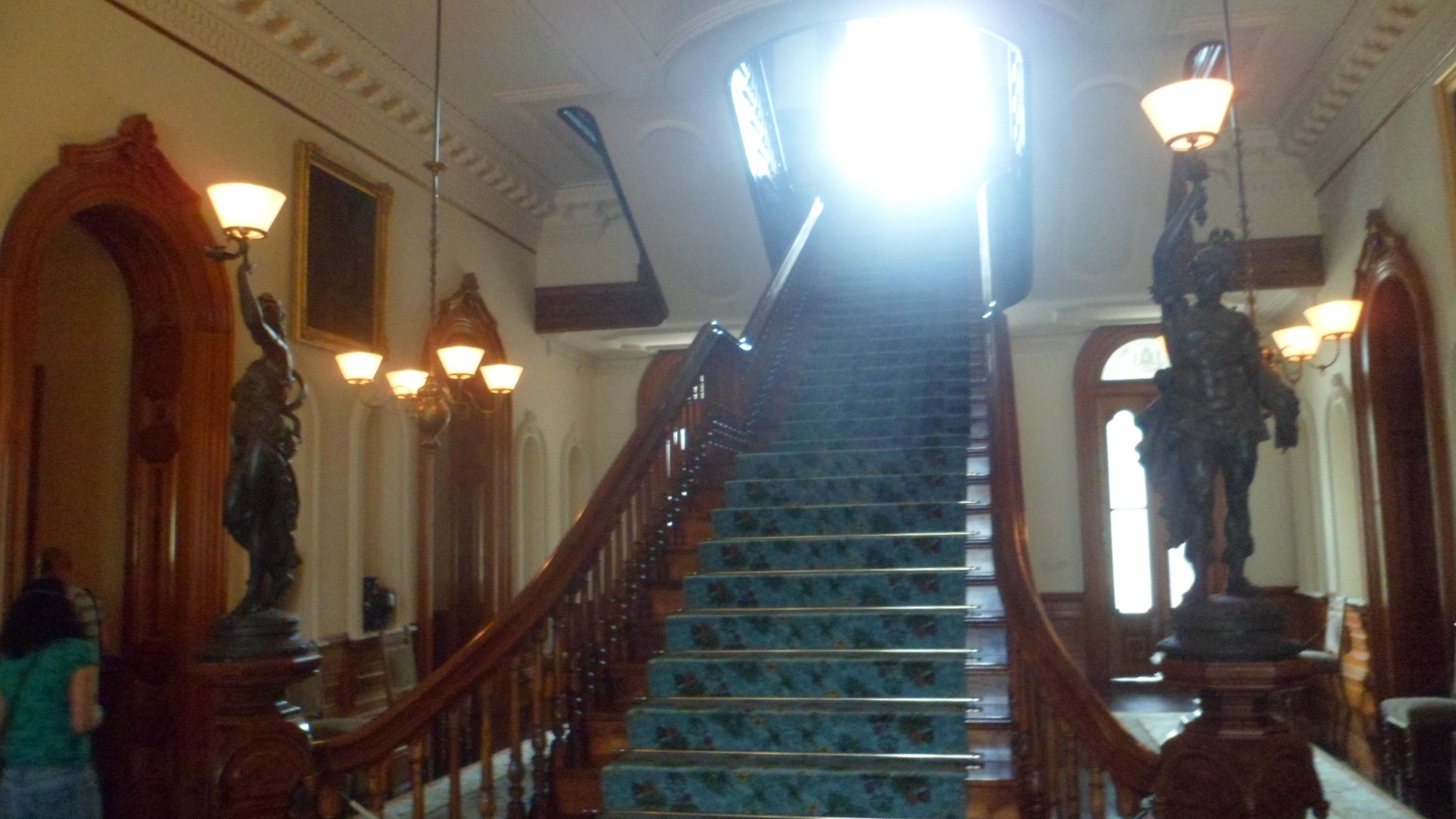
The Grand Staircase presents itself to the visitor, upon entry into Iolani Palace. The architect initially wanted to build a separate staircase for royalty, but the King and Queen vetoed the idea, saying they could use the same entry and exit as their servants and advisers. While Hawaiian society was quite stratified, there were key elements of egalitarianism in place.
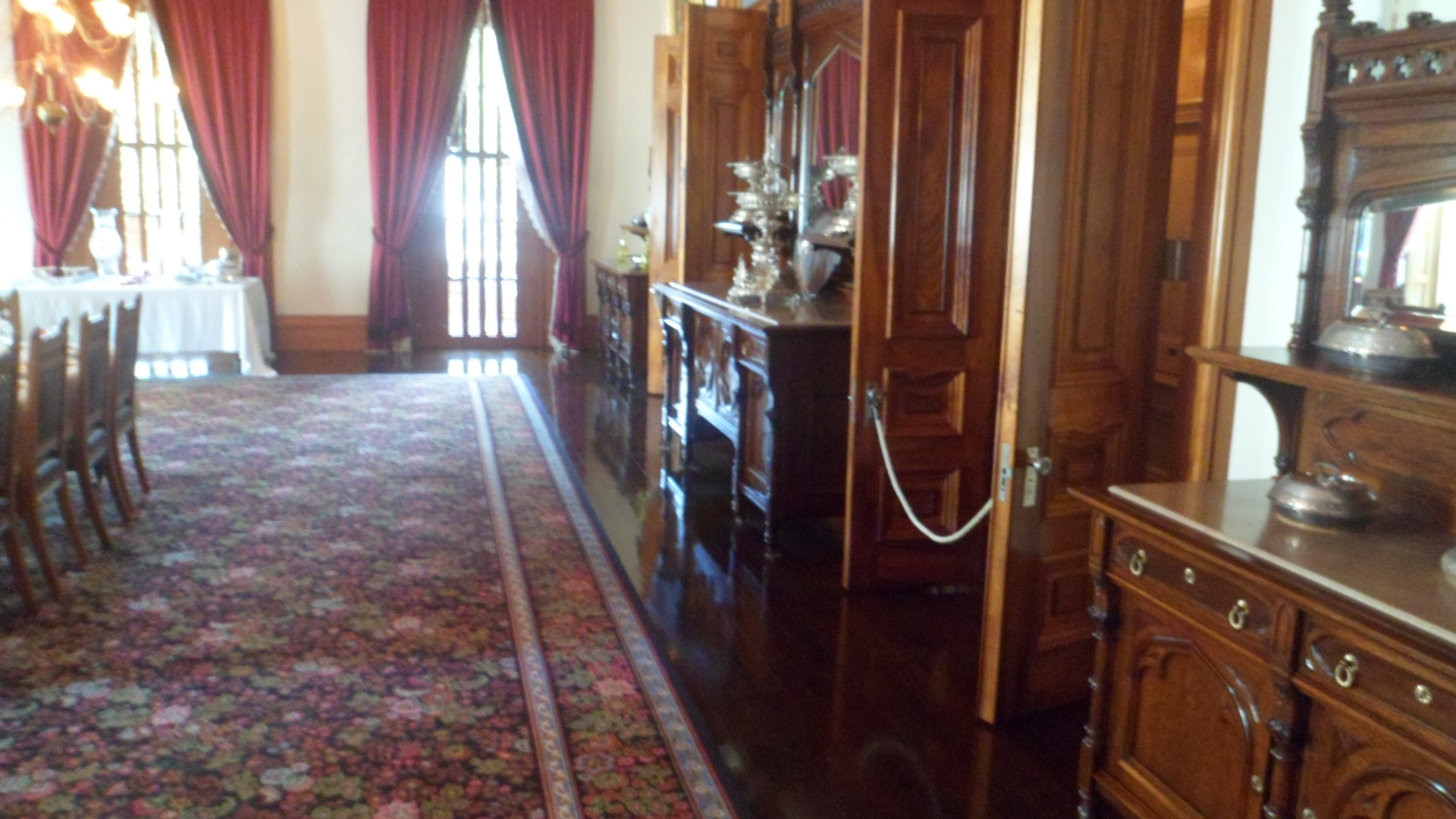
The dining room was maintained in the manner which David Kalakaua had seen in Europe, during his round the world journey.
In fact, most of the Palace reflects European regalia.
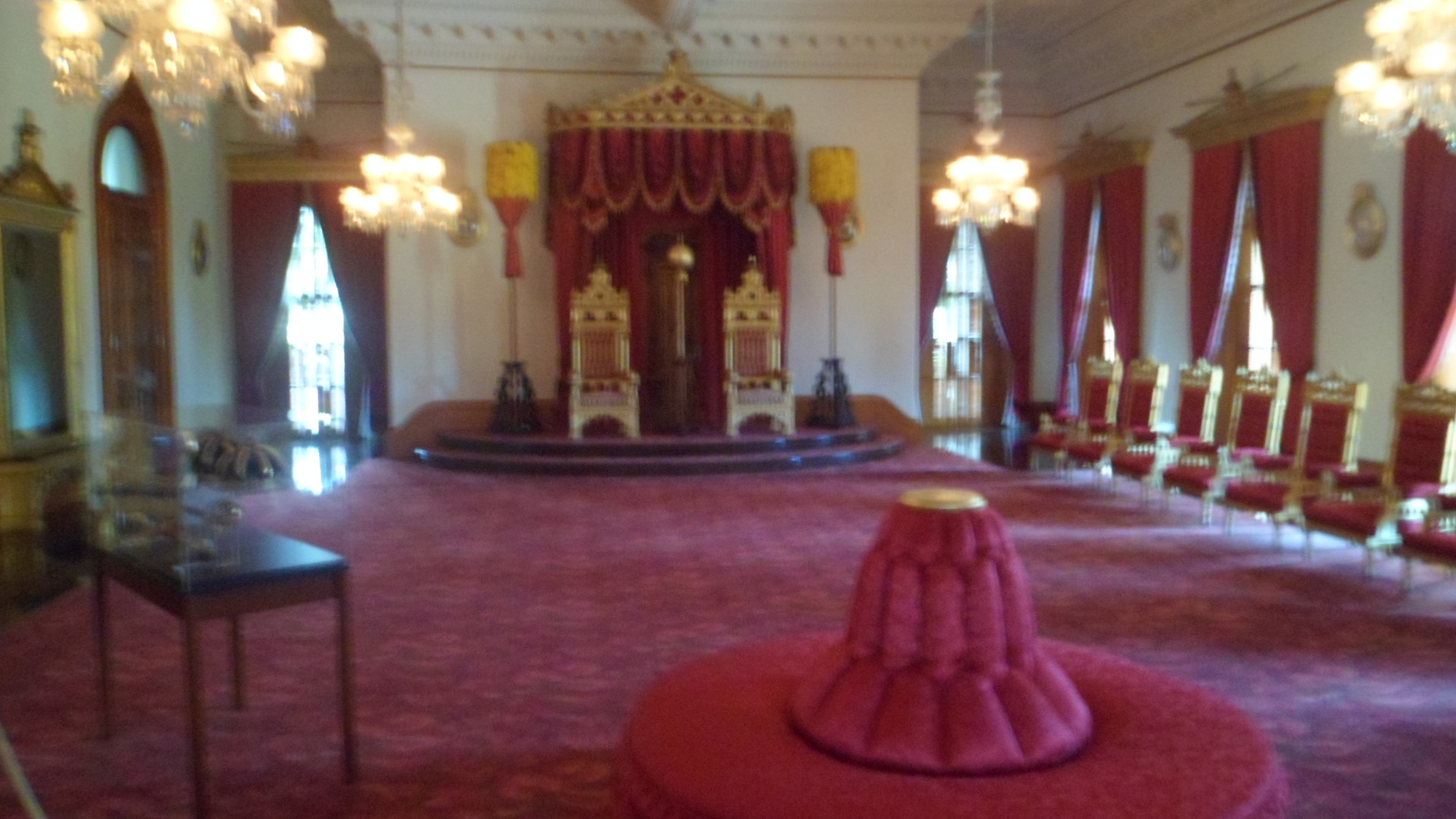
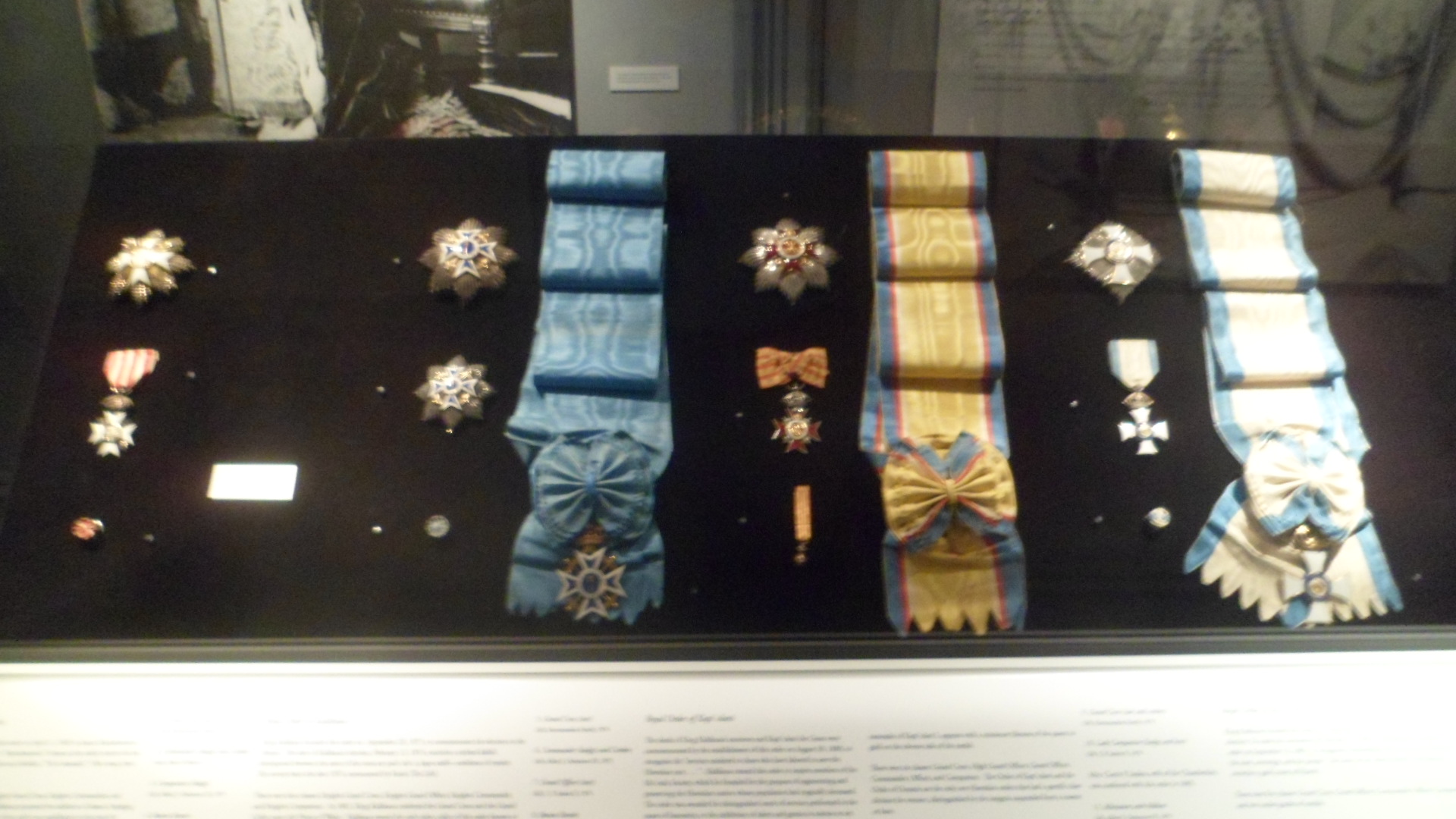
The Red Throne Room was a place of coronations, and of official greetings afforded visiting Heads of State, including Emperor Franz-Josef, of Austria-Hungary and his Empress. The twin crowns placed on King David Kalakaua and Queen Kapiolani are shown in the bottom photo. King David’s tastes were quite extravagant, which he justified by pointing to the similar largesse of the crowned heads of Europe. Hawai’i, however, could not sustain the costs, and the country plunged into depression. This opened the door for the Dole family and their accomplices to machinate for the overthrow of the monarchy.
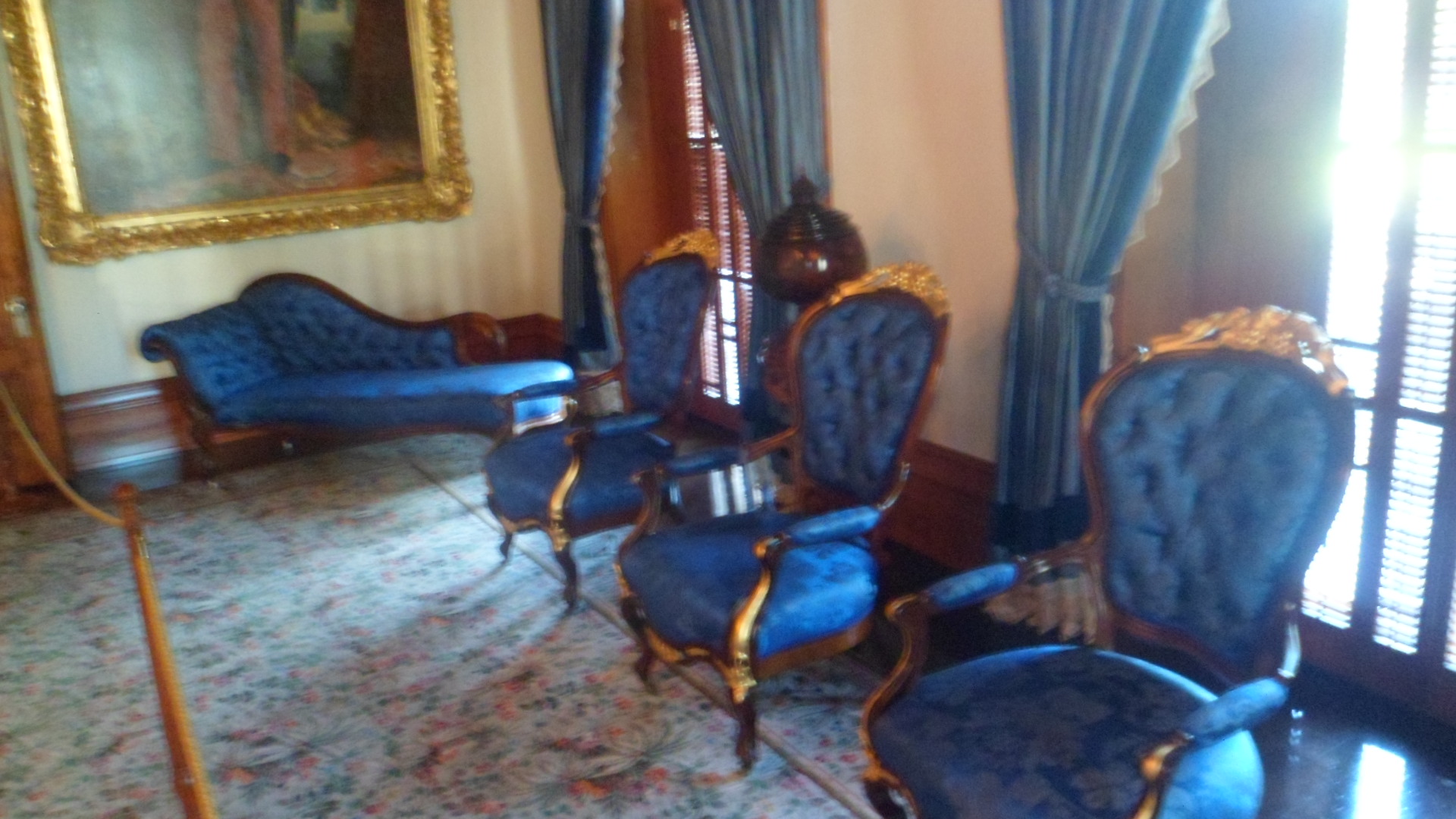
The Blue Room is a conference room, and was also where the monarchs entertained their guests. Queen Liliukalani, who briefly succeeded her brother, Kalakaua, was a prolific songstress and musician. Several of her compositions, including Aloha Oe, are staples of Hawaiian music, to this day.
Queen Liliukalani was held in this room, during the islands’ rule by the Committee of Safety, the term which the American businessmen used to justify their seizure of the country.
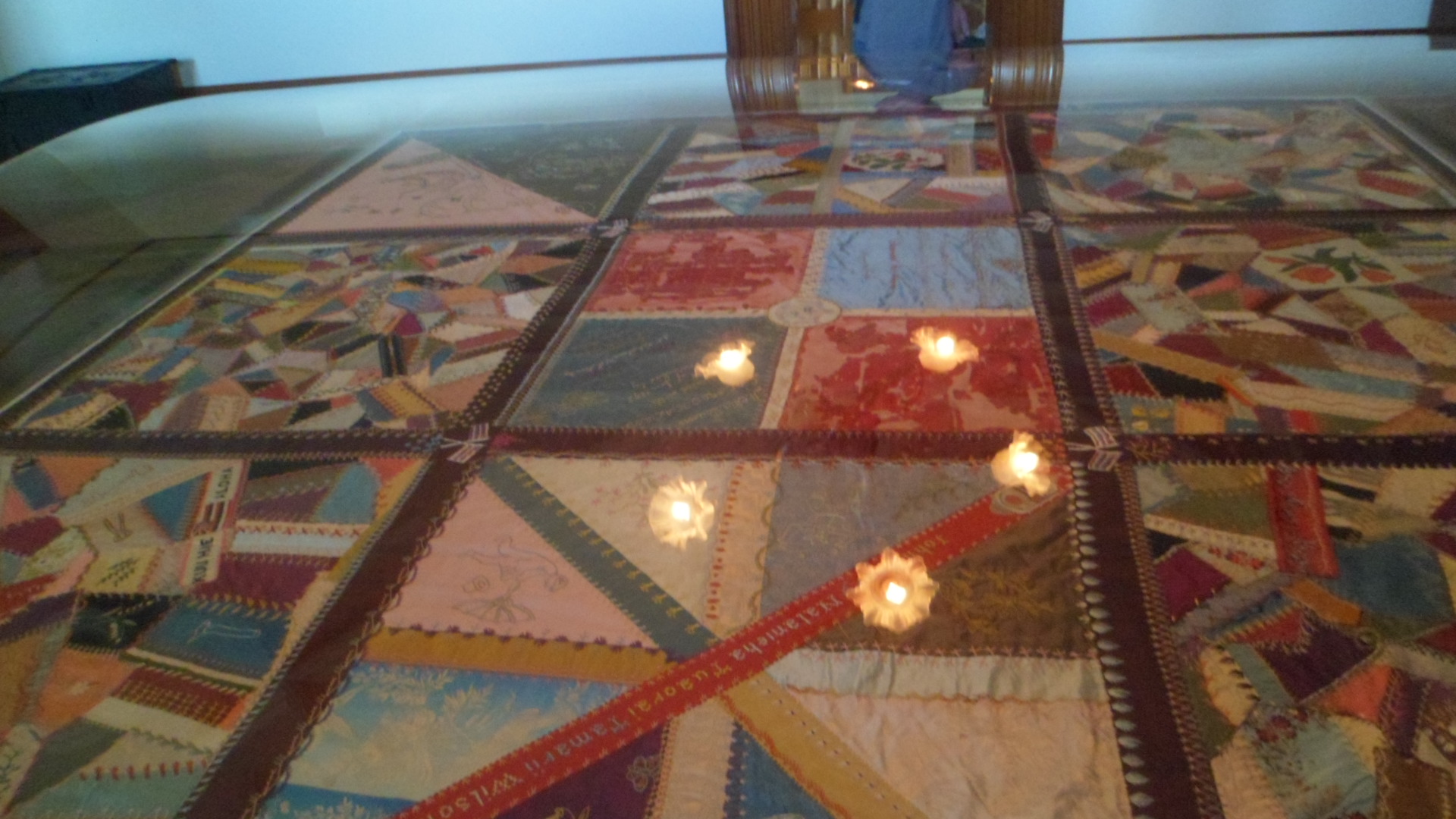
While incarcerated, she sewed a magnificent quilt, shown here.
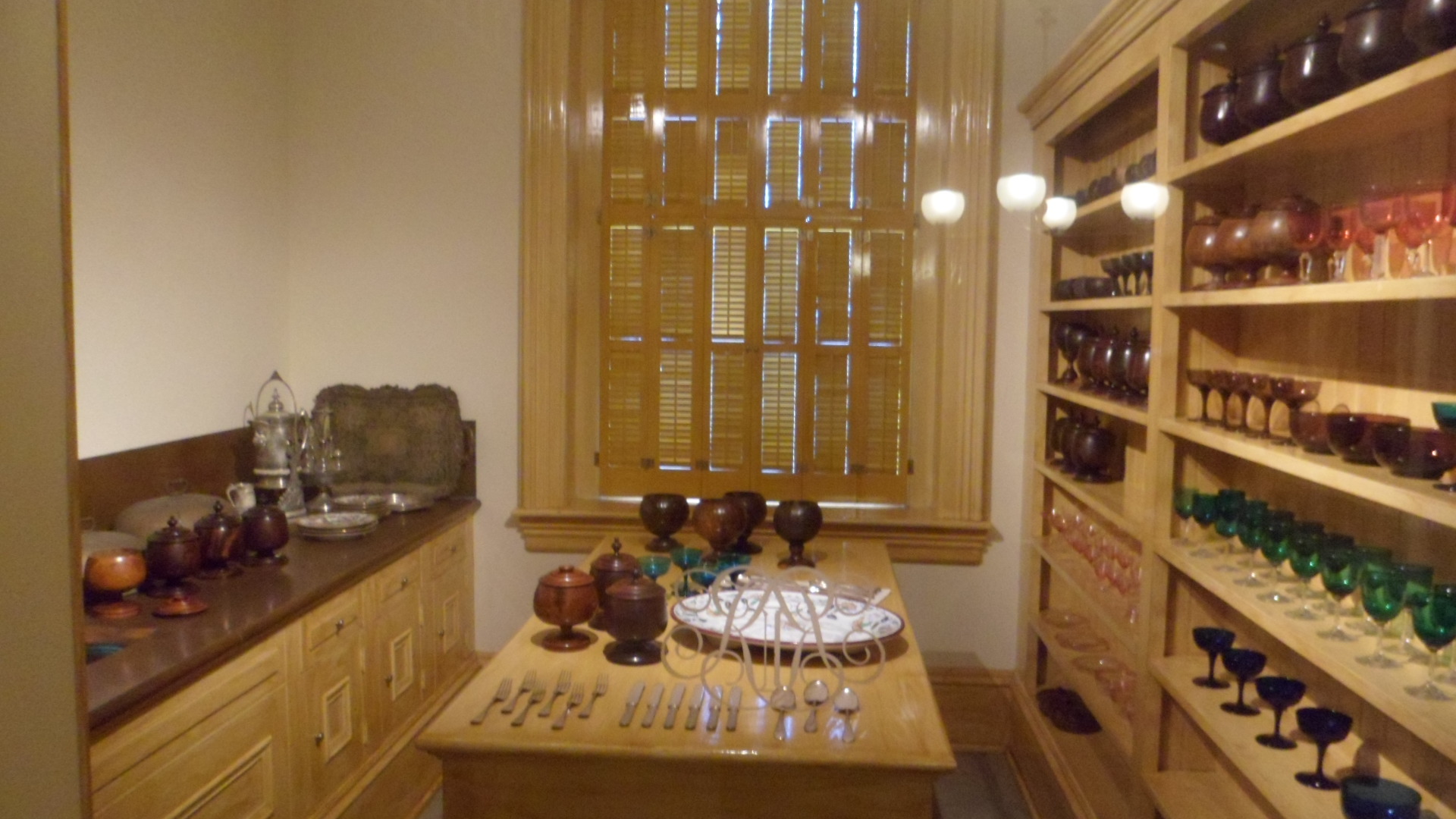
Here are some other collections of the royal family- wine bottles and the family jewels. These are found in the basement of the palace.
Finally, here is a view of the Lord Chamberlain’s Office.
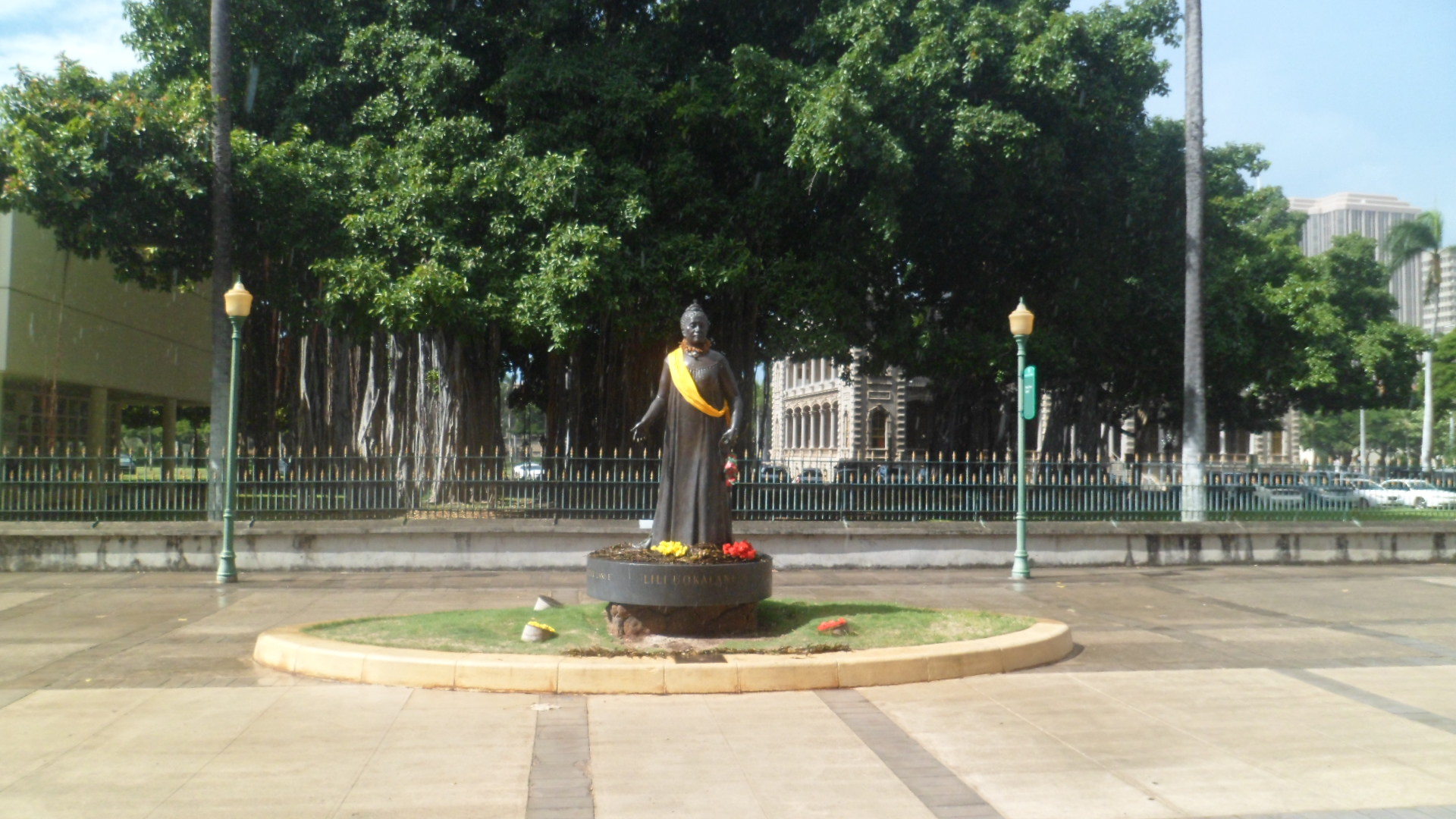
Thus, we see the conundrum in which the Hawaiian people found themselves. In striving for modernity and to be taken seriously as a country, Hawai’i walked right into the waiting arms of opportunists. For a period of time, Native Hawaiians could not vote, and had few civil rights. It is thus no wonder that Haole are viewed with mistrust, in certain circumstances. In visiting this most unique part of our country, it is well that the visitor familiarize self with both the gentle Spirit of Aloha and the unresolved grief that lies behind the welcome. Below, are Queen Liliukalani and King Kamehameha I. Mahalo, my friends.
October 12 & 13, Honolulu- In five hours’ time, I found myself having left behind the measured bustle and polyglot ambiance of San Diego for- the measured relaxation and polyglot ambiance of Honolulu. Seated beside me on the flight was a quiet, demure and mildly cordial Native Hawaiian woman, headed home. This brought to mind the warnings I had gotten from some in Arizona, that “Locals in Oahu don’t like haoles (Caucasians).” I didn’t get the vibes from her, or any other person in Honolulu, that I was particularly disliked; then again, I rarely have gotten those vibes from any person of colour- save the occasional drunk. I take each person as I would have him or her take me. It works, by and large. Hawai’i ought to be seen, first and foremost, as the sacred land of a deeply cultured and spiritual people- just like anywhere in the Americas.
I met my son, Aram, at Honolulu International Airport. We took a Honolulu city bus to my hotel in Waikiki, sharing stories with a Brazilian man who was in the midst of a round-the-world journey. He had much to say about Korea, India, Turkey and the Iberian Peninsula, in particular, the last being an exercise in “whose Portuguese is the true language?” I checked into Hokele Suites, two blocks north of the beach and an equal distance south of Ala Wai Channel. The medium high rise has all the amenities needed by a modest sojourner like myself, and is near enough to the beach that I could don a swimsuit and a pair of reef runners- and get my fill of sand and surf. Watching out for me was this composed wahine.
Aram and I headed out to Kimukatsu, a restaurant specializing in Japanese-style cutlet, usually pork. The Japanese tend to regard veal as a waste of a good animal that is better used to provide mature beef. So, the hog is a useful substitute. Katsu (cutlets) establishments abound in Japan, and in Korea, Guam, Hawai’i and anywhere else with large Japanese communities. Kimu offered gourmet toppings, such as those shown in the second photo below.
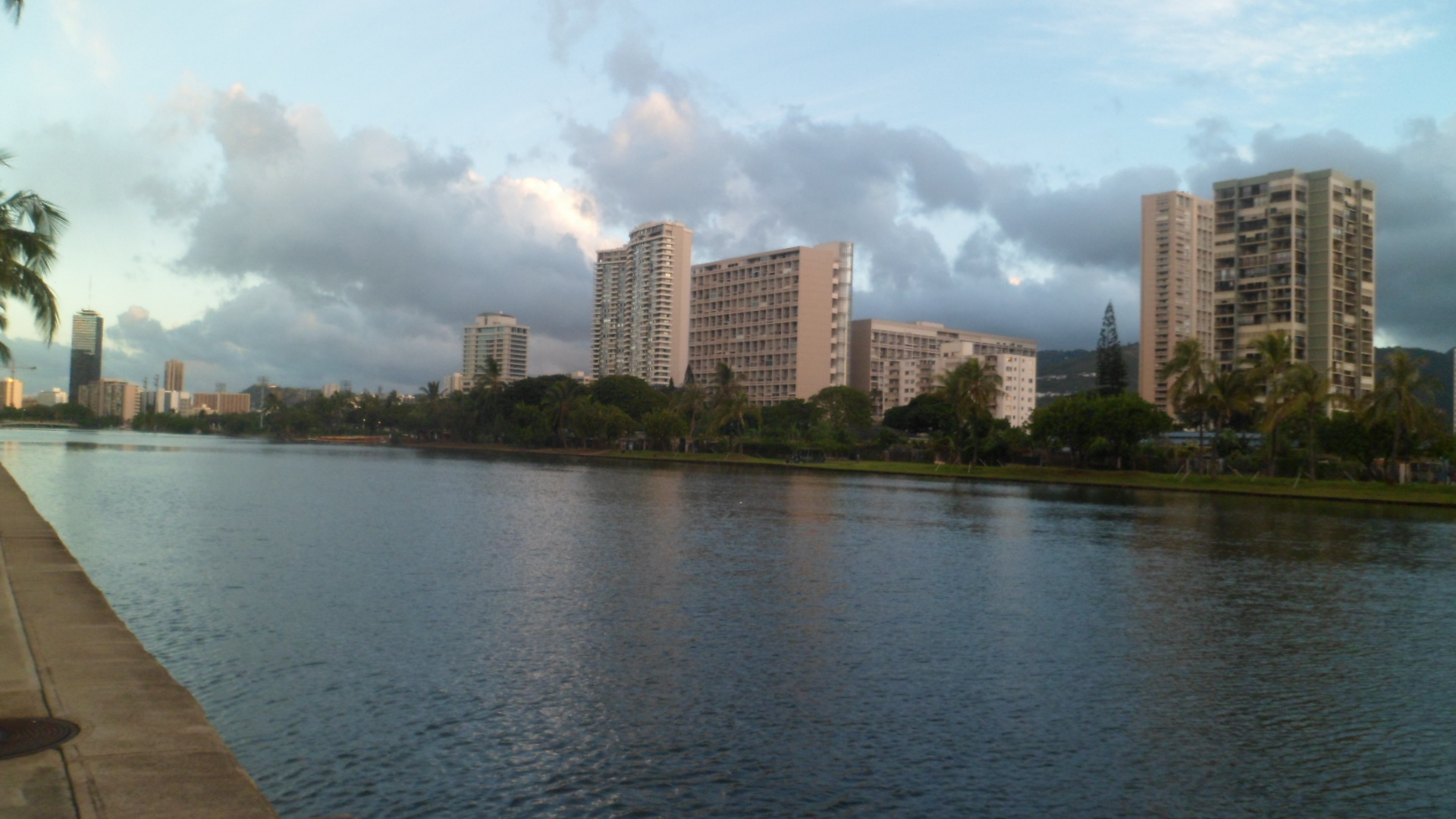
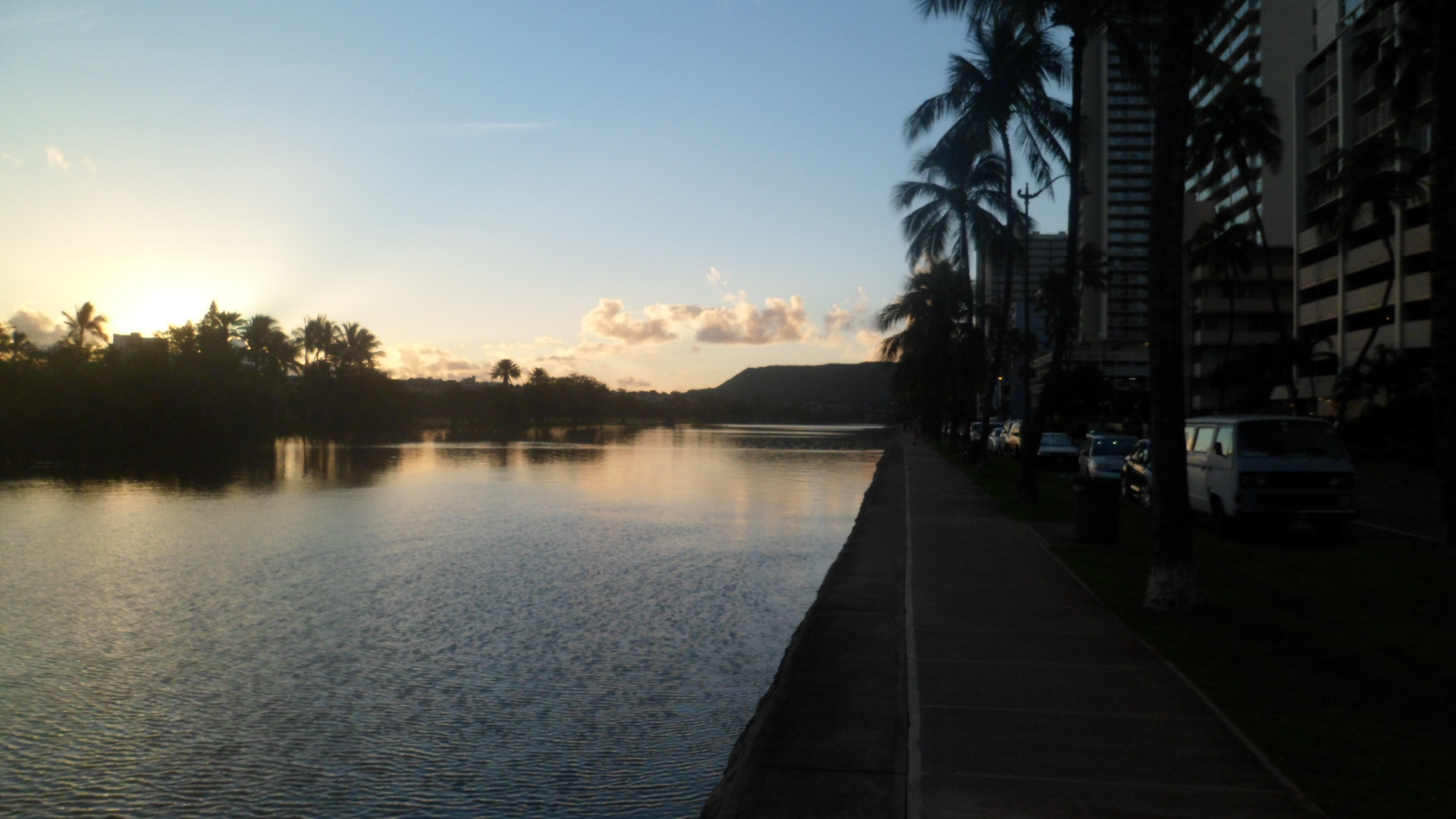
We then walked about the Ala Wai area, along the south bank of the channel, taking in Honolulu’s encroaching dusk.
Waikiki is inundated with high rises, both condominium and hotel, but the spirit of the place still reflects the spouting waters for which it is named. Ala Wai is not the stinking mess I was told it had been in the ’80’s and 90’s. It reminds me more of Riverwalk in San Antonio, or the paths along the Seine. True, those places face the challenges of being treasured by the masses, and I probably wouldn’t swim in Ala Wai, even if it were legal to do so. There is, however, a growing civic sense that this is an area that is as much for year-round residents as it is for those who come and go.
The next morning, I saw the channel at sunrise.
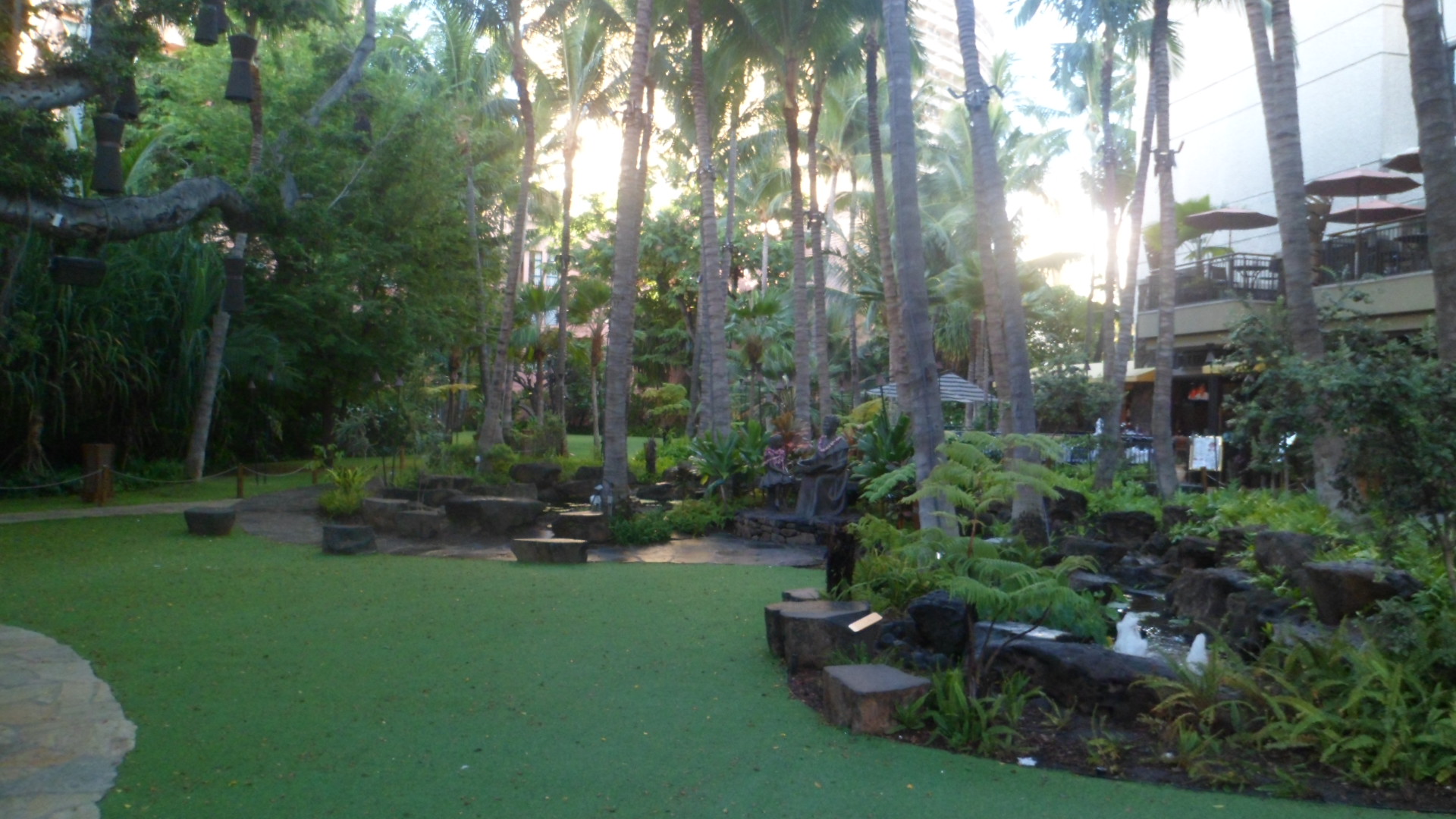
After joining a fair number of locals in an IHOP, for a breakfast of Belgian waffles and coffee, I headed for Pauahi Garden, near the Sheraton Waikiki. (Sushi, the alternative, somehow escapes me as a breakfast item, though it is common enough fare for the Asian communities here.)
Bernice Pauhi Bishop was of the royalty of Maui and Moloka’i. She was highly educated and was an astute businesswoman, eventually owning 9 % of the island of O’ahu. She died at age 52, of breast cancer, and left no heirs. The small gardens in the hotel district of Waikiki Beach,though, were established in her honour.
The hearts I invariably encounter on my journeys were in abundance here, in the form of leaves.
No visit to Honolulu is complete without time in the sand, and at least a nod to Diamond Head.
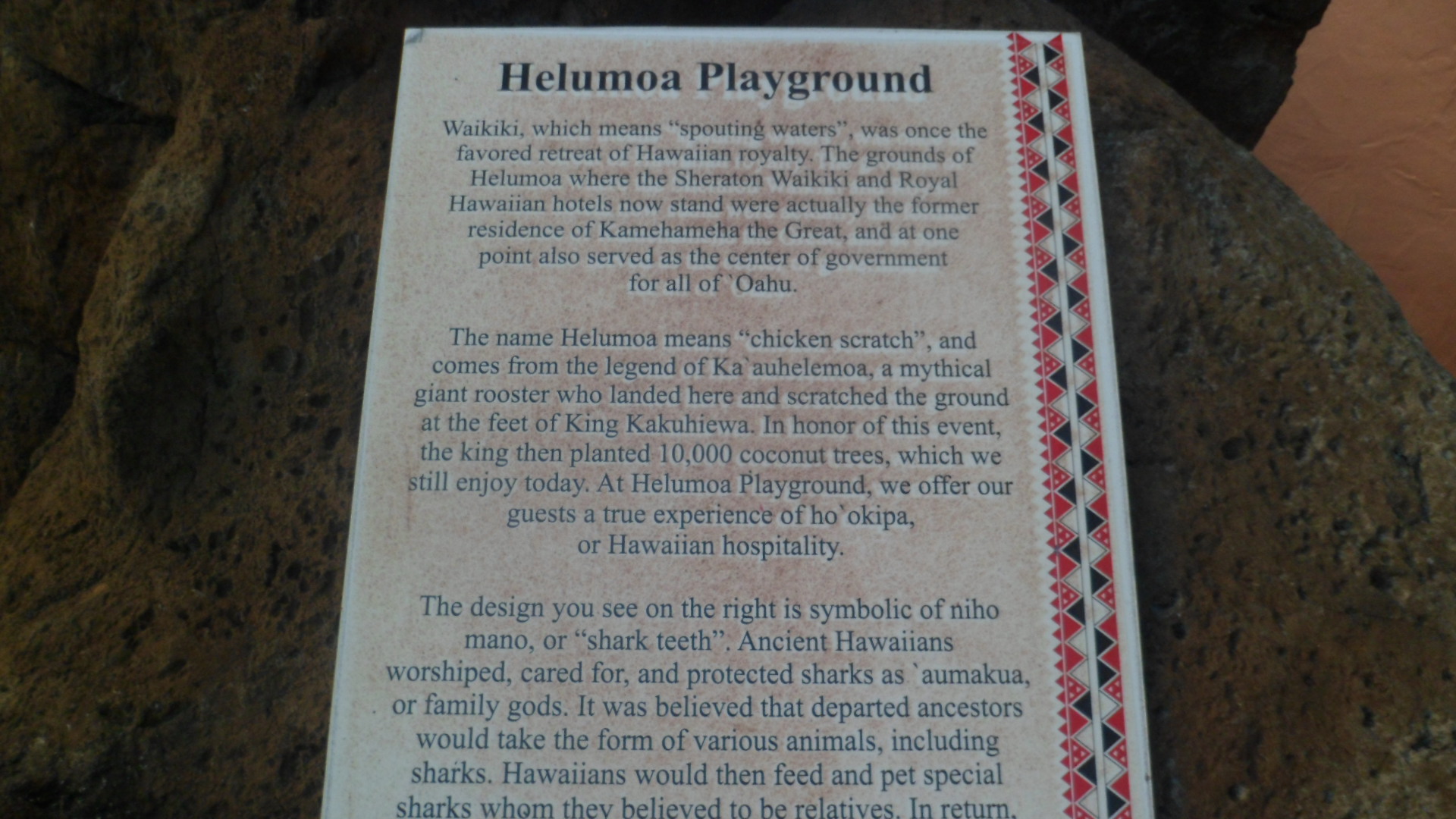
Helumoa, the midst of Waikiki (“Spouting Waters”, in Hawaiian), was the favoured relaxation site of Kamehameha I and his successors. When American businessmen took control of Hawai’i in 1898, they, too, saw the salubrious nature of the spot. Being entrepreneurs, they set in motion the process which gave us the Waikiki shorefront of today. Hawaiians revered the shark, yet somehow I don’t think they were quite prepared for the human sharks who descended on them in the lattter third of the 19th Century. Waikiki today is in the process of balancing itself, to be more in tune with the natural beauty it once had in abundance.
We have reached the stage in Honolulu’s legacy where the first hotel in Waikiki, the Surfrider, is a genuine historic site.
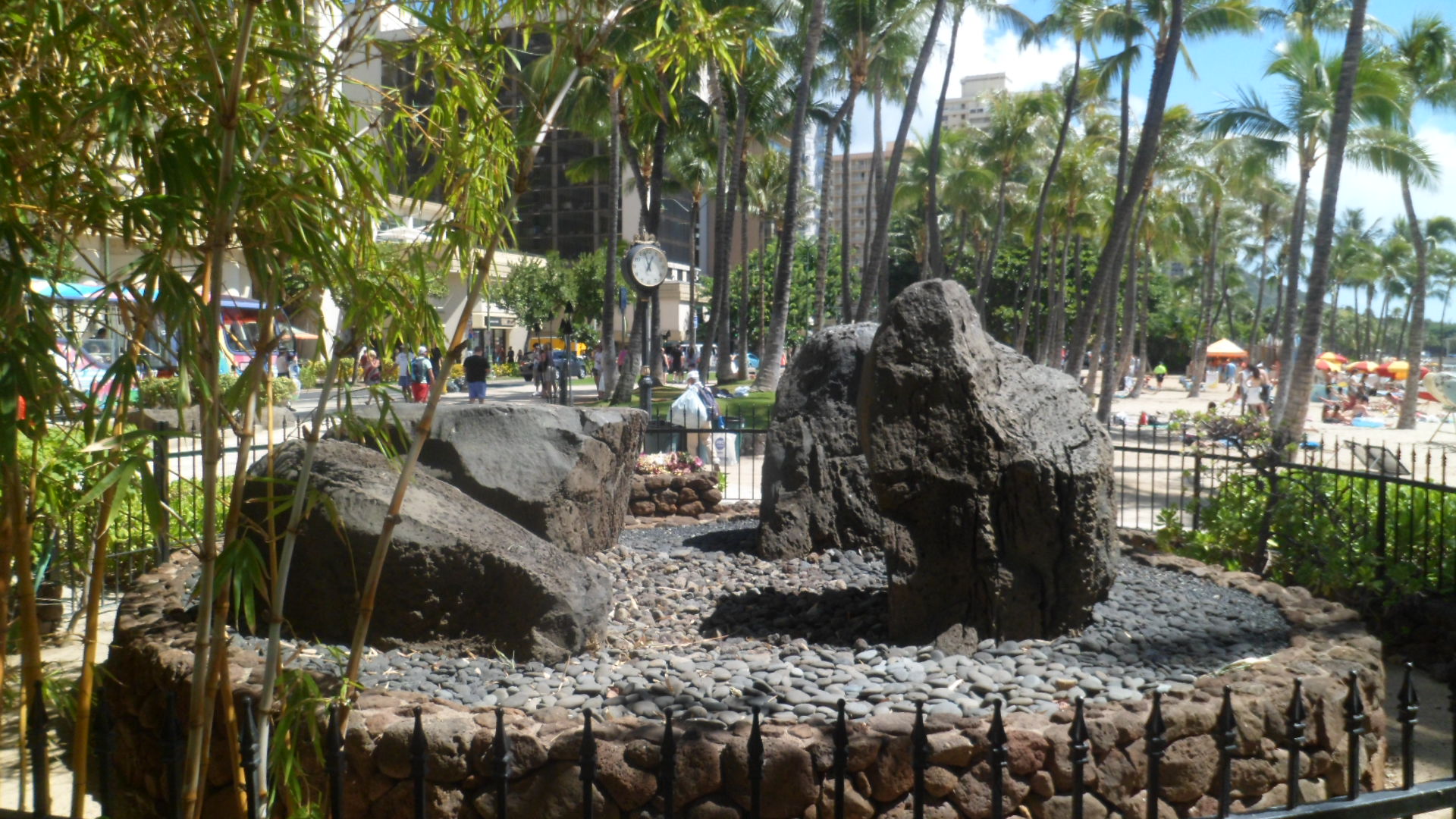
Later in the afternoon, before I headed to Pearl Harbor, and my son’s ship, another walk along the strand was in order. The Wizard Stones, near Waikiki Police Substation, are held to have healing powers. At the very least, they are reminders of nature’s power, having been sent here in a volcanic outburst, ages ago. Lava also is used in the various breakwaters that line children’s pools and the boundaries of hotel properties along the strand.
Sand, though, is the prime real estate. Below, King David Kalakaua, who succeeded the Kamehameha line in an election, of all things, continued the royal promotion of education for all Hawaiian children.
Those who promote Hawaiian culture to the world are also honoured. Don Ho is remembered for pop and lounge renditions of Hawaiian songs, and is revered by many here on O’ahu.,
With limited time in Honolulu, I chose to focus much of the rest of my day on the true legacy of the Native Hawaiian people, and one of its treasure troves: Iolani Palace.