An Eastward Homage, Day 8: Versailles, Part 3- The Town

4

Mesmerized as I was by the gold, marble and extraordinary spread of the chateau and its grounds and grand canal, finding the town that had both pre-dated the palace, and grown up around it, was a perfect finish to the day.

Versailles is not anywhere near the grey, troubled suburbs that I am told ring Ile de France.  It stands quite proudly on its own.

Here are some scenes from this marvelous little city.

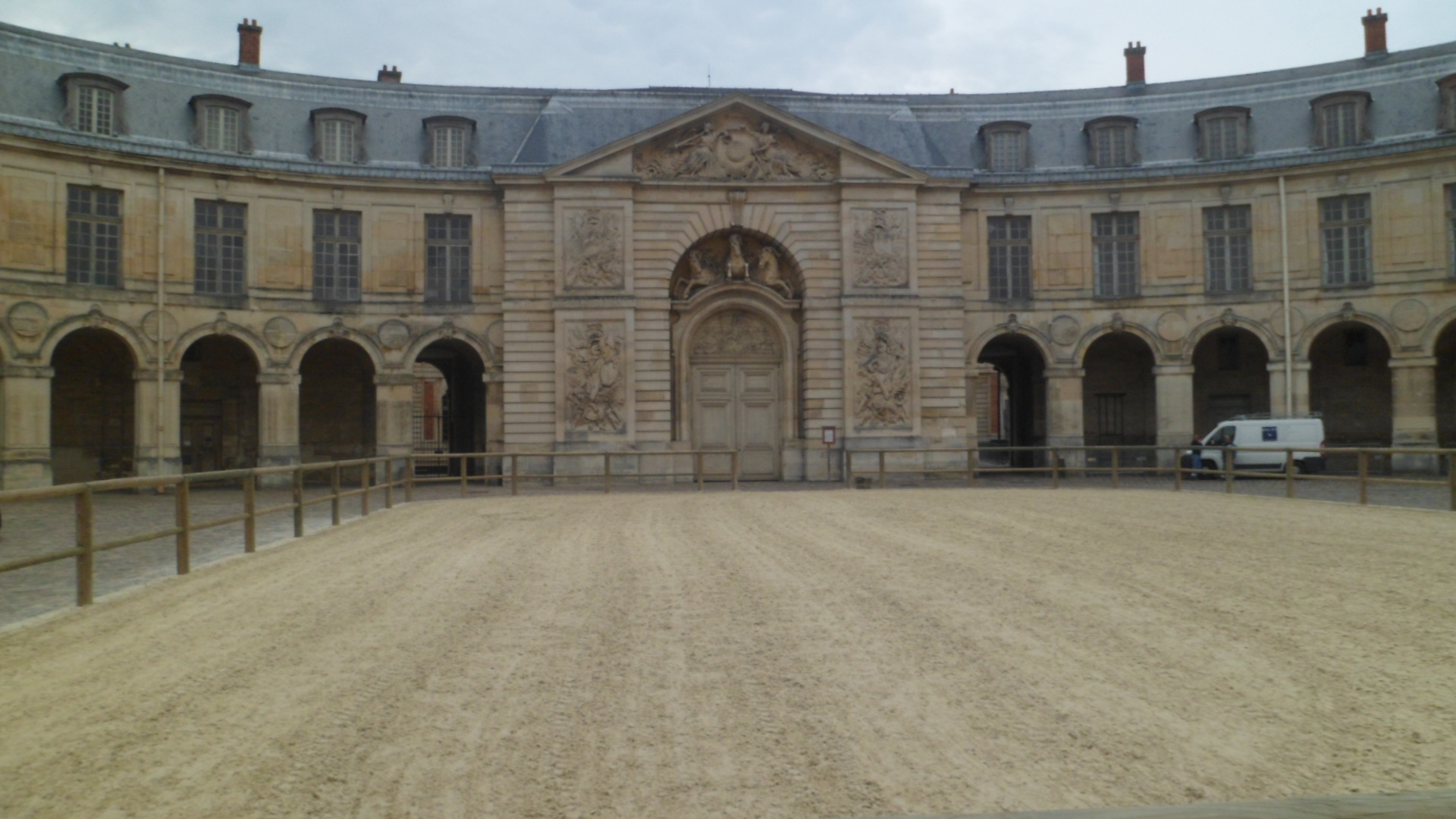
First, here is Grande Ecurie du Roi (the King’s Stables), the first site I encountered, upon leaving the palace ground
SAM_9310

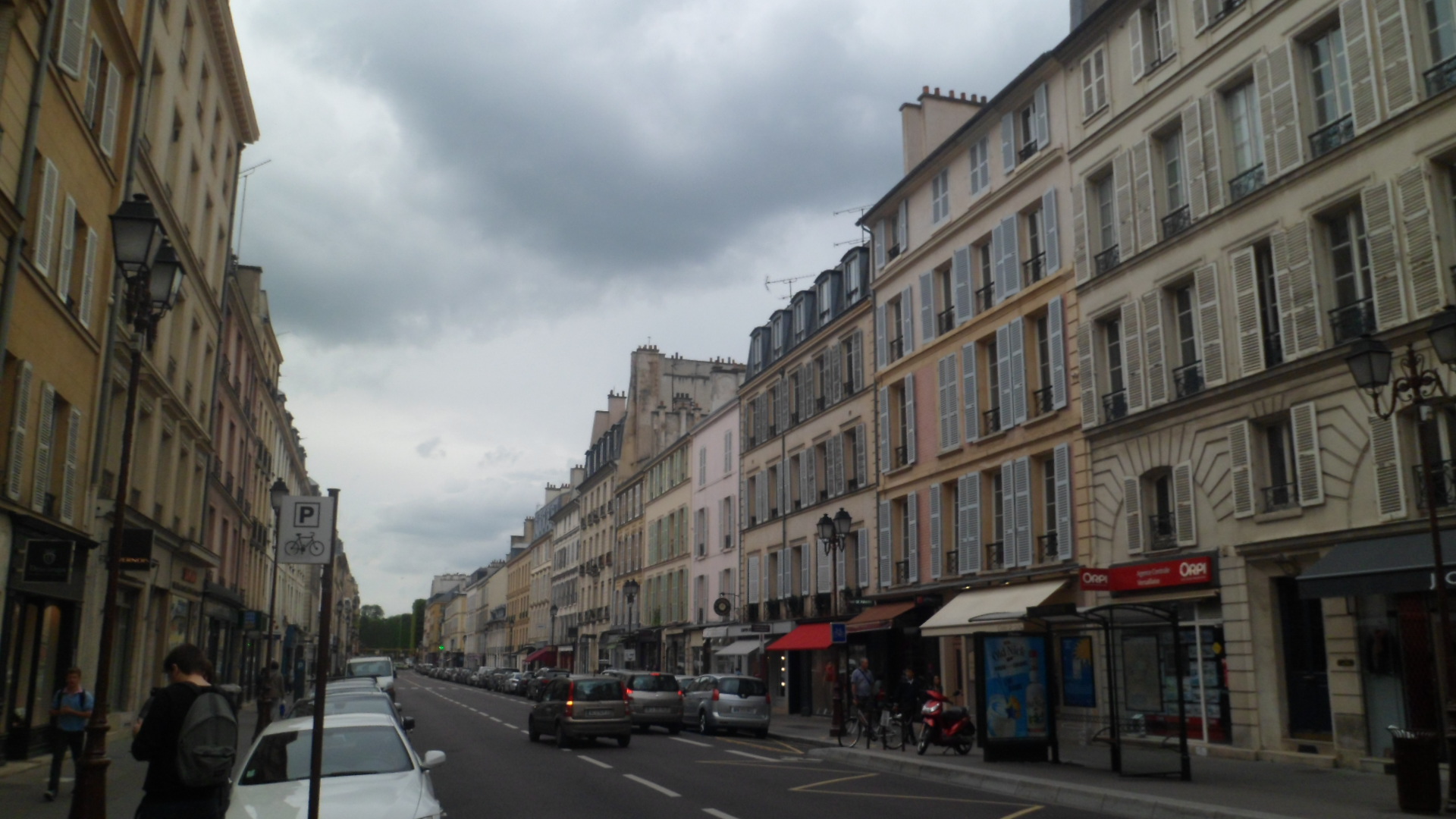
Next came the east end of the District of Notre Dame, named for- you guessed it, the cathedral. Every major city in France has a cathedral, or a parish church, named Notre Dame. The cathedral in Versailles could stand proudly next to any given counterpart in France.
SAM_9320

We will see the cathedral in a bit, but first, making my way westward, I found Eglise Protestante Unie de France. The Huguenots were terribly repressed by the House of Bourbon, making their presence in this town especially meaningful.
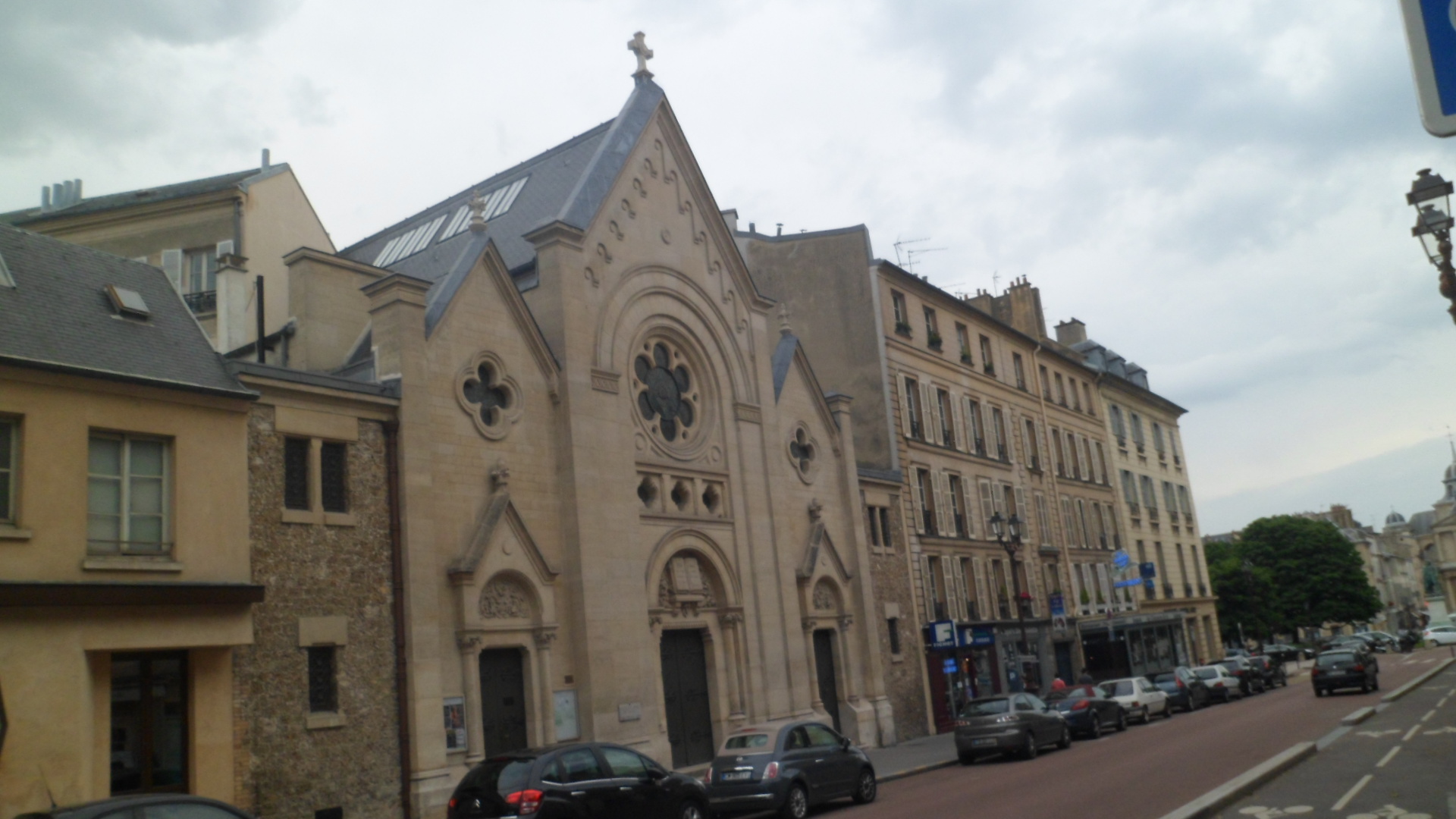
SAM_9312

Next to the Protestant church is Place Hoche. Louis Lazare Hoche was the commander of the Revolutionary Army. Louis Philippe I authorized statues of Hoche, as a token of national unity.
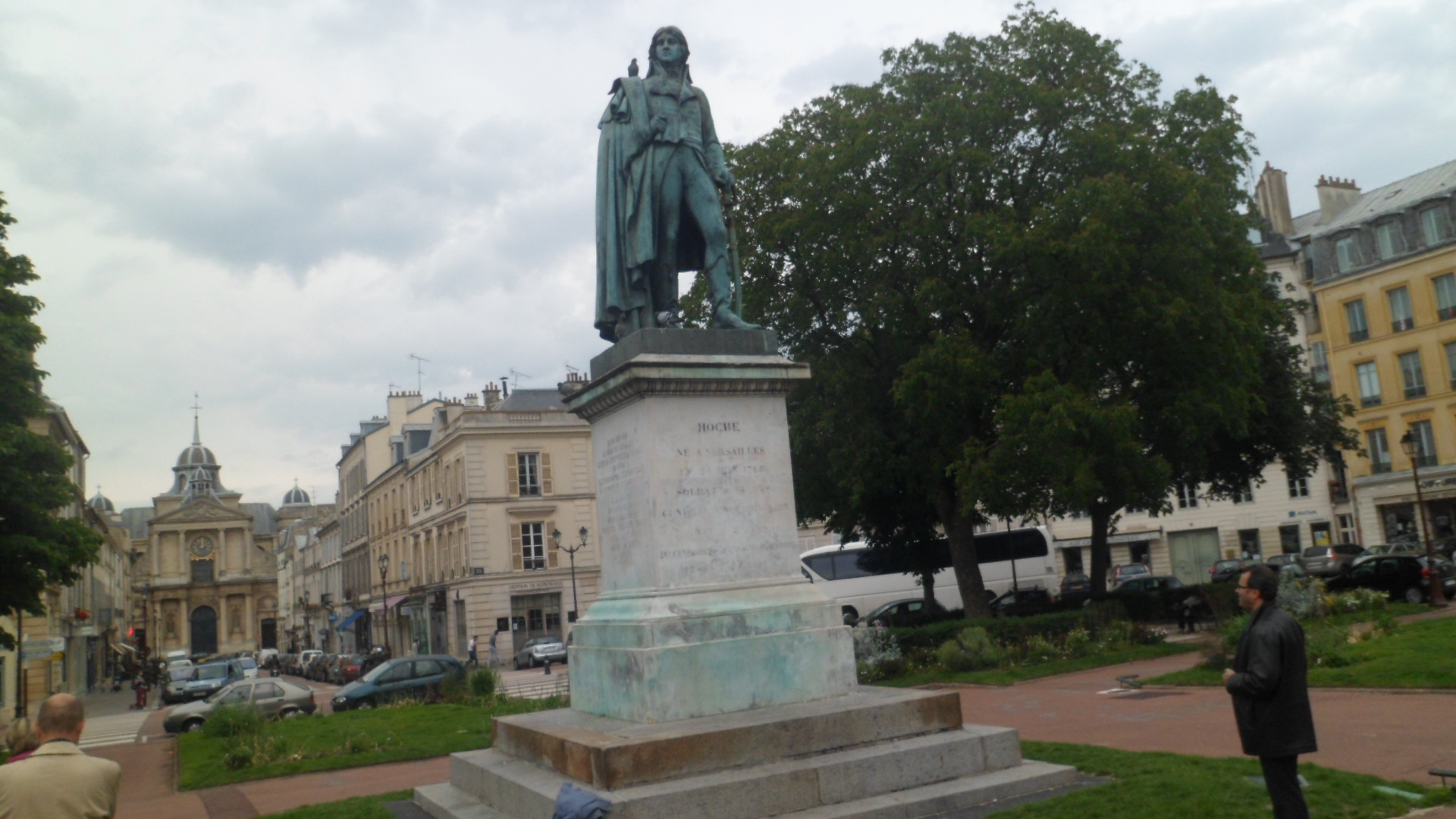
SAM_9318
SAM_9316


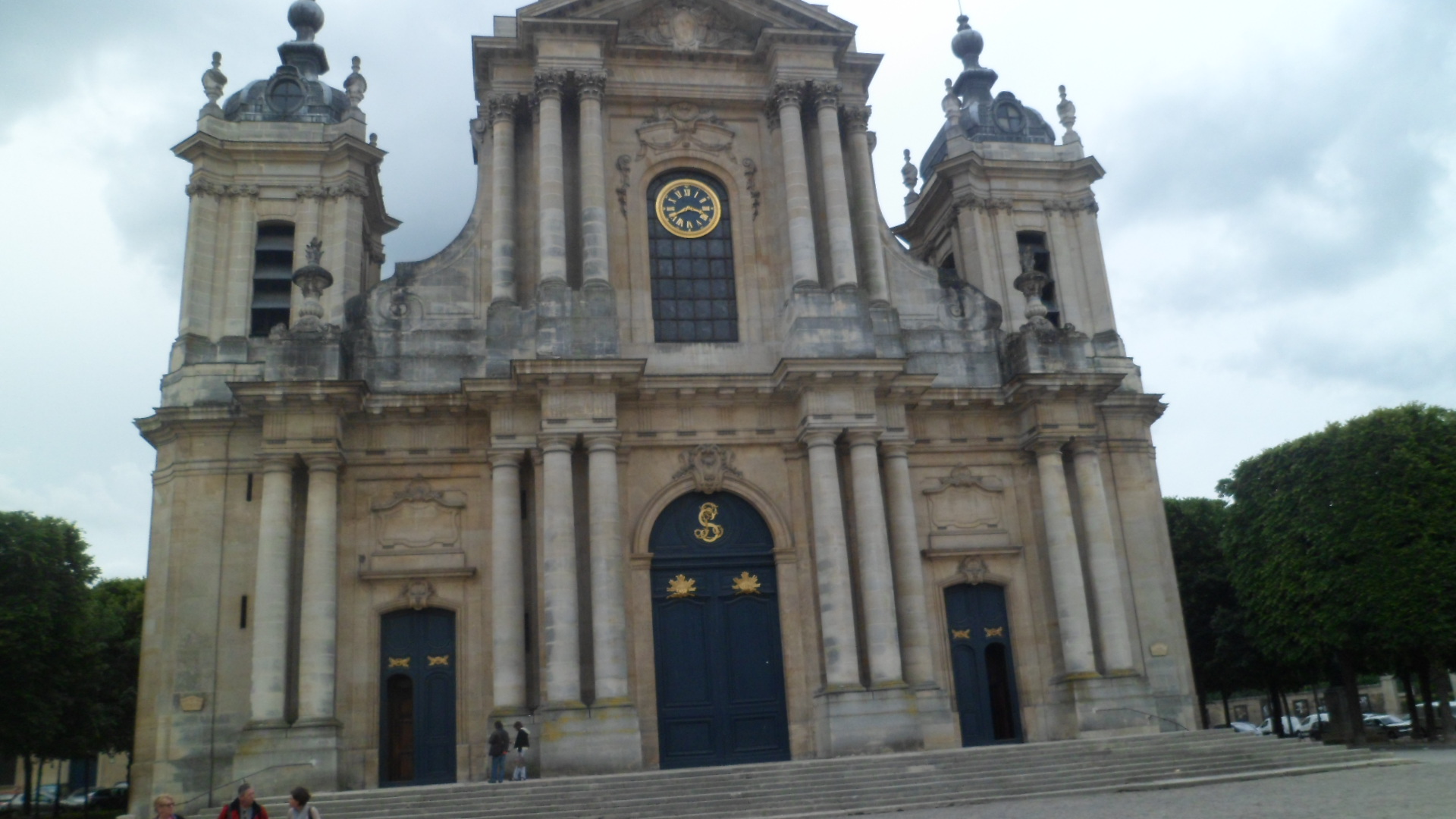
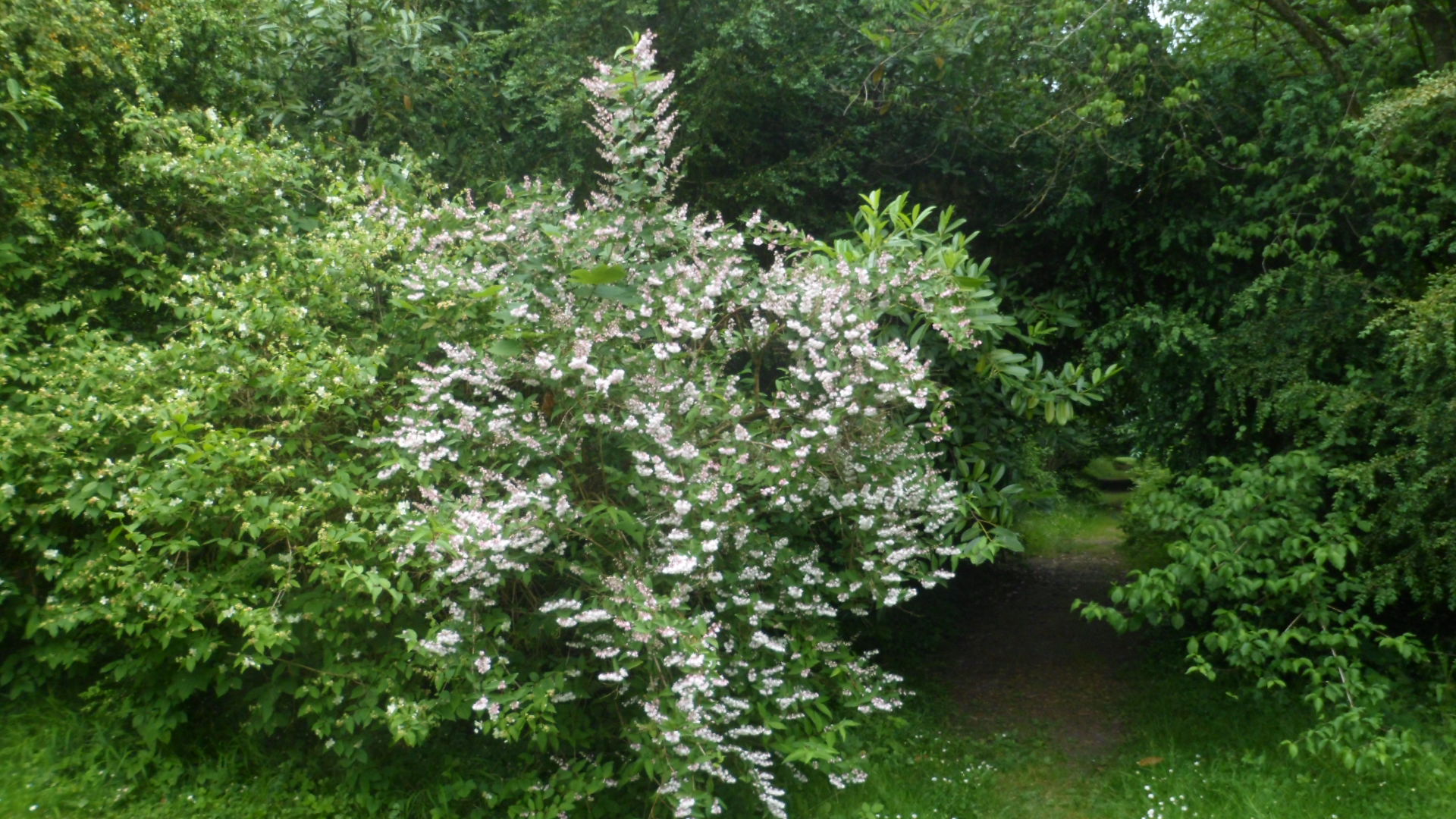
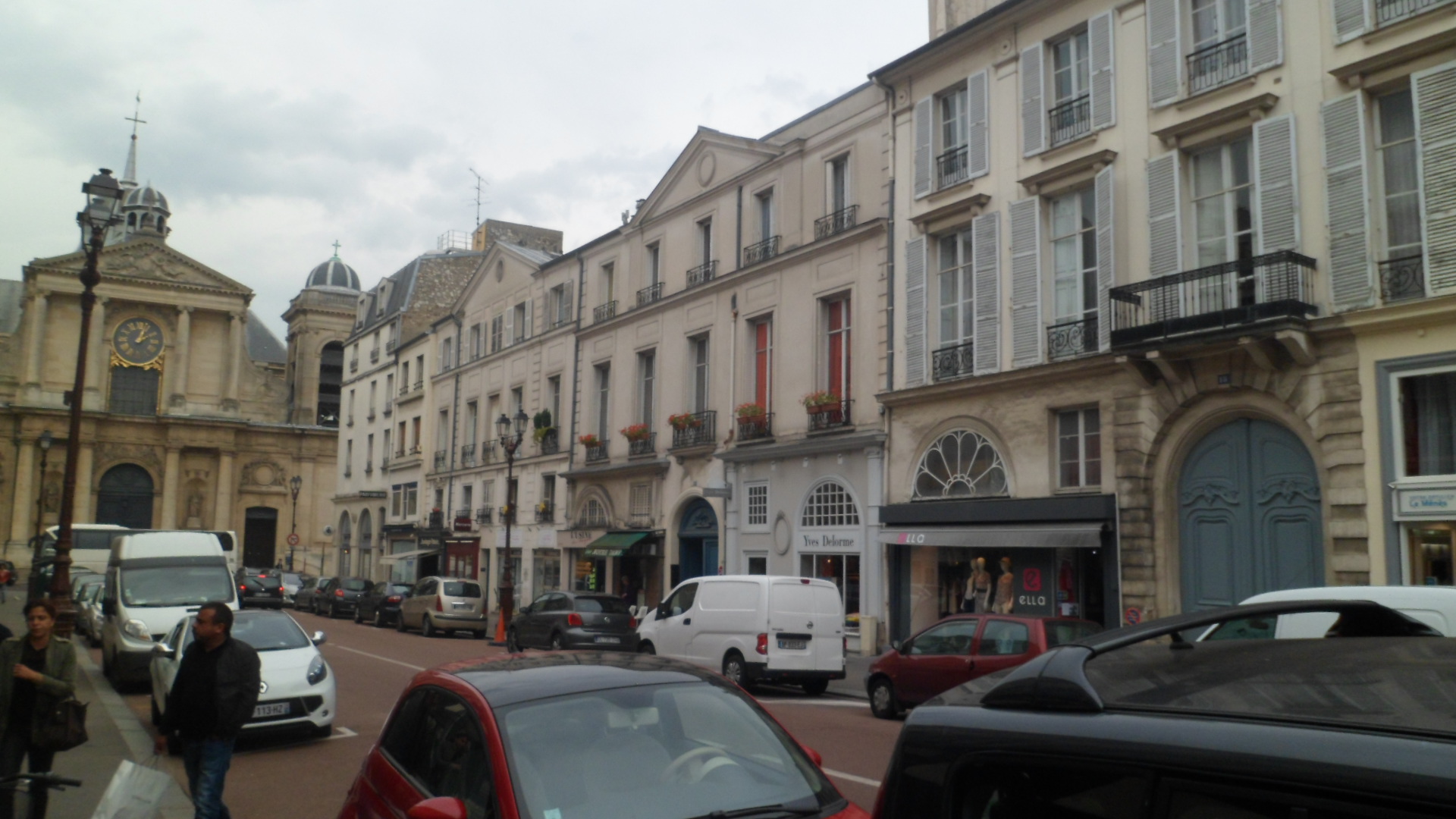
It was then time for me to visit Cathedrale Notre Dame de Versailles. Here is a view of the heart of Distrite Notre Dame, followed by the cathedral itself.

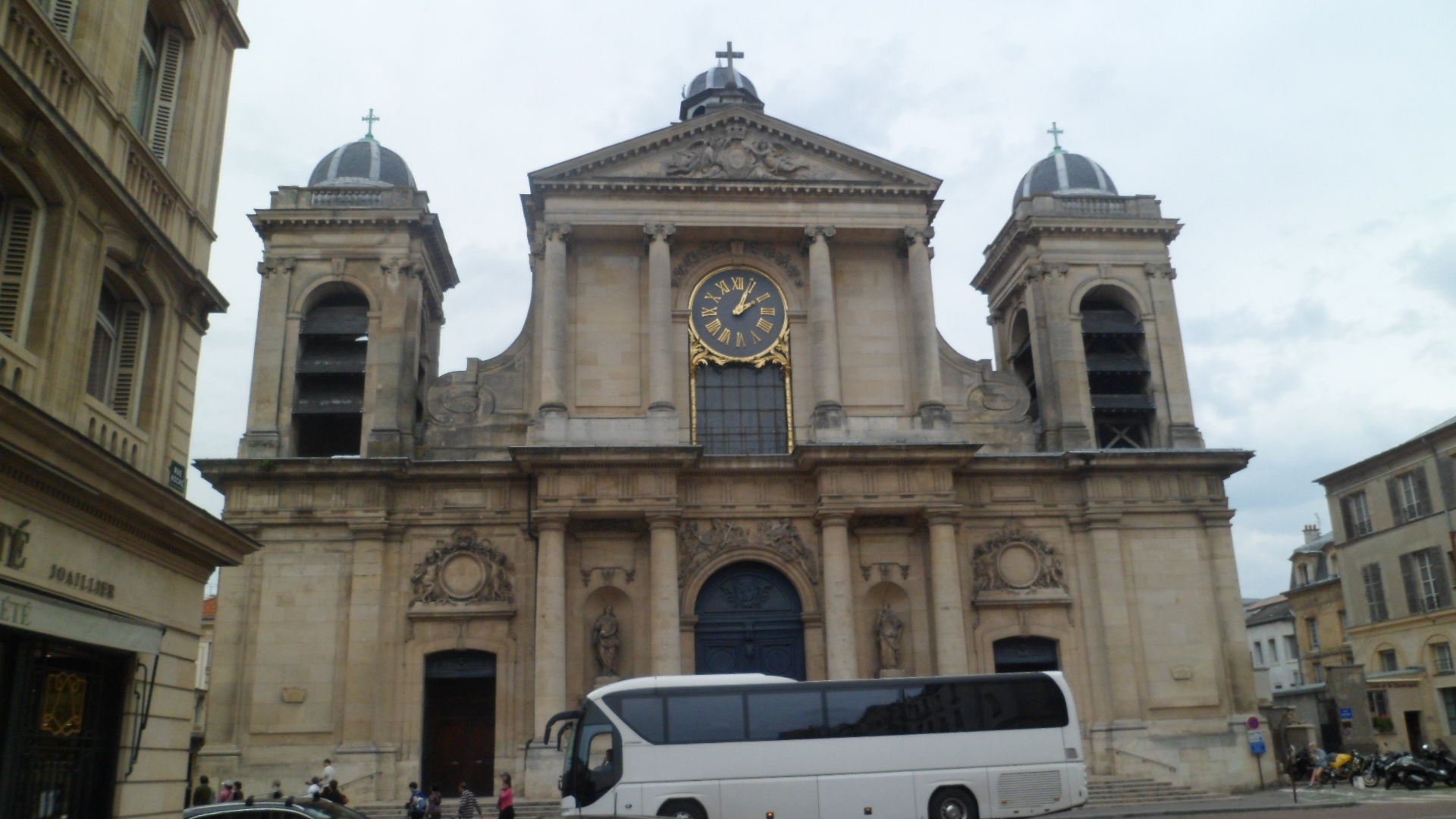
SAM_9322
SAM_9319
SAM_9332
SAM_9340


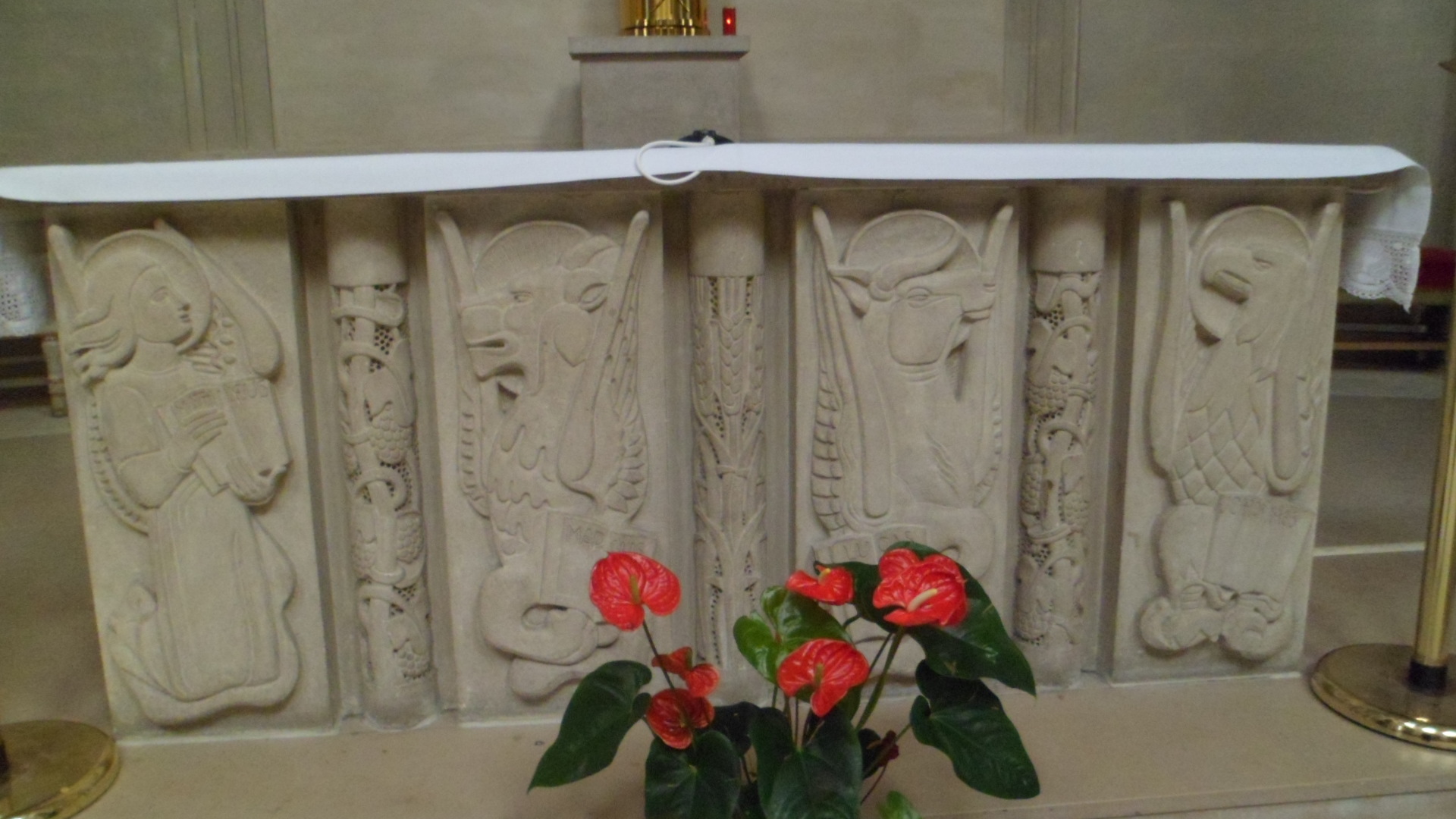
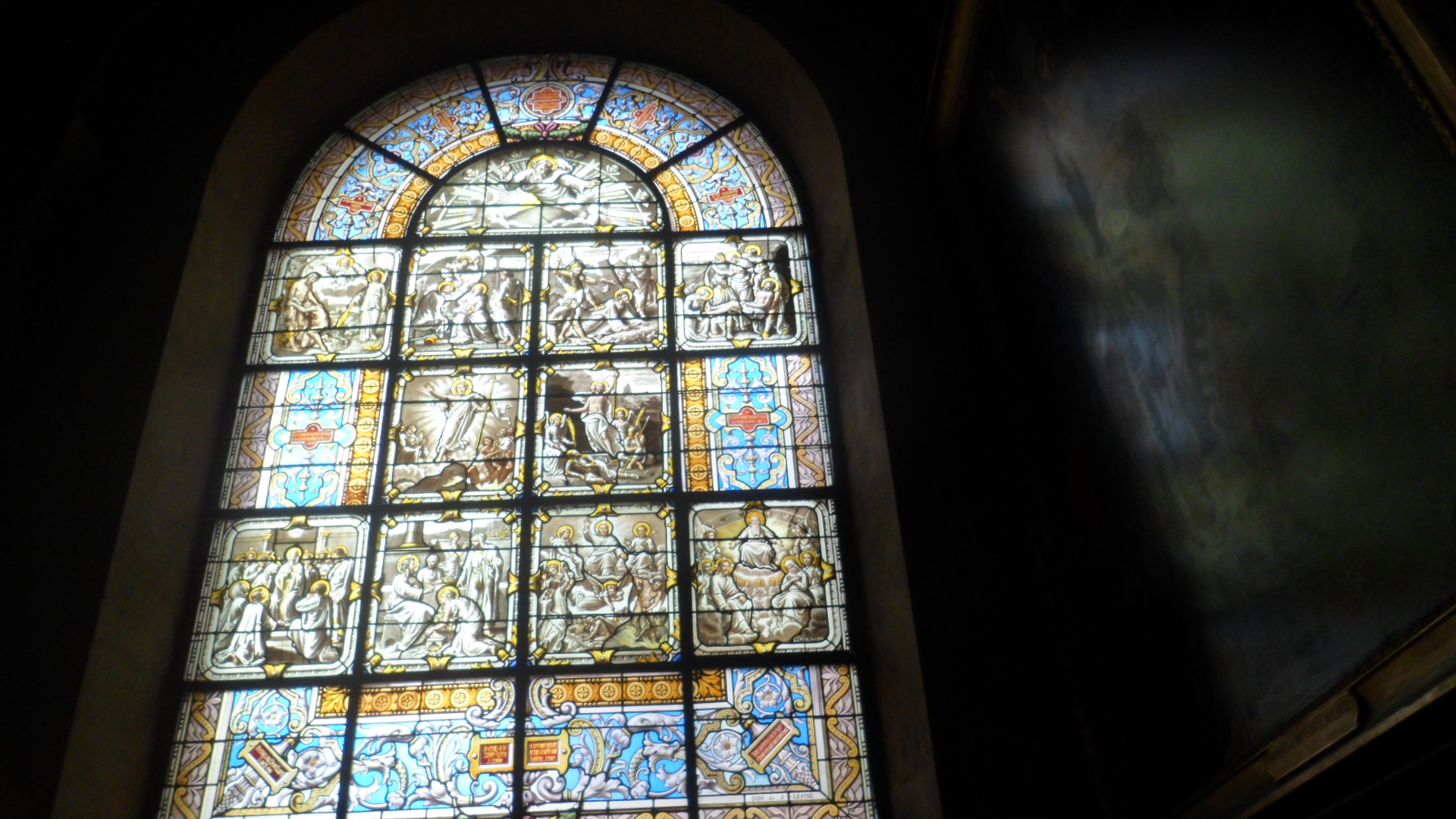
I could look at stained glass all day long, contemplating the interplay of light and colour. Here are a few of Versailles Cathedral’s offerings.
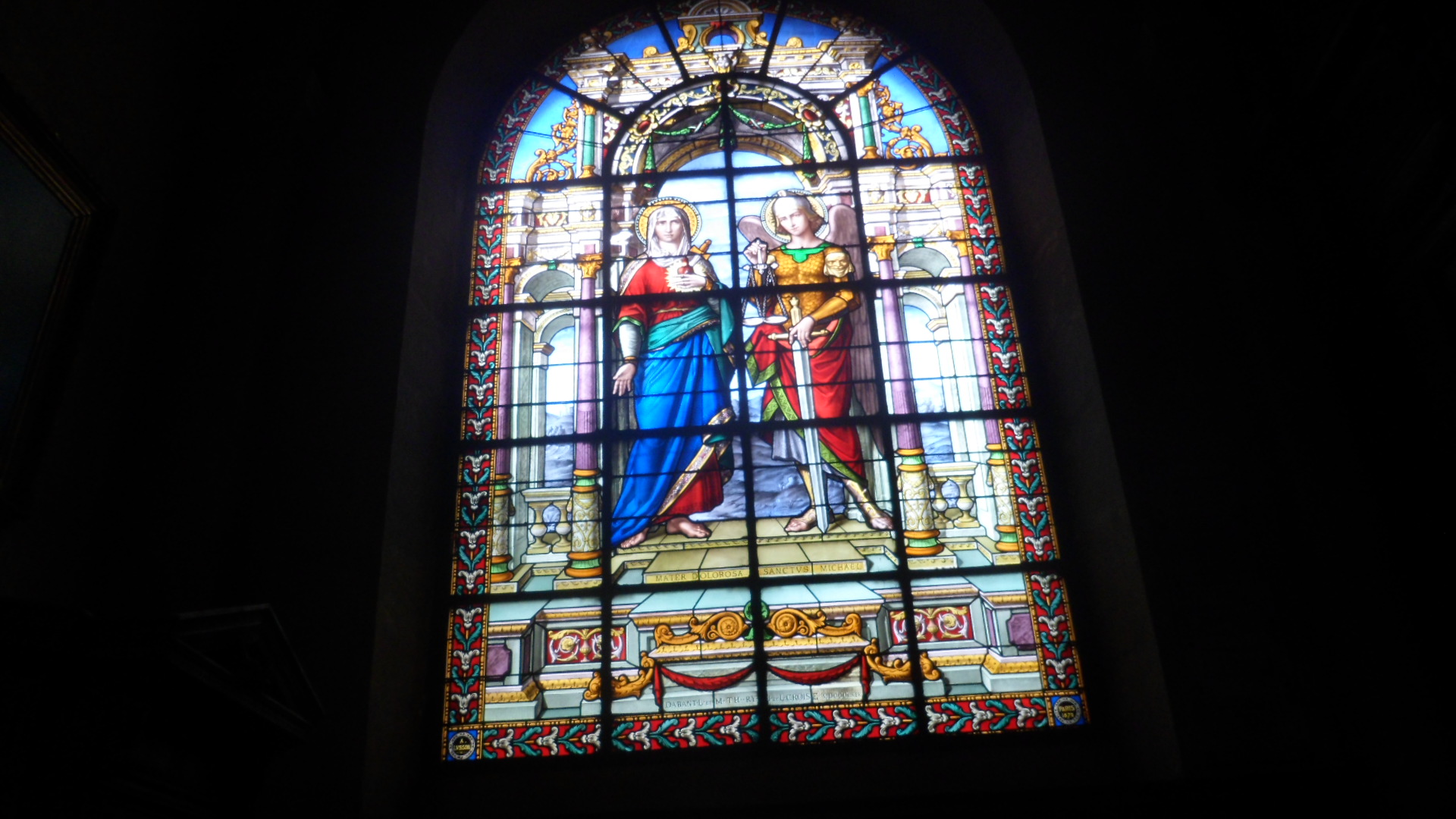
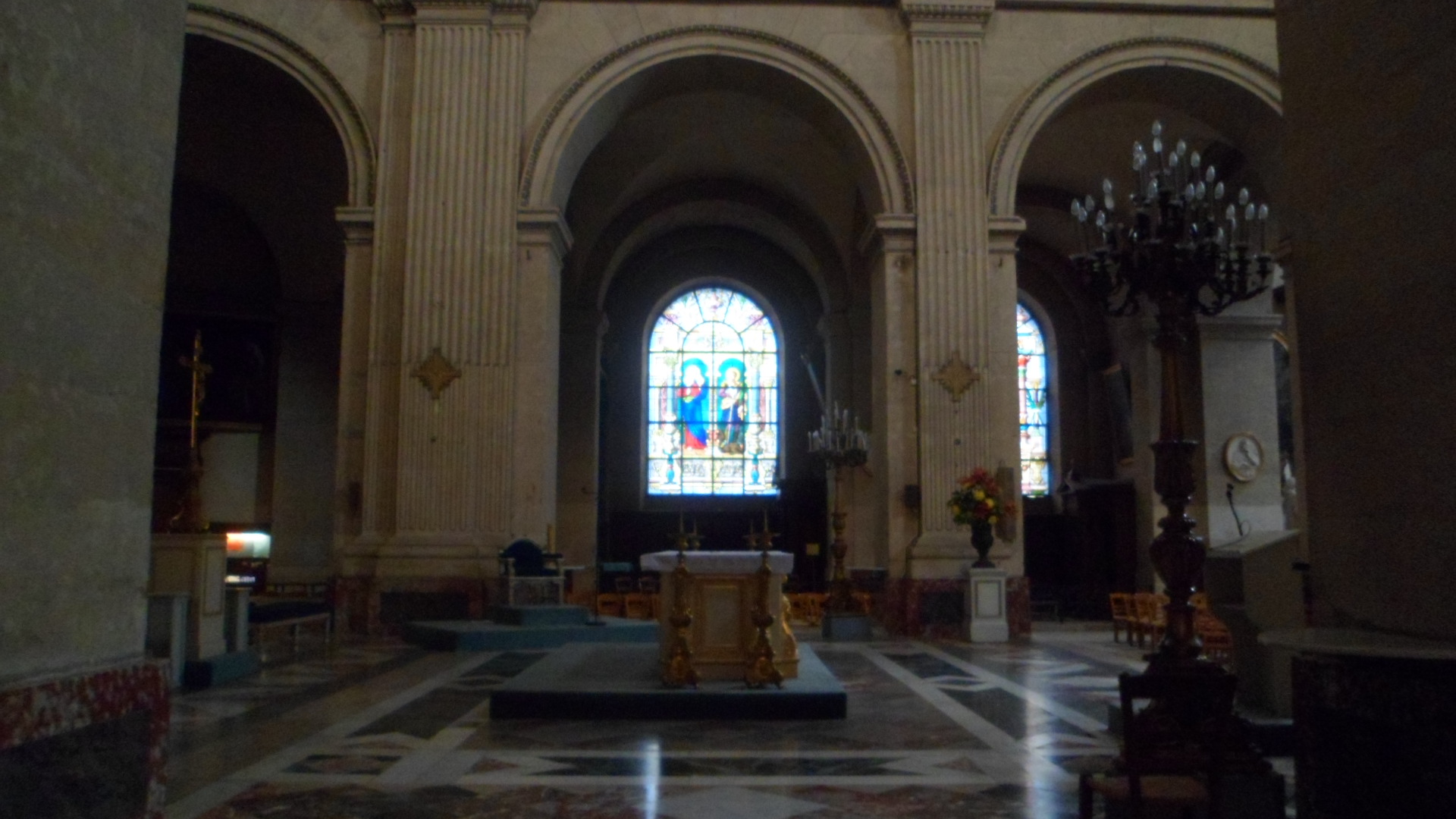
SAM_9324
SAM_9331


SAM_9353
SAM_9354


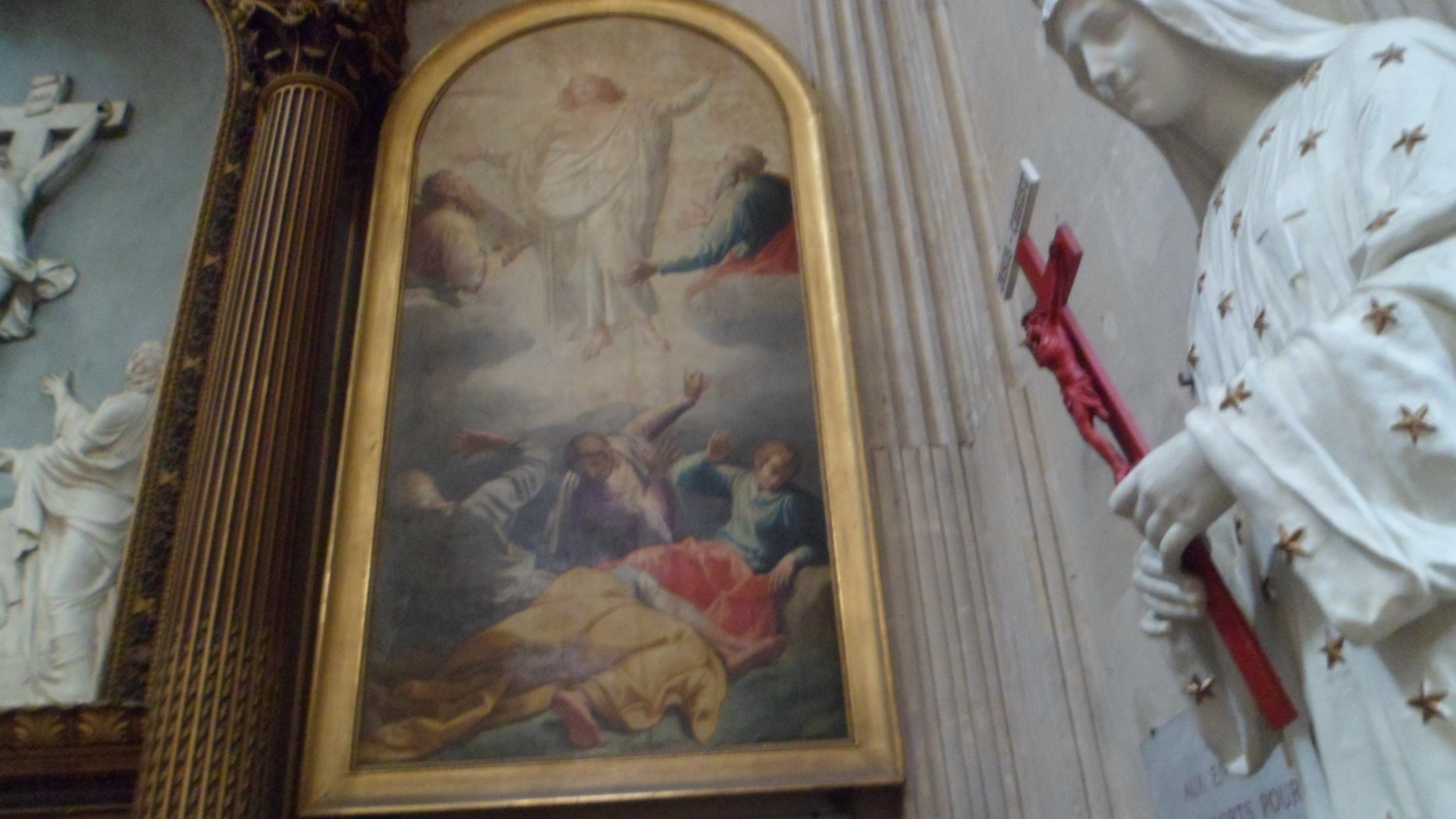
Paintings and statuary interplay here as well.
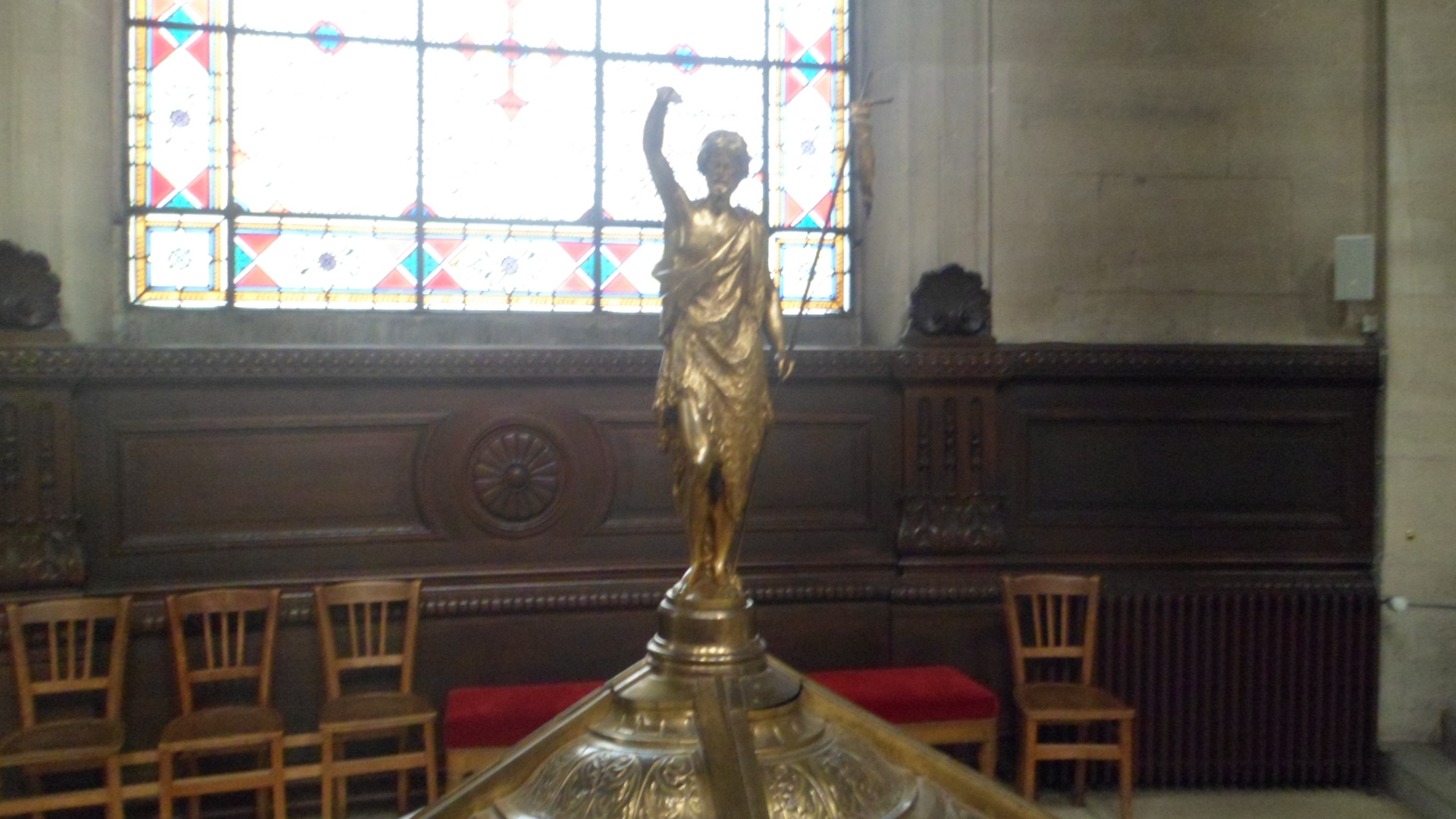
SAM_9339
SAM_9346


One noticeable difference between French churches and those in the U.S, is the seating arrangement.  many cathedrals in France have rows of small individual wooden chairs Some have seats of wicker.

SAM_9328

Upon bidding this fine little cathedral farewell, I came upon a pigeon which was quite different in colour from the rest of the considerable flock, along Rue Rameau.

SAM_9355

Next, slightly to the north, was Distrite des Antiquaires (Old City). Old Versailles is not as ancient as some of the other cities I visited, but the streets are quite narrow.

SAM_9357

Hotel du Bailliage was used as a prison by the Bourbons. Just behind it, to the east, is Little Italy, Versailles-style.
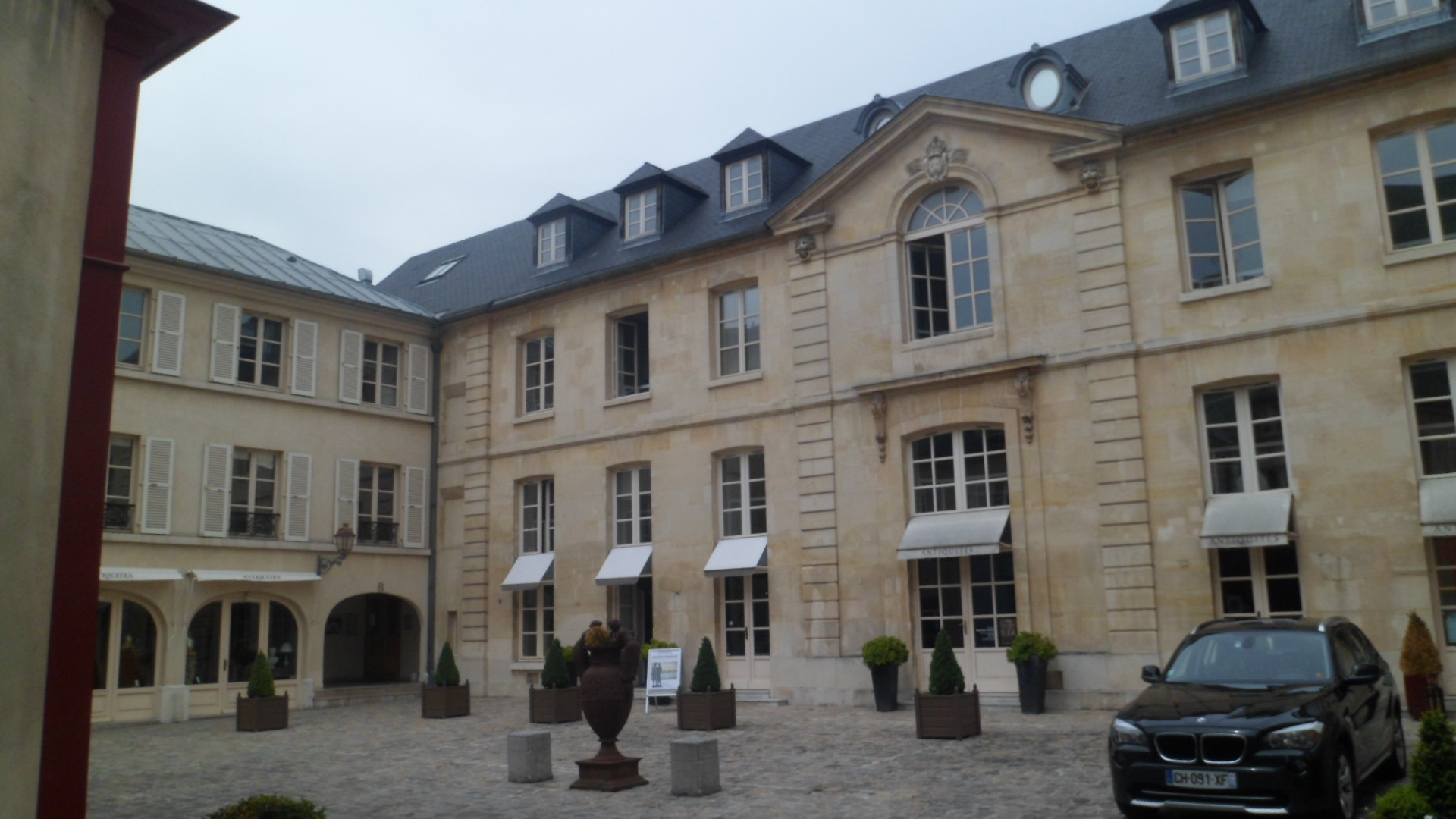
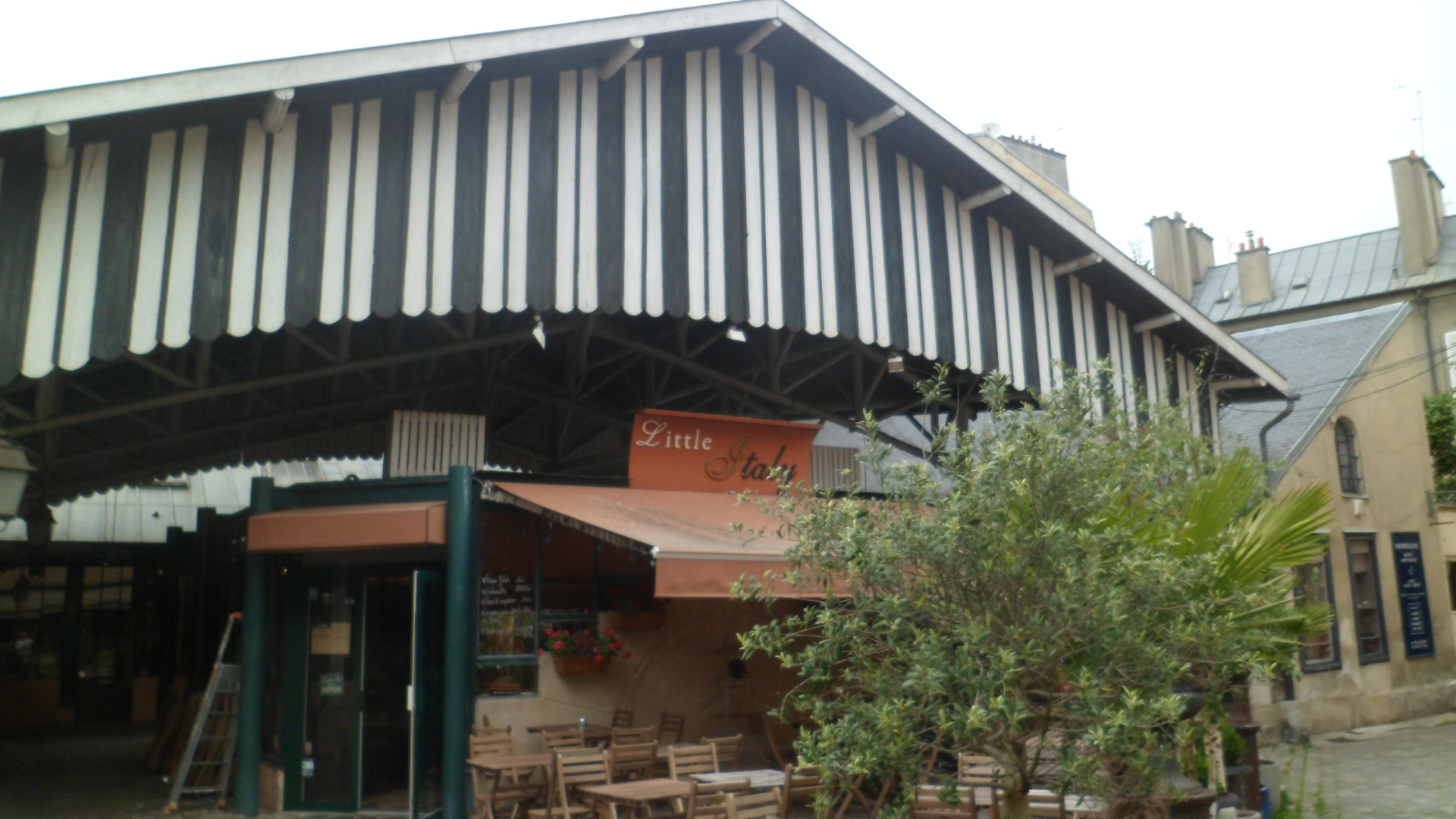
SAM_9358
SAM_9362
SAM_9363


Hotel Cheval Rouge was built in 1676, and remains one of Versailles’ premier establishments.
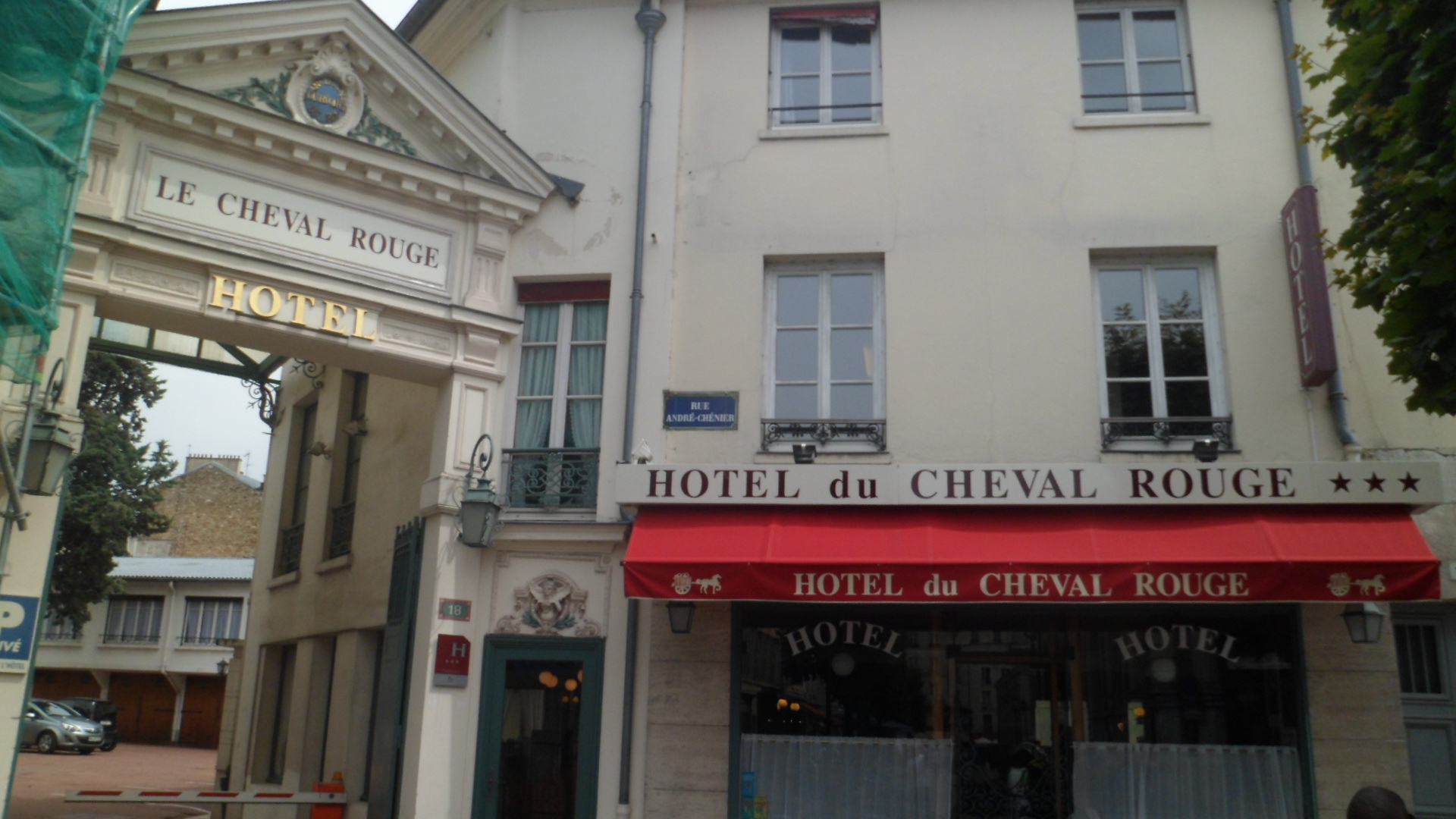
SAM_9364

Also in Distrite des Antiquaires is Hopital Olivie, a key facility during the 19th Century.
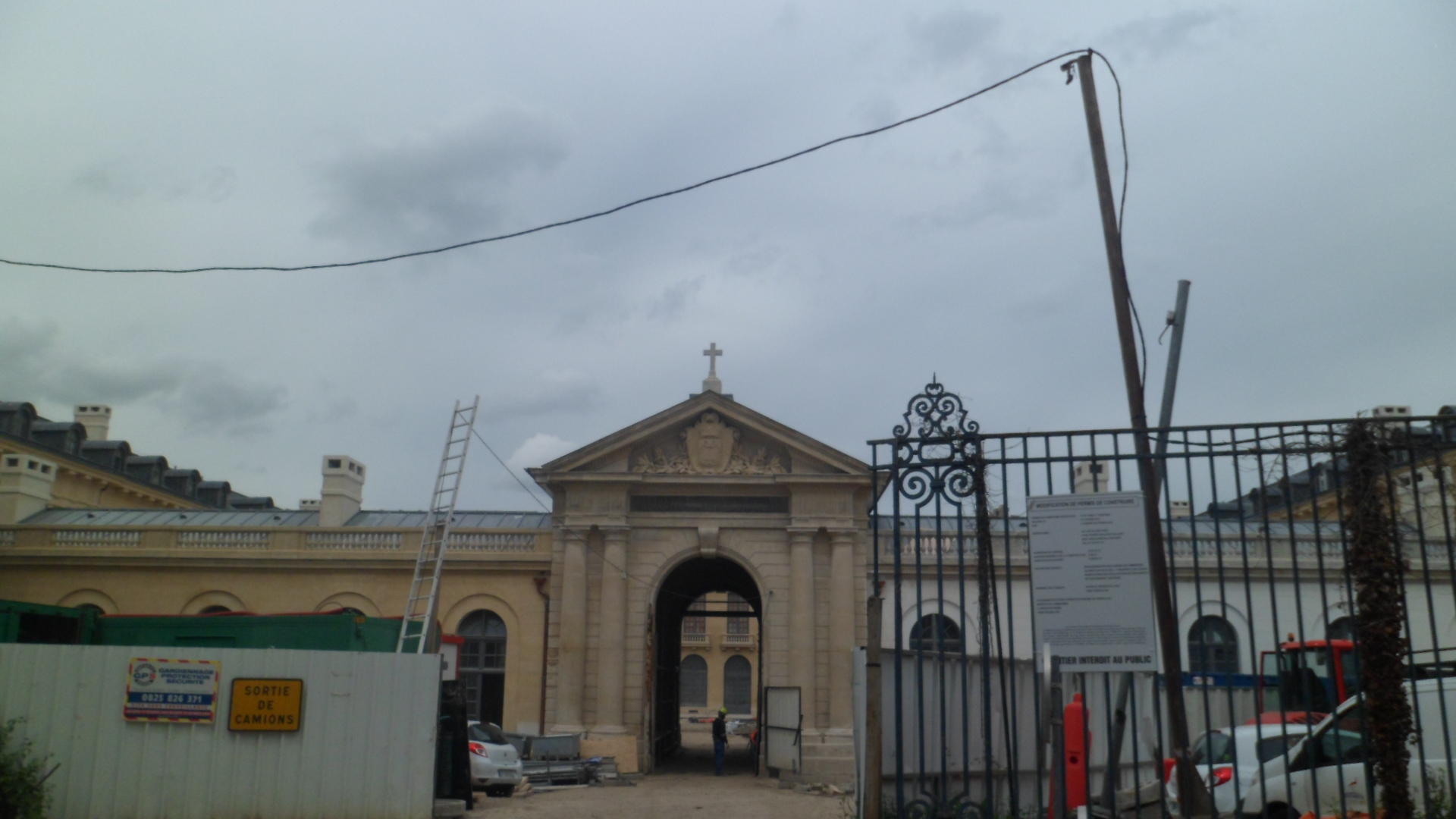
SAM_9365

I stopped at an old dairy, Goutte du Lait, only to have a rather stern father tell me this was his daughter’s pre-school. I was allowed one photograph.
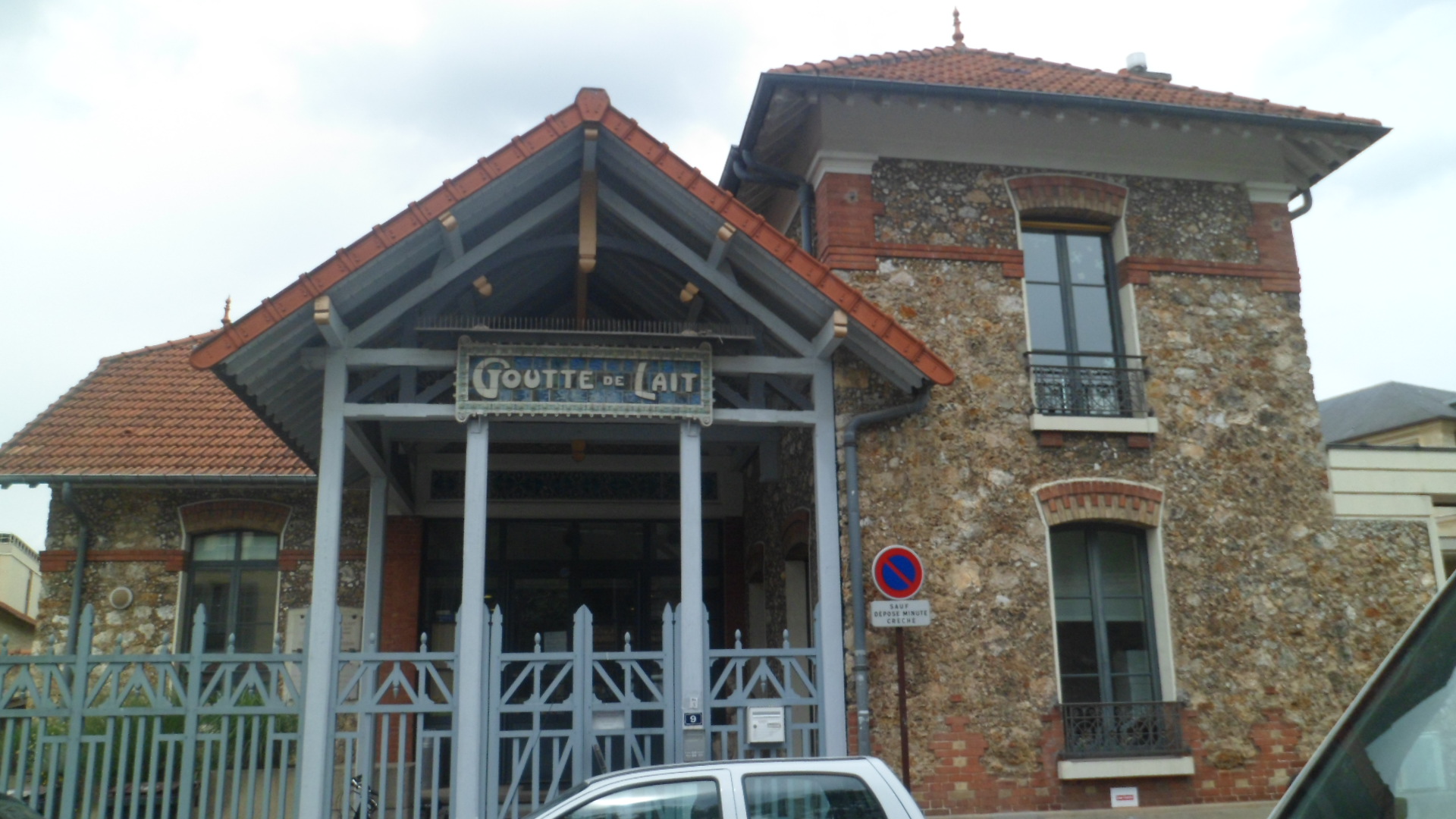
SAM_9366

Child safety always being one of my own passions, I headed towards Distrite d’Hotel de Ville.  City Hall stands, proud and imposing, in the center of it all.
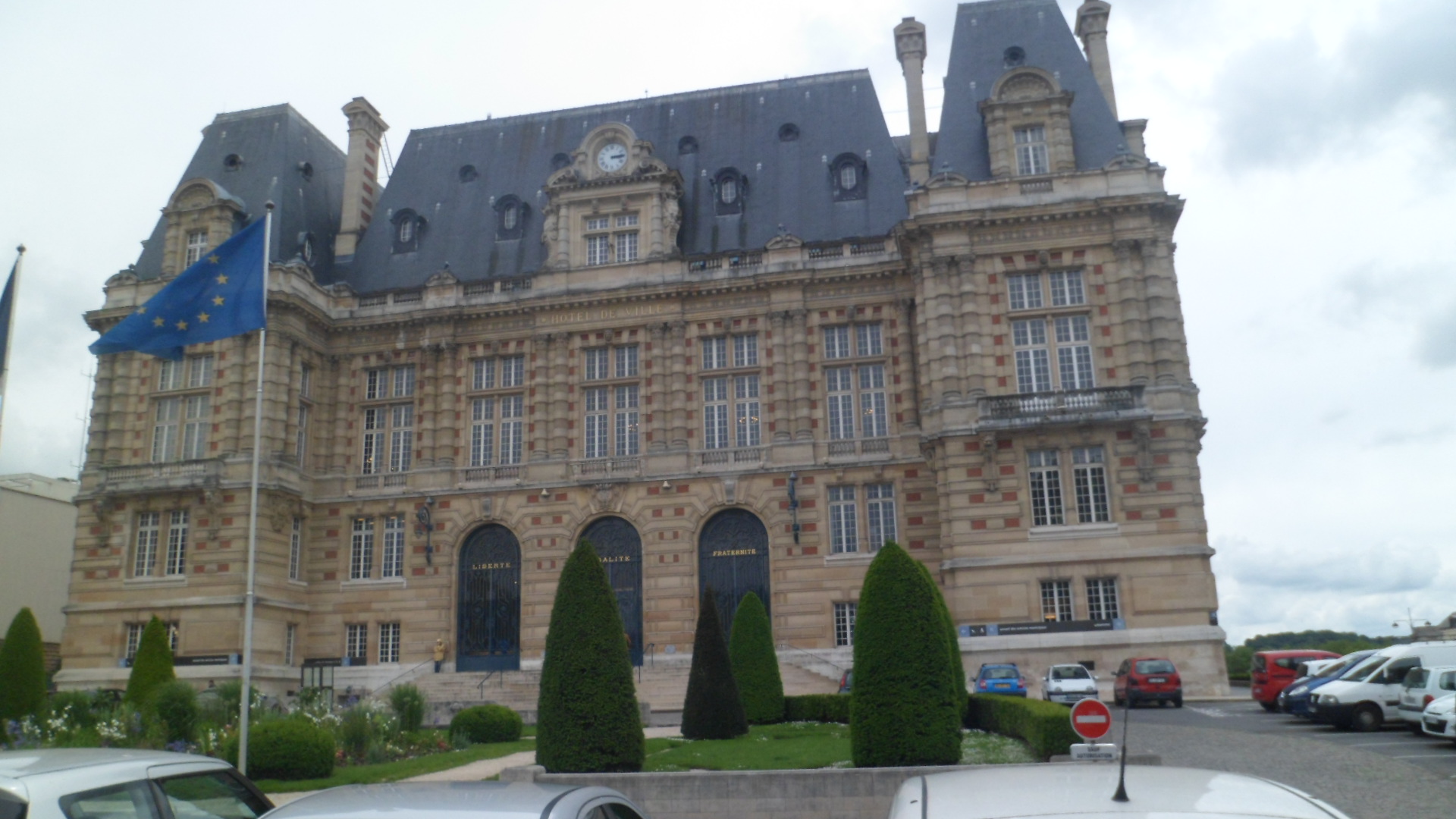
SAM_9370
SAM_9371


Here is a view of Hesperides des Les Maneges, a prime apartment complex.
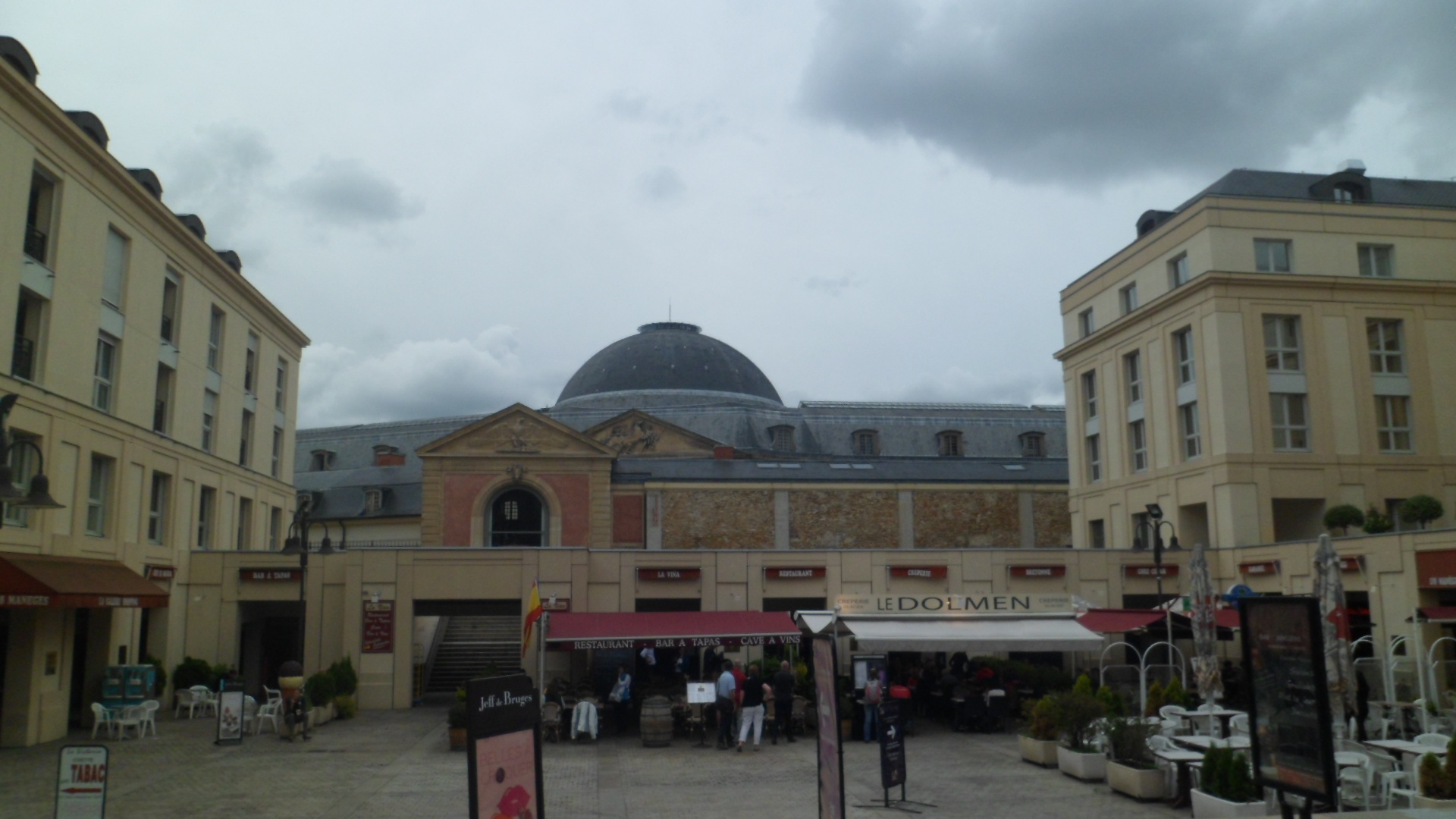
SAM_9372

Cathedral de Saint-Louis, across town from Notre Dame, is also quite impressive. I joined a laid-back pair of artistes for a short tour, whilst waiting for the train back to Paris. This cathedral seemed somewhat lighter and airier than Notre Dame de Versailles. It is named in honour of St. Louis the King.
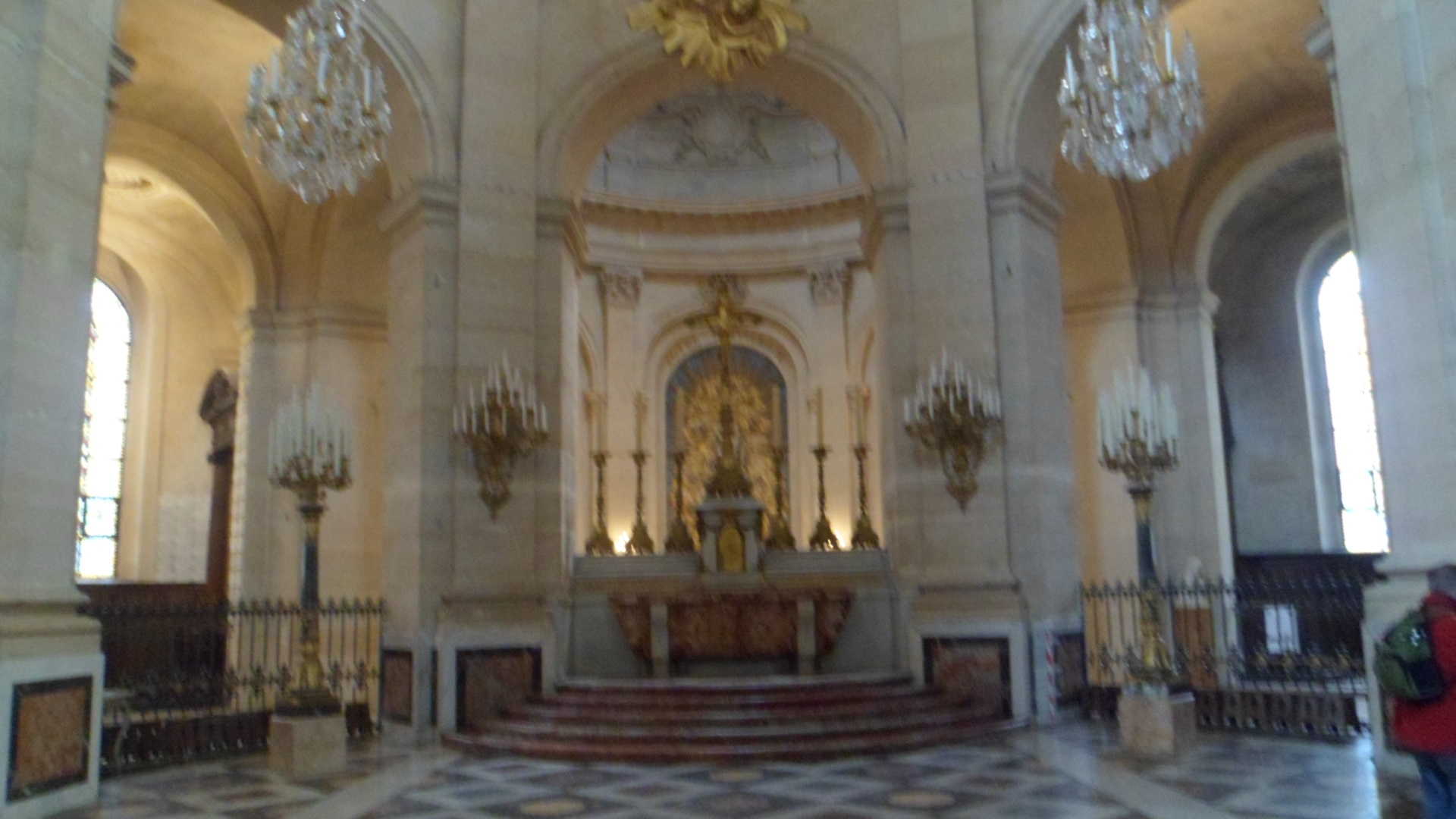
SAM_9379
SAM_9383


SAM_9384

Thus, my very full day in Versailles came to a happy close. To celebrate, I had a fine dinner near my hotel. If you are ever on Rue de Faubourg Montmartre, I recommend Restaurant Sizin, a full-service Turkish establishment. This is a cut above the ubiquitous kebab shops, which I also frequented during my journey. (“Eat Me” is a different establishment, and my curiosity didn’t get the better of me.)

SAM_9385

NEXT: Day 9, Part 1: A Visit to La Louvre.

A Tale of Two Debacles

4

Transportation has always been a sideshow, in the life of a traveler.  It is, of course, a basic element of travel, but is often used as a fulcrum, to get the traveler to notice the discomfort of those who live, day to day, where he/she happens to be headed, or from where the departure is taking place.

I am going to continue, in my next installment of “An Eastward Homage”, with the story of Versailles, the town.  For a few moments, though, I want to focus on two modes of transport, two countries, and two large entities coming to grips with the difficulties that come with an excess of size.

On June 12, my sole intent was to take the SNCF train from Brest to Rennes, then to Rouen.  The French train strike was, however, still full on.  The journey could only be accomplished, thus, by going from Brest to Rennes to Le Mans to Paris- Gare St. Lazare to Rouen.  My France Pass being a carte blanche for ANY First or Second Class train, over a nine-day period within one month, I thought I was set for a comfortable, seated trip.  Enter a horde of Gauls, coming from a trip to St. Malo, in northeast Brittany.  First, I was rousted from a seat, by a young lady, whose ticket had that seat’s number.  I moved to a second seat,and an imposing young man came along, with that  seat’s number on HIS ticket.  (Bear in mind that, on a France Pass, there are no tickets with numbered seats.)  I moved again.  Two Orthodox rebbes, who appeared to be father and son, appeared at the seat, raised their eyebrows, Gallic-style, and I moved again- to Standage.  There, in the no man’s land between cars, were a family of four, a university co-ed, (who was visibly miffed at the presence of two little boys, and even more miffed at an Americain joining the group,)  a French biker and his missus (headed to his shop at Montparnasse) and a hapless Italian tourist who had a France Pass as well,  and had been booted from HIS seat by a nurse whose ticket had that seat’s number.  The train had, in the aggregate, about 30% more people on board than was practicable.  Still, we all made it, shared the four small, folding seats that are available between cars, and just looked after one another.  The initial shock on the faces of the French people in standage at the thought of an American NOT sitting comfortably in a First Class coach gave way to the realization that I had no such expectation of undue privilege, in the midst of such chaos and mass discomfort among my hosts.  It was a good outing- for me.

It was an experience that served well to show the visitor just how absurd the bureaucrats and the unionists can be, and the extent to which their absurdity discomfits the average French person. Those fighting the Train Battle likely were not out riding the train, during the impasse.  They did, effectively, send France back to the regional and the parochial trains of thought that are described so well by Graham Robb, in his “The Discovery of France”.  It was, for two weeks or so, impossible to go from Rennes to Rouen, or from Rouen to Amiens, par train.

Fast forward to Sunday, July 6, at Logan International Airport, in Boston.  There was an airplane sitting at the departure gate, ready to go to Charlotte, or so everyone thought.  My journey would soon be over, or so I thought.  Airline policy is that a fresh cockpit team takes over after so many hours.  Our fresh cockpit crew was coming from Washington, DC.  There was a “difficulty” with the plane bringing the captain and first mate from Reagan.  We were told they would be in Boston at 9:30, and we would be underway thirty minutes behind schedule.  No one would miss their connections.

That was at 9 PM.  Seventy-five minutes later, we greeted the cockpit crew with silent cheers.  Fifteen minutes after that, we were airborne.  One hour and forty-five minutes after take-off, we landed in Charlotte.  Nearly an hour later, upon learning our “safe” connections had gone on without us, we were assigned various hotel rooms.  My seat-mate on the plane and I were sent to Holiday Inn Express.  The hotel informed us that a shuttle at 2 AM would be impossible and we were to take a taxi, for which the airline would reimburse the person who picked up the tab.  That ended up being my seatmate, as he had cash and I didn’t.  We each got our own room, got from 2-4.5 hours of sleep, and the next day caught a shuttle from hotel to airport.

After bidding my previous night’s seatmate farewell, I met another man who had stayed at Express.  He nonchalantly told of having taken a shuttle to Express- at 2:30 AM.  All he did was call the same person who had told me at 2 AM, “impossible”, and a shuttle was dispatched.

This goes to show that, the more things, and locations, change- the more they stay the same.  Man plans, bureaucrats bumble, common folk work together to get around the snafus- and God laughs.

An Eastward Homage, Day 8: Versailles, Part 2- The Grand Gardens

13

Everyone needs a place in nature, where one may recover one’s senses and restore equilibrium.  The Bourbon royalty were no different from the rest of us, in that regard.  After taking in the Great Chateau, and all its opulence, I also needed some time in nature.

So, here are some scenes of the King’s Grove, the Queen’s Grove, the Dauphin’s Grove, and bosques set aside for just about anyone who lived at the Chateau.  Just outside the Chateau, there are small, well-manicured gardens and a great fountain, en route to the Ballustrade which itself overlooks Les Bois Royaux.

SAM_9254   SAM_9255.

Here is a long view of Allee Royale:

SAM_9262

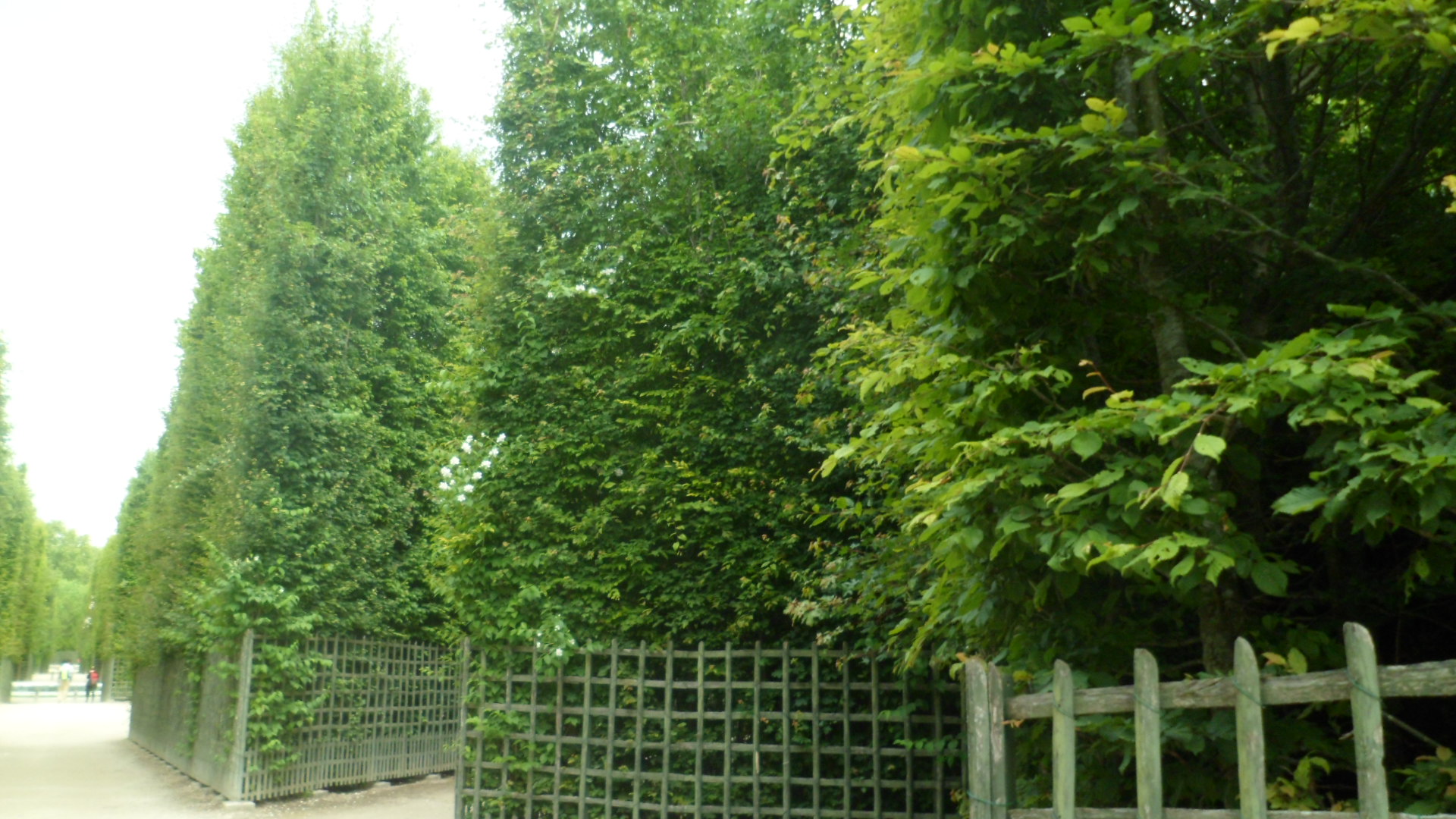
Once I made my way down the stairs, and into the King’s and Dauphin’s Groves, I found myself in the company of several school children, engaged in a fabulous game of Hide and Seek, in the Dauphin’s Labyrinth. To me, one of the great tragedies of the French Revolution was that no one gave thought to the three children of Louis and Marie Antoinette. They died in childhood, in prisons, and the Labyrinth sat silent. Thankfully, it was not silent on Tuesday, June 3.

.

SAM_9264
SAM_9269


Those who ventured forth saw scenes such as these:

SAM_9271
SAM_9273


SAM_9270
SAM_9265


SAM_9268
SAM_9302


Eventually, I made my way back to more manicured scenes, near the Queen’s Grove, and the restoration area- not the Restoration of the Bourbons, but that of the forest.

SAM_9283
SAM_9292


SAM_9291
SAM_9285


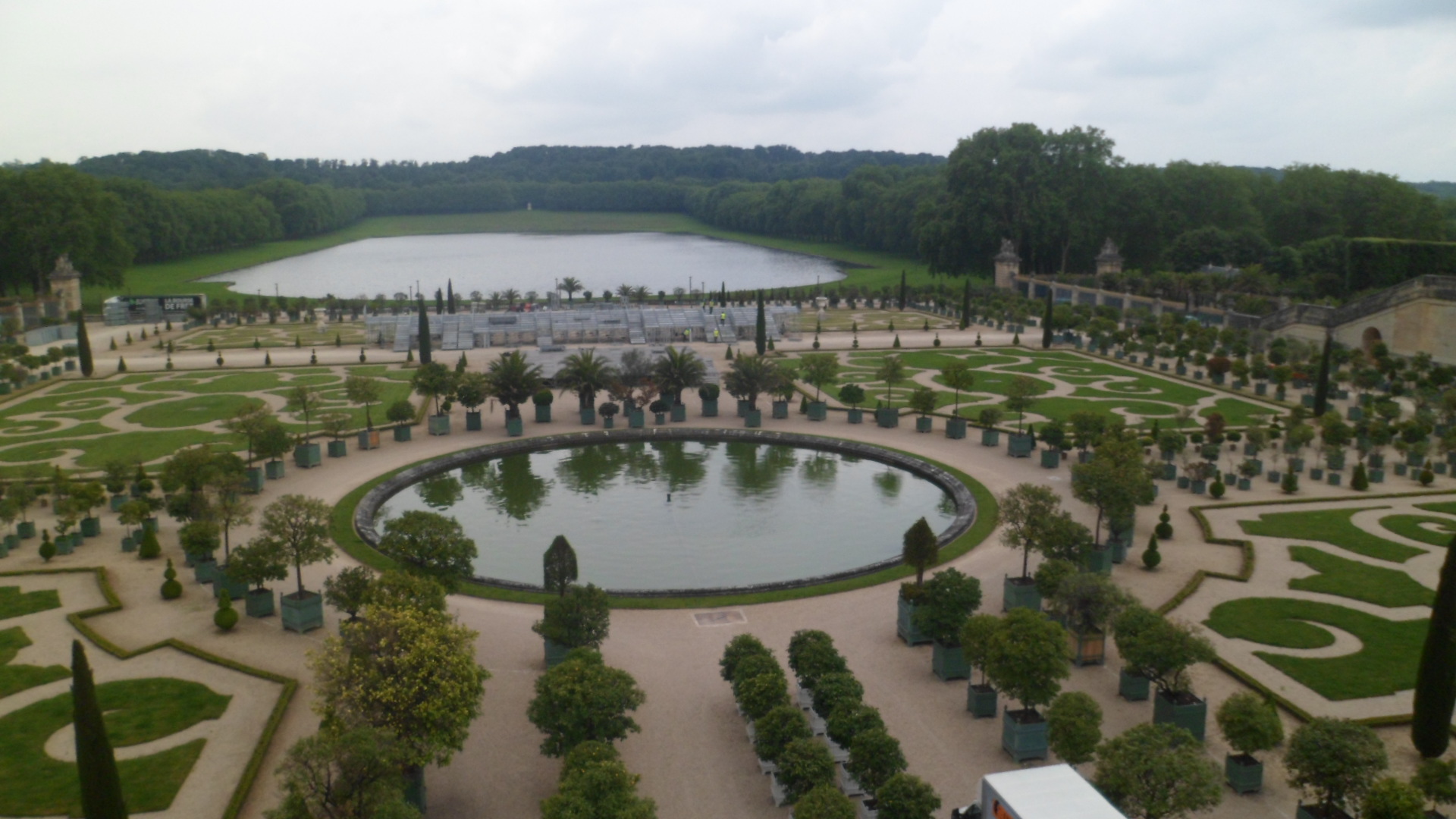
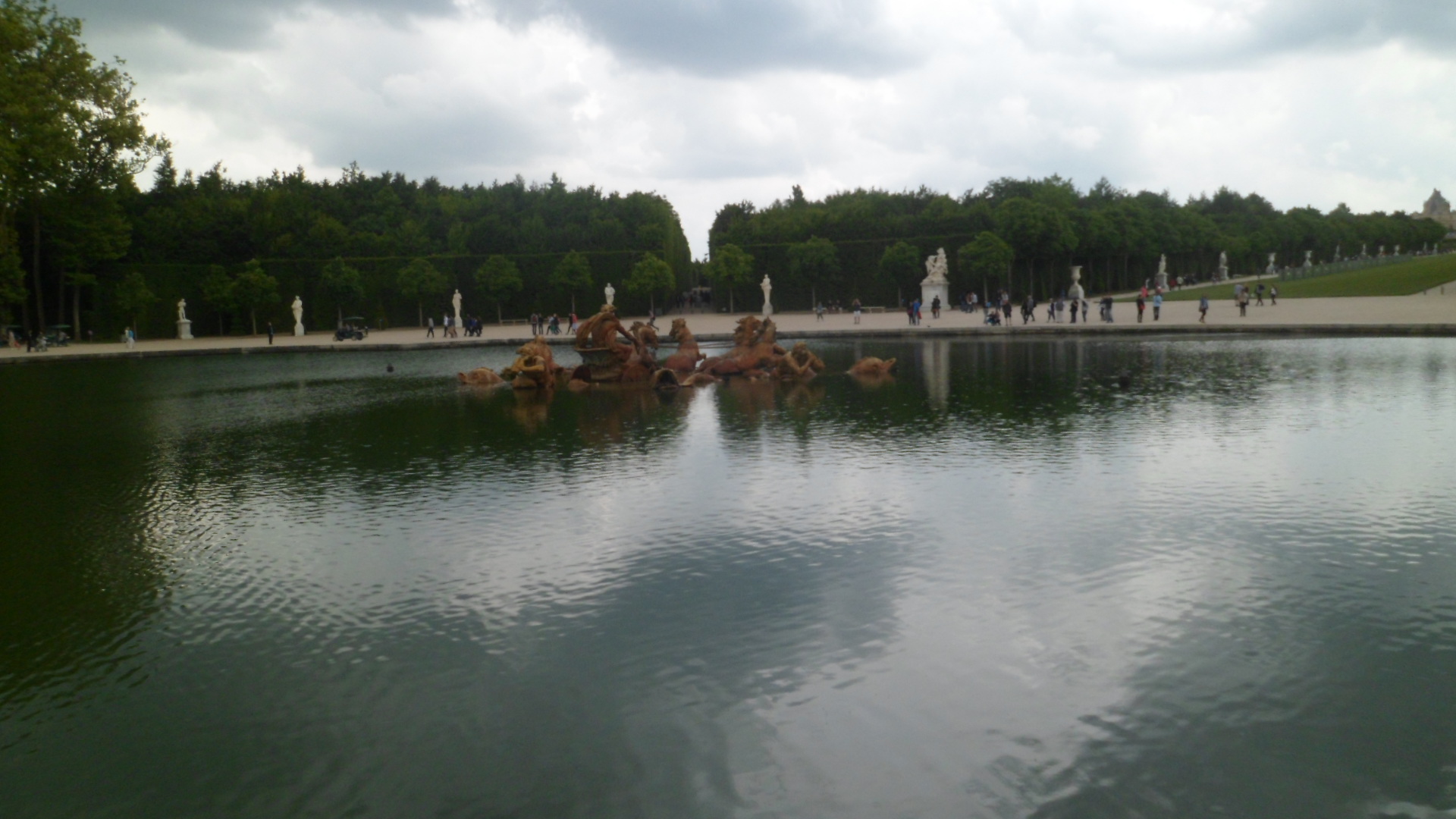
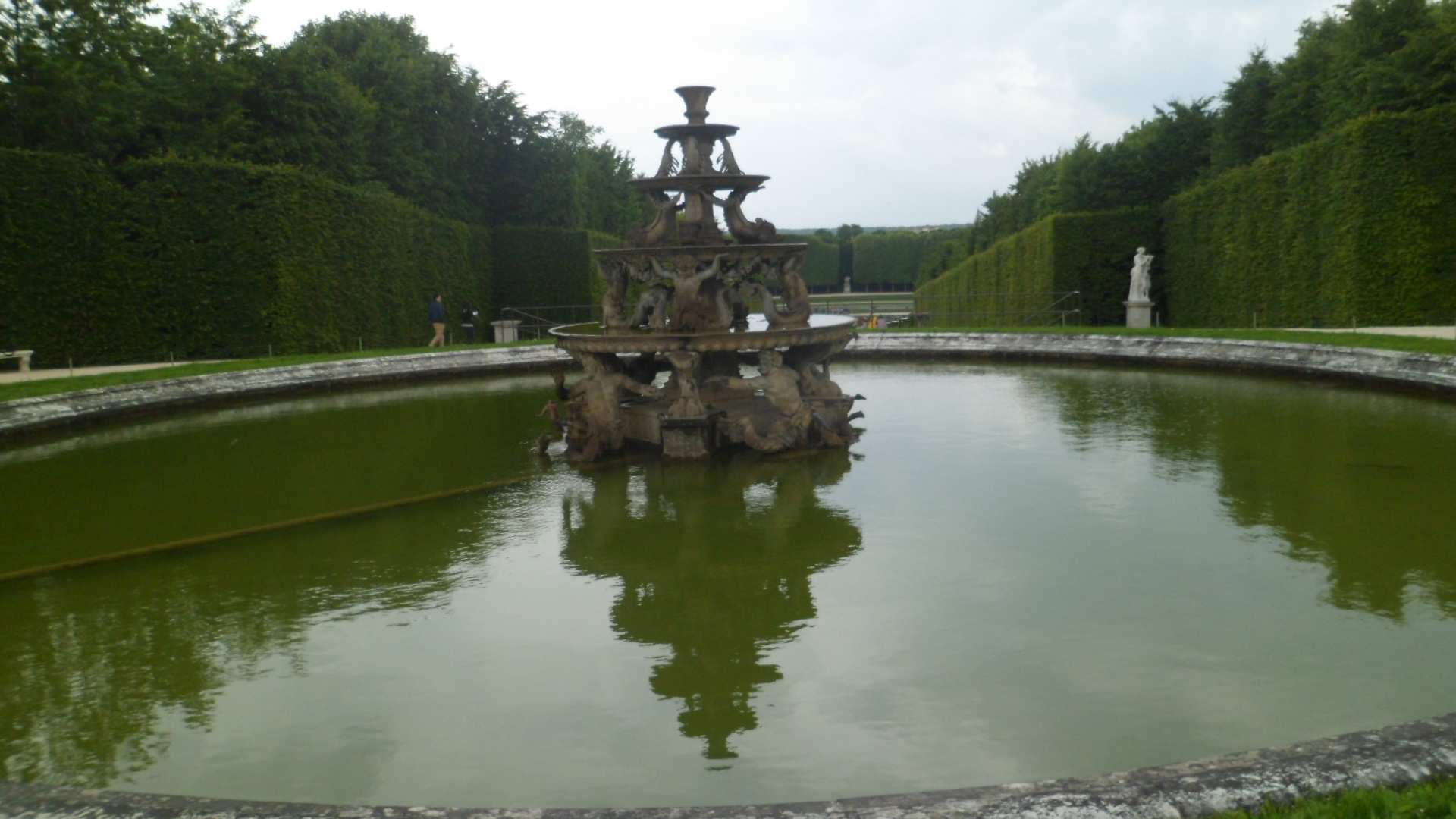
I walked on down to the Grand Canal’s edge, and enjoyed Les Parterres, L’Orangerie, and their water-borne sculptures, including  the Apollo Fountain,

SAM_9304

and Bassin de Latone (Latona Fountain).

SAM_9305

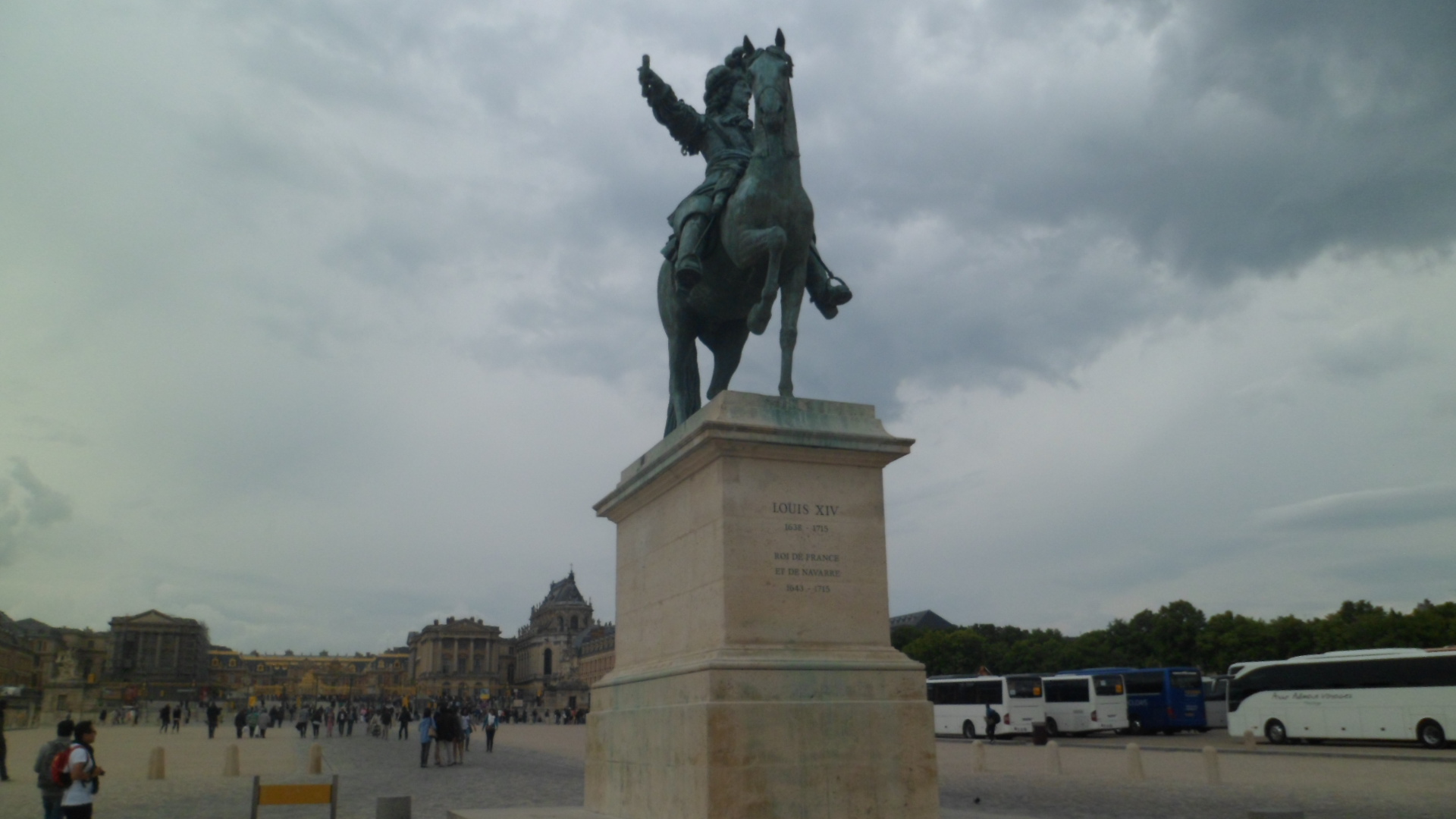
Here is a final nod to the man who got this all started.

SAM_9306

At this point of decision, I elected to forego Les Trianons (Marie Antoinette’s private estate) and spend some time in the city of Versailles. That marvelous counterpart to the Palace will be featured next.

An Eastward Homage, Day 8: Versailles, Part 1- The Chateau

8

Be forewarned, this post is heavy on photos, and tends towards gaudiness, but that is Chateau de Versailles- and those were the Bourbons.  It is an exhausting place to visit, but I am glad to have gone through the chateau first.  The gardens, and the town of Versailles, are most refreshing.

I am glad to have gone through all the chambers, and great halls, as they tell the story of  several men’s excesses, on the backs of their fellows, as well as any other great monument around the world.  If you are put off by all the gold and finery, you are in a good place.  We all know to what this excess led.

SAM_9065
SAM_9066


We start in the front courtyard, where one gets a sense of the enormity of the completed palace. Know that this chateau was intended as a place of refuge for Louis XIV and his successors. Versailles, from the 16th-19th centuries, was very much a country town. Paris, then as now, was lovely, exciting- and exhausting, for the royals as for everyone else.

SAM_9068
SAM_9070


SAM_9075
SAM_9079


SAM_9081

The first gilded gate, the detail of the front entry point and the ceiling of the antechamber follow. Creation and classical mythology are themes covered over and over by the architects and landscapers of Versailles: Andre Le Notre, Charles Le Brun, Jules Hardouin-Mansart and, under Louis-Philippe I, Frederic Nepven.

SAM_9091
SAM_9096


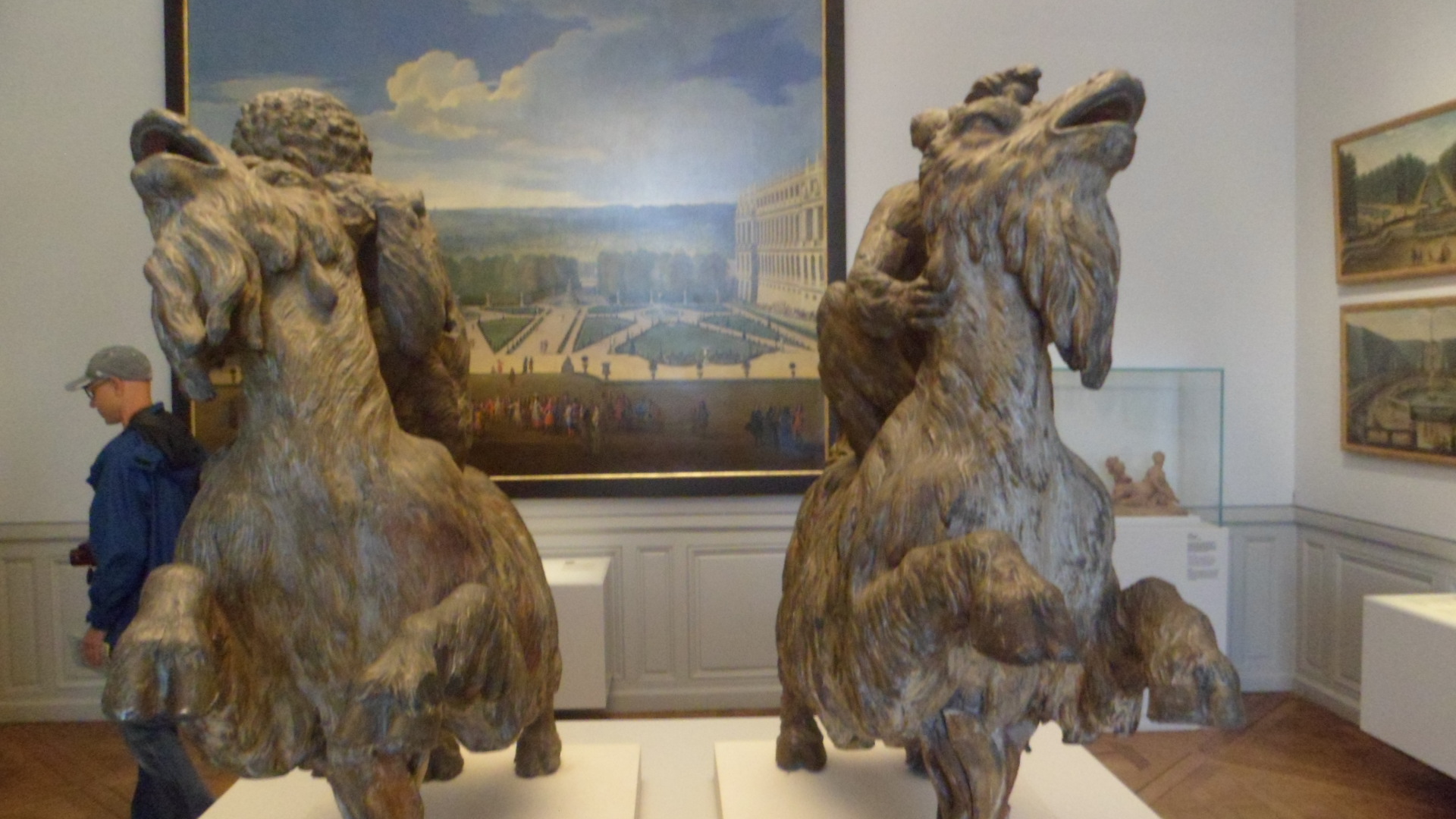
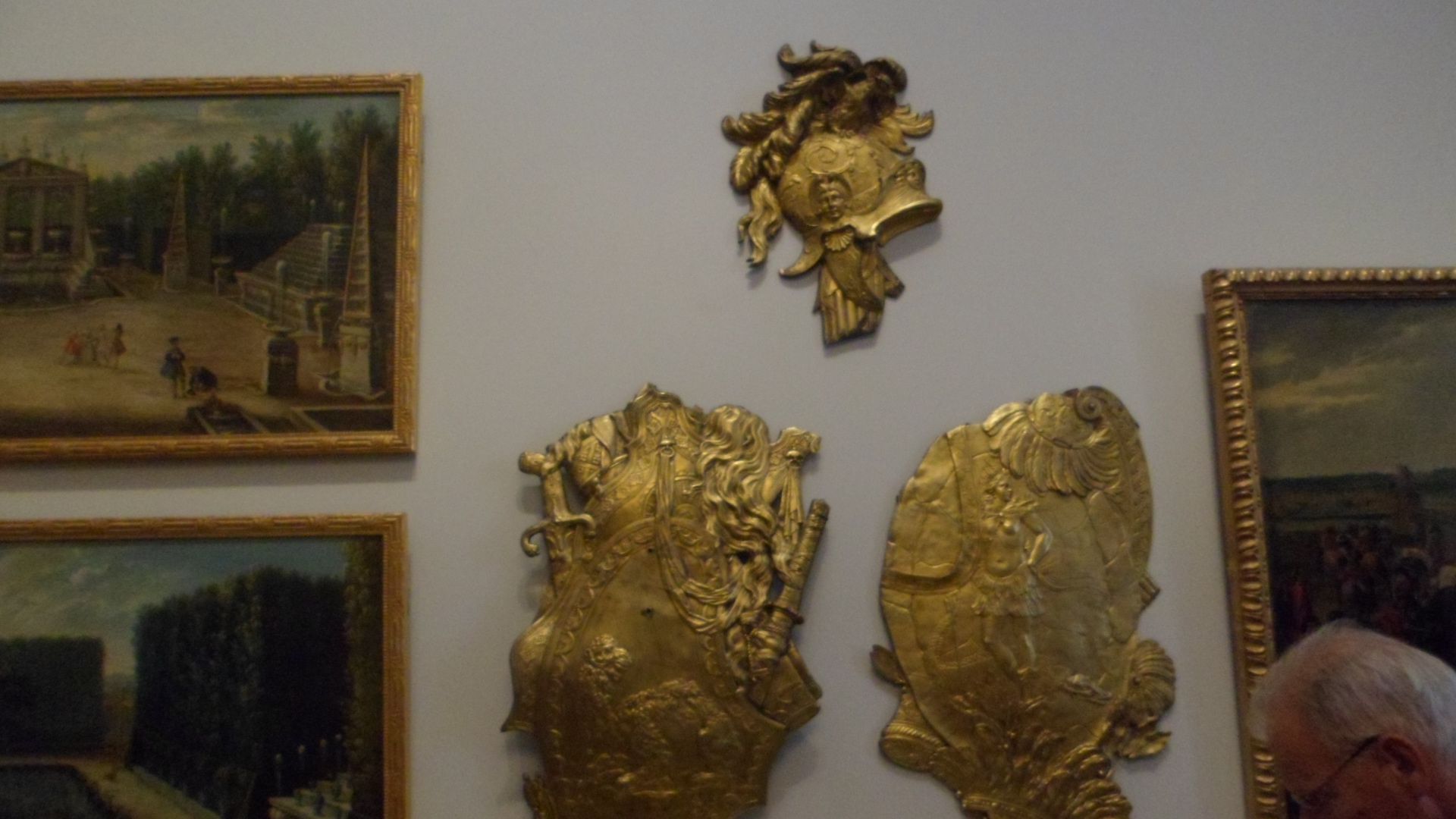
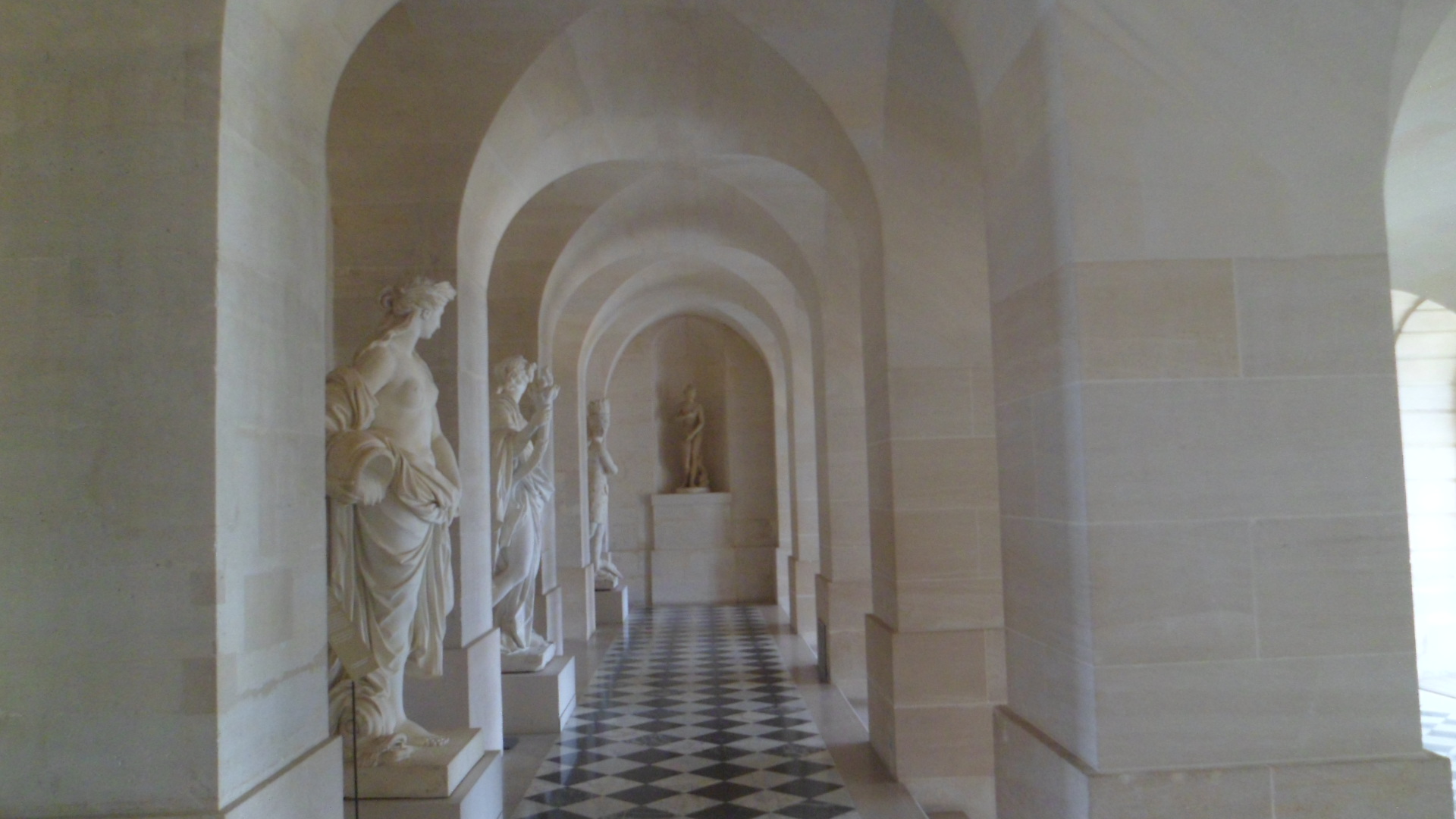
Next, two mythological characters, depicted in statuary, greet visitors as we go through a series of halls that tell the history of the chateau, from Louis XIV to the time of Louis-Philippe I, who bestowed this magnificent place upon the people of France, as THEIR treasure.  The gold, the marble and the enormity thus reverted to their truly rightful owners. These are followed by “Tres Casques”, great gold pieces, representing helmets.

SAM_9097
SAM_9098


SAM_9099

Moving along, we see a portrait of Marie Antoinette, her son, the Dauphin, and his attendant, Madame Royale. Next is Louis-Philippe, mounted on horseback, followed by his architect, Frederic Nepven.

SAM_9103
SAM_9104


Up the staircase, and down another long hall we go, to the salons. A series of halls, each named for a particular Roman god or goddess, were used by Louis XIV for regular audiences. Salon de Diane, for example, was used as a buffet room. Salon d”Apollon was a concert hall. Salon de Mars was the ballroom.

SAM_9112
SAM_9115


SAM_9121
SAM_9130


SAM_9132
SAM_9142


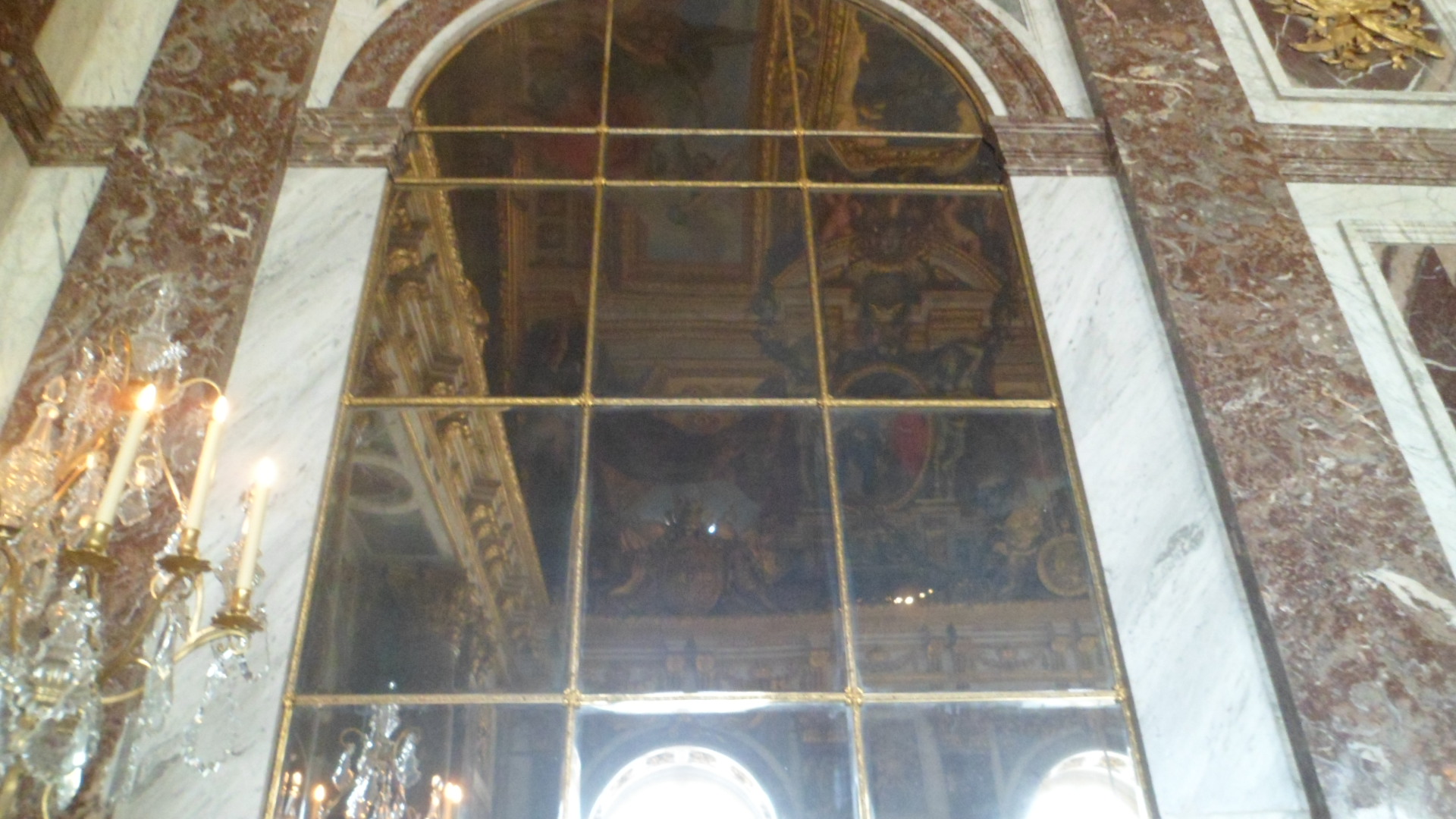
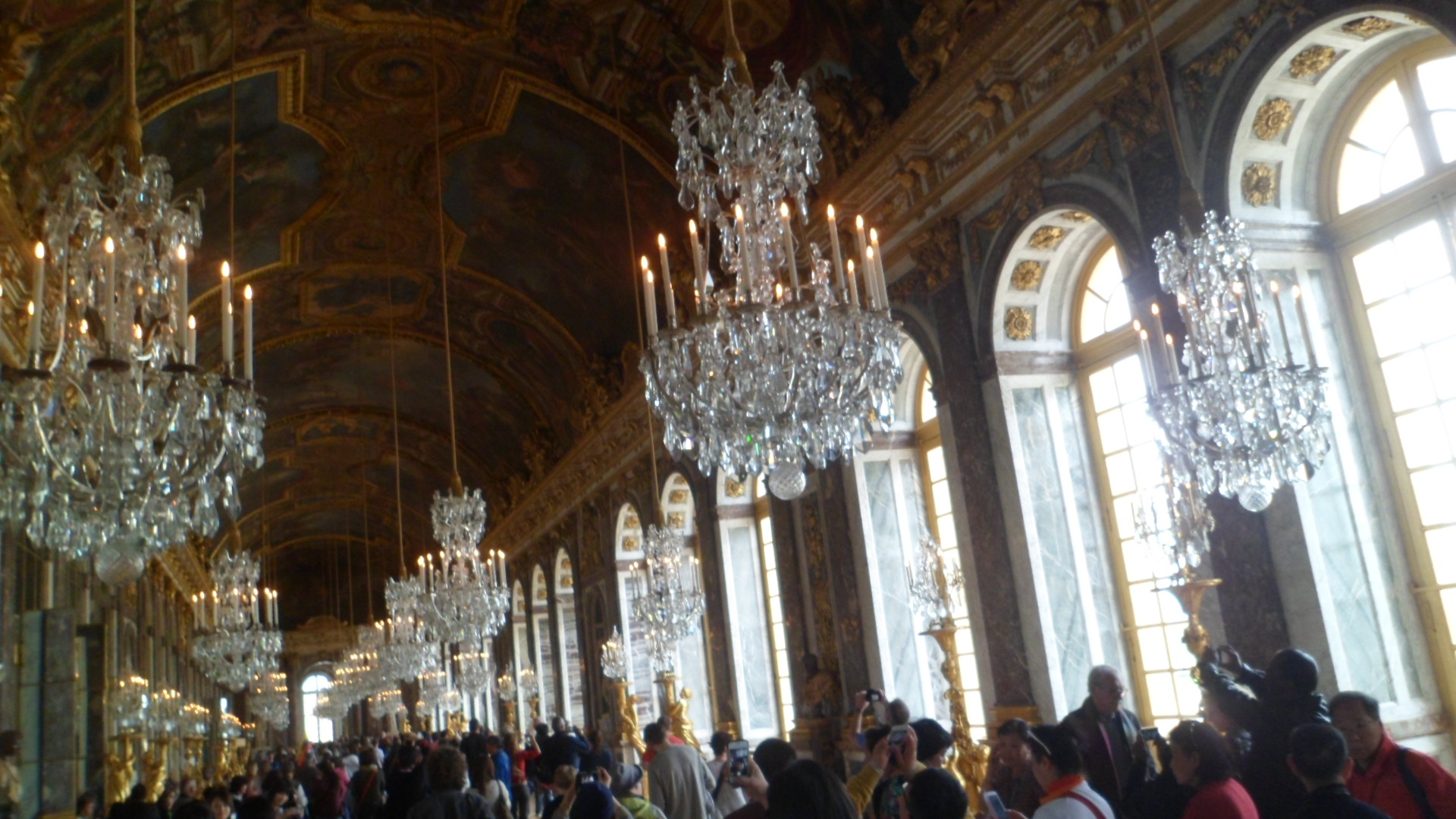
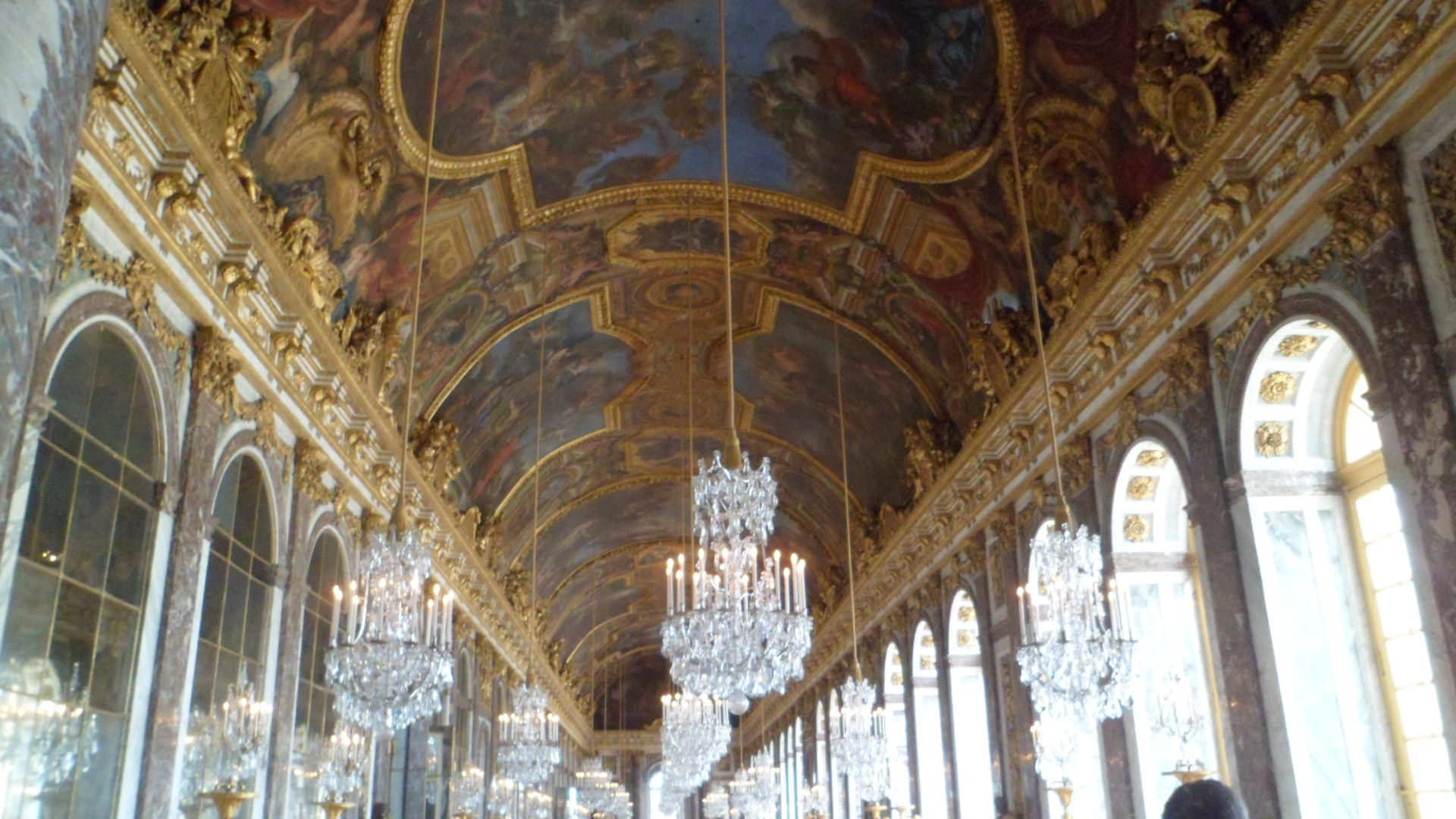
Three scenes from the Hall of Mirrors are next,(photos 22-24). This great hall was constructed under the supervision of Louis XIV’s crafty Treasure, Jean-Baptiste Colbert, who brought in several Venetian mirror craftsmen, at great peril to themselves, to fashion this great hall. It links the King’s bed chamber with that of the Queen. Louis had himself as the focus of the portraits and statuary.

SAM_9147
SAM_9149


SAM_9150

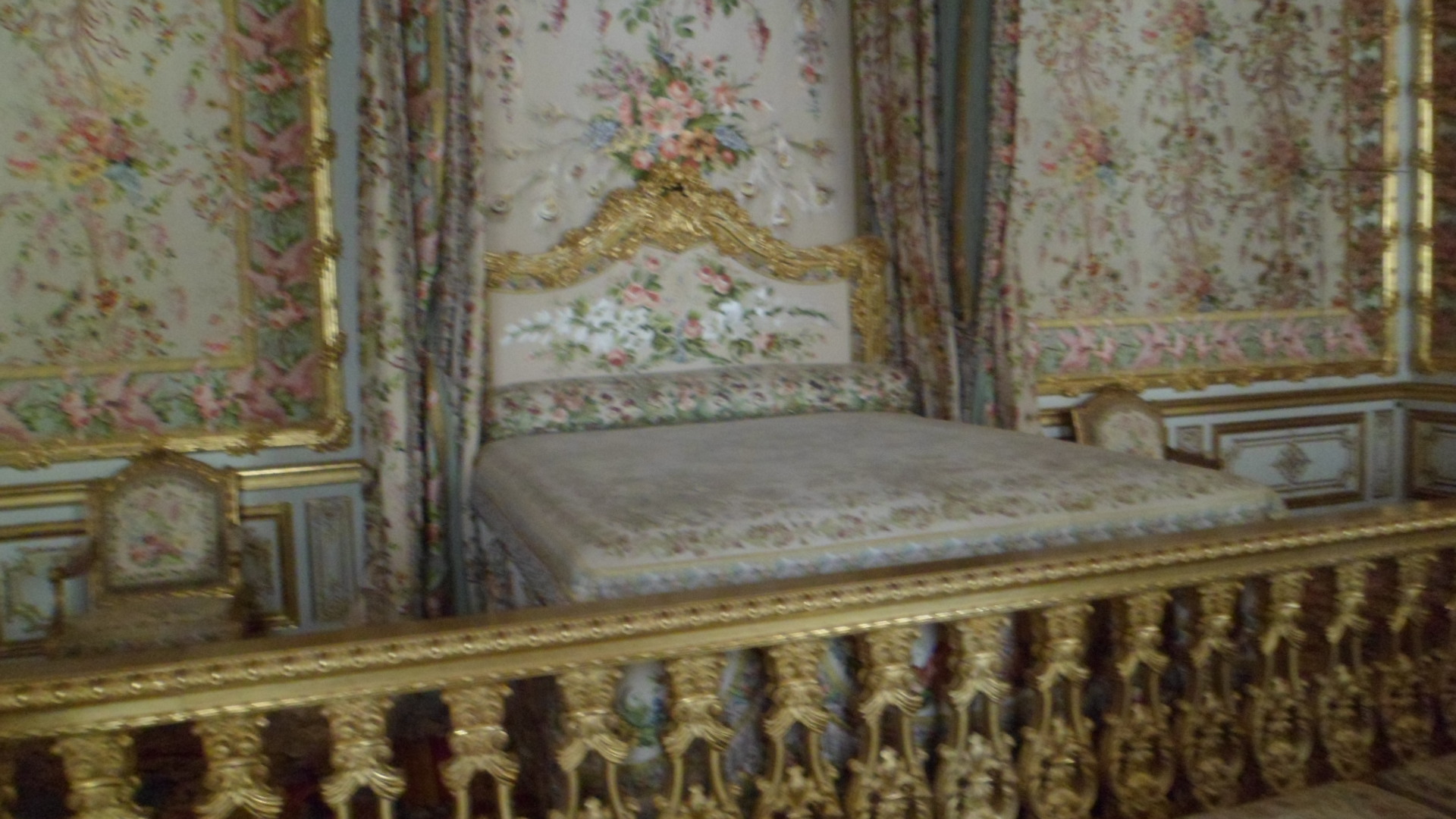
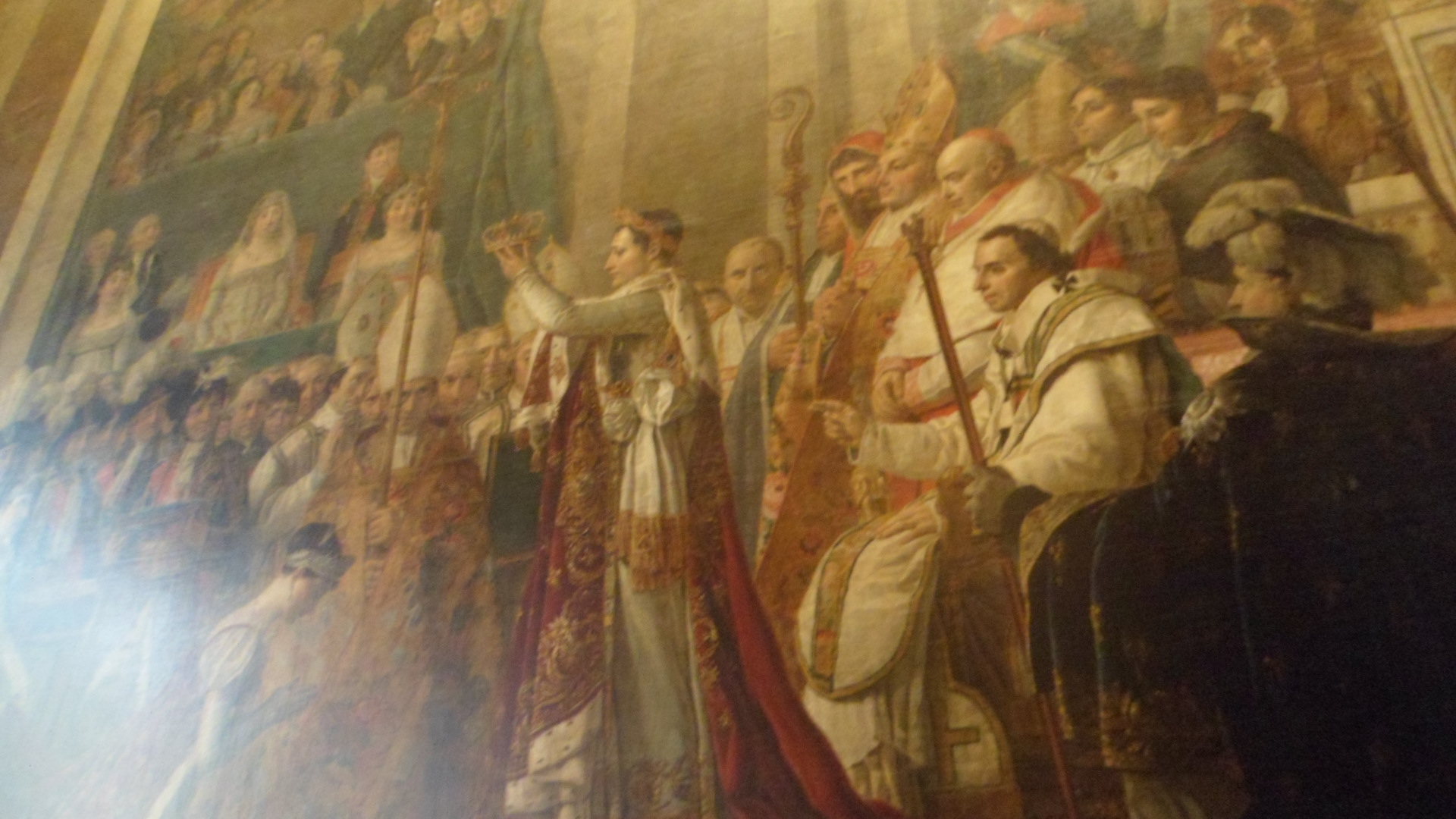
Views of the Queen’s bedchamber follow, with the famed portrait of Napoleon I, crowning first Empress Josephine, then himself, as a later addition to Court de la Reine.

SAM_9154
SAM_9165


SAM_9186
SAM_9192


SAM_9207

A view of the Inner Courtyard is next, and we finished our tour of the Chateau with visits to the apartments of Louis XV’s spinster daughters, Madame Victoire and Madame Adelaide. These ladies had little use for Marie Antoinette, their niece-in-law, and heeded the warnings by the peasant women who marched on Versailles, in 1789, leaving the Chateau for Italy, then for Greece, where they lived out the rest of their lives together.

SAM_9210
SAM_9214
SAM_9223


SAM_9225

The story of the Bourbons is a hard one, in the end, and fully illustrates how it is that we all have to hang together in this life, not vaunt ourselves over one another.

NEXT:  The Palace Gardens

An Eastward Homage, Day 7, A Paris Walkabout, Part 2: In Search of Concord

4

One of the draws of Paris is the Left Bank of the Seine, the area of Sorbonne, Les Jardins de Luxembourg, and Notre Dame Cathedral. The Left Bank also features the American Church of Paris and the Eiffel Tower, or Tour Eiffel. I was able to spend quality time on both banks of the Seine, upon leaving Tuileries.The place to begin, for me, was Place de la Concorde. Below are slightly elevated views of this historic, and bustling place.

SAM_9003
SAM_9004


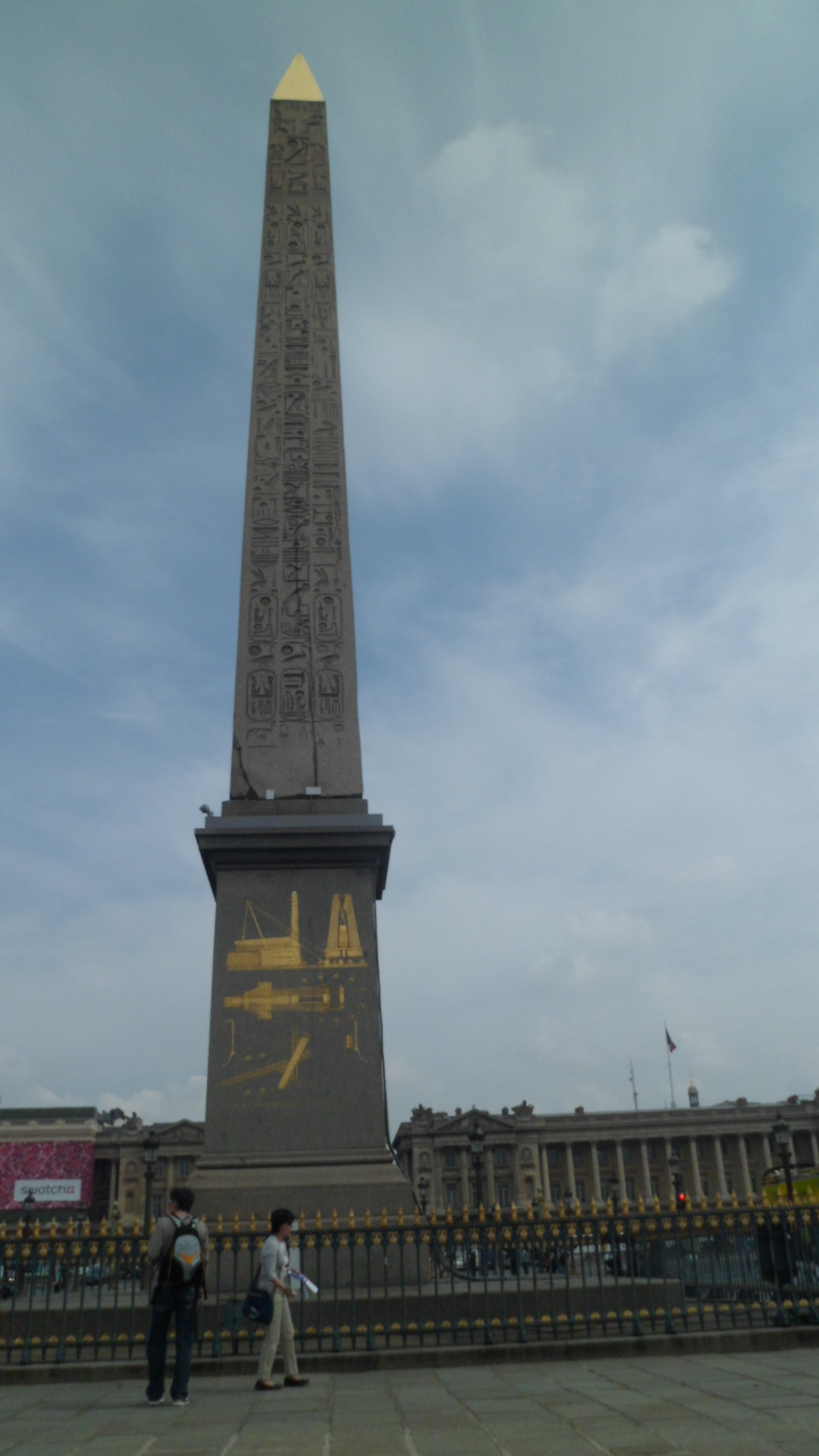
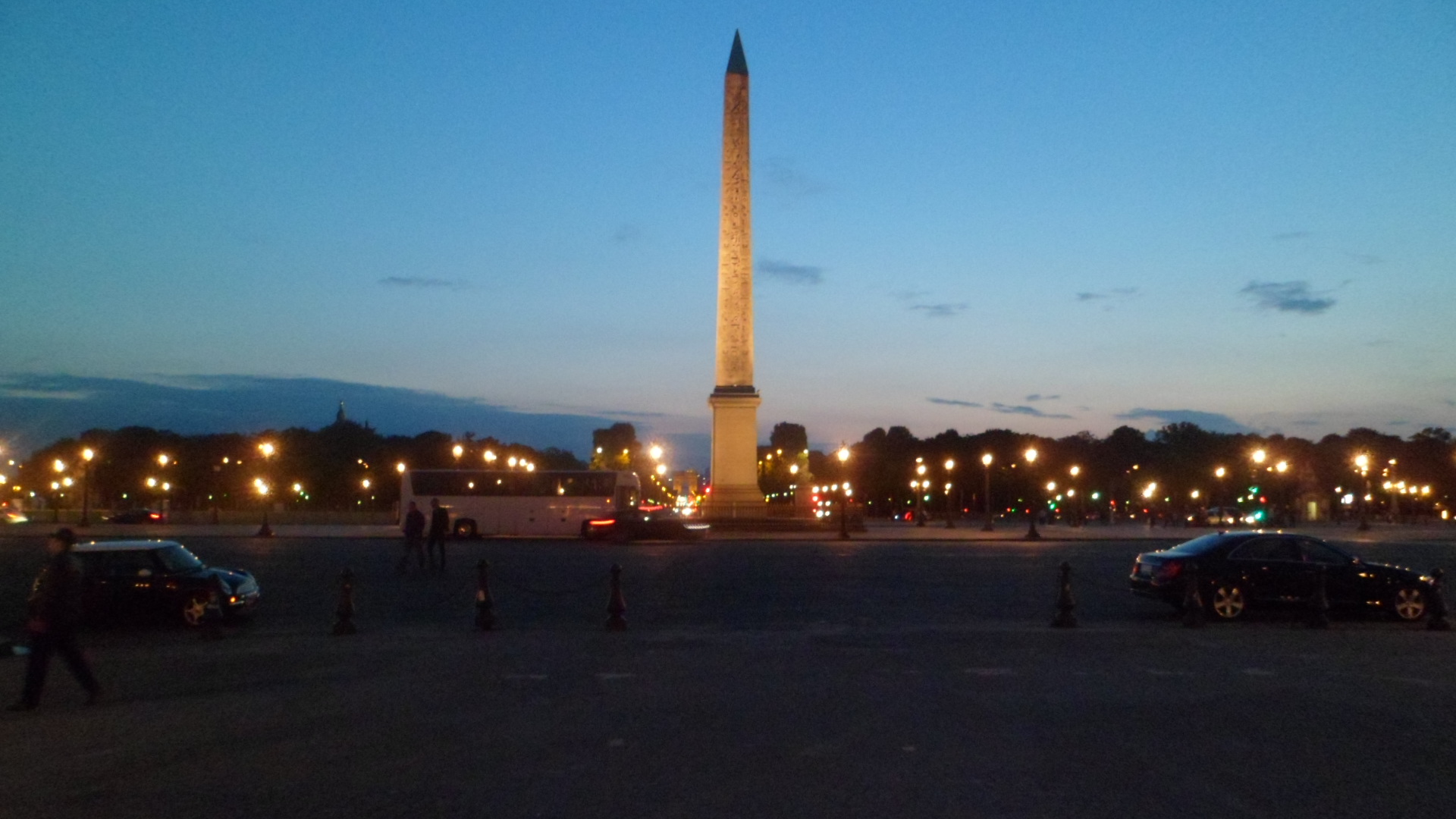
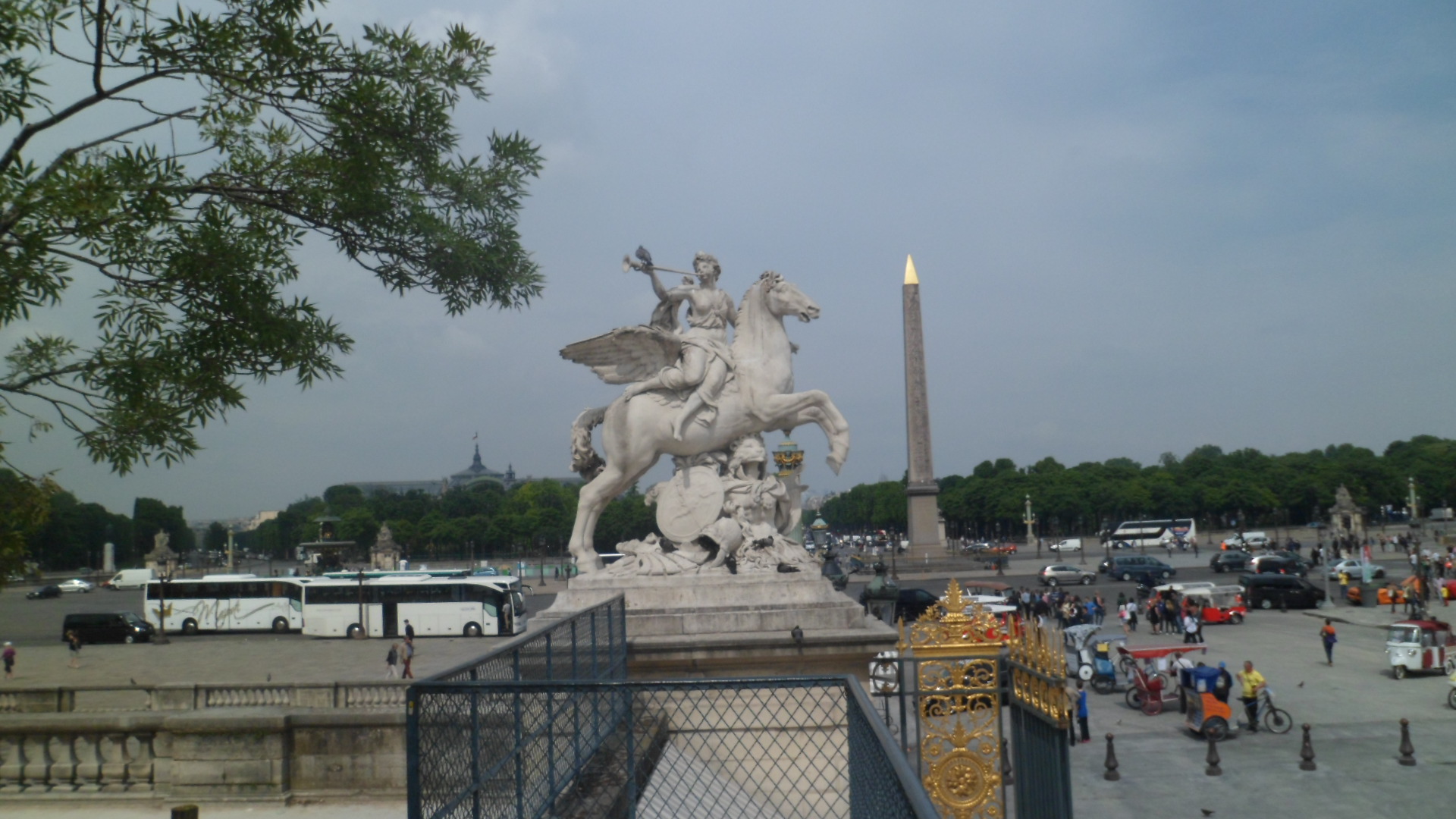
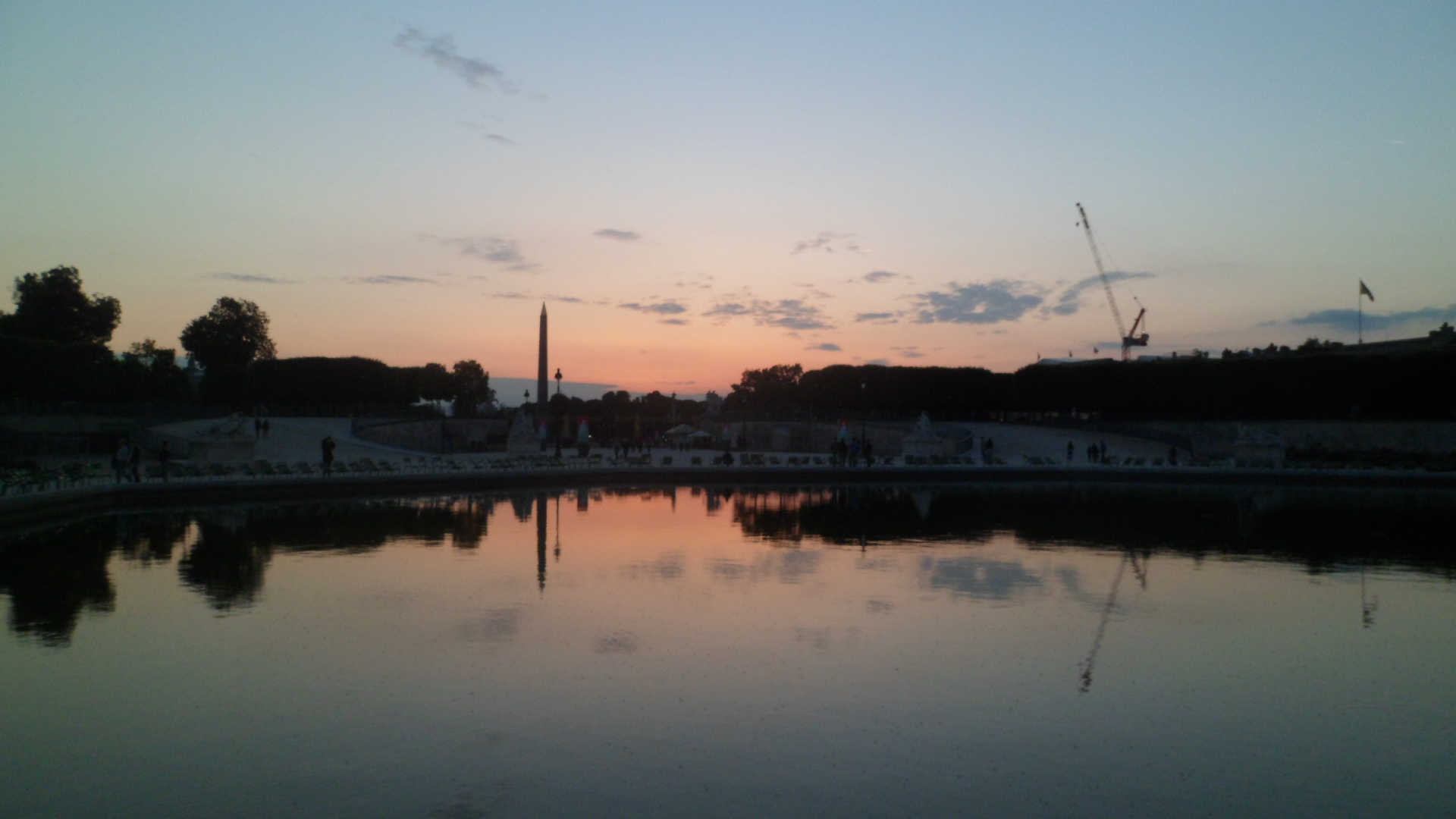
The whole thing with the golden, and the gilded, in this site of compelling history, is that it is only very recently in the scheme of things that the gold has come to belong to the people. King Louis Philippe I, in the mid-19th Century, found his forebears’ self-obsession misguided, and determined that it was the nation of France, not the king himself, which was due for glory. Thus, the royal properties came to truly belong to the people. In the midst of Place de la Concorde is an obelisk. It symbolizes France’s endurance, and was designed to liken the country’s glory to that of Egypt. Nicknamed Cleopatra’s Needle, the structure was Louis Philippe’s way of showing France, and the world, that the Revolution was over, as it replaced the guillotine that occupied this spot. In fact, he would be the focus of the people’s anger during the upheavals of 1848, and would leave France again in the hands of the Bonapartes. Here is the obelisk, which is better than a guillotine, in my humble estimation. SAM_9010 SAM_9012     SAM_9057

As with all Bourbon-era public monuments, Place de la Concorde has its share of allusions to classical Greek and Roman mythology. We see this abundantly in Tuileries, the Louvre and the Chateau de Versailles. Here, a cherub blows his trumpet, whilst mounted on Pegasus.SAM_9005

Andre Le Notre was one of the main architects of Tuileries, and of the magnificence that surrounds the gardens, on both sides.

SAM_9006

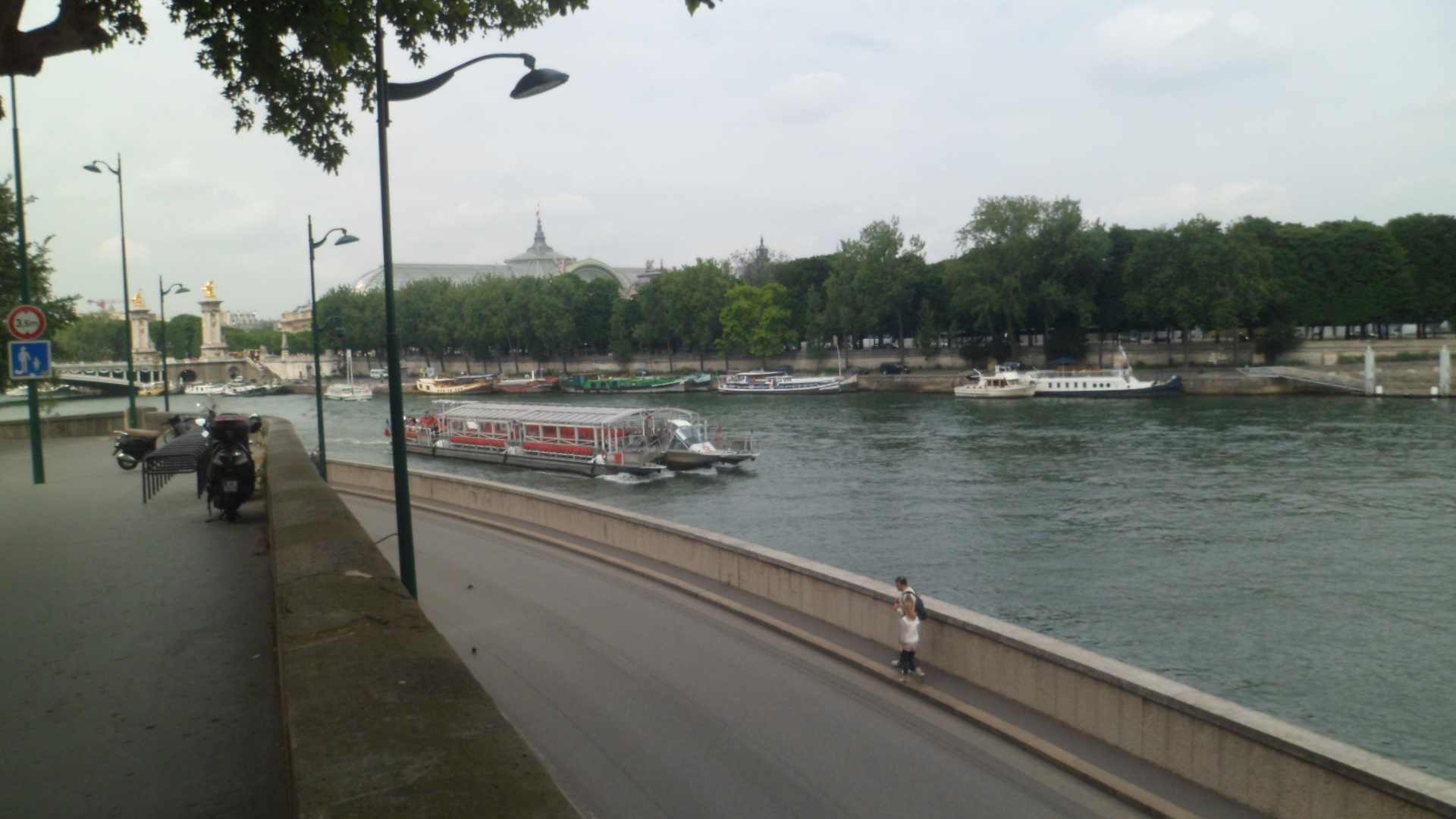
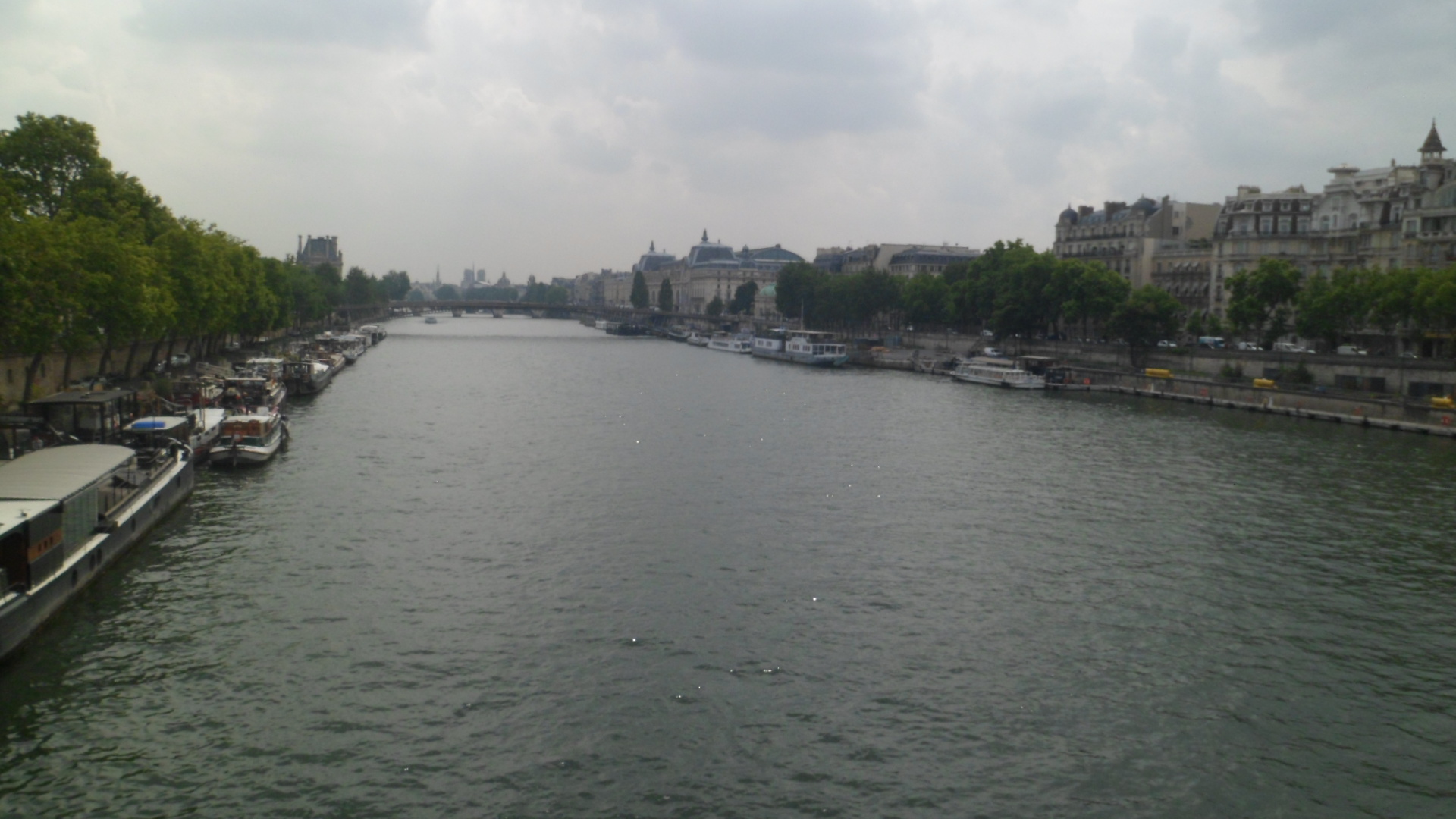
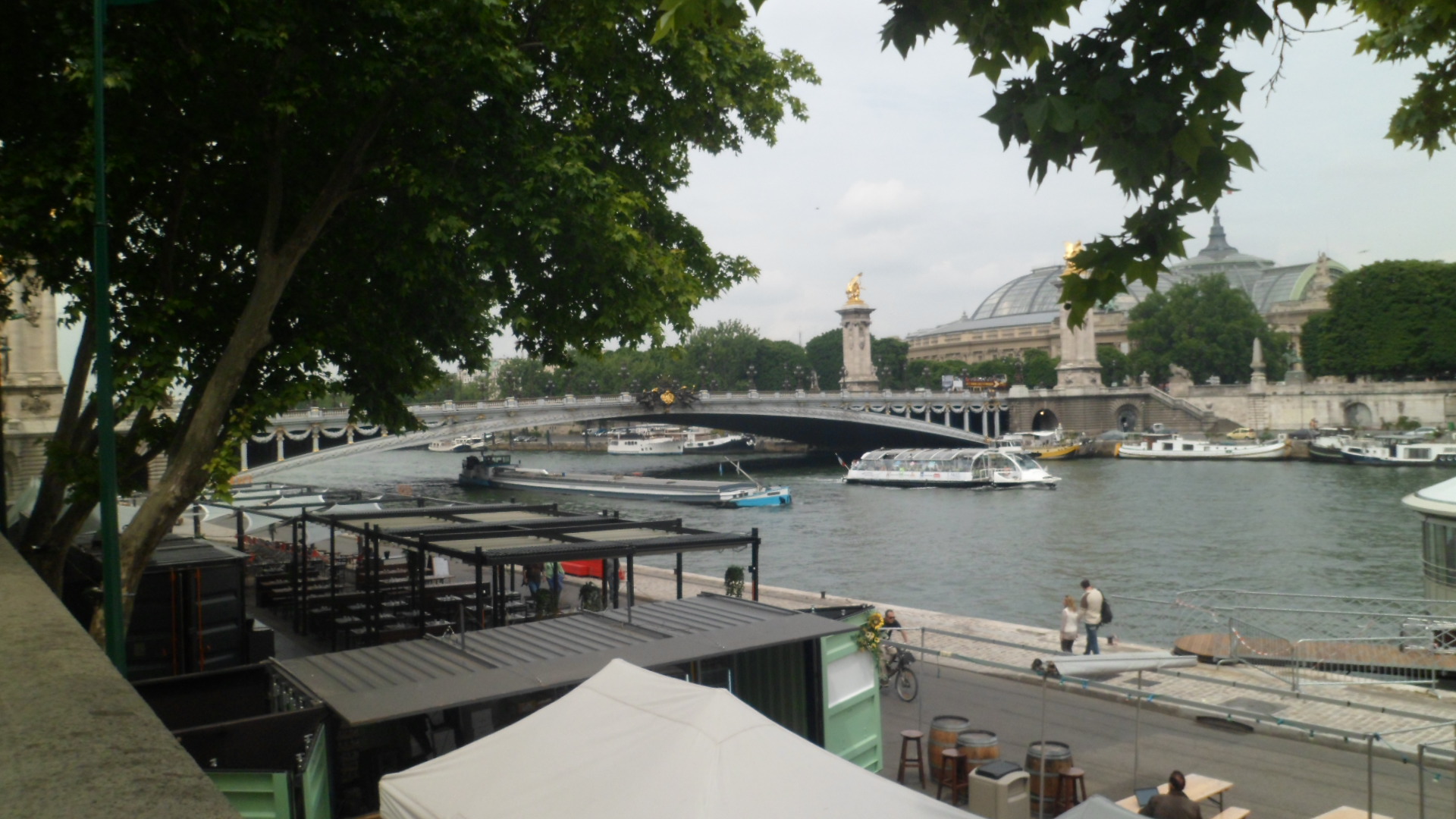
Once sauntering past Place de la Concorde, the magnificence continues. My path took me along the Seine, on the Left Bank, but towards Embassy Row and Le Tour d’Eiffel, rather than towards Ile de la Cite and the Latin Quarter. Roma people came up to me three times, along the Seine. Each one would drop a gold ring in the dust, pretend to have just found it, and offer it to me, as a souvenir of Paris, for “petit monnaie”. I deferred each time, having actually seen them drop the piece. Here is the Seine, from the Romani vantage point.

SAM_9022
SAM_9017
SAM_9025


Given the right incentives, I think the Roma make marvelous LEGITIMATE entrepreneurs. I know a few here in the States who have become so. Next, I came upon an East Asian couple, just married in the American Church of Paris, who were having their wedding photos taken in front of the church. A few business people insisted on photo-bombing the scene, but I was brought up differently, and kept a respectful distance. Here is a view of the church. SAM_9031

I turned the corner, past Musee d’Orsay, and headed towards Le Tour d’Eiffel, but first noted this homage to those who worked against the Nazis and their minions, during World War II. SAM_9032

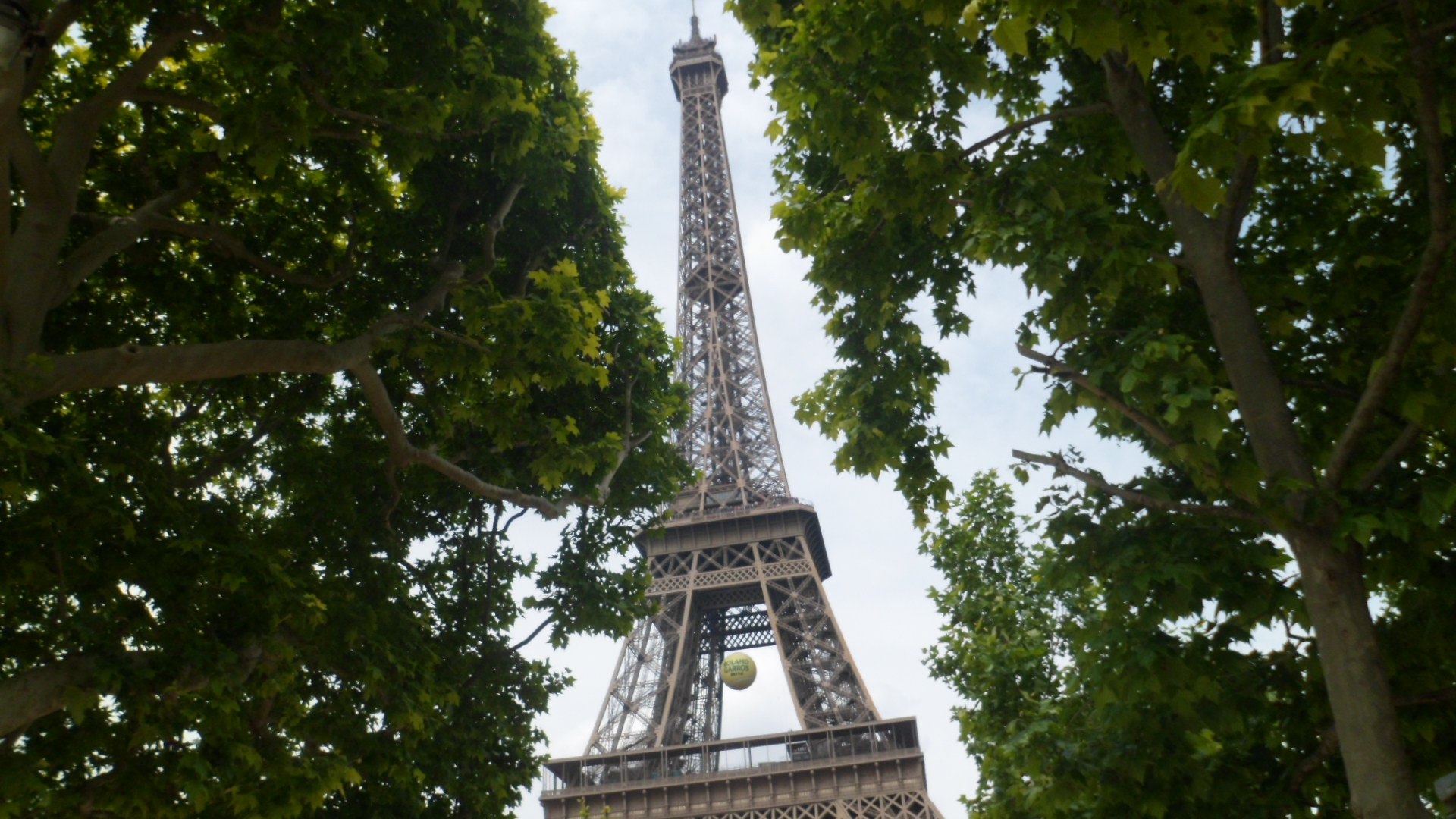
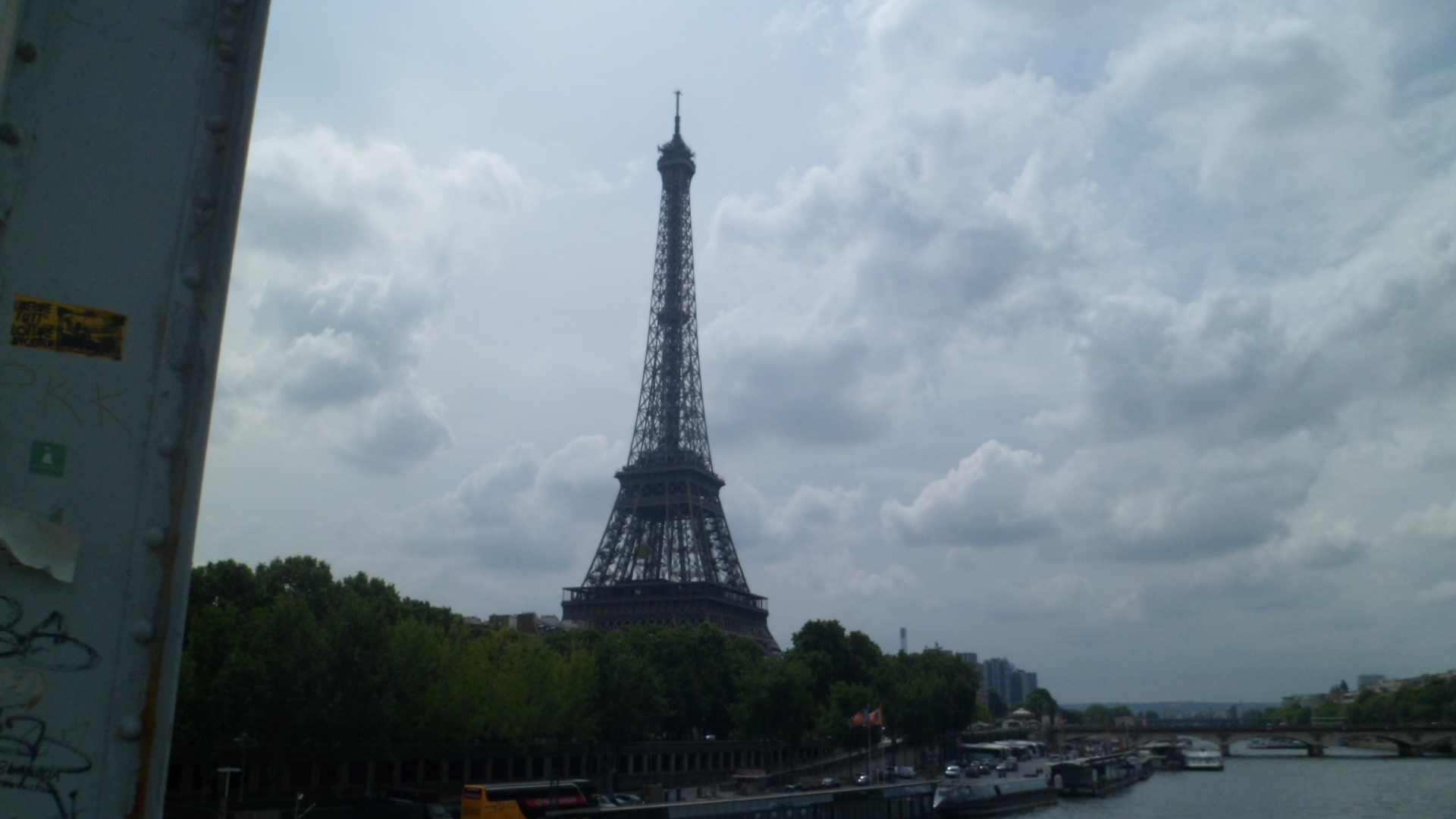
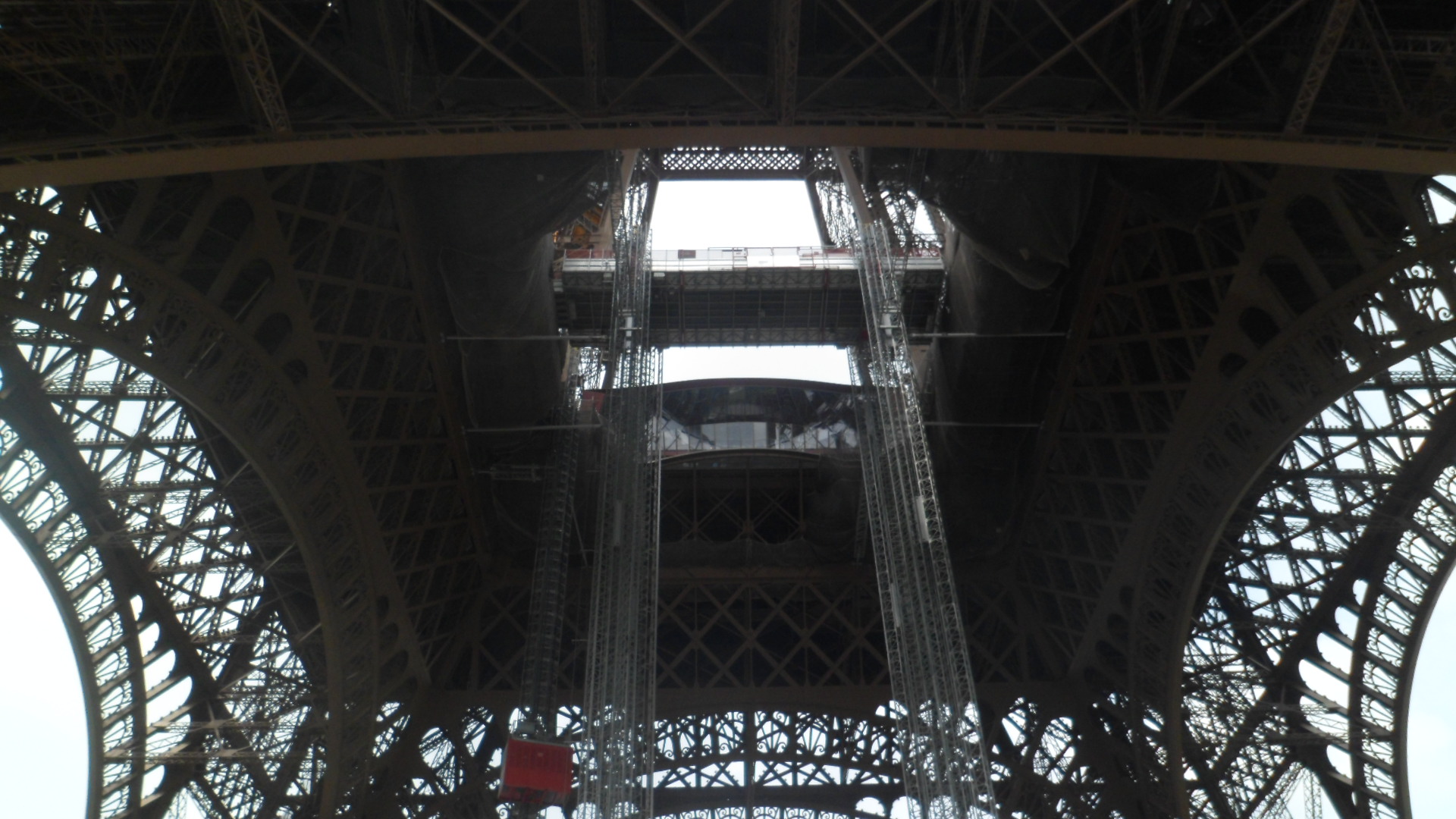
Eiffel Tower is an imposing monument, surrounded by the signature beautiful French gardens, which are everywhere, and always tres magnifique. After a nice “emportee” (to-go) lunch in La Reservee ( the park surrounding the tower), I took photos from the base, opting not to climb the tower, as the lines were long and I had much to yet accomplish in the hours ahead. Here is a view of the garden. SAM_9035

Now, for some views of Le Tour d’Eiffel, by day and by night. SAM_9036 SAM_9039 SAM_9037 SAM_9056

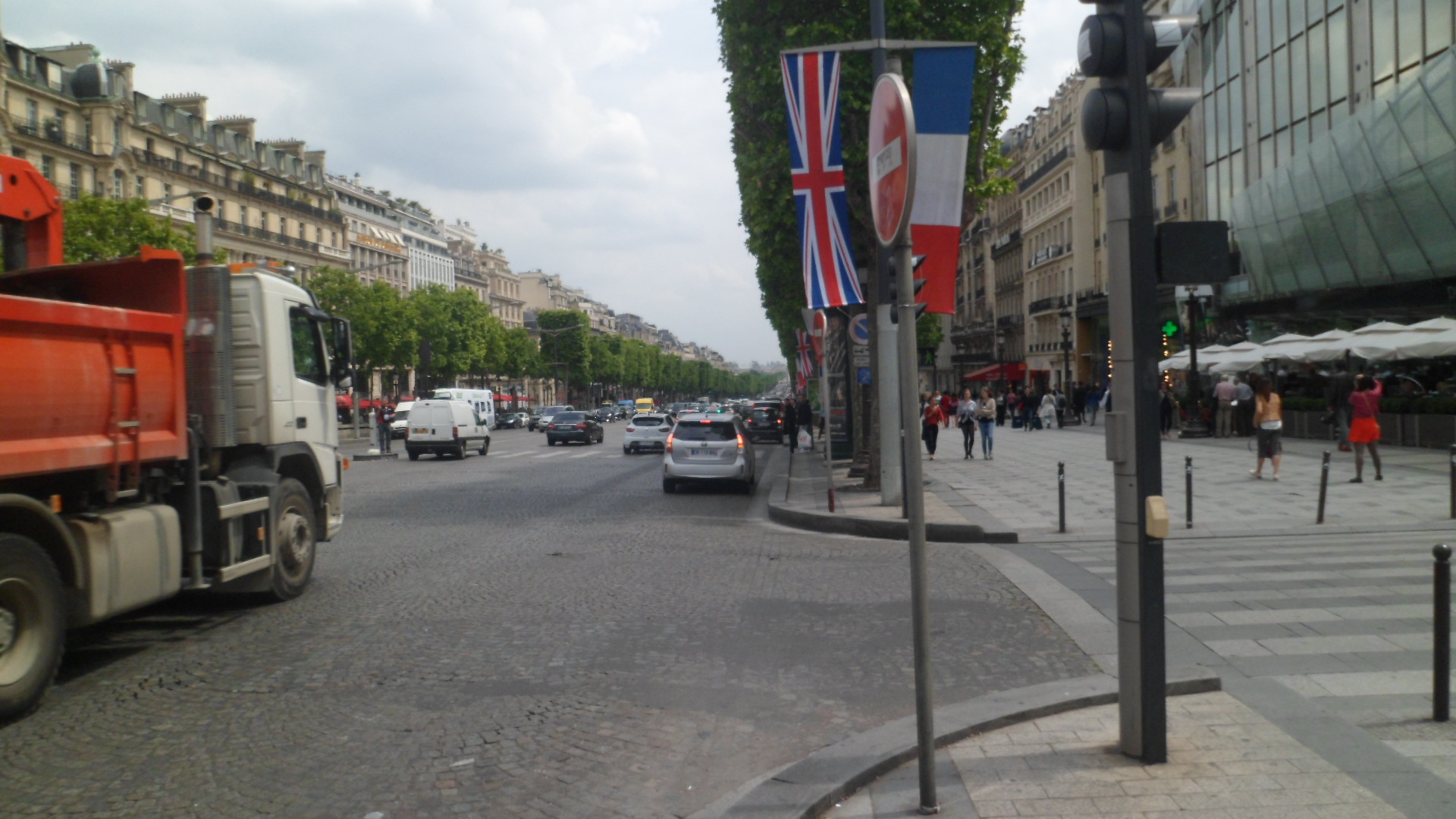
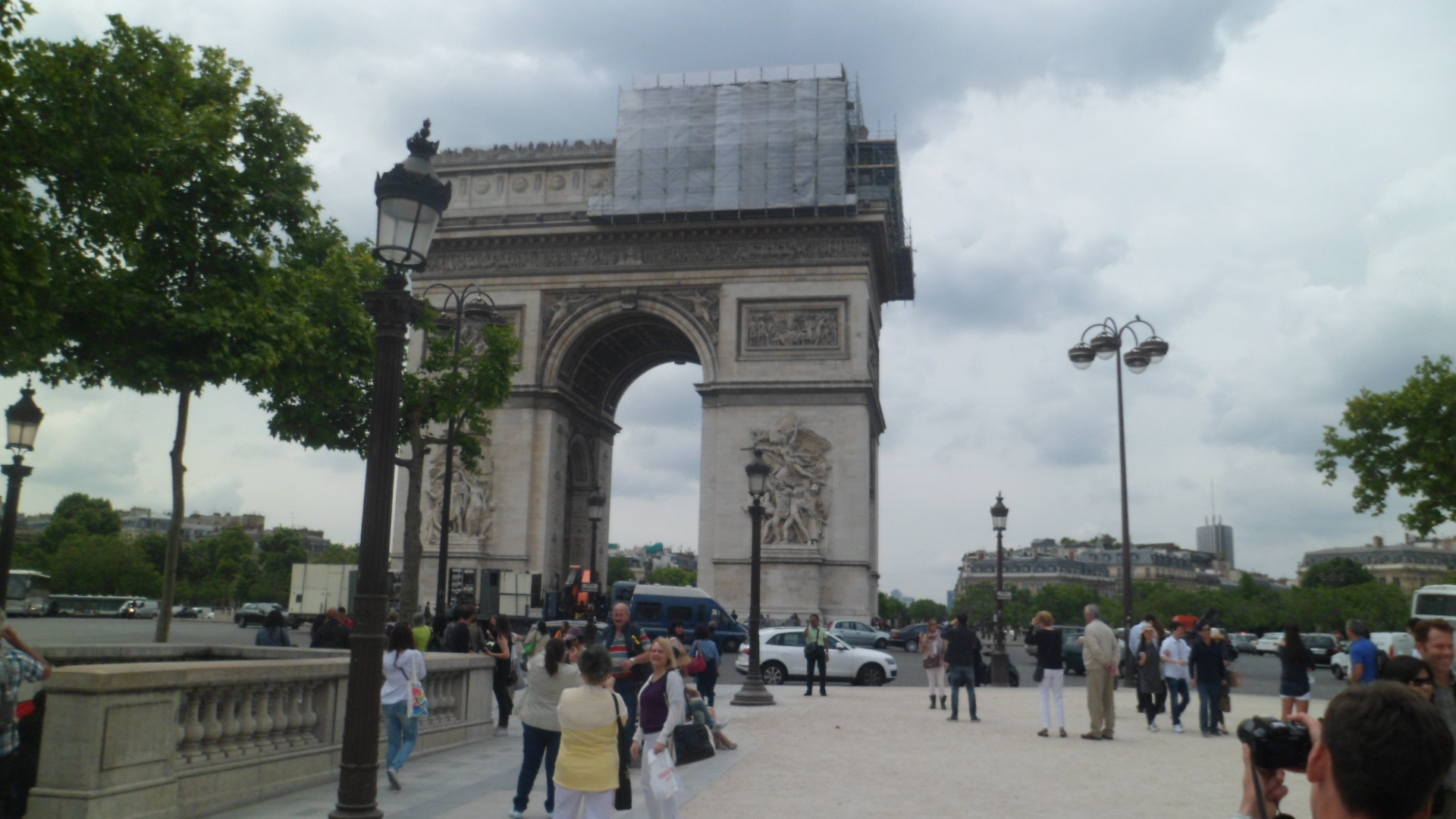
Equally impressive is L’Arc de Triomphe. The traffic on Champs Elysees is phenomenal and swift, but I got close enough for several scenes.

SAM_9043
SAM_9046
SAM_9047


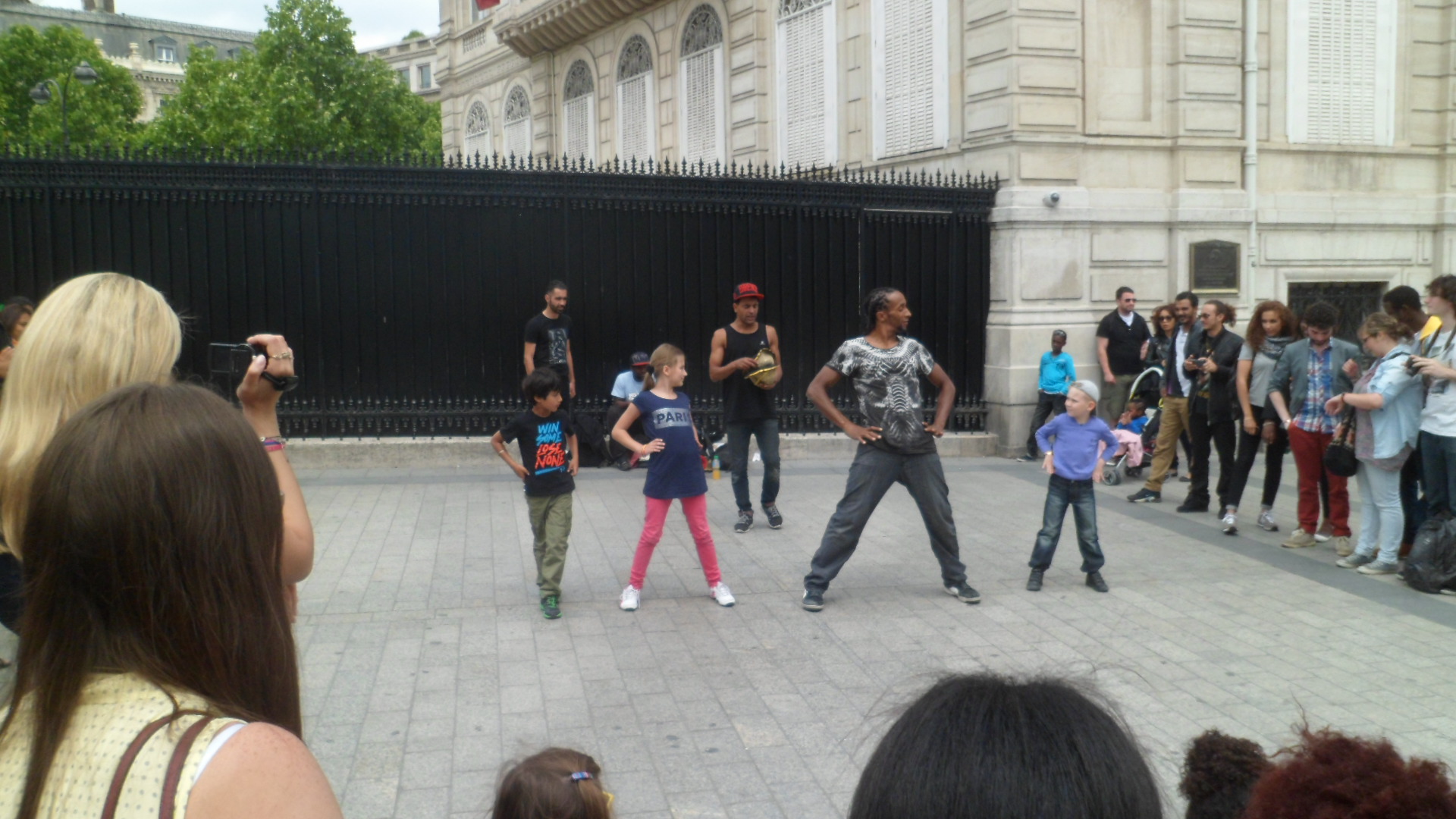
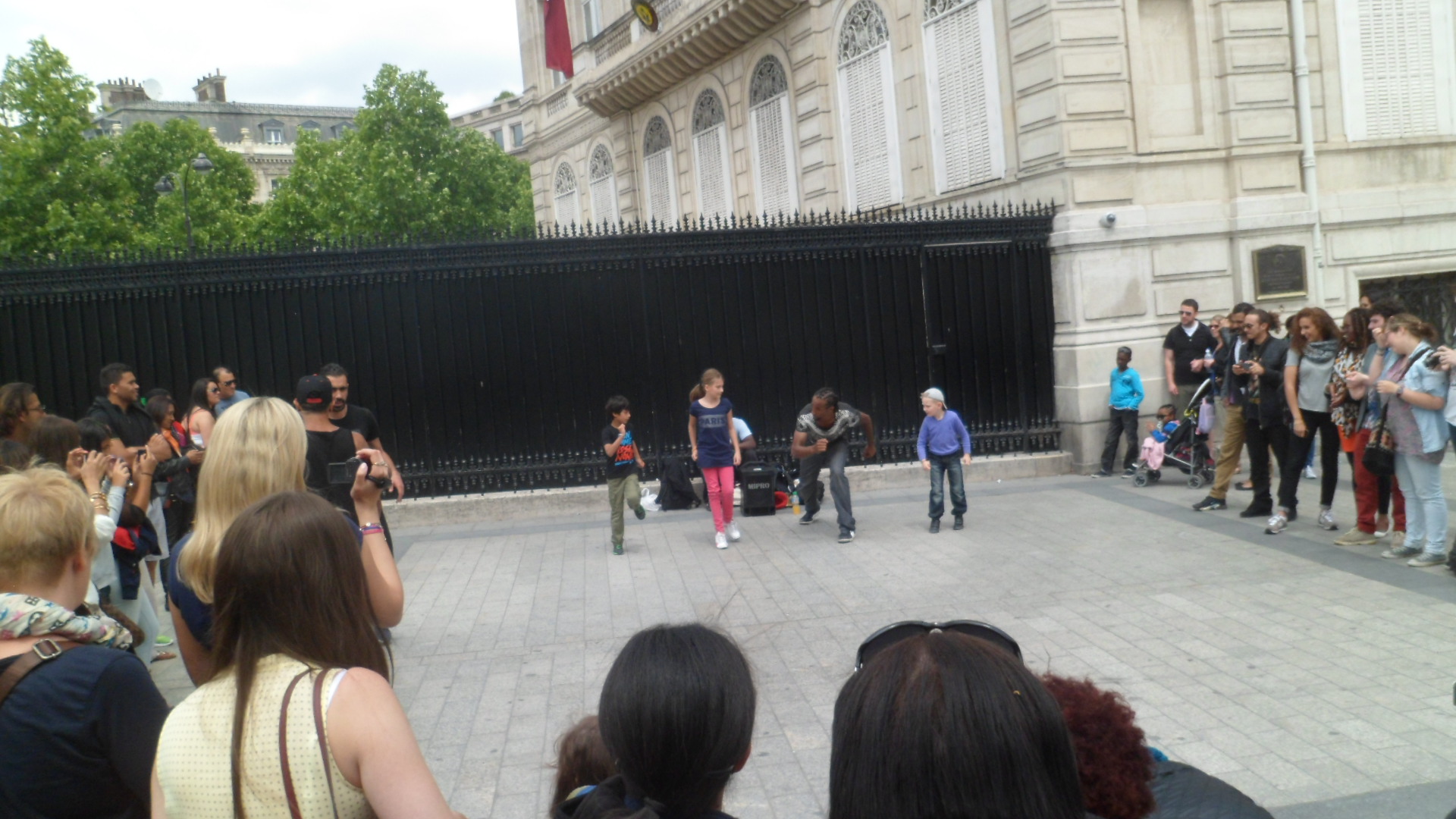
In the vicinity of the Arch, some impromptu dancers were performing, to the strains of Pharrell Williams’ “Happy” and Psy’s “Gangnam Style”. SAM_9045   SAM_9044

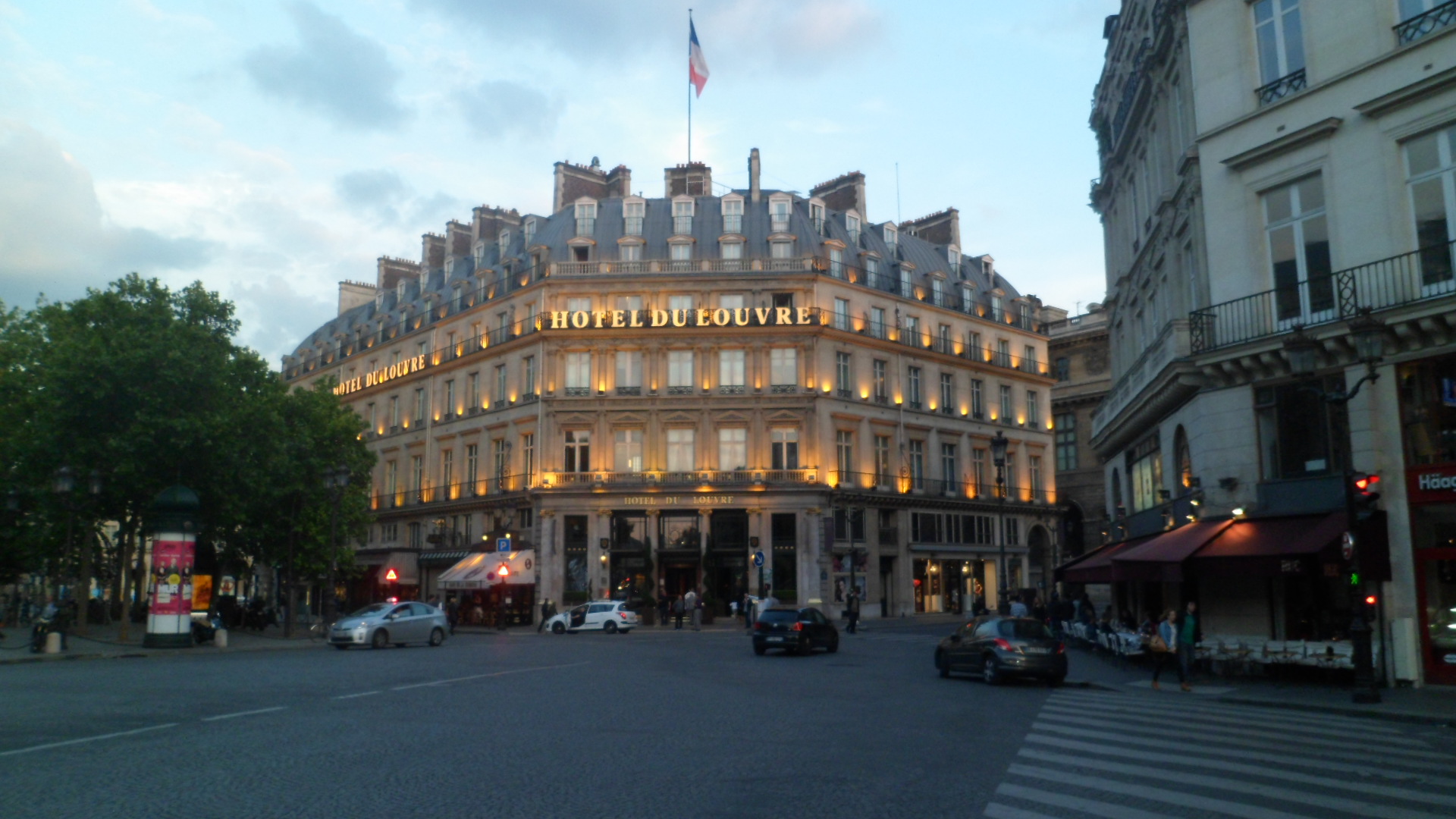
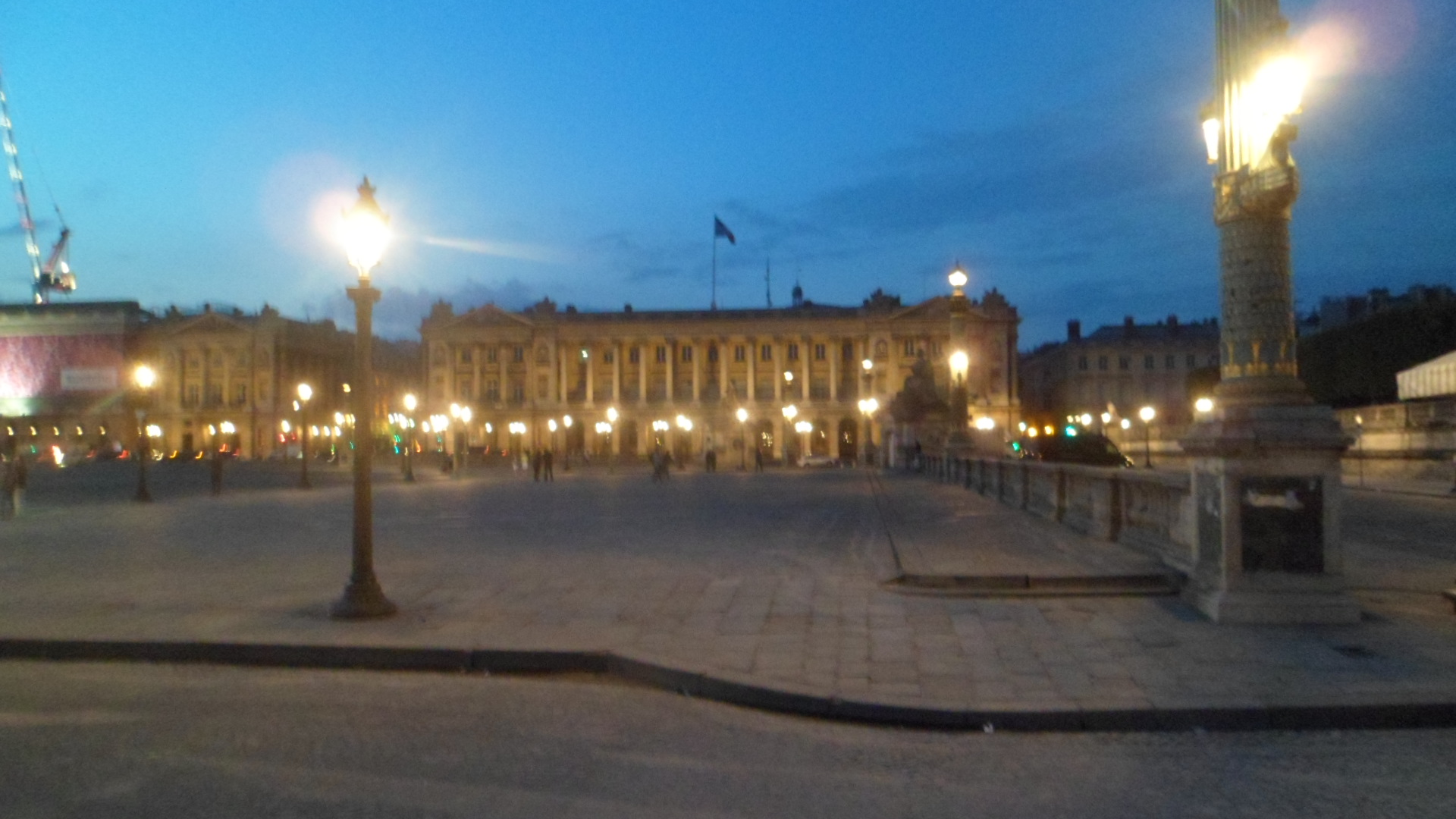
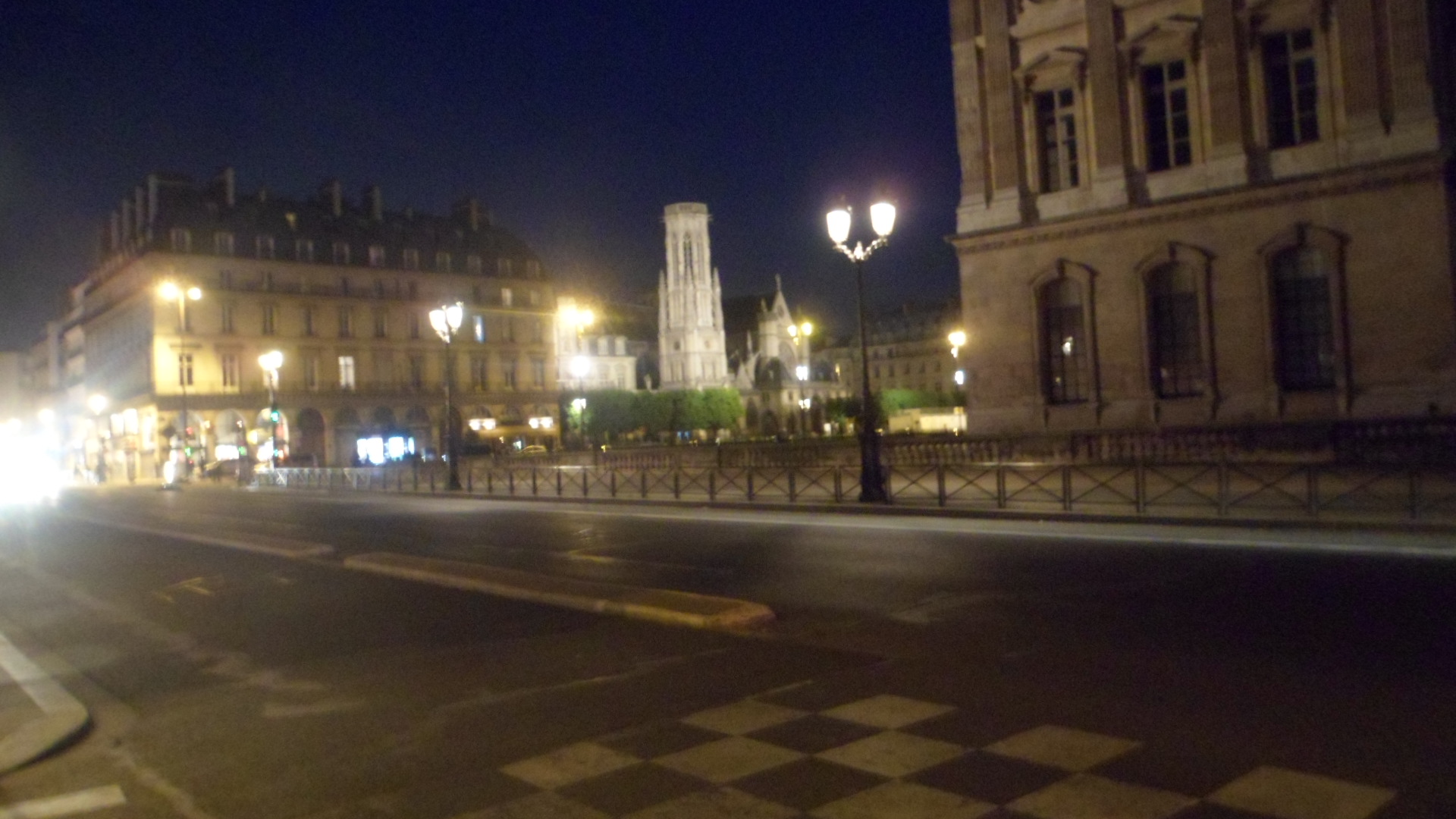
After dinner, I ventured back to the area of Tuileries and La Place de la Concorde, for the above photos of Paris by Night, and for the following. SAM_9050 SAM_9059   SAM_9054 SAM_9063

Such was the first, very full day of my first complete day in the City of Light.

NEXT:  A Day in Versailles, Chateau and Town

A Few Words From The Laptop

2

Hi, gang.  This is Gary’s computer speaking.  I know, I was a wet blanket on the European trip, but my battery didn’t take well to the wall charging over there, even with the very competent adapter/converter which, by the way, the camera and cell phone liked just fine.  I guess I’m just spoiled.

Anyway, we are back on U.S. soil, having arrived here yesterday afternoon, via Montreal.  Once he and I got to Saugus, MA, last night, Gary plugged me in, and I gratefully recharged my battery. So, with gratitude towards my fellow machines in the European Cybercafes, who kept you all posted on our whereabouts, these past few weeks, I am ready to get back to work on the many,many photo posts that are coming your way- on the rest of Paris, northern France, Belgium, Luxembourg and a swath of central Germany.  We will also have intermittent posts on this week in Massachusetts, especially on the Fourth of July.

So, thanks for your forbearance.  Tomorrow, we will present photos on Place de la Concorde and on Paris By Night.  Hope you will rejoin us.  I know, it’s been a long time.

Sincerely,

Lenovo

An Eastward Homage, Day 7: A Paris Walkabout- Part 1, Tuileries

7

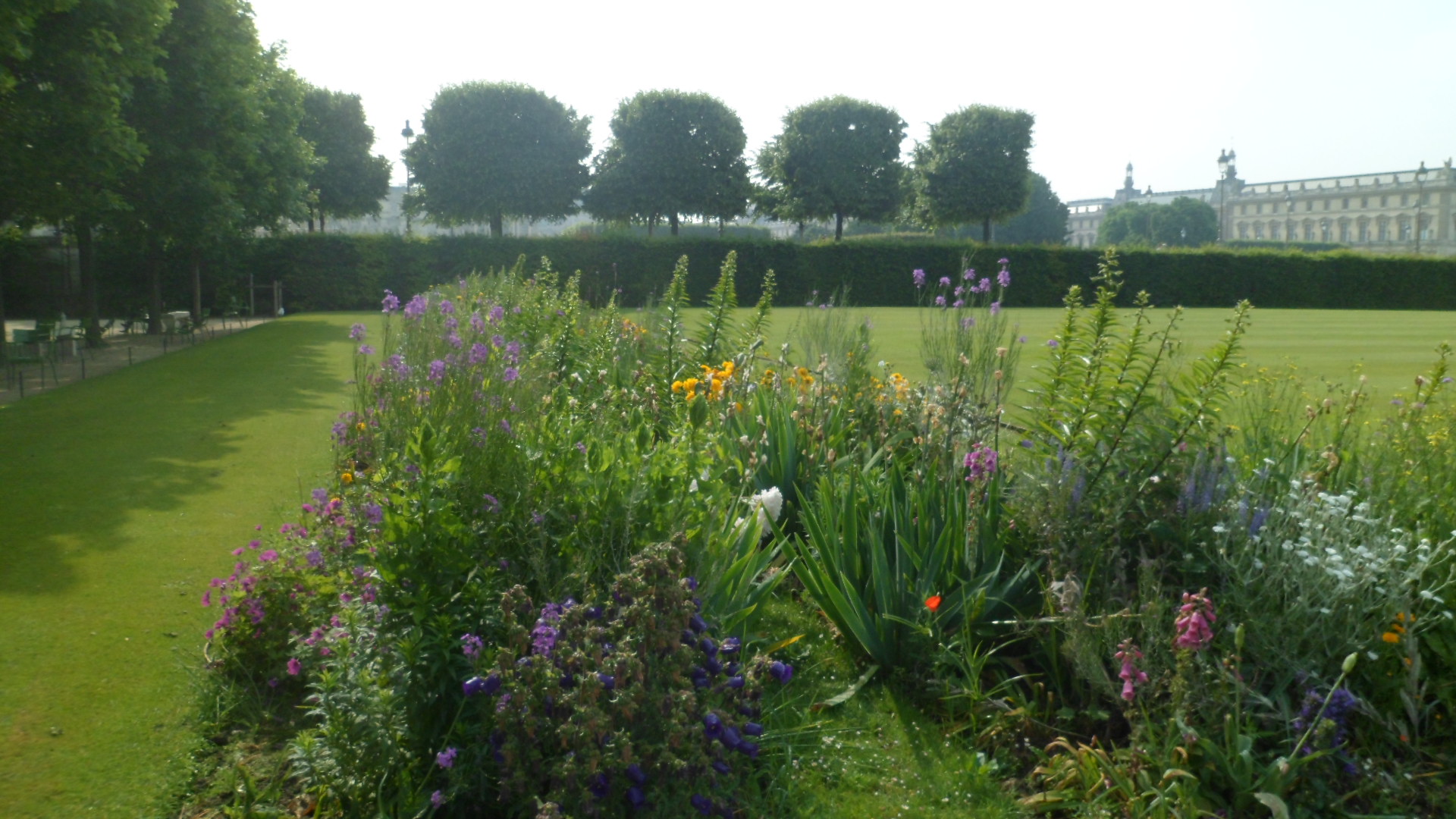
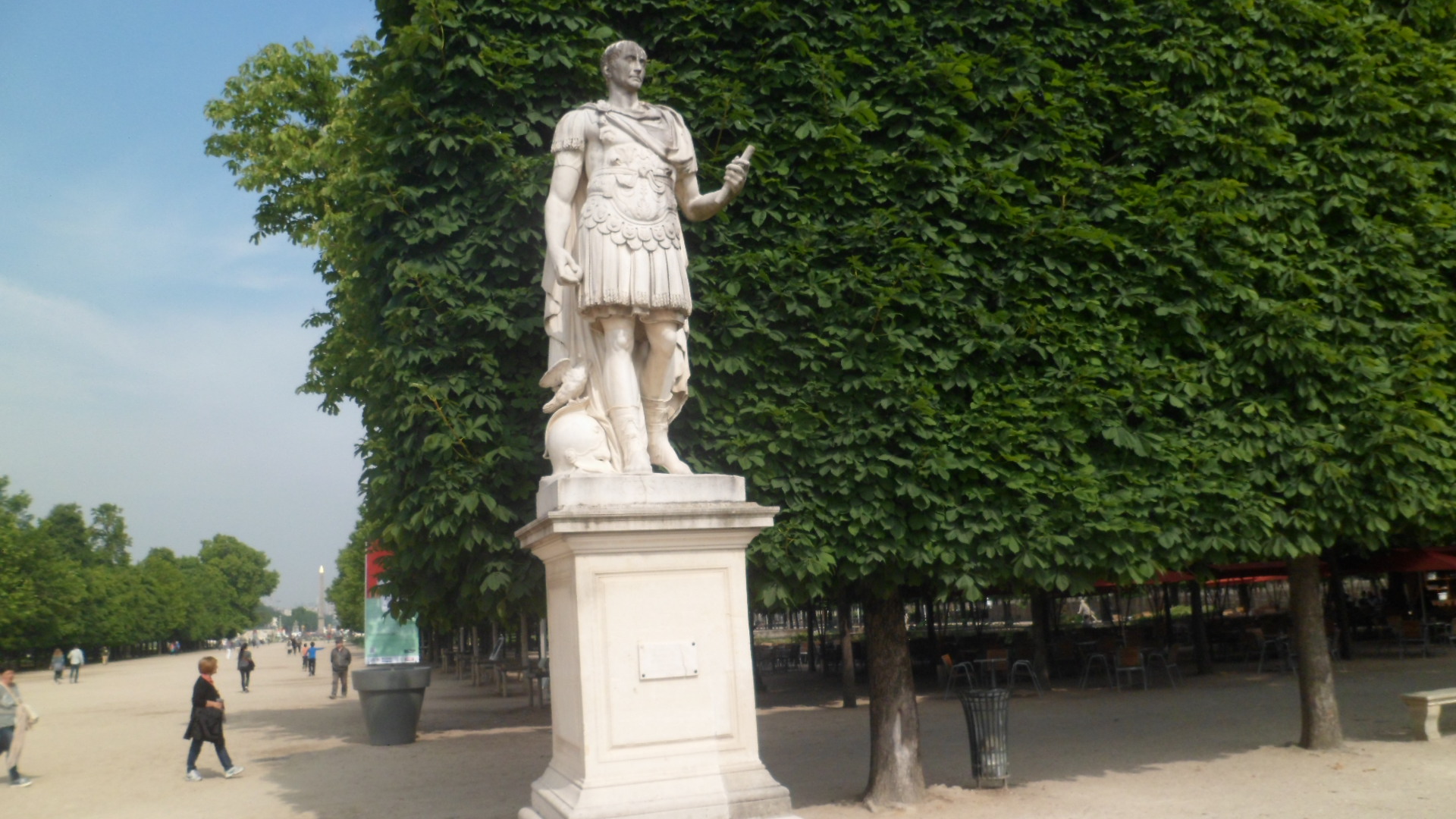
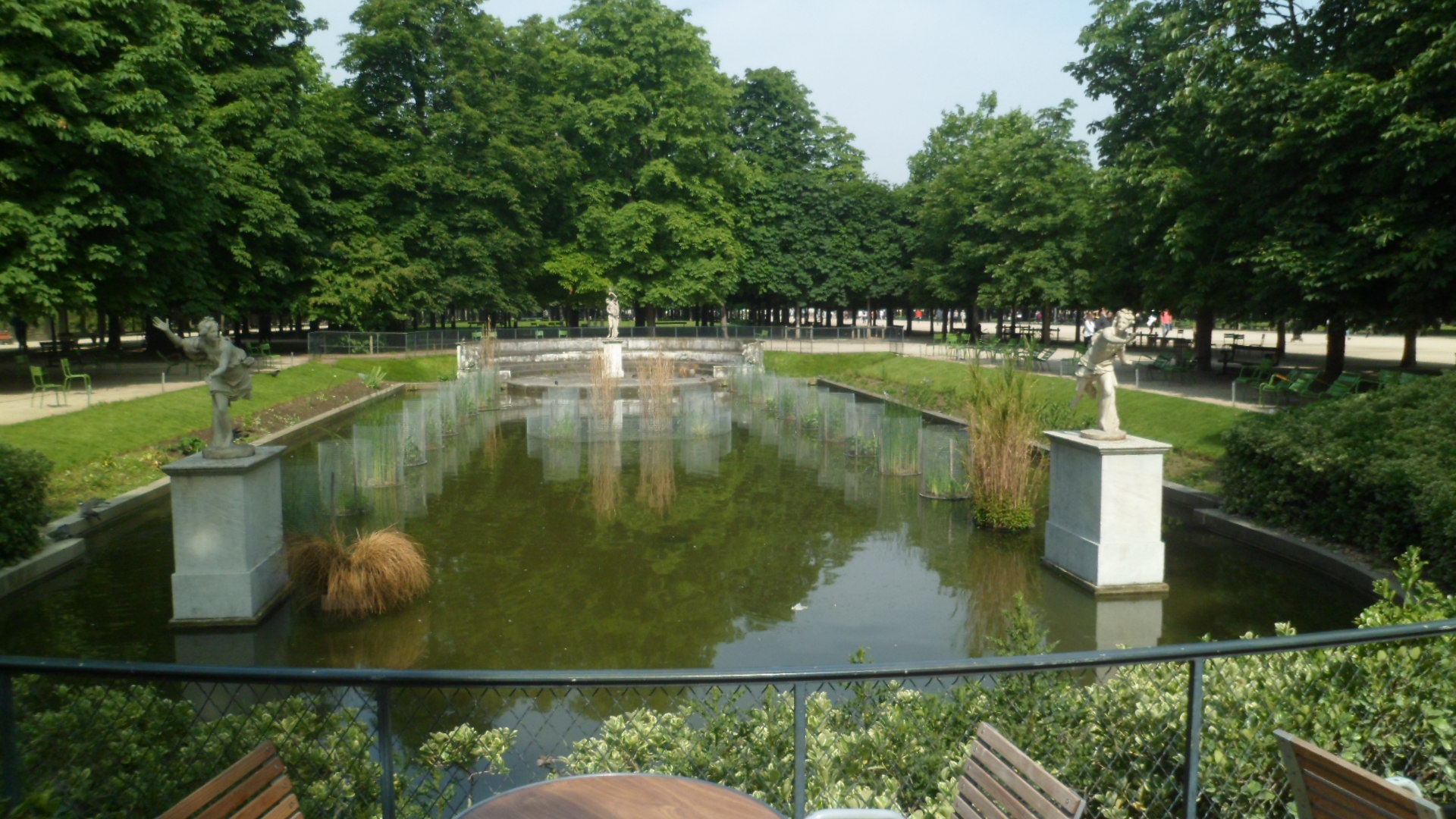
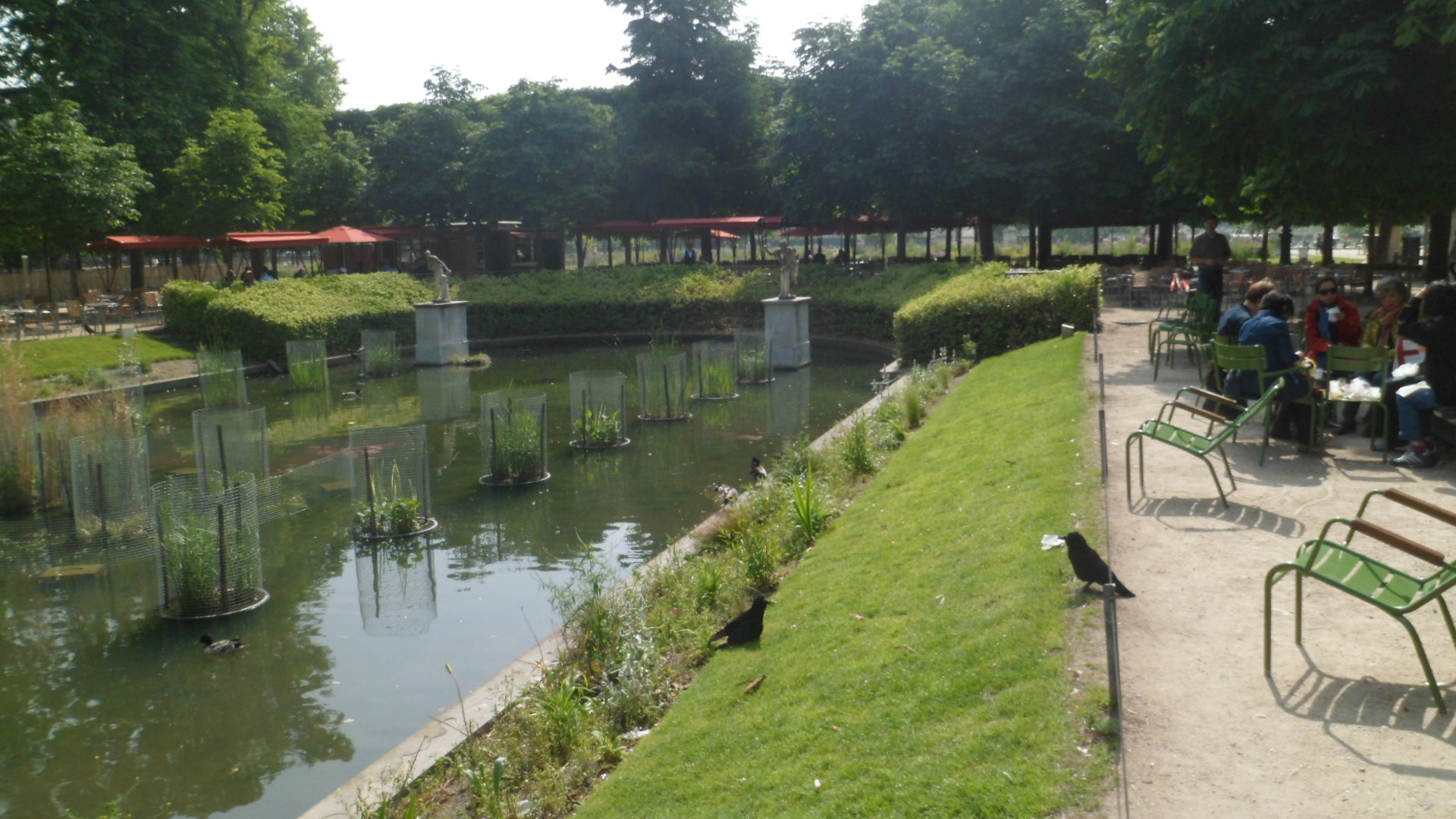
I had started Monday, June 2, intending to tour the Louvre.  Several things transpired which made that not practical for this morning, so I switched Monday’s plan with Wednesday’s.  Thus, I spent 2 1/2 hours on Monday morning, walking Tuileries, the gardens and sculpture areas which were the grounds of the Bourbon dynasty’s Paris place of residence. Louis XVI and Marie Antoinette were confined here, after the Revolution of 1789.

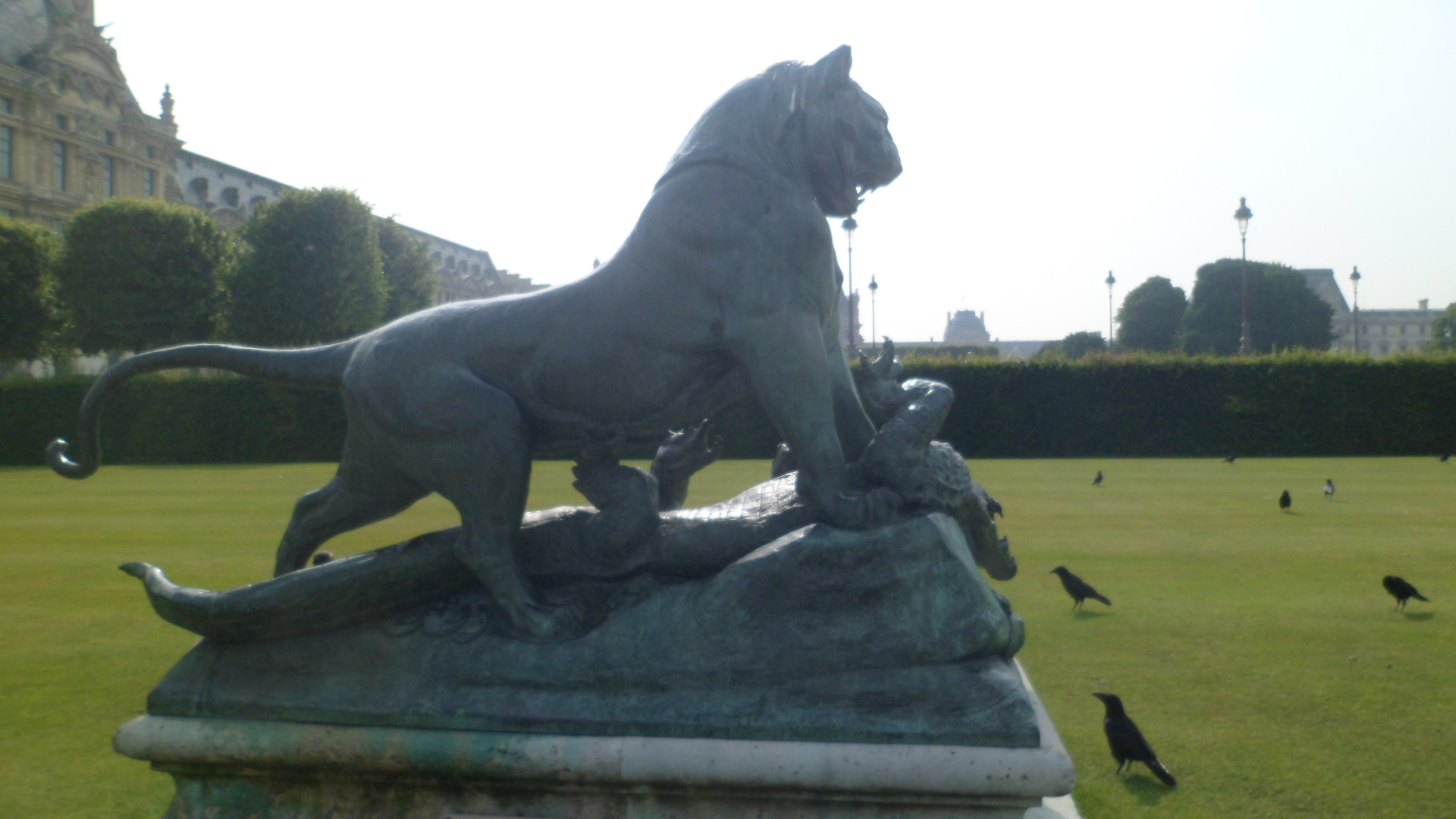
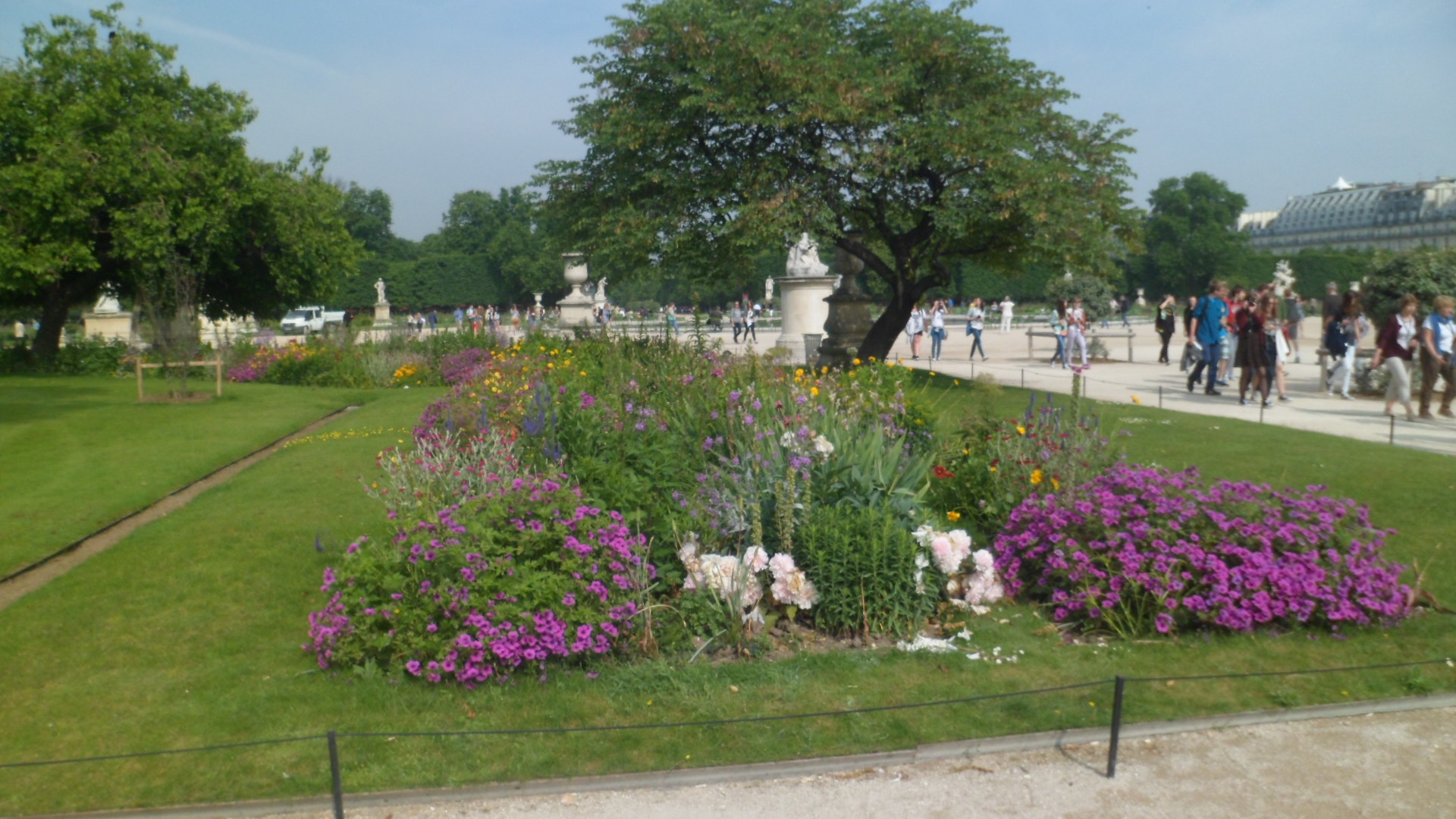
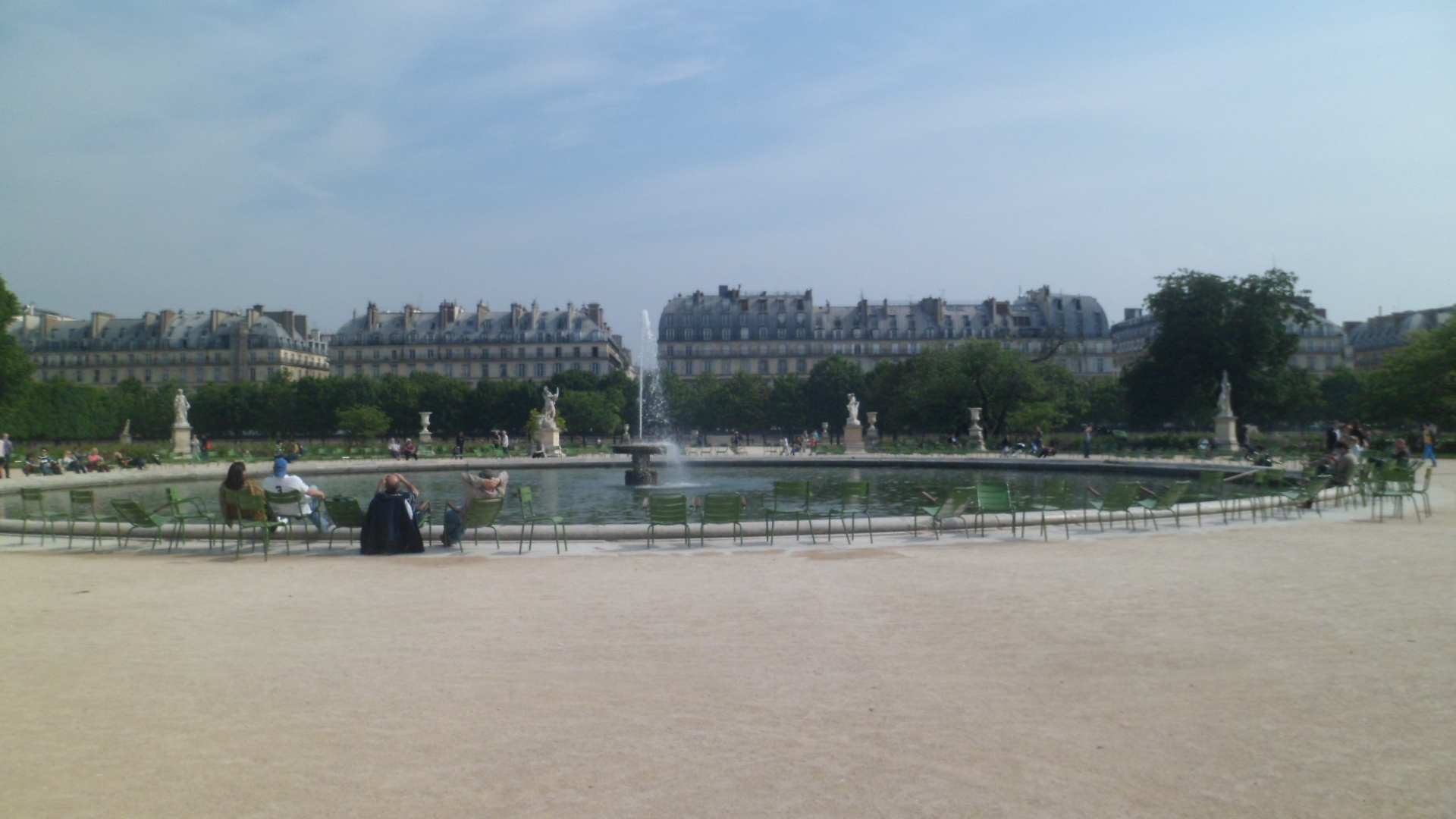
Confinement is a relative term.  The expanse that is Tuileries fronts a greater expanse, that we know today as the Louvre.  Here are some scenes from this fine garden area.  Actually, this statue of Jeanne d’Arc is across the street from Tuileries.
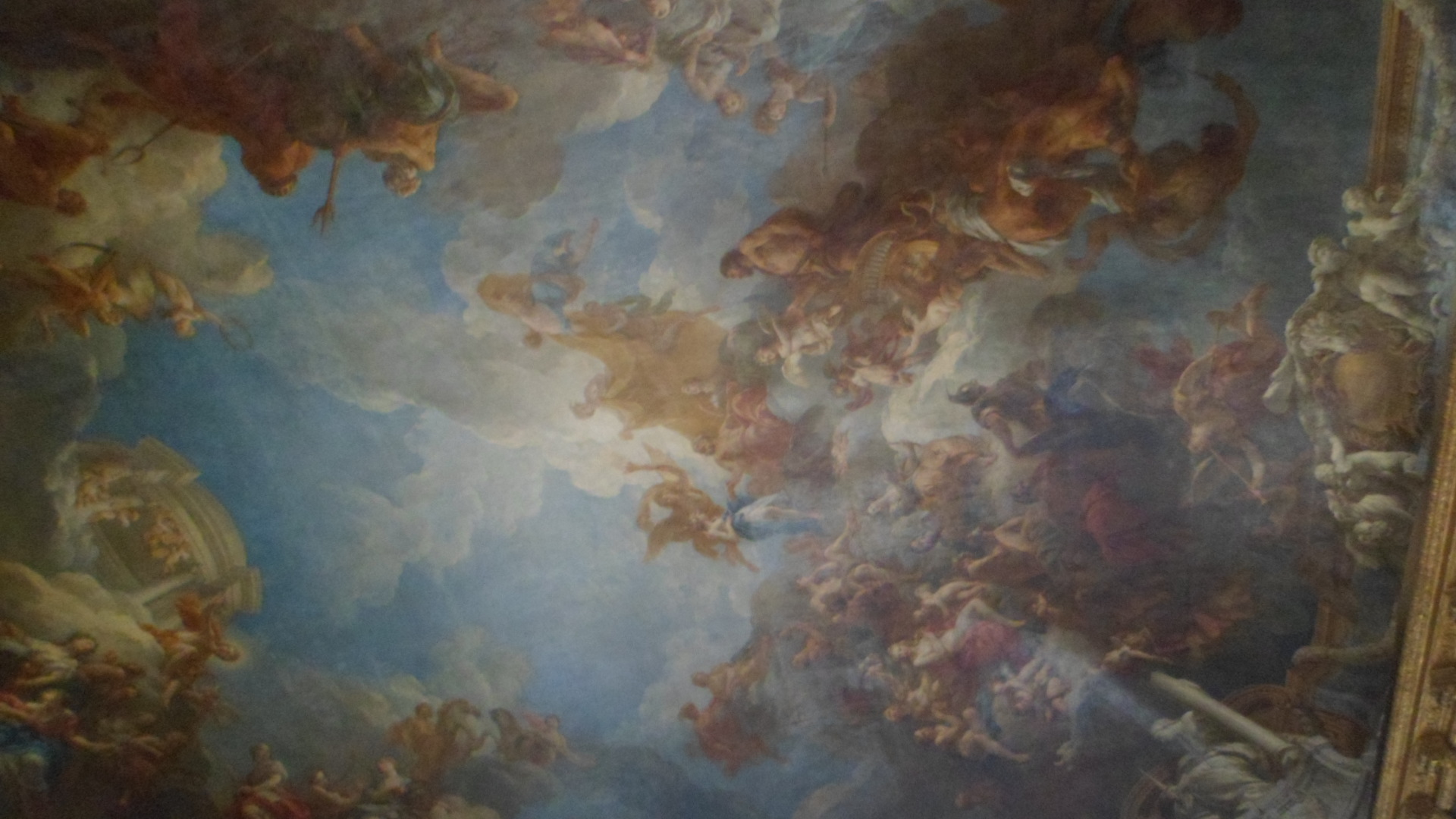
SAM_8934

The scenes below are in the park, though.

SAM_8935
SAM_8938
SAM_8939
SAM_8940
SAM_8941

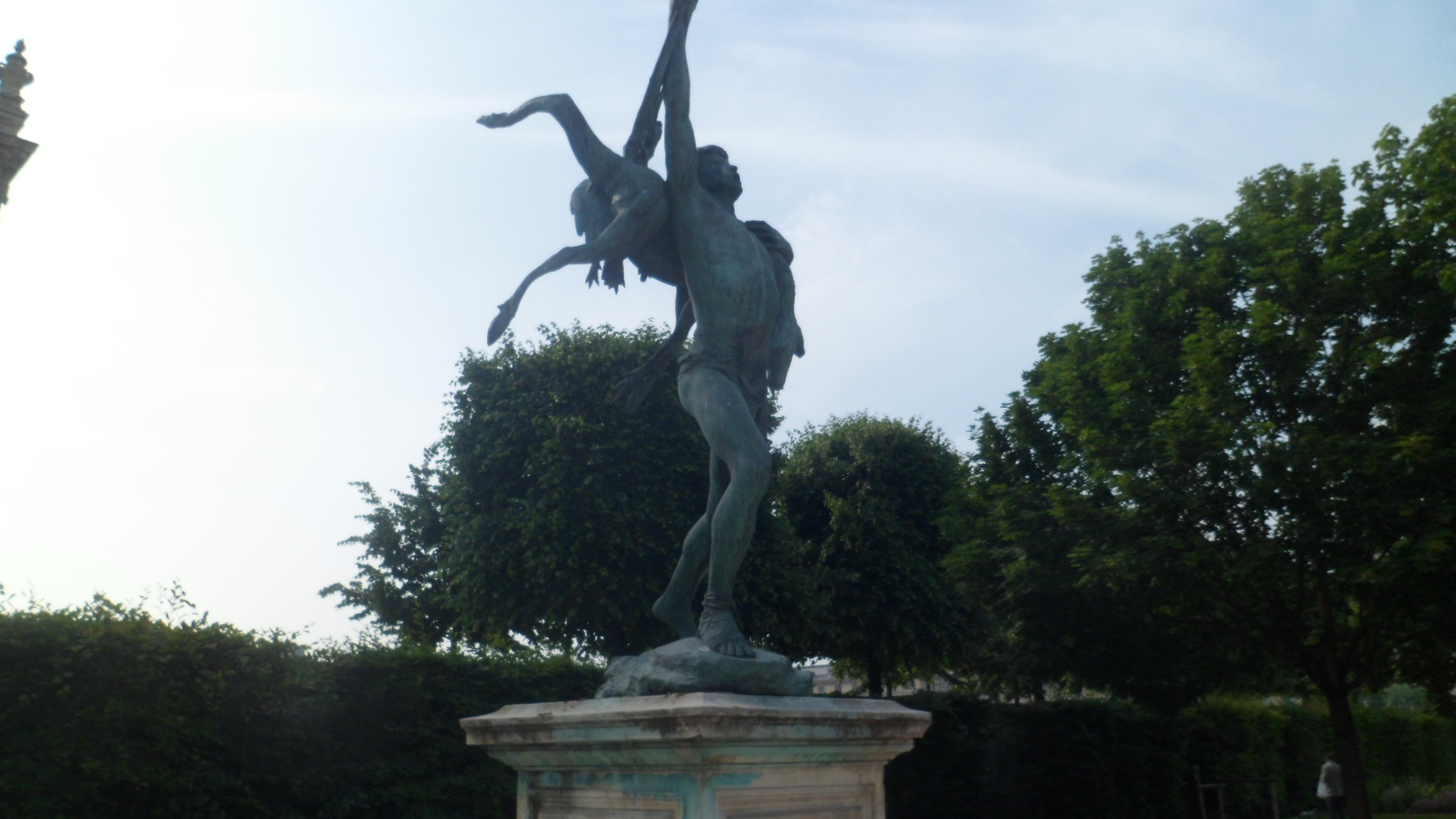
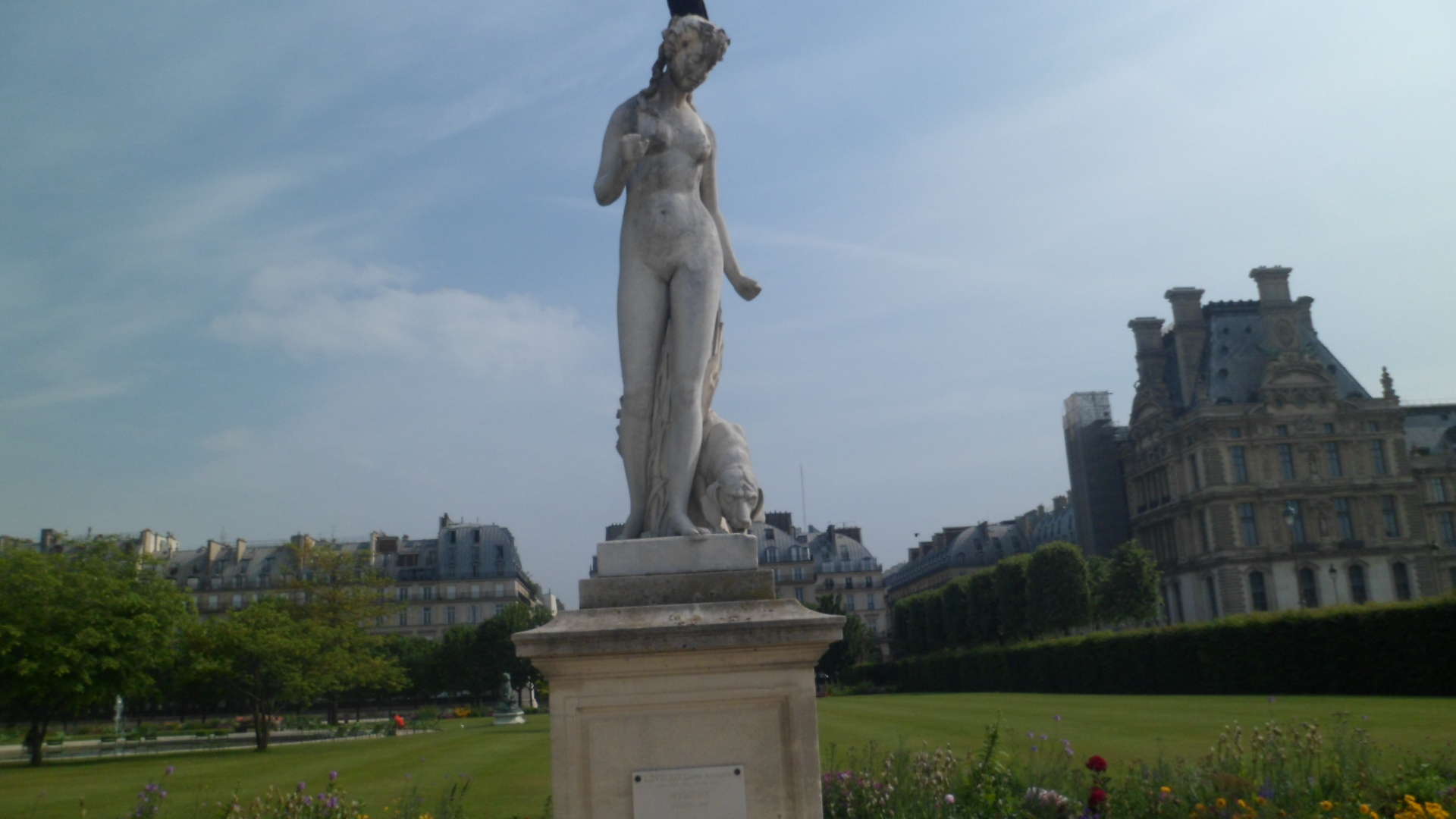
I thought about not including the sculpture below, after being attacked online, as a “misogynist”, earlier this evening. You know, though, unless a woman omes on here and says that’s how she sees me, I’m not going to change who I am. A man calling me “misogynist’ is like a white person calling another white person a racist, or a straight person tripping out on another straight’s “homophobia”. I’m saying it here, all people are beautiful in the sight of God, and using terms of endearment towards people of the opposite gender is not wrong. Both genders admire each other’s physical features, and both genders, at least among those of good will, value the whole of another person. That is what I believe; end of rant.

SAM_8943
SAM_8948
SAM_8950
SAM_8951
SAM_8957

This lawn evoked “Alice in Wonderland”.

SAM_8960
SAM_8963
SAM_8965
SAM_8966

This grove is indicative of the actual forest of the Bourbons’ time.

SAM_8968
SAM_8970
SAM_8972
SAM_8985
SAM_8988
SAM_8995

Next, I will share the rest of the walk, at Place de la Concorde, along the Seine and at the Tour Eiffel.

An Eastward Homage, Day 6: To Paris, With An Absent Crowd

3

Sunday, June 1 was one of those days that starts out with everything going like clockwork, hits about five rough patches, and then ends with everything silky smooth. I had no trouble checking out of Q Greenhotel, rode the tram into downtown Frankfurt with a Sri Lankan-German taxi driver, who had the day off (Please, no “Busman’s Holiday” jokes) and enjoyed a leisurely continental breakfast at the Hauptbanhof (Central Train Station), before boarding the train to Paris. It left a few minutes late, but I was just fine with that, as there were only three of us in the second class train, clear to Saarbrucken. Here a few of the things we saw, between Frankfurt and the French border. First, auf wiedershehn to Frankfurt, my first European host since 1982. You have set the tone, and Europe is less daunting, even for someone like me.

SAM_8894

Forty minutes out, we came to Mannheim.  I was expecting a fairly large contingent of American servicemen boarding here for Paris, but few people came on board.  Here is the Maritim Hotel, one of Mannheim’s grandest.

SAM_8896

West of the large city, the mountains of Baden-Wurttemburg began to show themselves.  There were some mountains in the area, as is pretty much true of all of lower Wurttemburg.  Hikers were out in force, as were filmmakers and barbecue grillers.

SAM_8902
SAM_8901

Here is a small parish, east of Kaiserlautern.

SAM_8903

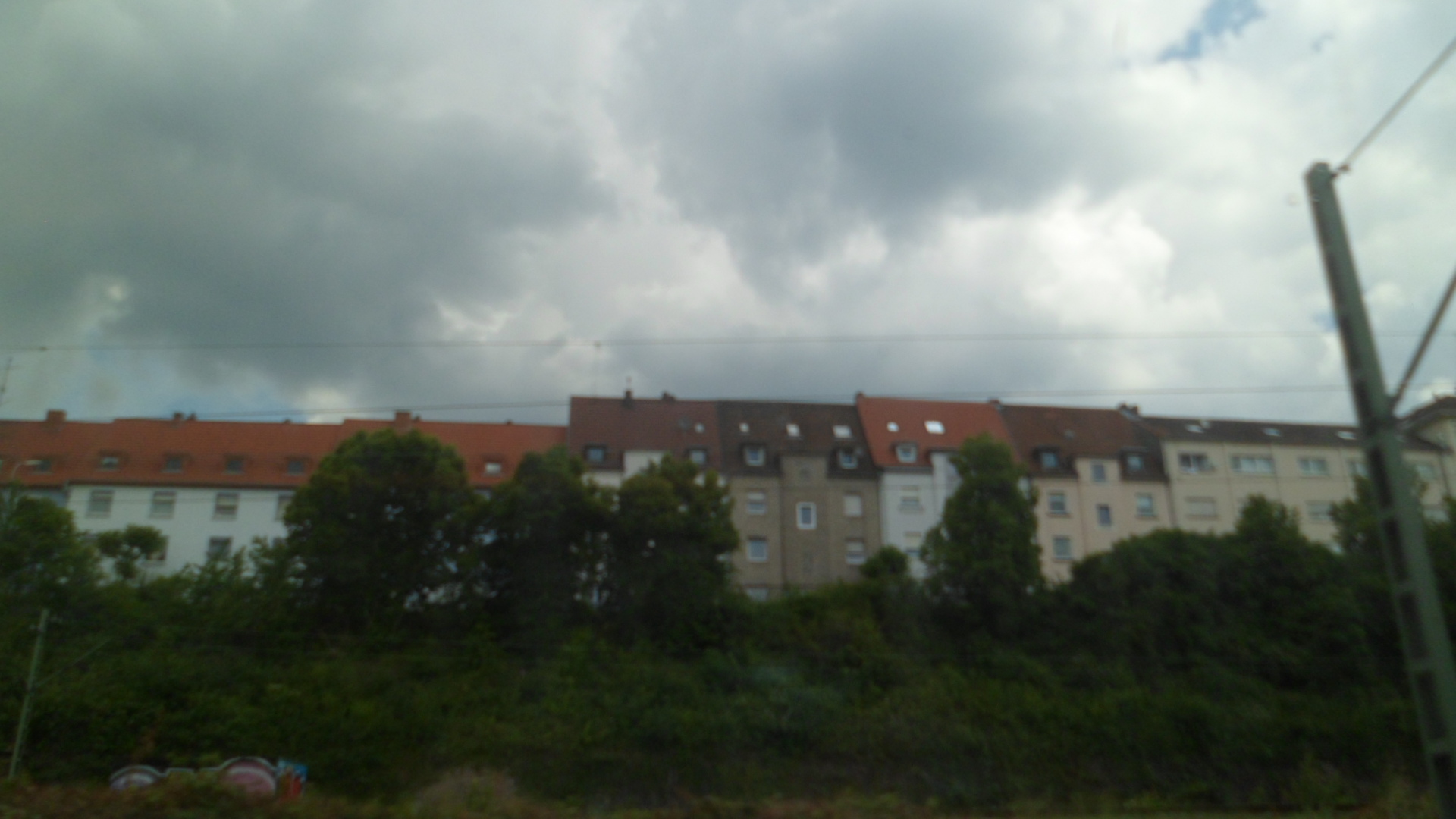
The row houses of Saarbrucken were the the last notable site in Germany, before we crossed the border into France.  It was here that we were joined by about 30 people, most of them academics, who were coming from a conference in Koln.

SAM_8906

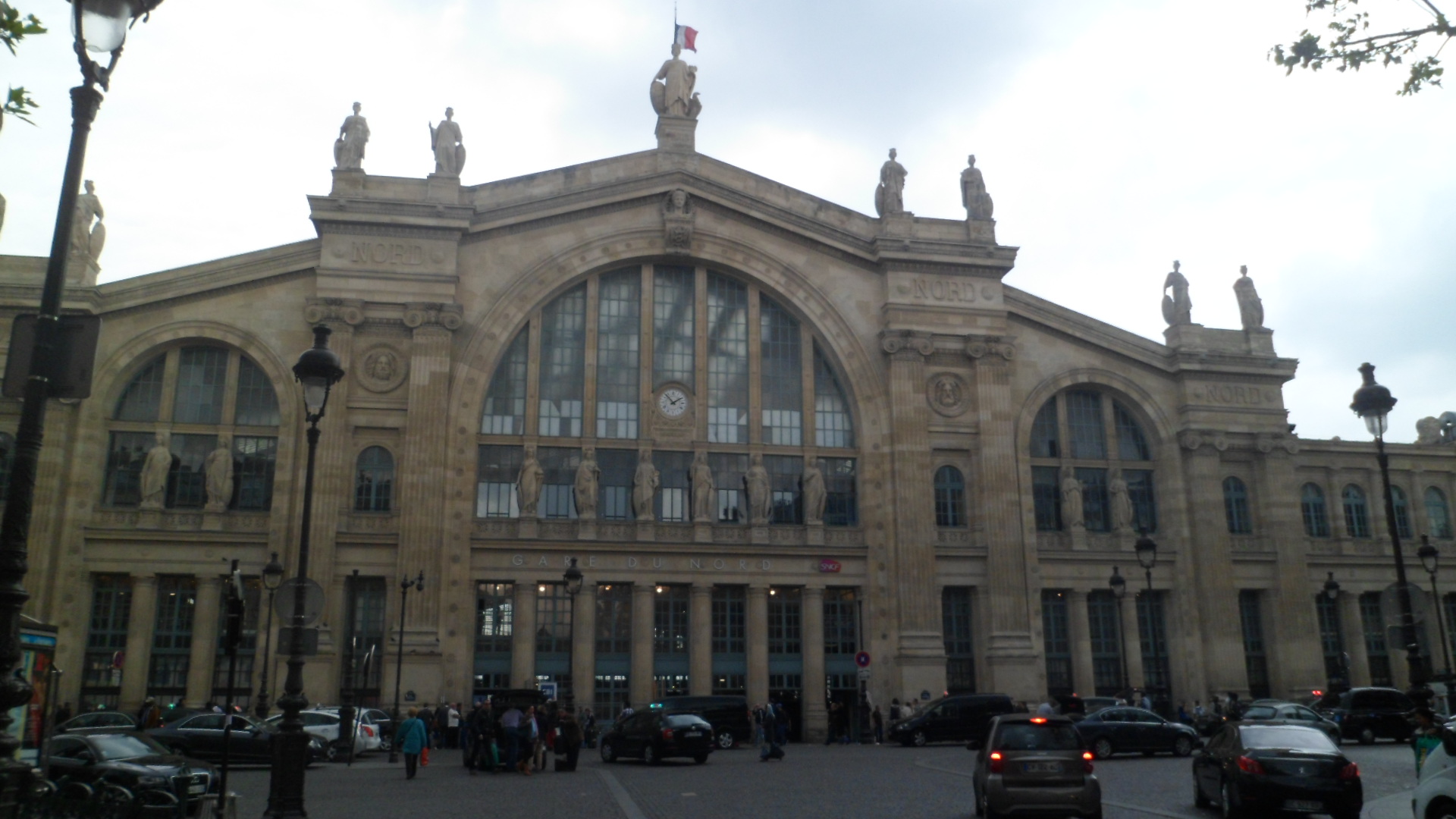
I arrived in the Gare du Nord District, in good enough time to get on my way to my hotel, or so I thought.

SAM_8918

With good directions as to the AREA, I made it easily to Montmartre, which I THOUGHT was the location of Monte Carlo Hotel. I was reassured by a local resident at the base of  the hill leading to Eglise Sacre Coeur that that was so.  All the locals I asked, atop the hill, thought differently.  Turns out the Rue Faubourg Montmartre is a LONG way from the district of Montmartre.  A kind Tourist Office clerk set me straight, though sans street number.  I eventually got that, in a hotel in the 9th Arrondisement (District), that was about four blocks down from the Monte Carlo.  At 5:30 PM, I checked into my cozy room, which is about the size of my old bedroom when I was a kid.

Well, since I was up top on Montmartre, here are three scenes from there.

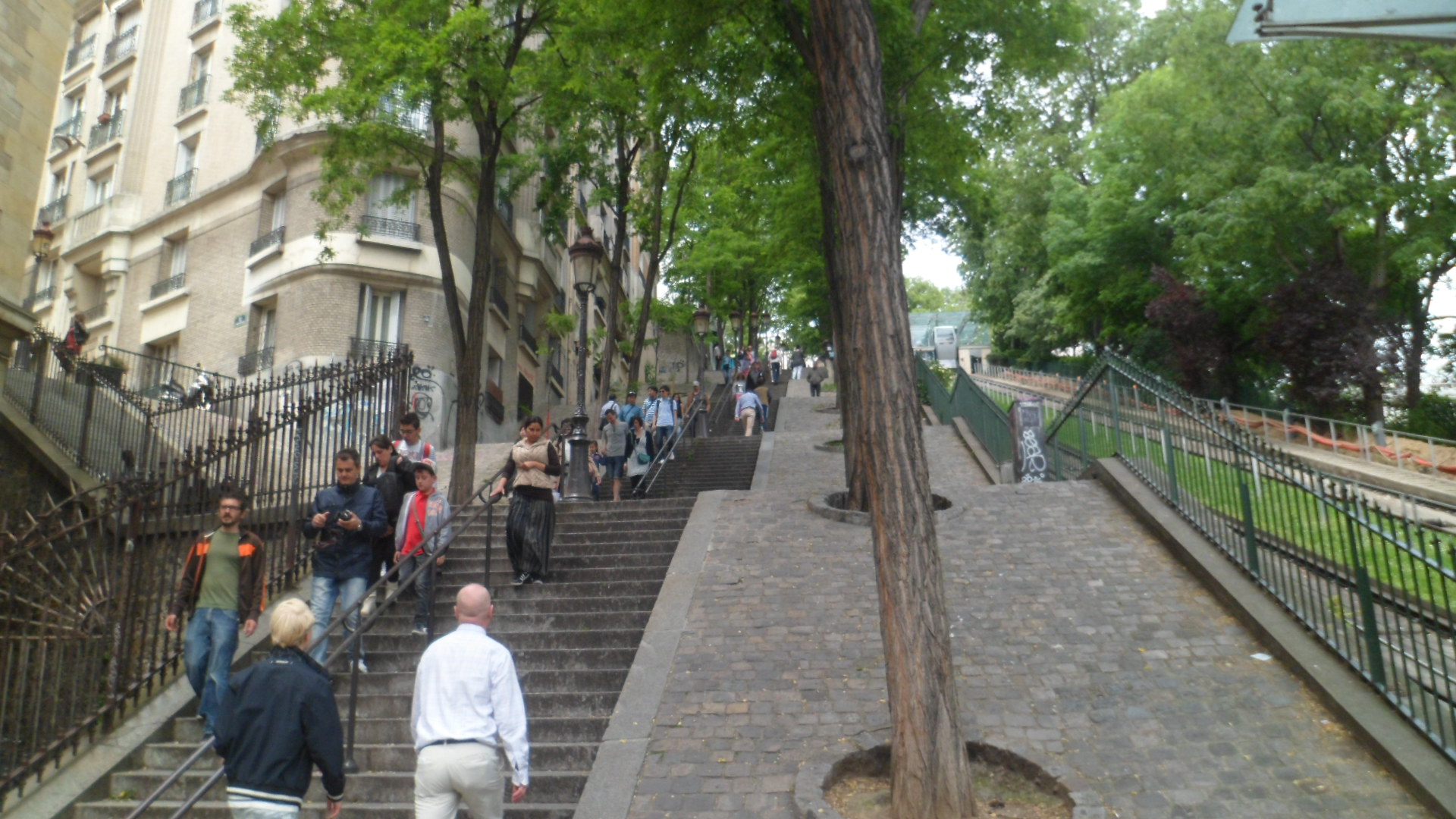
First, these are the steps.  There is a transom, which I at least used going down.
SAM_8919

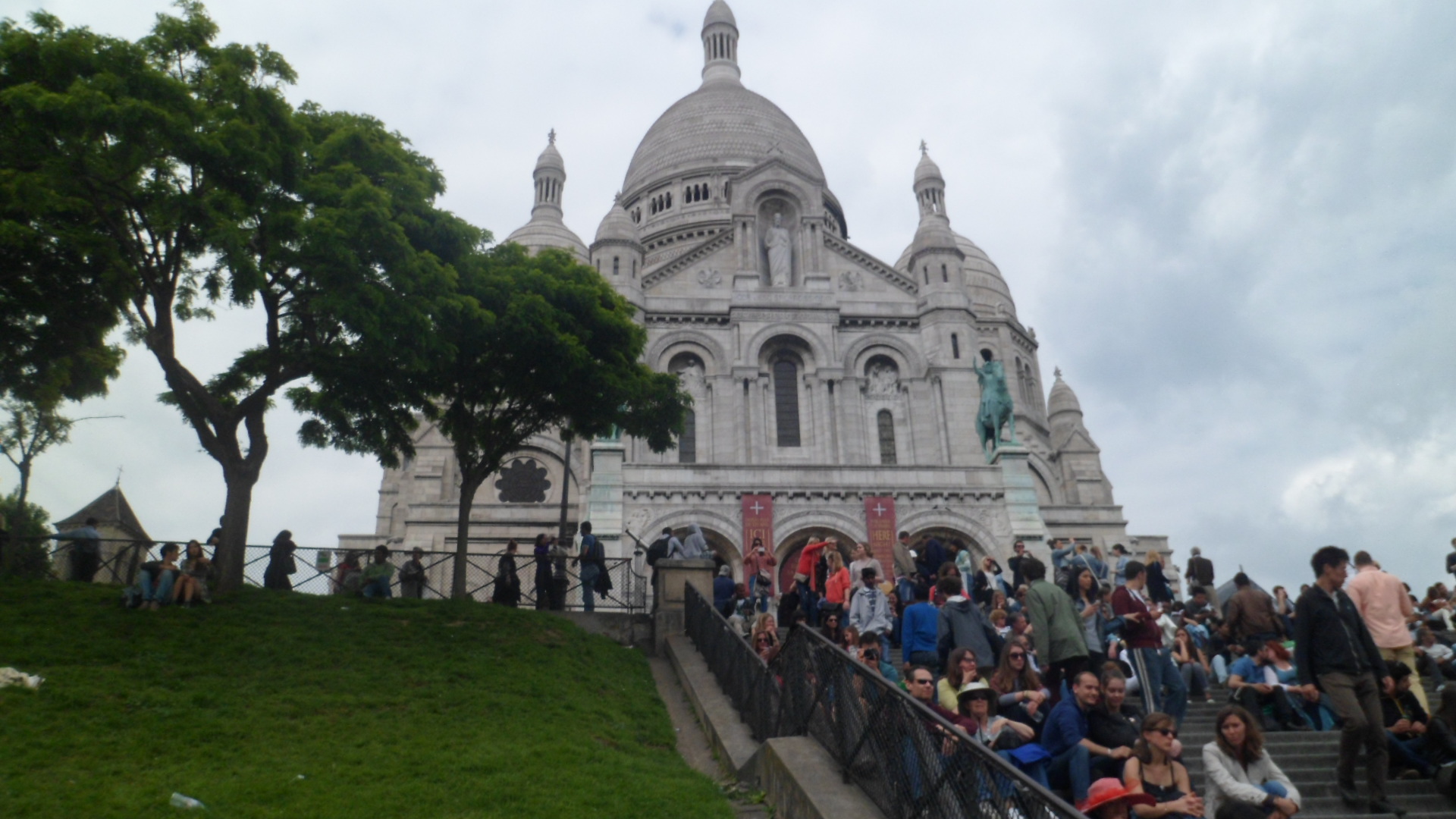
Next, here is the goal of the steadfast among us: L’Eglise Sacre Coeur.

SAM_8924

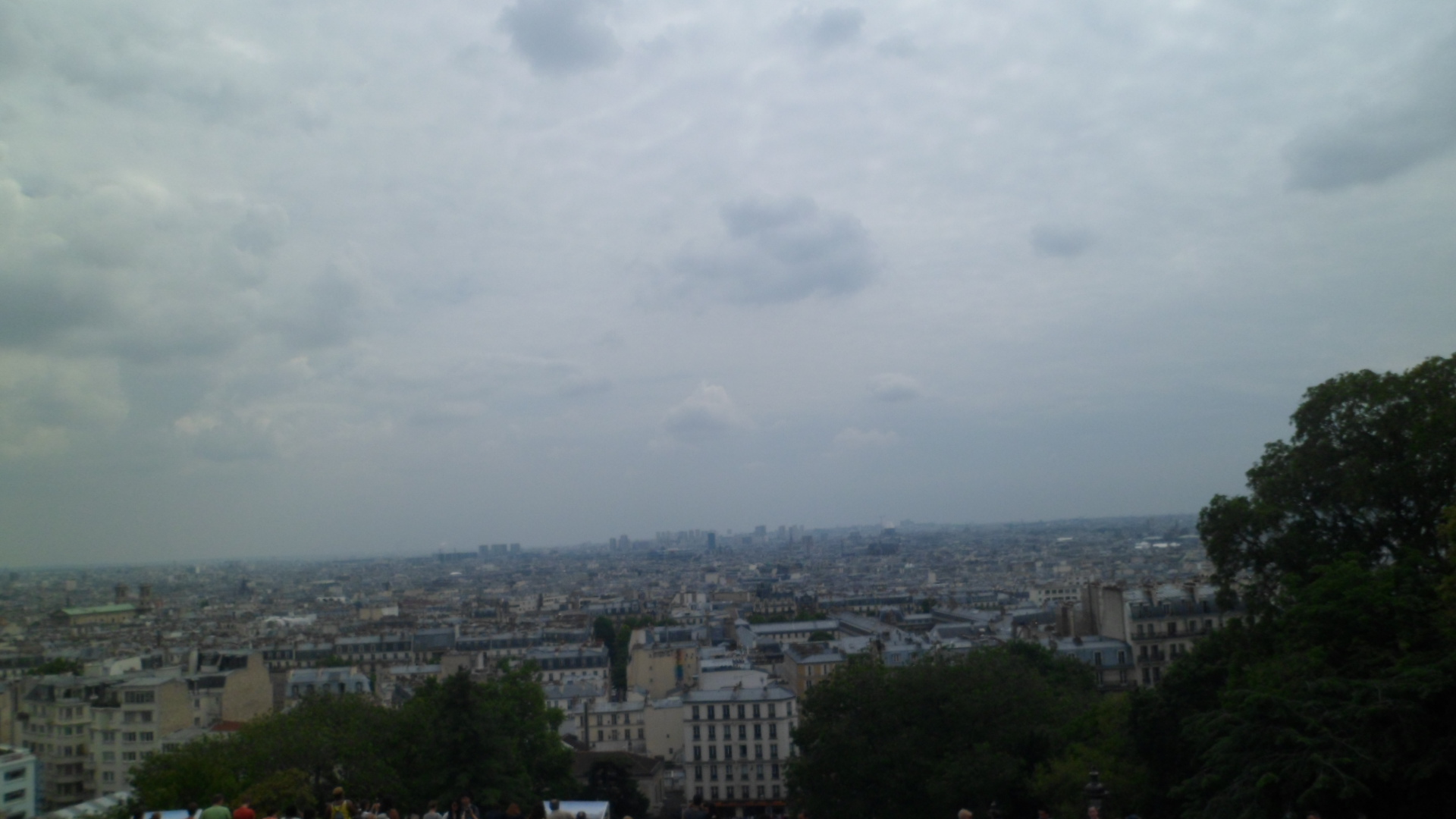
Lastly, here is the view from the top, which spared me from climbing Le Tour Eiffel.

SAM_8926

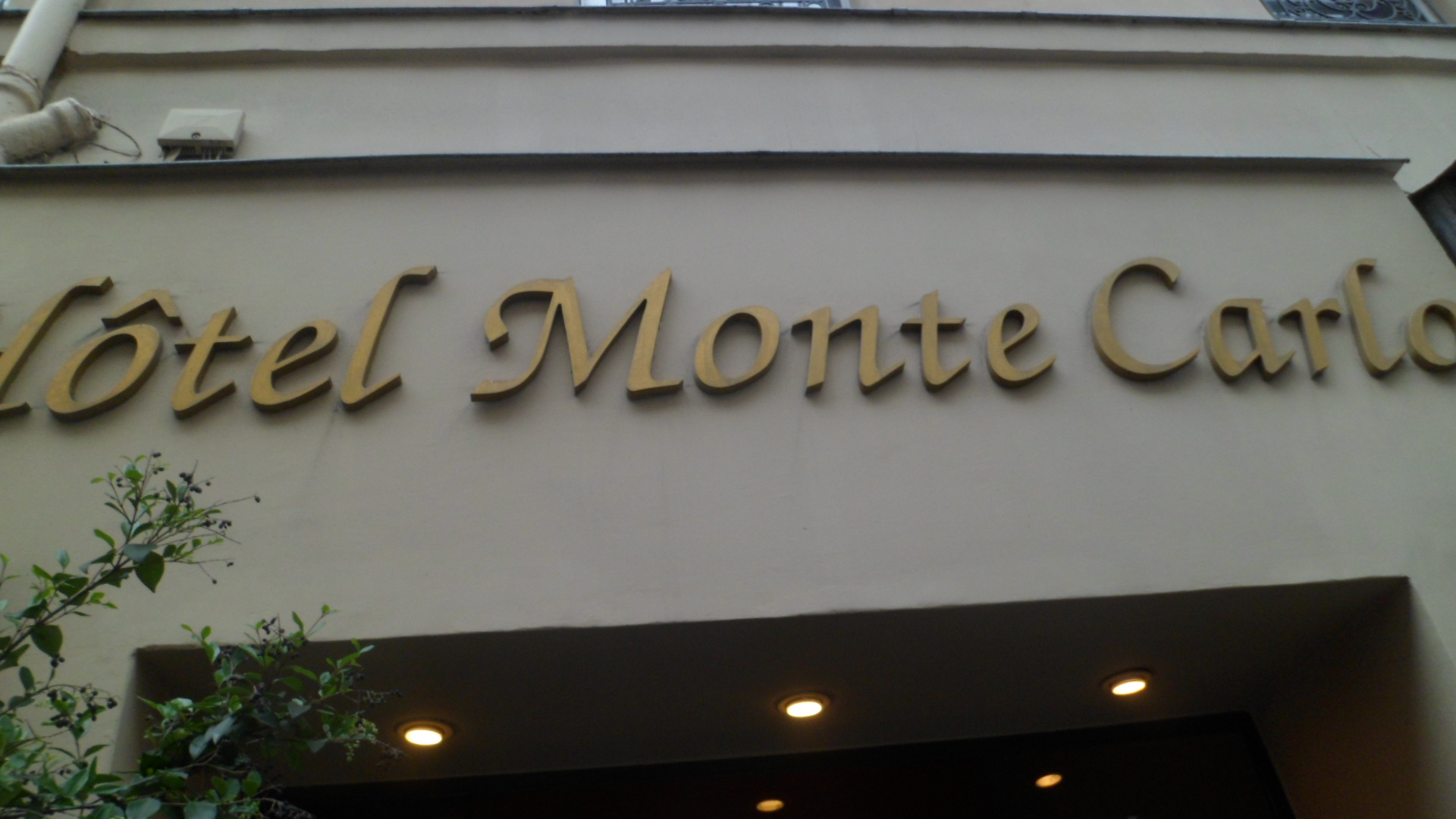
I finally made it to Monte Carlo at 5:15 PM. The first thing I did, once checking in, was find all the remaining hotel telephone numbers on my list. The Monte Carlo is the last photo on this set. I know I said two posts would be up tonight, but downward and sleepward. See you manana.

SAM_8928

An Eastward Homage, Day 5: Germany’s Tank Engine

7

Many people have told me that Germany is a squeaky clean country, almost obsessively so.  That is no longer the case, at least with the obsessively clean part.  Around the Central Train Station, at several bus stops, and in some of the large apartment blocks, cleanliness remains a constant challenge.  The CST , or Hauptbanhof (Hbf), is still a very stately place, and a beehive within this greater beehive that is Frankfurt am Main.  Get used to my using the local names of things.  Everyone I have met here breaks out their English, as soon as I speak German (or French, for that matter,) with my North American accent.  It’s important to go halfway with these things, if we are ever to really understand one another.  Still and all, I will carry on here with putting the local term side by side with our English colloquialism.

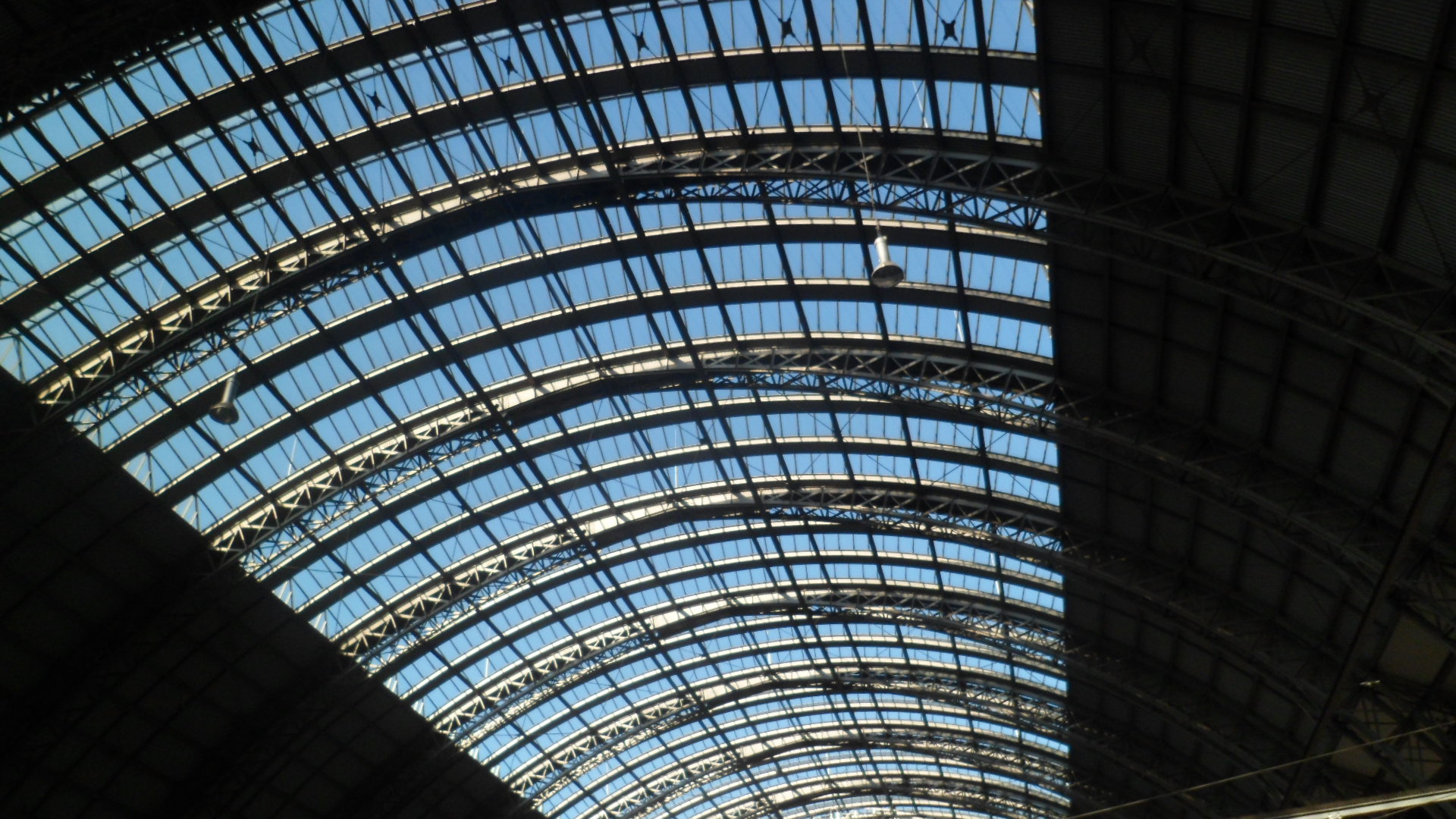
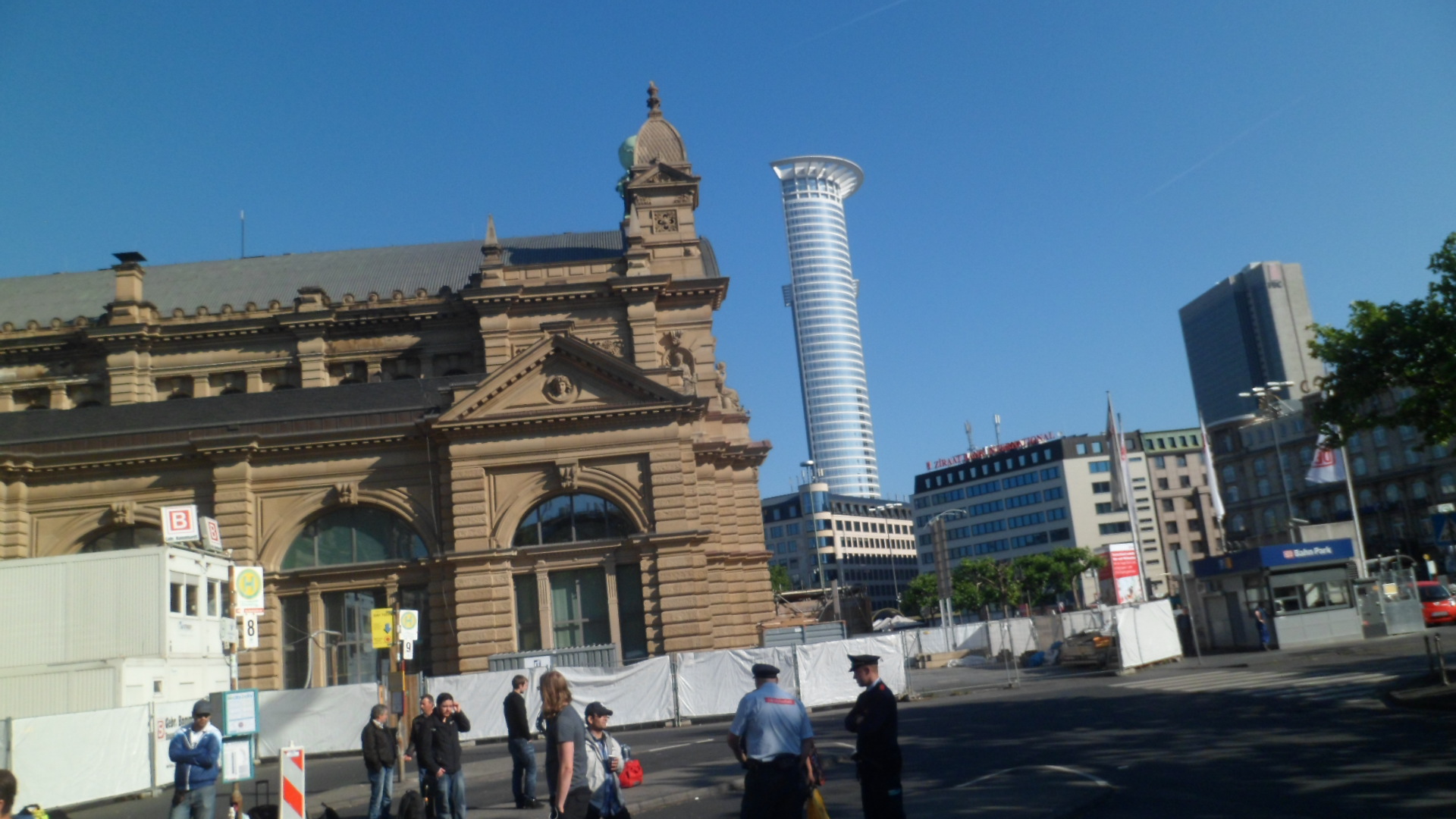
Here is Frankfurt Hauptbanhof, inside and out.

SAM_8861
SAM_8864
SAM_8865
SAM_8863

I spent several minutes, once disgorged from the speedy train from Frankfurt International Airport, trying to find the bus stop for the route given me at the Information Booth. This is where my fatigue kicked in, and it took three other people being asked, before the Captain Obvious scenario played out, and I was en route to my Saturday night lodging.  I left my bags in the hotel’s safe, and was registered by a rather saturnine desk clerk.  When I returned from the mandatory hiatus, at 2 PM, I saw why:  A group of 75-100 university students were at the hotel for the night, with all that could imply.  The men outnumbered the women, almost 3:1, but I would hear no hanky-panky or excessive noise, during the night.  These folks have built a culture of deepening true friendship, and I hope it continues, without being side-tracked by “real world” distractions.

I walked to the Frankfurt Messerhaus, the city’s major trade and exhibition hall.  On the way, I discovered a small wursthaus (sausage restaurant), run by a couple who are German/Polish.  They have been here in Frankfurt for twenty years, and have watched the world come to Germany.  Indeed, an African woman runs a grocery store, a Sri Lankan man has driven a taxi for  35 years, and East Asian people are everywhere.  We are at the point where EVERYONE is EVERYWHERE, and that’s a good thing, to me.
Anyway, here is the hotel where 200 kids, and I, stayed last night.
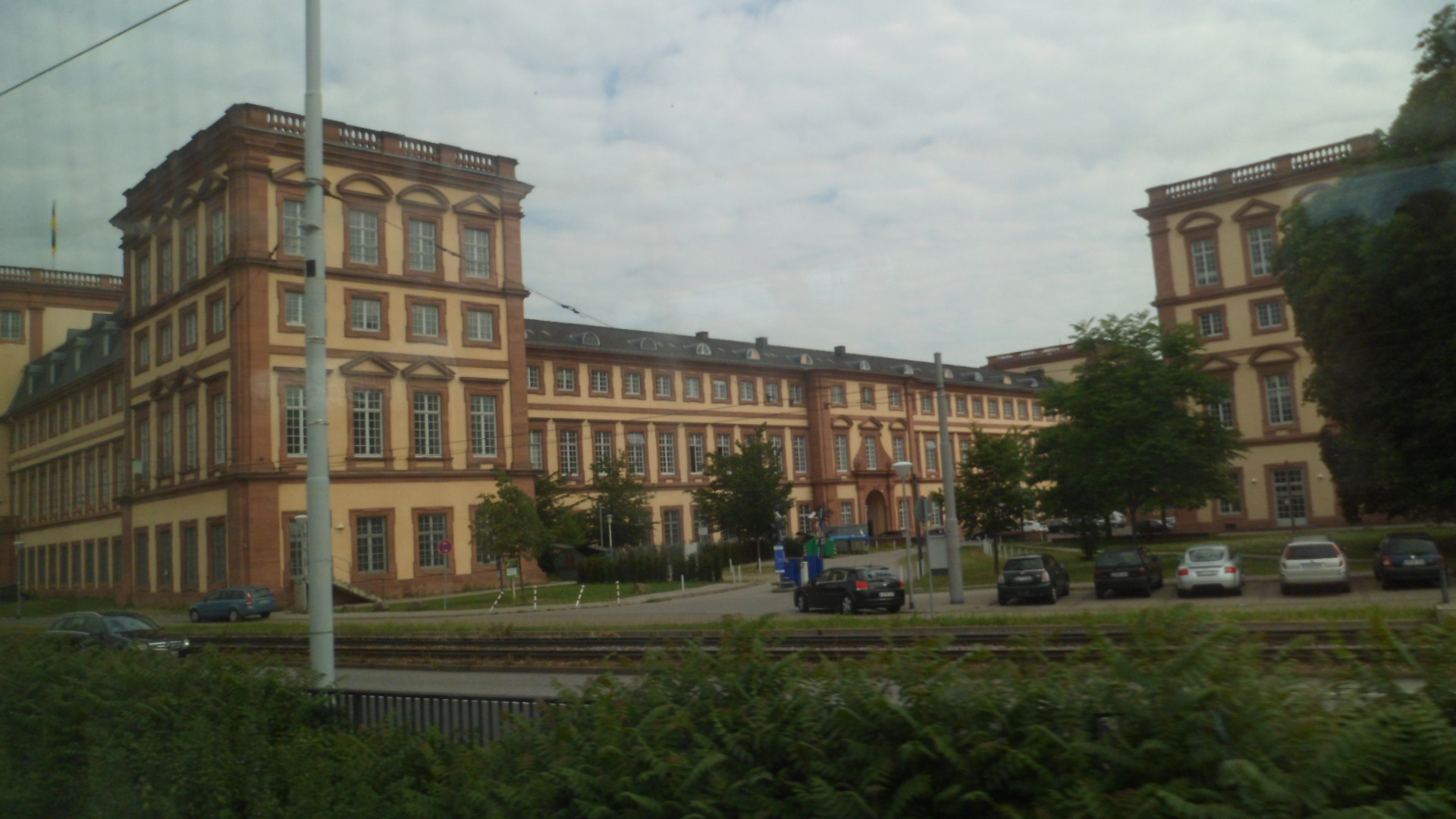
SAM_8872

Many German homes maintain the “fairy-tale” quality that places them in so many of the “original” Grimm tales.

SAM_8877

That quality is enhanced by the evergreens nearby.

SAM_8876

Any economic powerhouse needs good parts for its engine.  These parts in Frankfurt are largely provided by the work done through the auspices of Frankfurt Trade Center, or Messershaus Frankfurt.

SAM_8879

Here is a look at downtown Frankfurt’s skyline and a couple of more light-hearted scenes.SAM_8882

SAM_8884
SAM_8885

With that, I am tired by today’s long and full series of life lessons. Tomorrow, a tale of transition between cultures.

An Eastward Homage, Day 4: Leaping over a Very Large Pond

13

I had a close call on the night of May 29, just my error of being an inch or two to the left of being in good visual command of oncoming traffic.  No one was injured, no cars collided or left the pavement.   I just needed a reminder of a very important point: Little things matter.

I would be reminded of that fact in two unrelated incidents on Sunday, but getting back to Day 4.  I awoke, with sufficient alacrity that I was going to drive the rental car successfully back to its lot, without damage to any car or any driver or passenger.  I forewent breakfast, save a cup of coffee, until the job was done.  The big thing is, I found how easy it actually is to get to Wyndham Gardens Hotel, near Newark International Airport.  DON’T LISTEN TO VOICES OF DOOM!  “OMG, you’re going to make all those quick turns, with those impatient people, at rush hour?”  Yes, I did, and here’s how to get to the place, if you ever need or want to, from west of Newark:  Take I-78 east to Rtes 1 & 9 South, stay to the left, with the commuting traffic, and exit at Haynes Road.  Take International Way, past the Park and Ride turnoff, and go into the Wyndham parking lot.  Yes, you need to take an entry ticket, but leave it in the car.

I made it to each of my flights, with time to spare. Briefly, Newark to Montreal left on time and was smooth. My seat mate was very quiet and seemed as if she were heading towards something WAY out of her comfort zone. Montreal to Ottawa, via a twin engine prop, left ten minutes late, due to the lingering threat of lightning. We had it easy, staying inside the terminal. Three planeloads of passengers and crew waited outside, in their planes. Once the threat passed, they came in, en masse. I got a chance to buy a new ballpoint pen out of the deal, by virtue of having time to do an OJ and bound up and down the stairs, with full backpack and bag. I am getting a lot of weight and endurance training on this trip.

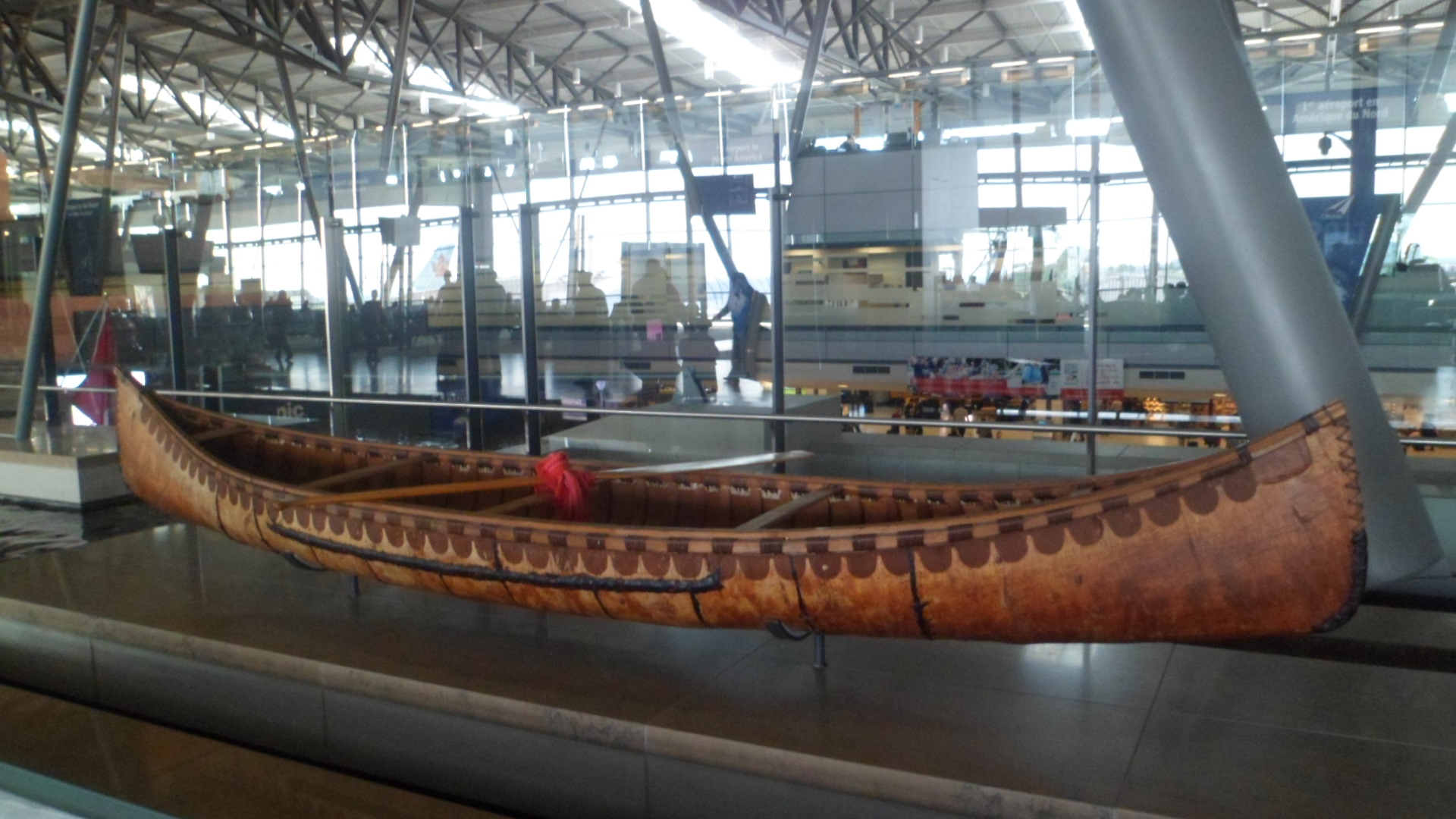
The food benefits are not bad, though. At Ottawa International Airport, I enjoyed a BLT, with mozzarella sticks on the side, plus the usual fries. Not Health City, exactly, but satisfying, after a long morning and afternoon. When I off-handedly remarked to myself that someone had left their receipt unsigned, on the table, Charles, the server, deadpanned: “That would be the person who sat here before you.” His service after that little quip was exemplary, though, and was a good send-off to Frankfurt, in its way. So, too, was this:

SAM_8860

Ottawa has accented its heritage as a gateway to the north country, but with none of the “redneck chic” hokum that undercuts the real fineness and beauty of the area and its people.  The city is no longer in anyone’s shadow.

I had, as seatmates on the Ottawa- Frankfurt flight, a Turkish couple and their college age daughter, who were polite and cordial, but mainly kept to themselves, chatting in German about a variety of subjects,  My TV kept me plenty busy, as did writing in my pen-and-ink journal, which accompanies this blog.  On hand were an episode of “Rookie Blues”, a Canadian police drama, and a film version of the story of Ste. Jeanne d’Arc, whose real story I will view in Rouen, this coming Thursday.  Finally, I was a silent viewer of  “Ronin”, a Keanu Reeves action film, with him as a samurai rebel, or so it looked from where I sat.  Both “The Messenger”(the Joan of Arc bio) and “Ronin” were tales of righteous obsession, juxtaposed with naked self-service and aggression.

MORNING!  The light greeted us sleepyheads, while we were still over England, and just about all of our section had the progress of the flight on our screens, in an “Are we there yet?” fashion.  We arrived, had a smooth landing, went through immigration, in perfunctory fashion, and I was out on the streets of Frankfurt by 7:10 AM, Western Europe/ West Africa time.  It did take me another hour or so to locate the bus to the area where my hotel is located- and that’s a story for Day 5.