Back to Crystal Cove- Brand New Beach; Crumbling Bits of History

0

It had been about 1 3/4 years since I first visited Newport Beach’s Crystal Cove State Beach, about 3 miles south of downtown NB.  Crystal Cove State Park has three main features:  The beach itself; the cottages along the beach’s periphery and the semi-arid canyons which lead up into the coastal hills.  With my friend Janet, who lives in the area, I made a second exploration of the first two on the morning of April 1.  The beach was experiencing a rising tide, the opposite of what we had seen the first time I was here, in the Fall of 2011, just after I had brought my son to San Diego Naval Base for his tour of duty, which is now approaching the end of Year 2.

I walked down to the beach, from Los Trancos Parking Area, using an underpass, which has a delightful series of murals, mostly painted by Newport Beach school children.

The Los Trancos area has a few short trails of its own, with pleasant coastal hill scenery.

The tunnel is safe and scenic, as well.


Along the beach, I found limestone and shale rocks, with various degrees of barnacles, lichen and moss growing atop, and in the crevices.


The last photo shows a rock which could have been used as currency, back in the days of huge stones representing extreme wealth.

The drought in SoCal is far from over, yet I saw more vegetation here this time, than in October, 2011.


The cliff on the right was barren last time, and I explored its crevices, imagining the Luiseno people using it for a seasonal residence, in pre-Spanish days.

The cottages, as Janet has mentioned, are in disrepair on the north side of the restaurant.  There has been serious deterioration, over the past two years.


The flowers, however, are showing California resilience.

I plan to re-visit the area in October, 2014, and stay for 2-3 days in one of the cottages that is still available for overnight rent.

Son and Sand, Part II: Coronado Island

0

Easter Sunday, for us Baha’is, is a day of confirmation that God always does what He says He will do.  I did what I said I would do, this past Easter, getting up early, having a cup of coffee and a bowl of oatmeal at Day’s Inn, then going to a cafe in Little Italy and enjoying  fresh coffee and a lemon poppy seed bun.  By then, it was 11 AM and I called Aram, to find he had roused himself and was ready for our jaunt over to Coronado.  We stopped at Sushiya, east of the airport, for lunch.  The food was fair to middling this time around, and the waitress obviously wasn’t too keen on having to work on Easter, but we ate our fill and set out for the island.

Coronado seems like a little brother to La Jolla- smaller, flatter and with a more compact business district.  It has a signature piece, the Hotel del Coronado, which struck me as being somewhat like Walt Disney’s original Fantasyland.  Aram and I made a counterclockwise journey, from the city park to the “Hotel Del” and back around.  We were able to get up close to all these sights that are visible from San Diego Tuna Fleet Park.

It’s always nice to start a walk in southern California near a Live Oak, when possible.  This one graces a park east of downtown.

The business district has its share of funky shops and a small hotel or two.  One shop that pleased us is Yogurt Escape.  I have taken to the sort of shop that has several choices of yogurt flavours, and of course, the requisite toppings.  Yogurt Escape features fresh fruit toppings, a plus in my book.

Rounding the bend, near Village Inn (a business hotel, not a restaurant), we came to the expansive beach on Coronado’s west side.


Some lucky folks have managed to set aside enough to live here, year round.  Their small, but pricey, homes are well-kept and well-coiffed.

The Grand Dame, however, is Hotel del Coronado.  This is to the island what Mission Inn is to Riverside, La Valencia to La Jolla and El Tovar to the Grand Canyon.


Some friends have mentioned staying in the “Hotel Del”.  I can imagine it’s a fine experience.

Beyond Las Vegas’s Cover

0

Last weekend, my brother and sister-in-law began a week-long business trip to Las Vegas.  Being only four hours away from El Ciudad de Los Pecados, I made the trip and met them at Hoover Dam, which they had never seen up close.  This is indeed an engineering marvel, and even though it tamed the Colorado River, and invoked the eternal wrath of Edward Abbey, is worth being seen by every citizen of Planet Earth.  Before getting to the dam, I stopped briefly at one of the Arizona-side inlets of Lake Mead:  Temple Bar.


Temple Bar was so named for Temple Butte, which in turn was a name bestowed by early Mormon settlers of the Las Vegas area.

Once at Hoover Dam, I focused on what mattered to  my siblings:  The Power House.  This was my fourth visit to the dam and second time in the Power House.  The tour was just as enlightening this time as it was in 1992.  Without the bedrock, there would be no underground generator.


My Dad, a turbine engineer, would have been proud of this feat.

Being the seeker after nature, I avoided all but the most fleeting, perfunctory contact with the Casino Crowd.  The House Floor is merely on the way to Las Vegas’s finer restaurants, and nothing more.  Brother and I had a far nicer time on Sunday morning- at Las Vegas’s signature gem:  Red Rock Canyon.  This national recreation area could easily occupy me for a week- and maybe it will, one of these years.  Three hours on Palm Sunday, though, was an exquisite first visit.


As usual, I was in my element.

Southern Nevada has plenty of places that can find their way into the heart.  Red Rock Canyon is chief among them.

This weekend, it’s time to get back to one of my other favourite nearby haunts:  San Diego.

Other-worldly Beings, Petroglyphs and The Badlands of Chino Valley

0

This stretch of March being the time of the Baha’i Fast, I don’t eat or drink between sunrise and sunset.  There is still a lot of life to be lived, however, and so I headed down to Phoenix on Saturday morning, spending 40 minutes at Penny’s grave site, on the second anniversary of her funeral, placing a bouquet of roses and saying prayers.  While I was there, three or four people were power-walking around the rows of the grave section.  They looked rather other-worldly, and for all I know, they could BE from somewhere distant.  I went about my own affairs, though, and noticed two small buds of a bean plant sticking out of the ground at the lower right corner of her stone.  This, I take as a sign of blessing.  The plant is probably going to be plucked by the groundskeepers, sooner or later, but it’s a nice sign, regardless.

Afterward, I went over to Deer Valley Rock Art Center, about five miles west of the cemetery.  We had talked a few times about going there, while she was in the flesh, but it never came to pass.  Three time periods’ worth of petroglyphs may be seen in the igneous rocks at this site:  Archaic, Hohokam and Patayan.  The “archaic” people were those of the Clovis and Fremont archaeological periods.  The Hohokam, you may remember, built the irrigation canals and attendant farming villages that are still preserved at Pueblo Grande in Phoenix and several other sites in central Arizona.  The Patayans mainly lived along the Colorado River, between what is now Bullhead City-Laughlin, AZ-NV and Yuma.  They are the people who left petroglyphs in places like the Cerbat Mountains, east of Kingman and Grasshopper Canyon, in southern Nevada.

Here are some scenes of Deer Valley Rock Art Center, which is regarded as sacred by the Hualapai, Mohave, Yavapai, Maricopa, Pima and Tohono people.


The photos may also be viewed, and clicked-on to enlarge, at my flickr site:  www.flickr.com/lovingwanderer12.

The area where the Rock Art Center is located is known as Hedgpeth Hills, after a farm family who lived here in the late 19th Century.  The tops of the hills are accessible only to registered members of the above-mentioned Indian nations, and to park staff.

On Saturday night, I was back in Prescott, enjoying a Fast-breaker dinner of Persian cuisine, prepared by several of my Baha’i friends.  Persian food is largely based on rice dishes, but includes lentils, oranges, persimmons, lamb and chicken.  There is also a delicious eggplant dish, or two and, of course, baklava, in season.  The cuisine started 2,800 years ago, so I am sure this list is just scratching the surface.

Sunday afternoon, I felt the need to get out on the trail- any trail.  As it was 4 PM, and I wanted to finish by sunset, Flat and easy was the choice.  Peavine Trail’s northern extension, in Chino Valley, follows the old mining railbed on the east side of town.  I walked two miles in and did an about-face.  The area is badlands, ranch pasture and a few manzanita-covered hills.


It does have lunar qualities, somewhat, but there are also fine views of mountains further afield.  Below, is a view of St. Matthews Hill and Bill Williams Mountain.

The remaining days of Spring Break will offer more outdoor adventures.  Our weather will be fair, in the high 60’s and low 70’s, through St. Patrick’s Day.happy


The Burros’ Wild Oatman

0

If  Oatman, a preserved 19th Century town which still has an active mining operation nearby, were to tout itself as a north Arizona version of Bisbee- it’d be a stretch.  Oatman is, however, unique.  It has a bustling crowd of California and southern Nevada day-trippers, a few off-the-beaten track adventurers, who scout the nearby Black Mountains- which are quite interesting, in and of themselves, and a pack or two of semi-wild burros.  The equines are descended from pack animals which came with northwest Arizona’s silver and uranium prospectors, in the late 1890’s.  They are generally beloved in these parts, and loathed by a few “earth-firsters” who have somehow concluded the burros are a threat to native bighorn sheep- which stay in the mountains, while the burros are town dwellers and content themselves with the foothills.

This past Presidents Day marked my second trip to Oatman.  The last time I was here, in 1979, the road was rutted and potholes were predominant in the pavement.  This time, the road was quite smooth, though there were several hairpin turns.  Oatman lies 28 miles west southwest of Kingman.  In between are the awesome Black Mts.


Oatman appears, rather suddenly, after 28 miles of Mohave goodness.  The initial ambiance is of a misplaced ski chalet.  Right around the corner, though, is the town’s official greeting.


The main street would not be out of place in any of a number of Western mining towns; nor would the wry humour.


The main attraction, though, are the town’s unofficial greeters.


Excuse the last, grainy photo.  I just couldn’t resist including Mama and Baby, even if they appear rather impressionistic.

This all goes to show what a wealth of delightful scenes may be found between Phoenix and Las Vegas- a stretch of road many view as “Let’s just get it done.”


Andy Devine’s Old Stomping Ground

0

The late character actor Andy Devine called Kingman, Az home, and the town has returned the favour, having named its stretch of old Route 66 “Andy Devine Avenue”, shortly after his death in 1978.  Kingman is mainly known as a southern gateway to Las Vegas, but to me, it is also the jumping off point to a variety of Mohave Desert vistas- some of which are inside the city limits.  Kingman is a good place for a fairly cheap, but colourful, weekend.

So, on Sunday, Feb. 17, after spending time with some friends in a wilderness area near Watson Lake, Prescott, I drove up to Kingman and settled for the evening at an Economy Inn.  I had a good afternoon and evening just walking around the downtown area of this old mining community.  Kingman is not Bisbee, or Jerome, but it holds its own and is worth a day or two of exploration.  A good place to start is the Powerhouse Visitor Center, at the junction of Andy Devine Ave. and Beale Street.  There is a Route 66 Museum within, for those who enjoy such things.

I was more interested in the model train set.

The town was settled by Italian miners, so downtown has its share of Italian Cypress.  The trees grace several properties, including the Mohave County Courthouse.

Downtown has several places listed on the National Register of Historic Places.

Chief among them is Bonelli House, originally built for an Italian immigrant, George Bonelli, and his family.  It is available for viewing until 2:30 PM, except on Sundays.  I had a full schedule on Monday, so it will be there to check out, another time.

Kingman folks have a healthy sense of humour- and funky shops are as common here as anywhere.

I  enjoyed reasonable meals at a couple of spots in Kingman:  Mr. D’z (fairly good food, with a heartfelt and hard-working staff) and Calico’s (friendly staff, good food-in modest portions).

Kingman and towns to the immediate north are bounded on the north and east by the Cerbat Range.  The Hualapai Mountains, viewed below, lie a bit further to the east, and will be the subject of a post later in the Spring.

Next up, a visit to the Cerbats, their interesting rock murals, and Arizona’s oldest mining town:  Chloride.

Lake Havasu City’s Balloon Festival

2

By my usual standards, this is ancient history, but since I am just now getting over a strain of flu that was not covered by the widely-available shots, here it is.

Last Sunday afternoon, I drove out to Lake Havasu City, on the Colorado River, for the purpose of helping at a Red Cross event, at the Fourth Annual Lake Havasu Balloon Festival.  This town is geologically ancient, but historically among the more recent arrivals among Arizona’s communities.  

It’s centerpiece is the transplanted London Bridge, brought over in the 1960’s by one of the town’s founders, a chainsaw manufacturer named Robert McCulloch.  The bridge now connects the east bank of the Colorado River with an island in the middle of the river.  It’s on this island that the balloon festival actually takes place.

After a nice, light dinner at Shugrue’s, on the island’s east side, and a good night’s rest, I spent the greater part of Monday morning marveling at the balloons, both in flight and on the ground.


While  I would not be likely to skydive, ever, being in the basket of a hot-air balloon might be an interesting way to spend an hour or two.  Have a great day, everyone, whether on the ground or far above it.

Bunker Hill’s Beacon- Last is Never Least

2

SAM_3625

When one heads west from Boston’s North End, it’s a few hundred steps into what many young urban professionals (Yep, they’re still here) regard as a Promised Land.  The old brownstones and row houses of Charlestown, one of  the Hub’s traditionally Irish neighbourhoods, are now drawing the upwardly mobile.

I did not dwell too much on that aspect of the home of the Sacred Cod.  It is better experienced as the northern sector of the Freedom Trail, with the Bunker Hill Monument and USS Constitution as the Trail’s main draws.

Arriving on the west end of the bridge, a visitor is greeted by two parks:  City Square and Monument Square.  The first lies at the foot of the bridge across the Charles.

SAM_3628           SAM_3623

Note the twin Sacred Cod in the photo to the left.  No Boston politician worth his or her handshake would ever ignore the breadwinning fish.

Charlestown’s long-time residents are as devout as their neighbours across the river.  St. Mary’s Catholic Church is well-established, just to the north of City Square.

SAM_3634

Monument Square is a bit to the east of St. Mary’s.  It has Charlestown’s war memorials

SAM_3635

and the foundation stones of the area’s first tavern.

SAM_3630

Walking further up Breed’s Hill and Bunker Hill, Charlestown’s masterpiece becomes visible:  Bunker Hill Monument.

SAM_3639

202 steps brought me to a majestic, panoramic view of Boston’s skyline.  I am becoming a fan of this sort of activity, after visiting the Space Needle a few months ago.  This view equals that in Seattle.

SAM_3645

The obelisk is capped by an marble ceiling but, for freedom, the sky’s the limit.

SAM_3648

I decided to save the Constitution for a later date, and hurried back to Saugus just in time for my birthday dinner.  Thus did Nov. 28, 2012 end on a very happy note.

Liberty’s Flame is Guarded by Community: Boston’s North End

0

The two neighbourhoods which hug the northwest sector of the City of Boston, of the Charles River and its confluence with the Mystic River are also integral to the Freedom Trail and the story it tells of our nation’s beginnings.

The North End has become best known for its Italian culture, restaurants and shops.

SAM_3593

There are three Roman Catholic parishes in this relatively small area:  St. Stephen’s, St. Leonard’s and Sacred Heart.  The last identifies itself as an Italian Catholic parish.

Below are, in order of appearance, St. Leonard’s, St. Stephen’s and Sacred Heart.

SAM_3597      SAM_3600

SAM_3603


The unifying element in North End life, aside from the strong ethnic identity of many of its residents, is the legacy of Paul Revere.  He is best known as a benefactor of the Revolutionary cause and as the bell-ringer of Old North Church.  Longfellow’s poem and Copley’s portrait have made Revere one of the most famous Americans of the War for Independence and Federal period to have not served in either the military or national government.

Old North Church, Paul Revere House and Copp’s Hill Burial Ground are the three most prominent landmarks of the War for Independence in the North End.

Here is the  famous North End church of the Independence Era:  Old North.

SAM_3608

Paul Revere’s house is preserved by an historical trust.  It will seem familiar to the connoisseur of colonial New England architecture, as it was built by the same man who built Salem’s House of the Seven Gables:  Joseph Chandler.  He built residences with low ceilings, to preserve heat, in the harsh winters of pre-central heating Massachusetts.

SAM_3604

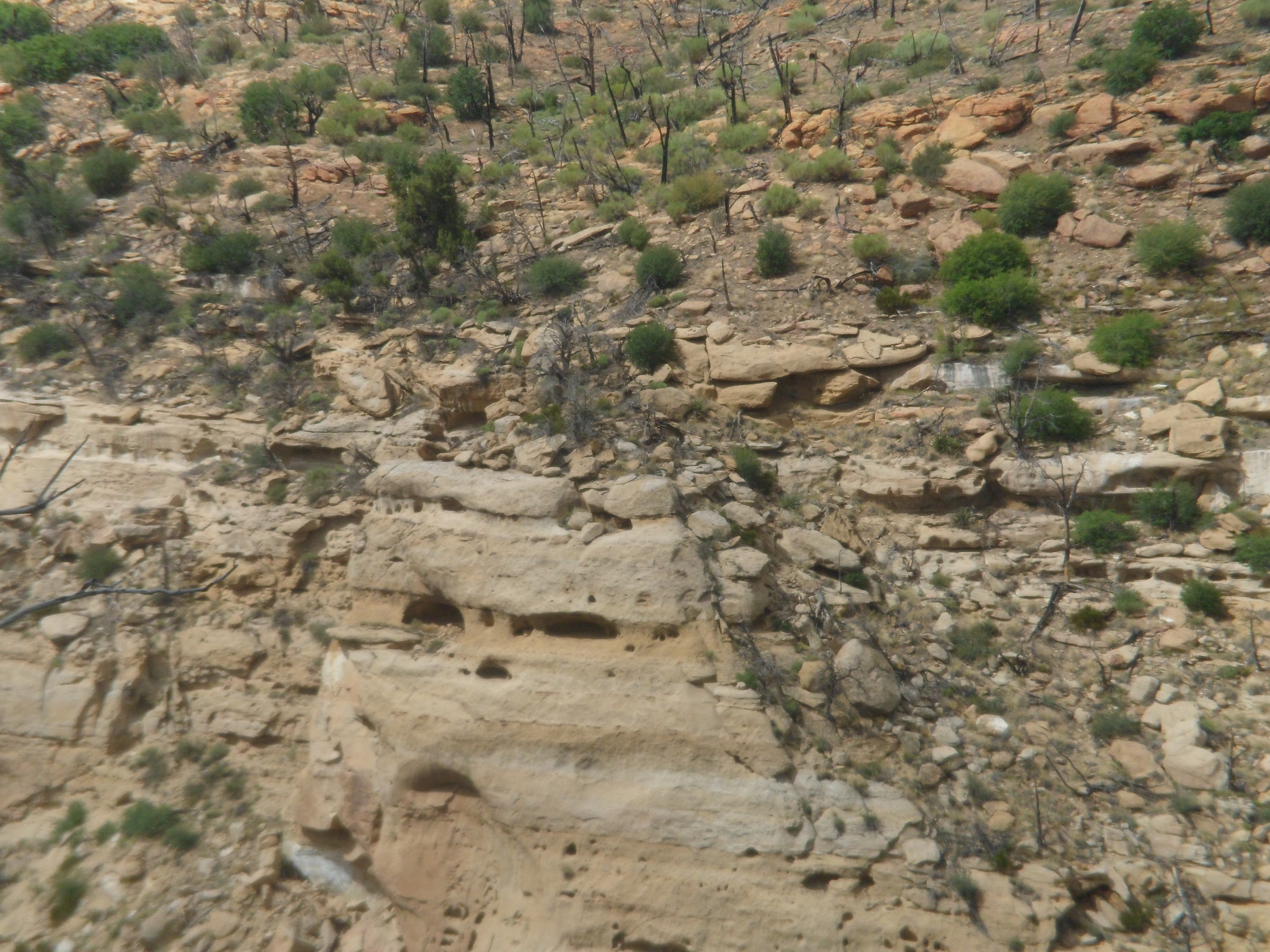
Paul Revere, by profession, was a silversmith.  Silver being expensive, then as now, Revere also worked with copper and bronze, as well as with gold.  A bronze bell, cast by Revere for the Old North Church, was rung by him on that fateful night of April, 1775.  It now lies in the courtyard of his preserved home.
SAM_3607

The last place I visited in the North End, before crossing the bridge into Charlestown, was Copp’s Hill Burial Ground.

SAM_3617

Here are interred the good, the great and those of checkered repute, from Boston’s early days.  The patriot Robert  Newman, the abolitionist and educator Prince Hall and the early religious fundamentalist Mathers (Richard, his son Increase and grandson Cotton) are all laid to rest in this hallowed ground.

SAM_3618                            SAM_3619

SAM_3621


Having paid my respects to one and all, I gazed out upon the Charles River.

SAM_3622


Tomorrow, I will recap my visit to Charlestown.  For now, I recall the words of the townies, to any young boy who hung around too long in a “Connah Stoah”, “Hey kid, go home and tell ya mutha she wants ya.”

SAM_3594


The Seeds, and Fruits, of Freedom: Boston’s Historical Trail

0

I first walked the better part of the Freedom Trail in Boston with my Dad, in 1964.  Back then, Quincy Market was called Durgin Park and the Old Corner Book Store was still selling books.  We got as far as the Charles River, then went back to the car, so as to beat the afternoon traffic.  It was my first real understanding that freedom came after considerable struggle.
I went back to the edge of the Trail last year, visiting Boston Common and Park Street Church, during a Copley Square excursion.  This time, I was determined to walk the rest of the trail and see this beloved city through the eyes of struggle and endurance.
It was a cold, somewhat brisk day, with snow in the air, on my 62nd birthday.  The first place I encountered was the newest point on the Freedom Trail:  Holocaust Memorial.  There is no more fitting place than here, to honour the memories of those lost in the second-worst war in human history.  Jews have been an integral part of American society since the mid-seventeenth century, with sites like Newport, RI’s Touro Synagogue to prove it.  Boston’s memorial is modern, and tasteful.
SAM_3545

The message is clear, and only the ignorant will deny what happened.  Freedom is an ongoing struggle- lest we forget.

SAM_3548

The victims speak through these media.

SAM_3549          SAM_3547

The foresight of Dwight D. Eisenhower provides us with further assurance.

SAM_3552

The first freedom fighters here included men of means and paupers alike.  They were of all the  “races” who lived in Boston at the time:  White, Black, Native American.  Their common thread, which had a distant echo in England itself, was the cry for personal freedom.  No one really was represented in government, save the upper classes and aristocracy.  Women could only speak through their menfolk.  In 1770, on a street corner in what was then the heart of Boston, push came to shove.

SAM_3561

The story of the five year run-up to the War for Independence is superbly told in the Old State House.  I spent an hour here, learning new details of the Tax Enactment Period and of the complex interplay between the British soldiers and Patriots, in the aftermath of the Boston “Massacre”, which actually cost five lives and six injuries.

SAM_3562

From this site, I walked to the Old South Meeting House, so named because it was used primarily by Quakers and Mennonites.  It was a safe haven for those meeting to discuss their grievances, in the early 1770’s.  Below, are views of the exterior and interior of this vital building.

SAM_3564
SAM_3569

The morning segment of my wandering led next to the Old Corner Book Store (now a Chipotle).  It is the red brick building just diagonal from the truck.

SAM_3574

Next is Old City Hall, where there is a statue of Benjamin Franklin in the front yard, close to King’s Chapel.

SAM_3573
SAM_3575

King’s Chapel is important, as it was the site of the first school in Boston, and a Loyalist gathering spot.  It is also the site where, ironically, the patriot William Dawes, among other notables of the colonial era, is buried.

SAM_3577
SAM_3583

I had reached the point where I had left off last summer.  In the interests of doing justice to the North End and Charlestown, as well as to my own birthday dinner later in the evening, I headed towards Fanueil Hall, Quincy Market and lunch.

En route, I saw living proof of our nation’s freedom- a group of carolers, spontaneously offering holiday cheer.  Across the street from them was the famed Parker House.

SAM_3587
SAM_3585

Hot rolls aside, I was in the mood for a lobster salad and clam chowder.  Hence, it was off to the great market place.  Fanueil Hall itself serves as headquarters for Boston National Historical Park.

SAM_3556

For serious eating, it’s Quincy Market.

SAM_3558
SAM_3589

There is a touch of kitsch at the end of the complex, as there is at all great city markets.  But, hey, ya gotta love “Cheers”.

SAM_3591

Next up:  The North End, home of Paul Revere.