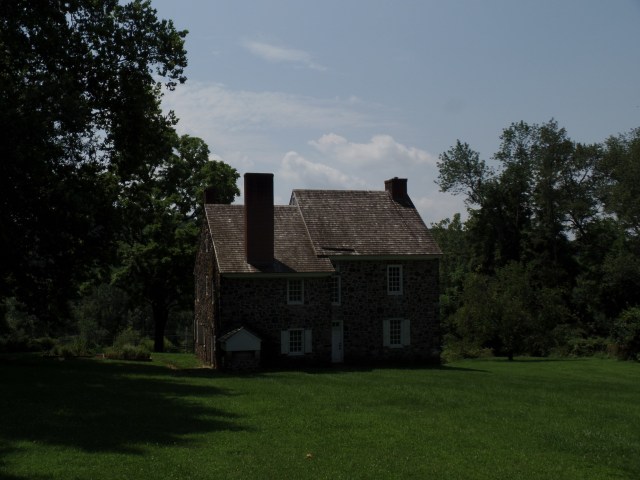
Fortresses and Myths

4

July 22, 2017, Lexington, VA-

I stopped, overnight, in a town I love:  Harrisonburg, home to James Madison University, to two young couples, who I love as if they were my own children, and to another young lady, whom I also love like a daughter, but who has become a bit estranged, over the past year or so.  I visited the former, at their establishment:  Artful Cafe (formerly known as Artful Dodger), in the heart of downtown H’burg.  Readers might remember this place from my 2016 excursion.  They were coasting, on Friday night, saving their energy to lovingly greet participants in the Shenandoah Pride Festival, which was today’s big event.  I stopped by, again this noon, on my way out of town, and purchased enough cold brew coffee to keep me happy, on the way to Lexington.  The definitely straight young husbands were bare-chested, in solidarity with the Pride group-who, ironically, had not a bare chested person among them.  Their wives sported rainbow bandanas, as their contribution.  Me?  I am very happy with my woman-loving self, and I accept other people’s sexuality, without casting the judgement that belongs to the Creator alone.

I spent about thirty minutes with my Lost Angel,

SAMSUNG CAMERA PICTURES

at another coffee shop, across town, near James Madison University (seen below).SAMSUNG CAMERA PICTURES
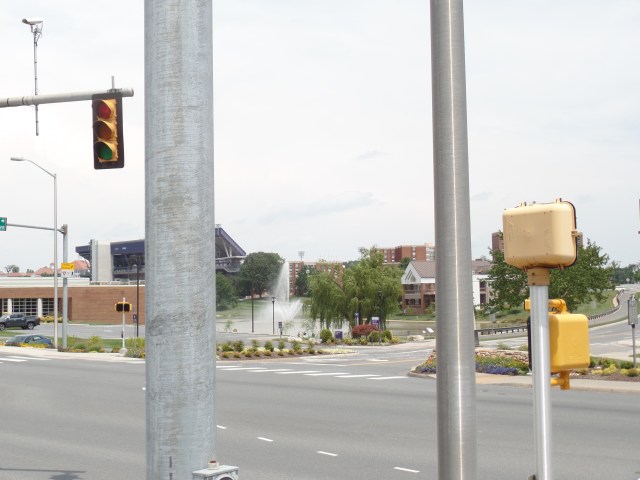
J filled me in on her life, of the past two years and, more importantly, of her dreams for the next few.  She seemed a bit embarrassed to not have any great achievements to recount, but you know, just seeing her and knowing that she was essentially okay, was more than enough.  J, and the other four kids, are people who I just want to see happy, as I do with my son and his lovely girlfriend.

I headed south, on I-81, with Charleston, WV and beyond on my radar screen.  Then, I saw a sign for Stonewall Jackson House, as Lexington loomed ahead.  I know, “He betrayed our country!”.  There are those who beg to differ, so being an admirer of some OTHER aspects of his life, I left the highway and drove past the formidable fastness of Virginia Military Institute, where Stonewall was an instructor, prior to the cataclysm.

SAMSUNG CAMERA PICTURES

My interest in Thomas Jonathan Jackson, though,was not in his military exploits, but in his creativity and in his foresight.  His garden was decidedly Jeffersonian, incorporating many of the ideas put into practice at Monticello, including drip irrigation and organic crop rotation.  As you can see, he did make every square inch count for something.  The scarecrow was a “falcon”.

SAMSUNG CAMERA PICTURES

Stonewall also, to the consternation of Lexington’s other citizens, believed Black people should be literate, and taught his “house servants” to read the Bible.  I would not be surprised to learn that this action of his actually led to his being coerced to join the Confederate Army, whose cause, despite his ferocity in battle, he only tepidly supported.  He died at the hands of one of his own sentries, which could very well have not been an accident.  Saddest of all, his own sister, an Abolitionist, declared him “dead to her”, upon the secession of Virginia and his being recruited by Robert E. Lee, in 1861.

TJ was a man of culture, and did foresee the end of slavery, war or no war.  He believed in the universality of learning, and maintained a progressive home.

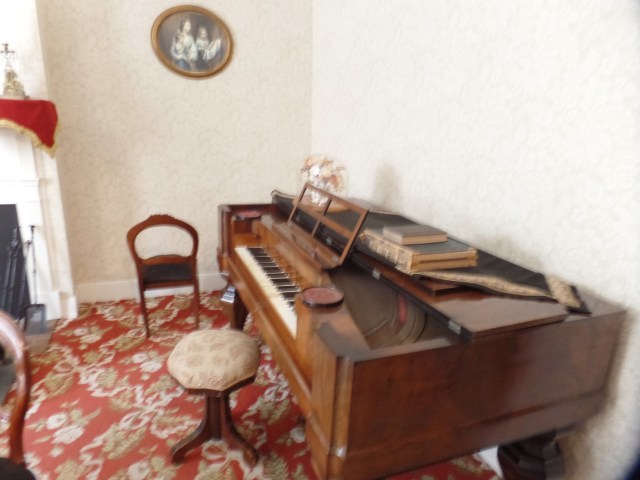
SAMSUNG CAMERA PICTURES

SAMSUNG CAMERA PICTURES

Satisfied that I had confirmed my suspicions about the decent side of Colonel Jackson, I headed west, across the Mountain State.  At a rest area, off I-64, east of Beckley, WV, I took a photo of the Blue Ridge, and found what looks like another being, inserting self into the view, gazing northward.
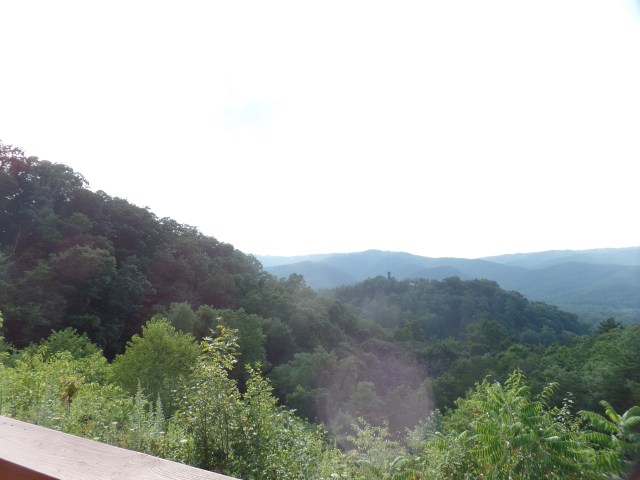
SAMSUNG CAMERA PICTURES

Being far from alone, then, I continued on, into more rain and made it to Olive Hill, KY, before stopping at Spanish Mansion Inn.  More about it, and the Ohio River, in my next post.
 

Sometimes The Heart Has A Hole In It

6

August 20, 2017, Prescott- 

NOTE:  I am not shying away from posting about my visits to Harrisonburg and Lexington, VA.  That post will be up, tonight (dated July 22).  Considering one of the people in the post, though, brought to mind the topic below.

So, I have a hole in my heart, right now.

I, who pride myself on letting those I love fly away,

knowing that if they are really meant to be here,

they will return.

If not, they will light elsewhere.

There are, though, people

whose absence,

or lack of communication,

or estrangement,

hurt like Hell.

I guess that’s part of the physical realm,

and my mentors, ever steadfast,

will admonish me to let go.

I will, in short order,

but for now,

I am massaging the soreness.

People who run,

or are in hiding,

or are just silent,

I wish you every measure

of love, dignity and solace.

It will be nice,

if I am in your good graces,

again.

Fly where you will,

and know this roost is being kept fresh.

(This is for all my surrogate daughters,

who have disappeared and my friend,

who sped off, without a word.)


Vale of Three Mountains

2

July 21, 2017, Harpers Ferry- After experiencing the intensity and blood-echoes of Antietam, I headed the back way southward, through tourist-clogged Shepherdstown, to slightly less congested Charles Town, not to be confused with the West Virginia capital, Charleston, which lies a good 3 hours to the south.  There, I spent a restful night, on the outskirts of town.

This morning, after driving past the even more-overpopulated Harpers Ferry KOA, a mini-city, I opted to first take a ranger-guided tour of the approach to Lower Town.  Ranger Michael gave us a fully- detailed visit to what had been Storer College, an institution of higher learning, founded in 1865 and aimed at training African-American teachers.   The school closed in 1955. It is now part of Harpers Ferry National Historic Park, with a National Park Service Academy (Mather Training Center) and Lockwood House, a Union Army hospital and later headquarters for Gen. Philip Sheridan.  When Storer College was founded, Rev. Nathaniel Brackett made Lockwood House the administration building.  It is now a research facility for the National Park Service.

SAMSUNG CAMERA PICTURES

Behind Lockwood House lies Harpers Ferry Cemetery.  Michael led us through the burial ground, en route to Jefferson Rock.

SAMSUNG CAMERA PICTURES

Thomas Jefferson stood on this rock, in October, 1783, and was extremely impressed by the view.  From that point on, the rock has borne his name.

SAMSUNG CAMERA PICTURES

St. Peter’s was not there, back then, but you get the idea.

SAMSUNG CAMERA PICTURES

We walked past the ruins of an Episcopal Church, which was there in 1783, before Michael bid us farewell, so he could conduct another tour.

SAMSUNG CAMERA PICTURES

I took the shuttle bus back to the upper parking lot, and drove back down, for further exploration of Lower Town.  I stopped, for about twenty minutes, at the headquarters of the Appalachian Mountain Club, this being the midpoint of the Appalachian Trail.  The staff and several through-hikers were encouraging of my pipe dreams of someday walking that venerable long path.

Here are a few scenes of the business district and Virginius Island. These are the ruins of Shenandoah Pulp Mill, built at Halls Island, by Thomas Savery, in 1887 and destroyed by the Great Flood of 1936.

SAMSUNG CAMERA PICTURES

The Flood also put an end to a cotton mill, on Virginius Island.SAMSUNG CAMERA PICTURES

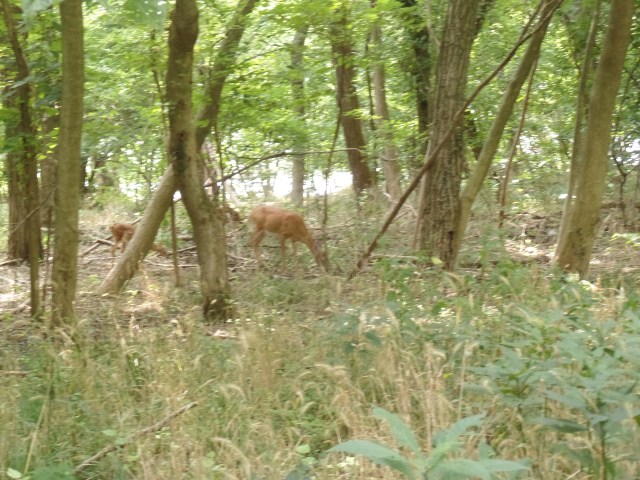
These days, Virginius is popular with swimmers, along the Shenandoah River and with the ubiquitous deer.

SAMSUNG CAMERA PICTURES

Thankfully, it is only accessible by footbridge.

SAMSUNG CAMERA PICTURES

I walked on down, to Lower Town, and gazed at the confluence of the Shenandoah, with the Potomac.

SAMSUNG CAMERA PICTURES

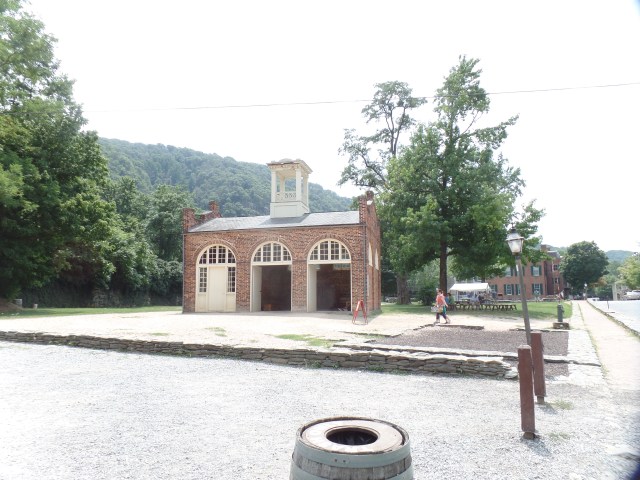
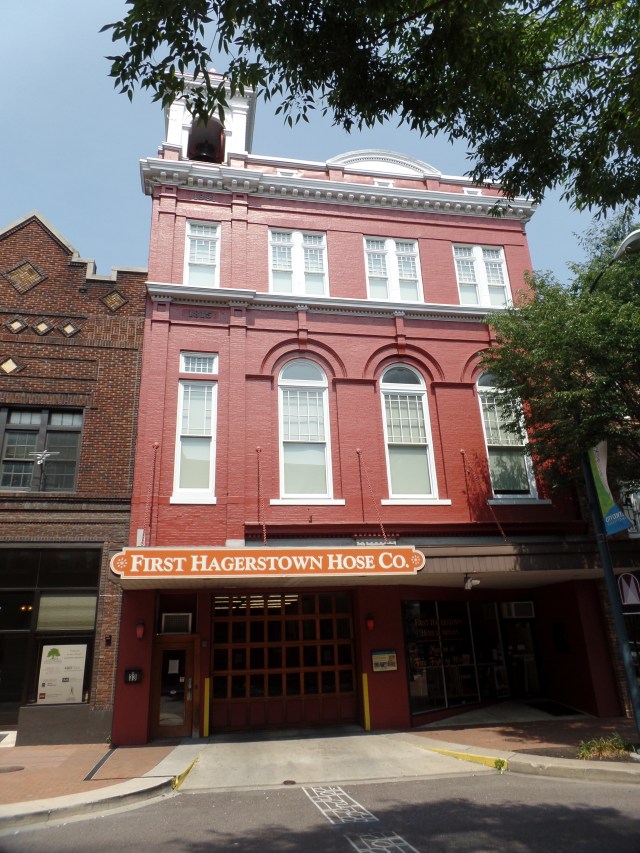
The small fire station, which once served as a “fort” for the abolitionist John Brown, faces the two rivers, at the edge of Lower Town.

SAMSUNG CAMERA PICTURES

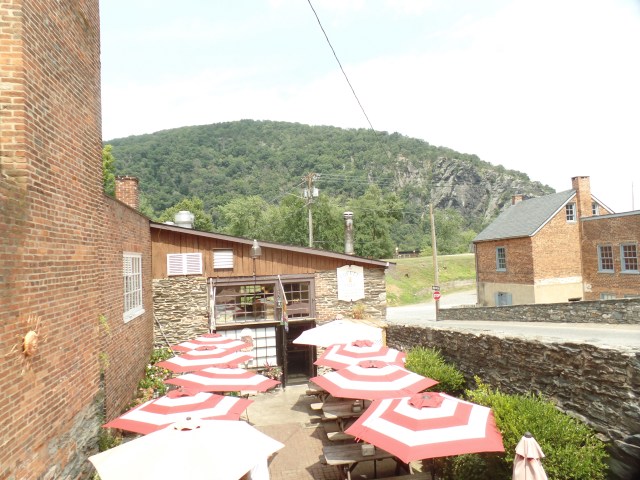
I walked on, up Main Street, avoiding the temptation to buy trinkets.SAMSUNG CAMERA PICTURES

The last stop, before heading out towards Harrisonburg, was The Coffee Mill, where the heat of afternoon called for a root beer float.

SAMSUNG CAMERA PICTURES

Harpers Ferry certainly had a hard time being hemmed in by two rivers and three mountains, during the strife of 1850-1865, but it has found a place in the hearts of grateful citizens, in this day.


The Red Cornfields of Indian Summer

9

July 20, 2017, Antietam-

Visiting the site of the bloodiest single day battle in American history was not something I particularly relished, but in these days of sanitizing history, I am doubly determined to not ignore any lesson- nor will I pretend the horrors never happened.

Antietam Creek, the farms that surrounded it and the rowdy townsfolk who, then and now, challenge those from somewhere else, make for a difficult and compelling story.

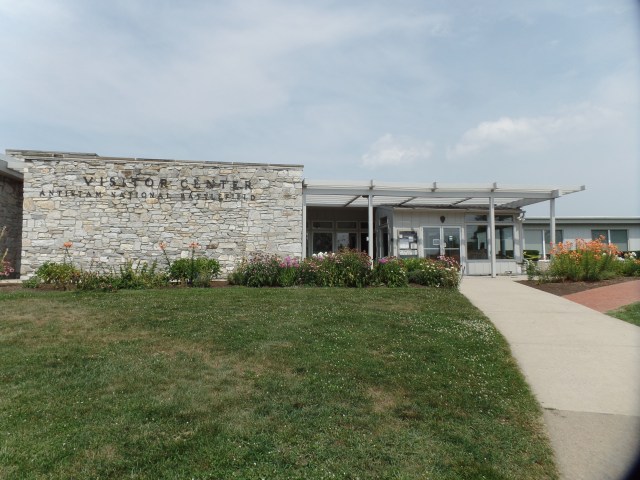
I arrived here, right around 1:30 p.m.  A twenty minute walk around the Visitor Center, and its immediate surrounds, gave me a sense of the field of vision that was afforded Generals McClellan and Lee, as they prepared for the horrific face-off of September 17, 1862.

SAMSUNG CAMERA PICTURES

SAMSUNG CAMERA PICTURES

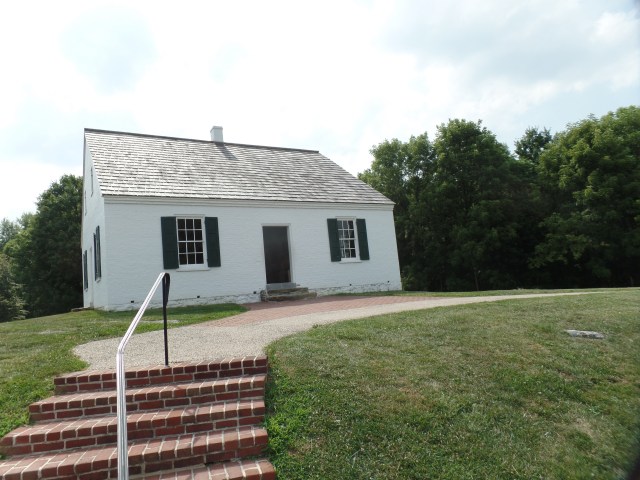
The most intense initial fighting took place around a church- shades of Brandywine.  Like Birmingham Hill Friends Meeting House, during the Revolutionary War, the Dunker Church served as a makeshift hospital, for wounded of both sides.

SAMSUNG CAMERA PICTURES

SAMSUNG CAMERA PICTURES

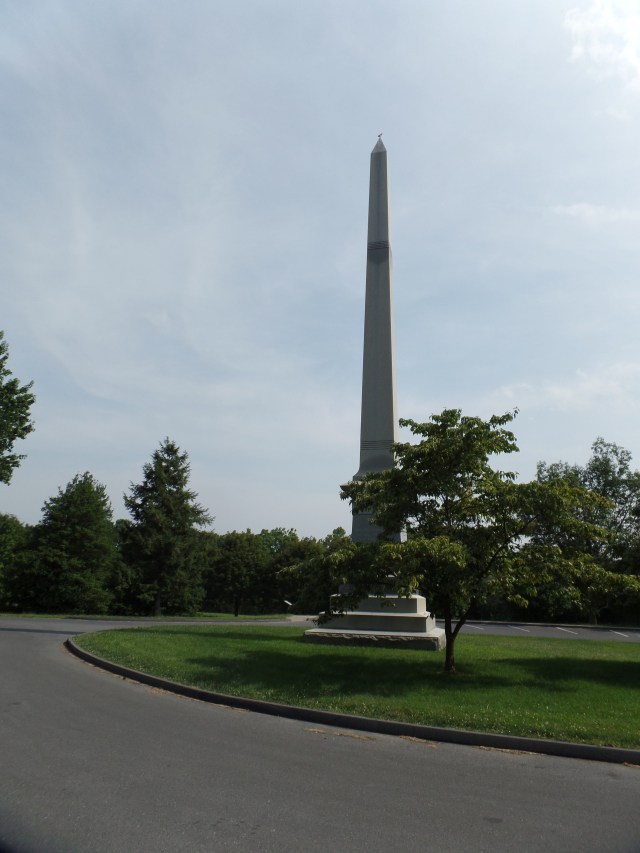
Many of the states which sent troops to battle have monuments at Antietam, just as they do at Gettysburg.  Here are photos of several monuments, from both sides. Pennsylvania, followed closely by Ohio, has the largest number of monuments here.  The Philadelphia Brigade’s monument is the tallest of any at Antietam.

SAMSUNG CAMERA PICTURES

Indiana’s monument is also quite formidable.

SAMSUNG CAMERA PICTURES

New York has several, including two which align with one another.

SAMSUNG CAMERA PICTURES

The Texans, who fought perhaps more ferociously than most, have their state memorial, across the road from the New York pair.

SAMSUNG CAMERA PICTURES

Georgia, likewise, has honoured its soldiers,with a monument facing those dedicated to the Union cause.

SAMSUNG CAMERA PICTURESClara

The reality of defeat, along with the vow to regroup and press on, is signified by these stacked rifles of the Pennsylvania regulars.

SAMSUNG CAMERA PICTURES

There were several farms in the area, all of whose owners stood with the Union.  At the Popfenberger Farm, however, Clara Barton set up a full field hospital, to treat the wounded of both sides.

SAMSUNG CAMERA PICTURES

The Mumma Farm was a key supplier of provisions to the Union Army, and as such was a thorn in the side of Robert E.Lee.  His troops took possession of the farm, in midday, and burned it to the ground.  The Mumma family had, of course, fled to a church, six miles away, well before the Confederates arrived.

SAMSUNG CAMERA PICTURES


A sunken road, to the south of the property, built by Joseph Mumma, served as a trench for the Rebels, and became known as Bloody Lane, for the thousands of casualties that occurred there.

SAMSUNG CAMERA PICTURES

The David Miller Farm, west of the Mumma property, was likewise, a key supplier of the Union effort, and was also the scene of some of the most intense fighting of the day.

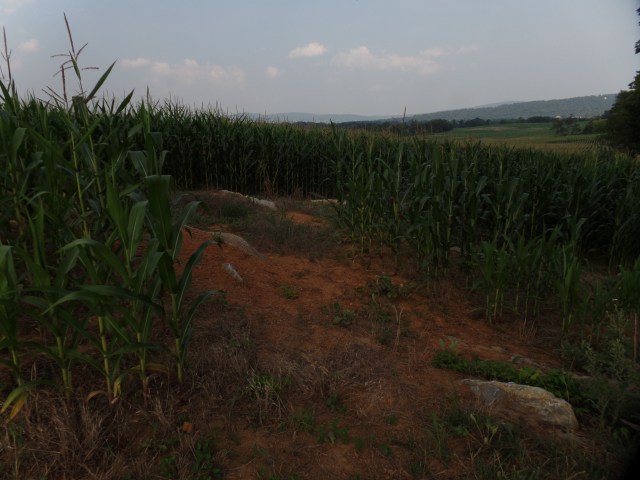
SAMSUNG CAMERA PICTURES Miller’s cornfield became known as “The Bloody Cornfield”, for the fighting that ensued there, from three directions.  Anyone who has ever been in a corn maze knows how confusing it can get, to navigate a dense field.

SAMSUNG CAMERA PICTURES

As I continued on, to the southern and western segments of the Battlefield, just southeast of Bloody Lane, there is a tower, from which one can spot twenty miles, in any direction.  This was built in 1890, to provide such a bird’s eye view,

SAMSUNG CAMERA PICTURES

SAMSUNG CAMERA PICTURES

Here is a southeastward view, from the tower’s observation deck.  The town of Sharpsburg is seen, eight miles away.SAMSUNG CAMERA PICTURES

The Irish Brigade, composed of  immigrants from that country, has its own memorial, at the base of the Observation Tower.  It was commanded at Antietam, by Gen. Thomas Meagher (“Marr”), a refugee from the United Kingdom.  This unit also formed part of the Zouaves, who have their own, collective monument, on the east side of Sharpsburg.  Here is the Irish Brigade’s monument.

SAMSUNG CAMERA PICTURES

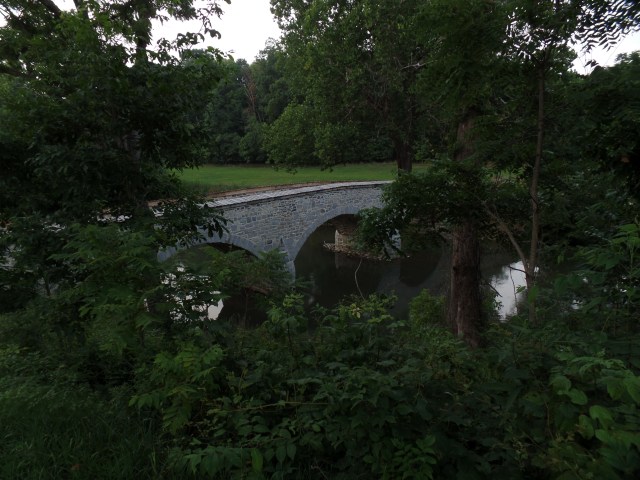
Lastly, here is a look at Burnside Bridge, named for the Union general, Ambrose Burnside, who miscalculated the difficulty of crossing Antietam Creek, just to the south of the bridge, and cost his troops a chance to ambush the Confederates, who were waiting in Mumma’s Lane.

SAMSUNG CAMERA PICTURES

With the end of the day, there was a consensus that the Union Army, by staving off Lee’s invasion of Maryland, had turned the tide of the war.  Although the Confederates would go on to attack Gettysburg, PA, a relatively short distance to the northeast, a year later, Lee’s army would never again have the upper hand.

The legacy of war is often more war.  People can’t be forced to change their hearts, though I am certainly glad that government-sanctioned slavery, at least, has been brought to an end.  Having had enough of the Civil War for one day, I found a place to rest, in Charles Town, WV,

NEXT:  Harpers Ferry


Charlottesville

0

August 13, 2017, Prescott-

It’s rather ironic, that my journey series has reached the point where my next few posts will be about Antietam, Harpers Ferry, Harrisonburg/Lexington and Olive Hill, KY.  I did not visit the seat of the University of Virginia, this time out.  It is my late wife’s alma mater and Charlottesville is the first place where Penny heard about the Baha’i Faith.  There is a strong Baha’i presence there, to this day.  Were my fellows in faith to be given charge of this weekend’s gatherings, they may well have had white and black extremists cordoned off in one area, as was done at a Baha’i gathering in Orlando, several years ago.  It taught more than a few of them the absurdity of their positions.

Fear has a lot to do with what went on, on both sides.  Fear makes people do prudent things, like staying aware of their surroundings, watching where they put their hands and feet, not picking fights with those who could seriously cause harm.  Fear also can make people do stupid things, like assume a person, who has certain physical features or styles  of dress/adornment, is dangerous or argue a point, that they know is ridiculous, “could possibly be right.”

I believe every life matters, too.  I believe it is right to learn from history and that it is wrong to try and erase history.  There was once an emperor of China, who tried to expunge the record of every ruler who came before him.  He wanted to rewrite history, in his own hand.  It’s said that history is written by the victor, but that didn’t turn out so well, for said Emperor.  Others kept records, then, and others will keep records, now.  Those who remove our statuary are not being honest with children.  They are no better than those who gave short shrift to the legacies of people of colour, over a nearly 200-year period.  History needs to be full and balanced, if we are to learn from our errors, as a nation and as a species.

I am very saddened by the needless and premature death of Heather Heyer.  This wanton act of murder had nothing to do with a certain number of Antifa members being mixed with the anti-Nazi protestors.  Ms. Heyer was not with Antifa, nor was she “bused in by George Soros.”  She was a Charlottesville resident, employed as a paralegal.  It had everything  to do with the killer’s being an impressionable young man, of questionable emotional stability, being influenced, to some degree, by the words and taunts of a good number of Ku Klux Klan and Nazi Party members.  The reactions of many of the alt-right protesters does indicate they were not out to kill those who confronted them.  The obscenity-laced comments filling the air- on You Tube videos- did, however, set some people off, including the errant driver.

It’s  long past time to start serious, but respectful and frank dialogue.  Let’s do it, anyway.  It’s long past time for the President to set a strong tone of domestic leadership, aimed at getting differing sides together, peacefully,  but nose-to-nose, if necessary.  The air needs to be cleared of the noxious.  Citizens, however, as was said this evening, at a candlelight vigil here,  also need to set the moral tone, at their level..  No far-off politician can do all the heavy-lifting, nor should a local demagogue be allowed to stir up the passions of one segment of the populace, as happened in Charlottesville.

I am not any kind of supremacist.  I am not any kind of ideologue.  I have lived long enough to know that we lose, mightily, by excluding any group, based on any physical characteristic, faith or creed.  So, on we go, without the vivacious young paralegal, who just wanted to love her community.

To My Newest Friend

7

August 12, 2017, Superior-

You approached me,

as one adult to another,

from the get-go, this afternoon.

I felt your need to let the music,

that is inside you,

be given voice and melody.

We talked of a way,

in which I might help,

in that regard,

and next Saturday,

I will bring that help.

You are strong,

brave,

honest.

One can never have

too many friends.

I’m glad to have you as one,

and honoured

that you’re letting me be one,

in return.

The Margins of Ways Long Past

4

July 20, 2017, Hagerstown-

I left Philadelphia, yesterday evening, with minimal trouble.  It seemed that, at some point, there were more people coming INTO the city, than were leaving.  I drove through the northern third of Delaware, bypassing Wilmington, going through bustling Newark- seat of the University of Delaware (both cities are on the itinerary for July, 2018) and across Maryland’s northern tier, through Thurmont (not a  sleepy, bucolic town, but a modern, virtual bedroom town of Frederick- itself a bedroom town to Baltimore and Washington) and Frederick, where I stopped just in time for a police car to head to its emergency.  I continued a few miles further, and stopped for the night in Hagerstown, intending to spend the morning exploring this city that once signified an enclave of antebellum Southern thinking, just shy of the Mason-Dixon Line.

I heard that there is still a lot of progress to be made here, in race relations.  That is pretty much how it is everywhere.  Human relations always need work.  I am not in favour of demolishing relics that we might find disturbingly reflective of outmoded ways of thinking, but I do believe we must USE such monuments and artifacts to educate people on the excesses of the past, so that we may, as a people, do better towards one another, now and in the future.

Hagerstown does not maintain any sites that pay homage to racist thinking, and in fact promotes visits to sites that commemorate Black History in the city.  I have kept a brochure on the subject, for a future visit.  Meanwhile, today’s visit focused on the north end of downtown and on City Park, with its duck pond, acres of beautiful woods and its art museum.  Jonathan Hager House, with a small historical museum, sits on the north end of the park. It was closed today, though.

Let’s start with a look at the north end of downtown.

SAMSUNG CAMERA PICTURES

The nice ladies in this Welcome Center provided me with a wealth of information about the historic sites in the area- and gave directions to Antietam, which will take up my afternoon and evening.

SAMSUNG CAMERA PICTURES

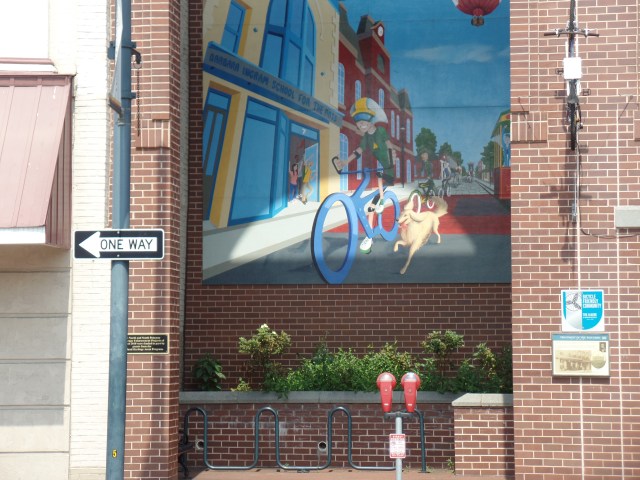
Street art is not common, at this end of town, but what there is, is upbeat and colourful.

SAMSUNG CAMERA PICTURES

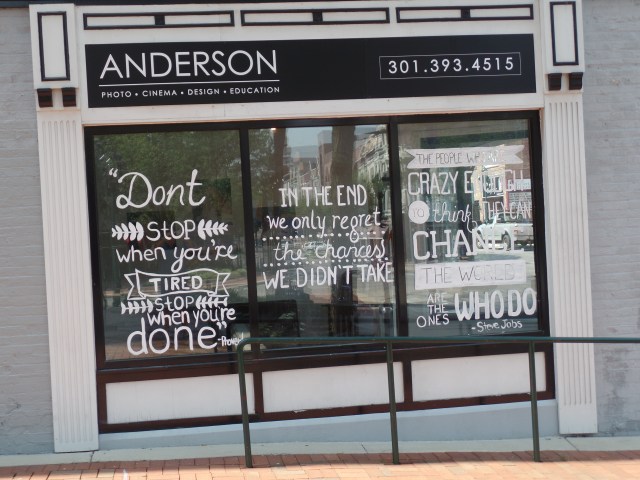
There were two windows, devoted to the dissemination of wisdom, in this building.  The saying on the left has pretty much been my credo, for many years now.

SAMSUNG CAMERA PICTURES

The above left could have been said by Honest Abe, Thomas Edison, the Wright Brothers- or Ed Wood.

I proceeded to note some architectural gems.  Here’s St. John’s Lutheran Church.

SAMSUNG CAMERA PICTURES

The fire station has endured a great many storms.

SAMSUNG CAMERA PICTURES

Every town, that has an active theater troupe, is blessed. This is the Maryland Theatre’s centenary.

SAMSUNG CAMERA PICTURES

It was time for lunch, so I took my deli stash, and headed for City Park.  Nothing beats a picnic table, overlooking the water.

SAMSUNG CAMERA PICTURES

There are water fowl galore here, and the pond is well-stocked with fish.

SAMSUNG CAMERA PICTURES

SAMSUNG CAMERA PICTURES

The forest is healthy, and well-populated, by various animals.  I came across a couple of fellow humans, washing their hair at a water pump.  Those who do live in the park, pick up after themselves, quite nicely.

SAMSUNG CAMERA PICTURES

The trail to the museum wends past the ducks and their happy home.

SAMSUNG CAMERA PICTURES

The upper picnic area is well-suited for larger groups.

SAMSUNG CAMERA PICTURES

This purposeful being greets the visitor to Washington County Museum of Art, founded, in 1929, by William and Anna Singer.  Diana, accompanied by her trusty dog, was fashioned by Anna Hyatt Huntington.

SAMSUNG CAMERA PICTURES

The museum features a full range of artistic media.  There are two cases of exquisite blown glass.

SAMSUNG CAMERA PICTURES

I have selected only a couple of scenes, inside the facility, as this is already a long post.  One painting, among the many fine pieces, stood out to me:  Hugo Bailin’s “Earth Forces”.

SAMSUNG CAMERA PICTURES

One of the loveliest features of this museum is its Saturday Morning gallery, which showcases the work of area children.

SAMSUNG CAMERA PICTURES

Lastly, here is the delightful Atrium.

SAMSUNG CAMERA PICTURES

I am providing links to the places I visit, from here on out and will see if WordPress will allow me to back-edit, and provide links to places I have visited thus far.

Here is: http://wcmfa.org/, which, unfortunately you’ll have to type in yourselves.

I ended this Hagerstown excursion with a look at the closed Jonathan Hager House.

SAMSUNG CAMERA PICTURES

NEXT:  Antietam National Battlefield


The Art of Durability

10

July 19, 2017, Philadelphia- 

Whilst waiting for some family members to meet me at downtown Philadelphia’s Cafe Ole,

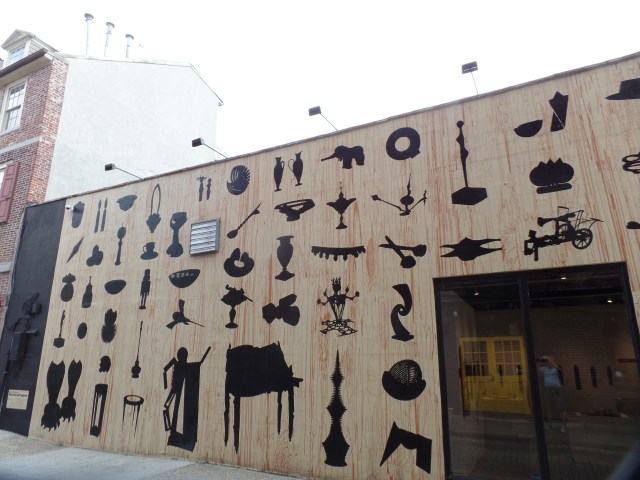
SAMSUNG CAMERA PICTURESI spotted an intriguing wall, across the street from the coffee house:
SAMSUNG CAMERA PICTURES

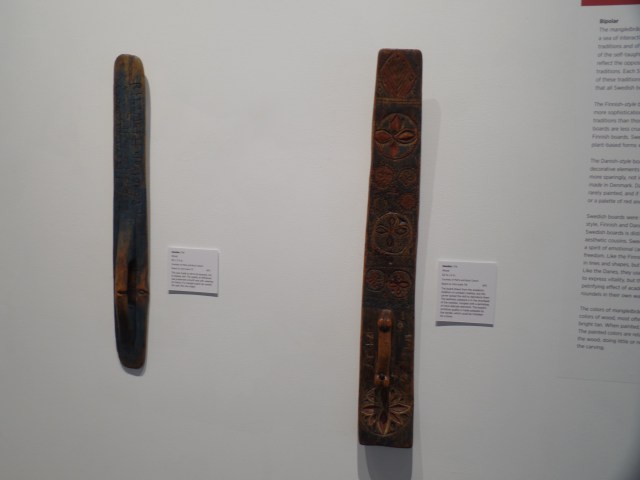
A brief walk showed that this belonged to a museum and art gallery, the Center for Art in Wood.  I spent about an hour, in the astonishing museum, which showcases both the traditional plank art of northern Europe and several contemporary pieces, from around the globe.  Several variations use the root word, Mangle, meaning cut, as their base.  Below, is a Danish piece, called a manglebraette.

SAMSUNG CAMERA PICTURES

Bear with me, I am taking the liberty of interspersing the traditional ware with contemporary pieces.  This one, by an American, Michael Scarborough, celebrates Buddhism.

SAMSUNG CAMERA PICTURES

Australian artist, Ashley Eriksmoen, presents this Judeo-Christian piece.

SAMSUNG CAMERA PICTURES

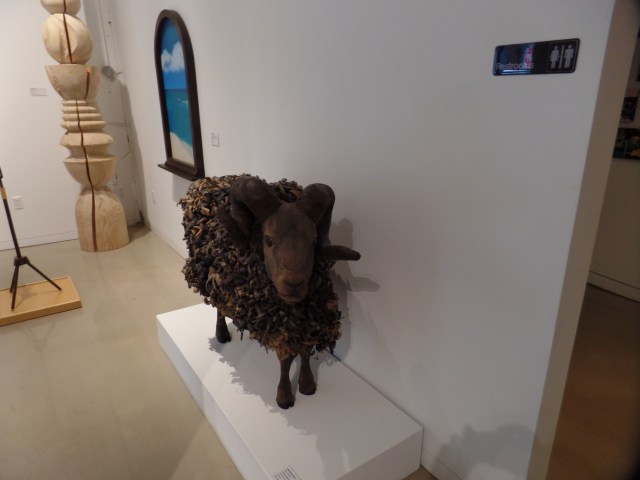
Who wants a wooden sheep?

SAMSUNG CAMERA PICTURES

These Icelandic pieces are examples of that nation’s trafakefli traditional craft.

SAMSUNG CAMERA PICTURES

Sweden’s variation is known as mangelbraden.

SAMSUNG CAMERA PICTURES

Norway’s woodcraft, mangletraer, is displayed at the front of the exhibit.  Some pieces are in glass cases.

SAMSUNG CAMERA PICTURES

Finland adopted the art form, as well, and is the easternmost country in which the mangleplank tradition took root.  Its form is called kaulauslandet.

SAMSUNG CAMERA PICTURES

Surprisingly, it is the Netherlands which is credited with originating the art form.  Merchants of the Hanseatic League spread it to the Nordic lands.  The Dutch form is called mangelplanken.

SAMSUNG CAMERA PICTURES

The variety, in both styles and uses, of woodcraft could capture one’s interest for hours, I think.

Here are a couple of other contemporary pieces.

SAMSUNG CAMERA PICTURES

SAMSUNG CAMERA PICTURES

I will definitely be back here, next summer, at the very least as a customer-for one of the gallery shop’s more utilitarian pieces, while learning more about plank art.  I, who whittled as a child, could possibly fashion something of use, one of these fine days.

Philly On The Water and Celts Above the Freeway

4

July 19, 2017, Philadelphia-

In the past, we would drive along  and bypass the large cities of the East Coast, Boston and Washington being exceptions.  I have continued to do so, pretty much, since Penny’s passing.  With Philadelphia being the venue for a major family event, next summer, and with my brother and sister-in-law being here for a visit, I made my way into  town for two days.  This was the second day.  I was on my own until 4 PM, as the family had to tend to planning activities.

So, after saying farewell to my nephew, at Brandywine, some downtown Philly time was in order.  My first stop, after parking the Hyundai, was Penn’s Landing.  Here, William Penn did disembark his boat, after sailing up the Delaware River, in 1682.  He’d be amazed at what is there now.  I walked along the pedestrian bridge and along the overlook, watching people in the pop-up amusement park, below.

SAMSUNG CAMERA PICTURES

SAMSUNG CAMERA PICTURES

After purchasing a bottle of water, from one of the ubiquitous vendors, who line Penn’s Landing, in summer, I found I-95 park, perched above the freeway.  It is a shady place of comfort for those living on the Near South Side, and has several remnants of what dominated the area, before the City of Brotherly Love.

SAMSUNG CAMERA PICTURES

It also has a couple of statues honouring the people of Celtic descent, who provided so much of the labour for building the cities of the megalopolis, from Boston to Norfolk.  This statue pays homage to the Irish immigrants.

SAMSUNG CAMERA PICTURES

Next to it, another statue tips its collective hat to the Scots, who were so indispensable to shipbuilding, a Philadelphia mainstay.

SAMSUNG CAMERA PICTURES

This sculpture depicts a family walking past Tun Tavern, a key gathering place in early Philadelphia.  This marker commemorates the site of the old public house, founded in 1686, and named for the Old English term for beer barrel.

SAMSUNG CAMERA PICTURES

Moving on, from I-95 Park, I spotted this early Twentieth Century office building, which may or may not have had a predecessor in this spot, which may or may not have been used by Benjamin Franklin, during one of his breaks from planning the Indian Wars, at Tun Tavern.

SAMSUNG CAMERA PICTURES

The Betsy Ross House had a private event this afternoon, so I gave a pass to going inside.

SAMSUNG CAMERA PICTURES

Like Boston and New York, Philadelphia is filled with little architectural gems, above doors, along windows and on walls.  This wrought iron protects the window, in a most agreeable way.

SAMSUNG CAMERA PICTURES

I am most amenable to further exploration of this great city, especially next summer.  My next post, though, will focus on one of Philly’s best kept secrets: The Center for Art in Wood.

What happened to Sixty-Six, for Sixty Six?  Nothing, I have five posts left, in that series, and will insert them between now and November 28, when 66 ends.


Sixty-Six, for Sixty Six, Part LXI: Brandywine’s Message

2

July 19, 2017, Chadds Ford- 

My nephew wanted to hit the trail, this morning, so after a few rendezvous snafus, due to differing GPS entries, we met at Birmingham Friends Meeting House, near the site of some of the heaviest fighting.  The battle raged here, on September 11, 1777.  Today, we were the only people on this little hill, south of Chadds Ford.  The Brandywine Valley, today, is better known for its wineries,  for the Wyeth family’s presence and for the Longwood and Main Fountain Gardens, than for one of the heaviest battles of the American Revolution.

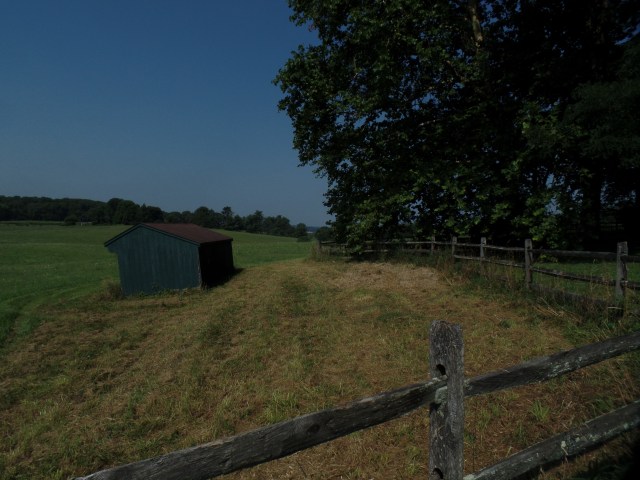
Of course, without the battle, which showed the British victors that the war was far from over, it’s likely that all the beauty of this valley would be under entirely different auspices, today.  We spent the first forty minutes of our visit, in and around Birmingham Friends Meeting House and its Peace Garden. First, though, here are a couple of views of the area that was the battle zone, 240 years ago, next month.

SAMSUNG CAMERA PICTURES

SAMSUNG CAMERA PICTURES

What is the province of grazing cows, today, was a harrowing encampment, for men on opposing sides, but all far from home.  The hospital where all, regardless of loyalty, would be treated for their injuries, was in this modest building- then and now, a Quaker Meeting House.

SAMSUNG CAMERA PICTURES

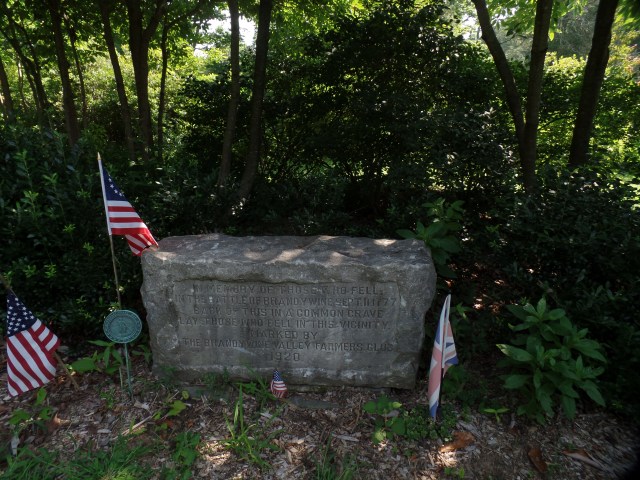
Many of their fallen comrades would be buried, in a mass grave, on the south side of this cemetery.  Hundreds lie here, with no regard for their ideology. All were viewed as humans, by the farmers of Birmingham Hill.

SAMSUNG CAMERA PICTURES

SAMSUNG CAMERA PICTURES

This plaque announces the Peace Garden of Birmingham Hill.

SAMSUNG CAMERA PICTURES

Again, the serenity of the day- with the distant echo of muskets and cannonade.

SAMSUNG CAMERA PICTURES

This verse, by John Donne, is one of several cogent quotes, placed carefully, throughout the Peace Garden.

SAMSUNG CAMERA PICTURES

William Sloane Coffin also offers a simple comment on the world of today.

SAMSUNG CAMERA PICTURES

A poignant expression of love, from a local farmer to his departed wife, signifies the ongoing daily life, around the battle and its aftermath.

SAMSUNG CAMERA PICTURES

After time for reflection, we headed to Brandywine State Museum, and spent an hour or so there, before walking to Washington’s Headquarters. The museum offers detailed exhibits of muskets, British rifles (which were largely responsible for the Royal Army’s early successes) and cannonry.  It is, like the Museum of the American Revolution, a well-balanced institution.

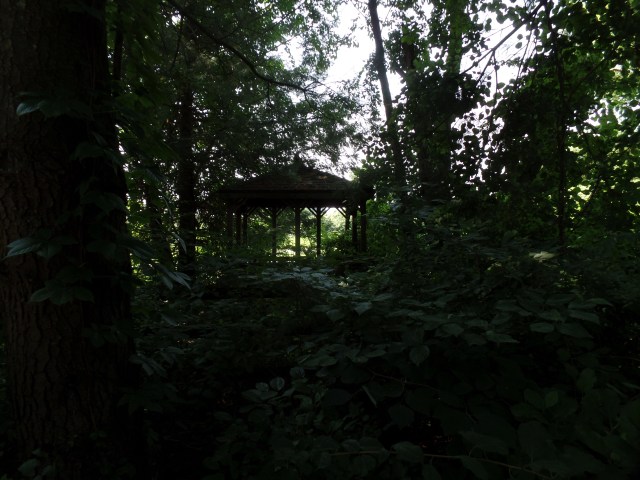
In the nearby woods, this long-abandoned gazebo tells of how nature regards the vagaries of war.  It grows over the remnants, and challenges us to unearth them.

SAMSUNG CAMERA PICTURES

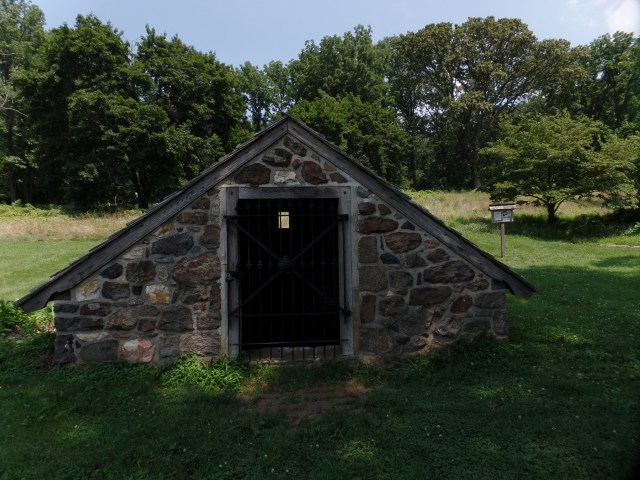
This was Benjamin Ring’s root cellar.  Mr. Ring was the host to General Washington, and his troops, who camped in the fields.

SAMSUNG CAMERA PICTURES

The Rings most likely stayed in this “servants’ quarters”, during the Revolutionaries’ encampment.

SAMSUNG CAMERA PICTURES

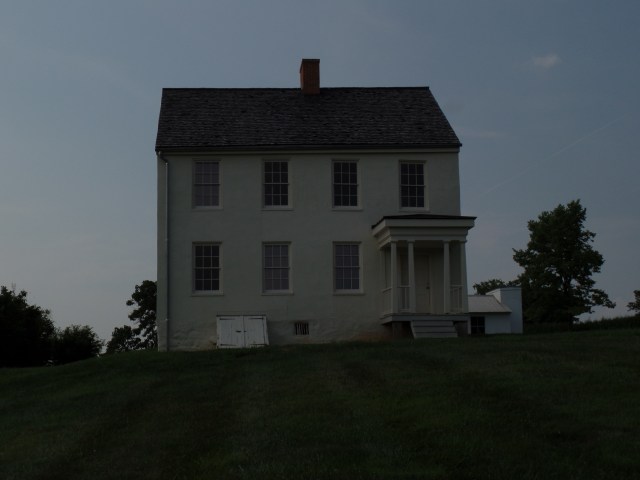
Here is the main farmhouse, where the General and his staff planned what turned out to be an inadequate strategy.  Much was learned from the battle, though, and it was the hubris of the British, combined with French and Polish support for the Americans, which led to the rising of the Revolutionary forces, after Valley Forge.

SAMSUNG CAMERA PICTURES

With this, my nephew was off to pick up his little girl, from pre-school, and I was headed to Philadelphia, after a fabulous lunch, at this bustling, somewhat friendly establishment.

SAMSUNG CAMERA PICTURES