October 13, 2022- The two of us sat on a fairly comfortable rock bench, gazing at a rather bland, but still comforting, sunset. My hiking buddy, Akuura, and I both have an affinity for Sedona, as well as for Prescott. So, we headed out in mid-afternoon, for the express purpose of a hike which would take in the sunset.
The trail scheme we chose started with Teacup Trail, which heads to this spot, more widely known as Coffee Pot Rock.
Coffee Pot Rock (right), in Sugarloaf complex, SedonaCoffee Pot Rock, close-up
Much of our hike was spent on Sugarloaf Loop, a fairly flat, circuitous route, that goes between the summit of Sugarloaf Mountain and the rock formations that include Coffee Pot. We walked close to, but not up, the short summit trail. HB is still working up to more vigourous trails. Then the route took us back around, towards Coffee Pot, before we looped up to the stone benches that gave us the views of sunset.
One of the delights of any part of the Southwest is that colours seem to change, as the sun gets lower towards the horizon. Here are two views of Chimney Rock, west of Thunder Mountain and Sugarloaf.
Chimney Rock, Sedona, at 4:15 p.m.Chimney Rock, Sedona, at 5:11 p.m.
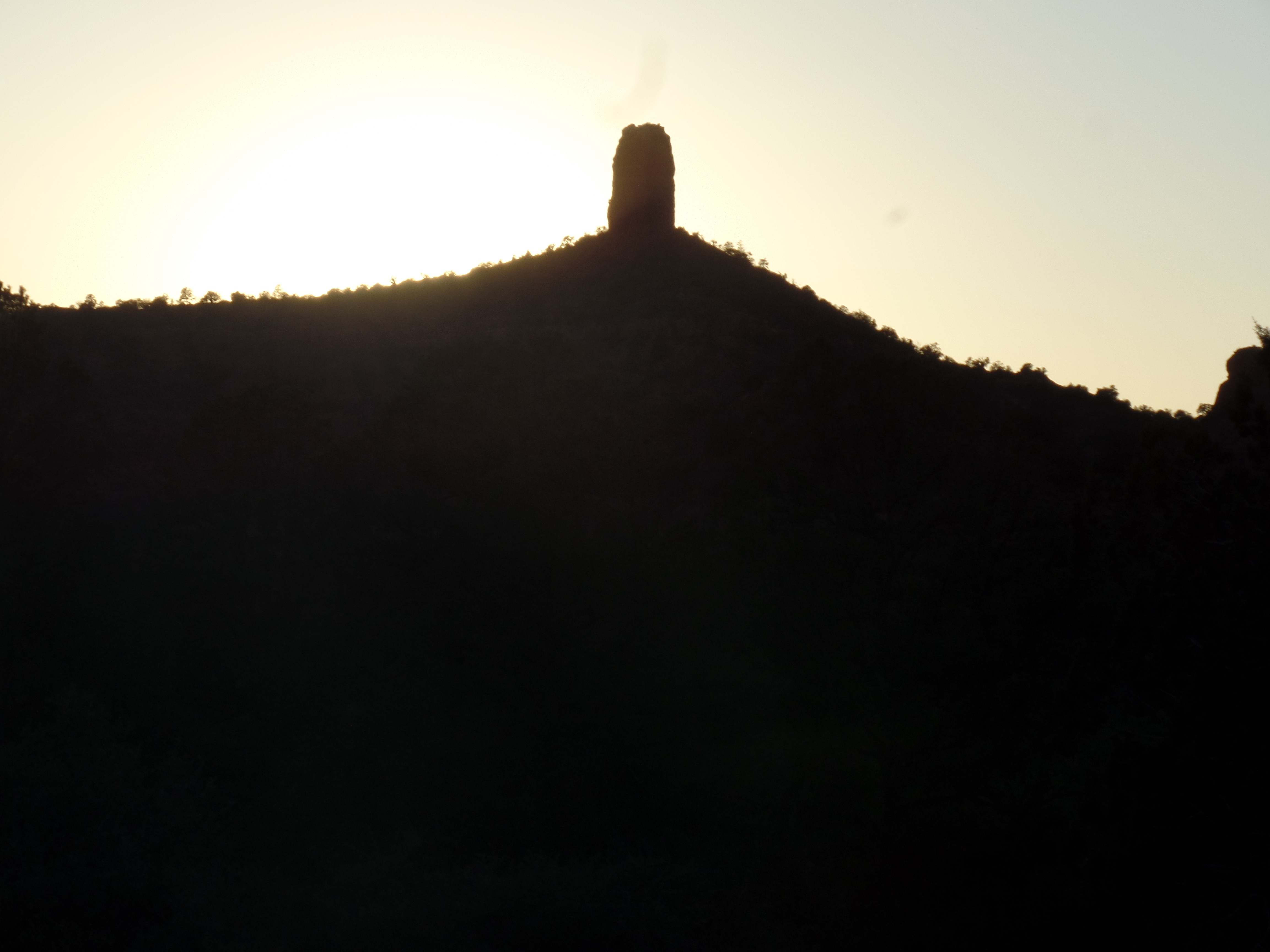
Here is the sunset, which bid us farewell, from our perch on the west slope of Sugarloaf.
Sunset, from Sugarloaf Mountain, Sedona
The beauty of the area is evident, and another beautiful aspect is that hiking in the Southwest is like opening Chinese boxes or Matryoshka dolls, there is always another trail, at the end of the one you are walking. There is much to explore, in the months ahead.
October 12, 2021, Santa Fe- The rough-hewn log cabin greeted several of us who pulled into Ghost Ranch around noon. It’s given name is City Slicker Cabin, though BYOB (Bring your own bedding) is the obvious message for those who take a look at its plank-floored emptiness. Needless to say, the present owners of the property take care to lock it, each night at 5 p,m,
Interior of City Slicker Cabin.
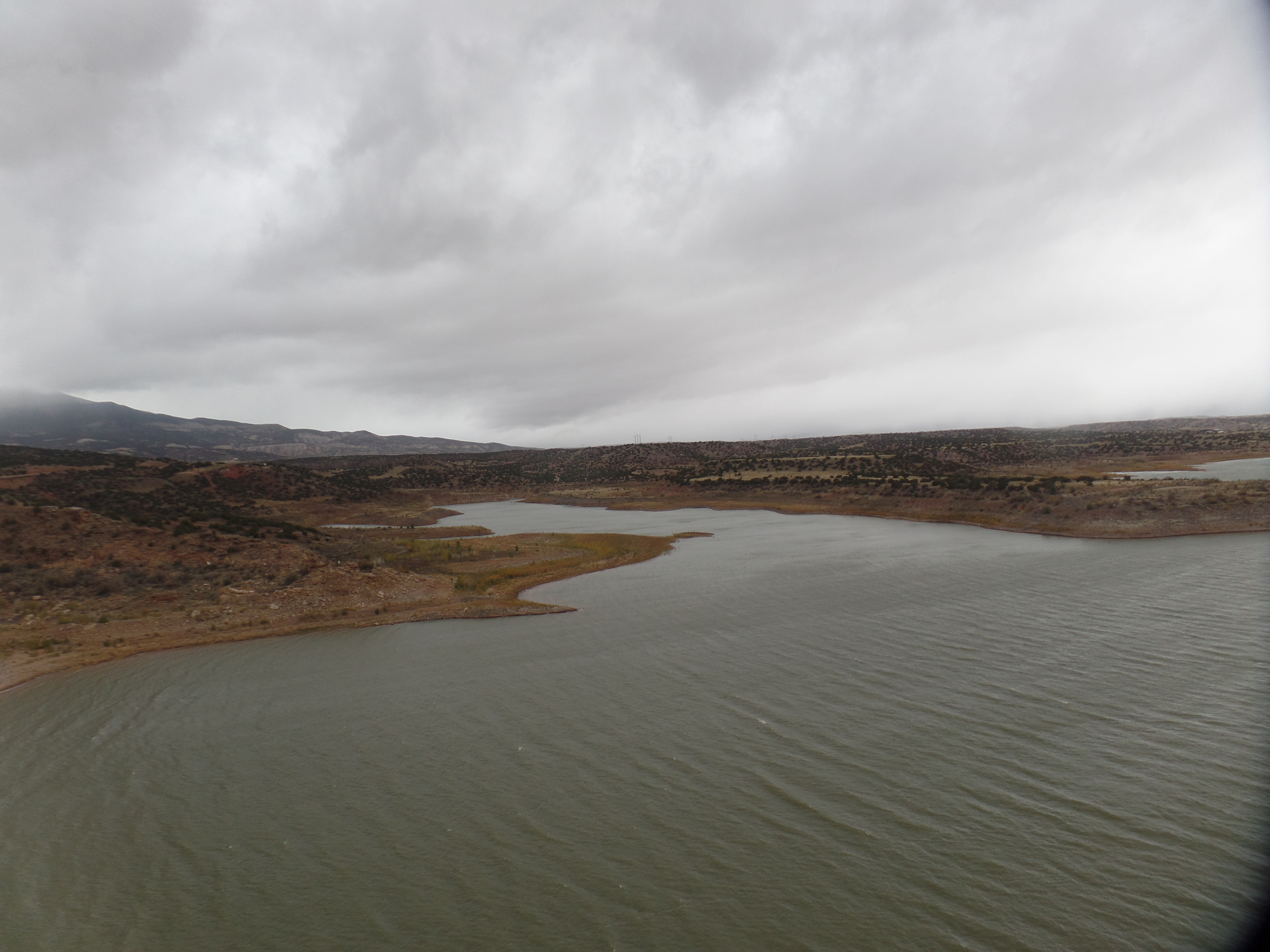
The day had started wet and cold, as I enjoyed a homestyle breakfast at Cuban Cafe, across the road from Cuban Lodge, both owned by the same family, in Cuba, NM. Rain changed to snow as the road took me over Sierra Nacimiento, and to a brief stop at Abiquiu Lake, a reservoir built by the Army Corps of Engineers in 1963. The earthen dam which secures the lake was raised in 1986.
Abiquiu Lake, in the Sierra Nacimiento, NM
Having made a reservation at Ghost Ranch, for a day pass, I was told rather apologetically by the attendant in the Welcome Center that I would not be able to eat in the Dining Hall. Since that was not one of my expectations, I thanked her and went into the theater, to watch a brief video about the property and its history. Imagine my surprise to see a treasured friend among those who was on a group hike, a few years back.
Ghost Ranch has attracted many of us, well-known and obscure, alike. Ansel Adams, Nelson Rockefeller, Del Webb and Robert Wood Johnson (the founder of Johnson & Johnson, and the second part-owner of the property) have all treasured its serenity and beauty. Perhaps most famous of all, however, were Max Roybal, the Santera (carver of wooden saint likenesses) of Ghost Ranch, and Georgia O’Keeffe. It was Ms. O’Keeffe’s association with Ghost Ranch that first prompted me to want to pay a visit. There is much about her simple artistic style and love for basic black and white backgrounds that has appealed to me, since my teen years. She had a passionate love of desert and mountain alike, regarding nearby Cerro Pedernal as “her” mountain. In many ways, Georgia was a daughter of Perdernal. She is also regarded as the “Mother of American Modernism”, relative to painting and sculpture. She lived on Ghost Ranch from 1934-1984, when frail health prompted a move to Santa Fe, where she passed on in 1986, at the age of 98.
With Ms. O’Keeffe’s long and cherished career in mind, I set about exploring the grounds of this fascinating property. Carol Stanley moved to the former Archuleta property, in 1930, recording the deed to it in her name, after divorcing her husband, Roy Pfaffle, who had won the property in a poker game. A frequent visitor, businessman Arthur Pack, bought the property from Ms. Stanley, in 1935. It was he who developed the land to its present rustic, but economically viable, state. Mr. Pack and his wife, Phoebe, being childless, sought a non-profit entity to purchase the land, after he became infirm. The Presbyterian Church was given Ghost Ranch by them, in 1955, and uses it as an educational and spiritual retreat. The property was damaged somewhat, by a flood in 2015, but has largely been restored.
Here are five scenes of Ghost Ranch.
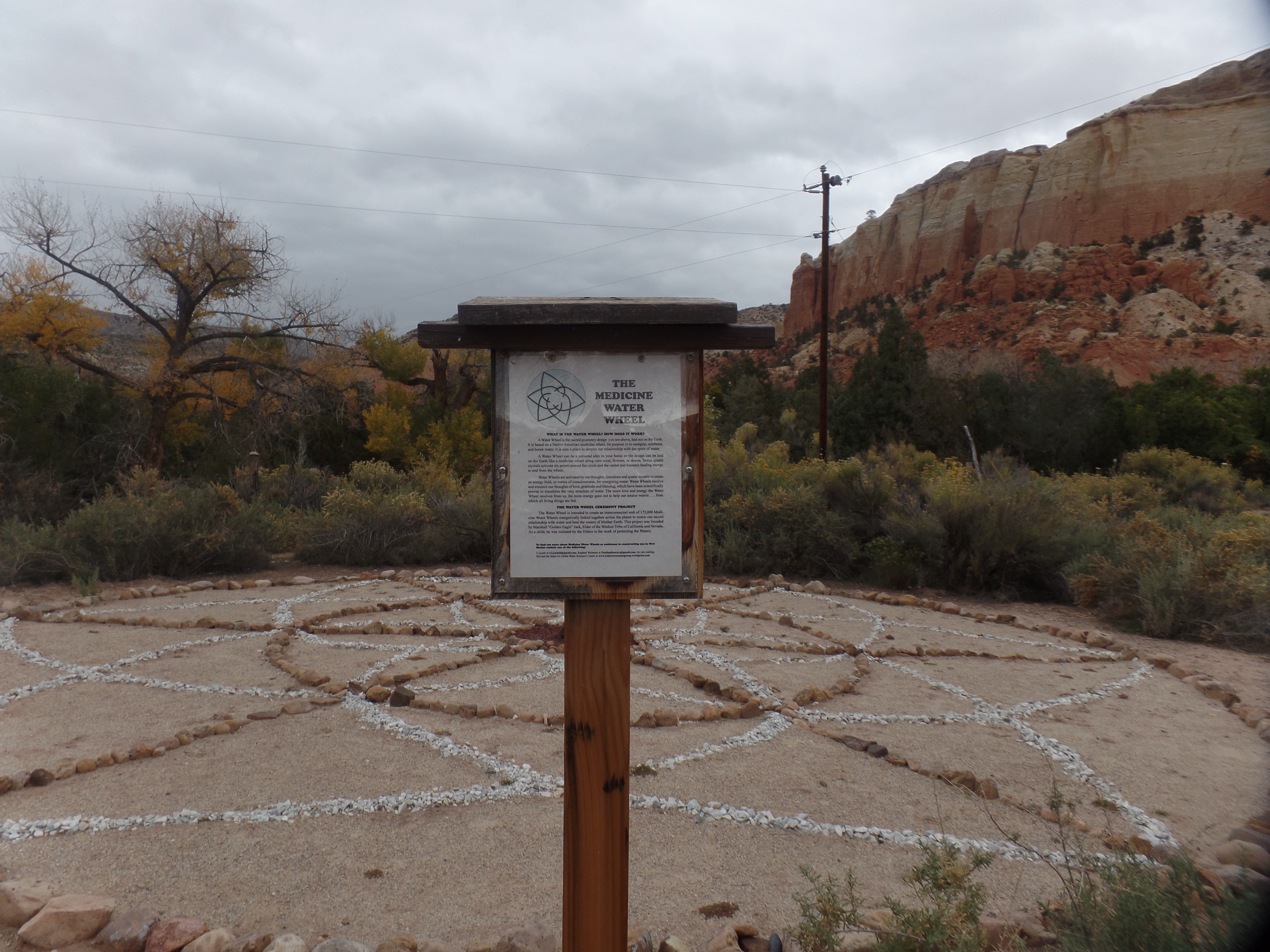
Agape Center, the indoor meditation and worship center of Ghost Ranch.Fall foliage, along the banks of Rio Chama.This was Georgia O’Keeffe’s residence and studio. It is now owned by the Georgia O’Keeffe Foundation and Museum. Santo, carved by Max Roybal. It greets the visitor to the Water Wheel, Labyrinth and Japanese Meditation Garden, east of the main complex.This traditional Medicine Water Wheel is reminiscent of the large Medicine Wheel in northeastern Wyoming. It is intended to offer protection and purification of water, the essence of life.
I spent about thirty minutes walking the nearby Labyrinth. Being in a deep state of meditation after leaving the Labyrinth, I decided to not photograph it, this time, but looking at the Medicine Water Wheel, one can get a fair idea of the appearance of the maze.
There are two museums, south of the Welcome Center: The Anthropology and Paleontology Museums. During the height of the Covid Pandemic, these were the only museums in New Mexico to remain open! Even so, only four people at a time could visit each one. I spent another forty-five minutes between the two.
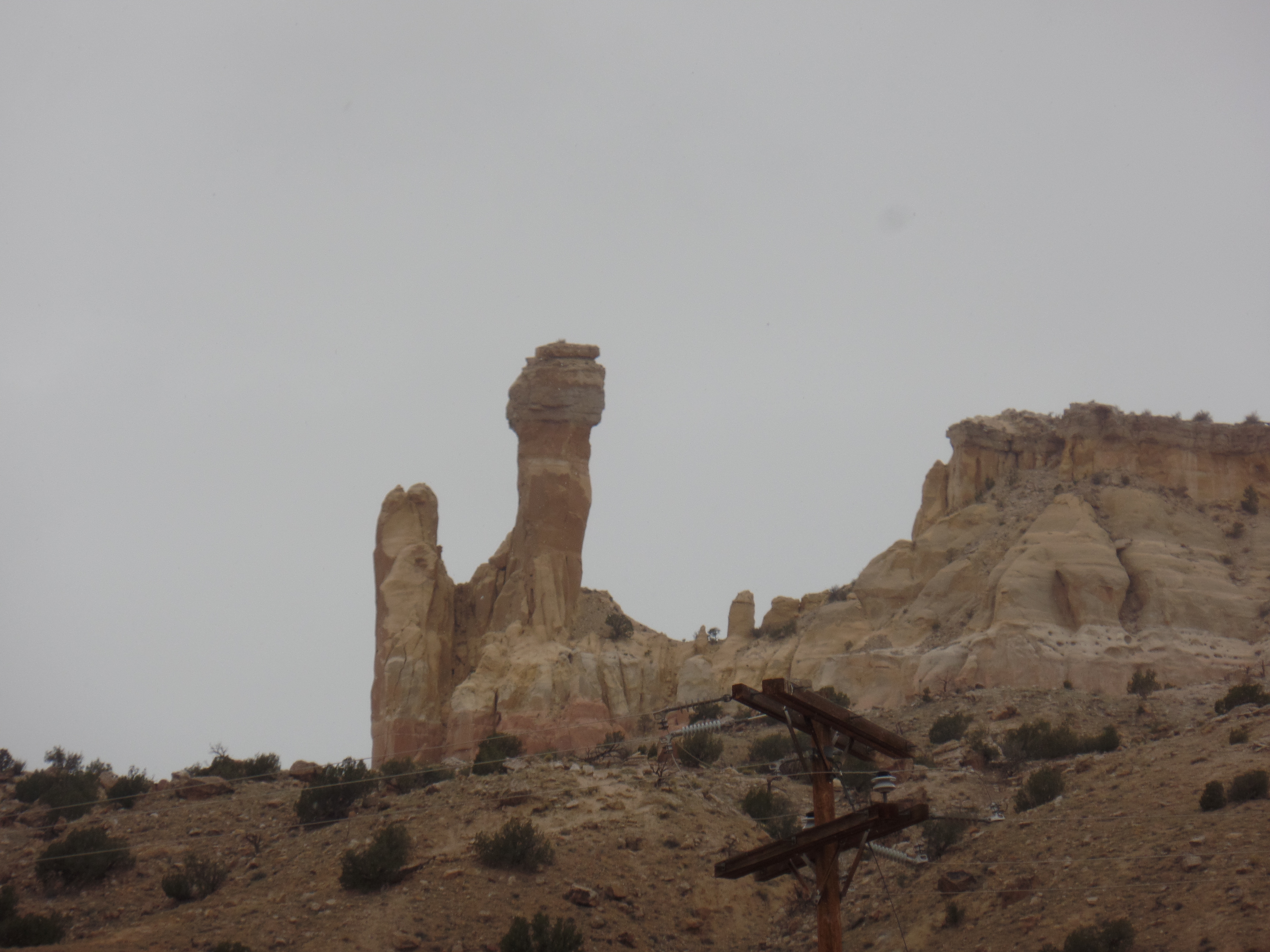
When it was time to say farewell, for now, to Ghost Ranch, I was bid adieu by these two sentries:






 A Sagittarian Seeker