The Hana Chronicles: Month 10, Day 12

0

November 2, 2026- Hana pointed at the United States, on the cloth globe, and babbled a question. I took the opportunity to point out Texas, then run my finger westward across the country and the Pacific ocean, to South Korea. I told her that was where her mother is from. One never knows what can settle in little minds.

My granddaughter got a good report from one of her doctors today. She is progressing very well. I pretty much come to the same conclusion, each day. She is fairly intuitive, likes compliments and has a feistiness about her, with a healthy sense of humour.

HANA’S NOTE– I was happy when I went to the doctor. He didn’t say much; just that I am strong.

EXPANDING CIRCLES: New Jersey- The Garden State gave me a wife and a stellar extended family. At Longmeadow Farm, in Pluckemin, my love for horses was rekindled and I came to know New Jersey as far more than a land of industrial cities and crowded beaches. Central New Jersey is as fine an equestrian country as any in the world.

The Turf: Northwest New Jersey is covered by the Appalachian Mountains, locally known as the Kittatinny Range. An area known simply as The Highlands falls east of the mountains, and includes the Ramapo Range. Piedmont runs south and east of The Highlands. This is prime horse country, and is where Longmeadow Farm was located. It is also where most of the state’s industrial centers are found. South and east of the Piedmont lies the Inner Coastal Plain, New Jersey’s Garden region. The outer coastal plain contains the Pine Barrens, a large wetland that is prime berry growing country. It also contains most of the Jersey Shore, with its celebrated beaches and barrier islands. New Jersey is drained by the Delaware, Passaic, Hackensack, Hudson, Raritan, Musconetcong and Mullica Rivers, along with their tributaries.

First Nations: New Jersey is the ancestral home of the Unami, Minisink and Unalachtigo peoples, all regarded as Lenni Lenape. Most of the Lenni Lenape left New Jersey, following colonial expansion in the 1740s, yet small communities still live in Vineland, Bridgeton, Rancocas and Mahwah.

Where I most feel at home- Pluckemin, Princeton, Califon, Vineland, Barnegat, Teaneck, Morristown

Where I most feel at peace- Teaneck, Barnegat, Pluckemin

NEXT: New York

The Hana Chronicles: Month 10, Day 11

0

November 1, 2026- Hana was constantly pointing to the mantle of the living room fireplace. I took each item off it and showed her. It turned out that she was most interested in the pair of readers that I keep up there, to help me read the Baha’i prayer book in the morning, when it is still semi-dark. She loves to place her hands on the book, as I recite several prayers. If I put on the glasses, she wants to put them on , too. I tell her that I hope she never has to do that.

She doesn’t nap much on weekends, perhaps hoping to maximize time with Mommy and Daddy. As it happened, Aram had a Navy ceremony to attend this afternoon and Yunhee needed to take a rest. So, I proposed a walk in the park, which delighted Hana greatly. We made our customary loop past the Middle School and through the west end of Hoblitzelle. We found the Sourdough Bakery open, so I picked up some pizza sourdough. Mommy was waiting for us, when we got back, and we all had a light snack.

HANA’S NOTE- I got to wear Daddy’s Navy cap, when he came home. It is almost as big as I am.

EXPANDING CIRCLES: Pennsylvania- There is no place like the Keystone State. It is almost as much home to me as Massachusetts and Arizona have been. I first passed through Philadelphia in 1969, on that train trip from Washington to Boston. In 1972, I first heard about the Baha’i Faith, after having hitched a ride from Havre de Grace to King of Prussia. Then came Bethlehem, Stroudsburg and Milton.Brother’s family lived in three PA locations, over the years. Now they are spread out in the suburbs of Philly. Dear friends live in Oley, not far from Reading, yet in a dreamlike place.PA was the first state that let caretakers use the restroom of their opposite gender charges, when we went across to New Jersey, in 2007. My solo years have also found me in Allentown, Scranton, Easton, Bethlehem, Nazareth, Wilkes-Barre, Williamsport, Du Bois, Clarion, Pittsburgh, Erie and blessed Bedford. I have enjoyed visits to Harrisburg and York, and been humbled by time in Gettysburg.

The Turf- Western Pennsylvania features the Allegheny Plateau, a series of ridges and valleys, extending nearly to Ohio. A lake plain runs along PA’s shoreline at Lake Erie. The Appalachian Mountains run from the southwest to the northeast of Pennsylvania. They include the Allegheny and Pocono Ranges Southeast of the mountains, the land is covered by Coastal Palin.

Pennsylvania is drained by the Delaware, Susquehanna, Allegheny, Monongahela, Ohio,Schuylkill, Lehigh, Lackawaxen, Juniata, Lackawanna, Chemung and Shenango Rivers, along with their tributaries. The Allegheny and Monongahela flow into the Ohio, at Pittsburgh. In turn, the Ohio flows into the Mississippi, at Cairo, IL and its waters thus empty into the Gulf of Mexico, in southern Louisiana.

First Nations- Pennsylvania is the ancestral home of the Lenapehoking(Delaware), Shawnee, Erie, Munsee, Susquehannock, Haudenosaunee(Iroquois Confederacy), Honniasont, Saluda, Saponi, Tutelo,Tuscarora, and Wenrohrenon peoples. Through the deception of the Penn family, the Lenape were stripped of title to 1.2 million acres of hunting land (The Walking Purchase of 1737). Most Lenape now live in Oklahoma, as the Delaware Nation. The Susquehannock were slaughtered by the Paxton Boys, a vigilante mob, in 1763. The Erie (Erielhonan) were wiped out by the Iroquois Confederacy, in the Beaver Wars of the 1650s, which were instigated by European fur traders. The Seneca, members of the Iroquois Confederacy, were themselves deprived of significant portions of their land, by one of the less seemly projects of the New Deal: The Kinzua Dam, which resulted in the flooding of large tracts of the Seneca’s reservation land. The “trade-off” was the protection of Pittsburgh, downriver along the Allegheny from its constant springtime floods. There is no Indigenous reservation or recognized tribe in Pennsylvania. The Zimmerman Center for Heritage, in Wrightsville, documents what information is available about the Susquehannock people. The Lenape Nation of Pennsylvania continues to preserve Lenape language and culture.

Where I most feel at home- Oley, Exton, Downingtown, Wilkes-Barre, Clarion, Bedford, Harrisburg,York

Where I most feel at peace- Oley, Exton, Bedford, Bushkill Falls, York

Future Five: Lancaster, Johnstown, State College, Erie, Bird-in-Hand

NEXT: New Jersey

The Hana Chronicles: Month 10, Day 10

0

October 31, 2026- Hana didn’t “do Halloween”. Some parents bring their infants and toddlers around, in strollers and such, dressed in costumes that fit their parents’ whimsy. Her parents chose to put an oversized pumpkin sweatshirt on her and take two pictures-early this afternoon. By the time trick or treaters started coming to our cul-de-sac, though, Hana was asleep. We had 26 people come by and put a huge dent in our candy stash, which made my manning the table outside worthwhile.

My granddaughter likes to make “whooping” sounds, babbling while running the back of her hand up and down. I’m not sure what prompted this, but it is a fun thing for her. Our only rule is not to do it at the table. She is still in the finger food and messy stage, but she can learn a table manner or two, and she seems to understand that it is not polite to “whoop” at mealtime.

It was a good day for Hana, though. She went on a long walk with her Mommy and Daddy, and we all walked and played with her around the house. The upstairs, especially her future bedroom and the common room, is more becoming her favourite part of the house. Hana is already outgrowing the playpen.

HANA’S NOTE- I felt like a big kid, when I had on the orange onesie with no snaps. It had a pumpkin on the back.

EXPANDING CIRCLES: Delaware- The First State must have felt quite lonely, a placeholder for the Constitution of the United States, until it was joined by its much larger neighbour, Pennsylvania, a few months after ratifying the great document.

I have been in, or through, Delaware only five times. The first was on a train, through Wilmington, in 1969. I’ve driven through the northern tip of the state, three other times. In 2019, I drove from south to north, stopping to take in the Federal period ambiance of Dover,Delaware’s capital, which sits in the center of the state.

The Turf-Northernmost Delaware is Piedmont, with rolling hills, Most of the state, however, is Coastal Plain. Delaware is drained by the Delaware, Nanticoke, Indian, and Mispillion Rivers, as well as Brandywine Creek. Delaware Bay borders the state on the east.

First Nations- Delaware is the ancestral home of the Unami Lenape (Delaware) and Nanticoke peoples. Both are recognized as tribes by the State of Delaware. The Lenape chose to move westward, after repeated clashes with Dutch and Swedish settlers, in the 1750s. The Nanticoke, living near what is now Seaford, followed suit, about ten years later. There are no Federally-recognized tribes living in Delaware, at present.

Where I most feel at home- Bridgeville, Dover, Newark

Where I most feel at peace- Bridgeville

NEXT: On to the Northeast, and Pennsylvania

Philly On The Water and Celts Above the Freeway

4

July 19, 2017, Philadelphia-

In the past, we would drive along  and bypass the large cities of the East Coast, Boston and Washington being exceptions.  I have continued to do so, pretty much, since Penny’s passing.  With Philadelphia being the venue for a major family event, next summer, and with my brother and sister-in-law being here for a visit, I made my way into  town for two days.  This was the second day.  I was on my own until 4 PM, as the family had to tend to planning activities.

So, after saying farewell to my nephew, at Brandywine, some downtown Philly time was in order.  My first stop, after parking the Hyundai, was Penn’s Landing.  Here, William Penn did disembark his boat, after sailing up the Delaware River, in 1682.  He’d be amazed at what is there now.  I walked along the pedestrian bridge and along the overlook, watching people in the pop-up amusement park, below.

SAMSUNG CAMERA PICTURES

SAMSUNG CAMERA PICTURES

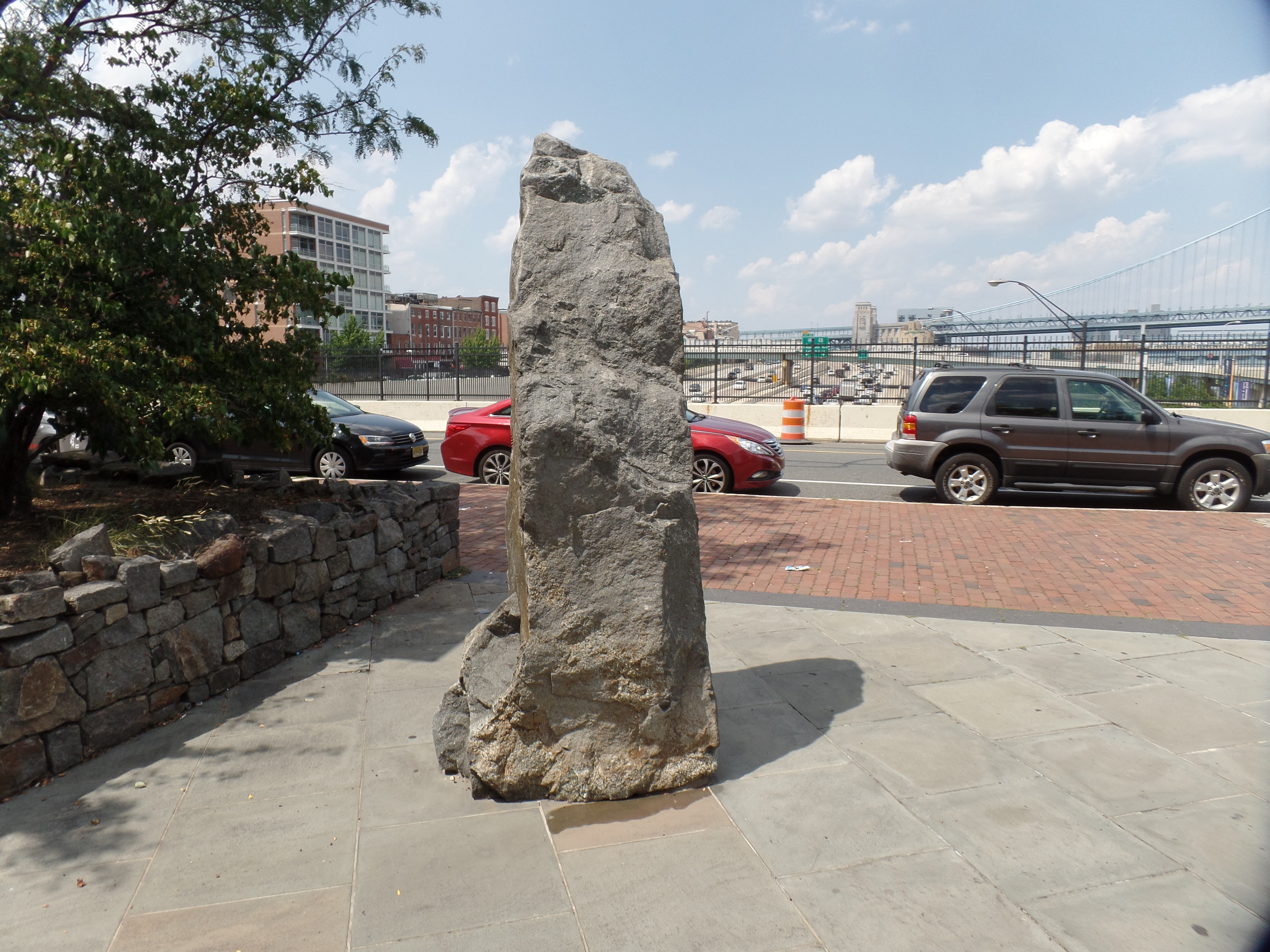
After purchasing a bottle of water, from one of the ubiquitous vendors, who line Penn’s Landing, in summer, I found I-95 park, perched above the freeway.  It is a shady place of comfort for those living on the Near South Side, and has several remnants of what dominated the area, before the City of Brotherly Love.

SAMSUNG CAMERA PICTURES

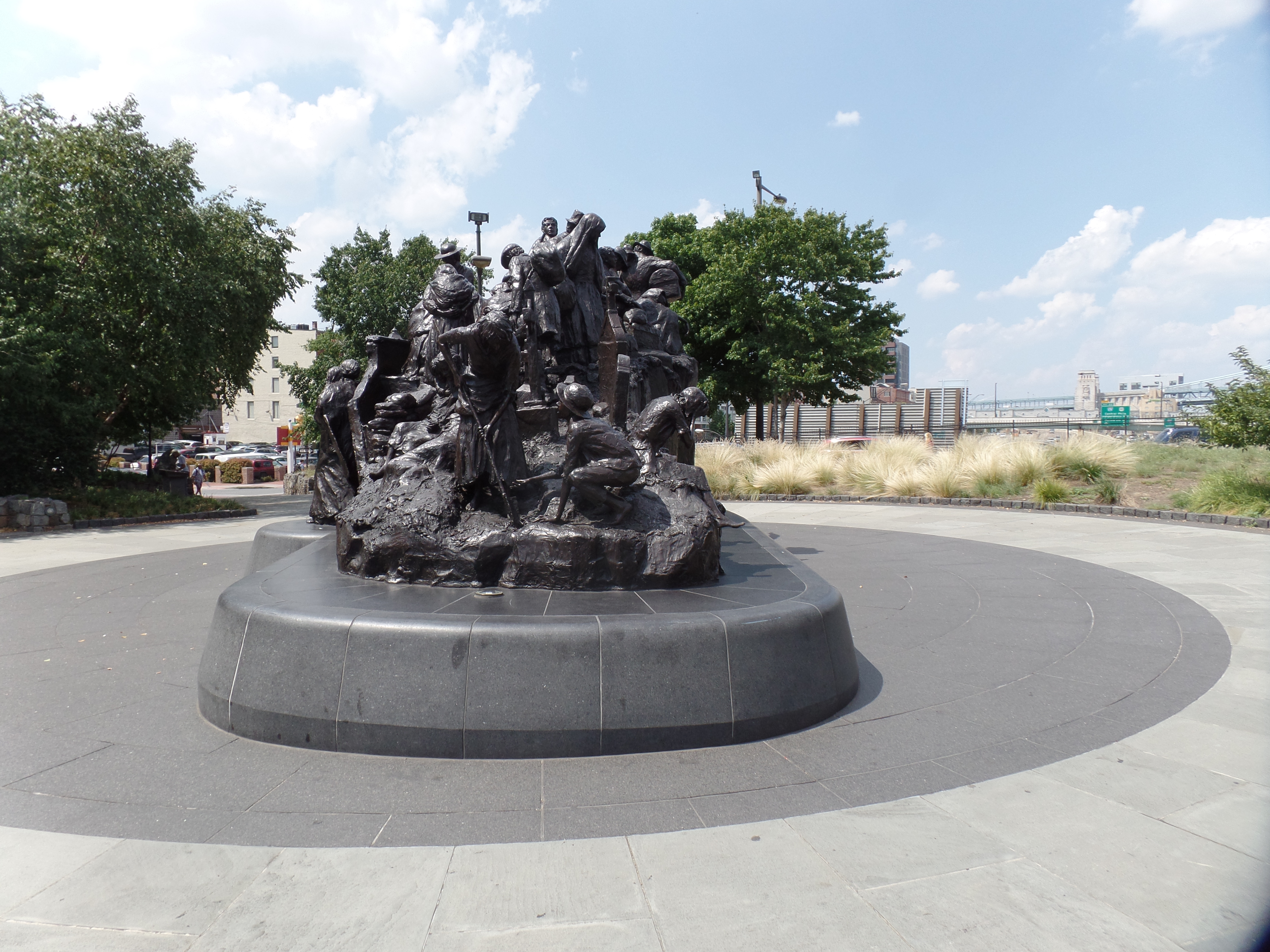
It also has a couple of statues honouring the people of Celtic descent, who provided so much of the labour for building the cities of the megalopolis, from Boston to Norfolk.  This statue pays homage to the Irish immigrants.

SAMSUNG CAMERA PICTURES

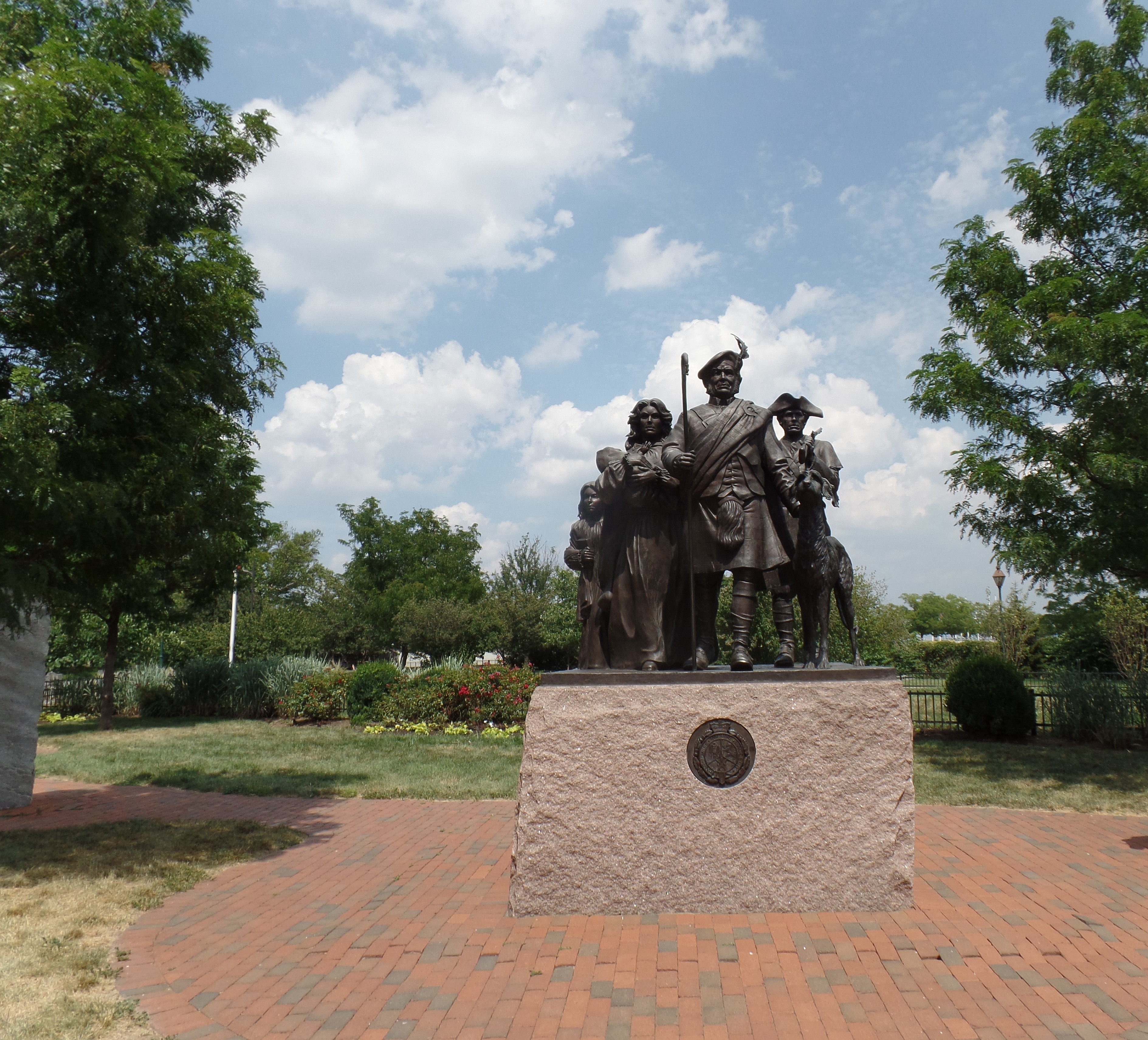
Next to it, another statue tips its collective hat to the Scots, who were so indispensable to shipbuilding, a Philadelphia mainstay.

SAMSUNG CAMERA PICTURES

This sculpture depicts a family walking past Tun Tavern, a key gathering place in early Philadelphia.  This marker commemorates the site of the old public house, founded in 1686, and named for the Old English term for beer barrel.

SAMSUNG CAMERA PICTURES

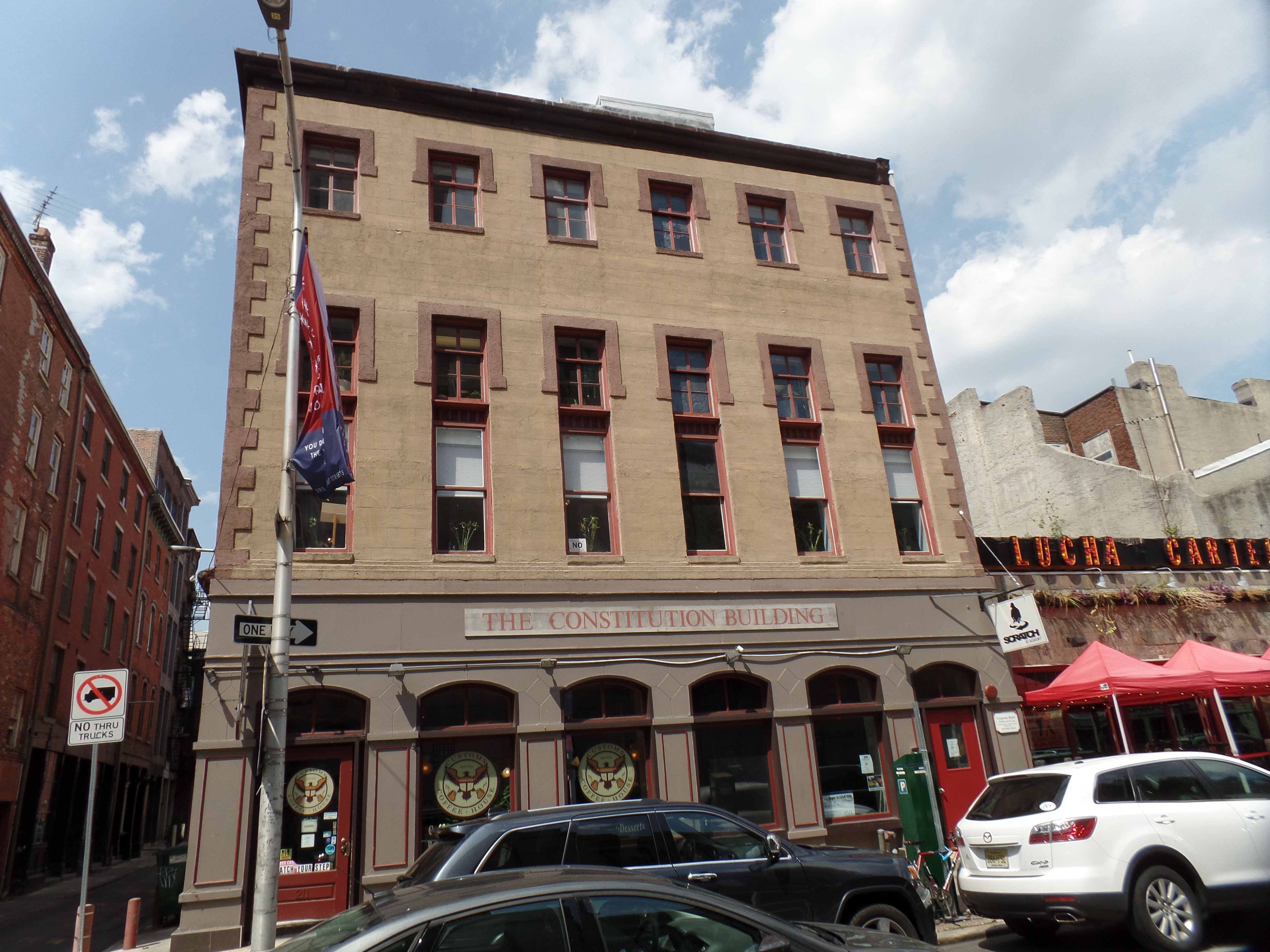
Moving on, from I-95 Park, I spotted this early Twentieth Century office building, which may or may not have had a predecessor in this spot, which may or may not have been used by Benjamin Franklin, during one of his breaks from planning the Indian Wars, at Tun Tavern.

SAMSUNG CAMERA PICTURES

The Betsy Ross House had a private event this afternoon, so I gave a pass to going inside.

SAMSUNG CAMERA PICTURES

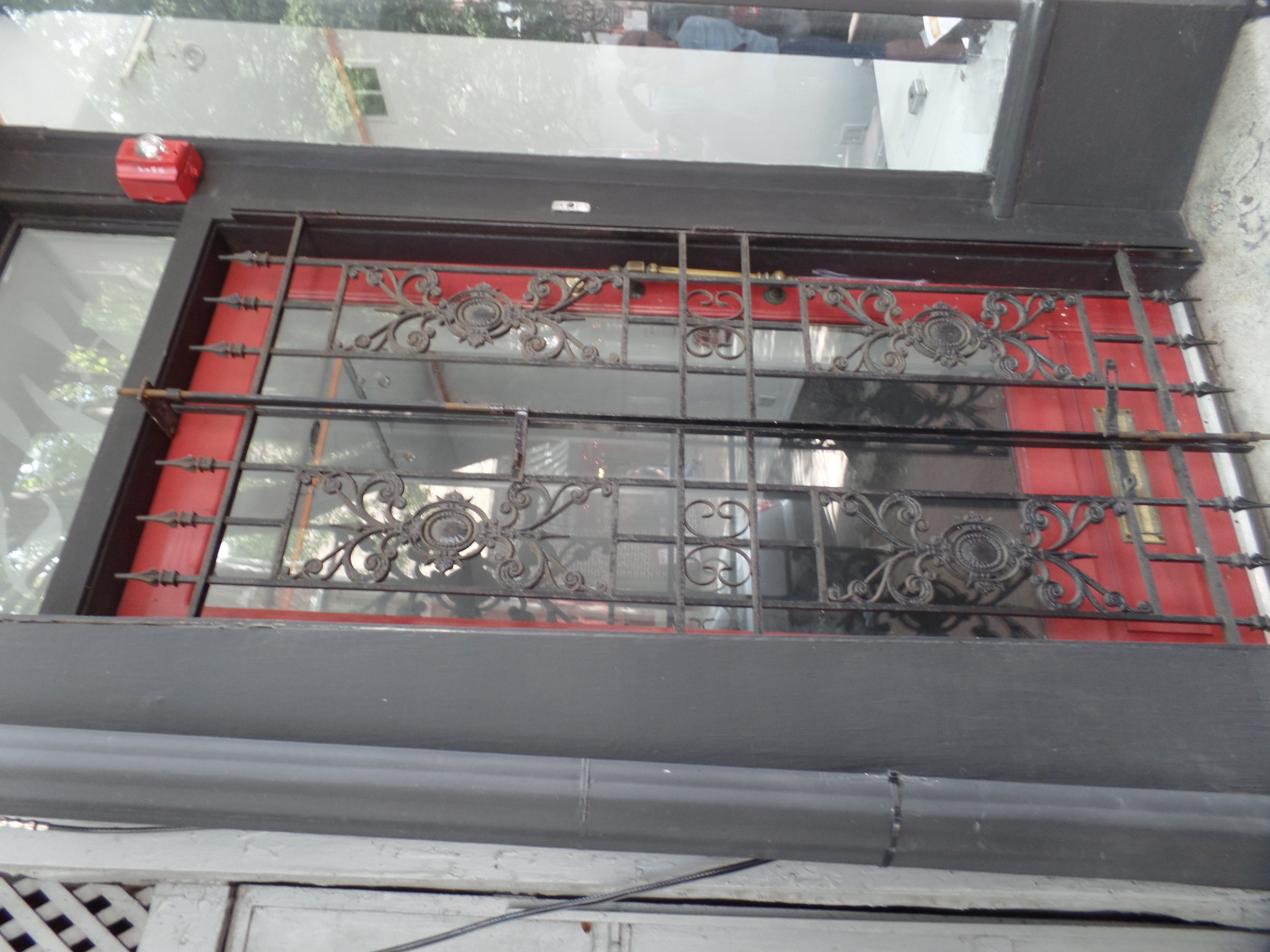
Like Boston and New York, Philadelphia is filled with little architectural gems, above doors, along windows and on walls.  This wrought iron protects the window, in a most agreeable way.

SAMSUNG CAMERA PICTURES

I am most amenable to further exploration of this great city, especially next summer.  My next post, though, will focus on one of Philly’s best kept secrets: The Center for Art in Wood.

What happened to Sixty-Six, for Sixty Six?  Nothing, I have five posts left, in that series, and will insert them between now and November 28, when 66 ends.


Sixty-Six, for Sixty Six, Part LX: Freedom, Borne of Fire

4

July 17-18, 2017, Philadelphia-

After treating my mother to breakfast, at Saugus’ downtown cafe, Hammersmith Inn, I bid farewell to the town of my childhood, and headed towards Pennsylvania, and more family bonding.  My middle brother spent a good many of his working years in Pennsyvania, lastly in the Main Line precincts of Chester Springs.  Two of his children still live in the Philadelphia area.  He and my sister-in-law were here visiting, so this was a natural stop, for a day or so.

I took my now customary route, south and west, stopping first at Newtown, CT, where I have been intending to visit the small reflection area, where Sandy Hook Elementary stood, at the time of the massacre of 2012.  I was, of course, unable to do that last year, with my car trouble.  No such issue rose this year, so I stopped, prayed and reflected, with the new Sandy Hook Elementary School behind me, and many people carrying on the business of summer school.

SAMSUNG CAMERA PICTURES

Freedom allows people to make some odd choices, as those who threatened the lives of the victims’ families did, in the wake of the tragedy.  Thankfully, no harm has come to any parents or siblings of those slain.

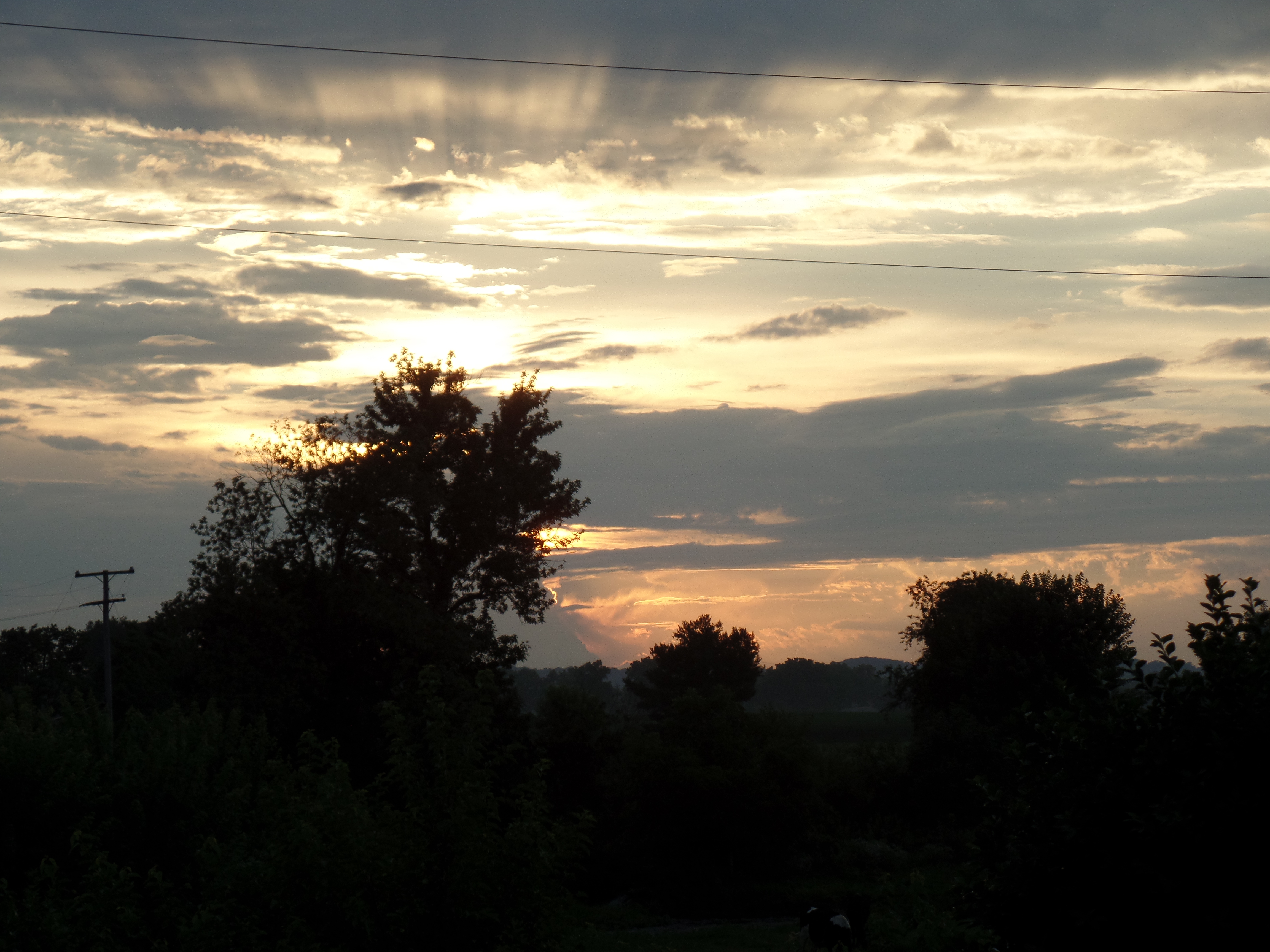
I drove down I- 84 & 81, at one point having to detour through Middletown, NY, ironically the place where I first took the dying Nissan, last summer. Again, there were no issues with my trusty Hyundai. I continued to a place which has come to feel much like home, these past six years:  Glick’s Greenhouse, Oley.  After a lovely welcoming dinner and some quiet time, I was honoured by this sunset:

SAMSUNG CAMERA PICTURES

The next morning, with a breakfast to match the dinner, I bid farewell to my Oley family. For those who remember Cider, the Glick’s old collie, Manny- his successor, is getting the hang of greenhouse life.

SAMSUNG CAMERA PICTURES

I headed south and east, into the Main Line area, and connected with my Georgia siblings, at their hotel, then went to a deli-style restaurant, in the town of  Wayne.  Nudy’s Cafe is a thoroughly tasteful establishment, with wonderful food and attentive, well-dressed servers.

After this repast, Dave and I headed to the Museum of the American Revolution, in downtown Philadelphia, experiencing relatively mild traffic, en route.  The first sight greeting the visitor, in the area of 2nd St and Chestnut, is a statue of Pennsylvania’s founder:  William Penn.

SAMSUNG CAMERA PICTURES

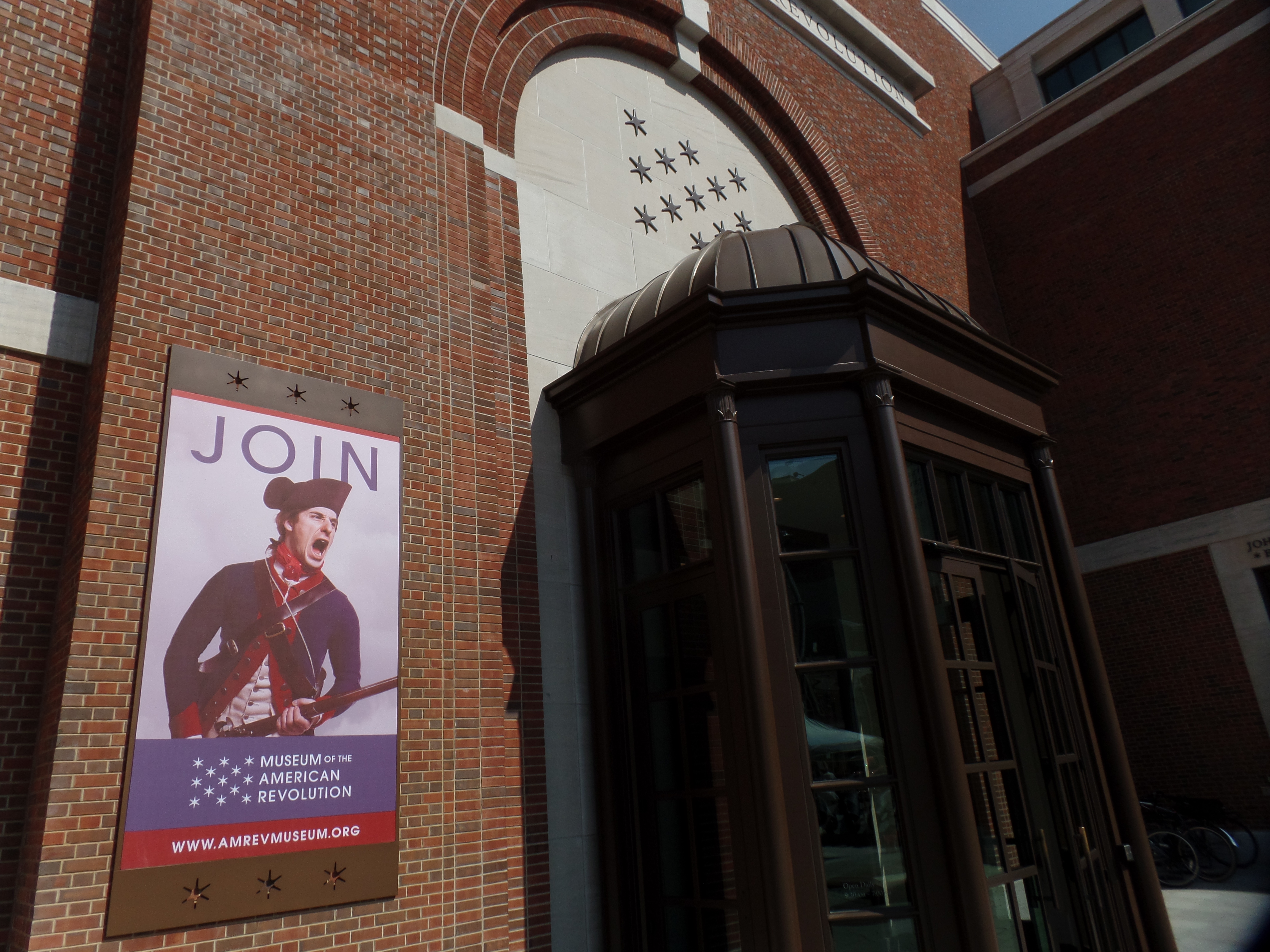
The Museum of the American Revolution, itself, is less than a block from this little square.  It is just south of the domed building in the foreground.SAMSUNG CAMERA PICTURES

The entrance posits the challenge that may well have been a battle cry, in the years just prior to the outright rebellion.

SAMSUNG CAMERA PICTURES

I stood in front of the copper engraving depicting the First Continental Congress.

SAMSUNG CAMERA PICTURES

The Declaration of Independence is adjacent to the museum entrance, as well.

SAMSUNG CAMERA PICTURES

Inside, the Museum offers a complete, and well-balanced depiction of the experiences of both sides, in the conflict, and of those trapped in the middle- the merchants and the Quaker pacifists.  Most of the exhibits did not lend themselves to photography, being in dimmer light, with no flash photography allowed.  I did get a few shots, first being the Philadelphia Liberty Tree.

SAMSUNG CAMERA PICTURES

The Patriots were not, at least initially, a unified force.  Disagreements between townsmen of the Northeast and woodsmen from the Appalachians and the Ohio Valley had to be mediated, with George Washington reportedly directly intervening, at least once.  The boy on the lower left recalled this, in his memoirs, later in life.

SAMSUNG CAMERA PICTURES

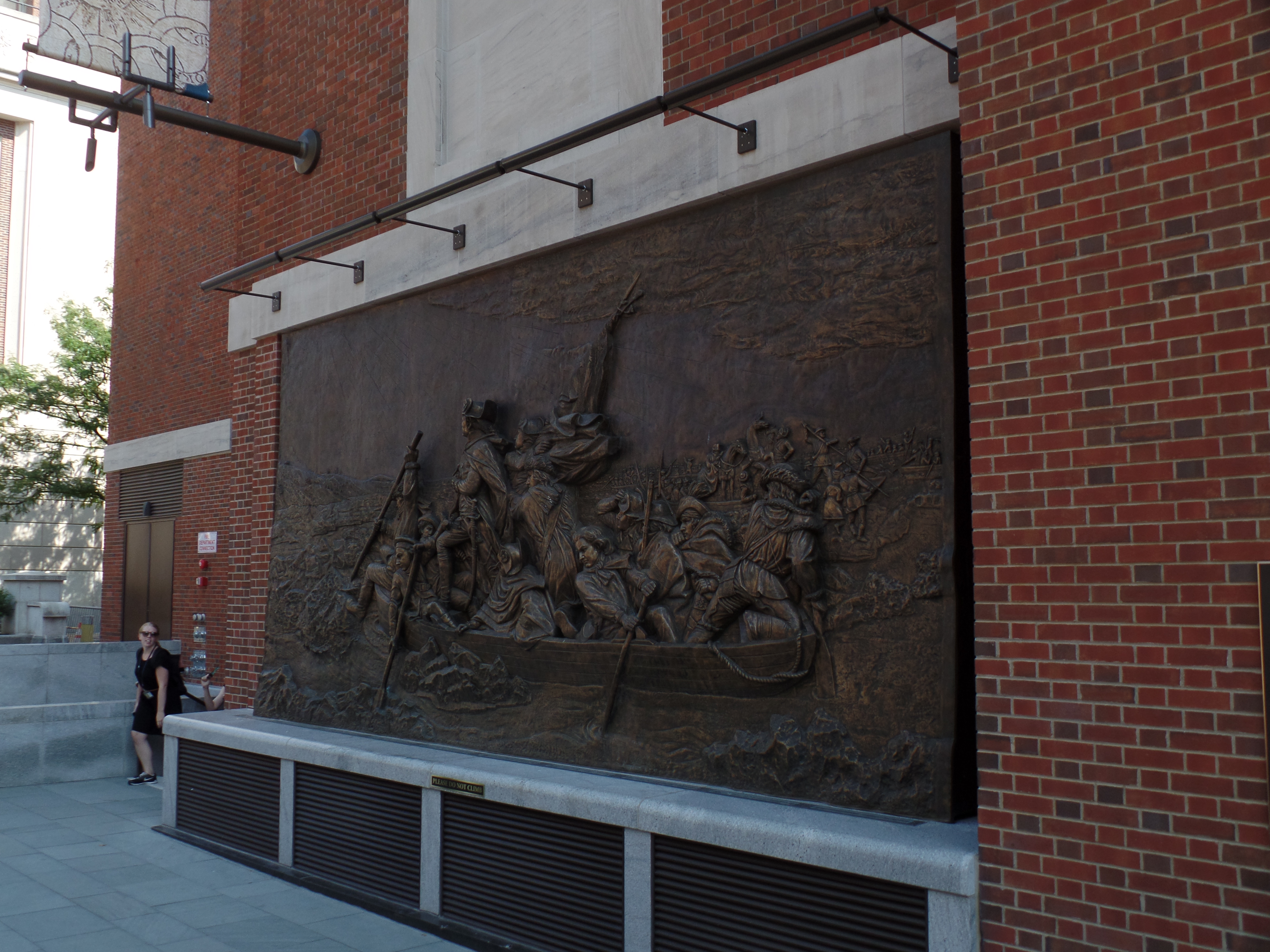
The more iconic scene, of Washington crossing the Delaware River, is also given prominence.

SAMSUNG CAMERA PICTURES

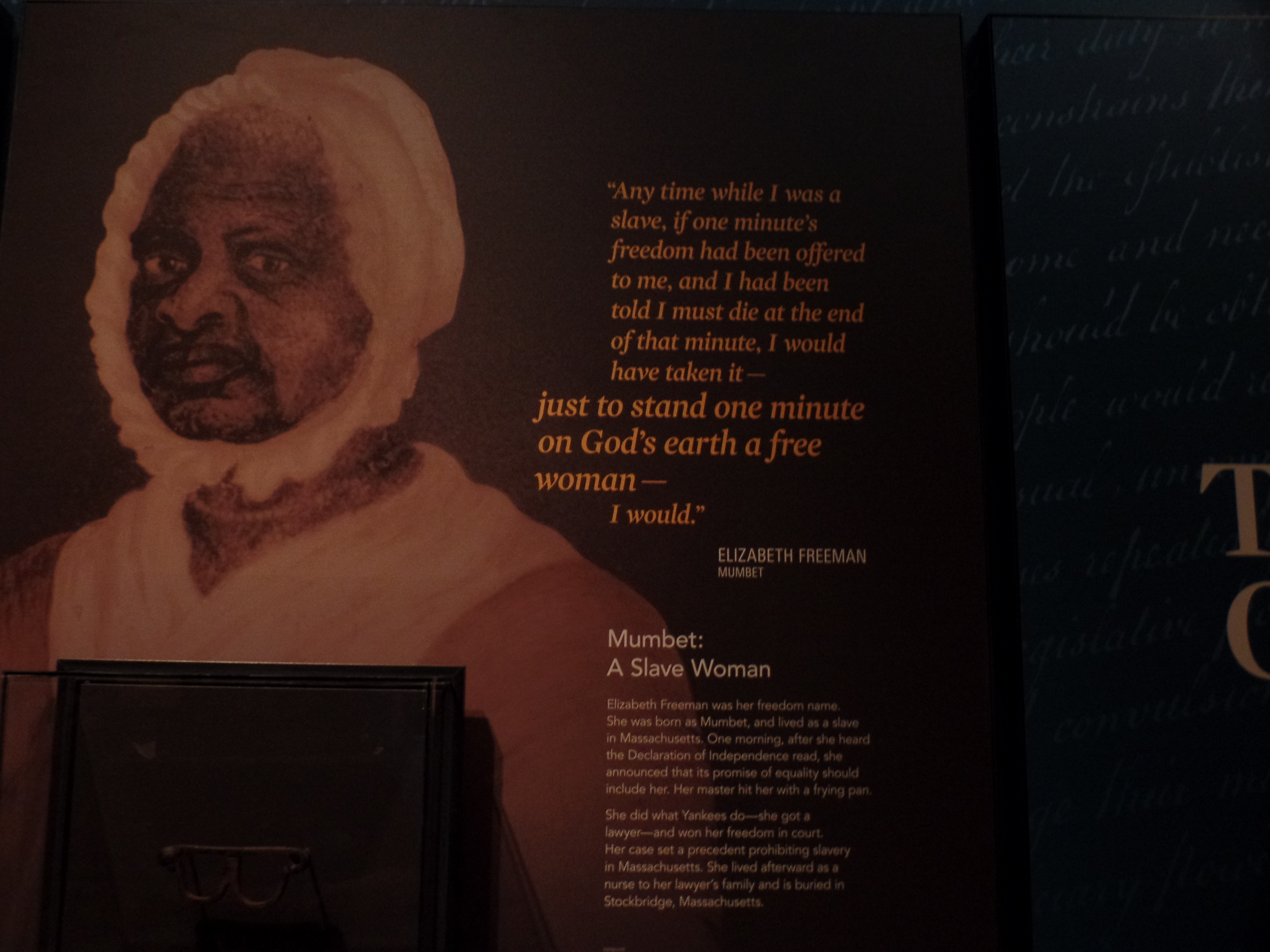
The plight of African-American slaves, who were not uncommon in the northern colonies, any more than in the South, in the late 18th Century, is symbolized by this portrait and commentary by Mumbet, a Massachusetts woman, who won her freedom in court, after her master assaulted her, for having listened to a reading of the Declaration of Independence.  This case resulted in the prohibition of slavery in Massachusetts.  Mumbet became Elizabeth Freeman, and lived out her days in Stockbridge, a town in the central Berkshire Hills.

SAMSUNG CAMERA PICTURES

The American experiment is far from perfect, but has resulted in the most diverse democracy on Earth, and still has so much to share, with those who want to study our nation’s experience.  We will keep on going, experimenting, refining and retooling, hopefully so that the three generations shown below, and their fellows, will never again know oppression.SAMSUNG CAMERA PICTURES

NEXT:  Brandywine, and More of Downtown Philadelphia.