April 22,2024- We are all part of an astonishing web of consciousness.
Bees are known to play with small wooden balls, pushing them around, until one of the bees falls. Octopuses recall certain kinds of fish, visually, rather than by the sound of their swish. Baby spiders scamper to catch up to their mother, as she walks along the floor, toward the bathroom cupboard. Corvids, from ravens to jays, recognize the faces of friends and foes alike, from day to shining day. A sea turtle recognizes its human handler’s voice, nibbling either lettuce or spinach, when given a choice. Androcles removed a thorn from the paw of the lion and the great cat purred, as his eyes were shining. A mother baboon tended the wounded baby meerkat grooming and feeding the little one, until its health was intact.
We all feel, all remember, and most can recognize themselves in a mirror, if even after some repetitions in front of the reflector. Instinct is common to us all, and so is industry; so is the use of tools, no matter how simple. None of us enjoys living in chaos, or in filth. Indeed no one is more fastidious about cleaning a place up than a scavenger. Hornets, if undisturbed, or not enticed by scent, will leave humans alone. Poisonous snakes, if not cornered or threatened, will not pursue a human, with the intent of injecting venom.
May Earth long enjoy the presence of its diverse creatures.
March 12, 2024- The Old Pueblo shimmered in the morning light, and invited me to stay a while. First was a dinner invitation, which I wouldn’t dream of passing up, then there was all that lay in front of me, in El Presidio, and nearby Jacome Plaza, the gateway to the University of Arizona. I would not have enough time to visit U of A, but more on that in a bit.
Pima County Courthouse, Tucson
My first stop was the Pima County Courthouse, the domed gem of downtown Tucson. Five To Oh Coffee is a small stand, inside the building, with plenty of seating in the patio just outside. In the Sonoran Desert, “outside” is comfortable all day long-from mid-October to the end of May. So, I took my large coffee and blueberry empanada to a shady spot near the yet-to-open Southern Arizona Visitors Center.
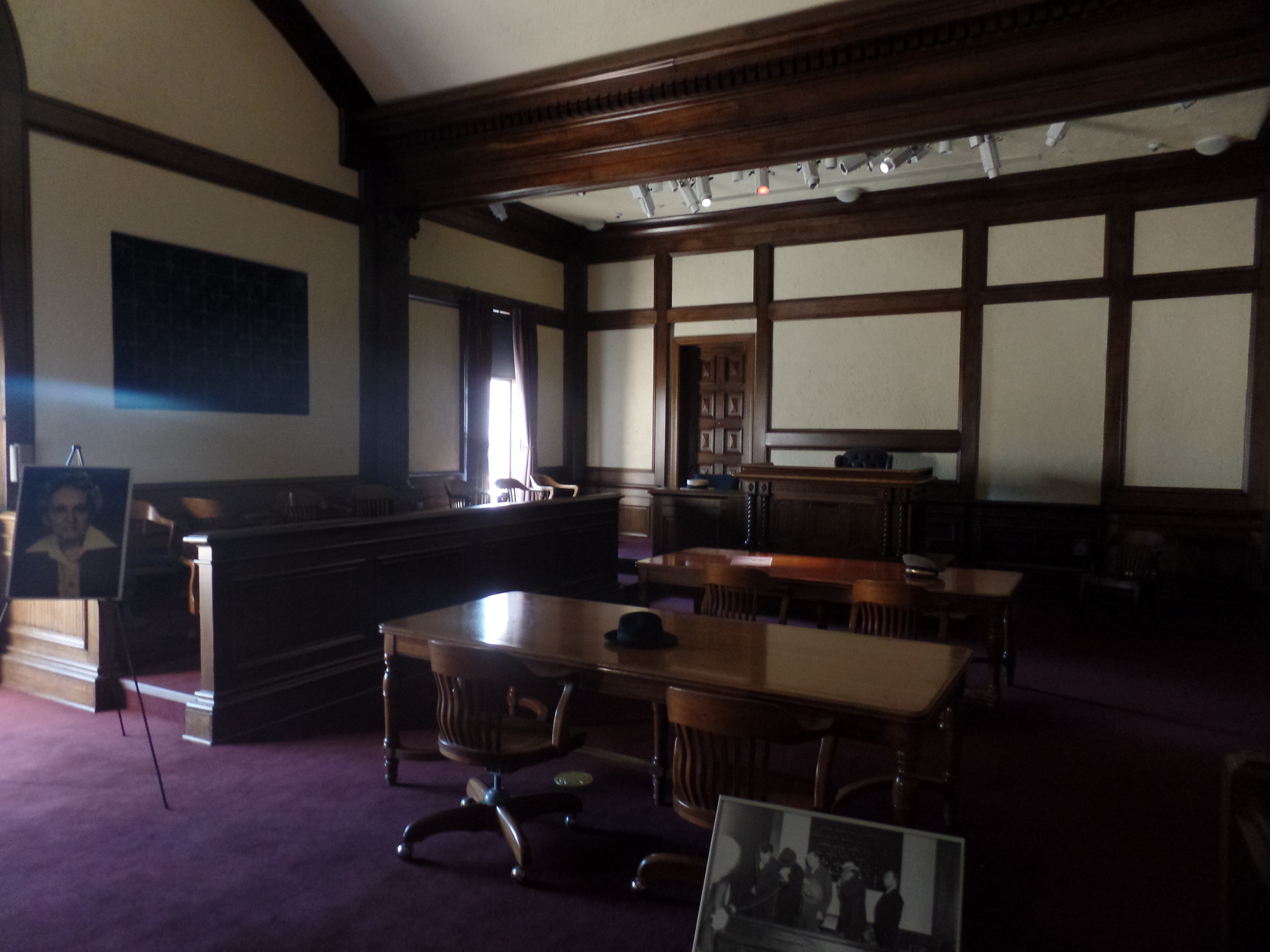
A few minutes later, it was upstairs to the Dillinger Courtroom, where John Dillinger and his accomplices were tried and convicted-after the Tucson Police duped Public Enemy # 1 and the gang into a baited trap.
Dillinger Courtroom, Pima County Courthouse
Dillinger was still a media sensation, and his craftiness was matched by that of the Pima County Sheriff, who sold tickets to people wanting to see the killer bandit in his jail cell. After his conviction, Dillinger was sent to a prison in Indiana, from which he again escaped, and was later killed in Chicago.
Once I had read the displays outside the courtroom ,including information on Wyatt Earp, it was time to check out the Visitors Center. There, I noted a diorama of southern Arizona, with various buttons that lit up cities, highways, rivers, mountain ranges (Pima County has nine of those) and Native American reservations (Arizona has 23 of those).
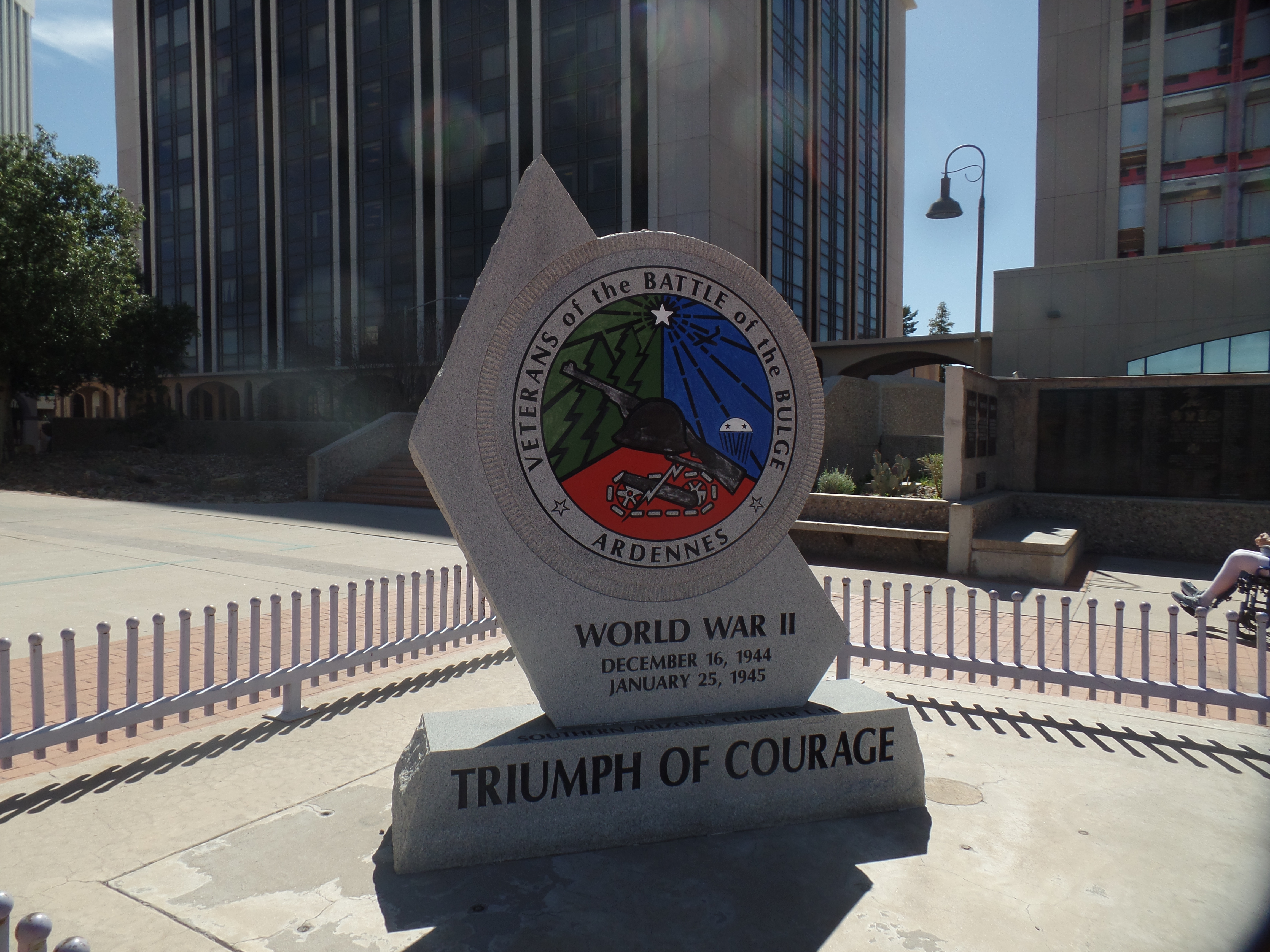
On the west patio of the Courthouse is a Memorial Park honoring the victims of the January 8, 2011 shooting, in a northeast Tucson shopping center. They ranged in age from 9 to 76, and included a sitting Federal judge, a Congressional aide and a girl who had been born on September 11, 2001. Left paralyzed by the attack was the shooter’s prime target: United States Representative Gabrielle Giffords, still alive and in recovery.
Christina Taylor-Green, the 9/11 Baby who died in the 2011 attack, was an avid swimmer. Thus, this fountain became a centerpiece of the memorial.Heroes of an earlier time of difficulty are also honoured here. Among them was my late father-in-law, Norman Fellman, captured by the Nazis near the end of the battle, in January, 1945. He survived six months in the concentration camp at Berga, where he was placed because he was Jewish.
Lunch time brought me to a small food truck, parked at Jacome Plaza, just east of the Courthouse. Carlos Jacome, Sr, and his wife, Dionicia, raised thirteen children-and the downtown Tucson business core-with help from a former rival, Harold Steinfeld. Jacome’s Department Store, along with Steinfeld’s, was a staple of downtown, for decades. In honour of the Jacome family, all of whom had a keen interest in the business, Jacome Plaza stands in front of the central public library. OaxaRio Food Truck serves fresh, delectable Oaxacan and Sonoran style treats. Next to it is Special Eats, which contributes to autism and Down’s Syndrome assistance programs. Here is a view of Jacome Plaza:
“Sonora”, by David Black (1991), restored by Trevor O’Tool.
Once lunch was enjoyed, under “Sonora’s” watchful gaze, I spent a nerve-wracking, but ultimately fruitful hour-long learning experience, in Joel D. Valdez Library, attempting to get online, and finally figuring out, with the aid of two library clerks, that my VPN was blocking access to the WiFi. Good to know, for the future: Get online first, then activate VPN-so long as the network is secure, as this one was. This experience used up the time I would have spent walking over to the University of Arizona, but no matter.
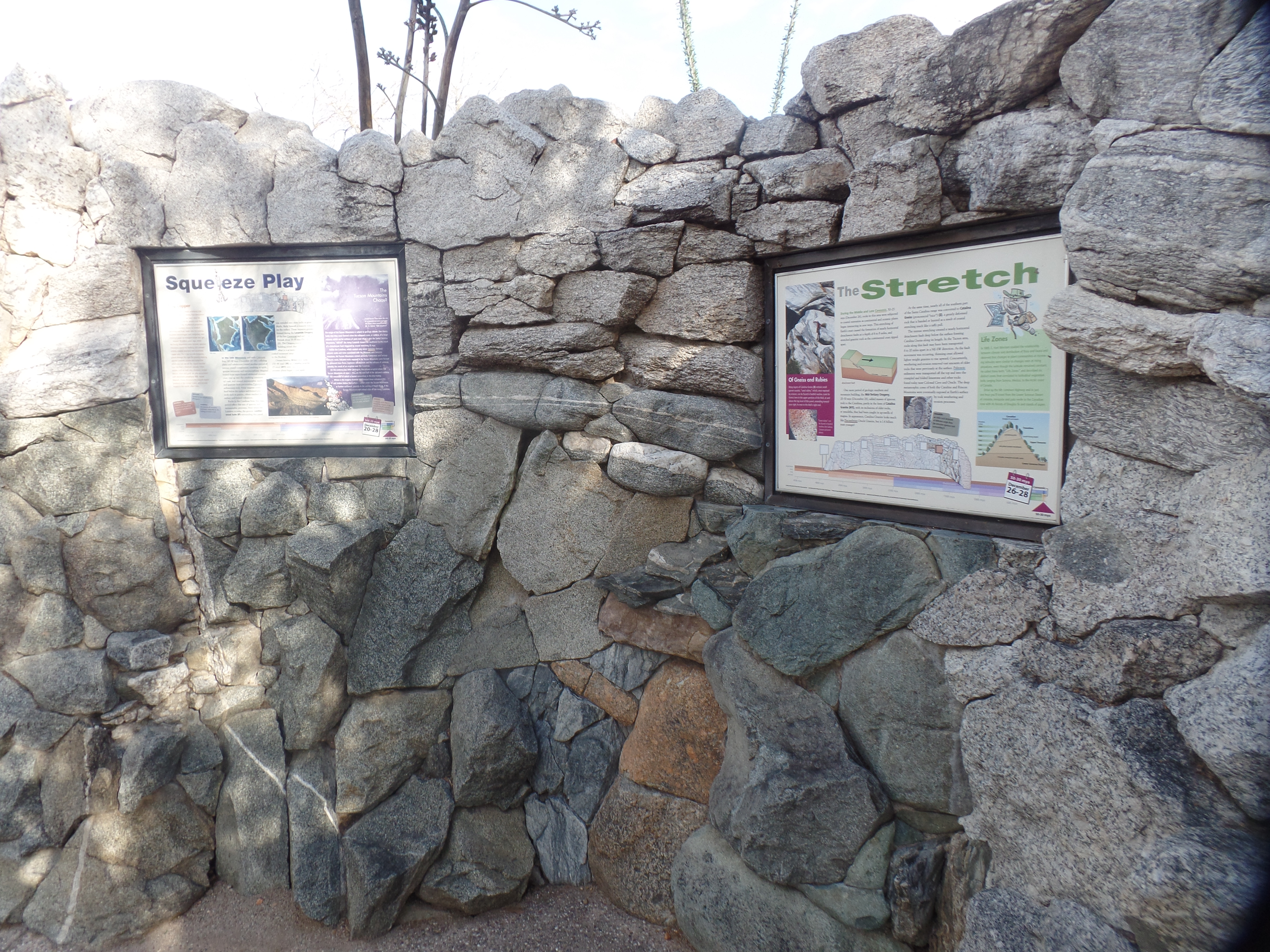
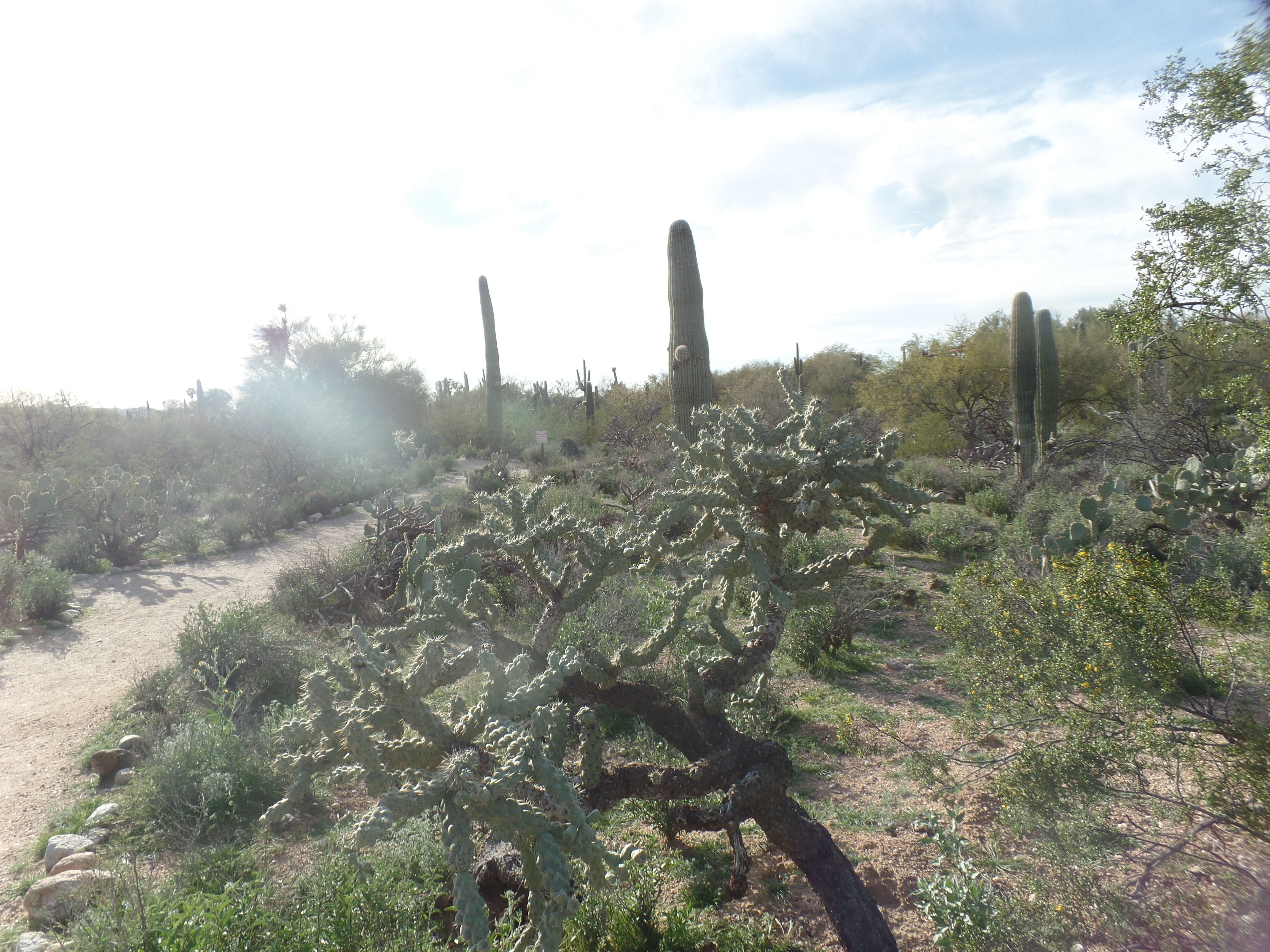
After checking e-mails, creating the previous day’s post and enjoying a refreshing Shamrock Matcha, at Ike’s Coffee, across the street from Jacome Plaza, it was time to go up to Tohono Chul, Tucson’s signature northeast green space. “Tohono Chul” means “desert corner”, in the language of the Tohono O’odham, whose own name means “Desert Dwellers”. It is a prime botanical garden, preserved by Richard and Jean Wilson, in the late 1960s. The Wilsons owned nearby Haunted Book Shop, from 1979-97, and gradually pieced Tohono Chul together, until the present 49 acres resulted in today’s bright oasis. Today, Jamie Maslyn Larson and her team maintain the vision set by the Wilsons, and Tohono Chul is a bright spot in the Catalina Foothills neighbourhood.
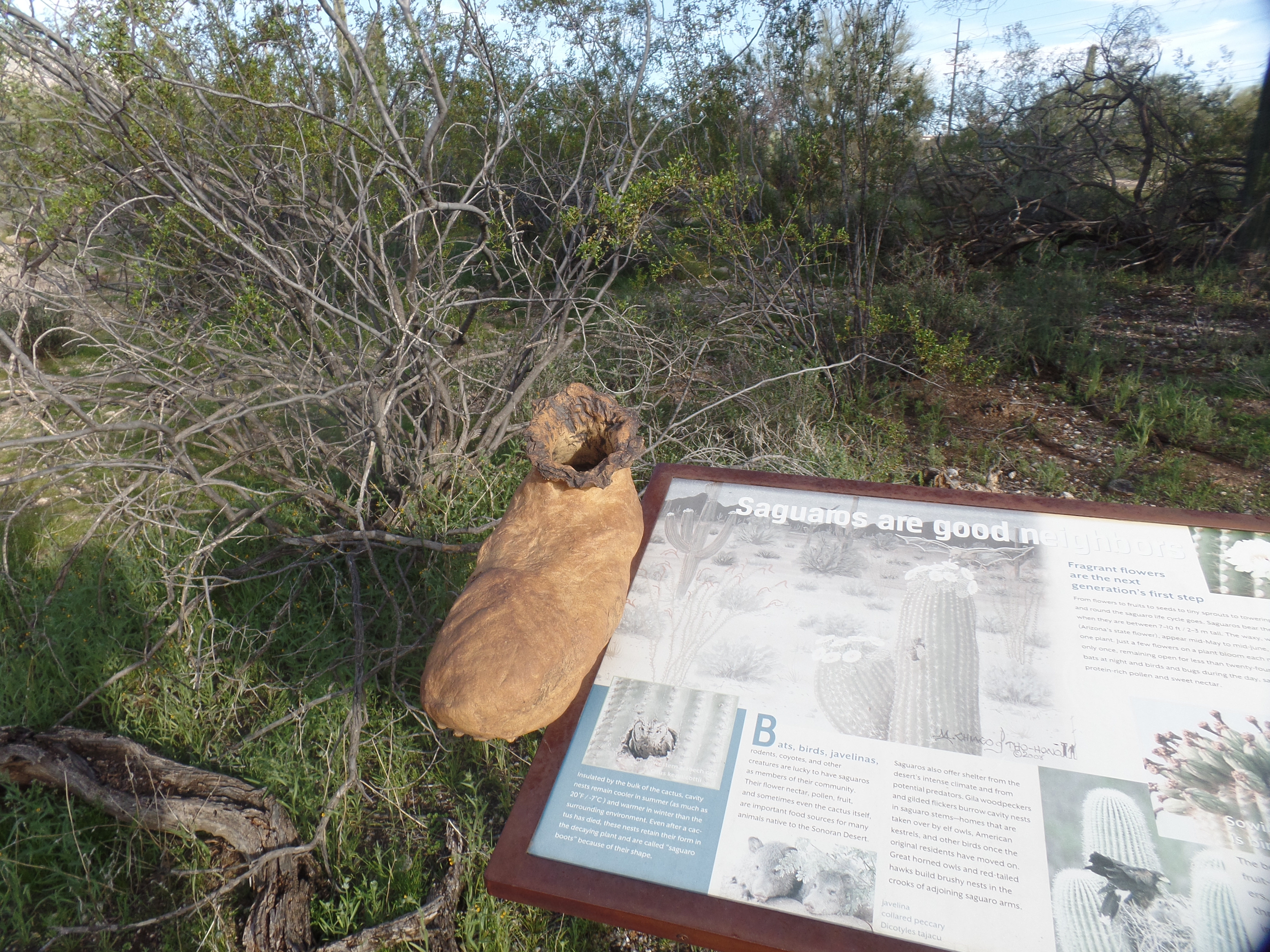
Tohono Chul Botanical Garden, north TucsonGeology Wall, Tohono Chul Botanical GardenJumping Cactus, aka cholla, Tohono Chul Botanical Garden.A “boot” left by a sahuaro, serves as a nesting site for various birds and small mammals.
It was soon dinner time, as well as quitting time for the Park staff, so off we all went, at 5 p.m. I headed down to a Red Lobster, on the southwest end of town, and joined a couple of old friends for a pleasant 90-minutes of catch-up and great food.
Finally, the drive southeastward, to Benson, then Tombstone, and finally to Sierra Vista-where my favoured Knight’s Inn was ready with a comfortable room. Thanks, Old Pueblo, for once again showing more of your many good sides!
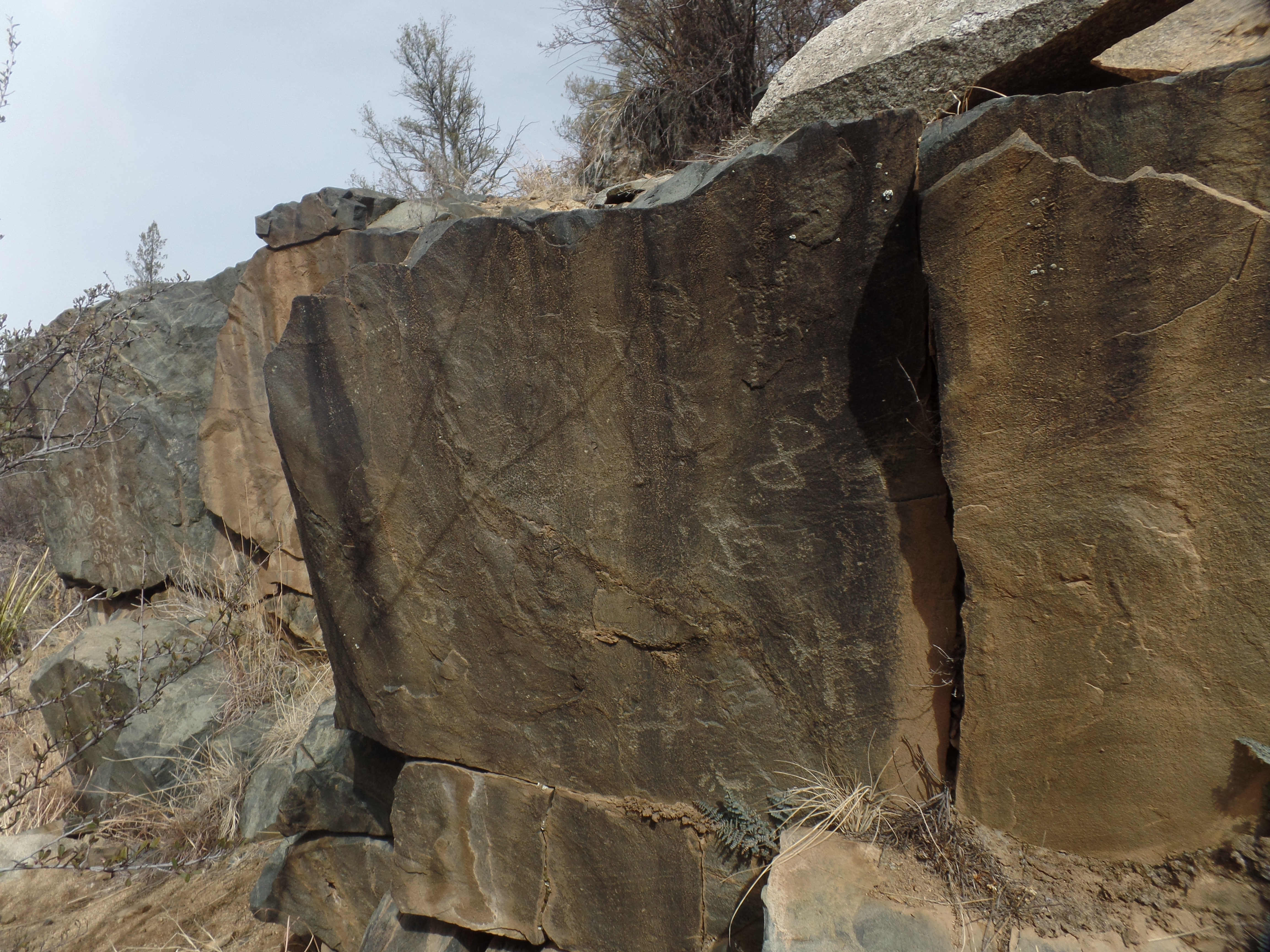
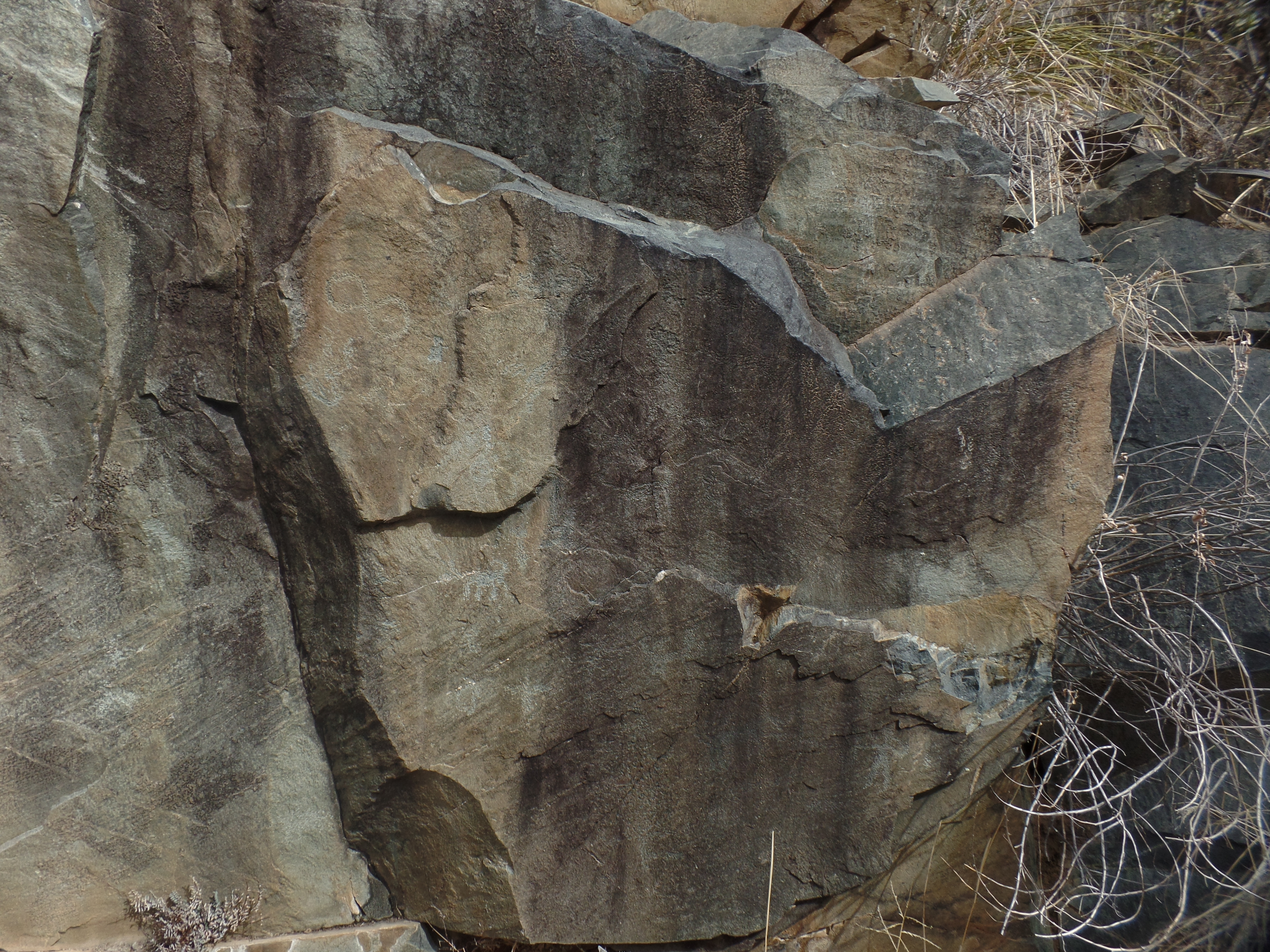
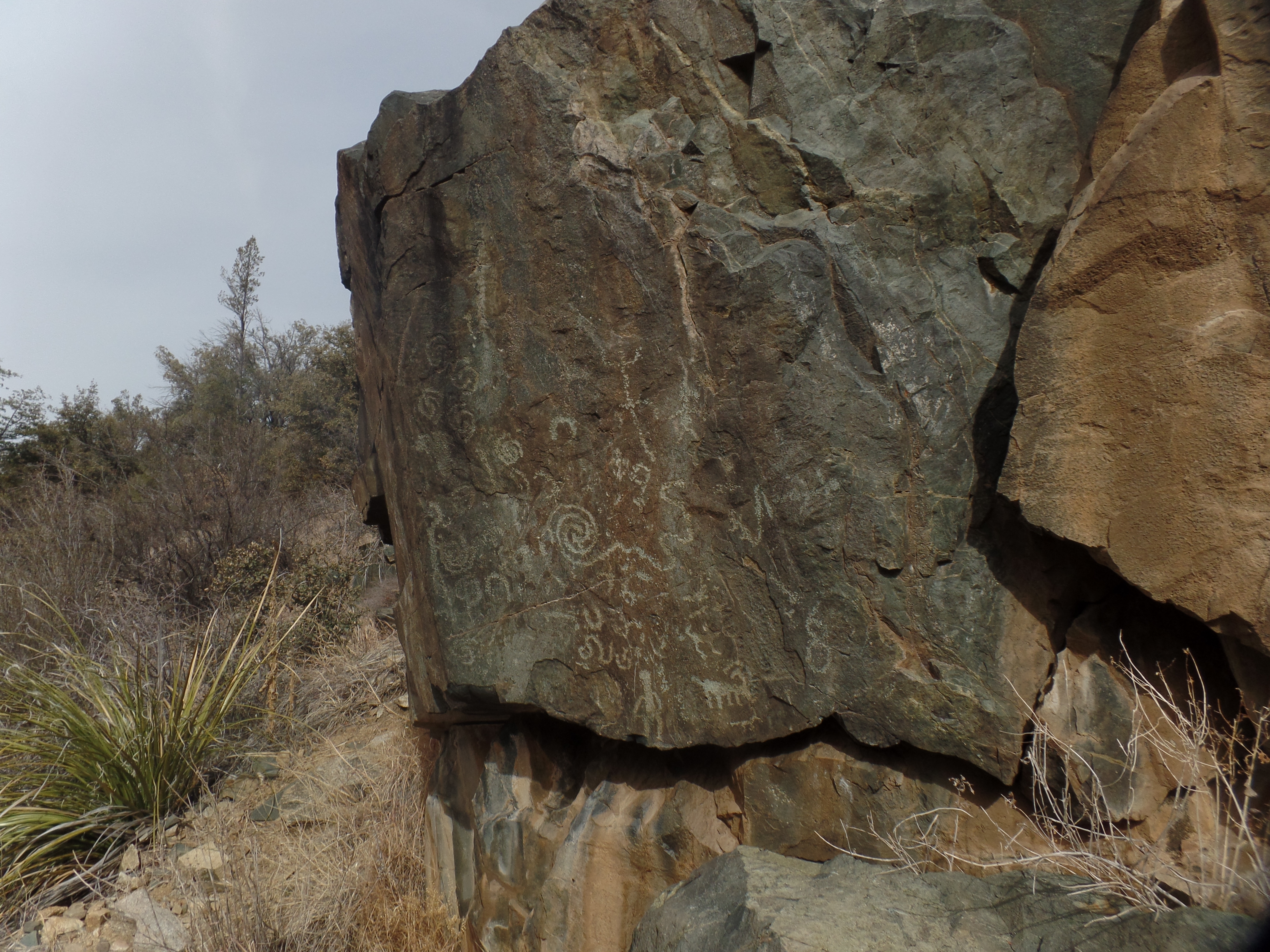
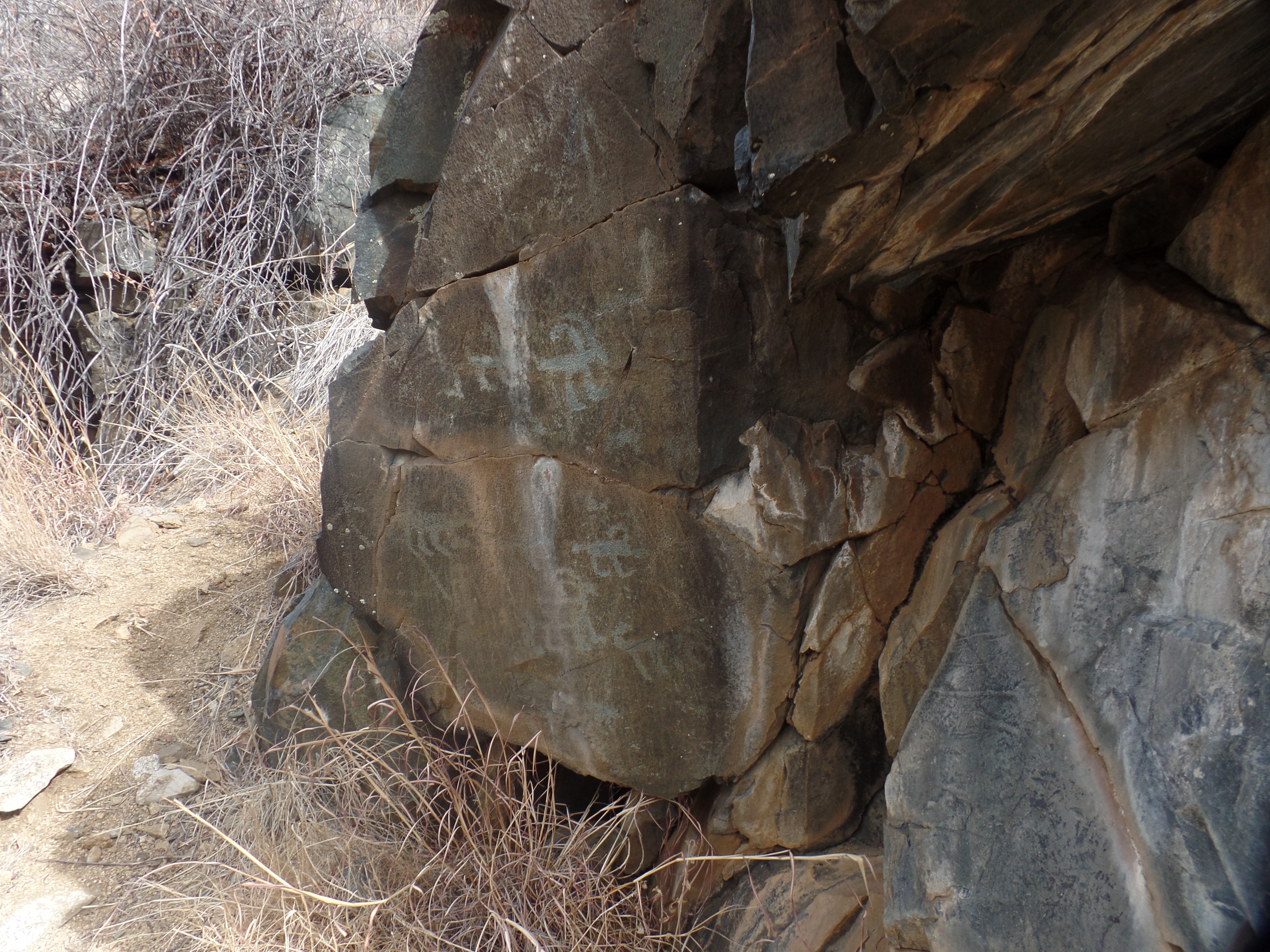
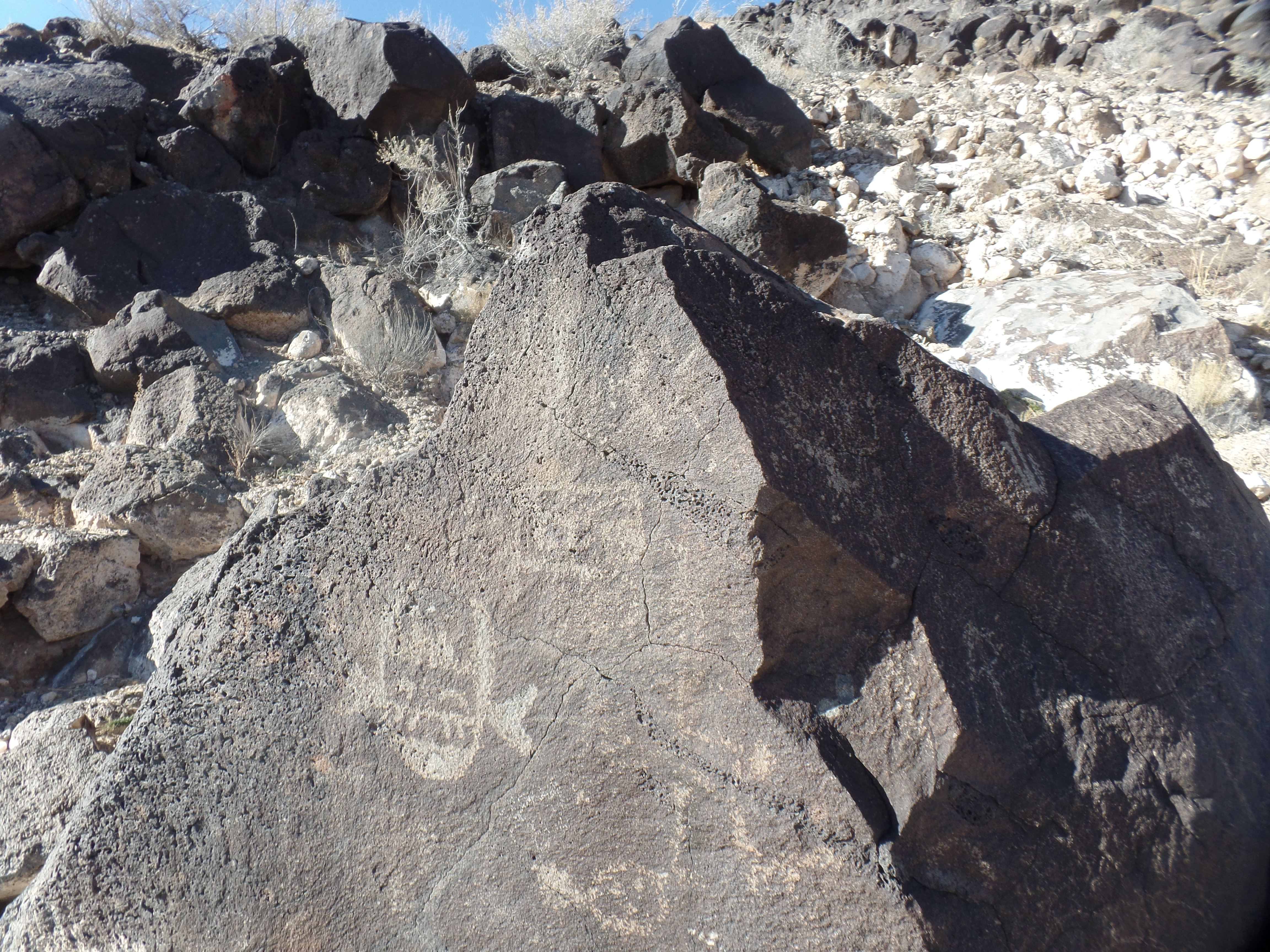
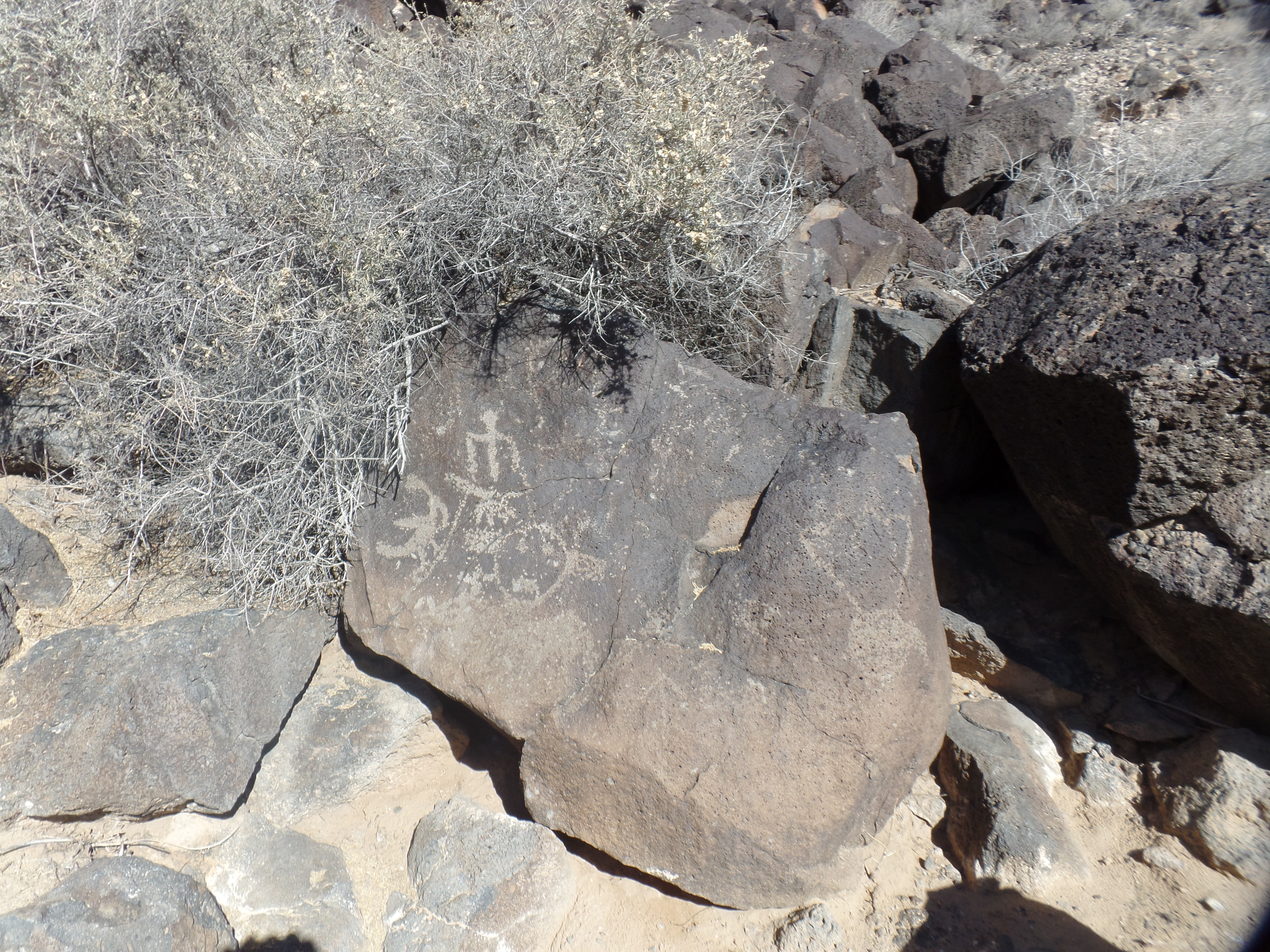
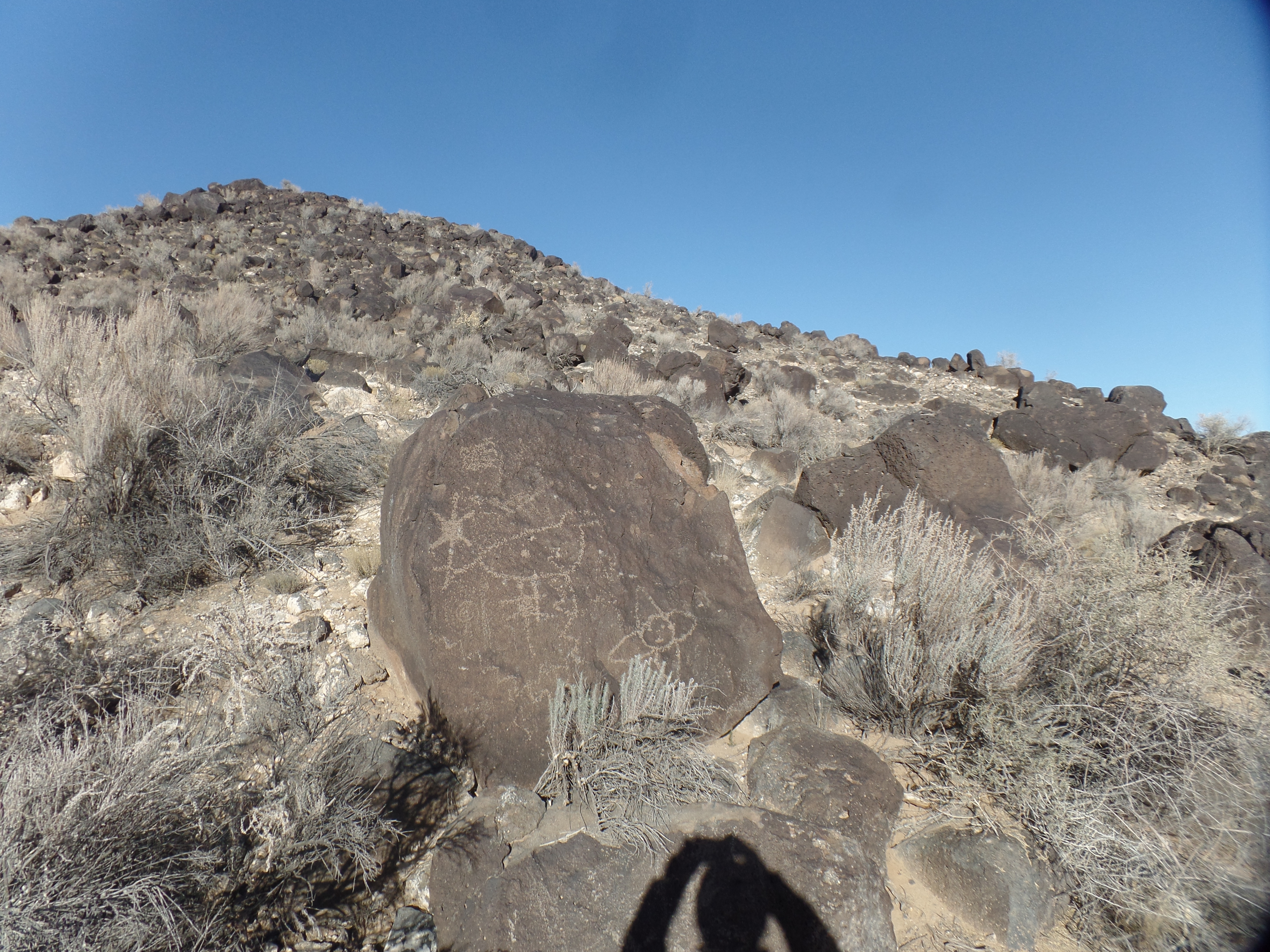
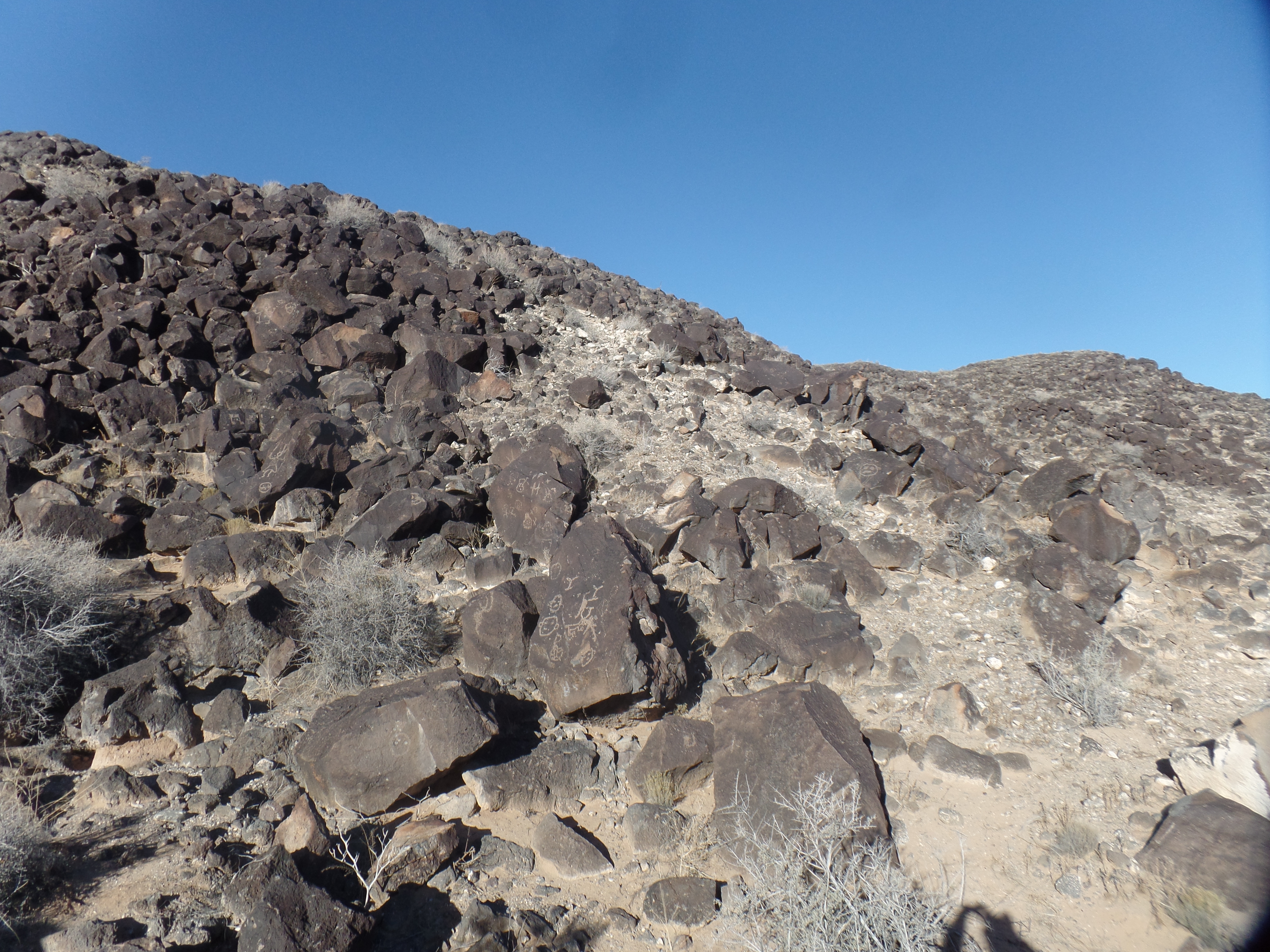
February 23, 2024- The images are still clear, after so many centuries: Big-horned sheep, dogs and dancing figures, presented in a small rock outcropping, possibly selected by the Huhugam people who once lived here, at the northern end of their realm, because of the smooth surface area of the slate.
My hiking buddy and I came here this morning, and found the petroglyphs, for which we had been searching for close to ninety minutes. We had gone up and over Salida Gulch, coming close to its junction with Blue Ridge Trail, then heading back towards the trailhead from which we started. About two miles further, there the images were, calling to us from a bygone millennium.
Infinity, a dancing figure and pronghorns- Salida Gulch TrailBig-horned sheep and mystical symbolsDancing figure, big-horned sheep spirals and possible snakesMultiple big-horned sheep and what appears to be a mountain lion
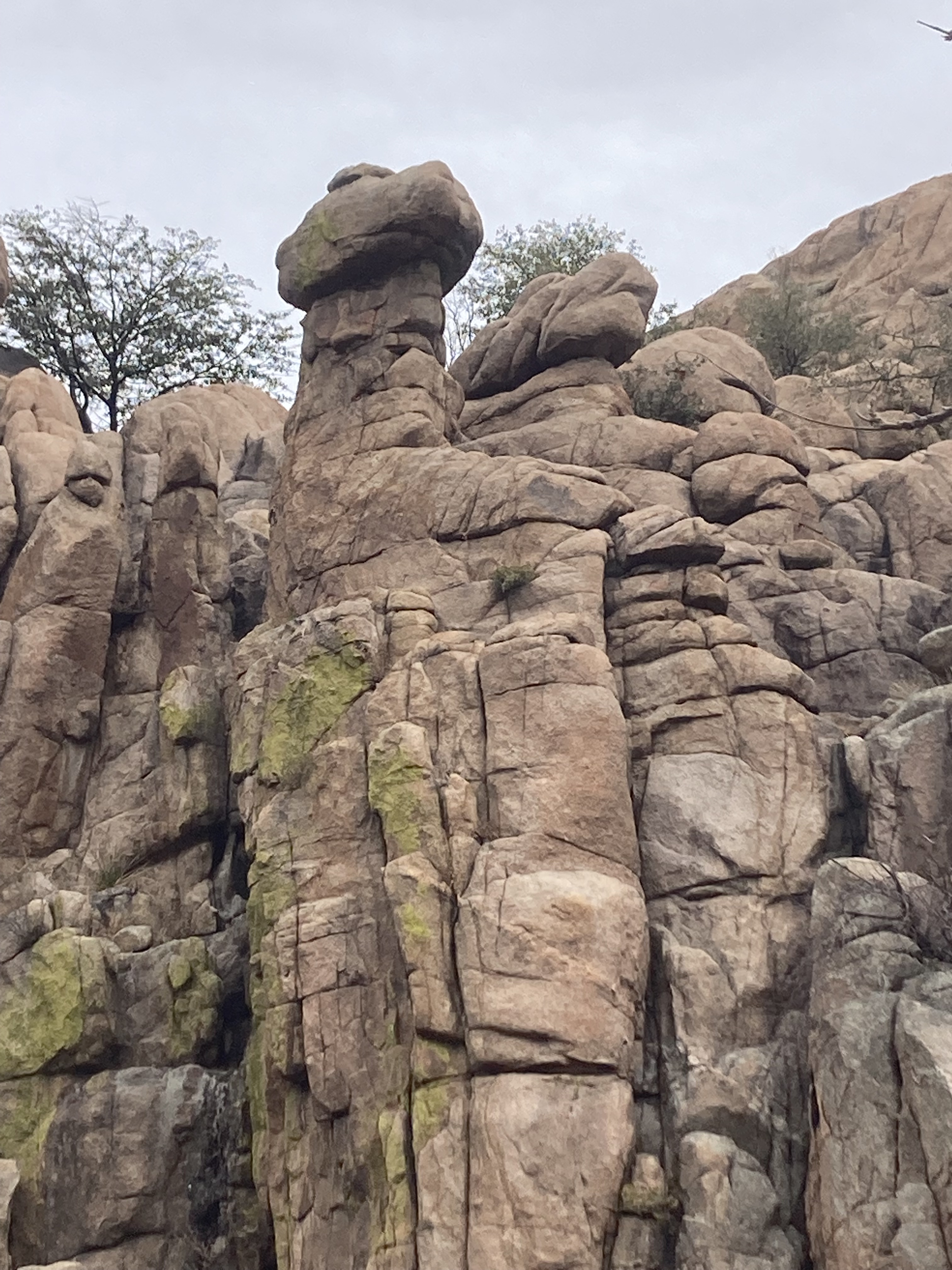
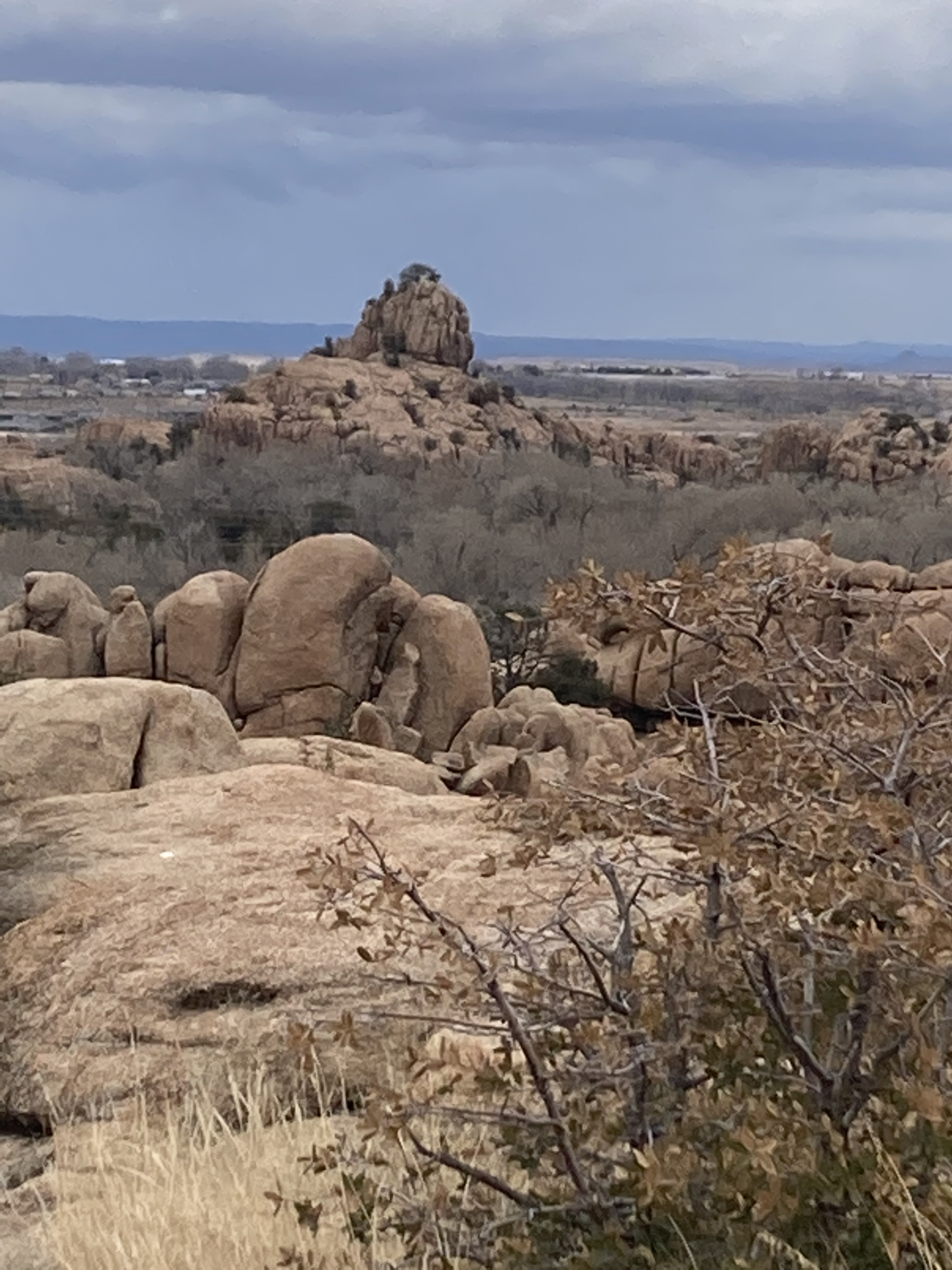
This sort of find is one of the things that make hiking in the Southwest so very rewarding. The glacial residue, by itself, is another. Rocks and boulders are everywhere, along the paths carved by glaciers during the last great Ice Age. Here is a standing stone, reminiscent of Carnac, or Easter Island.
Another “sentinel”, left by glacial retreat.
There will be more such scenes, as March and April play out, here in Home Base I.
February 21, 2024, San Diego- The stack of books is about 5 feet, 2 inches tall. It is arranged like Jenga blocks, though it won’t fall down if one pulls a book from the middle. This is Big Rainbow House’s library.
A Jenga Library
With a more sunny day in the offing, I headed up to visit a long-time friend in Orange County. In the past, we have frequented one or another beach front restaurant. Today, the focus was on Laguna Niguel, a community about five miles inland from Dana Point. I got to drive the length of Golden Lantern Road. There are nine “lantern” roads, emanating from Dana Point Harbor, that I recall: Violet, Crystal, Blue, Green, Ruby, Amber, Silver, Copper and Golden. The street names were a marketing tool for the newly subdivided community of Dana Point, in the 1920s. Each starts with a coloured lantern atop the western terminus of the street.
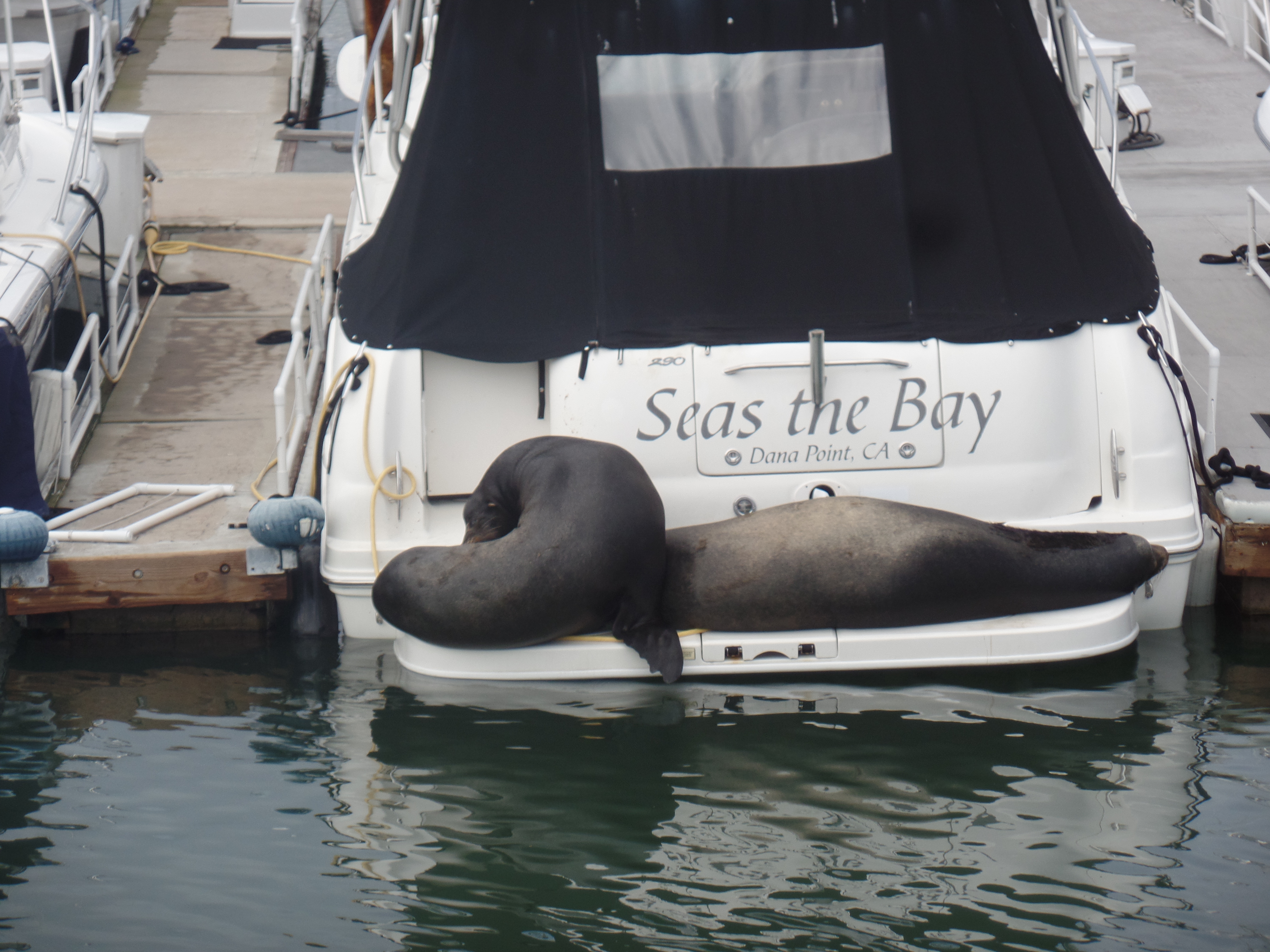
Before that little drive, I spotted a pair of harbour seals, lounging on the stern of a small yacht, in Dana Point’s central marina. The female was barking, clamouring for attention-or so it seemed. The male was seemingly dead to the world.
Two on a platform
After a brief stroll around the marina, and an equally short walk at Dana Point’s hilltop overlook, I headed towards Laguna Niguel. A large family of Baha’is once lived in this pleasant. green canyon-laced community. So I felt drawn to have a look at the area. Being a bit early for our lunch appointment, I walked around the community’s regional park. Its centerpiece is Aliso Creek, a shallow rill that is nonetheless running in robust fashion-a bantam rooster of streams, if you will.
Aliso Creek, Laguna Niguel Regional Park (above and below)
Just after I took these shots, I spotted a pair of Mallards, attempting to cross the road. I also spotted a vehicle coming towards them. Gesturing to the driver and pointing to the male duck, either spooked the quacker or he felt the vibrations of the car. The pair dashed back to the side of the road and the car kept on going. The ducks then made their way to Aliso Creek.
The surviving mallards (in center left, Aliso Creek)
Lunch, at Avila’s La Ranchita, one of about five family-owned chains, in southwest Orange County, is a true delight-with every dish prepared on site, from fresh ingredients-no cans or bottles. There is no skimping on the meats and vegetables in the various tacos, quesadillas, tamales, enchildadas or tostadas. Equally important, the chips are baked daily and the salsa is freshly made. Even the iced tea is brewed on site. I am always alert to the difference between fresh and processed. This place is for real-and worth a drive eastward from the beach.
I came back to Ocean Beach, in time for the Wednesday Farmers’ Market. It is slightly larger than ours back in Prescott-but this is San Diego, after all, and the vegetables, fruits, cheeses, juices and various hot foods are all amazing, in variety and quality. I got a few items, and called it a night. One must be prudent, even when on holiday.
January 3, 2024- Spotting a fresh bear track, I gingerly peered into the small crevice, from six feet away. Sure enough, there was a juvenile black bear, its backside facing out. Bear was in hibernation, so my quiet steps quickly went up the trail, to the mesa top, in the heart of Granite Dells. The young couple who had joined me at Watson Lake Dam had gone on ahead, and the family of five who I had spoken with, ten minutes earlier, were also on their way back to the parking lot-so no one was likely to “poke the bear”, so to speak.
Lions and bears, but no tigers, are fairly expected in this unique area on Prescott’s northeast side. Usually, they are most active at night, or in early morning, so there is little chance of encountering them during my preferred winter hiking time, which is mid-day. I went here today, as my first hike of 2024. New Year’s Day just felt like a day to hang out in the apartment, so that’s what I did. Today, though, was the last nice day, before a stretch of winter precipitation-during which I will head to Ghost Ranch, after attending a farewell gathering for a couple of friends and helping out at Farmers Market.
Here are some scenes from today’s hike.
Ever wonder what frozen algae looks like? This comes pretty close.
Still guarding the approach to Watson Lake Dam!
Heart rocks have been absent from my hikes for a while. Now, I am finding them again.
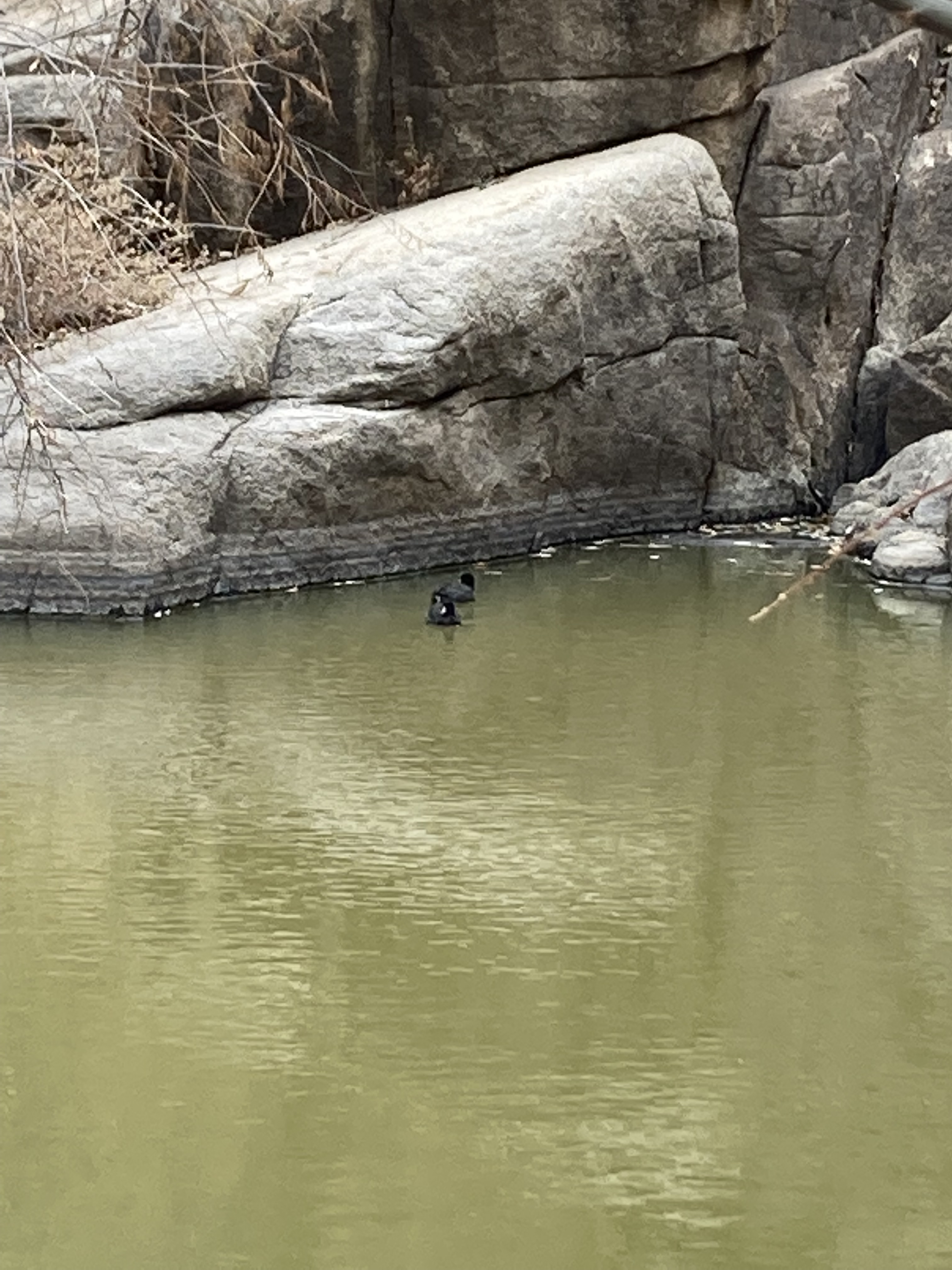
Two ducklings are making the best of the cold.
The sprawl of Granite Dells is one of its greatest allures.
This small dome requires a side hike, on the west side of the Dells.
One more heart rock, for the sake of love.
As I finish this post, snow has fallen in the neighbourhood, for the first time this winter.
December 26, 2023, Santa Fe- It was 6 F, about ten miles south of Chevelon Butte, along the road between Payson and Winslow, at 6:30, this morning. By the time I reached Winslow, the heat had kicked in and it was a balmy 21 F. Gallup offered 19 degrees and Albuquerque, 37.
Along the route, I saw two coyotes sprinting across the highway, between Stoneridge and Crossroads, in Prescott Valley and, much later, two pronghorns gamboling in the desert, just east of the Rio Puerco Casino, outside Albuquerque. Police were along the highways in force, especially in the early morning hours, when I was driving in darkness. Passing the upended hulk of a wrecked semi-trailer, I felt grateful for their presence.
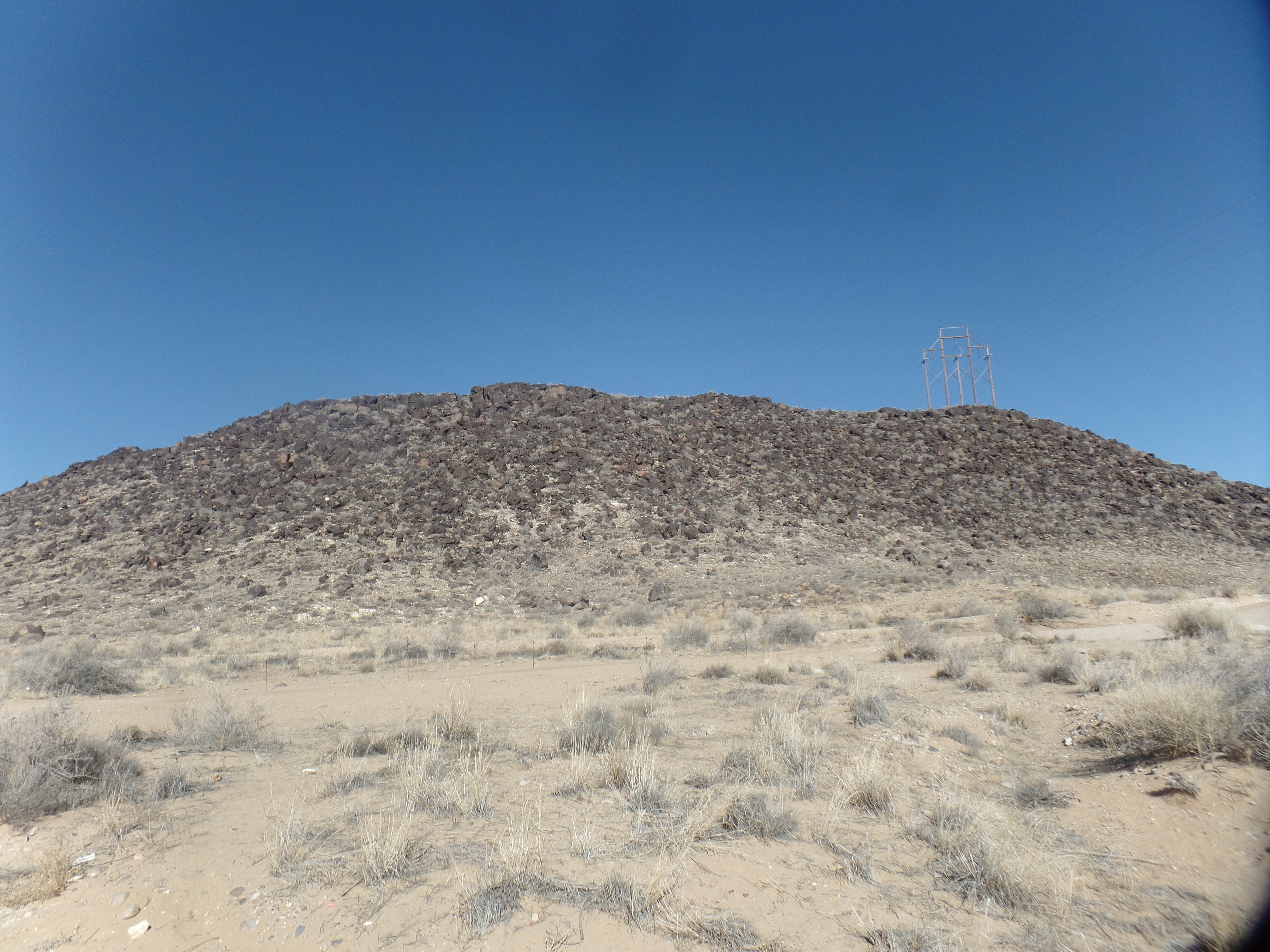
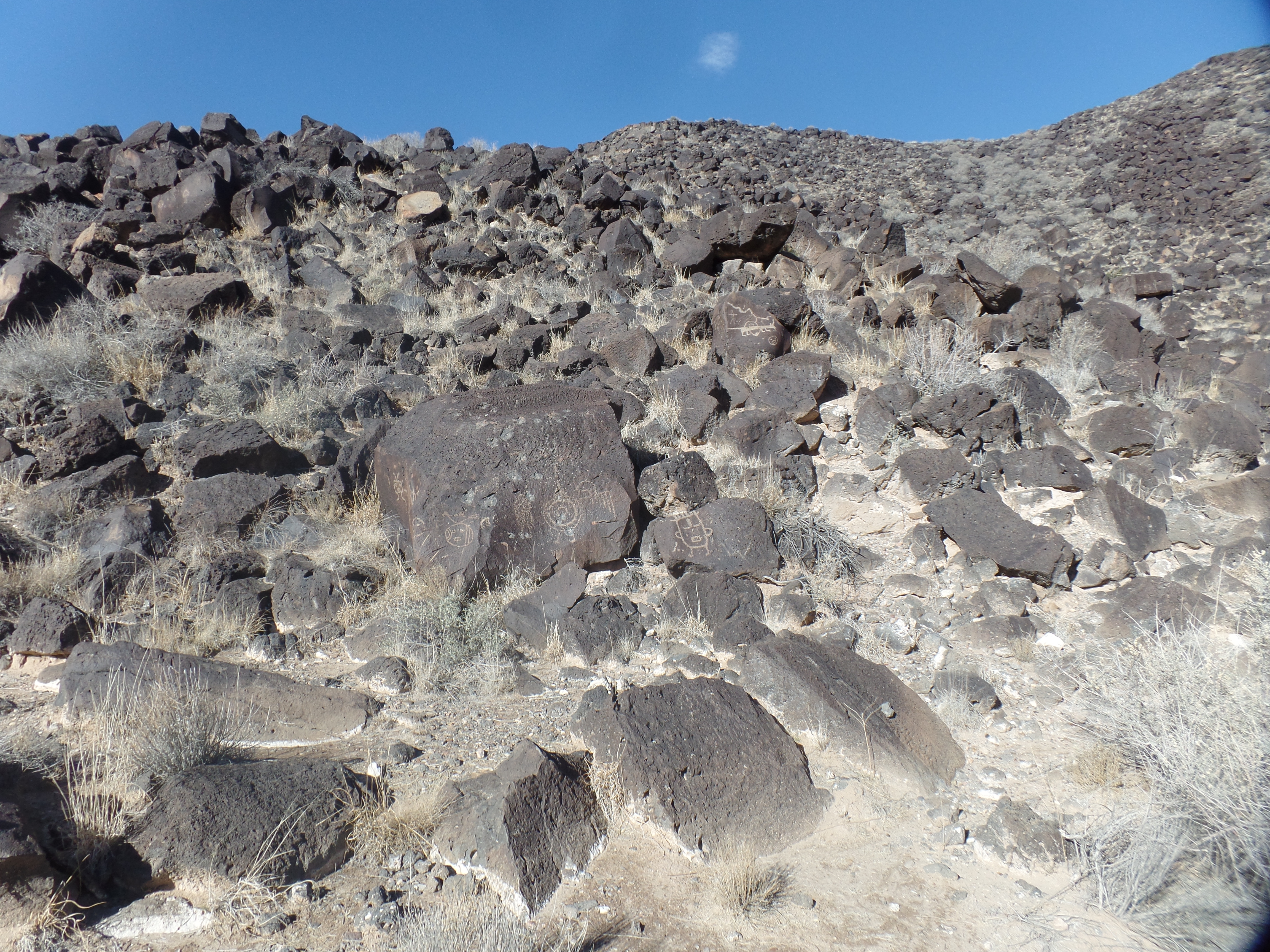
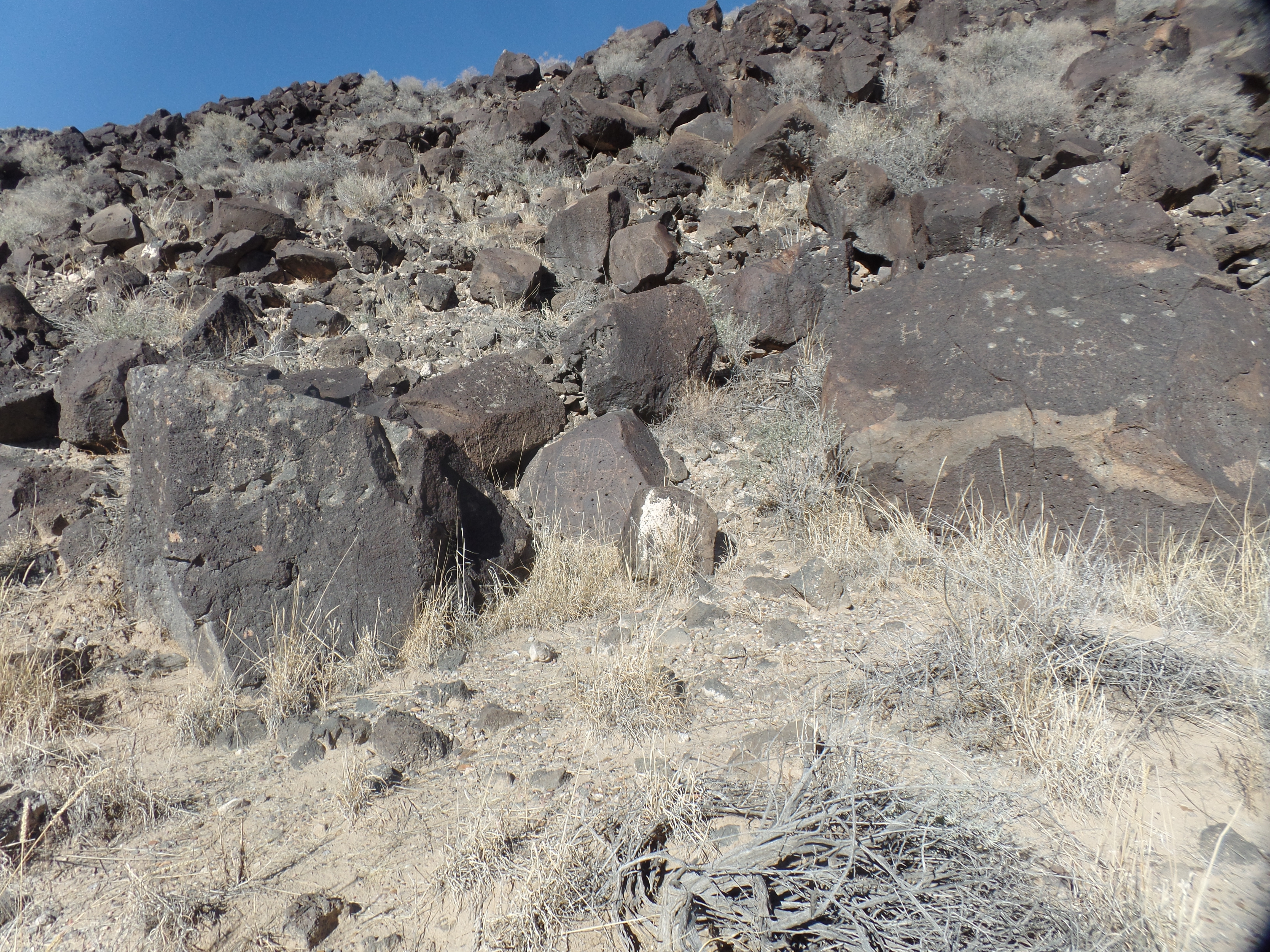
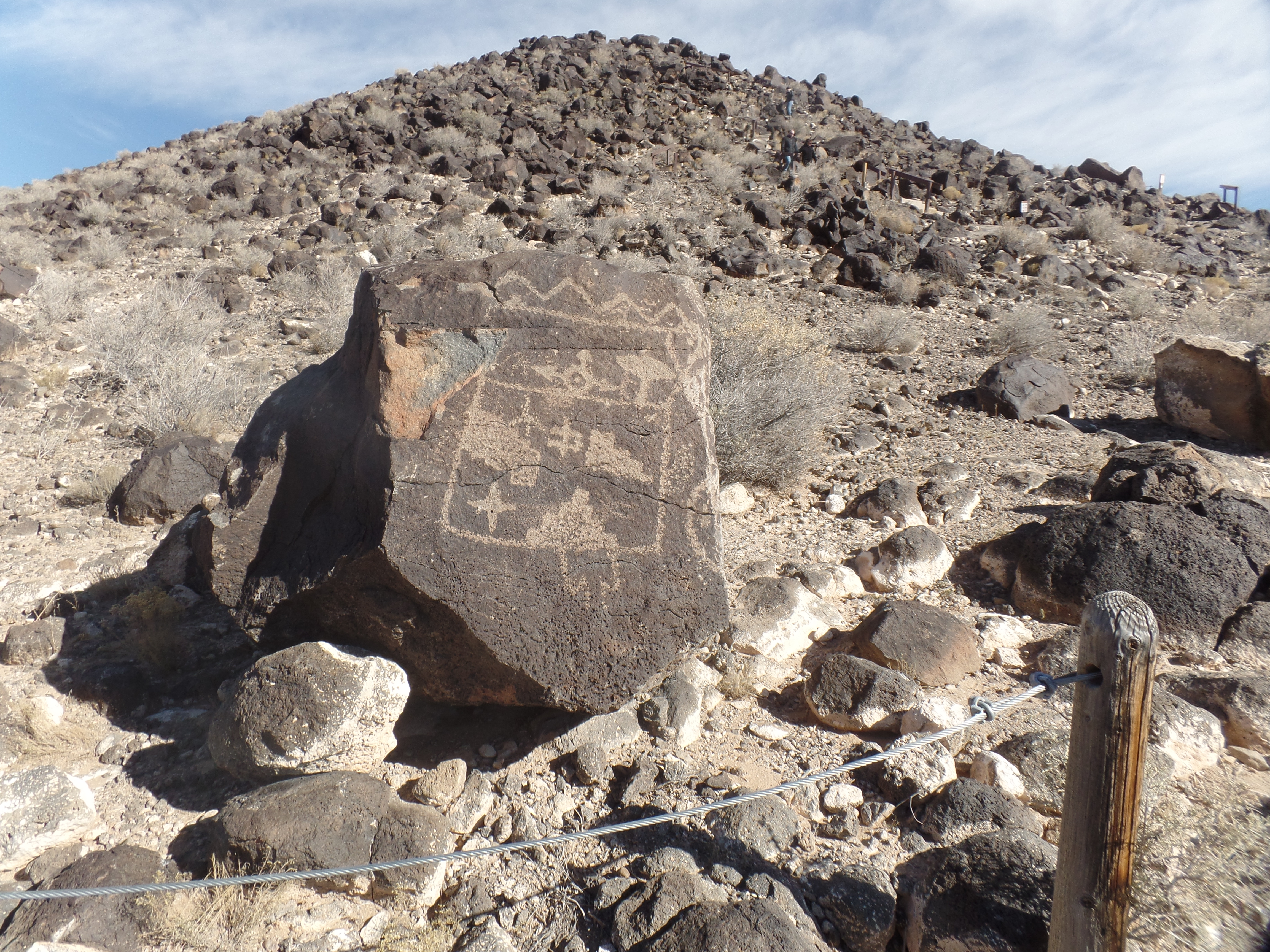
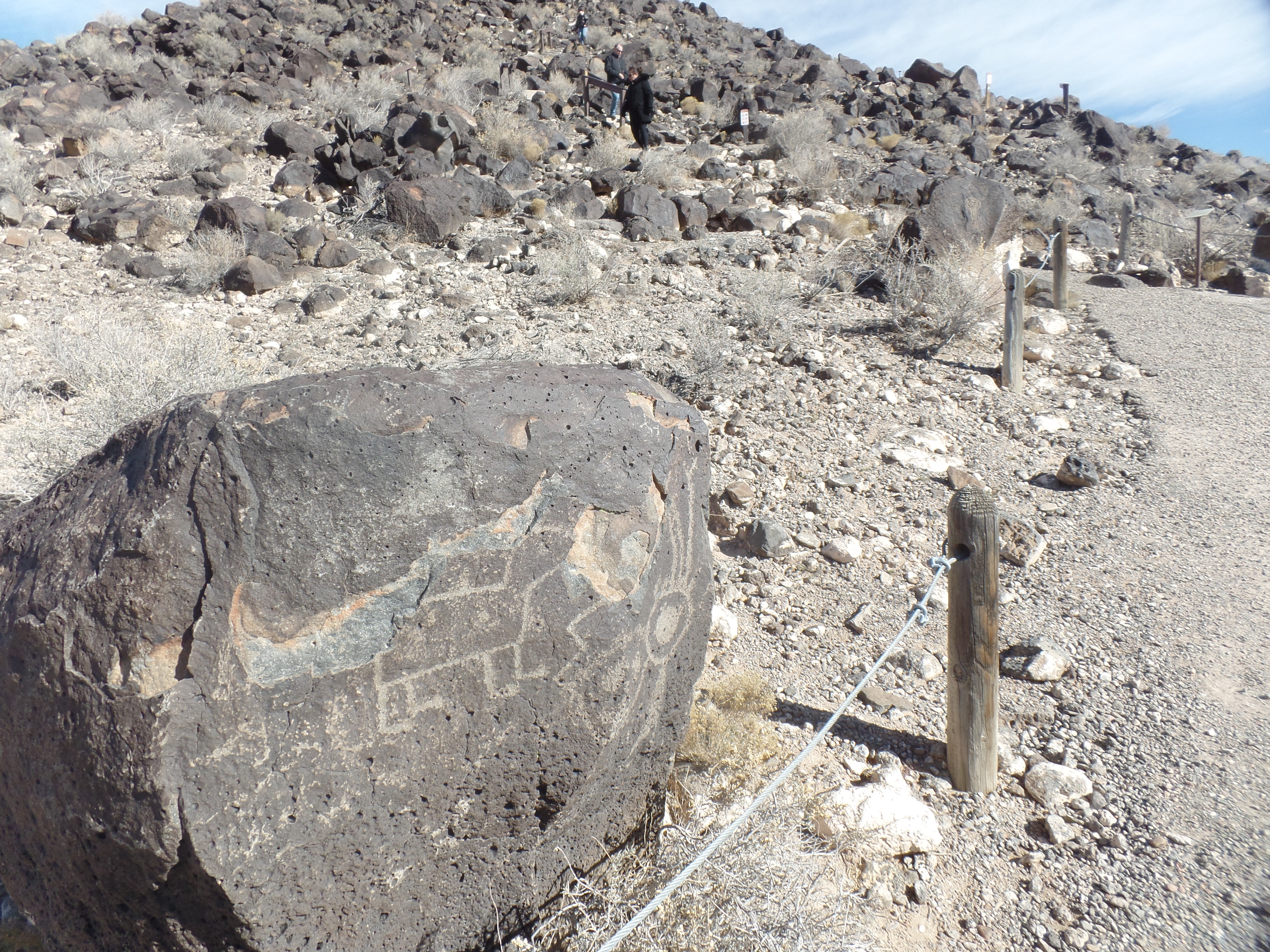
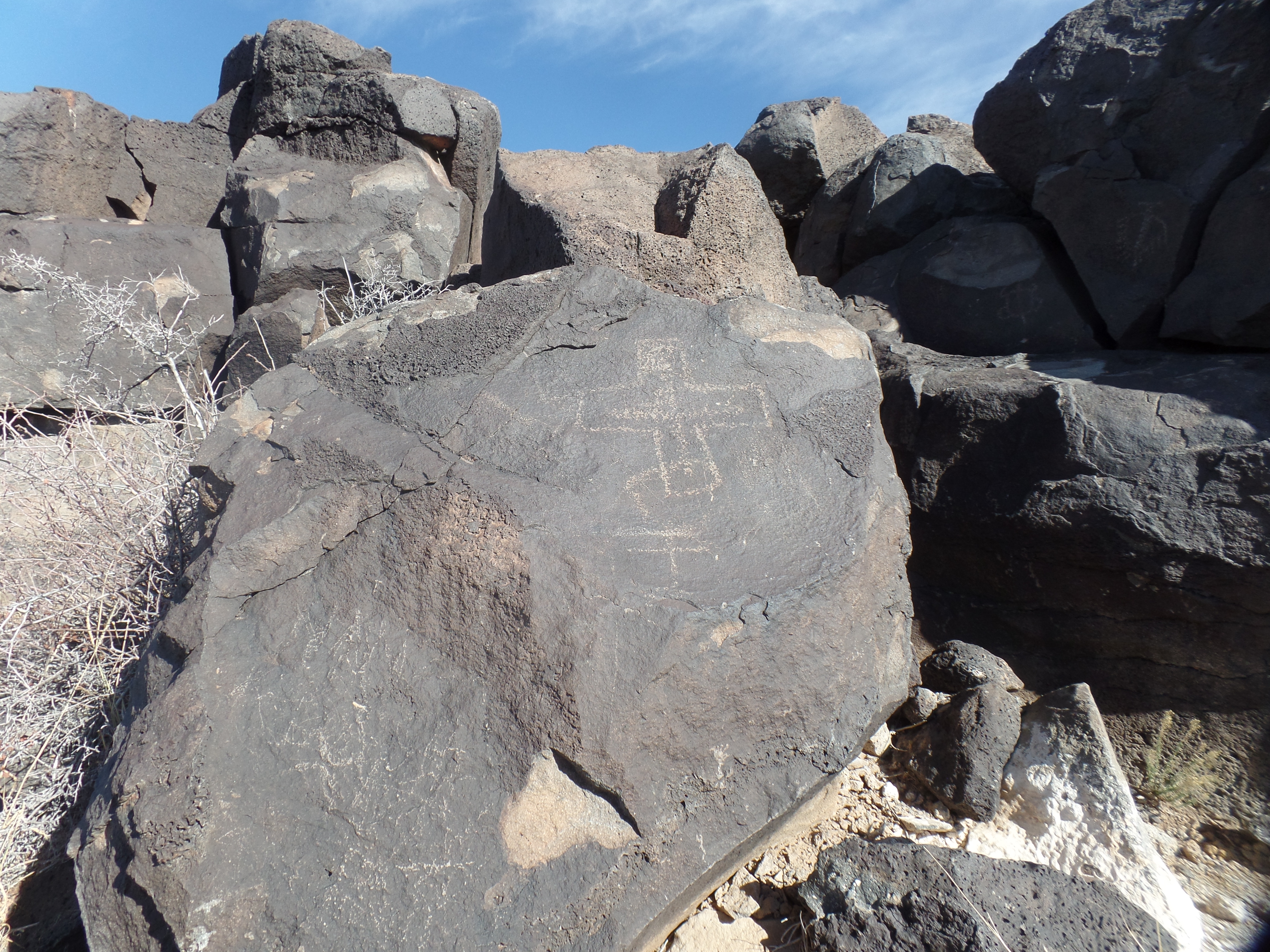
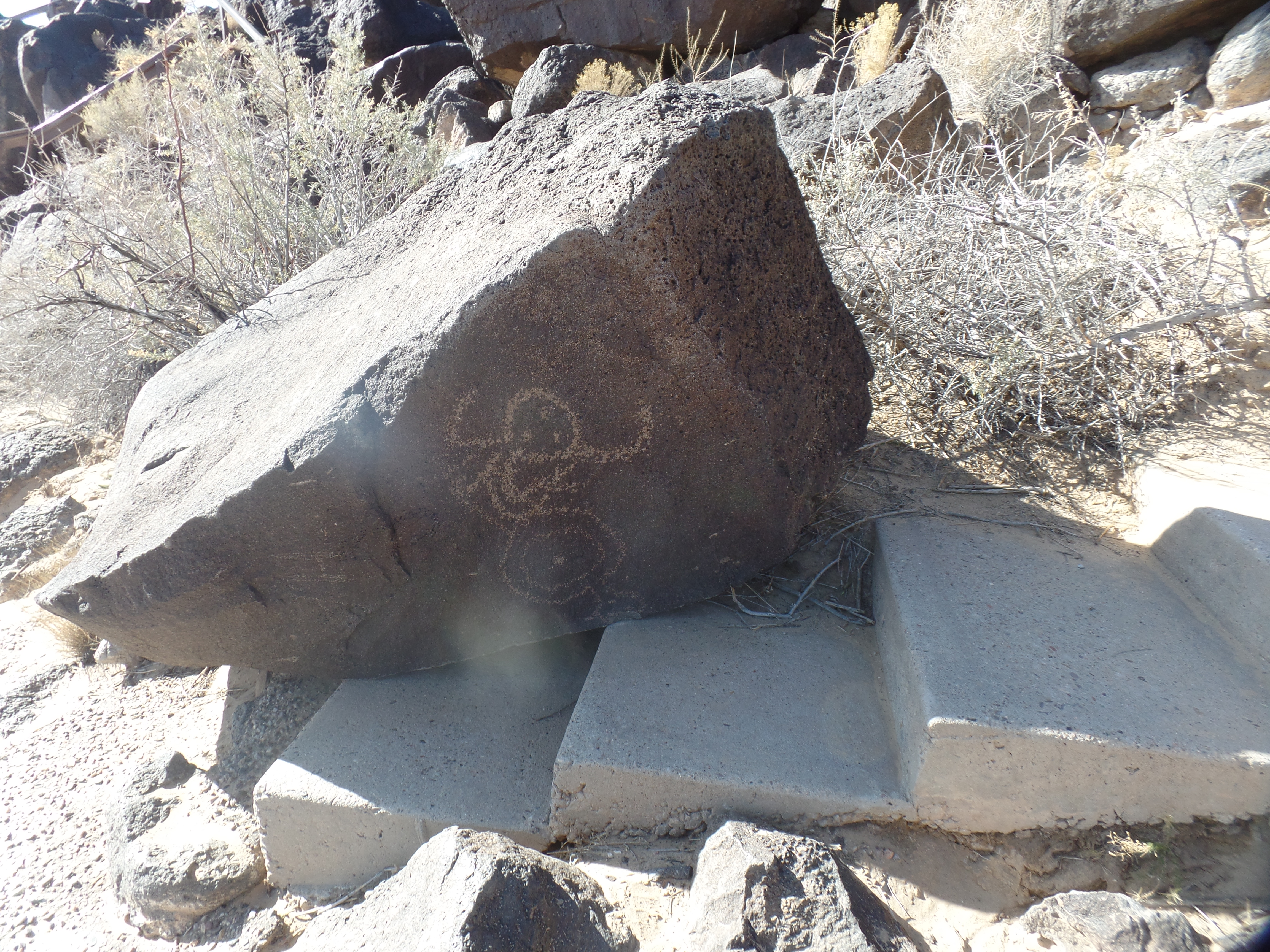
The main focus of the day, though, was on petroglyphs, the communication medium of pre-writing societies, in many parts of the world. Albuquerque’s Petroglyph National Monument, in the Duke City’s northwest corner, offers hundreds of descriptive figures, in three main clusters. The first, just south of the small Visitor Center, is Rinconada Canyon. This sector features a 2.2 mile loop trail, which took me about 45 minutes, a good part of which was spent noting the depicted animals and people.
West Mesa, at Petroglyph National Monument, Albuquerque.Easternmost petroglyphs of Rinconada Canyon.In the upper left hand corner, two beady eyes peer out from a small rock.This collection reminded me of Newspaper Rock, south of Gallup.The artists used pigment from plants, to add luster to some of their glyphs, chipping off the naturally-occurring lacquer and applying pigment to the bare stone underneath.Two fish, a festal cup and a star adorn this rock.This basalt ledge is one of many that served as a grinding table.Spanish explorers added their art to the rocks. This “patriarchal” cross is one of many found in the West Mesa rock forest.Here is an example of a figure that gives rise to speculation about extraterrestrial visitors. Puebloans caution against such speculation, saying we cannot know, for certain, what the ancients had in mind when these scenes were painted.
I went on, to Boca Negra (“Black Mouth”) Canyon. Here, there are three trails: The short Macaw Trail, the moderate Cliff Base and the “strenuous” Mesa Point Trail, which was easily climbed by a three-year-old girl, along with the rest of the group.
Mesa Point Trail:
At the base of Mesa Point, there is quite an assortment of figures.Mesa Point’s own newspaper.Looks like Gingerbread Man, with a robot t-shirt!
Here are scenes along Cliff Base Trail
Pupal scorpion?“Greetings, future ones” ?Fearsome mask?One last newspaper clipping
I took a breather, to put gas in Sportage and fuel in my tank-at Which Wich, an innovative shop that uses a combination of technology and “check-off” paper bags, which the diner fills out and the attendant uses, in making the customized sandwich.
Last, but not least, was Piedras Marcadas Canyon, which co-exists with several housing developments, yet seems a world away, once one is on the trail. There are two options here: Petroglyph View Trail, which goes directly to the scenes, and North Rim Trail, which goes to the top of the mesa-sans petroglyphs. I took the former route.
“Bob” couldn’t help himself. I’ve felt that way, but never given in to the carving impulse.Here is a more “conventional” astrophysical image.Finally, a “family” portrait.
There are many more scenes, which will be on my Flickr site, but you get the message(s).
November 23, 2023, Grapevine- The plates were full, the food well-crafted and the three of us, enjoyed every part of this meal-on what, at least to me, is the auspicious 23rd day of the 11th month, in the 23rd year of the 21st Century, AD/CE. Where there is love, there is good food and an attitude of gratitude.
My gratitudes, this year, are many: The program at True North Nutrition, which started me on the systematic loss of forty-seven pounds, between February and November; the growth in my circle of friends-in Prescott, across the continent and in the Philippines, where I connected with a sponsored youth and his mother, chatted up a beleaguered farmer, about whose cause I will be updating quite often, in the months ahead and the Baha’is of the Manila Metro area, three of whom in particular made my stay memorable, through their constant accompaniment; the continued good health of my immediate and extended family; my opportunities for service in the Prescott area-and through the Red Cross, in Watsonville, CA, in the aftermath of a disastrous flood situation, last Spring; the children who let me help them, in their long-term striving to grow and develop their strengths.
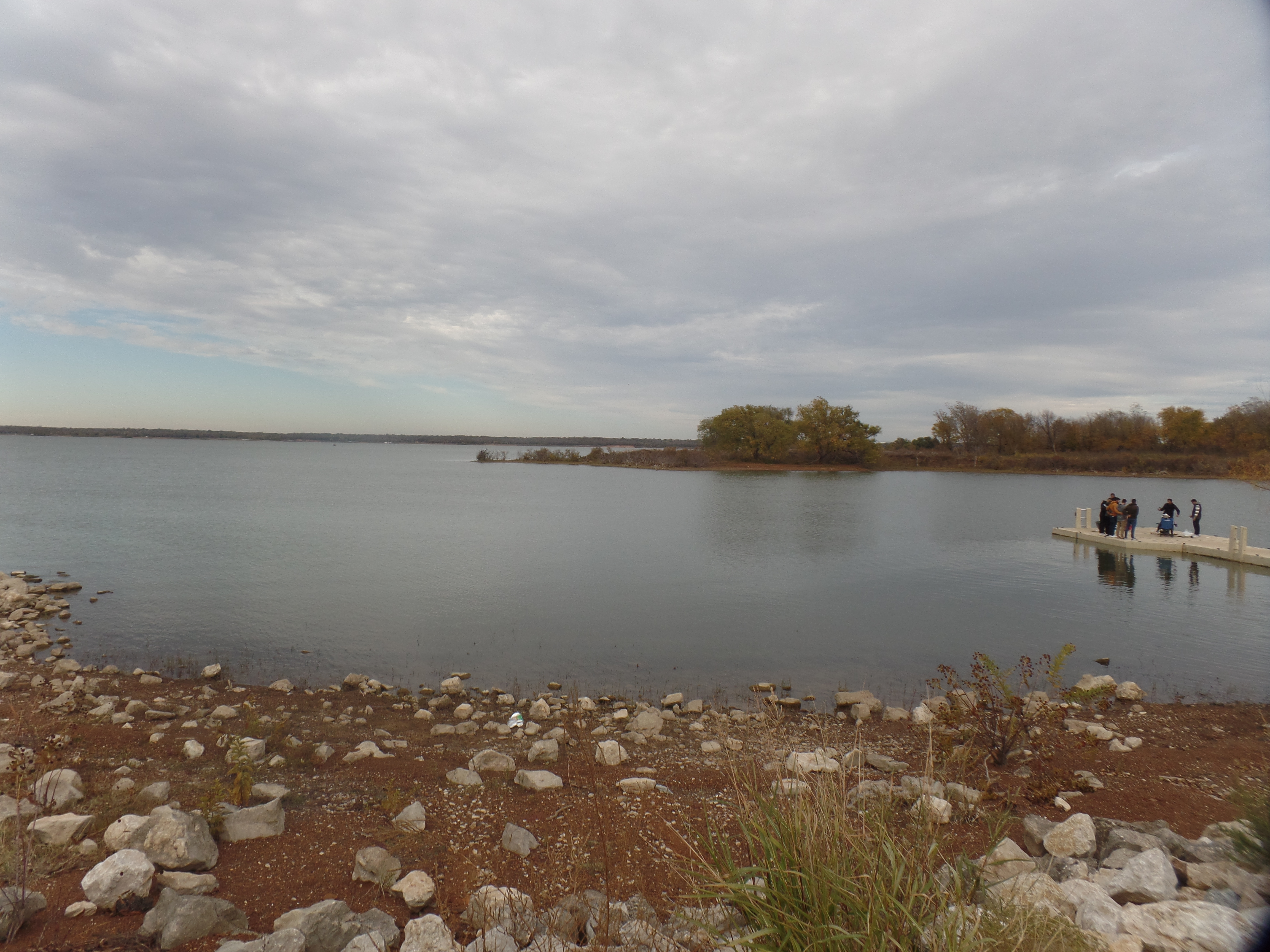
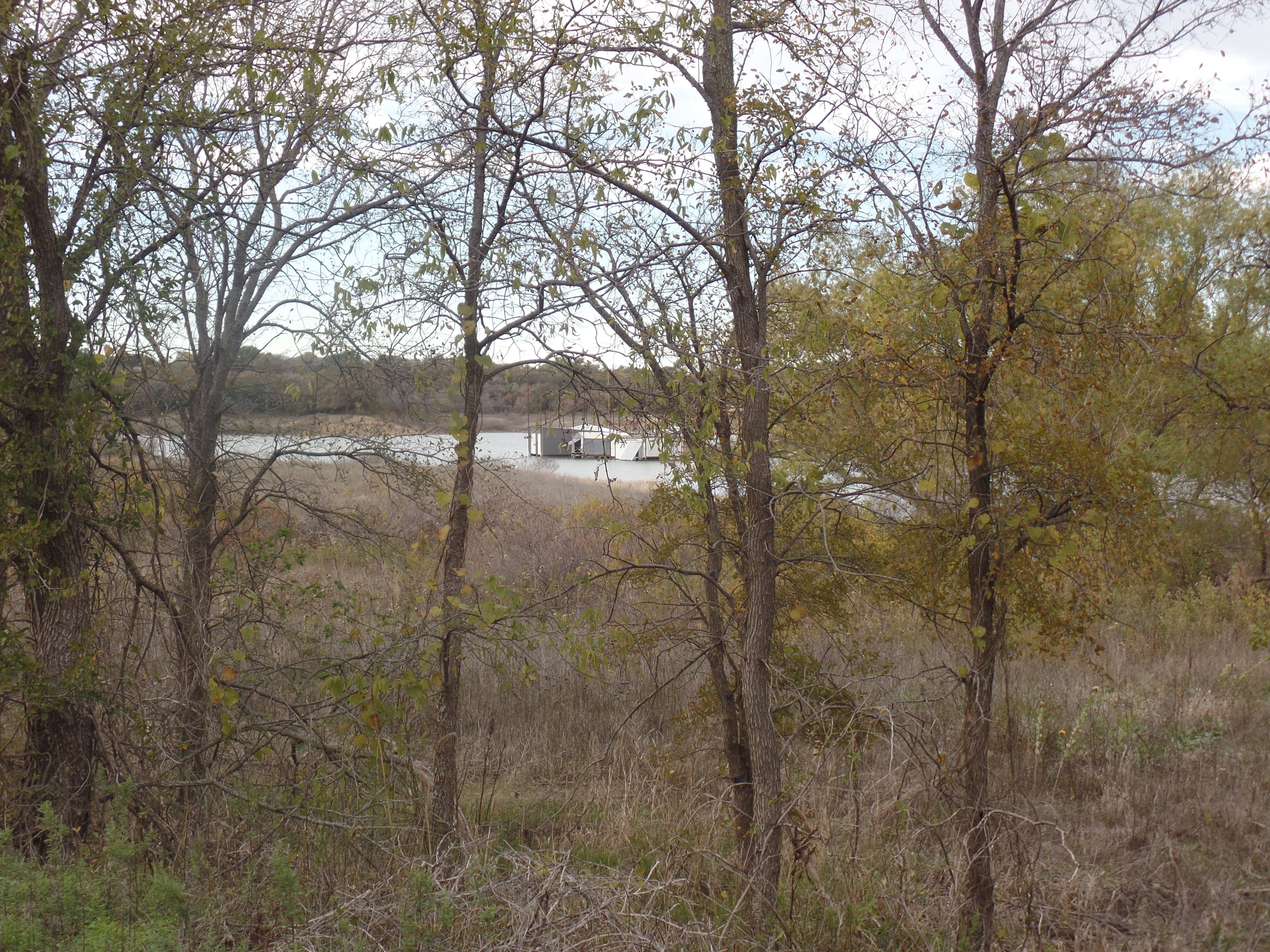
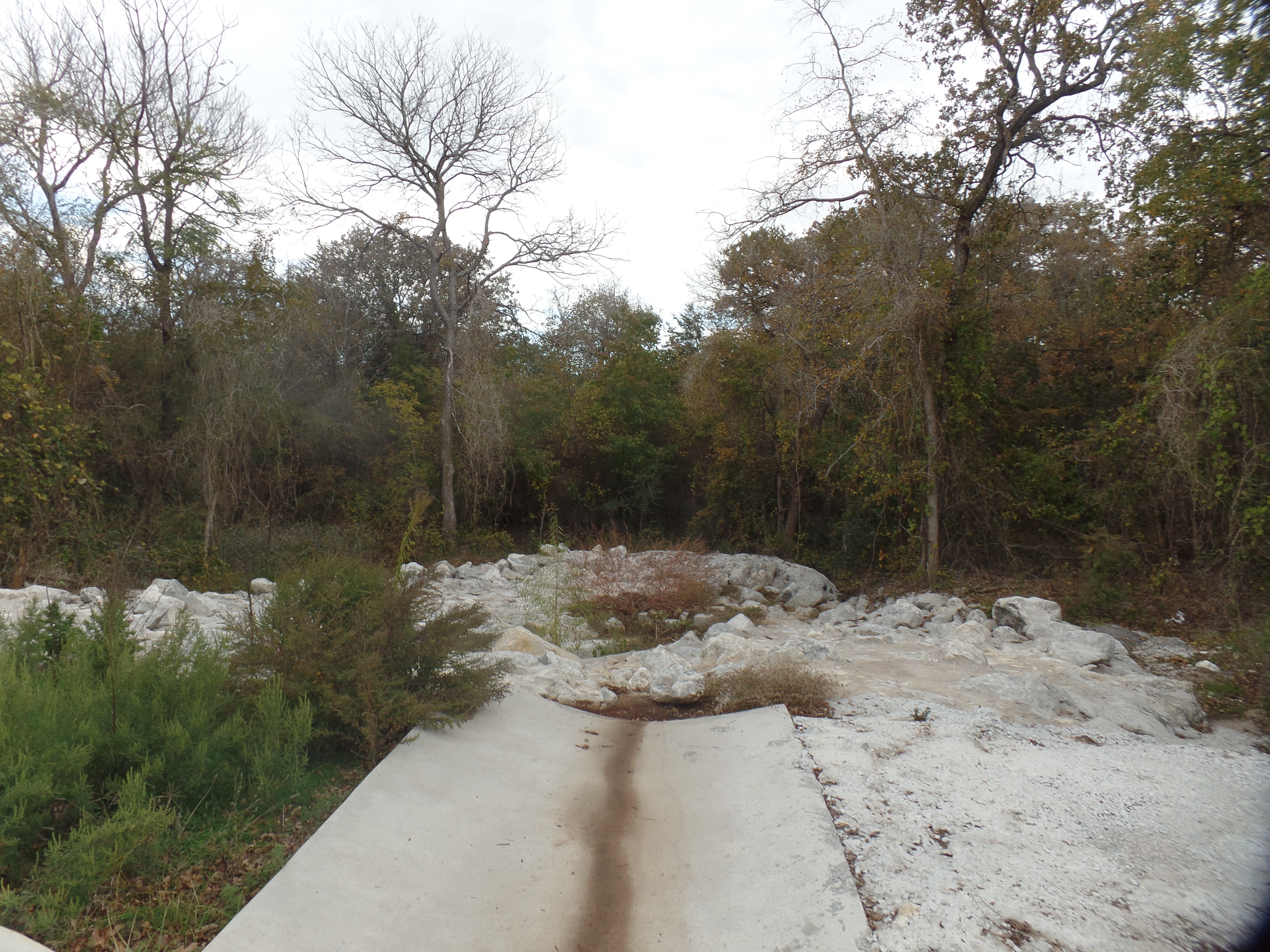
As always happens, after the meal, we took to a short, but brisk, trail. Oak Grove Park lies across Grapevine Lake from Rockledge, which we visited last year. There are probably 5-6 miles of short trails, but the three of us stuck to the paved lengths this time. Here are a few scenes of the area.
Near dock, Oak Grove Park, GrapevineWest end of Grapevine Lake, at Oak Grove ParkA boat house, through the treesSmall quartz quarry, Oak Grove Park
This is another of my gratitudes, for the variety of nature that is ever accessible to share. Happy Thanksgiving, everyone!
November 15, 2023- The scene, in a National Geographic Magazine article on orcas of the Southern Ocean, showed three or four females in an orca family systematically using wave action to upend a small ice floe, on which their prey, a Weddell seal, was sheltering. The maneuver was ultimately successful and the dolphins took their food home.
It was then pointed out, that the decline in sea ice has led the seals to find a new home, inland on a rocky landscape. Orcas, and other cetaceans, have no such recourse. Thus, the author concluded, we may be witnessing the death of a culture.
Cetaceans may, over eons, return to the land-dwelling practices of their very distant ancestors. Living things are almost always able to adapt to the Earth’s changes, if given plenty of time. Aspects of culture, though, will rise and fall, with the onset of those changes.
I pondered what this has meant, in a human context, just in my own lifetime. When I was four, a child could not get on a phone and call a beloved relative, without two or three unfamiliar female voices telling him to get off the phone. I used to wonder, even back then, how nice it would be it we could speak to family and friends on a phone that could be used in a car-or while walking along a sidewalk.
In moments of self-pity, in my early adolescence, I wondered what it would be like to live in a society where it was severely frowned-upon, or even illegal, to ridicule others. I quickly concluded that the scenario would be untenable- since nobody’s perfect, and not being held to account for things would end in the person falling victim to own ego.
The narrowness of my contacts, growing up in a community where people of colour lived on the periphery of town, or came to work from the two larger cities to our northeast and southwest, respectively, allowed subliminal and stereotypical views of other ethnicities to settle in my psyche. Still, I wondered from an early age as to how long it would take for people of colour to be able to live freely, wherever they wanted-with no harassment from those around them. I guess we’re still working on that one-though we’ve certainly come a long way. The house, where my mother and her siblings were raised, has been owned for several years by an African-American attorney, of distinguished bearing and considerable accomplishment. I think my maternal grandfather, who prided himself on his work, would have approved.
Culture, our collective, shared set of beliefs, practices and implements, may always change. To say it is subject to death, though, is rather presumptuous.
October 25, 2023, Manila- The clerk smiled wanly, as he told my friend that the matter she is seeking to resolve can only be tended through making an appointment, and that appointment can only be made over the phone-on a Tuesday or on a Thursday. This is the legacy of the “State Department streamlining” that was in vogue, until a few years ago. While I can understand the reasoning behind it, there remain those, like my friend, whose anomalous issues merit rather urgent consideration, and thus are discomfited by what they can reasonably view as just another roadblock.
I will fortunately be around until Tuesday, so if she misses making the call tomorrow, there is always Hallowe’en morning, before I have to Alley-oop back to Airplane Village. This is one of the tasks that was before me, when I first arrived at the South Luzon Baha’i Center, so it is important to keep on top of it, at leas to the point that she feels encouraged and empowered. (It has nothing to do with immigration, just so we’re clear.)
The gatekeepers at the Embassy do have their work cut out for them, with many people who are looking to immigrate to the U.S., or at least obtain short-term work visas. The Filipinos who I have encountered in the U. S. are amazing workers and have a gentleness about how they go about their work. They keep their cool and try to work through any bureaucratic nonsense that arises, whether it is governmental or corporate. I noticed that the very people assigned to enforce bureaucratic rules-including the clerks at the Embassy gate, have a sense of humour about the scheduling and other small details. This does tend to set the visitors at ease.
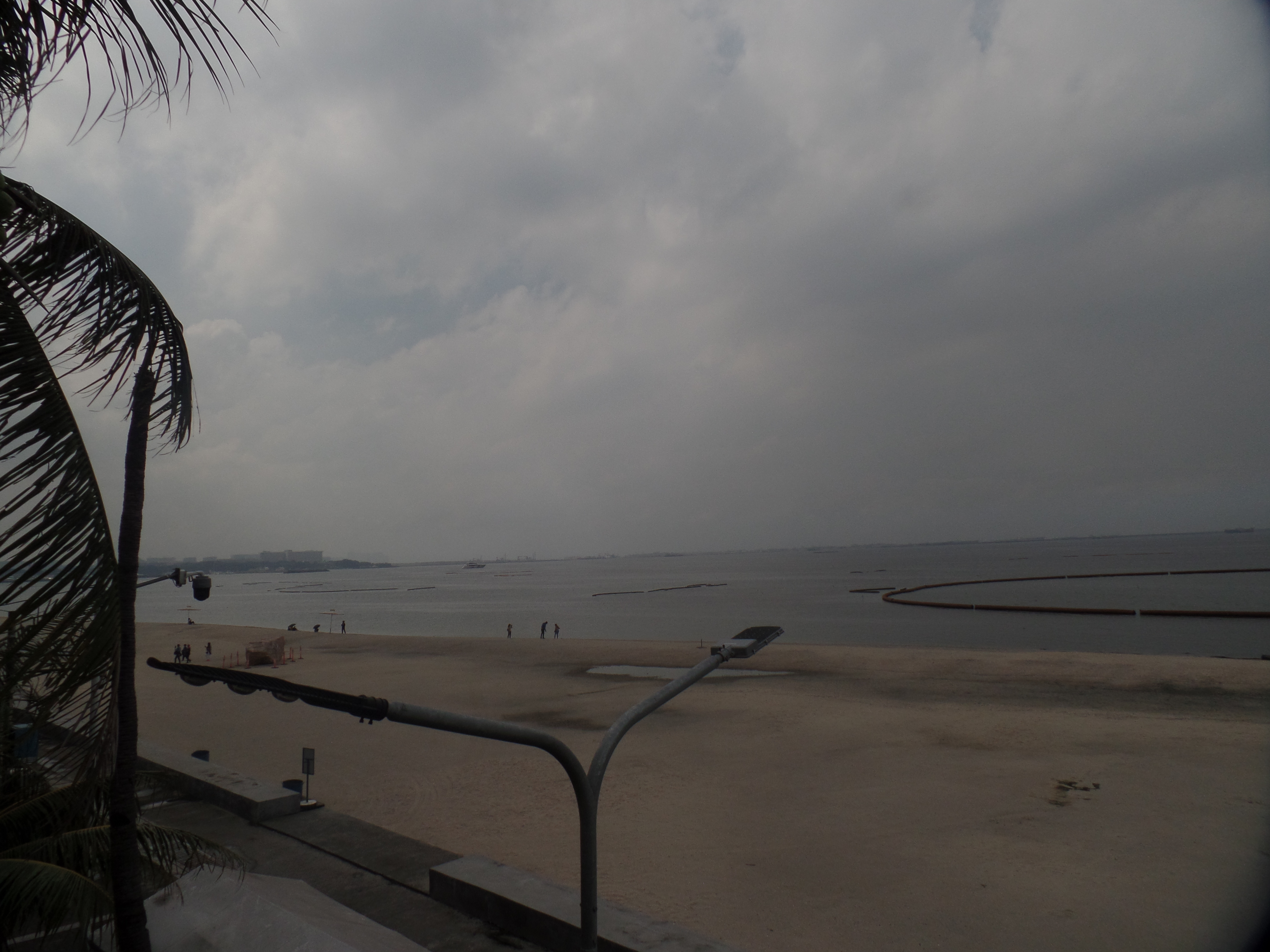
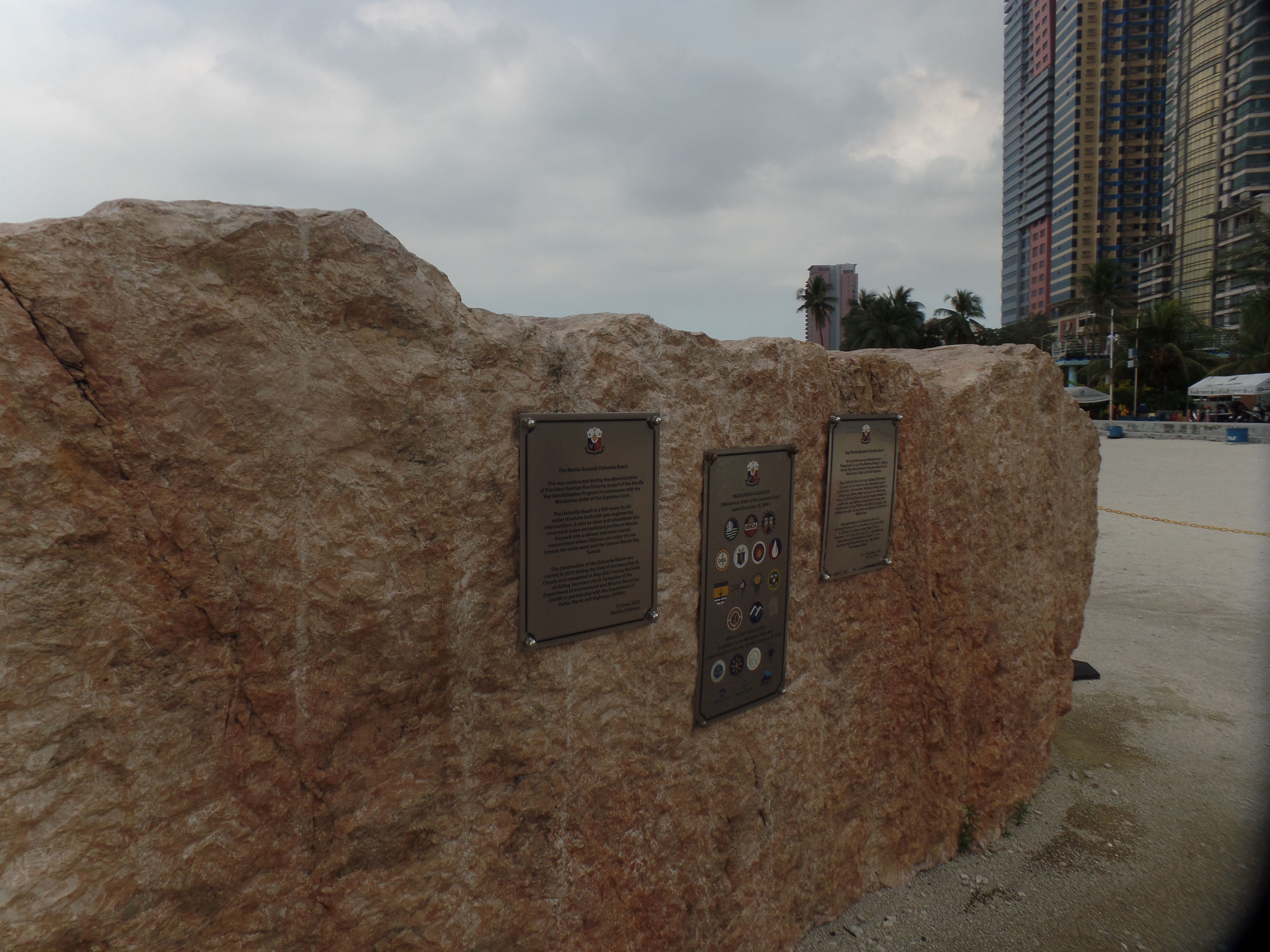
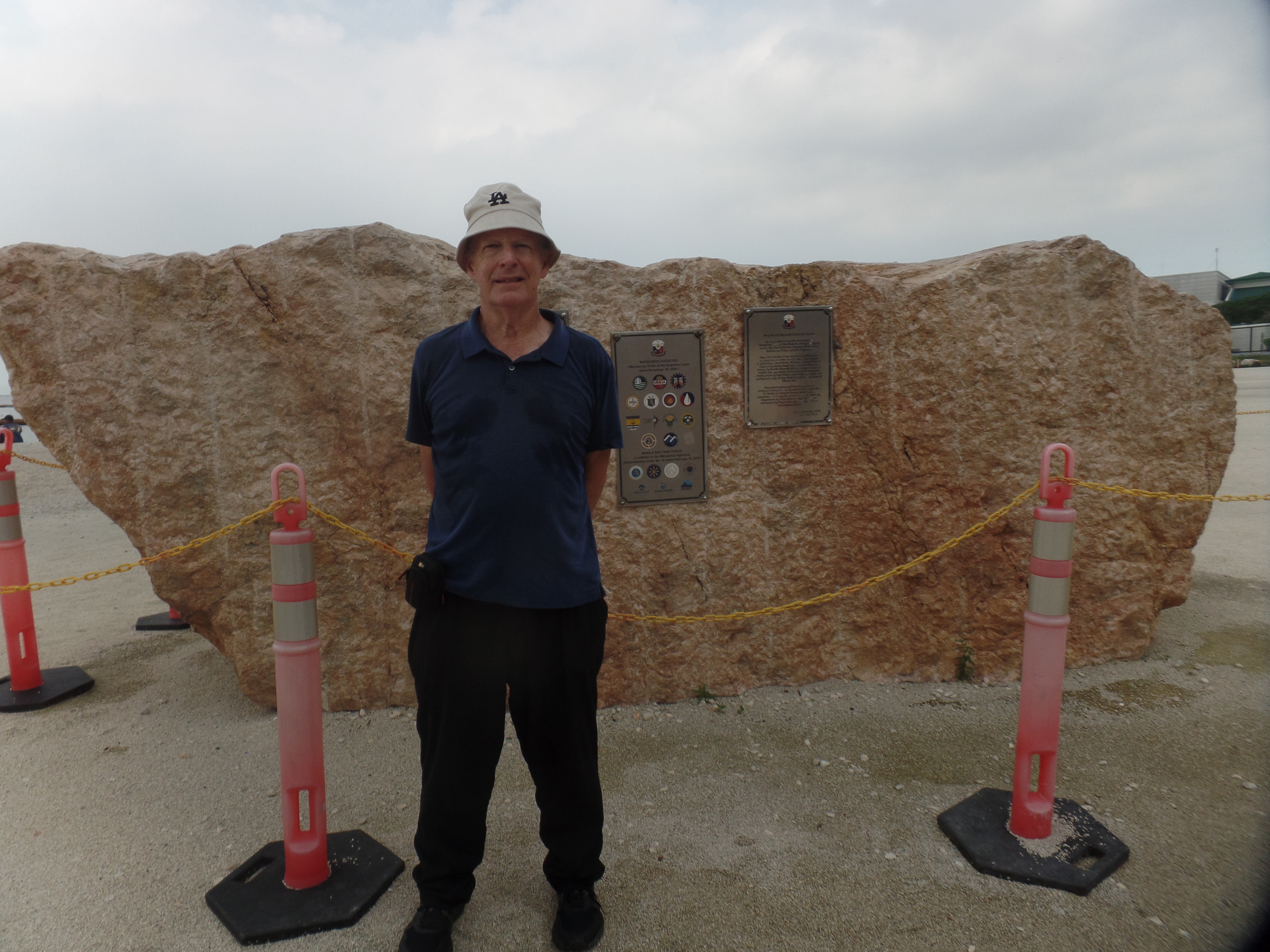
She took her copy of the reminder to call, tomorrow, and we walked down the steps, past the vendors, touts and beggars, to the seaside park that was renovated and upgraded, during the last Presidential administration. That president, I recall, was all about the Philippines-and its people, being respected by the rest of the world. The current state of Manila Bay was one of his pet projects, and was done well.
View of Manila Bayside Park (Dolomite Beach) , from the overpass to U.S. EmbassySection of former sea wall, Dolomite Beach, Manila Bay
h
A human, for scale, at sea wall section, Dolomite Beach
After returning from the seaside, we switched gears, and with a second friend, we headed towards the Scottsdale of the Philippines, aka Makati. Here, we met a third friend, for an afternoon and evening of pretend shopping and art appreciation.
It’s not just WalMart that is full on Christmas.
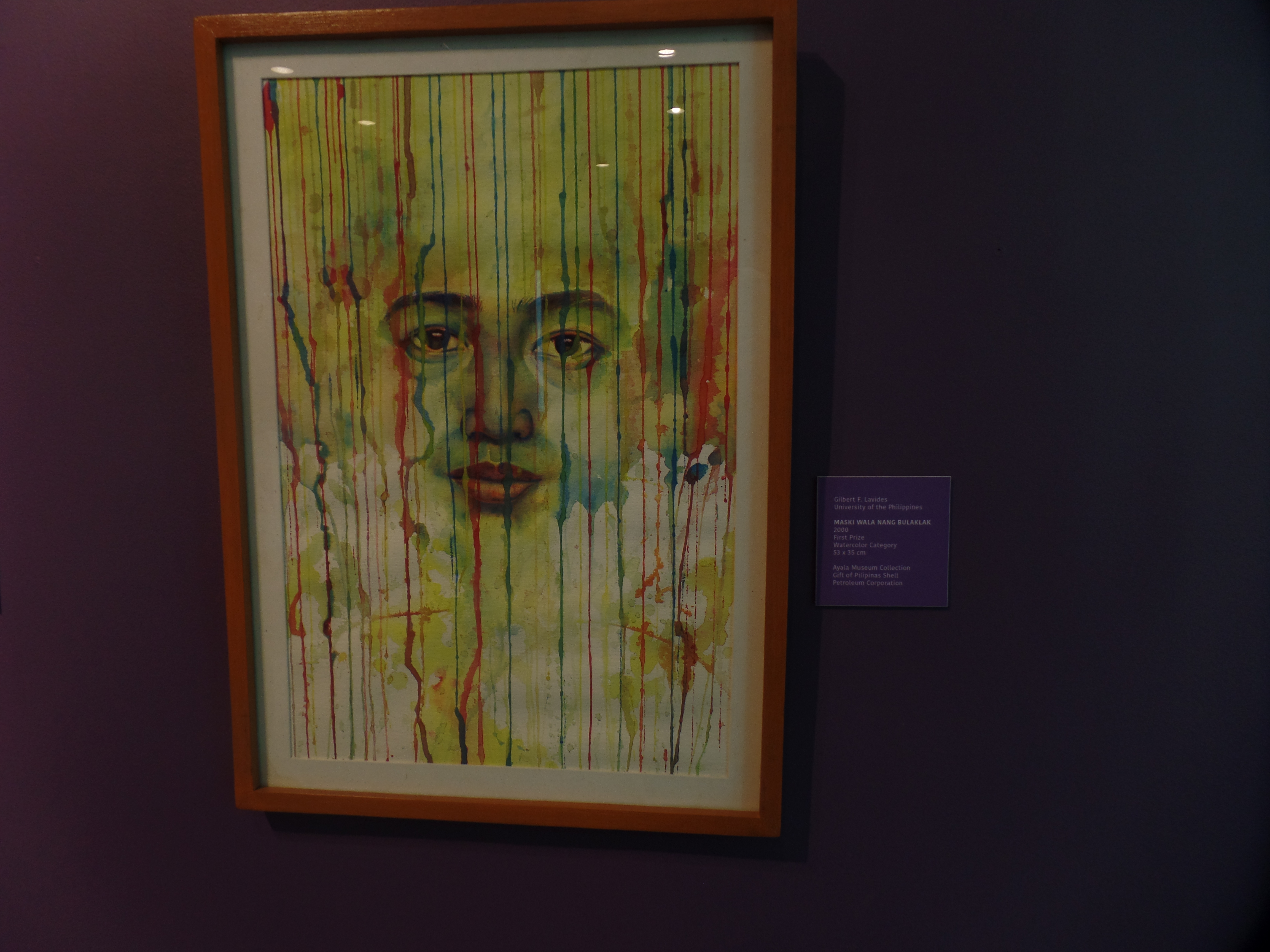
We met K, at Cash and Carry Mall (shown above), then went to Greenbelt, also known as Makati Glorietta Mall. Here, our first stop was Ayala Museum, where an exhibit of abstract art by young people from around the Philippines is on view.
Here is an example:
Vision from the eyes of the future.Avant garde art abounds at Glorietta.There are five Green Belts in Makati Glorietta. This is a scene from # 5.
We were all drawn to a loud presentation, which turned out to be an interpretive dance roll-up to the opening of a photography exhibition, also by young Manilenos, curated by Maria Ylona.
Interpretive Dancers leading up to a photography exhibit’s opening
This opening was a class act, with a dignified set of coccktails, softails and delectable hors my d’oeuvres. This was own first time eating caviar-not bad at all. Here is an example of the photographs which won awards from Ms. Ylona.
Team work, Filipino-styleCats earn their keep, at Makati’s malls. One does not see rats, anywhere.Is there any doubt, as to who’s boss?Green Belt #4’s “moat”Three fashionistas
As it was, after this last photograph, we looked upon the crowd that was queued up to head to the suburbs, and took it upon ourselves to sit in the garden’s twilight. An hour of nibbling on Starbucks flatbreads and enjoying the cooling air was a far more reasonable way to wait out the masses than standing on a curb and breathing fumes, though there was some of that, later.
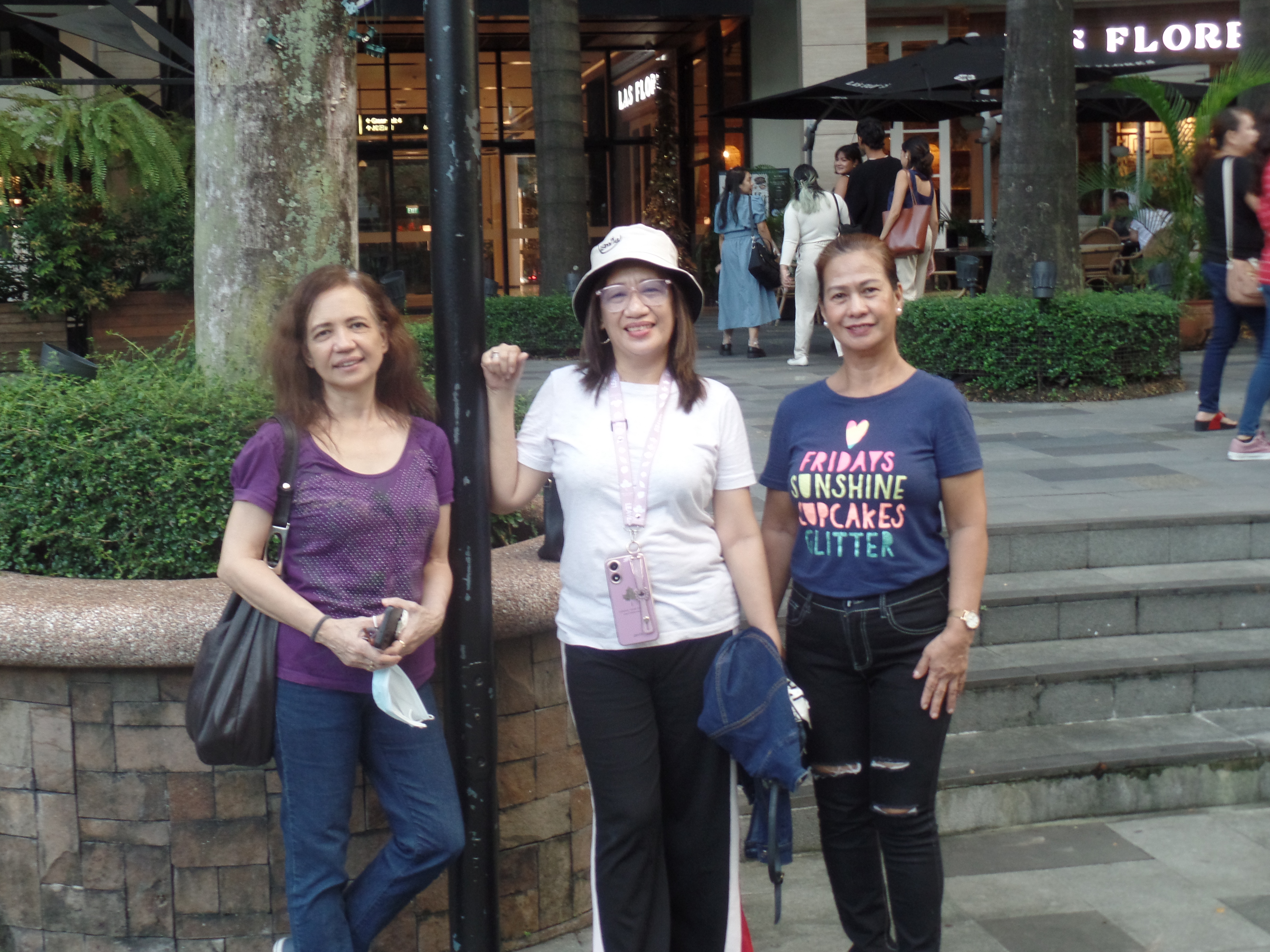
There is ever something interesting, when one’s hosts are three amigas.
October 17, 2023, Daet, Camarines Norte- The officious, almost Parisienne, server saw me stirring the meat on my Kuril (Grill), using chopsticks. We have gotten into that habit, at Korean restaurants in the U.S. That would not stand, here at Golden Baboy. She marched over, took the pair of tongs out of the utensil can and said “Here, sir!”. I got with the program and things went well between the house and me after that.
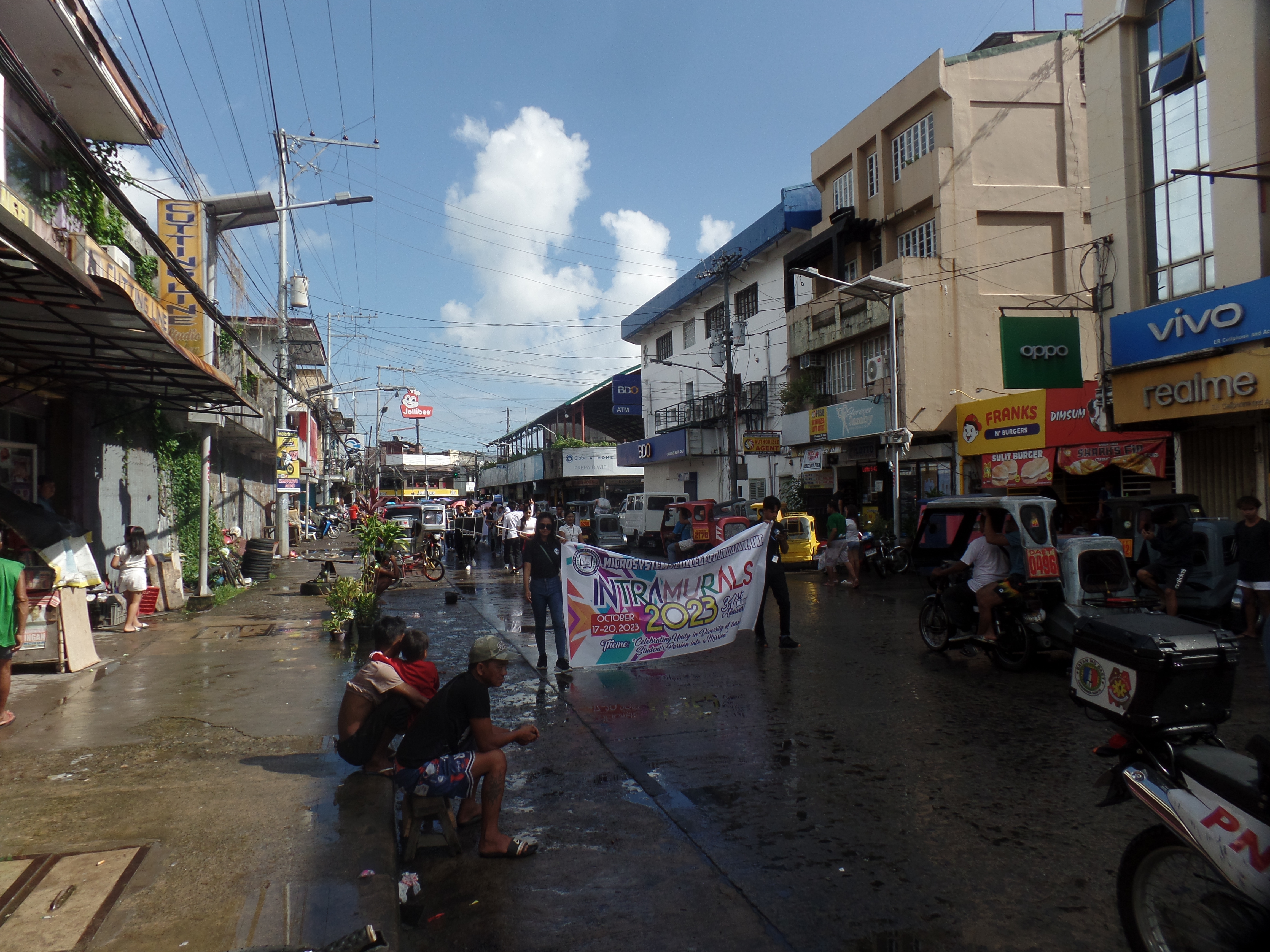
Errands– I had two main tasks to complete, before embarking on my own march to the sea. Z’s Laundry was amenable to taking care of my small load, though it was under their customary minimum. Filipinos aren’t always fastidious. The next was to purchase a hat, as my sun hat is sitting-where else, in the back of Sportage, in San Diego. I also needed a pair of sunglasses, the last of which were left behind, God knows where. So, a stop at 101 Department Store was next on the list. I left my little tote bag with the “personal property guard” and went upstairs to find a nice little golf hat and a pair of wrap-around sunglasses. I was ready for the afternoon. Oh, and while I was at 101, there was a small high school parade, celebrating athletic excellence. An older man told me not to take any photos, but the kids shouted him down.
Daet’s teens on parade.
Snafu-Every ATM, it seems has its idiosyncrasies. In the 7-11 Store, near the Provincial Capitol, the cash dispenser is recessed, so thieves can’t reach over and grab the cash from an unsuspecting patron. There are fewer thieves around, since the Duterte days of Law and Order, but the system stays in place. I am used to the top dispensing ATMs, and so was initially under the impression that the machine just failed to give me the cash, and reported this to the clerk-who just smiled, came over to the ATM and got me to do a smaller transaction, showing me the recessed dispenser. She then said I should go to the BDO Bank and resolve the other matter. I walked over to the branch office of BDO and after about thirty minutes of electronic back-and-forth with my bank’s 24-hour service, it was established that BDO was not interested in taking “ghost funds” from my account. My bank agreed to drop the withdrawal and cancel an International Transaction fee. I mention this, in case anyone else ever finds self bamboozled by a perfectly honest attempt to counteract thievery.
Provincial Capitol- The buildings and grounds of the Capitol of Camarines Norte are majestic, in an understated way. The Spanish Colonial architecture is none the worse for the wear, after the Spanish-American War, Japanese occupation and countless typhoons. This place is definitely a point of pride for “Cam Norte” residents, especially for Daetenos.
As you can guess, Filipinos adore colour- the brighter and more varied, the better. I like seeing these “Love Community” signs, in each place I have visited in the Bicol region.The stately Capitol of Camarines Norte Province. The slogan Alay sa Bayan refers to the recruitment of new civil servants. It means “Our hope for the country”, in Tagalog.Alay sa Diyos is Tagalog for “Our hope of glory”.Dr. Jose A. Rizal is considered by many as the Father of the Philippine Nation. He stressed to his fellow citizens that they were equal to, if not superior to, their Spanish overlords. He was executed by the Spanish rulers in 1896, for “the crime of rebellion”. Along with Lapulapu, who led the first resistance to Spanish rule, in the 1520s, Dr. Rizal is an unofficial national hero.
Walk to the Sea– After taking a rest,and because of the big lunch at Golden Baboy, it was time to get my steps in. Bagasbas Beach is Daet’s main tourist draw, though there were only a few locals and a honeymooning couple here, this afternoon. The four-kilometer walk had several appeals to my eye’s palate. Not the least of these was the serenity of the tropical rice paddies and river plains, where Philippine cattle, a genuine native breed, graze and socialize with the tagaks, or little herons.
Philippine cow grazing, with tagaks as company.These two species are the best of friends.
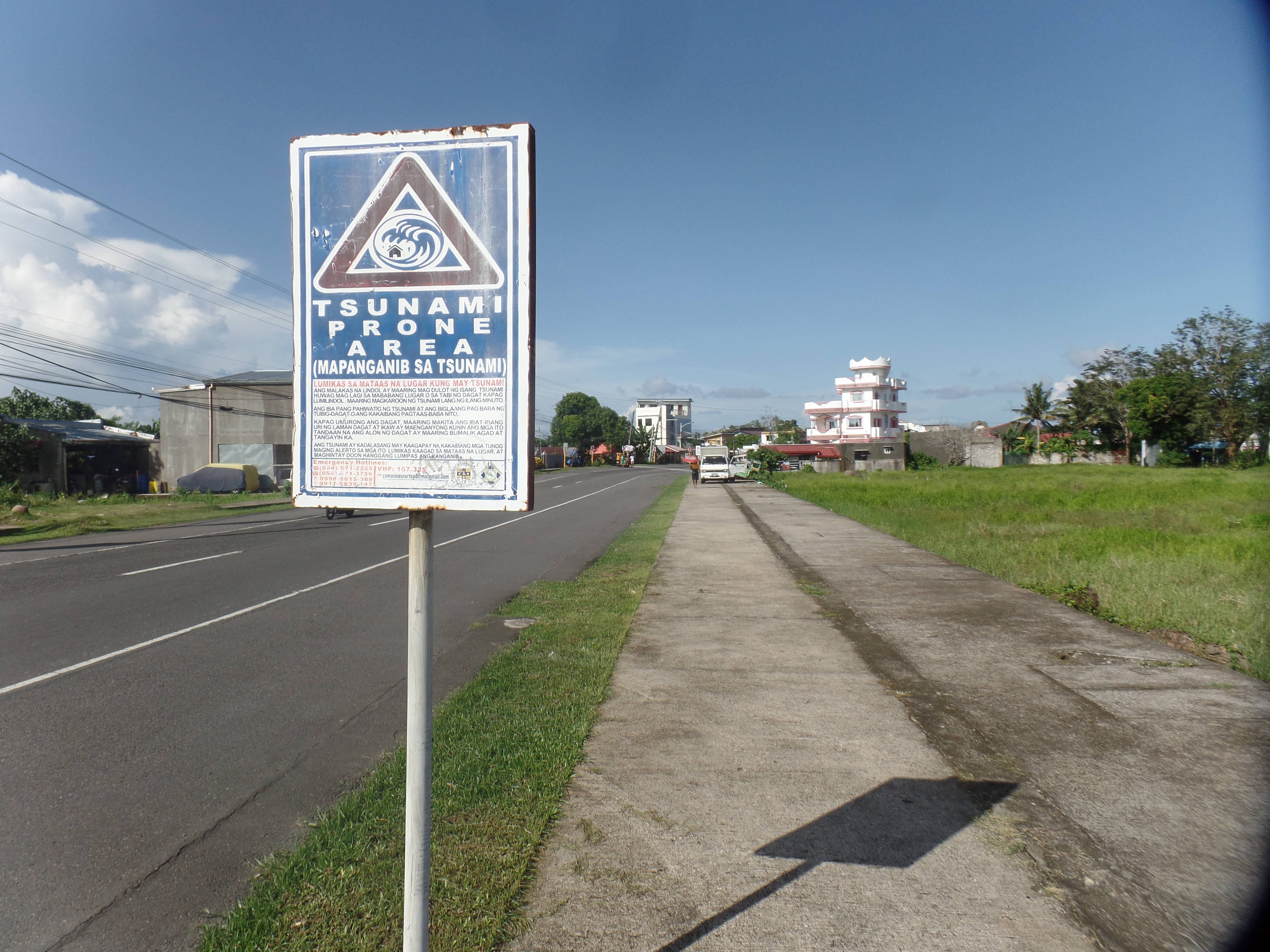
Our Lady of Penafrancia College is the backdrop for a warning sign.
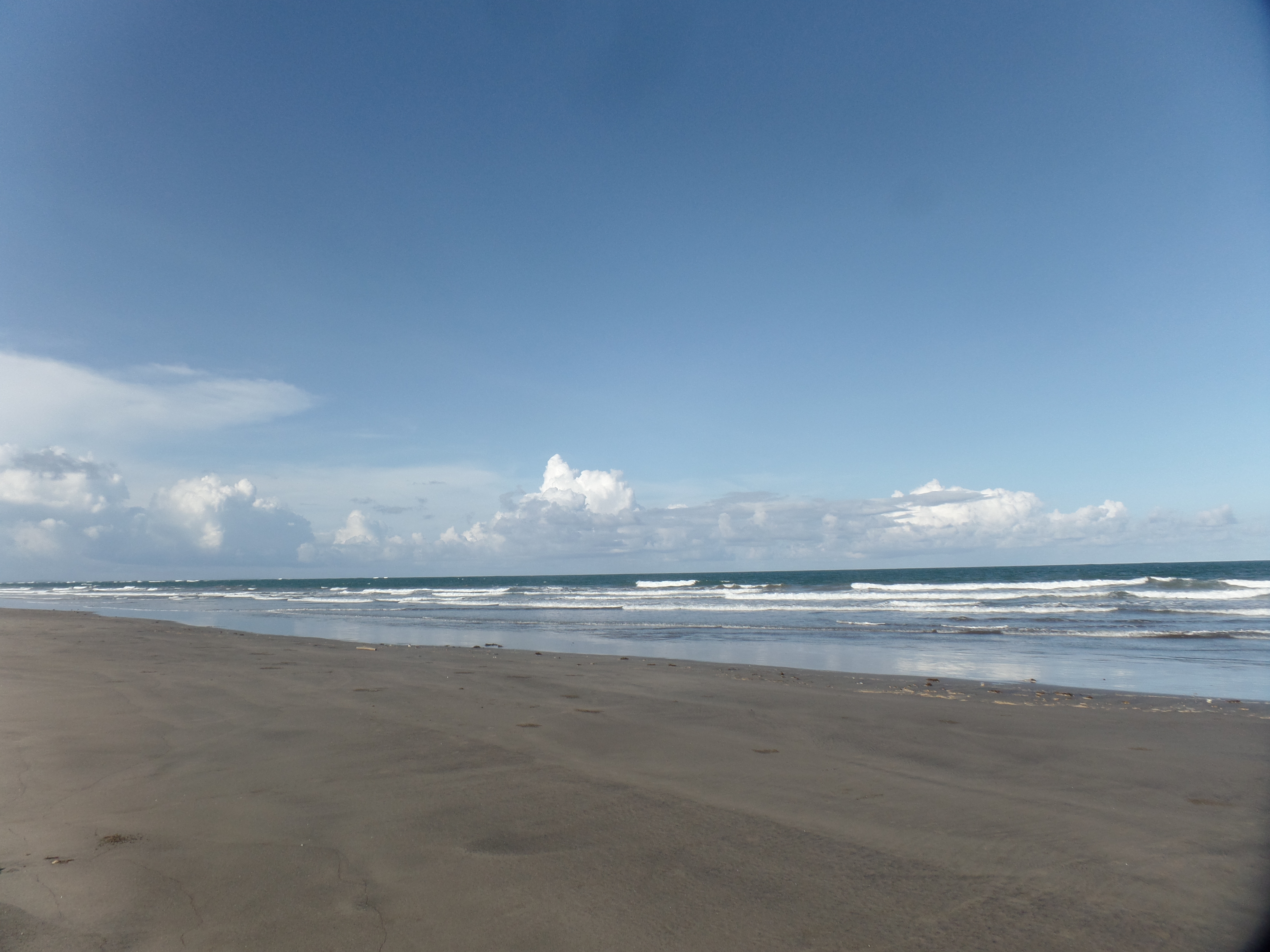
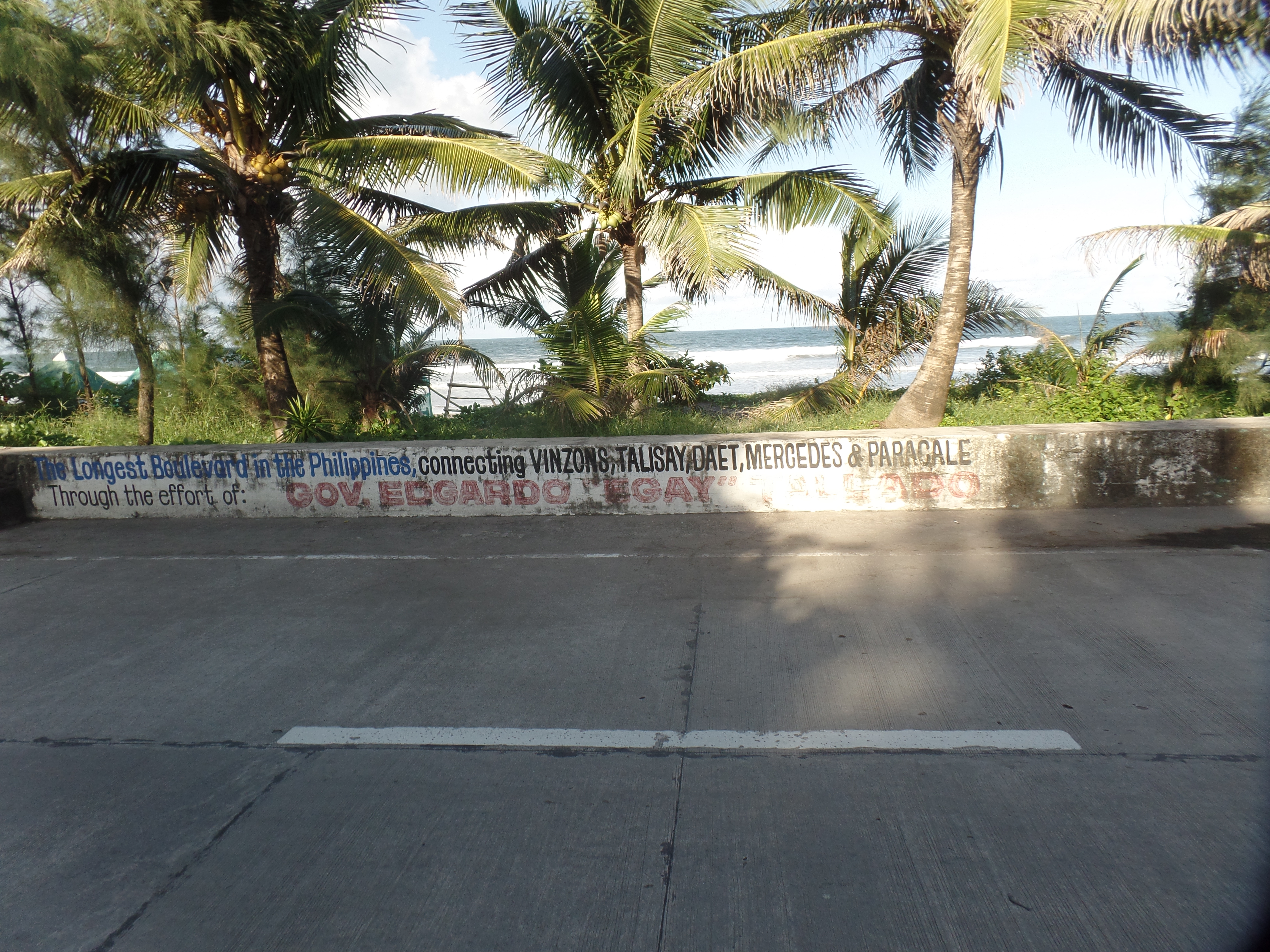
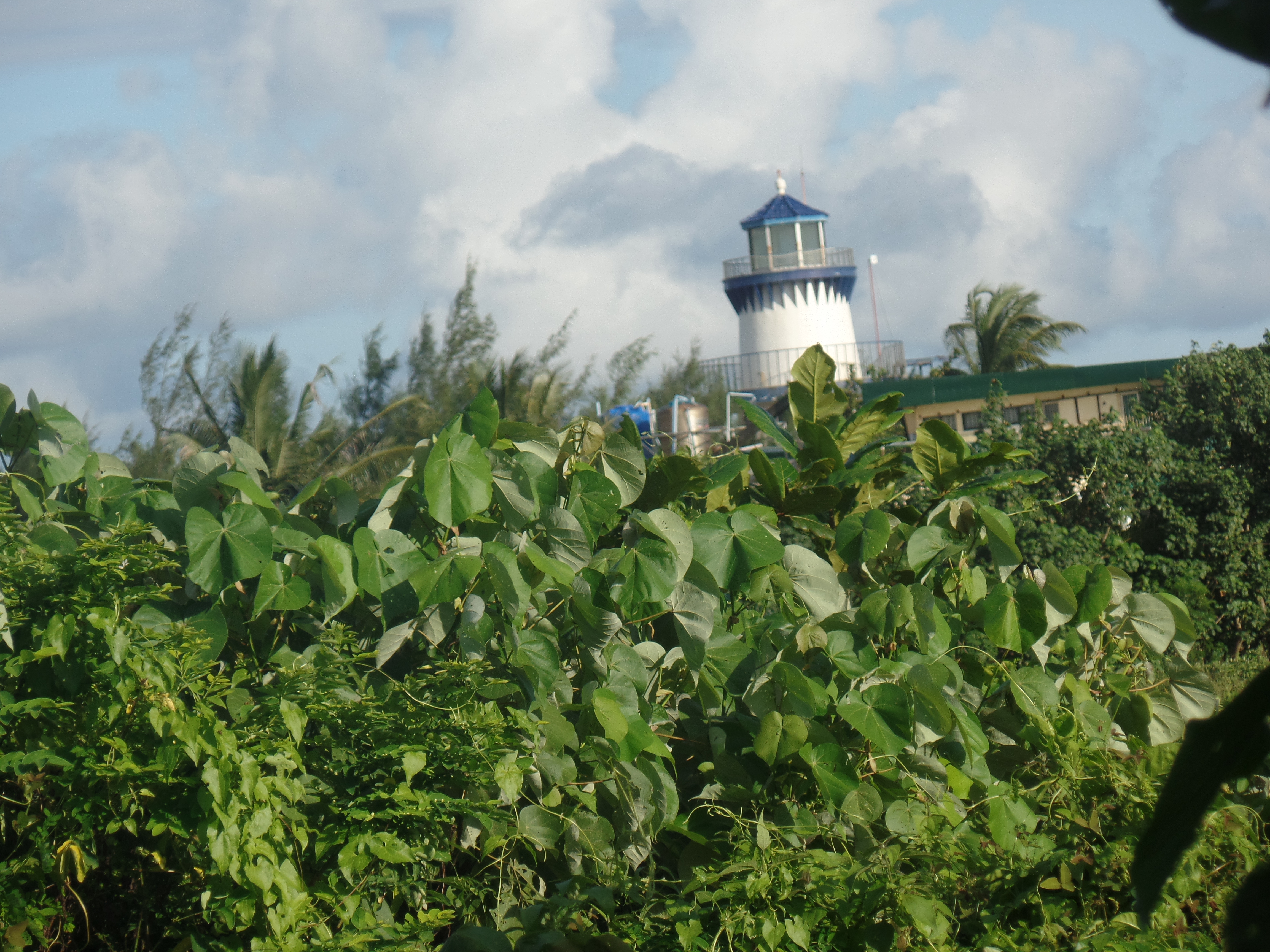
This area is in the right spot for feeling the fury of a seismic event.The tide was coming in,as I stood, pants rolled up and feet bare, in the warm western Pacific. (Above and below)Meet Si Ginoong Niyok (Mr. Coconut). Cory Aquino Boulevard connects five towns along the coast of Camarines Norte.Bagasbas Lighthouse, now a private resort. This is as close as I could get the structure, without having to book a night’s lodging.
With that, my work there was through, and I walked back to town, getting a latte at Big Brew, halfway back, and ignoring a mentally-ill man, who wanted me to buy a snack at the place where he was sitting, or feed him-couldn’t tell which. I did stop in town, for a small plate of tuna noodles, at Mamita’s.
It was a day of modest achievements and well-appreciated lessons.





























 A Sagittarian Seeker