A SoCal Break, Day 1, Part 1: Recreation Park

6

June 12, 2017, San Onofre, CA-

I am camping at this underutilized state beach, just south of a former nuclear power plant.  The plant’s presence may explain the underutilized part of the equation, but no matter.  Every time I pitch my tent, arrange comfortable bedding and have a pleasant visit, my confidence grows- something that may be hard for many to understand- but it’s been a work in progress, for several years.

My main objective, today, was a hike in the Palos Verdes Peninsula, between Long Beach and Redondo Beach, in LA County’s South Bay area.   First, though, was a visit to Long Beach, itself. I set out from Indio, where I’d spent the previous night, and where I stretched my legs, this morning, with a 2-mile walk.  It’s fairly mild, across Southern California, though that’s not expected to last.  The I-10 was fairly busy, as it always is, though once past the turn-offs to Riverside and San Diego, traffic thinned significantly.  I enjoyed a stop at one of my favourite eateries:  Gramma’s Country Kitchen, in Banning.   After lunch, and taking CA routes 57 and 22, I was in Long Beach, in less than ninety minutes.

I found myself in a pleasant, but definitely untouristed, part of town- the south side.  On Anaheim Street, there is the large, and multiple use, Recreation Park.  Several young ladies were engaged in a variety of artistic activities, on and around the band shell.  I don’t take photos of people, without their permission, as a rule, so any people seen in the next few photos are strictly incidental.  My main focus in Recreation Park was Yokkaichi Friendship Garden, a small, but heartfelt project, in concert with Yokkaichi, Japan- one of Long Beach’s sister cities.

There are three essentials of a Japanese garden that are evident here:  The open gate, arranged flowers (usually in a semi-circle) and carefully-placed rocks.  A fourth essential element, flowing water, is not present.

SAMSUNG CAMERA PICTURES

SAMSUNG CAMERA PICTURES

SAMSUNG CAMERA PICTURES I felt a fair amount of serenity, with most of the  “recreationists” very busy with sporting activities and practicing dance routines, elsewhere in the great city park.  Below, see the back of the band shell building.  I did not photograph the dance practice taking place in the front.

SAMSUNG CAMERA PICTURES

Next up, Palos Verdes’ Point Vicente.


Single- Track Through Paradise

11

May 28, 2017, Cave Creek-

I have now gone from one point of angels to another, meaning from Superior to Cave Creek, via Globe and the Apache Trail.  This road (AZ Highway 88) is mostly single track, offering enough room for vehicles heading one way to pass, whilst those going in the opposite direction wait their turn.  It’s good for people to do this, at least a few times in their lives.  I last drove the AT, in 1983, with Penny in tow.  She was petrified and made me promise never to bring her there again. Today, she and my other spirit-minders made sure I paid close attention.  With scenes like the one below, it might not have been so easy, had my main focus not been on the well-being of everyone on the road, including yours truly.  Fortunately, there were also plenty of turn-outs.

SAMSUNG CAMERA PICTURES

There are two lakes along the Apache trail, between Roosevelt Dam and Goldfield. Here is a view of Apache Lake.  When I taught at Villa-Oasis School, in the late 1970’s, this was one of the places groups of kids were sent for camping weekends.

SAMSUNG CAMERA PICTURES

Imagine how the Salt River must have flowed, before these reclamation projects took root.

At Fish Creek Hill, I drove up a 10% grade, made doable by the dryness of the road, and the cautious courtesy of all comers.  One is rewarded at the top, by  amazing views of the Superstition Wilderness.

SAMSUNG CAMERA PICTURES

SAMSUNG CAMERA PICTURES

SAMSUNG CAMERA PICTURES

SAMSUNG CAMERA PICTURES

SAMSUNG CAMERA PICTURES

Fish Creek Canyon looks like a fun place to hike and camp- in November.

I drove on, and found the pavement had resumed, about 1 1/2 miles west of the overlook.  So did one young man behind me, who chose to pass, on a double yellow line, in a 15-MPH curve zone.  The look on the face of the driver who had to stop and wait for him was classic.  I would not want to be on approaching driver’s bad side. Itchy Foot was the only one who broke courtesy, on the 44-mile drive.

I stopped at Tortilla Flat, a small tourist haven, close to Lost Dutchman State Park, in the heart of the Superstition Wilderness.  Siphon  Draw and Boulder Canyon are two popular hiking trails, accessible from Tortilla Flat.  Again, late Fall and early Spring are the best times for this area.  Tortilla Flat does offer a wide variety of cool treats, and I thoroughly enjoyed a sarsaparilla float.

SAMSUNG CAMERA PICTURES

Back in  1900’s Arizona,, sidewalks, and even some roads, were made of planks.

SAMSUNG CAMERA PICTURES

Having had a nice relaxing break, I headed on towards Apache Junction, then up through the Valley, to pay my Memorial Day respects to Penny.

There is one more attraction on the Apache Trail, before one gets to Goldfield (another, slightly more upgraded “ghost town”),  This is Canyon Lake.

SAMSUNG CAMERA PICTURES

Each of the lakes and vista points along the Apache Trail is worth a day or two, in comfortable weather.  People, nonetheless, go there, even in the heat of summer, at least where there is water.  Looking back, I spent most of my summer days in and around water, as a child and young adult, so the appeal is a no-brainer.  It beats being inside.

I stopped at the Cemetery, anchored Penny’s flag, and one other, and thought of how fortunate I’ve been, with her presence, since 1980, and since 2011.

As I pulled up to Local Jonny’s, a lovely young woman, who seemed to be an advanced medical or law student, given her heavy briefcase, was securing her dog’s leash to the gatepost.  There weren’t many inside, so  Alicia was  glad I stopped in, and in ten minutes, I had the last of her pitcher of iced tea and a cilantro chicken salad was placed in front of me.  Jonny’s salads are good for two meals, so I have Monday’s lunch in my cooler, as the drive back to Prescott begins.

Having angels surrounding me, in all directions, including above, is a comforting state of affairs.  Oh, and an e-mail from the chief of department leaves the door to my staying in Prescott ajar, at least.


Tonto National Monument and Roosevelt Lake

6

May 28, 2017, Roosevelt, AZ-  The day started with a wait to check out of  Copper Mountain Motel, Superior.  It was uncertain whether Ms. Amy would be up and at ’em, as stuff was going around, and had stopped at her doorstep, yesterday.  Well, she was over it, by 8:15.  I checked out of my superb room, with its reminder of what we are, as a nation.

SAMSUNG CAMERA PICTURES


Globe, and breakfast, were next.  I spent about an hour with John and the dogs, watching as a hapless, and hopeless, individual ran over John’s flush hose, while trying to park at the RV clean-out station.  Some folks are worse off than I am, it seems.  We found the Copper Hen to be closed, so it was off to Judy’s Cook House, on the west end of town.  A few billowing clouds showed that the Pinal Fire was still a threat to the area, but was yet far from structures.  I heard nothing from the Red Cross, all day, so the fire is apparently being kept away, on this end.  Judy’s gave us a satisfying breakfast, and after solving a few of the world’s, or at least Globe’s, problems, John had to go straight back to customer service, at the Batting Cage, and I was on to Tonto National Monument, and Roosevelt Lake.

SAMSUNG CAMERA PICTURES

The Batting Cage and RV Park are across the tracks from Globe Station.  Trains aren’t very frequent, these days.

Roosevelt Lake was named for Teddy, who of course had much to do with the reclamation of the West, as well as establishing places like Tonto National Monument.  It is visible from several points along the trail to the Lower Tonto Ruins, as well as offering four different recreation points.  The northernmost of these has a Visitor’s Center, which is closed for the holiday weekend.  The second photo below shows the marina near the Visitor’s Center.

SAMSUNG CAMERA PICTURES

SAMSUNG CAMERA PICTURES

Now, more about Tonto National Monument.  Here is a glimpse of the Upper Ruins, which are closed until November, due to the heat factor.  It takes 3-4 hours, roundtrip, for the guided tour.SAMSUNG CAMERA PICTURES

The Lower Ruins trail is open year round, so I enjoyed that area, as well as the indoor exhibits.  As I said earlier, views of Roosevelt Lake are plentiful from the trail.  The Huhugam, and the Salado people who replaced them, made good use of the then-free flowing Salt River, whose waters comprise Roosevelt, Apache and Canyon Lakes.SAMSUNG CAMERA PICTURES

Here are some views of Lower Tonto Ruins.  Much of the wooden beams and braces are the original mesquite and ash used by the Salado people, in their construction.

SAMSUNG CAMERA PICTURES

Caliche, a calcium-based clay, is sticky when wet and hard as concrete, once dry.  It was the prime building material for the Salado people.

SAMSUNG CAMERA PICTURES

The docent told us that these beams are original Salado work, dating from 1150, or thereabouts!

SAMSUNG CAMERA PICTURES

Nooks and crannies abound, in the Lower Ruins.

SAMSUNG CAMERA PICTURES

SAMSUNG CAMERA PICTURES

There certainly seems more room in this complex, than in the Huhugam dwellings at Tuzigoot and Pueblo Grande.

SAMSUNG CAMERA PICTURES

Below, is a kitchen cave.  Note that mano and metate are both caliche.

SAMSUNG CAMERA PICTURES

Amaranth was one of the Salado people’s staple foods.  It is the bright red plant shown below, and was also used in dyes.

SAMSUNG CAMERA PICTURES

Having had a brief, but brisk, hike up to the ruins and back, I headed towards Roosevelt Bridge and Dam, two miles further north. The Dam was dedicated by its namesake, Theodore Roosevelt, in March, 1911.

SAMSUNG CAMERA PICTURES

SAMSUNG CAMERA PICTURES

SAMSUNG CAMERA PICTURES

The Bridge was completed, and opened, in October, 1990, after eighty years of vehicles being driven atop the dam.  Penny and I did so in 1983, and after we continued on to Apache Junction, via AZ Route 88, she made me promise never to do that again, with her in the car.  You will learn why, in the next post.


Tapeats Creek

2

April 29, 2017, Prescott-

I’ve not been to Tapeats Creek.

I hear it is a raging torrent, right now.

Reachable from the North Rim,

of the Grand Canyon

of the Colorado River,

via a trail best used

by the hardiest

of the hardy,

Tapeats tempts

and threatens.

So, a hardy family

set out,

on Easter Weekend,

to take up the challenge.

So, a woman with

consummate wilderness skills

led her grandson,

to the water’s edge.

So, they lost their footing,

and were taken,

by Tapeats Creek.

The young man

was found, yesterday.

Tapeats had claimed

another victim.

The woman’s fate

remains yet uncertain.

The waters do not invite.

The waters only accept us,

on their own terms.

Sixty-Six for Sixty Six, Part XXIII: Great Lakes and Muddy Rivers

4

April 12, 2017, Prescott-  Every major transportation route, from airlines to roads, seems to lead to Chicago, or at least within its magnetic sphere.  For me, there is an added draw:  The Baha’i House of Worship for North America, in Wilmette, north of the city.  The House of Worship’s location, overlooking Lake Michigan, highlights the fascination I’ve long had, with the Great Lakes.  I would frequently visit “the Temple”, regardless, but the lake is a draw, in itself.  A few dips in its waters, as well as at Indiana Dunes and Fruitport, MI, have been a tonic, on a hot day. I have also been alongside Lake Erie, in Toledo, Cleveland and Erie, as well as Lake Superior, at Thunder Bay, Ontario.

The lakes are only part of what I have enjoyed about the east central region, between the Great Plains and the Atlantic Coast.  Chicago, as problematic as its internecine battles have been, remains a majestic city.  So, too, does St. Louis, especially with the Gateway Arch, and nearby Cahokia Mounds, highlighting the importance of the confluence of two great rivers.  Speaking of which, Cairo, IL has a special place in my heart, marking the union of the Ohio and the Mississippi.  I have prayed at Trail of Tears State Park, in Missouri and at Scioto Hills, Ohio, for the recognition that mankind is one, and that the Aboriginal nations feel vindicated of their long ago suffering.  I have felt intensely welcomed in Des Moines , in Cape Girardeau, New Madrid, and Rolla (MO), Quincy (IL), Francesville (IN) and Fruitport (MI).  Two of the best meals I’ve ever had, were in Dixon and in Vandalia (IL).

The Indigenous People of the riparian region may have irritated Abraham Lincoln, whose heritage I have honoured, in New Salem and Springfield (IL) and in Hodgenville, KY.  There would, however, not be as rich an overall heritage, for the Midwest, were it not for Cahokia, Chillicothe (OH), Pipestone (MN)  and the remaining nations that grace nearly every state in the East Central swath.  Too bad  that Honest Abe didn’t get to know the Native peoples better.  It may have made a great difference in the fates of their descendants.

I have plenty of family in this vast region- in Avilla and Blue Springs, MO, plus  Jeffersonville, IN.  Friends abound here, as well, in northern Illinois, the Twin Cities, Wisconsin, several parts of Missouri, eastern Kentucky and Tennessee, across Indiana, Little Rock, New Orleans, and eastern Alabama.

There remain many parts of the mid-section that pique my interest, from northern Minnesota, Wisconsin and Michigan’s Upper Peninsula, to bubbling, revitalizing cities, like Kansas City, Cincinnati, Milwaukee and Detroit.

I will be back across, on the way to/from a family reunion, in mid-summer.  It’ll be a fine thing to feel the water, and the warmth of Midwest welcomes.

Sixty-Six for Sixty Six, No. XXII: Wonders of the Middle Realm

6

April 9, 2017, Prescott- Yesterday, I wrote of the western third of the contiguous United States, which is where I have spent most of my time, since 1992.  Being from the East Coast, and preferring surface travel over flying,  especially when the weather is good, I have developed an affinity for the regions which many call “flyover country”.  The Great Plains and South Central regions may not have the jaw-dropping grandeur of the Mountain West or Alaska, but there is plenty worthy of spending one’s time.

The Rockies, of course, are the heart of the Mountain West.  In many visits to the heights of Colorado, I have felt most at home in Longmont, Loveland and Denver, where I have family.  Manitou Springs, Garden of the Gods and Seven Falls have helped make Colorado Springs another “feel at home” stopover.  One of these years, I will find my way to the summit of Pikes Peak.  Boulder, also, has welcomed me, several times, with wonders ranging from Pearl Street Mall, and Boulder Books, to Eldorado Canyon, which I hiked in the rain, whilst carrying an umbrella.  The Tetons and Yellowstone invite me back, as well, with visions of geysers and Grizzlies.

As the Rockies recede into the Great Plains, I find Spirit Tower (forget the name, “Devil”), Medicine Wheel, the Badlands, Black Elk Peak (formerly Harney Peak), Scott’s Bluff and the determination of the Indigenous People of the prairie as riveting as any great mountain or canyon.  Little towns like Deadwood, Belvedere and Custer(overlook the name) (SD), Burlington, Granada and Walsenburg (CO), Wellington,Dodge City and Hays (KS) have been as welcoming as any place in the West.  There is, to my mind, a goodly amount of sophistication and culture to be found in Omaha, Lincoln and Wichita, as well.

Friends in Amarillo and Enid (OK) have helped make those cities almost necessary pit stops, on any eastward trek that takes a southern route.  Texas, like California, is a world unto itself.  I was captivated by the warmth I felt, across the state, from the great cities of El Paso, San Antonio, Austin, Fort Worth, Dallas and Houston to small communities- Grand Saline, South Padre Island, Laredo, Marfa, Sanderson, Quanah and Temple.  There wasn’t much happening in Luckenbach, when I happened through there, but the locals were glad I came, anyway.  Revelations abound, across the Lone Star State, from the view of the Rio Grande’s confluence with the Gulf of Mexico, to Pedernales Falls, northwest of San Antonio, or the wild canyons of the Llano Estacado and the Trans-Pecos region.  My favourite museum section remains the Music Hall, at Bob Bullock Museum of Texas History, near the Texas State Capitol (itself an extraordinary edifice).  Then, there are the five missions in San Antonio- a very full day of discovery!

Oklahoma has no end of variety, but I will content myself with sending kudos to Lake Texoma and Lake of the Cherokees, Black Mesa(the state’s highest point, at its juncture with New Mexico and Colorado), Tonkawa and its monument to Chief Joseph, of the Nez Perce, and the heartfelt, humbling memorial to the victims of Oklahoma City’s tragic bombing, in 1995.  Oklahoma City remains the only place where I have been mistaken for a county employee- being invited to an employee barbecue, as I walked by, on the way to the Memorial.

I will continue to skip the temptation to fly over, as long as the weather is not too harsh.


Sixty-Six for Sixty Six, Part XXI: Near and Far

5

April 8, 2017, Prescott-

I went to the Farmers’ Market, this morning, and attended a Red Cross Volunteer Appreciation Luncheon.  Then, I went back to Home Base and cleared the first of nineteen sections of a weed-filled back yard.  I am old school, when it comes to such things.  Herbicide and gasoline-operated weed whackers don’t appeal to me.  Pulling weeds up by the roots is tedious, but it has no side effects.  I also won’t wreck the beautiful tulips that are gracing the yard.

I chose to stay in, this evening, just for the sake of it.  In the process, I find myself wanting to note the things that are dear to my heart about each region of the United States- at least the contiguous area, with which I am most familiar.

So, I love the Southwest for its lush deserts, its canyons and their limitless surprises, mountains that rise like sky islands, the wildlife that seems so furtive and yet so likely to pop out of hiding, at a moment’s notice.  Its superlatives are the Grand Canyon, Nevada’s Valley of Fire and Cathedral Gorge, Mesa Verde, Chaco Canyon and Kartchner Caverns.  Its most sublime surprises are Canyon de Chelly, Slide Rock,  Thumb Butte, Picacho Peak, Quitobaquito, White Sands and Great Sand Dunes.  The revelations are the best of all:  Superior, AZ; Mancos, CO; Pioche, NV; Truth or Consequences and Chama, NM; Loa, UT.   Prescott will always feel like home, and so will Tucson, Flagstaff, Hopi, Dinetah, Reno-Carson City, the Front Range and Superior.
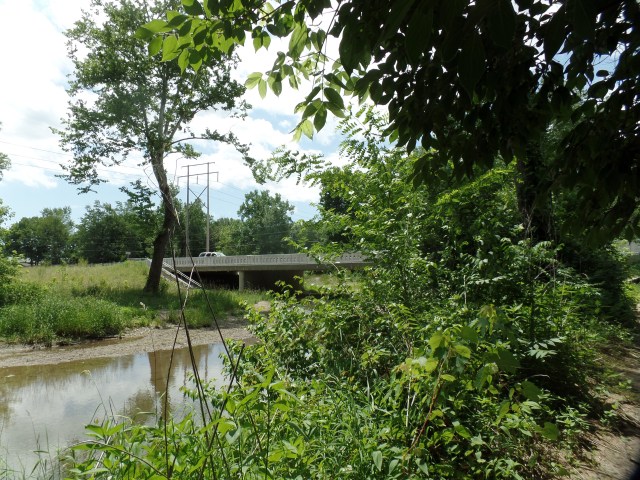
California is in several classes by itself.  The sunny (until this year) south; the interchangeable mountains and deserts of the east; the intense vegetation of the north.  It has been a home away from Home Base, for as long as I’ve lived in Arizona.  Its superlatives are Yosemite, Mount Shasta, the Coastal Redwoods, frenetic Los Angeles and exquisite San Francisco.  San Diego and Julian will always be welcoming, family places. Coastal Orange County, Palos Verdes, Santa Barbara, Santa Cruz, Point Reyes and Mount Lassen define inspirational.  There is no such thing as a boring Spanish colonial mission.  Revelatory, to me, are little towns like Banning, Brawley, Ojai, Willits, Lomita, Woodfords and Yreka.

The  Pacific Northwest defines majesty.  Nothing outdoes the Olympic Peninsula, the Oregon Coast, Rogue River Gorge, the North Cascades or the canyons carved by the Snake and Columbia Rivers.  Portland and Seattle exude creativity and cultural diversity.  The islands of Puget Sound and the Straits abound with familial small communities:  Anacortes and Friday Harbor stand out, in my memory.  Wenatchee, Toppenish, Leavenworth, Spokane, The Dalles, Bend, Culver, Ashland, Pullman, Lewiston and Moscow all took me under their wings, and  remain every bit  blessed in my heart.  The most surprising scenes were at Smith Rock, at the bridge outside Culver, at the alkaline lake for which Lakeview is named, on the boulder strewn beaches at Bandon and Kalaloch.

I am rambling, so there will be parts two and three to this elegy.

In Spirit Canyon

6

April 2, 2017, Prescott- The second good part about yesterday, after being treated to a lunch prepared with love and caring, was a hike in the upper reaches of Queen Creek Canyon.  The trail I took lies about a mile or so east of Oak Flat.  A sign, at the bridge over Queen Creek, refers to Devil’s Canyon.  I would rather use the name Spirit Canyon, in the same vein as those, who love Wyoming’s iconic towering butte, use the name Spirit Tower.

So, there I was, again almost totally alone, with the gathering wind and dark, but high clouds, and one Arizona gray squirrel.  The canyon is as magnificent here, as it is closer to town.  The trail here leads up to the feet of the Pinal Mountains, which include Picket Post Mountain, on their western edge.

As always, one can imagine the rhyolite spires as fortresses and sentinels.

SAMSUNG CAMERA PICTURES

SAMSUNG CAMERA PICTURESSAMSUNG CAMERA PICTURES

This scrunchy-faced sentinel was “alert”.

SAMSUNG CAMERA PICTURES

SAMSUNG CAMERA PICTURES

SAMSUNG CAMERA PICTURES

This rock almost reminded me of ribbon candy.

SAMSUNG CAMERA PICTURES

Wild flowers, while still sparse, are popping up in bunches, here and there.

SAMSUNG CAMERA PICTURES

SAMSUNG CAMERA PICTURES

Atop the canyon, alligator junipers take over from cacti, oaks and mesquite.

SAMSUNG CAMERA PICTURES

The Pinal Mountains lie ahead, across a trail-less expanse of about two miles.

SAMSUNG CAMERA PICTURES

As if to say “Heads up, there are fiery days ahead”, a small patch of Mexican Firecracker greeted me, as I got close to my car, at the end of the hike.

SAMSUNG CAMERA PICTURES

Whether the days ahead are tranquil or turbulent, I know that I have plenty of friends, both human and spirit, in the vast expanse, of which Arizona is a central part.

Sixty-Six for Sixty Six, Part XIX: Two Kinds of Heaven

5

March 14, 2017, Superior-  I was invigorated, despite it being an afternoon during the Fast, once the High Trail came into view.  This fairly easy trail first led down into Queen Creek Canyon, and past an old, abandoned Pump House.

SAMSUNG CAMERA PICTURES

SAMSUNG CAMERA PICTURES

The energetic and happy family ahead of me were already planning to bounce along the bridge that crossed Queen Creek and take on the ridge, which gives High Trail its name.  I was more than glad to follow suit.  As they bounced up and down, in unison, I lingered behind, to take in the fragrance of some Texas Scarlet, and view upwards, at the rhyolite which Queen Creek seems to have thrust upwards.

SAMSUNG CAMERA PICTURES

SAMSUNG CAMERA PICTURES

Then, it was time to do a bit of jumping of my own.

SAMSUNG CAMERA PICTURES

Queen Creek was still, on this gorgeous afternoon.

SAMSUNG CAMERA PICTURES

The views eastward, however, were an extra delight- the rugged edges of a particular heaven.

SAMSUNG CAMERA PICTURES

SAMSUNG CAMERA PICTURES

SAMSUNG CAMERA PICTURES

I was able to get one more, long-distance view of Picket Post House, before heading back down into the canyon.

SAMSUNG CAMERA PICTURES

Obsidian accompanies rhyolite, as one heads towards the Australian exhibit.

SAMSUNG CAMERA PICTURES

After one last look at the rhyolite “castles”, for today, I headed back towards the Arboretum.

SAMSUNG CAMERA PICTURES

There are two greenhouses, on the western edge of the park.  These house plants that are still delicate, primarily from the “cone” of South America and from southern and eastern Africa.

Mammilaria are the main feature of Green House 1.

SAMSUNG CAMERA PICTURES

Euphorbia, and aloe, dominate Green House 2.  The first shows plants from Madagascar, which, like the U.S. has a rugged desert Southwest.

SAMSUNG CAMERA PICTURES

These plants are from the equally rugged southwest of the Arabian Peninsula.

SAMSUNG CAMERA PICTURES

With that, I exited Boyce Thompson Arboretum.  My return,  in the first days of April, will be in no small part due to  a special soul, working in this little bit of heaven.  SAMSUNG CAMERA PICTURES

SAMSUNG CAMERA PICTURES

Nature and friendship are what keep me going, as many in Prescott, and elsewhere, know.

Sixty-Six for Sixty Six, Part XVIII: Queen Creek, as A Moat

0

March 14, 2017, Superior- After an intensive review of the desert plants, with which I have become so well familiar, thanks to both Boyce Thompson Arboretum and its sister institution, Desert Botanical Garden, I headed up along the High Trail, to have a look at Picket Post House’s exterior (the house doesn’t re-open for visits, until either next year or 2019), and  Ayer Lake, a small reservoir that was drawn from Queen Creek, for the purpose of attracting water fowl and aquatic reptiles.

High Trail goes between  Ayer Lake and Picket Post House, then loops around to the west and south, along the eastern base of Picket Post Mountain.  The first twenty minutes of my hike, on this relatively easy trail, found me in a wealth of company- it being Spring Break for Arizona schools.  There were birders galore, at  Ayer Lake, teen girls with selfie sticks, on the rocks above the reservoir and adventurous boys, who followed me in exploring a couple of ledges, overlooking a western spur of Queen Creek Gorge.  The parents of the kids were close by, enjoying the relative comfort of the thatched-roof ramada.

Here are further scenes of this very full visit.   Ayer Lake, rather still on this mild day, has at least one resident turtle, and several Black Phoebes, enjoying the cold water.

SAMSUNG CAMERA PICTURES

I saw a couple Red-tailed hawks circling around, as well.  They are said to nest in the rhyolite boulders, which abound in this park that was built from nature, not imposed on it.

SAMSUNG CAMERA PICTURES

SAMSUNG CAMERA PICTURES

This overlook was most popular with the girls.

SAM_7881.JPG

Of course, it had the best view of the reservoir.

SAMSUNG CAMERA PICTURES

SAMSUNG CAMERA PICTURES

SAMSUNG CAMERA PICTURES

Speckled and striated rhyolite, between lake and mansion, testify to the presence of both copper and iron, in the area.

SAMSUNG CAMERA PICTURES

SAMSUNG CAMERA PICTURES

Picket Post House itself looms just above these boulders, and almost seems protected by the creek and canyon, which loop around its northern and western flanks.

SAMSUNG CAMERA PICTURES

The boys and I saw this hint of the coming spring, from the canyon’s edge.

SAMSUNG CAMERA PICTURES

Here was a sight that caused the boys to turn back from the overlook.

SAMSUNG CAMERA PICTURES

Picket Post House, seen from a southwestern vantage point, shows its retaining wall.

SAMSUNG CAMERA PICTURES

I look forward to seeing the place, in its full magnificence, once it becomes part of the park’s exhibits, a year or two hence.

Next up:  The High Trail’s western course.