The Road to 65, Mile 209: A Triangle of Towns, Part 2- Pullman, WA and ITS University

0

June 25, 2015, Pullman-  It’s hard to not crisscross between Idaho and Washington, when in this part of the Palouse.  Pullman, a scant eight miles from the University of Idaho, at Moscow, has the equally estimable Washington State University.  I parked in a two-hour spot, downtown, and used these steps to visit the University.

325

The school was begun about the time that Washington became  a state, in 1889.  The Palouse was already drawing farmers from the Great Plains, and the small Midwestern colleges were models for the initial Normal School.

With many of the settlers being of Germanic or Scandinavian ancestry, the turreted structures found in universities in northern Europe found emulation here.

326

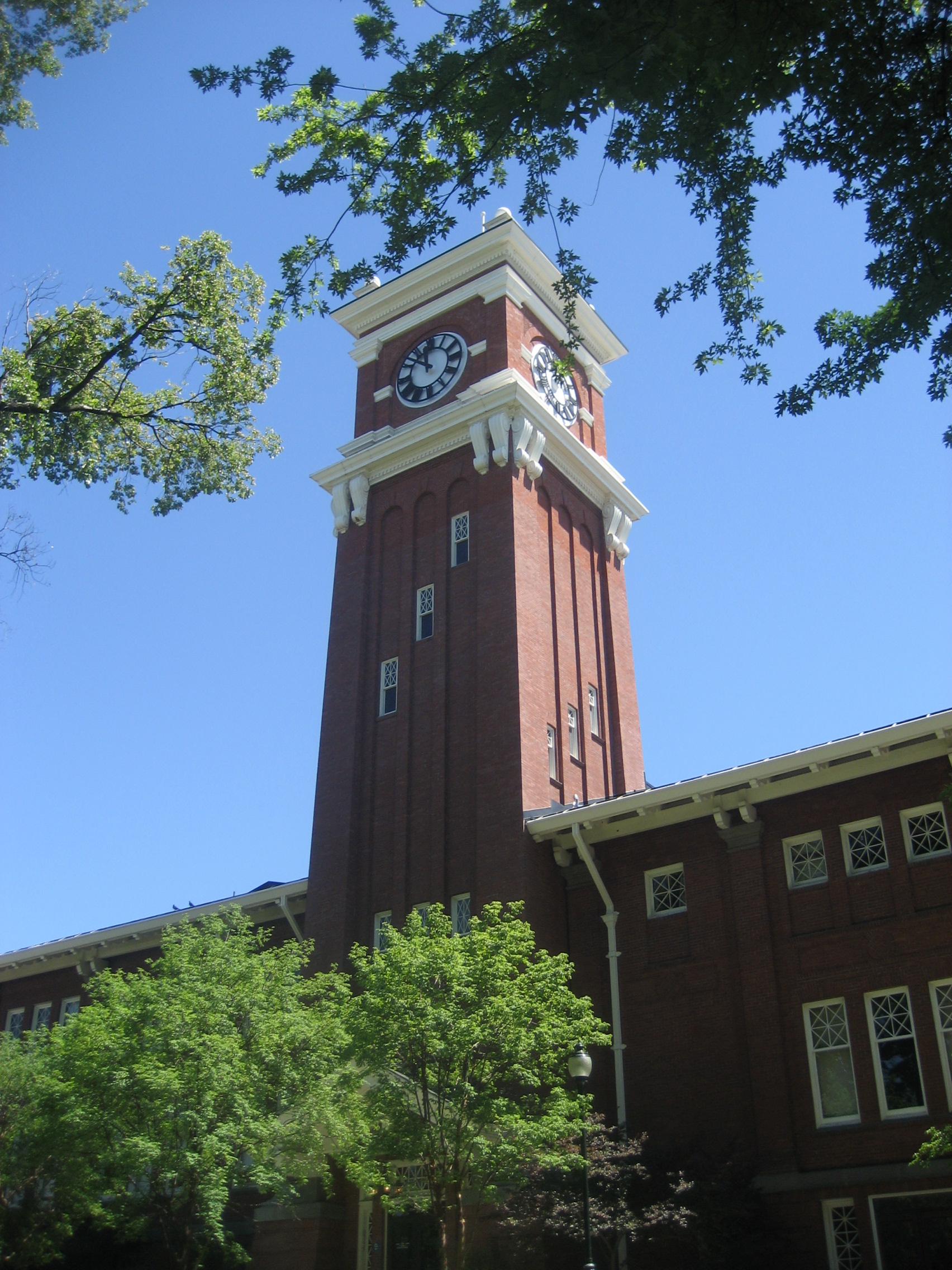
The Clock Tower, a nearly-universal feature of institutions of higher learning, was also one of WSU’s early structures.

329

The university library was quite busy, as summer session was still in full swing.  I noted that was true at UI, and, a year ago, at the University of Heidelberg, Germany.

331

This touching memorial met me, along the South Fork Palouse Riverwalk, as I returned downtown from the hilltop University.

333

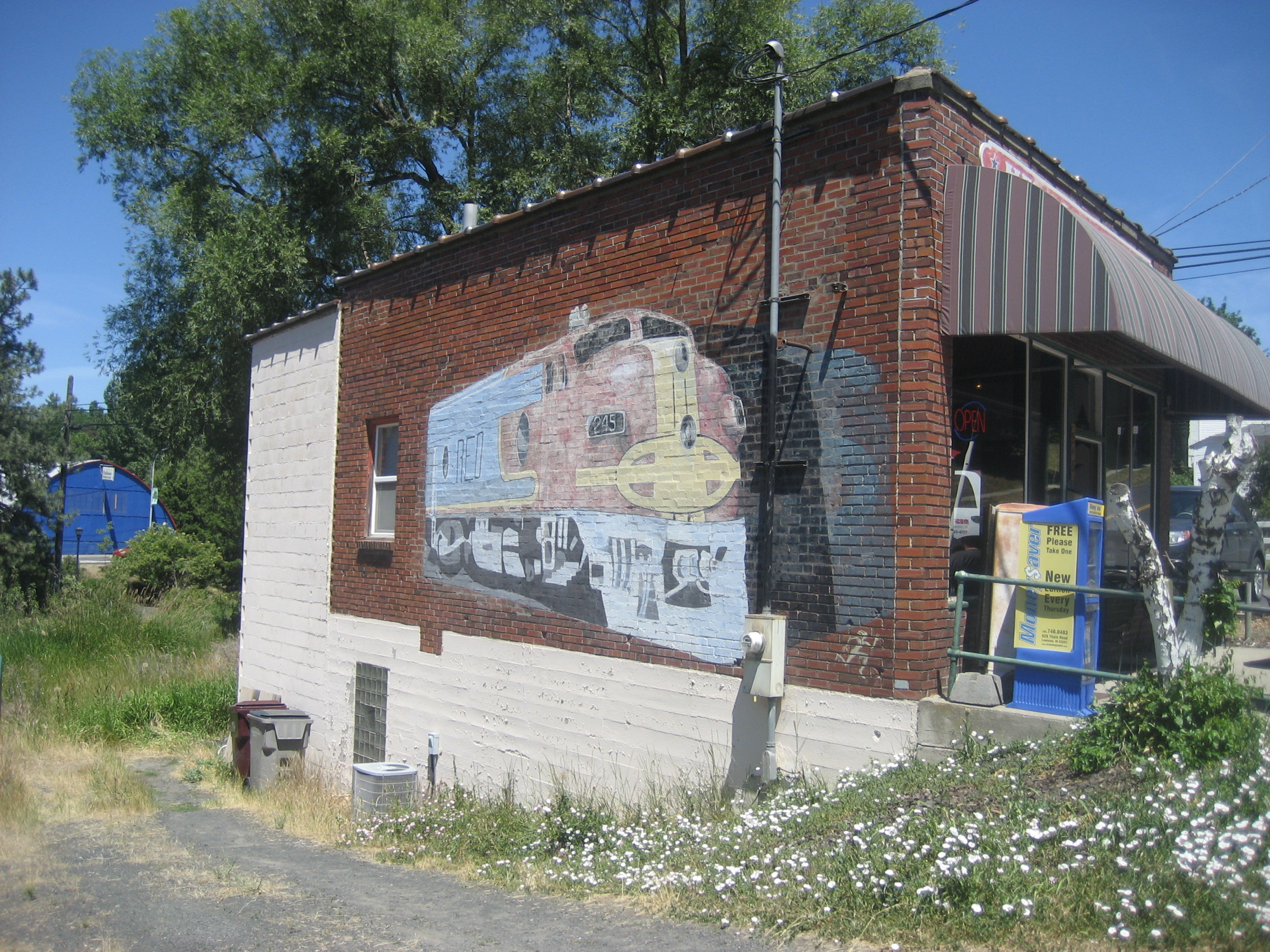
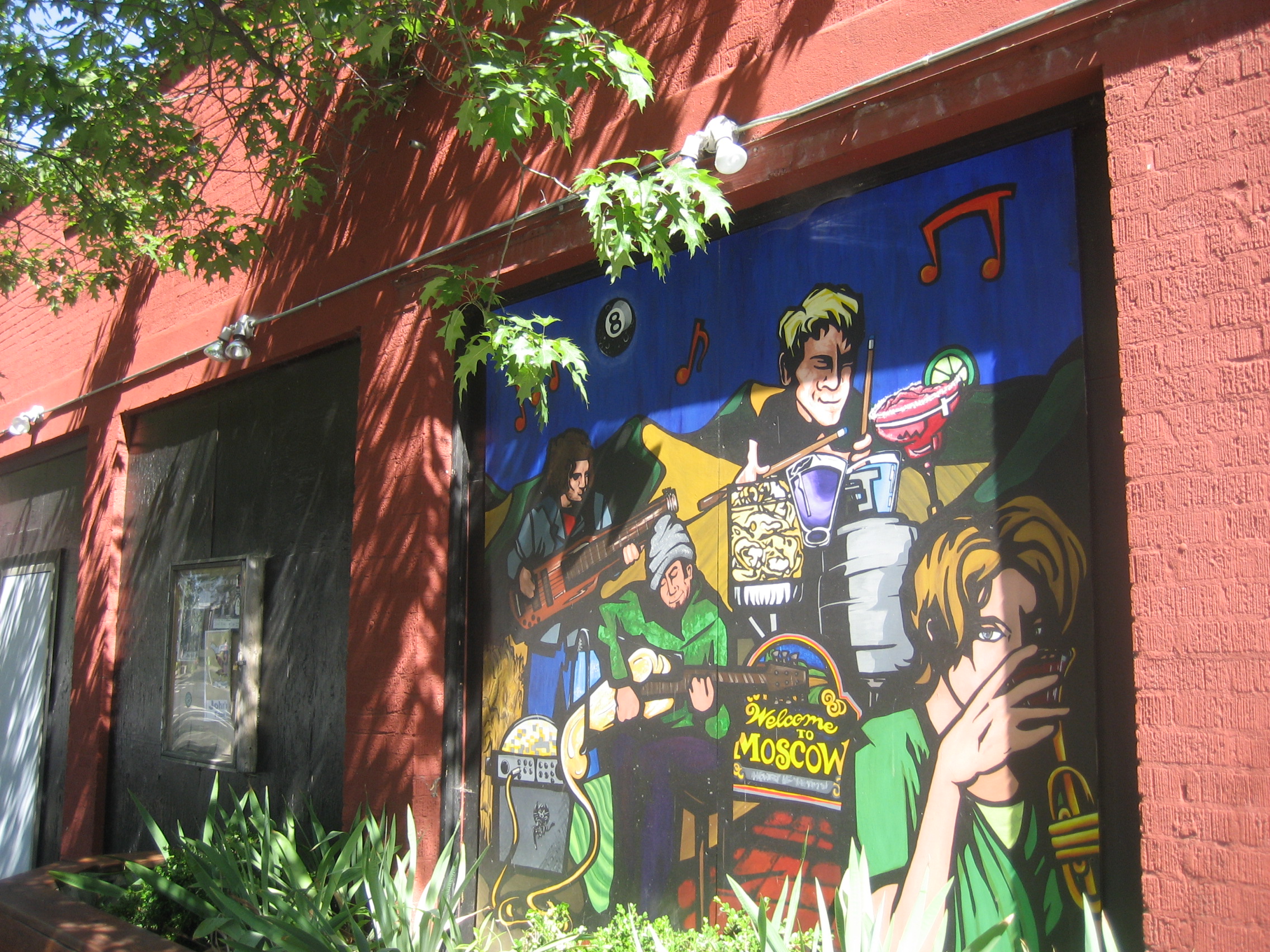
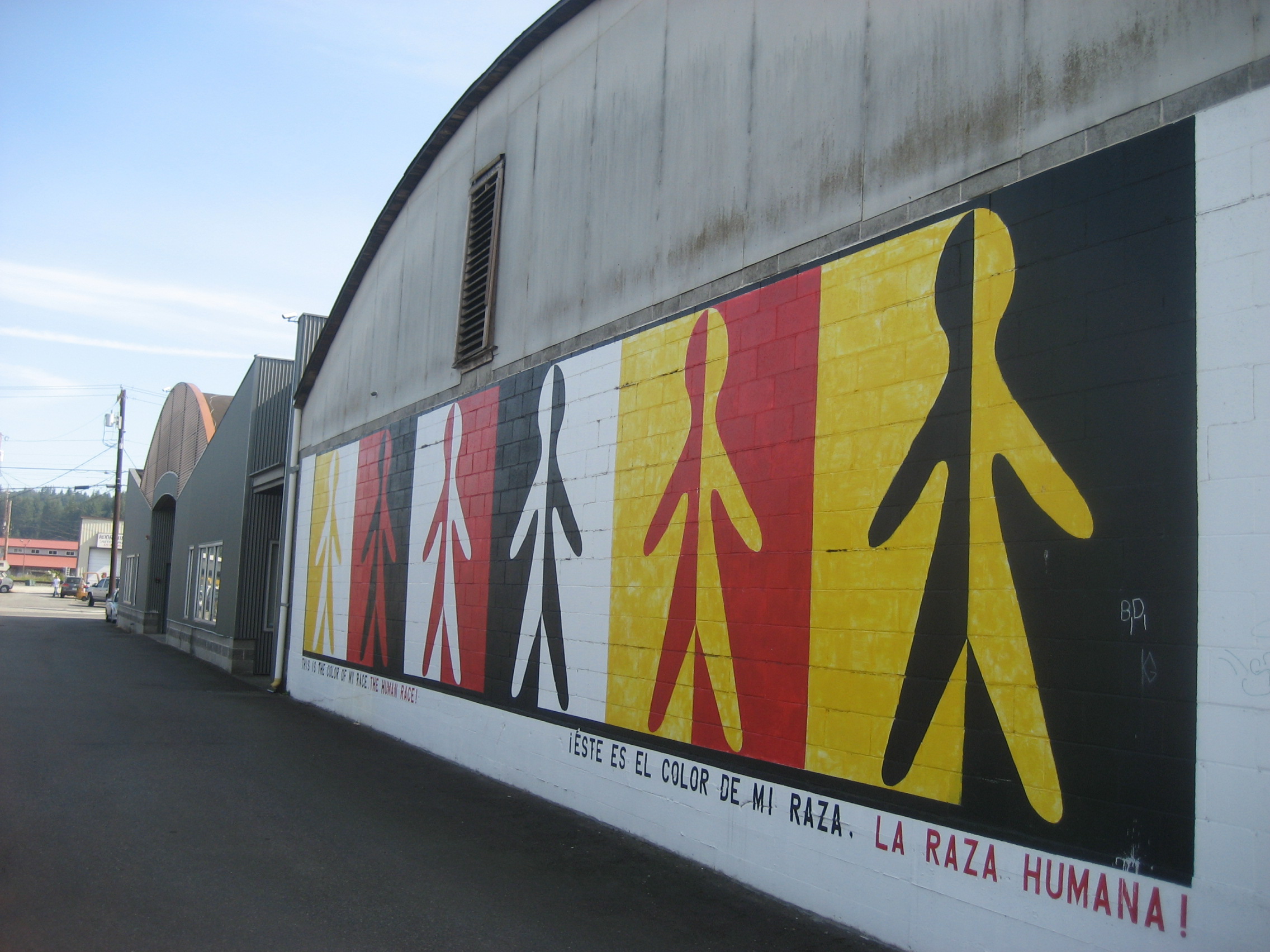
Cities worldwide are embracing outdoor murals, and Pullman’s celebrates its railroad past.

334

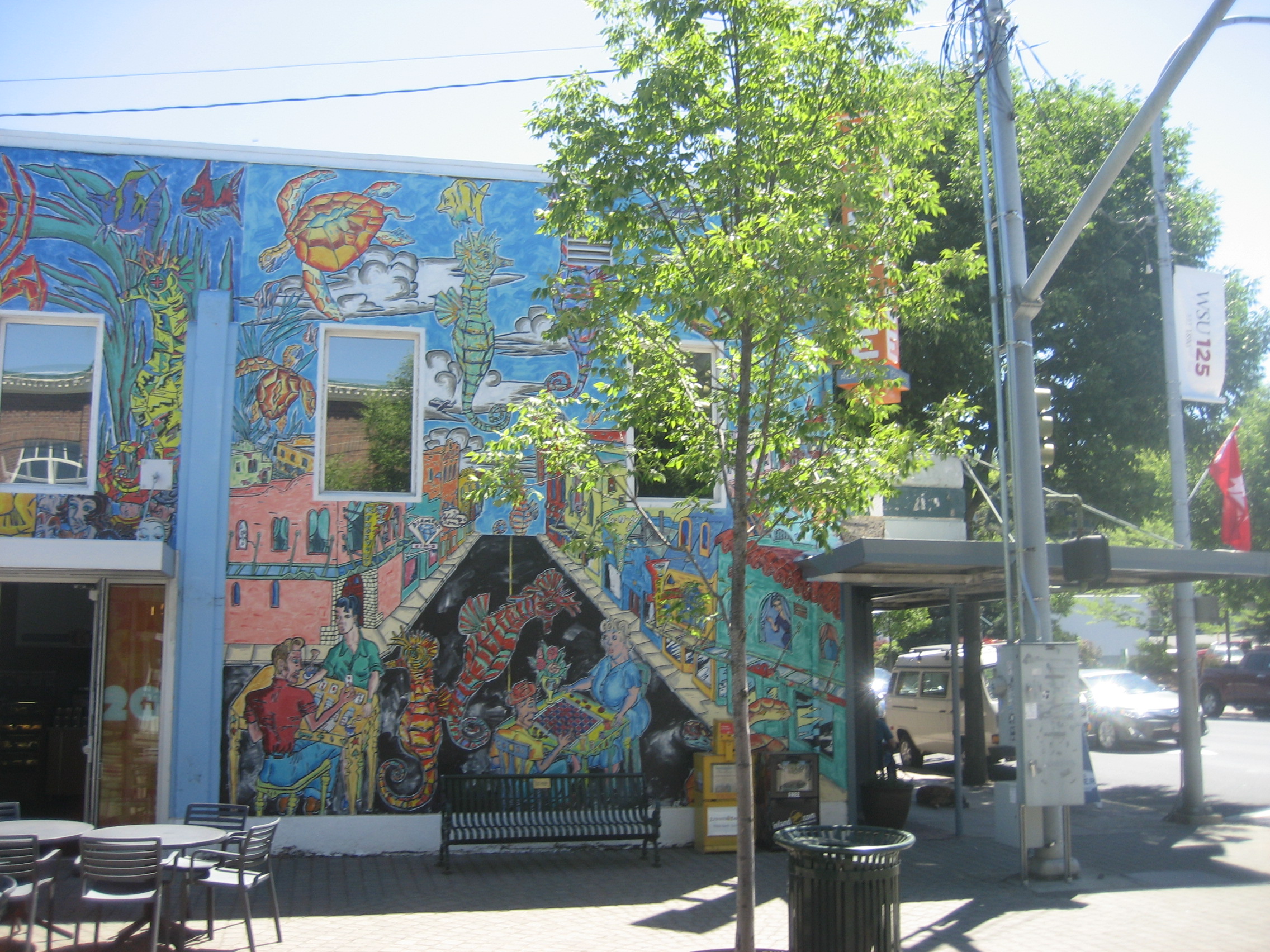
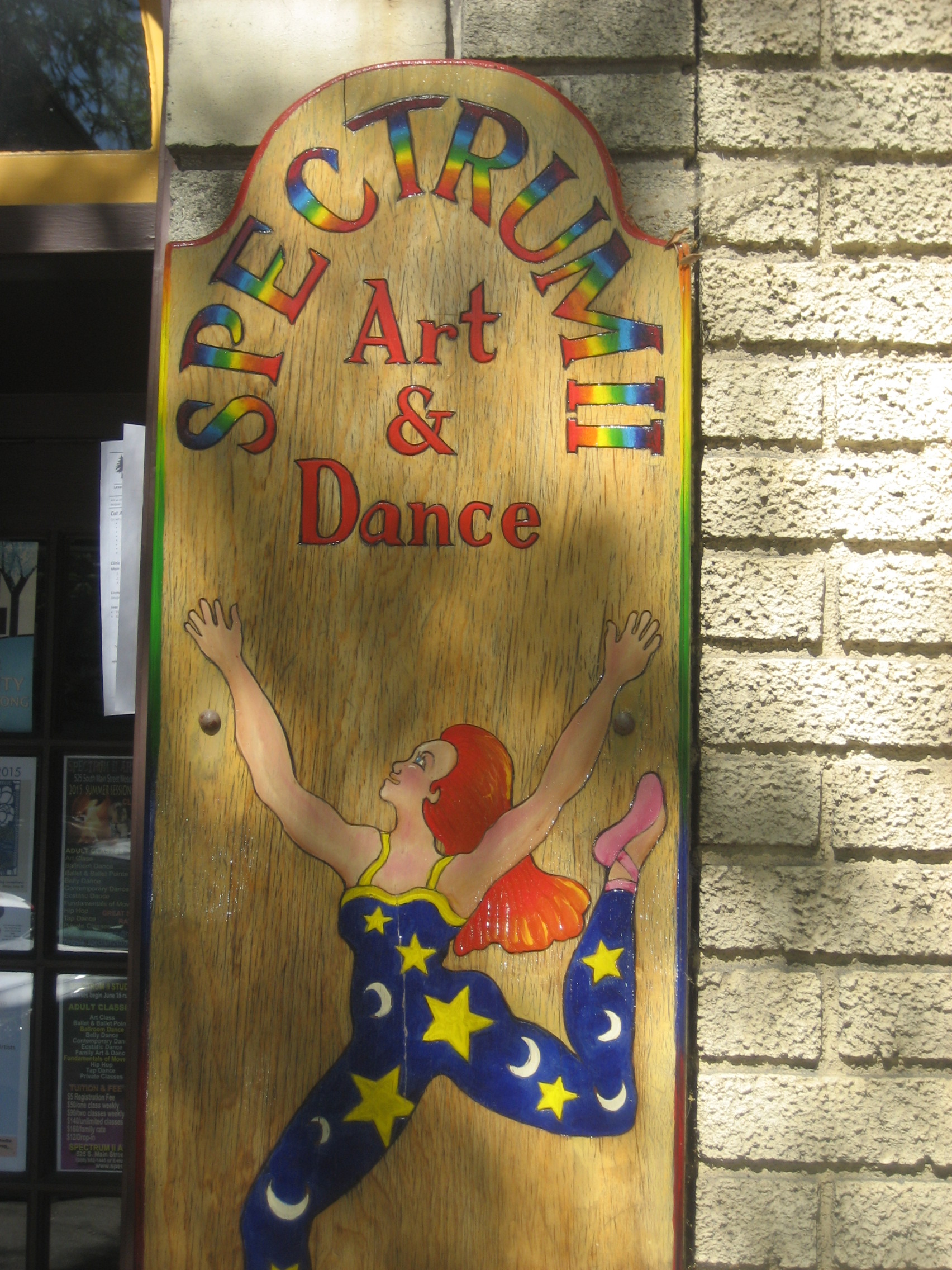
The town has a smaller art scene than Moscow, but young people here are every bit as proud of their joyful noises, as their counterparts to the east319

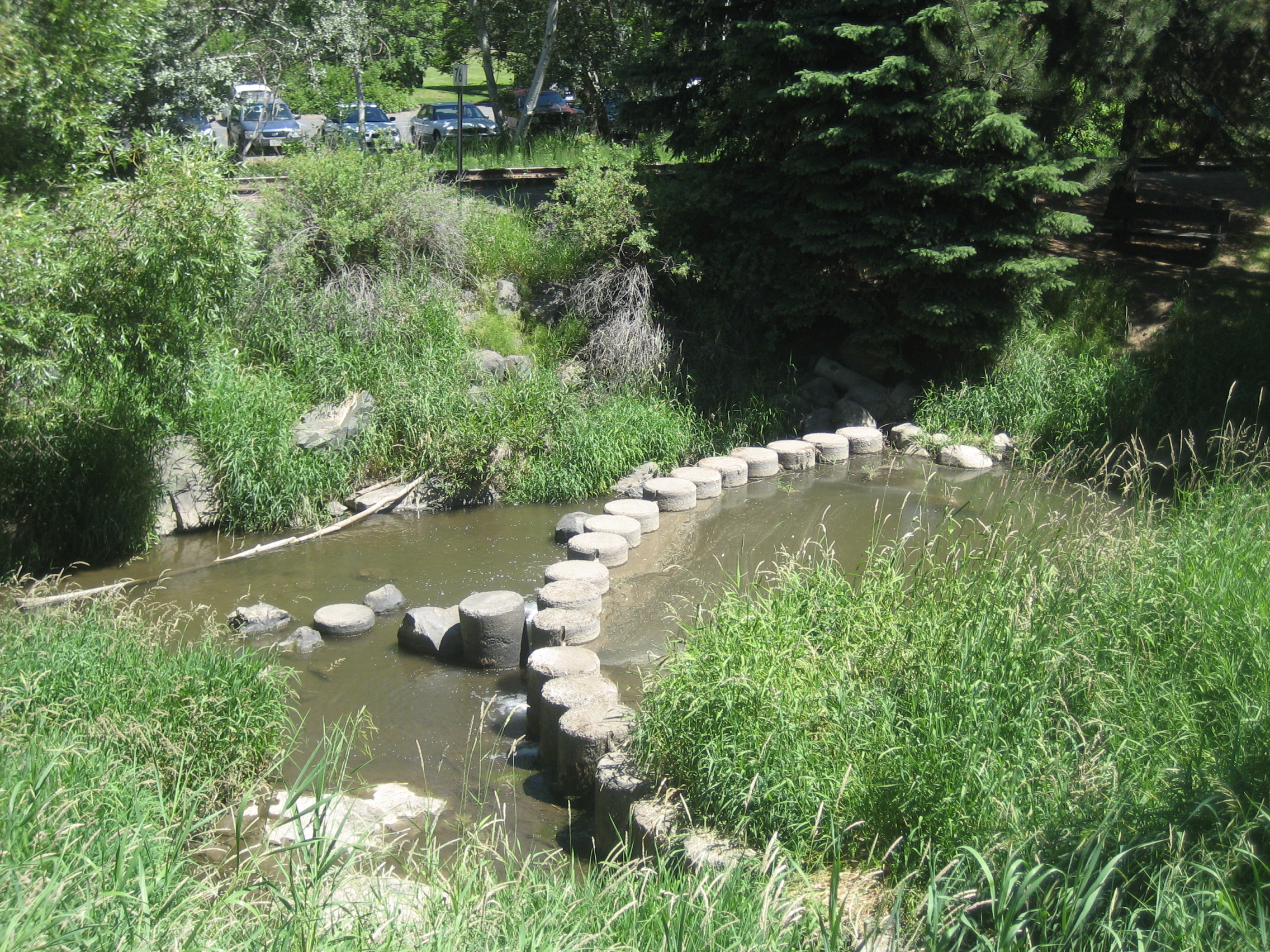
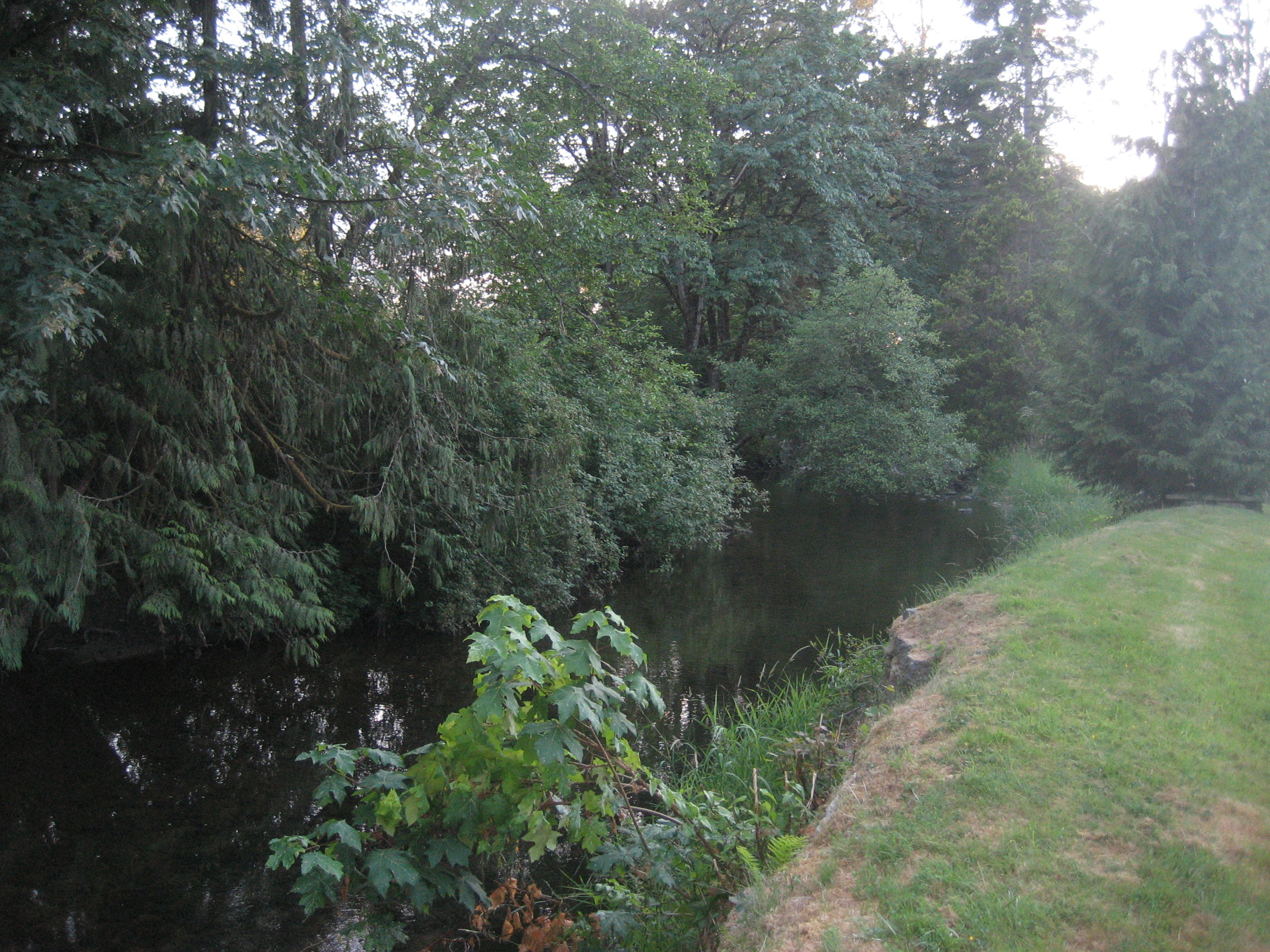
South Fork Palouse Riverwalk is heavily used by locals, though in the lunch hour, I had the path virtually to myself.

320

322

324

The Nez Perce influence is still felt here, at the western edge of that great nation’s rangelands.323

I enjoyed a hearty lunch at Heroes and Sports, in the building on whose exterior the railroad mural is shown, above.  Two WSU ladies cheerfully welcomed about twelve of us in from the increasing heat, and I relished a Philly steak, before heading off, towards Lewiston, and points further south.

The Road to 65, Mile 209: A Triangle of Towns, Part One- Moscow, Idaho, and Its University

3

June 25, 2015, Moscow, ID –  I have been intrigued by the Palouse region for quite some time now.  So, it was quite a treat to have ended up in Moscow,last night.  I had woken the owner-operator, at Royal Motor Lodge, so my reception  there was not the warmest.  This morning, though, she was a bit sad to see me check out so quickly- at 10 A.M.

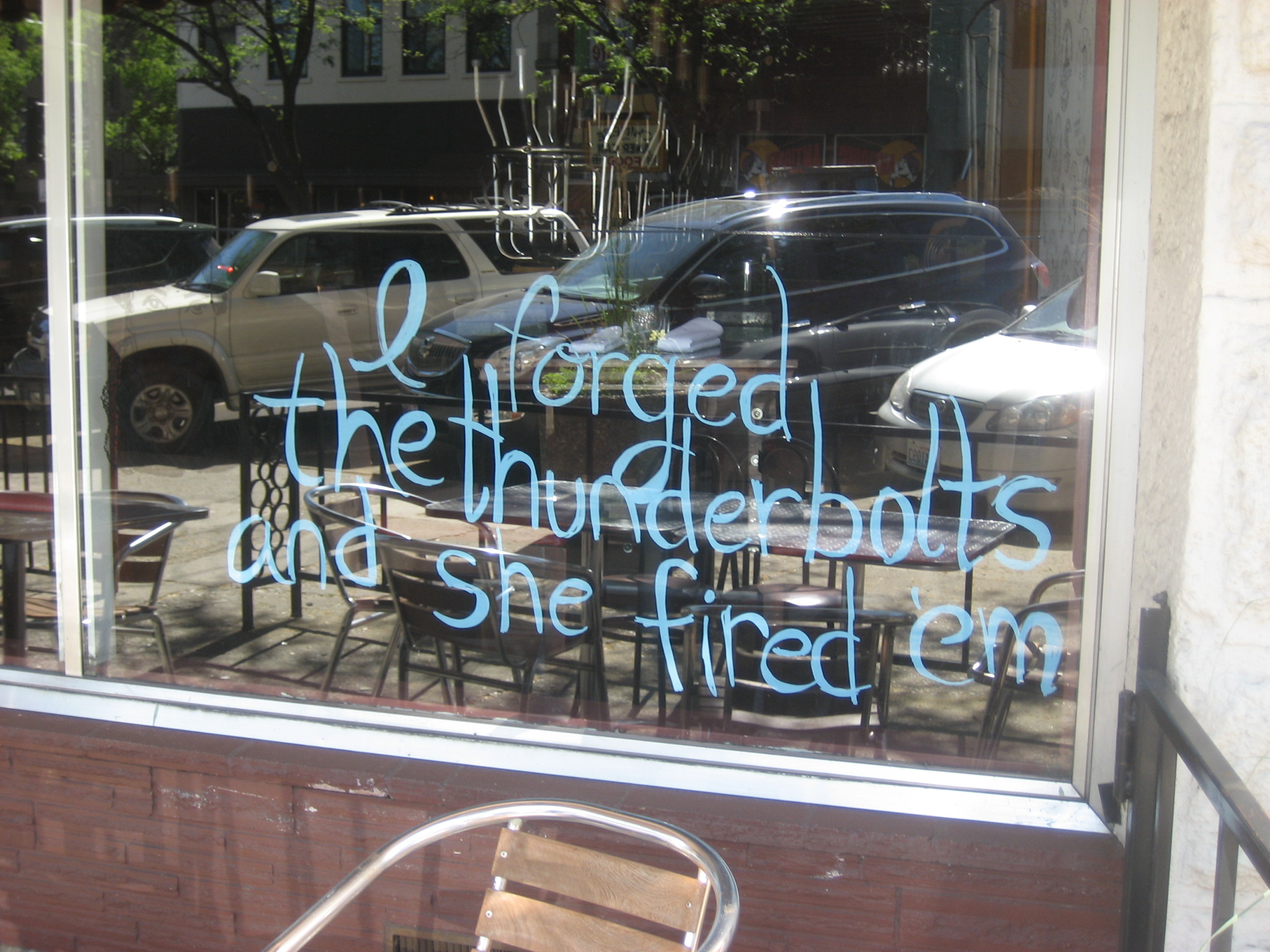
I spent about an hour, walking about Moscow’s downtown area, and stopped in at the salubrious One World Coffee House, at the outset of that little jaunt.  With so many people, in and around the place, the only unobtrusive photo of One World was this coffee bean puzzle.300

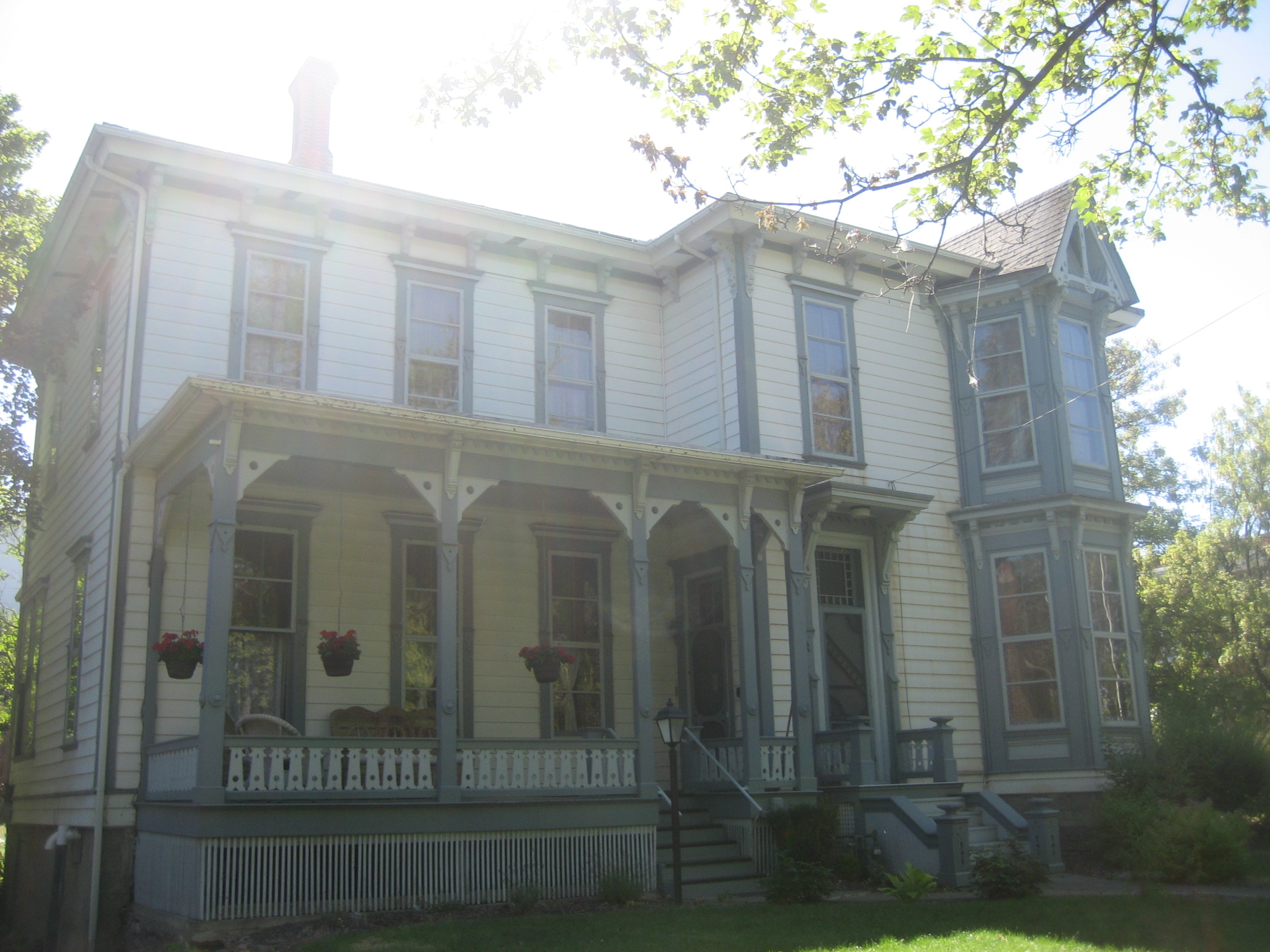
Downtown and Fort Russell, about six blocks east, are Moscow’s two historical districts.  I found Fort Russell would be interesting for a post on historical houses, but this was the Palouse in June, after all, and it was already getting hot, at 9 AM. So, I kept myself downtown.

Moscow, rightfully, prides itself on being a premier arts venue.

303

John’s Alley looks like it’d be a great place to sit and jam.

315

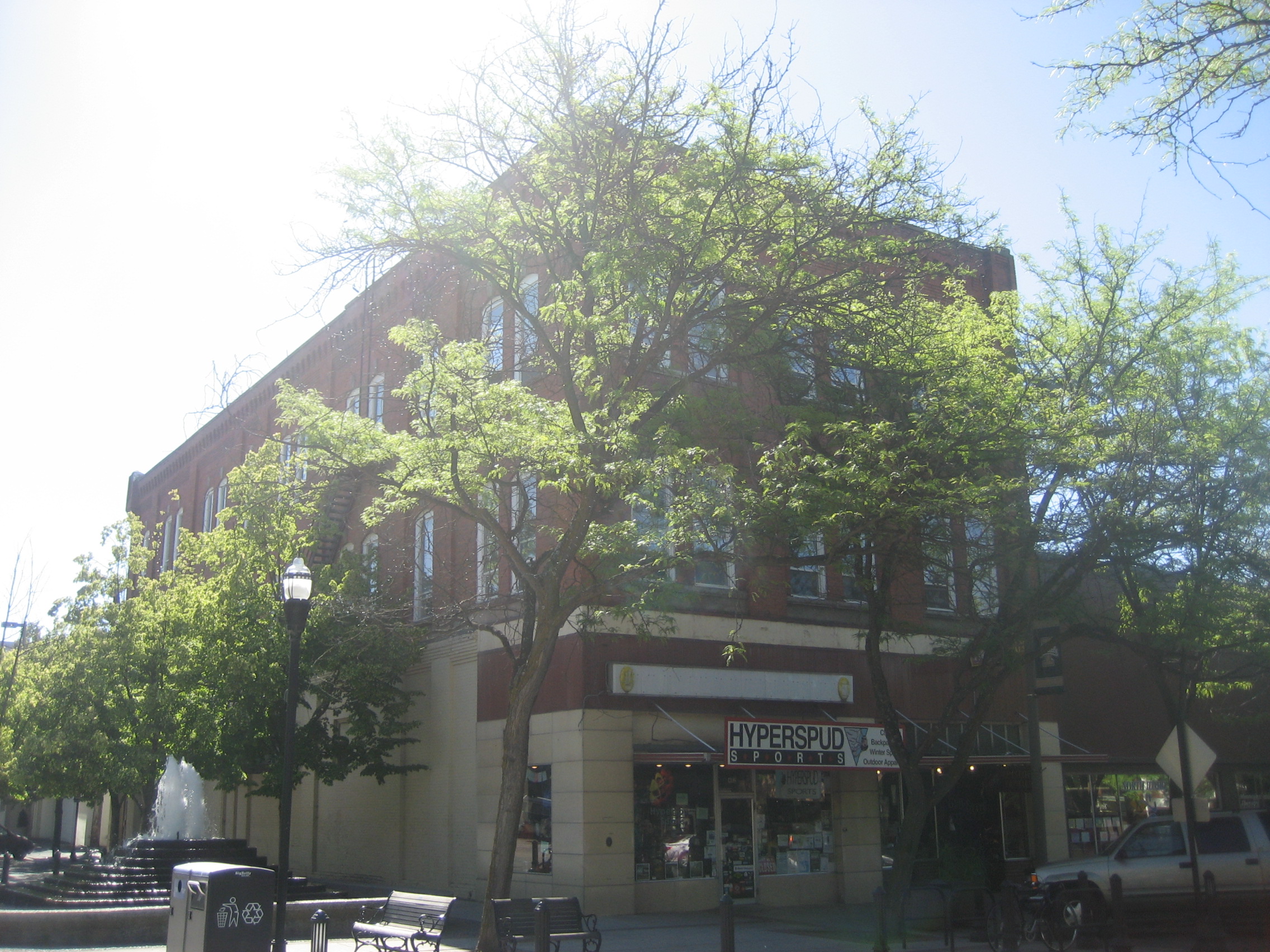
Moscow does not ignore its Idaho-ness.  Hyperspuds is the local sporting goods and outfitting spot.

306

This message, at the northern edge of downtown, evoked images of The Avengers.

307

The McConnell Mansion was built in 1886, by Idaho Governor William J.McConnell.  It’s now the historical museum of Moscow, and Latah County.

308

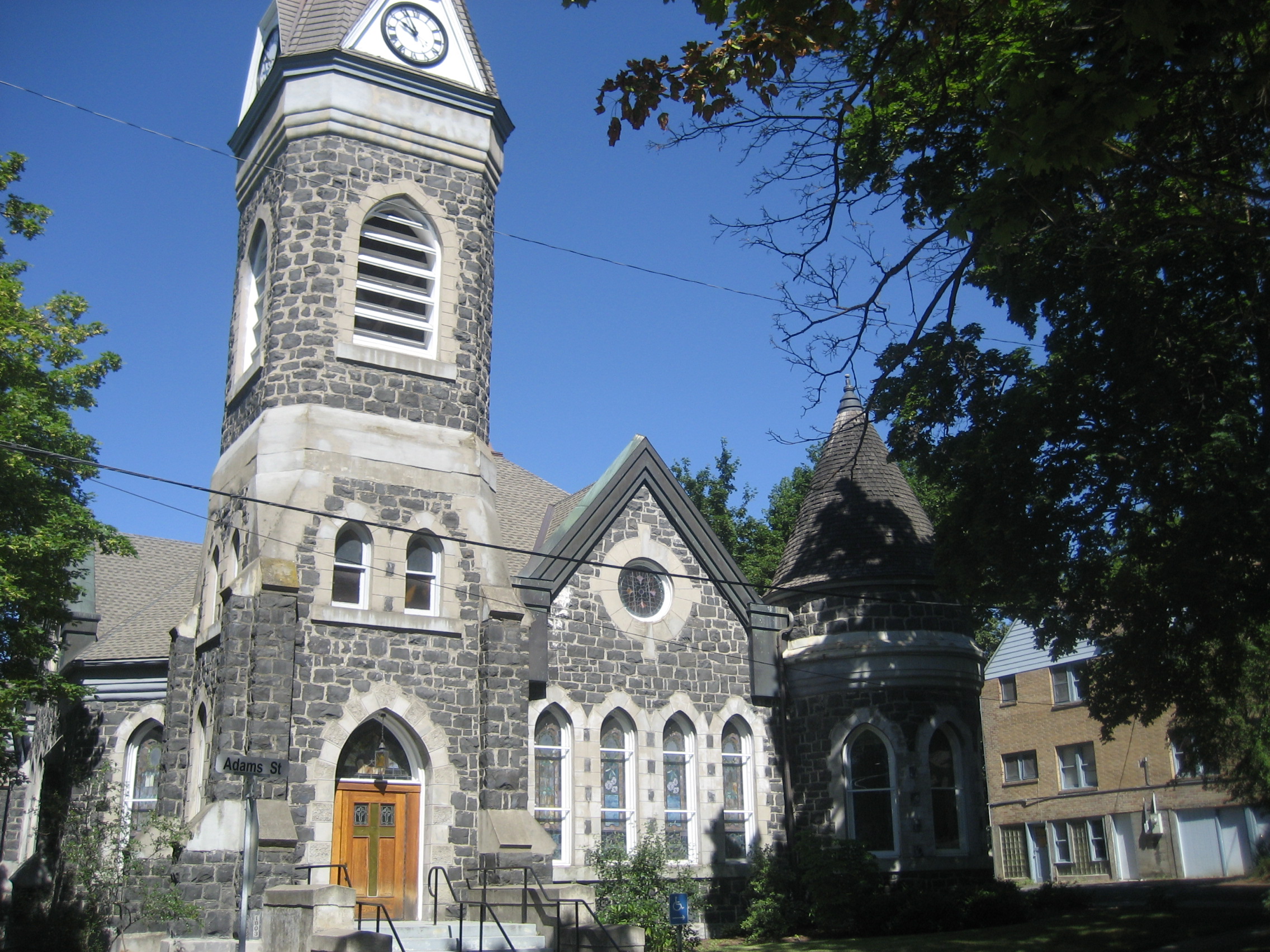
Stone is put to good use, in the Palouse Valley, as evidenced here, at the United Methodist Church.

311

Moscow is hip, but that doesn’t mean it ignores its roots.  Farming here does not take a back seat.

317

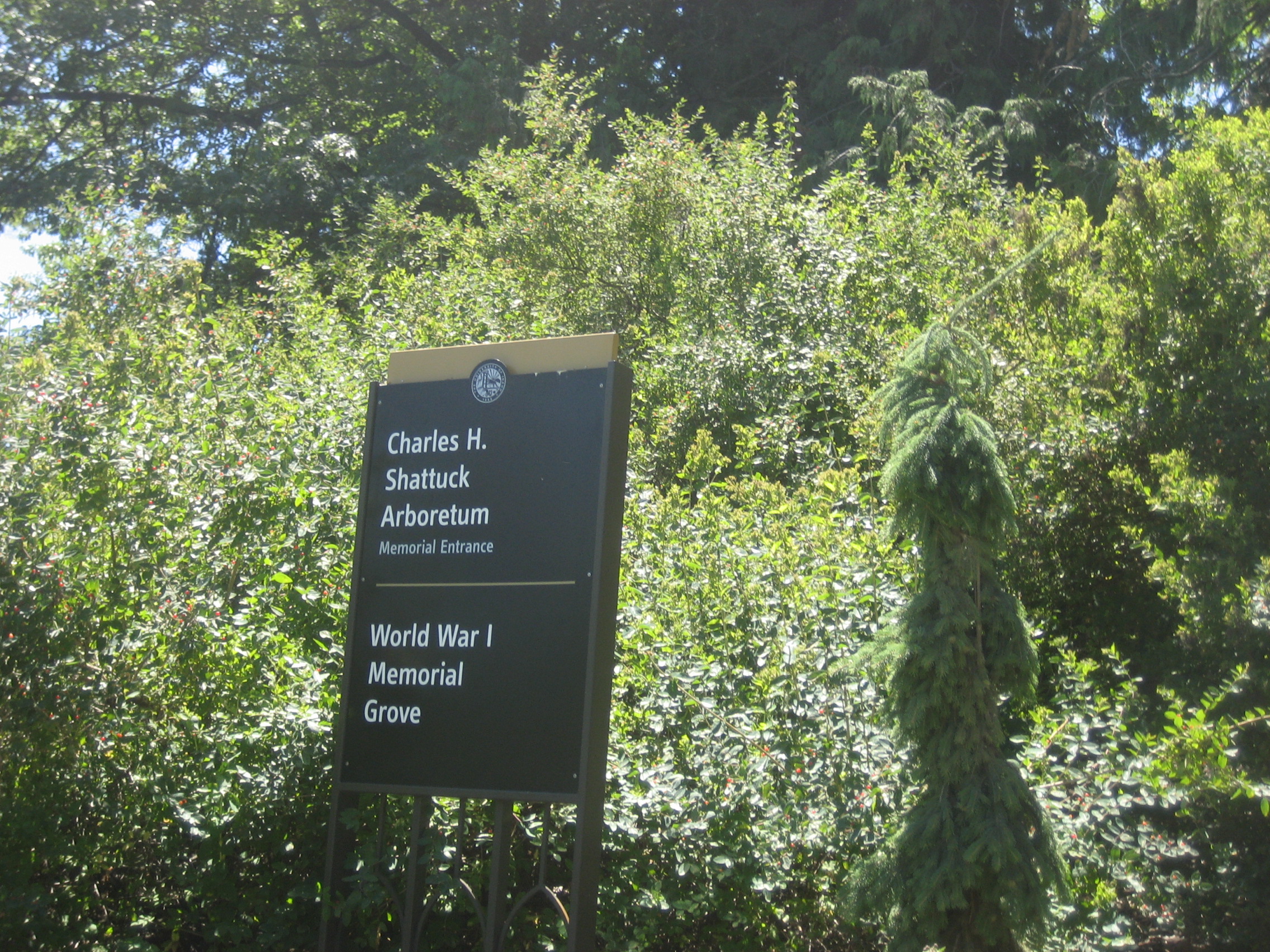
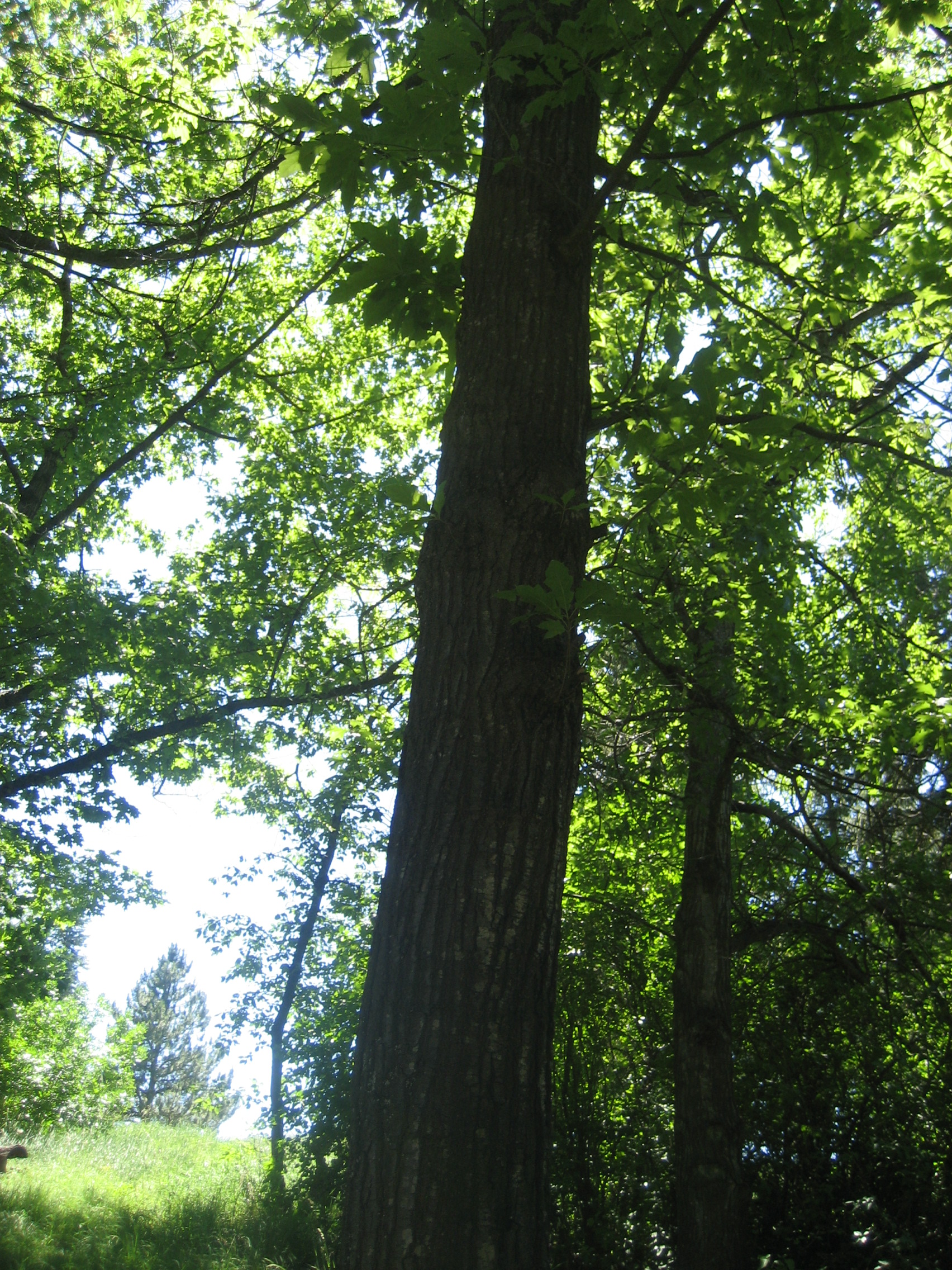
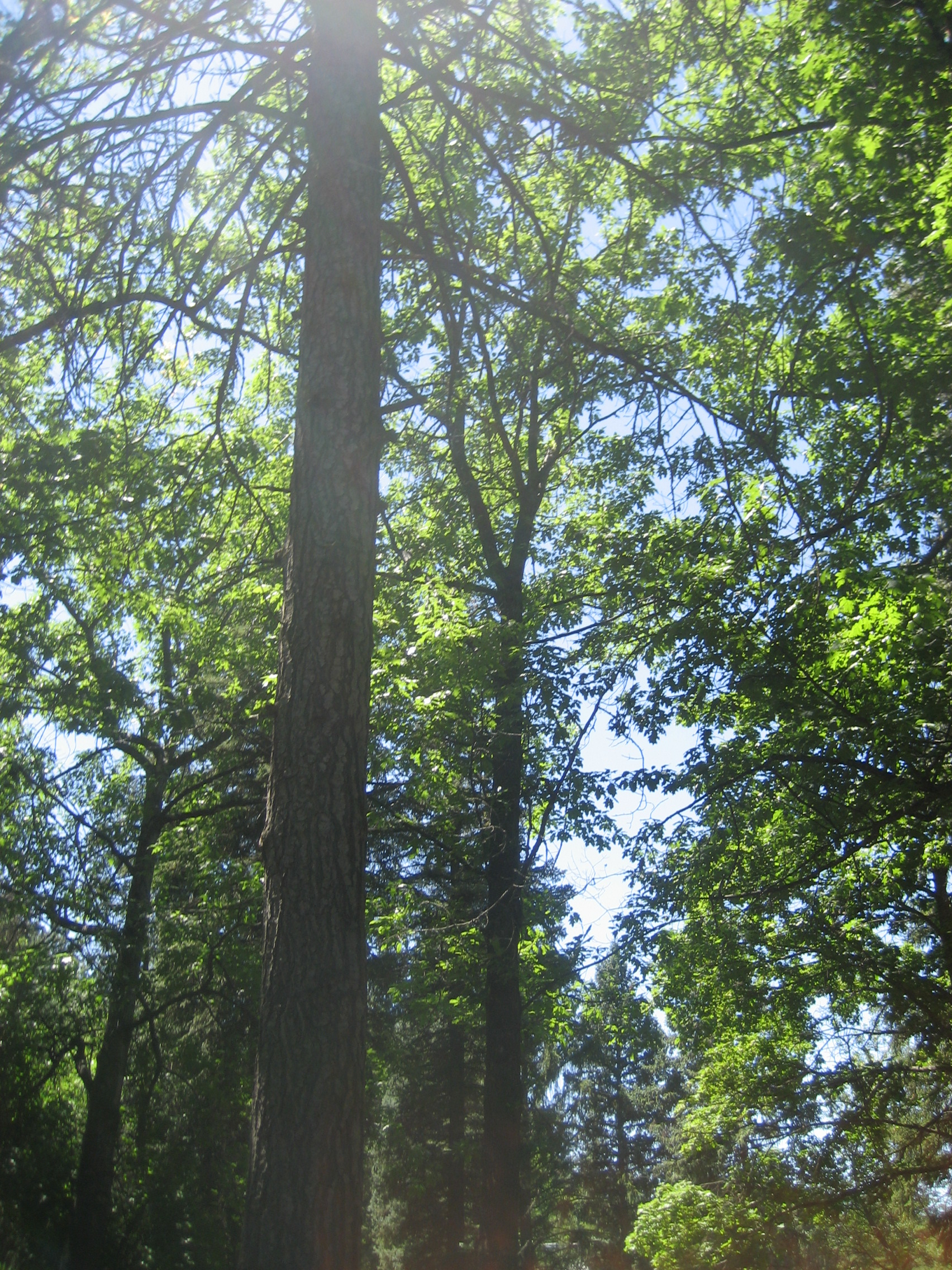
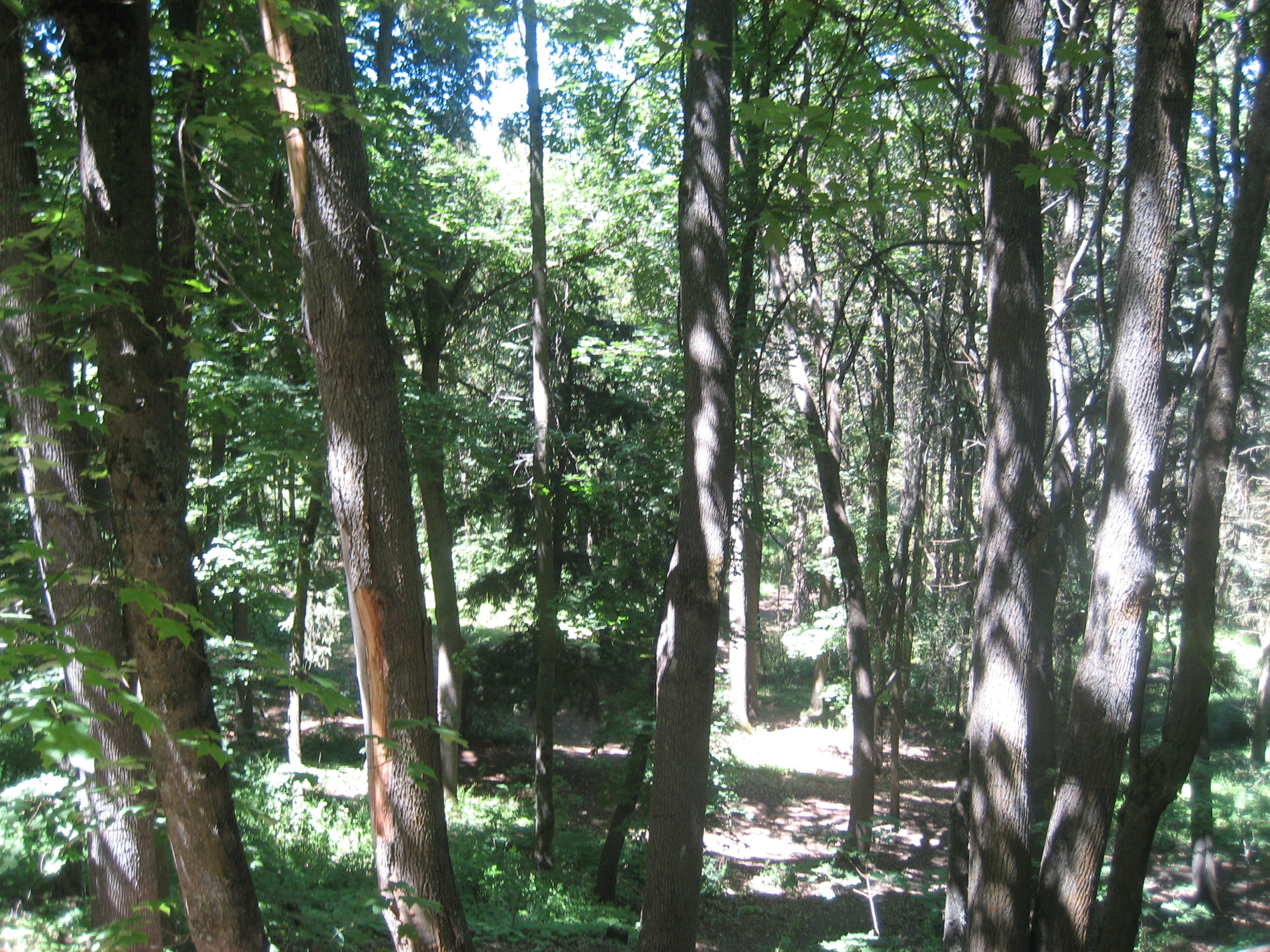
I spent about an hour at the University of Idaho, largely in its cool and impressive Charles E. Shattuck Arboretum.338

341

Here is the Red Oak that is the centerpiece of the World War I Memorial Grove.

342

340

The interior of the Arboretum offers trails that could keep one content for a few hours.

344

As with other universities, this would mean buying a Parking Pass, as established by the Administration, housed here.

336

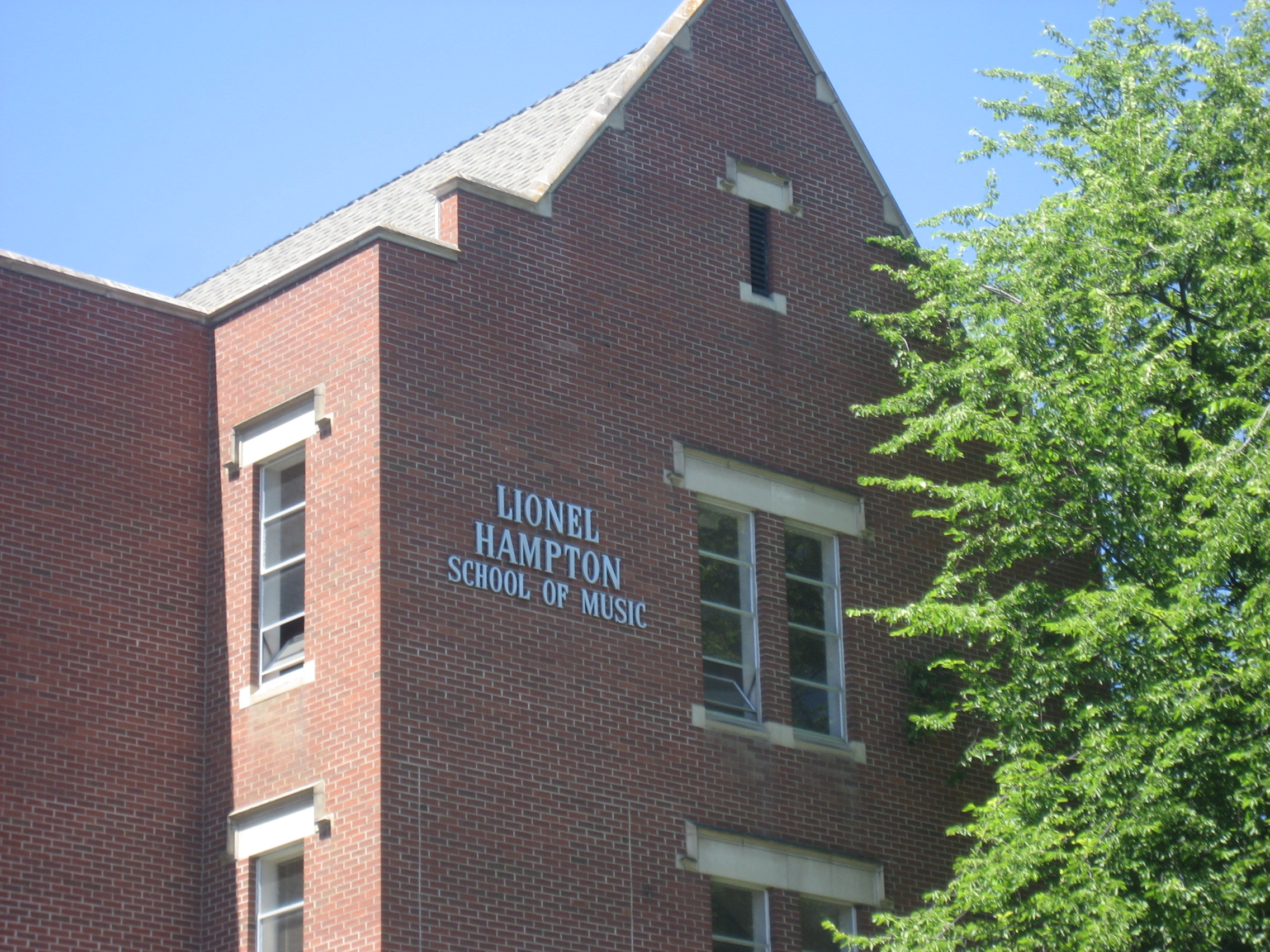
The university has the good fortune to have a School of Music named for one of the greats.  Mr. Hampton worked with the University, from 1980, until the end of his life, to establish a home for jazz, in its School of Music.  in 1987, he had the honour of seeing the School bear his name.  A Jazz Festival has graced UI, since 1985.  Lionel Hampton is the only jazz musician, thus far, to be so honoured by a University.

335

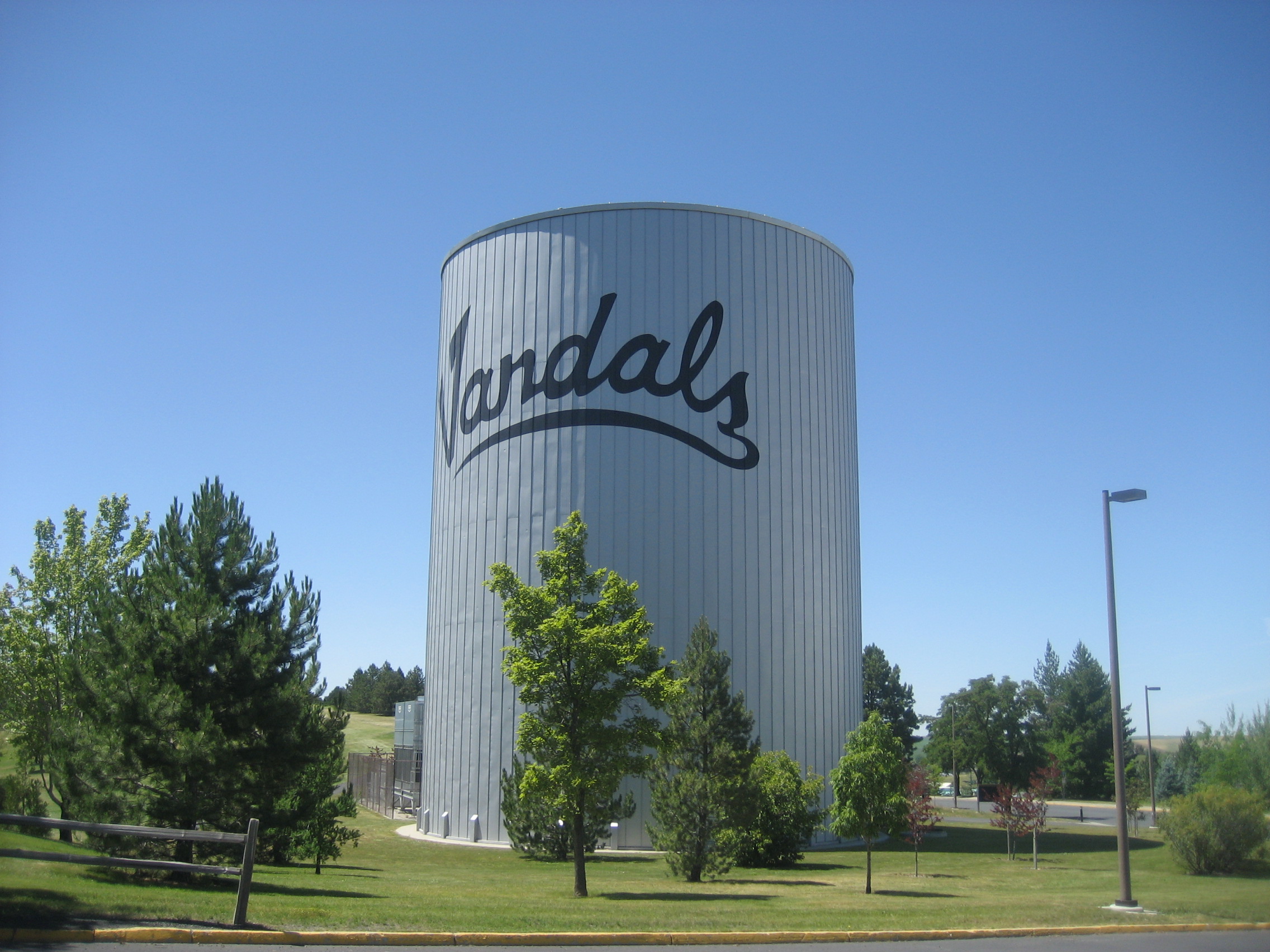
The University’s mascots are the Germanic tribe, the Vandals.

346

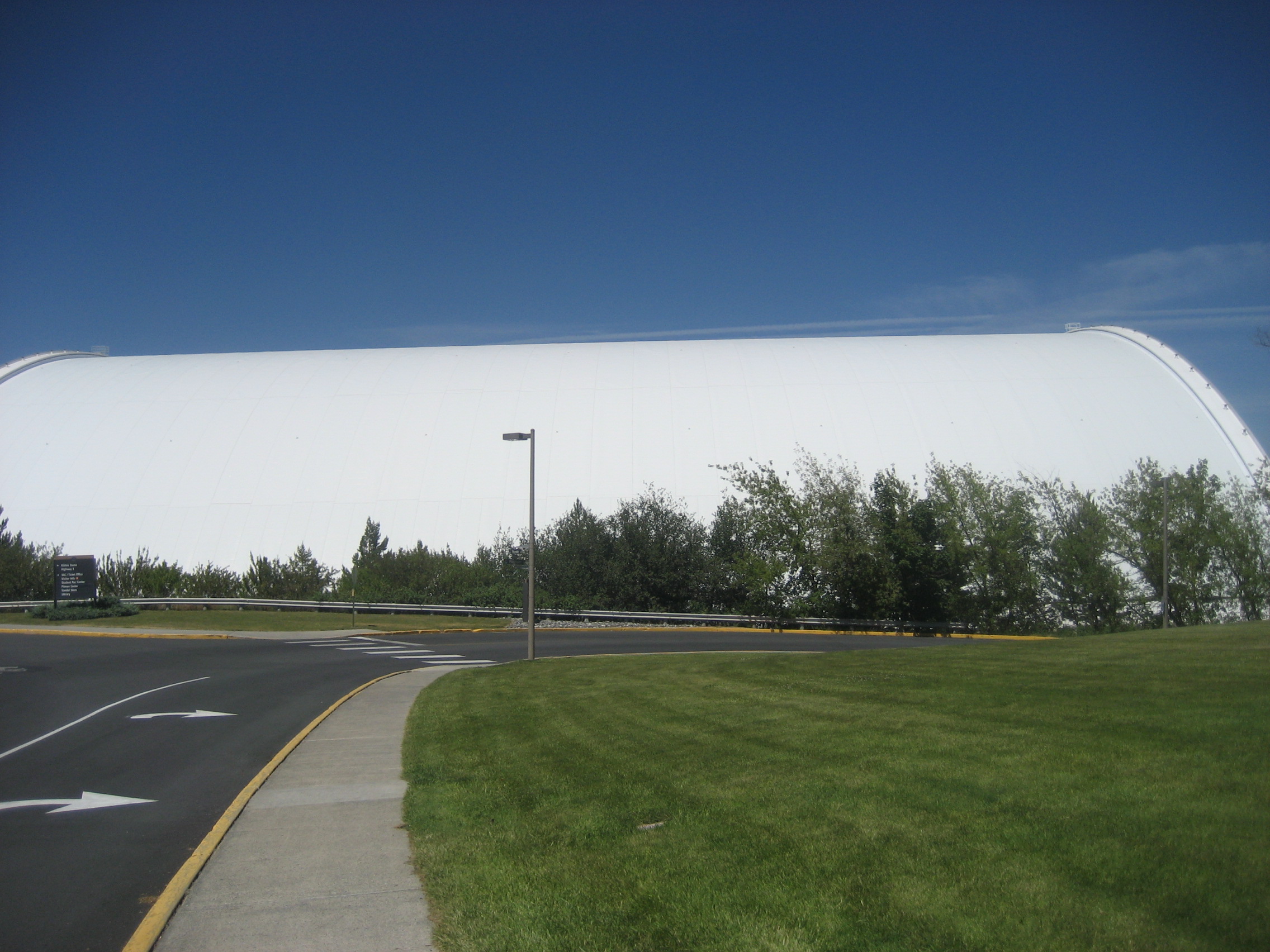
Their facility is impressive in its length and utility.

347

Moscow is a welcoming, and very comfortable town, and I would not be surprised to find myself passing through there, time and again.

The Road to 65, Mile 207: Queen of the Inland Northwest, Day 1

4

June 23, Spokane- I woke up from a night of roughing it, on the ground at Country Corners RV Park, in Wilbur, WA, about ninety-minutes west of Spokane. I got dressed and off to breakfast, at Doxie’s Diner, one of those places where the cook is the waitress, and the regulars address her as “Mom”.  The coffee was on the main table, and I was invited to make myself at home.  Great place, Doxie’s, and I could easily have whiled away a good morning there, especially listening to everyone’s stories of the previous night’s aurora borealis, through which I slept, of course. It had appeared around 2 AM.

I had a feeling it was about time I got over to Spokane, to see what had changed since I was last there, in 1995. I stopped for a bit of reflection, at a Rest Area, off US 2. Greeting me was this intrepid little critter, who might be a tad uncomfortable on a leash.

230

I got to Spokane, around 9 AM, and headed straight for Riverside Park, which was one of my fondest memories from 20 years ago.  The first sight was the salmon ladder.

232

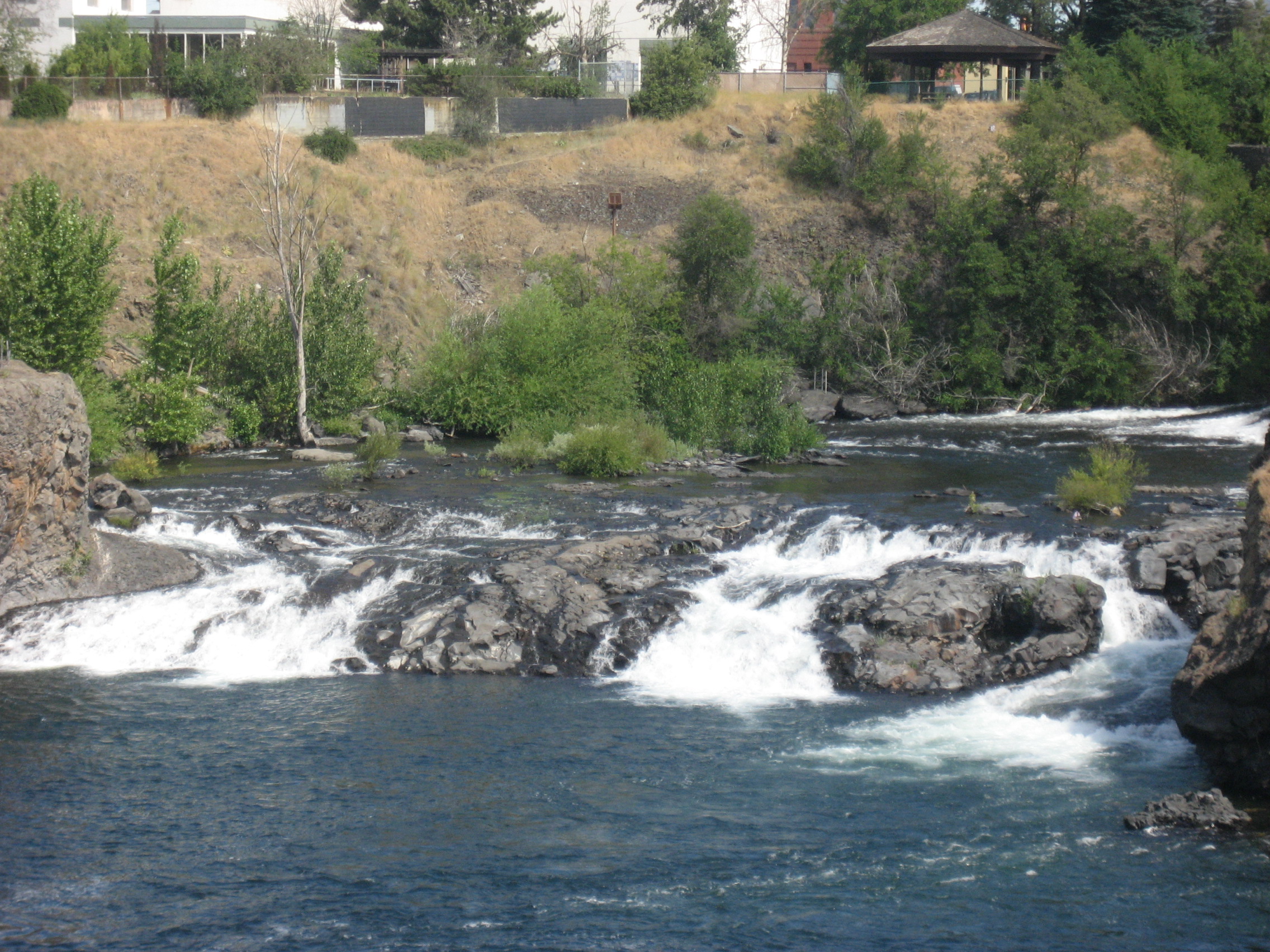
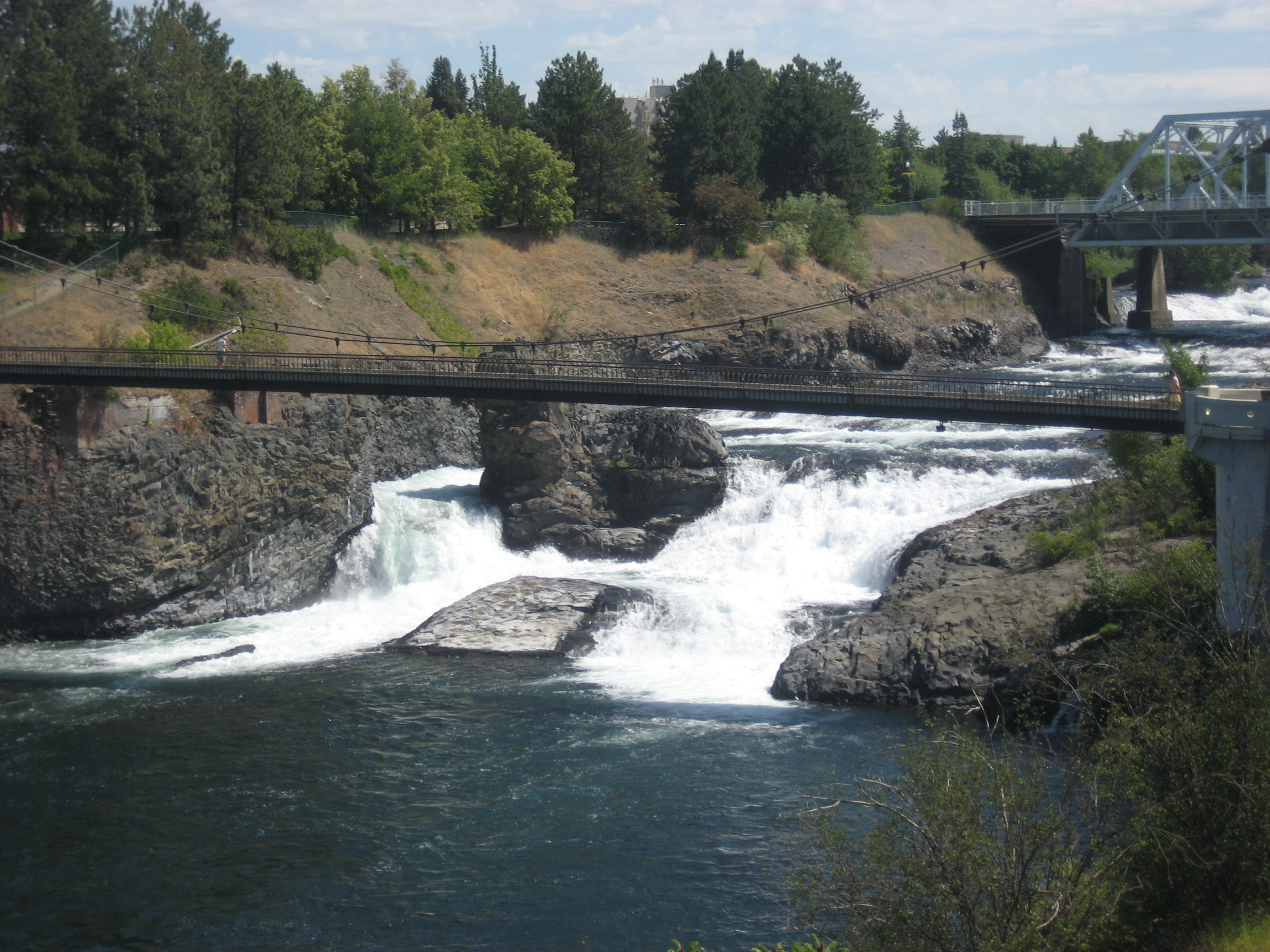
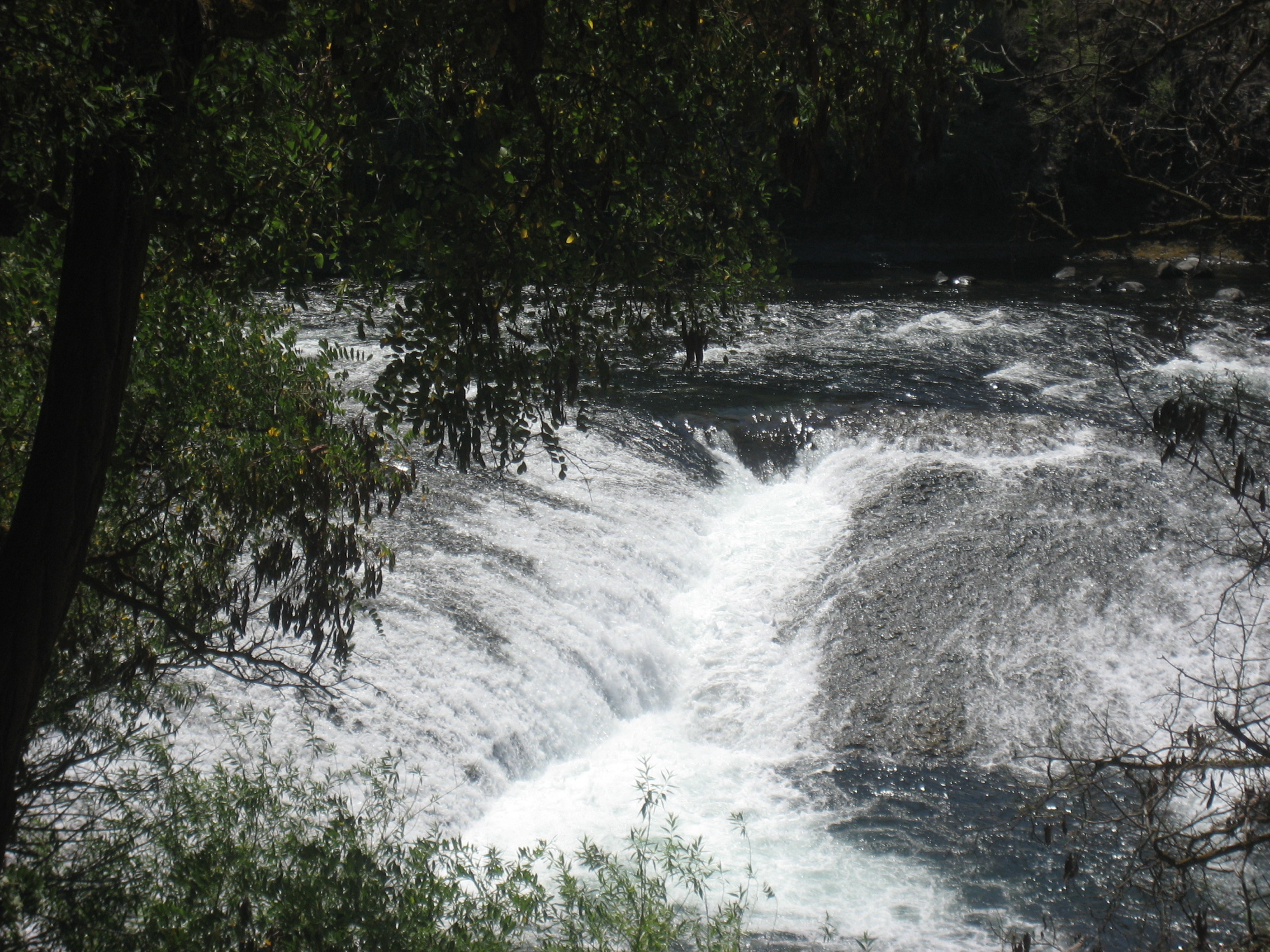
The Spokane Falls, though, are quite prominent, both at the north end of the park and towards the middle.

236

240

245

250

After a couple hours of meandering around the park, I headed east a bit, to the old Flour Mill, now home to about a dozen shops.  One of these is Chocolate Apothecary, whose proprietor had sandwiches advertised, along with his main line of delectable chocolate.

251

Alas, his sandwiches, prepared by Rocket Bakery, had not arrived.  At his suggestion, I headed across the parking lot, and up the street, to Stella’s Cafe. The Northwest is a fabulous place for cavernous, Steam Punk cafes and restaurants.

255

Stella’s offered a lovely Roast Beef, au jus  and had some intriguing art work.  This woman had tied up her demon and her ego, and was ready to take on the world.

256

After lunch, I checked out Spokane’s near north side, and its majestic County Courthouse.  This neo-Renaissance classic was built by W. A. Ritchie, and was open for business in November, 1895.  It is, arguably, one of Washington State’s finest buildings.

258

262

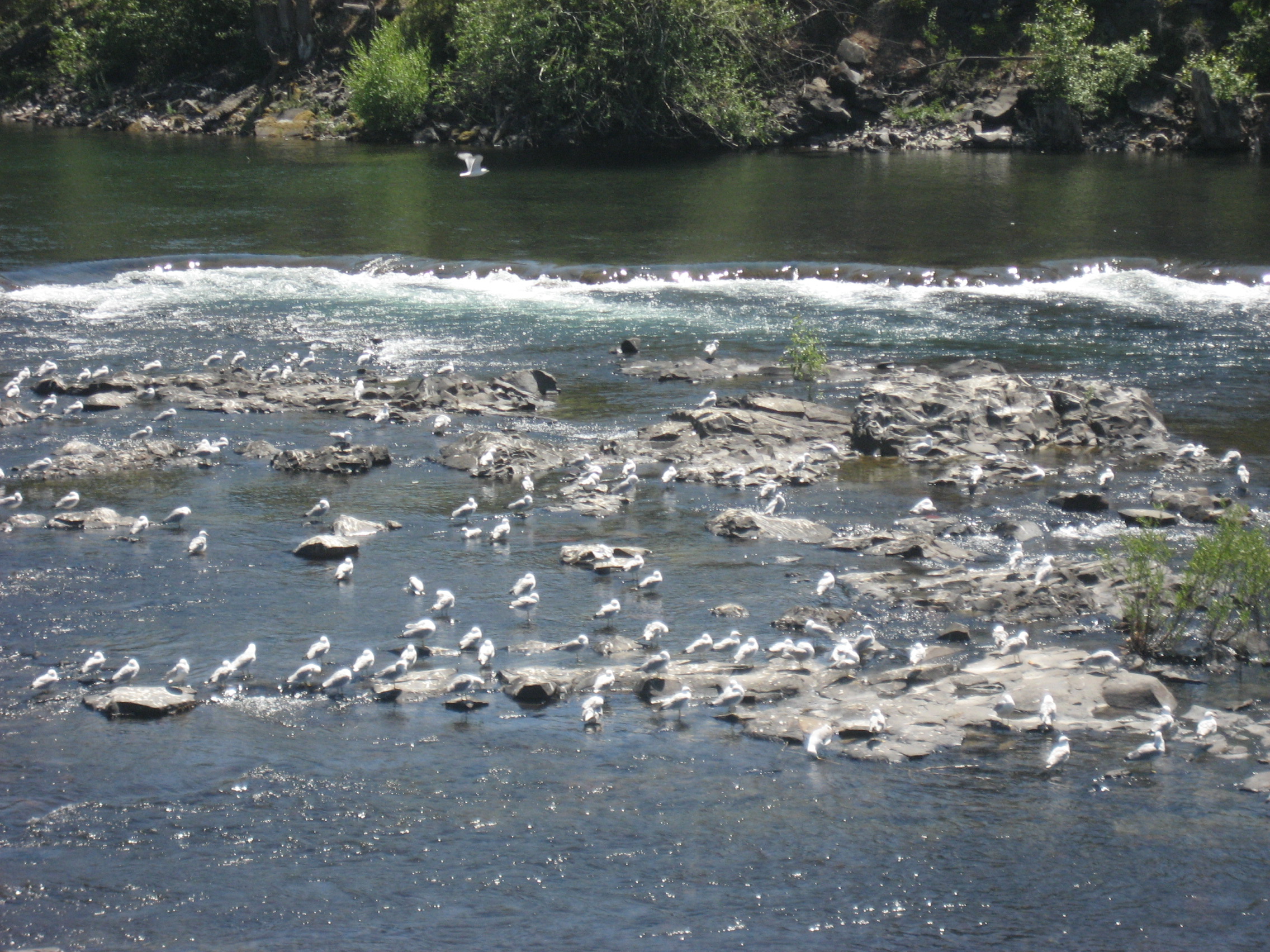
Returning to Riverside Park, I found quite a flock of gulls, feasting on whatever they could find in the Spokane River.269

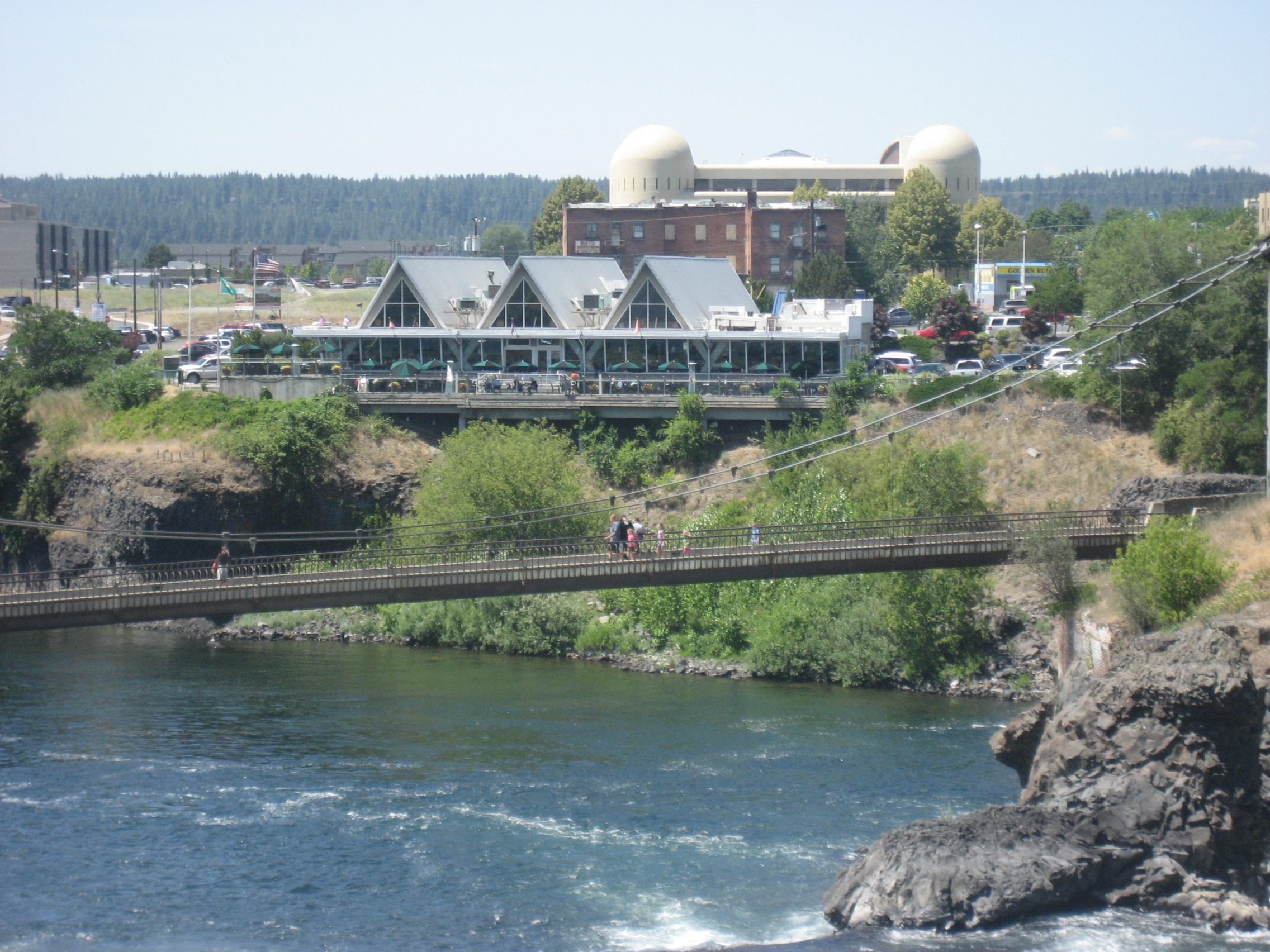
Anthony’s at Spokane Falls is another member, in that great chain of West Coast seafood establishments.  It is across the bridge from the hydroelectric power station.  It is notable that Spokane, using the force of its cascades, was the second community in the U.S., after New York City, to become electrified.271

It was starting to get pretty hot, in mid-afternoon, so this fountain was a big treat for the children who were at Riverside for the day.

274

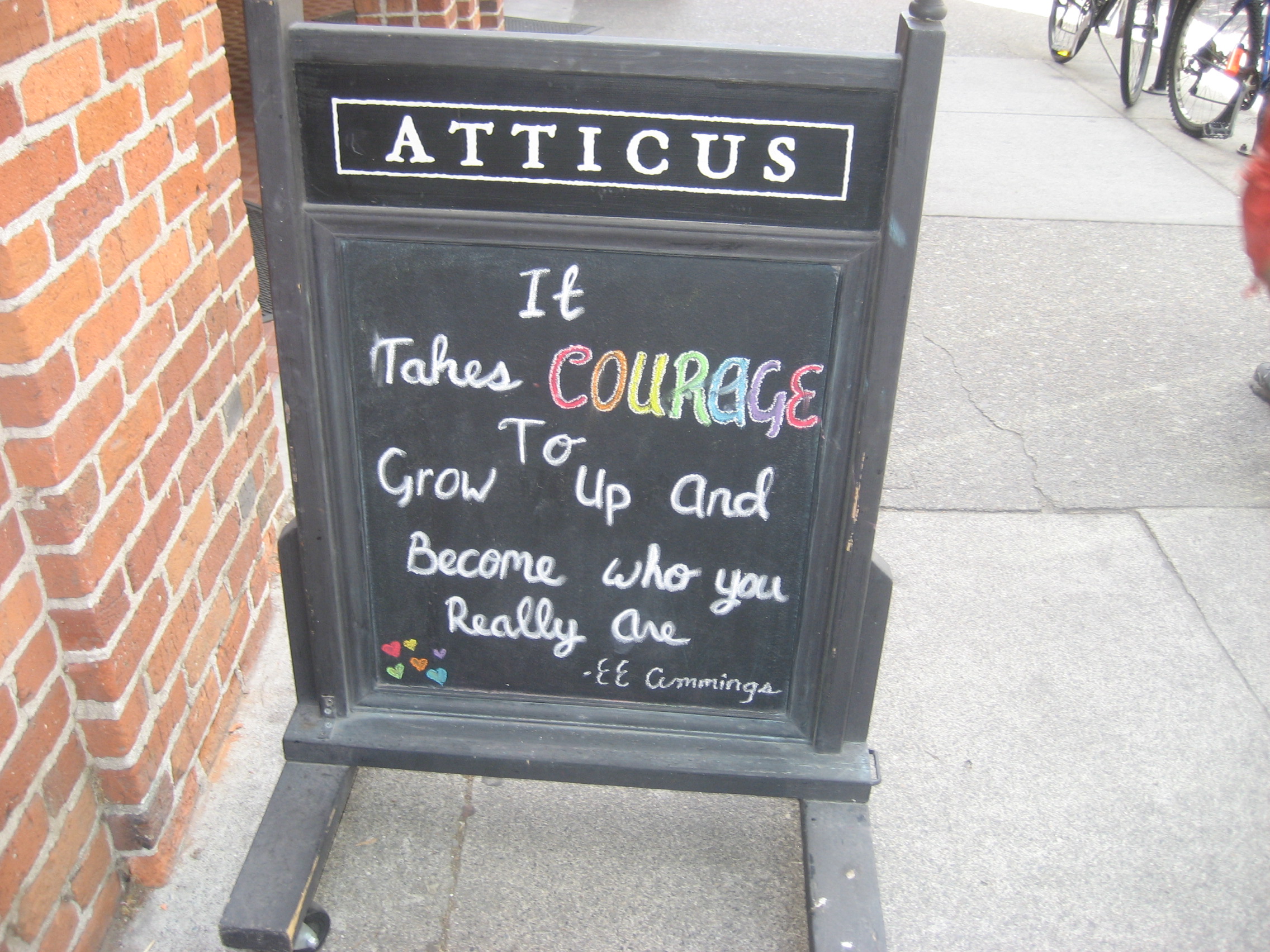
As for me, I went over to Atticus,  a lovely coffee, book and gift shop, across Spokane Falls Drive from Riverside Park, and got a refreshing, cool beverage.  After being there for an hour, catching up on my e-mails and correspondence, I noted the barrista’s consternation, and vowed to come back the next morning, sans laptop, and just savour the coffee.

296

The evening was spent, between Downtowner Lodge, which at the time was the only motel in downtown Spokane with no WiFi, Spokane Public Library, and the Food Court in River Park Square, which offered connections to anyone eating supper there.  After satisfying myself that my friends and family were safe and well, I went back to the room and watched a bit of nondescript TV, then read for a while.  Day two would feature a gondola ride, more walking around Riverside Park, perhaps a visit with an online friend and an evening with some of the Baha’is of Spokane.

The Road to 65, Mile 206: Evergreen Crossings, Day 4- Cascades and Coulees

4

June 22, 2015, Wilbur, WA- The day started with getting laundry done, in Monroe, at one of the more expensive laundromats I’ve seen in a while.  It uses an Easy Card, so the fare is purchased in advance, for  laundry supplies, washer and dryer.  I did everything in one load,as is my wont, when on the road.

I passed Travelers Park, before turning right onto Highway 2 East.

163

On the way out of town, I gave a short ride to three people, who my intuition said, correctly, were good risks.  They had no interest in me, other than to know why I was here, from Arizona- a reasonable query of a stranger.  Eight miles further, I let them off, at a place called Gold Bar.

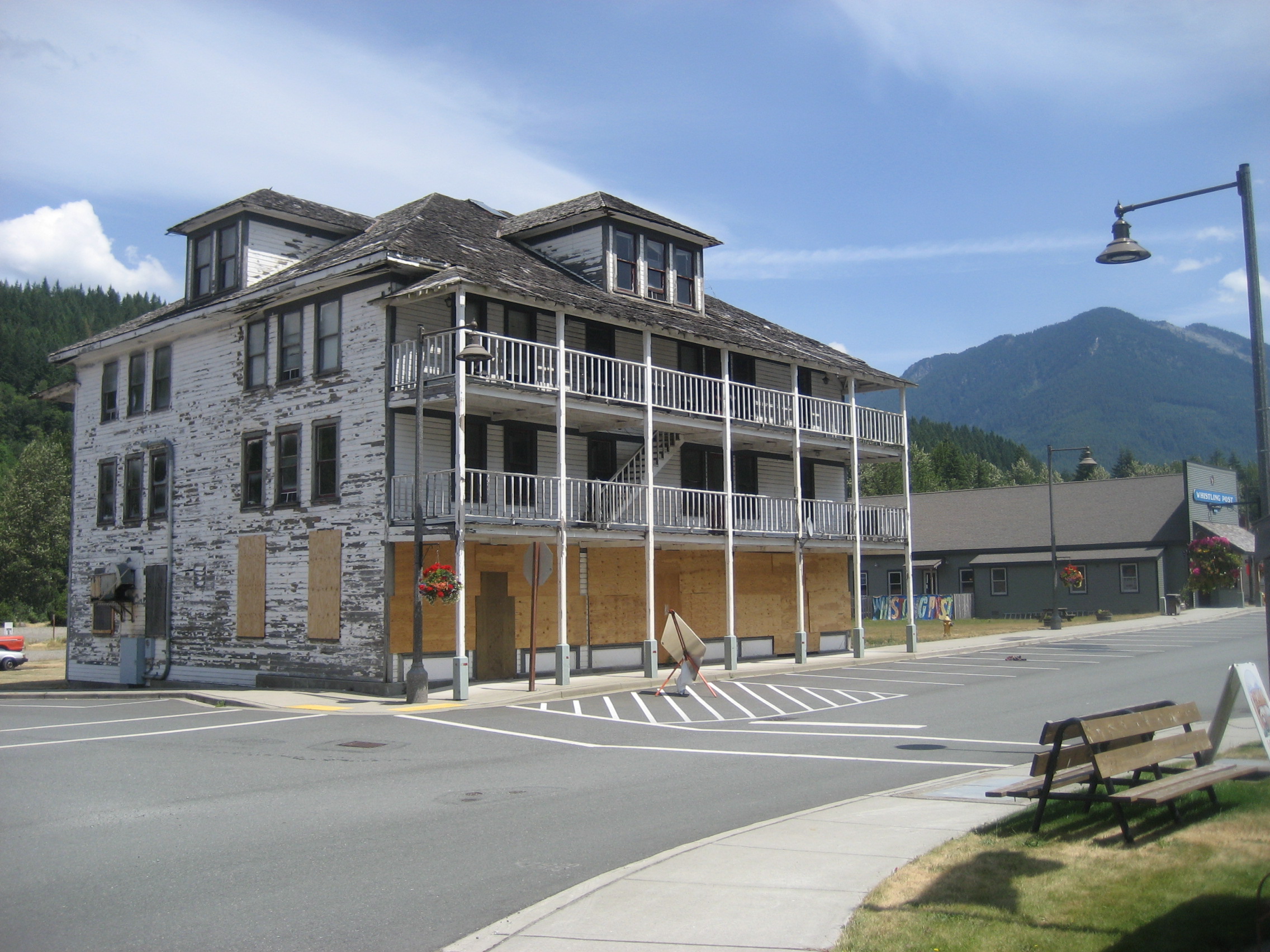
My next stop, however, was a tough little town called Skykomish, which has about 500 people who still support a weekly bus service to Monroe and have their own school district.  It was founded as a rail stop, by routing engineer John Stevens, for whom nearby Stevens Pass is named. This old building used to be Skykomish Hotel.

164

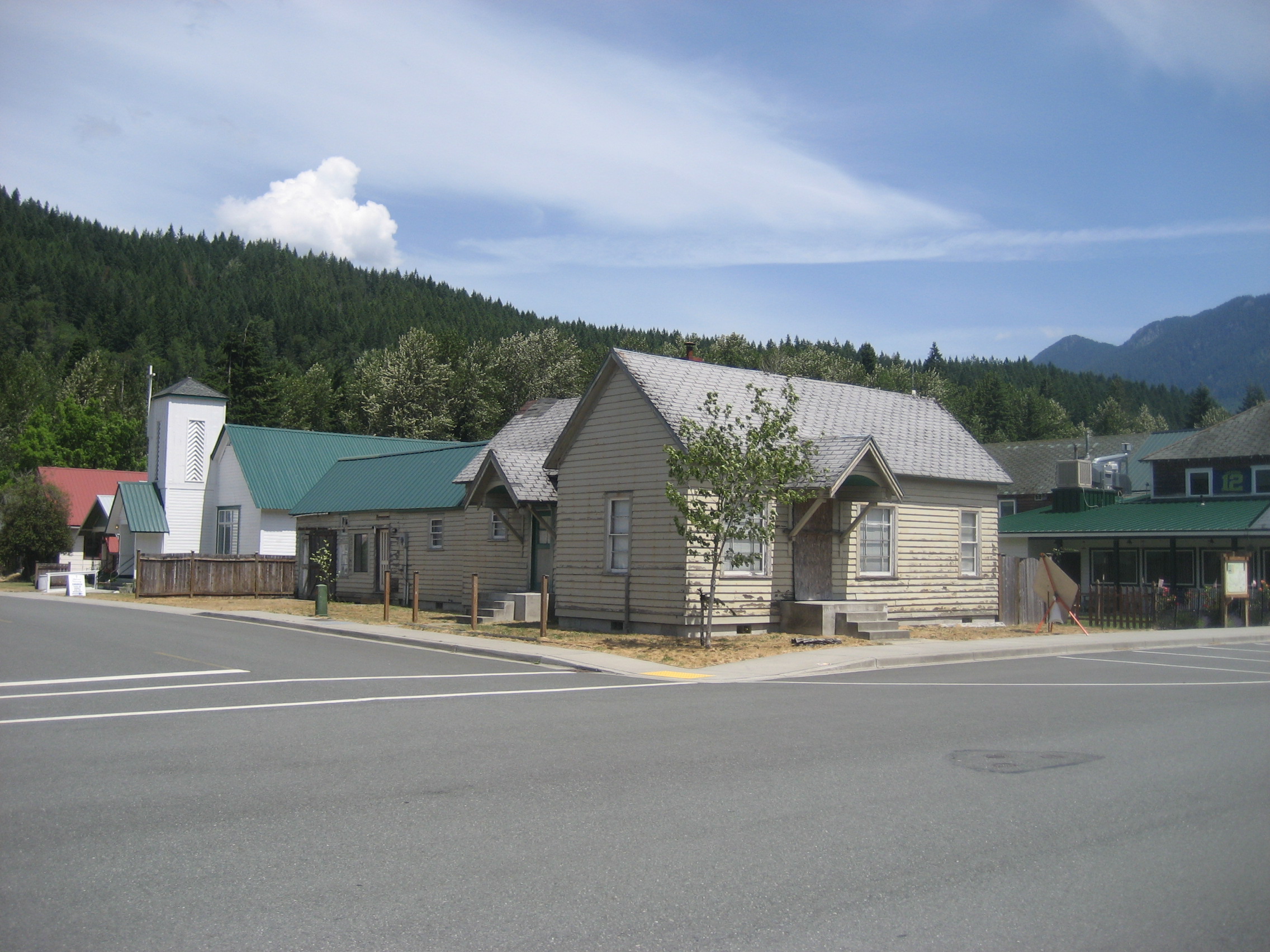
The rest of the town also has a frontier air about it, still.

166

I had lunch (leftover lasagna) at a picnic table facing the main street. Then, it was on to Deception Falls.

169

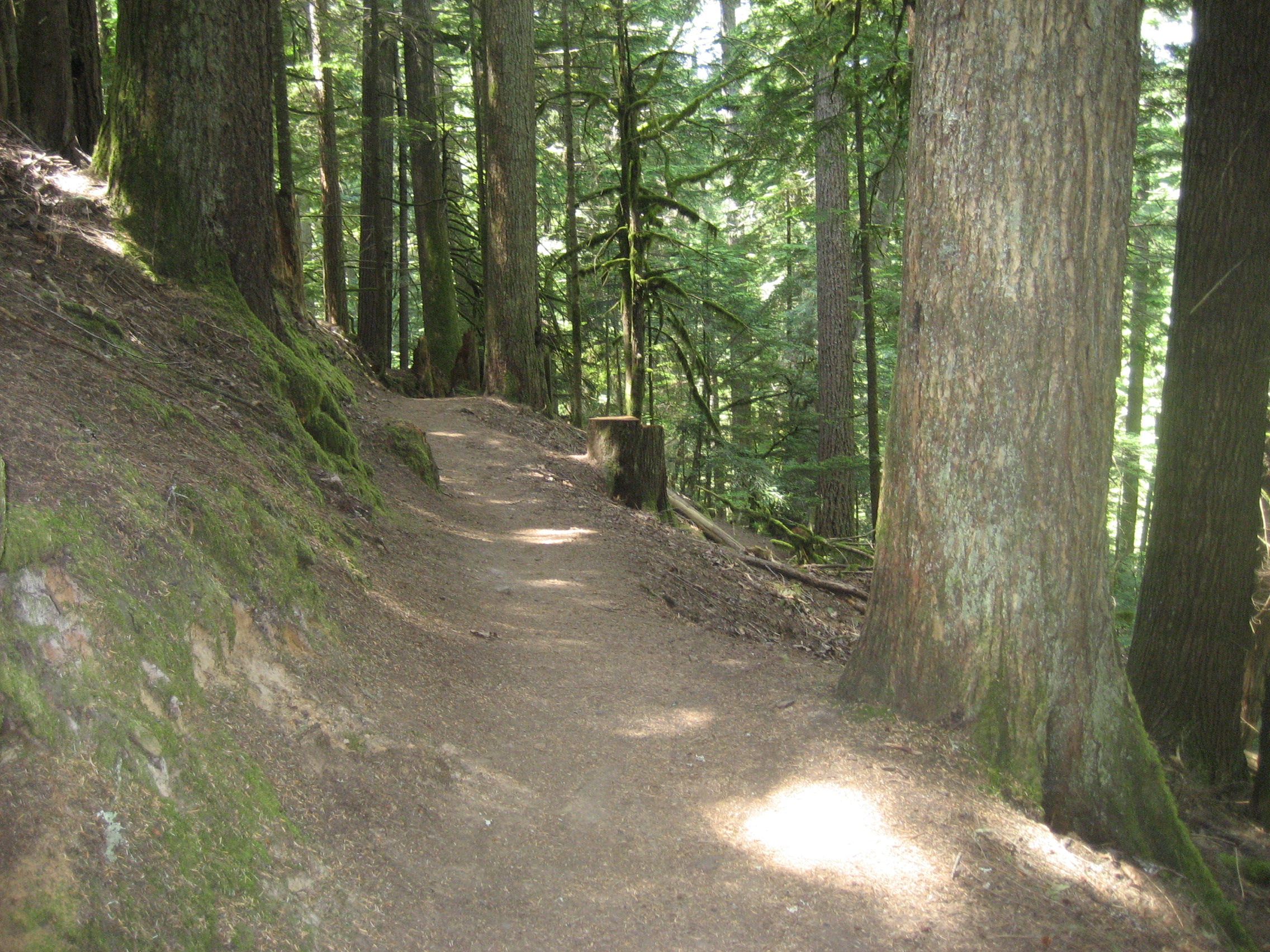
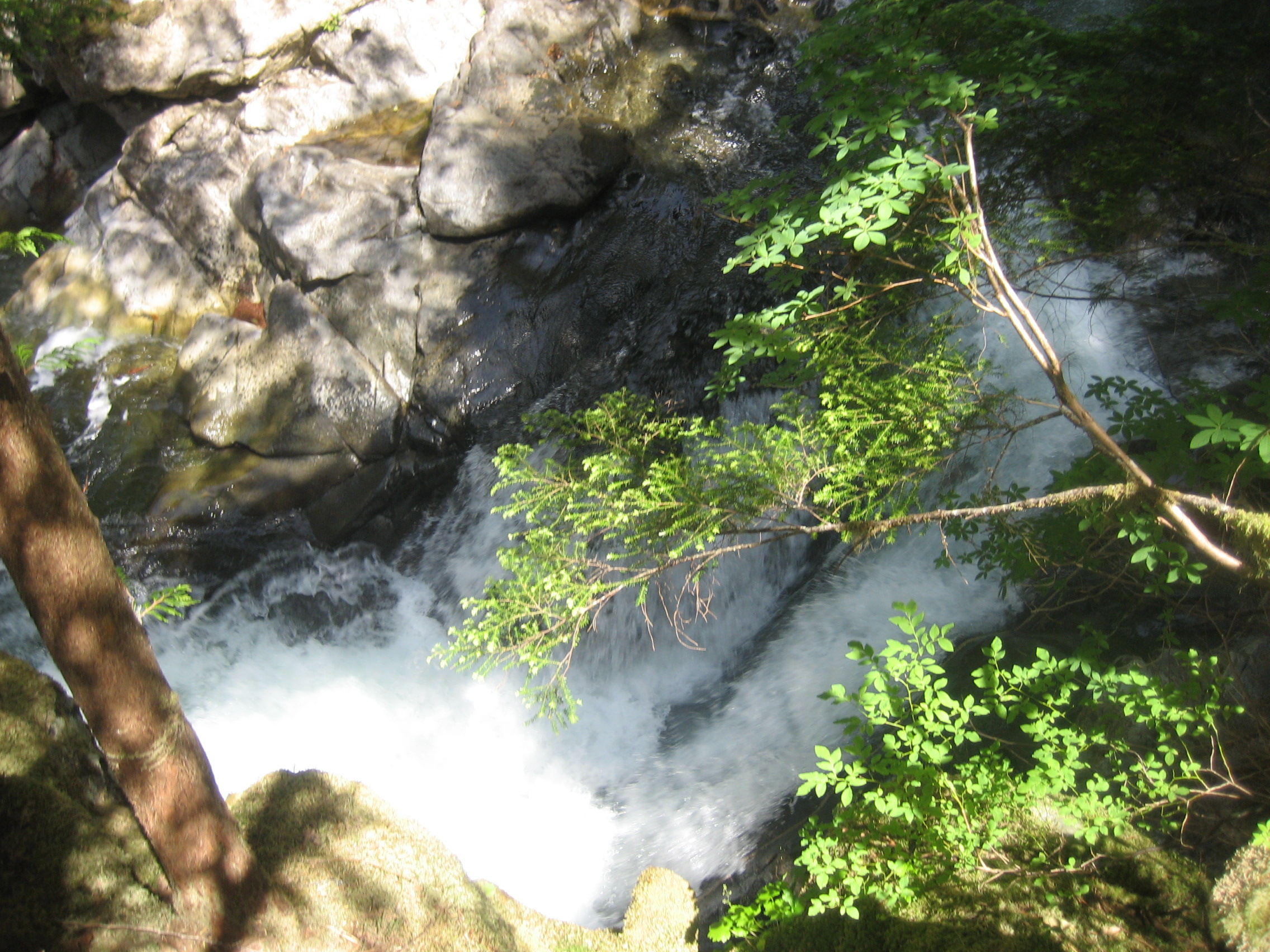
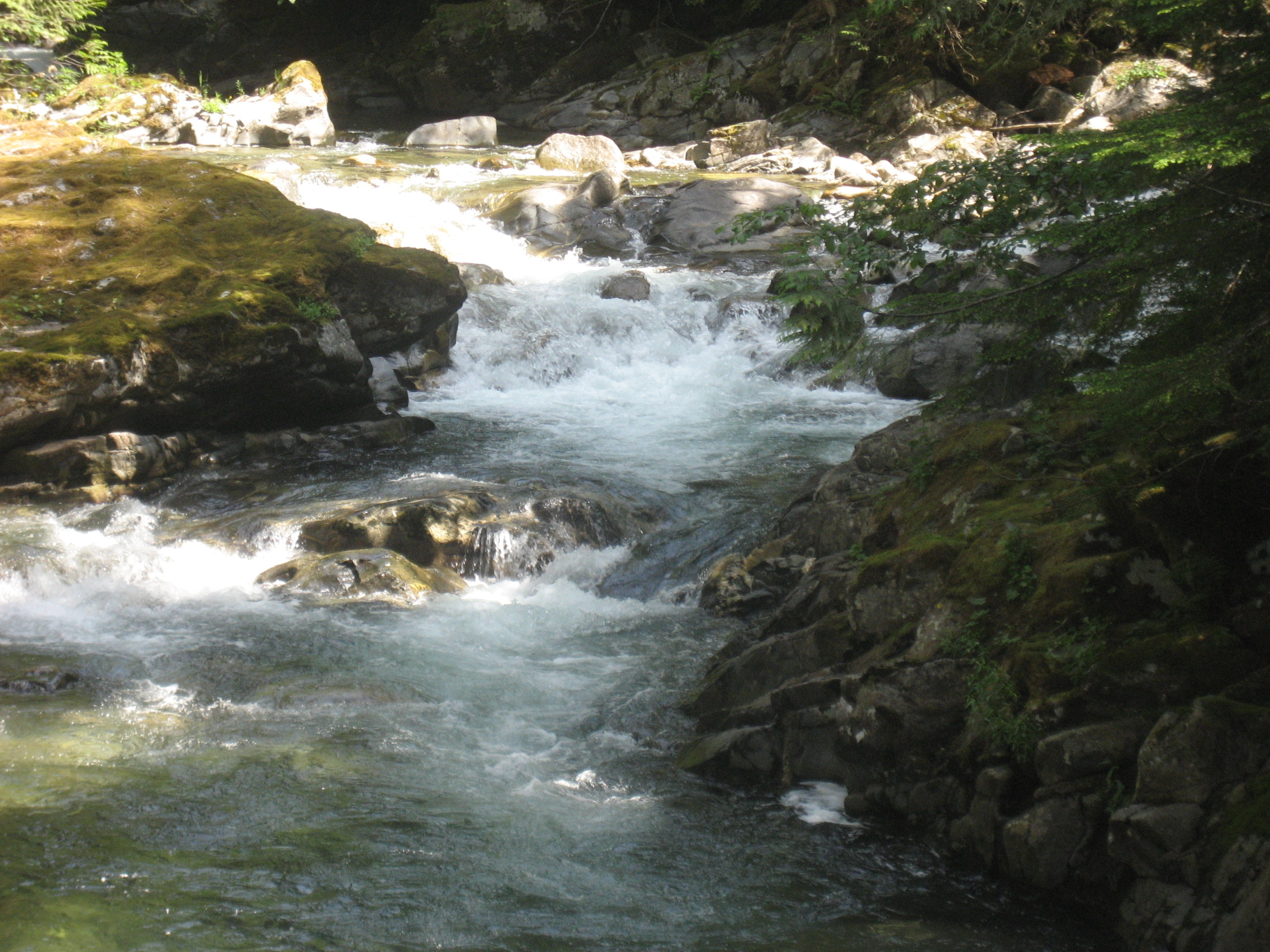
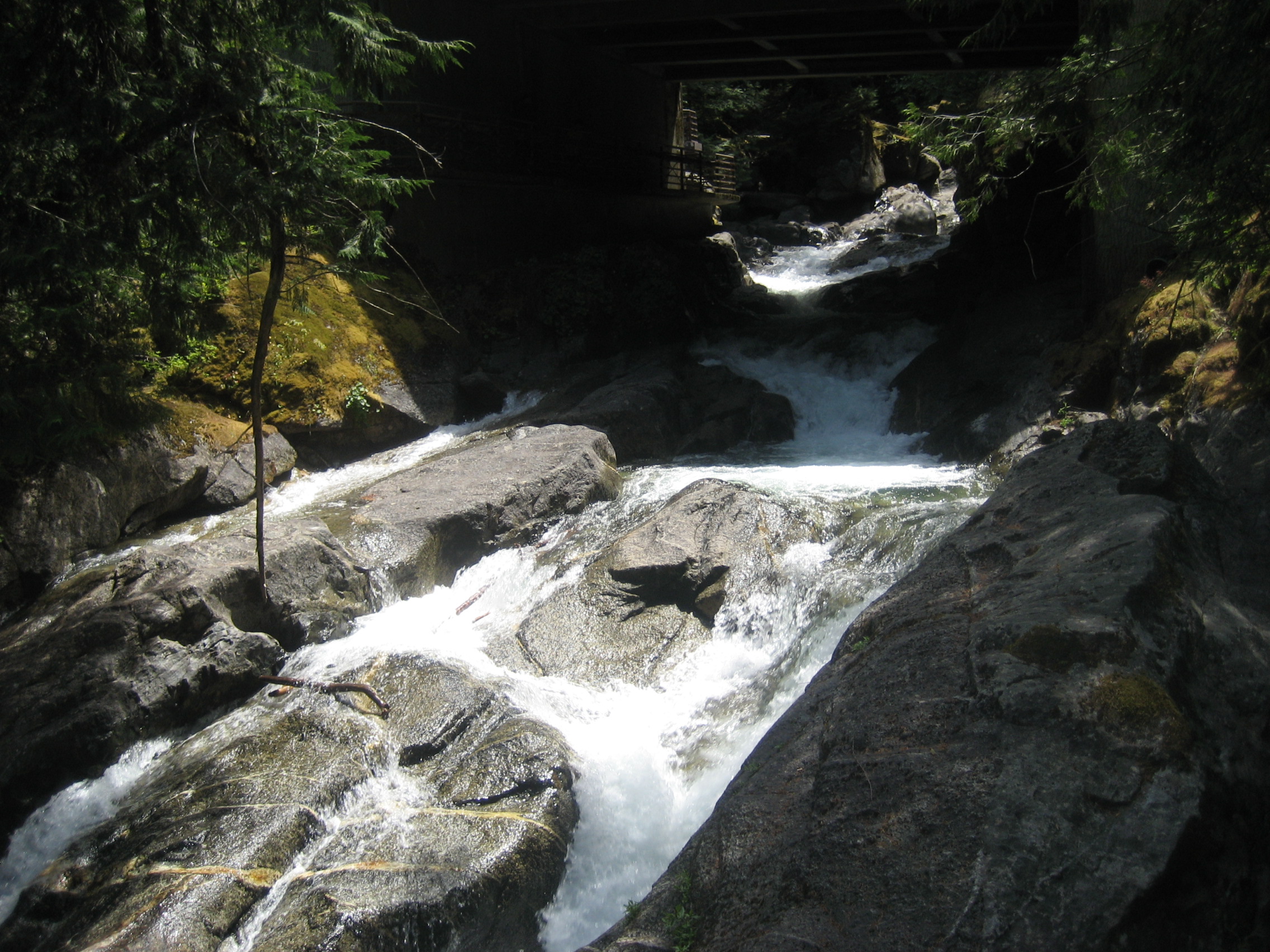
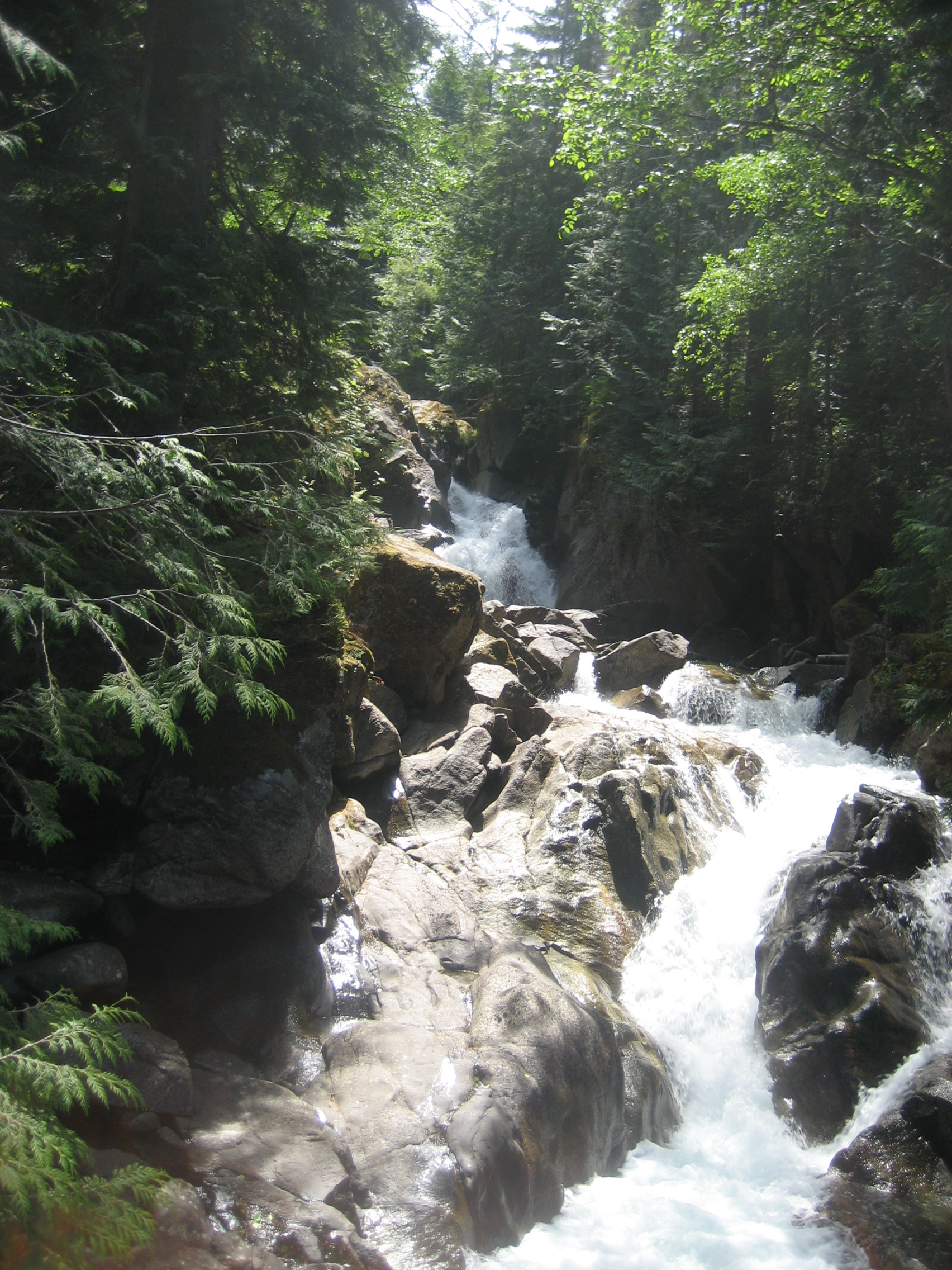
This popular trail, at the foot of Stevens Pass, offers the three cascades of Deception Creek.

187

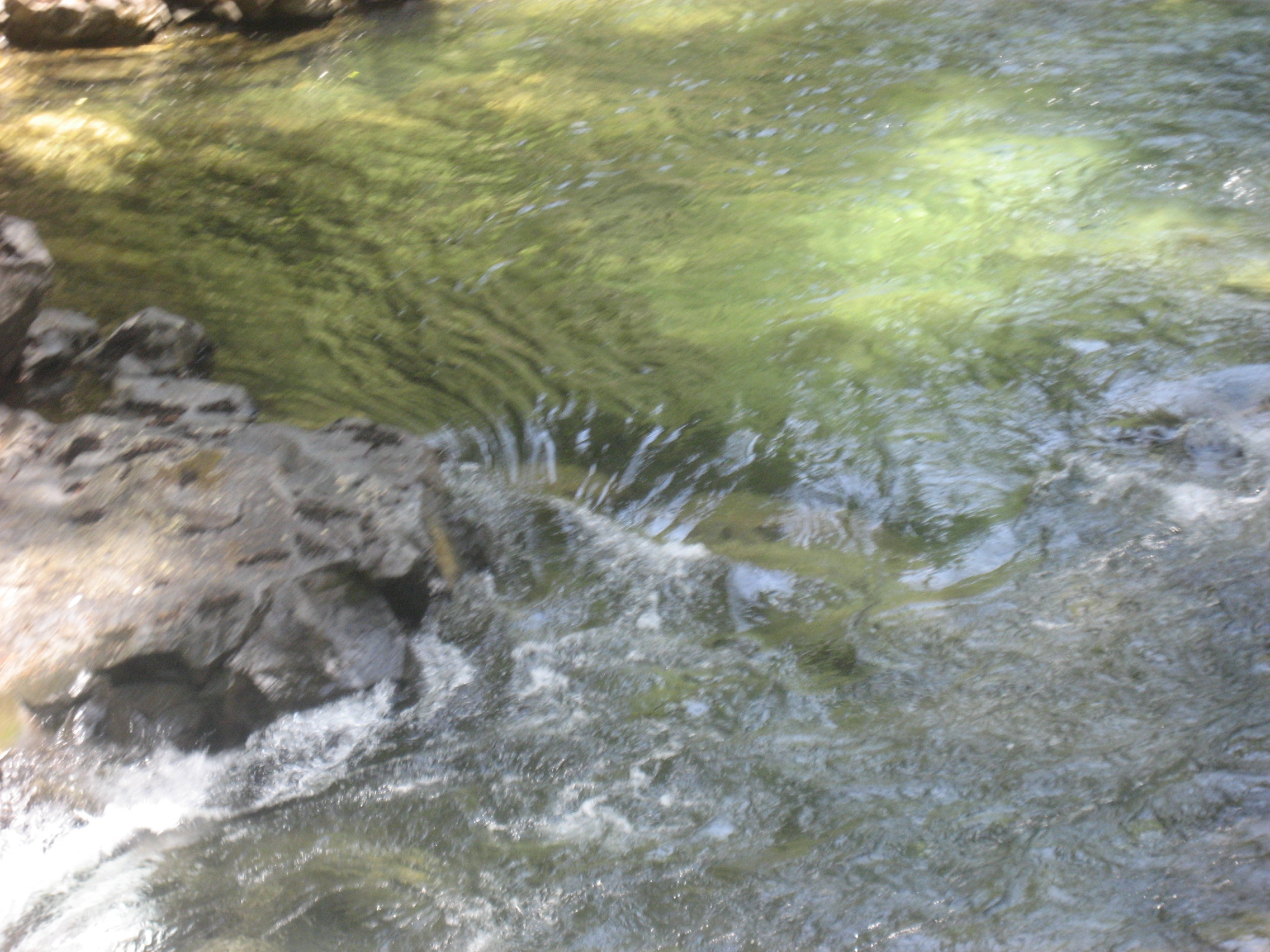
Note the relative purity of the water.

189

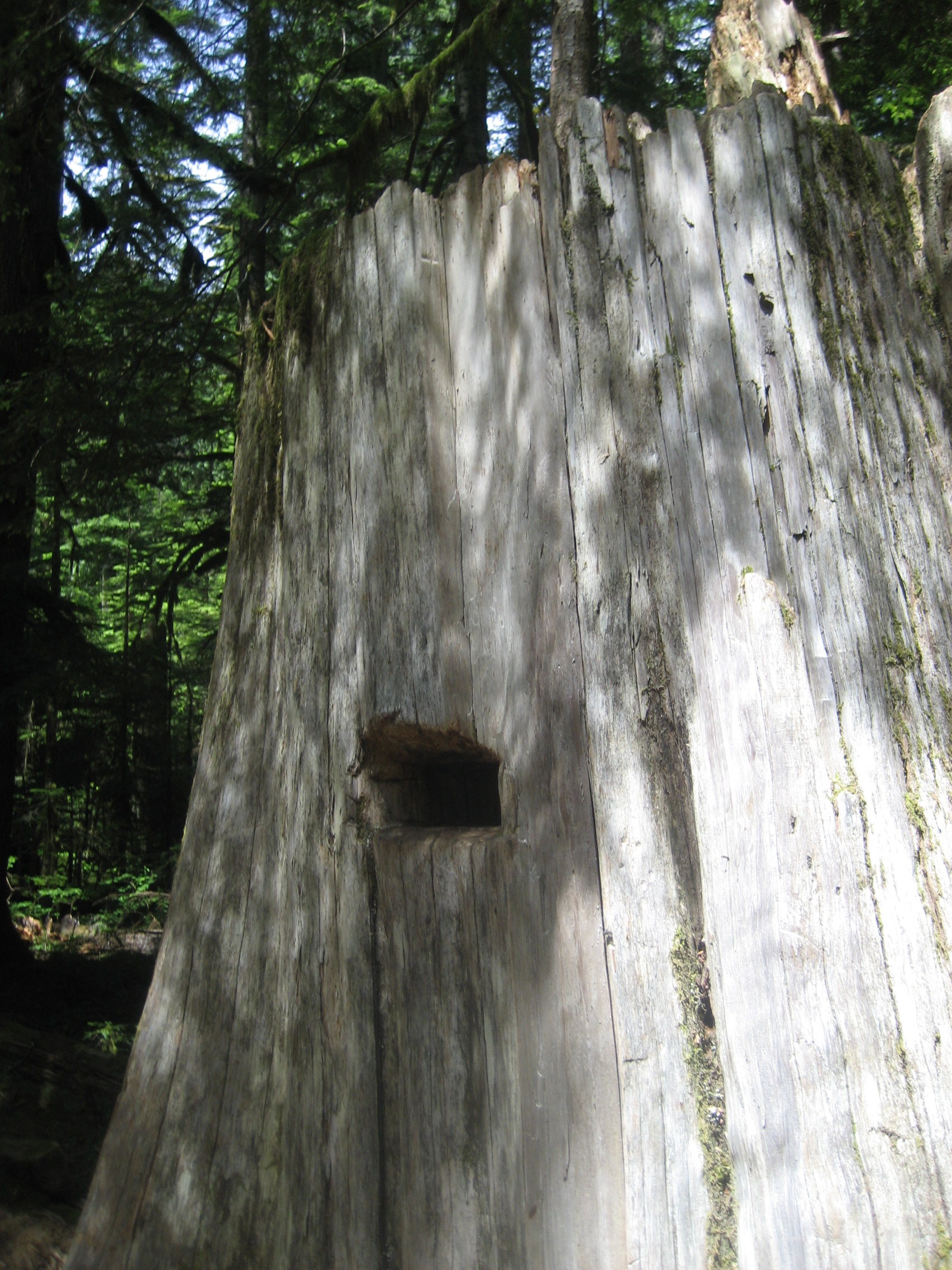
The trees provide variety in the scenery, especially as they lean,

170

serve as springboard stumps,

176

or act as nesting pots for new trees.

177

or, still as a place to drive piles.

183

Meanwhile,back at the falls:

191

192

200

203

205

There was a plenitude of visitors, yet much of the time, I found myself alone, as most people gathered at two overlooks.

The road led next to Leavenworth, not the Federal prison, but the touristy mountain community, about forty minutes from Wenatchee.  The Wenatchee River is a major comfort, for locals and visitors alike.

209

I stopped just long enough to walk along the river a bit, and to buy some coffee from a local grinder, Square 15.  It was to be a gift for my friends in Reno. The faux Bavarian scene can be taken in small doses.

215

I stopped in Wenatchee,for about two hours, long enough to marvel at the clear air (compared to the smoke which brought me here in prayerful service, three years ago) and to enjoy a fine Hispanic-fusion meal, courtesy of two friends.

219

I shall send them some Arizona treats, very soon.

The rest of the evening entailed driving down from the central Cascades, and into the western edge of the Great Basin.  Some outlying areas reminded me of the Great Plains.  There are patches of desolation.

225

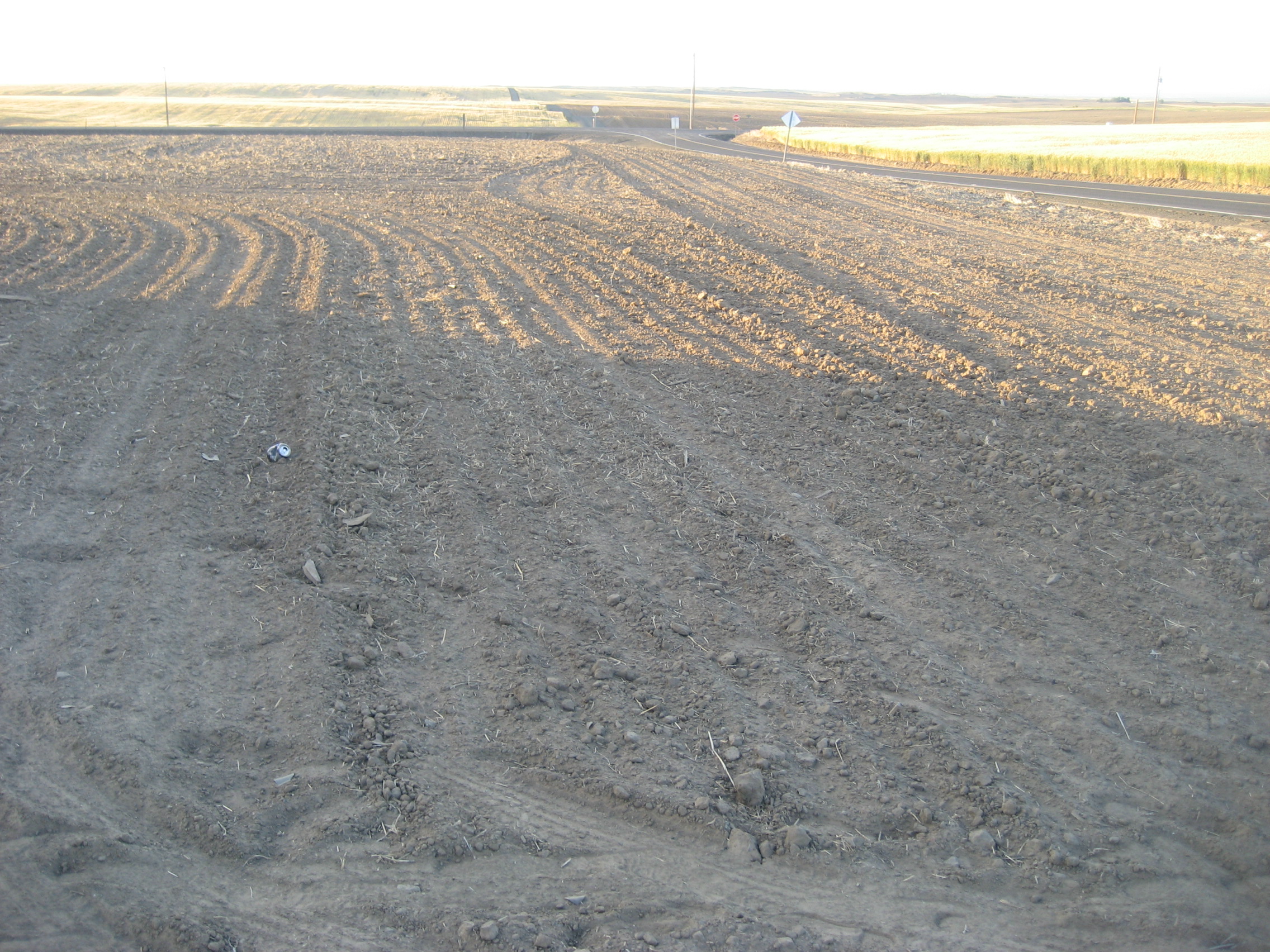
There is a worrisome dryness.

226

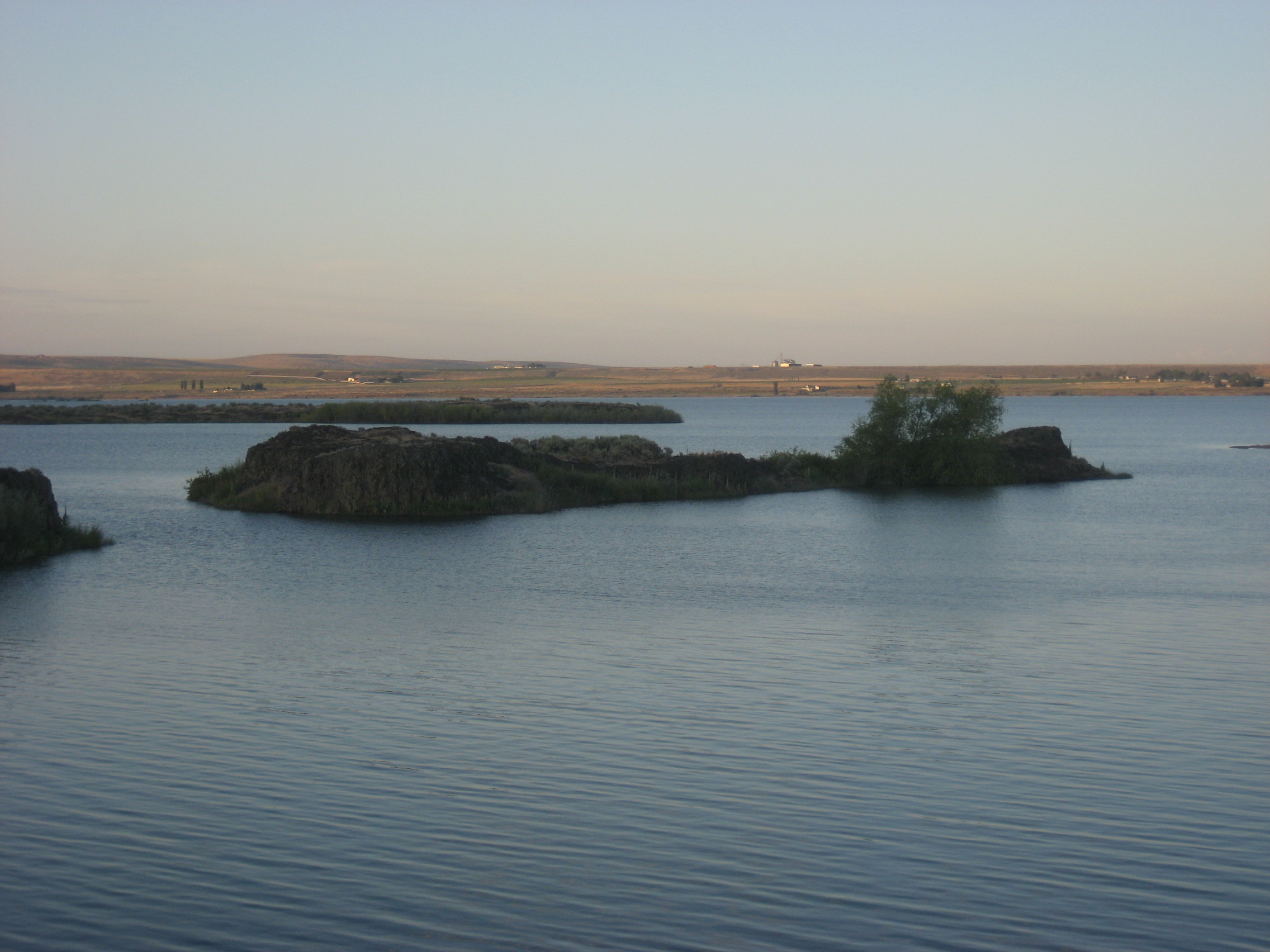
The coulees of the Columbia River, and its tributaries, provide irrigation water, regulated by a series of dams.

227

One of these is Dry Falls Dam, about a mile south of Grand Coulee.

228

No, that’s not a fresh-water dolphin, in the river above.

I settled in on a grassy patch, at a little RV park called Country Corners, and slept fairly well, except there was this event called Aurora Borealis, and my tired self couldn’t leap out of the sleeping bag and take a shot or two.  Perhaps one or two of you saw it.

The Road to 65, Mile 205: Father’s Day

3

June 21, 2015, Monroe, WA- I woke , to a bit late today, around 7:15, to speak with my son on this Hallmark morning.  It’s always good to hear his voice, contrived occasion or not.  I was in the suburban clime of Mount Vernon, had been wished “Happy Father’s Day” by the waitress at Farm House Restaurant, in this city’s La Conner neighbourhood, after getting off the ferry last night, and got a somewhat more subdued greeting from the server at Riverside Cafe, near the motel, during breakfast this morning.  Racial politics, Hispanic vs. Anglo, seems to be playing out a bit in this community, which is always a hard thing.  I was given my breakfast, and two cups of coffee, then expected to leave.  Riverside will not see me again., though Farm House would be a pleasure.

I was in a funk, not knowing which direction to head, yet after reclaiming some items I had left at Holiday Motel, the day before, and enjoying some coffee and a treat at Johnny Picasso’s, in Anacortes, I had an idea.  Heading to Arlington, and Oso, the site of a horrible mudslide in March, 2014, I took some time for prayer towards racial healing, as several people back in Arizona were gathering to pray for the same, with the Charleston Massacre as their focal point.  There is no one group that does not need a healing balm.

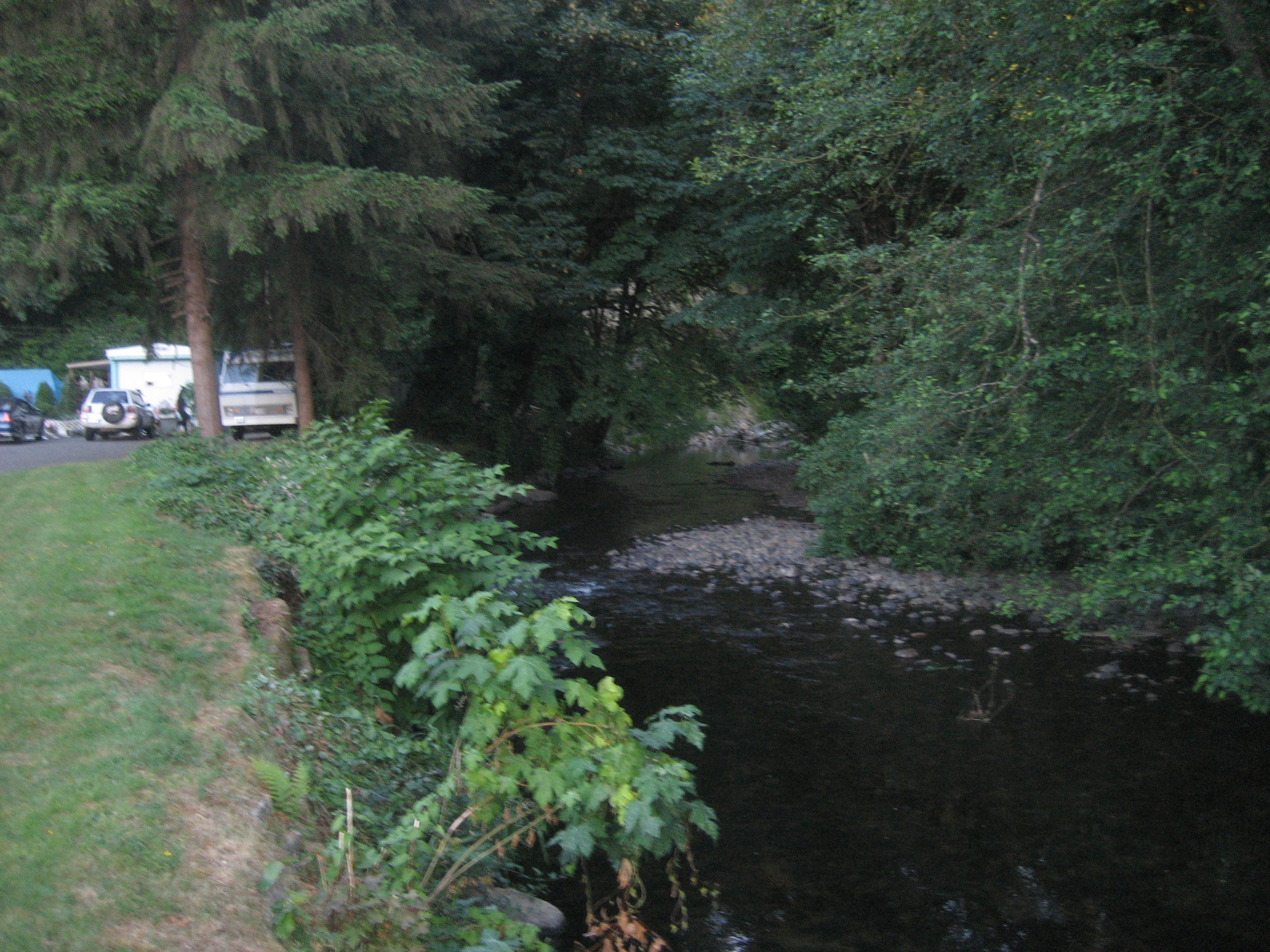
The message was clearer to me after that, and I drove east on Highway 2, finding the small town of Monroe to be a good place to rest.  The Monroe Motel lies alongside Woods Creek, so there was no finer place for me to observe today, thinking of fatherhood-how it affected me as a son, as a son-in-law, as a spouse and as a parent. 158

I was not an easy son.  My happy-go-lucky, but hard-working father did not know what to make of me, half the time.  I did not know what to make of me, half the time.  I wonder if he knew how much he was loved, back then.  He knows now.

157

My role with my father-in-law was part good-natured foil for his jokes, and part guarantor of his family line’s continuing on in safety.  We gave him his only grandson, and that guaranteed my safety. He knows now, how important it was to me that Aram actively knew his grandfather.  Both of mine were dead before I emerged from toddlerhood.

159

Penny and I were close to nature, as individuals and as a pair.  She would sometimes, in the throes of her progressive decline, say that she felt she was in my way.  In truth, she WAS my way.  She knows that now.

160

I have gone through a fair number of personal struggles, in my late teens, in my twenties, and in the buffeting called my fifties.  Somehow, I have emerged.  Fatherhood happened for me, in the best way I knew at the time.  There was a lot more I could have provided, for my son’s stability.  I realize that now.

He’s okay, thanks to the discipline of the Navy, and his grandfather’s guiding hands of steel and velvet.  I am here for him, and can finally show a solid example of how to move through life, come hell or high water.  Aram knows that now.

155

I went into this lovely, if cavernous, establishment in downtown Monroe.  A Caesar salad, meat lasagna and a bowl of spumoni were my Father’s Day meal.  Half the lasagna was saved for tomorrow, and my drive to Wenatchee, where I will reconnect with friends from three  years ago.

I end this with Monroe’s comment on the whole race issue.

161

My spirit guides are with me, still.

The Road to 65, Mile 204: A Potlatch and A Walking Tour

6

June 20, 2015, Victoria- I hit the ground running this morning, though it’d have been easy to laze the day away in Anacortes.  A three-hour ride across the straits lay Sidney, BC, a harbour town northeast of Victoria.  British Columbia’s capital was participating fully in Canada’s National Aboriginal Day.  While this was officially on Sunday, the festivities were going on all weekend, on the grounds of the Royal British Columbia Museum, a magnificent facility, which would have taken up the entire weekend, in and of itself.

I zipped to the ferry station, west of Anacortes, and parked carefully in the day lot, as I would be returning at night.The wharfside featured some competitors for breakfast.

002

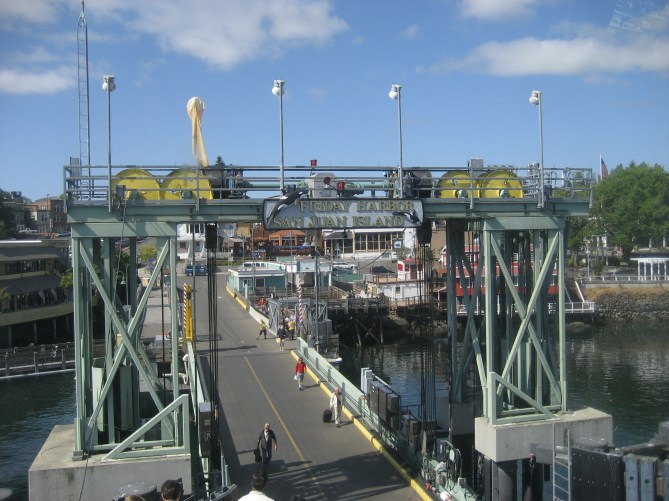
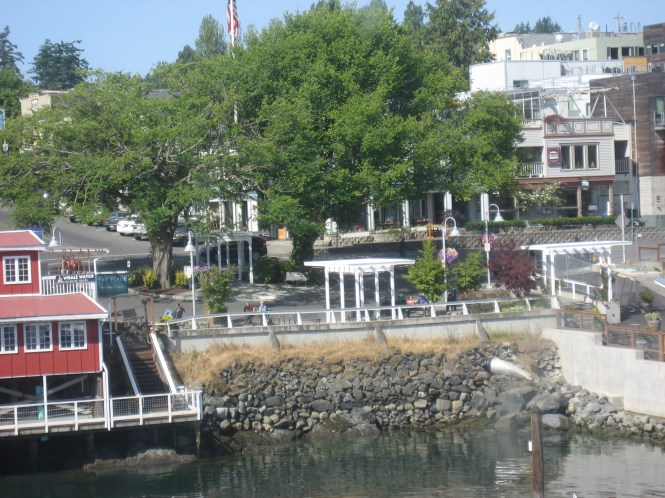
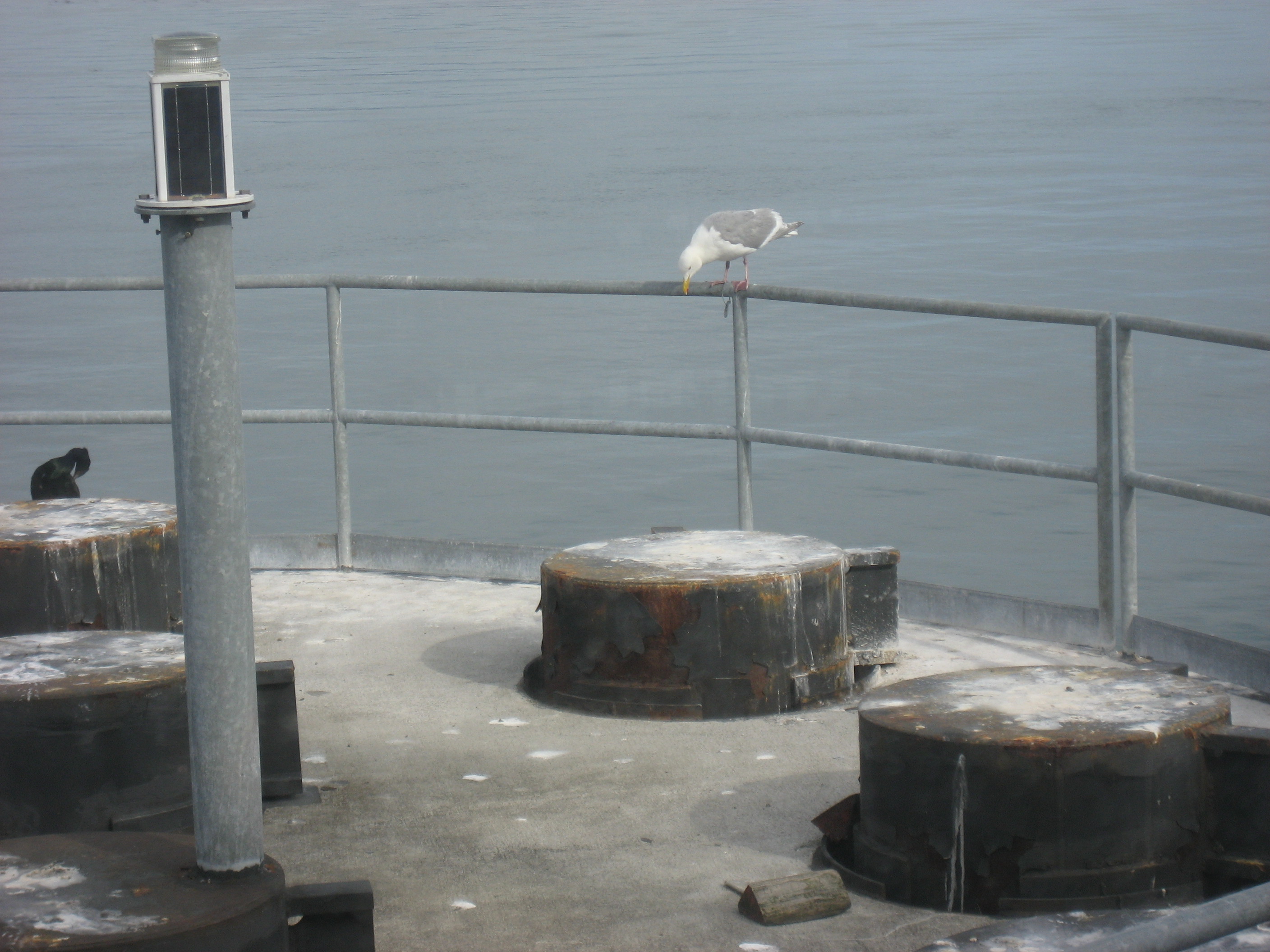
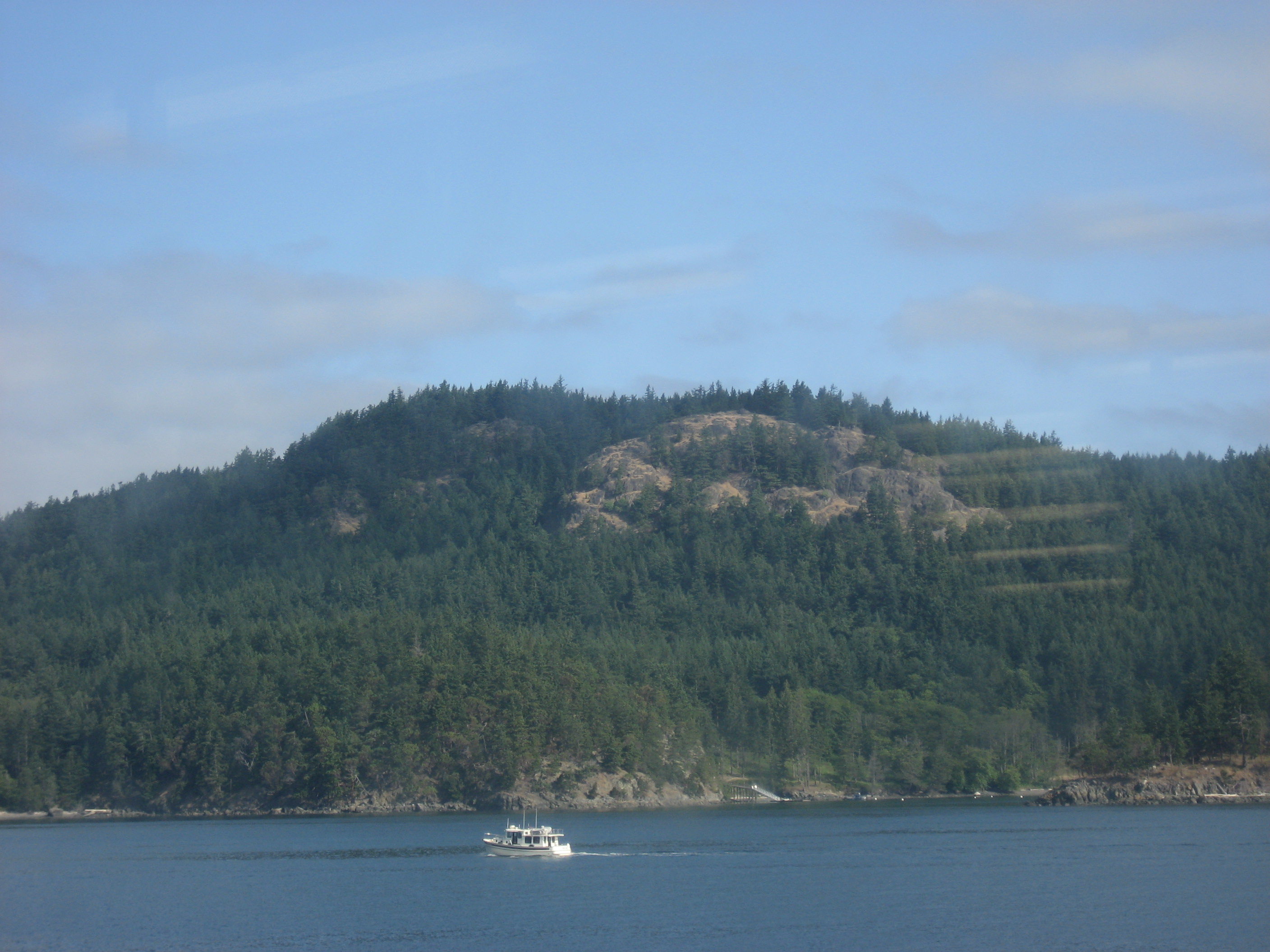
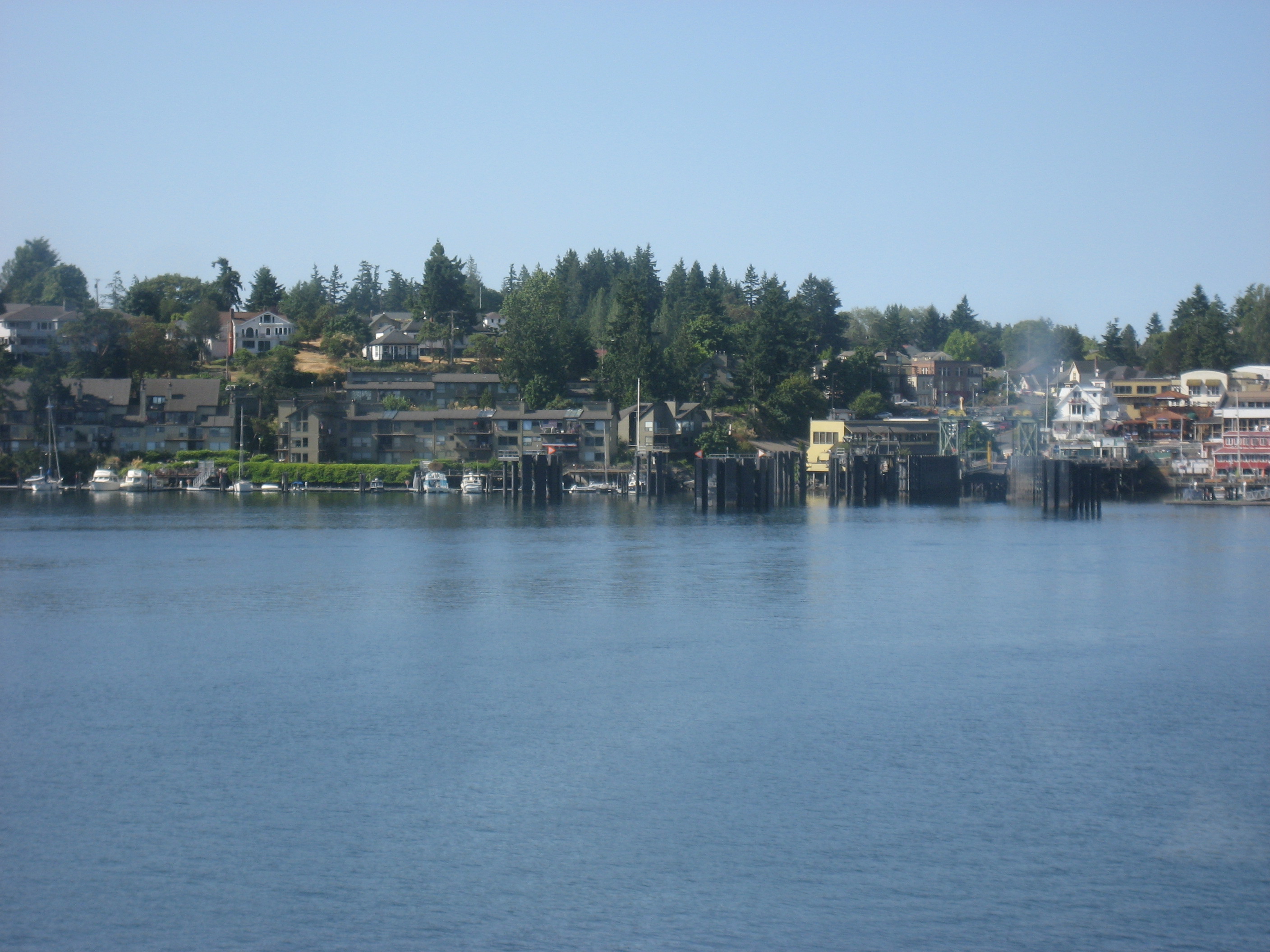
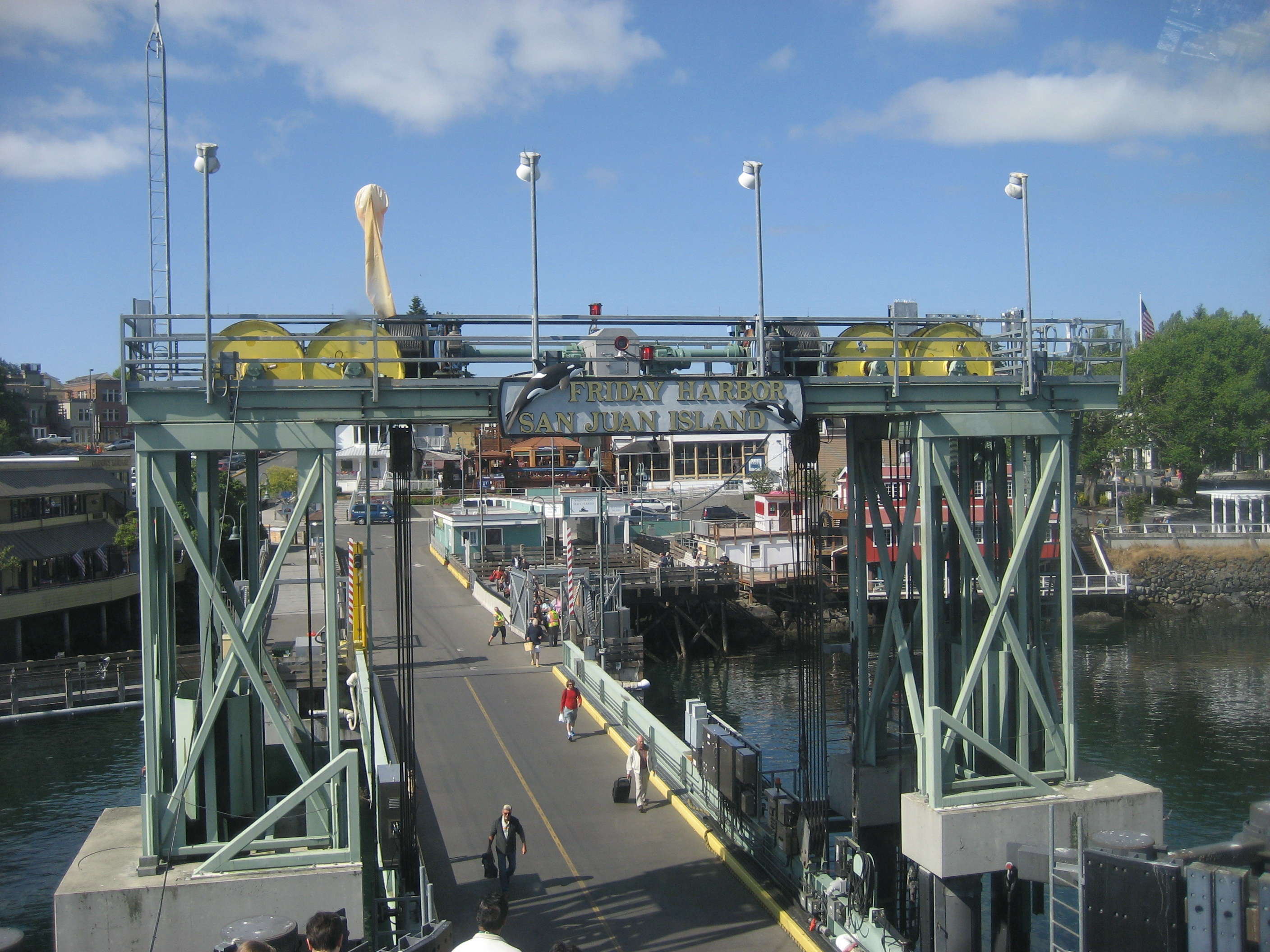
The cormorants far outnumbered the lone gull, however, so he followed us into the water for a while.  Our first stop was Friday Harbor, a delightful little town I might like to explore further, some day.

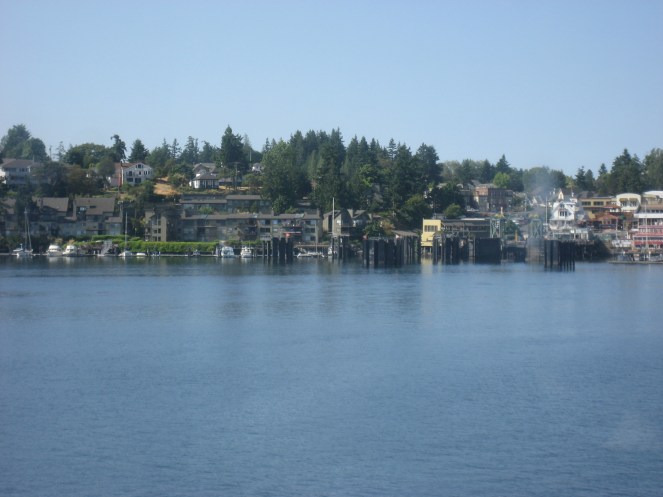
003

014

017

018

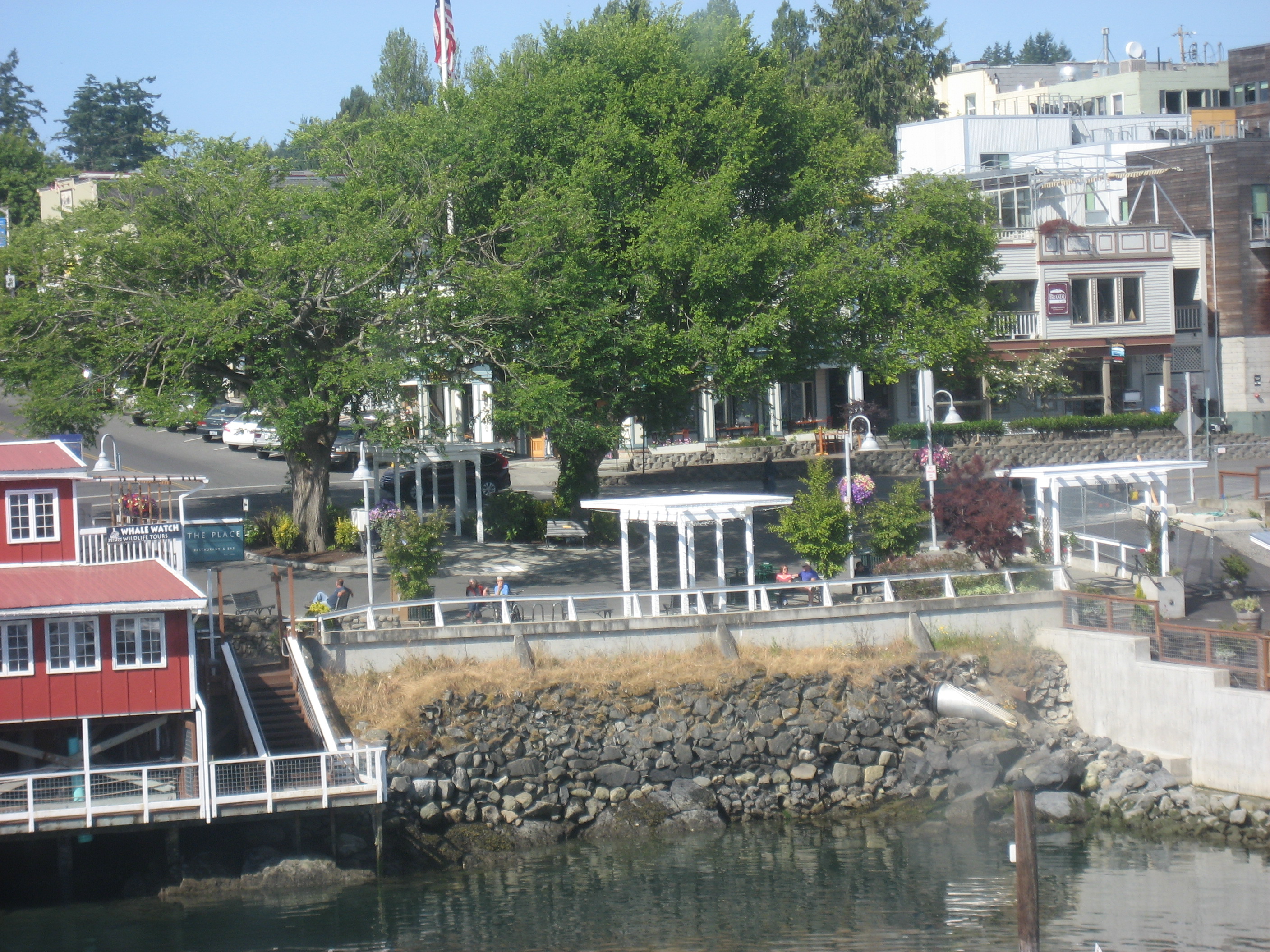
The same is true of Sidney, the small port where we landed.  A gruff Customs Officer gave me the third degree, then sent me happily along, to the port’s charming downtown.
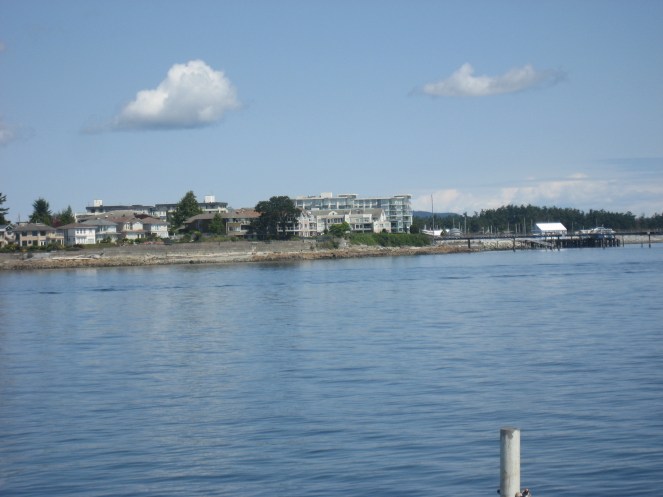
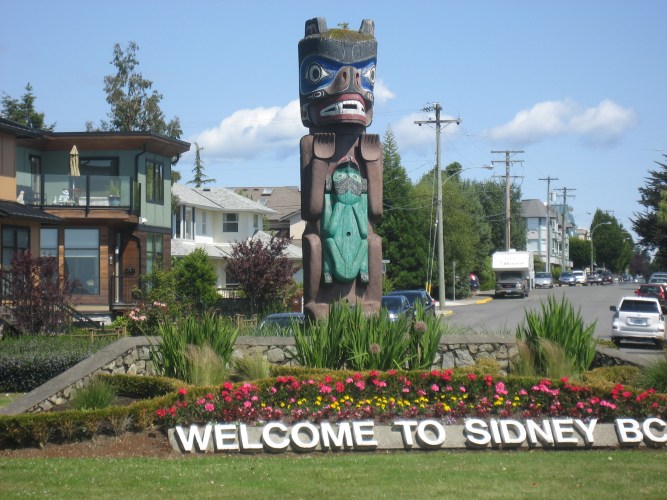
025

027

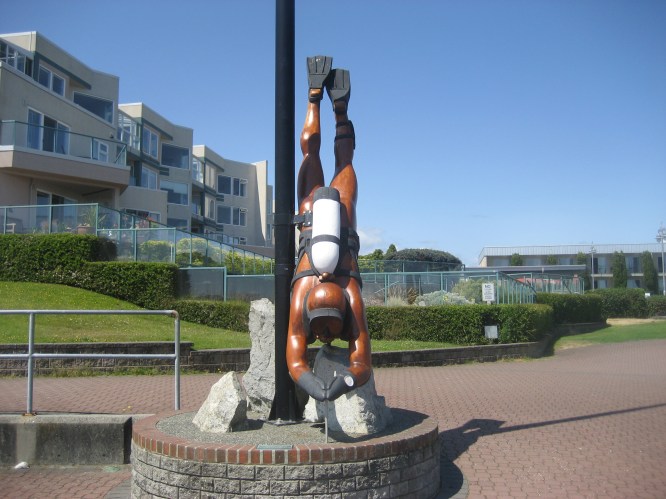
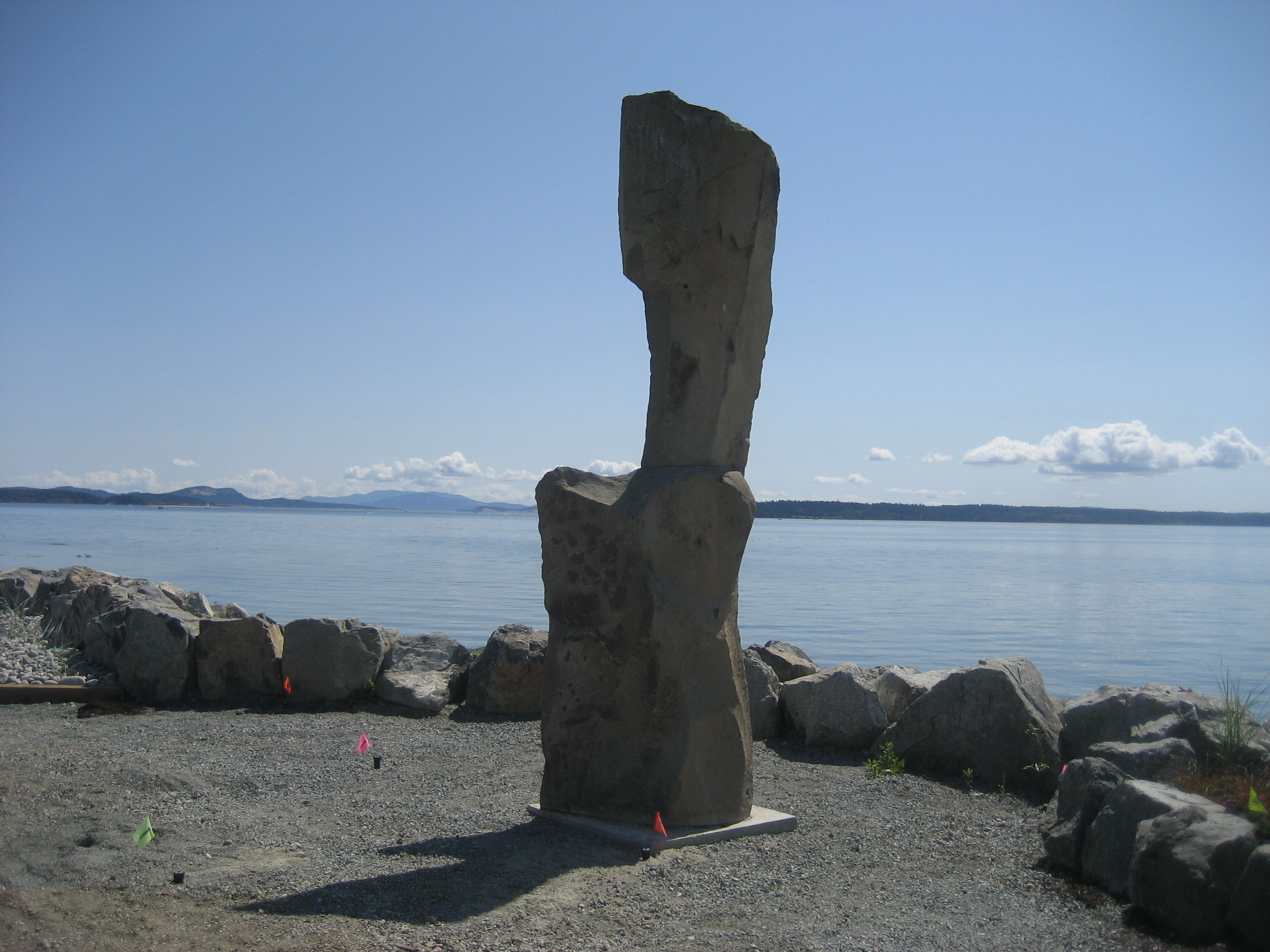
My first act was to check Eastview Park, and its sculptures.
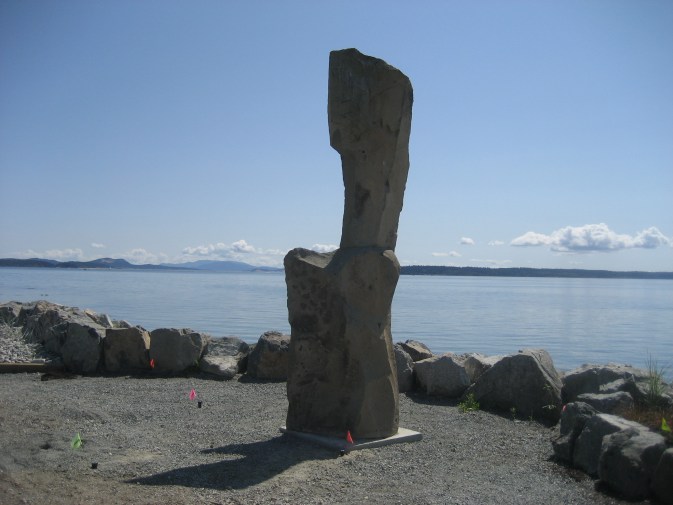
028

032

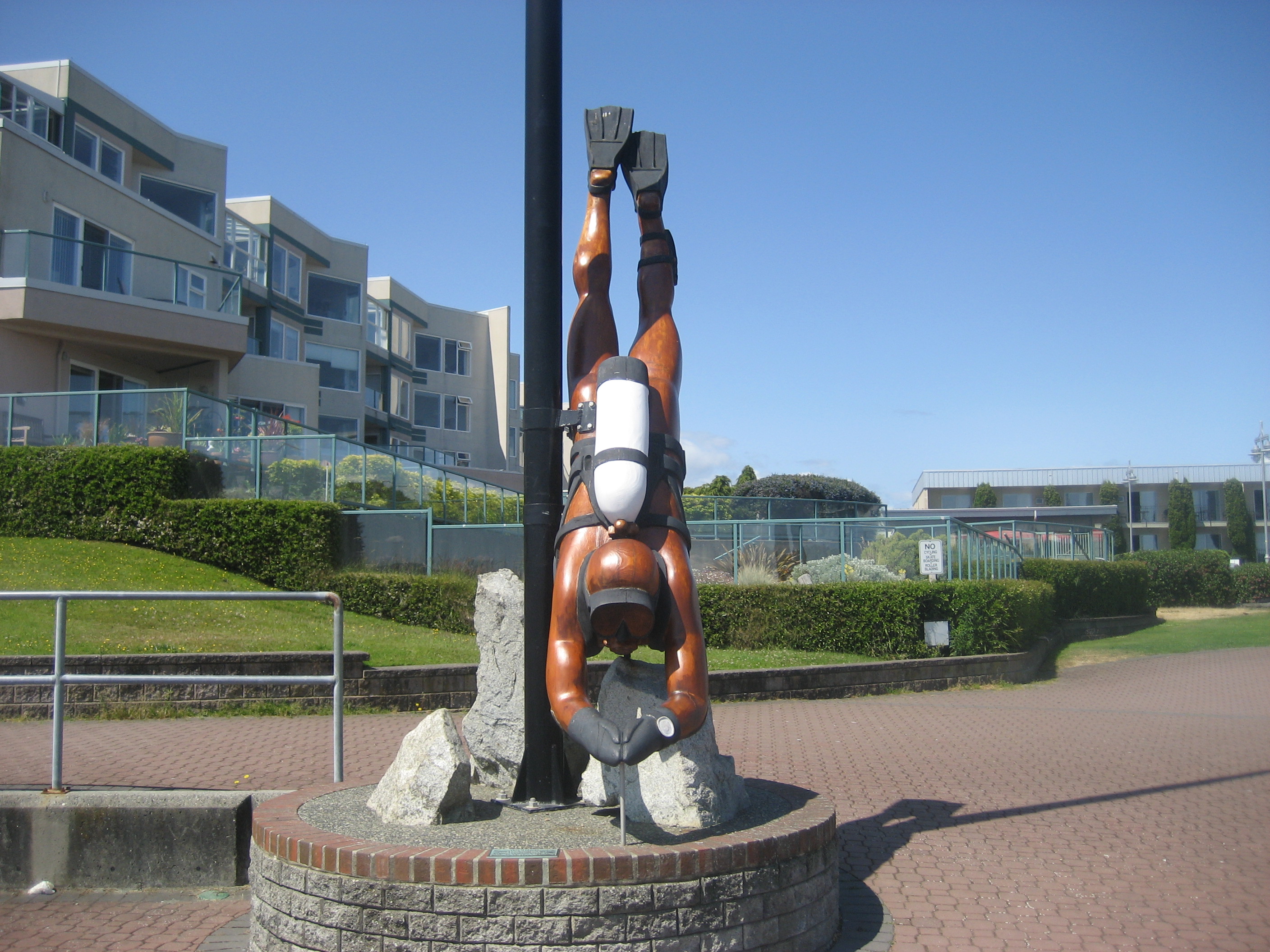
The artwork continued, downtown.

038

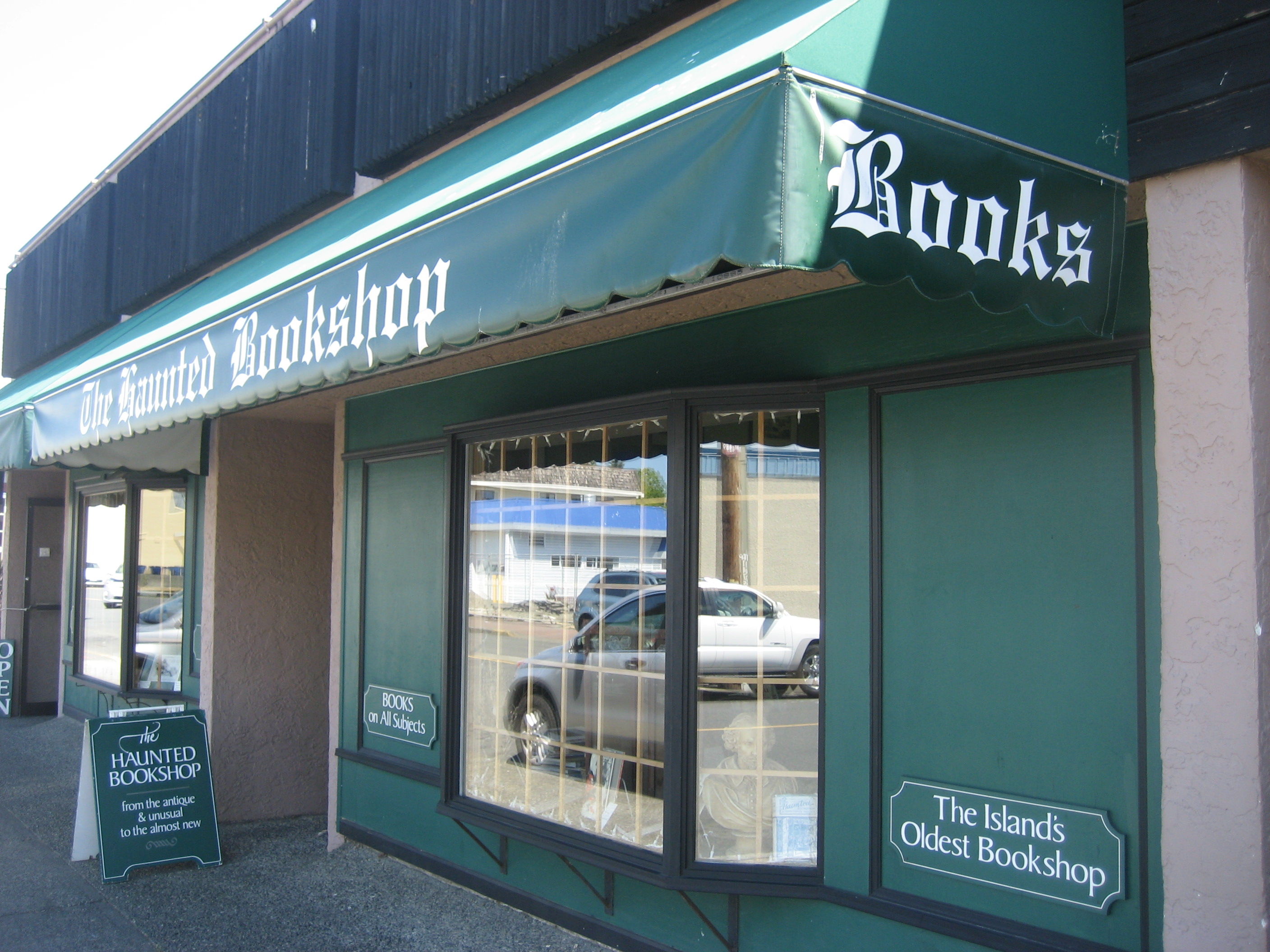
I spent about 20 minutes and C$ 10, at Haunted Bookshop, said to be Vancouver Island’s oldest.

039

The proprietor was kind enough to give me change for the bus to Victoria.  I took a double decker, going to the top tier, and engaging in conversation with a Korean student, resident in Vancouver, who was also here on holiday.  He was primarily interested in shopping, and in going to Butchart Gardens, which I had already consigned to a future visit.  They are another site that is worth a full day, in and of themselves.

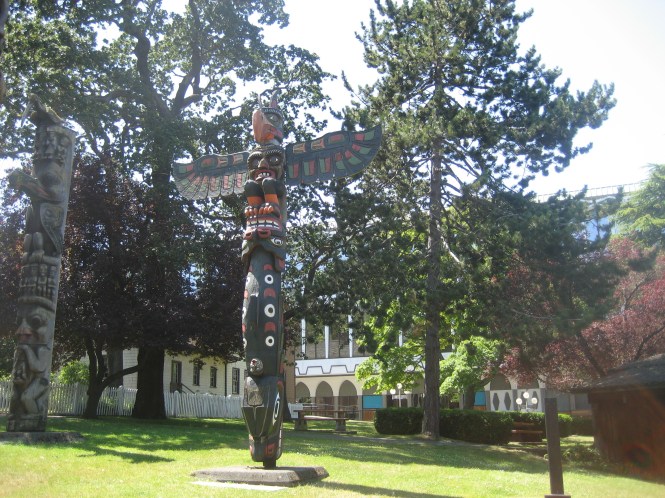
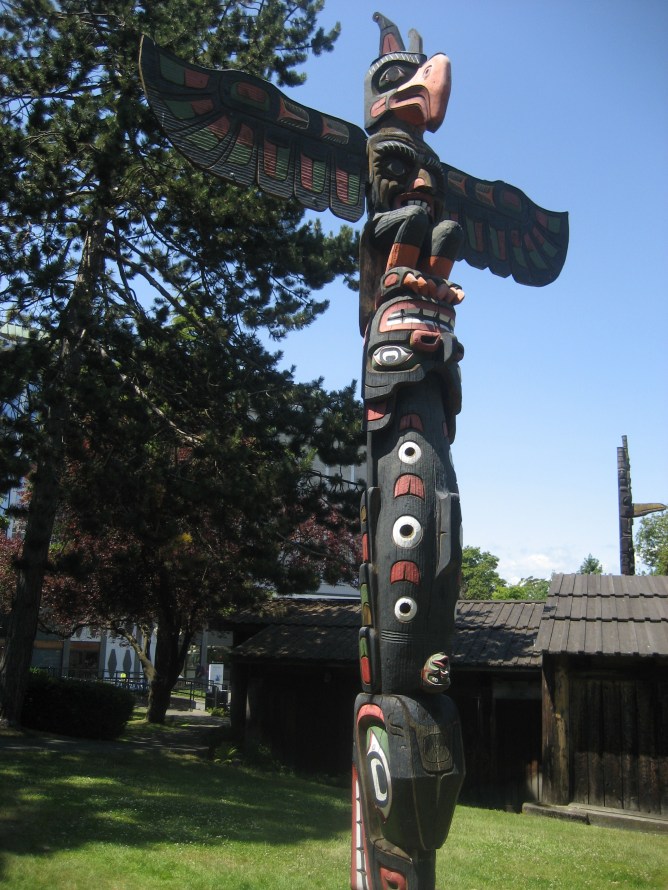
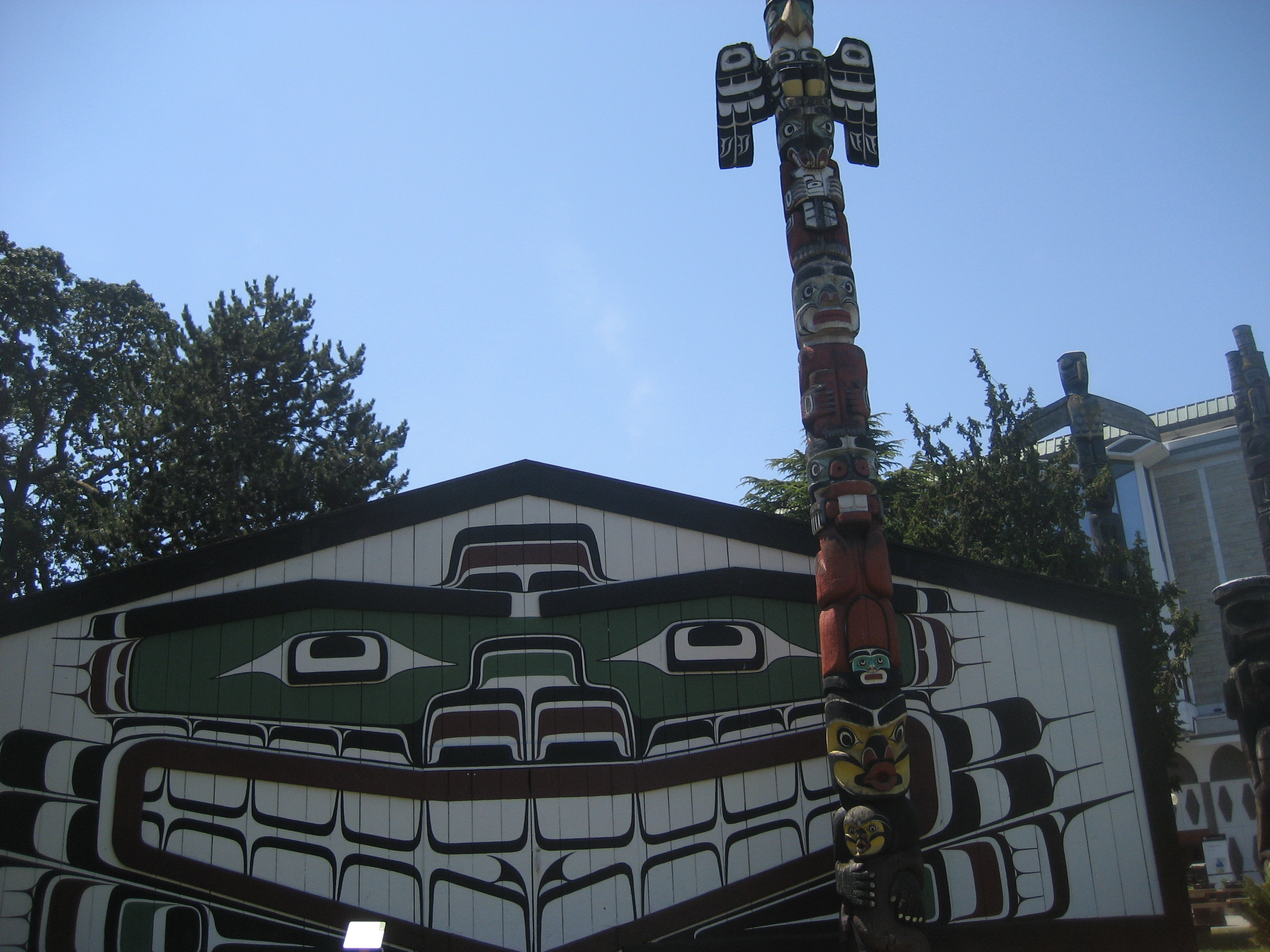
Upon arriving at the potlatch site, I took several minutes to wander among the totem poles of the Royal Museum grounds.042
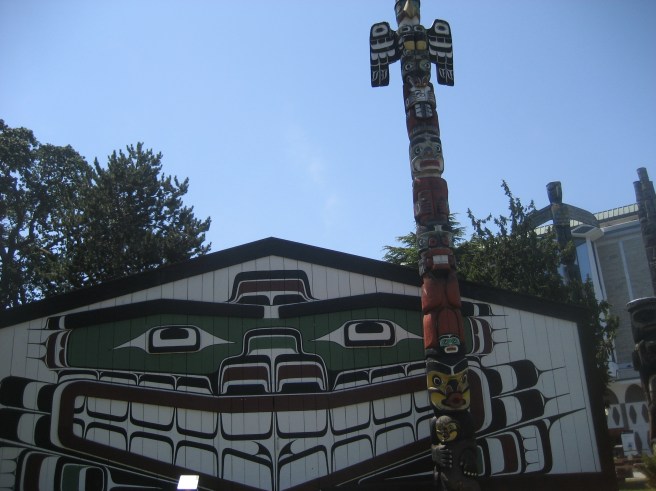
045

050

I also took in the Helmcken House, home to Dr. John Helmcken and his family, in the late 19th Century.  Dr. Helmcken persuaded fellow British Columbians to join the Dominion of Canada.
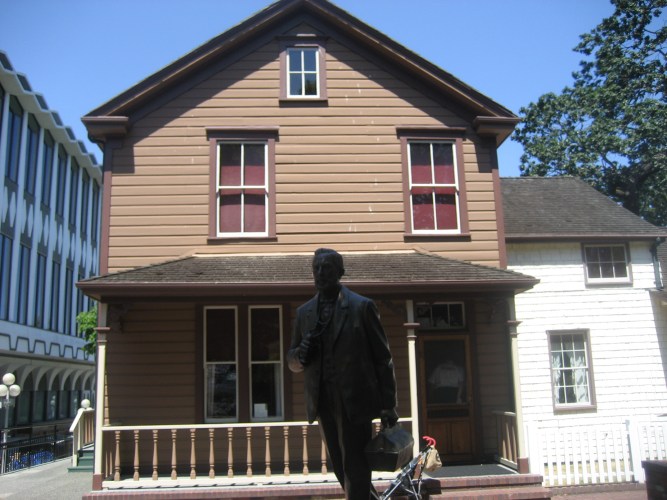
052

This carillon, on the north side of the museum grounds, adds a more contemporary touch to the mix.
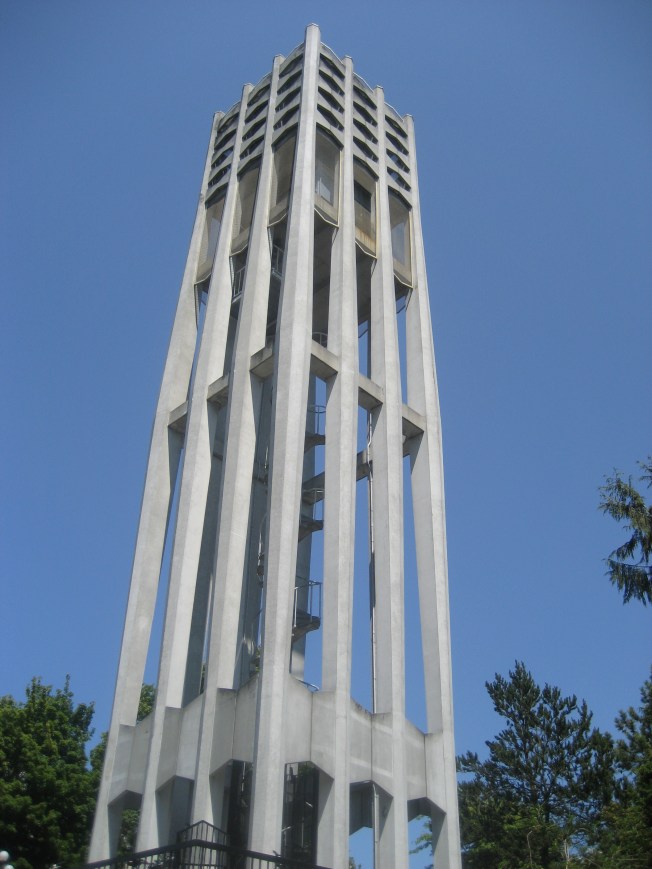
068

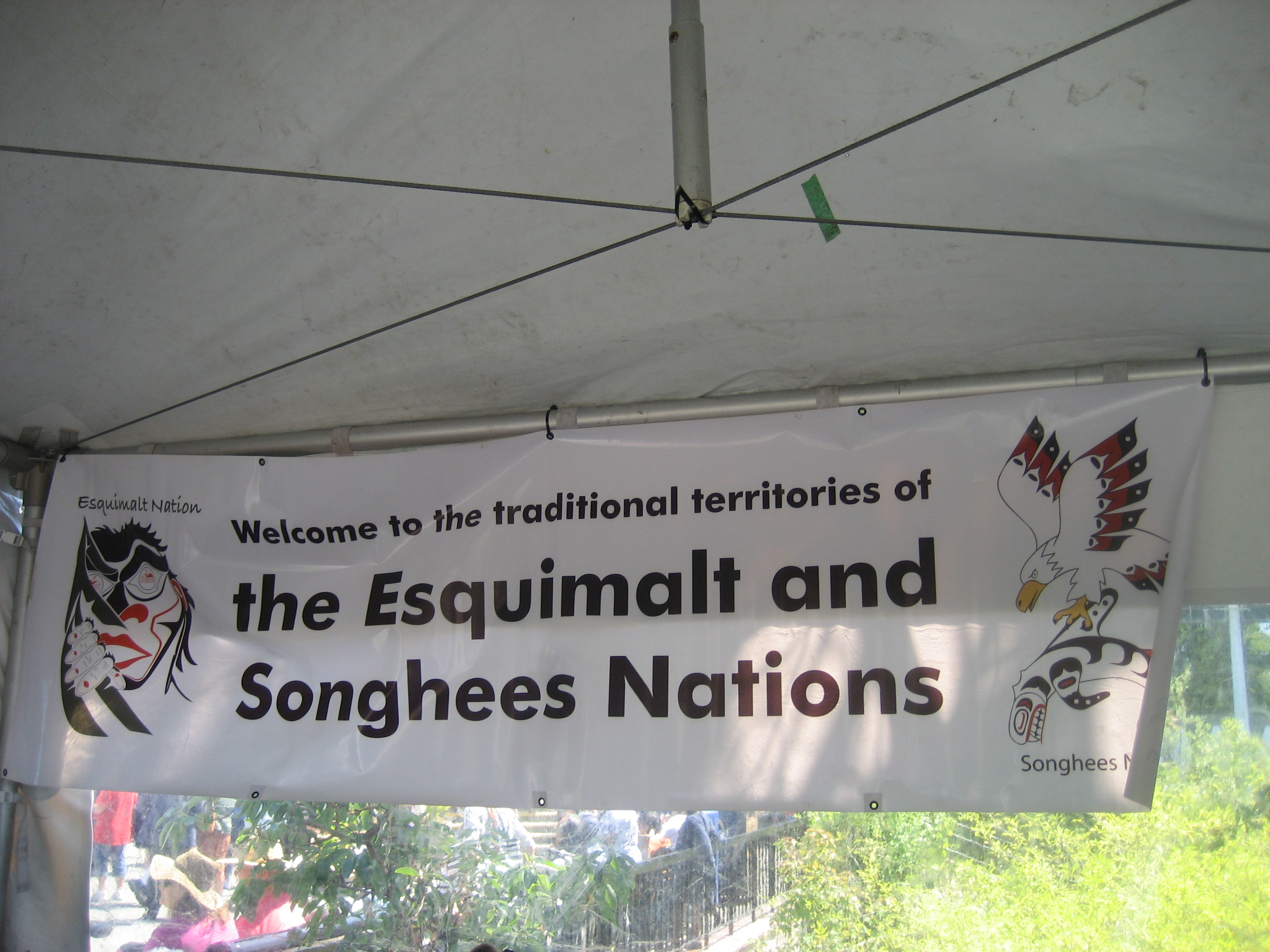
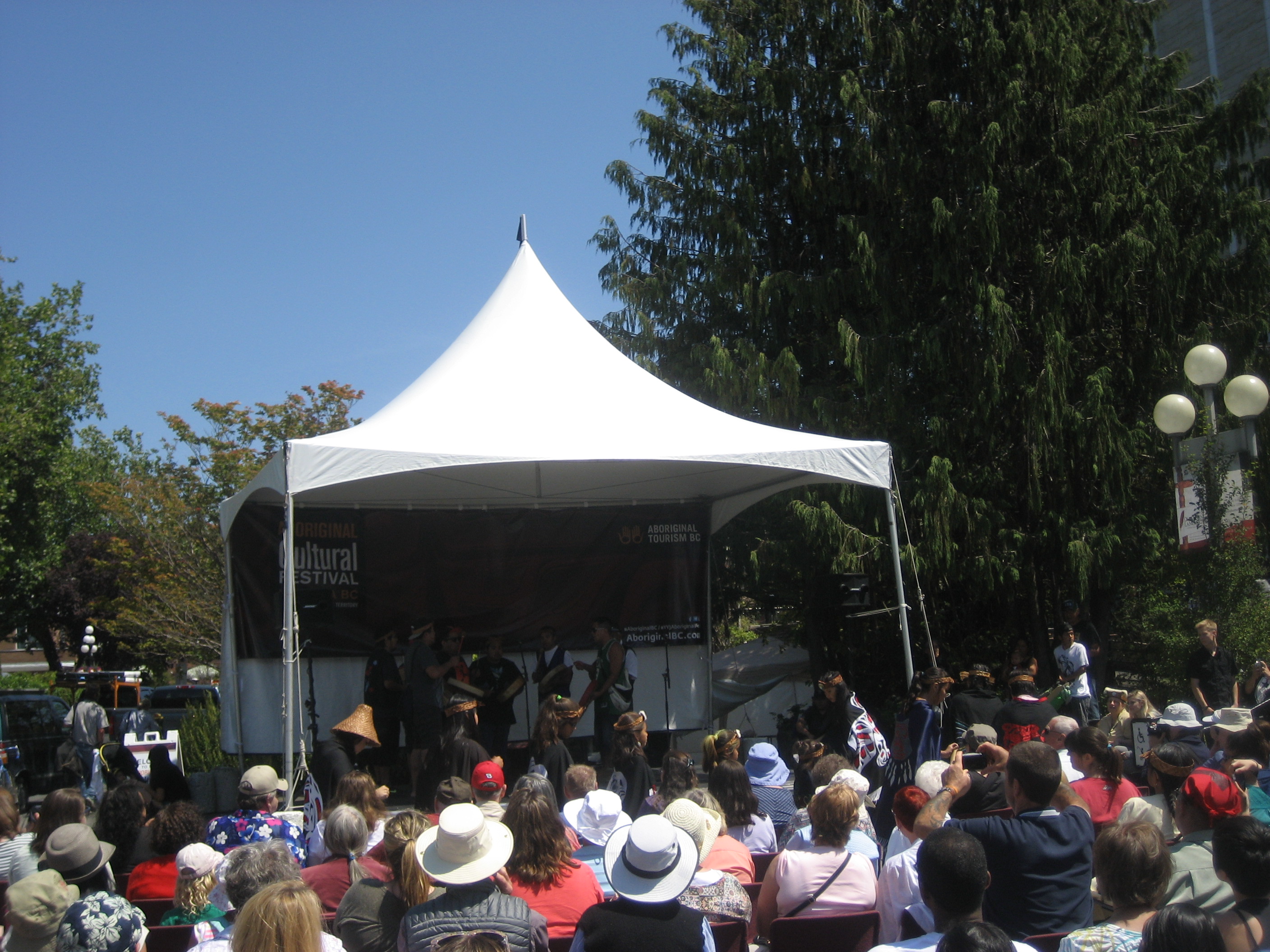
Once into the Potlatch area, we were set straight as to where we were.  The Songhees and Esquimault (Es-KWY-mawl) are working commonly, to preserve Aboriginal fishing rights and guard the health of the waterways.

070

I was taught, from an early age, that listening and observing were especially important, when in the presence of Native elders.  Of course, these skills certainly lend themselves well to getting along in ANY company.  I watch a seal-hunting dance, by some of the Songhees people, after having enjoyed a bowl of Vancouver Island-stye clam chowder and fry bread, an Aboriginal staple, across the continent.

072

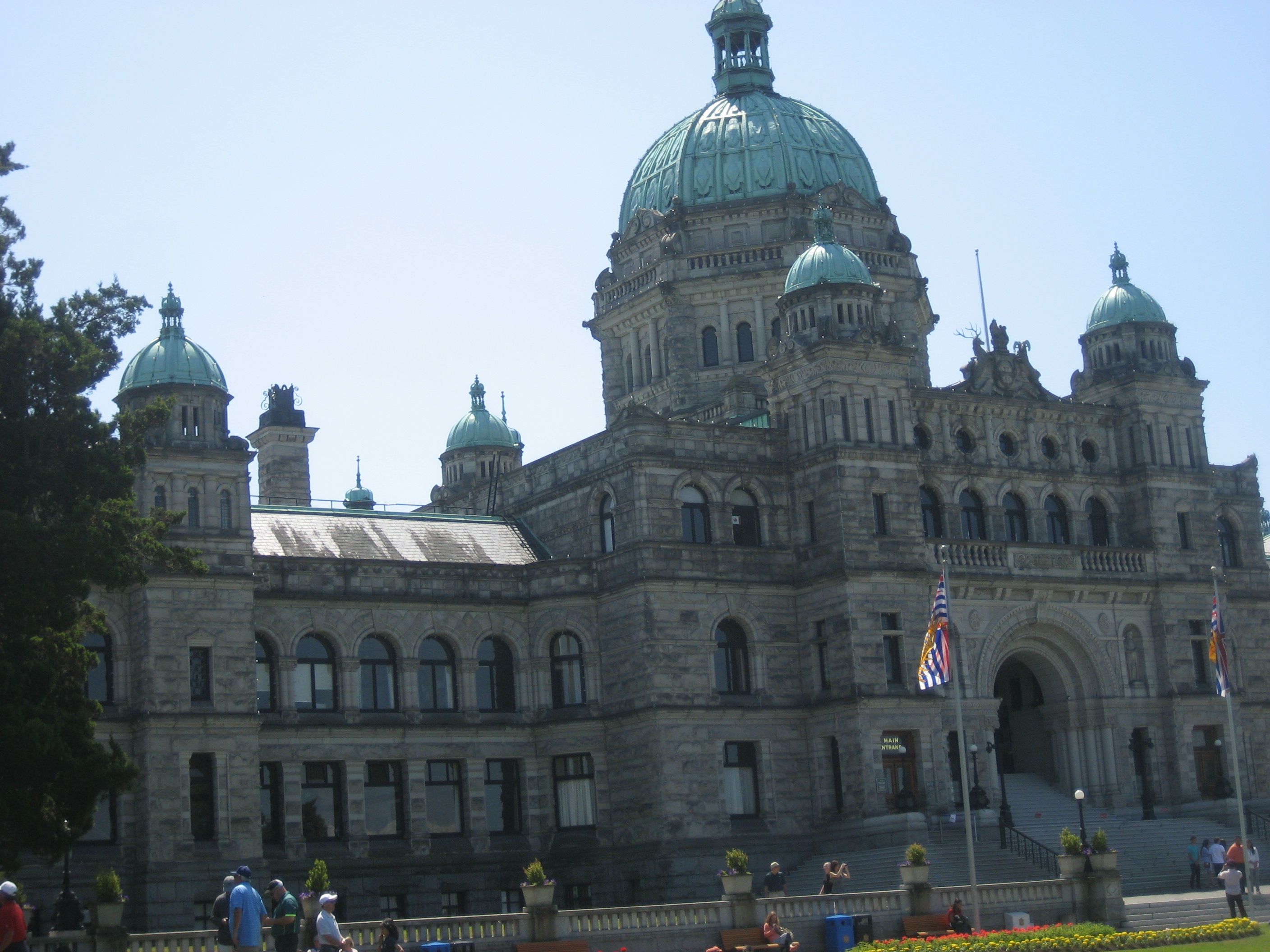
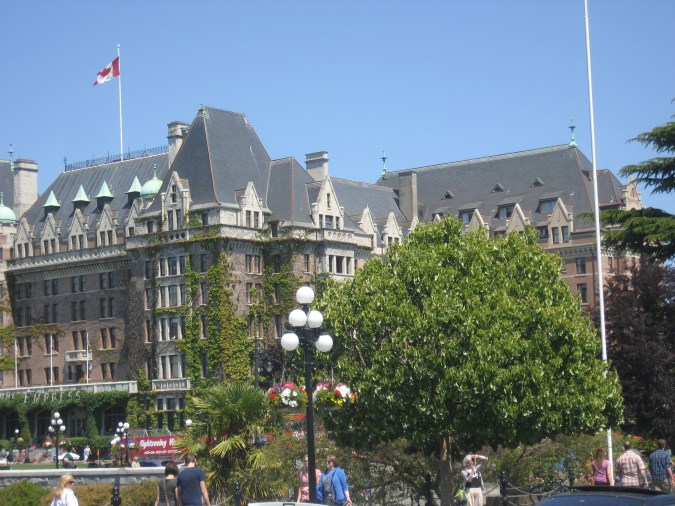
While waiting for the walking tour guide, I took in the British Columbia Parliament Building and the Empress Hotel, diagonal from Parliament.  The neo-Baroque  British Columbia Parliament Buildings were completed by Francis Rattenbury, in 1898.
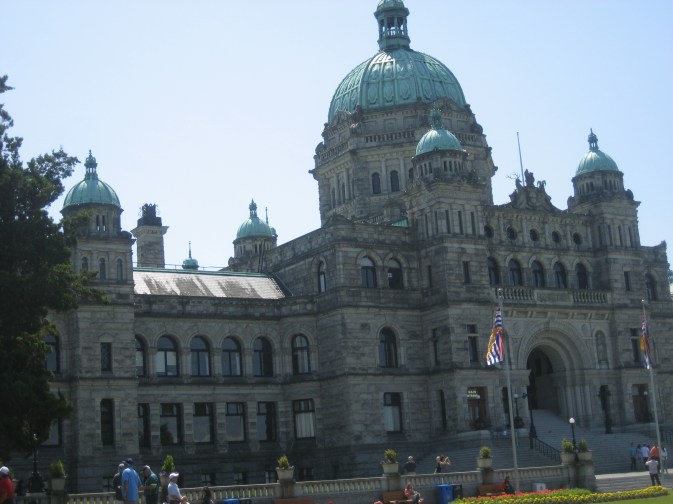
075

The Fairmont Empress Hotel, completed in 1908, was the western showpiece of the Canadian Pacific Railroad’s hotel line.  It certainly competes with the grand hotels of Montreal, Toronto and Vancouver, in terms of ornateness.
088

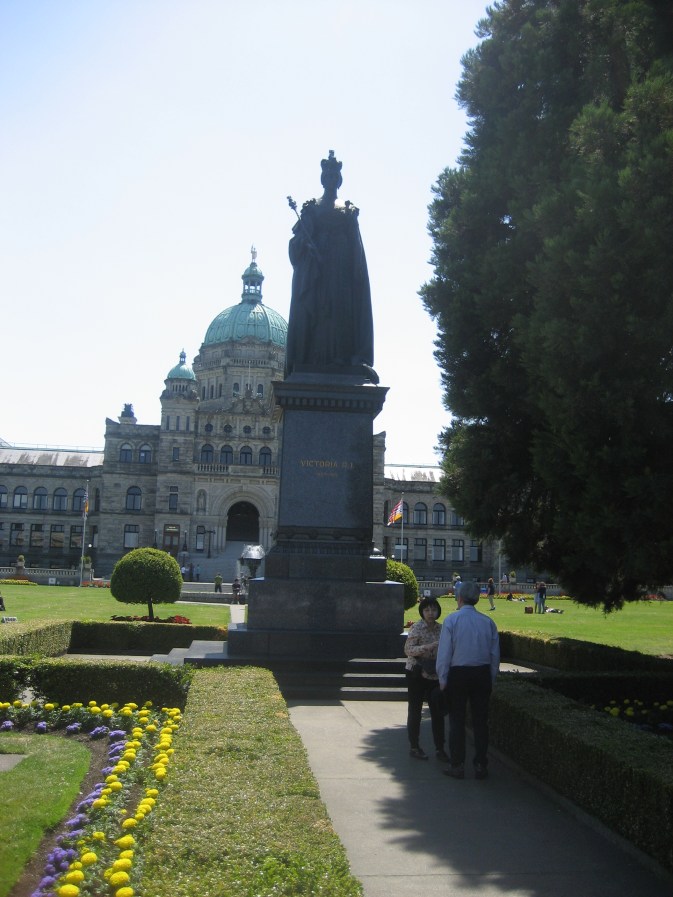
I’m sure Queen Victoria would have approved of the city named in her honour.
086

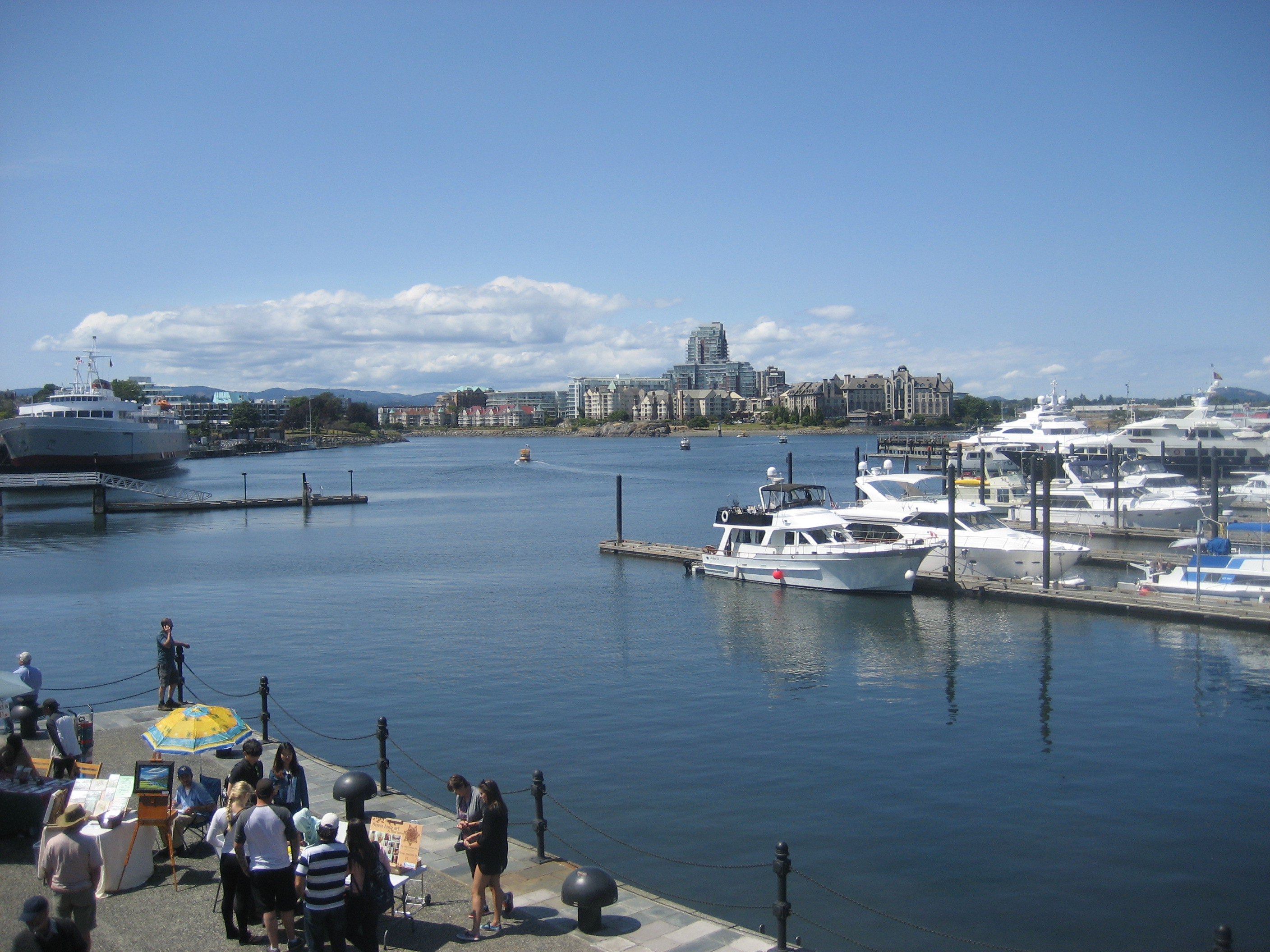
Our walking tour started, just after I had paid homage to the Queen.  We began at the old harbour, which guide Mark Albany, of the Songhees Nation, explained was traditional Aboriginal fishing ground, though the harbour was largely filled in by the British, for the sake of commerce.  It is about half the size of its pre-British days.

090

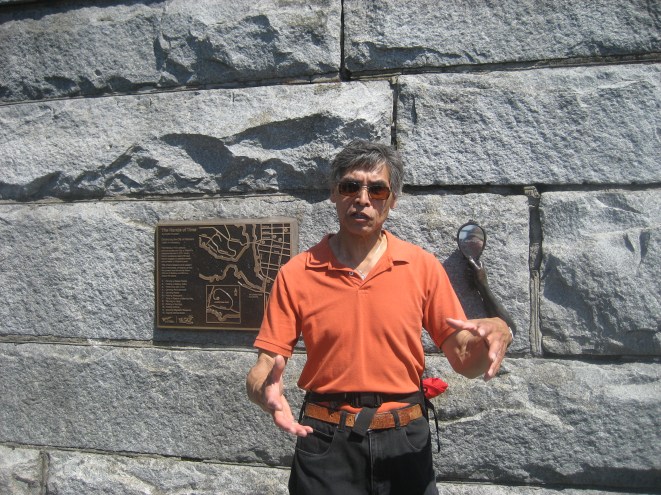
Mark was an incisive, fast-moving human encyclopedia.
094

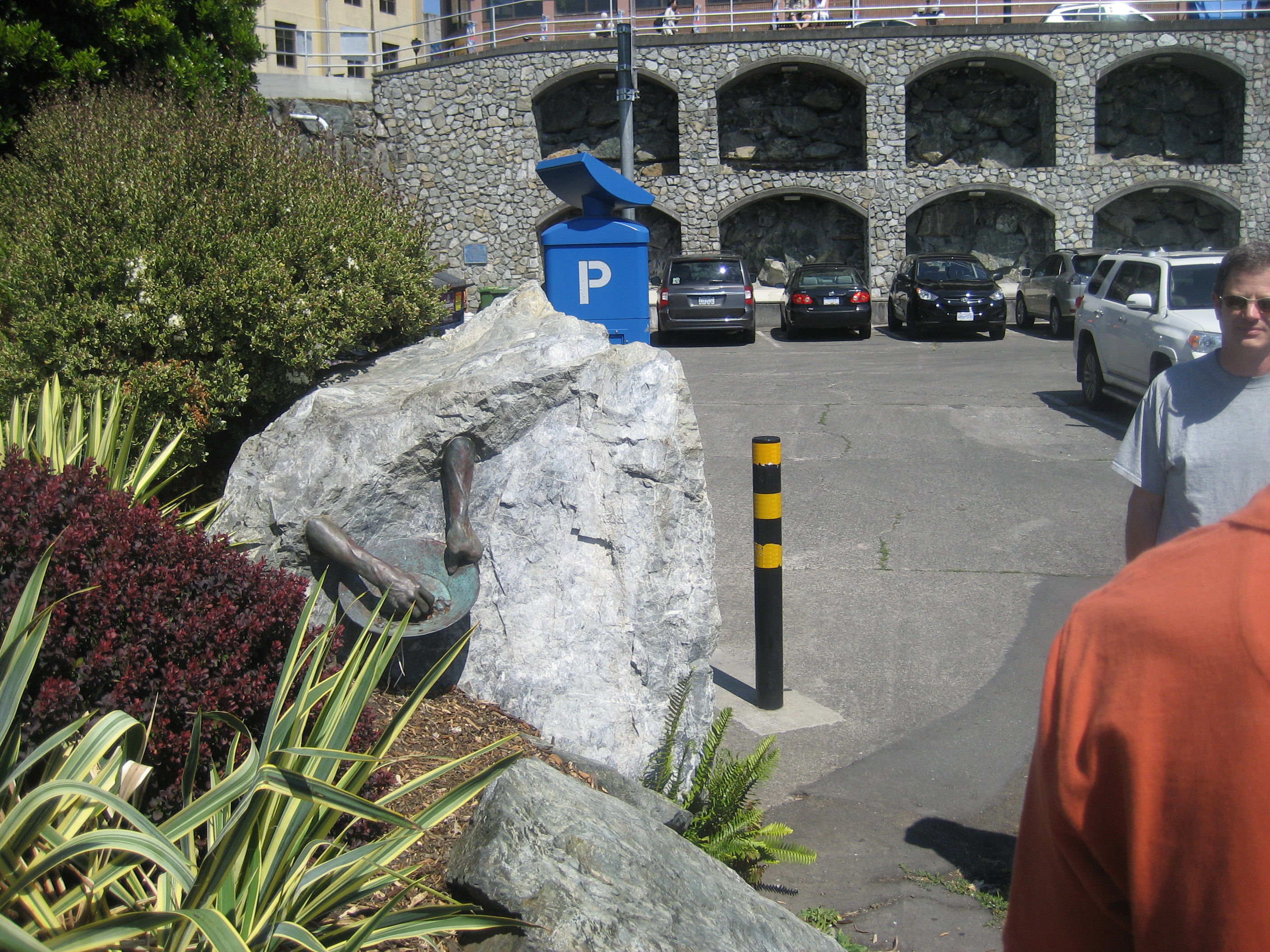
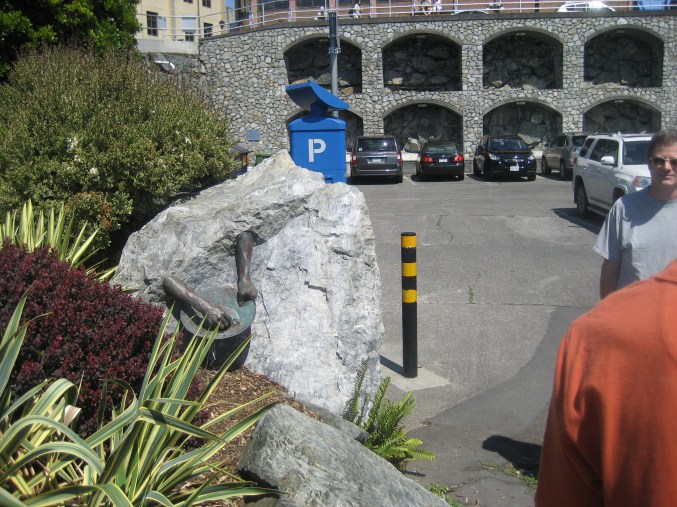
Human hand and arm sculptures appear at five points, in downtown Victoria.  They honour the industry of all workers, who built the city, into a vibrant port.
098

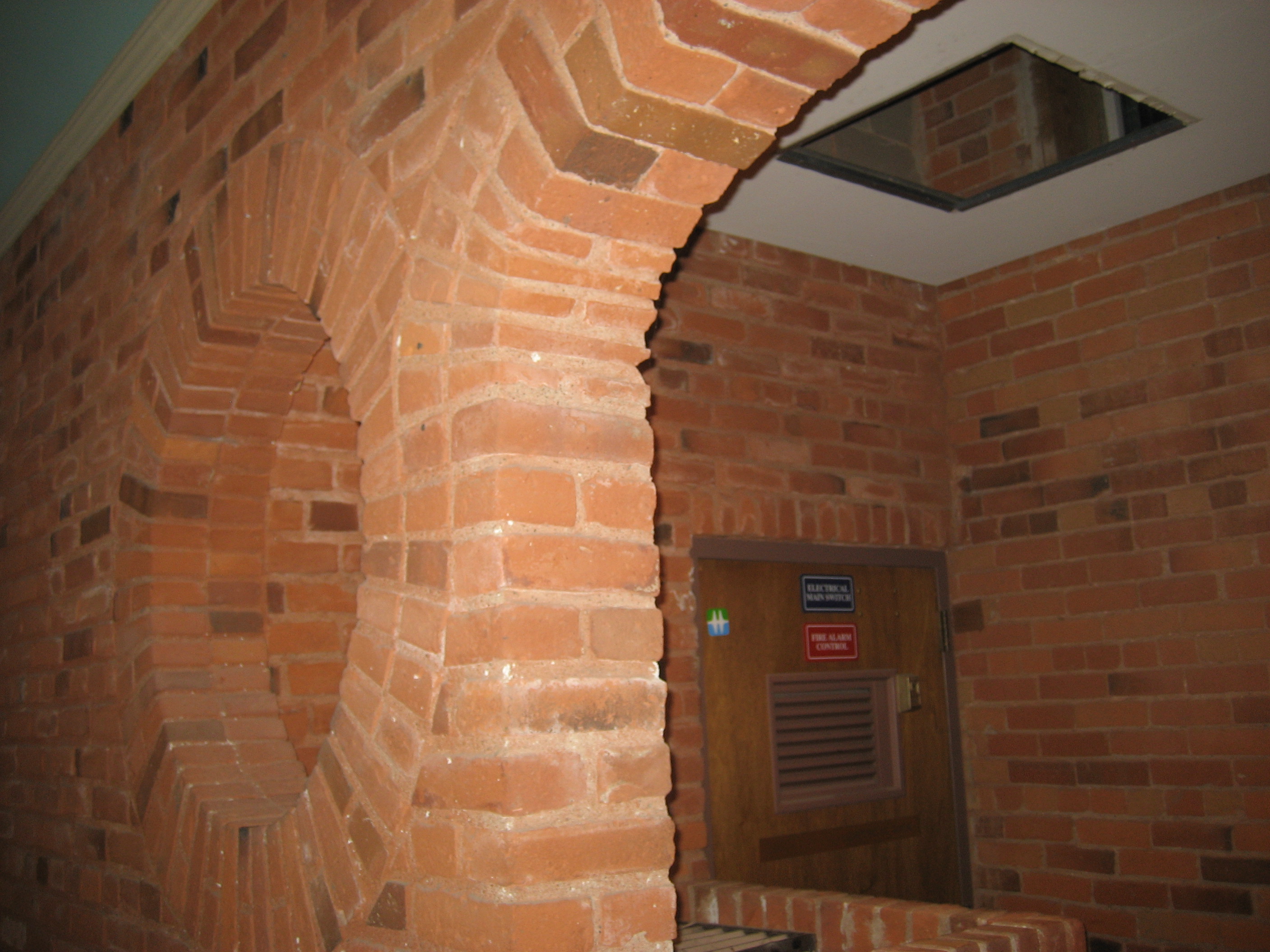
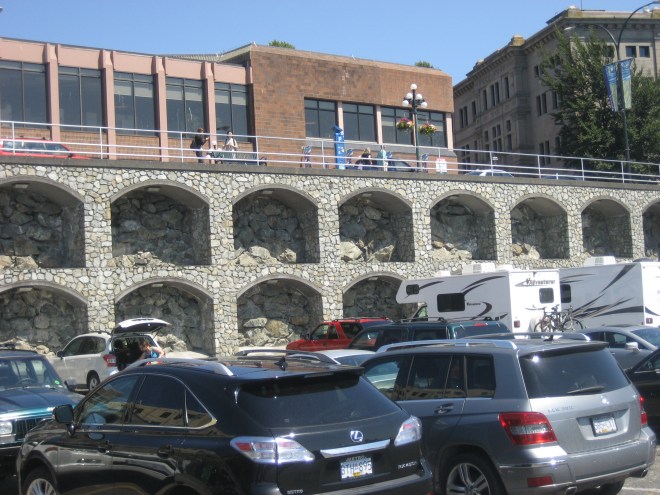
These Romanesque supports for the downtown evoked Rouen and Vannes, France, for me.
099

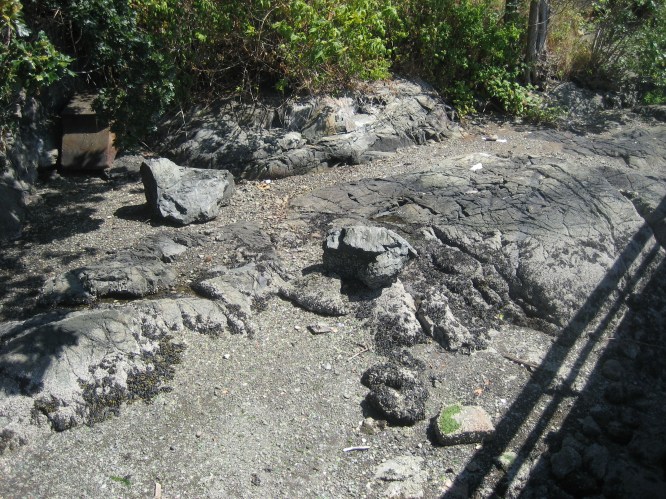
Aboriginal kitchen middens have been preserved, at the water’s edge, by the City Council, as an archaeological zone.
102

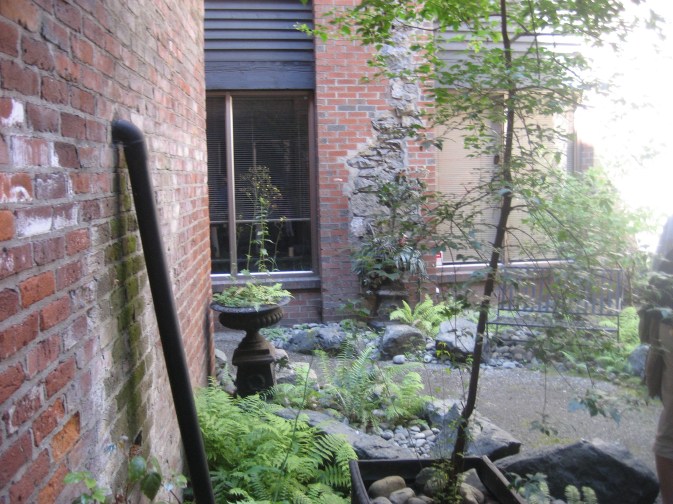
Mark took us in and around the remnants of the Bastion, the original British seaside fortress, meant to defend against the Spanish and Russians, as well as against any Aboriginals who might have had depredatory intentions.
107

110

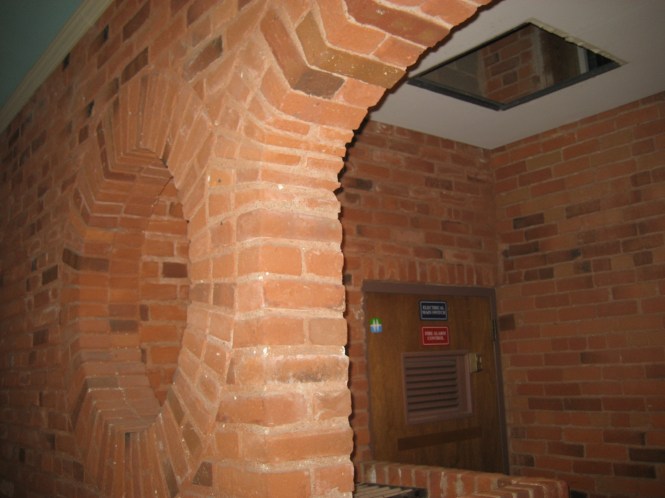
As you might guess, part of this building is now used as a wine cellar.
111

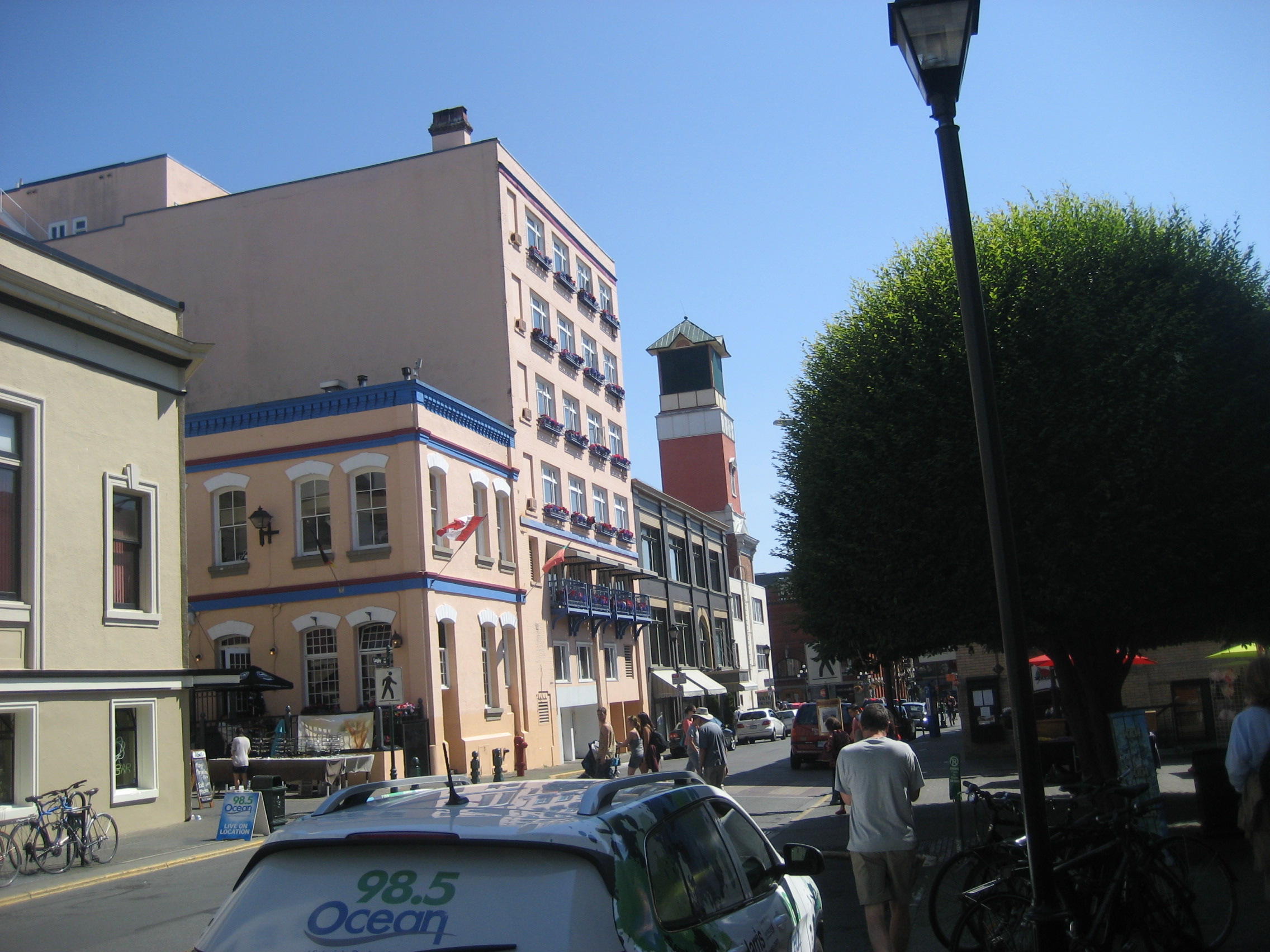
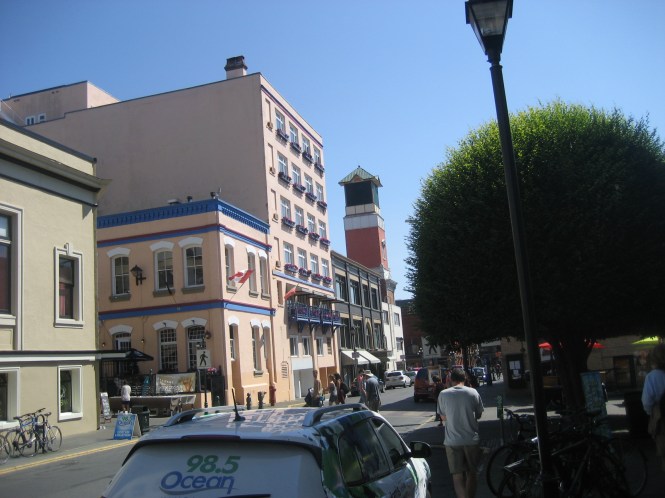
We looked around the old commercial district, where Mark noted the contrast between the British division of property into parcels, and the Aboriginal notion of land being for common use.
118

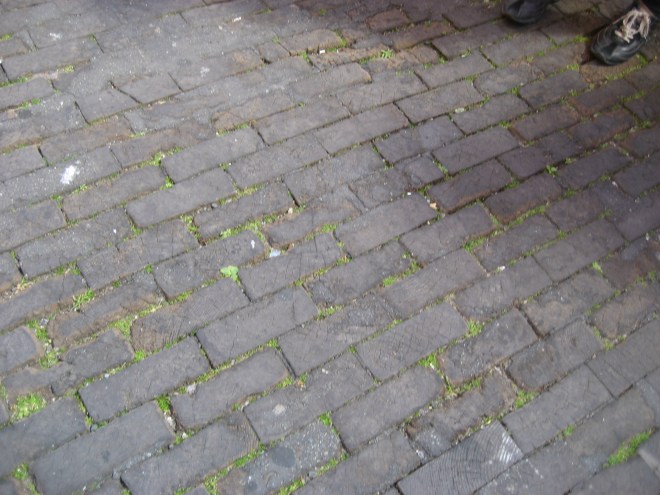
The original cobbles of Victoria’s streets were built of Douglas fir.
123

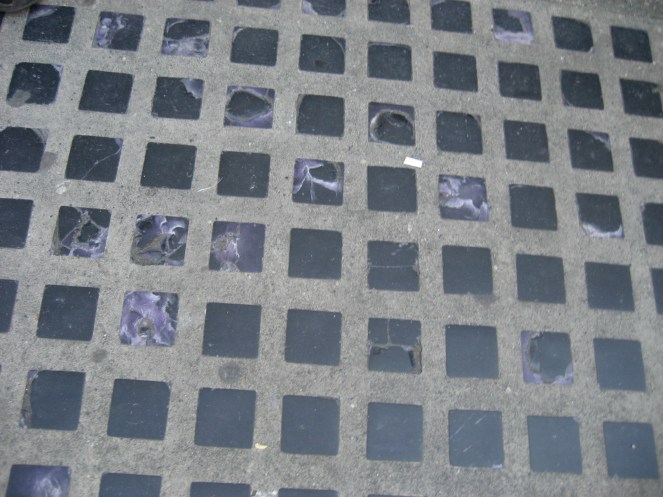
As this was soon found to be an unwieldy practice, the British turned to stone and pressed glass pavers for their streets.
124

I had to bid farewell to Mark,the group (who were mostly Victoria residents, just learning about their city from a First Nations perspective) and to fair Victoria.  As the ferry back to Anacortes passed into the strait, a pair of orcas were engaged in feeding.

138

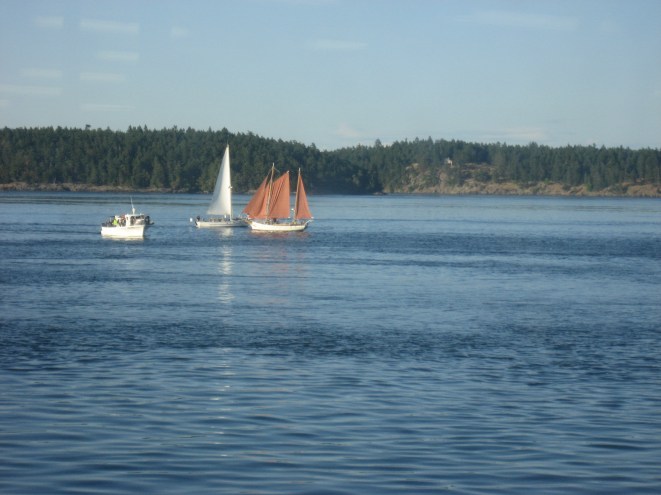
It wasn’t quite sunset, but the red sails were out.
146

The trimast also was out, seeking cetaceans for the evening.
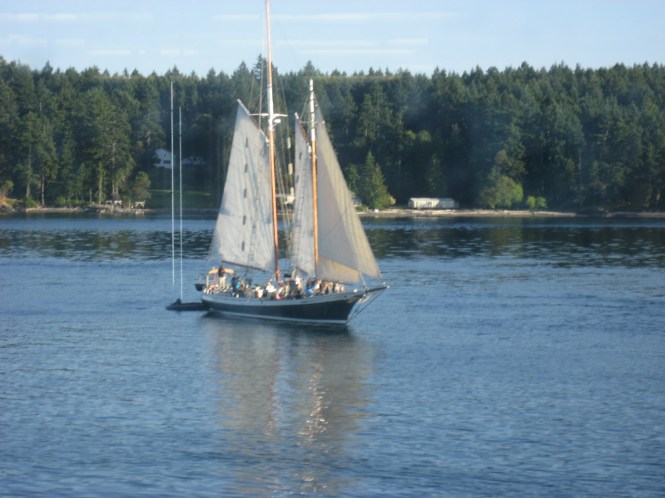
148

I was favourably impressed with Victoria, and will set aside more time, strictly for Vancouver Island, on some future jaunt.  For now, though, thought must be given to other areas of the Northwest, before I head southward to my base.

The Road to 65, Mile 203: Evergreen Crossings, Day 1: Anacortes

8

June 19, 2015, Anacortes- The ferry brought me in to Bellingham, right on schedule.  Taking my sick camera to a Best Buy, in nearby Burlington, for shipment off to a fix-it shop, was my first priority.  While waiting for the store to open, I got some coffee and a muffin, and saw the horror we had missed, whilst aboard ship:  The Charleston Massacre.  I was numb, for a few minutes, then throw-the-book-at-him angry, that this should continue to happen, in the middle of 2015- the midmost heart of the second decade of the 21st Century.  Thought then took over- I had just been in a fairly isolated environment, with little interaction with anyone, for nearly two days.  There were, however, people of all “racial” groups aboard, and the crew was well-blended.  This reflects the Alaska of 2015, which ought to, in turn, reflect the America of this same year.  Yet, hearts don’t change.  People hold on to the most quotidian of symbols- a gun, an outmoded flag, as if these guarantee some sort of shield from a malevolent external force.  Perhaps, in a way, they do.  Does that mean, however, that these symbols may be used as malevolent forces of their own- and against people who have been NOTHING BUT LOVING to the individual who now attacks them?

I had to carry on, though, and did, choosing the comforting and picturesque ferry port of Anacortes, as a place to settle for one day, and just walk about, after a comforting nap at Holiday Motel.  It’s run by two of the nicest hoteliers I have encountered in the “lower 48”, though I have to say that, how I perceive people is usually how they end up being.

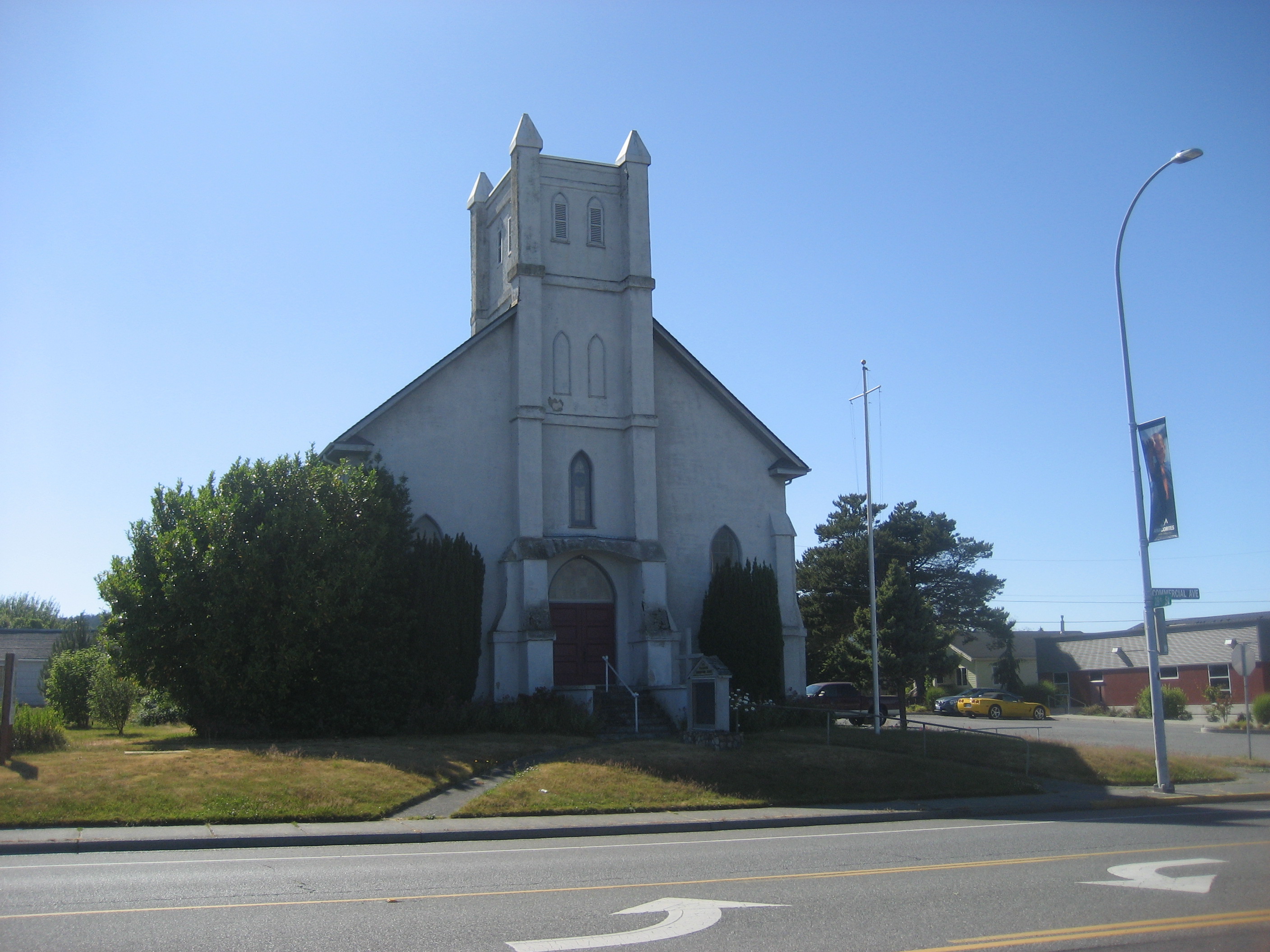
Anacortes has an old church, which is now for sale. Other denominations seem to be thriving, but not this Congregationalist parish.  Perhaps it moved over to the west side of town.

871

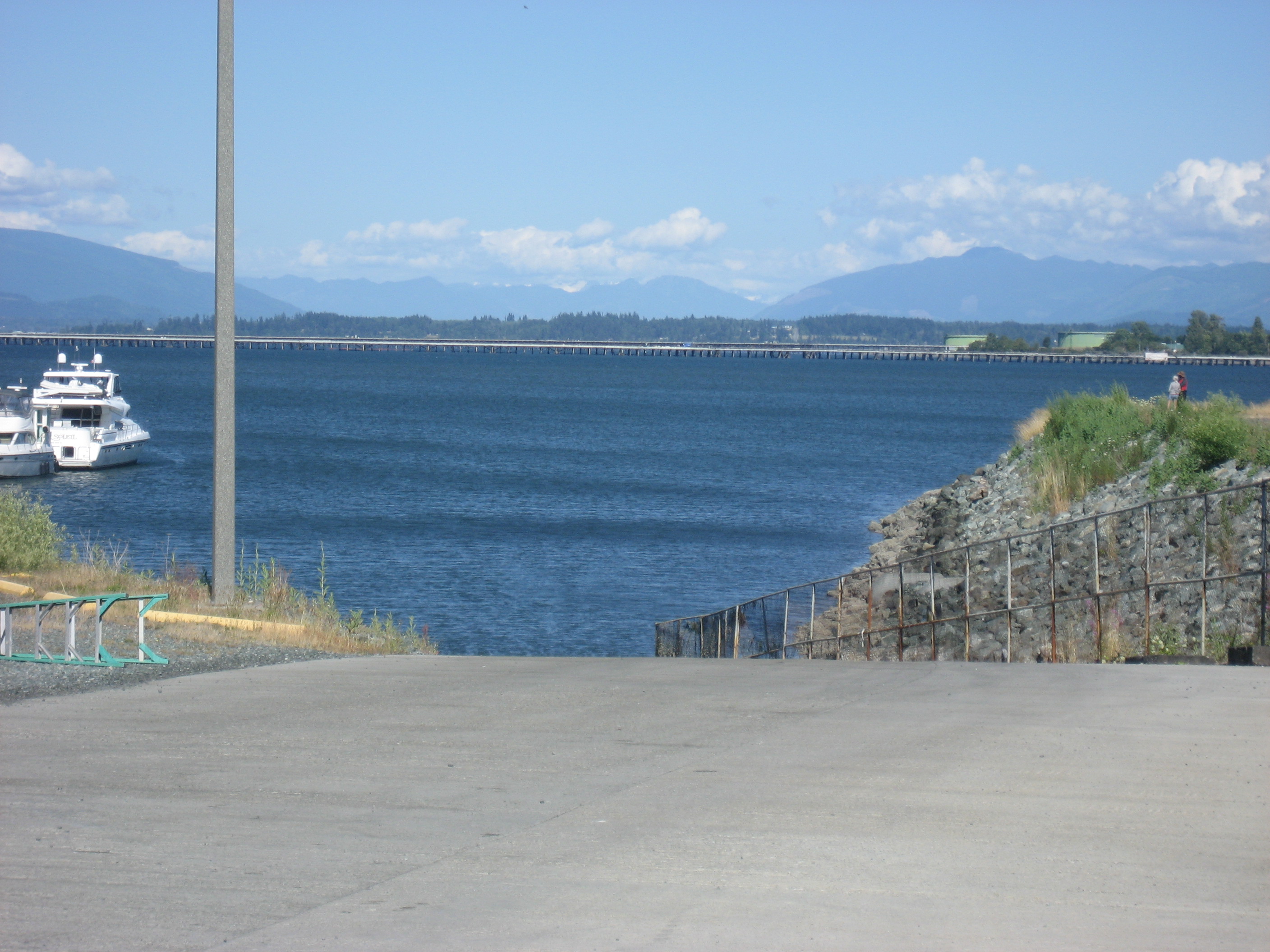
I wandered around the east harbour, where there is a skate park, a yacht club and several container vessels.  East Anacortes seems to be the more industrial part of town.

874

Street art seems to be everywhere, these days, and Anacortes has its fair share.  There is a Music Festival coming here soon.

878

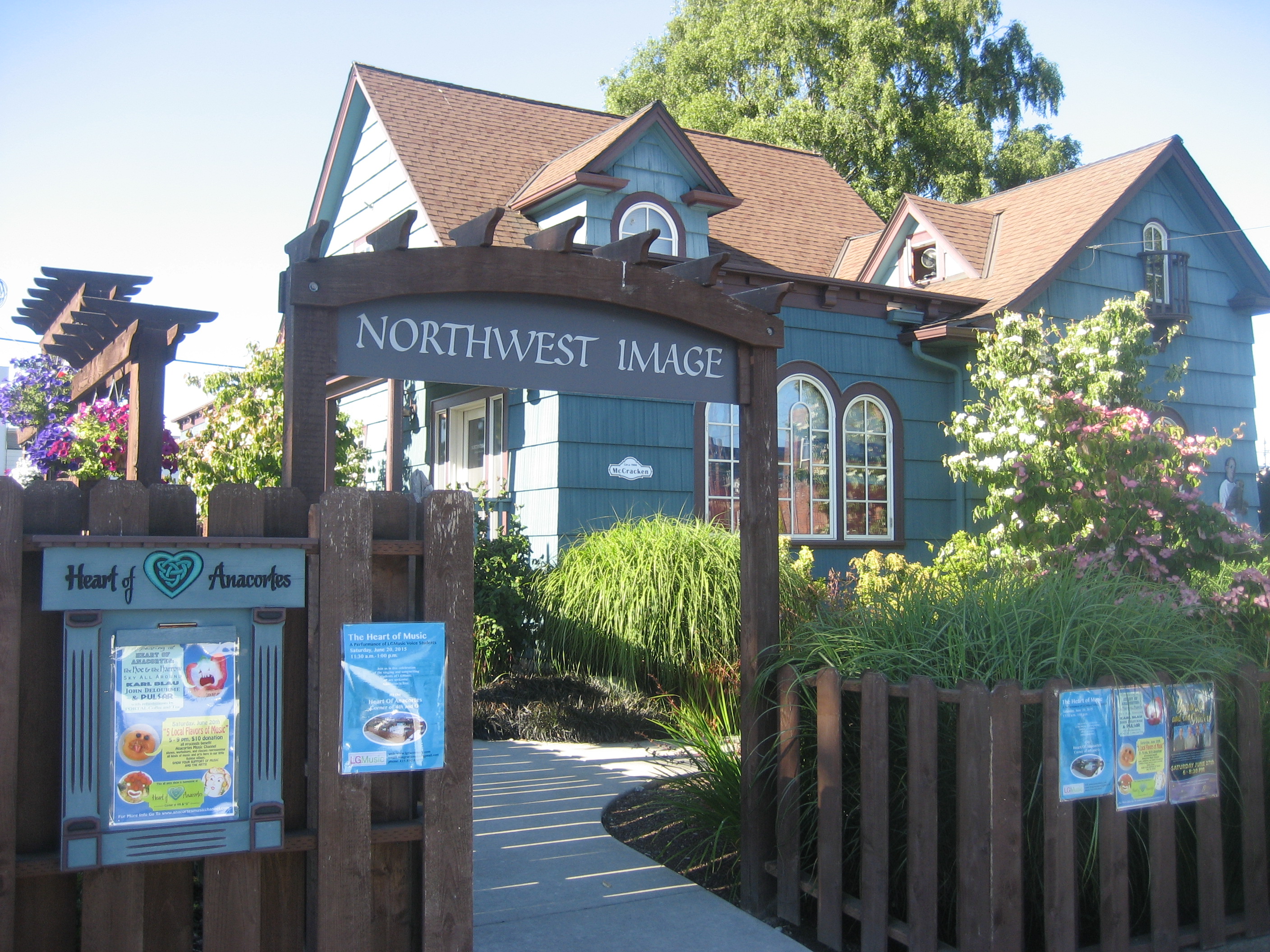
I visited the Performing Arts Center’s grounds, after hours, and was overjoyed to see its name.

879

The venue is to be very active, tomorrow.  I will, however, be in Victoria, BC, for a National Aboriginal Canadians Day festival.  Still, this is another very comforting thing about this little port.

880

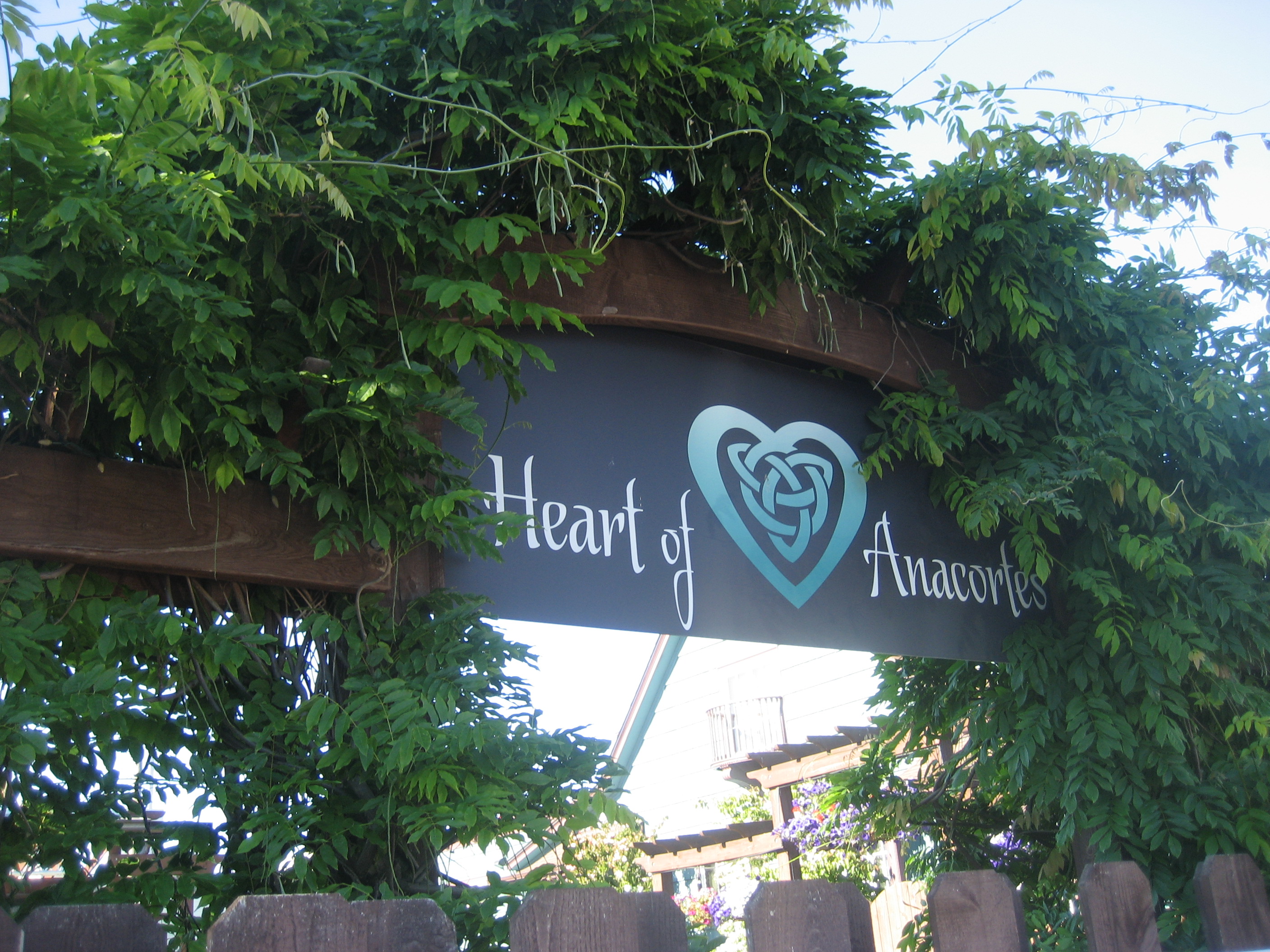
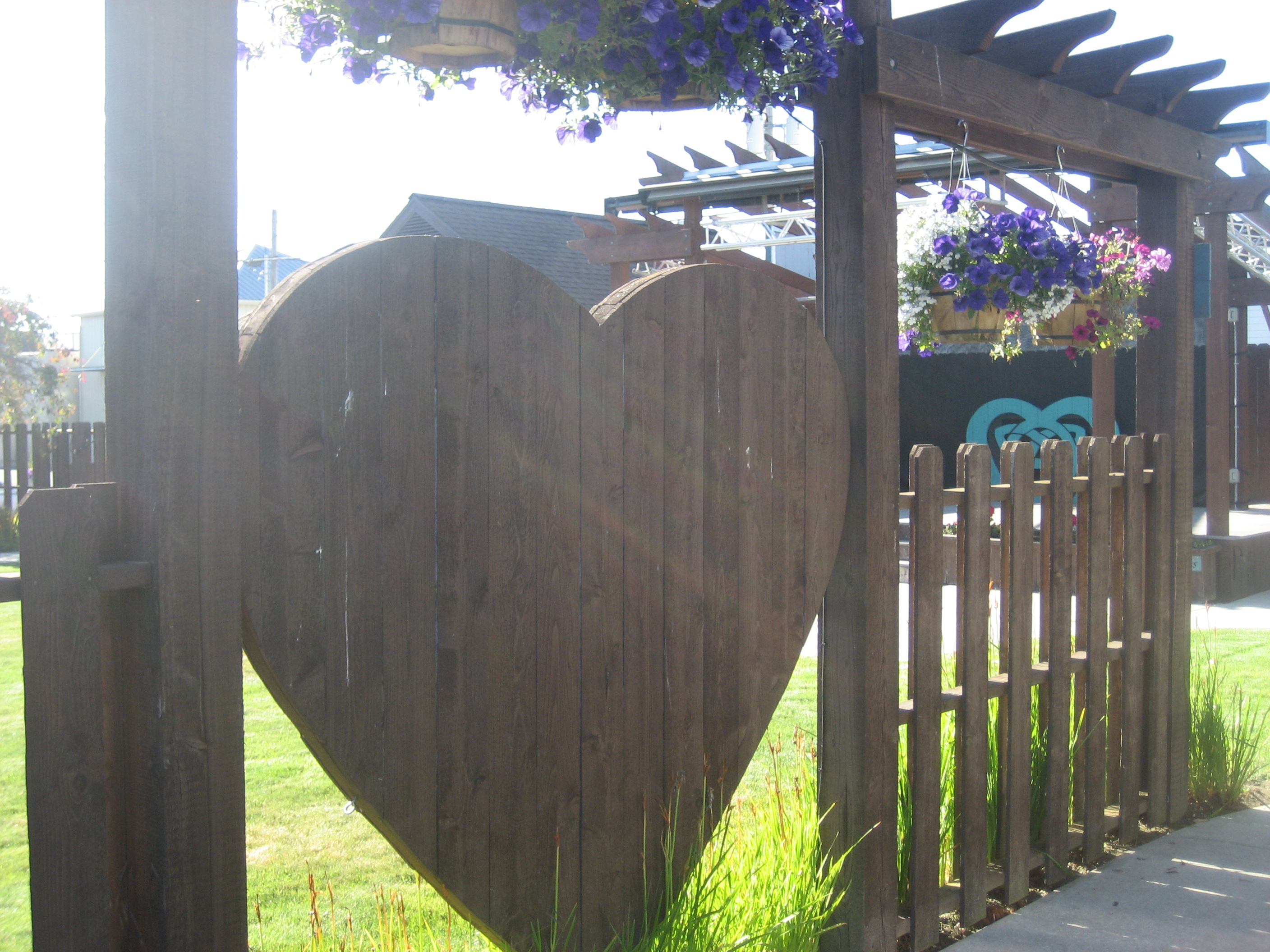
Hearts come in all shapes and sizes.

888

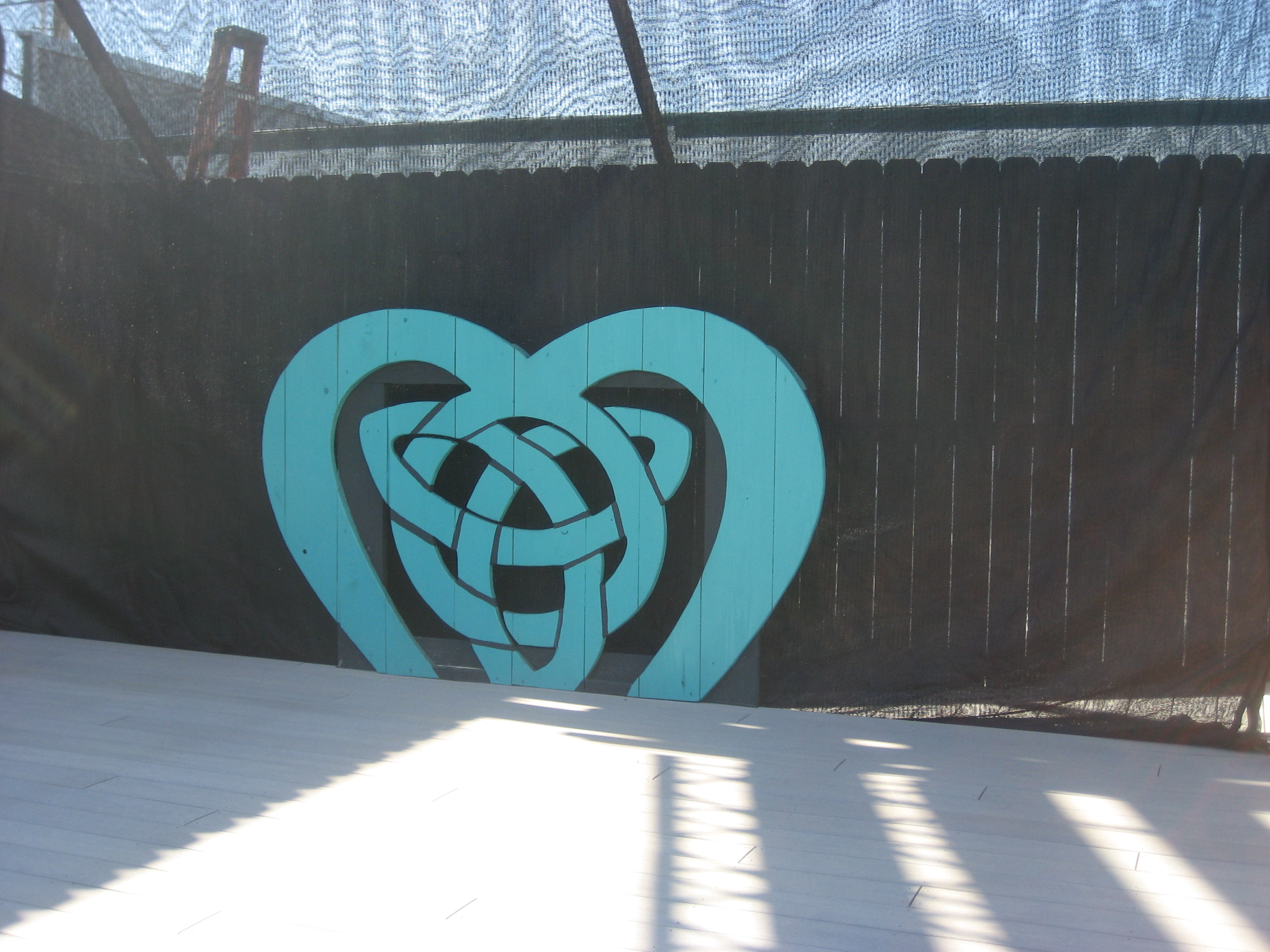
They can also be complex.

892

I wonder if Juliet, or Rapunzel, would favour such a balcony ?

890

Perhaps, if her suitor were to proffer such a mix of flowers as this.

894

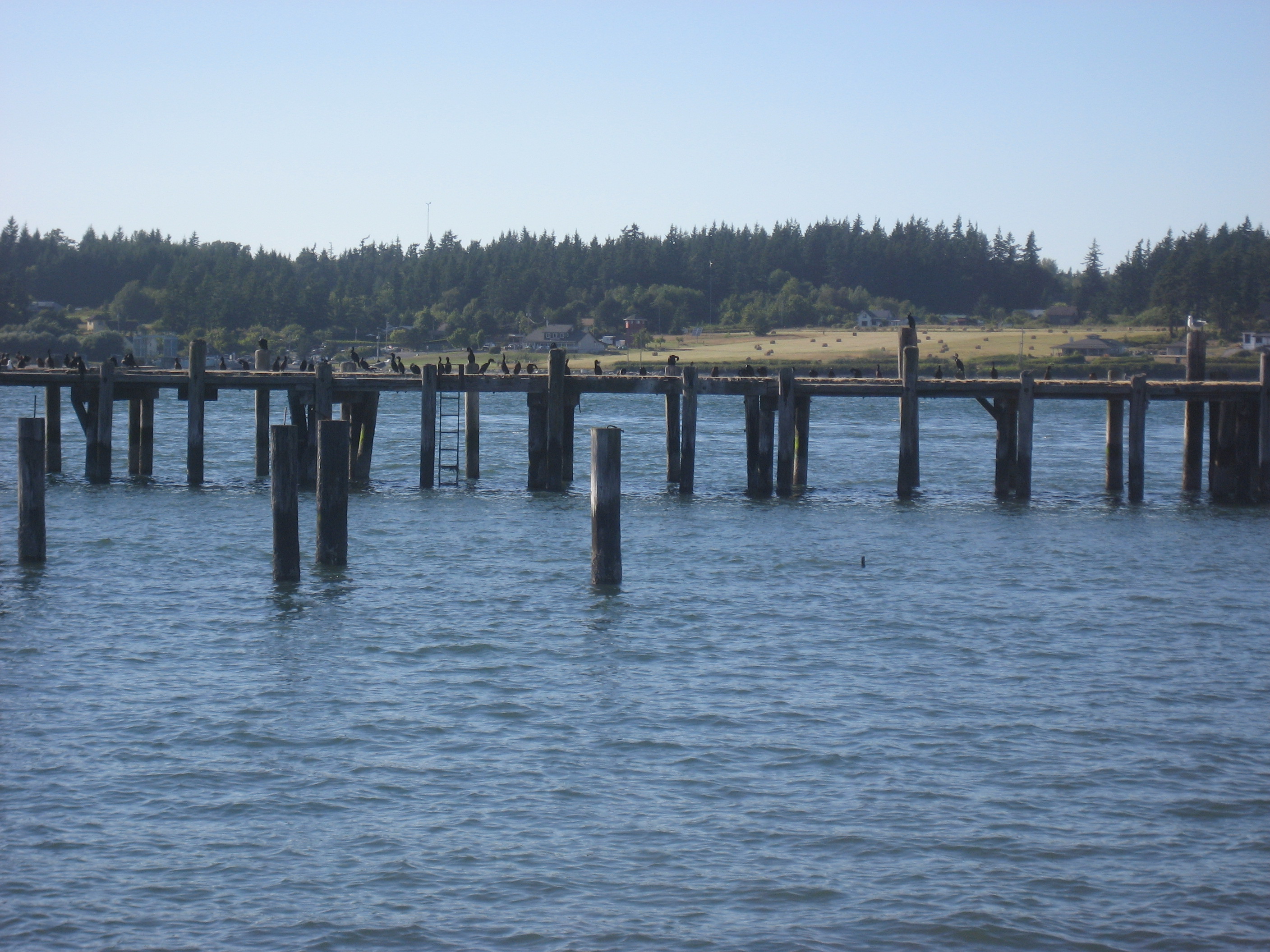
Wandering, reluctantly, away from Hearts of Anacortes, I found a gem of a different sort.  The city includes a waterfront park, at the north harbour. The wharves are largely given over to disuse, and are therefore welcoming to some cormorants.

895

Could this pass for a dog, or an alligator?  Driftwood does inspire flights of fancy.

898

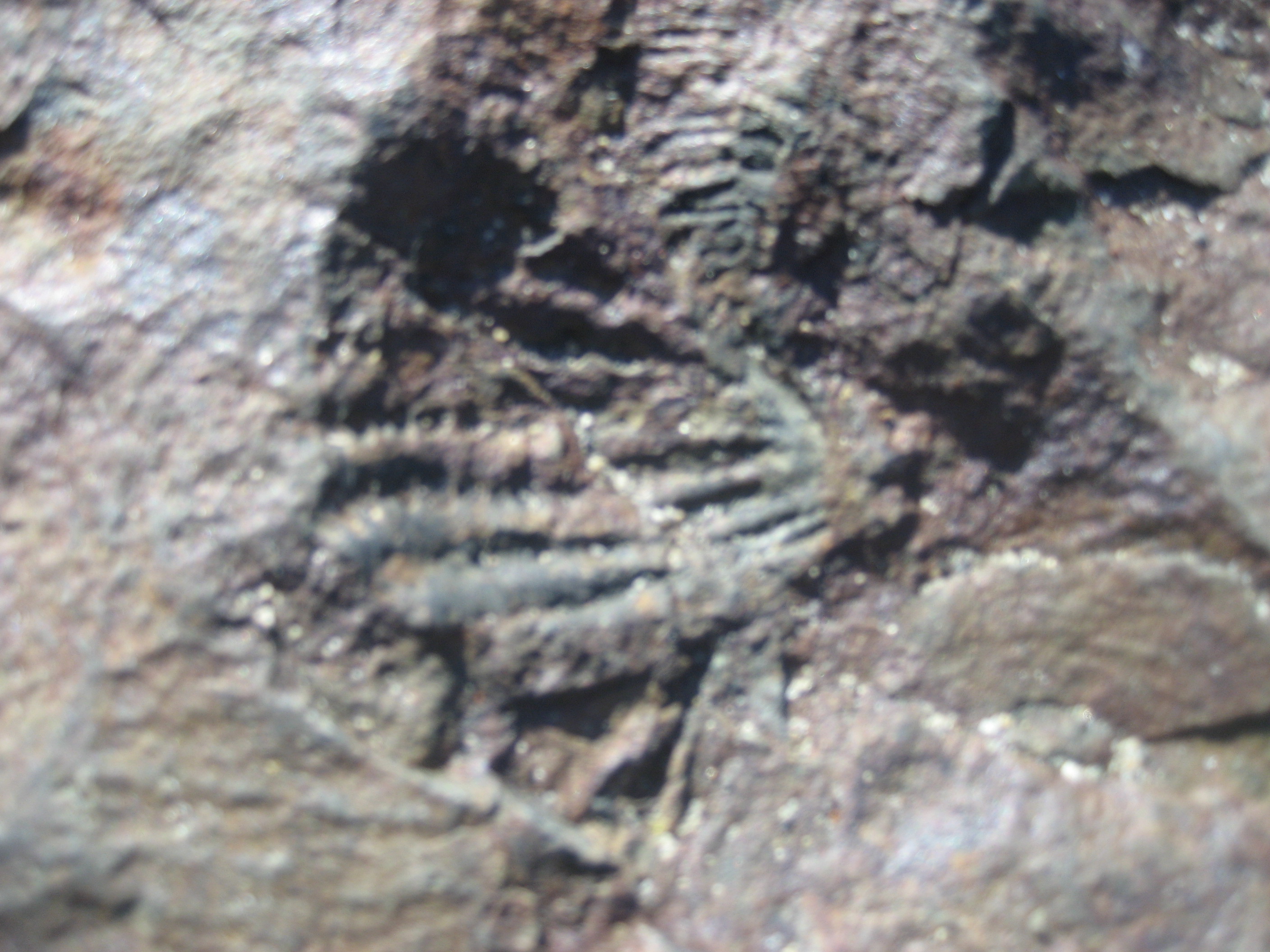
Spying a fossil shell was a treat.

901

It appears Nature has her own pictographs.902

There were a few other intrepid souls out, enjoying this special park.  It is a good mark for a community, when it takes the best of what is placed in its midst.  If I ever felt the need to leave Prescott, for another base, Anacortes would be on my short list.

The Road to 65, Mile 201: Southeast IS Northwest, Day 10- More Totems, and More Floating

2

June 17, 2015, Ketchikan- I was fortunate today, to have the hostel agree, European-style, to hold my bags until it was near time for my ride to the ferry terminal.  The ten-day Alaskan experience was coming to a close.  I have enjoyed a fairly good taste of “Southeast”, and this last day on land, in Ketchikan, was no exception.  I had breakfast in two different venues:  A street stall, across from the Cruise Ship docks, which had fairly good muffins and coffee.,and in Sweet Mermaids, where the steel cut oatmeal and fresh berries were accompanied by an hour of WiFi.
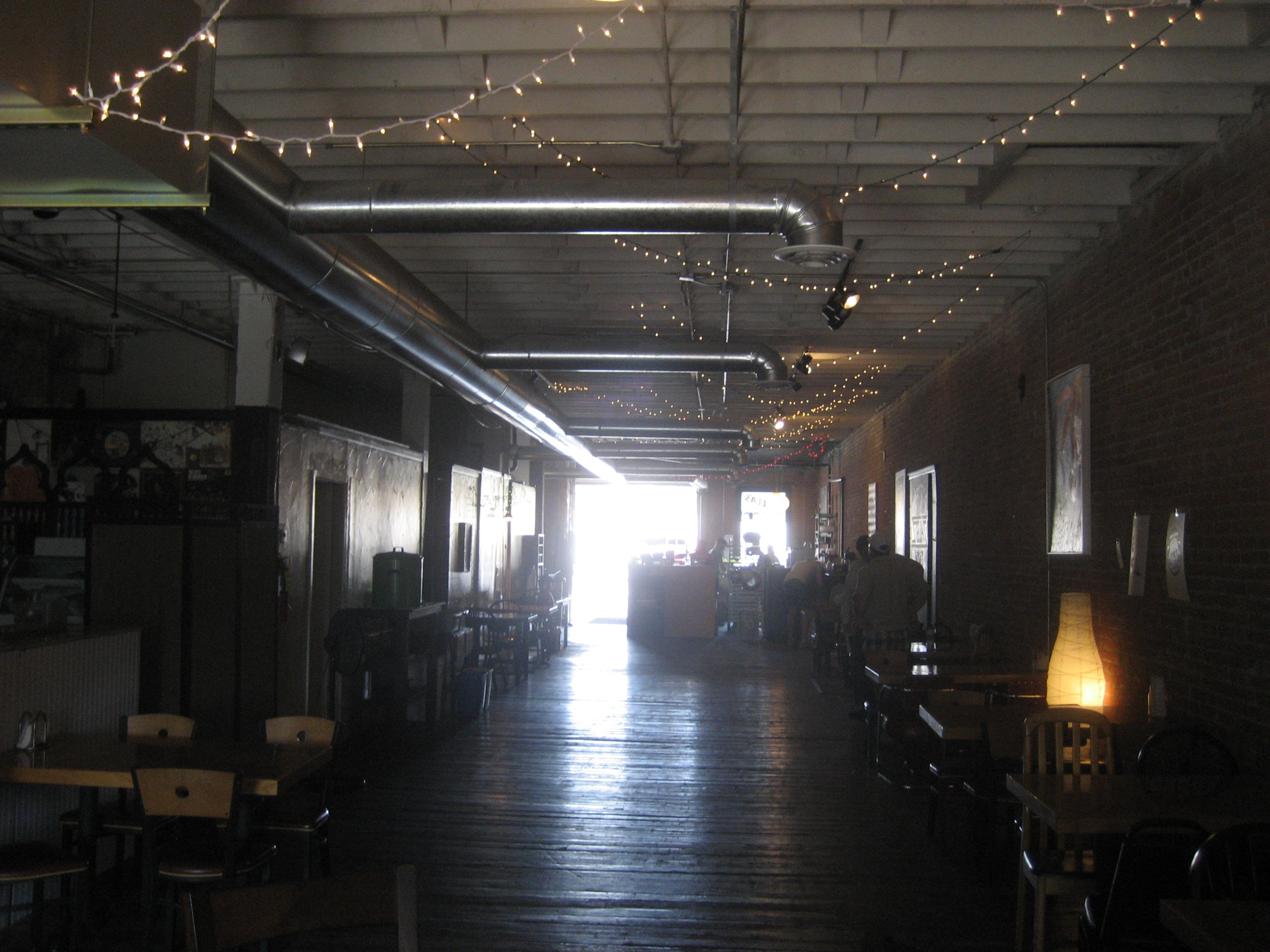
When I was first walking around the waterfront, this morning, a man called out- “You, from Arizona!  How do you like Southeast?”   Hmmm, do Arizonans stick out?  Of course, I told him I thought the region was exquisite and that I was having a great time.  Turns out, he is from Scottsdale, and knew the Methodist pastor, who is from Tucson.  Even in a busy tourist venue like Ketchikan, word gets around fast.

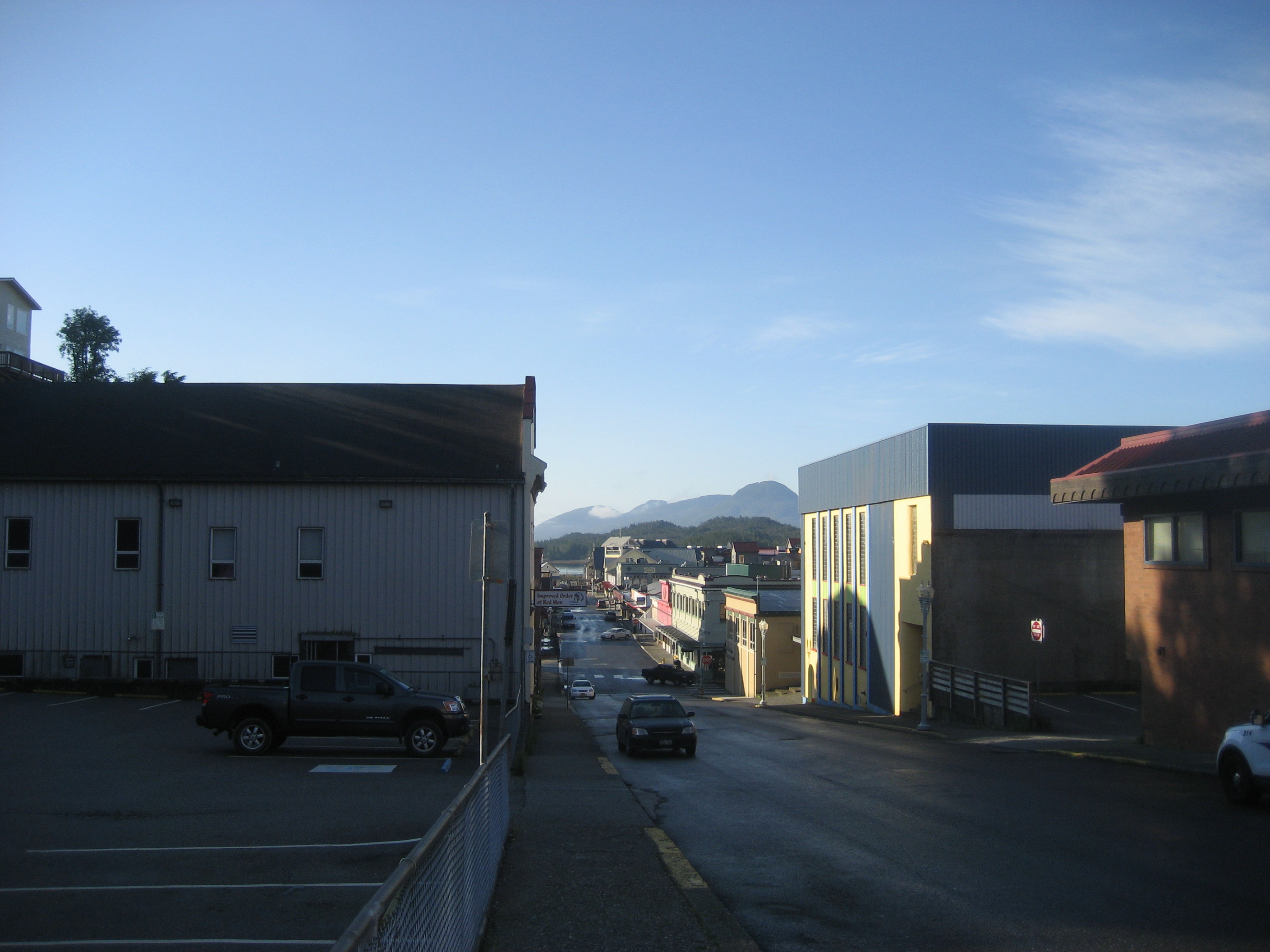
This is the street where the stall is located.

771

I spent some time walking along and observing the fisherfolk.  This craft was in the channel, just off Saxman.

772

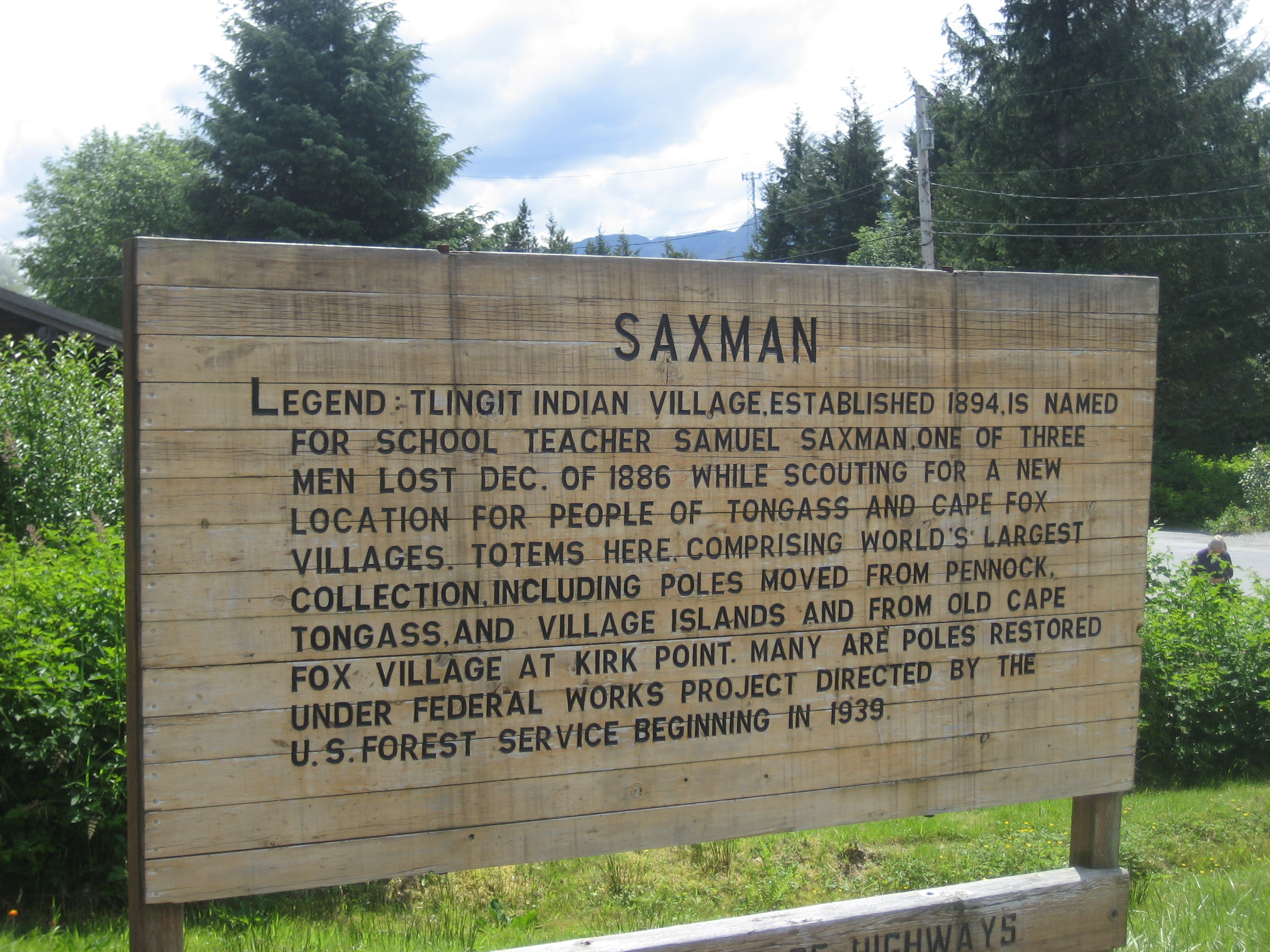
Saxman, two miles south of downtown Ketchikan, is a Tlingit village, named fro a great local teacher, who died in the line of service to his community.

806

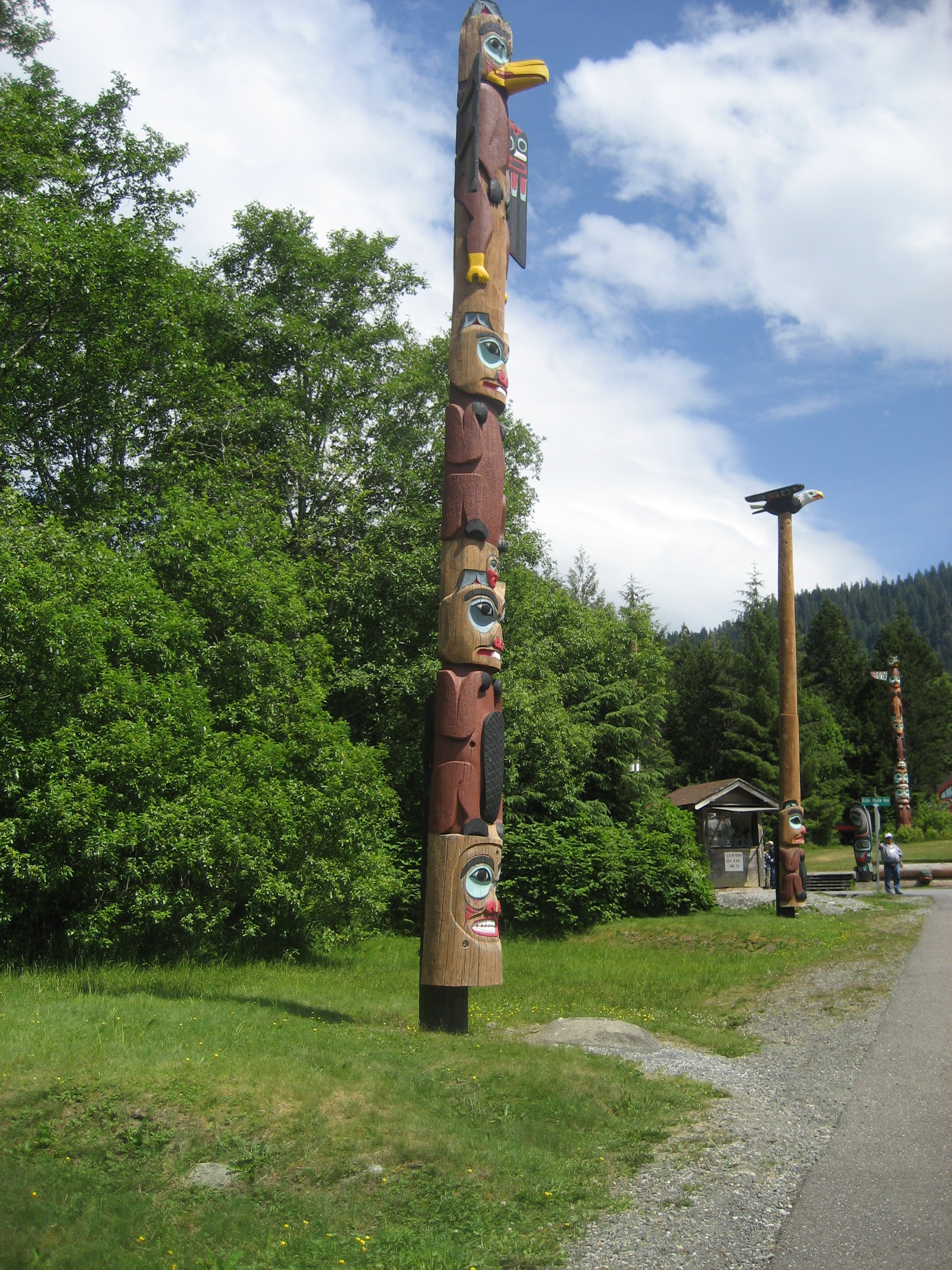
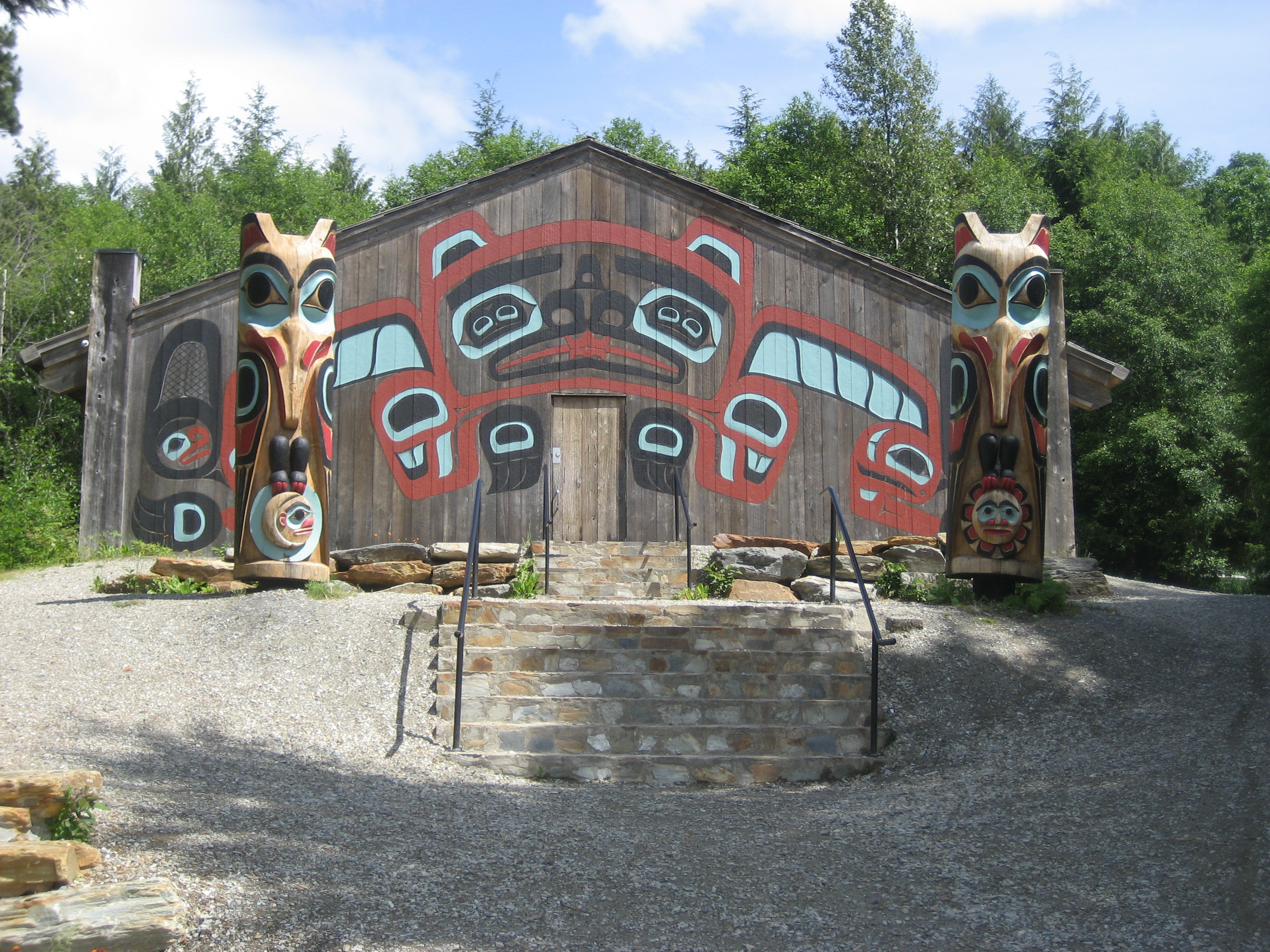
There are several totem poles, both honourific and modern, which comprise a public park.  Tourists wishing to visit the ceremonial hall and carving studio, must pay $ 5 per person, cash only.  The outside, however, is free of charge.  I bought a hand-made rattle, from the Village Store, and will use it at a Drum Circle which some friends back in AZ have, every month.

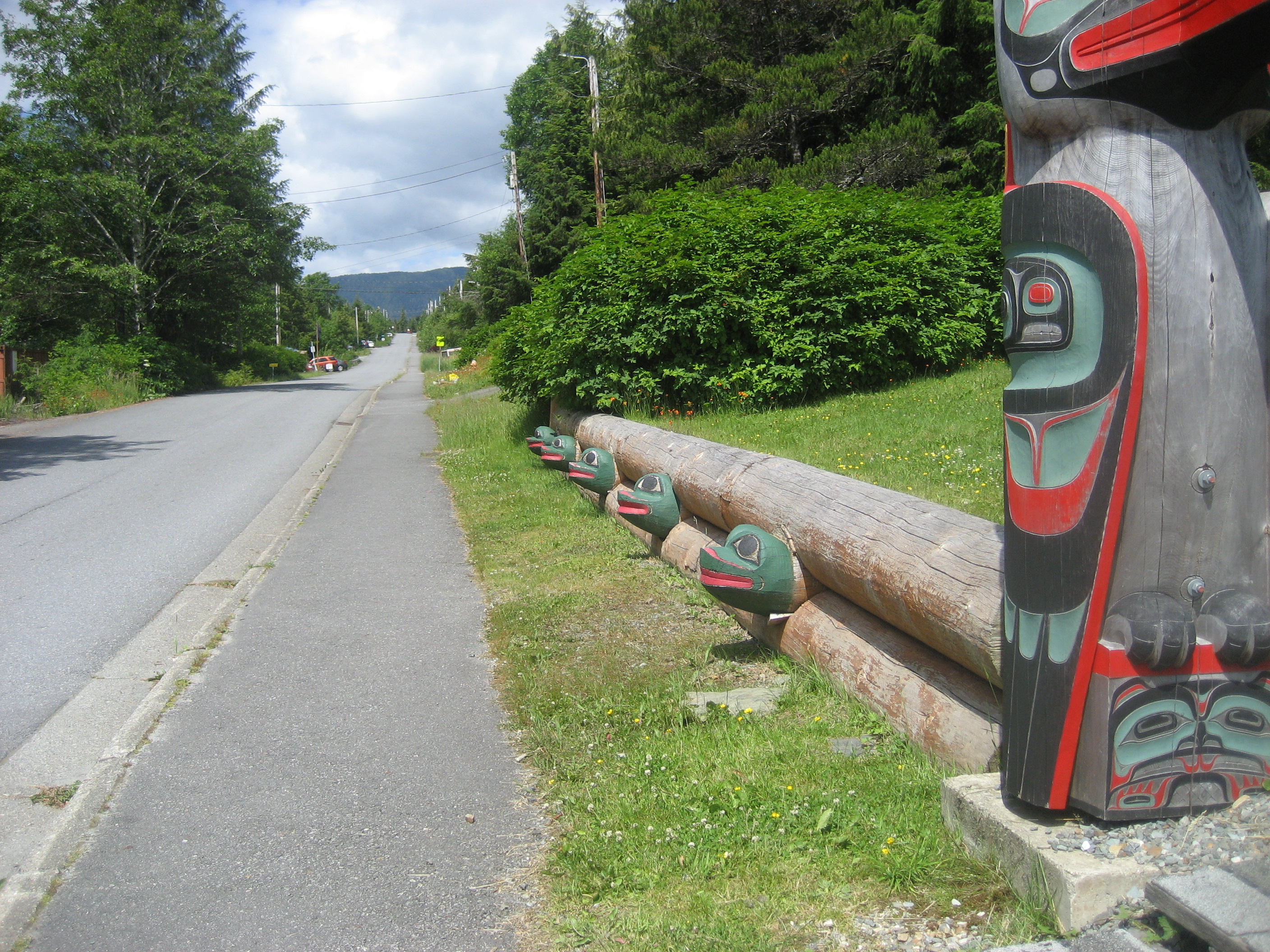
As you can see, many of the totem poles are well-maintained by their clan moieties.

790

792

Frogs are seen as protectors and sentinels of the water.

795

796

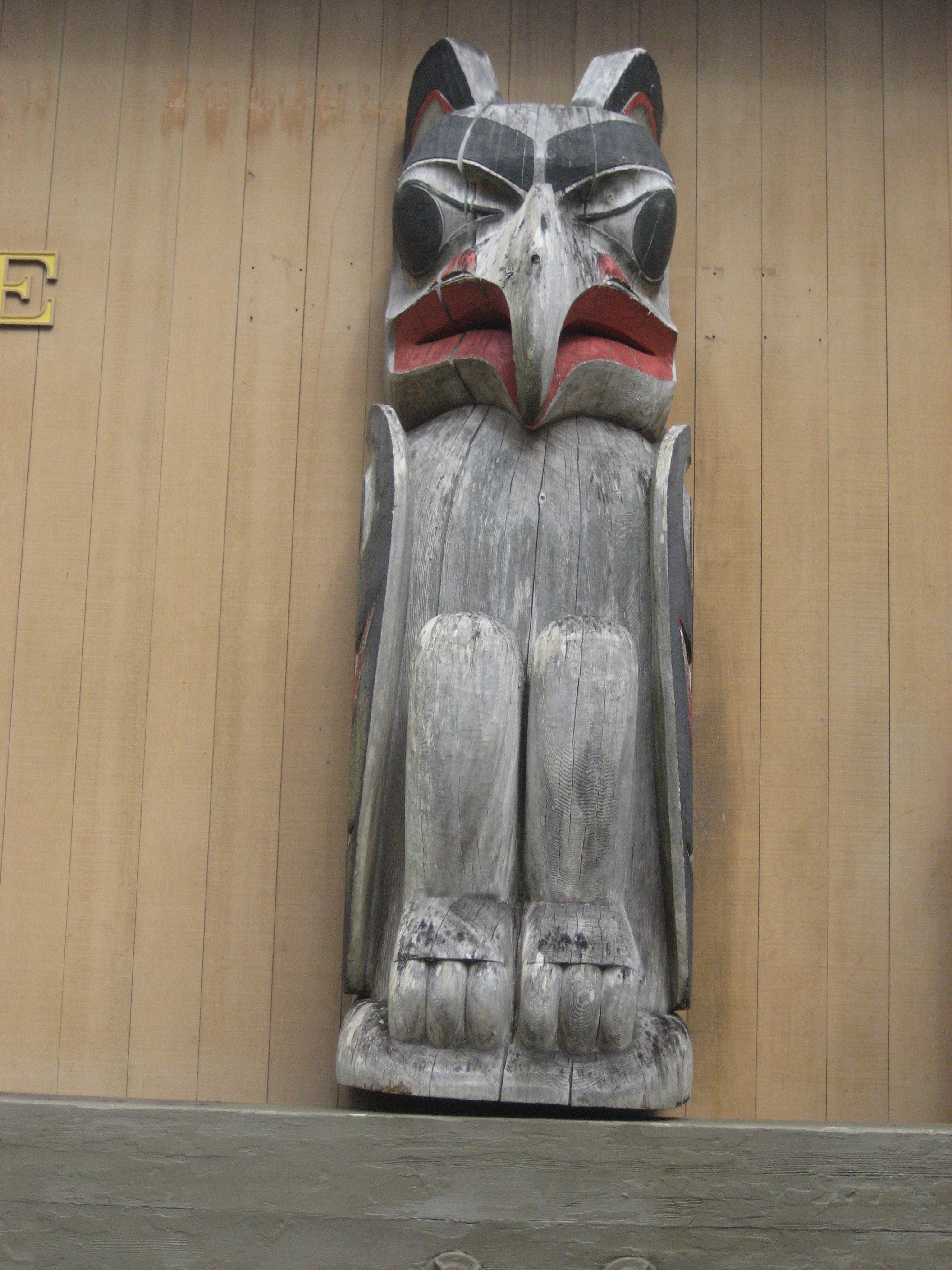
The guardian totems here are properly greeting the visitors.

800

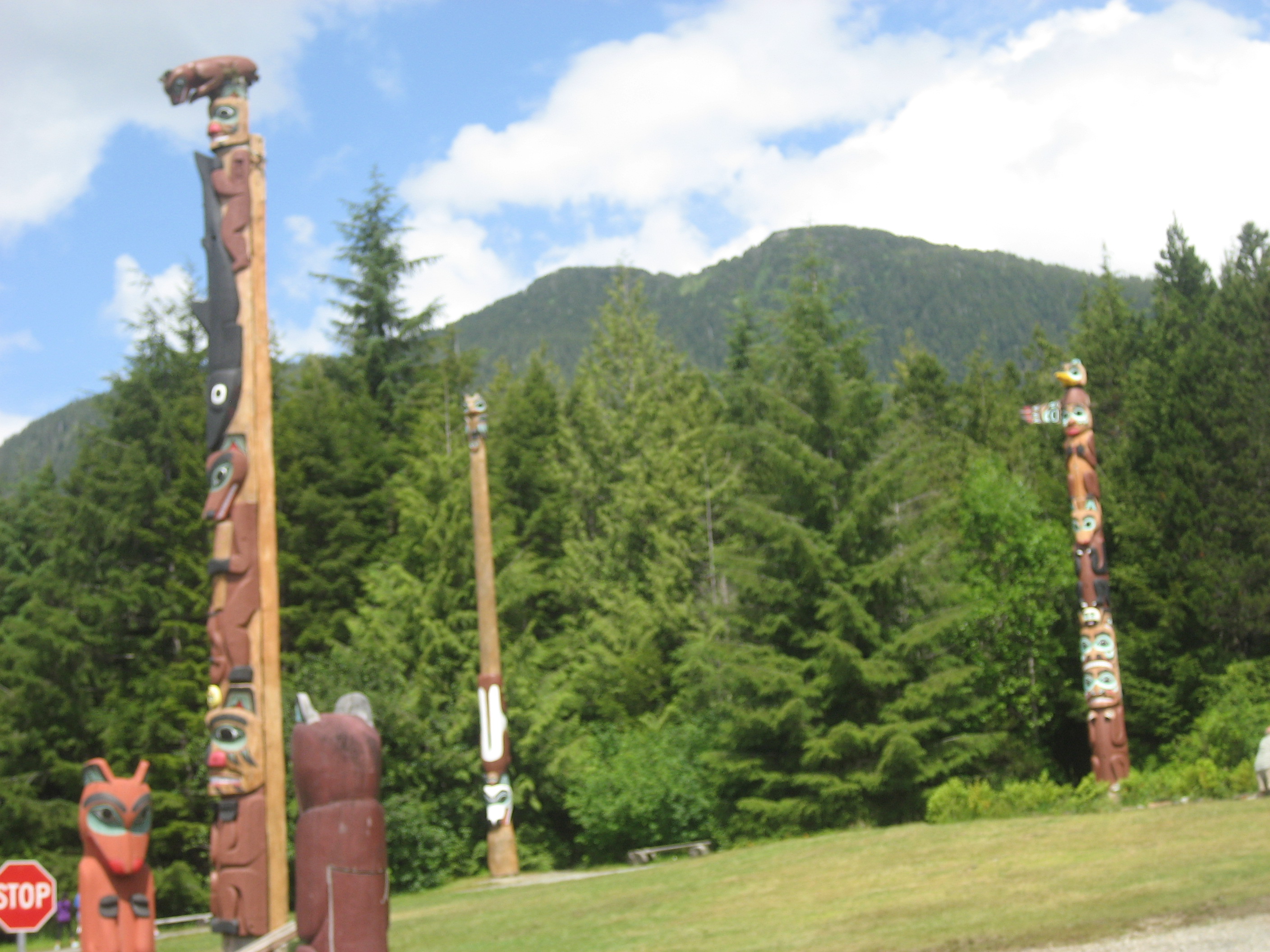
Here is a view of the totem field.

811

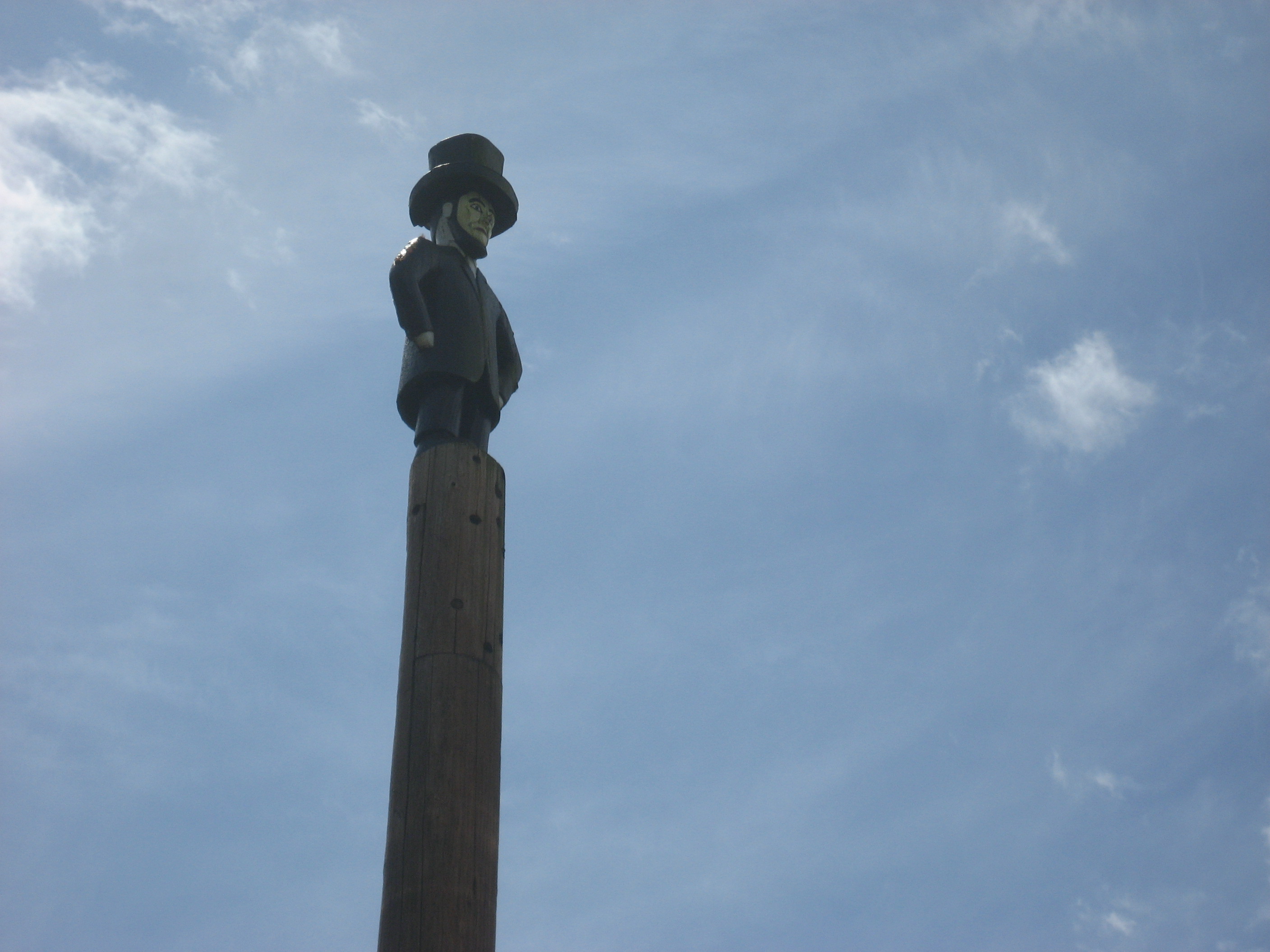
Abe Lincoln stands in exile, so situated because of his treatment of the Lakota Sioux, to which the Tlingit and Haida people take great umbrage.

808

This is the exterior of the Ceremonial Hall, where drumming and singing take place.

802

This is the taxi driver’s pride and joy.

819

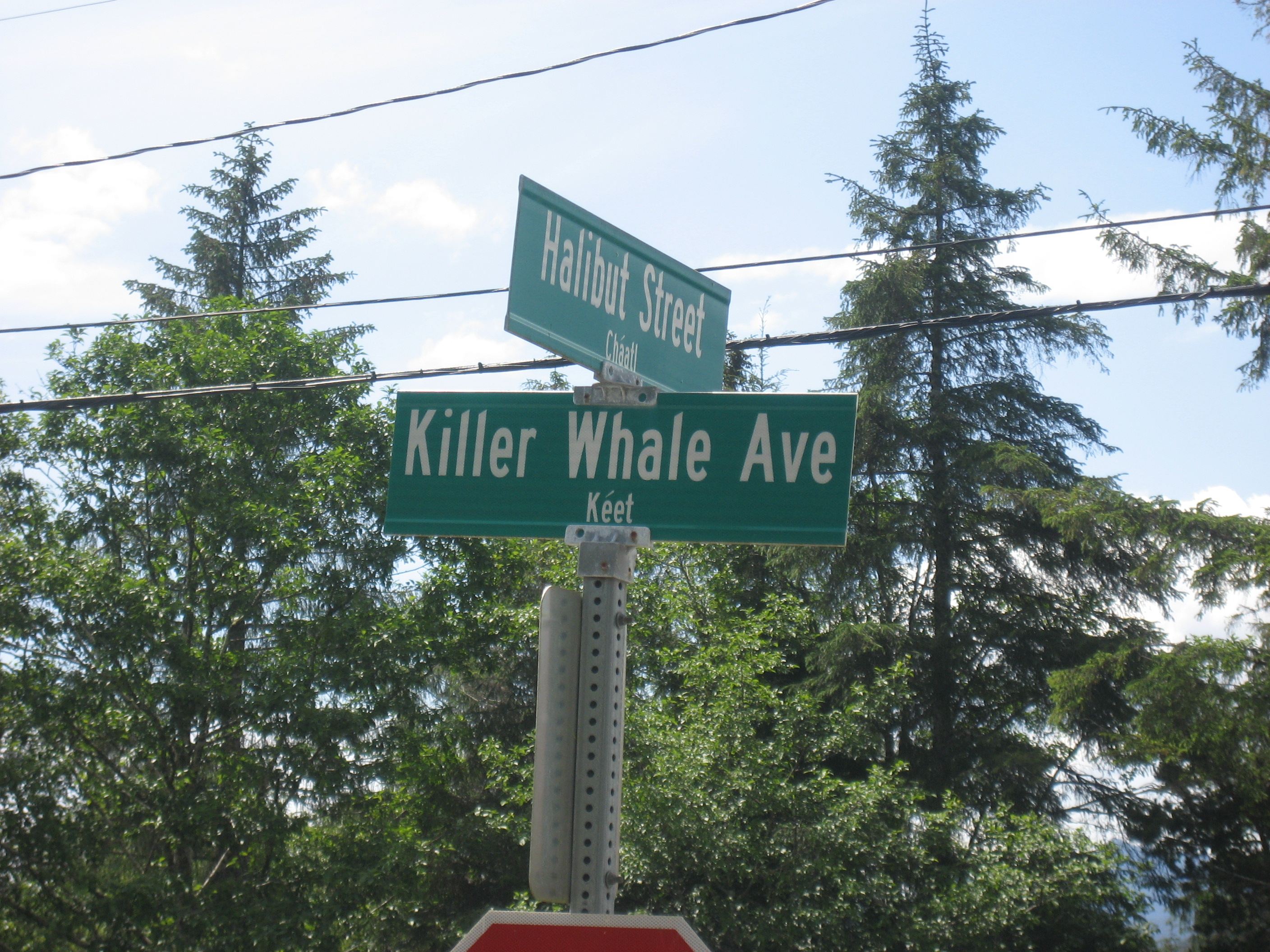
Street signs are in English and Tlingit.  The Tlingit language is offered in public schools, throughout southeast Alaska, and in coastal British Columbia.

820

Well, after this visit and a lunch at Polar Treats, downtown, it was time for me to head to the ferry. My Ketchikan friend, Ms. Chapman, took me to the terminal, and I bid a fond farewell to my new friends and communities of this magical set of peninsulas and islands.

826

The people who work the ship are also embedded in my heart.  After two days together, on the way up, several of the crew somehow remembered me, when I showed up again for meals and around the ship.

A couple of orcas were off the port side of the ship, as we left U.S. waters.

827

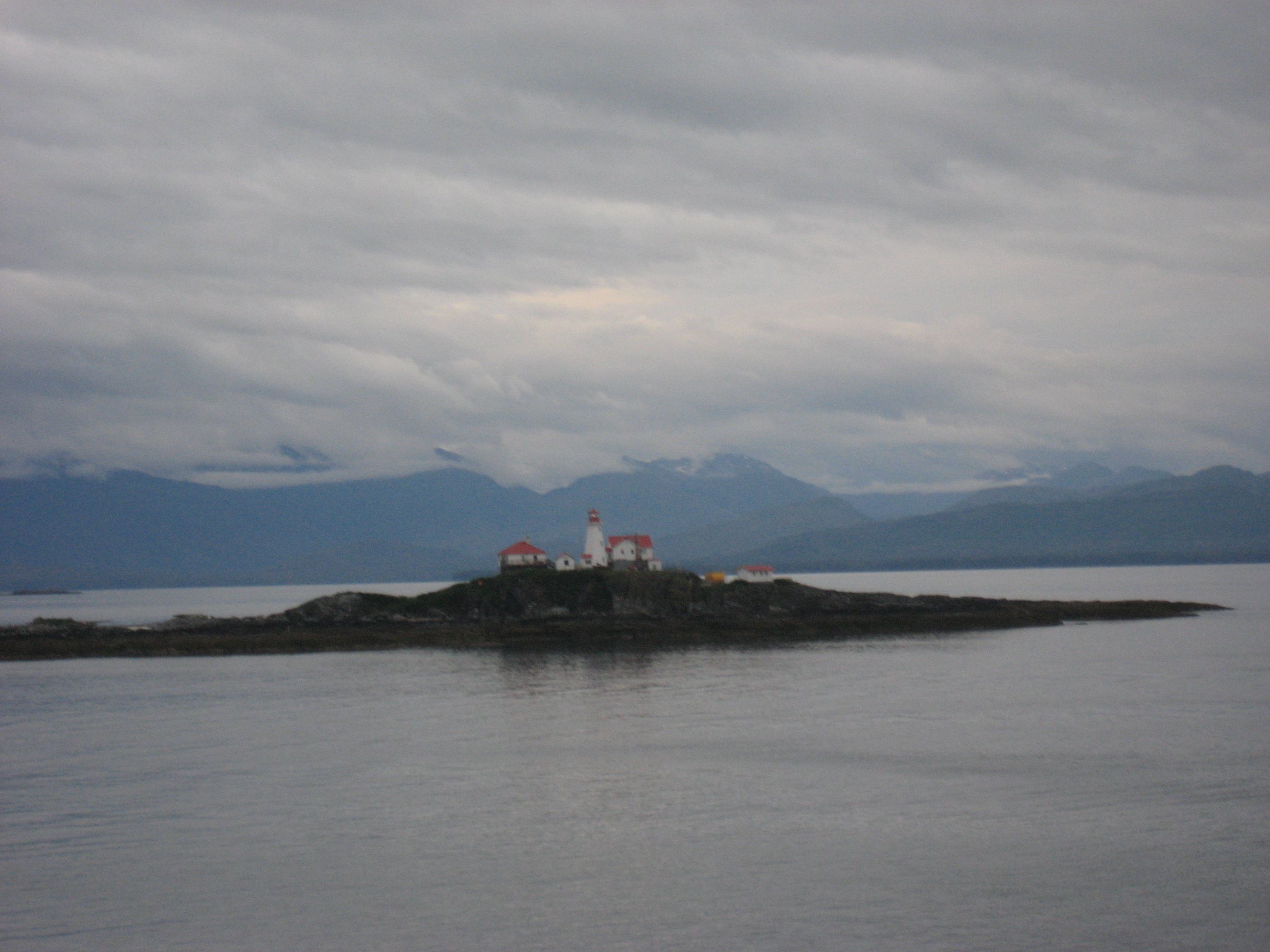
Green Island Light is manned by a Canadian family, who stay for a period of three months, then are succeeded by another family.

831

Cold and mist were the Alaskan farewell, as we headed into the waters off British Columbia.  I will be back some day.832

The Road to 65, Mile 200: Southeast IS Northwest, Day 9- Skyward to Ketchikan

1

June 16, 2015, Ketchikan- Actually, the flight from Sitka to Ketchikan lasts 49 minutes.  My friend in Sitka gave me a ride over to Gutierrez International Airport (all border fields are “International”), and from there it was a puddle jump, though in a conventional aircraft that was going from Anchorage to Seattle.

The Ketchikan Airport is on Gravina Island, from which one must take a $6, five-minute ferry, to the city proper, then a $5 taxi ride to the Main Ferry Terminal, from whence a city bus will take the visitor downtown.  I was told the Gravina Bridge was the Bridge to Nowhere that was never completed.  It was not a big deal to me- just a half-hour or so, of local colour.

Ketchikan does have its share of colourful characters, at all points along the human spectrum.  I found myself next to a tough fishwife who was loudly telling someone over the phone about how f*%#@ crazy her teen daughter was acting, as the girl was standing there, rolling her eyes.  A few minutes later, I arrived at the Methodist Church, where the kindly  pastor-emeritus welcomed me to their hostel and explained that only a church-approved Internet connection was available.  Since that link was not working, I ended up going to two different places to WiFi, the next day.  The hostel itself was adequate to my needs, otherwise.

My Ketchikan circuit began at the Tongass Visitors Center, a US Forest Service facility, which does an excellent job at explaining the various aspects of Tongass National Forest, its creatures, the surrounding sea and Man’s interaction with all of them.  There is a complicated balance at play here:  A thin soil layer, trees growing seemingly atop one another, the Native Alaskan understanding of land and sea use, European notions of said use and climate change- which is affecting the area far more dramatically than some other parts of the world, and people on Revillagigedo Island (pronounced by locals as it looks- Reh-vill-ah-GIG-eh-do), on which Ketchikan is located, are less skeptical of the changes than some are, elsewhere.685

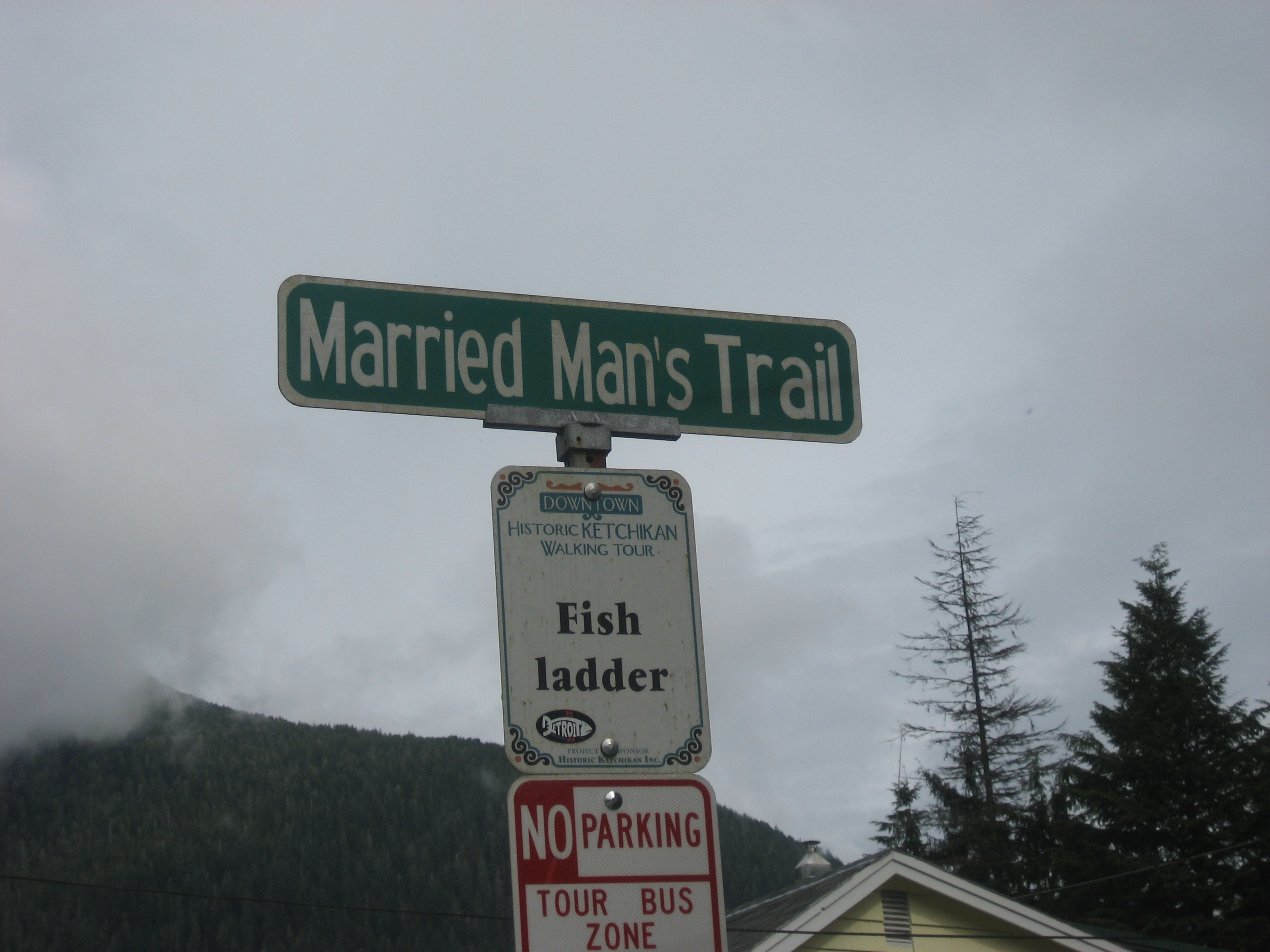
Prior to a meeting with friends, later this evening, I made a circuit of the harbour, Ketchikan Totem Heritage Center, City Park, Married Man’s Trail and back to downtown.  As you can see, the fishing part of Ketchikan is very lively.

688

Stensland Bayside is constantly being dredged and monitored, for seabed shifting, due to low-level seismic activity.

693

Thomas Basin, the older of Ketchikan’s marinas, is the favoured mooring for Tlingit fishermen.

695

Traditional totems adorn the wharf.

698

706

I walked up through the Ketchikan Native Community, to this thoughtfully-prepared facility.

710

Both indoor and outdoor totems adorn this lovely park.  A docent does double-duty, between here and the Tongass Museum, a city property, not to be confused with the USFS Visitor Center.

711

713

716

As you might have guessed by now, totem poles come in all heights and tell various stories, depending on the clanship of the carver(s).  Below, is one of the original Tlingit totem poles in the Ketchikan area.

721

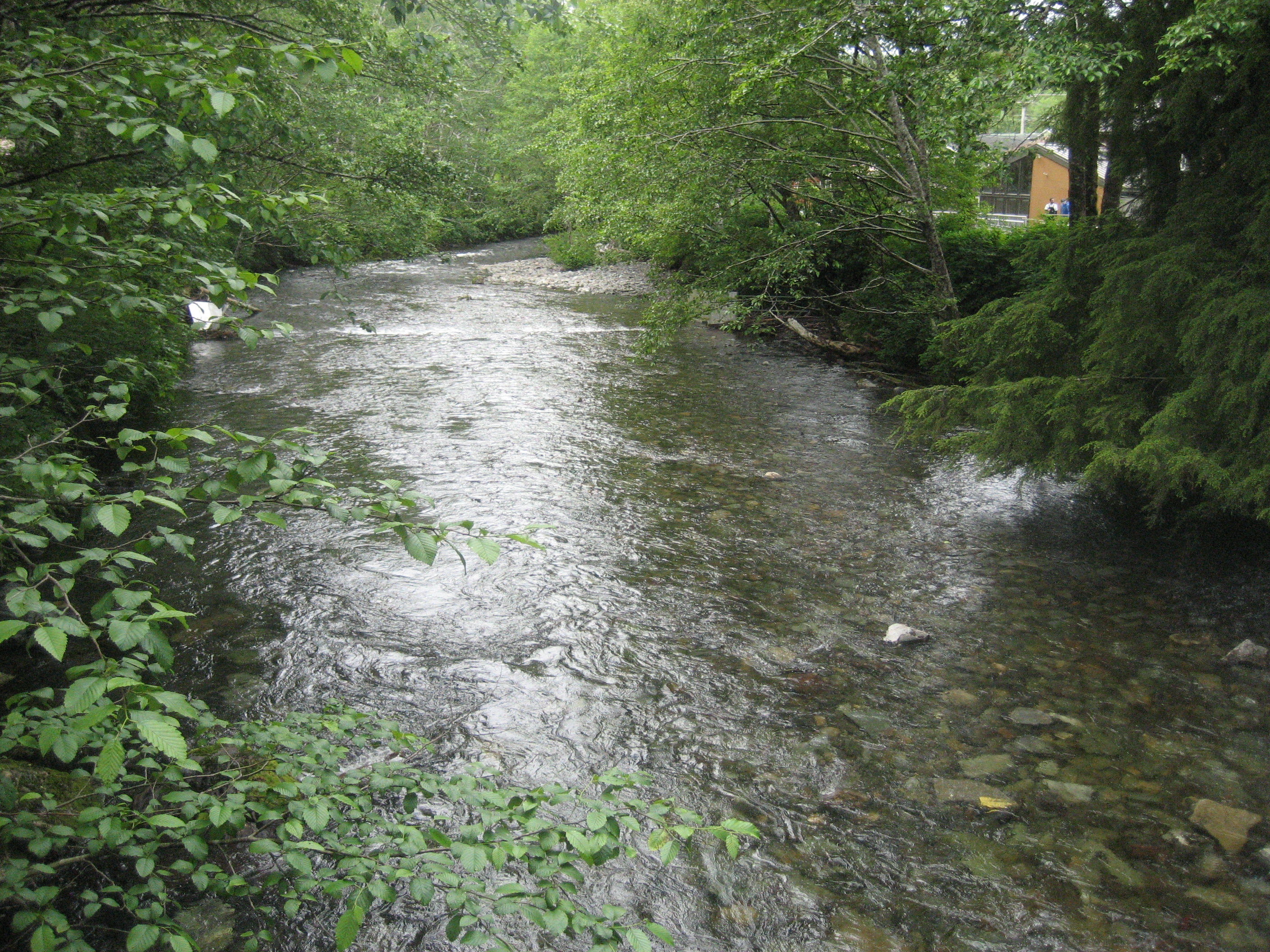
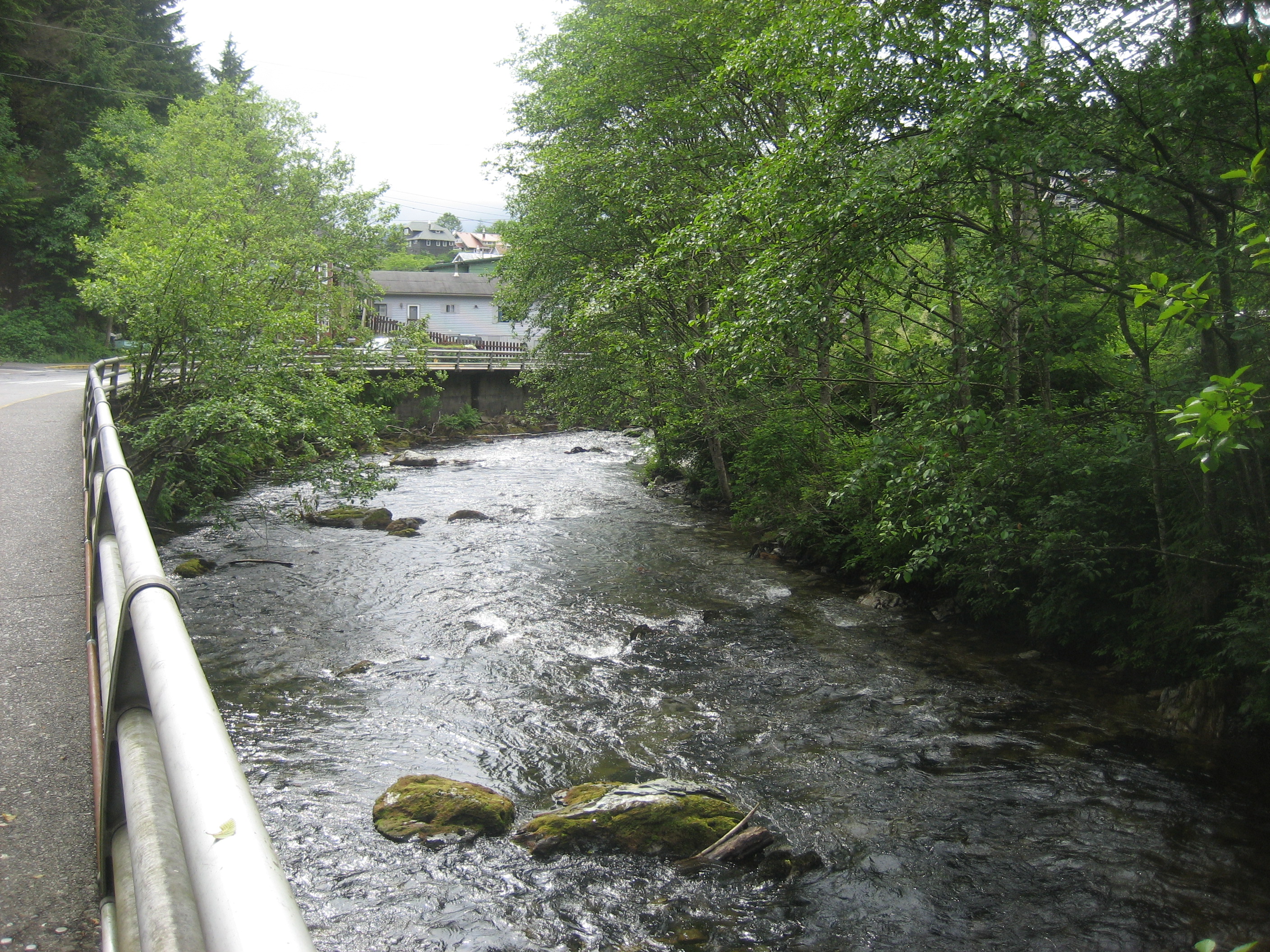
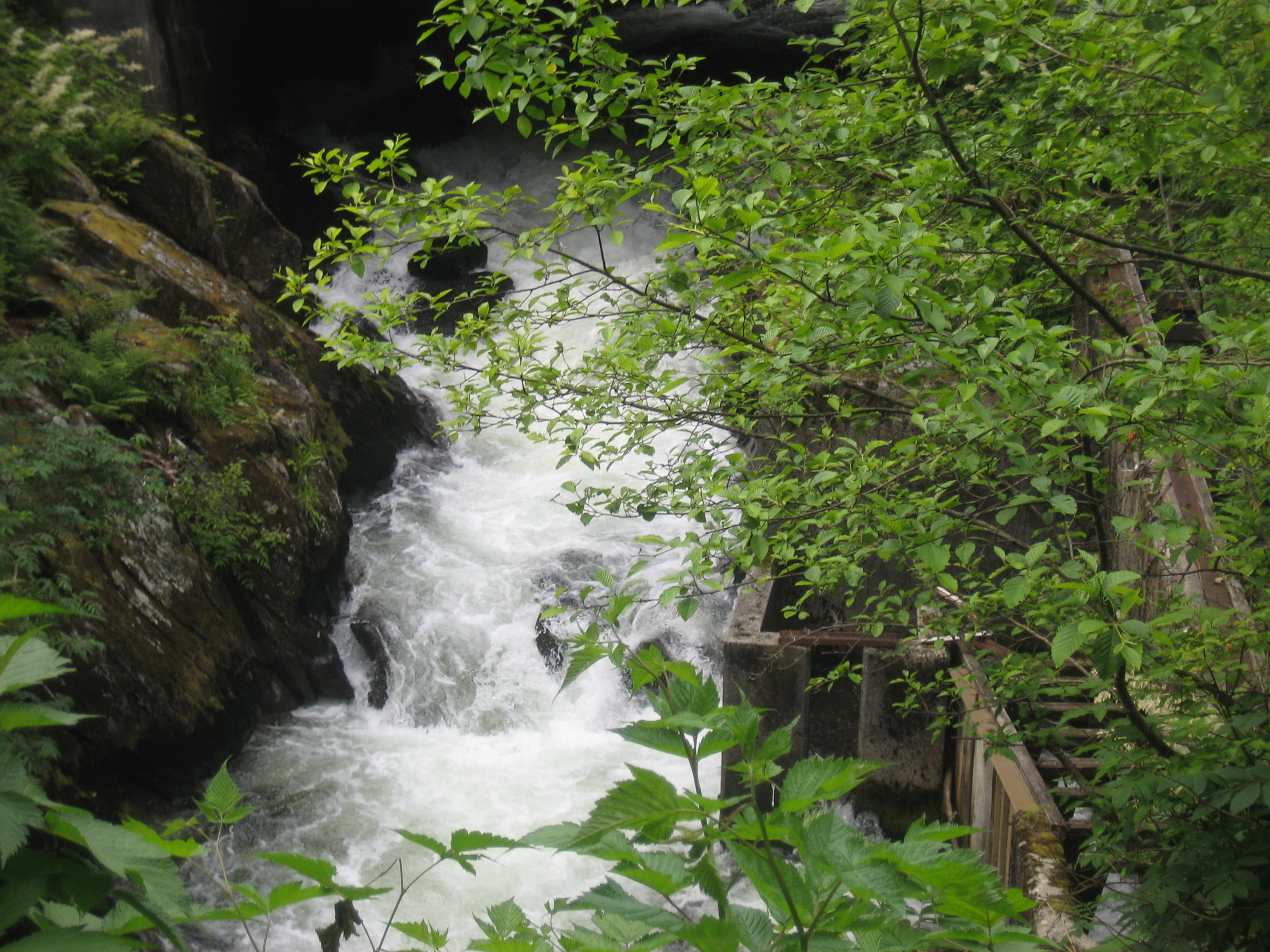
I followed Ketchikan Creek, from City Park, where it helps with a series of salmon ladders, to its confluence with the sea, near downtown.

719

730

The thin soil and the water action leave trees to fend for themselves, root-wise.

736

The Creek is variously calm and rambunctious, like all Alaskan waterways.

739

741

Married Man’s Trail takes commitment.744

746

742

African-Americans have had a key role to play in Alaskan life, since 1867.  Miss Annie was a fighter for women’s rights, before suffrage.

753

I met my friend, Ms. Chapman, downtown and went to a brief meeting at the Recreation Center.  While she was tending to other business afterward, I went over to Annabelle’s for fine Alaskan cuisine.

761

This tunnel goes under a rail link, and takes traffic from downtown to the ferry terminal.

763

I took these stairs to get to the hostel, where I again met Ms. Chapman.

764

From there, we went over to the evening meeting, which she and her daughter hosted.  This is a view from her neighbourhood.

768

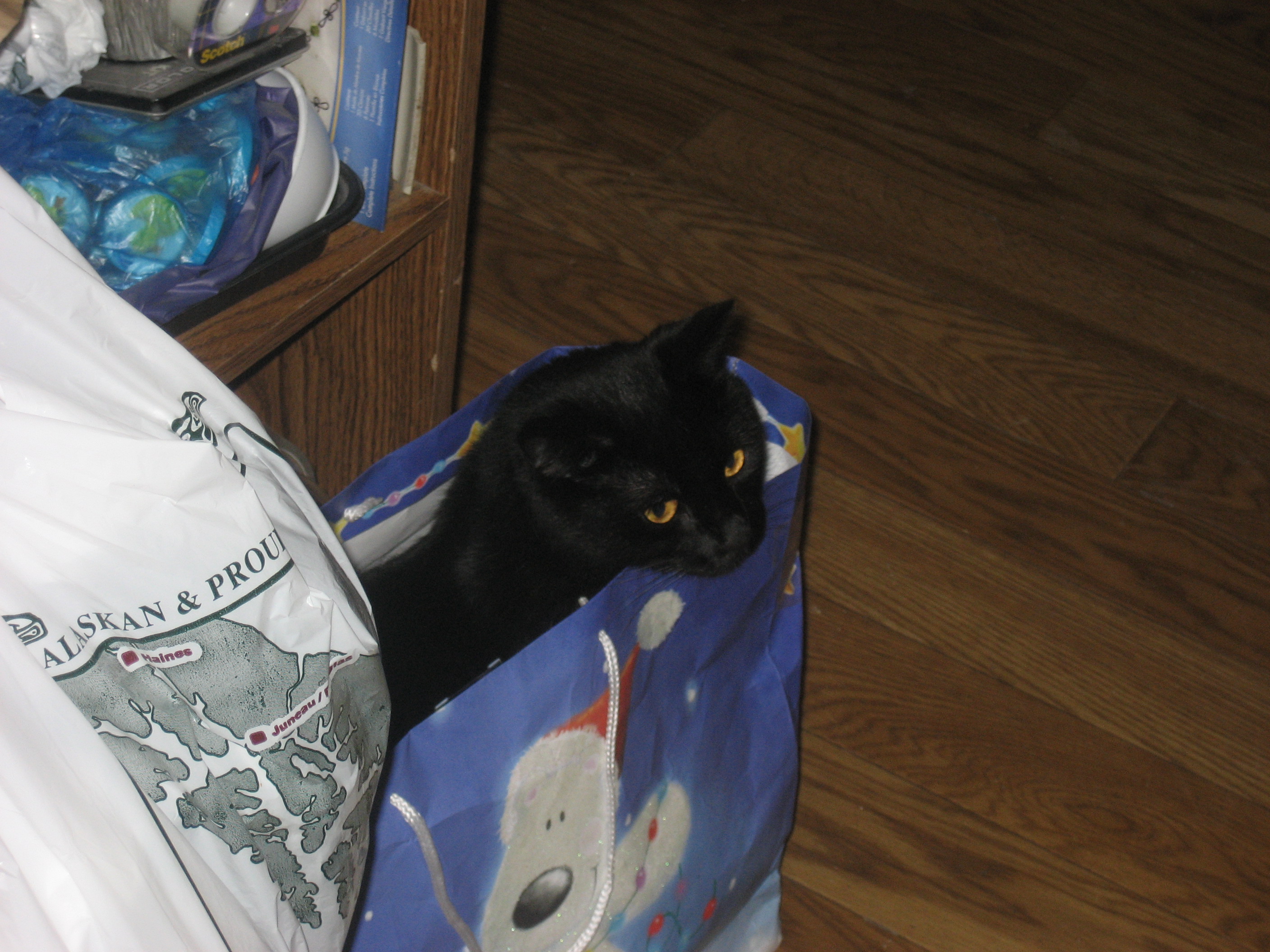
this is a cat’s eye view of the world.

769

My hosts were gracious, in the Alaska tradition.

770

So, my first of two days in Ketchikan was certainly very full.  So, too, would be the second day.

The Road to 65, Mile 199: Southeast IS Northwest, Day 8- Under The Eagles’ Gaze

9

June 15, 2015, Sitka-

 It’s said by the locals here, that eagles in Sitka are like pigeons elsewhere, and that black bears are like rats.  I didn’t see any bears, anywhere in southeast Alaska, but there were eagles aplenty, thought they took exception to photography, most of the time.

656

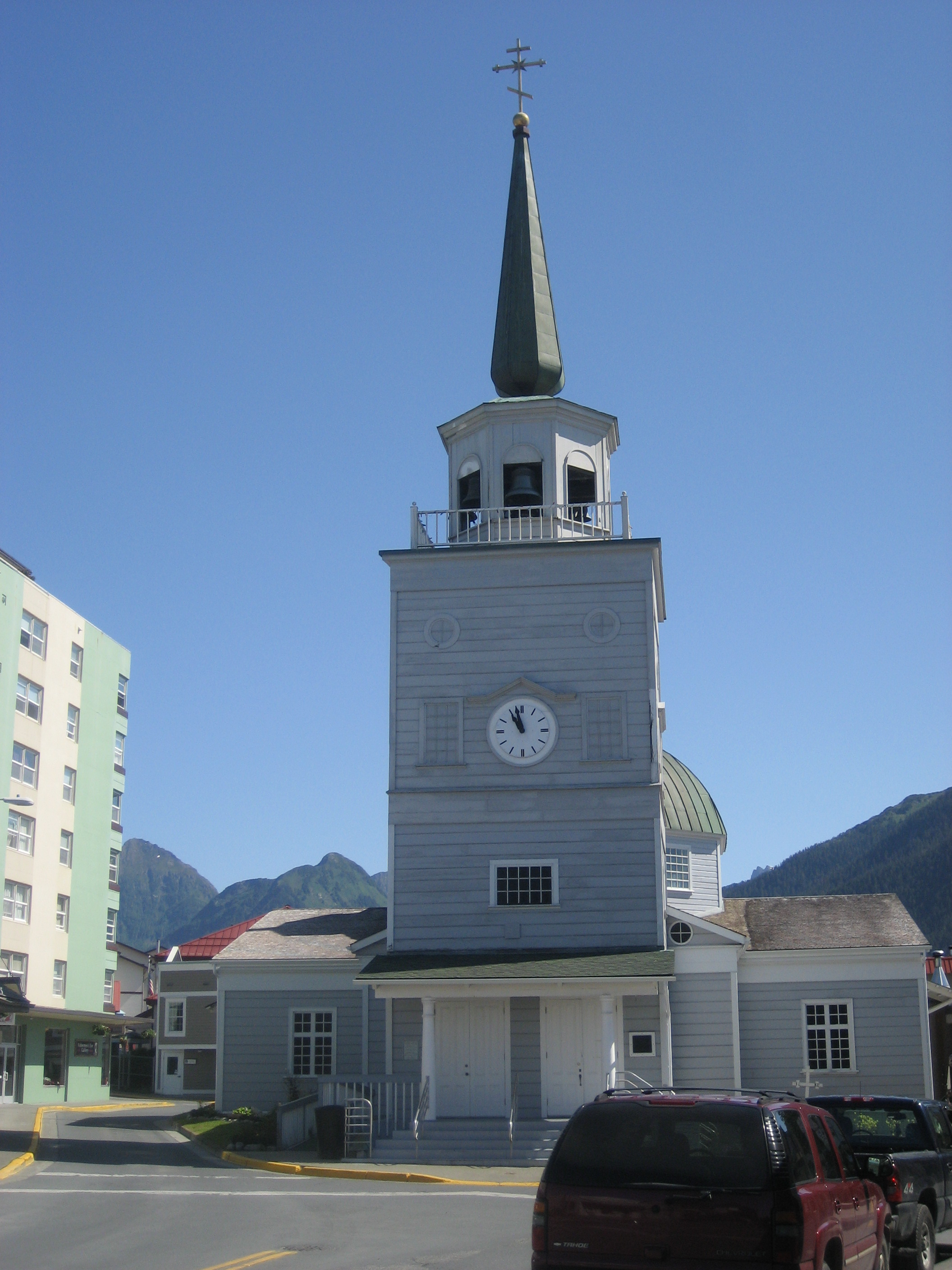
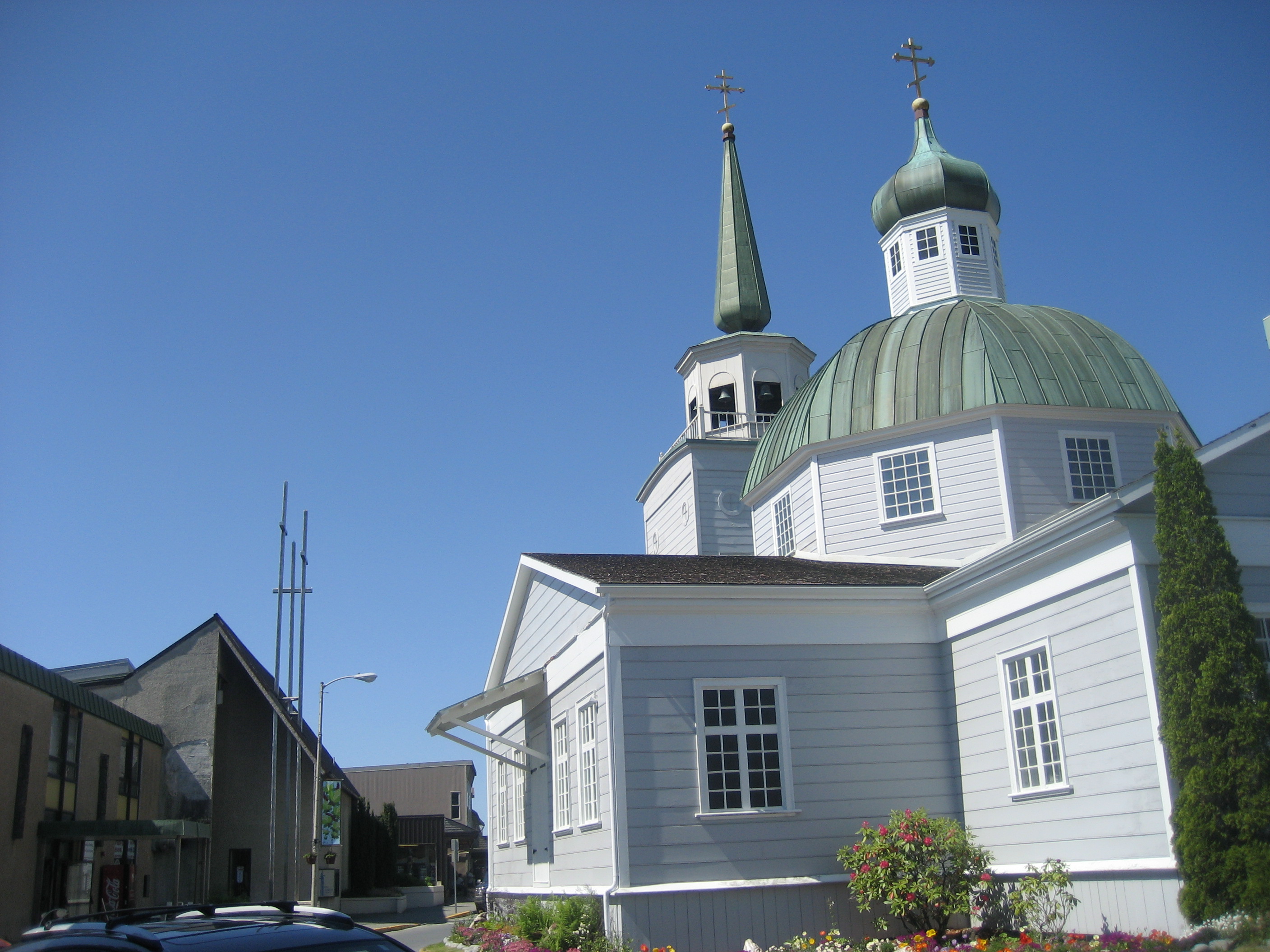
There have been eagles perched on the steeple of the Lutheran Church, and atop the adjacent St. Michael’s Eastern Orthodox Cathedral.

499

The Lutheran Church was built to accommodate Finnish shipwrights, who were brought to Sitka, both to build and repair ships, and to build the Russian Bishop’s House.  The house was the residence of the man now known as St. Innocent.  The church was placed across the street from the Orthodox Church, mostly so that the bishop could keep an eye on the Finns.

Both churches burned to the ground, in 1966.  Both have, of course, been rebuilt, and both are still active institutions in Sitka life.

523

The Lutheran Church is austere, though it has a fine old organ.

503

The Orthodox Church is replete with the gold, for which that denomination is well-known.

514

After looking at the interiors of the churches, I went to investigate the central waterfront.  A local boy was quite impressed with the work of a Haida canoe builder.  He was busy telling some other unruly kids to stay out of the canoe.

537

The Russian Bishop’s House is the centerpiece of Sitka National Historic Site.

560

I took a guided tour of the upstairs.  The docent explained that the home was built by Finnish shipwrights.  Their methods are obvious here, even today.

561

The Southeast Alaska Marine Center keeps close watch on sea stars, and other key creatures, as well as maintaining active fish-spawning ladders, primarily for salmon.  Volunteers, including our hostel manager, Katherine, are checking the beaches, most days, for marine creature health.

611

616This is Whale Park, to which our friend, Mary, took us, as part of her guided visit to the north and south ends of the island.

653

I visited the Totem Pole Trail on my own, prior to Mary’s guiding my new friend, A.,, and me.

Every town in the Pacific Northwest has totem pole displays.

622

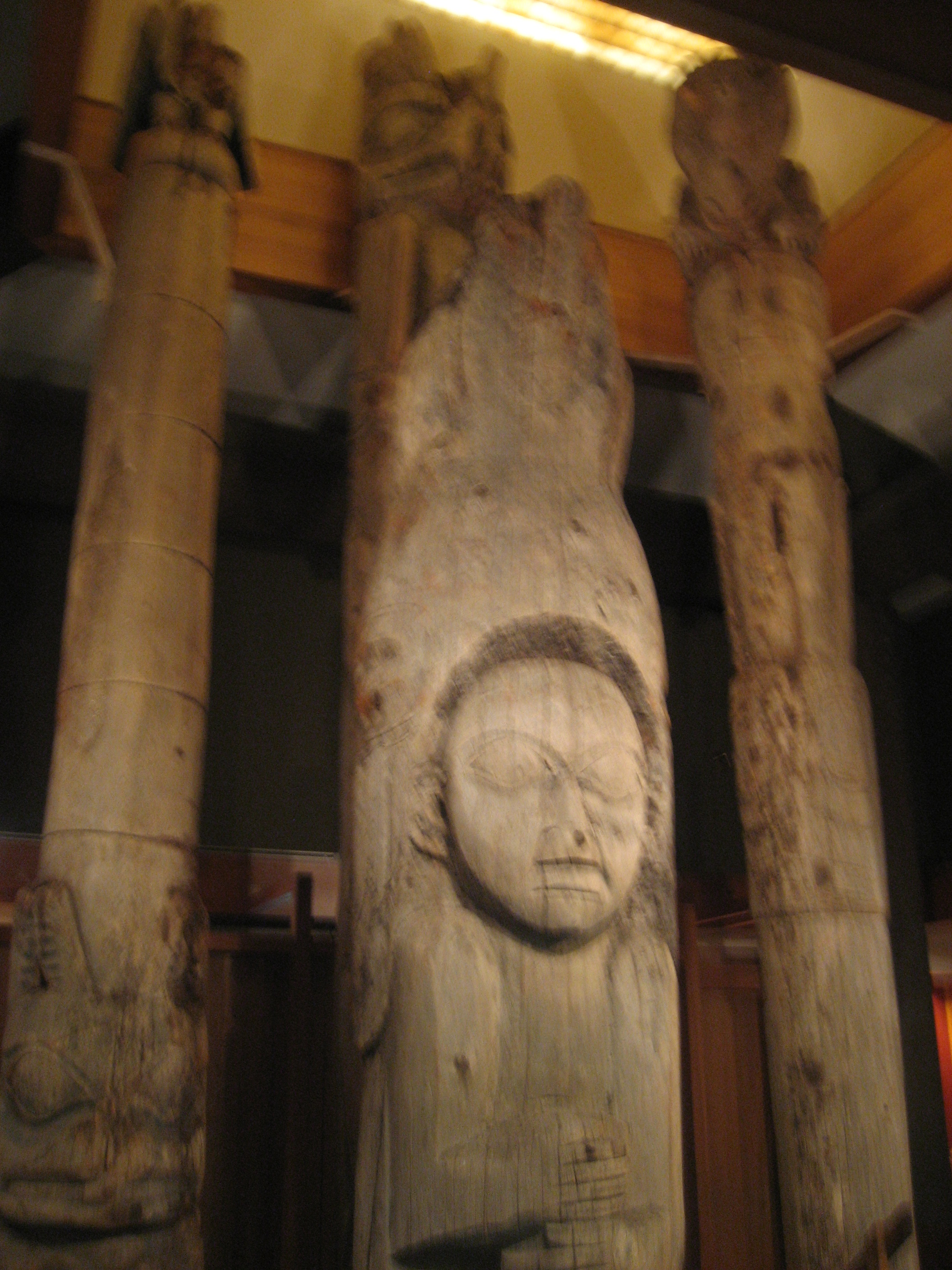
For the most part, the totem poles on display are replicas.  Those in the wire cage below, are originals.  All on this site, and elsewhere, are sacred to the Tlingit, Tsimshian and Haida people, throughout the southeast islands and peninsulas.

626

This pole marks the site of the Battle of Sitka, in 1704, in which the Russians defeated an army of Tlingits.  To this day, Tlingits look upon Russians with grave suspicion.

643

A. and I were photographed separately, at the south end signpost.658

The north end of the island has an artesian well, from which many locals obtain their drinking water.

666

Our last stop in Sitka, that evening, was the Baranof Totem Pole,  on Castle Hill,so built for Count Baranof, one of the last Russian governors of the territory.

672

I ended my time in Sitka, early the next morning, flying out to Ketchikan, on which I began Mile 200.