Trailheads and Trails, Volume 1, Issue 20: Walnut Canyon, Flagstaff

14

August 31, 2014, Flagstaff- I spent Sunday of Labor Day weekend, nearly a month ago, walking and re-acquainting myself with two Flagstaff-area National Monuments that pertain to the Sinagua people, who were ancestors of the Hopi, Zuni and Tewa people of today.  I have been to both Walnut Canyon and Wupatki National Monuments, several times, but not since Penny passed on.  It was time to make another visit.

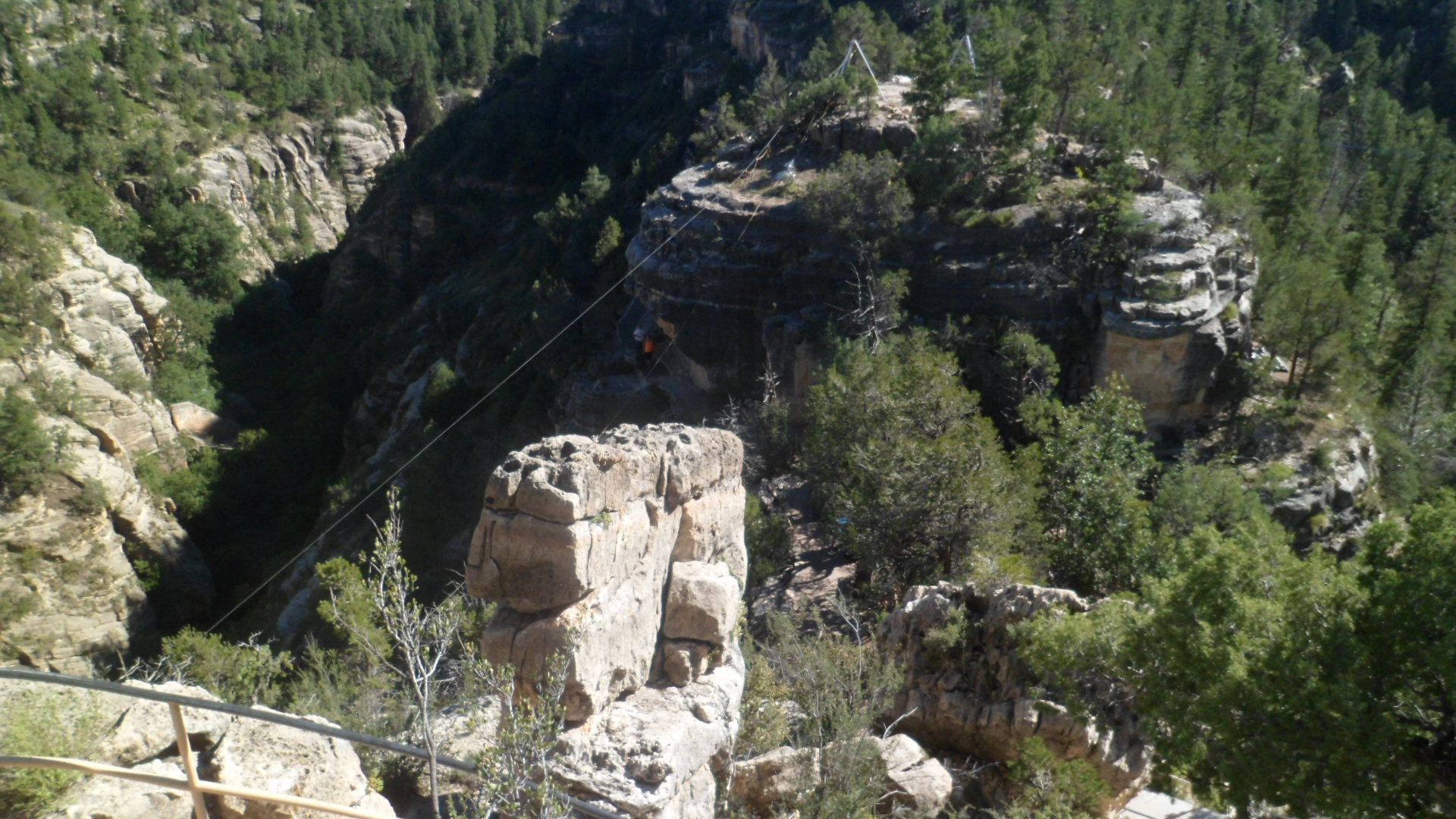
I went to Walnut Canyon first, as it is the more archaeologically-sensitive and needs to be shuttered and locked up, each night.  The centerpiece is the Island Trail, which takes visitors to a “sky island”, separate from the Colorado Plateau.  It is there that most of the Sinagua ruins are to be found.  The rest, in cliffs, to the east and

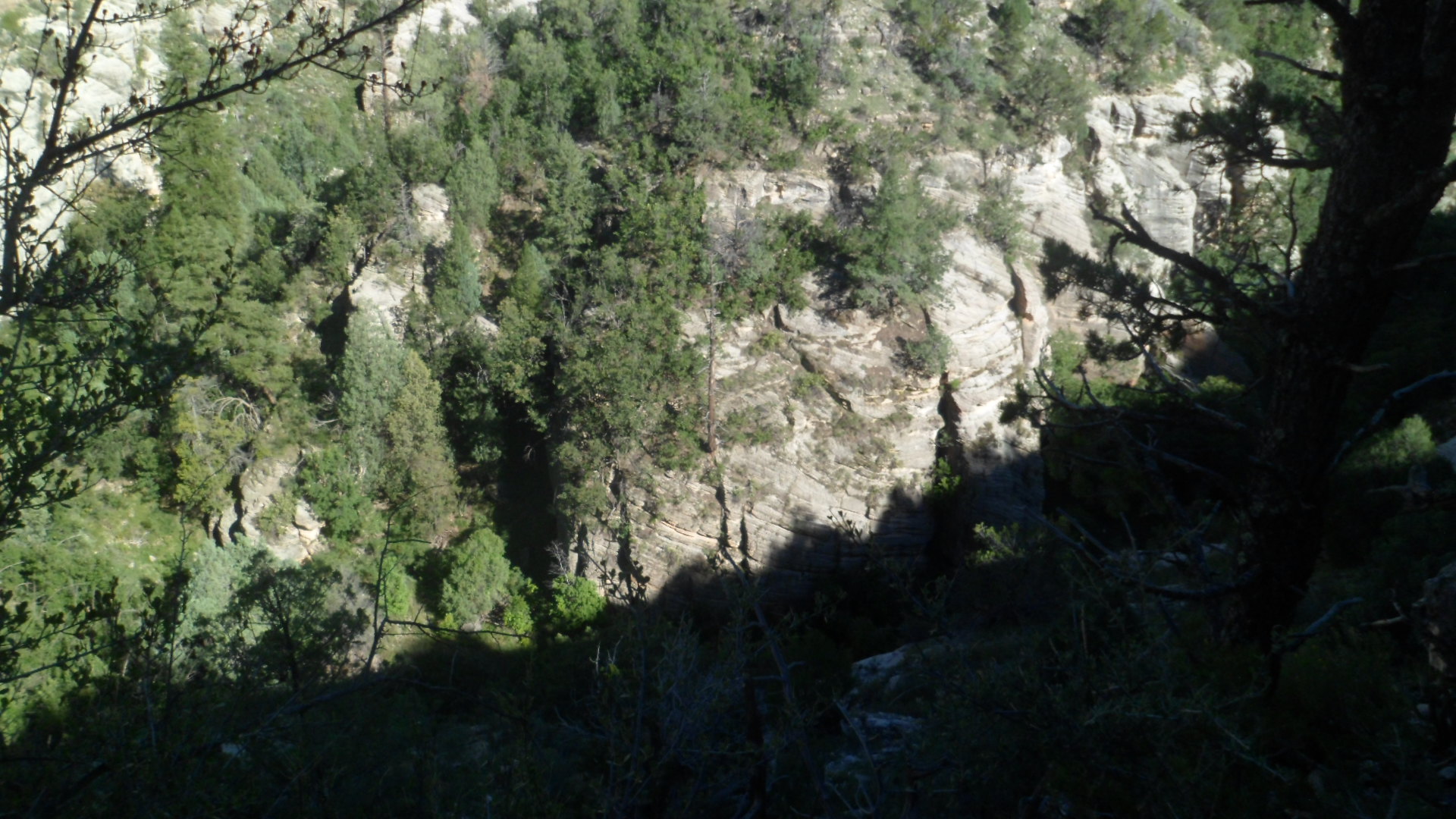
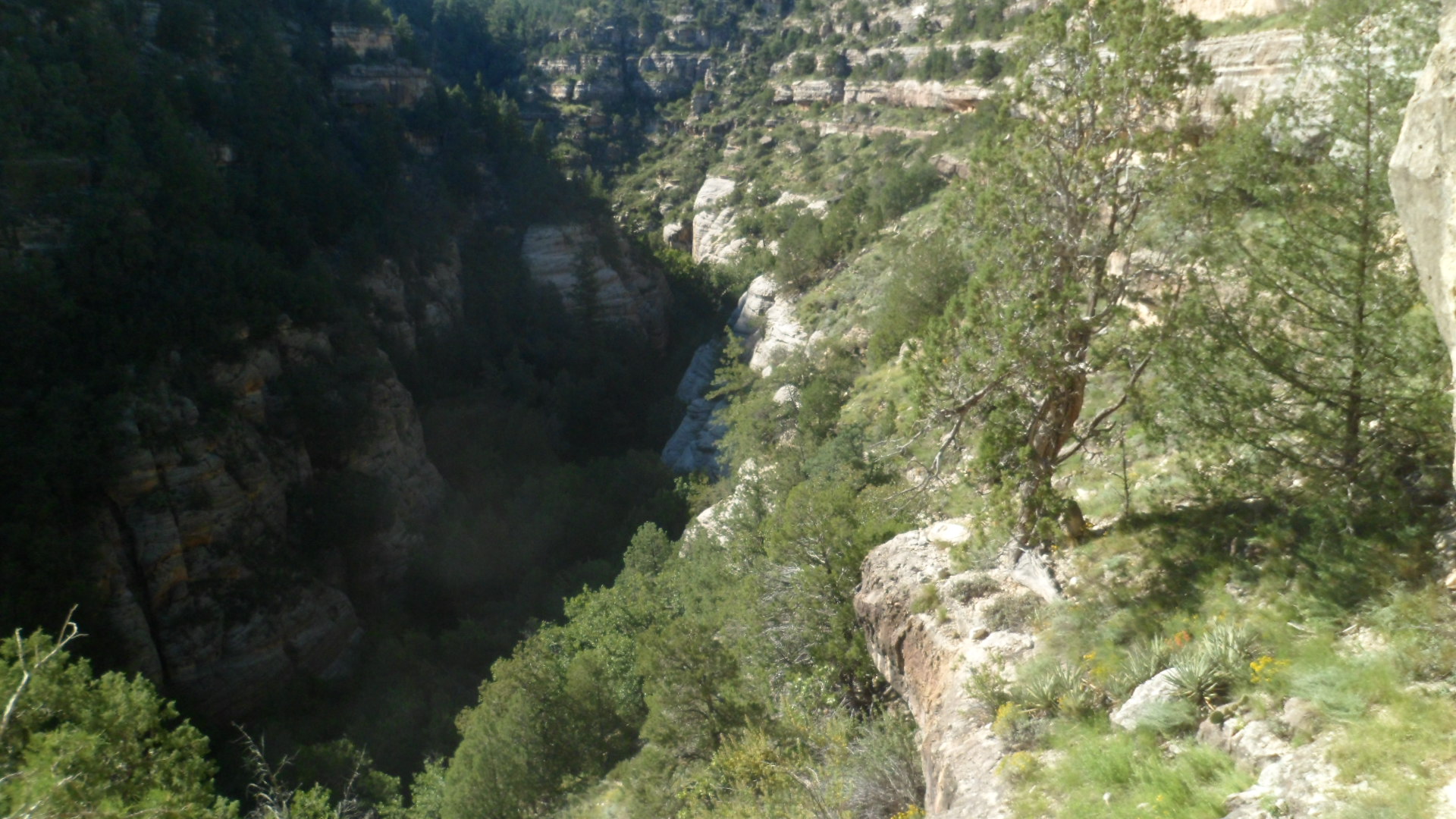
west of the sky island, can be easily seen from there, but are not accessible to the public.  First, is the view of the canyon, from the Visitors’ Center.

SAM_2641

The next several shots are of the Sky Island and its ruins.  It is my practice to walk around an area clockwise.  Most people prefer to go counterclockwise, so I find myself coming across more folks coming from the other direction.

SAM_2646

SAM_2650

SAM_2652

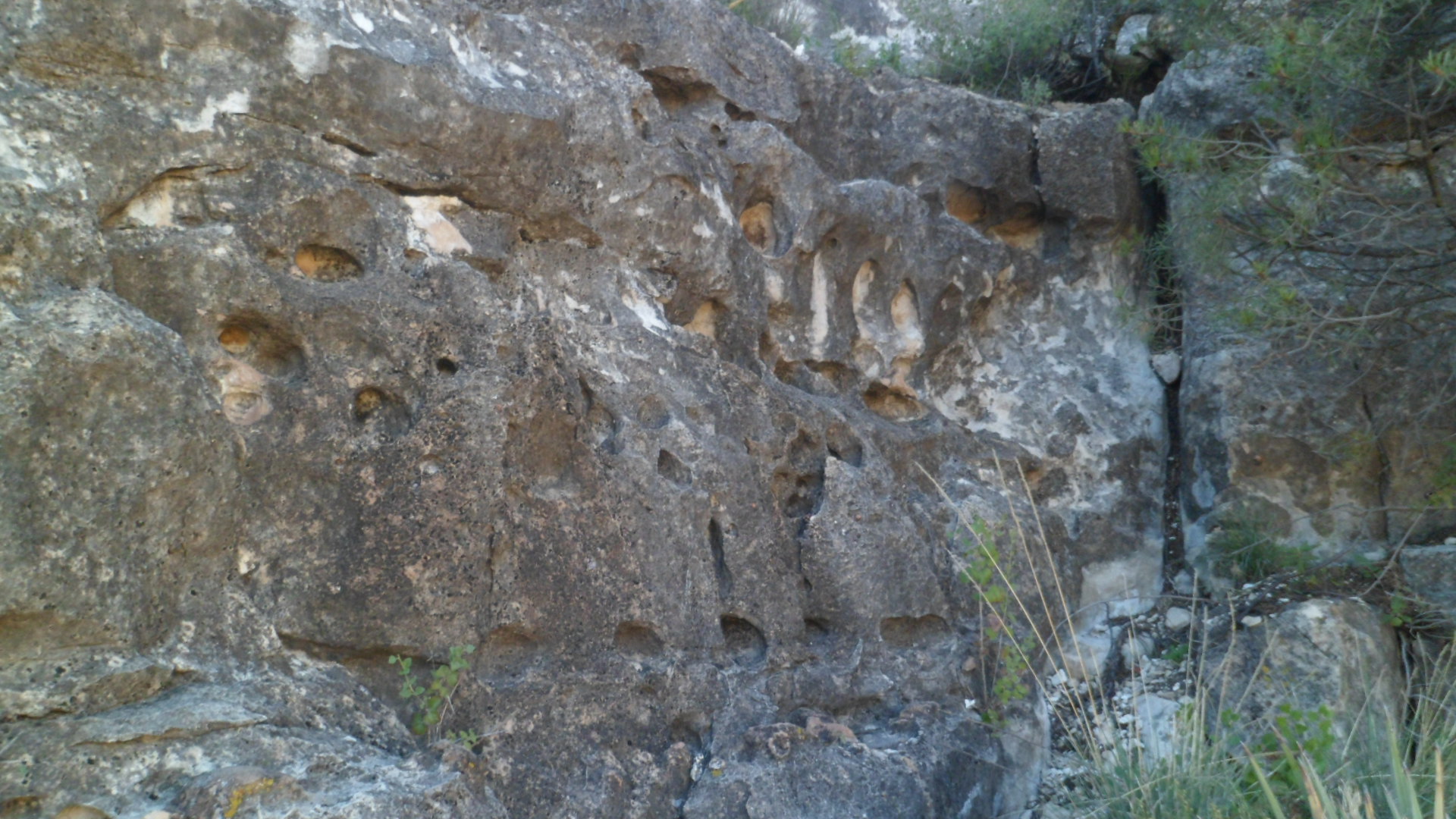
The overhangs made natural places of refuge, and many were used as open-air kitchens, hence the soot marks that are visible in some scenes.

SAM_2654

SAM_2657

SAM_2661

SAM_2664

SAM_2668

SAM_2670

SAM_2675

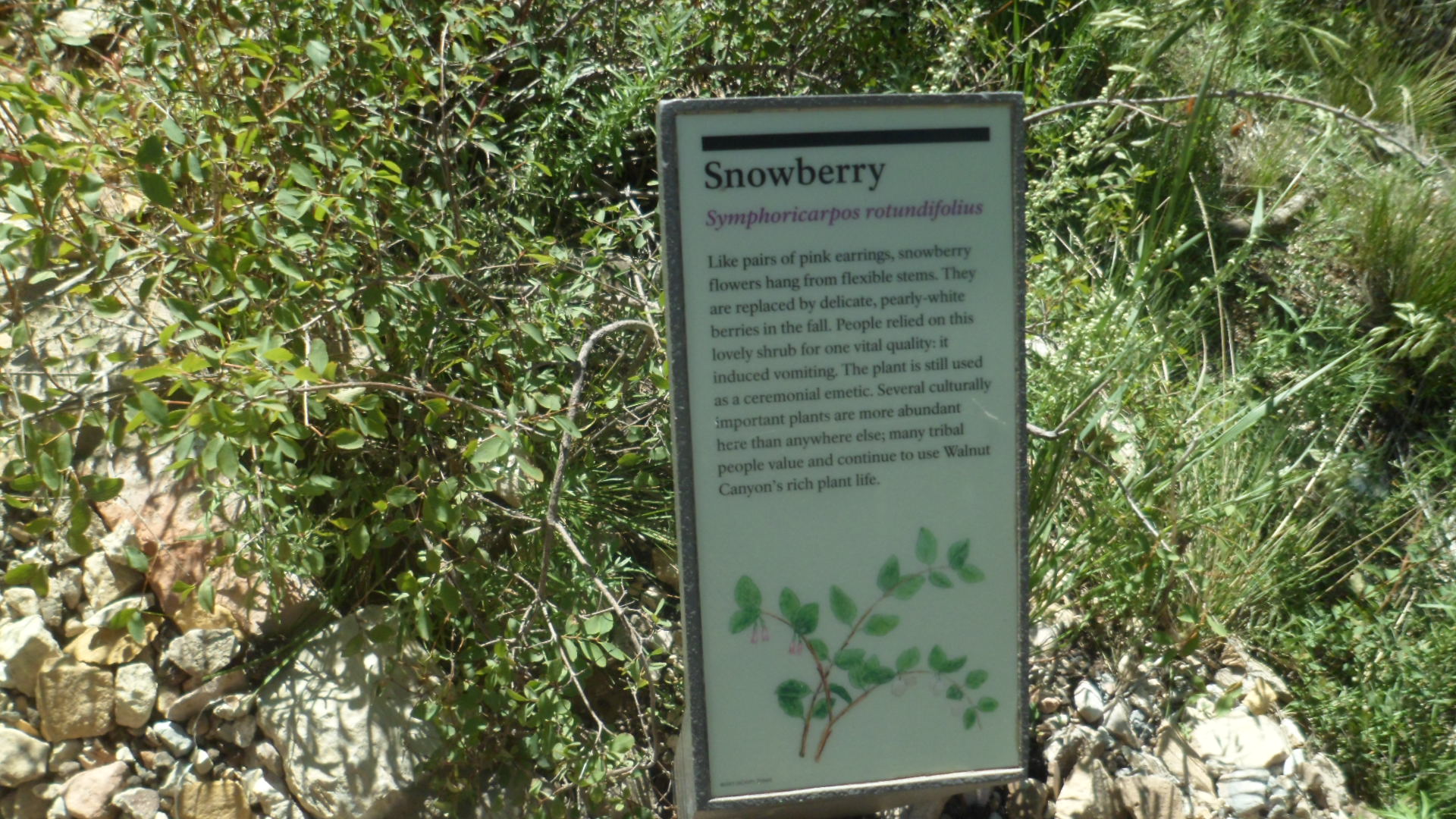
This informational sign describes the snowberry, a medicinal plant, used by the Sinagua for treating gastrointestinal ailments.

SAM_2679

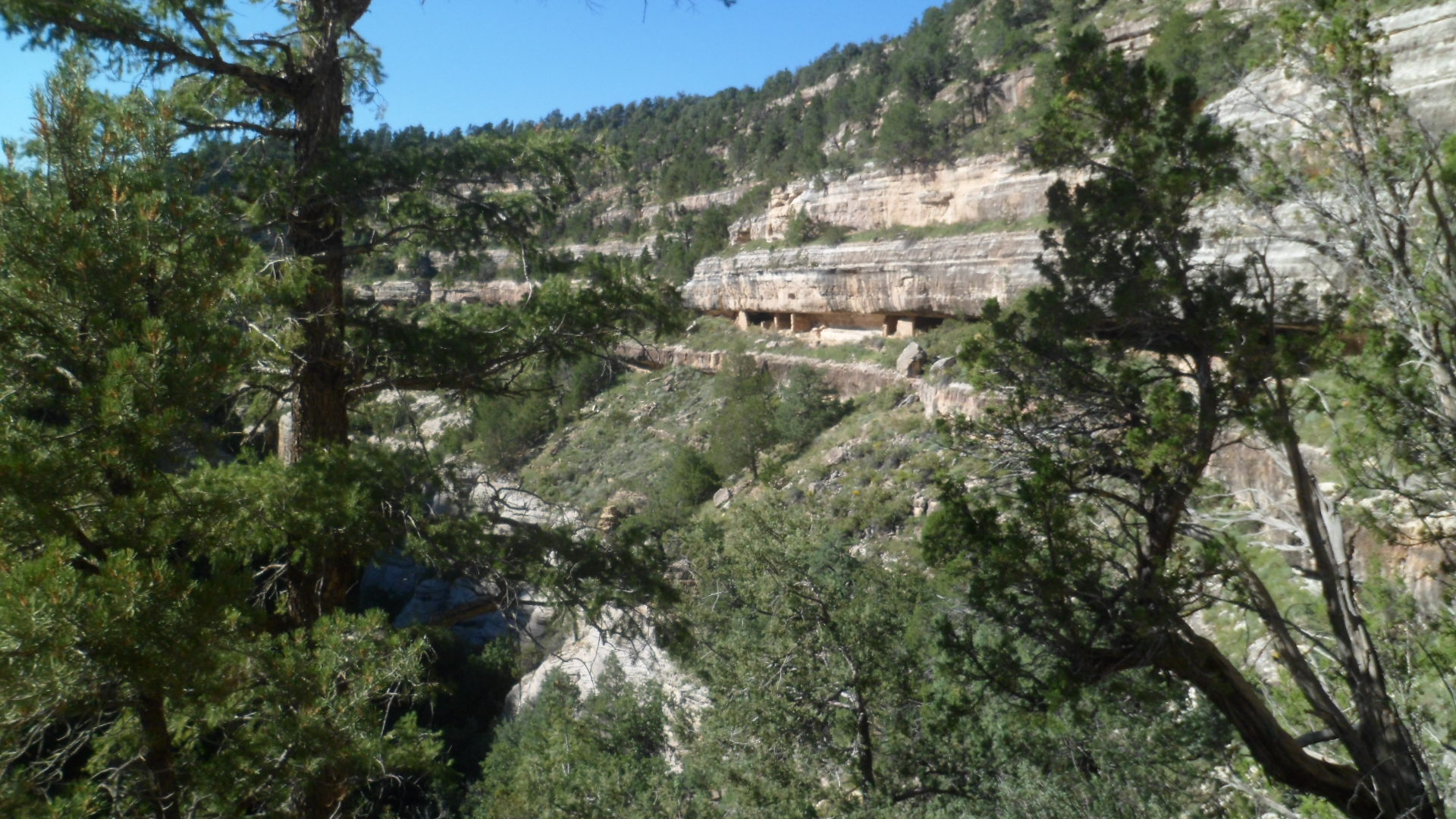
Now for some views across the canyon, to the dwellings outside Sky Island.

SAM_2648

SAM_2651

SAM_2678

Lastly, Mother Nature throws in some rock formations that just seem to have personality.

SAM_2683

Walnut Canyon may be said to have been one of the safer spots for the Sinagua, given its relative inaccessibility in pre-Columbian days.

SAM_2682

NEXT:  Wupatki

An Eastward Homage, Day 26: An Old City Stands and Cheers

8

June 21, 2014, Luxembourg-  It was the Solstice!  How to ring in the Summer?  For me, there was no better way than to walk down to the Alzette River, passing the three segments of the old fortress district of Luxembourg-Ville along the way. The path to these magnificent sites passes along Rue Marche des Herbes.

14993102801_082c2a9077_b

The walker passes Luxembourg’s Palais de Justice.

14809657277_36069037a1_n

Around the corner is L’Eglise Saint-Michel, honouring the Archangel.

14809496219_4160c069b8_n

14973199926_a93a64a424_n

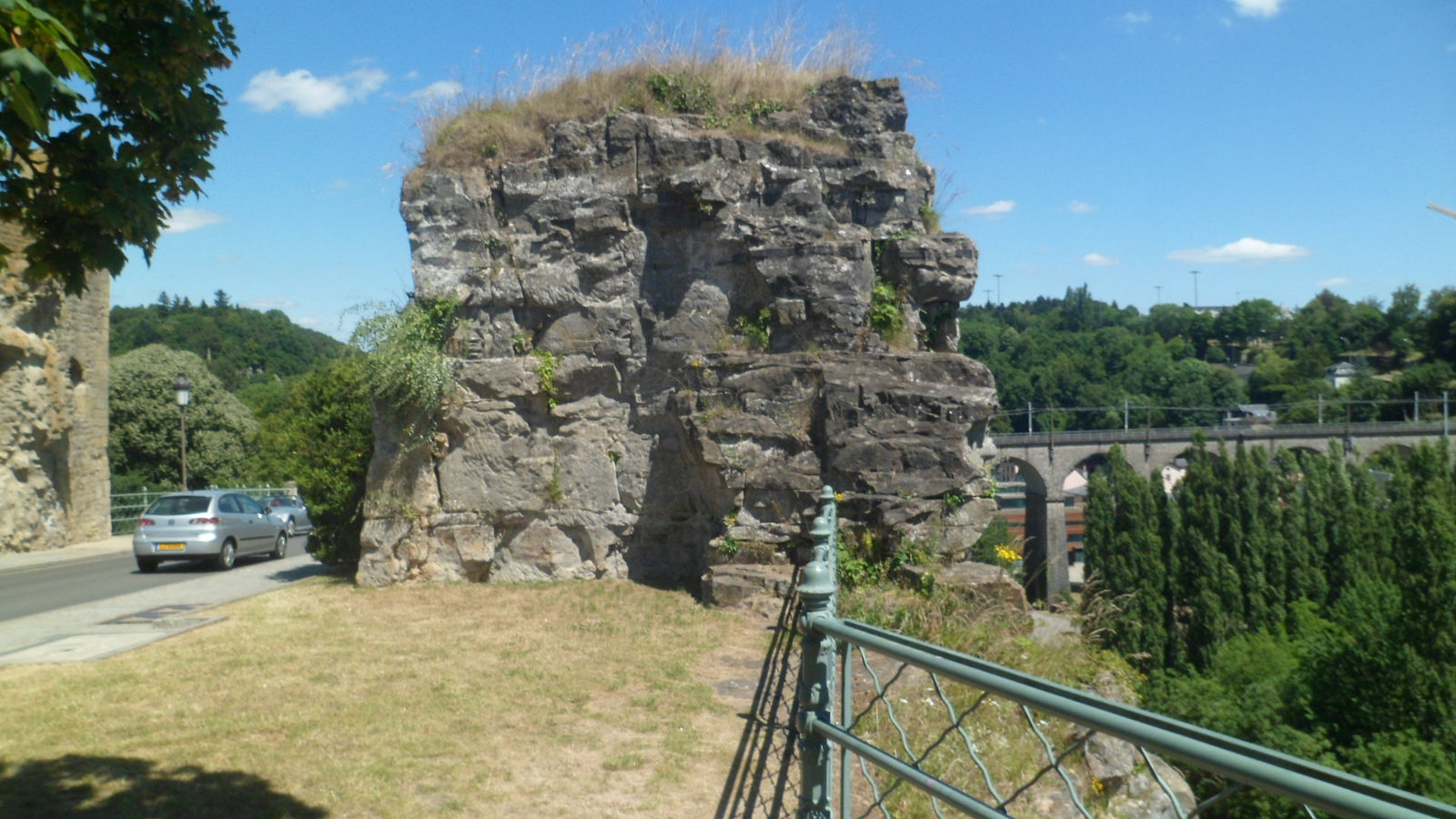
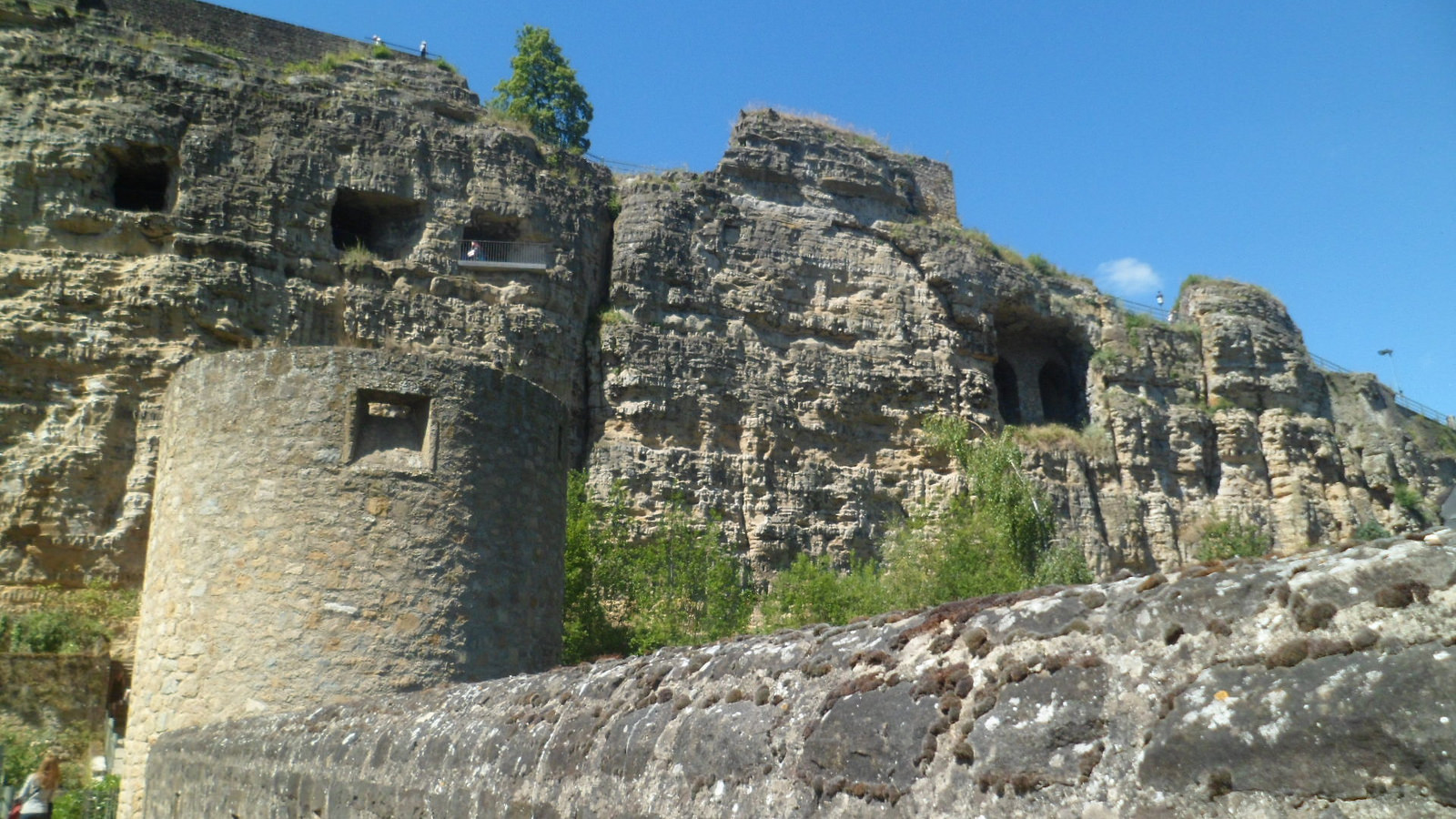
Then comes Rocher de Bock.  This is the oldest area of Luxmbourg-Ville, having been built  by Count Sigefroy, on the site of an old Roman castellum, in 963 AD.

14996177765_cdf4b41d13_n

This is a view of a casement, under the Bock.

14809535210_fbf4313b24_n

From the Bock, a viaduct, built first by the Romans, then restored by the Spanish, still shows usefulness.

14993094051_c44cc4eb6e_h

The “new Luxembourg” of the Europe Center is visible in the distance.14973198366_6339fe710b_n

14995810842_62384a8886_n

Ville-Basse, the lower city, has its vibrance and trendiness, much as do the city centre and Quartier Gare, both in Ville- Haute.

14993094701_d1ca0807d3_n

14814540568_d7c7b24c08_n

Maybe Not Bob’s is an eatery that has been open for 21 years.  The name comes from a compromise between the two owners.  One wanted to call it Maybe’s and the other, Bob’s.  So they disagreed in the middle, but continued to serve good food, or so I’m told.  I saved my appetite for New Color’s, later that evening.

14809570808_bd872795ef_n

On I went, past the confluence of the tiny Pertrusse with the moderately-flowing Alzette, towards Wenceslas Wall.

14809527600_353dd7c096_h

14809486009_e3a860affc_n

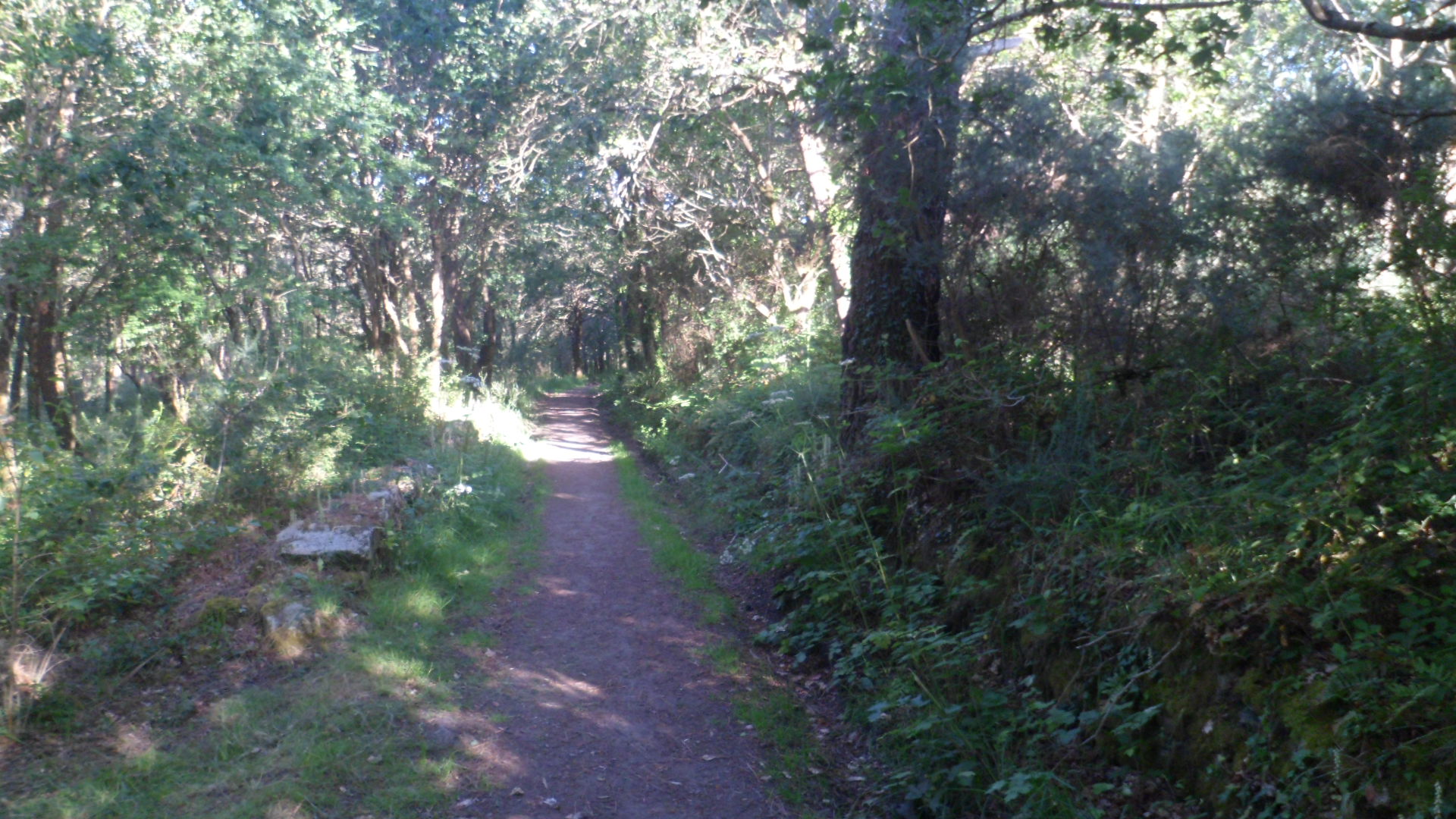
The Alzette offers a short, but tranquil, walk in shady woods.

14809484769_3703e5165c_h

Then, the woods clear, and the Spanish Turrets (Tres Tours) of Wenceslas Wall let us know why this city was called Gibraltar of the North.14809568318_d709ced914_h

Wenceslas was an early Duke of Luxembourg, allied with the Spanish, during the days when Spain was ruled by the Hapsburgs.  His wall was intended to keep out the French.  This worked until the War of the Reunions, which I mentioned in the previous post.  Vauban, who led the French to victory, left his own fortress.

14809481769_f6ace5f136_h

There is a third fortress, Thungen, in the Kirschberg District, but I did not get over that way, this time.

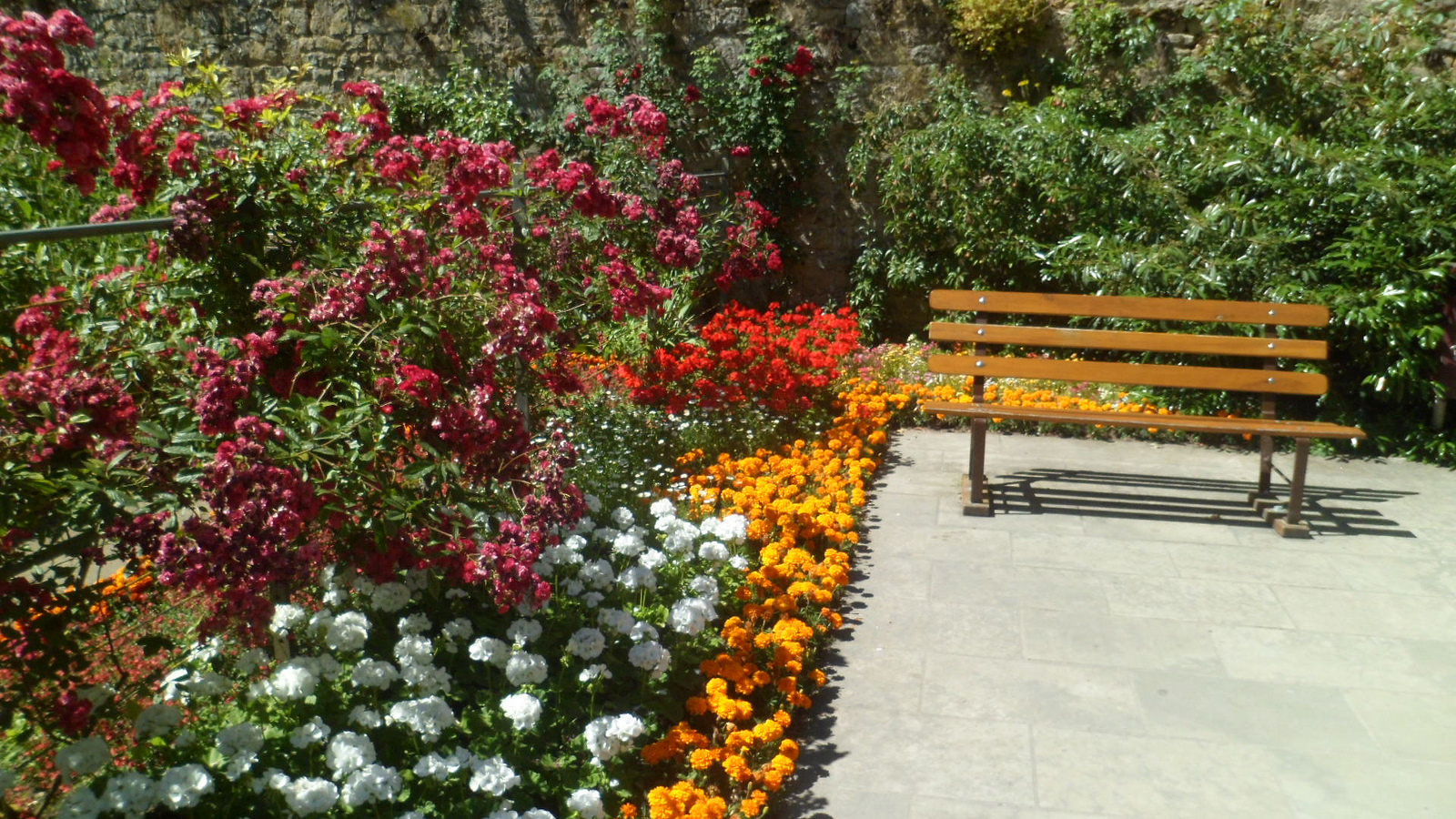
Instead, I circled around and took in Ville-Basse’s small but scintillating garden.

14814447469_d3e06d8557_h

14978157146_281863ea08_n

15001143315_bdfa42016d_n

After this brief respite, it was back up to Ville-Haute, past the area where the Wenceslas and Vauban strongholds blend.14814493190_a95ea58ebe_h

15000776502_f7b1506a1e_n

14978383866_f774a16b3c_n14998264931_319d17c90b_n

New Color’s is a brasserie, built by some of the employees of Color’s, a now defunct eatery, which ruled the Luxembourg dining scene for several years, or again, so I’m told.  All I know is that this new establishment provided a delectable five-course meal, and has one of the most energetic staffs I’ve seen anywhere.  I was the first dinner guest, and by the time I left, there was zero room on the patio.  Hugo became a friend, and I gave my payment standing up, so that he and his wife would not lose four guests, for whom mine was the closest table to being available.

Then, the show was about to start.  Luxembourg Philharmonic presented an evening of Disney and movie themes.

14814835467_d5facf1e74_n

15001360995_dcf80c690d_n

The Orchestra ended its performance at 10 PM.  In Place d’Armes, however, Dany Kohll and Maxim were just getting started.

14978372336_3149ab9359_h

14814659149_2c0a1cd825_n

Graceful Mme. Kohll and her troupe, which includes her husband, Felix Schaber, a horn virtuoso, kept everyone gleeful, with a mix of pop, show, blues and rock anthems.  We all got to join in for “Silly Sally” and Phil Collins’ “Take Me Home”, with which Dany sent everyone home, right at Midnight.

This was the most eclectic day of my journey, certainly, and what an honour to have been able to take part in the little nation’s big weekend.  By the way, the Duke whose birthday is the basis for this celebration was the first Grand Duke of an independent Luxembourg:  Adolphe I.

NEXT:  Morning in Luxembourg, Evening in Metz.

( I must let everyone know, all the photos taken during the last week of my time in Europe were lost yesterday, in a computer mishap.  I am looking into long-shot possibilities for restoring the SIM card, or extracting the photos, but Best Buy says its impossible.  The remaining posts, therefore, will have accredited photos by other sources.)

An Eastward Homage, Day 15, Part IV: Carnac, Looking to the Sky

2

June 10, 2014-  Depending on who is digging where, the megaliths of Carnac were first erected in 4500 BC, 3300 BC, or somewhere in between.  There is an equal diversity of opinion as to the WHY of these magnificent fields of stone.  Some say they are astronomical indicators.  There are others whose take is that they are strictly for religious ceremonies.  Another group postulates that Merlin turned the Roman legions here into stone.  These are, of course, the same people who say that a Nineteen-Foot Tall Giant is going to land in Antarctica, next week, and take us all to Planet Pneumonococcus.

I had a nice bus ride from Vannes to Carnac-Plage, on that afternoon.  The town drunk of Carnac was on board, and while he had been yelling about the bus to Paris being late, prior to this bus’s arrival, he promptly fell asleep, once we got rolling.  We went through nice little towns along the way.  One of these was Auray, which has the Cathedral of St. Goustan.SAM_0208

I would return to Auray later that night, but more about that later.

When we arrived at Carnac-Plage, the resort end of town, I learned that most of my fellow riders were more interested in the beach, than in the rows of rocks.  The town imbiber, of course, still wanted to go to Paris, but figured he’d make do with his own flat for the time being.  I took a quick look at the shore.

SAM_0209

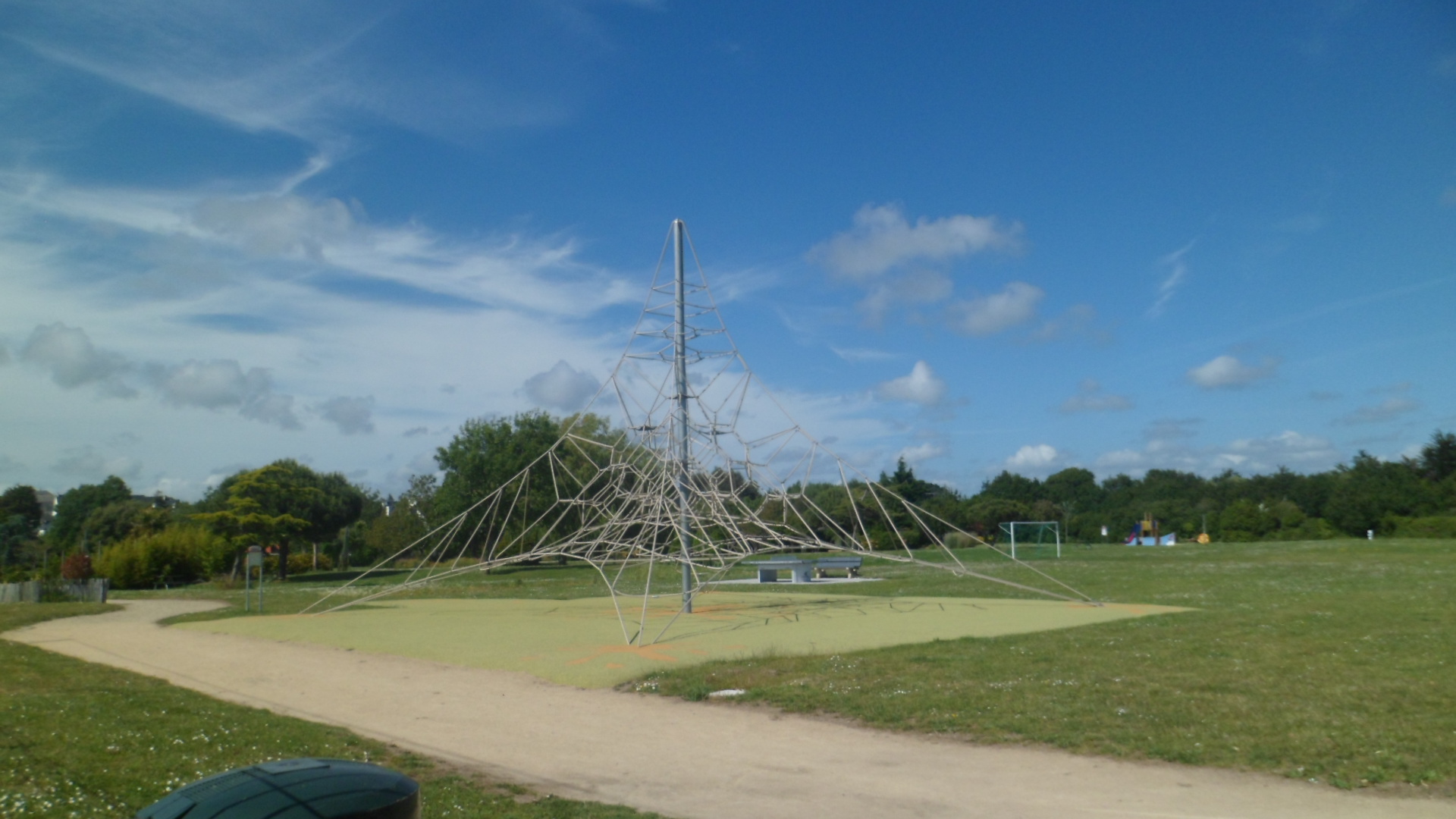
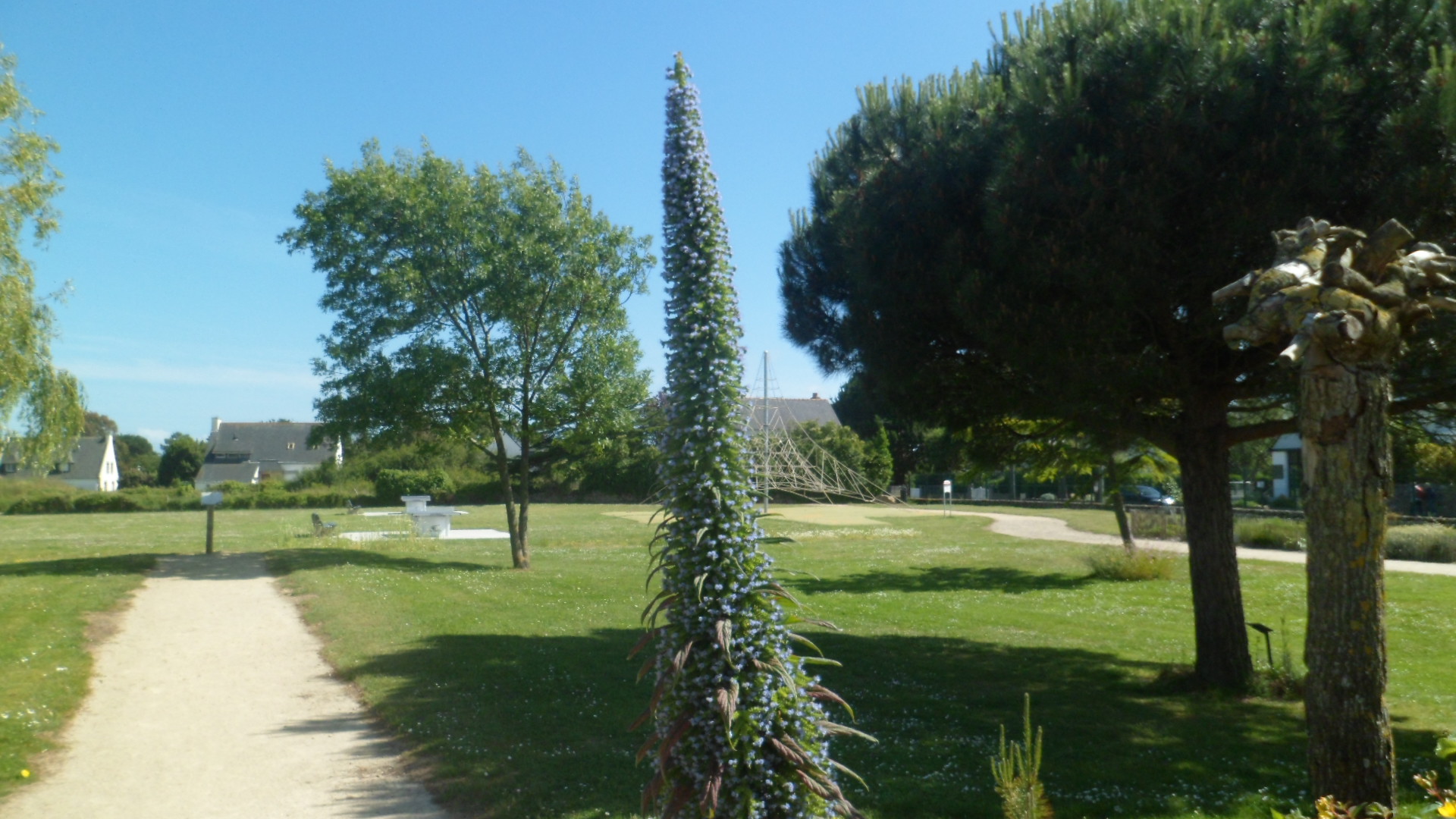
The modern gem of Carnac, though, is Jardin Cesarine.  The town park has an imaginative rope course.

SAM_0211

The garden itself held my attention, happily, for twenty minutes, or so.

SAM_0213

SAM_0217

SAM_0218

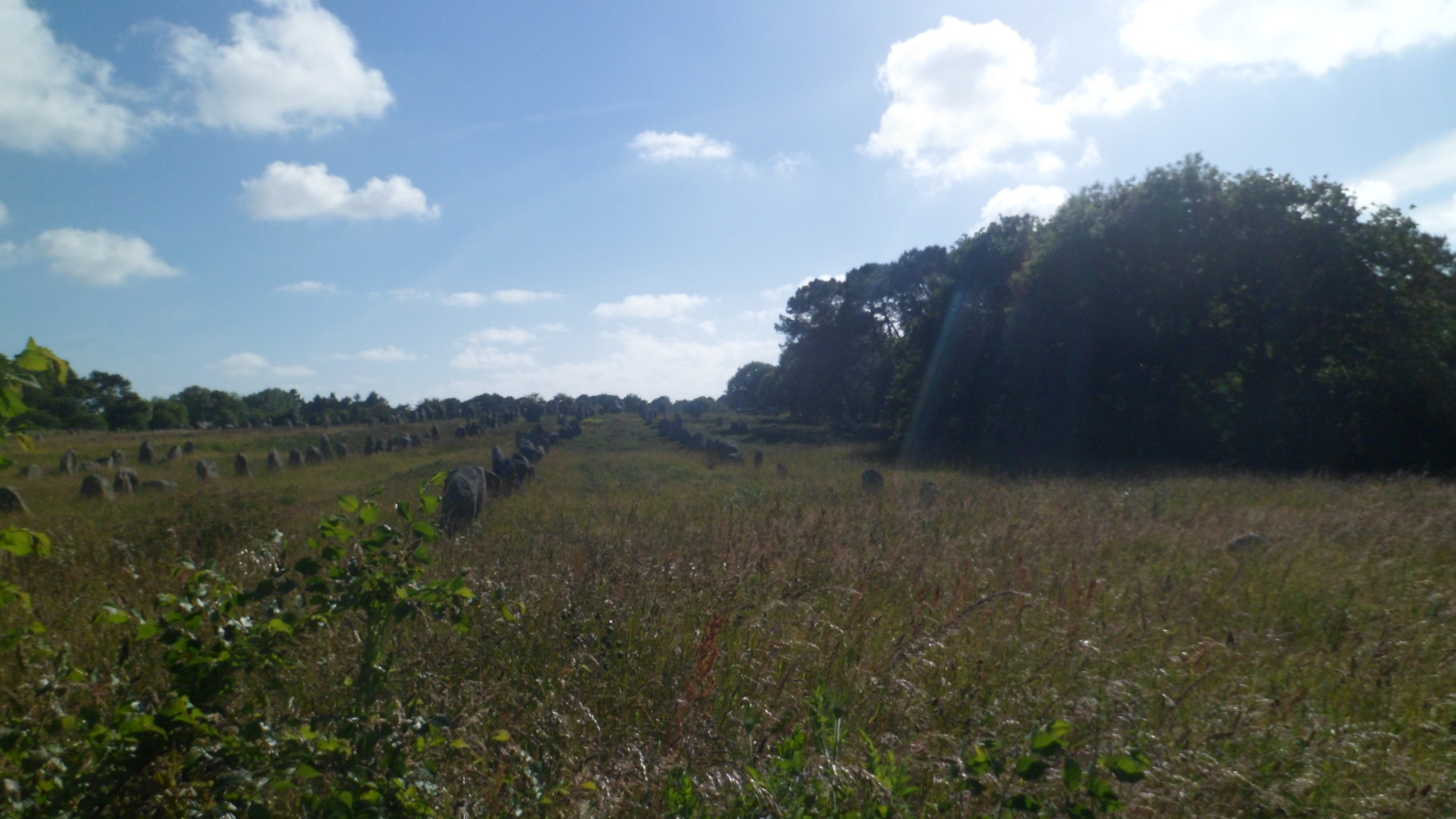
It was the Parc des Megaliths, which stayed in my head, and drew me in short order.  There are three large sections of the park:  Menec, Kemerio (House of the Dead) and Kerlescan, and a smaller area, Petit-Menec.

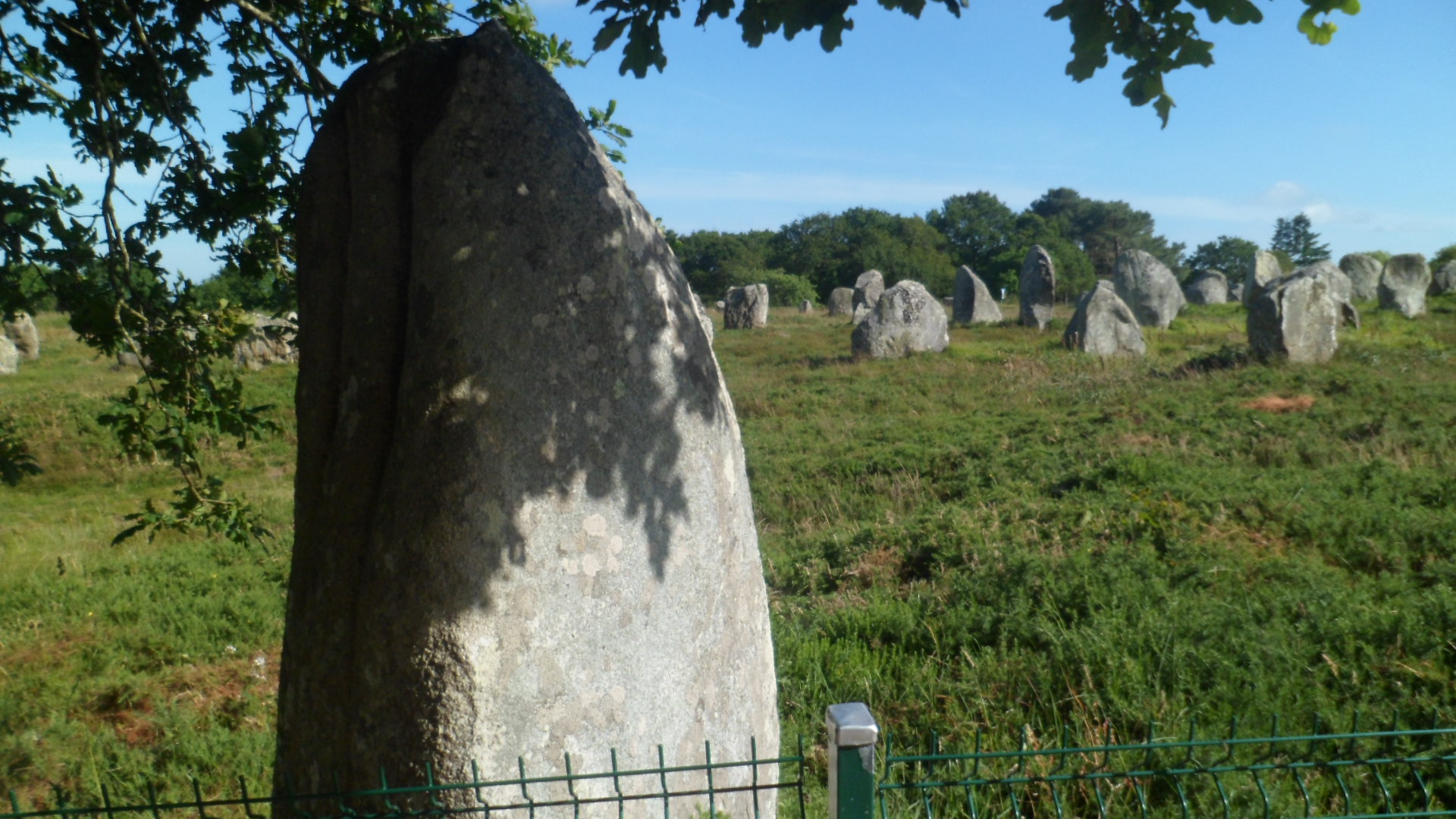
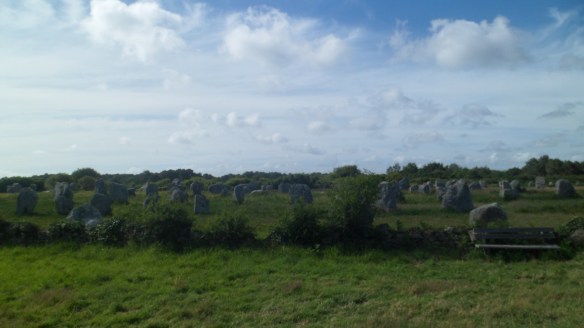
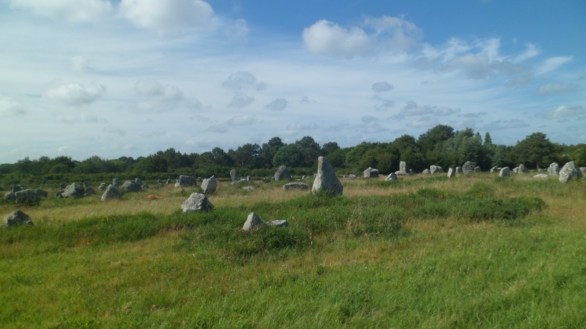
Here are some scenes of Menec, the western, and largest, segment of alignments, with a few single menehir (Stones that are partly buried), in between.
SAM_0224

SAM_0234

SAM_0237

SAM_0260

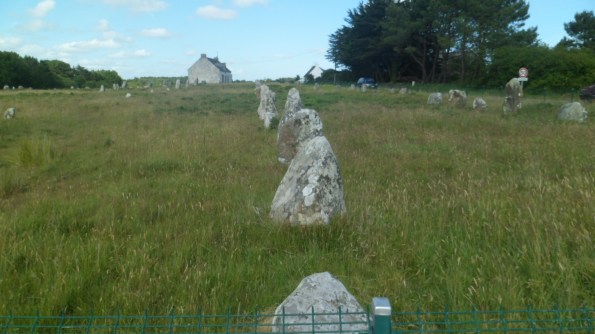
At this fence, and road, I left Menec and came to Kemerio- the House of the Dead.  To be sure, parts of this area looked like a cemetery, and it is here that the Merlin Theory got started.  There was a busload of Italian senior citizens with me, for part  of the time.  Their chatter was constant, but it was actually quite refreshing.  Looking at rows of stones for two hours does get a bit lonesome- unless one believes they are actually Roman soldiers.
SAM_0262

The farm house in the background is occupied, and there is a herd of Brittany sheep doing landscaping duty.  These sheep are a Heritage Food Source, so are prized by Slow Food France and other people concerned with the diversity of our diet.  I am a member of Slow Food USA, so the sheep captured my interest.

SAM_0269

SAM_0270

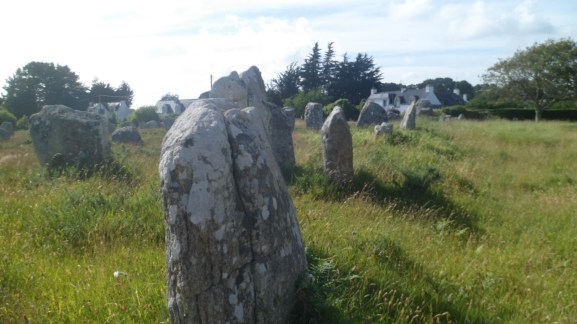
There were lonely menihir in this section, as in Menec.
SAM_0306

This horizontal piece looked like a beached whale.SAM_0320

This piece reminded me of the donkey at Block Island Petting Zoo, last year, who came up to the fence and couldn’t get enough food

.SAM_0328
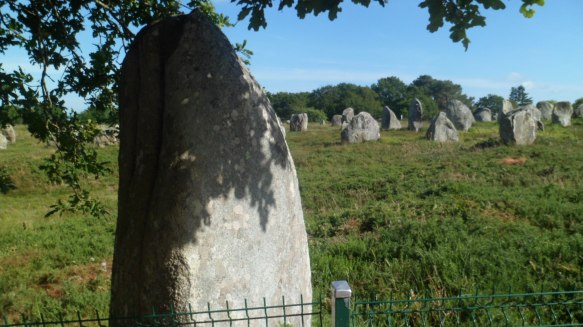
The Kerlescan section is smaller than the other two main sections, and rounds out the park, at the east end.

SAM_0340

Kerlescan was also more of interest to local farmers, as a source of stone and water.  This abandoned cistern bears witness to their efforts.SAM_0349

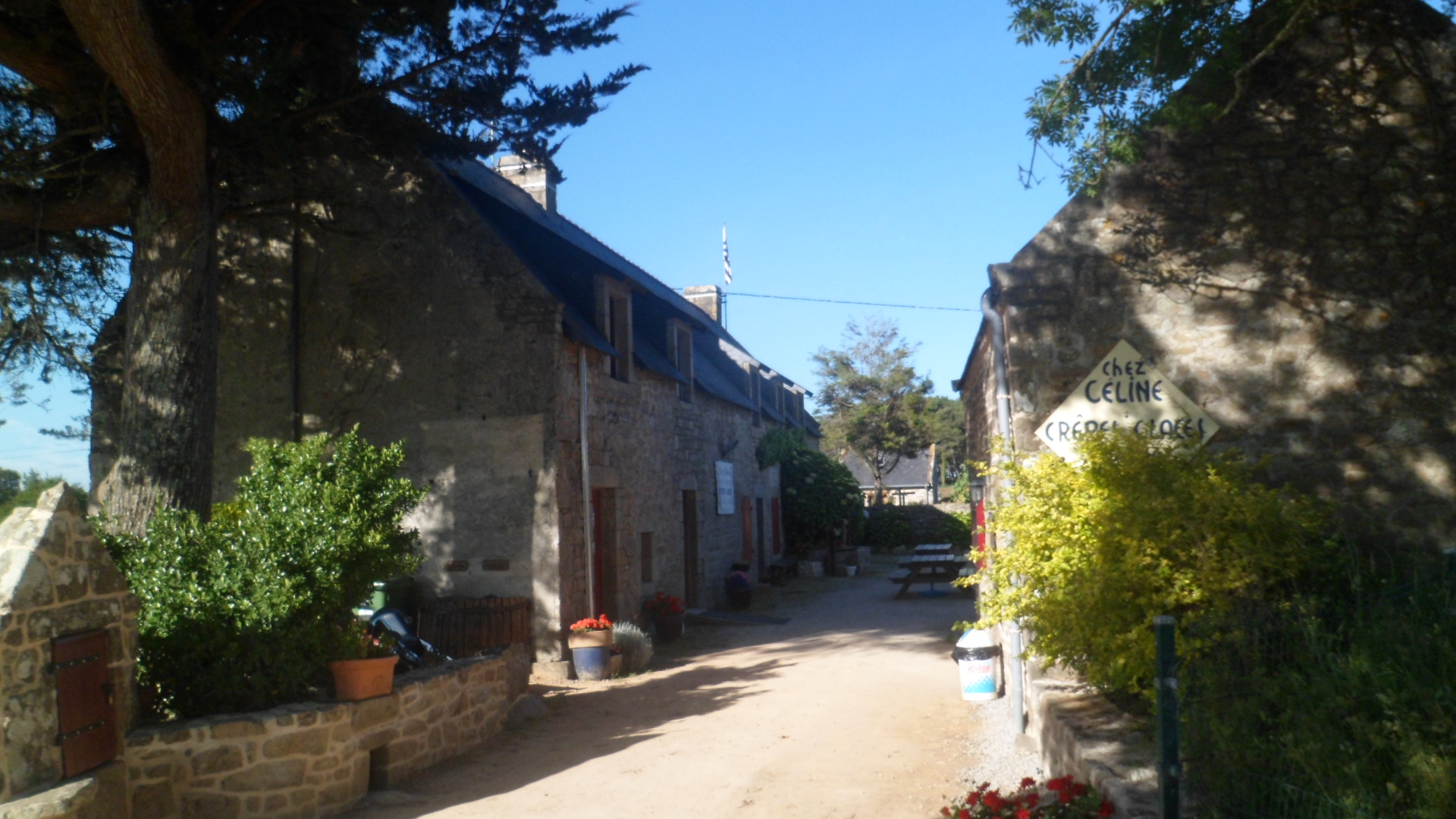
One enterprising pair of sisters is making a go of serving up fine food and beverages:  Chez Celine, where I enjoyed one very filling crepe- the only meal I would have on that evening. Since it was chocolate, with orange marmalade, who’s to complain?

SAM_0354

I was the only American who had been there in quite some time, so the ladies took to giggling to themselves, amusing me and a German gentleman who was enjoying a glass of wine.

Across the road from Chez Celine is Petit- Menec, the baby brother of the Big Three.

SAM_0352

Crucino Dolmen was once a tomb, but acid in Brittany’s soil has worn away the bones.

SAM_0357

To the east of the Dolmen, I entered Bois Saint-Michel, a hiking trail which a honeymooning couple had taken, an hour or so earlier.  It would lead me back to Carnac-Plage.

SAM_0358

There are two landmarks associated with St. Michael (the man, not the Archangel), on this path.  First, I came upon his fountain.

SAM_0361

The tomb of this French patron saint is at the northern edge of Carnac-Ville.

SAM_0365

I saw a similarity between the tumulus, and Mont St. Michel.

The “cone” turned out to be Chapel St. Yves.

SAM_0367

It was late, but still light, so I was fooled a bit.  My arrival back in town left only one mode of transport available.  A kind boulangere called the first taxi, which got me to Auray. After I used the ATM,  a gentleman on business in Auray called the second one, which brought me to Place Verlanne, from which I was able to use my legs to get to the hotel.  All’s fair in love, war and an extended evening at a remote place of interest.  Carnac shows that we indeed come from highly intelligent, imaginative stock.

An Eastward Homage, Day 8: Versailles, Part 2- The Grand Gardens

13

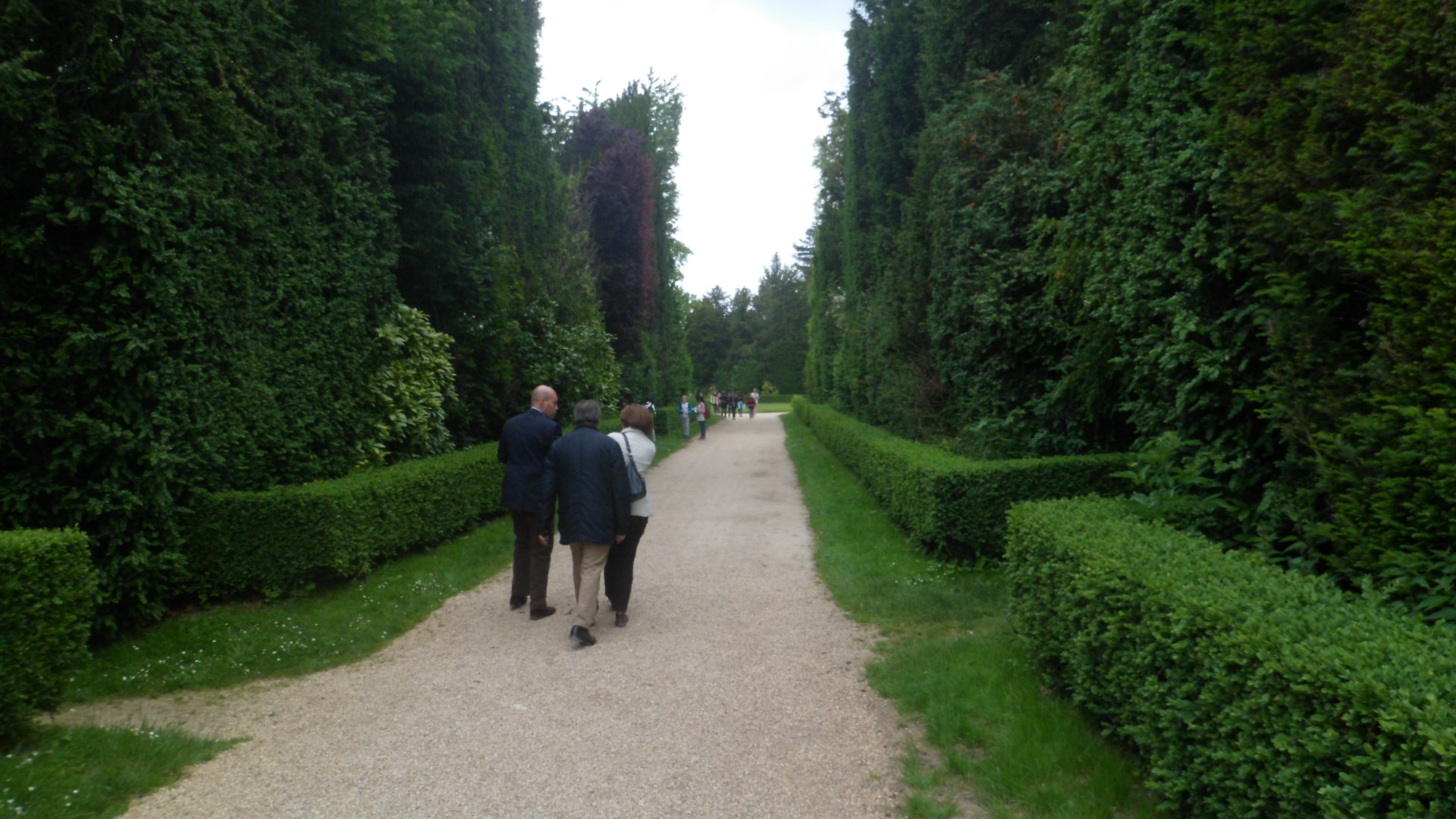
Everyone needs a place in nature, where one may recover one’s senses and restore equilibrium.  The Bourbon royalty were no different from the rest of us, in that regard.  After taking in the Great Chateau, and all its opulence, I also needed some time in nature.

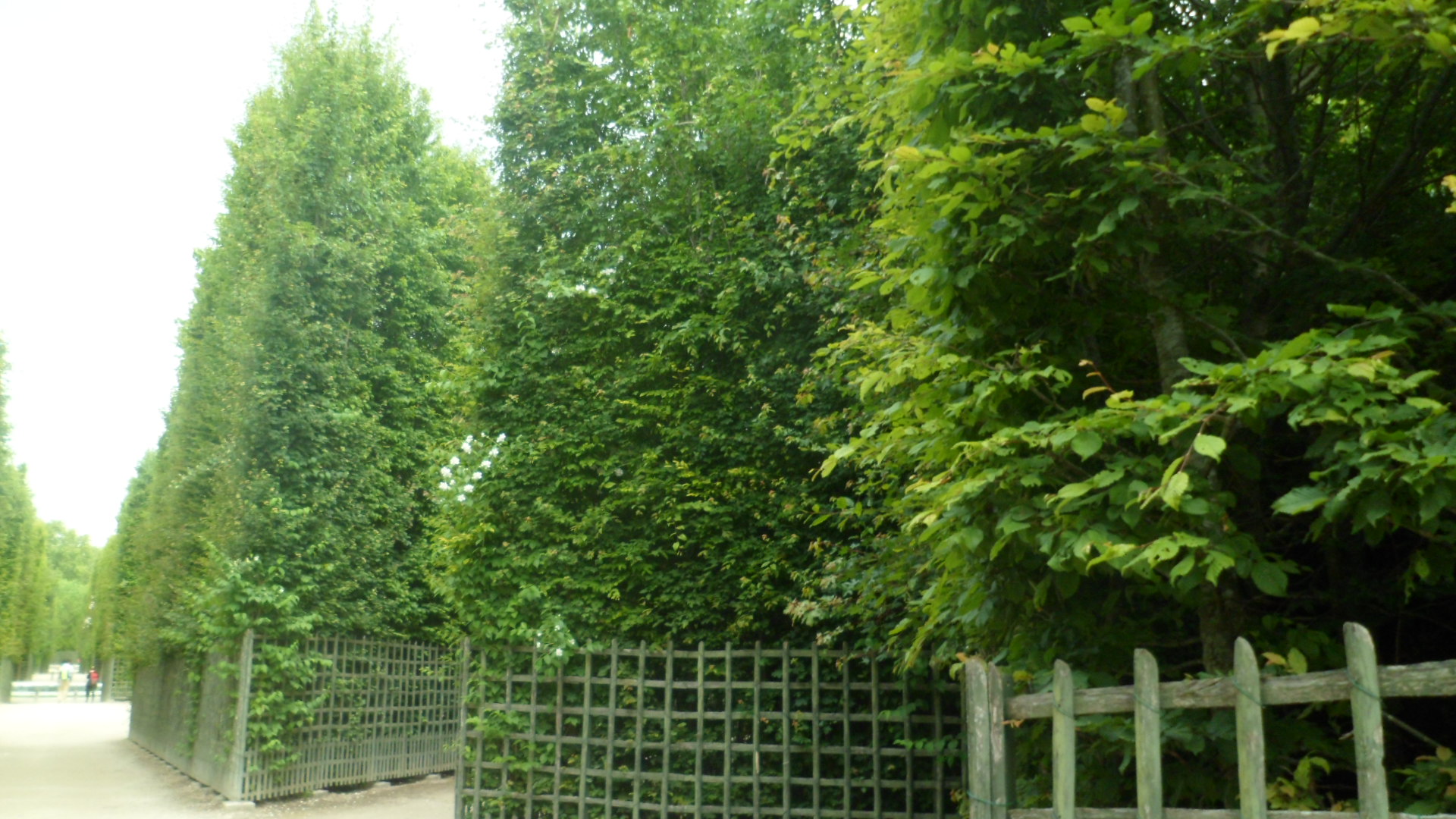
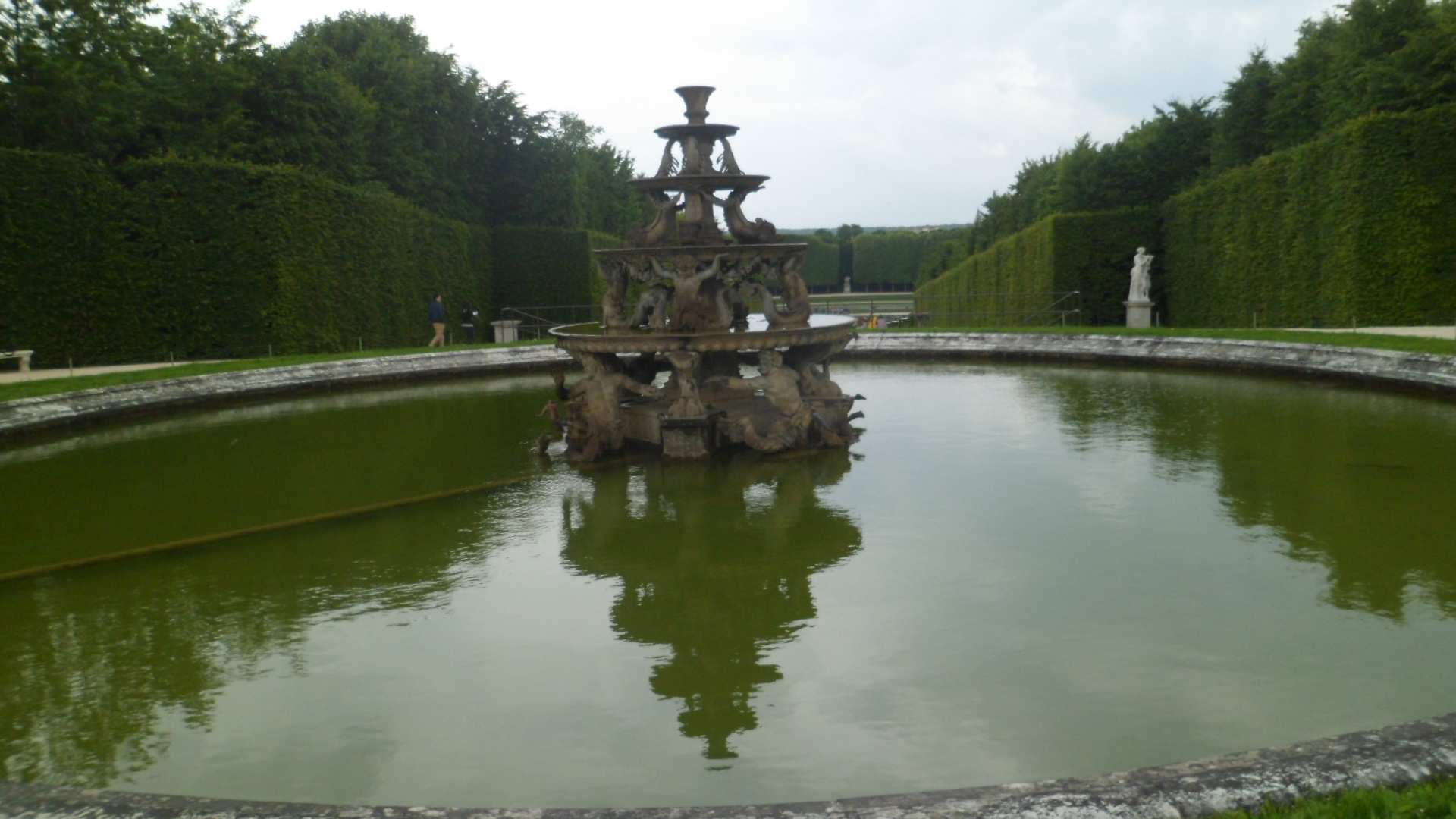
So, here are some scenes of the King’s Grove, the Queen’s Grove, the Dauphin’s Grove, and bosques set aside for just about anyone who lived at the Chateau.  Just outside the Chateau, there are small, well-manicured gardens and a great fountain, en route to the Ballustrade which itself overlooks Les Bois Royaux.

SAM_9254   SAM_9255.

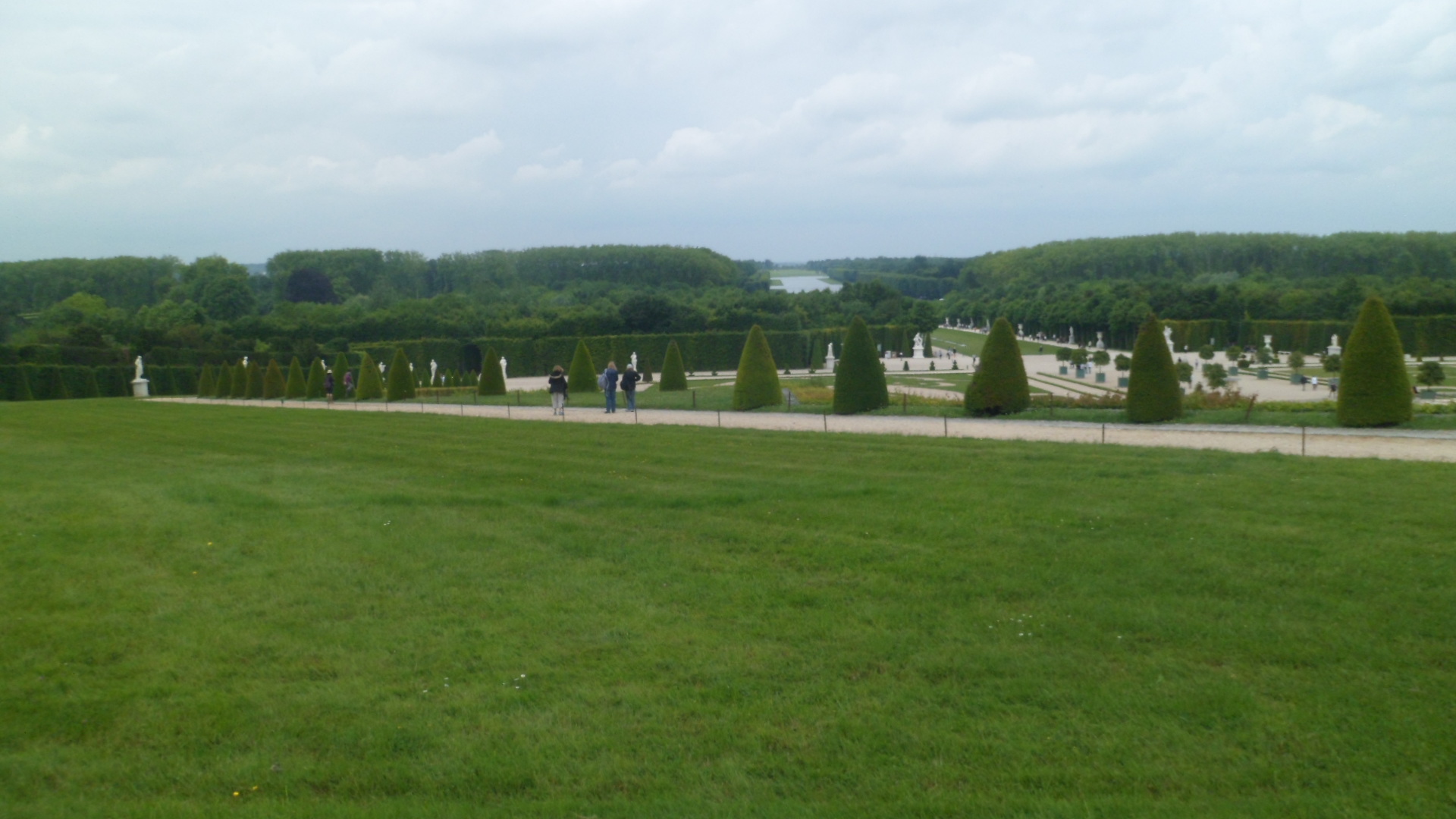
Here is a long view of Allee Royale:

SAM_9262

Once I made my way down the stairs, and into the King’s and Dauphin’s Groves, I found myself in the company of several school children, engaged in a fabulous game of Hide  and Seek, in the Dauphin’s Labyrinth.  To me, one of the great tragedies of the French Revolution was that no one gave thought to the three children of Louis and Marie Antoinette.  They died in childhood, in prisons, and the Labyrinth sat silent.  Thankfully, it was not silent on Tuesday, June 3.

.

SAM_9264      SAM_9269

Those who ventured forth saw scenes such as these:

SAM_9271    SAM_9273

SAM_9270     SAM_9265

SAM_9268     SAM_9302

Eventually, I made my way back to more manicured scenes, near the Queen’s Grove, and the restoration area- not the Restoration of the Bourbons, but that of the forest.

SAM_9283   SAM_9292

SAM_9291   SAM_9285

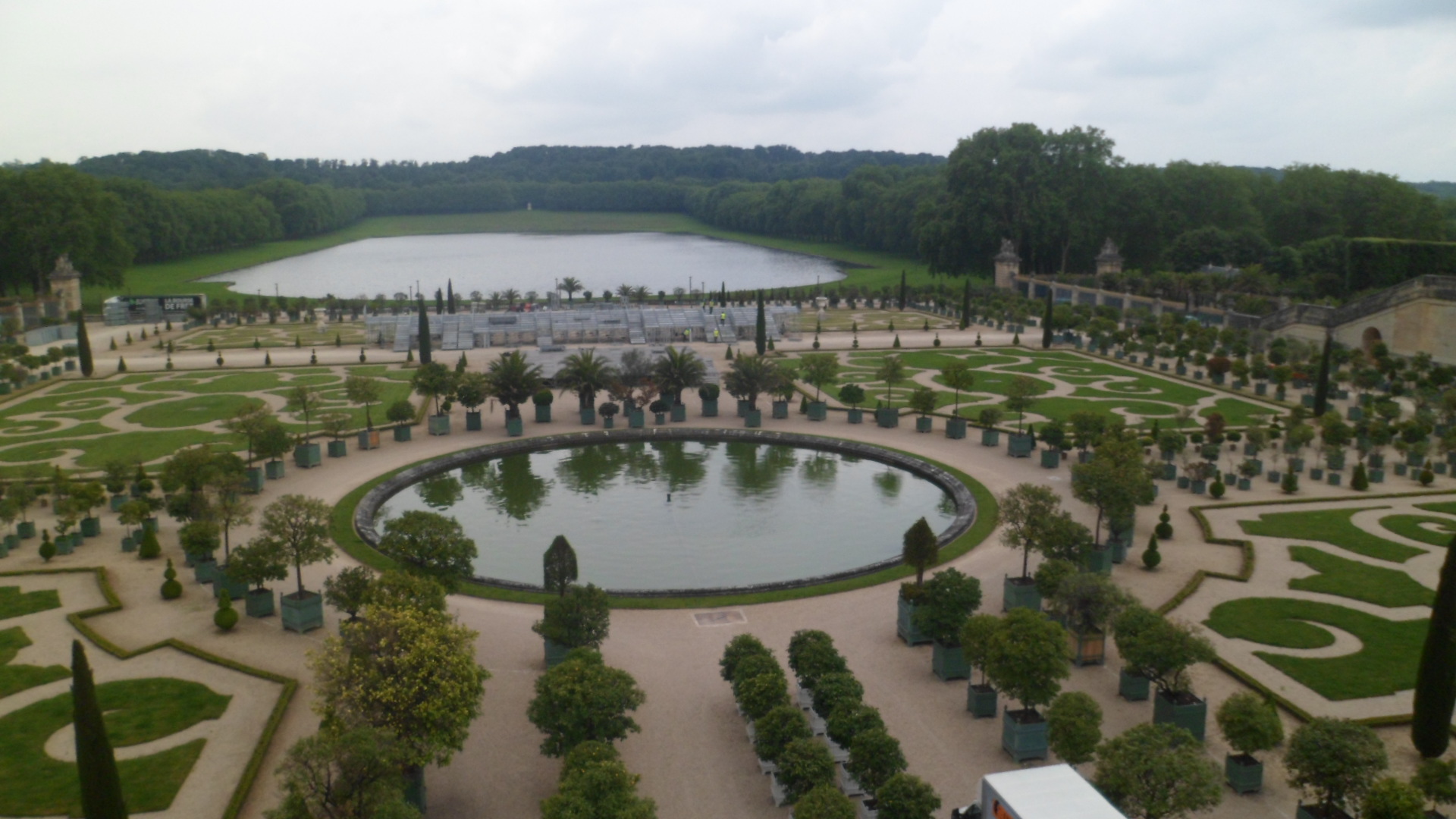
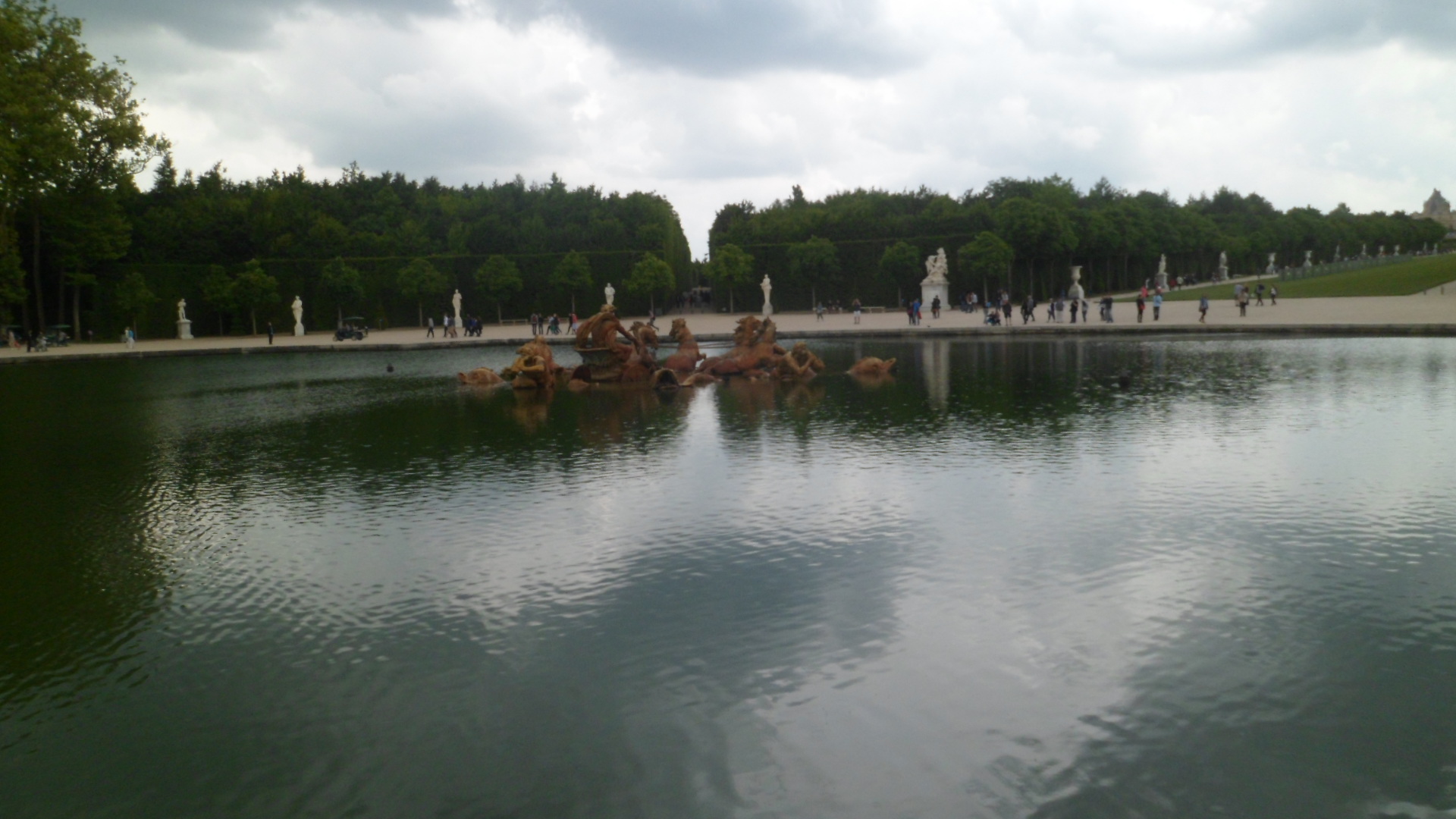
I walked on down to the Grand Canal’s edge, and enjoyed Les Parterres, L’Orangerie, and their water-borne sculptures, including  the Apollo  Fountain,

SAM_9304

and Bassin de Latone (Latona Fountain).

SAM_9305

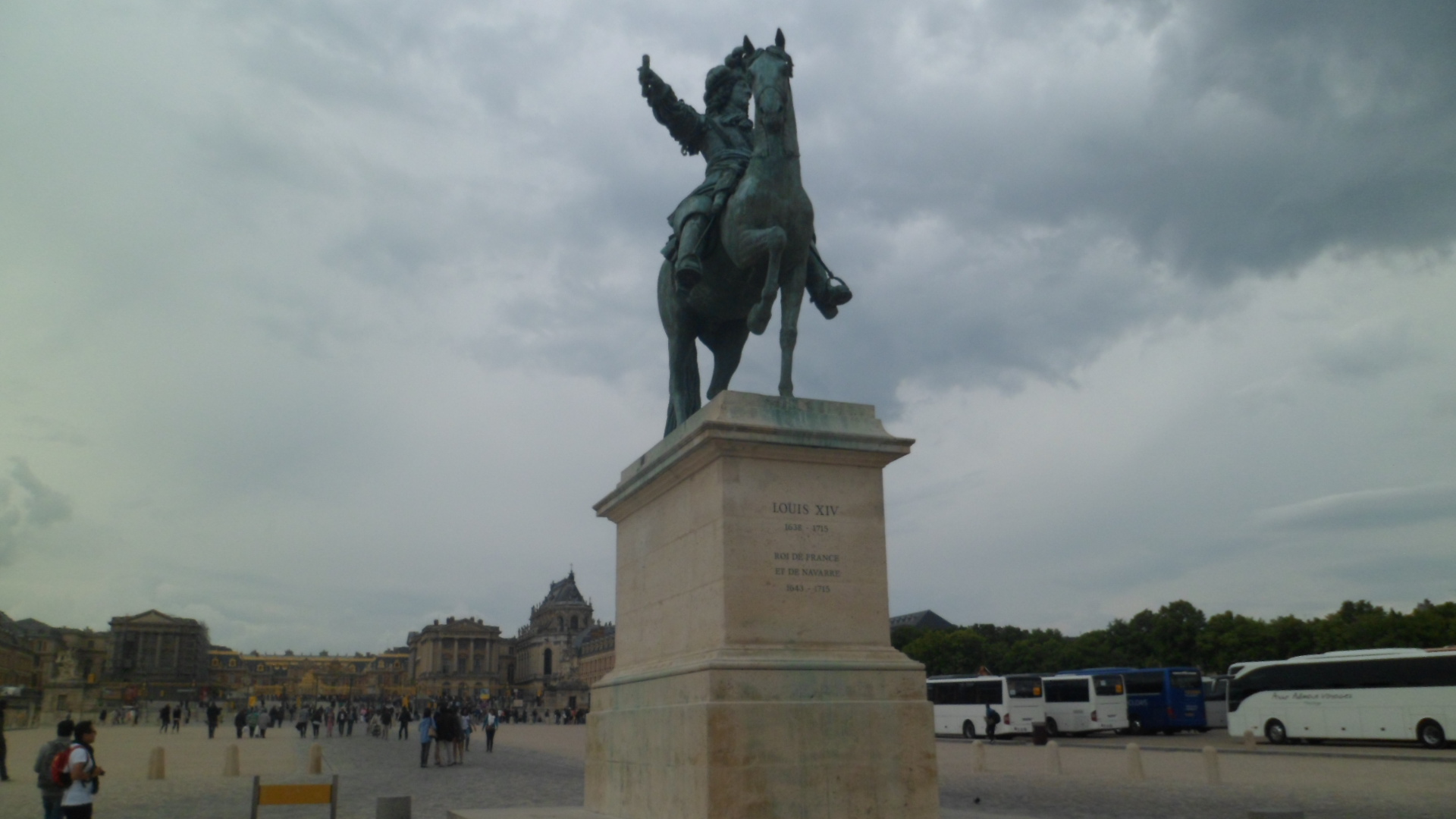
Here is a final nod to the man who got this all started.

SAM_9306

At this point of decision, I elected to forego Les Trianons (Marie Antoinette’s private estate) and spend some time in the city of Versailles.  That marvelous counterpart to the Palace will be featured next.

Trailheads and Paths, Issue 16: Sculpture Garden and An Old Fort

9

Last Thursday was an exquisitely beautiful day, and I sensed it would be not good for my spirit to just sit inside and ruminate.  There was one walking path I had not established as yet- a pedestrian route to Yavapai College and the VA Hospital.  So, there was my Thursday afternoon plan!

The “single-step” in this jaunt was a walk along North Arizona Avenue, past the Arizona Softball Hall of Fame, and the Smoki Museum, which has, as its mission, the preservation of Native American culture.  As such, the buildings are constructed of native stone, with extended beams, in the Pueblo style of construction.

SAM_8571

SAM_8569

The first photo is of the Smoki; the second, of the Hall of Fame.

I crossed Sheldon Street a few minutes later, and entered the Yavapai College Sculpture Garden.  The community college has grown mightily over the past several years, but the Garden remains a focal point for meditation and serenity.

SAM_8574

Here is “Community Gothic”, by Richard Marcusen.

SAM_8575

SAM_8576

Water is a key element in the garden’s central piece, “The Gathering”, by Gary Slater.

SAM_8581

Alternative energy gets a pitch here, with these avant-garde windmills.

SAM_8580

The north side of the college Library has been tapped for this interesting panel.

SAM_8583

Across the dry creek bed, the roof tops of old Fort Whipple peek out.

SAM_8585

Having reached the northern edge of the College grounds, I continued on into Rough Rider Park, where there is a short bike and hike trail, leading to the grounds of Prescott Veterans Administration Hospital.  This is a good trail for me, as I visit the patients of the Community Living Center there, once a month.  Now, I won’t need to drive there every time.

On the way, an old rail bridge caught my eye, at the edge of Prescott-Yavapai Indian Reservation.

SAM_8586

An extra feature of the Hospital is the preservation of Fort Whipple, an old Army post of Prescott’s formative years.  I first went in the Museum, which is open Thursday, Friday and Saturday, from 10-4.

SAM_8588

Below, is the chair used by General George Crook, one of the more successful commanders at maintaining a semblance of peace in the Southwest, during the period of unrest among the Apache.

SAM_8591

After looking about the museum for about an hour, I walked past the preserved old barracks.  The row of old houses, some still occupied by VA workers, cries out for restoration.

SAM_8593

SAM_8596

Having come full circle, I walked back to Yavapai College, which along with some parts of the Yavapai Reservation, and Rough Rider Park, was taken from land occupied by Fort Whipple.  The trailhead to Rough Rider greeted me, as I walked through the gate.

SAM_8599

So, knowing three or four more spots to walk and meditate on a slow day- or a rough one, I am that much more settled into my near-downtown neighbourhood.

Trailheads and Paths, Issue 13: San Gabriel, Part II, The Gardens

12

The serene inner garden of Mission San Gabriel Arcangel  exists in four parts.  There are indeed four points in this lovely arrangement:  The Grape Arbor; the manufactory; the Peace Garden; the Tongva display.

When entering the garden, through the Mission’s Museum Store, one encounters an area that links the four points of this amazing island of serenity.  Here, it is explained how the big picture of Spanish settlement fit the work of the monks and friars into its warp and weft.

SAM_8434

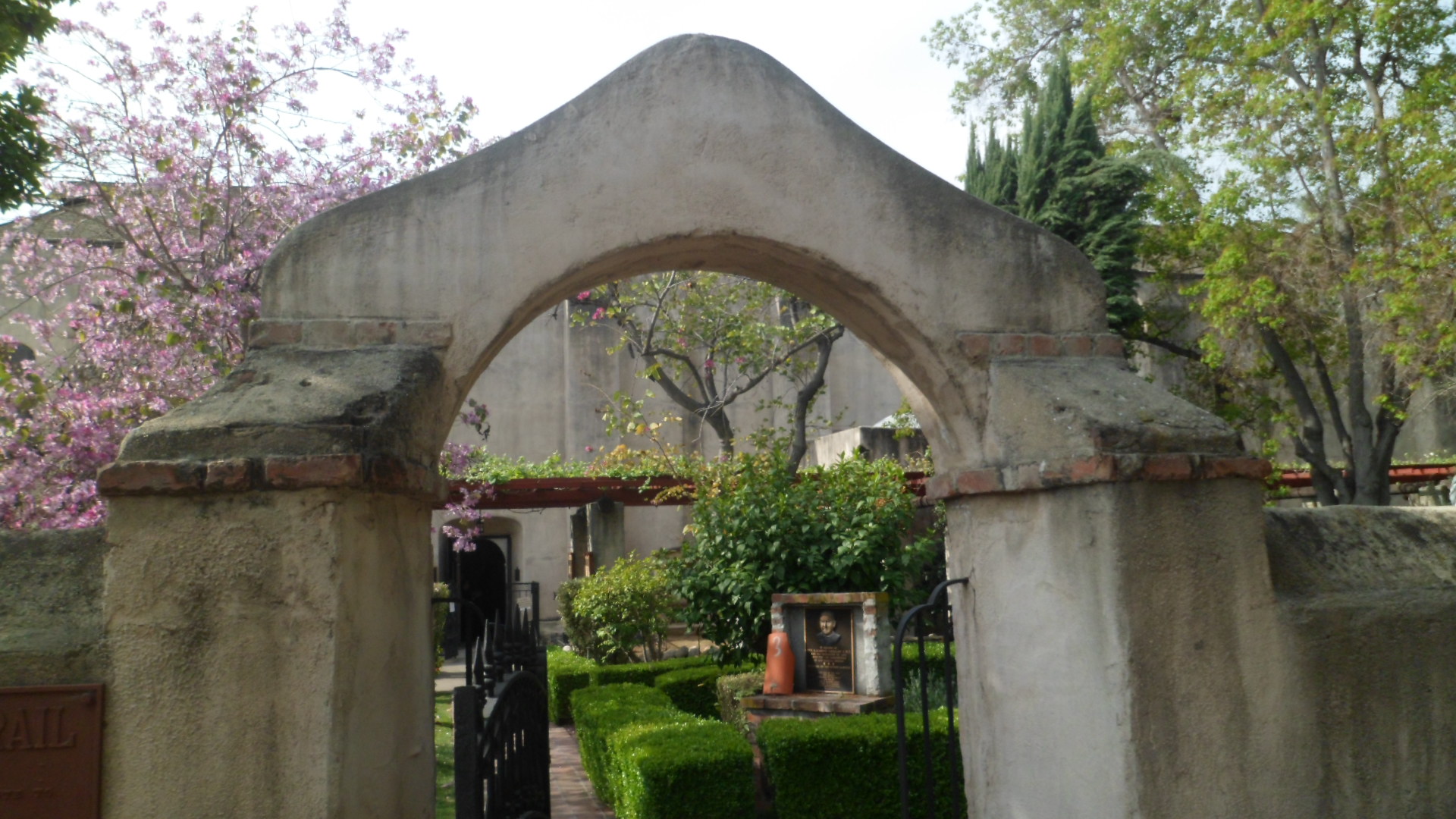
An archway brings the traveler into the Peace Garden.

SAM_8435

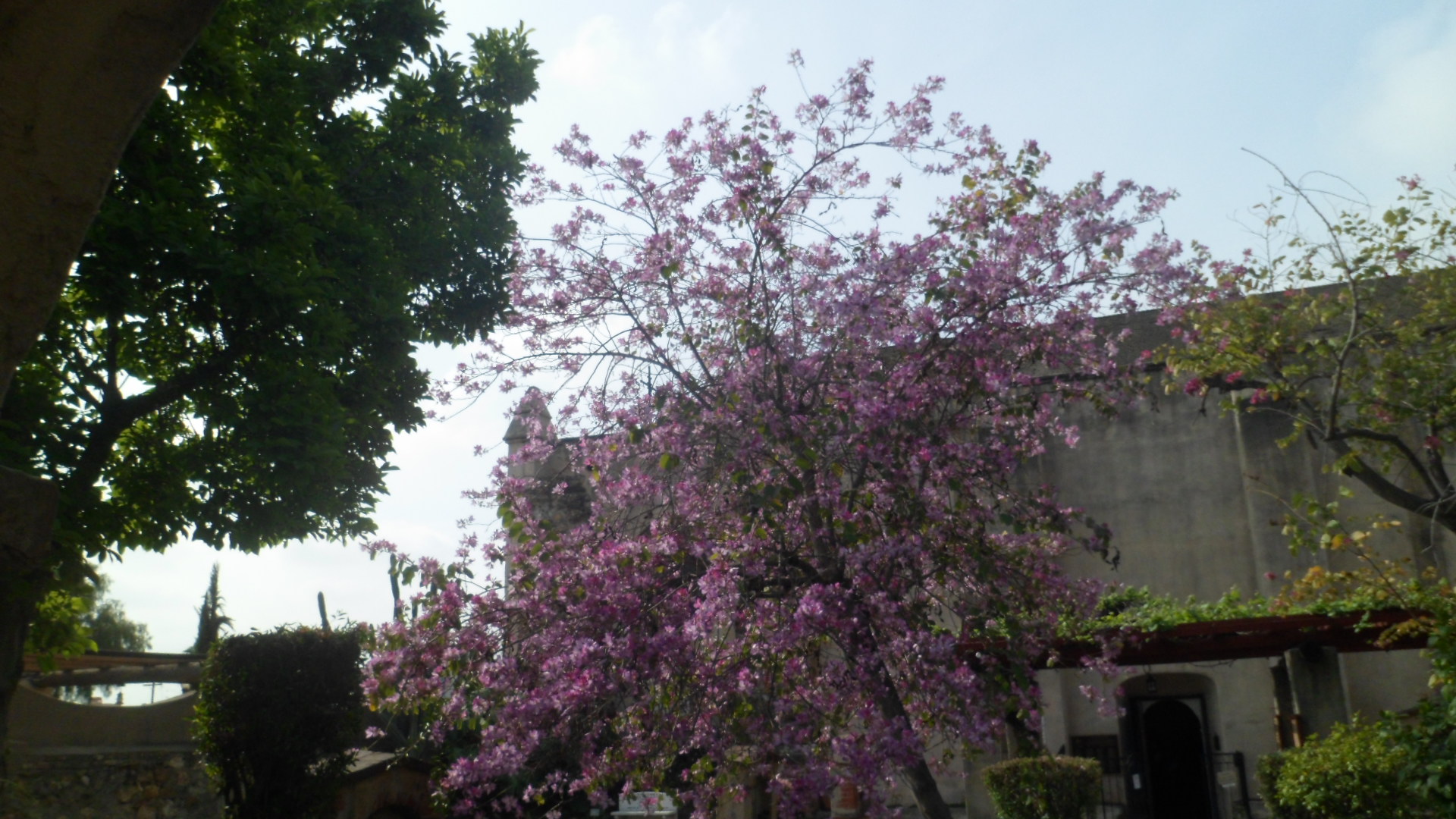
From here, it is wise to listen for any signs that there might be a Mass, or other worship activity, going on, as the Mission Church is immediately ahead, to the south.  As Mass was in progress when I walked through the Archway, I contented myself with walking about in the Tongva quadrant.  Cherry blossoms were abundant.

SAM_8436

A lion glared out from the fountain.

SAM_8437

As was the case at the Playhouse, there is a full set of  miniatures of the California missions, in this section of the garden.  Here is a miniature of Mission San Gabriel Arcangel.

SAM_8444

The garden path weaves in and out, through the various sectors.  This area, for some reason, invoked Gethsemane, for me.

SAM_8462

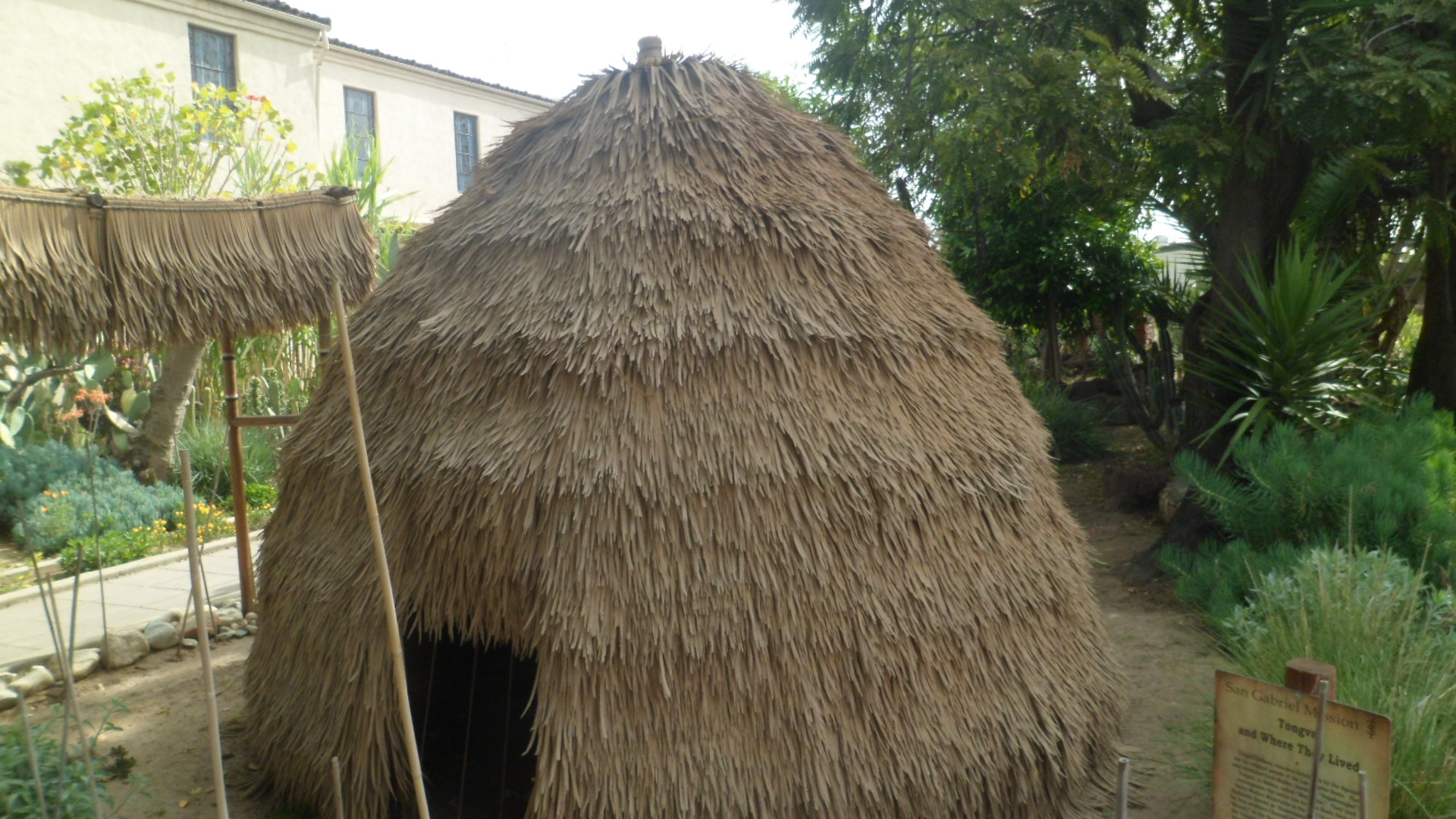
Around this corner, next to the bust of an unknown Spaniard, is the replica of a traditional home of  the Tongva, or Gabrieleno, people.  These indigenous folk dominated the Los Angeles Basin, from Malibu and Santa Monica to the area now called the Inland Empire.  A band of Tongva still lives in San Gabriel, and shares the traditional culture with interested friends and neighbours.

SAM_8468

A Tongva image is featured on this nearby stone wall.

SAM_8465

From the northwest, or Tongva, quadrant, I moved into the comforting realm of Peace Garden.

SAM_8451

The Blessed Mother, Christ and His Stations are here, bringing into focus the closeness that God and His Messengers are always willing to have with each of us, provided we open the channel.

SAM_8439

Mary’s countenance gives solace in two places within the Peace Garden.  Here, she is addressed as Our Lady of Guadalupe.

SAM_8441

SAM_8478

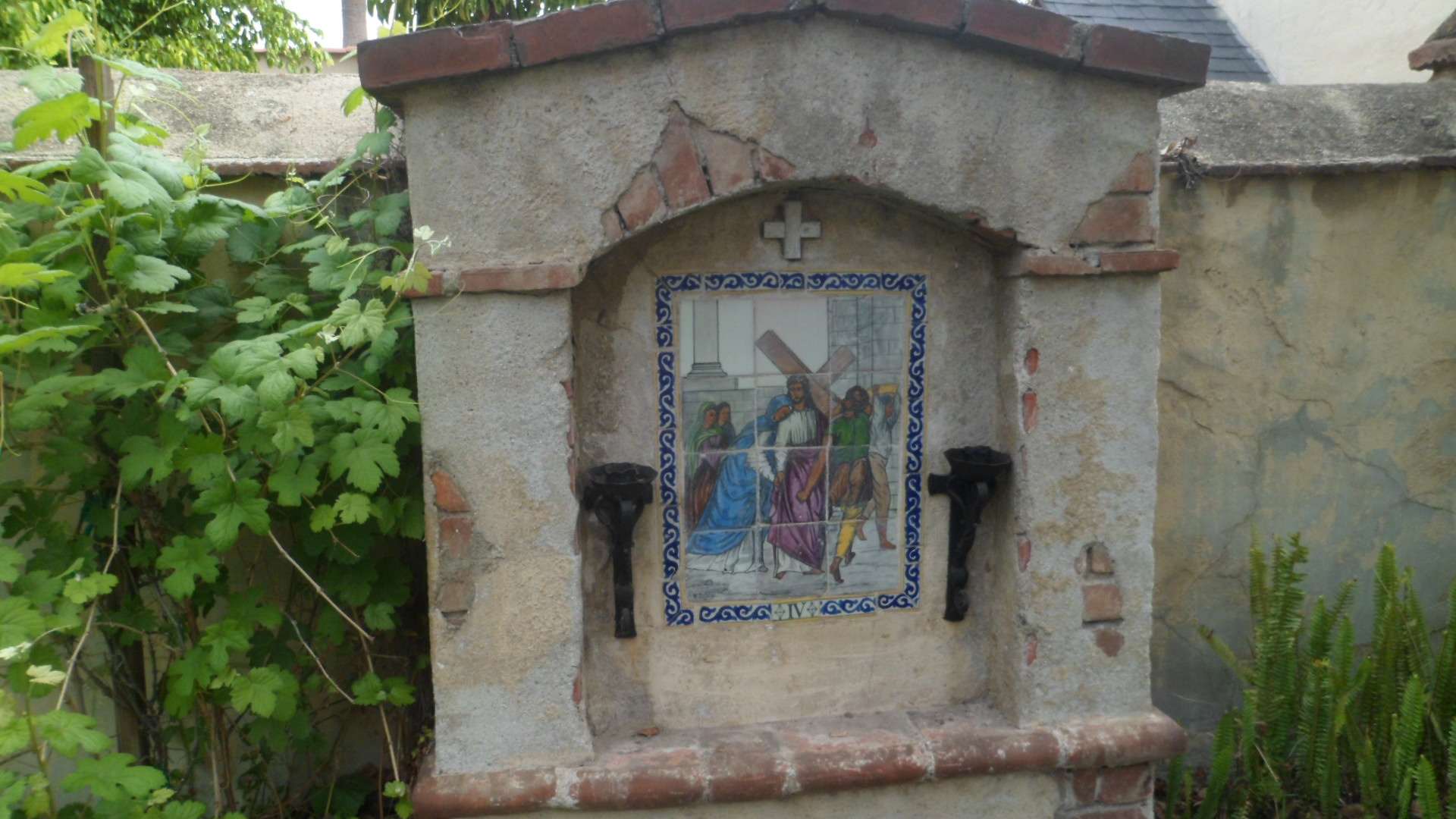
The Passion of Christ is reflected in the illustrations of His Stations, such as that below.

SAM_8474

All the more so,  Christ’s Presence is felt, in this depiction of the Crucifixion.

SAM_8477

There is a very quick transition from the Crucifix to the Grape Arbor.  This small area represents the first winery in the Los Angeles Basin.    The monks initiated grape cultivation, at first to provide ceremonial wine to be used at Mass.  As with all such libations, however, pleasurable uses soon proved an incentive for wider cultivation.

SAM_8481

Padre Junipero Serra’s statue greets us here as well.

SAM_8486

Through the Cypress Arch, one is escorted into the workaday realm of the Manufactory, the northeast quadrant.

SAM_8482

Here, tallow soap, candles  and everyday implements needed by the Mission were crafted, as well as all cooked food prepared.

Below,  here is a view of the outdoor ovens.

SAM_8461

The aqueduct was fashioned from similar brick and mortar.

SAM_8459

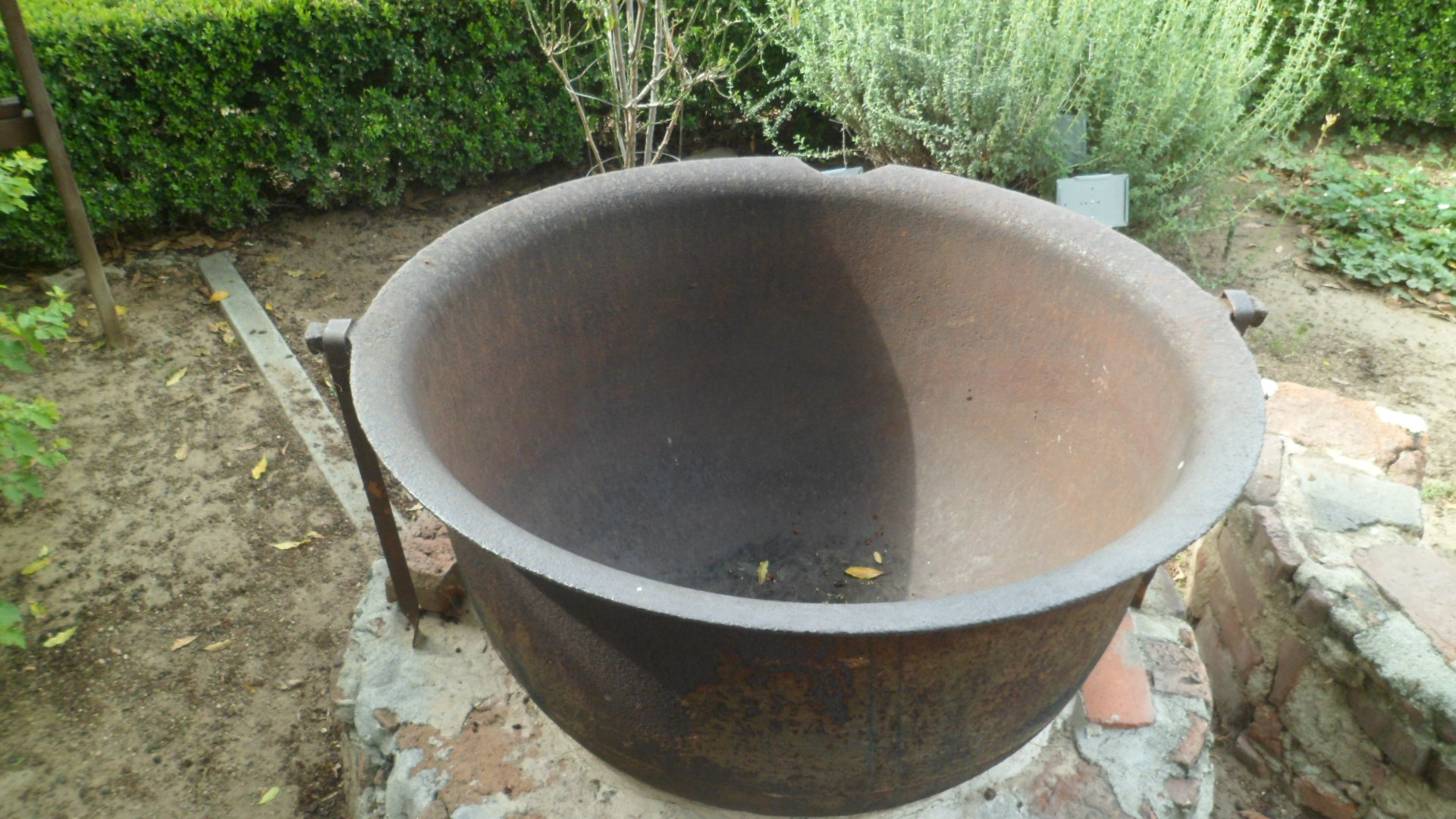
This iron cauldron was essential to the life of the community.

SAM_8460

So, of course, were soap and candles, fashioned from animal tallow, in vats such as this one.

SAM_8472

With the heat inside close to 450F, woe betided the careless and unwary of those venturing into the Manufactory.  Making the necessities of life was quite hazardous.

Life in this mission, as in other such communities, was however, generally rewarding for those of good heart.  Control of the property was batted back and forth, especially after California’s admission into the Union, in 1850.  By 183, however, the Federal government had restored control of the Mission to the Claretian Order.

On Easter, I will post scenes of the Mission Church, the Parish Church and Mission School buildings.

Trailheads and Paths, Issue 8: Where The Surfers All Go

7

I had plenty of time, after my friend Janet left, to take in Doheny Beach and the south jetty of Dana Point Harbor, before my evening visit to San Clemente.

The titular line is from an old song, “Surfer Joe”, by the Surfaris: “Down in Doheny where the surfers all go / There’s a big, bleached blondie named Surfer Joe / He has a green surfboard with a woody to match.”  Joe’s successors were not in Doheny in abundance on the delightful afternoon of Friday, March 21, but there were about five families, a lone kite flyer and two middle-schoolers, who appeared to be brother and sister.

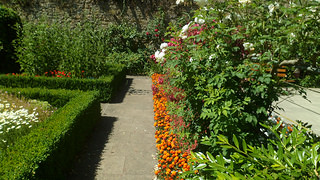
As is my wont, I covered various aspects of the beach park, starting with San Juan Creek.  This brackish channel is the focus of a potential desalination project- quite important in an Orange County that has faced prolonged drought.
SAM_8248

SAM_8249


Of course, my attention turned to the ocean, in short order.

SAM_8246


This time around, I had my surf shoes on, so it was easy to walk about the fairly-deserted sand, and take in Doheny’s small stone jetty, and service area.

SAM_8244


SAM_8243


SAM_8240


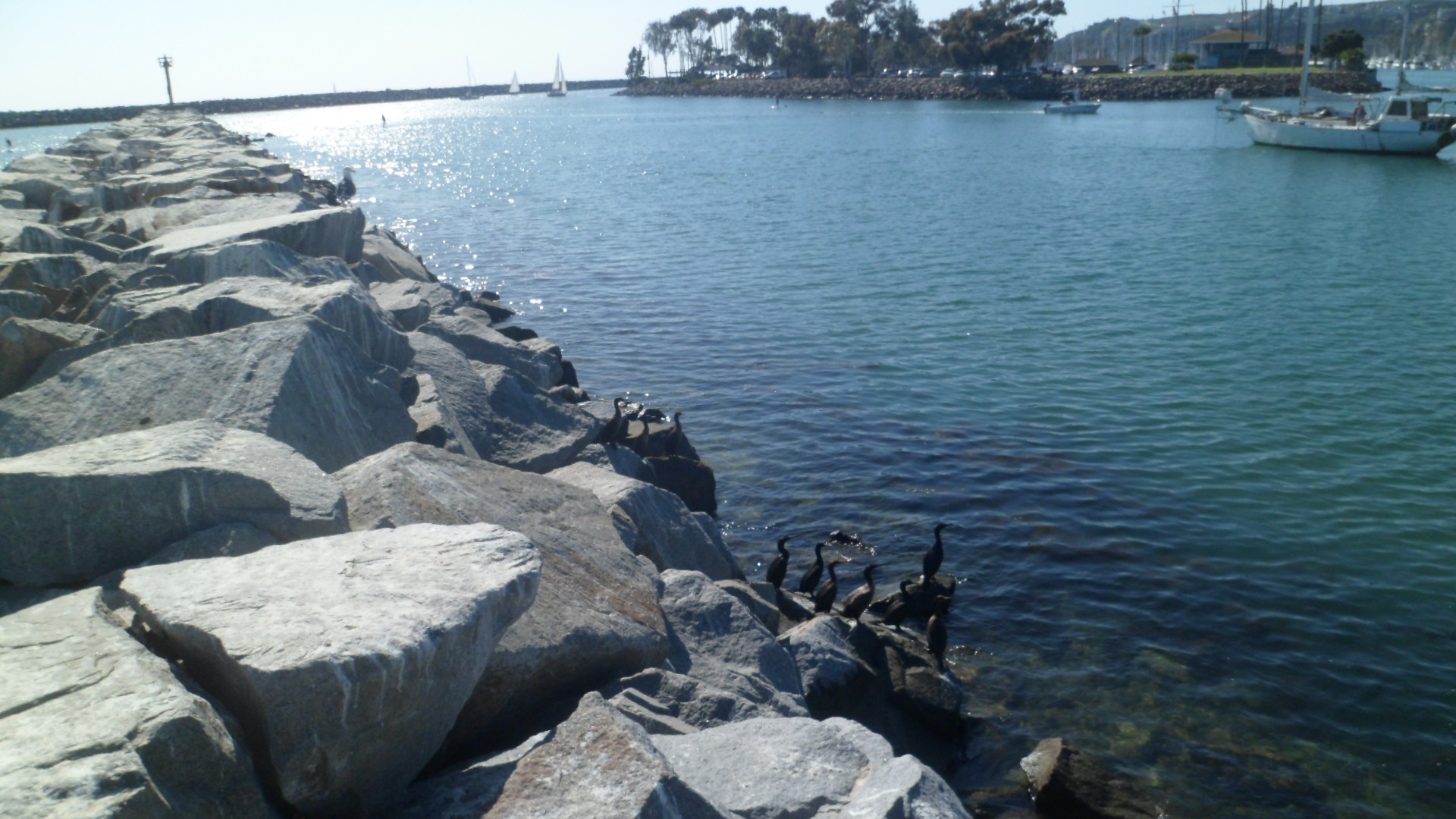
I always have an urge to see things through to the end, so I walked over to Dana Point’s stone jetty, the dividing line between the two beaches, and walked to its western terminus.  Boulder scrambling is a good way to focus one’s heart and mind.  Along the way, I encountered a couple of families fishing, one human, the other avian.  The cormorants didn’t mind being photographed.

SAM_8304

SAM_8303


Here is what I found at the end of the jetty.


SAM_8306


To and from the end, I got different views of Dana Point’s beach front.


SAM_8301

SAM_8302


Doheny’s “dry side’ was a place of respite for some picnicking families,

SAM_8310


and a lone kite flyer.

SAM_8311


There are nesting herons and egrets here, as well.  The Nesting Tree, a melaleuca, is a Doheny Beach staple.

SAM_8293


The Butterfly Garden is the icing on Doheny’s cake.  It had only a few monarchs on March 21, but there were several birds’ nests in the eucalyptuses along the trail.

SAM_8287

SAM_8289

SAM_8295

SAM_8294

SAM_8291


There is also something magical about California coastal palms, as out of place as some find them.  They are a sign of “endless summer”, even when it’s a tad cool out.


SAM_8288


Satisfied with this day at the beach, I took in a celebration of the Divine Springtime, Naw-Ruz, at San Clemente’s Baha’i Center.

SAM_8315

SAM_8314


The following two days would also be jam-packed, with visits to three Los Angeles County beach towns, then San Gabriel and its mission, and downtown Redlands.  So, after a couple of hours with my OC Baha’i friends, I headed up a surprisingly empty I-405, to Torrance, then over to Lomita, and the comfortable little motel where I stayed on my last visit to west LA.

Next:  Manhattan Beach


Trailheads and Paths, Issue 7: Chorus of the Herons

7

Each time I have visited my son in San Diego, I stop in Orange County before heading home. The beaches, missions and gardens in the home of Disneyland and Knott’s Berry Farm have given me a far greater appreciation for all that Southern California has going for it- beyond the traffic and smog, which weren’t bad this time around, and which are only the small price we pay to enjoy the O.C’s many sublime beauties.

I have been to Dana Point twice before.  The town, named for Richard Henry Dana, whose statue adorns the town’s harbourside park, has a lovely promontory, to its north.  I have climbed the trail to the summit of that striking overlook, and walked the harbourside path, once before, as well.  This time, March 21, accompanied by my O.C. friend, Janet, I saw and heard things from a bird’s perspective, specifically that of a heron.  There are two species of heron in Dana Point and neighbouring Doheny Beach.  Janet and I witnessed a raucous chorale of nesting Blue Herons, as we walked along the harbourside park.

As is customary with our visits, we enjoyed lunch first- this time at Harpoon Henry’s, on the east end of the harbour area.  It’s hard to not get a good seafood meal in an OC beach town, and mine was fabulous.  Henry’s gave Janet a good chicken lunch as well- not every maritime-themed place does landlubber fare well, so this was a plus.

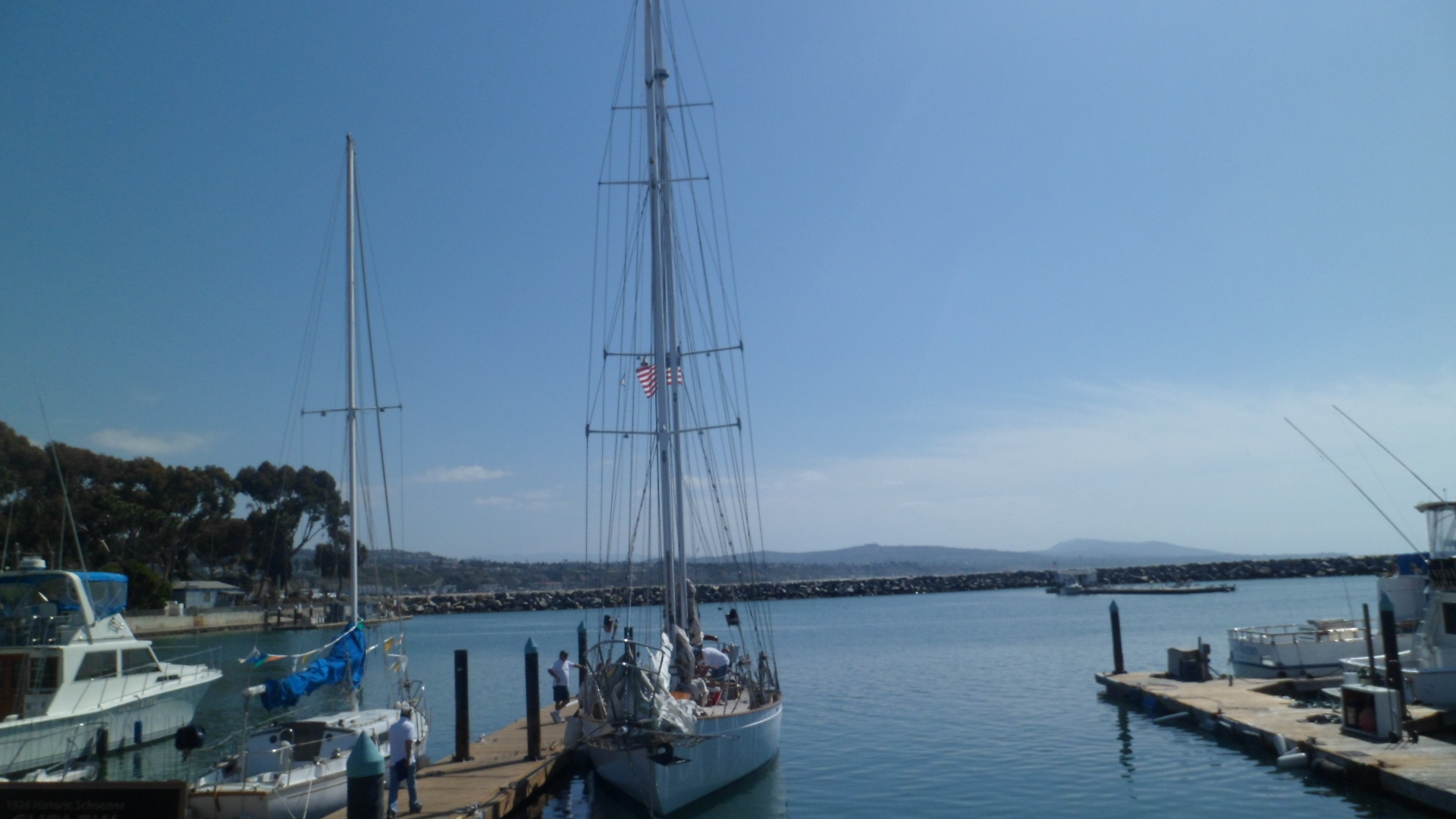
Here is a refresher of what Dana Point Harbor looks like.

SAM_8252


SAM_8253


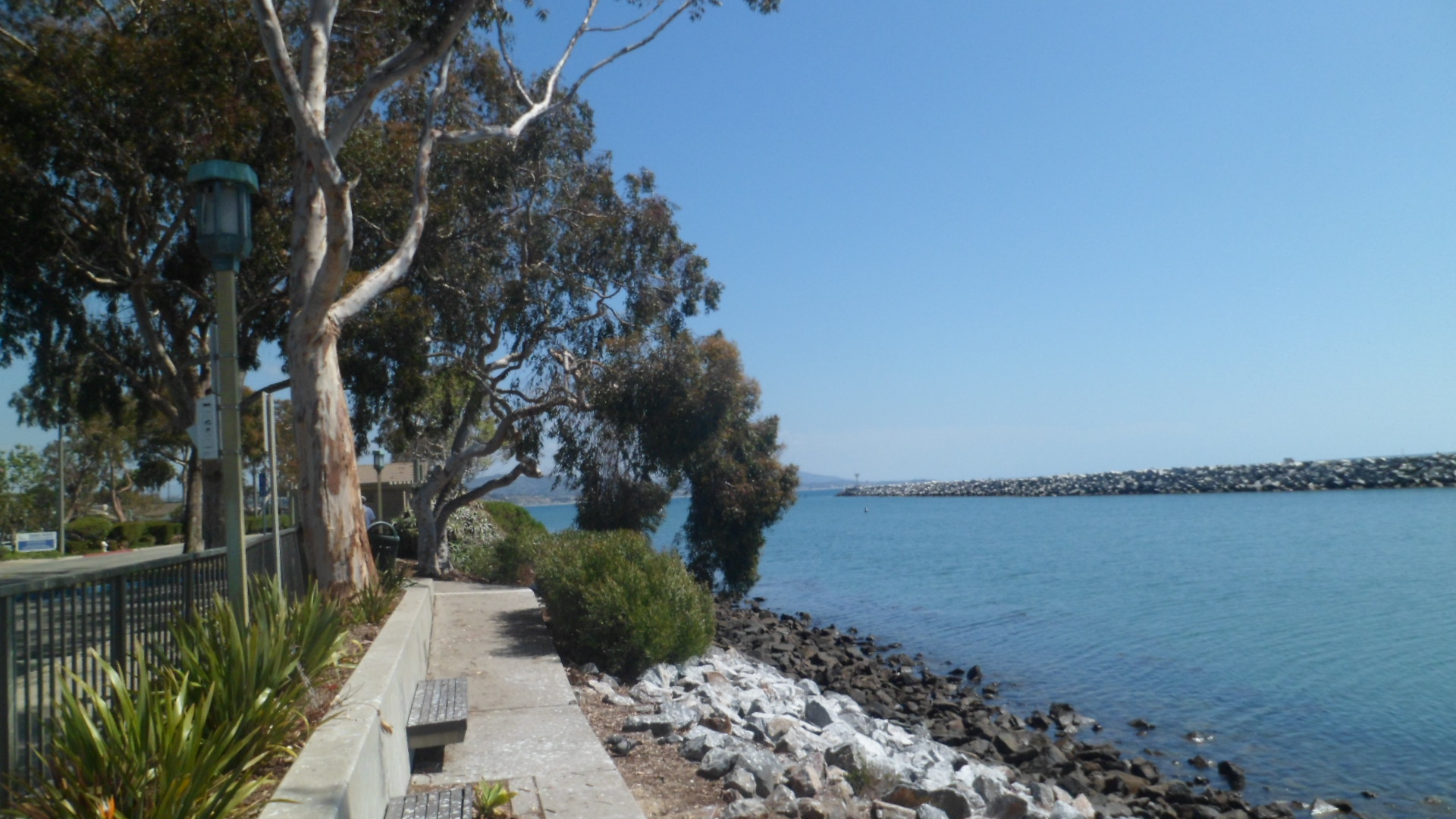
Here, again, is the harbourside park.

SAM_8256

SAM_8260


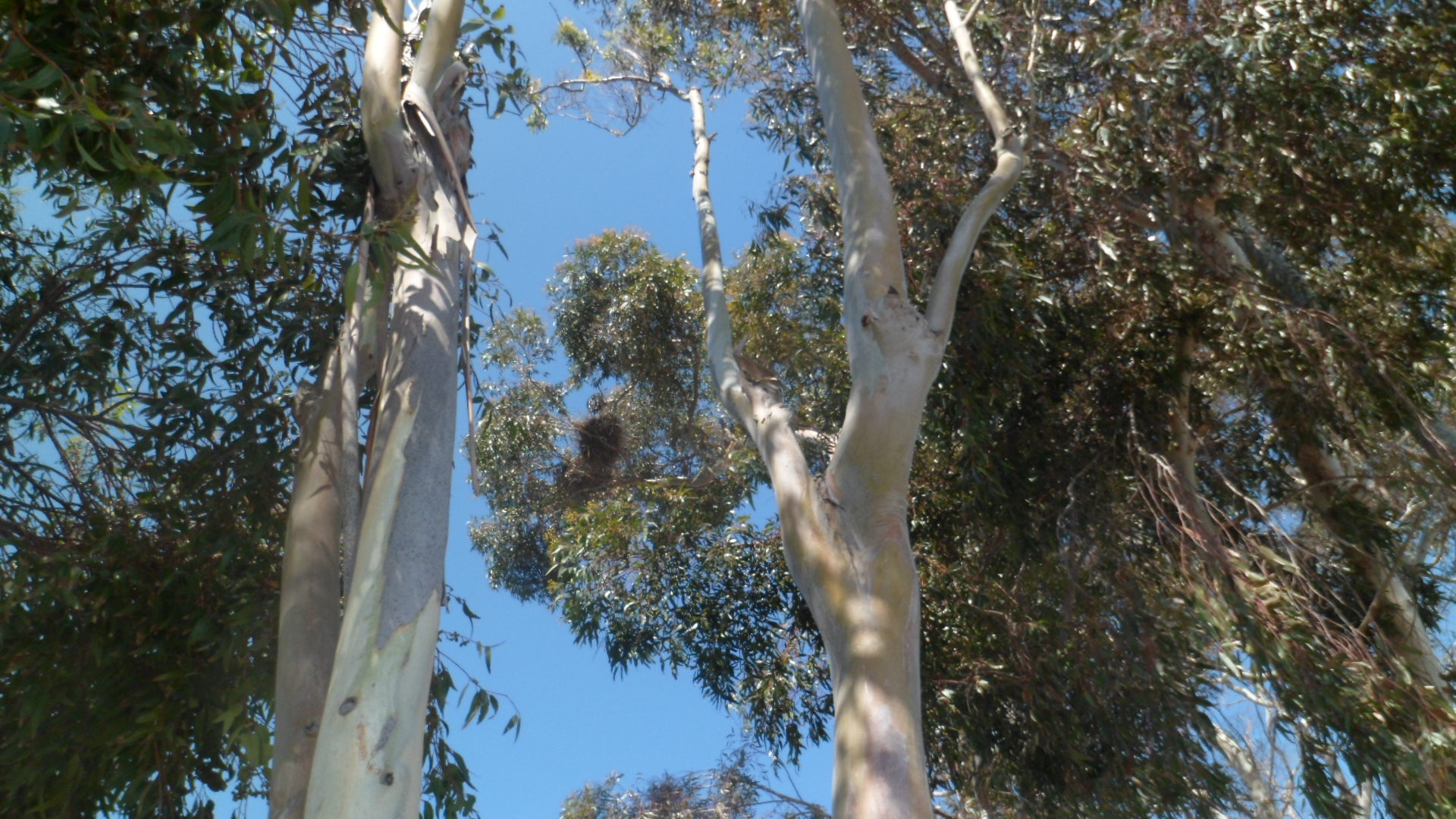
The above photo shows a eucalyptus tree, which, along with the melaleuca (tea tree), serves as a nesting place for both the Blue Herons and their cousins, the Night Herons.

Here are some shots of blue herons and their nests.  Look carefully, and you can see the heads of one or two birds in each nest.

SAM_8261


SAM_8264

SAM_8265

SAM_8268


SAM_8275


SAM_8279

One of our avian friends decided to go for a food run.


SAM_8274

Meanwhile, back on the ground, a blond squirrel was competing with his grey California ground squirrel relatives, for the generosity of  California park goers.

SAM_8258


On the beach rocks, an oyster catcher was finding its prey.

SAM_8263

After Janet left, I lingered a bit at the south edge of the park, taking in the raucous commotion of the Night Herons, whose call sounds like a cross between someone gargling and Chewbacca the Wookie, from Star Wars.

SAM_8283

One Night Heron obliged me by sauntering in the nearby rocks.

SAM_8284

I was fascinated for the two-and-a half hours spent watching and listening to these awesome creatures.  The afternoon gave a new meaning to “Stop and smell the roses”.  There were more wisteria than any other plant, but that’s another story.

NEXT:  Doheny Beach

Black Canyon National Recreation Trail, Part 3: Drinking Snake Segment

6

I again parked at Spring Valley’s Antelope Creek Road lot, and headed south, along the Drinking Snake segment of the Black Canyon, a distance of 4.2 miles one way.  Here’s the north trailhead of Drinking Snake.

SAM_8096

The trail is a bit more rugged than the Big Bug, at the outset.  There is more volcanic debris in this area.

SAM_8099

SAM_8104

SAM_8106

SAM_8108

The views are  just as sweeping here, as they are further north.

SAM_8109

The hearts were both mineral and vegetable.

SAM_8112

SAM_8113

I arrived at an abandoned corral, water tank and windmill, near Dripping Spring, after an hour’s walk.

SAM_8115

The canyon called Dripping Spring is the north end of a longer system that runs along to Crown King Road, another 1.7 miles to the south.

SAM_8119

The hike from here is an easy rim walk, past a cow or two.  The view, though, is exhilarating.

SAM_8120

SAM_8121

Next on this trail system is the Antelope Creek segment.

SAM_8125

After making the hike back to Spring Valley, I stopped briefly at Cordes, the northernmost of four “ghost’ towns between Prescott and Black Canyon City.  It was Sunday evening, so the place was closed.

SAM_8128

My life will be topsy-turvy, in a good way, for the next five weeks, so while hiking will take a backseat to some other activities, I’m a happy blogger.

Harquahala Wilderness

6

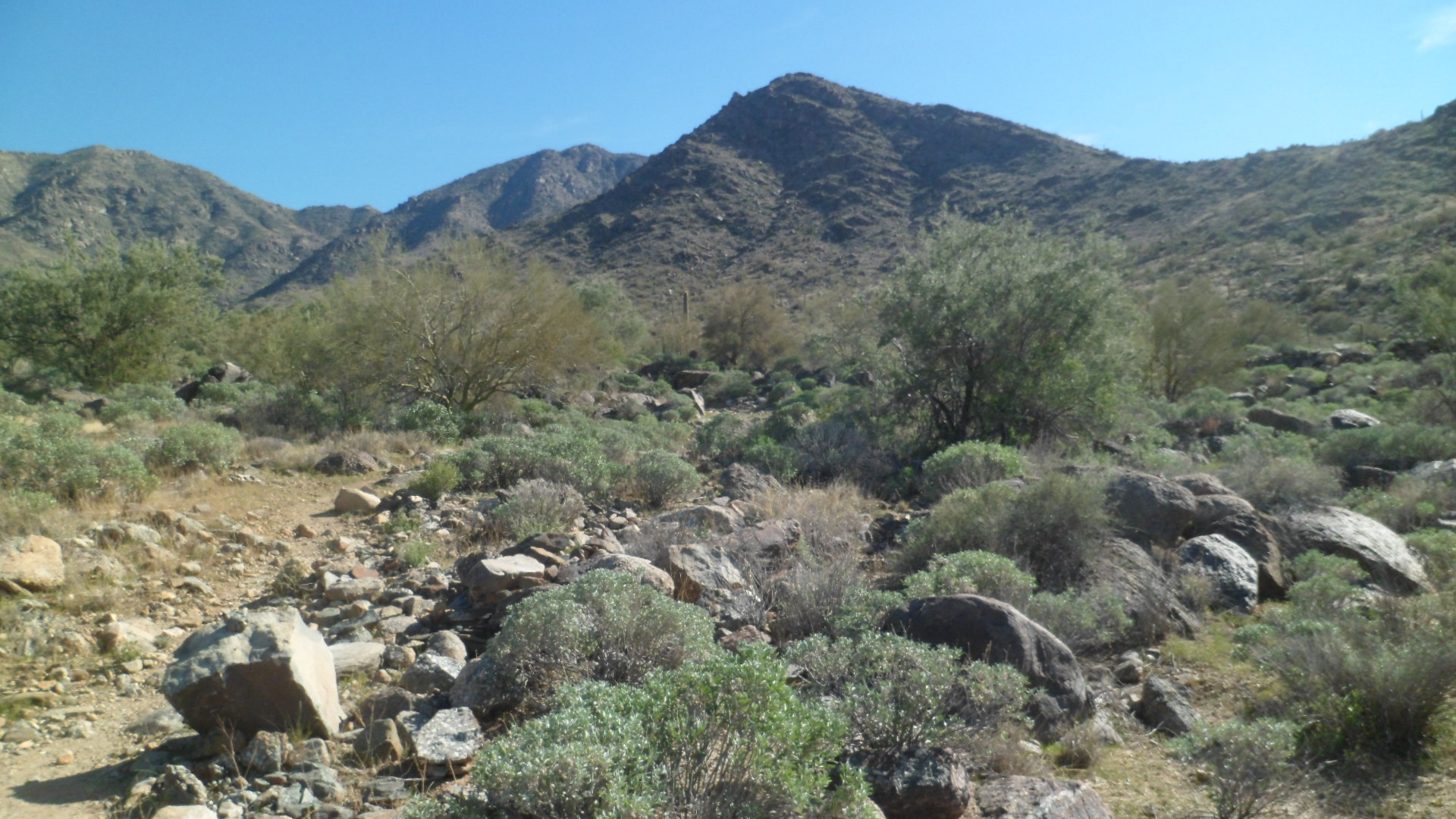
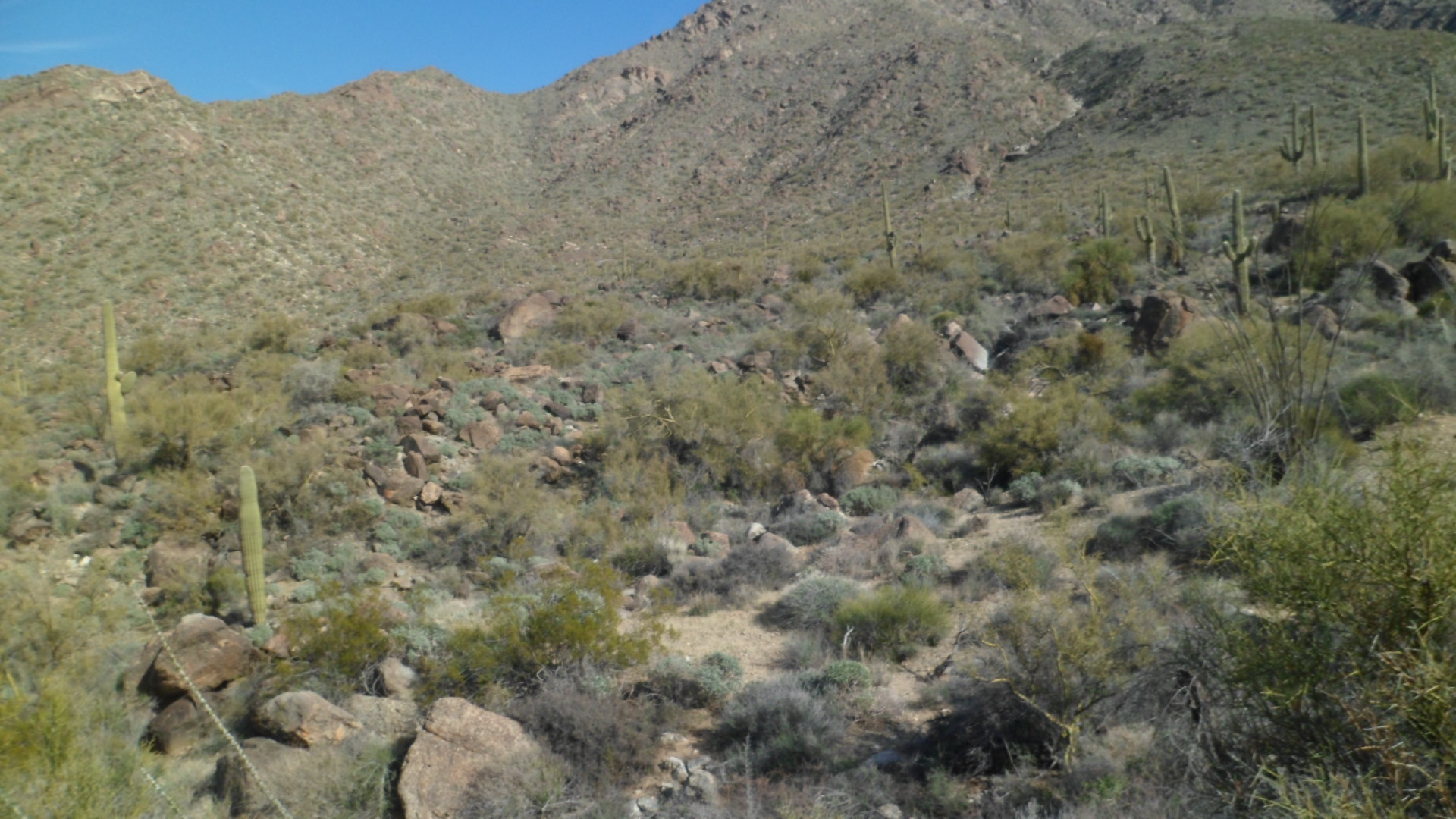
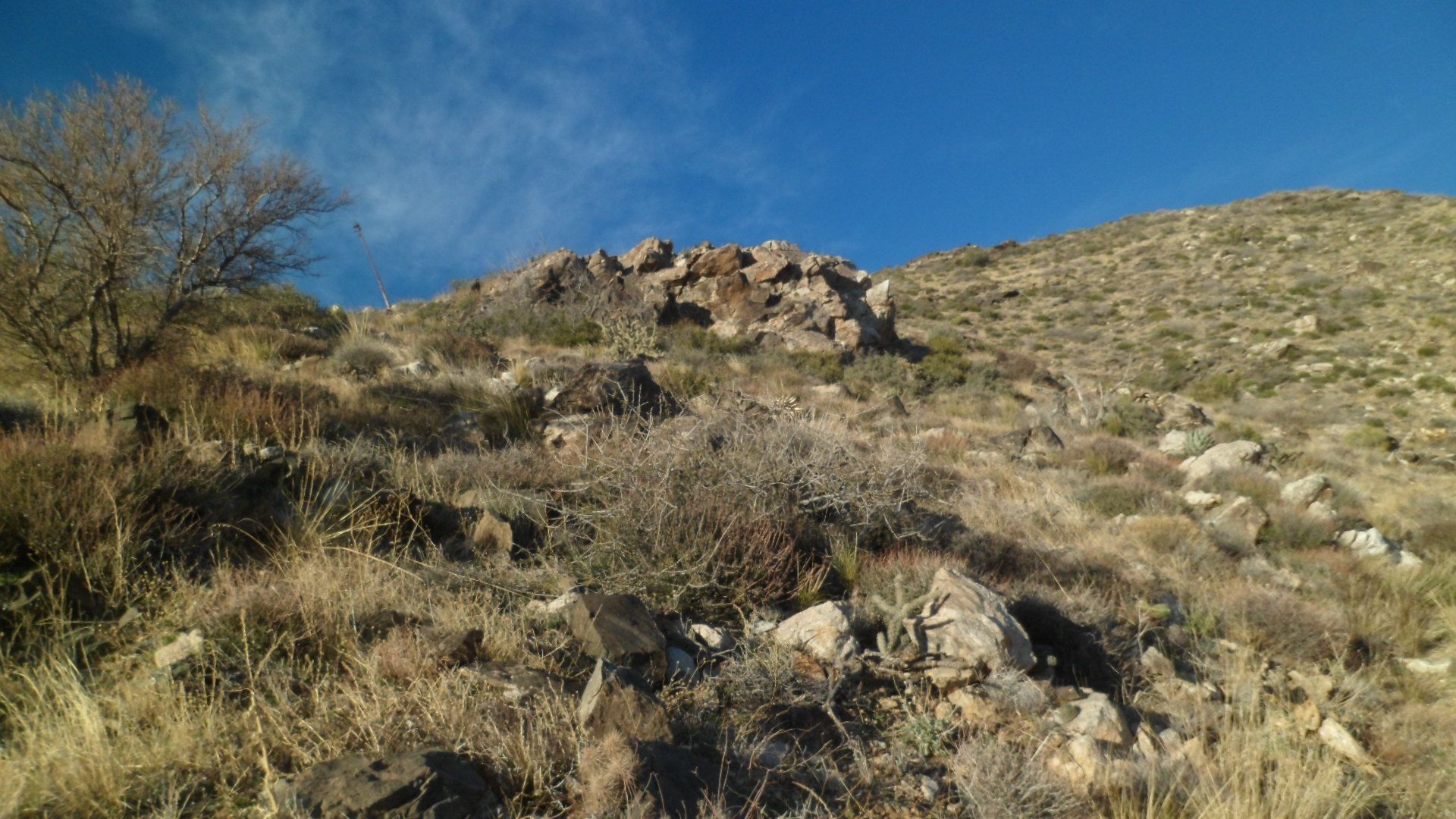
Sunday saw my first visit to Harquahala Wilderness, featuring the highest peak in La Paz County and in southwestern Arizona.  The name, Harquahala bestowed by the Mohave people or their progenitors, means “Waterhigh up”. Harquahala Peak does get snow, every so often, though Sunday was dry and mild. I lived in nearby Salome, for a year, in the 1999-2000 Academic Year, and have passed by the entrance to this trail countless times, often wondering what the upper levels were like. I got there later than I had first planned, as an important gathering took up much of my Sunday morning. Still, the overall experience, over six hours, rivaled the best of  other wilderness experiences I’ve had in the Southwest. The first two miles of the trail are standard Sonoran Desert fare, but don’t be jaded or lulled into boredom.  There are some challenges ahead.  This experience reminded me quite a bit of the Superstition Wilderness.

SAM_8019   SAM_8020   SAM_8023

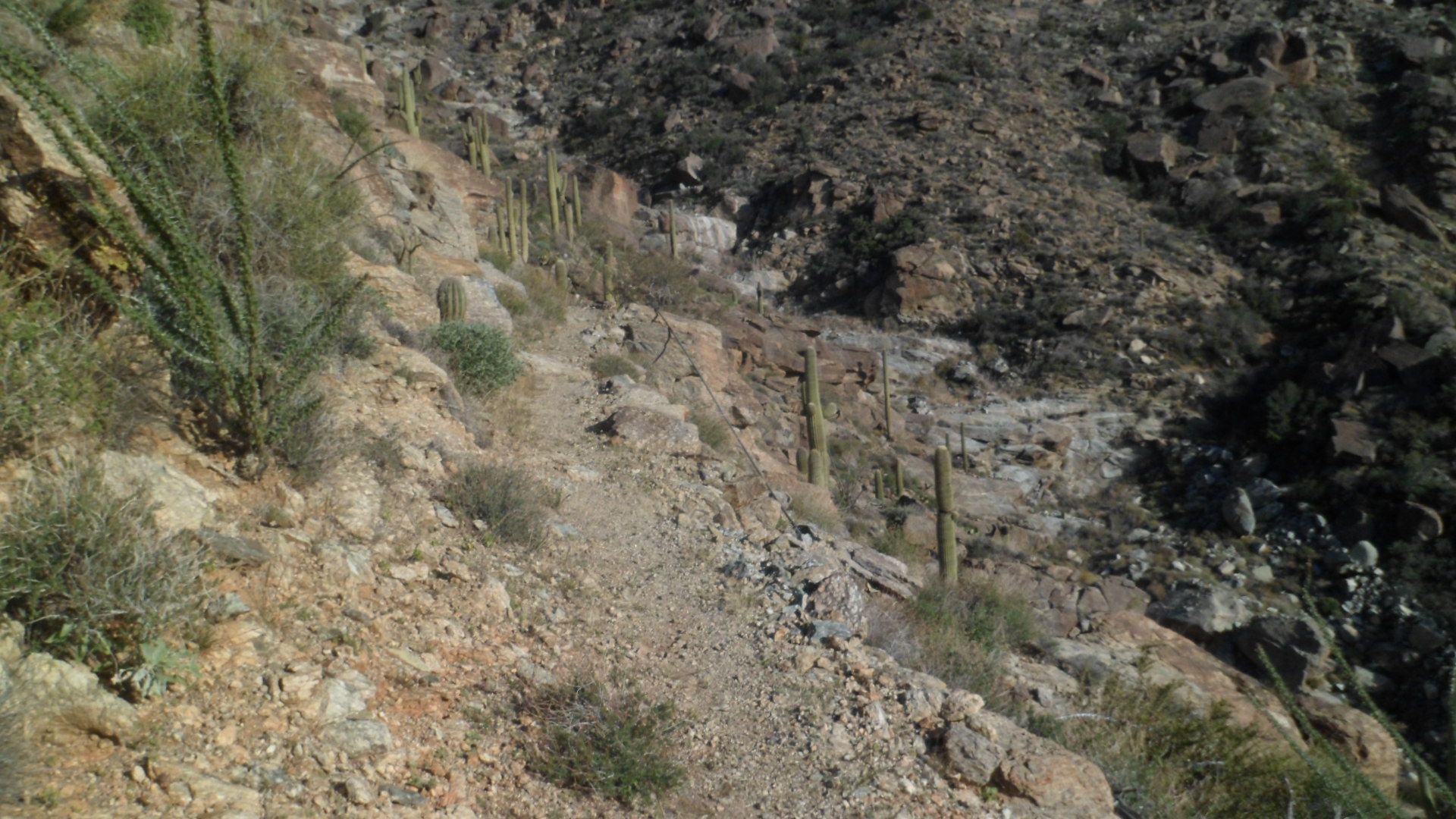
The full trail is 5.4 miles, one way.  Once through the boulder fields, the switchbacks, and fun, begin. SAM_8025

SAM_8029

Looking down into the canyon is an exhilarating experience.   SAM_8056   SAM_8059

The cathedral spire-like quality of Chimney Rock is  a motivation to keep on, with new vigour.   SAM_8060

Two-thirds of the way to the summit, some gold prospectors tried their luck, in the 1900’s.  It didn’t work out too well.  The remains of their camp are preserved here.   SAM_8070

The remnants of another Harquahala institution, an Observatory, built by the Smithsonian, and operated from 1921-1925, are found at the summit of Harquahala Peak, and are visible from the place where I chose to turn around.

SAM_8078

The summit itself was another 35-40 minutes away, and once there, the sights are worth an hour or so of exploration.  Owing to the fading daylight, and not wanting to depend on my flashlight to navigate the eastern rim’s switchbacks, I began my descent around 5 P.M.

SAM_8080

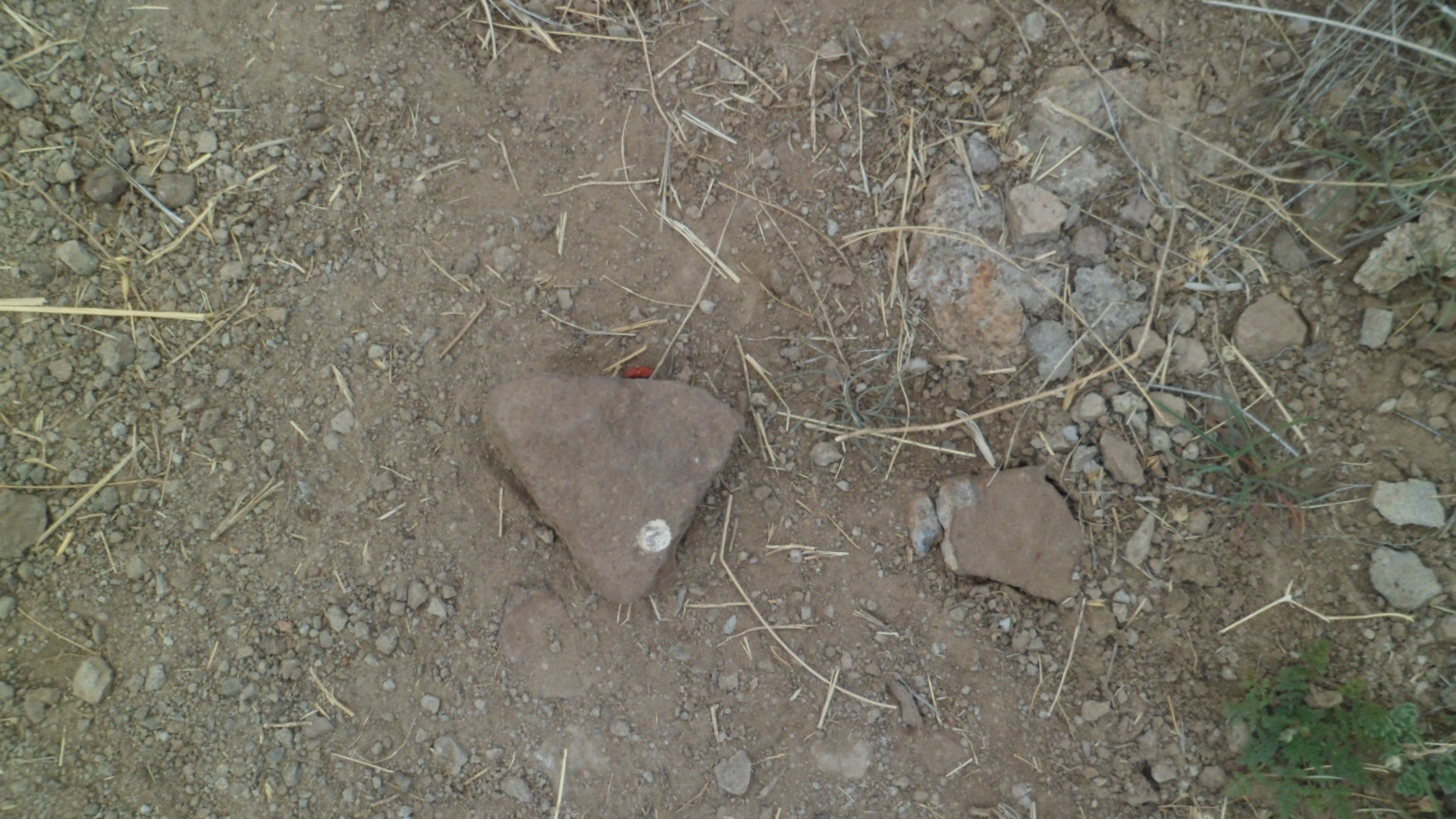
There were abundant heart-shaped rocks here, so I felt fully-blessed.

SAM_8065

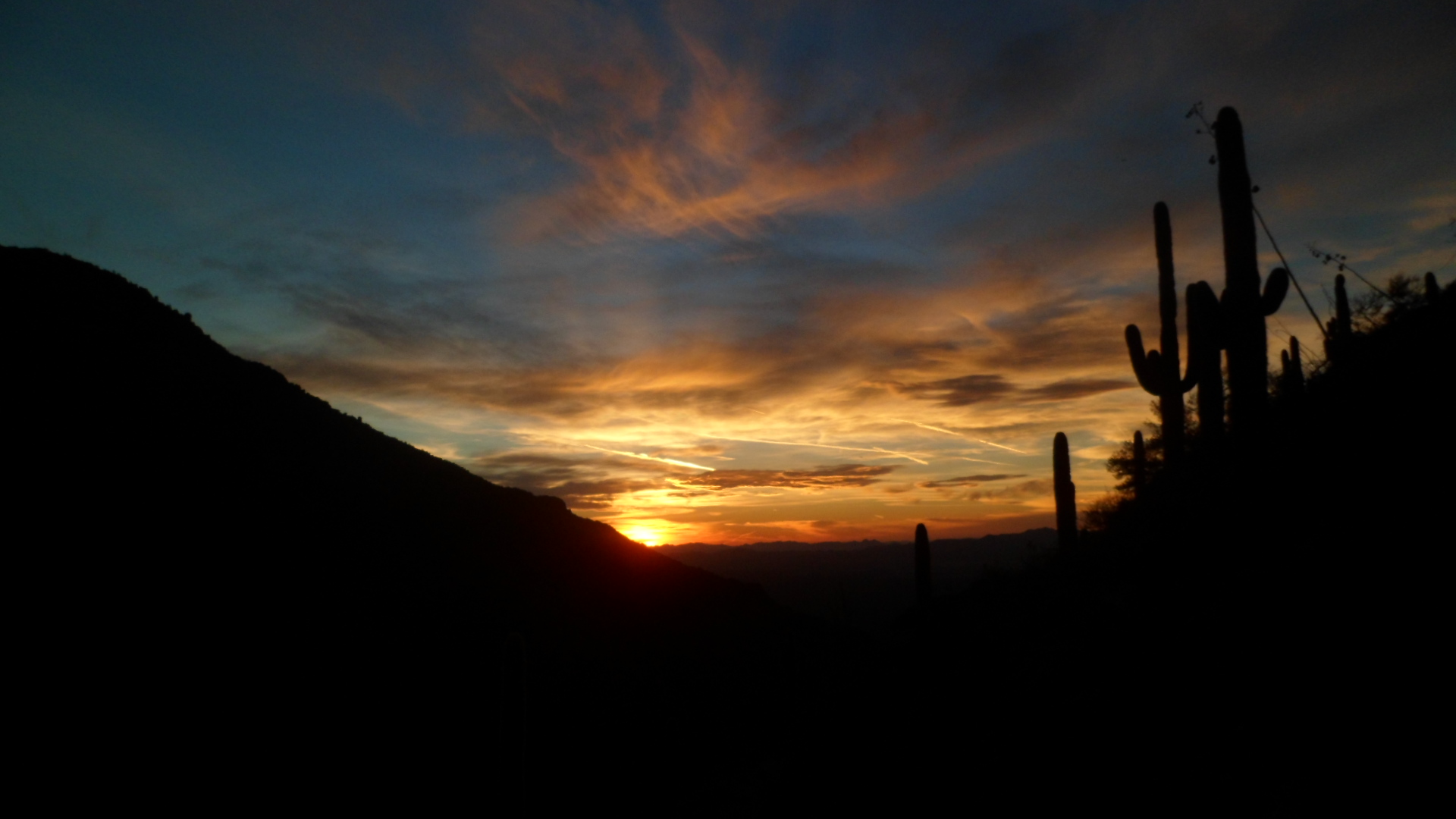
As I reached the last of the eastern switchbacks, the Sun bid farewell.

SAM_8082

A night hike of ninety minutes, with my trusty flashlight, brought me back to the car.  As I reached my vehicle, the coyotes began yipping and yowling, about a mile to the east.  I will be back here someday, critters, and will get to the top, with plenty of time to do it justice.

(You probably guessed it.  The Daily Bruin didn’t take, so I am back to writing less “me-centered” fare.)