A Temple and Its Concentric Circles

5

July 13-14, 2019, Wilmette-

SAMSUNG CAMERA PICTURES

I have made it a practice, when going back and forth across North America, to stop at least once at the Baha’i House of Worship, in this leafy North Shore suburb of Chicago.  Often, it is only for two or three hours, before I’m off again, to whatever awaits.  This time, though, I took an Airbnb room, near Wilmette’s Village Center, the better to meet with a trusted friend at her convenience.

The House of Worship is, rightfully, a point of pride for Wilmette’s residents, regardless of their faith, or lack thereof.  The town has a full complement of Christian denominations and an active Jewish temple, as well as several Muslims.  My host, an Iranian-American, who is not a Baha’i, spoke well of our Faith and of the Temple.

My day started, in Wrigleyville, with my helping the most vibrant of the group of hostelers, whom I mentioned yesterday, to charge her phone.  The Hostel’s breakfast master whipped up some incredible pancakes and waffles. Then came the navigation from the parking garage I used, to curbside near the hostel.  A distance of two blocks required me to go around Cape Horn, figuratively speaking.  At one point, I stopped, twice, at the same STOP sign, then inched forward, only to be chastised by a traffic control officer for not stopping a THIRD time.  No ticket ensued, after his partner rolled her eyes at him and signaled me to turn.  That’s Chicago traffic, though, and never anything personal.  A police officer at another spot let me turn onto Sheffield, and I found the perfect spot for loading my car back up.

No freeway was necessary, going to Wilmette.  U.S. 41 North gives one a  nice slice of Chicago’s northwest side, at a leisurely pace, without a humongous amount of traffic, of a Saturday morning.  A fine lunch at Potbelly Sandwich Shop, amongst an eclectic crowd, set a fine mood for the rest of the drive to my evening’s abode.  The ambiance is as important to me as the food itself.  Listening to Ella Fitzgerald’s rendition of “Sunshine of Your Love” was a bonus.

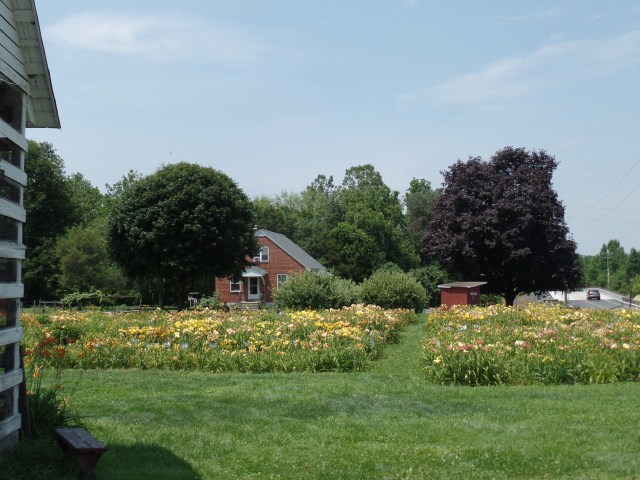
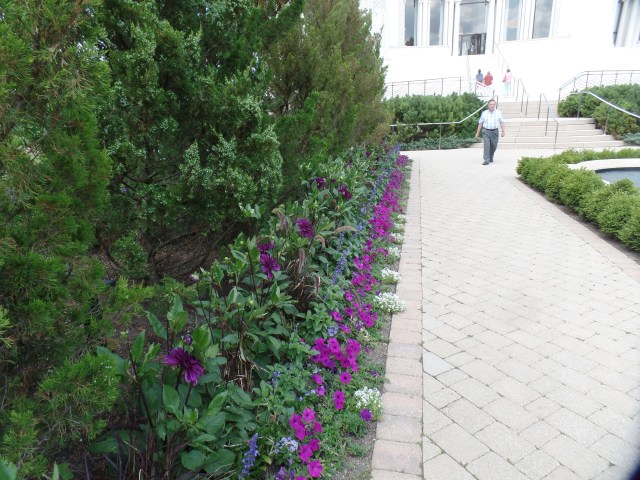
Above a Persian carpet shop sits a modest apartment.  There, I took the spare room, and headed up to the House of Worship.  My focus, after prayers and meditation, is always on the gardens, which surround the Temple, on each of its nine sides.  I have shown these, in detail, in earlier posts.  Here, though, is a small sample.
SAMSUNG CAMERA PICTURES

SAMSUNG CAMERA PICTURES

SAMSUNG CAMERA PICTURES

This is the North Shore Channel, which empties into Wilmette Harbor, between the House of Worship and Gillson Park, which has the village’s lovely beach.

SAMSUNG CAMERA PICTURES

I availed myself of two restaurants here in Wilmette: Ridgeview Grill, which I visited last summer, gave the same excellent fare and service on Saturday night; Walker Brothers Pancake House offered the finest of Sunday breakfasts. (Yes, San Diegans, your very own Richard Walker is a member of this family, and his superb Pancake House is a West Coast extension of the Wilmette establishment, which also has six other branches around Chicagoland’s North Shore.).Suffice it to say, I am getting spoiled by two days in a row of great pancakes.

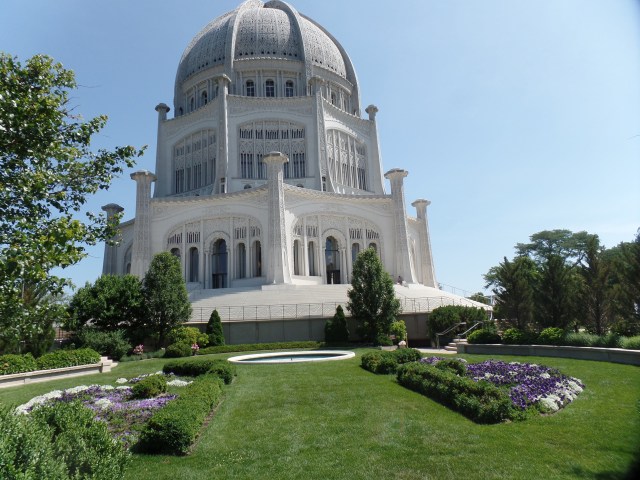
With breakfast done, and 10 a.m. rolling around, I bid farewell to my host, J., and headed over  to the House of Worship, to meet my friend. On the way, I encountered a crew fixing a broken water main, so prayers were offered for that situation as well.  The Baha’i House of Worship in Wilmette (1953) was the second such Temple ever built, the first being in Ashgabat, Turkmenistan (1908). (It was confiscated by the Soviets, in the 1920’s, then was destroyed by an earthquake.  The property remains vacant, under Turkmenistan government control.)  There are now seven other Baha’i Houses of Worship – one for each continuously-inhabited continent, plus one in Samoa and one in Panama.  National and Regional Baha’i Temples are being built, in several places around the globe.  Each House of Worship is open to all, regardless of Faith.
SAMSUNG CAMERA PICTURES

Wilmette, this time, felt a lot more like home.  The ripples of love and acceptance are radiating outward from this truly divine edifice.


The Way of Sacrifice

2

July 10, 2019, Pittsburgh-

Let your mind’s eye envision

the scene in Tabriz.

Hundreds of soldiers lined up,

thousands of onlookers behind them.

All are there to put an end

to the presence of a Light Being,

the Herald of a New Age;

the Divine Teacher, Who

became known as Al-Bab,

The Gate.

The rounds are fired,

the smoke clears,

and there is His devoted companion,

tied to Him,

before the shots were rendered;

now, just wandering about, in confusion,

That confusion spreads like wildfire.

Where is the Prisoner?

Why, He is finishing His business

with a follower,

in an office room,

elsewhere in the prison!

Al-Bab is taken outside,

once this matter has been

completed.

He is bound to His companion,

again.

A different regiment

fires its rounds.

The smoke clears,

the deed is done.

The bodies, left for the jackals

and wild dogs,

are retrieved in the night,

kept safe,

from one place of refuge

to another,

and finally laid to rest,

in March, 1909,

at His Tomb,

in Haifa, Israel.

There, we may honour Him,

at the Shrine of The Bab.

(This is a matter of historical record. Russian observers were present at the execution, were astounded and horrified, and made certain this matter was recorded in words, for posterity.  Al-Bab was executed on July 9, 1850.  We Baha’is commemorate His Martyrdom, each year.  The date this year happened to fall on July 10, according to our commemorative calendar, which is based on lunar reckoning.  I joined a group of Baha’is and friends of our Faith, in a quiet neighbourhood of southwest Pittsburgh, for today’s observance.)


Bastion of Honour

2

July 9, 2019, West Point, NY-

My father, before his passing, expressed a desire to visit the United States Military Academy, at this wide spot on the west bank of the Hudson, 57 miles north of New York City.  I don’t know if he ever made it there, but in case he hadn’t, I was determined to visit on both his behalf and as part of marking my own 50th anniversary of having joined the U.S. Army.

Unlike either of the still extant posts at which I served,West Point does allow visitors.  The security check involves both a written document and a personal interview, lasting 3-5 minutes.  Once those are accomplished, a visitor is given clearance to go to the Cemetery, to Trophy Point and,  parking space available, to the fortress-like dormitories.

I set aside 3 hours, this afternoon, after being cleared by security, to look over the areas mentioned above.  West Point, despite a handful of peccadilloes, over the years, remains largely a bastion of honour.

The Museum is the first place one sees, upon entering the Visitor Center parking lot. I save that great edifice for another time, preferring to get out and take in the out of doors sections of the Academy.

SAMSUNG CAMERA PICTURES

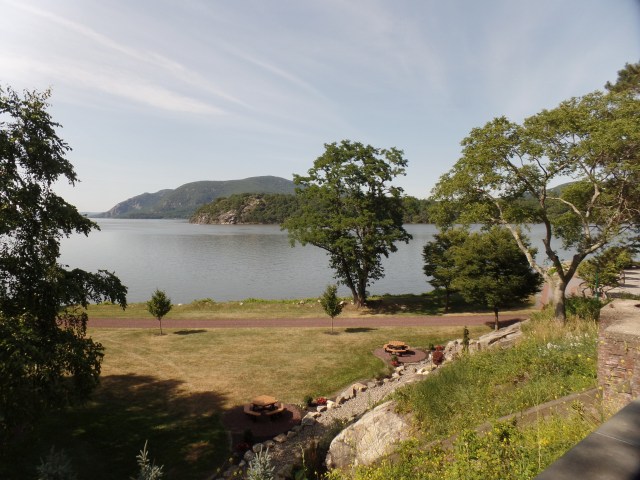
From the edge of the parking lot, one may take in a serene view of the Hudson.

SAMSUNG CAMERA PICTURES

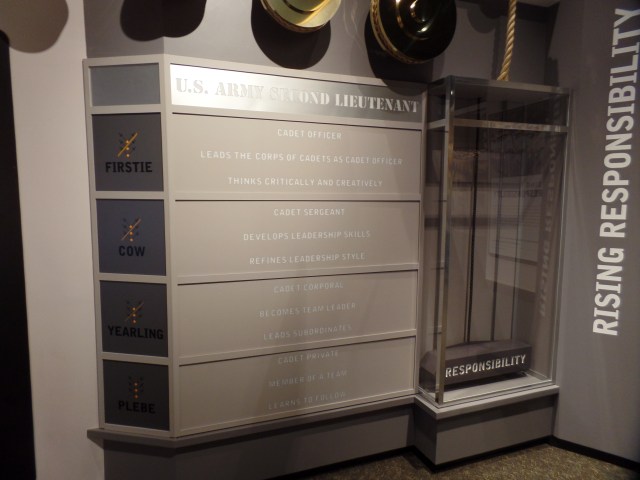
On to the Visitor’s Center, with its display which depicts the quarters of a cadet, and of the cadet’s four years.

SAMSUNG CAMERA PICTURES

The quarters are spartan.

SAMSUNG CAMERA PICTURES

SAMSUNG CAMERA PICTURES

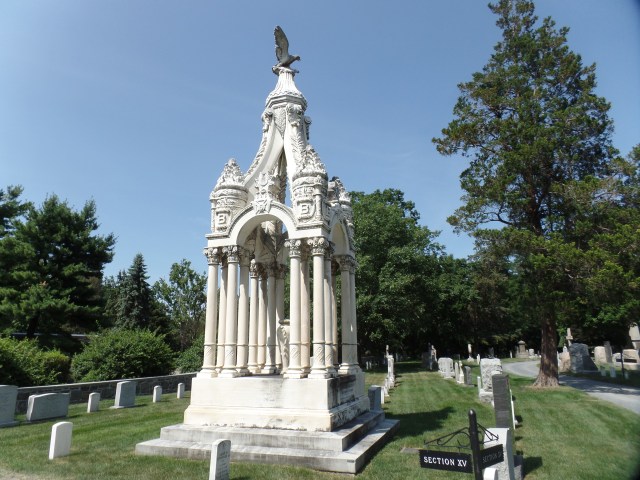
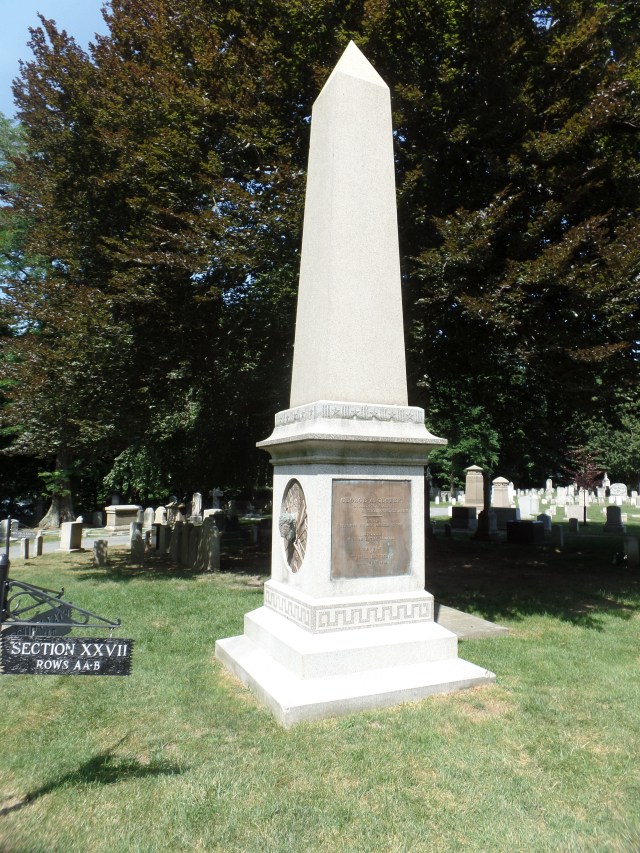
Once cleared by the dour and seemingly exhausted security officer, I drove to the Cemetery parking lot and took in a variety of mausoleums and tombs, reflecting our nation’s military heritage.  Soldiers from George Armstrong Custer to William Westmoreland are laid to rest in these grounds.

Here is a montage of the statuary and resting places of West Point National Cemetery.

SAMSUNG CAMERA PICTURES

SAMSUNG CAMERA PICTURES

SAMSUNG CAMERA PICTURES

SAMSUNG CAMERA PICTURES

SAMSUNG CAMERA PICTURES

SAMSUNG CAMERA PICTURES

SAMSUNG CAMERA PICTURESSAMSUNG CAMERA PICTURES

SAMSUNG CAMERA PICTURES

SAMSUNG CAMERA PICTURES

SAMSUNG CAMERA PICTURES

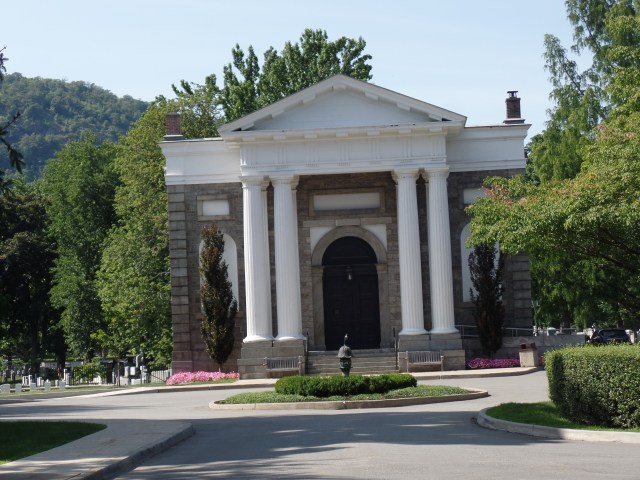
The Old Cadet Chapel, seen below, was brought here to the Cemetery Gate, from its prior location near the dormitories.

SAMSUNG CAMERA PICTURES

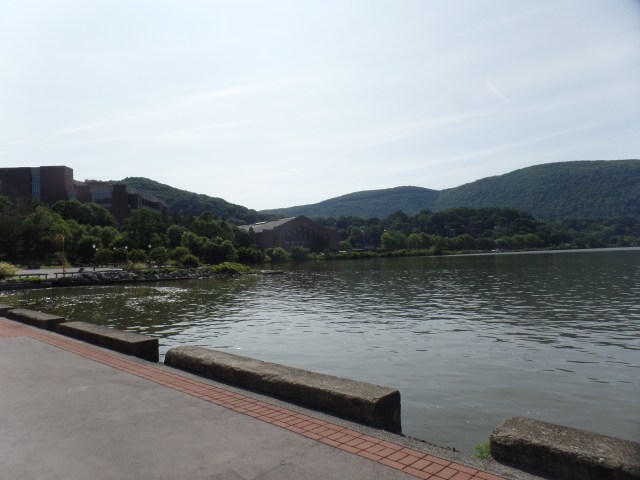
From here, I walked to Gees Point, from which one may take in more serene views of the majestic Hudson River.

SAMSUNG CAMERA PICTURES

SAMSUNG CAMERA PICTURES

This Helipad is primarily for the use of dignitaries, coming and going.

SAMSUNG CAMERA PICTURES

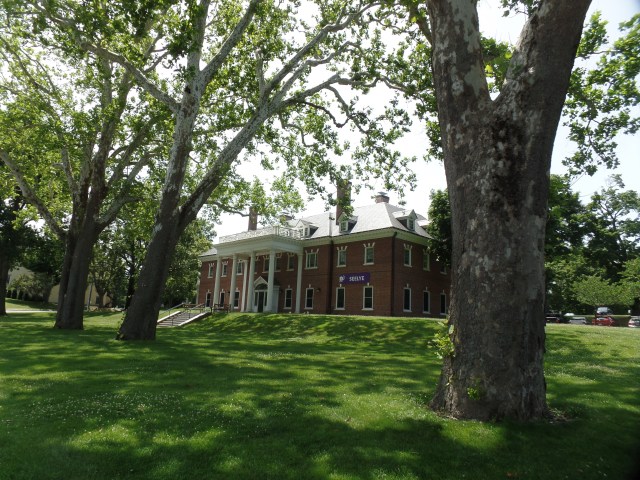
This small house invokes the gentler side of the Academy.  It serves as an officer’s residence.

SAMSUNG CAMERA PICTURES

This is one of two paths, from the Main Road to Eisenhower Hall, that are “Use at own risk”. I took the risk.

SAMSUNG CAMERA PICTURES

Below is a view of  the Catholic Chapel.

SAMSUNG CAMERA PICTURES

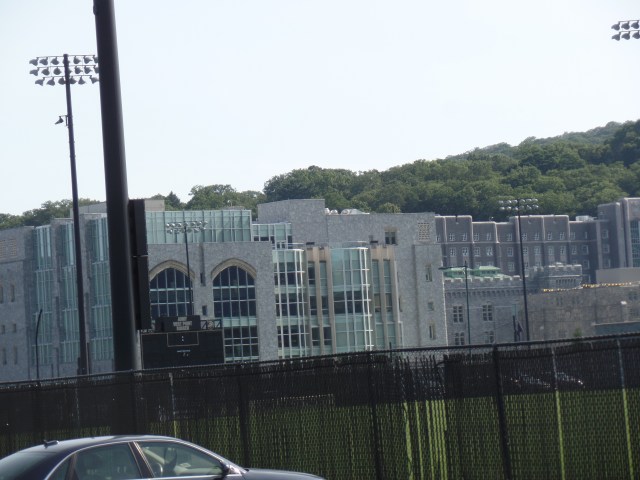
The Gothic dormitories could only be photographed from a distance, this evening, due to a dearth of parking.

SAMSUNG CAMERA PICTURES

The legendary football/soccer stadium stands next to the dorms.

SAMSUNG CAMERA PICTURES

Finally, the statue of Tadeusz Kosciusko stands watch, gazing towards the Hudson.

SAMSUNG CAMERA PICTURES

So ended my first visit to my former superiors’ alma mater.


The Valley of Five Colleges

2

July 8, 2019, Amherst, MA-

I learned much from my growing-up years in Saugus-certainly a lot more than some people, who knew me when, ever suspected.  Some, especially in my family, still wonder how I’ve made it this far, ever managing to get out of my own way.  Truth be known, what I learned as a child and teen determined what I retained from my college and university days, and from many experiences thereafter.  I learned to survive in Saugus and how to thrive in Amherst.

Amherst both sheltered me from the real world and engaged the stretching of my comfort zone.  I came to this place of five institutions of higher learning, at a time when the women’s movement was coming into full flower (no pun intended) and when the residue of the anti- war movement was settling into an ennui of apathy.  Watergate rekindled a sense of outrage, for a time, but with Richard Nixon gone, by the Fall of 1974, many were back to focusing on I, Me and Mine.
I returned here today, for the first time since graduating in 1976, to see what, if anything, had really changed.  Amherst College is still the centerpiece of downtown. The University of Massachusetts is the town’s largest employer.  Mount Holyoke College, Smith College, and Hampshire College lie in a semi-circle to the south of Amherst,  I took a stroll around Amherst College and downtown Amherst, before heading up to the University campus.

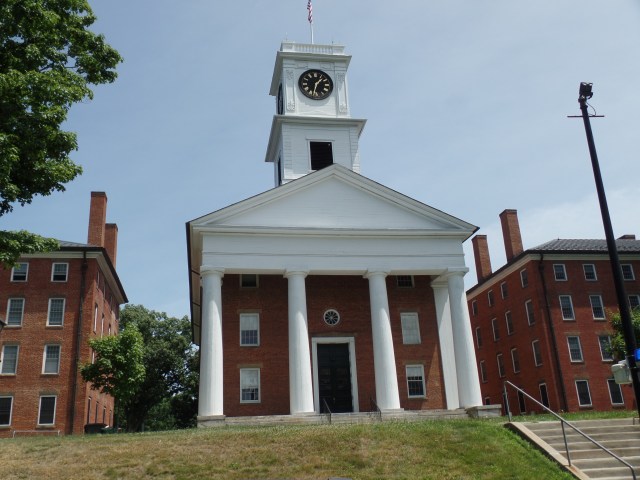
Here a few views of Amherst College.

SAMSUNG CAMERA PICTURES

SAMSUNG CAMERA PICTURES

SAMSUNG CAMERA PICTURES

SAMSUNG CAMERA PICTURES

The Loeb Center is a job placement hub for Amherst graduates.

SAMSUNG CAMERA PICTURES

Bassett is one of two planetariums in Amherst.  Orchard Hill, on the University of Massachusetts campus, is the other.

SAMSUNG CAMERA PICTURES

SAMSUNG CAMERA PICTURES

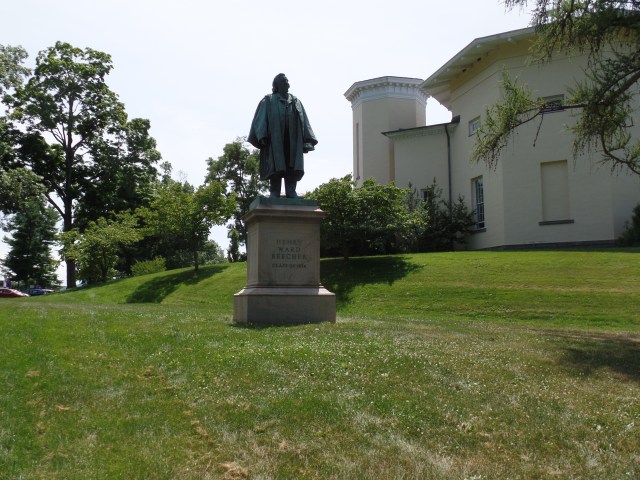
Henry Ward Beecher was a pioneer in the abolitionist movement, but was later the focus of scandal, showing the two sides of even the most ardent of  social reformers.  Nonetheless, he is honoured by Amherst College as one of its most prominent alumni.

SAMSUNG CAMERA PICTURES

SAMSUNG CAMERA PICTURES

Lawrence Observatory, to which Bassett Planetarium is attached, is one of the first astronomical observatories in the United States, having been built in 1847.

SAMSUNG CAMERA PICTURES

My walk around Amherst town began with lunch.  Fresh Side is a lovely Asian fusion cafe.

SAMSUNG CAMERA PICTURES

St. Brigid’s Roman Catholic Church is one of the most prominent non-college edifices in town.

SAMSUNG CAMERA PICTURES

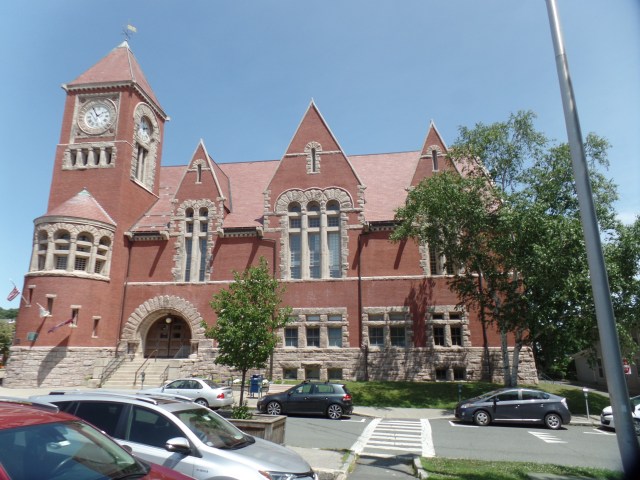
Amherst Town Hall, though, is the signature Town Center building, across from the Town Green.

SAMSUNG CAMERA PICTURES

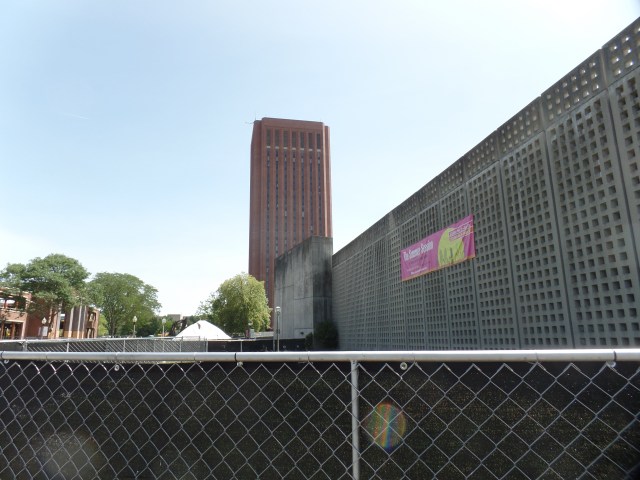
Fast forward a bit and I found myself gazing at the High Rise Dormitory, completed just before I attended the University.

SAMSUNG CAMERA PICTURES

Here is the Sciences Complex.

SAMSUNG CAMERA PICTURES

This scene appealed to me, as  a fusion of two starkly different architectural styles.

SAMSUNG CAMERA PICTURES

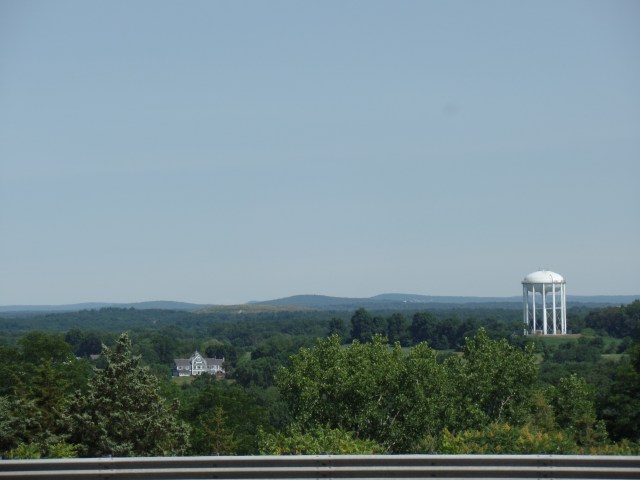
I headed south, after a brief visit to the University Commons, and gazed towards Mt. Holyoke, from a highway rest stop.  The Five Colleges were a solid unit in the 1970’s and are even more vital an educational force now.  The concept of a unified and diverse educational consortium has only gained traction, in the decades since.

SAMSUNG CAMERA PICTURES

NEXT:  Danbury, The Second Clarion of the American Revolution


On Differing With Ella Winter

6

July 3-7, 2019, Saugus, MA-

The fine North Carolina author, Thomas Wolfe, famously used, “You can’t go home again.”as the title of a novel, which he never lived to publish.  His associates took care of that, sometime after his death in 1938, and we have the title as one of the more memorable things with which he is associated.  The quote, though, originated with an Australian writer, Ella Winter, who gave Wolfe permission to use it in his writing.

I’ve been going back to Saugus, continuously, since I left here at age 18.  Service in the Army, college, a quixotic two years getting my bearings in Maine, and then Arizona, South Korea and back to Arizona, all have had a common denominator:  Hometown has never gone away.

There have been changes:  The population has grown, from 25,000 to about 38,000; traffic has increased accordingly; the once lily-white community has opened its doors to people of colour; Hilltop Steak House has given way to Restaurant 110; most of the neighbours have  died or moved away.

There are, though, things which endure:  My mother is still living, quite well; two boyhood friends still live in the neighbourhood-one  in his childhood home; Adams Avenue, the street of my youth, is still within walking distance of both Saugus Center and Cliftondale Square-as well as the West Side’s large shopping mall, Square One; traffic on U.S. Route One can still be daunting at times, though after dealing for so long with traffic in much larger cities, I know not to cringe.

We had the usual family gathering, this time at a niece’s large, beautiful new home, about 1 1/2 hours west of here and dropped in on a nephew and his family, in a town twenty minutes south of Saugus.   These visits are fleeting, but far better than not seeing these gracious, beloved people at all. There was a visit to the aforementioned 110, where I got my fix of fried clams, a boyhood staple.  There were the customary Hallmark movies and binge watching of old episodes of “Blue Bloods”, one of Mom’s favourites.  There was a surprise, when Mom decided to check out a couple of Marvel films, on SyFy.  She had enough, after “Iron Man”, but “Spider Man” was a hit.

I come from large families, on both sides.  There are many cousins, some I haven’t seen in years, and a few aunts and uncles still living.  The group will hopefully get together in late August.  Though I won’t be there, people have to start with what they have available.  I have been able to connect with a cousin in the Midwest, as you know,  and will hopefully make more connections, in future visits.  Gradually, the in-gathering progresses-with social media at least keeping the ties from fraying.

So, not to judge Ella Winter, for the circumstances of her life, but I CAN, and do, go home again. If nothing else, home remains in the heart.  We four, and our extended family, want Mom to keep on, so long as life offers her a measure of blessing.  May she keep the flame, until it’s time to pass the torch on.

NEXT:  Amherst and Its Halls of Learning


The Two Faces of Newburgh

4

July 2, 2019, Newburgh , NY- 

One of the things I often find myself doing, when going back and forth across the continent, is spending at least  a few hours in a town or city that is struggling with a variety of social ills, yet still manages to keep a semblance of what made it tick.  Newburgh, in the middle Hudson Valley, is one such place.

I spent last night, and this morning, in Oley, PA, at the home of friends who operate Glick’s Greenhouse.   It’s always a pleasure to stop there, with a house full of people and one sometimes grouchy greenhouse dog. When I was about to leave, after breakfast and lunch served up by a budding eight-year-old chef, the proprietor of the Greenhouse showed me some of his nephew’s latest blossoms.

SAMSUNG CAMERA PICTURES

SAMSUNG CAMERA PICTURES

The evening brought me to the Hudson Valley, and Newburgh.  I made the choice to focus on the Inner City, thus spending the night at Imperial Motel, which has seen better days, though still home to some of the most regal people on Earth.  A wander about the downtown area showed both early 20th and contemporary 21st Century architecture.

The City Courthouse is a busy place.  Newburgh is said to be the murder capital of New York State, so it isn’t a place for the distracted or the unwary.

SAMSUNG CAMERA PICTURES

There are plenty of safe havens, though.  These two churches signify the legacy, and the promise, that exists in places like Newburgh, and its upriver cousin, Poughkeepsie (more on it, in the next post).

SAMSUNG CAMERA PICTURES

SAMSUNG CAMERA PICTURES

I spent a little time, here and there, along Newburgh’s Riverfront, with plenty of locals celebrating the majesty of the Hudson-and a few signs of decay in spots.

Here is a view of a crossing, from south of Newburgh.

SAMSUNG CAMERA PICTURES

Looks like the boat might need some work.

SAMSUNG CAMERA PICTURES

Nonetheless, there is an enduring charm about the great river and its banks.

SAMSUNG CAMERA PICTURES

From this area of Newburgh’s waterfront, several ferries take people across the Hudson, to Beacon.

SAMSUNG CAMERA PICTURES

I took a walk, from Imperial to a small “spa”, which is another term in the Northeast for a convenience store.  The dour South Asian proprietor took no crap from any of the young men who cam in and out, basically trying one scam or another.  I got my coffee, treated everyone politely, while walking with confidence and had no trouble.  Then again, it was broad daylight.  Most trouble here seems to come from domestic disputes, and in a city where too many men have lost hope, that violence comes all too easily.

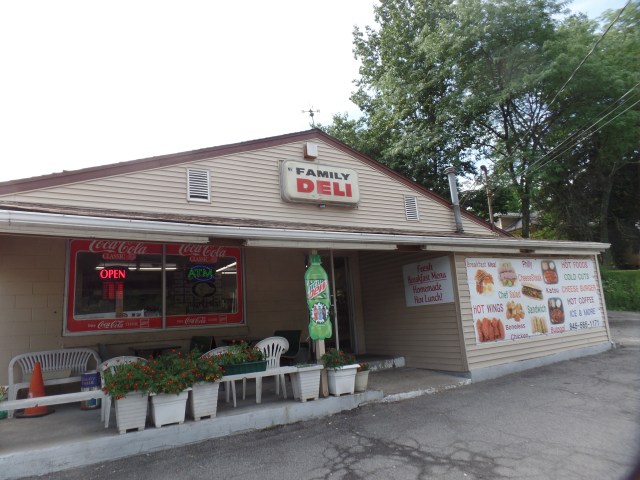
Up on the bluffs heading out of town, there is a far different ambiance.  This Korean-American establishment offers one mindset that is the basis for solving many social ills:  “We are one family.”

SAMSUNG CAMERA PICTURES

NEXT:  Poughkeepsie, without Popeye Doyle


A Capitol’s Quiet Hour

4

June 30, 2019, Raleigh-

Perhaps in a moment of selfishness, I chose to head to North Carolina’s Triad region, specifically to the Capitol, rather than to the west central area, north of Charlotte.  This, though, is what my spirit guides were telling me was in order.

I found Raleigh in a quiet and pensive collective mood, whilst walking about the Capitol District on this morning, when many were engaged in acts of worship.  I pretty much had the area to myself.

The great museums would not open until noon, by which time I was getting my laundry done, in south Raleigh’s International Market, a haven for the area’s Hispanic community.

Part of the Tar Heel story is told on the Museum of History’s grounds.  The frame of a Catawba home is here, surrounded by the lushness of the Piedmont.

SAMSUNG CAMERA PICTURES

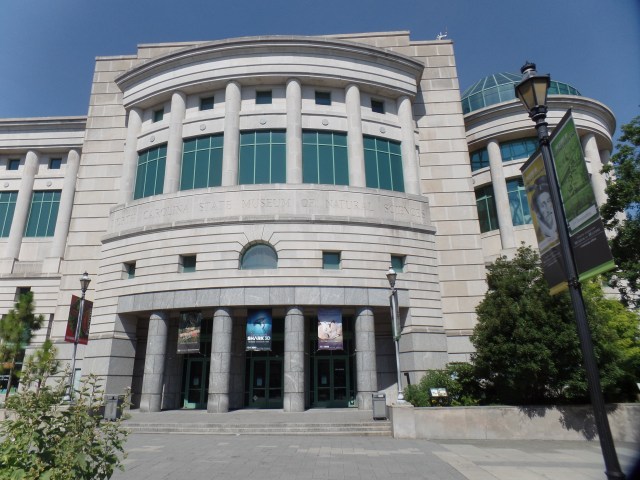
North Carolina Museum of Natural Sciences takes up the right flank of the Museum Quarter.

SAMSUNG CAMERA PICTURES

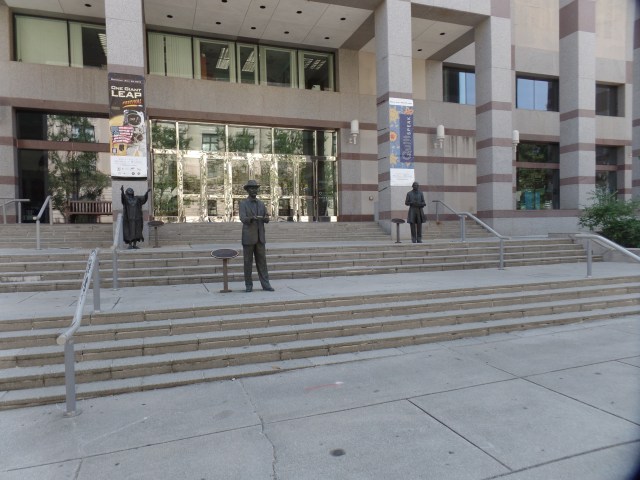
The North Carolina Museum of History occupies the left hand side.

SAMSUNG CAMERA PICTURES

Three figures greet the visitor to the Museum of History: A woman of Sauratown, Thomas Day and Frederick Augustus Olds.  Sauratown is an isolated mountain region, northwest of Winston-Salem.  The independence of area residents is commemorated by this statue of an unidentified woman.  Thomas Day is celebrated as an example of how much a free Black man could achieve.  He was a skilled cabinetmaker, of the Antebellum period. Frederick Augustus Olds, a journalist, was a relentless advocate of telling North Carolina’s story, especally of “human history” and of the advancement of both Boy and Girl Scouts.

SAMSUNG CAMERA PICTURES

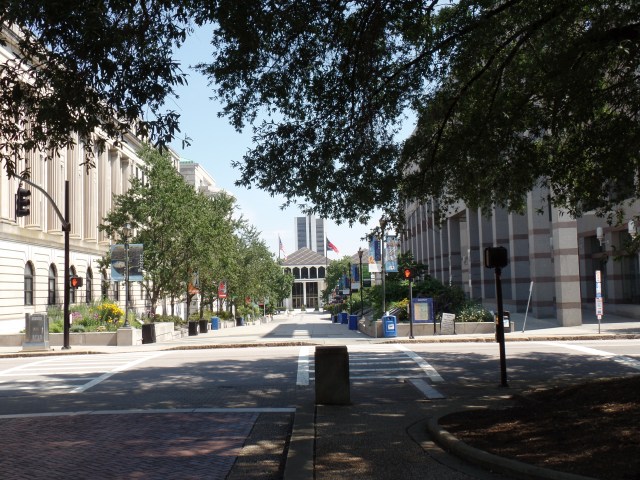
Here is the Promenade, in its fullness.

SAMSUNG CAMERA PICTURES

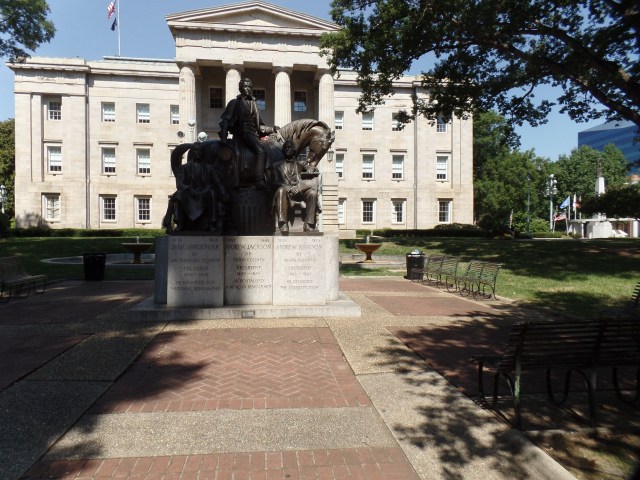
North Carolina is the birthplace of three U.S. Presidents:  Andrew Jackson, James Knox Polk and Andrew Johnson.  They may not be the favourites of many people, but each pursued and achieved his goals.  The State Capitol looms in the background.

SAMSUNG CAMERA PICTURES

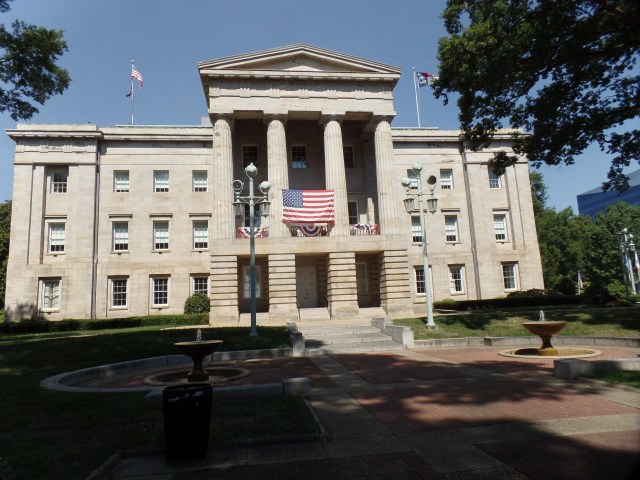
Here are more complete views of the State Capitol.

SAMSUNG CAMERA PICTURES

SAMSUNG CAMERA PICTURES

This statue depicts a naval cadet, of the late Nineteenth Century.  A woman passing by with her young daughter remarked to the child that it must have been most uncomfortable to have to wear such garb, in the heat of a Carolina summer.

SAMSUNG CAMERA PICTURES

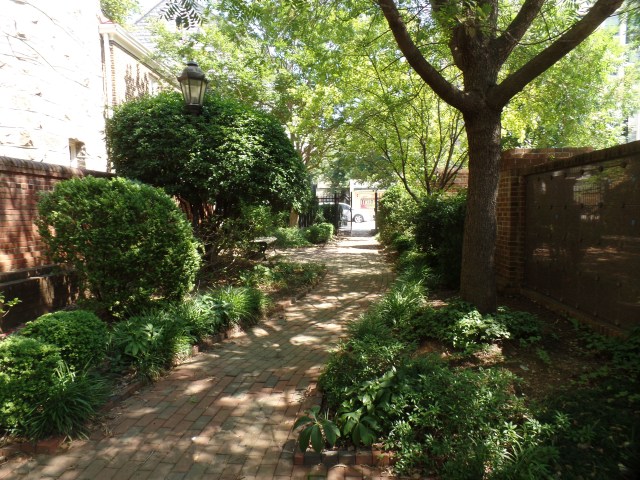
This bell tower, of First Presbyterian church, is framed by the Memorial Garden of the Harden family.

SAMSUNG CAMERA PICTURES

SAMSUNG CAMERA PICTURES

At the opposite end of the Promenade, near the Natural Sciences Museum, is this statue depicting the naturalist Rachel Carson, listening to a story being told by a young boy.  She was passionate about educating the young, as to the dangers posed by excessive chemical use, in the mid-Twentieth Century.

SAMSUNG CAMERA PICTURES

My time with the Hispanic people showed that the Tar Heel tradition continues to promote the achievements of the individual, over a mass ideological swell.  May that ethic long continue.

NEXT:  Virginia’s Eastern Shore


Charleston’s Many Colours

4

June 29, 2019, Charleston (SC)-

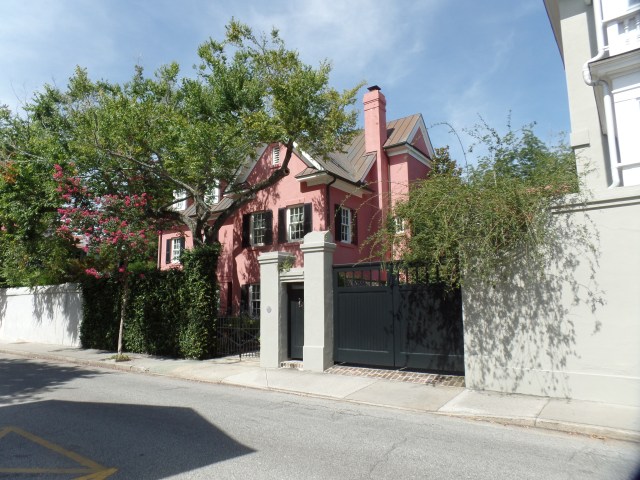
One of the most attractive features of any town or city is the way in which it displays colour-either in street art, botanic arrays, festivals or architecture.   The cultural center of South Carolina has all four.

I came here specifically to visit Fort Sumter, about which more in the next post.  What would keep me coming back are two things:  The warm reception at the north side’s Not So Hostel and the riot of colour, just about everywhere.

Not So Hostel keeps its promise.  Despite one passive-aggressive guest, the place was a serene compound and a fine place to climb to a top bunk and rest the night.

SAMSUNG CAMERA PICTURES

Driving in Charleston can be a bit dicey.   Maybe it’s the heat, or maybe the narrow streets, but Charleston’s motorists can be as nasty to one another as any in a much larger city.  That is one reason I enjoyed my two walks in the area.  First came North Charleston’s Riverfront  Park, the former Naval Base, on the banks of the Cooper River.  The preserved mansions then served as both residences and administrative quarters.

SAMSUNG CAMERA PICTURES

SAMSUNG CAMERA PICTURES

Artifacts of the Base’s active days are interposed with the flora, which Theodore Roosevelt had reportedly wanted removed, so as to keep the place in fighting trim.  The proper ladies of North Charleston had other ideas.

SAMSUNG CAMERA PICTURES

The poignancy of farewells and returns is equally captured, in this sculpture of a Navy family.

SAMSUNG CAMERA PICTURES

There are a few fountains, like this one, interspersed throughout the Charleston area, for people to cool themselves.  Those in downtown Charleston had many children doing so.

SAMSUNG CAMERA PICTURES

The Cooper River presented itself as a focal point for a morning’s contemplation.

SAMSUNG CAMERA PICTURES

The gardens have gradually been restored, thanks to North Charleston’s horticultural societies.

SAMSUNG CAMERA PICTURES

I headed downtown, after the Fort Sumter excursion, with the goal of walking to The Battery and back up King Street.  Downtown was suitably packed, on this Saturday afternoon.  I found quite a few people were interested in seeing St. Philip’s Church, but it was closed.

SAMSUNG CAMERA PICTURES

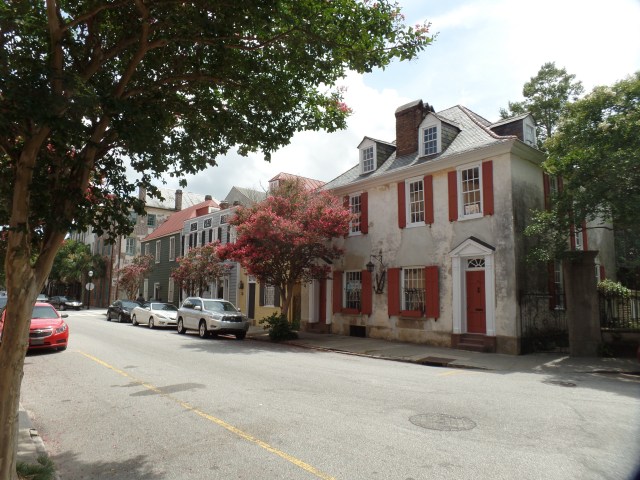
This is about as close as I got to Rainbow Row.

SAMSUNG CAMERA PICTURES

SAMSUNG CAMERA PICTURES

Along the Battery, houses were meant to provide for the many.

SAMSUNG CAMERA PICTURES

These days, the many take comfort by walking along Charleston Harbor.

SAMSUNG CAMERA PICTURES

The Battery’s gazebo was a haven for one family, in the heat, for nearly twenty minutes. I took this photo, once they moved on to a fountain.

SAMSUNG CAMERA PICTURES

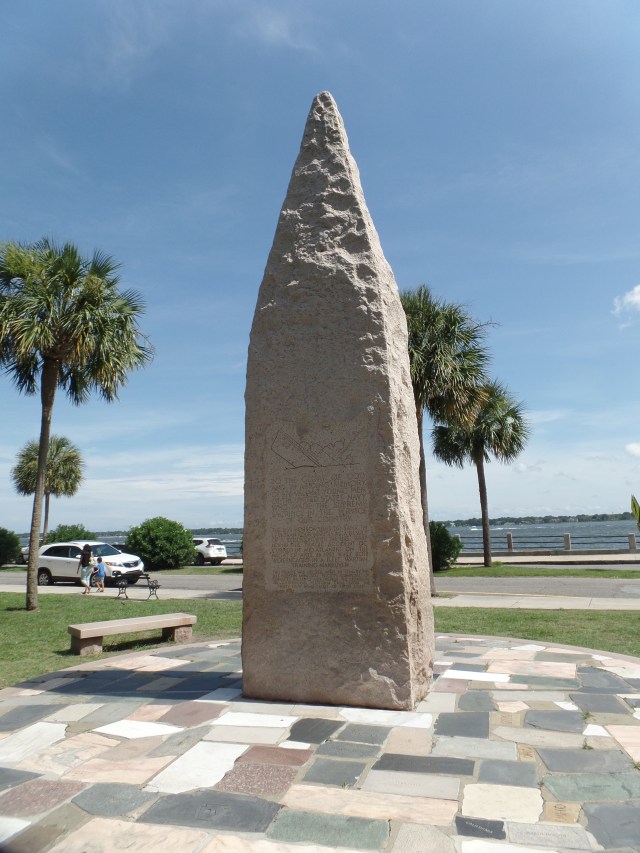
This obelisk is one of several monuments to veterans of the nation’s conflicts.  Confederate monuments are among them.

SAMSUNG CAMERA PICTURES

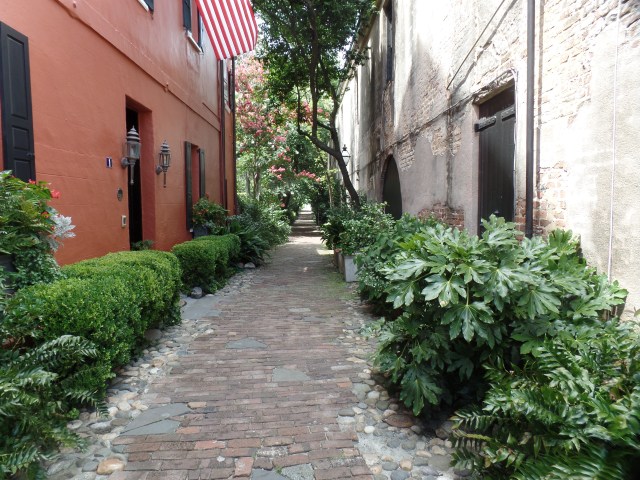
Rainbow Row is emulated, here and there, along King Street.

SAMSUNG CAMERA PICTURES

SAMSUNG CAMERA PICTURES

SAMSUNG CAMERA PICTURES My last view of downtown Charleston was of Circular Congregational Church, which was founded in 1681 and is still in use.

SAMSUNG CAMERA PICTURES

NEXT:  Fort Sumter


The School of Hope

4

June 28, 2019, St. Helena Island, SC-

I am of the opinion that there should be no child left behind-and I don’t mean to throw us back to the Federal educational initiative by that name, which only met the need in a limited fashion.

Truly meeting a child’s needs is something that no “one size fits all” program can possibly address. The basis for any effort to improve a person’s well-being is love for that person, as an extension of one’s love for humanity.

Penn Center, in the heart of this Sea Island near Beaufort, is a shining example of the true meaning of “No Child left Behind”.  Its genesis was the implementing of the Emancipation Proclamation. One thing that was ever in Abraham Lincoln’s mind, when he contemplated freeing the slaves in the Confederate States, was the immediate unleashing on Southern society of millions of illiterate people, the majority of whom were also not trained in any skilled trade.  “Forty acres and a mule”, the mantra of freed enslaved minister Garrison Frazier, turned into a scattershot attempt to relieve that society of its immediate burden, once it became actual Federal policy.  Lincoln himself, hamstrung by his own conviction that any given White man was inherently superior to any given person of another “race”, had no coherent plan to alleviate the situation.

So, it fell to Rev. Frazier and a council of educated Black men, in the Lowlands from Savannah to Charleston, to devise and implement a plan to establish a school for the children of the Sea Islands region. Penn School, established, as its name implies, with the support of the Society of Friends, became just such a school. It was initially established in 1862, even before the Emancipation Proclamation was issued.  Truth be known, word had reached the Black community in Savannah that many slaveholders in Virginia, Louisiana and Georgia were teaching their male slaves how to read and write.  Many others had been taught, surreptitiously, by the wives and children of their masters. The former estate of a freed slave, Harvey Gantt, became the site of an expanded school, in 1864. By 1865, Quaker abolitionists in Philadelphia began supporting the school, and it was named Penn School.  In 1901, Hampton Institute, a Black college in Virginia, began sponsoring the school, which was cut off from public funding by Beaufort County’s segregationist leadership. Even with this assistance, though, the school continued to struggle.  In 1948, Penn School closed and Penn Center, a community development and cultural preservation institution, emerged on the property.

Today, Penn Center is a haven for the study and preservation of Gullah language and culture and for the promotion of Civil Rights.  Its York W. Bailey Museum has a wealth of African art and Gullah artifacts.  The Center promotes the Reconstruction Era National Historic Park, of which it is the epicenter, and the Gullah Geechee Cultural Heritage Corridor, from Florida to North Carolina.  It maintains active relationships with people in West and Central Africa, with the President of Sierra Leone visiting the Center, in 1988.

Here are some scenes of Penn Center’s grounds.  No photography is permitted in the Bailey Museum itself.

SAMSUNG CAMERA PICTURES

SAMSUNG CAMERA PICTURES

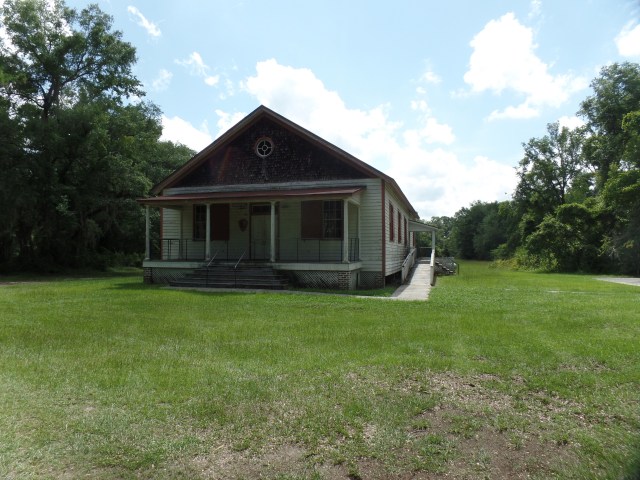
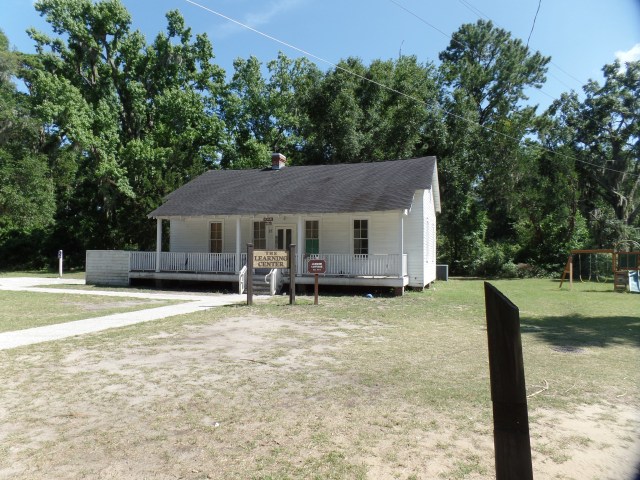
The Gantt House  (Pine House) today serves as one of the learning sites for Penn Center.

SAMSUNG CAMERA PICTURES

These storage cisterns were once the school’s main source of fresh water.

SAMSUNG CAMERA PICTURES

This is Darrah Hall, Penn Center’s oldest building, built in 1903.  It is used for large events.

SAMSUNG CAMERA PICTURES

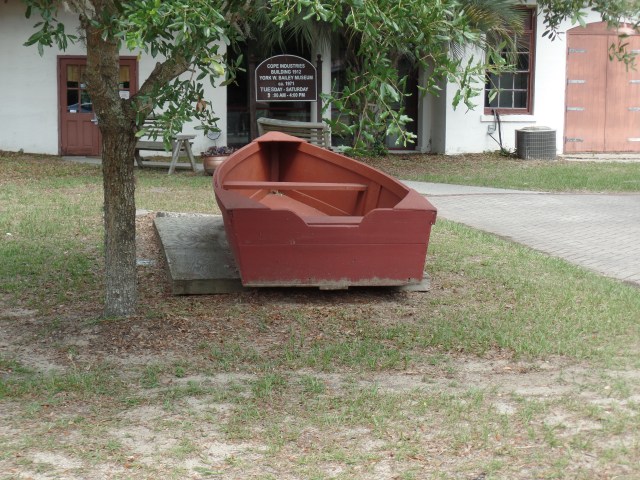
The flat bottom boat is a staple of Low Country transportation.  This one was built and used by freed slaves.

SAMSUNG CAMERA PICTURES

This is the Center’s Administration Building.

SAMSUNG CAMERA PICTURES

Here is one of the first classroom buildings of Penn School, circa 1905.

SAMSUNG CAMERA PICTURES

This complex was a beehive of activity, during my visit.  Vibrant teens were calling out friendly greetings to me, while their teachers were trying to get them focused on the activity of the afternoon.

SAMSUNG CAMERA PICTURES

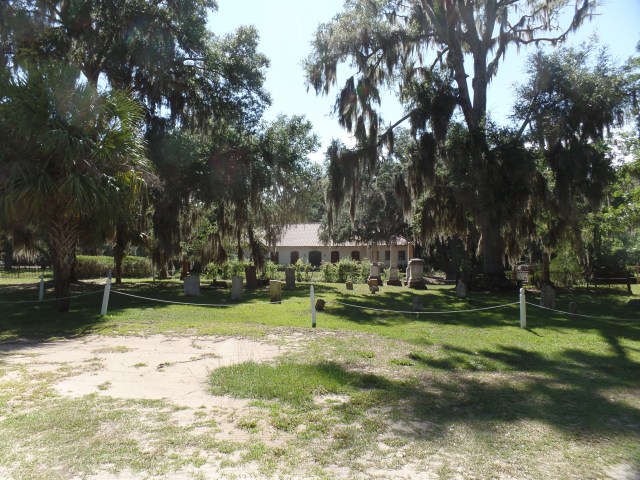
As in any community, a small cemetery has sprung up at Penn Center.

SAMSUNG CAMERA PICTURES

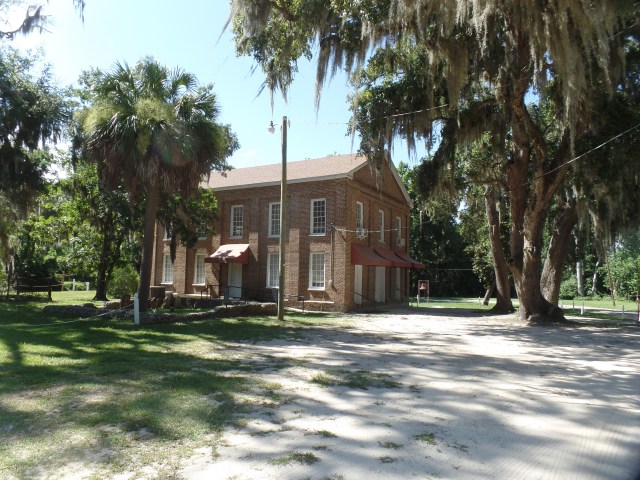
I end with two shots of Brick Church, the original site of the school, and which predates Penn Center.

SAMSUNG CAMERA PICTURES

SAMSUNG CAMERA PICTURES

There is much to learn, as yet, about Gullah Geechee culture, so I know this is far from my last visit to the Low Country.  Penn Center, though, gave me an excellent introduction.

NEXT:  The Wonder That Is Charleston


Staying Independent

5

July 4, 2019, Saugus-

I will continue (go back to) my photo blogs, in the next few posts.  Jumping ahead to the Fourth of July just seems best, though.

I had a conversation with someone very close to me, during the family gathering at a niece’s home, this afternoon.  One thing rings very loud and clear, from this discourse and from other conversations I’ve had, these past few months:  Many people are feeling put upon by aggressive individuals and groups, who take a point of view opposite that which they happen to hold.  Many individuals and groups ARE resorting to the use of force, when confronted with those taking such opposite viewpoints.

I was raised to hear other people out.  My parents, social conservatives, made a great effort to understand even the most seemingly ludicrous viewpoints.  I have maintained an open mind, as a result, throughout fifty-six years of adolescence and adulthood.  Civil Rights have long been a matter of supreme importance in my life, and that cuts both ways.  The Right cannot bully people of colour, of Faiths other than that of the majority in a community, or those living a lifestyle different from that which is conventional. The Left, likewise, cannot deprive people of more traditional bearing, of life, liberty and the pursuit of happiness.  Violent behaviour, on either side, is the stuff of fascism (even when the bully calls self “Antifa”)

I am, as it happens, an obstinate soul, when people without authority try to force me to do their bidding.  Additionally, I question those who DO exercise authority, as to the ethical basis for their actions.  That is what I get from both the Declaration of Independence and the United States Constitution.    That is what I get from my Faith.

So, to my family-my elders, siblings and cousins:  You all matter, greatly.  Your point of view has at least some validity and is worth hearing, and pondering.  Our family is large, so there are all points covered, on the political spectrum. I will not plug my ears to any of it, so long as you do not ascribe to a coda of violence or or a policy of defamation against your opposite numbers.

To my children, nieces/nephews, and “grands”- You are, one and all, a great hope; you are people of immense promise and, especially if you are feeling vulnerable,  are worthy of all the support and love that we, your elders, can muster.  We cannot spare you from life’s ups and downs, but we can point towards the light. This is the very least we can do, in building and safeguarding your own sense of well-being and independence.

Most of the problems we face, when it comes to intolerance and reactive violence, seem to stem from the violent ones acting out of insecurity.  In truth, though, i have to ask, “How does a person expressing an alternative point of view, in and of itself, constitute a threat to my well-being?”  It may be annoying, but it is not a threat-unless accompanied by force-which then makes it an entirely different matter.

Staying independent means, to me, that one takes the time to carefully examine issues and evaluating a variety of points of view.  It also means extending that right to independence to every one else.  These are my thoughts as the Sun goes down on another July 4.