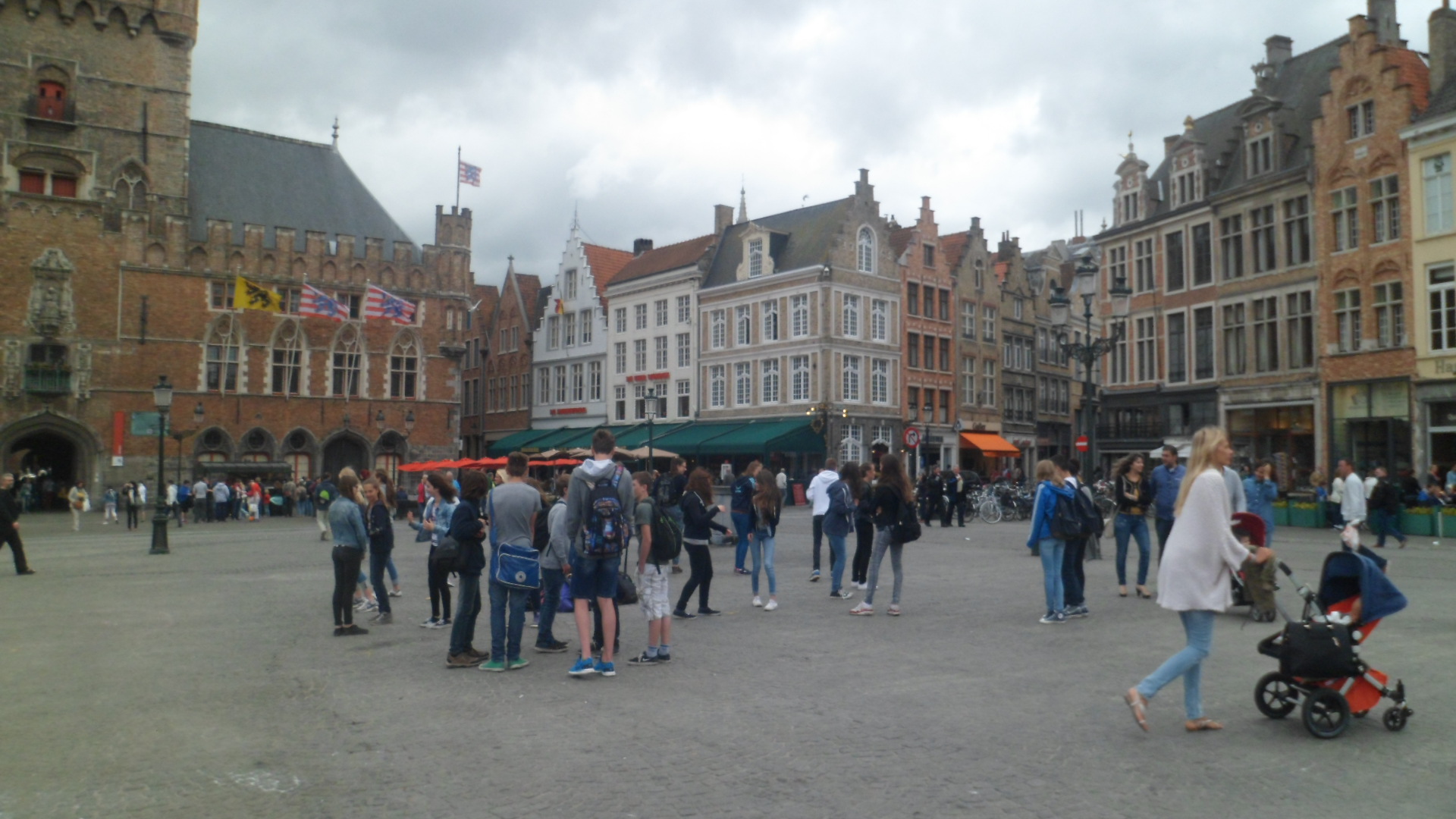
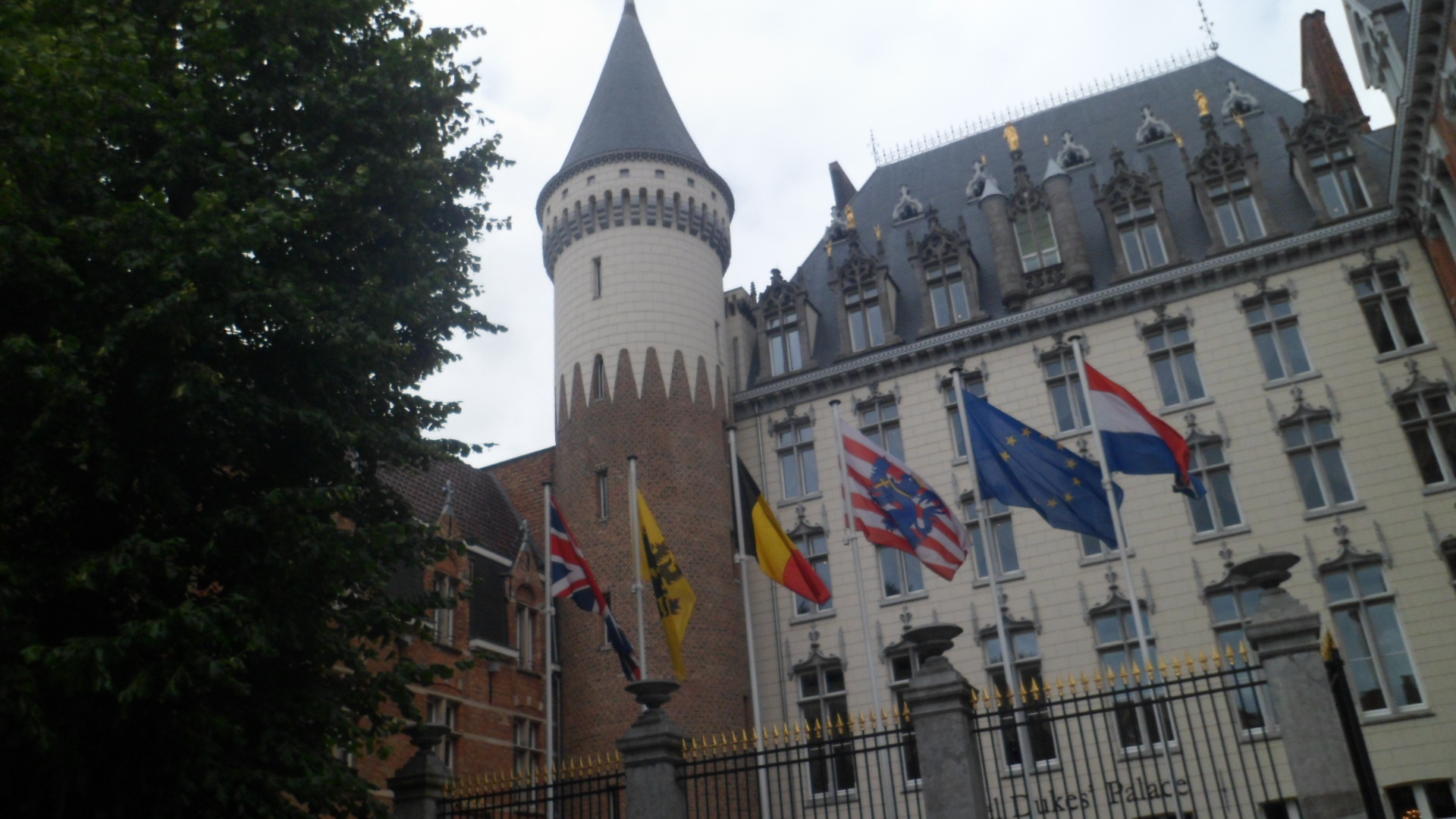
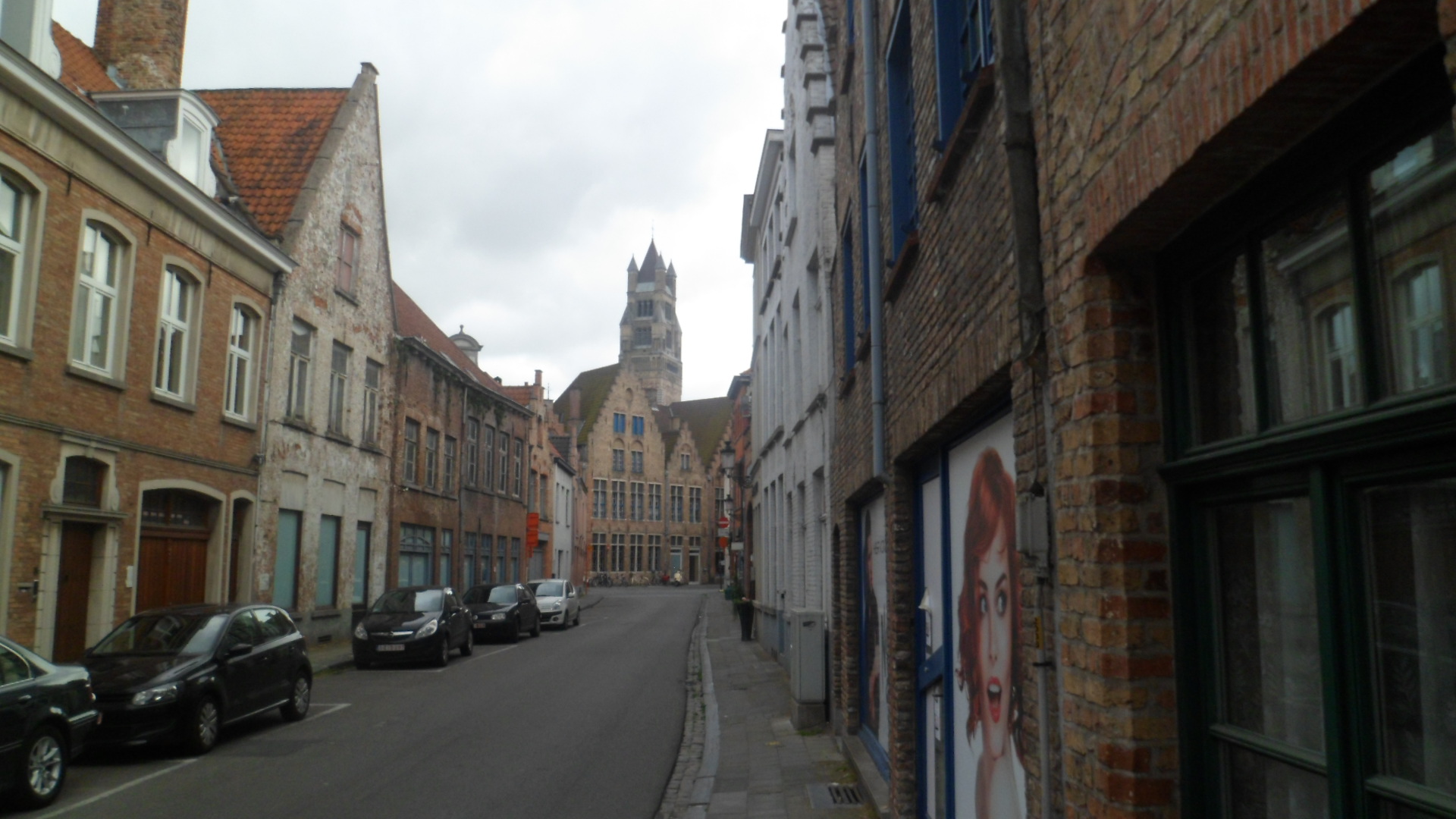
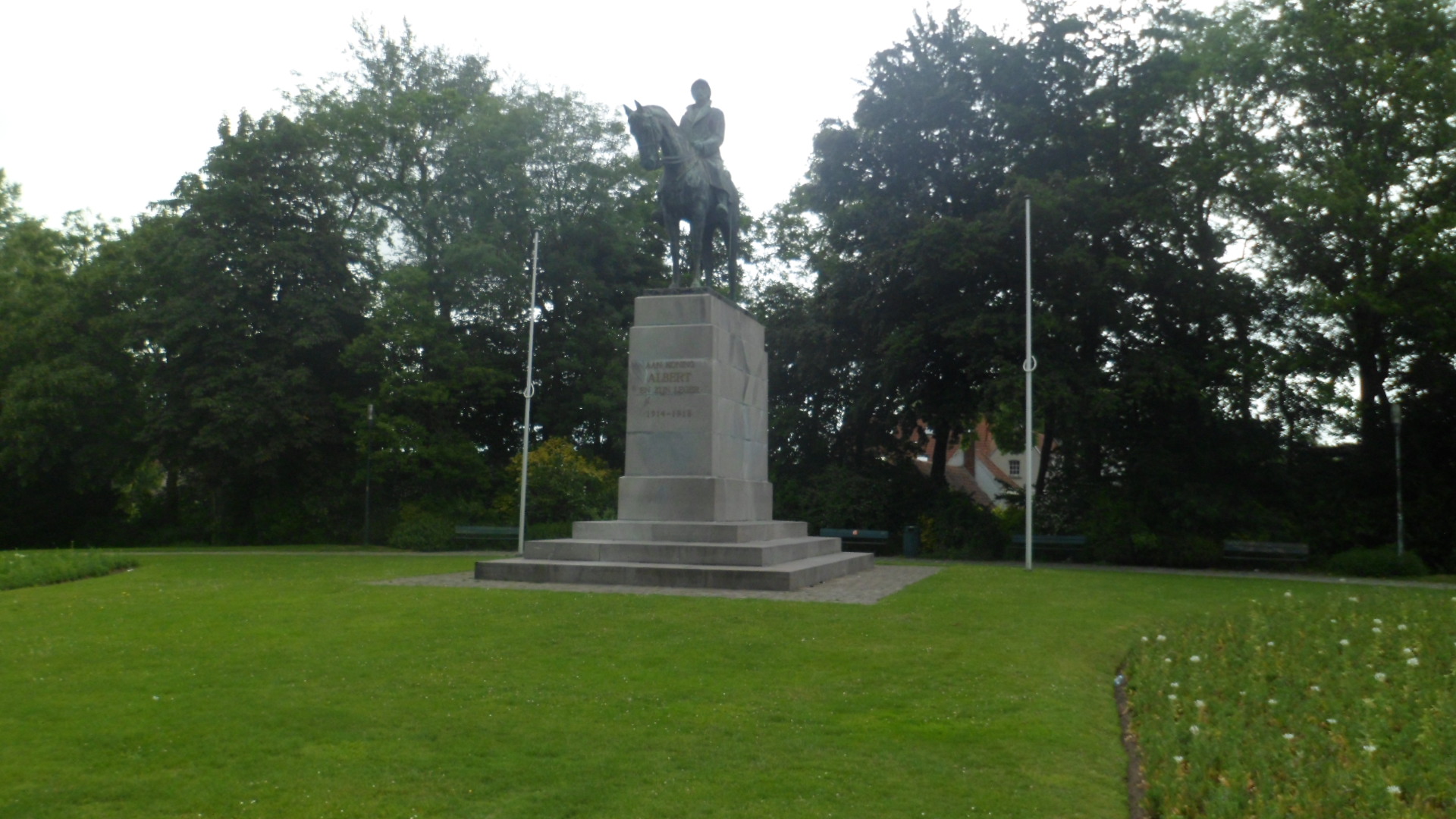
An Eastward Homage, Day 25, Part I: Mardasson and the Seven Roads to Hell

7

June 20, 2014, Bastogne- Of all the battles fought against the Nazis and their collaborators in World War II, none was more necessary, or difficult, than the Battle of the Ardennes. Hitler was obsessed with the low mountains of eastern Belgium, and with Bastogne in particular. It is said he visited the occupied town, at least once.

The Allied Forces liberated Bastogne, in November, 1944. Less than a month later, the German Army struck back, as the tired Allies prepared to celebrate Christmas, and to send some troops to Paris for the holidays. The German goal was to recapture Bastogne and Namur, and push up the Meuse Valley, clear to the Port of Antwerp.

At the eastern edge of the town of Bastogne, there is this homage to those who stopped that advance:

SAM_1405

American and British forces, helped by Belgian partisans, kept the encircled Bastogne from being overrun. This is the miracle of the “Battle of the Bulge”, and would be the final turning point in the defeat of the Nazi regime.

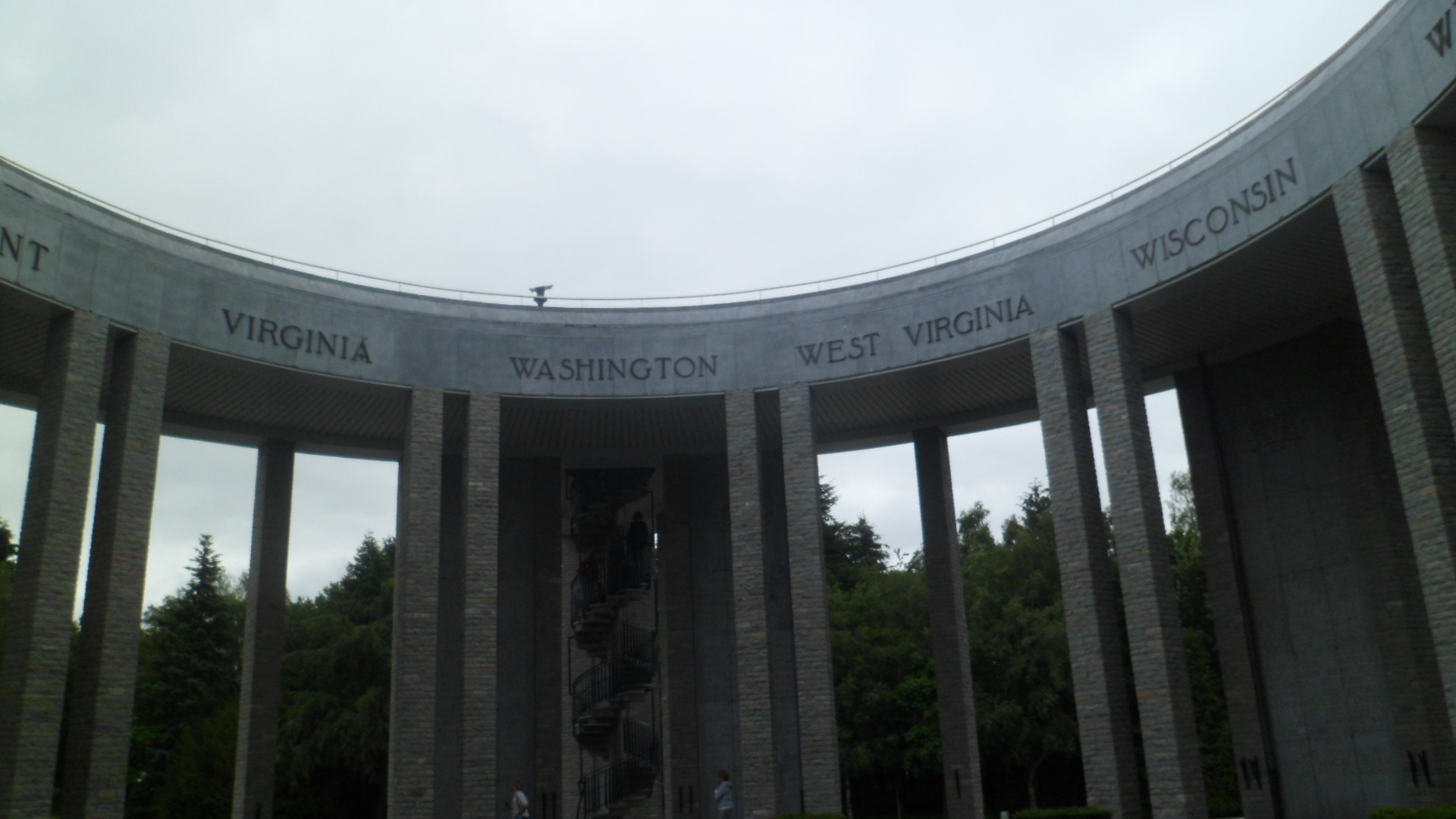
I walked the two kilometers to the Mardasson Memorial. It honours those American troops who helped make real the response of General Anthony McAuliffe, to the German surrender ultimatum; “Nuts!”. All fifty states, and all units involved in the defense of Bastogne, have their names engraved in this splendid memorial. As it happened, I met a Mr. McAuliffe, of Massachusetts, and distantly-related to the general, who had been at the battle, serving with the 87th Infantry Division. His story, and those of several men from Ohio, who were there during the siege as well, having served with the 101st Airborne Division, mightily augmented the awful beauty of this terrible, but ultimately blessed, series of events.

I present to you Mardasson Memorial:

SAM_1416
SAM_1419
SAM_1421

There is a crypt, which, on the day I visited was closed to the public, which contains the remains of many who died in the days of the battle. An American Cemetery nearby holds many others. A German Cemetery is also nearby, underscoring that even those in service to the wicked are themselves viewed as worthy of respect, in death. I stood at a bunker, from which American soldiers looked out at the encircling enemy troops.
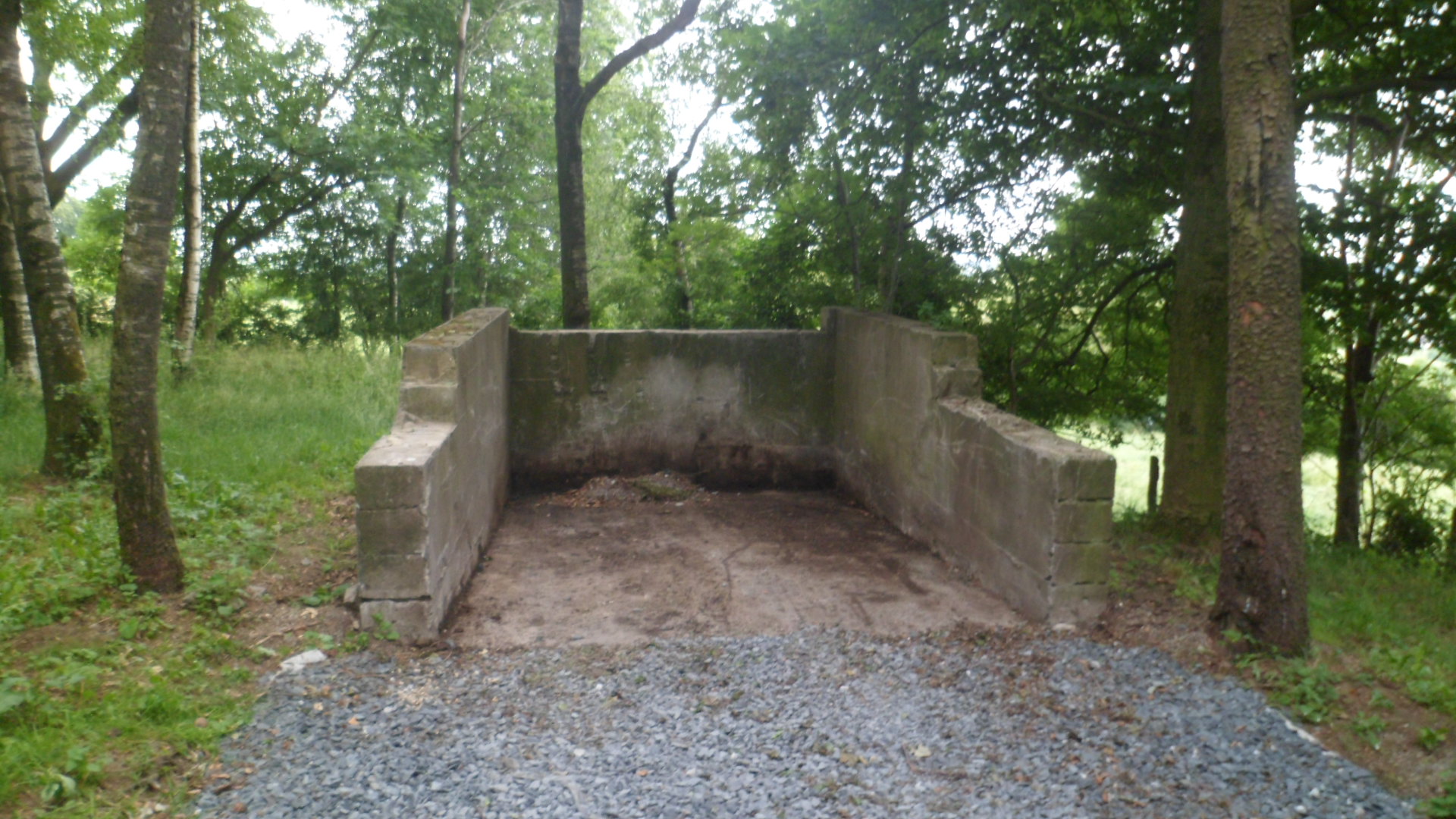
SAM_1417

On a clear day, one can see well into the Wiltz Valley of nearby Luxembourg.

SAM_1418

Climbing to the top level of Mardasson Memorial, I could see still further.
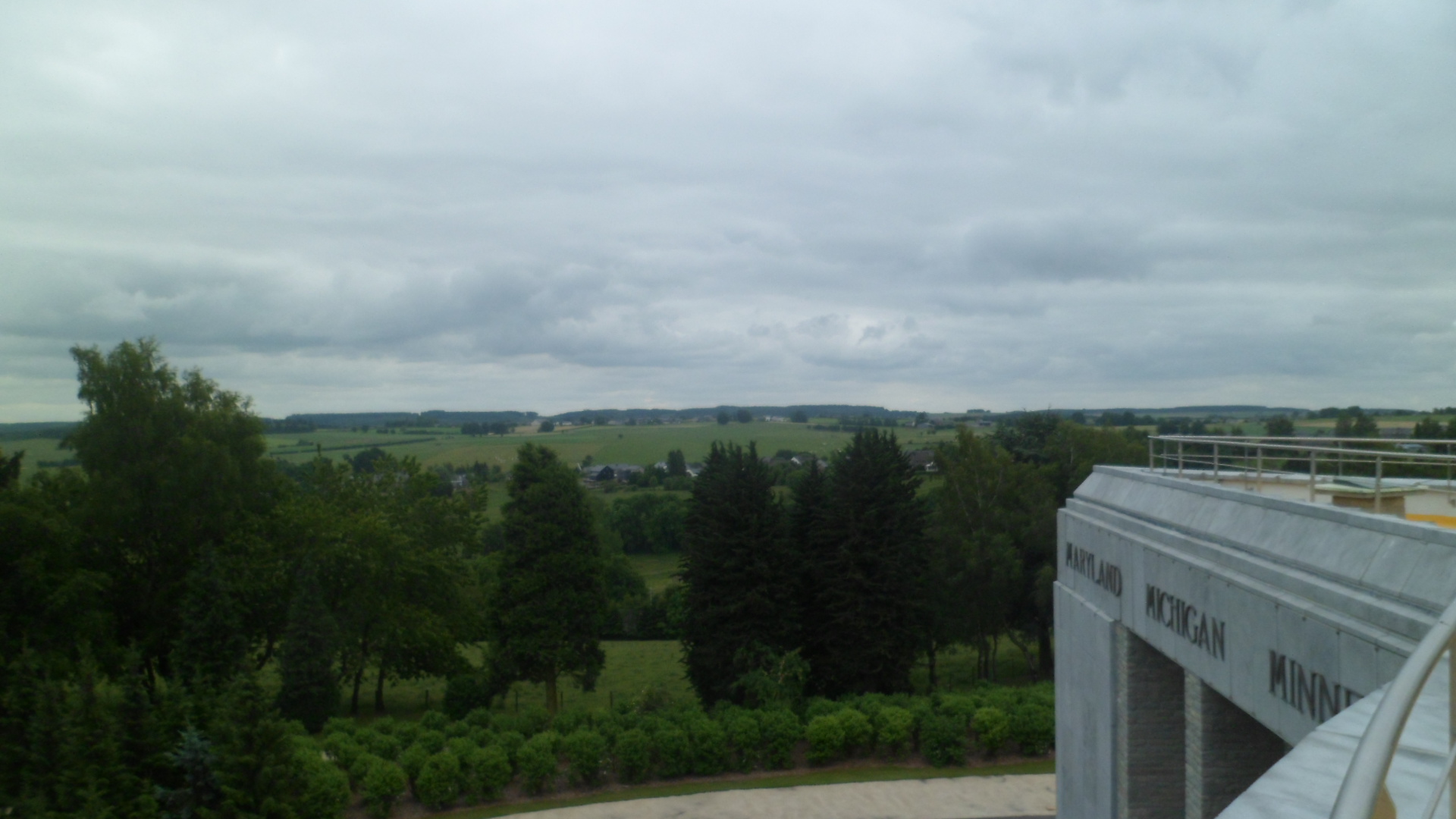
SAM_1433
SAM_1434
SAM_1436

A detailed description of Mardasson is offered, in French.

SAM_1438

The memorial also offers a five-panel listing of the Divisions and Units involved in the successful defense of the town of Bastogne. After reading several of those, it was time to visit the Bastogne Historical Center, or “War Museum”.
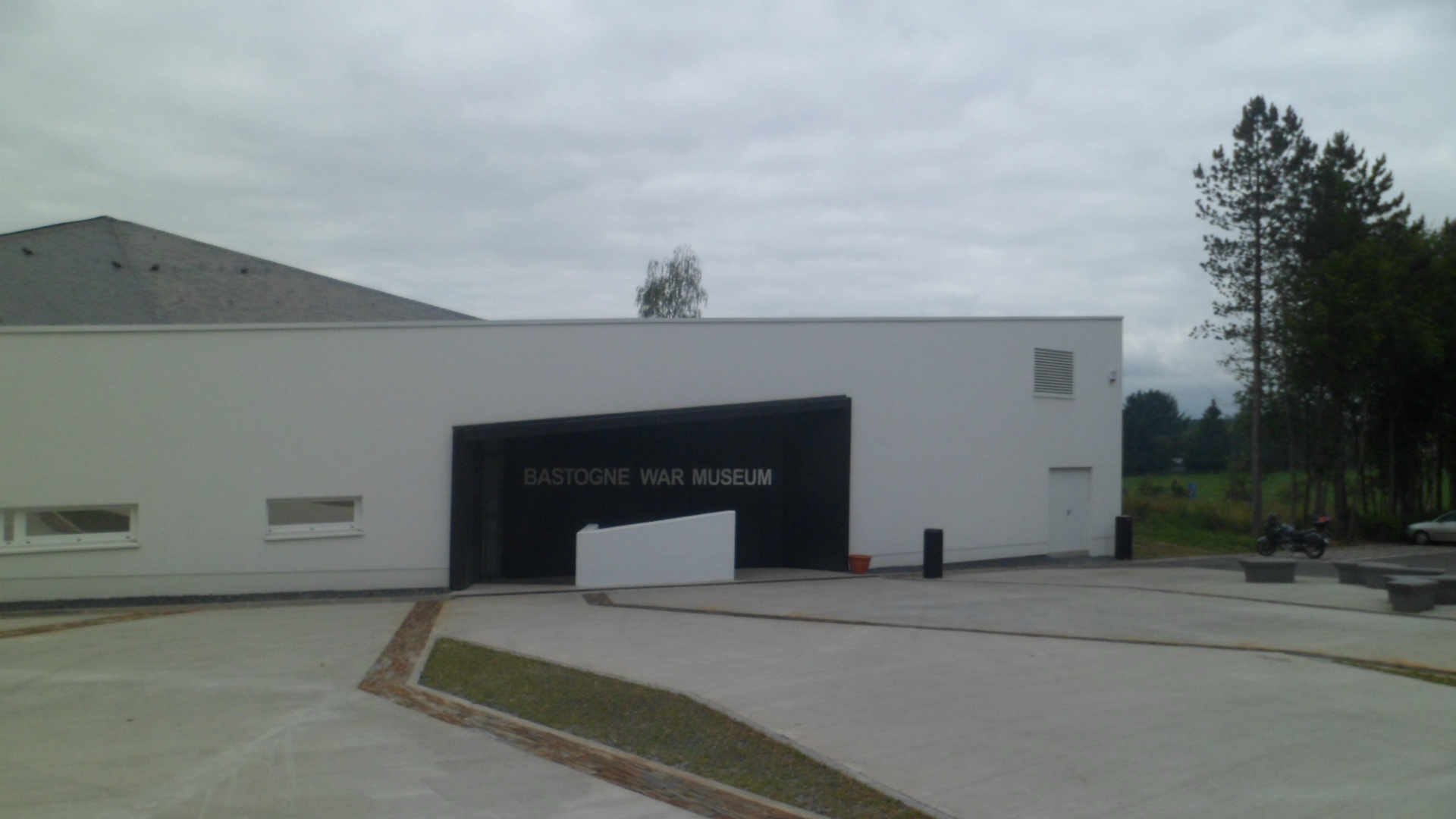
SAM_1441

Each of us put on a headset, which described the events as recollected by those present, in our native language. There were four accounts, dovetailing with each other, as we proceeded: An American lieutenant, a German soldier, a Belgian teacher and one of her students. They all ended up in the boy’s parents’ tavern. The harrowing several days in that crowded safe haven, in the cold of winter, can not be minimized. The German became a prisoner of the Americans, and told of having been treated with utmost respect and attention paid to his wounds. The actual soldiers both revisited Bastogne a few times, with their families, after the war had ended.

SAM_1443

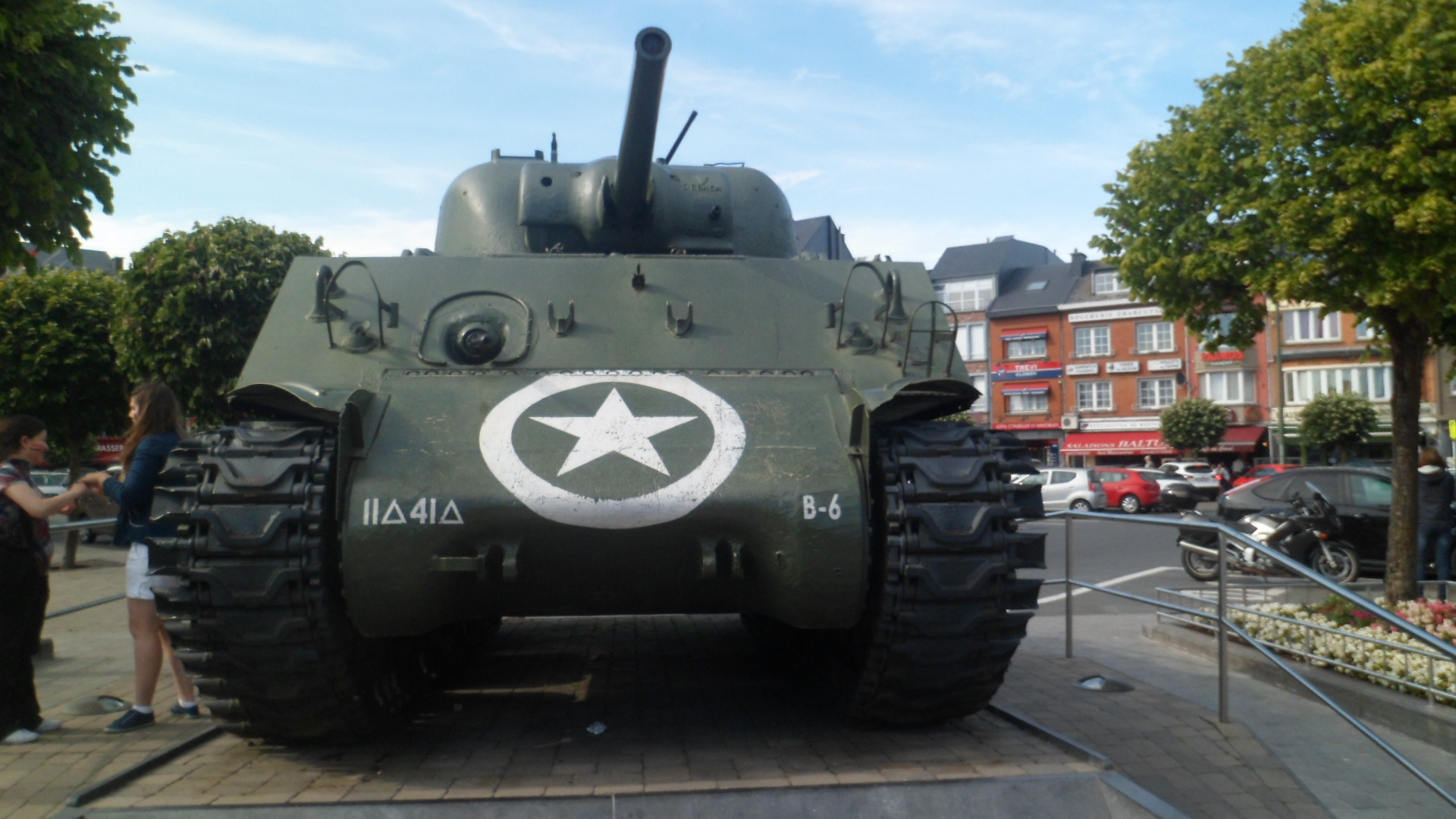
A Sherman tank is presented here as well.

SAM_1442
SAM_1447

Outside Mardasson, there are two small memorials to those who gave their all to the battle. This is the honouring of Combat Command B.
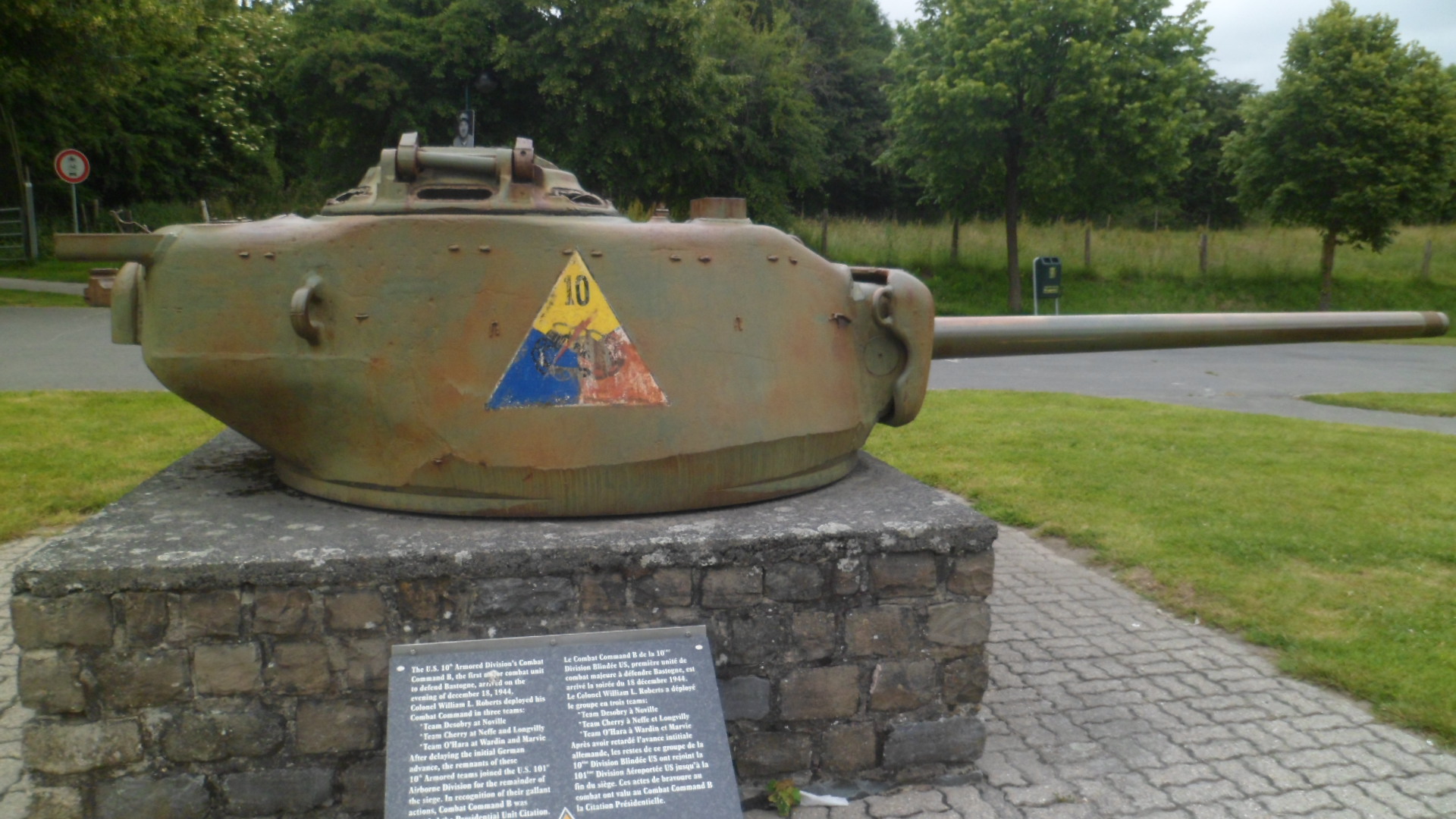
SAM_1408

A second memorial honours Belgian Corporal Emile Cady, who gave his life in the initial defense of Bastogne, in 1940.
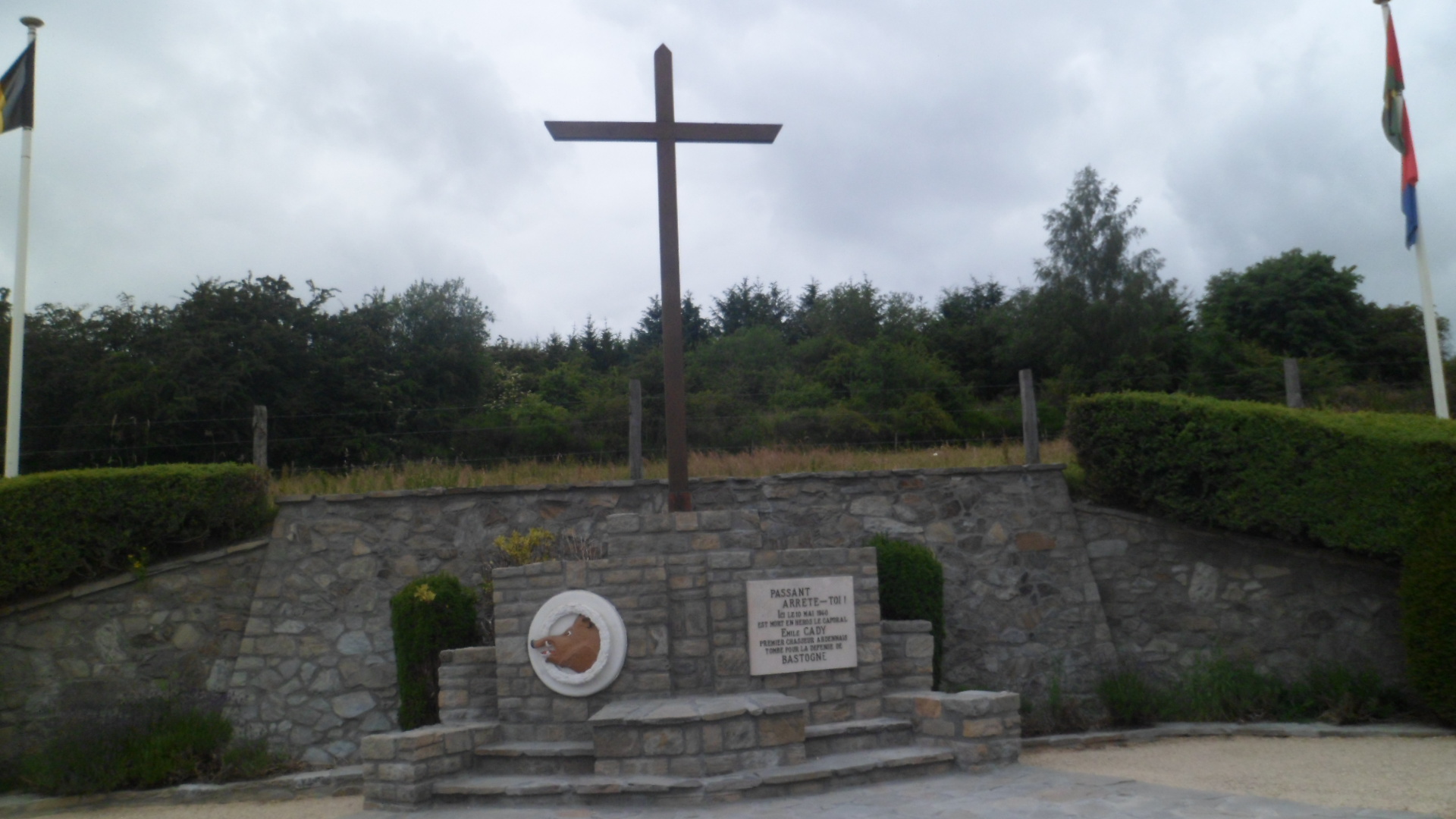
SAM_1411

The spirit of both efforts is best exemplified by this sculpture, which honours the 101st Airborne Division, the Screaming Eagles.
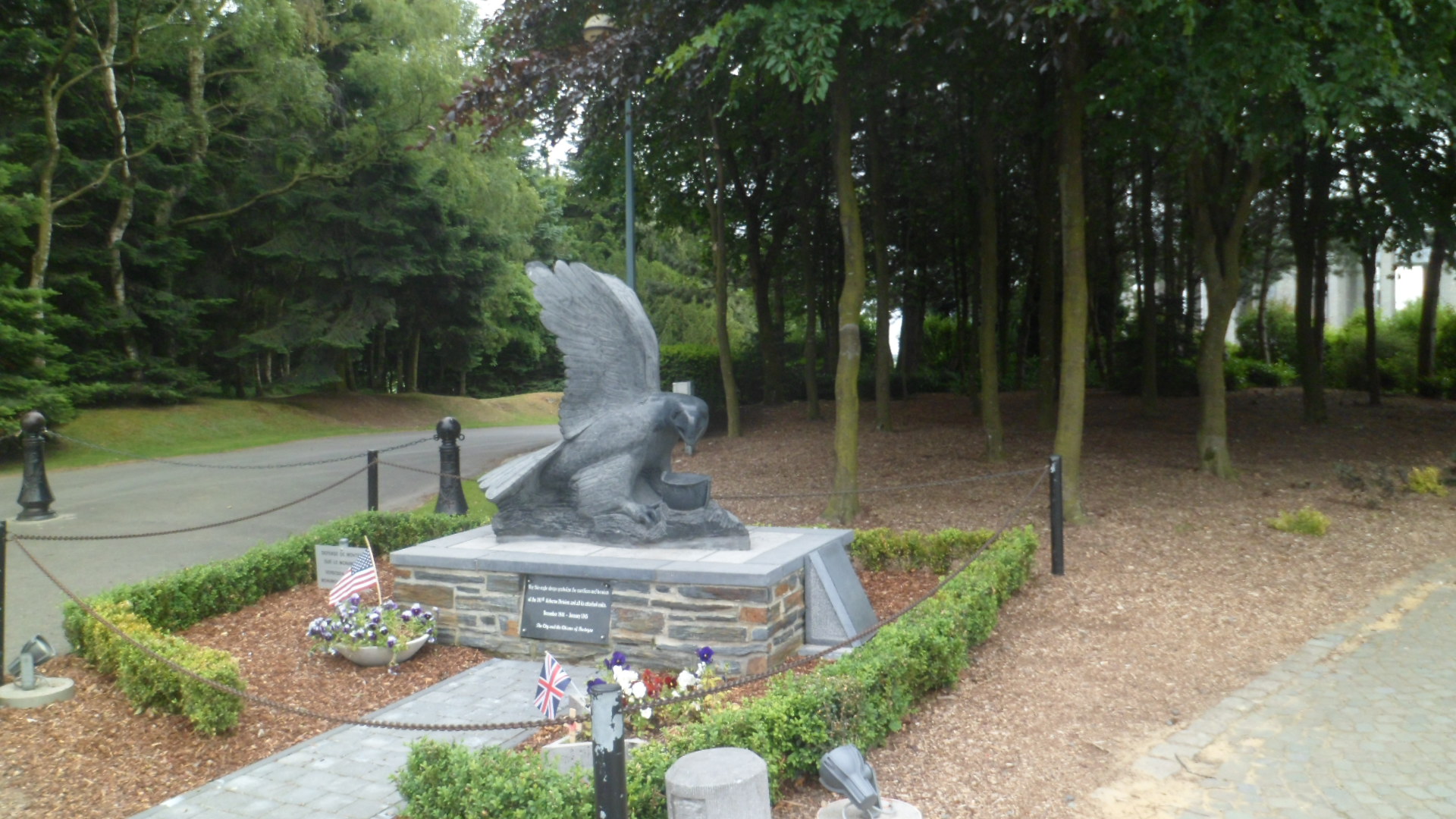
SAM_1439

Bastogne, and its determination to honour those who kept it safe, in the darkest days of war, are well-kept in mind, and well-worth visiting, to all who would recognize that “Freedom isn’t Free”. My heart was touched by many experiences and people in Belgium. I am glad, and blessed, for having been among the Flemish, the Walloons, and all those from other parts of the world who have found their way to this beautiful and time-tested crossroads. I walked back to Bastogne, collected my bags, enjoyed a late lunch, served by yet another lovely lady, and was guided to the “early” bus by a friendly, but intoxicated, Bastognais. It would soon be time to board the country bus, which would take me to Arlon, where I would board a train for the short ride to Luxembourg-Ville, and its National Day weekend. Thank you, Brugge, Ghent, Brussels- and Bastogne.  It was a pleasure.
An Eastward Homage, Day 24, Part II: Leo at Home and Loup Garou

9

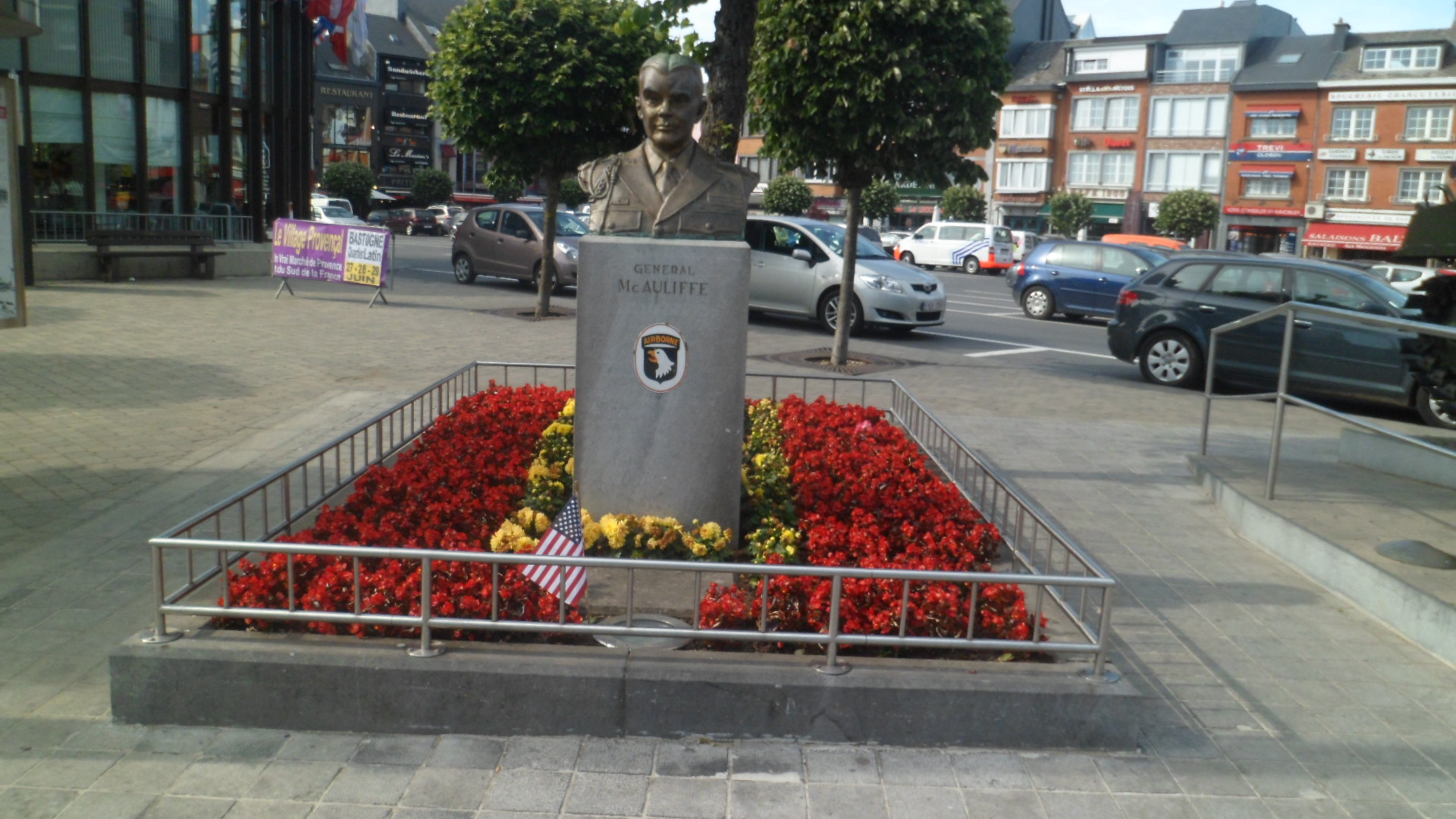
June 19, 2014, Bastogne- I got off the bus, at the now shuttered Gare de Bastogne, in mid-afternoon. A college student sitting outside directed me to Place McAuliffe, a scant 200 meters to the east. General Anthony McAuliffe was the American commander who, when informed of a German ultimatum to surrender at Bastogne, replied, “Nuts!”, and kept his forces in the fight. Thus, the Battle of the Ardennes, or “Battle of the Bulge” was fought, and eventually won, by the Allies.

SAM_1344

This small park, in the center of Bastogne, features a round Visitors’ Center, and a Sherman tank.

SAM_1348
SAM_1345

Some kids were being helped by their father to climb up for a closer look. I was more interested, at that point, in taking my bags over to my hotel, which has the captivating name, Leo At Home. It was a few steps away, in Bastogne’s solid business center.SAM_1351

SAM_1353
SAM_1346

As it happened, the town was hosting another of its regular Youth Fests. Teens and young adults from all over Wallonia were there, gathering in the town’s main park, and at brasseries throughout the city centre.

SAM_1356

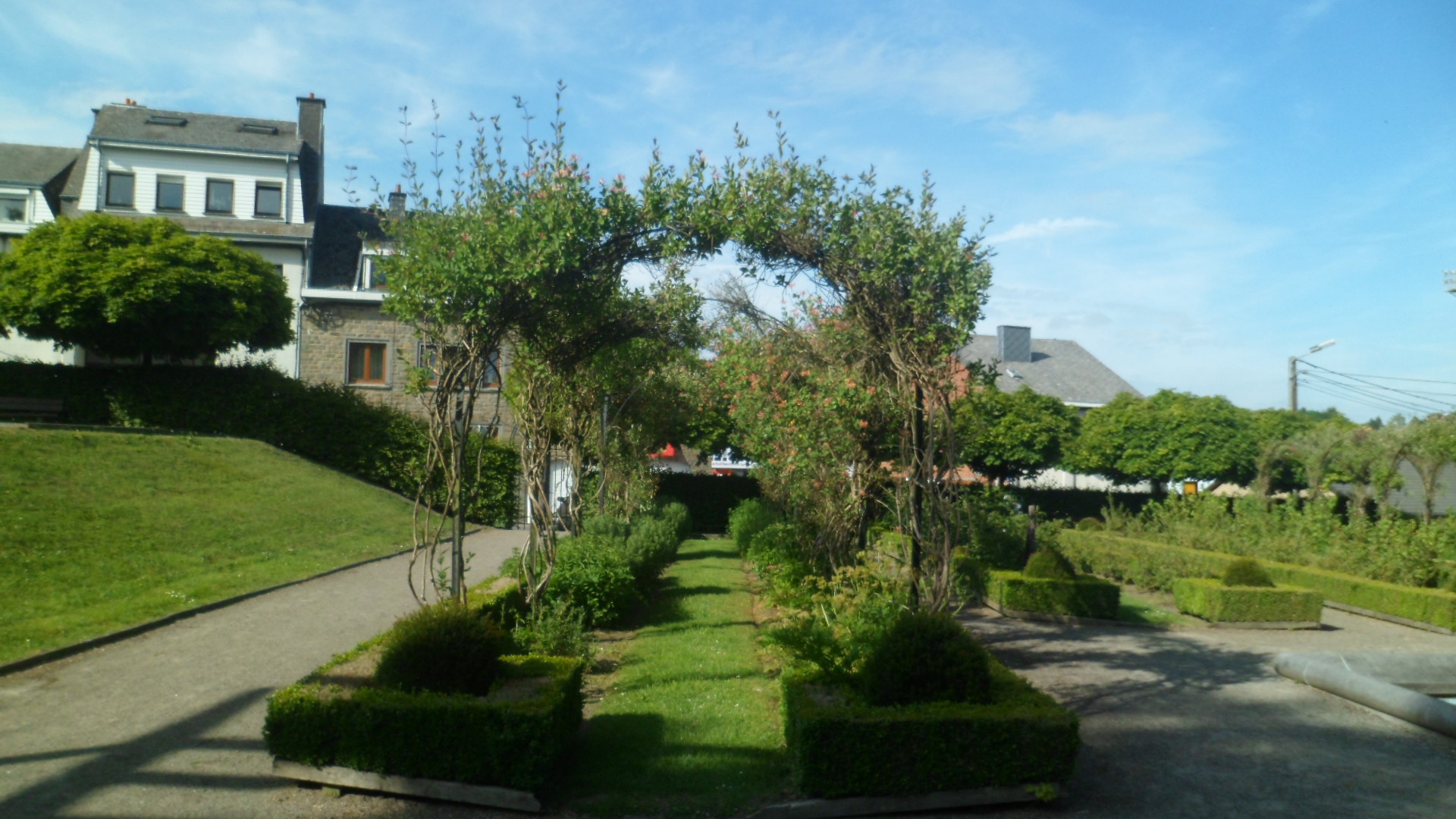
The park is as nicely landscaped as any in Belgium.

SAM_1359
SAM_1355
SAM_1361

Along the main street, Bastogne has such attractions as the Bastogne Pig Museum.

SAM_1386

There are an American Indian Museum and Bison Ranch, on the south side of town. I didn’t go there, but it is popular with Europeans, including the surprising number of Germans who visit the battle site. Bastogne keeps its war-related in-town historical sites in good order. Here is L’Eglise Saint Pierre, where many took refuge during the siege of 1944.

SAM_1362

The town has its own memorial to those who worked to defend it, and the Ardennes, in those harrowing days.

SAM_1382

An old farm woman who donned a helmet is memorialized in this sculpture.

SAM_1383

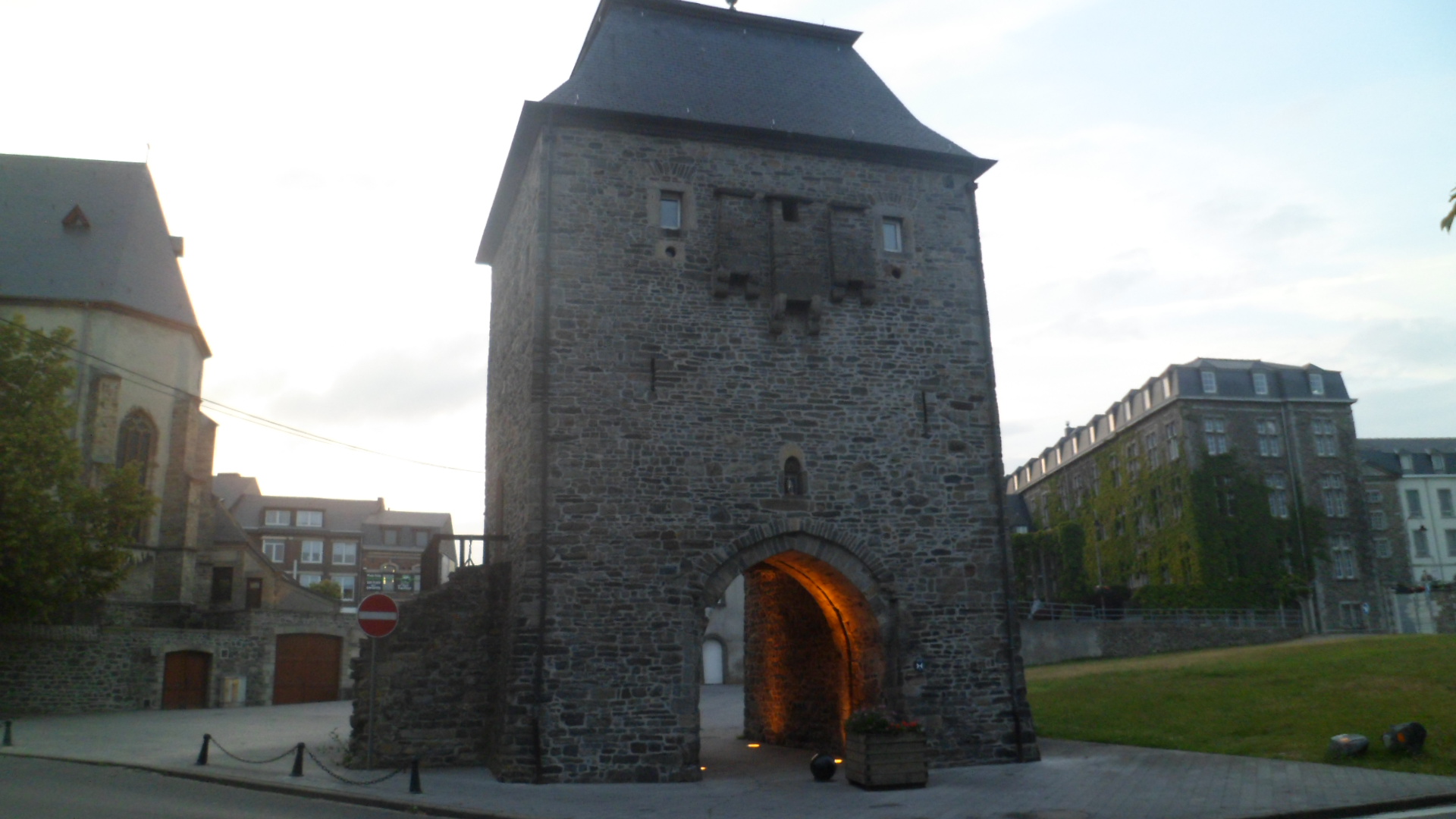
The most moving symbol of the town’s fortitude and resilience, though, is Porte de Treves, adjacent to L’Eglise Saint Pierre. This is the sole remaining portion of the wall which once surrounded Bastogne.
SAM_1388

The eerie light which highlight’s the entrance to the gate came to mind later, when I checked out the bicycle path that runs from Bastogne, north to Liege, or east, to the Luxembourgian town of Wiltz.

SAM_1371

It is there, on a moonlit night, that local legend says one will encounter Le Loup Garou.

SAM_1372

The story of the werewolf, and other legends of the Ardennes, is told at Musee de Piconrue, in an old convent, across from the bicycle path. Bastogne was nonetheless quite lively, with various war buffs and young adults from all over, staying at the Leo corporation’s two hotels. The concern also operates a fine restaurant, in a refurbished train car. There, I enjoyed sea bass and new potatoes, while being closely observed by two little girls there with their parents. “Yes this, my darlings, is how one properly uses a fish knife and fork.”

NEXT:   Navigating “The Seven Roads to Hell”.

An Eastward Homage, Day 24: Brussels to Bastogne

4

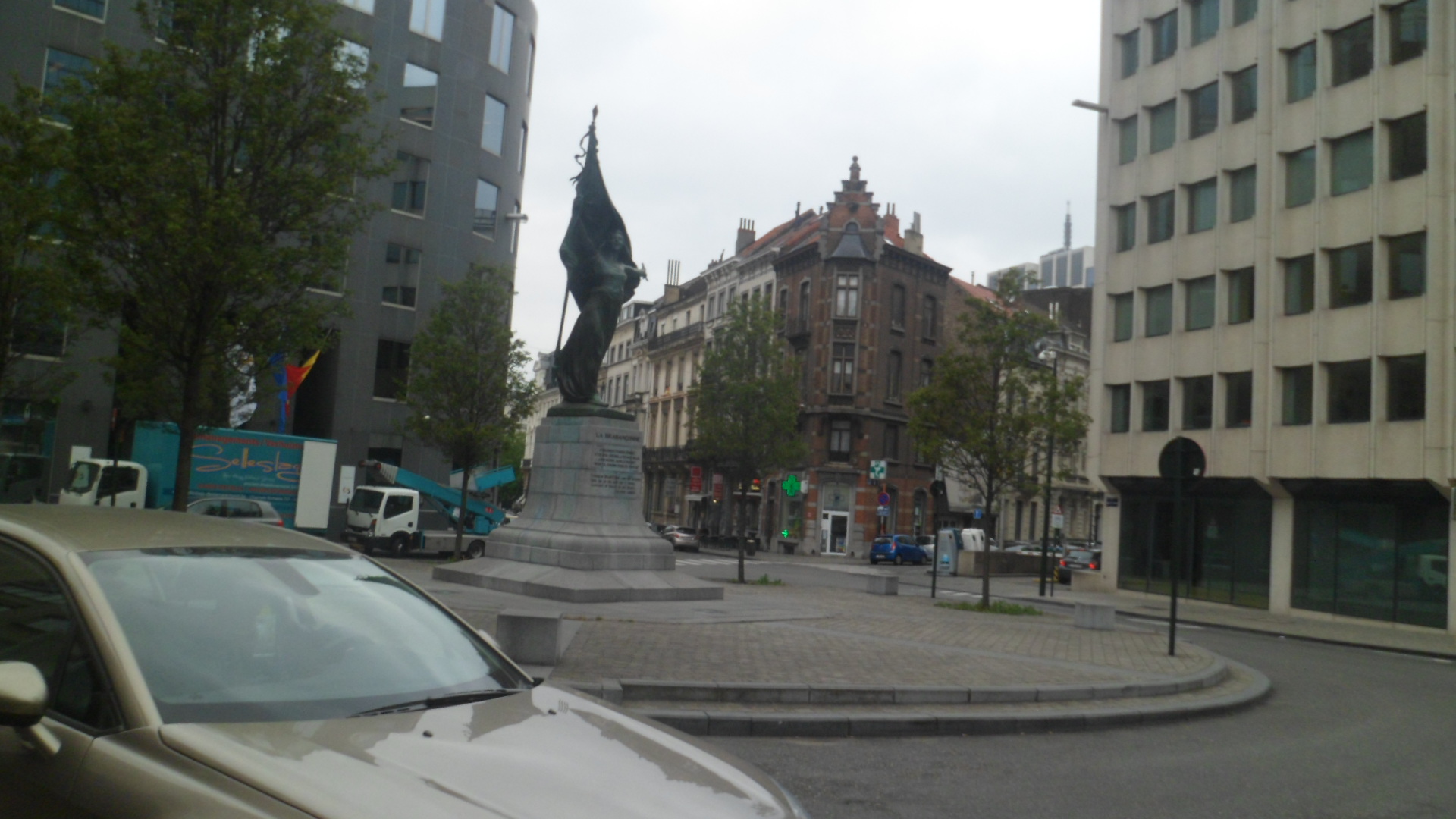
June 19, 2014, Arlon-  La Brabantiere, standing straight in this north Brussels square, signals the resolve of the Belgian. SAM_1307

Frequently viewed as a hybrid people, because of the relatively modern establishment of their country, Belgians are making an intense, honest and often raucous effort at nation-building. To some outside observers, it almost seems like the nation is ripe for a split. I see a country that is no more likely to fall apart than is Canada, Switzerland or the U.S., for that matter. The Flemish and the Walloon French are each a hard-working, proud and stubborn people, with solid pasts and vibrant, rambunctious and highly intelligent youth. They will argue and bump heads, so to speak, but these people came together by choice, mainly to break away from their three larger, overbearing neighbours:  France, Germany (then Prussia and Westphalia) and the Netherlands. They accepted the German Saxe-Cobourgs as their royal house, and have built a genuine national culture. Brussels reflects that blend.
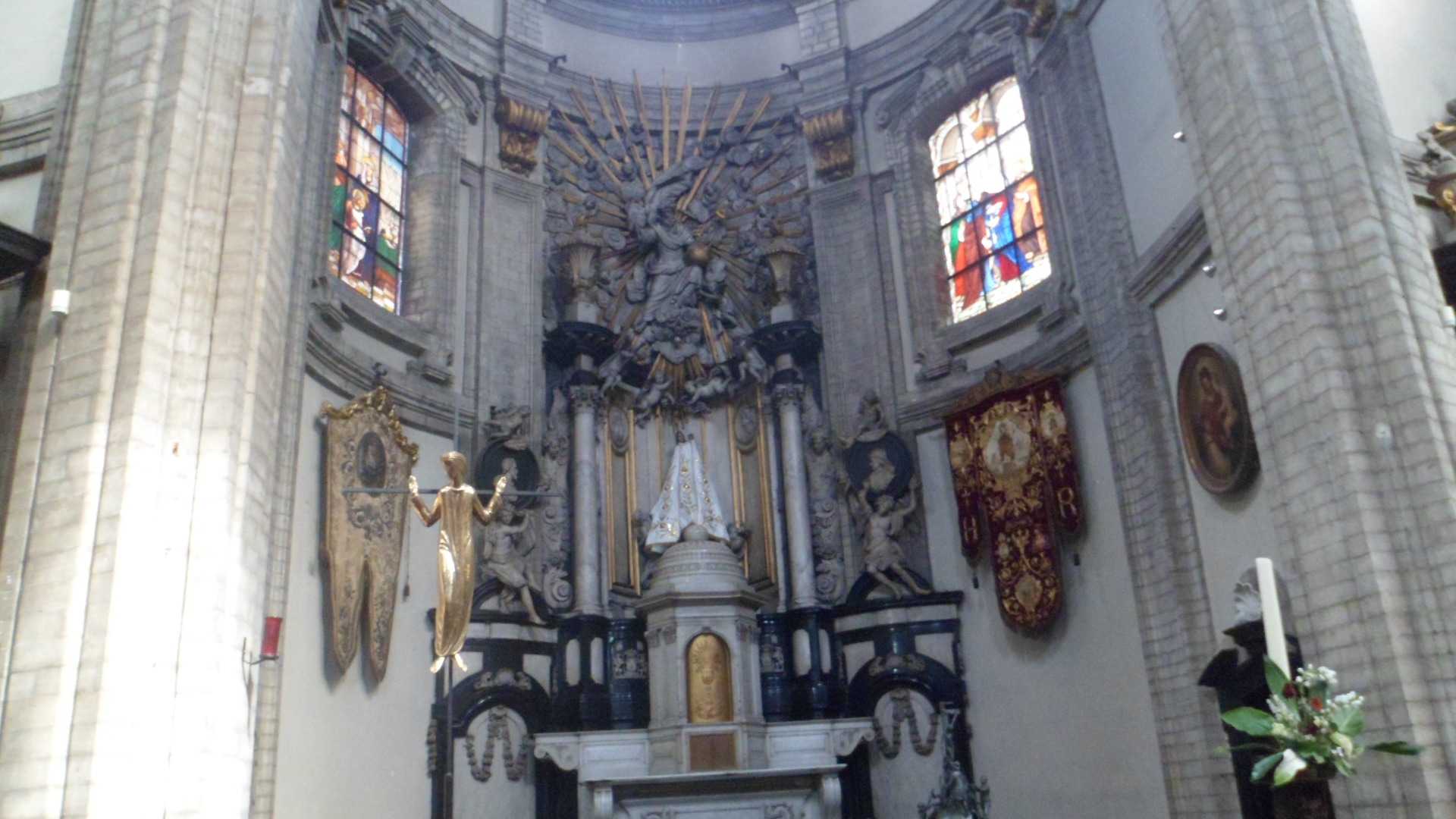
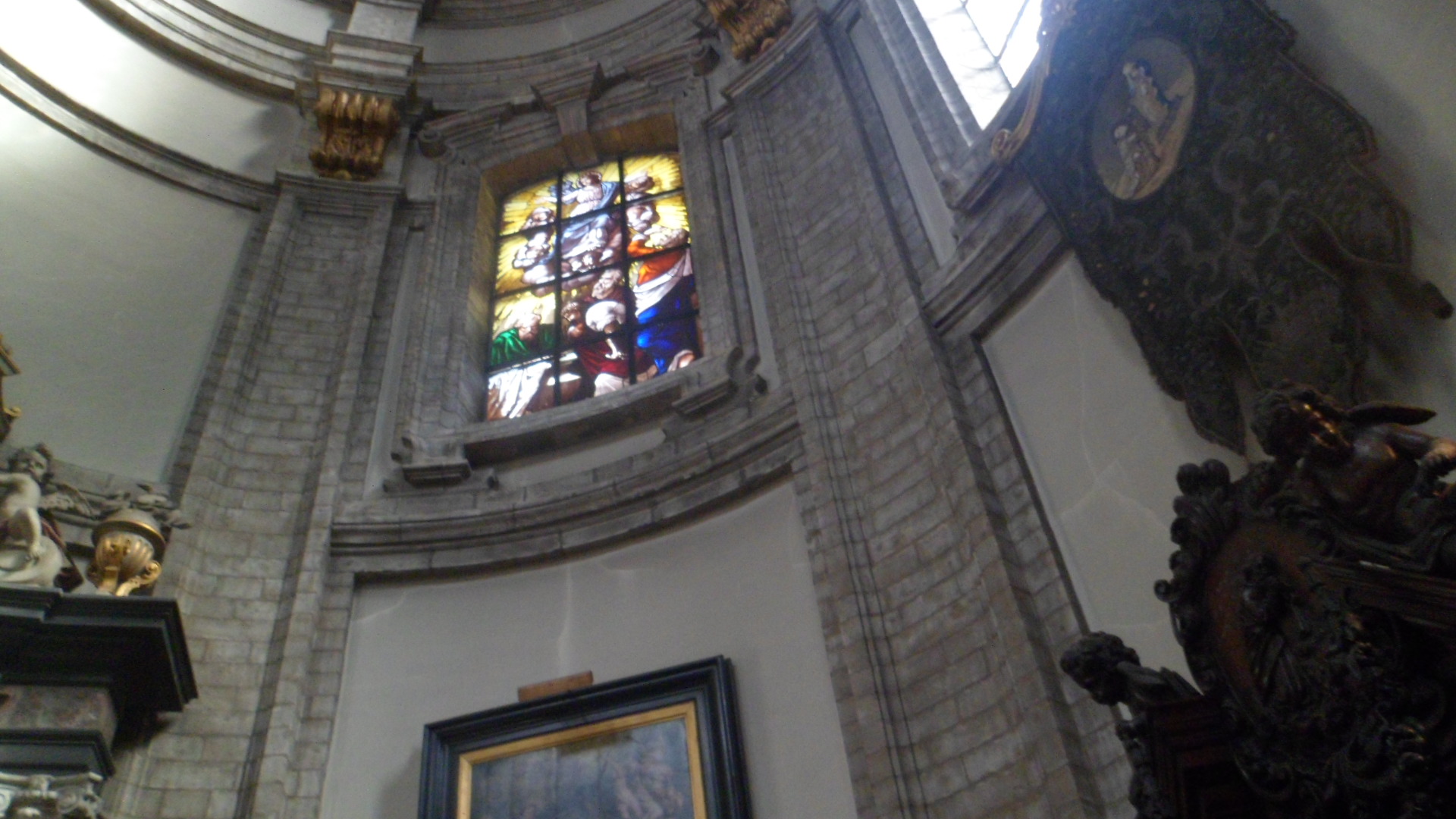
I began the day at L’Eglise Notre Dame des Bon Secours, whose Roma caretaker slyly accepted “tips”. She keeps a clean house, so I obliged a few euros.

SAM_1243
SAM_1246
SAM_1247

This unidentified piece evoked Munch’s “The Scream”.

SAM_1248
SAM_1249

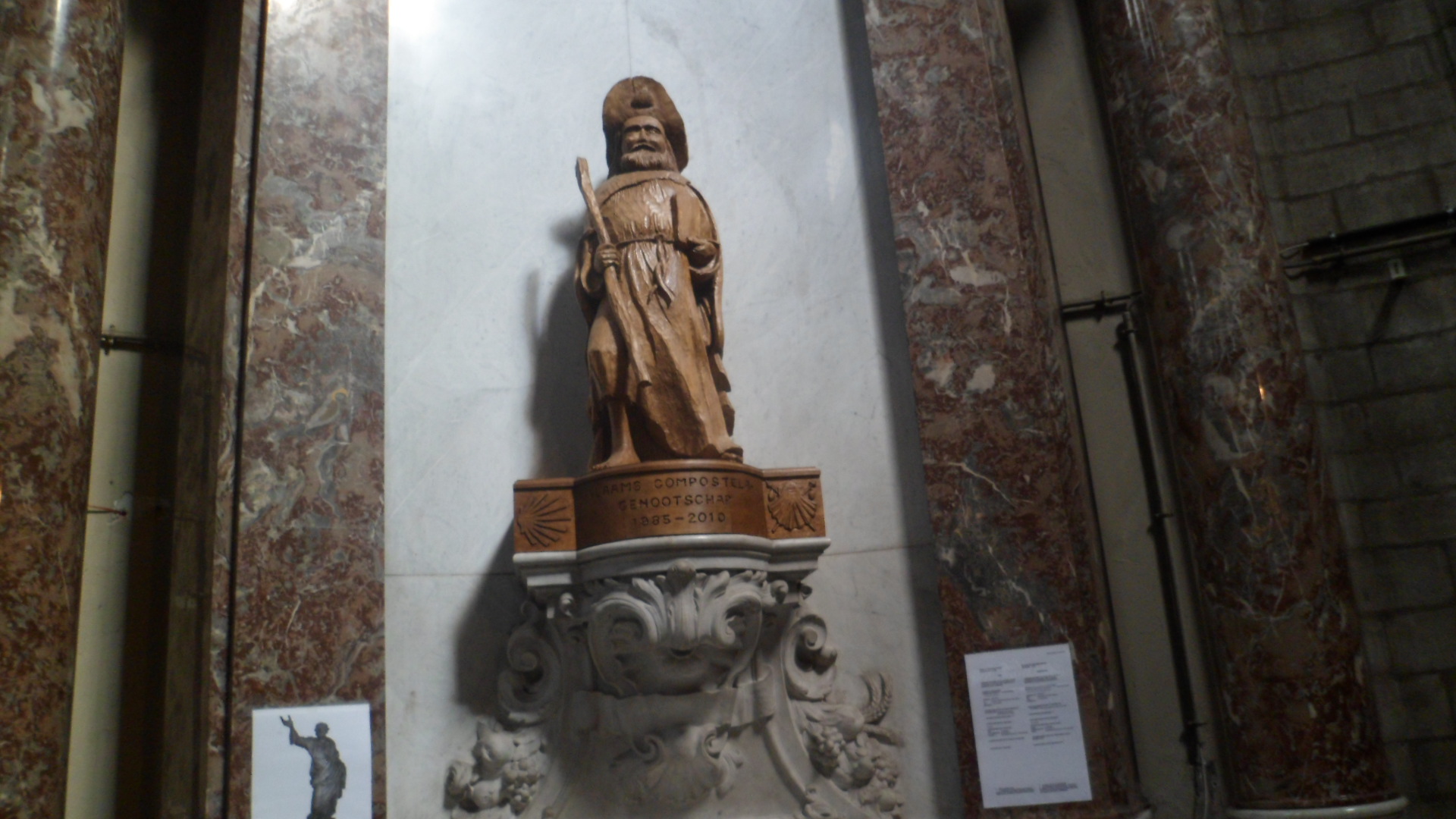
For some reason, Vasco da Gama has found his way in here.
SAM_1250
SAM_1252

I felt blessed enough to continue my journey, heading up to north Brussels, for a brief visit to the new Baha’i National Centre of Belgium.

The Walloon caretaker, and the Flemish secretary and treasurer are all best of friends, as is the Baha’i way.  Jacquo is a skilled engineer and craftsman, who did the bulk of the renovation to this lovely center.

SAM_1308
SAM_1310

Toos and Yolande keep the operation running smoothly.

SAM_1315

The watchful eyes of Baha’ullah’s sons always guarantee that we place His Teachings first and foremost, especially in matters of Faith.

Mirza Mihdi died young, in a tragic fall through a skylight, in the mid- Nineteenth Century.

SAM_1311

‘Abdu’l-Baha lived to oversee His Father’s Faith, after Baha’ullah passed, and traveled extensively in Egypt, Europe and North America, from 1911-13.  He passed in 1921. ‘Abdu’l-Baha never visited Belgium, but He is revered by Baha’is everywhere.
After a cup of tea with the ladies, I bid farewell to this beautiful center, and was soon on a train out of Brussels, headed east.
SAM_1317

I managed a shot of Brussels Cathedral, from the train.

SAM_1318

I hope to someday come back to the Belgian capital, and savour more than the glimpse of these scenes.

The next thing I knew, though, I was headed through the east of Brabant.

SAM_1320

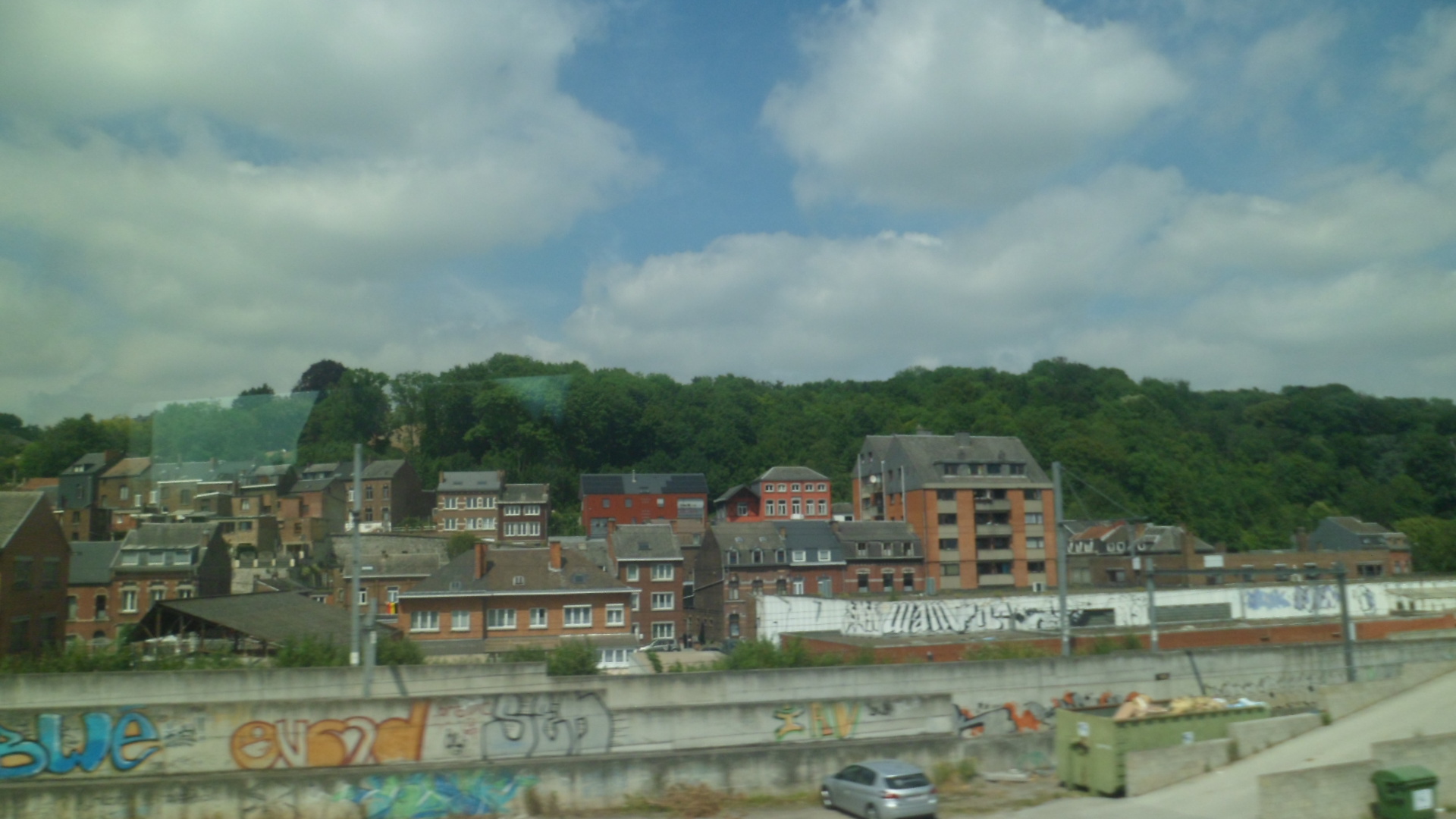
Namur, in western Wallonia, was not a station stop, but the train slowed own enough for me to get these scenes.

SAM_1324
SAM_1326

The Meuse River flows out of the Ardennes, towards Antwerp. It seems to split Namur in half.

SAM_1325

We headed into the rolling hills of the Ardennes region.

SAM_1328

The route took us past enticing little villages, like Jetelle.

SAM_1330
SAM_1335

You can see that, as we got further inland, the air became clearer and bluer.

SAM_1336
SAM_1339

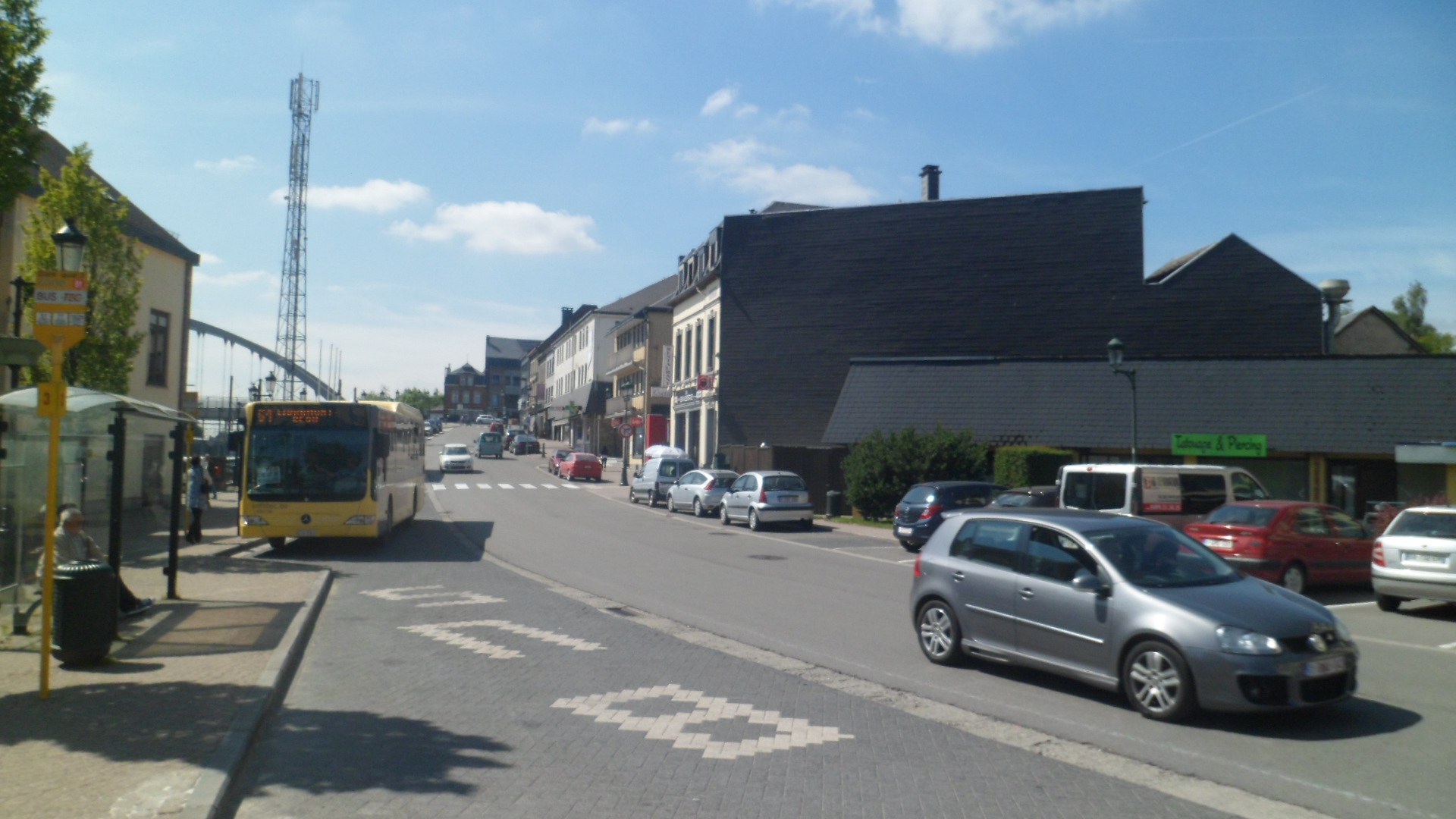
By mid-afternoon, the train arrived at Libramont, where those of us headed either to Bastogne, or the European Space Center, got off to transfer to buses.

My bus came about forty minutes after we got off the train. The rest of the people in my car were from London, and were off for a weekend at ESC.SAM_1341

I will devote the next two posts to Bastogne, the little town which roared back at Nazi Germany,during and after the Battle of the Ardennes (“Battle of the Bulge”).

An Eastward Homage, Day 23: Old Masters and Older Conflicts

4

June 18, 2014, Brussels-This day, I resolved to explore the royal aspects of life In Brussels, as much as possible.  Also on the agenda was a visit to the Baha’i National Centre of Belgium, which was listed as being  a bit north of the Royal Palace.  First, though, I searched for a cybercafe, as, if you recall, this trusty laptop of mine was on the blink.  My query produced gales of laughter at a self-styled “chic bakery”, but the Discover Flanders tourist office proved helpful, and an hour was spent catching up on the words and wisdom of my g-mail correspondents.

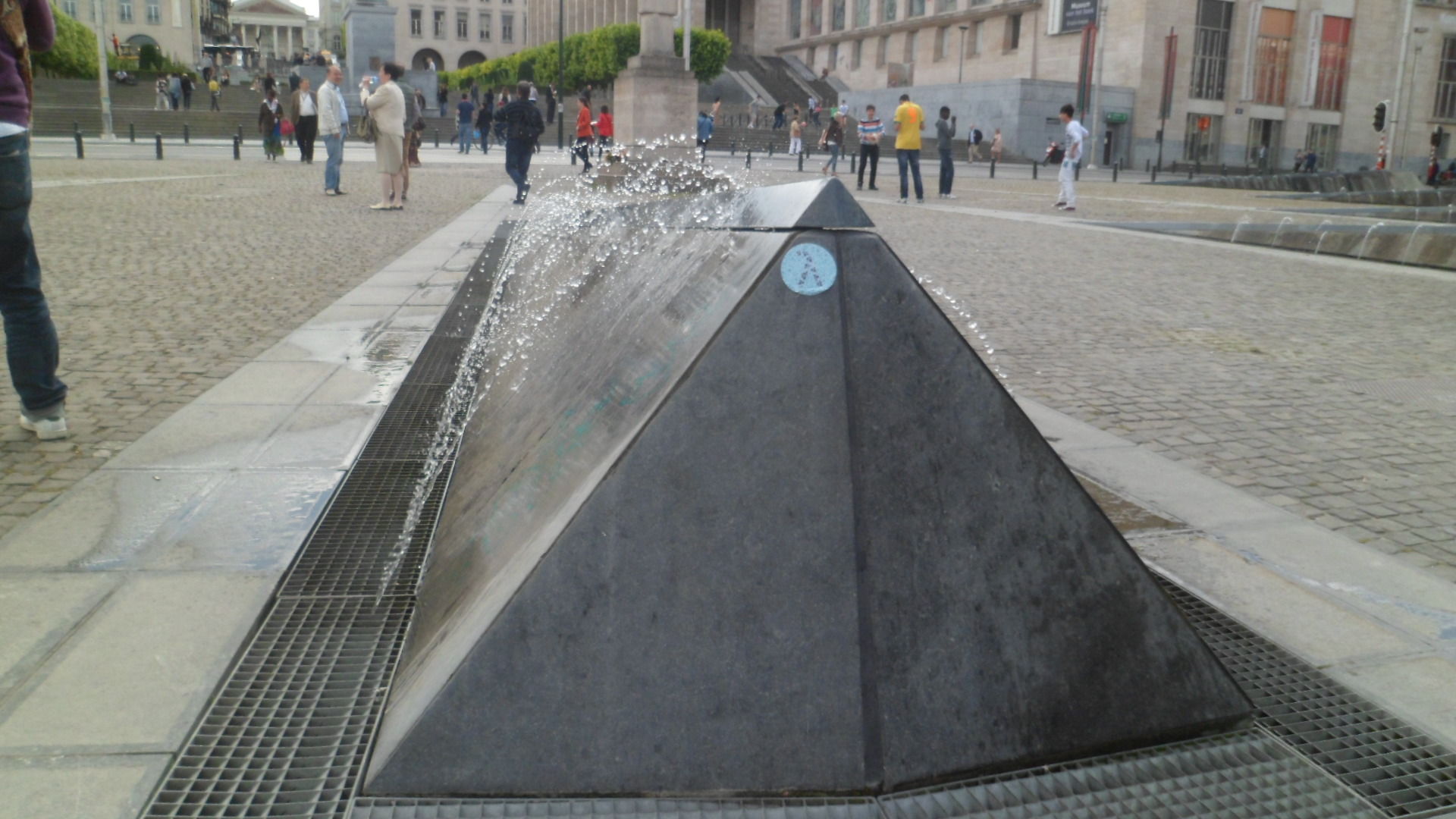
To start my walkabout, I left the area around Grand Place, after helping a group of school kids from Germany identify a landmark or two. Crossing Place Albertine and the area near La Gare Centrale, I came upon gurgling fountains,

SAM_1255

a demure Queen Elisabeth of Belgium,

SAM_1258

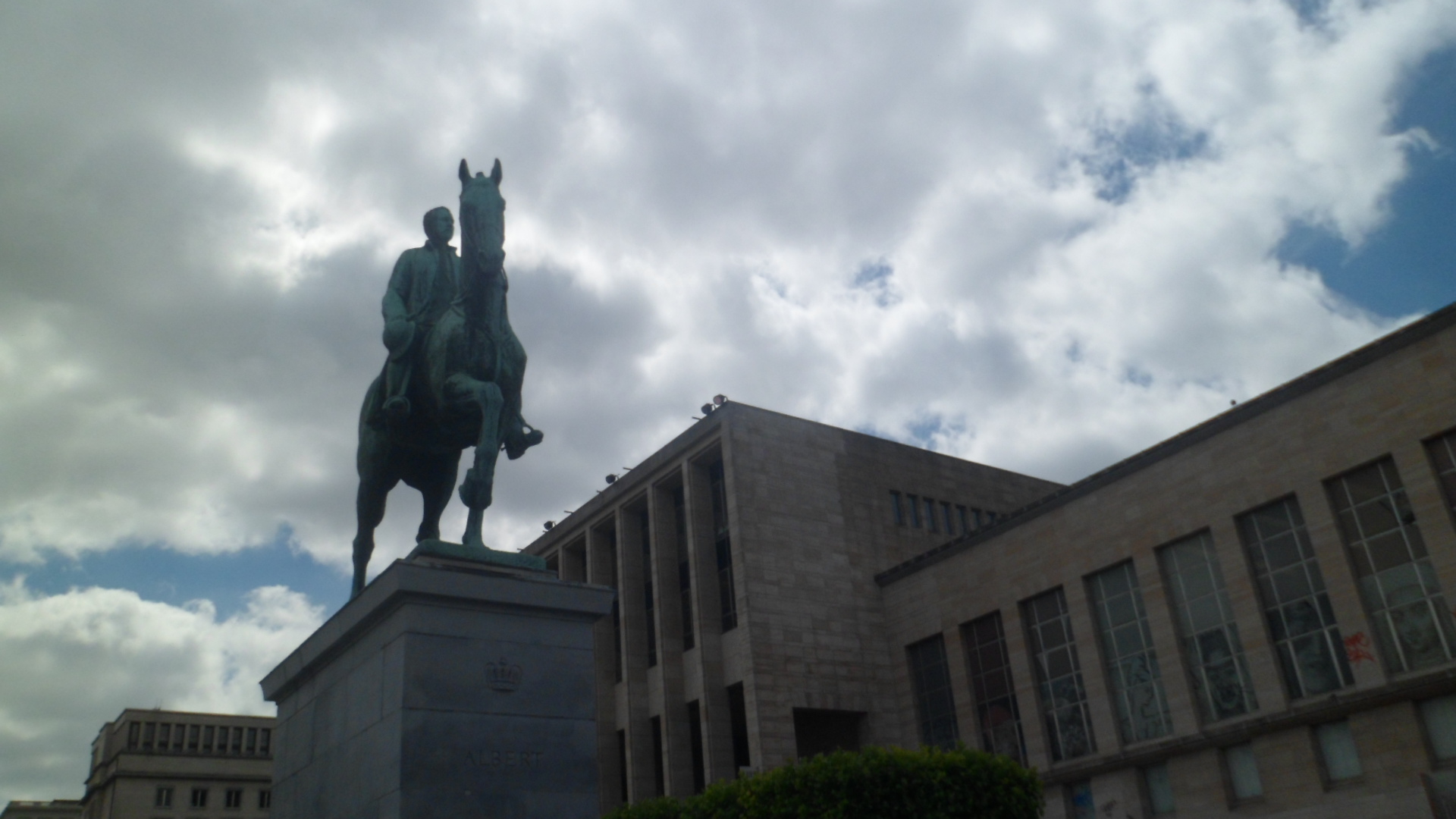
a stern King Albert,

SAM_1259

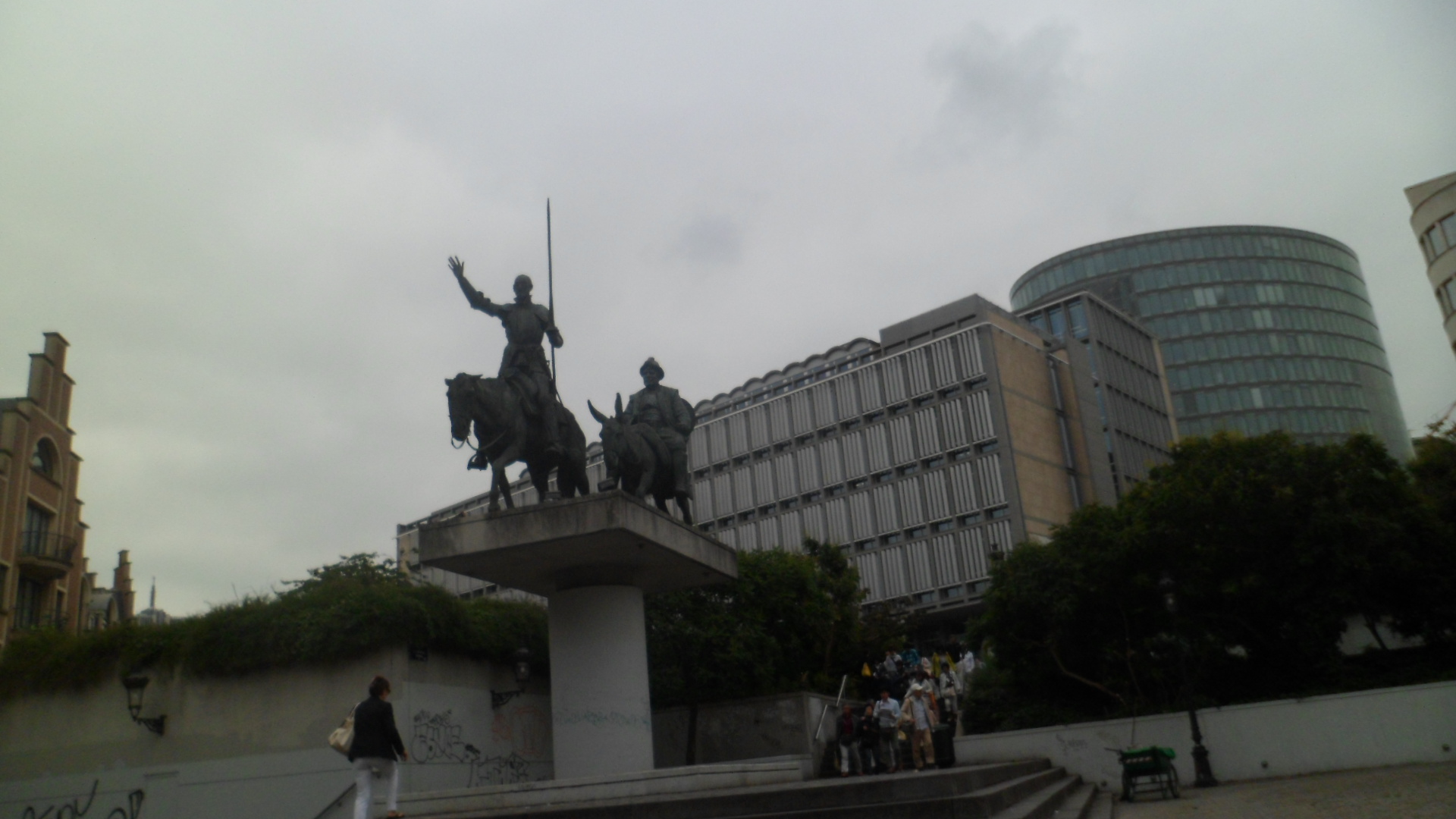
Don Quixote with Sancho Panza,SAM_1306

and a gleeful Smurf.

SAM_1305

The steps past La Bibliotheque Royale de Belgique led to the first of three lovely gardens.

SAM_1262
SAM_1260
SAM_1261
SAM_1264

Brussels is a constant interplay between concrete desert and lush greenery. The courtyard of the National Museum is certainly among the former.

SAM_1267

Angels and cherubs break the almost Soviet-esque feel of the building.SAM_1270

Someone also had the idea of planting a hedgerow in view of the Old England Pub, across from the Museum.SAM_1272

I was given the selection from among three art museums: Magritte, Modern Art and Old Masters. I chose the third, spending two hours and thirty minutes among the likes of Rembrandt, van Eyck, Vermeer and Reubens. The last offered a striking, for the 15th Century, view of four African men, each in Northern Renaissance garb, entitled “Four Views of a Moor”. I stood for several minutes, pondering what it must have been like for Africans in the north of Europe at that time. The era somewhat predated the slave trade, so perhaps life was not so bad for them, if they were indeed treated as human beings, equal to the Flemish and French. I could have used another two and a half hours, but closing time is what it is.

I also spent an hour in Belvue, the museum of Belgian History. Here, the focus was on the country since its independence, in 1830. The constant interplay between Fleming and Walloon, elite and peasant, business and labour is all outlined, along three floors and in ten galleries. There is no mincing words about Leopold II, the dour overlord of the Congo, and his depredations in that hapless land. Leopold III, infamous in Allied circles during World War II, for his surrender to the Nazis, is given a bit more leniency by the Belgian people nowadays. Many see him as having wanted to stay and suffer with the common folk. He may well have wanted to also act as a counter to the twin Belgian Fascists, Jef van der Wiele, of the Flemish, and Leon Degrelle, of the Walloons. Regardless, after the war, Leopold was unable to keep the throne, giving way to his brother, Charles I and then to his son, Baudouin II. Of the two Nazi collaborators, neither were apologetic after the war.  Van der Wiele spent the rest of his life as a prisoner and parolee. Degrelle was basically a “guest” of Spain, from 1944, until his death in 1994.

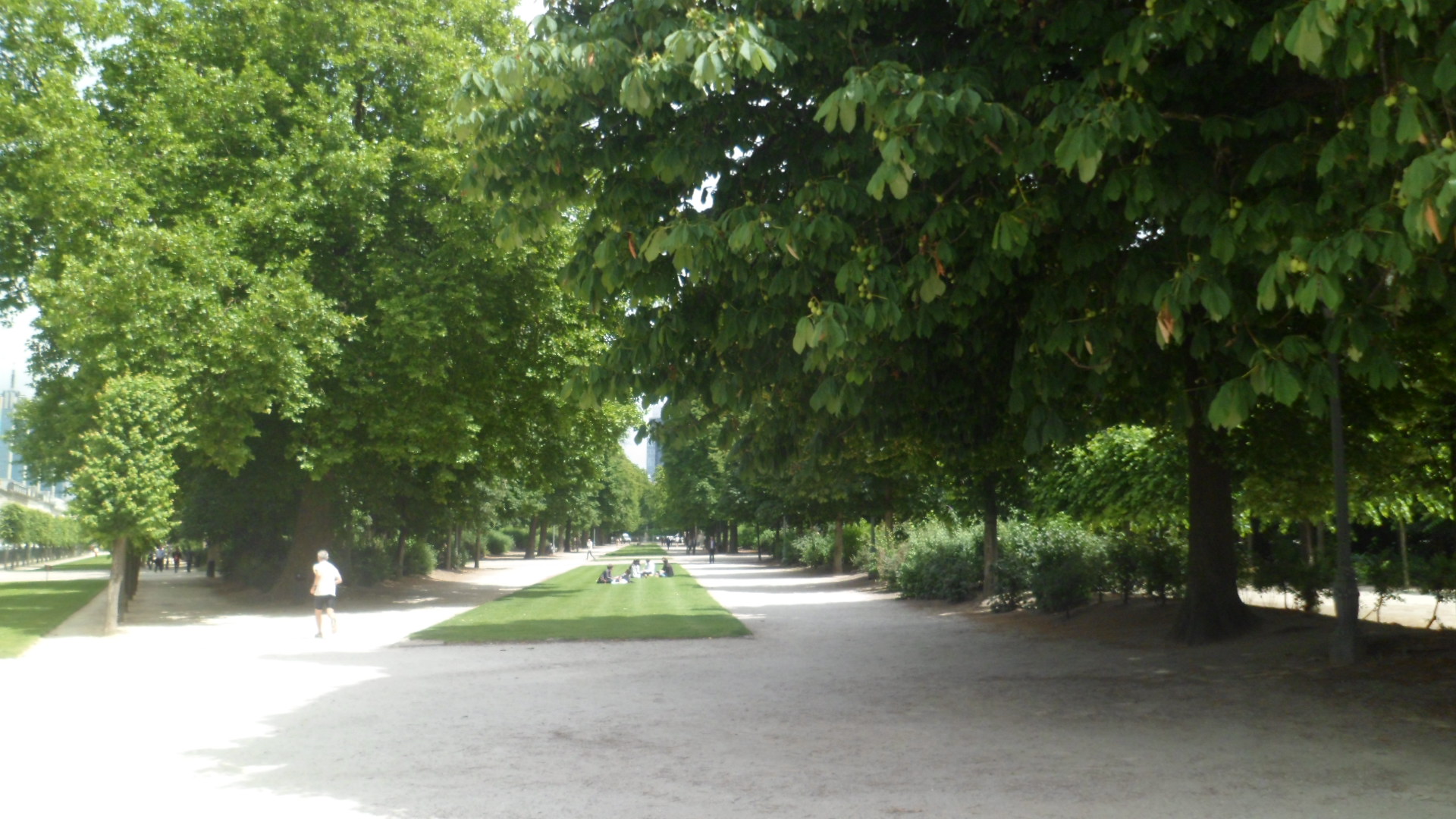
Parc de Brussels, across from the museums, is another grand oasis and respite from the overabundance of concrete and stone.

SAM_1282
SAM_1283

The Madonna and Child, with Cherubs, take a spot in the center of the park.SAM_1284

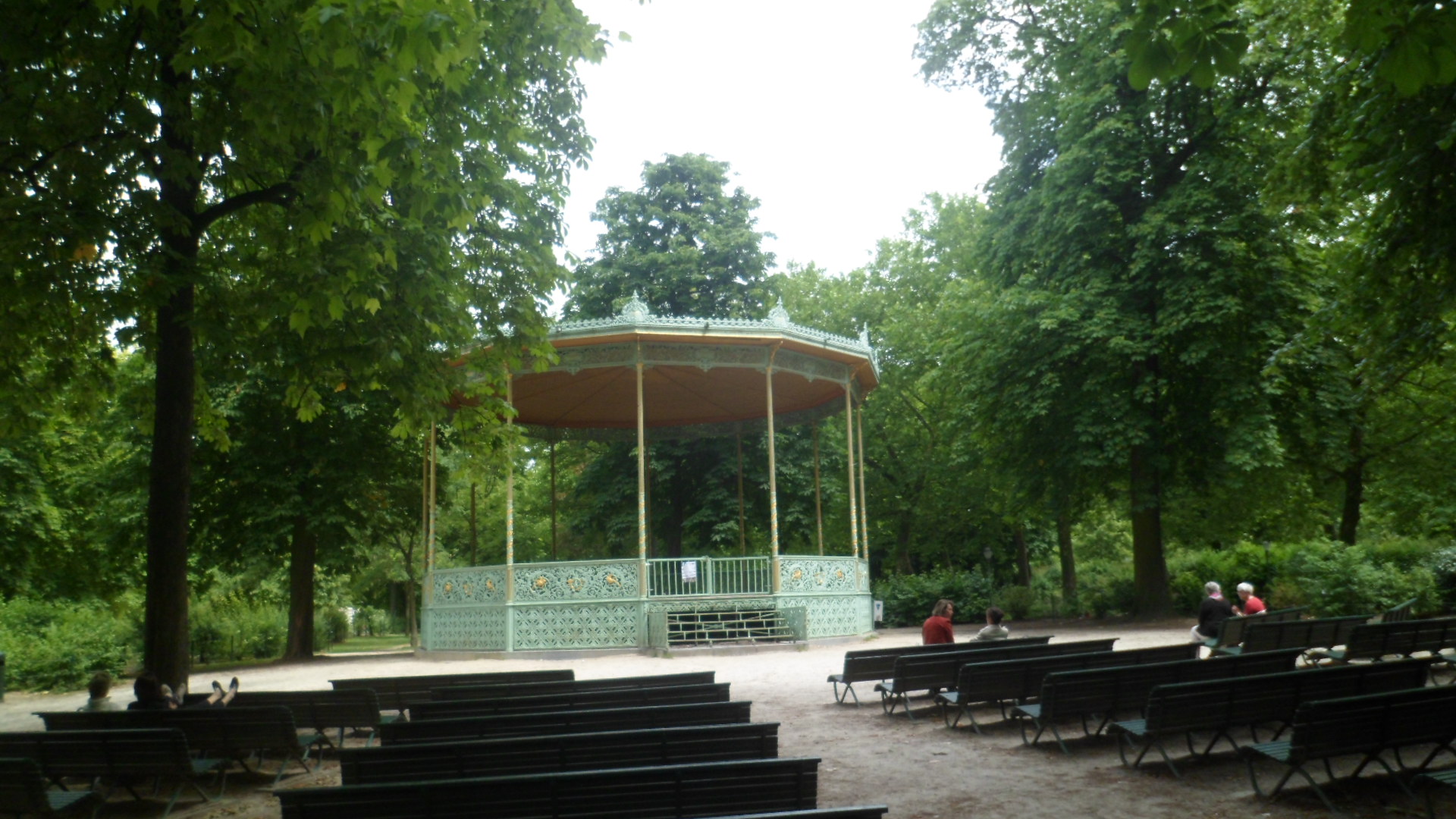
This gazebo is the centerpiece for concerts, on cool summer nights.SAM_1286

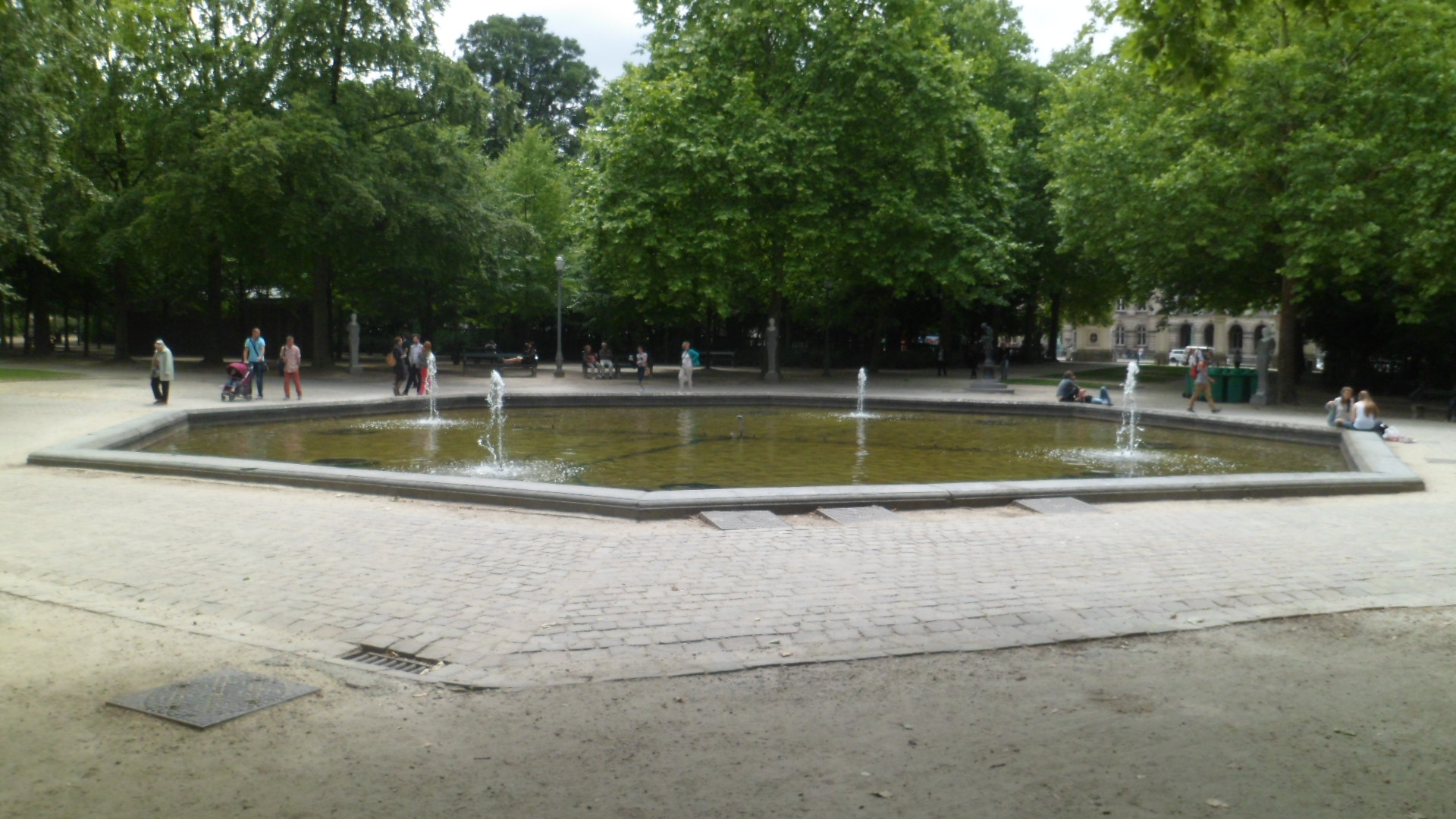
Many a person would have loved to have dived into this lovely pool.

SAM_1287
SAM_1288
SAM_1294

Coudenberg Palace was once the seat of the Dukes of Brabant, the province around Brussels. Today, it houses a couple of museums of royal life.

SAM_1281

A curiosity in the Square de Coudenberg is a statue of Godfrey of Bouillon, a sketchy character from the days of the Crusades. He stands in front of L’Eglise Saint Jacques sur Coudenberg.

SAM_1277

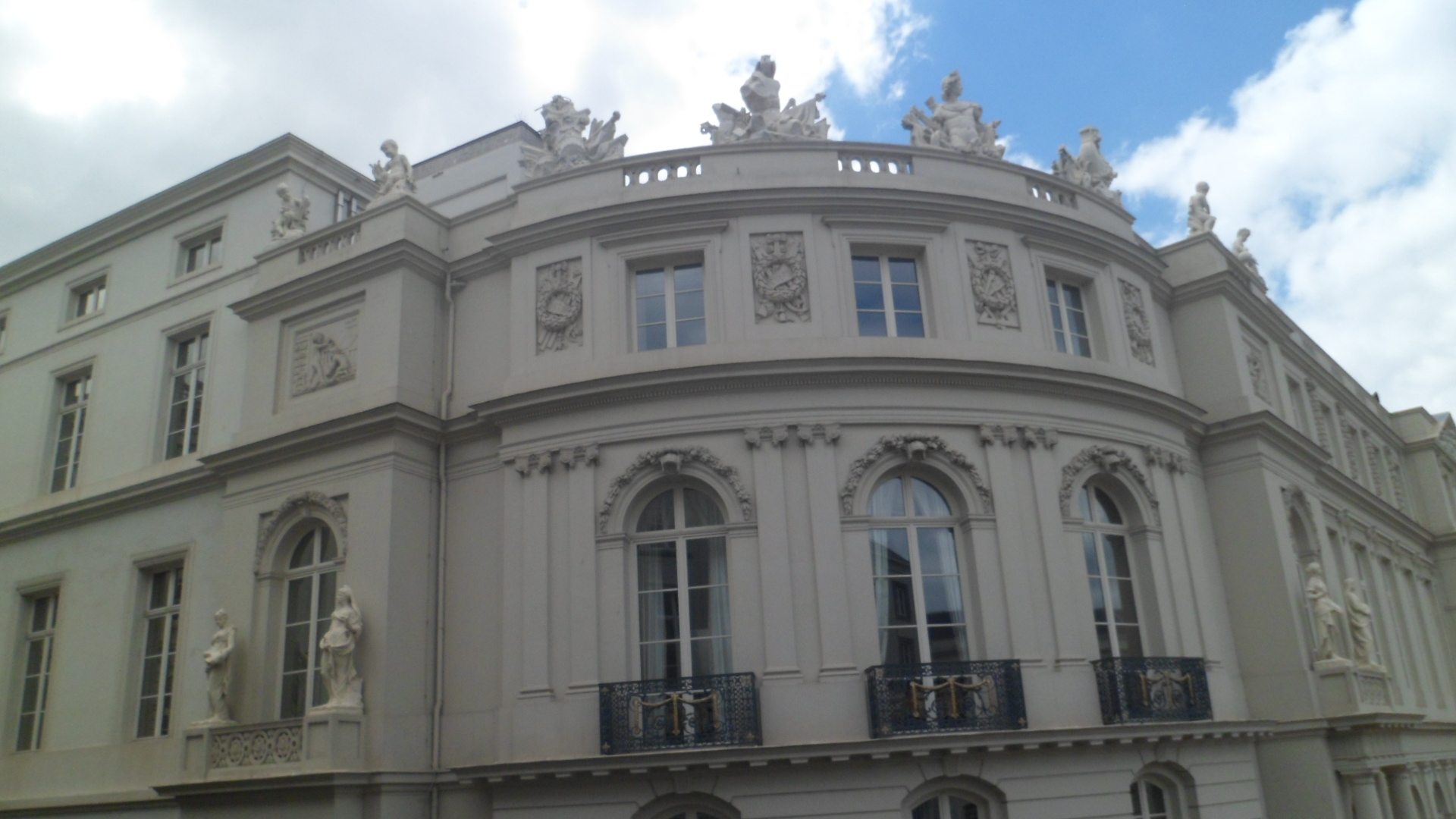
The Academy Palace, across from Parc de Brussels, was built for William of Orange, in recognition of his services at the Battle of Waterloo. He didn’t enjoy it for long, though. The Belgian people sent him packing in 1830, and became independent of the Netherlands, as we have seen.

SAM_1290

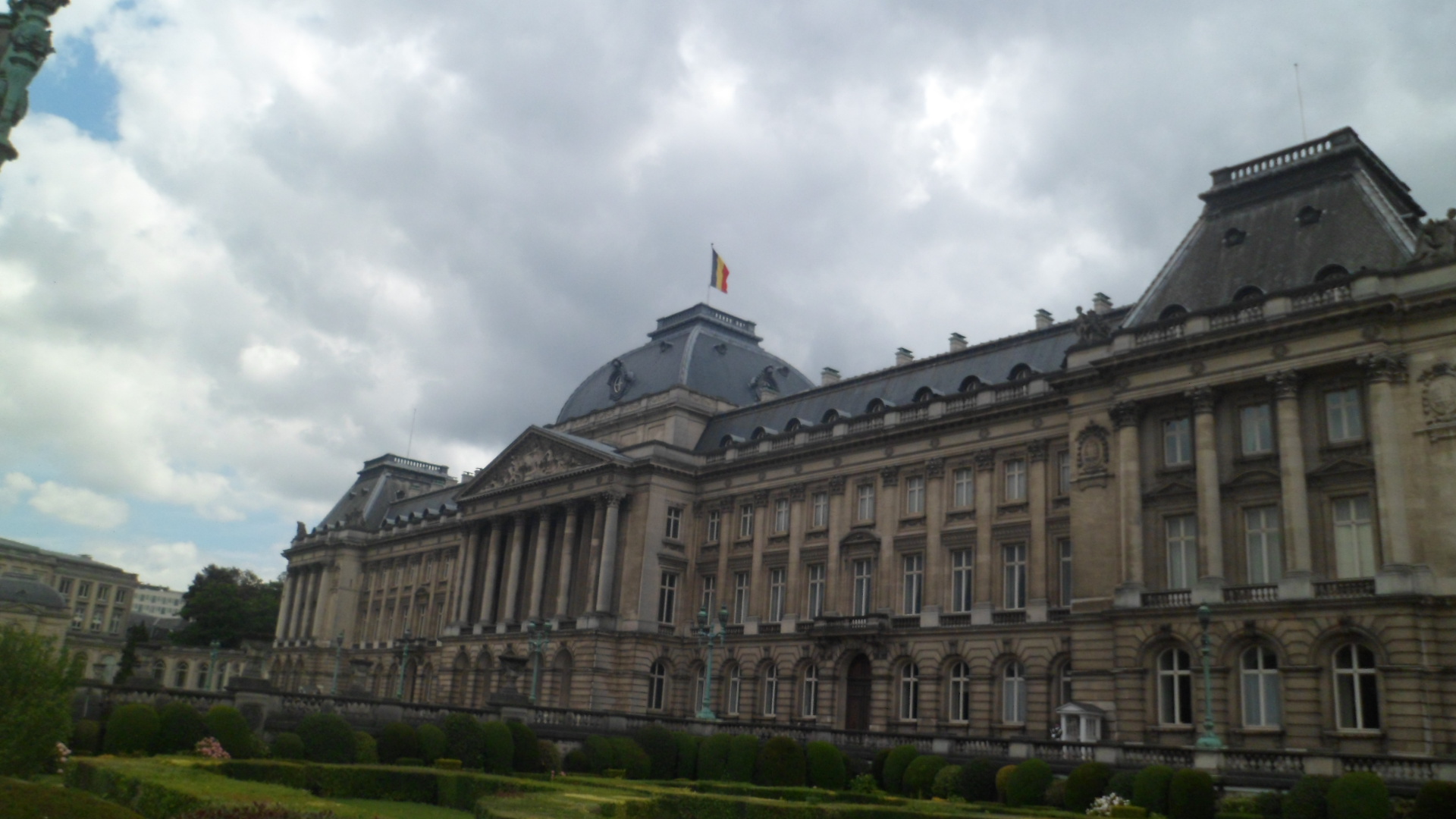
I am no great fan of Neoclassical, or Protosoviet, architecture. The Royal Palace built by Leopold I, and kept by his successors, is much more regal.

SAM_1296
SAM_1298

Making my way to the address listed online for the Baha’i National Center, I found it was neither Baha’i, nor any kind of a center.  Two young construction workers explained they were renovating it, and had no idea who the next tenants would be.  The Baha’is, they said, were “somewhere northeast of here”.  ( I would find the correct address later that evening.  The actual center will be featured in my next post.)

The day ended with a visit to L’Eglise de la Madeleine.

SAM_1300
SAM_1302

I did not seek out Mannekin-Pis. It is not the image I wish to convey of the people of Brussels, no matter how I might have giggled and chortled at it, when I was ten or eleven, looking through my grand-aunt’s “Travels Abroad”. I did find this little gem, though, near Belvue.

SAM_1299

With that, I took a bus back to Grand Place, and enjoyed dinner at a brasserie.

An Eastward Homage, Day 22, Part II: Navigating Brussels, Afternoon and Evening

6

June 17, 2014, Brussels-It might have been an omen, of sorts, but when I attempted to debark from the train at Brussels Central Station, I found myself being pushed back INTO the car, by a crowd of homebound commuters. After about three minutes of this, a tall, big-boned French-speaking woman shouted “ARRET!”, and threw her arm in front of several of the people who were pushing, literally sweeping them aside, so that I might squeeze through. This was, thankfully, the sole instance of crowd meanness I faced during my trip.  I was very thankful for her assistance.

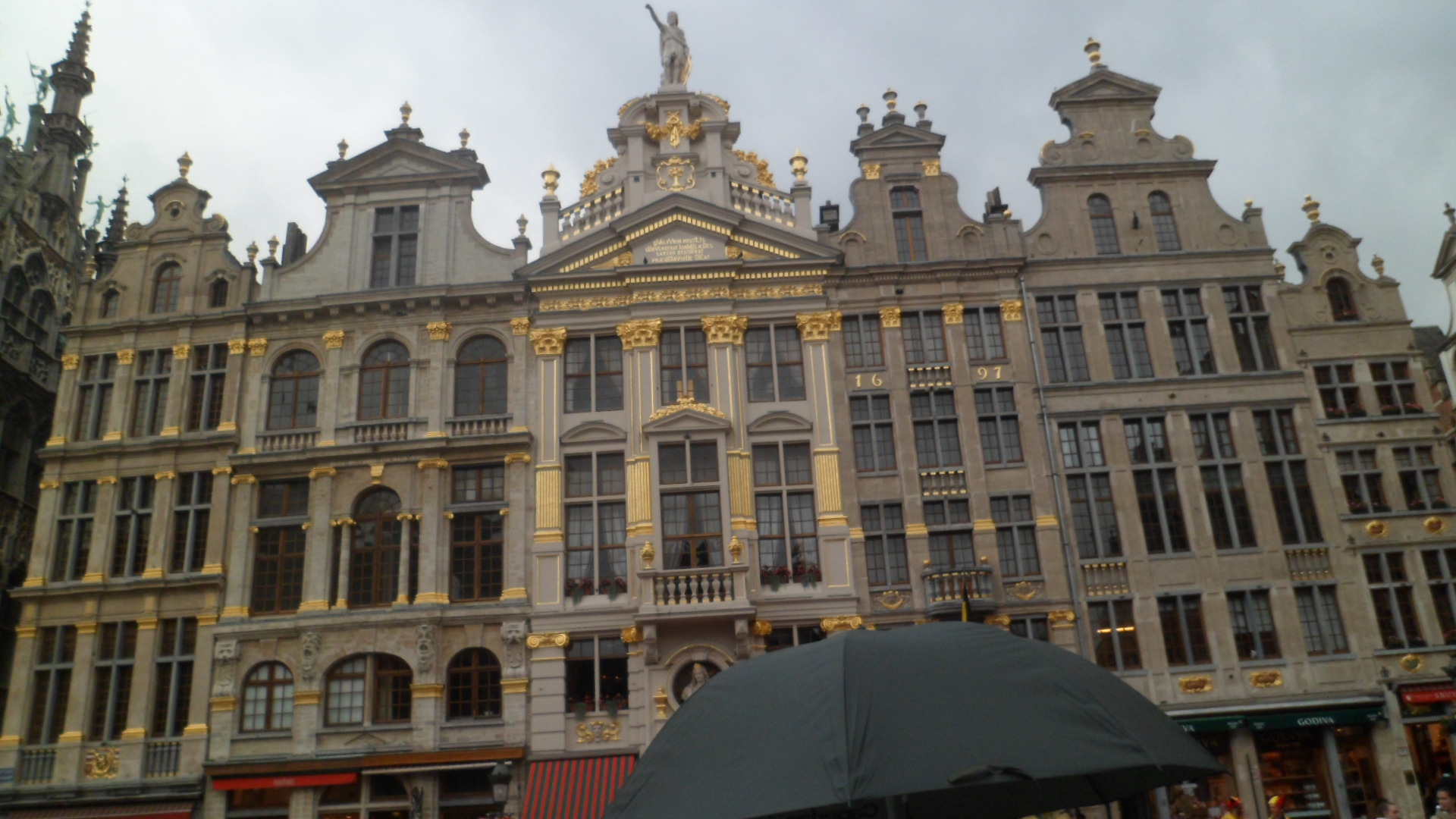
I soon found myself, bag and baggage, in Grand Place, Brussels’ magnificent central square.

SAM_1193

The spire of Brussels Town Hall can be seen from the train station, making this navigation relatively easy.

SAM_1194

My first impression of the structure was that it may have been the inspiration for the Belgian waffle.  St. Michael the Archangel stands atop the Guildhalls 8-12.

SAM_1195

No one, including anyone on Google, seems to know whose statue is on top of the south guildhalls.  If I had used that much gold, I would know, believe me.SAM_1198

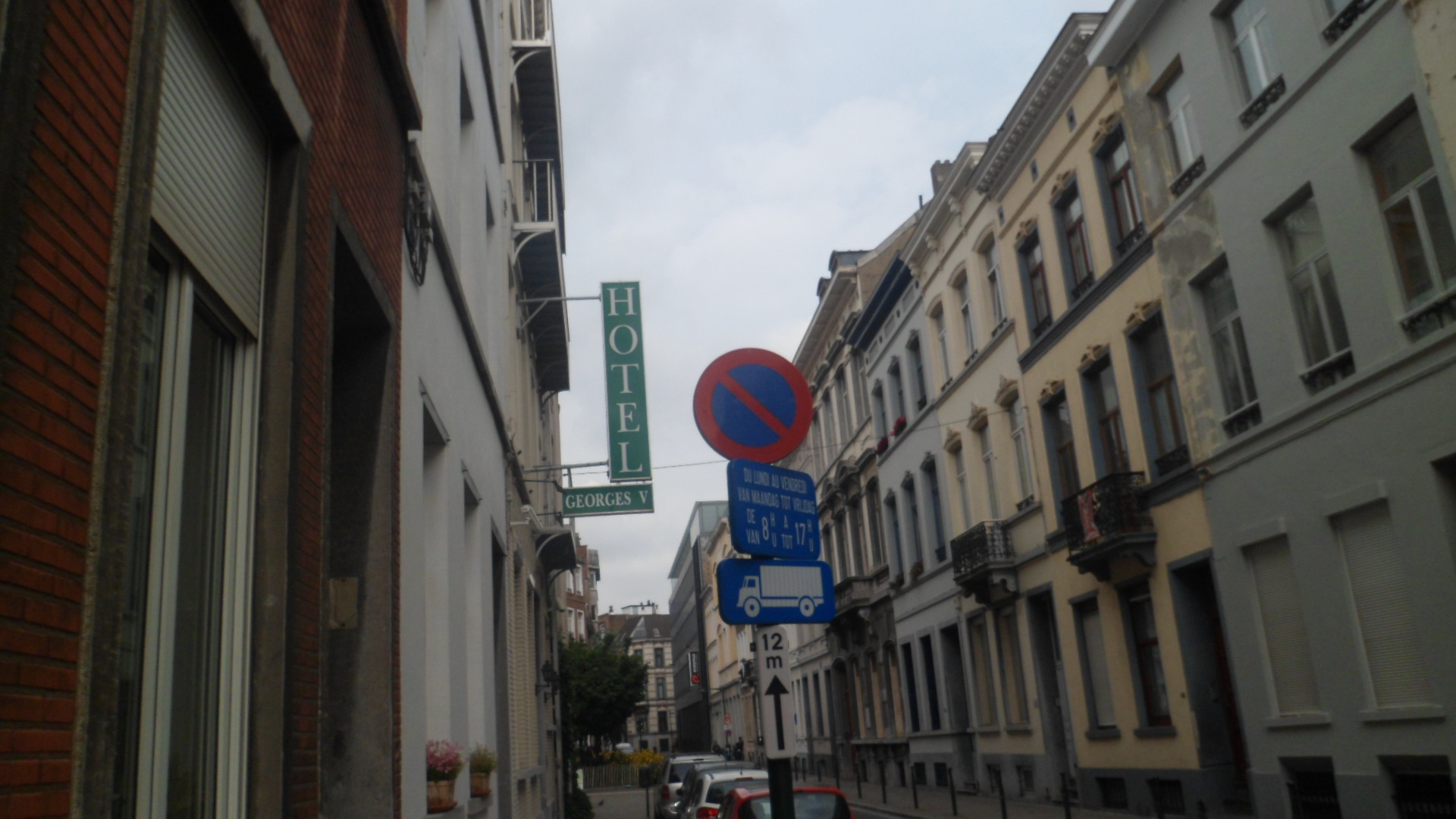
I was given three conflicting sets of directions from Grand Place to Hotel George V, which is in a rich and vibrant neighbourhood of Africans and Arabs, just west of downtown. It was supposed to be “nearly impossible to find”. Despite that mindset, I managed to find it, using a common thread in the three divergent sets of directions. As I had to go back to the main street, Boulevard Anspach, to get cash to pay for the room, my navigation lesson was underscored.

SAM_1200

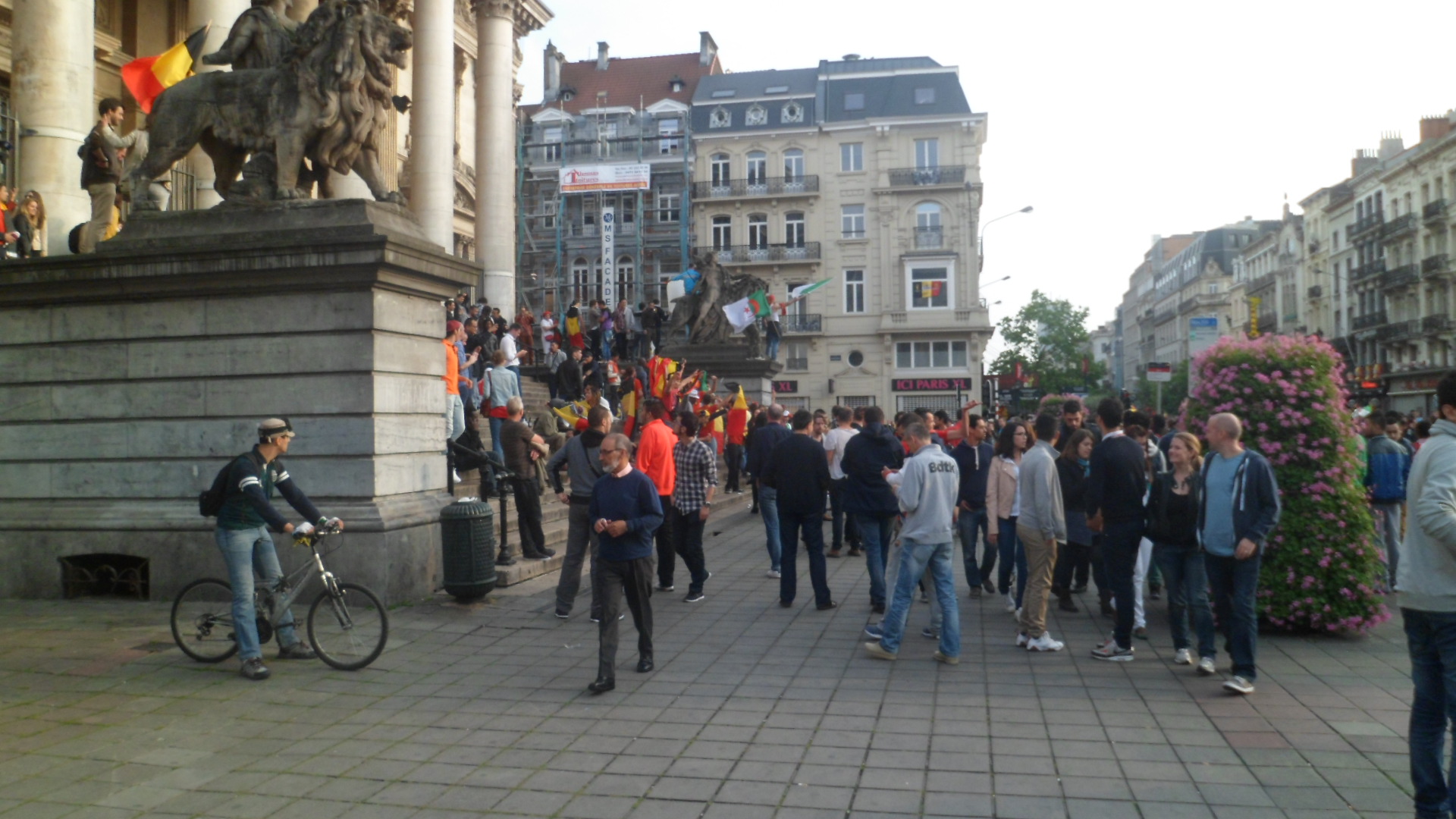
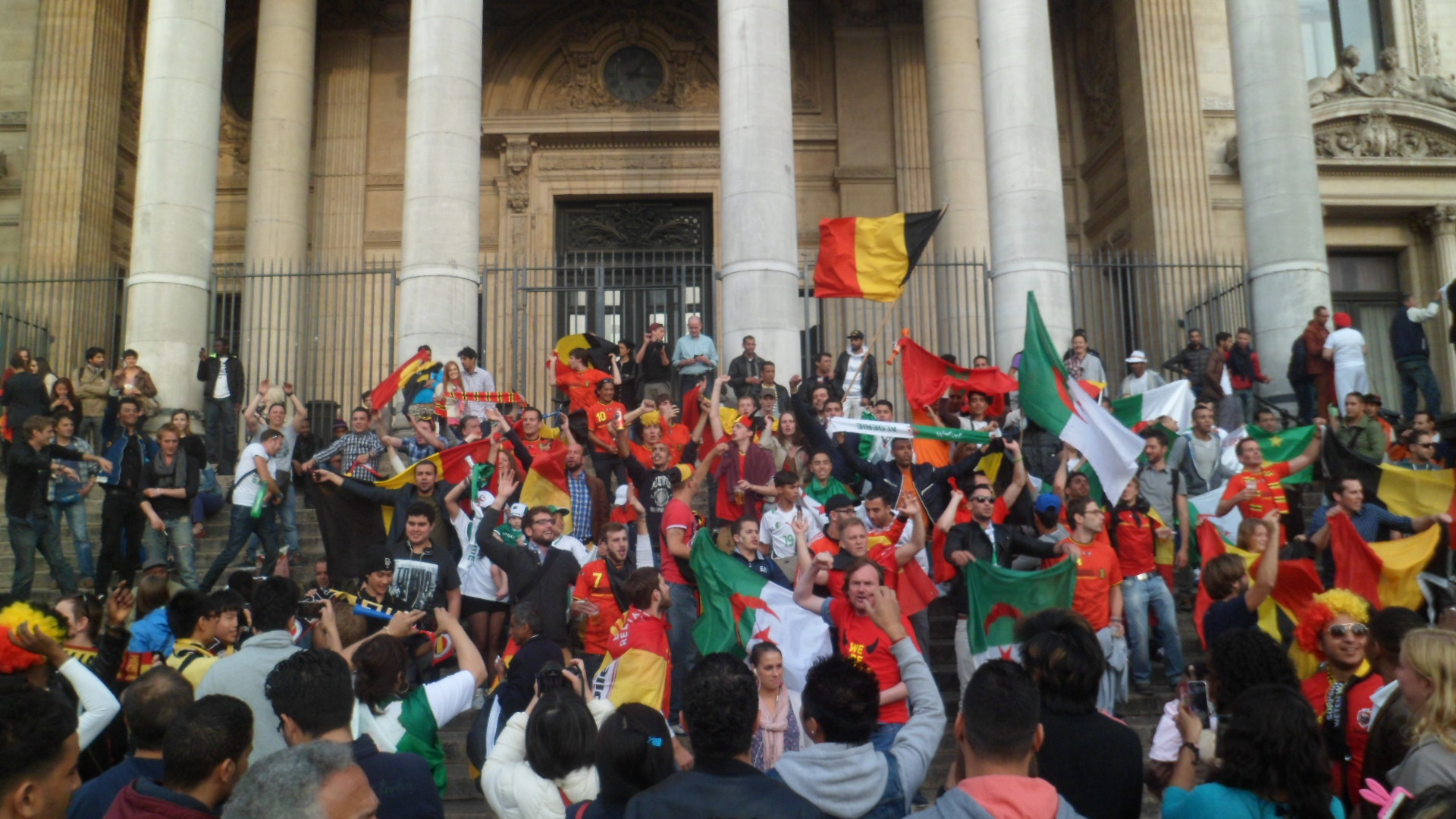
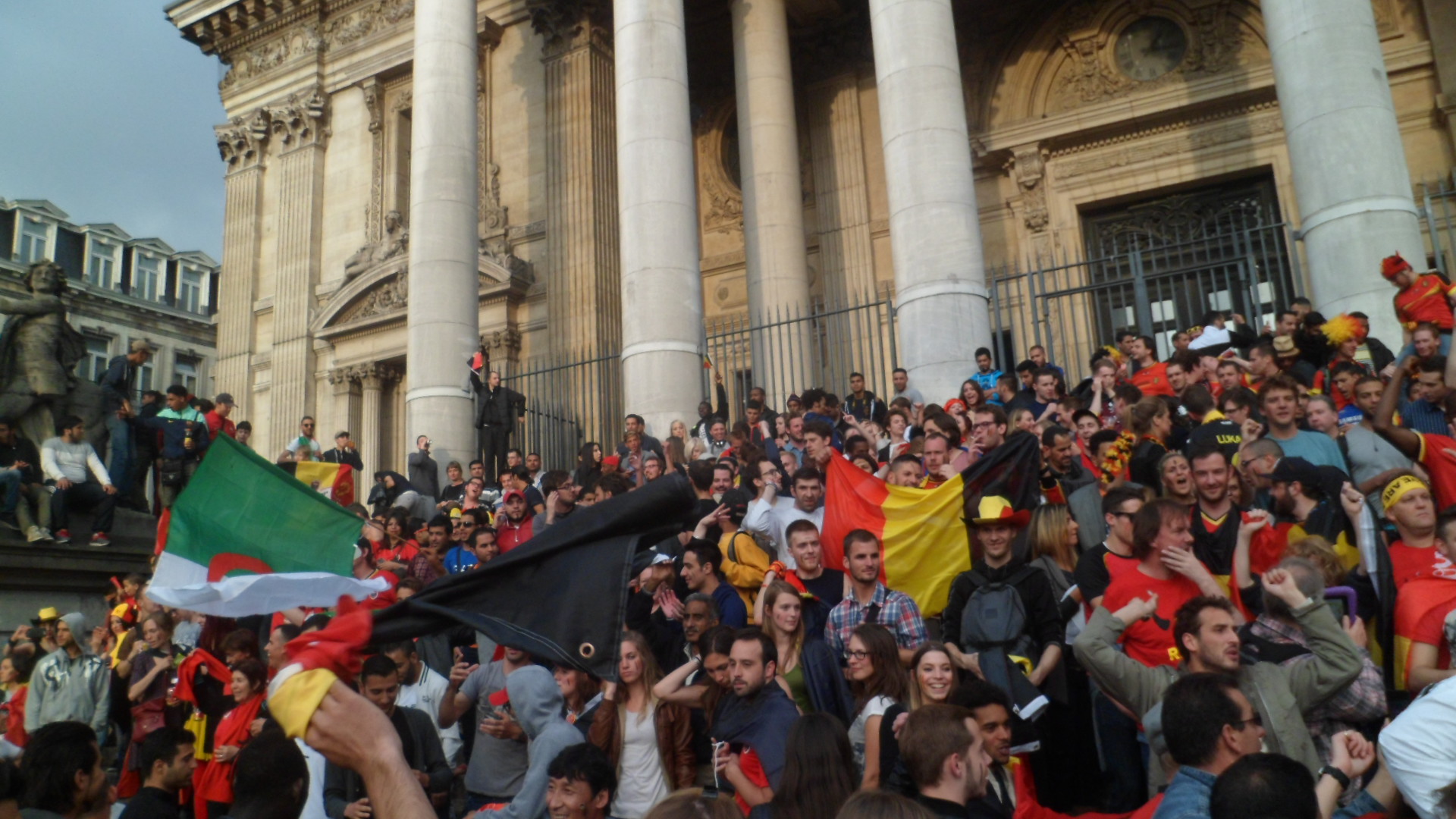
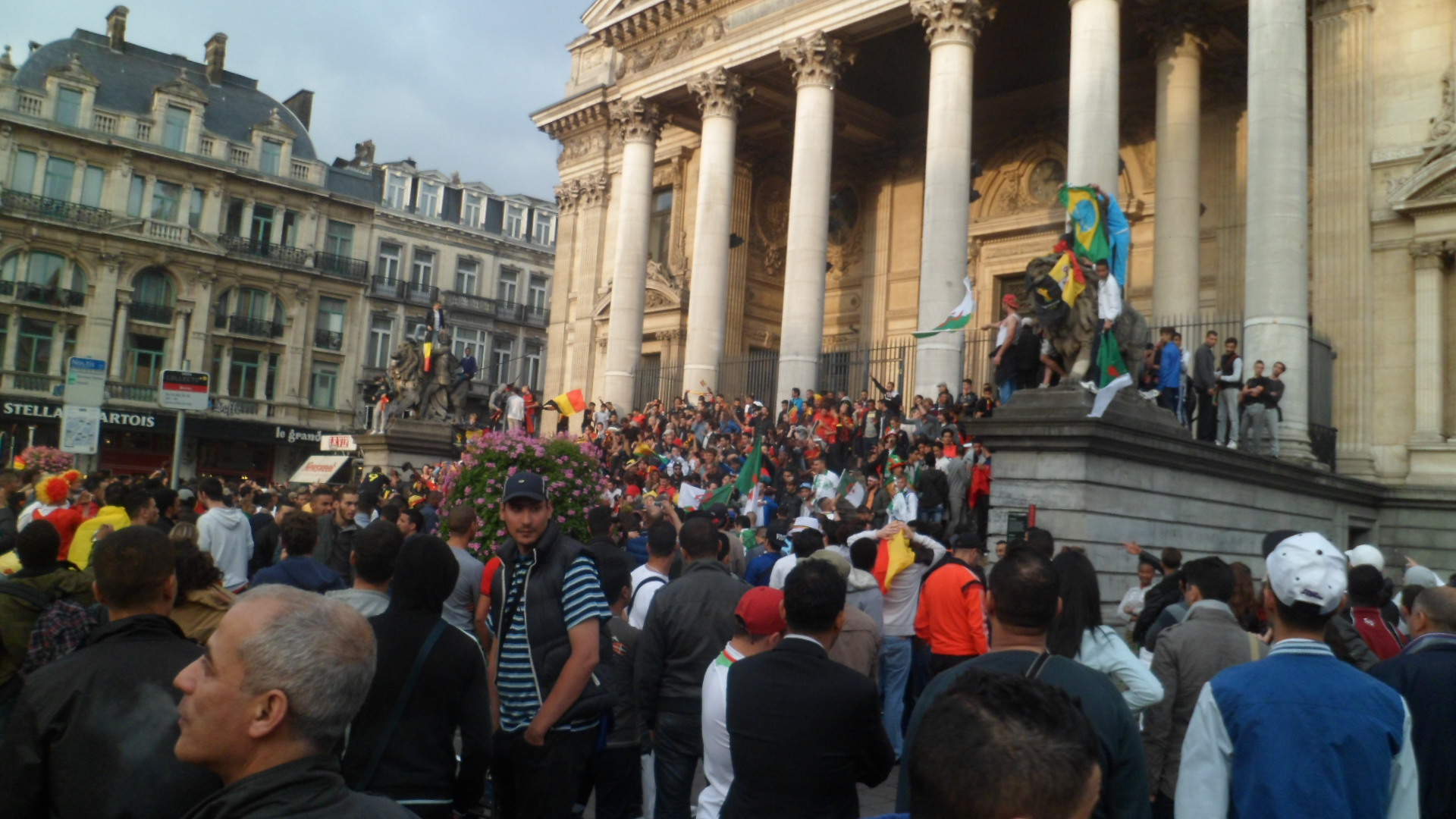
I rested a bit, then went back to Place de la Bourse, for what was a topsy-turvy, but peaceful evening of celebration, first by some Algerians, then by Belgians, as Team Belgium came from behind to beat Algeria, 2-1.

The crowd gradually grew in size.

SAM_1206
SAM_1209
SAM_1210
SAM_1215
SAM_1216
SAM_1220
SAM_1227
SAM_1230

The crowd gradually dispersed, peacefully, into the surrounding neighbourhoods, and regrouped at their favourite bars and brasseries. My favourite, Bella Pizzeria, is right up the street from Hotel George V, and is managed by a sweet and very helpful young couple from Corsica. This was Rue Claire-Marie, en route from Place de la Bourse to my hotel.

SAM_1232

As it was, I felt it had been a full day, from Gravensteen to the World Cup celebrations, and so drifted back to the room and to sleep.

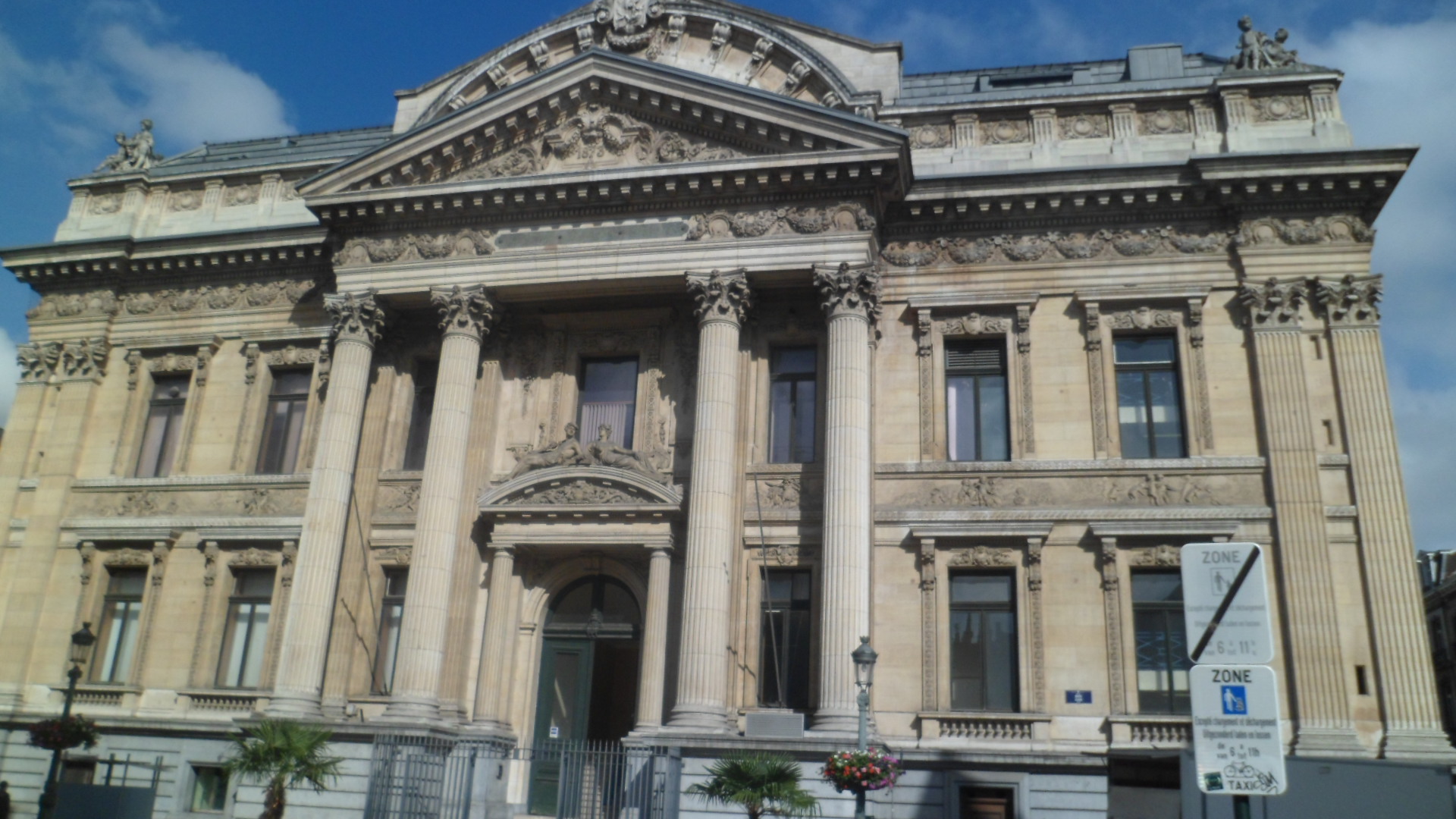
By the way, this is what the Bourse looks like, most of the time.

SAM_1241

An Eastward Homage, Day 22, Part I: Gravensteen, Hall of Counts

0

June 17, 2014- The Flemish are nothing, if not feisty.  A group of girls, who appeared to be 14-15 or so, boarded the bus to St. Pieters Platz, from St. Baaf’s, with the intention of getting off at Rabot, the area of Ghent’s eastern gate. Being preoccupied with teen matters, they noticed their stop, about 30 seconds after the driver had halted.  They rushed to the exit, were ignored by the driver and the bus resumed to a spot near my hotel.  The more vocal of the group called out an epithet, in Flemish, which evoked chuckles from some of the other passengers.  They got off at my stop, and took off, pell mell up the street.  I work a lot with teens, so the whole thing was very familiar.

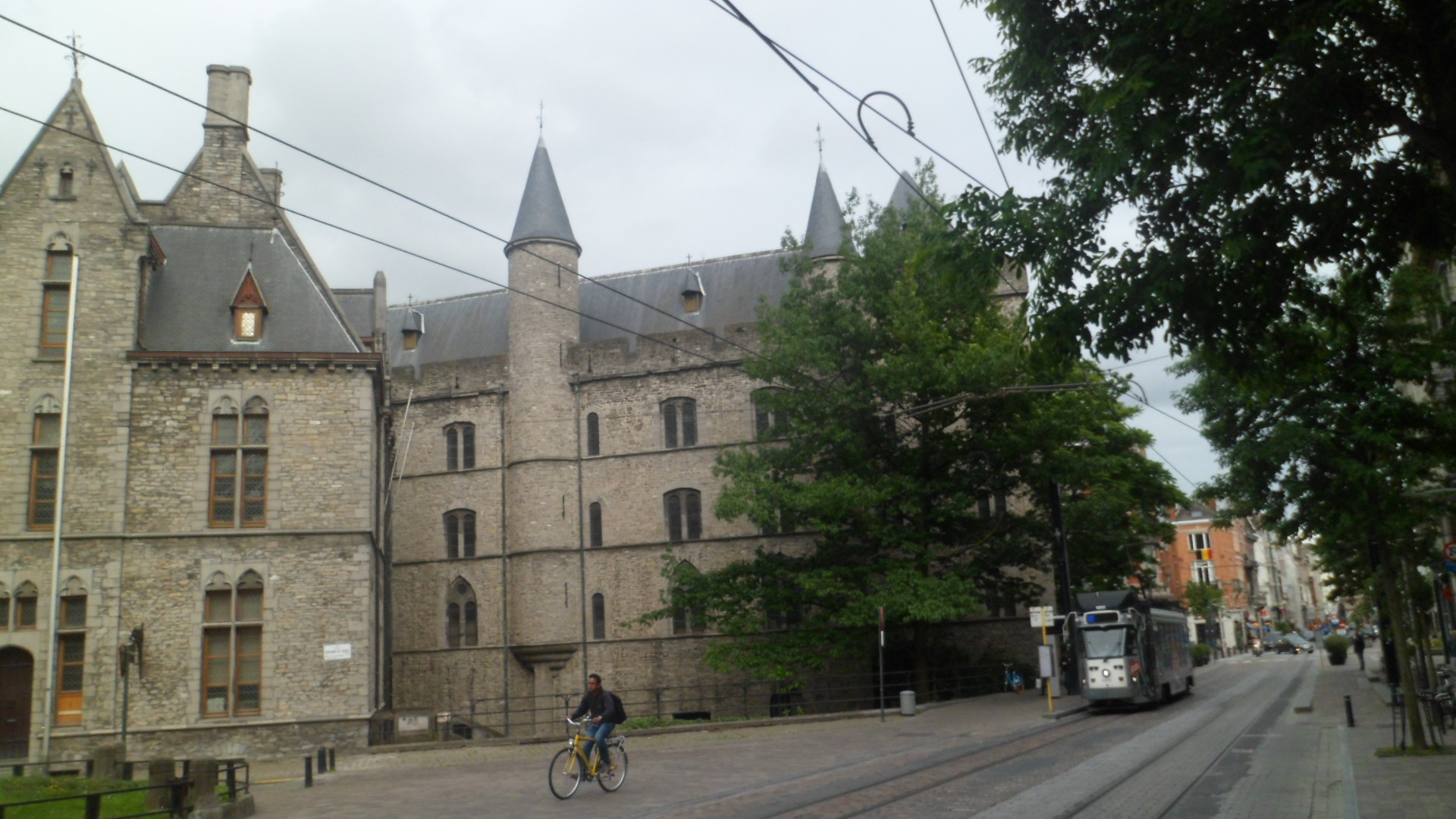
This brings me to Gravensteen, my main focus of that Tuesday morning. It is a well-preserved medieval castle, built to serve the Counts of Ghent, during the era of Flemish city-states. It’s overriding concern, from the looks of things, was providing space for imprisonment and torture. Having set the tone for an interesting visit, I promise not to over-present the Museum of Torture .(Yes, that’s on the bottom floor).

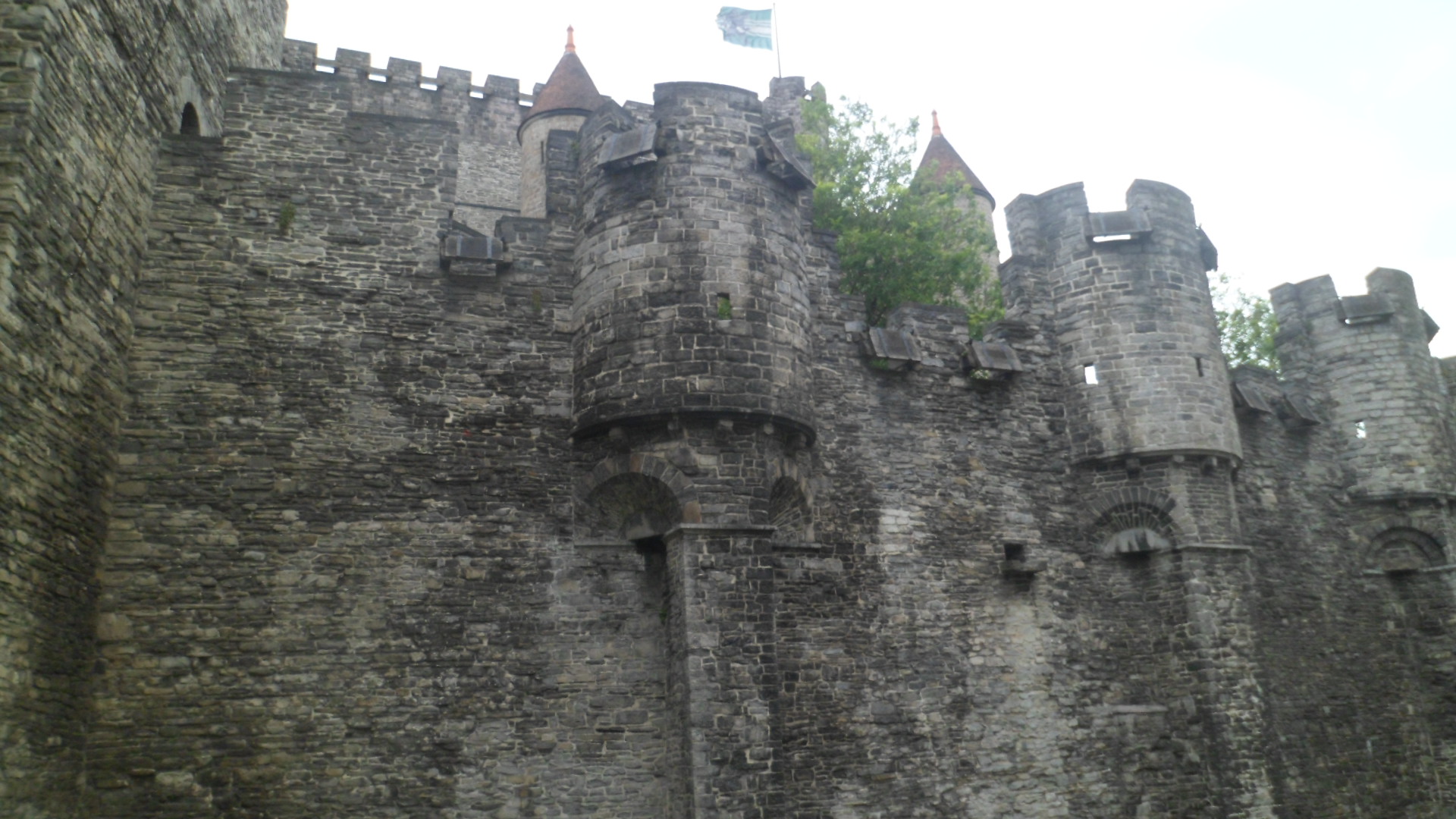
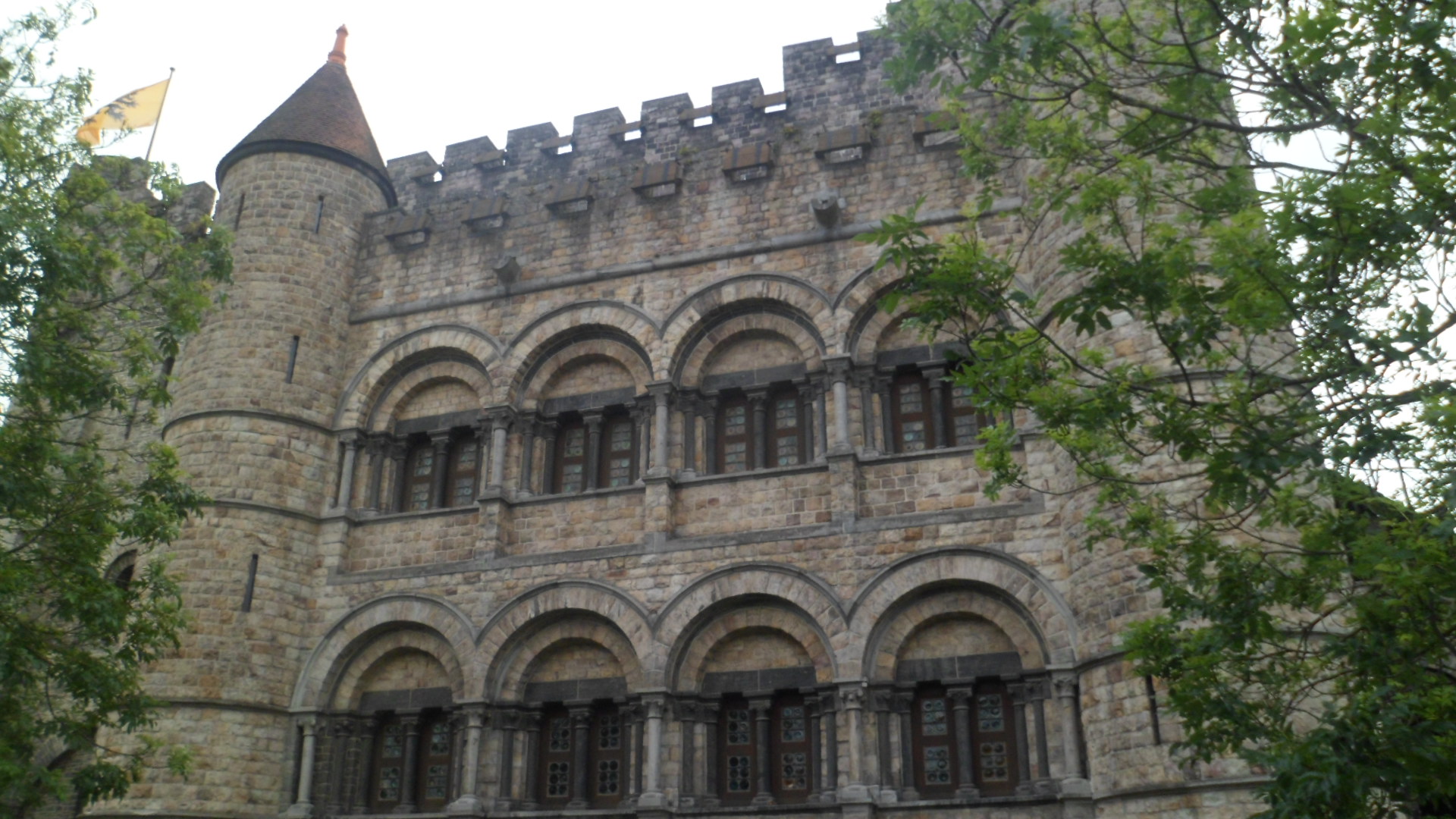
Here is the home of the counts, in its entirety.

SAM_1049

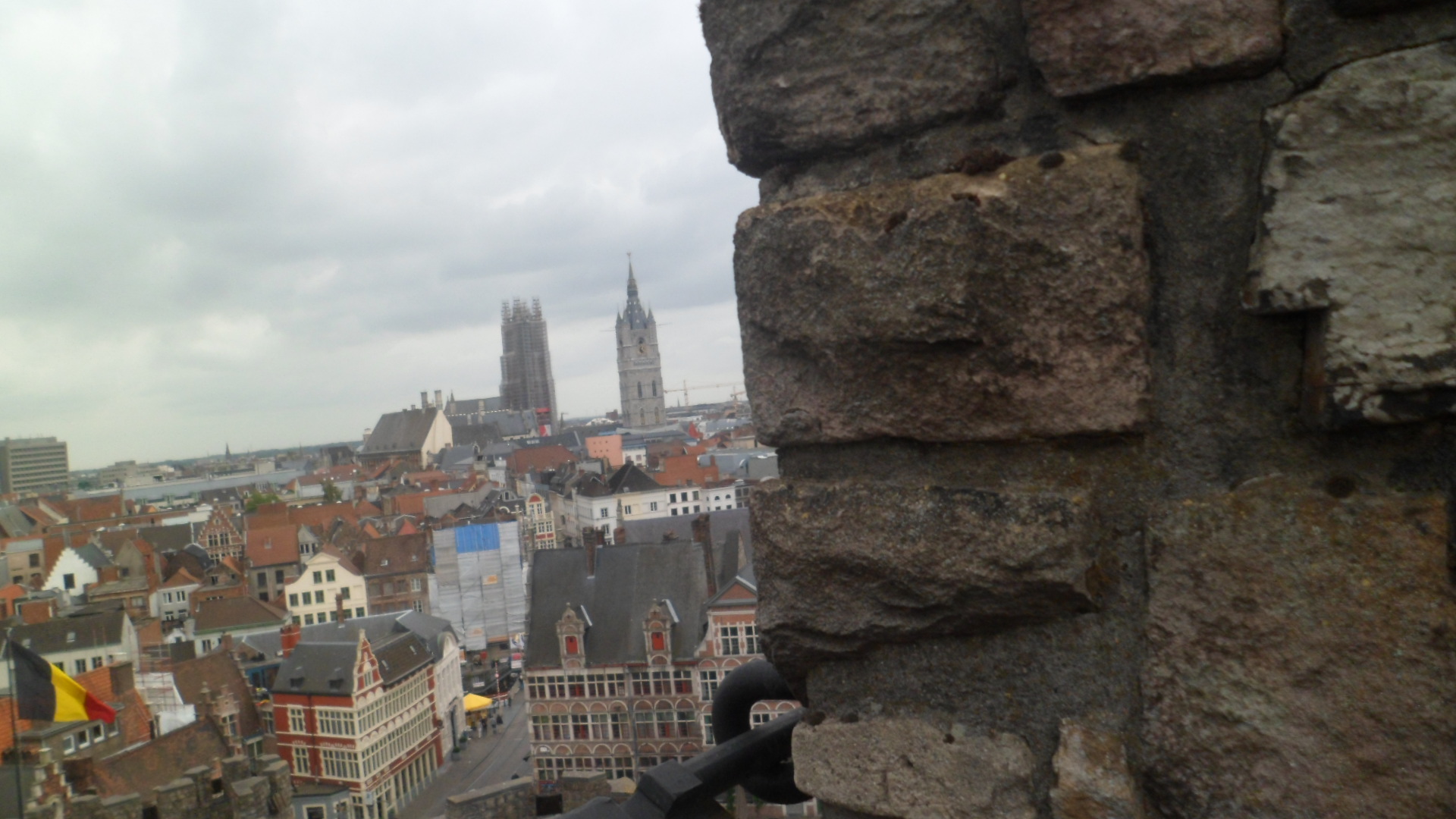
The balustrade and turrets are essentially as they were in the fourteenth century.

SAM_1051

These turrets were the homes of the counts, when they stayed in Ghent.

SAM_1099

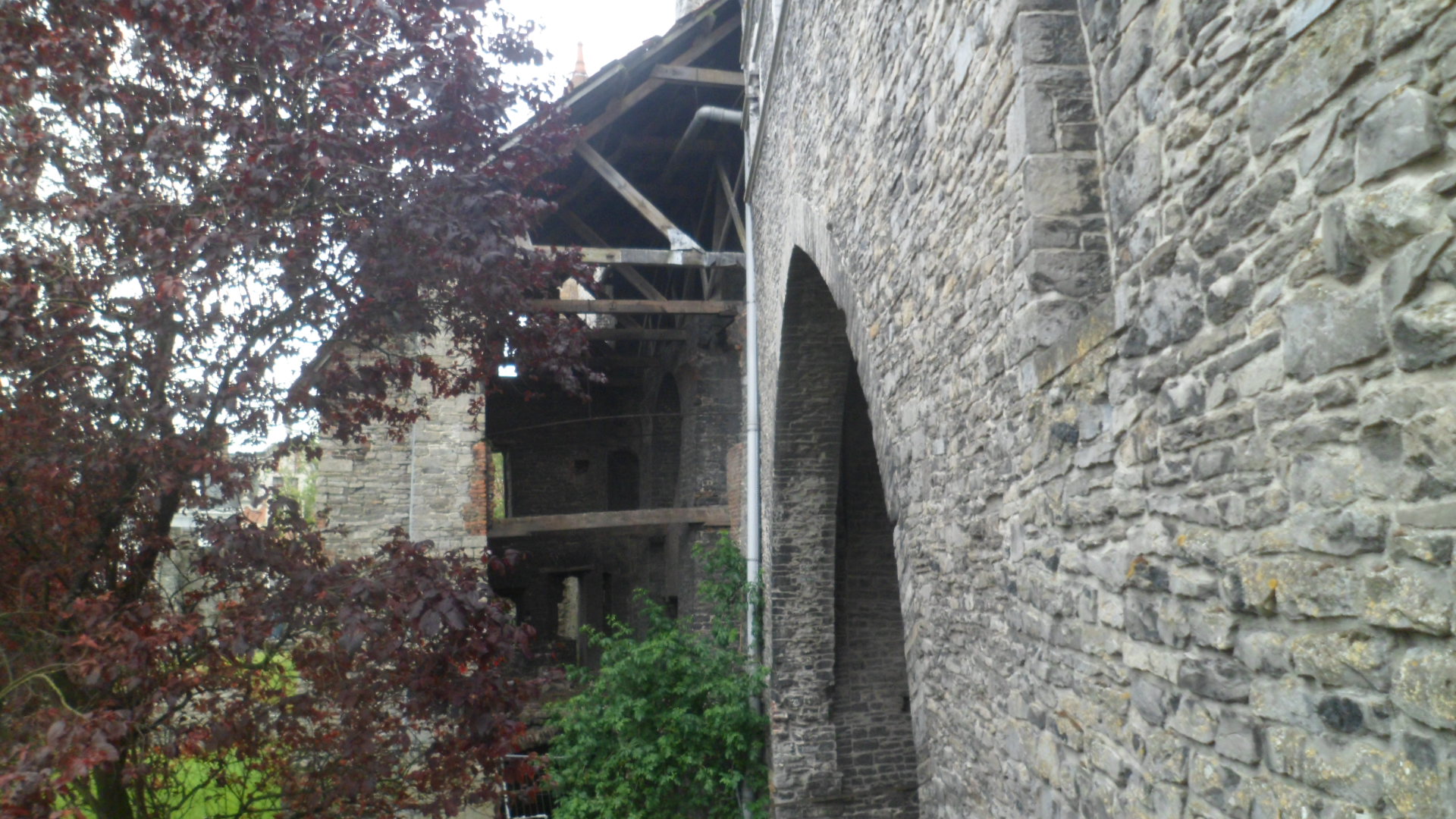
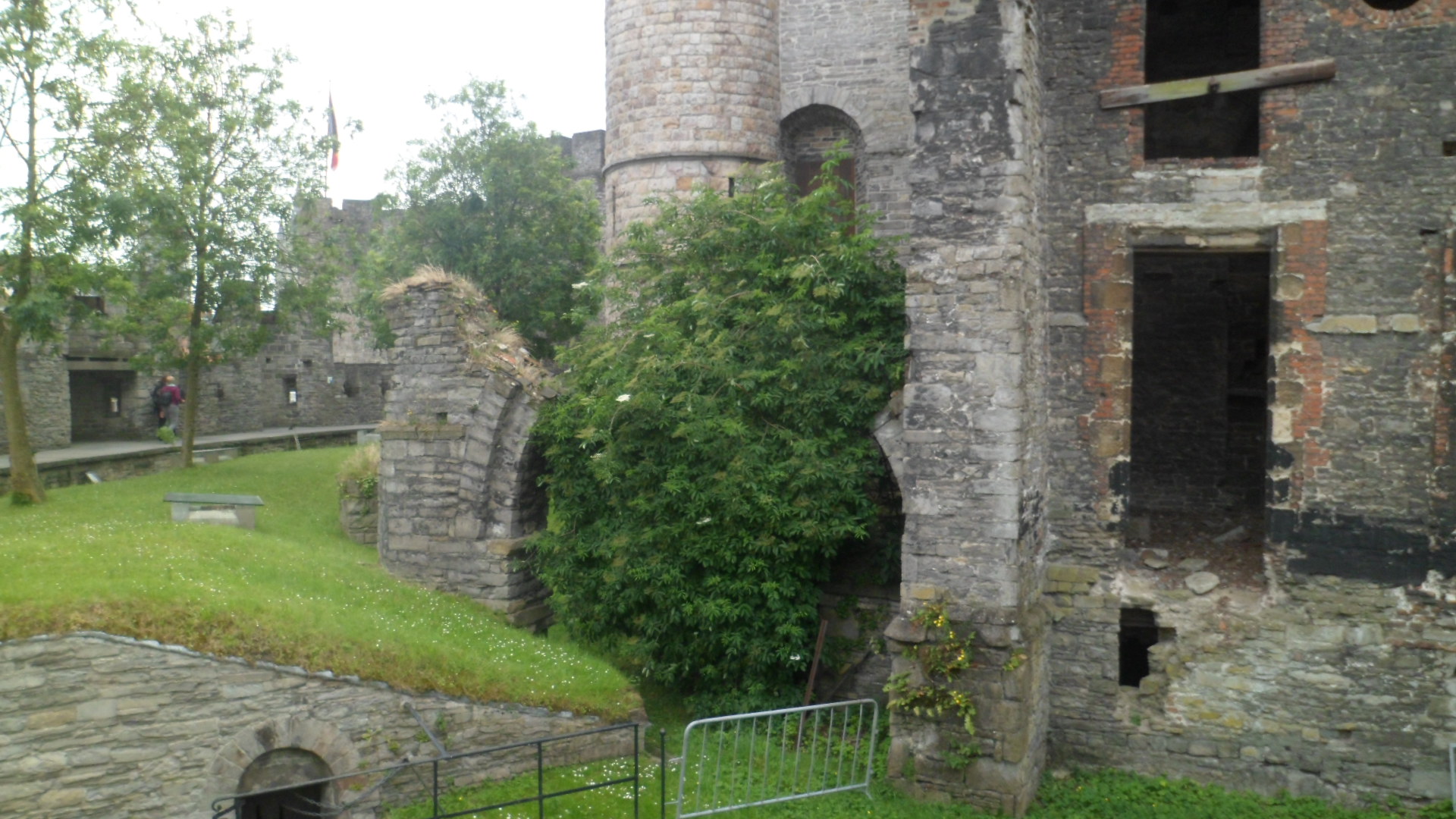
Here are several views of the castle’s exterior.

SAM_1105
SAM_1107
SAM_1108
SAM_1109
SAM_1110
SAM_1168

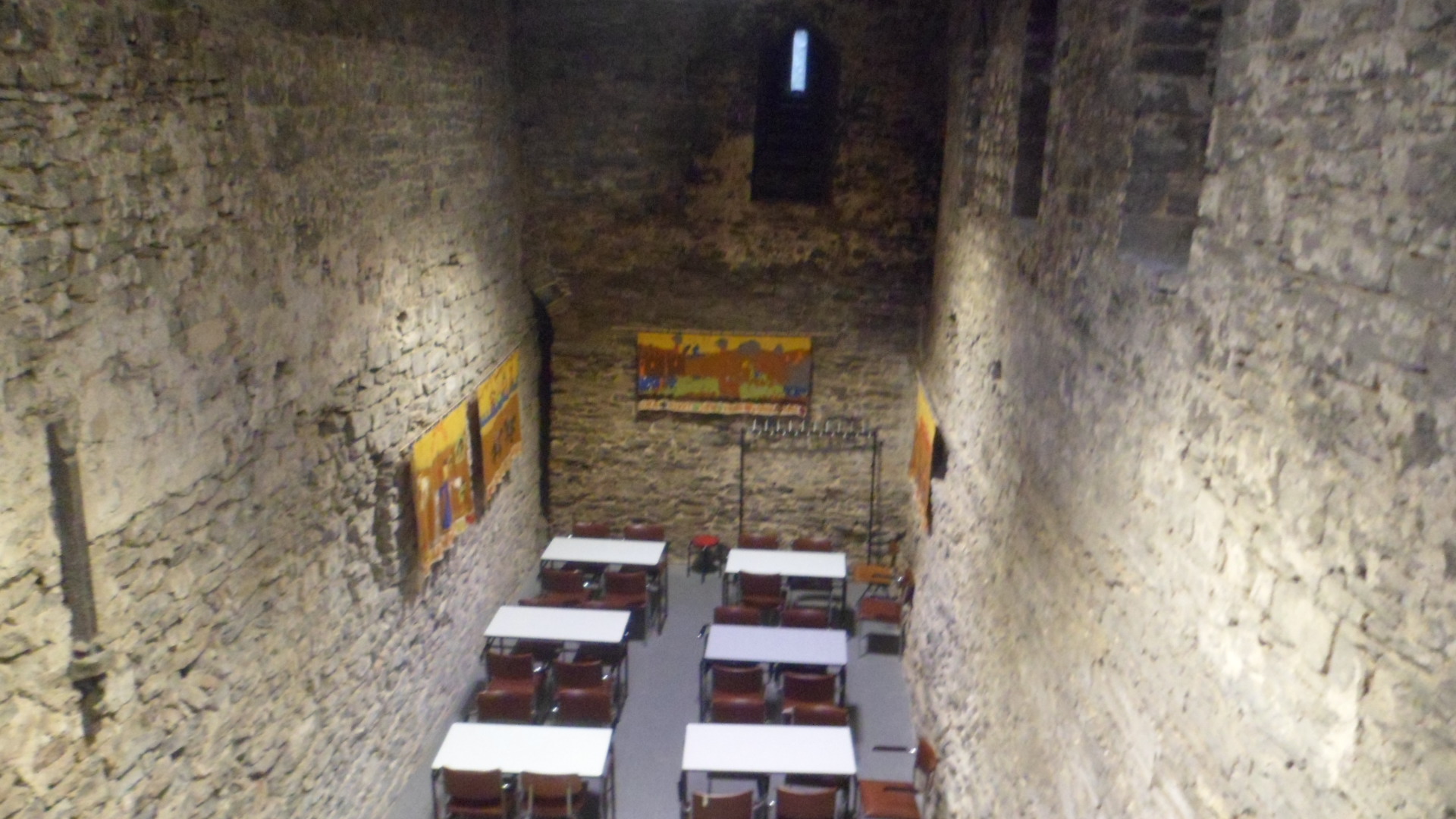
Now, it’s time to go inside. This meeting hall is now used for school groups. On this day, there were two such groups in the castle.

SAM_1113

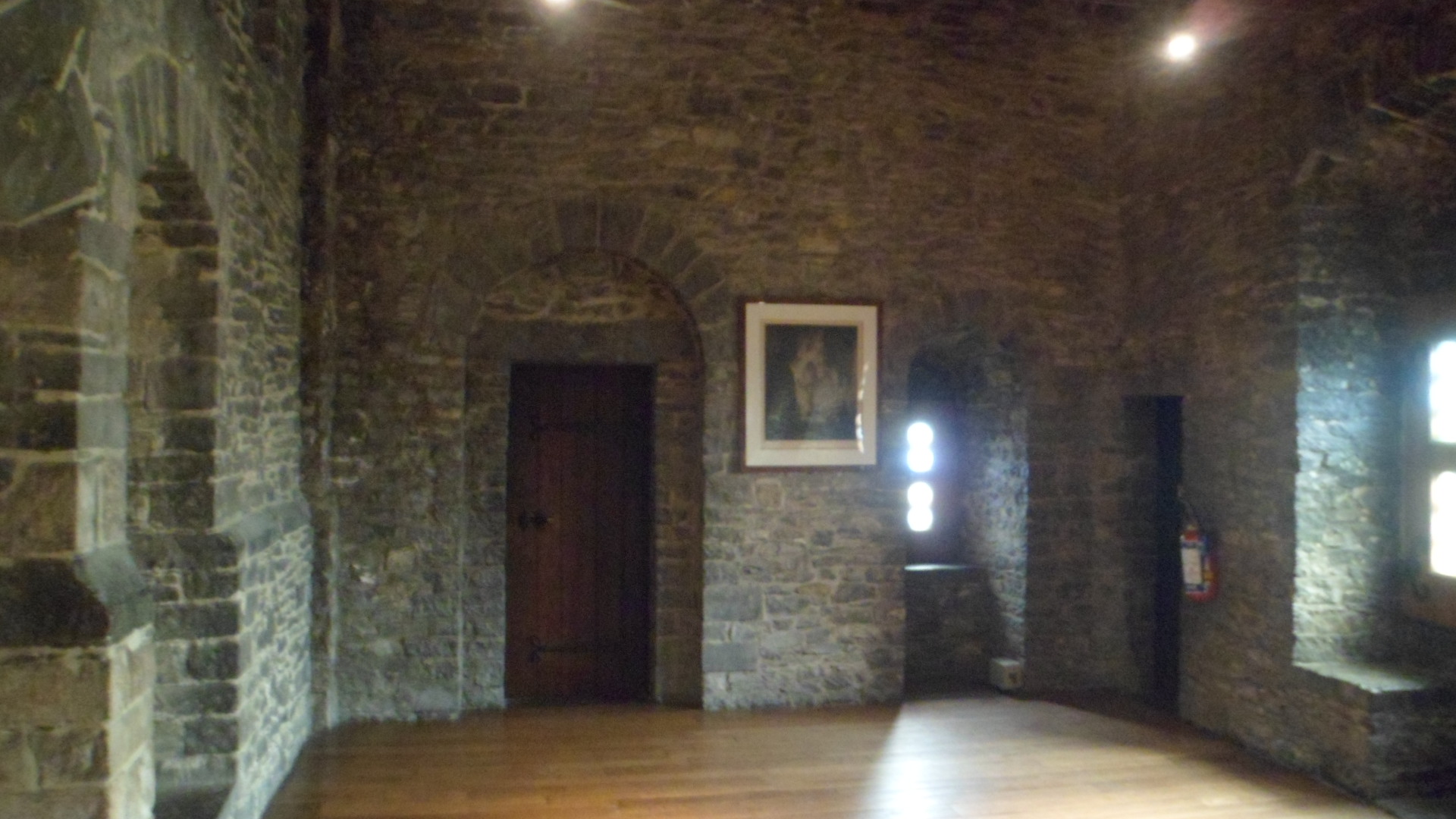
This was the Governor’s Residence. There was no polished wood, until the 17th Century.

SAM_1115

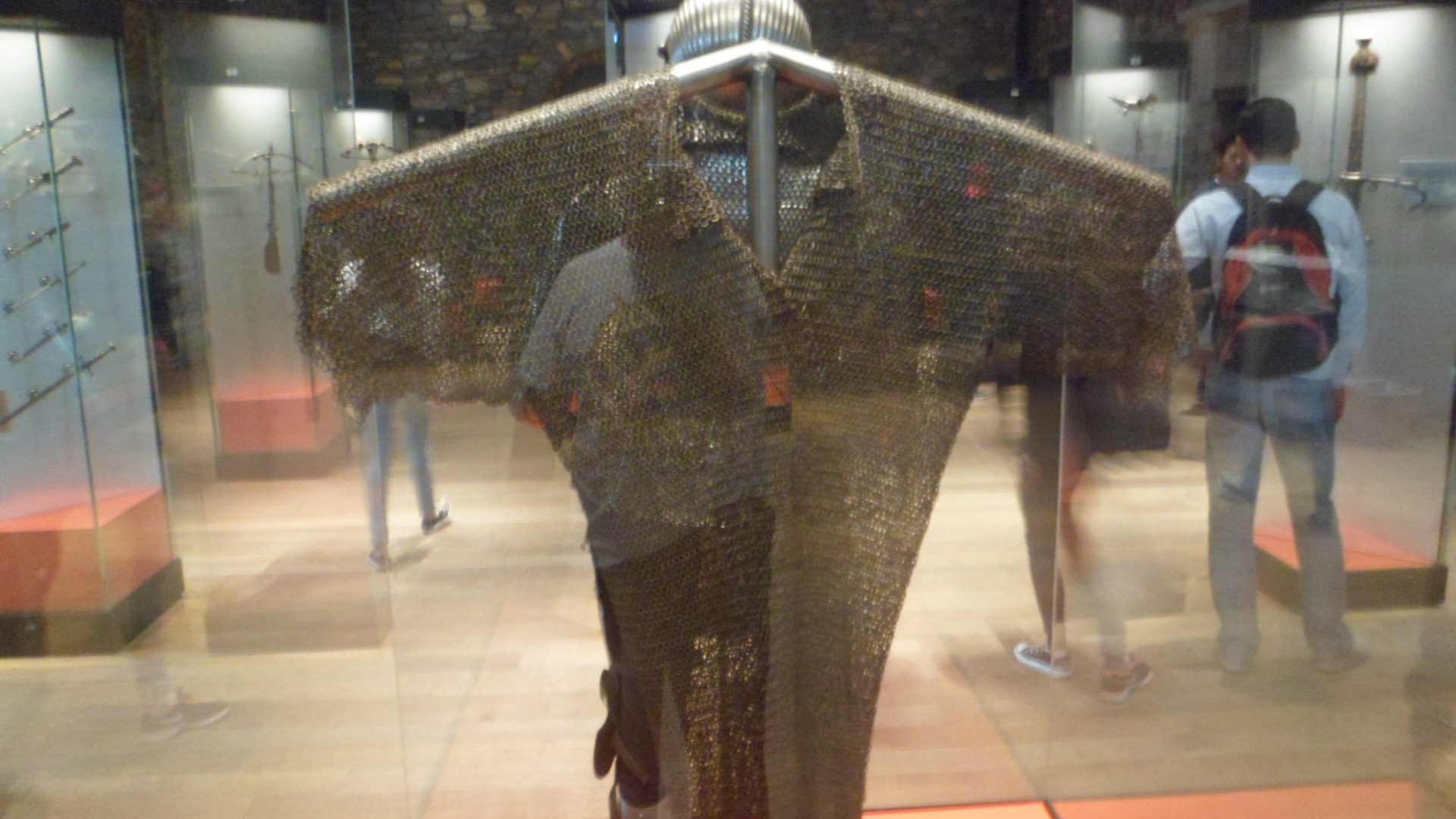
I proceeded from there, to the Hall of Armor and Weaponry. Below, is the closest thing a man had to a bullet-proof vest, in those days.

SAM_1117

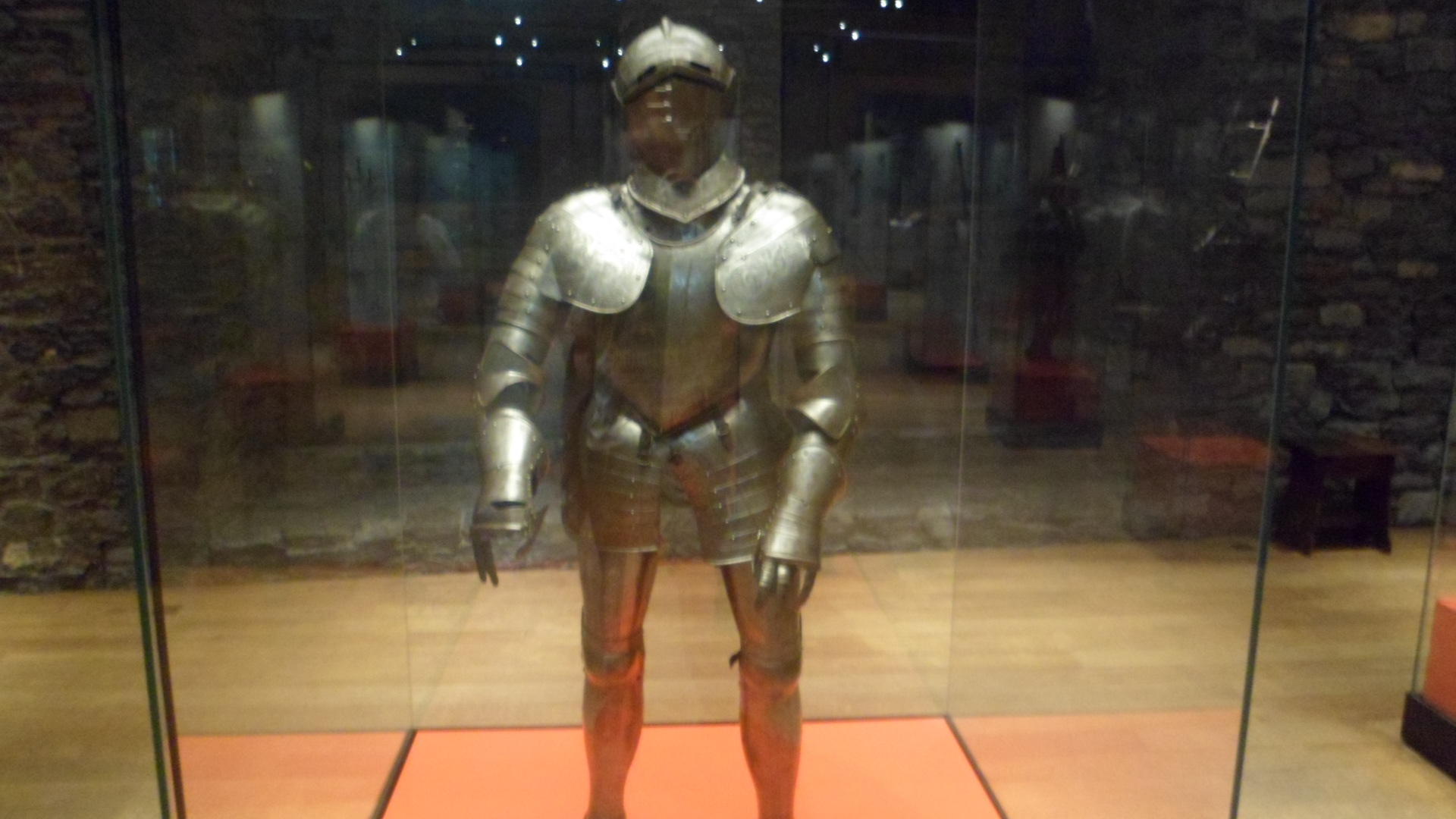
Of course, knights got  to face combat in this.

SAM_1125

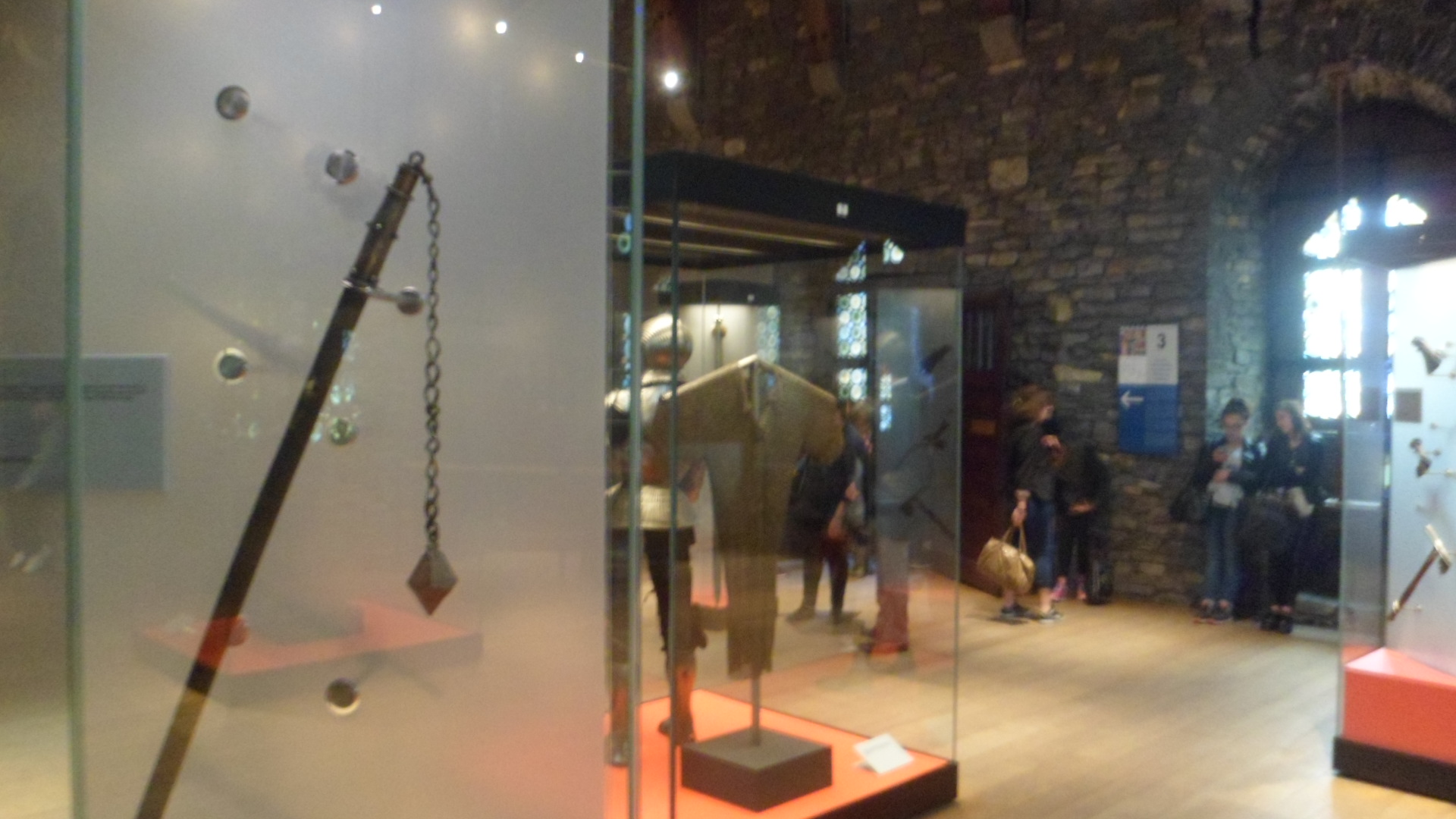
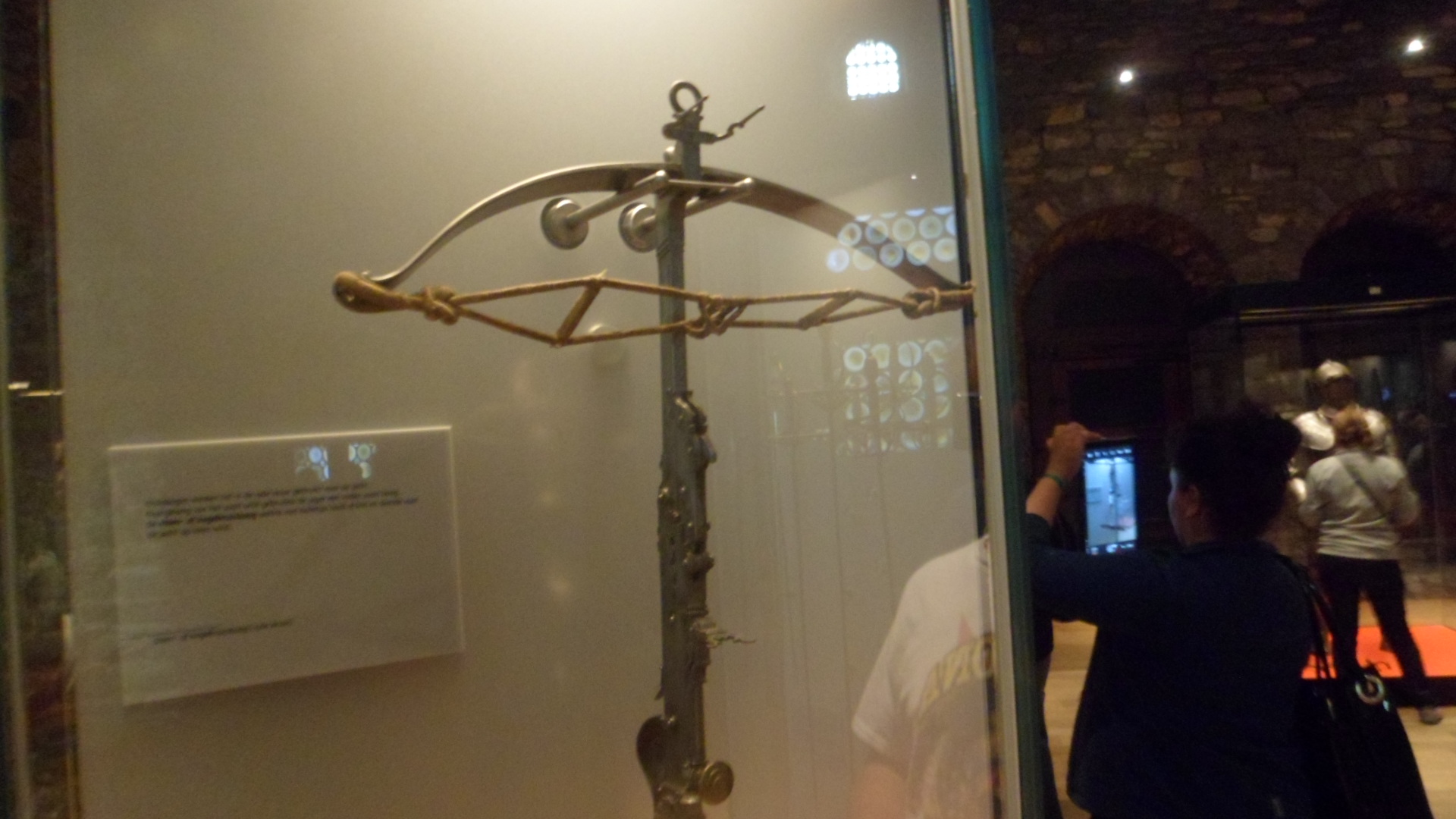
A couple of views of weapons reminds us how things really were, if one strayed too far from the norm.SAM_1118

SAM_1122

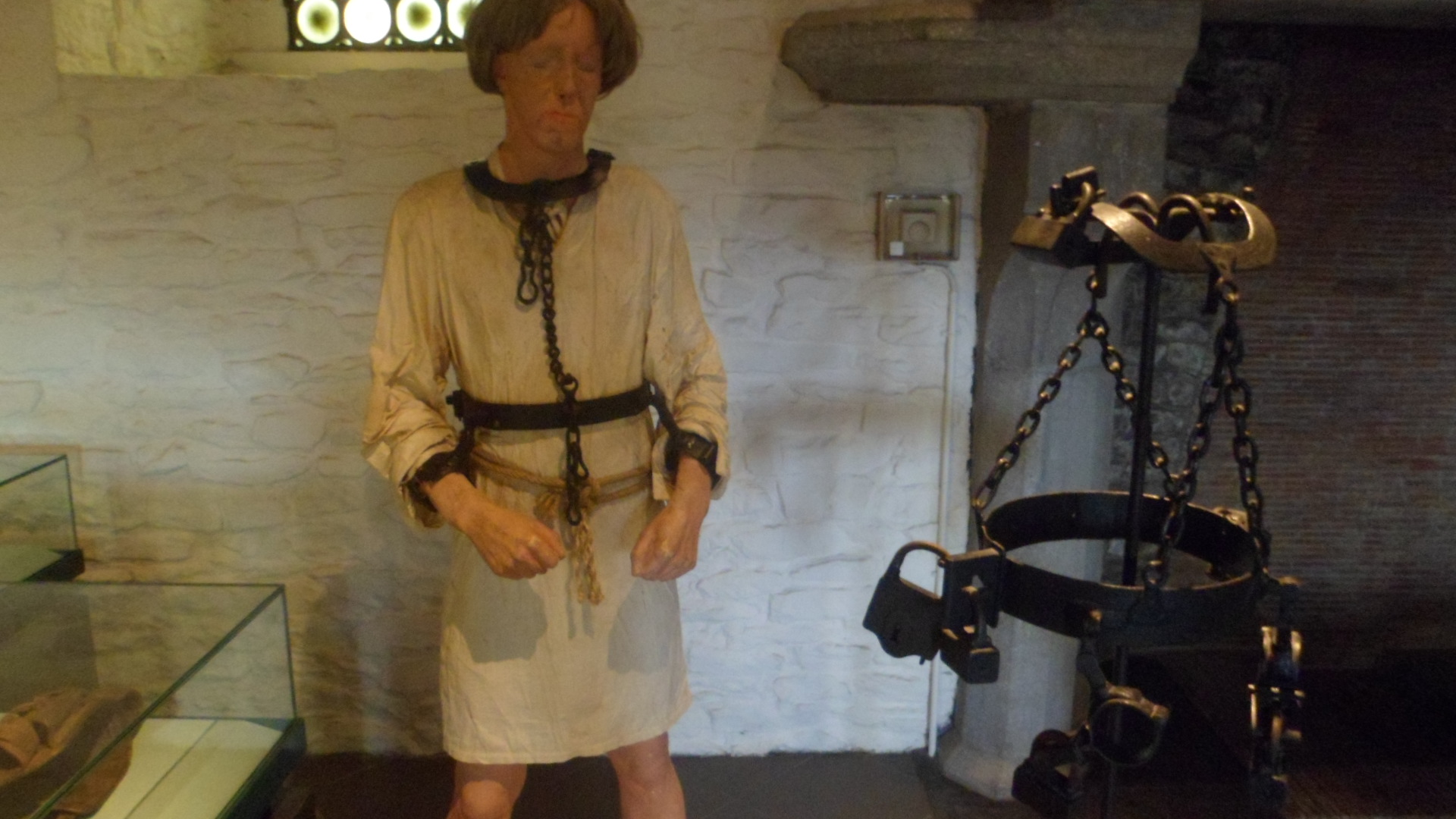
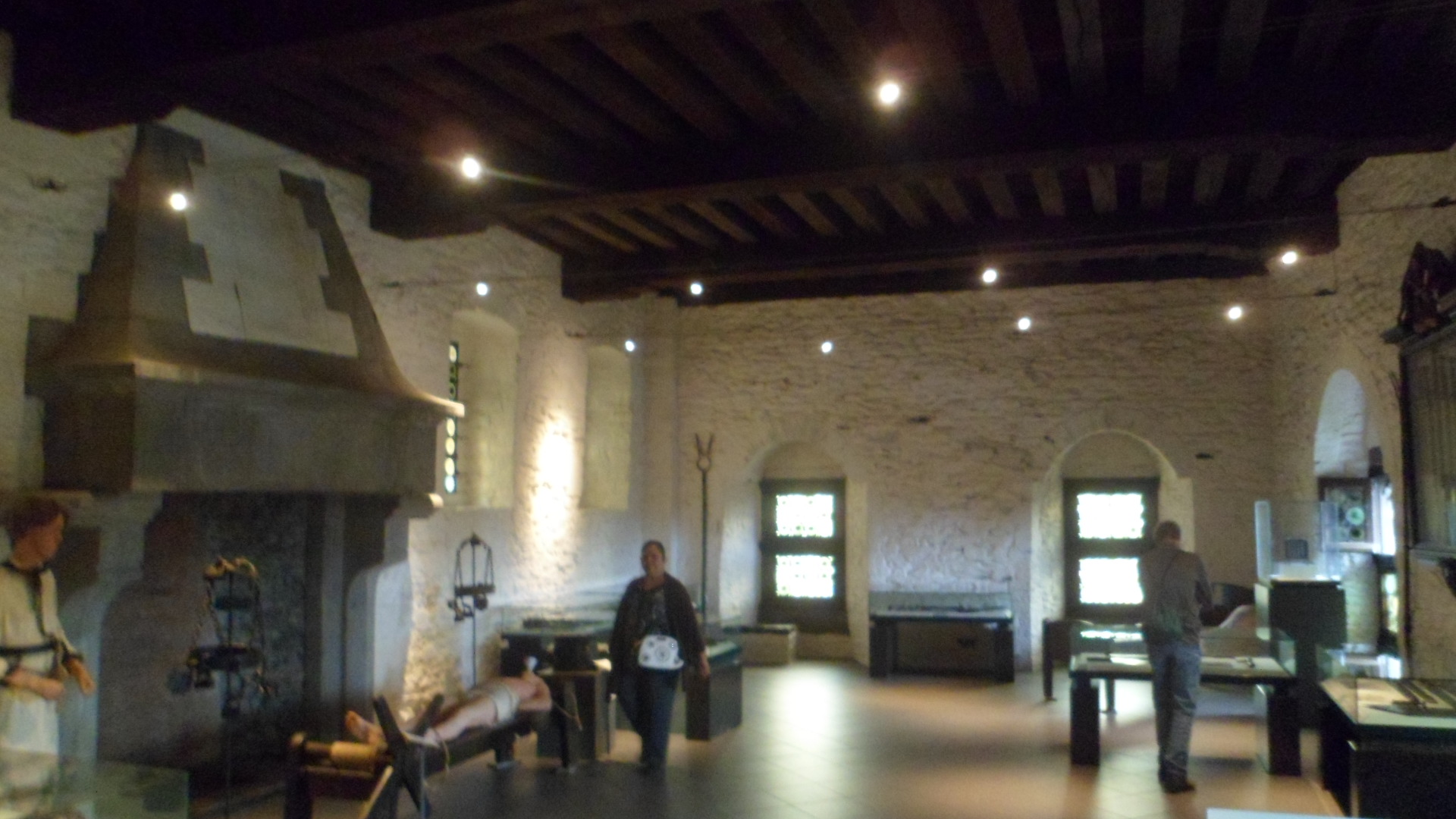
There was the hall of retribution, which featured the rack.

SAM_1149
SAM_1155

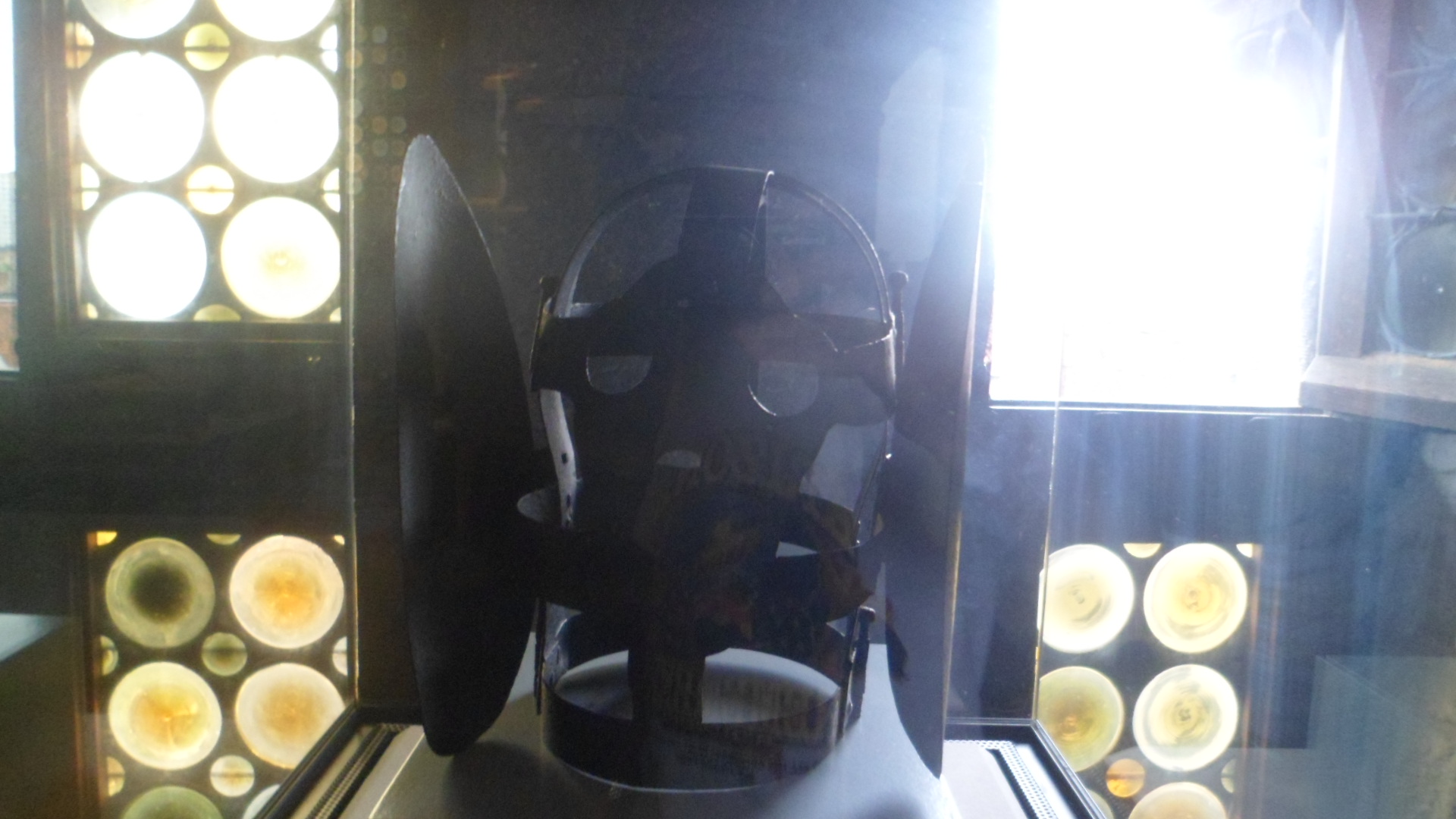
The iron mask was also a real instrument of control.SAM_1151

SAM_1153

The rooms were not as stuffy as one would think, though. It was a good thing, as bathing wasn’t a top priority.

SAM_1159

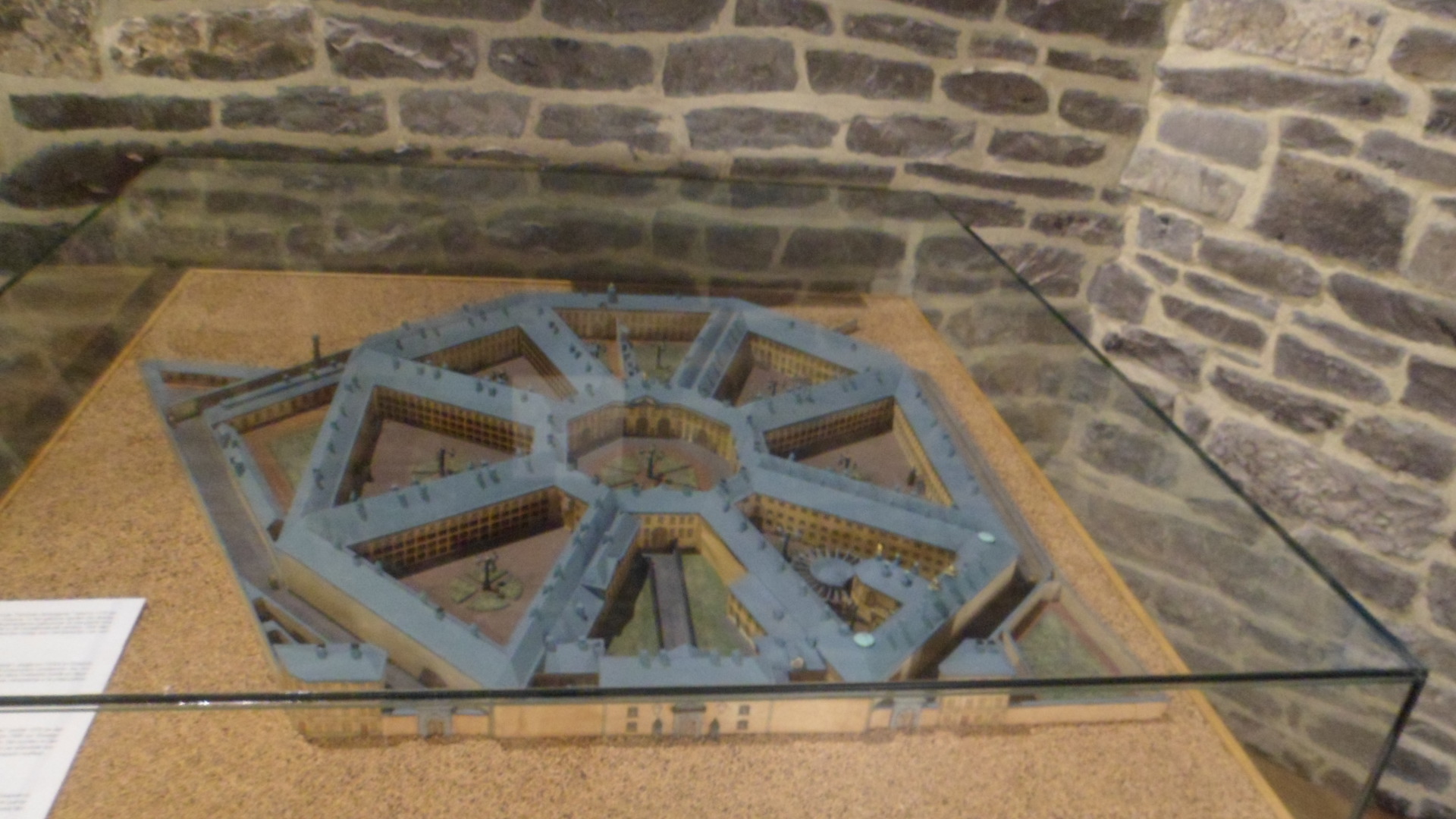
Here is a scale model of the grounds.

.SAM_1146

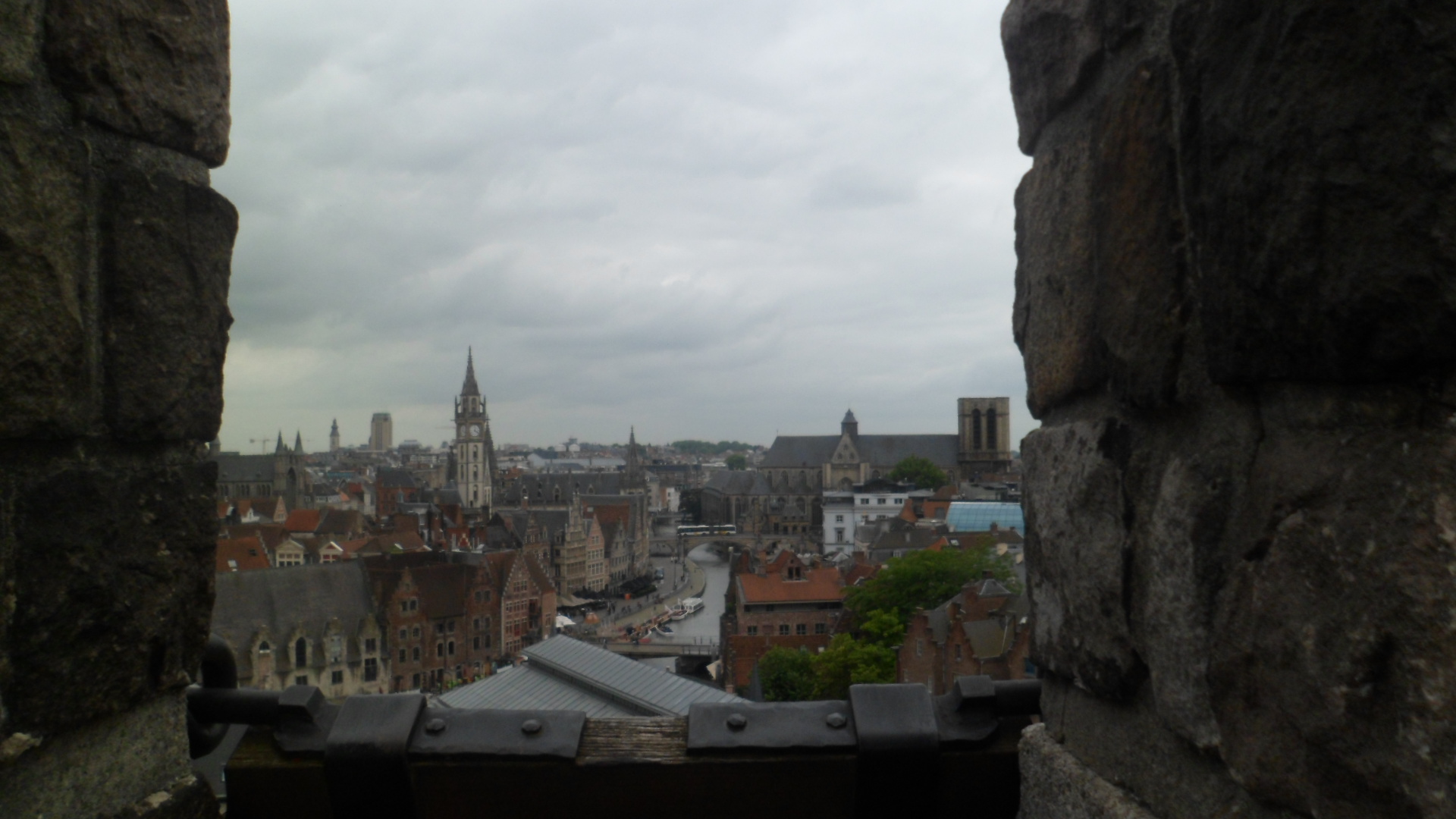
The views from the balustrade made being in the counts’ good graces a nice thing.

SAM_1135
SAM_1138
SAM_1140

Being at the ground level wasn’t bad, either, as long as one was above the dungeon.

SAM_1166
SAM_1170
SAM_1172

On the other hand, if one WAS in the dungeon, this was his lot.  It was converted into a chapel, in the 18th Century.

SAM_1177

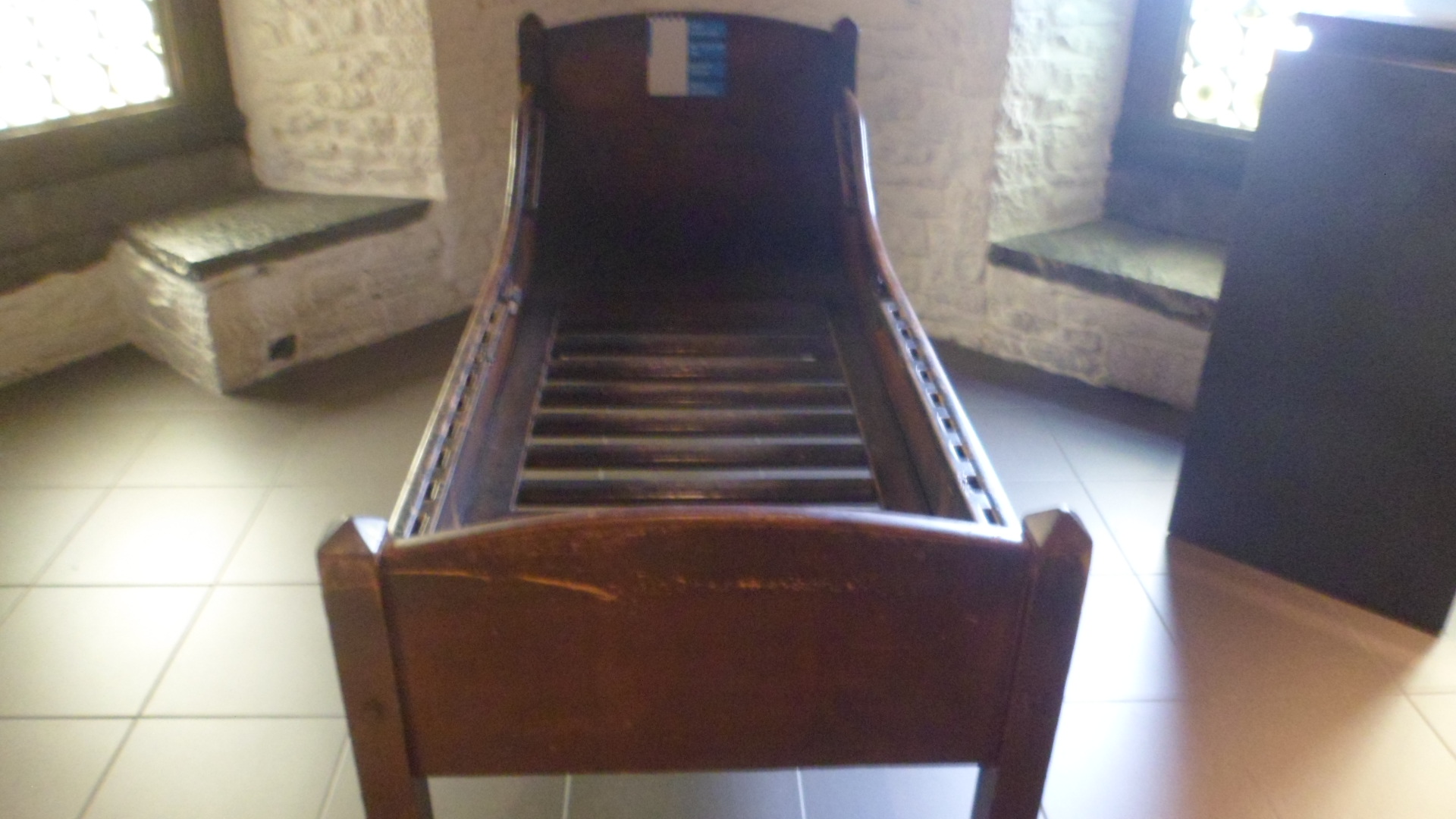
Special visitors stayed here.

SAM_1180

This gave me a good idea of life in a self-contained royal universe. Being in a rather irreverent mood, and it being lunchtime, I dropped in at the Butchers’ Guild, in the Central Market, which reminded me a bit of Boston’s Fanueil Hall- with one big difference:

SAM_1191

It is refrigerated, and there were no flies. I opted for ham with Gouda, on dark rye.

NEXT:  Navigating Brussels

An Eastward Homage, Day 21, Part III: Ghent and Its Canals

2

June 16, 2014- The train frm Brugge to Ghent, on this cool, blustery afternoon, took us through serene villages and lush meadows. The train was nearly deserted. So, it was with some amusement that I was admonished by an officious young conductor, to “leave this First Class Car, AT ONCE! Your ticket says SECOND CLASS!! Kindly go downstairs.” I kindly went downstairs.

SAM_1013
SAM_1014

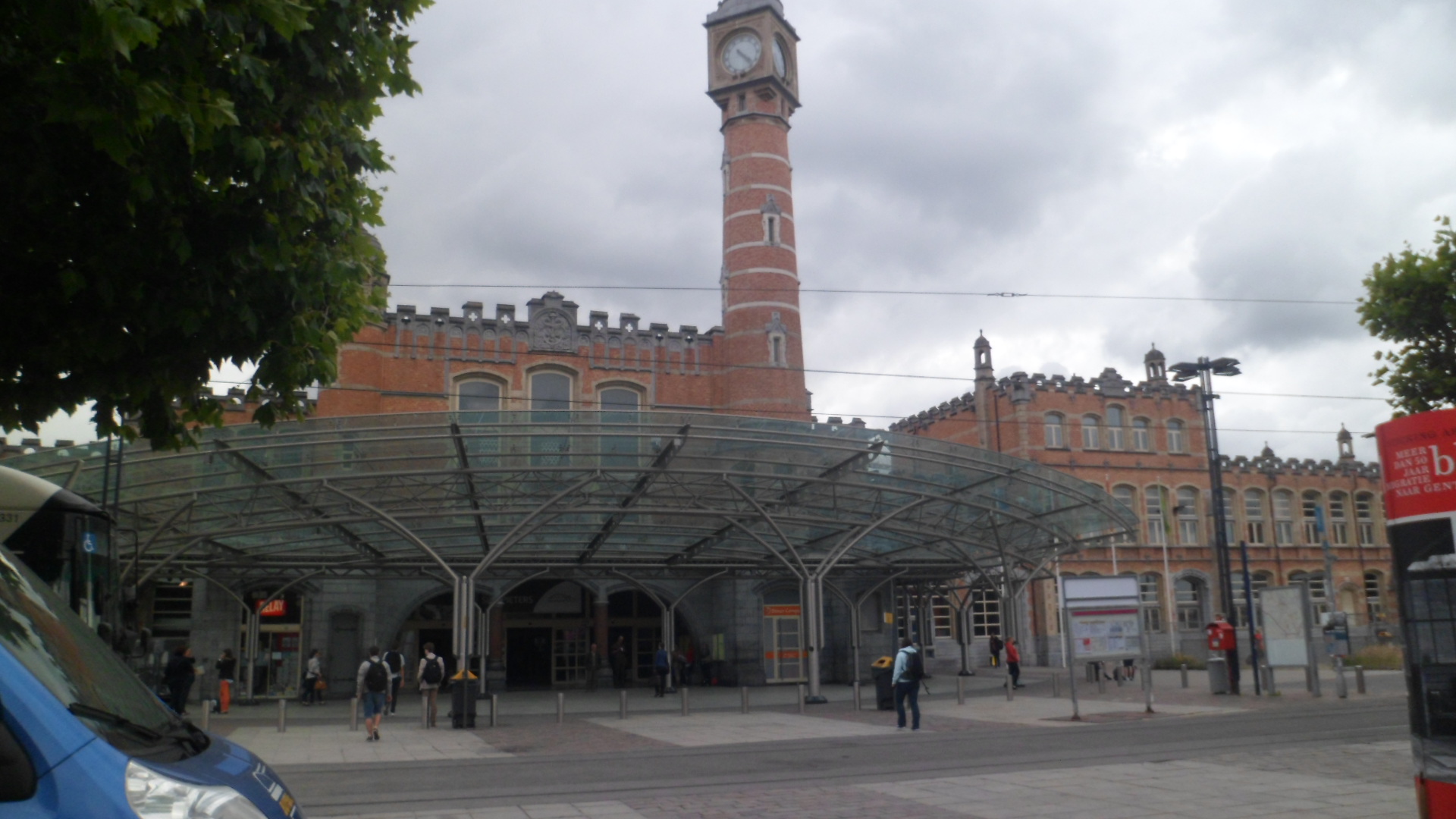
As we were departing, at Ghent Sint-Pieters Station, the conductor proudly told his supervisor that he had managed to roust an interloper from First Class. The older man just smiled, as if mentally patting his underling on the head, and walked into the station. I went on to NH Ghent Sint Pieters Hotel, another lovely establishment, with a very helpful staff. Below is the train station.

SAM_1020

Here are the squares in the area from the train station to the hotel.

SAM_1018
SAM_1021

NH Sint Pieters Hotel is in the middle, above.

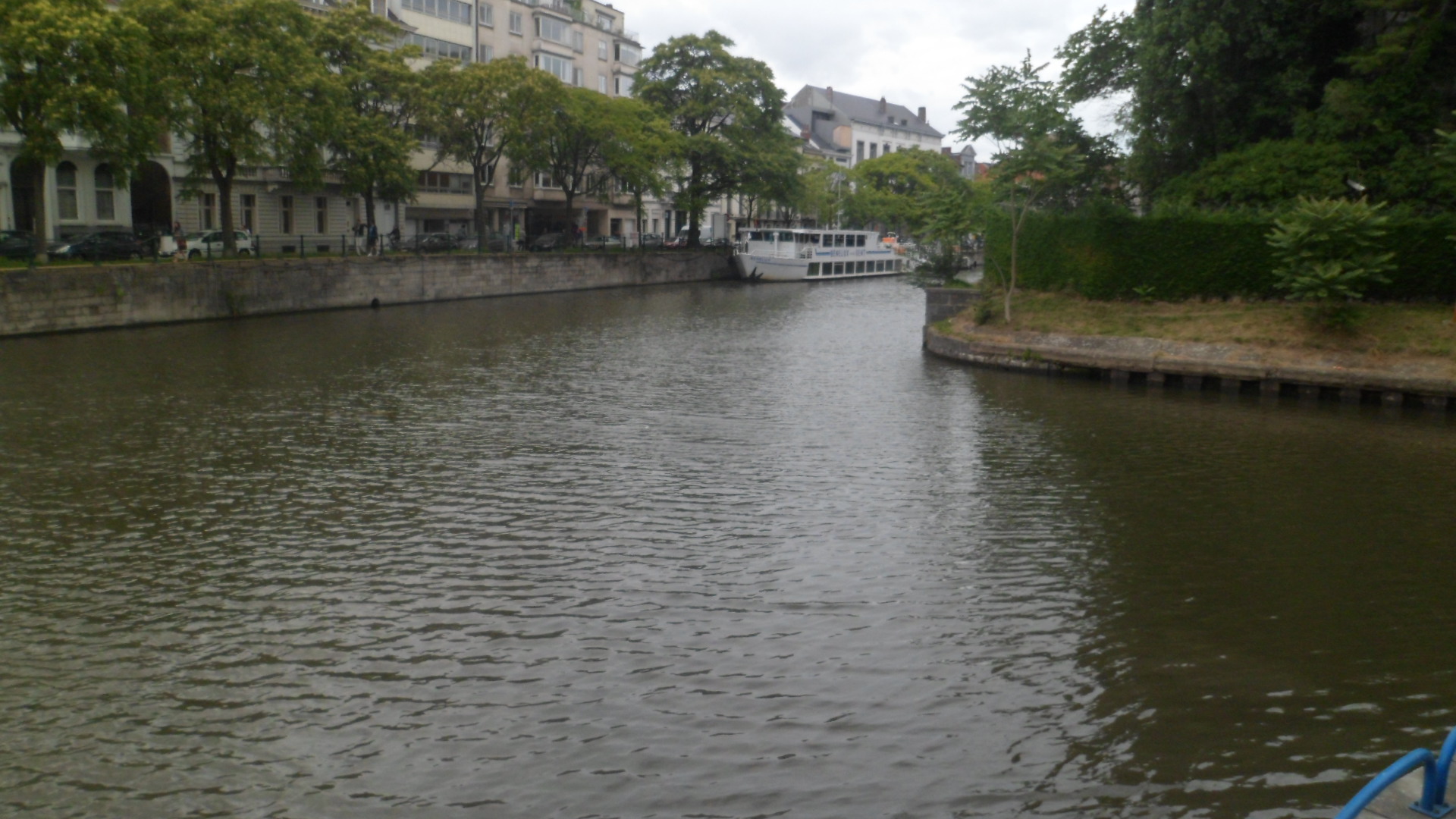
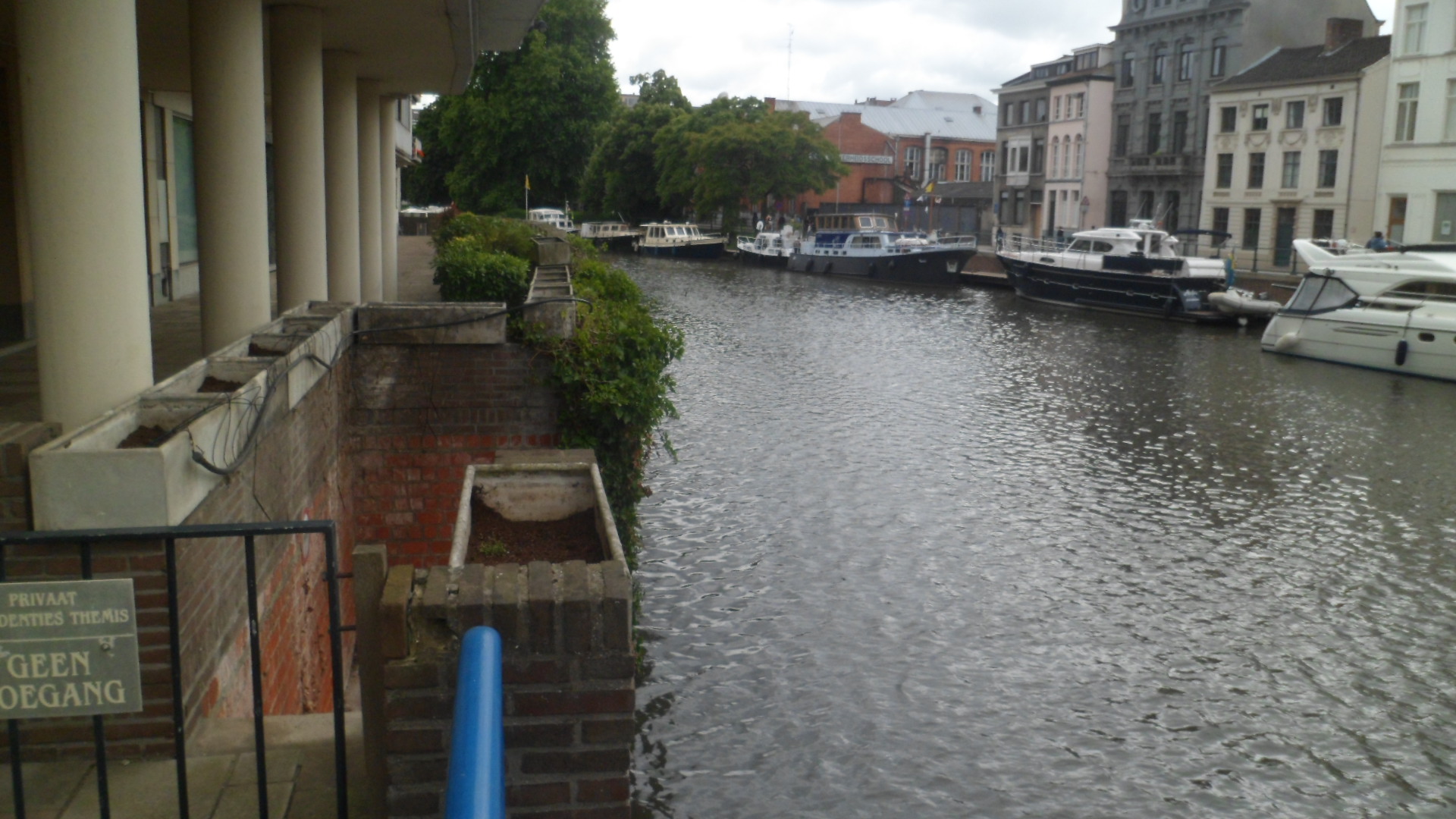
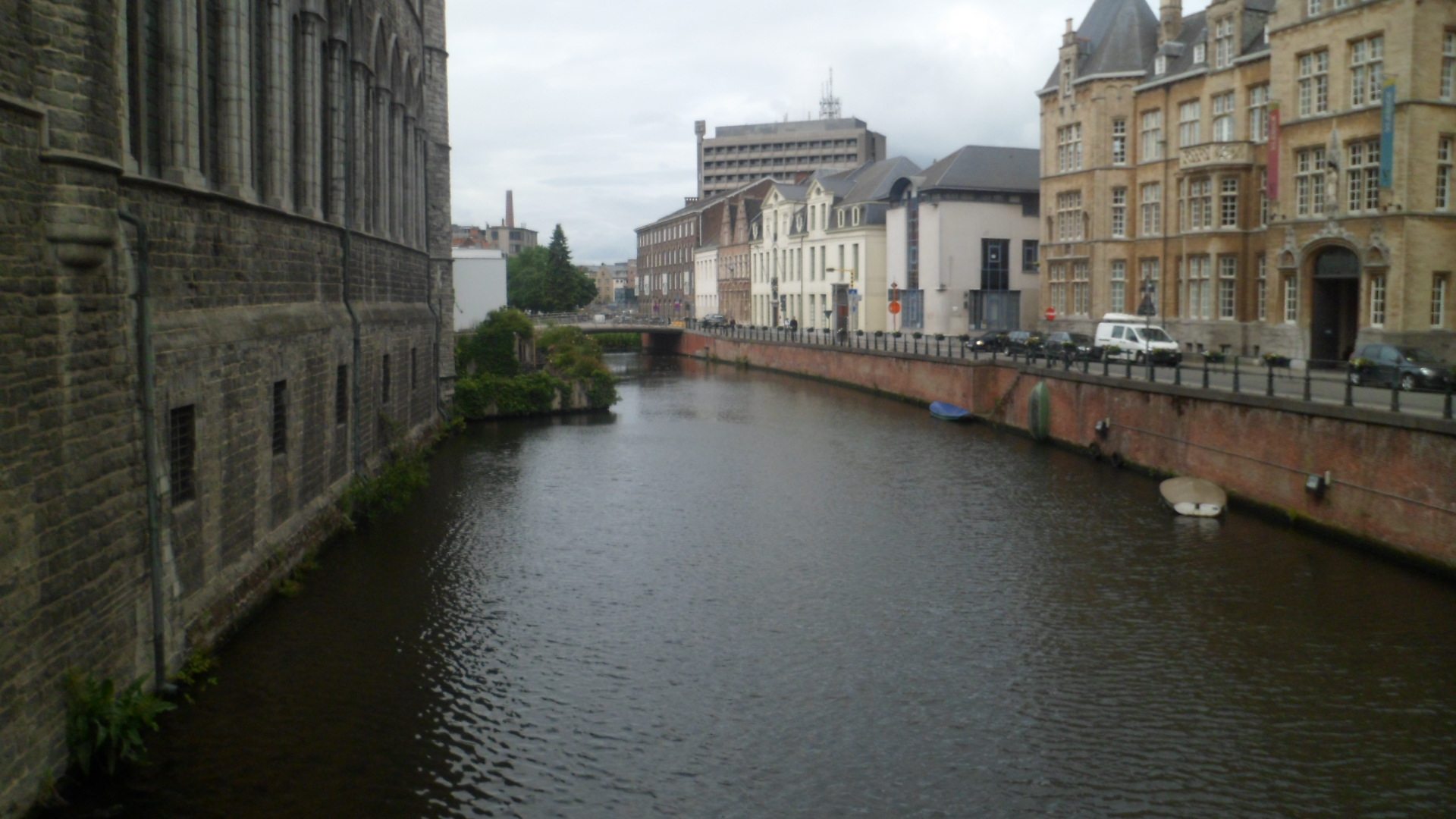
Now, let’s have a look at Ghent’s loveliest feature: Its canal system. The canals here are more extensive than those of Brugge, and rival those of Amsterdam, I’m told. They certainly were serene and impressive.

SAM_1022
SAM_1023
SAM_1024
SAM_1025
SAM_1030
SAM_1026
SAM_1045
SAM_1048
SAM_1054
SAM_1097

Now that you are waterlogged, a few words about some of the buildings that are near the canals:

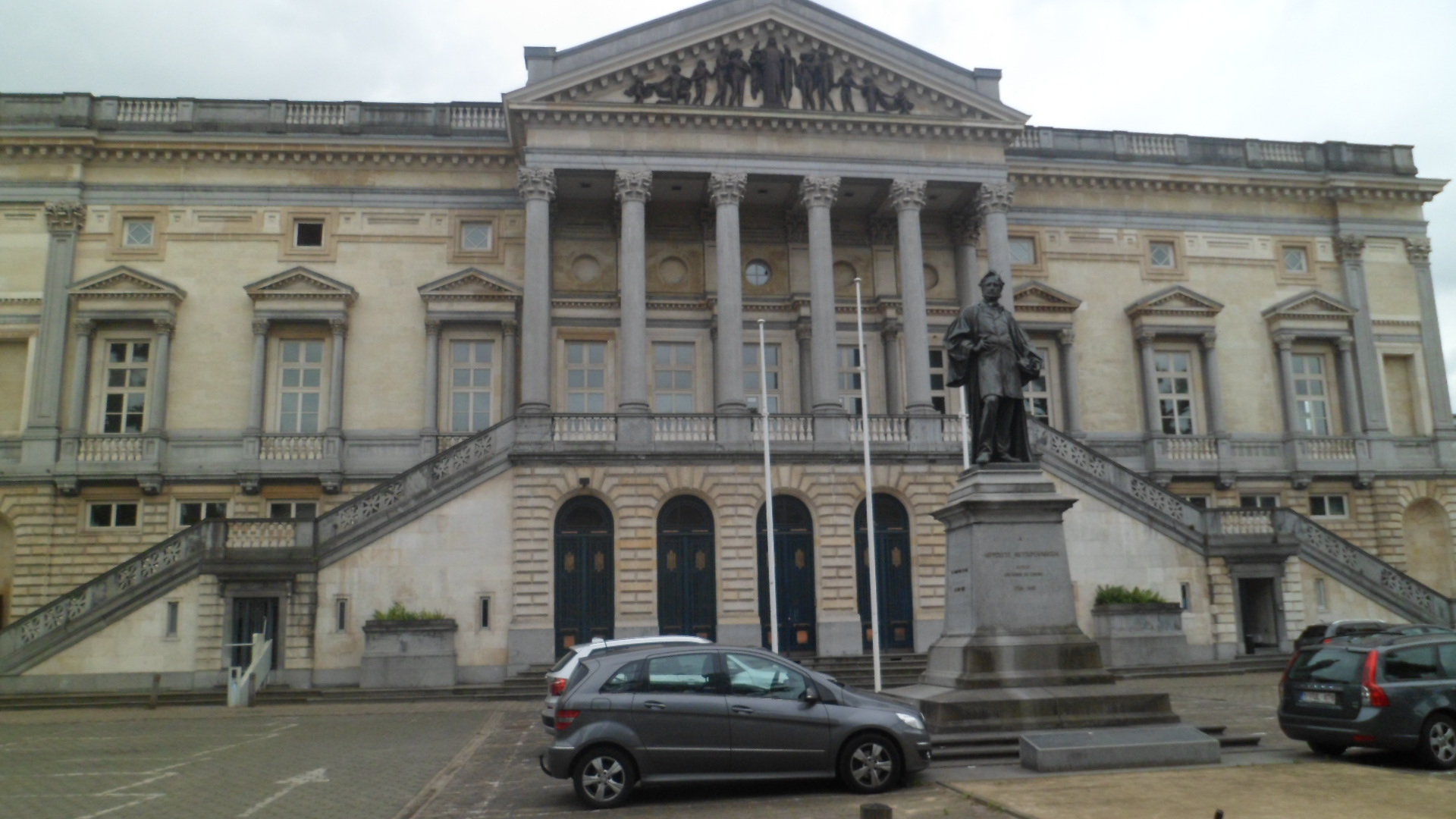
Here is the Hall of Justice (Justitiepaleis).

SAM_1027
SAM_1029

There are several churches, and St. Baaf’s (St. Bavo’s) Cathedral. The latter was in scaffolding. Some practices have spread north from France.

SAM_1083

No mind, it is still an impressive structure.SAM_1086

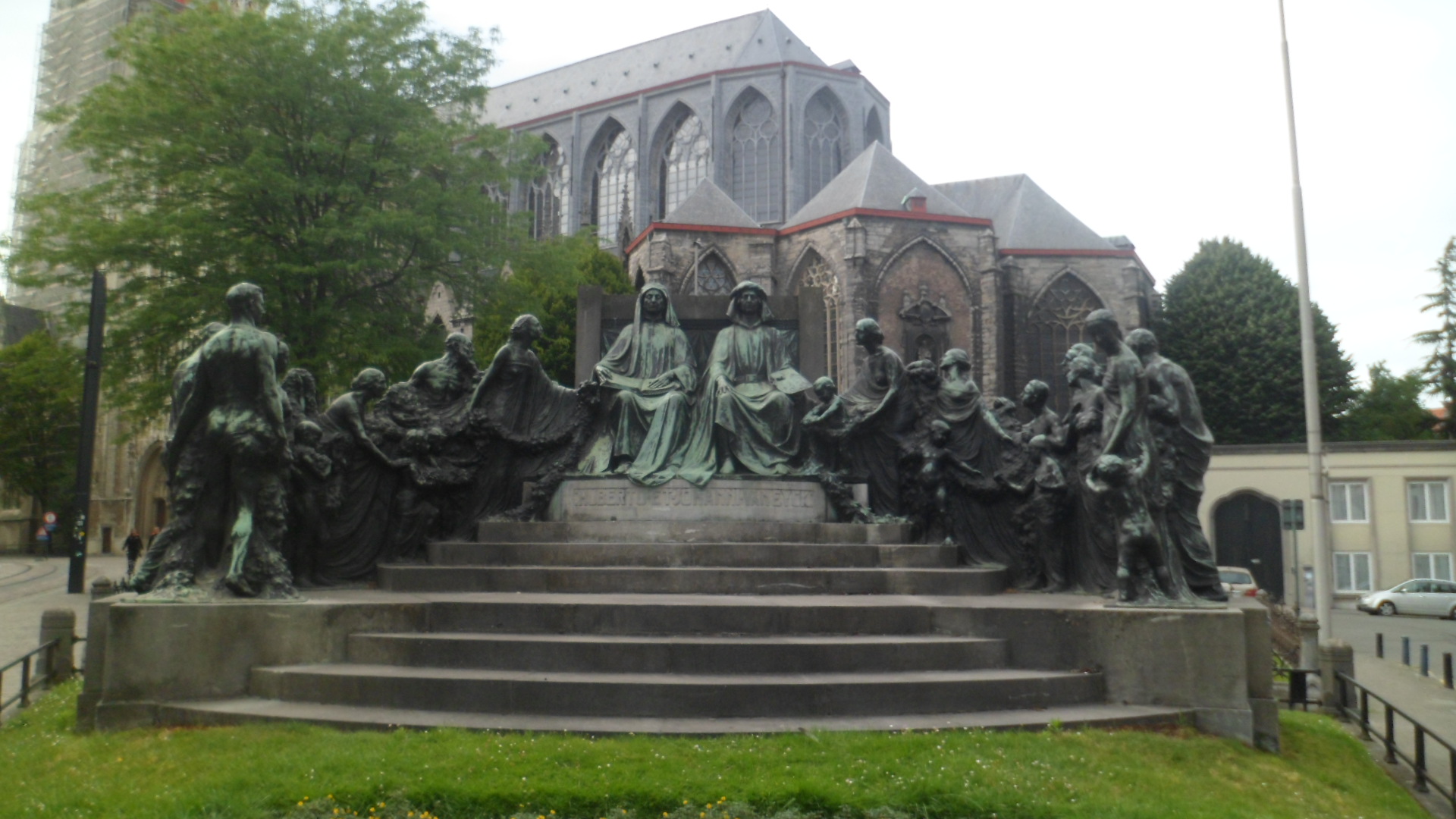
A marvelous sculpted scene by Jan van Eyck greets visitors outside St. Baaf’s.

SAM_1091

Near St. Baaf’s is Kerk Sint Niklaas.

SAM_1089

It is the cathedral, however, which will dominate Ghent’s Centrum, when the renovations are completed.

SAM_1079

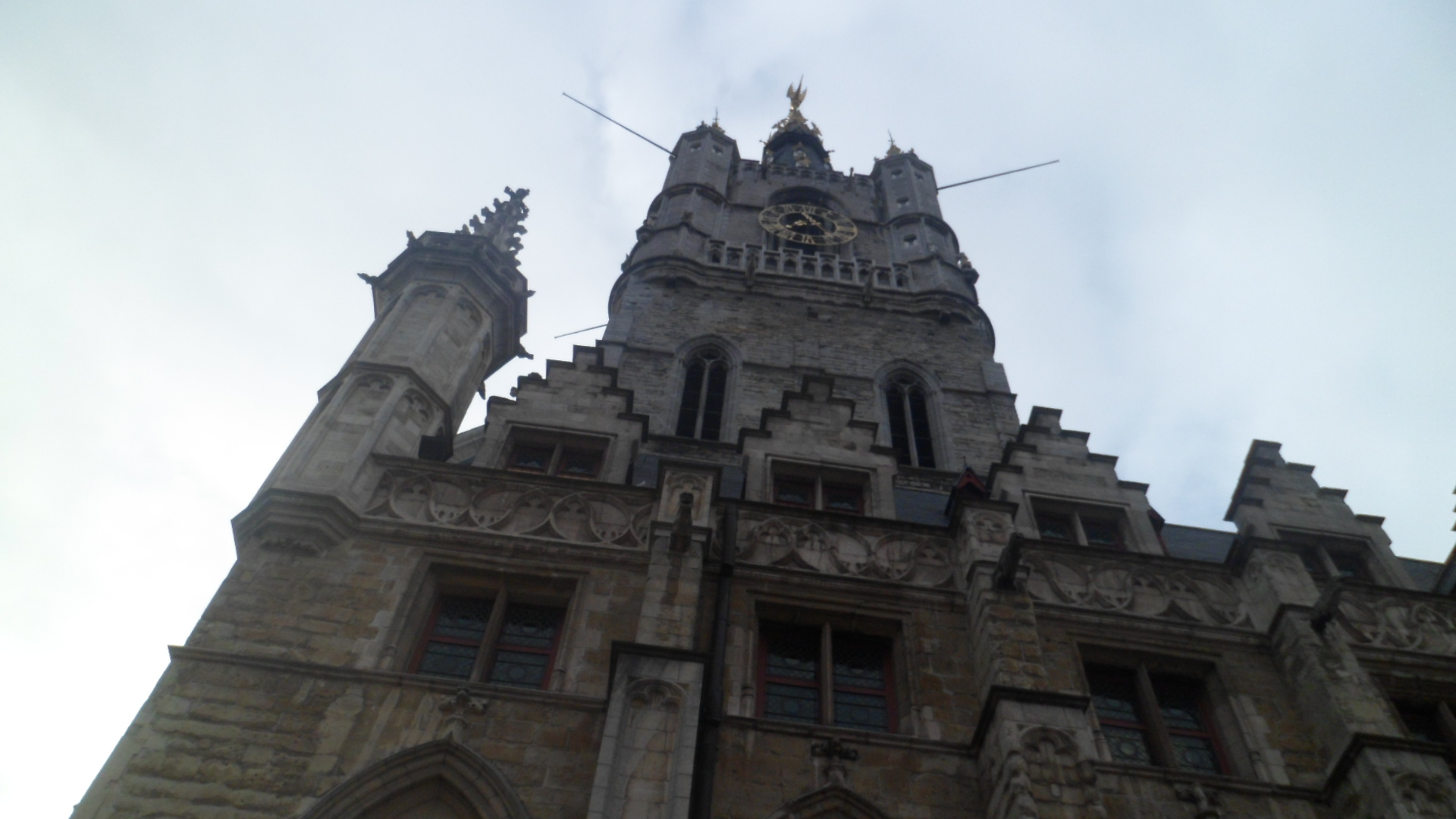
As with all medieval cities, Ghent has an impressive clock tower.SAM_1072

Lastly for the recounting of that enjoyable evening, I leave you with the statue of Lieven Bauwens, the promulgator of mercantilism in East Flanders, of which Ghent is the capital and Antwerp, to the north, is a major port.

SAM_1098

Lots of money was made by the burghers of Flanders, including the Counts of Ostflanders, whose castle, Gravensteen, I will showcase in the next post.

An Eastward Homage, Day 21: Brugge, Part II- The Centrum

2

June 16, 2014-  As spread out as the green space and quiet neighbourhoods of Brugge are- its city centre, Centrum,is dense and compact.  I had lunch in a small cafe, featuring American-style fare.  Thus, in the midst of a medieval burgh, I sat and enjoyed a Philly Cheese Steak.  Hey, at least the fries came with mayonnaise- a true Low Countries tradition.

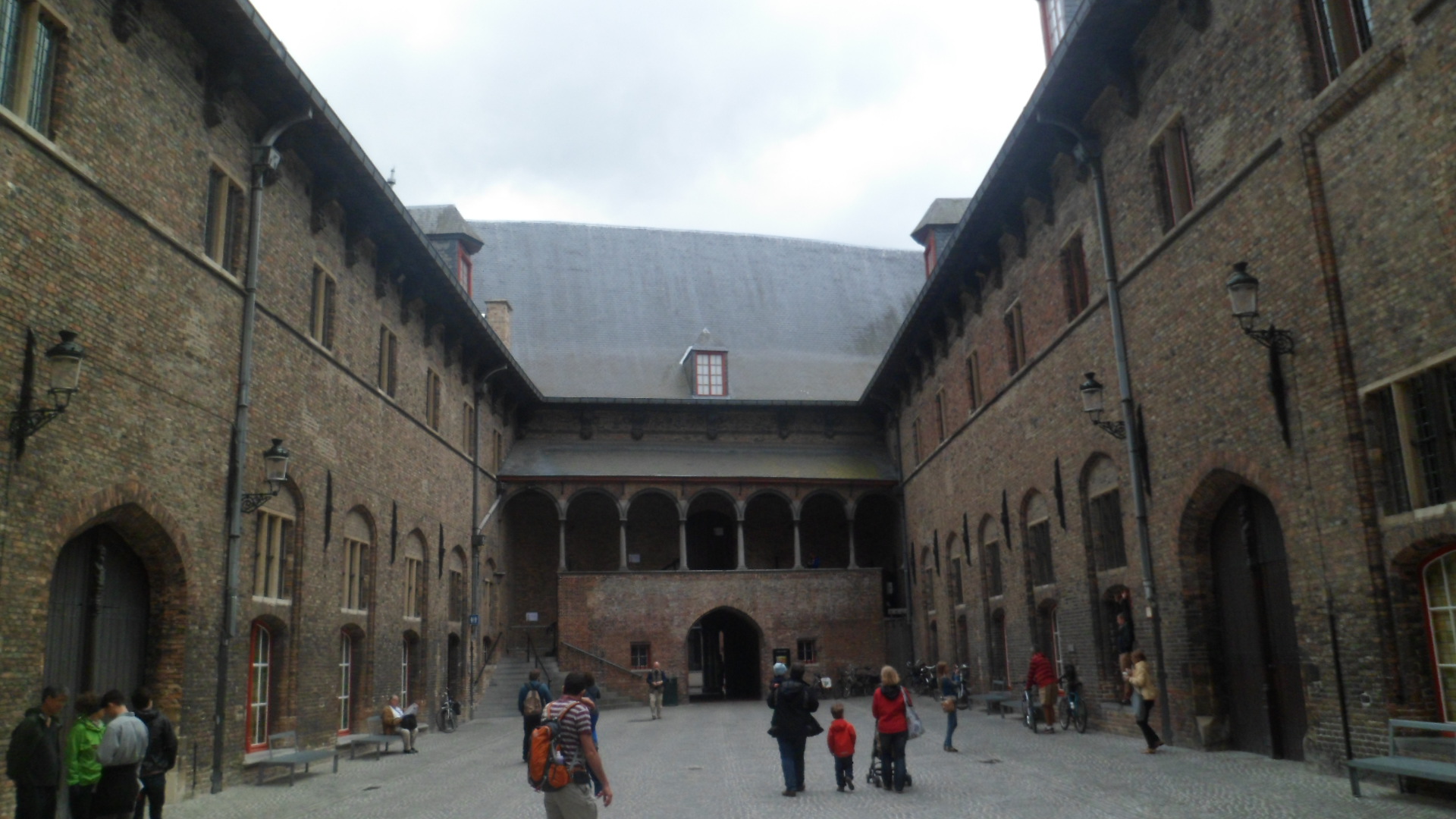
Each city-state in the Flanders, and Holland, of the 12th-15th centuries was a self-contained unit. Some, like Brugge and Ghent, would freely associate on some matters, but were just as likely to squabble. This was the lot of most of Europe, at that time, with only a few nations, like France, England and Denmark making an actual go of cohesiveness. Those nations, though, were constantly at war with one another. The city-states had one mission: Make a bundle, and fast. So, Stadt Huisen (State Houses) sprang up, wherein the Counts and Dukes who ruled the city states, and the burghers who cashed in on the products coming through the city, could conduct their business. Below, we see the Stadthuis of Brugge.

SAM_0979
SAM_0980

Draft horses pull cartloads of visitors through the Centrum, now as in the Middle Ages.SAM_0981

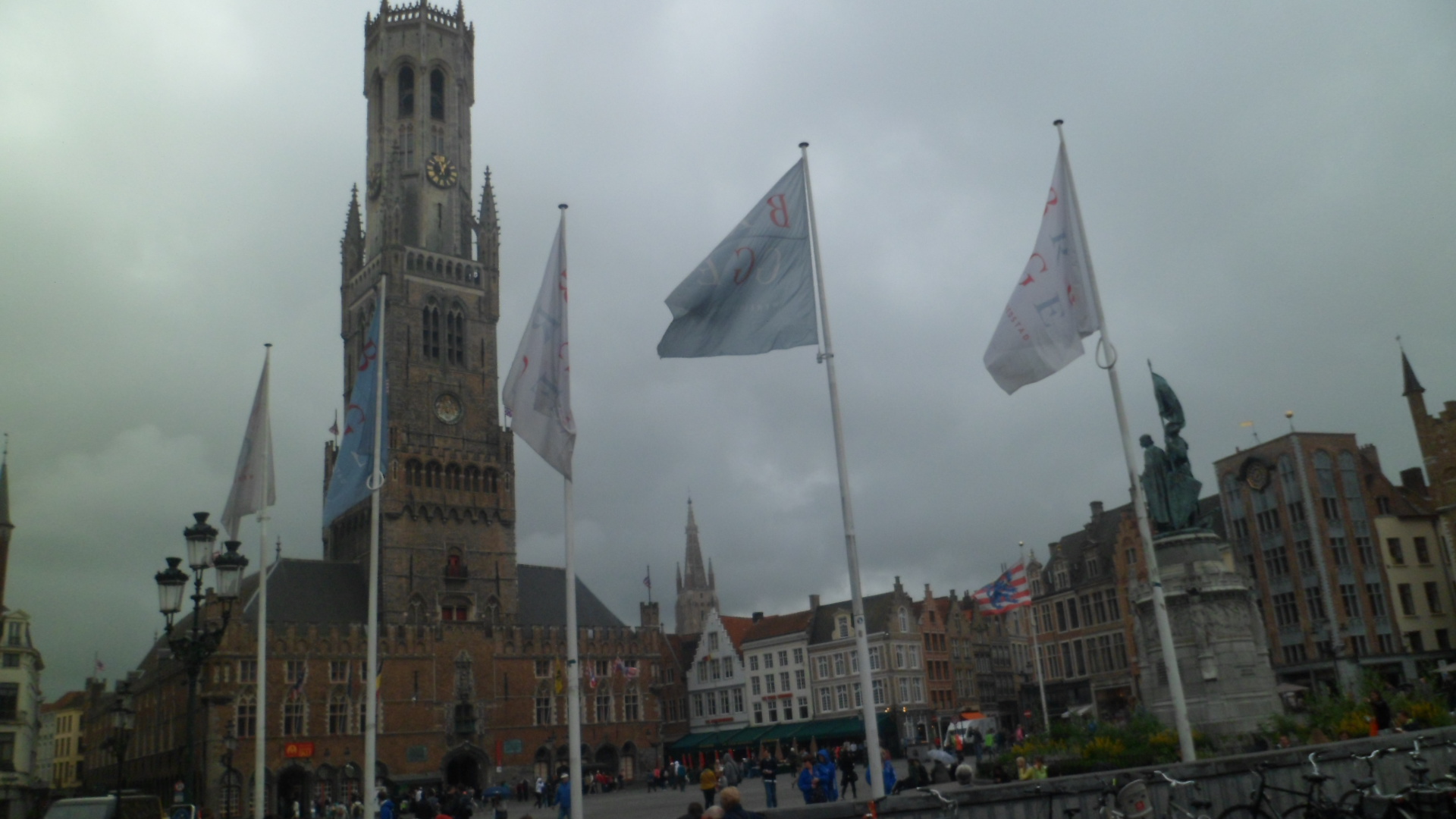
Brugge’s Belfort is now the city’s Historical Museum.  In the city-state’s heyday, it was a belfry and a fort.

SAM_0982

SAM_1001
SAM_1006

Next to Belfort is the Bourse.

SAM_0997

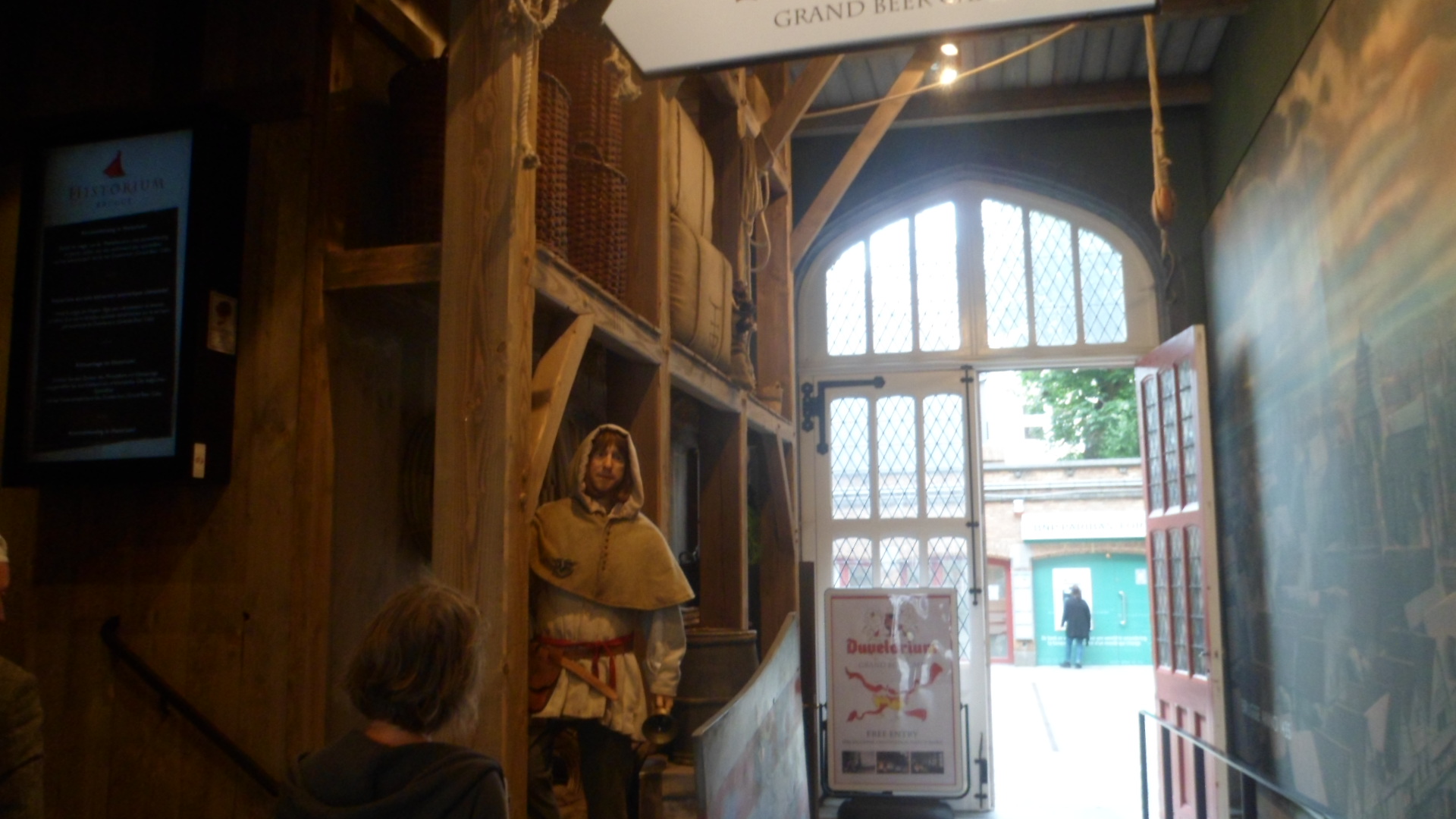
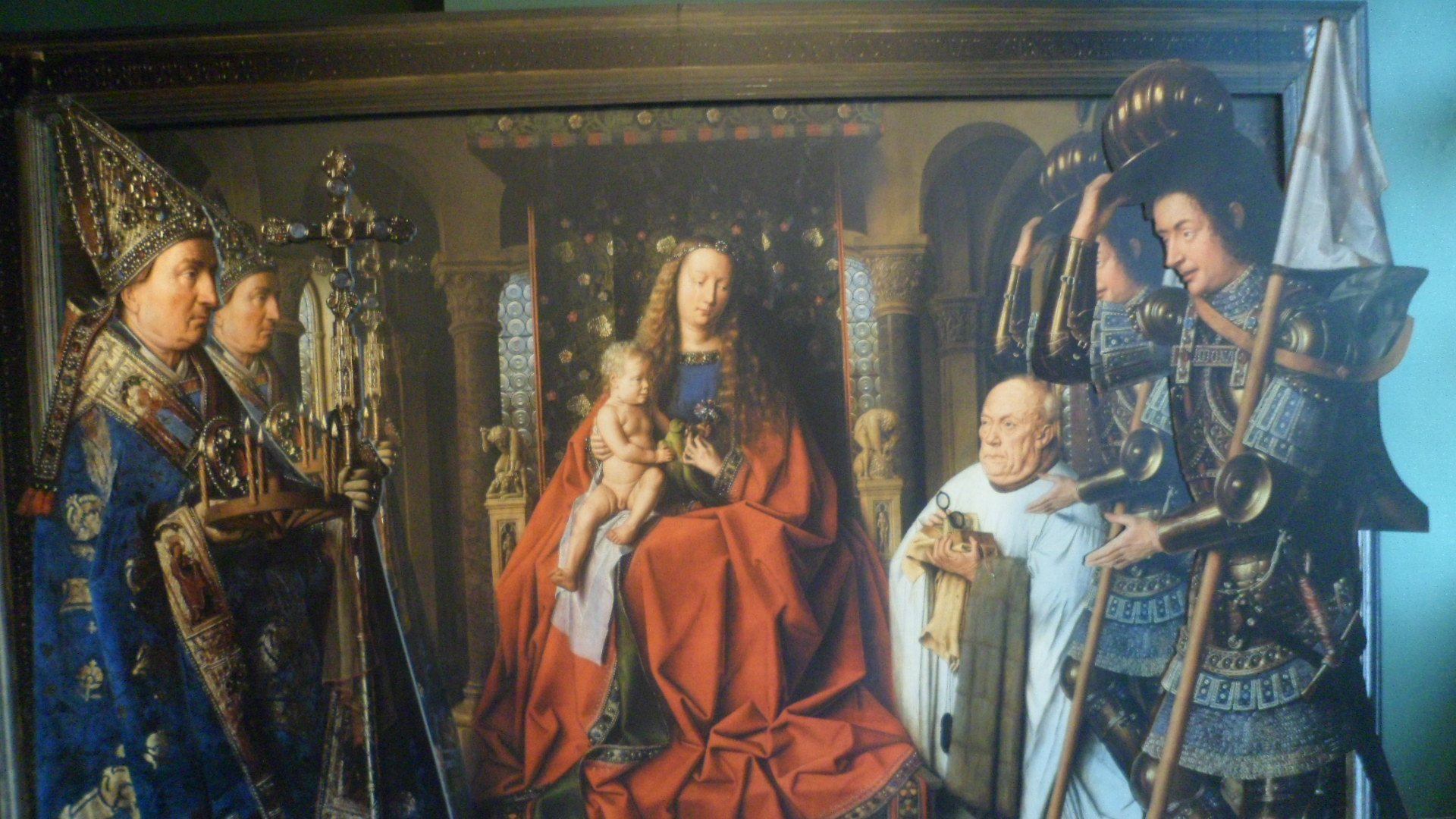
Next to the Bourse, on the other side, is Historium, a multimedia presentation on medieval life in Brugge, using the process pursued by Jan van Eyck to complete a painting, as an example of a transaction. Art in Europe, as many are aware, was a matter of great financial import. Artists survived only through the largesse of wealthy patrons. They hired several young men to act as couriers and procurers of supplies. Thus, Van Eyck hired “Jacob”, whose hapless search for a certain green parrot, and a girl named “Anna”, to serve as a model for the Madonna in Van Eyck’s painting, plays out over several minutes. Thugs try to steal Van Eyck’s supplies, Jacob is threatened with dismissal, and the streets of Brugge are full of drama. I will let you guess how all turned out, but here are some photos of Historium.

First, we meet “Jacob’.

SAM_0984

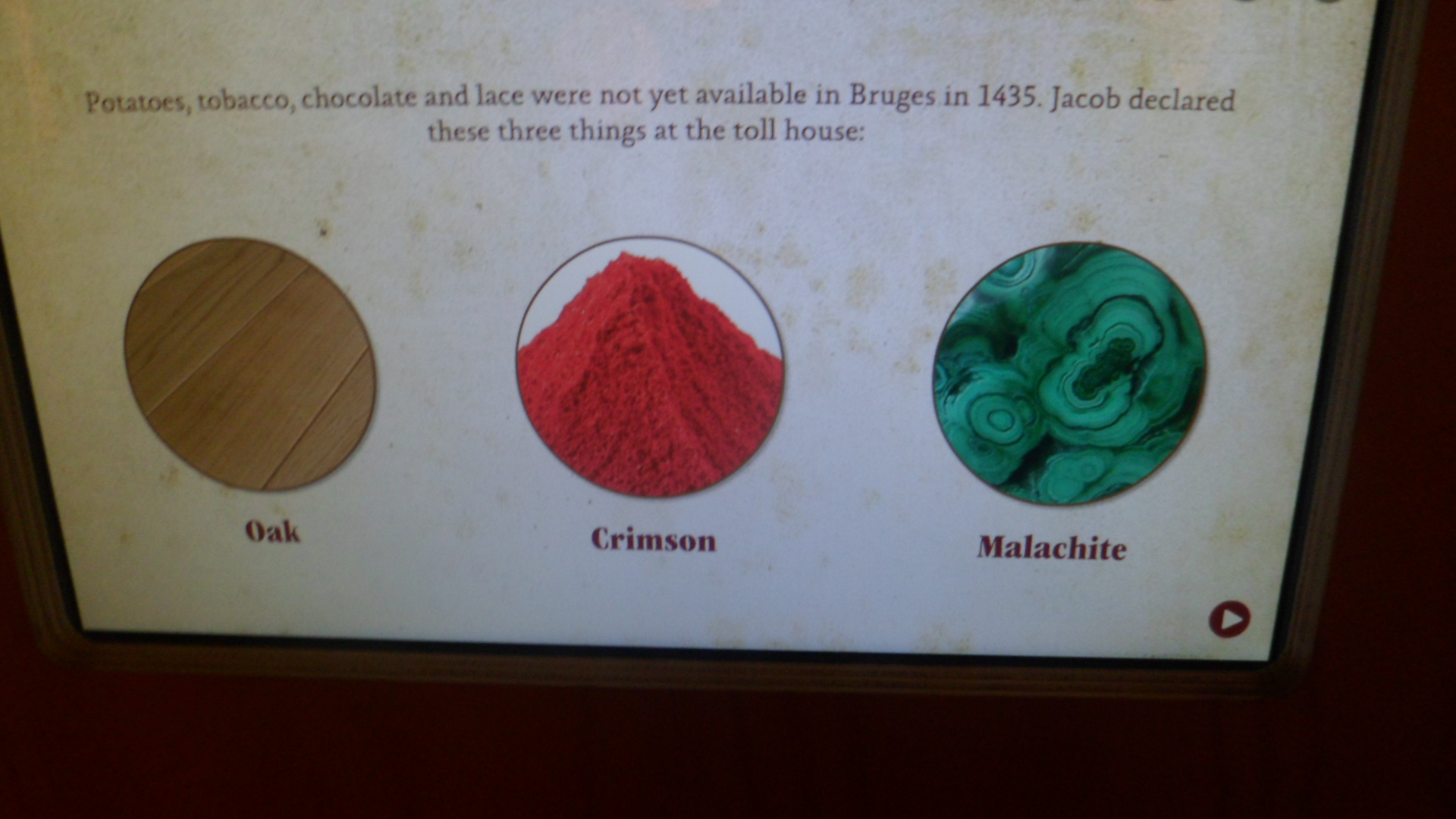
He shows us the items he had to procure, besides the parrot and Anna.

SAM_0987

We get parrot’s eye views of the Centrum.SAM_0988

SAM_0989

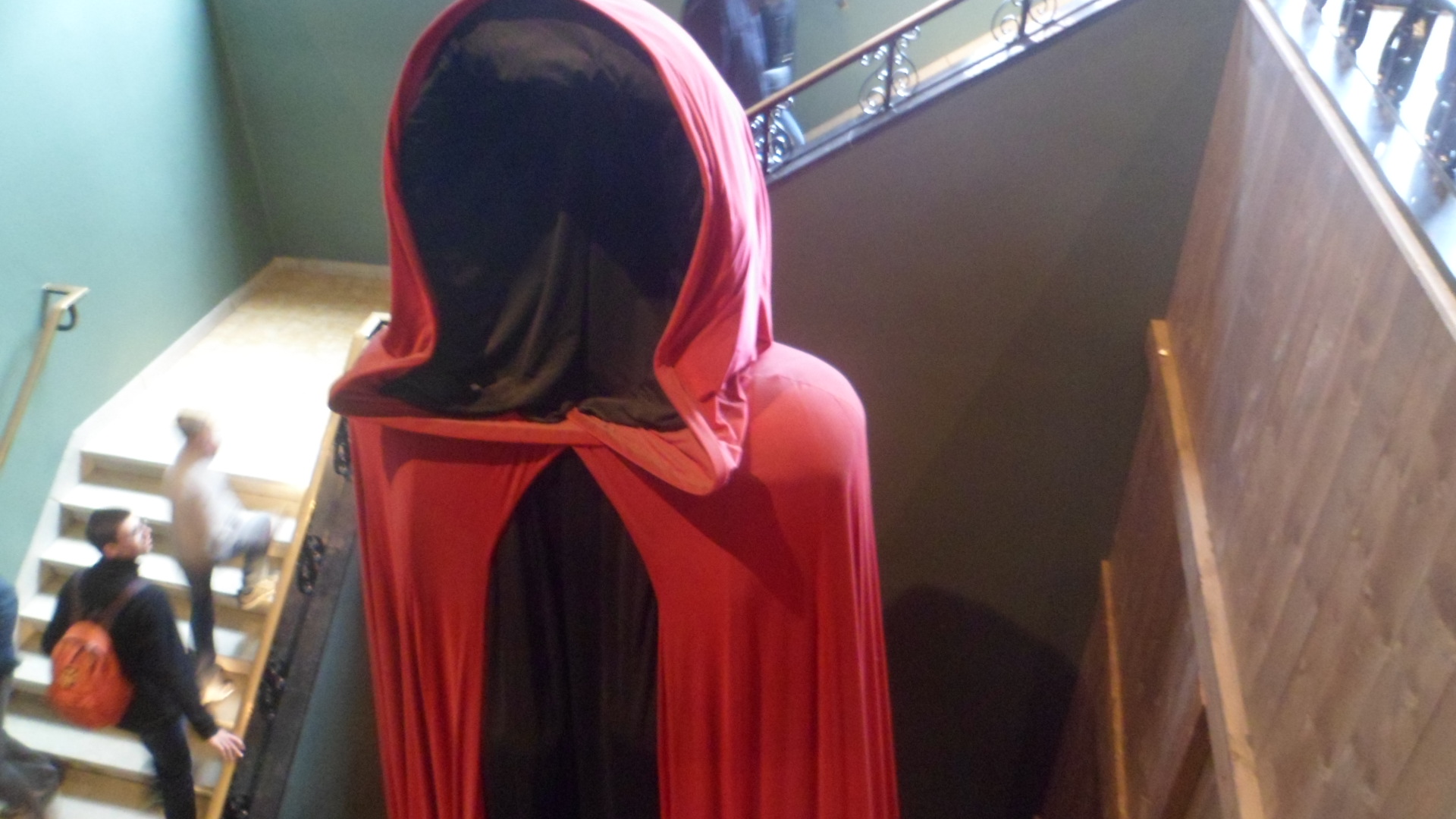
Here is Anna’s cape.

SAM_0994

As luck would have it, Van Eyck stages a painting party.

SAM_0993

It appears the patron is pleased.

Some of my fellow travelers that day were definitely pleased.  A class of high school students put on a delightful, impromptu dance, in the Centrum.  Youth were a recurring source of joy, wherever they turned up during my journey.

SAM_1009

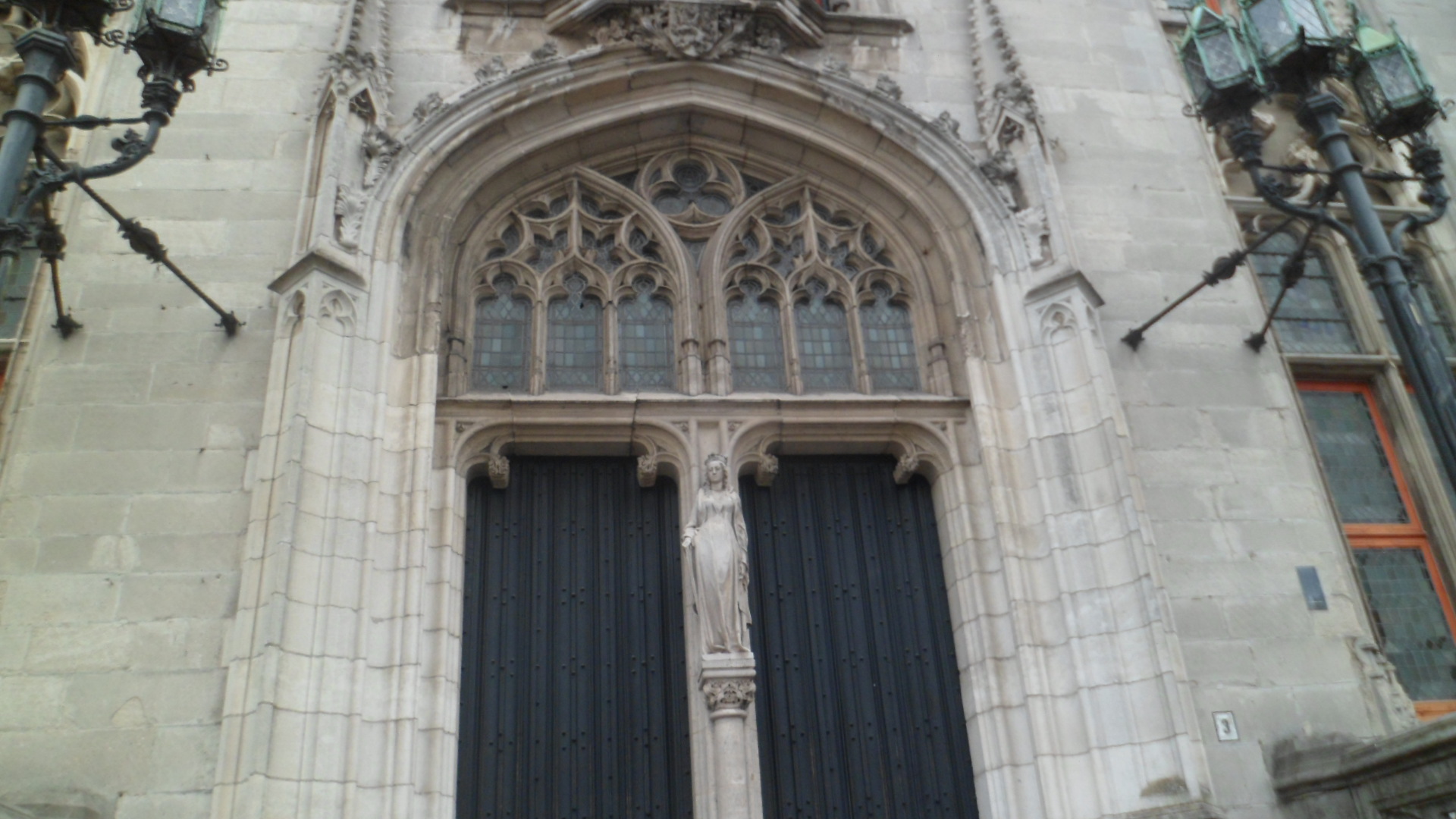
I was getting close to departing for Ghent, but got a couple of last-minute shots. Here is the Duke’s Palace.

SAM_1011

Lastly, I got a view of Sint-Salvatorskathedral. This would bring me back to Brugge, another year.

SAM_1012

My all-too-brief visit here left me with a good appreciation of why the Flemish are loath to go it alone as mini-country. These hard-working people have seen, first-hand, the drawbacks of the city-state and the small duchy. Belgium, the nation, seems a much better proposition. I left Brugge genuinely liking the Flemish, a feeling that would only be augmented by my time in Ghent.

An Eastward Homage, Day 21, Part I: Brugge’s Gateway and Spiritual Heart

6

June 16, 2014-The magic Monday dawned, cloudy and cool. I left Lille, with the knowledge that THIS time, I would not need to go back to Paris, in order to catch the train to my next destination. I boarded the train around 10:30, and headed unceremoniously across the Belgian border, at Tourncoing/Mouscron (Moeskron). For the next three days, all signs would be in French and in Flemish (Dutch). Today, I would visit two siblings, and rivals: Brugge (Brooj, or Bruhh; your choice, but the majority Flemish like the second, more guttural sound) and Ghent.

Belgium does not, however come across as schizoid as some have had it look. The French and Flemish make an effort to get along, at least in public. The best thing I saw to do as a visitor was to listen carefully to the Flemish, make an effort to use some words in their language, and let our mutual English do the rest. Since I was already doing this among the French-speakers, it was more of the same.

I found Brugge cool, temperature-wise, but quite cordial in terms of greeting. I was able to easily place my bags in a storage locker, and devote several hours to this seedbed of capitalism. Here is the main train station.

SAM_0912

I crossed the Stationplatz, and found Kong Albert Park waiting to greet everyone with a pleasant green space. Greenery did not matter so much to the early masters of commerce, but it matters now, to their descendants.

SAM_0913

The streets in this UNESCO World Heritage Site are narrow, but workable, and a system of canals goes everywhere.

SAM_0916
SAM_0921
SAM_0925

Smedenpoort is one of the gates that kept Old Bruges on guard, at all times, as the city state grew.

SAM_0926

Hanssenspark, a greenspace on the east side of town, lends an air of solace to Brugge, even as the city shows some modern honours to those who fought in the World Wars, for which Belgium suffered greatly.

SAM_0927
SAM_0932
SAM_0920

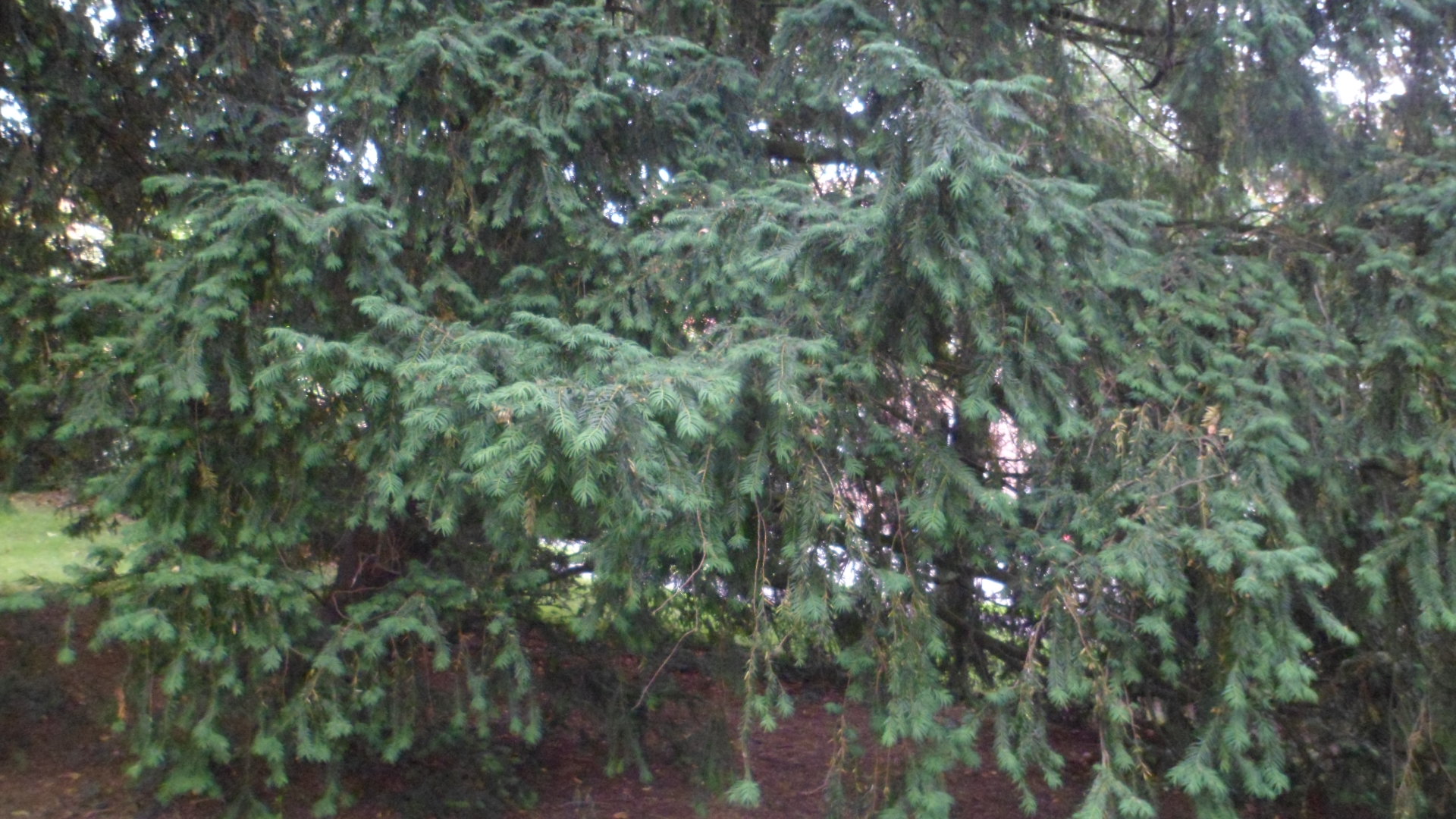
Belgium is far enough north for some evergreens, which brought back memories of my New England boyhood.

SAM_0933

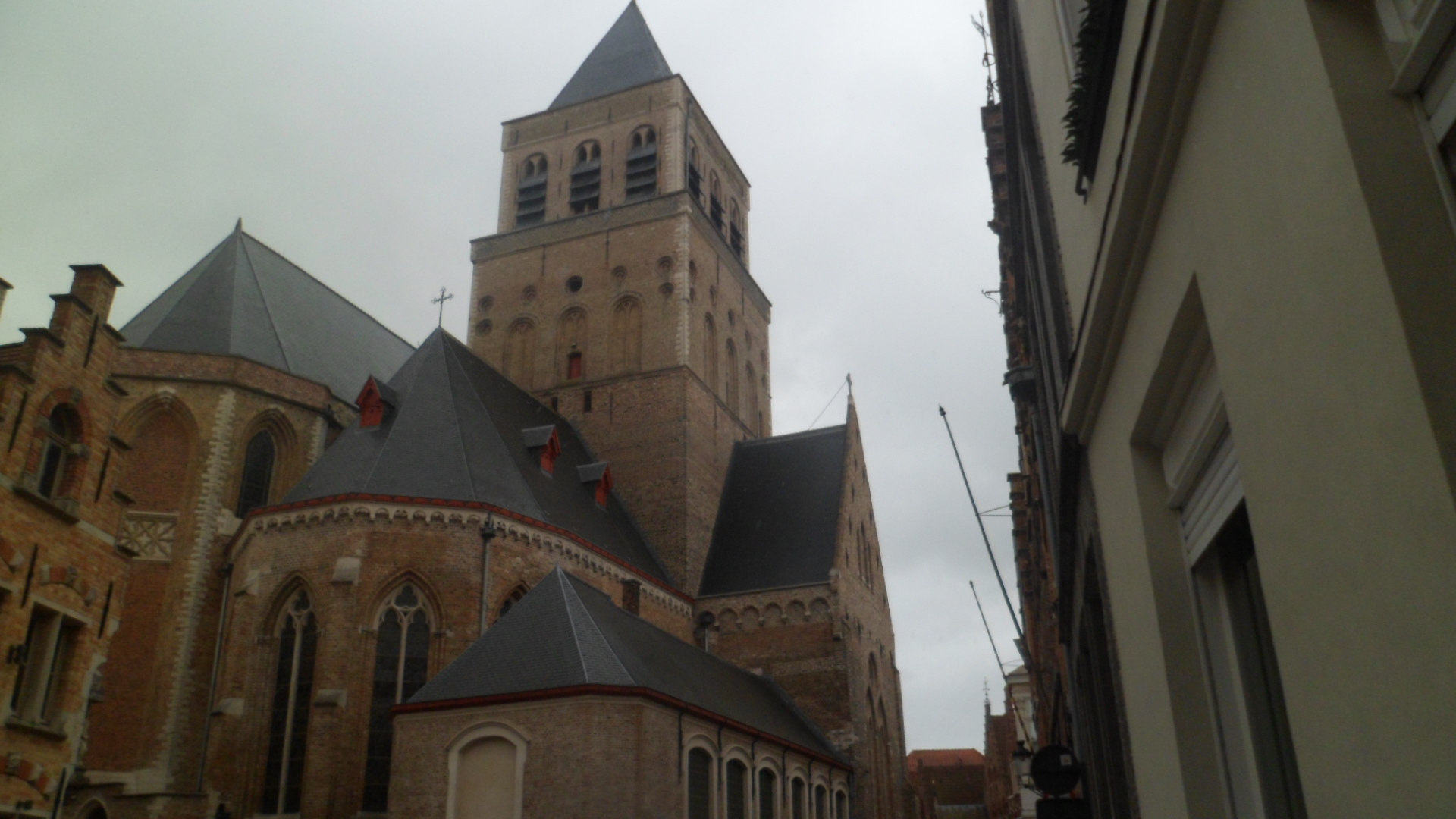
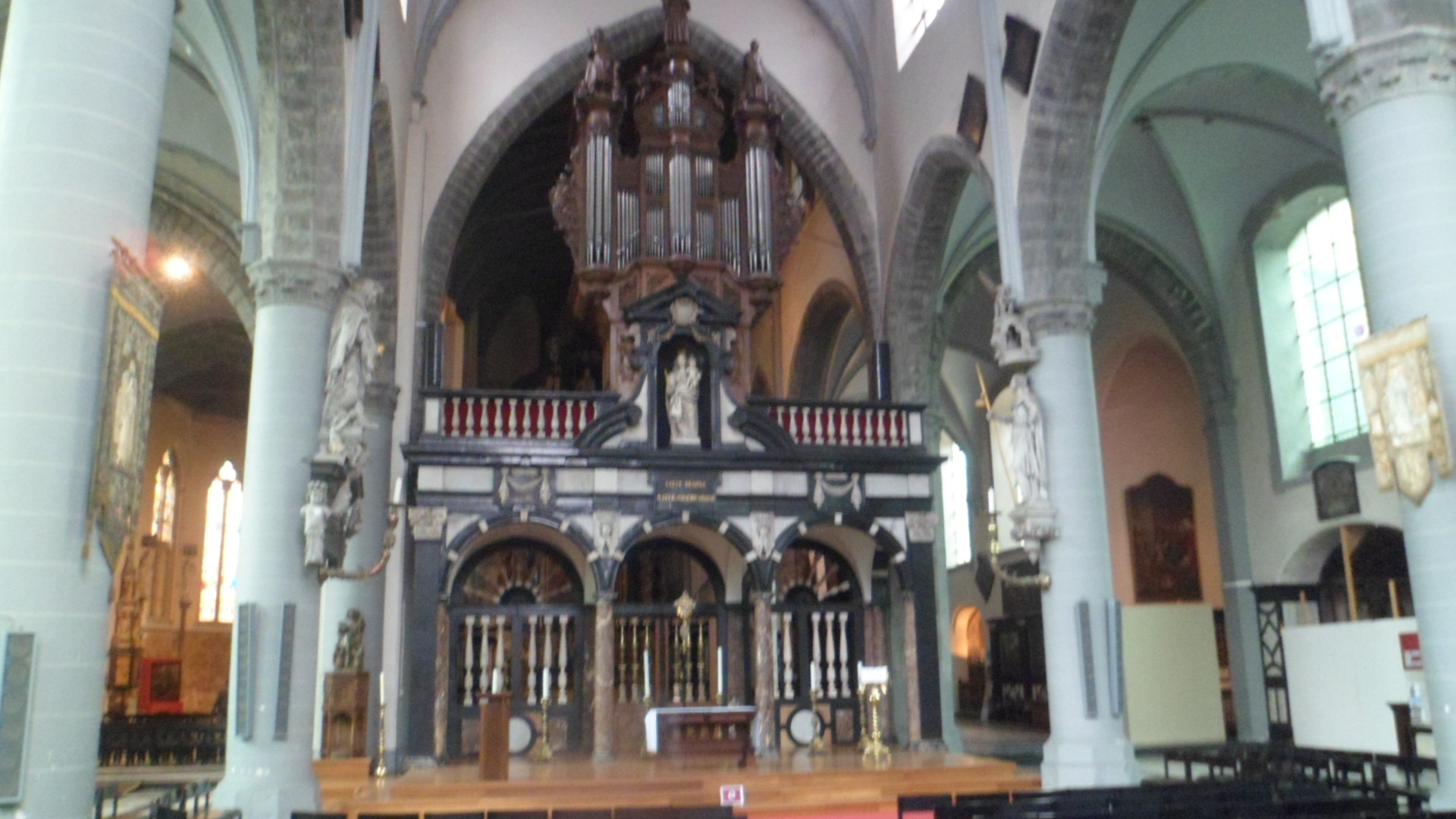
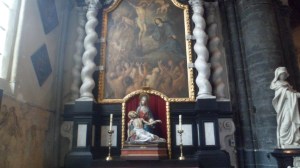
I came upon Kerk Sint-Jacob, built by the people of West Flanders in honour of St. James the Elder. A series of panels in the church depicts his martyrdom.

SAM_0942
SAM_0948
SAM_0951
SAM_0954

The choir loft rises just before one sees the homage to St. James.SAM_0959

This series is similar to that found in El Prado, in Madrid.

SAM_0963

The Deacon’s Mount is just south of the Main Altar.

SAM_0966
SAM_0970

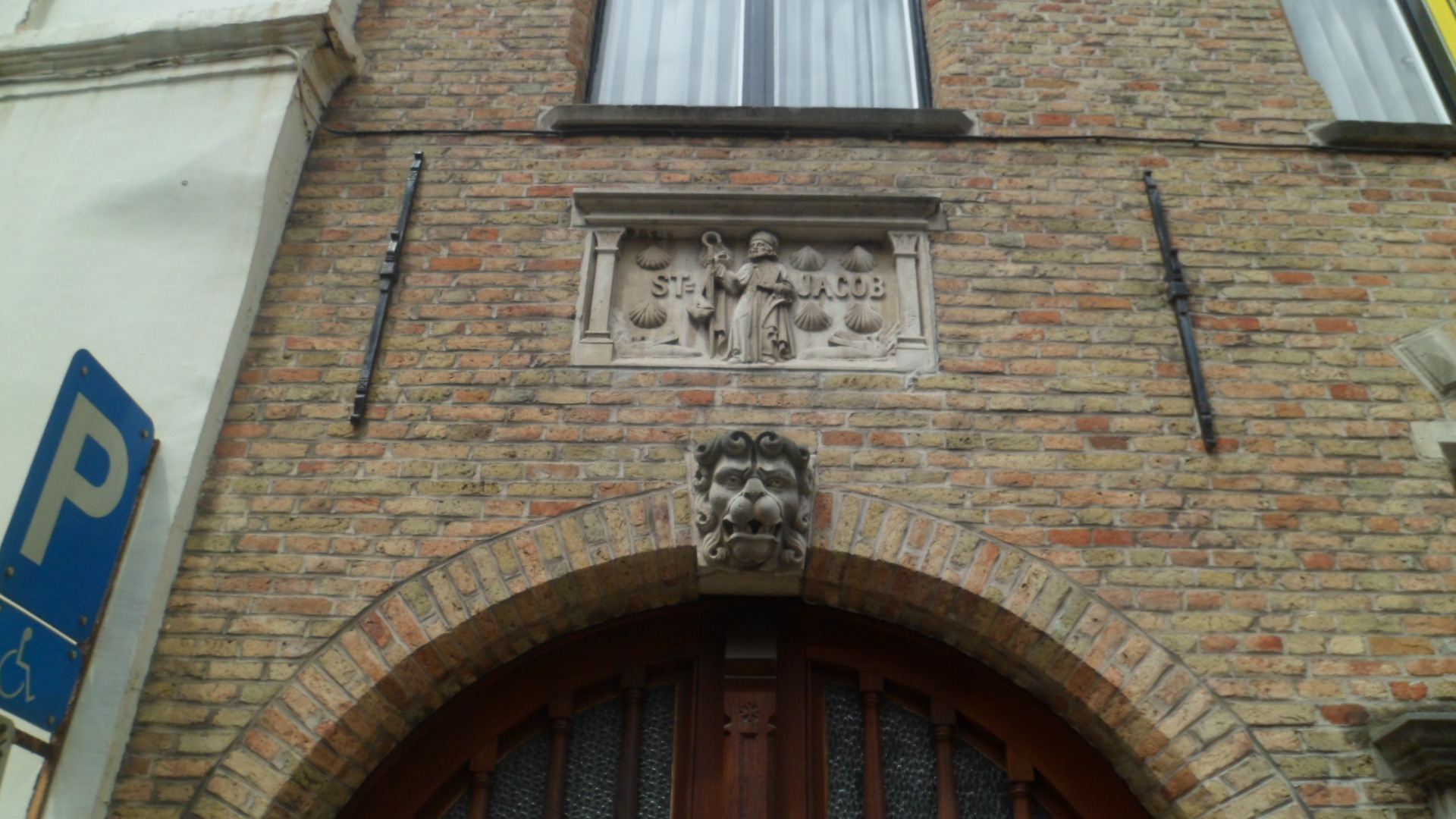
As one leaves the church, there is a tympanum, with St. James watching over a lion.

.SAM_0973

This is fortuitous for Brugge, which was faced, for several centuries, with taming its mercantile beast- maintaining prosperity, while at least somewhat minding the passions of its soul. In Part II, I will focus on the Centrum- the heart of Brugge.

An Eastward Homage, Day 20: Lille of the Valley

4
SAM_0849

June 15, 2014-  This date was significant to me, in two respects.  One, it was the first Father’s Day on which I could neither converse with my son nor listen to the homespun wisdom of my father-in-law.  Two, it was my last day in the northwest of France, at least for a few years.

After the obligatory run-back to Paris from Amiens, given me at a discount rate because of the ongoing train strike, I boarded a train for Lille.  At least I only used Gare du Nord this time.  It was pleasant, actually, in that there was a string section in the station, playing for all the fathers who were passing through.

The ride to Lille, France’s resilient northern gateway, was quite brief, with only one stop, at Arras.  We debarked at Gare Lille-Europe, the more modern of the city’s two train stations, seen above.

My hotel,  Balladins, was close to the other station, Gare Lille-Flandres.

SAM_0853

Hotel Balladins turned out to be another very welcoming hostelry, and with Le Morand and Hotel de France, one of my three favourites in the northwest of France. Perhaps it was that the diligent desk clerk seemed like one of my nieces, or that she went out of her way to find a Cyber Cafe- Laundry, but my settling in here was the smoothest thus far.

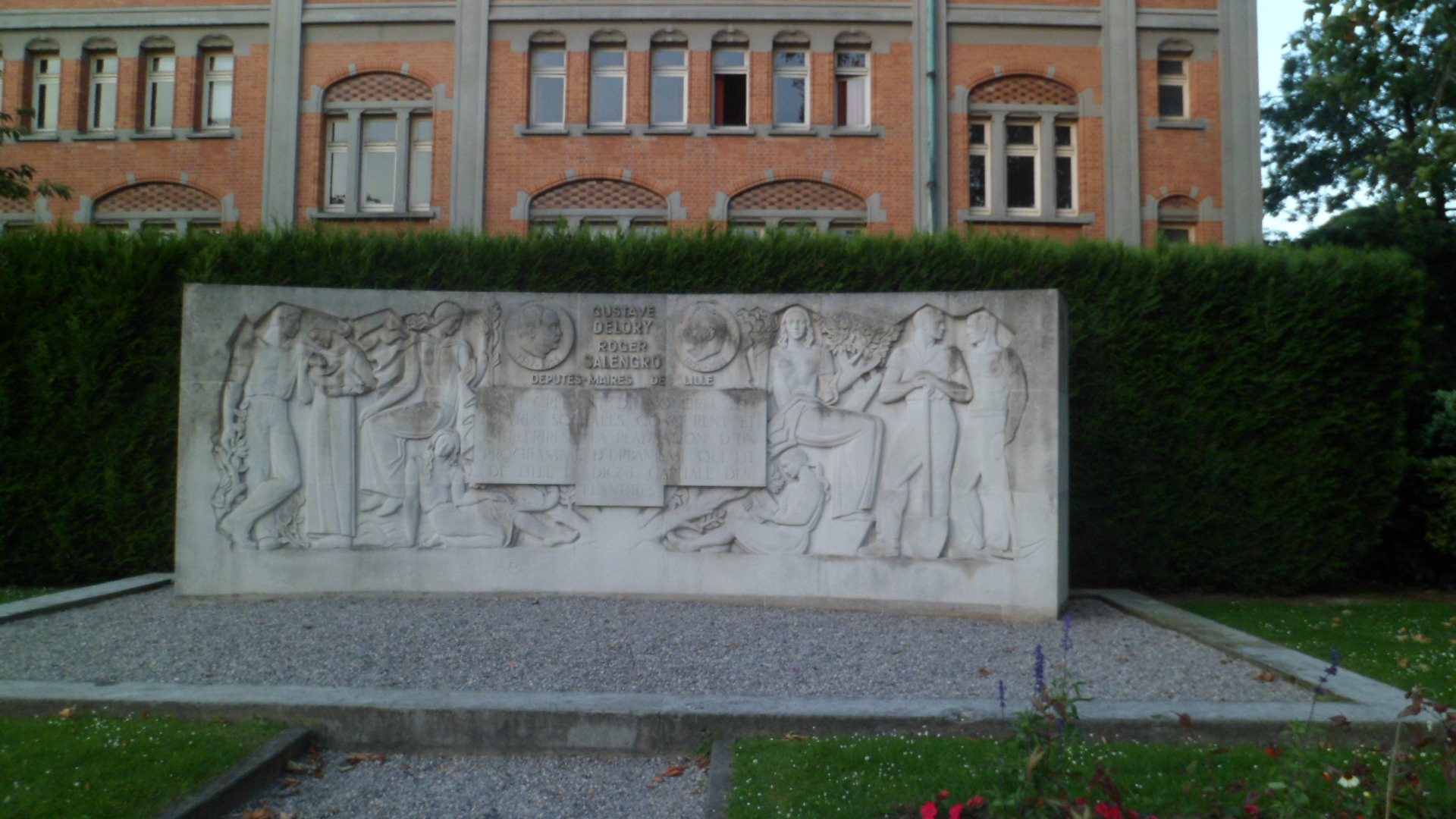
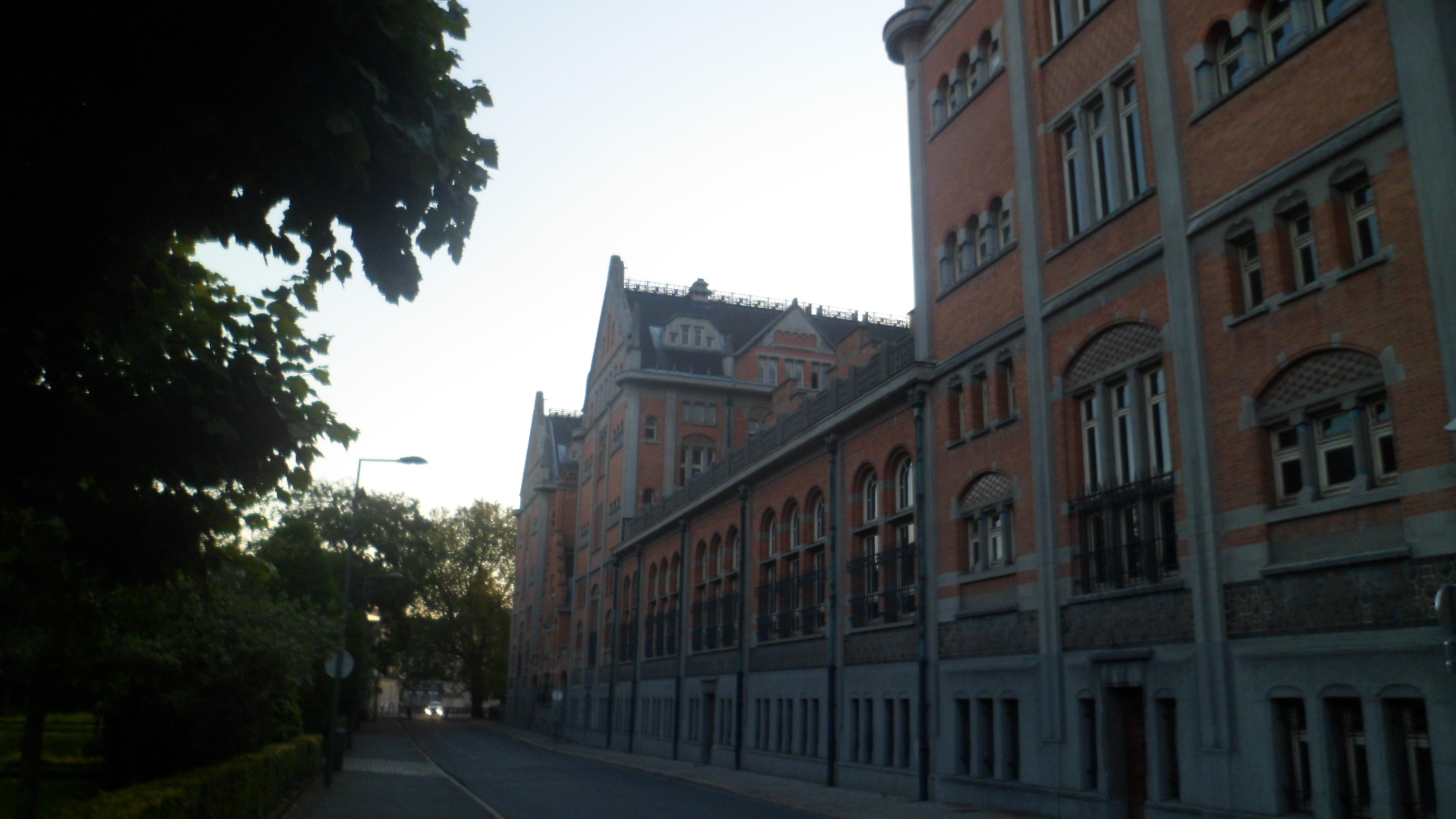
I spent a very pleasant evening, after doing laundry and getting messages at the launderette, dining sumptuously at a brasserie a block east of  Balladins and then taking a walkabout around the clean and very proud centre of Lille.

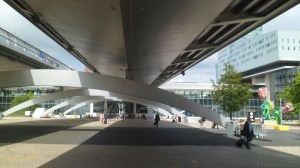
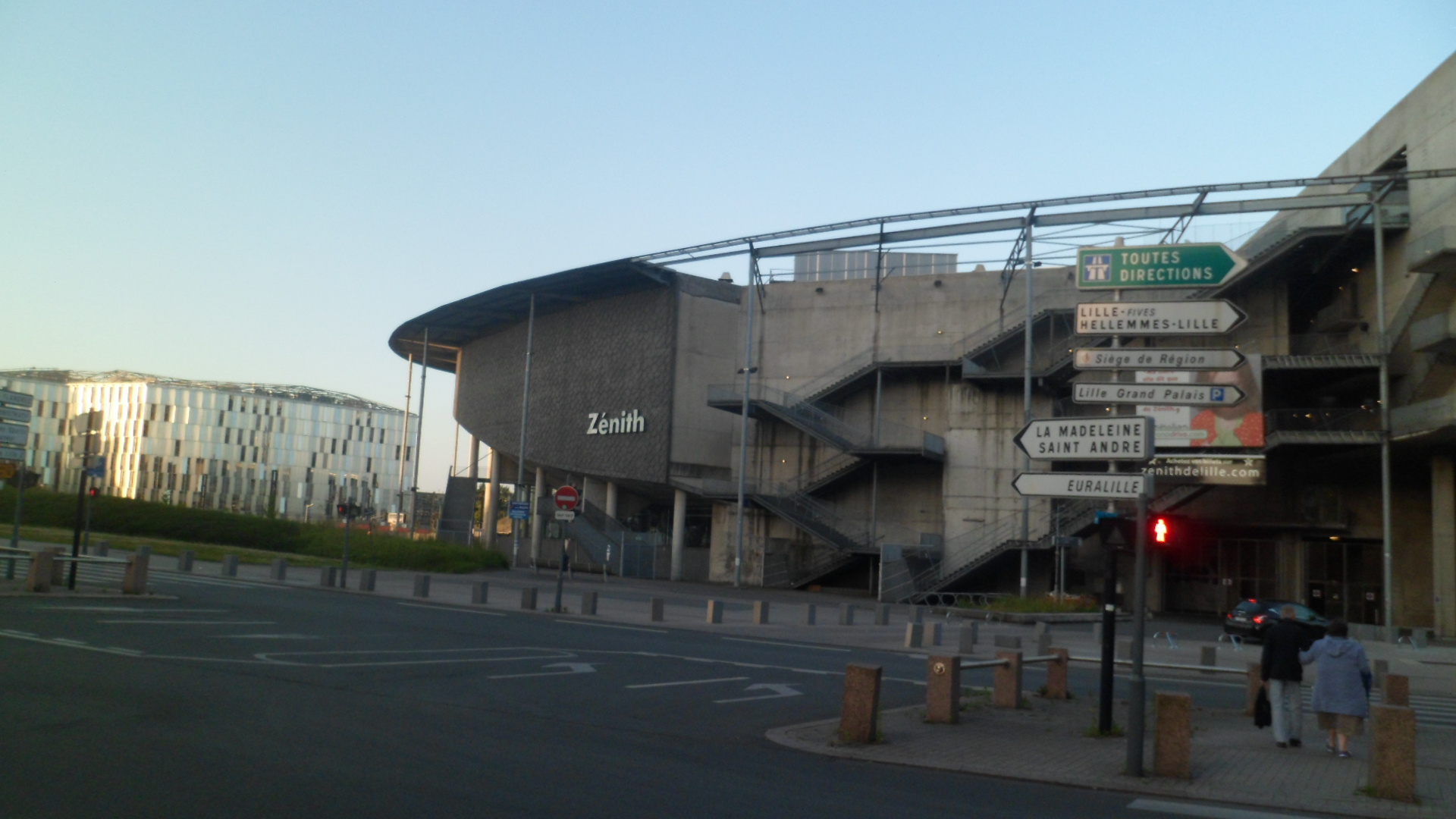
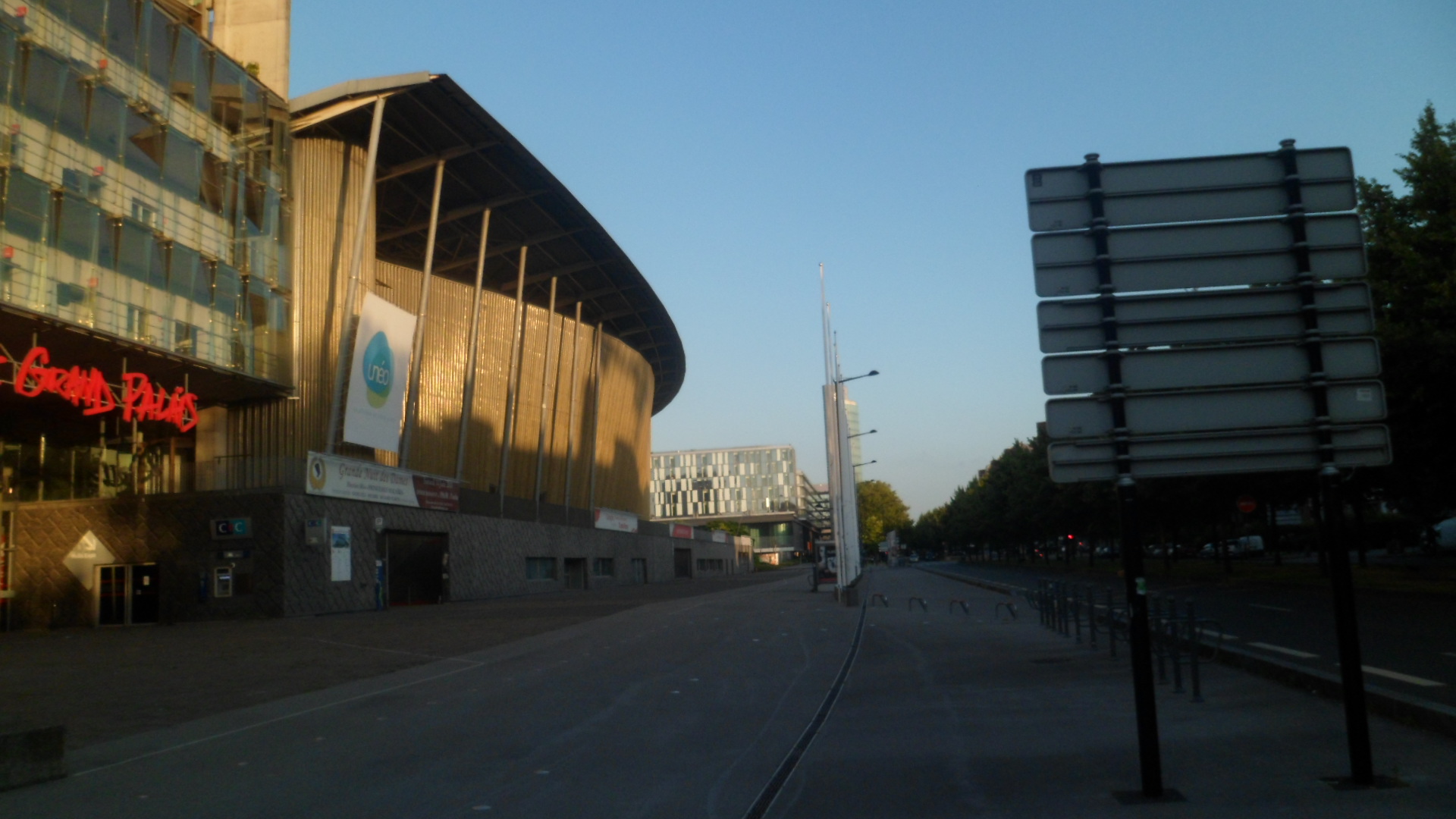
The first stop was at the city’s modern marvel, Zenith-Grand Palais, the performance hall.

SAM_0860
SAM_0862

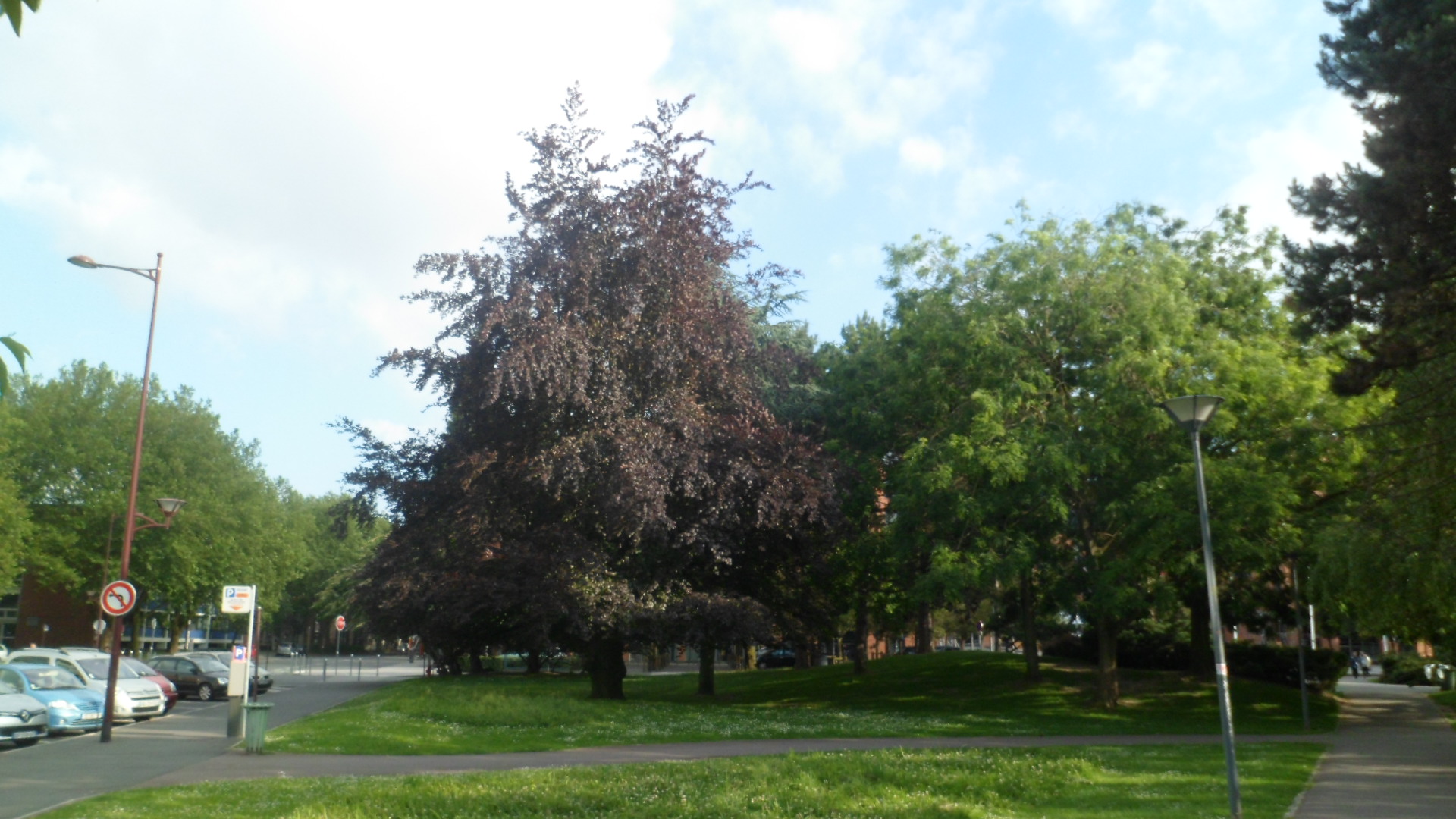
Between this magnificent center and Vieux Lille lies a lovely greenspace.  Even the industrial towns pay a mind to their gardens, across France.

SAM_0857

In the center of town, I came first to Noble Tour, the city’s memorial to the fallen of all wars, from the Franco-Prussian War, through World War II and the Algerian Conflict. It is a bedraggled sight, but all the more poignant a reminder of war’s toll, because of its rough condition.

SAM_0867

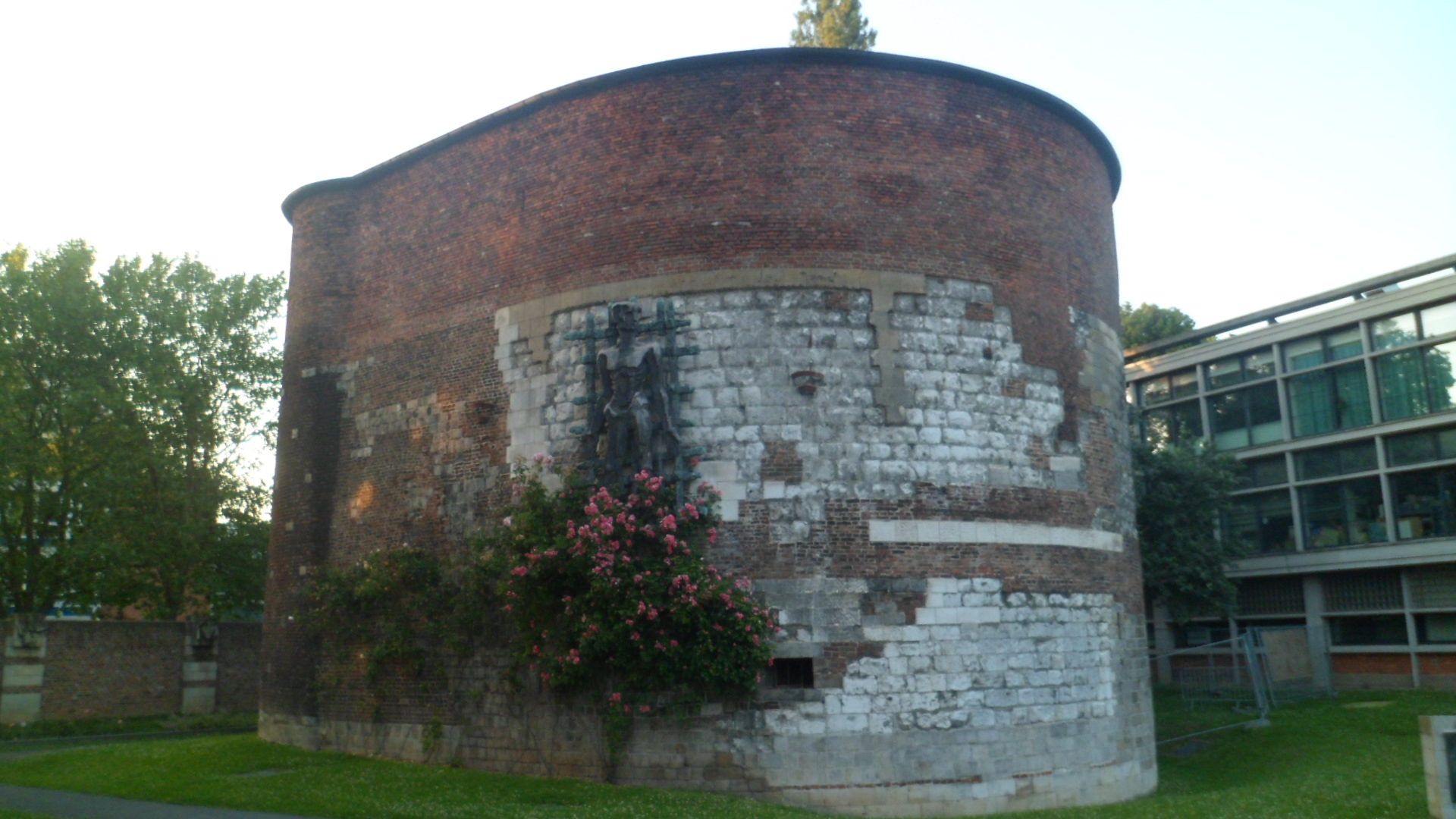
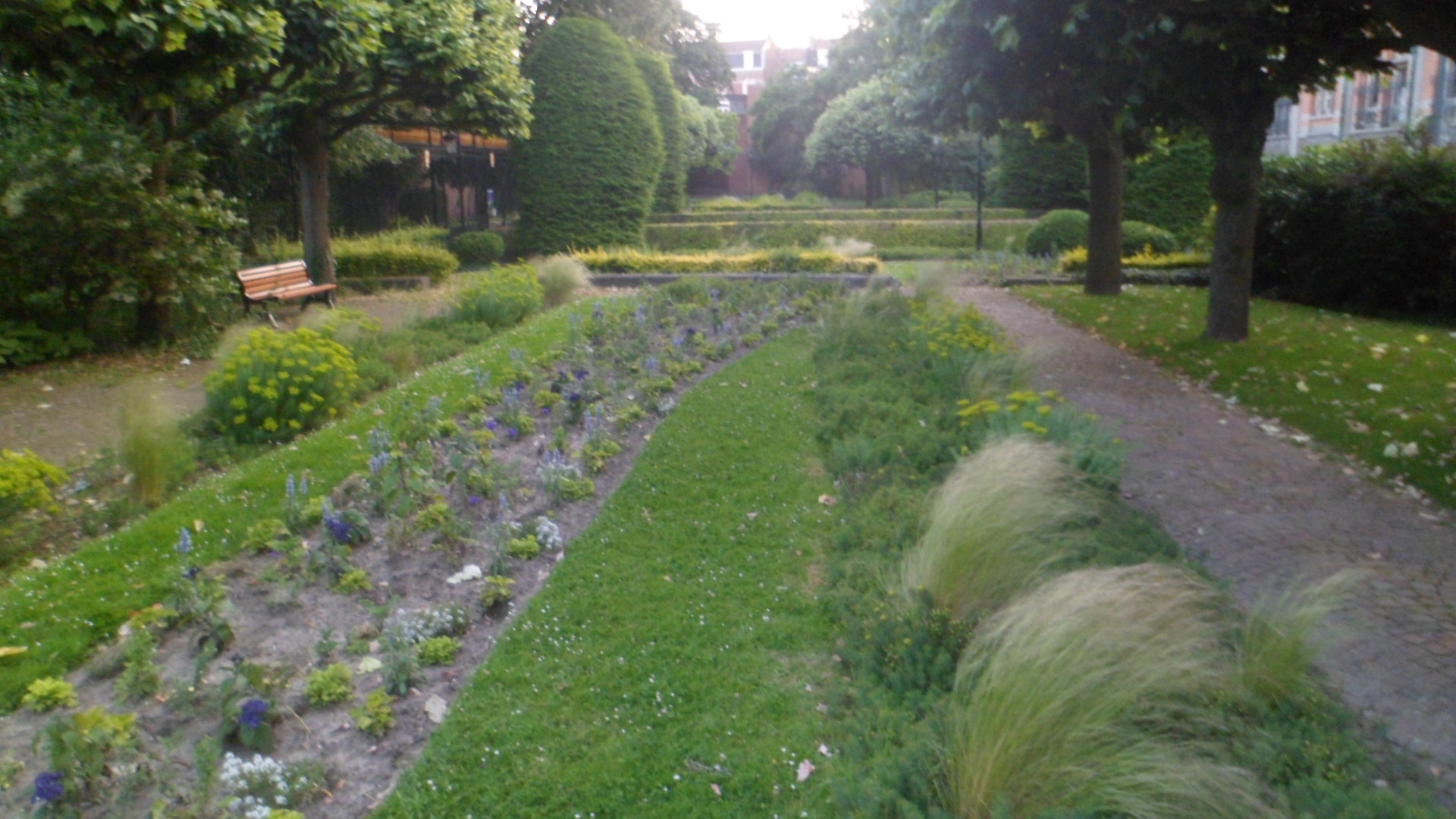
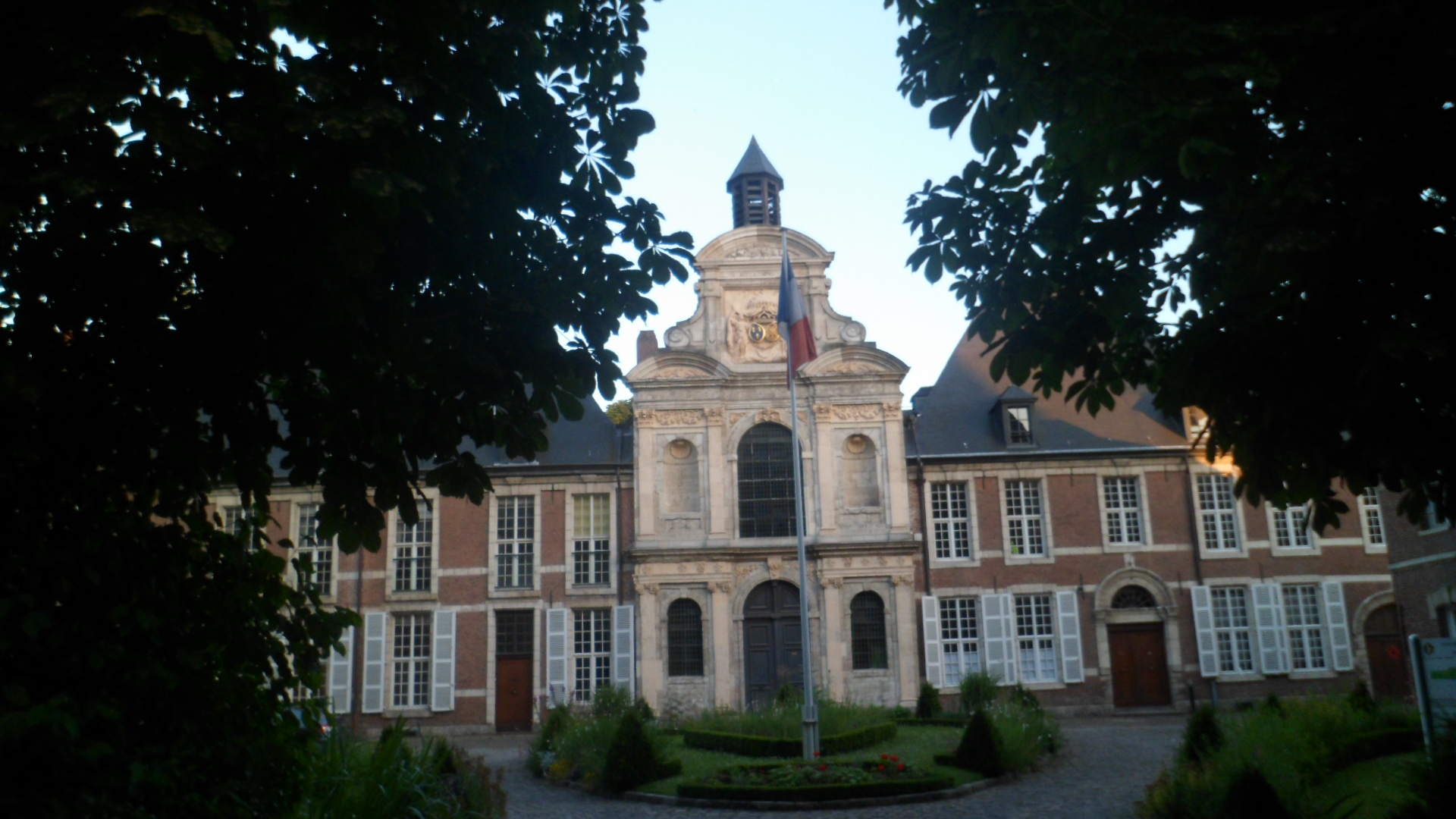
Vieux Lille has several apartment complexes, with large immigrant populations. One of these housed the cyber launderette which I used. Another fronts Noble Tour. At no time during my stay in the west of France, however, was I accosted or made to feel intimidated. I went on, quietly, to Chapelle Reduit, with its fine gardens. The redoubt and its church were built by the great Vauban, in the 17th Century, to bolster French defenses against England- and Spain, which ruled most of Flanders at that time. The panel at the bottom of this triptych honours Vauban.

SAM_0875
SAM_0876
SAM_0883

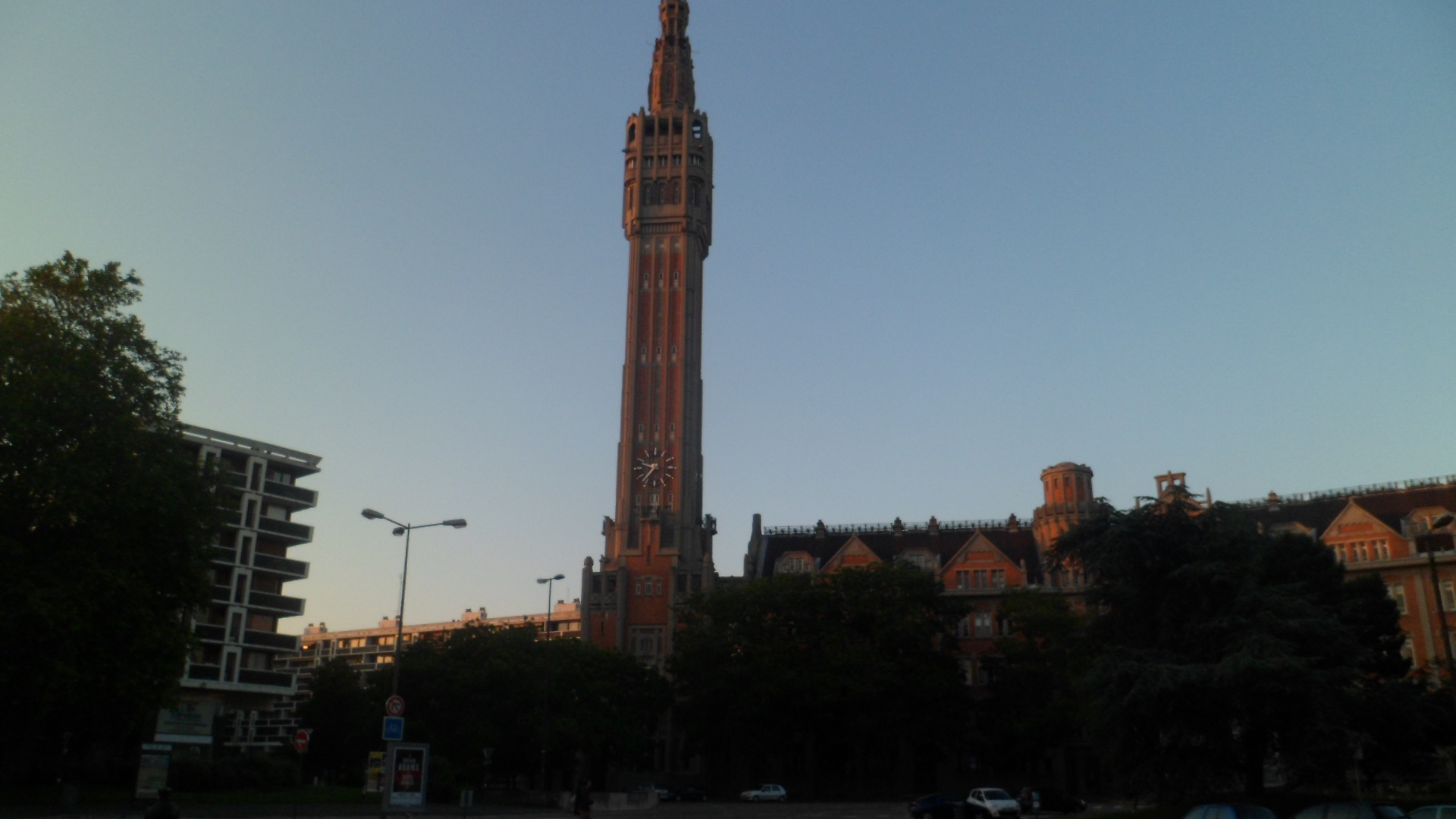
Across the street from Fort de Reduit is the immense Hotel de Ville, with its magnificent belfry.

SAM_0885
SAM_0872
SAM_0896

This grand structure served as a customs centre for French Flanders, during the 19th Century, as well, thus requiring much more space than the average French city hall.

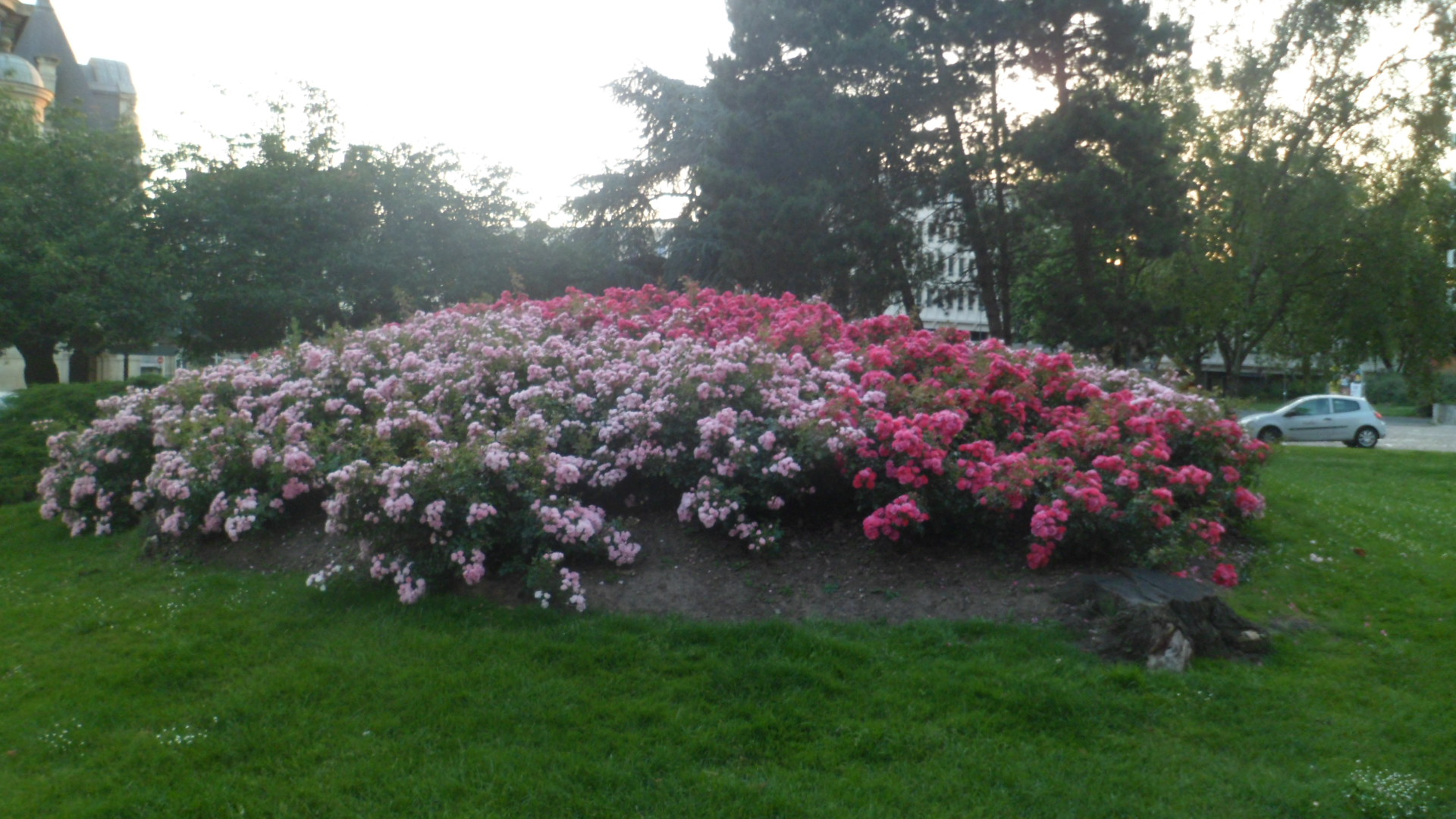
Between Hotel de Ville and the southern gate of Lille, La Porte de Paris, is a small flower bed.

SAM_0887

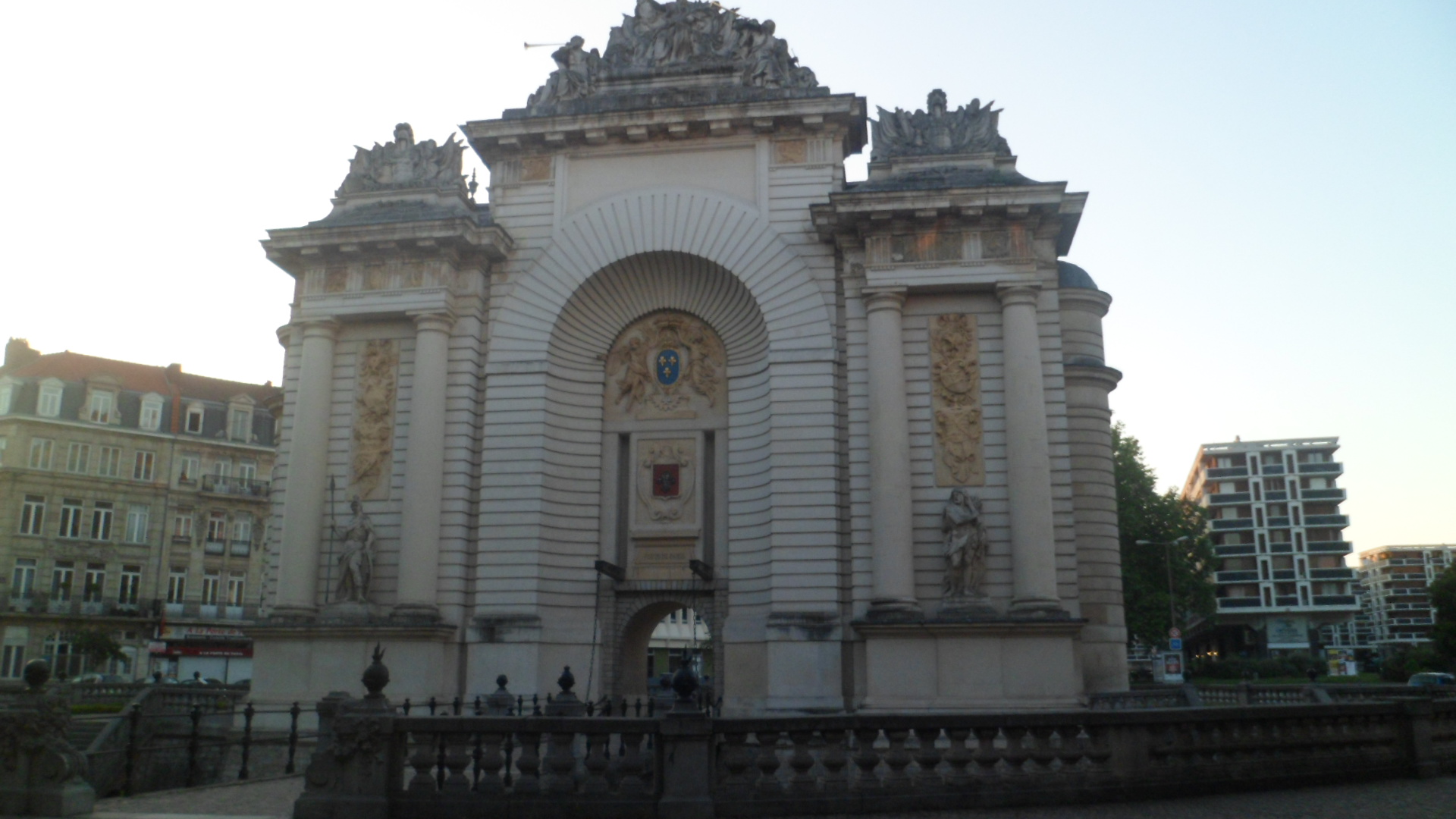
La Porte de Paris (below) is one of two gates to Lille. The northern gate, which I did not visit, is La Porte de Roubaix.

SAM_0888
SAM_0895

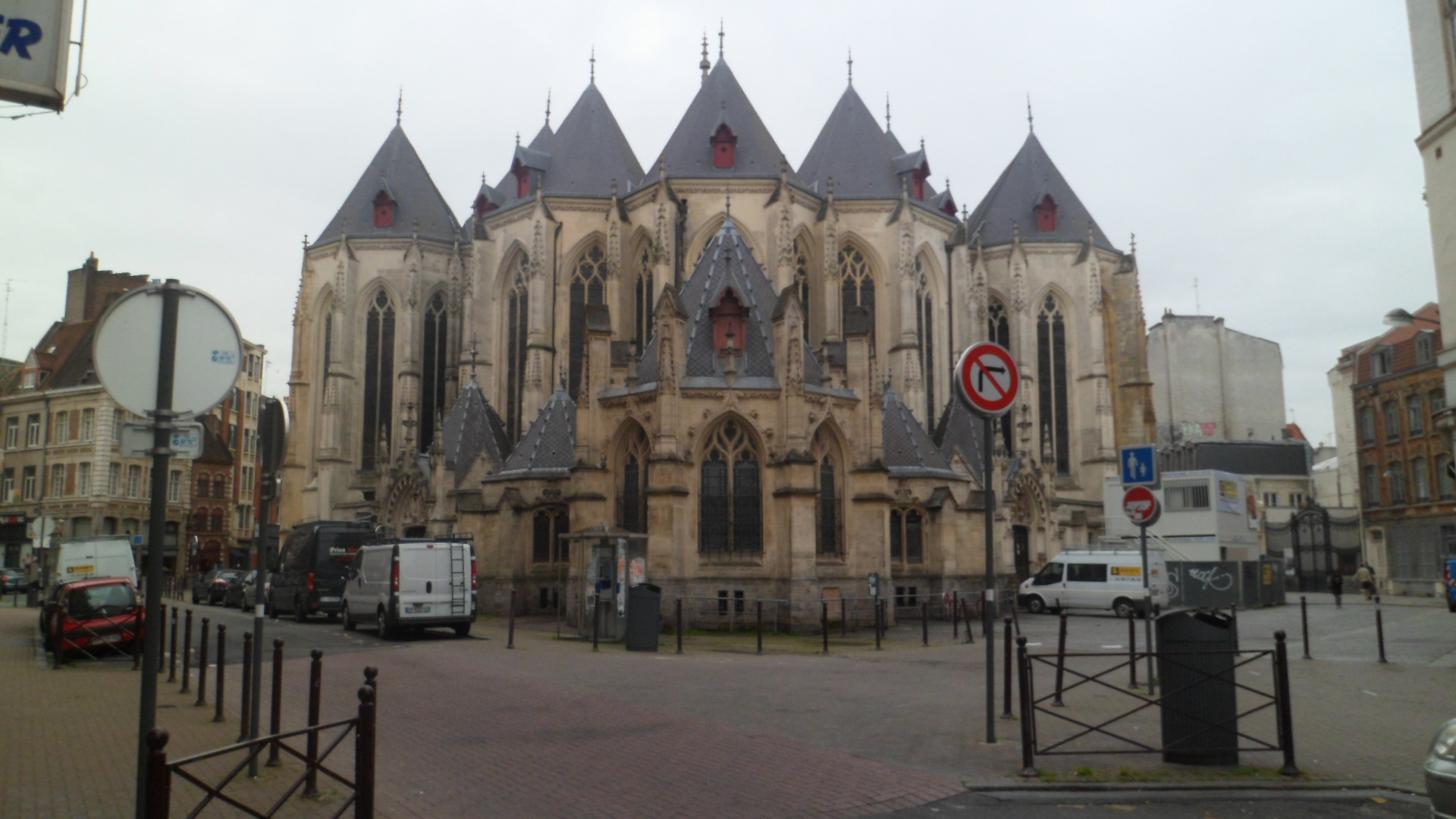
I ran out of time on that Sunday night, before getting to see Cathedrale Notre Dame de Lille. I did, however, get a glimpse of it the next morning. For simplicity’s sake, I include it here.

SAM_0897

This great church was under total renovation at the time of my visit, so going inside would have been problematic, regardless.

Lille was fairly quiet on that Sunday night, almost a counterpoint to raucous Amiens. Still, the people I met here seemed happy and relaxed, glad to be in the commercial hub of French Flanders.

So, my time in northwest France was drawing to a close. There was nowhere where I felt unwelcome, and nowhere I would refrain from visiting again. My French home is Rouen, and its good neighbours are Rennes, Mont St, Michel, Brest, Amiens, Lille-and Le Cite Lumiere, Paris. I am glad for each day, each place I had the pleasure of seeing and each person who graced my path.

NEXT:  Brugge, Parent of Commerce