An Eastward Homage, Day 19: Amiens, Part III- A Circular Jaunt

5

June 14, 2014-  Having framed Amiens’ natural boundaries, which are its lifeblood, and its spiritual symbol, the great cathedral, it’s a good time to take a circular visit to the nuts and bolts of the city.

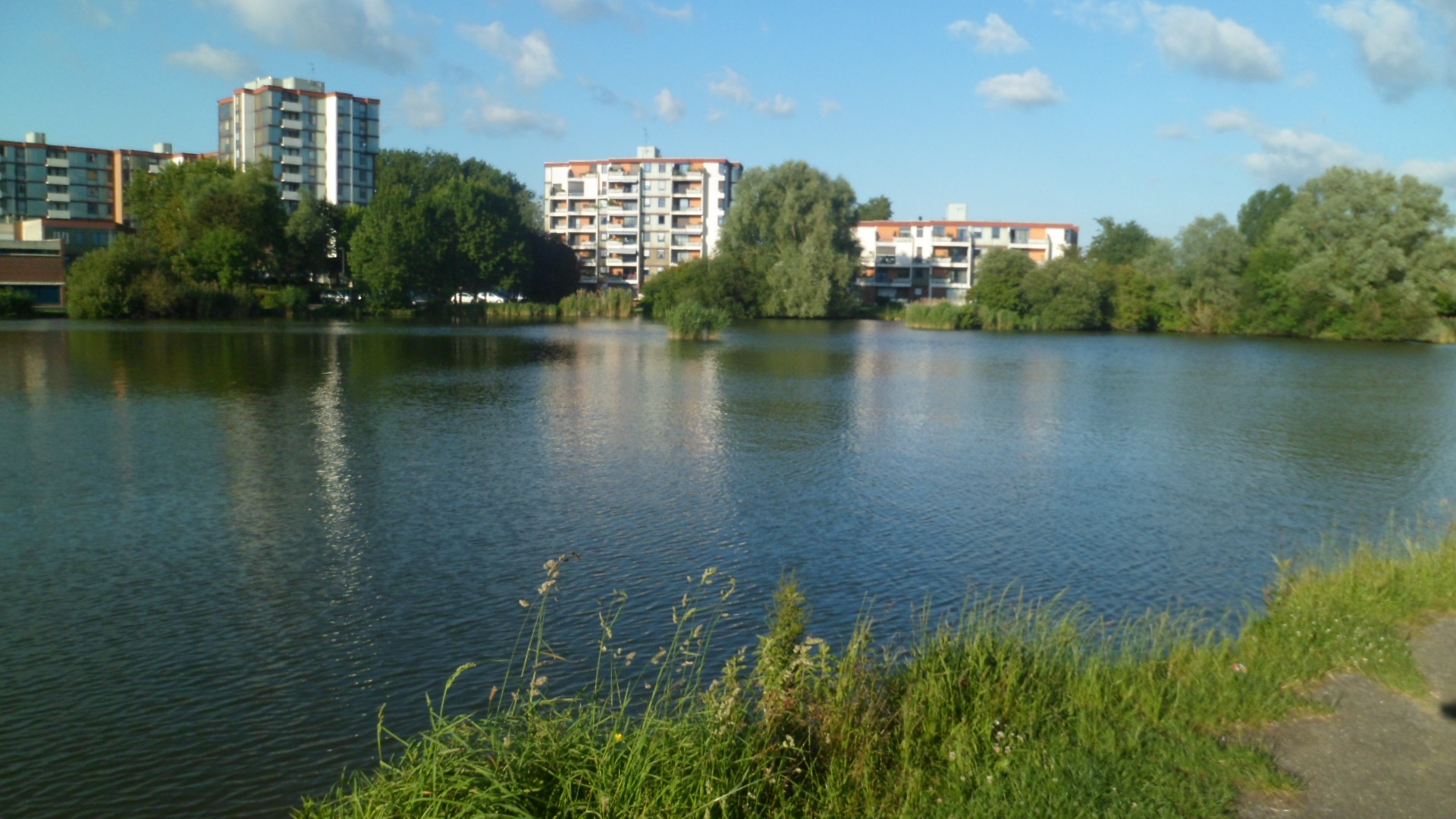
From my hotel (on the left, below), I took a walk down to Tour Perret- an apartment complex that is given gravitas, by dint of its tower-like design.

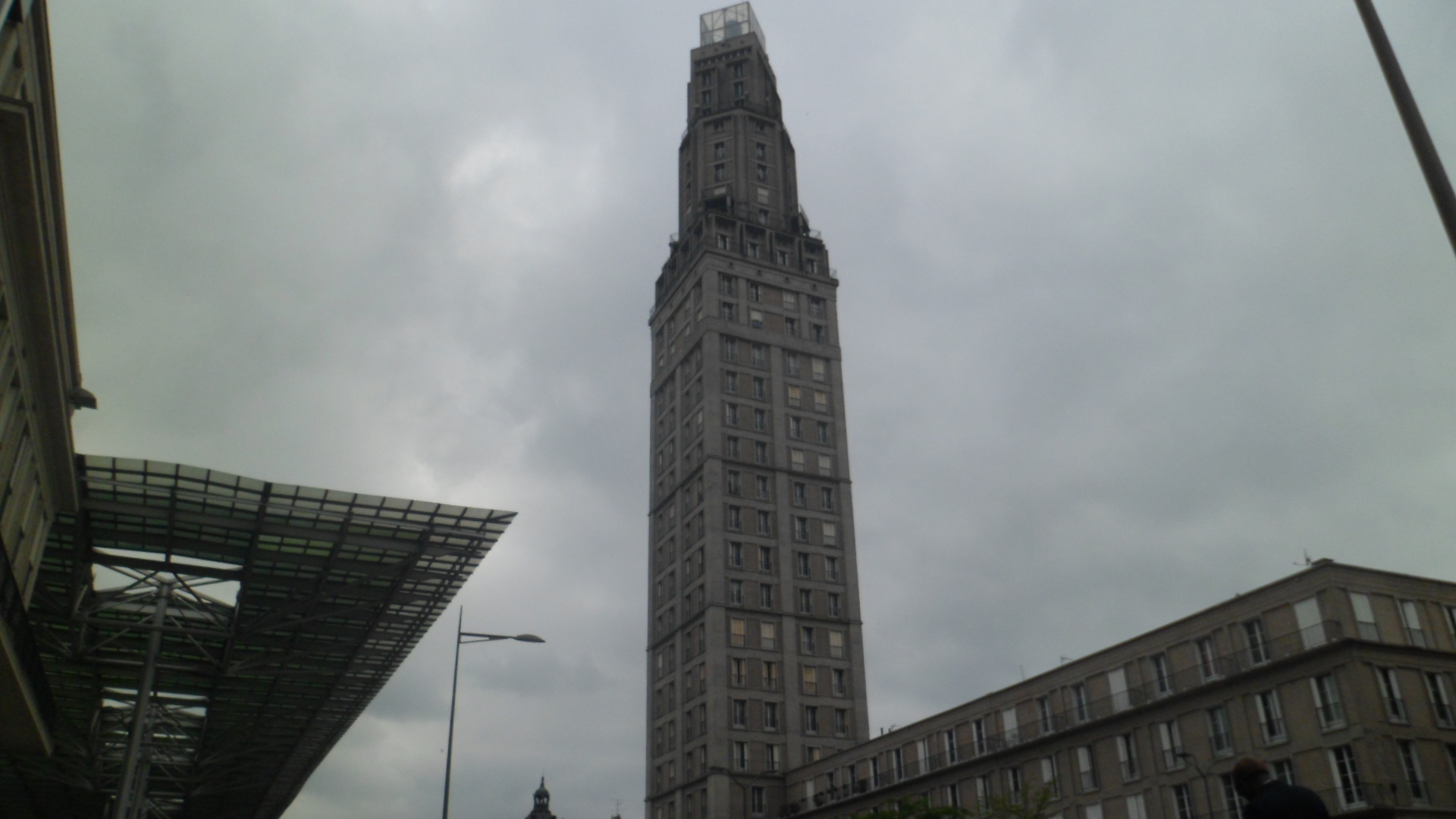
SAM_0669
SAM_0672

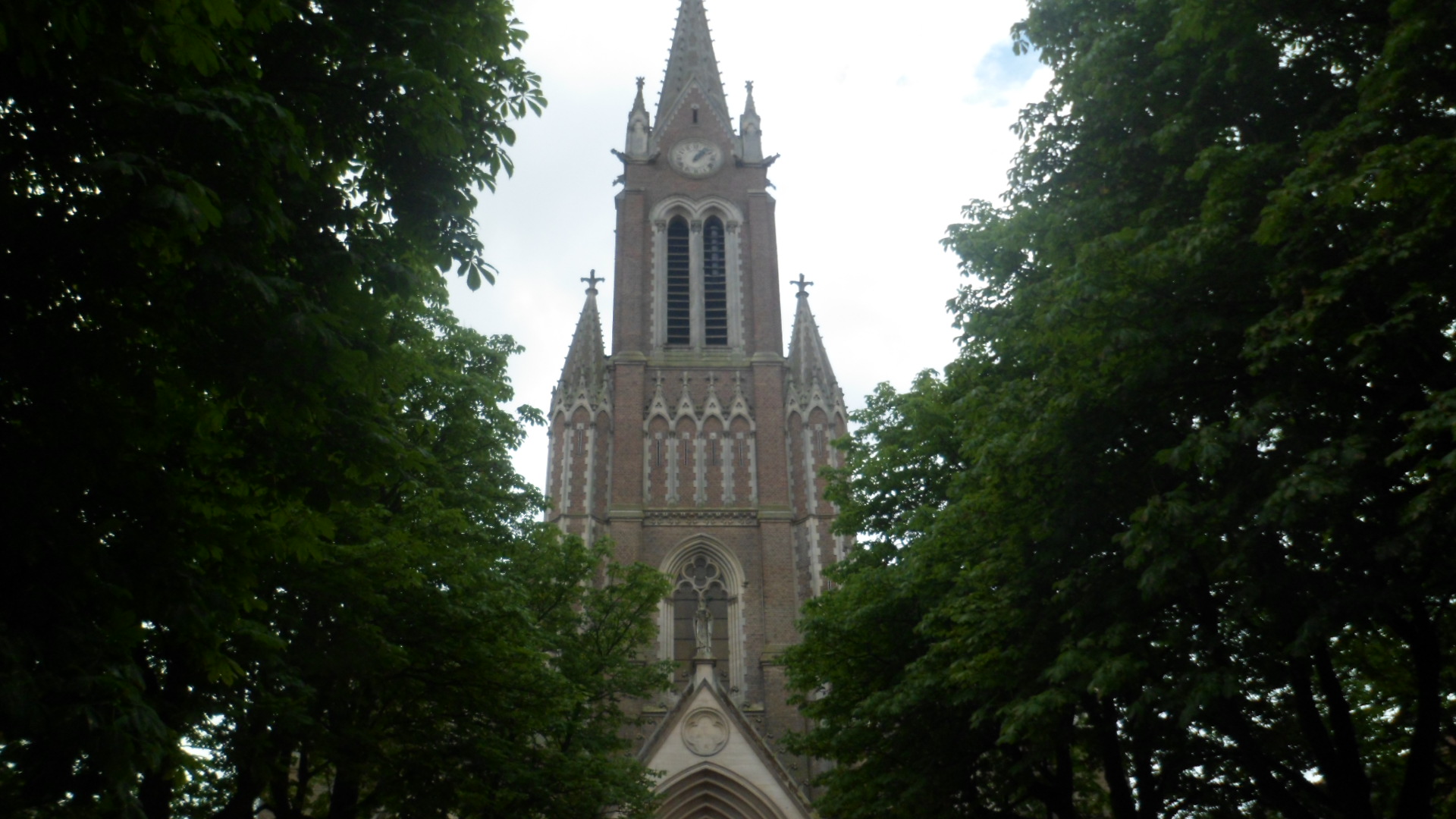
Among the many lovely churches on my route was L’Eglise Sacre Coeur (Sacred Heart), a center for the near north side of town, behind the train and bus stations.  This area is home to many immigrants and lower income French folks.  It’s lively, and I did not feel either unwelcome or unsafe, during my walkabout.
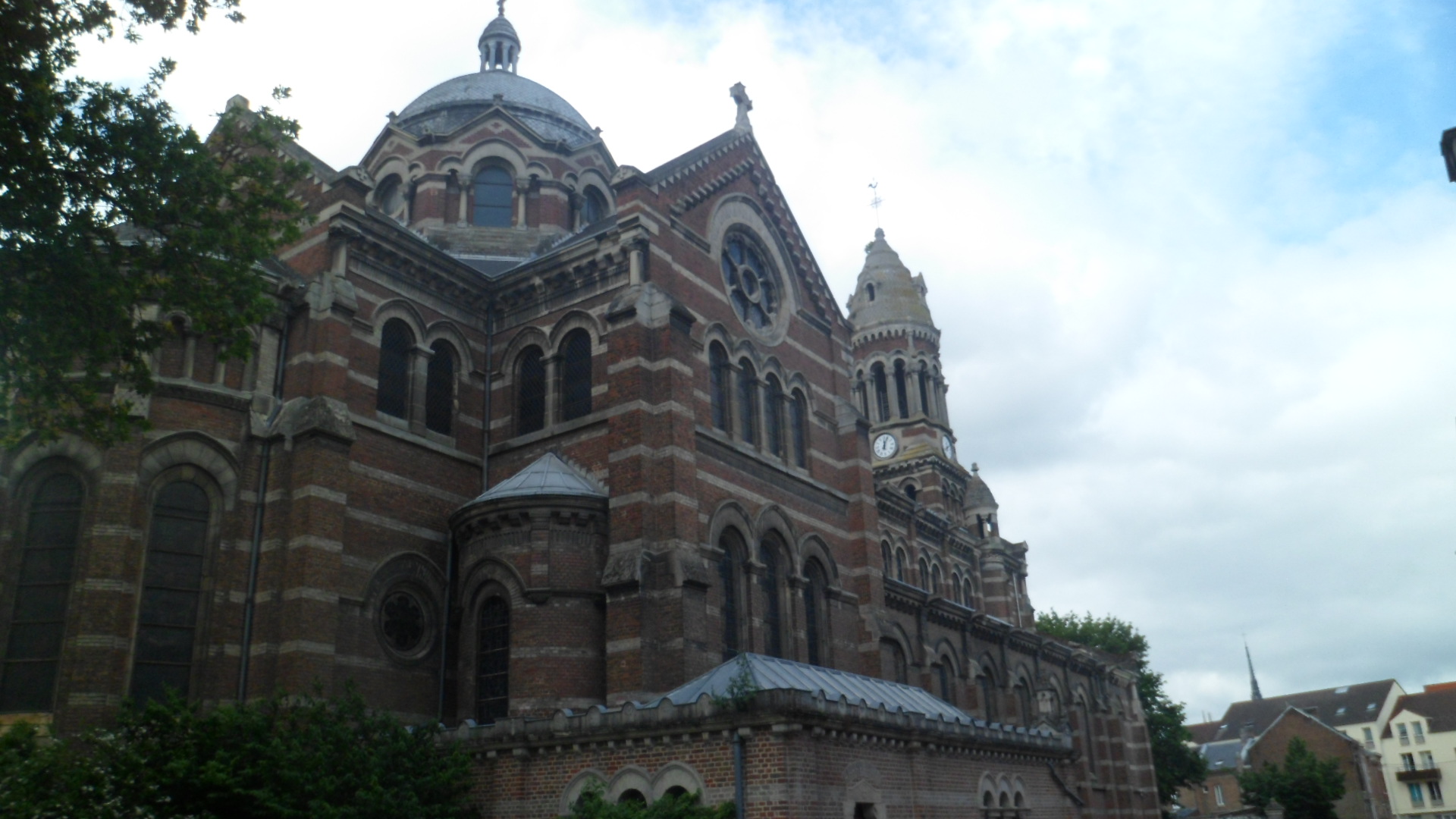
SAM_0674

After saying a few prayers in the courtyard, and greeting a couple of residents, including a child on a skateboard, I went past the train station, and took note of Hotel Carlton, a British import.
SAM_0678

To the east of the train station, there is a different parish, even more needy than the area around Sacre Coeur. This is Le Parrois Sainte Famille.Here, there is an active Food Bank and Soup Kitchen, with a Catholic High School attached.
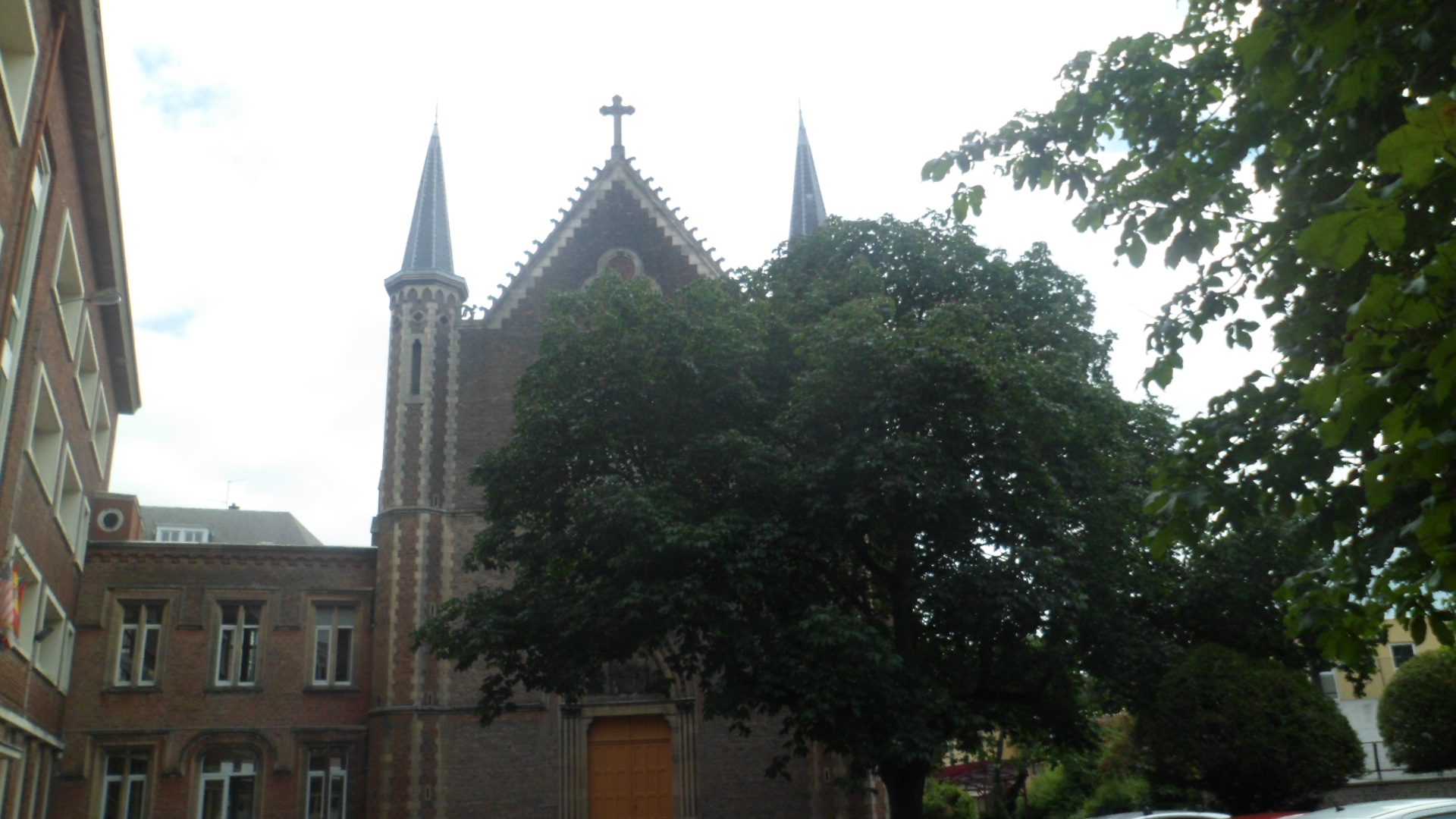
SAM_0681

I was impressed that there were so many in school on a Saturday morning.  Then, I remembered that this is routine in France.

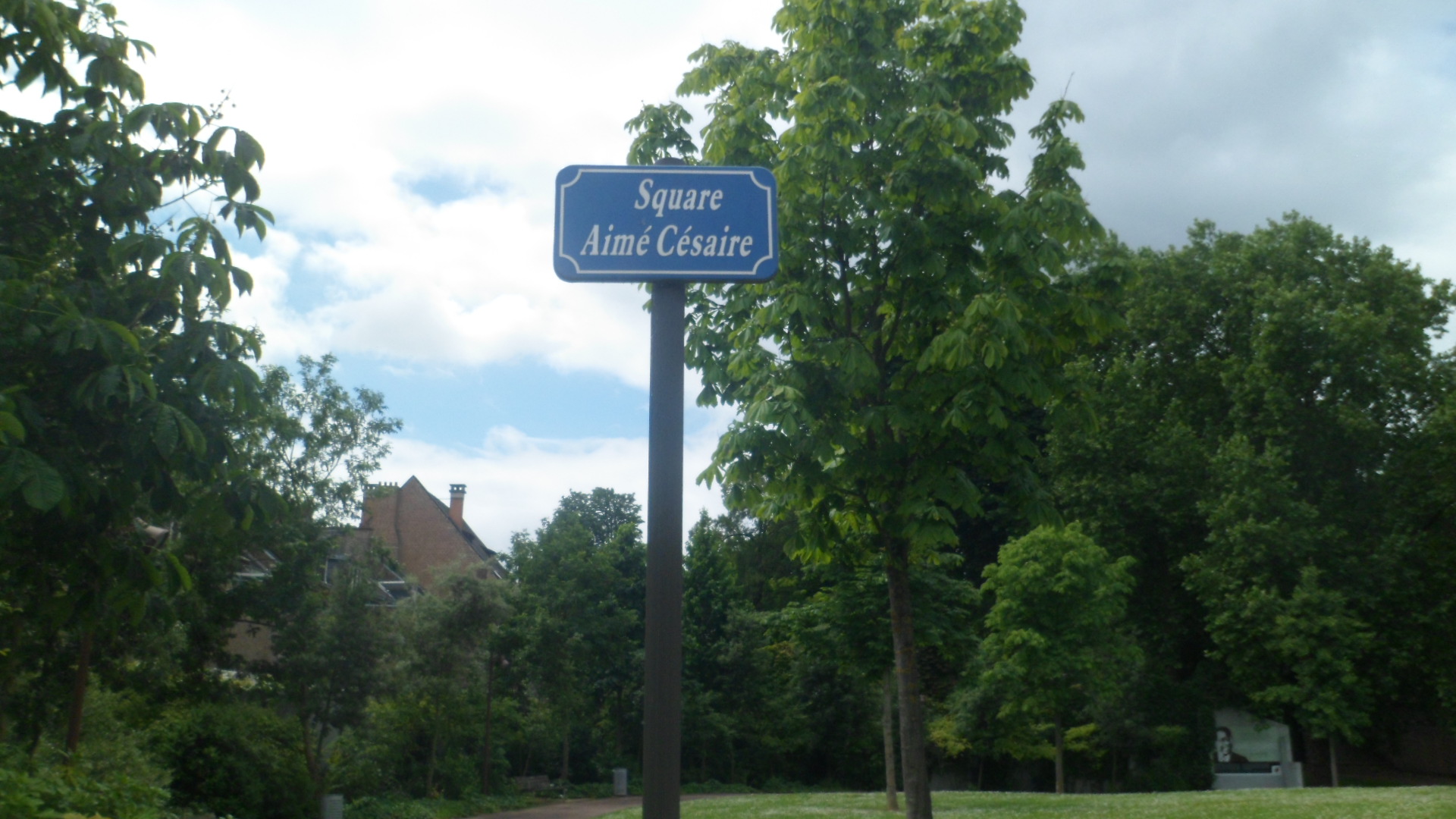
Those African  and Caribbean people of letters who have had an impact on the people around  them are remembered in France, though they may not have felt so honoured during their lifetimes.  I recall reading the works of Frantz Fanon, the conscience of Martinique, misunderstood during the De Gaulle era as a “Stalinist”.  Aime Cesaire, also from Martinique, was an exemplary man of letters and served as a mentor to Fanon, as well as mayor of Fort-de-France.  Although he was drawn to Marxism, Aime turned away from that philosophy after the Soviet crushing of the Hungarian revolt, in 1956.

A square in north Amiens honours him today.
SAM_0683
SAM_0685

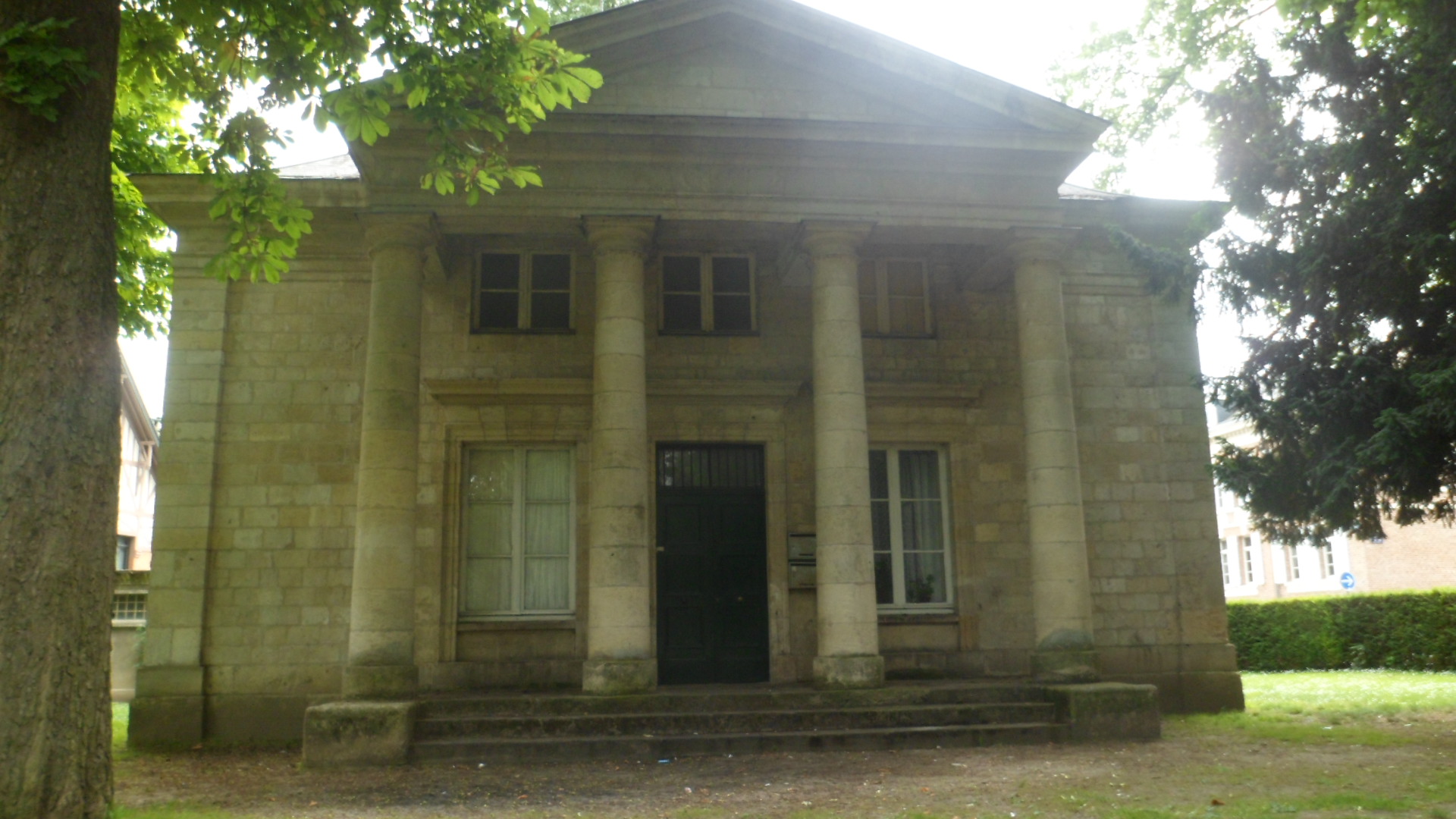
After heading east from Square Aime Cesaire, I found the preserved house, and a square dedicated to, the masterful Jules Verne.  Here, I had  one of my less laudable moments.  In a few minutes of intense concentration, I was approached by an enthusiastic young man, whom I mistook for a beggar.  He was politely, but firmly, dismissed.  In retrospect, I might have learned something about the place from him.

Here, though, is the preserved home of Monsieur Verne.  He spent his last years here, and passed away in Amiens, in 1905.
SAM_0687

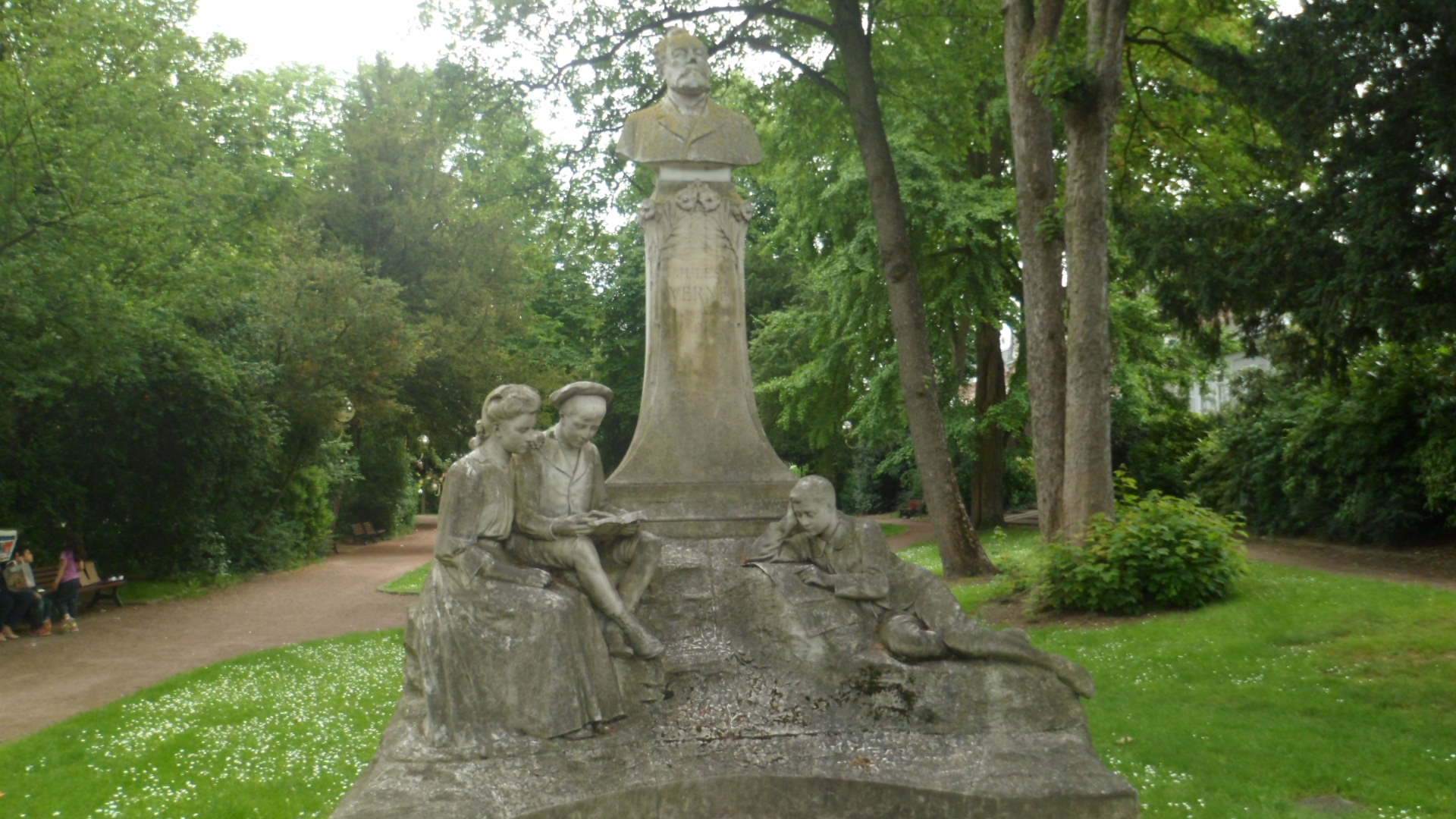
Jules is shown with young people reading, in the memorial sculpture of the square.
SAM_0689

A pleasant addition to the squares of Amiens is the gingko tree. This much was pointed out to me, by the aforementioned student.

SAM_0690

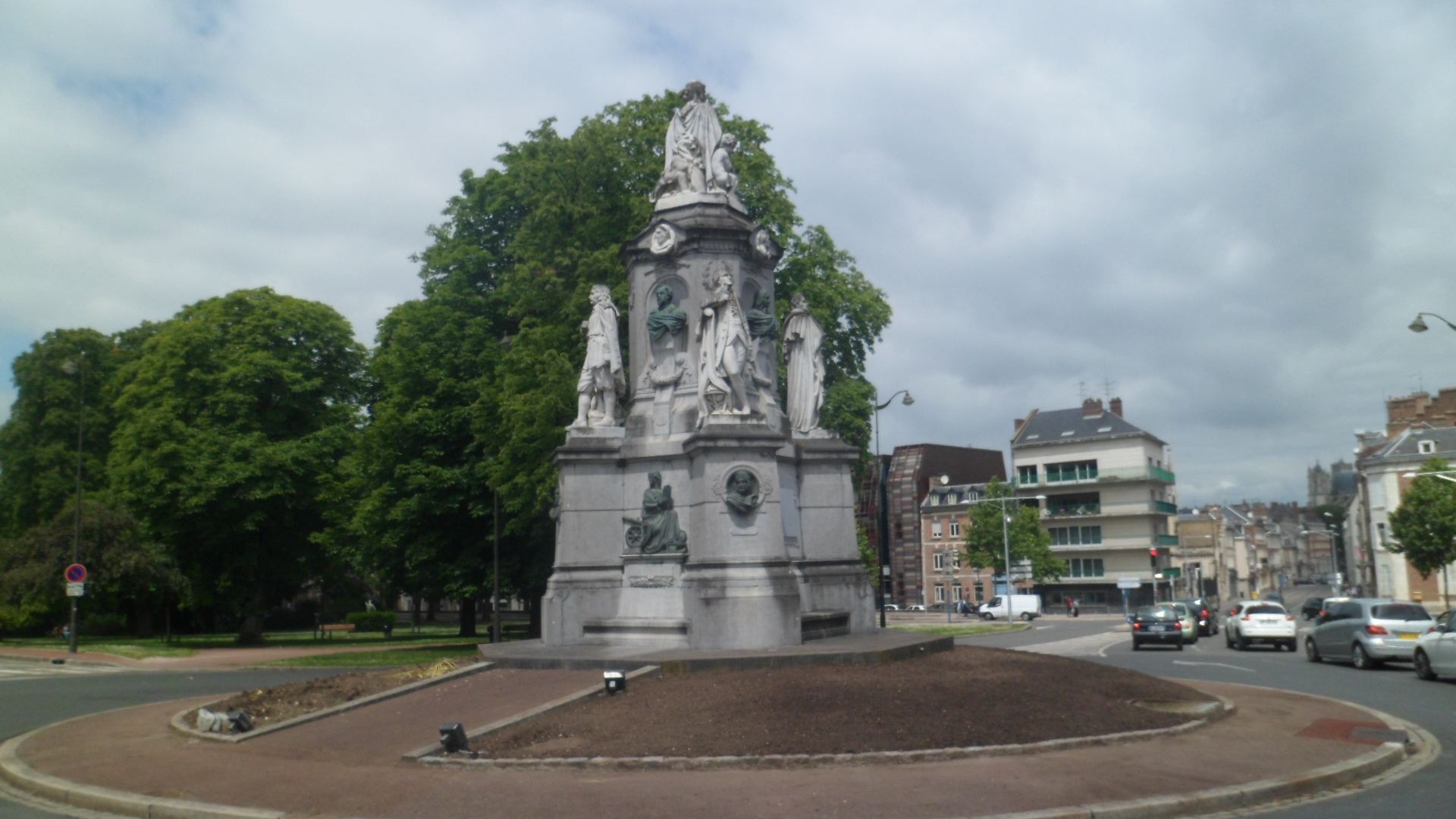
Leaving Square Jules Verne, I came upon this roundabout, with figures of the Jacobin period standing vigilant watch on the traffic.
SAM_0692

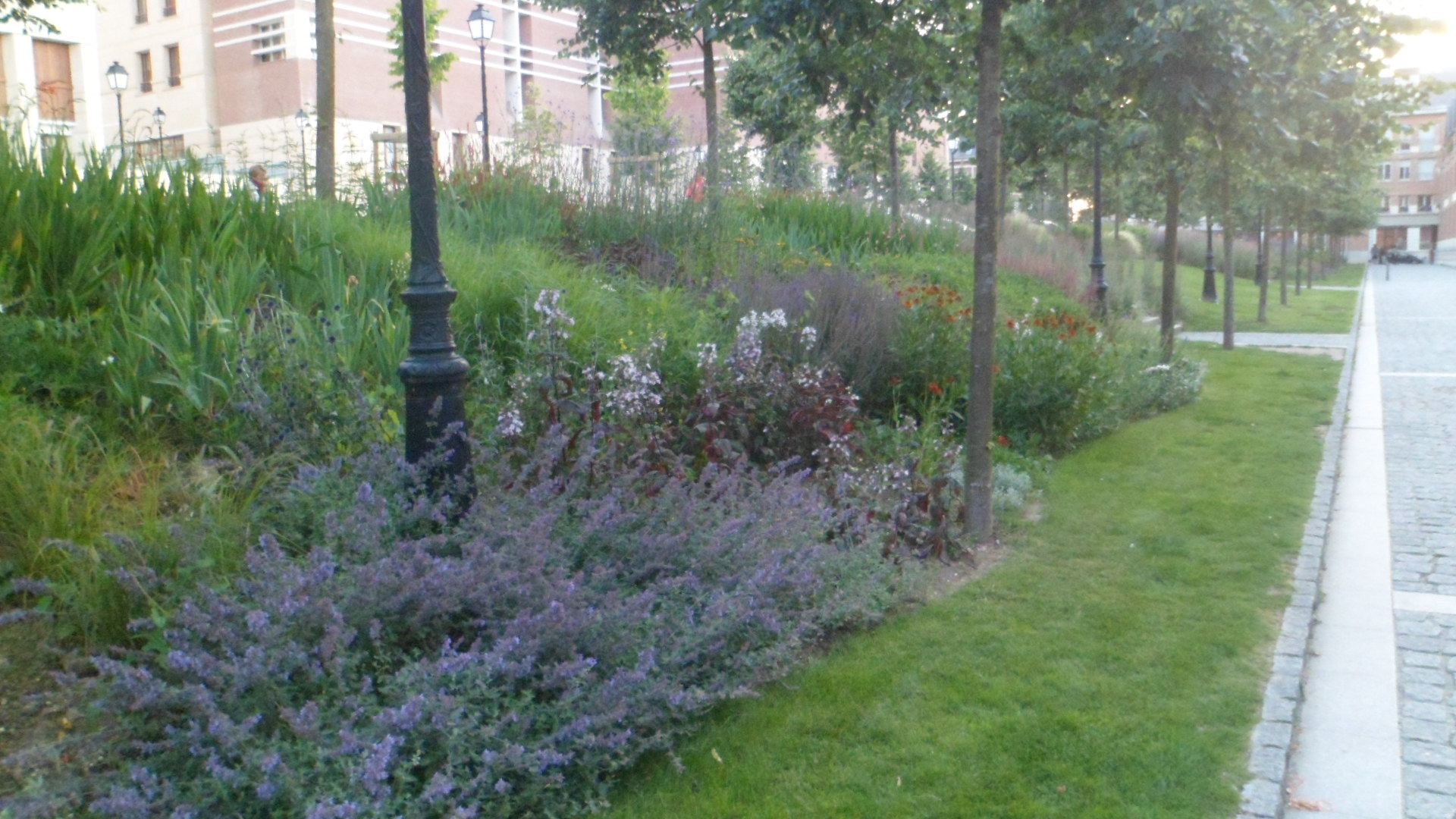
I crossed Boulevard Jules Verne, and headed for La Coupole. En route, this slice of Amiens’ northeast side invited a photo.
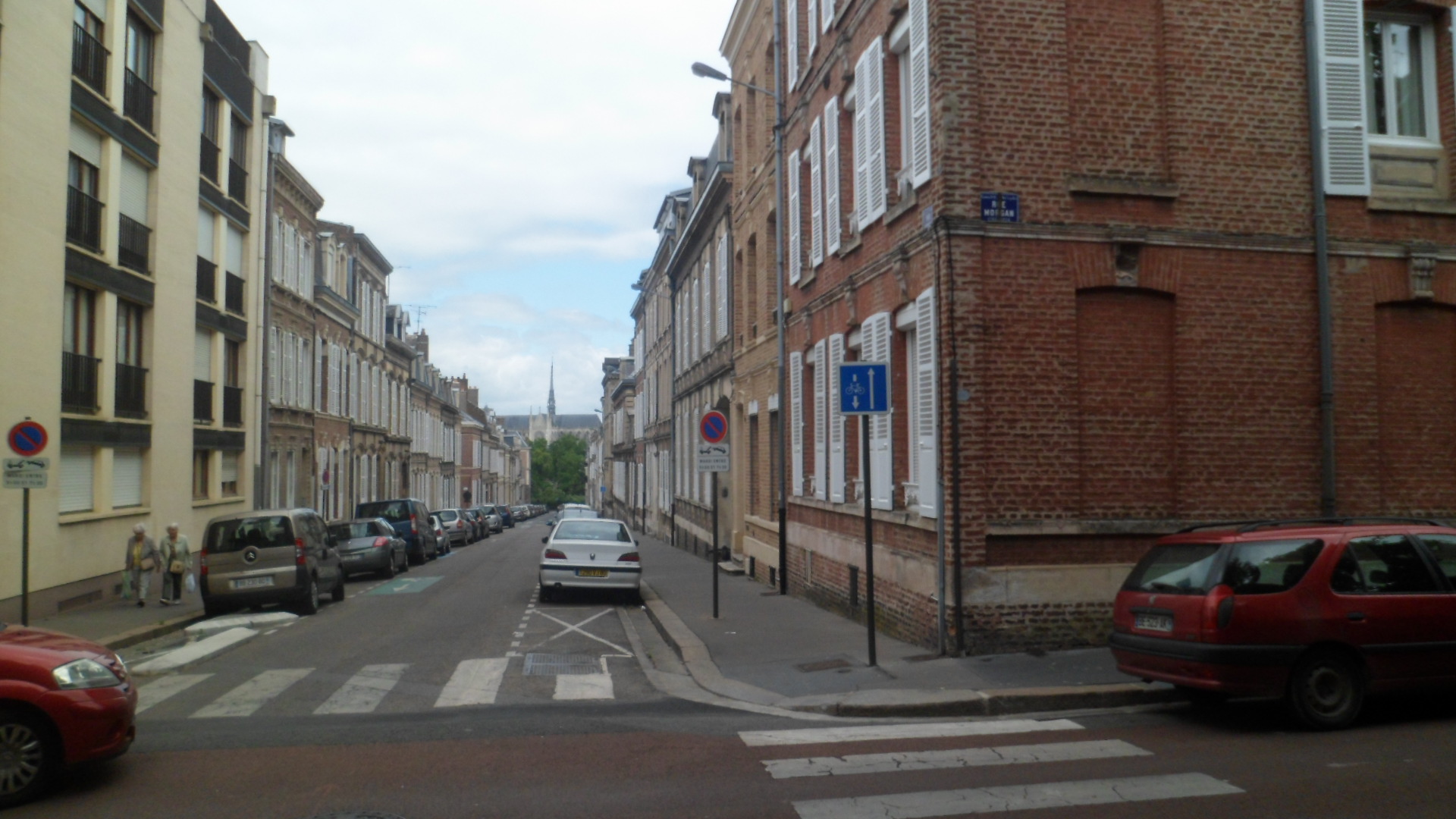
SAM_0695

I also spotted L’Eglise St. Esprit.

SAM_0696

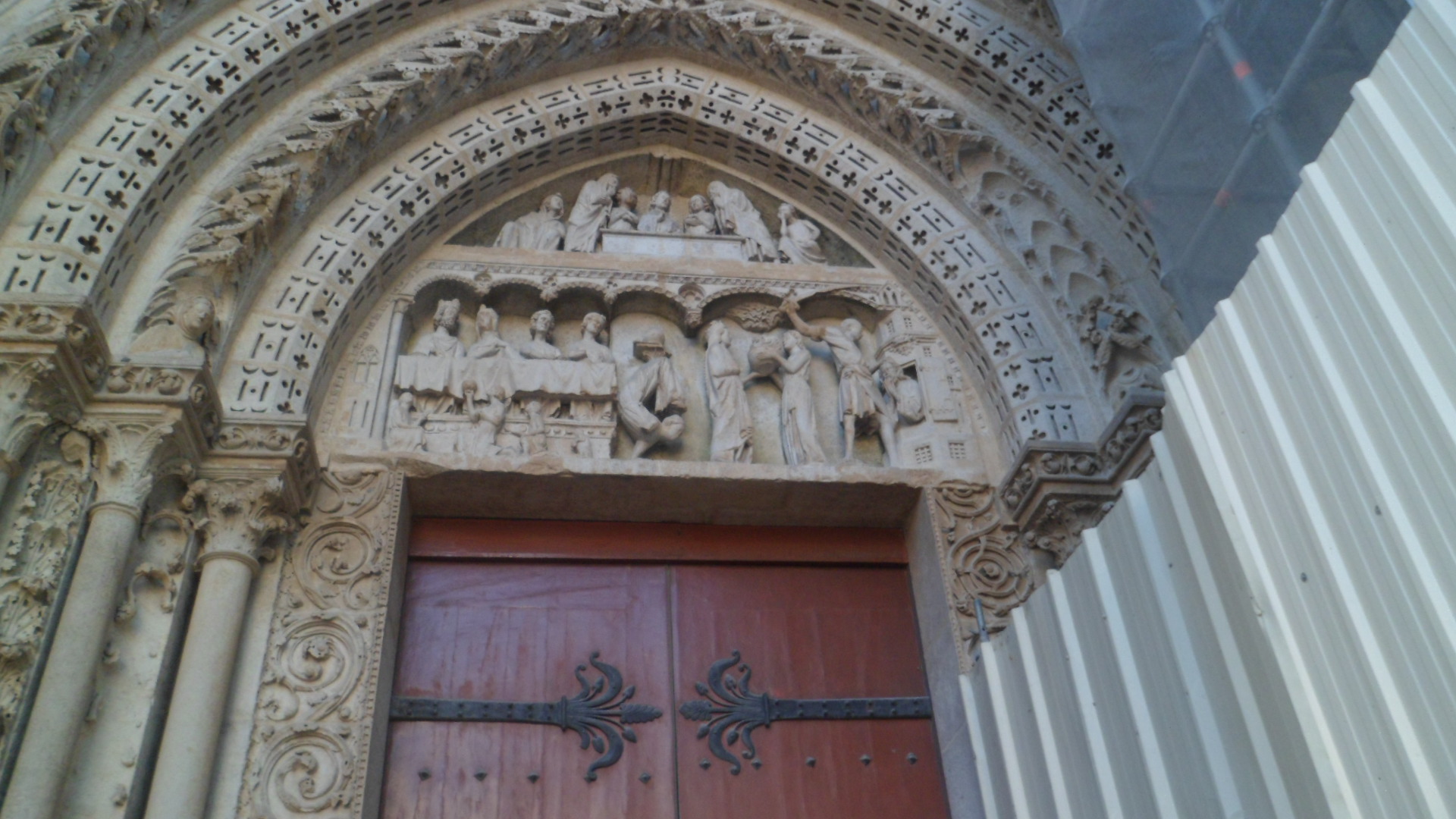
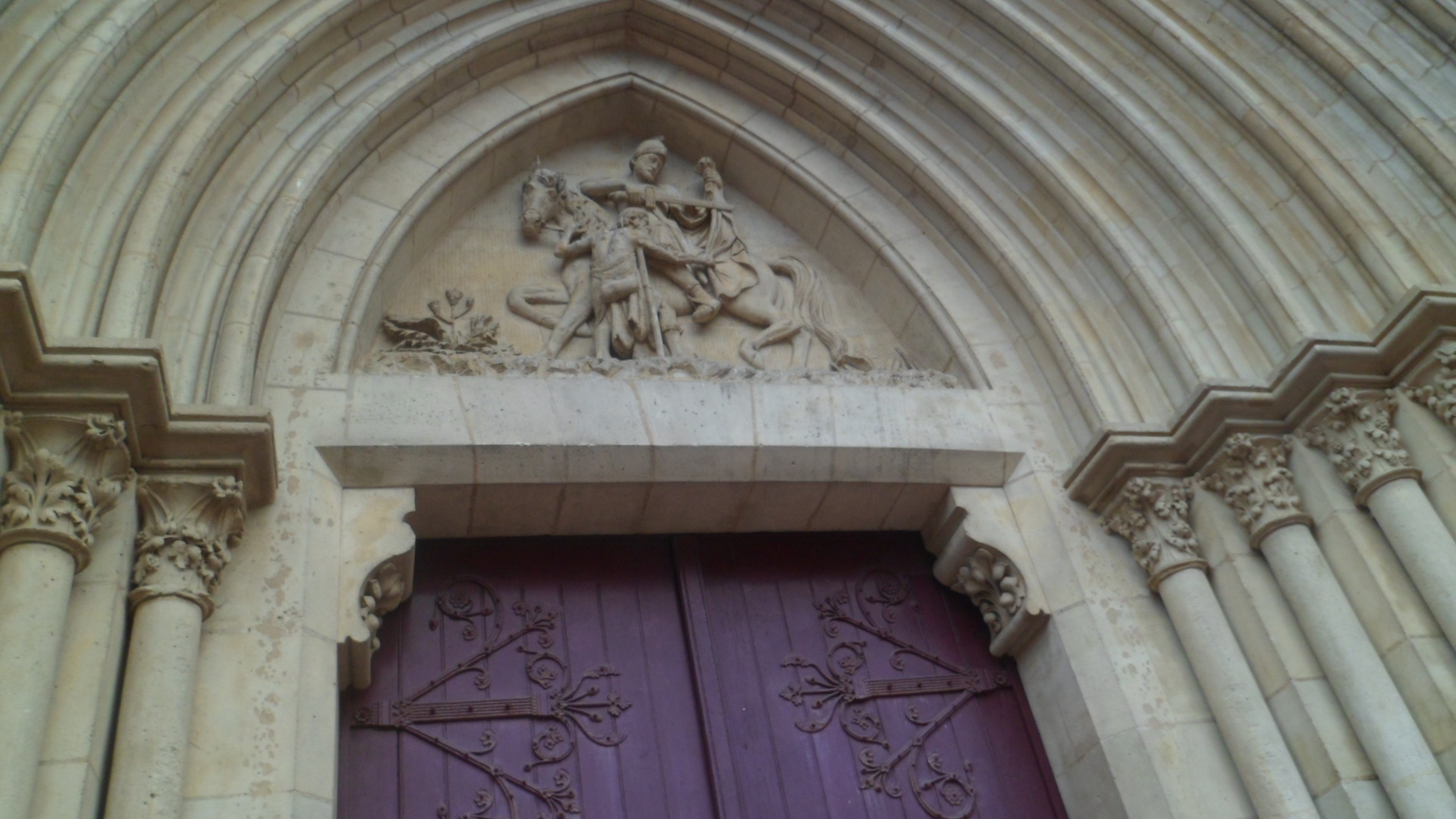
The tympanum shows St. Martin of Tours.SAM_0699
Lunchtime was coming, though, so on to La Coupole it was.
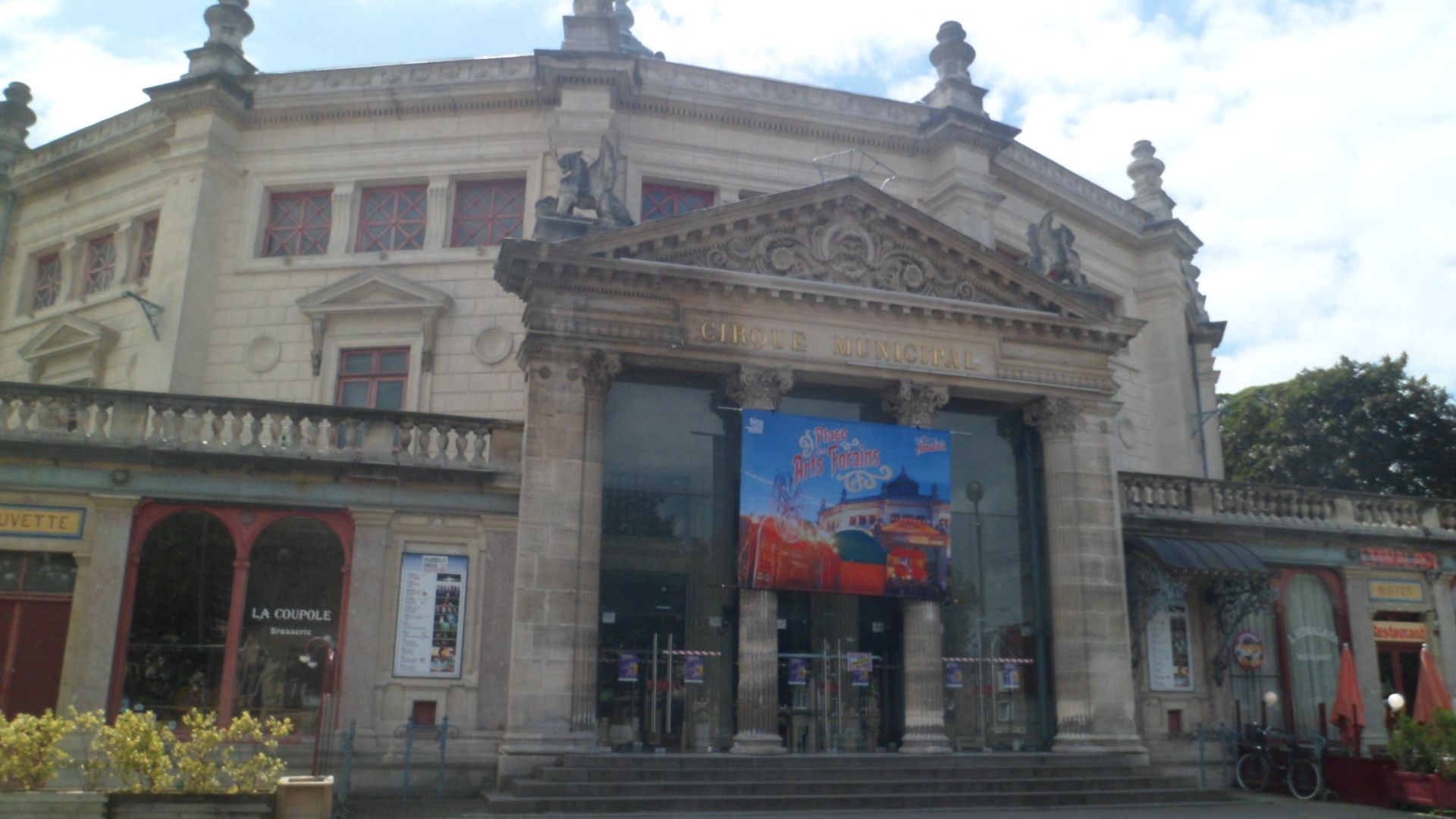
SAM_0704

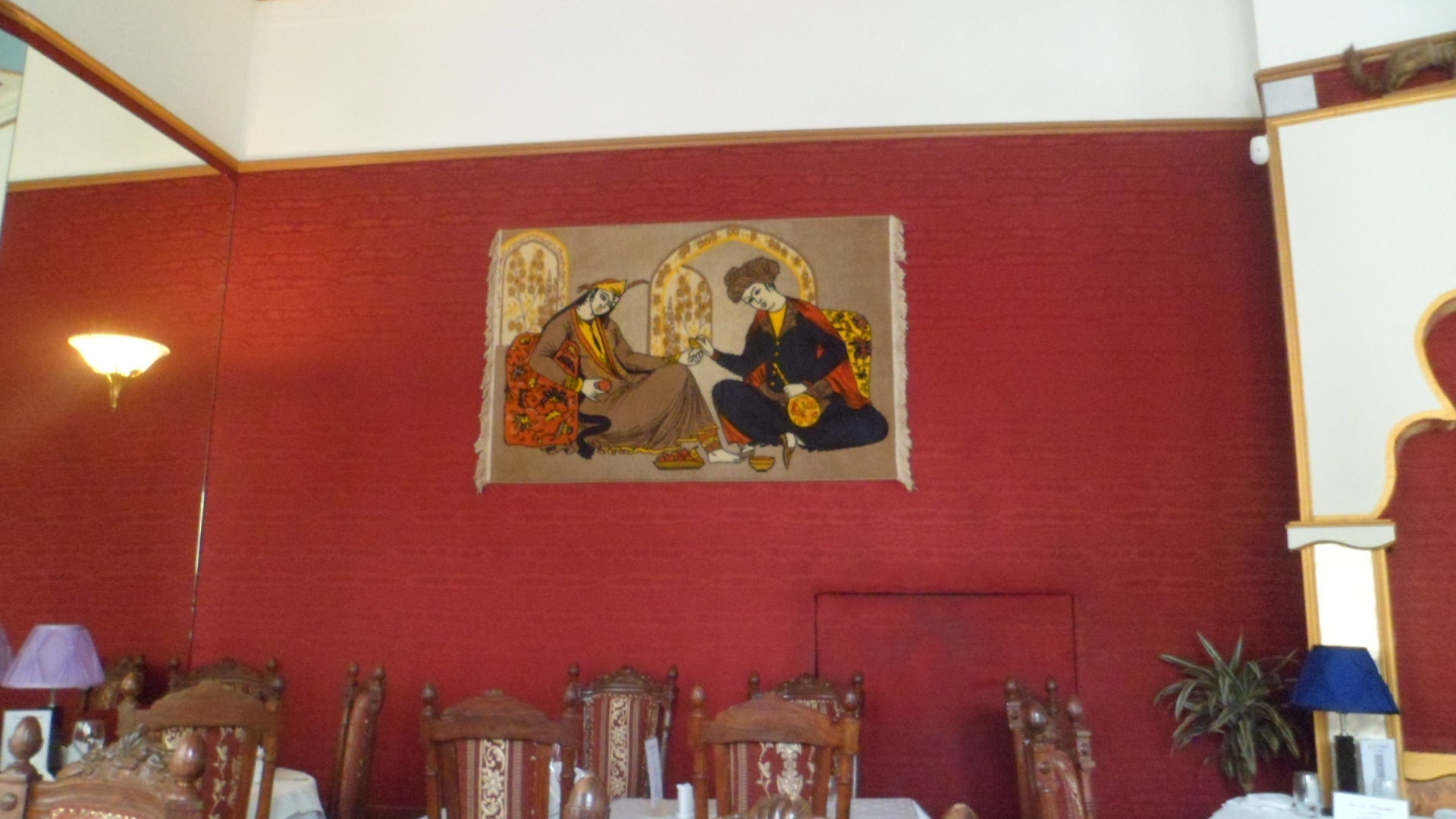
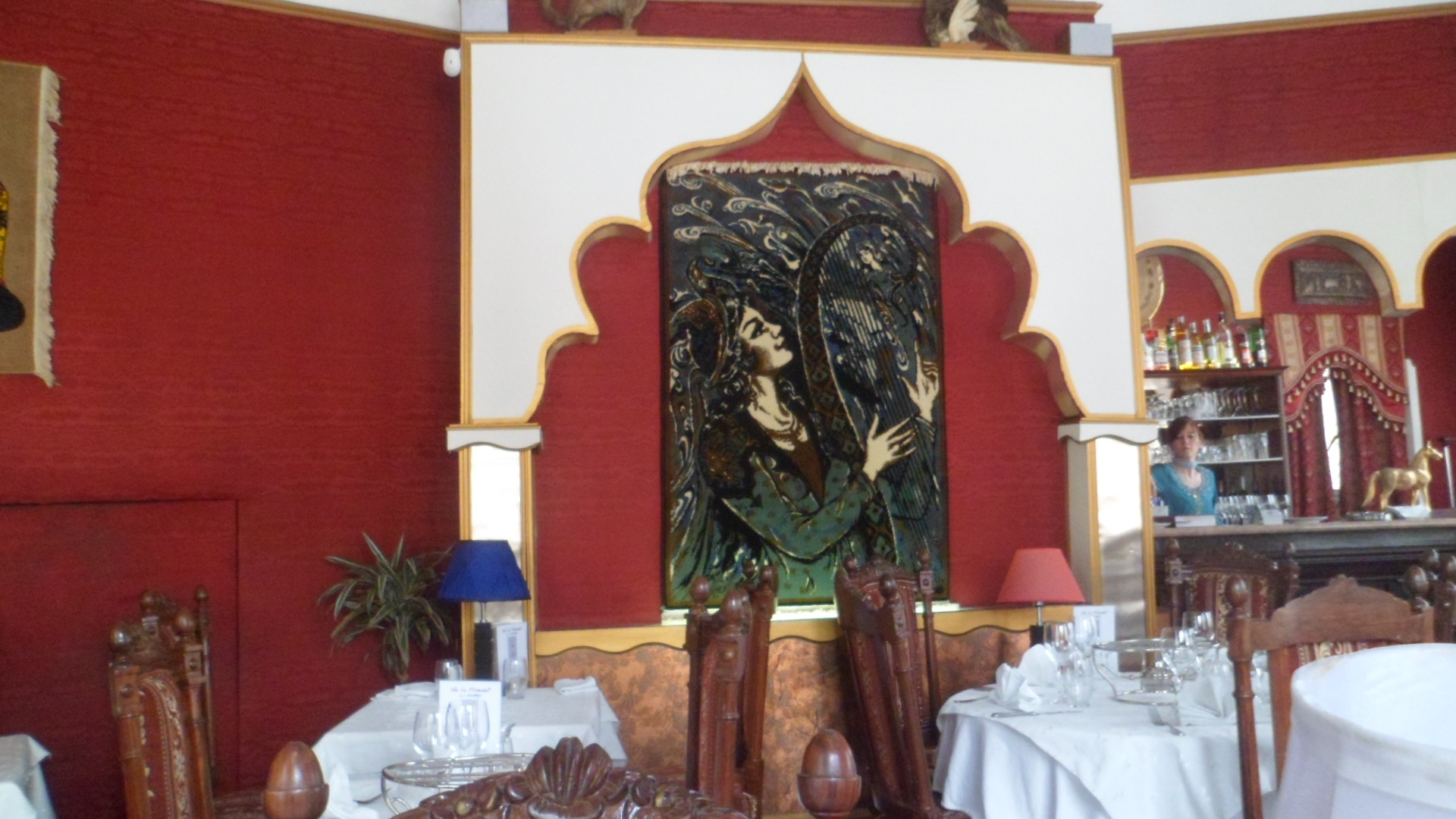
Here is a gem:  Restaurant Himalaya. Indian cuisine, served in the French style, is second to none. Madame Celine, the French wife of the establishment’s Indian chef, is a most energetic and gracious hostess. I thoroughly relished the Lamb Vindaloo, naan with various spreads, and separated milk dessert, in this lovely atmosphere. I would find out later, from an Indian couple who were headed home to Lucknow, via Paris of course, that there is a strong connection between France and India- and not just in Pondicherry and Mahe.
SAM_0705
SAM_0706

It was nearing 2 PM, and time for the hard-working proprietors to rest, so I walked through Cirque Jules Verne, and squares dedicated to Annie Fratellini and Arlette Gruss. Mlle. Fratellini was one of France’s most famous circus clowns, and a talented singer and actress, as well. Mlle. Gruss was also a circus performer, who taught the performing arts for several years, across France. The circus in France, during their heyday, was more focused on the prowess of humans than the forcible humiliation of animals.

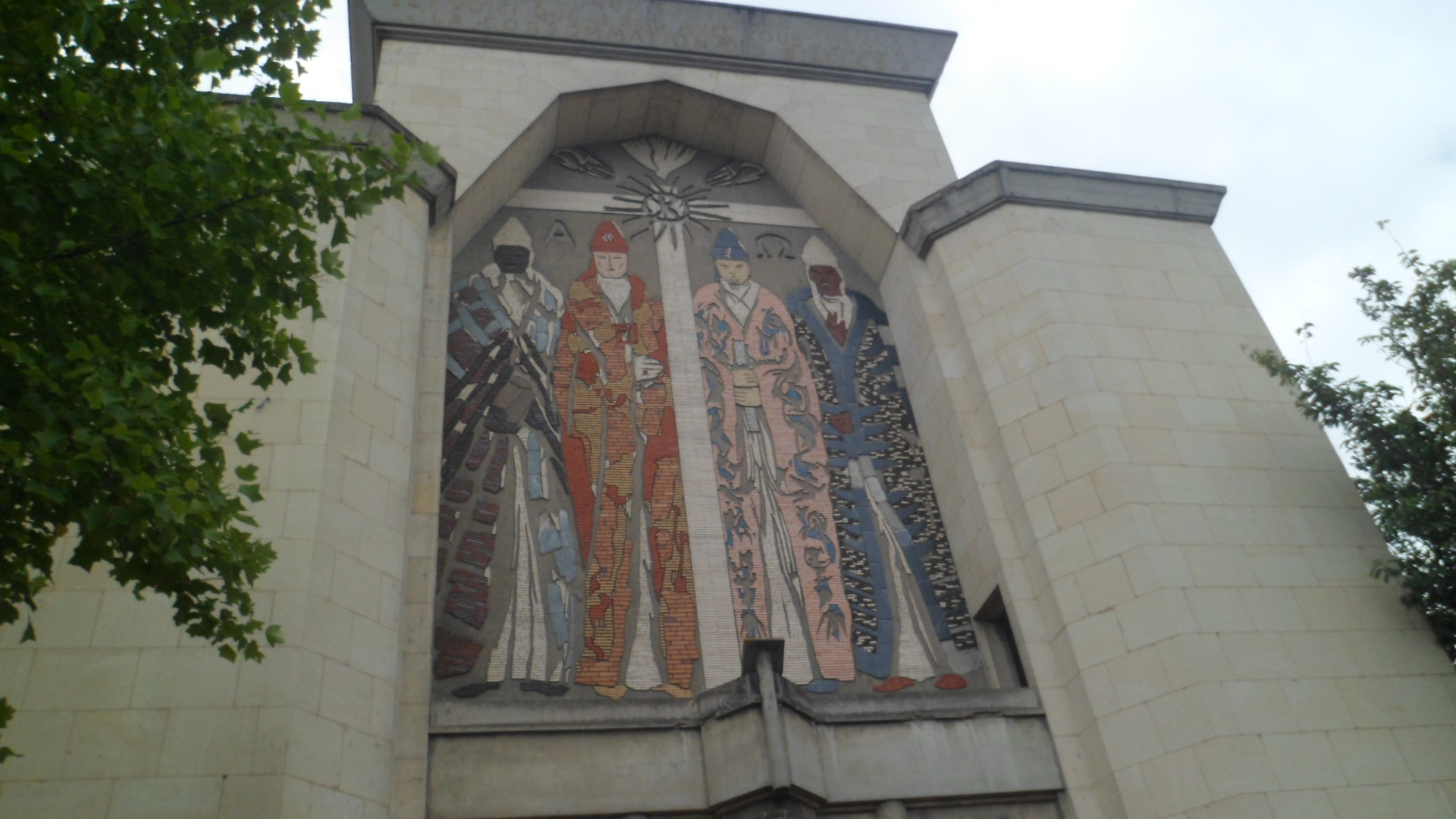
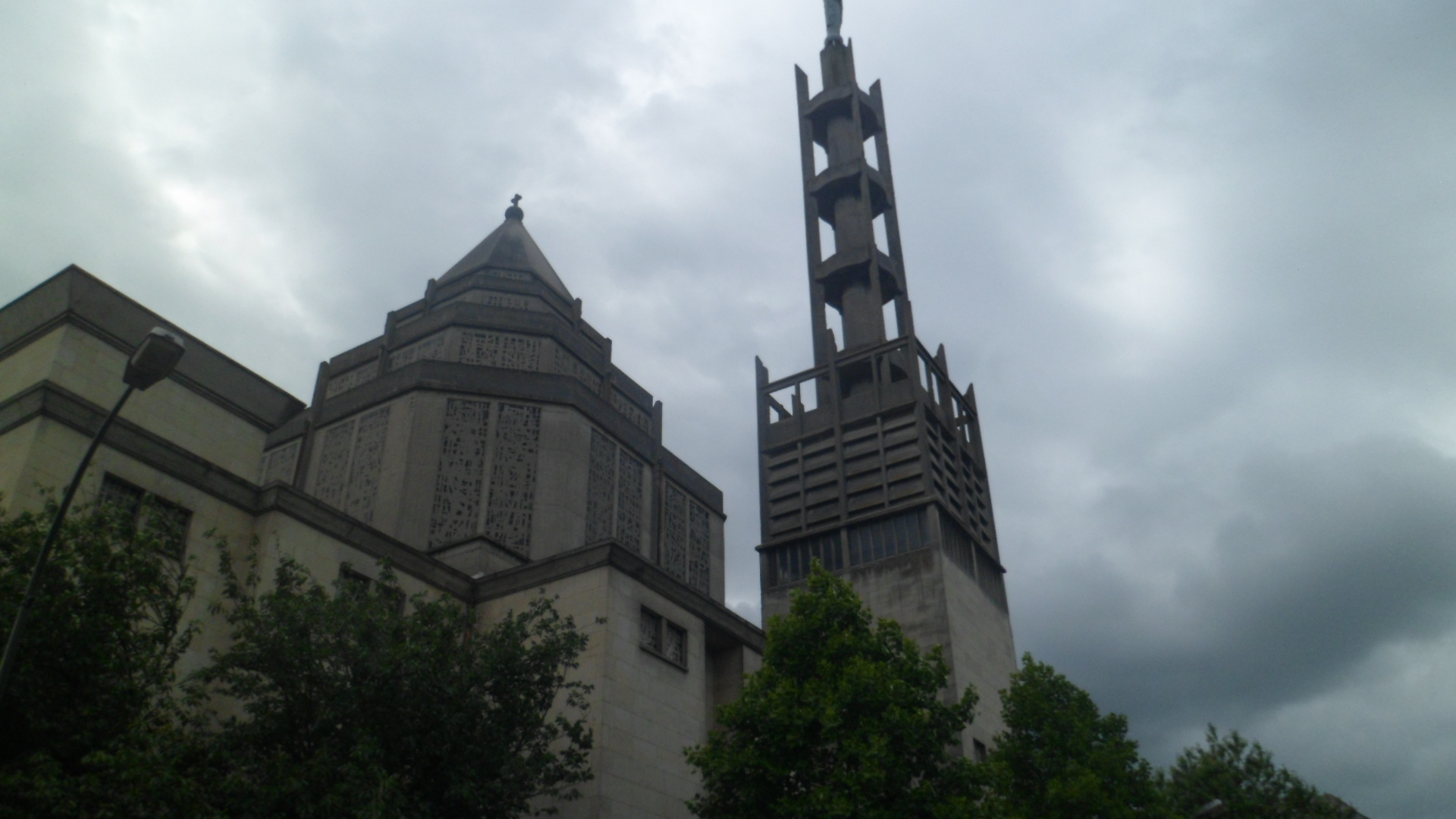
Across from the Cirque and La Coupole, is L’Eglise de la Paix. Here, a young girl was teasing her little brother, stopping when she saw me approaching. I was glad to be a source of relief to the poor child, and was also gratified by these sights.
SAM_0708
SAM_0712

Perhaps most gratifying of all was this plaque, memorializing Corine Seguin, who was murdered by Peru’s Shining Path guerrillas, in 1988.

SAM_0709

I also passed a Polish church: L’Eglise Matki Boze Czestochowski, en route to the Grand Marche. This is hardly surprising. Immigrants from east central Europe have flocked to French mill towns for over a hundred years.

SAM_0717

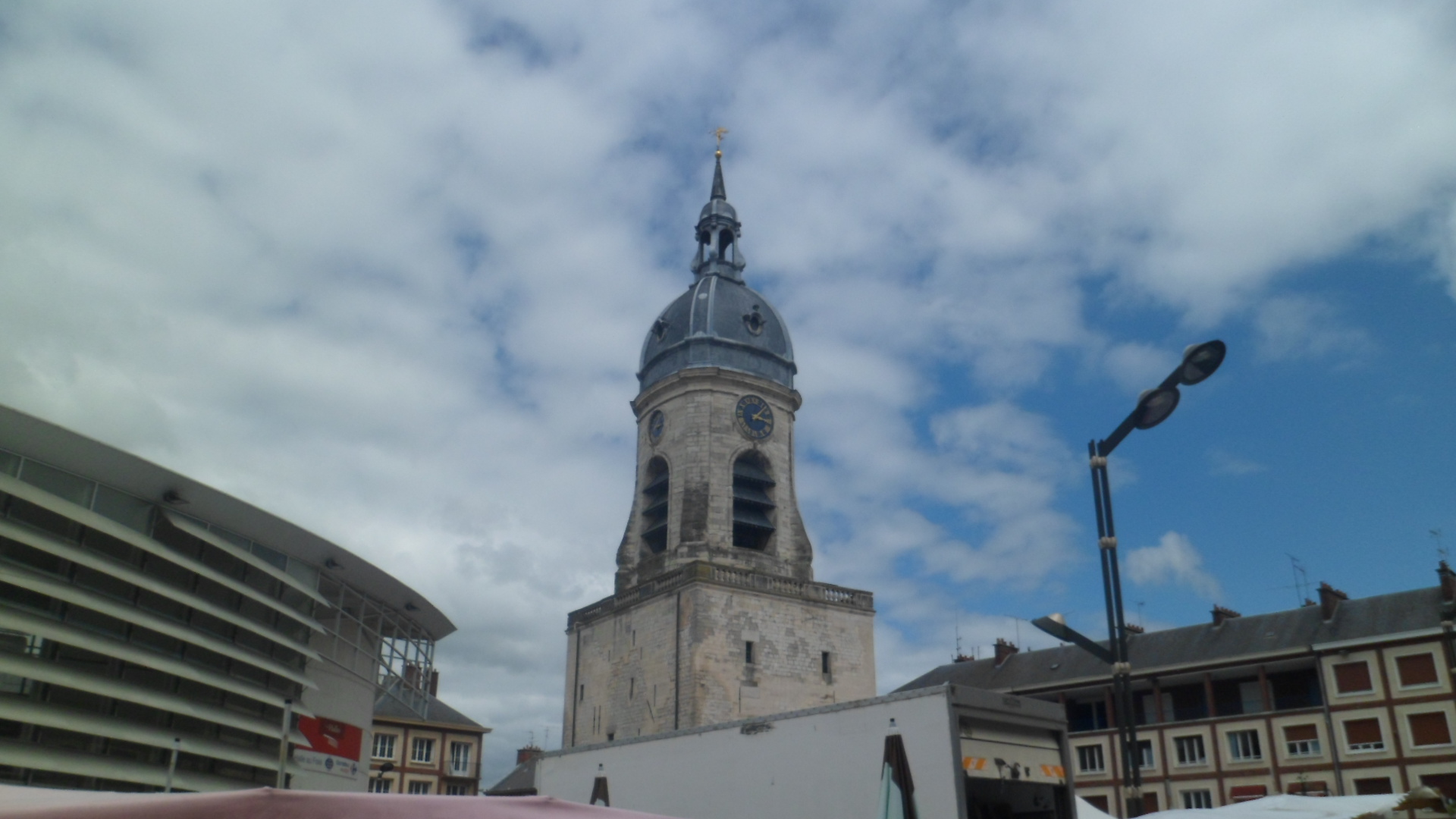
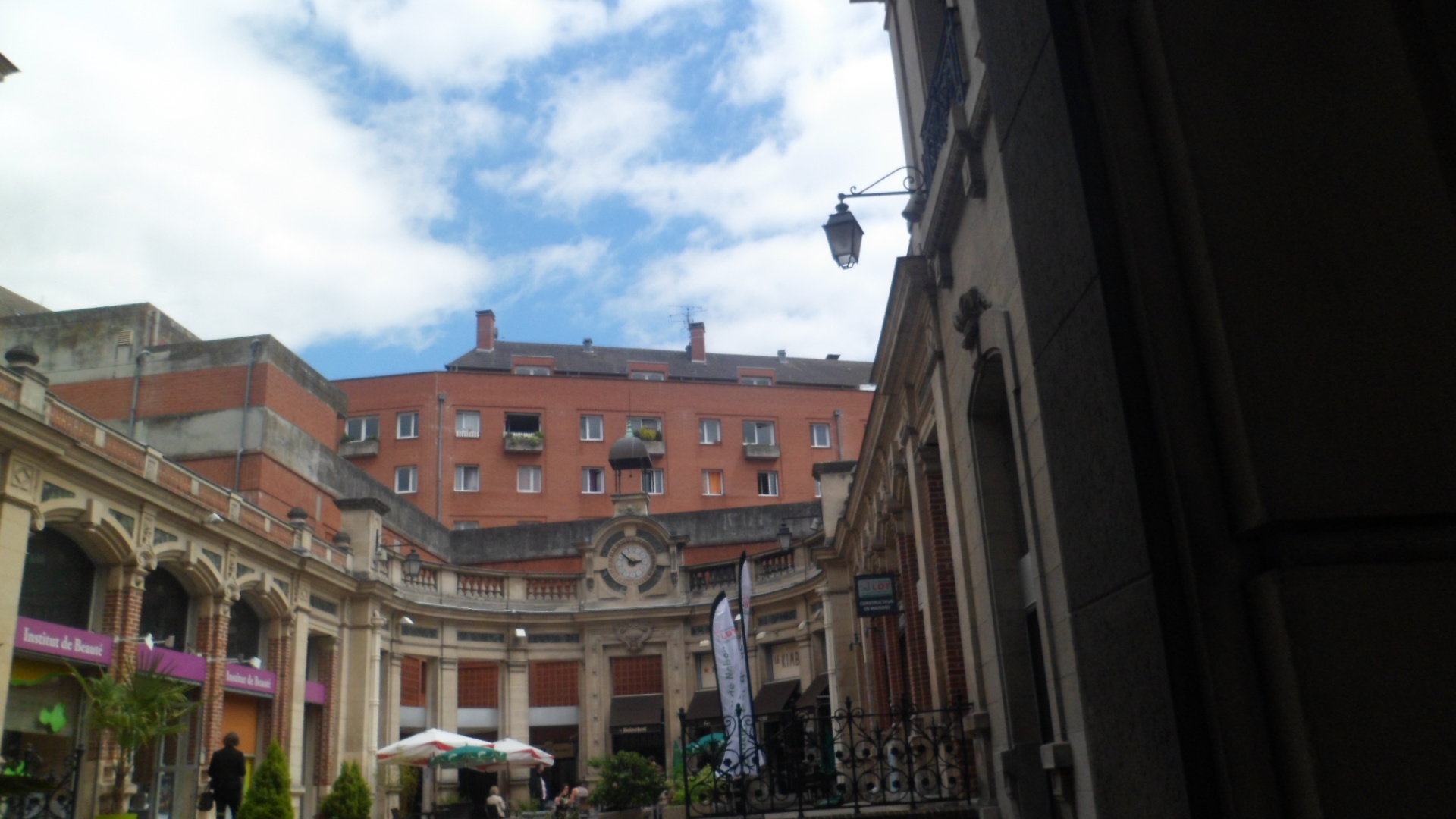
I knew the end of my afternoon walkabout was coming, upon reaching Hotel de Ville d’ Amiens (City Hall).
SAM_0718

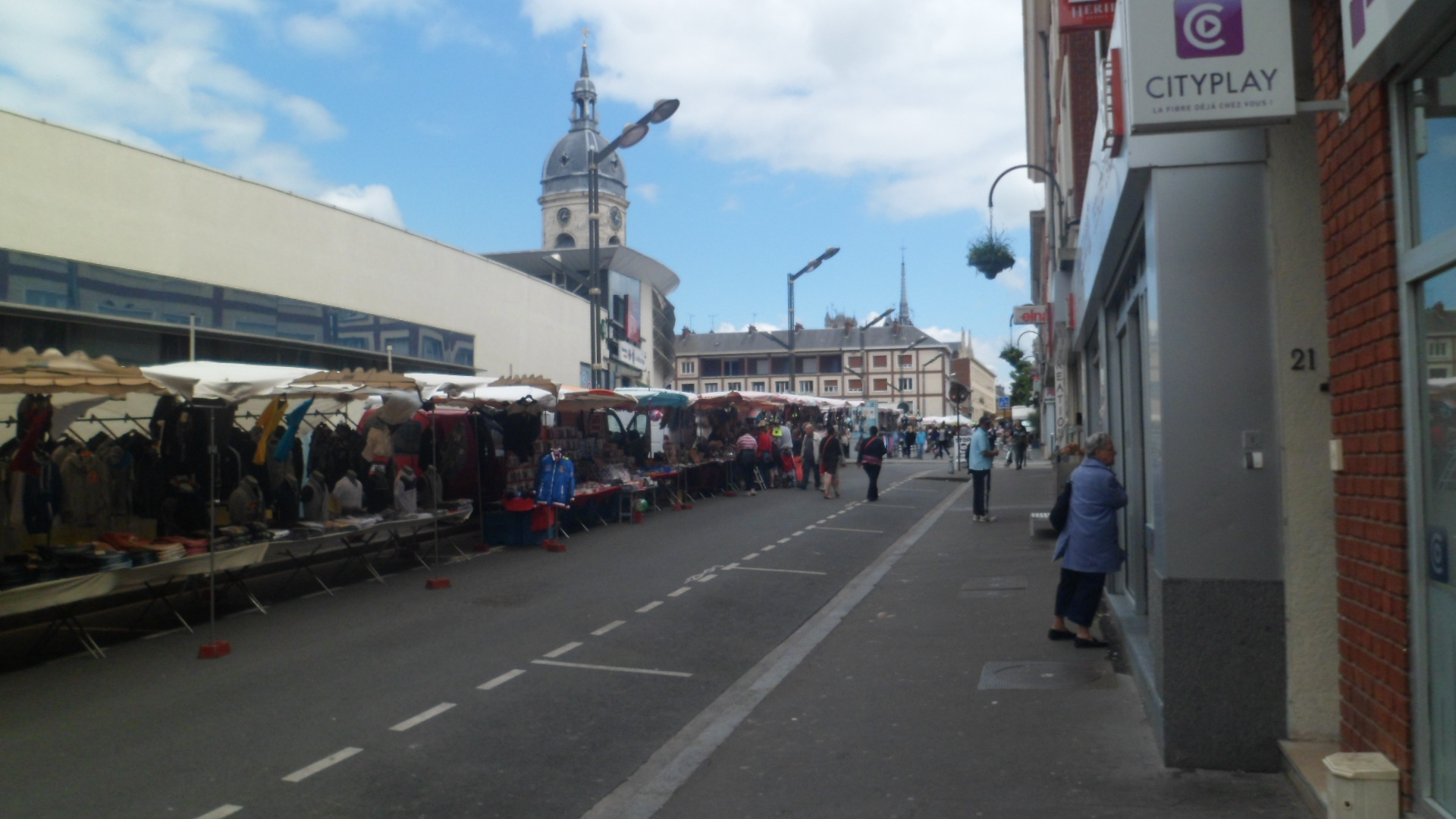
This is also the area of Grand Marche, which includes the Flea Market.

SAM_0722
SAM_0724
SAM_0725

Amiens is filled with many great landmarks, but has not neglected the present, or the future.  L’Universite de Picardie is a full-service, research-oriented institution.

SAM_0791

So it went, and I found yet another eclectic and cosmopolitan community, taking the bull of life by the horns, and welcoming visitors with great gusto. I could easily come back to Amiens, for a slice of life at its finest.
An Eastward Homage, Day 19: Amiens, Part II- St. Firmin’s House

7
SAM_0625

The cathedrals of France, and of all Europe, present a grandeur, individual and collective. While offered ostensibly to pay homage to Christ, they were usually also intended to show the power and largesse of their patrons.  Lost in time and space, frequently, are the stories of the founders.

St. Firmin taught Christianity to the Picards, and put up the first church in an area outside the walls of Amiens, in the early Fourth Century AD.  For his pains, he was beheaded by the Romans.  The Picards, though, brought his church and its implements into the city, and by 1269, the main cathedral that we see today was in place.

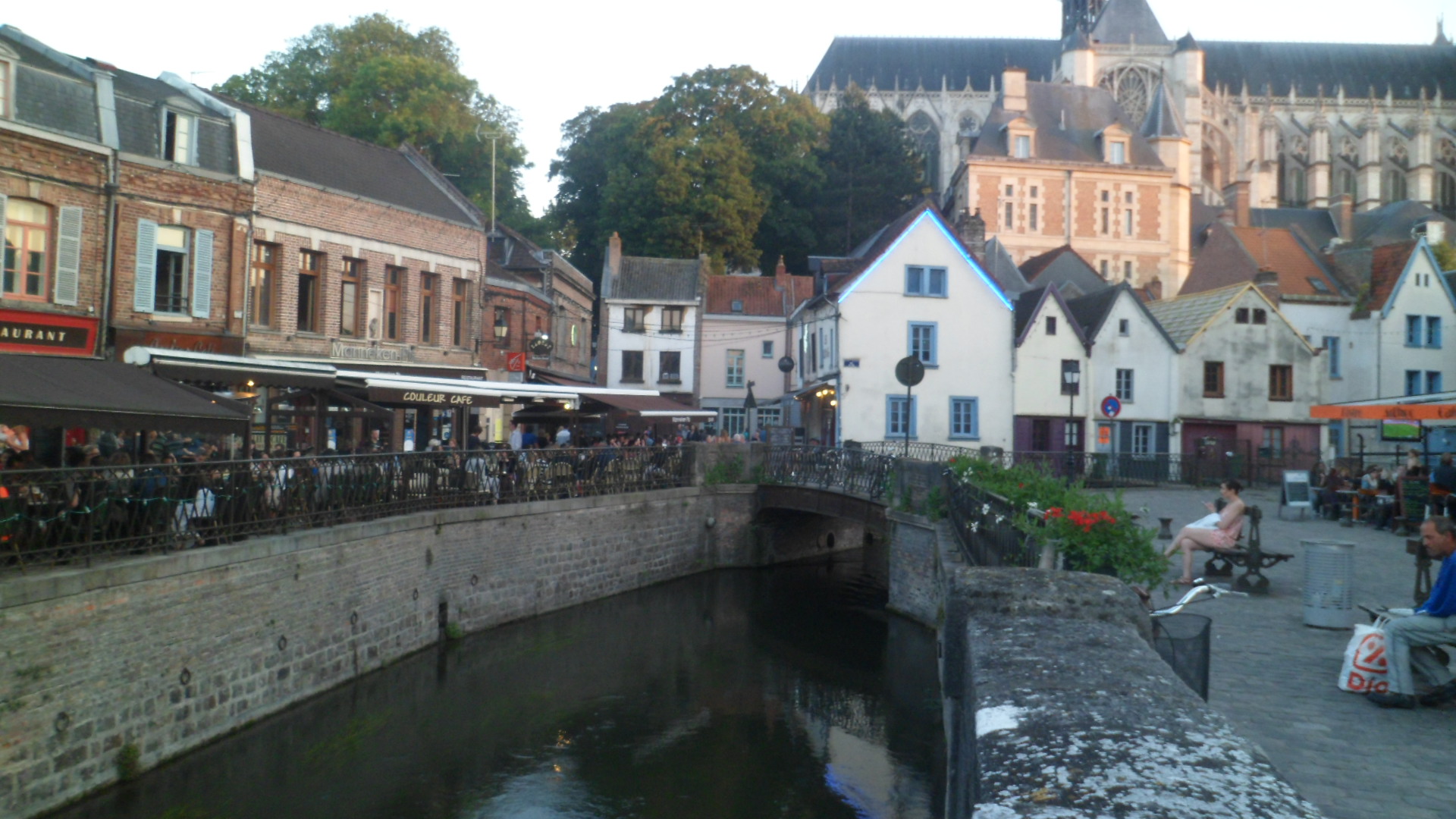
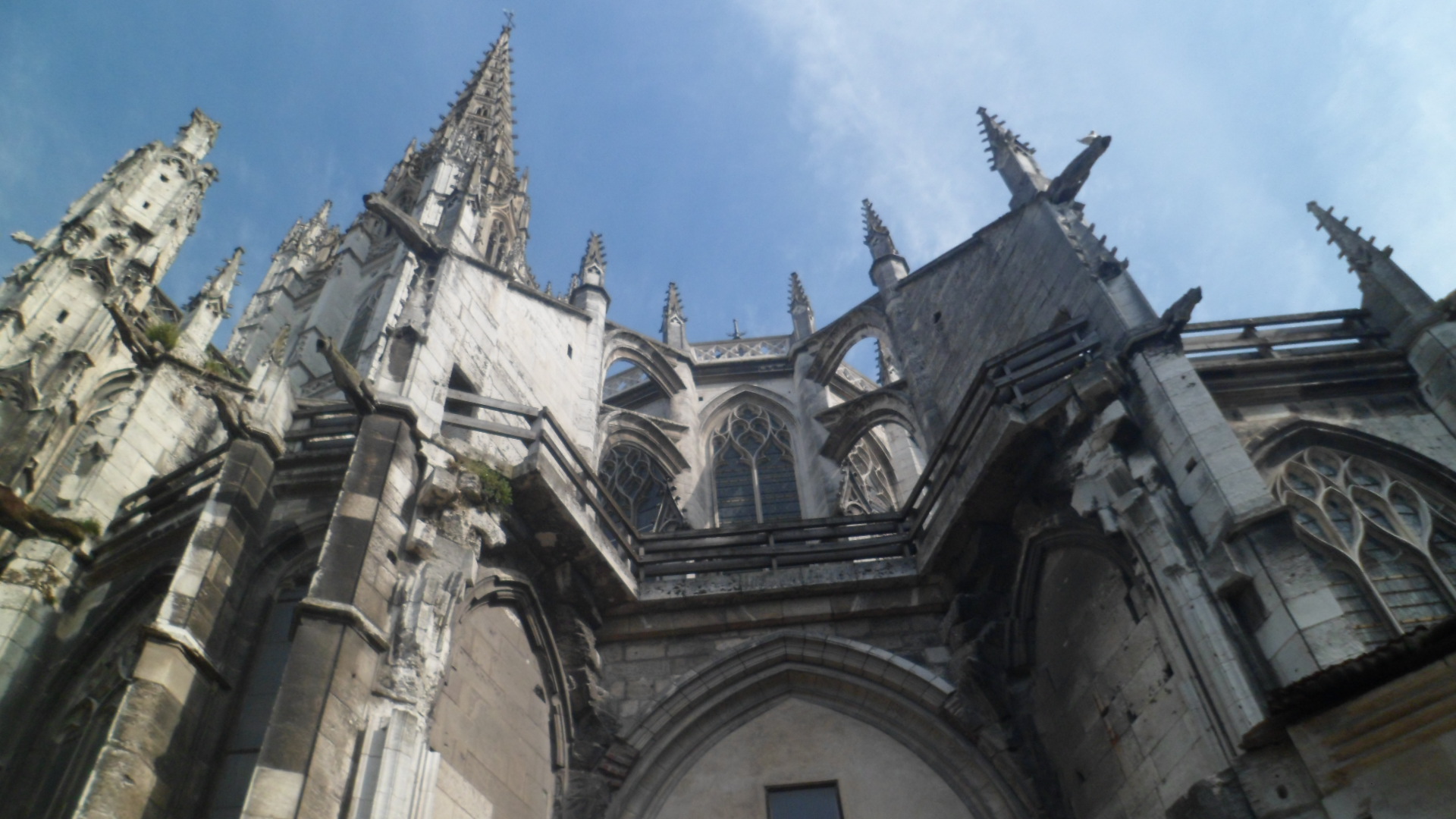
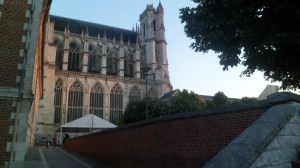
I began my visit, as usual, by circling around the exterior.  The spires, tympanum and outer shell exude the magnificence that reflected Amiens’ exemplary position between Flanders and Paris, and its relative proximity to the English Channel.  The city’s canals are also an outgrowth of the prosperity enjoyed by Picardy, during and after the Crusades of the 12th-14th Centuries and during the Renaissance of the North.

SAM_0628

The cathedral is bounded by gardens, on the west side.

SAM_0632

In this area, a young lady had a successful interview for an office position.  That it happened in an outdoor setting says much of Amiens.  That her poised and confident manner bore fruit says even more.  I saw little, if any, objectification of people here, or anywhere else in Europe.

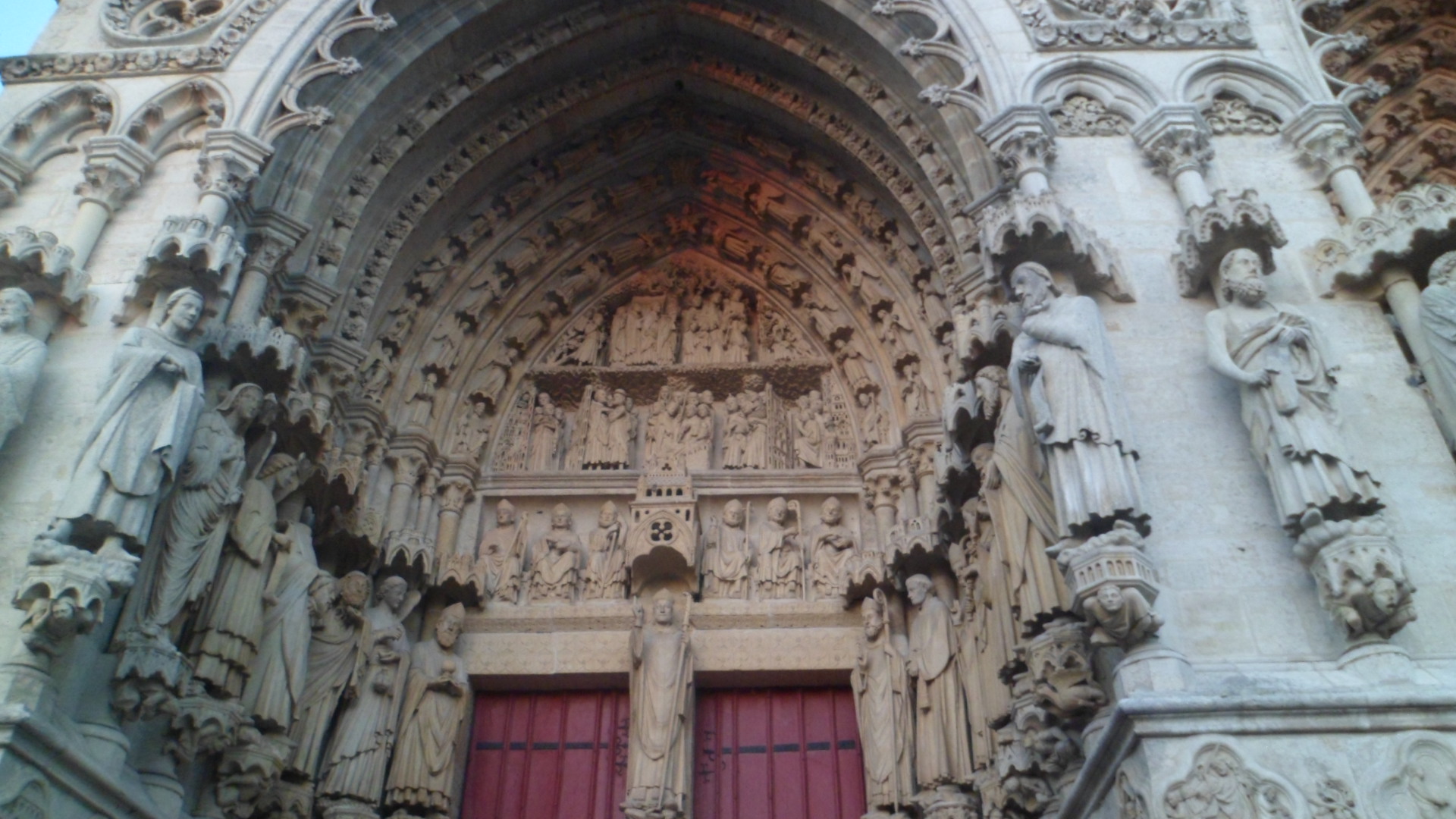
The tympanum, below, is dedicated to  St. Honore, whose relics were shown around, as a fund raiser for the 1260 iteration of the Cathedral.  His image is seen in the center of the front entrance.

SAM_0638

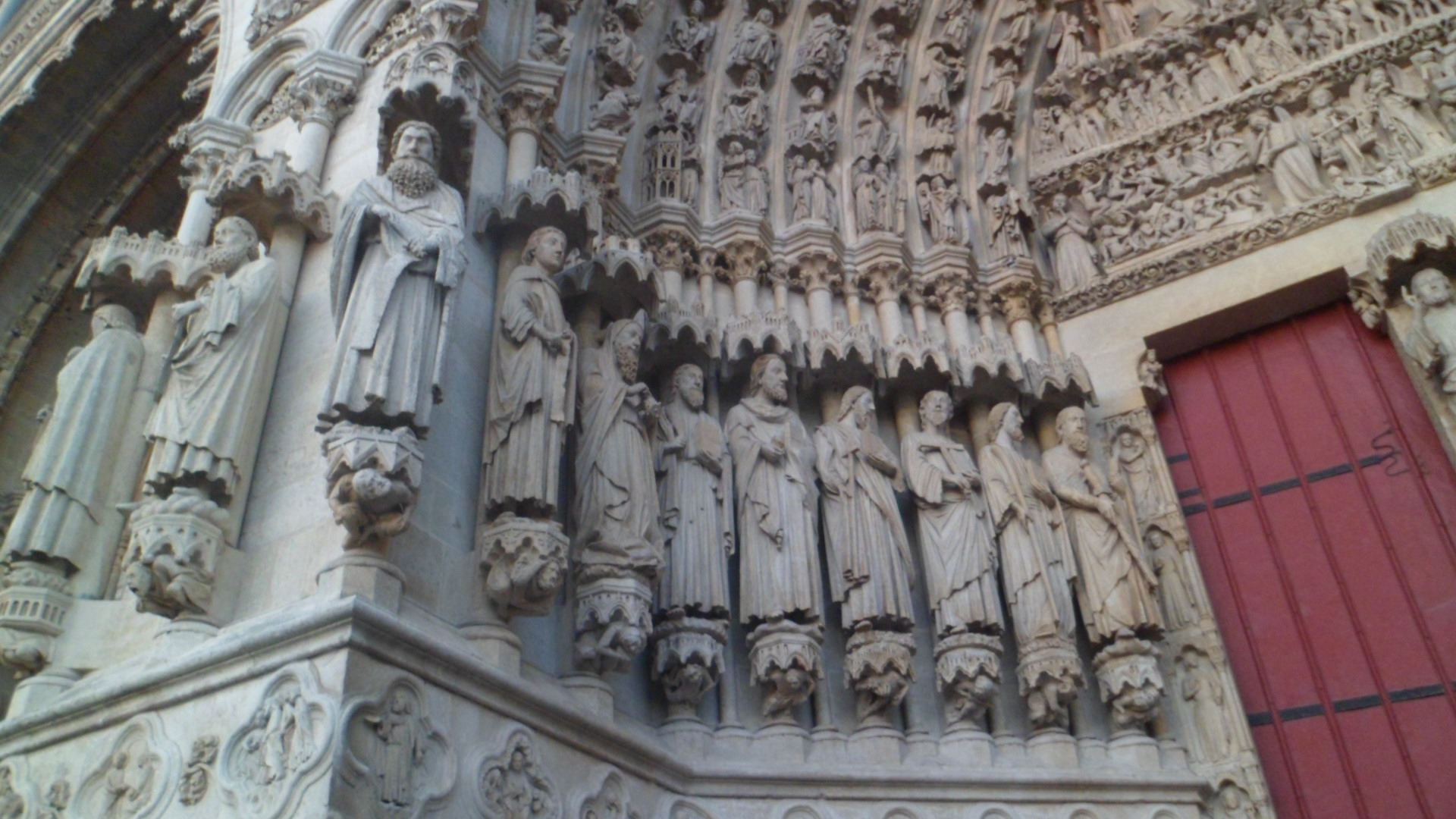
The tympanum is also graced by several of the great prophets of Judeo-Christian tradition.SAM_0641

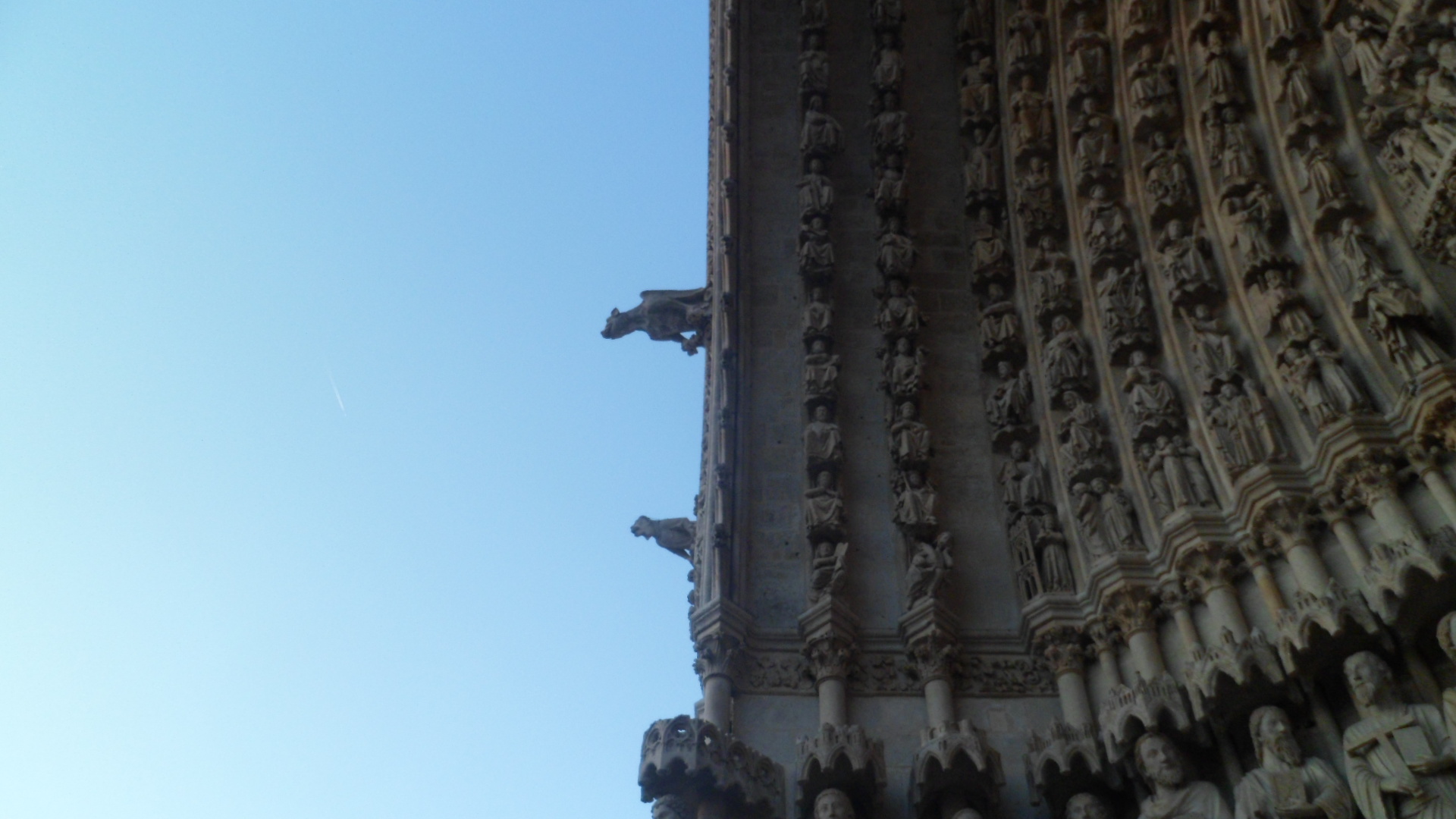
Dragons abound here, representing the challenges of the world.SAM_0645

SAM_0650

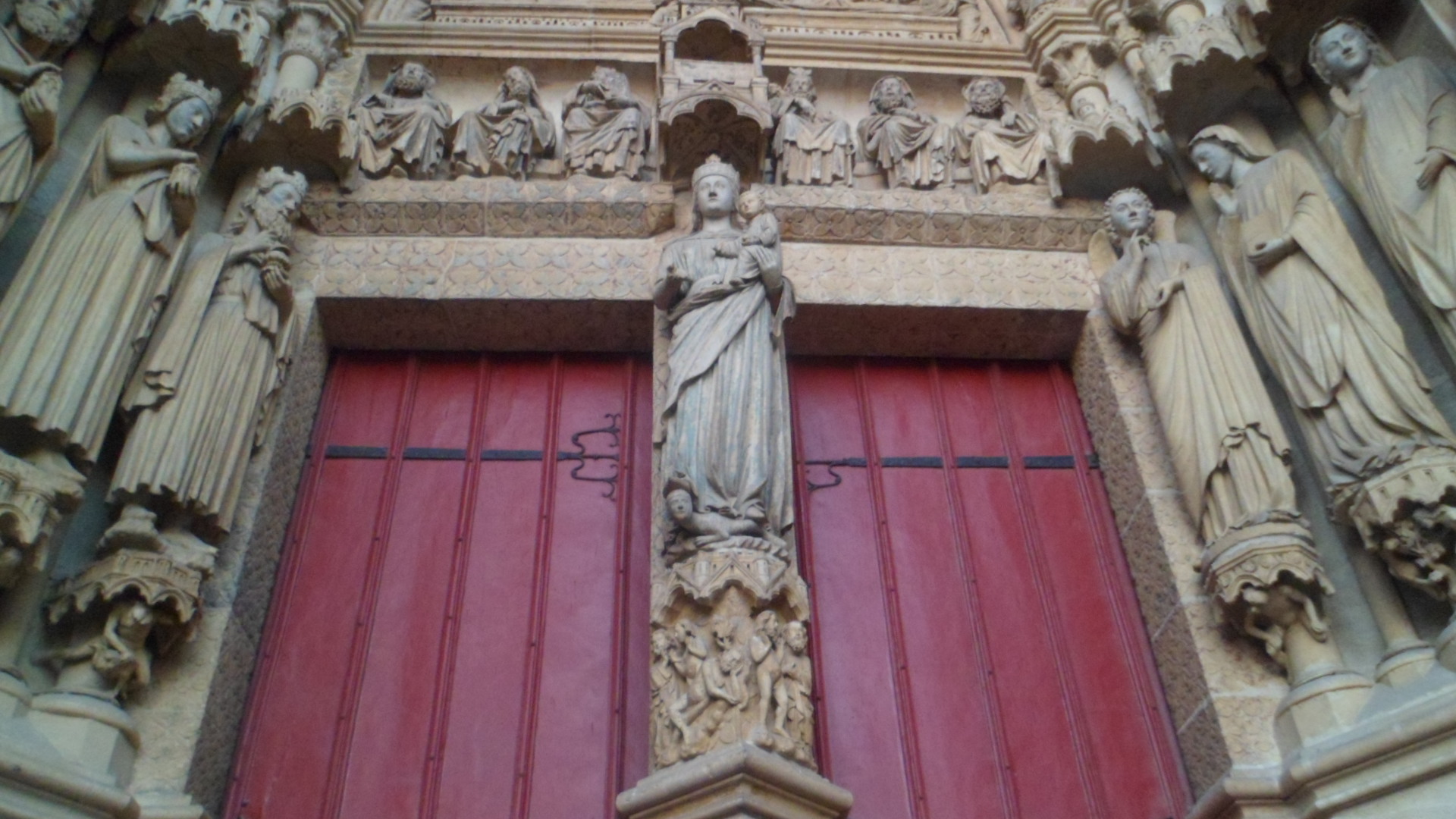
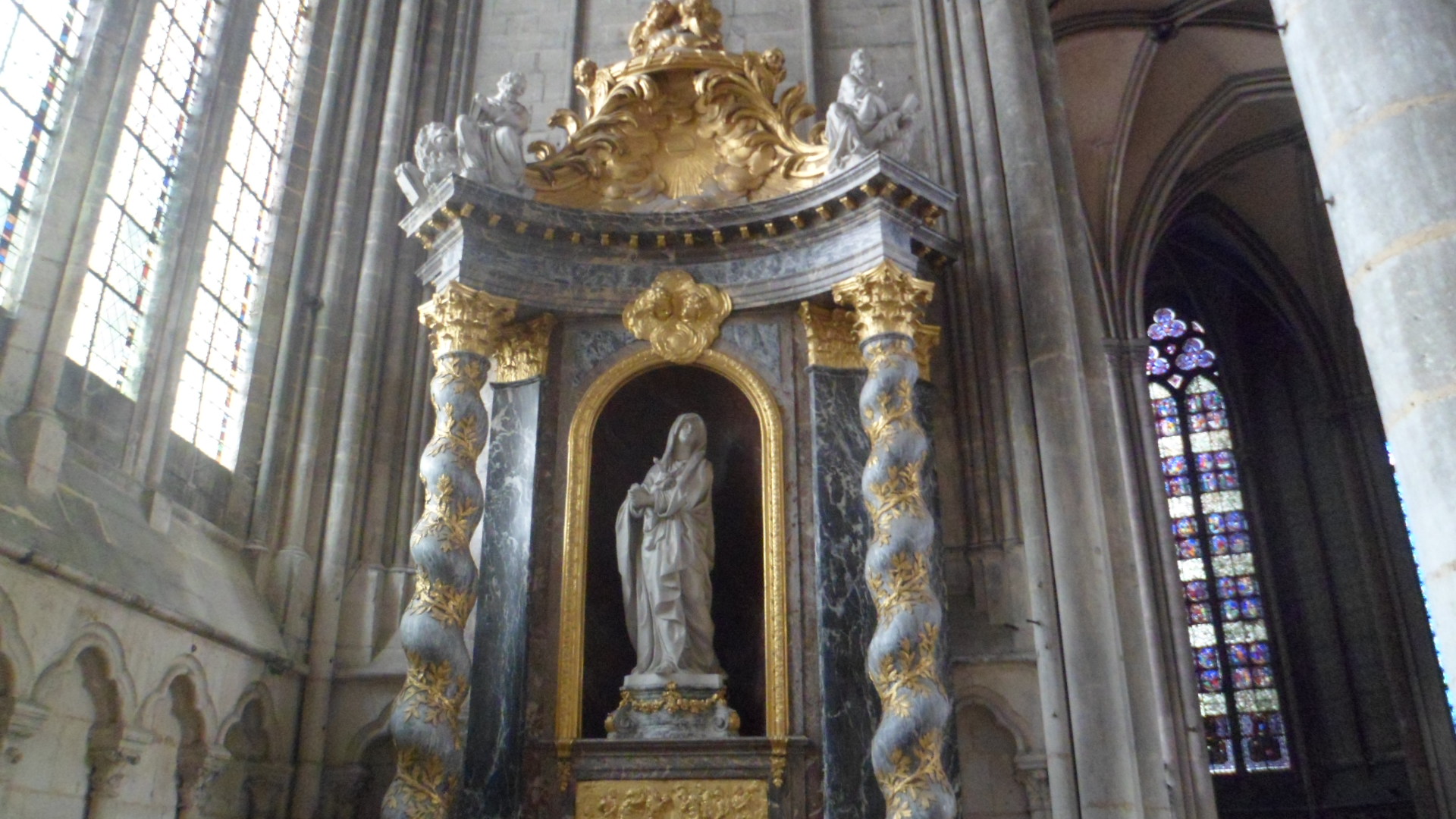
Before we go inside, here is a glance at Mother Mary, bounded by the saints of both genders.SAM_0647

The women of faith are quite prominent here.SAM_0648

Now, on to the nave. The worshipers show the scale of this venerable hall.

SAM_0734

The Chapel of St. John the Evangelist is found immediately to the left, upon entering the Cathedral from the south.

SAM_0738

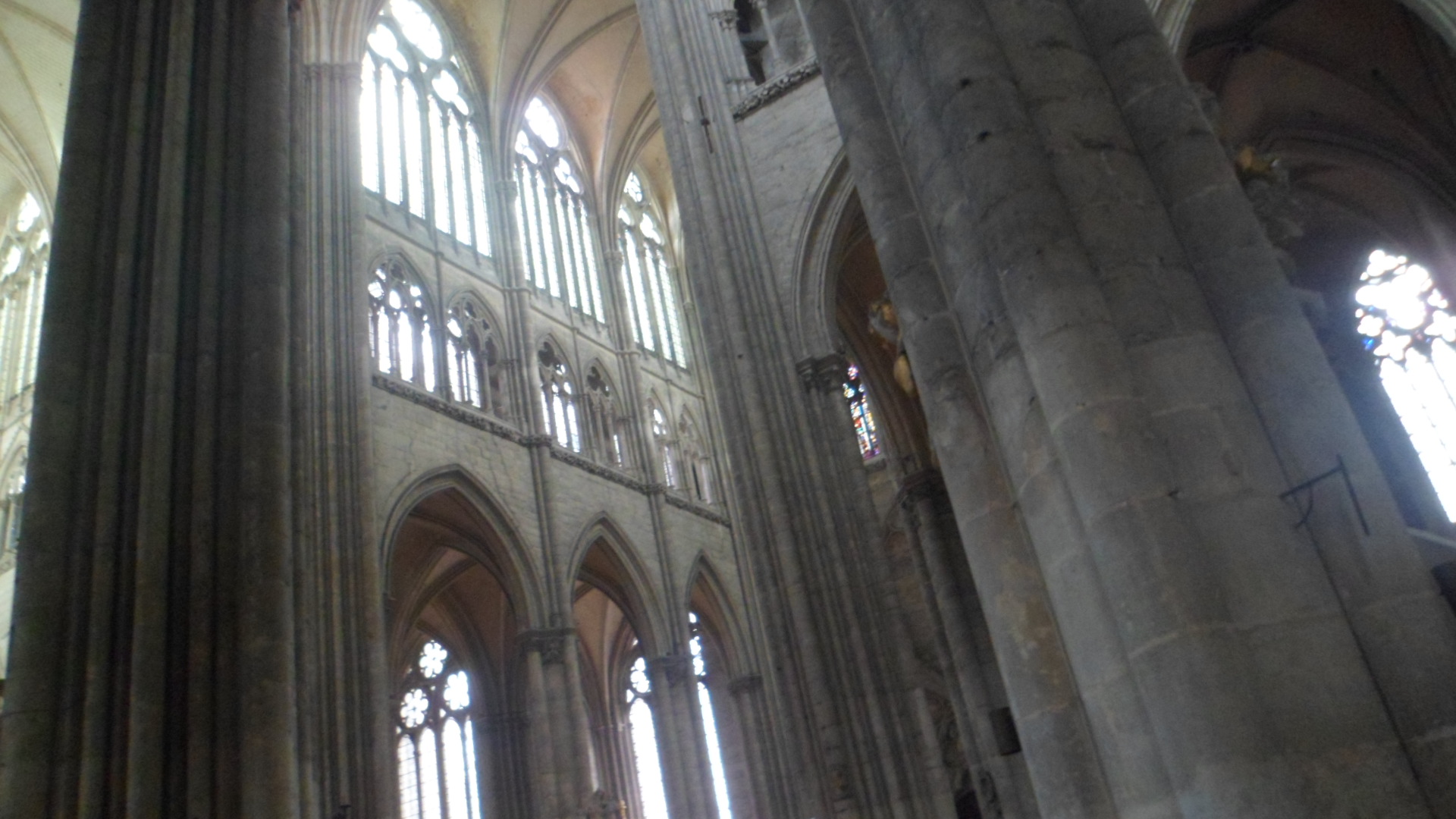
There is always a feeling of space, and of loftiness, in the hall.SAM_0742

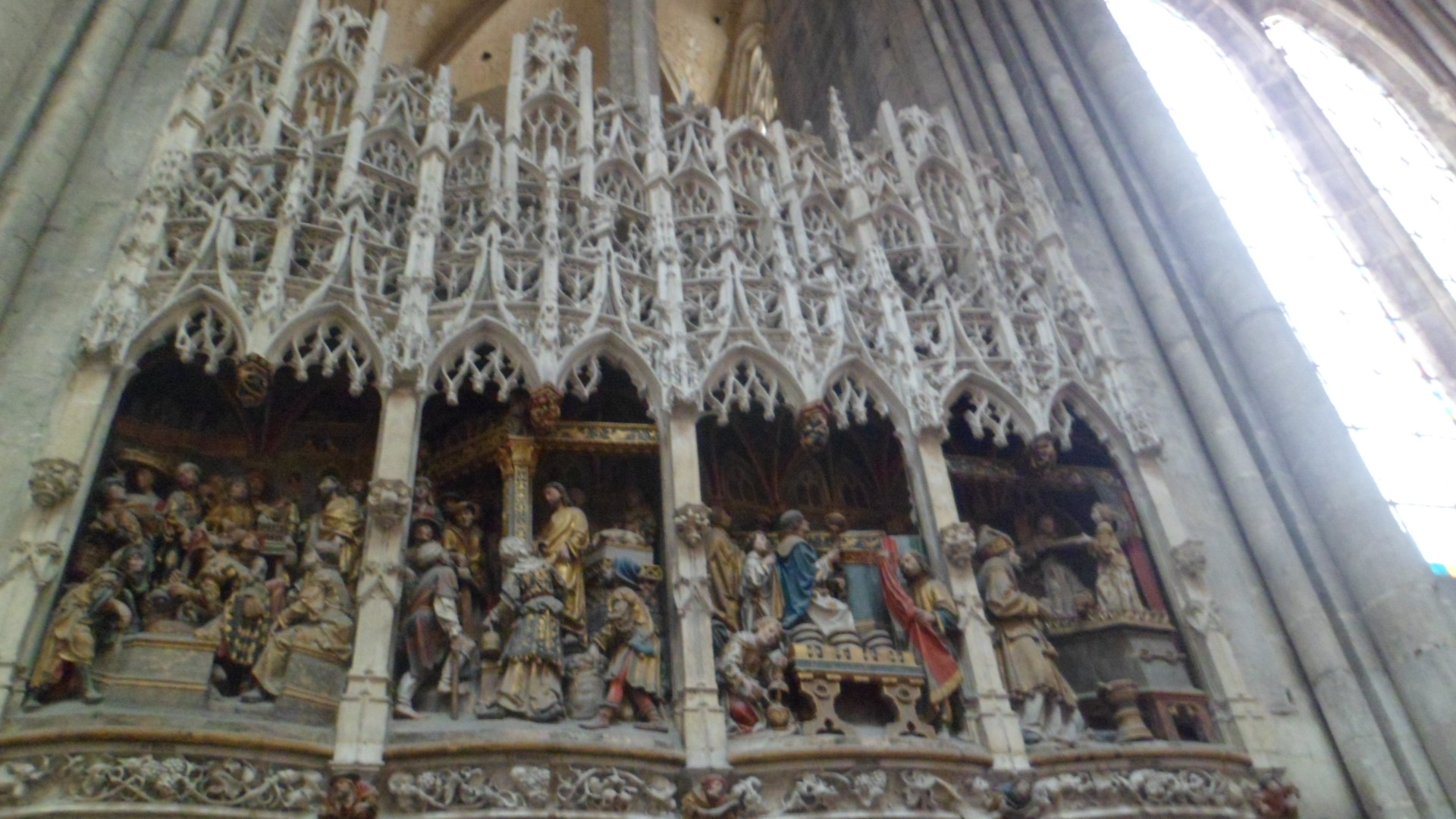
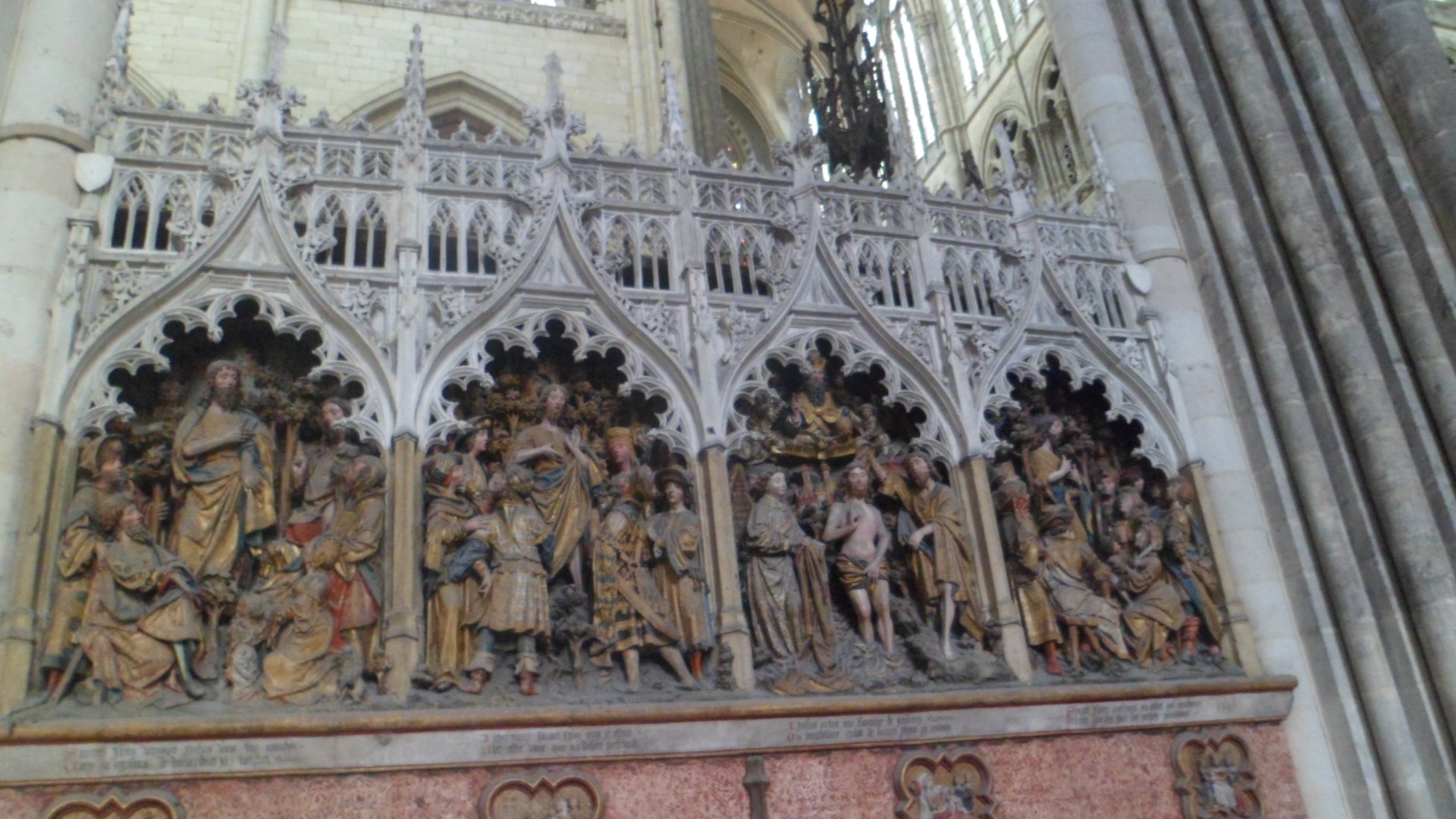
Paint was used more extensively in cathedrals the north of France, perhaps reflecting the influence of the Flemish. The scenes below are a reliquary of John the Baptist.

SAM_0744
SAM_0749

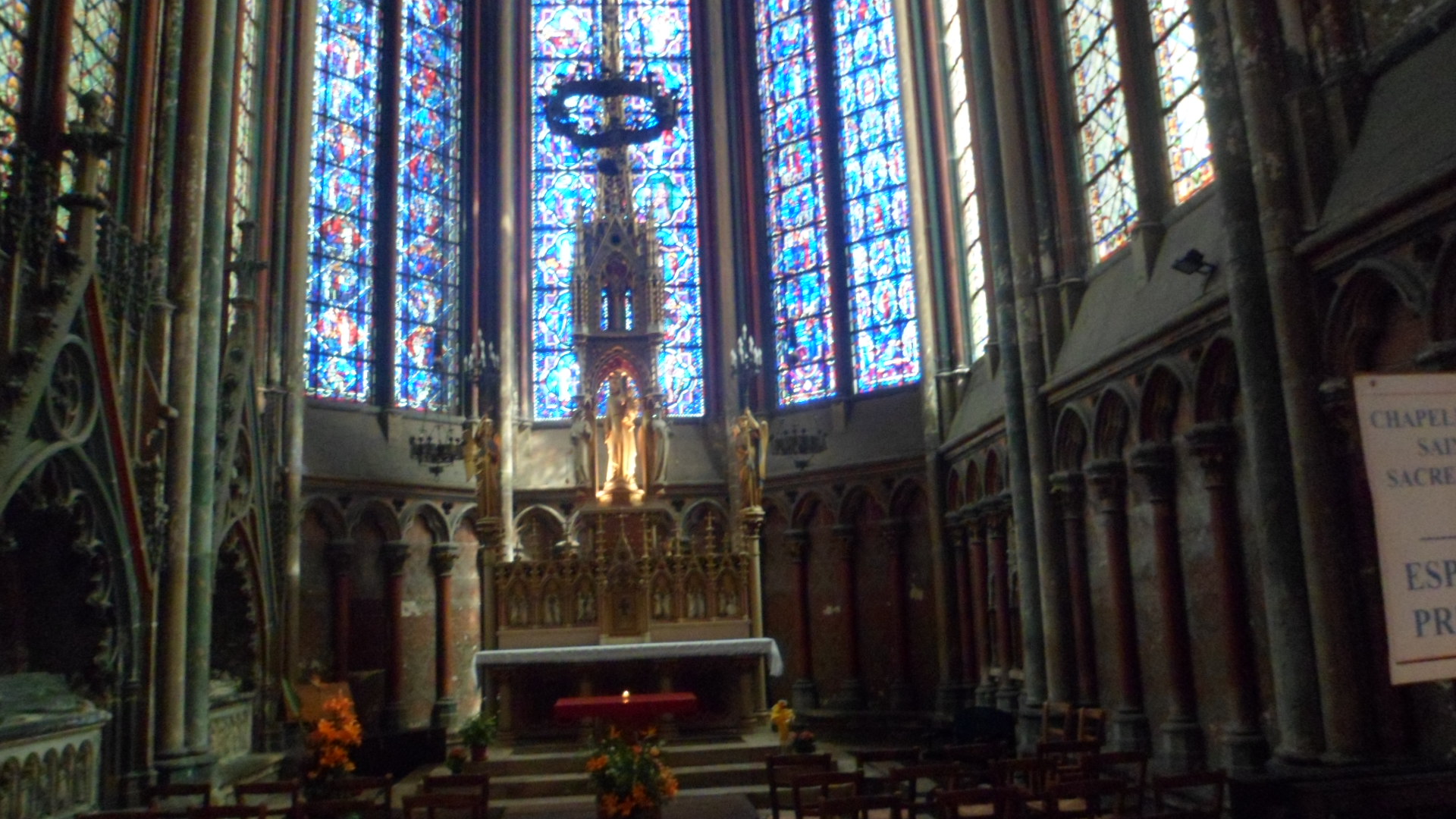
The Blessed Virgin is given her own Chapel, thus certifying the cathedral as Notre Dame d’ Amiens.SAM_0753

The preserved Church of St. Firmin acts as a bolster, spiritually, to the greater cathedral.

SAM_0756

Below, Mary and Jesus are honoured by a saint.SAM_0757

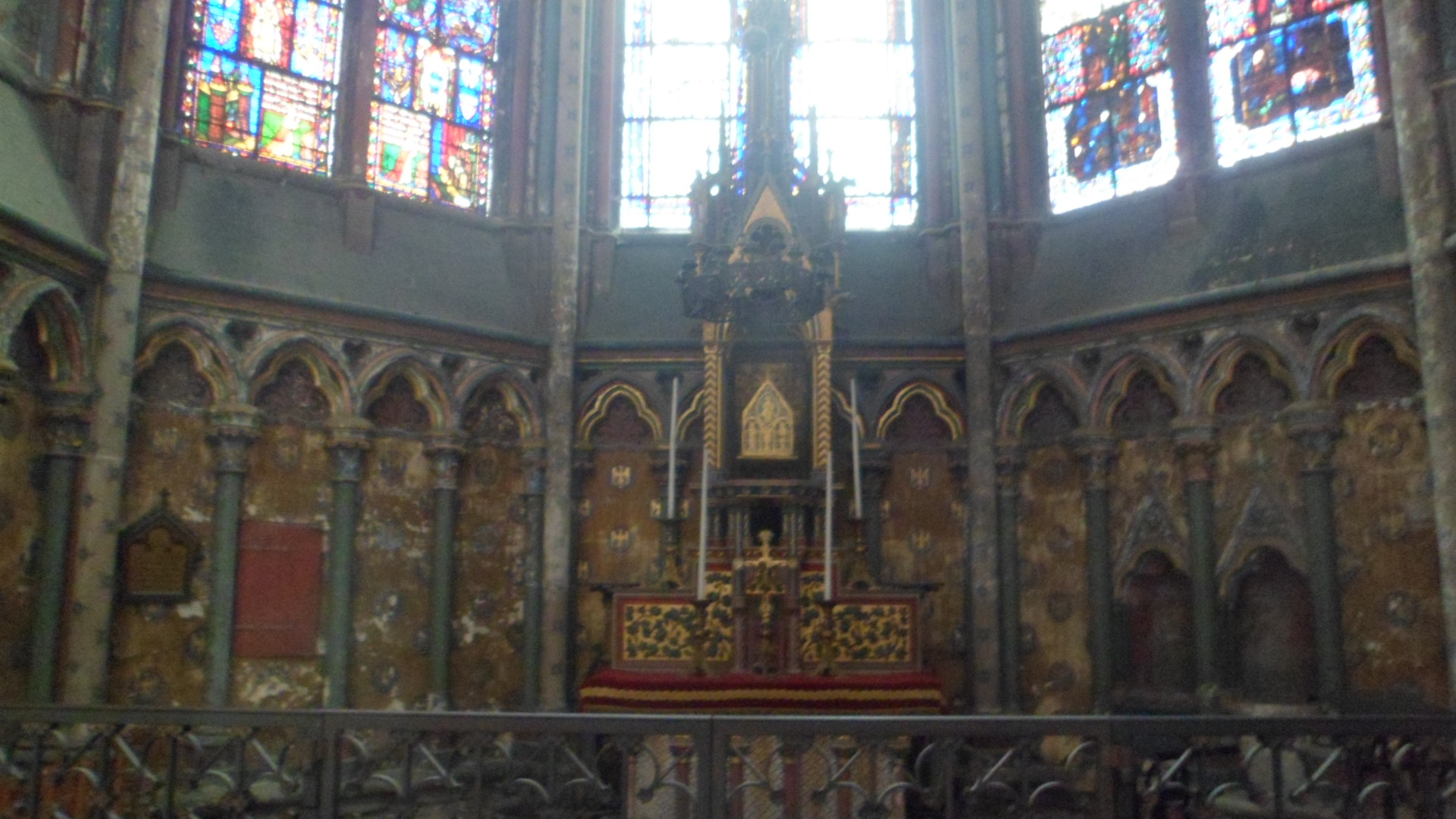
I came to the Chapel of the Virgin Mary, once past the Church of St. Firmin.SAM_0758

This is the Chapel of St. James the ElderSAM_0761

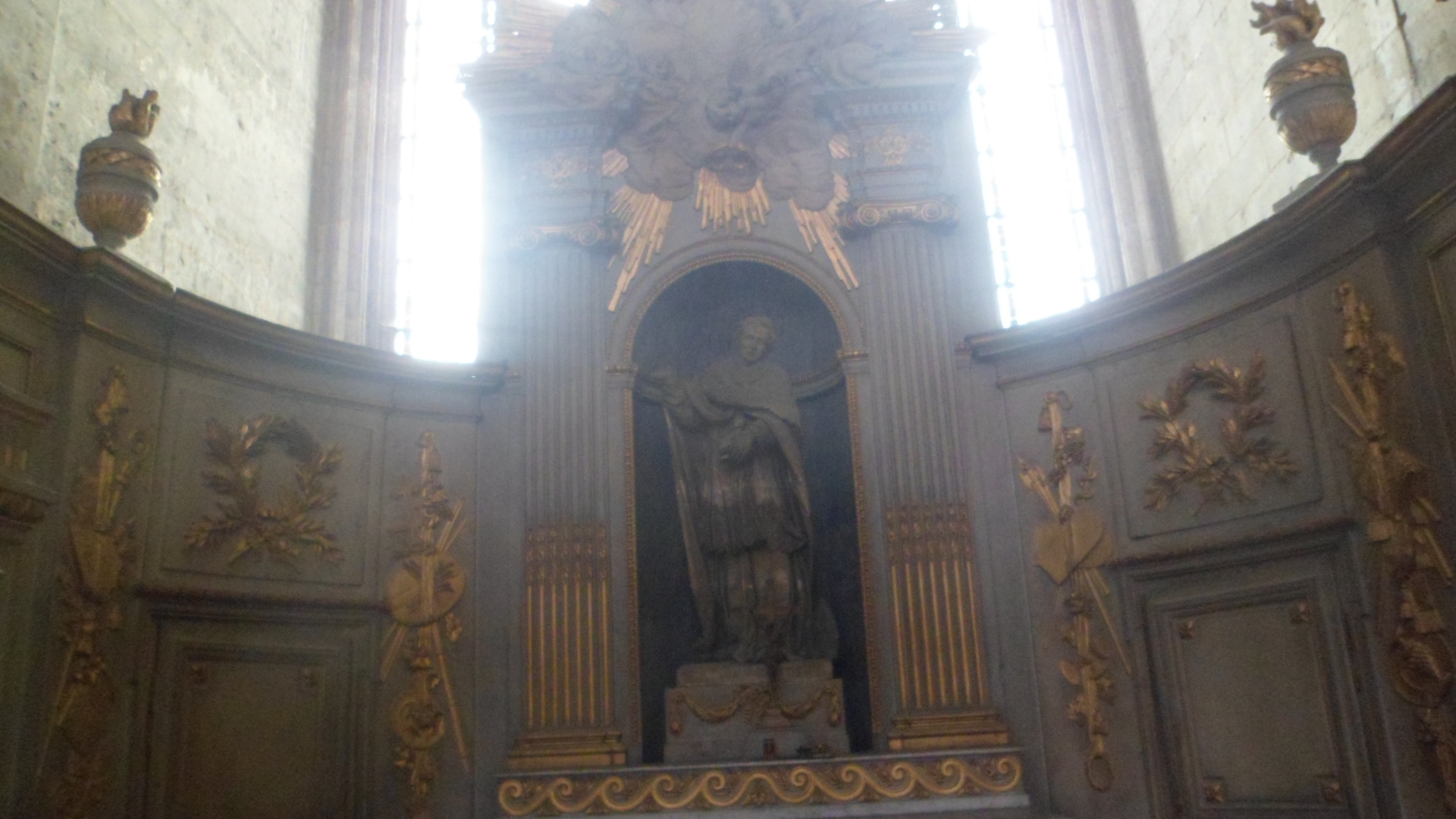
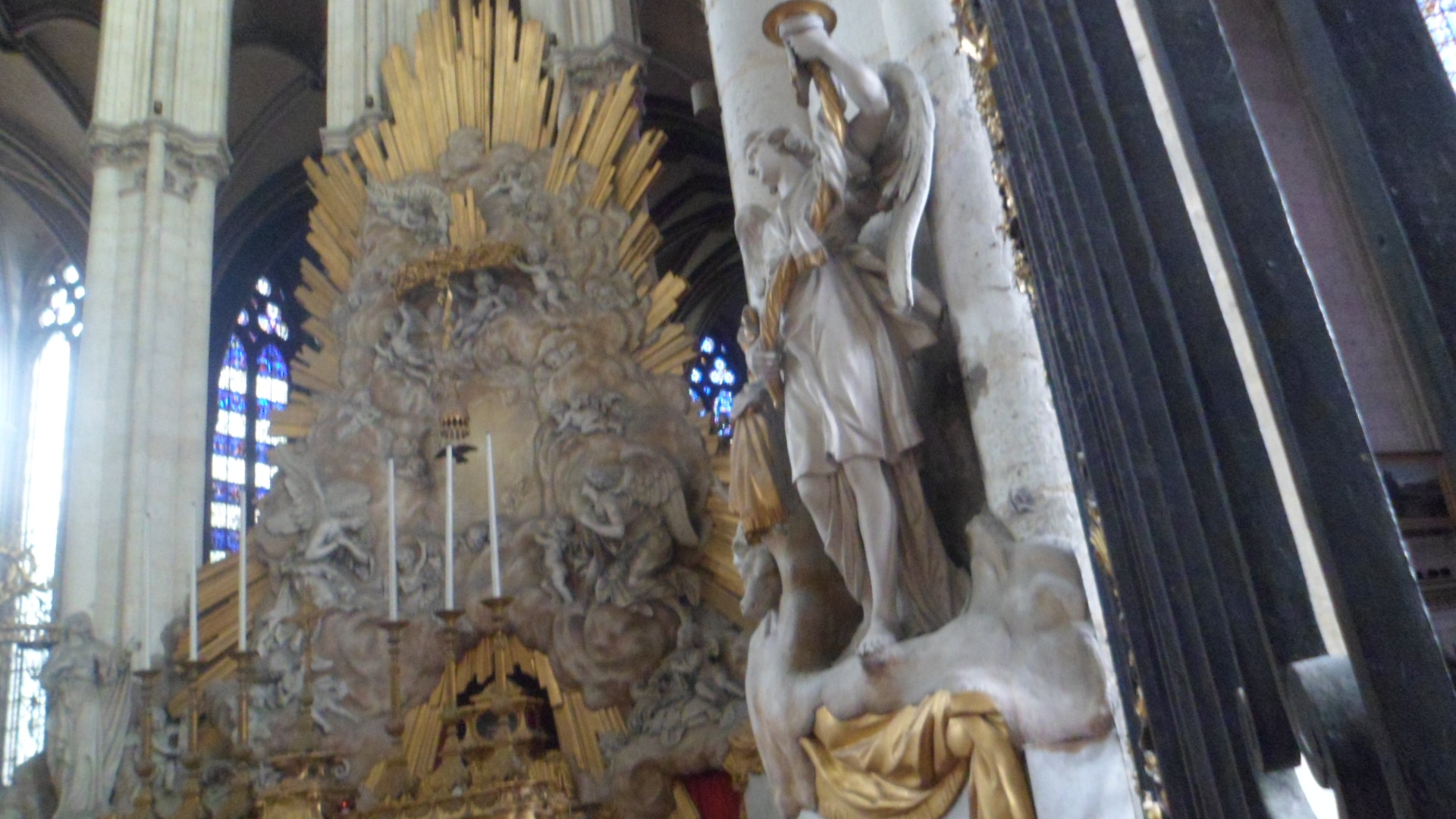
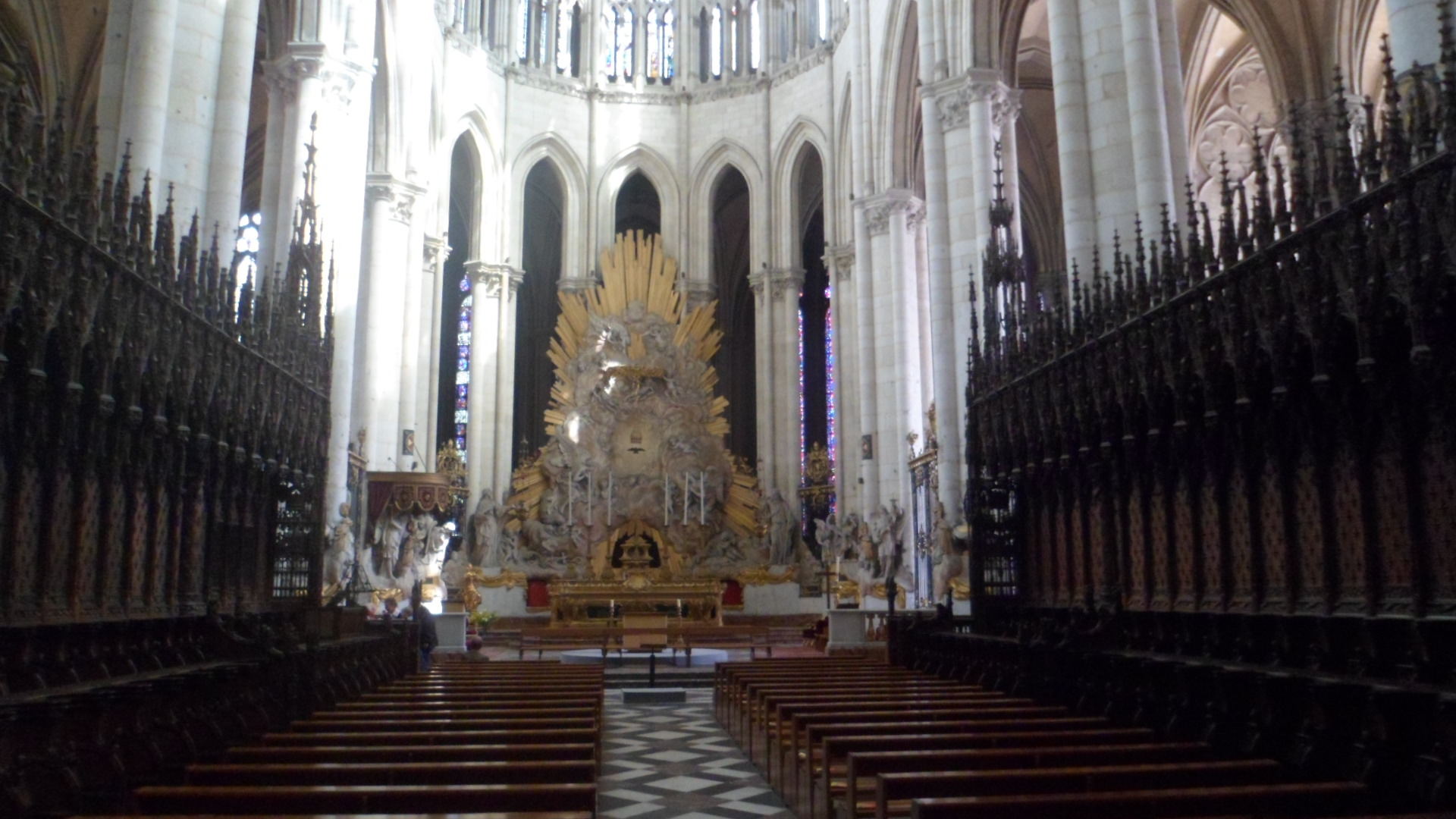
The Grand Altar, and its gold, stem from the time of Louis XIV.SAM_0764

A chapel devoted to St. Jeanne d’ Arc is found to the right of St. James’ chapel.SAM_0768

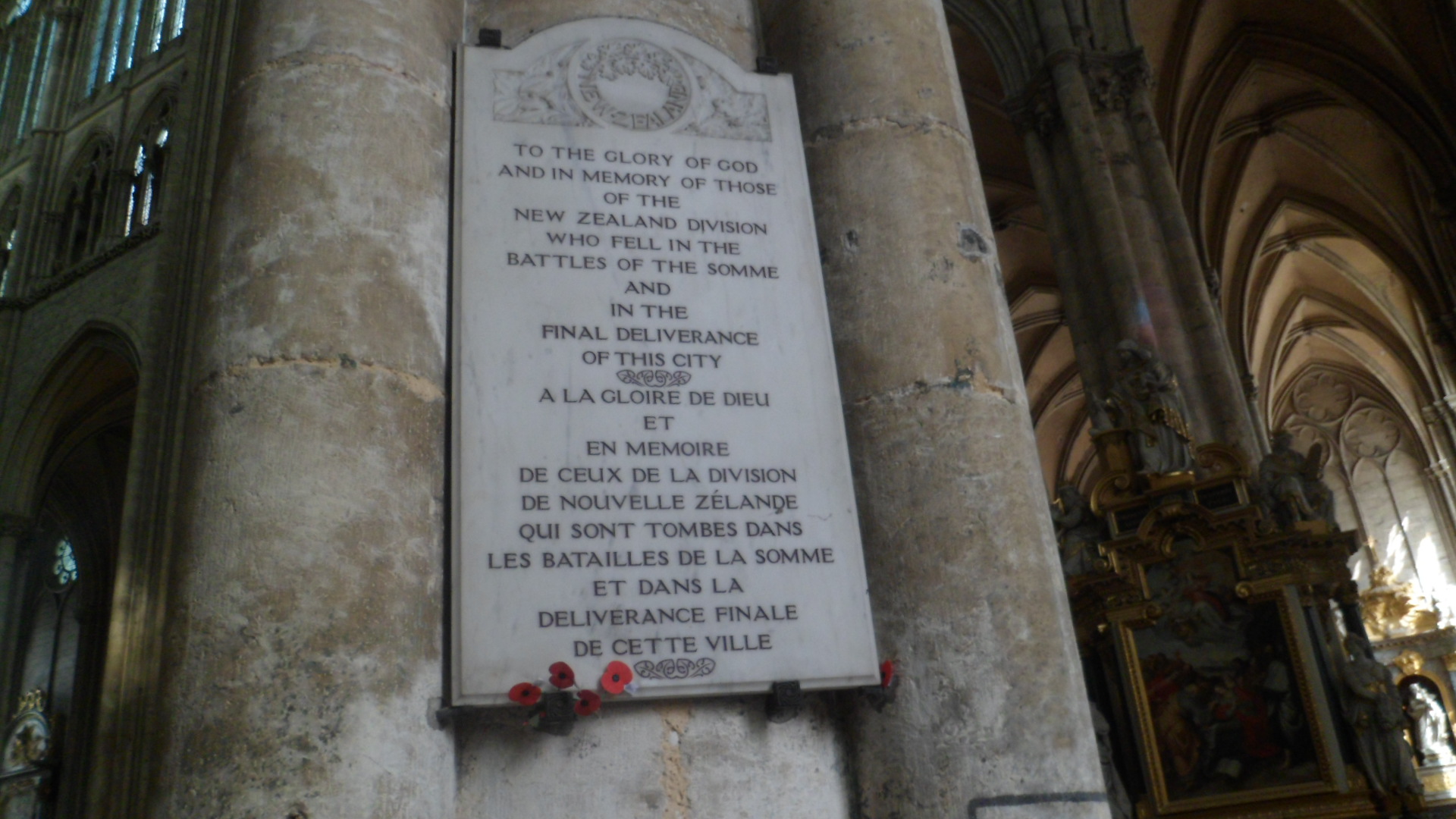
A trio of memorials to the fallen soldiers of World War I occupies the area to the right of the choir loft. The first honours the Canadian Dragoons.

SAM_0775

The second is dedicated to the fallen from New Zealand.

SAM_0778

There is a large memorial to the soldiers of Australia, at Villers Bretonneux, 16 km east of Amiens.  Hopefully, I will pay my respects there in 2017, along with visiting sites associated with American forces of that conflict.

The Grand Altar, in its glory, was my final view of Notre Dame d’Amiens, St. Firimin’s House.  It is another bit of magnificence.  Yet, as another observer mentioned, no one cathedral can be compared with another.

SAM_0782

NEXT: A Circular Tour Around Amiens

An Eastward Homage, Day 19: Amiens, Part I- The Queenly Somme and Her Canals

4

June 14, 2014-  In planning my trip to France, I was drawn to Amiens by two factors: The Somme, and its role in World War I, the Centenary of which  we begin to observe this year; and the fact that some of my online friends have a friend living in the capital of Picardie.

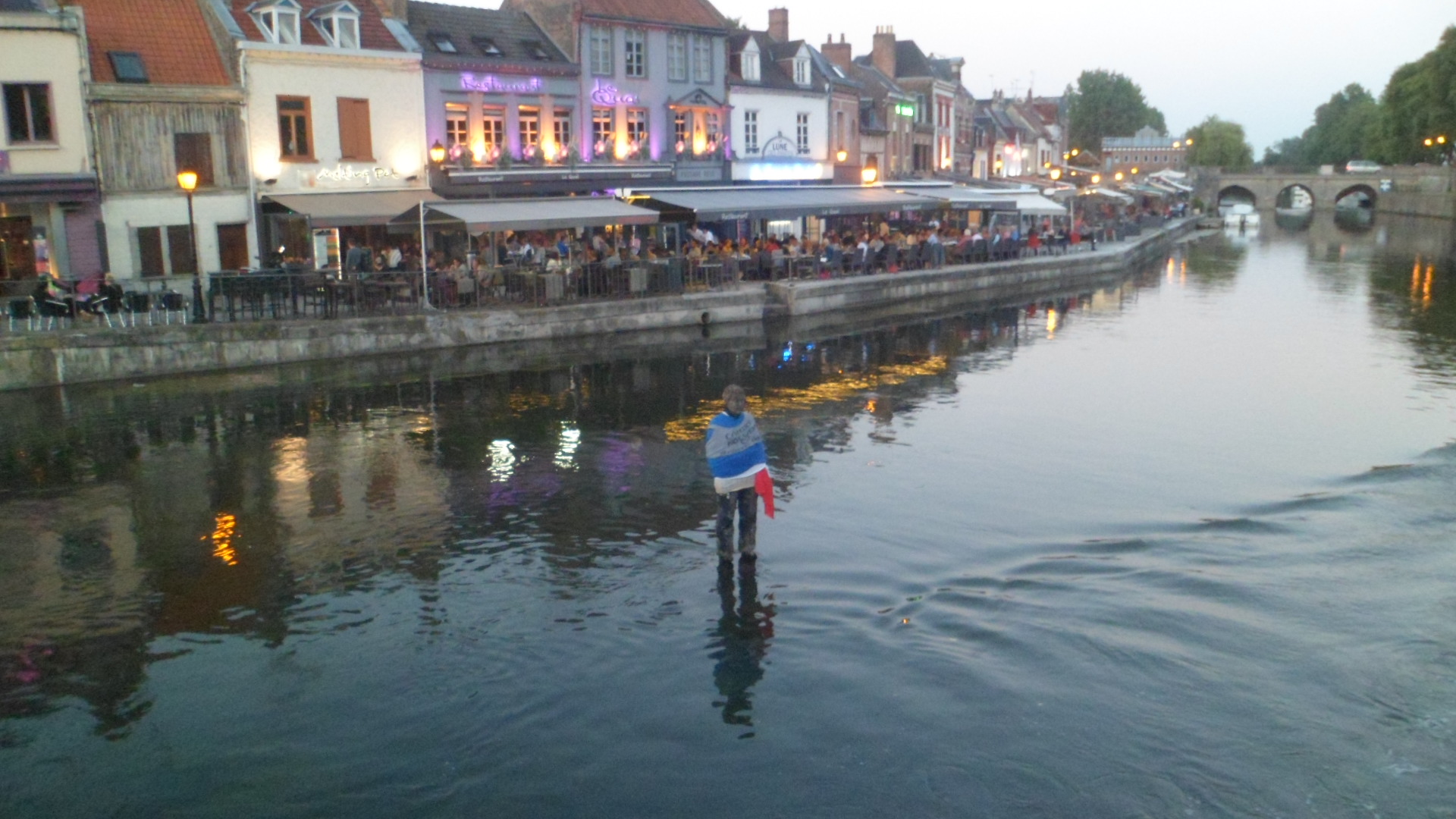
When I arrived in Amiens, it was a Friday night, with the bars and restaurants quite alive- at 11 PM. I found the Picard spirit of friendliness, coquetry among the young ladies and a “Where’ve ya been, Bud?” atmosphere pervading the Grand Canal and the district called St. Leu. My huge hotel was a tomb, by comparison- despite the gracious welcome by desk clerk Therese and the raucous group of Turks next door to my room.

I headed along the canal, and the edge of the Cathedral District. I will present Amiens in three parts: The water, both river and canal; the cathedral, interior and exterior; and the city centre, both medieval and modern. Friday night and all day Saturday were one very full ride. Never mind that I was walking- you get my drift!

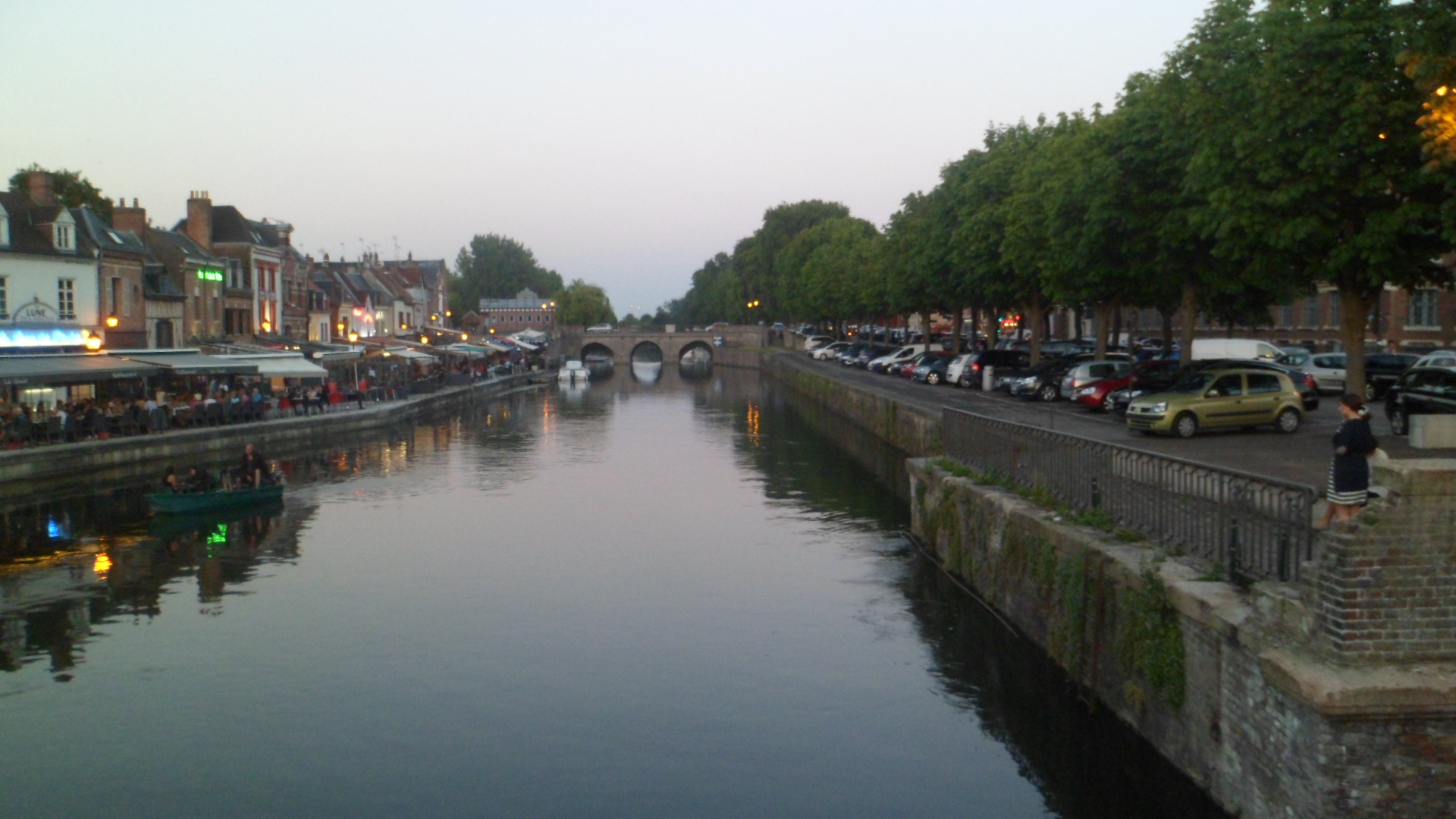
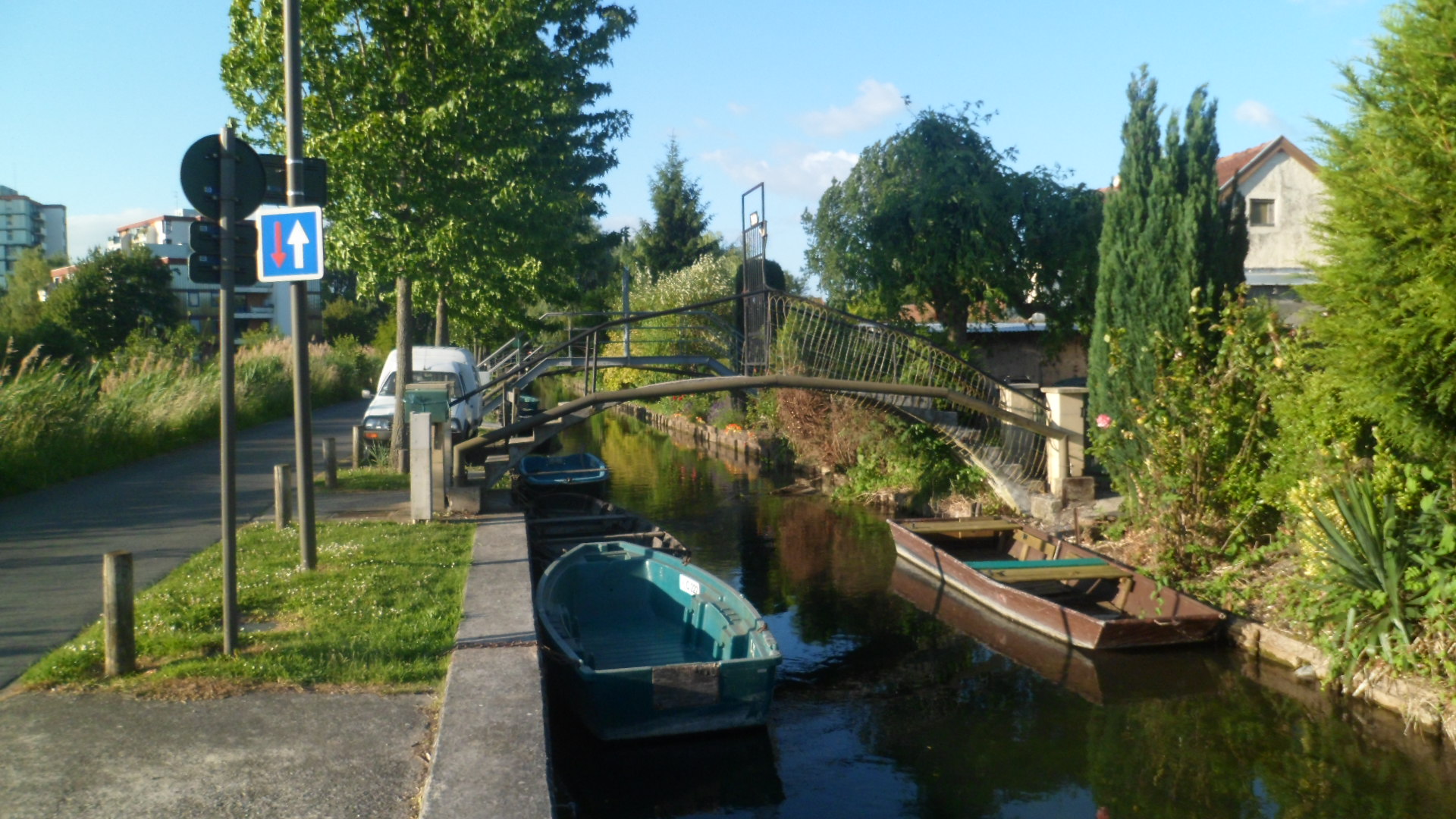
Here are the canals and the towpaths in their midst. It was a fabulously hoppin’ Nuit du Vendredi.

SAM_0621

Even though it looks quiet below, there was no silence for miles around.SAM_0662

As in much of Europe, the sidewalks don’t get rolled up much before 1 AM, if then.

SAM_0663

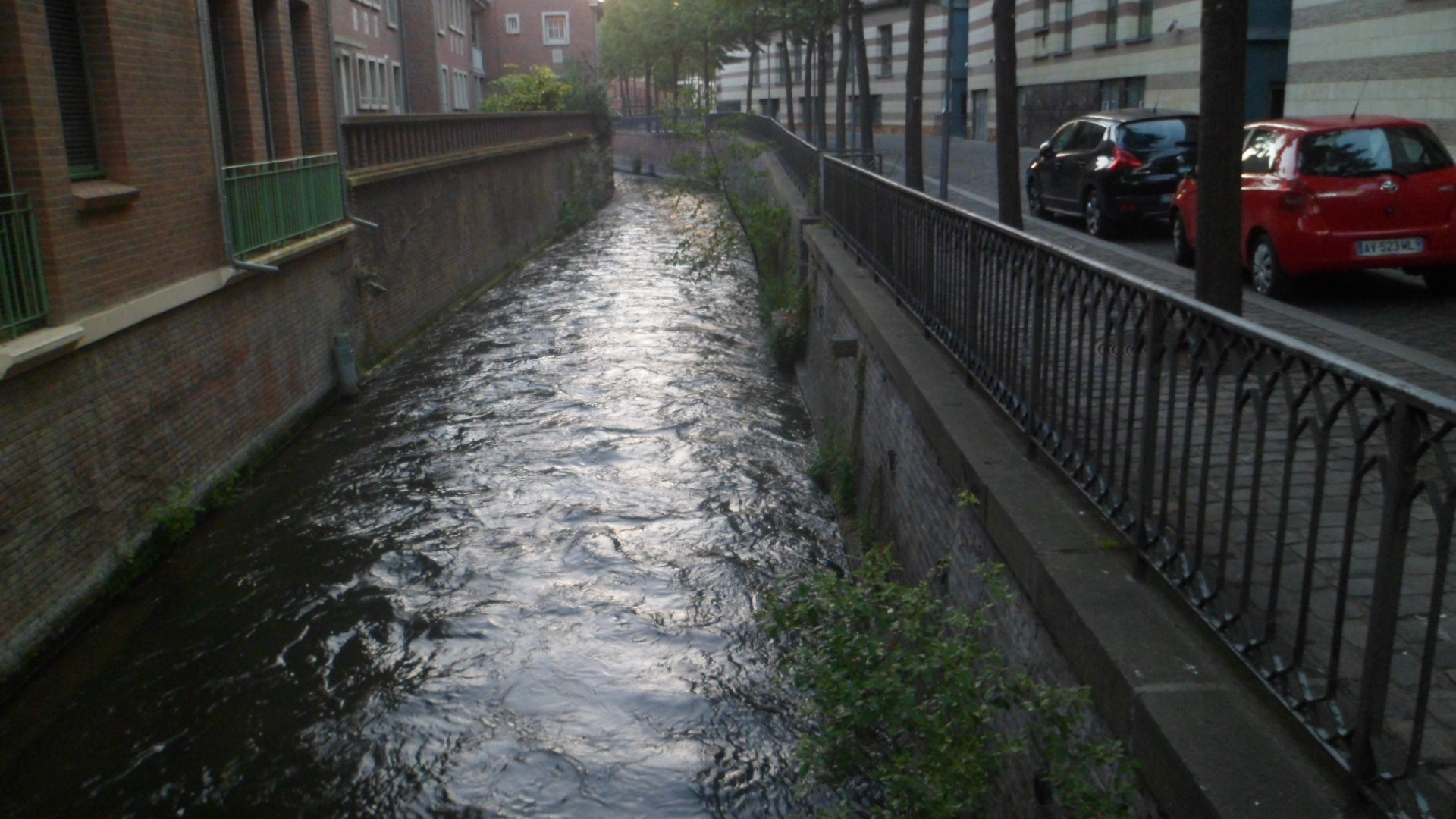
The canals look deep.

SAM_0622
SAM_0660

GOTCHA!

SAM_0661

Picard humour is evident everywhere, and I was drawn in a few times, as I will recount. A local insisted I must be of Picard extraction, as my nose is prominent, like his and those of his family members. I wouldn’t be surprised. Picards would have naturally been carried along with the Normans, when they swept down out of the North Sea lanes, through Holland and Flanders.

SAM_0671

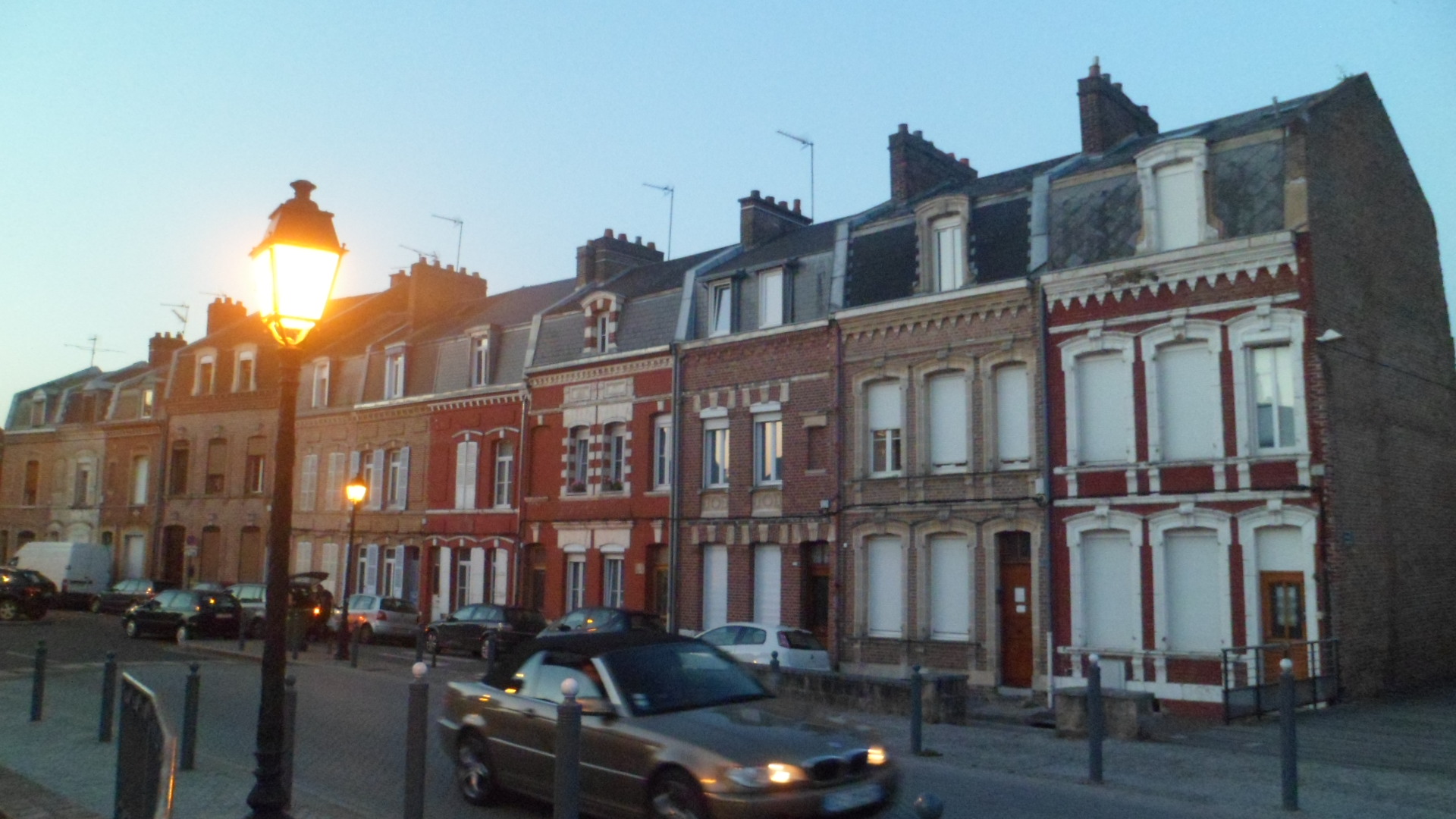
Amens, like many French towns, adopted the row house to billet workers, at the dawn of the Industrial Revolution. This row is close to St. Leu.

SAM_0665

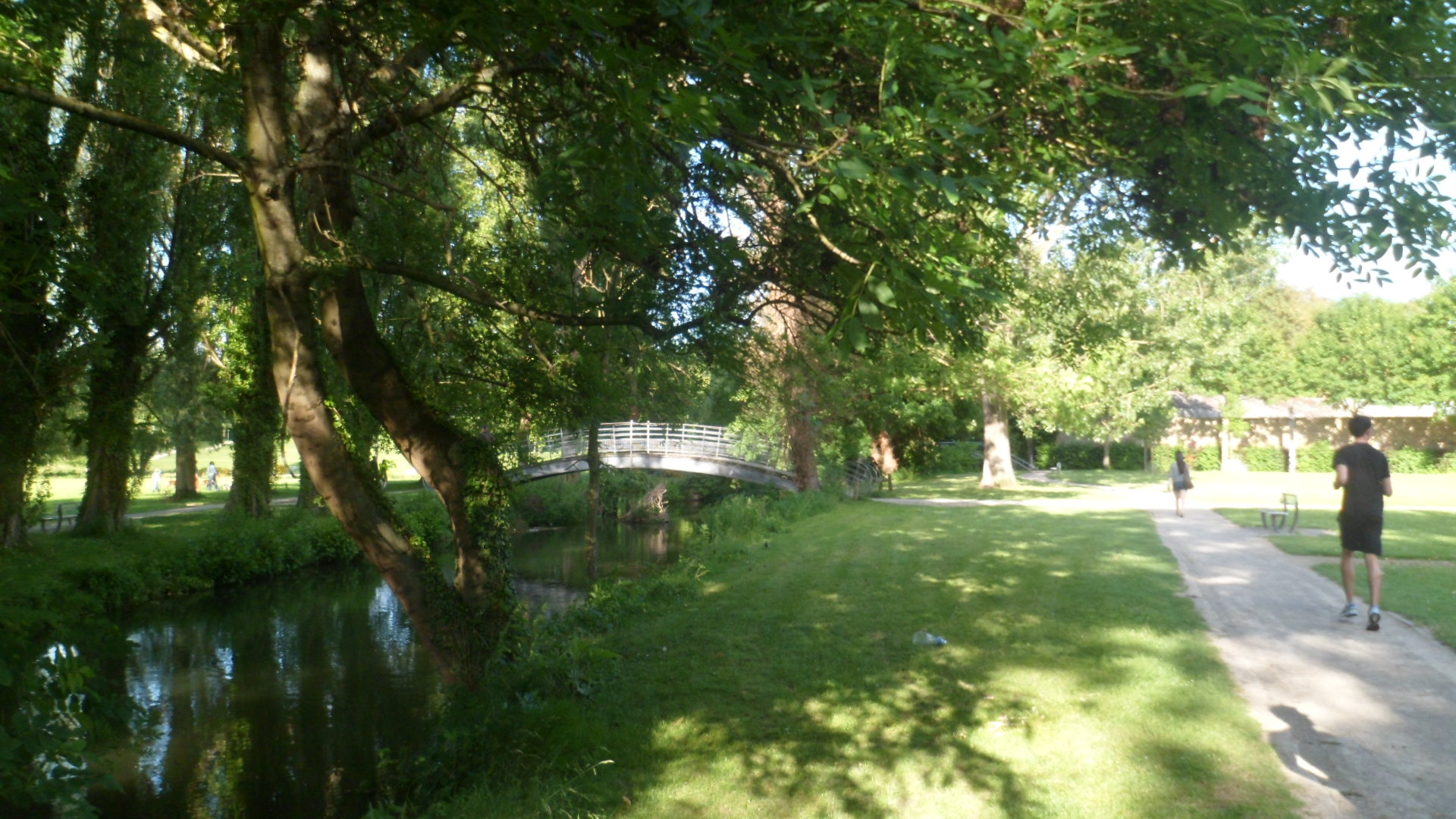
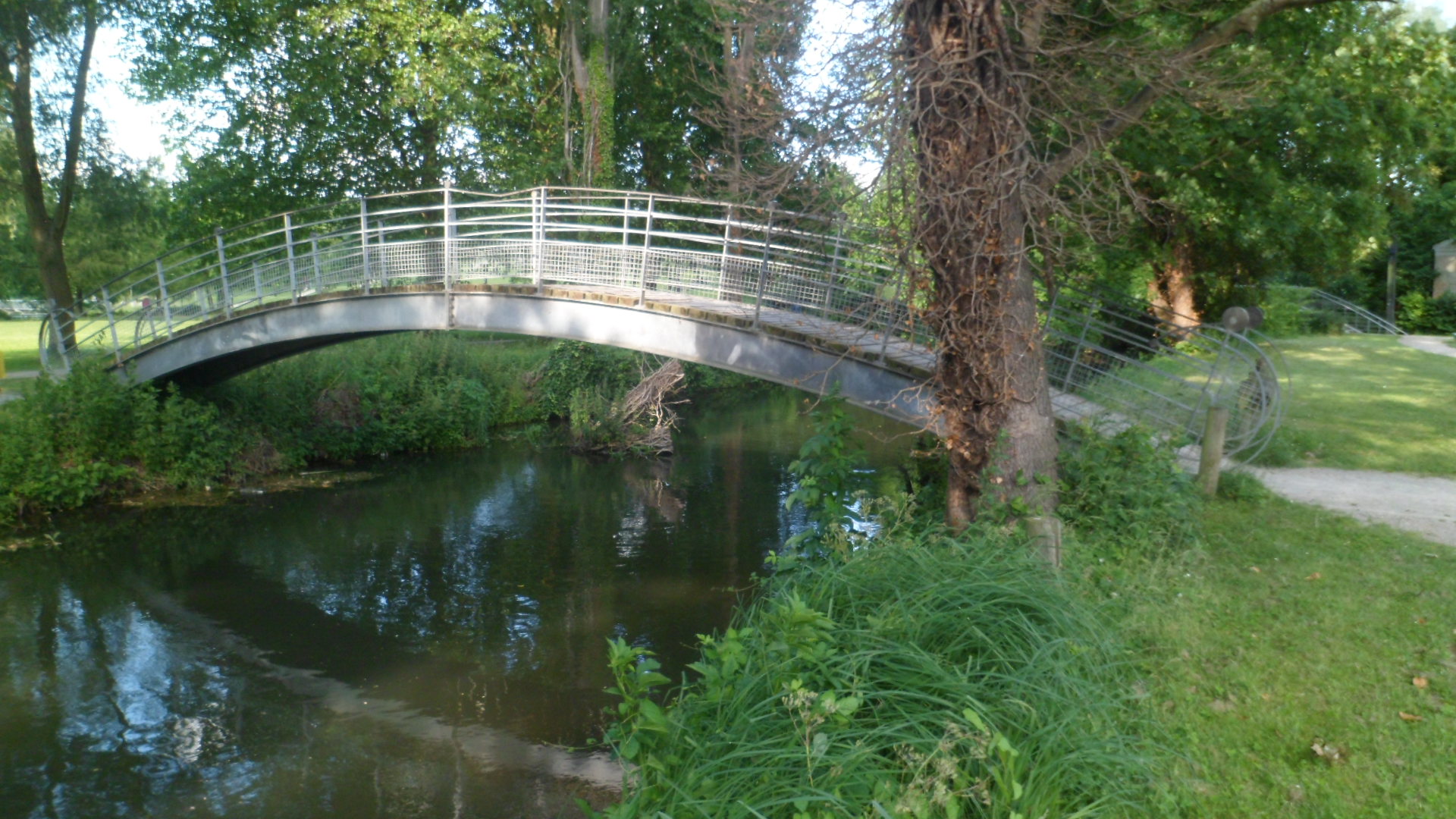
The linchpin of the Somme and its canals is Parc Saint Pierre.

SAM_0794
SAM_0795

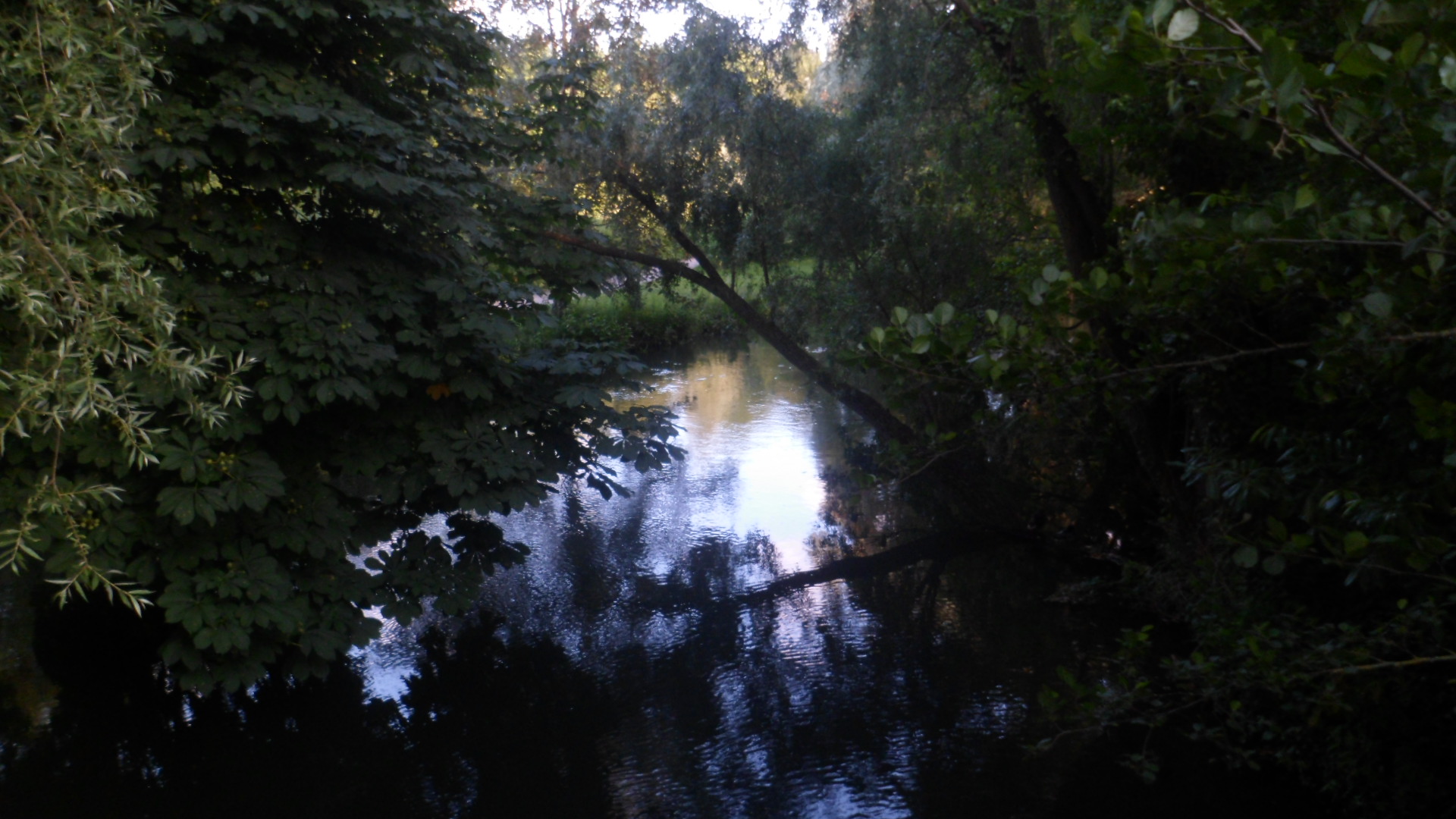
The true radiance of the water, this far north, and at this time of day, comes from its interplay with light.

SAM_0797
SAM_0804
SAM_0806
SAM_0810
SAM_0813

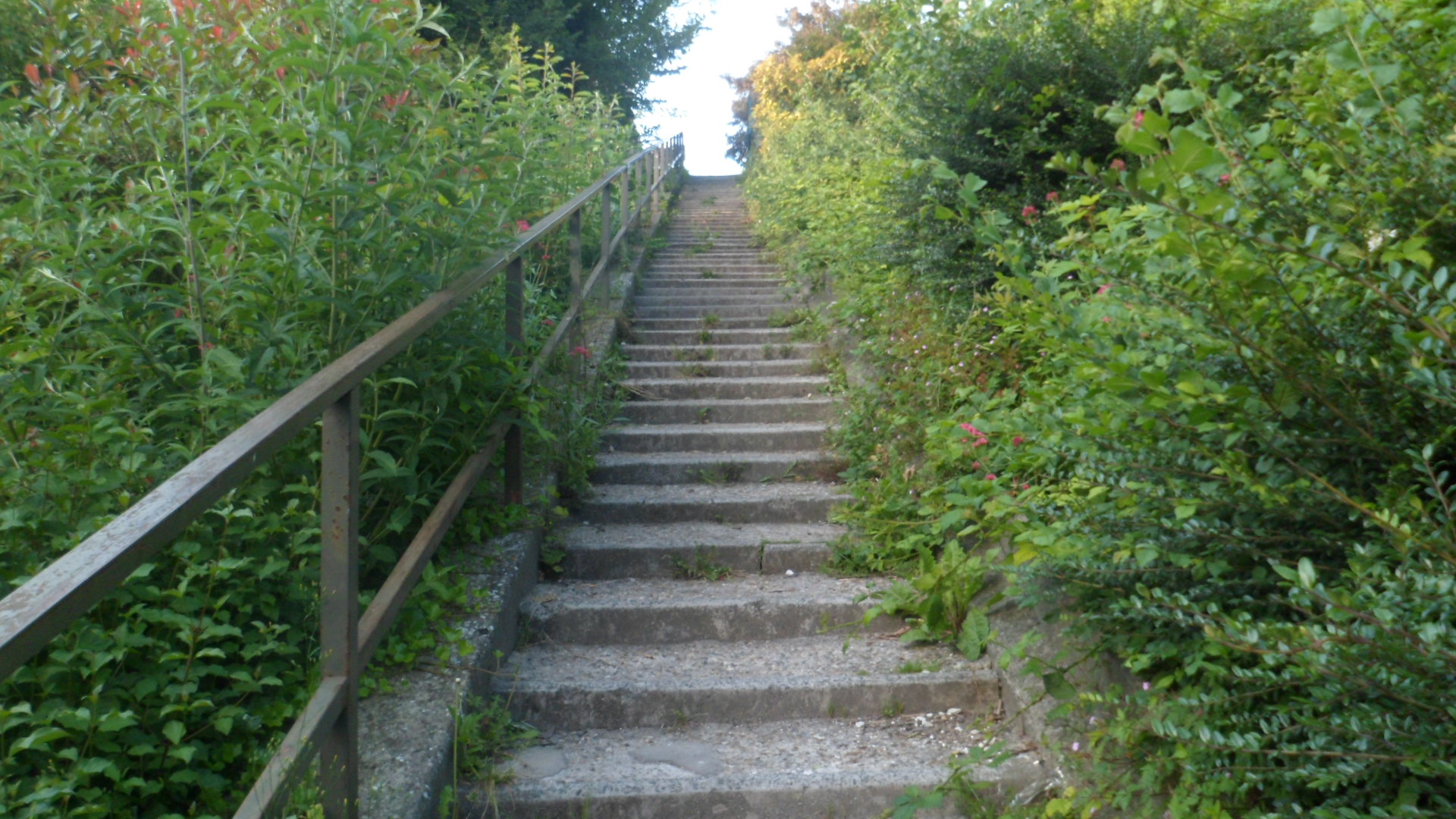
A bit “sideways” and to the north, a tad, is the crown jewel of this part of the Somme: L’Hortillonage. Let’s have a look. Down the stairs we go.

SAM_0815

There is more cat and mouse, between light and shadow. This is where the natural flora of the Somme is preserved.

SAM_0819
SAM_0822

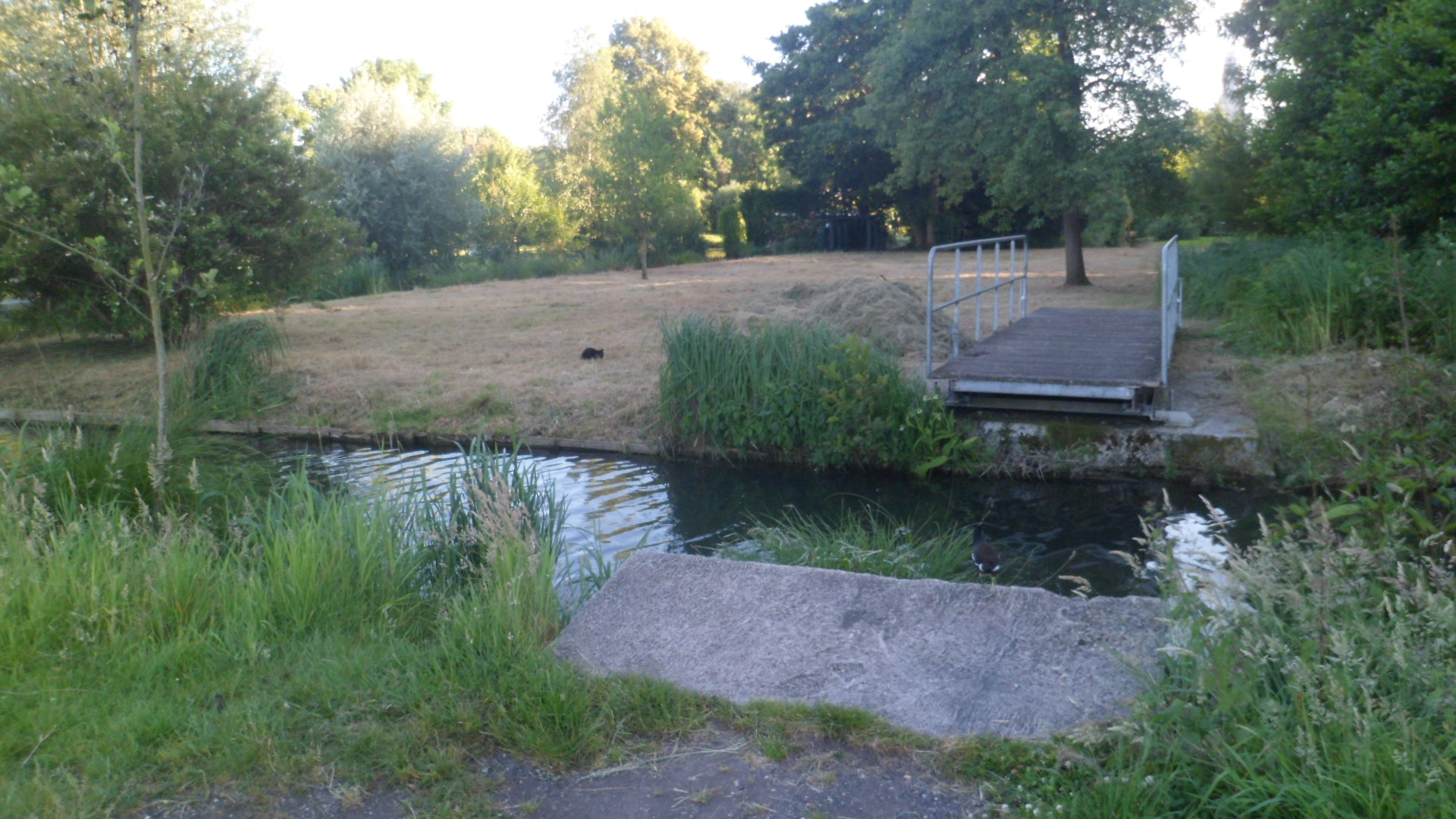
A cat is feigning stealth.

SAM_0834

The Somme emerges from its canals and small locks.

SAM_0829
SAM_0843

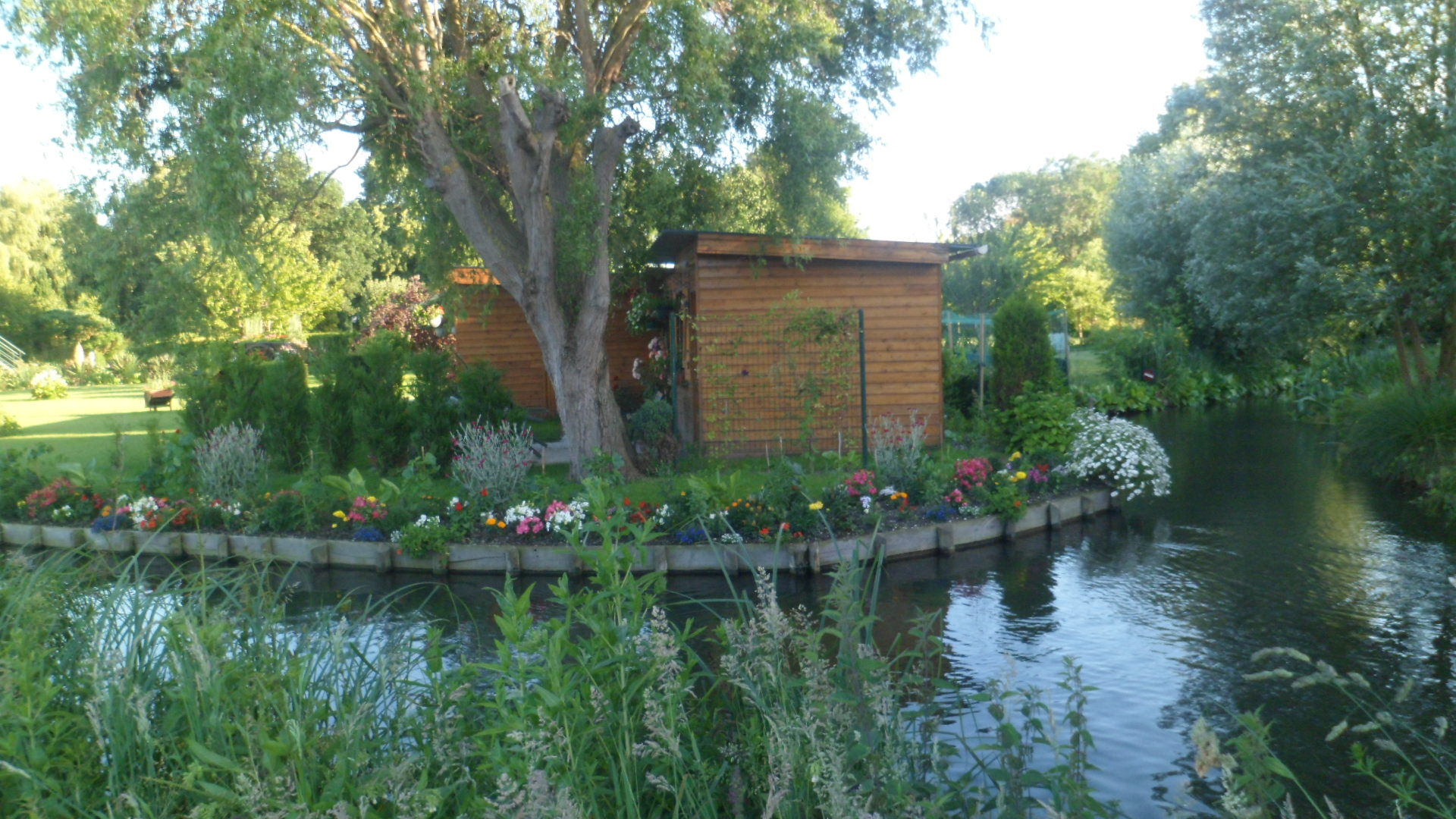
Here, the farmer and the naturalist have made a peace.

SAM_0836
SAM_0839

I met a farmer, walking his dog, near here. He reminded me of the friend of my Xanga friends, a man I have seen only in his profile picture when he responds to aforementioned mutual Cyberpals. Amiens has kept its natural profile quite well.

NEXT: The Ins and Outs of Amiens Cathedral

An Eastern Homage, Day 18: Tears for St. Joan, and a Long Ride to Amiens

5

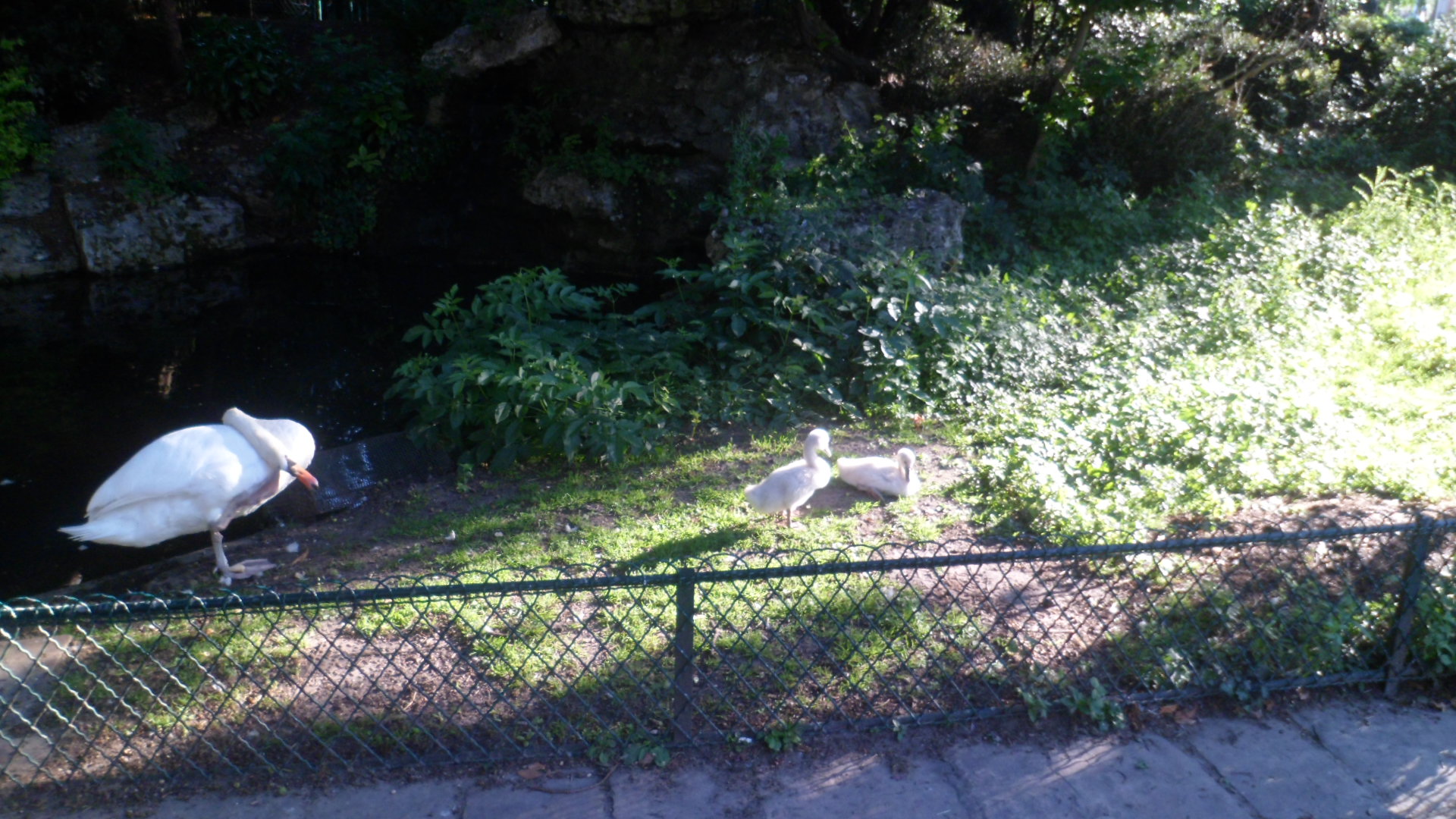
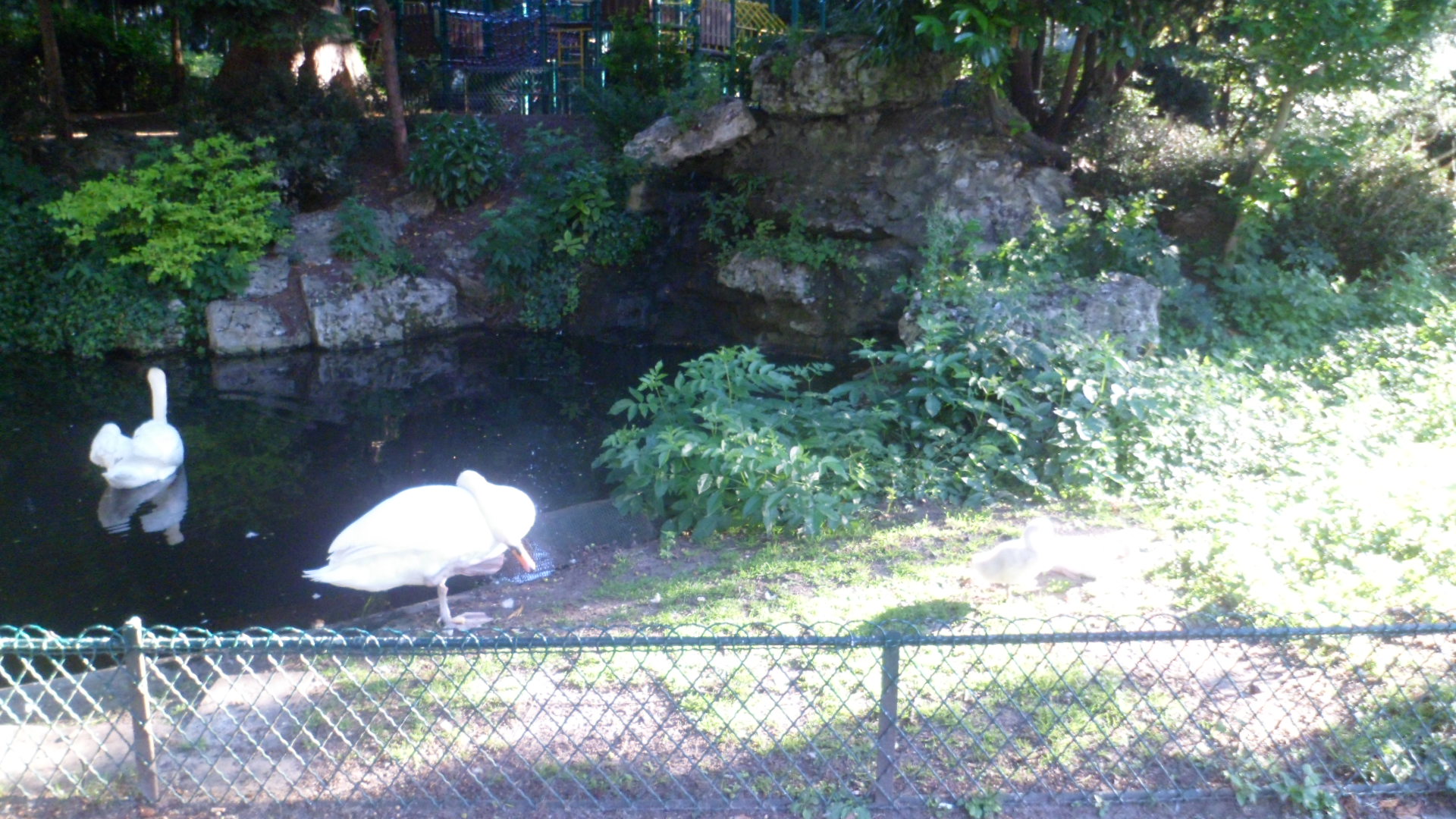
June 13, 2014, Rouen- It was a bright and sunny morning in Rouen. I declined breakfast at the hotel, but headed down to Square Verdril, to check on my swan friends. The cygnets had grown a bit, over the past week.

SAM_0453

SAM_0454

They were a bit more amenable to eating the bread I had carried, this time.

That done, I headed to L’Eglise Saint-Maclou, where I chanced upon a couple from Florida. The husband advised me as to a good, durable money belt, which I picked up at a store, a bit later.

Here is Maclou, from the outside.  The interior was closed.

SAM_0571
SAM_0579
SAM_0577
SAM_0576

On the sidewalk, as I left the church, was an affirmation. Those who are my faithful readers will not be surprised.

SAM_0570

I drifted down the road a bit, and had a look at the banks of the Seine- as vital to Rouen as it is to Paris.

SAM_0582
SAM_0583
SAM_0585

Looking back, I realized my time here was getting short.

SAM_0586

So, I went and checked the time- at Le Gros Horloge, the clock tower.

SAM_0591

It was time for one last homage to Jeanne d’Arc.

SAM_0592

I entered Le Donjon, actually a castle built in 1204, for Philippe- Auguste, the first monarch to style himself, King of France. It became a place of confinement for St. Joan, upon her capture by the forces of English King Henry VI. It was also where his henchmen forcibly changed her garments into those of a man, which in essence broke her agreement with the monarch. This gave him the pretext to order her immolation, and the French clergy in his employe carried out the immolation at Vieux Marche, as we have seen.

After mounting these steps,

SAM_0598

I stood alone, in front of this mosaic, and felt St. Joan’s presence, offering a connection across the centuries.

SAM_0599

I have felt bonds with the long deceased before- last year, with unnamed soldiers at Gettysburg, two years ago, with long-dead Comanche people in Palo Duro Canyon, and years ago, with Cochise, in the Stronghold that bears his name. These are a bit beyond the links I feel with departed family and friends, but are very similar. A recent visitor to Prescott said that, in eternity, one has relationships with those closest to self, then with all those one knows in this life, then with all those who lived during one’s lifetime- and lastly, with all those who have ever lived. These feelings fall within that last category, even as I am very much in the flesh.

Contemplating her suffering, and her love for God, brought me to tears in that spot.

SAM_0601

She has had many feel the same way, through the centuries.

SAM_0602

I wondered, when entering the last room of her confinement, what went through her mind. The answer came back- peace, and surety.

SAM_0603
SAM_0606

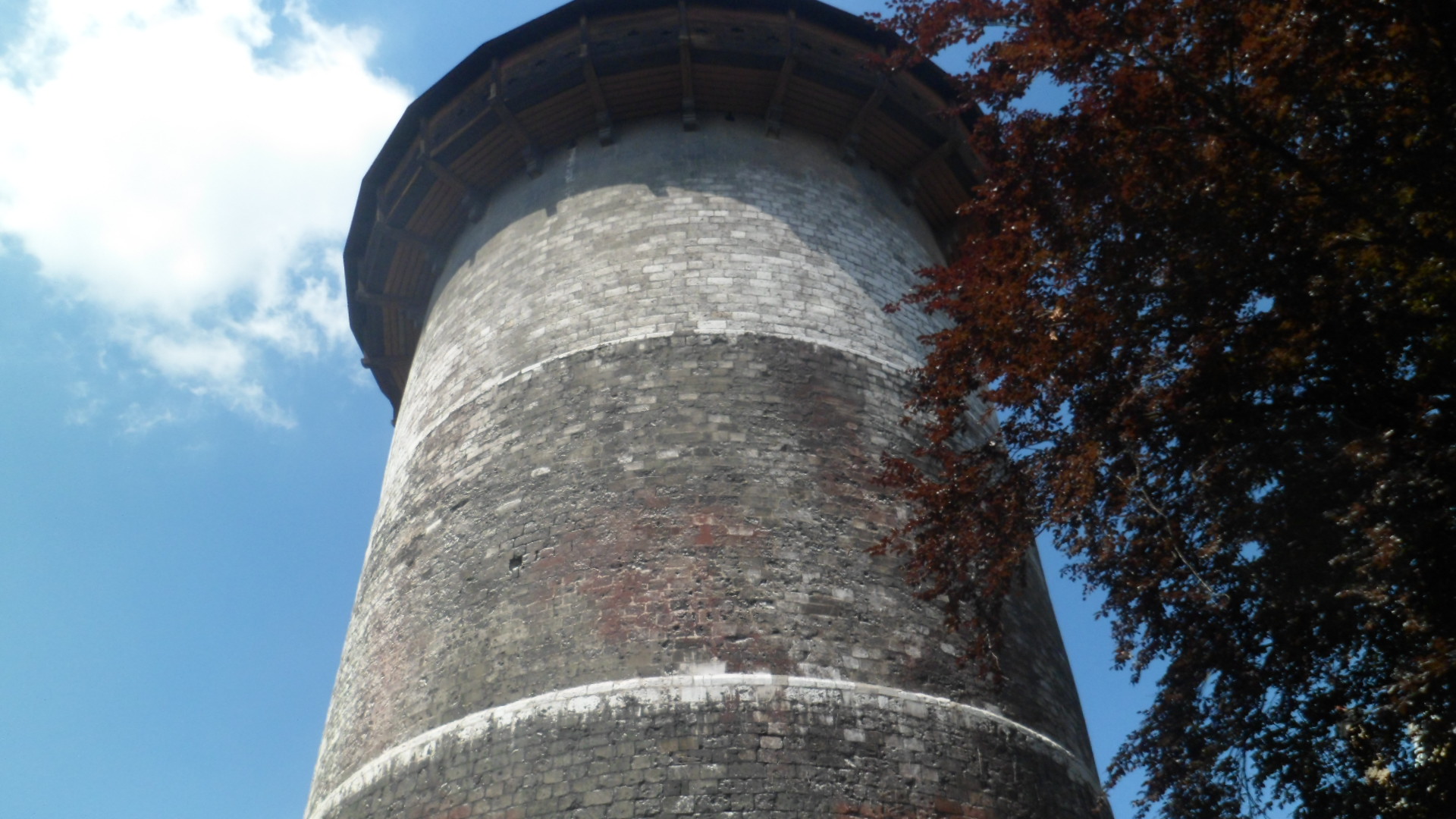
I went outside again, after about twenty minutes, and looked again, at this tower, built to establish the national identity of France, yet used so mockingly by those who sought to bring the country to heel.

SAM_0610

Fittingly, the French have turned the tables, and today this tower is also a memorial to those who were persecuted during World War II.

SAM_0613

Now, as then, a small cat observes all that transpires.

SAM_0611

My time in this ancient place of origin was done. I checked out of Hotel Le Morand, waited for about two hours at the train station, and after several minutes of spirited discussion between SNCF officials in Rouen and a union big wig in Paris, it was decided I would proceed to Gare St. Lazare, then go to Gare du Nord, and catch a train to Amiens. That whole process took three hours, one of which was spent in a Metro car at St. Lazare, while other union bosses pondered whether they would even ALLOW the car to go to Gare du Nord. My French and African fellow travelers did enough fussing and fuming for all of us, and we were PERMITTED to go, after a full hour. I got to Amiens in less time than I spent in Paris waiting for the Chef de Travaille to get off his high horse.

Fortunately, the stationmaster’s assistant in Rouen had called my hotel in Amiens, on my behalf, and the dear clerk at Appart’city Amiens stayed at her desk for two extra hours, until four of us arrived from Paris. As you can see, this hotel is fairly new, still a work in progress, and was the largest hotel in which I stayed on this trip.

SAM_0619

Exhausted, but gratified, I bid adieu to Friday the 13th.

An Eastward Homage, Day 17: Rouen Is Also Home

2

June 12, 2014, Laval-  I woke very early on that Thursday morning, in mid-June, got myself and my bags together, speed-walked to the Train Station, and was still admonished, “Vitement!  Le tren est departant!!”  So, I jumped aboard, found a seat, and headed east, once again.  Brest would be the furthest west I would get, this trip.  Actually, it’s almost as far west as one can get on the European mainland.

We headed past St. Brieuc, and stopped briefly in St. Malo.  It was the only stop before Rennes.

SAM_0442
SAM_0443

I was somewhat surprised to find that, in St. Malo, there were nearly 100 people lined up to get their tickets transferred to this train.  I got a seat as far as Rennes.  There, I inquired about using my France Pass on a train to Rouen.  “Of course, monsieur, you may use the pass on any train in France.  To get to Rouen, simply take this train- to Paris Montparnasse, and transfer to the Rouen train,  at St. Lazare” .

Using the existing rail line between Rennes and Rouen was simply not possible, as the railworkers’ union was on strike- primarily to cause problems for the President of France during the D-Day observances, of all things. The strike was “scheduled” to stop the following Wednesday. That would be two days after I planned to leave France, for Belgium and Luxembourg.

What I faced, however, was nothing compared to what French commuters to Rouen, Amiens, Reims and Le Mans were facing, every day during the duration of the work stoppage. 200 more people got on the train at Rennes, 40 more in Laval and 15 more in Le Mans.

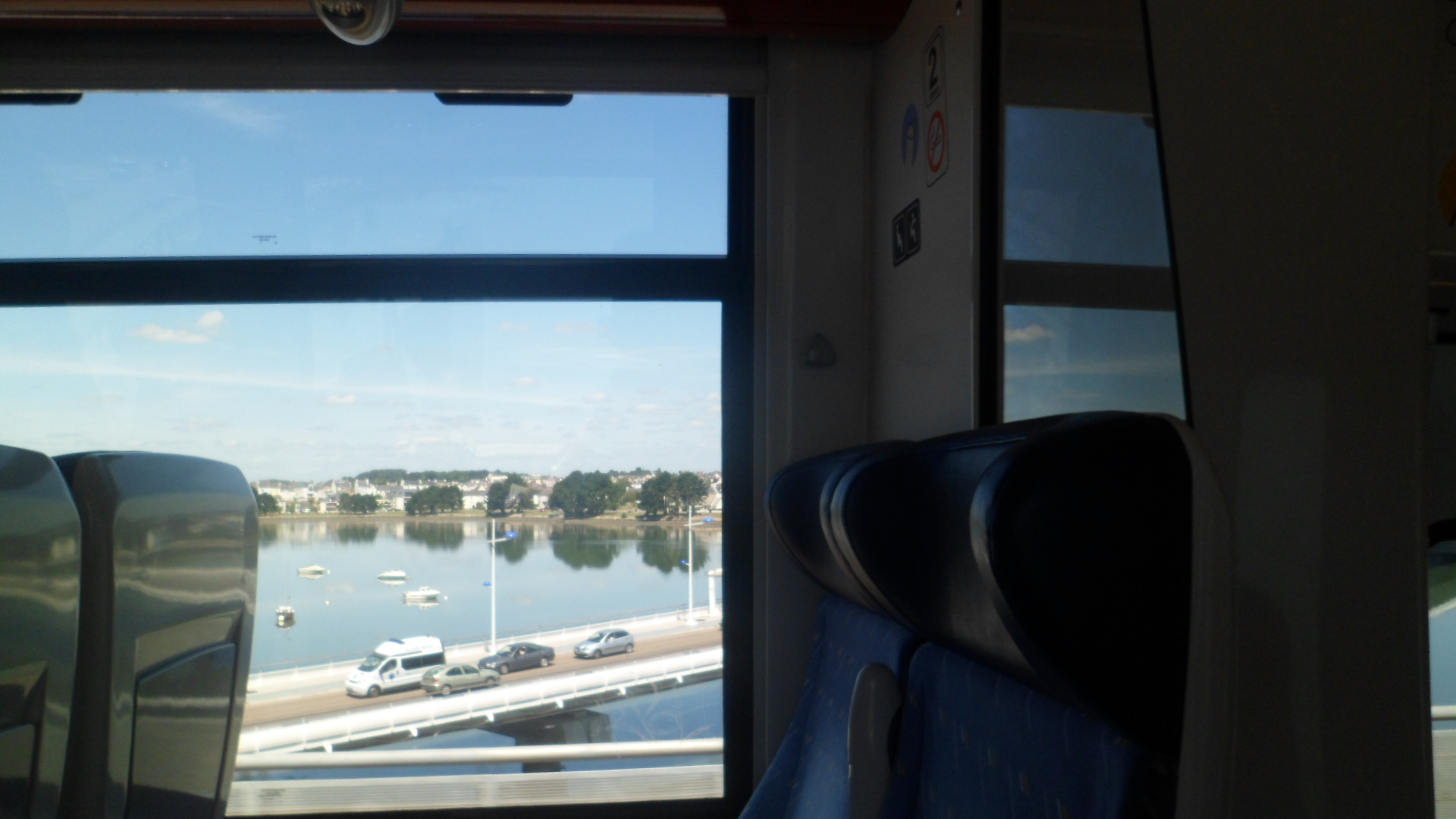
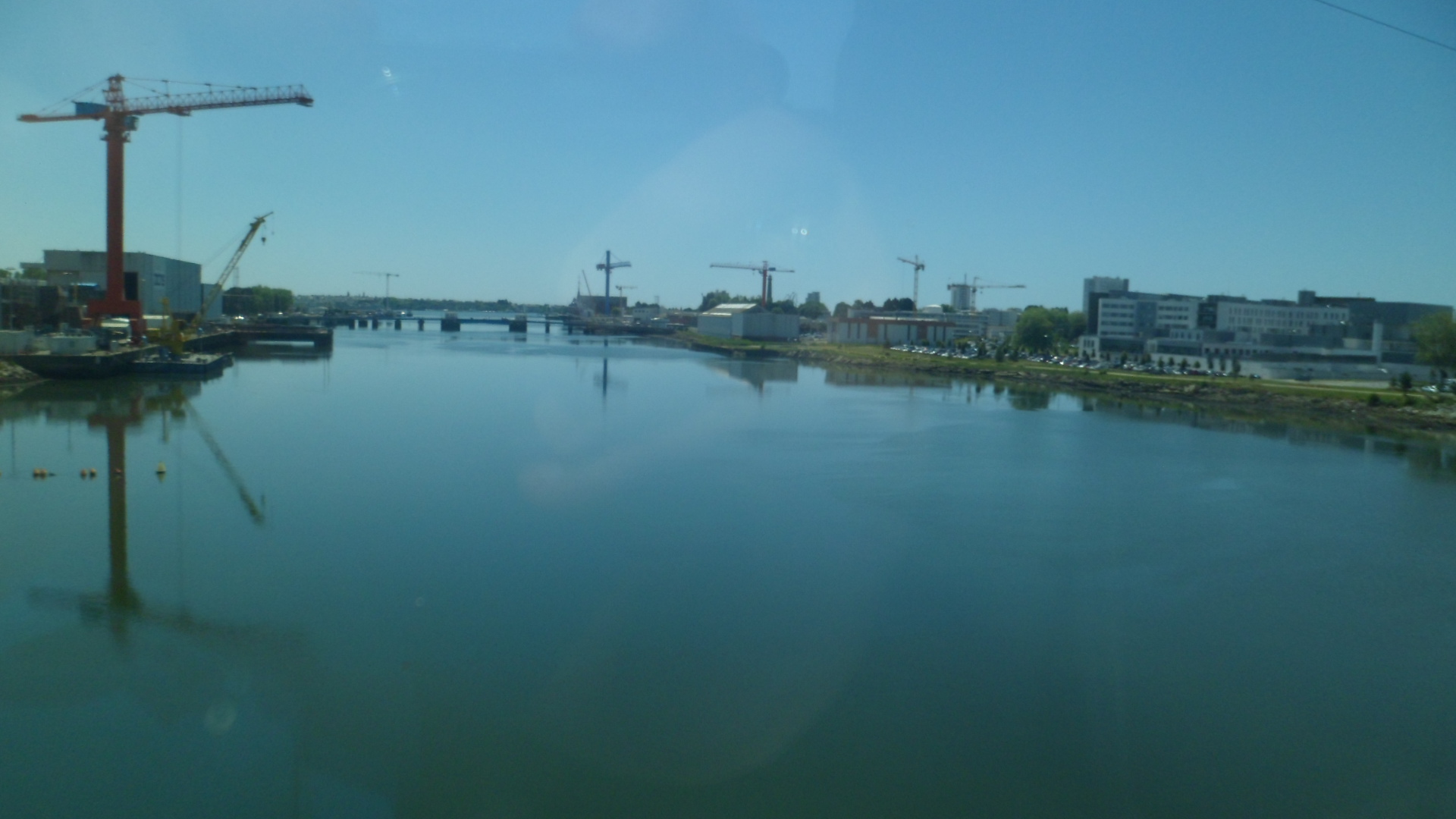
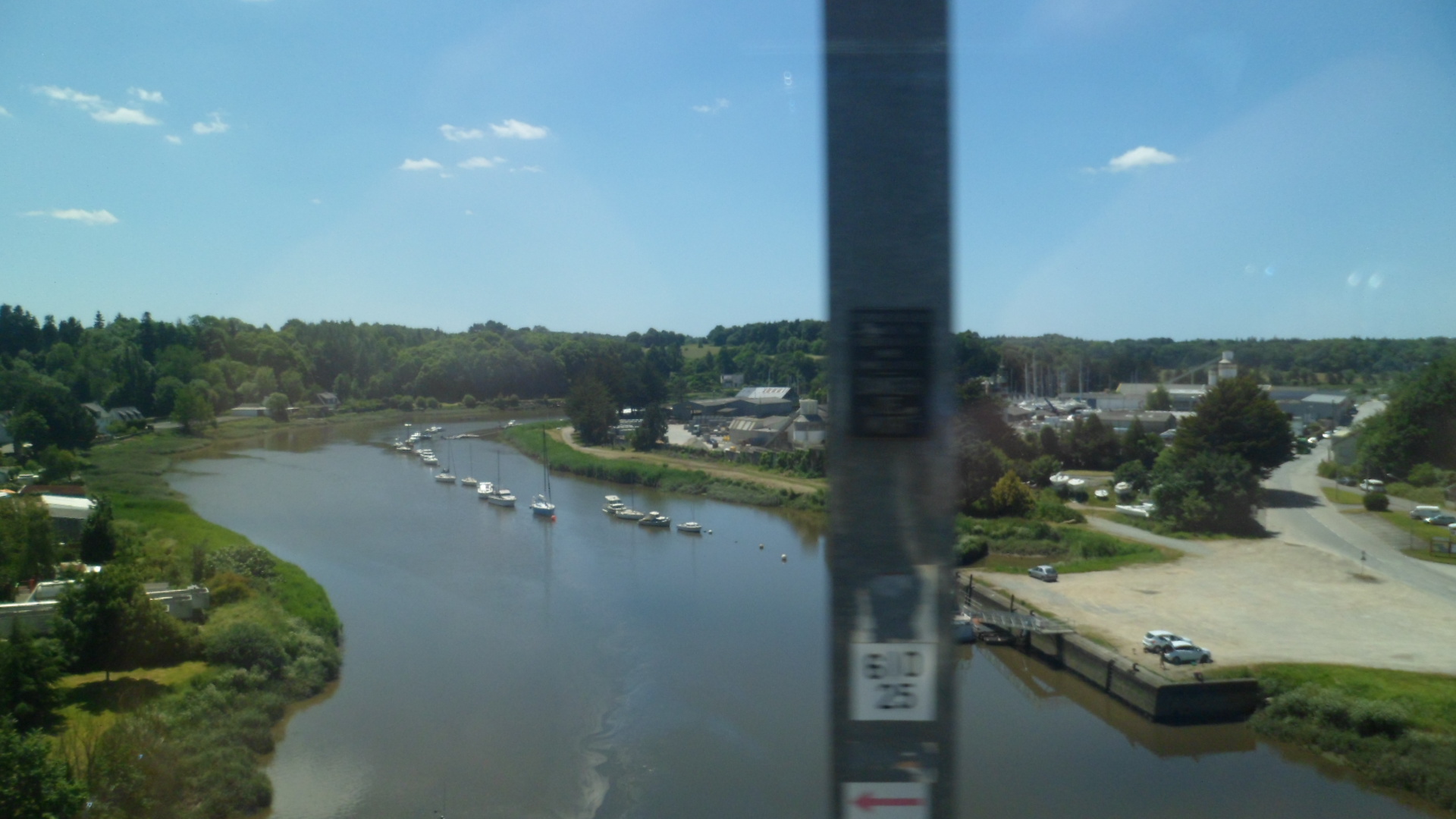
I was appreciative of these scenes from the train window, in Laval, Mayenne, west of Le Mans.

SAM_0444
SAM_0445
SAM_0446

This introduction to the region known as La Maine was fleeting, and was accomplished as I moved from one seat to another, twice, to accommodate people whose seats bore the number where I was sitting.  The third time, I did the same, for a gentleman who not only had a ticket with the seat number of that wherein I sat, but who had two hours to finish preparing for a scholarly talk at a yeshiva in Paris.

So, I found myself in standage, with twelve other people: A married couple with two small boys, a married couple with no children, an Italian tourist who had also been rousted from his seat, a social worker, a couple of college students and a high school girl who was thoroughly disgusted at having to share standing room with any of us. The school girl left our standage at Le Mans. The rest of us shifted around, shared the fold-out seats, two to a seat, and all were kindred spirits, in a stifling hot area, in between cars. The mother of the two boys was surprised at two foreigners standing with the rest, for two hours, twenty minutes. To me, though, it was a First-World problem.

I was once in Mexico, going back to Arizona, on Easter night. The standage was 110% full. I was guided by a Mexican soldier to an open car, with no seats. This was the Third Class car, also 110 % full. I took a seat on the floor, with everyone else, sweated along with them, waited with them, for two hours, while the car sat still on the tracks. I drank from the same water jug, and got thoroughly sick the next day. It wasn’t hepatitis, but giardia, so I count myself lucky.

In France, though, everyone drank their own water, and went their own ways at Gare Montparnasse. I got across town to St. Lazare, on the Metro, and was in Rouen, for one more day, by 3 PM.

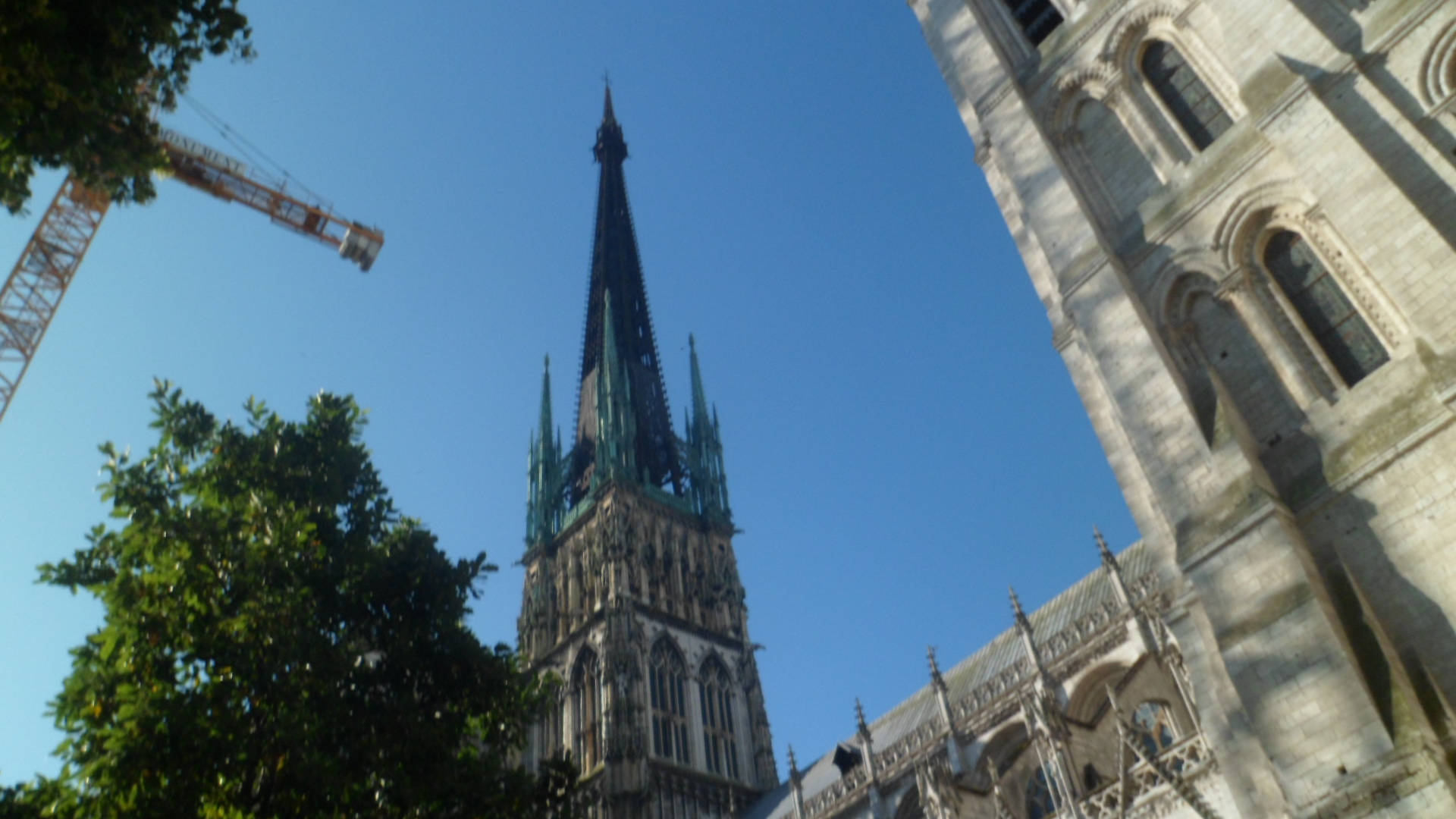
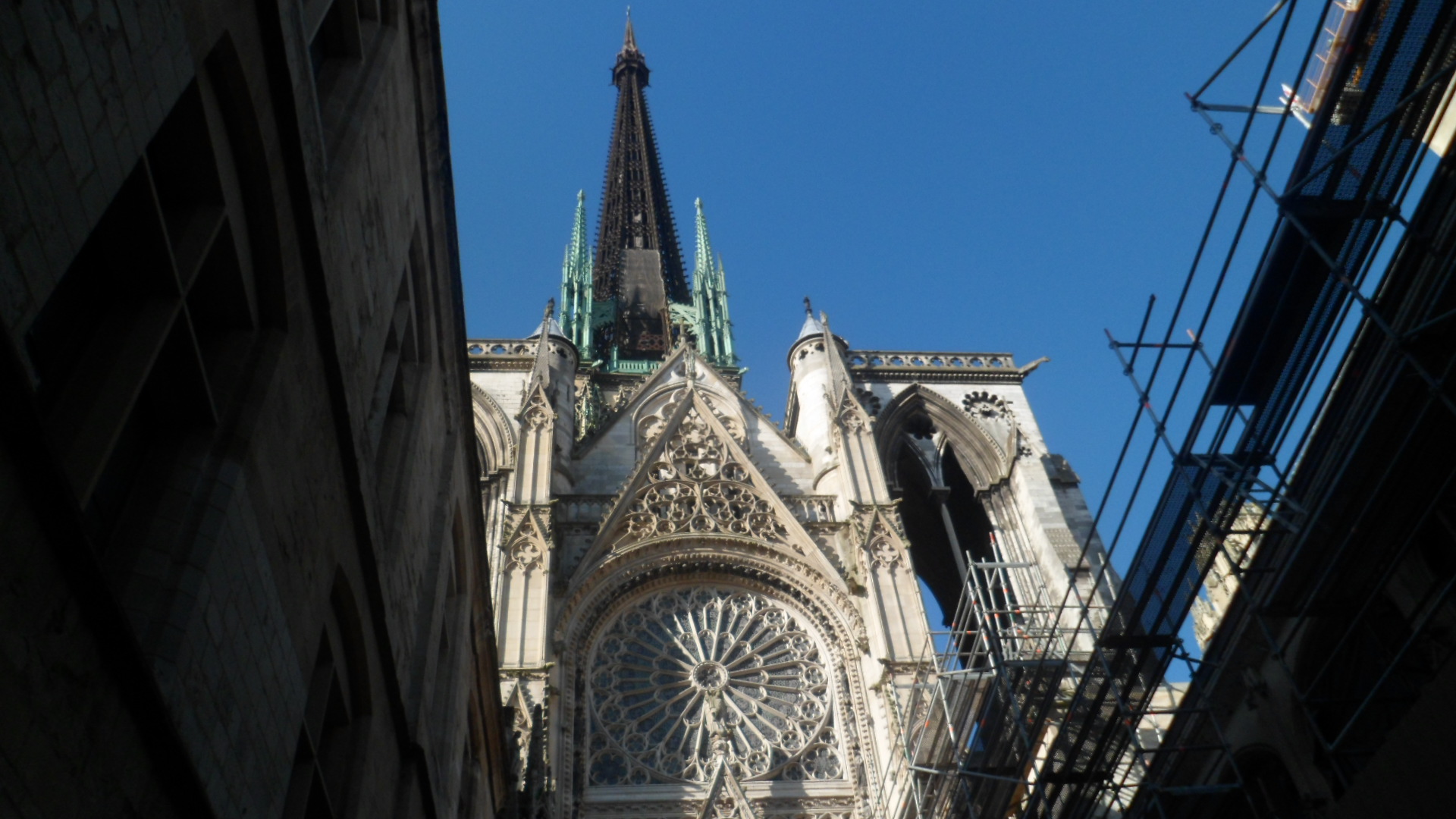
Back at Hotel Le Morand, I quickly showered, and headed to Cathedral Notre Dame de Rouen. Along with Abbatiale St. Ouen, Palais de Justice and L’Eglise Saint- Maclou, the cathedral is what gives Rouen considerable gravitas, in the architecture department.

Here are several shots I took, of the exterior and interior of this magnificent edifice. I also include a file photo of Claude Monet’s painting of the cathedral. The first thing I notice about a cathedral is its spire. The second thing is the sculptures and engravings above its doors.

SAM_0471
SAM_0476
SAM_0478

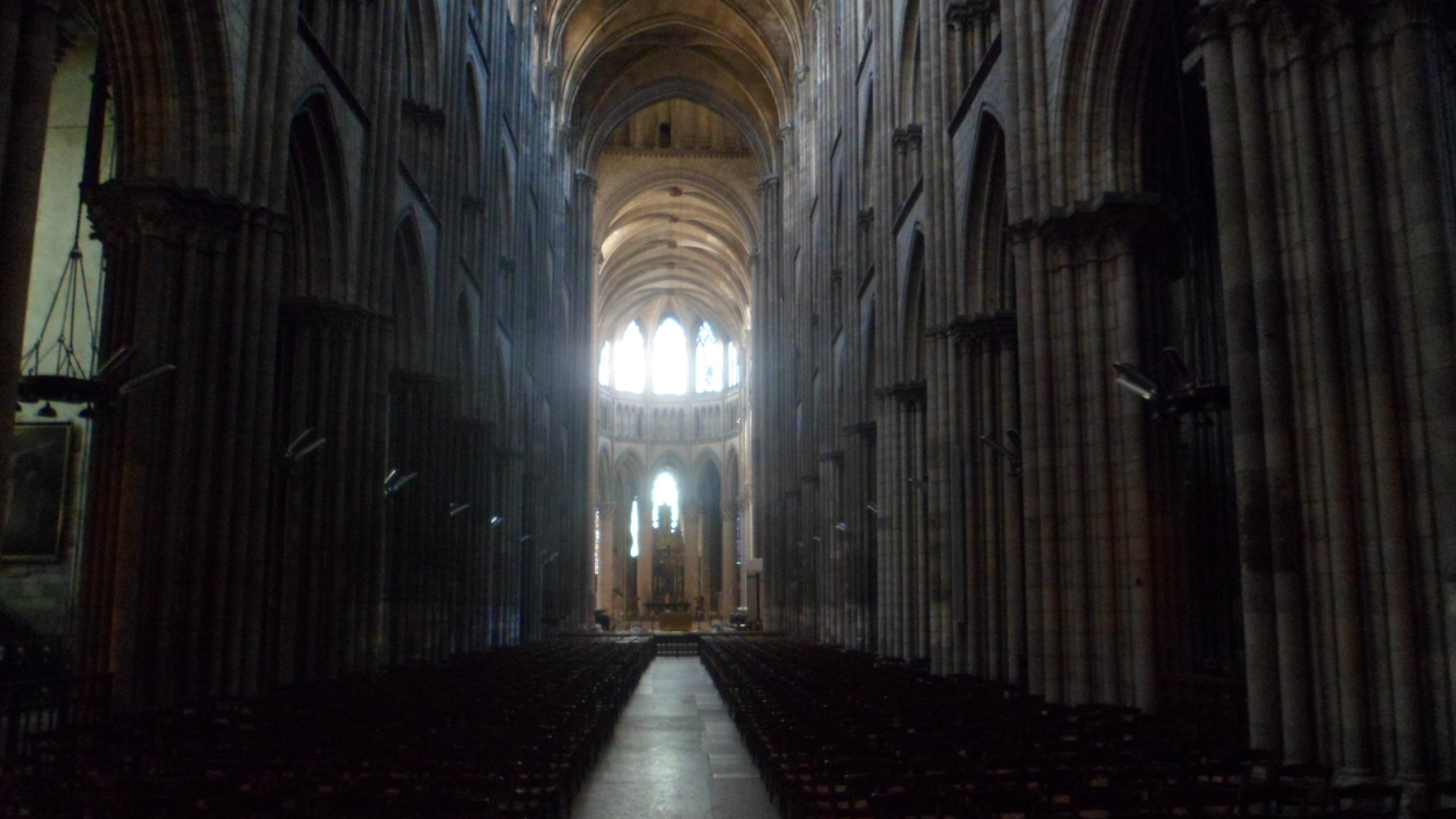
The sheer height of these structures is awe-inspiring, to say the least, considered within the time of the Gothic Era.

SAM_0479
SAM_0480
SAM_0490

St. Peter is honoured here as well.

SAM_0493

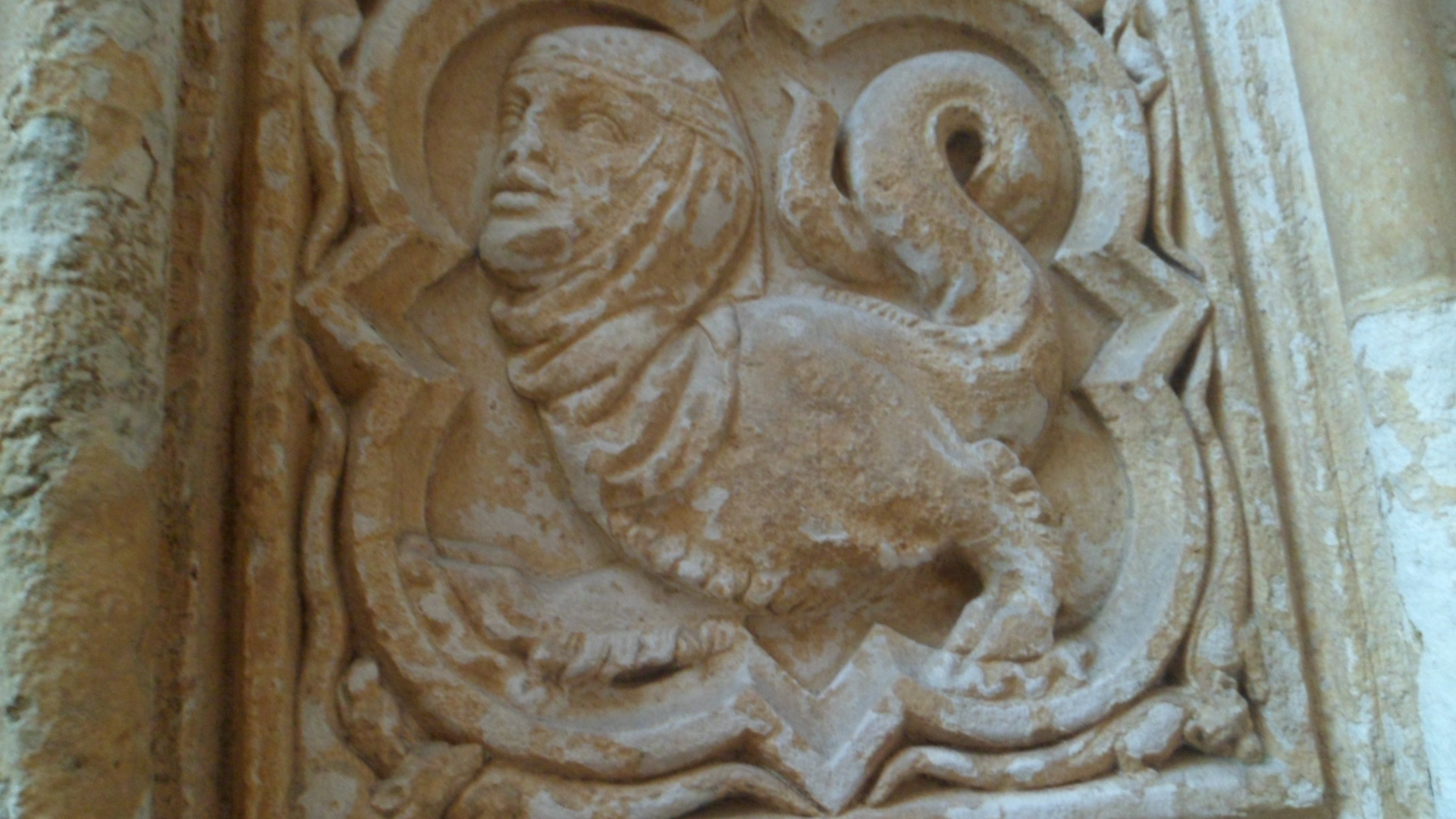
There are not many gargoyles here, per se, but there are several mythical characters, in side panels.SAM_0494

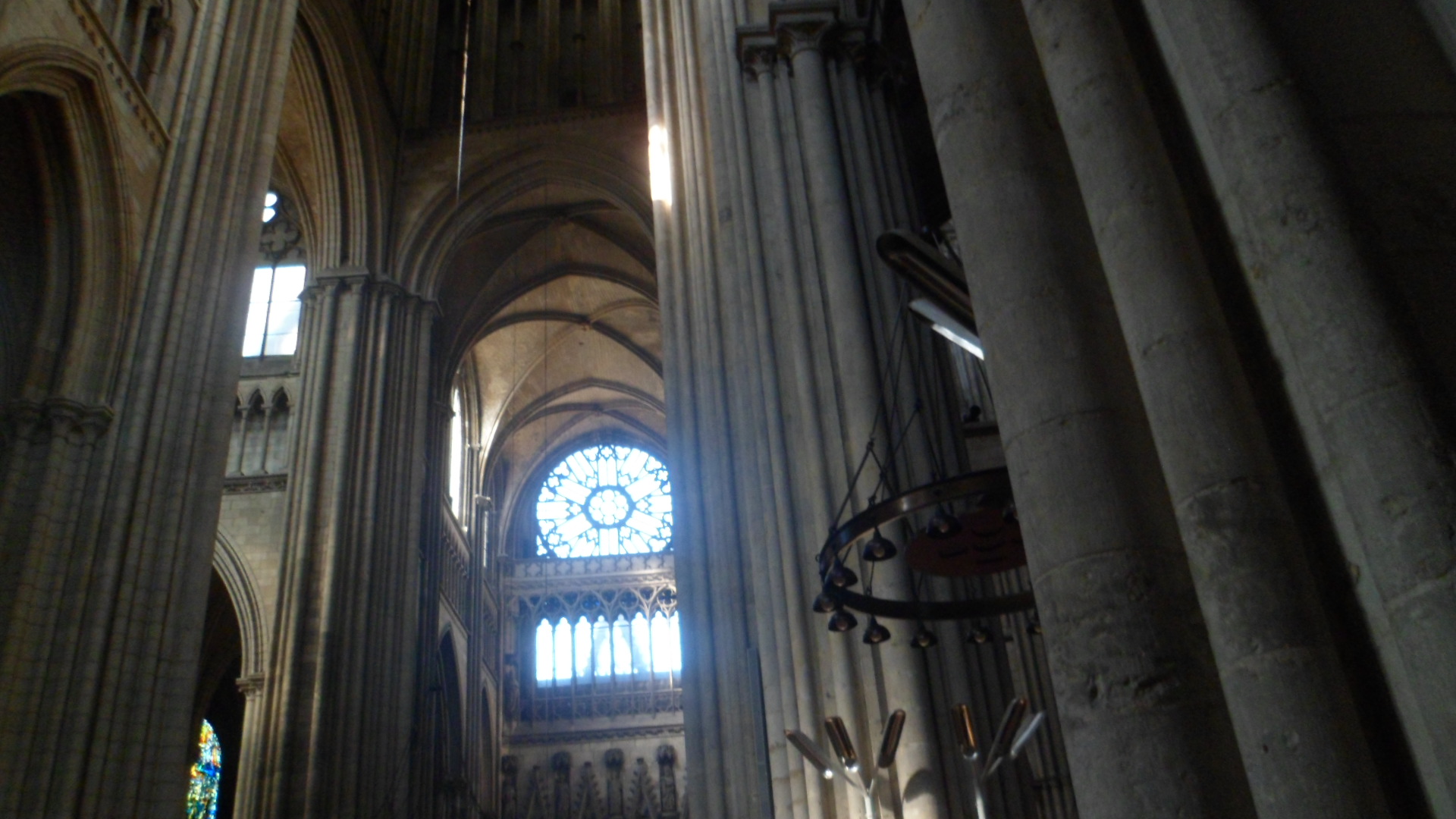
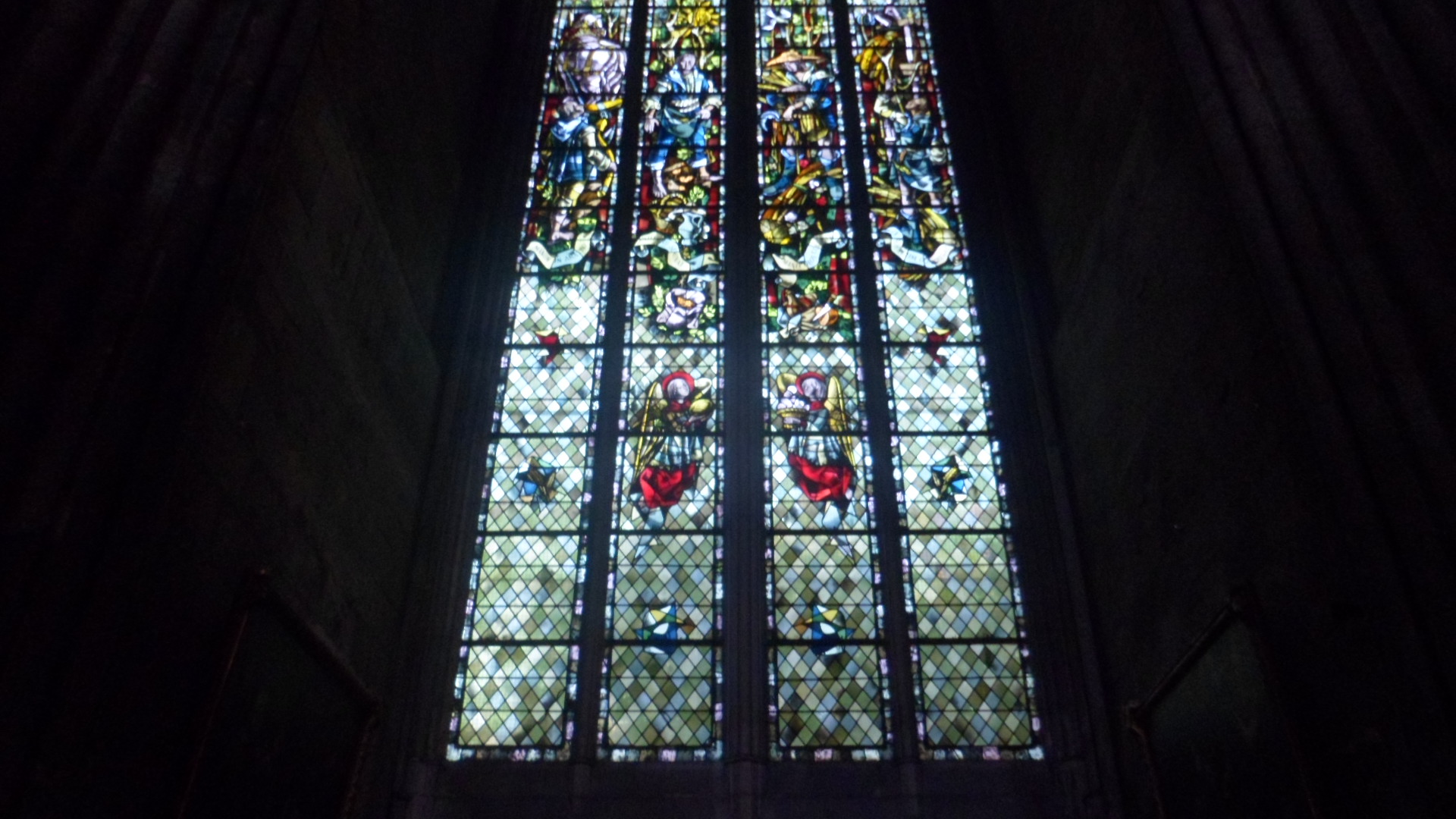
Moving inside, I focused on what I like best about churches- Stained glass, chapel monuments and vaulted ceilings.

SAM_0503
SAM_0504

The tomb of Rollo, first Duke of Normandy, is in the cathedral.SAM_0508

SAM_0510

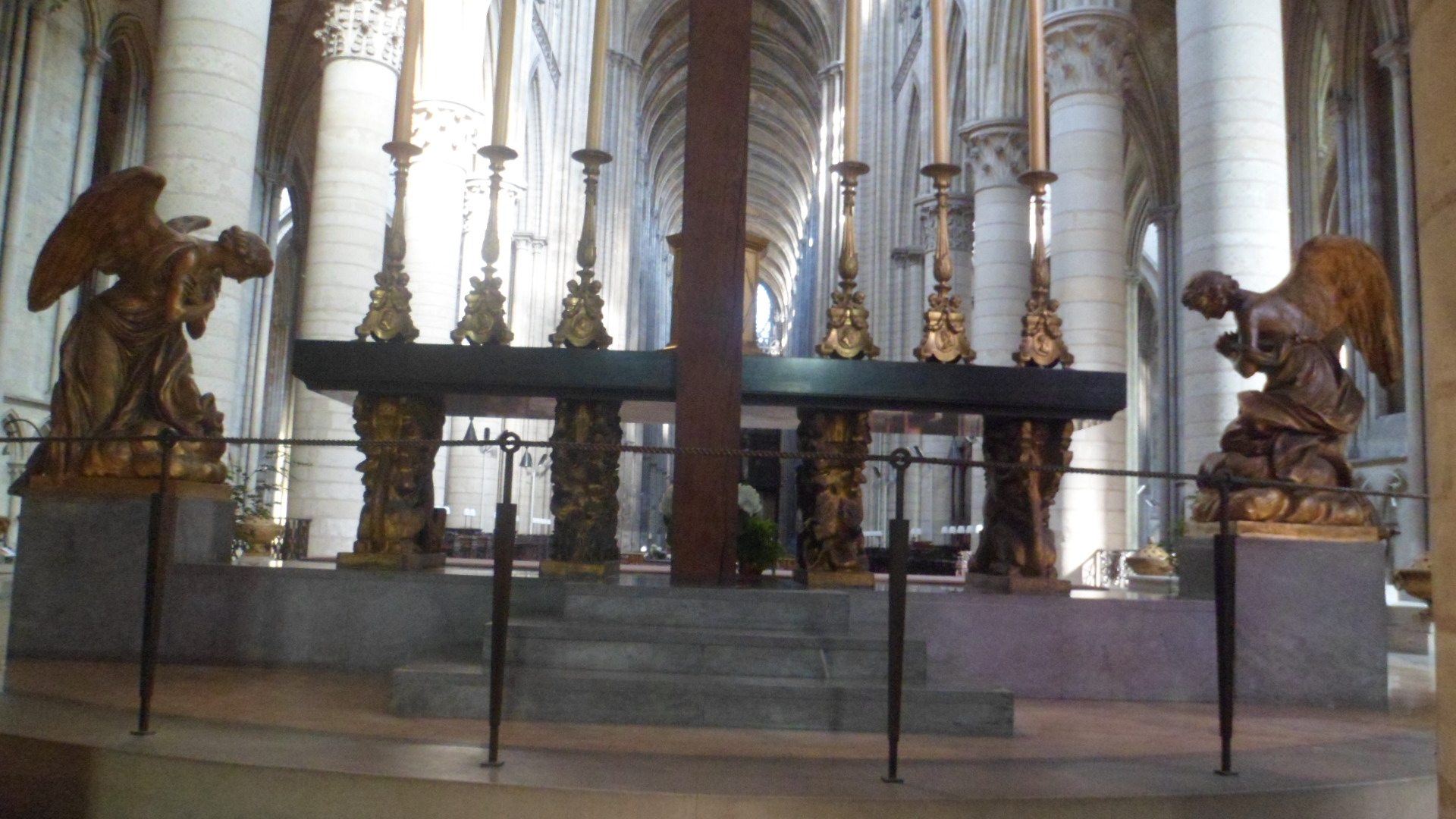
Approaching the altar, one sees the only sizable amount of gold, in this cathedral.SAM_0515

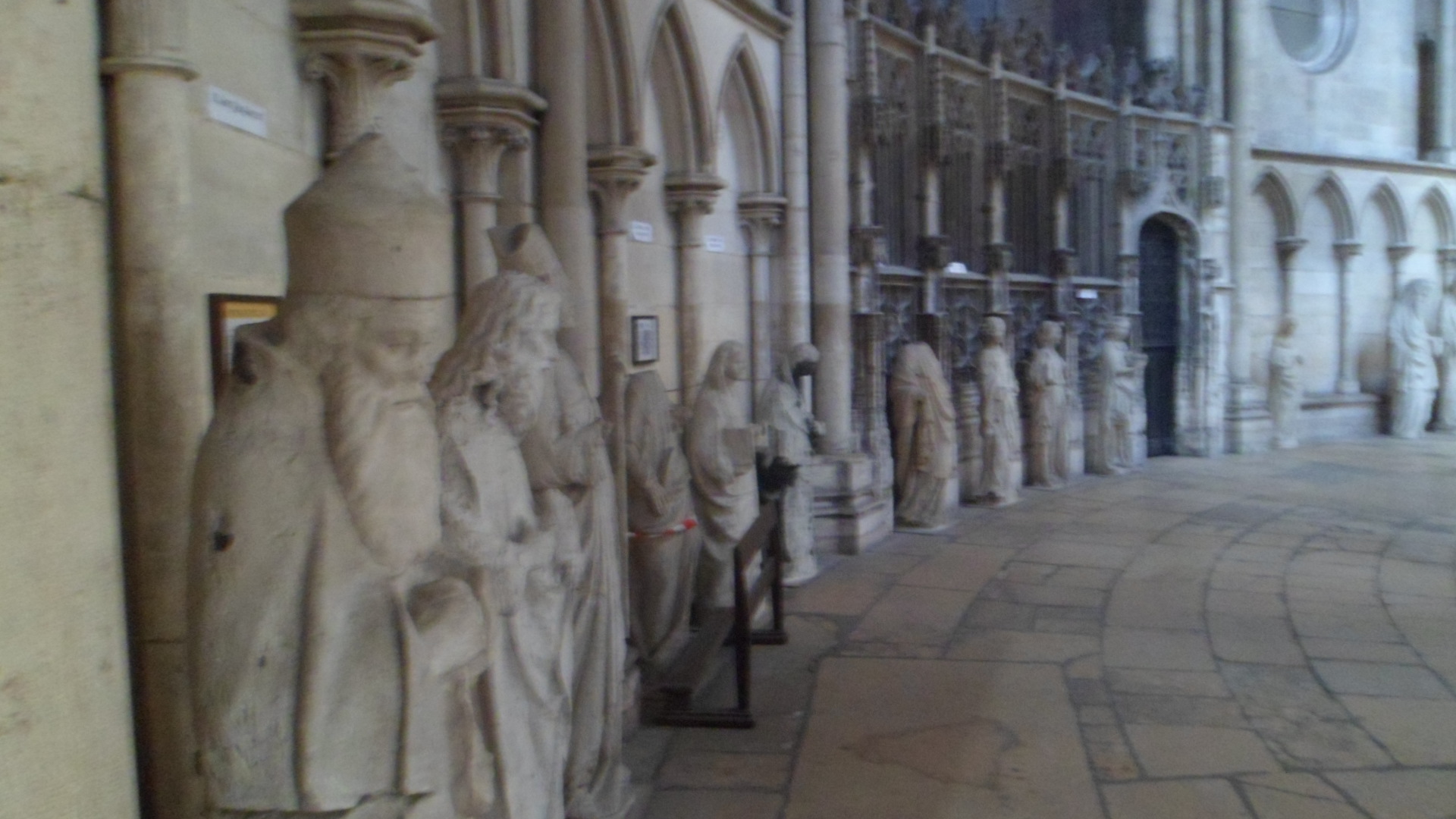
The Twelve Apostles are lined along the east wall of the Main Church.

SAM_0516

Angels are in perpetual worship, at this altar.SAM_0517

SAM_0525
SAM_0543
SAM_0544
SAM_0550
SAM_0553

This mock-up of a Viking funerary vessel was placed here, in honour of the Normans.SAM_0556

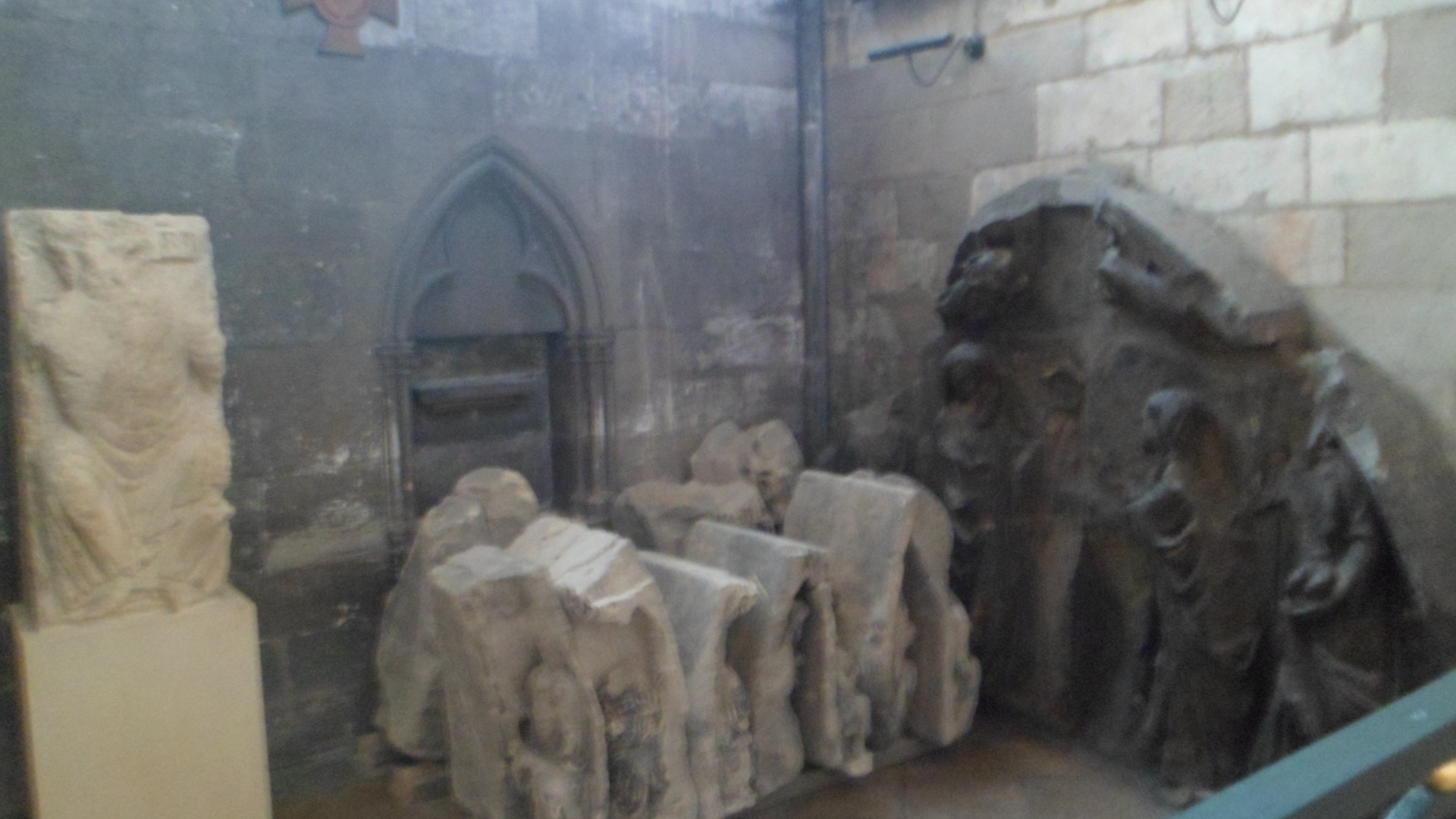
This debris is kept in a corner, to remind the visitor and parishioner alike, of the pounding that Rouen, and the cathedral, took in the days after D-Day.SAM_0557

Now, for Monsieur Monet. These are from http://pgoh13.com/rouen.php.rouen_monet

I capped the day with a fine dinner at Restaurant Rive Droite, owned by the parents of the proprietor of Hotel Le Morand, and managed by another lovely and hard-working woman, who MAY have stopped moving about the establishment for, say, twenty seconds or so. At one point, I helped her regain her balance, as she tried to tend to three matters, simultaneously. It could have been worse, though. When I first sat down, a gust of wind knocked down a shade umbrella, at an establishment across Le Vieux Marche, nearly hitting a waitress and two seated patrons. If you are ever in Vieux Marche de Rouen, I do highly recommend Le Rive Droite, for the food and for the service. Turn right at Rue du Pie.

SAM_0450
SAM_0451

I had come home, alright, to one of the springboards of my ancestors. Funny thing about this word, “home”. I find myself feeling that way about a growing number of places- not just where I was born and raised, or where I live now. It is where I feel loved.

An Eastward Homage, Day 16: An Evening in Finisterre

2

June 11, 2014-  I left Vannes fairly late in the morning, on that Wednesday. One last run down to Daily Gourmand, and I was set, nutrition-wise.  Arriving at the train station, I learned that there was no train to Brest, the port in western Brittany which was my destination for the day.  There was a bus, but I “probably missed it”.  I went over to Gare Routiere, anyway, and lo and behold, the bus was still there.

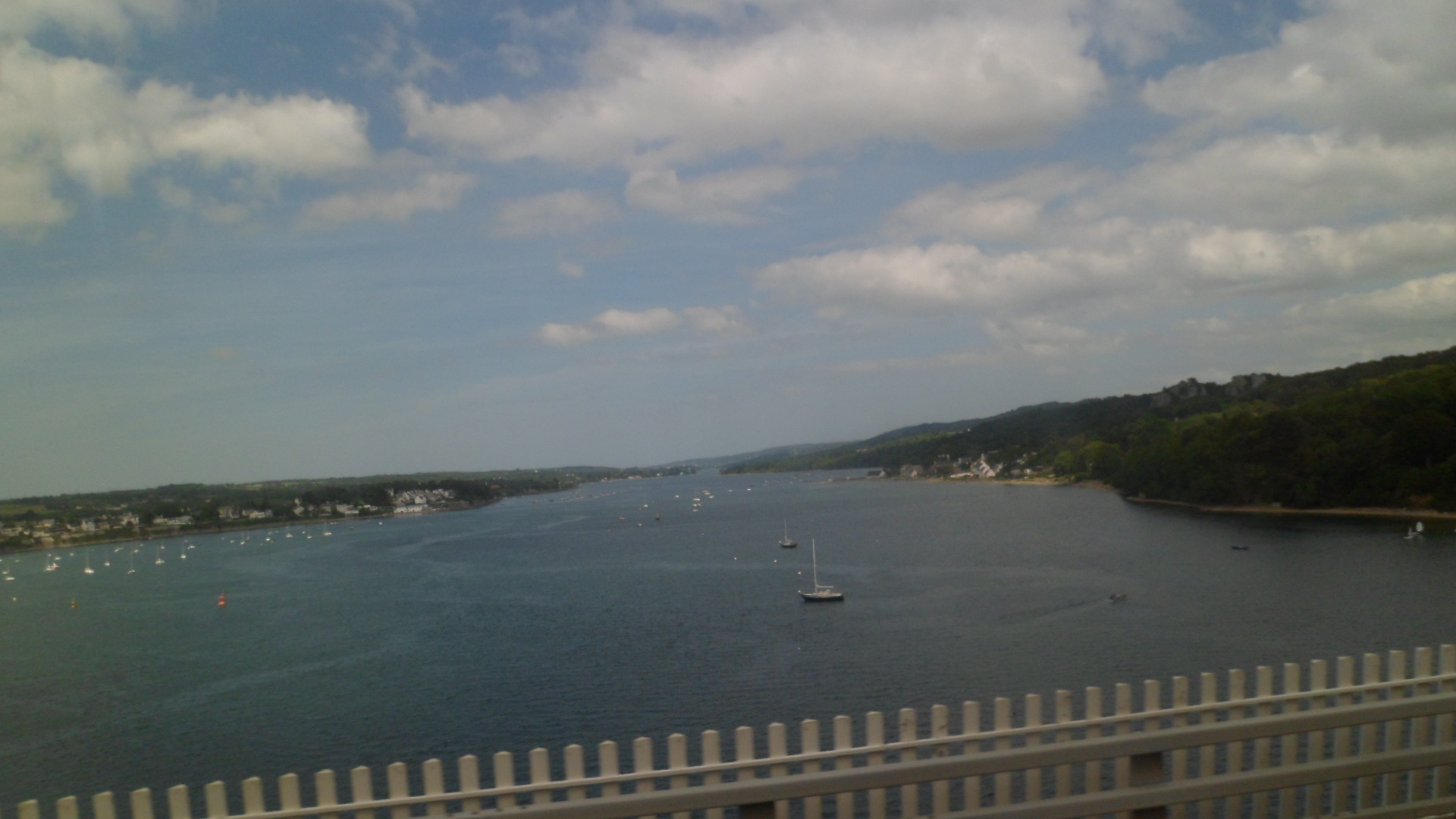
We passed through some lovely places, en route to Finisterre (“Land’s End”, in French). The first was Landevert.

SAM_0381

I was able to catch a few glimpses of Lorient, which happens to be the site of an International Celtic Festival, the very week that I am writing this.

SAM_0377
SAM_0376

A few kilometers later, came the lovely channel port of Hennebont.

SAM_0375

Quimperle should certainly not be confused with its larger cousin,

Quimper.

SAM_0385

The latter is the home of a large museum of Breton culture, and is one of the more traditional centers of all things Bretagne, being the administrative center of Finisterre.

After more meanders through this exquisite region, I came to Le Rade, and Brest.

SAM_0402
SAM_0403

I was lucky in my choice of hotels.  Bellevue is run by a very sweet family, who prepared breakfast for me, emportee, as I had to leave for the train to Rennes at 5 AM.

SAM_0404

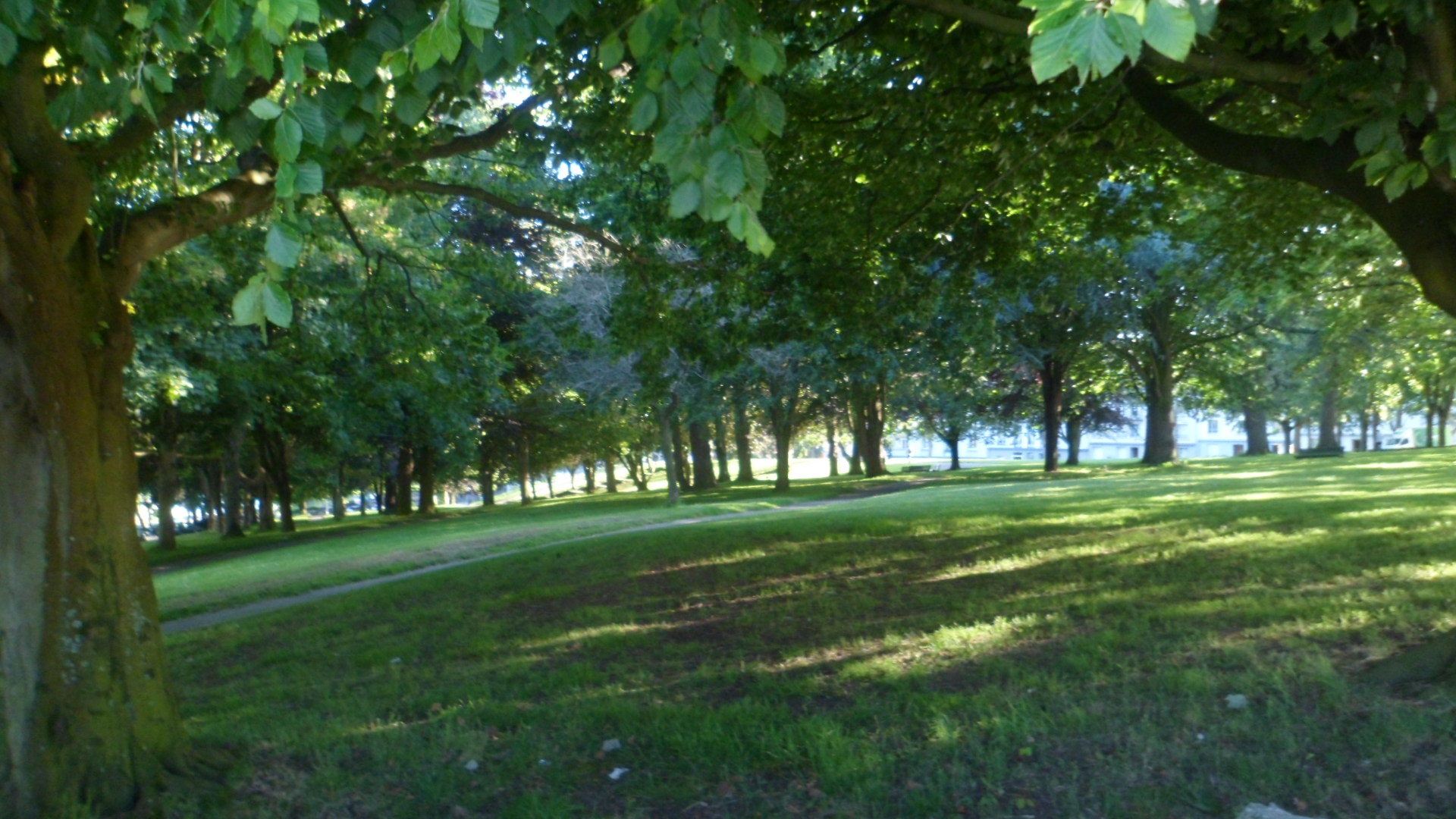
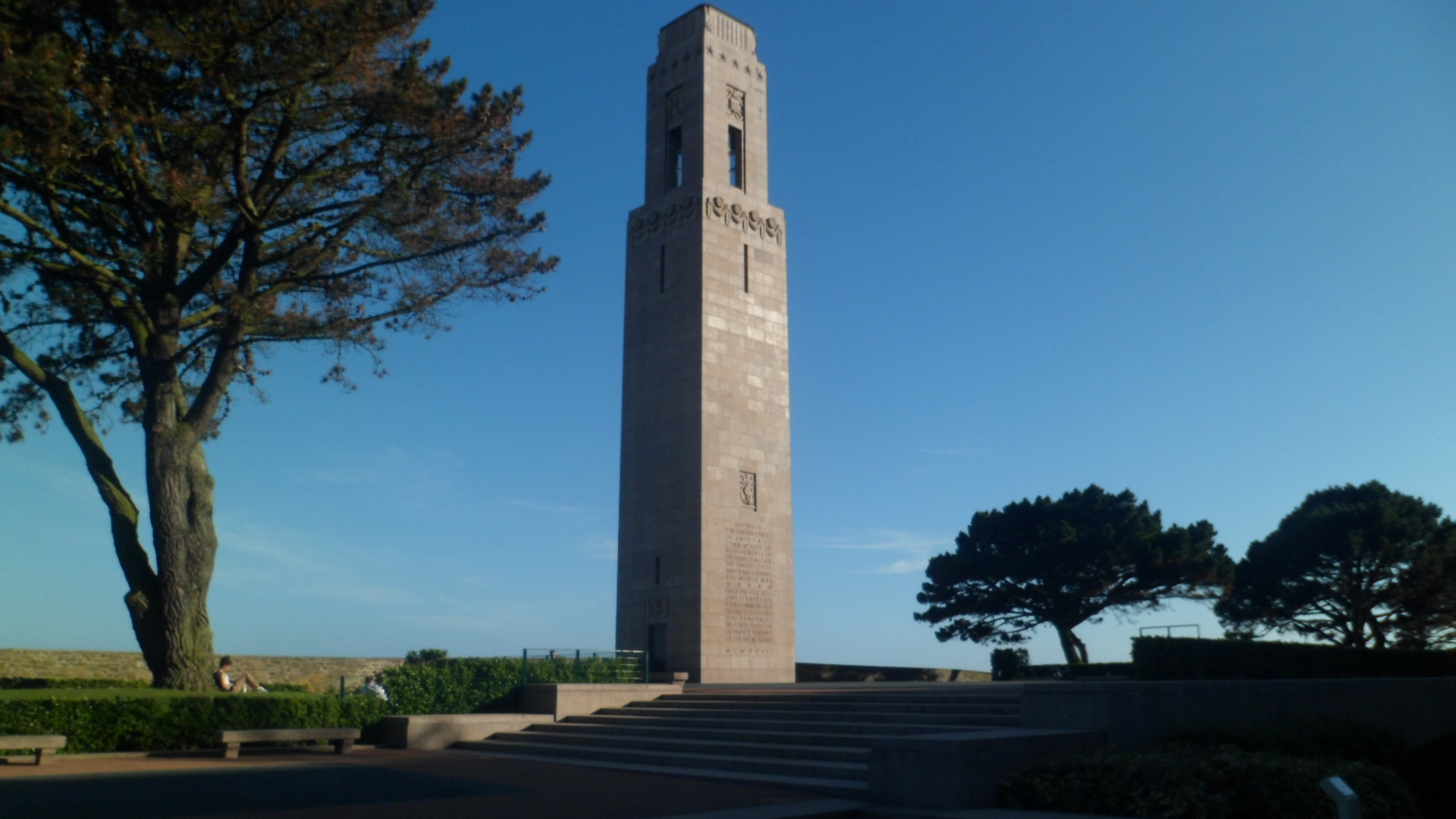
They close the doors at 9 PM, though, so I made a relatively brief visit to Jardin de Port and to the Chateau de Brest.  The head of the Brest peninsular area, the mouth of Riviere Penfield, hosts a large French naval base, and the National Maritime Museum, in the same complex.  Nearby, there is also Tour Americain- built to commemorate the U.S. effort in World War I, for which Brest was of high significance.
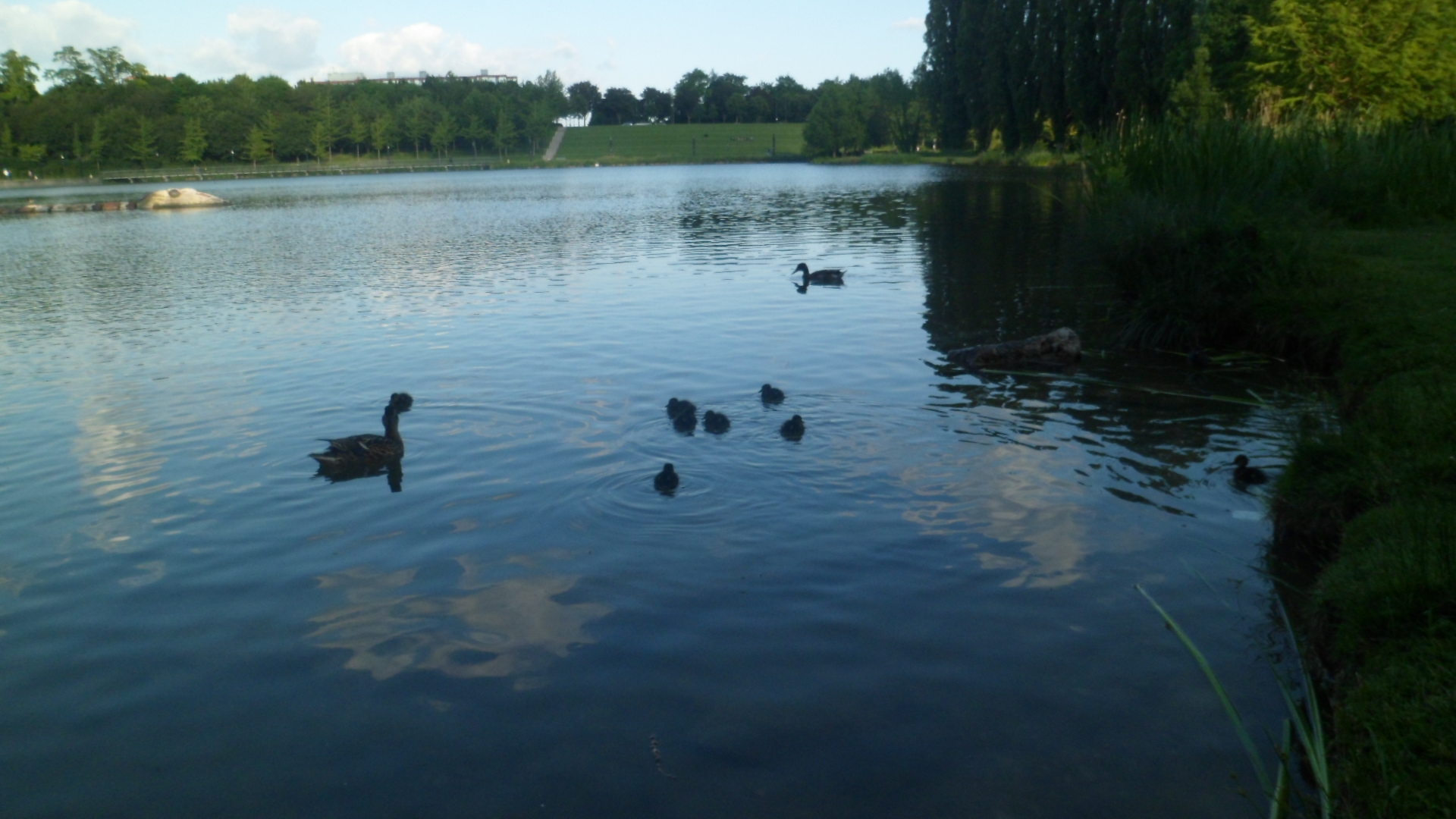
Here are views of Le Jardin de Port and of the port itself.

SAM_0407
SAM_0409
SAM_0411

As I came to the ramparts of the chateau, I spotted Tour Americain.

SAM_0416

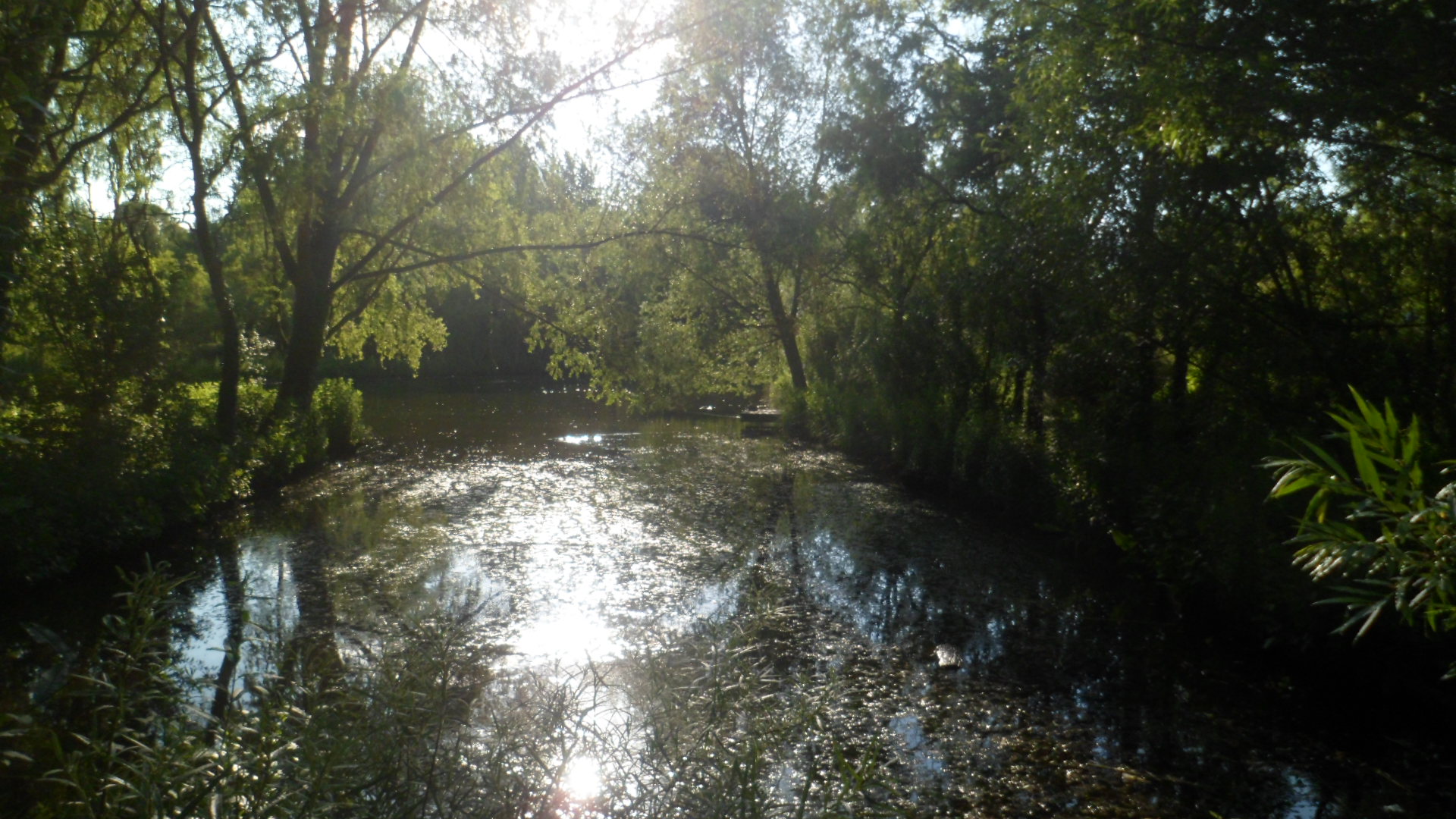
The steps nearby take the visitor down to the bottom terrace of Jardin de Port.
SAM_0418

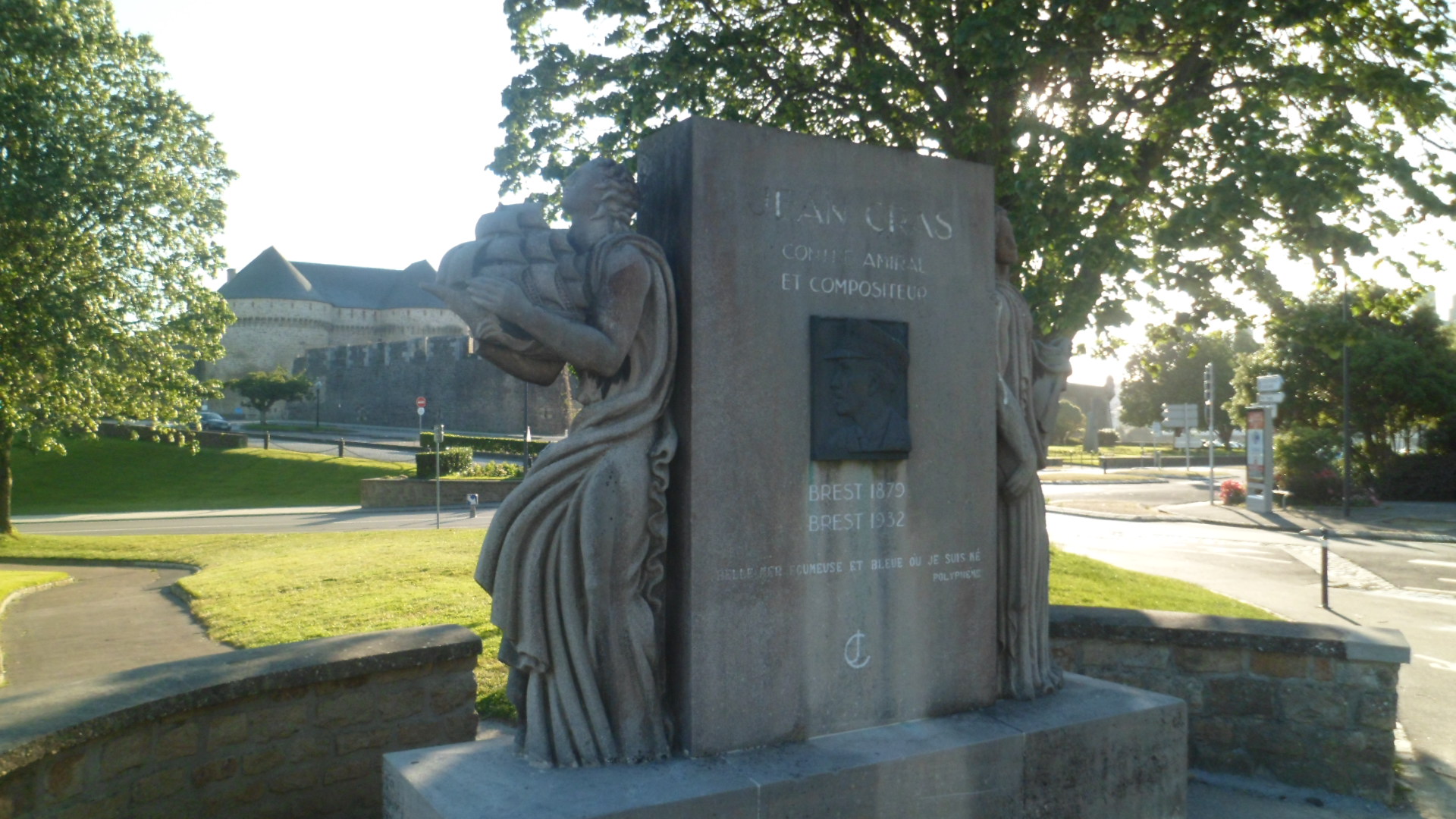
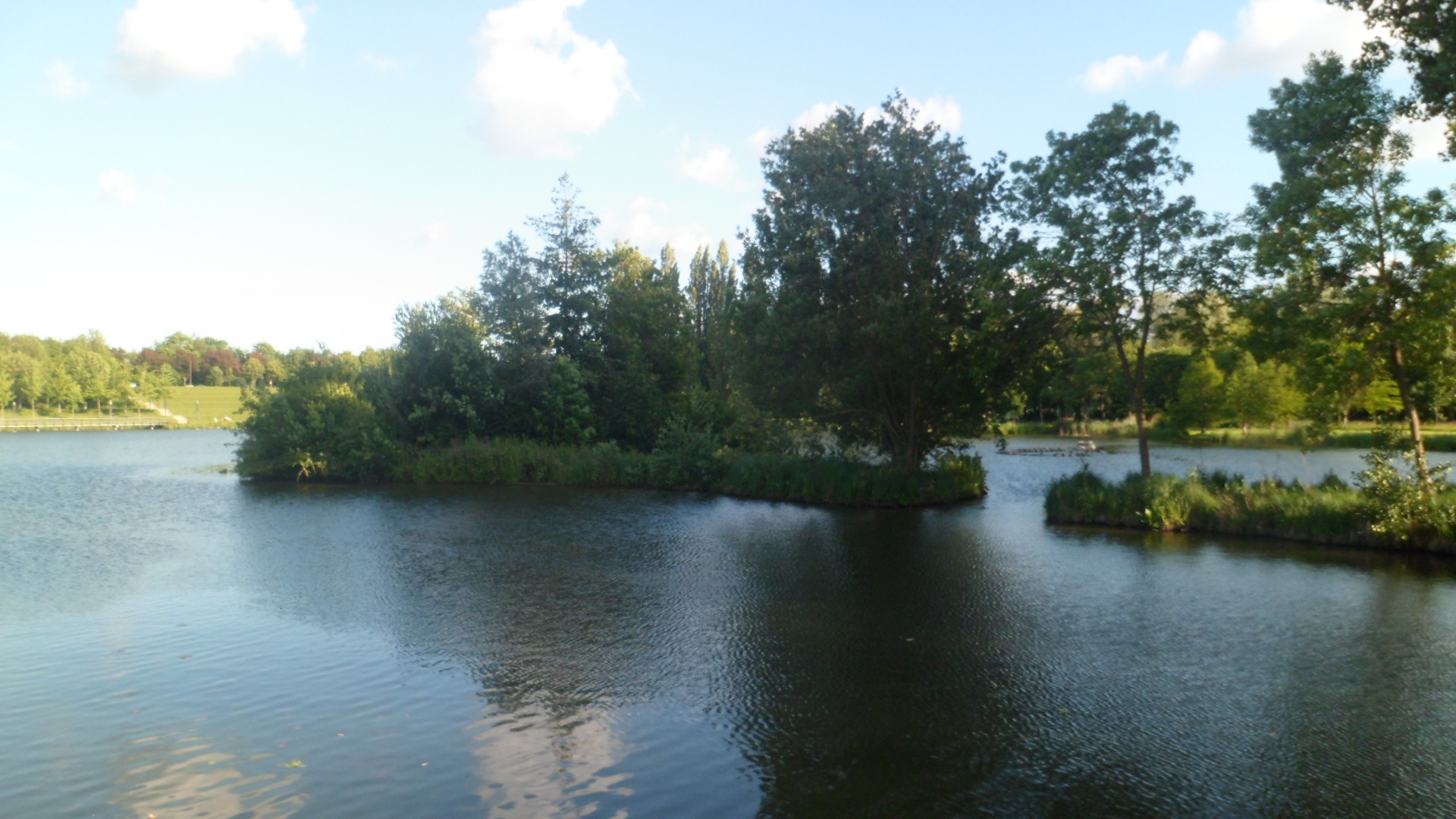
The Breton composer, Jean Cras, was born, and lived most of his life, in Brest.  His naval heritage, as well as his culture, framed the intensity of his music.  His memorial is here, at the west end of Jardin de Port
.SAM_0425

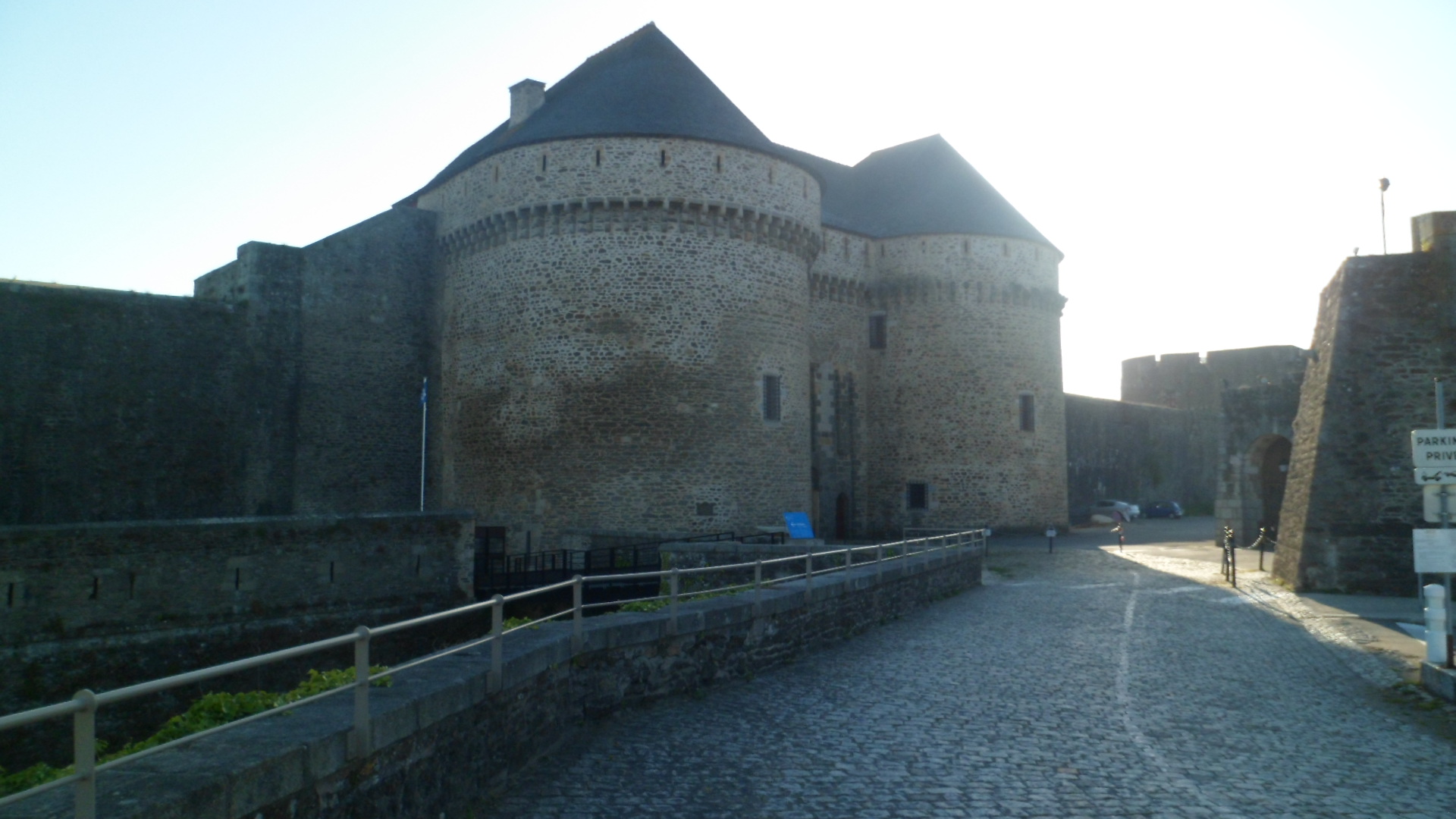
Now, for a few views of Chateau de Brest.

SAM_0427
SAM_0429
SAM_0431
SAM_0432

Parts of this structure were built by the Romans.  The last section was the work of the great military strategist, Sebastian de Vauban, who tore down the Roman castellum and built a more solid tower, in 1690.

The French have put up a cenotaph, in commemoration of the survival of the people of Brest, in two World Wars.

SAM_0435

I would focus more fully on the Chateau, if I ever get back to Brest.  I would also get over to Distrite Saint Marc- an isolated, but distinctive preserved neighbourhood.  This is as close as I got to St. Marc,on the late evening of June 11.
SAM_0440

The next day would be all Real World- courtesy of the still roiling French rail strike. Brest, though, would carry on like clock work.

An Eastward Homage, Day 15, Part IV: Carnac, Looking to the Sky

2

June 10, 2014-  Depending on who is digging where, the megaliths of Carnac were first erected in 4500 BC, 3300 BC, or somewhere in between.  There is an equal diversity of opinion as to the WHY of these magnificent fields of stone.  Some say they are astronomical indicators.  There are others whose take is that they are strictly for religious ceremonies.  Another group postulates that Merlin turned the Roman legions here into stone.  These are, of course, the same people who say that a Nineteen-Foot Tall Giant is going to land in Antarctica, next week, and take us all to Planet Pneumonococcus.

I had a nice bus ride from Vannes to Carnac-Plage, on that afternoon.  The town drunk of Carnac was on board, and while he had been yelling about the bus to Paris being late, prior to this bus’s arrival, he promptly fell asleep, once we got rolling.  We went through nice little towns along the way.  One of these was Auray, which has the Cathedral of St. Goustan.SAM_0208

I would return to Auray later that night, but more about that later.

When we arrived at Carnac-Plage, the resort end of town, I learned that most of my fellow riders were more interested in the beach, than in the rows of rocks.  The town imbiber, of course, still wanted to go to Paris, but figured he’d make do with his own flat for the time being.  I took a quick look at the shore.

SAM_0209

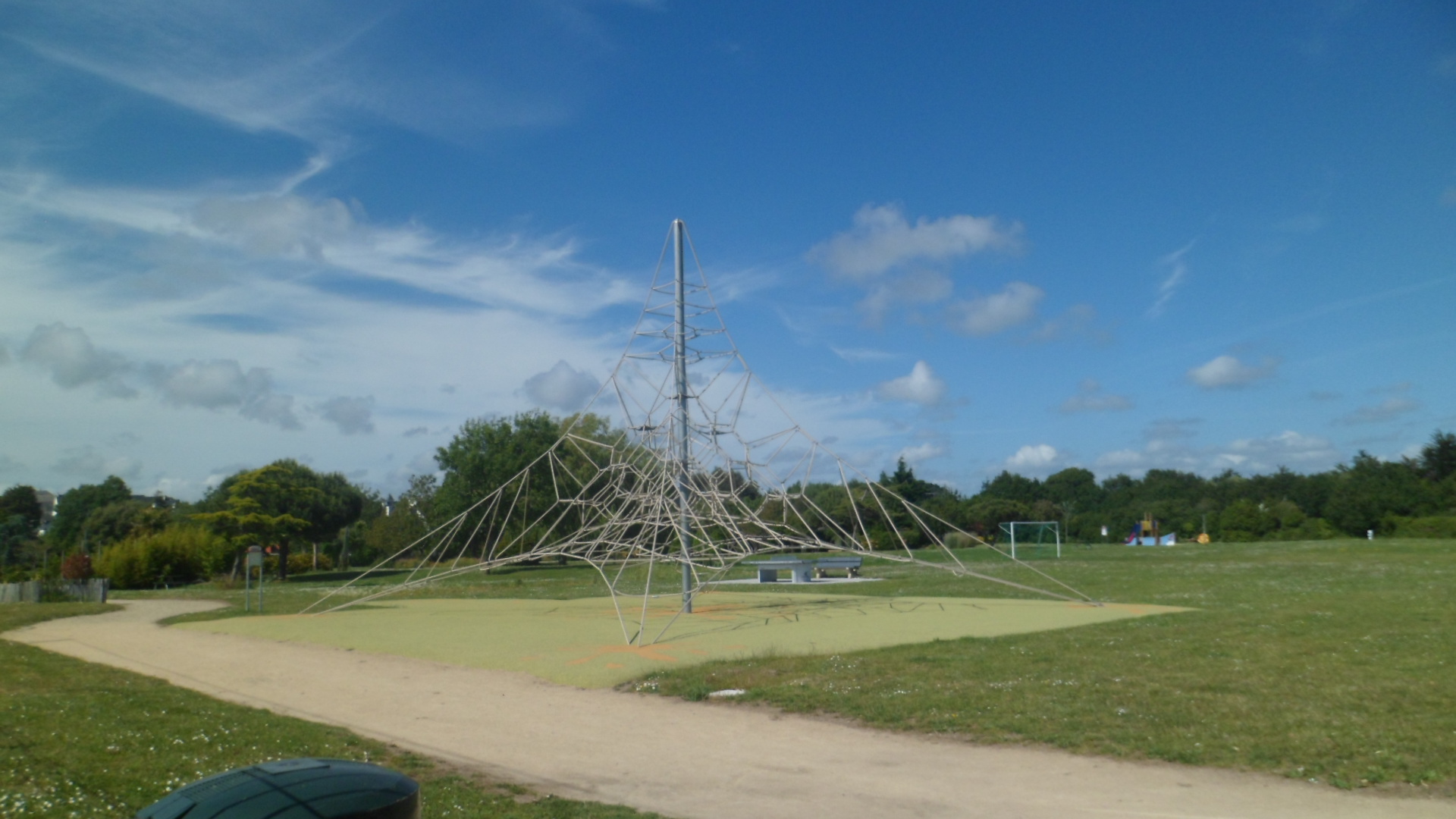
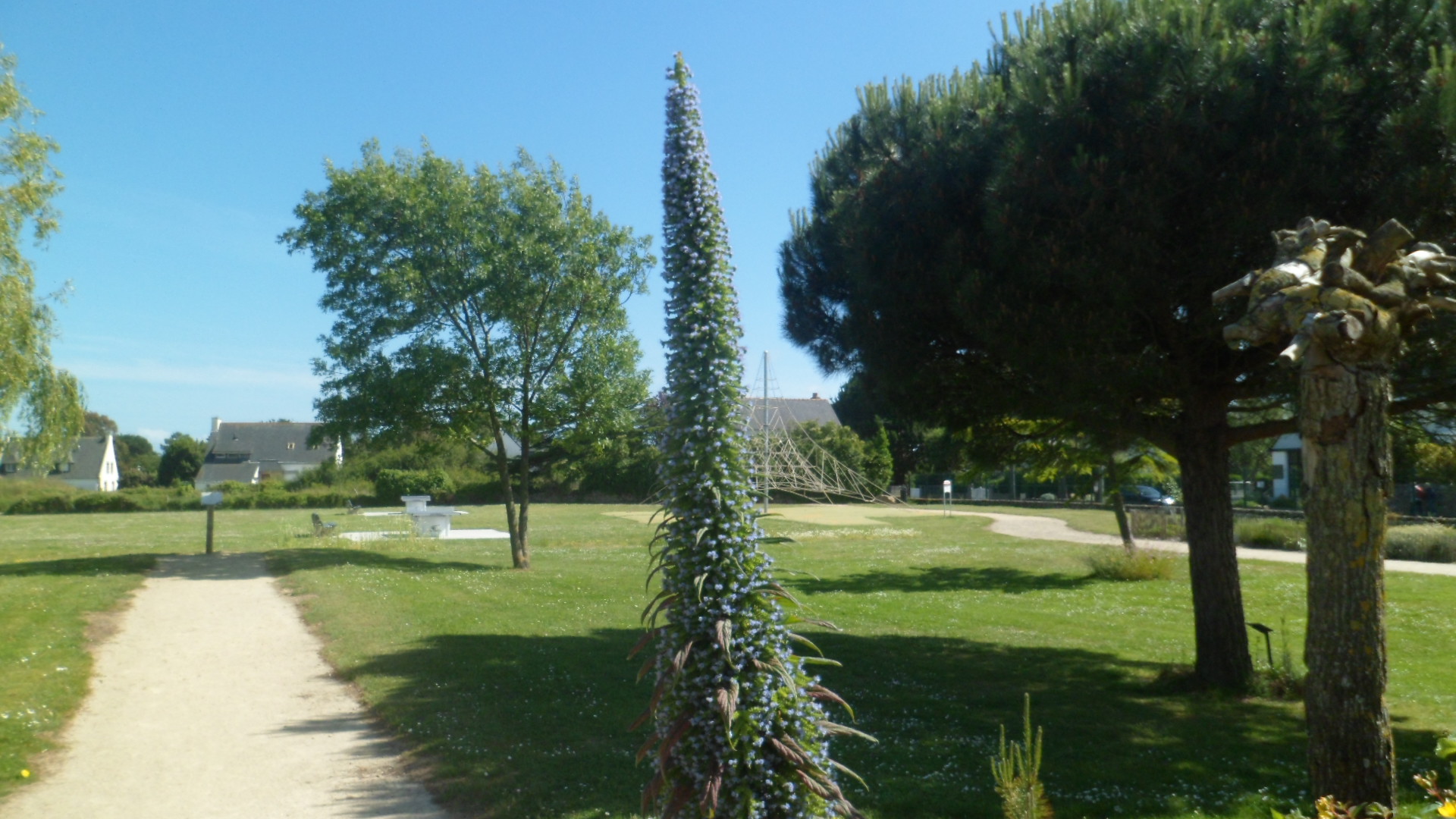
The modern gem of Carnac, though, is Jardin Cesarine.  The town park has an imaginative rope course.

SAM_0211

The garden itself held my attention, happily, for twenty minutes, or so.

SAM_0213
SAM_0217
SAM_0218

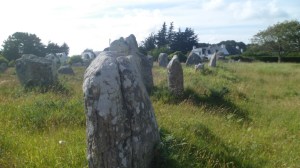
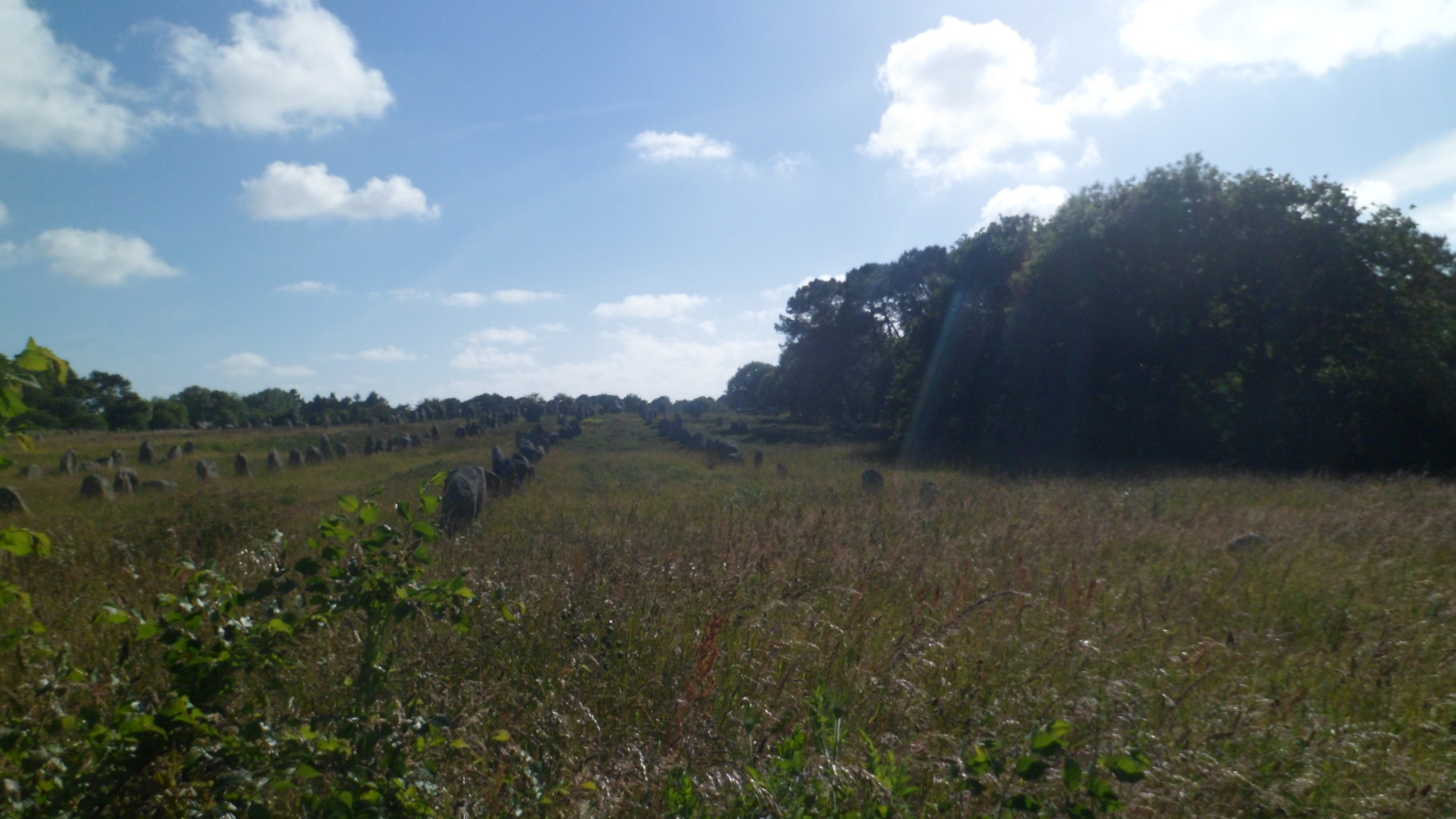
It was the Parc des Megaliths, which stayed in my head, and drew me in short order.  There are three large sections of the park:  Menec, Kemerio (House of the Dead) and Kerlescan, and a smaller area, Petit-Menec.

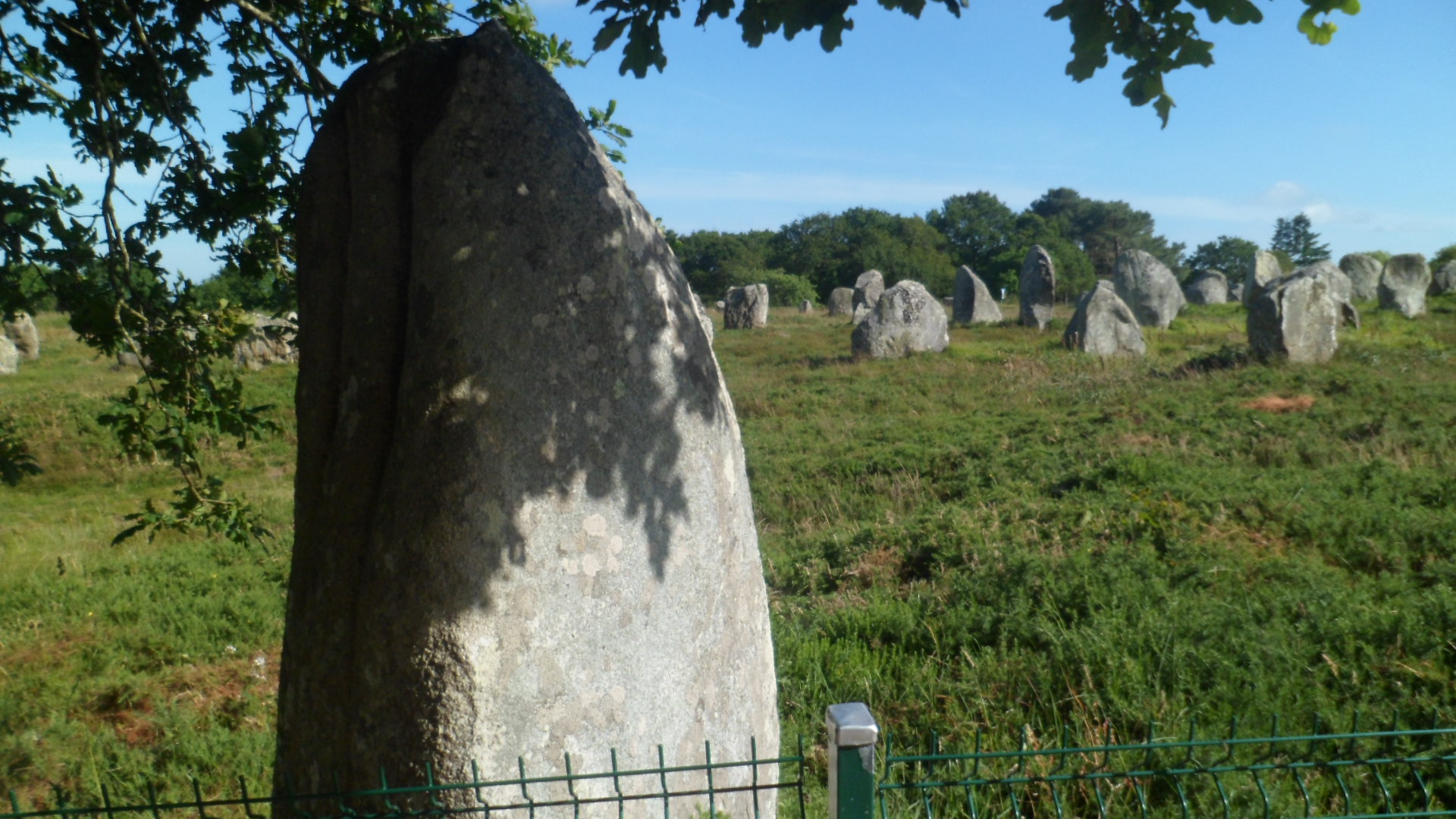
Here are some scenes of Menec, the western, and largest, segment of alignments, with a few single menehir (Stones that are partly buried), in between.

SAM_0224
SAM_0234
SAM_0237
SAM_0260

At this fence, and road, I left Menec and came to Kemerio- the House of the Dead. To be sure, parts of this area looked like a cemetery, and it is here that the Merlin Theory got started. There was a busload of Italian senior citizens with me, for part of the time. Their chatter was constant, but it was actually quite refreshing. Looking at rows of stones for two hours does get a bit lonesome- unless one believes they are actually Roman soldiers.

SAM_0262

The farm house in the background is occupied, and there is a herd of Brittany sheep doing landscaping duty. These sheep are a Heritage Food Source, so are prized by Slow Food France and other people concerned with the diversity of our diet. I am a member of Slow Food USA, so the sheep captured my interest.

SAM_0269
SAM_0270

There were lonely menihir in this section, as in Menec.

SAM_0306

This horizontal piece looked like a beached whale.SAM_0320

This piece reminded me of the donkey at Block Island Petting Zoo, last year, who came up to the fence and couldn’t get enough food

.SAM_0328

The Kerlescan section is smaller than the other two main sections, and rounds out the park, at the east end.

SAM_0340

Kerlescan was also more of interest to local farmers, as a source of stone and water.  This abandoned cistern bears witness to their efforts.SAM_0349

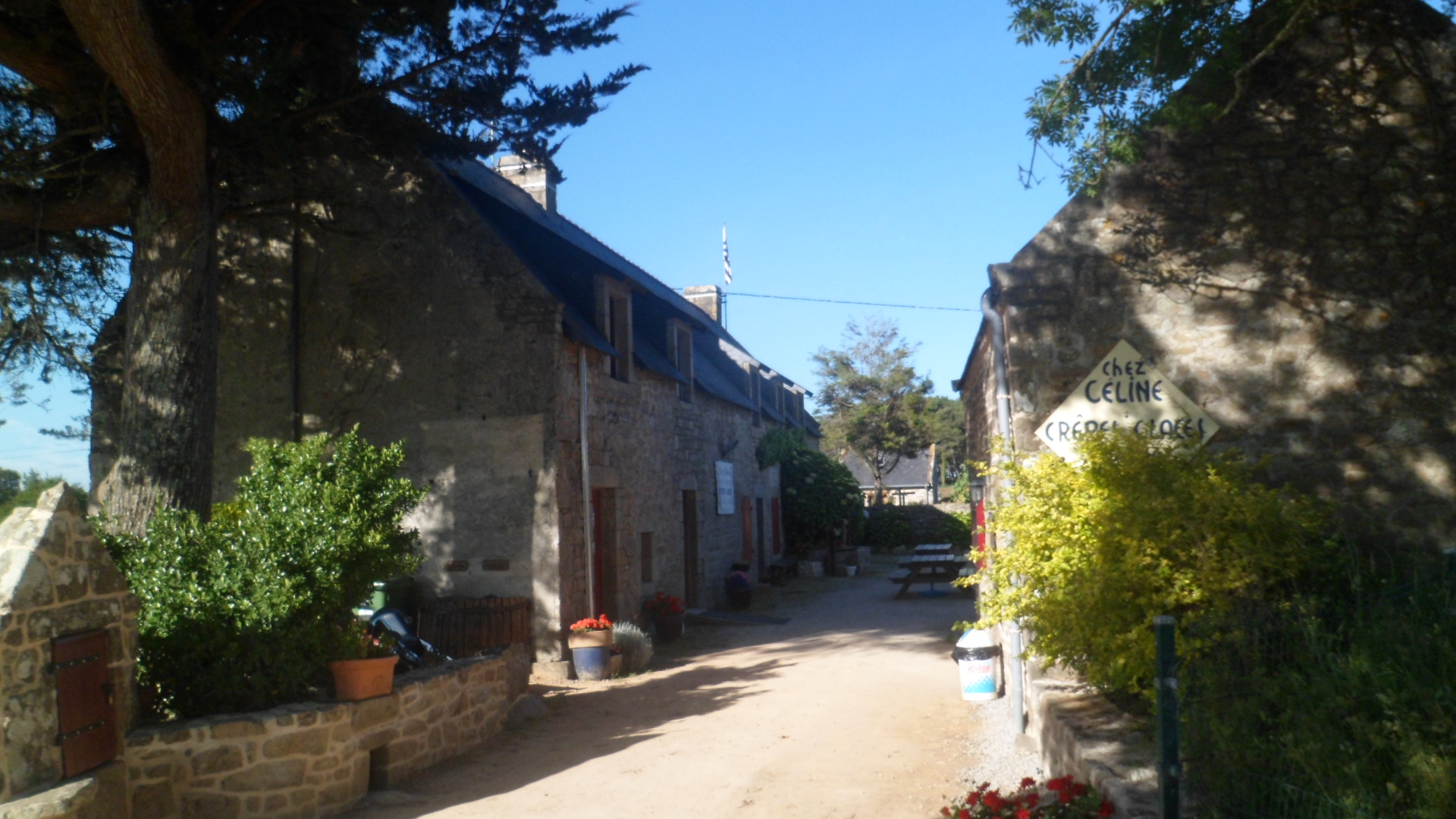
One enterprising pair of sisters is making a go of serving up fine food and beverages:  Chez Celine, where I enjoyed one very filling crepe- the only meal I would have on that evening. Since it was chocolate, with orange marmalade, who’s to complain?

SAM_0354

I was the only American who had been there in quite some time, so the ladies took to giggling to themselves, amusing me and a German gentleman who was enjoying a glass of wine.

Across the road from Chez Celine is Petit- Menec, the baby brother of the Big Three.

SAM_0352

Crucino Dolmen was once a tomb, but acid in Brittany’s soil has worn away the bones.

SAM_0357

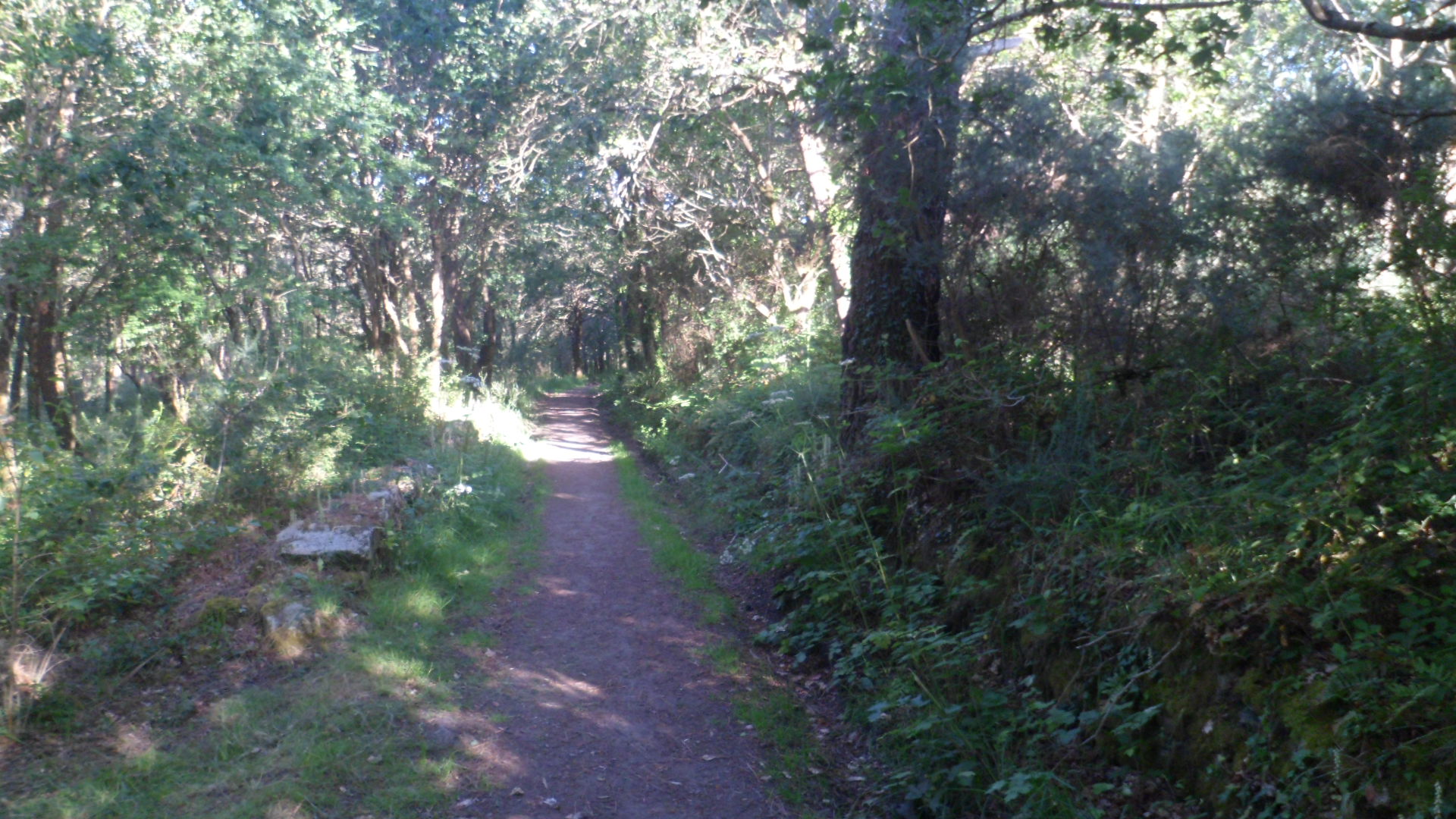
To the east of the Dolmen, I entered Bois Saint-Michel, a hiking trail which a honeymooning couple had taken, an hour or so earlier. It would lead me back to Carnac-Plage.

SAM_0358

There are two landmarks associated with St. Michael (the man, not the Archangel), on this path. First, I came upon his fountain.

SAM_0361

The tomb of this French patron saint is at the northern edge of Carnac-Ville.

SAM_0365

I saw a similarity between the tumulus, and Mont St. Michel.

The “cone” turned out to be Chapel St. Yves.

SAM_0367

It was late, but still light, so I was fooled a bit. My arrival back in town left only one mode of transport available. A kind boulangere called the first taxi, which got me to Auray. After I used the ATM, a gentleman on business in Auray called the second one, which brought me to Place Verlanne, from which I was able to use my legs to get to the hotel. All’s fair in love, war and an extended evening at a remote place of interest. Carnac shows that we indeed come from highly intelligent, imaginative stock.

An Eastward Homage, Day 15, Part III: A Breton Cultural Sampler

16

One of the hours best spent on my journey, last month, was examining the Hall of Fame in the Breton Cultural Center, part of Vannes Tourism Office, on the waterfront.

I am going to list those of whom I took particular note, along with their specialty, and a link to their website, if they have one.  Breton culture is a fine blend of Celtic and French heritage.  

Trio EDF- Musicians (http://www.youtube.com/watch?v=6GBP8-la1UE

Patrick Jeffroy- Chef du Cuisine (http://www.hoteldecarantec.com/va/restaurant_va.html)

Jean Lebrun- Journalist ( http://www.franceinter.fr/emission-la-marche-de-l-histoire)

Les Dernieres Bigoudenes- Distinctive coiffure (http://videos.tf1.fr/jt-13h/2010/les-dernieres-bigoudenes-en-coiffe-font-de-la-resistance-5866405.html)

Jacques Le Goff- Historian (http://en.wikipedia.org/wiki/Jacques_Le_Goff).
Erwann Creach- Film maker ( http://www.youtube.com/user/MrErwann75)
Ondine Morin- Oceanographer (http://www.youtube.com/channel/UCyikKNkeQsjyka8JwopG8XQ)
Tristan Nihouarn- Musician (http://www.youtube.com/watch?v=jqC0FCkgGvU)
Alain Stivell- Musician (http://www.youtube.com/watch?v=PRpNVMjnDmY)
Edwy Plenel- Journalist ( http://www.independent.co.uk/news/world/europe/edwy-plenel-is-the-journalist-detested-by-politicians-and-colleagues-alike-the-most-hated-man-in-france-8588747.html)
Yann Tiersen- Pianist (http://www.youtube.com/watch?v=bzMWqlMi854)

Yelle- Musician (http://www.youtube.com/watch?v=8QOxKCKC09A)

Kan-Ha Diskan- Musicians (http://www.youtube.com/watch?v=IK4BM-CUZD0)

There are larger cultural forces afoot, as well:

http://www.jazzavannes.fr/- Jazz a Vannes, each August;

http://www.musicienschanterelle.com/spip/index.php- Cellovanees, also in August.

A friend of mine will be attending this festival, in nearby Lorient: ( http://us.rendezvousenfrance.com/en/events/lorient-interceltic-festival-0)

So, there is so much for the soul, in Vannes and in Brittany, generally.

NEXT: The Distant Signals of Carnac

An Eastward Homage, Day 15, Part 2: The Unstoppable Second Wind

5

June 10, 2014-  My use of an essential oils-based daily supplement has its definite benefits. This was never more in evidence than on this day when, faced with a three-part schedule, my day started at 6 AM.  The energy burst implied by the title of this post came around 1 PM, but I digress.

The morning took me down to the waterfront of old Morbihan.

SAM_0156

Vannes’ port is at the head of a long channel, well-dredged and ever bustling. There are shops aplenty here, and not the least of these is Daily Gourmand, whose lovely and energetic proprietress and her congenial husband made me feel more at home than just about any other restaurateurs, up to this point. They make palatable crepes, salads and wraps. I chose a wrap, as it was 10 AM when I stopped in.

SAM_0159
SAM_0160

I swung back inland, headed for Vieux Marche and some palace gardens. The market is reached through La Porte Saint-Vincent.

SAM_0162

One never knows whom one might meet, in places like this.SAM_0163

In the midst of the Old Market, I spotted yet another passage. This is La Porte Calmont, which leads to the gardens.

SAM_0164

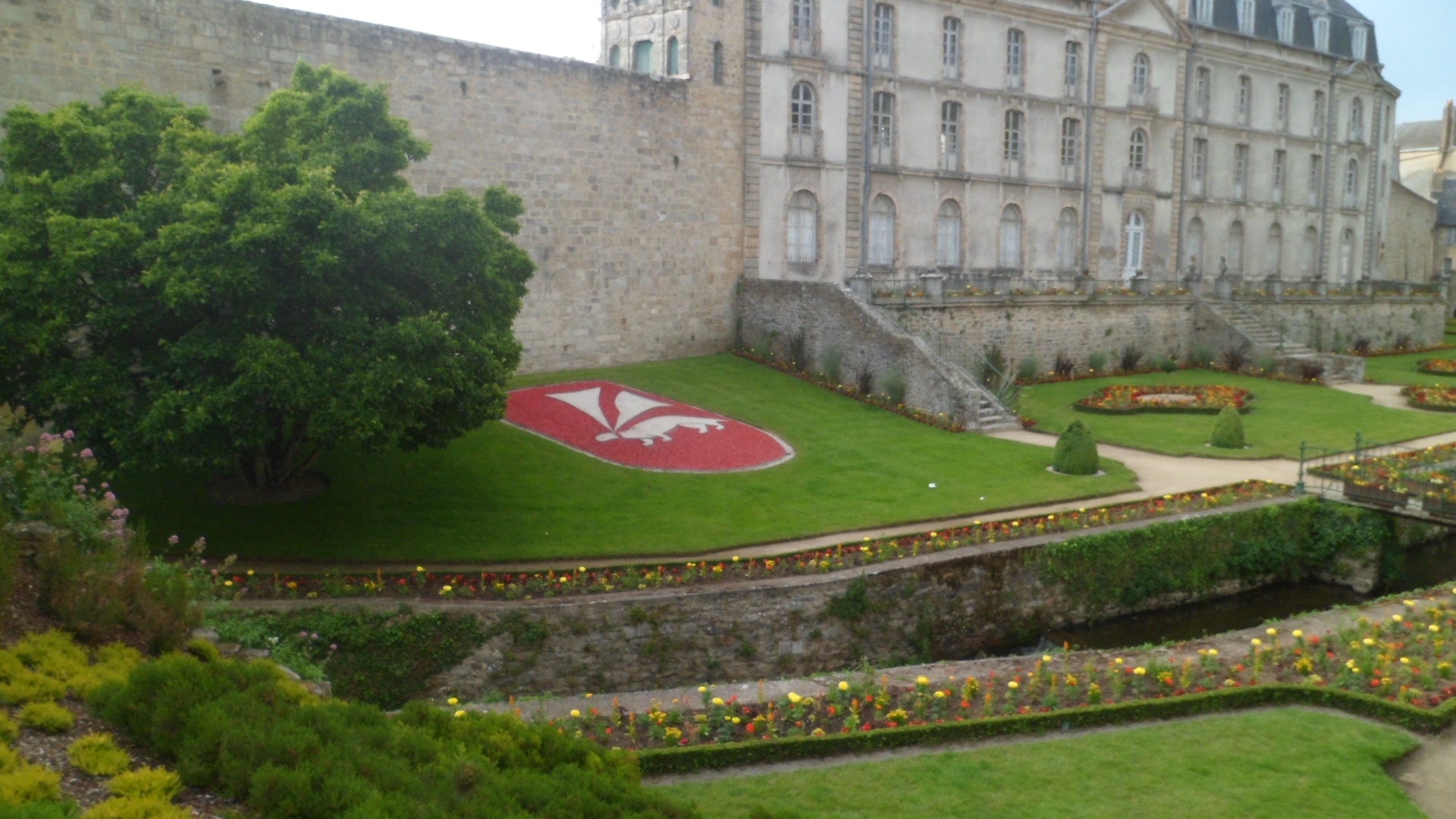
As one might guess, this was the palace of an early Duke of Brittany, Jean IV. It is known as Chateau l’Hermine, and was built by the duke as he favoured the central position of Vannes, in the Duchy.SAM_0169

SAM_0168
SAM_0170

After those breathtaking sights, I found a bit of aesthetic relief, in Vieux Marche.  This edifice is definitely blessed.  In fact, all Vannes was blessed during World Wars I and II.  The German presence here was relatively benign, and the Allies elected not to bomb the area.

SAM_0178

En route to a quixotic mission to a FNAC electronics store, in hopes of getting a battery for my laptop, I passed Place Charles de Gaulle, which recognizes just who it was that kept Vannes from harm. The building is the Prefectural Hall, for Morbihan.

SAM_0183

I rode a series of buses to and from Place Kerlann, a large, modern shopping mall, where the FNAC is located.  Needless to say, laptop and I came up empty, so I solaced myself with one of two American-style meals on this trip:  A Philly Cheese Steak at the Carrefour Truck Stop, just west of Place Kerlann.  On the bus ride back to Hotel de France, we were joined by about twenty school kids and their teachers.  As I was seated in a two-seat section, I offered my seat so a couple of girls could sit together, but the teacher would not hear of it.  Soon, though, an insolent little boy was placed in the empty seat next to me, and Madame was upbraiding him for his behaviour, as I looked out the window.

Back at the hotel, I rested just a bit, stowed poor Lenovo for another day, and readied myself for the bus to Carnac.  With that in mind, I leave you with a few flashback photos of my previous evening’s walk back from the ramparts.

Here is the chancery of the Archbishop of Vannes.

SAM_0154

L’Etang du Duc is a serene, slightly off the tourist path refuge for local residents, both humans and ducks.

SAM_0185
SAM_0186
SAM_0188

Cemetiere de Boismoreau is Vannes military cemetery. It is closed and locked after 6 PM.

SAM_0194

As I neared my hotel, it was pleasing to note L’Ecole Nationale des Musiques.

SAM_0197

L’Auditorium des Carmes is, no doubt, a charming place, when performances are in process.

SAM_0198

Breton culture is rich, multivariate and evolving. Before I take you visually to Carnac, the next post will introduce some of the artists whose work is highlighted at the Folkloric Museum, part of Vannes Tourism Center, at the head of the Port.

An Eastward Homage, Days 14 and 15: A Tale of Two Small Breton Cities

5

June 9- 10, 2014-  There is no place on Earth more stimulating, energizing and thought-provoking than the peninsula that juts forcefully out into the Atlantic, from the rest of France.  Brittany has many, among its residents, who would as soon it pointed hard enough so as to separate from the mainland, and move northwestward, joining their kindred in the west and north of the British Isles.

The departments that make up Brittany are the most fully bilingual of all the north French regions. They are every bit as aesthetic as the rest of France, but have that edge- the separate culture, that requires attention and respect, in addition to that which one shows to France-at-large.

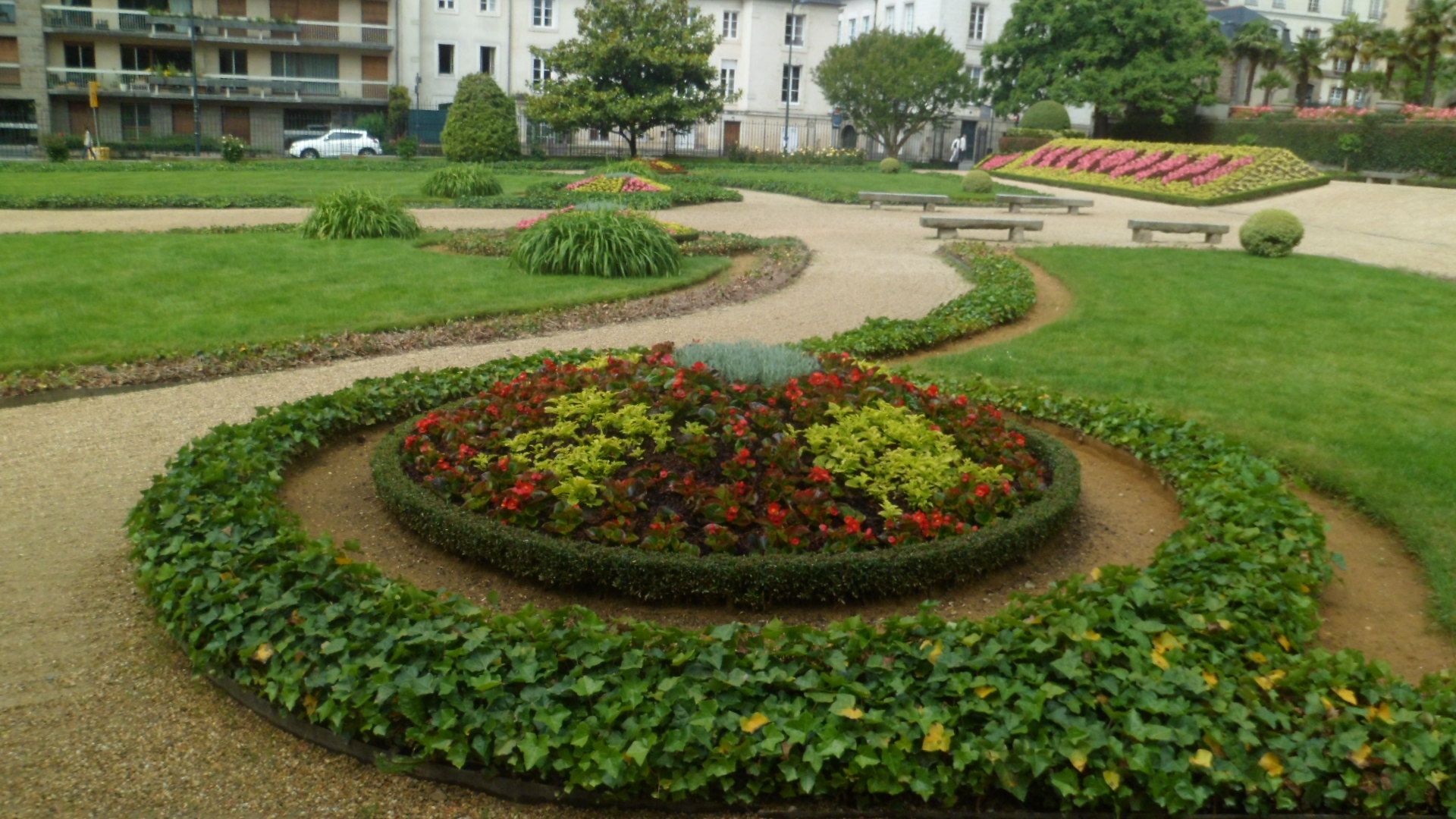
I began this day with a lovely walk past Place Motte, to Jardin et Palais St.- Georges.  The public gardens of Rennes are impeccably tended.  Jardin St.Georges  fronts the former Benedictine abbey called Palais St. Georges.  It is one of Rennes’ most popular city parks.  The Palais is now Rennes’ Fire Headquarters, yet is maintained as an historical monument.

SAM_0059
SAM_0041
SAM_0040
SAM_0048

My one regret was not getting back to Cathedrale Saint-Pierre, but it was time to board the train to Vannes.  I packed my dormant computer, and other accompaniments, and headed across Place de la Gare.  Once I found my gate, we waited a bit while an elderly lady, who had fallen and hurt herself rather severely, was treated by EMT’s and taken by wheelchair to an ambulance.  These matters are handled well in France, and in the other countries I visited as well.

Our route took us through Dol-de-Bretagne,

SAM_0063

and Redon, a crossroads which has the same Latin root to its name as Rennes.

SAM_0064

We arrived in Vannes, on a body of water whose Breton name is straight out of Tolkien: Morbihan. The Gulf of Morbihan sweeps the southwest corner of Brittany, and laps at some true gems- Quiberon, Belle Isle, and Carnac, of which I will say much in the next day or so. Vannes, however, is a gem in itself, and required every bit of the time which I allotted it. The scene below is just west of the train station.

,SAM_0067

My hotel, Hotel de France, is not far from there, on Avenue Victor Hugo. I will recommend this establishment, without hesitation. The Business Center was at my disposal, day and night, and the manager, who lived on the premises, was supremely helpful, as were his wife and the assistant manager. Then again, all Vannes seemed to be bending over backwards for the visitor.

SAM_0071

I took enough photos to fill several Flickr books, but will confine myself to a dozen of the highlights of the inland areas of this amazing city. In the next post, I will focus on the waterfront. Here is Avenue Victor Hugo, headed towards Centre de Ville (City Center).

SAM_0072

The Bell Tower features prominently in all major European cities.SAM_0077

Here’s a bit of colour, for a pleasant morning.SAM_0078

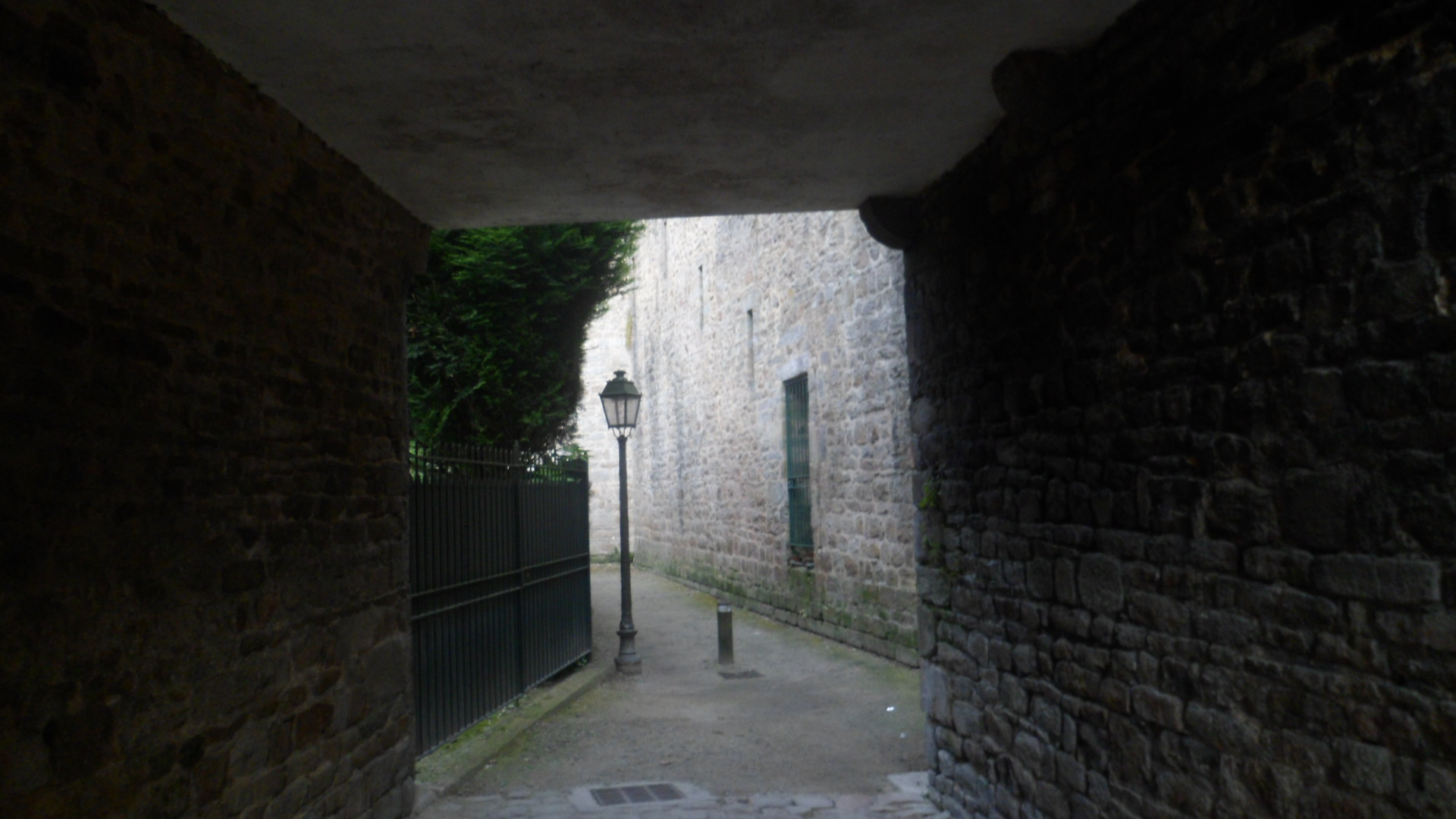
One enters Centre de Ville through La Porte de Prison, which was exactly what it implies, in the days of the Duke of Brittany.

SAM_0080

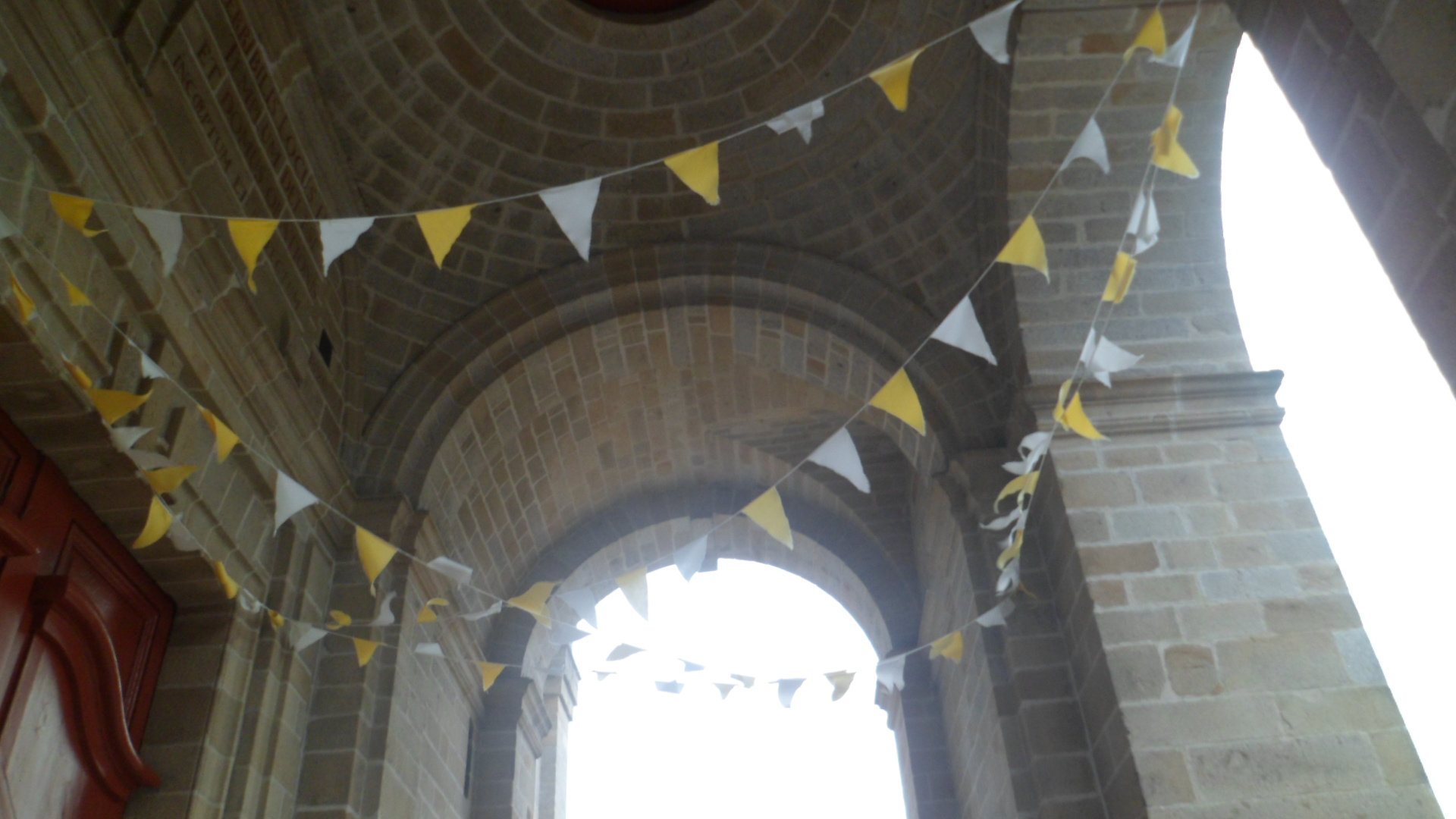
Today, however, it was quite festive, as there were celebrations of D-Day, still being marked.

SAM_0081

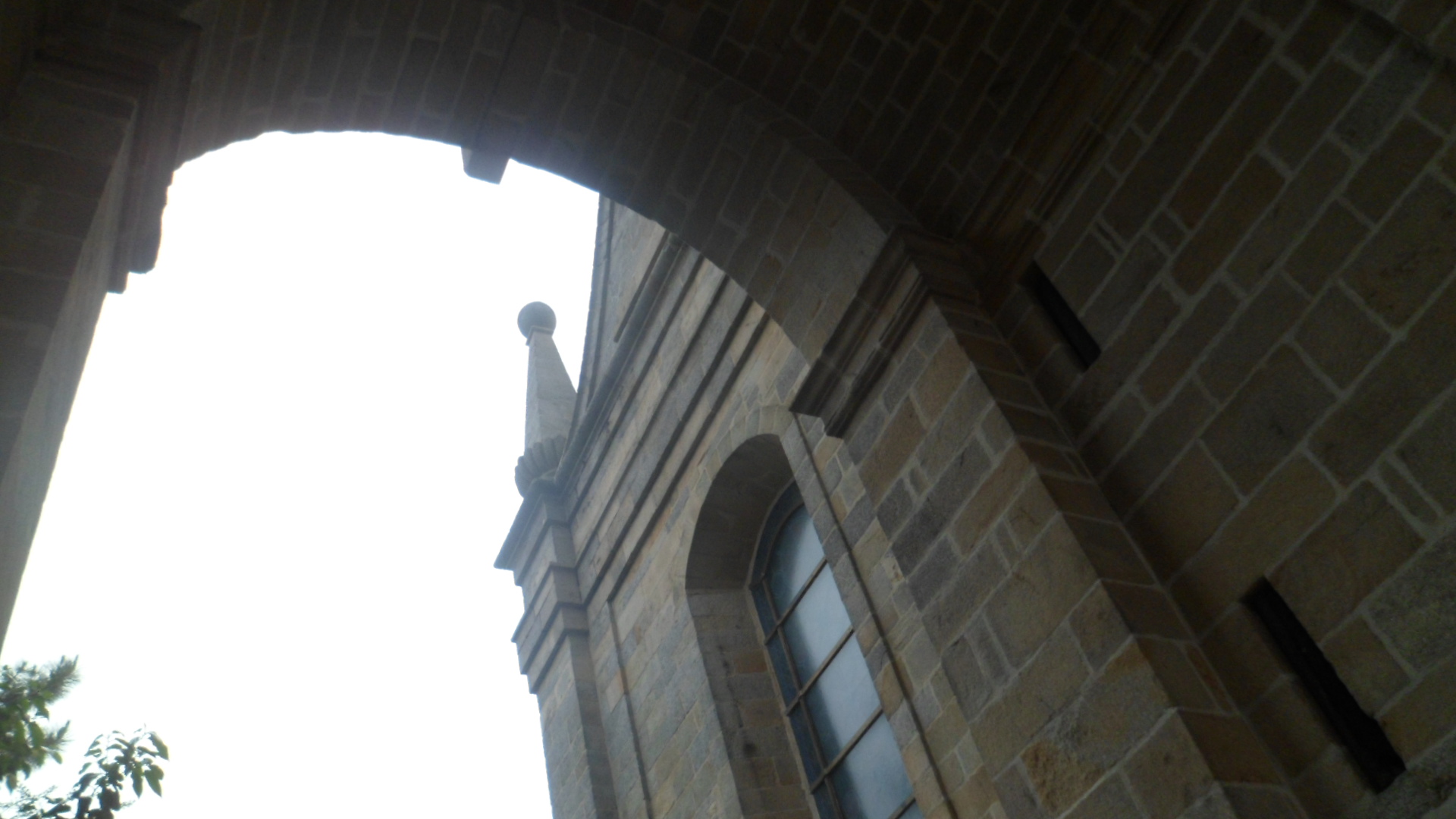
I walked around Cathedrale St. Pierre, closed for renovation.

SAM_0094
SAM_0101
SAM_0112
SAM_0107

Here is St. Emilion, the patron saint of vintners, and of Vannes.

SAM_0120

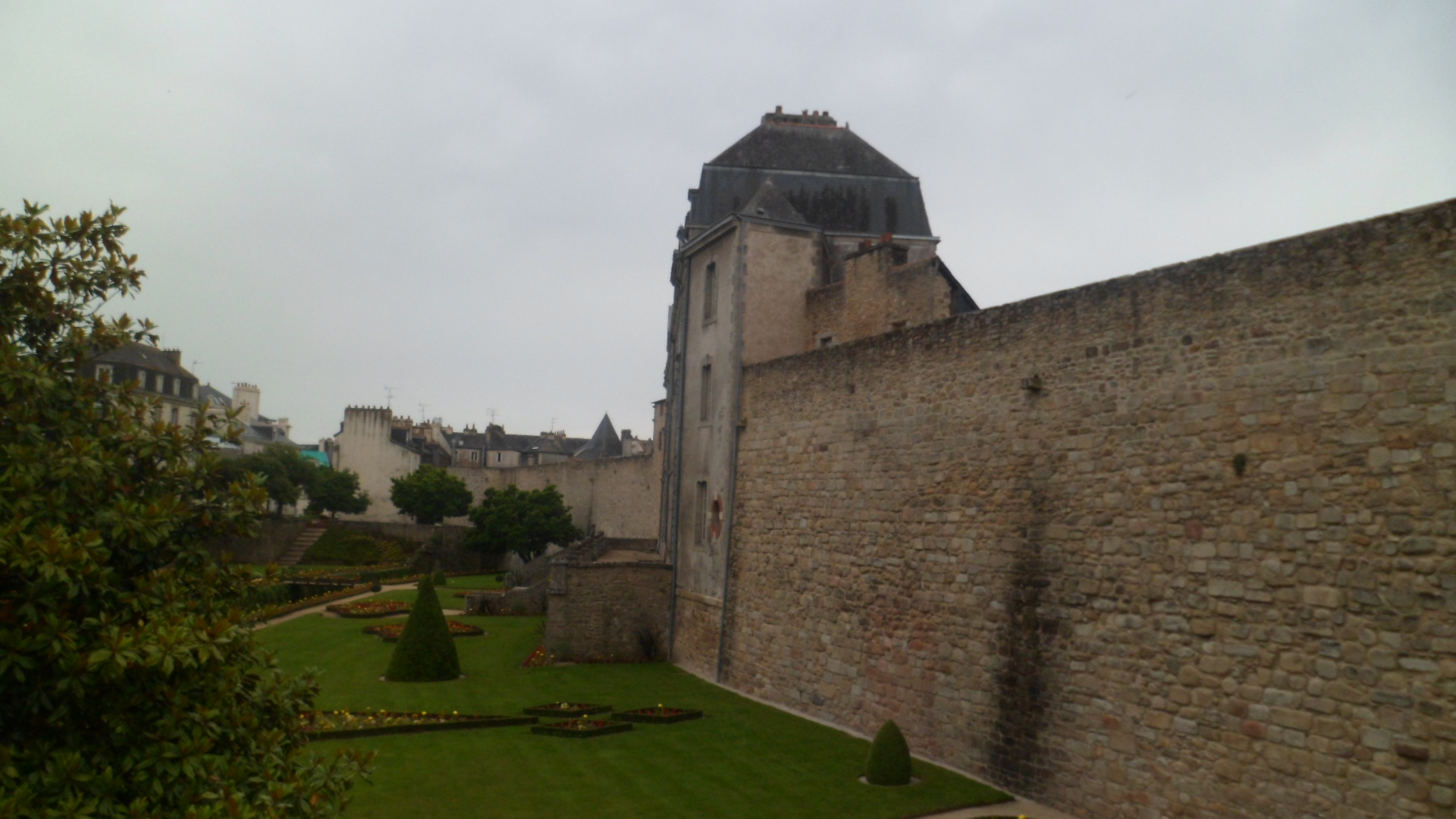
The ramparts of medieval Vannes were more than glad to accommodate, and captivate. These walls were a major defense for the town, from the Third Century AD, onward. Pirates, Vikings and various raiders from Spain and elsewhere were ever a concern, along this strategic southern coast of Bretagne. The ramparts are extensive and still formidable.

SAM_0121
SAM_0123

SAM_0125

Looking down at a garden exhibition, I half-expected the Red Queen to come out shouting, “Off with his head!”

SAM_0124
SAM_0127

There were more ramparts, a long viaduct, and hints of just how formidable this tough old port really was.

SAM_0129
SAM_0132
SAM_0133
SAM_0137
SAM_0140
SAM_0142
SAM_0144

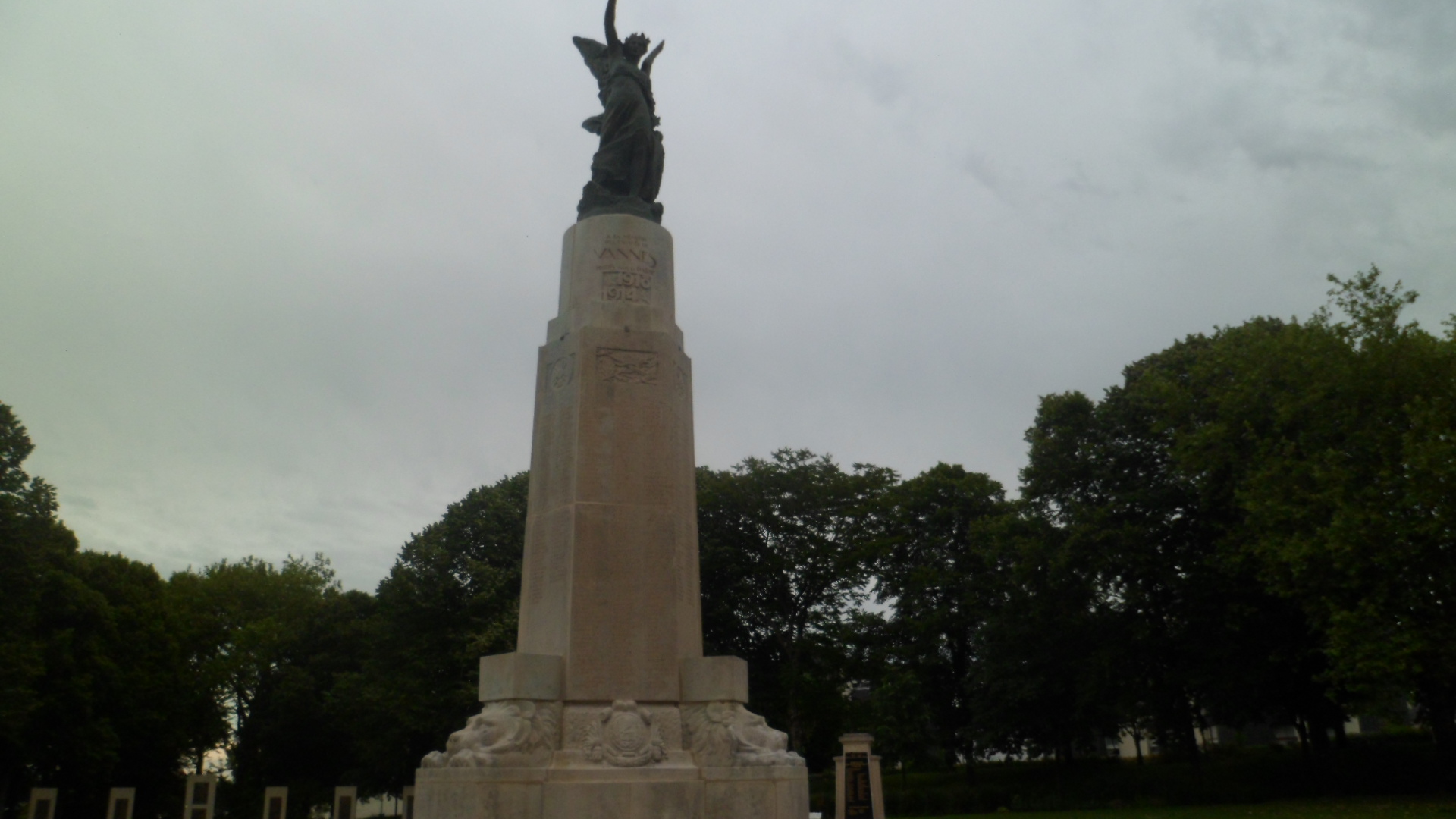
I walked past the moat, and up another hill, to Vannes’ memorial to the heroes of World Wars I and II.

SAM_0148
SAM_0150

On a bright day, in 1944, Vannes, too, was liberated from Nazi rule.

SAM_0152

I was close to the shore, but that was a matter for the morrow, and so is the next post.