The Hana Chronicles: Month 8, Day 14

0

September 4, 2026- Hana listened, with rapt attention, as a home foundation specialist was explaining his observations to her mother and me. How much she retains from this sort of discourse is anyone’s guess. but it would seem to bode well for when she sits in a classroom and expected to pay attention.

My granddaughter has a very strong sense of place and is finding her way into participating in various situations. There is a canister, in which Yunhee stores yellow beans. Hana used it as a hand drum, this evening after dinner. I played a drum given me by a friend in Arizona, about eight years ago. She stopped her own drumming and started to dance a little bit.

Between her increasing vocalizations and keen awareness, I sense this Autumn is going to find a very active little girl keeping everyone busy.

HANA’S NOTE- I like drums and I am sure Papa will let me play his drum, as long as I don’t try to chew the stick.

YEAR IN REMEMBRANCE-2018 When one reaches a certain level, in personal growth, the Universe is there to put that growth to the test. This was a year for me to be tested

The first several months were quiet and peaceful enough. The Spring semester went well in the Autism Program and I made a visit to southern California, focused on Orange County alone-as Aram had been transferred to Busan, South Korea and was thus back to his roots. In June, I headed off on another lengthy cross-continental journey. Carson City was my first stop, for a three-day visit with one of my soul families. Then came places like Pioche, NV; Salida, UT; Limon, CO. Sedalia, MO; Carthsge. Il and my customary stops in Wilmette and Mishawaka.

I felt comfortable about driving in Canada, and so explored a bit of London, ON and Toronto, before stopping in Montreal for a weekend. As it happened, it was Formula 1 Racing Weekend, and the town was a madhouse. I still found a hostel in which to spend Friday night and Sunday night. Saturday would be at an Air BNB, I took in a great deal of Montreal on Saturday, and when it came time for an afternoon walkabout near McGill University, I parked Elantra on a quiet stretch of road, west of the University. 40 minutes later, I returned. My belongings, a suit to be worn at a family wedding and an anniversary gift were all in the back seat. That turned out to be a dumb arrangement. The back left window of the car had been smashed and my laptop, with my passport, was gone. Everything else was left. Once the insurance company had been called and the police had come along and processed the scene, I took Elantra to a parking garage, taped a plastic bag over the window frame and went with my bag to the Air Bnb. I was the only guest, amazingly, so the owner said I could take turns sleeping in each of the the three bedrooms. I found one to be more than sufficient. After a Sunday of exploring more of downtown, I was treated like royalty at the same hostel where I had spent Friday night. On Monday morning, I reported my lost passport to the U.S. Consulate, which alerted the border station in Champlain, NY, that I was cleared to re-enter the U.S. After getting my window replaced, I bid farewell to Montreal and drove to Plattsburgh, NY-my maternal grandmother’s hometown. Grama watched over me the rest of the way. I took in Ausable Chasm, historic sites in Scranton, and Valley Forge, over the next few days, followed by an evening visit to Oley.

Next came Philadelphia, and the wedding of my youngest niece. Aram and Yunhee, seriously dating, flew all the way from Korea for the wedding. It was an exquisite affair, and my family wholeheartedly welcomed Yunhee. The next day was Father’s Day. We all enjoyed the post-wedding brunch at the hotel where the wedding party was staying. Then the three of us bid farewell to the family and went off to explore more of Philadelphia. After an early dinner, I bid bon voyage to Aram and Yunhee, who had to head clear back to Korea on Monday morning. My destination for the evening was Baltimore. I spent the day there, including a visit to Fort McHenry-one of the places we didn’t get to visit on our journey in 2007.

The road then took me southward, with a three-day visit to eastern Virginia’s historic sites- Williamsburg, Jamestown and Yorktown. A short visit with a dear Xanga friend, in Virginia Beach, preceded the historical jaunt. I made what would be my last visit with my mother-in-law, in Spring Hill, FL, afterward, and bought a new laptop there, thus not having to depend on my phone for all communication. Driving back across the South, I visited another Xanga friend in Crossville, TN, then drove westward, taking in the Civil Rights Museum, in Memphis, as well as Beale Street. Three days later, I was back in Prescott.

Passing the test of losing a couple of important possessions was not all that hard. In the Fall, a well-meaning friend thought I needed female companionship. I had a good lady friend in Prescott, already, but he had “a better idea”. The person with whom he connected me was unsettled, had been abused in childhood and was quietly seething-looking for a target. She saw fit to question my very worth as a human being, essentially. After two weeks of turbulence, we agreed it was not a good idea for either of us, to continue our friendship.

2018 ended with my self-concept and equilibrium in balance. The Red Cross was calling on me more often, I was involved in Slow Food Prescott and was becoming a regular volunteer at Prescott Farmers Market. I was almost out of harm’s way.

Sacred/Profane

2

January 13, 2021-

The scene at the United States Capitol building today was, in terms of non-legislative presence, the opposite of what it was a week ago. Law enforcement, backed by a formidable National Guard presence, ensured that no one would interfere with the proceedings in the House of Representatives chamber. Capitol Police officers who may have shown questionable loyalty, last week, were nowhere in sight; their more resolute comrades held the front line- against adversaries who simply did not return.

I have read, and heard, several references to the Capitol as a sacred place, and as a repository of democratic values and practices, in many ways it is that. It is also a place where the most profane of deals have been struck. It was those unseemly affairs, done mostly in secret, which sparked a few (though not many) of the violent acts committed in the Capitol’s halls and chambers, on January 6.

Two wrongs, or a thousand, do not make a right. I approach grand public buildings and monuments, however, with respect, with reverence-even if there have been occasions when those in the buildings have committed acts worthy of reproach. Indeed, even when the initial premise behind the building’s construction has been questionable, I honour the larger context of its relevance to humanity. I am thinking here of The Alamo, the Spanish Missions, Yuma Territorial Prison and Forts McHenry & Sumter. Our grand Federal buildings and monuments, in the nation’s capital, were built largely with the labour of the enslaved. All, however, have elements of the sacred, which energy has served as a protection in the worst of times.

There is no human institution, no human being, who can reasonably claim to have never committed a profane act. Thus, it falls to each of us to find, and encourage, the angels of each other’s better nature-while bearing in mind the fallability that has shown its face, every so often.

The 2018 Road, Day 24:Baltimore, Part 2- Proof Through The Night, and the Years

6

June 18, 2018, Baltimore-

Fort McHenry, in Baltimore’s outer Harbor, was one of the places, on our 2007 Virtual Field Trip organizing itinerary, that had to be left off, owing to changes that had to be made in our schedule and due to the rickety old wheelchair needing repair-which was done in New Jersey.

I had a day with which to play here, so even with the aborted visit to Poe House, I stuck with the plan to spend 2-3 hours at Fort McHenry and have lunch at an Inner Harbor eatery.

The Fort is off by itself, at the mouth of the Northwest Branch of the Patapsco River.

SAMSUNG CAMERA PICTURES

My first forty five minutes were spent listening to a docent explain, in detail, the life and contradictions of Francis Scott Key, a slaveowner who taught his charges to read and write;  an opponent of the War of 1812, who was nonetheless moved to commemorate the Battle of Baltimore in the verses which became our National Anthem;  a patriot, who ended up sitting out the battle, on a British sloop, after successfully negotiating the release of an American physician from British military custody.

SAMSUNG CAMERA PICTURES

In the background, during the lecture, were playing diverse versions of “The Star-Spangled Banner”, including Jim Hendrix’s 1969 rendition, from the Woodstock Festival.

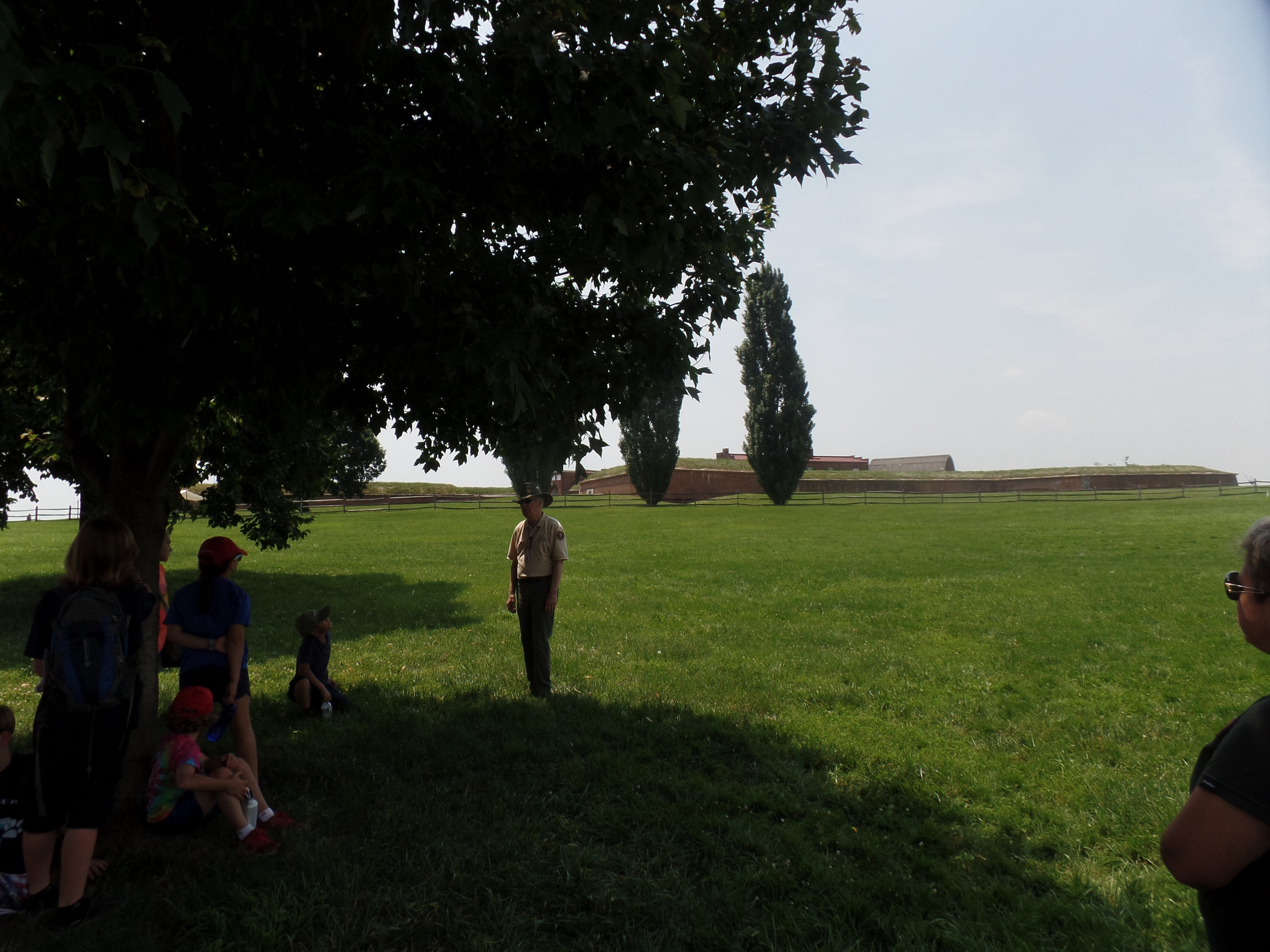
The docent then took us outside, for further stories of the fort and its various functions, while we headed to the main ramparts.

SAMSUNG CAMERA PICTURES

After the British successfully sacked and burned Washington, DC and raided Alexandria,  in 1814, they headed towards Baltimore.   Meeting them were these cannons of Fort McHenry and a combined artillery battery at Forts Babcock, Covington and Look-Out, across outer Harbor.  The combined fusillade, witnessed by Key, aboard the sloop, both convinced the British to abandon hope of capturing the “crown jewel” of wealthy, bustling Baltimore and Key to write his stirring verse. It is often overlooked, though, that the song became our National Anthem in 1931.

SAMSUNG CAMERA PICTURES

Below, we see the breastworks, in which ammunition was stored, whilst providing cover for the American forces.

SAMSUNG CAMERA PICTURES

A lone cannon is seen, facing the Patapsco, atop the eastern earthworks.

SAMSUNG CAMERA PICTURES

Here is the  entry to an ammunition depot, showing clearly how vital it was for the earthworks to be properly constructed.

SAMSUNG CAMERA PICTURES

A series of barracks housed American soldiers and Marines, during the War of 1812.  These same buildings housed Confederate prisoners of war, between 1862-65.SAMSUNG CAMERA PICTURES

This dining room and office was used by Major General Samuel Smith, the post commander.

SAMSUNG CAMERA PICTURES

Here is a view of ammunition, stored  in an above-ground safe room.

SAMSUNG CAMERA PICTURES

This artillery park was well-guarded by four breastworks.

SAMSUNG CAMERA PICTURES

The Army Band was an essential morale-booster for troops preparing for battle. The Band’s quarters were on the west end of the barracks.

SAMSUNG CAMERA PICTURES

These shelters were built to safeguard the troops, following the shelling of 1814, but were never needed again, after the British were repulsed.

SAMSUNG CAMERA PICTURES

SAMSUNG CAMERA PICTURES

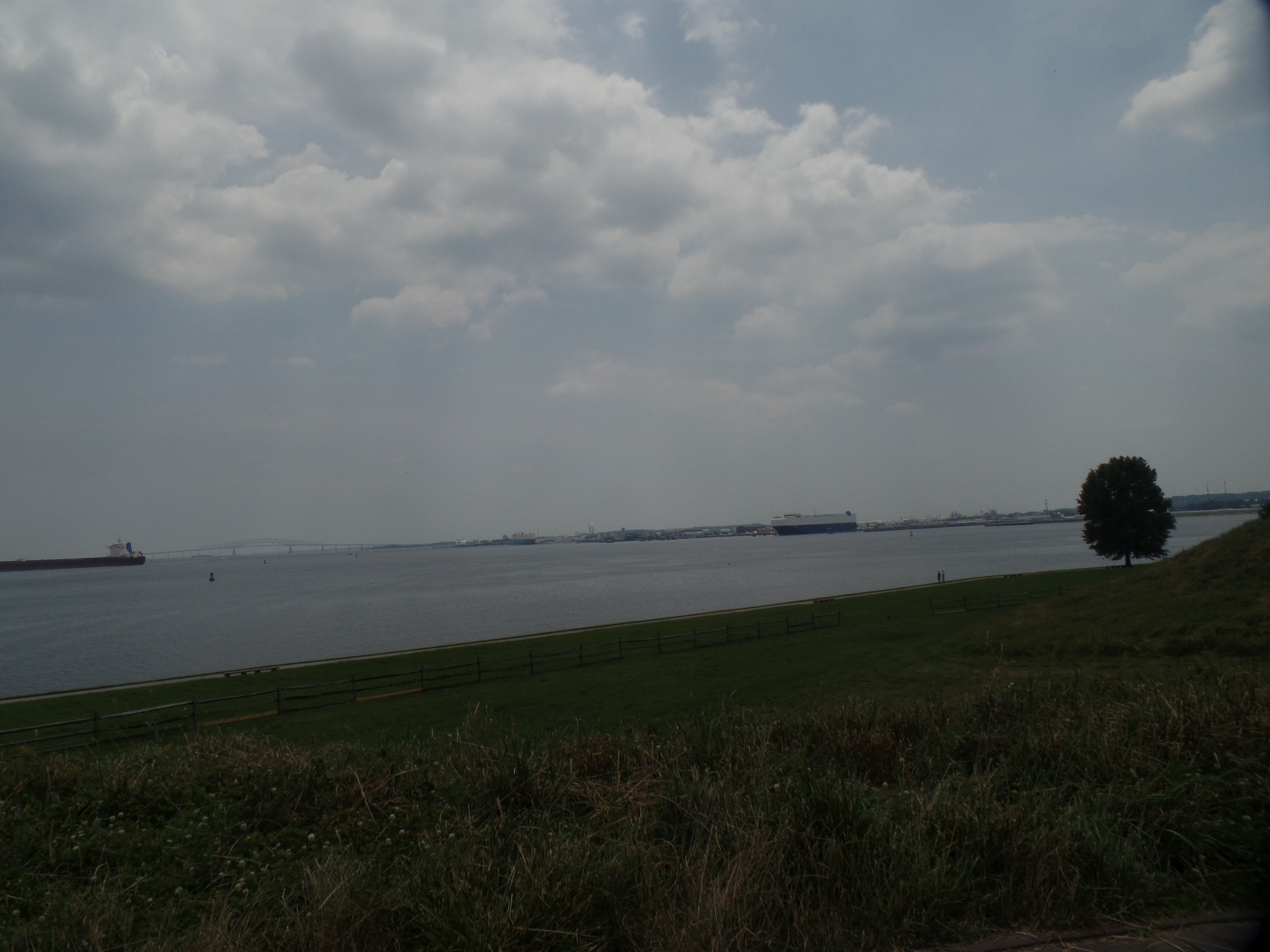
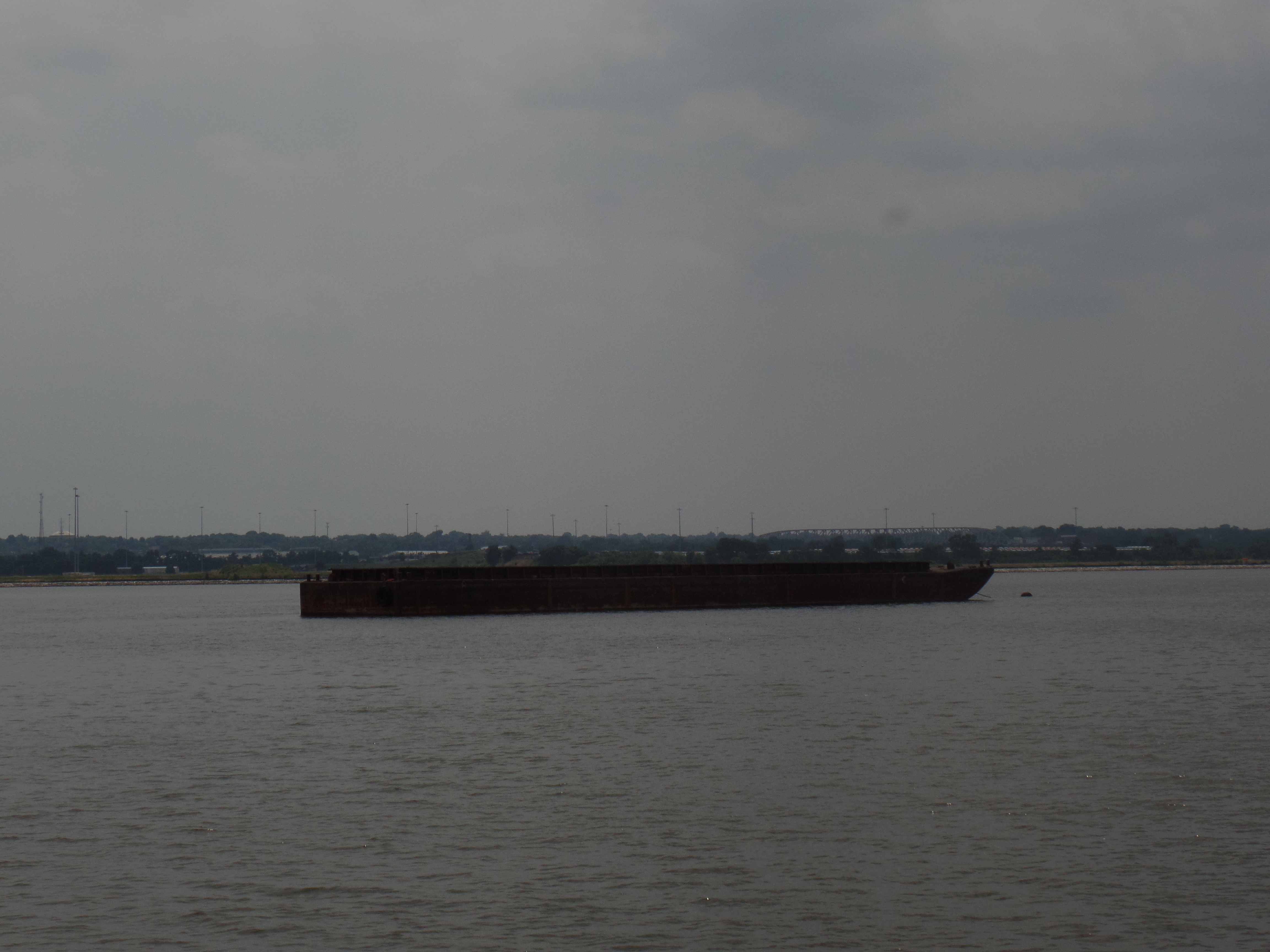
In this stretch of the Patapsco, Sailing Master Beverly Diggs, USN, had several merchant ships scuttled and sunk, to deter any British ships from closely approaching the Inner Harbor.  The action had its desired effect.

SAMSUNG CAMERA PICTURES

SAMSUNG CAMERA PICTURES

The southwestern corner of the park features this large ammunition magazine, not open to the public.

SAMSUNG CAMERA PICTURES

In 1922, Charles Niehaus, sculptor, completed a statue of Orpheus, the Greek musician of legend, in honour of Francis Scott Key.  It stands, between the Magazine and the Visitors Center.

SAMSUNG CAMERA PICTURES

Thus is the story of one of America’s unfortunate, but perhaps necessary, conflicts very well told, at one of its two most resonant battle sites.

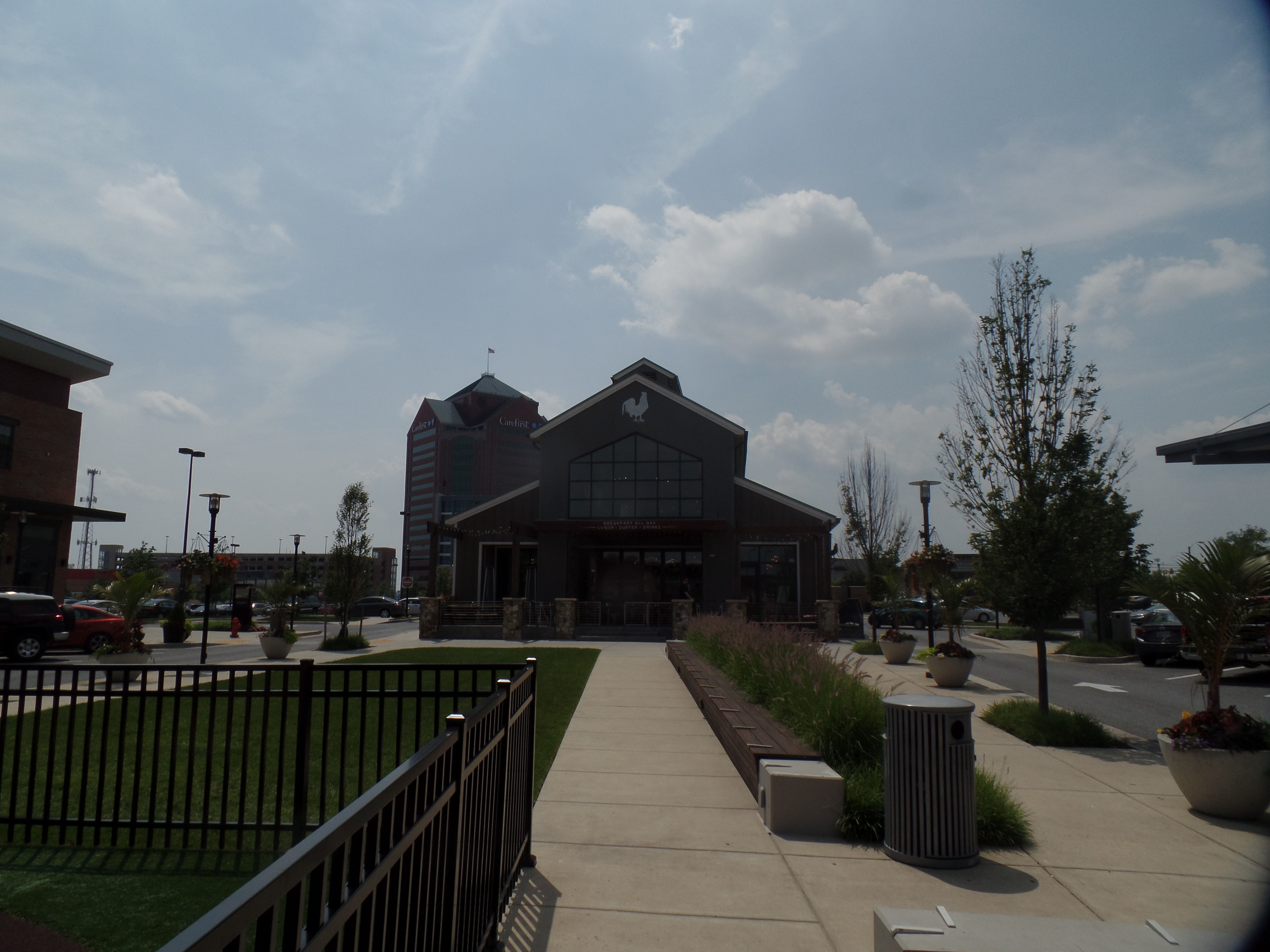
I ended my Baltimore experience, this time, at Iron Rooster, near outer Harbor, in the Canton neighbourhood.

SAMSUNG CAMERA PICTURES

Of course, Inner Harbor and Federal Hill are for another time.  Baltimore ever beckons, and the hostel is always a welcoming haven.

NEXT:  Southwest Maryland and Jamestown