Charleston’s Many Colours

4

June 29, 2019, Charleston (SC)-

One of the most attractive features of any town or city is the way in which it displays colour-either in street art, botanic arrays, festivals or architecture.   The cultural center of South Carolina has all four.

I came here specifically to visit Fort Sumter, about which more in the next post.  What would keep me coming back are two things:  The warm reception at the north side’s Not So Hostel and the riot of colour, just about everywhere.

Not So Hostel keeps its promise.  Despite one passive-aggressive guest, the place was a serene compound and a fine place to climb to a top bunk and rest the night.

SAMSUNG CAMERA PICTURES

Driving in Charleston can be a bit dicey.   Maybe it’s the heat, or maybe the narrow streets, but Charleston’s motorists can be as nasty to one another as any in a much larger city.  That is one reason I enjoyed my two walks in the area.  First came North Charleston’s Riverfront  Park, the former Naval Base, on the banks of the Cooper River.  The preserved mansions then served as both residences and administrative quarters.

SAMSUNG CAMERA PICTURES

SAMSUNG CAMERA PICTURES

Artifacts of the Base’s active days are interposed with the flora, which Theodore Roosevelt had reportedly wanted removed, so as to keep the place in fighting trim.  The proper ladies of North Charleston had other ideas.

SAMSUNG CAMERA PICTURES

The poignancy of farewells and returns is equally captured, in this sculpture of a Navy family.

SAMSUNG CAMERA PICTURES

There are a few fountains, like this one, interspersed throughout the Charleston area, for people to cool themselves.  Those in downtown Charleston had many children doing so.

SAMSUNG CAMERA PICTURES

The Cooper River presented itself as a focal point for a morning’s contemplation.

SAMSUNG CAMERA PICTURES

The gardens have gradually been restored, thanks to North Charleston’s horticultural societies.

SAMSUNG CAMERA PICTURES

I headed downtown, after the Fort Sumter excursion, with the goal of walking to The Battery and back up King Street.  Downtown was suitably packed, on this Saturday afternoon.  I found quite a few people were interested in seeing St. Philip’s Church, but it was closed.

SAMSUNG CAMERA PICTURES

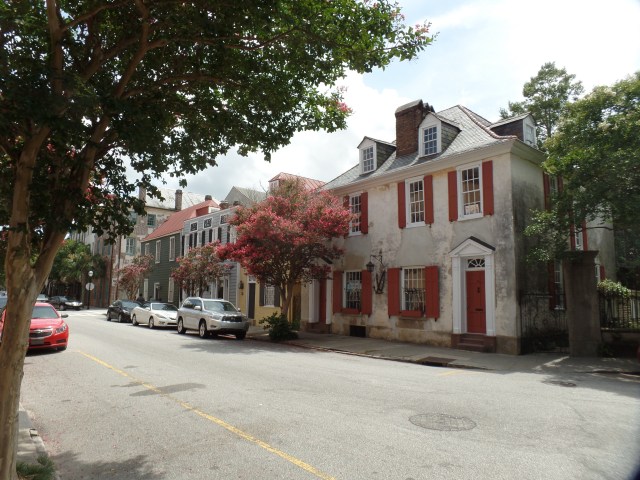
This is about as close as I got to Rainbow Row.
SAMSUNG CAMERA PICTURES

SAMSUNG CAMERA PICTURES

Along the Battery, houses were meant to provide for the many.

SAMSUNG CAMERA PICTURES

These days, the many take comfort by walking along Charleston Harbor.

SAMSUNG CAMERA PICTURES

The Battery’s gazebo was a haven for one family, in the heat, for nearly twenty minutes. I took this photo, once they moved on to a fountain.

SAMSUNG CAMERA PICTURES

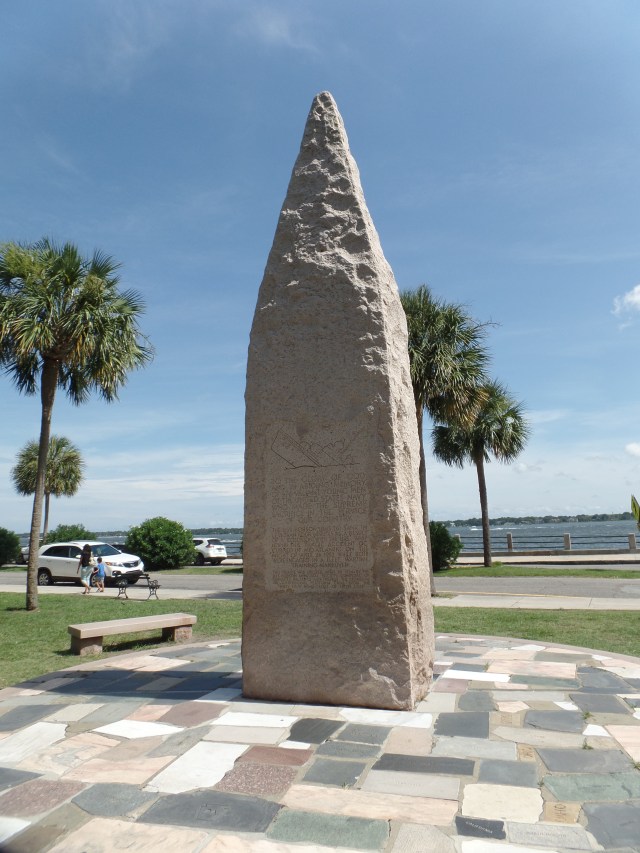
This obelisk is one of several monuments to veterans of the nation’s conflicts.  Confederate monuments are among them.
SAMSUNG CAMERA PICTURES

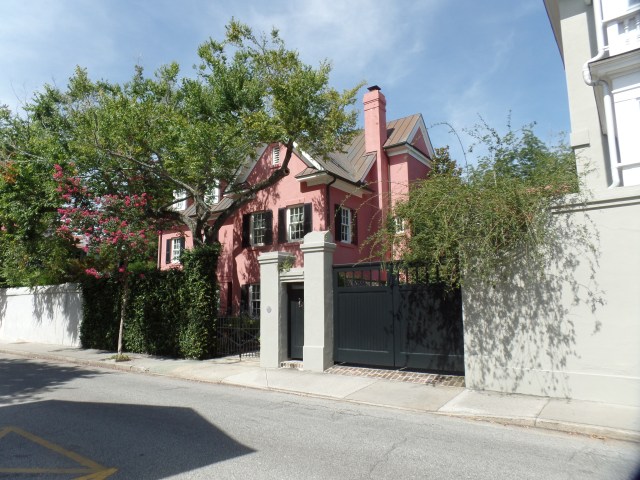
Rainbow Row is emulated, here and there, along King Street.
SAMSUNG CAMERA PICTURES

SAMSUNG CAMERA PICTURES

SAMSUNG CAMERA PICTURES My last view of downtown Charleston was of Circular Congregational Church, which was founded in 1681 and is still in use.

SAMSUNG CAMERA PICTURES

NEXT:  Fort Sumter


The School of Hope

4

June 28, 2019, St. Helena Island, SC-

I am of the opinion that there should be no child left behind-and I don’t mean to throw us back to the Federal educational initiative by that name, which only met the need in a limited fashion.

Truly meeting a child’s needs is something that no “one size fits all” program can possibly address. The basis for any effort to improve a person’s well-being is love for that person, as an extension of one’s love for humanity.

Penn Center, in the heart of this Sea Island near Beaufort, is a shining example of the true meaning of “No Child left Behind”.  Its genesis was the implementing of the Emancipation Proclamation. One thing that was ever in Abraham Lincoln’s mind, when he contemplated freeing the slaves in the Confederate States, was the immediate unleashing on Southern society of millions of illiterate people, the majority of whom were also not trained in any skilled trade.  “Forty acres and a mule”, the mantra of freed enslaved minister Garrison Frazier, turned into a scattershot attempt to relieve that society of its immediate burden, once it became actual Federal policy.  Lincoln himself, hamstrung by his own conviction that any given White man was inherently superior to any given person of another “race”, had no coherent plan to alleviate the situation.

So, it fell to Rev. Frazier and a council of educated Black men, in the Lowlands from Savannah to Charleston, to devise and implement a plan to establish a school for the children of the Sea Islands region. Penn School, established, as its name implies, with the support of the Society of Friends, became just such a school. It was initially established in 1862, even before the Emancipation Proclamation was issued.  Truth be known, word had reached the Black community in Savannah that many slaveholders in Virginia, Louisiana and Georgia were teaching their male slaves how to read and write.  Many others had been taught, surreptitiously, by the wives and children of their masters. The former estate of a freed slave, Harvey Gantt, became the site of an expanded school, in 1864. By 1865, Quaker abolitionists in Philadelphia began supporting the school, and it was named Penn School.  In 1901, Hampton Institute, a Black college in Virginia, began sponsoring the school, which was cut off from public funding by Beaufort County’s segregationist leadership. Even with this assistance, though, the school continued to struggle.  In 1948, Penn School closed and Penn Center, a community development and cultural preservation institution, emerged on the property.

Today, Penn Center is a haven for the study and preservation of Gullah language and culture and for the promotion of Civil Rights.  Its York W. Bailey Museum has a wealth of African art and Gullah artifacts.  The Center promotes the Reconstruction Era National Historic Park, of which it is the epicenter, and the Gullah Geechee Cultural Heritage Corridor, from Florida to North Carolina.  It maintains active relationships with people in West and Central Africa, with the President of Sierra Leone visiting the Center, in 1988.

Here are some scenes of Penn Center’s grounds.  No photography is permitted in the Bailey Museum itself.

SAMSUNG CAMERA PICTURES

SAMSUNG CAMERA PICTURES

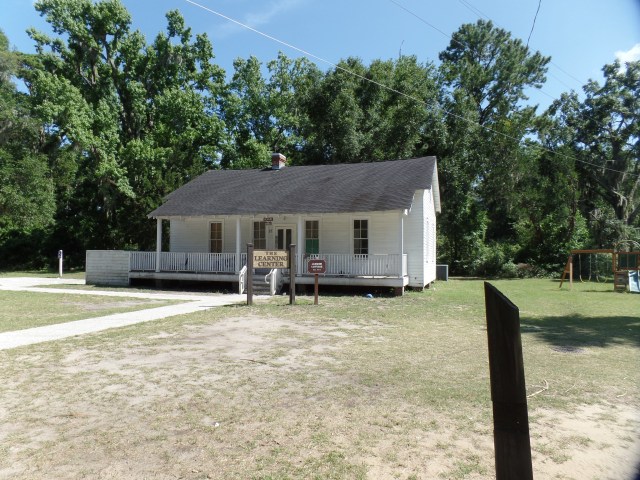
The Gantt House  (Pine House) today serves as one of the learning sites for Penn Center.

SAMSUNG CAMERA PICTURES

These storage cisterns were once the school’s main source of fresh water.

SAMSUNG CAMERA PICTURES

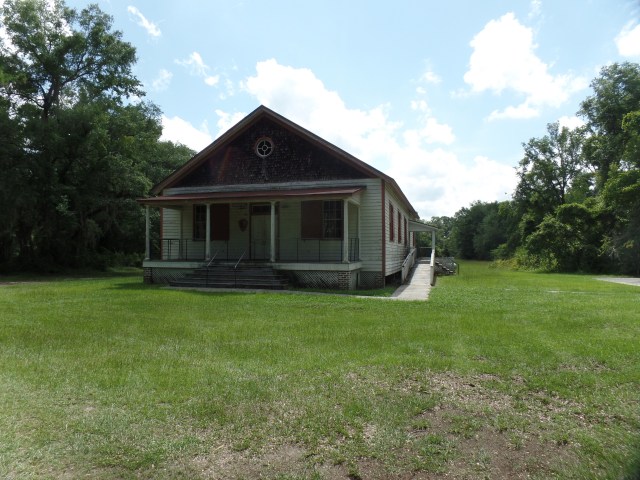
This is Darrah Hall, Penn Center’s oldest building, built in 1903.  It is used for large events.

SAMSUNG CAMERA PICTURES

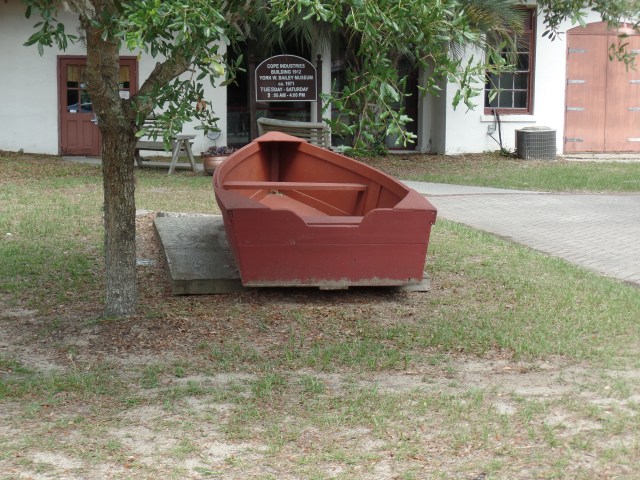
The flat bottom boat is a staple of Low Country transportation.  This one was built and used by freed slaves.

SAMSUNG CAMERA PICTURES

This is the Center’s Administration Building.

SAMSUNG CAMERA PICTURES

Here is one of the first classroom buildings of Penn School, circa 1905.

SAMSUNG CAMERA PICTURES

This complex was a beehive of activity, during my visit.  Vibrant teens were calling out friendly greetings to me, while their teachers were trying to get them focused on the activity of the afternoon.

SAMSUNG CAMERA PICTURES

As in any community, a small cemetery has sprung up at Penn Center.

SAMSUNG CAMERA PICTURES

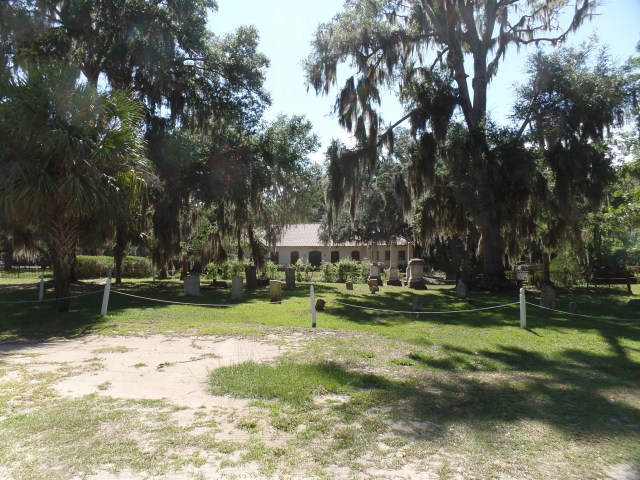
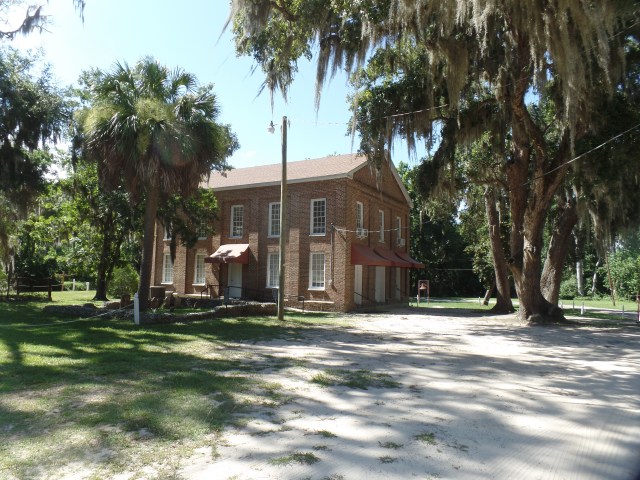
I end with two shots of Brick Church, the original site of the school, and which predates Penn Center.

SAMSUNG CAMERA PICTURES

SAMSUNG CAMERA PICTURES

There is much to learn, as yet, about Gullah Geechee culture, so I know this is far from my last visit to the Low Country.  Penn Center, though, gave me an excellent introduction.

NEXT:  The Wonder That Is Charleston


The World In Harbour Town

2

June 27-28, 2019, Hilton Head Island-

I made it to Hilton Head Island, if only for a night and the better part of  a day.  Today was a very full day on the road, with a lunch stop at New Moon Cafe, in far-off Aiken.  I will go somewhat out of my way to visit New Moon, because it’s all about the ambiance. Today did not disappoint.

After a lengthy ramble through the Low Country, I spent an hour or so in Beaufort-first looking for the Gullah Geechee Cultural Center, only to find it had moved and was closed by the time I got to the new location.  The town’s renewed prosperity is reflected in its Henry C. Chambers Waterfront Park, named for the former mayor, whose passion was revitalizing the dockside area of this port city.  Time was, when “America First” advocates would point to Beaufort as a place where people fighting poverty and famine should “turn, first”, during the Africa Famine Relief campaigns of the late 1960’s.  That is not the case today.  Beaufort is coming back.

SAMSUNG CAMERA PICTURES

SAMSUNG CAMERA PICTURES

SAMSUNG CAMERA PICTURES

SAMSUNG CAMERA PICTURES

The sense of idyll is also found on Hilton Head Island, which I first visited with Penny and Aram, in 2007. On that particular day, torrential rain visited us, in the early morning. I opened the motel door, to find water at the level of the door stoop.  Fortunately, no alligators were present-as was the case earlier this year, with some other family members.  The property where we stayed in 2007 is now owned by Red Roof Inn.  The manager told me that drainage is still an issue for the property.  Tonight, though, the skies were clear and the ground dry.

I went over to Hilton Head Diner, where we had had pancakes for breakfast in ’07.  This time, I enjoyed dinner-a gourmet burger with waffle fries.  I sat at the counter, kibbitzing with one of the waitresses, Kim, and enjoying the tales of an island native named Mark.  His grandfather had built the causeway bridge that connects HH with the mainland.  After dinner, when I headed to my car, a local woman asked for help, in jump-starting her car. I found her battery had loose, rather poor connectivity. As Mark was a truck driver, I went back to the Diner and asked him for help.  He was able to rig a connection to her battery and we got her back on the road, in short order.

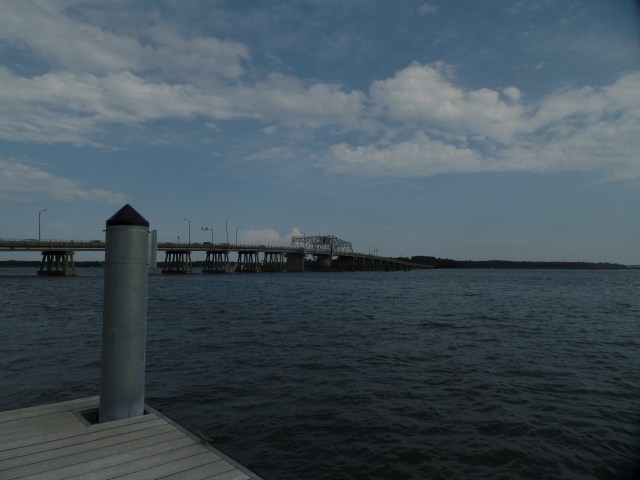
I found it necessary to pay admission to one of the staples of a Hilton Head visit:  Harbour Town, as the access is controlled by Sea Pines Resort- a golfer’s paradise.  I am not a golfer, but I like lighthouses and seaport areas and the day pass was reasonable, so in I went.  A light lunch at this relaxing patio bakery-cafe ensued.  The place was once the lighthouse keeper’s cottage.

SAMSUNG CAMERA PICTURES

Hanging moss abounds in the Low Country.

SAMSUNG CAMERA PICTURES

Here is Hilton Head Lighthouse, now a gift shop, operated by Sea Pines, which charges admission for those wanting to climb to the top.  The woman on the left and her sons in front were willing to be included in the photo, for scale.

sam_2112.jpg

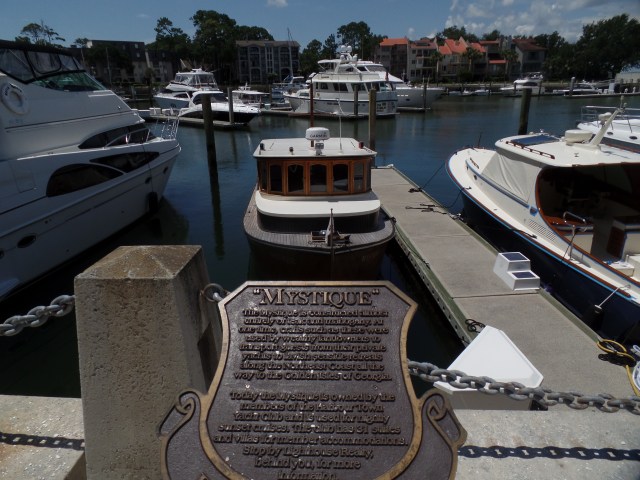
After walking around the area for several minutes, I came upon the same family looking at this unique boat.  Mystique is constructed almost entirely of teak and mahogany.

SAMSUNG CAMERA PICTURES

Hilton Head, like other parts of the Low Country, was once the domain of Gullah Geechee culture, which used a blend of several West African languages and English, and preserved much of the traditional culture of enslaved Africans in the area.  Scant traces of the culture remain on Hilton Head, save Mitchelville, on the northwest corner of the island.  There was not much going on in Mitchelville, as I headed towards Penn Center, the first school for freed slave children, after the Civil War.  That unique institution is still offering the children of the Sea Islands a solid and complete education, blending practical skills with state-of-the-art technology and consideration of today’s issues.

As for Mitchelville, I do not take photos of people, especially in impoverished areas, without their consent.  Penn Center, on St. Helena Island, was much more amenable to a photographic record.  It is the subject of the next post.


Fair Columbia

5

June 25-26, 2019, Columbia, SC-

Fifty years ago, I found myself among thirty or so young men, some a bit more worldly than I, others as green to the ways of the world as yours truly.  We were the trainees of Echo Company, Third Battalion, First Brigade, at Fort Jackson.  There were times that I broke down in the tears of an under-challenged, immature novice to life. There were times that I tried to avoid the challenges that, deep-down, I knew I needed to overcome.  In the end, I managed to overcome my own physical challenges and the constant ridicule from the jaded First Sergeant- and earned the respect of most everyone else.  I was a better person for the time spent here.

Once here, planted for what I thought was a day, at Palmetto Inn, east of town, I got messages from faithful readers, advising as to what I might do in the town.  Among these was word of a Wednesday evening event at a coffee shop, sounding as if it were sponsored by local Baha’is. So, I took the room at Palmetto for two nights.

The day started with a passable breakfast at George’s Southside Restaurant, hearing the plaint that I am finding increasingly common, in the workplaces along the road, this summer:  “I’m alone here, hon.  Please be patient, one co-worker quit and the other overslept. ”

In planning my day here, I focused first on the South Carolina State Museum, then the area around the Capitol and, rather whimsically, thinking I might pay a visit to Fort Jackson.  This last, of course, would not be realized.  Military posts are very well-guarded, even against visits by veterans.

I had a tip from a friend who had also spent time on Fort Jackson, to visit a fine dining spot, with an unlikely name.  Before going to the museum, I followed up on this recommendation.

SAMSUNG CAMERA PICTURES

Motor Supply Bistro is a gem of a place.  I sat at the bar, for lunch, as I frequently do, when dining alone.  Bars and counters are a great place to feel at home, in an eatery, as one connects with both workers and with other solo diners.  I made several new friends here, as a result and the food is delectable.   There is valet parking here, and the attendant found himself being both ignored and blocked in, by a surly delivery truck driver, when he went to retrieve my car.  I tipped him for his trouble and faced down the ruffian, myself.  I did not get ignored and my car was off the lot, in short order.  I don’t take kindly to my contemporaries treating younger people with such contempt.

The South Carolina State Museum is worthy of at least two hours’ visit.  I focused on the Museum’s take on the Civil War, which was a bit less top-heavy on defending the Confederacy, than I had thought might be the case, before visiting, and on the various industries that took root, after the War, in both the Piedmont and Low Country regions of the state.

SAMSUNG CAMERA PICTURES

It is always a joy to see the work of students, in public museums.

Here is a map of South Carolina, prepared by children in a Columbia school.

SAMSUNG CAMERA PICTURES

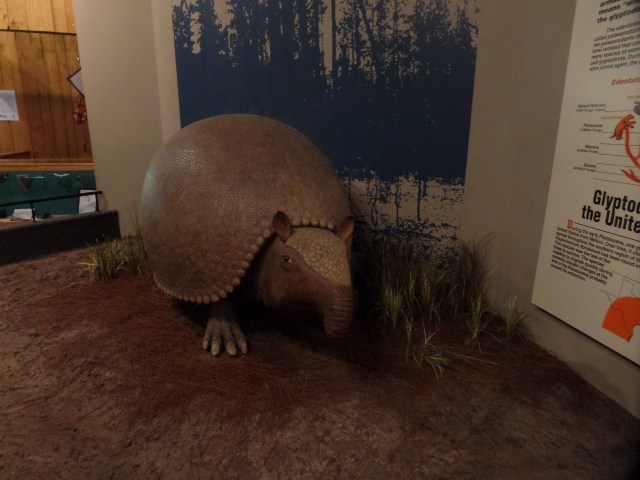
There is a fine little area that tells the story of Palmetto State paleontology.  The region had its share of dinosaurs-and of megamammals.  Here are an Albertosaurus skeleton

SAMSUNG CAMERA PICTURES

and a Glyptodont, or giant armadillo.

SAMSUNG CAMERA PICTURES

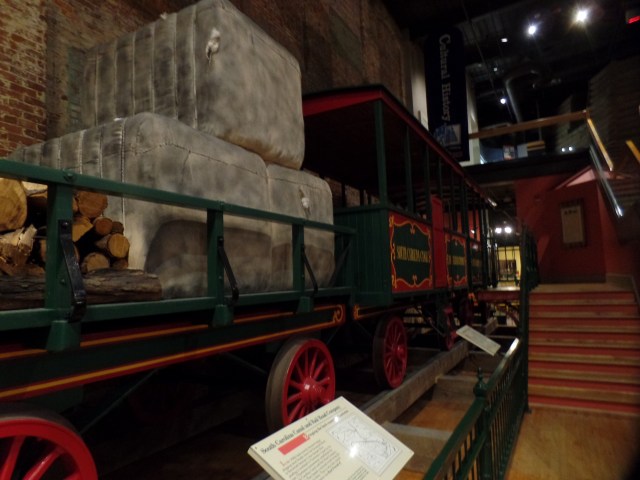
The rails were critical here, moving textiles and lumber, even before the Civil War.  This long car was called the Friend of Charleston.

SAMSUNG CAMERA PICTURES

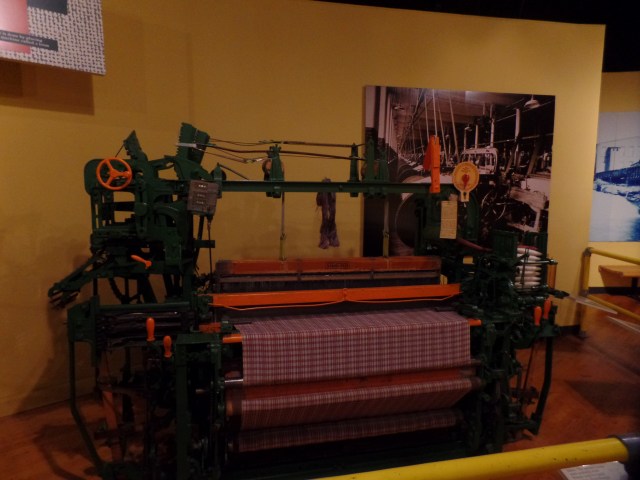
Textiles were able to be more efficiently produced, by machines such as this.

SAMSUNG CAMERA PICTURES

The processing and de-shelling of nuts, a major cash crop, was abetted by this machine.

SAMSUNG CAMERA PICTURES

Coastal hardwoods were much in demand, beginning in the mid-nineteenth century.  This device helped greatly, in hauling cut timber’

SAMSUNG CAMERA PICTURES

The Catawba people, who lived in the Columbia area, prior to European settlement, produced basketry and intriguing wood carvings, as part of their cultural legacy.

SAMSUNG CAMERA PICTURES

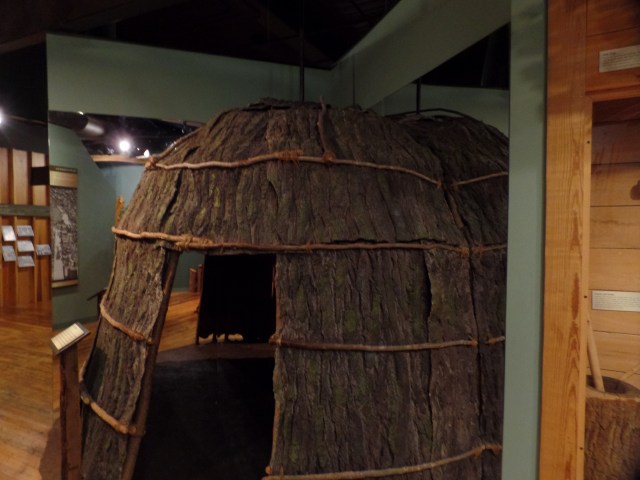
Here is a mock-up of a traditional Catawba house.

SAMSUNG CAMERA PICTURES

Finally, I ended my photo-journey around Columbia, by visiting the Capitol grounds.  There are a few statues in honour of the Confederates, but my interest there was the State Capitol as a whole.

SAMSUNG CAMERA PICTURES

The day ended with a lively poetry and visual media session at Cool Beans Coffee House.  The person who had invited me never showed, but I was made to feel welcome by the program’s hosts, so Columbia left me with a warm feeling.  Gamecocks are good people.

SAMSUNG CAMERA PICTURES


Staying Independent

5

July 4, 2019, Saugus-

I will continue (go back to) my photo blogs, in the next few posts.  Jumping ahead to the Fourth of July just seems best, though.

I had a conversation with someone very close to me, during the family gathering at a niece’s home, this afternoon.  One thing rings very loud and clear, from this discourse and from other conversations I’ve had, these past few months:  Many people are feeling put upon by aggressive individuals and groups, who take a point of view opposite that which they happen to hold.  Many individuals and groups ARE resorting to the use of force, when confronted with those taking such opposite viewpoints.

I was raised to hear other people out.  My parents, social conservatives, made a great effort to understand even the most seemingly ludicrous viewpoints.  I have maintained an open mind, as a result, throughout fifty-six years of adolescence and adulthood.  Civil Rights have long been a matter of supreme importance in my life, and that cuts both ways.  The Right cannot bully people of colour, of Faiths other than that of the majority in a community, or those living a lifestyle different from that which is conventional. The Left, likewise, cannot deprive people of more traditional bearing, of life, liberty and the pursuit of happiness.  Violent behaviour, on either side, is the stuff of fascism (even when the bully calls self “Antifa”)

I am, as it happens, an obstinate soul, when people without authority try to force me to do their bidding.  Additionally, I question those who DO exercise authority, as to the ethical basis for their actions.  That is what I get from both the Declaration of Independence and the United States Constitution.    That is what I get from my Faith.

So, to my family-my elders, siblings and cousins:  You all matter, greatly.  Your point of view has at least some validity and is worth hearing, and pondering.  Our family is large, so there are all points covered, on the political spectrum. I will not plug my ears to any of it, so long as you do not ascribe to a coda of violence or or a policy of defamation against your opposite numbers.

To my children, nieces/nephews, and “grands”- You are, one and all, a great hope; you are people of immense promise and, especially if you are feeling vulnerable,  are worthy of all the support and love that we, your elders, can muster.  We cannot spare you from life’s ups and downs, but we can point towards the light. This is the very least we can do, in building and safeguarding your own sense of well-being and independence.

Most of the problems we face, when it comes to intolerance and reactive violence, seem to stem from the violent ones acting out of insecurity.  In truth, though, i have to ask, “How does a person expressing an alternative point of view, in and of itself, constitute a threat to my well-being?”  It may be annoying, but it is not a threat-unless accompanied by force-which then makes it an entirely different matter.

Staying independent means, to me, that one takes the time to carefully examine issues and evaluating a variety of points of view.  It also means extending that right to independence to every one else.  These are my thoughts as the Sun goes down on another July 4.

The Home Base That Wasn’t

2

June 25, 2019, Tryon, NC-

In the gloom of Spring, 2011, I was casting about in my mind, as to where I might plant myself.  At the time, I had one immediate goal:  To make my way to New Hampshire and attend the wedding of my sister’s youngest daughter- for whose happiness Penny and I had prayed for several years.  Other parts of life were in a state of suspension.  Though I worked the rest of the academic year, following Penny’s funeral and Aram’s life was slowly coming together, with the Navy on the horizon, I had ME to get settled.

Several locations presented themselves:  I could have relocated somewhere else in the metro Phoenix area, or somewhere else where I had family nearby.  Then, there were places with no family in the area.  One such place, to which I’d never been and of which I knew nothing, was Tryon.

I happened upon this town, whilst en route from Knoxville to Columbia.  It was dinner hour, so at long last, I left the highway and found a space for my car.  The place seemed magical.

It had been a fairly good day in Knoxville.  The East Side was hardly as intimidating as the earlier news reports had suggested.  There were troubled people in the room directly below me, but they kept their troubles to themselves and I had a good night’s rest.  A nice lunch, a workout at Planet Fitness and a car servicing at Big O all took place across town, and by early afternoon, I was back on the road.  If you’re ever in Knoxville and want a good, quick lunch, I recommend “Best Bagels in Town”- a small place, behind a Walgreen’s, just a couple of blocks north of Big O, at 120 S. Peters Road. I promised the owner I’d send a shout out, so here it is:  Best Bagels is true to its name.

SAMSUNG CAMERA PICTURES

Back to Tryon: The downtown is compact, with a well-known equestrian resort a few miles further east.  I am more of a cozy downtown type, so while resorts are nice and all, give me a small coffee shop/cafe restaurant, any day.  One such place is Huckleberry’s.

SAMSUNG CAMERA PICTURES

SAMSUNG CAMERA PICTURES

One of the recurring themes in my life is how much I want for the younger generations to realize their dreams, to succeed-often in spite of the powers that be “moving the goalposts” and recognizing when a young man or woman gets things right.

Georgia got it right, albeit being rather self-effacing and business-like. The sign that Huckleberry’s owner put on the wall says it best:

SAMSUNG CAMERA PICTURES

Georgia did keep busy, though, greeting, seating and doing half the serving.  I’ll say it again and again:  We Boomers are in good hands,  as we hand off the baton.

Tryon has a thing for bears-and for its claim to fame:  Horses.  The first sight that greeted me, as I parked was a wooden bear.

SAMSUNG CAMERA PICTURES

Horses adorn a couple of spots along Tryon’s two main streets.

SAMSUNG CAMERA PICTURES

SAMSUNG CAMERA PICTURES

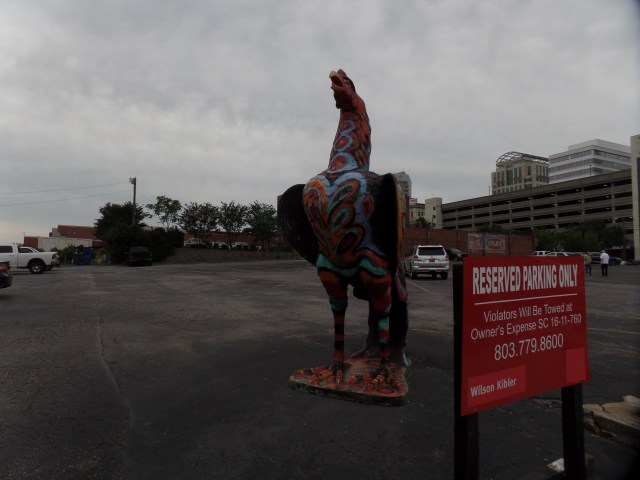
This multi-coloured horse is found near the Post Office.

SAMSUNG CAMERA PICTURES

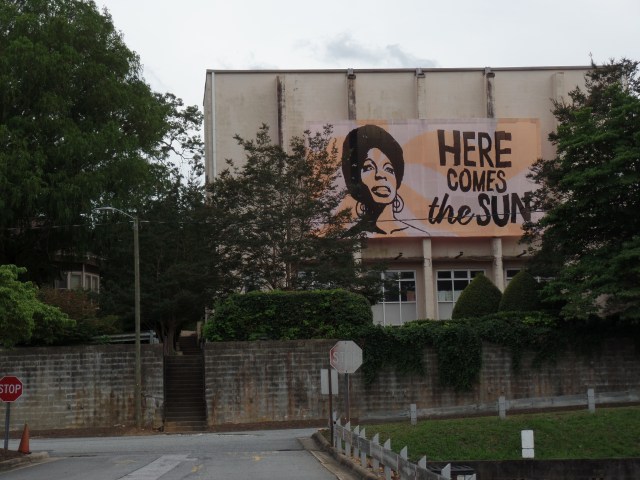
Any town which claims Nina Simone as a Native Daughter has my fullest admiration.  A consortium of artists is working to restore the home of her birth.

SAMSUNG CAMERA PICTURES

SAMSUNG CAMERA PICTURES

I chose Prescott, AZ, of course, as my Home Base-largely because it was familiar and the family had property, for the first 3 years of my time there.  I will continue to call Prescott my Home Base, until we see where my little family settles, next year.  A place like Tryon would not necessarily be out of the question.

NEXT:  Fair Columbia


No Choo Choo In This Gig

2

June 24, 2019, Chattanooga-

I stopped here, “en route” from Crossville to Knoxville, as I have driven on through this fascinating city, several times, on the way to this or that appointment- when going from Atlanta to Nashville or Knoxville.  My idea was to visit at least one of Chattanooga’s Big Three:  Ruby Falls, Lookout Mountain Summit and Rock City. Ruby Falls got the nod, as it sits off by itself, whereas the other two are  closer together.  Of course, I could have walked the steps up to the Summit, after the two hours or so spent underground, but the heat was lingering-so, another time. Ruby Falls and Rock City are equally pricey-each is $21.95 for an adult; a package runs $43.50.  There is also the “obligatory” photograph, taken before one is allowed into the cave.  In the end, one can choose to purchase the photo ($40 per person/group) or, as I did, say “No thank you”.

The cave is privately-owned, thus the entrance fee.  It is, though, well worth the time and money, to see the deepest underground waterfall in North America.  ( I think VietNam has one that is actually deepest on the planet.)  Several tour options are available- I took the Classic Waterfall Tour, with a group of about twenty people.  Down we went, 26 floors, via elevator.

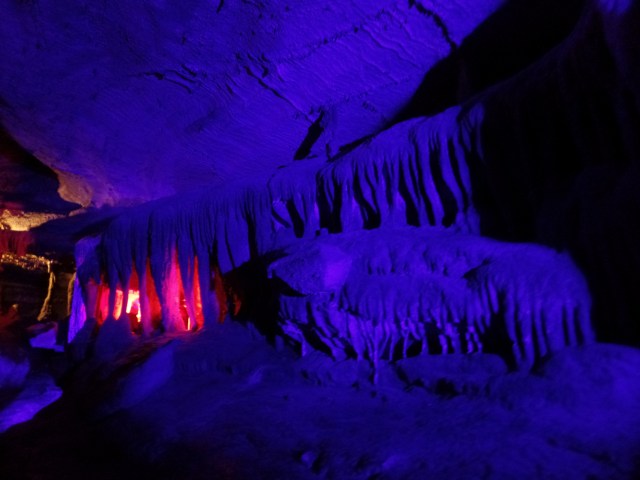
Here is some of what we saw, in Leo Lambert’s boyhood playground-which he later named for his wife, Ruby, after exploring professionally with a team of spelunkers.

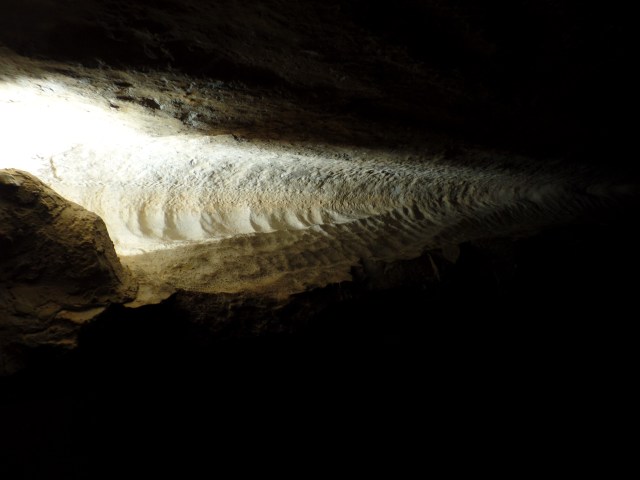
Leo had to crawl, for seven hours, through places like this, to reach an area where he could actually stand.

SAMSUNG CAMERA PICTURES

Crystal deposits added a magical sense to his meanderings. (The blue lighting, of course, was added by the family, later.)

SAMSUNG CAMERA PICTURES

It looks like this stalactite is actually holding up the cave, but it just kept on going downward, until it met the ledge.

SAMSUNG CAMERA PICTURES

Here is where Mr. Lambert was first able to stand up, after seven hours of crawling.  I don’t know as my circulation would allow for that.

SAMSUNG CAMERA PICTURES

Below is one of the few formations which people are allowed to touch, and even sit.

SAMSUNG CAMERA PICTURES

The Leaning Tower actually does resemble the landmark in Pisa, though it’s not subject to shifting ground.

SAMSUNG CAMERA PICTURES

This looks like it came out of a pasta maker.

SAMSUNG CAMERA PICTURES

Imagine tobacco, drying in the sun.

SAMSUNG CAMERA PICTURES

This looks like a frozen waterfall, but it’s more mineral deposit.

SAMSUNG CAMERA PICTURES

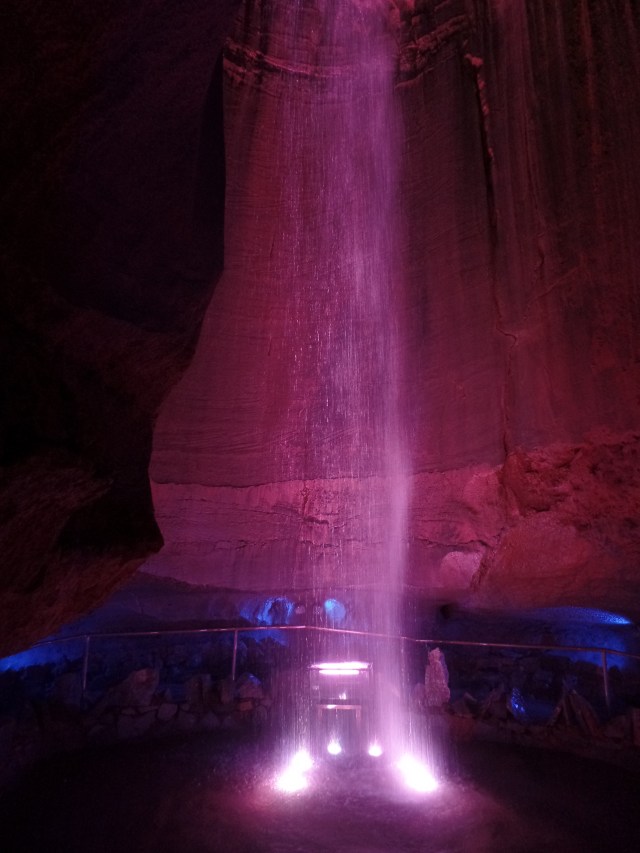
The Falls!

SAMSUNG CAMERA PICTURES

SAMSUNG CAMERA PICTURES

It was for this, that the Lamberts opened the caverns to the public, in 1929- a year when Americans needed all the comfort they could get.  So this afternoon, 24 of us stood, 1,120 feet underground, and marveled at what nature has put together.  It’s not Niagara, but it’s subterranean.

This is one place that Chattanooga Choo Choo isn’t going.  Once off the mountain, though, I took an hour to check out downtown and get some fine ramen, with bubble tea on the side.

SAMSUNG CAMERA PICTURES

SAMSUNG CAMERA PICTURESBack up to Knoxville it was, afterwards. I had seen a news report about a gas station robbery, on the east side, a day or so ago.  I ended up at a motel just down the street from that gas station.  No worries, though-people just did their own thing and left me alone, for a comfortable night’s sleep.
Life goes on.

NEXT:  The Little Town That Almost Became Home Base


Where Rock Got Its Groove On

2

June 21, 2019, Crossville, TN-

No, this little city in east central Tennessee has its charms, but rock’s birthplace is not its claim to fame.  That, of course, is a claim to be made by Memphis.

SAMSUNG CAMERA PICTURES

SAMSUNG CAMERA PICTURES

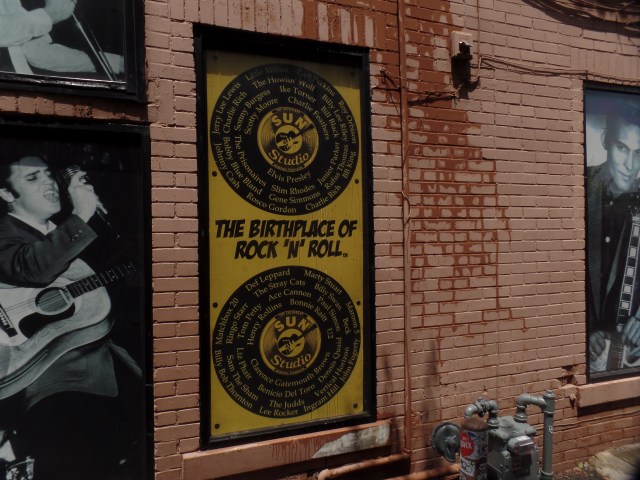
I visited Sun Studio, one of my “gap” goals from years past.  In the early 1950’s, one Sam Phillips, an eager young musical production visionary, began this studio, on a shoe string budget. He had an idea that Gospel, Country and Blues, when blended together, would produce an amazing new sound. Sam was all about music as a means of expressing personal emotional power and he wanted to hear some rawness in the voices of those he auditioned.

Elvis Presley, happening by from his hometown of Tupelo, MS, was NOT one of those voices, initially.  He crooned, stuck to a mellow vibe-and bored Sam Phillips to tears.  After several auditions, Elvis’ mood changed, he rocked on out with a tune and got Sam and his crew running into the sound room, to see what was happening.  The rest is musical history.  Other musical greats, among them Johnny Cash, Ike and Tina Turner, Jerry Lee Lewis, Carl Perkins, Howlin’Wolf, BB King and Roy Orbison got their big breaks with Sam and Sun Studio.

Here is Elvis, visiting Sun whilst on leave from the Army, doing a set with three of his contemporaries.  This session became known as The Million Dollar Quartet.

SAMSUNG CAMERA PICTURES

Below, our host, Lahna, is recounting one of many stories about Sam and his vision of musical fusion.  You can spot a photo of Sam Phillips on the lower right.

SAMSUNG CAMERA PICTURES

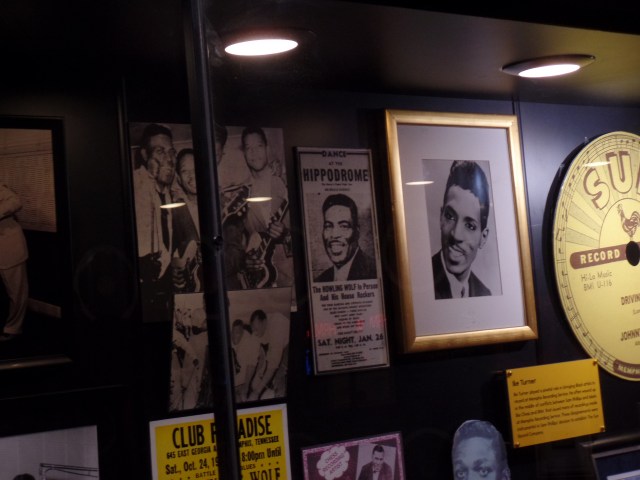
Here are some promos for Howlin’Wolf and Ike Turner (before Tina).  Ike was the pianist on the first-ever Rock n’Roll tune:  “Rocket 88”.

SAMSUNG CAMERA PICTURES

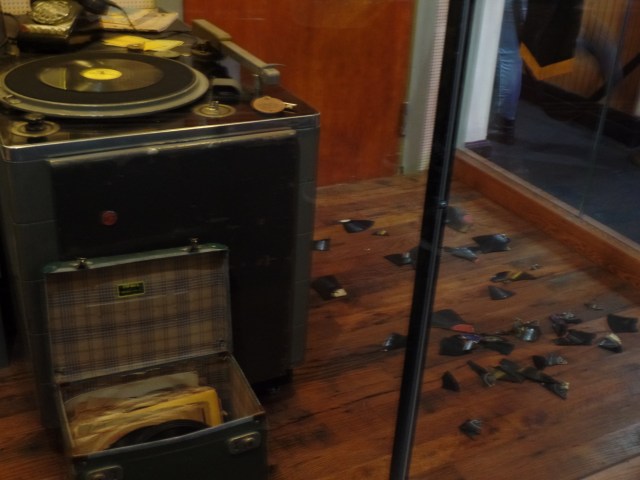
Fun fact: If Sam DIDN’T like a demo record, this is what happened to it. (See floor).

SAMSUNG CAMERA PICTURES

He was all about the base.

SAMSUNG CAMERA PICTURES

Marion MacInnes was Sam’s office manager, and his faithful right hand.  Is anyone familiar with the contraption on the left?

SAMSUNG CAMERA PICTURES

Lahna is giving her wrap-up for the tour, in front of the sound room window.  Another fun fact:  Larry Mullen, Jr., of the band U2, donated a set of drums to Sun Studio-for display purposes.

SAMSUNG CAMERA PICTURES

This was an awesome bit of musical history, made all the more enjoyable by a woman who clearly knows her rock stuff.

I took a bit of a ride eastward, well before actually leaving Memphis, and found La Ceiba, the area’s only Honduran restaurant.  Its forte seems to be seafood, yet I was in the mood for chicken.  I ordered the first item on the menu, which puzzled the hostess.  It turned out to be fairly recognizable:  Lightly battered fried chicken, apparently not the hostess’s favourite, but good-tasting, nonetheless.  I also found the chips and sauce, (not salsa), potentially addicting.  La Ceiba is well worth a try.

SAMSUNG CAMERA PICTURES

A long drive around the fringe of Nashville ensued, as it was getting late and I wanted to get here to my friends’ house, before they needed to turn in.

SAMSUNG CAMERA PICTURES

NEXT:  Reflections on Three Days By A Pond


On Wilson’s Creek

4

June 20, 2019, Memphis-

I made it to the hostel here, three hours behind schedule- but the door remained accessible by code, so no worries there.

This morning, I met my cousin, Lisa, for breakfast and an hour’s catch-up on the year gone by.  Our old stand-by had closed, so she found a little place closer to her home, which worked even better.  We were about the only people here, save the waitress and the cook.

SAMSUNG CAMERA PICTURES

I left Lisa, and the little village, intending to head for a friend’s place in Rolla, then down through the Ozarks and Delta, to the quiet bustle of Memphis.

Wilson’s Creek National Battlefield intervened.  This place is worth about two hours, for those whose education on the Civil War stopped with the Mississippi River at Vicksburg, if it even got that far.   Wilson’s Creek, MO was the second major battle of the conflict, after the First Battle of Manassas, or Bull Run.  It is instructive that the battle was technically won by the Confederate Army, yet at a cost which enervated the Rebels and drained critical resources.

Here are some scenes from this relatively under-visited national monument-about a dozen miles southwest of Springfield, MO.

SAMSUNG CAMERA PICTURES

A young boy and his grandparents were in tandem with me, for the first two stops.  The child was quite well-versed in some of the basics of the conflict, which always does my heart good.  Those who don’t study history are those most likely to repeat it.

Like many battles in all three wars that have taken place on American soil, this one centered on farming areas, and took place largely in two cornfields.  The fencing below was intended to keep animals in.  The Confederates used it and the berm behind it, as cover.

SAMSUNG CAMERA PICTURES

SAMSUNG CAMERA PICTURES

This area was farmed, and its corn milled, by John Gibson.  The two sides wisely steered clear of attacking the mill, knowing that they would likely need its resource, once THEY won.

SAMSUNG CAMERA PICTURES

A lone sunflower, anywhere, is an anomaly; yet, here it is on the old Gibson farm.

SAMSUNG CAMERA PICTURES

The family moved on to the Ray House, with me right behind them.

SAMSUNG CAMERA PICTURES

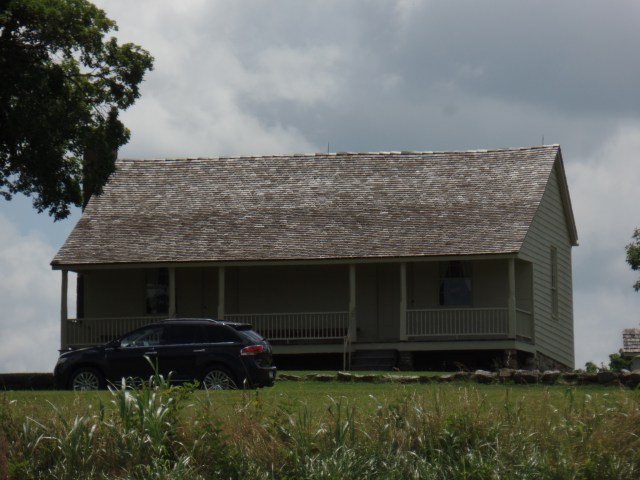
This farmstead was used by the Confederates as a field hospital, with Mr. Ray and the Southern officers bringing in the body of Union General Nathaniel Lyon, the first General killed in the line of duty, during the Civil War.  His corpse lay in this bed, until it was peacefully transferred to Union hands.

SAMSUNG CAMERA PICTURES

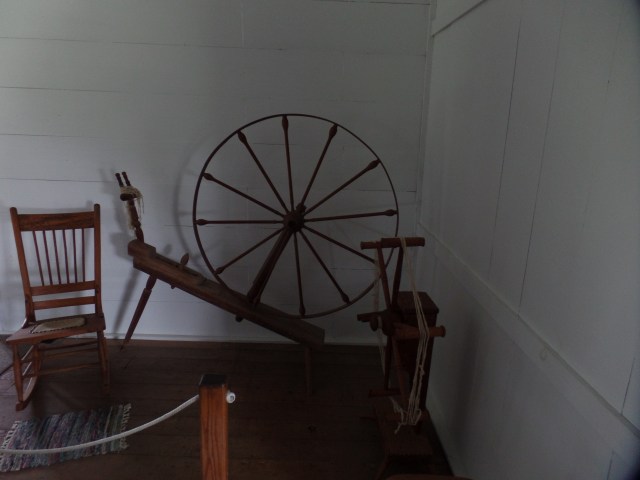
The Rays continued a modicum of life, during the military occupation of their farmstead. Mrs. Ray’s spinning wheel was in constant use.

SAMSUNG CAMERA PICTURES

Imagine this passageway, crowded with wounded and the active soldiers. That was the case, on August 10, 1861 and for weeks afterward.

SAMSUNG CAMERA PICTURES

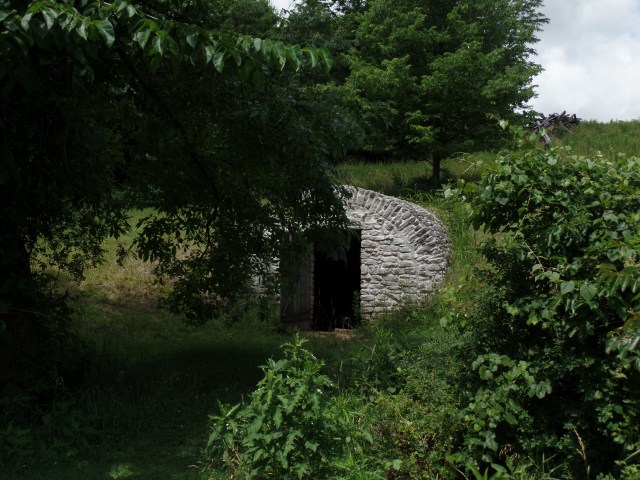
Down Oak Hill from the house lies a spring house, the refrigerator of the mid-19th Century.

SAMSUNG CAMERA PICTURES

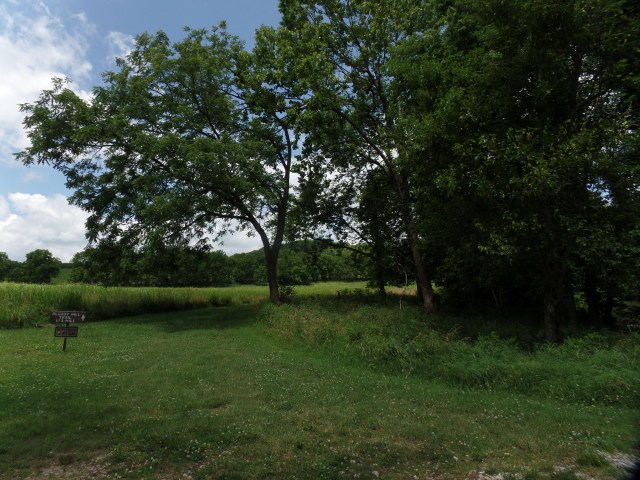
From here, I had the rest of the Battlefield pretty much to myself.  Below is a view of Wilson’s Creek, as it may have appeared to CSA General Sterling Price and his regiment, at his headquarters here.  Today, a woman was cooling her horse in its serene waters.

SAMSUNG CAMERA PICTURES

Here is a view of the slope of Oak Hill, also called ” Bloody Hill”, for the carnage that ensued here, when the Union troops emerged from the forest, with blood curdling yells, attacking Price’s Texans.

SAMSUNG CAMERA PICTURES

SAMSUNG CAMERA PICTURES

My final stop at Wilson’s Creek was here, where it is seemly to pay respects to all those who were initially interred in mass graves, both in this spot and elsewhere in the area.

SAMSUNG CAMERA PICTURES

We have not had such a devastating conflict since, as bad as the wars that have ensued subsequently have seemed to those who lived through them. More people died in combat, in the first year of the Civil War, than in the entirety of the Vietnam Conflict.

NEXT:  The Roots of Rock n’ Roll


Day of Rage and Remembrance

6

June 19, 2019, Joplin MO-

The title refers to August 10, 1861, and I will elaborate, momentarily.  My Juneteenth began in Amarillo, with three surly drivers edging towards road rage, within a span of an hour.  The first one zipped around the corner and found me in his way, so the horn blew and the fist was pumpin’.  I got off the road and waited a bit.  Then there was the woman who was off-kilter because I went straight when there was no “left turn only” indicator.  Still no harm, no foul.  Finally, after my Planet Fitness workout, across town, I was screamed at, for driving across a parking lot and not stopping at each point where the road intersects with said lot.  This is, apparently, an Amarillo thing. (In Arizona, every parking lot intersection has a STOP sign. We must be spoiled.)

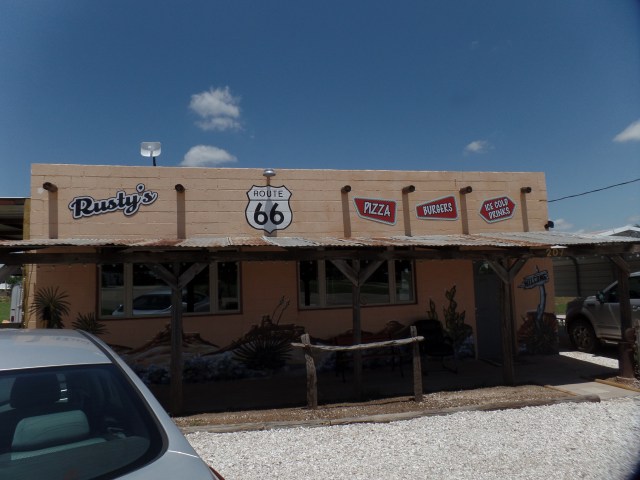
With all that, I left the city behind, and waltzed on over to Shamrock (See Ernest Tubb’s “Waltz Across Texas”).  There is a place there, called Big Vern’s Steak House.  Aram and I had lunch there, in 2011.  Vern no longer opens for lunch, so after looking around and asking the kind cross street neighbour as to whether Vern was okay (He is; he just opens for dinner only, is all.), I checked out a place called Rusty’s.  The perky owner told me she wouldn’t be open for another week or so, but if I went north a piece, I’d find a nice little place called Mesquite Canyon Steak House.  I did, and it filled the lunch bill nicely.

SAMSUNG CAMERA PICTURES

Next to Rusty’s is  Spinning Jenny’s House of Music.  If I’d been in a better mood, I’d have popped on in there.  Rusty and Jenny are both pretty and vivacious ladies, with good product, so it’s likely I’ll stop in Shamrock, next time I’m in the area.

SAMSUNG CAMERA PICTURES

I recall June 19 as Juneteenth, the day that Texas slaves received word of the Emancipation Proclamation:  June 19, 1865, when the Union forces landed in Galveston and spread the news.  This was 2 1/2 years after President Lincoln issued the Proclamation.  Today, many people are still not free of their own limiting mental chains.

“Waltz Across Texas” became “Zumba Across Oklahoma”, shortly thereafter.  I have a breakfast meet-up with one of my cousins, who lives near Joplin, early tomorrow morning.  So, there were no Sooners on my schedule, this leg of the trip.  I took the I-40 to 44 and onward straight-away, finding that the long-standing detour through the east side of Tulsa has been eliminated.  It’s all freeway, from Erick to Miami, so I found an hour had been shaved off the drive.  There was a minor rush hour jam, near downtown OKC, but that was all.

Once in Joplin, I found Motel 6 was reasonable, and that this franchise owner has a high-tech system, reminiscent of the European hotels I used, in 2014.  Keyless entry and paperless registration are here in the Heartland.

NEXT:  The Battle of Wilson’s Creek