Liberty’s Flame is Guarded by Community: Boston’s North End

0

The two neighbourhoods which hug the northwest sector of the City of Boston, of the Charles River and its confluence with the Mystic River are also integral to the Freedom Trail and the story it tells of our nation’s beginnings.

The North End has become best known for its Italian culture, restaurants and shops.

SAM_3593

There are three Roman Catholic parishes in this relatively small area:  St. Stephen’s, St. Leonard’s and Sacred Heart.  The last identifies itself as an Italian Catholic parish.

Below are, in order of appearance, St. Leonard’s, St. Stephen’s and Sacred Heart.

SAM_3597      SAM_3600

SAM_3603


The unifying element in North End life, aside from the strong ethnic identity of many of its residents, is the legacy of Paul Revere.  He is best known as a benefactor of the Revolutionary cause and as the bell-ringer of Old North Church.  Longfellow’s poem and Copley’s portrait have made Revere one of the most famous Americans of the War for Independence and Federal period to have not served in either the military or national government.

Old North Church, Paul Revere House and Copp’s Hill Burial Ground are the three most prominent landmarks of the War for Independence in the North End.

Here is the  famous North End church of the Independence Era:  Old North.

SAM_3608

Paul Revere’s house is preserved by an historical trust.  It will seem familiar to the connoisseur of colonial New England architecture, as it was built by the same man who built Salem’s House of the Seven Gables:  Joseph Chandler.  He built residences with low ceilings, to preserve heat, in the harsh winters of pre-central heating Massachusetts.

SAM_3604

Paul Revere, by profession, was a silversmith.  Silver being expensive, then as now, Revere also worked with copper and bronze, as well as with gold.  A bronze bell, cast by Revere for the Old North Church, was rung by him on that fateful night of April, 1775.  It now lies in the courtyard of his preserved home.

SAM_3607

The last place I visited in the North End, before crossing the bridge into Charlestown, was Copp’s Hill Burial Ground.

SAM_3617

Here are interred the good, the great and those of checkered repute, from Boston’s early days.  The patriot Robert  Newman, the abolitionist and educator Prince Hall and the early religious fundamentalist Mathers (Richard, his son Increase and grandson Cotton) are all laid to rest in this hallowed ground.

SAM_3618                            SAM_3619

SAM_3621


Having paid my respects to one and all, I gazed out upon the Charles River.

SAM_3622


Tomorrow, I will recap my visit to Charlestown.  For now, I recall the words of the townies, to any young boy who hung around too long in a “Connah Stoah”, “Hey kid, go home and tell ya mutha she wants ya.”

SAM_3594


The Seeds, and Fruits, of Freedom: Boston’s Historical Trail

0

I first walked the better part of the Freedom Trail in Boston with my Dad, in 1964.  Back then, Quincy Market was called Durgin Park and the Old Corner Book Store was still selling books.  We got as far as the Charles River, then went back to the car, so as to beat the afternoon traffic.  It was my first real understanding that freedom came after considerable struggle.

I went back to the edge of the Trail last year, visiting Boston Common and Park Street Church, during a Copley Square excursion.  This time, I was determined to walk the rest of the trail and see this beloved city through the eyes of struggle and endurance.

It was a cold, somewhat brisk day, with snow in the air, on my 62nd birthday.  The first place I encountered was the newest point on the Freedom Trail:  Holocaust Memorial.  There is no more fitting place than here, to honour the memories of those lost in the second-worst war in human history.  Jews have been an integral part of American society since the mid-seventeenth century, with sites like Newport, RI’s Touro Synagogue to prove it.  Boston’s memorial is modern, and tasteful.

SAM_3545

The message is clear, and only the ignorant will deny what happened.  Freedom is an ongoing struggle- lest we forget.

SAM_3548

The victims speak through these media.

SAM_3549          SAM_3547

The foresight of Dwight D. Eisenhower provides us with further assurance.

SAM_3552

The first freedom fighters here included men of means and paupers alike.  They were of all the  “races” who lived in Boston at the time:  White, Black, Native American.  Their common thread, which had a distant echo in England itself, was the cry for personal freedom.  No one really was represented in government, save the upper classes and aristocracy.  Women could only speak through their menfolk.  In 1770, on a street corner in what was then the heart of Boston, push came to shove.

SAM_3561

The story of the five year run-up to the War for Independence is superbly told in the Old State House.  I spent an hour here, learning new details of the Tax Enactment Period and of the complex interplay between the British soldiers and Patriots, in the aftermath of the Boston “Massacre”, which actually cost five lives and six injuries.

SAM_3562

From this site, I walked to the Old South Meeting House, so named because it was used primarily by Quakers and Mennonites.  It was a safe haven for those meeting to discuss their grievances, in the early 1770’s.  Below, are views of the exterior and interior of this vital building.

SAM_3564
SAM_3569

The morning segment of my wandering led next to the Old Corner Book Store (now a Chipotle).  It is the red brick building just diagonal from the truck.

SAM_3574

Next is Old City Hall, where there is a statue of Benjamin Franklin in the front yard, close to King’s Chapel.

SAM_3573
SAM_3575

King’s Chapel is important, as it was the site of the first school in Boston, and a Loyalist gathering spot.  It is also the site where, ironically, the patriot William Dawes, among other notables of the colonial era, is buried.

SAM_3577
SAM_3583

I had reached the point where I had left off last summer.  In the interests of doing justice to the North End and Charlestown, as well as to my own birthday dinner later in the evening, I headed towards Fanueil Hall, Quincy Market and lunch.

En route, I saw living proof of our nation’s freedom- a group of carolers, spontaneously offering holiday cheer.  Across the street from them was the famed Parker House.

SAM_3587
SAM_3585

Hot rolls aside, I was in the mood for a lobster salad and clam chowder.  Hence, it was off to the great market place.  Fanueil Hall itself serves as headquarters for Boston National Historical Park.

SAM_3556

For serious eating, it’s Quincy Market.

SAM_3558
SAM_3589

There is a touch of kitsch at the end of the complex, as there is at all great city markets.  But, hey, ya gotta love “Cheers”.

SAM_3591

Next up:  The North End, home of Paul Revere.

Bewitched By History- My Salem “Pilgrimage”

2

Growing up on the North Shore of Massachusetts Bay, I have been mesmerized by the history-oriented culture of places like Boston, Cambridge and Salem.  To be sure, my own hometown of Saugus had a hand in this.  Our Ironworks was the parent of the American steel industry.

During my recent, Thanksgiving-oriented visit “up home”, I made it a point to revisit some of my favourite sites in Salem, as well as to re-walk  Boston’s Freedom Trail from the point where I left off in September, 2011.

In today’s post, I want to pay homage to the “Witch City”, and share my visit there, of November 20.

Taking an easy bus route from Saugus, through Lynn, I arrived at Salem’s Chestnut Street, in the heart of the 18th Century McIntire Historic District.   It’s named for Samuel McIntire, who built many of the homes that are still preserved in this exemplary neighbourhood.

SAM_3454

The first place I visited in the McIntire District was Hamilton Hall.  It is so named because Alexander Hamilton frequented the house when he visited Salem.  Unlike the colonial-era homes which McIntire built, this Federal-period classic was clothed in brick.

SAM_3456

Its interior is suitably ornate, befitting the nation’s first Treasurer.

SAM_3466           SAM_3464

After leaving the Federalist era, I jumped backwards in time, to Salem’s Days of Infamy.  The Witch House, at the edge of the McIntire District, predates Samuel, but shows the full story of the religious persecutions and the mass hysteria which led to them, in late seventeenth century Salem- and a few nearby towns.

SAM_3480

Due to the delicate nature of the furnishings, photography inside the Witch House is discouraged, as is of course handling of the various artifacts.  What is ironic is that it was the home of the Witch Trials’ presiding judge, Jonathan Corwin.  The structure is the only house remaining in Salem with direct ties to those dark days.  There are numerous other places in the downtown area with exhibits of witch memorabilia.

Salem has two other historic periods in which it played an important role:  The Clipper Ship Era and the Industrial Age.  Several tanning factories and some heavy manufacturing facilities were located here, in the 19th and 20th centuries.  Salem’s port was a rival of Boston’s, until the mid- 19th Century.

The economic boom enabled Salem to build impressive public buildings and places of learning, like Salem Athenaeum, which still exists as a private library.

SAM_3453

The County Courthouse and Salem Town Hall (now a city museum) are shown below.

SAM_3483      SAM_3488

After a satisfying lunch at Nick’s Firehouse, I revisited the Peabody Essex Museum, behind the old Town Hall.  I was last there in 1965, when a grudging curator let my three siblings and me walk around the Maritime exhibit, unsupervised.  He made no pretense of liking children and teens, but I found the exhibits fascinating.  They still are- although no photos are allowed there, either.

SAM_3492

Nonetheless, the Museum is now popularly called “The PEM”, school groups are welcomed- even by the eldest of  docents and the Museum involves itself fully in community life.

After ninety minutes of studying paintings, household finery and marvelous Chinese ceramic ware and figurines, I headed to the brisk open air of Salem’s waterfront.  Here are the great wharves, Salem Neck, Cat Cove and all that brought wealth to the city, during the Clipper Ship Era.  The scene is preserved as the Salem Maritime National Historic Site.

SAM_3495             SAM_3497

Above is the SS Friendship, a restored clipper ship, open to visitors during the summer months.  Below left  is Salem Neck.  To the right is a shore view of Derby Wharf, built by one of Salem’s most successful mariners:  Samuel Derby.

SAM_3506           SAM_3498At the end of Derby Wharf lies a short lighthouse, which once guided tall ships and fishing boats into Salem Harbor.

SAM_3505

Overseeing it all, for nearly five decades, was Salem Custom House, now part of the Historic Site.

SAM_3502

The New England Literary Renaissance was represented most notably in Salem by Nathaniel Hawthorne.  His “House of the Seven Gables” is a real place, of course, and one can still climb the steps in back of the fireplace, under the watchful eye of a tour guide.  As ever, photography is not allowed inside the house itself.

SAM_3509

I was, however, able to photograph the Counting House, both inside and out.  This 19th Century office space underscored Seven Gables’ maritime importance.  Properly called Turner-Ingersoll Mansion, the house was important to Hawthorne in real terms, because his older cousin, with whom he was very close, was an owner of the mansion during Hawthorne’s teen years.  His own birthplace was moved from the downtown area to the Mansion grounds.

Here are the exterior and interior ceiling of the Counting House.

SAM_3511           SAM_3512

A view of Salem Neck is in order.

SAM_3514

Lastly, here is a peek at Nathaniel Hawthorne’s birthplace.

SAM_3515

Salem remains, in my heart, one of the classic American cities- always worth a “pilgrimage”.

My Leibster Award nomination

0

I have been nominated by CherokeeWriter for the Leibster Award.  As my end of the deal, I am stating 11 things about myself, answering her 11 questions and nominating 11 other bloggers who have less than 200 followers, at least to my knowledge.

11 Things about myself:

1.  I am of  French, German, Penobscot Indian, English, Irish and Polish descent.

2.  I was widowed nearly two years ago.

3.  I feel my wife’s spirit is always with me.

4.  I am equally at home in city and countryside.

5.  I  share a birth date with Ed Harris.

6.  I am one of 13 people with my first and last name, in the entire planet.

7.  I enjoy sharing my life with many others.

8.  I am growing stronger every day.

9.  I don’t believe in aging, only in growing closer to the Light.

10.  My glass is half full.

11.  I can speak a smattering of a few languages, but I can understand a person’s heart.

CherokeeWriter’s questions:

. What is your favorite book and why?

Les Miserables.  It pinpoints and deeply delves into the human condition, looking at both sides of an all-too-common situation.

2. Pie or cake?

Pie- Apple, Blueberry or Pecan

3. Why did you start blogging?

I wanted to share my thoughts and experiences with the wider world.

4. What is your favorite fantasy creature?

The Phoenix, because it dusts itself off and keeps on going.

5. Do you have any pets? If not, do you want any pets?

I have no pets at present.  I could not do a pet justice, right now.

6. Would you like to see a woman become President?

Certainly!

7. What is your favorite food?

Lasagna

8. Do you believe in true love?

Absolutely.  I experience it, even now.

9. What was the last movie you saw in the theater?

Lincoln

10. Who are some of your favorite singers?

Joan Baez, Red Grammer, Smith and Dragoman, Gregory and the Hawk, Pink (Yes, THAT Pink).

11. Who would you want to play you in a movie about your life?

Dennis Quaid (though he’s a lot buffer than I).

Now, my questions for my nominees:

1.  Who do you regard as a worthy role model?

2.  Why do you blog?

3.  Which do you like better- a noisy, happy party or a quiet spot in the countryside?

4.  Dogs or cats?

5.  What is your favourite beverage?

6.  Is the Lottery a good thing?

7.  What brings about happiness?

8.  Who is the greatest author of all time?  Why?

9.  Do you think love can be eternal?

10.  Ocean or mountains?

11.  What has been your happiest moment, so far?

Tucson’s Sabino Canyon

6

I had the pleasure of visiting one of Tucson’s signature locales, Sabino Canyon, on Saturday evening and Sunday afternoon.  The first journey was taken with a group of  Baha’i friends and some children from an apartment complex, not far from the home of one of my friends.


Above is the Sabino Canyon Visitors’ Center, operated by the U.S. Forest Service.  Below are two shots of our happy group.

The vigilance of  my friend, Annick, kept everyone together.

We enjoyed a  sweeping vista, from the overlook near our designated picnic spot.

 This was my own introduction to Sabino Canyon, and after a restful night and a scrumptious breakfast at Blue Willow Cafe, I headed back to the canyon, for a loop hike.


Rocks abound, as always.  Some of them used to be trees.

 The ridge above leads to Tucson’s own Cathedral Rock, 5 miles to the northwest.

Sabino Canyon was the site of a dam, until the 1980’s.  Now the dam, and its “lake”, are but relics of  an experiment in irrigation.

The scenes here are but a taste of the marvels that await the visitor to Tucson.  It will be an interesting winter and spring, across this city and across our beautiful state.  Stay tuned.


Oktoberfest Sunday: Chicken-fried Brunch and Meditation at Cathedral Rock

0

Another of my Prescott ties is to the American Legion.  When I’m home on a Sunday morning, the lure of a delicious brunch at the post becomes irresistible.  So it was this past Sunday, and it was not just standard fare, but chicken-fried steak that was offered with eggs and hash browns.  Baked apples were also available, respecting the spirit of October. Thus, the Oktoberfest spirit continued.  Afterward, I did an act of service for a couple of friends in town.  Then, it was time for Sedona.  I headed for Cathedral Rock, and by the luck of the draw, I found there was parking to spare, in the usually jam-packed lot off Back O’ Beyond Road. I headed up to the rock, scrambling as far as the 2/3 point of the trail.  There, I spent a few minutes meditating, while several others, of all ages were scooting their way up through the crevice that provides the safest route to the base of Cathedral Rock itself. I would sit and contemplate the action, both above and below me, twice that afternoon, but refrained from joining the fracas of machismo.  I tend to follow my intuition more in Sedona than in some other places, and since my intuition has been on overdrive, in general, these past nineteen months, I sat and calmly took in my surroundings. Presenting Cathedral Rock:

Here is the crevice which one must follow to the second saddle of this formation.

I’ve been up worse trails, though, so some day, my intuition may well say- “Go for it”.

Near Cathedral Rock is the east-west Templeton Trail, a mostly flat mountain bike route, going from a housing area, three miles to the south, to a juncture with Cathedral Trail.

It was here that I had two rather mystical experiences.  The first was watching wind-blown spider web threads blowing in the wind, with the full sun as a backdrop.  I could imagine they were supernatural creatures, come to visit with us on that blessed afternoon.  I did sense a lot of spiritual energy at some points along the path.

The second eerie experience took place as I was heading back from this view  of Chimney Rock.  A group of four women and a man approached me, and asked how close they were to the south parking lot.  Of course, I didn’t know.  The uncanny part was, one of the younger women strikingly resembled Penny as a twenty-year-old.  This took me for a loop, momentarily.  As they left, the girl chuckled that it seemed I didn’t know quite what to make of her.  If she only knew.

As the afternoon still seemed young,   I took in Little Horse Trail, near Bell Rock and hiked it as far as Chicken Point.  Here is the bench that leads up to Chicken Point.

Chicken Point lies straight ahead and to the left. 

Below is a view of Submarine Rock, from Chicken Point.

Before heading back, in the fading light, I caught a glimpse of Chicken Point’s “guardian”.

The day was more than rewarding.  I was left with so much to ponder,  So I did what any overstimulated Prescottonian would do- I stopped at Leff-T’s Steakhouse, in Dewey, and had a steak fajita salad.  In view of the heavy brunch, this helped me enjoy a carb-free supper, thus avoiding a Diabolical Diastolic, the following morning.

Oktoberfest Saturday: Health & Wellness, with a Side of Bratwurst

0

I have things to occupy me, besides hiking.  The Red Cross Disaster Assistance Team for Yavapai County has become one of them, and indeed, it will be my main focus next weekend, as we have a training seminar.

On Saturday, I went, as I had promised, to a Health & Wellness Fair in Bagdad, AZ, as part of a Red Cross presence.  It turned out I was the ONLY presence, but I’m sure we’ll get to the bottom of that, soon.

Bagdad is a small, spirited mining town, 50 miles west of Prescott.  I bided my time by talking with a handful of people, both about the mission of the Red Cross and about the course of suffering among those in declining health.  The somewhat flinty-eyed fair director seemed a bit suspicious of me, but offered me lunch anyway.

Here are some scenes which await the traveler, both in and en route to Bagdad.  The first two scenes are just west of Kirkland, which lies halfway between Prescott and Bagdad.


These are sort of a gateway into the northwest arm of the Sonoran Desert, for which Bagdad and Wickenburg are the commercial centers.


Above are the Connell Mountains, north of Kirkland and Hillside.  Below are a few scenes of the Sonoran Desert, just east of Bagdad.

This shrine is on a ranch, in the small settlement of Hillside, fifteen miles east of Bagdad.

The Bagdad Community Center itself is at the foot of Sanders Mesa.

On Saturday, it was a happening place.

After the delicious lunch, I switched gears.  The evening brought me to Lynx  Lake, southeast of Prescott.  I took a leisurely walk along a segment of Homestead Trail, which skirts the west shore of the lake.  I saw a cormorant, ready to get its supper.

Following the bird’s lead, I went in search of my Oktoberfest dinner.  Lynx Lake Cafe is a full-service restaurant, with German fare.  So, I sat at an outside table, near the entrance, and ordered a full German meal- with bratwurst as the centerpiece.  Trio salad, sauerkraut, spaetzel, and German potato salad were there on the plate, as well.  Apfel (apple) strudel and coffee topped it all off.  The place was packed, inside and out.  My Poppa would have been proud.

My table-for-one (or two, if need be) was right where that bench is in the photo, to the right of the door.

(Above photo courtesy of phoenix traveler.com)

I was probably the only person there that evening who made do with water and coffee, but my Oktoberfest, my rules.

Next- Sunday brunch and the Red Rocks of Sedona.


An Oktoberfest Friday: Flagstaff Called, Part 2- NAU and Downtown

0

After I had finished visiting the Fort Valley area, the next order of business was to check out the grounds of Riordan Mansion State Park, which meant walking trough my alma mater, Northern Arizona University,  The school has grown exponentially since my days there- which were, of course, thirty one years ago.  One place that hasn’t changed much, at least outwardly, is the laboratory school, South Beaver Elementary School.

I scooted over to Riordan Mansion, before the gate closed.  The edifice was built in 1904, for the brothers Timothy and Michael Riordan, who were timber barons in the Flagstaff area, in the early Twentieth Century.  It is preserved as an acknowledgement of the timber industry’s historical importance to Arizona.


It was getting towards evening, so I stopped by Macy’s and verified the time of the evening program, then enjoyed a marvelous artisan Margherita pizza, at Pizzicletta, one of those “best-kept secrets” that I would love to see get out of the bag.  If you are in Flagstaff, go see the Schiffs, on Phoenix Avenue, across the street from the large train station parking lot.  Amazing pizza and salads, with highly praised gelato for dessert, await the patron.  You know you are in a college town, when the bill is presented on an i-pad!

Then, it was time to go across Santa Fe Avenue, to the north side of downtown.  Weatherford Hotel, where Penny and I occasionally stayed in the mid-80’s, is decked out for the upcoming holidays.

The Monte Vista, also a timber-era hotel, hasn’t quite caught the holiday bug, as yet.

My main reason for coming here, though, was to see my friend, Emiliano, from Phoenix, do a hip-hop performance at Macy’s.  This was a packed house and Emil was terrific.  He does a fine job of incorporating the Baha’i message into a hip-hop framework.

This energetic genre does not have to present a negative message.  Emiliano’s hip-hop is nothing but positive.

So, after your artisan pizza, coffee at Macy’s might hit the spot on a chilly Flagstaff evening.  Breakfasts and lunches are equally good.

Finally, a message from some NAU students, to us all:

Have a great week.  I will continue this series with tales from Oktoberfest Saturday and Sunday.


An Oktoberfest Friday: Flagstaff Called- Part I, the Fort Valley Museums

4

I lived a somewhat carefree life in Flagstaff, in 1980-81.  I was in a mildly demanding graduate program, was in and out of a relationship with the woman who became my wife, and barely worked at a couple of jobs.  Mostly, though, I was content to hang out in the historic downtown, reading a couple of papers, or studying, at Middle Earth Coffee House, (which became Macy’s European), going on hikes with the Full Speed Ahead trailblazers of NAU Hiking Club, enjoying the foliage of the Inner Basin and scarfing down all-you-can eat pizza at Caparelli’s (now long gone) or Alpine (still there).

There are several places around the country which resemble Flag- Boulder, Bend, Santa Cruz, Missoula, Burlington.  In truth, though, each place has its specialness.  Though each of the above has the common threads of youth, university, a thriving arts scene, lots of coffee and chai, and at least one artisan pizza house, I could not substitute Bend for Flagstaff, or vice versa.

Flag would struggle, were it not for the university and the energy it generates, but it would thrive, in the end, like a supersized Silverton, Taos or Butte.  Native arts are prominent at the Museum of Northern Arizona, which in turn, with the North Country Pioneer Museum and Riordan Mansion, tells the area’s story in stellar detail.

I enjoyed tracing the area’s geologic history, with its attendant changes in animal life.  It was good to get a refresher in the development of  indigenous cultures, from the proto-Puebloans, through the Sinagua and Ancestral Pueblo Peoples (formerly called Anasazi, or “ancient enemies”), to today’s Hopi, Zuni, Rio Grande Puebloans, Pai (Havasupai, Hualapai and Yavapai) and Athapascans (Navajo and Apache).  Simply put, as the wanderers found a place in which they wanted to put down roots, their baskets got more firmly woven, their designs became more complex and their dwellings sturdier.  Thus, we have Basketmakers I, II, and III , followed by the Sinagua, then by Pueblos I, II, III and IV. This last features the Hopis, Zunis and Rio Grande peoples.

I can think of nowhere I have felt more at home, than among the Hopi and Dine (Navajo).  Of course, I will always be Bahaana/Bilagaana (White one), and the trust that was upset when we left for the city, in 1999, would not easily be re-established; but the sheer honesty, connectedness and essential decency of my Native friends cannot be shed from my heart’s memory.  I felt it when I returned to Burntwater in July and again when I was in Glenwood Springs and Towaoc, a couple of weeks ago.

I digress, somewhat.  The Museum also featured, until today, the works of  Mary-Russell Ferrell Colton, a painter who, with her zoologist husband, Harold, founded the Museum of Northern Arizona in 1928.  The blend of art and zoology is reflected in the museum’s current special exhibits: Mary-Russell’s extensive gallery is accented by the wealth of Native American art and counterpointed by an exhibit on the Mountain Lion- its habitat, life challenges, behaviour and prognosis.

Capping an hour or two on the inside of the facility is a walk along the Rio de Flag Nature Path.  This rivulet flows from the San Francisco Peaks, through Fort Valley (where the Museum is found), and   downtown Flagstaff, then heads east through Picture Canyon and on to the Little Colorado River.  When I lived there, the Rio was often compared to the Los Angeles River, as a budding urban waste dump.  Citizens got together and have largely reversed the situation, so the Rio is a pleasant spot by which to sit and sip a cup.(I’m told the situation is improving for the Los Angeles River, as well.)  The Rio was barely flowing here, and you can’t see it, for the brush.  It did snow and rain here yesterday, so help is on the way.

The second museum in the Fort Valley area is the Pioneer Museum, a northern extension of Tucson’s Arizona Historical Society.  This museum is photo friendly, so I was able to capture some of its inside features.  Many will remind my faithful readers of other pioneer venues, like Fort Worth’s Log Cabin Village, Old Town Burlington, CO or Lincoln’s New Salem, near Springfield, IL.  Flagstaff’s early Caucasian settlers were mostly concerned with logging and the railroad, rather than displacing Native peoples, though some conflict has occurred over water rights and over the use of the San Francisco Peaks, sacred to at least four nations.

Some homes were comfortably-sized; others, only someone like me could feel okay with them.  This is the cabin of the Doney family, who settled in an area east of Flagstaff which now bears their name:  Doney Park.

The Lockett Cabin was platted in an area of  the Inner Basin of the San Francisco Peaks that is now called Lockett Meadow.

The main exhibits, arranged by decade from 1880- 1970, are on the second floor of the Main Building of the museum.  It was originally Coconino County Hospital.  Thus, we have logger’s tools, like this saw blade. Then, there are quilts and other logger’s tools, from the 1890’s. The nurses lived in the Hospital, in the early 20th Century.  Here is a nurse’s bedroom.In the next post, we move on to the campus of Northern Arizona University, the adjacent  grounds of Riordan Mansion and an Oktoberfest Friday night in downtown Flagstaff.

The Roads, The Trails and Me: Part 2, The Next Fourteen Months

0

I spent part of this afternoon walking a segment of the Constellation Trail, in Granite Dells, that I had not hiked before.  (I went sans camera, so rest assured I will be on that path again soon.)  This was a time meant for attention to detail and reflection.  It meant frequent sitting and thinking.  Among the things that came to mind were my friendships, the structure of this planet-both material and social, and the resemblance of rock formations to characters, both real and imagined.   I thought of friends here, in Tucson and in the Northwest.  I thought of the solidity and fluidity of rock, water and social institutions like the family.  I saw rocks that resembled Jabba the Hut, a kissing pair of dogs, a fish whispering to a whale and Buckingham Palace.

If I had no other reason to visit nature, this would be sufficient.  Now, let me get back to nuts and bolts.  Earlier today, I made arrangements to fly to Boston on Nov. 17 and return on Nov. 29.  This will be my first New England Thanksgiving in almost 32 years.  Having made that plan, let me set in motion the rest of 2012 and the year ahead.


Most of my time will actually be here in AZ, with Baha’i, Red Cross, American Legion and various other friends, in addition to work- which resumes next week.  My journeys out of state over the next fourteen months, look like this thus far:

November 17-29 :  Boston area, with 2 day visit to New Jersey (24th and 25th).

December 24-29 :  San Diego, Crystal Cove, Catalina, Los Angeles County Museum of Art and Palm Springs tram.

2013

March 9-17:  New Mexico, Oklahoma and Texas.

June 1-8:  Colorado

July 5-9:  Aram’s birthday; so, wherever he is.

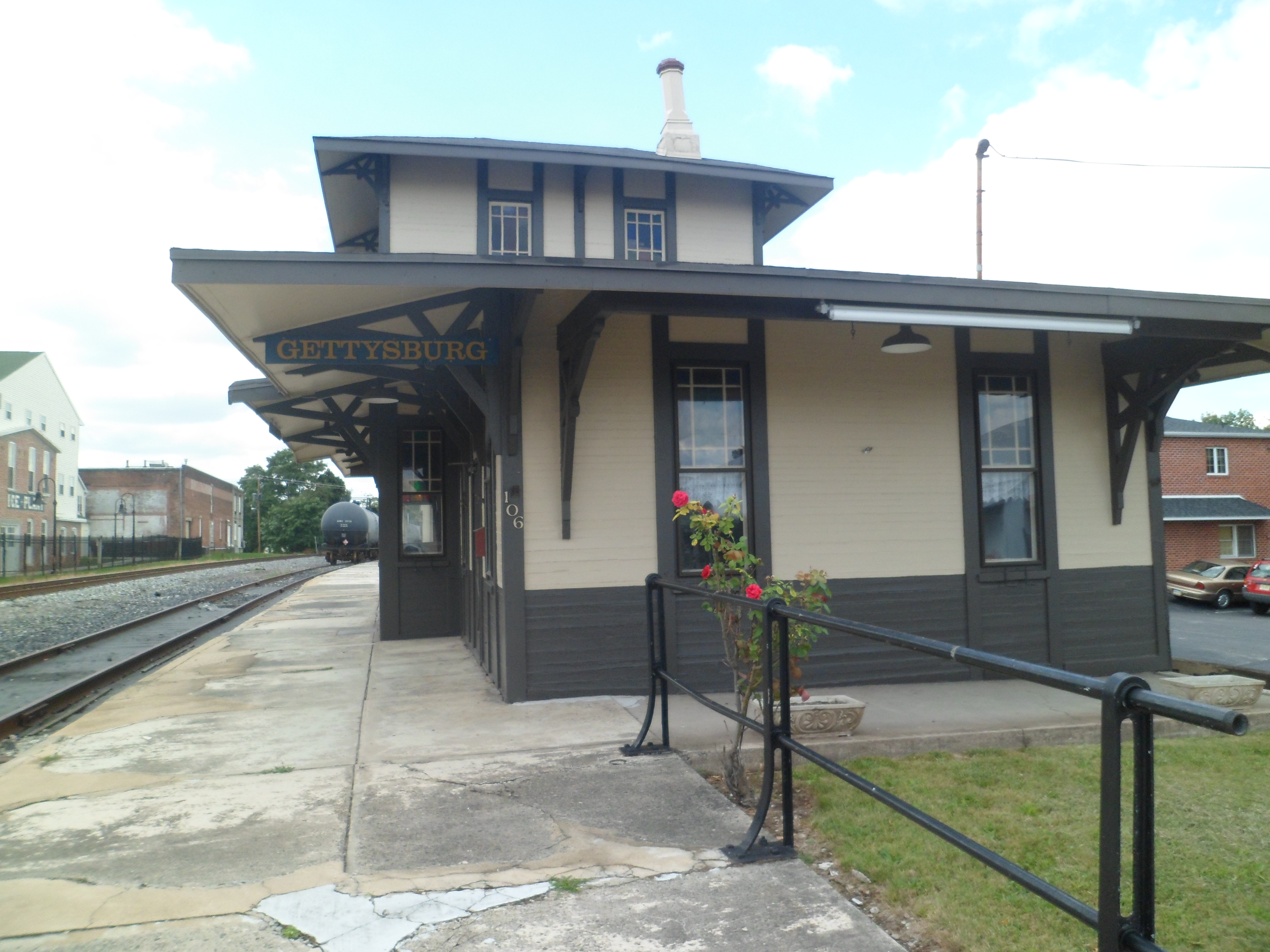
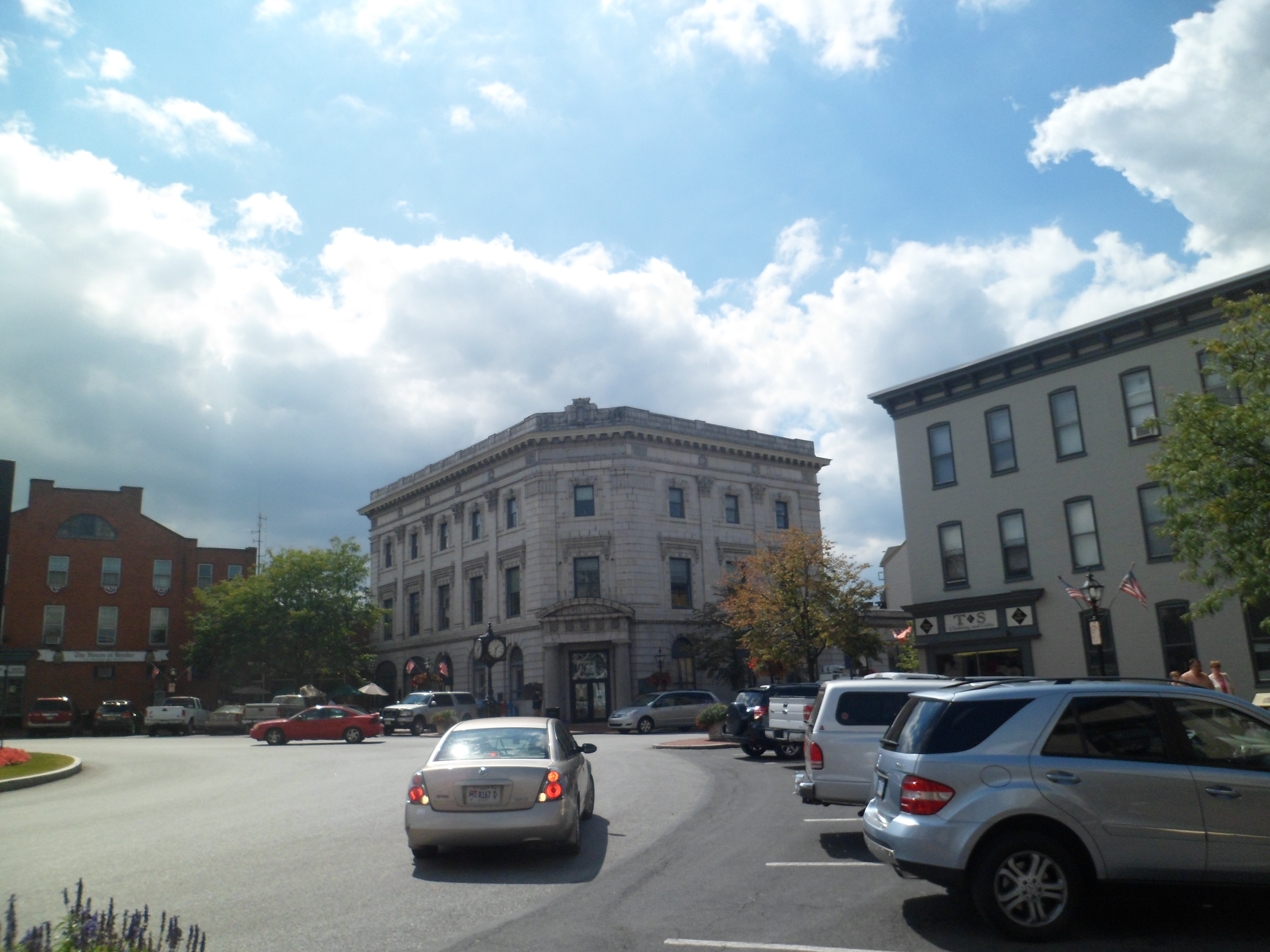
July 14- September 15:  Start- Devil’s Tower, WY. Key stops: Harney Peak, Mt. Rushmore and Pine Ridge, SD; Pipestone and the Twin Cities, MN; Ice Age Trail, Stevens Point and Milwaukee, WS; Chicago; Indiana Dunes; Fruitport, Sleeping Bear Dunes and Pictured Rocks, MI; Manitoulin, Toronto and Ottawa, ON; Montreal, Quebec and Gaspesie, QB; Northern New Brunswick, Saint John and Fundy National Park, NB; Pictou region and Cape Breton, NS; Newfoundland; Prince Edward Island; Acadia National Park, Boothbay and Eliot, ME; the Boston area ( Family stuff and my Mom’s fifteenth consecutive 40th birthday!); New York City; northern New Jersey ( More family stuff); Cape May, NJ; Philadelphia and Gettysburg, PA; Louisville area; western Illinois; Des Moines; Doorley Zoo, Omaha; then back home, through Kansas, the OP and New Mexico.

This is, as we all know, subject to expansion (unlikely) or contraction(always possible).  Stops in between, here and there, are sometimes advisable, for the good of the order.