Mt. Sunflower, Kansas (May 15, 2012)

0

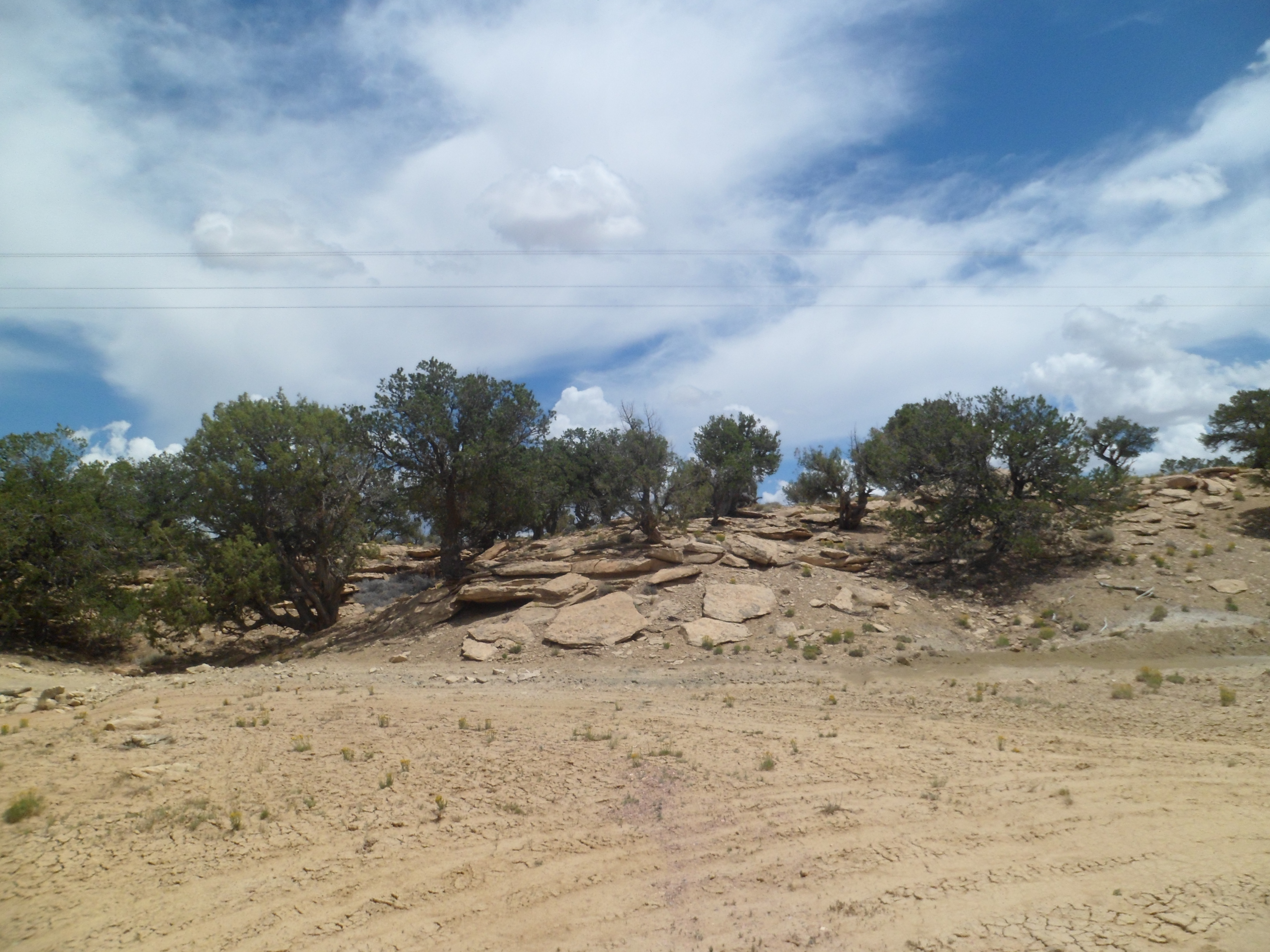
I don’t want to overlook the little side trip that brought me 4,000 + feet up into the Kansas high country on Tuesday afternoon.  I wouldn’t recommend hiking up there, as it would be something of a nuisance to the working farmers and combine drivers who are the region’s mainstay.  There is something enticing about Mt. Sunflower, though.

So, my trusty Kia took me twelve miles up the dirt roads from Goodland and then back out, just west of Sharon Springs.  In the middle of it all, five hard working families toil, day in and day out, towards getting the rest of us at least some of our daily bread.

Here is what the area on and around Mt. Sunflower looks like.

These are actually a sign that one has gone too far west.  Back track 1/4 mile and go through the gate, when you see the pole off to the north.  Below is another indicator to turn around.

This is the spot you’re looking for.


Mountaineering in Kansas is fascinating.  Why, on a clear day, you can see Colorado!

Eastern Colorado (May 15, 2012)

0

I will need to struggle with Windows tomorrow, over who has the right to post what photos.  They claim I can’t legally post photos downloaded from a Yahoo! e-mail, onto a social network.  Sounds like BS.  So, until that gets straightened out, I have no photos from Marshall Mesa or El Dorado State Park.  Maybe @BoulderChristina can post them.  They are her photos, after all.  It was a gorgeous afternoon, regardless.

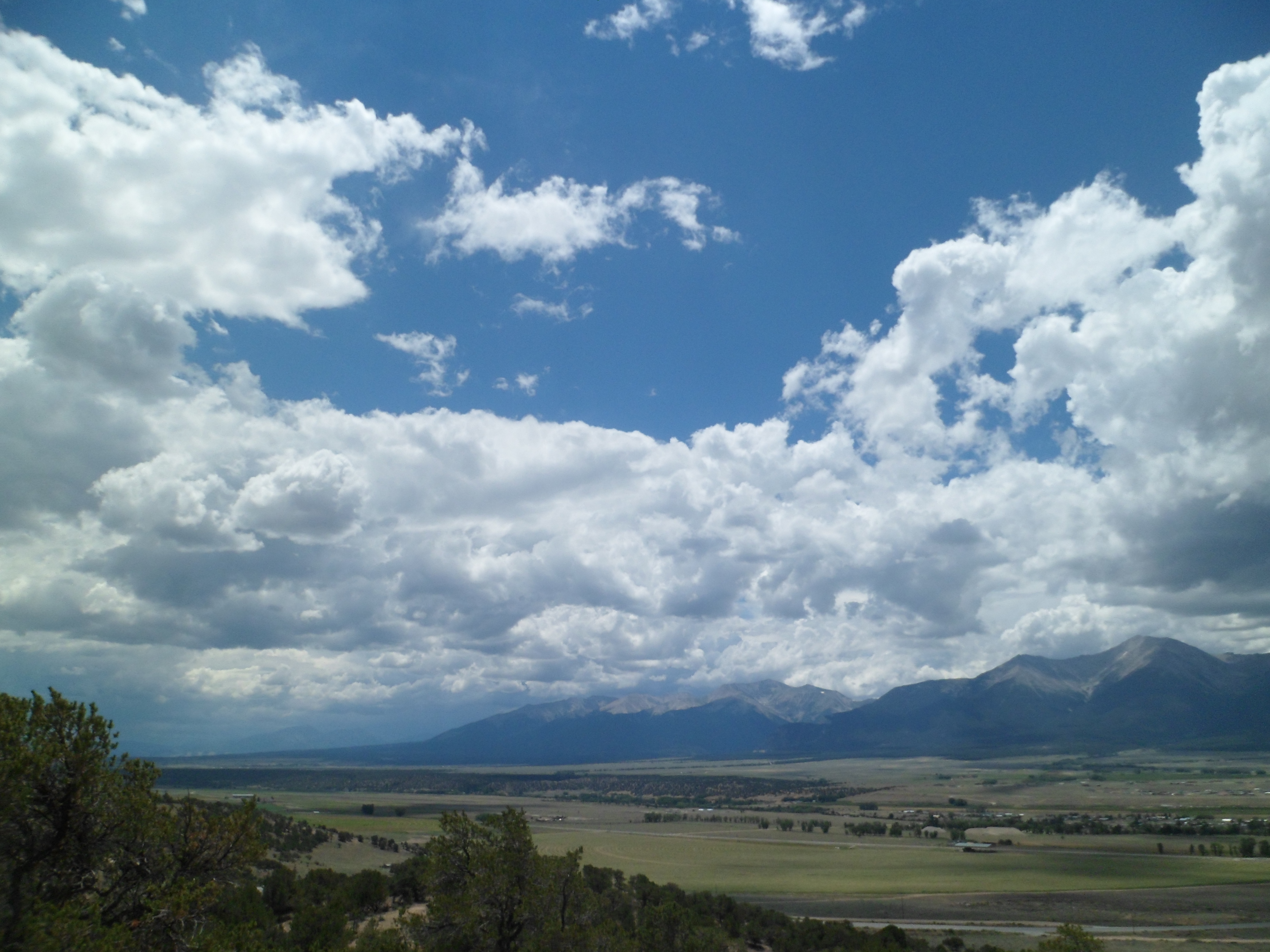
Tuesday, I headed out to eastern Colorado’s plains.  Just outside Denver, there are five small towns which have organized themselves as the Plains High Five.  The group seeks to preserve the area’s ranching way of li, free from suburban encroachment.  They appear to have succeeded, so far.

I kept going eastward, making a brief stop in the town of Limon (LY-min).  Here are some shots of the quiet town.  There is a substantial Railroad Museum there, but it is closed until Memorial Day.

The next  town of substance in eastern Colorado, before the Kansas state line, is Burlington.  This town’s leaders have had the foresight to assemble a fascinating Great Plains village, called, appropriately Old Town.  I have posted an album of the photos from there.  Here are a few for your perusal.

On the left is a sod house, made by settlers throughout the Great Plains, during the Land Rush of the late 19th and early 20th Centuries.  In the middle is a dance hall.

I find the story of anyone’s past usually worth hearing and seeing.  Burlington’s Old Town is a great way to spend $5, and two hours.  It is visible from I-70.

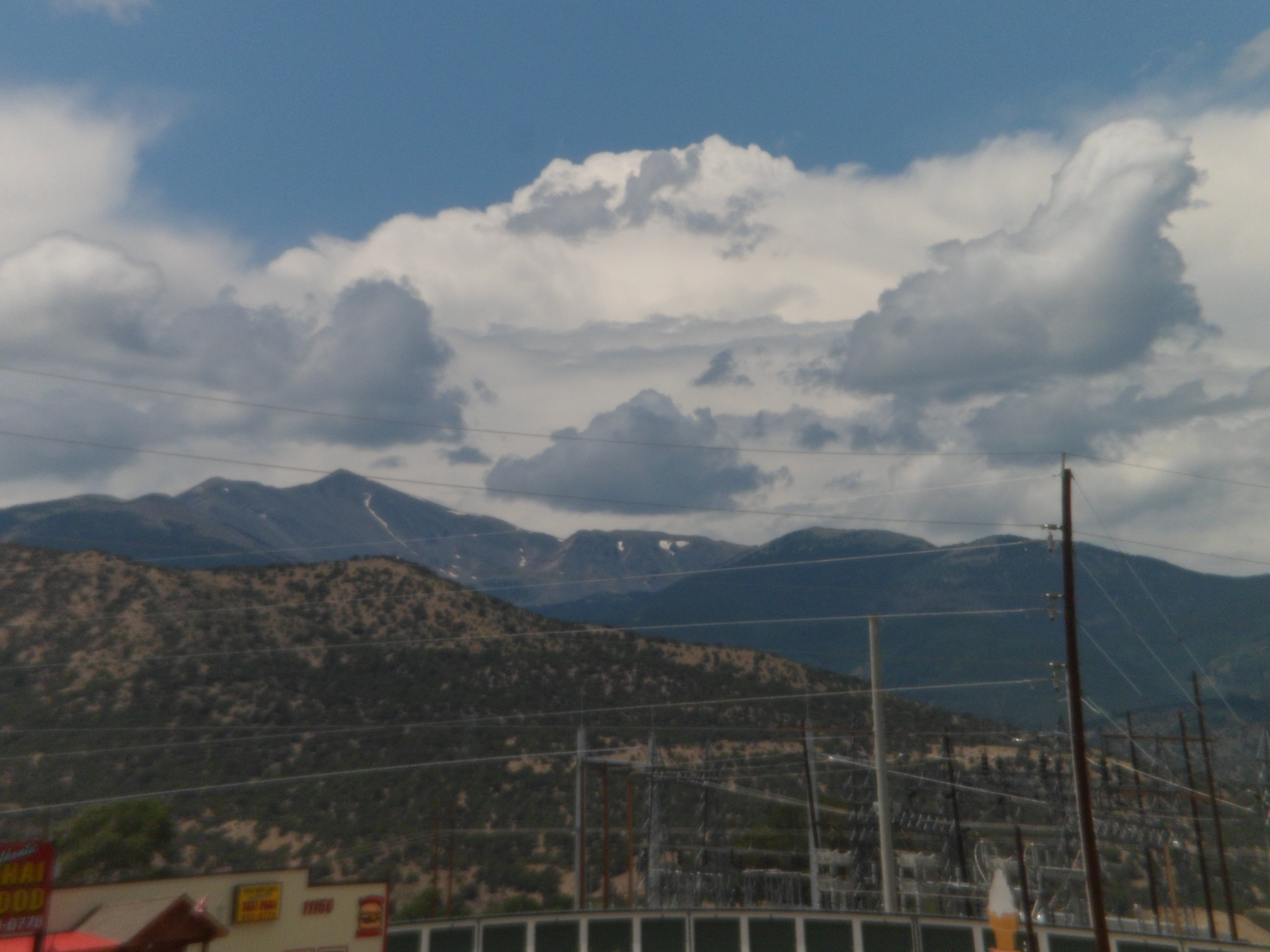
I made it to the top of Kansas’ nearby Mount Sunflower, a high plateau that is the Sunflower state’s highest point.  More on that in a bit.  After scaling the lofty height, my Kia and I returned to Colorado, and drove on towards Lamar, my evening venue.  I happened by Chez DuVall’s, a fine dining establishment, owned by a local rancher, in the town of Granada, as I previously mentioned.  A soft-spoken young lady took my order of Steak & Blue Cheese Salad, which was expertly prepared, and just as expertly presented.  Chez DuVall’s is a great concept, and a lady in Lamar assured me that it is appropriately packed on weekends.

I was blissfully happy after that wonderful meal, and was satisfied with a bowl of oatmeal and some sausage patties for breakfast the next morning in Lamar.  Wednesday led to Oklahoma, and Black Mesa.  More on that, next time.

HIGHLIGHT: Chez Duvall’s

Niwot and More Boulder Hikes (May 14, 2012)

0

This past Monday was the last full Denver area day, for this trip.  I went to visit my Uncle George, whom some of you may remember from last May, at his apartment in Longmont.  The year has slowed his gait, but not his mind.  He took me over to Niwot (Arapaho for “Left hand”), which lies halfway between Longmont and Boulder.  There, we enjoyed seeing a pair of carvings- created from dead trees along the side of the main drag.    Mr. Eddie Running Wolf, Arapaho artist, is the man behind this extraordinary display.

Mr. Running Wolf has not decided yet what he will carve on the remaining stump, or what he might place in the spots on either side of “The Eagle Catcher” or “spear lodge Man”.  Whatever his inspiration brings about, it is sure to convey the dignity and strength of the Arapaho Nation.  BTW, Niwot is named for the Arapaho chief Niwot (“Left Hand”).  After this, Uncle George and I went to lunch at Garden Gate Cafe, in a mall just north of the display.  It’s one of three eateries in Niwot that draw a good-sized crowd. I enjoyed both the Cuban sandwich with a side of slaw, and a gratuitous roast beef with fries, that the server thought I wanted, for some reason.  If you ever get up that way, though, Garden Gate is a satisfying breakfast/lunch spot.

After bidding my uncle adieu, I went over to Boulder, and enjoyed a walk with@BoulderChristina, along Marshall Mesa, plus a quick jaunt down to El Dorado State Park, which is now on the Colorado segment of my bucket list- for the next visit.  I will show photos of both, once I get them from my “Little Sis”.winky

HIGHLIGHT: The Niwot Sculptures

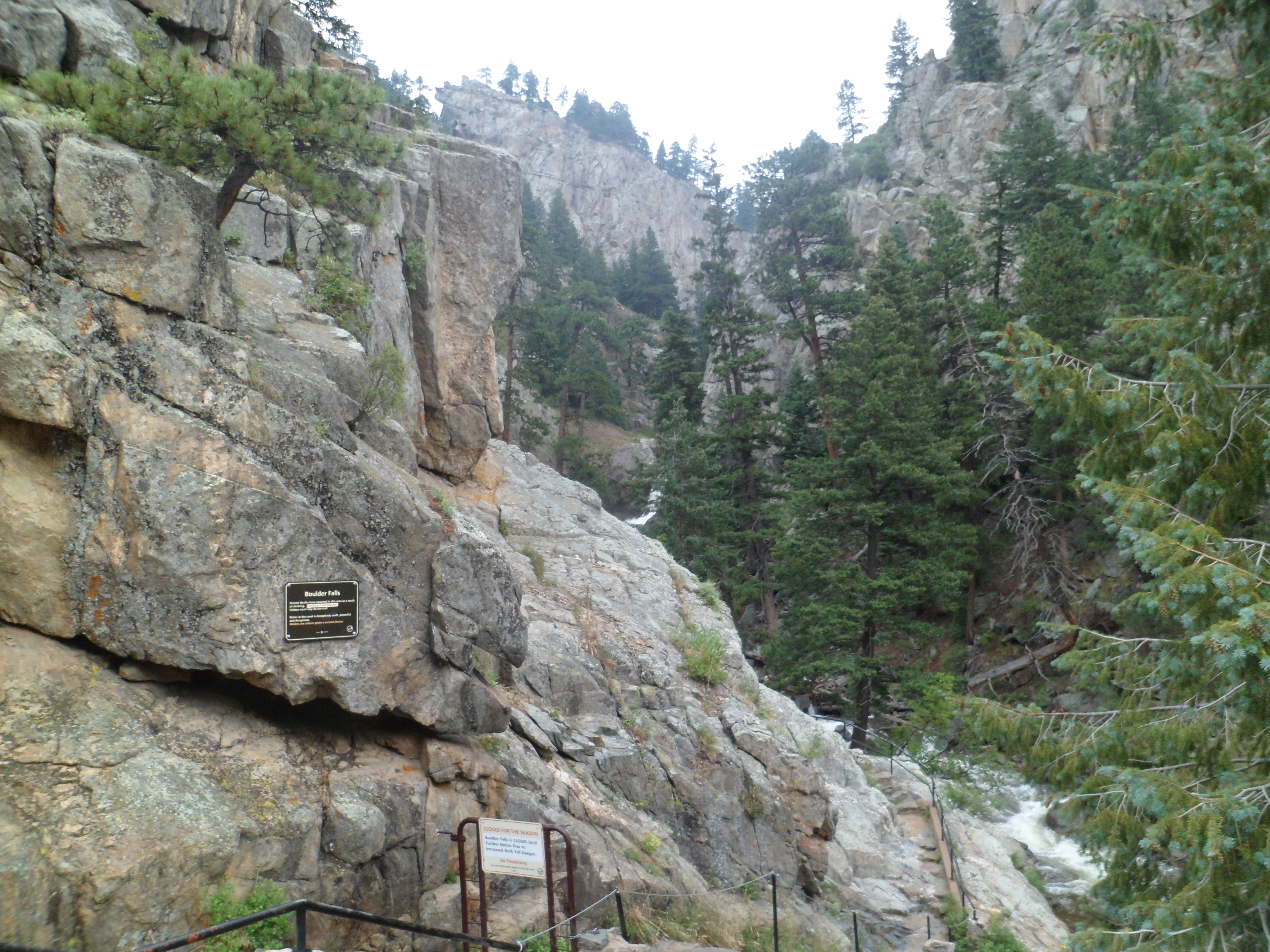
Boulder’s Chautauqua Park (May 12, 2012)

2

I met my friend, @BoulderChristina, on Saturday morning, looking for a cafe that appears to have relocated.  We enjoyed breakfast at North Boulder Cafe instead, and it was perfect.  Then it was time to get her dog, Salem, and ourselves up on one of this magical city’s many trails.  Mesa Trail, in Chautauqua Park, was selected.  It was training time for Salem, and conditioning time for each of us.  

The day was overcast, but it didn’t stop anyone, including us, from getting up into the foothills of the Front Range.  Christina says it gets brown here in mid-summer, and I have seen it so, in nearby Aurora in July.  Now, though, the Rockies are glorious green.


I got along well with the big baby Shepherd, but I’m used to large dogs- having owned two Rottweilers and having been on the best of terms with my in-laws’ late Rhodesian Ridgeback- Great Dane mix.

The morning was awesome and I can see myself someday walking much, if not all, of the 500-mile Colorado Trail- along with a few others.  That will wait a few years, though.  I still have a few things to which I must tend.

Downtown Boulder, (May 12, 2012)

3

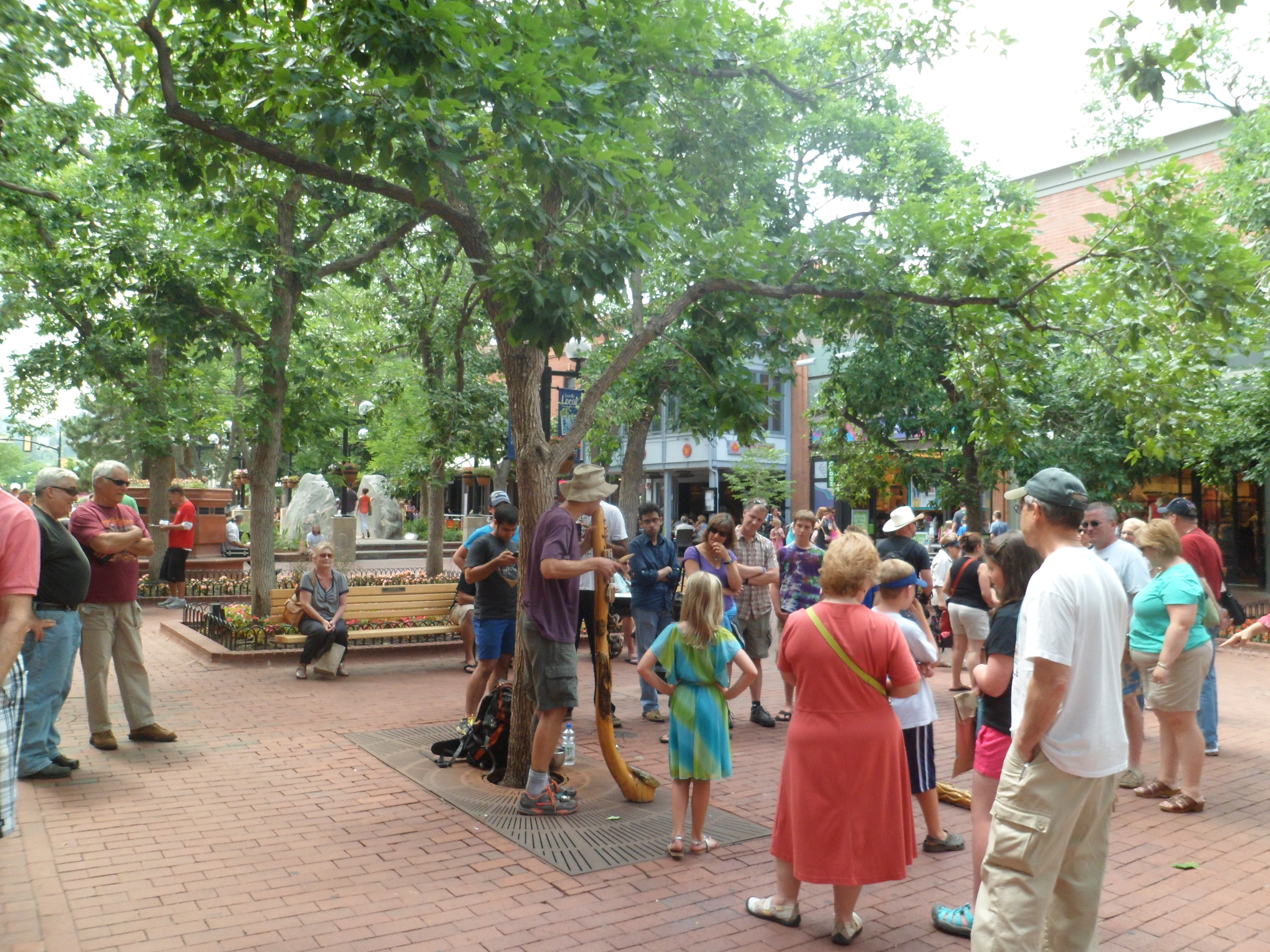
The key to understanding a place is often found in its social center.  For many communities, that means downtown.  Boulder’s Pearl Street Mall is an excellent example of this, with probably a couple of hundred thriving businesses along its route, and along neighbouring streets.  After my visit with @ BoulderChristina and Salem, I headed downtown, purchased a one-hour parking pass from one of the kiosks that line Broadway Street, left the Kia in a lot, and headed for lunch.                                                                                                                                             

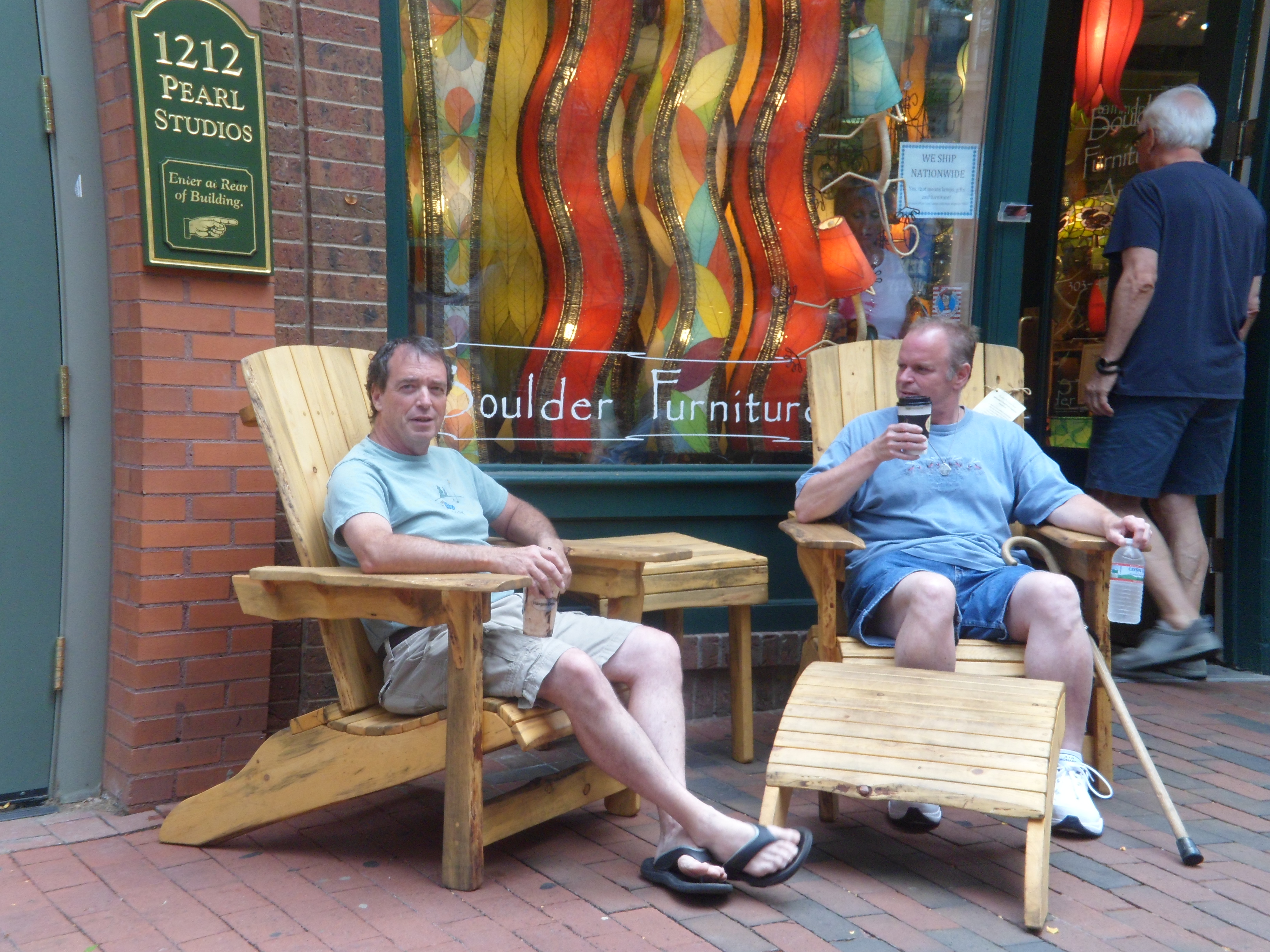
After the chicken salad panini and bhakti chai were a pleasant memory, I left Walnut Street and headed a block north to Pearl Street, and lots of company.  The Mall’s energy belied the dismal weather.  People, thankfully, don’t let a few clouds wreck their weekends here.  There are a wide variety of shops, from Old Tibet to several independent bookstores.  I chose Boulder Bookstore from which to purchase a couple of hiking guides.

Pearl Street, and the surrounding area, are a genuine historic district, from Boulder’s beginnings as a frontier town.

North of the mall, there are some intriguing homes.

I will likely be back in Boulder this afternoon, after visiting my uncle, in nearby Longmont.

HIGHLIGHT: Boulder Books

Mesa Verde to Denver (May 11, 2012)

2

I left Mesa Verde around 3:30, after ascertaining that my family members would be glad to see me whenever  I got to Denver.  The weather remained fine until I reached the top of Wolf Creek Pass, about 90 miles east of Mesa Verde.  There, at the Continental Divide, I knew the rest of the trip would be in precipitation.

Ahead lay the San Juan Range, and the La Garitas.  I did not encounter snow right away, though, and was lulled into serenity by the relative lack of traffic on Hwy. 160.  Maybe it was that lack of business that led  Chief Chavez, of the South Fork P.D., to focus  on my car, tooling through his downtown.  I was stopped, cited and educated about how scofflaws from out of state can end up losing their driving privileges in their home states, if a citation is ignored.  Since I  was raised to play by the rules, I thanked him for this bit of advice, and came back to reality. I have no trouble keeping my vehicle at or under 65 mph.  It’s staying at 40, or under, that gives cruise control fits, and so it’s all on my mental awareness.

As it was supper time, I looked about for an eatery, but there was none that was conveniently located.  I figured South Fork and I had had enough of each other for a while, so I drove on to Del Norte.  The San Juan Valley is not tourist-oriented, per se, so the sidewalks roll up early.  I did get a sandwich and coffee at Peace of Art Cafe, just as they were closing for the night.  It was gratifying to see the Rio Grande a bit healthier than the last time I passed by it.

It was about forty minutes later that I found myself facing snow.  From Conchas Springs to Conifer, Hwy 285 was, to varying degrees, slick and slippery.  I drove with all manner of caution- in the midst of a second reality check.  The angel on my shoulder, and my own long-standing driving habits, got me safely to Northglenn, and a warm house, around 11:30 P.M.

One just never can tell how a day will turn out, but as long as the lessons learned make me stronger, it’s all good.

HIGHLIGHT: Safely getting to Northglenn.

Mesa Verde Afternoon

2

In seeking to understand the civilizations which predated Europeans in the American Southwest, there are certain places which offer more insight than others- Chaco Culture National Park, Casa Crande Ruins, and Mesa Verde.  This was my third visit to the latter national park, and probably my longest.

I arrived in Cortez at 2 A.M., Friday, and caught six hours of sleep.  After a typically fine breakfast at Jack & Janelle’s, I was ready to roll.

The prognosis was for rain, but the day in southwest Colorado was picture perfect.  After running a short gauntlet of road workers, I arrived in Mesa Verde at 11:30.

The terrain is filled with mountains (La Plata Range) and canyons- and has a fair amount of poison oak.

The original road into the ruins, built in 1916, resembled a country road in the Andes.  It was, suitably called the Knife Edge Road.

In 1957, Knife Edge Road was replaced by a more accommodating tunnel.

The La Platas are, nonetheless, a challenging environment, several months of the year, and were all the more so for the Ancient Puebloans.

As with any civilization, that of the Ancient Puebloans started small, with pit houses, on the mesa tops.

Gradually, with more groups coming to the area, development became more robust and conflict ensued.  These factors led to more sophisticated structures, and to some taking to cliff dwellings that were less accessible to interlopers.

The kiva on the above right is a prototype of those later adopted by the Hopi, Zuni and Rio Grande Puebloans, for their ceremonial use. Below are more cliff faces which attracted the short and nimble Ancient Puebloans, formerly called Anasazi (“Ancient Enemies”).

As in many organized societies, there was a system of worship, the most significant representation of which was at Sun Temple.

The lion’s share of the anthropology and archaeology which uncovered the story of these intrepid folk was led by:

Several groups of school children were learning about Gustav, and the Ancient Puebloans, at Chapin Mesa Museum,  on the southeast segment of Mesa Verde.  Active research goes on, especially in Wetherill Mesa, a seasonally-accessible section of the park, which won’t open until Memorial Day weekend.  So, another visit to Mesa Verde will certainly be in order.

Next up, the road to Denver, and my pair of reality checks.

HIGHLIGHT: Checking out Sun Temple.

Yavapai’s Rooftop

7

I finally got up to Yavapai County’s highest peak, Mt. Union, yesterday afternoon.  The road to Potato Patch community was not as skeevy as it was the last time, and the parking area at the edge of the village was snow-free, so I parked and walked through Potato Patch to the trailhead.

The trail was generically uphill, through ponderosa pine, but my focus was on the shade, and the fragrance, as opposed to dwelling on the sameness.


Mining does not appear to be active here, but the claimant is taking no chances, with the “gold rush”(dribs and drabs) downhill in Stanton, AZ.


I spent some time along the east slope of nearby Mt. Davis.  Summiting it did not seem very easy.  There must be  a route to the top, though,as others have written about reaching it.

There are always more mountains, no matter how many one explores.  Here are nearby Moscow Peak (foreground) and Big Bug Mesa(background).

The summit of Mt. Union offers radio towers, and views of the southern Bradshaws.

Then, one can view Granite Mountain, off to the northwest,

and little old me, too close to the camera.

Hope Thursday finds everyone in a hopeful mood.cool

Lions, Tigers, Bears and A Crank Telephone

2

As the road to Mt. Union trailhead was snowy and slippery, after Saturday’s weather outburst, I opted for a three- tiered visit to the Verde Valley, as my Sunday outing.

After Sunday breakfast with my friends at the Post, I headed out to the Clemenceau Heritage Museum, in Cottonwood.  It is Cottonwood’s historical museum.  Mining and rail magnate James S. Douglas founded a smelter and a town, named Clemenceau, after the Prime Minister of France, Georges Clemenceau (depicted below), who was a friend of his.  The area became part of the town of Cottonwood in 1960.

The museum is only open on Wednesdays and Friday- Sunday, due to limited volunteers.  It does have a decent collection of memorabilia from the life of a teacher at Clemenceau School in the 1900’s, a model train collection, whose builder is the docent, and various items connected with the Clemenceau Smelter.

The various trains and tracks occupy a whole room.

Here’s a typical classroom from the 1900’s.

I have used each type of radio, at one time or another.

Can’t say I’ve used a telephone like this, though.

After about an hour at the museum, I headed east on the road towards Camp Verde, stopping for a couple of hours at Out of Africa Wildlife Park.  Here the accent is mainly on large carnivores, with a small number of herbivores on the periphery of the park.  The mission of the park is education of the public, regarding the needs of large animals, and conservation.  The first segment involved tigers frolicking in a sizable pool of water, with some attendants tossing them balloons and chunks of meat.  Tigers are not averse to water, the way house cats are, so it seemed something enjoyable for them.


Roaming around the fenced-in range, though, would bore me, too.

It had to be warm for the Grizz.

There were various lions, both savannah and Barbary (Sahara Desert) types.

The white tiger shares a range with a lioness.


The Black Bears and the hyenas live in pairs.

Here is a jaguar, which kindly posed for this photo.

This capybara is the world’s largest known rodent.

Last, but not least, this black ibex is one of several herbivores which are housed on the park’s eastern edge.

As there was still plenty of daylight left, I chose to end the day with a short walk in Clear Creek Park, which allows a visit to one of the Verde River’s more prolific tributaries.

It has some of the same limestone ledges that are found at Montezuma’s Castle.

The major draw, though, is the free-flowing water.  Unlike that of Prescott, the water is not so completely dammed-up and channeled.  The Verde, Clear Creek and Beaver Creek  have limited irrigation and reservoir usage.


Nature is like Chinese boxes, and this little trip opens the way to others in the future, like Beaver Creek and Fossil Creek, both further east in the Verde watershed.

White Boulders and A Seeker of Truth

2

I have had this urge to further explore the area of Agua Fria National Monument known as Badger Springs, for some time.  Looking at the weather prognosis of rising temperatures in the Sonora Desert, it seemed yesterday was the best day for this.  I headed out before fixing lunch, which I don’t often do- and found myself at the empty parking lot of Badger Springs Trailhead, some twenty minutes later.

I stopped and sat on a rock in the gas company’s line field, and finished off a “lunch’ of trail mix, then headed on down the trail into the Monument itself.  The first part of my journey followed a BLM road, up and down desert hills, for about two miles.  I was planning to hike around for two hours or so, then head back to town.


The landscape is full of white granite and limestone, leached by the intense summer sun, for thousands of years.

It is also the season for cacti to flower, so the hedgehogs were very accommodating; so, too, were the desert bushes, like the catsclaw.


As I was headed up and over yet another hill, I heard a rustling on the trail behind me.  I was no longer alone, with the approach of E., who, it turns out, is a frequent visitor to these parts.  She had a light, almost ephemeral, manner, and offered to show me Badger Springs’ most amazing area:  The Agua Fria itself, flowing in earnest.  So, we backtracked and went down to a spot where the river which has given its name to the monument.

Coming to the conclusion that the intervening marsh land would not make for a pleasant walking experience, we headed further west, to the actual Riparian Trail.  Along the way, we were greeted, briefly, by a bull snake, which hightailed it back into his hole, after checking out the “threat’ with his tongue.

Other than a red-tailed hawk, the snake was our only vertebrate companion for most of the afternoon.  We came upon these scenes, once reaching the river.  There are petroglyphs, just before the river itself.

Then, the Agua Fria reveals what made Bruce Babbitt work to get this area designated as a national monument, in the first place:


After we took off socks and boots, rolled up our pant legs and enjoyed the cool water  for a while, we sat on a limestone boulder which has brought E. great comfort in the past.  She has spent many hours with this rock, and contemplated its story:  All the people who have sat, laid or just stepped on it; the ants who crawl over it, in search of tidbits; the weather and water it has endured. For the next ninety minutes, we sat and discussed just about everything under the Sun- our life experiences, her metaphysical beliefs, my faith, Christ, Baha’ullah, Quantum Physics, ectomorphs and endomorphs (She is the latter, and I am somewhere in the mesomorph range), her career as a hairdresser and mine as an educator, my life with Penny, and our respective child-rearing experiences.  I realized that my conversations with people, of late, have been getting much longer and more intense, but also much more mutually satisfying.  So it was yesterday afternoon- just two souls, appreciating the joyous day and our surroundings. Her purpose, E. said, was to seek after truth, and so we did.

The surroundings got even better still.  After another ten minutes of boulder hopping, E. led me to the Agua Fria’s piece de resistance.              


This led to another forty minutes of discourse, by which time, we found the after-school and after-work visitors arriving, jumping in the cool water, as we had earlier, and, up on the mesa above, engaging in rifle practice, though thankfully not aiming at any of us below.  Two hours had turned into four and a half, and it was time to head back to the cars.  The delightful afternoon began and ended with a hand shake.  There were no exchanges of e-mail addresses, phone numbers or future meet-ups.  The afternoon was far too meaningful- and the surroundings much too blessed.