The Road to 65, Mile 364: The Stuff That Matters

5

November 27, 2015, Chula Vista-  The brisk walk from Aram’s apartment to the area’s Costco was a two-mile round trip.  I carried a small box, with salad fixings and a brick of sharp cheddar.  I could have driven, or taken the bus.  Instead, I was inspired, both by my own tradition and by a tourist in New York, who preferred to walk uptown from One World Trade Center, so as to “see what I’m passing.”

Having made two long journeys, this past year, I can say I saw alot.  There are differences between the Pacific Northwest and the Gulf Coast, but also key similarities.  Both are humid and moist.  Both have people who are passionately close to the sea.  Both require crossing starkly beautiful deserts, if one approaches by road or rail.  Both have compelling stories to share and both have celebratory traditions.  The Native Americans and First Nations peoples of Oregon, Idaho, Washington, British Columbia and southeast Alaska have civilized traditions and lore going back thousands of years.  So do the Cherokee, Creek, Choctaw, Miccosukee, Alabama, and the hybrid nation we call the Seminole.  The story of the Aboriginals of North America matters, immensely.

Having hiked up Mt. Verstovia, along East Glacier Trail, six miles around Ketchikan, all over Manzanar, on two more segments of Black Canyon National Recreation Trail, and along the Prescott Circle, not far from my place of residence, I feel continually blessed by nature, health and mobility.  The environment matters, enormously.

I spent time among the historical remnants of early European settlers and missionaries, in Santa Barbara, San Luis (now called Tallahassee) , San Antonio, Wrangell and Sitka.  They wreaked havoc on those they found in the area already, thinking that educating the “savages” and exploiting the natural resources were their twin obligations to King and Country.  Their successors followed suit, and I saw the results- some worthy of respect, (Tonopah, Bellingham and Moscow,ID), for the honest labour that modestly claimed a share of the resources of land and sea.  Others, like the ravaging of Native Peoples in Sitka and Hoonah, the slaughter of Chinese immigrants in Hells Canyon and the internment of Japanese-Americans, as recorded for posterity, at Manzanar and Poston, stand as reminders of just how far we have to go.  The historical record matters, tellingly.

I returned to work, towards the end of this, my 65th year, secondarily to recoup some of my financial resources, but primarily because the well-being of yet another rising generation needs whatever champions who can arise.  I will work another five years or so, as long as my health and the goodwill of the powers that be remain strong.  The people we call “Millennials” and “Generation Z” matter, beyond measure.

I will miss Margaret and Ardith Lambert, Tom Boyd, my Xanga friends who called themselves Inciteful and Sister Mae, and feel the losses of several friends’ parents, whom I never met, but sense their character, in the people their children, who are my friends, have become.  Losses matter, achingly.

I visit with my son, not as often as I would like, but when our mutual schedules permit.  I communicate with my immediate and extended families, again not as regularly as is desired, but often enough that we know we are there for one another.  I visited with an elder in Colorado, at the beginning of this year, attempted to spend time with another elder in Florida, though to no avail, and did visit with people I regard as family, in Alabama, Mississippi, California,Nevada, Washington and Alaska.  Family loves, quarrels, understands, misunderstands, hides, seeks and ultimately stays in bond.  Family matters, indelibly, and yes, to answer an online friend’s plaint- family includes friends.

Central to all has been Faith.  Looking back at the past 6 1/2 decades, I could never have survived my own missteps and foibles, or the trials sent my way, without knowing that there is something greater, Someone Indestructible, always seeing and caring.  Belief, and the Faith Community, matter, in primacy.

So, my road to 65 nears an end.  It has been vast, long, alternately wide and narrow, by turns straight and curving.  It started at the end of a year of intense expansion of personal boundaries and ends at the beginning of a year of unknowns.  Decisions made by others will figure greatly in my course of action.  Time goes on.


The Road to 65, Mile 362: Passing Through Yuma

2

November 25, 2015, Chula Vista-  After getting my Nissan serviced, and a few other errands, which are always necessary before departing Prescott, I headed down the mountain, towards San Diego, and a holiday weekend with the most important person in my life.

This time, I opted for a twist.  Turning onto AZ 95 south, at Quartzsite, in Arizona’s Outback, I headed down to the southwest AZ city of Yuma, underrated largely because of its status as the hottest spot, in a state that is very hot from May to October.

Nowadays, though, Yuma is very, very pleasant, and it was quite cool, when I rolled up Prison Hill, for a walk around the East Wetlands and along the exterior of Yuma Territorial Prison Historical State Park (about which, more, on my next visit in mid-March).

The Wetlands trail takes the walker down to the Colorado River, which is in fairly good shape right now.  Here are a few scenes of what I encountered. (These are what the new and improved Word Press offers as a photo collage, under Windows 10.  Just click on the photo, to see the caption.)

The rest of the journey was spent navigating high speed, rather frenetic holiday fellow travelers:  Crowded road from Yuma to El Centro, a bit quieter from there to Alpine and bustling again, until I got to Chula Vista.  In Alpine, I enjoyed a decent Gyro plate at Greek Village Grill, which sits tucked away in a restaurant mini-mall, on the south end of downtown.  The town itself looks worthy of further exploration, when it is light out.

For now, as indicated above and at the second from lower right, I will be happily celebrating Thanksgiving, the Day of the Covenant (see next post) and the 65th anniversary of the arrival of a squawling, but eventually happy, baby boy.

The Road to 65, Mile 350: What Paris Taught Me

8

November 13, 2015, Phoenix- I spent a good part of the day here, taking my third and last Elementary Certification Test.  While my day, to and from this bustling city, was peaceful, Paris’s Friday was the opposite.  DASH, or IS, or whatever the relics of medievalism call themselves, cast the City of Light in mayhem and blood.

With 129, or more, innocent people slaughtered, I am on my knees in homage to the great city, which welcomed me in June, 2014.  My adulthood has been late in blooming, and Paris gave me some key lessons, in that regard.

I learned:  Two very different places, within the same city, can have the same, or very similar names.  So, I trudged up the hill, to beautiful Montmartre, only to have a tourist office clerk patiently explain that my hotel would be found on Rue de Montmartre- down the hill, in central Paris.

I learned that French people can be quite annoyed with a visitor’s foibles, yet still provide fine service- this at my hotel, and again at the France Pass counter, in the west train station.

I learned that, even if one is slightly less than punctual, a tour guide is willing to take one into the group- once.  I didn’t chance being a few minutes late, the second time, though.

I learned that I was fully capable of catching, and dodging, the various ruses used by the “Gold Ring Grifters” and the subway “Card Swipers” (whose “service” consisted of swiping one subway ticket through the card reader, in hopes of a 200 Euro tip.)

I learned that Paris, with all its majesty, its splendour, its sheer humanity, has room for one more, regardless of background, status or appearance.  I also learned that its Metro cars are not like those of Tokyo.  There are no pushers, cramming people in.  On the Metro, the one more must often wait for the next train.

Still and all, when I return to Paris, perhaps in the summer of 2018, or five years hence, I will find a welcoming presence, expecting one who is a bit wiser in the ways of La Luminee.  We shall not disappoint each other.  I feel your sorrow, your pain, mon coeur.

The Road to 65, Mile 271: Hostels

2

August 26, 2015, Prescott- Our city has a small youth hostel, located on a quiet west side street.  I’ve not had reason to go by there, but as I had positive experiences  with youth, and other, hostels, this past June, I would help anyone wanting to visit here, who also enjoys the hostel life, to get reservations.

The hostels in which I stayed, in southeast Alaska, were varied in terms of gender separation vs. “coed” floors.  Juneau had a very strict separation of sleeping facilities.  Sitka gave the adult hostelers a choice.  Ketchikan’s hostelers were all men, so the matter didn’t come up, when I was there. I usually opt for a “coed” bay, when it is permitted, as I don’t have any hidden agenda, and being with mature women, or a strong couple, just seems more normal to me.

The common rooms were in varied states of decor.  Juneau had a spacious area in which to relax, and a sizable adjoining kitchen.  Sitka had two small kitchens, and a very pleasant enclosed veranda, which offered a view of an eagle’s nest, in a spruce tree nearby.  Ketchikan had a small kitchenette, and a TV room, which was modest but comfortable.

Going back to the hostels, for the first time since I stayed in one in San Diego, in 1980, gave me a good chance to make a number of new friends.  I hope that anyone traveling either alone, or with a best friend, will consider this option.  It’s not as “rough” as it sometimes sounds.

The Road to 65, Mile 262: Safe Havens

4

August 17, 2015, Prescott- Yes, today was better than yesterday, and, as an online friend pointed out, it might be a good idea to stay in one place for more than a fortnight, if I want it to feel like home.  I got everything accomplished today that had to be kicked down the road, yesterday.

I want to make another A-Z post.  This time, it’s about places where I actually do feel at home, and safe.

A- Amarillo, because I know right where to head, to “sit a spell”; Anacortes, which is on the short list of places I’d consider, if I need to leave my present community; Albuquerque, where I’ve had some of the most enjoyable vacations, back in the day.

B- Bellingham, a most pleasant spot in which to wait for a ferry; Bisbee, the second-most relaxing place in Arizona; Boston, because it is truly a Hub of Learning and cultural explosion.

C- Carlsbad(CA), where I can always find a welcome, no matter how late it is at night; Claytor Lake, the Virginia spot where two rangers took me in, at 11 PM, on a Sunday night, when I was beside myself with emotional pain; Chicago, because it is majestic and amazing, and I feel safe, actually, no matter what part of town I’m in.

D- Denver, always a place for a good time and connecting with the salt of the Earth; Durango (CO), and may the blessed Animas be healed;

E- Enid, as fine a place to rest and connect with a friend, as I’ve ever known; El Paso, I can sit around here, too, and jabberjaw for quite a while.

F- Fort Worth, one of the friendliest big cities I’ve visited; Flagstaff, because it’s just my second home.

G- Glendale (AZ), four months a year, one of the most relaxing and walkable downtowns in AZ; Glenwood Springs, a comforting steam bath always awaits.

H- Honolulu, misty and ever magical; Hagerstown, a must-stop respite, from the pell-mell rush of BosWash; Hermosillo, the first place I ever visited in Mexico.

I- Inglewood, the resting place of the first Baha’i in the U.S., where I was greeted by a red-tailed hawk.

J- Jasper, one of the loveliest spots in Canada; Juneau, because of the hostel, and Mendenhall; Jeju, my first real Asian home.

K- Ketchikan, frenetic, by Alaskan standards, but still filled with good-hearted people; Keams Canyon, because I got to know Penny there.

L- Lille, working-class and down-home France; Lynn, because so many family members are still there, and it’s the Beach; Luxembourg, the most welcoming party place, ever.

M- Moscow (ID), because people begged me to hang out there a while longer; Manitou Springs, for the same reason; Memphis, because, St. Jude’s, and Beale.

N- New Orleans, nothing more need be said;  Nashville, homey and loving.

O- Oceanside, the Rock Walk rocks; Oklahoma City, the only place where I was invited to a County Employees’ Picnic; Ocean Springs, just a calm and homey place to meet a friend.

P- Prescott, more of a home than I sometimes acknowledge; Phoenix, because so much of me is still there; Philadelphia, because of Germantown, the river, and my extended family; Portland, because it’s ever in bloom.

Q- Quincy (IL), the trees, the river, and the Ali family.

R- Reno, because my soul family is there; Rouen, my roots run deep.

S- San Diego, my California home; Saugus (MA), the core of my family; Strasbourg, my Alsatian brothers and sisters; Sedona, the most relaxing place in Arizona; Sitka, because it is a place truly apart.

T- Tallahassee- a surprise around every corner; ; Tucson, because my friends are always glad for my presence; Tuba City, where I first connected with Native Americans, on a deep level, and where we first had a married home.

U- Utah Beach, always a place of honour and reverence.

V- Versailles, both excessive resplendence and down-to-Earth goodness; Vicksburg, a reminder of how things can go wrong, and be made right again, over time; Victoria, an honest and well-balanced little city.

W- Washington, despite all the bluster and phoniness, underneath it’s an exquisite city; Wenatchee- the consummate survivor town; Wrangell, because it felt like home, before I left the boat.

X- Xenia, an Ohio town with enormous heart.

Y- Yellowstone, no more magical place exists, anywhere.

Z- Zion, a different side of Illinois.

Of course, I could list more such places, like Bruges and Bastogne, but you get the point, if you’ve read this far.

The Road to 65, Miles 246-7: The Spirit Has Many Homes

8

August 1-2, 2015, Hano Village-  By way of introduction, Hano is one of three villages atop the Hopi landmark known as First Mesa.  The twentieth-century town of Polacca, named for Chief Tom Polacca-ka, one of those who led the Hopi during the time of transition into a relationship with the U. S. Government, lies at the base of First Mesa, and is the locus of four schools, the Police Department,  the Tour Office, a post office,a small hospital, and an even smaller store.

I set out around mid-day on Saturday, and headed up to I-40, past Flagstaff and Winslow, to Holbrook, the seat of Navajo County.  Some long-time friends and collaborators, from my days as counselor at Jeddito School, live there.  I hadn’t seen them since they suffered a tragic loss, so a visit was well overdue.  After settling into Holbrook Inn, one of the town’s many cheap motels, I went over to visit with Bob and Jacque.  This is one of those times when, as an old Navajo medicine man once put it, “you put your watch away.”  Many recountings of the departed, stories of other aspects of our lives on the Reservation, a fine Tex-Mex chimichanga, and discussions of health-enhancing products, filled nearly five hours on Saturday afternoon and evening, before it was time for all good souls to wind down. So, it was back to the motel for me, with a good night to my friends.

Today, Sunday, came quickly enough.  I dreamed that I was tending to the needs of some close relations, who had been incarcerated.  This was probably a logical outgrowth of the part of the conversation that focused on my friends’ helping those who had found themselves in the County Jail, and some who are in a state prison.  We can’t, in good conscience, forget those among the fallen who have either committed “victimless” crimes, or who have been over-sentenced, which happens a lot in Tribal Courts, and other small-town judicial locales, in the name of “tough love”.

I headed northward, after an adequate breakfast of pancakes and sausage, at a small diner called Tom & Suzie’s.  Highway 77 is a familiar-enough road.  All of the highways between Flagstaff and Gallup are:  It’s what Penny, Aram and I did on weekends, for the seven years we were up this way- mostly to shop, in one or another of the “border towns”.

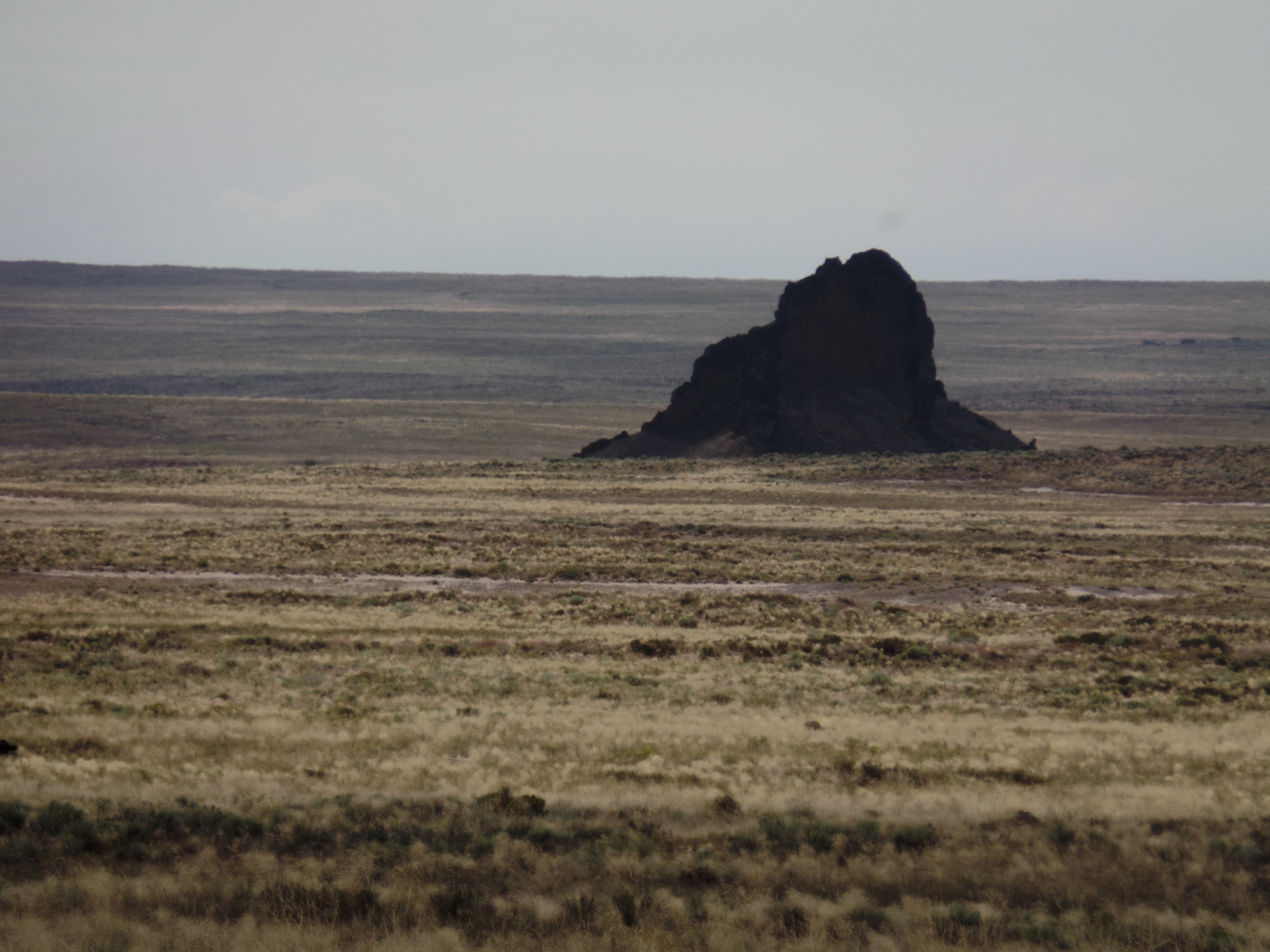
I stopped in a few spots along the way up the 77, to note some of the geologic gems in the areas known as Indian Wells and White Cone.  This small outcropping, about seven miles south of Indian Wells, looks a bit like the famous Ship Rock, northwest of Farmington, NM. So, I refer to it as “Little Ship Rock”.

SAMSUNG CAMERA PICTURES

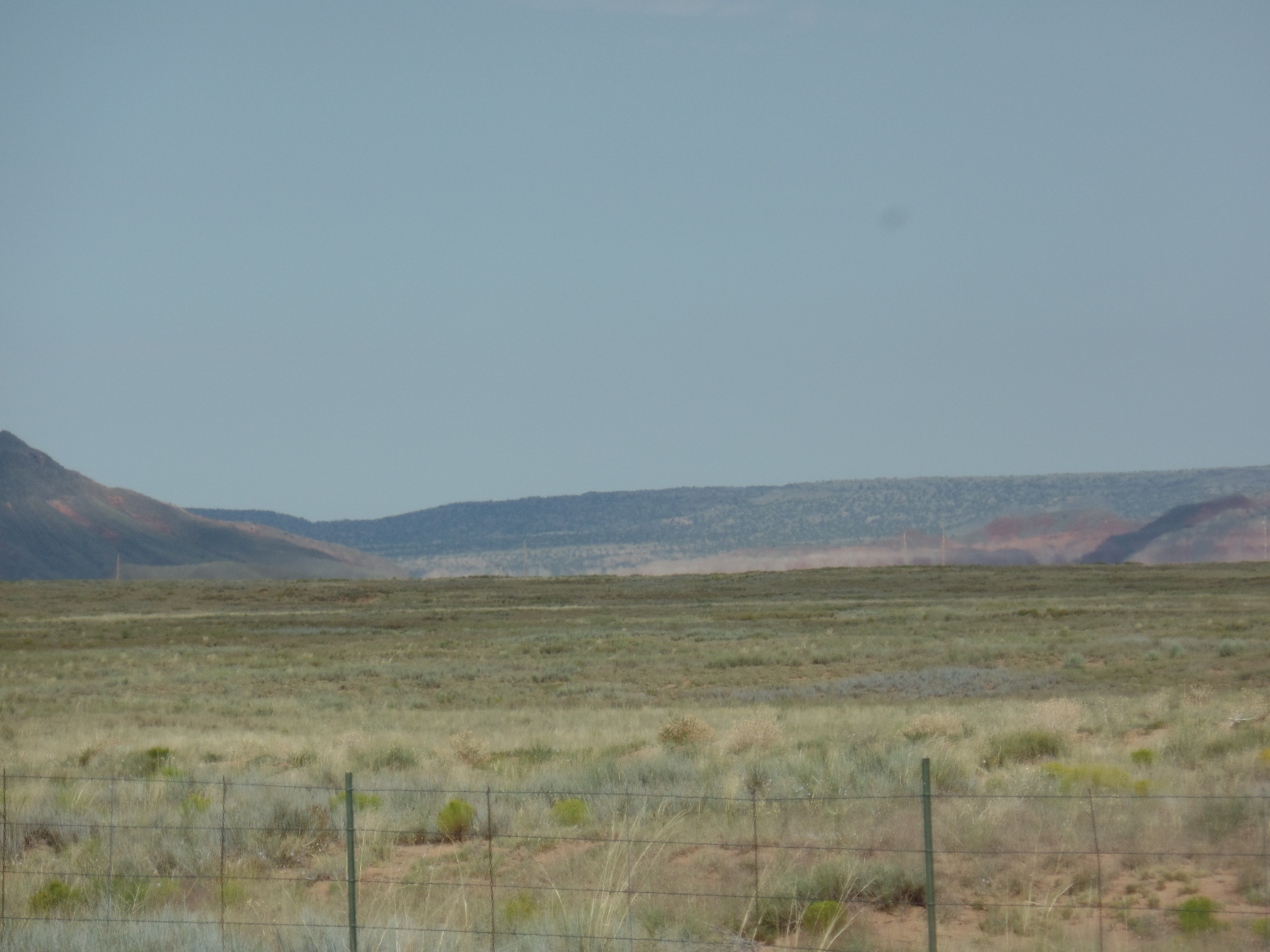
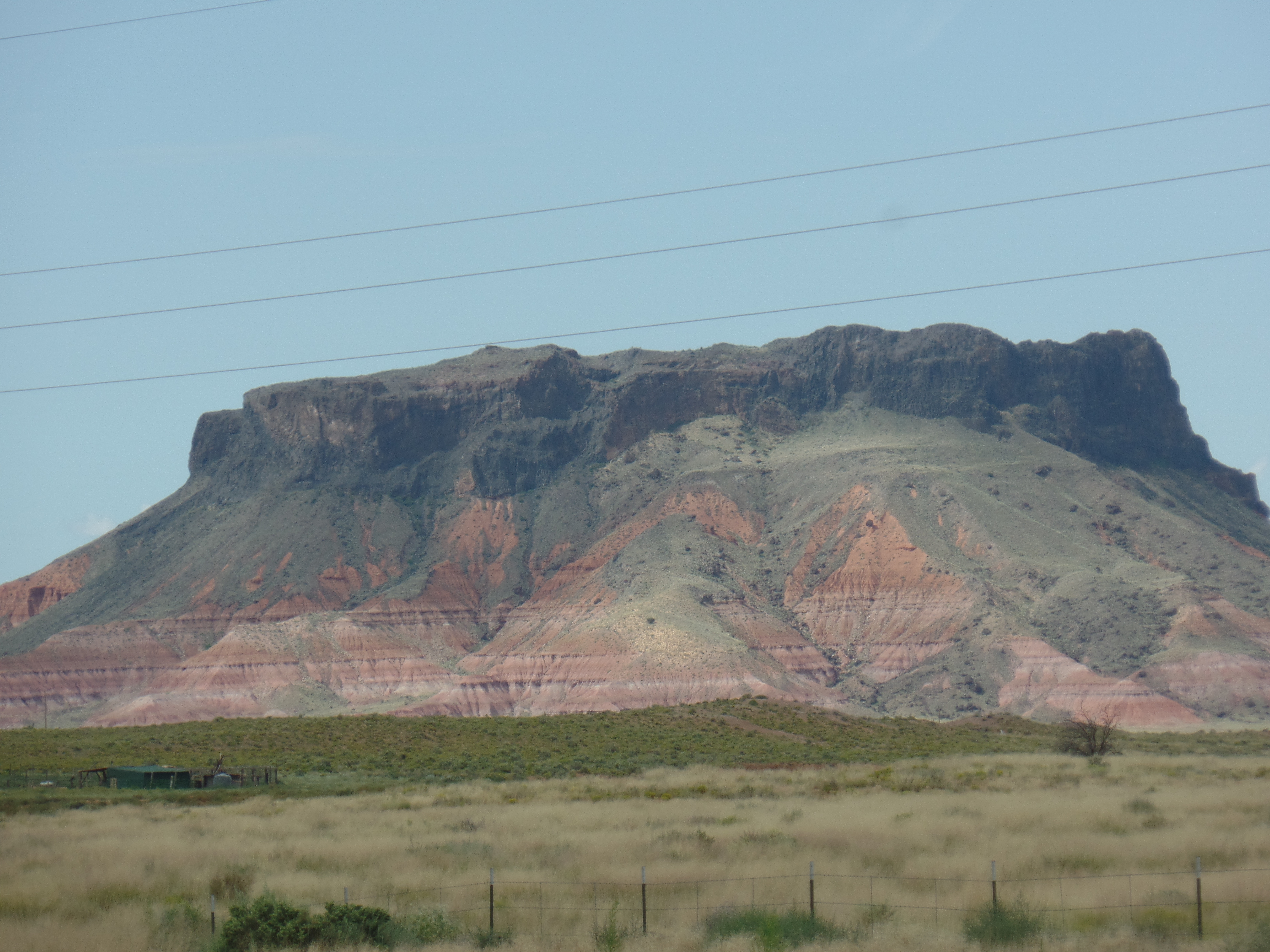
The next four frames show the area known as the Hopi Buttes, though they lie somewhat south of the Hopi mesa-top homes.

SAMSUNG CAMERA PICTURES

SAMSUNG CAMERA PICTURES

The Dine, or Navajo, and the Hopi have alternately co-existed and clashed, as many neighbours around the world do, for hundreds of years now.  The two nations are in a co-existence mode again, which does my heart good, especially as I  worked with both peoples, simultaneously, for nearly eleven years.  So, it’s not odd that the Hopi Buttes should be populated, and used, mainly by Dine (pronounced di-NEH).

SAMSUNG CAMERA PICTURES

SAMSUNG CAMERA PICTURES

This large formation, near the settlement of Bidahochi, was given the sobriquet “Gorilla Rock” by some Dine whom I met when first visiting the area, in 1979.

SAMSUNG CAMERA PICTURES

The Twin Buttes, just south southeast, of Indian Wells, are most impressive  land forms in the eastern part of the Hopi Buttes area.

SAMSUNG CAMERA PICTURES

They all certainly invite climbing, but the Hopi Buttes are all on private land, so hiking without authorization, or a Dine guide, would invite trouble.  The Navajo Nation may look empty, but the majority of it, especially along the southern edge, is working ranch land.

Once I arrived in Polacca, a few minutes were spent at the home of a departed Hopi-Tewa grandmother, who was our friend for twenty-five years, until her passing. As her daughter was not home, I visited with two of her grandsons, until they had to tend to a family issue.

Then, it was time to go “up top” to Hano.  Parking at the lower lot, I walked up the two-lane road, taking care to stay out of the way of eastbound traffic, which was relatively light.  It took just a few minutes of being directed, and redirected, before I located my hosts’ residence. I was welcomed as if it had been only last week, since we’d seen each other.  That is the way of these villagers, once trust has been established.

Trust does not come easy here. Photography is officially not allowed, once on the mesa tops, and even photographing the mesas from Polacca, or Kykotsmovi (Third Mesa’s base town), is looked at with raised eyebrows.  I saw several people, both Native American and White, recording the social Rain Dances (as opposed to religious dances, which are usually closed to outsiders) on their devices.  One young man was doing so for the Village of Hano.  There’s no telling about the rest.

I was content, as always, to observe the dances attentively, enjoy my hosts’ fine meal and wide-ranging conversations and take-in the antics of the children, who will keep this small, but dignified, nation’s life going, for another generation, and, I’m sure, will turn the dances and songs over to another generation, and so forth, for as long as these sturdy mesa tops will have them.

The Rain Dance seems to have worked, though this being Arizona, there is always more such dancing to be done.  The little three-and-four year old girls were already practicing, alongside the big people, while I stood under the roof beams and took it all in. I will be back, most likely in September, for the Harvest Dance.  This is, after all, one of my spirit’s many homes.

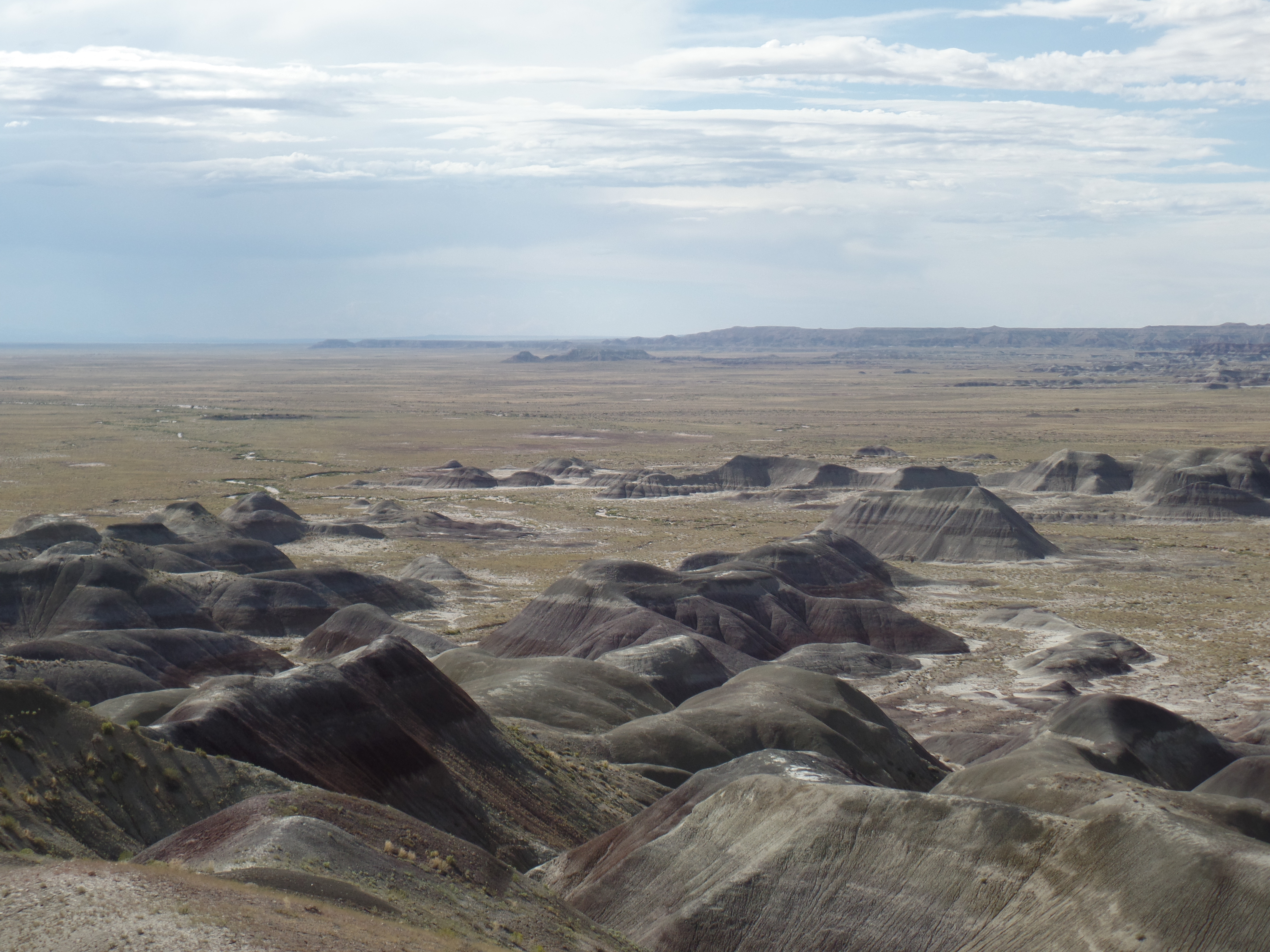
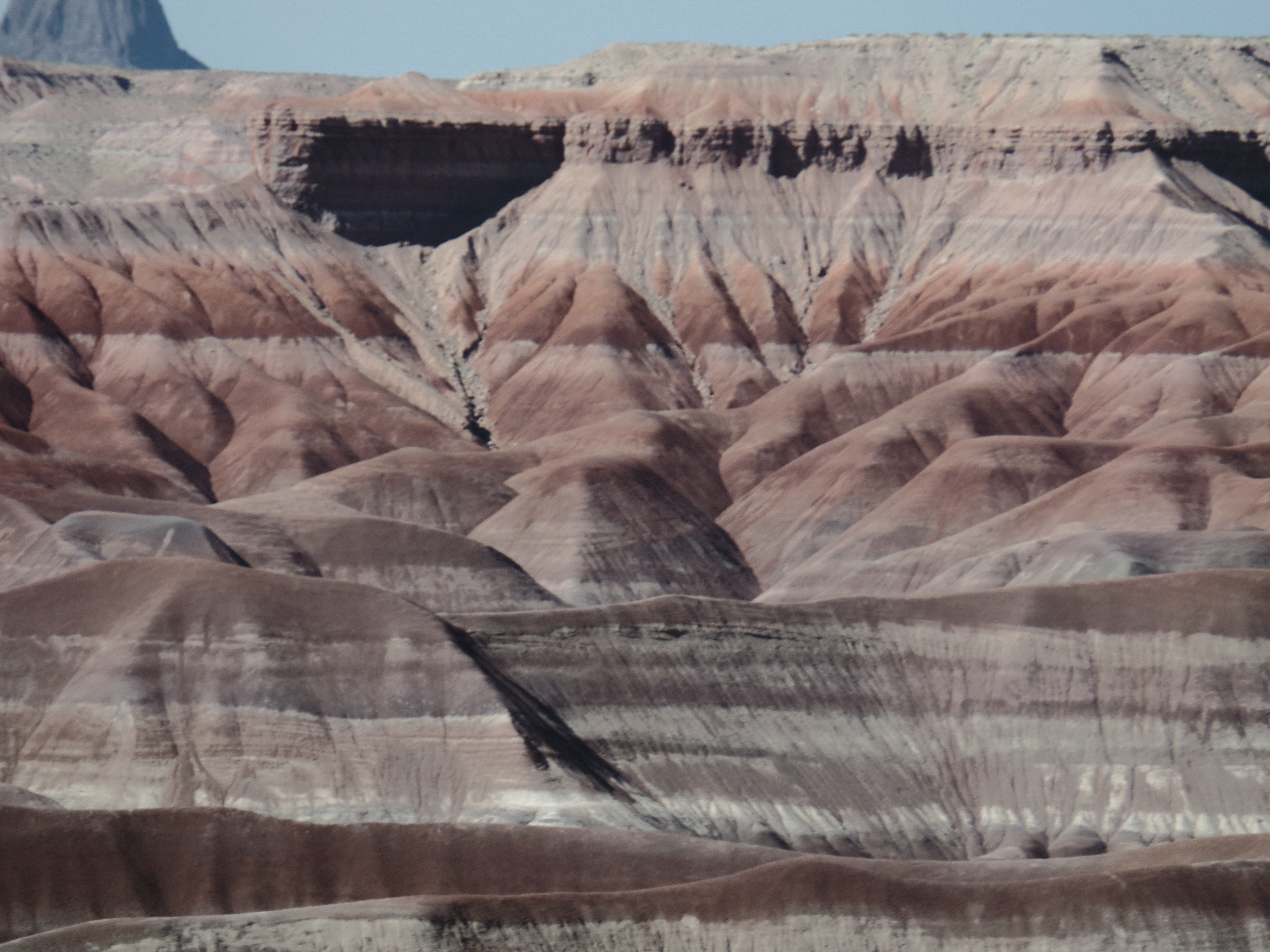
I will close with two views of Winslow’s Little Painted Desert, one of the side perks of driving back to central Arizona.

SAMSUNG CAMERA PICTURES

SAMSUNG CAMERA PICTURES

The Road to 65, Mile 237: Back From California

5

July 23, 2015, Prescott- I rose early in Barstow’s Motel 66, and looked around for a breakfast spot.  There were all manner of little convenience markets and small fast food establishments.  Yet, breakfast for me, as often as possible, has to be a balanced meal.  When I am home, that usually means cereal with milk and fruit.  When I am on the road, anything less than a Denny’s, or preferably, the local morning gathering place,  is unacceptable.  Barstow’s morning spot is Jenny’s Grill, a full-service Mexican restaurant, that offers American breakfasts, as well, with a twist:  Chips and salsa appear on the table, before the beverage.

I am a good sport about such things.  When in a pizzeria, in South Korea, kimchi accompanied the meal.  In many countries, breakfast is merely the first serving of what one also eats for lunch and dinner.  We norteamericanos are rather spoiled, in that vein.  I did find pico de gallo to be agreeable, as the first thing down my throat, this morning.  After all, tomatoes are a fruit, and many people like tomato juice as a morning beverage.  So, given the choice of pancakes, French toast, omelets, etc., I thought back to when I visited Laredo, three years ago, and ordered a chorizo omelet.  I find you can’t go wrong with good chorizo.  Jenny’s has good chorizo.

The owner/maintenance lady/housekeeper, at Motel 66, is also tech-savvy, and got the balky WiFi connection up and running, twice, when the local cable people pulled the plug on us.  I would gladly stay here again, especially if I head out this way during Spring Break, next year.

The drive east was uneventful and not unpleasant, with some sort of cool air reserve coming through the vents, even though I did not have the A/C on.  My spirit guides surely are good to me. Despite the bridge collapse, on I-10, to the south, I did not see any appreciable increase in traffic, on I-40. Once past Needles, I stopped for gas, at Golden Valley, AZ, for a fill-up that was under $40.  Then, it was non-stop to base camp, and unloading the car, around 5 PM.  After walking down to Rosa’s, for her special dumplings, in pomodoro sauce, and a frozen yogurt at Frozen Frannie’s, I was officially back in town.
The Road to 65, Mile 236: Back to California, Day 6, Part 3: A Resilient Queen

8

July 22, 2015, Santa Barbara- Mission Santa Barbara is the sixth  California mission I have visited, and only the second I have visited twice, along with San Diego de Alcala.  The first time scarcely counts, though, as the interior had closed.  The same is true of Mission San Luis Obispo de Tolosa, which was about to close when we got there, in 1997.

Yet, let’s get back to the splendidly restored Santa Barbara, “Queen of the Missions”, and another erstwhile casualty of the earthquake of 1925.  The community knew only one thing to do, afterwards, and that was to rebuild.

SAMSUNG CAMERA PICTURES

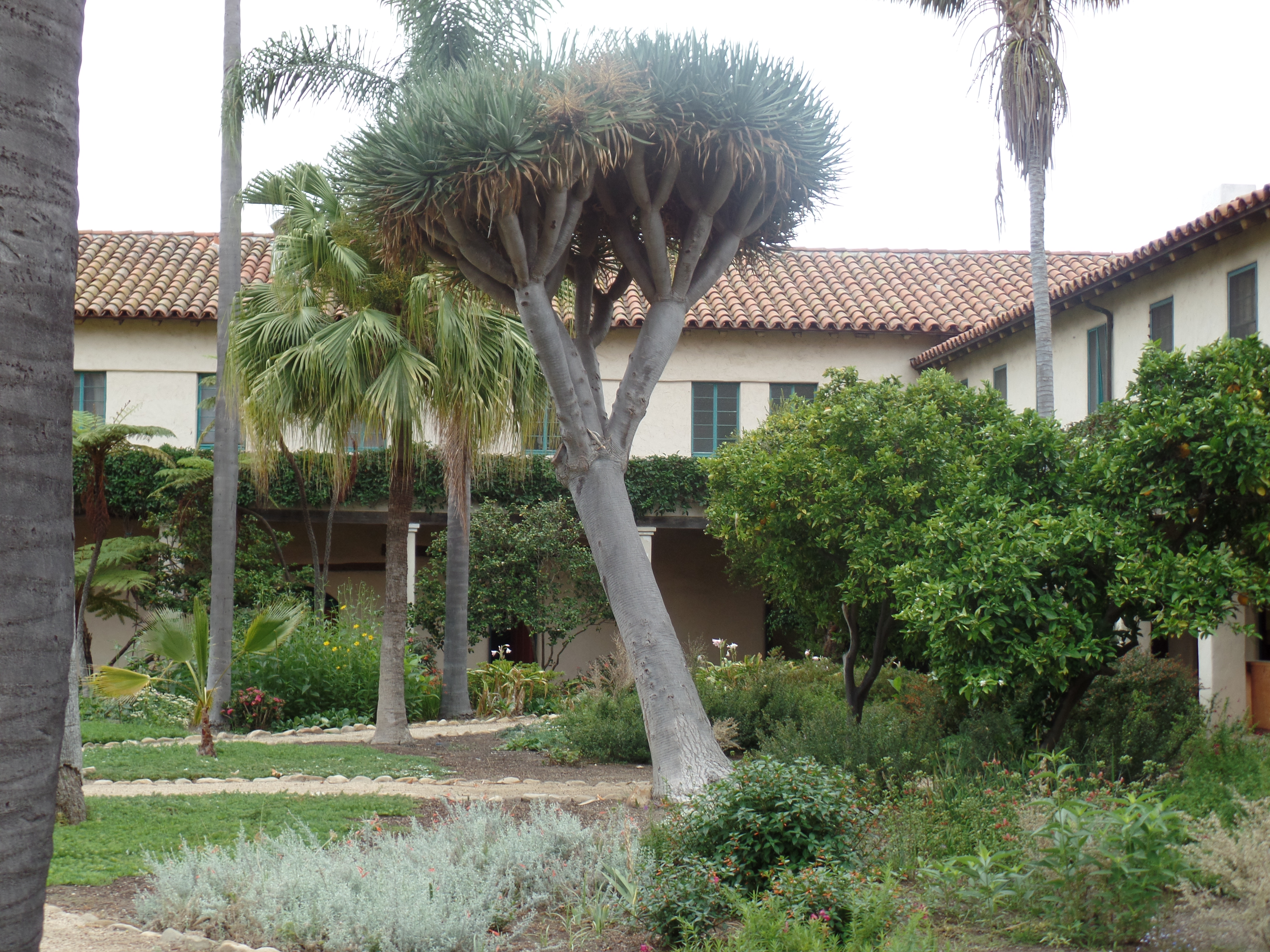
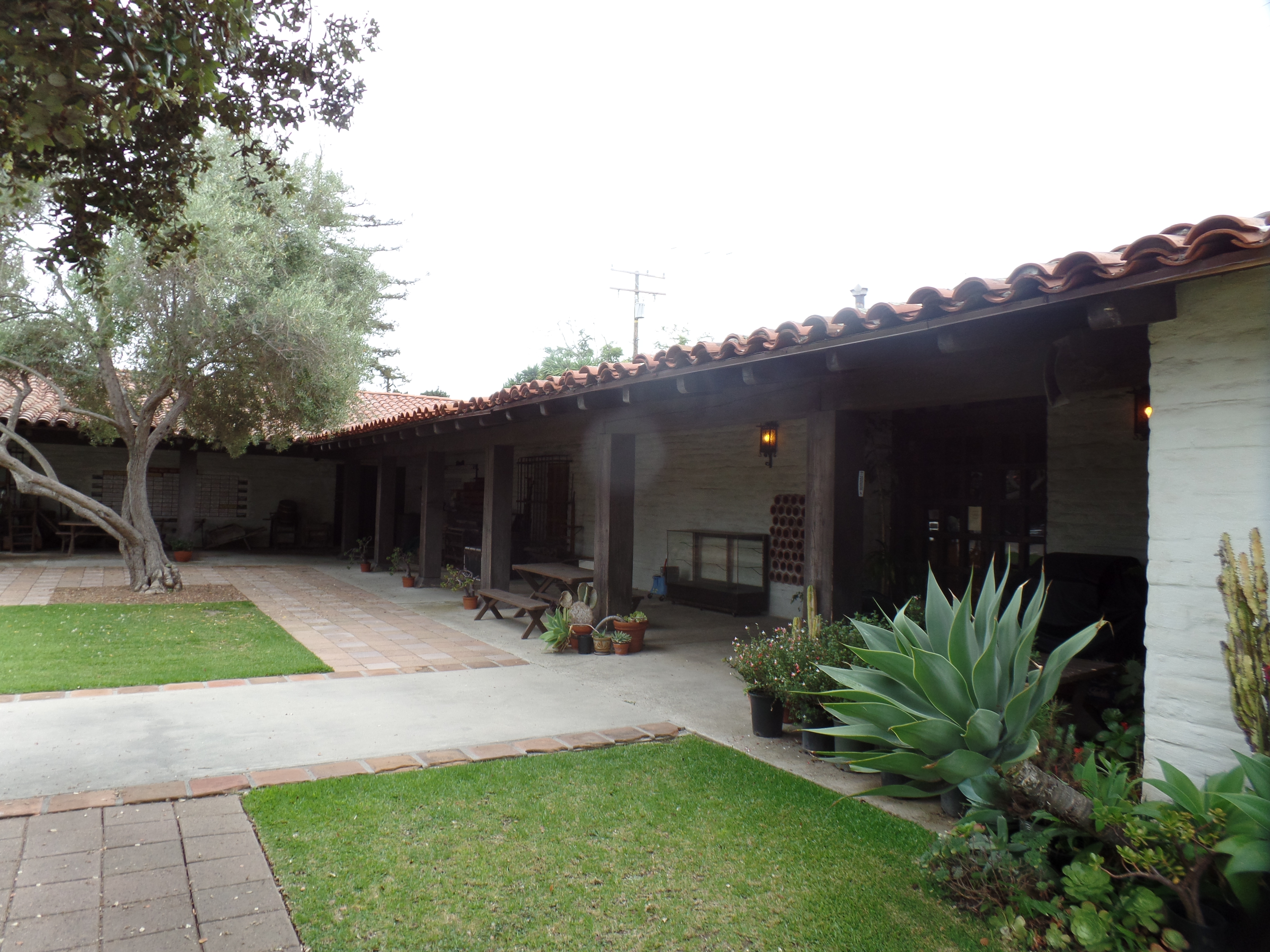
Even with its modern ambiance, Mission Santa Barbara exudes a strong spirituality, especially in its courtyard garden.

SAMSUNG CAMERA PICTURES

The Tower at Pisa has nothing on this olive tree.

SAMSUNG CAMERA PICTURES

SAMSUNG CAMERA PICTURES

This garden font was operating on trickle mode, enough to show the tenacity of the “Queen”, whilst also showing sensitivity to the overall situation in the State of California.

SAMSUNG CAMERA PICTURES

This Mission is one of several which has one public entrance, through the gift shop, where a cashier collects the $8 fee (for adults, 18-64).  The restoration work has all come from visitors’ fees, so they’ve been put to good use.

SAMSUNG CAMERA PICTURES

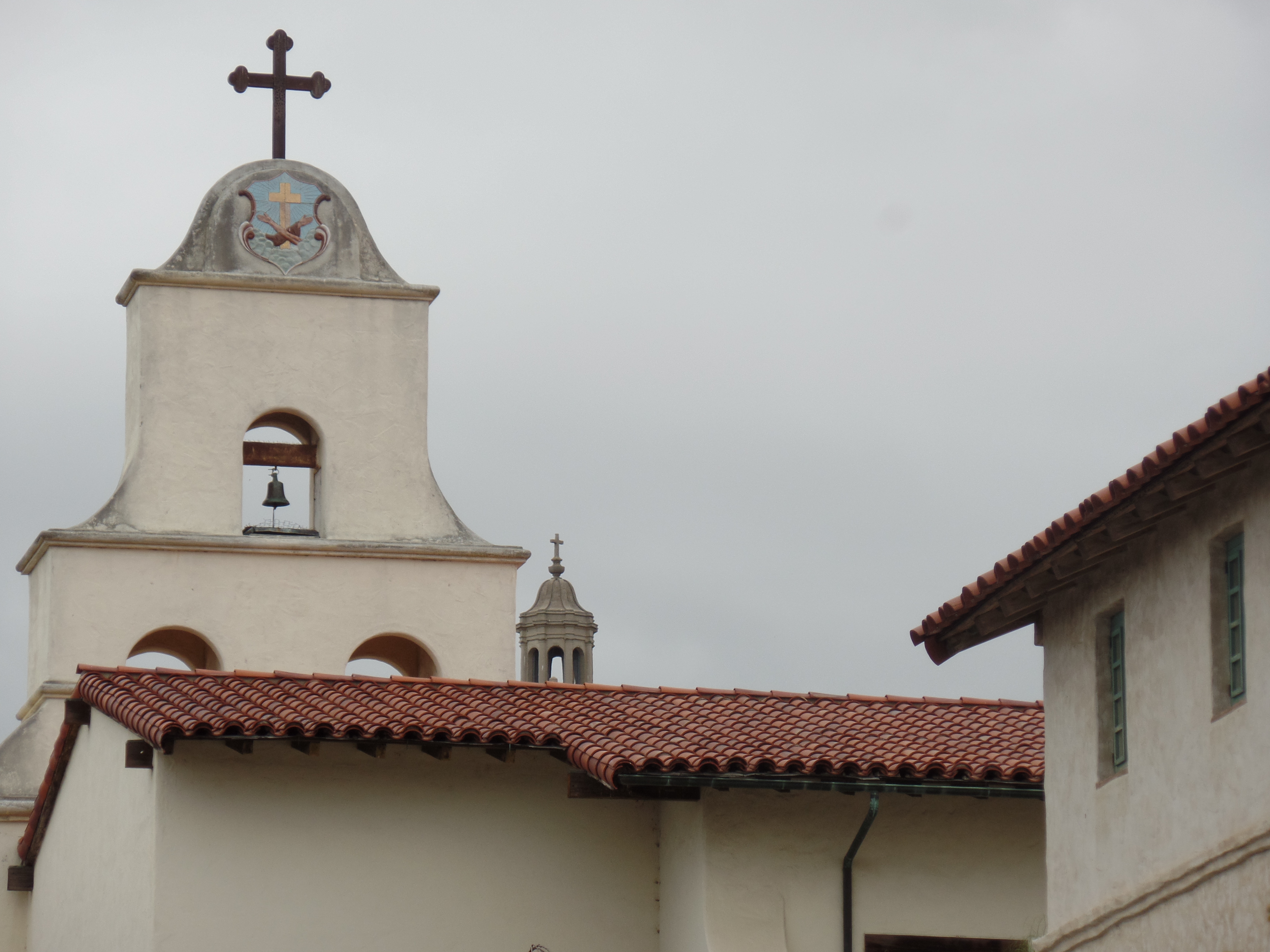
The bell tower, and much of the northern section of the Mission, are off limits to visitors.

SAMSUNG CAMERA PICTURES

As with other Spanish colonial structures, the walkways are shored up by exposed beams, in the ceilings.

SAMSUNG CAMERA PICTURES

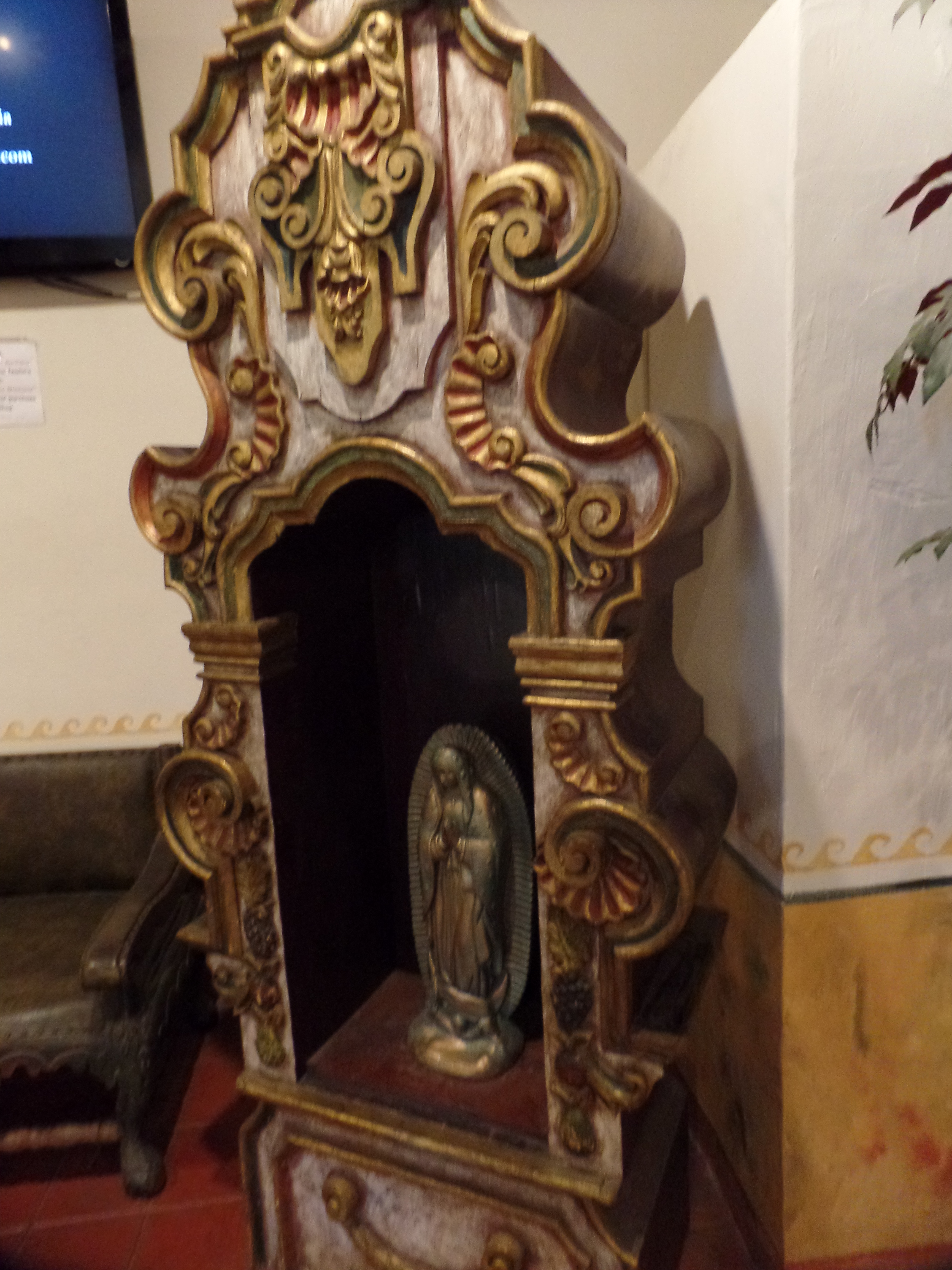
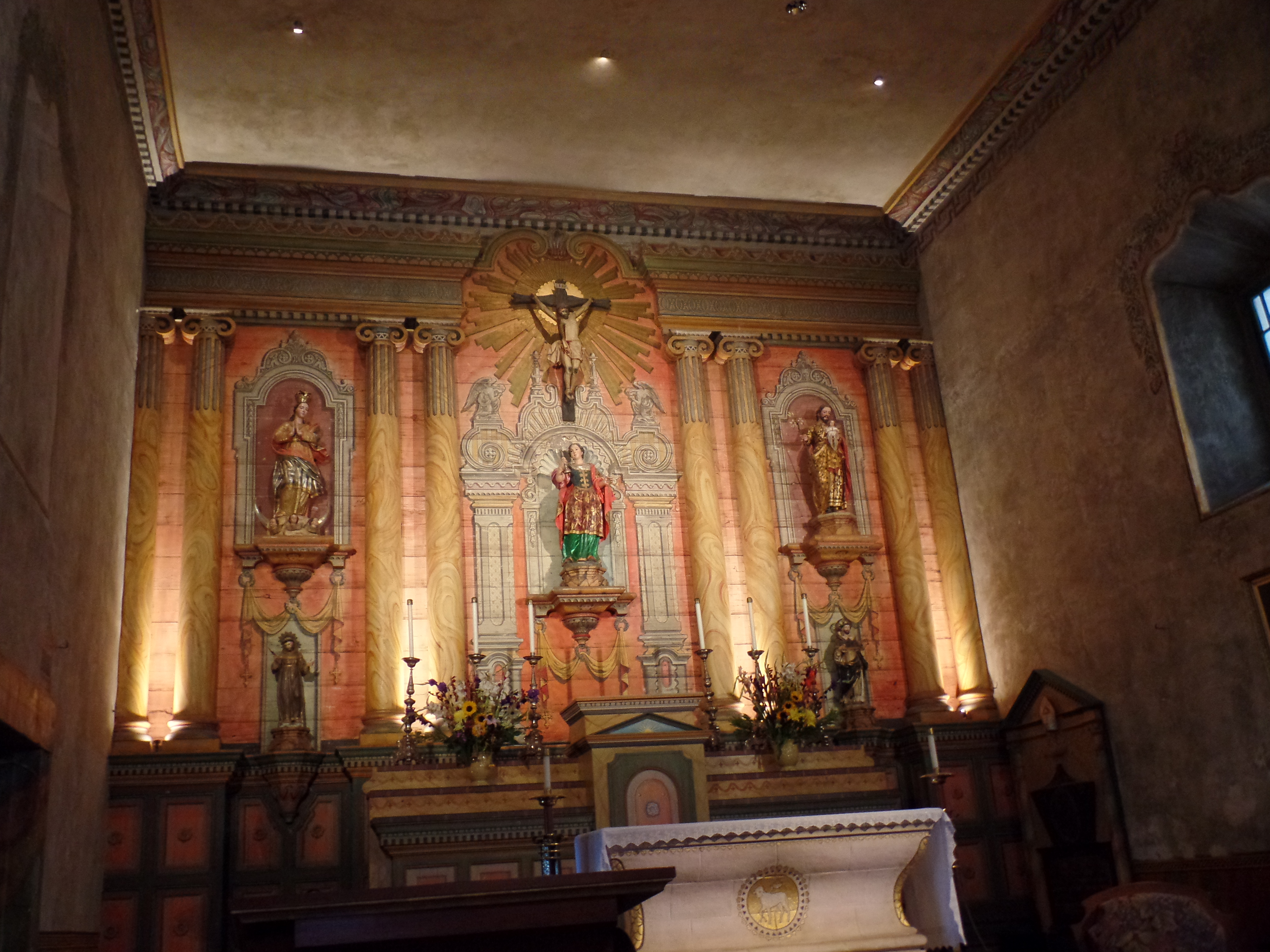
Various small chapels are dedicated to Mother and Child, throughout the periphery of the Mission Church.

SAMSUNG CAMERA PICTURES

St. Peter is shown, honouring his suffering Lord.

SAMSUNG CAMERA PICTURES

The cemetery dates from the 1770’s.

SAMSUNG CAMERA PICTURES

Garden plots and funerary chapels are common here.

SAMSUNG CAMERA PICTURES

The doorway to the Mission Church is guarded by three skulls, so as to prevent malevolence from entering the sanctuary.

SAMSUNG CAMERA PICTURES

Silence is maintained here, as the church is an active parish’s place of worship, first and foremost.

SAMSUNG CAMERA PICTURES

The framed flat column is a unique feature of Mission Santa Barbara.  At least, I’ve not seen it in any other missions.  It is intended as a place to make offerings.

SAMSUNG CAMERA PICTURES

Chumash art is found throughout the Mission, as well.  This chandelier anchor also guards against demons.

SAMSUNG CAMERA PICTURES

The Chumash are among the first Indigenous nations to share their painting skills with Europeans.

SAMSUNG CAMERA PICTURES

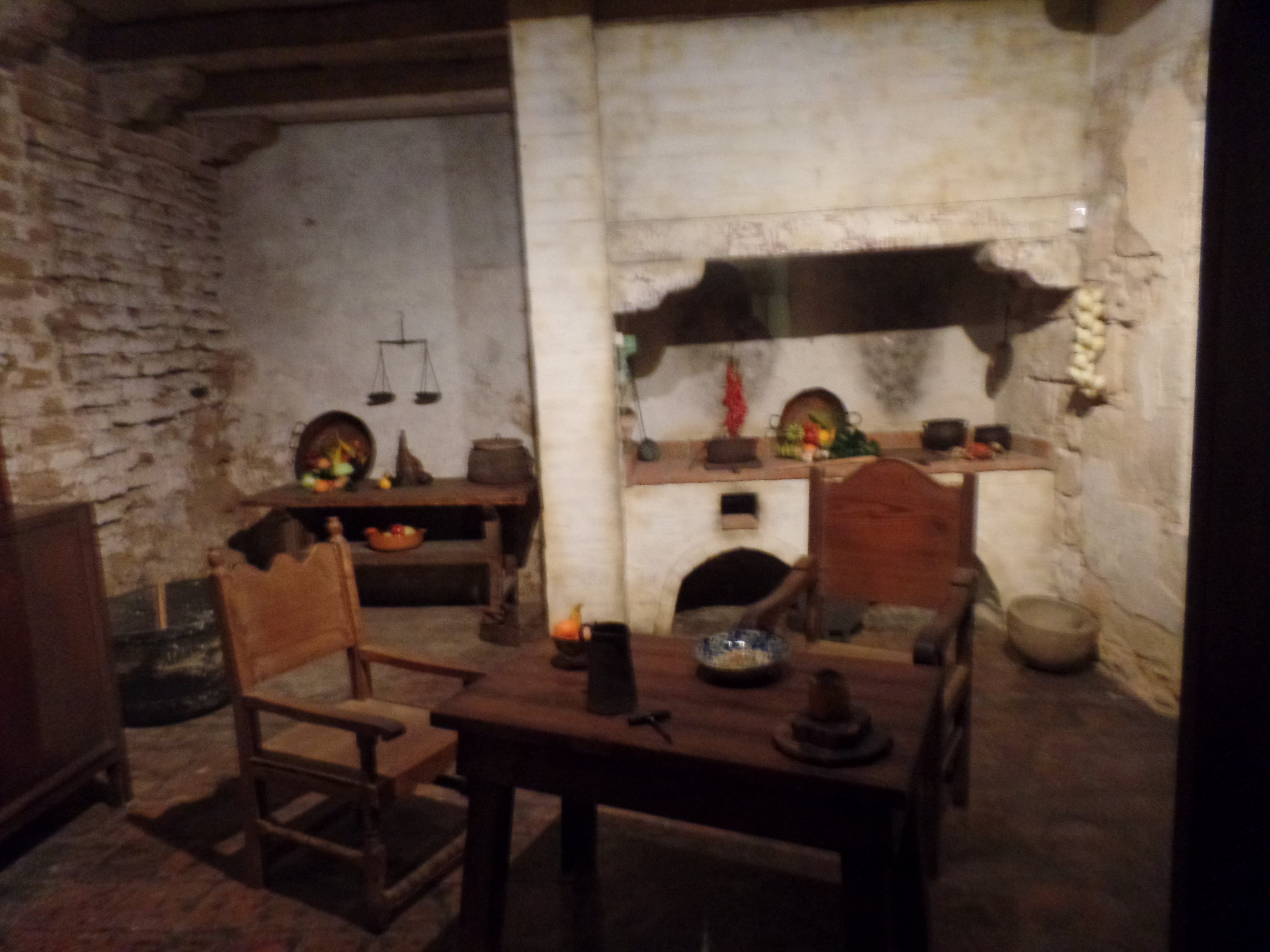
In the museum rooms, details of daily mission life are made clear.  This is a depiction of the friary kitchen.  It reminds me of its counterpart at Mission San Luis, in Tallahassee.

SAMSUNG CAMERA PICTURES

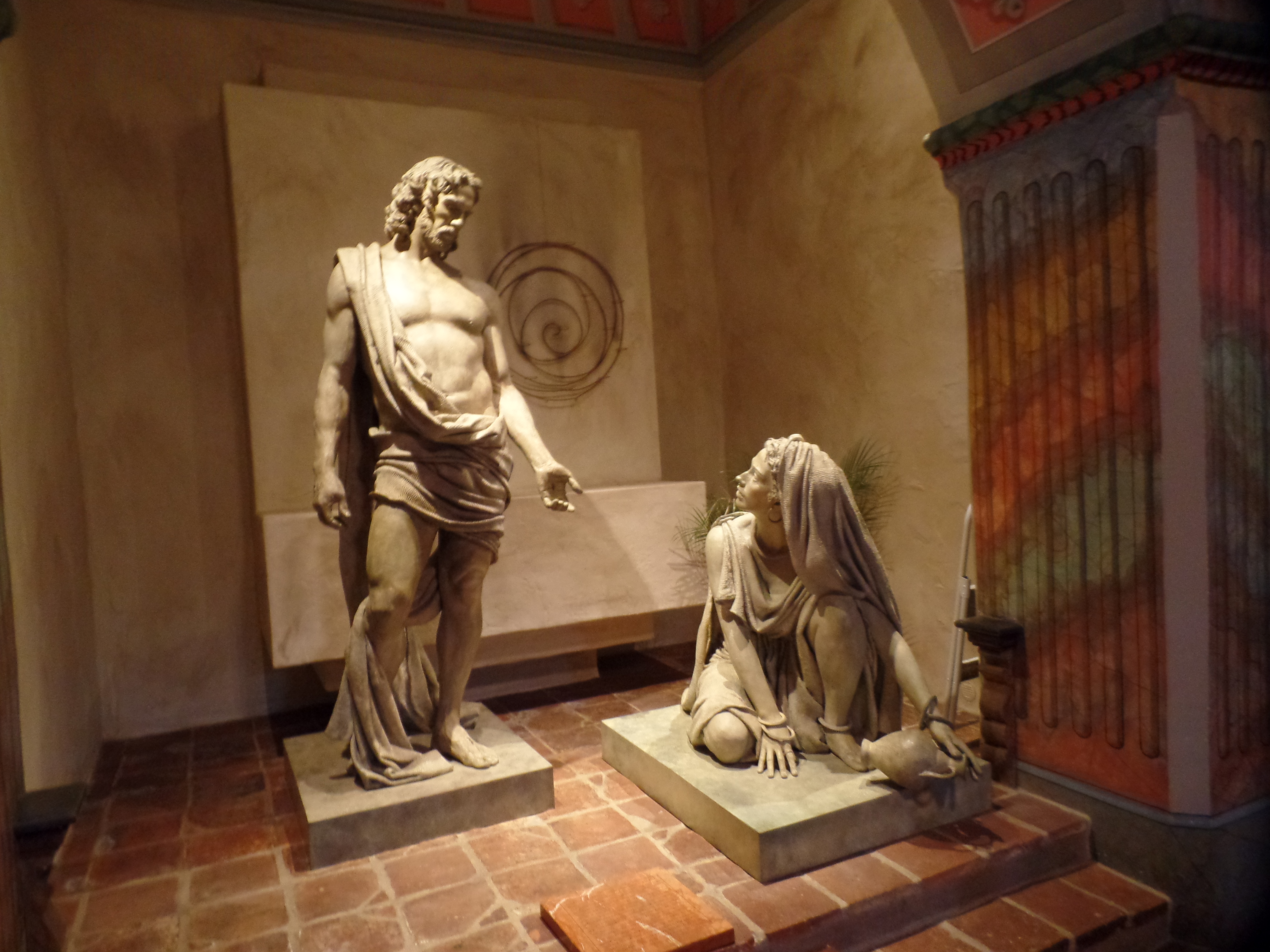
Between the Mission Church and the museum, Christ is depicted as a man of strength and courage, comforting Mary Magdalene.

SAMSUNG CAMERA PICTURES

This aqueduct was the place where Chumash workers would bathe, and wash their garments.

SAMSUNG CAMERA PICTURES

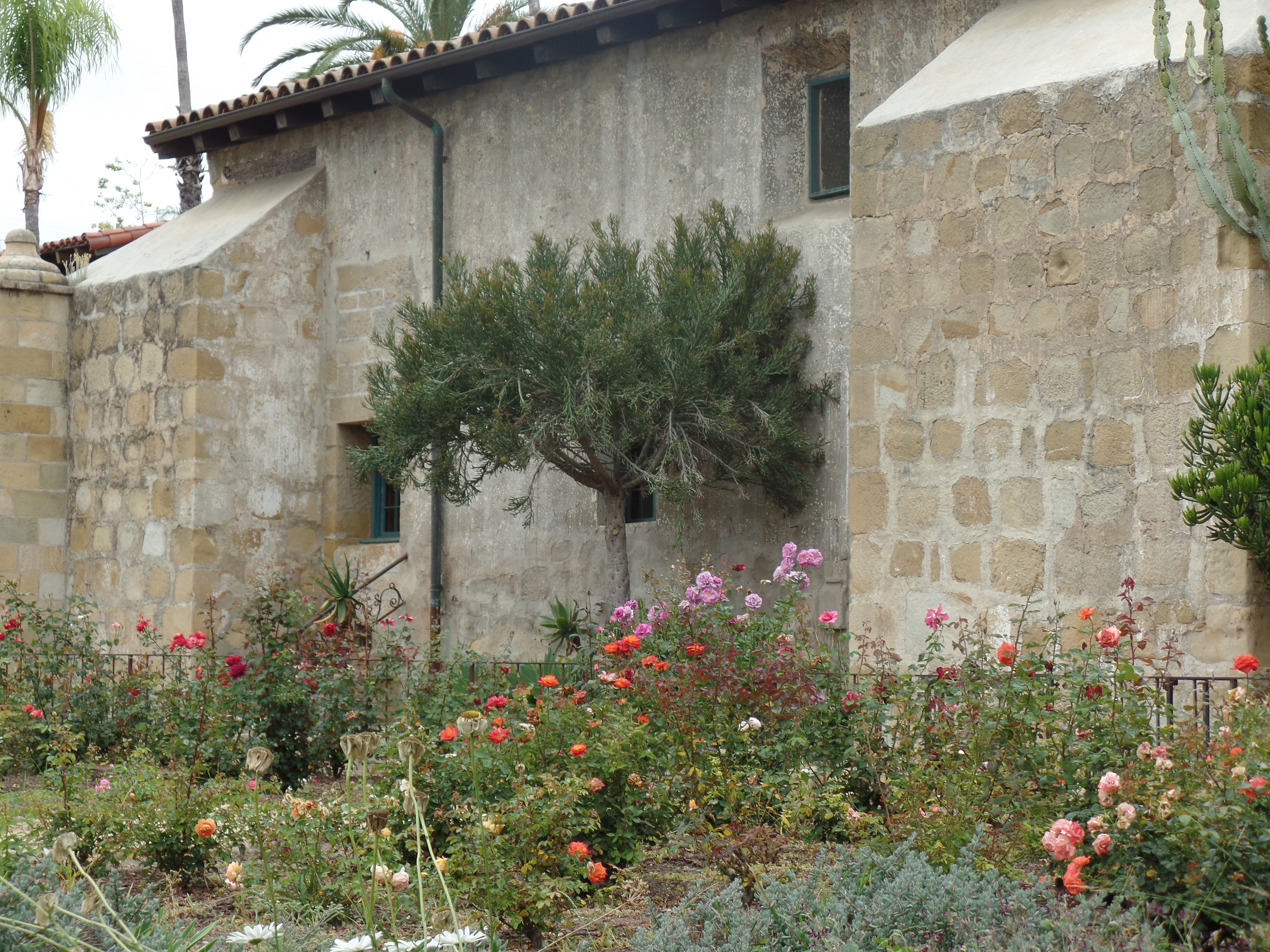
Although La Huerta, the signature garden of Mission Santa Barbara, was off-limits, the Olive Trail Garden, as well as the Courtyard Garden shown aforehand, were open to visitors. I have become quite enamored of anything bright red, on this trip.

SAMSUNG CAMERA PICTURES

It was hot, being mid-afternoon, so I bid farewell to the Queen of Missions, with a nod to its place in the skyline.

SAMSUNG CAMERA PICTURES

Thus, my northward journey to the south-facing coastline began to wind down.  Eastward ho!  I drove to Santa Clarita, the recently incorporated (1987) conglomeration of San Fernando Valley communities, due east of Santa Barbara, and opted for the familiar format of Chili’s,in the Newhall section, as a dinner venue, foregoing a brief plan to head into the Saugus section of town, for a meal at Los Angeles County’s oldest restaurant.  It was getting too late,but next time out- Saugus, CA will be on the itinerary.

A few hours later, via Palmdale and Victorville, I made my evening destination of Barstow.  Motel 66 is a clean and eminently affordable Mom & Pop west side establishment, and I don’t need anything more. Tomorrow, I will head back to home base, through the familiar Mohave Desert and uplands of Yavapai County.

The Road to 65, Mile 236: Back to California, Day 6, Part 2: A Majestic Courthouse

7

SAMSUNG CAMERA PICTURES

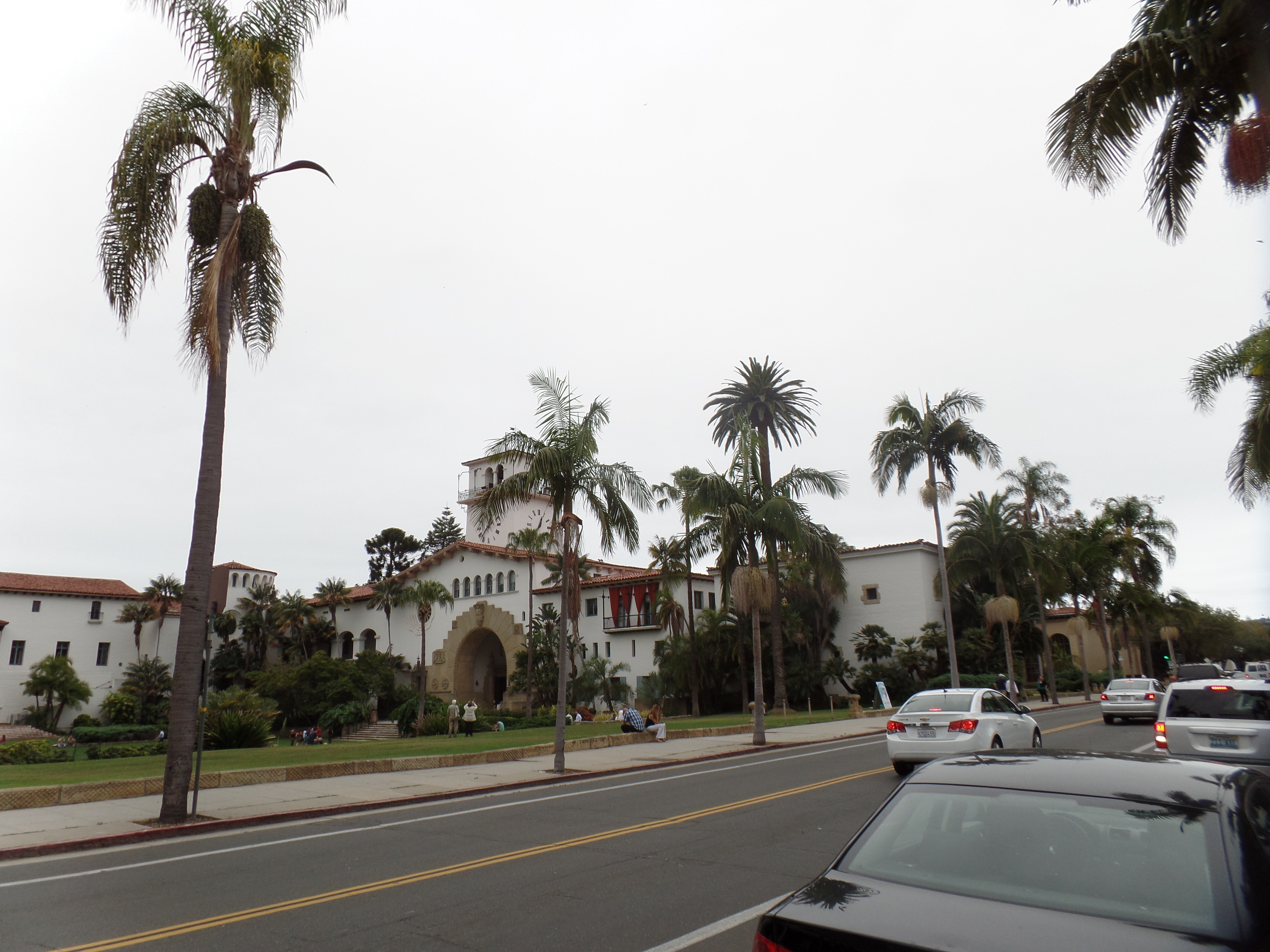
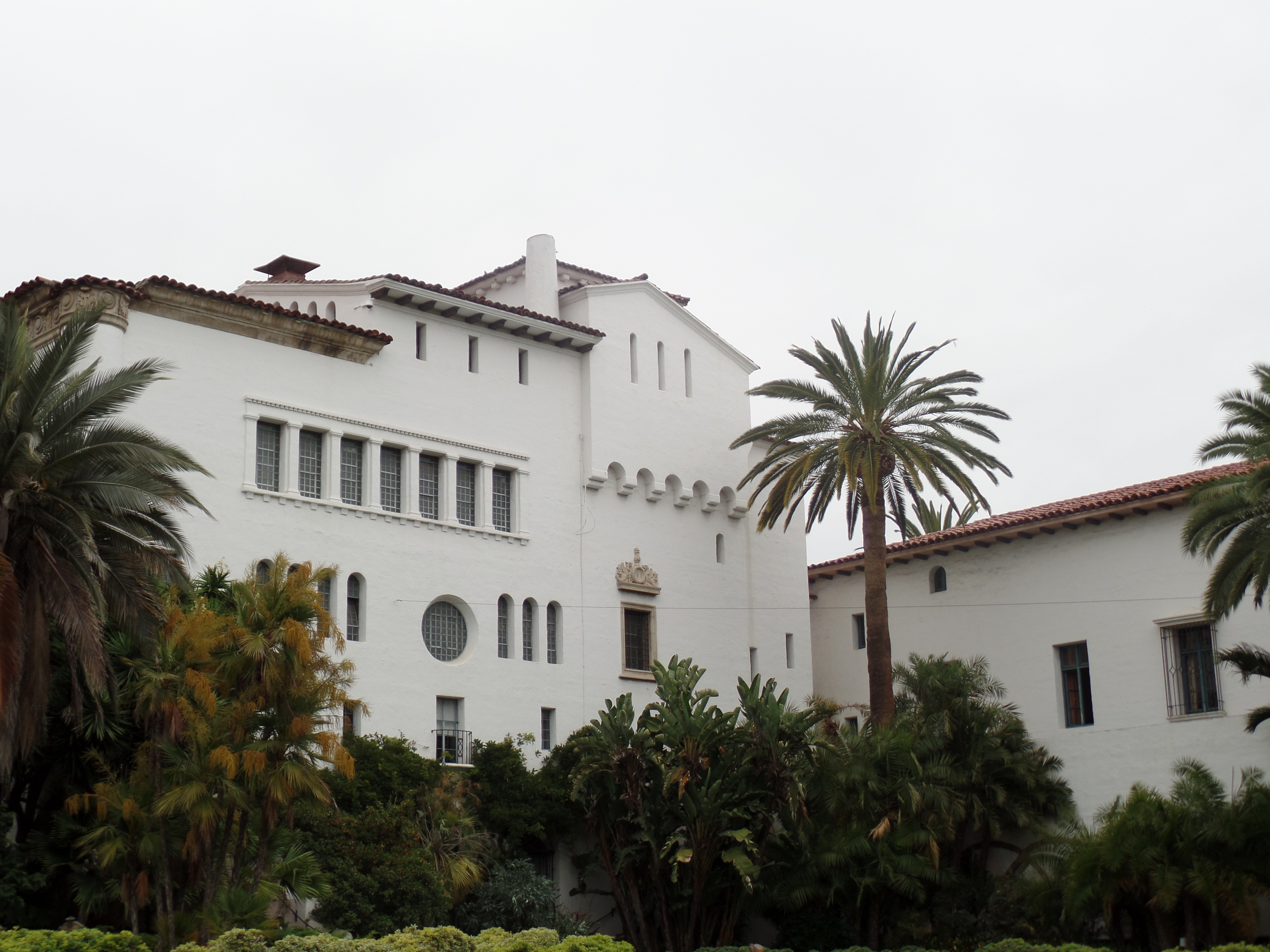
July 22, 2015, Santa Barbara- Like the Spokane County Courthouse and Tarrant County Building, in Fort Worth, Santa Barbara County Courthouse is the majestic centerpiece of its city’s downtown.  There are several architectural gems in the central core of this breathtaking mission city.  They are eclipsed by the hall of justice.  The building is a reconstruction of the first Courthouse, which was destroyed by the 1925 Santa Barbara earthquake.

SAMSUNG CAMERA PICTURES

SAMSUNG CAMERA PICTURES

No detail, interior or exterior, goes unattended by the Courthouse’s housekeeper.

SAMSUNG CAMERA PICTURES

This mural, by Marge Dunlap, is actually on the front of the County Engineering Building, adjacent to the Courthouse.  It is, according to the artist’s description, as abstract piece, showing trees as sentient beings that stand guard over the house.  There is no reason given for the two moons.SAMSUNG CAMERA PICTURES

SAMSUNG CAMERA PICTURES

The Spirit of The Ocean Fountain was turned off, in keeping with the spirit of dealing with the drought.

SAMSUNG CAMERA PICTURES

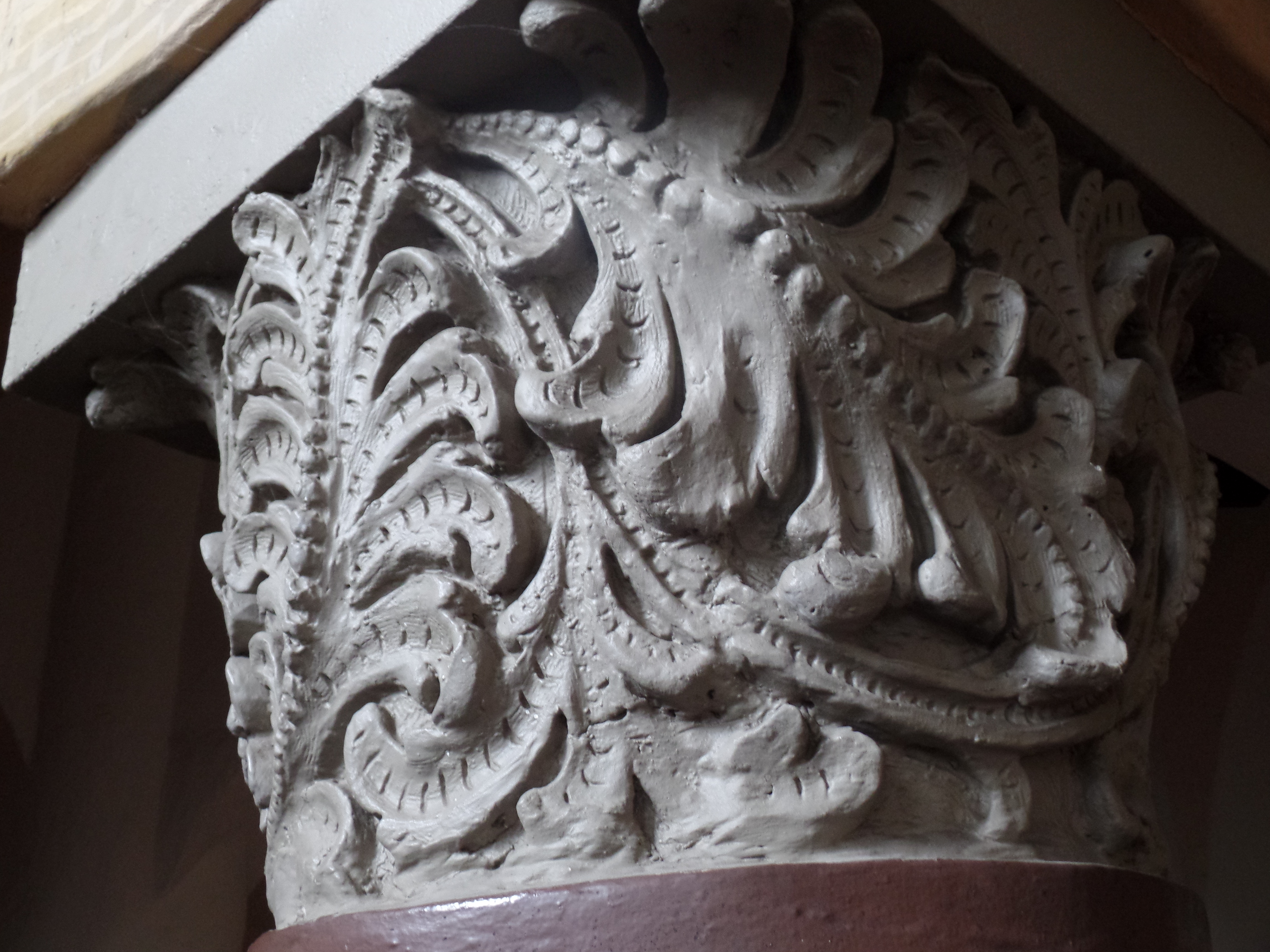
Various miniature sculptures and filigree adorn all areas of the exterior.

SAMSUNG CAMERA PICTURES

SAMSUNG CAMERA PICTURES

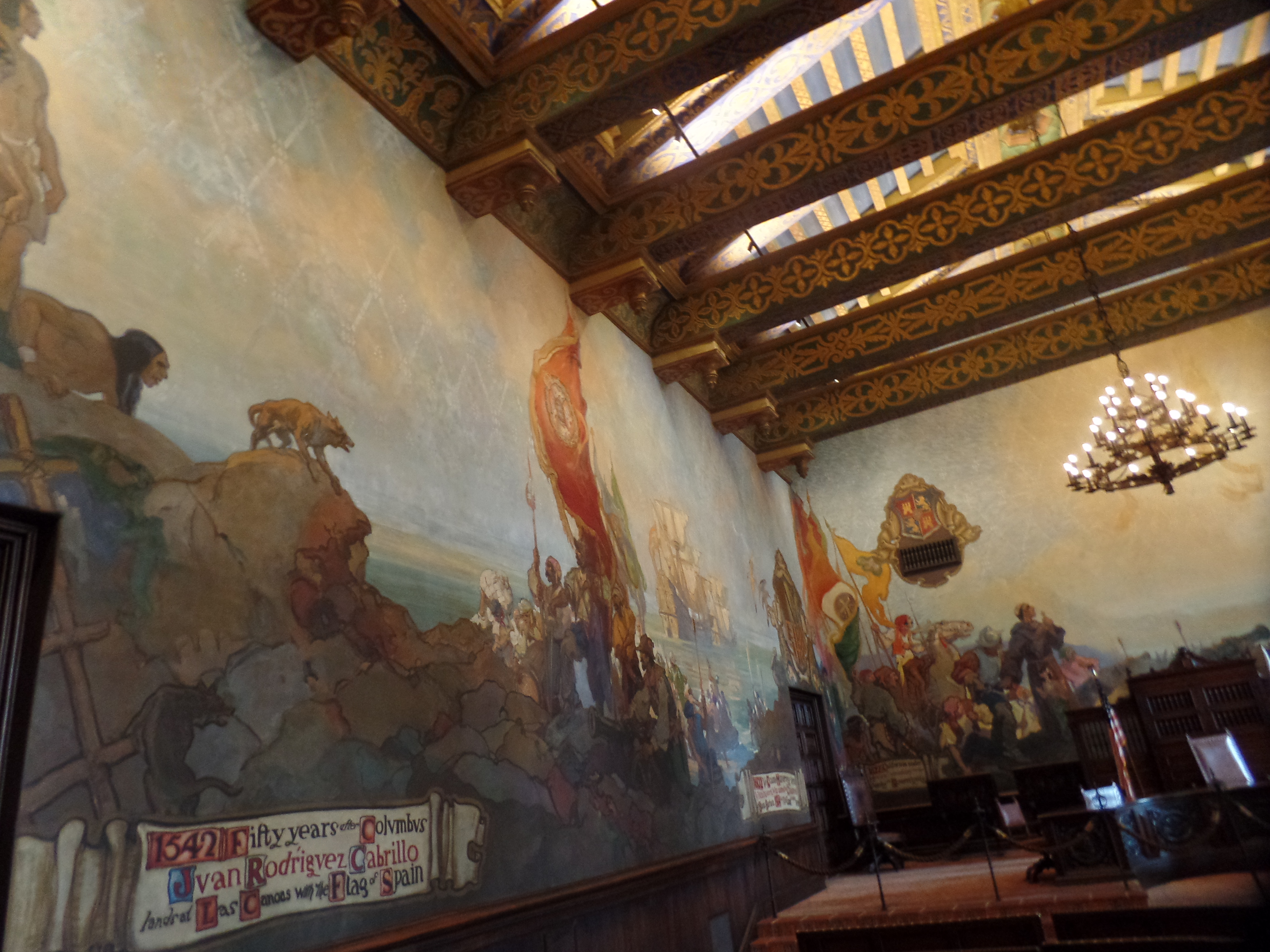
Murals are found throughout the building, giving equal presence to the indigenous Chumash people and to the Spanish who settled among them.

SAMSUNG CAMERA PICTURES

Tapestries line the wall, outside the central Court Chamber.

SAMSUNG CAMERA PICTURES

In the  former County Supervisors’ room, now called the Mural Room, lies a more elaborate series of murals, showing the Spanish subjugation of the Chumash and other parts of Santa Barbara history.

SAMSUNG CAMERA PICTURES

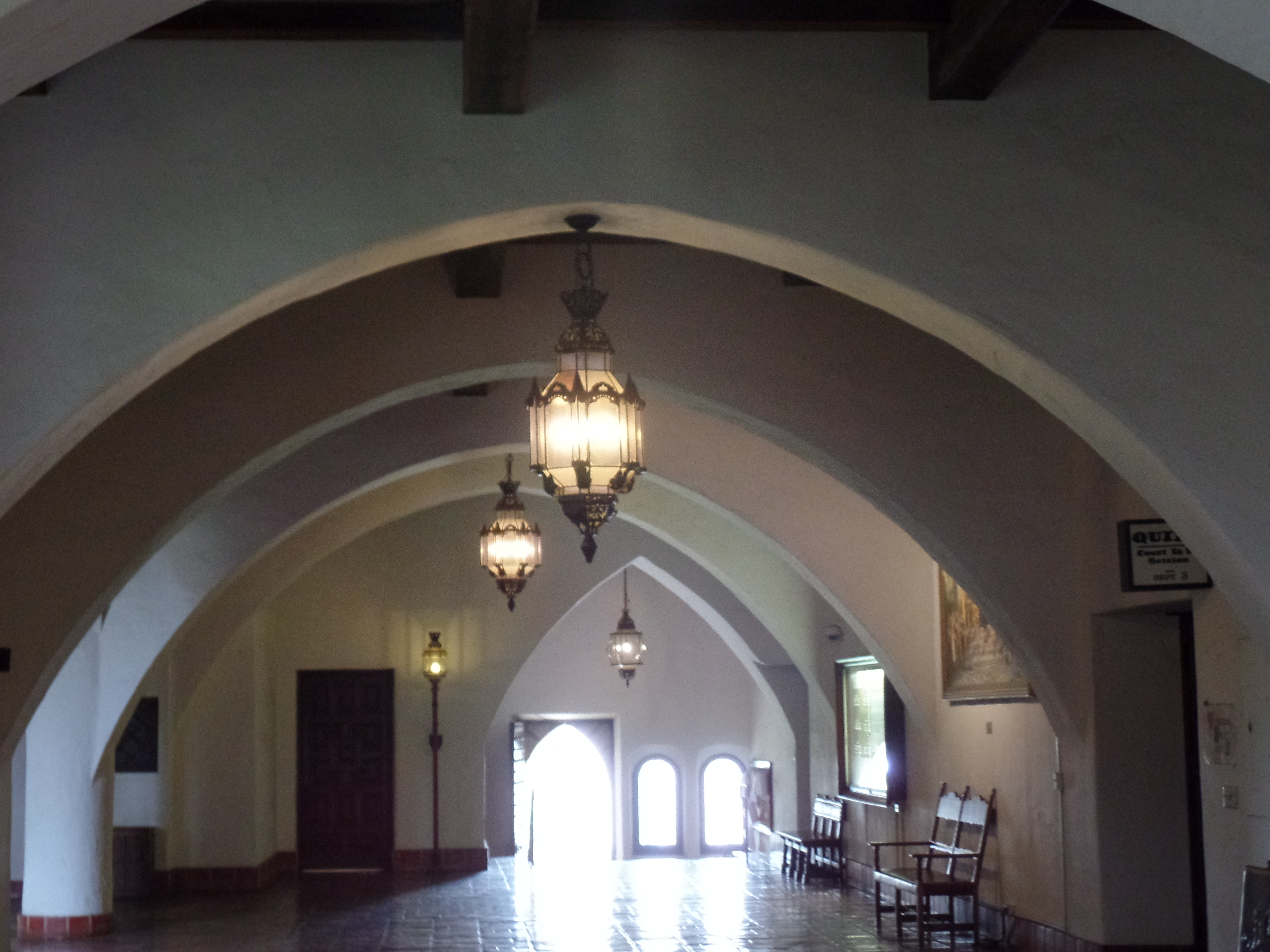
Here is the first floor lobby.  Note the Moorish influence, in the ceiling design.

SAMSUNG CAMERA PICTURES

The Spanish also continued with Romanesque features, which appealed to the designers of the 1927 reconstructed Courthouse.

SAMSUNG CAMERA PICTURES

More Moorish influence appears in the ornate blue and gold ceiling.

SAMSUNG CAMERA PICTURES

,

This ceremonial planter is one of my favourites.

SAMSUNG CAMERA PICTURES

Finally, here is another section of  Santa Barbara history, in the Mural Room.

SAMSUNG CAMERA PICTURES

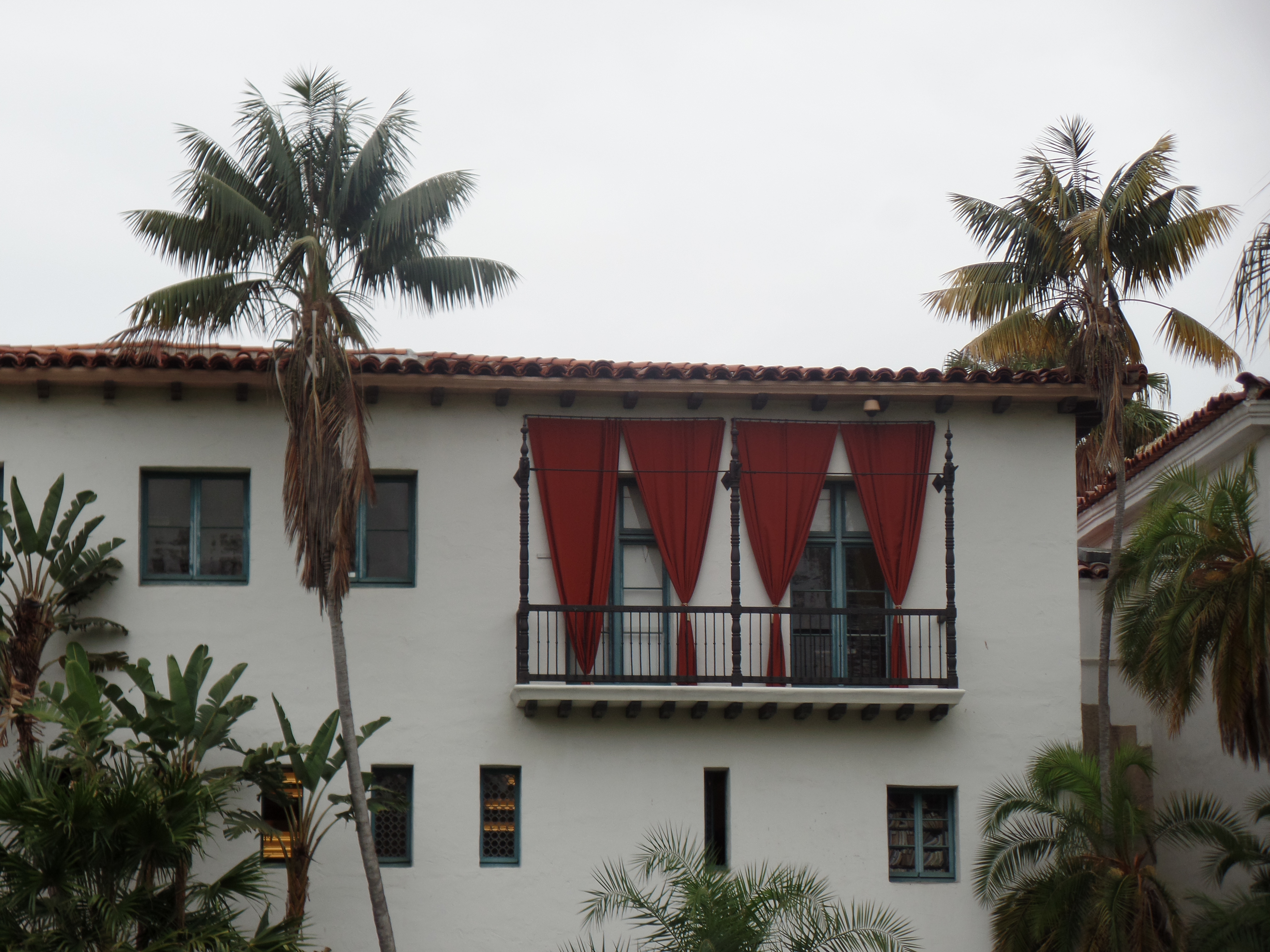
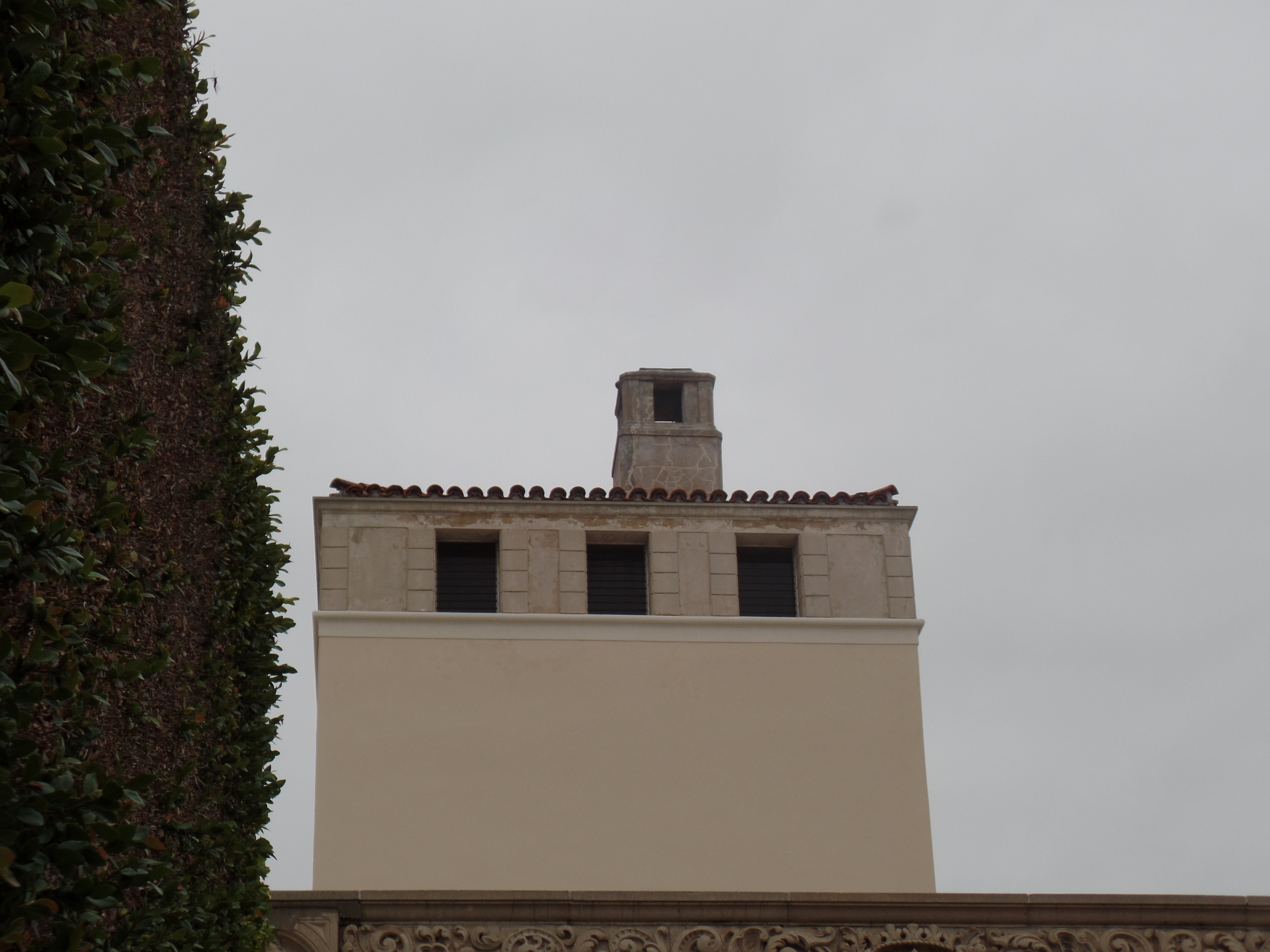
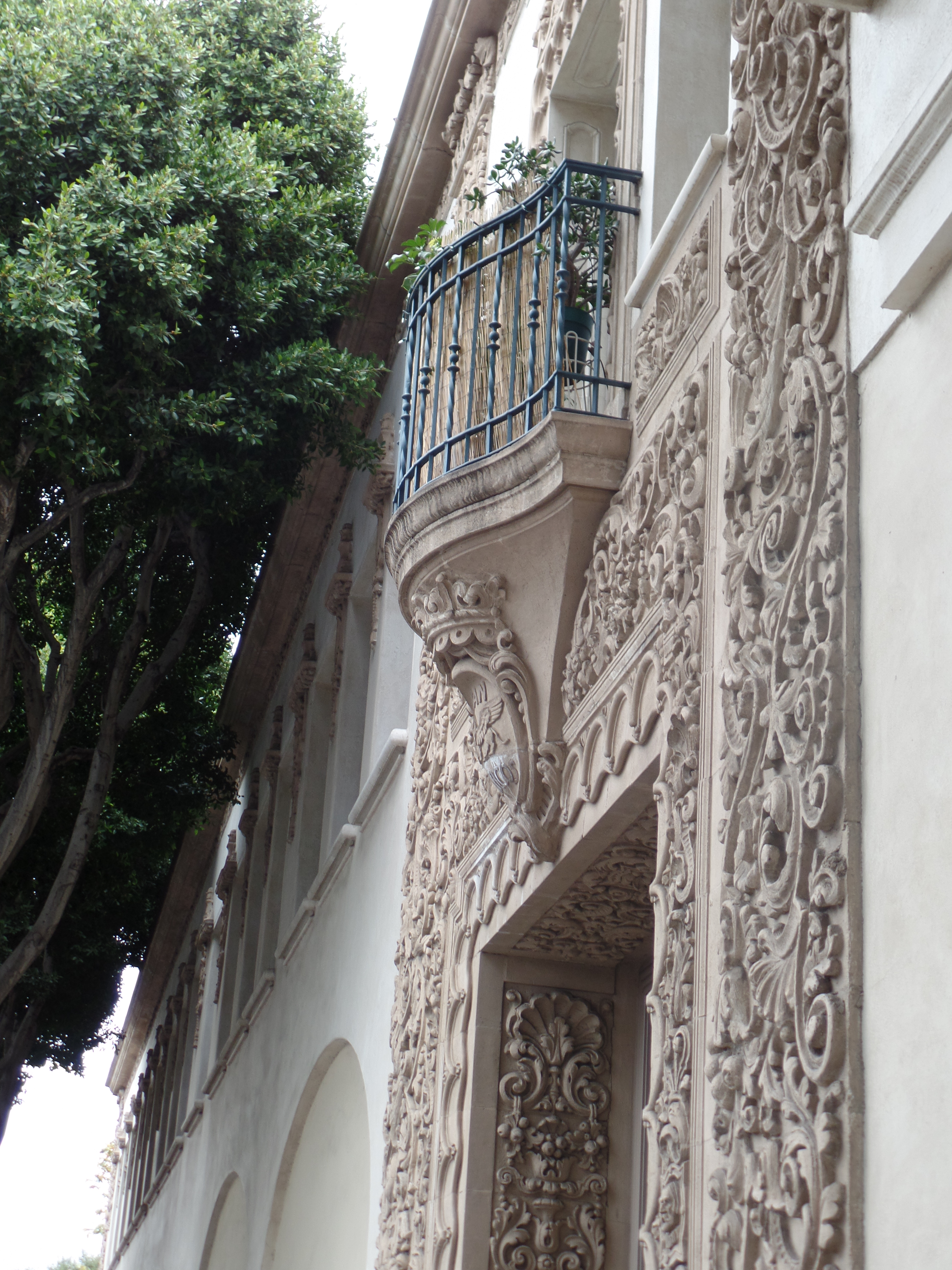
Here are a couple of other random samples of Spanish influence, on the architecture of the early 20th Century American residents of Santa Barbara.

SAMSUNG CAMERA PICTURES

SAMSUNG CAMERA PICTURES

Despite its sprawling nature, Santa Barbara gave me a very comfortable, cozy feeling, as I walked about downtown.  Two miles east, the “Old Mission” awaited.

The Road to 65, Mile 236: Back to California, Day 6- Part 1,The South-facing Coast

8

July 22, 2015, Santa Barbara- The south-facing coast of California has fascinated me since I first came upon Santa Barbara, in 1980. My family only caught fleeting glimpses of the area in 1992, during a business trip to Santa Monica, and again in 1997, on our return from a visit to Santa Cruz.  It was enough, though, to make Refugio Beach a favourite and to make a personal vow to visit the interior of the “Old Mission”, as the residents here refer to Mission Santa Barbara, two miles from downtown.

The day in this salubrious area will be posted in three parts: First, Lake Casitas, Carpinteria and the beach around Stearns Wharf are the foci of this post.  Next, I will present the grand Santa Barbara County Courthouse.  Lastly, the stage will be occupied by the Mission.

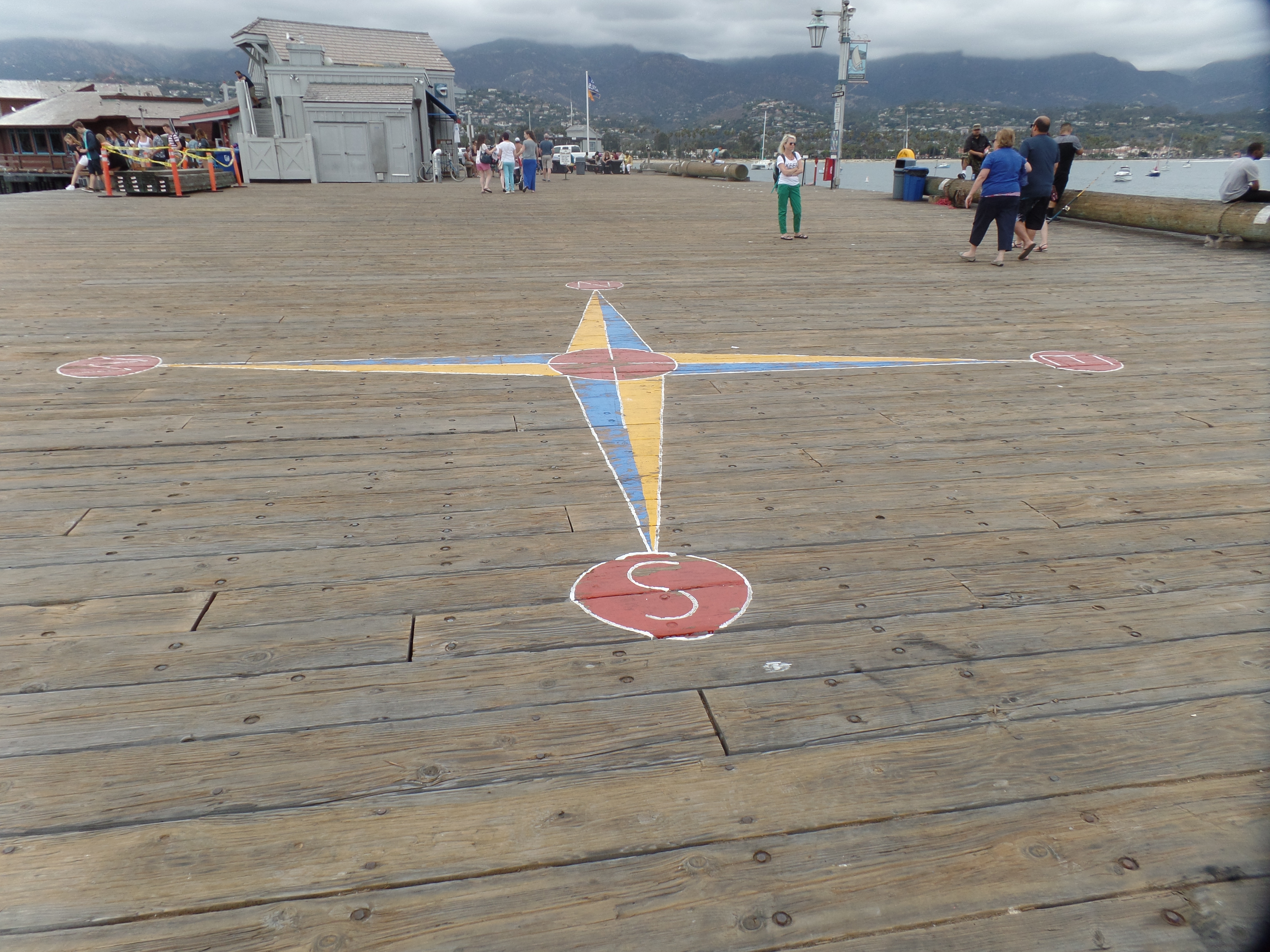
As I stated earlier, this is the only part of the California coast that faces southward.  A compass on Stearns Wharf illustrates this.

SAMSUNG CAMERA PICTURES

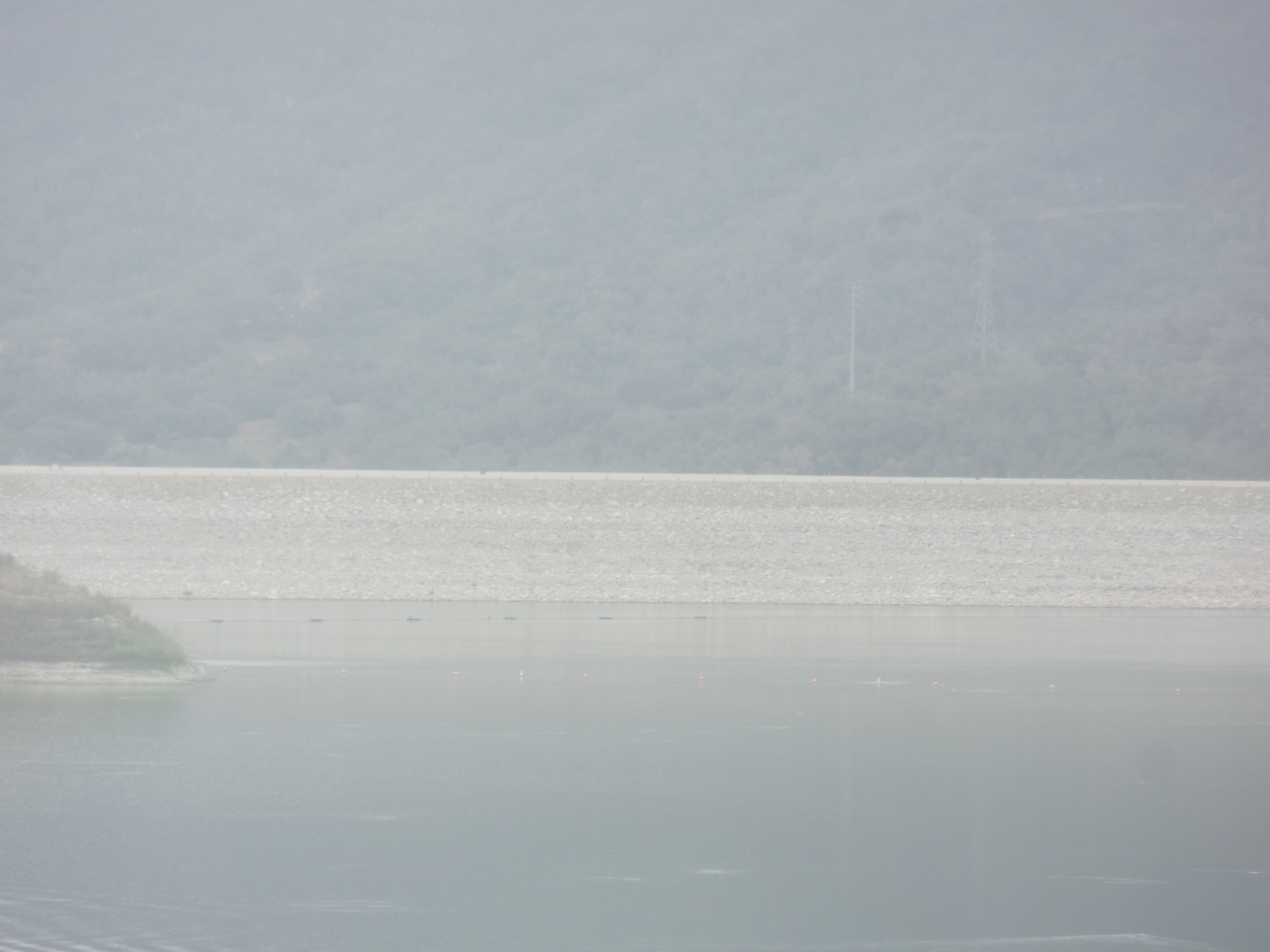
I began the day, though, with a brief stop along the northern edge of Lake Casitas, a reservoir and fresh-water fishing mecca for local residents.  The lake had been down, severely, over the past three years.  It looked a tad healthier today, from what I had seen in earlier photos.  Still, it has a good ways to go, and so a good, wet monsoon, followed by an El Nino soaking, would seem to be in order.

SAMSUNG CAMERA PICTURES

SAMSUNG CAMERA PICTURES

Carpinteria is the first beach town that greets the traveler, coming northward into Santa Barbara County.  My main focus here was brunch, so I stopped at Jack’s Bistro and Famous Bagels.  Being from the East Coast, I am fussy about my bagels, but the pancakes here are delicious and Daisy was a very nice server.

I took about a half-hour to look around downtown.  Beach-wise, my main focus would be Stearns Wharf, so I did not pay to stop at Carpinteria State Beach.  What caught my eye near Jack’s was the largest known Torrey Pine.
SAMSUNG CAMERA PICTURES

The town is named for the industrious nature that the Spanish noted in the Chumash people.

SAMSUNG CAMERA PICTURES

The historical museum did not open until 1, which would have set me still for two hours, and I was itchy to get to the Santa Barbara Courthouse, a marvel of architecture and interior art.  So, here is the south patio of the museum.

SAMSUNG CAMERA PICTURES

The branch library, across the street, also has a Spanish flair.

SAMSUNG CAMERA PICTURES

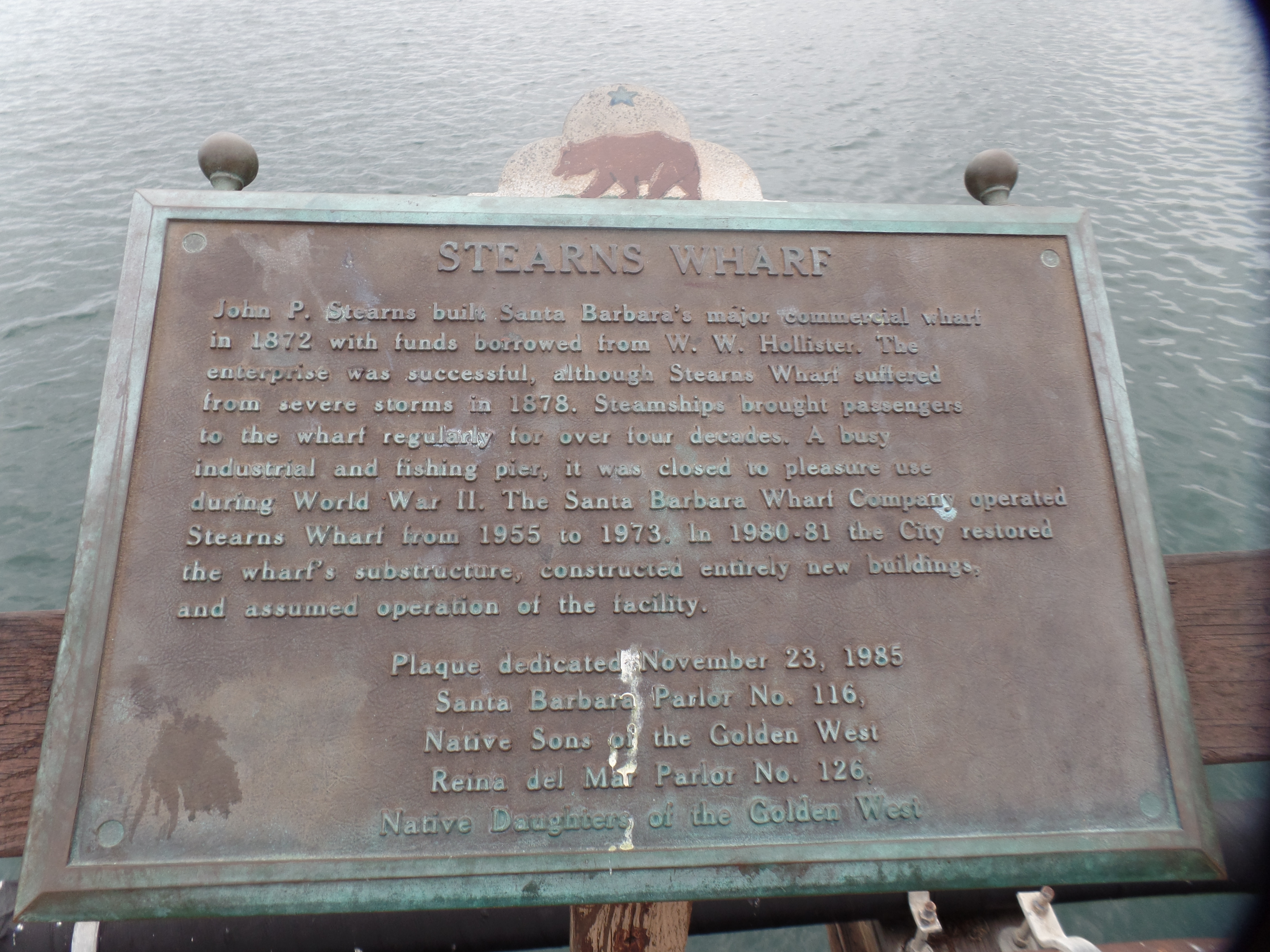
Santa Barbara’s main beach is a volleyball mecca, and there were at least five matches going on, as I walked from my parking spot to Stearns Wharf.  The tide was low, so there are no dramatic scenes in this post.  Nevertheless, the harbor is a beehive of activity and Stearns is one of the few wharves onto which one may drive, if that is your wish.

SAMSUNG CAMERA PICTURES

SAMSUNG CAMERA PICTURES

SAMSUNG CAMERA PICTURES

SAMSUNG CAMERA PICTURES

The downside of the harbor is evident here.  There are three oil platforms on its outer edge.

SAMSUNG CAMERA PICTURES

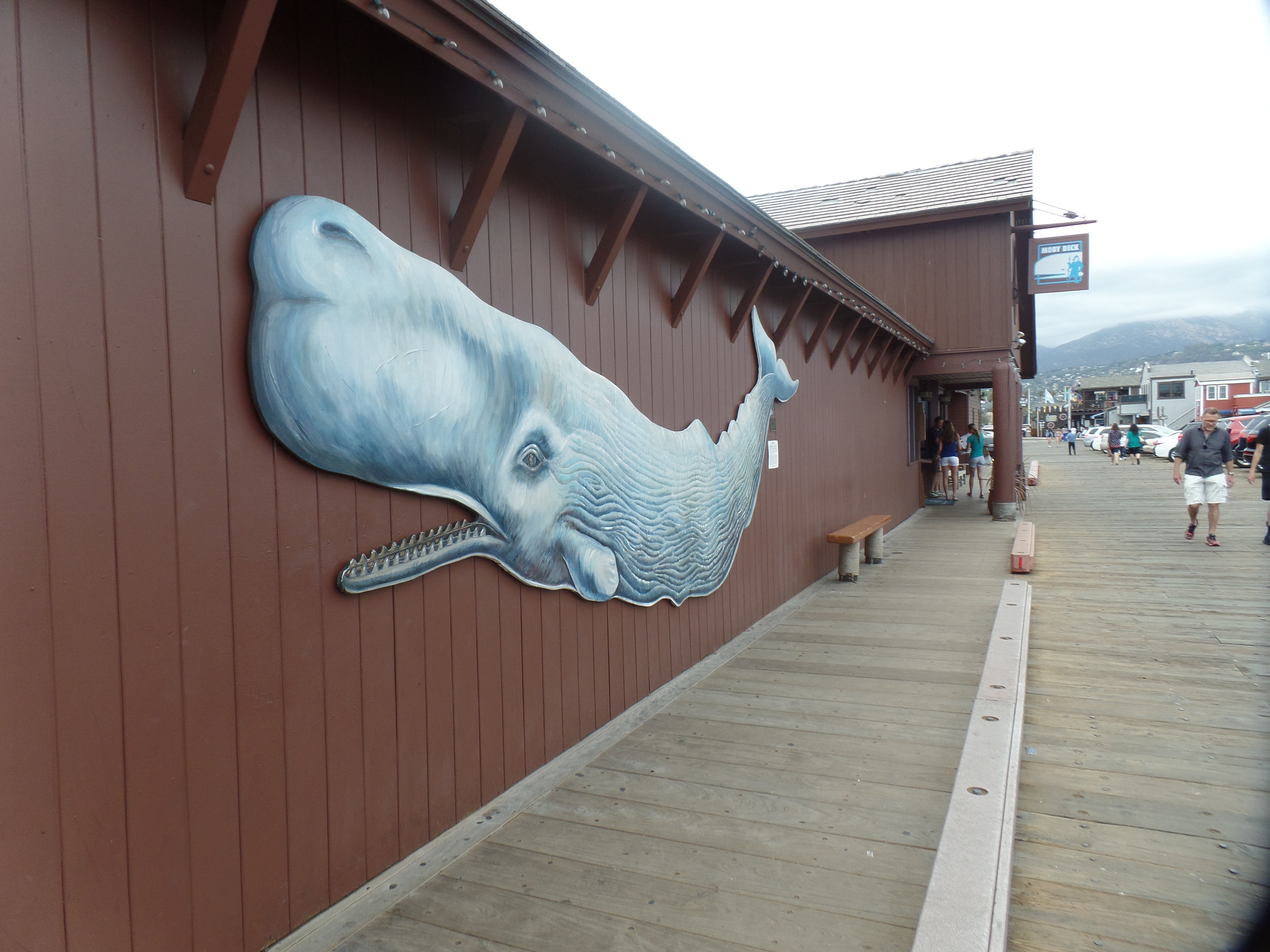
Earlier energy quests inspired this “Moby Dick” depiction, by Beth Amine.  Her original work was lost, when Stearns Wharf burned in 1998.

SAMSUNG CAMERA PICTURES

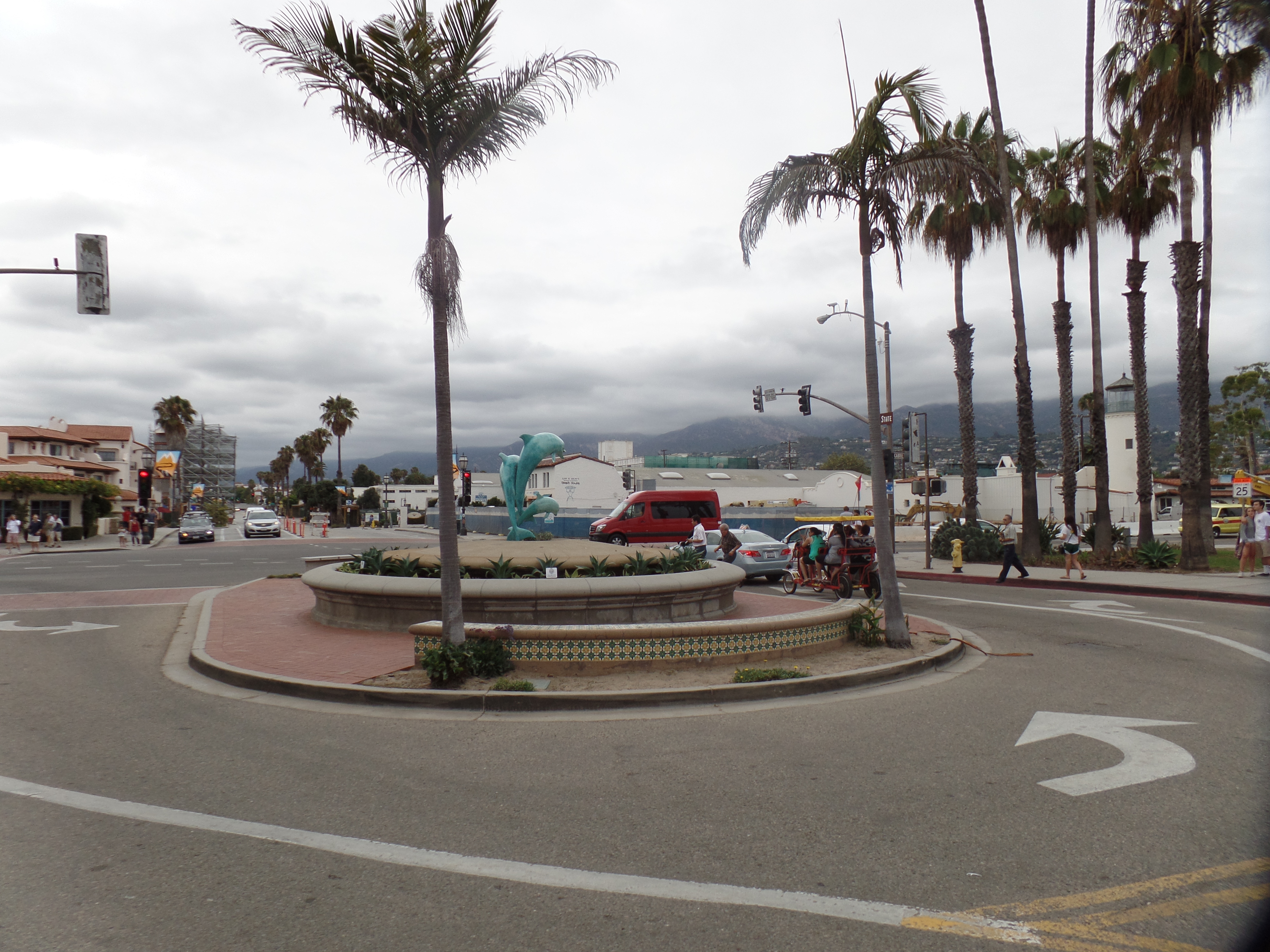
Santa Barbara decorates its roundabouts well, especially downtown.

SAMSUNG CAMERA PICTURES

Here is a bicycle roundabout, near the Volleyball Courts.

SAMSUNG CAMERA PICTURES

If I get back here sometime on a mini-jaunt, the focus would be on Refugio Beach and Goleta.  For this trip, though, spending more time downtown was in order.