The Road to 65, Miles 246-7: The Spirit Has Many Homes

8

August 1-2, 2015, Hano Village-  By way of introduction, Hano is one of three villages atop the Hopi landmark known as First Mesa.  The twentieth-century town of Polacca, named for Chief Tom Polacca-ka, one of those who led the Hopi during the time of transition into a relationship with the U. S. Government, lies at the base of First Mesa, and is the locus of four schools, the Police Department,  the Tour Office, a post office,a small hospital, and an even smaller store.

I set out around mid-day on Saturday, and headed up to I-40, past Flagstaff and Winslow, to Holbrook, the seat of Navajo County.  Some long-time friends and collaborators, from my days as counselor at Jeddito School, live there.  I hadn’t seen them since they suffered a tragic loss, so a visit was well overdue.  After settling into Holbrook Inn, one of the town’s many cheap motels, I went over to visit with Bob and Jacque.  This is one of those times when, as an old Navajo medicine man once put it, “you put your watch away.”  Many recountings of the departed, stories of other aspects of our lives on the Reservation, a fine Tex-Mex chimichanga, and discussions of health-enhancing products, filled nearly five hours on Saturday afternoon and evening, before it was time for all good souls to wind down. So, it was back to the motel for me, with a good night to my friends.

Today, Sunday, came quickly enough.  I dreamed that I was tending to the needs of some close relations, who had been incarcerated.  This was probably a logical outgrowth of the part of the conversation that focused on my friends’ helping those who had found themselves in the County Jail, and some who are in a state prison.  We can’t, in good conscience, forget those among the fallen who have either committed “victimless” crimes, or who have been over-sentenced, which happens a lot in Tribal Courts, and other small-town judicial locales, in the name of “tough love”.

I headed northward, after an adequate breakfast of pancakes and sausage, at a small diner called Tom & Suzie’s.  Highway 77 is a familiar-enough road.  All of the highways between Flagstaff and Gallup are:  It’s what Penny, Aram and I did on weekends, for the seven years we were up this way- mostly to shop, in one or another of the “border towns”.

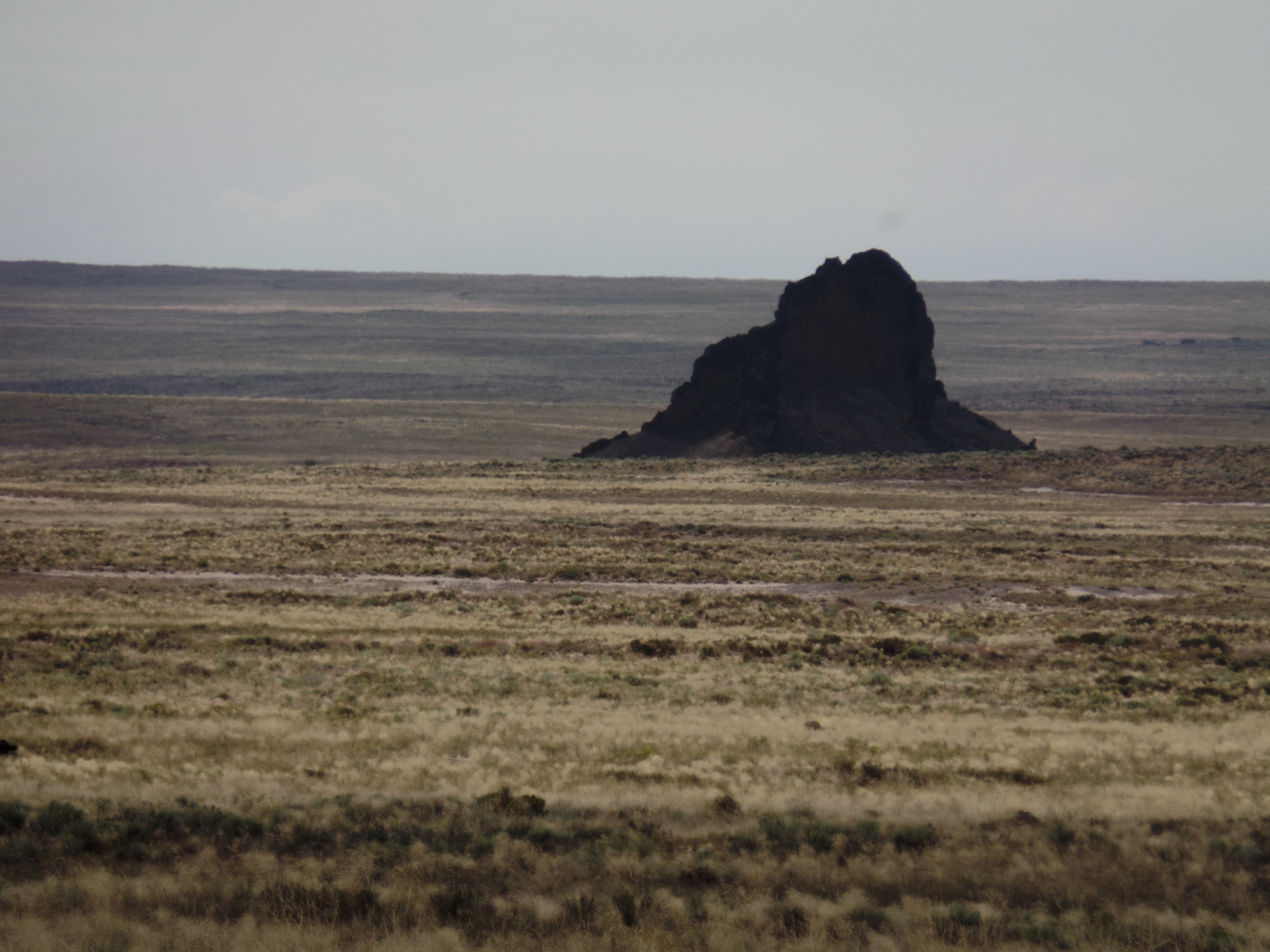
I stopped in a few spots along the way up the 77, to note some of the geologic gems in the areas known as Indian Wells and White Cone.  This small outcropping, about seven miles south of Indian Wells, looks a bit like the famous Ship Rock, northwest of Farmington, NM. So, I refer to it as “Little Ship Rock”.
SAMSUNG CAMERA PICTURES

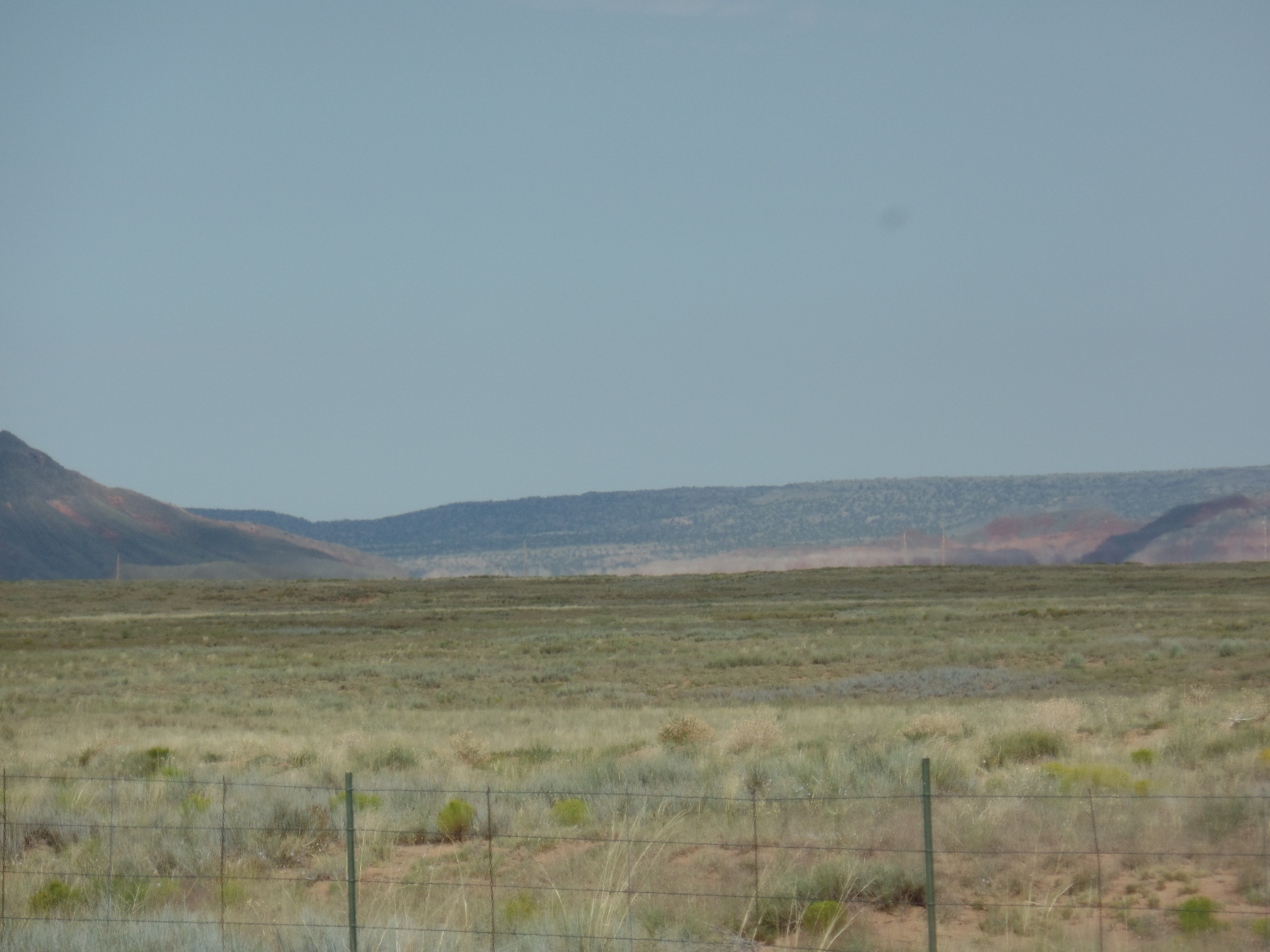
The next four frames show the area known as the Hopi Buttes, though they lie somewhat south of the Hopi mesa-top homes.
SAMSUNG CAMERA PICTURES

SAMSUNG CAMERA PICTURES

The Dine, or Navajo, and the Hopi have alternately co-existed and clashed, as many neighbours around the world do, for hundreds of years now.  The two nations are in a co-existence mode again, which does my heart good, especially as I  worked with both peoples, simultaneously, for nearly eleven years.  So, it’s not odd that the Hopi Buttes should be populated, and used, mainly by Dine (pronounced di-NEH).
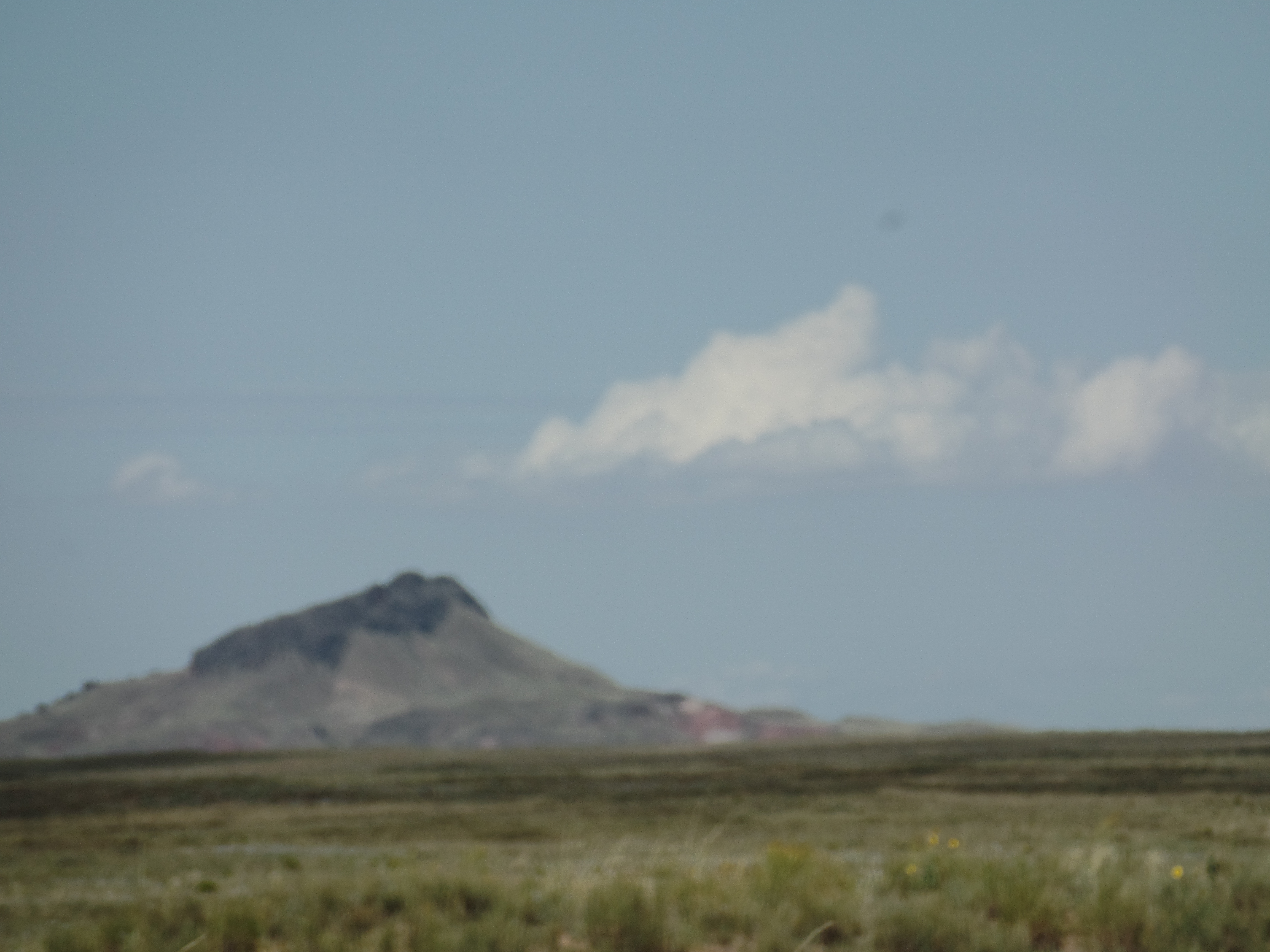
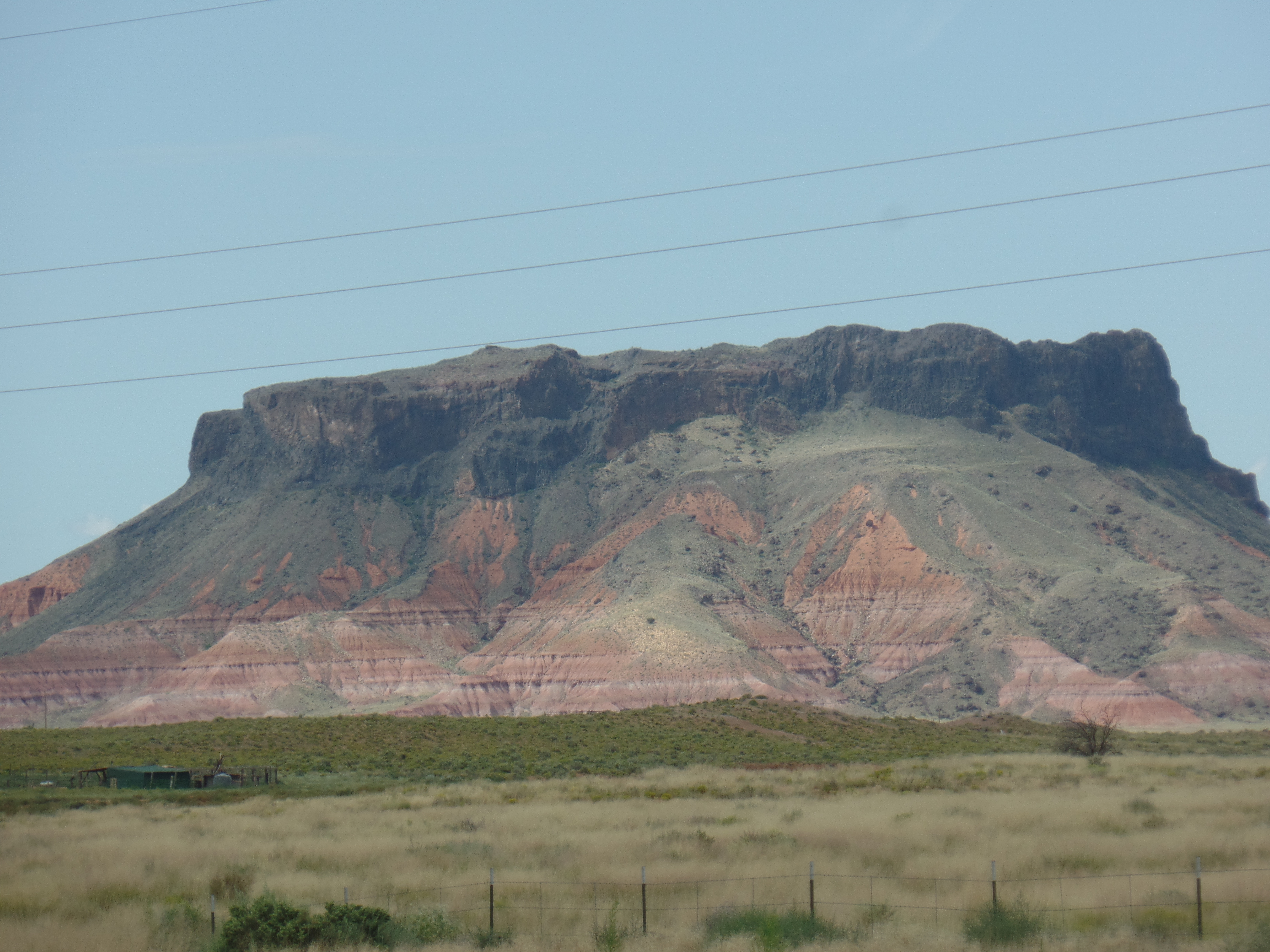
SAMSUNG CAMERA PICTURES

SAMSUNG CAMERA PICTURES

This large formation, near the settlement of Bidahochi, was given the sobriquet “Gorilla Rock” by some Dine whom I met when first visiting the area, in 1979.

SAMSUNG CAMERA PICTURES

The Twin Buttes, just south southeast, of Indian Wells, are most impressive  land forms in the eastern part of the Hopi Buttes area.

SAMSUNG CAMERA PICTURES

They all certainly invite climbing, but the Hopi Buttes are all on private land, so hiking without authorization, or a Dine guide, would invite trouble.  The Navajo Nation may look empty, but the majority of it, especially along the southern edge, is working ranch land.

Once I arrived in Polacca, a few minutes were spent at the home of a departed Hopi-Tewa grandmother, who was our friend for twenty-five years, until her passing. As her daughter was not home, I visited with two of her grandsons, until they had to tend to a family issue.

Then, it was time to go “up top” to Hano.  Parking at the lower lot, I walked up the two-lane road, taking care to stay out of the way of eastbound traffic, which was relatively light.  It took just a few minutes of being directed, and redirected, before I located my hosts’ residence. I was welcomed as if it had been only last week, since we’d seen each other.  That is the way of these villagers, once trust has been established.

Trust does not come easy here. Photography is officially not allowed, once on the mesa tops, and even photographing the mesas from Polacca, or Kykotsmovi (Third Mesa’s base town), is looked at with raised eyebrows.  I saw several people, both Native American and White, recording the social Rain Dances (as opposed to religious dances, which are usually closed to outsiders) on their devices.  One young man was doing so for the Village of Hano.  There’s no telling about the rest.

I was content, as always, to observe the dances attentively, enjoy my hosts’ fine meal and wide-ranging conversations and take-in the antics of the children, who will keep this small, but dignified, nation’s life going, for another generation, and, I’m sure, will turn the dances and songs over to another generation, and so forth, for as long as these sturdy mesa tops will have them.

The Rain Dance seems to have worked, though this being Arizona, there is always more such dancing to be done.  The little three-and-four year old girls were already practicing, alongside the big people, while I stood under the roof beams and took it all in. I will be back, most likely in September, for the Harvest Dance.  This is, after all, one of my spirit’s many homes.

I will close with two views of Winslow’s Little Painted Desert, one of the side perks of driving back to central Arizona.
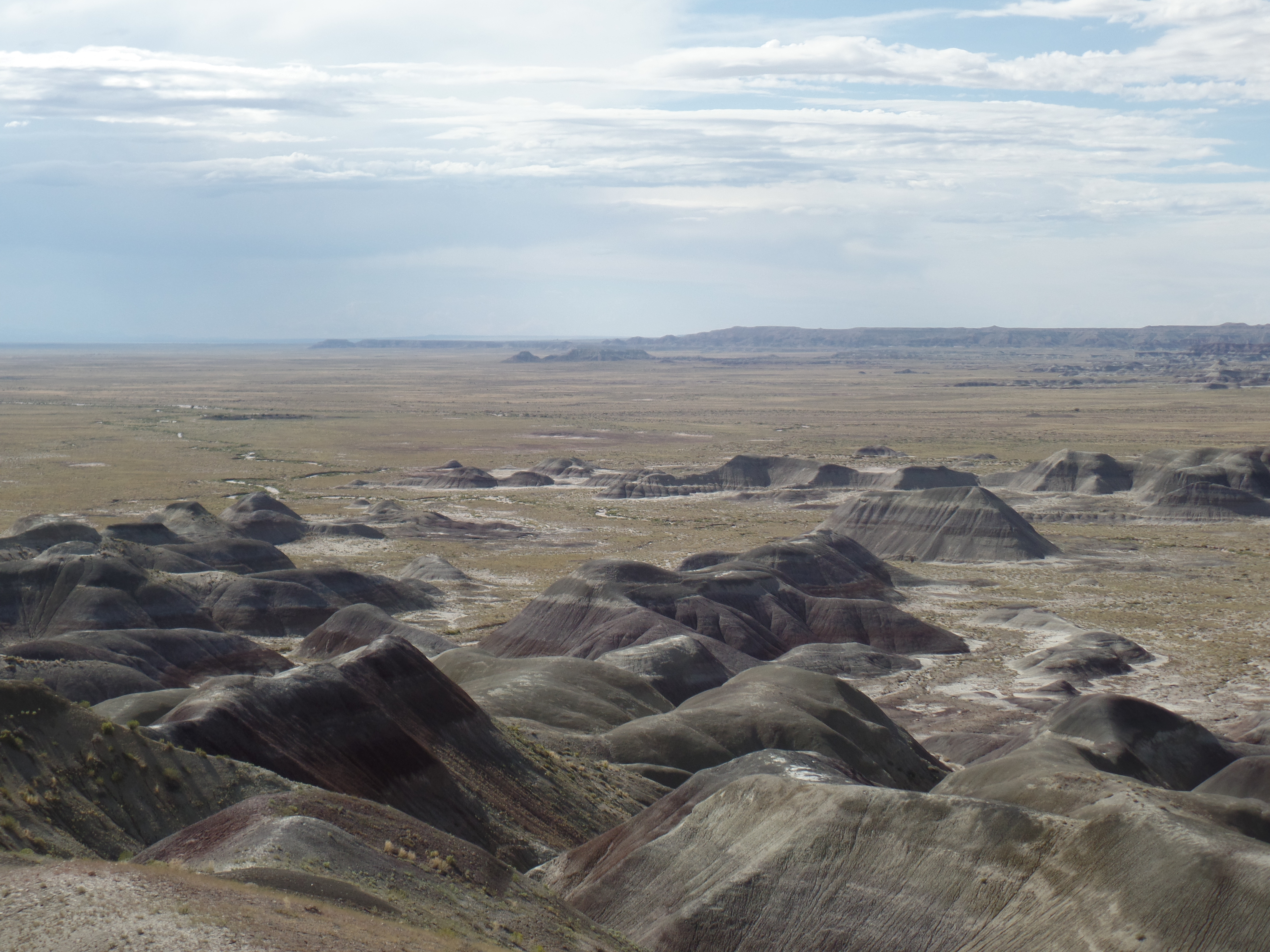
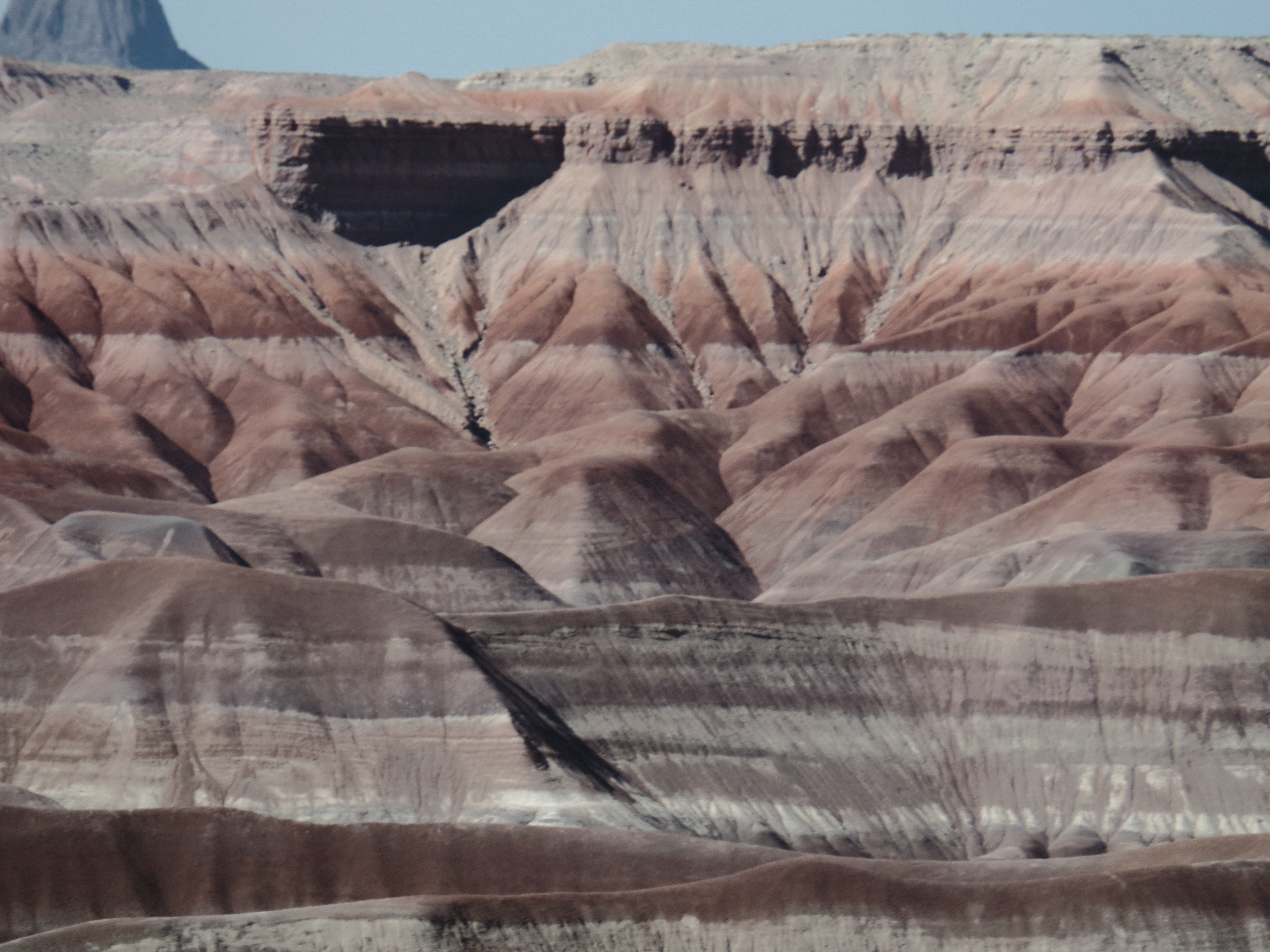
SAMSUNG CAMERA PICTURES

SAMSUNG CAMERA PICTURES

The Road to 65, Mile 236: Back to California, Day 6, Part 3: A Resilient Queen

8

July 22, 2015, Santa Barbara- Mission Santa Barbara is the sixth  California mission I have visited, and only the second I have visited twice, along with San Diego de Alcala.  The first time scarcely counts, though, as the interior had closed.  The same is true of Mission San Luis Obispo de Tolosa, which was about to close when we got there, in 1997.
Yet, let’s get back to the splendidly restored Santa Barbara, “Queen of the Missions”, and another erstwhile casualty of the earthquake of 1925.  The community knew only one thing to do, afterwards, and that was to rebuild.

SAMSUNG CAMERA PICTURES

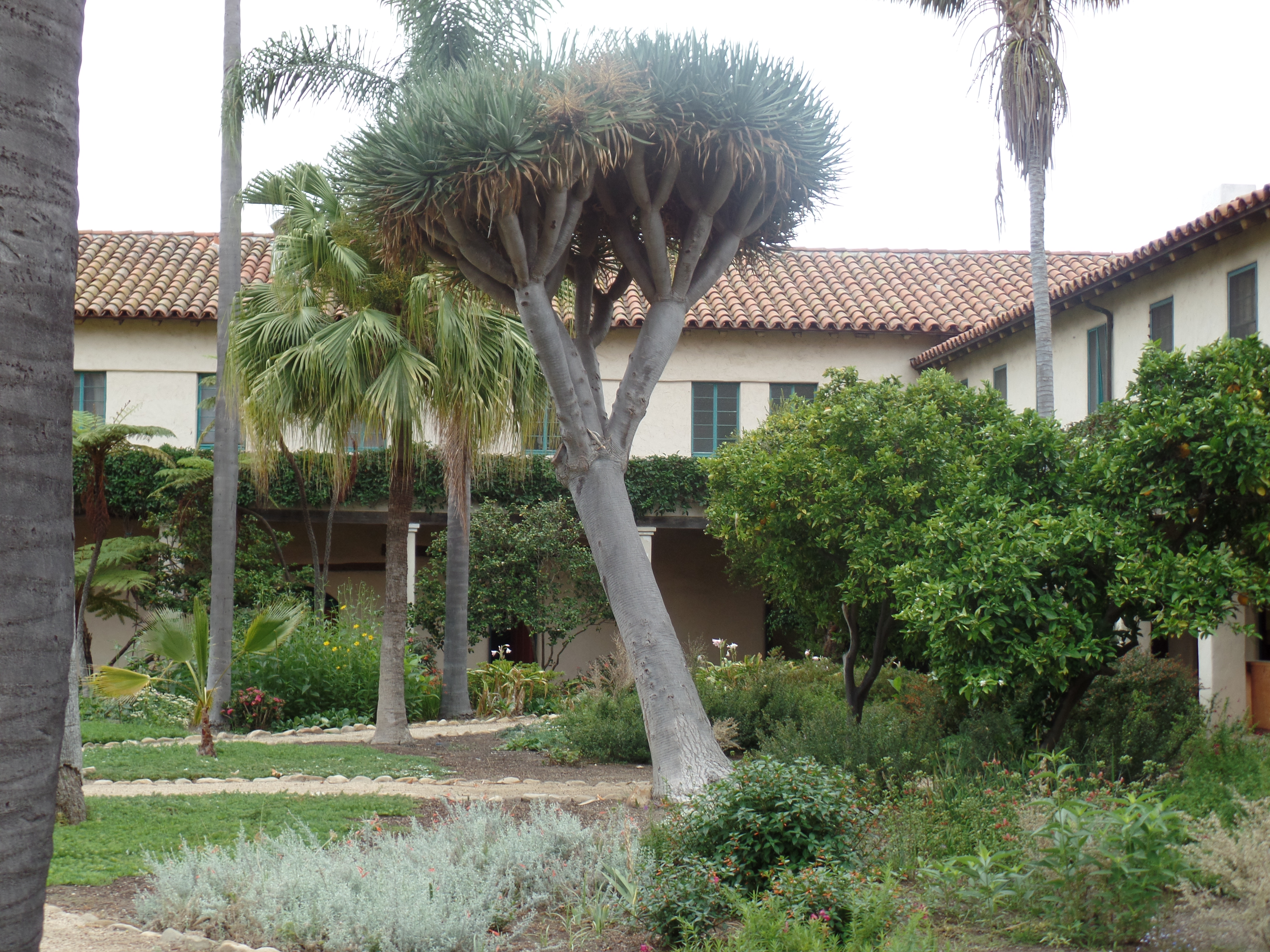
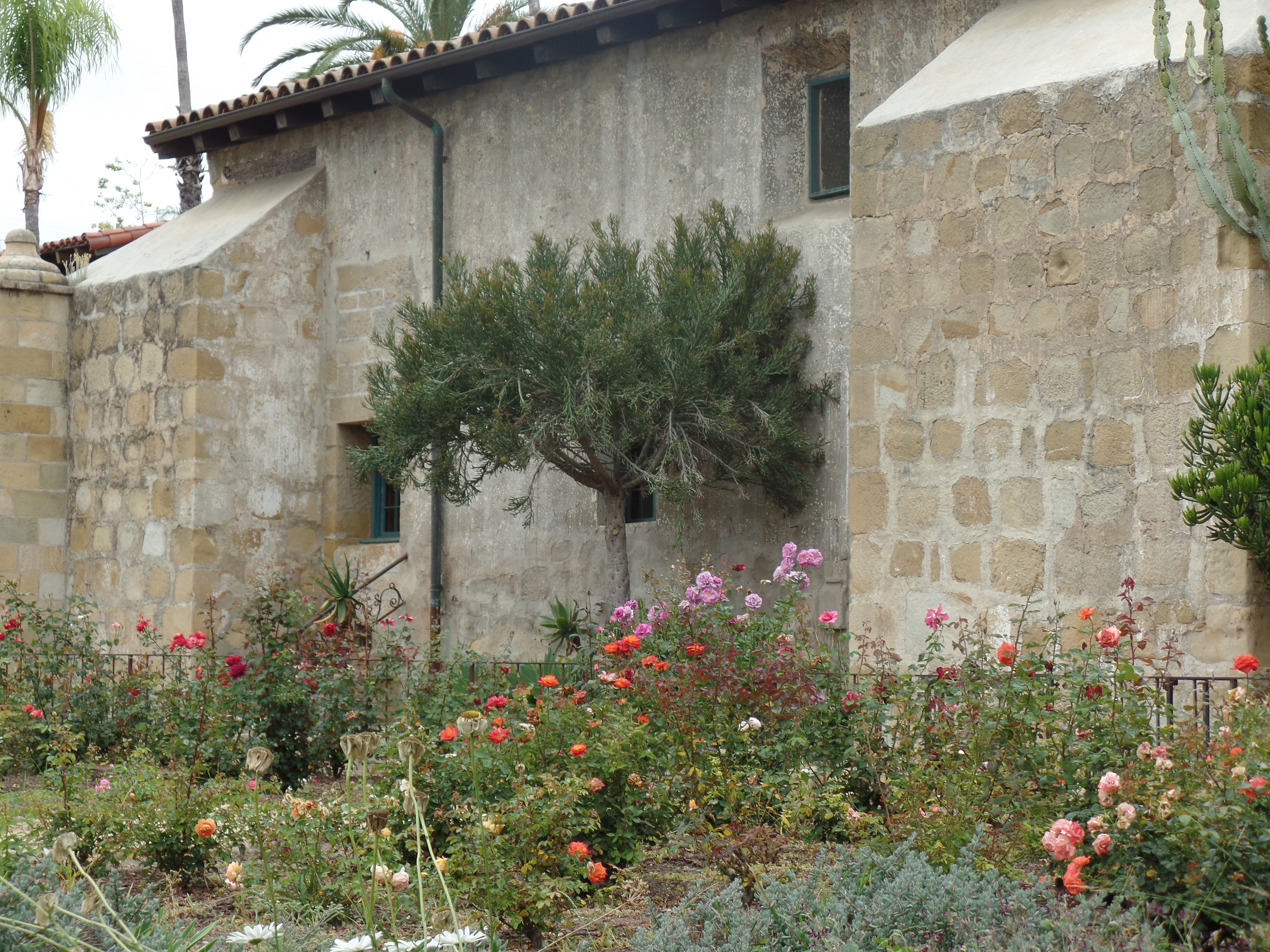
Even with its modern ambiance, Mission Santa Barbara exudes a strong spirituality, especially in its courtyard garden.

SAMSUNG CAMERA PICTURES

The Tower at Pisa has nothing on this olive tree.

SAMSUNG CAMERA PICTURES

SAMSUNG CAMERA PICTURES

This garden font was operating on trickle mode, enough to show the tenacity of the “Queen”, whilst also showing sensitivity to the overall situation in the State of California.
SAMSUNG CAMERA PICTURES

This Mission is one of several which has one public entrance, through the gift shop, where a cashier collects the $8 fee (for adults, 18-64).  The restoration work has all come from visitors’ fees, so they’ve been put to good use.

SAMSUNG CAMERA PICTURES

The bell tower, and much of the northern section of the Mission, are off limits to visitors.

SAMSUNG CAMERA PICTURES

As with other Spanish colonial structures, the walkways are shored up by exposed beams, in the ceilings.

SAMSUNG CAMERA PICTURES

Various small chapels are dedicated to Mother and Child, throughout the periphery of the Mission Church.

SAMSUNG CAMERA PICTURES

St. Peter is shown, honouring his suffering Lord.

SAMSUNG CAMERA PICTURES

The cemetery dates from the 1770’s.

SAMSUNG CAMERA PICTURES

Garden plots and funerary chapels are common here.

SAMSUNG CAMERA PICTURES

The doorway to the Mission Church is guarded by three skulls, so as to prevent malevolence from entering the sanctuary.

SAMSUNG CAMERA PICTURES

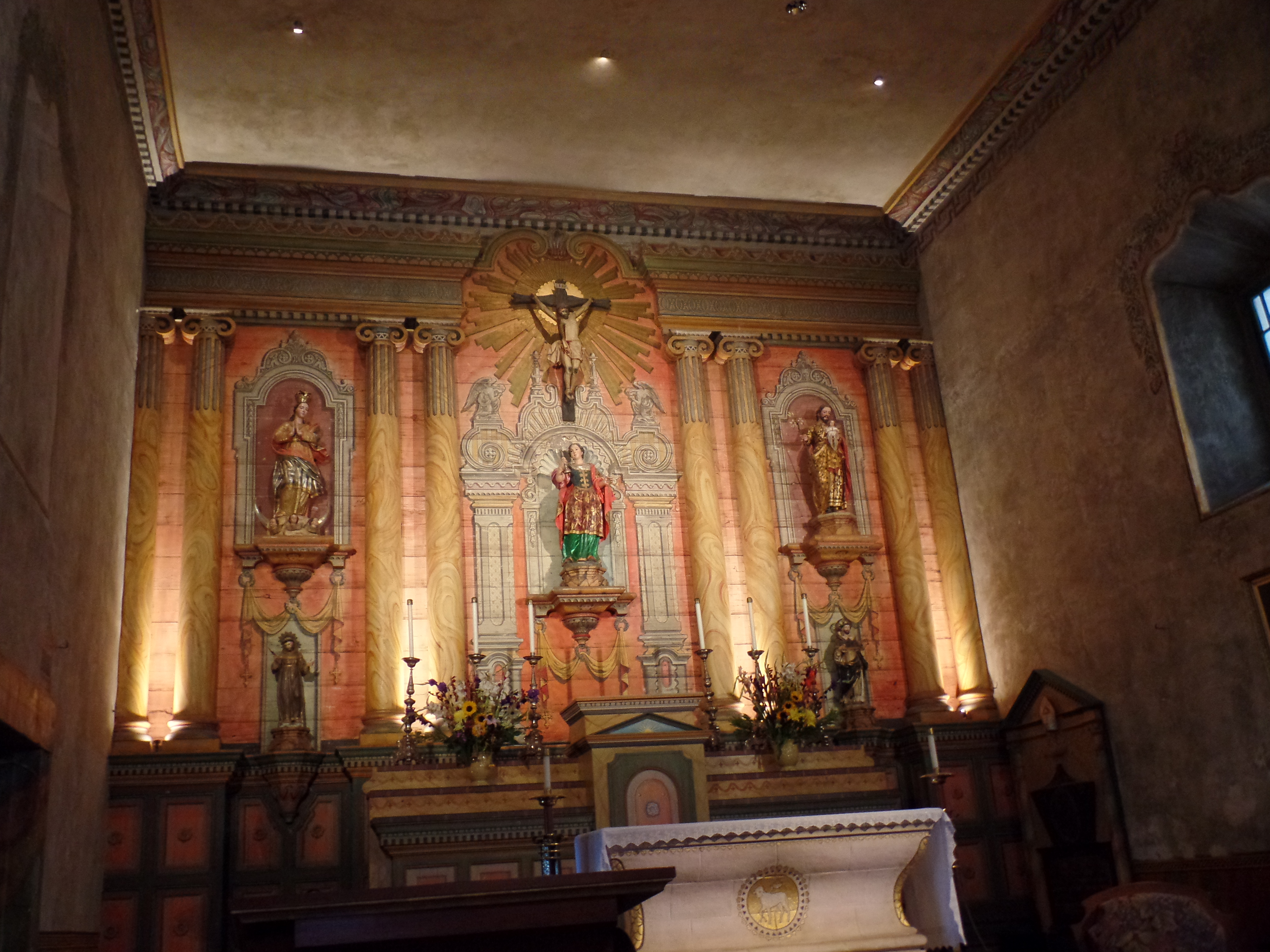
Silence is maintained here, as the church is an active parish’s place of worship, first and foremost.

SAMSUNG CAMERA PICTURES

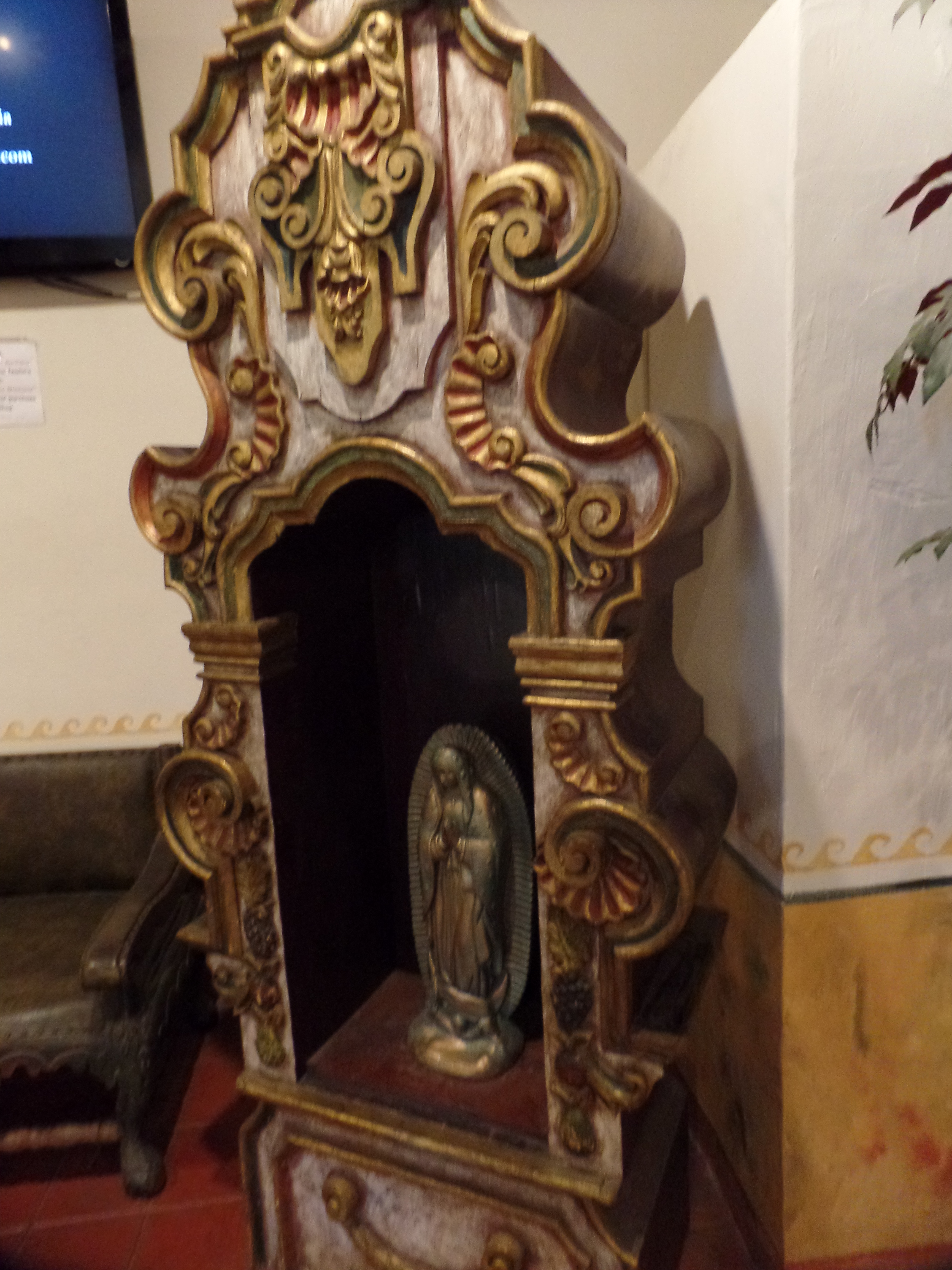
The framed flat column is a unique feature of Mission Santa Barbara.  At least, I’ve not seen it in any other missions.  It is intended as a place to make offerings.

SAMSUNG CAMERA PICTURES

Chumash art is found throughout the Mission, as well.  This chandelier anchor also guards against demons.

SAMSUNG CAMERA PICTURES

The Chumash are among the first Indigenous nations to share their painting skills with Europeans.

SAMSUNG CAMERA PICTURES

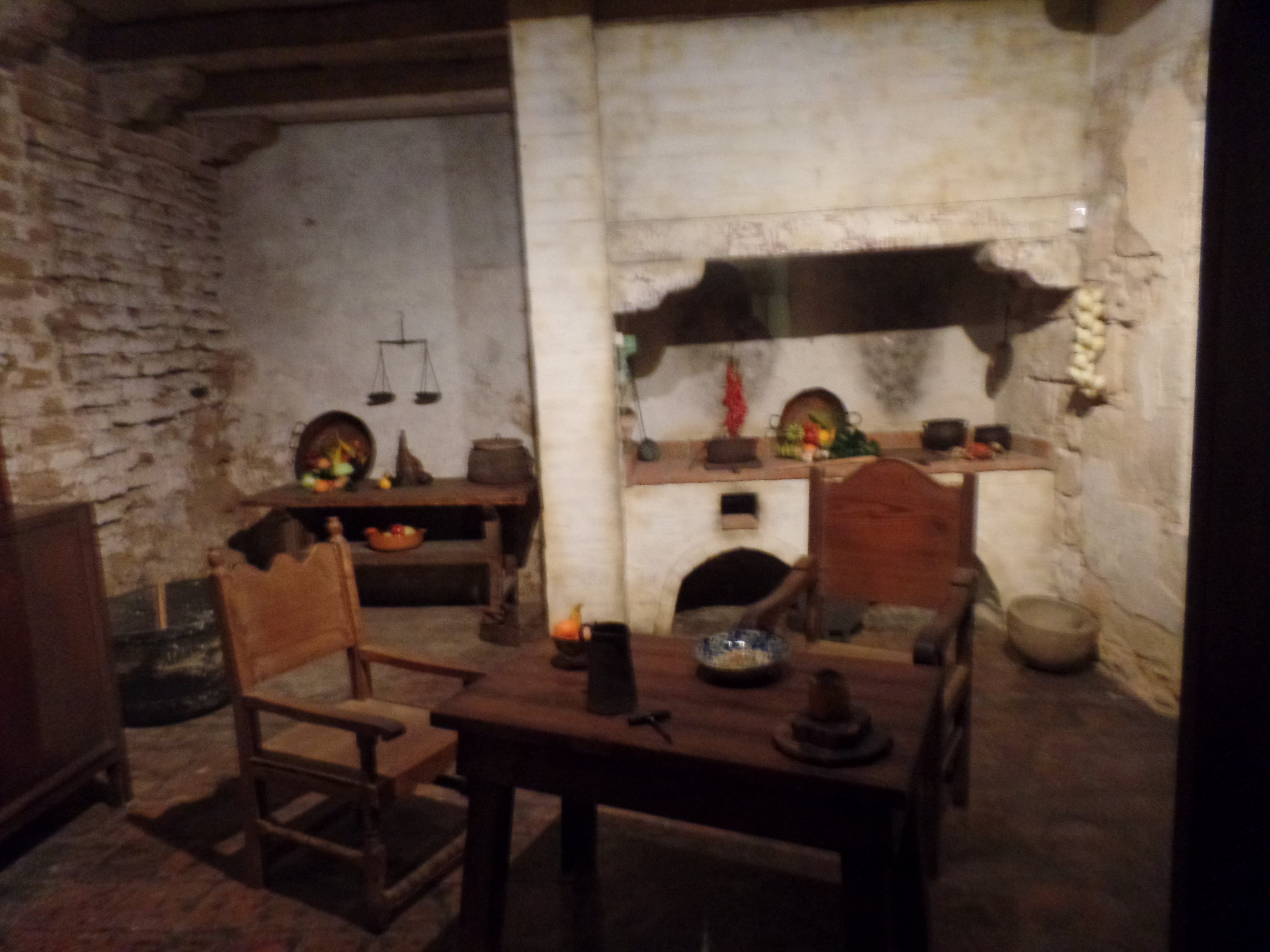
In the museum rooms, details of daily mission life are made clear.  This is a depiction of the friary kitchen.  It reminds me of its counterpart at Mission San Luis, in Tallahassee.

SAMSUNG CAMERA PICTURES

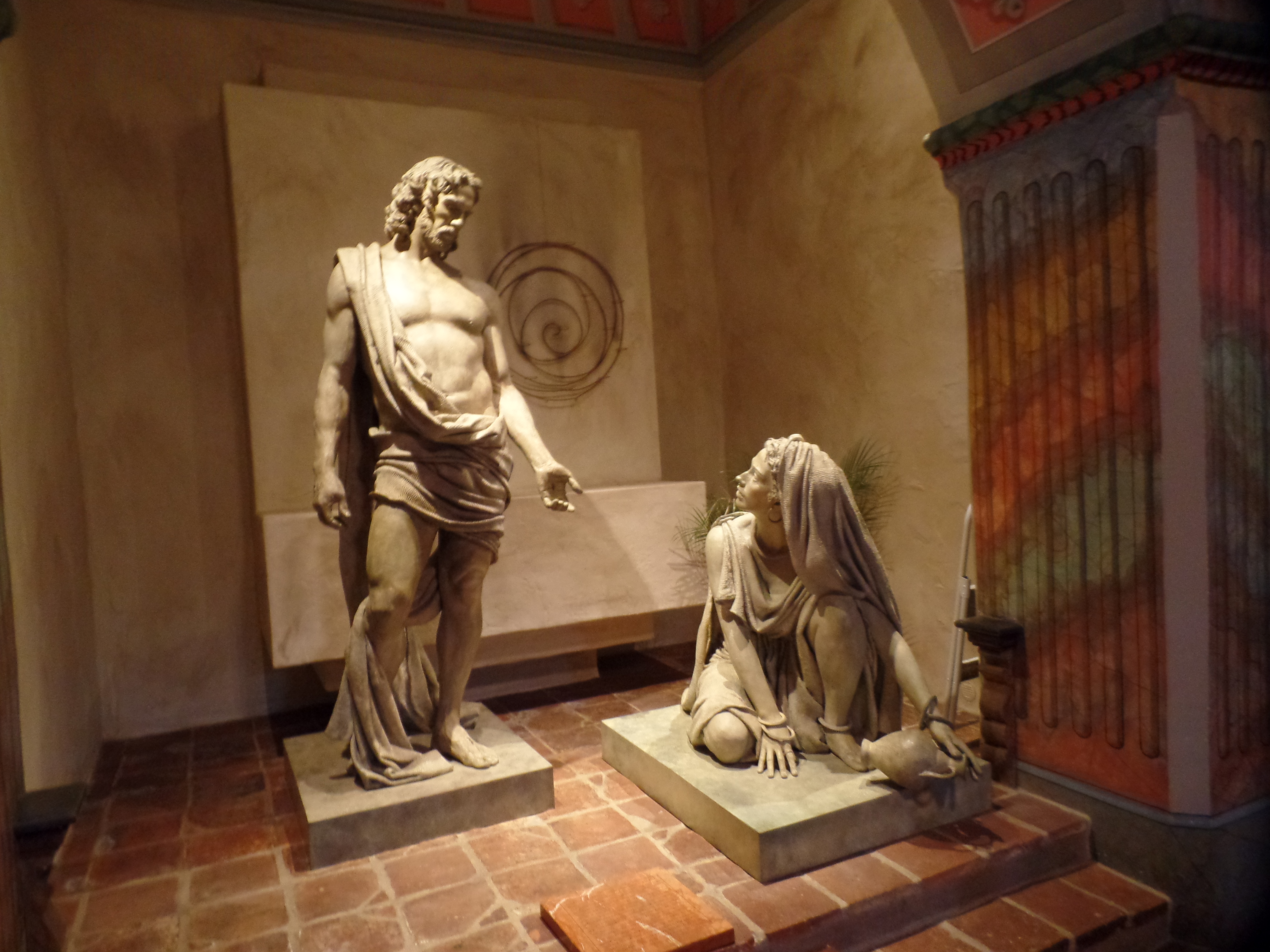
Between the Mission Church and the museum, Christ is depicted as a man of strength and courage, comforting Mary Magdalene.

SAMSUNG CAMERA PICTURES

This aqueduct was the place where Chumash workers would bathe, and wash their garments.

SAMSUNG CAMERA PICTURES

Although La Huerta, the signature garden of Mission Santa Barbara, was off-limits, the Olive Trail Garden, as well as the Courtyard Garden shown aforehand, were open to visitors. I have become quite enamored of anything bright red, on this trip.

SAMSUNG CAMERA PICTURES

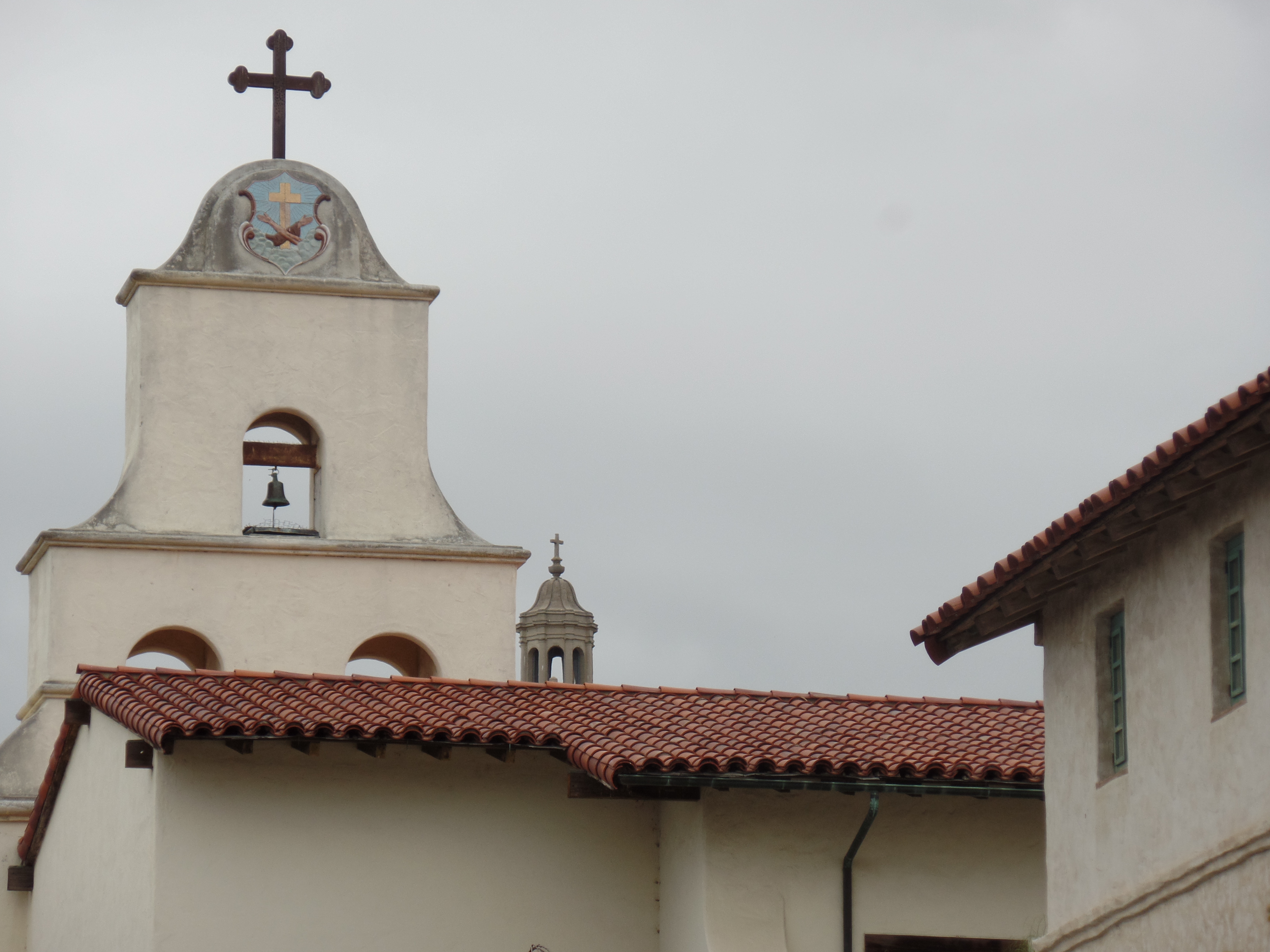
It was hot, being mid-afternoon, so I bid farewell to the Queen of Missions, with a nod to its place in the skyline.

SAMSUNG CAMERA PICTURES

Thus, my northward journey to the south-facing coastline began to wind down.  Eastward ho!  I drove to Santa Clarita, the recently incorporated (1987) conglomeration of San Fernando Valley communities, due east of Santa Barbara, and opted for the familiar format of Chili’s,in the Newhall section, as a dinner venue, foregoing a brief plan to head into the Saugus section of town, for a meal at Los Angeles County’s oldest restaurant.  It was getting too late,but next time out- Saugus, CA will be on the itinerary.

A few hours later, via Palmdale and Victorville, I made my evening destination of Barstow.  Motel 66 is a clean and eminently affordable Mom & Pop west side establishment, and I don’t need anything more. Tomorrow, I will head back to home base, through the familiar Mohave Desert and uplands of Yavapai County.

The Road to 65, Mile 235: Back to California, Day 5, Part 2- Point Mugu to Ojai

4

July 21, 2015, Ojai-  I was determined to arrive in Ojai, and to find a fairly inexpensive place in which to spend the night.  That meant bypassing Mission San Buenaventura, in- you guessed it, Ventura.  This seaside namesake of the LA area’s northern county, and its sister city, Oxnard, were full-up congested, as I passed through.  At one point, with a Ventura police officer behind me in traffic, a boy of about nine started to walk nonchalantly into traffic, with his little sister in tow.  He froze when he saw me, but I stopped, halfway through the intersection, and waved them on through.  The cop followed me for about 1 1/2 blocks, then determined I was of sound mind, and went on his way.  Crosswalks are there to be used.

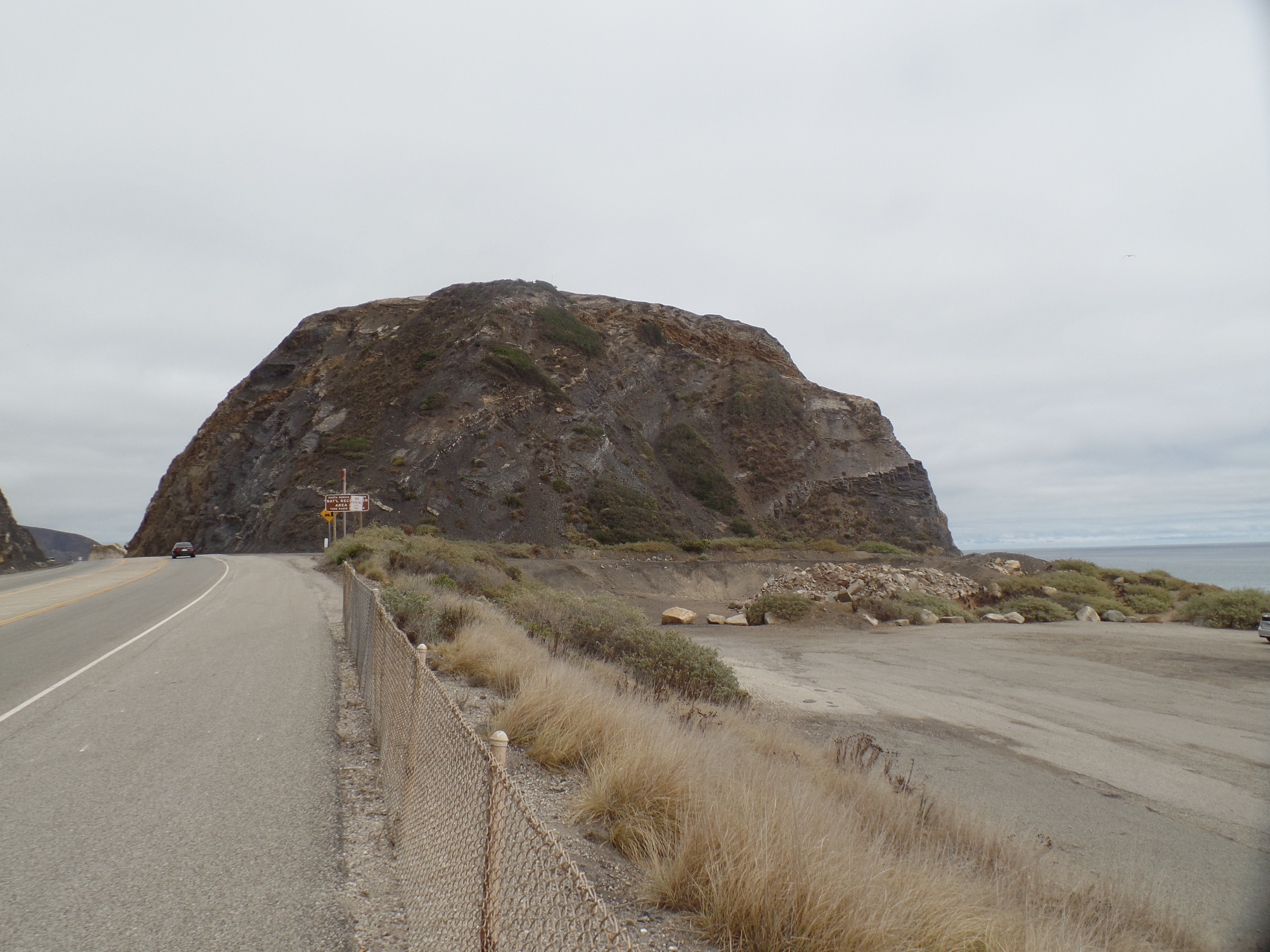
Before that, though, I happened through an area not high on a lot of people’s to visit list: Point Mugu.  It used to be a major naval station, though it, and nearby Port Hueneme, have been downsized.  The rock, though, did attract about a dozen bathers and sun-worshippers.

SAMSUNG CAMERA PICTURES

SAMSUNG CAMERA PICTURES

SAMSUNG CAMERA PICTURES

SAMSUNG CAMERA PICTURES

This rock, south of the signature Point, was partly occupied by three off-duty sailors, who declined to be photographed.  So, I made do with the western edge.

SAMSUNG CAMERA PICTURES

The drive to Ojai, once through the Ventura County beach towns, was serene and lovely.  I chose Oakridge Inn, in Oak View, as my resting place for the night.  It is close enough to Ojai, for a quick jaunt to that mountain town, and near to the junction which leads to Carpinteria and Santa Barbara.

Ojai has just the right mix of generations and balance of artistic and business-oriented people.  It’s also one of the cleanest towns I’ve seen in southern California. The downtown mall is a mix of Spanish and Old West influences.

SAMSUNG CAMERA PICTURES

The Post Office has an Andalusian ambiance.

SAMSUNG CAMERA PICTURES

This is the courtyard behind Feast Bistro.  Many people use this area to walk their dogs in the evening.  It reminds me of some shopping minmalls in the town of Sedona, near Prescott.

SAMSUNG CAMERA PICTURES

SAMSUNG CAMERA PICTURES

This fountain has been turned off, due to California’s paltry water supply.

SAMSUNG CAMERA PICTURES

Here is another class act: Feast Bistro.  It’s a local favourite, and everyone there that night seemed to be a regular.  Dogs are welcome on the patio, and are given water bowls, so long as they are leashed and well-behaved.

SAMSUNG CAMERA PICTURES

It’s no wonder my West LA friend, Kate, recommended Ojai so highly.

The Road to 65, Mile 235: Back to California, Day 5, Part 1- Santa Monica to Malibu

5

July 21, 2015, Ojai-   My first shot, up Pacific Coast Highway, was rather fast- with only the usual five-minute slowdown around LAX to add some vintage Los Angeles to the mix.  Actually, because of advance planning, I haven’t encountered gridlock in the City of Angels, regardless of the route.  I-5, I-405 and I-10 have all been no worse, and usually better, than Phoenix, Denver, Atlanta, Chicago, Boston or New York.  I take that back:  Once, and only once, I spent an hour on the 91, from Anaheim to Riverside.

My first stop on this varied and fascinating day was at a Peet’s Coffee, in Santa Monica.  Main Street has dirt-cheap parking lots, and my spirits guided me to the one across from Peet’s, even before I spotted the coffee shop itself.  Good thing, this, as I arrived right at the appointed time to meet with a long-time Word Press friend.  Kate has been an inspiration to me, since 2012, when I first read her account of a road trip across the South.  Since then, she has focused on many aspects of life, not the least of which being establishing a home, with husband, Brian, and their adorable dog, Frank.

Our conversation lasted about an hour, running the gamut from “How I Met My Wife” to various aspects of our respective journeys- and, of course, Frank- her second-favourite being.  Life intervenes, though, and at noon, she was off to work and I, to Malibu.

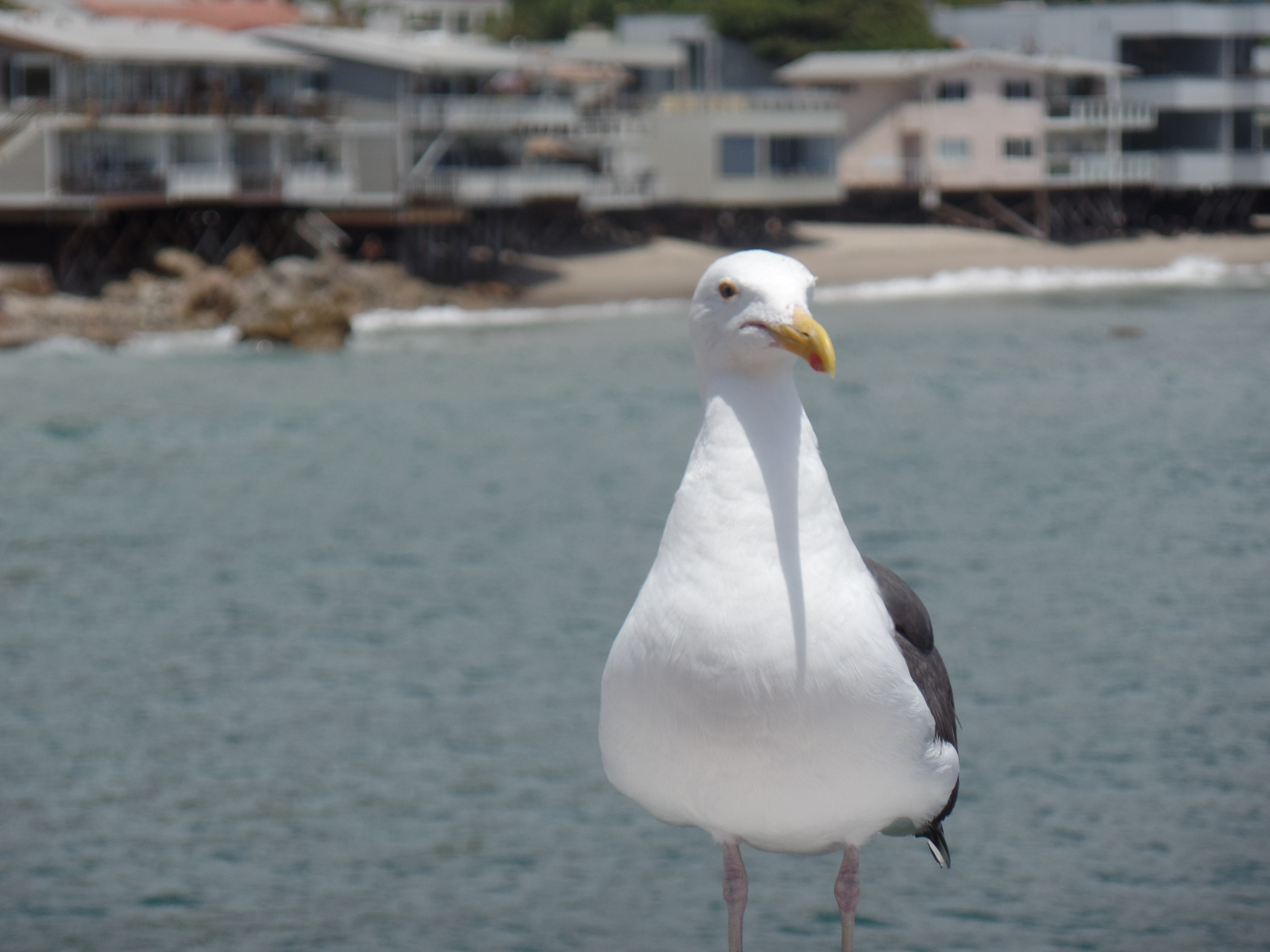
At the Los Angeles area’s northernmost beach-meets-canyon wonderland, I was greeted by a sanguine presence.  Mr. Gull, of course, was at the Sport-Fishing Pier, calmly awaiting dropped bait and other delights.

SAMSUNG CAMERA PICTURES

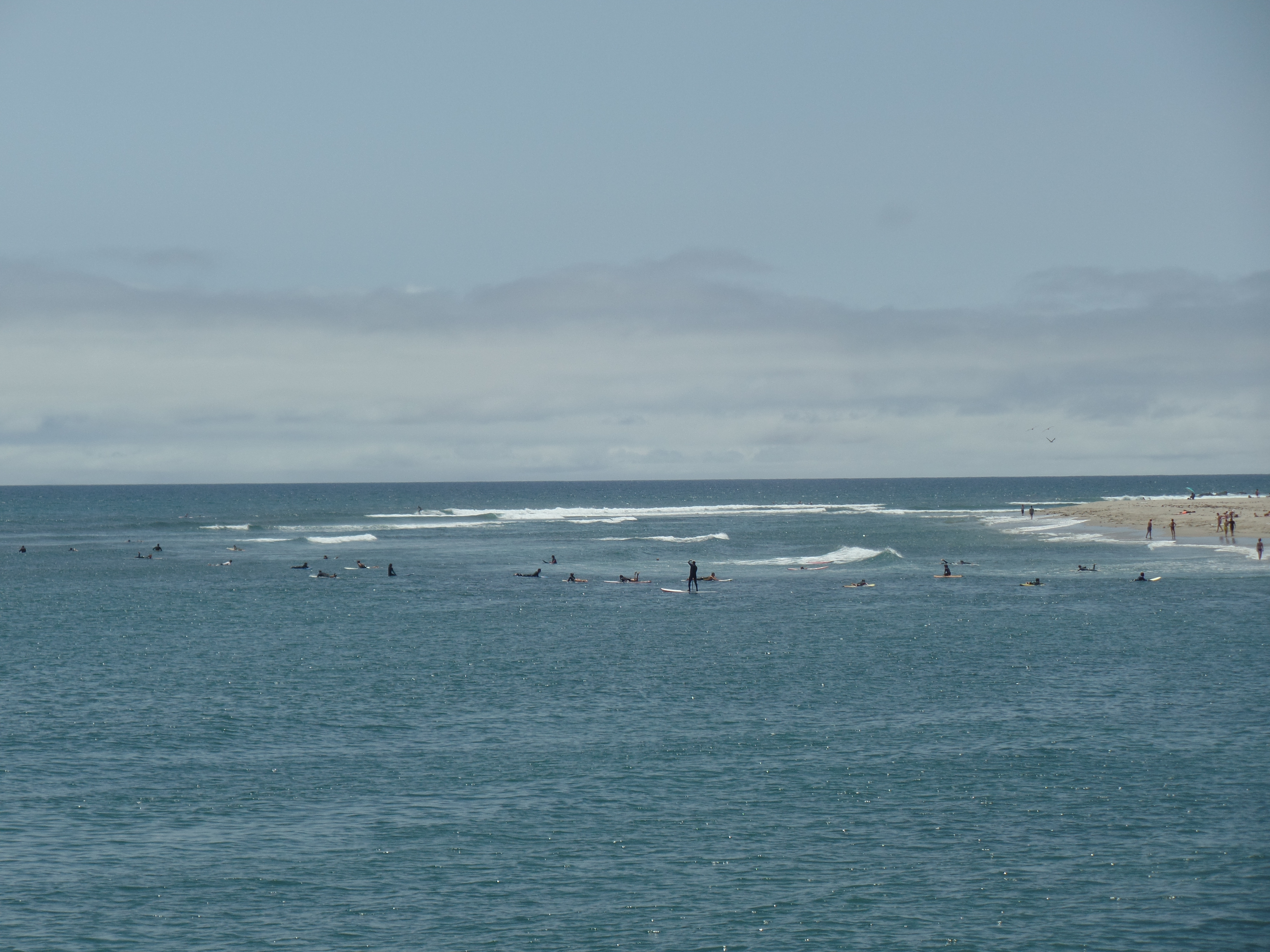
I wandered around the beach area, near the pier, for about forty minutes, just enjoying the sights and sounds of families, young adults, and the sea itself, at play.

SAMSUNG CAMERA PICTURES

SAMSUNG CAMERA PICTURES

SAMSUNG CAMERA PICTURES

SAMSUNG CAMERA PICTURES

I’m not sure how I would do in a sea kayak, or on a boogie board.  Those days passed, with yours truly being only a marginal swimmer.

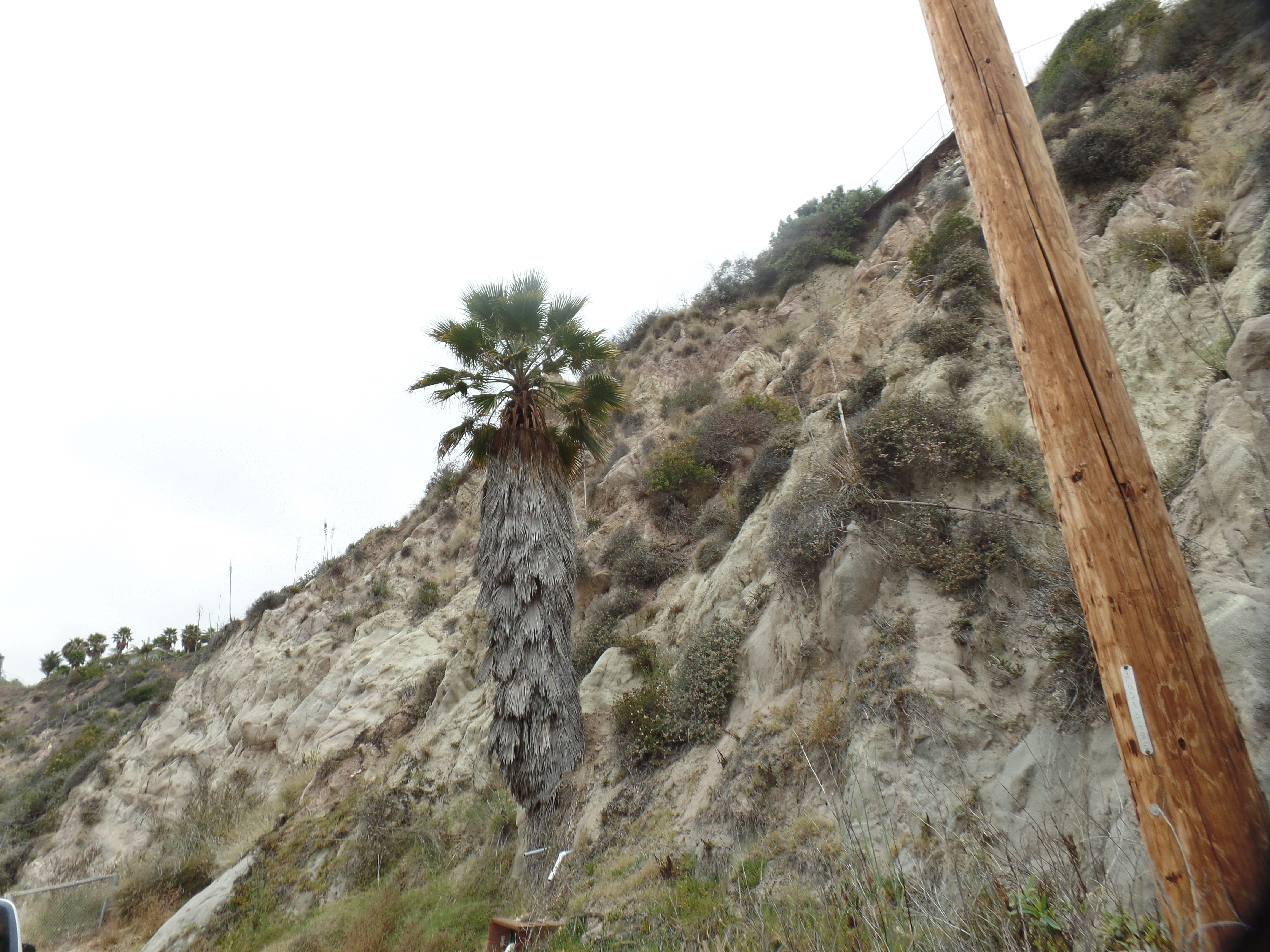
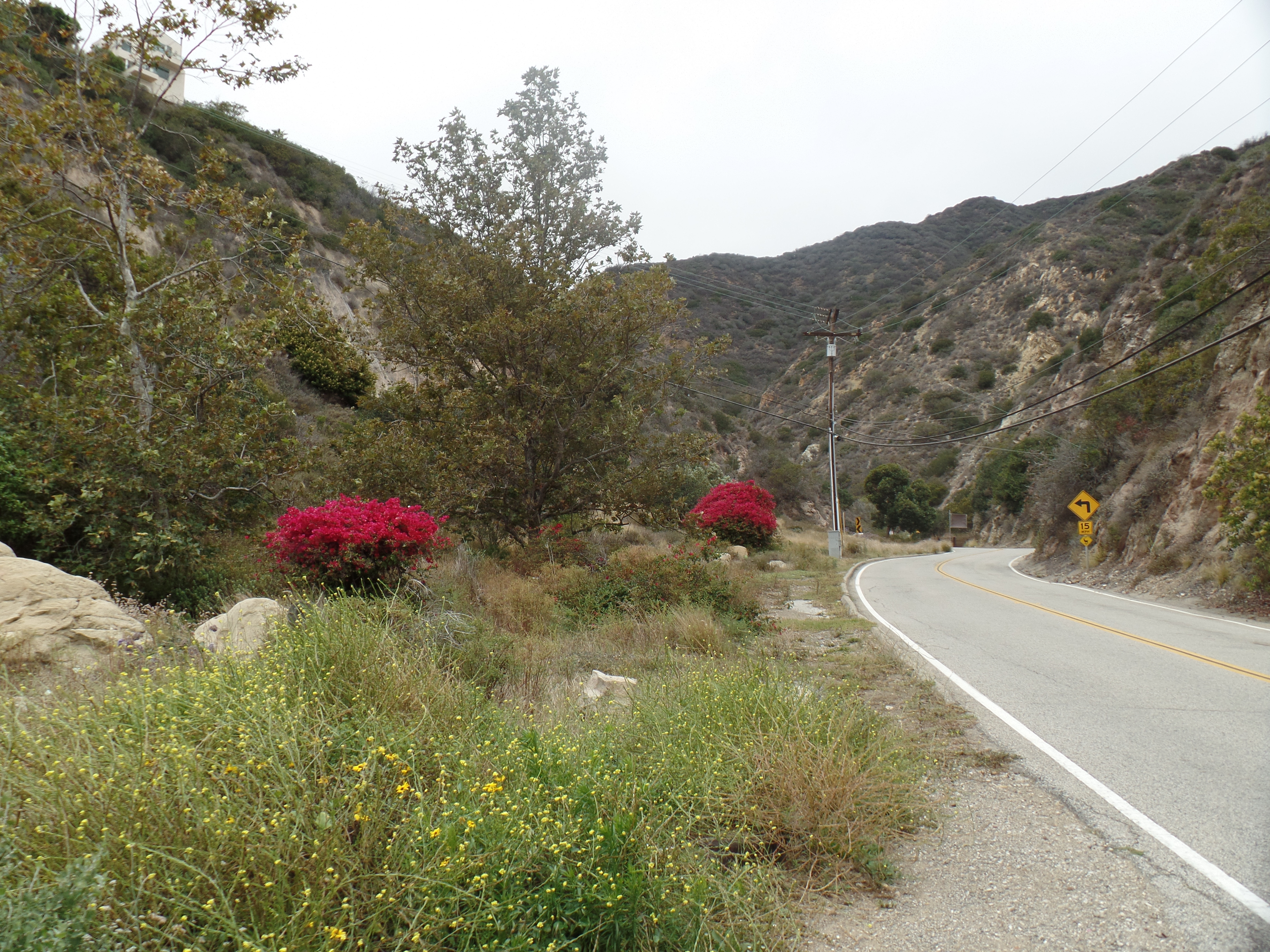
The City of Malibu has gone to great lengths to add flora to its roadsides, both along the highway and on its canyon feeder roads.  Some, like this palm, are native.

SAMSUNG CAMERA PICTURES

Others, like bougainvillea, just make everything cheerful.

SAMSUNG CAMERA PICTURES

SAMSUNG CAMERA PICTURES

No visit to this area, however short, is complete without a drive in the Santa Monica Mountains. I spent about an hour, here and there, spotting one actress known on television, standing in a driveway, apparently waiting for her ride and looking at me like I was a celebrity.   At another overlook, while I was sitting in my car, eating a muffin, another young lady, whom I recognized as a child star from the ’90’s, zipped into the lot and jumped out of her car, getting back into it, on the passenger side and sitting with the door open, gazing out at the luscious canyon. (Out of respect for these folks’ privacy, I do not identify them in my posts, nor do I approach them for conversation, especially when it’s just the two of us in an isolated area.)

Here are some shots of the exquisite mountains and canyons, which gaze down on the eternal sea.

SAMSUNG CAMERA PICTURES

SAMSUNG CAMERA PICTURES

SAMSUNG CAMERA PICTURES

One could wander for days on end, along Mulholland, and its feeder roads, often without seeing a soul, even in these havens for the people of the entertainment community, and their looky-Lous.  I had a few other spots to catch, though, before the day was done.  One that I had considered, Neptune’s Net, a cafe on the Ventura County side of Malibu, found me there at 3 P.M., not my idea of meal time.  So, it was on to Point Mugu, and Ojai, which will be the foci of the next post.

The Road to 65, Mile 234: Back to California, Day 4

5

SAMSUNG CAMERA PICTURES

July 20, 2015, Lomita, CA-  I bid farewell to my back-to-work son, around 8:15 this morning, and went back on the road apiece.  We agreed that my main focus, over at least the next five years, has to be my staying closer to base and building my stock back up. The rest of the world will be there, when I am 70, and beyond. Others have concurred with that, while acknowledging that jaunts around North America, and over to Europe, were a good thing for my soul.

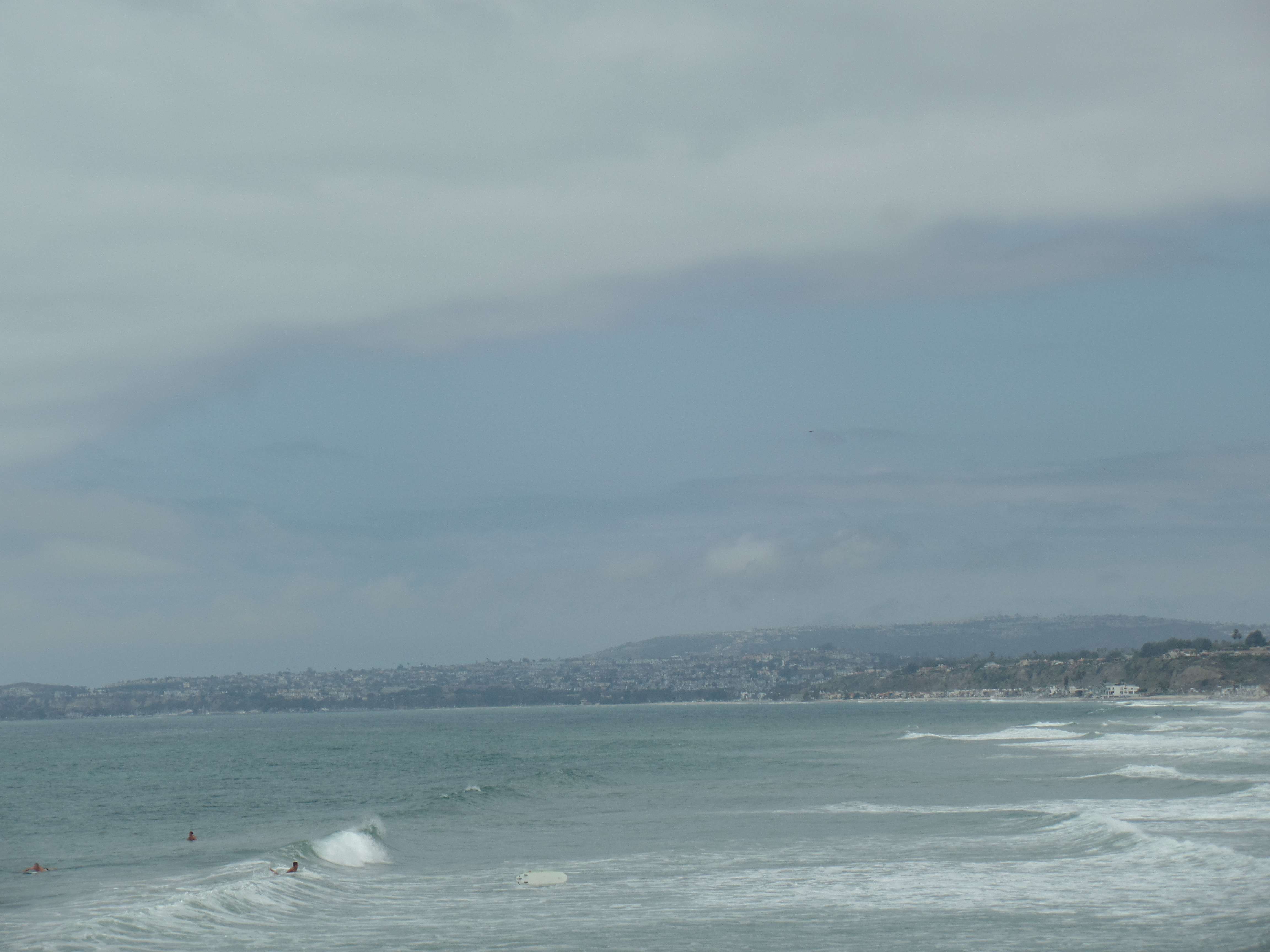
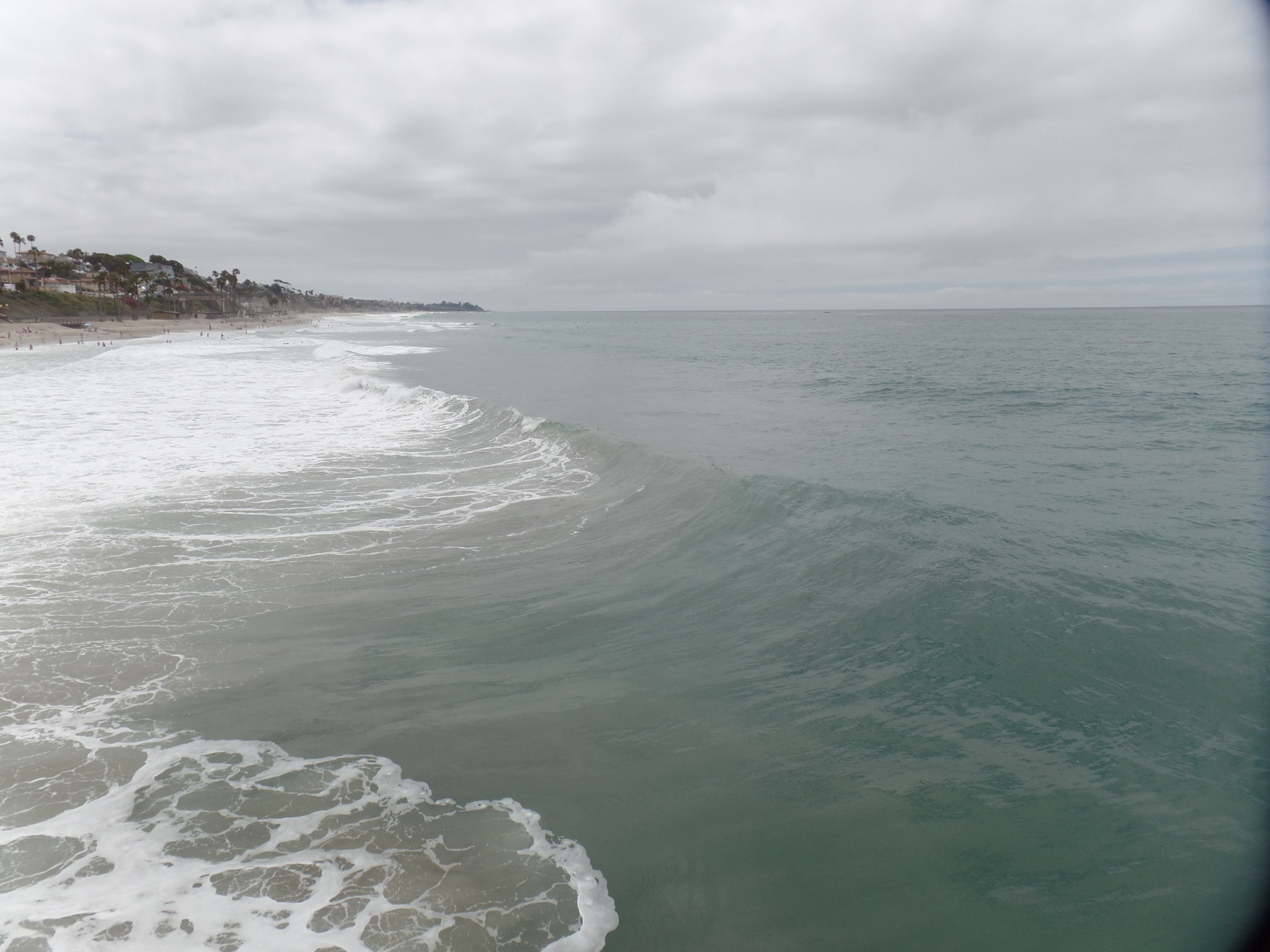
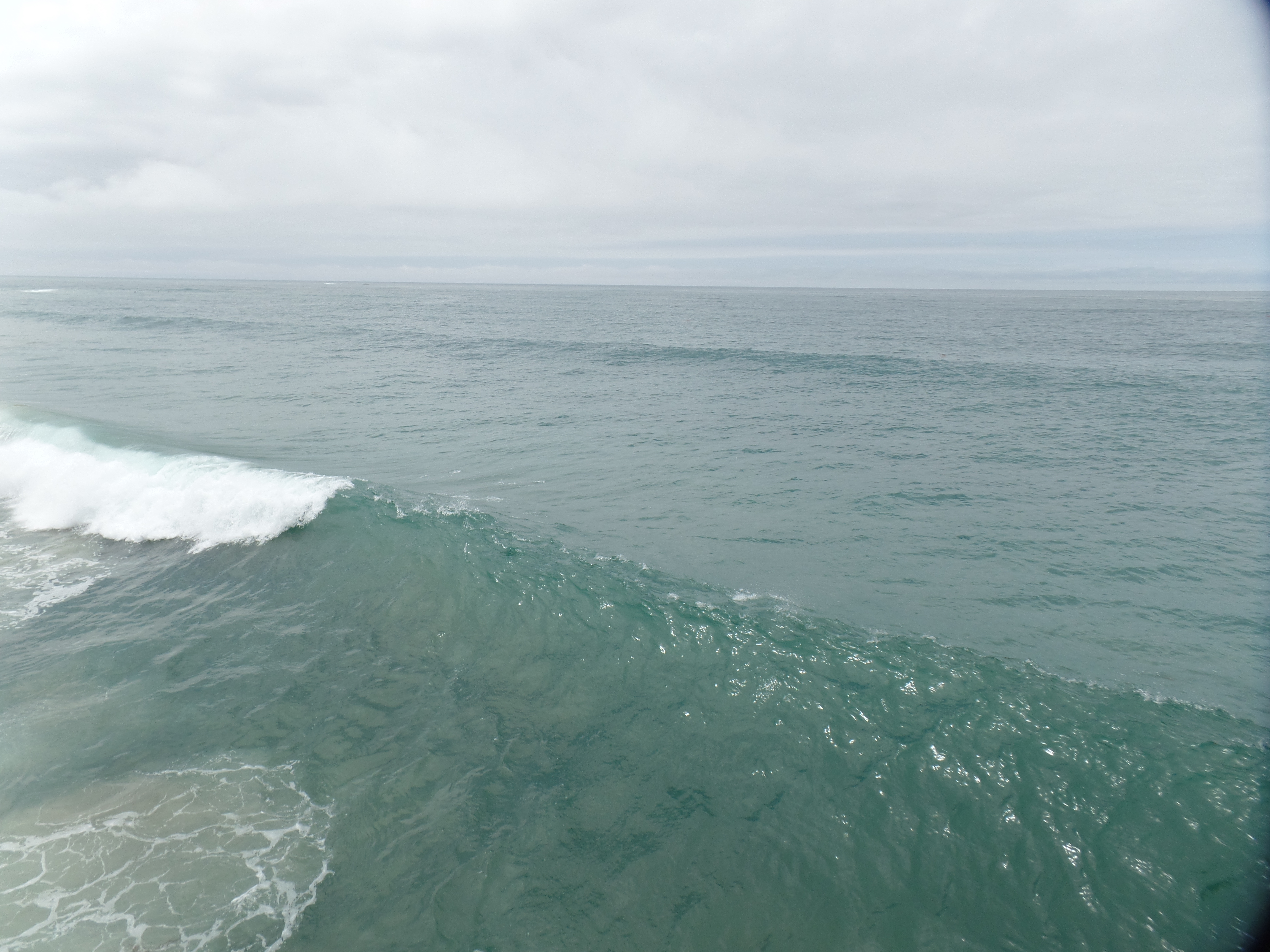
I made my usual visit to Orange County, stopping in San Clemente, for time with a longtime friend, J.  We go for a short walk, take lunch and engage in about an hour’s worth of detailed conversation.  Today’s pier walk offered some good views of big waves, brought to SoCal by Hurricane Dolores, which also gave us two days of rain.

The waves, of course, attracted surfers, of various skill levels, up and down the coast.

SAMSUNG CAMERA PICTURES

SAMSUNG CAMERA PICTURES

SAMSUNG CAMERA PICTURES

SAMSUNG CAMERA PICTURES

SAMSUNG CAMERA PICTURES

SAMSUNG CAMERA PICTURES

You see, above, the progressions of three waves, as they crest and break.

My friend and I went to lunch at Fisherman’s, on the pier’s edge, and each enjoyed salmon and chips.  Our server, R, was keeping a game face and tending to us very well, given the humidity.  We were inside, and I noticed the poor ladies out on the patio, looking as if they were about to keel over.  Tip your servers well, in this hot oven of a summer.

The bougainvillea, off to the north, added some festivity to the scene.  SoCal will surely enjoy at least a brief respite from July & August brownery, with the just passed storm.

SAMSUNG CAMERA PICTURES

Bidding my friend farewell, I headed up the 405, past Long Beach, to the Pacific Coast Highway.  The Palos Verdes Peninsula was next on the agenda.  My friend, M, who lives not far away, calls this “his” peninsula. He and I had a long phone conversation, afterwards, though he was indisposed for a visit.

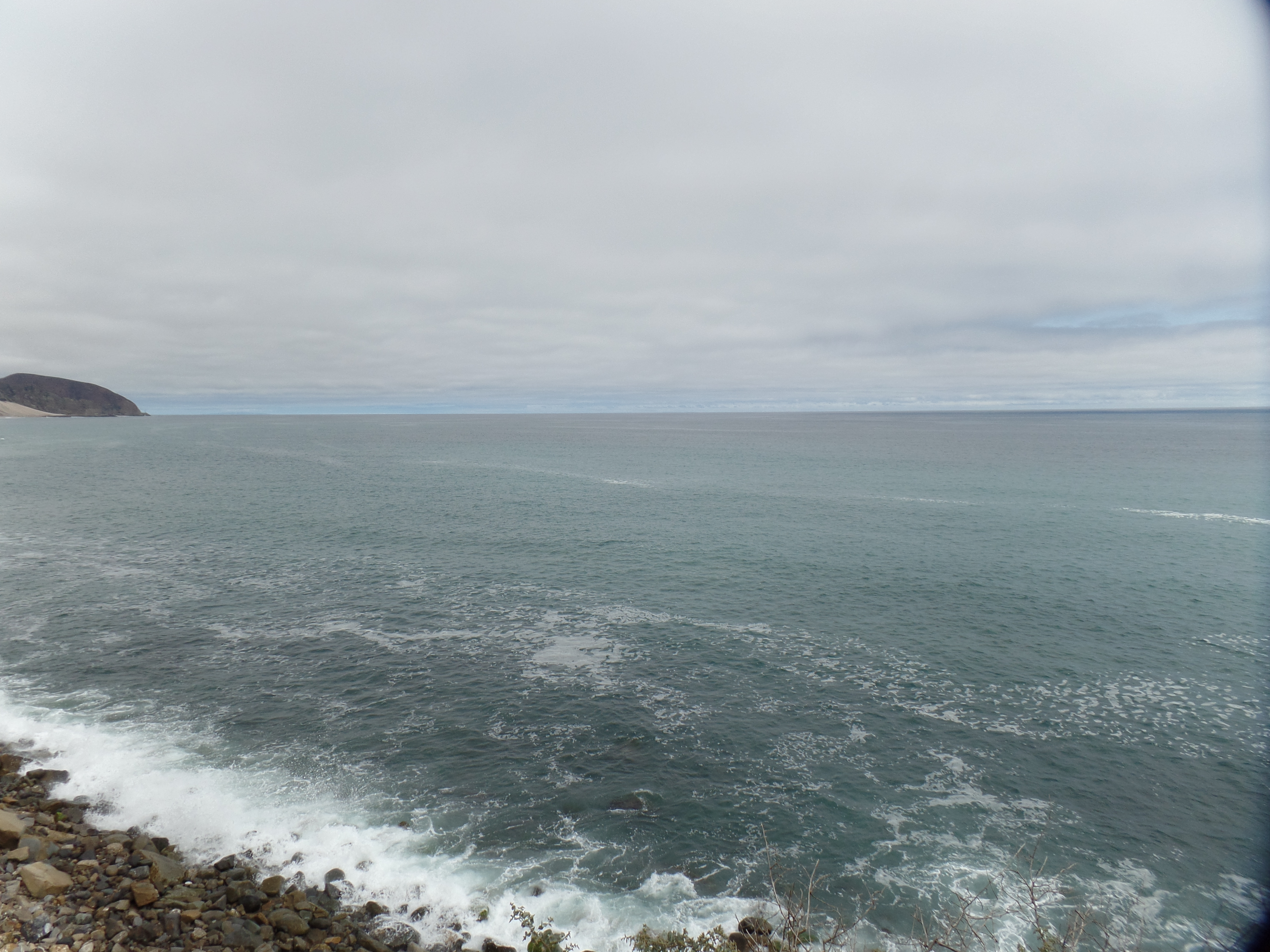
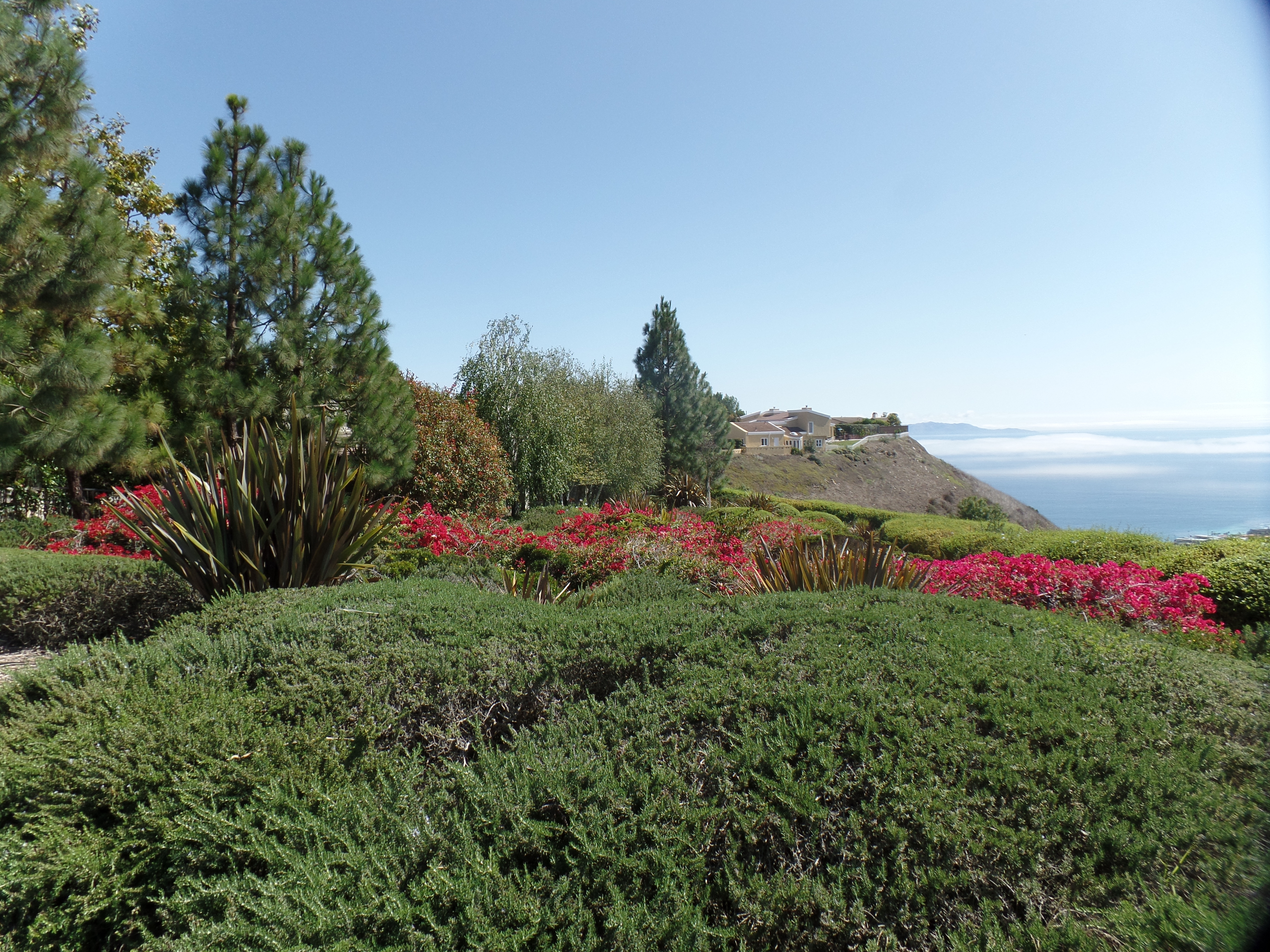
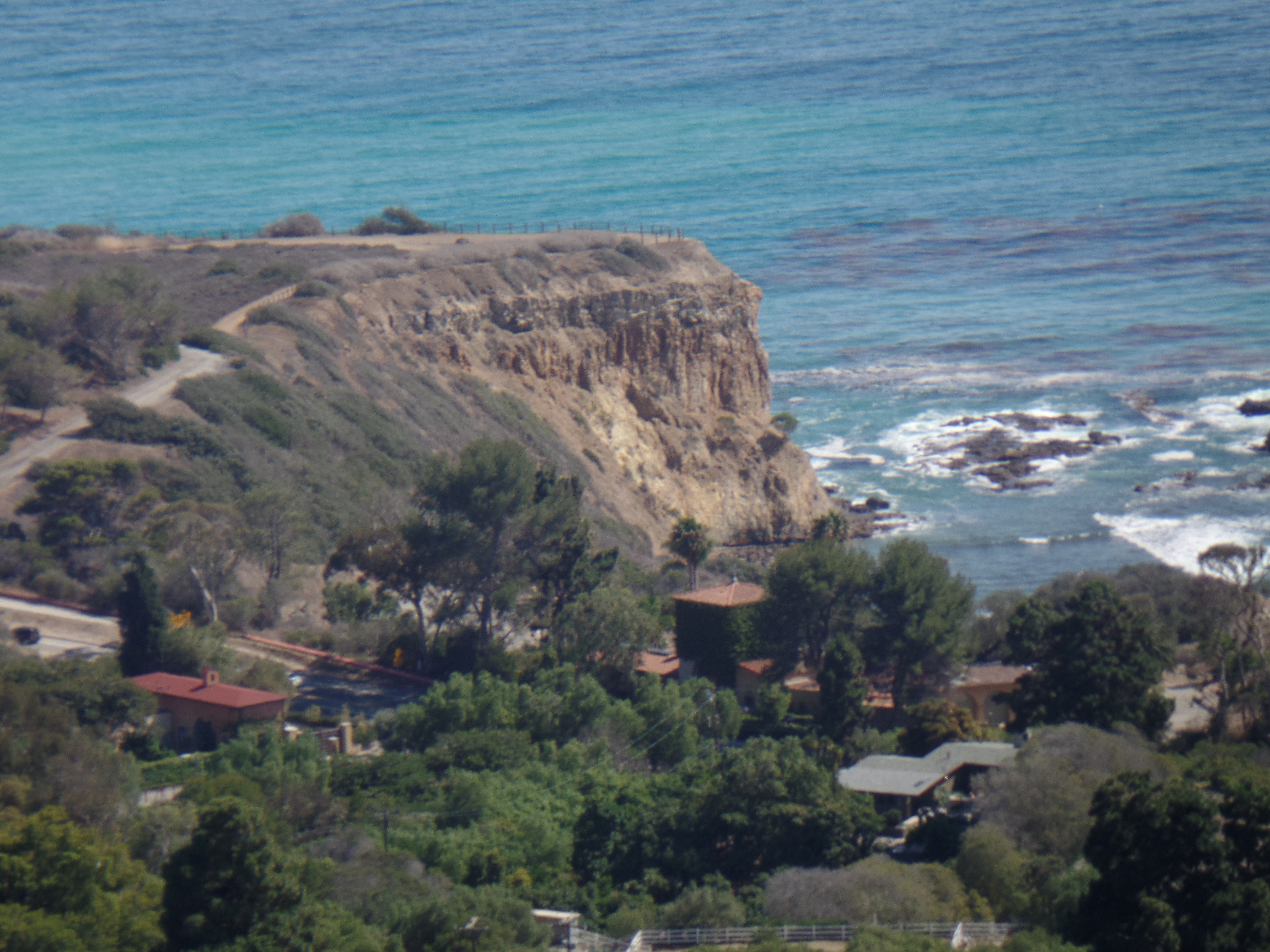
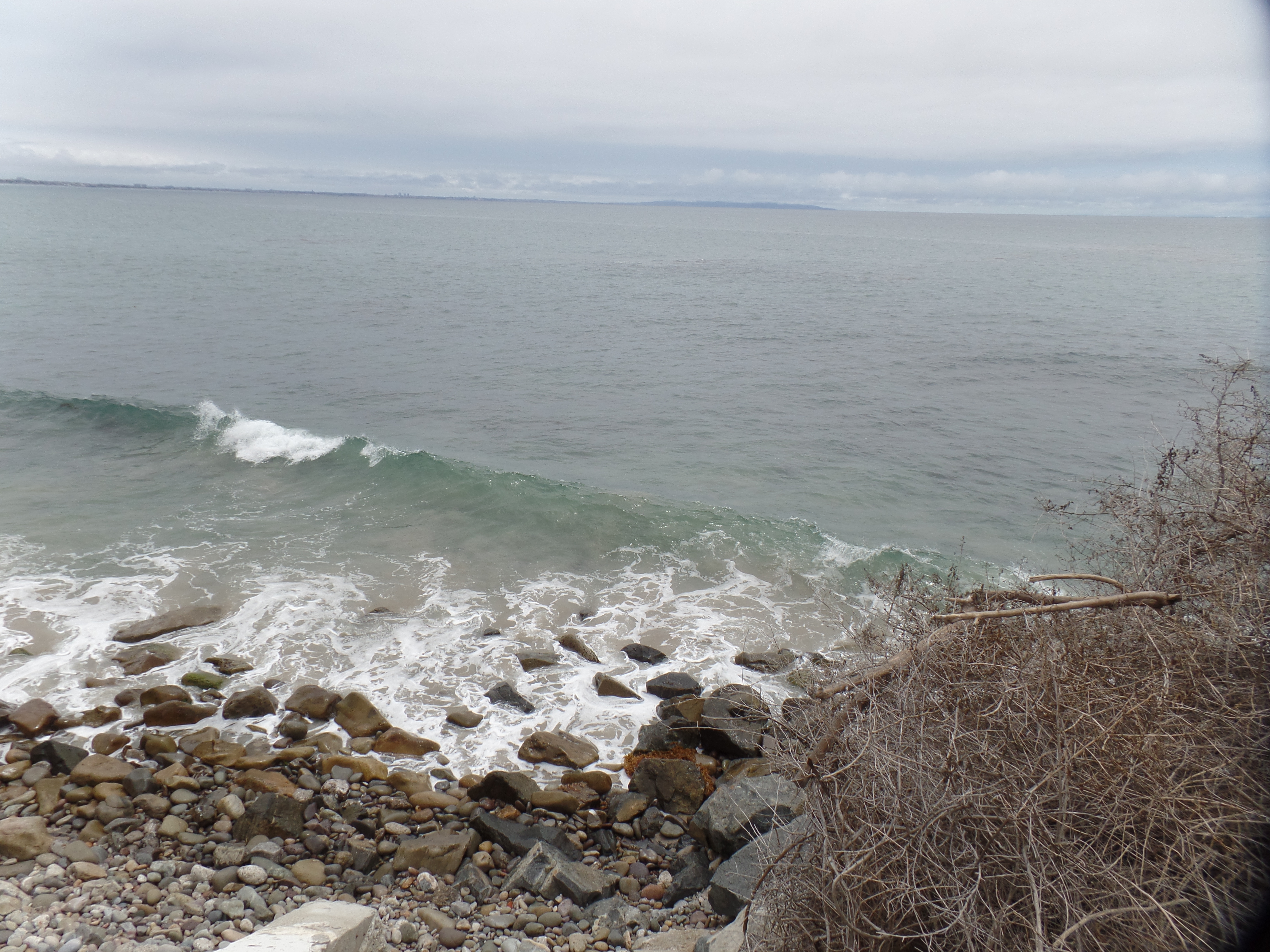
Anyway, the headlands are a natural preserve.  One may enjoy the view from above, and/or go down a formidable series of steps, to the beach itself.  As I had to call M, before he turned in, the upper view sufficed.

SAMSUNG CAMERA PICTURES

SAMSUNG CAMERA PICTURES

SAMSUNG CAMERA PICTURES

SAMSUNG CAMERA PICTURES

SAMSUNG CAMERA PICTURES

A lovely day overall was capped by a gyro sandwich & rice, at Mr. Soulis, a Greek establishment, a bit up the road from Royal Inn, Lomita, where I was staying the night.  Another wonderful soul tended the counter and lit up the room with her smile and graceful demeanor.

Things are going well, and I must remain responsible.

The Road to 65, Mile 233: Back to California, Day 3

6

July 19, 2015, Chula Vista- This was a rain-check, for much of the day.  That suits my heart just fine.  Nowhere is rain more needed than in the Golden State.  I was able to finish reading “Death and White Diamonds”, by Jeff Markowitz, and thus have my suspicions verified,as to the end.  Since Jeff is one of Word Press’s, and Xanga’s, own. several of you will surely wish to read this novel for yourselves.  Here are Laverne and Shirley, and the Rizzo family:  Izzy, Lizzy, Cissy and Missy, but not Ratso.  It also answers the question, “Why take the stairs, when you can just use the elevator?”, but that’s all I can say right now.

Aram and I had a tentative plan to visit the Japanese Garden, in Balboa Park, but the greater good intervened, and the rain was heavier today, than it was yesterday.  So, chill out indoors, we did.  I caught the most recent episode of “Wayward Pines”, on my laptop,  as well as read the aforementioned whodunit.

After Aram’s second straight successful dinner offering, I took advantage of a brief lull in the rain, to check out his new neighbourhood.  A YMCA Teen Center occupies an old and interesting building.

SAMSUNG CAMERA PICTURES

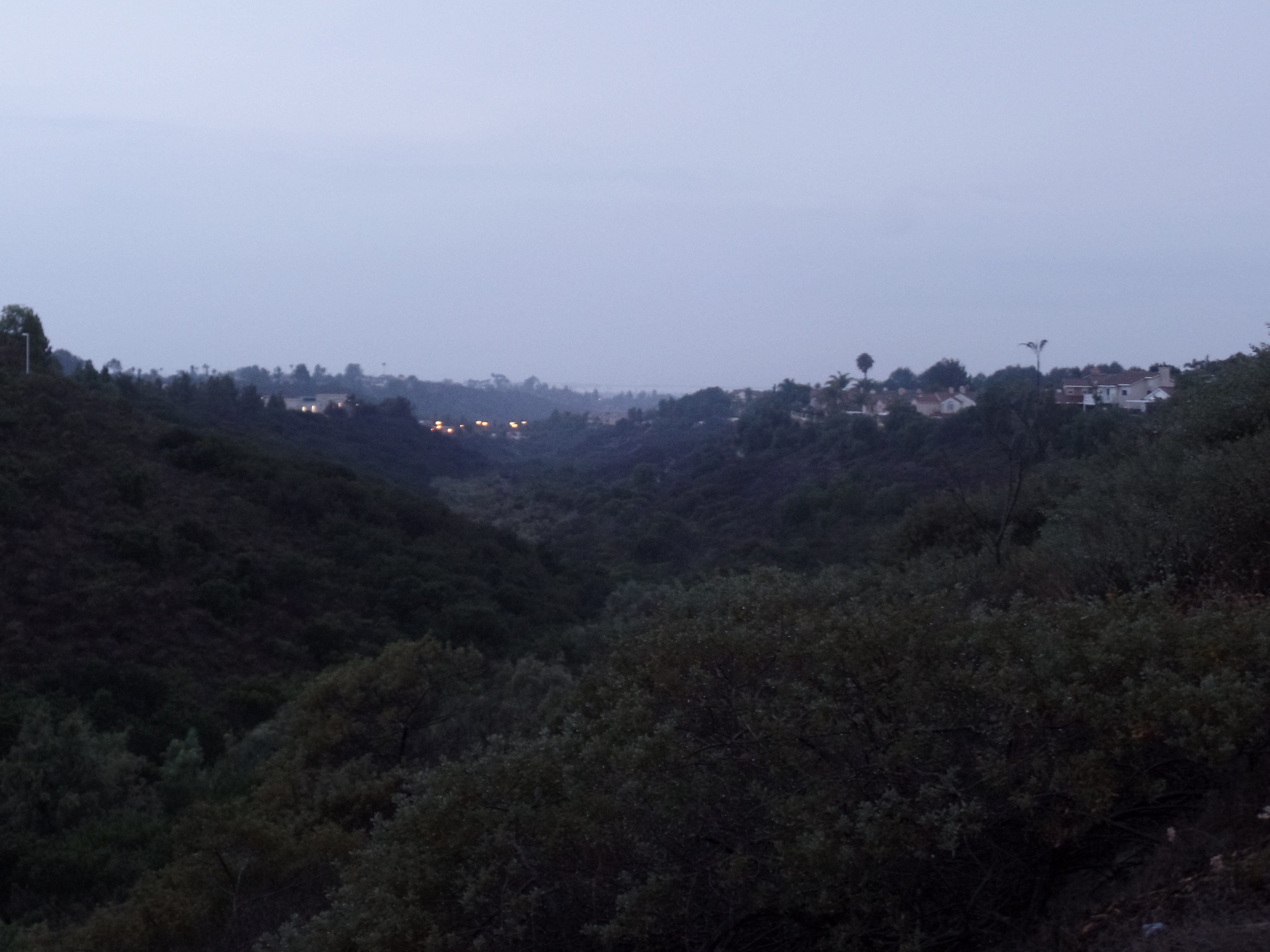
Rice Canyon, seen from above, offers a four-mile walking, jogging and biking path, between Chula Vista and National City, to the north.

SAMSUNG CAMERA PICTURES

SAMSUNG CAMERA PICTURES

I was content with keeping to the sidewalk overlook, especially as it was near twilight.  Still, it’s quite gratifying to have spotted what some call the South County’s best kept secret.  It’s been a restful and very gratifying weekend.

SAMSUNG CAMERA PICTURES

The Road to 65, Mile 231: Back to California, Day 1

6

July 17, 2015, Oak Grove, CA  “Don’t go telling people this is Aguanga.  We’re Oak Grove!  The sign even says so.”  Thus did a campground host admonish me, when I was describing my location to someone on the phone. This little village is darned proud of its identity, and never mind that the mail is addressed to Aguanga, six miles to the northeast. I stopped here for the night, at what has become my go-to campground, when en route to visiting my son, who is in the Navy, in the San Diego area.

My journey started in a more timely manner than previous SoCal trips, with my getting out the door by 9 A.M.  I was in Blythe by noon, affording me a nice lunch at Rebel BBQ, my favourite venue in Riverside County’s eastern gateway.  It offers south Texas-style barbecue fare, including brisket prepared with a Mexican-German sauce blend.  They offer something called vinegar slaw, which sounds like sauerkraut, but I opted for creamy slaw, with my meal.

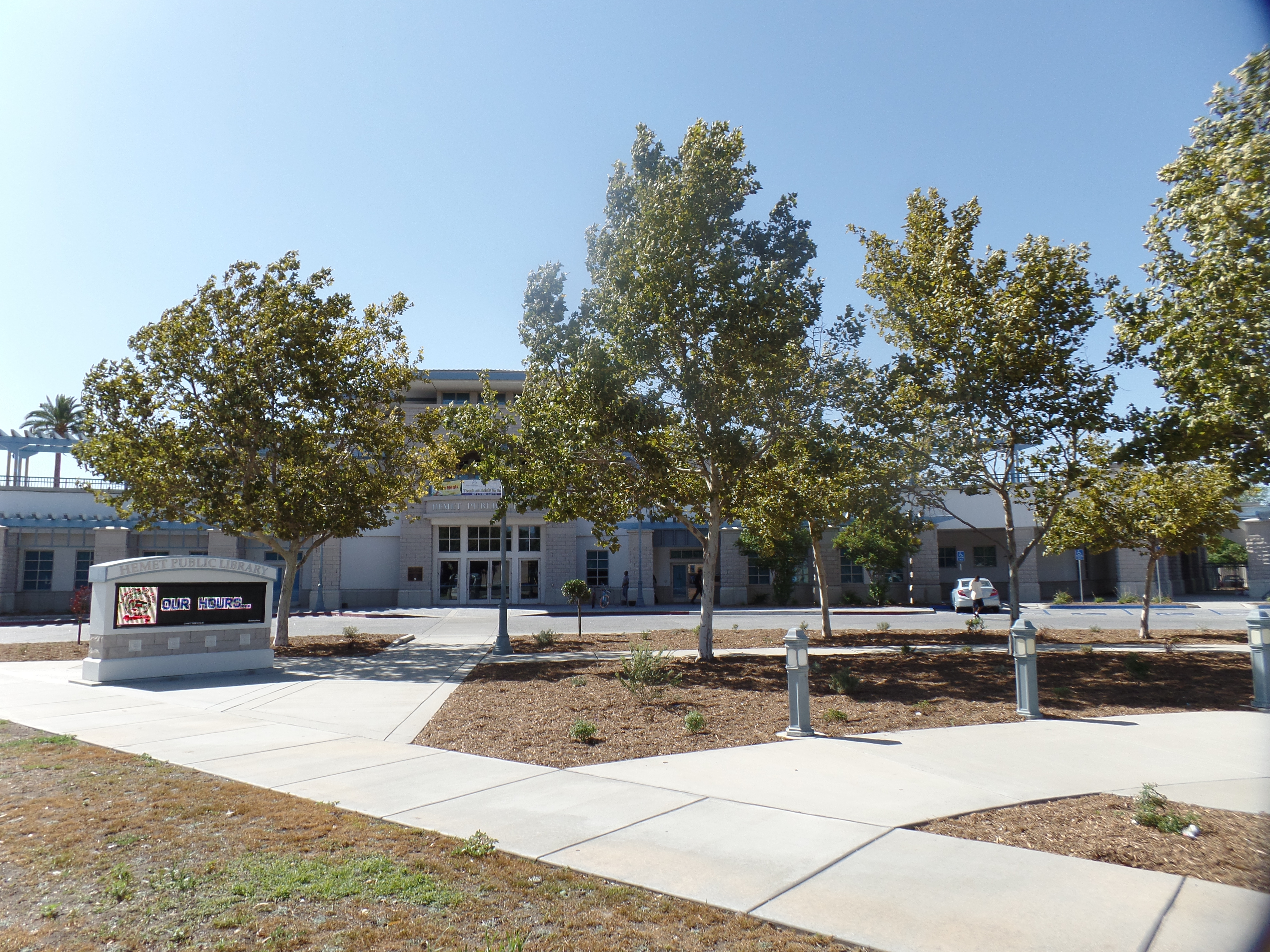
It was 102 F, in Blythe, so I headed quickly uphill,  getting to Hemet, a higher desert town, by 3.  I spent a bit more time here than I have in the past, and for the first time, I checked out Hemet’s downtown, starting with its library, where I spent an hour or so.

SAMSUNG CAMERA PICTURES

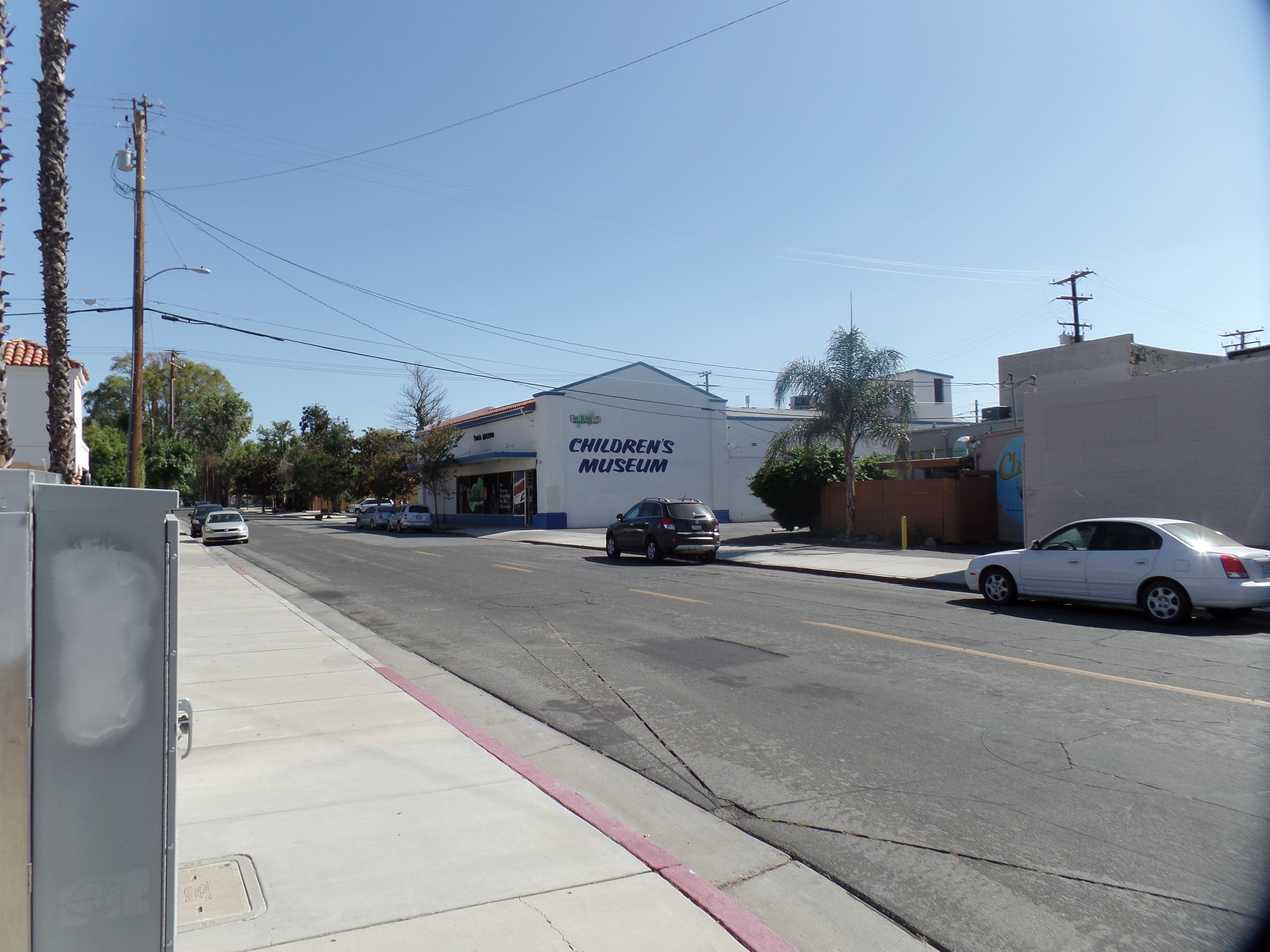
The town also has a lovely Children’s Museum, on the southern edge of downtown.  Not having a little one along, I didn’t go inside, but a local mother takes her children there, several times a year.  This speaks well of Hemet’s regard for its rising generation.

SAMSUNG CAMERA PICTURES

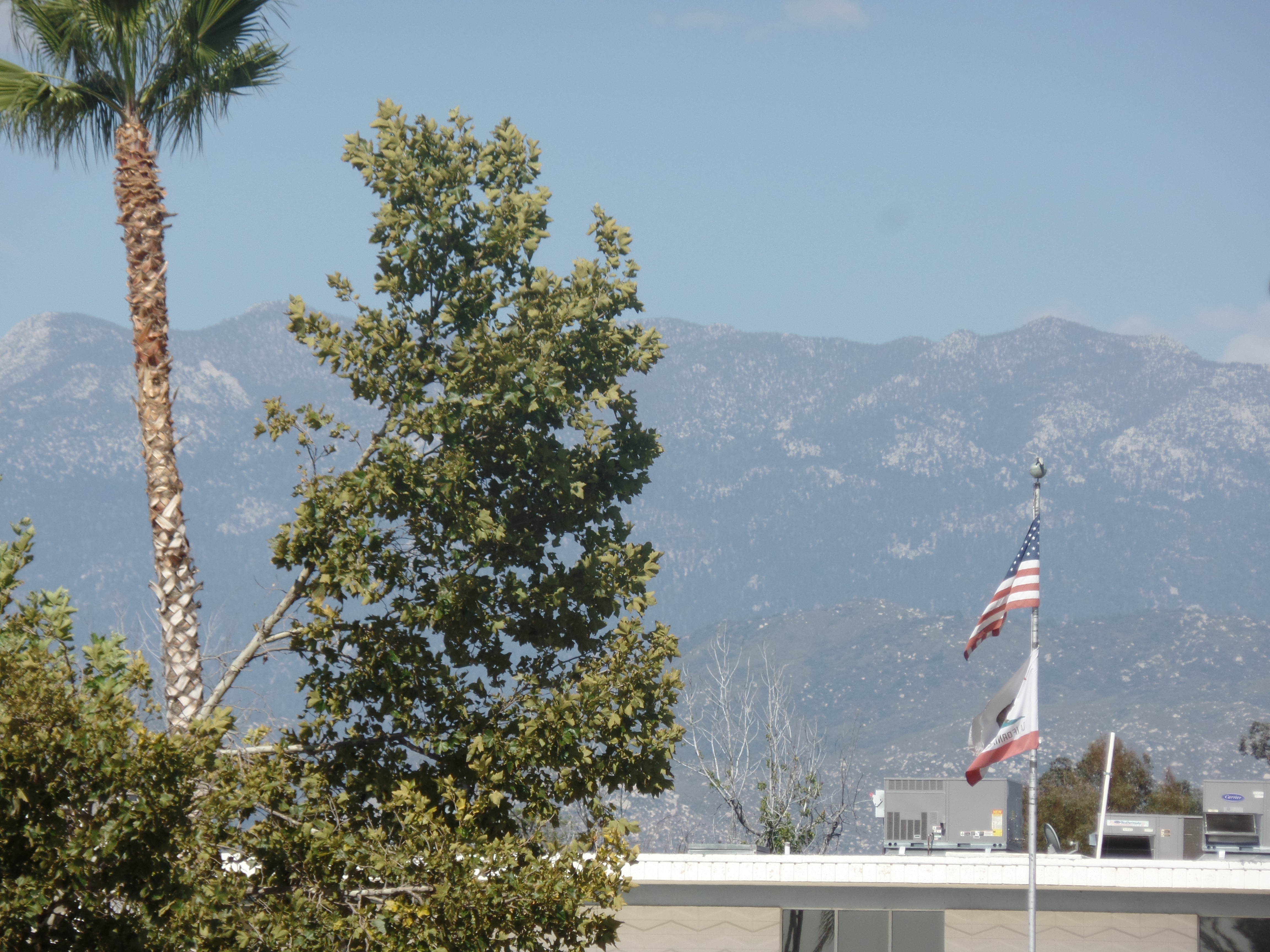
The view towards Mount San Jacinto, 40 miles to the east, is spectacular.

SAMSUNG CAMERA PICTURES

I headed out of town, along Juan Bautista de Anza Historical Trail, which is paved as far as the Conservation Camp, named in de Anza’s honour.  The route passes several orange groves, which remain a staple of Hemet’s economy, while having faded in other parts of southern California.

SAMSUNG CAMERA PICTURES

Bautista Conservation Camp, run by the State of California, is used as a staging area for fire suppression efforts.  Painfully, not so far away, on the north side of San Bernardino County, a serious fire is wreaking havoc, destroying a small hamlet and threatening other areas.  I hope the hurricane remnants, that are forecast for tomorrow, bring soaking rain to the region.

SAMSUNG CAMERA PICTURES

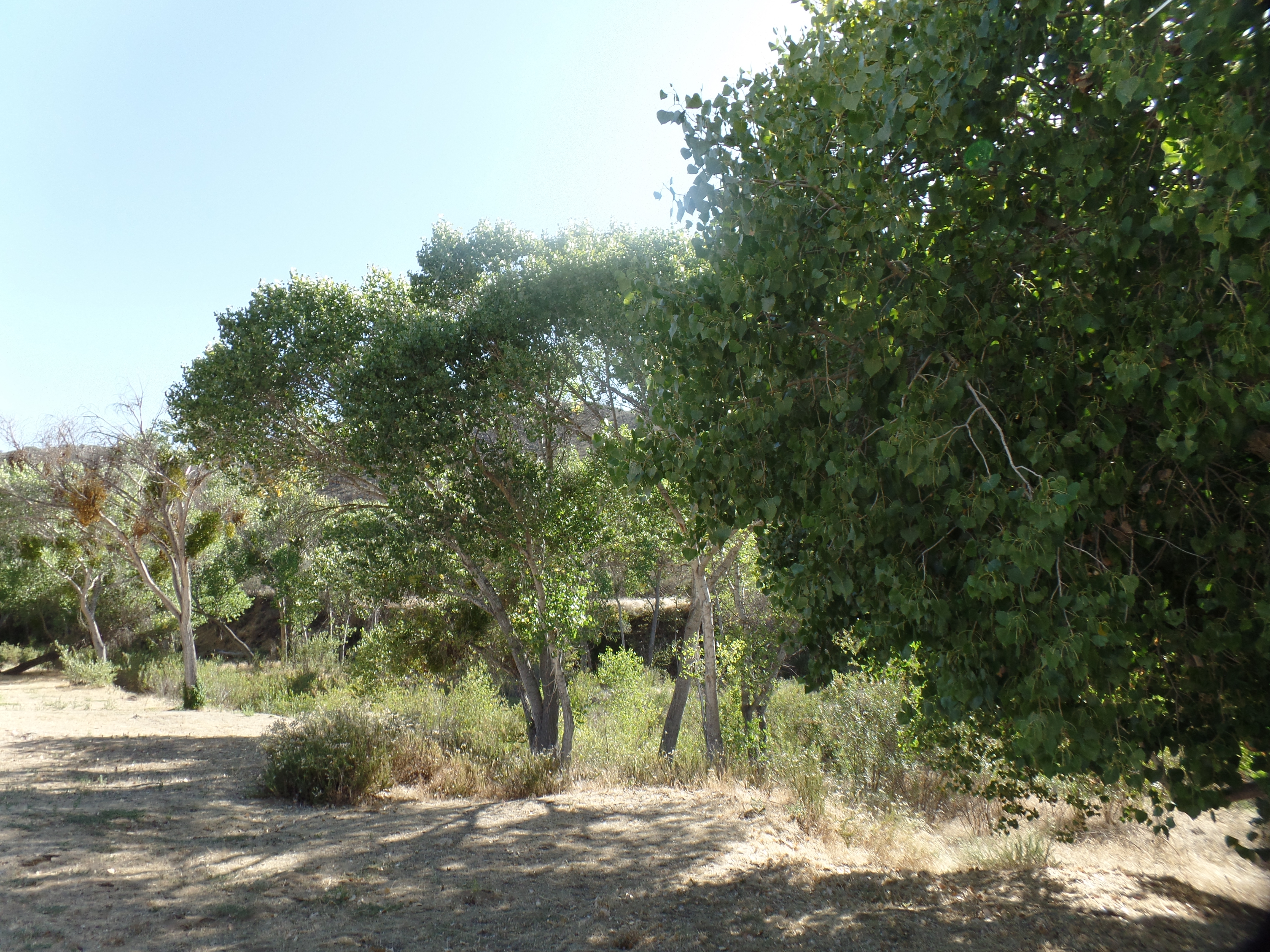
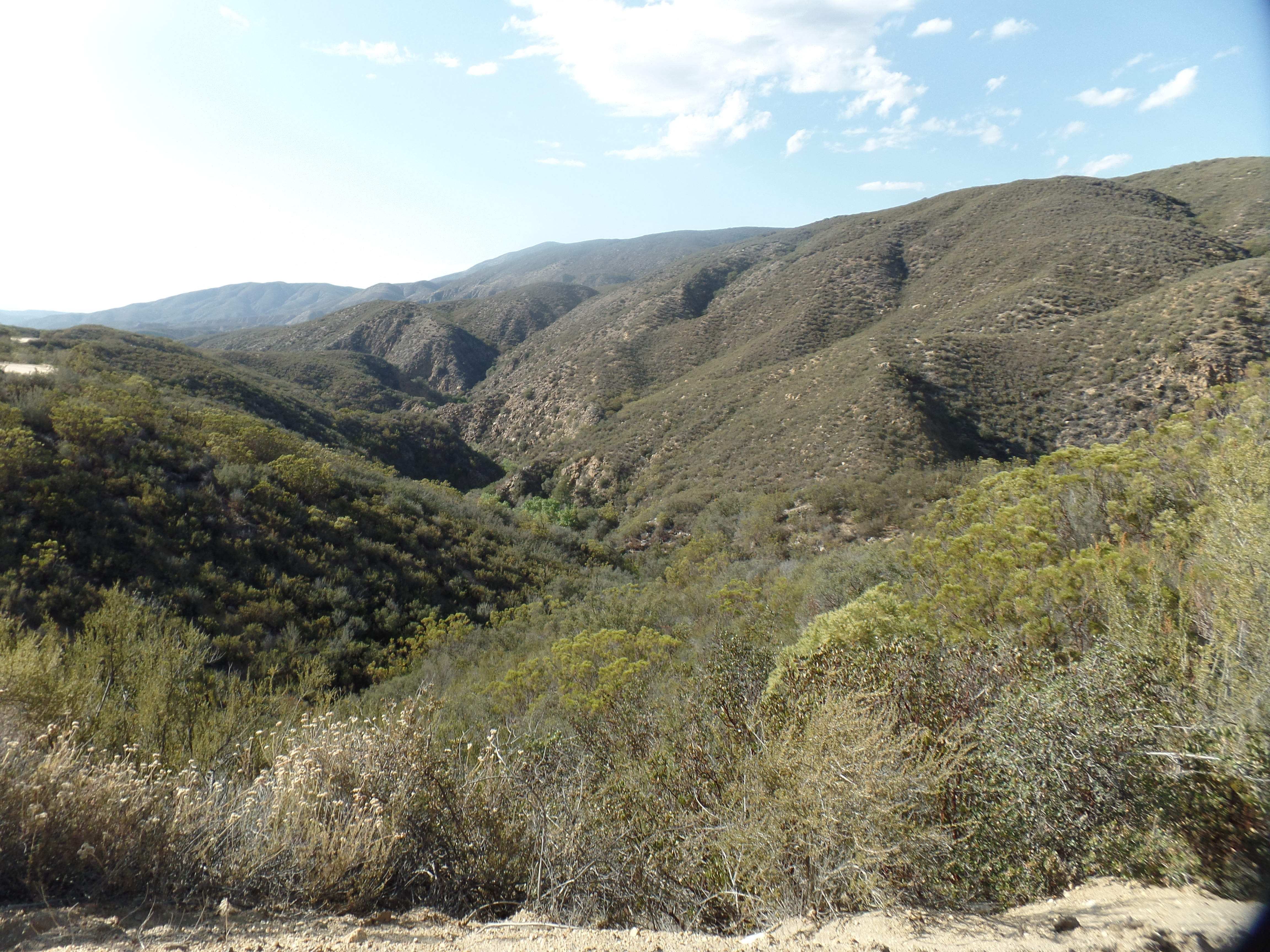
Between Bautista Camp and the Cahuila Indian Reservation, one goes along a narrow, unpaved road, and is treated to exquisite views like this:

SAMSUNG CAMERA PICTURES

I can only imagine these will be even more gorgeous, once the rain comes.  Now, to sleep under the stars, before that happens.

The Road to 65, Mile 212: The Sierra’s Back Door

5

June 28, 2015, Big Pine, CA-  I got my Nissan back in shape again, with a morning visit to Jiffy Lube.  Friends Wendy & Steve hosted a brunch, which was a group effort, and thoroughly enjoyed by all.  Then, I bid farewell to my Reno family.

Little did we know that, a scant thirty miles away, above Gardnerville, three vehicles, including an RV, had collided.  One of those involved was killed.  I was in the southbound five-mile line of cars.  Two hours later, I was in Topaz Lake.  While in the intermittently-moving line, I took these shots of the area.

034

035

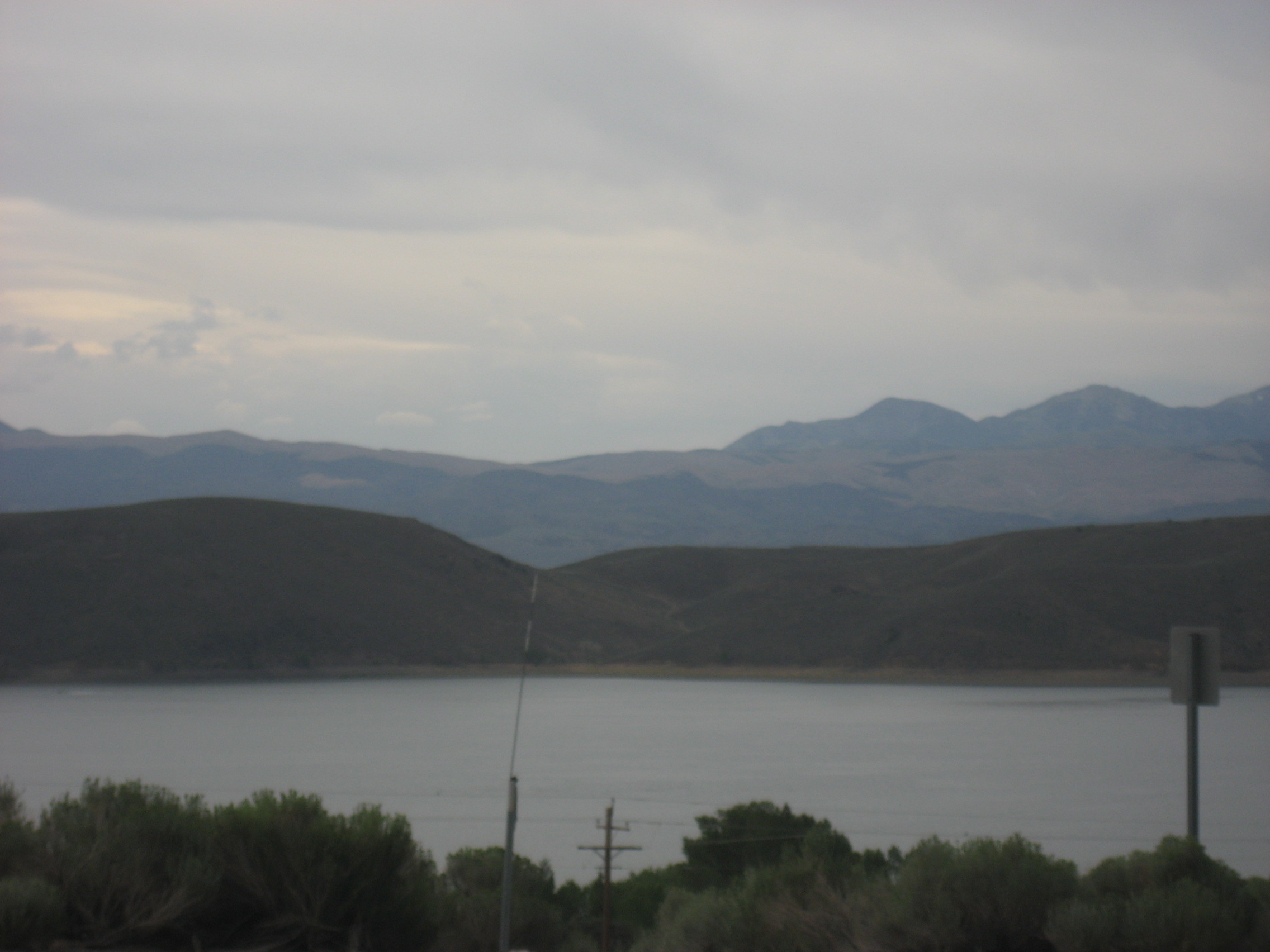
The scene at Topaz Lake was rather quiet, away from the bordertown casino anyway.

036

Off to the west, the Sierra Nevada showed just a smidgen of snow, where there are normally several feet, even in late June.

037

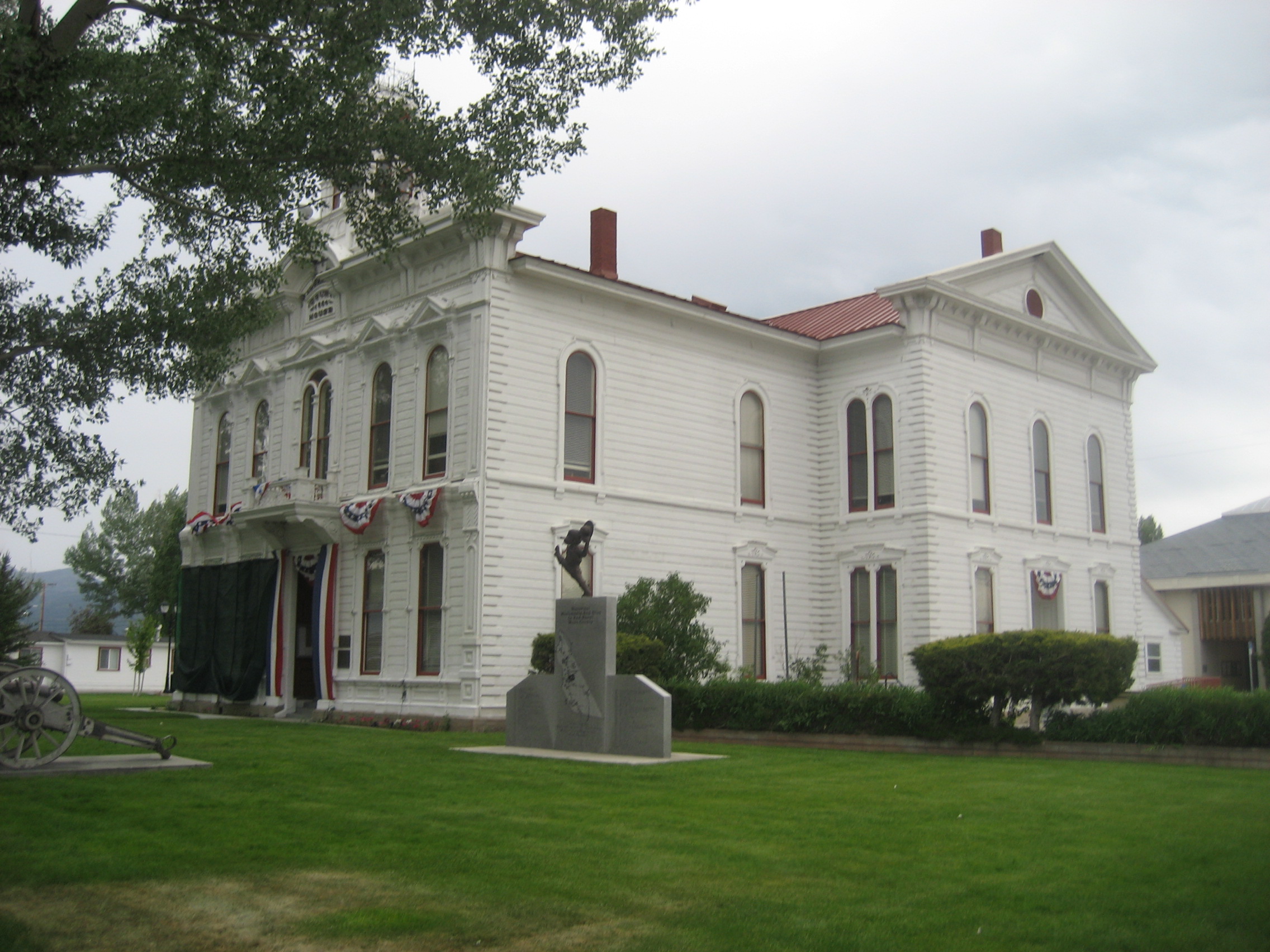
The first town I entered in California was Bridgeport, already set for Independence Day.

040

I had a pleasant break and supper, at the lively Rhino’s Grill.  “Rhino” is the owner, not an item on the bill of fare.  Seeing so many families and couples enjoying the nation’s back roads does my heart good, as does being served by congenial folks, of all ages.

The last time I visited Mono Lake was in 1980.  It is about 1/3 smaller now.

041

This saline lake is still a gem, but an endangered one.

044

As I drove towards Big Pine, and my stop for the night, I caught a glimpse of a superb California sunset.

049

Then, as is its wont, the sky went to bed.

051

After all that waiting, and switchback-negotiating, the Nissan was just fine.  So was I, settled in at Bristlecone Motel, run by one of the town’s two mechanics.

The Road to 65, Mile 210: Oregon’s Multivariate “Big East”

5

June 26, 2015, Lakeview, OR- This day started in the sere brownness of Ontario, in the heart of the Great Basin, above the Snake River.  It was not too hot, as I made my way over to Gandolfi’s New York-style Deli, the closest thing in the Riverside area of Ontario, to a coffee shop.  The fare was satisfying, though the atmosphere was more motel breakfast room than comfy cafe.

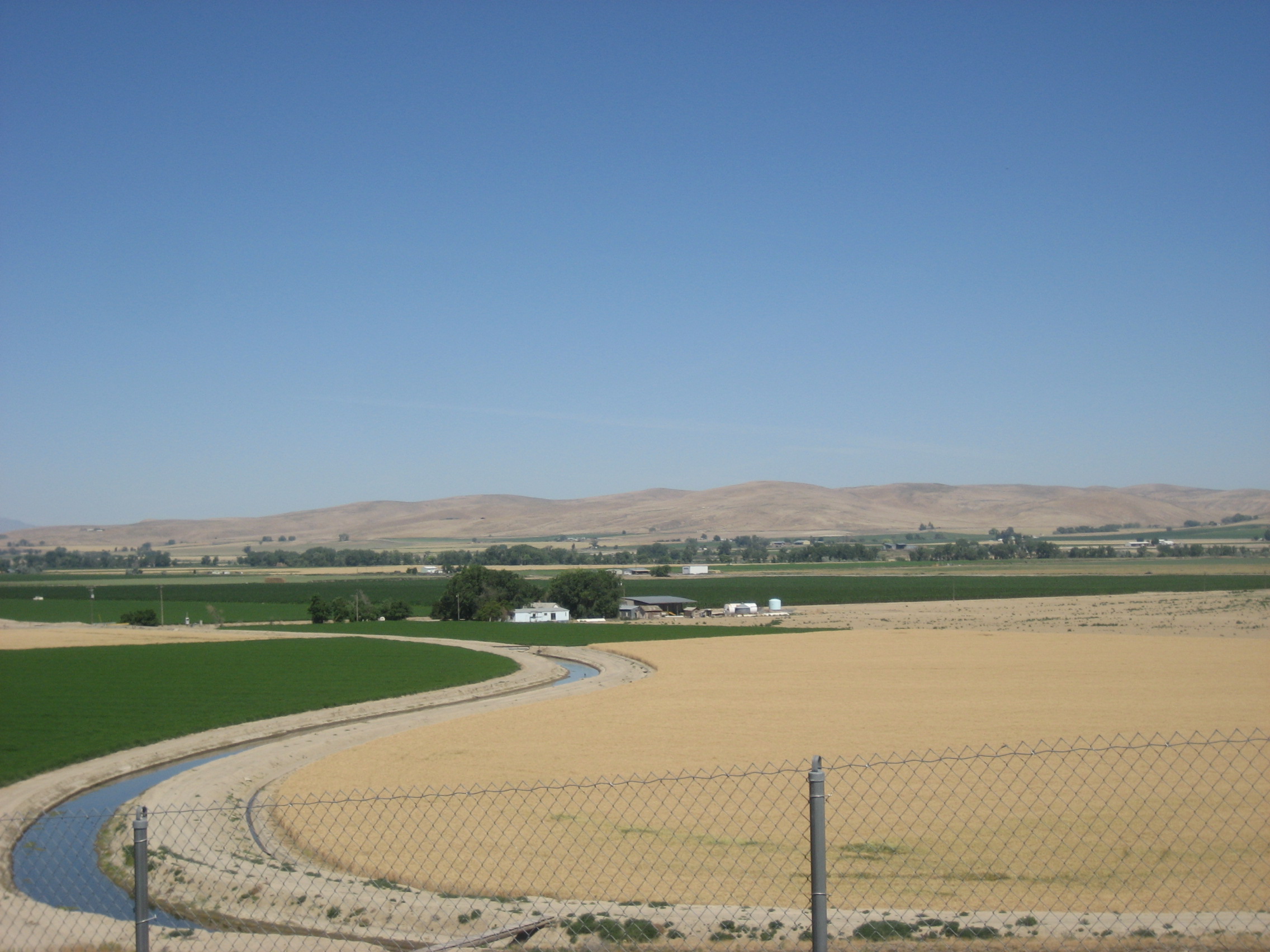
This is an irrigated agricultural area, and the landscape thus shows a striking contrast of colours.003 004

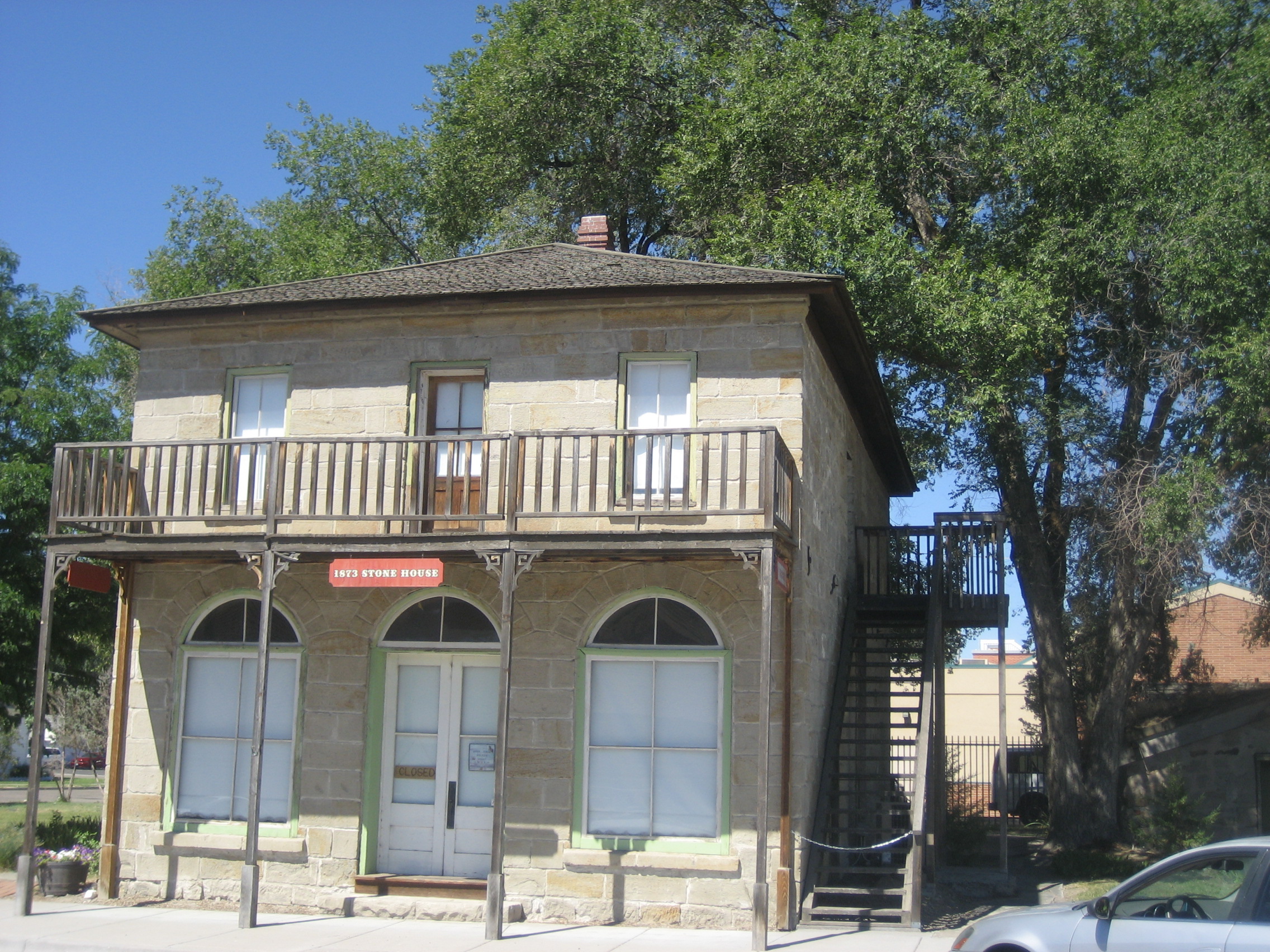
The small village of Vale, southwest of Ontario, is the seat of Malheur County, of which Ontario is the commercial hub.  Vale has a small historical museum, which was not open when I passed through, but was worth a look at the exterior. Eastern Oregon still has an Old West ambiance, in many places.

006

The Malheur River waters the area, gathering its tributaries, west of Vale, then heading towards the Snake River, south of Ontario.

009

After going through a barren section, once past the Malheur, there is a scrub pine forest that leads the way south, towards Burns.  This area reminded me a lot of central Arizona, just as the Snake River near Ontario resembles the Colorado, in western Arizona.014

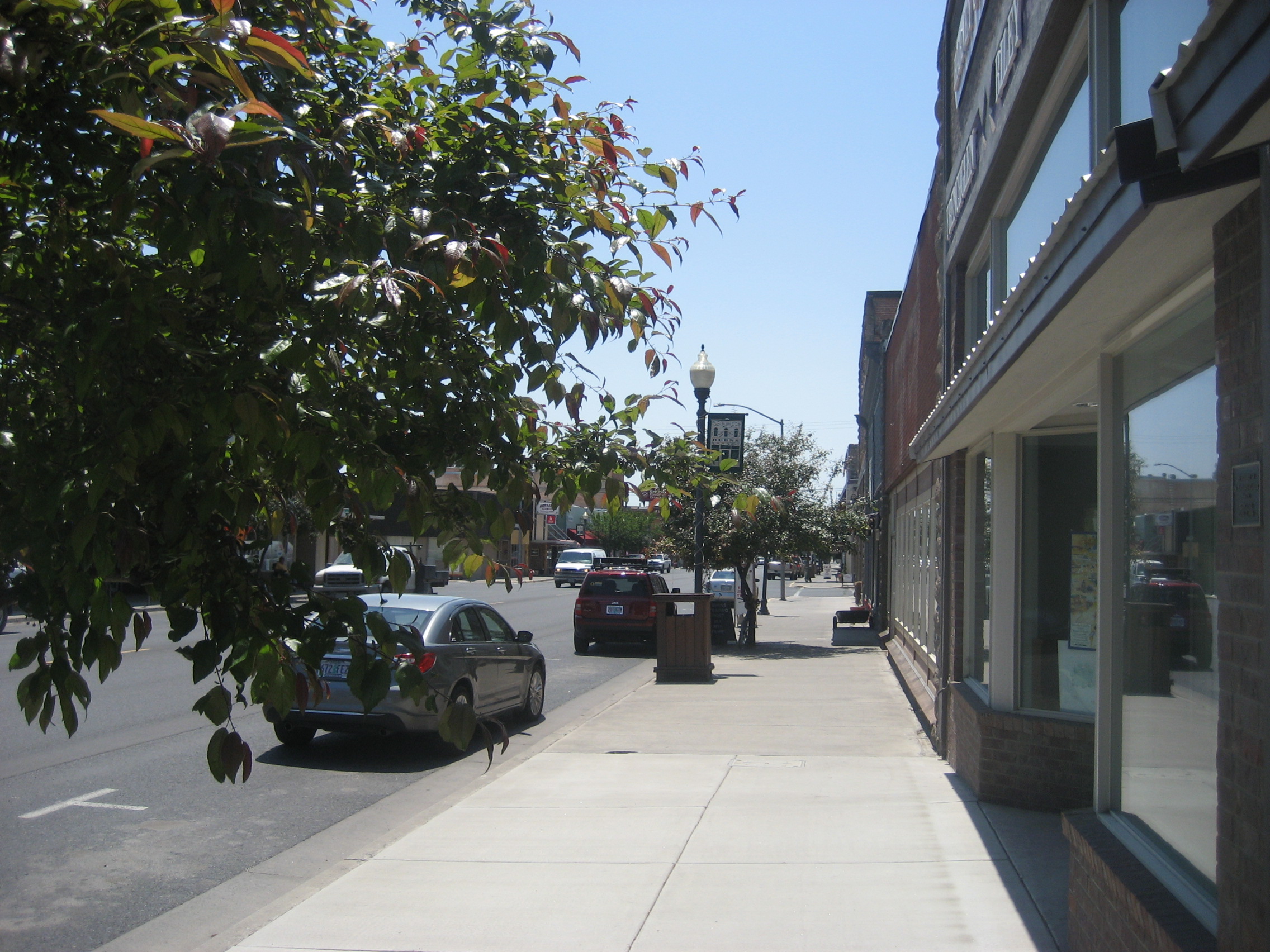
Burns, named for the great Scottish poet, Robert Burns, is a quiet, but charming little town, about two hours east of Bend. I was warmly welcomed at Broadway Deli, a bustling local hangout with freshly-made soups and sandwiches.  The ranchers also say it has great breakfasts.  All I know is, I could have stayed all day.

016

017

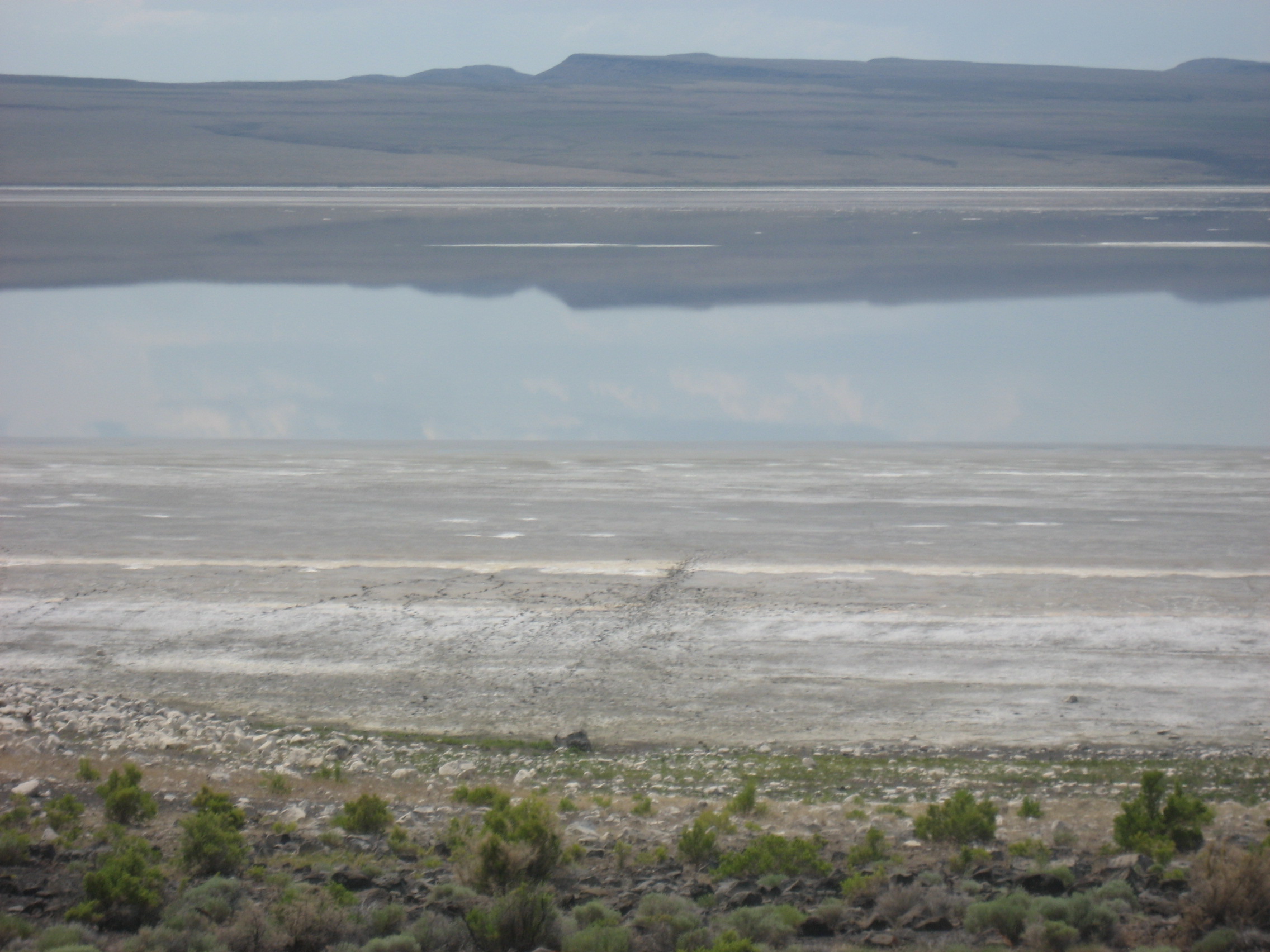
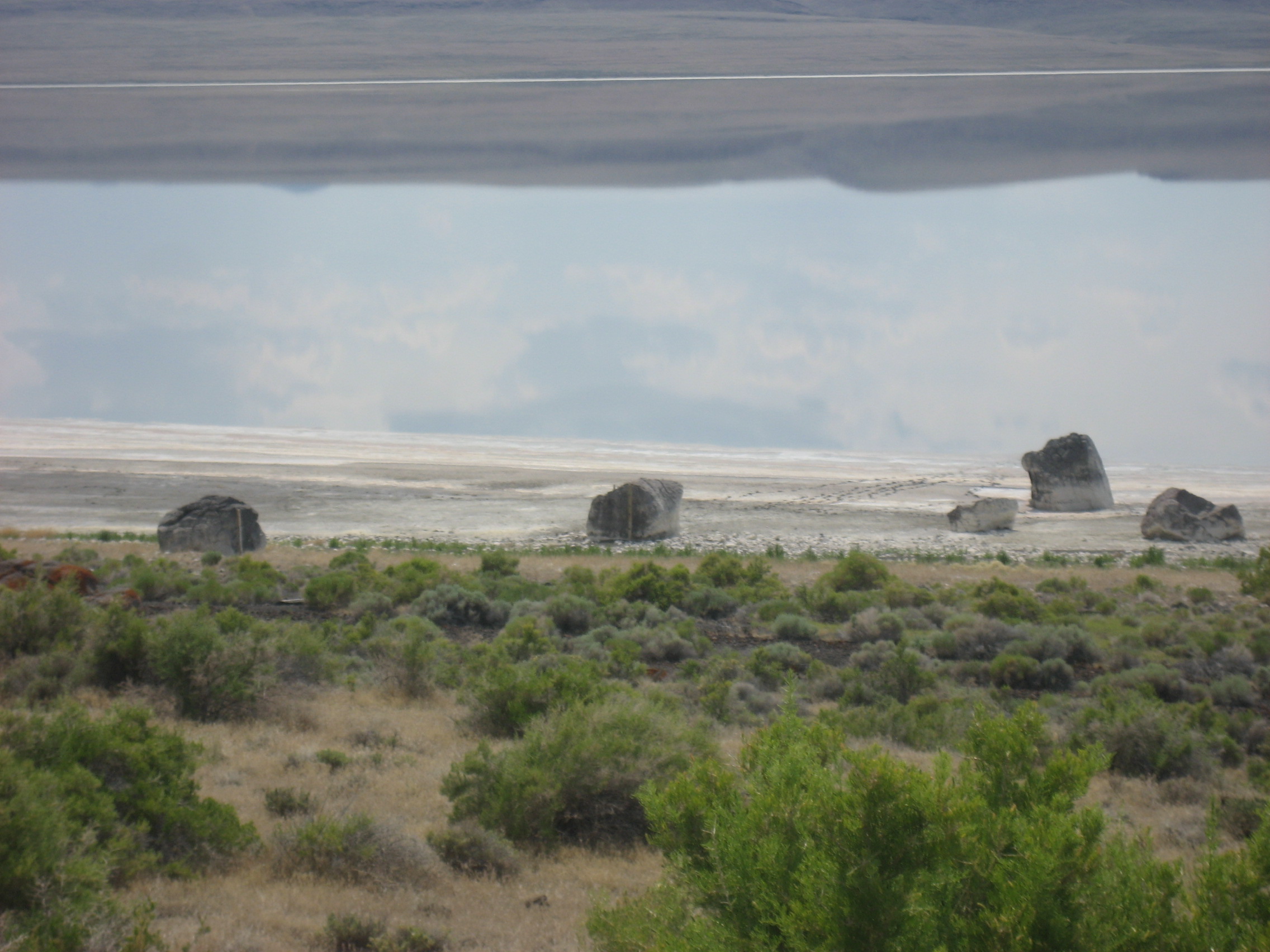
Once south of Burns, and its smaller sister city, Hines, the desert takes over again.  Ninety minutes later, I was in awe of the sere beauty of shrinking Lake Abert.  This alkaline lake is inhabited mostly by brine shrimp.

019

025

026

There are numerous iron-oxide infused basalt boulders on its eastern shore, which the Oregon Outback Highway passes.

022

Just as Oregon and California meet, the Warner Mountains look over Lakeview.  As I was coming into town, I spotted an Arabian horse, at the roadside fence, nervously shuffling on his back right haunch. Fearing he might be stuck, I went back to the driveway, where the owner went with me over to the pasture, and determined it was the beast’s arthritis acting up.  He was grateful for my concern, and hopefully tended to the poor creature.

027

A section of California took me through the rest of the afternoon.  Alturas is a small gateway community, with an Ag-Inspection Station, a dusty main street and Hotel Niles, an early 20th Century railroad stop.

030

I continued on, getting gas at the village of Standish and settling in for the night in Susanville, so named for the nearby Susan River.  Both are named for Susan Roop, the daughter of an early settler.  “Susan” was fairly lively when I first got there, as there was a country music festival at Lassen County Fairgrounds.  It wrapped up at 9 P.M., though, and most of the people there were my age or older.  It had been a lengthy drive today, and the car needed a good rest, so before checking out the tail-end of the hoedown, I had some fish fry at Kopper Kettle and took a room at nearby Frontier Inn.  Tomorrow, I will head over to Reno, for a day or so, and catch up with the Nevada Family.

The Road to 65, Mile 209: A Triangle of Towns, Part 3- Lewiston and Its Two Rivers

0

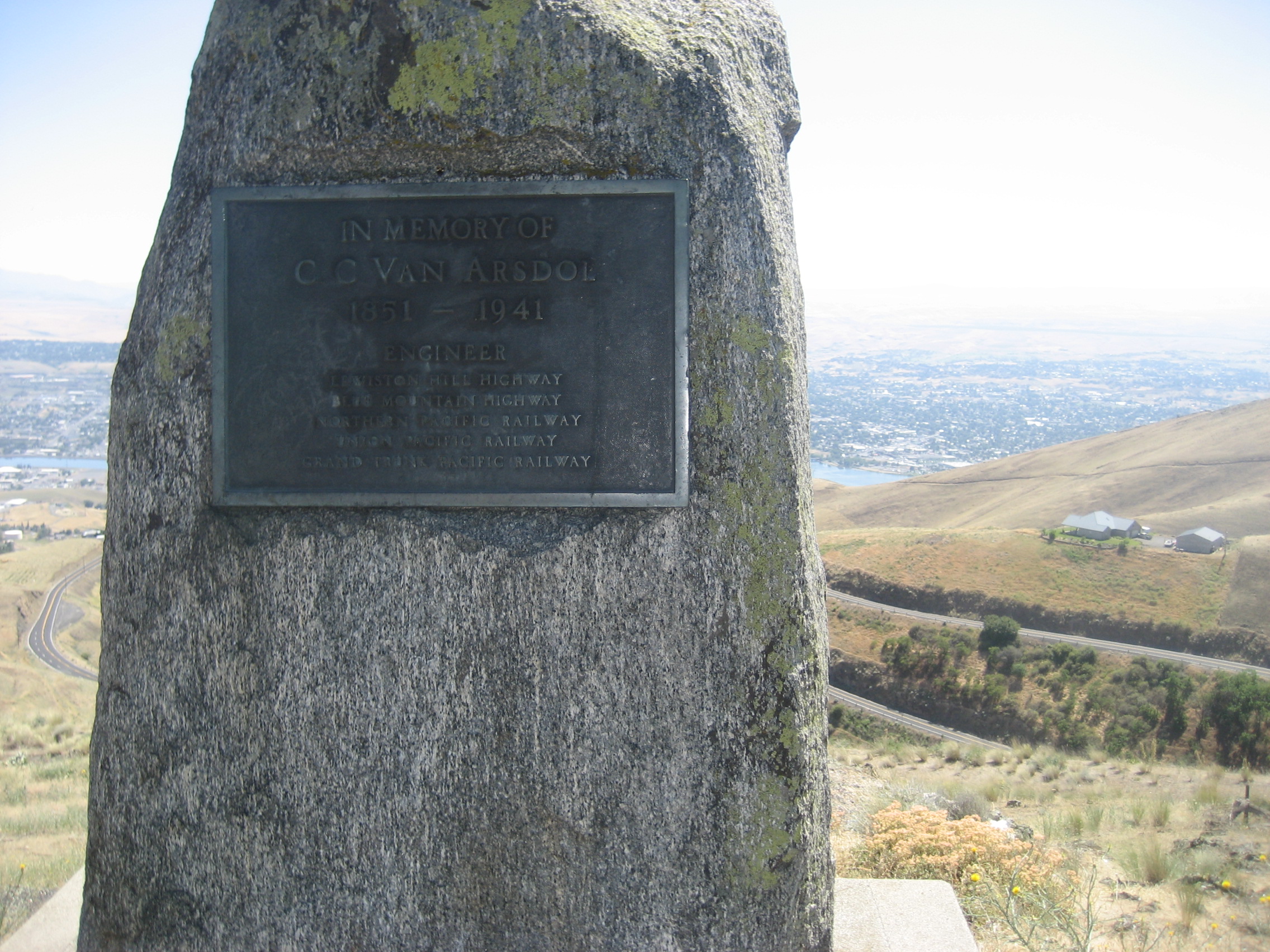
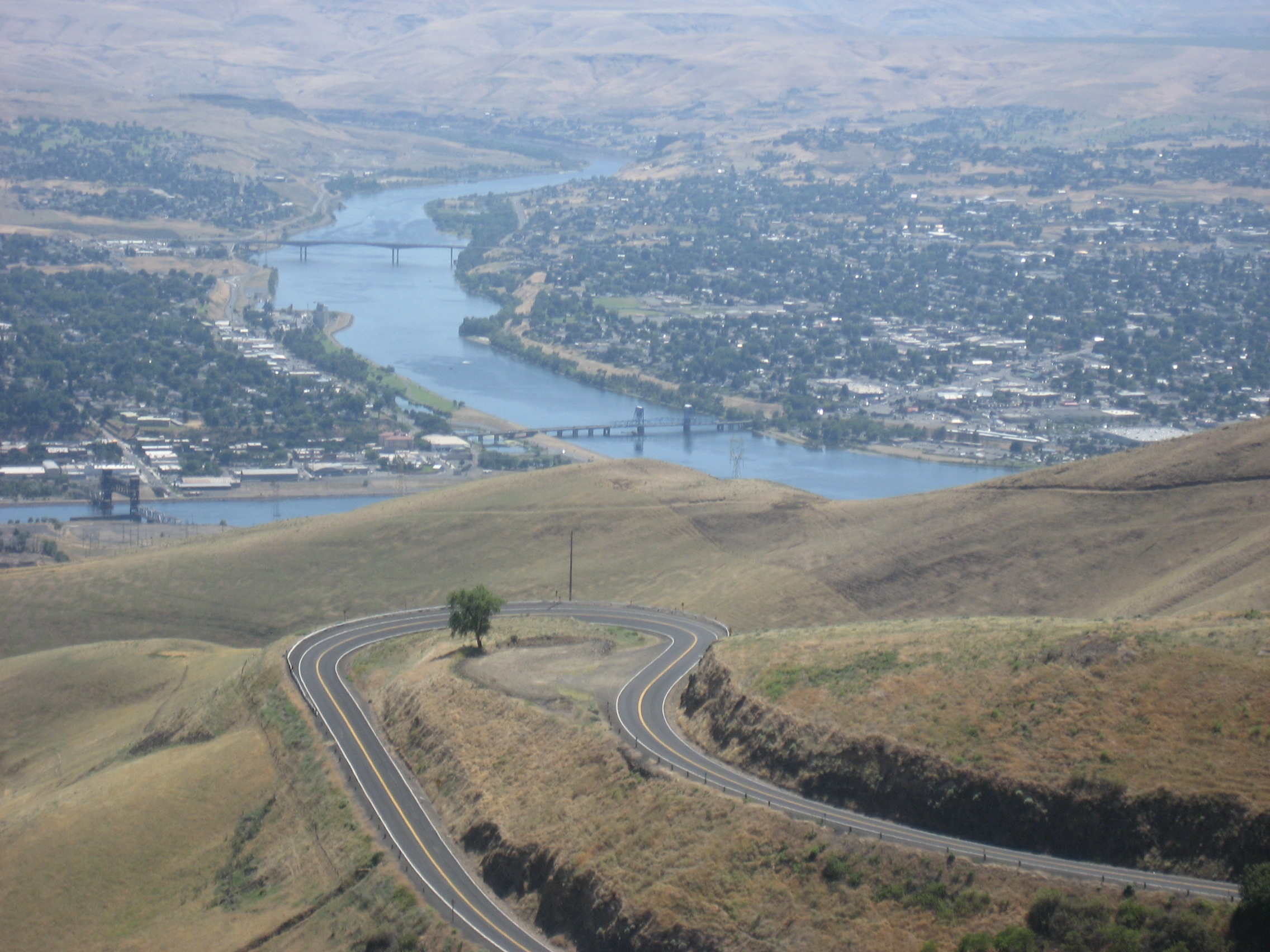
June 25, 2015, Lewiston, ID- This eastern half of the Lewis and Clark twin cities announces itself from a place at the foot of winding path, coming down a steep desert hillside.

357

359

Like so many Inland Northwest towns, Lewiston presents a charming and arts-oriented downtown.  Named for Meriwether Lewis, it has, as a centerpiece, Lewis and Clark State College’s Center for Arts and History361

Revolving art exhibits take center stage, on the first floor.  On the day I visited, the Sandpoint-based artist, Kelly Price, offered an astonishing array of Sacred Circles, making a very strong case for the interconnectedness of all things in the Universe and the security which may be found within an orb. Ms. Price’s exhibit clearly shows the universality of the notion that the circle, symbol of completion, is universally held sacred.  (As is my practice, no photos were taken of her exhibit, nor of the presentation of Scott Kirby.)

Price_WEB_475x226

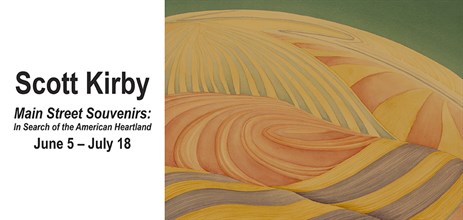
Scott Kirby, a pianist based in Boulder, CO, transitioned into painting scenes of the Great Plains, after an afternoon of drawing and painting with his daughter.  The flow of his art work certainly evoked a vibrant musical background.

KIRBY_WEB_463x220

On the second floor of the Center, lies a tribute to suffering and perseverance:  Beuk Aie (“Buckeye”) Temple.

363

The Temple was built by immigrants from Guangdong, China, who practiced a particular blend of animism and Buddhism, which called for this sort of temple to be used in worship.  It was housed in two consecutive structures, until 1959, when the second structure fell into disuse.  The sacred altar and relics were preserved by Mr. Ted Loy, a Lewiston businessman, until his death in 1981. They were then curated by his family and transferred to Lewis and Clark Community College, for safekeeping.

The Beuk Aie Temple also serves as a memorial to the 34 victims of one of the many shameful incidents of persecution aimed at Chinese residents in the Pacific Northwest:  The Deep Creek Massacre.  In May, 1887, the victims, all miners from Guangdong, were slaughtered by White miners in Wallowa County, OR, who then took the gold that the Chinese men had mined.  While the identities of those involved were determined by investigators from Lewiston, the State of Oregon, which had jurisdiction in the case, found no one guilty.  There is a memorial plaque on the Oregon side of Hells Canyon, but there the matter has rested.

368

In fairness, the people of the Pacific Northwest have made enormous strides in White-Asian relations, and the major source of friction in the Nineteenth and early Twentieth Centuries was mainly economic.  Then again, isn’t it always?  Fighting over crumbs seems to be our wont, as a species.

My thoughts turned to the indigenous residents of this area:  The Nez Perce Nation, symbolized by their leader, Chief Joseph (“I will fight no more, forever”) and the Shoshone, symbolized by Sacagawea, the woman who guided Lewis and Clark through this then rough wilderness.

The confluence of the Snake and Clearwater Rivers has been a key resting and gathering place for humanity, for thousands of years.  Now, a bridge connects Lewiston with Clarkston, WA, which I did not visit this time, as a walk along the Idaho side’s Riverwalk captivated me for nearly an hour, before it seemed time to head down to Lapwai, Nez Perce Nation and further south.

373

383

The people of this area feel a great connection to the Pacific, which both feeds, and receives from,these great rivers.

378

The Lewis and Clark Pavilion, at the northwest corner of the Riverwalk, honours the explorers and Sacagawea.  A sculpture with her likeness graces the entrance to the small kiosk.

381

I will come back through here, and spend more time in both Lewiston and Clarkston, as well as connecting with a Baha’i friend who I did not realize lives in Lewiston.

After having dinner at Donald’s Restaurant, in Lapwai, it was time to move through the salubrious mountains and canyons of western Idaho.  Hell’s Canyon would have made for some fine photos, but the traffic was horrible, so I went further, to Salmon River Canyon.

388

This trestle is one of seven built between Lewiston and Grangeville, to help move gold and other goods.

385

The area is among the most rugged parts of Idaho, which is saying quite alot.

390

The rest of the day’s drive was through more sanguine territory, from Grangeville to Payette, then east to Ontario, OR, and a rest at the Oregon Trail Motel.  The Beaver State’s Big East awaited.