Navajo Tacos, Urban Nomads and Essential Oils- A Journey to Salt Lake City: Part One

9

September 17-20, 2014– There are a number of interests which have presented themselves to me, in the past three years. The latest such is the wellness-inducing power of essential oils,when used properly. Let’s be clear: Therapeutic Grade Essential Oils can, and do, relieve many conditions. They cannot be said to cure communicable, or progressive-degenerative diseases. With that said, I share some snippets of my recent attendance at a business convention, in Salt Lake City.

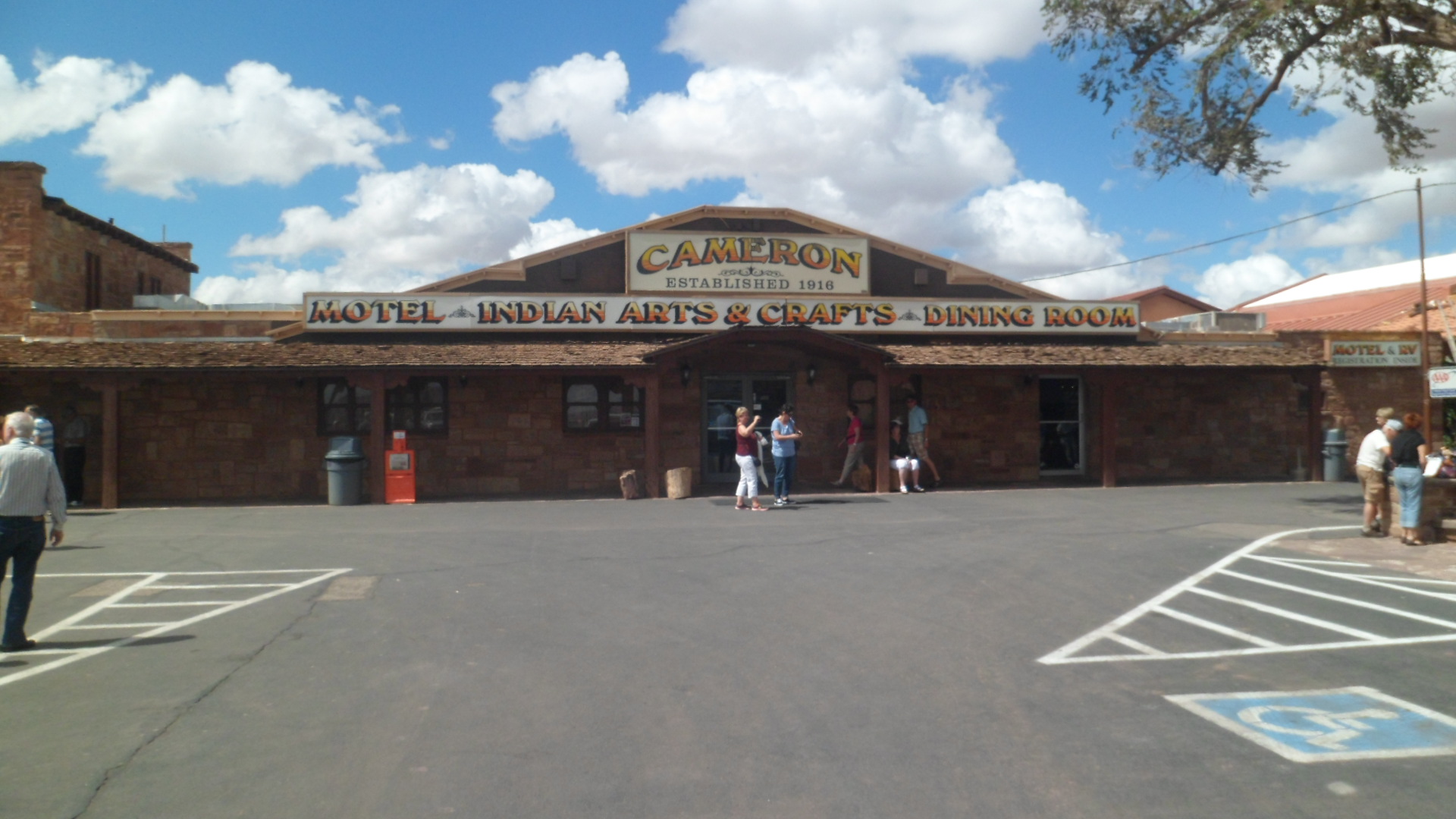
I set out around 10 AM, on September 17, with the goal of getting up to Salt Lake by 10 PM. The first stop, for lunch at Cameron Trading Post, about 50 miles north of Flagstaff, brought me back to an old stomping ground. I worked in the Tuba City Public Schools for five years, in the early 1980’s. We had several visits to Cameron, an interesting Navajo crafts center situated on a bluff above the Little Colorado River and always enjoyed the traditional dishes available at the restaurant there. It has become a favourite stop for busloads of retirees, as well. On this day, there were seventy people in a group ahead of me, so I moved to the side of the scrum that was closest to the Host’s station, and got him to seat me at a table by the west wall. Time was a factor.
SAM_2777

The interior of the dining room, in which I enjoyed a “fill-you for the day” Navajo taco, is preserved from its Victorian-era beginnings. Not wanting to disturb other patrons during their lunch, I took these shots of the wall near my table,and of the glass ceiling- one occasion when that term is not offensive. By the way, a Navajo taco is a hybrid dish, using fry bread (itself devised by enterprising Native Americans of various tribes, as a use for the worm-shot flour given them as ration, during the 19th Century.), pinto beans, diced tomatoes, shredded lettuce and shredded Cheddar cheese, with salsa or hot sauce available on the side. Some people add ground beef to their tacos; the Navajos usually do not.

SAM_2778
SAM_2779

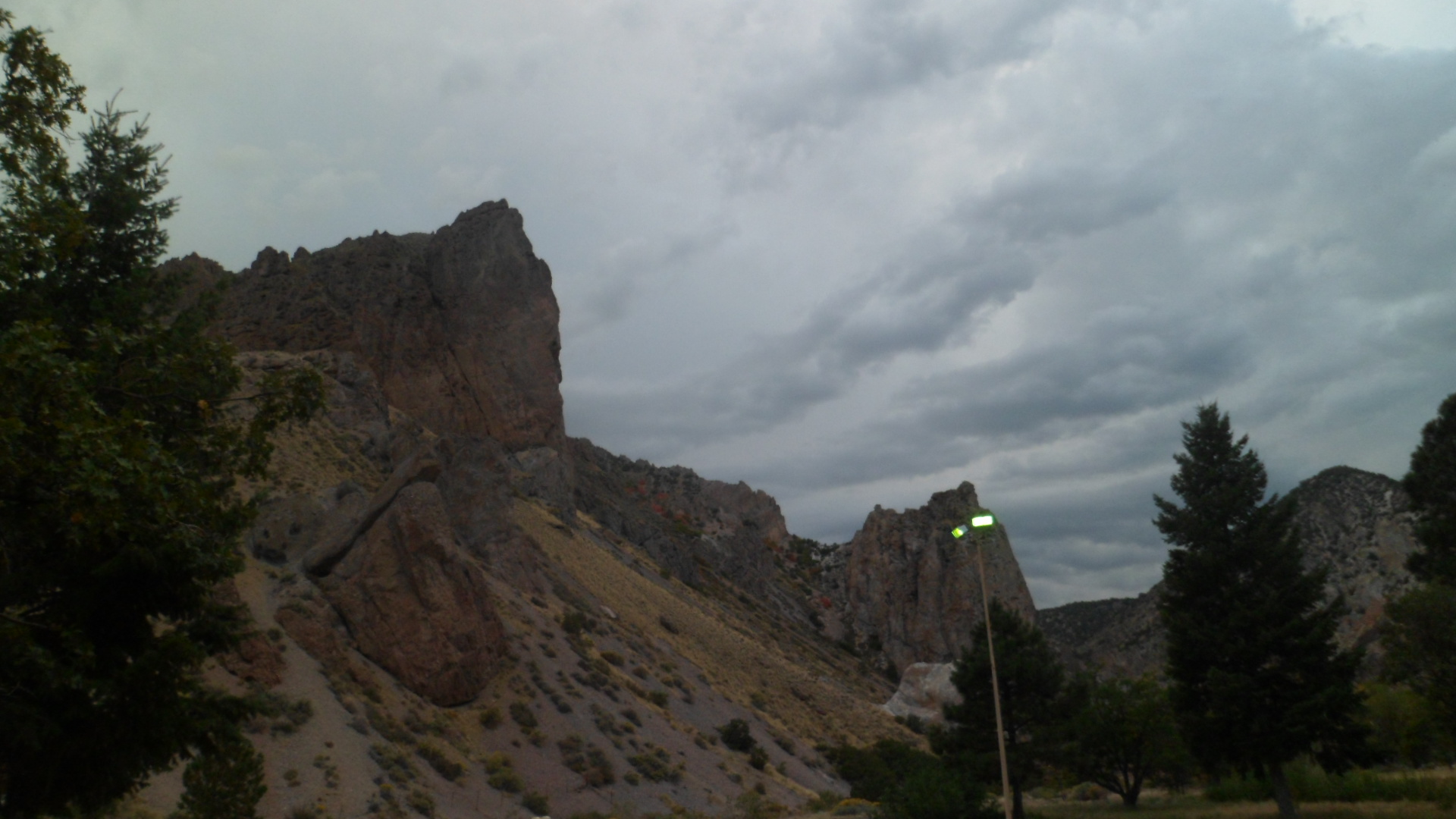
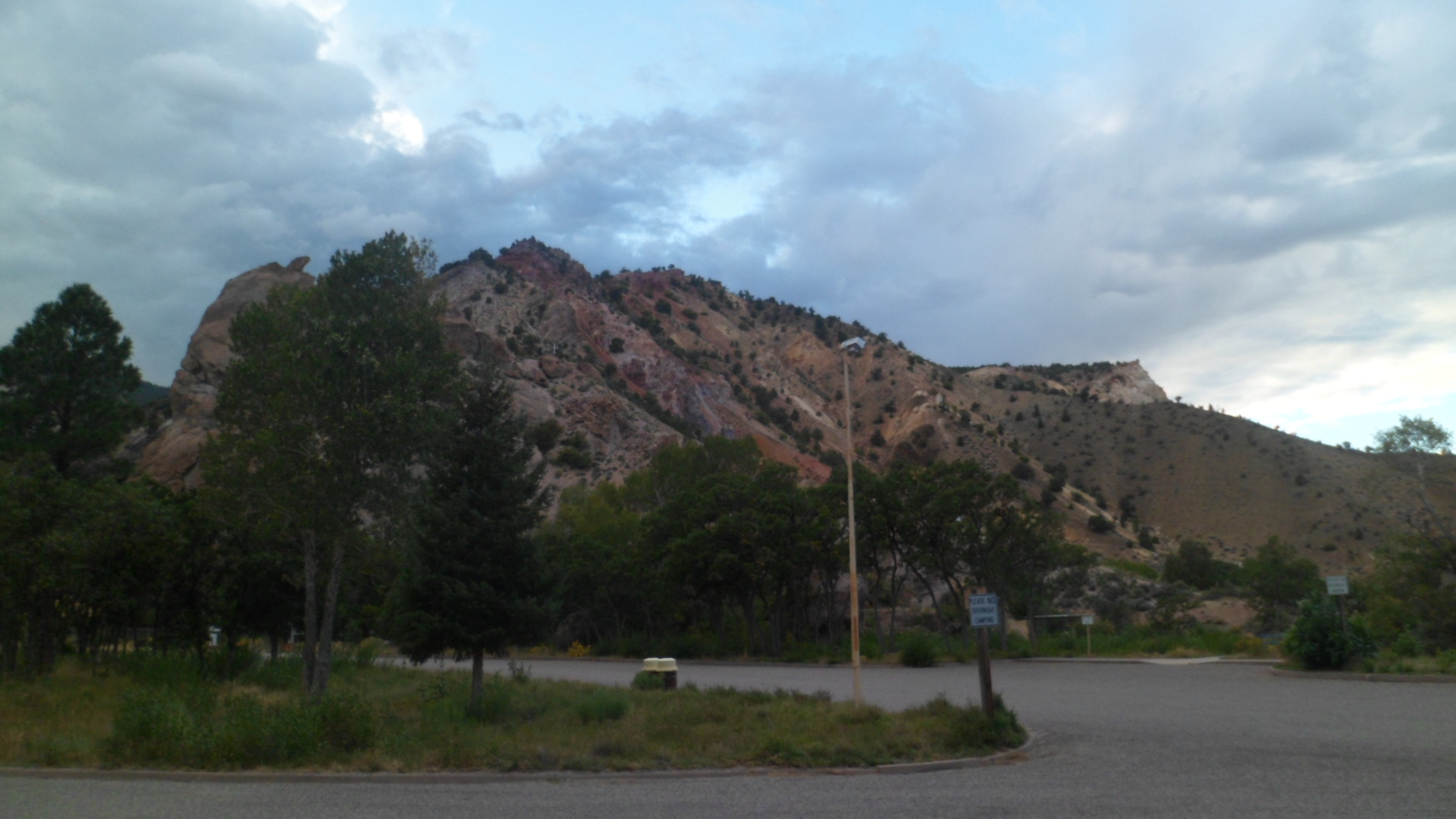
I made it through the northern Arizona and Utah back country, not stopping, save for a picnic supper from my cooler, at the Hoovers Rest Area, north of Panguitch, UT. The area was deserted, save for me and a skittish deer, which took off as I got out of the car. There is a small restaurant and store across the road, but I ate my fill of my own stock, and kept going.
SAM_2781
SAM_2782
SAM_2783

As you can see, Utah has lots of beauty, and I will be back in the intervening areas, over the course of the next two years or so. Salt Lake City continued to beckon, though, and I drove on, arriving at 9:30 PM. I settled into a cheap motel on South Hwy 89. It turned out to be owned by fellow members of the Baha’i Faith, and I was warmly welcomed, and was safe among the urban nomads who reside there. There were conflicts between a few of the people, which were resolved by the Baha’is getting the contending parties to sit down and talk it out, rather than having to get police intervention. Nobody was anything but kind to me, though.

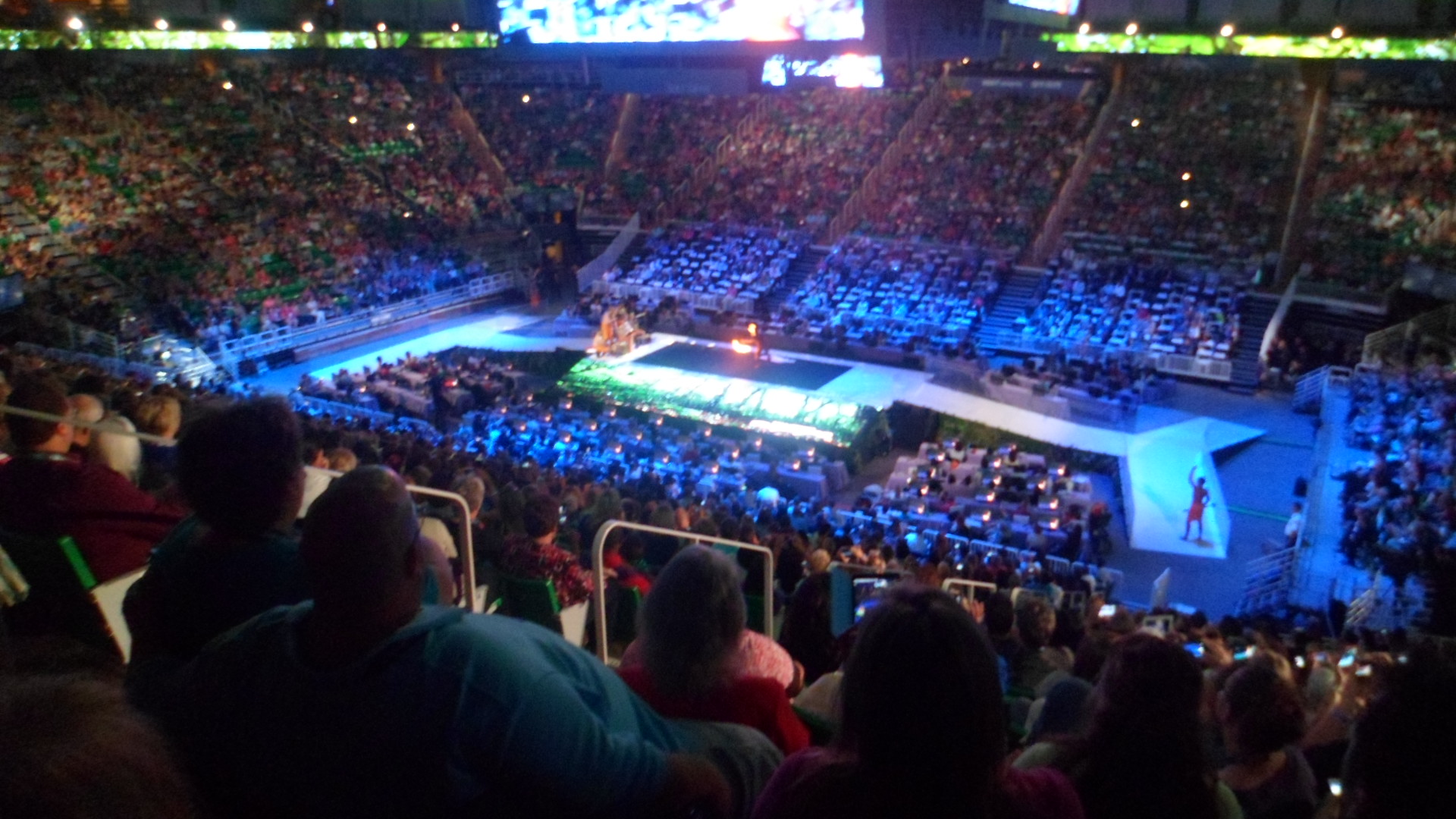
The first session of the convention began bright and early on Thursday morning, and included some Samoan fire dancers in performance.
SAM_2789
SAM_2786
SAM_2785

Considering that Salt Palace was host to upwards of 18,000 people, I was quite happy to have even this vantage point. The overriding message was clear: The translation from Mandarin was “God helps he who help himself”. This was how I was raised, and it is a major tenet of the company. I will have more to say about the oils, in Part 2 of this series.

An Eastward Homage, Appendix: Two Washington Area Gardens

13

August 2-3, 2014, Arlington, VA So as not to belabour the point, this post will be concerned with my visit to two beautiful gardens, while in Washington, last month, for the interment of my father-in-law. The first is solemn, and relatively new: The Pentagon 9/11 Memorial, which is a five-minute walk from my hotel in Arlington. The second is a golden oldie: The United States Botanic Garden, an arm of the Smithsonian Institution, with plants from around the globe.

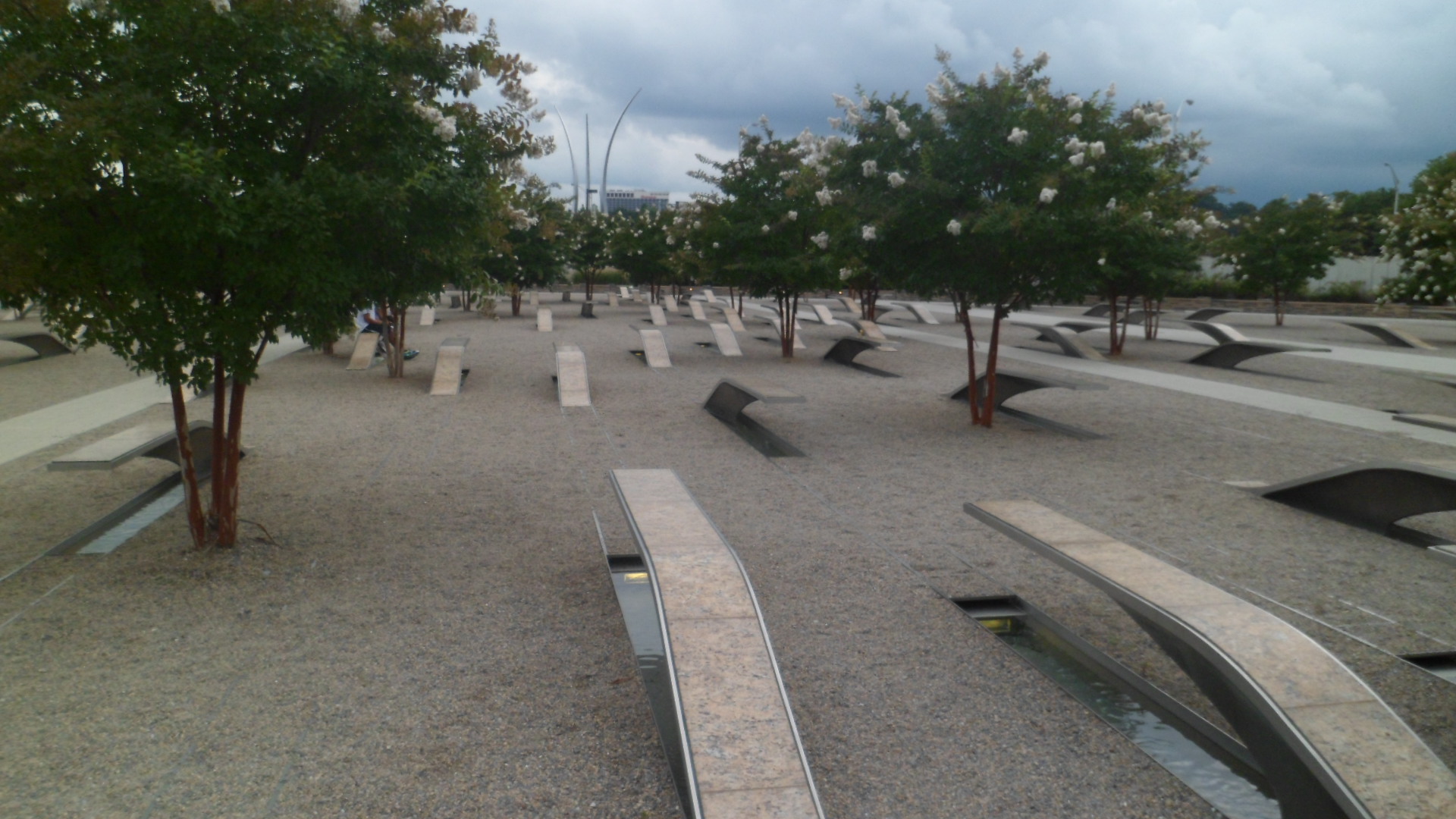
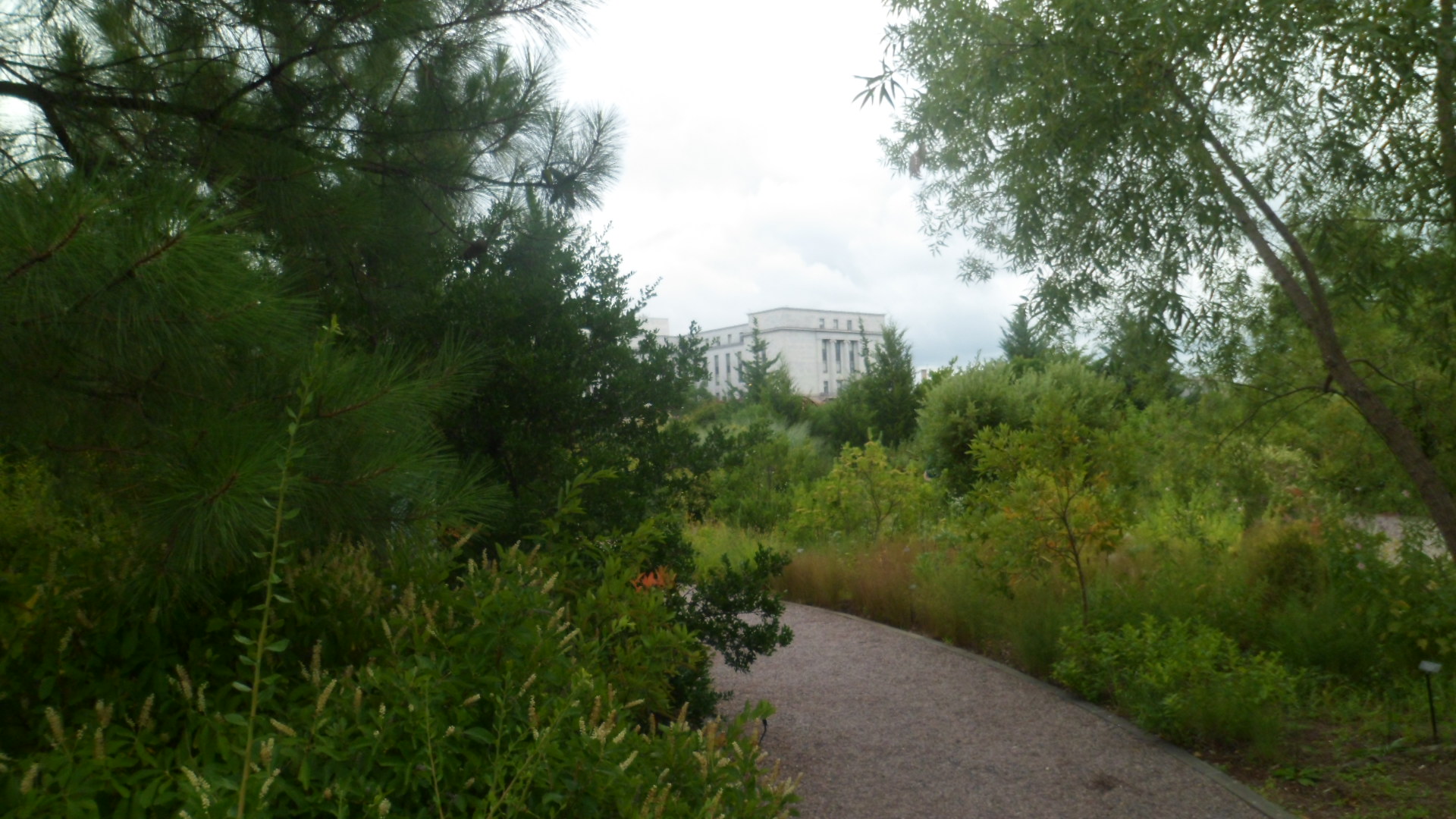
First, the Pentagon Memorial. It is, somehow, the most controversial of the three memorials to the fallen of that horrific day. I think that those who disbelieve it ever happened are just not capable of processing a real-time tragedy, on such a grand scale. The same is certainly true of the Holocaust. Yet, these events did take place, and innocent lives were lost. The plane disintegrated into tiny fragments, the wall was decimated on the west side of the Pentagon, and the area is now a suitable memorial for those who took off, and never landed, on September 11, 2001.

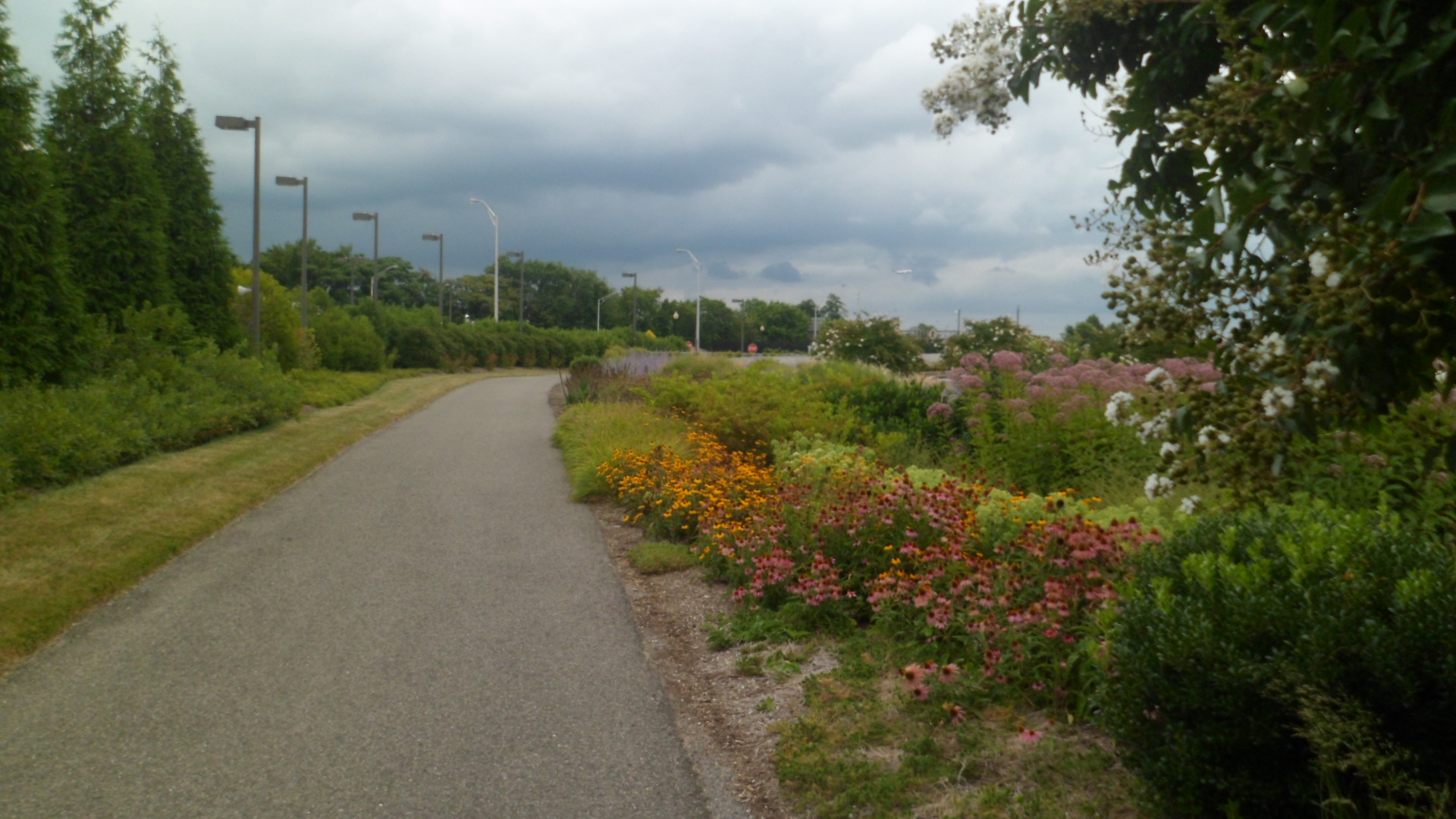
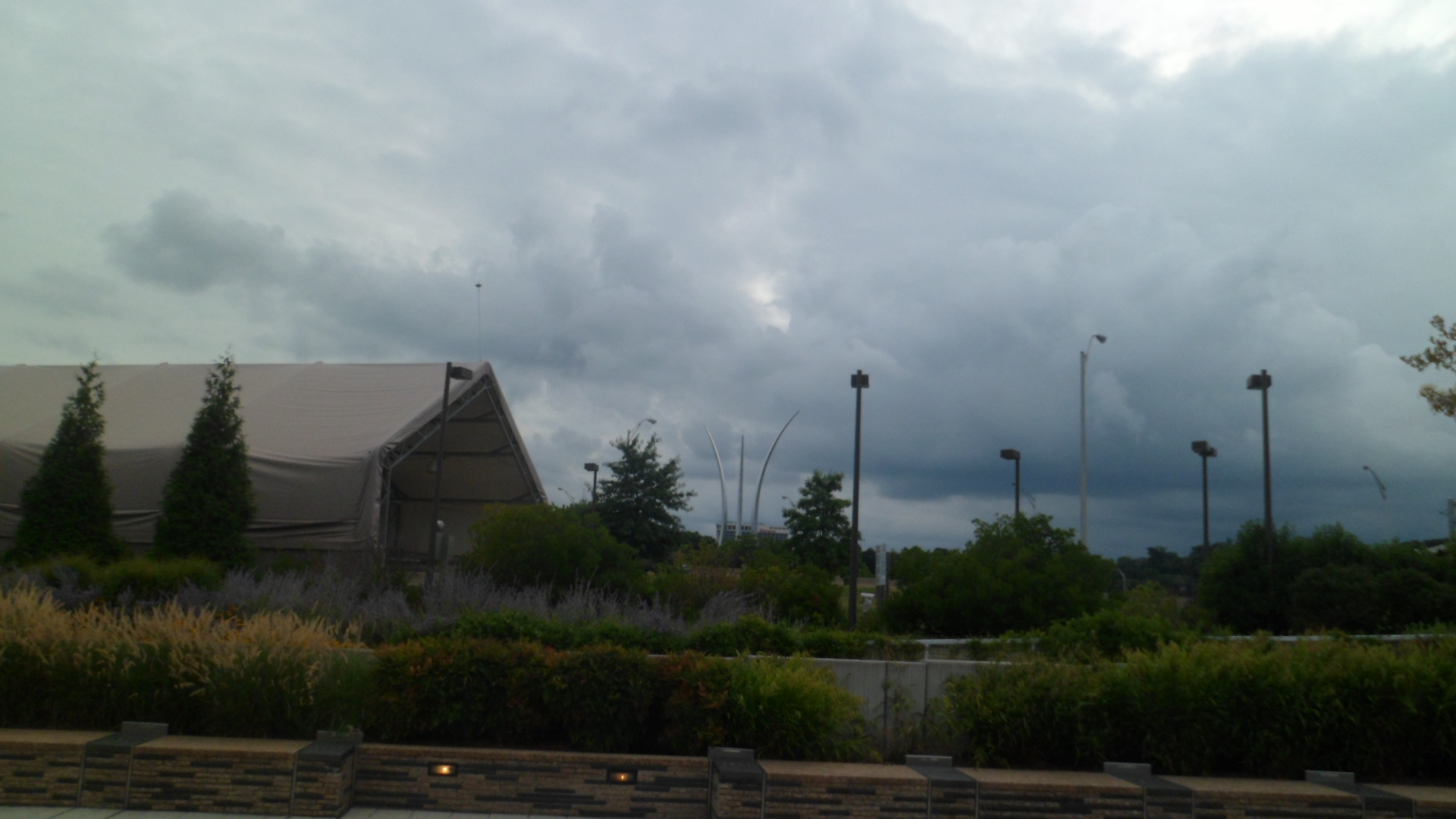
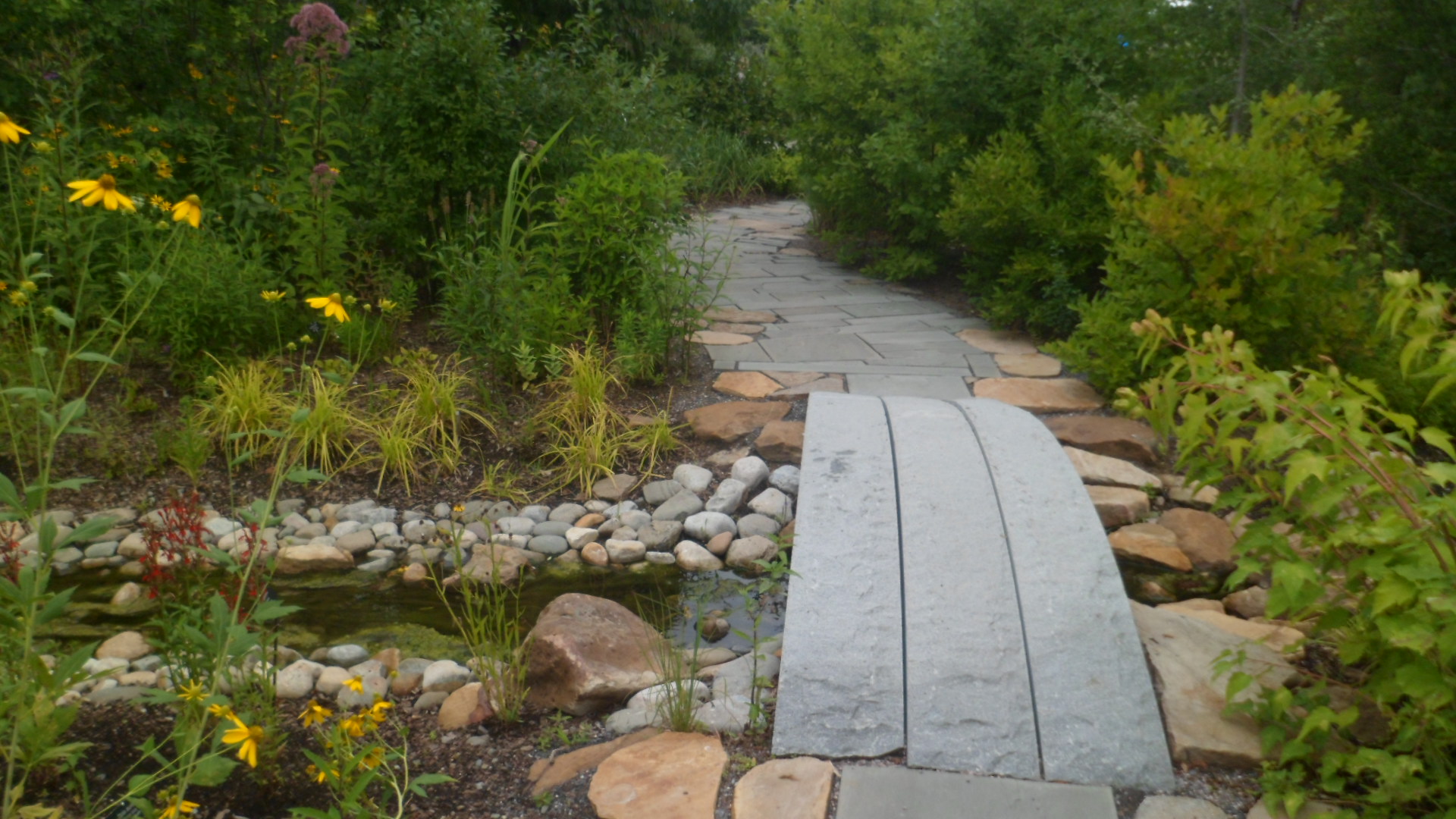
Here are some of the scenes, starkly beautiful.

SAM_2464
SAM_2466
SAM_2467
SAM_2468
SAM_2469
SAM_2472
SAM_2473

The scene below shows a small memorial in the far background, a three-pronged steel sculpture set up by the Marriott Corporation, near its Pentagon-area hotel.

SAM_2474

No matter who one thinks is responsible for these heinous acts, the important things to me are the loss of innocent life, and the need to say, and mean, “Never again!”.

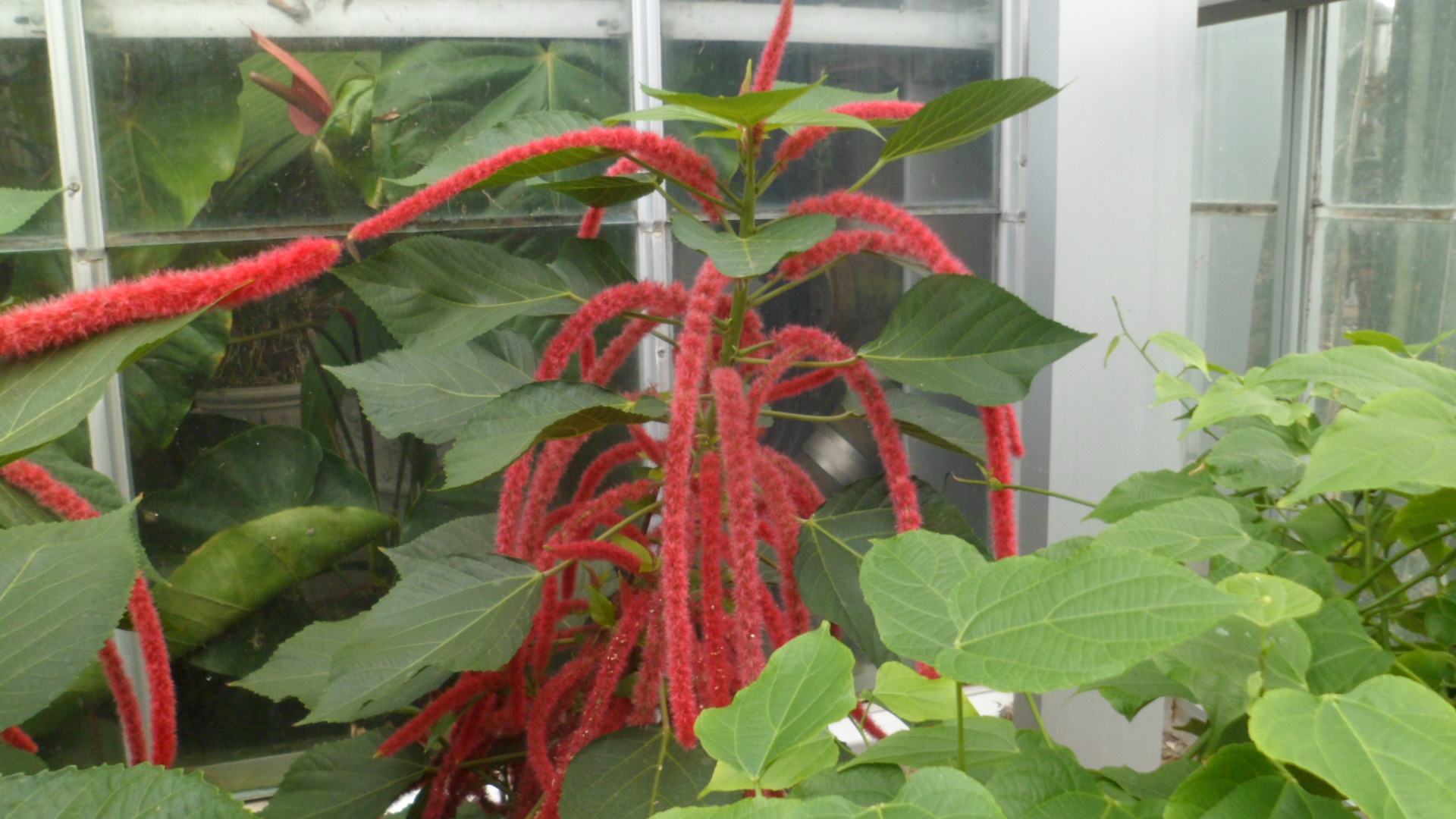
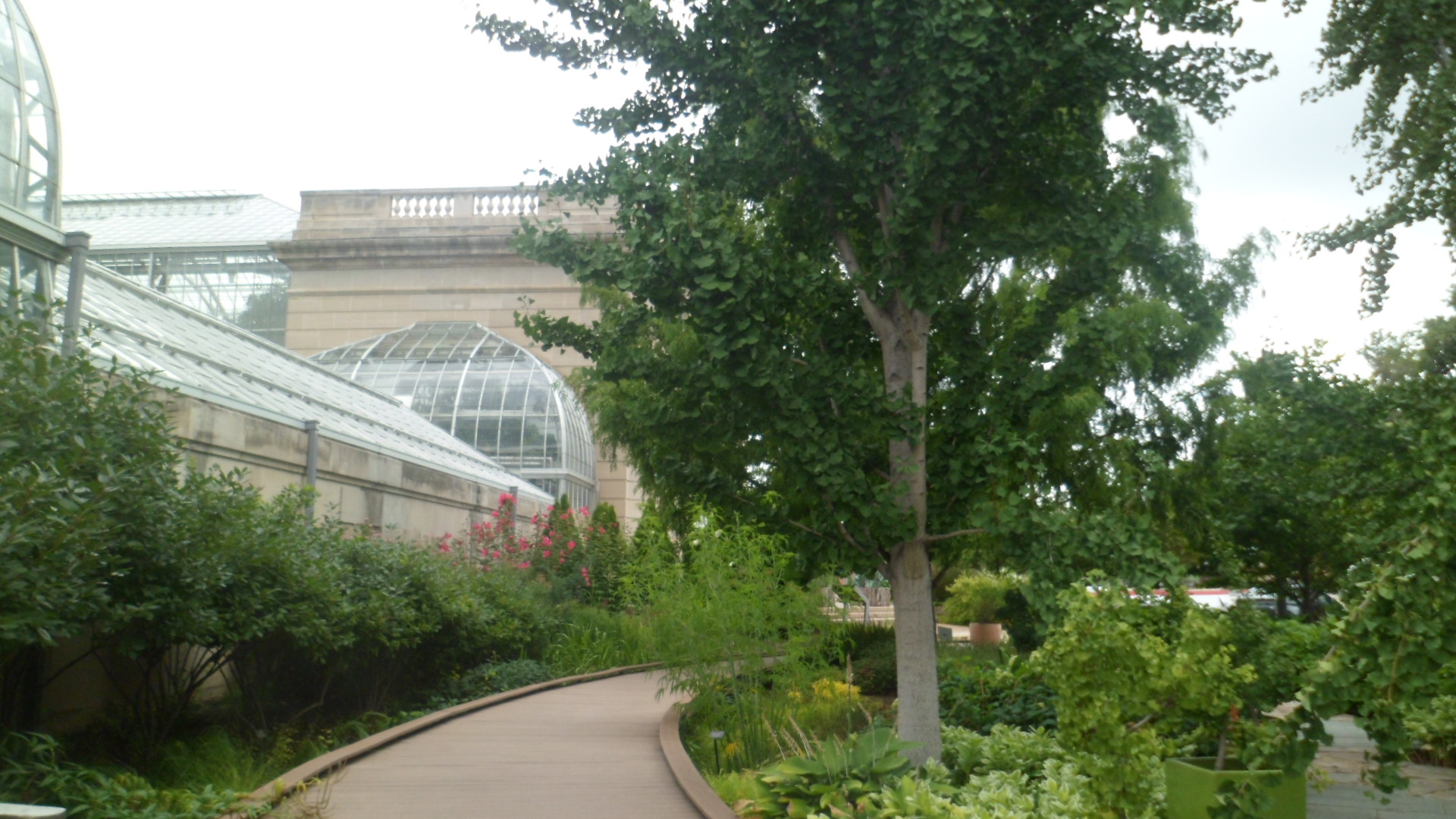
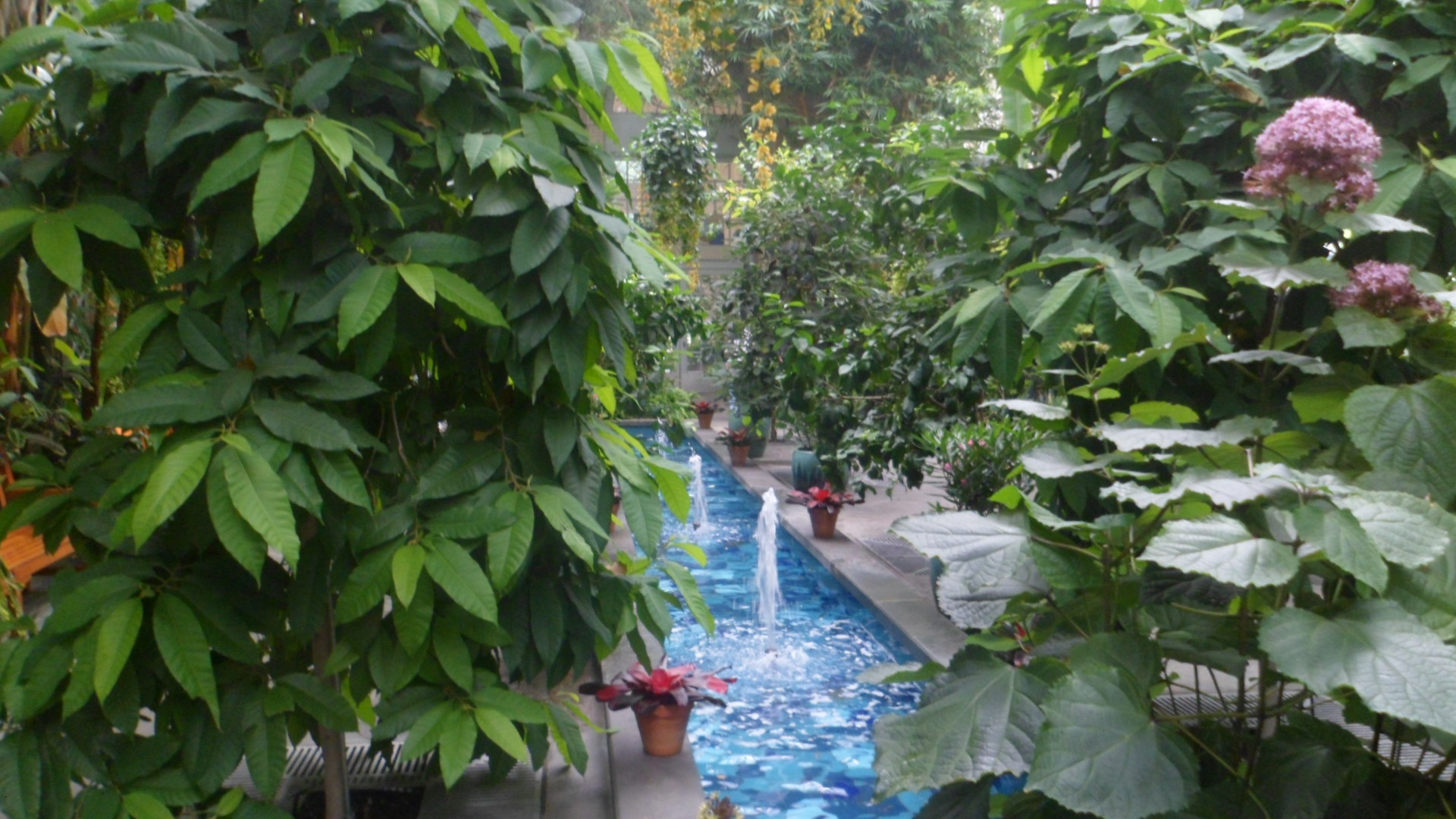
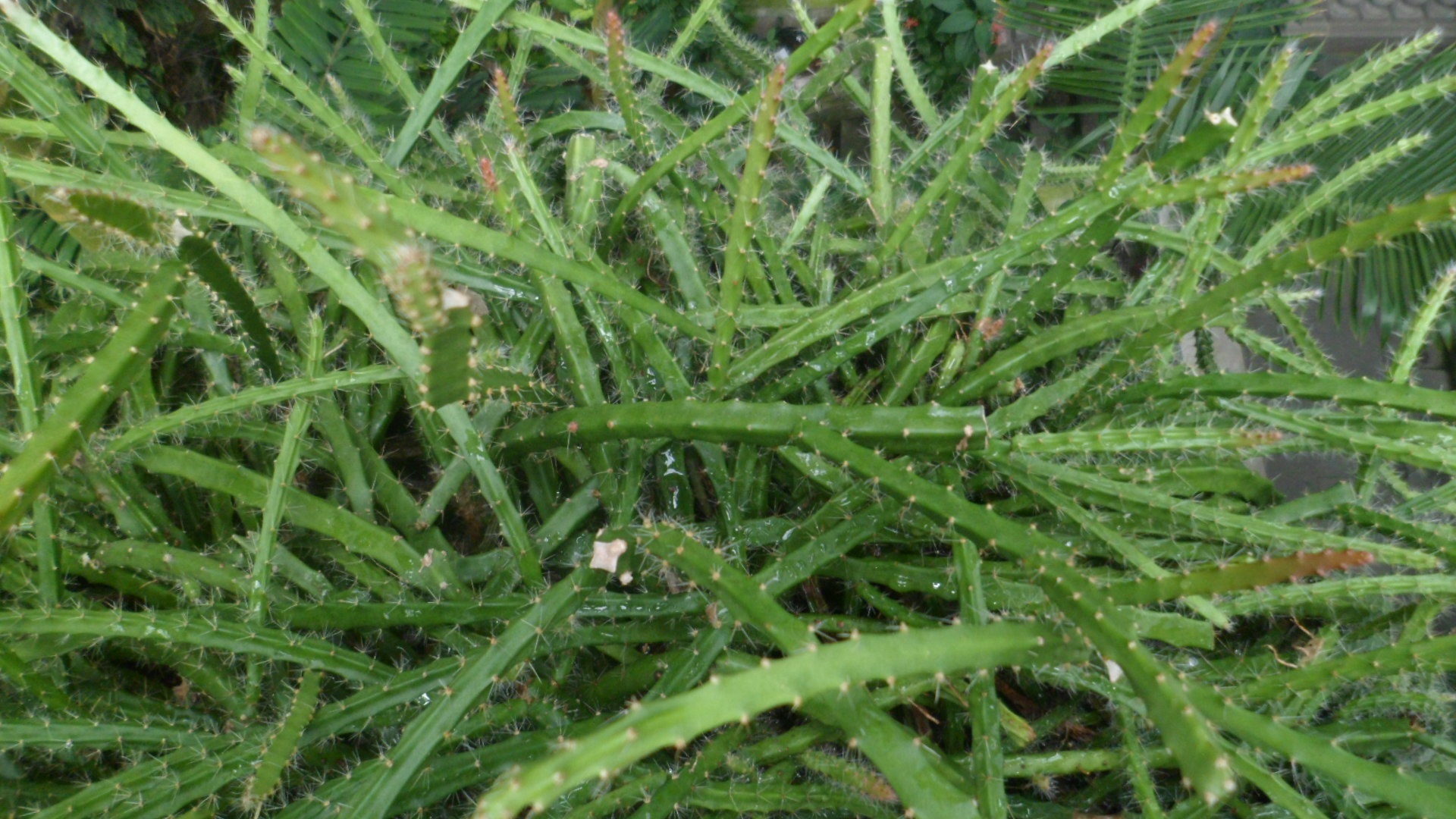
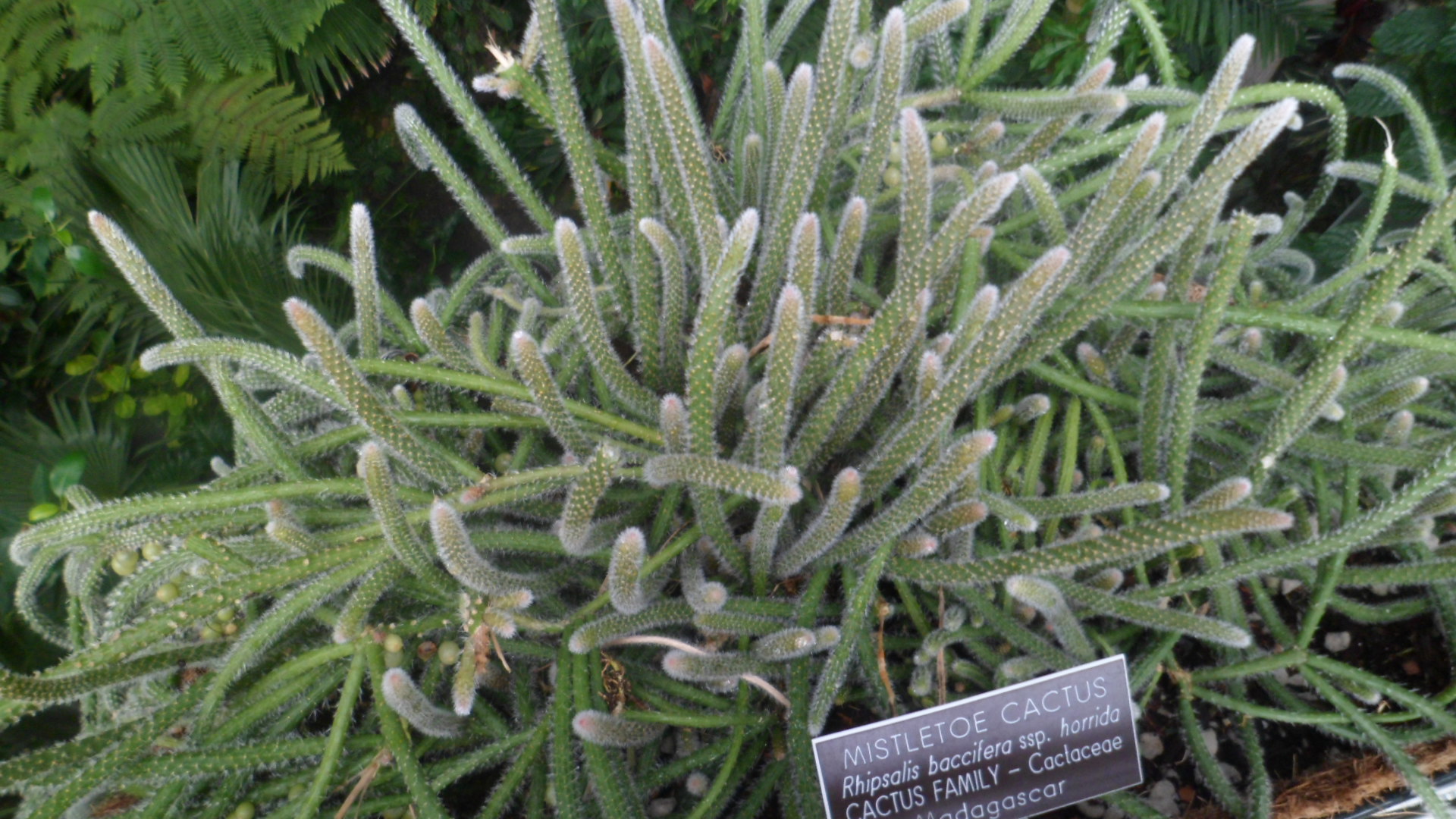
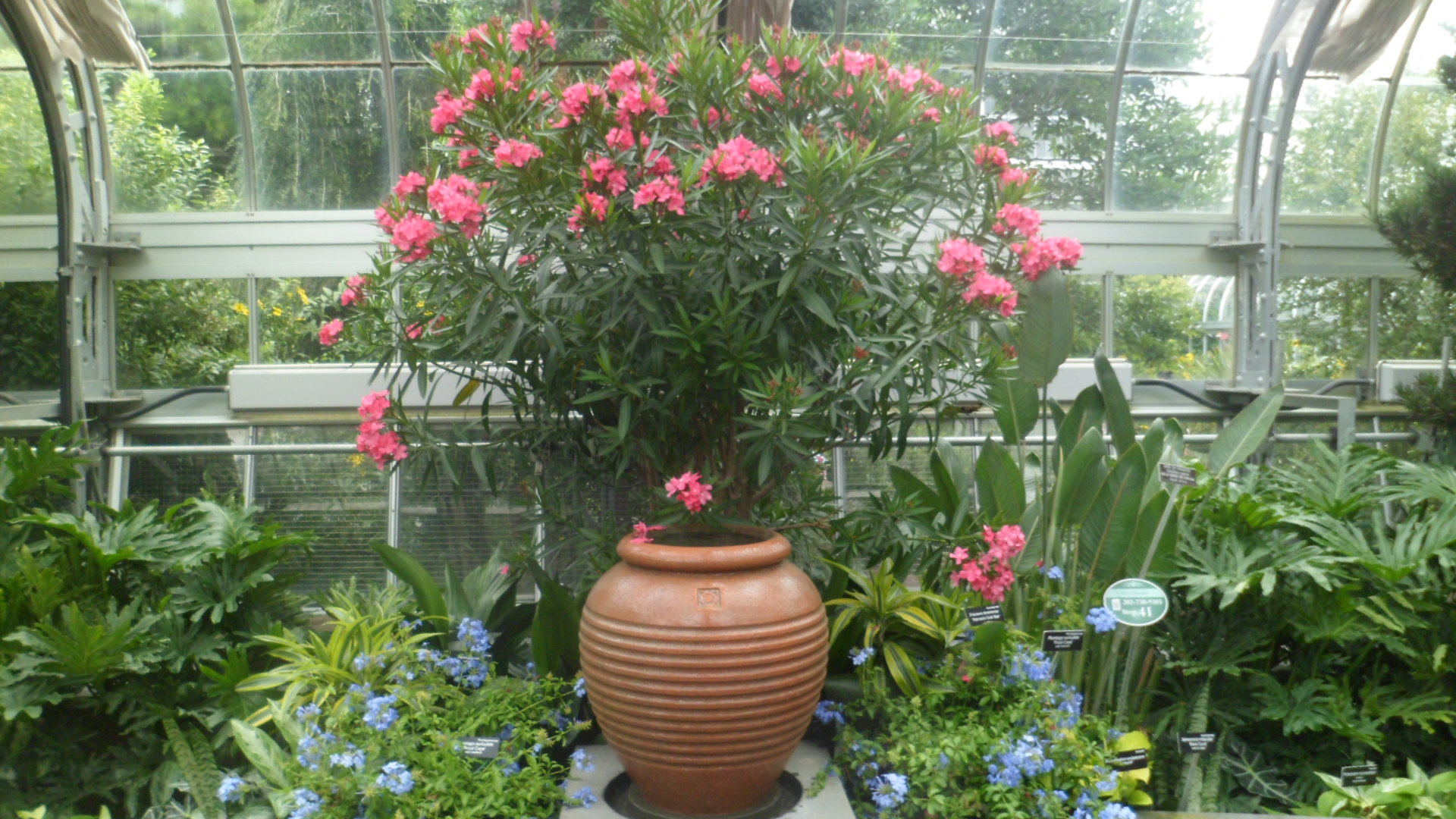
On Sunday, August 3, I spent a more joyful hour at the United States Botanic Garden, along the Smithsonian Row, south of the US Capitol. Here are several scenes of that exquisite place. As you can see, there are plants from rain forests, English and Japanese gardens and deserts alike. I was drawn to the Mistletoe Cactus, though I can’t envision two lovers embracing in its midst.

SAM_2495
SAM_2514
SAM_2515
SAM_2517
SAM_2498
SAM_2500
SAM_2501
SAM_2502
SAM_2503
SAM_2505
SAM_2507
SAM_2508
SAM_2519
SAM_2520
SAM_2521
SAM_2522
SAM_2524
SAM_2529

This was the perfect counterpart to my secular pilgrimage along the National Mall. I think the saner members of Congress must find there way here, on a regular basis. My Eastward Homage would end the next day, as I said farewell and see you again, to one of the most powerful men I’ve ever known.

An Eastward Homage, Epilogue: Arlington and DC

2

August 3-4, 2014, Washington, DC-No sooner had I landed in Phoenix on July 7, than I received an e-mail that my Father-in-Law’s interment at Arlington National Cemetery would be August 4. It didn’t take long for my airline and hotel reservations to be made, and a budget drawn up for the four days I’d be gone.

I used to live at Fort Myer, VA, in the days when I was an Army postal cerk. I was always challenged by the Third Infantry sentry at North Gate, to tidy up this wrinkle or straighten that fatigue cap. They never liked my hair, which was understandable, since none of them ever got to have any.

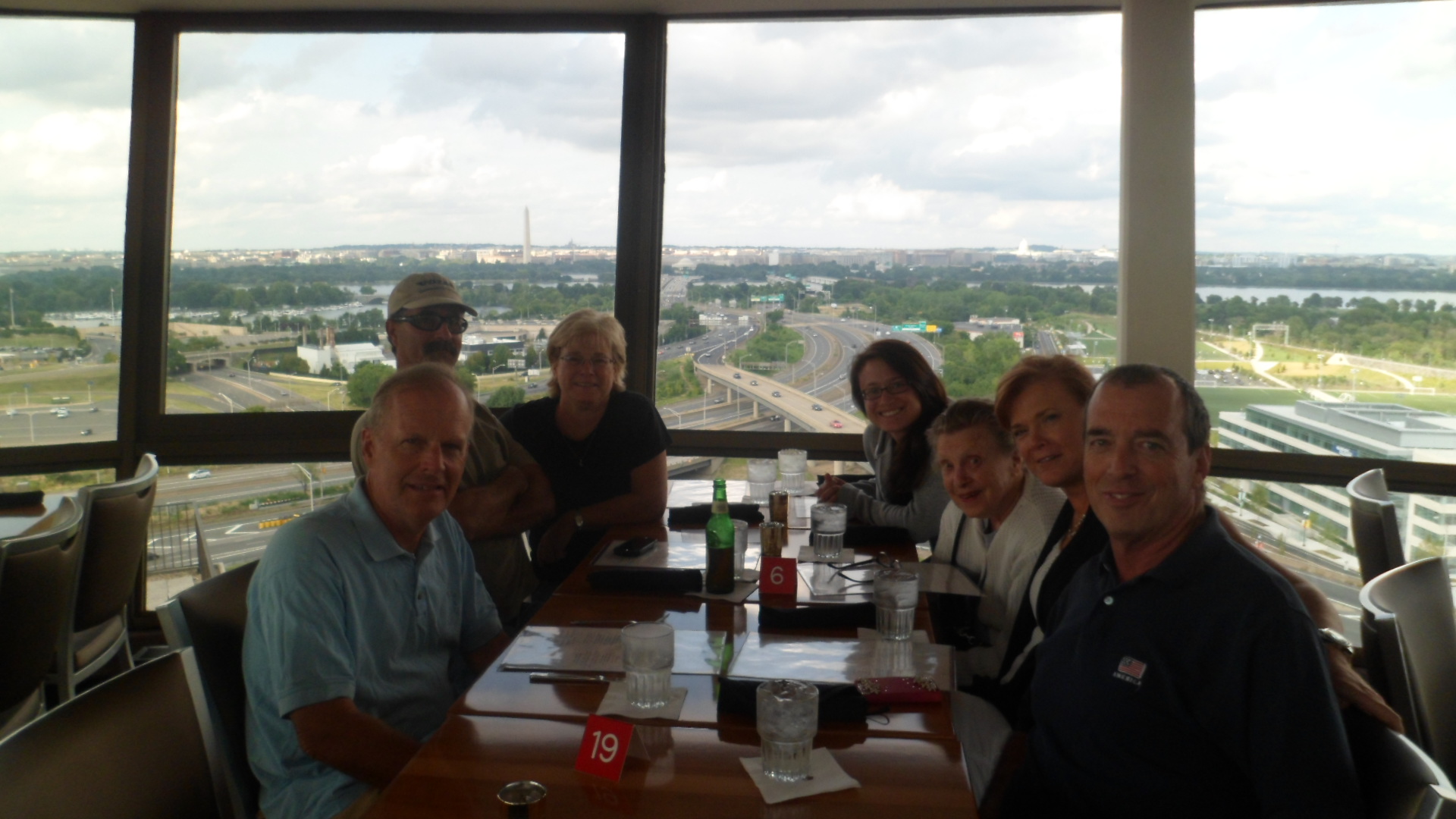
Pop was laid to rest in Arlington, on schedule-actually, three months posthumously, but it was a scheduling issue, and the ceremony was dignified and befitting of his service. I don’t take photographs at funerals. I did, however, have the waiter at Sky Lounge, Doubletree Crystal City, take a couple of family photos at our Sunday night dinner. BIL (in ball cap) pronounced the photo useless, but hey,I can see his smiling face, just fine.

SAM_2573

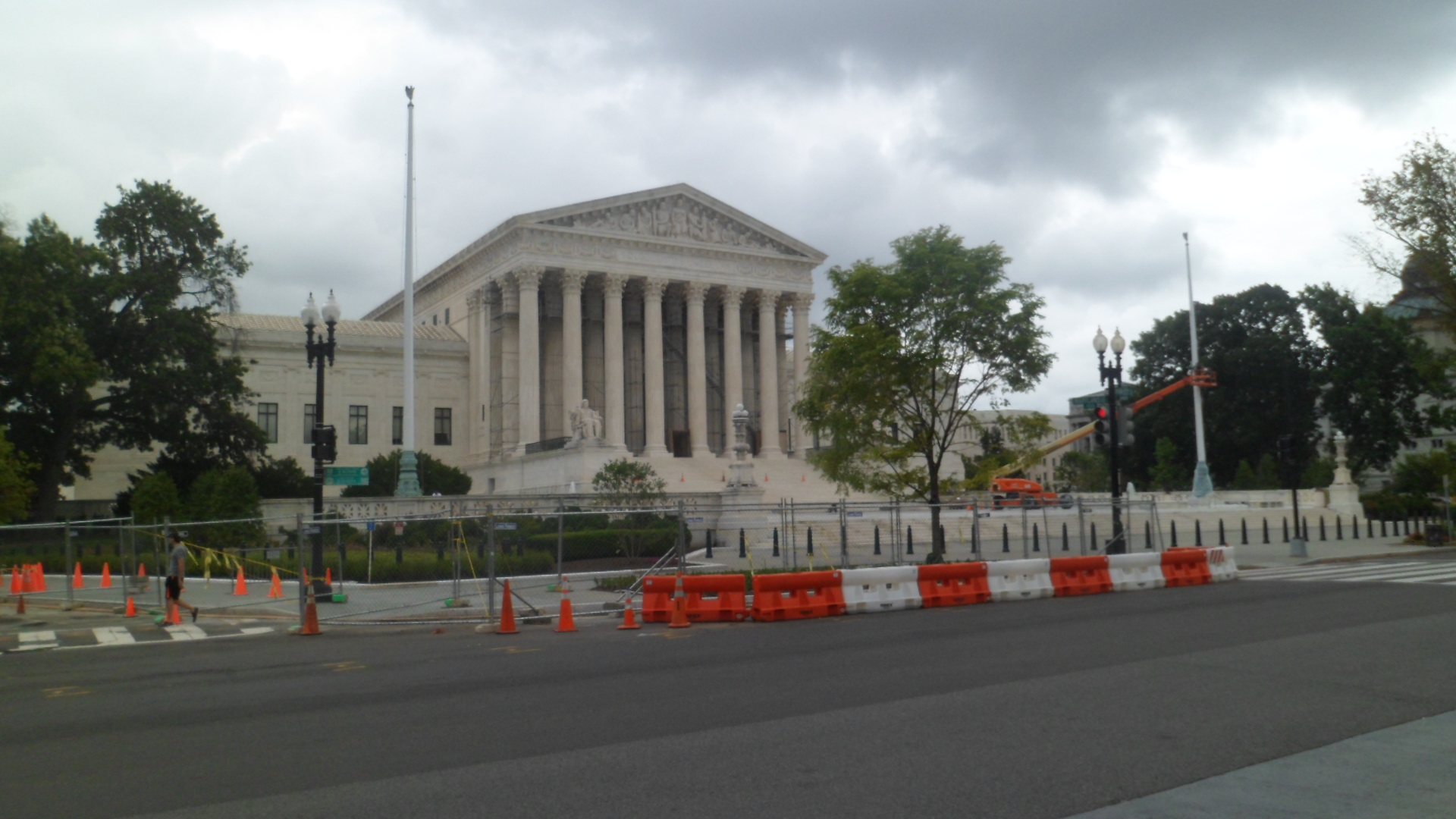
Earlier in the day, I meandered around Washington, DC, visiting a few old haunts from the Capitol grounds to mid-Pennsylvania Avenue to the southern edge of the National Mall. Here are a few of the scenes, which I found preserved on a different SIM card than the one I thought I’d used.

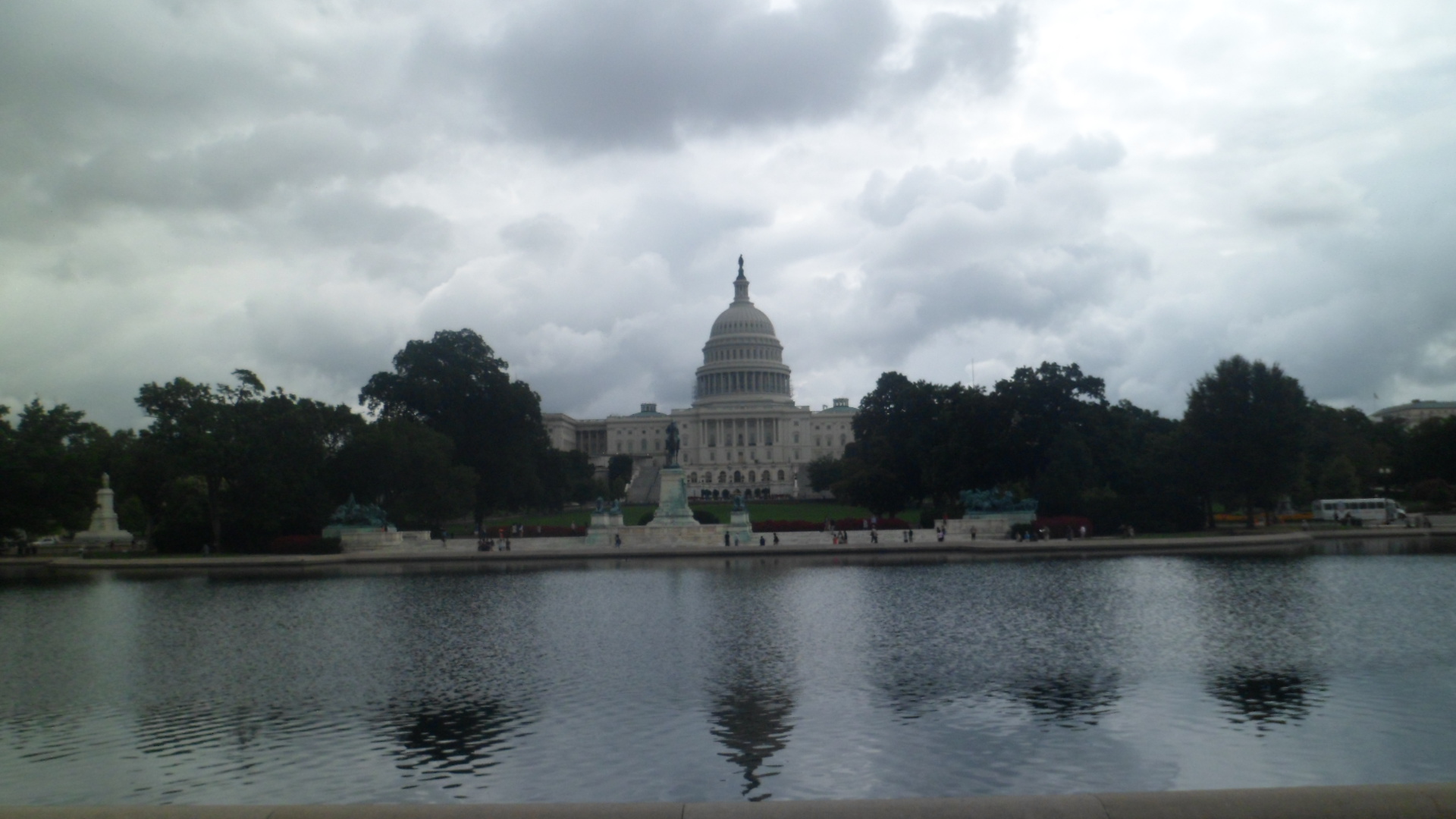
The Capitol is closed on Sunday, but the grounds are worth a visit, in and of themselves. The Empty Edifice does look grand from the outside, and across a Reflecting Pool.

SAM_2478

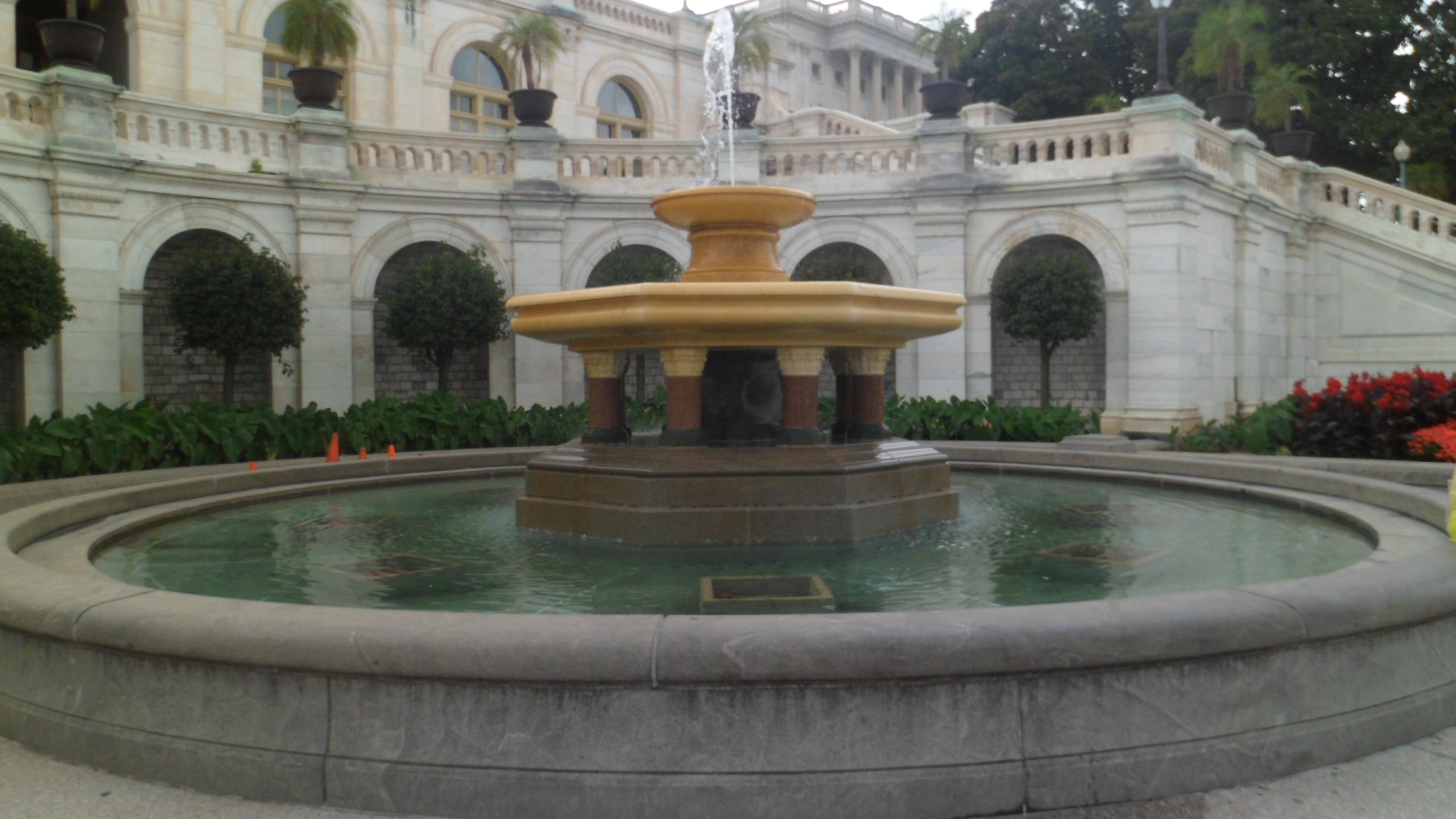
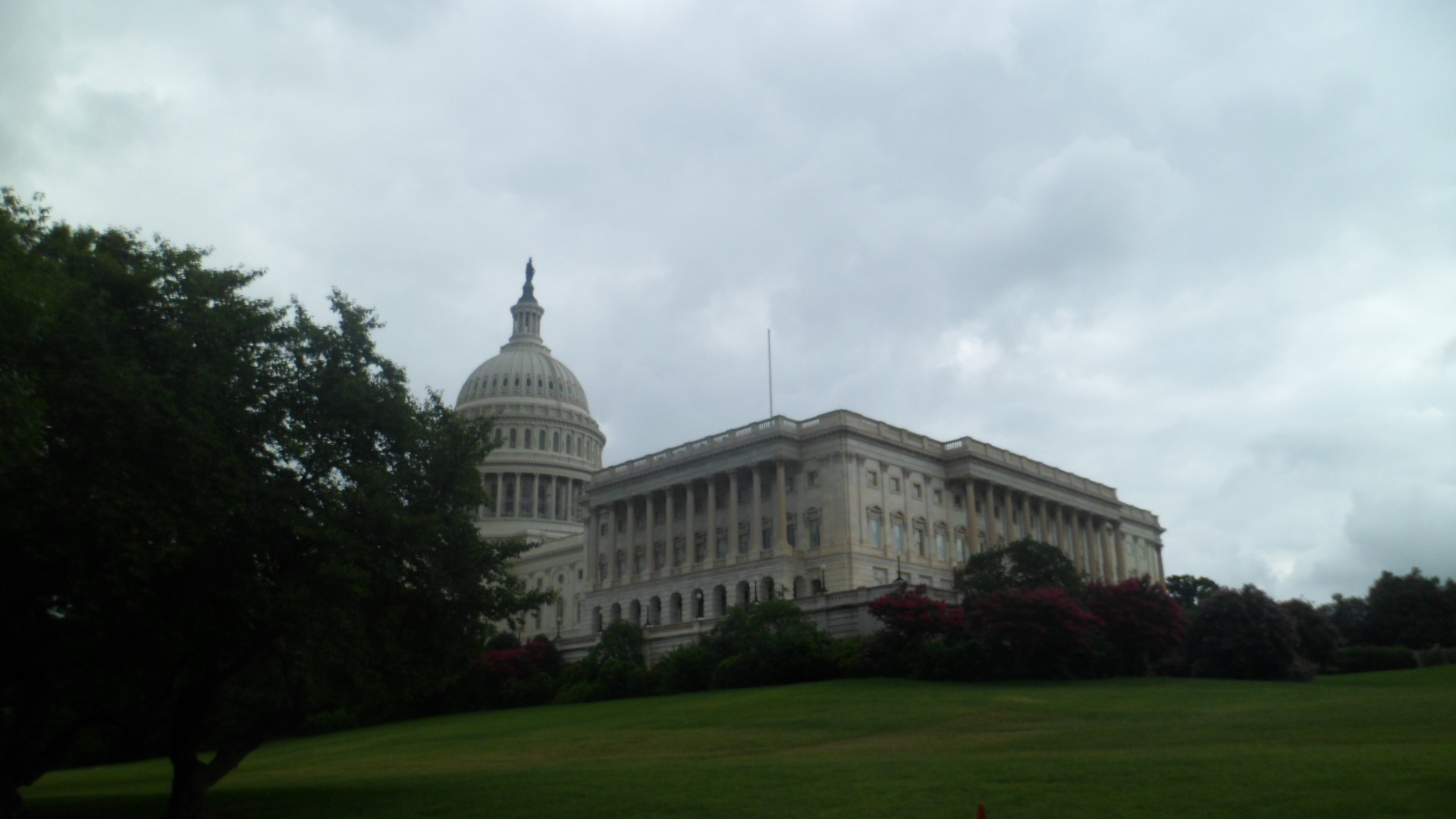
Here a few other views from the south lawn.

SAM_2485
SAM_2487

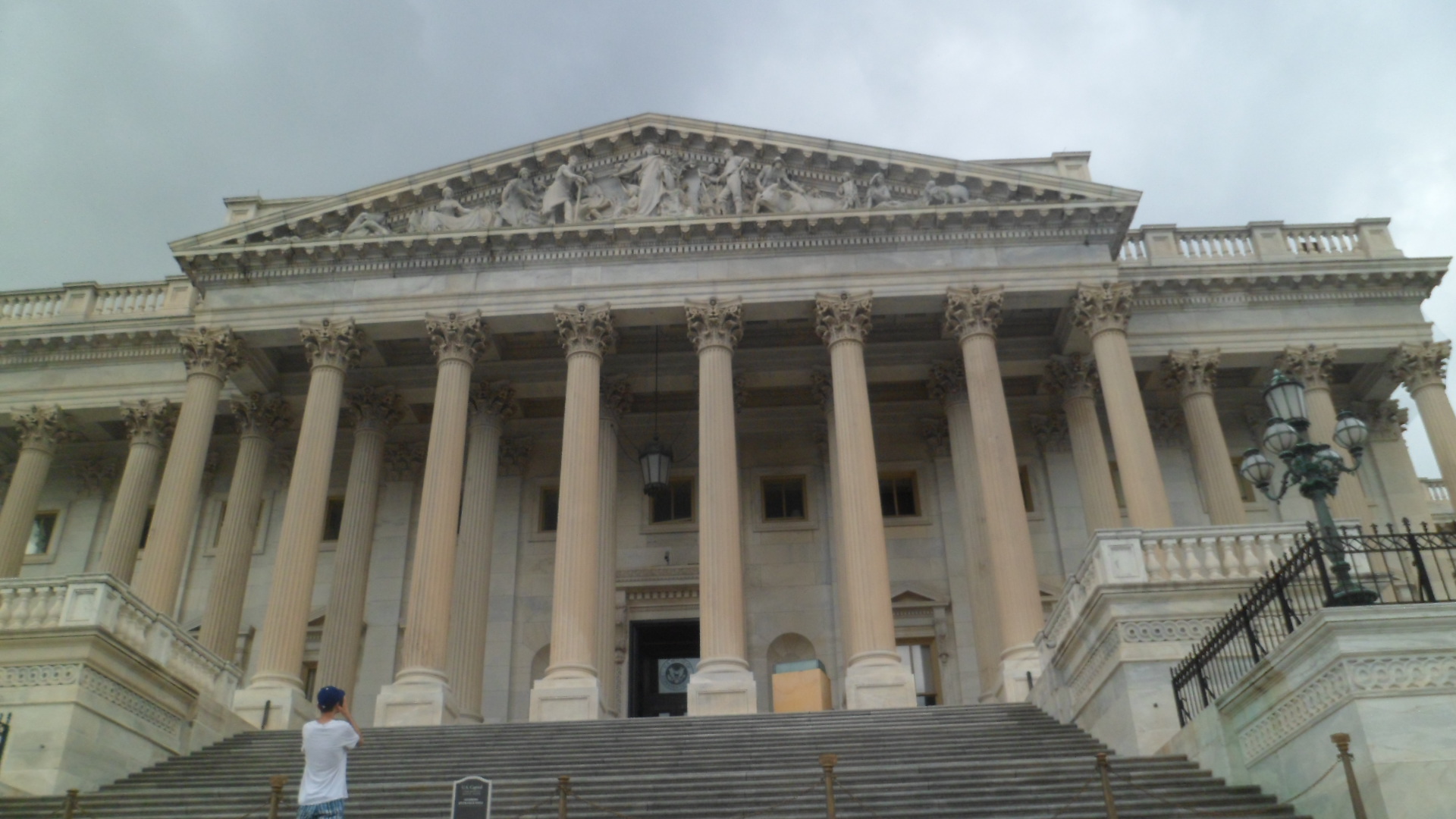
Then, I went around to the north side.

SAM_2488

In light of recent events at the White House, this barrier from 2001 seems more prudent than ever. Of course, the Capitol is not exactly frenetic with activity right now.

SAM_2492

I spent some time at the United States Botanic Garden, the National Museum of the American Indian, Smithson Castle, and along the National Mall. The Garden will be the topic of an ‘appendix”, next post. At the American Indian facility, I focused on the Indians of Central America. I had read about Minor Keith and United Fruit Company, and the sacrifices forced on the indigenous people of Guatemala. Ironically, Keith’s smiling face is featured in an exhibit on “Benefactors of the Smithsonian”. So, at least some of his money went into preserving the very culture he saw fit to plow under. Below, is the entrance to the building.

SAM_2534

Here is an homage to those instances when Europeans and Native Americans got along. Since I have ancestors on both sides of that fence, I only wish the Europeans had been a bit less hasty in seeking “assimilation” of the indigenous folks.

SAM_2536

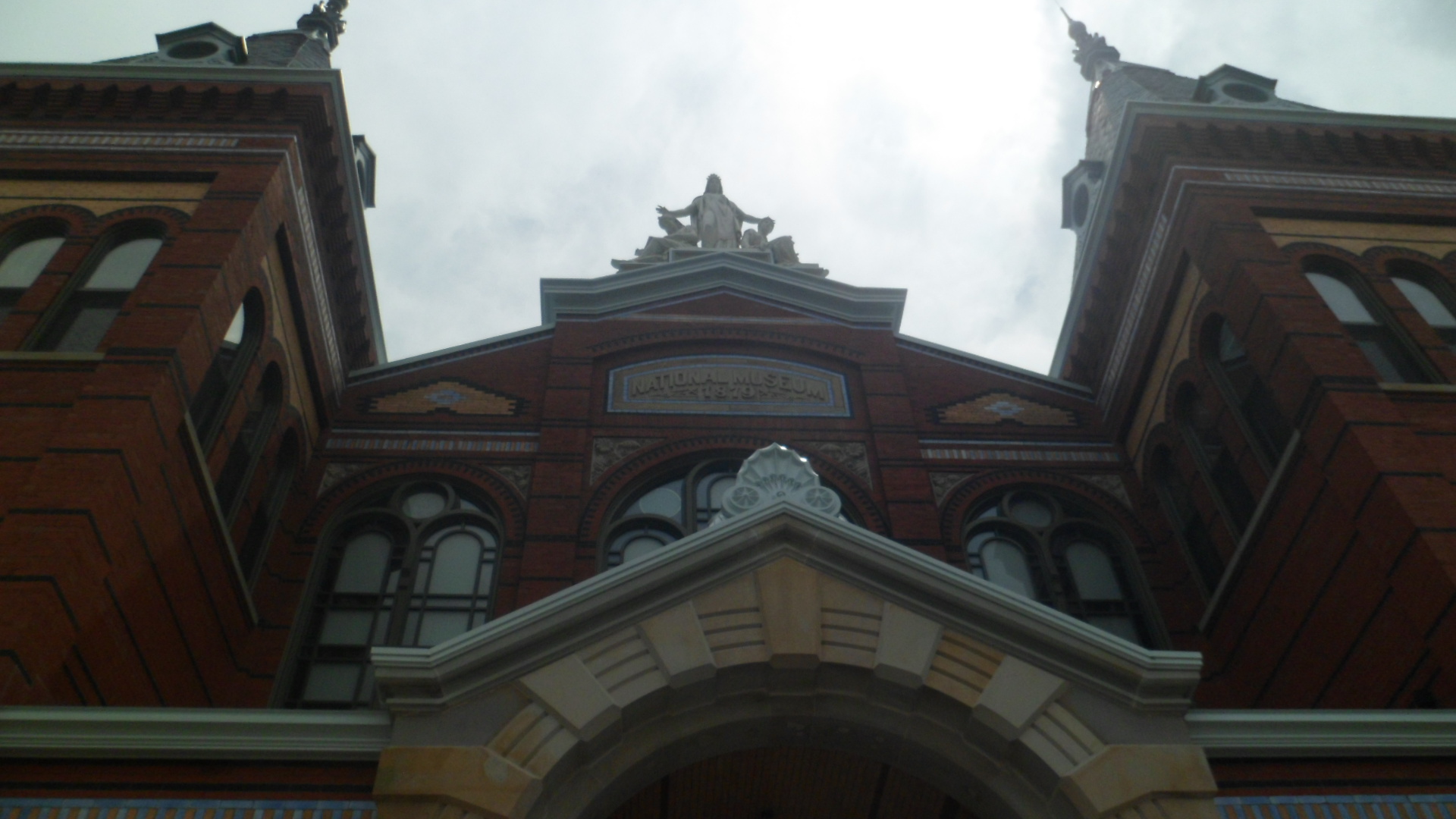
A second spot I visited briefly was Smithson Castle, the original facility of the Smithsonian Institution, now a Visitor Center for the entire complex.

SAM_2540
SAM_2548
SAM_2551

Washington is second to none, with its gardens. The verdure outside the Castle is a prime example.

SAM_2546
SAM_2553

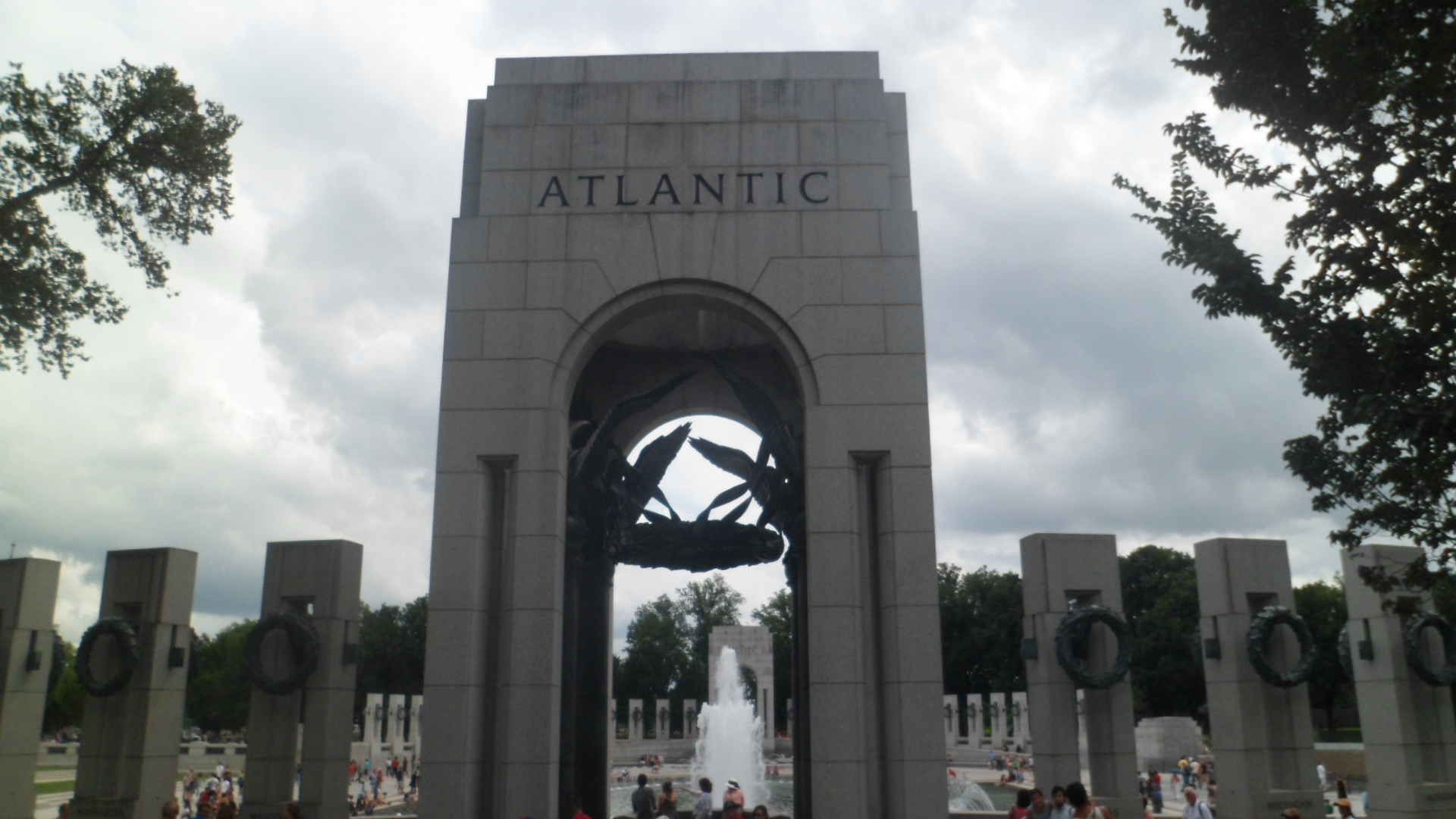
I paid my respects at the World War II Memorial, especially important, given the circumstances of my visit.

SAM_2557
SAM_2558

Constitution Garden, a misnomer at present, seemed to be calling to Congress to address its condition.

SAM_2562

I paid my respects, privately, at the Vietnam Memorial Wall, then went by the Korean War Memorial (below).

SAM_2564

A good long-term remedy to constant warfare is a proper education.  Washington has had some good schools, and some mediocre. This was the first public school in the nation’s capital.

SAM_2563

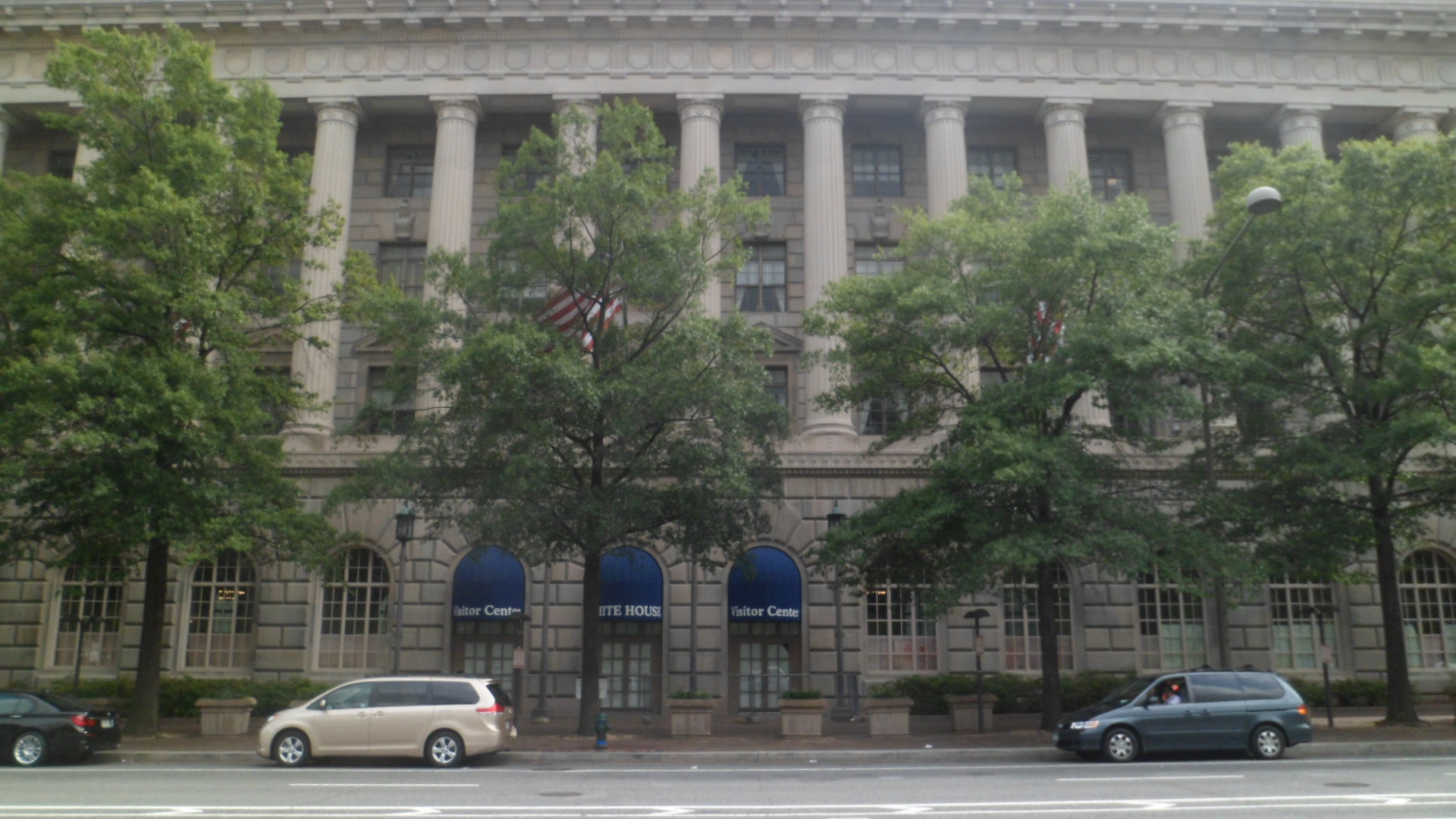
On July 4, 2007, Penny and I had the bright idea of taking our son to the National Mall, and hopefully viewing the fireworks. The weather was horrible, the Mall was evacuated, and in trying to get my wheelchair-bound wife out of the rain, I met a fair amount of resistance from “security” along Massachusetts Avenue. We finally found refuge, at the White House Visitor Center.

SAM_2568

The last place I stopped in Washington, on August 3, was the DC Africa Festival. This year marked the third year of this lively event.

SAM_2571

As is my wont, I will post two more pieces to this series: United States Botanic Garden and the Pentagon Memorial.

An Eastward Homage, Day 31: Excursion to a Silent Teacher

5

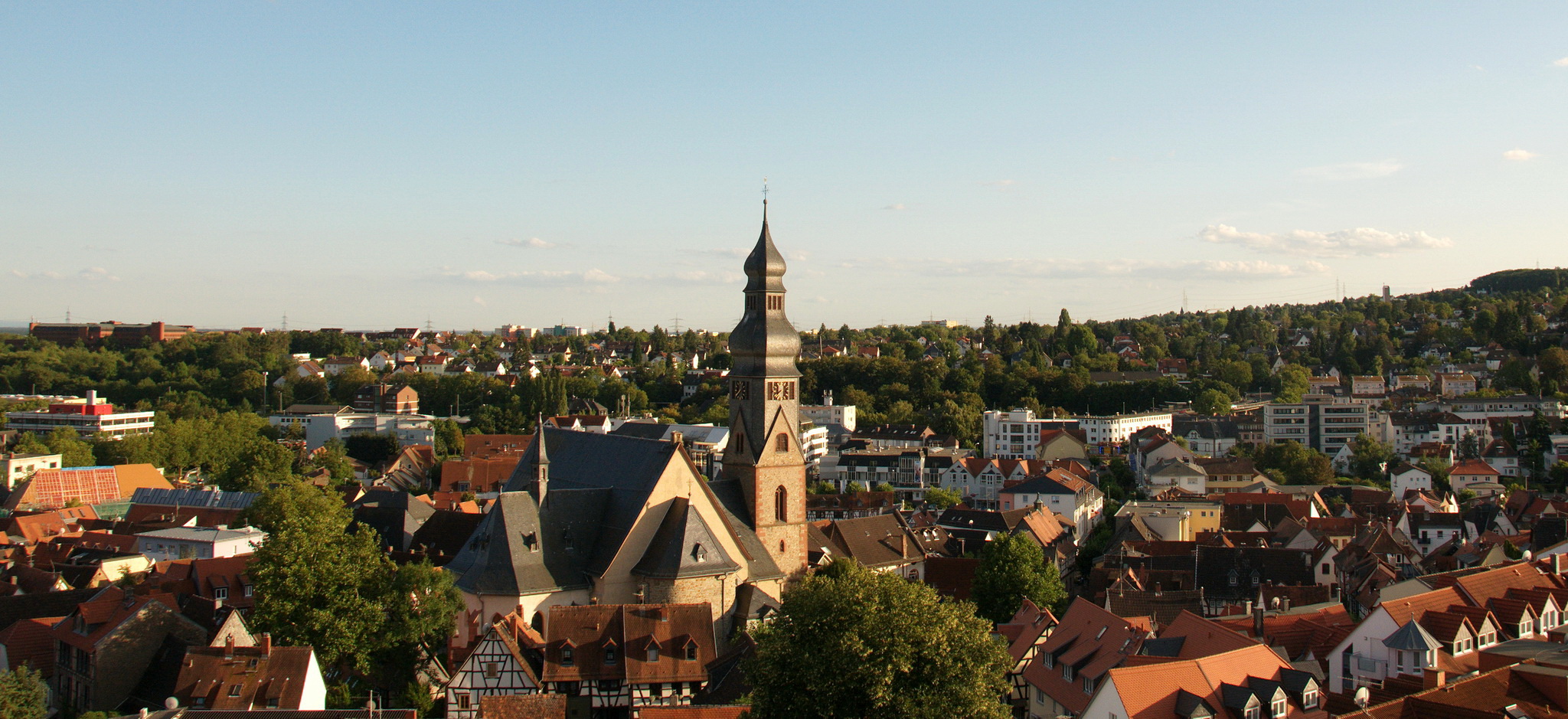
June 26, 2014, Frankfurt-am-Main-Thursday morning was especially joyful, bringing with it a train and bus ride to the Baha’i House of Worship, in Langenhain, about an hour west of central Frankfurt. The train to Hofheim, from whence the bus went to Langenhain village, took about forty minutes. Hofheim lies at the foot of a forested hill region, and is quite picturesque, in and of itself. (Photo courtesy of de.wikipedia.org)

Hofheim_Taunus_Stadt_5857

The bus to Langenhain was driven by a man who seemed ready for a long vacation- not happy with my broken German, or with the fair number of high school kids who got on at the central bus terminal, about 200 meters from the Hofheim Hauptbanhof (Try saying that, ten times fast!). We got to Langenhain quickly enough, though, and I encountered a couple of farmers, who were discussing goats. One of the men kindly guided me to the road that led to the House of Worship. I walked about 100 meters northward, and sure enough- there was the great edifice, the first of its kind on the European continent, a Silent Teacher of spirituality. This view, taken from the air, shows the true beauty of the surroundings. (Photo courtesy of http://www.abahaipoint.com)

Panoramic view of Baha'i House of Worship-Langenhain

As the staff were still at lunch when I arrived, I went clockwise around the exterior, then spent an hour or so in prayer within the quiet and comforting sanctuary.

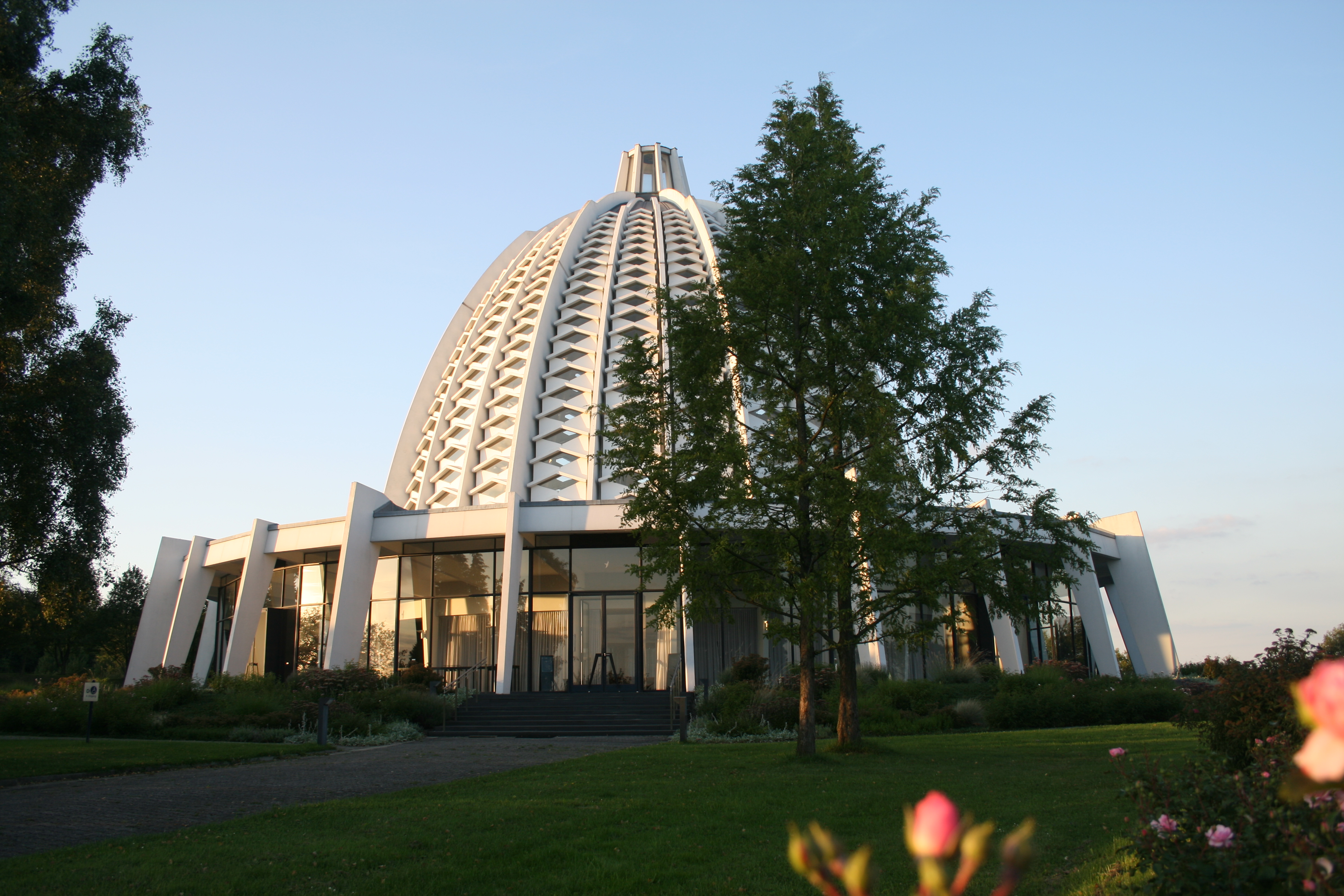
Here are a couple of views of the outside. (Photo courtesy of en.wikipedia.org)

House_of_Worship_Germany_2007

(Photo courtesy of http://www.bahai.us)

bahai-temple-germany

I was alone, but for two groundskeepers, who remained outside. My prayers for the world, for the US, and for so many family and friends, and the resulting meditation, were taking me into another dimension, in this hot, but blessed afternoon. Of course, the inside of the temple was airy and comfortable. The photo below was taken with many people present. On that day, however, I had the auditorium to myself. (Photo courtesy of http://www.bahai.com)

Baha'i House of Worship, Langenhain-Interior

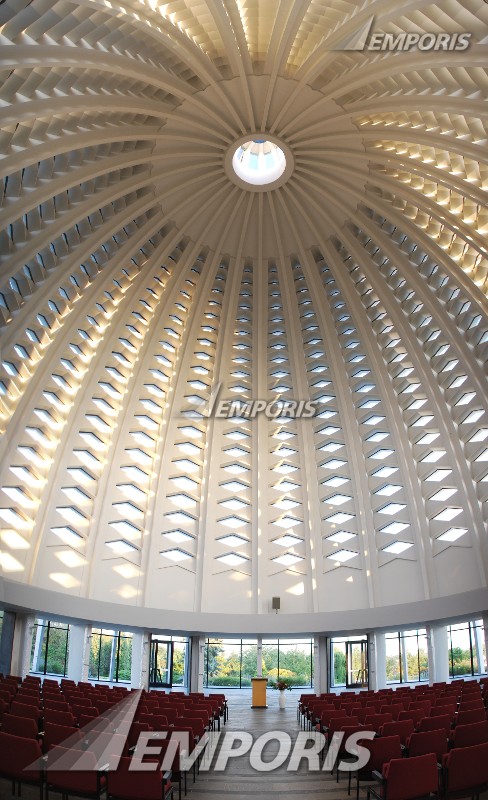
What really inspired me was gazing upward, at the dome light, which has the Arabic inscription, “God is the Most Glorious”. (Photo courtesy of http://www.emporis.com)

Baha'iHouse of Worship, Frankfurt-Interior dome

The House of Worship was completed and opened in July, 1954, a scant nine years after the end of World War II, and became a symbol of Germany’s continued recovery and of its re-entry into the family of nations. People all over the country and all over the continent, are proud of this unifying symbol. None are prouder, though, than the villagers of Langenhain, who told me on their own, of the Golden Anniversary of the House’s opening. It was held July 6, six days after I actually left Europe. Hundreds of people came from all over Europe, for the celebratory picnic.

There to greet everyone was the House of Worship’s caretaker, Erick, who gladly shared coffee and pastry with me, after my prayers were finished. His wife then took this photo, the only one that survived the file corruption of two weeks ago, and which now is the Home Photo on my Twitter page.

Baha'i House of Worship Visitors' Center, Langenhain, DE

Recharged, and renewed spiritually, I went back to Frankfurt, to Pension Alpha and another round of World Cup matches. Dinner at a Fujien-style Chinese restaurant seemed only fitting, after spending the day contemplating the Oneness of Mankind.

Miasma

8

September 2, 2014, Prescott- I will do my level best, in an hour or two, to write about Heidelberg.  It’s a storybook town, which has also given the world a great deal.

Right now, though, my heart is heavy. I have read a lot of thoughts expressed by someone about whom I have come to care deeply. I have thought a lot about that person, and about others, for whom I also have come to care deeply, over the past few days. Our lives follow different paths, and are unlikely to naturally converge anywhere other than through our online exchanges of ideas. It’s similar with my real time friends. Each of us has either a full schedule, or is top heavy with self-initiated projects and activities. Being semi-retired, in terms of employment, I am in the latter category.

My heart is heavy, not because of any of the people for whom I care. The weight comes from knowing that the world, right now, is divided, in terms of leadership, between those who hate and would ravage their fellow people and those who are indifferent, dithering and self-absorbed. It seems that only the Pope in Rome, and a smattering of Heads of State, have not subscribed to one or the other of the above categories.
My heart is heavy because of the lack of concern for the common man. It has always been so, however. The Bystander Effect is well-documented, throughout history. Now, however, we see the Bystander Effect emanating from the highest levels of power. Abraham Lincoln, tired as he was and conventional as his thinking often was, nevertheless recognized his power to do what was best for the common man, and for posterity- and he pulled himself together, left what passed for his comfort zone, and did it.

Franklin D. Roosevelt overcame his antipathy towards Jews, his relative apathy towards Blacks and poor Whites and the self-loathing that stemmed from his crippling disease- and did what was best for humanity, both at home and abroad.

Winston Churchill snapped out of his fear-driven depression, scrapped his written letter of surrender to Hitler, and sent the British Lion roaring, alongside the American Eagle, into the maw of German power, rendering it useless.

We are in the year of the miasma- a river of blood in the Levant and Mesopotamia, a swelling of viruses in West Africa, a puffed-up would-be Czar for our times testing the resolve of his neighbours, whilst projecting his self-image of invincibility upon the world. The response of our leaders is to dither, to equivocate, and to project an image of indifference.

Perhaps my heart is heaviest, though, when I read, see or hear hateful comments by adults directed towards children. There seem to be a spate of these lately. I’m not talking about overwhelmed, put-upon mothers, who need, and richly deserve, relief. I am not talking about people trying to impart character to impressionable souls, occasionally slipping and using coarse language. I am talking about those who have forgotten what it was like to be a child, who are so wrapped up in their own experiences, casual relationships, accumulation of wealth, that any intrusion upon these is grounds for retribution. Those who would ban public breastfeeding, no matter how discrete; who would physically beat a child- or better yet, kill the “little beast”; those who yell at parents for bringing their children onto a public conveyance; those who gaze at images of little people being coerced into sexual activities- and worst of all, those who buy and sell children, for whatever nefarious purpose they have in mind. I could sloganeer, and shout that there is a “War on Children”. Hyperbole, though, does next to nothing to improve a situation, in the Age of the News Cycle.

No, we just need to recognize the overall miasma- The tide of indifference that runs through the arteries and veins of too many. We need to shout but one word: ENOUGH!; then we each begin to turn back the tide.

September Musings

9

September 1, 2014, Prescott-  This is one of two breaks from my travel-oriented posts, which I will post today.  I will also post two travel-oriented posts, so there is a balance.

Today, being Labor Day in the U.S., I found there was much going on down in Courthouse Square, mainly in the form of vendors selling food, music and art.  I picked up a pair of moccasins, at a bargain price, which would have made my late friend, Mike, very proud.  I also had salad and pizza at Bill’s, one of six excellent pizzerias within walking distance of my home.

As always happens on the first of the month, I thought out what was ahead, in September.  My mother, and two siblings, have birthdays this month, and the 30th would have been Penny’s 60th birthday.  I have a Red Cross walk, in Tempe, this coming weekend.  There are anniversaries (passages of YEARS, not MONTHS or WEEKS) coming on the 13th, followed by Empty Bowls on the 14th.  A business convention will find me in Salt Lake City on Sept. 18-20th, with a day’s drive on either end.   The following weekend is- unbooked.

Here in the north, September brings the autumnal equinox, a symbol of harvest, of fruition.  Down Under, there is the vernal equinox, a symbol of beginnings, of new life.  I tend to begin to take stock of things in September, and even more so in November/ December, the time of both my personal new year, and of the Gregorian end of year.  A year ago, I was re-learning what love was and was not.  Now, I am under no illusions and live behind no veils.  The love of my life is still very present with me, spiritually.  It is not necessary for me to seek anyone else.  That’s a good thing, because I am, at 63, no one else’s idea of a bargain.

Next month, I will be meeting my son and his ship, in a transitory port, and sailing with them to their home port. This will be my longest time in a sailing vessel, but my spatial needs have always been minimal, so it’ll go well.  September and its little sister, October, always seem to bring surprises with them, so maybe a whale or two will show up alongside the bow of the ship.

Reflection Time

4

 August 16, 2014, Prescott- I will continue with my posts on Europe tomorrow.  They are sparsely read, anyway, so this is a good time to switch gears.

As always happens when there are events that hit close to home, I’ve done a lot of reflecting this week.  Tonight, I watched a film about the human brain.  That’s all I’ll say about the film, for now.  I have also done a lot of thinking about which direction my life should take.  That’s still up in the air.  These things are clear:

Prescott, and my current residence, are good places, and will suffice for now.  I have a lease that’s good until April, and my term as American Legion Post Chaplain runs until June.

Work has dried up, with the public schools, but I give it until December, to see which way the wind is blowing.  Small minds tend to call the shots, in many places, oddly enough, especially when it comes to forgiving small slights.

I have two commitments out of state, this Fall:  A business convention in Salt Lake City, in September and meeting my son in Honolulu, and possibly following him back to San Diego, in October.  Once those are finished, I will look to the area’s charter schools, for a fresh start with substituting or helping out in a classroom.

The other night, I had a vision of what I might do next.  With the world the way it is, I’m not going to get too specific, but it involves a slogan, for which I could get a trademark.  I could use this to do some good, and follow my heart.

These things have been running through my mind, the past couple of days.  I have a lot of good friends, of all ages and both genders, and I know the true ones will be on my side.  I’m not concerned about a relationship.  At my age, and income level, it is secondary, anyway.  I want, most of all, though, to do more good, on  a wider level, than attending meetings and being on someone’s “IGNORE” list.  It’ll get done, because I was not left here to stagnate.

Thanks for reading this.

An Eastward Homage, Day 11: Morning in Rouen, Afternoon at Utah Beach

8

D-Day was the beginning of a hard deliverance for the French people.  We, the Allies, landed on the beaches of northern Normandy, on June 6, 1944.  So, June 6, 2014, some 32 years after Penny and I were married, and 70 years after the combined weight of the U.S., Canadian, Free French, British and Anzac forces were first brought to bear on the German/Vichy French Army, was a very big deal.

I had no  concrete plan to join in the observance, other than to get on a train from Rouen to Caen, thence to Bayeux, then to St. Mere Eglise, or as close as I could to Utah Beach, or Omaha Beach.  I brought money to kick in for a taxi, in any case.

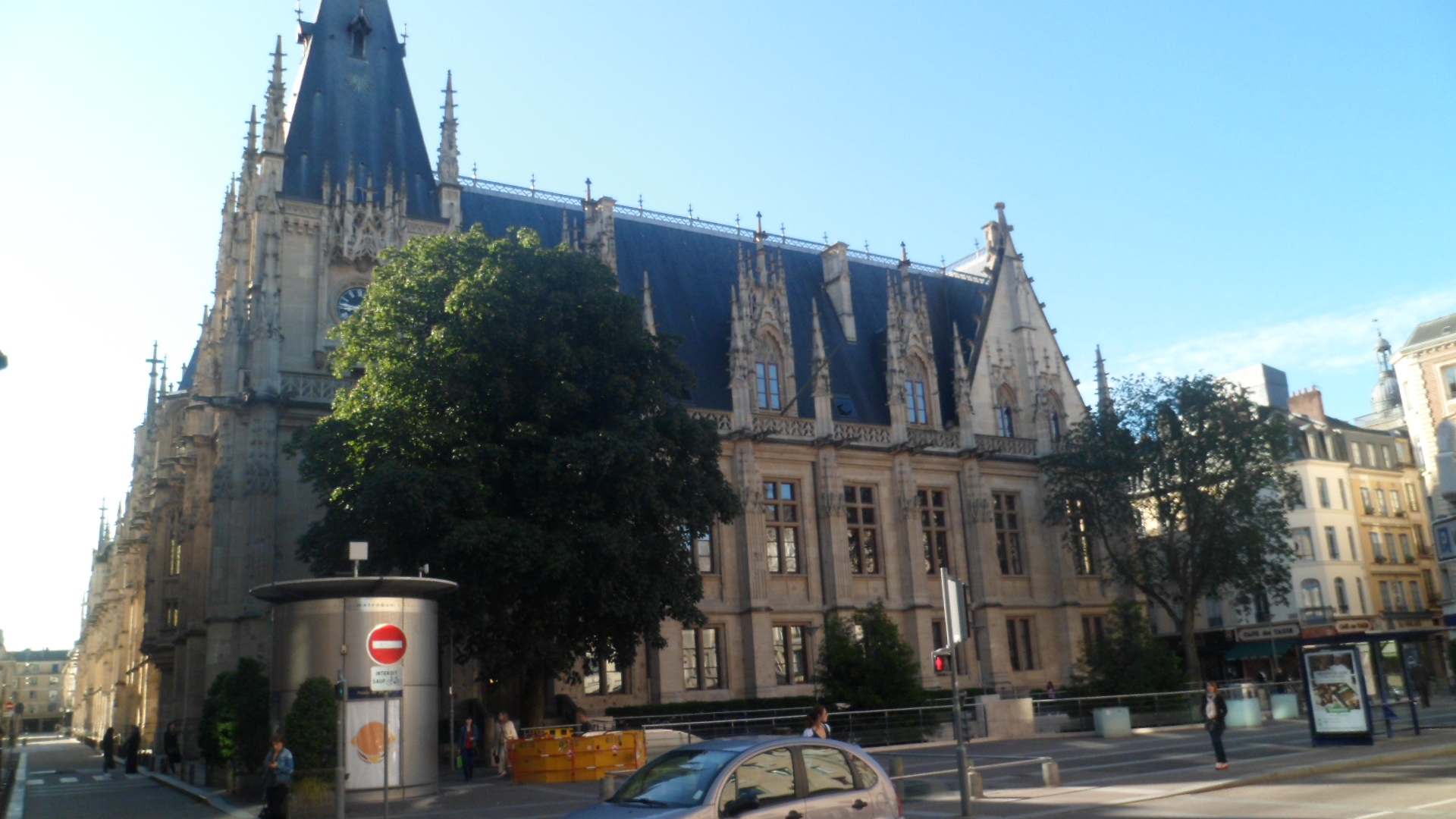
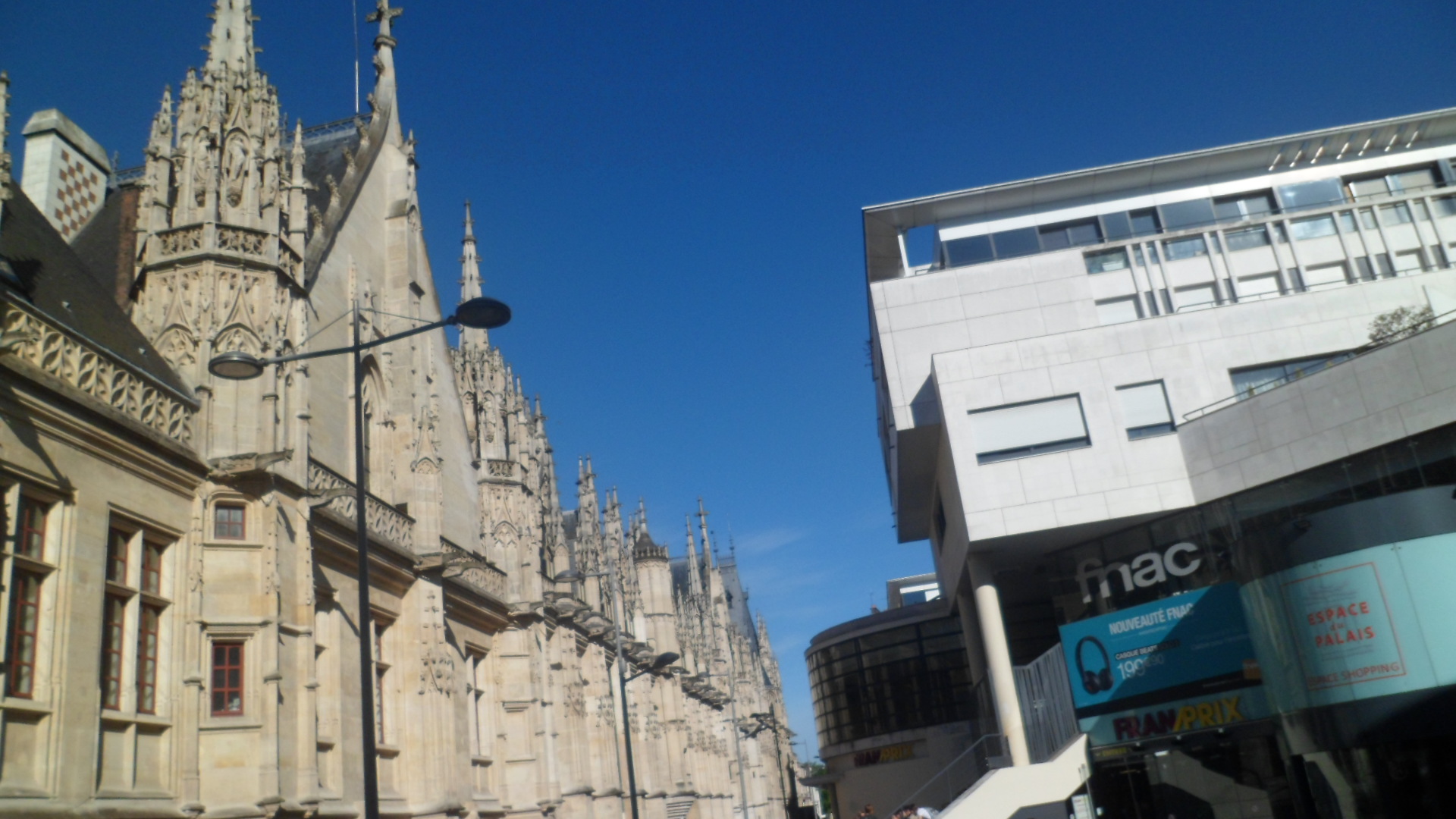
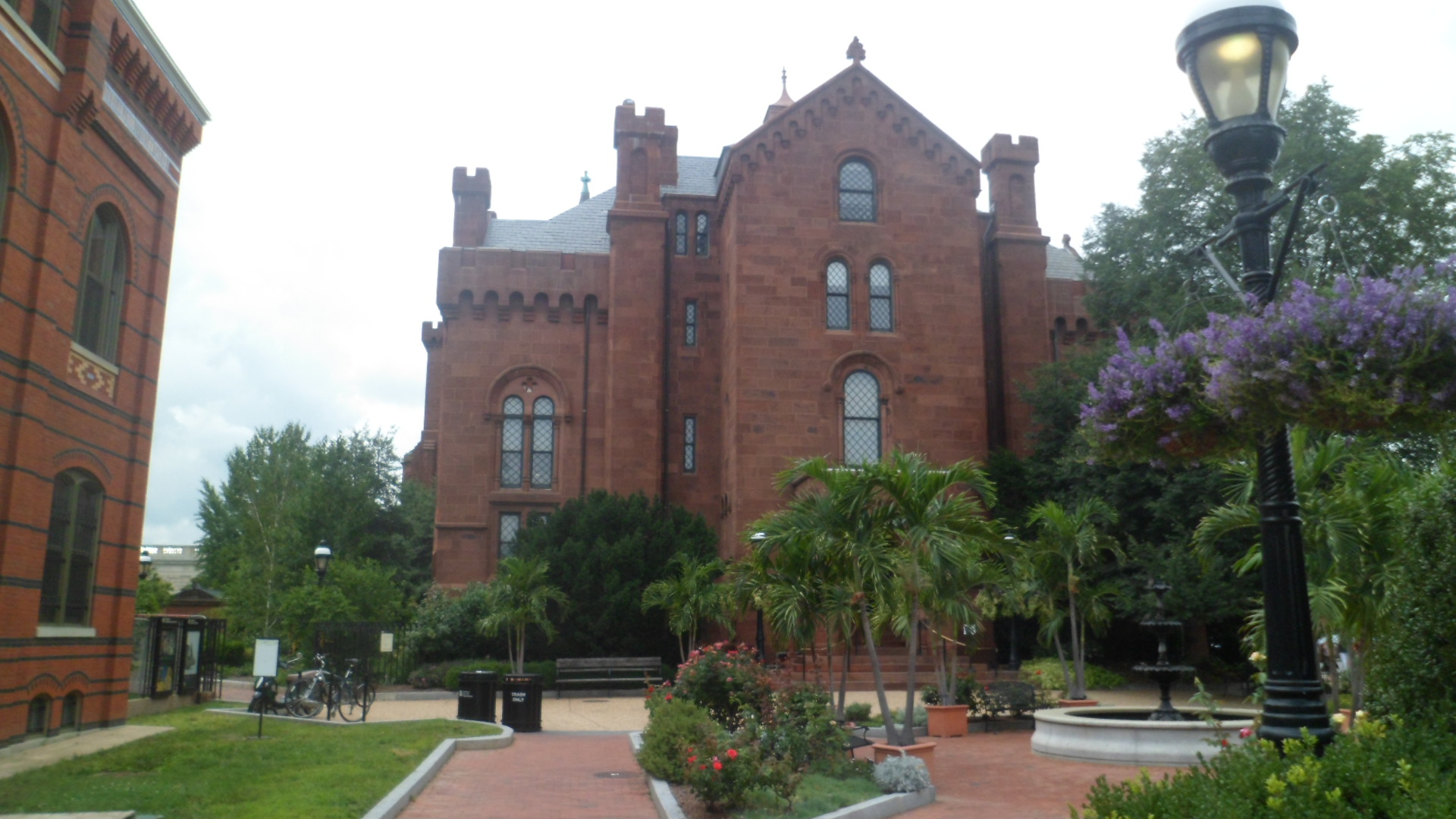
Before hopping the train to Caen, I sauntered around Rouen’s Palais de Justice for a few morning stretches.  By ANY stretch, this thing is huge.
SAM_9669
SAM_9675
SAM_9681

It is still used for legal matters, in the Department de Seine-Maritime.  Having looked at my watch, though, I knew it was train time.

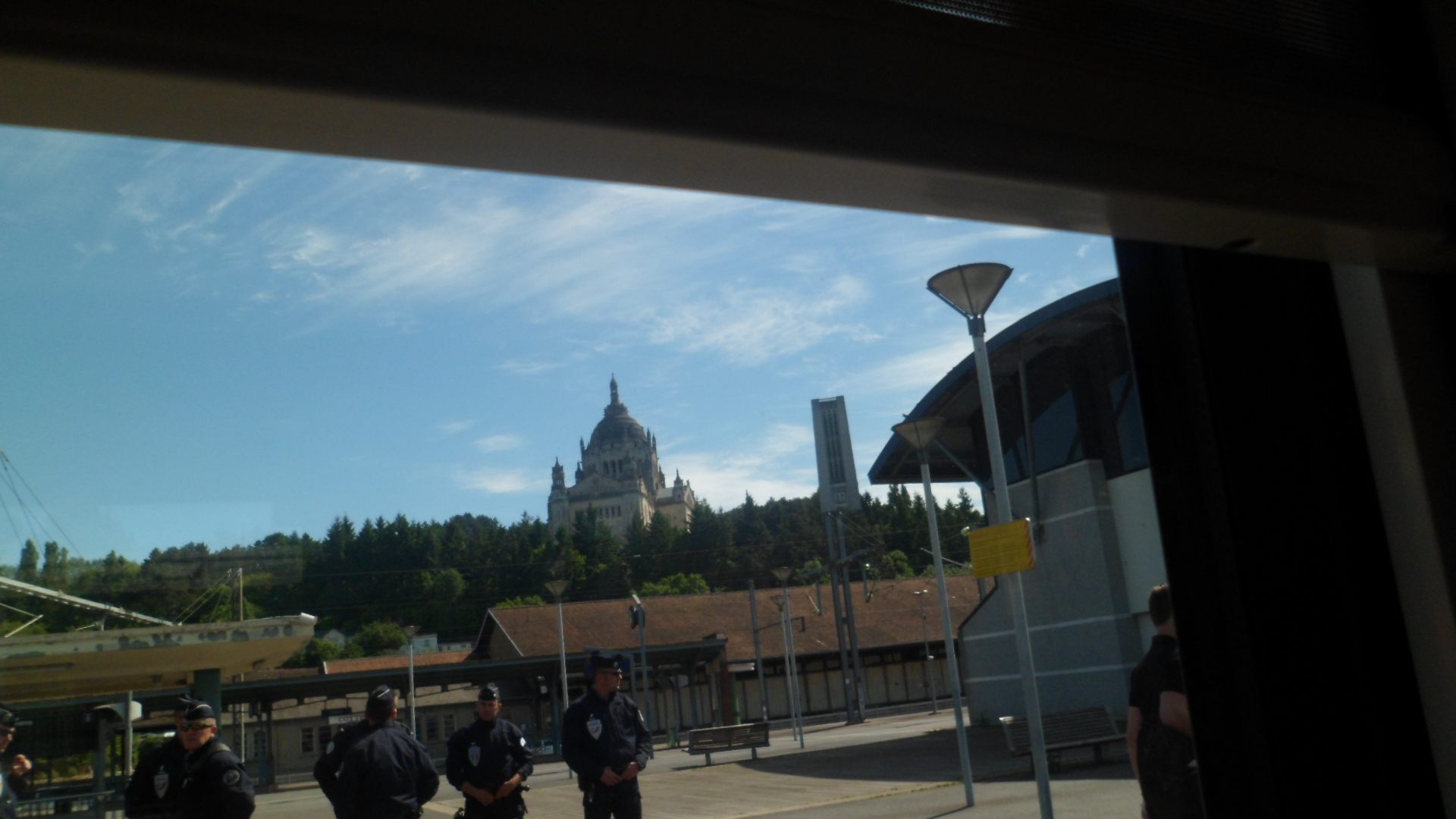
Along the way to Caen, we passed the lovely little town of Lisieux.  The river, of course, is the Seine.

SAM_9682

I met a Seattle-based couple who are researching for a book the wife is writing on the experiences of living World War II veterans.  They were headed to Omaha Beach.  I had decided to go to Utah Beach, as that would give me the best chance to get to St. Mere Eglise, afterward.

We arrived in Caen, and found this scene.

SAM_9683

The French Army was on full alert, as so many dignitaries were out and about, for the commemoration. We were not bothered at all, and got on a train that would get us to Bayeux.  A young lady named Anne, an American, met us on board the train.  Once she heard I was headed for Utah Beach, she became my friend for the day, and we got along most agreeably.  She gave me a few pointers on photography, so my shots ended up clearer than they had been earlier.  She turned out to be  embedded in a military unit, elsewhere in Europe.

This is near the train station at Bayeux, where we got off.  Bayeux is also famous for the tapestry that shows William the Conqueror, but today was not to be a day for examining that great work of art.

SAM_9686

Anne and I split a taxi fare to Utah Beach. Here are some things we saw, en route. Below, is Carentan.

SAM_9688

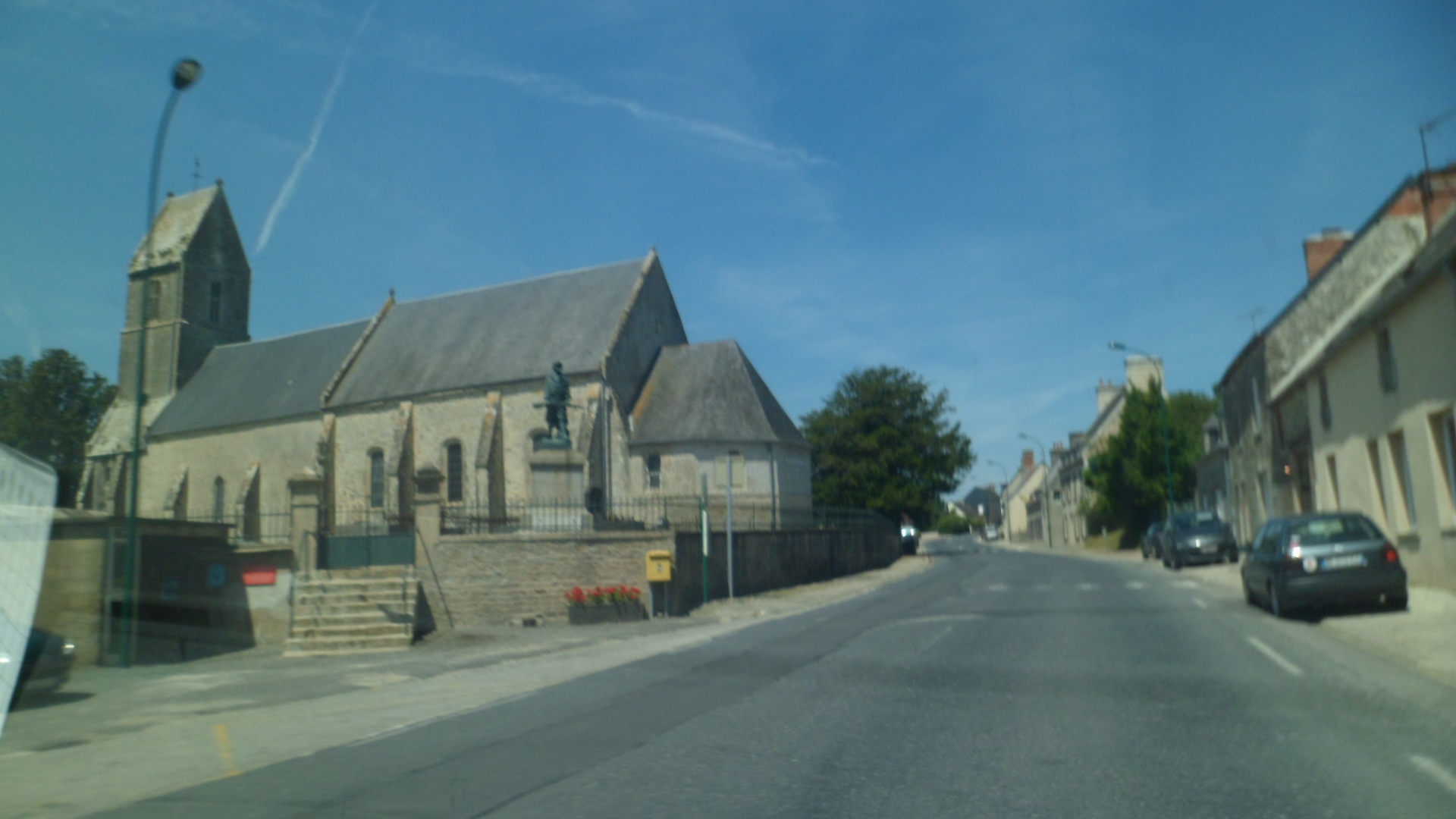
Next, being blocked from going to St. Mere Eglise, we went to St. Marie de Mont.  Here a few shots of that nice little town, before we arrived at Utah Beach.  I will show you other shots that I took here, on our return trip to Carentan, after posting the Utah Beach photos.

First, though, here is the approach to St. Marie de Mont, from the south.

SAM_9689

Next, is the center of town.

SAM_9690

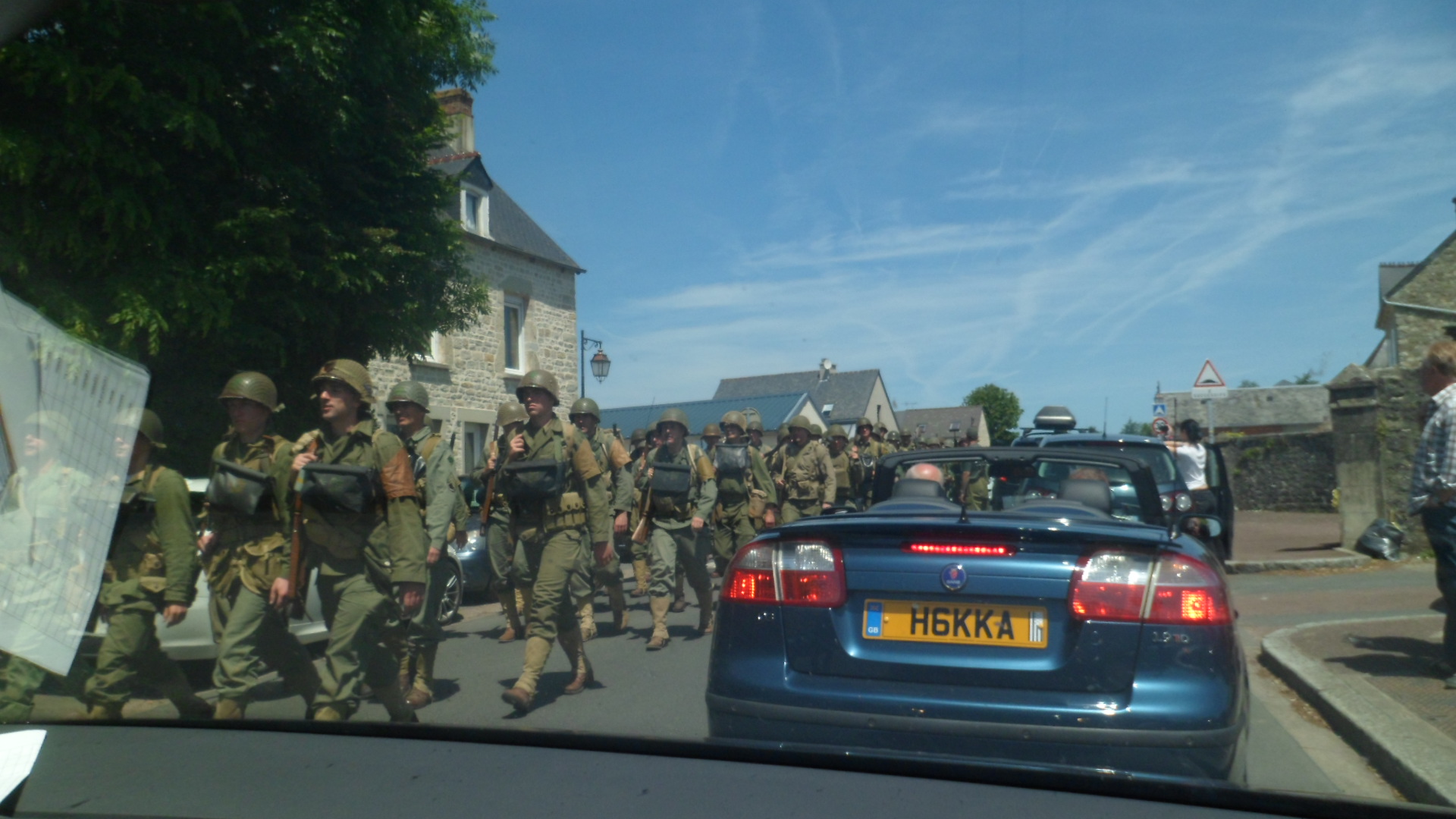
Finally, the 101st Airborne, in loose parade mode.

SAM_9692

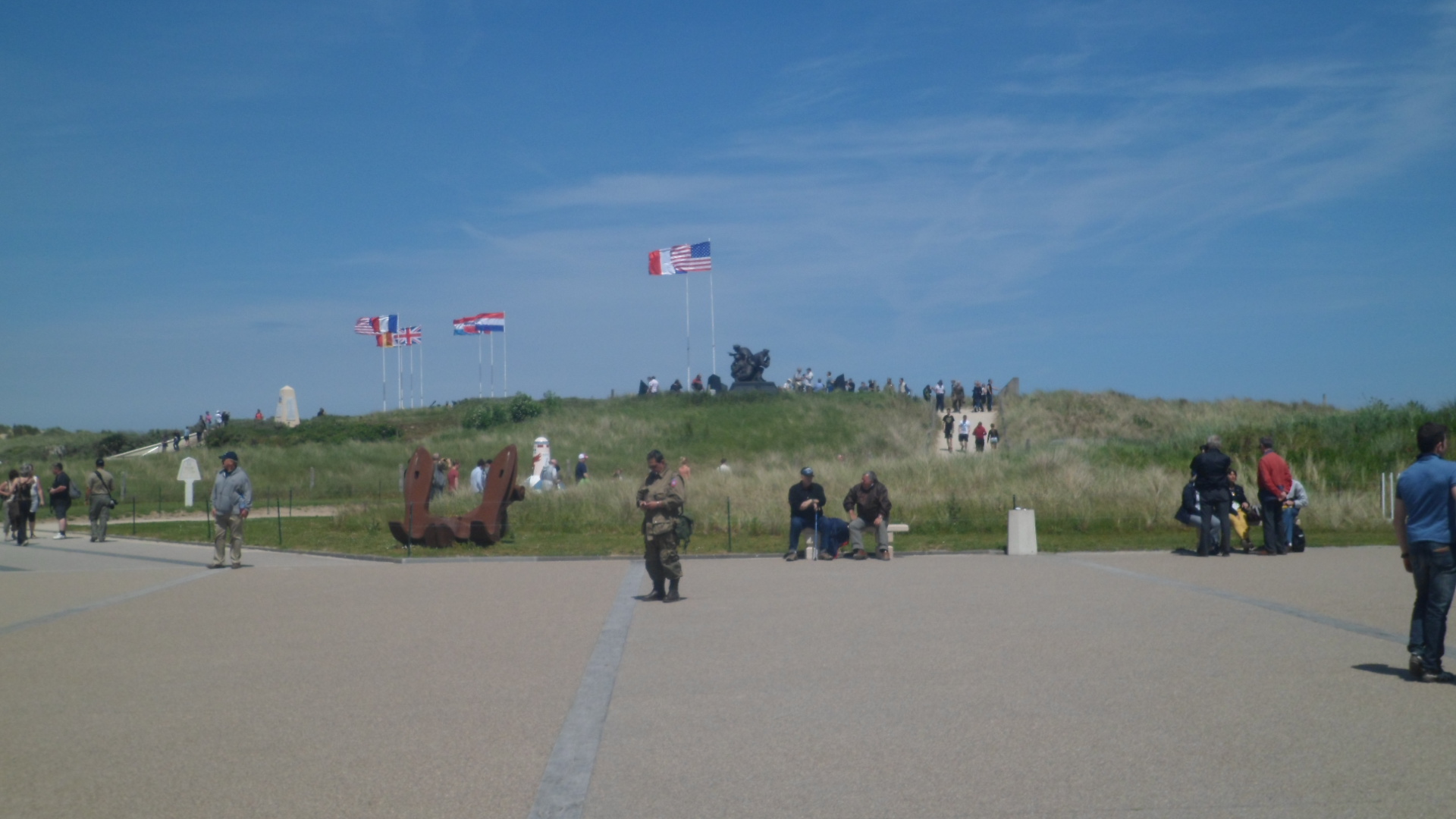
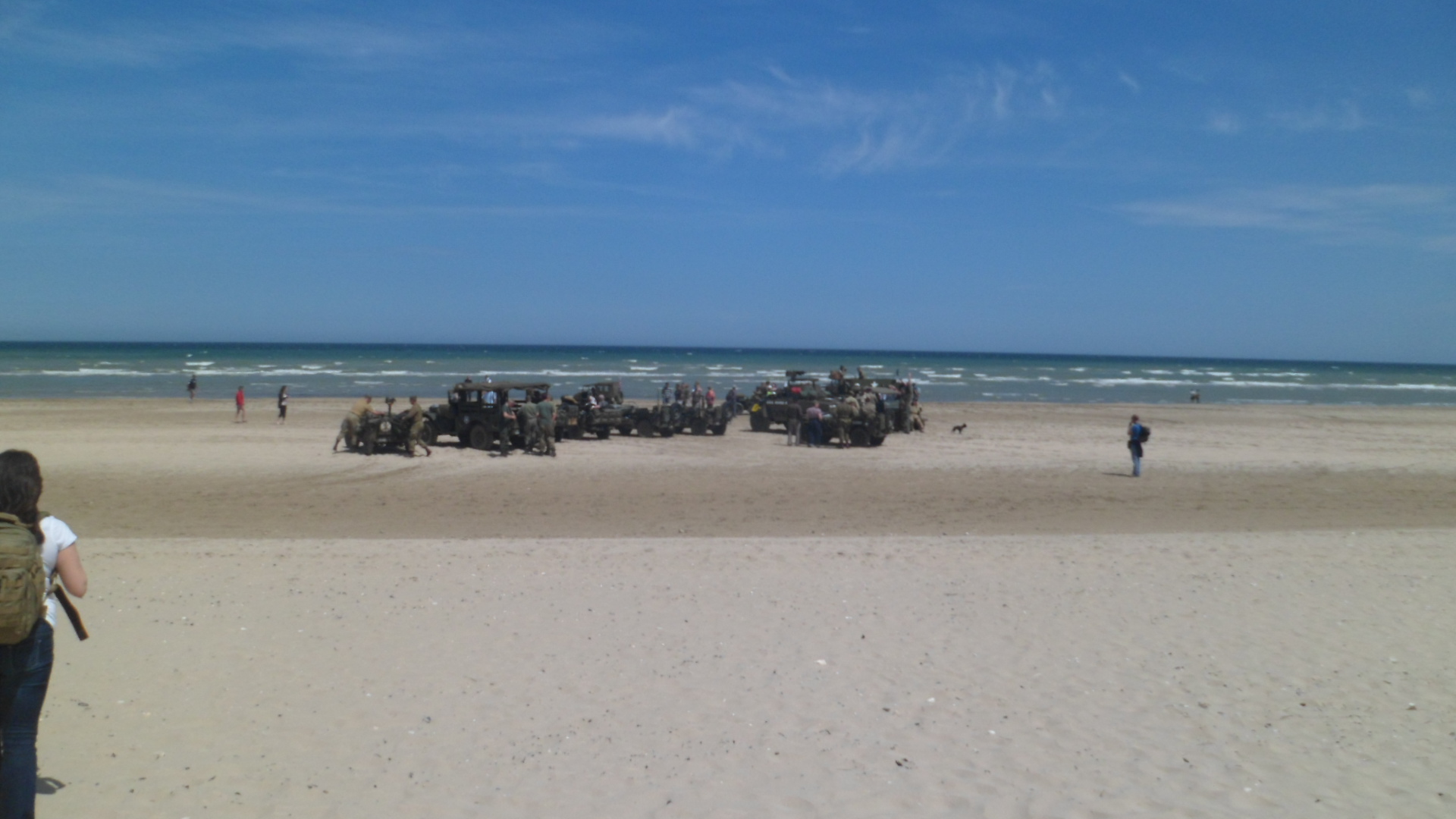
We got to Utah Beach, in plenty of time. This is just west of the Utah Beach Visitors Center.

SAM_9696

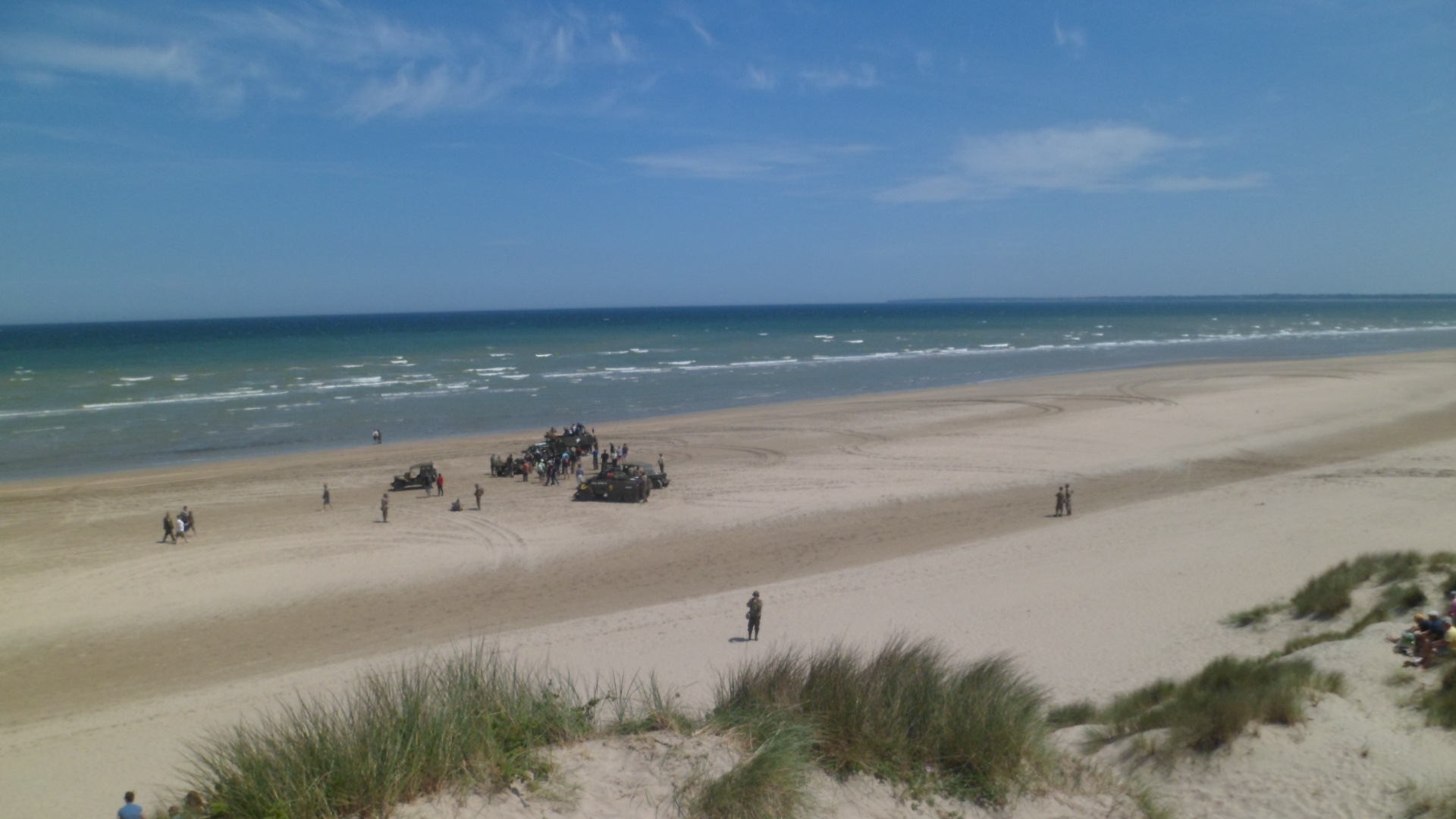
The tide was, of course, out, so we had a good scene for the memorial activity.

SAM_9707

I used the occasion to honour a Prescott resident who was a commander in the U. S. Army, on that fateful day. He is still very much alive, and I’m told he was delighted to see this photograph.

SAM_9709

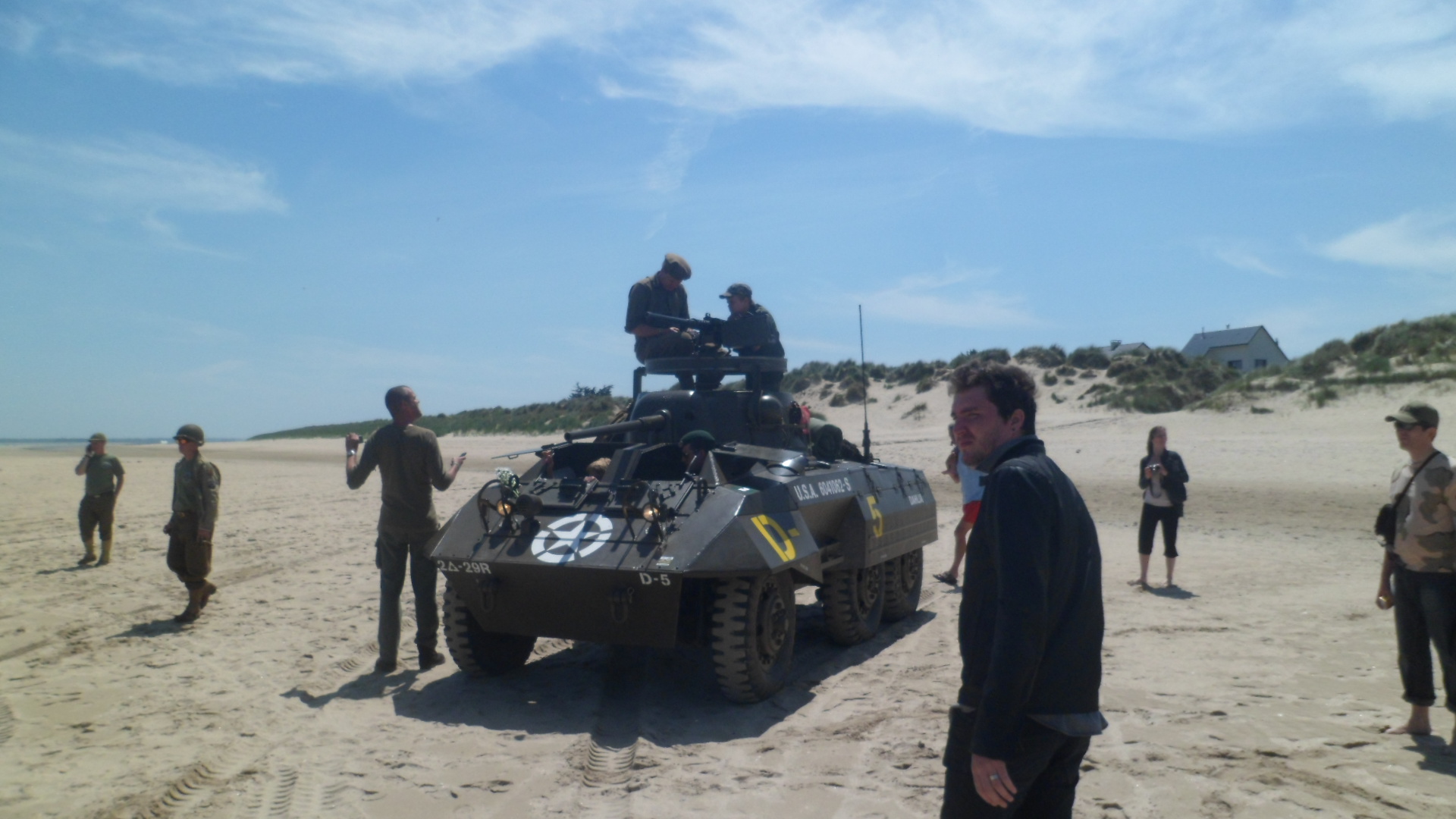
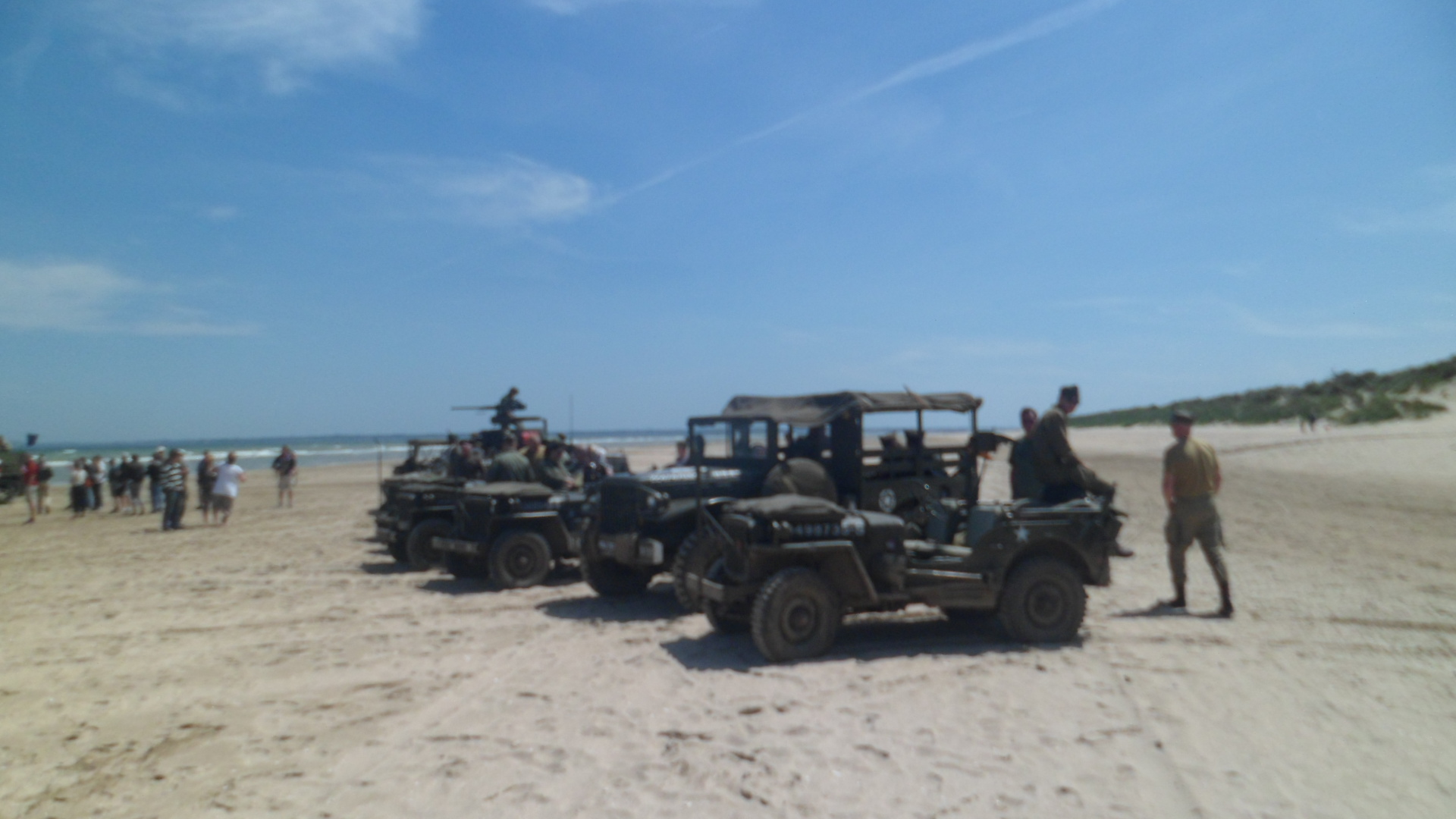
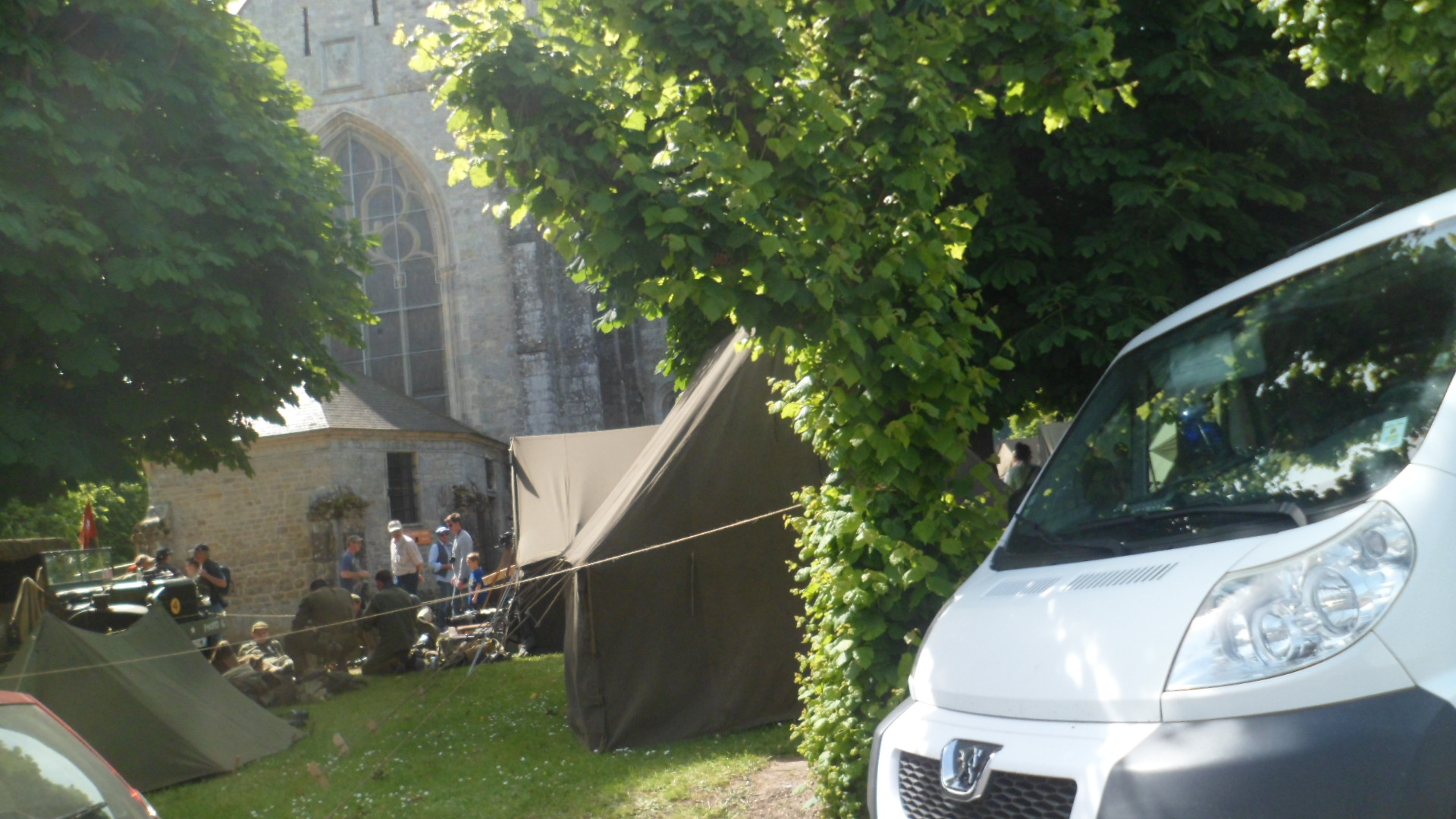
The re-enactors were getting set, as we walked about the beach.SAM_9715

SAM_9745

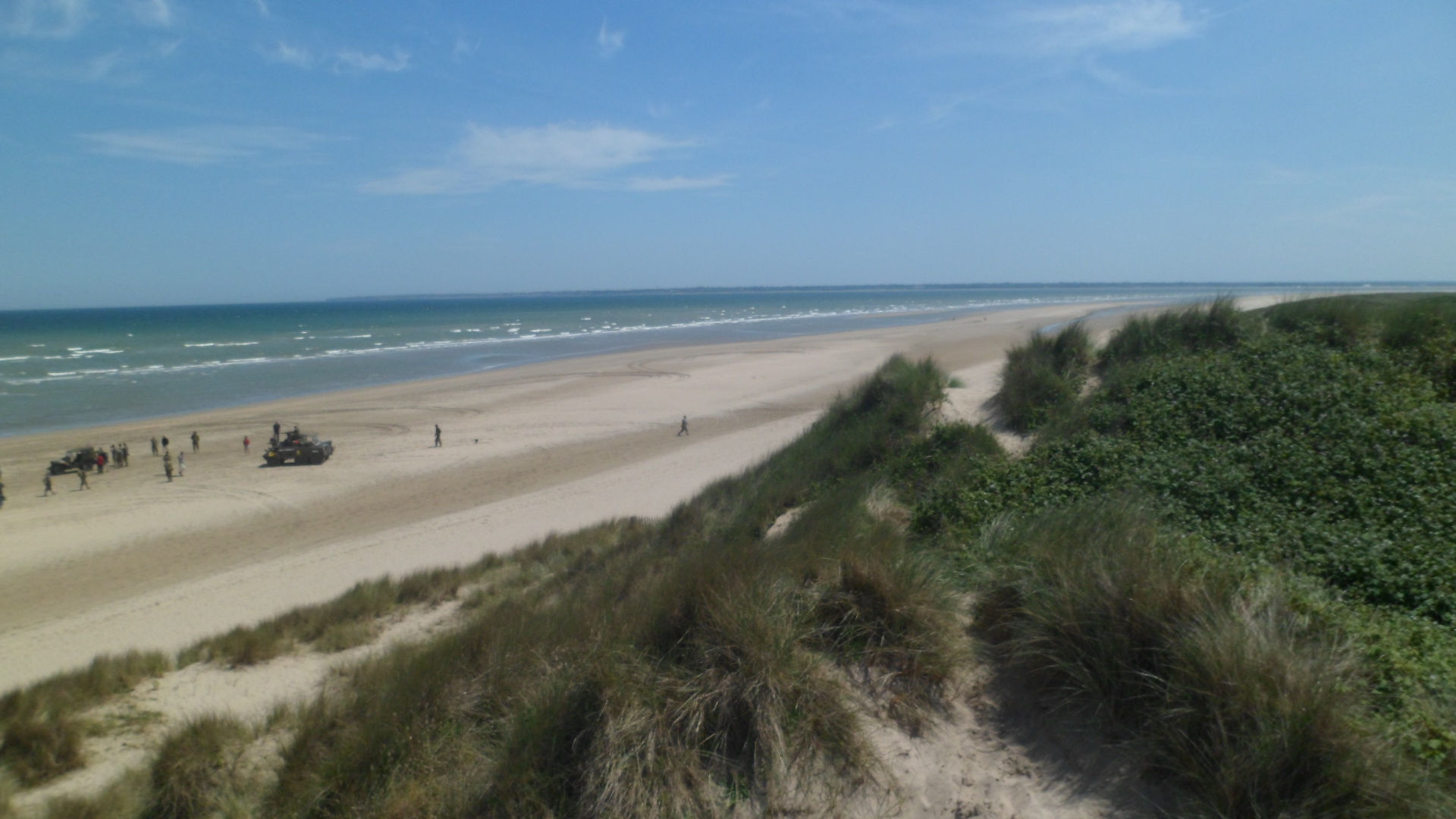
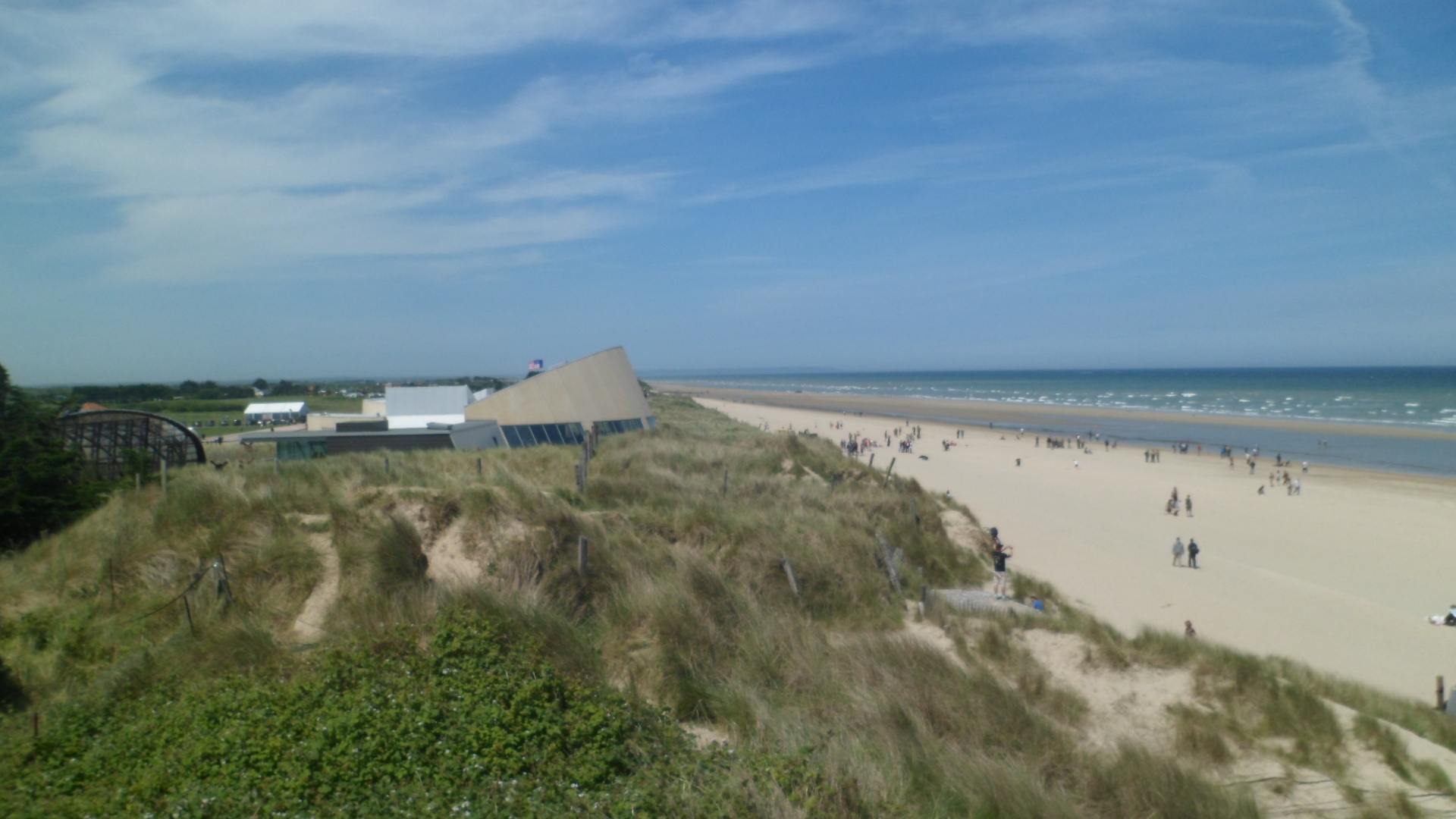
We also climbed the dunes, to see what the Allies were up against.

SAM_9742
SAM_9728
SAM_9732

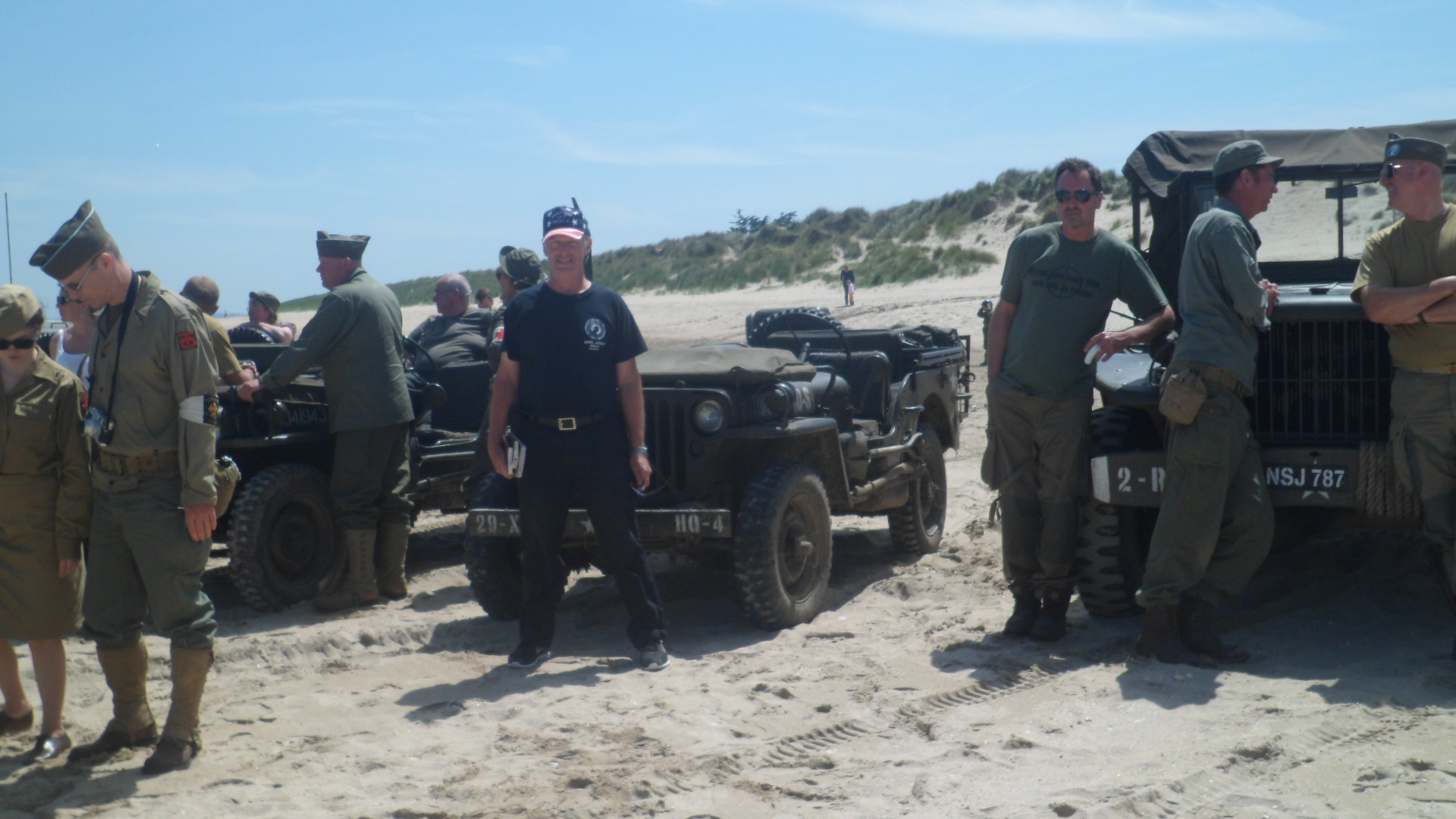
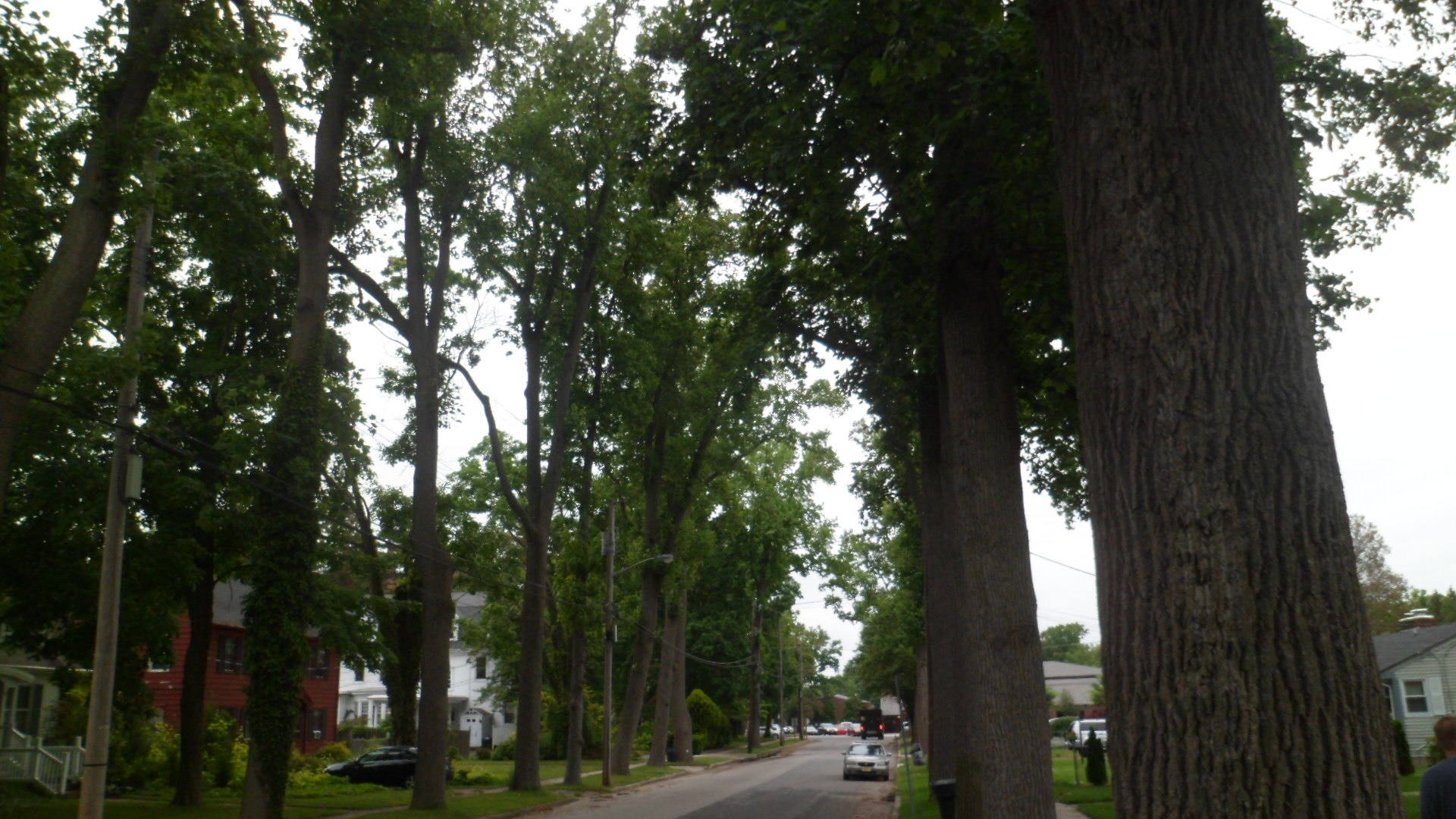
I ended up in a few scenes. This is the second time in my life that I’ve been this close to a tank. The first time was in Basic Training, in 1969.
SAM_9698

All colours were flying, at one place or another.SAM_9699

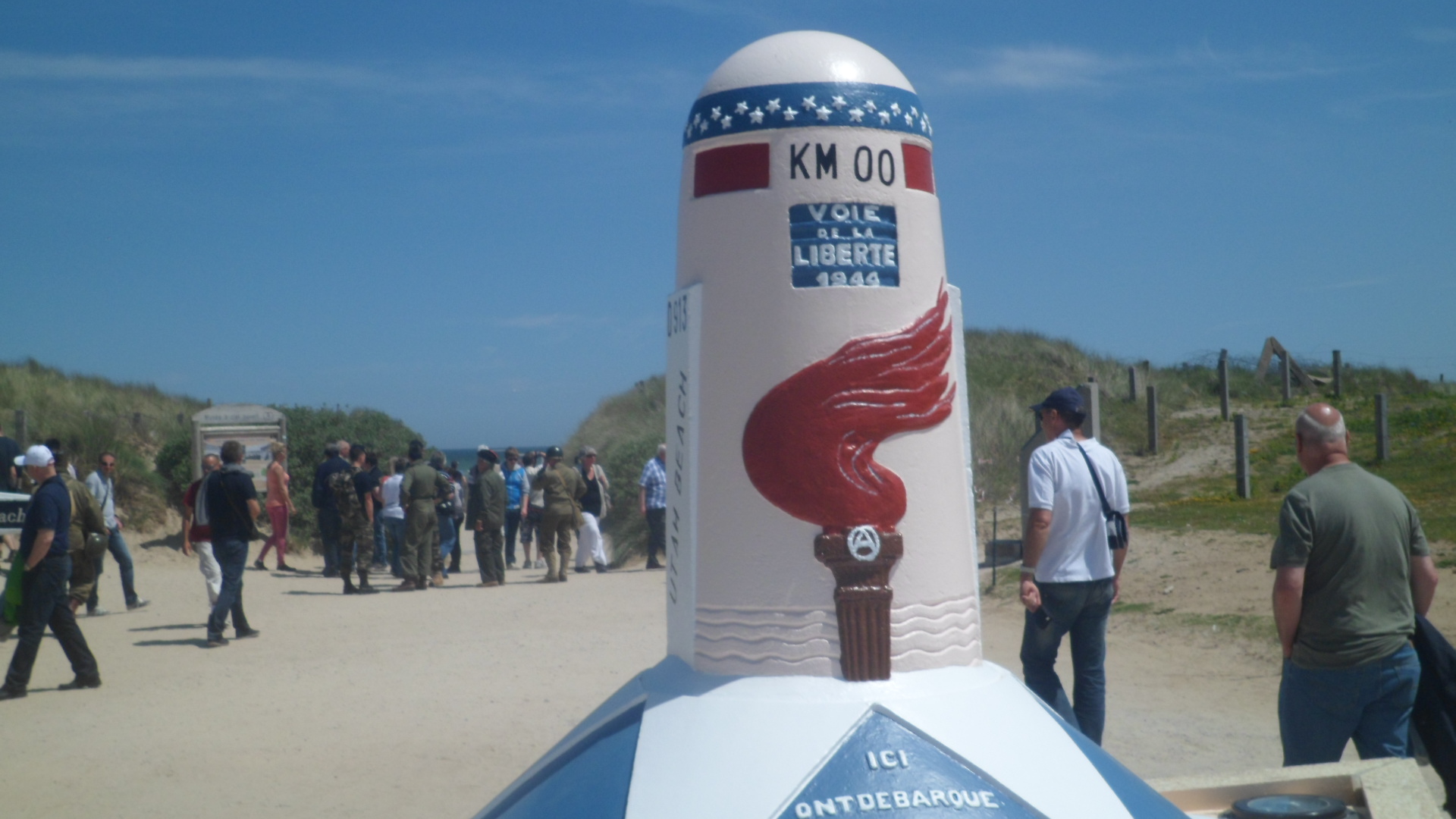
Here is a reminder that “Freedom isn’t free.”

SAM_9700
SAM_9701

This was a German bunker, which the Allies had to approach, and overcome.

SAM_9725

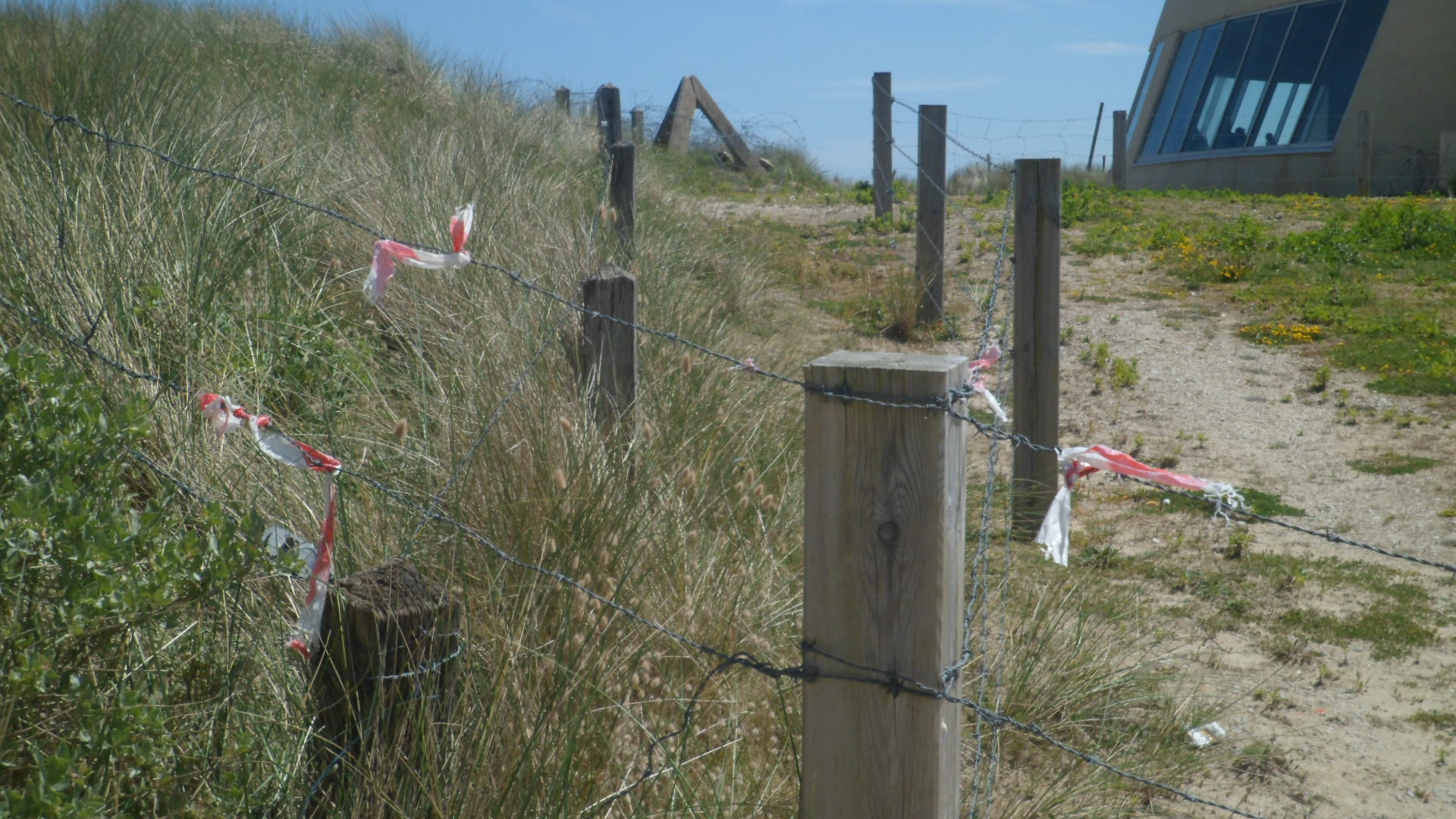
Here are some reminders of the resilience of sand dunes.
SAM_9738
SAM_9739

Anne was watching the gathered force.
SAM_9744

I got in the middle of it all, just one more time.

SAM_9746

Then, we headed up for lunch, to call a taxi to Carentan, and to thank the motorcyclists of Europe, for all they do to keep the memory alive.

SAM_9750

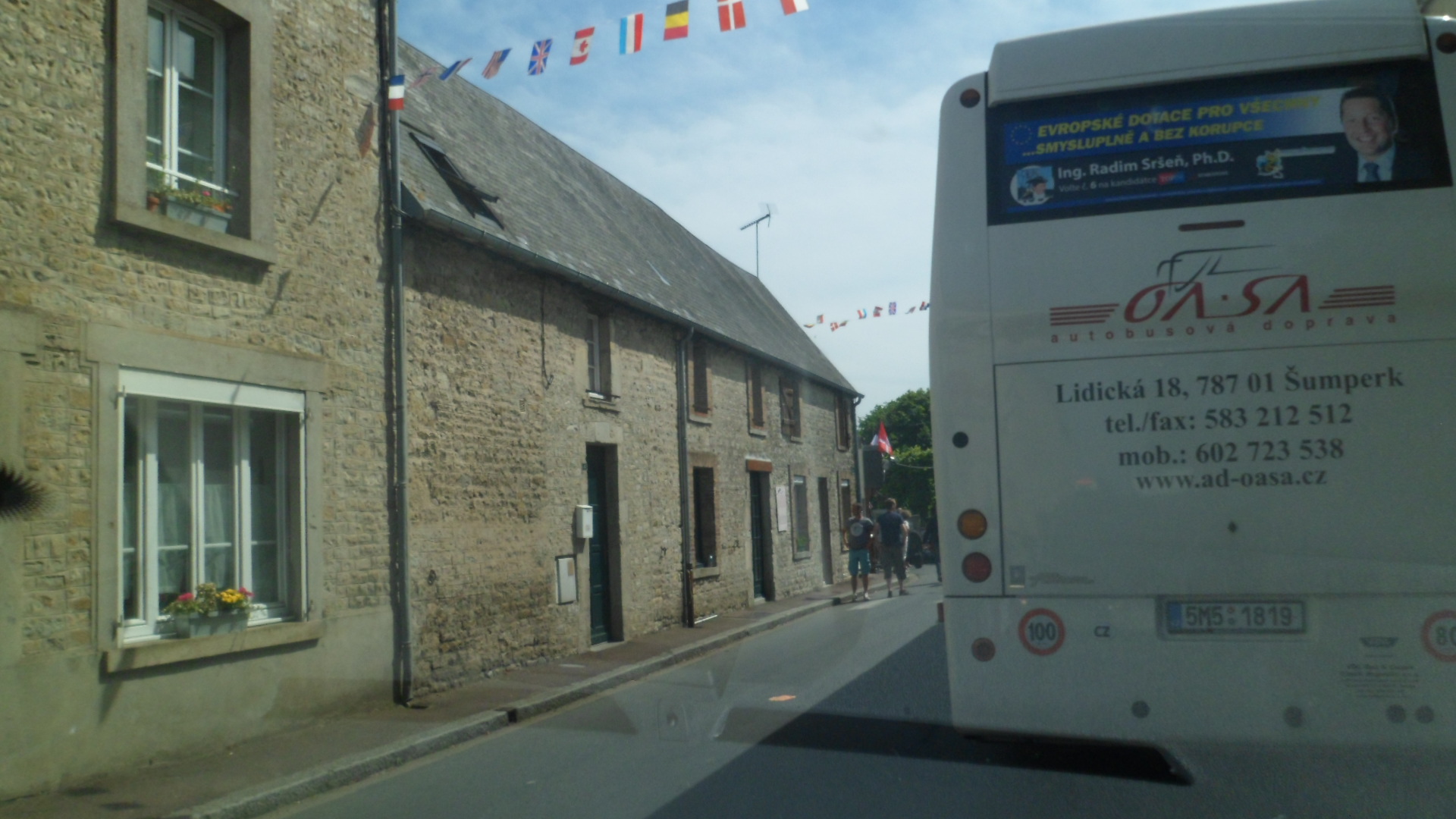
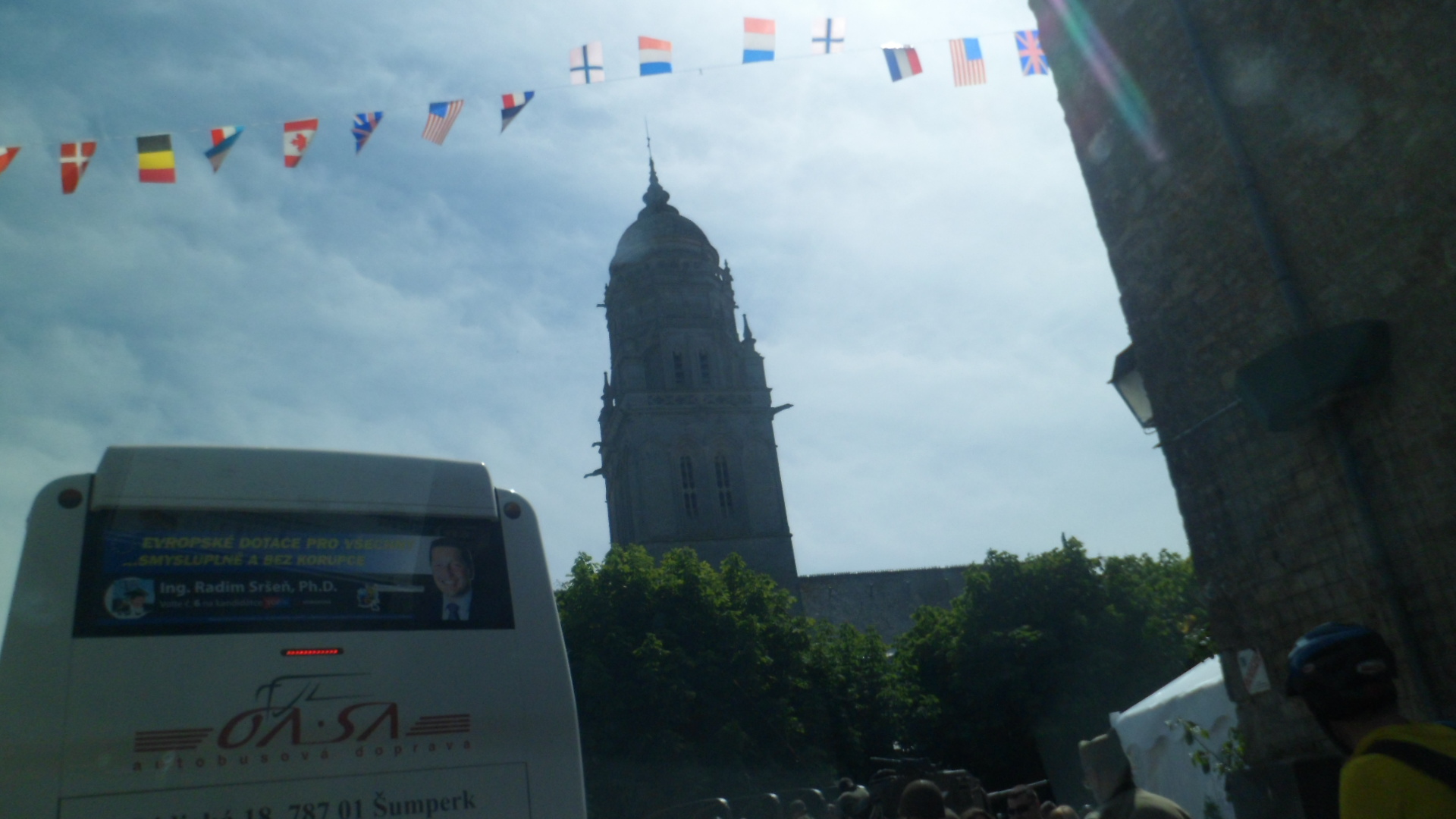
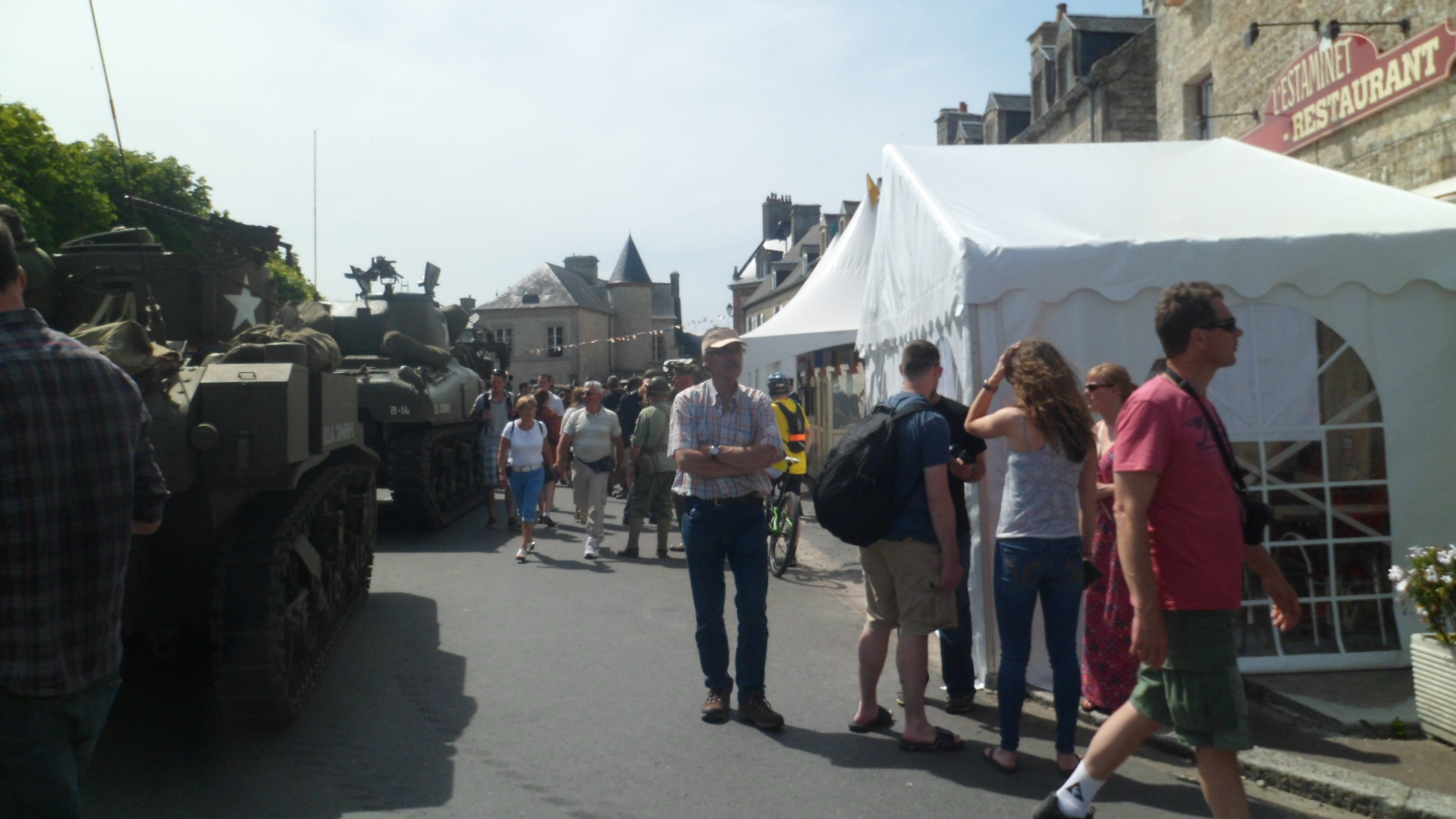
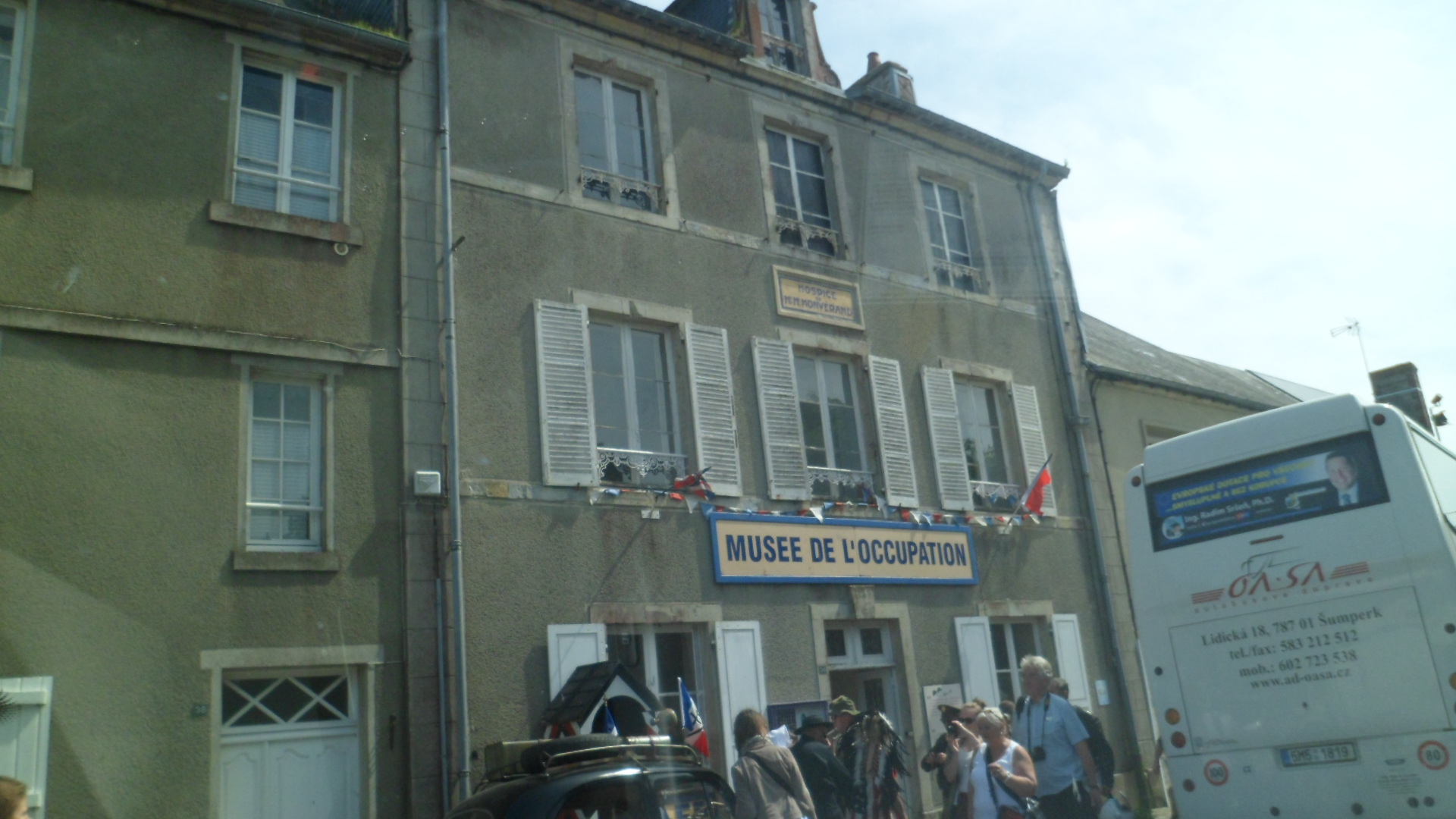
After twenty minutes or so, a taxi came to take us to Carentan, and our train back to the east of Normandy. Here a couple of scenes from St. Marie de Mont, on the return trip. Note that the tour bus ahead of us is from Czech Republic. They were among the first to suffer Hitler’s rage.

SAM_9751
SAM_9752
SAM_9753
SAM_9755
SAM_9756
SAM_9757

Above is one of the ways the French remind us that this was no invented story, but a true, worldwide horror.  No amount of revisonism or faded memory can change what actually happened.

NEXT:  Rouen’s Vieux Marche, and Jeanne d’Arc’s legacy

An Eastward Homage, Day 10: Paris in the Rear View Mirror

14

June 5, 2014- I left my luggage downstairs at the Hotel Monte Carlo, so the ladies could get about their business.  There are two types of chambermaids in Europe:  Those who blaze through the rooms like the White Tornado of 1960’s American television, having everyone’s room clean by check-out time; and those who pick and choose which rooms on which to focus, maybe getting them all done by quitting time, or not.  With one exception, I had the first kind working on my rooms.  The Monte Carlo was definitely of the first order. There are also two types of desk clerks at these same hotels.  The first kind are semi-formal, but professional, glad but not overjoyed at your arrival and helpful with all reasonable requests.  The other are dour, have to work hard at even letting guests in the door and less than pleased at one’s approach to the counter.  The man who checked me in was of the second type, and never quite forgave me for having removed his door block, in my initial attempts to get in.  It took the Senegalese woman in the real estate office around the corner, calling and asking just what kind of hotel locks the door on their guests at 5 PM on a Sunday evening, to guarantee my entrance. That was about my only encounter with the French arrogance of legend.

The vast majority of people I met, in this land of my paternal ancestors, were more than gracious and very pleasant.  France is a very busy place these days.  There was a strike by SNCF workers, the entire time I was in the northwest of the country.  I was pretty much inured to coming to Paris, each time I traveled from one provincial city to another.  Despite that, though, people were focused and seemed to be working hard at whatever task was in front of them.

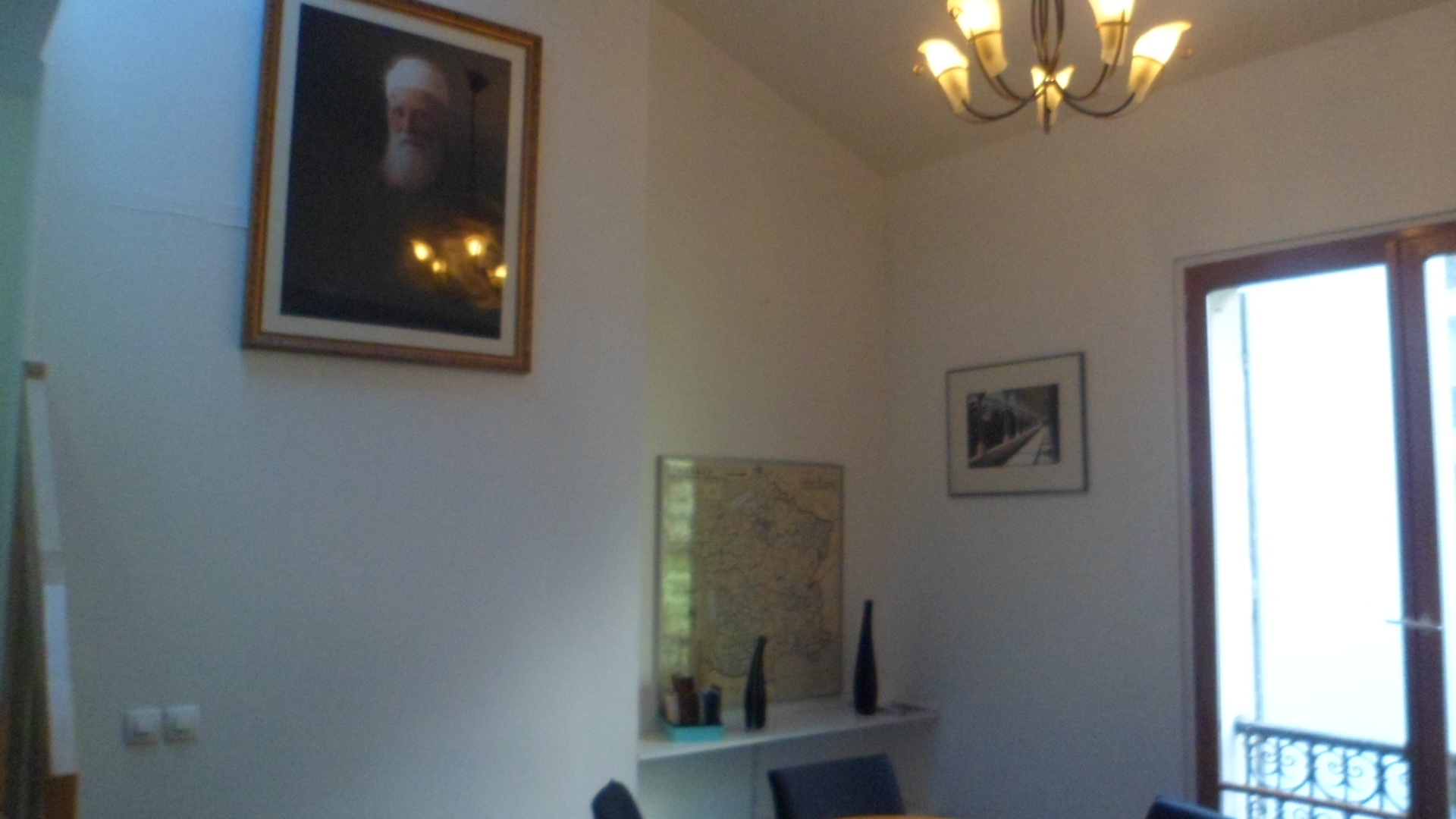
I spent the morning of this final day of my first extended visit to Paris, visiting a place that may well be one of the most important offices in the City of Light, in years to come:  The National Centre of the Baha’is of France, several blocks east-northeast of L’Arc de Triomphe.  I say this out of personal conviction, but anyone who is interested is more than welcome to investigate the Teachings of Baha’u’llah for themselves.  The unity of the human race, and independent investigation of all truth, are cornerstones of what we believe, and of what we do. Here are scenes of the immediate neighbourhood, the interior and the garden of the National Centre of the Baha’is of France.  The buildings below are not the Baha’i Centre.  The actual location is just to the right of the Red Cross, on Rue Pergolese.

SAM_9557
SAM_9567

Once inside and properly introduced to staff, a prayer room is available.

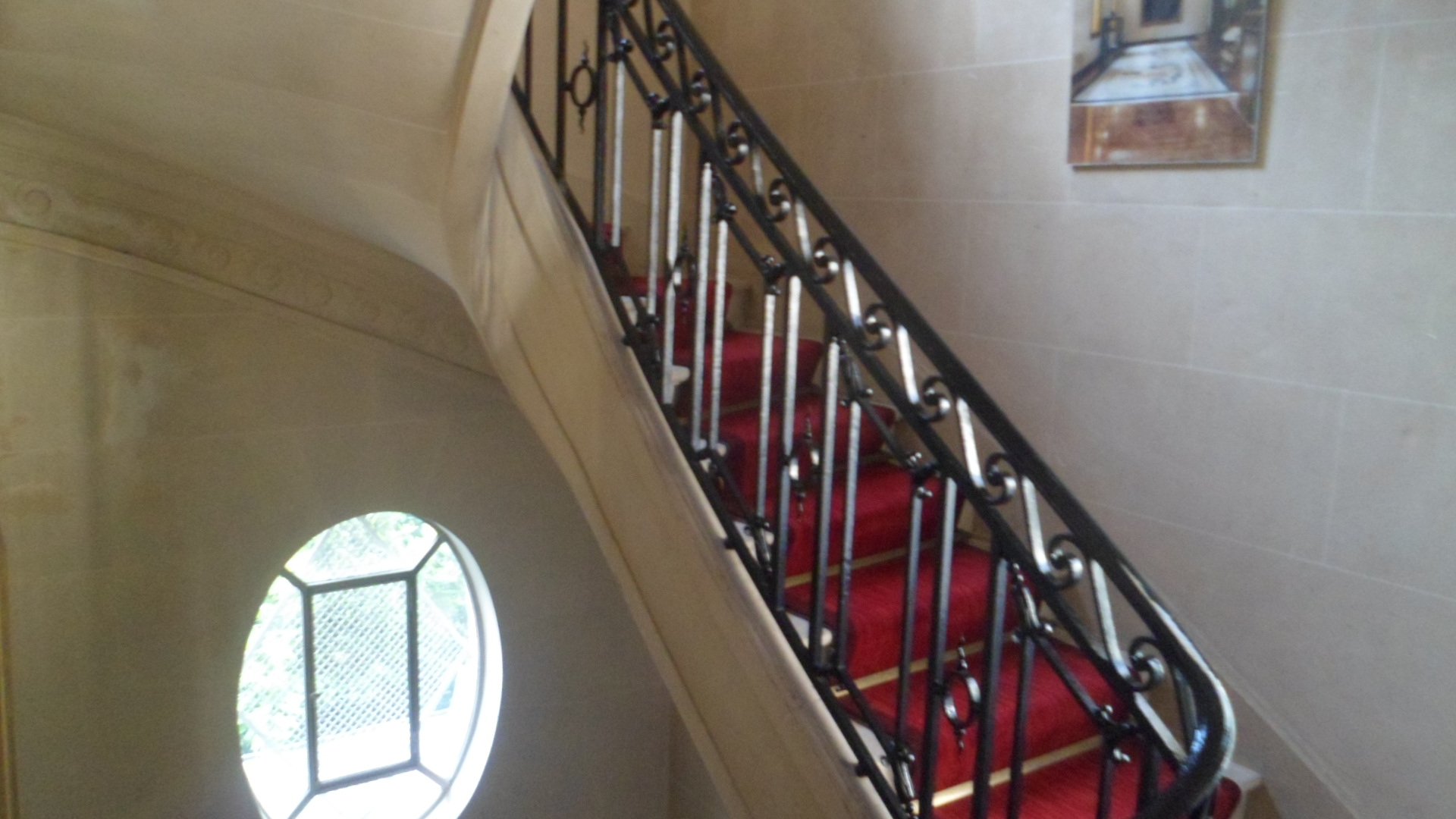
The staircase leads to offices on the second floor.

SAM_9566

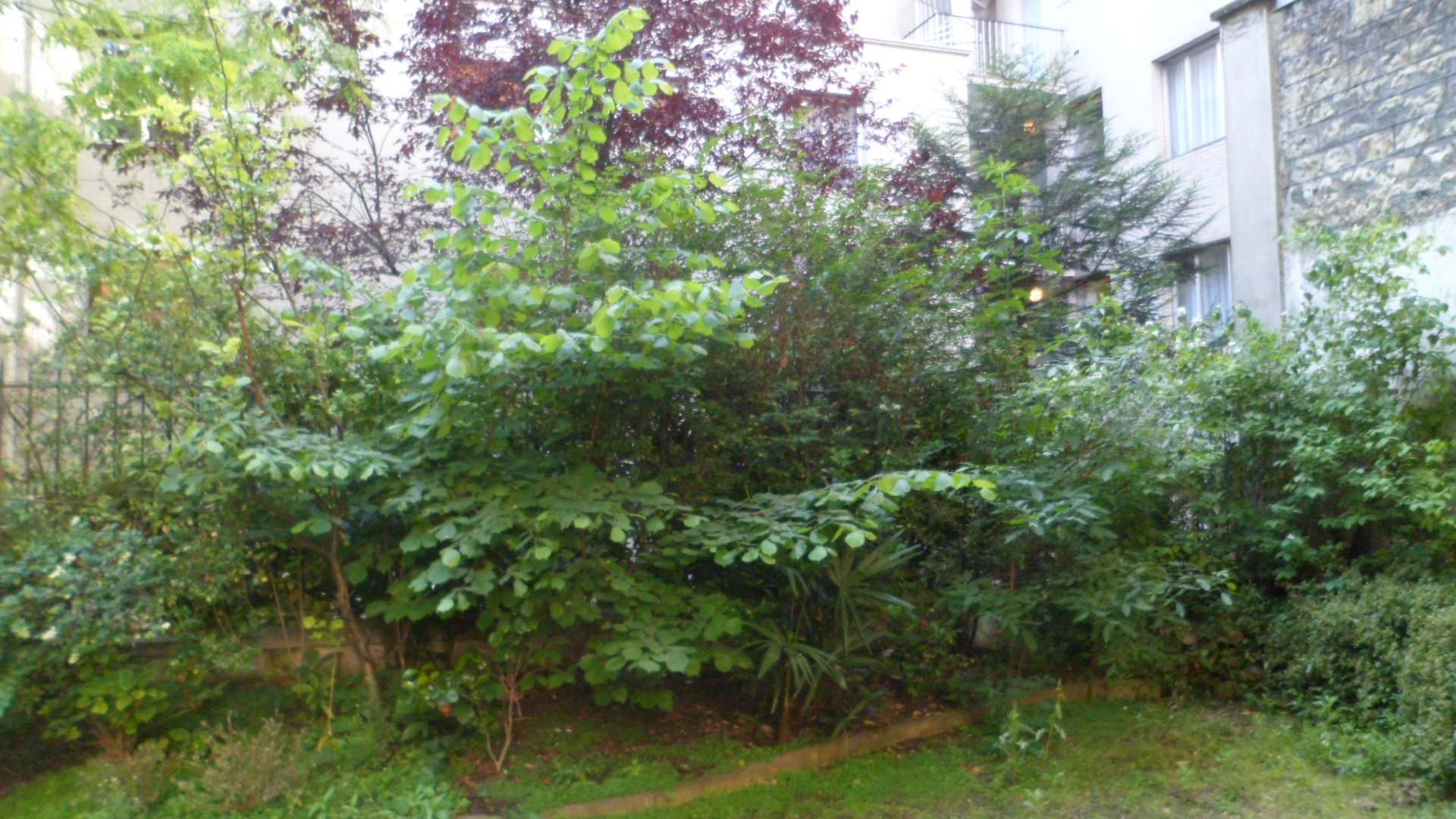
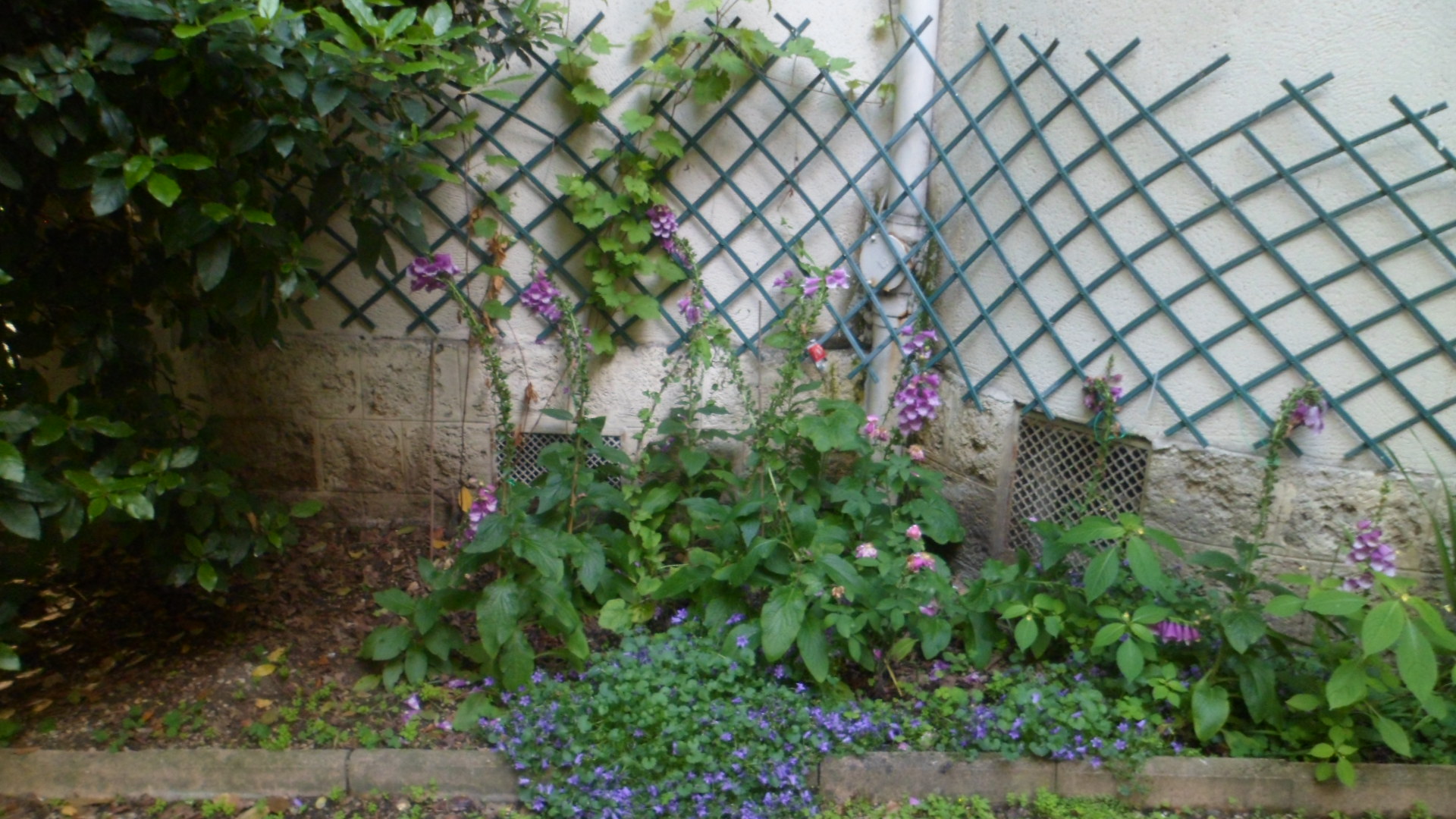
As with all important buildings in France, there is a garden in back. SAM_9580   SAM_9583

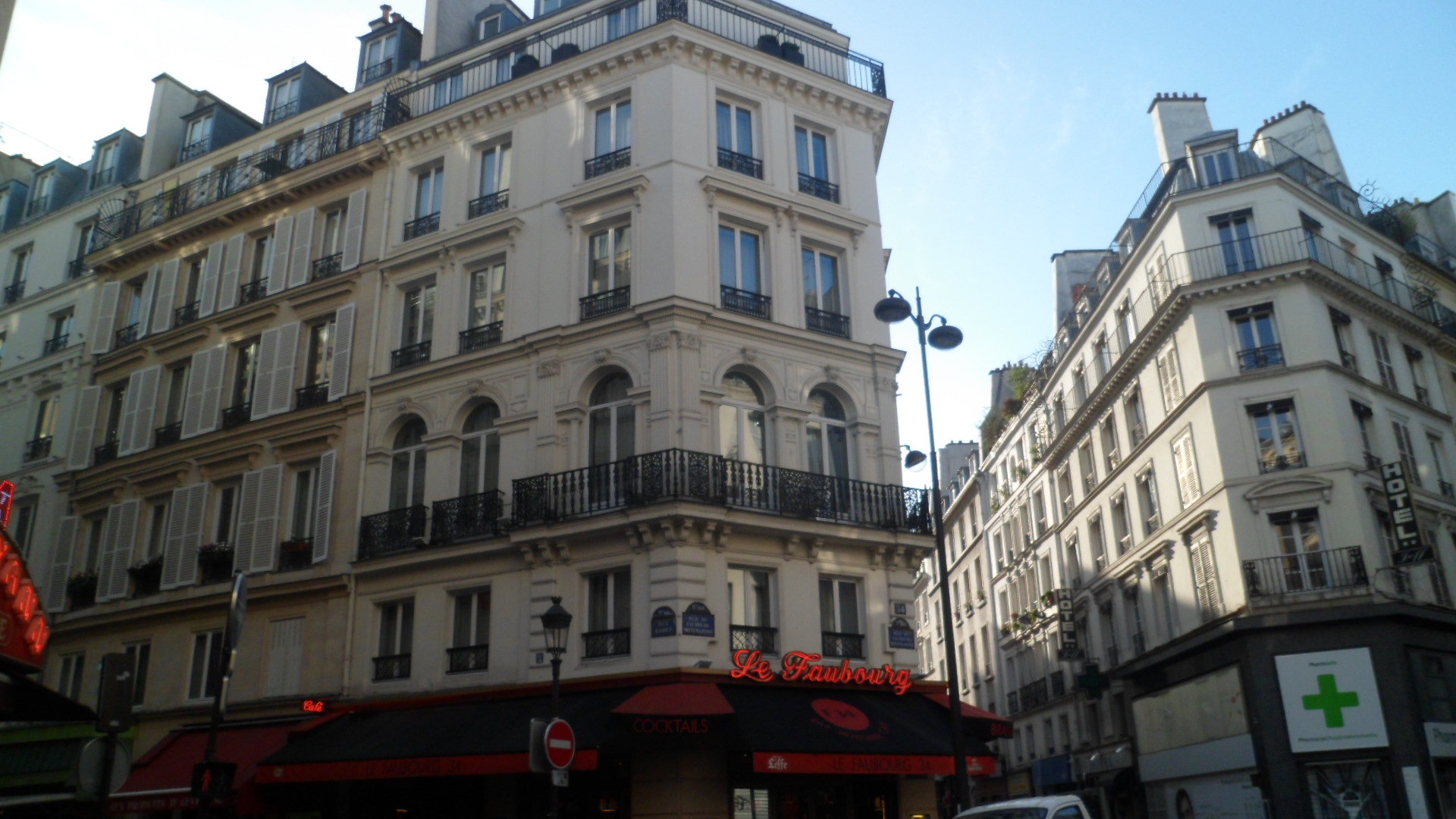
I spent about thirty-five minutes speaking with the three staff members who were present, enjoyed a cafe au lait, bought a prayer book in French, and bid them a fond “A dieu”. After retrieving my luggage, and thanking the gracious daytime desk clerk, for his steadfast help over the four days, I headed to Gare St. Lazare, for the journey to Rouen, from whence some of my paternal ancestors set out for L’Amerique du Nord, one day in 1650. So, this is a good point to look back on Paris.  I first made a brief stop here, with Penny, in 1982.  We were en route to Israel, and our Baha’i pilgrimage, so sightseeing was not on the agenda.  It was a mere transit stop.  This time, though, was planned almost to the hour, and I certainly took in a lot:  Montmartre (though not Le Moulin Rouge), Tuileries, Le Musee de Louvre, Versailles, Champs-Elysees, Le Tour Eiffel, Trocadero and L’Arc de Triomphe.  I enjoyed Petits Dejeuners aux pain, viande et fromage, a four course dinner at a Brasserie, another four course dinner at a Turkish restaurant, and a few kebab sandwiches here and there.  One rainy day, I wore my poncho. On the other rainy day, I pretty much stayed indoors or underground.

I learned the difference between eating au place and taking my meal emportee. (It was usually 5 euros).  I learned that one should never, ever write on a France Pass rail voucher, before it has been cleared by the proper official.  I learned that, if the first three trains on the Metro are overcrowded, the fourth will afford sufficient space for a man and his household.  I learned that Paris is a supremely lovable place. Many thanks then, to the young lady at the Montmartre Tourist office, the clerk at Metro Station Le Peletier, the desk clerk at Hotel Victoria and the aforementioned real estate agent, for getting me to Hotel Monte Carlo, albeit in piecemeal fashion; to the manager of Hotel Monte Carlo,  his day clerk and the chambermaid, for arranging a most pleasant stay; to our tour guide at the Louvre and to the staff at Versailles, for their most informative explanations of these fabulous cultural repositories; to the restaurateurs, of establishments great and small, for unfailingly delicious fare, served pleasantly and to my Baha’i friends, for helping me add a spiritual dimension to my Paris visit and for connecting me with the friends in Rouen and Strasbourg. I leave you with this view of the French countryside near Vernon, west of Paris.

. SAM_9588

NEXT: An Evening in Rouen

An Eastward Homage, Day 3: The Sum Total

17

I had no trouble getting up the morning of May 29, having briefly risen at 3 AM, said a prayer in honour of Baha’ullah’s passing, 122 years ago today.  I thought later that morning of my youngest brother, Brian, who would have turned 50 today, had he not suffered for 22 years and died after 29 of them.

Today on the ground, however, was about the family Norm Fellman left behind, especially his wife, my mother-in-law.  The family is at their south Jersey home, in a place called Vineland.  I had a heart-wrenching visit with my MIL, and will not go into detail as to all she, or her daughter, shared.  .

What were nice were two things:  A walk around their immediate neighbourhood, and the London Broil dinner we had, fresh off the grill.  Wynne and David have worked hard at making the home nice for her devoted mother.  Here are some scenes of home and neighbourhood.  The sum total of this whole trip is the devotion of family.  I have my part to share in this.  It is to visit those sites which Norm and his comrades-in-arms sanctified with their sacrifices, whether by dying or by suffering both internal and external wounds.

For most of us, wounds are hard to conceal.  The pain of loss is felt by all, including the family’s last surviving dog. The window box, though, is a spirit lifter, which Wynne has prepared in her father’s memory.

Image
Image

We did get a change of scene, by walking about the immediate neighbourhood, which is filled with both architectural and botanical gems.  The first we saw was a red maple, spread fully with stunning foliage, long before Fall.

Here’s a little rabbit, just before Willow charged at it.

Image

The great forests have nothing on Vineland.

Image

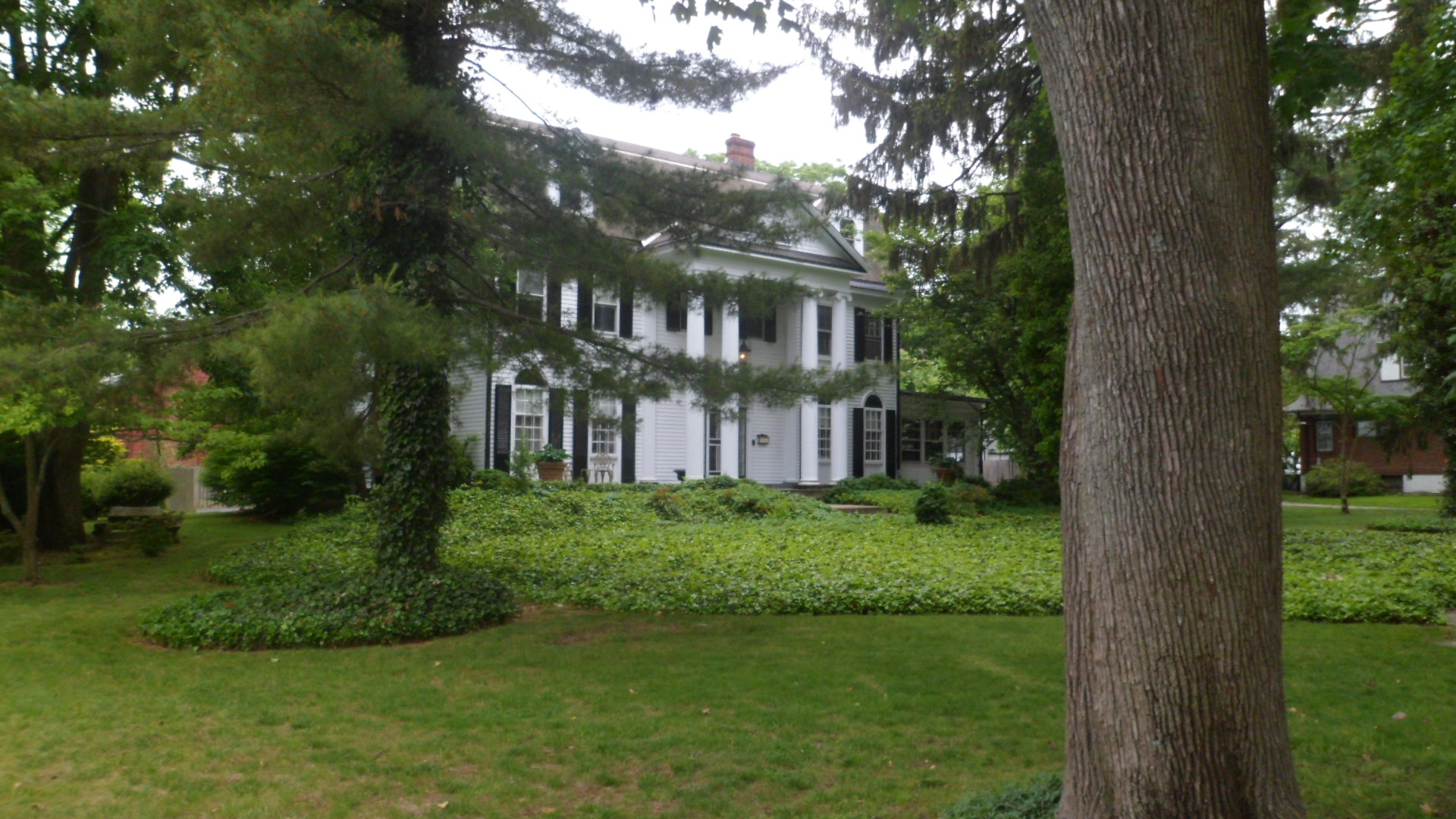
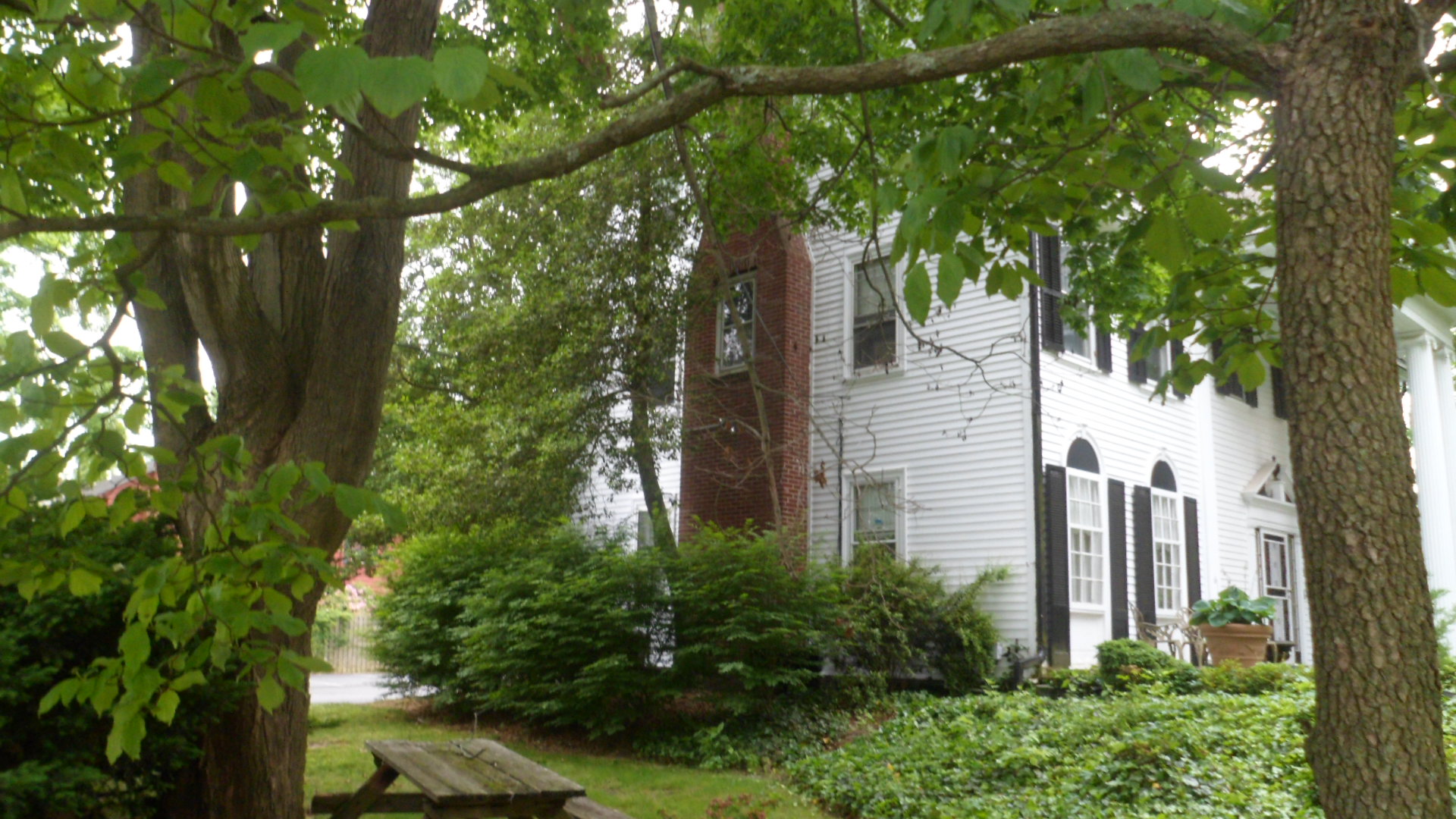
One of Vineland’s most stately Georgian era homes is now an attorney’s office.  Note the special feature in the chimney.

Image
Image

Back at the house, it struck me how it is similar, in some respects, to the old house at Longmeadow Farm.  Mom remembers the farm as their strongest dream, and greatest success, as a couple. Joseph Campbell advises us to “Follow your bliss.”  This, the Fellmans did, and in spades.  Now, all of us are protected by a cadre of angels.

Image
Image